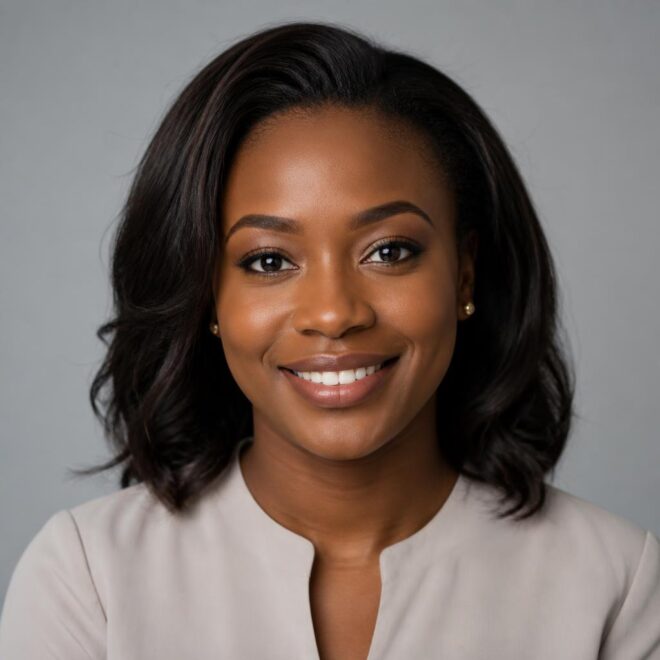


The bob is not just a haircut; it is a declaration of independence. For anyone who has spent years tethered to long, high-maintenance lengths, the decision to pivot toward a short, layered bob feels less like a trim and more like a total recalibration of one’s identity. But the beauty of the layered bob lies in its adaptability. It is a silhouette that moves with you, bouncing back after a morning commute, handling humidity with grace, and—most importantly—offering a structure that makes styling feel like a creative act rather than a chore.
When we talk about the “medium hair” category, we are often looking at a transition zone. Perhaps your hair is fine and prone to collapsing at the root, or maybe it is thick and heavy, pulling your face downward with its sheer weight. A layered bob acts as the perfect structural intervention in these scenarios. By removing internal weight while keeping the perimeter sharp, you gain volume where you need it and movement where it counts.
There is a tactile quality to a great bob that you simply cannot replicate with longer styles. When it sits just above the shoulders or grazes the jawline, it forces you to engage with your hair differently. You feel the air on your neck, the way the ends flip when they hit your collarbone, and the way a quick shake of the head can reset your entire look. Let’s look at the specific variations that define this versatile cut and how to choose the one that actually suits your texture.
1. The Classic Choppy Inverted Bob
This style is the workhorse of the hair world for a reason. By keeping the back shorter and stacked—meaning the hair is cut in graduated, overlapping layers that build natural volume at the crown—and leaving the front pieces longer, you create a dramatic, face-framing angle. It is an ideal cut for someone who wants the ease of short hair without losing the ability to tuck hair behind their ears.
Why This Works for Fine Hair
The secret here is the stacking technique. By cutting the back at an aggressive 45-degree angle, you force the hair to support itself, creating an illusion of density that fine hair usually lacks. You aren’t just cutting; you are building an architecture of lift.
How to Style the Inverted Look
- Use a lightweight volumizing mousse on damp hair.
- Blow-dry using a medium-sized round brush, pulling the hair at the crown upward to maximize lift.
- Finish with a texture spray rather than a heavy hairspray to maintain the “choppy” feel of the ends.
Pro tip: Ask your stylist to “point cut” the ends rather than using a blunt shear. Point cutting creates soft, shattered edges that prevent the bob from looking like a stiff, triangular wedge.
2. The Textured Wavy Shag Bob
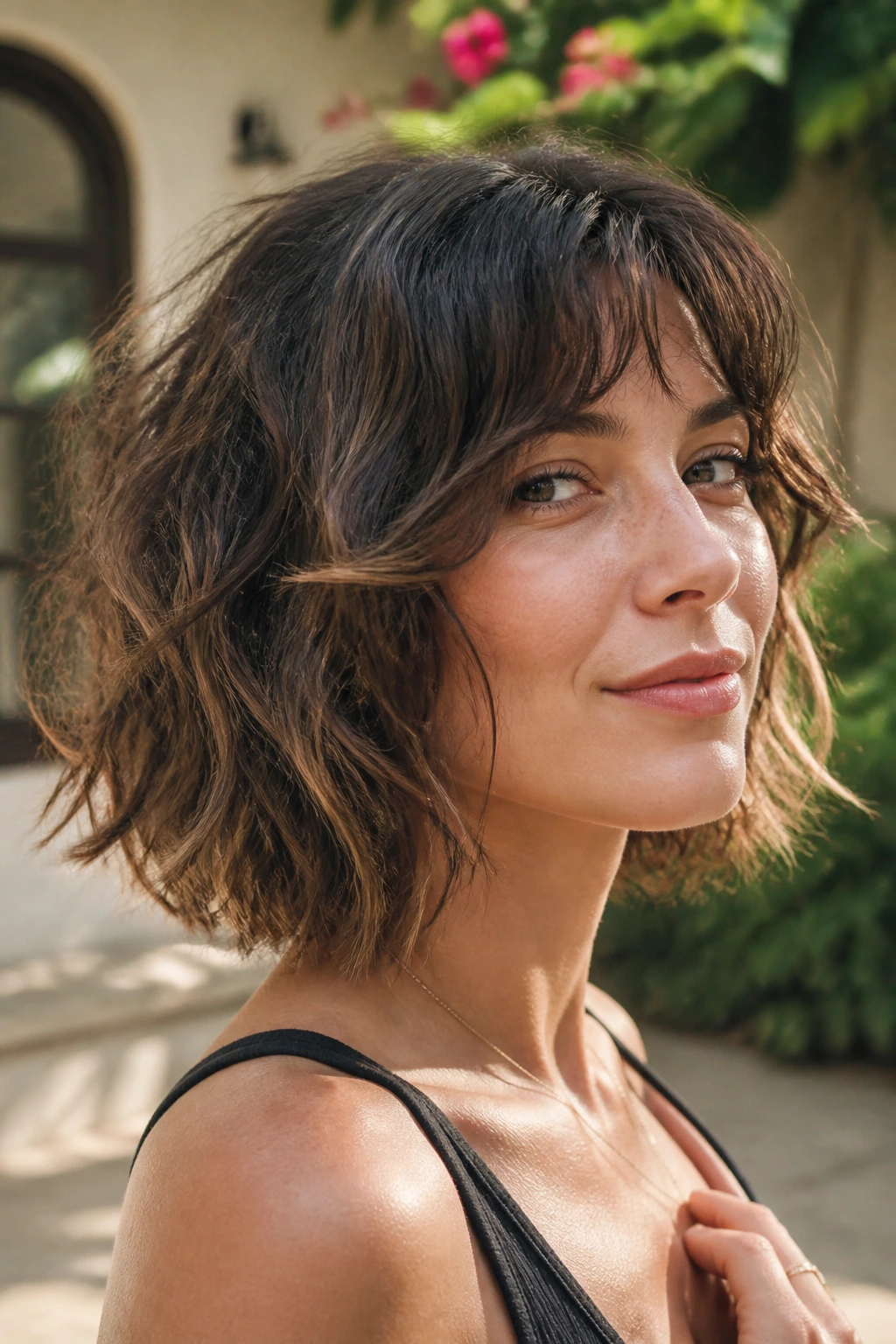
If you have natural wave or a loose curl pattern, fighting it with a flat iron is a battle you are destined to lose. The shag bob embraces that wildness. This cut relies on heavy internal layering, often incorporating a “razor cut” technique to thin out the ends and create a wispy, effortless aesthetic that looks better the messier it gets.
The Role of Internal Layering
Unlike the inverted bob, which focuses on perimeter length, the shag bob is all about what happens in the middle. By taking shears or a feather razor through the mid-lengths, you remove the “bulk” that often makes wavy hair look like a pyramid. This encourages the hair to spiral and bend into itself rather than bunching up at the bottom.
Essential Styling Products
- A sea salt spray or a dedicated curl-refreshing cream.
- A diffuser attachment for your blow dryer—this is non-negotiable for preserving natural texture without creating frizz.
Avoid the temptation to brush your hair once it is dry. If you need to manage tangles, use a wide-tooth comb while your hair is still saturated with conditioner in the shower, and then leave it alone. The secret to a great shag is letting the hair find its own gravity.
3. The Sleek Blunt Cut with Invisible Layers
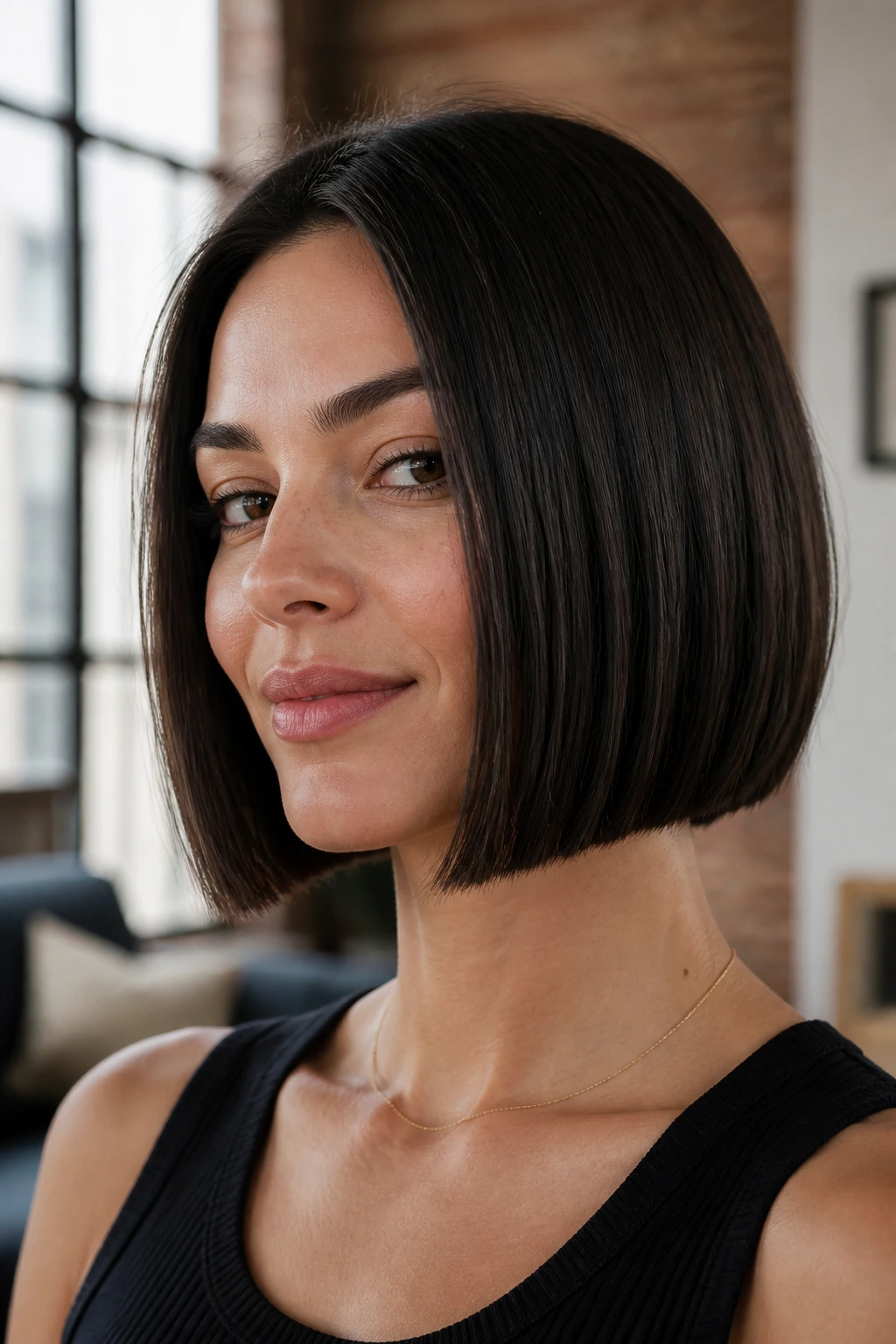
Do not let the “blunt” label fool you. A blunt bob can be incredibly dimensional if you incorporate “invisible” or “ghost” layers. These are shorter lengths hidden underneath the top layer, providing a support structure that keeps the hair from falling completely flat. It is the sophisticated older sister of the 90s classic bob.
Who Should Choose This Style
This is the ultimate choice for those with straight, silky hair who find that standard layers make their hair look frizzy or unkempt. The blunt perimeter gives you that polished, heavy-end look, while the hidden layers provide just enough “poof” to keep it from looking like a helmet.
Maintaining the Sharp Line
- You will need a trim every six to eight weeks. Because the blunt line is the focal point, as soon as it grows out, it loses its impact.
- Use a high-quality polishing serum to add a glass-like sheen.
- If you use a flat iron, do so sparingly and always apply a heat protectant. Excessive heat on a blunt cut can cause the ends to look frayed and brittle.
4. The Soft A-Line with Face-Framing Curtains

If your goal is to soften your features, the A-line bob with “curtain bangs” is your best friend. The A-line refers to the subtle graduation of length from back to front, but unlike the severe stacked bob, this version is much gentler. It mimics the natural flow of hair rather than imposing a harsh geometric shape.
The Power of Curtain Bangs
Curtain bangs are long, sweeping fringes that part in the middle and blend into the sides of the cut. They draw attention to the cheekbones and eyes, effectively acting as “soft focus” for the face. When paired with a bob, they make the transition between the short back and the long front look entirely seamless.
Styling the Sweep
- Use a large-barrel round brush when blow-drying to pull the bangs away from your face.
- For a more retro vibe, use hot rollers on just the front sections for 10 minutes while you get ready.
- If you have cowlicks near your hairline, address them immediately after washing while the hair is soaking wet—don’t wait for them to dry into the wrong position.
5. The Curly Graduated Bob
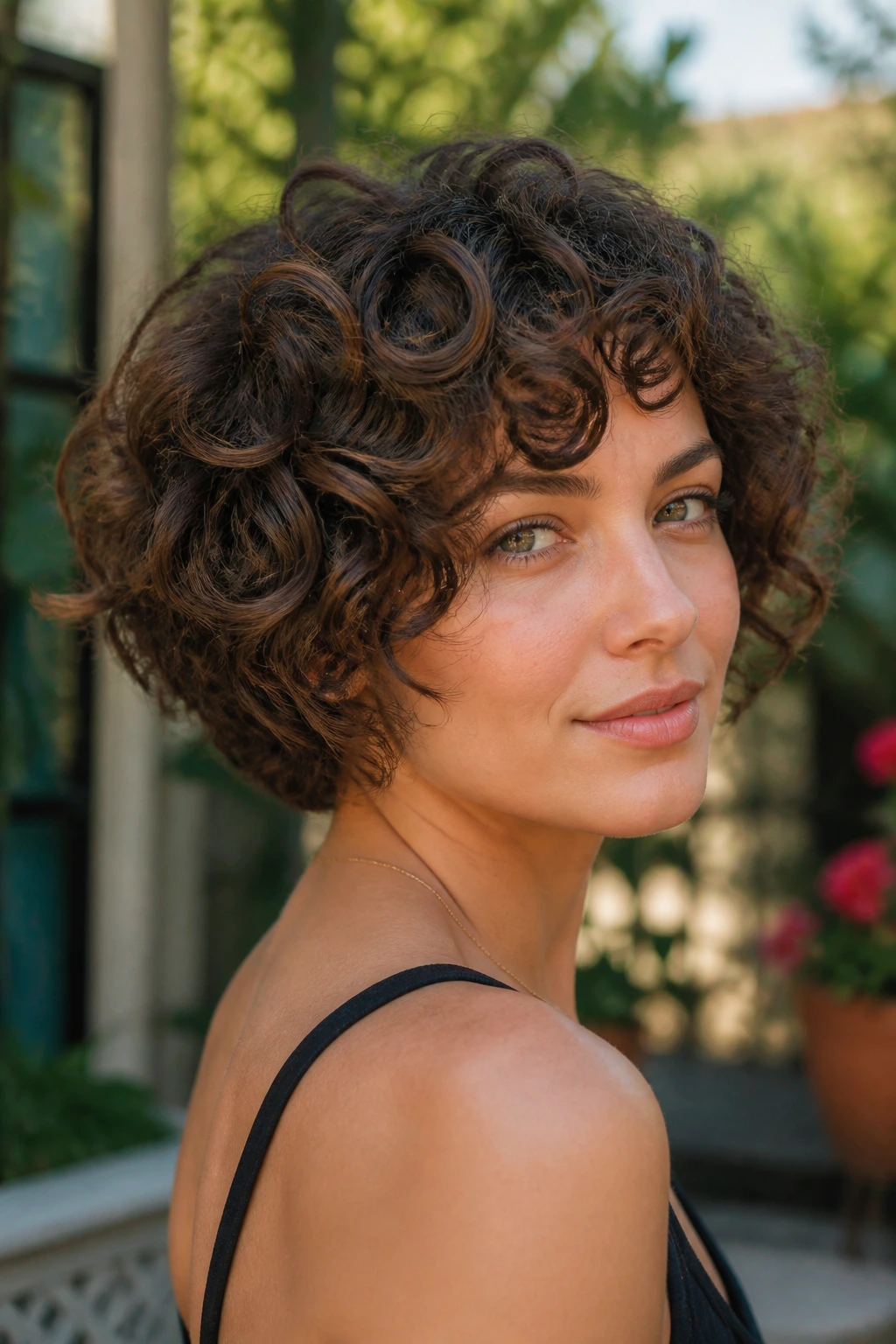
Curly hair and bobs are a marriage made in heaven, provided you find a stylist who knows how to cut curls dry. A graduated bob on curly hair creates a beautiful, rounded shape that celebrates volume rather than trying to suppress it. The back is kept short, allowing the curls to stack up and create a stunning, halo-like silhouette.
Why Dry Cutting Is Essential
When you cut curly hair wet, it stretches. Once it dries and springs back to its natural length, you often end up with a cut that is inches shorter than you intended. By cutting dry, your stylist can see exactly how each individual curl cluster behaves, ensuring the shape stays balanced.
Care for the Curly Bob
- Deep condition once a week. Short hair loses moisture faster than long hair because it doesn’t get the same benefit from the scalp’s natural oils traveling down the shaft.
- Embrace the “pineapple” method—loosely gathering your hair at the top of your head with a silk scrunchie while you sleep—to keep your curls from crushing overnight.
6. The 90s-Inspired Supermodel Bob
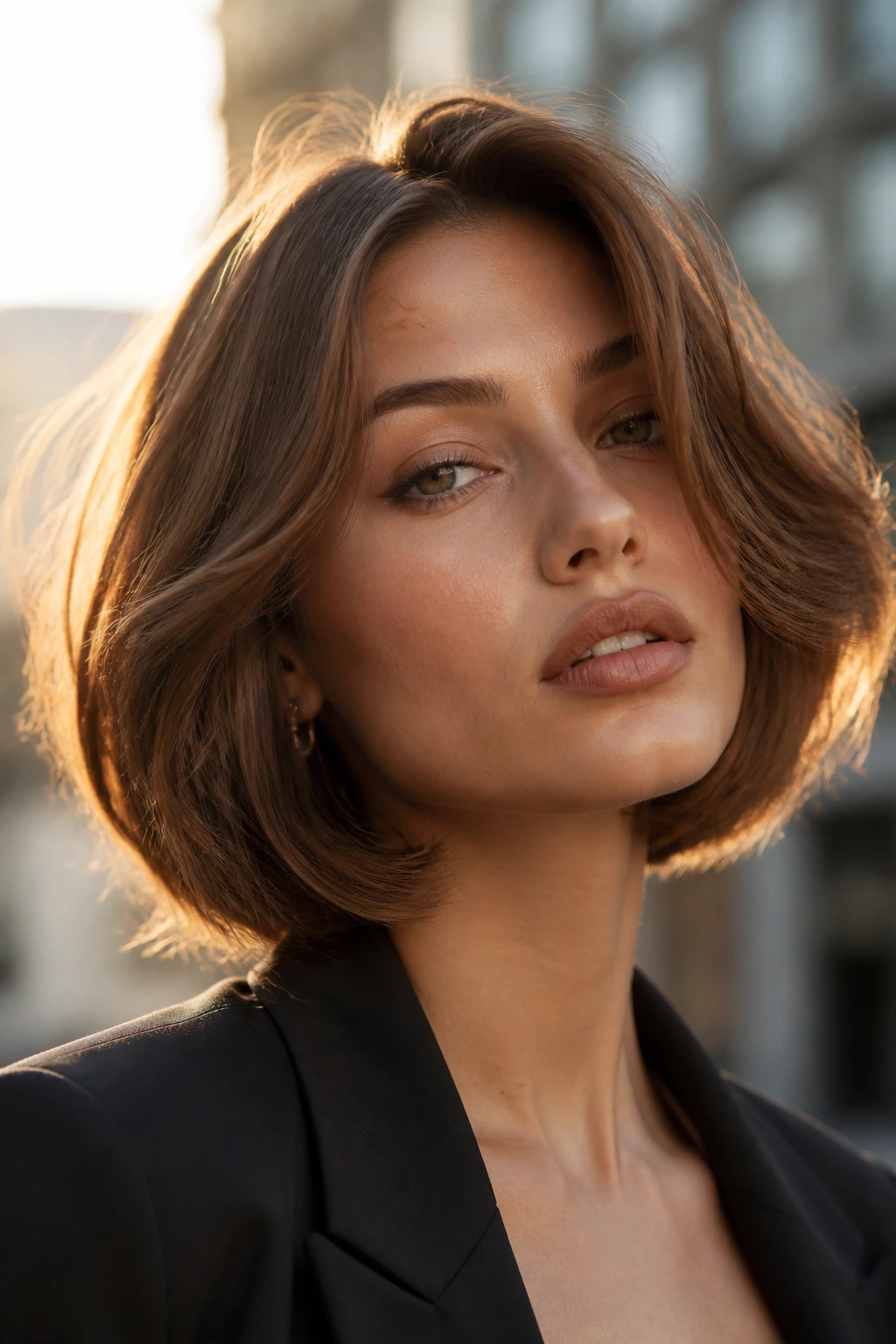
Think of the iconic chin-length cuts from the late 90s—bouncy, full of body, and slightly flicked at the ends. This style features long, sweeping layers that start around the chin area and work their way down. It is a very “glam” version of the bob that requires a bit more effort in the mornings but pays off with incredible movement.
How to Achieve the “Flick”
- The key is a blowout. You need to use a round brush to create tension at the roots and then rotate the brush through the ends to create a soft, C-shaped curl.
- A touch of texturizing paste on your fingertips can help you pull out individual strands to accentuate the layers.
This cut is particularly flattering on square or heart-shaped faces, as the soft, rounded edges of the layers balance out a stronger jawline or a wider forehead.
7. The Deep Side-Parted Layered Bob
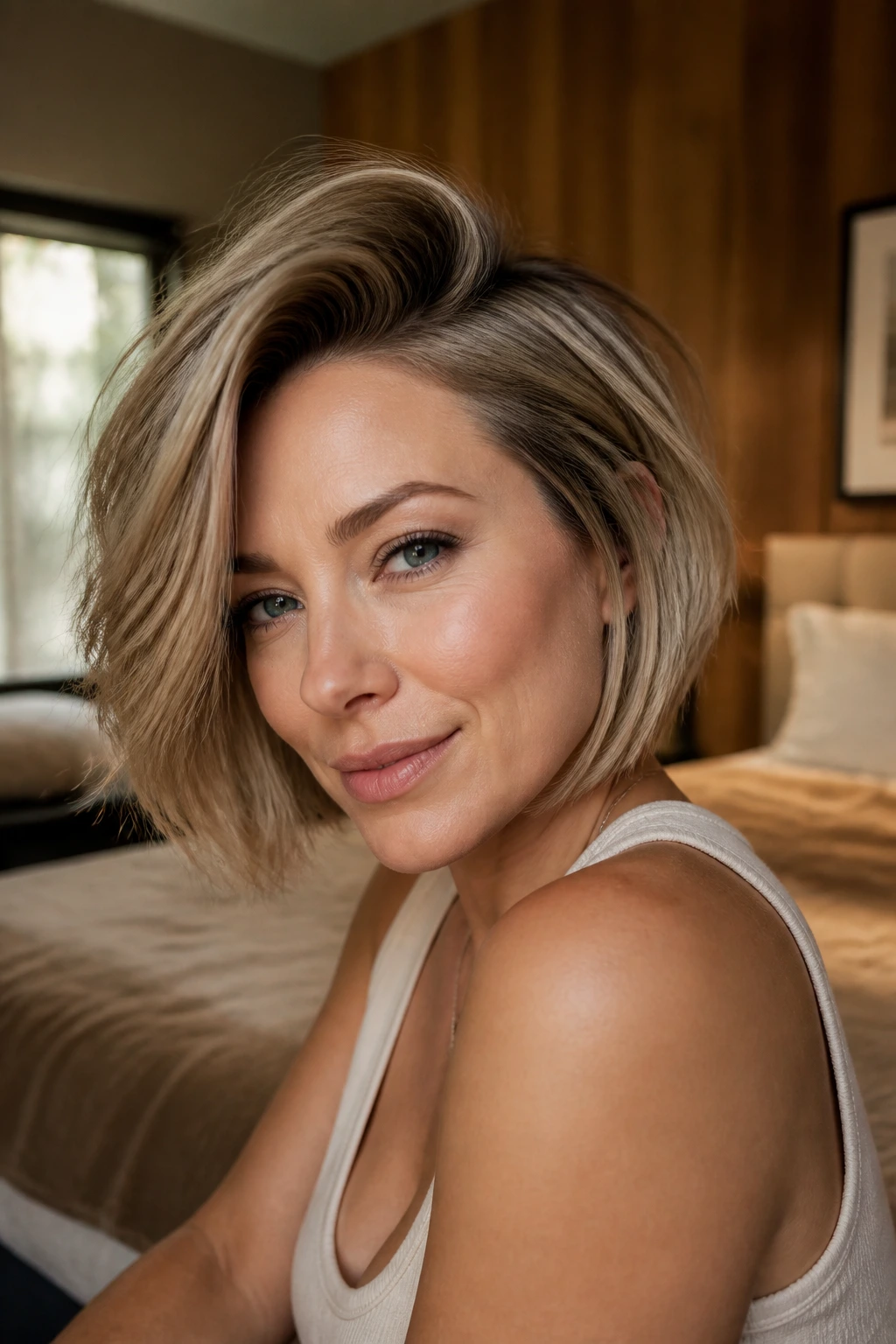
Sometimes the haircut is less about the length and more about the geometry of the part. A deep side-parted bob instantly adds a sense of drama and volume to thin hair. By sweeping the majority of your hair to one side, you create an automatic lift at the roots that would take ten minutes of teasing to achieve with a center part.
Why It Works for Thin Hair
Thin hair often lacks “the swoop.” When you part it down the middle, it tends to lay flat against the scalp like a curtain. By forcing it over to one side, you build a foundation of hair on top of itself. The layers should be cut to enhance this weight, keeping the hair from becoming stringy as it gets longer on the side with more volume.
Making It Stay
- If you find your hair resists the side part, train it by parting it differently while damp and blow-drying it in that direction.
- Use a lightweight dry shampoo, even on clean hair, to provide “grit” for the roots to grip onto.
8. The Textured Pixie-Bob Hybrid
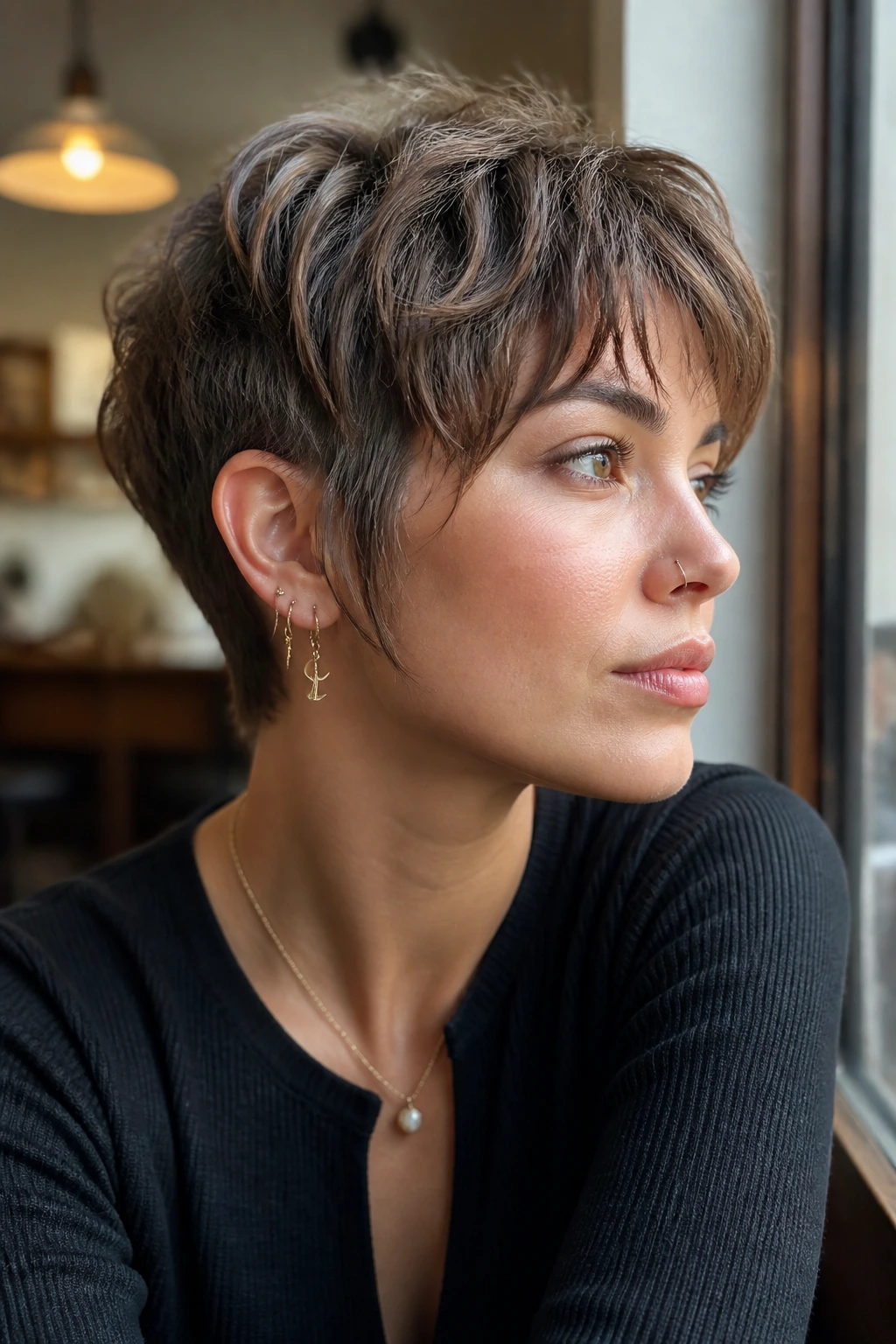
If you are really looking to go short, the “bixie”—a mix between a bob and a pixie—is a fantastic entry point. It has the length of a short bob in the front but the taper and closeness of a pixie in the back. This cut is incredibly low-maintenance and highlights the neck and collarbones beautifully.
Who Is This For?
This cut is for the person who is tired of dealing with tangles and wants a style that looks “styled” even when they wake up. It works exceptionally well for those with naturally straight or slightly wavy hair. If you have extremely tight, dense curls, this might result in too much volume, so ask your stylist for a tighter undercut in the back to maintain control.
Minimalist Styling
- A dab of pomade or wax is all you need. Rub it between your palms until it warms up, then run your hands through your hair to define the ends and add a bit of “piecey-ness.”
- It is a very confident look—it forces you to own your facial features completely.
9. The Rounded “Mushroom” Bob with Modern Softness
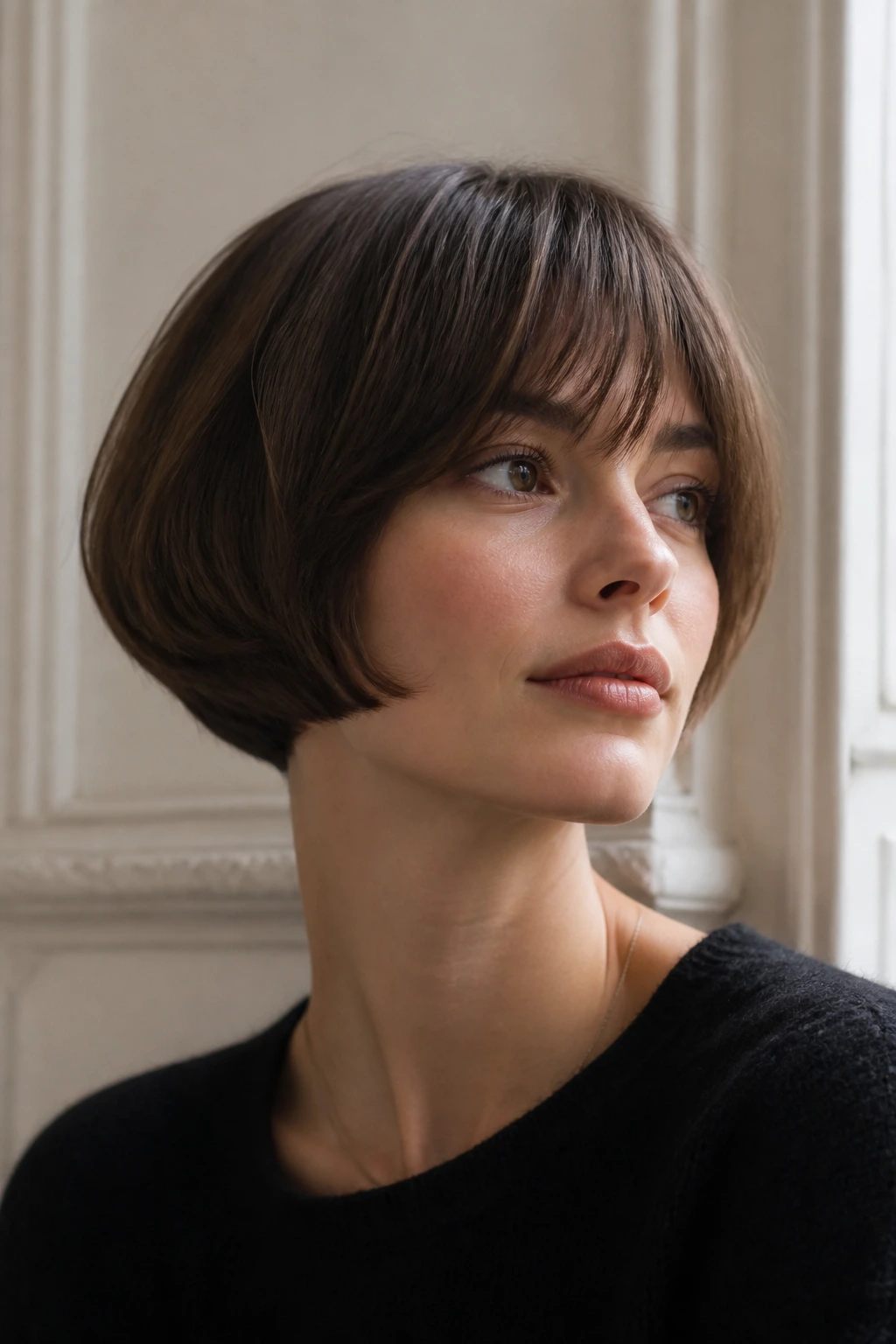
The word “mushroom” might sound like a relic from the past, but the modern iteration is all about softness and precision. Think of a perfectly rounded, chin-length cut that follows the natural shape of your head. It is incredibly chic, very Parisian, and looks best on hair that has a bit of natural weight to it.
Softening the Edges
The key difference between the outdated version and the current style is the ends. Modern versions use thinning shears or a razor to ensure the bottom edge doesn’t look like a solid block of wood. It should feel airy.
The Right Texture
This style is best suited for those with dense, straight-to-slightly-wavy hair. If your hair is too thin, it may not hold the rounded shape; if your hair is too curly, the shape will become distorted by the texture. Stick to this one if you have that medium-to-thick, straight hair profile.
10. The Asymmetrical Layered Bob
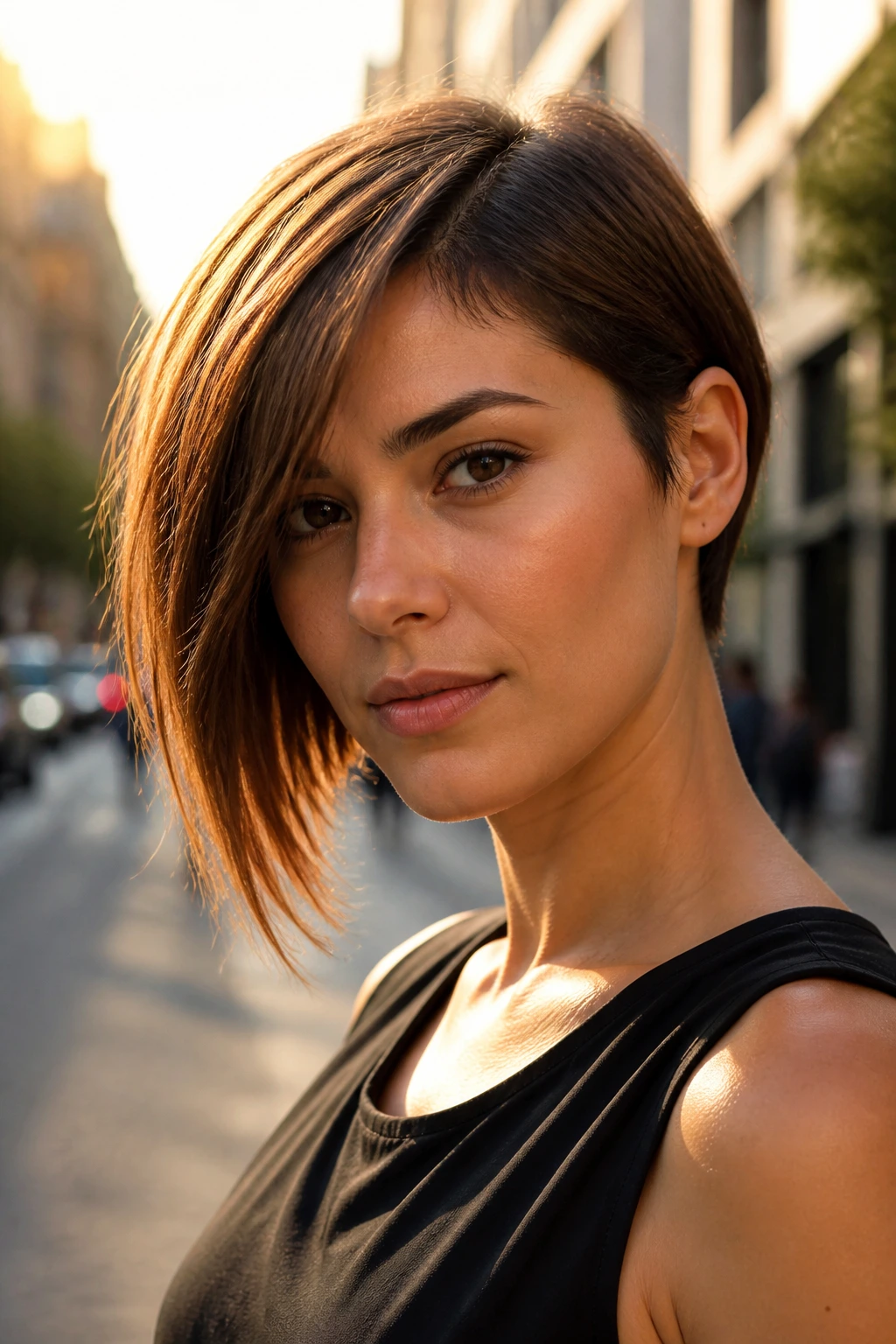
For the truly daring, the asymmetrical bob is a classic for a reason. By having one side significantly shorter than the other—perhaps one side grazes the jaw and the other hits just below the earlobe—you create an instant focal point. It is edgy, modern, and does all the work for you.
Why This Style Is Genius
It draws attention away from any one particular facial feature, making it a great distraction for someone who is self-conscious about a broad nose or uneven eyebrows. The asymmetrical line pulls the eye downward and diagonally, creating a flattering, elongated effect on the face.
Styling the Angle
- Keep the shorter side tucked behind your ear for a sleek, cleaner look, or wear it loose to show off the dramatic angle.
- Use a flat iron to keep the longer side perfectly straight and smooth, as any waves or kinks in the long section can ruin the intended geometry of the cut.
11. The Soft, Feathered Layered Bob
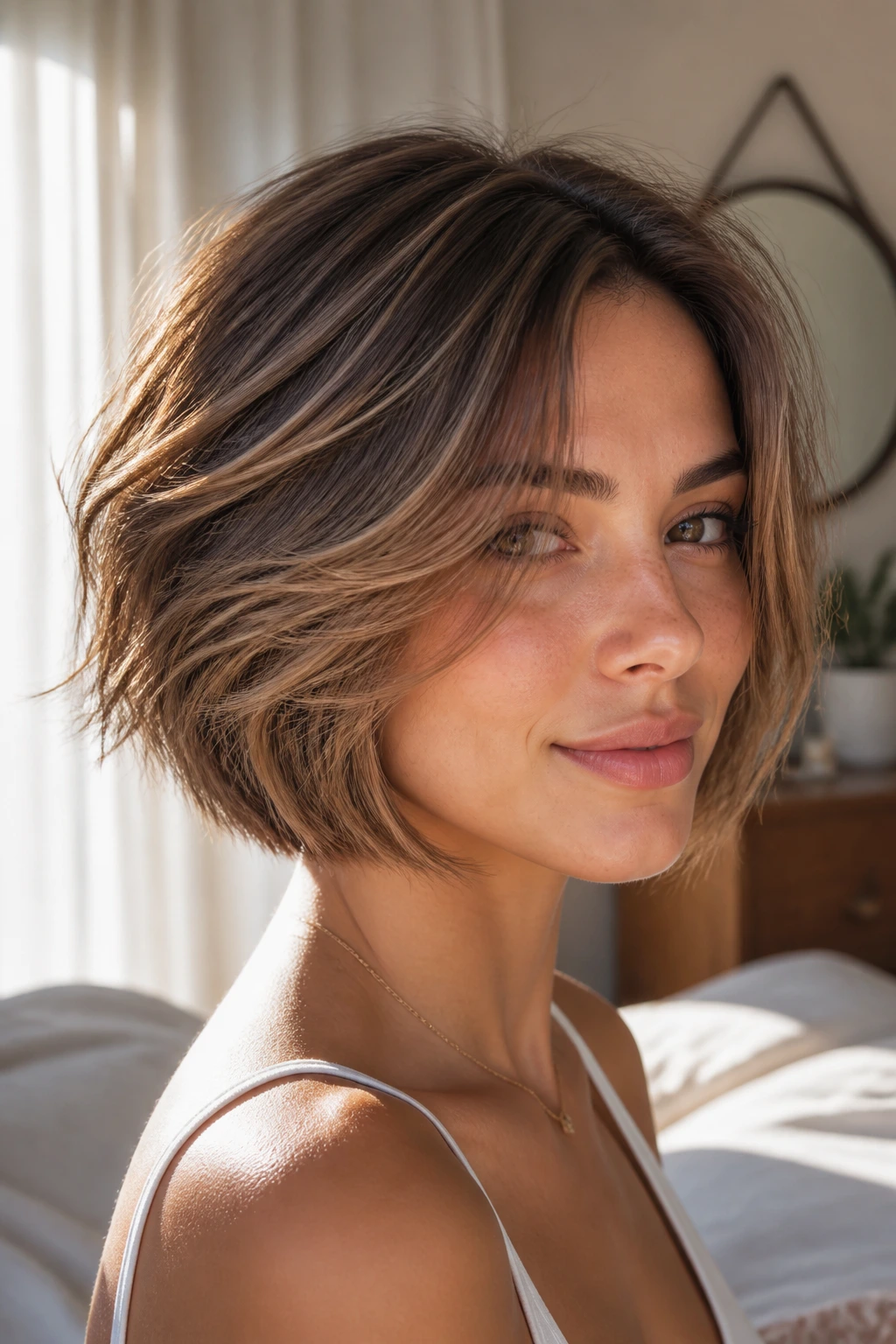
If you are a fan of 70s-inspired aesthetics, the feathered bob is the epitome of elegance. This style utilizes shorter layers at the crown and longer, wispy layers around the face that “flick” away from the center. It feels light, airy, and incredibly romantic.
The Technique of Feathering
Feathering is essentially slicing into the hair to create a soft, tapered edge rather than a blunt one. This makes the hair feel lighter and allows it to move like fabric in the wind. It is a fantastic way to handle hair that is starting to feel heavy as it grows out of a shorter style.
Refreshing the Look
- This cut grows out beautifully. Because the layers are soft and textured, you don’t get that “awkward phase” where the hair looks like it’s growing into a mullet.
- Use a light-hold hairspray to maintain the shape of the flicks without turning them into crispy, rigid curls.
12. The Wavy Lob with Choppy Layers

Okay, technically a “lob” is a long bob, but if you have medium hair, it acts as a perfect entry point for those terrified of going too short. By keeping the length at the collarbone, you maintain the ability to put your hair in a ponytail while still getting the benefits of a bob-like structure.
Creating Volume for the Lob
The common issue with a long bob is that the weight of the hair pulls the volume out of the roots. The solution? Strategic layering at the parietal ridge—the part of the head where it starts to curve downward. By cutting shorter layers here, you create a “lift” that lasts throughout the day.
Maintenance
- If you notice your lob looking a bit ragged, it’s time for a trim. Longer bobs need their perimeter kept clean just as much as short bobs do.
- Try a “textured” ponytail by pulling the front pieces out and curling them, while keeping the back secured. It makes the style look deliberate rather than just “lazy.”
13. The Shaggy Mullet-Bob Hybrid
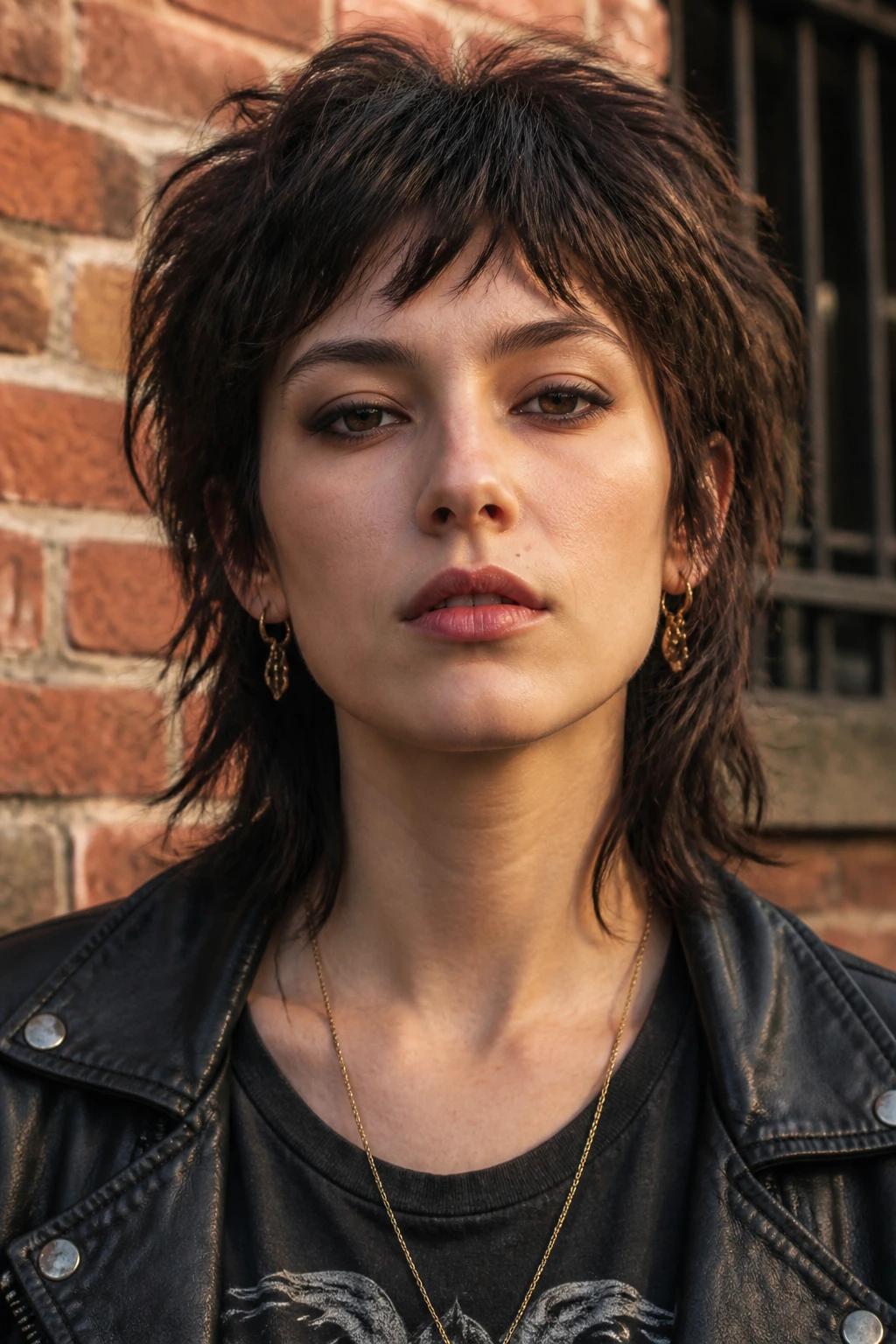
Yes, we are going there. The modern shag-bob, often called the “wolf cut bob,” is gaining serious traction for its rebellious, cool-girl energy. It features extremely short, choppy layers on top and around the crown, with longer, thinning pieces reaching down to the neck. It is intentional, messy, and looks like you just rolled out of bed after a concert.
Who Should Try It?
This is for the person who loves a vintage, rock-and-roll look. It works wonders for hair that is naturally coarse or has a lot of body, as the cut itself is meant to be voluminous and somewhat chaotic. If you have very fine, flat hair, this cut will require a significant amount of styling product to keep it from looking “mulleted” in the wrong way.
Styling for the Cool Factor
- Don’t use a brush. Use your fingers to apply a bit of texturizing clay.
- Work it into the roots for lift and pull it through the ends to create clusters of texture.
- Perfection is the enemy here; the more uneven it looks, the better.
14. The Face-Framing Graduated Bob

If you have a round face, you might be wary of bobs, fearing they will only emphasize the roundness. The face-framing graduated bob is the solution. By keeping the hair longer around the jawline and incorporating soft, angled layers that fall inward toward the chin, you create a “curtain” that slims the face and draws the eye downward.
The Angles That Matter
The trick is to avoid layers that end exactly at your widest point. If your cheeks are the widest part of your face, you want the layers to either hit above them (shorter) or well below them (longer). Hitting right on the cheekbone creates a horizontal line that effectively widens the face—which is exactly what we want to avoid.
A Note on Maintenance
- Because this cut relies on precise face-framing, it needs touch-ups on the front pieces every few months.
- Keep the back simple to ensure the front layers remain the star of the show.
15. The Choppy Bob with Blunt Bangs
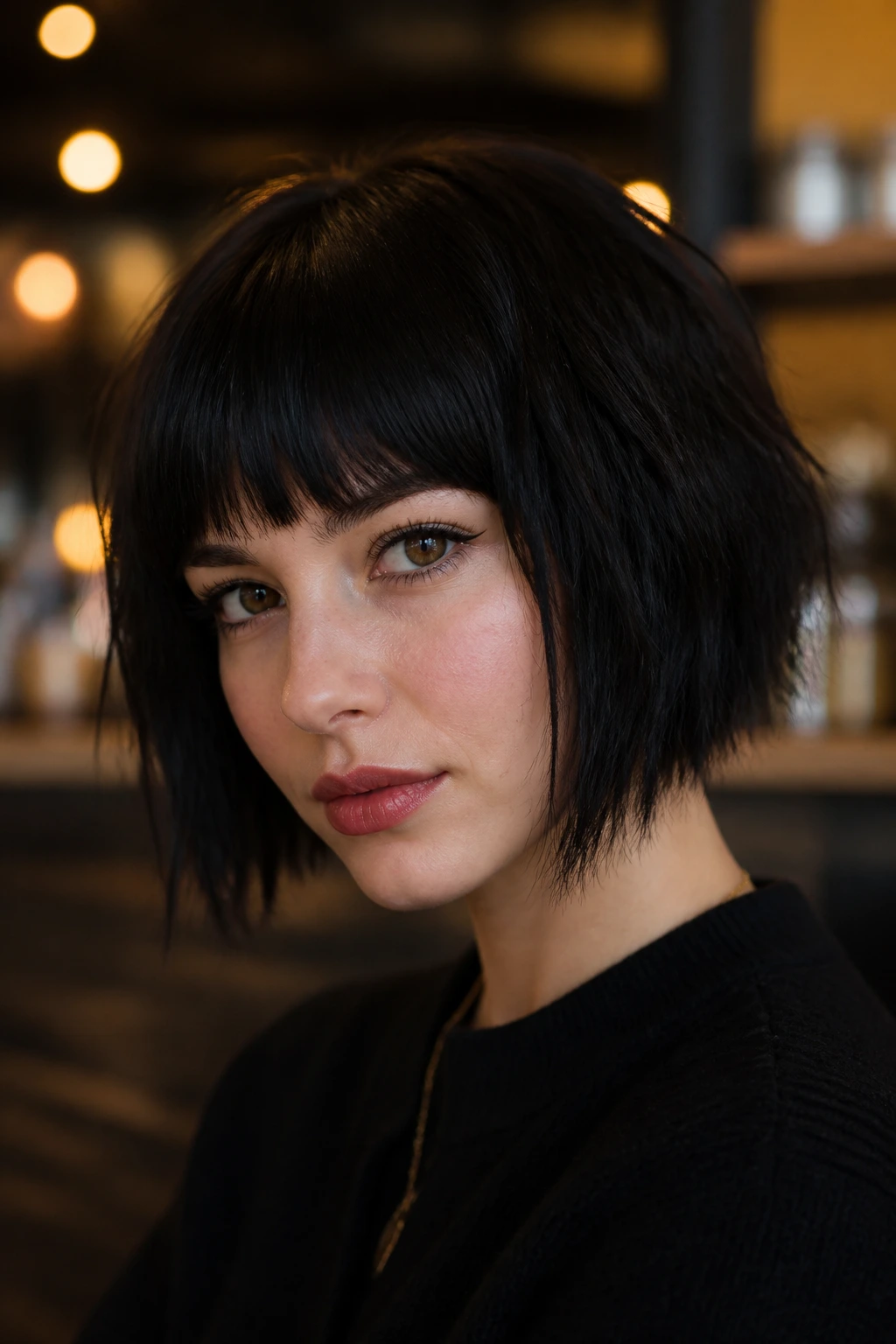
The juxtaposition of a choppy, layered bob with a sharp, blunt fringe is a classic “fashion” look. It’s edgy, severe, and very intentional. The softness of the layers in the back and sides contrasts perfectly with the stark horizontal line of the bangs.
Why This Style Rocks
It’s a bold look that highlights the eyes and the bone structure. It works exceptionally well on those with oval or oblong face shapes. If you have a very small forehead, consider keeping the bangs a bit wispy or “see-through” to prevent them from taking over your face.
The Bang Maintenance
- Blunt bangs require a trim every 3–4 weeks. If they grow into your eyes, you’ll constantly be fighting the urge to clip them back, which ruins the effect.
- Keep a small, travel-sized round brush in your bag. If your bangs get oily during the day, a quick wash of just the bangs (not the whole head) in a sink can completely refresh your look.
16. The Inverted Stack with Hidden Undercut
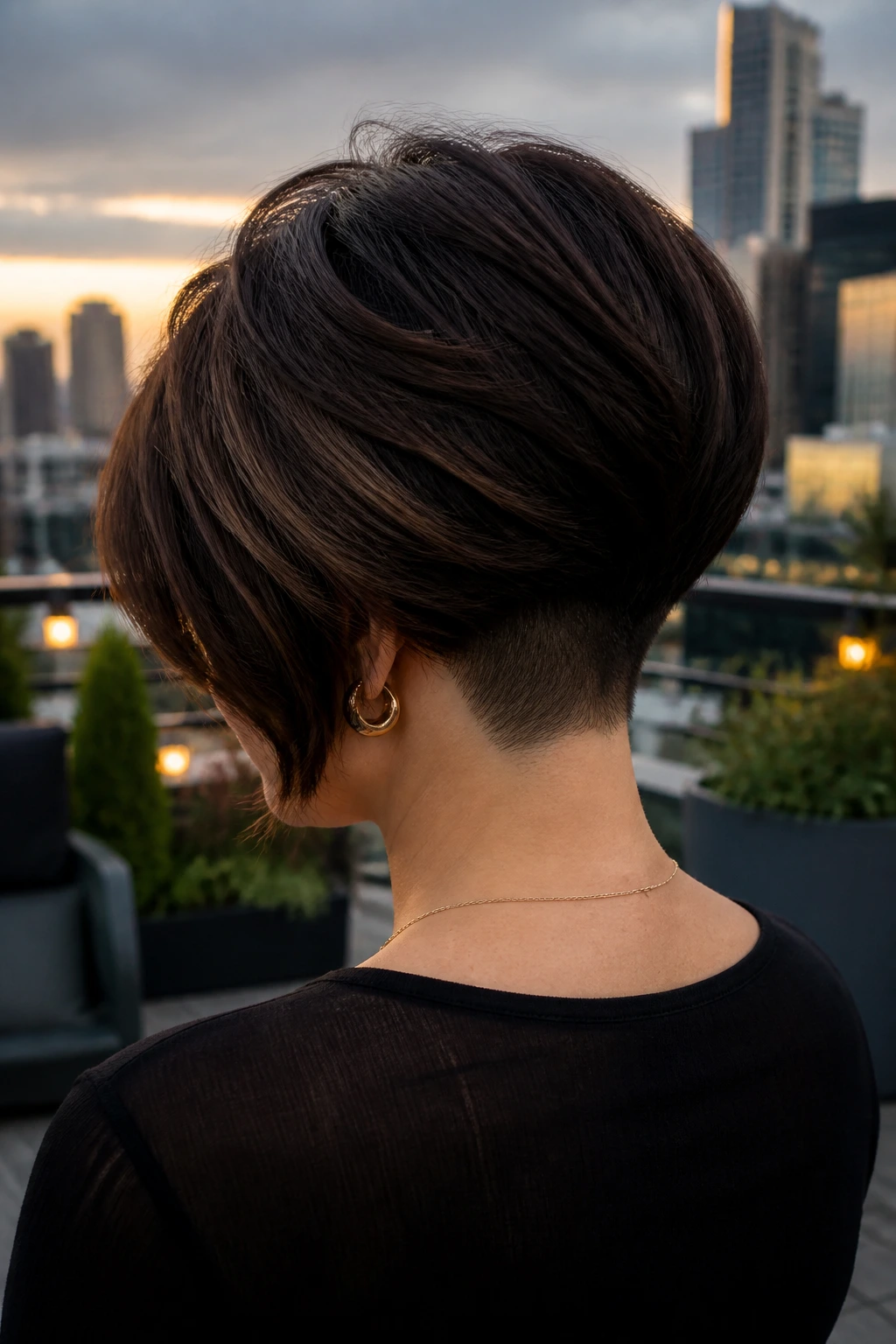
For those with extremely thick hair, the “hidden undercut” is a game-changer. Your stylist shaves or clips the hair at the nape of the neck very short, then cuts the rest of your bob in a traditional inverted stack. This removes the bulk that typically causes bobs to “poof” out like a mushroom.
The Benefits of the Undercut
You get all the volume you want on top, but the weight at the back is non-existent. It’s also incredibly cooling during warmer months. Plus, when you wear your hair down, no one can even tell it’s there—until you put it up and reveal the secret.
Growing It Out
- Be warned: growing out an undercut is a process. If you decide you don’t like it, you will have to grow the back to match the rest of the hair length, which can take several months of awkward layering. Make sure you are committed to the short nape before making the cut.
17. The Wispy Layered Bob with Highlights
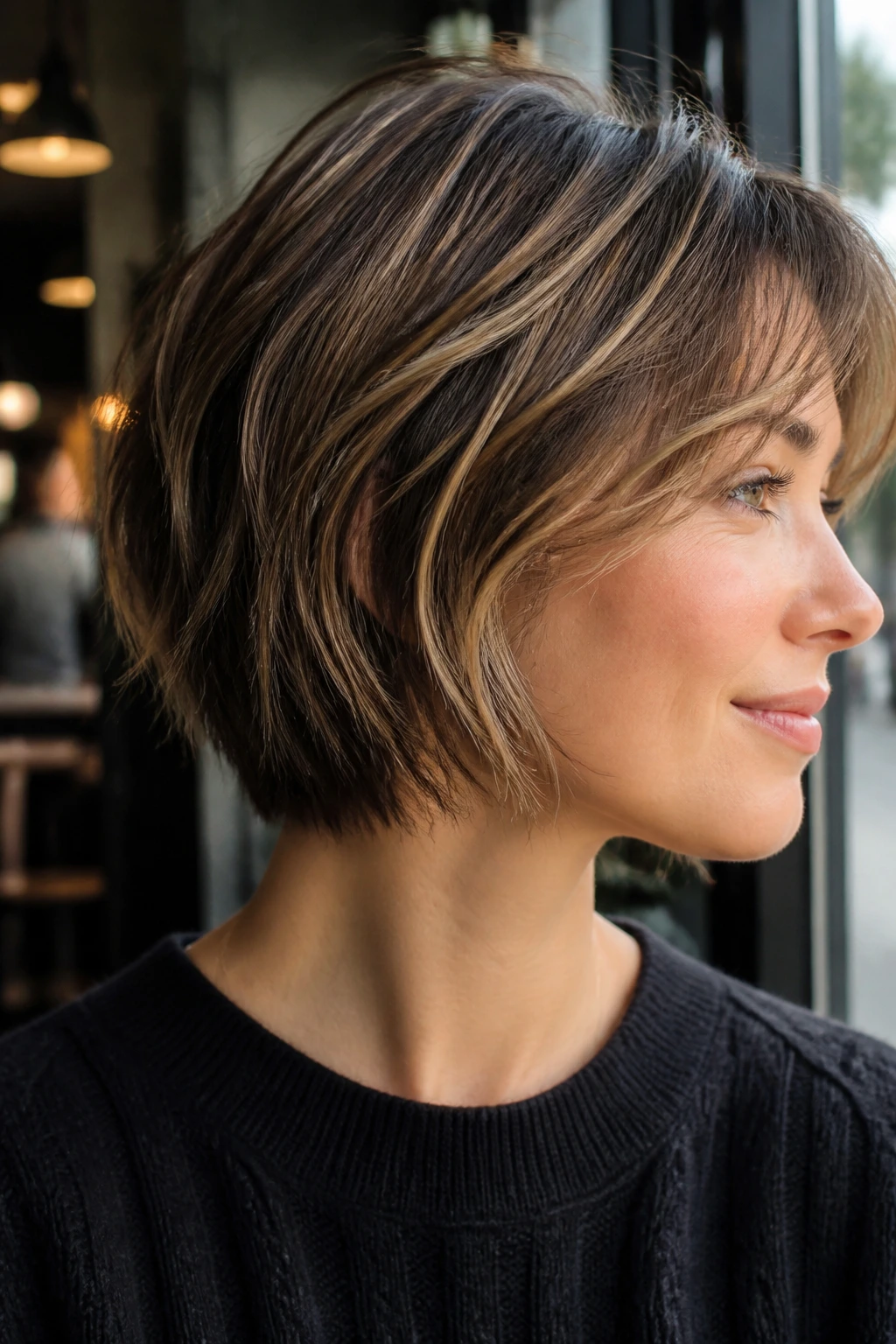
Sometimes, the cut is secondary to the color. A wispy, lightly layered bob looks twice as good when paired with “ribbon” highlights. These are strategically placed lighter pieces that follow the path of your layers. When the hair moves, the light catches these highlights, making the layers look deeper and more voluminous.
Why Highlights Change Everything
Single-process color can sometimes look flat, which makes a layered bob look like a generic brown or blonde block. By adding dimension through highlights or balayage, you emphasize the “cut” of the layers. It’s like adding a highlight and contour to your face, but for your hair.
Preservation
- Use a color-safe, sulfate-free shampoo to prevent the highlights from turning brassy.
- A gloss treatment every 6 weeks will keep the hair looking shiny and prevent the “dry” look that can sometimes accompany lightened ends.
18. The “Undone” Beach Bob

We call this the “undone” bob because it looks like you’ve been at the beach for three days—in the best way possible. It features long, face-framing layers and a slight bend in the mid-lengths. It’s the ultimate low-effort, high-impact style.
How to Get the Texture
The secret isn’t just the cut; it’s the styling technique. Use a 1.25-inch curling iron and wrap your hair around the barrel, but leave the last two inches of the ends sticking out. By not curling the ends, you maintain that “lived-in,” modern feel.
The Final Touch
- Once you’ve curled the whole head, spray with a texturizing salt spray.
- Turn your head upside down and give it a good shake.
- Don’t touch it again. The more you manipulate it, the more “polished” it becomes, which defeats the purpose of the “undone” aesthetic.
Final Thoughts
Stepping into the world of short hair is a process of discovery. You might think you want a sharp, blunt bob, only to find that your texture demands the soft, layered shag. That is the beauty of this transition. It isn’t about forcing your hair into a mold that doesn’t fit; it’s about finding the structural cut that works with your natural growth patterns, your wave, and your daily routine.
The most successful haircuts are the ones you don’t have to fight with in the mirror every morning. If you find yourself spending more than 15 minutes styling your bob, you might be working against your hair’s natural inclination rather than with it. Don’t be afraid to ask your stylist for a change on your next visit—sometimes, simply shifting the weight or changing the internal layering is all it takes to make a familiar cut feel brand new again.