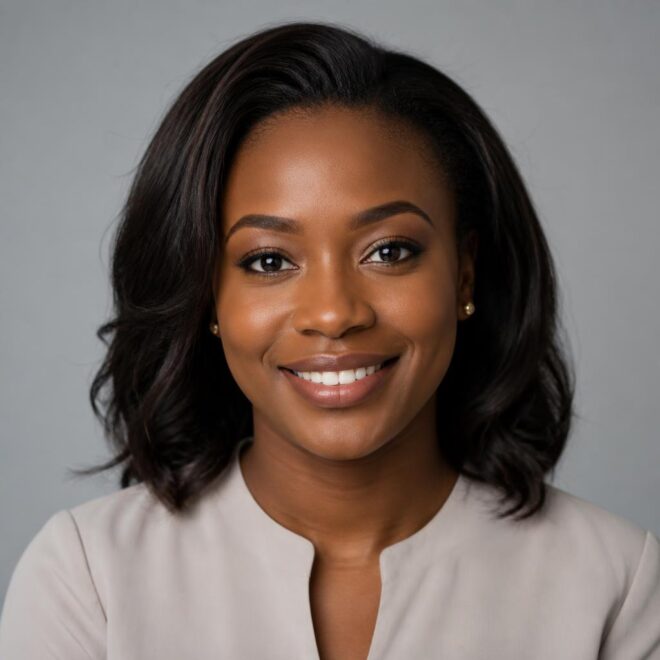


The weight of long hair can be a death sentence for fine strands. When your hair is thin, every additional inch acts like an anchor, pulling it flat against your scalp and robbing it of the natural volume you’re desperately trying to cultivate. We have all been there—spending thirty minutes with a round brush and a volumizing mousse only to have the entire effort collapse before you’ve even reached your destination. A well-executed bob acts as a structural reset for fine hair. By removing the dead weight at the ends, you encourage the hair to spring back, creating an illusion of density that long, wispy ends simply cannot provide.
Choosing the right cut, however, is a game of millimeters. If you go too blunt, you risk making the hair look sparse; if you layer too aggressively, you might end up with thin, frizzy bits that refuse to cooperate. The goal is to create interior support. You want a shape that sits on the shoulders or jawline with enough internal movement to look intentional, rather than just limp. This list explores the specific variations that play to the strengths of fine hair, focusing on techniques that maximize thickness and keep your styling routine manageable.
1. The Blunt Jaw-Length Bob
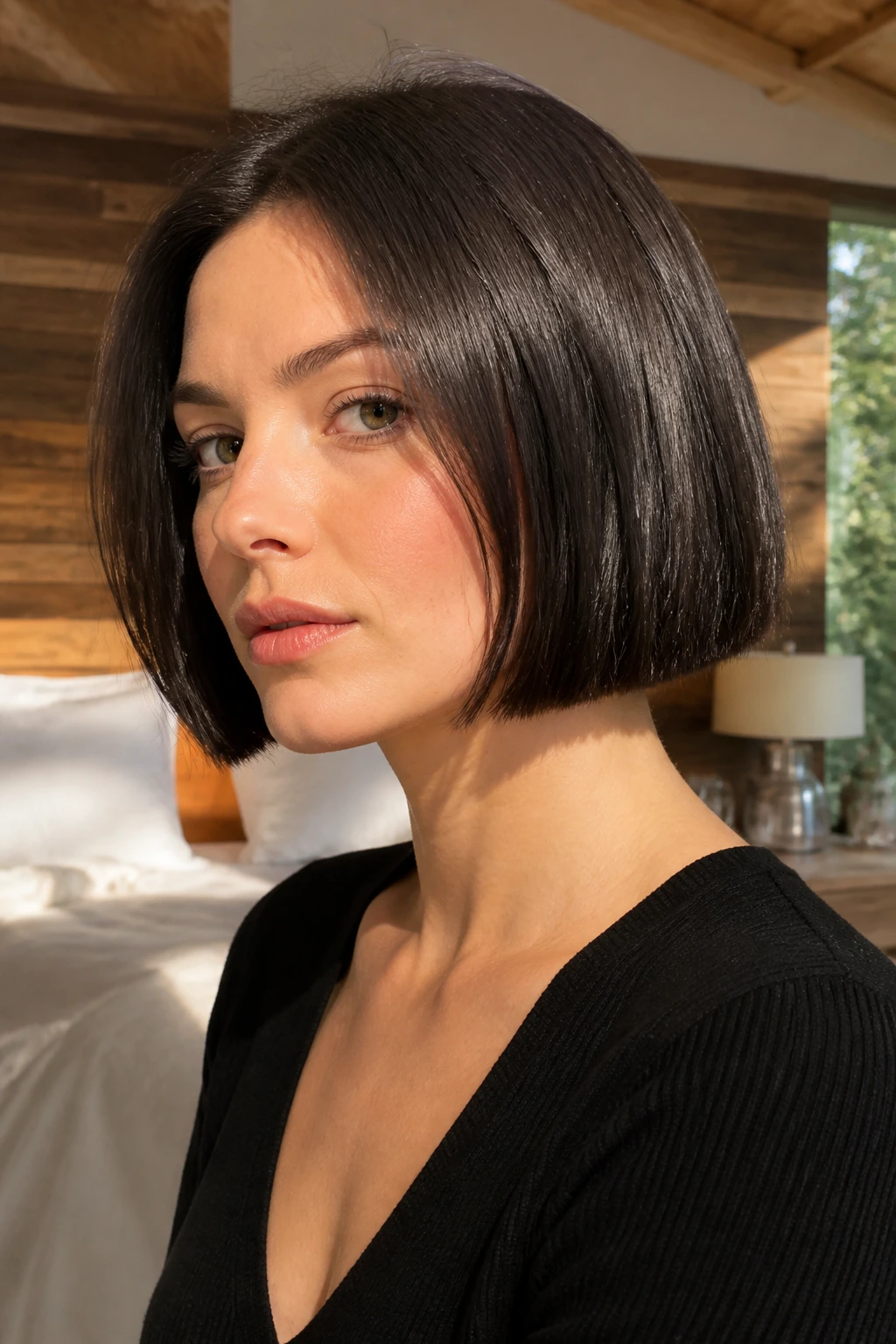
There is something undeniably powerful about a sharp, clean perimeter. By cutting the hair to a precise, blunt line at the jaw, you remove the weakest, thinnest parts of your strands—the ends—which often look translucent when left to grow long. This creates the visual effect of a thicker, denser baseline.
Why This Works for Fine Texture
Fine hair often suffers from “see-through” ends. A blunt cut forces all the hair to fall at the same point, which makes the ends appear solid and healthy. Even if you don’t have a massive amount of hair, the compact nature of a jaw-length blunt cut makes it look like you do.
Essential Styling Tip
Use a flat iron to create a very slight bend under, or leave it completely straight. Avoid excessive layers, as they will compromise the density of the perimeter. A high-shine serum applied only to the mid-lengths and ends helps to reflect light, which makes the hair look healthier and thicker.
2. The Textured A-Line Bob
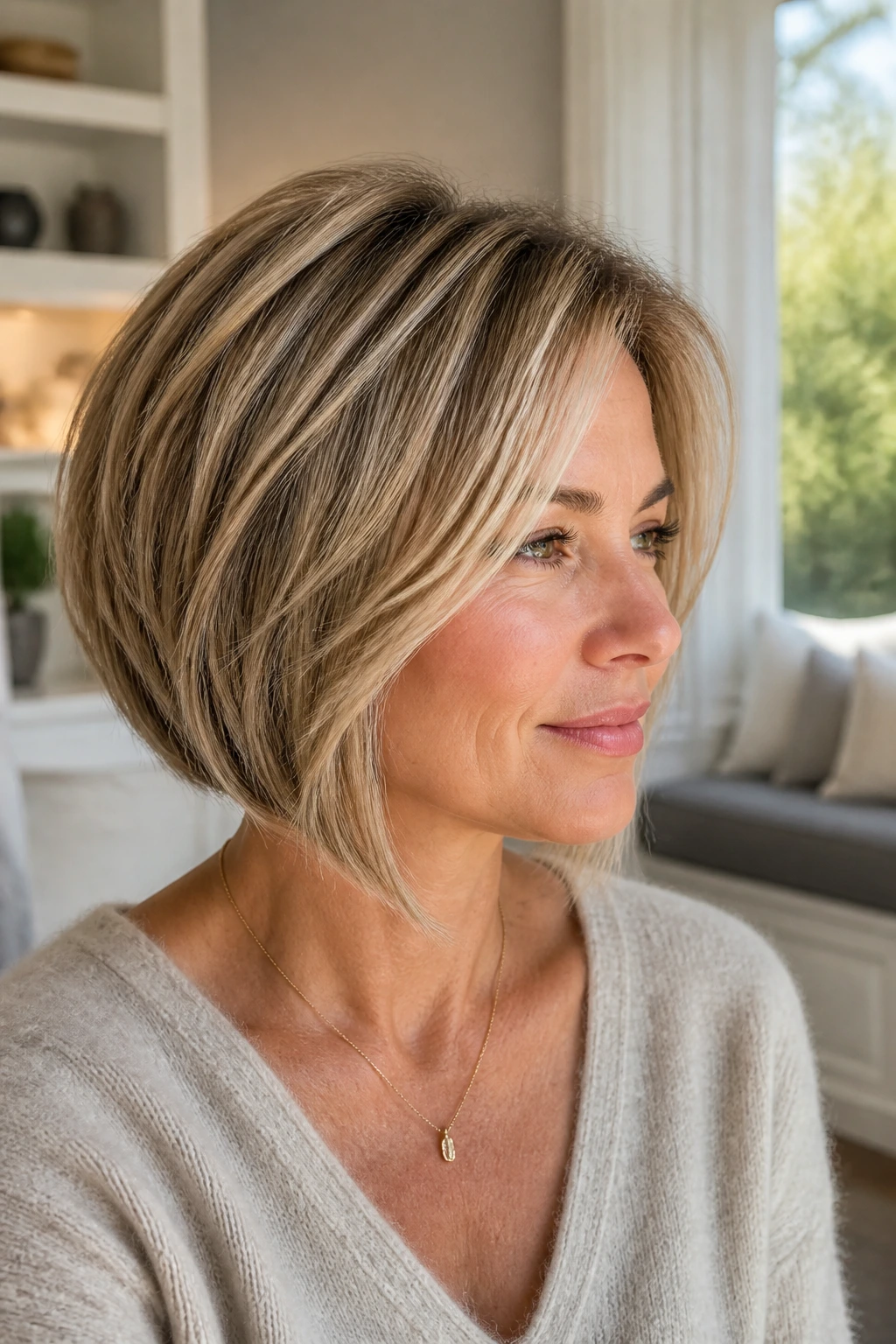
If you feel like a straight-across bob makes your face look too round or your hair too flat, an A-line is your best friend. This cut is shorter in the back and gradually gets longer toward the front, which provides an immediate lift to the crown while framing the face.
Managing the Gradation
The secret here is to keep the transition subtle. You want a gentle slope, not a dramatic, jagged wedge. The added length in the front allows for more styling versatility, but the shorter back section keeps the weight off your neck and prevents the hair from drooping.
Texture and Movement
Because fine hair can sometimes look like a curtain, the slight angle breaks up the silhouette. It creates movement that feels natural. When you add a few light, texturizing sprays, the hair will naturally catch and hold that shape better than a single-length cut.
3. The French-Girl Bob with Soft Bangs

The French-girl bob is all about looking perfectly undone. It usually sits right around the lips or chin, often featuring a bit of natural wave and a set of wispy, see-through bangs that draw attention to the eyes rather than the thinness of the hair.
The Power of Bangs
For those with fine hair, adding bangs creates a front-facing focal point. It removes the pressure from the rest of the head to look voluminous. When you have a fringe, the hair distribution shifts, making your mane look more balanced across the entire head.
The “Undone” Aesthetic
Do not reach for the hairspray. This look is meant to be slightly messy and lived-in. A light sea salt spray or a bit of dry shampoo at the roots gives it the necessary grip. The idea is that it should look like you just woke up and shook your head.
4. The Rounded Stacked Bob
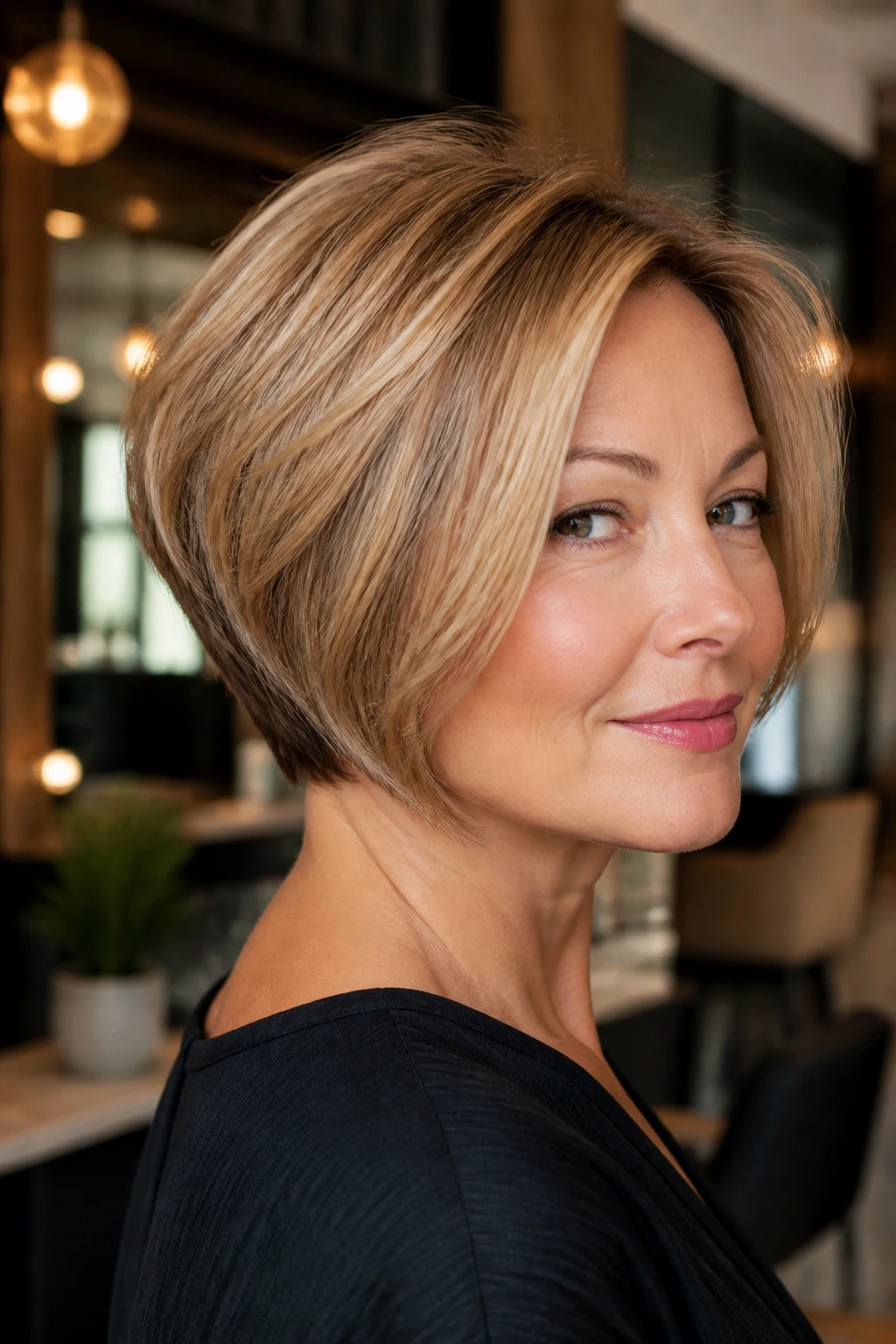
If you are missing volume at the crown, the stacked bob is a classic engineering trick. By cutting short, graduated layers in the back, your stylist creates a “shelf” of hair that pushes the rest of the volume upward and outward.
Why It Creates Instant Volume
The “stack” is physically building support where there usually isn’t any. For those with naturally flat hair, this creates a rounded profile that looks full from every angle. It turns the back of your head into a structural feature rather than a flat, limp patch.
Maintenance Considerations
Be warned: this style requires regular trims. As the short, stacked layers grow out, the shape loses its integrity and the volume disappears. Expect to visit the salon every six to eight weeks to keep the lift looking crisp and intentional.
5. The Long Bob (Lob) with Invisible Layers
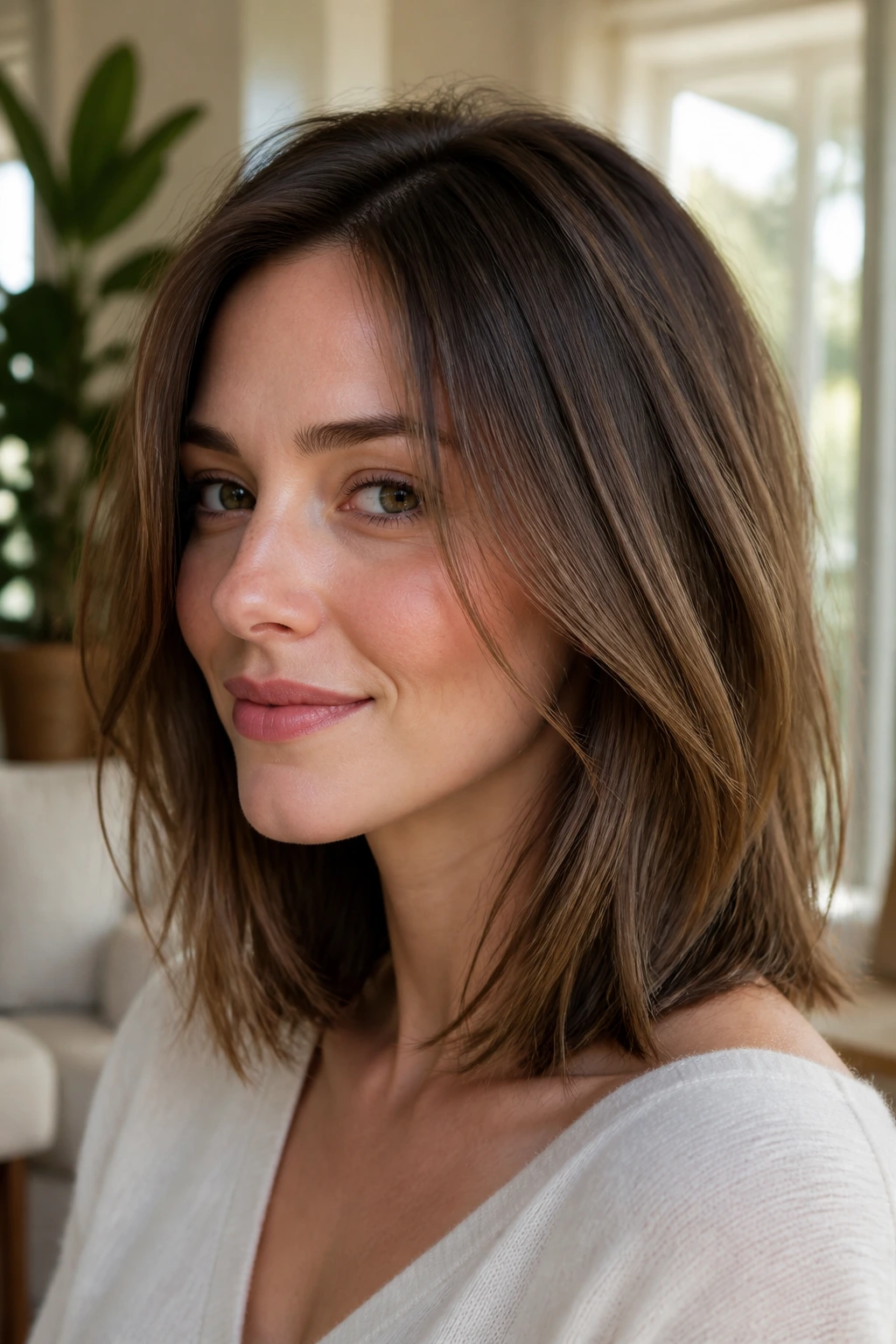
Sometimes you aren’t ready to commit to a chin-length cut. The lob is the perfect middle ground, sitting just above the collarbone. To keep it from falling flat, ask your stylist for “invisible” layers—tiny, internal snips that remove weight without creating choppy lines.
What Are Invisible Layers
These are not traditional, visible steps in your haircut. Instead, the stylist uses thinning shears or point-cutting techniques inside the bulk of the hair. This takes away enough weight so that your hair doesn’t pull itself flat, but the surface remains smooth and uniform.
Styling for Maximum Bounce
A big, round-brush blowout is the gold standard for this style. By lifting the roots while the hair is damp, you ensure that the lob has a “C-shape” curve rather than a flat, dead-straight look. It provides a sophisticated, polished appearance suitable for any setting.
6. The Choppy Wavy Bob
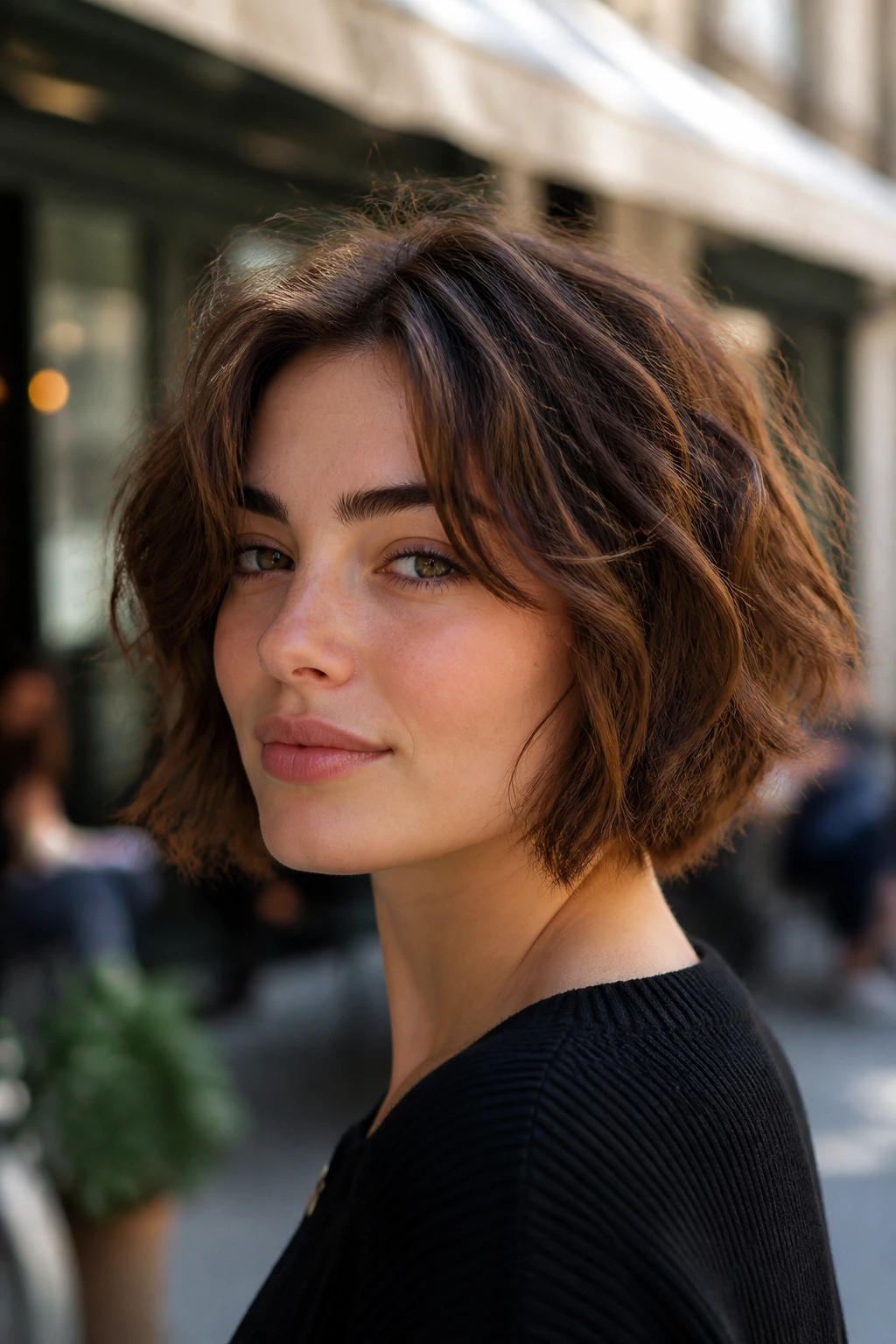
If your hair has even a hint of a natural wave, lean into it with a choppy cut. Using a razor or point-cutting, your stylist can create jagged, irregular ends. This texture helps hair hold onto itself, creating a dense, clumped-together appearance that masks fine strands.
Enhancing Your Natural Wave
Do not fight your natural pattern. Apply a curl-defining cream or mousse to damp hair and let it air-dry. The choppiness of the cut will encourage the strands to group into small waves, which naturally makes the hair look twice as thick as it would when straightened.
When to Avoid It
If your hair is stick-straight and fine, this style can sometimes look a bit stringy. It works best for those who have a little bit of bend. If you lack natural movement, you will need to add it using a curling wand on low heat.
7. The Deep Side-Part Bob
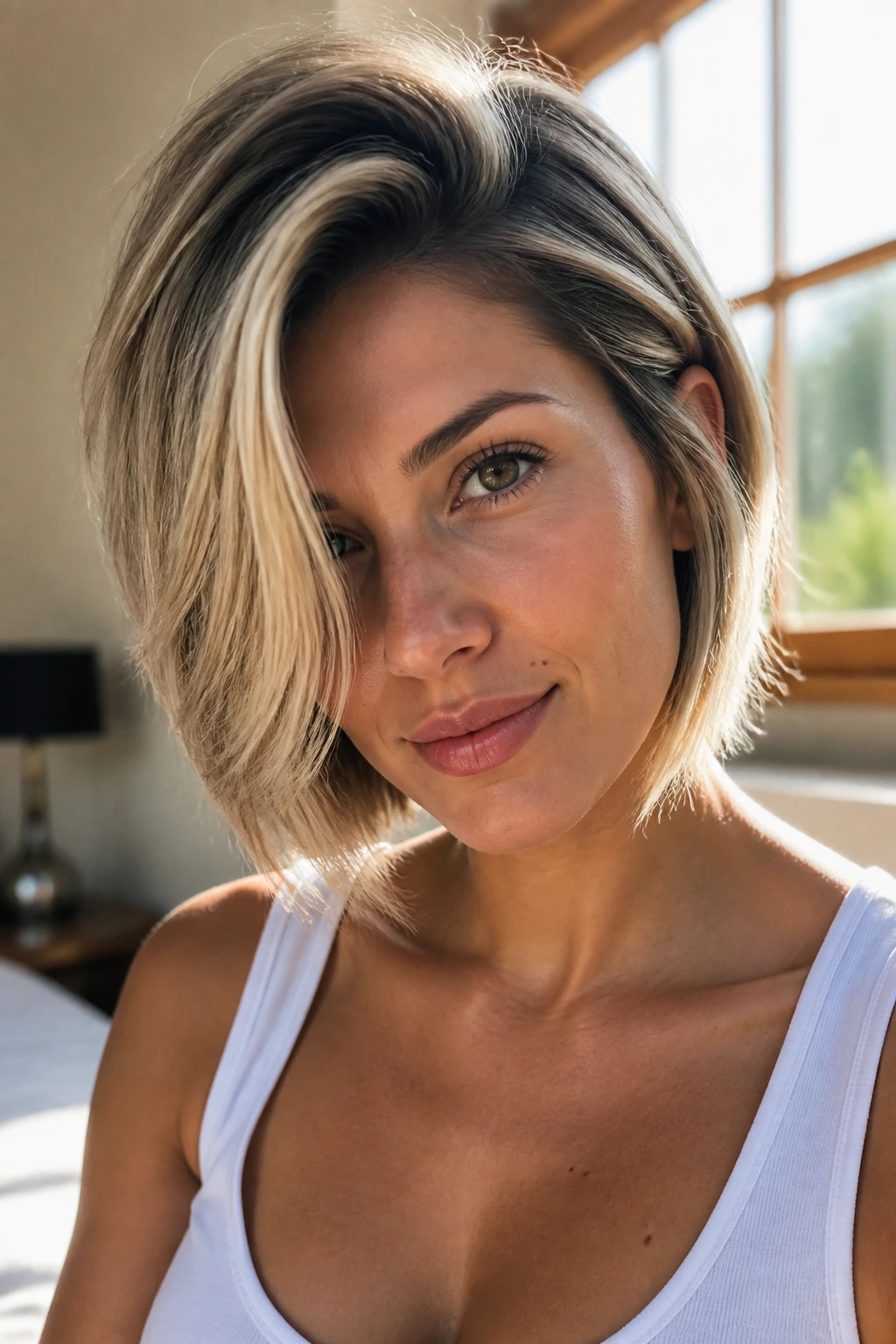
This is less a haircut and more a styling strategy, but it works wonders for fine hair. A deep side part instantly creates a massive “sweep” of hair across the forehead, which forces the roots to stand up and adds volume to the top of the head.
The Physics of the Flip
When you part your hair in the middle, it naturally lays flat on both sides. A side part, however, forces the hair at the root to defy gravity, creating a natural bump. It is a simple, no-cost way to make your hair look fuller in less than ten seconds.
Proportions and Balance
The beauty of the side part is how it changes your face shape. It creates an asymmetrical line that is very flattering. For fine hair, the “heavy” side of the part is where your density is concentrated, which creates a rich, full-looking curtain of hair.
8. The Shaggy Bob
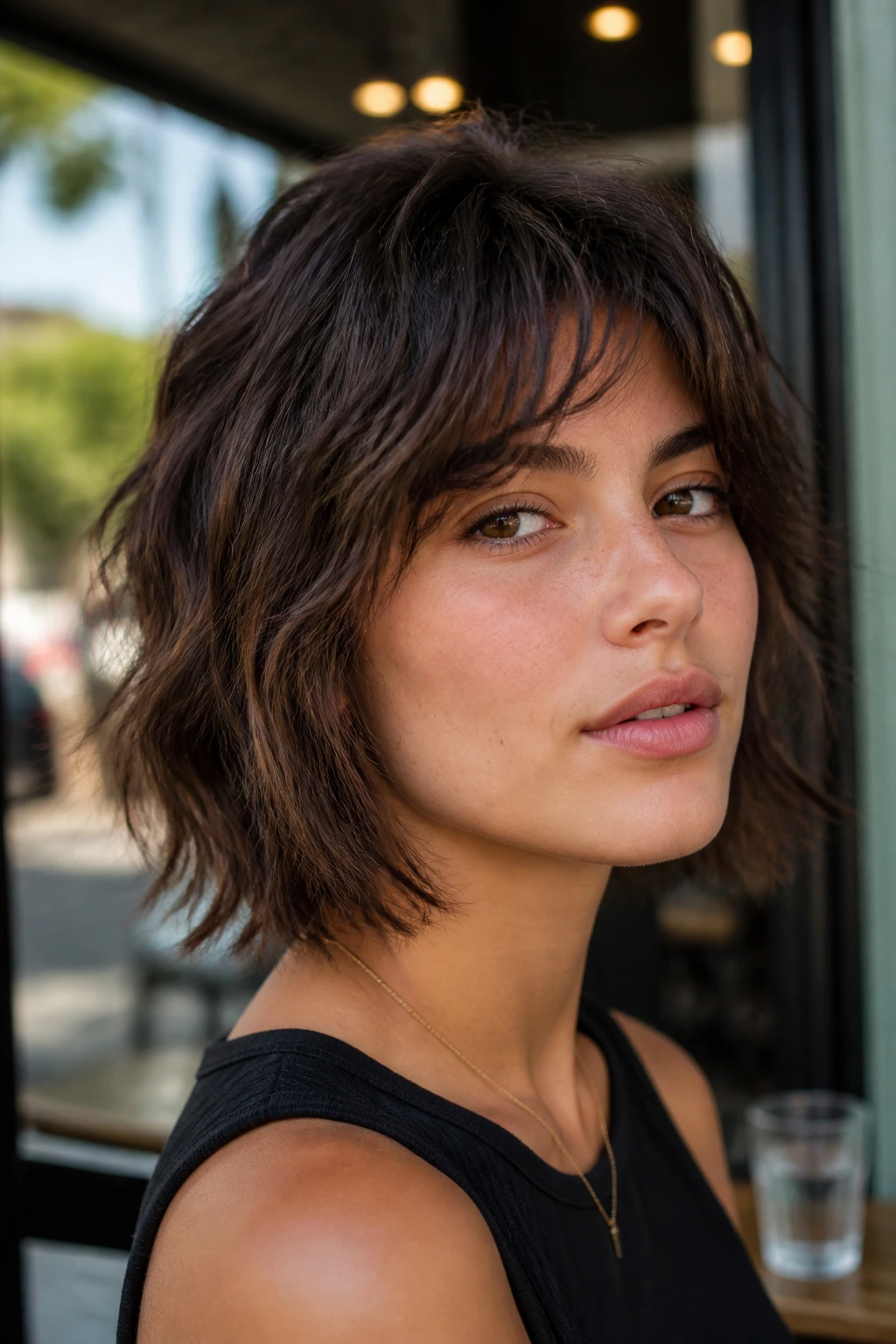
The shag is back, and it is a gift for thin hair. It relies on short, choppy layers throughout the entire head, which creates a messy, voluminous, and highly textured shape that thrives on imperfection.
Why Shags Help Fine Hair
Because the shag is meant to look textured and slightly disheveled, you don’t need thick hair to make it look “full.” The layers build volume by creating various lengths that stack on top of one another. It is the ultimate “fake it till you make it” style.
Styling Without the Frizz
The trick here is to use a texturizing paste. Emulsify a tiny amount in your palms and work it through the ends. Avoid heavy oils or creams, as they will make your fine hair clump together and look oily instead of shaggy.
9. The Curly Bob with Face-Framing

If you have natural curls or coils, a bob is often easier to manage than long hair. By keeping the length around the chin or shoulders, you prevent the weight of the hair from stretching out your curls and making them look saggy.
Controlling the Shape
Ask for internal layering that is customized to your curl pattern. This prevents the dreaded “triangle shape” where the hair gets thin on top and massive at the bottom. You want the volume to be distributed evenly from top to bottom.
Hydration is Key
Fine curls are delicate. Use lightweight, moisturizing products that won’t weigh the hair down. When hair is well-hydrated, the curls bounce better, which contributes to an overall appearance of fullness and health.
10. The Asymmetrical Bob
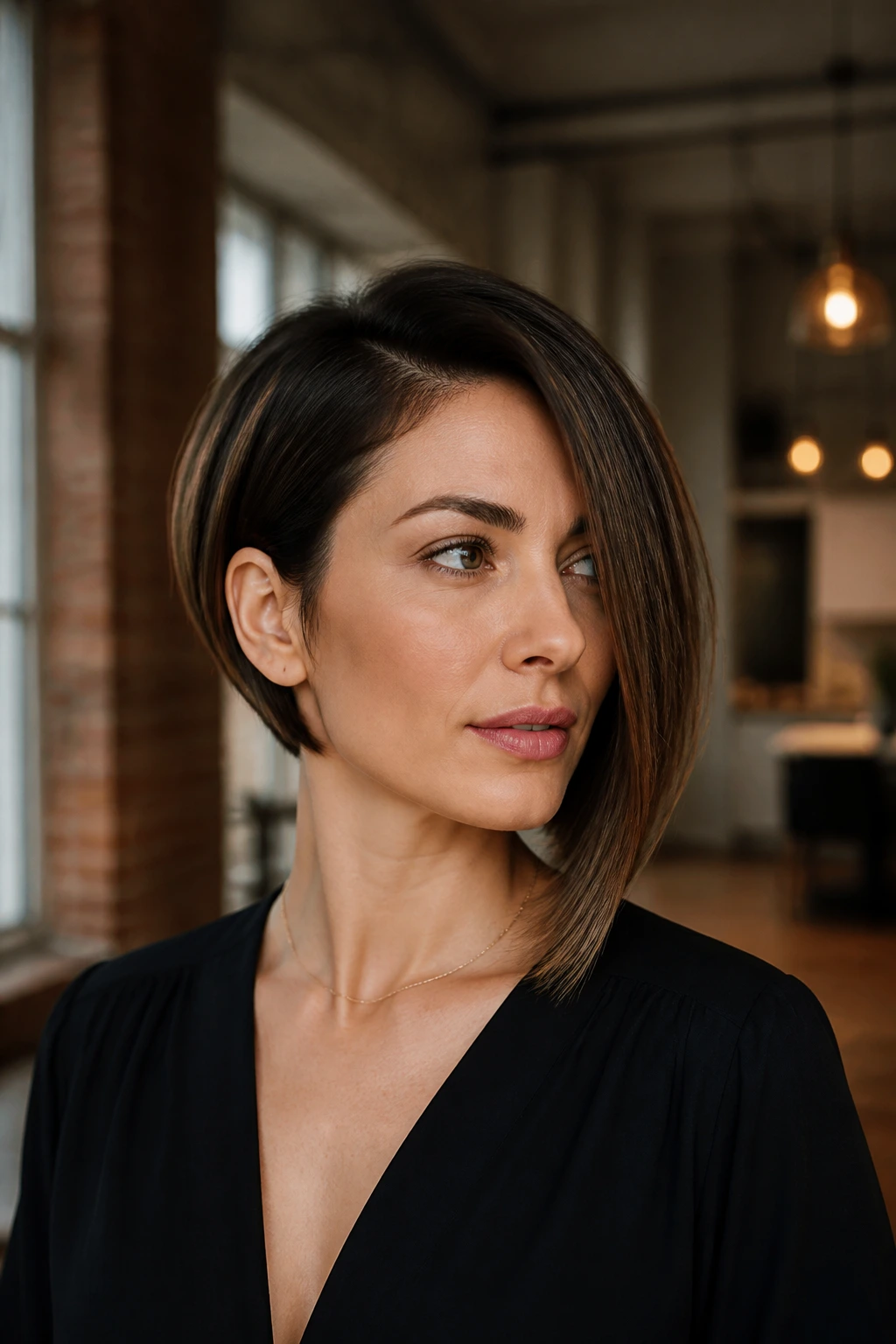
One side is shorter, and the other is longer. This style is fantastic for fine hair because it creates a clear focal point. The sharp line of the cut creates a bold statement, and the asymmetry adds interest to an otherwise simple look.
Focusing on the Line
Because the cut itself is the main event, you don’t need a lot of styling. Ensure the blunt lines are cut with precision. If the edges are jagged or uneven in a messy way, the cut loses its impact.
Who Should Try This
This look is great for those who want a modern, edgy vibe. It’s also very practical, as the shorter side keeps hair away from your face and neck, while the longer side offers just enough length to tuck behind an ear.
11. The Soft-Layered Bob
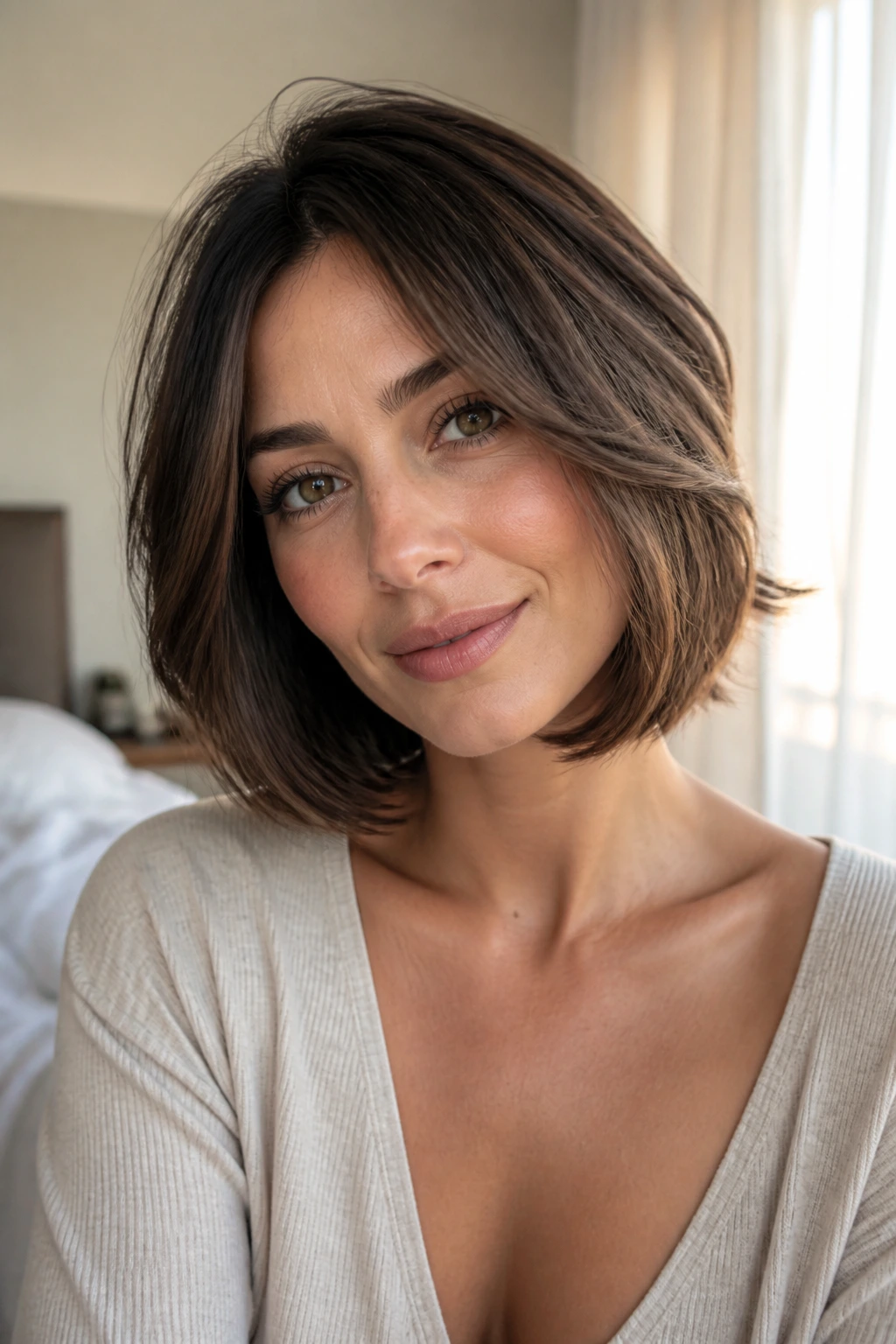
For those who are scared of the blunt look but also don’t want a full-blown shag, a soft-layered bob is the solution. It includes light, face-framing layers that start below the chin, keeping the hair feeling bouncy and light.
The Difference in Layering
These layers are designed to be soft and blended, not choppy. They are there to create movement, not to build a shelf of volume. It is a very feminine, gentle style that looks great on almost every face shape.
Perfecting the Blow-Dry
Use a medium-sized round brush to smooth these layers back and away from the face. This creates a soft, sweeping motion that looks very professional and polished, perfect for those who want a low-maintenance, everyday style.
12. The Collarbone Bob (Lob)
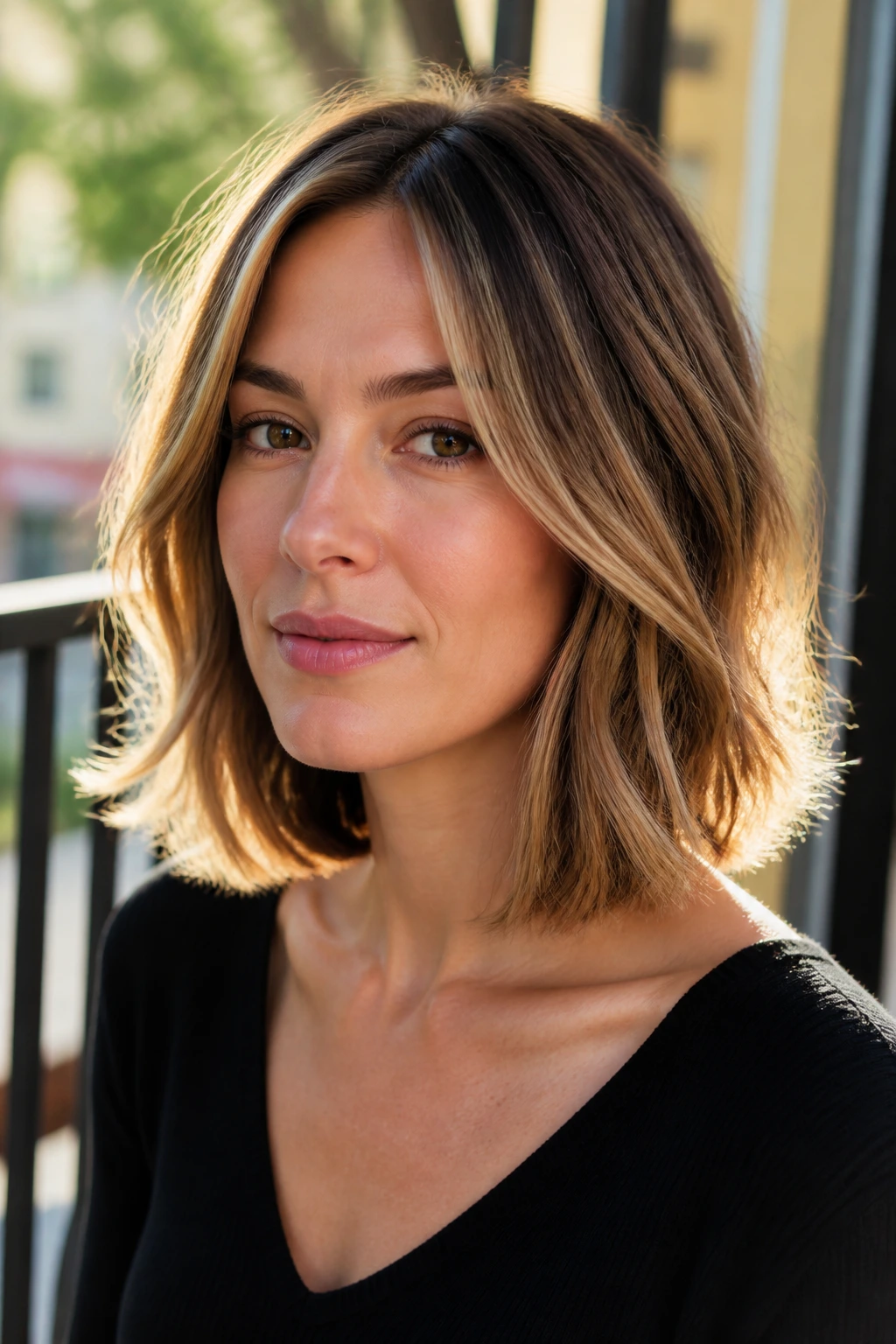
The collarbone bob is arguably the most versatile haircut in existence. It hits the perfect length: long enough to put into a small ponytail, but short enough to keep the ends healthy and thick.
Maximizing the Perimeter
At this length, you have the option of keeping the ends very blunt. Because it sits on your shoulders, the hair is forced to flip out slightly, which creates a natural, outward-moving volume that looks great without extra styling.
Strategic Color
If your hair is fine, consider adding some light highlights. The contrast between darker roots and lighter ends creates an optical illusion of depth and thickness that is difficult to achieve with a single, solid color.
13. The Undercut Bob
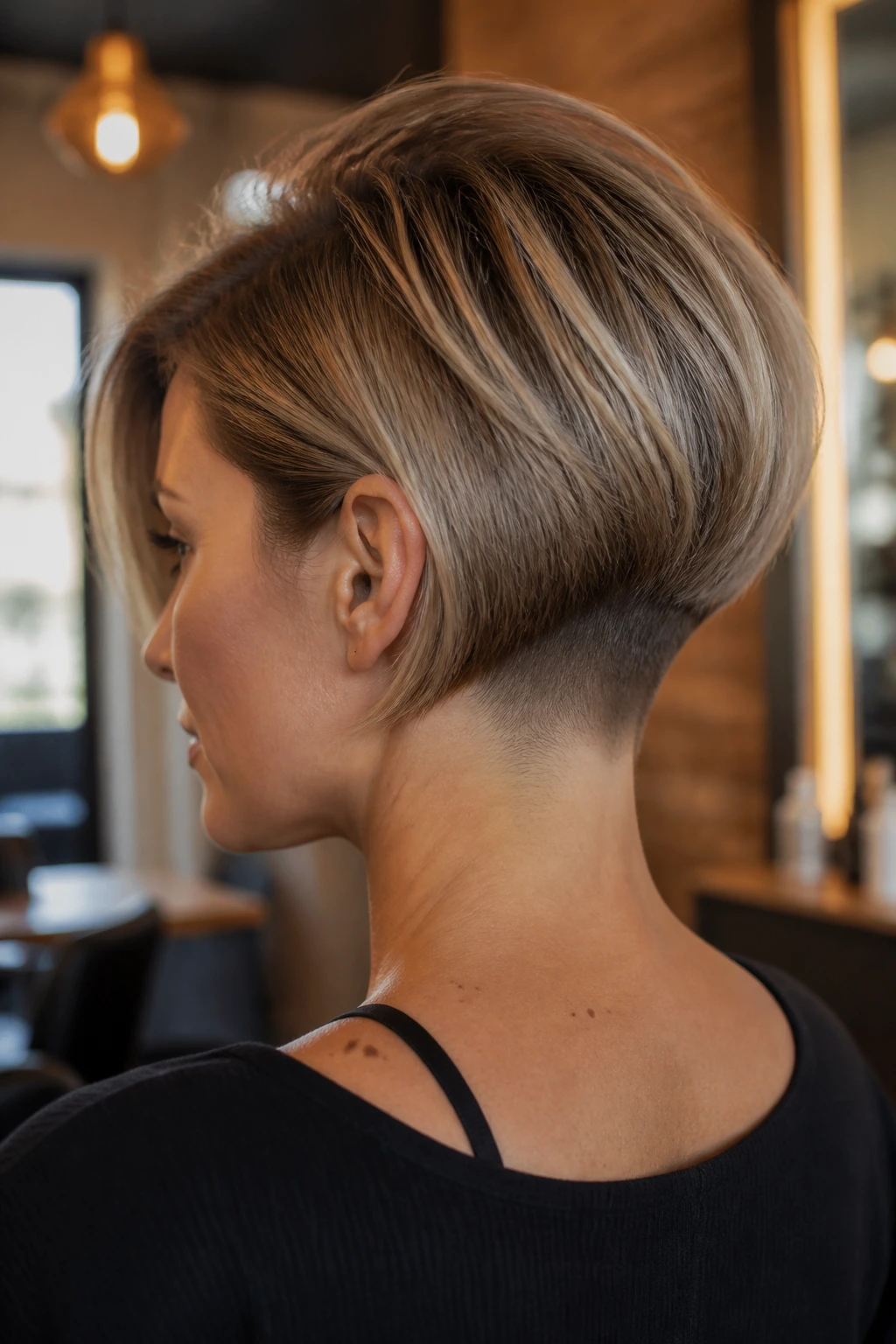
This is for the brave. By shaving or cutting the bottom layer of hair at the nape of the neck very short, you remove the section of hair that usually just goes flat. The top layer of hair then falls over this short, dense foundation, effectively propping itself up.
The Physics of the Prop
Think of the undercut as a hidden base. Because that bottom layer isn’t there to hang limply, the hair above it has more room to move. It creates a seamless, full-looking shape that stays lifted throughout the day.
Hidden Detail
The best part is that from the front and sides, it looks like a normal, chic bob. The surprise is hidden underneath. It’s a brilliant way to deal with cowlicks at the nape or hair that just refuses to cooperate in the back.
14. The “Bottleneck” Bob
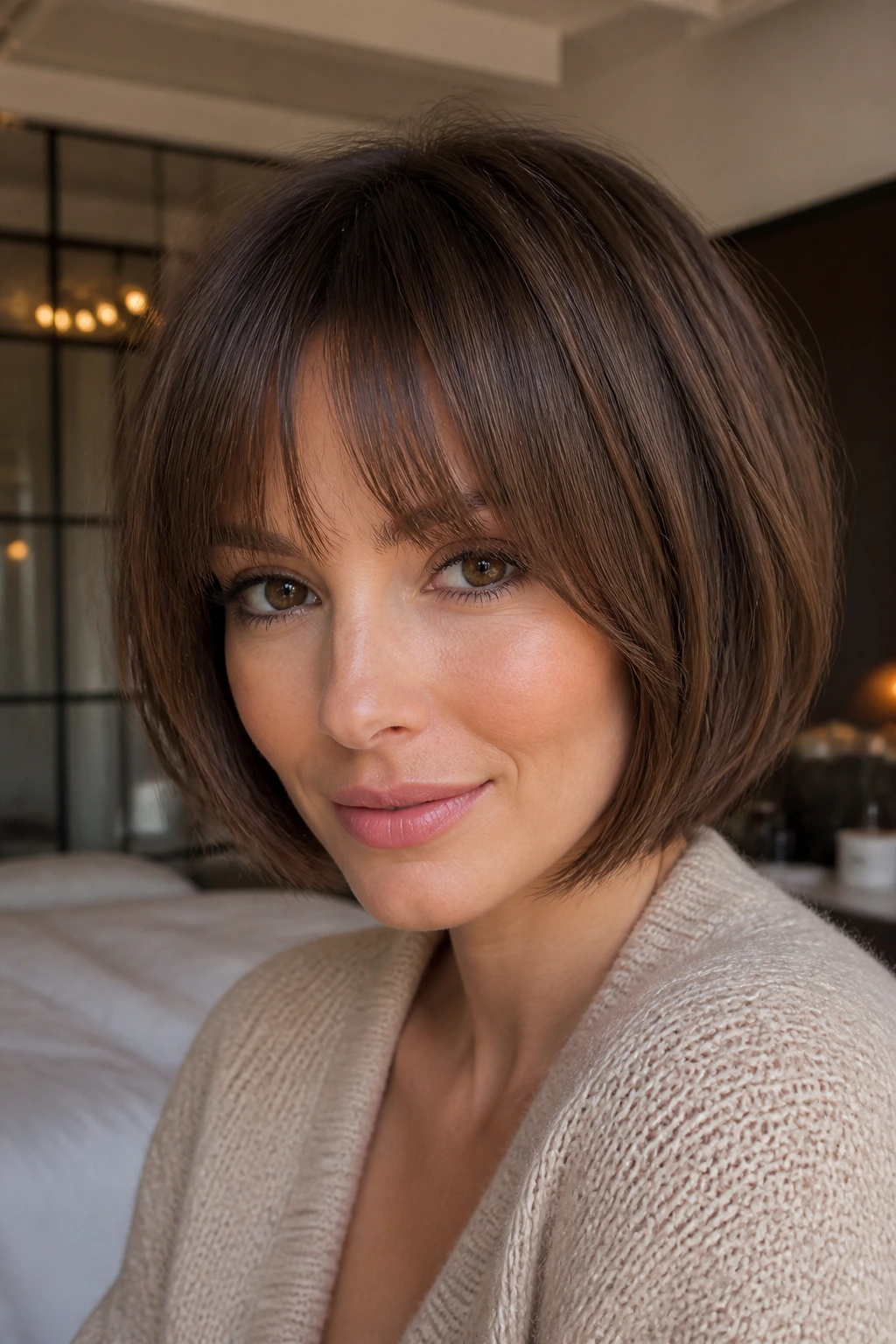
Named after the shape of a bottle, this style features a fringe that is shorter in the middle and longer on the sides, perfectly blending into the rest of the bob. It frames the eyes and cheekbones beautifully.
The Softening Effect
Fine hair can sometimes look harsh if it’s too blunt. The bottleneck fringe softens the face, making the overall look more approachable. It creates a frame that makes the hair appear to have more density near the forehead and temple area.
Styling the Fringe
You will need a small round brush and a bit of patience. Drying your fringe toward your face first, then flipping the ends out, helps it blend into the side sections of your hair seamlessly. It’s a very intentional, high-fashion look.
15. The Sleek, High-Shine Bob
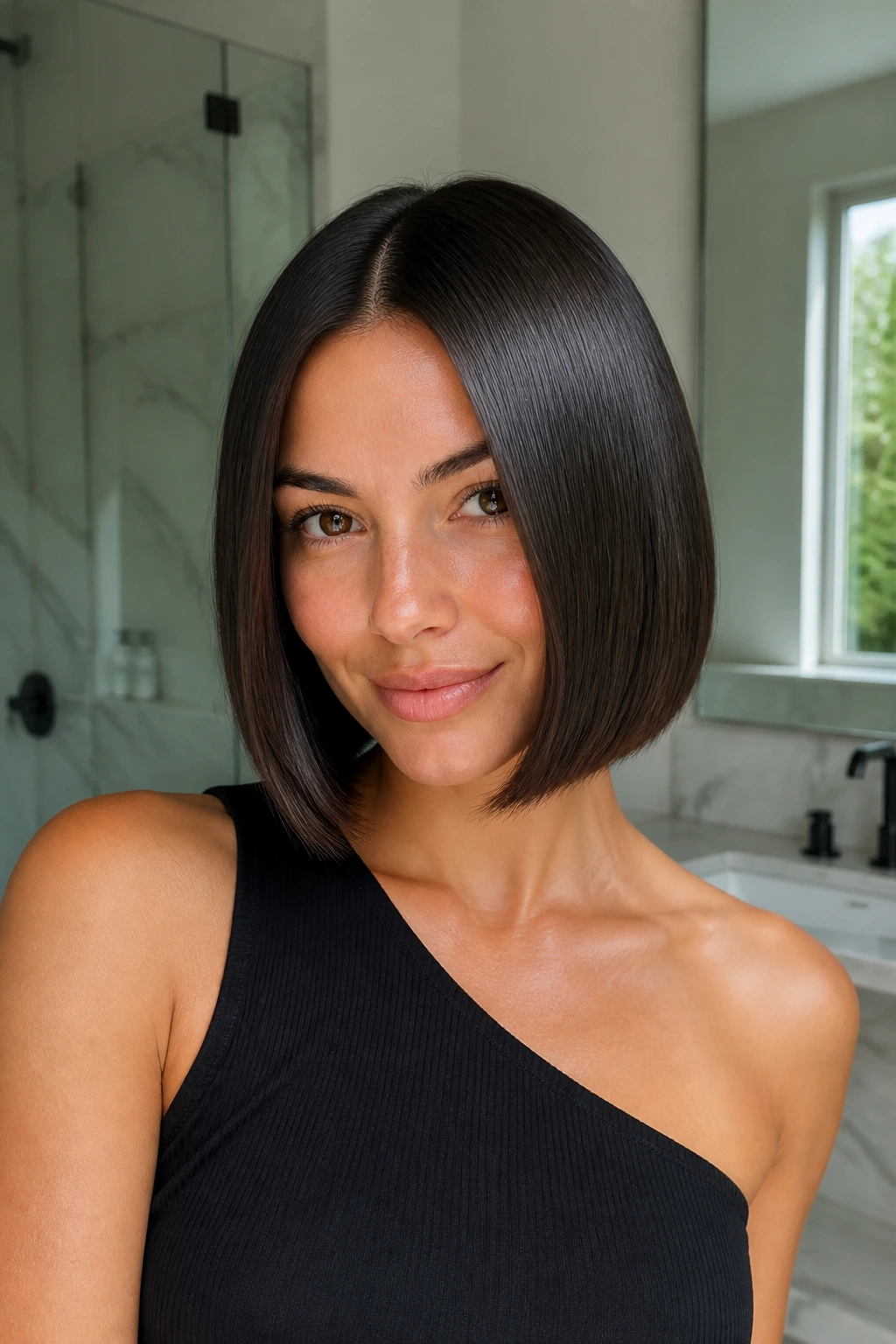
Sometimes the best way to handle fine hair is to lean into the sleekness. A perfectly straight, ultra-shiny bob looks expensive and intentional. It highlights the health of your hair rather than the volume.
Achieving the Sheen
Use a heat-protectant spray that includes a glossing agent. A ceramic flat iron helps to close the cuticle, which eliminates flyaways—the enemy of fine hair. When the hair is perfectly smooth, it looks like a singular, dense piece of silk.
Avoiding Flatness
To keep it from sticking to your skull, apply a root-lifting spray while the hair is damp. Flip your head upside down during the final minute of blow-drying to ensure that the roots stand up. You want a sleek look, not a flat, greasy one.
16. The Nape-Grazing Bob
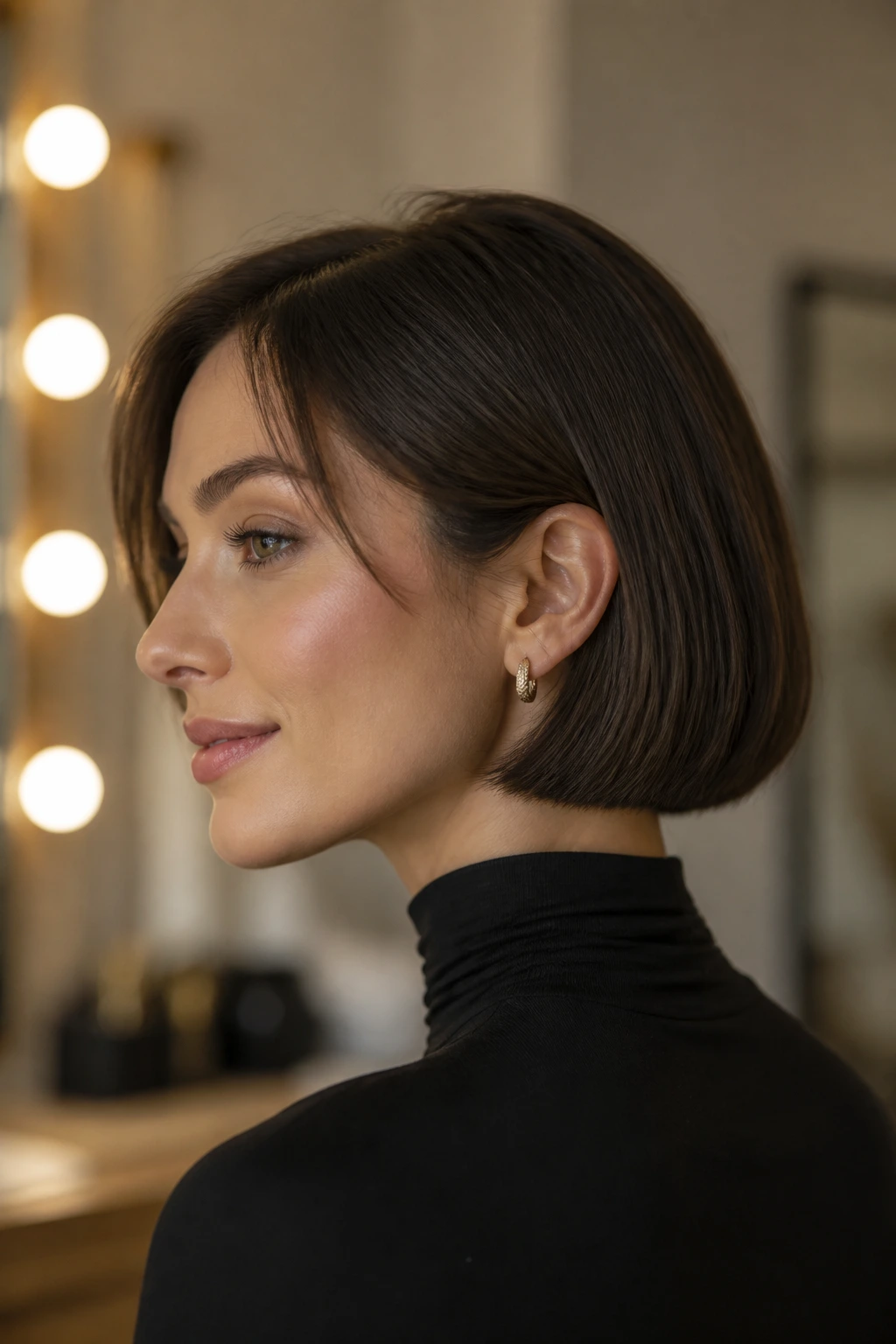
Cut this bob to hit exactly where your hair meets your neck. It’s a sophisticated look that emphasizes the line of the jaw and the length of the neck. It is extremely chic and removes almost all the weight, making it ideal for those who struggle with fine hair.
Highlighting the Neckline
This length works well with high-collared clothing and jewelry. It draws the eye upward, which is always a bonus when you want to look put-together. Because it’s so short, you never have to worry about the hair tangling or losing its shape during the day.
Daily Care
It is a “wash and wear” style for many. A quick blast with a hairdryer and a tiny bit of texturizing clay at the roots is usually all you need. It is efficient, stylish, and perfect for a busy lifestyle.
17. The Blunt Bob with Invisible Color
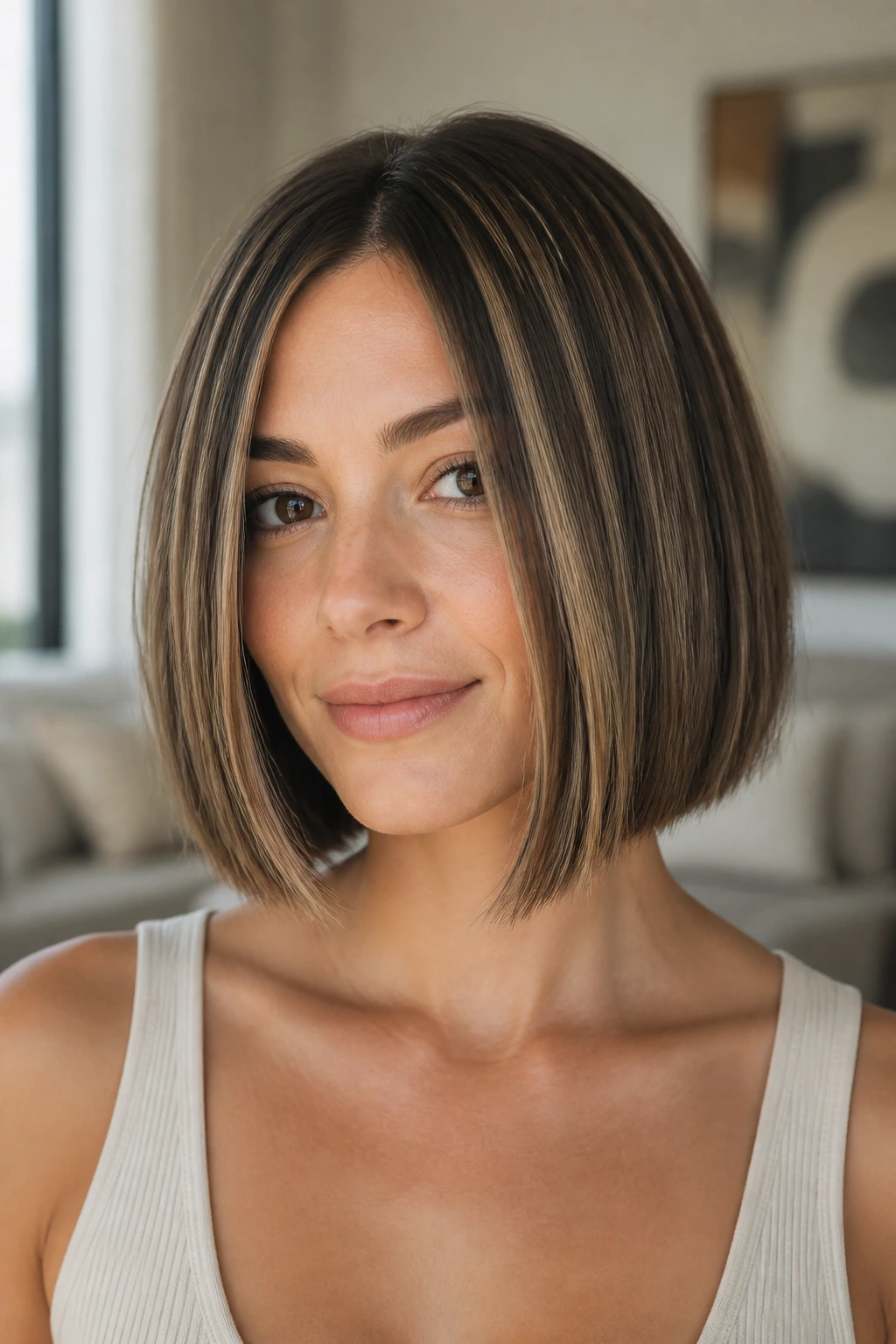
If you want to trick the eye, color is just as important as the cut. A blunt bob combined with “ribbon” highlights—thin, painted-on streaks of color—creates a sense of dimension that makes the hair appear much thicker than a single-tone look would.
Dimension is Density
Solid colors, especially dark ones, can make fine hair look like a flat sheet. By adding subtle, natural-looking highlights, you break up that uniformity. The human eye perceives those varying shades as depth, which translates to the brain as “thicker hair.”
Maintaining the Look
Ensure your stylist uses low-impact coloring techniques. Because fine hair is already fragile, you don’t want to use heavy, stripping bleach. Gloss treatments are a great alternative to permanent color, as they add shine without damaging the cuticle.
18. The “Pob” (Posh Bob)
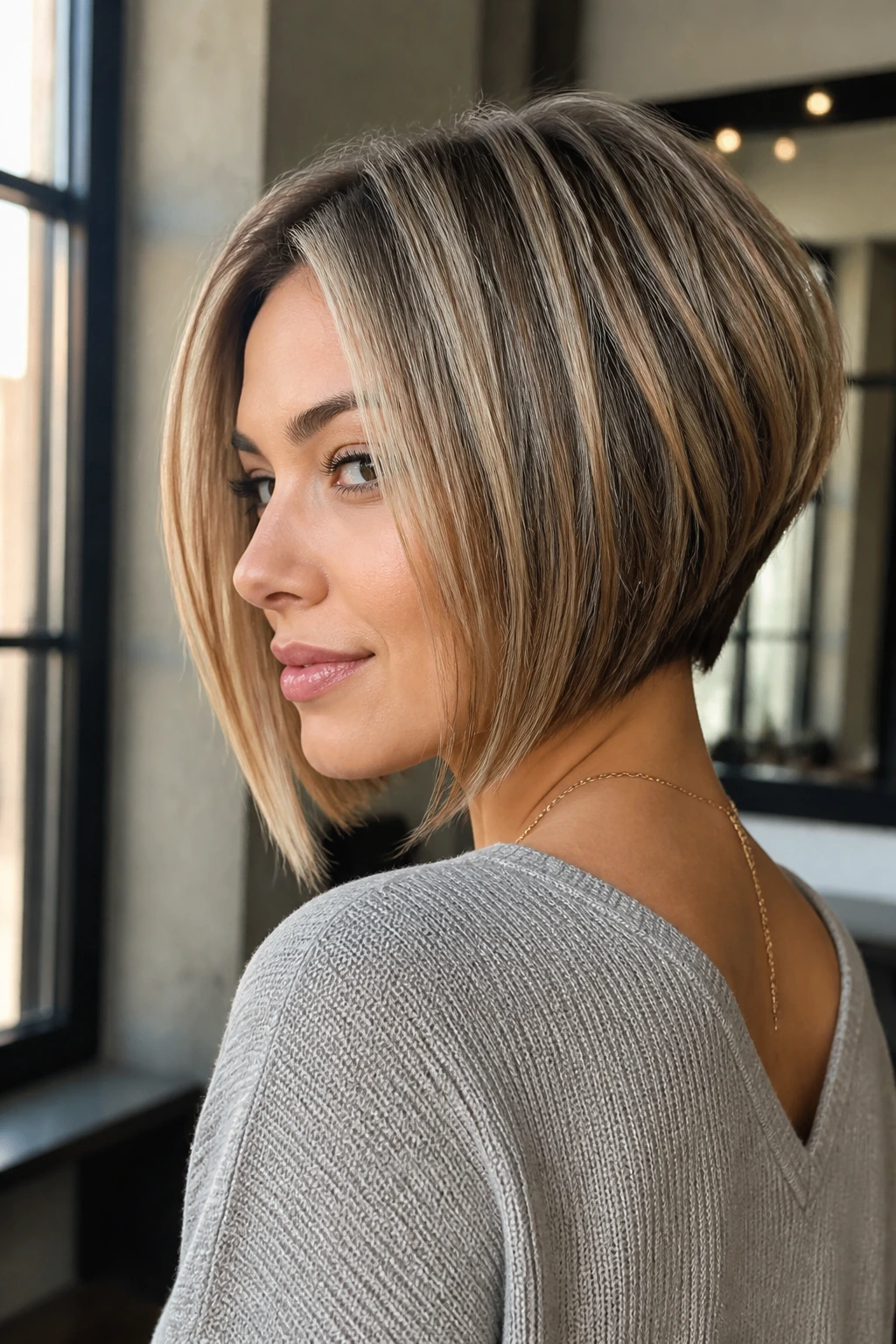
This is a classic, slightly inverted, chin-length bob. It’s been a staple for years because it works. It combines the structure of a stacked back with the framing ability of longer front pieces. It is the ultimate compromise for someone who wants style and substance.
The Versatility of the Pob
You can style this smooth and professional for work, or add a bit of salt spray for a weekend-appropriate messy look. The shape is consistent enough to look good with almost any outfit, which is why it remains a popular choice across the board.
Final Styling Advice
Whatever cut you choose, remember that fine hair thrives on the absence of heavy products. Avoid waxy pomades or thick silicones that drag the hair down. Instead, look for weightless foams, dry texturizers, and lightweight sprays. Keep your tools clean and your trim schedule consistent, and you will find that a shorter cut is not a limitation—it is a transformation.
Final Thoughts
Finding the right bob is really about understanding your specific hair type. Whether it is straight, wavy, or fine and wispy, there is a configuration of length and layer that will make your hair look its best. Do not be afraid to bring photos to your stylist, but be prepared for them to tell you that a certain look might require more styling time than you are willing to give.
The best cut is one that works with your natural texture rather than against it. If your hair is fine, prioritize the health of your ends through regular trims. It sounds counterintuitive to cut more hair off, but a blunt edge always looks fuller than a thinned-out, split-end-heavy length. Treat your hair like a fabric that needs to be cut and shaped to hang properly, and you’ll find that fine hair can be just as dramatic and beautiful as any other type.