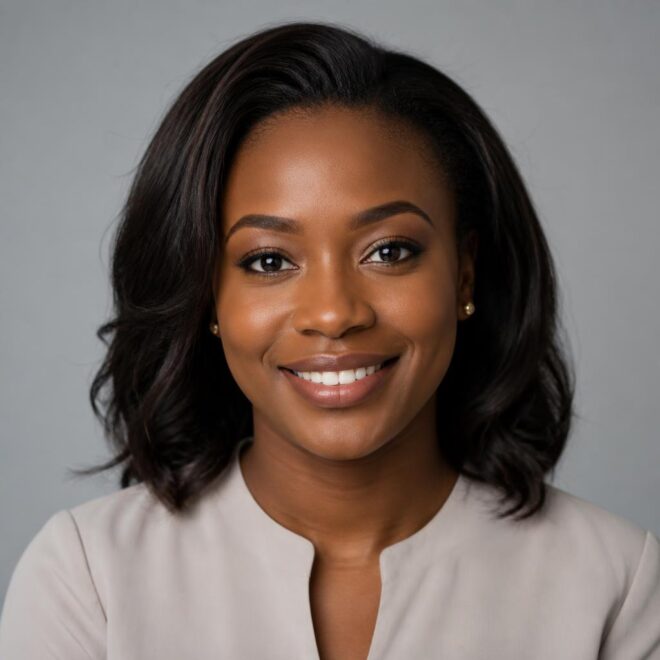


Thick hair is a beautiful, dense tapestry, but let’s be honest—it can feel like a heavy burden. When you are standing in front of the mirror, fighting with a round brush and a blow dryer that seems to be losing the battle against your volume, you start to dream of something lighter. A medium bob is the ultimate compromise for the thick-haired individual. It offers the elegance of a classic cut while removing enough weight to make your daily routine feel like a breeze instead of an Olympic sport.
Choosing the right cut for dense hair requires more than just picking a photo from a magazine. It involves understanding how weight distribution changes the silhouette of your style. A blunt cut might look like a triangle if the hair is too thick at the bottom, while too many internal layers might turn your mane into an uncontrollable, frizzy cloud. Finding that sweet spot where the cut works with your natural density, rather than fighting it, is what makes the difference between a haircut you love and one you spend months waiting for to grow out.
1. The Classic Blunt Lob
There is something undeniably sophisticated about a crisp, blunt line that grazes the collarbone. For thick hair, this cut works because it keeps the ends heavy, which actually encourages the hair to hang downward rather than puffing outward. You want to ask your stylist for minimal internal texturizing if your goal is a sleek, polished finish.
Why It Works for Thick Textures
When you leave the ends blunt, you create a weighted foundation. This prevents the “poof” that often happens when layers are cut too short near the ends of thick hair. The length, usually hitting just above or below the shoulders, provides enough weight to tame the natural volume, resulting in a look that feels intentional and sharp.
Styling for a Polished Look
- Use a high-quality smoothing serum while the hair is damp to lock in shine.
- Blow-dry with a large, boar-bristle round brush, focusing on pulling the hair downward to smooth the cuticle.
- Finish with a lightweight styling oil or cream to define the ends and keep stray hairs at bay. Pro tip: A flat iron is your best friend here, but always use a heat protectant to keep that thick hair healthy and vibrant.
2. The Textured Layered Lob
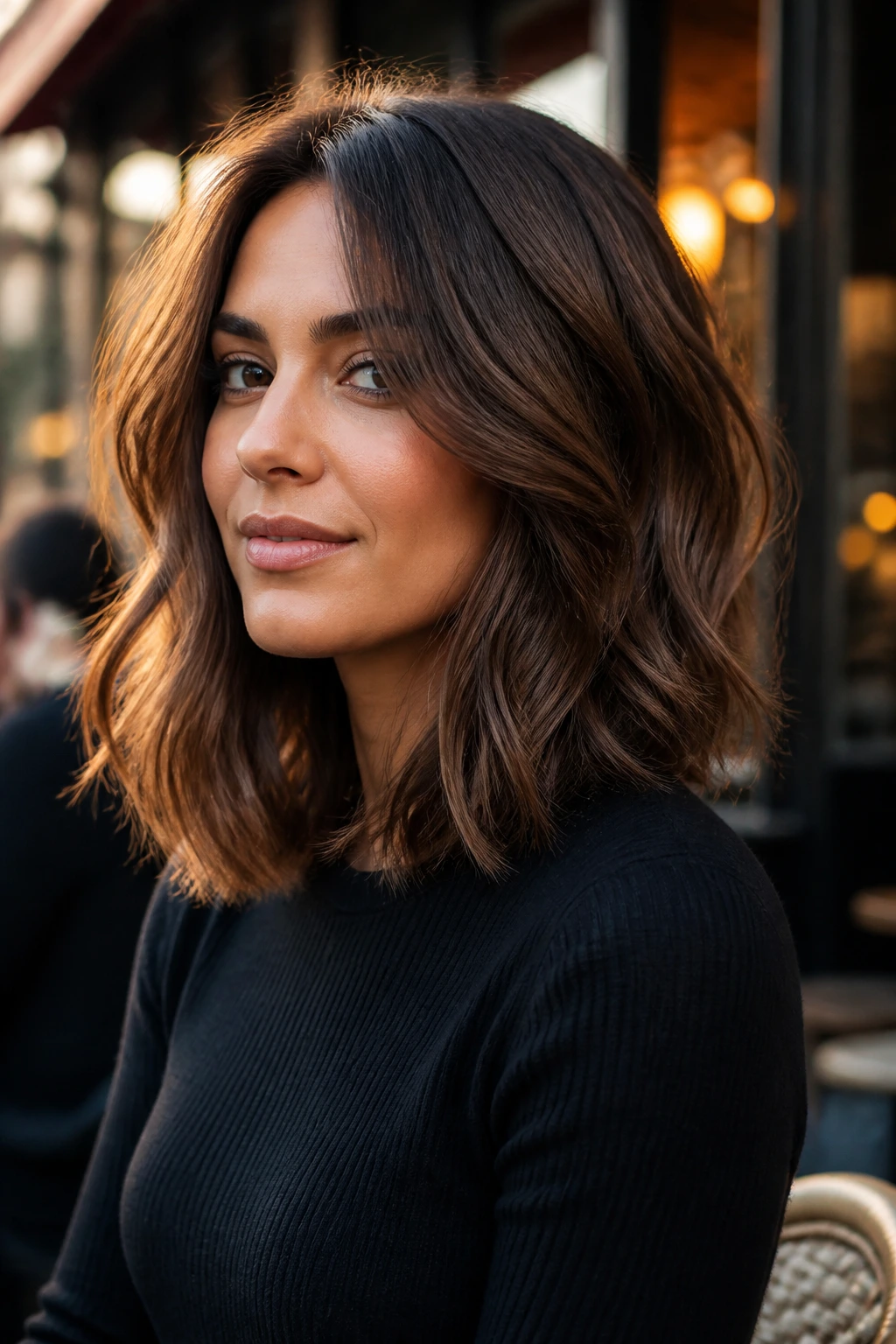
If you prefer a look that feels more lived-in and effortless, adding long, sweeping layers is the way to go. Unlike short, choppy layers, these are cut to remove bulk from the mid-lengths, allowing your hair to move more freely without losing its structural integrity. This is perfect for someone who wants to spend five minutes styling and walk out the door.
Understanding Weight Removal
The secret here is point-cutting. Instead of slicing straight across, your stylist uses shears to cut into the ends, creating softness. This technique removes just enough weight to allow the hair to sit flatter against the head, which is crucial if you have a dense root area.
Who Should Choose This Style
This cut is the ultimate choice for the person who loves the versatility of a ponytail but still wants the style of a bob. It works well on slightly wavy hair, as the layers help accentuate the natural pattern without creating too much width. It’s a low-maintenance, high-impact style that survives the wind without losing its shape.
3. The A-Line Graduated Bob
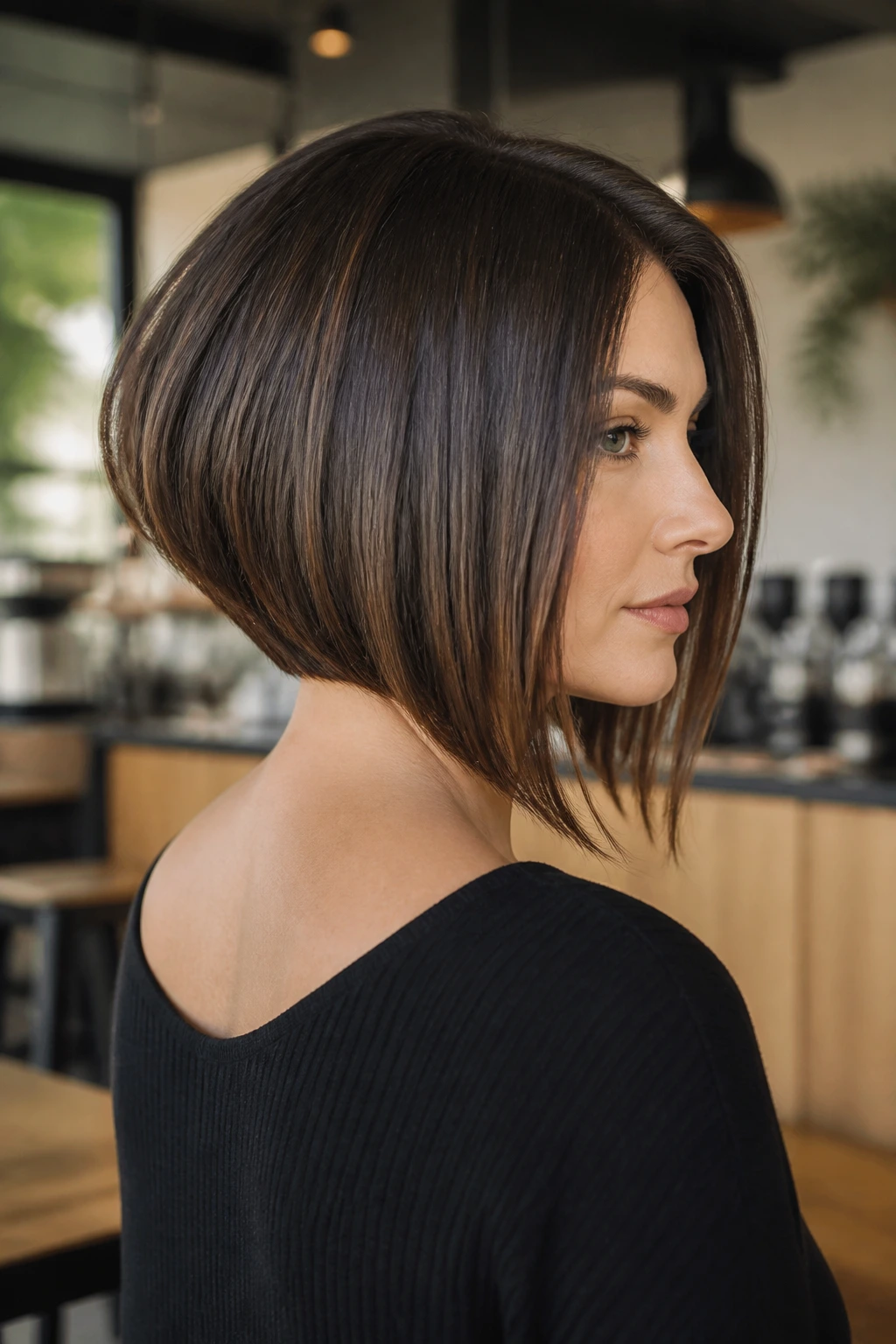
An A-line bob—shorter in the back and gradually getting longer toward the front—is a structural masterclass for thick hair. By keeping the back shorter, you remove that heavy, uncomfortable bulk from the nape of the neck. The longer front pieces then frame the face, providing a slimming effect that feels modern and architectural.
The Mechanics of the Graduated Back
By stacking the hair slightly in the back, you create natural volume where you want it, rather than where the hair decides to go on its own. This eliminates the “bulky neck” issue that often plagues thick-haired people. It is a calculated removal of density that leaves the hair feeling light but looking full.
Why You Will Love It
- It’s incredibly easy to style with just a quick blow-dry.
- It highlights the jawline and neck, making it a very flattering silhouette.
- You can vary the angle; a steeper slope looks edgier, while a subtle graduation feels timeless and soft.
4. The Shaggy Medium Bob
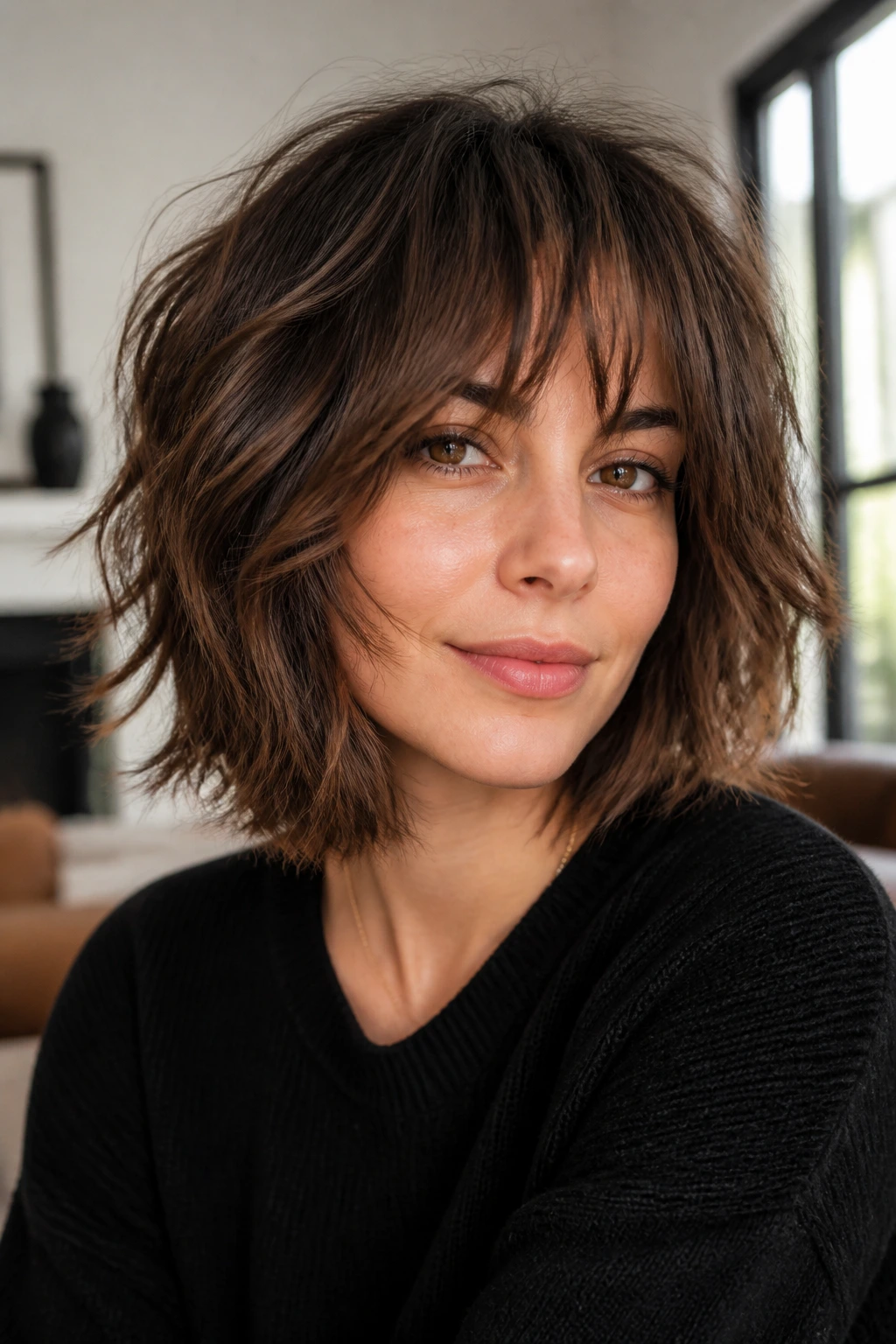
Shag haircuts are having a moment, and for good reason—they thrive on thickness. By incorporating lots of internal layers and face-framing fringe, you can turn dense, heavy hair into a textured, rock-and-roll masterpiece. This is for the person who wants to embrace their natural texture rather than trying to tame it into submission.
Embracing the Volume
Instead of trying to shrink your hair, the shag welcomes the volume. It uses shorter layers on top to break up the thickness, which keeps the hair from looking like a helmet. The result is a messy, tousled look that actually looks better as the day goes on.
Maintaining the Shape
- Use a texturizing spray on dry hair to build grit and definition.
- Don’t be afraid to air-dry; the layers are designed to create their own shape as they dry.
- If you have natural waves, use a curl-defining mousse to keep the ends from getting too frizzy. Pro tip: This cut grows out gracefully, meaning you can stretch your salon appointments further than you could with a blunt cut.
5. The One-Length Bob with Invisible Layers
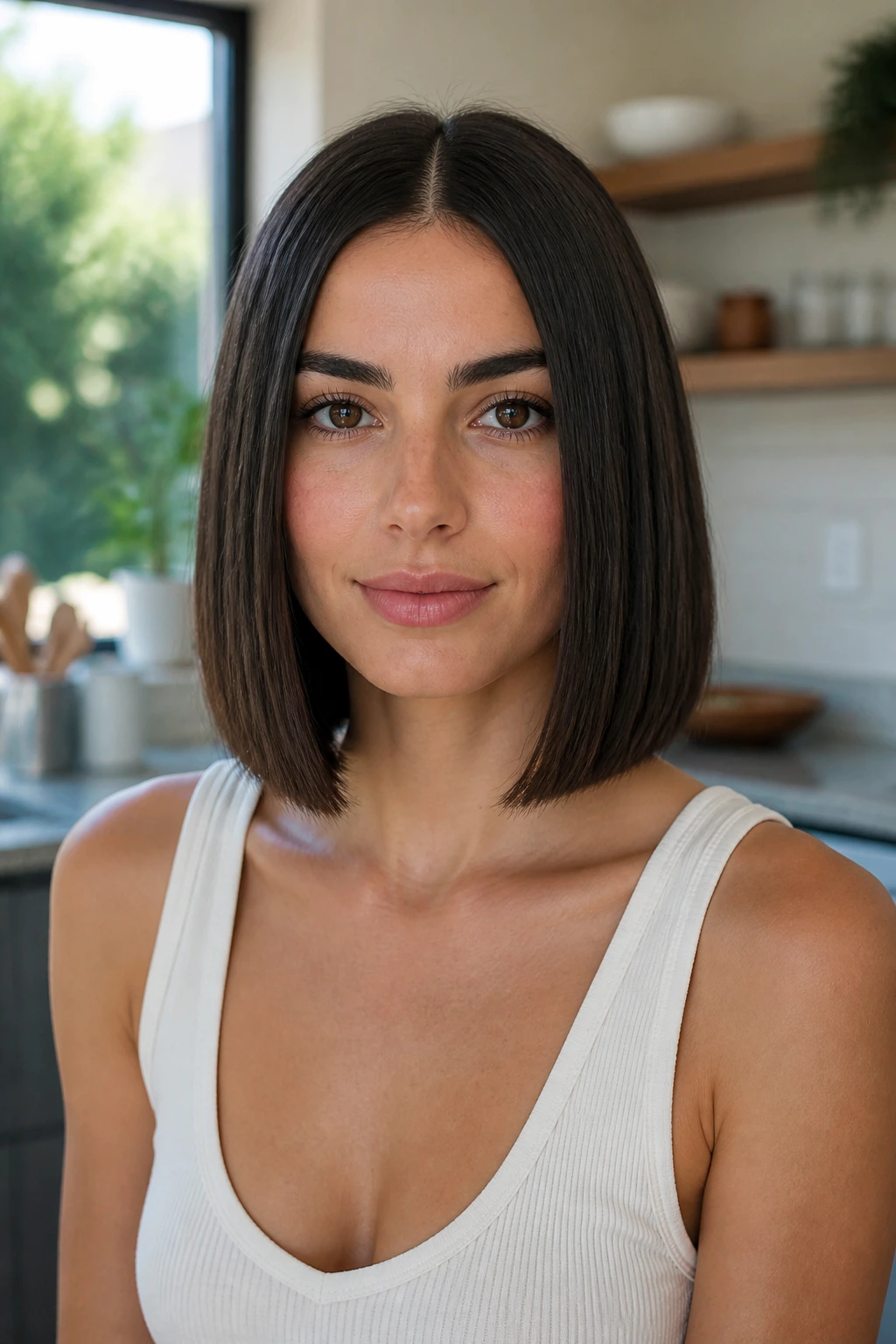
If you are terrified of “poofy” hair but still want a bit of style, ask for invisible layers. These are layers that are cut into the underside of the hair, near the scalp or mid-shaft, to act as a hidden weight-loss system. From the outside, your hair looks like a perfect, one-length bob, but the hidden texture allows it to lay much flatter.
The Benefit of Hidden Weight
This is a brilliant approach for thick hair because it solves the volume problem without sacrificing the blunt perimeter that makes a bob look healthy and strong. You get the sleek appearance of a heavy bob with the hidden bonus of easier drying time and reduced bulk.
How to Request This
Be clear with your stylist that you want the top layers to remain long and heavy to maintain the “weight” of the bob, but you need internal thinning or “texturizing” to take the density out of the back and sides. It is a technical request that requires a stylist who is comfortable with thinning shears or razor techniques.
6. The Side-Swept Asymmetrical Bob
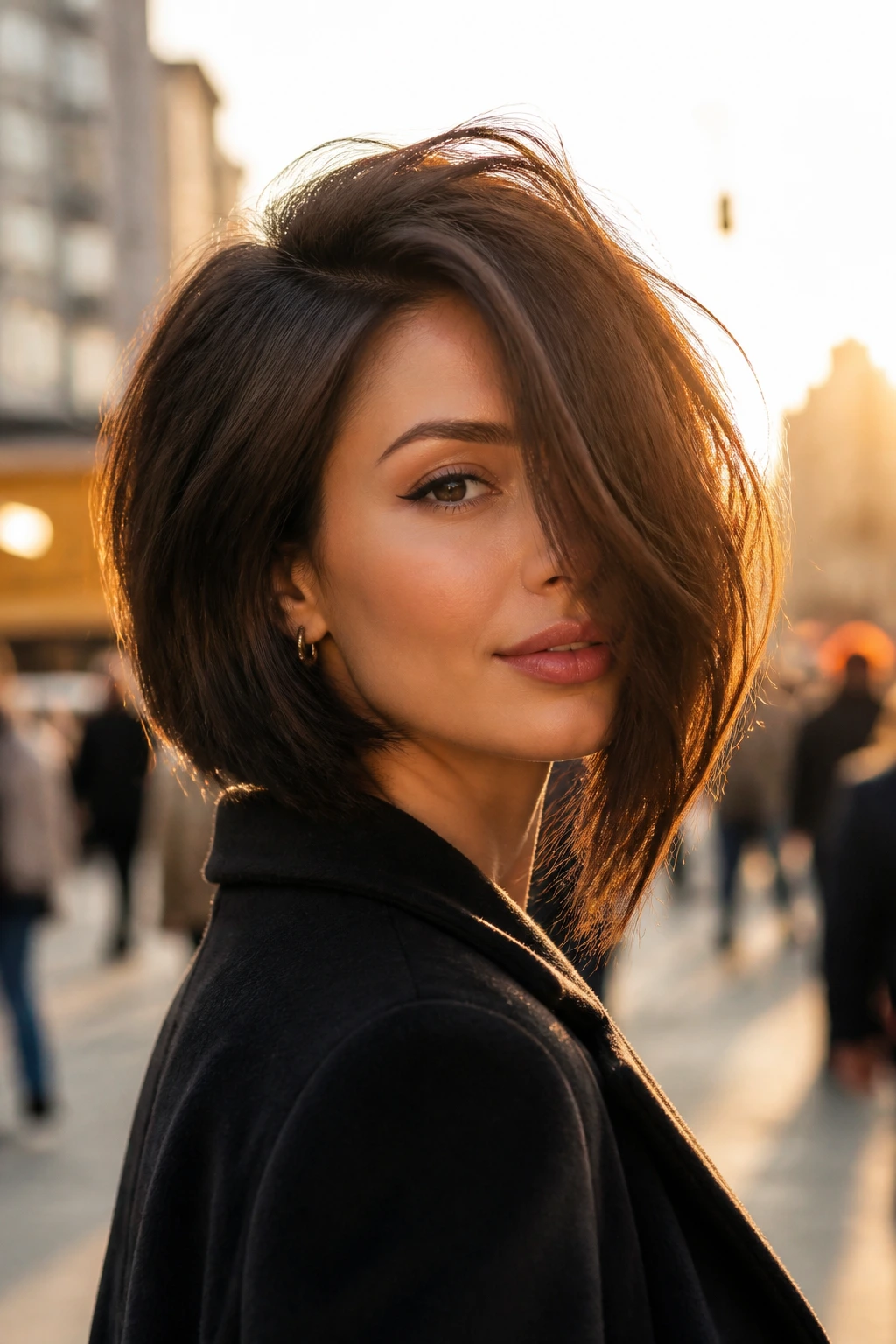
Asymmetry is a fantastic way to break up the horizontal weight of thick hair. By cutting one side slightly longer or having a deep side part that directs the volume to one side, you create a dynamic look that prevents the hair from looking like a solid, unmoving block.
Why Directional Styling Matters
When hair is very thick, it tends to fall evenly, which can create a wide, boxy shape. By forcing the hair to move in a particular direction, you encourage it to stack and fall in a way that feels more natural and elegant. A side part, specifically, can help soften the face and distract from the sheer volume of the hair.
The Asymmetrical Advantage
- It offers an edgy, high-fashion vibe without being difficult to maintain.
- It is incredibly flattering for those with a rounder face shape, as it creates an elongated visual line.
- It works exceptionally well with straight hair that needs a little extra personality.
7. The Blunt Bob with Curtain Bangs
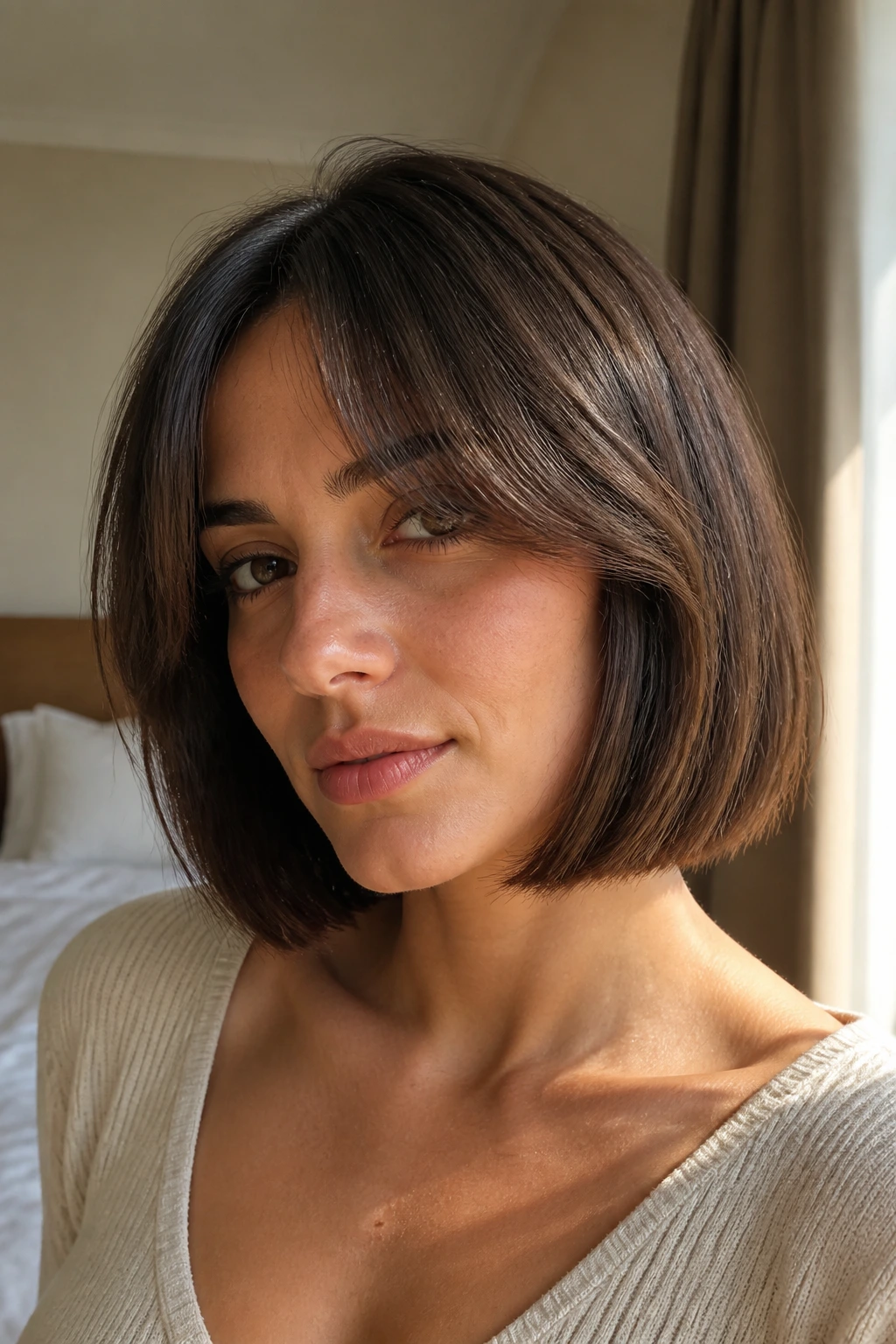
Curtain bangs have become a staple for good reason. They are essentially long, face-framing fringe pieces that blend into the rest of the hair. For thick hair, they are a way to lighten the face without committing to the maintenance of short, blunt bangs, which can be a nightmare to style when they have too much volume.
Balancing the Face
When you have thick hair, a blunt bob can sometimes feel like it is swallowing your features. Adding curtain bangs draws the eye upward and outward, balancing the density of the bob with a soft, feathery frame around the eyes and cheekbones. It makes the entire style feel less heavy and more playful.
Styling the Bangs
You only need a round brush and a hairdryer to get that classic, flicked-out curtain bang look. Take a small section of the bangs, roll the brush toward the back of your head while drying, and let them cool for a few seconds before releasing. It creates a soft, effortless sweep that elevates the whole haircut.
8. The Wavy Lob with Internal Thinning
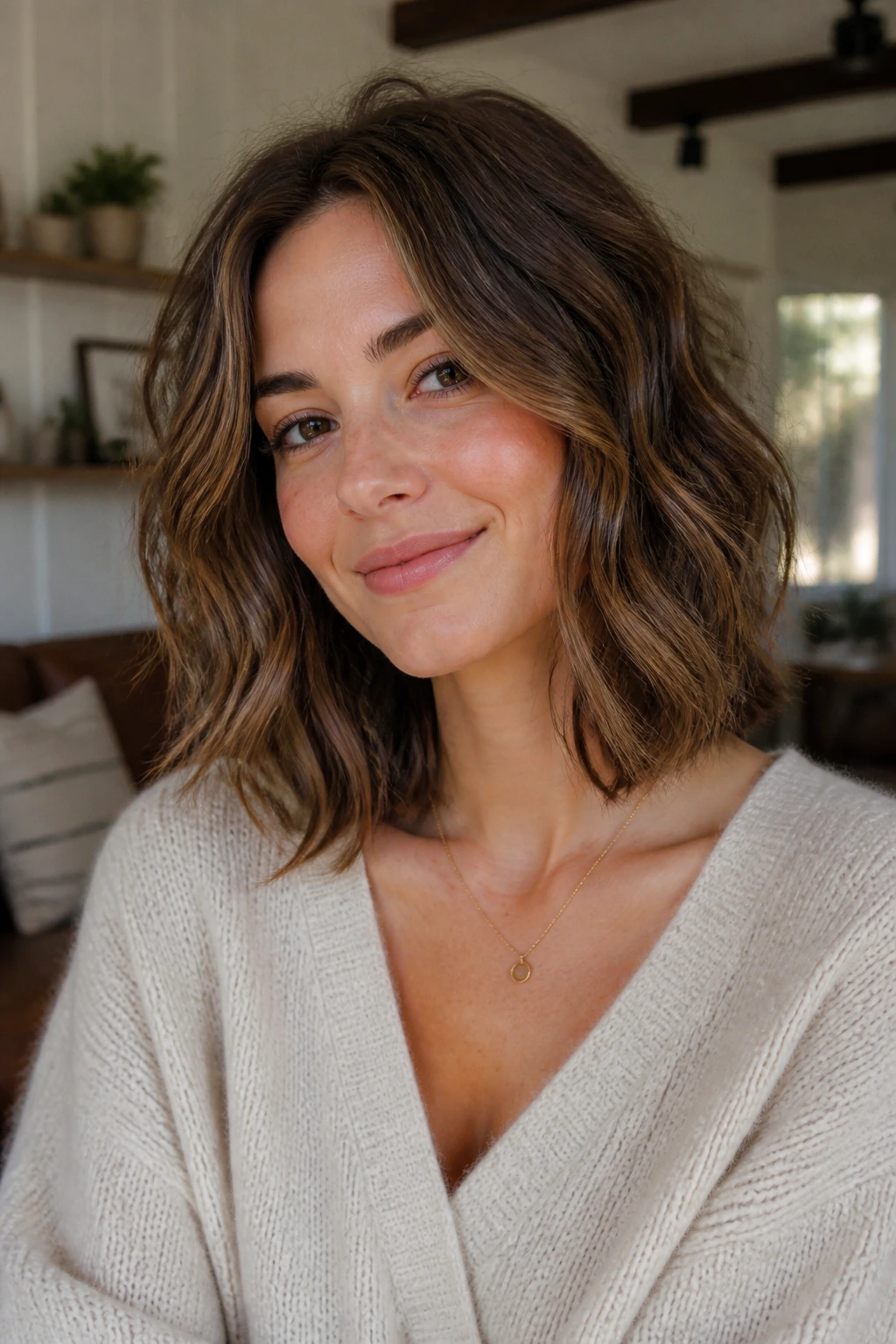
If your hair is thick and naturally wavy, you have a unique challenge. You want to show off the waves, but without the “triangle” shape that occurs when the hair gets too heavy. An internal thinning approach allows your waves to bounce and coil without being weighed down by the sheer mass of the hair.
Managing the Curl Pattern
The key is to avoid blunt cuts that sit right at the jawline, as this will force the hair outward. Instead, opt for a lob (long bob) length. The extra length provides the necessary weight to stretch the wave, while the internal layers ensure that the bottom section doesn’t become a dense, frizzy wedge.
Essential Care for Wavy Bobs
- Apply a leave-in conditioner while the hair is soaking wet to define the wave pattern.
- Use a wide-tooth comb rather than a brush to avoid breaking up the waves and causing unnecessary frizz.
- Consider a silk pillowcase to keep your waves smooth and defined while you sleep.
9. The Rounded “French” Bob
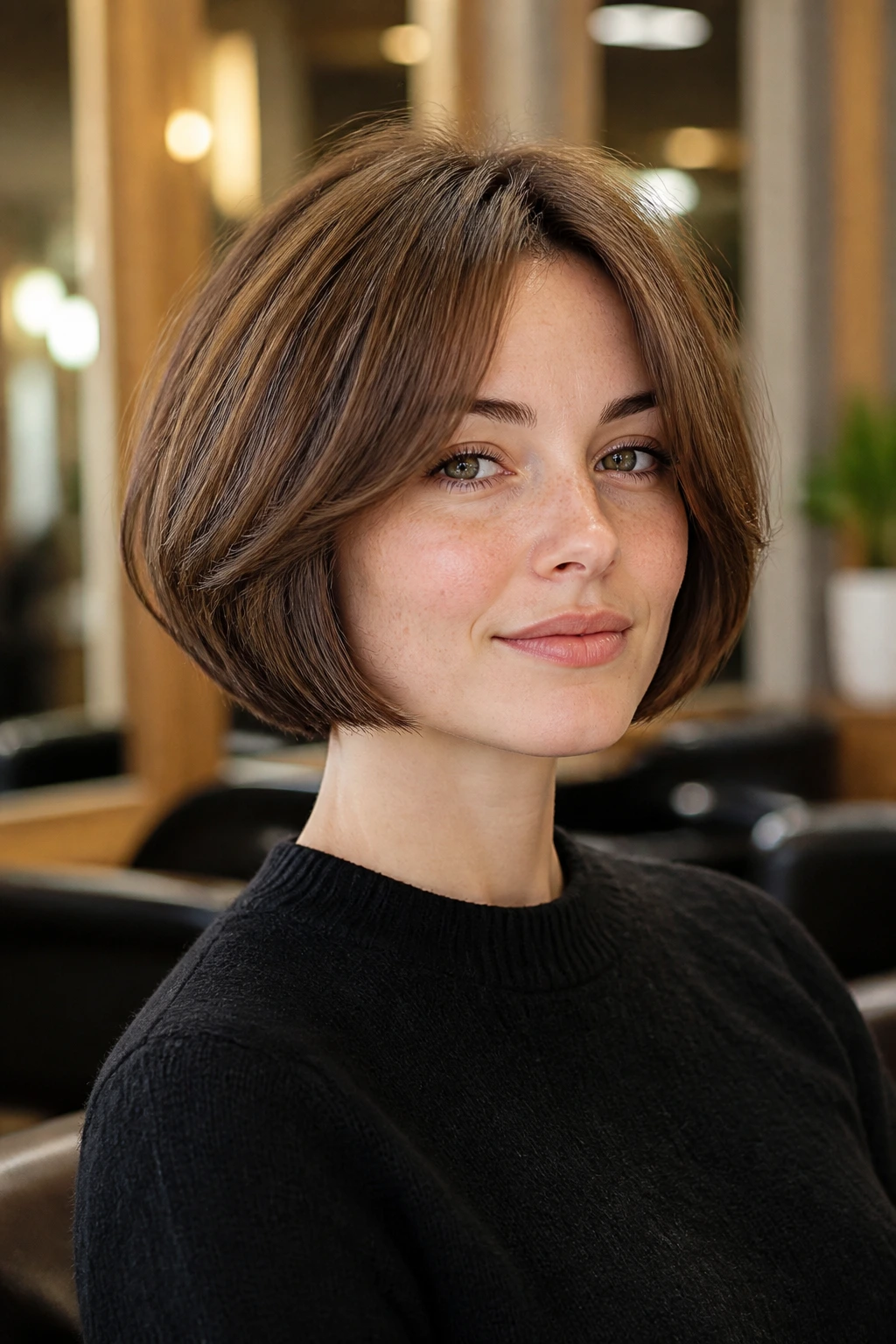
This is a slightly shorter, more playful take on the medium bob. It features a curved shape that follows the contour of the head, often hitting at the chin. It is a classic, chic look that requires regular trims to maintain that perfect rounded silhouette, making it a great option for the dedicated hair enthusiast.
Why the Shape Matters
By rounding the cut, you are working with the head’s natural shape. On thick hair, this creates a polished, dome-like effect that looks intentional and clean. It’s an iconic style that feels incredibly feminine and sophisticated, reminiscent of vintage styles that focus on the elegance of the neck and jawline.
What to Expect at the Salon
Your stylist will likely spend a lot of time on the perimeter, ensuring the curve is smooth. This style works best on hair that has a naturally straight or slightly bendy texture. If your hair is extremely thick, you might need a small amount of layering around the crown to keep it from looking too wide at the bottom.
10. The Long, Layered Bob with Choppy Ends
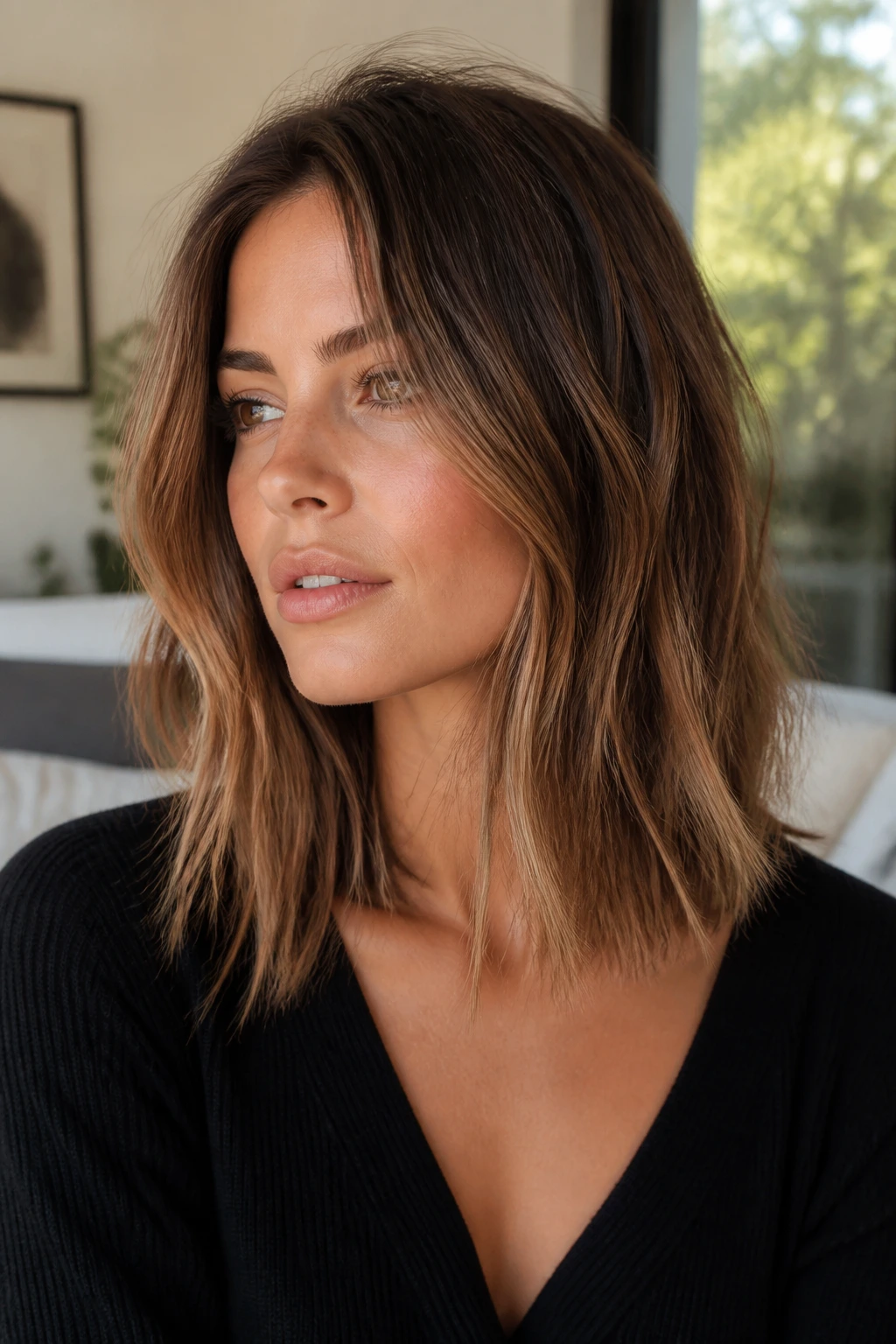
For those who want a “lived-in” aesthetic, the long, layered bob with choppy ends is a winner. This cut is all about texture. By using a razor or point-cutting, the stylist creates jagged, piecey ends that look incredibly stylish. It’s the “I woke up like this” haircut that actually takes a bit of effort to achieve, but looks entirely effortless.
The Power of Piecey Ends
Choppy ends do a great job of breaking up the density of thick hair. Because the hair isn’t all one length, it doesn’t create a solid line that draws attention to the thickness. Instead, it allows the hair to move, tangle, and sit in a way that feels organic and soft.
How to Style It
- Avoid using a round brush. You don’t want a perfectly smooth, straight result.
- Instead, use a sea salt spray on damp hair and scrunch it with your hands.
- Let it air dry, and once dry, apply a small amount of pomade or styling wax to the ends to emphasize the “choppy” nature of the cut.
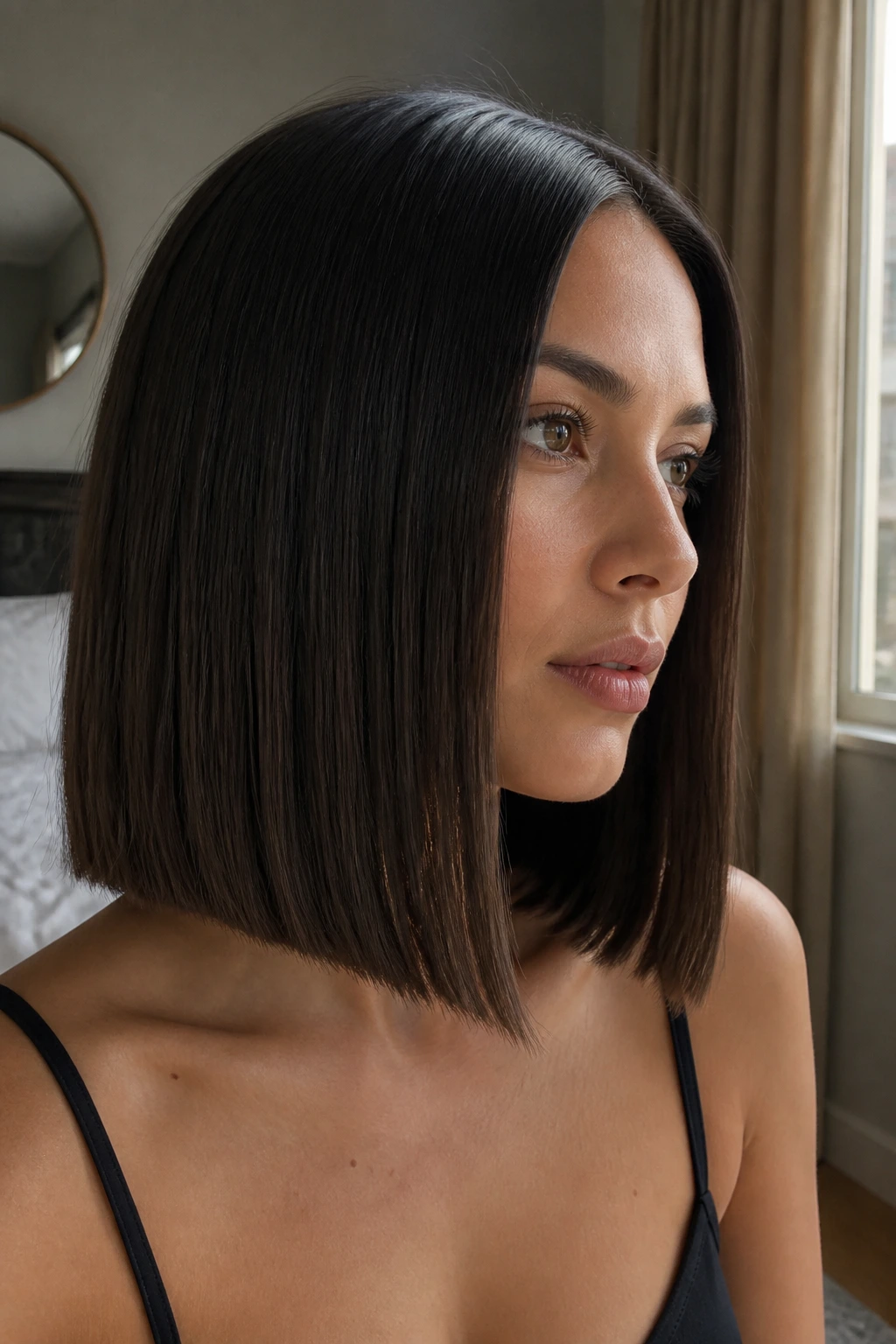
11. The Sleek Center-Parted Lob
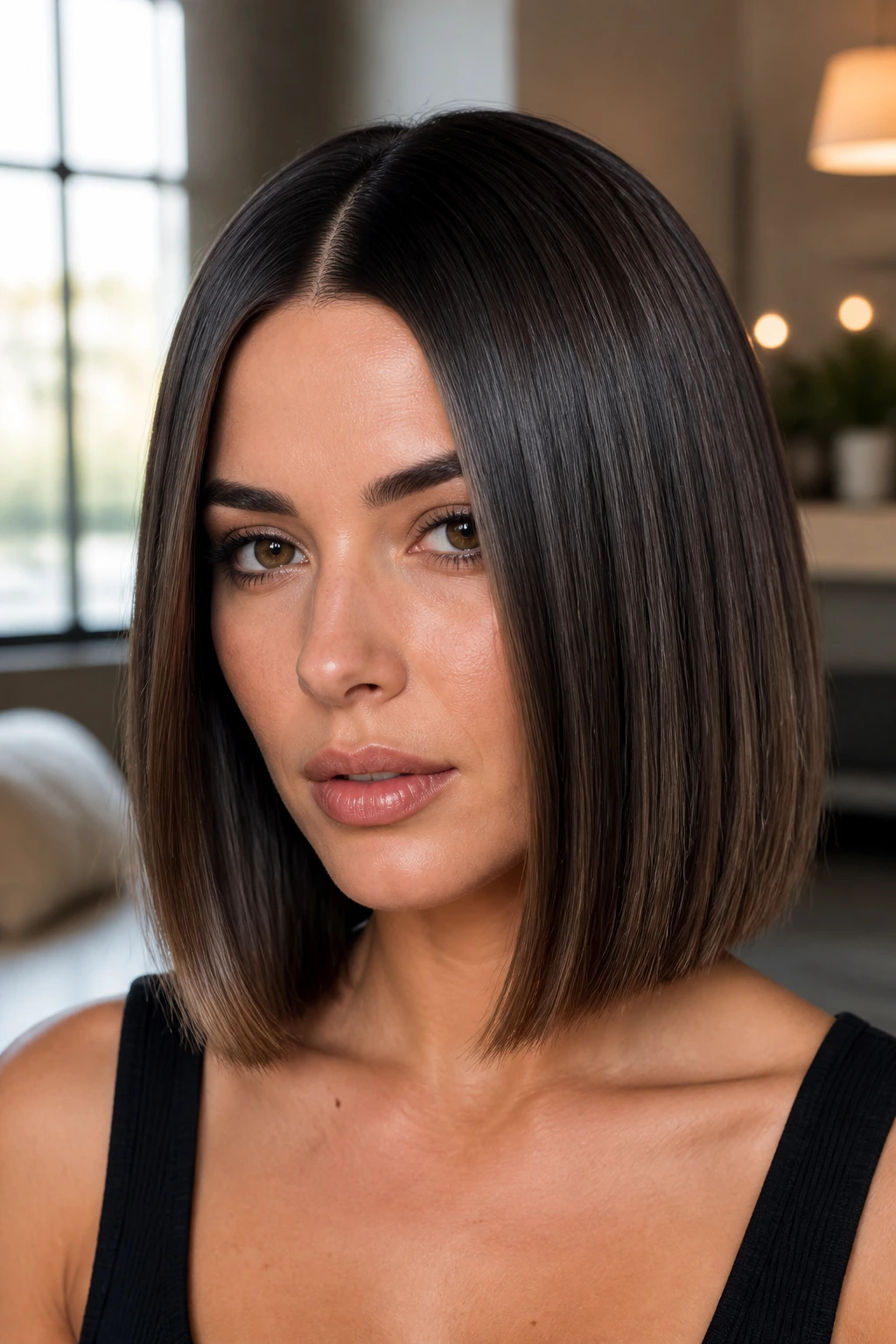
Center parts are a bold choice, and when paired with a sleek, medium-length bob, they scream confidence. For thick-haired individuals, this look is all about control. It requires a bit more maintenance than a side-parted style, but the visual payoff is a sharp, minimalist look that emphasizes the health and shine of the hair.
The Control Factor
A center part pulls the volume to the sides of the head, which can be risky if you have thick hair. To make this work, the hair must be smooth. This is the time to bring out your best smoothing creams and a flat iron. You want the hair to hang like a sheet of silk, emphasizing the clean lines of the cut.
Who Should Try It
If you have a heart or oval face shape, a center-parted lob is exceptionally flattering. It creates a symmetrical frame that highlights the center of the face. It is a high-maintenance look, but it is also one of the most powerful and professional styles you can adopt.
12. The “Long-on-Top” Pixie Bob
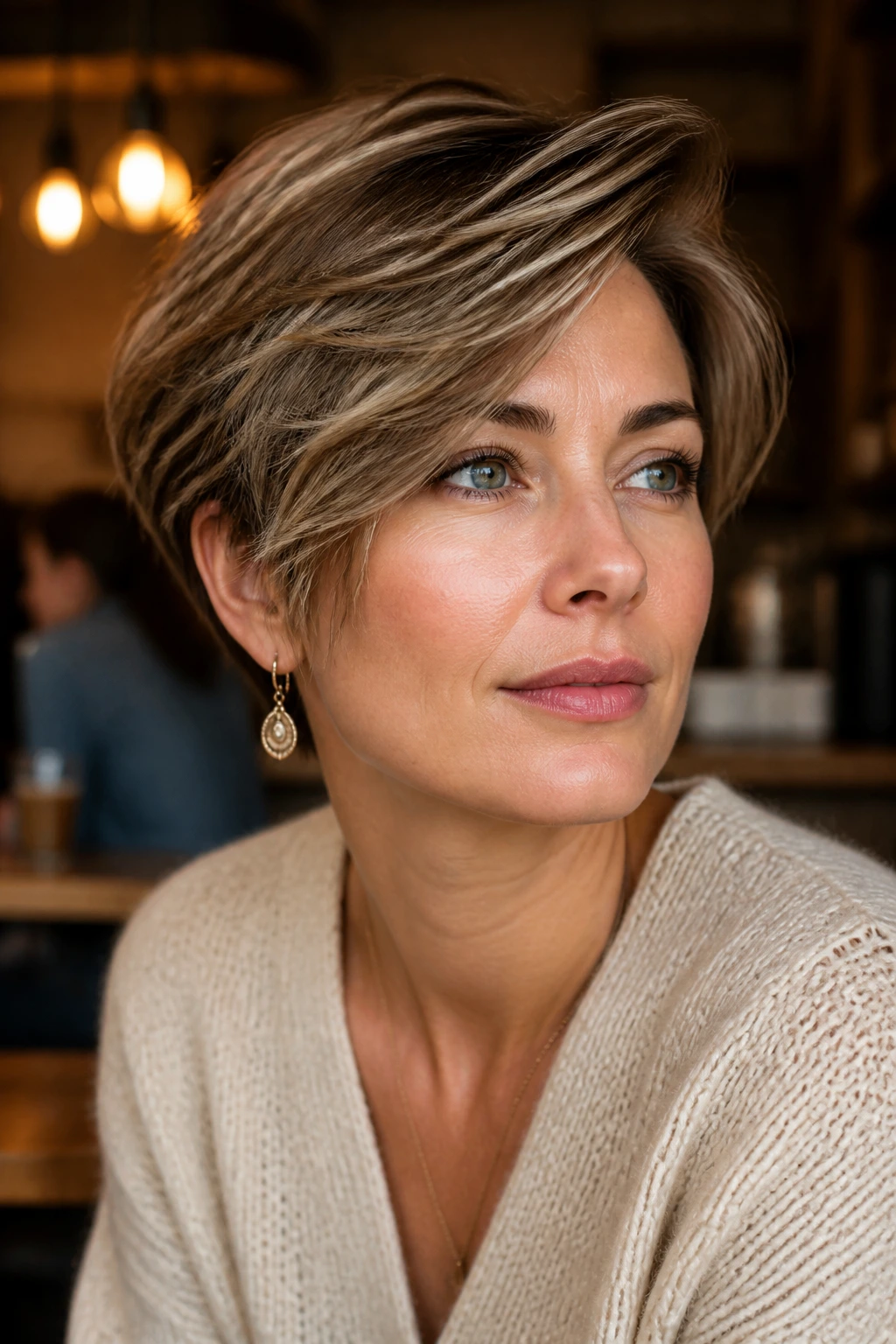
This is the bridge between a short bob and a pixie cut. It keeps the hair at the nape of the neck very short—almost tapered—while the top is left long enough to form a bob-like shape. For those who struggle with excessive heat and weight at the neck, this is a literal lifesaver.
The Neck-Cooling Effect
By tapering the bottom, you completely remove the density that causes sweat and discomfort during warmer months. The top section, however, retains the soft, face-framing quality of a bob, giving you the best of both worlds: short, breezy, and feminine.
Maintenance and Growth
- This style requires visits to the salon every 5 to 6 weeks to keep the back tapered properly.
- It is a bold move, but it is one of the most effective ways to manage thick hair that feels like a weight on your head.
- It looks stunning with a bit of texture paste to define the layers on top.
13. The Textured Lob with Soft Highlights
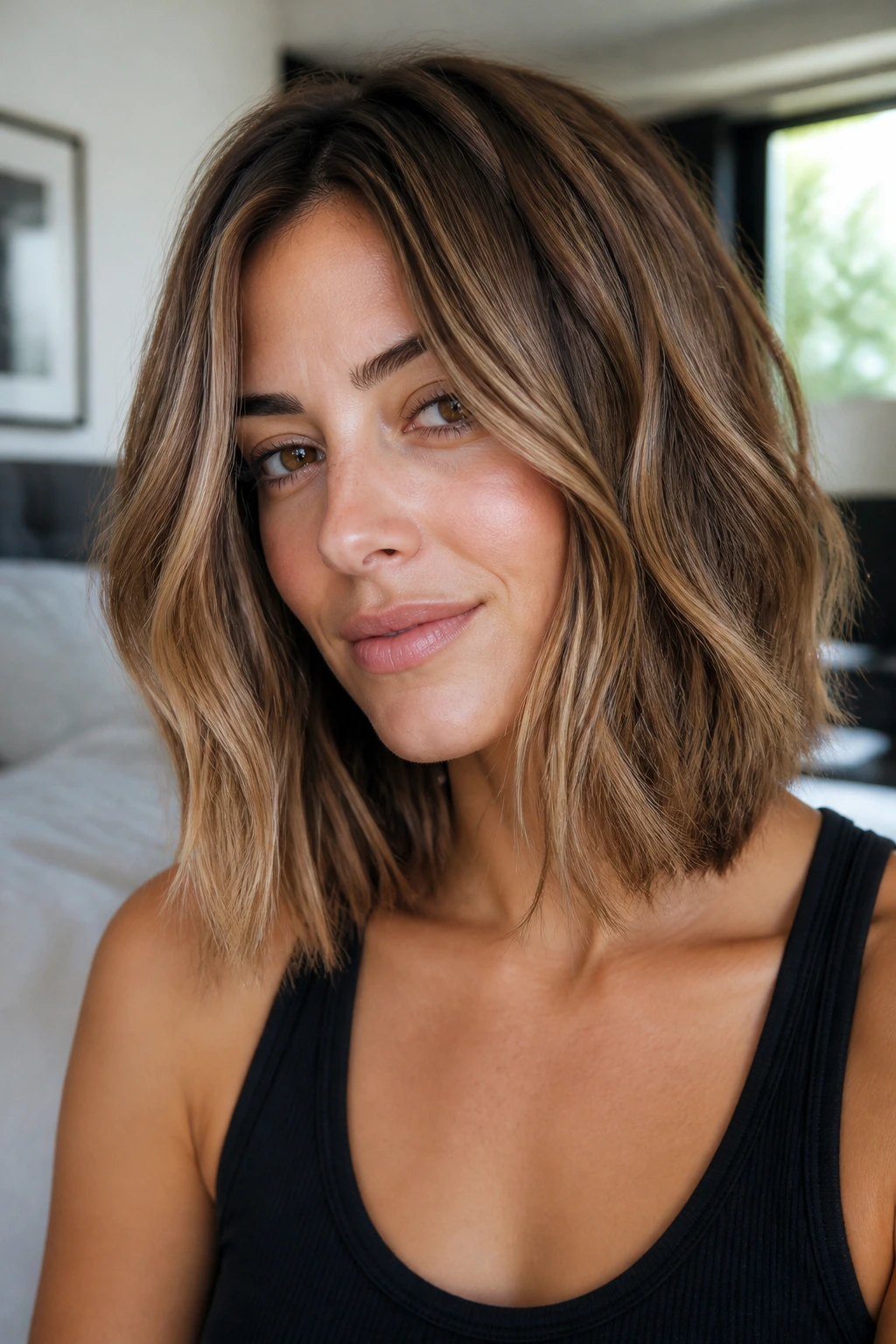
Sometimes, thick hair looks heavy because it is all one flat color. Adding soft, hand-painted highlights (or balayage) can break up the density visually. The color creates depth, and depth creates the illusion of movement, making the hair look less like a solid mass.
Depth and Movement
When you add lighter pieces to dark, thick hair, you add dimension. The eye is tricked into seeing layers where there might be none. This can make a blunt, thick bob look lighter and more ethereal without actually having to remove any hair bulk at all.
Choosing Your Highlights
- Go for natural, sun-kissed tones that are only a few shades lighter than your natural color.
- Avoid chunky, high-contrast highlights, as they can sometimes highlight the thickness in an unflattering way.
- Focus the lighter pieces around the face to draw attention away from the volume at the back of the head.
14. The Blunt Bob with Micro-Fringe

If you are feeling adventurous, a blunt bob paired with very short, straight-across bangs is a striking, high-fashion statement. This style is for the brave, as it leaves very little room for error, but for thick-haired people, it manages the volume in a very controlled, architectural way.
The Geometry of the Cut
The micro-fringe acts as a frame, while the blunt bob provides the structure. Because both elements are sharp and clean, the thickness of the hair actually becomes an asset—it looks like a thick, luxurious frame for your face. It is a look that demands attention and looks incredible with bold glasses or bright lipstick.
Dealing with Thick Bangs
- You must ensure the bangs are cut thin enough so they don’t look bulky against your forehead.
- Use a small flat iron to keep them perfectly straight.
- This cut looks best when the hair is healthy and shiny, so prioritize moisturizing treatments.
15. The Soft, Tapered Lob
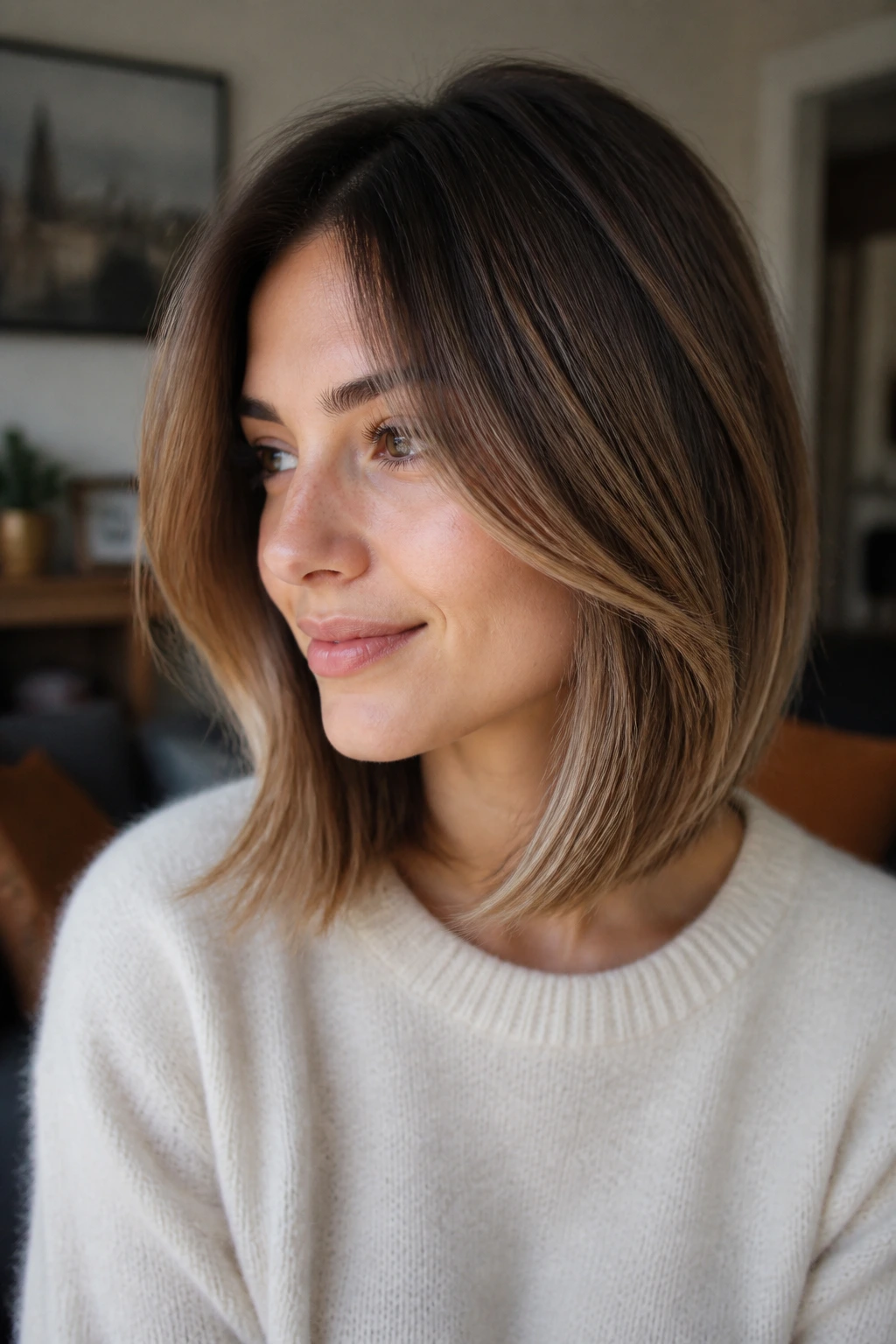
This style focuses on a soft, feminine taper that brings the length closer to the neck without being as aggressive as a true graduated bob. It’s an ideal “transition” cut for those who are growing out a shorter style or who aren’t quite ready for the sharpness of a blunt lob.
Why It’s Soft
The “taper” here means the stylist uses texturizing shears to soften the edges, so the transition from the back to the front isn’t a hard line. It creates a rounded, natural shape that feels very gentle and is extremely forgiving as it grows out.
Daily Styling Tips
- Simply towel-dry and apply a light mousse.
- Use your fingers to create a bit of a bend near the ends.
- This style relies on the hair’s natural movement, so don’t over-style it with tools.
16. The Blunt Bob with Deep Side Part
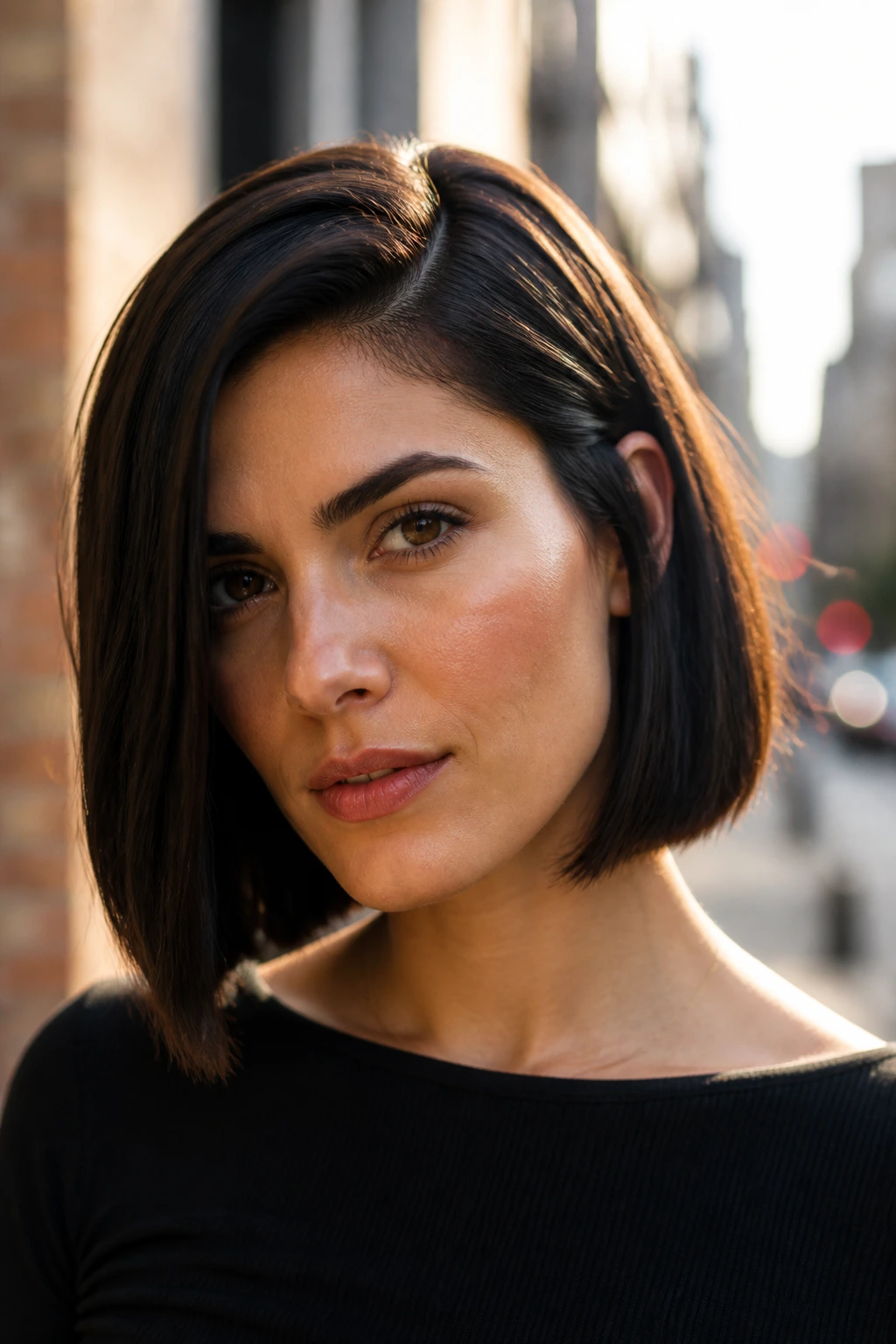
Sometimes the simplest approach is the most effective. By taking your existing blunt bob and flipping it into a deep, dramatic side part, you change the weight distribution entirely. It creates instant volume at the roots—which you might not need—but it also hides the overall mass of the hair on one side, which can be very slimming.
The Illusion of Less Hair
The deep part creates an asymmetrical look that tricks the eye. One side of the face is framed by a heavier curtain of hair, while the other is swept back. This reduces the perception of volume, making a thick head of hair look like a styled, intentional choice.
How to Hold the Volume
If your thick hair refuses to stay swept to one side, use a small amount of root-lifting spray. You want the height to stay, but you don’t want the hair to fall back over your eyes. A bit of light-hold hairspray applied to a teasing comb can help lock the roots into that deep side-swept position.
17. The Blunt “Italian” Bob
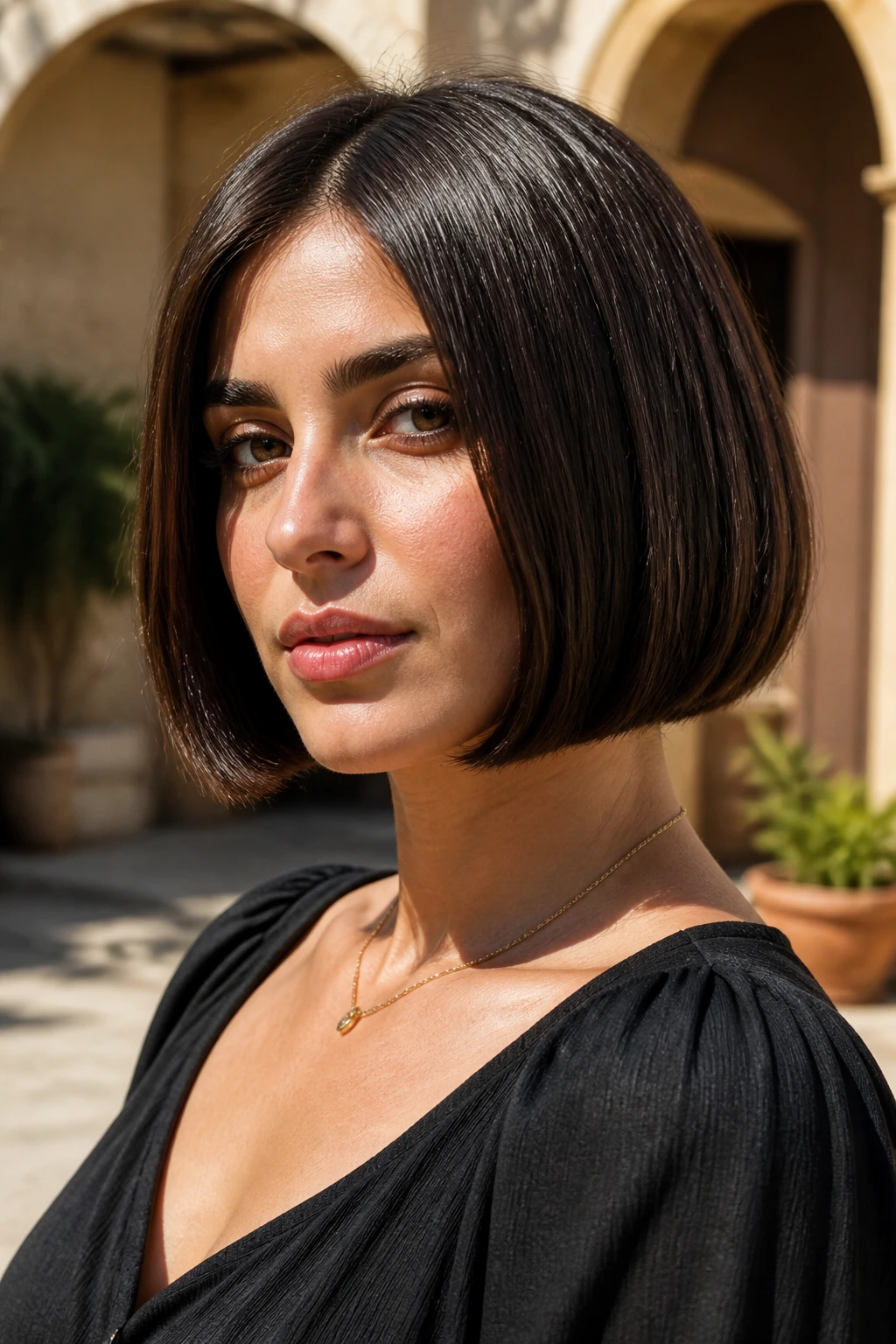
The Italian bob is characterized by being slightly longer and softer than a classic French bob. It often grazes the chin or sits right at the jawline, with a slightly rounded perimeter that feels bouncy and energetic. It’s a very romantic, vintage-inspired look that works beautifully with thick hair because it embraces the volume rather than trying to suppress it.
Embracing the Bounce
Because Italian bobs are cut to have a bit of bounce, the thickness of your hair actually helps the cut hold its shape. It doesn’t flop or fall flat; it stays perky and full, which is exactly what this style calls for. It’s an exuberant, joyful haircut.
Styling the Italian Way
- Use a large, round brush to create a soft, inward curve at the ends.
- Add a texturizing spray to the roots to keep it feeling light.
- A light, floral-scented hair oil adds that final touch of Mediterranean glamour.
18. The Graduated Lob with Face-Framing Layers
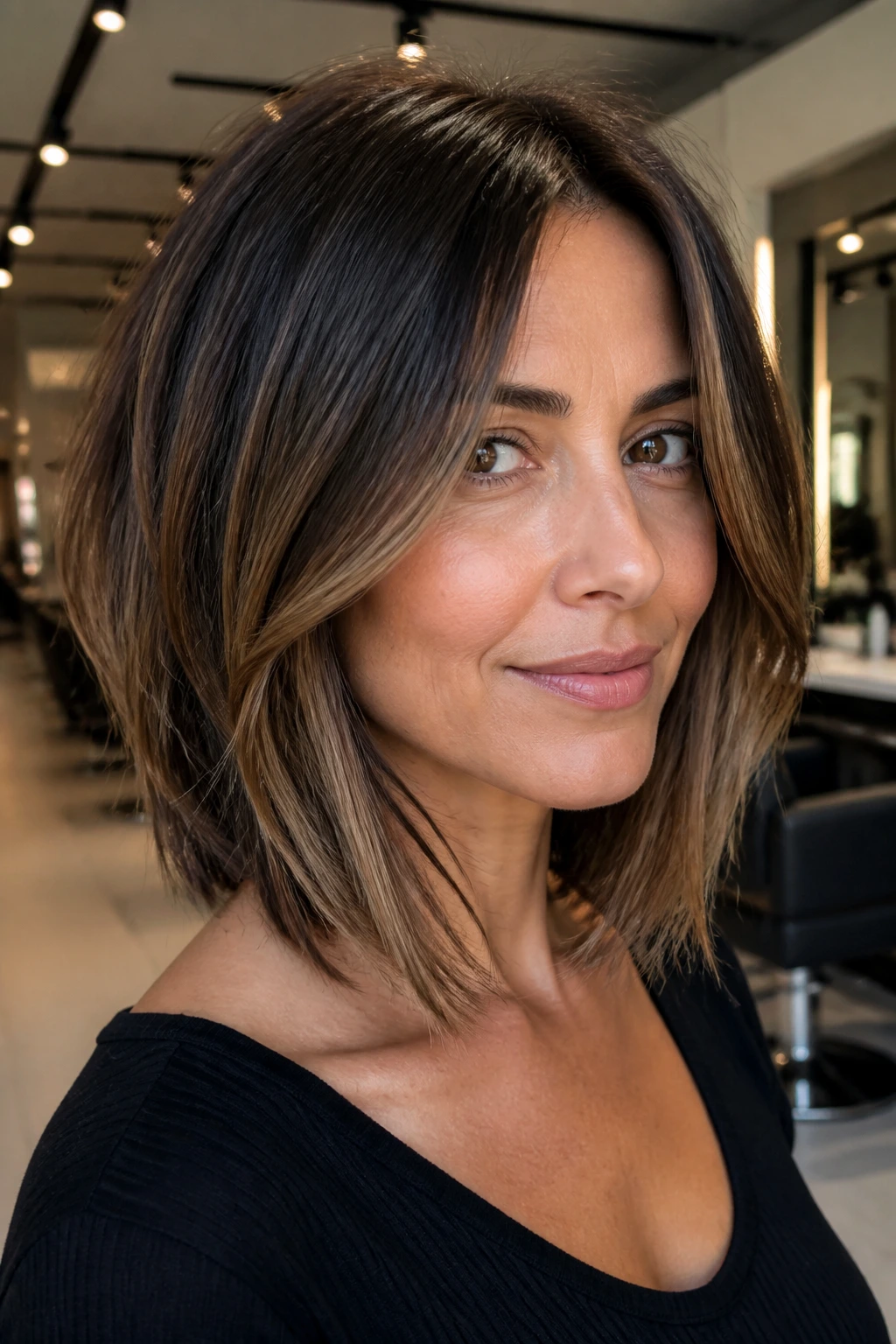
This is the ultimate professional bob. By keeping the length in the back slightly graduated and adding soft, long face-framing layers in the front, you create a cut that looks expensive and well-maintained. It is the perfect balance of structure and softness.
The Professional Polish
This cut is all about the line. The layers in the front are long—starting around the collarbone—which means they don’t add extra volume to the cheeks, making it a very flattering option for most face shapes. It is sophisticated, clean, and incredibly easy to manage with just a standard blow-dry.
Keeping It Neat
- You’ll want to trim this every 6 to 8 weeks to keep the graduation sharp.
- Use a shine spray to emphasize the clean lines.
- It is a low-fuss style that looks great in both formal and casual settings.
19. The Curly-Cut Lob
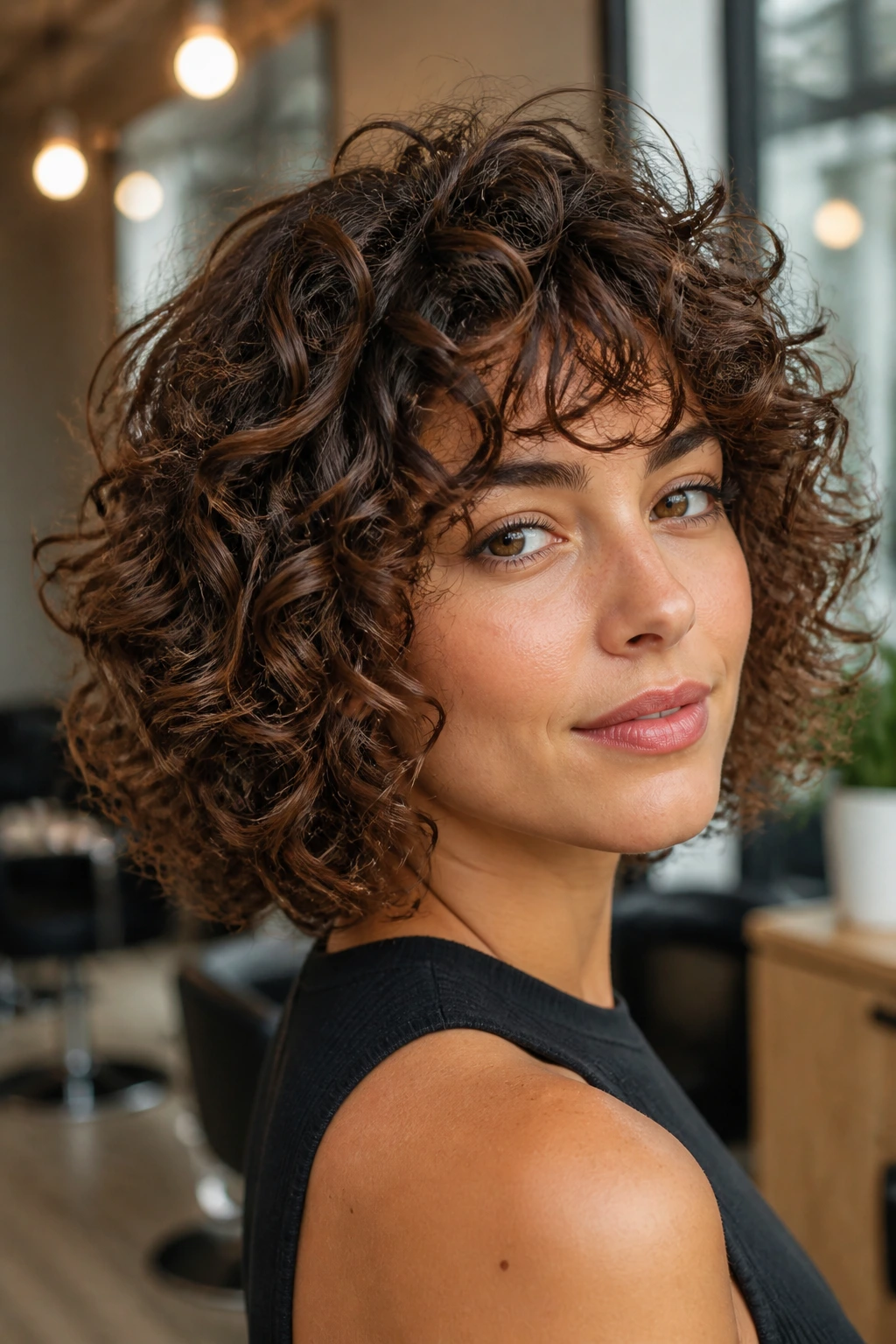
If you have tight curls or coils and thick density, a “curly cut” is non-negotiable. This is where the stylist cuts your hair while it is dry, section by section, to see how each curl naturally sits. For thick-haired people, this is the only way to avoid the dreaded pyramid shape.
The Importance of Dry-Cutting
When you cut curly, thick hair while wet, you cannot predict how it will spring back. Dry cutting allows the stylist to see the weight of the curls and remove bulk exactly where it’s needed. It turns a thick, unmanageable mass into a defined, bouncing, and beautiful crown.
Care for Curls
- Invest in a high-quality diffuser attachment for your hairdryer.
- Use a “scrunching” technique with a heavy-duty curl cream.
- Never brush your hair when it is dry; only detangle with your fingers while conditioned in the shower.
20. The Blunt, Mid-Length Bob with Blunt Bangs
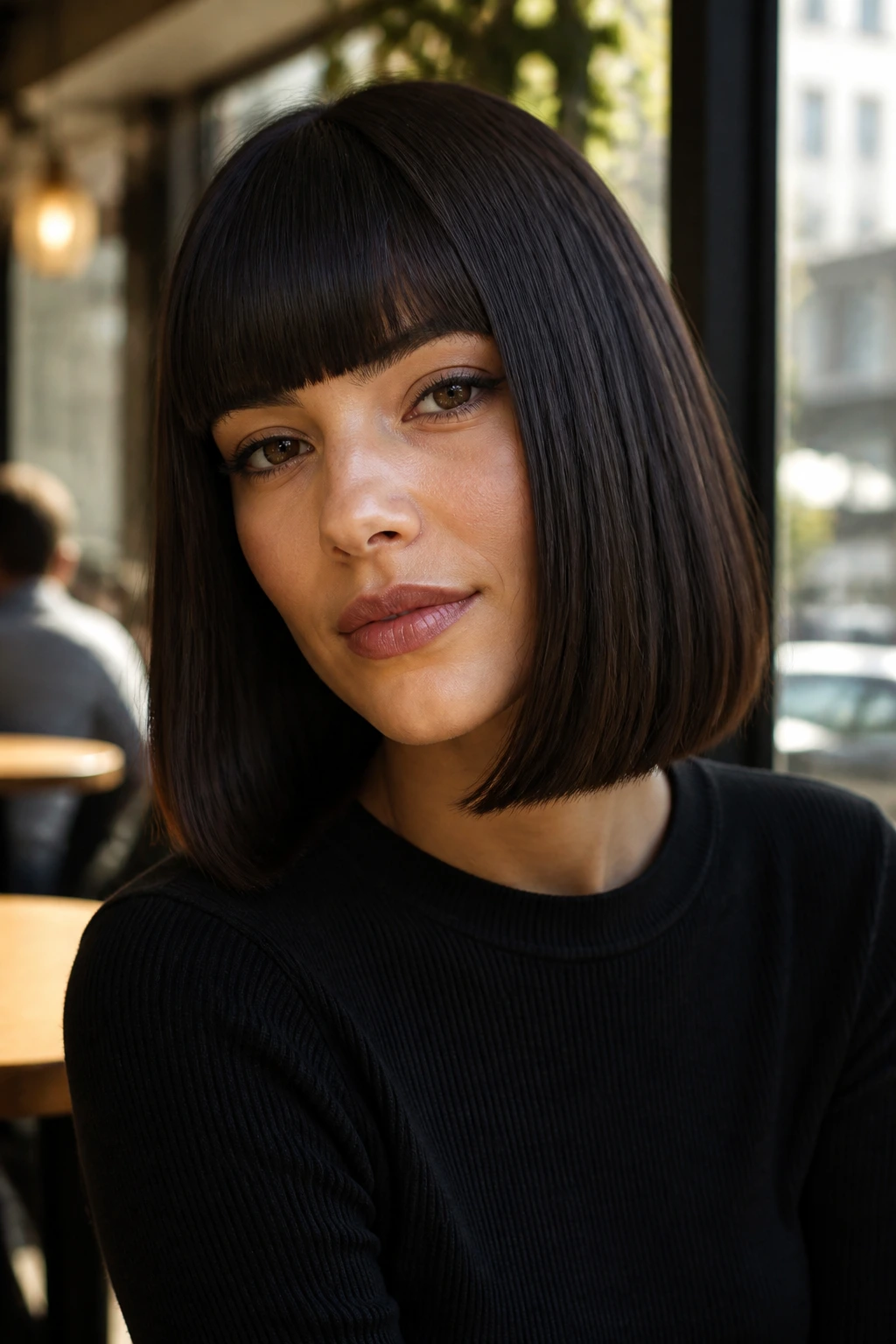
This is for the fashion-forward. A blunt, chin-length bob paired with heavy, blunt bangs is a bold, modern look. Because your hair is thick, your bangs will naturally have a lot of body, which makes them look intentional and dramatic. It’s a style that demands confidence.
Managing the Volume
The key here is the weight of the bang. You want them thick, but not too thick, or they will push your glasses out or look like a heavy shelf on your forehead. Ask your stylist to “slice” the ends of the bangs so they lay flat against your brow while still retaining that blunt appearance.
Maintaining the Edge
- This is a high-maintenance cut, requiring a trim every 4 weeks to keep the bangs out of your eyes.
- Use a smoothing balm to keep the entire look frizz-free.
- It is the ultimate style for anyone wanting to highlight their eyes and bone structure.
Final Thoughts
Finding the perfect medium bob for thick hair is a journey of trial and error, but the end result is worth every salon visit. Whether you opt for a sleek, blunt look or something textured and wild, the goal is always to find a style that makes you feel light and confident. Remember that your hair is a reflection of your personality, so choose a cut that feels like you.
Do not be afraid to communicate with your stylist about your struggles with weight and volume. A great stylist will see your density as a creative challenge to be managed, not a problem to be hidden. Once you find that balance, you will wonder why you ever spent so much time fighting your hair instead of letting it work for you. Enjoy the process of shedding the weight and discovering a style that is truly your own.