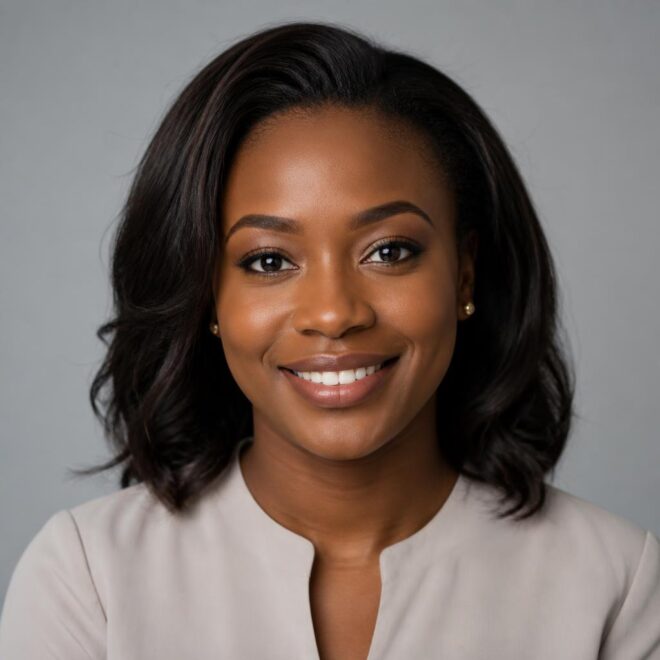


The bob haircut is perhaps the most resilient style in the history of hair. It never truly goes out of style because it performs a magic trick: it manages to look both impeccably neat and entirely effortless. When you have straight hair, you are in the best position possible to rock a short bob. You don’t have to fight frizz or coax unruly waves into submission. You can simply cut the hair, let it fall, and enjoy the sleek, architectural beauty of a clean line.
If you are considering going significantly shorter, you might be nervous about the transition. There is a specific threshold where a bob shifts from “practical” to “bold.” A truly super short bob—something that sits right at the jawline or even kisses the cheekbone—demands confidence. It exposes the neck, highlights your jaw, and puts your facial features front and center. It is not just a haircut; it is a frame for your face.
Whether you prefer something blunt and severe or soft and textured, the super short bob offers a level of chic that longer styles just cannot replicate. We are moving past the days of safe, shoulder-length cuts. It is time to look at the silhouettes that truly make an impact. From precise, angled cuts to gravity-defying blunt edges, here are twenty ways to interpret the super short bob for straight hair.
1. The Classic French Girl Chin-Length Bob
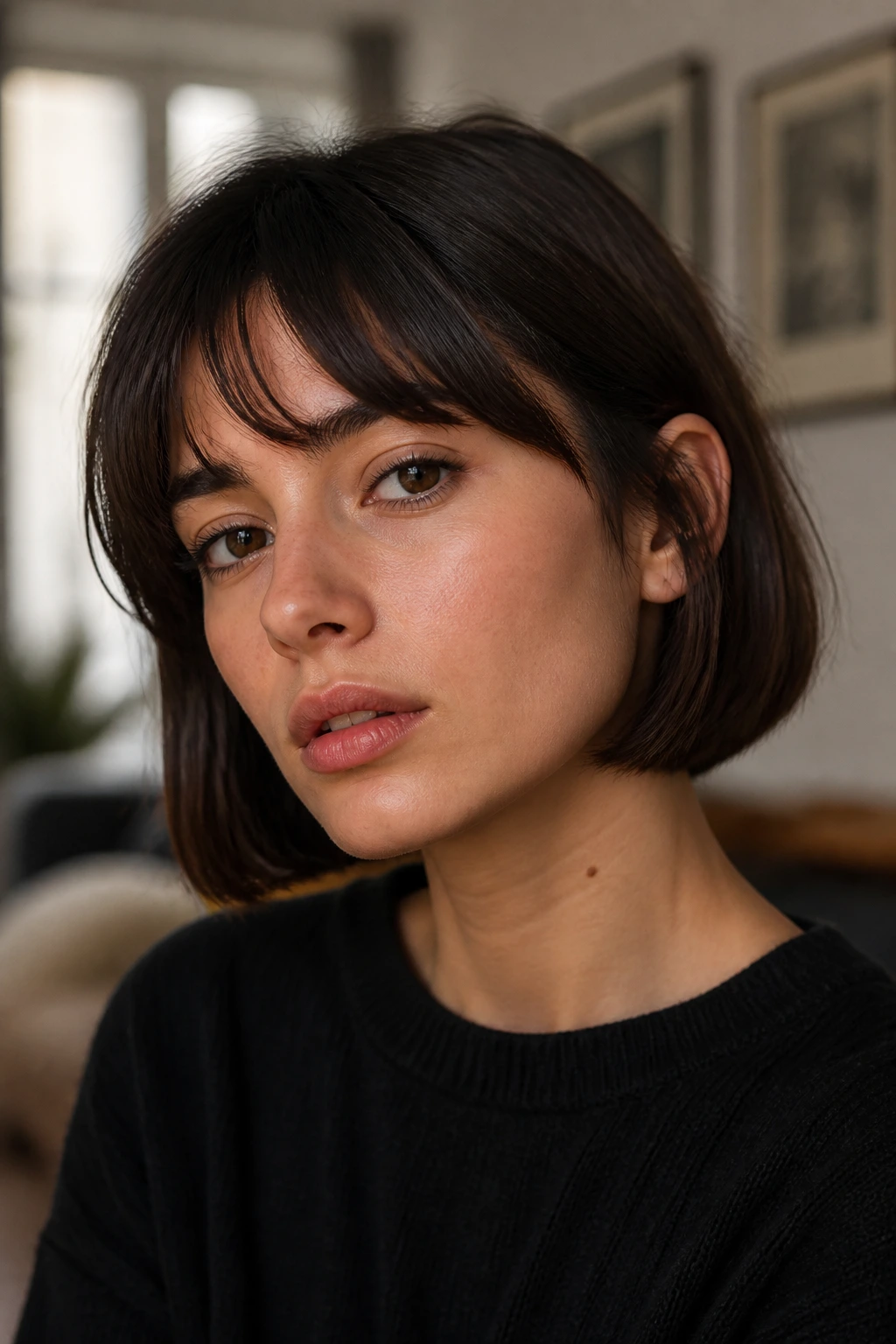
The quintessential French bob is characterized by its precise length, which typically hits right at the jawline or slightly above. It is clean, sharp, and meant to be worn with a certain amount of nonchalance. You should not worry about getting every hair perfectly in place; the goal is a look that feels lived-in yet intentional. The key to this style is the bluntness of the ends. They should be cut with a straight razor or extremely sharp shears to ensure there is no tapering or thinning at the bottom.
Why This Style Works
Because straight hair naturally wants to lie flat, this blunt cut encourages the hair to stack slightly at the nape of the neck. It creates a natural volume that feels heavy and healthy. You do not need a ton of product for this look, but a tiny drop of smoothing oil can help keep the ends looking crisp.
The Maintenance Factor
Expect to visit the salon every five to six weeks. Because this cut relies on that perfect, blunt line, even a quarter-inch of growth can change the entire shape of the style. If you love a low-maintenance morning routine, this is as easy as it gets—just wash and go.
2. The Asymmetrical Sharp-Angled Bob
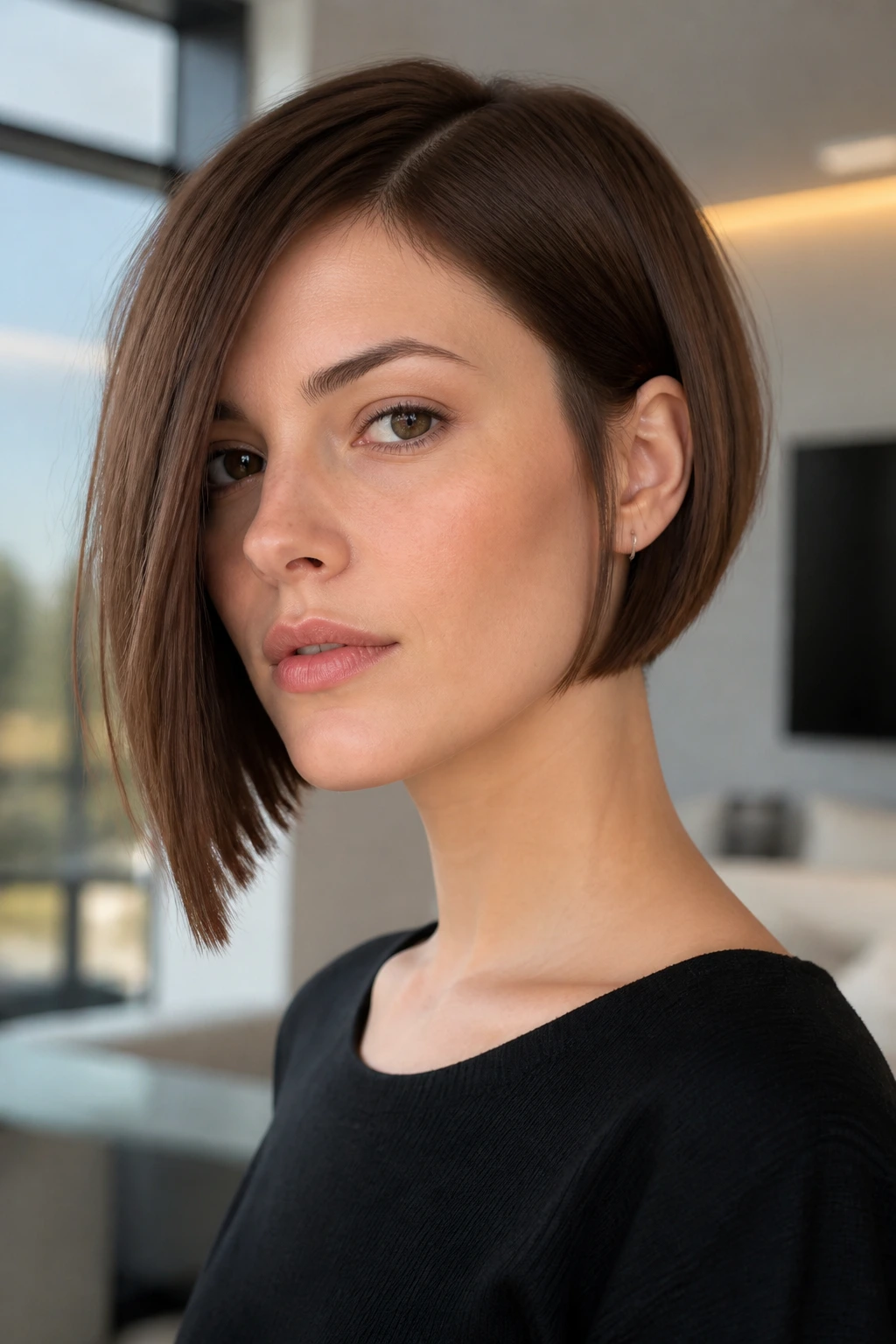
If you want something that commands attention, an asymmetrical cut is the way to go. By keeping one side significantly shorter than the other—perhaps hitting the earlobe on the left and the jaw on the right—you create an instant focal point. It is a modern, architectural take on the classic bob that works exceptionally well on pin-straight hair.
How to Style It
You should focus on tension while blow-drying to ensure that the longer side stays completely sleek. A paddle brush is your best friend here. Avoid using round brushes if you want to keep the ends sharp and straight; a round brush will inadvertently add bounce or a slight curve, which can muddy the clean geometry of an asymmetrical cut.
Who Should Choose This
This cut is perfect if you have an oval or heart-shaped face. The angular nature of the hair provides a strong contrast to the softness of your features. Just remember that this style is less forgiving than a symmetrical bob; make sure you find a stylist who is comfortable working with razor-sharp lines and geometric precision.
3. The Ear-Grazing Micro Bob
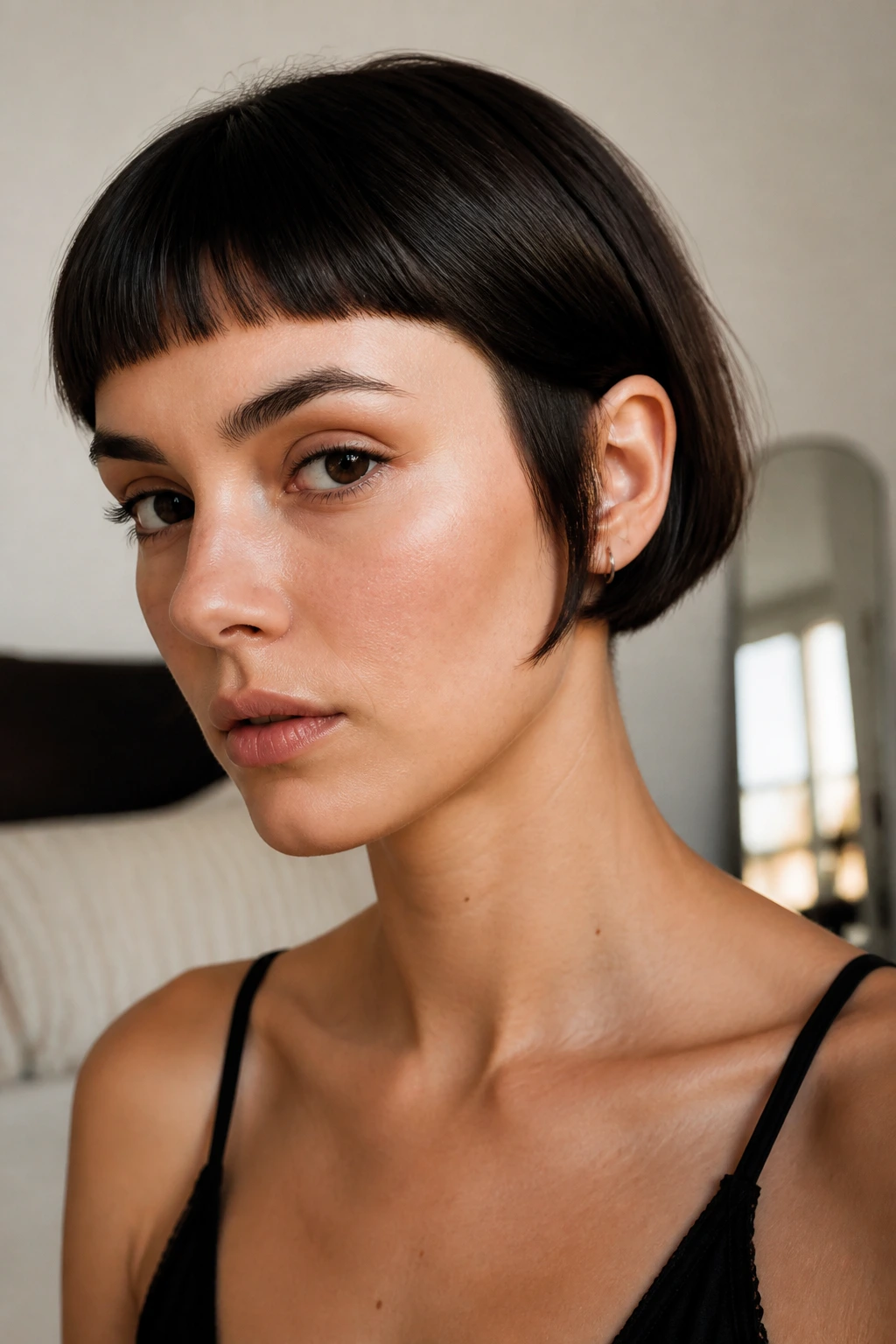
Moving into the territory of the “micro bob,” we are talking about a length that sits just below the ear or right at the earlobe. This is an incredibly bold look. It is often paired with a very short fringe or a heavy, blunt bang. It isn’t just a haircut; it is a statement of intent. You are choosing to remove the “safety net” of length entirely.
Managing the Volume
On super straight, fine hair, an ear-grazing bob can sometimes lose its shape. Ask your stylist to use a point-cutting technique on the interior layers to prevent the hair from puffing out like a mushroom. You want the hair to hug your head and neck closely.
Essential Styling Tip
Invest in a high-quality finishing spray that adds shine without weight. Because this cut is so close to the face, any greasiness or product buildup will be glaringly obvious. Start with a tiny amount of product and build up only if you absolutely need it.
4. The Blunt-Cut Bob with Heavy Bangs
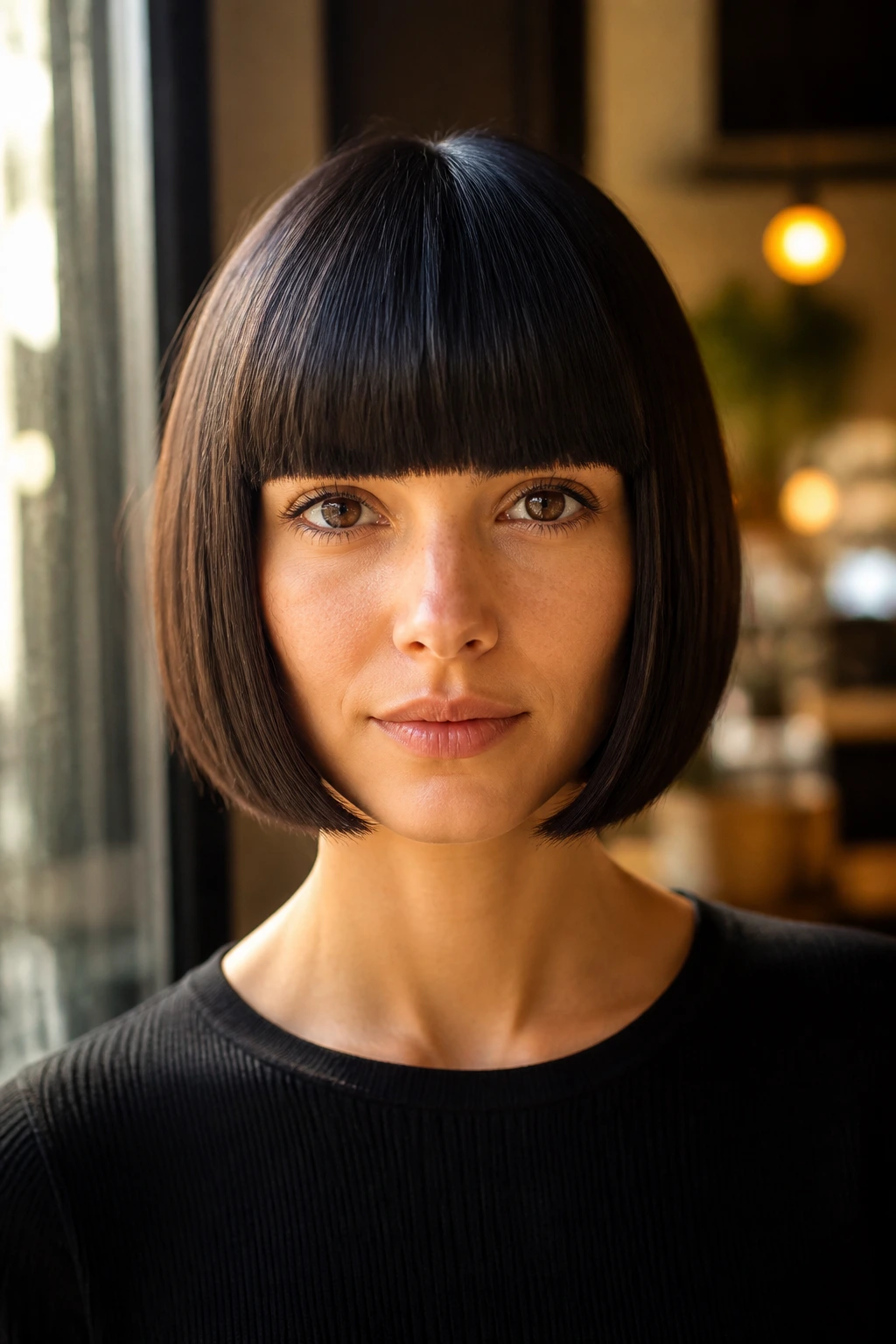
Combining a jaw-length bob with a thick, straight-across fringe creates a look that is often referred to as the “mod” bob. It is reminiscent of the mid-sixties and early-seventies aesthetic, prioritizing clean lines and bold silhouettes. The fringe should hit right at the eyebrows or slightly above for maximum impact.
Choosing the Right Fringe
Not every face shape handles a heavy fringe well, but if you have a high forehead or a more angular face, this can be incredibly flattering. Ask your stylist to keep the bangs dense—do not let them over-layer the fringe, or you will lose that solid, graphic look that defines the style.
The Daily Commitment
Bangs require daily maintenance. You will likely need to touch them up with a flat iron every morning to ensure they don’t develop a cowlick or start to separate. If you aren’t prepared to spend two minutes on your bangs every morning, this might not be the right choice for your lifestyle.
5. The Tapered Nape Bob
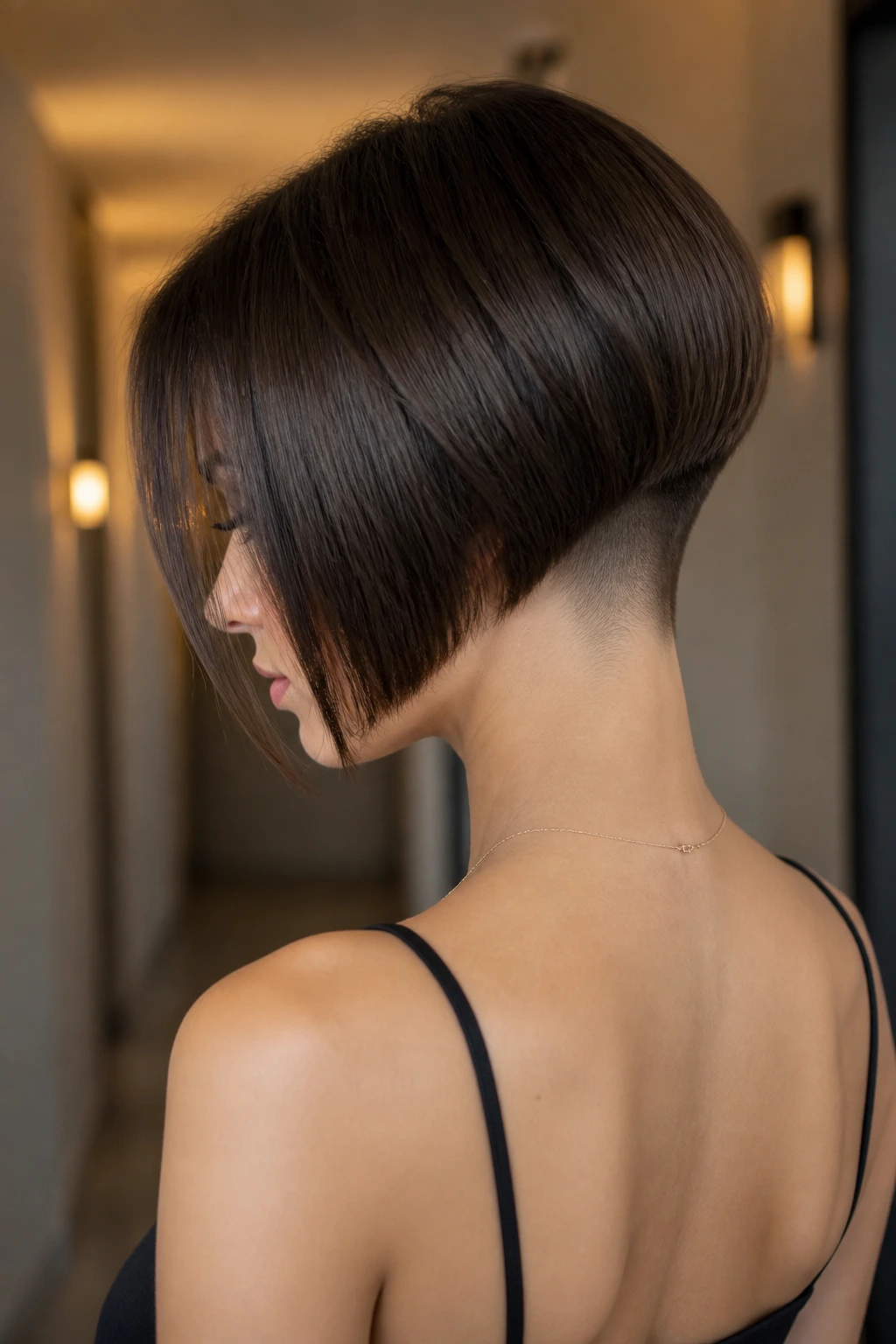
For those who want the look of a super short bob from the front but a bit more edge in the back, the tapered nape is the solution. The hair at the very base of the neck is cut extremely short, almost faded, while the front remains at a chic, chin-grazing length. This creates a beautiful, sloped profile that looks sophisticated from every angle.
Why This Design Prevents Bulking
Many people with thick, straight hair avoid short bobs because they fear the “triangle effect,” where the hair gets wider as it goes down. Tapering the nape removes that bulk at the very bottom, ensuring the hair stays close to the neck and maintains a sleek, modern silhouette.
Pro-Tip for Longevity
You will need to have the nape cleaned up more frequently than the rest of your hair. Consider finding a stylist who can perform a “neck trim” in between full haircuts. This will keep the shape looking crisp for an extra couple of weeks.
6. The Textured Piecey Bob
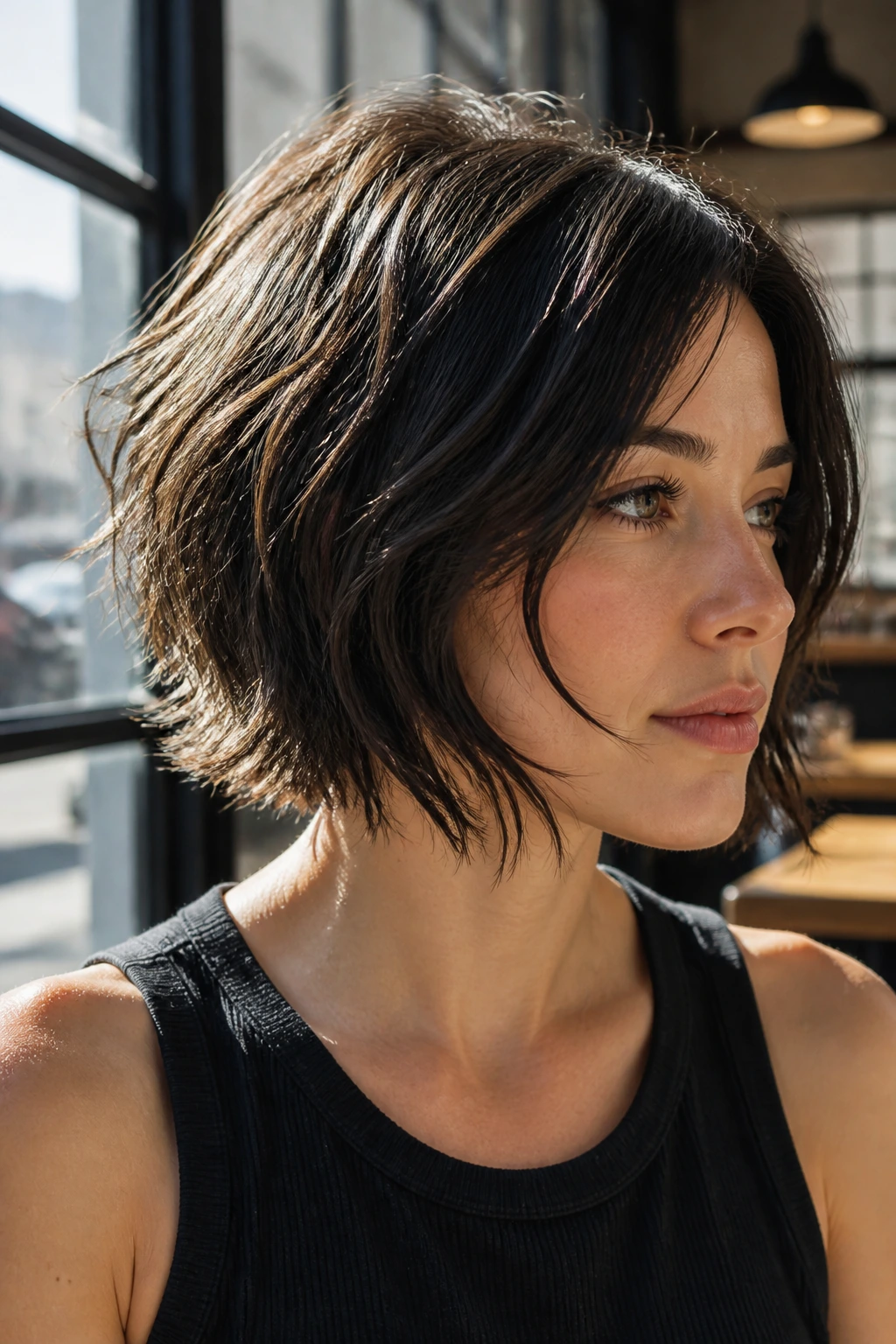
While most super short bobs are defined by their blunt edges, a piecey, textured version offers a bit more playfulness. Using a razor, the stylist creates subtle, invisible layers that allow the hair to sit in small, separated sections. It looks less like a single solid block and more like a collection of carefully placed strands.
Perfect for Low-Density Hair
If your hair is very fine or has low density, a blunt cut can sometimes make it look thin. Adding texture creates the illusion of volume. It gives the hair a bit of “grip” and movement that a standard, heavy blunt cut sometimes lacks.
Product Recommendations
Forget the heavy waxes. Use a lightweight texturizing spray or a matte paste. You want to be able to run your fingers through your hair without it feeling sticky or stiff. Focus the product on the mid-lengths and ends rather than the roots.
7. The Slicked-Back Wet Look Bob
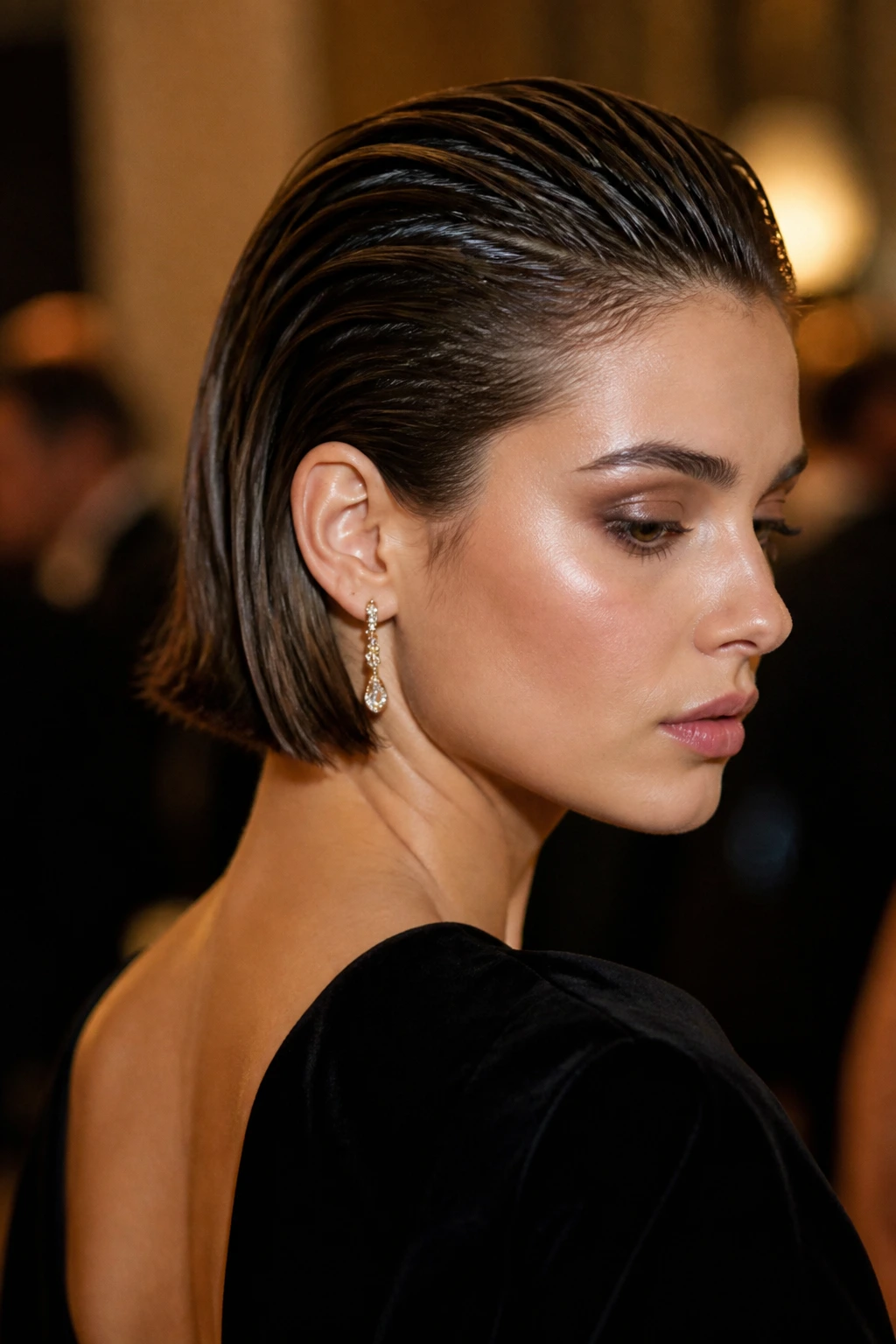
This isn’t a haircut so much as a styling technique, but it is one of the most effective ways to wear a super short bob. By using a light pomade or a high-shine gel, you can comb the hair back and away from the face. It creates an instantly polished look that is perfect for evening events or professional settings.
The Secret to the Wet Look
The goal is to look intentional, not greasy. Use a small amount of water combined with a medium-hold gel. Comb the hair back while it is slightly damp, then let it set as it dries. Once it’s dry, don’t touch it. If you keep running your hands through it, you’ll ruin the “set” and it will start to look stringy.
Versatility
You can do this with almost any chin-length bob. It’s a great way to “cheat” if you’ve had a bad hair day or if you haven’t had time for a full blow-dry. It hides imperfections and highlights the bone structure of your face beautifully.
8. The Side-Parted Sleek Bob
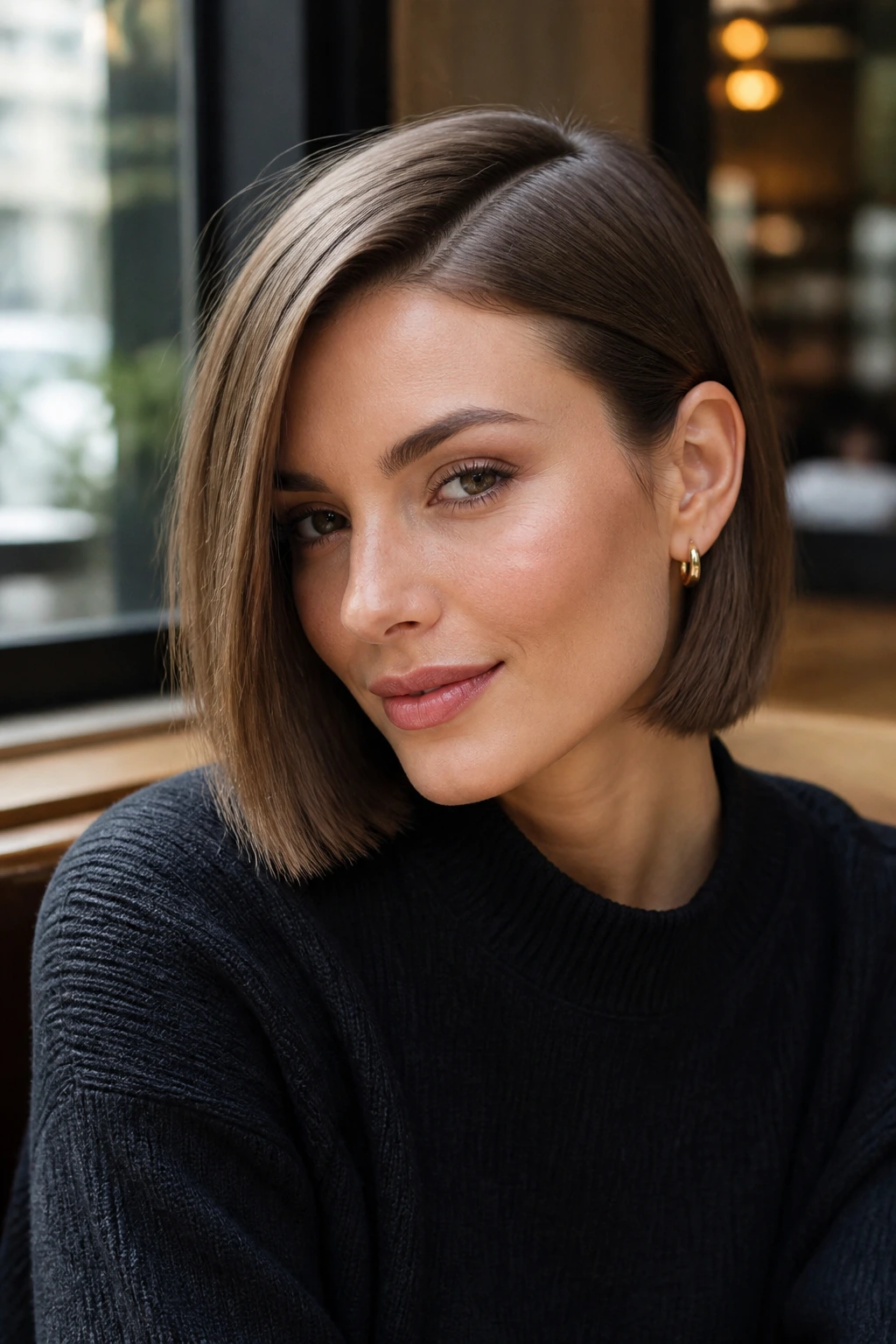
A deep side part can completely transform the geometry of a bob. By sweeping the majority of your hair to one side, you create a dramatic, sweeping angle that frames one side of the face while tucked behind the ear on the other. It is classic, feminine, and undeniably elegant.
Achieving the Part
Use a tail comb to get a perfectly straight line. Start your part directly above the arch of your eyebrow for the most dramatic effect. If you have a round face, this style is particularly helpful, as the height added by the side-swept hair helps to elongate your features.
Tucking for Effect
The “tuck” is an essential part of the side-parted bob. Tucking the hair behind the ear on the shorter side keeps the face open and prevents the hair from falling forward constantly. If your hair is too silky and keeps slipping out, use a small dab of styling cream behind the ear to provide a bit of grip.
9. The Rounded “Bowl” Bob
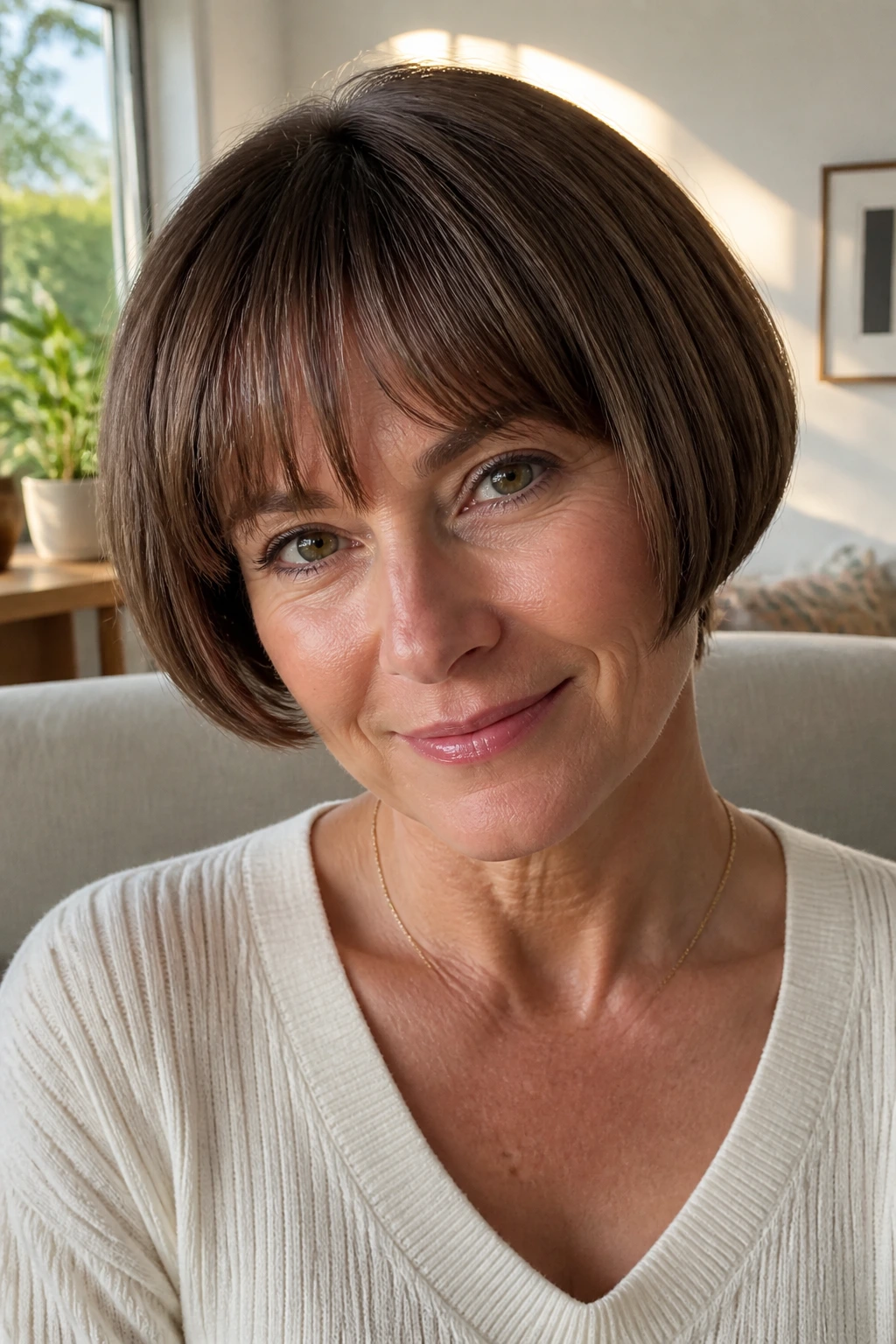
Before you write this one off, understand that the modern rounded bob is far removed from the childhood bowl cuts of the past. It features a soft, curved line that follows the head’s shape, often with soft, face-framing layers. It is incredibly soft and flattering for those who want to move away from harsh, blunt edges.
Softening the Silhouette
This look is achieved by slightly beveling the ends inward using a round brush during your blow-dry. It gives a sense of bounce and health. It is a fantastic choice if you have a narrow face, as the width at the sides adds balance to your features.
Who Should Avoid This
If you have a very round or square face shape, be cautious. Adding too much width at the widest part of your face can accentuate your jaw or cheekbones in a way that might not be desired. If you’re unsure, ask your stylist to keep the rounding subtle.
10. The Deep-Layered Shaggy Bob
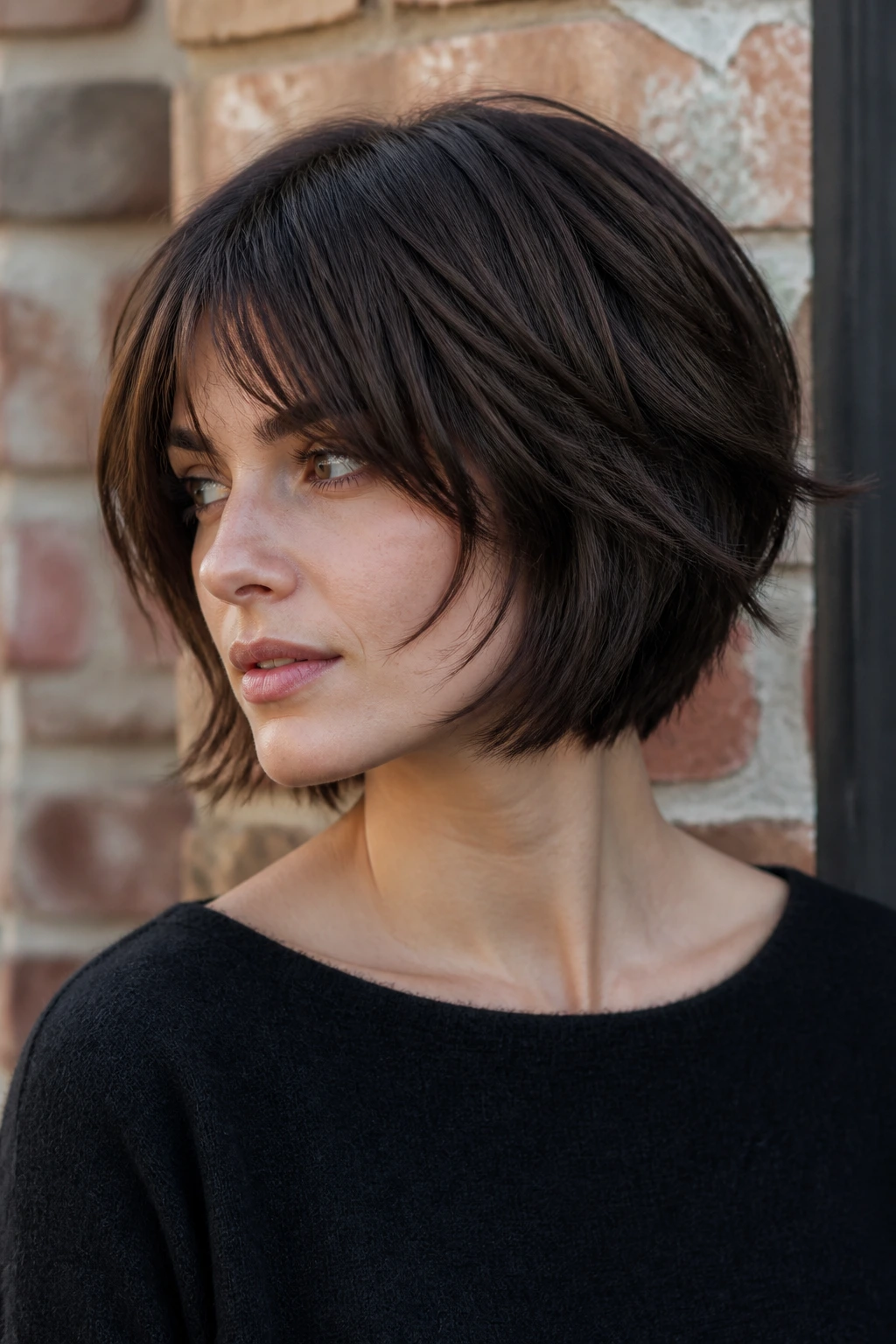
Who says a bob can’t have layers? By adding heavy, internal layering to a short, straight bob, you create a shaggy, effortless vibe. It is reminiscent of nineties-era street style—a bit rebellious, a bit messy, and very cool.
Why Layers Matter
Layers remove weight. If you have extremely thick, straight hair, a blunt bob can feel like a helmet. Layers allow the hair to collapse inward, creating a more natural shape that follows your head rather than sitting on top of it.
Styling the Shag
Use a salt spray or a sea-salt mousse on damp hair, then scrunch it with your hands. Even though your hair is straight, these products will give it a “grit” that makes the layers pop. You don’t need heat styling tools for this one, which is a massive bonus for hair health.
11. The Ear-Tuck Minimalist Bob

This style is all about simplicity. The hair is cut to the exact same length all the way around—somewhere between the lips and the chin—with no bangs and no layers. The styling is minimal: just a clean, deep part and tucking both sides behind the ears.
Focus on Hair Quality
Because there is nowhere for the hair to hide, the health of your ends is the most important factor. You must trim this style every four weeks to keep the ends looking healthy and sharp. If you have split ends, they will be very visible in a cut this precise.
The Importance of the Cut
This style relies entirely on the precision of the initial cut. You need a stylist who is willing to take their time to ensure the baseline is perfectly level. Even a slight discrepancy in length will be noticeable when both sides are tucked back.
12. The Blunt-Bob with Side-Swept Bangs
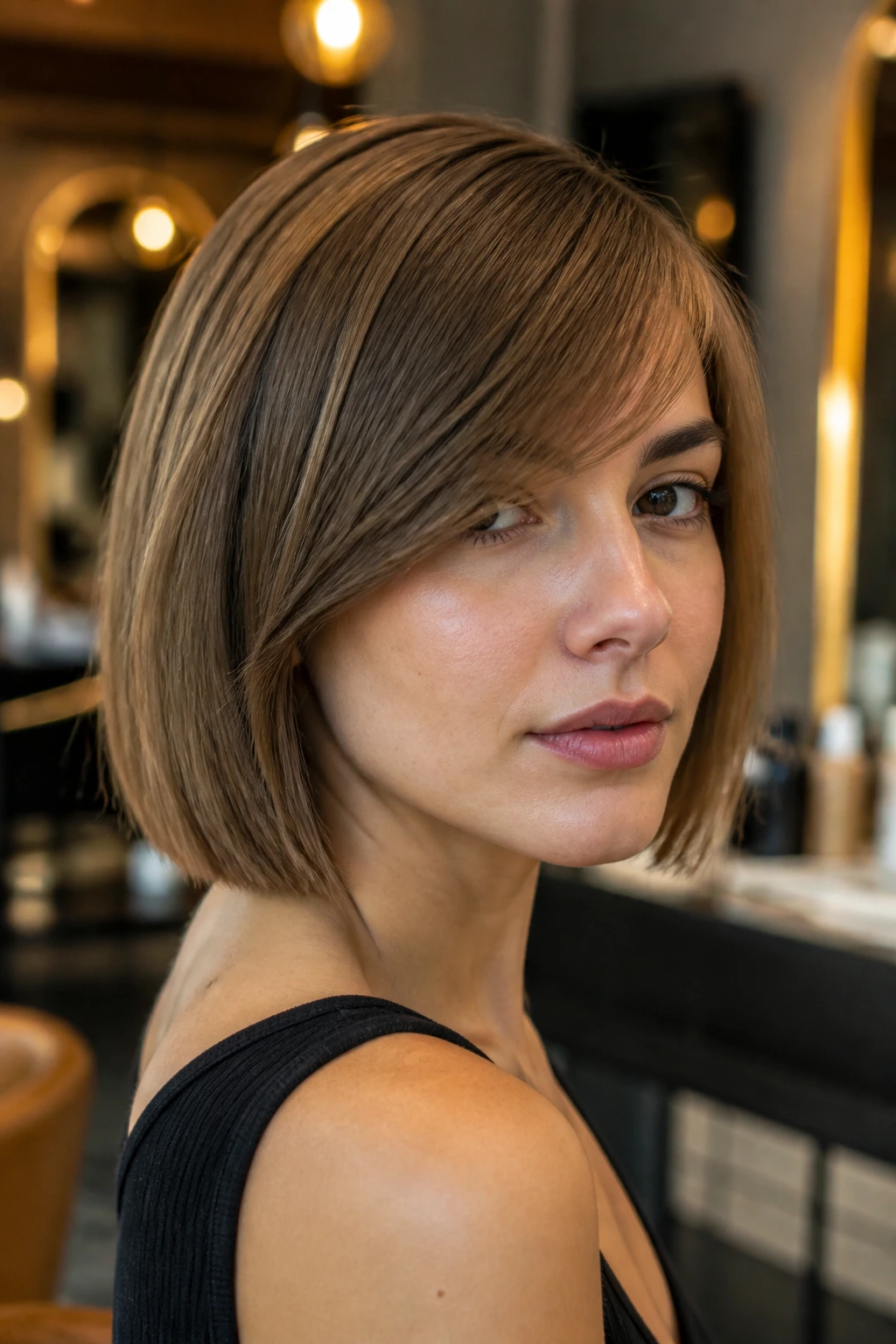
If you want the elegance of a bob but aren’t quite ready for a full, heavy fringe, a side-swept bang is the perfect compromise. It softens the forehead and brings the focus toward the eyes. The bang should be cut to blend seamlessly into the side layers of the bob.
Balancing the Face
Side-swept bangs are incredibly versatile and work on almost every face shape. They break up the severity of a blunt bob, making the overall look more approachable. Ensure the bangs aren’t too thin; you want enough weight to keep them from looking wispy.
Styling the Bangs
Use a small round brush when drying your bangs to give them a slight “C” shape. This prevents them from sticking straight across your forehead and allows them to transition smoothly into the rest of the hair.
13. The Undercut Bob
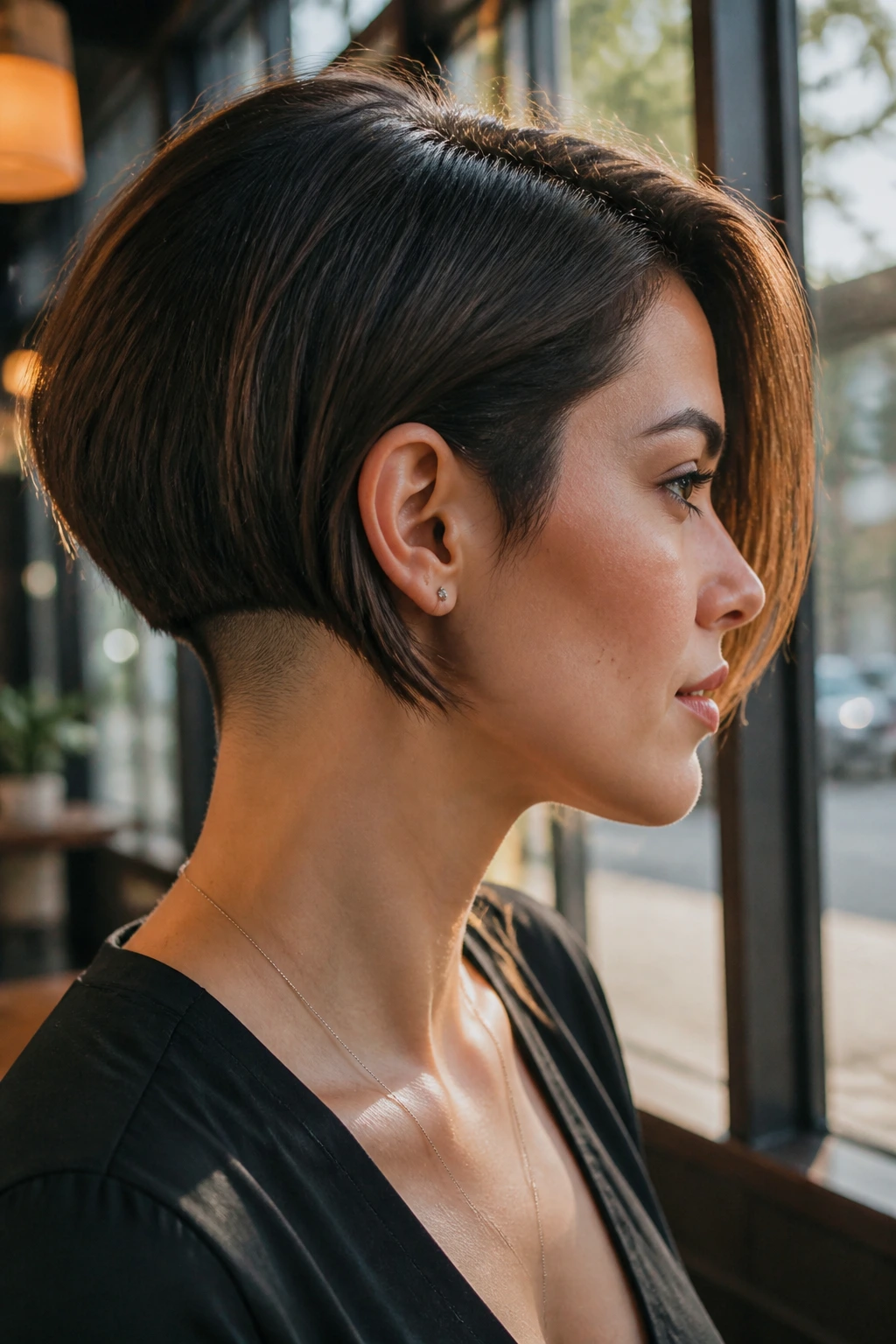
This is for the person who wants to hide a little bit of rebellion under a classic exterior. The bottom section of the hair at the nape is shaved or clipped very short, while the top layers fall over it to create a classic bob shape. It is a hidden surprise that also makes the haircut much cooler and lighter during warmer months.
Managing the Regrowth
Remember that if you shave the nape, you will have a prickly grow-out phase to deal with. If you aren’t ready to commit to that, stick to a “tapered” nape instead of a full shave. It provides a similar effect without the awkward grow-out process.
The Benefit of Coolness
If you live in a place that gets very hot or humid, the undercut is a life-saver. It removes a significant amount of weight and hair from the neck area, allowing for much better airflow. It is a functional style disguised as an edgy one.
14. The Face-Framing Graduation Bob
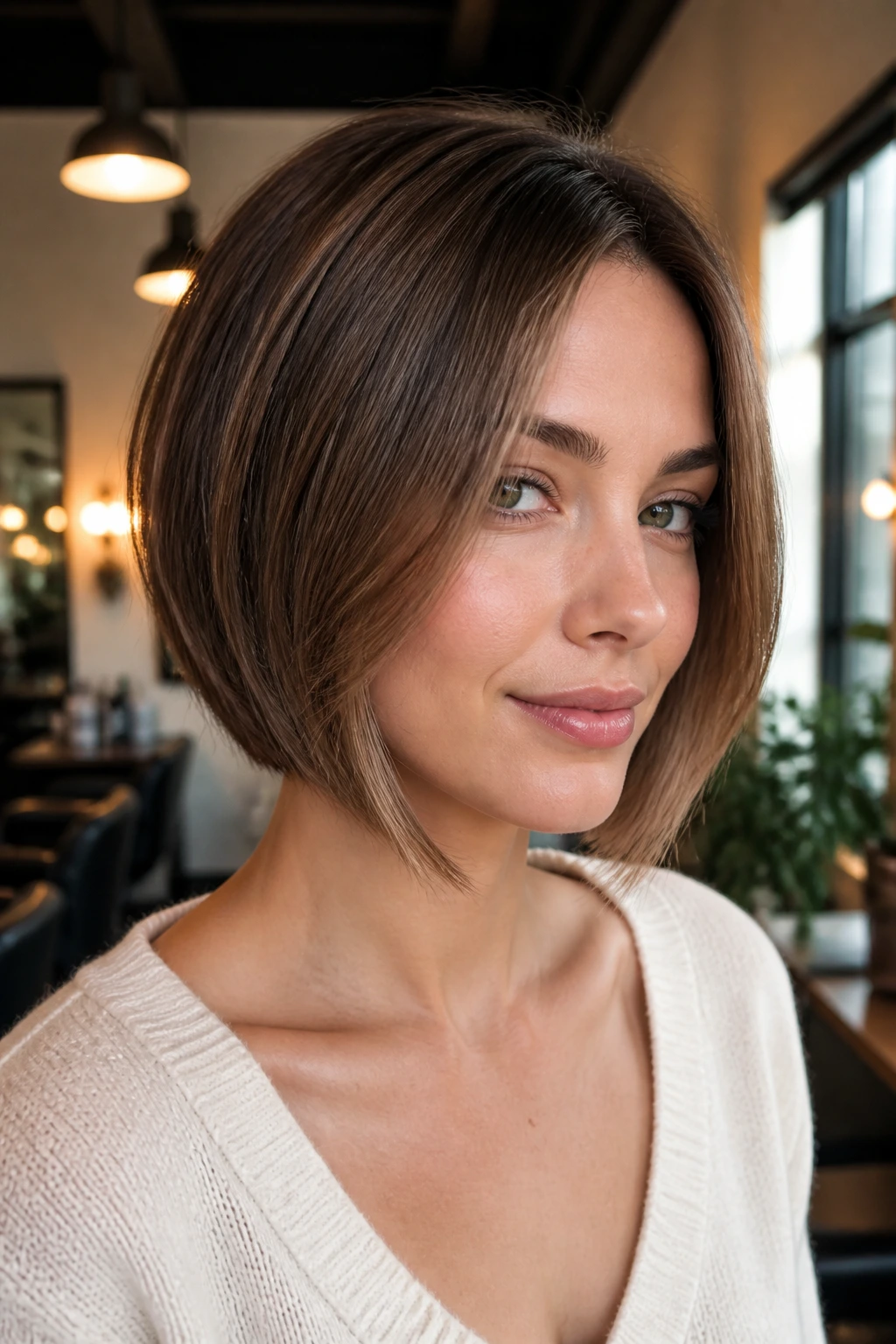
A graduated bob is longer in the front and shorter in the back, but the transition is very subtle. The pieces near your cheekbones are cut slightly longer than the rest of the hair, which helps to draw the eye downward and elongate the face.
The Graduated Angle
This is a great option for people who are nervous about going “too short” in the front. By keeping the front pieces a half-inch longer than the back, you get the security of length near your face while still enjoying the clean, short look of a bob in the back.
Styling Tips
You can wear this straight or tuck the front pieces behind your ears. When you tuck them, the graduation creates a lovely silhouette that highlights the jawline. It is a very flattering style for almost anyone.
15. The Choppy “Pixie-Bob” Hybrid
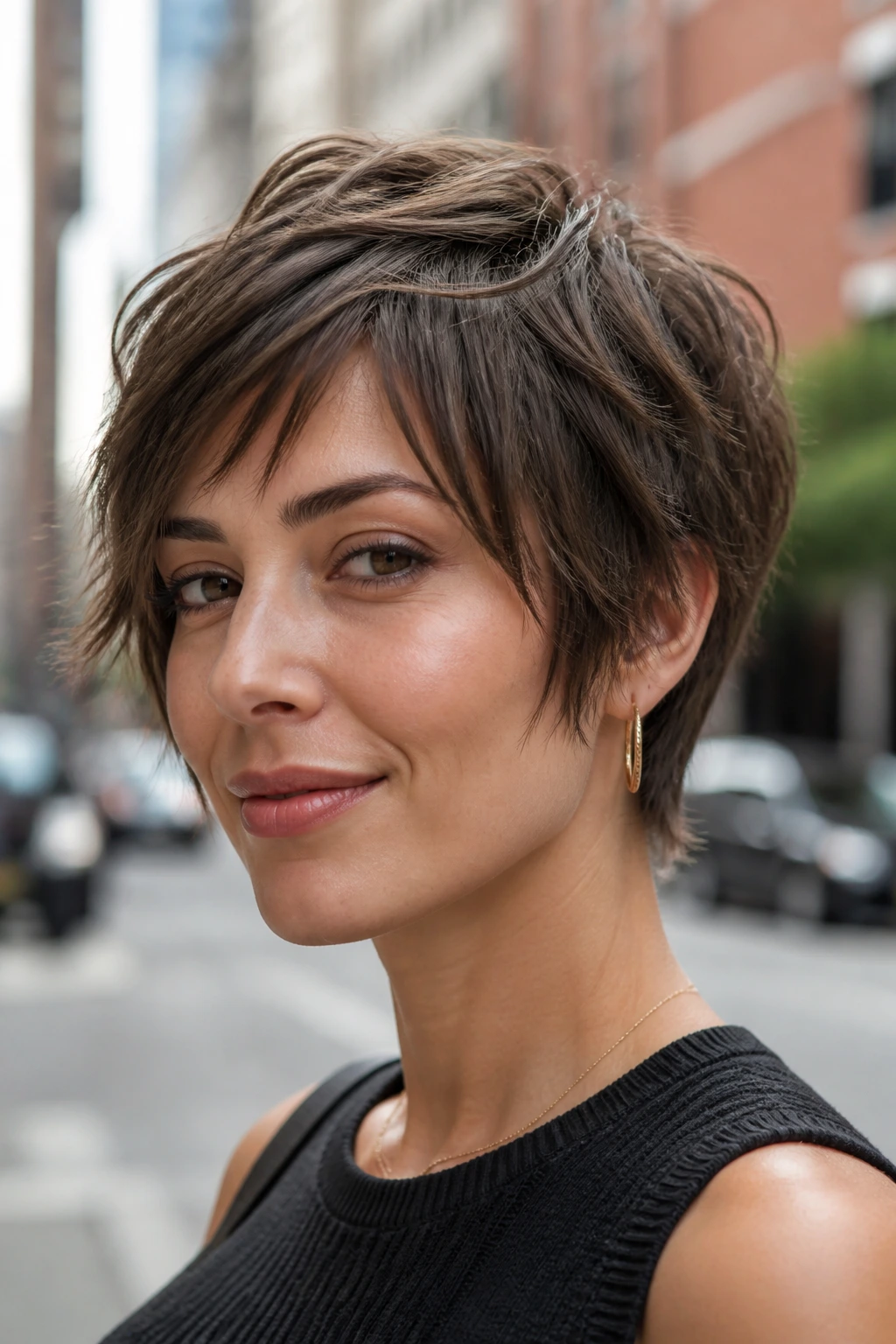
This style sits right on the fence between a long pixie and a very short bob. It has the volume and layering of a pixie cut but retains the overall shape of a bob. It is extremely short, usually ending mid-ear, and features a lot of choppy, disconnected layers.
Why It’s Great for Fine Hair
If your hair is thin, this is one of the best cuts you can get. The choppiness adds volume and interest that a long, sleek style simply cannot provide. It looks deliberate and stylish, rather than just “thin.”
Low-Maintenance Styling
Because the hair is so short, it usually air-dries perfectly. Just add a little bit of styling cream, tousle it with your fingers, and you are ready for the day. It’s an incredibly liberating haircut if you’re used to spending hours on your hair.
16. The Sleek “Glass” Bob
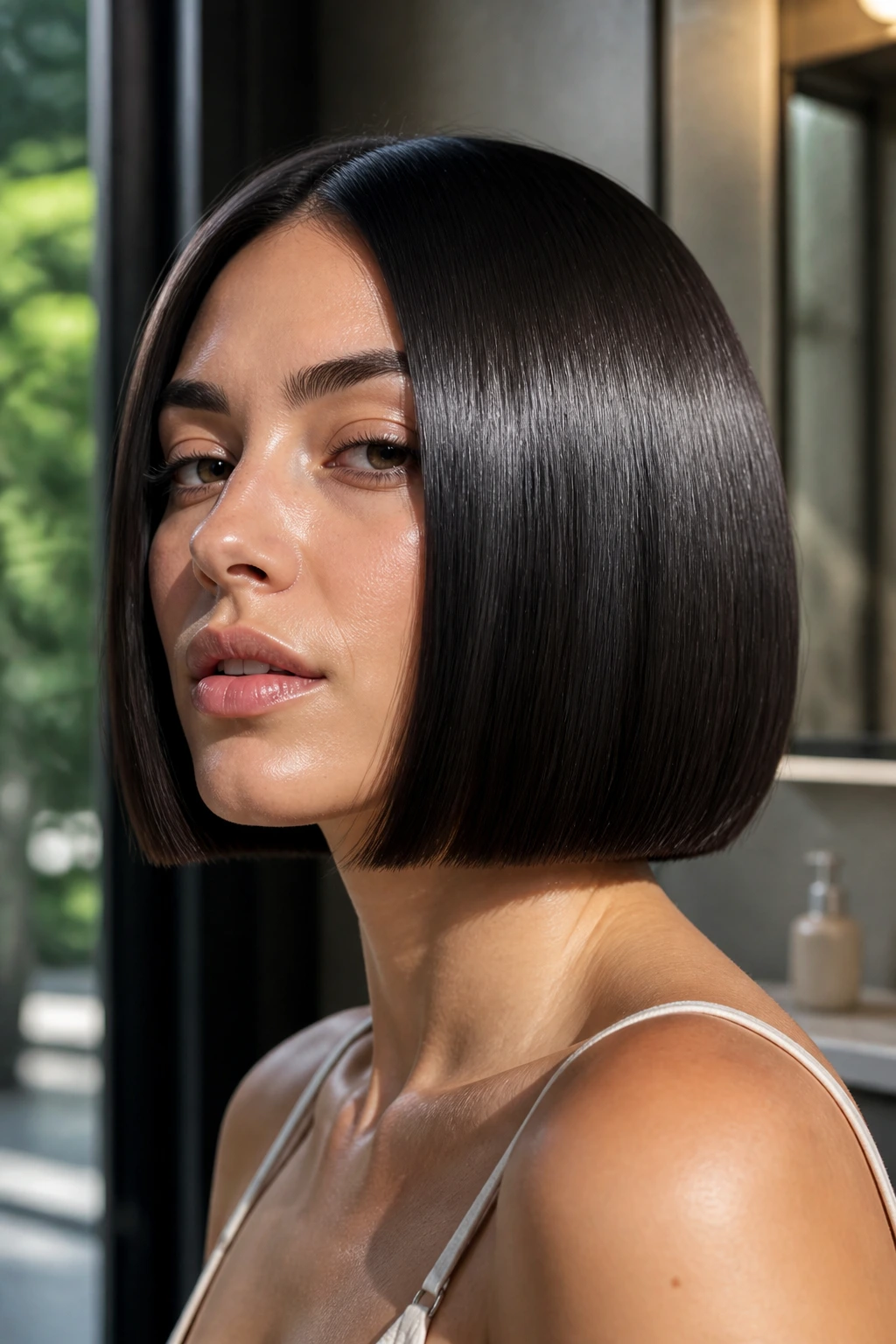
The “glass hair” trend is all about achieving a mirror-like shine. This is best achieved on a super short, blunt-cut bob. It isn’t a specific haircut shape—it’s a finish. But when paired with a perfect, chin-length bob, the effect is stunning.
Achieving the Shine
You will need a high-quality flat iron and a heat protectant that also adds shine. Work in small sections, and pass the iron over the hair only once. If you go over the same section too many times, you will lose the moisture in the hair, which is essential for that glossy finish.
Avoiding Weight
Use a finishing oil, but focus it strictly on the ends. If you put oil near your roots, you will lose the volume that keeps the bob looking light and airy. The goal is to make the hair look healthy, not oily.
17. The Blunt-Cut Bob with Middle Part

A middle part is the ultimate choice for a symmetrical, clean bob. It frames the face equally on both sides, which creates a very balanced, centered look. This is the “no-nonsense” bob. It is clean, sharp, and very modern.
Face Shape Considerations
If you have a long, thin face, a middle part can sometimes accentuate the length. If you have a rounder face, it can actually have a slimming effect by covering part of the cheeks. It’s worth experimenting with your part before committing to the cut.
Maintaining the Line
With a middle part, any unevenness in the haircut will be immediately obvious. Ensure that you have a stylist who uses a mirror to check the symmetry of the cut while you are sitting completely still, not moving your head.
18. The “Invisible” Layered Bob
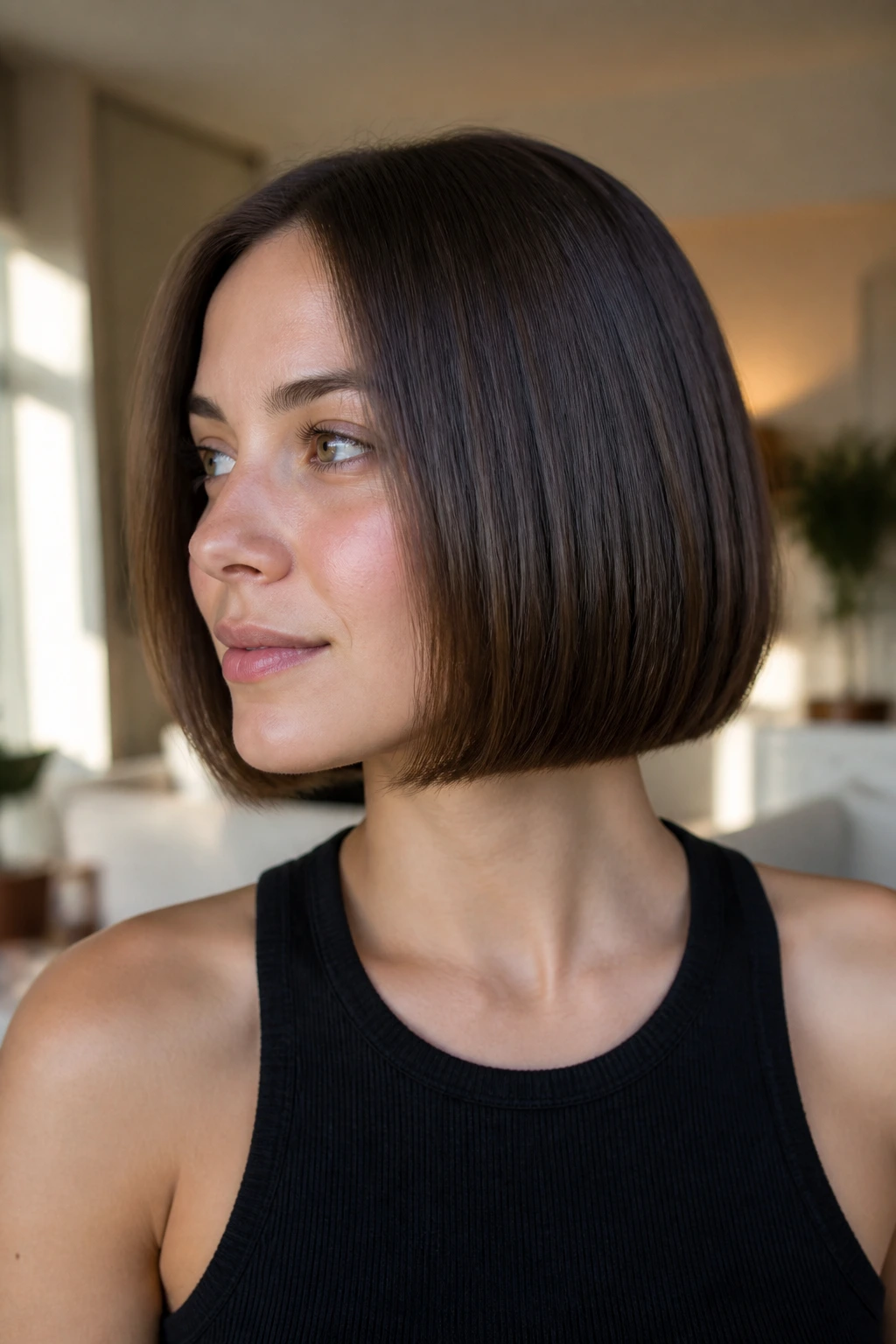
This is a technique where the stylist adds short layers on the inside of the hair to create a rounded shape, but these layers are completely invisible from the surface. The bob still looks like a solid, blunt-edged style, but it holds its shape much better throughout the day.
Why This is Better Than a Standard Blunt Cut
A standard blunt cut can sometimes look “flat” if you have thick hair. The invisible layers act as a support system. They give the hair a gentle curve, preventing it from looking like a flat, heavy curtain around your face.
How to Ask for It
Tell your stylist you want a “blunt perimeter with invisible internal structure.” They will know exactly what you mean. It is a technical cut, but the result is a bob that looks more expensive and intentional than a standard salon cut.
19. The Edgy Shaved-Side Bob
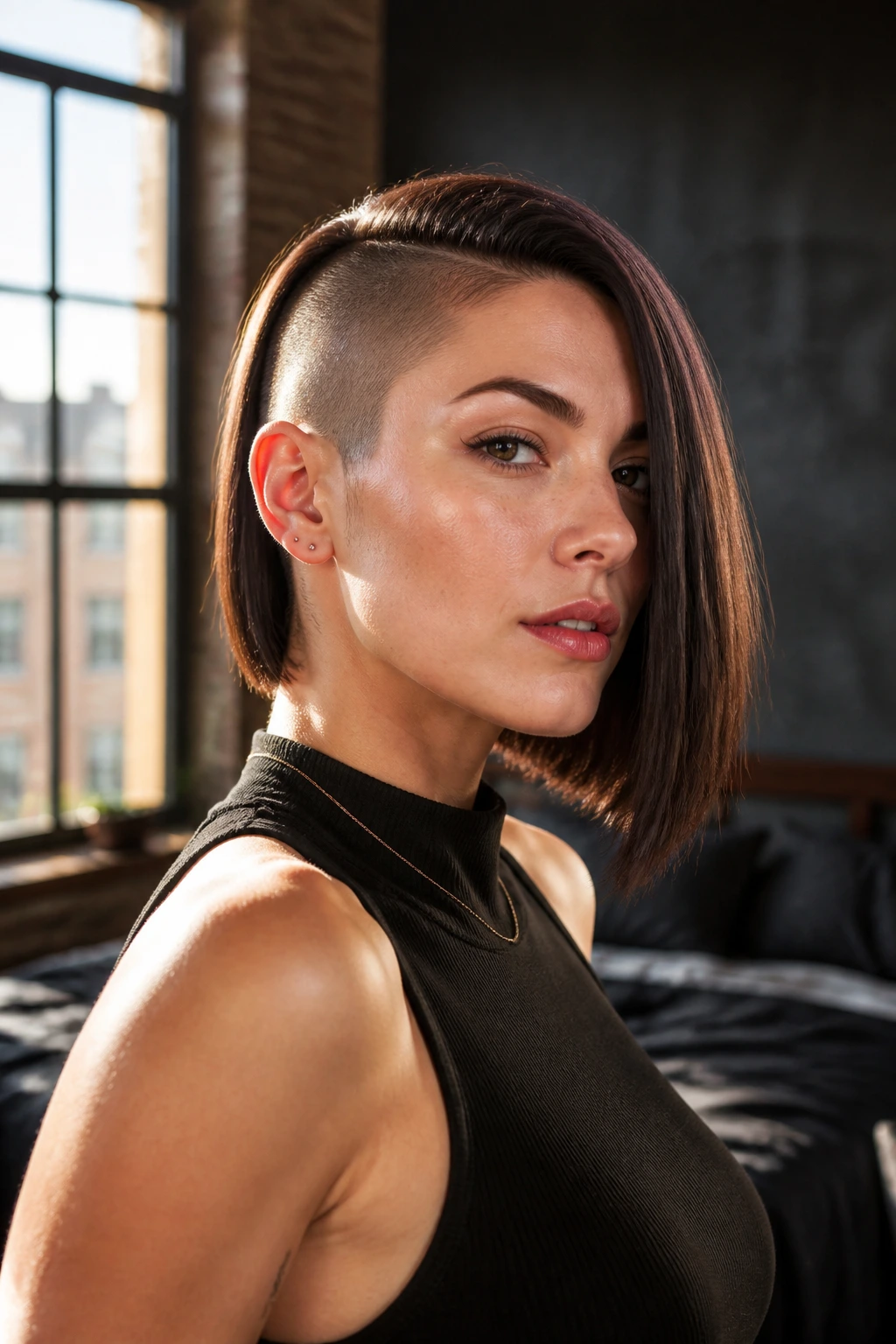
If you really want to change things up, consider a bob that features one side completely shaved or cropped very short, while the other side is left in a sleek, chin-length bob. It is high-contrast and very bold.
The Commitment
This is a high-commitment style. You are essentially shaving a portion of your head. Ensure you are ready for the grow-out process, which will involve several months of uneven hair lengths.
Styling for Balance
To make this work, focus on the styling of the longer side. Keep it pin-straight and high-shine. The contrast between the shaved skin and the sleek, polished hair on the other side is where the beauty of this look really lives.
20. The Collarbone-Length “Long” Bob (Lob)
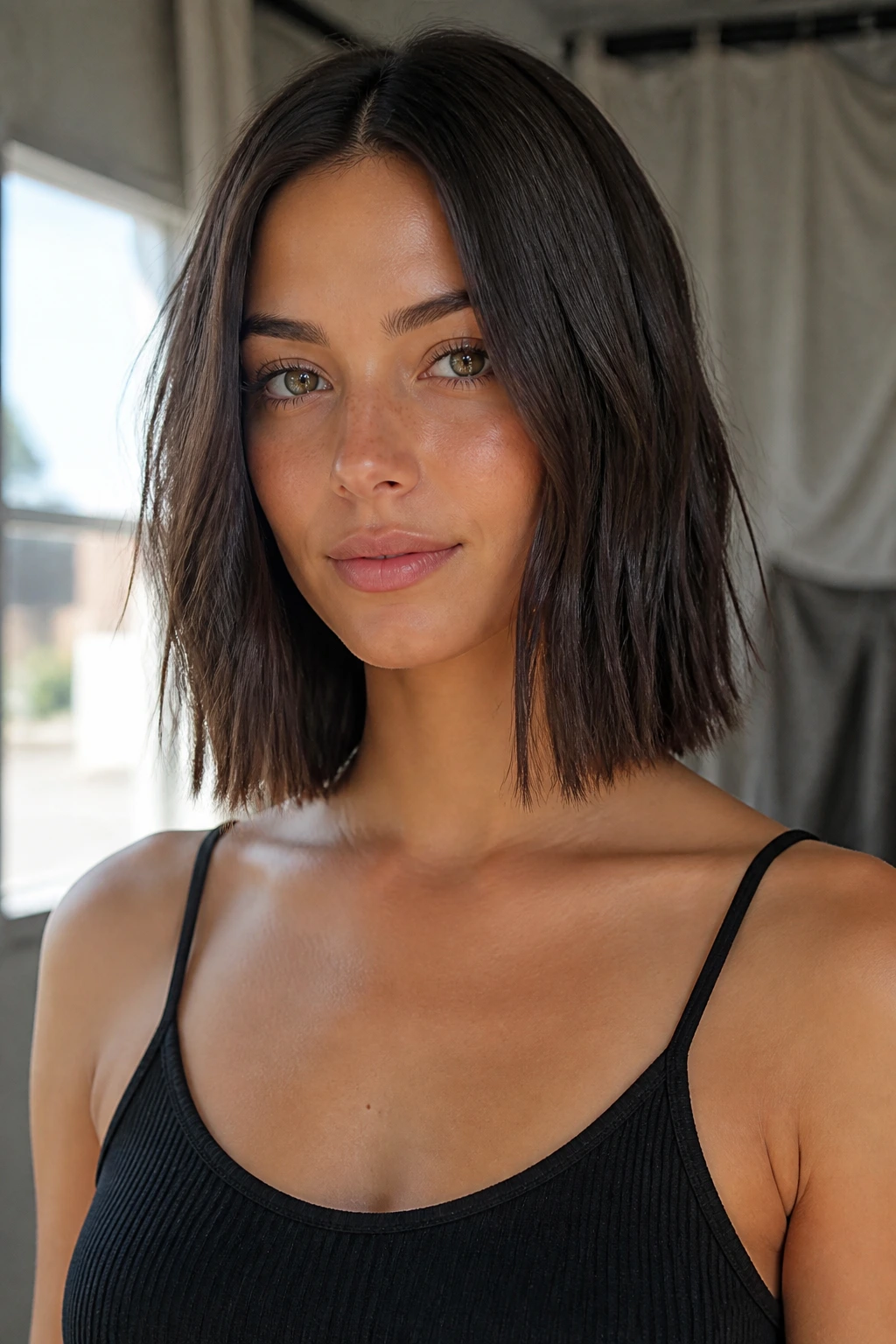
While we’ve focused on super short, chin-length styles, we have to include the shortest version of the lob. It hits right at the base of the neck or the collarbone. It is the most “wearable” of all the bobs, as it allows for a bit of movement and can still be pulled back into a tiny ponytail if needed.
Transitioning to Shorter
If you are currently nervous about jumping straight to a chin-length bob, start here. The collarbone-length bob is the perfect bridge. You get the benefit of a clean, blunt edge, but you still have enough length to feel comfortable.
Daily Styling
This is the easiest length to style. It requires less precision than the jaw-length bob and is much more forgiving if you haven’t had a trim in a few weeks. It is the perfect entry point into the world of short hair.
Final Thoughts

Choosing a super short bob is an act of liberation. There is something incredibly powerful about stripping away the extra length and focusing on the shape that best frames your face. Straight hair provides the perfect canvas for these cuts because it allows the geometry of the style to take center stage. You don’t have to worry about the hair changing shape throughout the day; it stays exactly where you put it.
When you make the transition to a super short style, take your time choosing the right length. It is always better to start a little bit longer than you think you want and then go shorter on your second visit. A professional stylist will be able to look at your neck length, your jawline, and your face shape to recommend the exact spot where your bob should hit. Once you find that perfect length, you will find that your morning routine becomes faster, your style becomes sharper, and you feel a renewed sense of confidence. Don’t be afraid to keep it blunt, keep it clean, and enjoy the ease of a style that is designed to stay perfect.