

A soft, pastel-toned bob might seem like a permanent departure from the world of long, flowing manes, but the evolving landscape of color and cut has bridged the gap in ways that feel entirely natural. The fascination with pink isn’t just a fleeting impulse; it is a deliberate, high-impact choice that allows for endless creative expression without sacrificing the texture or playfulness that we often associate with longer lengths. Whether you are leaning toward the dusty, muted shades of a desert sunset or the electric, neon hum of a high-fashion editorial, the bob remains the ultimate canvas for these pigments.
Pink has moved far beyond the bubblegum stereotypes of the past. Today’s colorists are leaning into complex, layered tones that mimic the depth found in nature—think muted mauves, cool-toned rose golds, and punchy magentas that catch the light with every movement. When you combine this spectrum with a precision-cut bob, you aren’t just getting a haircut; you are adopting a signature style that demands attention while maintaining a sense of refined, personal authority.
If you have spent your life managing significant length, the transition to a bob can feel like a heavy weight has been lifted—both physically and mentally. The key, as always, is finding the specific shade and silhouette that complements your natural features. It’s about the interplay between the sharp, clean lines of the cut and the soft, ethereal quality of the color.
1. The Dusty Rose Blunt Bob
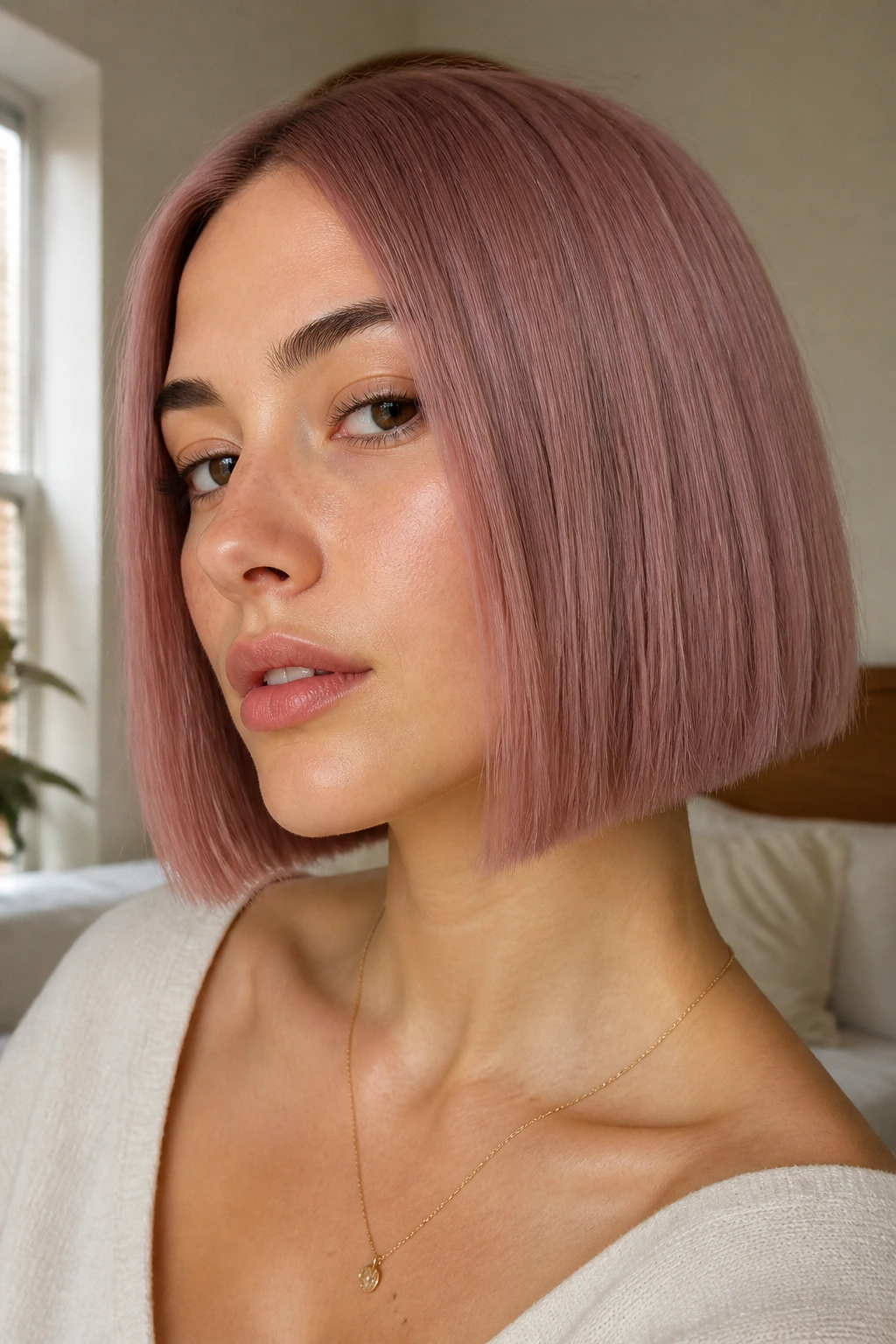
The blunt bob is the gold standard for those seeking a sharp, modern aesthetic that frames the face with intent. By opting for a dusty rose tone, you are introducing a sophisticated, muted warmth that avoids the garishness of brighter dyes. This specific hue works exceptionally well for individuals with cooler skin undertones who want to embrace color without overwhelming their complexion.
Achieving the Perfect Blunt Line
Consistency is the name of the game here. You want a cut that sits perfectly horizontal, typically resting right at the jawline or slightly below. When the hair is thick and healthy, a blunt line adds a sense of density that makes the pink color appear more saturated and vibrant. It removes all the wispy, damaged ends that often accompany long-term growth, leaving behind a thick, glossy surface for the color to cling to.
Maintenance Tips for Muted Shades
- Use a color-depositing shampoo every third wash to maintain the dusty depth.
- Avoid high-heat styling, as excessive heat will strip the subtle violet undertones that keep the rose looking dusty rather than orange.
- Schedule trims every six weeks to ensure the blunt line stays sharp, as even a quarter-inch of growth can soften the intended architectural effect.
Pro tip: Pair this cut with a middle part to emphasize the symmetry of the blunt ends.
2. Neon Magenta A-Line
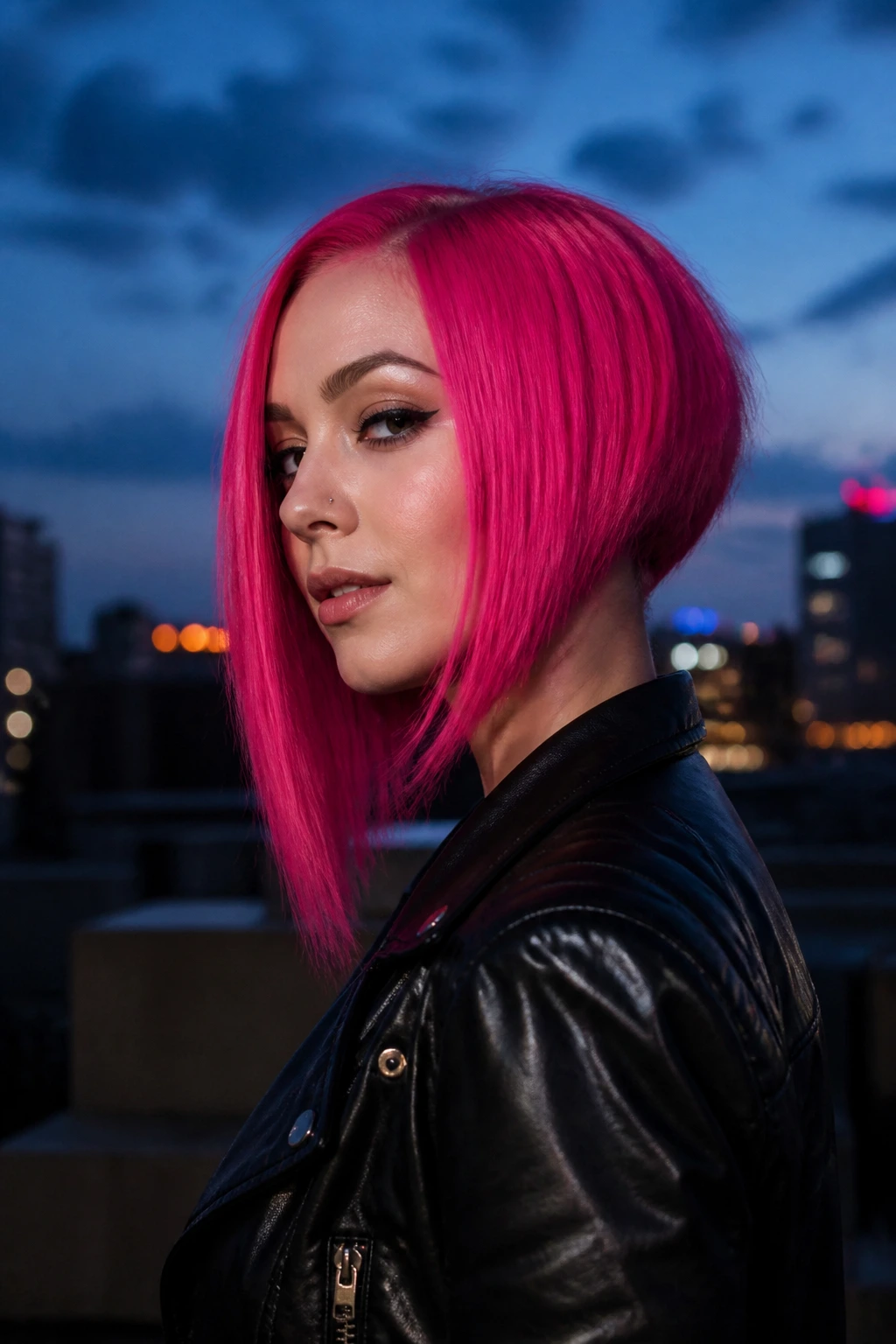
If the muted approach feels too timid, the neon magenta A-line is the direct, unapologetic alternative. This style features a dramatic slant, with the hair cut shorter in the back and cascading into longer, sharper points at the front. The neon intensity of the magenta creates a powerful contrast against the sharp angle of the cut, ensuring that the silhouette is never lost in the brilliance of the color.
Why This Style Commands Attention
The A-line is inherently dynamic. When combined with a high-saturation color like neon magenta, the hair becomes a piece of geometric art. The movement of the longer front pieces emphasizes the color’s vibrancy, as the shifting light creates different levels of intensity throughout the day. It is an excellent choice for someone who values structure but wants the freedom that comes with a punchy, statement color.
Styling for Maximum Impact
- Use a lightweight, silicone-free smoothing serum to prevent flyaways, as frizz can mask the sharpness of the A-line geometry.
- A flat iron is your best tool here; pull the hair straight through in small sections to emphasize the clean, crisp lines of the cut.
- Consider an undercut in the nape area to remove bulk, which allows the back to sit tighter against the neck and keeps the A-line angle looking severe and deliberate.
3. Pastel Candy-Floss Layered Shag
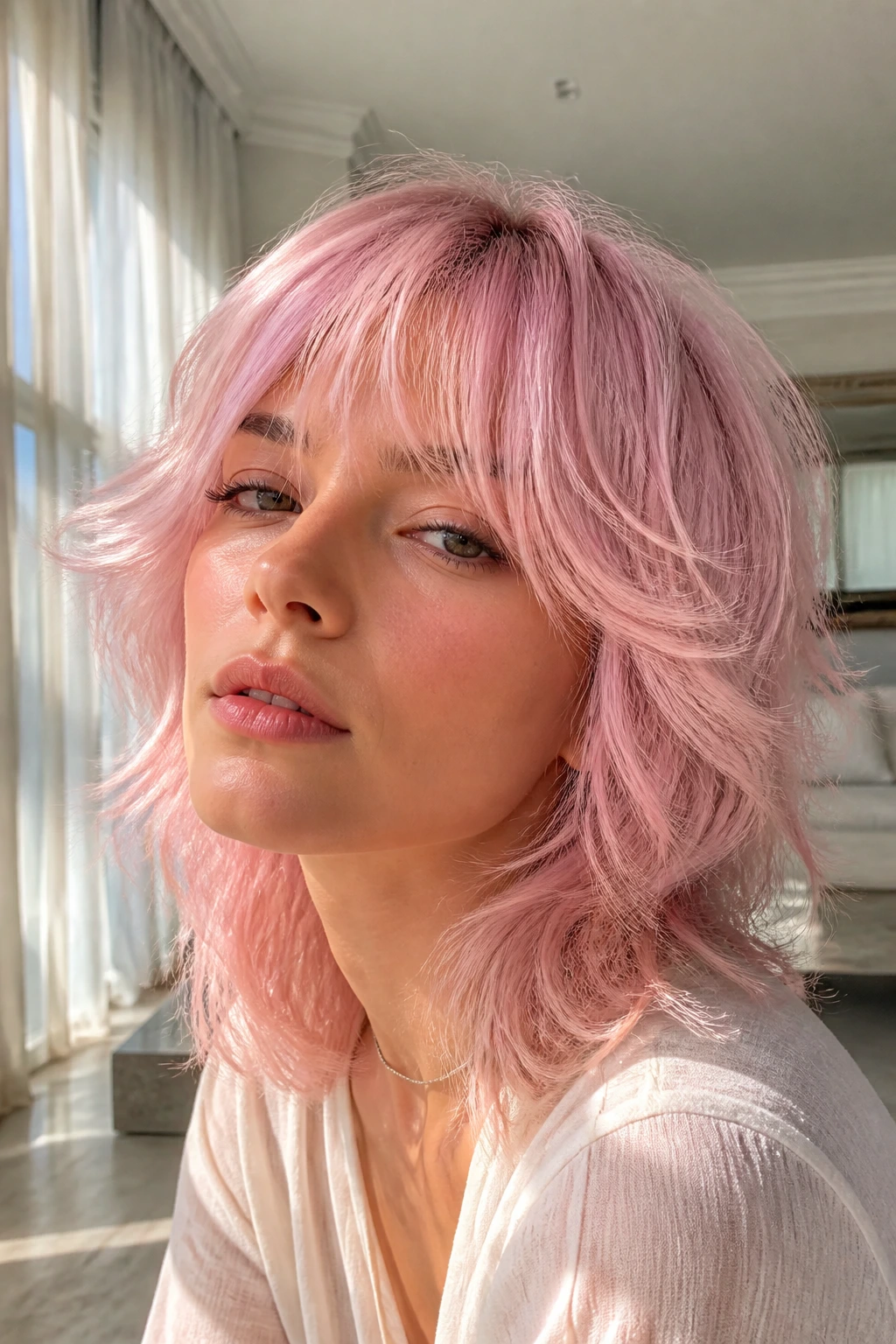
Moving away from the precision of blunt cuts, the pastel shag embraces a looser, more organic texture. This bob is defined by internal layers, curtain bangs, and a soft, airy finish. The candy-floss pink—a light, slightly sheer tone—enhances the ethereal feel of the shag, making the hair look weightless and incredibly soft to the touch.
The Role of Texture in Color Depth
Texture changes the way we perceive color. In a blunt cut, the color appears solid and impenetrable. In a shag, the layers allow for shadow and light to play within the hair, creating a multi-dimensional effect even if you use a single shade of pink. The ends are texturized to prevent them from looking heavy, which complements the delicate, light-filled nature of pastel pigments.
Daily Care for Shag Bobs
- Apply a texturizing sea salt spray to damp hair and let it air dry; this enhances the natural wave pattern often associated with the shag cut.
- If you have naturally straight hair, use a curling wand to add loose bends, then brush them out for that effortless, “lived-in” aesthetic.
- The layers will grow out more gracefully than a blunt bob, making this a slightly lower-maintenance option for those who don’t want a salon visit every month.
4. Rose Gold Graduated Bob
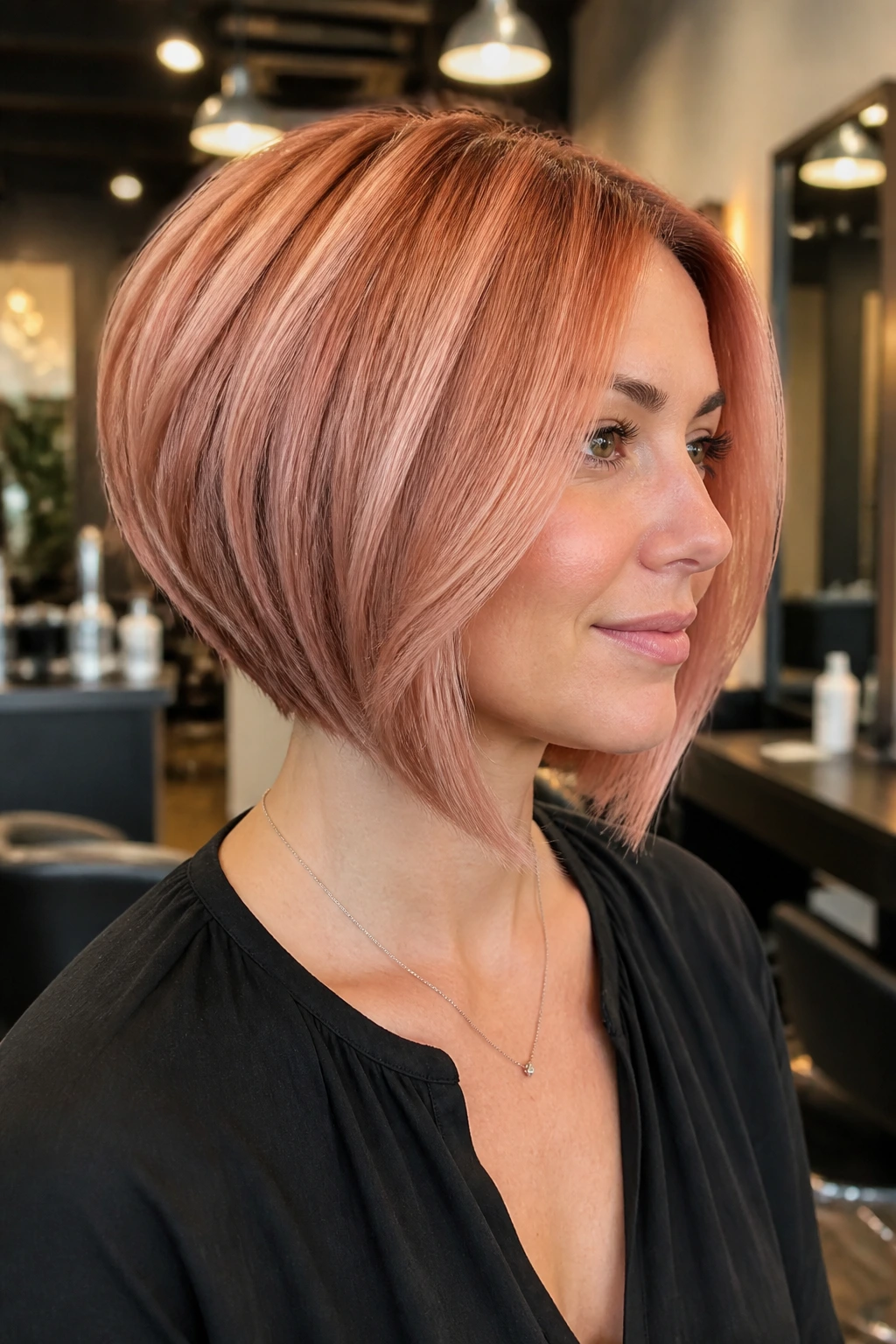
The graduated bob is a classic for a reason. It bridges the gap between a short, cropped back and a longer front, providing a sense of elevation that is flattering on almost every face shape. When executed in a rose gold hue—a warm, metallic blend of pink and copper—the cut feels luxurious, elevated, and timeless.
Mastering the Gradient
The success of this cut lies in the transition between the layers. You want the graduation to be seamless, with each layer stacking perfectly on the one beneath it. Rose gold is a highly reflective color; it loves the light. Because the graduated bob has so much curvature and movement, it allows the metallic qualities of the rose gold to shimmer in a way that flat colors simply cannot replicate.
Is This Color Right for You?
- Rose gold works beautifully on warm-toned skin, bringing out natural gold highlights in the complexion.
- It acts as a bridge for people who are currently blonde but want to experiment with pink without fully committing to a vivid, non-natural shade.
- Because it is a metallic-adjacent tone, ensure your hair is in optimal condition; damaged hair won’t hold the shine that makes rose gold look expensive.
5. Bubblegum Bob with Blunt Bangs
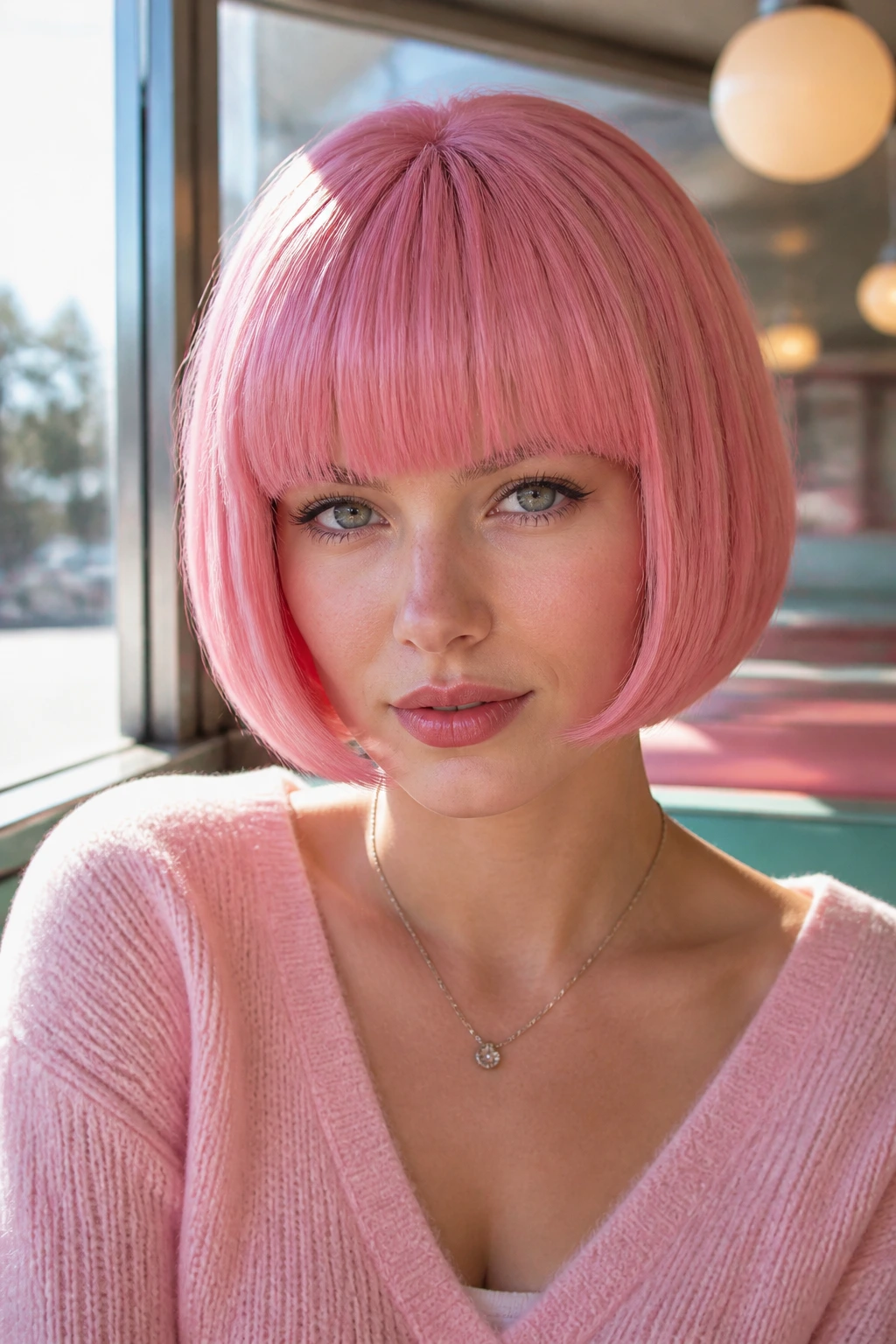
For those who prefer a more playful, youthful aesthetic, the bubblegum bob with blunt, heavy bangs is an iconic silhouette. This look draws inspiration from vintage styles but brings them into the present with a high-saturation, opaque pink color. The bangs serve as a frame for the eyes, while the bob provides a clean, rounded shape that is both compact and bold.
Balancing the Face Shape
Blunt bangs can be tricky, but the key is the weight. You want the fringe to start from a deep point—closer to the crown than the forehead—to ensure they don’t look wispy or sparse. When dyed a solid, opaque bubblegum pink, these bangs become a secondary accessory, acting almost like a statement piece of jewelry that you never have to take off.
When to Skip the Bangs
If you have a particularly small forehead or naturally cowlick-heavy hairlines, consider a side-swept fringe instead. A blunt bang requires significant daily styling with a round brush or a flat iron, so ensure you have the time for a morning ritual. If the maintenance sounds overwhelming, the blunt bob without the fringe is a fantastic alternative that still delivers that clean, modern look.
6. Deep Magenta Long Bob (Lob)
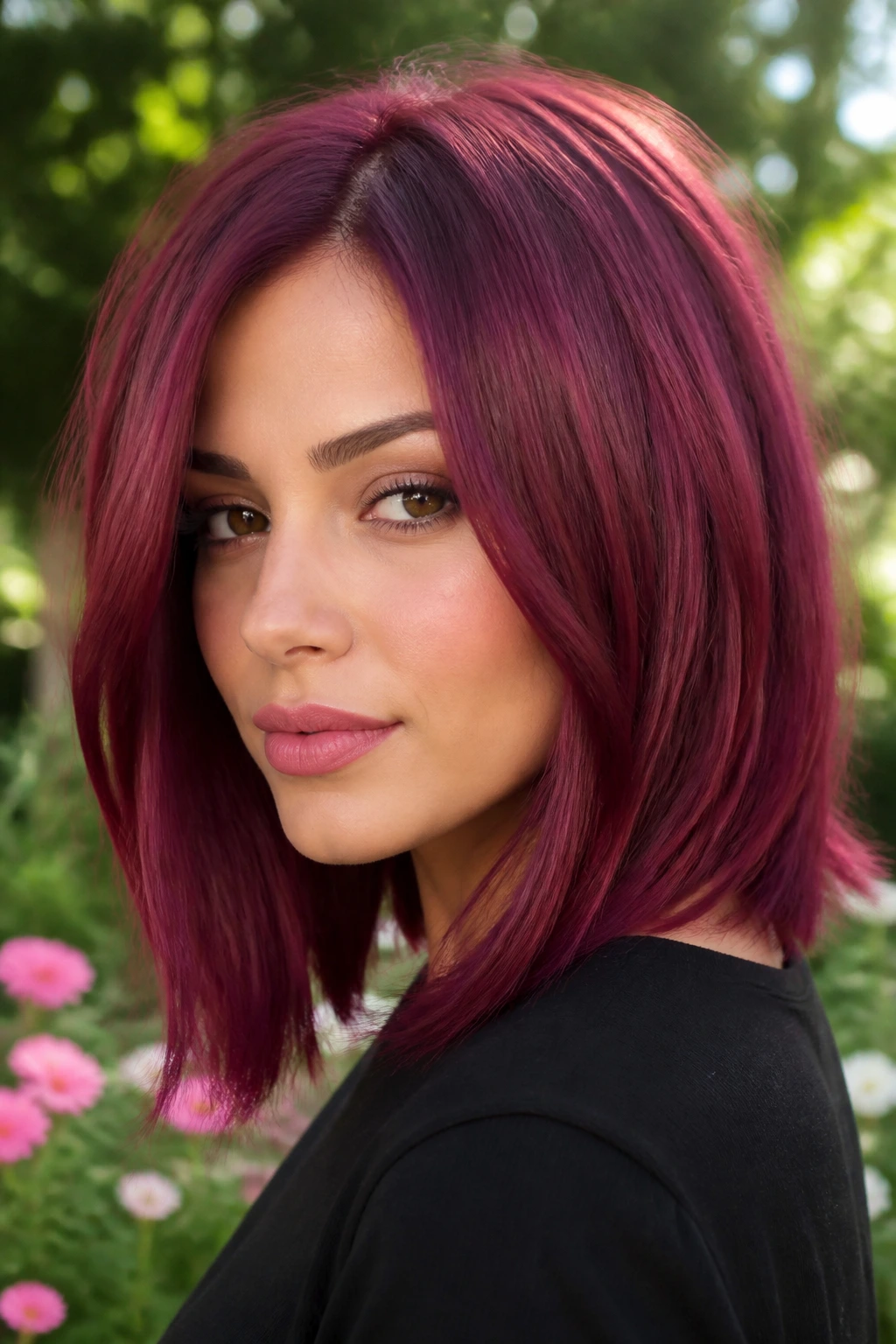
For those who aren’t quite ready to lose all their length, the long bob, or “lob,” is the perfect transition. Resting somewhere between the collarbone and the chin, this cut offers all the benefits of a bob—easier styling, less weight—with enough remaining length to tie back in a ponytail when needed. A deep, wine-tinted magenta provides a sophisticated, moody take on pink that feels appropriate for any environment.
The Versatility of the Lob
The beauty of the lob is its ability to be styled in dozens of ways. You can wear it poker-straight for a sleek look, beach-wavy for a weekend vibe, or even slicked back for a more editorial approach. The deep magenta color is incredibly rich and can be worn with a glossy finish to make it look healthy and thick, which is a massive plus for anyone dealing with the aftermath of excessive bleaching.
Deep Tones vs. Light Pastels
- Darker pinks like magenta require less frequent bleaching to achieve, which is much kinder to your hair health if you are starting from a dark natural base.
- They also fade more slowly than pastel pinks, meaning you get more time between color touch-ups.
- Consider adding a deep plum undertone to the magenta to add complexity and warmth, especially if you have olive skin.
7. Champagne Pink Soft-Wave Bob
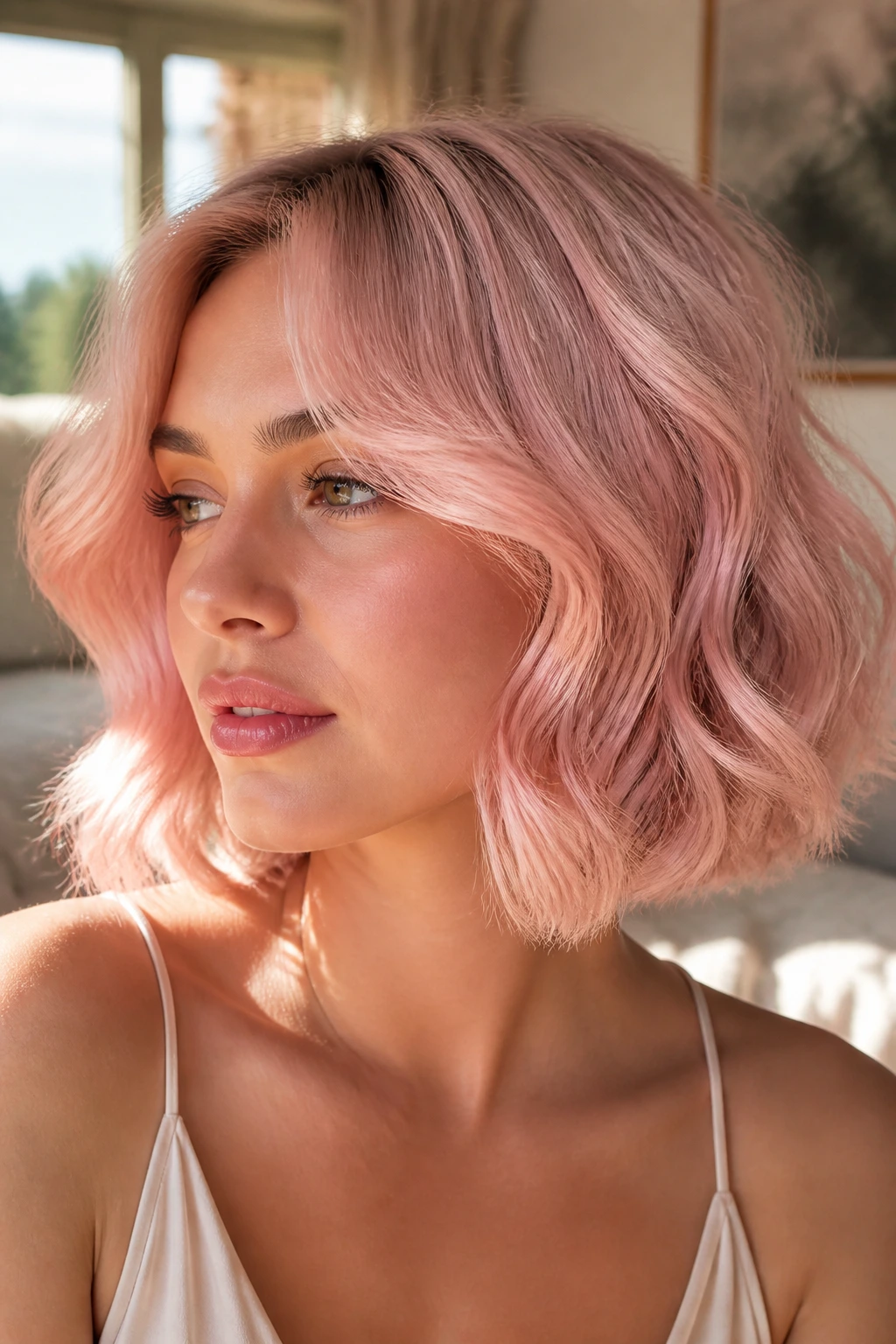
Champagne pink is the “quiet luxury” of the hair color world. It is a very light, almost blonde-based pink with a champagne-colored shimmer. When paired with a soft-wave bob, the result is incredibly delicate and feminine. This is not about making a loud statement; it’s about choosing a refined, expensive-looking shade that plays with light.
Defining Soft-Wave Texture
The soft-wave bob is usually cut with slightly longer layers to encourage the hair to move rather than just sit. You don’t want razor-sharp ends here; soft, point-cut ends allow the hair to nestle into a natural wave. The champagne pink pigment settles into the curves of the waves, creating a shimmering effect that looks almost like liquid gold when hit by the sun.
Best Styling Tools for Waves
- Use a triple-barrel iron if you want uniform, retro-style waves.
- Alternatively, braid damp hair and let it set overnight to achieve a more natural, heat-free wave pattern.
- Finish with a light-hold shine spray; avoid heavy hairsprays, as they will dull the delicate champagne shimmer of the color.
8. Hot Pink Choppy Bob
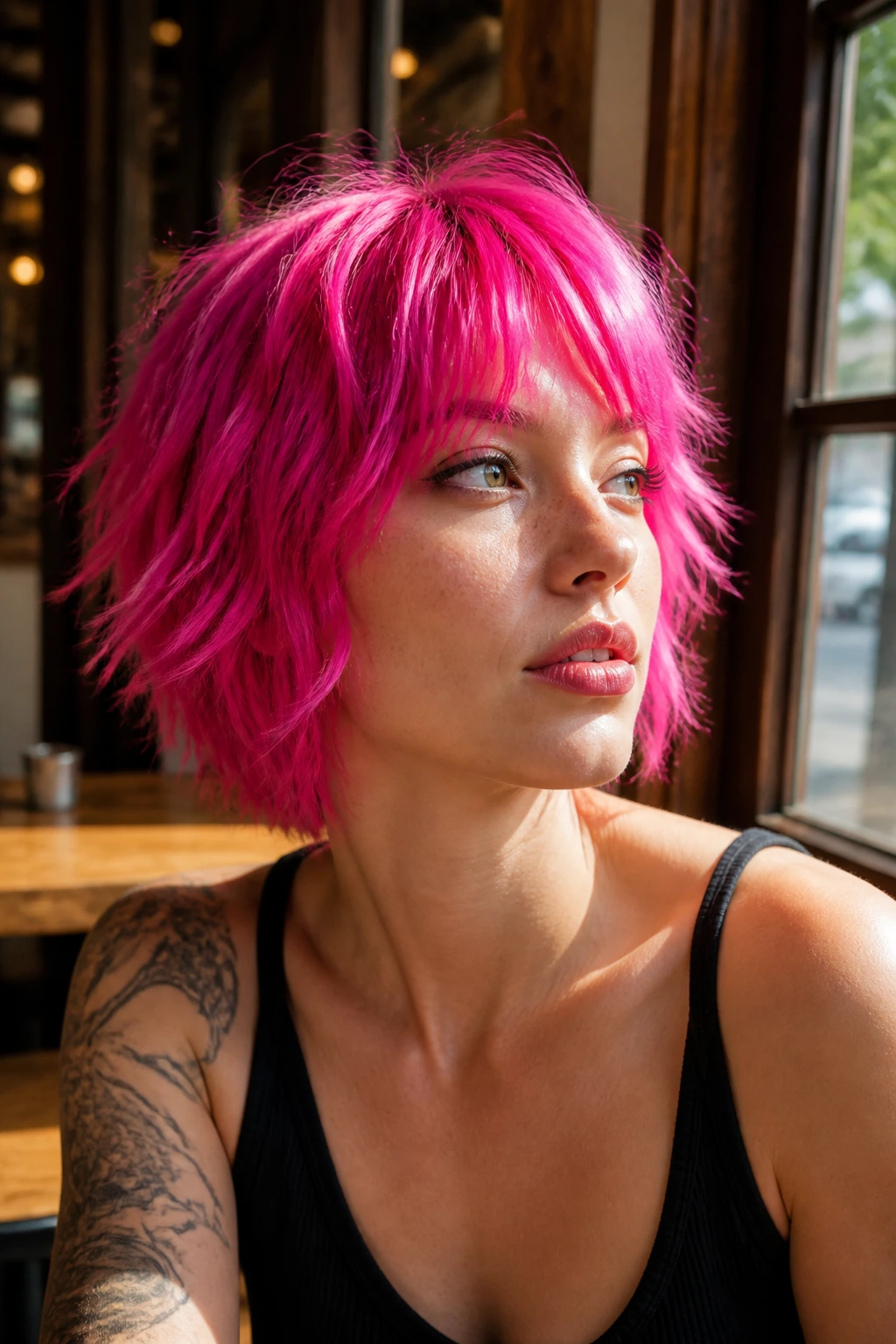
The choppy bob is all about intentional imperfection. It features layers of varying lengths that create a fragmented, airy, and textured silhouette. When you add a hot, electric pink to this cut, you are creating a look that is punk-rock, energetic, and completely at odds with traditional expectations.
Why Choppy Cuts Work
The “choppy” technique involves using a razor or point-cutting shears to create unevenness throughout the hair. This movement is essential for hot pink because a single-length cut in such a bright color can sometimes look like a solid helmet. The choppy layers break up the light, making the electric pink pop and keeping the style looking fresh and messy.
Handling Electric Pigments
- Electric pinks are notoriously difficult to remove, so be certain you are ready for a long-term commitment before choosing this shade.
- Use a sulfate-free, color-safe shampoo exclusively; hot pinks can bleed during every wash if you don’t use the right products.
- This cut looks best when styled with a bit of “grit” or dry texture spray, which emphasizes the choppiness and hides any fine-ness in the hair strand.
9. Cotton Candy Graduated Shag
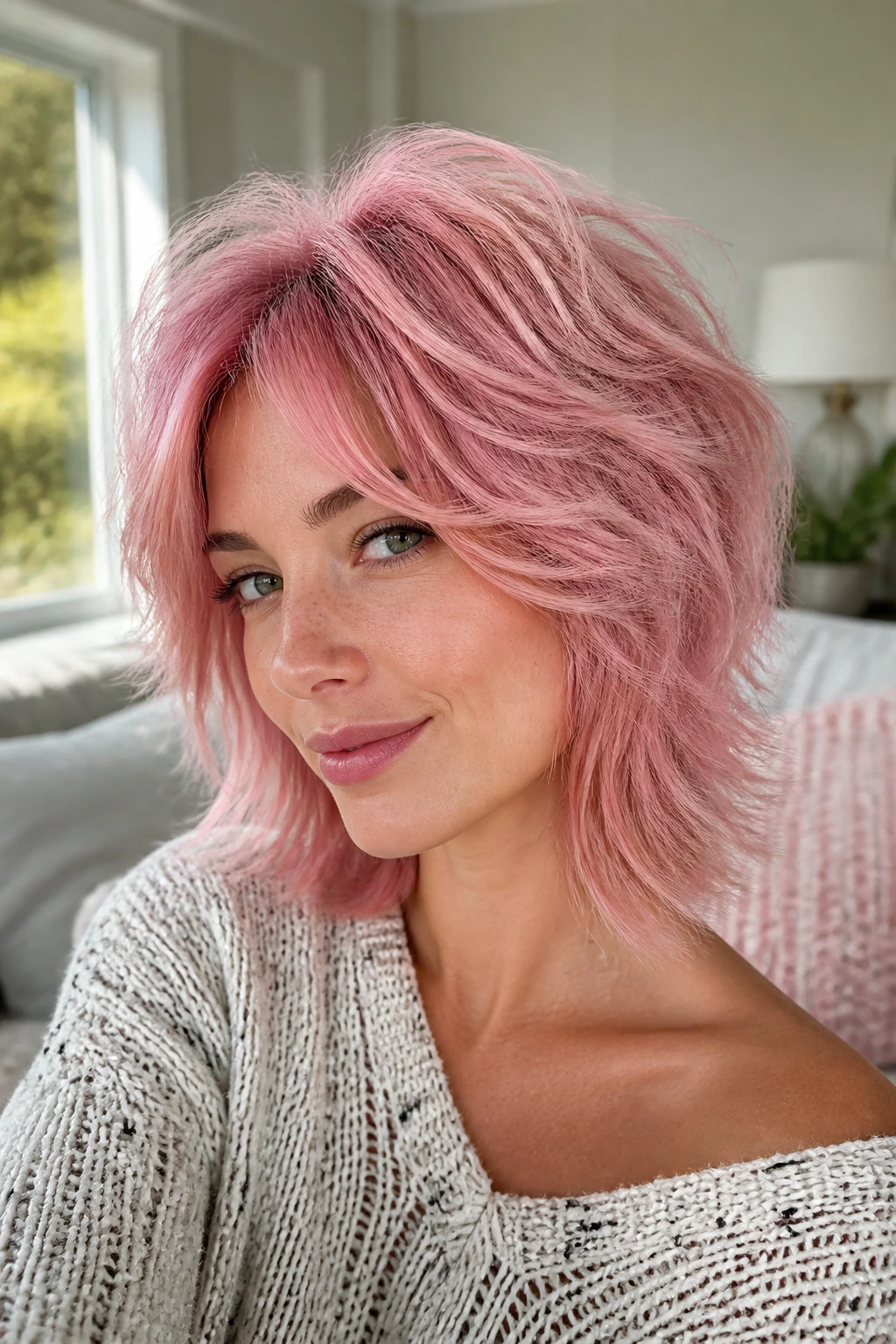
Blending the graduation of a stacked bob with the messy, layered aesthetic of a shag, this cut is for the boldest of the bunch. It’s short at the back, voluminous at the crown, and framed by face-hugging layers. Dyed in a multi-tonal cotton candy pink—a mix of very pale, light, and medium pinks—this cut looks like a cloud.
Creating the Color Blend
You want your colorist to use a balayage or “melt” technique here. Instead of a solid color, ask for a root melt where the roots remain a slightly darker, more natural-looking pink that blends seamlessly into the bright cotton candy ends. This makes the grow-out process significantly easier and adds a professional level of dimension to the look.
The Maintenance of Volume
- Because this cut relies on volume, invest in a good volumizing mousse to apply to the roots while the hair is damp.
- A round brush blowout is required to get that signature “shag” lift at the crown.
- Since cotton candy pink is a high-maintenance light shade, expect to use purple or pink-tinted toners every two weeks to prevent the color from turning yellow.
10. Mauve-Pink Blunt Lob
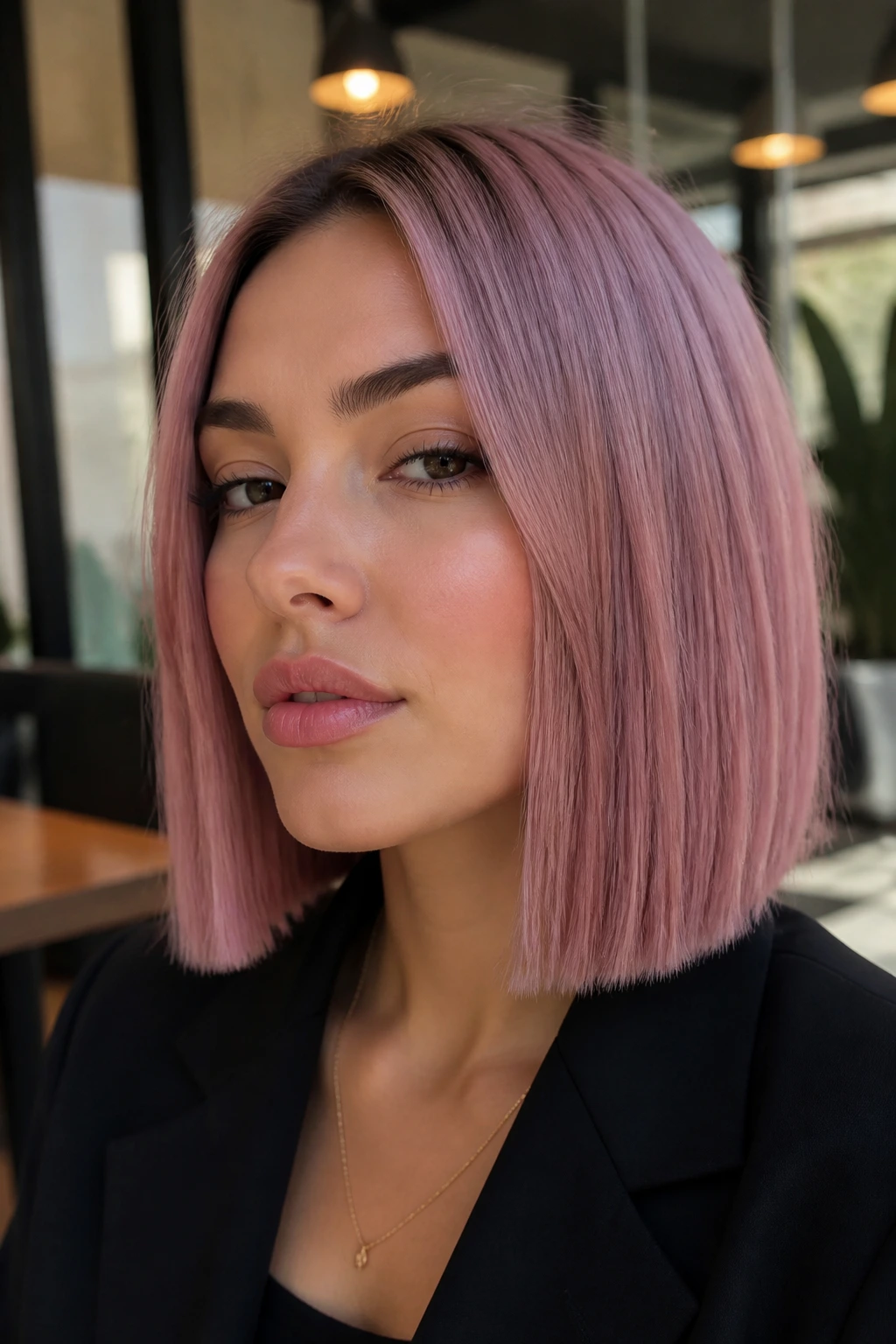
Mauve is the bridge between pink and grey/purple, and it’s a stunning option for those who want a color that isn’t too “girly.” In a blunt lob, this color looks mature, editorial, and incredibly chic. It’s a sophisticated shade that pairs just as well with a sharp business suit as it does with an oversized sweater.
The Appeal of Mauve
Mauve feels grounded. It isn’t as demanding as a bright neon, and it doesn’t have the fragility of a pastel. It is a sturdy color that holds up well in photos and looks fantastic on almost every skin tone, especially those with cool or olive undertones.
Why the Blunt Lob Works
The blunt lob is the most reliable haircut in the book. It is low maintenance, easy to style, and fits every face shape. Pairing it with a complex, muted color like mauve is a perfect way to experiment without feeling like you are wearing a costume. It’s a look that says you are creative, but you definitely have your act together.
11. Electric Violet-Pink Curly Bob
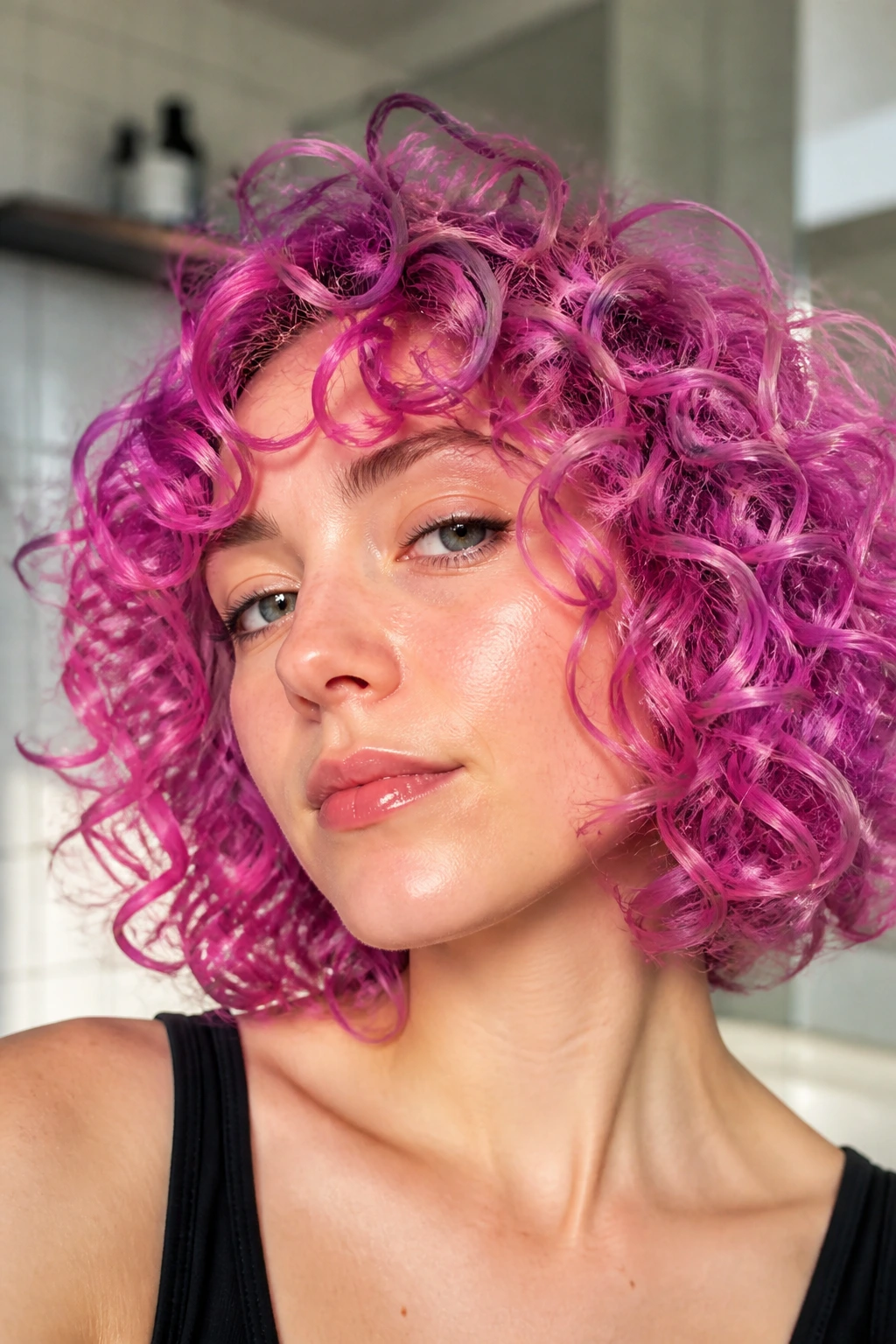
If you have naturally curly hair, a bob can be one of the most liberating things you ever do. The weight of long hair often stretches out curls, causing them to lose their bounce. Cutting it into a bob allows the spring back to return. A vibrant, electric violet-pink—a fusion shade—is perfect for curly hair because it highlights every twist and turn of the coil.
Why Curly Bobs Need Specific Cuts
You need a stylist who understands “dry cutting” for curly hair. Because curls bounce differently depending on the humidity and the cut, having the hair cut while it is dry is the only way to ensure the length is exactly where you want it. A violet-pink color adds depth to the curls, creating a visual “depth of field” that makes the hair look even fuller than it is.
Tips for Colored Curls
- Invest in a deep-conditioning mask. Bleaching and coloring can dry out natural curl patterns, so you need to replace that moisture weekly.
- Avoid brushes when dry; stick to finger-detangling or a wide-tooth comb while the hair is saturated with conditioner in the shower.
- Use a cream-based styler rather than a gel, as creams provide more hydration and softness for a delicate pastel-to-vibrant color fade.
12. Soft Coral-Pink Inverted Bob
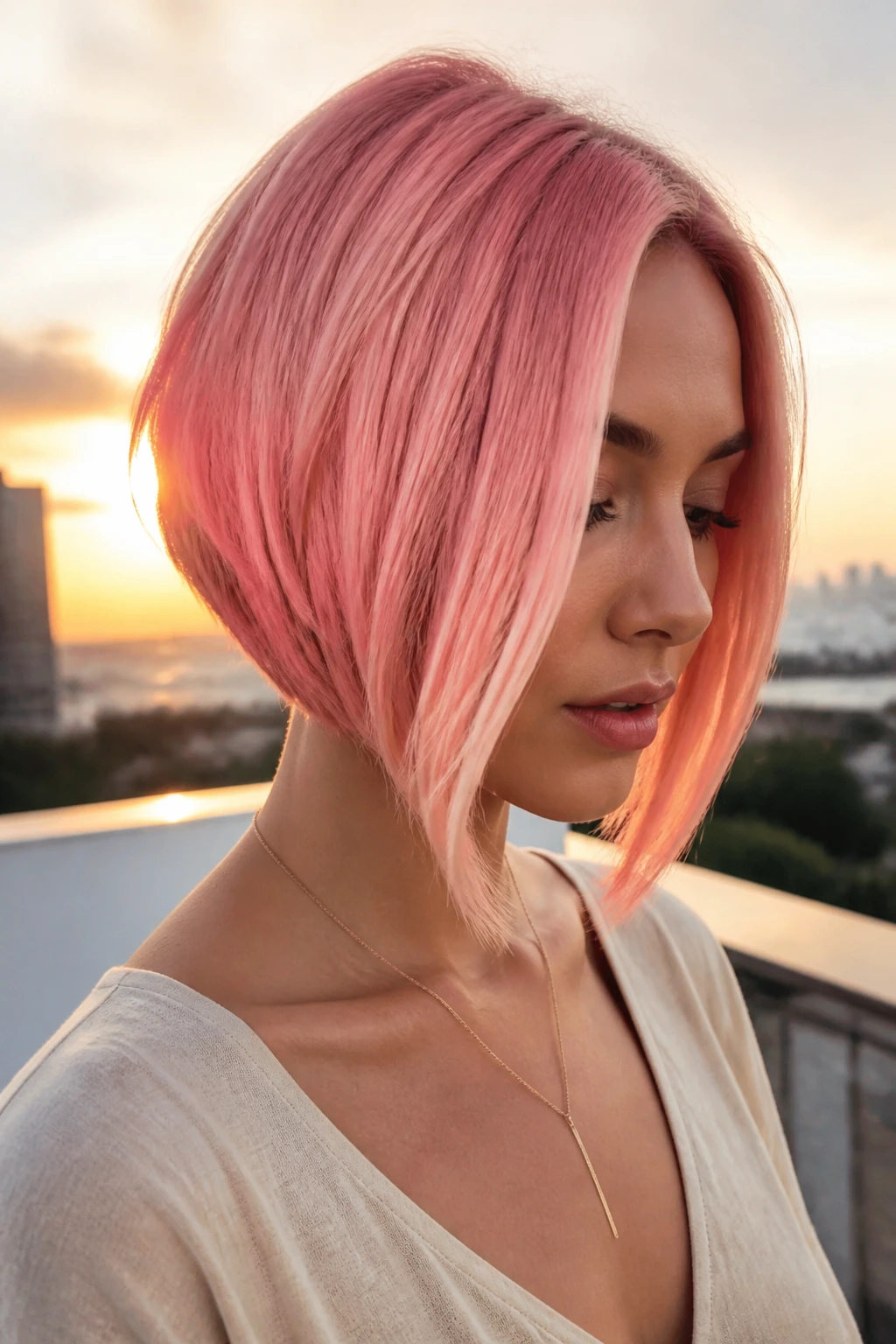
The inverted bob is a variation of the graduated bob but with more extreme length in the front. A soft, coral-toned pink—which has a touch of orange-peach hidden within it—is a unique and refreshing alternative to standard cool-toned pinks. It’s warm, inviting, and looks like a sunrise.
Why Coral is Underutilized
Most people default to cool pinks or magenta. Coral is a “sleeper” shade that is incredibly flattering on anyone with warm or neutral skin tones. It glows. In an inverted bob, the color creates a striking visual, particularly as the hair tapers from the back to those long, face-framing pieces at the front.
Managing the Warmth
- Warm colors like coral can be tricky; they don’t fade into the ugly greenish tints that cool-toned hair colors sometimes succumb to.
- They do, however, have a tendency to fade toward “brassy orange.” Make sure you use a copper-toned color-depositing conditioner to keep the coral vibrant.
- Avoid heavy ash-toned purple shampoos, as they will pull the warmth out of the coral and turn it into a muddy, dull pink.
Final Thoughts
Choosing a pink bob is a bold act of self-expression, but it is also a practical way to manage your hair’s health and keep your style feeling fresh. Whether you are leaning into the sharp geometry of a blunt cut or the fluid, organic movement of a shag, the most important factor is finding a shade that makes you feel confident the moment you step out of the salon.
Pink isn’t just a color; it’s a commitment to a new way of looking at your reflection. The bob serves as the architecture, but the pigment is the personality. Take the time to consider your skin tone, your daily styling routine, and how much time you are truly willing to spend on upkeep. Once you find that perfect harmony between the cut and the tone, you will likely find that you aren’t missing your long hair at all. Instead, you’ll be wondering why you didn’t make the change years ago.