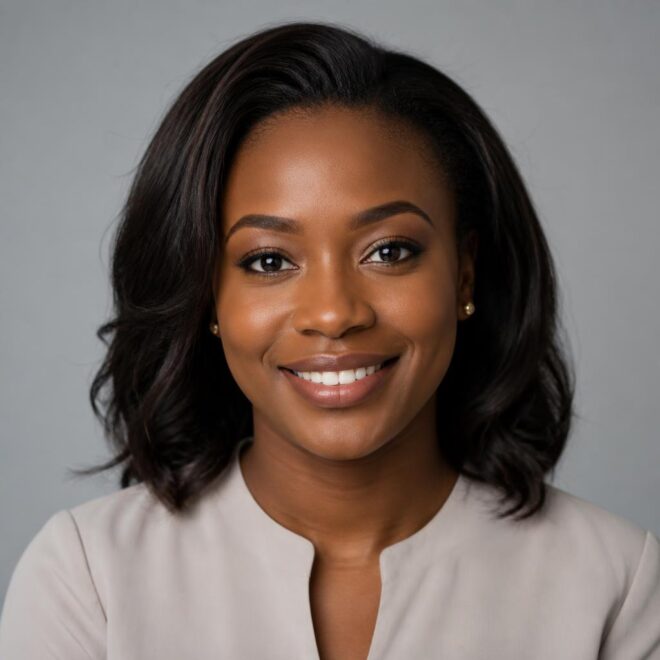


You know that moment when you catch a glimpse of someone’s hair under the light and it suddenly has this rich, almost edible depth—like dark melted chocolate, but with a glow that makes their skin look incredible? That’s the exact magic of chocolate brunette hair on deep skin tones. I first clocked it on a stranger at a coffee shop, late afternoon light slanting in and catching ribbons of warm brown that shifted from almost-black to caramel with every turn of her head. It wasn’t loud or flashy. Just this quiet, obvious harmony.
Chocolate brunette hair covers a whole family of shades—espresso, mocha, chestnut, burgundy, toffee, and about a dozen others—all rooted in deep, multi-dimensional brown. And even though the beauty industry spent decades pretending only certain skin tones could wear brown hair well, anyone who’s actually worked with color on darker complexions knows the truth. Rich brown shades flourish on melanin-rich skin. The underlying pigments—those gold, red, and mocha notes—mirror the natural undertones that make deep skin glow. It’s really basic color theory dressed up in a very pretty package.
But here’s the catch. Not every chocolate shade works on every dark skin tone. The wrong undertone (think a super ashy mocha on warm, golden skin) can leave your complexion looking washed out or grey. And the application method—whether it’s an all-over single process, a balayage, or highlights—changes everything about how the color sits against your face. I’ve seen too many beautiful women settle for a brown that was “close enough” because no one ever spelled out the difference between a cool espresso and a warm cinnamon milk chocolate. So let’s fix that.
Below, I’ve broken down 17 chocolate brunette hair colors that actually work on dark skin—not just in theory, but in the real world, where light, texture, and your own natural undertones all play a part. I’m including specific undertone matches, the kind of styling each shade loves, and the little maintenance realities that will make or break your color. Pick what speaks to you, take it to your stylist, and get ready for your best brown ever.
1. Espresso Chocolate – Almost-Black with Cool Undertones
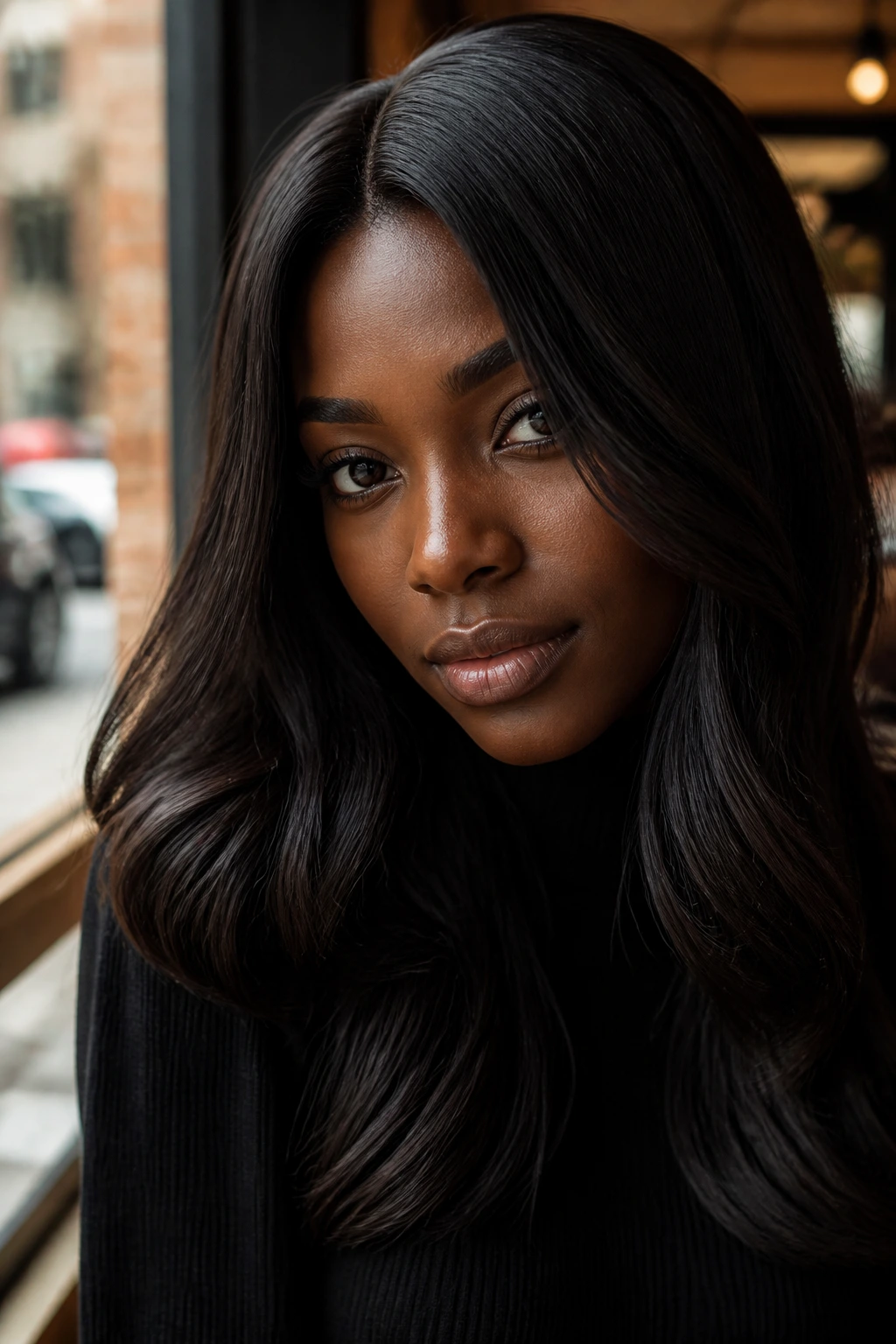
Espresso chocolate is the quiet luxury of hair colors. It’s the shade that whispers “I paid good money to look this effortless” without ever raising its voice. Technically, we’re talking a level 2 or 3 brown—so dark it’s often mistaken for black until you step into sunlight and see those subtle, inky brown notes ribbiding through.
On deep skin tones with cool or neutral undertones (the kind where your veins look blue or purple, and silver jewelry lights up your face), this color creates a bone-deep harmony. The cool, blue-leaning base of the espresso echoes whatever coolness sits in your skin, so nothing fights. Instead of a stark contrast, you get this seamless, sculpted effect—like the color grew out of your scalp that way. Your eyes and cheekbones suddenly look like they belong on a magazine page.
The Right Undertone for This Shade
Espresso works best with cool to neural complexions. If you have very warm, golden skin, it can feel a little flat—like putting a charcoal filter over a sunny photo. But if you land anywhere from olive to deep cool-toned brown, it’s a power move.
- Best for: Skin with blue or purple undertones; natural hair levels 2–3; anyone who wants the drama of black hair with a softer, more natural edge.
- Light reflection: This shade absorbs light rather than bouncing it. That means less obvious porosity and a healthy-looking sheen, not a glare.
- Grey blending: If you’re covering greys, espresso hides regrowth like a dream—especially if your natural base is already dark.
Pro tip: Ask your colorist to mix in a whisper of blue-based toner. It keeps the espresso from pulling those rusty red tones that can sneak into very dark browns after a few washes.
2. Dark Chocolate Brown – The Universal True Brown
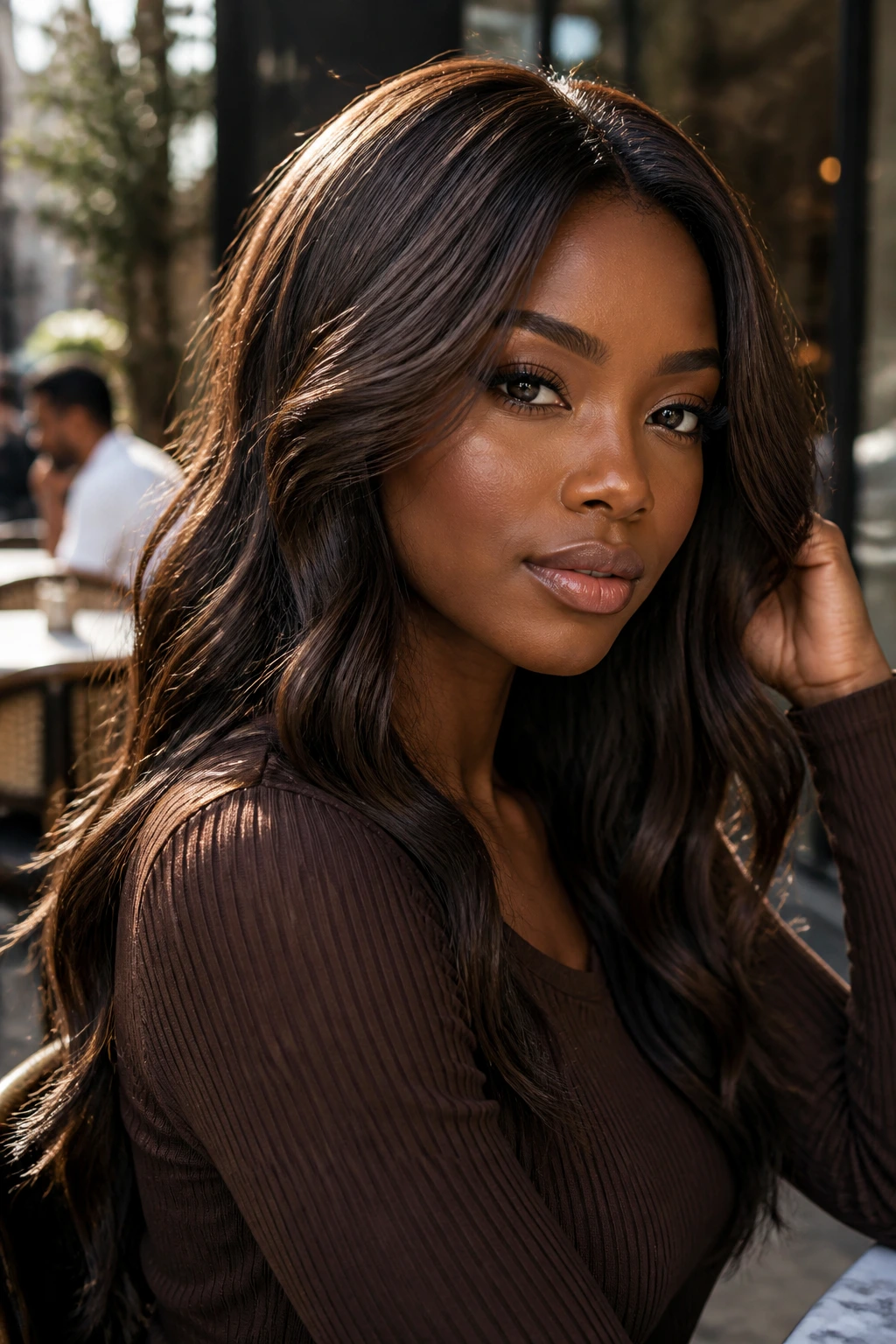
What’s the actual difference between espresso and dark chocolate? It’s subtle, but on dark skin it changes the entire mood. Espresso is one shade shy of black—plum, mysterious, almost inky. Dark chocolate is a true, balanced brown. Think of a good-quality chocolate bar: not too cool, not too warm, right down the middle. It lands at roughly a level 3 or 4.
I’ve painted dark chocolate brown onto so many different skin tones over the years, and it continues to surprise me how flattering it is across the board. On cool skin, it reads rich and polished. On warm skin, it picks up just enough golden glint to feel sun-kissed. On neutral skin, it’s basically a lottery win.
Don’t confuse “neutral” with “boring,” either. Dark chocolate brown has a depth that holds dimension. When the light hits, you’ll notice espresso shadows at the root that melt into a softer brown through the ends. That subtle gradation makes hair look thicker, shinier, and more expensive.
Why It Plays So Well Across Undertones
The secret is the pigment balance. A well-formulated dark chocolate brown contains roughly equal parts warm and cool undertones—gold and ash together—which makes it chameleon enough to shift based on the skin it’s sitting next to. You get the richness without having to gamble on a single undertone direction.
- Wear it with: Minimal makeup looks incredible; a bold red lip likewise pops against this neutral backdrop.
- Maintenance: Like espresso, regrowth is forgiving, but to keep that true brown from turning brassy, use a color-depositing conditioner formulated for brown hair once a week.
If you’ve been burned by too-warm or too-ashy browns before, start here. It’s the safest jumping-off point toward your ideal chocolate shade.
3. Milk Chocolate Brown – Soft, Warm, and Kid-Skin Friendly
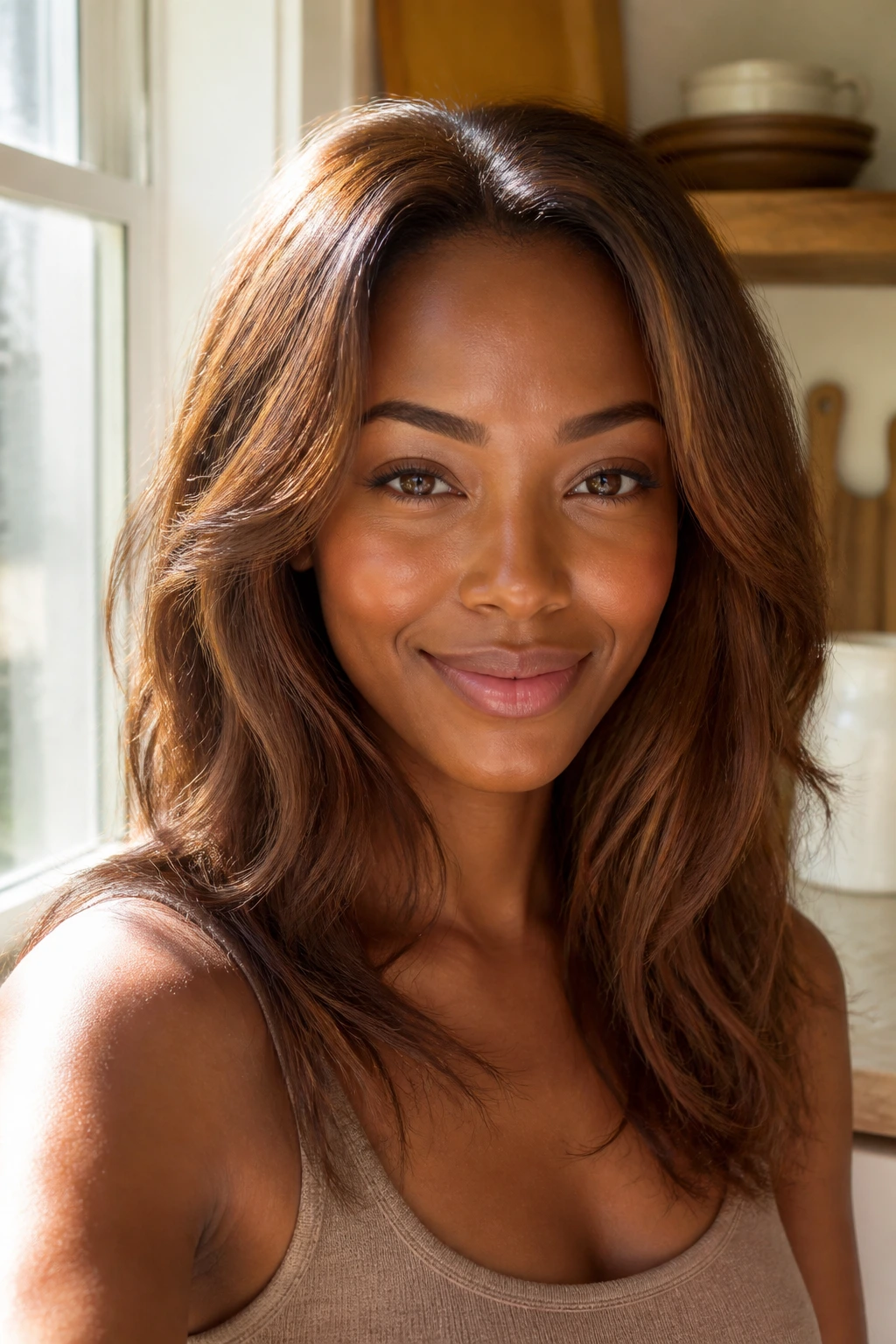
Walk into a room with soft, diffused light—candlelight or that golden-hour glow—and your hair reflecting that exact same gentle warmth. That’s milk chocolate brown in a nutshell. It’s a medium brown, around level 5, with distinct golden or honey undertones that practically hum with heat.
On dark skin that runs warm (golden, peach, or honey undertones; yellow-toned skin; veins that look greenish), milk chocolate brown delivers the kind of effortless radiance people chase with highlighters and illuminators. The golden notes in the hair pull forward the same warmth in the complexion, so everything looks unified. It softens angular features, wakes up the eyes, and can even make you look a little younger—the way a good moisturizer does.
Now, if your skin is decidedly cool, proceed with caution. A very cool, pinkish complexion can look ruddy next to all that gold. You’ll still see the color, but the overall effect feels slightly off-key, like wearing an orange-toned foundation when you need blue-red.
Best For (and Who Should Pass)
- Yes if: You have golden, honey, or olive-leaning dark skin; lots of natural red or gold already present in your brown hair; a desire to soften strong jawlines or features.
- No if: Your skin pulls noticeably pink or reddish; you’ve ever described your complexion as “cool espresso.”
Care tip: Warm browns can fade a little mousy if you’re not careful. Use a sulfate-free shampoo, and treat your hair to a warm-toned gloss every 6-8 weeks to keep that milky, sweet note alive.
4. Mocha Brown – The Cool, Ashy Statement
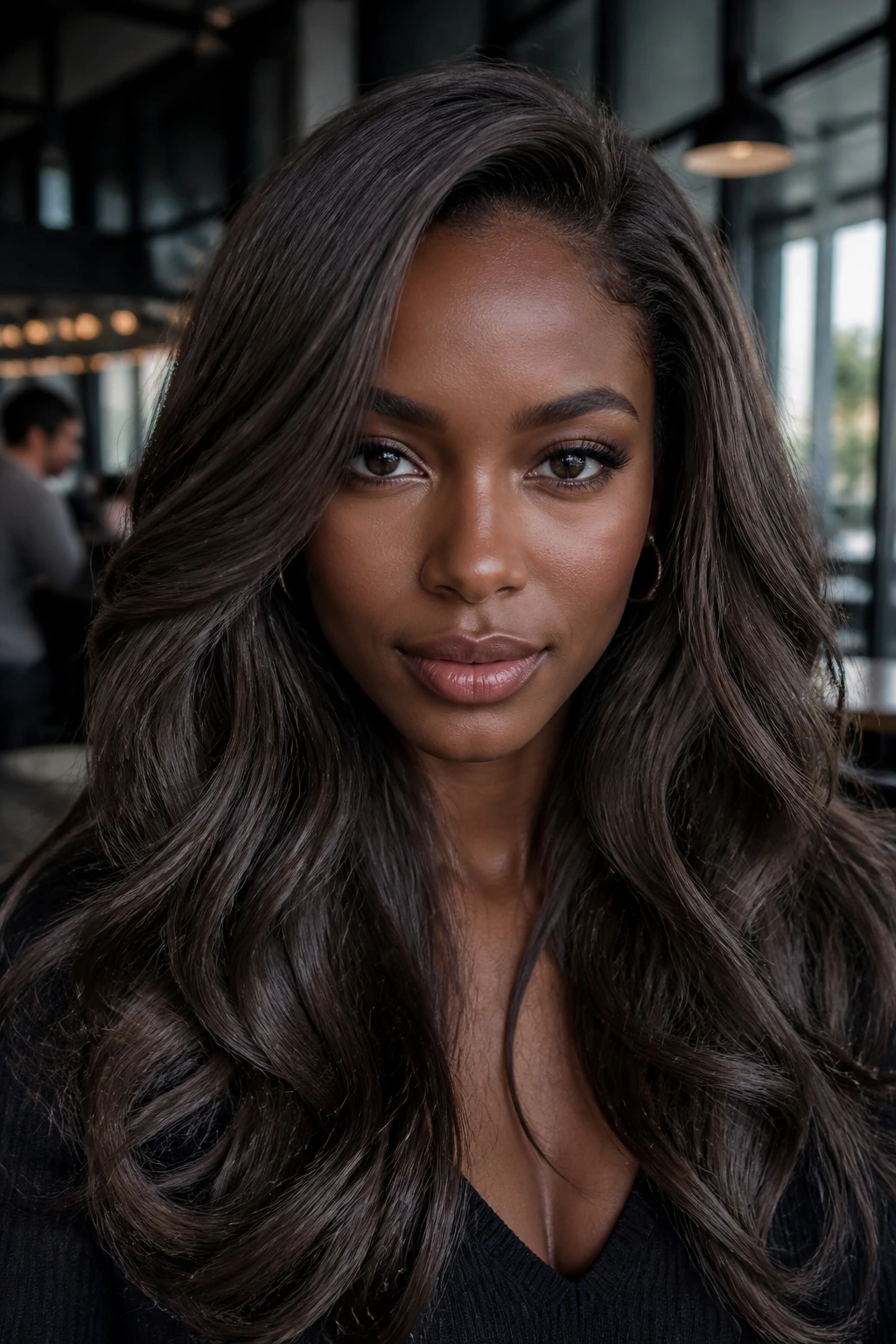
Mocha is milk chocolate’s cooler, edgier sister. Where milk chocolate leans gold, mocha leans grey-blue. It’s an ashy brown—level 4 or 5—that reads almost smoky, especially on textured or curly hair where the dimension catches the light differently.
On cool or neutral deep skin tones, mocha does something magic. Instead of blending in, it stands apart enough to frame the face without competing. The ash tones neutralize any excess redness in the complexion, so skin looks even, calm, and—I’m going to say it—expensive. There’s a reason you see this color all over high-fashion runways on dark-skinned models. It telegraphs a kind of modern, slightly untouchable cool.
I had a client once who swore she’d never touch ash because she thought it would look grey and aging. She sat in my chair, we mixed a custom mocha with a violet base to cut the ash just slightly, and when she saw the result, she literally said, “I didn’t know I could look like this.” Her skin—a deep cool brown with a smidge of olive—looked brighter by half a shade. No grey, just pure sophistication.
How to Ask for It (Without a Miscommunication)
Tell your colorist you want a “level 4 or 5 cool brown with no warmth—blue or violet base only.” Showing a photo of a mocha latte actually helps. It gives a clear visual of the tone: brown with a cool, creamy depth, not a hint of gold.
- Toning is non-negotiable: Ash browns can grab warm after a few weeks unless you maintain with a blue or purple-toning shampoo once a week.
- Pair it with: Cool-toned makeup—mauve lips, charcoal liner—to keep the whole look cohesive.
5. Chocolate Cherry – Deep Brown with a Red-Violet Twist
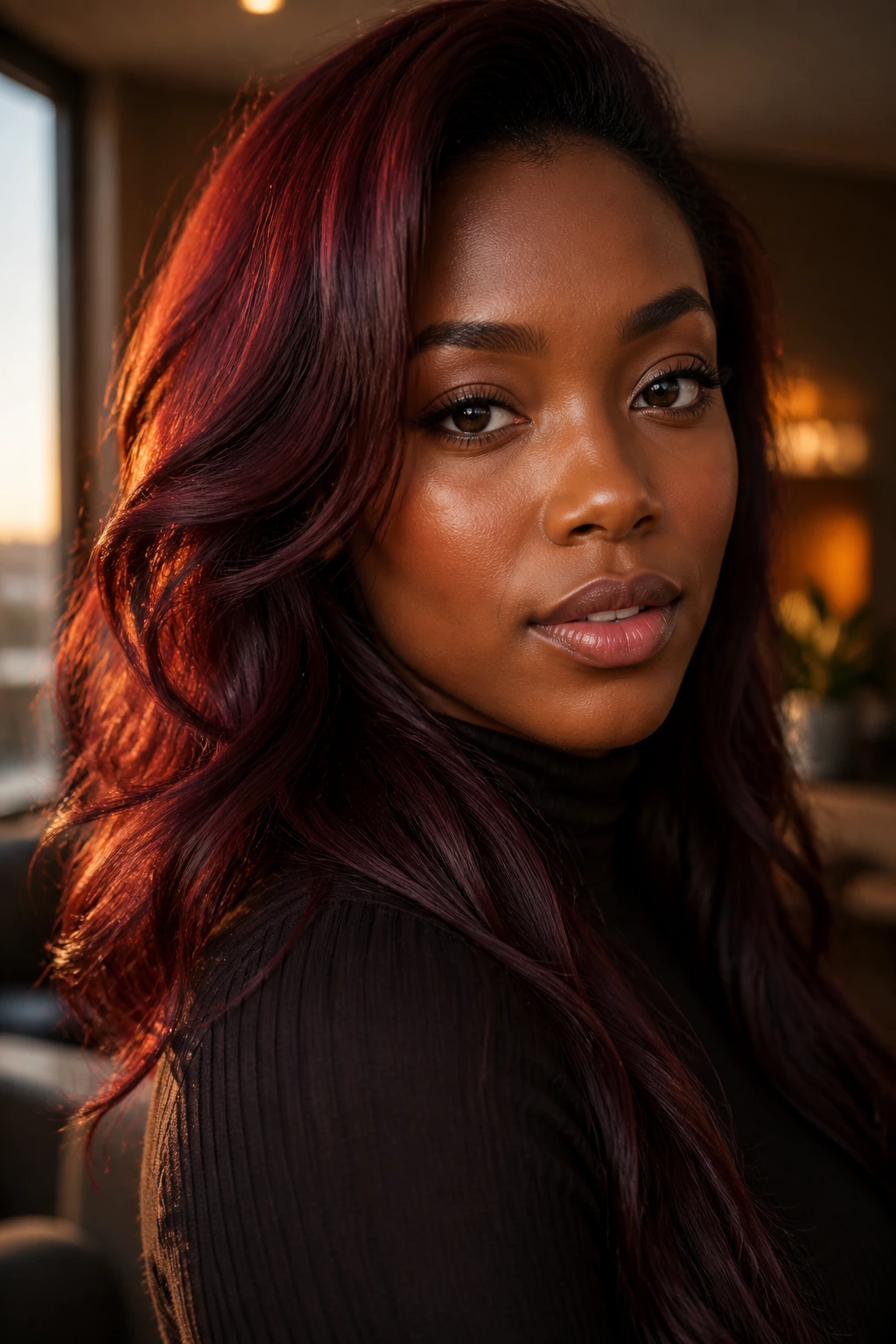
Chocolate cherry is the color you pick when you want people to do a double-take without knowing exactly why. In low light, it’s a dark, unassuming brown. But step under the sun or into a flash photograph, and there they are: those quiet, cordial-red-violet flames flickering just beneath the surface. It’s the hair equivalent of a velvet dress that looks black until you move and catch the plum shine.
This shade works astonishingly well on neutral and slightly cool dark skin. The red-violet undertone injects life without overwhelming; it wakes up the complexion instead of competing with it. On very warm skin, though, the cherry notes can pop a little too aggressively and read almost magenta at the ends—so test first or ask your colorist to keep the red more mahogany than violet if your skin runs golden.
Color Care for Red-Brunettes
Red molecules are larger and slip out of the hair shaft faster than any other pigment. That means chocolate cherry—and any red-leaning brunette—fades sooner than you think. It’s not a defect; it’s physics.
- Wash with cold or cool water. Heat opens the cuticle and lets toner molecules escape.
- Invest in a color-depositing conditioner in a red or burgundy hue. Use it once a week to top up the vibrancy.
- Gloss every 4–6 weeks. Regular clear or tinted glosses seal the cuticle and slow fade dramatically.
I’ve seen chocolate cherry turn heads on short tapered cuts, big curly afros, and sleek silk presses alike. It’s a shade that loves texture.
6. Burgundy Chocolate – Rich Wine Meets Brown
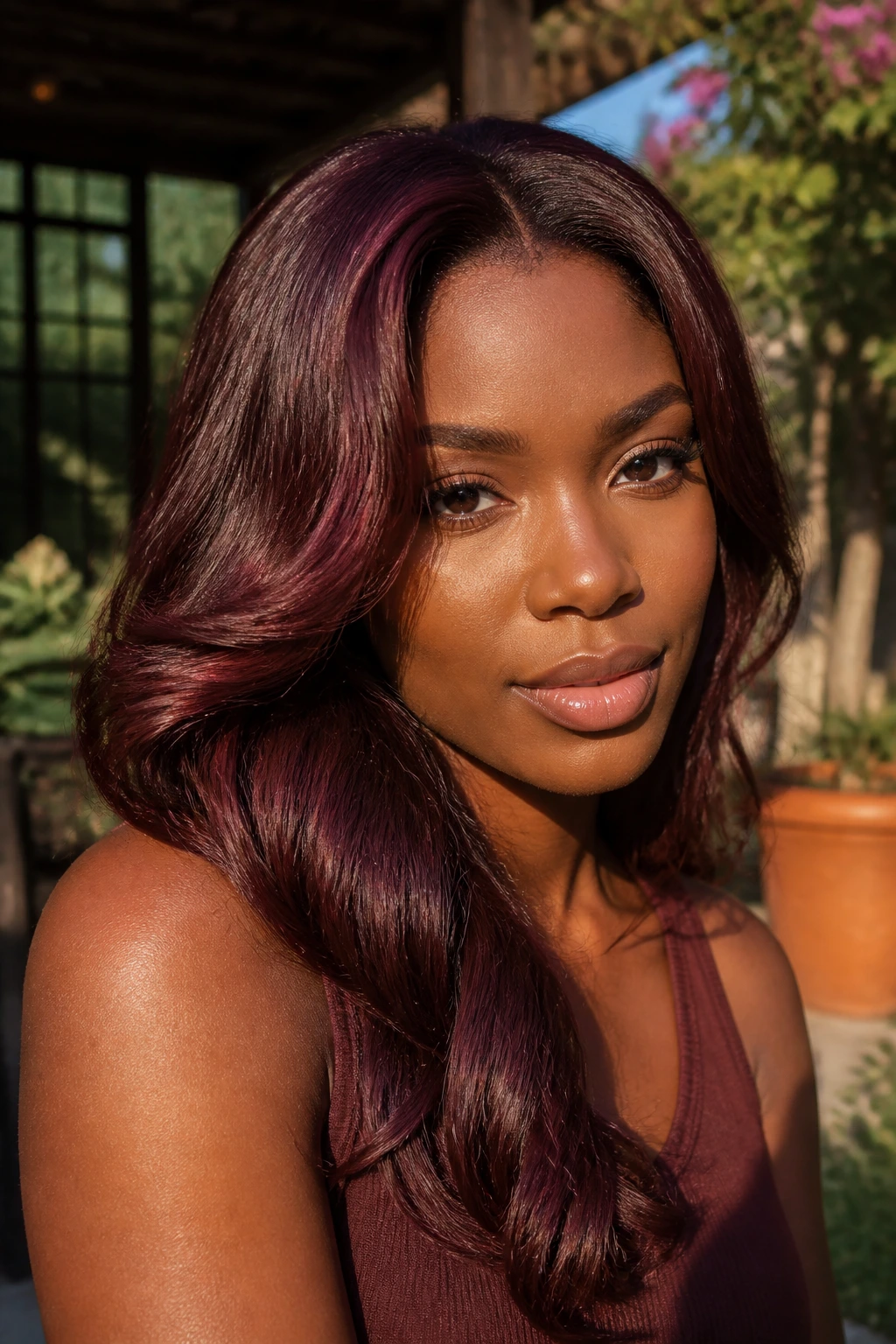
Burgundy chocolate looks like someone melted a dark chocolate bar and swirled in a generous splash of cabernet. It’s deeper and more serious than cherry, leaning into wine-red and purple-adjacent territory rather than candy-red. On dark skin, especially in cooler and neutral undertones, it creates a regal, almost old-money vibe—the kind of color that makes you want to wear pearls and speak slowly.
The red in burgundy chocolate is more blue-based, which is exactly why it flatters cool and olive skin so well. Warm, golden skin can still wear it, but the contrast will be more dramatic, and the violet notes might read a little more obviously. If that’s your agenda—bold, statement-making color—go for it.
One thing that consistently shocks people is how much dimension this single-process color can pack. Because the red-violet pigment reflects light differently than the brown base, you get a natural push-and-pull even without highlights. On curly or coily textures, the coils catch the light and reveal deeper wine tones in the valleys and brighter browns on the peaks.
- Undertone compatibility: Best for cool and neutral skin; warm can pull it off with a tone adjustment.
- Styling pairings: Rich earth tones in clothing—olive, deep teal, rust—make the burgundy notes pop.
- Fade pattern: Fades to a warm brown; use a red-toned mask to keep the wine note present.
7. Caramel Chocolate Balayage – Dimension Without the Drastic Commitment
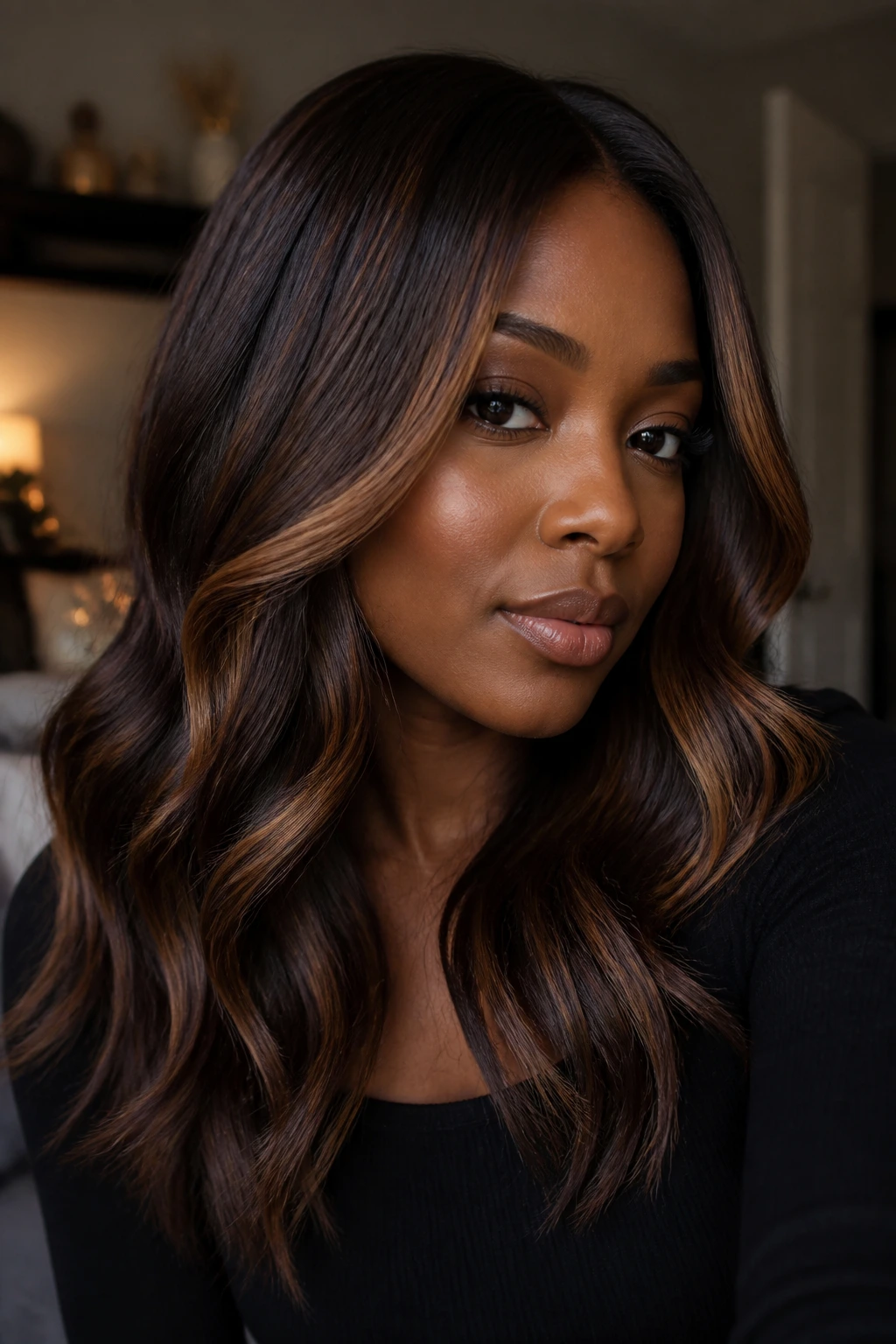
If solid chocolate brown is a classic trench coat, caramel chocolate balayage is that same trench with the collar popped, a silk scarf, and maybe some statement earrings. The base stays deep—think dark chocolate or espresso—while hand-painted caramel ribbons sweep through the mid-lengths and ends, creating soft, face-framing brightness.
This is one of the most requested chocolate variations I see on dark-skinned women, and for good reason. The caramel highlights lift the whole look without harsh lines, so you get movement and dimension that look completely organic. The warm, buttery tones flatter neutral and warm undertones especially well, and because the dark root remains untouched, grow-out is practically invisible for months. You can stretch this to 4–6 months between appointments if you’re strategic.
Placement Makes or Breaks Caramel Balayage
The key is where those caramel pieces land. On deep skin, I often concentrate the lightest pieces around the face—the money piece—and taper the brightness down through the ends. Too much caramel at the root or scattered randomly can look disconnected, like the color sat on top of a dark base rather than growing out of it.
- At-home toning: Caramel can lean orange if not toned correctly. Use a purple-based conditioning mask occasionally to keep the warm tones buttery, not brassy.
- For natural hair: If you wear your hair curly, the balayage will look more blended; if you straighten it, the ribbons become more graphic. Both are gorgeous, but know the effect changes with styling.
8. Chocolate Mauve – The Dusty Rose-Brown Hybrid
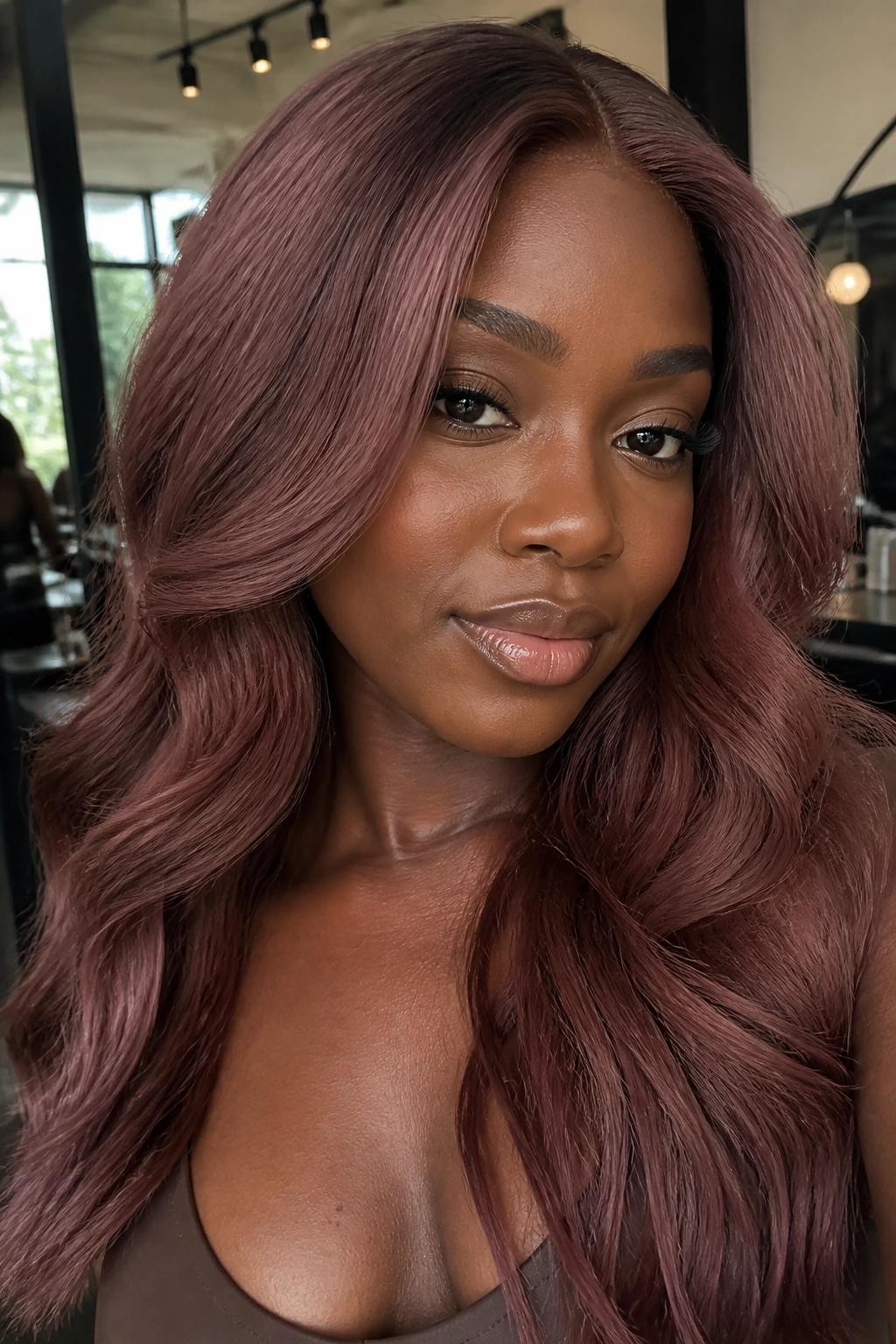
Chocolate mauve is the introvert of the chocolate family—and I mean that in the best way. It’s a muted brown with a dusty, rose-petal undertone that reads as a whisper of pink-purple in certain lights. Not as loud as burgundy or cherry, not as cool as mocha, just this soft, sophisticated, almost-velvety tint that gives deep skin a rosy, lit-from-within glow.
I’ve found that chocolate mauve absolutely sings on cool and neutral dark skin tones. The dusty quality keeps it from looking too pastel or washed out, while the rose note neutralizes any sallowness in the complexion. On warm skin, it can still work but may read more brown than mauve unless the stylist really amps the violet pigment.
This shade tends to look incredibly modern. It’s favored by the kind of person who wears interesting lip colors—mauve, berry, greige—and understands that understated doesn’t mean boring. You’ll see it a lot on fashion-adjacent folks.
Maintaining the Mauve
Pinky and rosy tones fade faster than you think, so chocolate mauve requires a little extra affection.
- Use a color-safe shampoo and cool water only.
- Once a week, reach for a color-depositing conditioner in rose gold or mauve—it will refresh the tint without over-darkening.
- Over time, it will mellow into a soft warm brown, so schedule toning sessions every 5–6 weeks to keep that distinctive dusty note.
If you’ve ever wanted to try a “fashion” color but felt too intimidated, chocolate mauve is the perfect low-key entry point.
9. Chestnut Chocolate – Golden Warmth That Mimics Sunlight
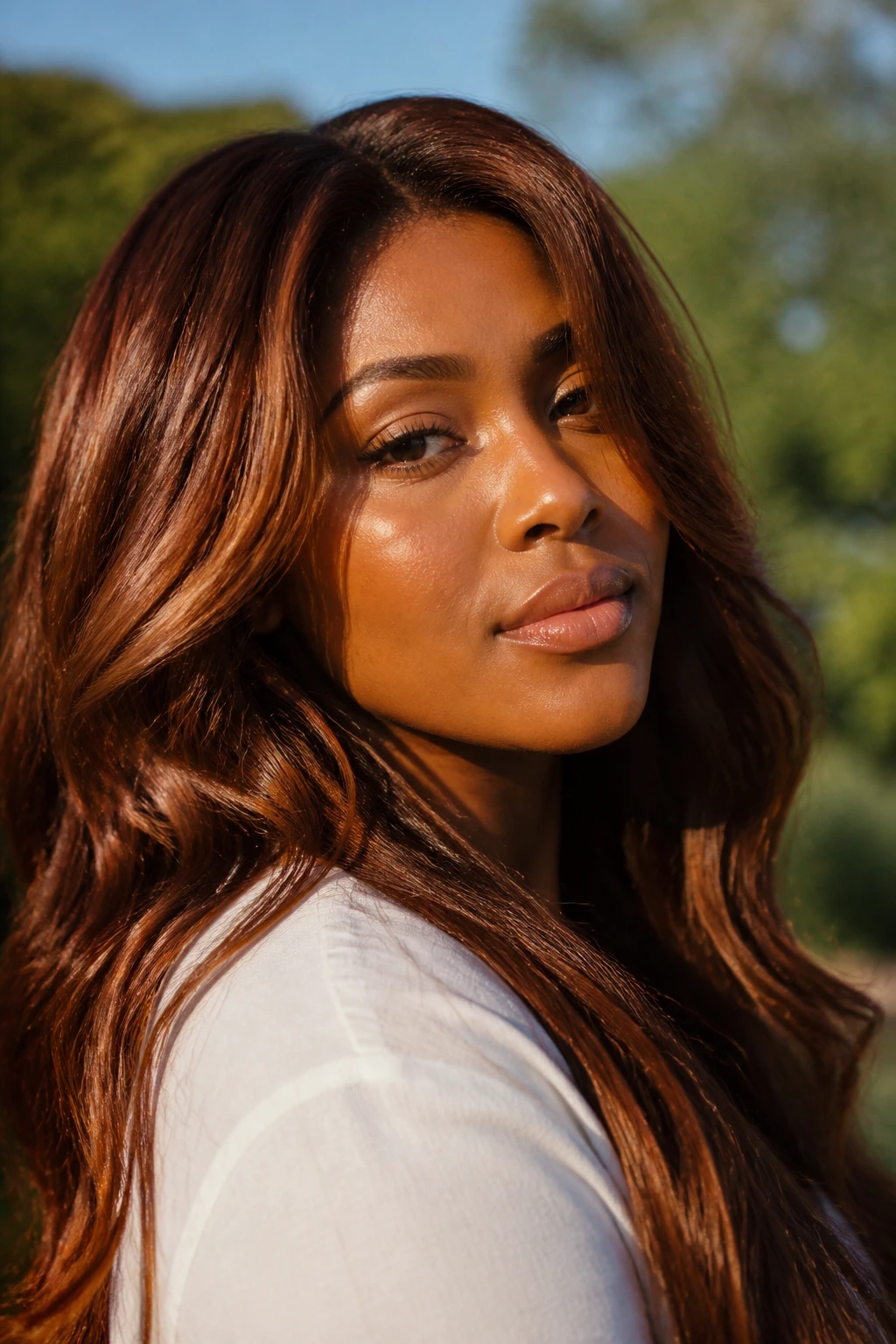
Chestnut chocolate is the shade equivalent of catching the last hour of afternoon sun on your hair. It’s a warm, golden-leaning brown with subtle red-orange undertones—the kind you see naturally on people who spent childhood summers outdoors. On dark warm skin, it creates a sun-kissed harmony that looks healthy and effortless.
This is the color to pick when you want brightness without bleaching. Chestnut chocolate doesn’t require lifting the base to a pale blonde; it sits comfortably at a level 4 or 5, with golden and red tones doing all the heavy lifting. Because it’s still fundamentally brown, the regrowth is manageable, and the overall look stays grounded.
Undertone Reality Check
Chestnut leans decidedly warm, so it pairs beautifully with skin that has golden, honey, or peachy undertones. If your skin is very cool or red, those warm tones might tug out excess ruddiness. But if you have a neutral complexion, you can often wear it with a slight adjustment—ask your colorist to add a tiny drop of ash to keep the gold from going brassy.
- Texture spotlight: On curly and coily hair, the red undertones catch the light differently in each curl, creating a multi-tonal effect without highlights.
- Care: Red-orange tones fade, so use a warm brown gloss at home every 2-3 weeks to keep the chestnut glowing.
I’ve put chestnut chocolate on women with deep warm skin who wanted to “warm up” for a season without committing to a full-on red, and it delivered every single time.
10. Chocolate with Auburn Ribbons – Reddish Brown Dimension
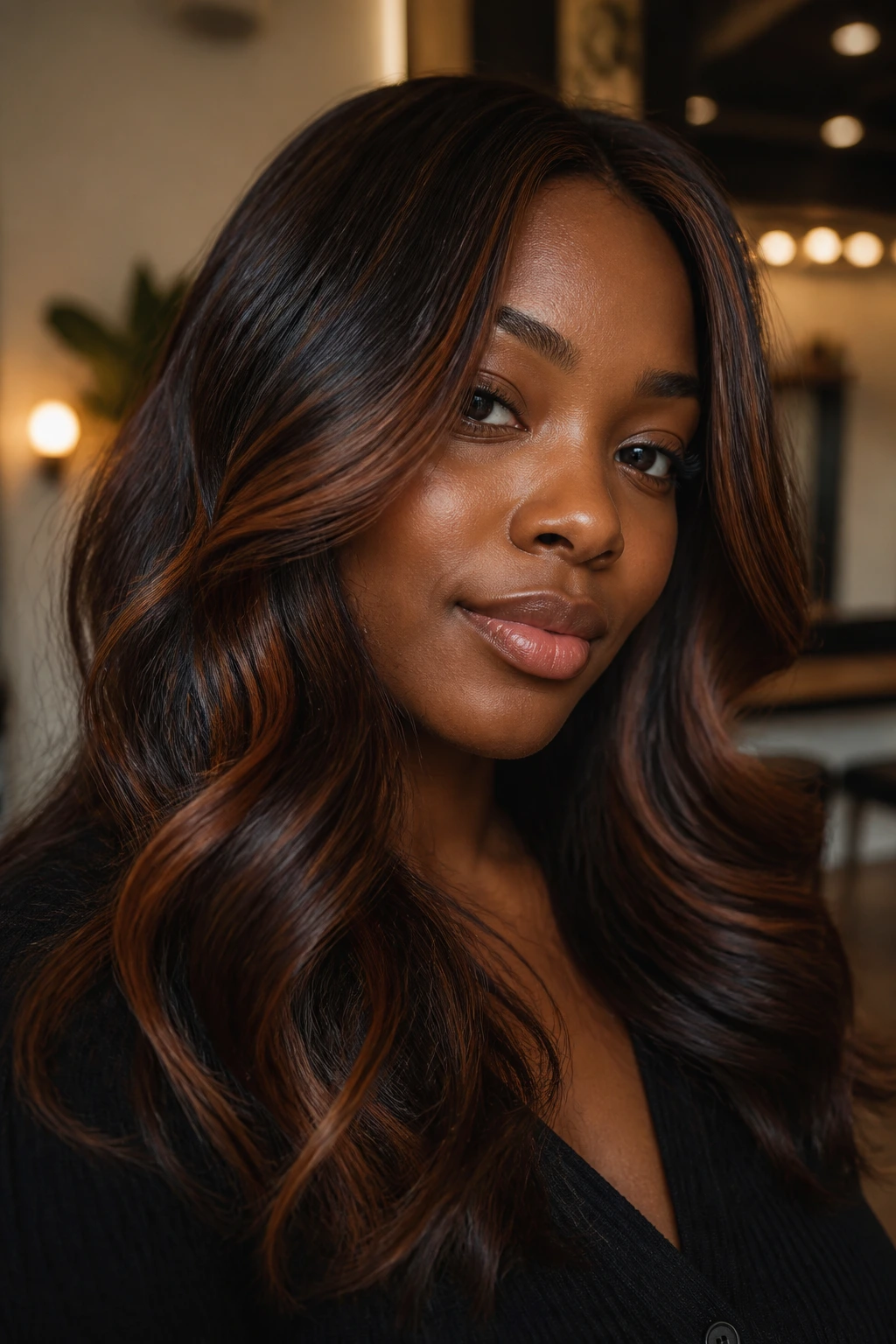
Where chestnut is a solid warm brown with a red undertone, auburn ribbons take things a step further. Here, a dark chocolate base gets kissed with actual auburn streaks—reddish-brown pieces that catch fire under light. It’s romantic, a little daring, and ridiculously flattering on warm and neutral dark skin.
The ribbons can be woven in as highlights, a balayage, or even a partial foil. I usually recommend a face-framing ribbon right around the cheekbones and a few scattered through the crown. It creates a custom, almost bespoke look that moves from “nice brown hair” to “is that natural? It can’t be natural.”
Technique Matters More Than the Formula
With auburn, the placement matters twice as much as the exact shade of red-brown. Too many ribbons and you lose the chocolate depth; too few and you can’t see them. Work with a stylist who understands that you want a “ribbon” effect, not chunky highlights. The pieces should be thin and blended—barely-there slices that reveal themselves when you move.
- For cooler skin tones: Shift the auburn slightly toward auburn-mahogany (more violet) so it doesn’t clash.
- Fade control: Auburn reds fade gracefully into a warm brown, so even at the end of the cycle, the color still looks intentional.
I’ve done this on a client with 4C hair, and the ribbons wrapped around her curls like jewelry. Utterly stunning.
11. Golden Chocolate – Brown with Honey and Gold Highlights
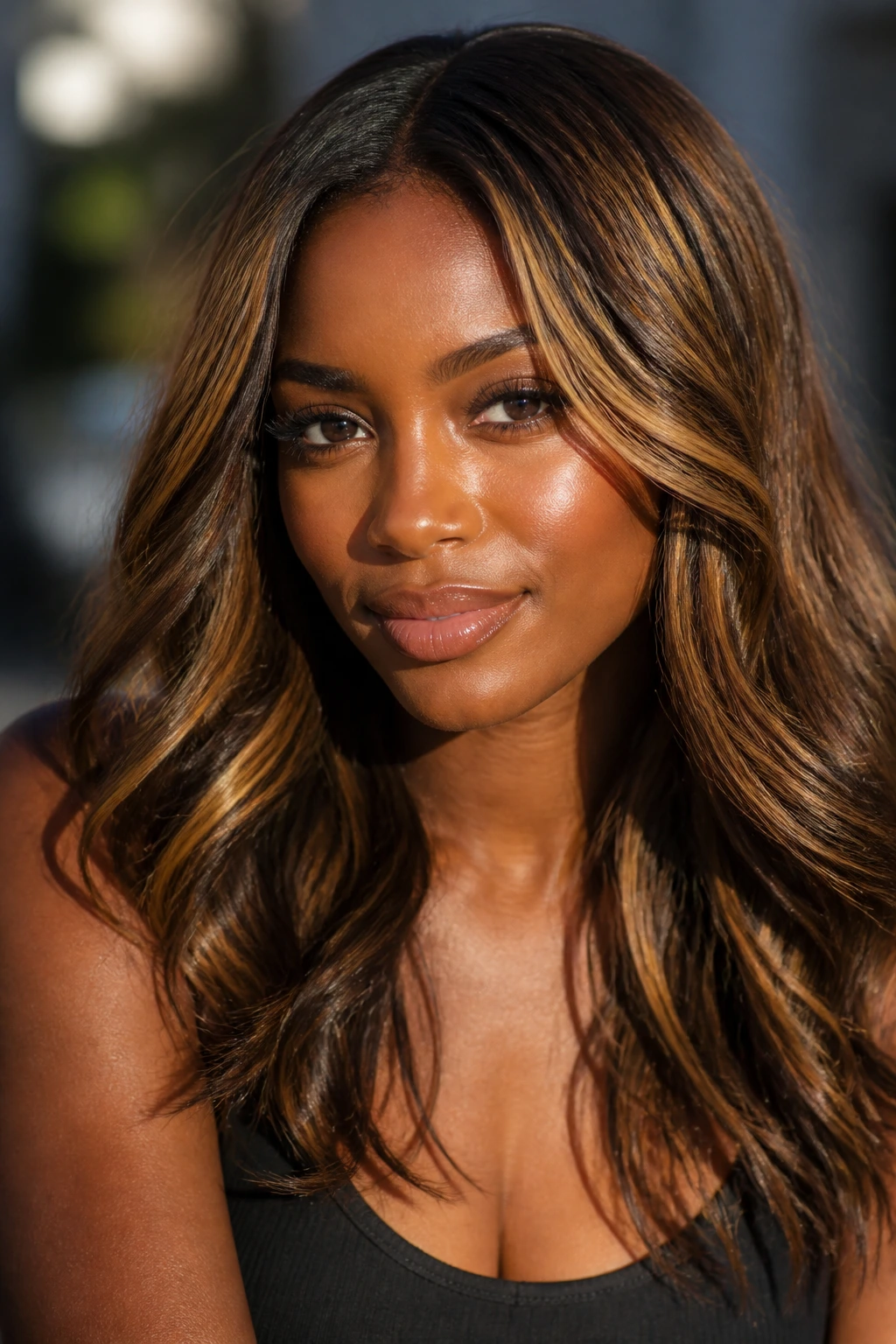
Golden chocolate is what you get when you take a medium brown base and thread it through with honey, gold, and pale caramel tones. This is a high-impact, brightening look that can lift your whole face—genuinely, people will ask if you changed your skincare routine.
The golden notes pick up even the faintest warmth in dark skin, so it’s a dream on those with golden, olive, or neutral undertones. On very cool skin, though, the contrast can be sharp; you’ll need a cool-toned beige highlight instead of true gold. But when the match is right, golden chocolate looks like you’ve permanently captured the best lighting in every room.
The only tradeoff: you usually have to lift the highlighted pieces to a pretty light level, which means some degree of bleach. That’s not a problem if your hair is healthy and you’re diligent about protein treatments and bond builders. But it does hike the maintenance commitment.
Keeping the Gold True
Warm highlights can turn brassy or yellow over time. Use a purple shampoo on the lightened pieces once a week (just on those parts, not the whole head) to keep the gold clean. A regular gloss with a honey tone helps too.
- Style it with: Loose waves or a blowout to show off the dimension.
- Best skin matches: Warm-neutral, golden, even olive; anyone who looks good in gold jewelry.
12. Cinnamon Spiced Chocolate – Warm Reddish Brown with a Kick
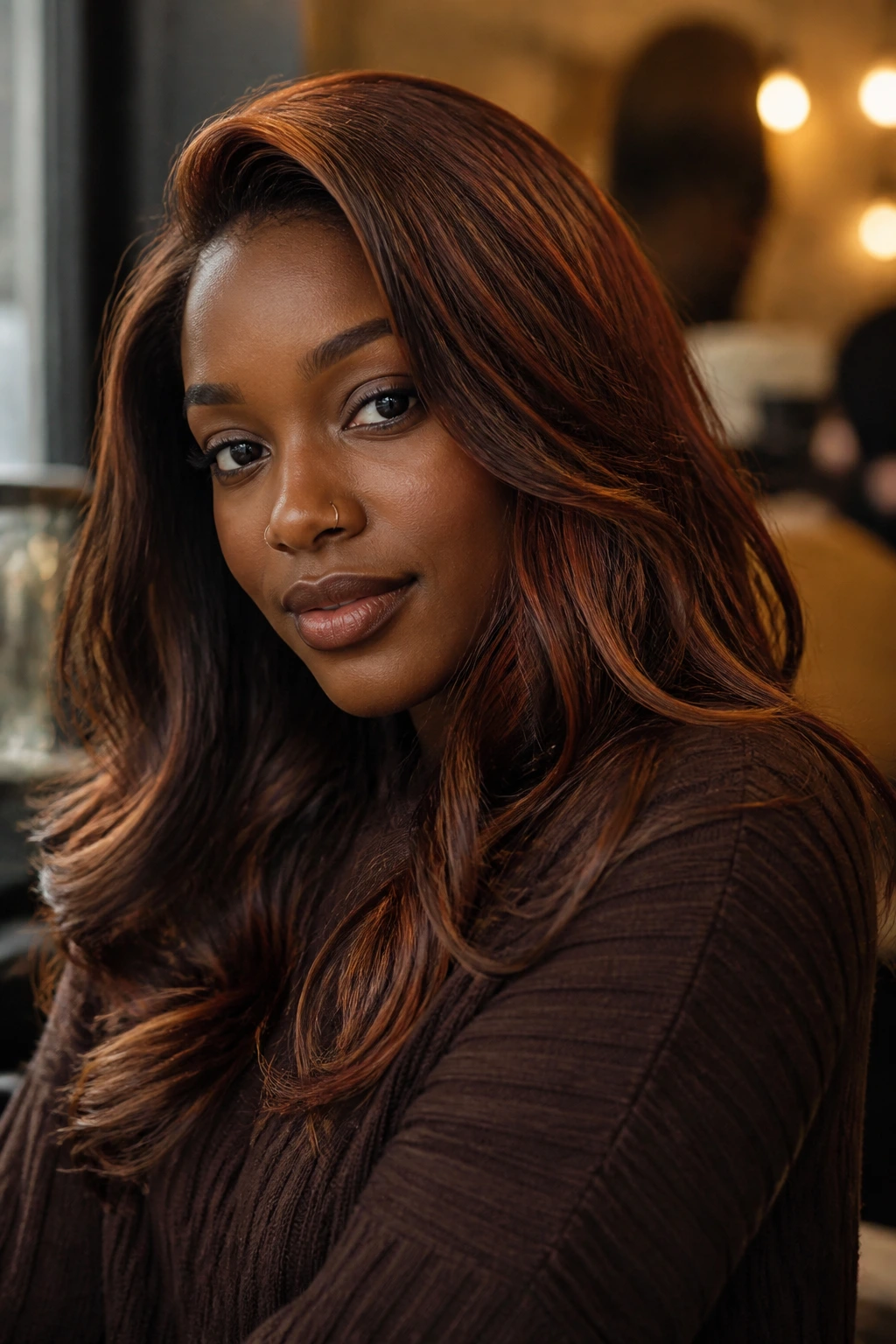
Cinnamon spiced chocolate is brown with a noticeable reddish kick—like you mixed a teaspoon of paprika into the formula. It’s warmer than chestnut and brighter than auburn, sitting somewhere between a red-brown and a true copper-tinged brunette.
On dark skin with strong golden or peachy undertones, this shade brings a vibrant, spicy energy. It makes the complexion look warmer and more alive without the shock of a full red. I’ve had clients who were nervous about red tones because they thought it would look unnatural, but cinnamon spiced chocolate—with its brown base—feels grounded enough to pass as a born-with-it shade.
Who Needs a Slightly Different Recipe
If your skin is cool and pinkish, straight cinnamon can pull too warm. Ask your stylist to mix in a touch of violet or plum to neutralize the brass. The result will still be spiced but more wearable.
- Fade truth: Like all red-browns, cinnamon fades within 3-4 washes. Use a color-depositing conditioner (copper or auburn) to top it up.
- Makeup pairings: Warm peaches, bronzy eyeshadows, and terracotta blushes sync beautifully.
On natural textures, the cinnamon note looks particularly organic—like the color you might have had as a kid, rediscovered.
13. Toffee Chocolate – Lightest of the Browns for a Brightening Effect
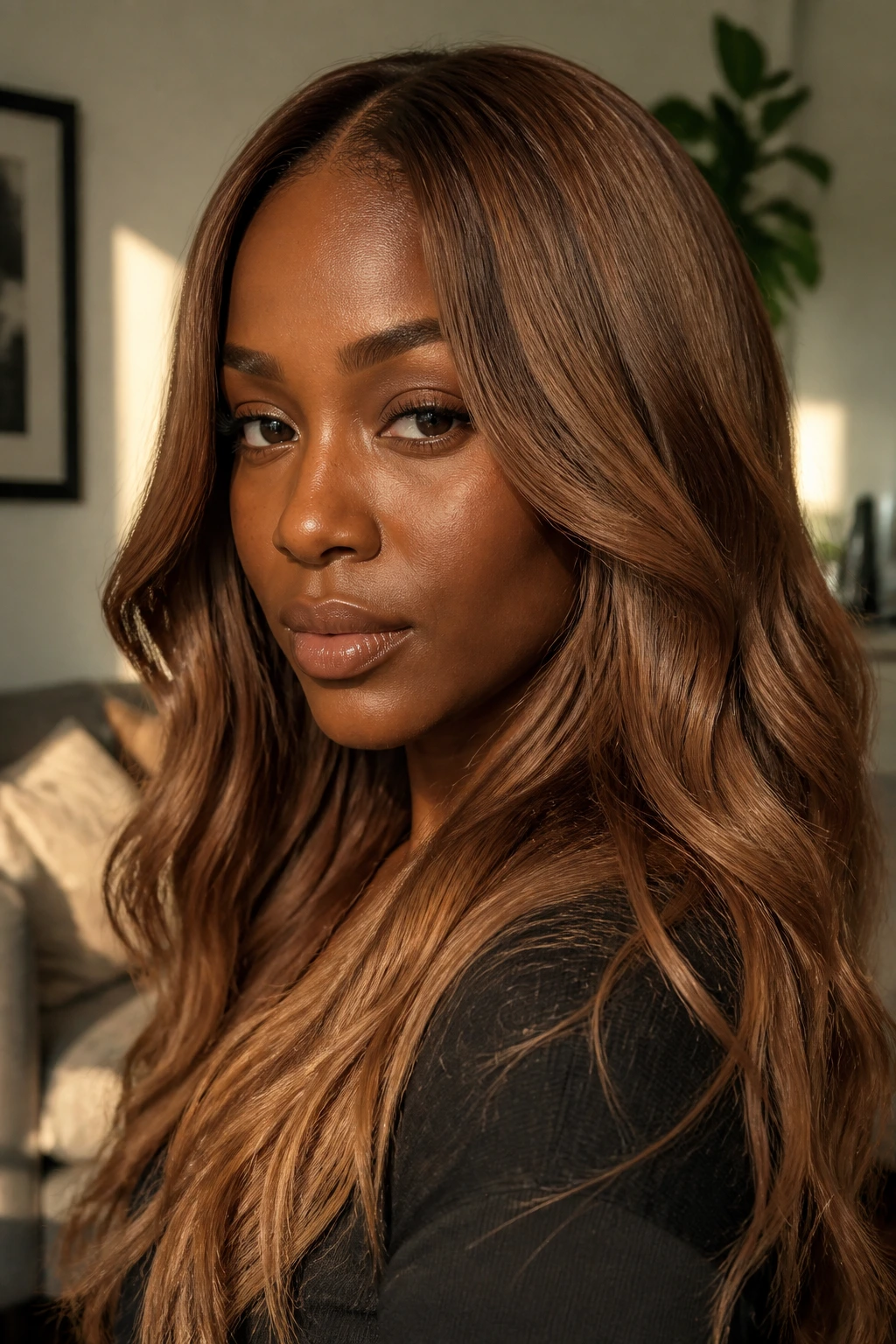
Toffee chocolate pushes the boundary of what we call “brown.” It’s a light, milky brown—around a level 6 or 7—with strong caramel and toffee tones that read almost blonde in certain lights. On dark skin, it’s a bold choice because the contrast is high, but the payoff is an incredibly brightening, youthful effect.
Because toffee chocolate is so light, it works best on neutral and warm undertones. The toffee’s golden-beige notes lift the skin visually, but if your skin is very cool, the overall look can feel disconnected. Placement matters enormously here: many stylists keep the roots dark and layer toffee through the mid-shafts and ends, which grounds the color and prevents that floating-wig effect.
Before You Go Toffee
This shade often requires lifting to a blonde canvas, which means a full bleaching service or a very high-lift color. Be realistic about your hair’s condition. A bond builder like Olaplex during the process, plus regular deep conditioning, is non-negotiable.
- Regrowth: Dark roots growing in against light toffee can be stark. Plan on a root smudge or shadow root to soften the line.
- Toning cadence: Toffee can yellow over time; book a toner refresh every 6 weeks.
It’s high-maintenance, but on the right skin tone, toffee chocolate creates a glow that’s worth the effort.
14. Chocolate Ombre – Dark Roots, Light Ends
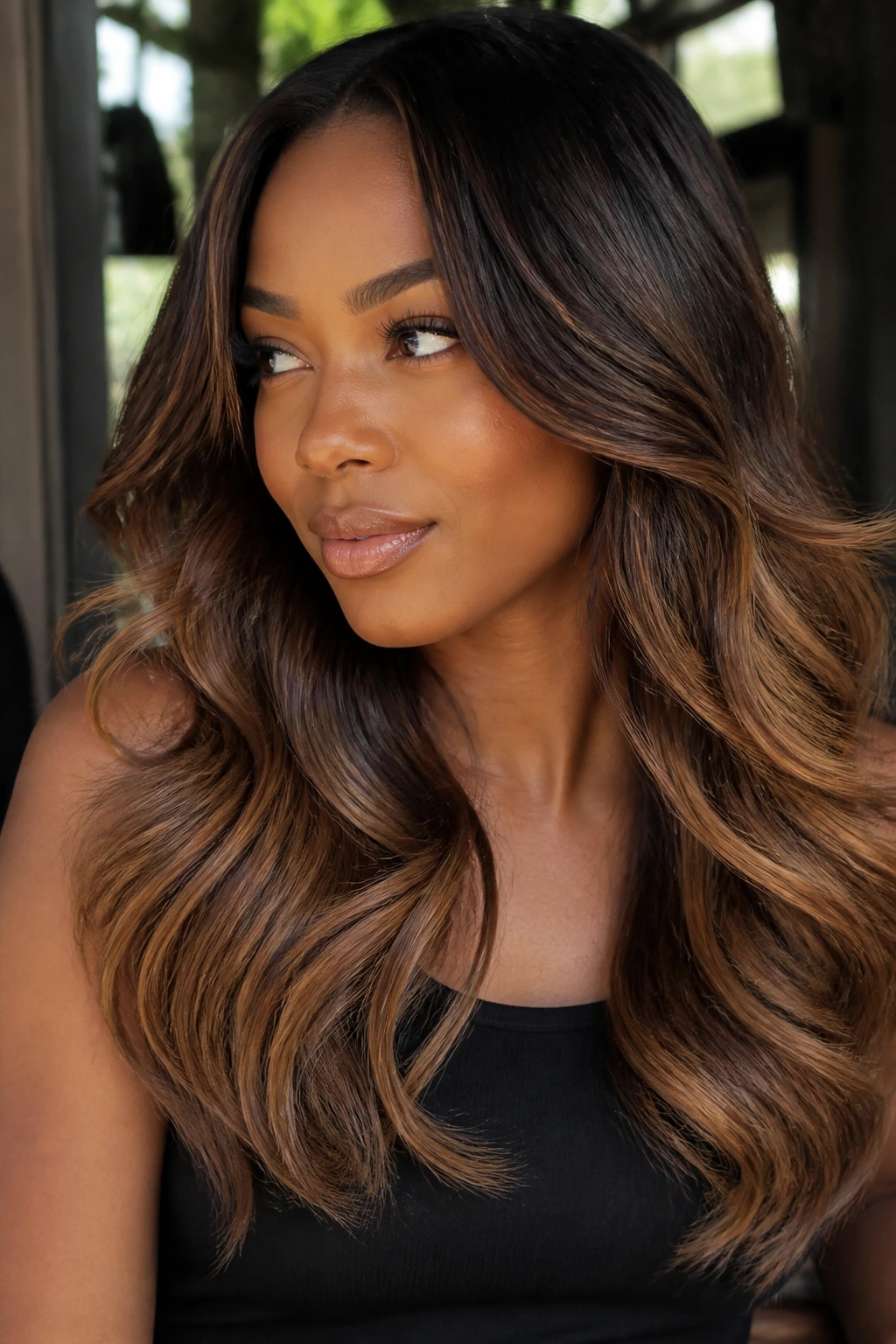
Ombre gets a bad rap sometimes because of that harsh, dip-dyed look from the early 2010s. But modern chocolate ombre is different—it’s a soft, gradual transition from dark chocolate or espresso at the roots to a lighter milk or toffee chocolate at the ends. No stark line, just a seamless melt.
For dark skin, chocolate ombre is a brilliant way to add lightness around the face without altering the root color. Since the roots stay dark, regrowth is virtually invisible. You can go many months without a touch-up—making it one of the most low-maintenance ways to wear lighter browns. The contrast also sculpts the face: darker roots create shadow near the crown, while the lighter ends draw the eye down and elongate.
Customizing the End Shade
The magic is in picking the right light end. Warm skin tones can carry golden or caramel ends beautifully. Cool skin tones do better with beige or ash-toned light browns. I’ve even seen chocolate ombre with dusty mauve ends—unexpected and completely fresh.
- If you wear your hair curly: Ask for the lightened pieces to start around cheek level. That way, when your hair is natural, the lighter parts bounce around your face.
- Toning: Because ombre leaves dark roots, you only need to tone the lightened sections. Use a tinted conditioner or mask just on the ends.
15. Rose Gold Chocolate – A Pinky-Brown for the Playful at Heart
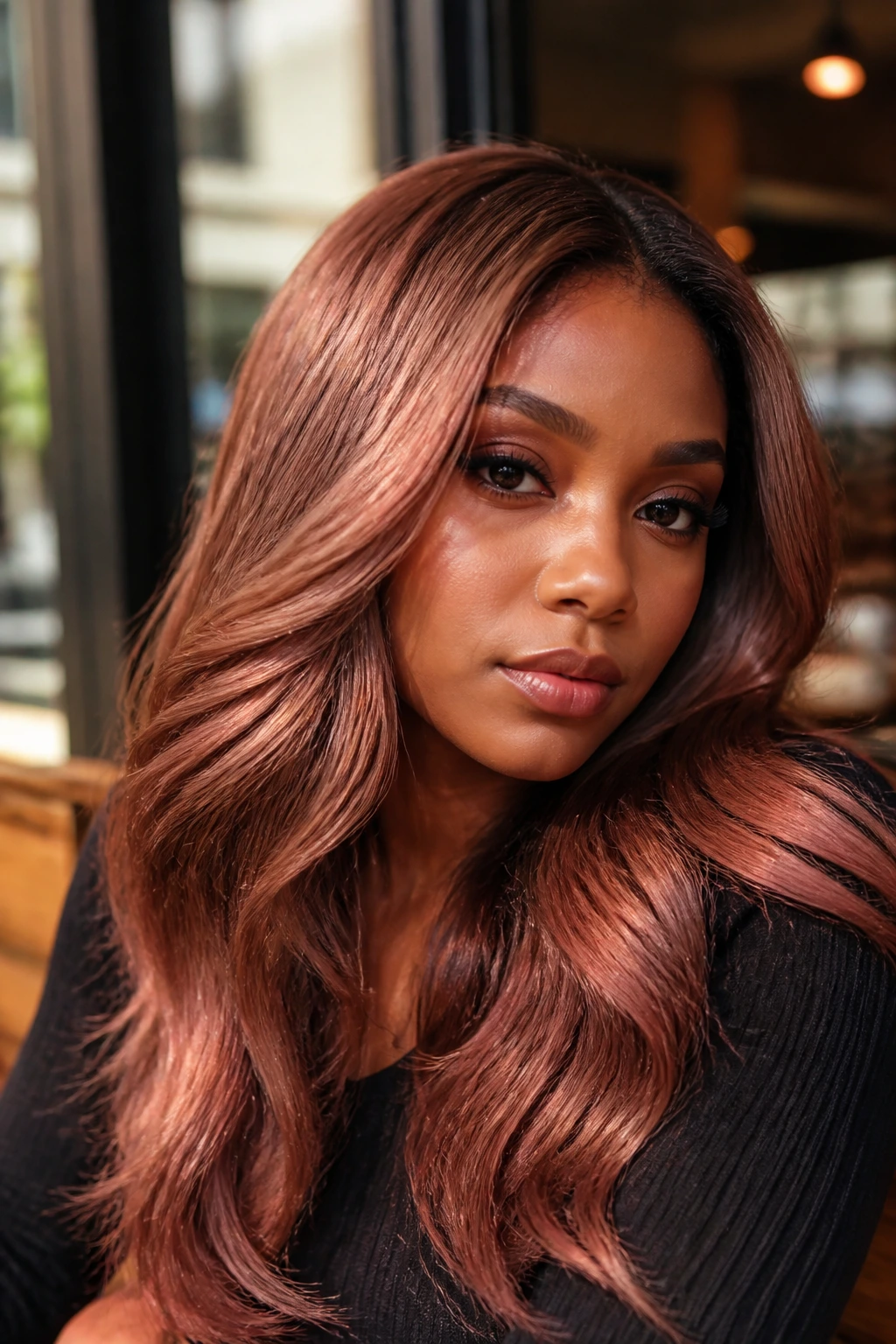
Rose gold isn’t just for blonde hair. Rose gold chocolate is a medium to dark brown infused with a soft, pinkish-rose metallic sheen. On dark cool and neutral skin, it’s unexpectedly flattering—the pink note echoes the natural cool tones in the complexion, creating a harmonious, almost monochromatic effect.
This shade tends to attract the kind of person who already wears dusty pinks, mauves, and cool-toned makeup, because it fits seamlessly into that aesthetic. If your closet is full of jewel tones and cool neutrals, rose gold chocolate will feel like the hair equivalent of your favorite blush.
Why It Works on Dark Skin
Pinky-browns can get a little lost on very light skin, but on deep skin, the contrast is enough that the rose gold peeks through without screaming. It’s a fashion shade that reads as sophisticated, not teenybopper. I’ve seen it on short, tapered cuts and medium-length curls—both felt expensive and intentional.
- Fade pattern: Rose tones fade quickly into a generic warm brown. Use a rose gold depositing mask weekly.
- Maintenance cycle: Book toner appointments every 4–5 weeks to keep that pink flush alive.
If you’ve ever wanted to dip a toe into pastel territory without committing to full-on pink, this is the way in.
16. Mahogany Chocolate – Deep Red-Brown with Violet Undertones
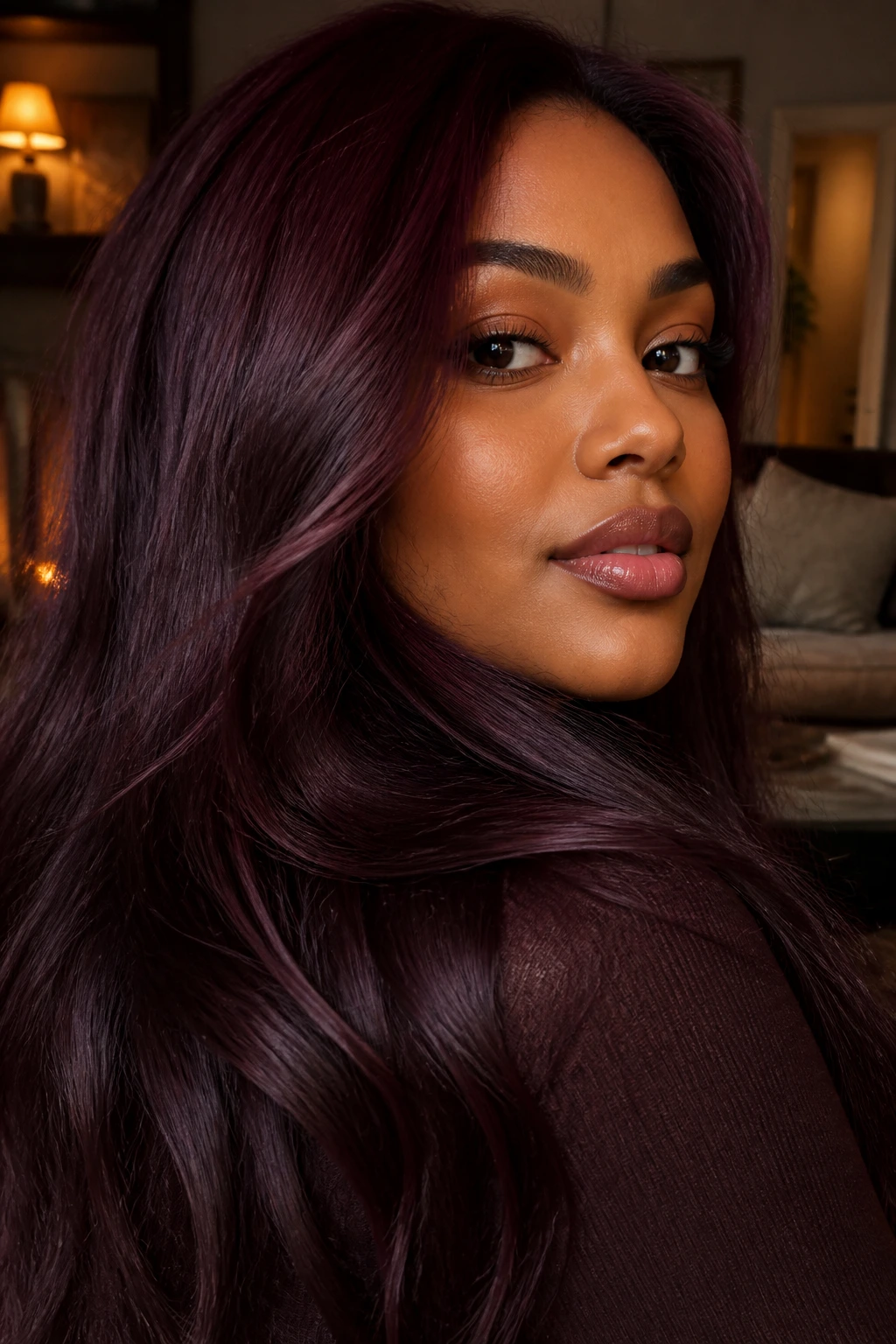
Mahogany is the grand dame of the red-brown world. It’s a deep, dark brown with strong mahogany-red and violet undertones—so dark it’s almost burgundy, but with a more pronounced brown base. On deep skin, it wraps the face in this warm, regal glow that reads powerful and lush.
I particularly love mahogany chocolate on warm and neutral deep complexions. The violet note keeps the red from pulling orange, so the result is a cool-adjacent warmth—a kind of oxymoron that lives beautifully on olive and golden skin. Even very cool skin can wear a version of this if the violet is jacked up a notch.
Depth and Dimension Without Highlights
One of the best things about mahogany chocolate is how much movement it has on its own. The red-violet pigment creates natural highs and lows as light hits the hair, so even a single-process application looks multi-dimensional. On natural curls, it’s a showsto