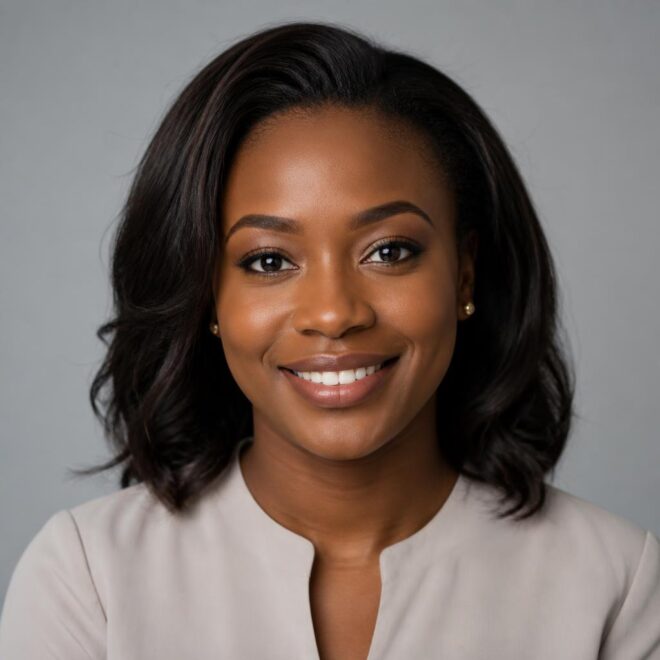


The classic bob is an institution in the world of hair design, but adding an undercut transforms a standard silhouette into something structurally daring. When we talk about marrying the precision of a bob with the hidden edge of an undercut, we are looking at a masterclass in weight distribution and geometry. This style isn’t just a trend; it is a mechanical solution for those struggling with hair that feels too heavy, too thick, or simply lacks the movement they desire. By shaving or tapering a section at the nape of the neck or along the sides, you shift the entire center of gravity of the cut.
Many people assume an undercut requires a total departure from a feminine aesthetic, but that is a fundamental misunderstanding. It is essentially an exercise in contrast. You keep the length and softness of a beautiful bob on top, while the hidden shaved area provides an unexpected, razor-sharp detail that appears only when you pull your hair up or turn your head. If you have been looking for a way to manage high-density hair or just want a haircut that feels like it has a secret, this is where you start.
1. The Classic Nape Undercut Bob
This is the entry point for most people, and for good reason. It involves a clean, horizontal shave at the very base of the hairline, tucked neatly beneath the weight of your longer layers. The result is a profile that looks like a perfectly tailored, chin-length bob until you flip your hair, revealing a crisp, buzzed detail. It’s subtle enough for conservative professional environments while offering a massive reduction in the sheer bulk of your hair.
Why This Works for Thick Hair
The primary goal here is to remove the “shelf” that thick, coarse hair often creates at the neck. By removing that mass, your bob will naturally tuck inward, hugging your neck rather than pushing away from it. You get that clean, architectural line that defines a high-end salon cut without the daily fight of trying to smooth out unruly bottom layers.
Maintenance and Growth
- Expect to trim the undercut every three to four weeks to keep the skin feeling smooth.
- The grow-out process is relatively painless because the longer hair above completely covers the transition.
- You can use a standard trimmer at home once you’ve learned the depth of your desired fade.
Pro tip: Ask your stylist to use a #2 or #3 guard rather than going straight to skin if you are nervous about the sensation; it gives a soft, shadowed look that is much more forgiving.
2. The V-Shaped Hidden Nape Detail
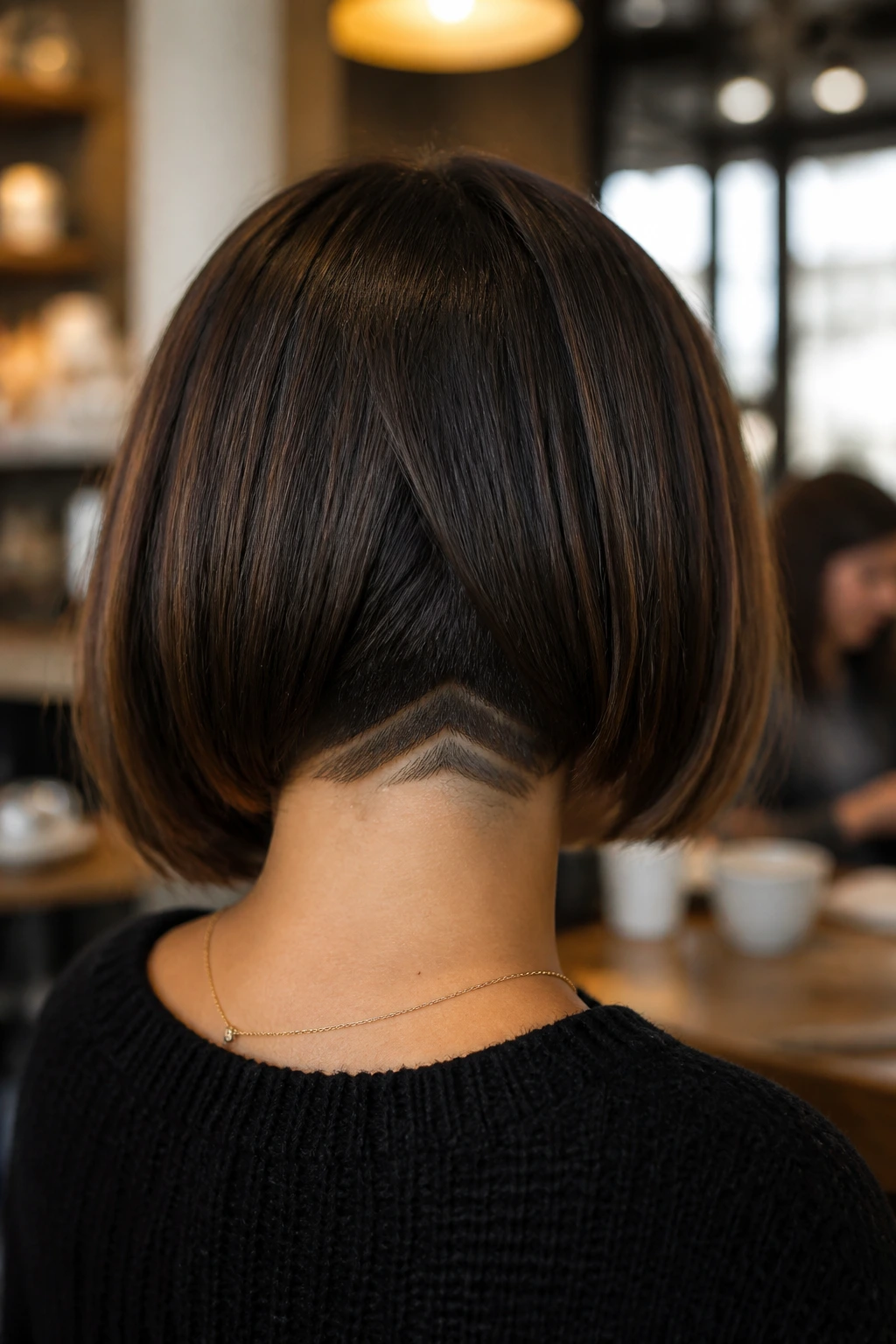
Moving beyond the straight line, the V-shape adds a touch of custom artistry to the hidden area. Instead of a uniform horizontal strip, the clipper work follows a point toward the center of your neck, mirroring the natural taper of the spine. It feels incredibly intentional and pairs beautifully with bobs that have a slight A-line angle, where the hair in the front is longer than the hair in the back.
The Geometric Advantage
When your hair is down, the V-shape remains entirely invisible, keeping the look classic. When you opt for a high ponytail or a braided style, the V-shape provides a clean, artistic focal point that breaks up the monotony of the scalp. It is a detail that rewards you during styling days rather than dictating your daily look.
Styling Considerations
- This shape works best if your bob is cut with a slight graduation at the back.
- If you notice the hair near the V-point starting to stick out, a small amount of pomade or styling wax will keep the edges pinned flush against your skin.
- Use a handheld mirror to ensure your lines stay crisp if you are doing touch-ups on your own.
3. The Asymmetrical Side Undercut
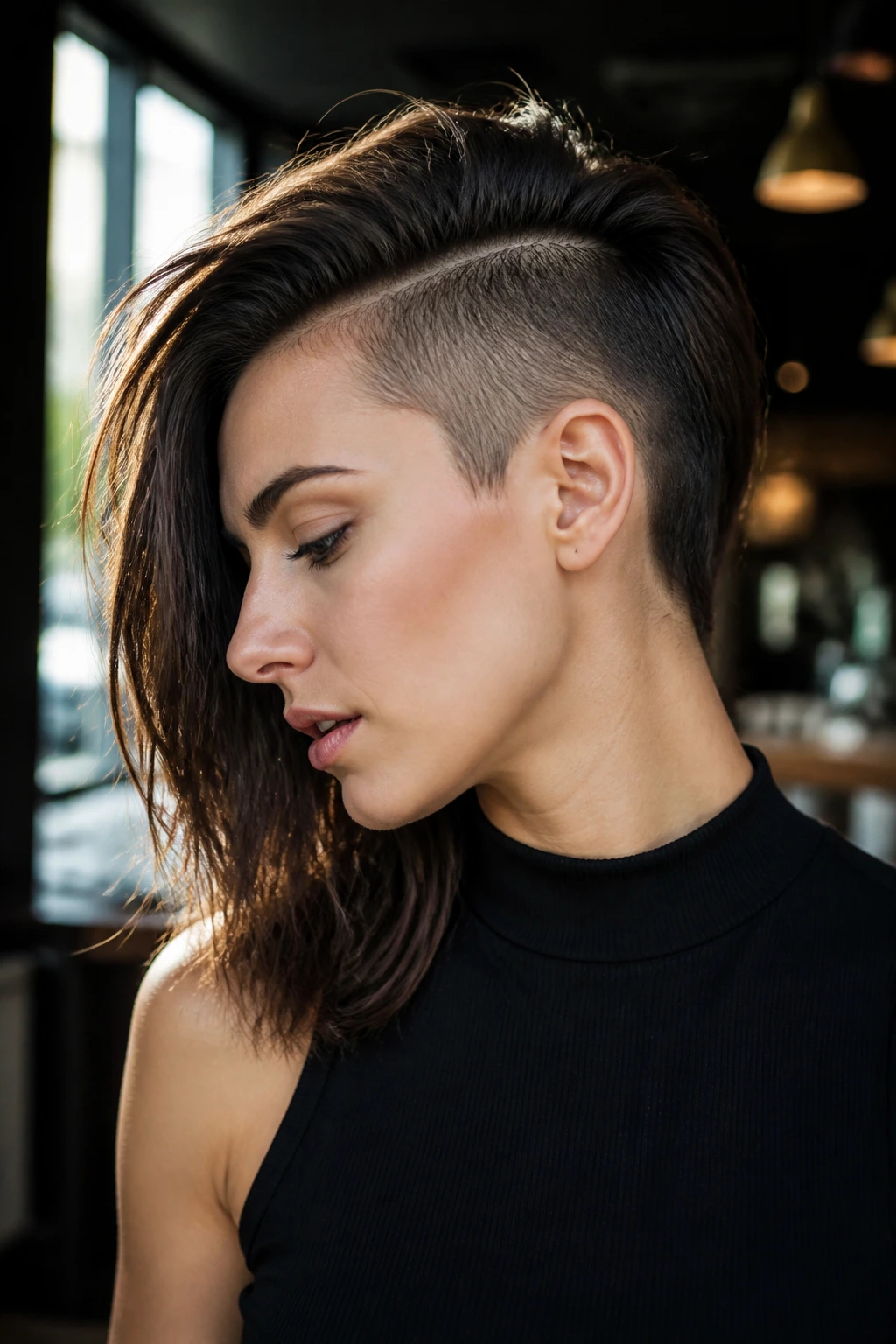
If you prefer a bolder approach, the side undercut is designed for those who want their edges to be seen. You take one side—typically the side you prefer to tuck behind your ear—and shave it from the temple down to the ear, leaving the rest of your hair in a long, layered bob. The transition between the shaved skin and the heavy, long hair provides a striking contrast that feels very modern and deliberate.
Who Should Choose This
This cut is perfect for those who constantly tuck their hair behind their ears anyway. If you find that your hair is always in your face on one side, this removes the bulk entirely, giving you a clean, open profile that highlights your cheekbones and jawline. It is a high-fashion look that commands attention.
Styling Tips for the Transition
- Invest in a quality pomade that provides a matte finish, as shine can sometimes make a short buzz look greasy rather than sharp.
- You can use a flat iron on the longer side to emphasize the stark difference in volume between the two sides of your head.
- This style requires more frequent attention, as hair growth on the side of the head is much more visible than at the nape.
4. The Floral or Geometric Patterned Undercut
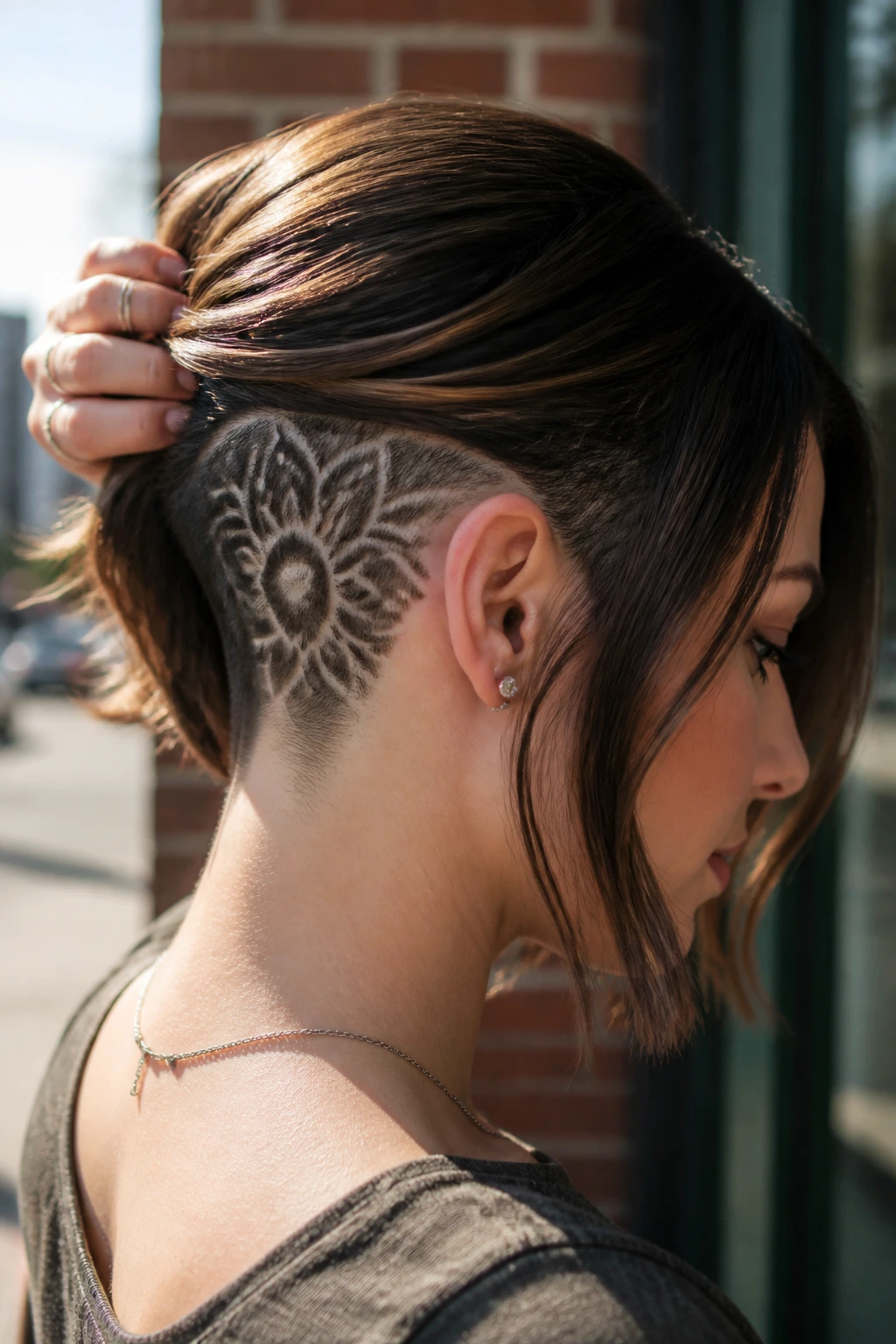
This is where the clipper work turns into a canvas. Once you have a base undercut, a skilled stylist can use a fine-tooth trimmer to etch designs into the hair. From simple geometric triangles to intricate lotus petals or waves, the design stays hidden under the bob until you reveal it. It’s a temporary commitment—if you grow tired of the design, it grows out in a matter of weeks, leaving you with a standard buzz to hide or grow back.
The Artistic Process
- Your stylist will likely stencil the design before touching the clippers to your hair.
- These designs are highly dependent on the texture of your hair and the speed at which it grows.
- You will need to return to the salon every two to three weeks if you want the design to remain crisp and well-defined.
Pro tip: If you are visiting a new stylist for a pattern, bring high-resolution reference photos. Not every barber is comfortable with intricate hair etching, so verify that they have experience with custom design work.
5. The Tapered Fade Nape
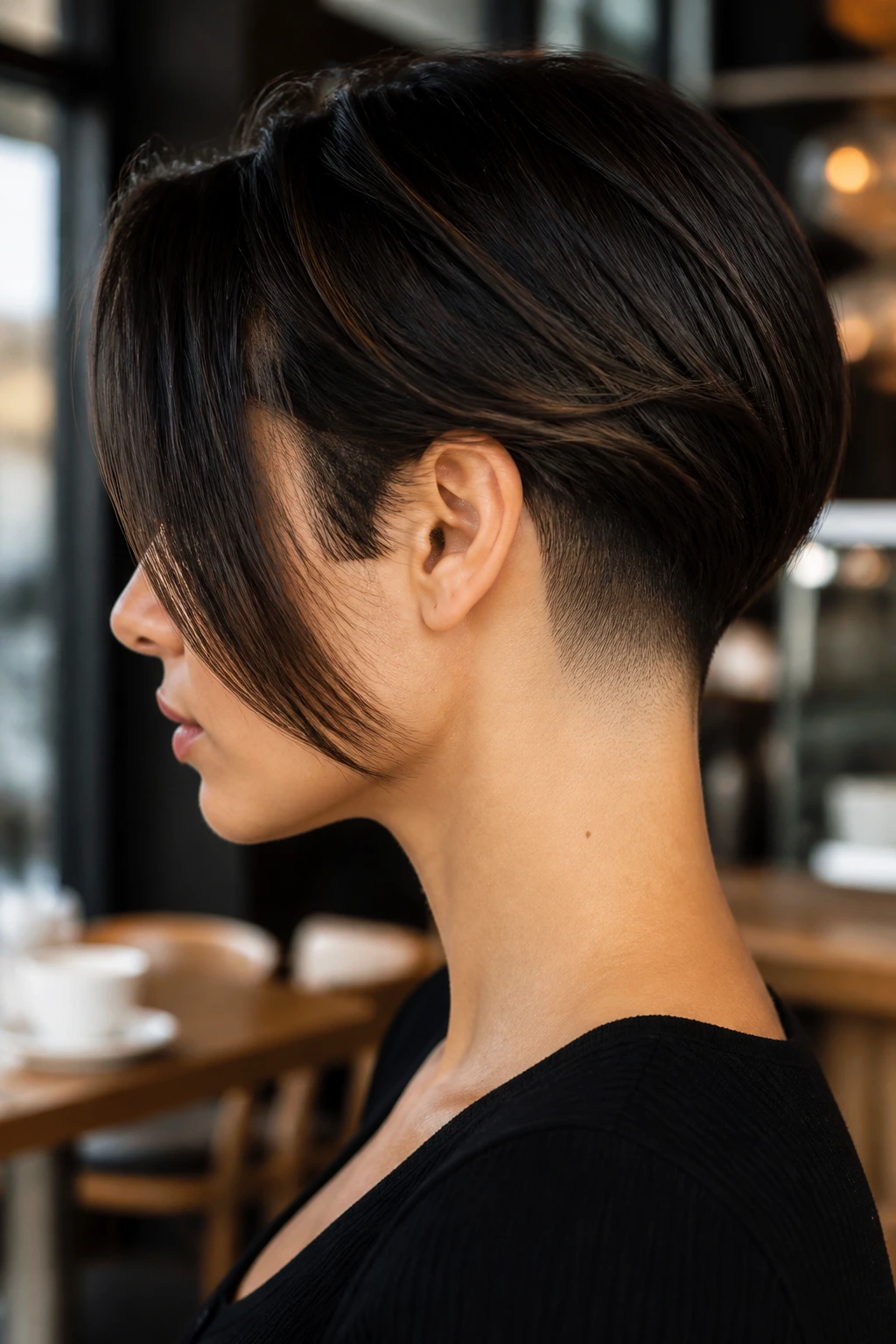
For a softer, more blended transition, the tapered fade is the gold standard. Instead of a hard line where the hair goes from full length to shaved, a fade uses a series of guard lengths to graduate the hair from short at the neck to longer toward the base of the bob. This eliminates the “buzzy” feel and provides a silky, seamless transition that feels sophisticated and polished.
Why Fades Feel Different
A hard undercut can sometimes feel “aggressive,” while a fade feels “engineered.” If you love the idea of a lighter neck but want to maintain a soft, feminine look even when your hair is pulled up, the fade is your best option. It mimics the look of a high-end men’s haircut blended into a classic women’s bob.
Choosing the Right Length
- Start with a higher guard (like a #4) if you want to test the waters.
- If you have light hair and dark skin, the contrast of a fade will be more pronounced than if your hair and skin tone are similar.
- Ask your barber to “blow out” the edges to ensure a soft, natural finish rather than a blocky, square-cut edge.
6. The Wide Side-Panel Undercut
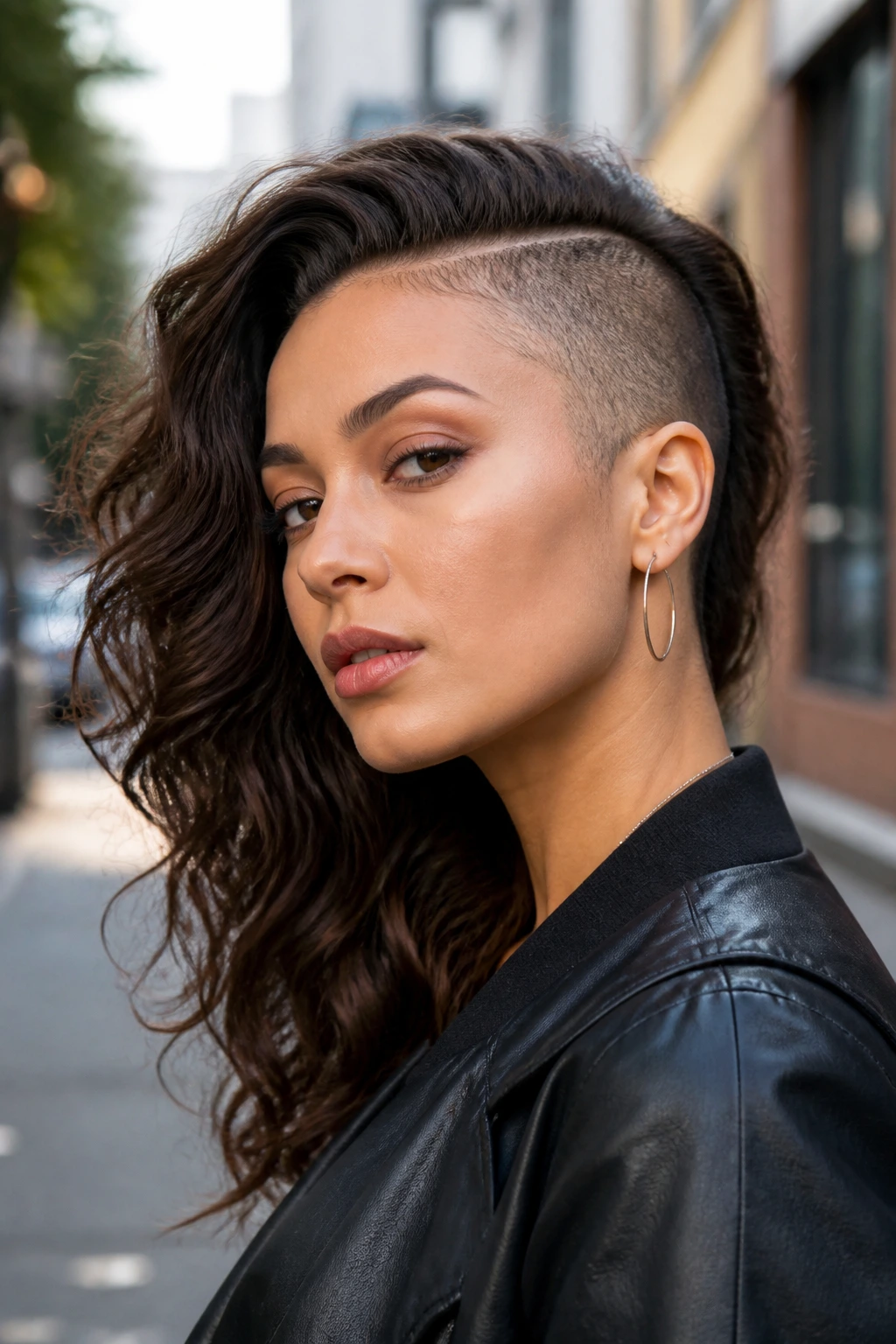
Instead of just a narrow strip, the wide panel covers the entire temple area, extending back to the crown of the head. This removes a significant amount of weight, which is revolutionary for people with thick, curly, or frizzy hair who feel trapped under the mass of their own locks. It makes your bob feel lighter, faster to dry, and much easier to manage on a daily basis.
The Practical Benefits
- You will notice a significant decrease in your hair drying time after a shower.
- Your head will feel physically lighter, which is a common complaint among those with heavy, dense hair types.
- The weight relief helps prevent the “pouf” that often happens with thick bobs in humid weather.
When to Go Wide
Only commit to a wide side panel if you are sure you want the look, because the regrowth phase is significant. When you decide to grow it out, you will have to deal with a period where the hair is at an awkward length, requiring clever pinning or headbands.
7. The Double-Nape Notch
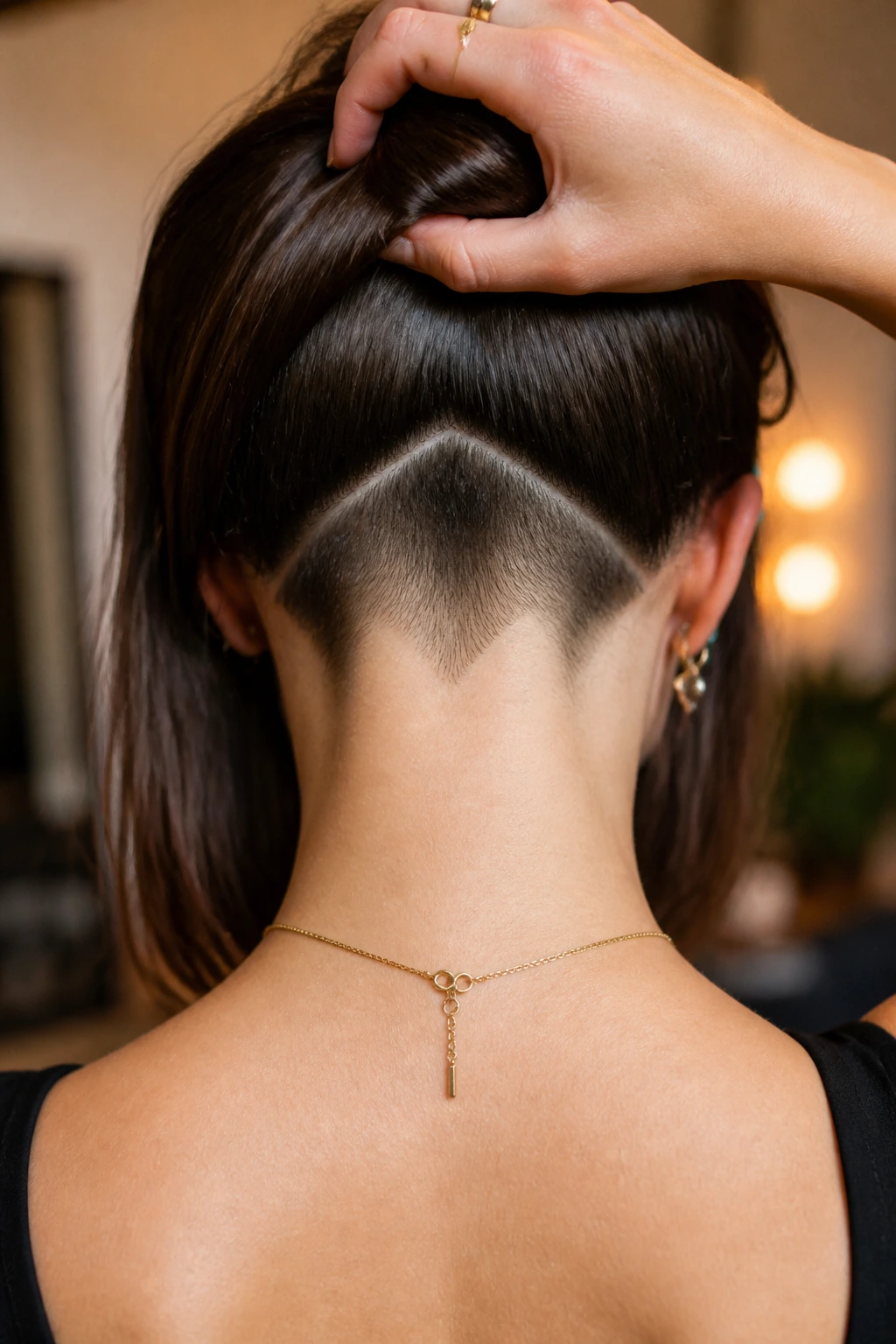
If a full horizontal undercut feels too intense, consider the “notch”—two small, mirrored triangles or squares shaved into the nape. This gives you that hidden edge without removing nearly as much hair. It acts as a signature detail that is entirely personal, almost like a secret tattoo that only you and those very close to you will ever see.
Why This is a Low-Risk Option
It is the ultimate “try it before you commit to it” style. Because you aren’t removing a wide swath of hair, the regrowth is minimal, and it is incredibly easy to hide. You can style your bob naturally and the hair will completely obscure the notches, making them a fun feature to reveal during special occasions.
Achieving Symmetry
- Use a steady hand and a set of quality hair clippers if you are doing this at home.
- You need a secondary mirror to check the alignment of the two notches on your neck.
- Ensure the surrounding hair is long enough to fully cover the space, as shorter bobs may accidentally expose the notches during daily movement.
8. The Color-Blocked Undercut
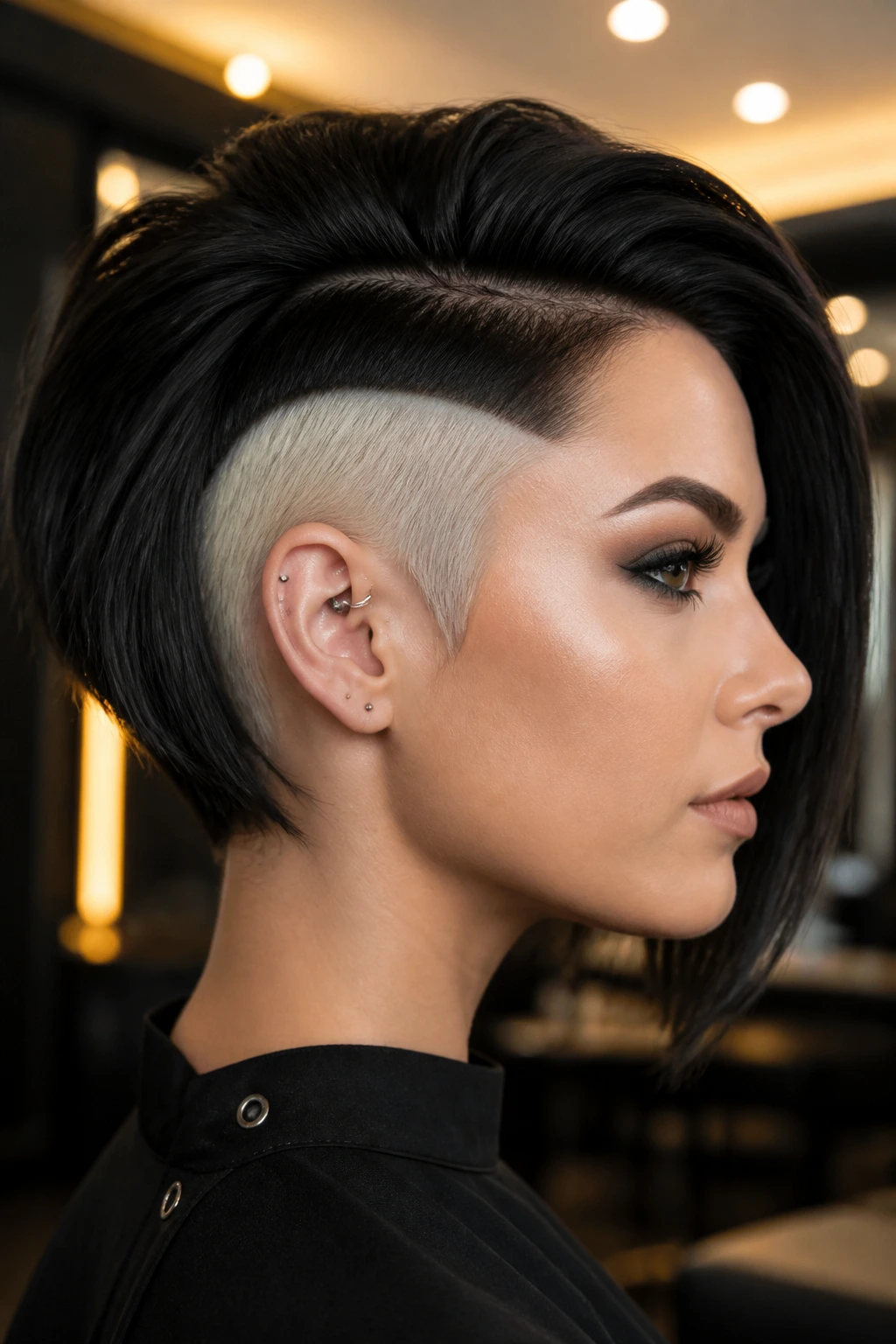
Why stop at just the cut? Coloring the undercut a different shade—or even bleaching it to white-blonde while keeping the top of the bob your natural color—creates a visual depth that is truly striking. When you put your hair up, the color contrast highlights the geometry of the shave, making the undercut look like a deliberate artistic choice rather than just a convenience.
The Best Color Combinations
- A platinum blonde undercut under a jet-black bob creates the ultimate contrast.
- Vibrant fashion colors like neon pink or electric blue are popular for those who want their secret style to be high-impact.
- If you prefer a more subtle look, keep the undercut a shade lighter or darker than your main hair color to create a tonal shadow.
Chemical Maintenance
- Remember that bleaching your scalp area is different from bleaching your ends. Your scalp generates heat, which makes bleach work much faster; be careful to avoid skin irritation.
- You will need to touch up the roots of your undercut much more frequently than the rest of your hair to maintain the color block.
9. The Minimalist Temple Shave
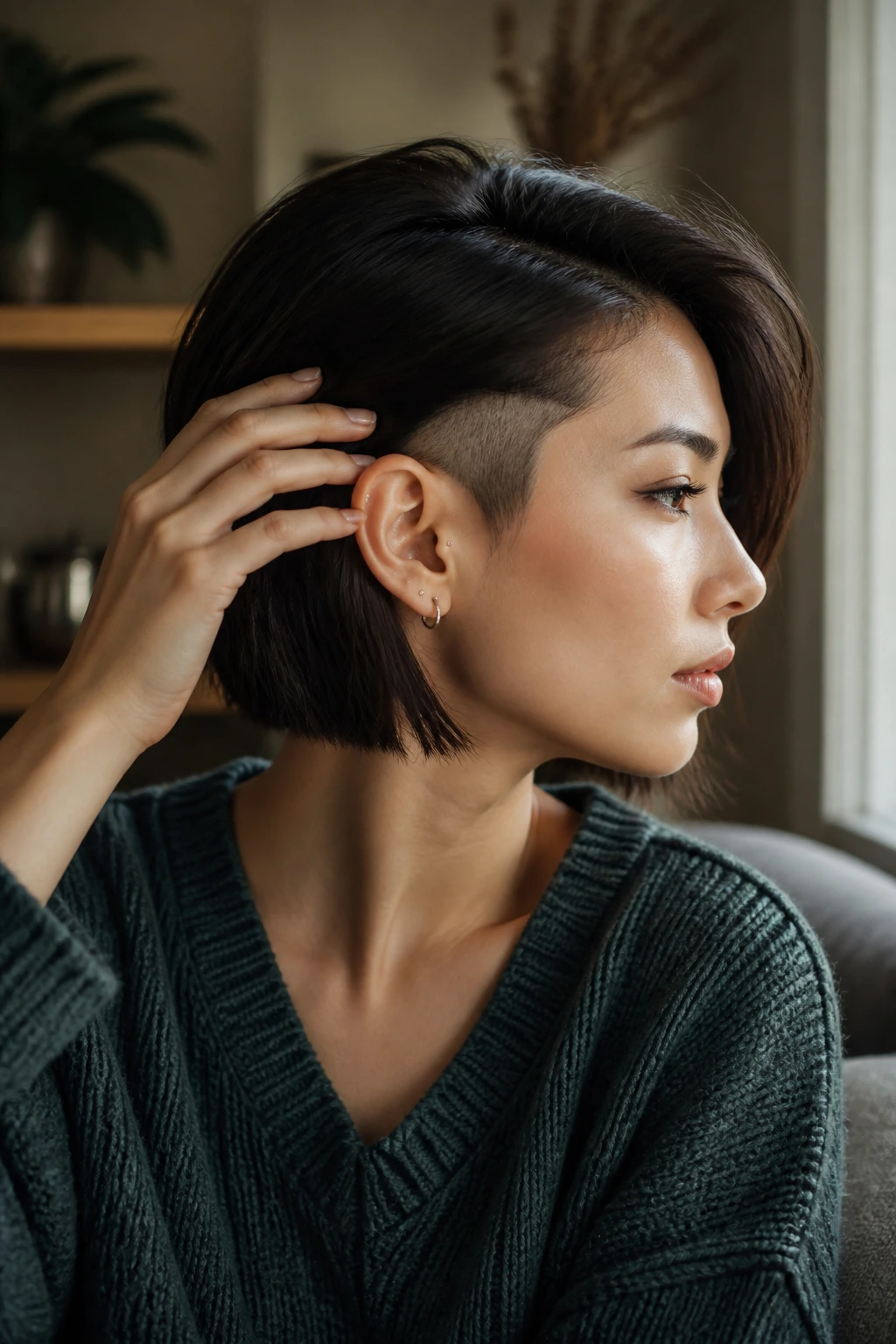
Sometimes the best undercut is the one you can barely see. A minimalist temple shave involves removing a tiny triangle of hair right at the hairline by the temple. It’s barely a square inch of skin, but it changes how your bob sits against your face. It keeps the hair from pushing forward into your eyes and gives your bob a subtle, edgy aesthetic that doesn’t scream for attention.
Why This Style Succeeds
It is the perfect choice for the professional who wants a touch of rebellion without risking their office dress code. It adds a bit of “cool factor” to an otherwise standard bob. Because it is so small, it is also incredibly easy to grow out if you decide it isn’t for you.
Integrating the Look
- Use a tiny bit of lightweight styling cream to tuck the surrounding hair behind the ear, exposing the small shaved area.
- This works best with a bob that is blunt-cut at the ends, as the sharpness of the cut complements the minimalist shave.
- Keep the area clean by using a gentle exfoliating scrub to prevent ingrown hairs, which can be an issue with very short, regrowing hair.
10. The Starburst Nape Detail
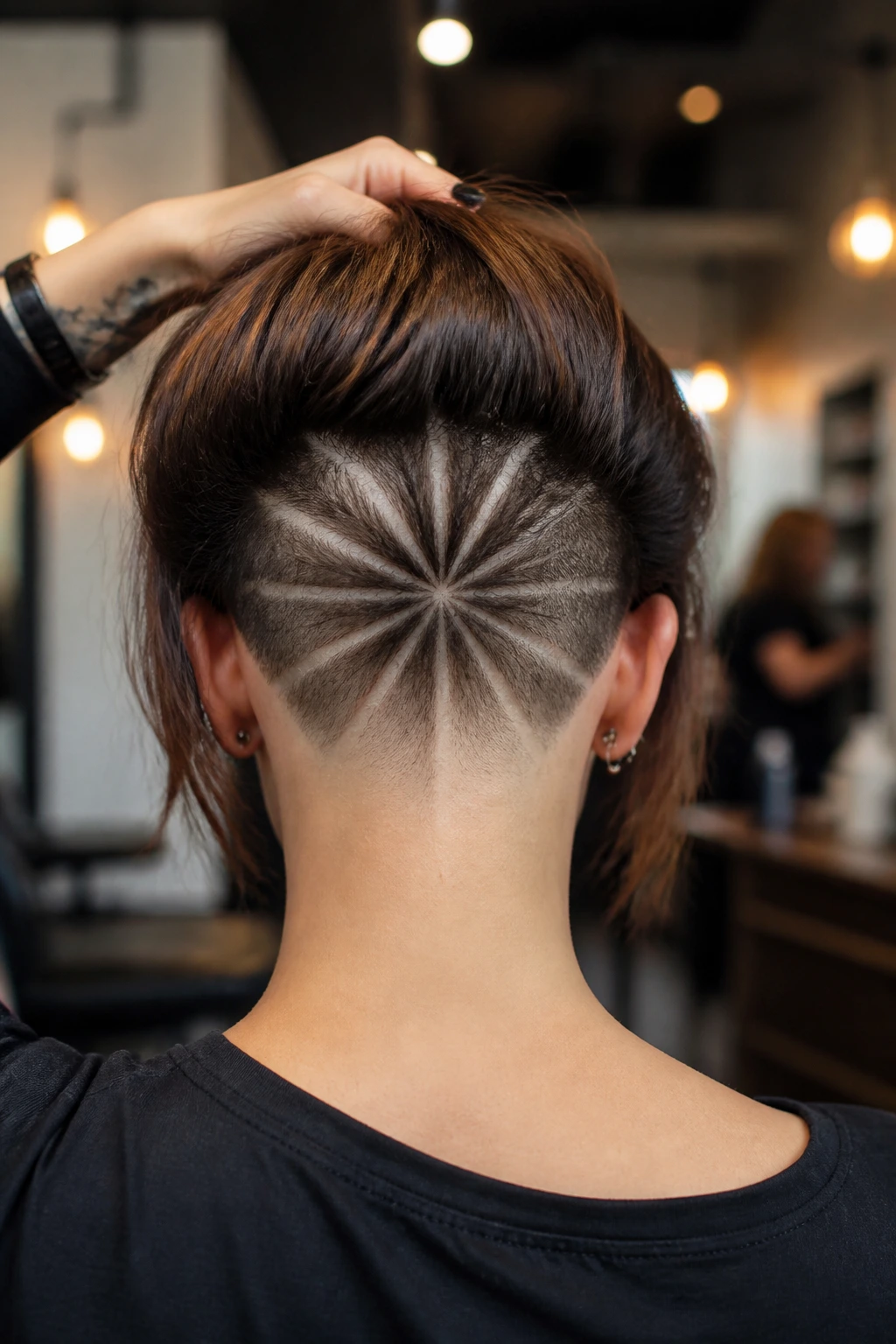
This is a variation of the patterned undercut, but specifically focused on the radiating lines of a starburst emanating from the center of the nape. It looks best when the hair is cut slightly shorter in the center and longer as it moves outward, creating a 3D effect. It is bold, fun, and gives the impression of movement, even when you are standing still.
Designing the Starburst
- You will need a professional barber or a very experienced stylist to get the lines of the starburst perfectly centered and symmetrical.
- This style looks particularly good on those with fine hair, as the clipper work can be adjusted to make the starburst look sharper and more defined.
- Be prepared for the upkeep; like all patterned undercuts, the lines will blur as soon as the hair grows by even a sixteenth of an inch.
11. The “Hidden Layer” Bob Undercut
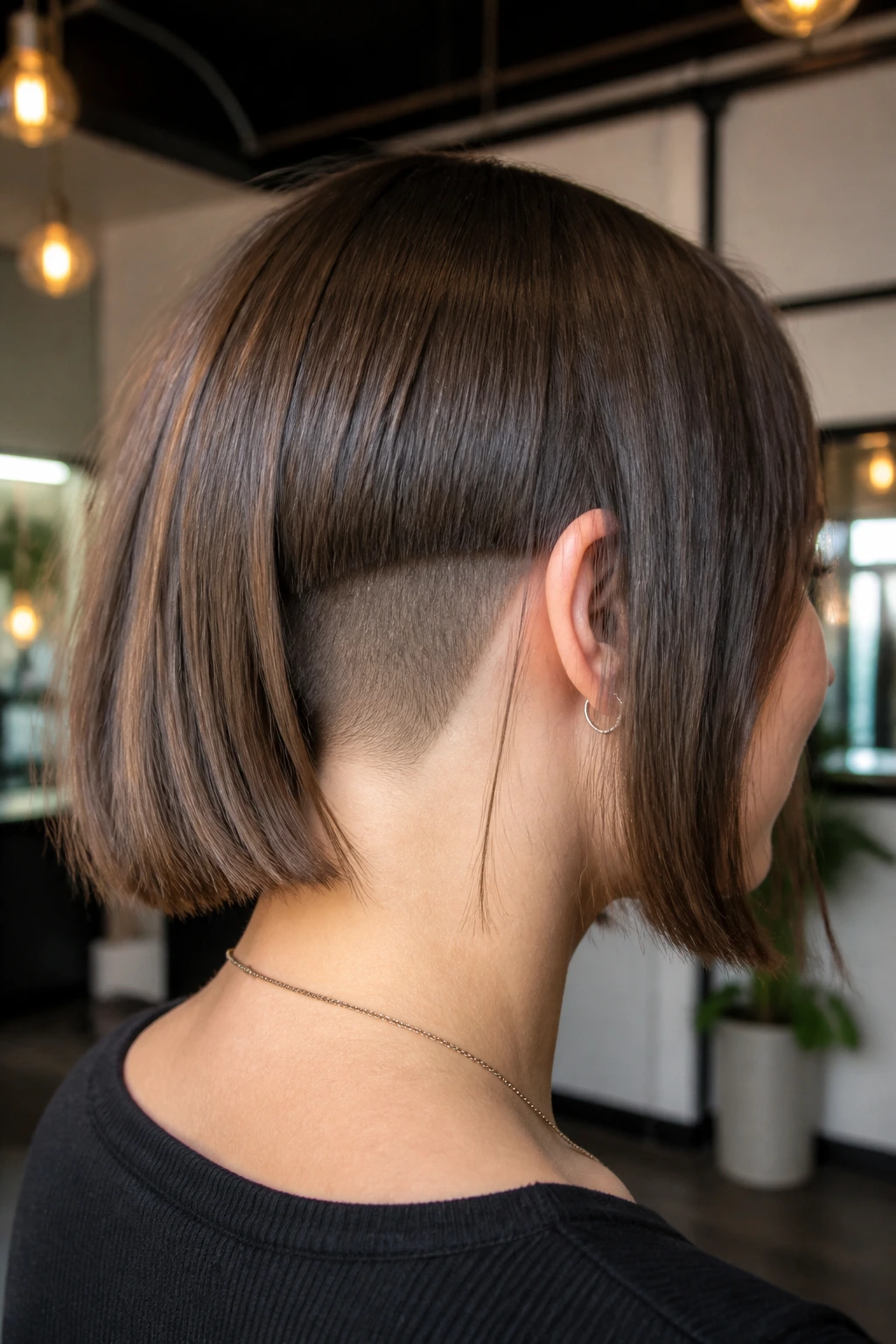
In this style, the undercut isn’t just at the nape; it’s a wide band of hair removed about two inches above the nape, leaving a small “curtain” of longer hair below it. This is a brilliant structural hack. When your hair is down, it hangs perfectly straight. When you tie it up, you get a cool, shaved band that looks like a high-fashion accessory.
How it Works Structurally
The “curtain” of hair at the bottom keeps the neck looking soft and natural, but the shaved band above it removes the bulk that typically makes bobs flip out at the shoulders. It is a win-win for those who want the weight reduction but don’t want the “nape buzz” look.
Styling for the Reveal
- Use a high ponytail to fully expose the shaved band and show off the architectural contrast.
- If you have naturally wavy hair, use a flat iron on the “curtain” of hair to keep it sleek so it doesn’t tangle with the shorter, shaved section above it.
- This cut requires a bit more maintenance, as you have to trim the “curtain” to keep it from growing too long and losing its shape.
12. The Textured Razor Undercut
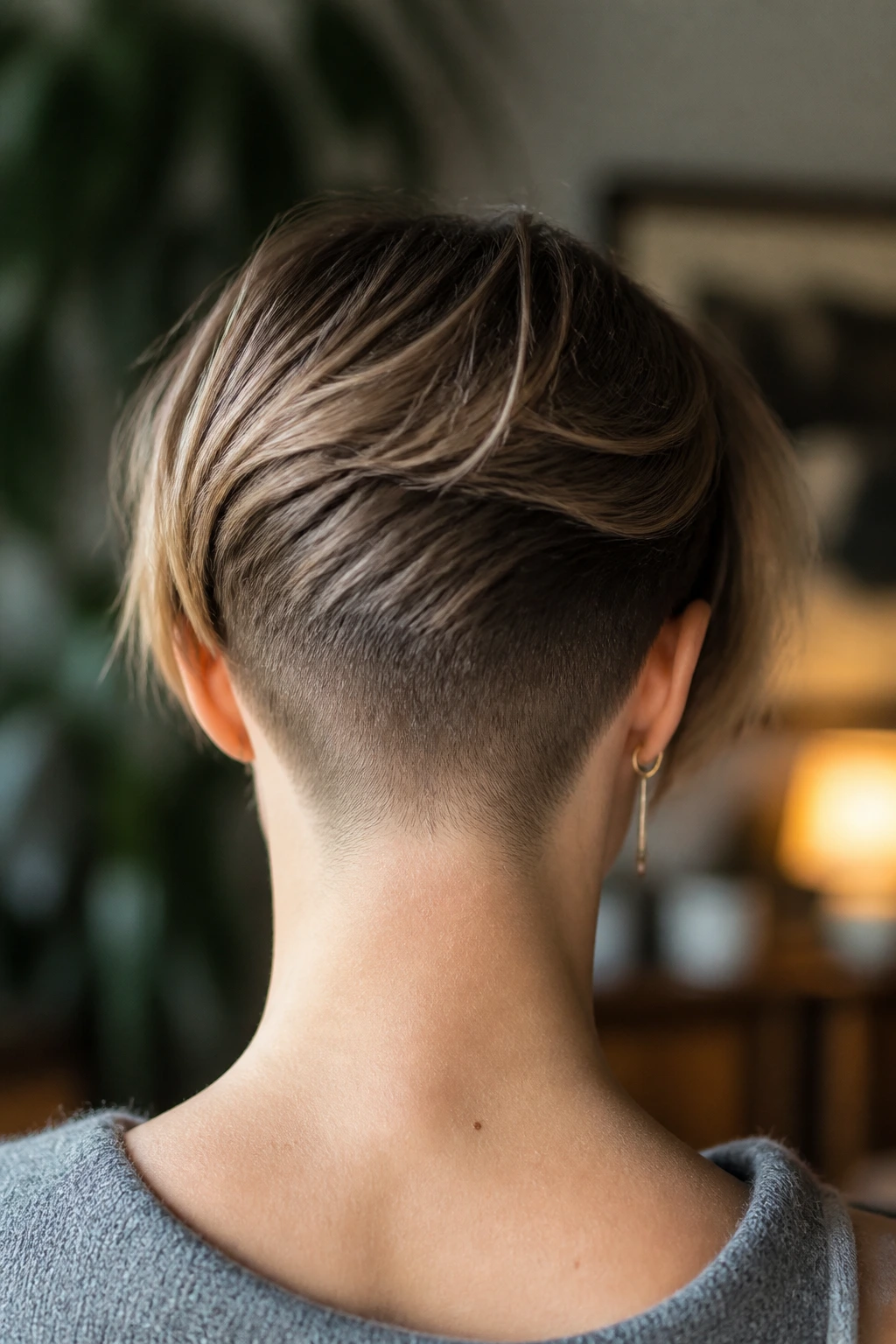
Most undercuts use clippers, but a razor undercut offers a softer, more feathered look. By using a straight razor to taper the hair at the nape, you get a finish that isn’t as severe as a buzz. It’s perfect for those who want the weight removal but find that a clipper-shaved look is too harsh for their personal style.
The Feel of the Razor
- The texture is soft, almost velvety, to the touch, rather than the prickly sensation of a #1 guard.
- Because it is a soft taper, the regrowth is much more natural and doesn’t have that “awkward phase” of stubble.
- This is a highly skilled cut; ensure your stylist is comfortable using a straight razor for detailing, as it is a lost art in many modern salons.
13. The Half-Moon Nape
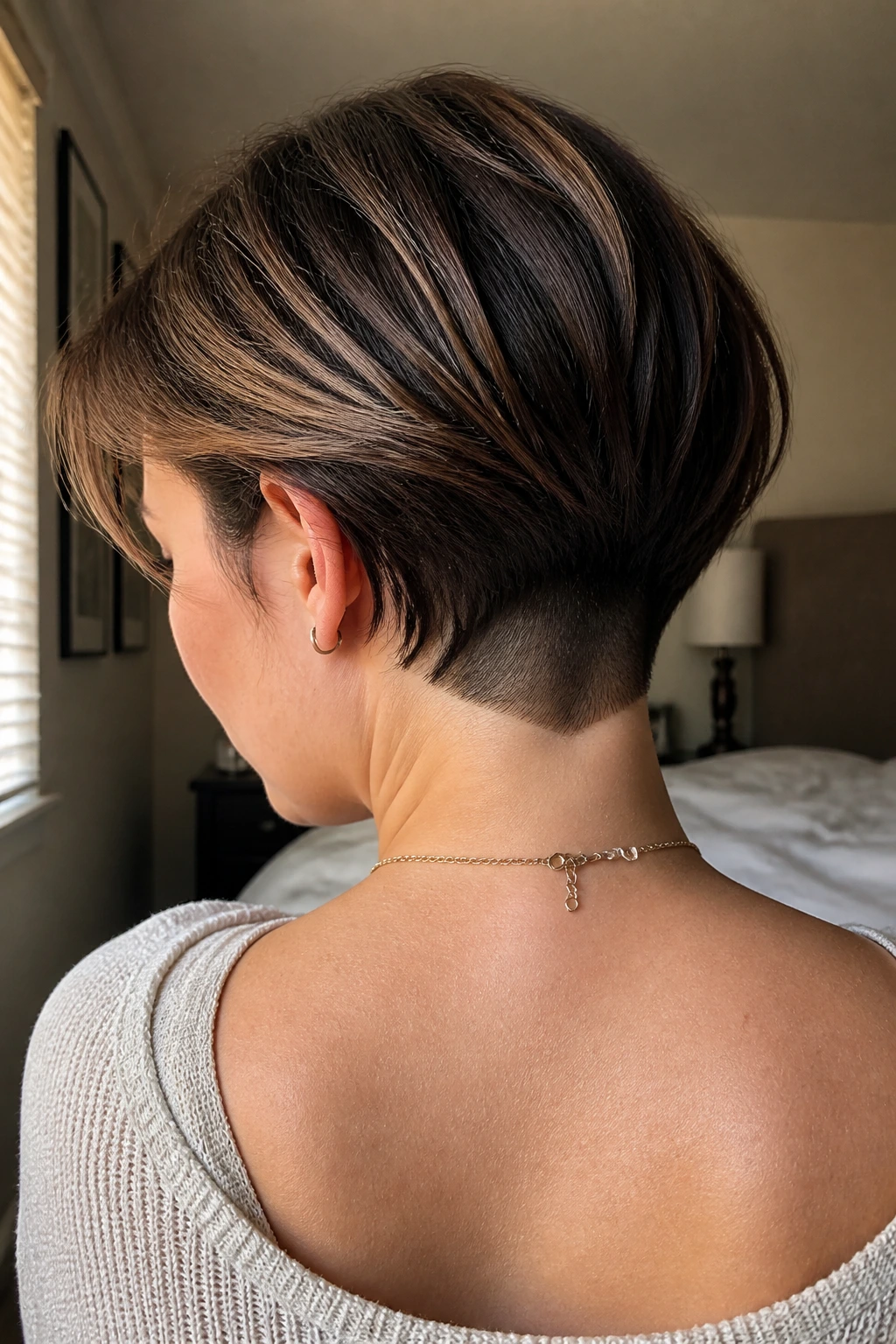
The half-moon is a graceful, curved undercut that follows the natural hairline at the nape of the neck. It is softer than the V-shape and more organic than the horizontal line. It pairs beautifully with soft, rounded bobs that have a lot of interior layers, as it complements the curve of the overall haircut.
Elegance in Geometry
This is arguably the most “feminine” of the undercut styles. The curve echoes the natural shape of the head, making the undercut feel like an extension of the haircut rather than an add-on. It’s a great way to handle hair that is thick at the neckline without creating harsh, geometric lines that might feel out of place with a softer aesthetic.
Maintaining the Curve
- Because the line is curved, precision is key. A slightly uneven line is much more noticeable on a curve than on a straight back-neck line.
- Use a stencil or have a partner help you guide the trimmer if you are maintaining this at home.
- The growth is very forgiving because it matches your natural hairline.
14. The High-Temple Undercut
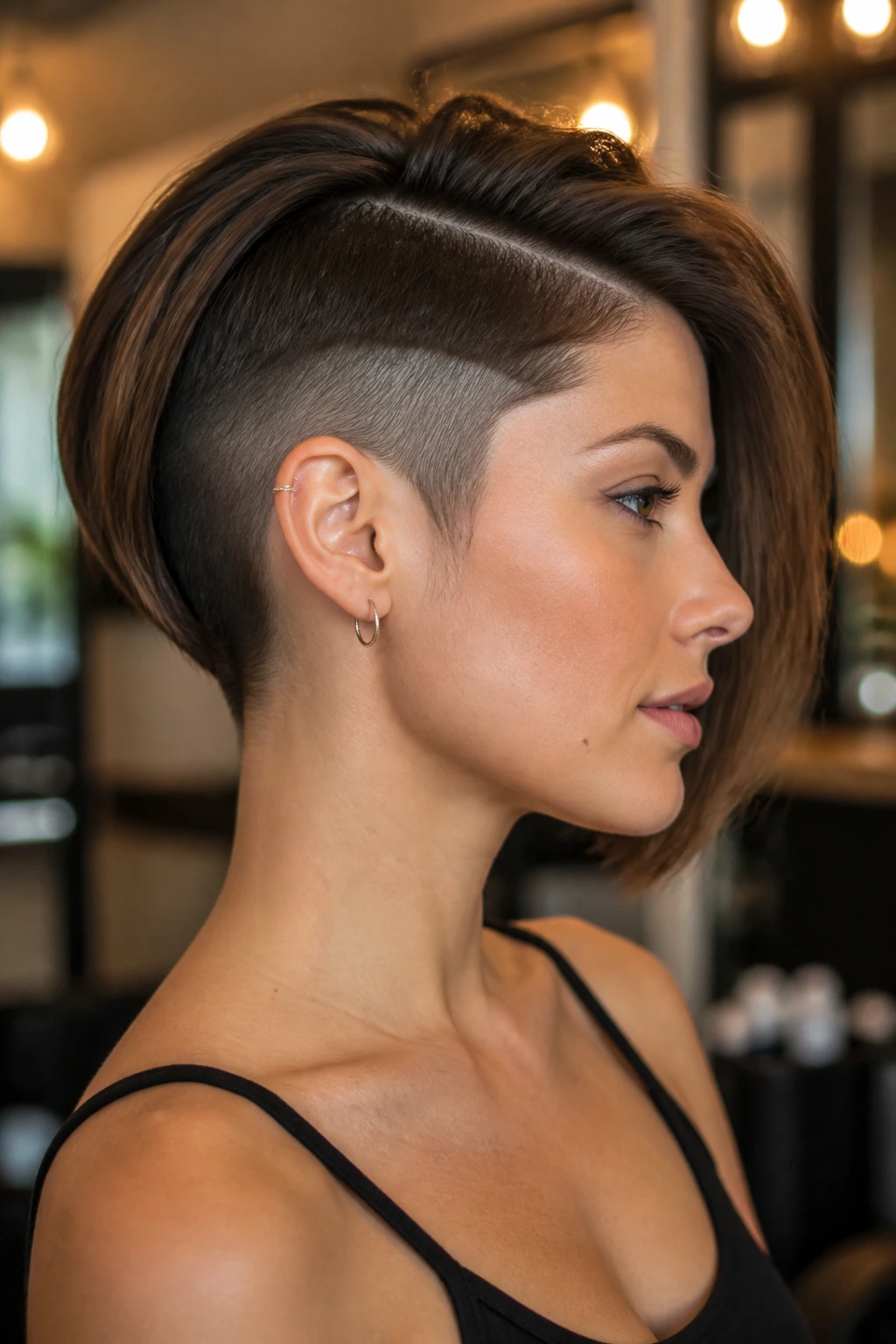
This is a daring style that extends the undercut high up toward the parietal ridge—the widest part of your head. It is a major commitment, as it effectively turns a large portion of your hair into a short, buzzed section. You will have far less hair to work with, but for the right person, the look is incredibly striking and easy to style.
Who Should Avoid This
If your hair is on the finer side, a high-temple undercut might make the rest of your hair look too thin or sparse. This style is best suited for those with very high density, where the reduction in hair mass is actually a relief rather than a loss.
Styling and Volume
- You will need to use volumizing mousse or root-lift spray on the remaining hair to make sure the bob doesn’t fall flat against your head.
- This style looks best with a side part, as it allows you to cover the high-temple buzz with the longer hair on top.
Practical Tips for Your Undercut Journey
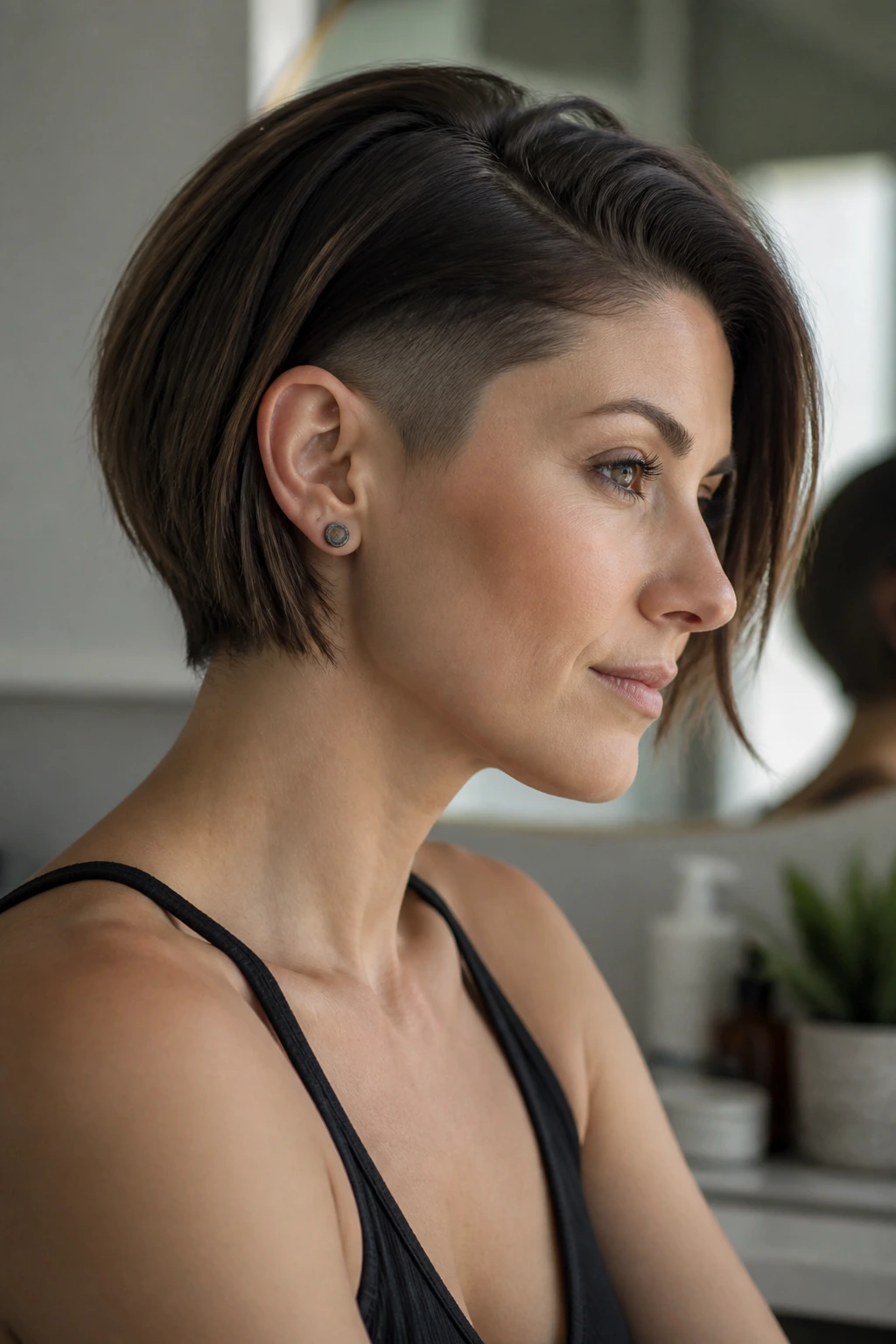
Stepping into the world of undercuts for your bob requires a shift in how you think about your hair. Most importantly, you need to understand the maintenance cycle. Hair on the nape of the neck grows remarkably fast. If you want that crisp, clean look, you are looking at a salon visit or a home-trimming routine every three to four weeks. If you miss that window, the “undercut” will quickly turn into “frizzy, awkward stubble.”
Don’t be afraid to invest in your tools. If you are doing your own maintenance, a set of professional-grade trimmers is non-negotiable. Cheap, drug-store clippers will pull at your hair, which is painful and leads to a jagged, uneven result. Look for adjustable guards that let you experiment with length—start long and work your way shorter. You can always take more off, but you cannot put it back on until it grows out.
Finally, think about your lifestyle. An undercut is a commitment to a specific look, but it is also a commitment to visibility. If your job requires you to keep a very specific appearance, verify that your bob is long enough to cover your undercut when your hair is down. Most bobs have enough length to mask a nape undercut, but if you choose a side-panel or a high-temple look, hiding it might become impossible. Own the choice.
Variations and Adaptations
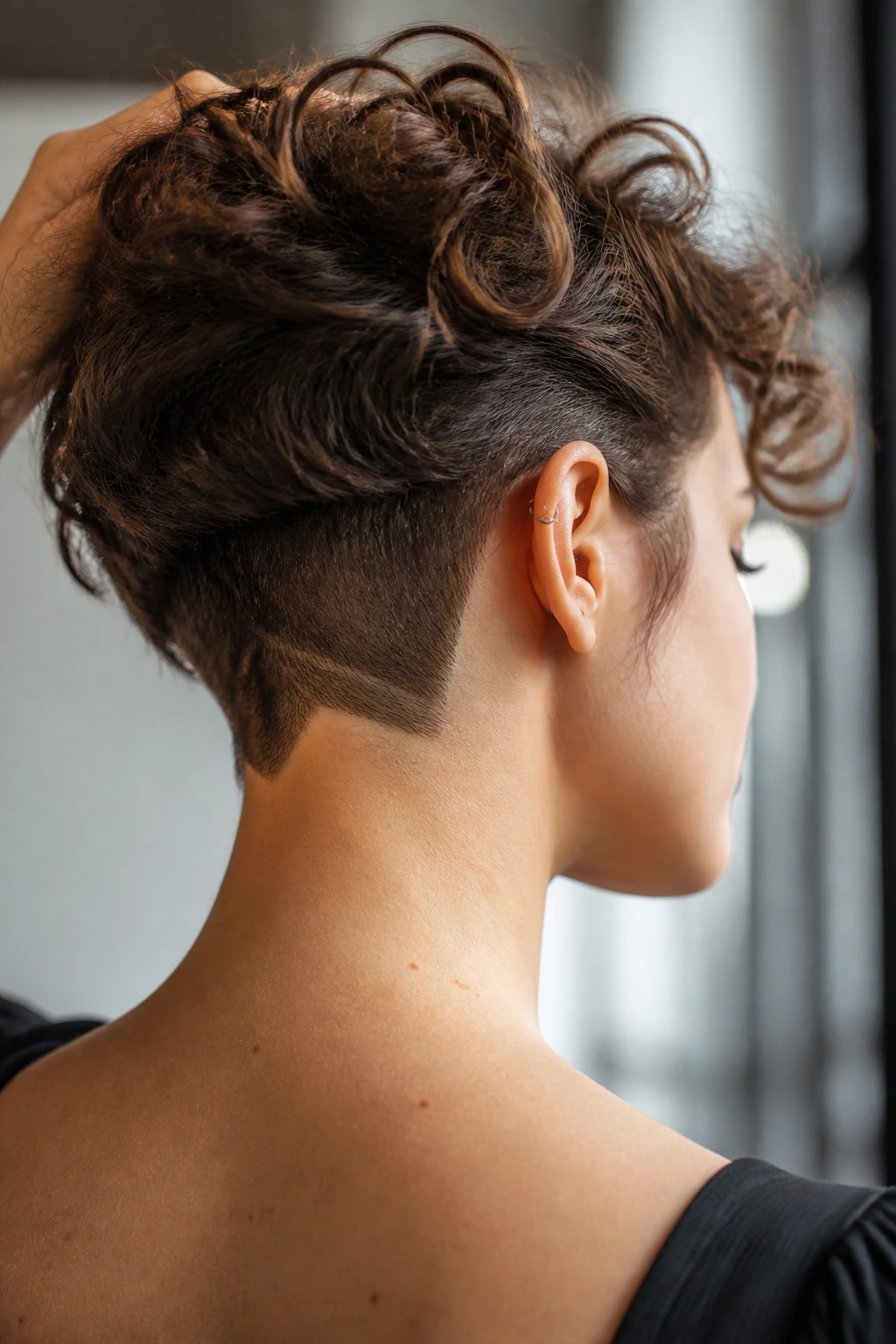
The beauty of the undercut bob is that it is infinitely customizable. If you have fine hair, you don’t have to skip the undercut entirely—just keep it minimal. A small, subtle nape notch can provide just enough of an edge without removing too much volume. If you have curly hair, an undercut is actually a secret weapon. It allows the curls on top to spring up and sit more comfortably without being weighed down by the hair at the nape.
Dietary or seasonal changes can also influence how you wear your cut. During warmer months, you might want to go a bit shorter with your undercut to keep your neck cool, while in colder weather, a slightly longer, tapered transition provides more coverage. If you are worried about the “boldness” of the look, consider a temporary wash-in color for your undercut. It allows you to play with the visual impact without the permanent change.
Storage and Care
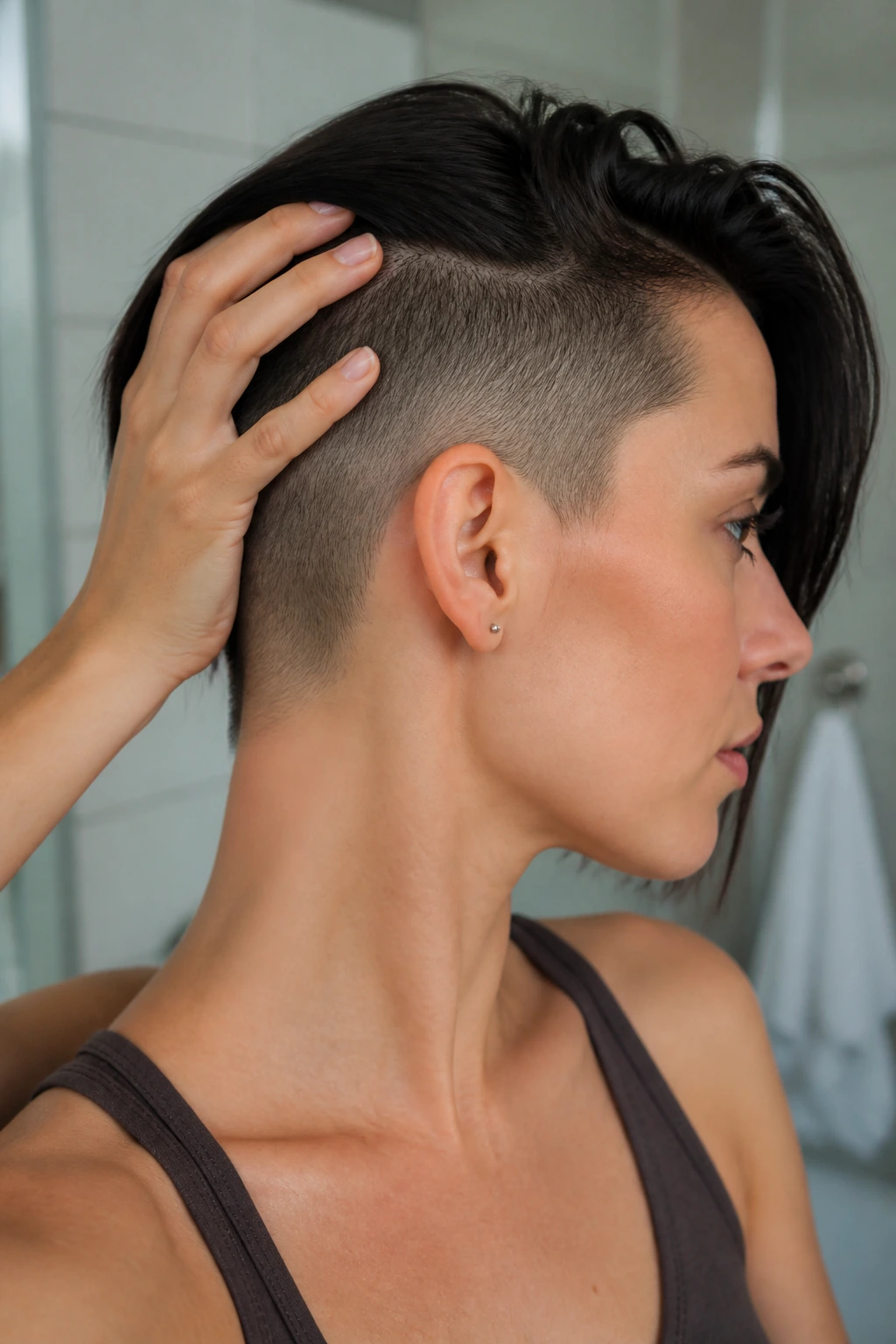
Unlike long hair that needs specialized deep-conditioning masks for the ends, your undercut needs scalp care. Use a gentle, sulfate-free shampoo to keep your scalp hydrated, and don’t forget to exfoliate. Yes, your scalp needs exfoliation, especially in the area where you are removing hair regularly. A simple scalp scrub used once a week will prevent those annoying ingrown hairs and keep the skin smooth.
If you are styling, focus on the “transition zone”—the point where your longer hair meets the shaved area. This is where most people struggle with flyaways. A small dab of lightweight pomade, not wax or gel, is the best tool for the job. It tames the shorter hairs without making the rest of your bob look greasy. If you find your hair has a tendency to stick out, a quick pass with a flat iron can help “train” the hair to lay flat against your neck.
Serving Suggestions and Pairings
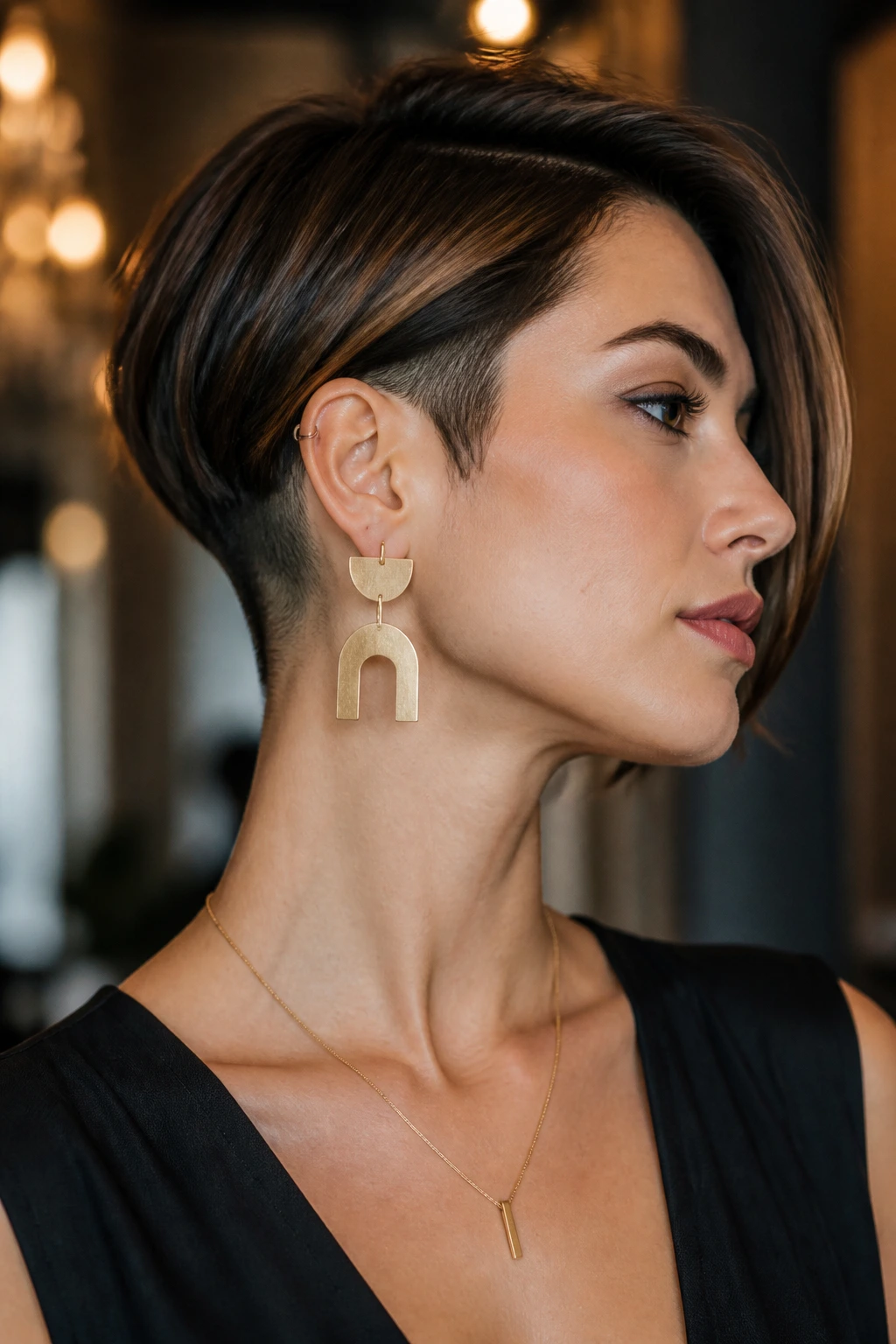
This haircut is arguably the most “versatile” short style in existence. It pairs beautifully with bold, structural jewelry—think large hoops or architectural earrings—because you’ve essentially cleared the deck for them to shine. With an undercut, you are intentionally exposing the neck, which is a very elegant feature that often gets lost under longer hair.
This style suits almost any occasion, from high-stakes boardroom meetings to casual weekend coffee runs. If you are dressing it up for an evening event, try a slicked-back look with a high-shine pomade; it emphasizes the undercut while keeping the bob looking sleek and intentional. If you are keeping it casual, a textured, beachy wave works perfectly with the “hidden” nature of the cut. The key is in how you style the top; the undercut is just the supporting player that makes the rest of your hair look more intentional and well-structured.
Final Thoughts
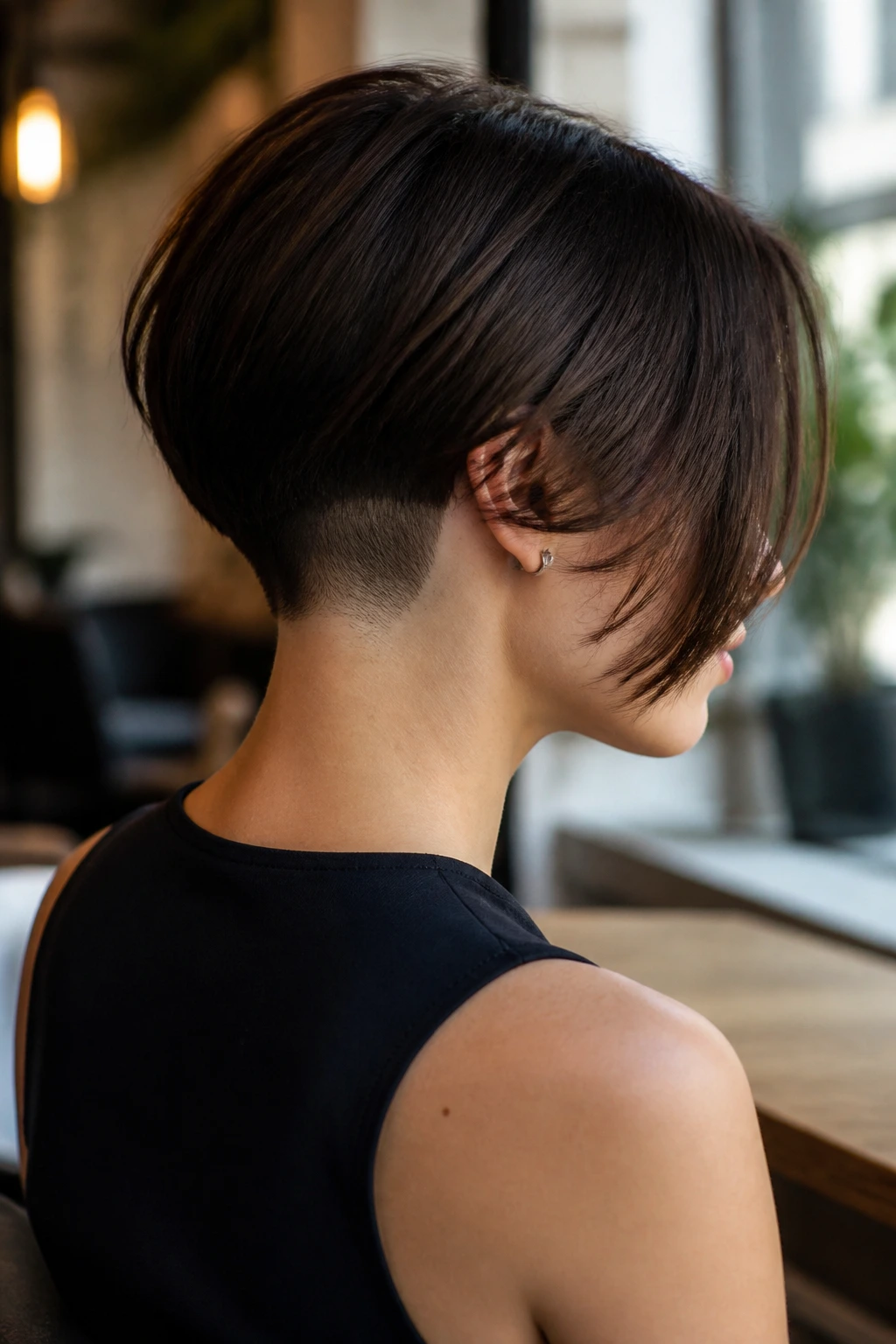
The undercut bob is a testament to the idea that the best haircuts are the ones that serve a purpose. Whether you are doing it to manage heavy density, to add a bit of personal edge, or simply to make your morning styling routine faster, this style is a masterclass in functional beauty. It is about balancing the soft with the sharp, the hidden with the revealed.
As you look through these options, remember that the “perfect” undercut is the one that makes you feel the most like yourself. Don’t feel pressured to go for a massive side-panel if you are only curious—start with a small nape notch. The power of this haircut lies in its ability to adapt to you. Embrace the maintenance, play with the textures, and enjoy the way a small, hidden change can fundamentally alter the way your hair moves and feels every single day.