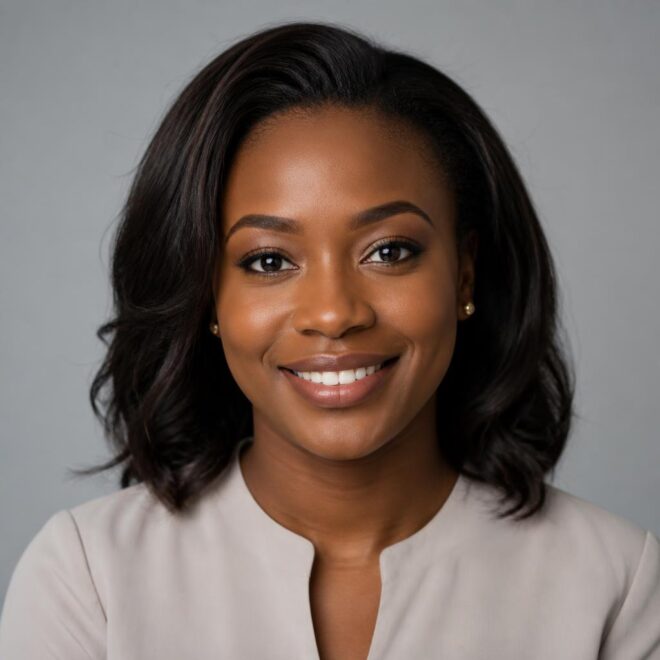


A square face is a work of architectural art. You likely have a strong, defined jawline that commands attention, a broad forehead, and cheekbones that sit perfectly level with the rest of your features. While some people shy away from short hair because they fear it will “expose” too much, a well-cut bob is actually the most flattering frame for a square face. The secret isn’t just in the length around your chin; it is in how the back view and the neckline are tapered, stacked, or layered to balance your geometry. When you walk away from the salon mirror, that back view should look as intentional and structured as your profile.
Finding the right nape treatment can soften the harsh lines of a square jaw. Whether you want a sharp, precise geometric edge or a wispy, feminine taper, the goal is to draw the eye toward your neck and collarbone rather than keeping it strictly locked on your jaw. Over the years, I have seen too many people walk out with a generic “one-length” bob that makes the back of their head look like a block. If you have a square face, your haircut needs to be dynamic. Let’s look at eighteen specific ways to treat that neckline, ensuring your hair looks incredible from every angle.
1. The Razor-Tapered Nape
A razor cut is not for the faint of heart, but it is the perfect tool for creating a soft, feathered finish at the base of the skull. By removing weight from the very bottom of the hair, your stylist creates a “whisper” effect against the back of your neck. For a square face, this is ideal because it prevents the hair from looking too heavy or boxy near the jawline.
Why This Works for Strong Jaws
When you have a strong jaw, you want your hair to look like it is floating rather than sitting heavily on your shoulders. A razor taper mimics the natural texture of your hair, making it look lived-in and effortless. It avoids the dreaded “helmet” effect that can happen with blunt, thick bobs.
Styling Tip for the Back
- Use a lightweight texturizing spray once your hair is dry.
- Run your fingers through the nape area to push the hair upward.
- This creates a slight “c-curve” shape that softens the overall silhouette of your head.
2. The Inverted Stacked Bob
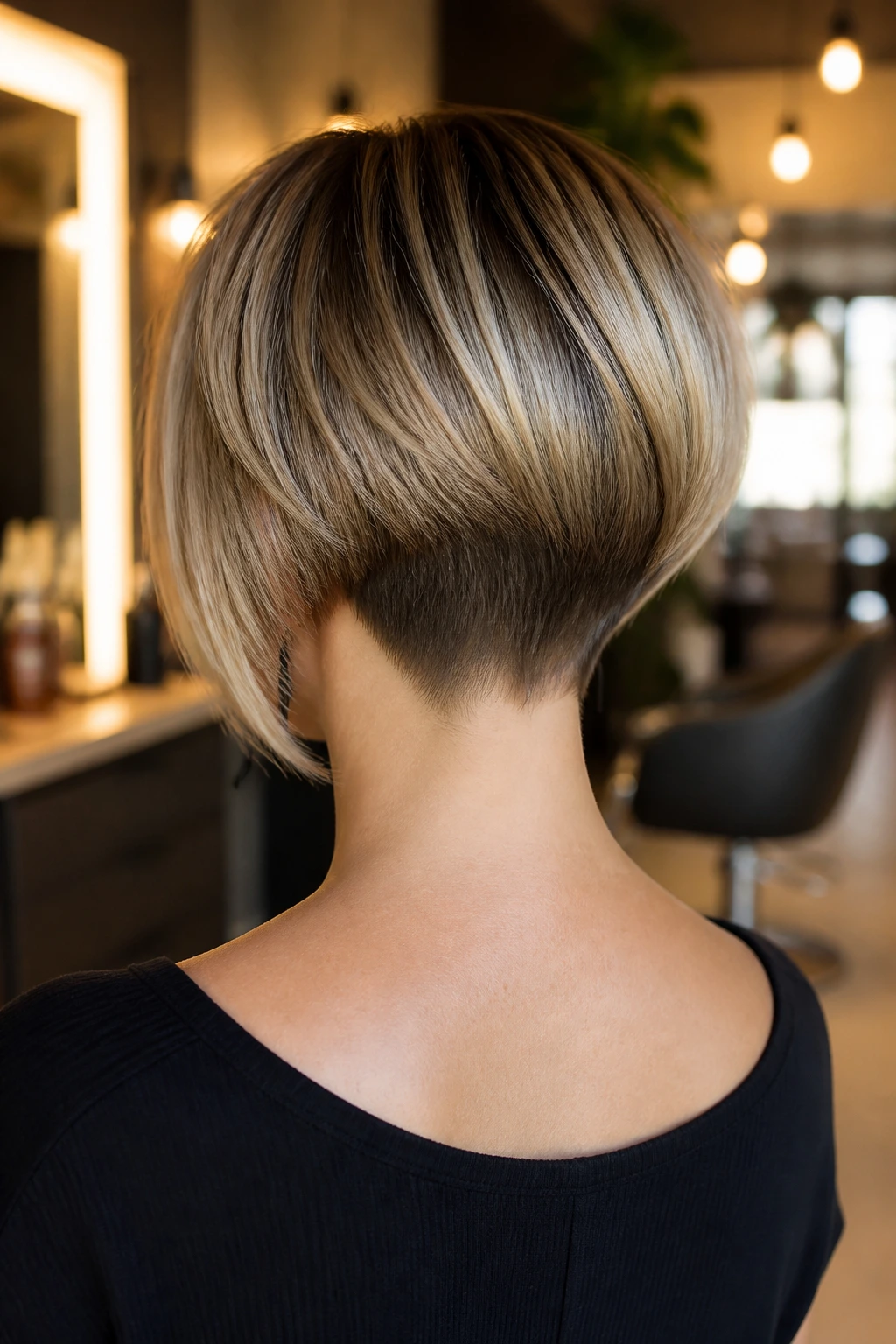
This is the classic, high-drama look that people usually associate with a “chic” bob. The hair is cut significantly shorter at the nape and graduates to longer pieces that frame the face. The back view here is all about the vertical line created by the stack, which draws the eye downward and elongates the neck.
The Anatomy of the Stack
The stack happens when your stylist cuts the hair at the nape into very short, layered increments. These layers build volume, which is essential if you have fine hair. By adding this volume high up at the crown, you effectively shift the “weight” of the haircut away from your jaw and toward the top of your head.
Maintenance Notes
- This cut grows out relatively quickly at the nape.
- Plan for a trim every five to six weeks to keep that sharp graduation.
- If the stack is too short, the maintenance becomes a chore, so discuss your comfort level with your stylist.
3. The Softly Rounded Nape
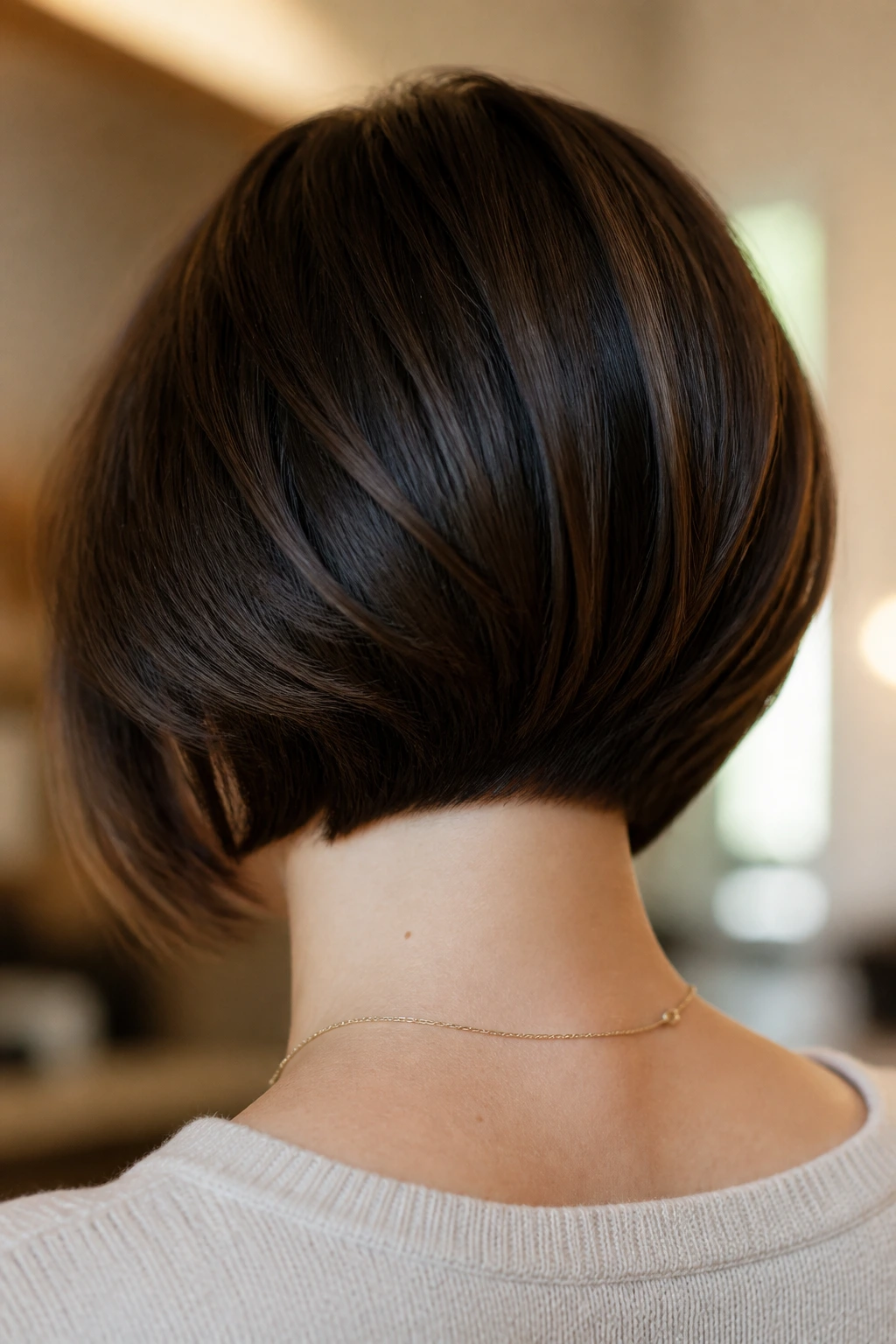
If the inverted stack feels too aggressive, a softly rounded neckline is your best alternative. Instead of a sharp V-shape or a hard line, the hair is cut to follow the natural curve of your hairline. It feels polished and professional, but it maintains a feminine edge that balances the sharpness of a square jaw.
Why You Should Choose This
Rounded shapes work beautifully to counteract the angularity of your face. While your jaw might be “boxy,” your hair shouldn’t be. This cut ensures that from the back, you look soft and approachable. It is a particularly good choice if you have a slightly wider neck, as it doesn’t emphasize width the way a horizontal blunt cut might.
Pairing It With Texture
- This cut looks best when the ends are slightly beveled under.
- Use a round brush while blow-drying to pull the hair toward your neck.
- This gives it that classic, timeless elegance that never goes out of style.
4. The Undercut Shave
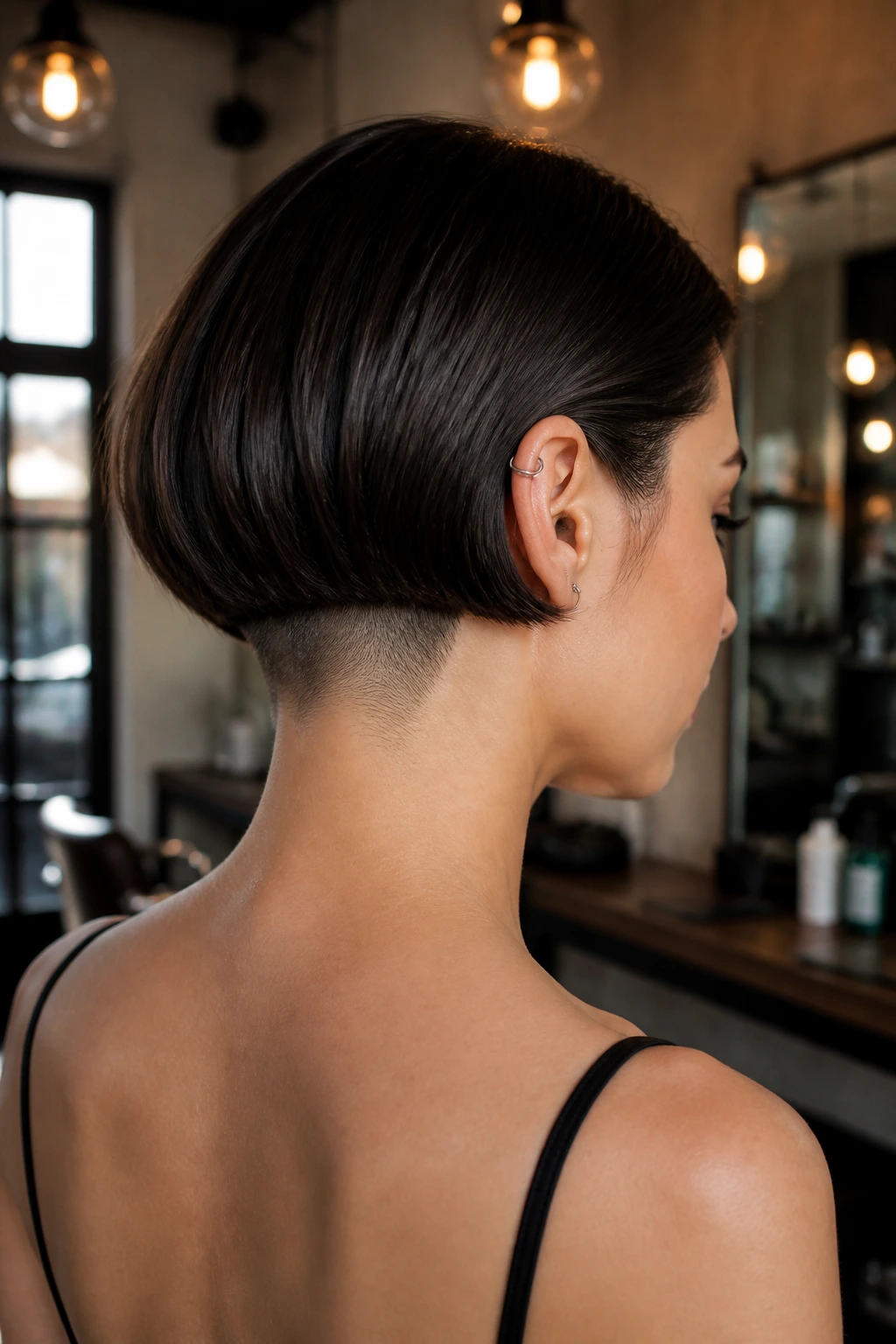
For those who want to commit to a bold, modern look, an undercut at the nape is a total game-changer. By shaving a small section at the very bottom of the hairline, you remove all the bulk that typically causes hair to “puff out” against your collar. This makes the rest of your bob lie perfectly flat and smooth.
The Visual Contrast
There is something incredibly sophisticated about a blunt, jaw-length bob that hides a short, edgy undercut underneath. When your hair is down, it looks like a standard, sleek cut. When you tuck it behind your ears or put it in a half-up style, you reveal that surprise element at the neck.
Practical Benefits
- Eliminates “frizz halo” at the nape.
- Keeps you cooler during warmer months.
- Makes the transition from neck to hair appear much more defined and intentional.
5. The V-Cut Taper
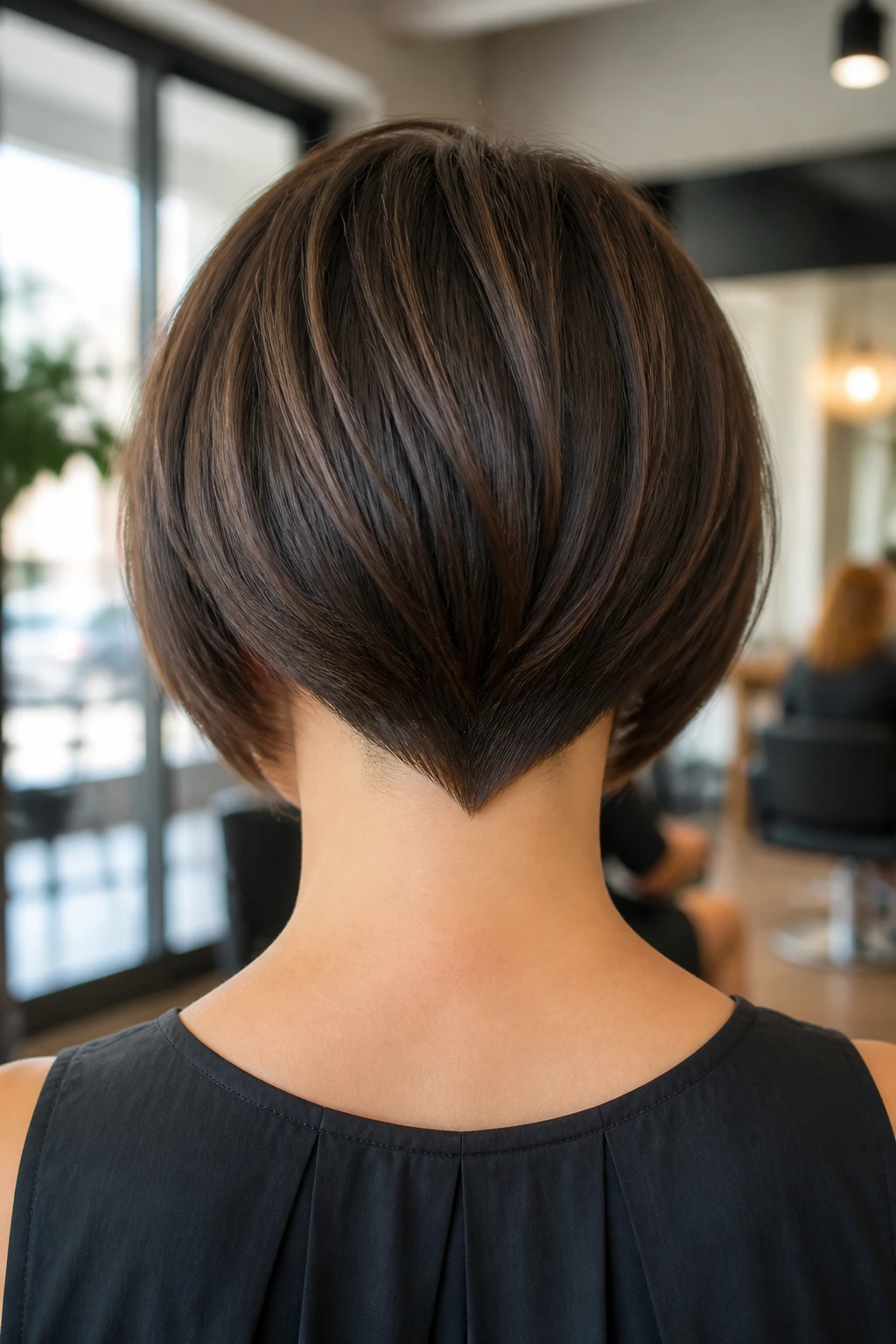
A V-cut taper is an excellent way to add visual length to your neck. In this style, the hair is shorter at the sides and gradually gets longer toward the center of the nape, forming a soft V. It is an sophisticated, sharp look that complements a square face by pulling the focus toward the center of the back view.
The Balancing Act
Because square faces are defined by width, the verticality of a V-cut is a clever trick to offset that. It doesn’t create horizontal lines that could visually “widen” your head. Instead, it provides a sense of direction and movement. It is particularly striking on straight, thick hair.
Considerations for Thickness
- If your hair is very thick, ask your stylist to “debulk” the V-shape.
- Excess hair in the center can sometimes create a “tail” effect.
- Keep the V subtle and blended rather than long and pointed.
6. The Textured Piecey Nape
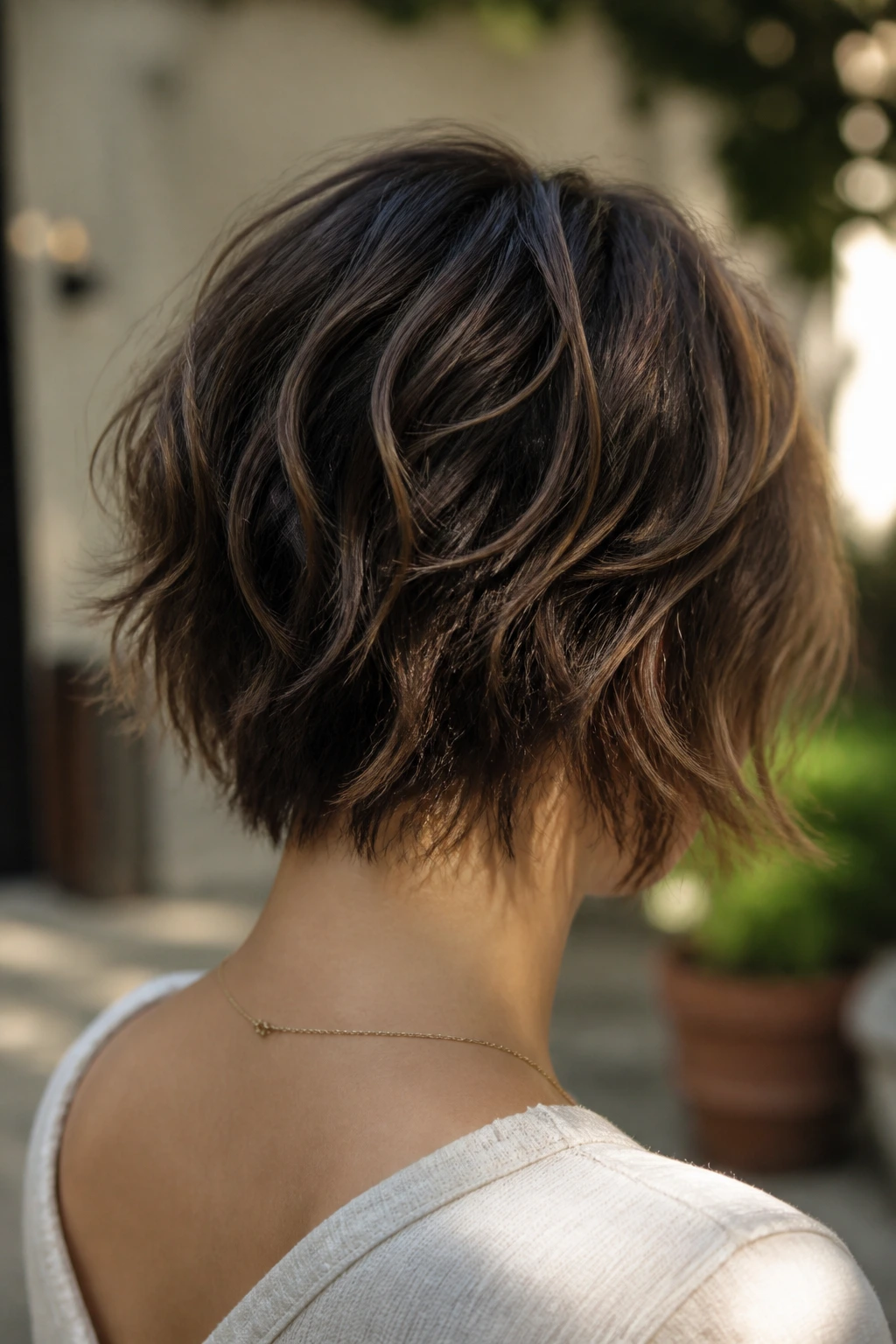
If your style is more “undone” and relaxed, ask for a piecey nape. This isn’t about geometric precision; it’s about creating small, irregular segments at the base of the neck. It feels very bohemian and works well if you have natural waves or curls.
Achieving the “Lived-In” Look
This is achieved by point-cutting the hair at the nape with shears held vertically. It creates a soft, feathered edge that dances around the neck. It avoids the harsh line of a blunt cut, which can sometimes look too severe for someone with a very strong, prominent jawline.
Daily Maintenance
- Use a small amount of sea salt spray on damp hair.
- Allow the hair to air dry to encourage those natural, piecey sections to form.
- Avoid heavy gels or pomades that might make this area look greasy or weighed down.
7. The Blunt “Swing” Bob
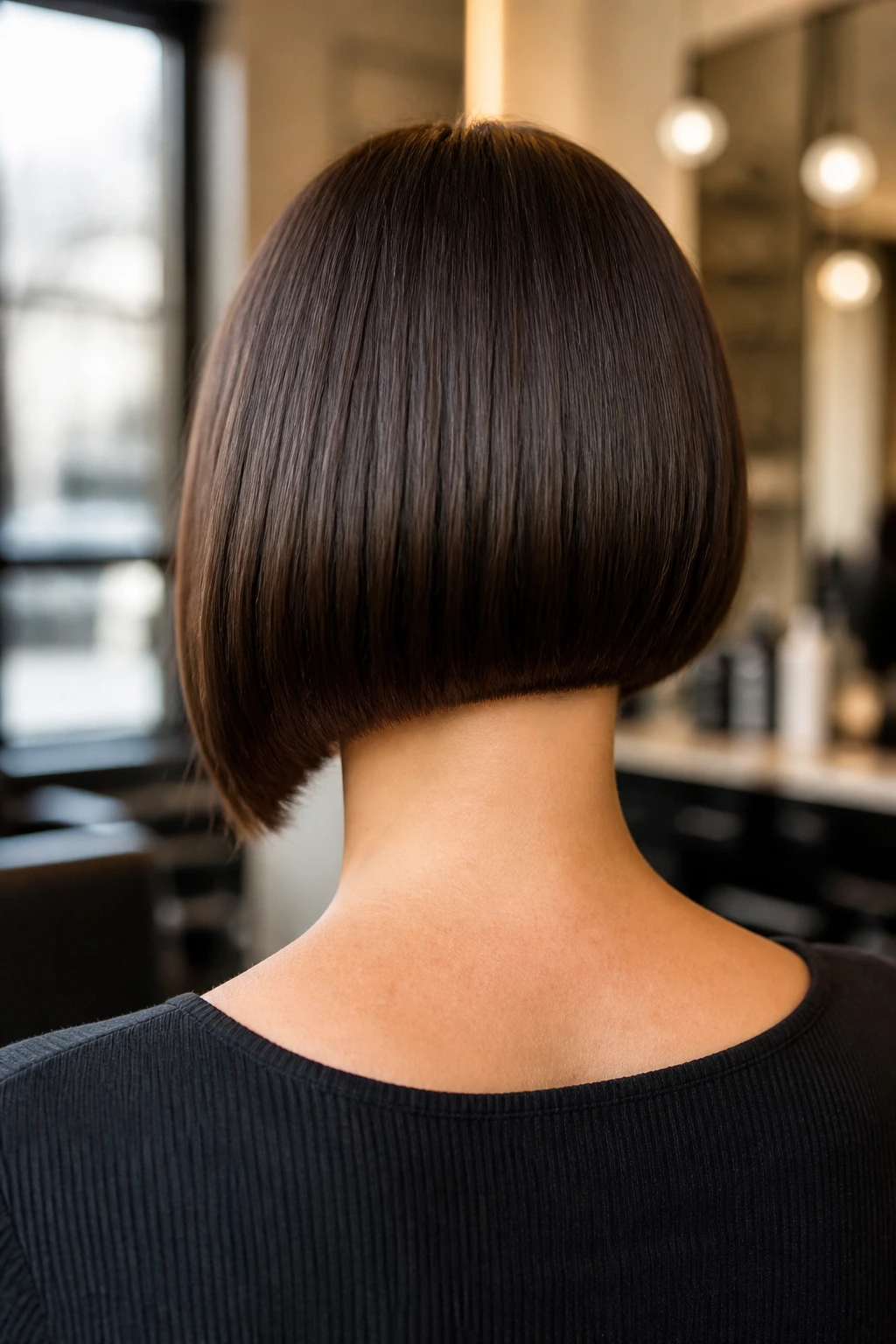
The swing bob is famous for its movement. The back is cut shorter, and the sides are cut longer, creating a dramatic swing when you turn your head. From the back, the neckline is a clean, crisp horizontal line that is perfectly balanced.
Why Sharp Lines Matter
There is an argument to be made that if you have a square face, you should embrace the sharpness. A blunt, horizontal line at the nape provides a strong, sophisticated contrast. It frames the neck beautifully, especially if you have a longer neck, and adds a sense of “expensive” finish to your look.
Styling for the Best Effect
- This style lives and dies by the quality of the blowout.
- Ensure the hair is straight enough to show off that clean, horizontal line.
- A flat iron is your best friend here to create that “swing” at the bottom.
8. The Disconnected Nape
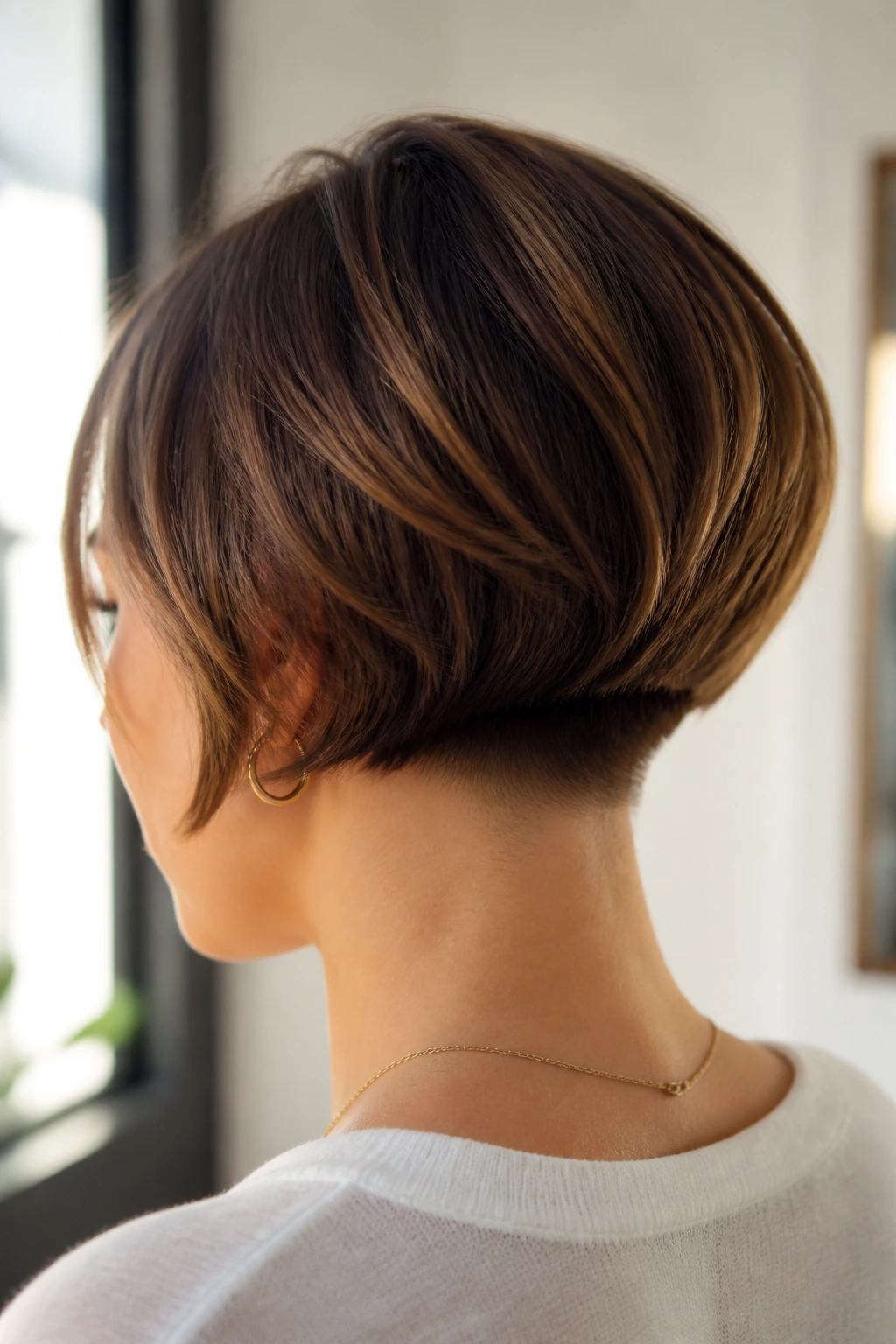
A disconnected cut means the layers at the back don’t necessarily blend into the layers at the side. It sounds chaotic, but it is actually highly architectural. For a square face, this can add an element of softness and movement that a standard bob lacks.
The Artistic Approach
This is a high-fashion look. By disconnecting the nape, you allow the top layers to fall over the bottom, creating a sense of volume that is much more interesting than a standard stack. It keeps the hair from feeling like a static object on your head.
Who Should Try This
- Someone who loves to change their style often.
- Someone who visits their stylist every month for maintenance.
- If you have fine hair, this adds massive body that doesn’t fall flat by noon.
9. The Long-Nape Graduated Bob
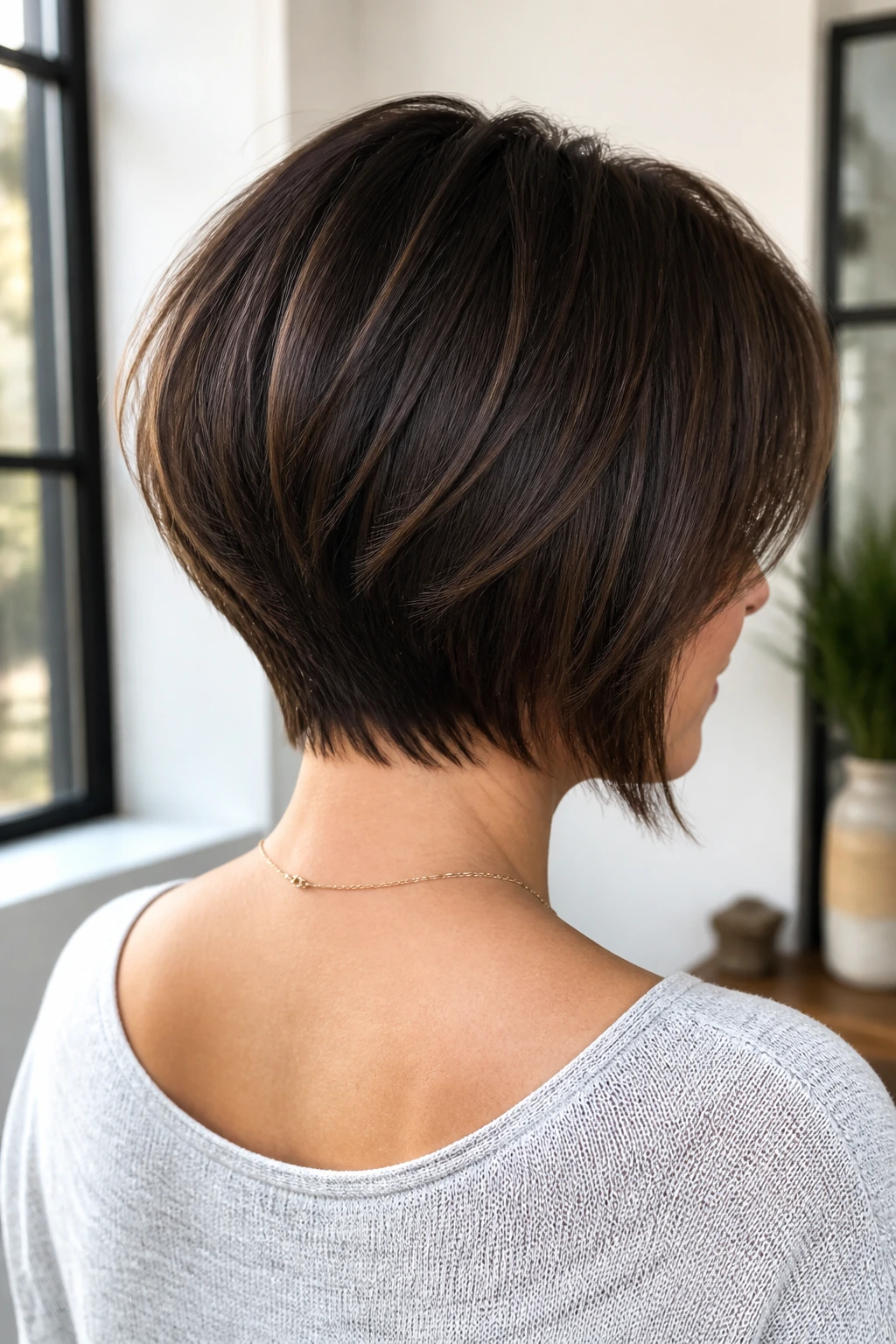
Not all bobs have to show off your entire neck. A longer, graduated bob keeps a bit of hair hitting just at the collarbone or mid-neck. The back view is a gentle slope, rather than a steep drop. It is perhaps the most “forgiving” of all the short bob styles.
Softening the Angles
A square face benefits from softness. This cut provides a long, fluid line that bridges the gap between your face and your shoulders. It is a fantastic choice if you are just starting your journey into shorter hair and aren’t ready for a super-short, buzzed-out nape.
Why It Pairs Well With Square Faces
- It keeps the weight of the hair away from your jaw but doesn’t expose the neck entirely.
- It is the most versatile option for styling — you can still pull it back if needed.
- The silhouette is elegant, professional, and very low-maintenance.
10. The Asymmetrical Nape
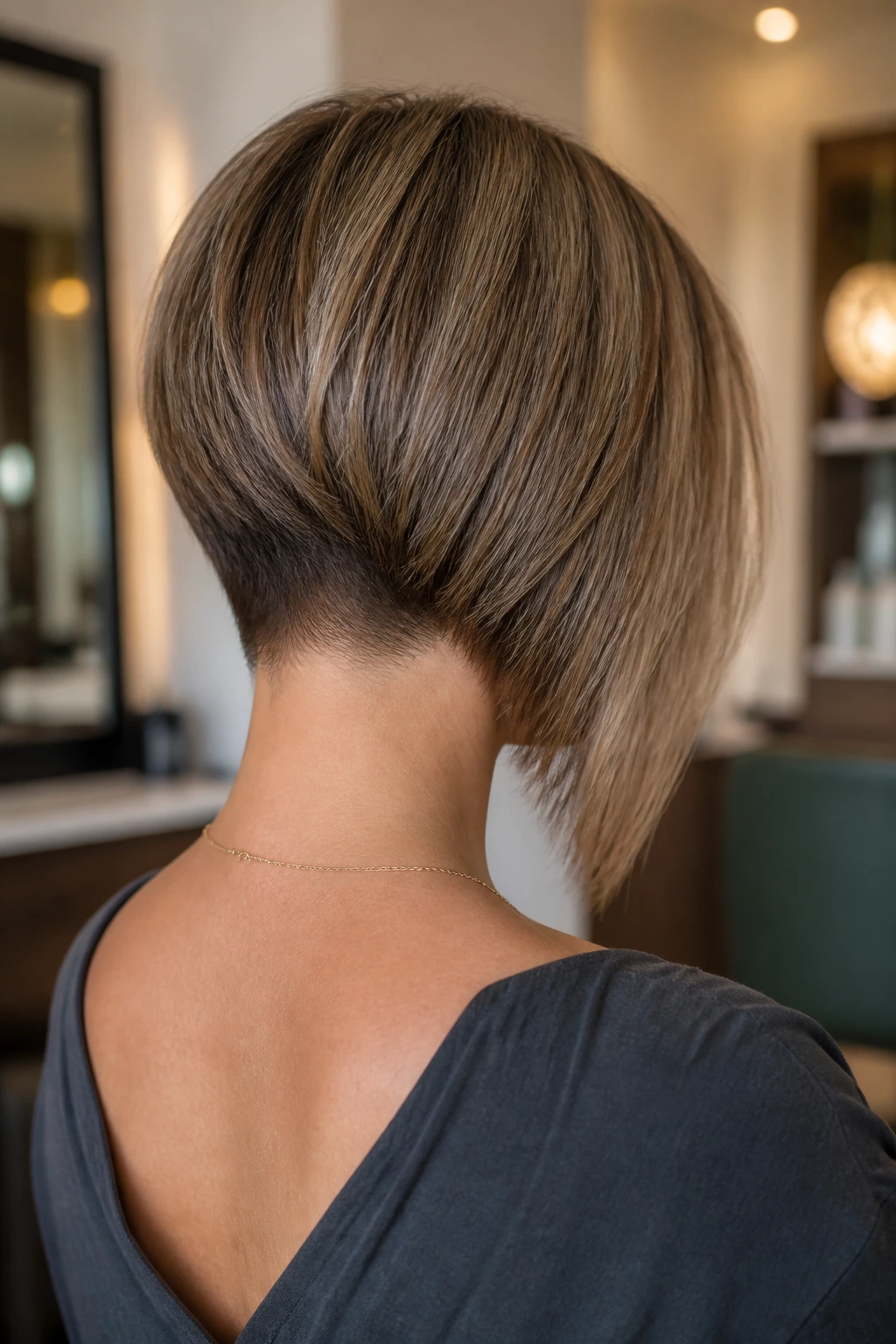
Asymmetry is a fantastic way to distract from the symmetry of a square jaw. By making one side of the nape slightly longer or angled differently than the other, you create an interesting, modern look that takes the “burden” of perfection away from your facial structure.
Creating Interest
The back view of an asymmetrical bob is a conversation starter. It looks different depending on which side you are standing on. For a square face, this shifting perspective is a brilliant way to draw attention to your personal style rather than just your face shape.
Tips for Success
- Ensure your stylist understands exactly how much asymmetry you want.
- Too much can look like a mistake; just enough looks like a deliberate design choice.
- Start subtle and work your way into more dramatic angles as you get more comfortable.
11. The Layered Shag-Bob Hybrid
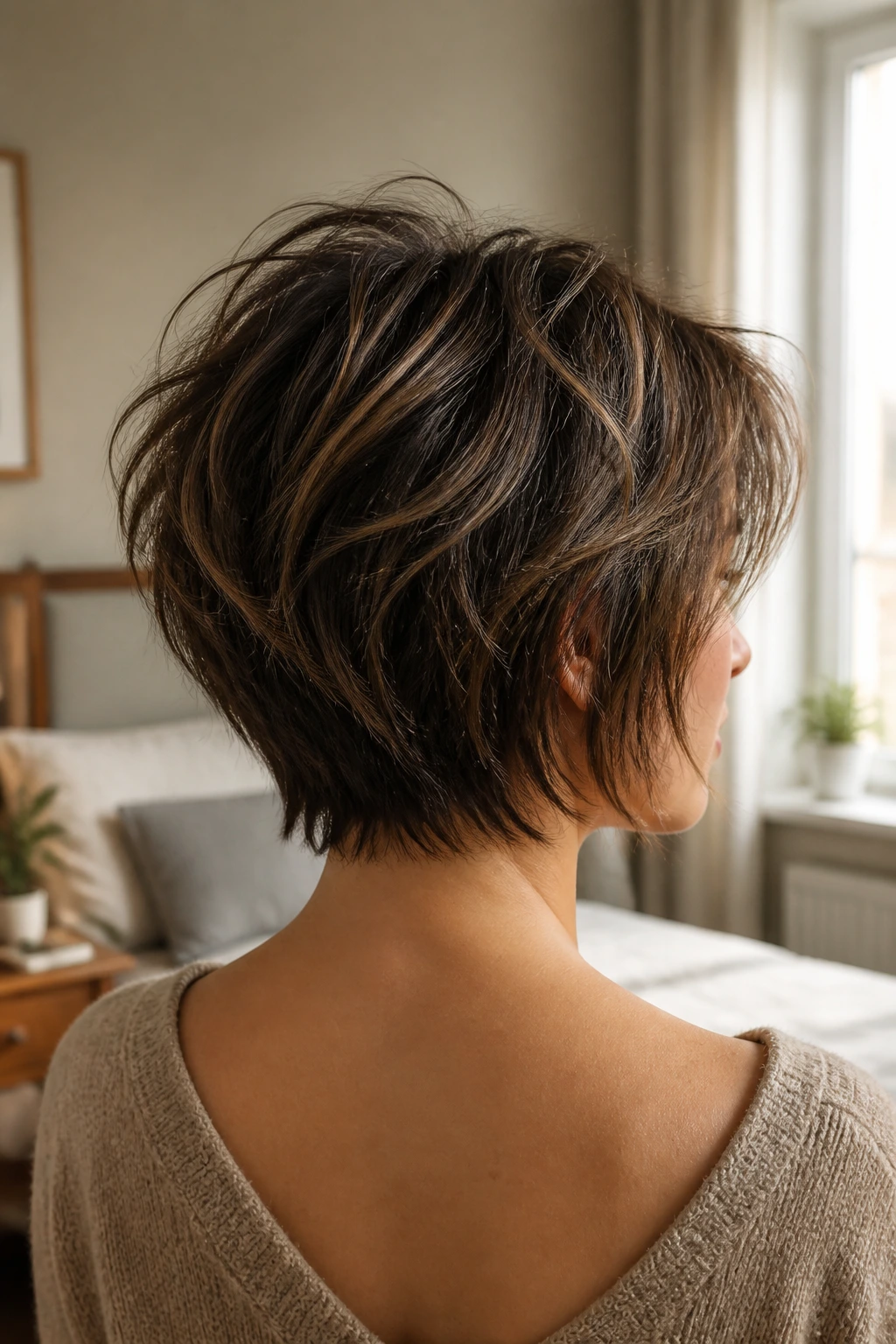
The shag is back, and when you combine it with a bob, you get a textured, high-volume cut that is incredibly flattering for a square face. The nape is filled with layers of different lengths, creating a wild, messy, but intentional look.
Adding Volume at the Back
Because the shag uses layers throughout, the back of your head will have a lot of volume. This is ideal if you have a square jaw, as it adds width to the top of your head, which visually balances the width of your jawline.
Why This Feels Fresh
- It doesn’t require a perfect, poker-straight finish.
- It looks great with a bit of bedhead.
- It’s the ultimate “cool girl” cut that feels very current without being trendy in a bad way.
12. The “Hidden” Layer Nape
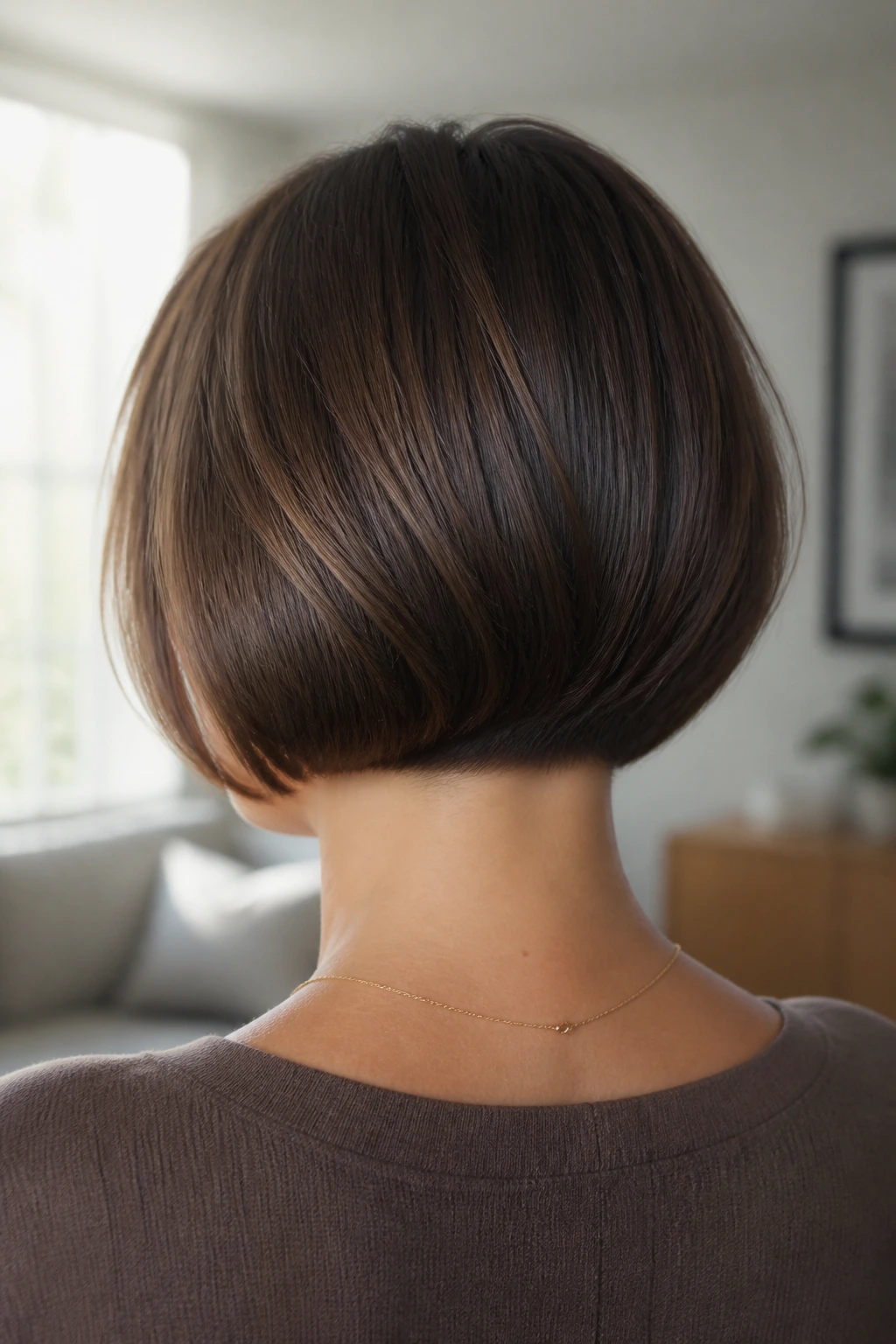
Ask your stylist for “invisible layers” at the nape. This means they cut the interior layers of the hair much shorter than the exterior. The result is a natural curve at the bottom of your bob that turns under perfectly, even if your hair is naturally straight or coarse.
The Physics of the Haircut
Most hair wants to flip out at the shoulders. By cutting the underneath shorter, you encourage the hair to move inward, toward your neck. It’s a subtle architectural detail that makes your haircut look high-end without anyone knowing why.
Benefits of This Technique
- Saves you time with the round brush.
- Maintains the look of a blunt bob while providing the comfort of a layered one.
- Perfect for those who want a “smooth” finish.
13. The Wide-Tapered Neckline
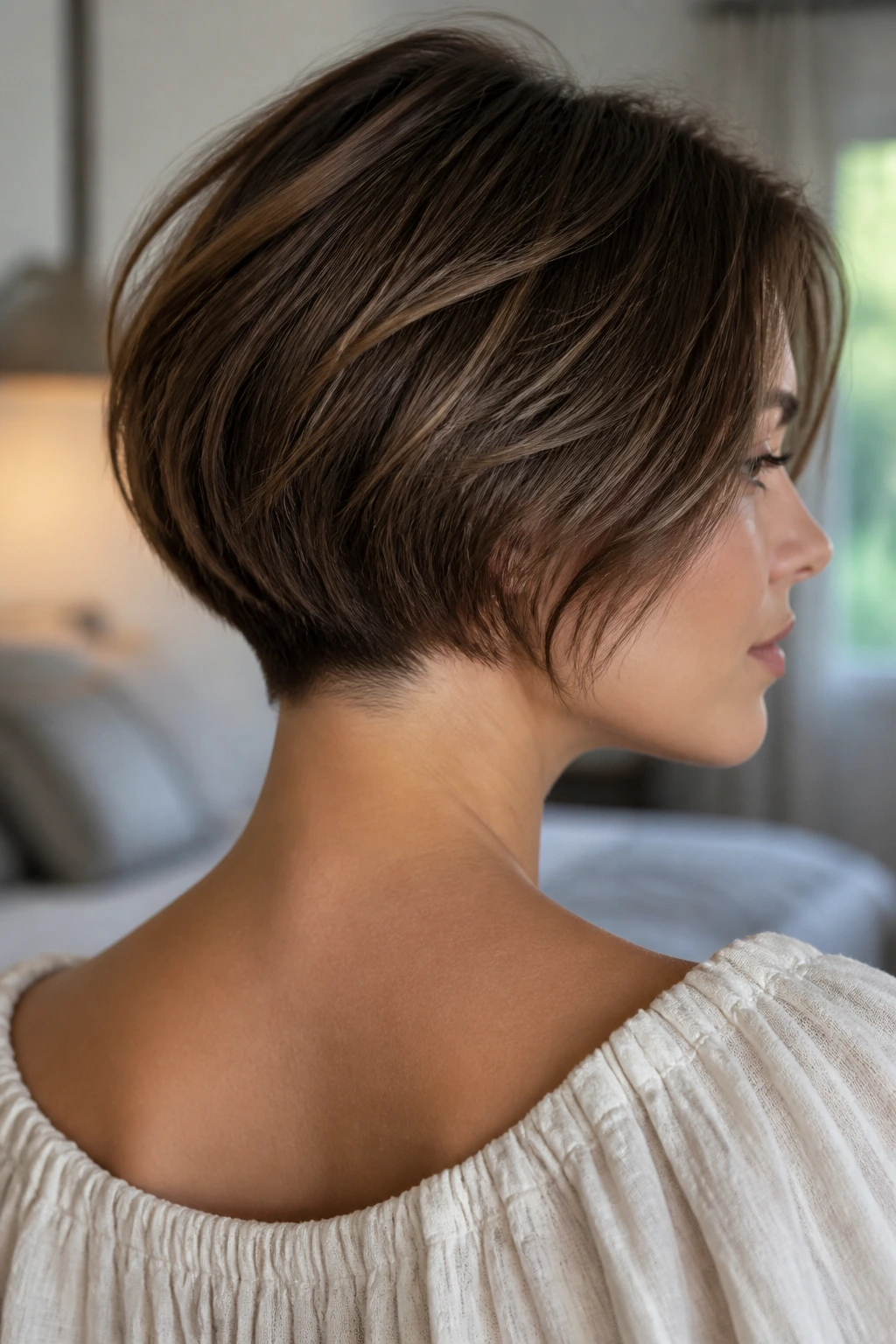
Instead of a narrow, pointed taper, try a wider taper that encompasses a larger section of the lower hairline. This creates a soft, fan-like effect that spreads across the neck. It is a very sophisticated look that avoids the “triangle” shape that many bobs suffer from.
Balancing the Jaw
A square jaw can sometimes feel heavy. A wide taper at the nape keeps the hair feeling light and airy. It is the opposite of a heavy, boxy cut. It helps your hair look like a natural extension of your neck.
Styling Advice
- Blow-dry with a flat paddle brush to keep the hair wide and smooth.
- Avoid using curling irons near the ends, as this can make the taper look too busy.
- Keep the edges clean with regular trims.
14. The Pixie-Bob (Nape-Focus)
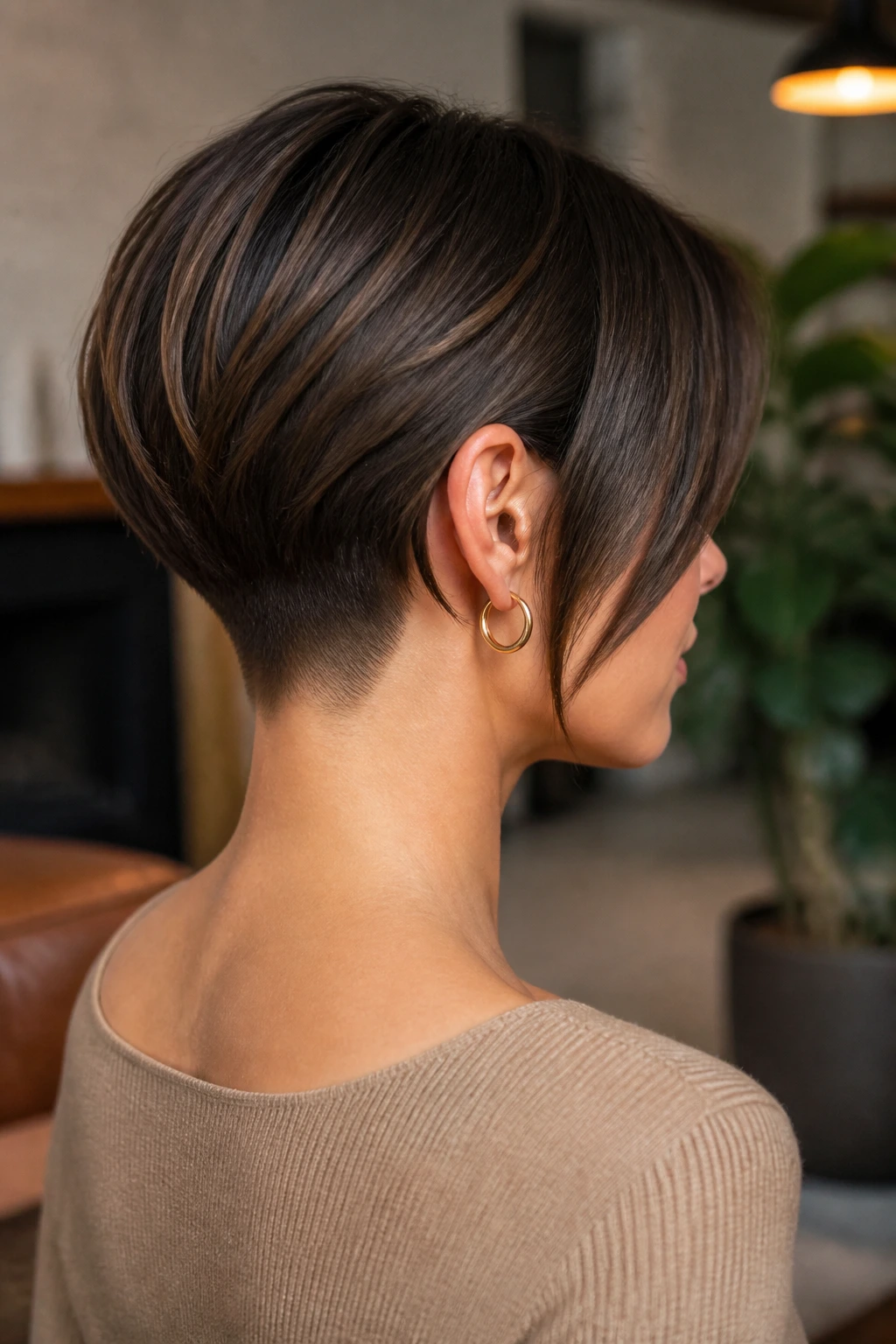
If you want to go very short, the pixie-bob is the bridge between a pixie cut and a standard bob. The nape is cut very close, almost like a men’s clipper cut, but the front retains the longer, wispy layers of a bob. The back view is extremely tidy and sharp.
The Power of Contrast
The contrast between a super-short, clean nape and long, soft pieces framing your face is the definition of a high-fashion look. For a square face, this helps show off the length of your neck, which can counteract the “solidness” of your jaw.
Maintenance Reality
- This needs to be cut every four weeks.
- You will need to keep the edges very clean.
- It is a commitment, but the payoff is a incredibly sleek and polished silhouette.
15. The Deep-Point Cut Nape
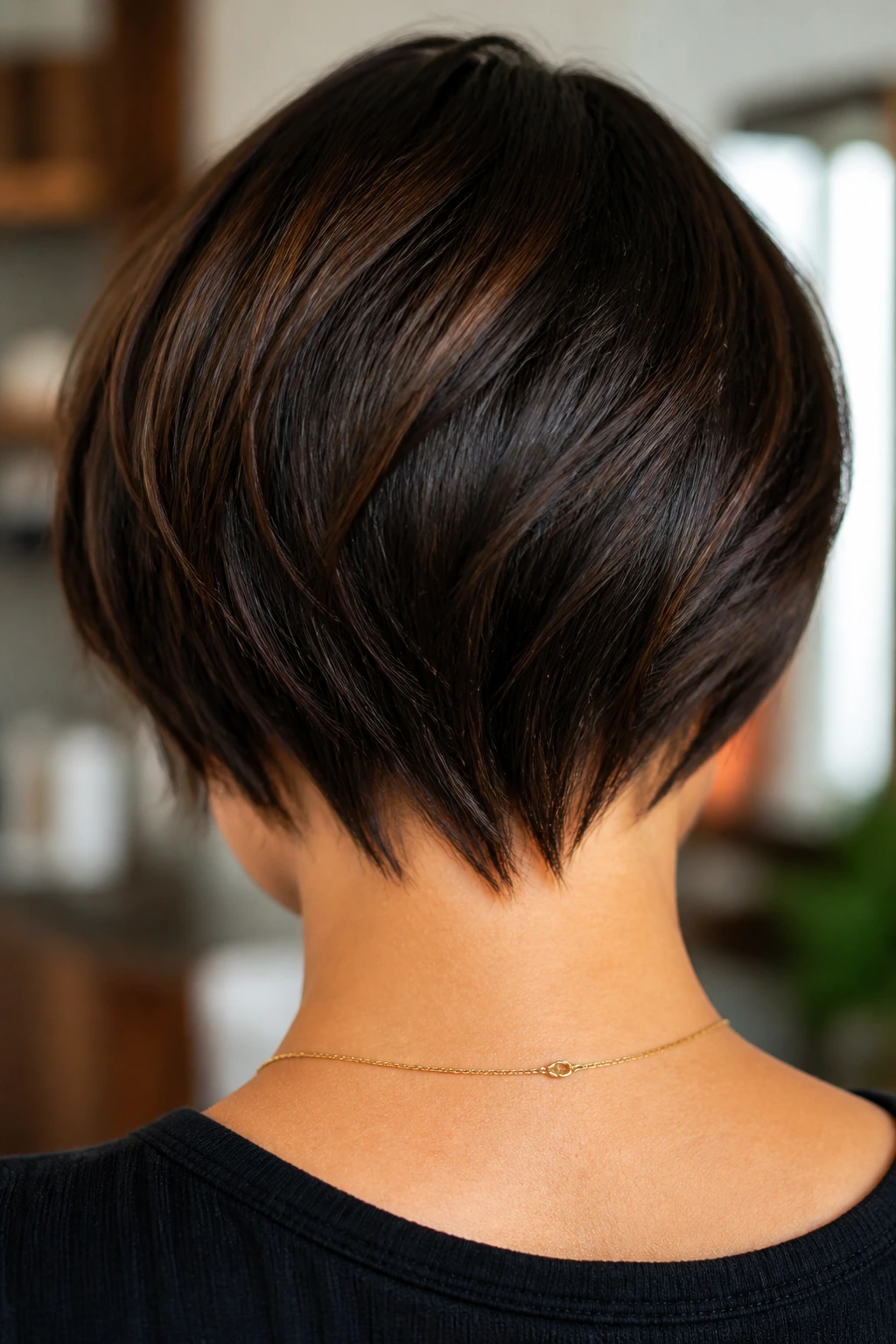
Point cutting involves cutting into the hair with your shears held at an angle. Doing this at the nape creates a soft, textured finish that looks like it has been “carved.” It is much softer than a blunt cut and adds a sense of movement to the back of the haircut.
Why Texture Matters
When you have a square face, the goal is often to soften lines. A blunt, hard edge at the nape can emphasize your jawline by creating a continuous horizontal line. A point-cut edge breaks up that line, making the haircut appear softer and more integrated with your neck.
How to Request This
- Ask your stylist to “soften the edges” with deep point cutting.
- Mention you want to avoid a “shelf” at the back of your neck.
- This works on almost all hair types, from fine to very thick.
16. The Rounded Graduated Nape
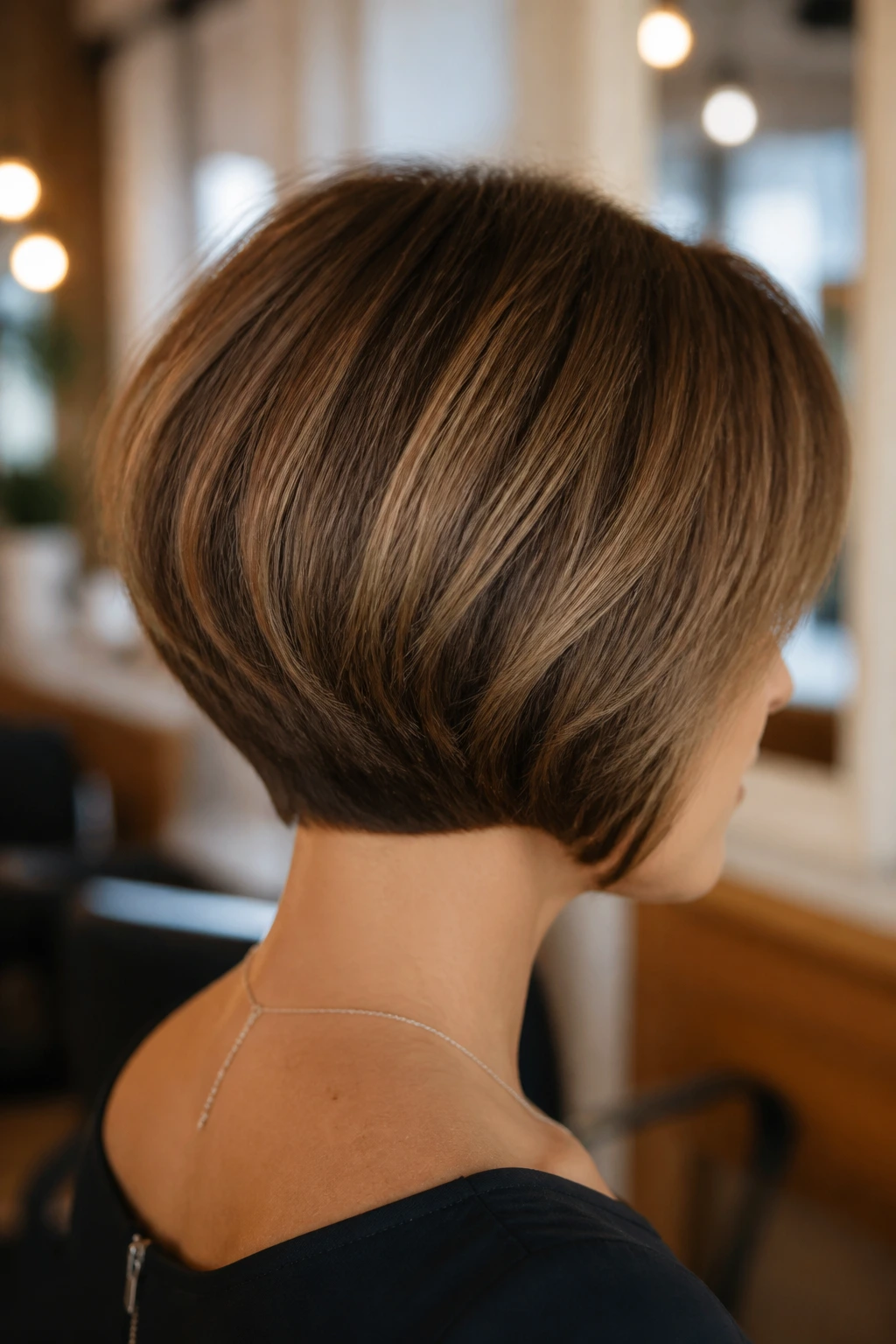
This is a mix of a stack and a round cut. The hair at the nape is graduated (shorter to longer), but the perimeter is rounded. It is the most “friendly” looking cut. If you want a style that looks great on camera and in person, this is the one.
The All-Angle Appeal
The rounded graduation creates a very beautiful “shell” shape at the back of the head. It provides volume, maintains the integrity of the bob, and frames the neck without being too dramatic. It is the gold standard for a classic, sophisticated woman with a square face.
Styling for Volume
- Apply a mousse to the nape area before drying.
- Use a small round brush to give the roots a lift.
- The goal is a seamless blend from the nape to the crown.
17. The Sleek Tapered “V”
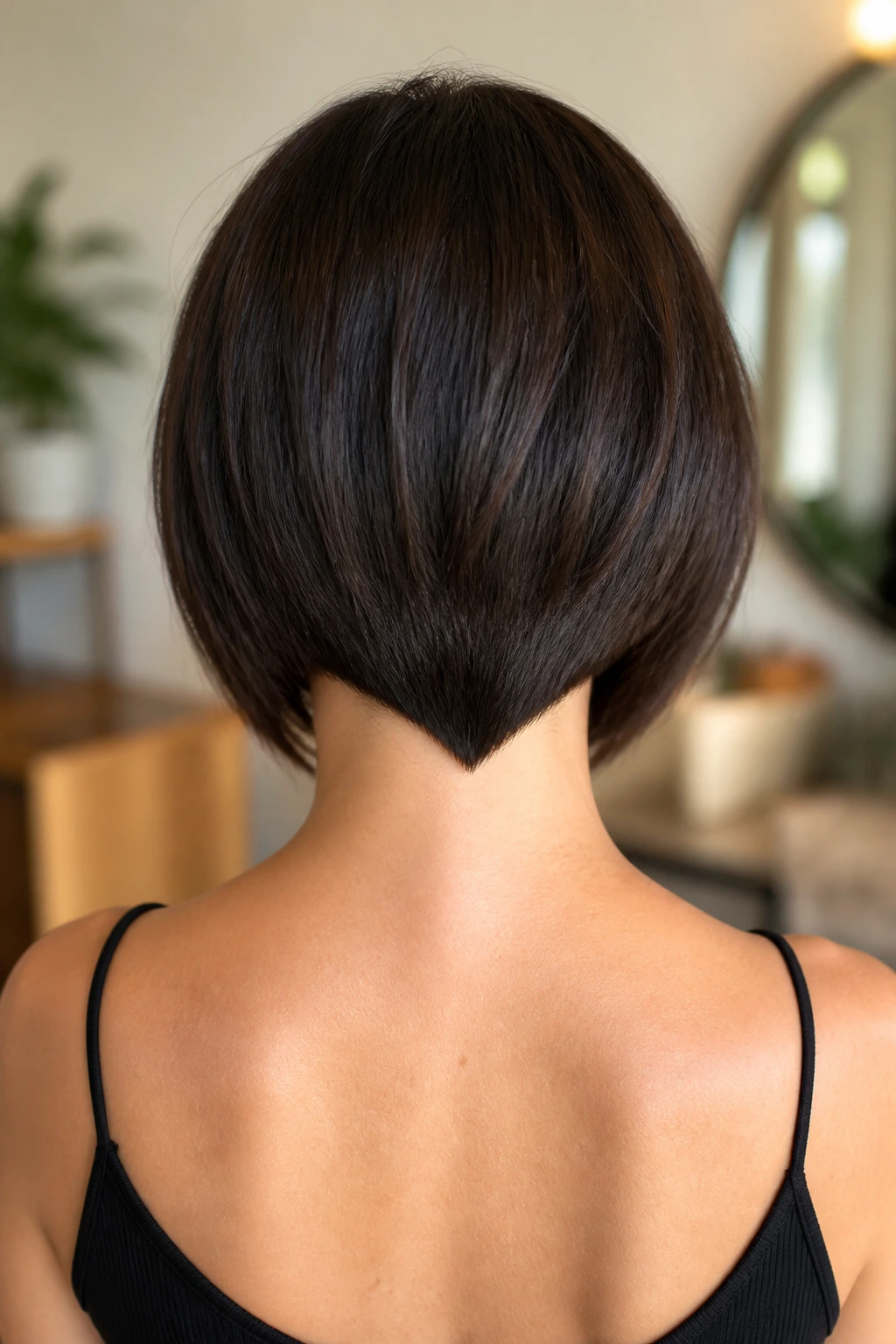
The tapered V is a specific look where the hair is cut shorter at the sides and tapers into a soft, rounded V at the center. It’s not as aggressive as a true undercut V-cut, but it has the same clean, directional lines.
Modernizing the Bob
This is a very contemporary way to wear a bob. It feels updated and intentional. If you feel like your current bob looks a little “dated,” a tapered V can instantly bring it into the current era of hair design.
Matching the V
- Make sure the V isn’t too low on the neck.
- It should sit right at the hairline.
- Keep the graduation subtle to avoid a harsh look.
18. The Micro-Layered Nape
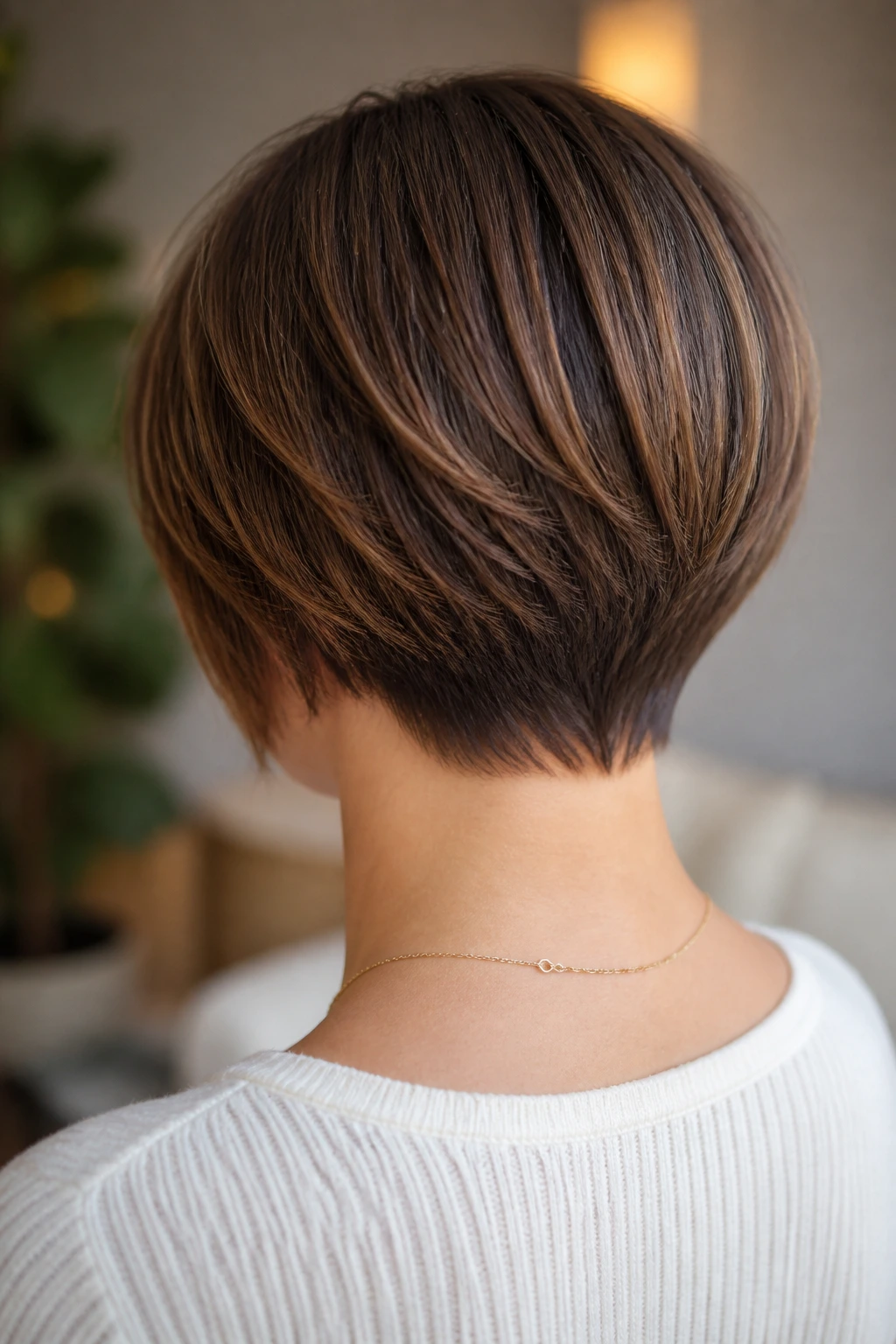
Micro-layering at the nape involves tiny, precise layers at the very bottom edge. It gives the hair a bit of “spring” and prevents it from curling outward. It’s perfect for someone with a square face who wants to maintain a blunt bob look but needs a bit of control at the hairline.
The “Stay-Put” Effect
The biggest struggle with a short bob is the hair hitting the collar and flipping out. Micro-layering at the nape keeps the hair weighted inward, meaning you spend less time fighting your haircut. It creates a smooth, continuous line from the back of the neck to the ends.
Final Styling Tip
- Run a bit of smoothing cream through the nape section.
- This locks in the micro-layers and gives you a very “expensive”, polished finish.
- It’s the small, technical details like this that make a haircut truly worth the price.
Final Thoughts
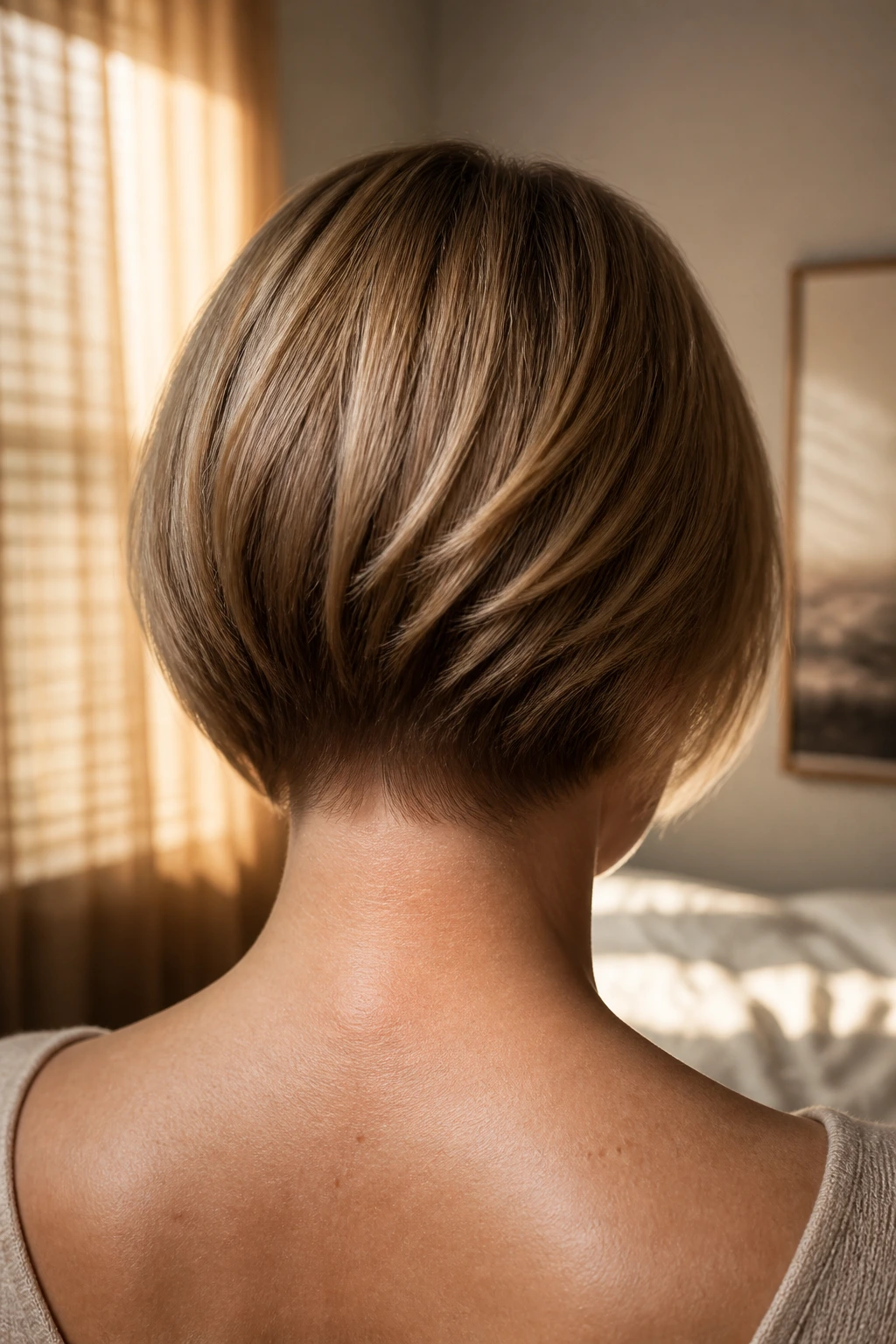
A square face is defined by its structure, and your haircut should honor that strength while adding the necessary balance to make your features shine. Whether you choose the drama of an inverted stack, the edge of an undercut, or the classic beauty of a rounded graduation, remember that the nape is the secret to a great bob.
Never settle for a generic cut that stops abruptly at the neck. Take these ideas to your next appointment and discuss how they can be adapted to your hair’s specific texture and growth pattern. A well-considered neckline is the difference between a haircut that just “happens” to you and a style you wear with absolute confidence. Your hair is an accessory that should frame your face with intent, so make sure the view from the back is just as beautiful as the view from the front.