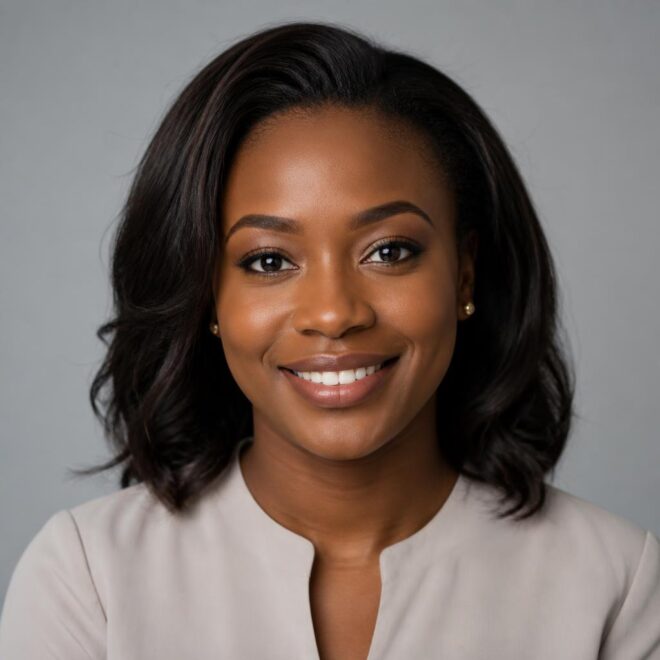


The short angled bob is arguably one of the most transformative silhouettes in the world of hair styling. When you marry that architectural precision with the soft, face-framing nature of curtain bangs, you get a look that manages to feel simultaneously structured and undone. It is the kind of haircut that demands attention without needing an hour of styling time every single morning.
Medium hair is often considered the “Goldilocks” length because it offers enough volume to play with but lacks the overwhelming weight of waist-length locks. By cutting into an angled bob, you are effectively removing bulk from the ends, which naturally encourages movement. Adding curtain bangs creates a deliberate focal point that softens your features, breaking up the severity of the angle.
If you have spent months or years fighting with heavy, uniform layers, this transition will feel like a literal weight has been lifted. The secret isn’t just in the length; it is in how the hair is carved to sit against your collarbone or jawline. Let’s break down exactly why this specific combination works for so many textures and how to make it your own.
1. The Classic A-Line Angled Bob
The A-line is the foundation of the angled bob family. It features a shorter back that gradually gets longer toward the front, creating a clean, crisp line that draws the eye downward toward the collarbone. It is a sharp look that conveys confidence and intentionality.
When paired with curtain bangs, the A-line loses its clinical edge. The bangs bridge the gap between the short back and the longer front pieces, creating a cohesive frame. This cut is particularly flattering if you have a rounder face, as the sharp angle of the bob creates vertical lines that visually elongate your profile.
Styling for the A-Line
- Use a round brush: When blow-drying, direct the hair inward at the ends to emphasize the curvature of the cut.
- Texture spray is key: Since this cut is so geometric, a little grit at the roots prevents it from looking too flat or “helmet-like.”
- Flat iron finish: If you prefer the super-sleek look, a quick pass with a straightener on the front pieces will highlight the precision of the angle.
2. Textured Wavy Angled Bob
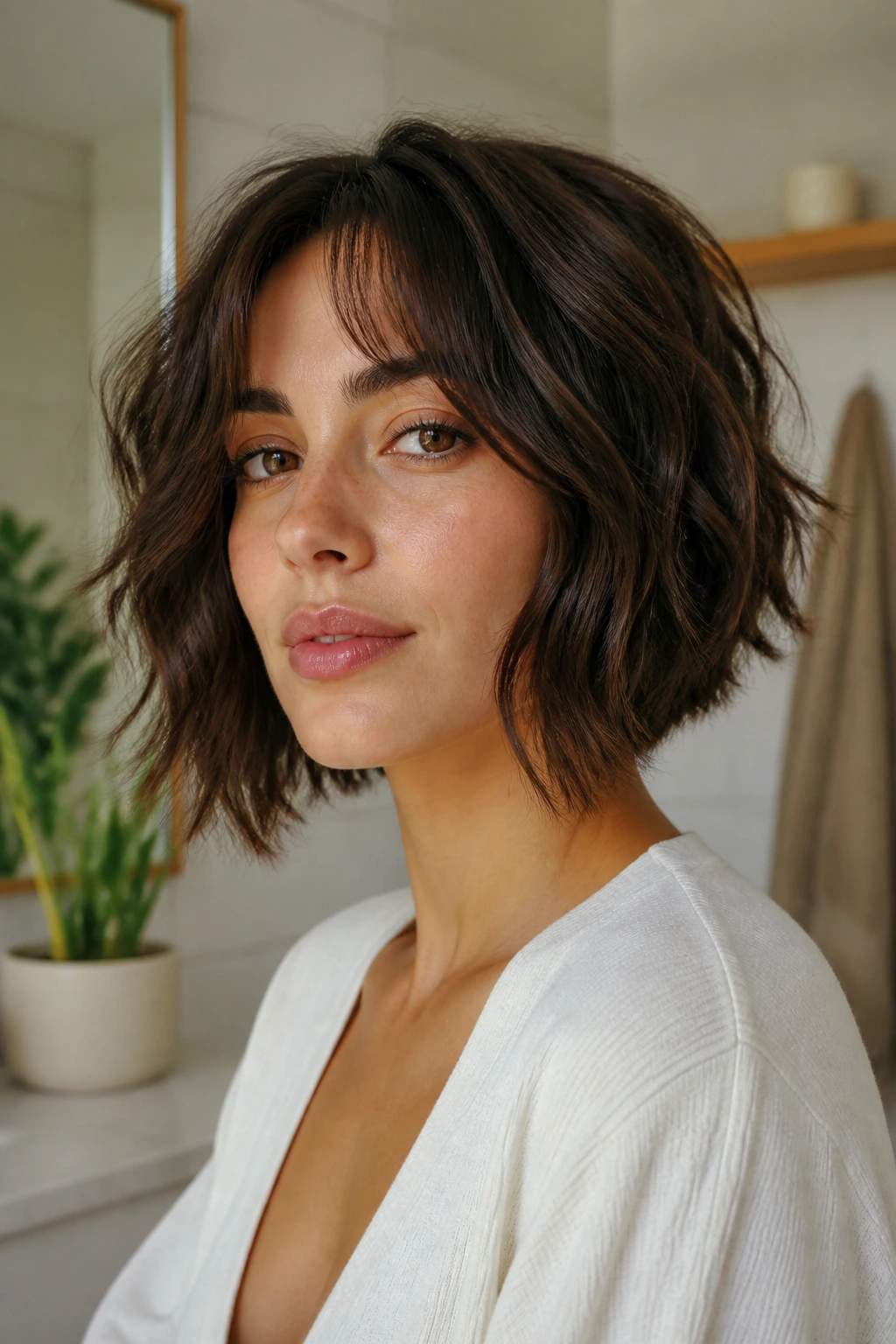
If your hair has a natural bend or a subtle wave, do not try to fight it into submission with a flat iron. The textured angled bob is designed to embrace those imperfections. By incorporating hidden layers through the mid-lengths, the hair naturally clumps together in soft, lived-in waves.
Curtain bangs on a wavy bob serve to tie the whole “undone” look together. You don’t want your bangs to be too perfectly coiled; instead, let them sweep out toward your temples, blending into the rest of the layers. This style is incredibly forgiving, making it a great entry point if you are new to shorter hair.
The Maintenance Factor
- Embrace the air-dry: Use a sea salt spray or a light cream on damp hair, scrunch it gently, and leave it alone.
- The bang trim: Keep your curtain bangs slightly longer than the standard forehead-skimming length so they can be tucked behind your ears on days you want a cleaner look.
3. The Blunt-Cut Angled Bob
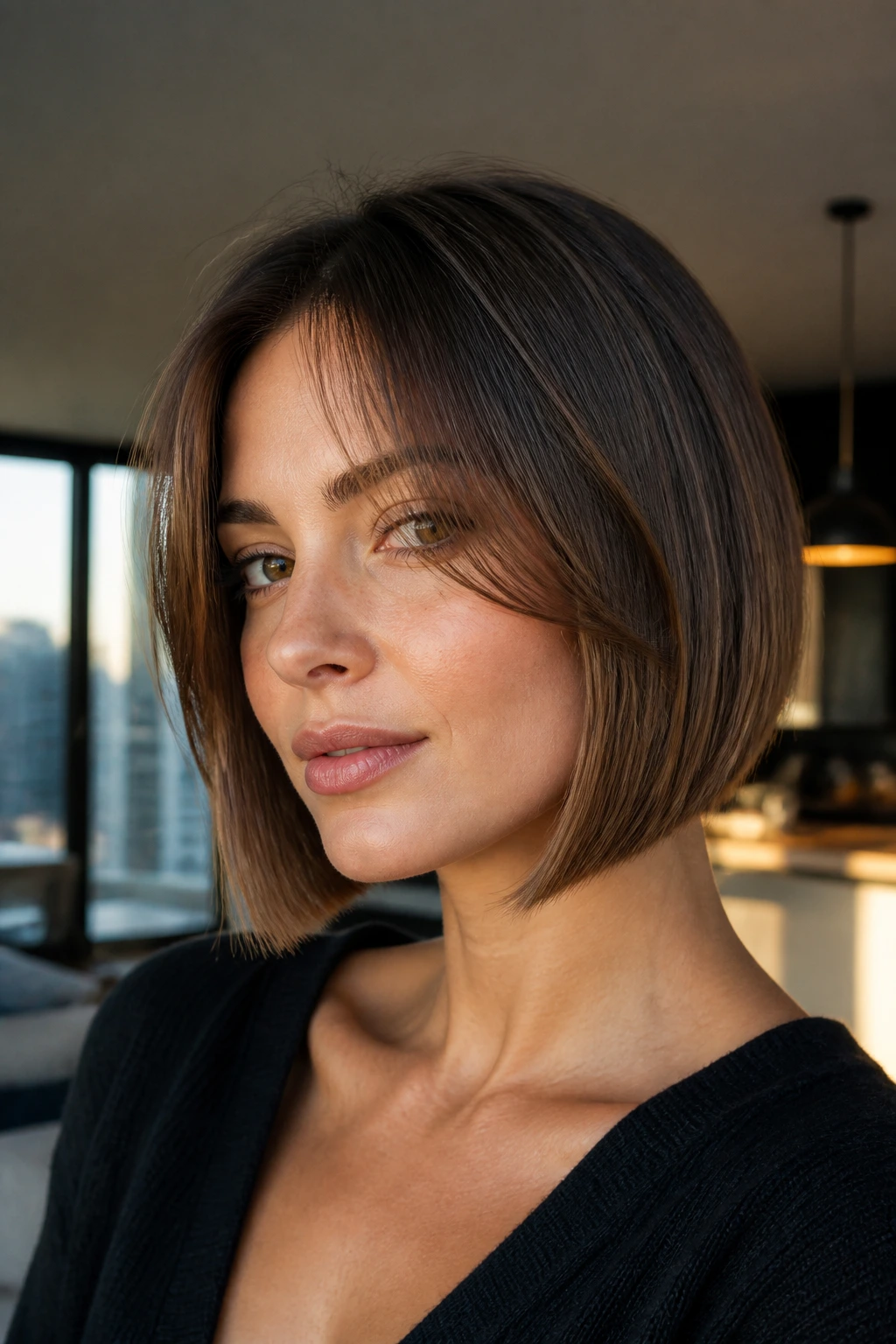
A blunt-cut bob is all about density. The ends are cut straight across, which makes your hair appear significantly thicker than it actually is. This works wonders for fine-to-medium hair types that struggle with volume. The angle is usually more subtle here, just a gentle slope rather than a dramatic, sharp drop.
The blunt edge provides a heavy, healthy look that feels very intentional. Curtain bangs are the perfect companion for this blunt base because they provide a soft, feathered contrast to the heavy bottom. It is a balancing act of textures—the weight of the bob against the lightness of the fringe.
Why This Style Succeeds
- Minimal breakage: Because the ends are cut cleanly rather than point-cut or razor-cut, they tend to hold their shape longer between trims.
- Versatility: You can wear this style pin-straight for a editorial, high-fashion vibe or add some loose bends with a curling iron for a more relaxed weekend feel.
4. Inverted Angled Bob with Long Curtain Bangs
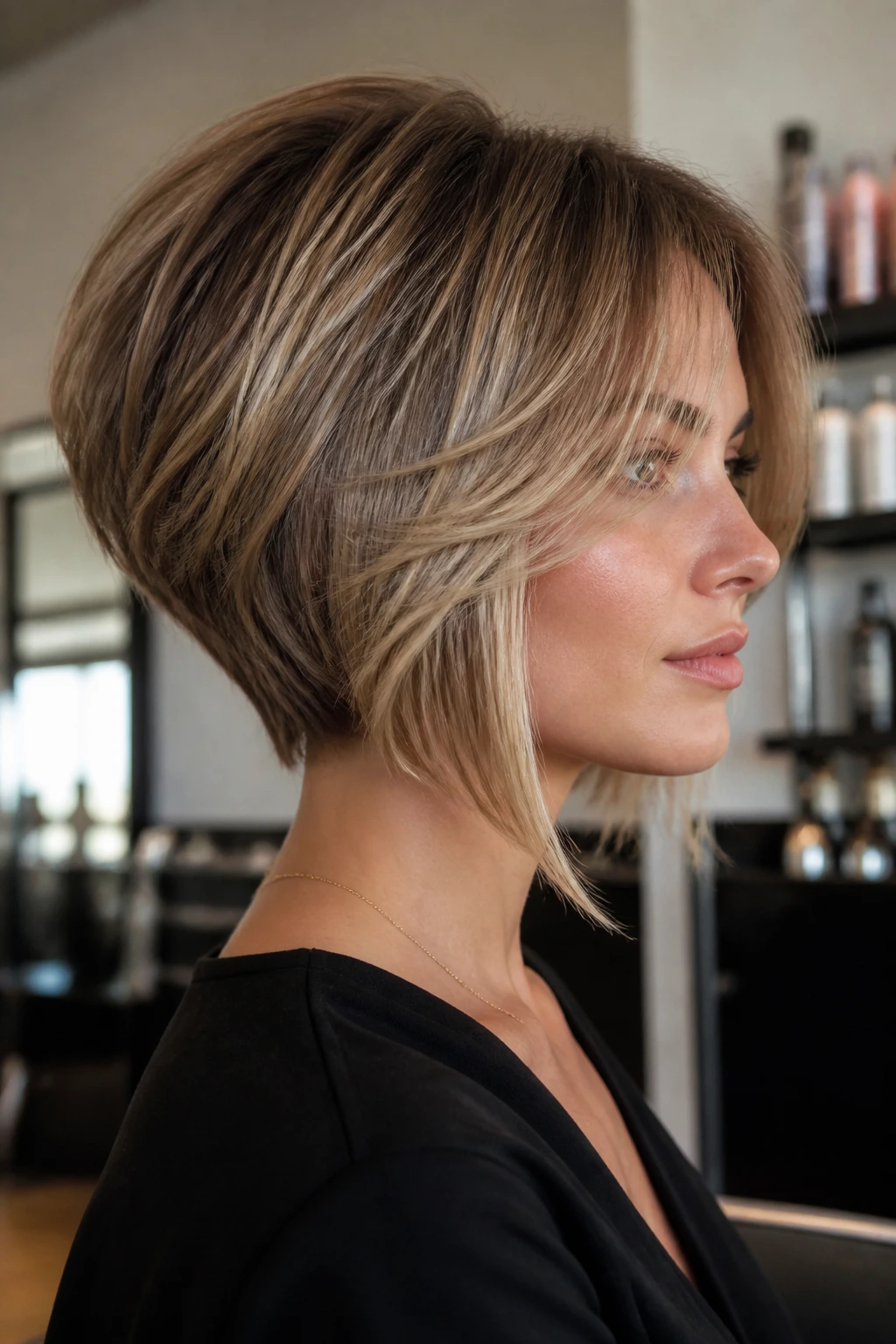
The inverted bob—often called a “stacked bob”—features extreme graduation in the back. You get a lot of volume at the nape, which then slants aggressively toward the front. It is a bold, high-drama choice that screams personality.
To keep the face from looking overwhelmed by such a dramatic angle, long, sweeping curtain bangs are essential. These bangs should hit around the cheekbone, creating a seamless flow from the fringe into the longer front pieces of the bob. This is a sophisticated cut that requires regular salon visits to maintain the shape of the stack.
Tips for the Nape
- The “stack”: Ask your stylist to use shorter, internal layers at the back to build natural volume.
- Daily maintenance: This look requires a quick blow-dry in the morning to ensure the back stays lifted and doesn’t fall flat against the neck.
5. Choppy Layered Angled Bob
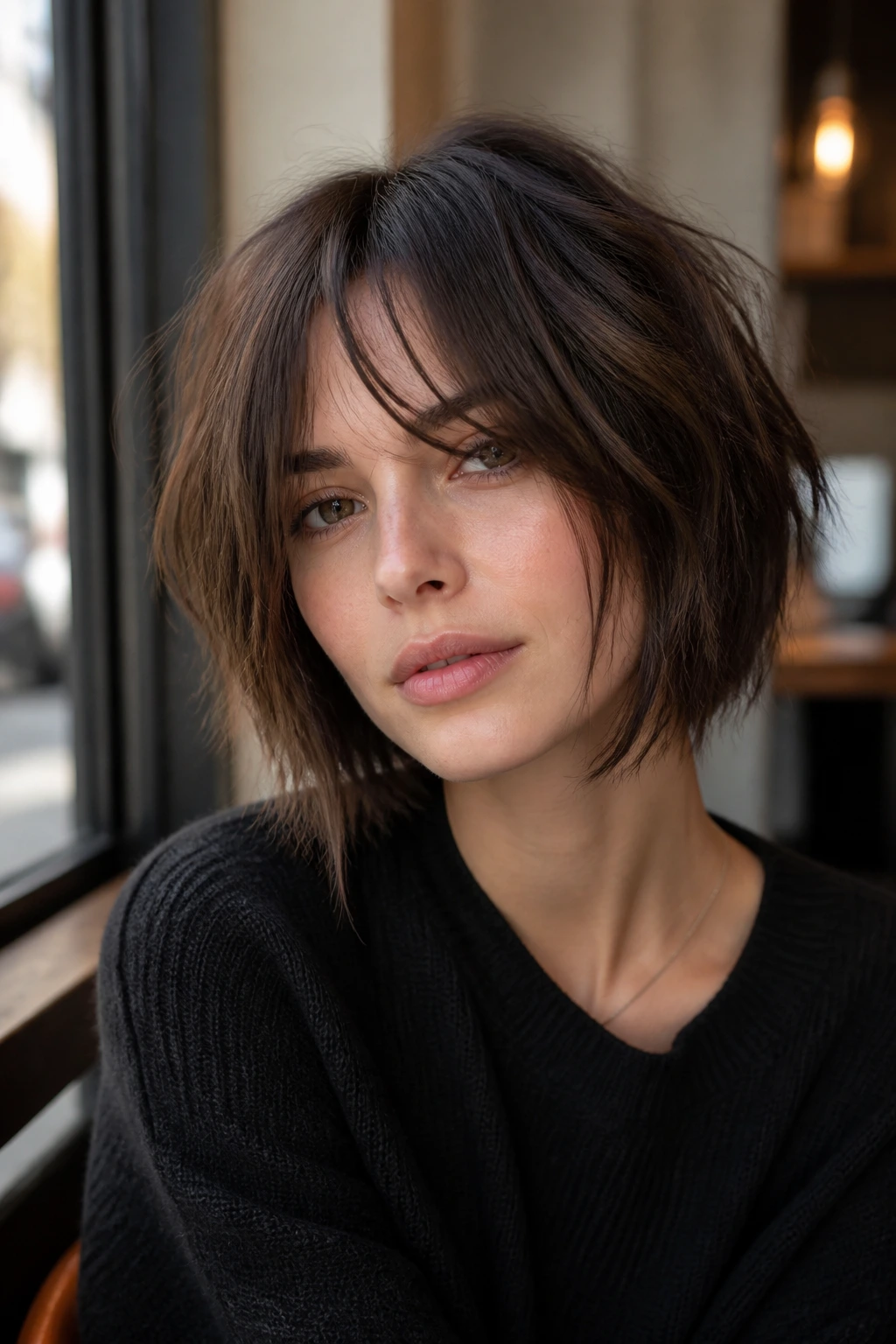
For those who want to avoid the “soccer mom” stereotype of a traditional bob, the choppy layered approach is your best friend. This cut uses point-cutting techniques to create uneven, wispy ends that bounce and move independently. It is the antithesis of a stiff, styled bob.
The curtain bangs in this scenario should be equally choppy, perhaps a bit shorter in the center than at the sides. This gives you a messy, “I woke up like this” aesthetic that works incredibly well for medium-length hair that has a bit of natural weight.
The “Choppy” Technique
- Point-cutting: Always ask for this specific technique to avoid that “shelf” look at the ends.
- Product pairing: Use a lightweight styling paste or pomade to define individual pieces of the hair rather than smoothing it all out with oil.
6. Sleek Angled Bob with Wispy Curtain Bangs
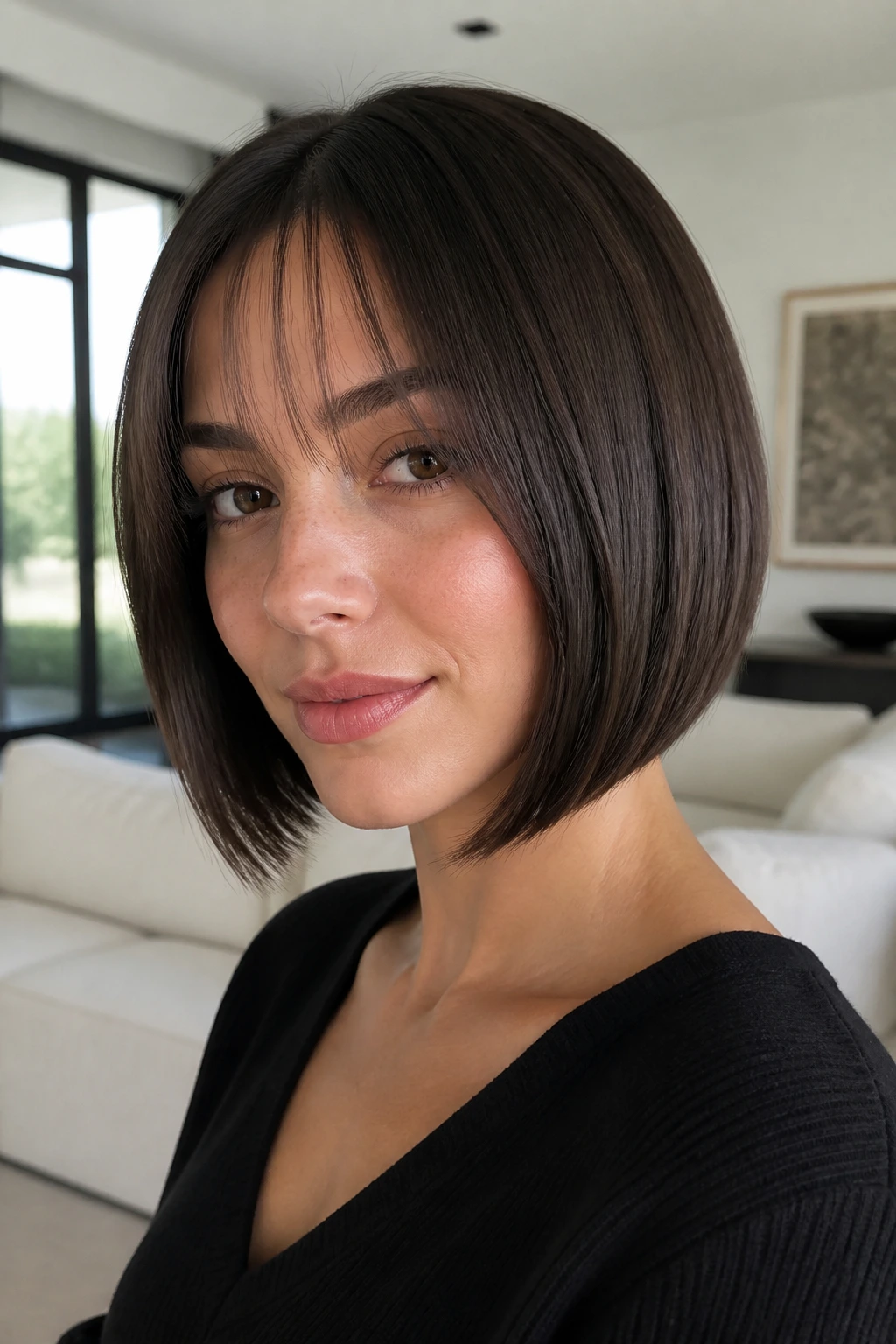
Think of this as the “French girl” version of an angled bob. It is polished and chic, but it avoids looking overly styled. The key here is the wispy nature of the bangs—they should be light, airy, and not cover too much of the forehead.
The bob itself is cut at a sharp angle but kept sleek and smooth. This style works best on straight hair types. If you have any natural frizz, a smoothing serum applied before drying is non-negotiable to keep that glass-like finish.
Styling the “French” Look
- Less is more: Use a very small amount of styling oil on the ends to prevent flyaways.
- Bang placement: Use a round brush to flick the curtain bangs outward while drying; this creates that signature “curtain” shape without effort.
7. Deep Side-Part Angled Bob
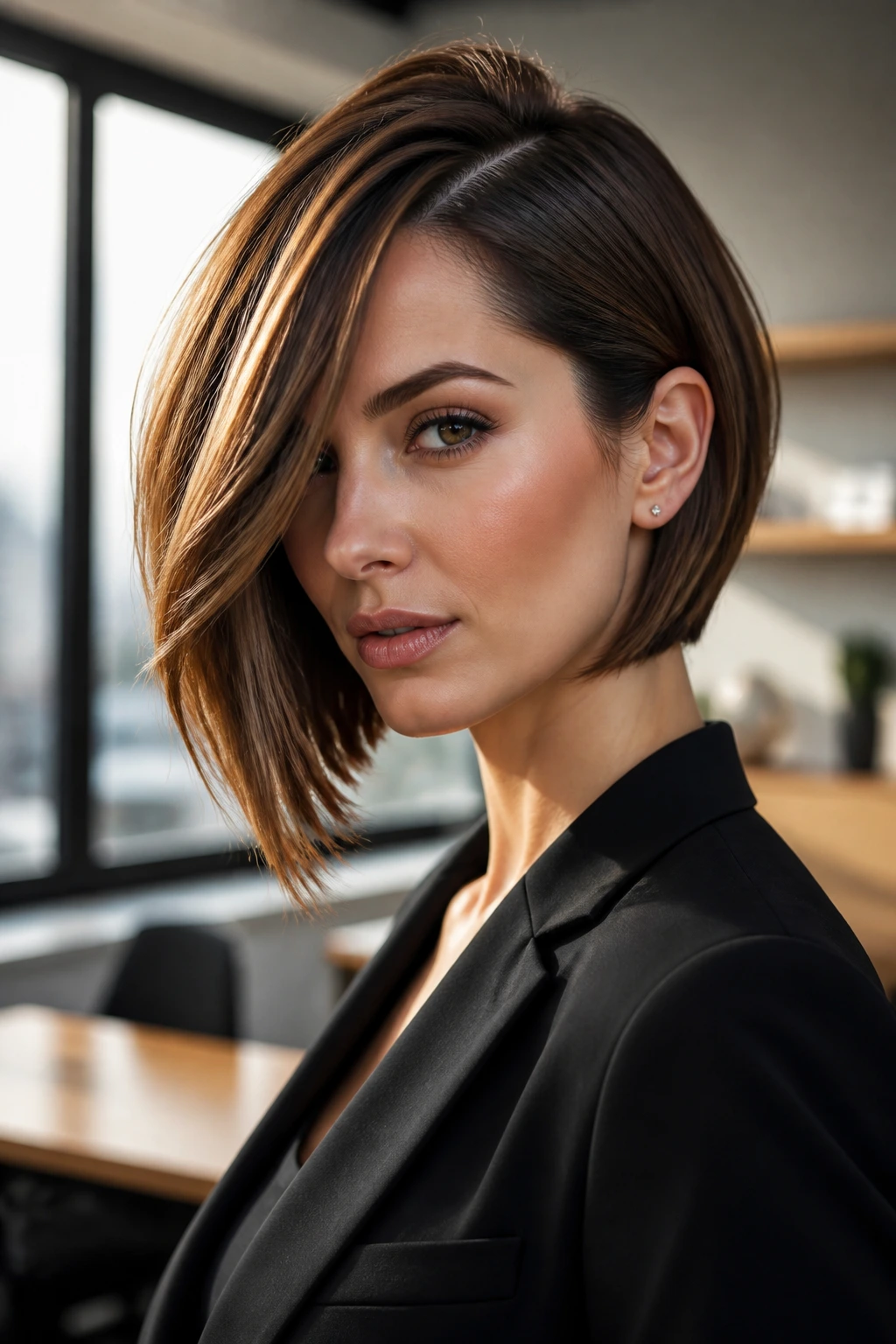
Sometimes the cut isn’t just about the length; it’s about the geometry of the part. A deep side part on an angled bob creates an asymmetrical effect that makes the face look lifted. It’s an instant, non-surgical “lift” for your features.
Because the side part is so dramatic, one side of the curtain bangs will be shorter than the other. This creates a really interesting frame that highlights your cheekbones and jawline on the side with less hair. It is a sophisticated, mature look that feels very at home in a professional setting.
Maintaining the Part
- Switching it up: While a deep side part is stunning, you can flip your part every few days to keep the roots from becoming trained to lie flat in one direction.
- The “bang” balance: Make sure your curtain bangs are long enough to be cut into this asymmetrical shape; they shouldn’t feel like a heavy fringe.
8. Soft-Angle Bob for Fine Hair
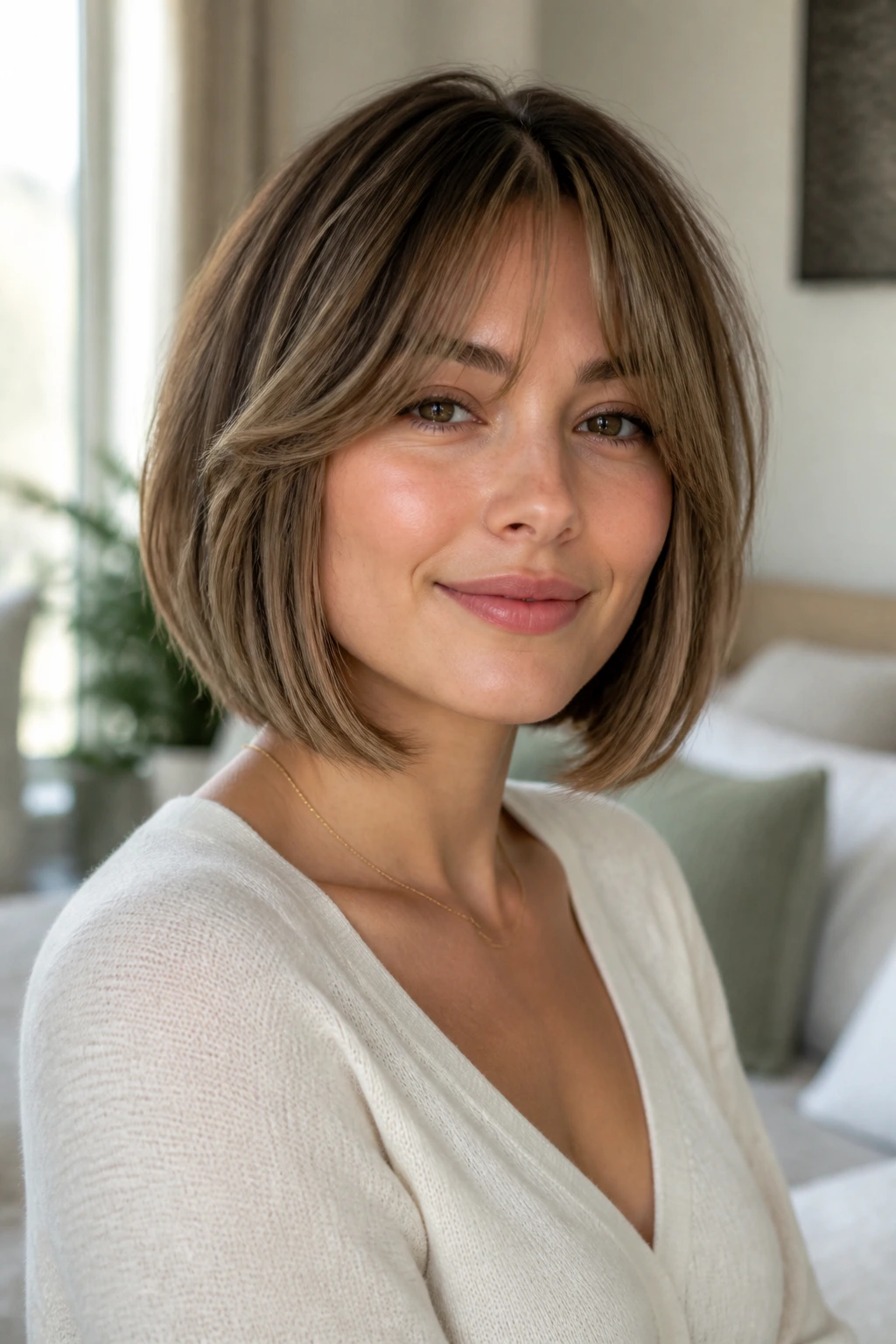
Fine hair needs help in the volume department. A soft-angle bob—where the difference between the back and front is only about an inch or two—is perfect. It doesn’t put too much stress on the fine strands but gives you just enough structure to feel “done.”
Pairing this with curtain bangs is the smartest move for fine hair. The bangs add density right at the front, making the whole cut appear fuller. Keep the layers minimal; too many layers will just make fine hair look stringy.
Volume Hacks
- Mousse: Apply a volumizing mousse to the roots of your damp hair before you blow-dry.
- Avoid heavy products: Oils and heavy waxes will drag fine hair down instantly; stick to sprays and mousses.
9. The Curly Angled Bob
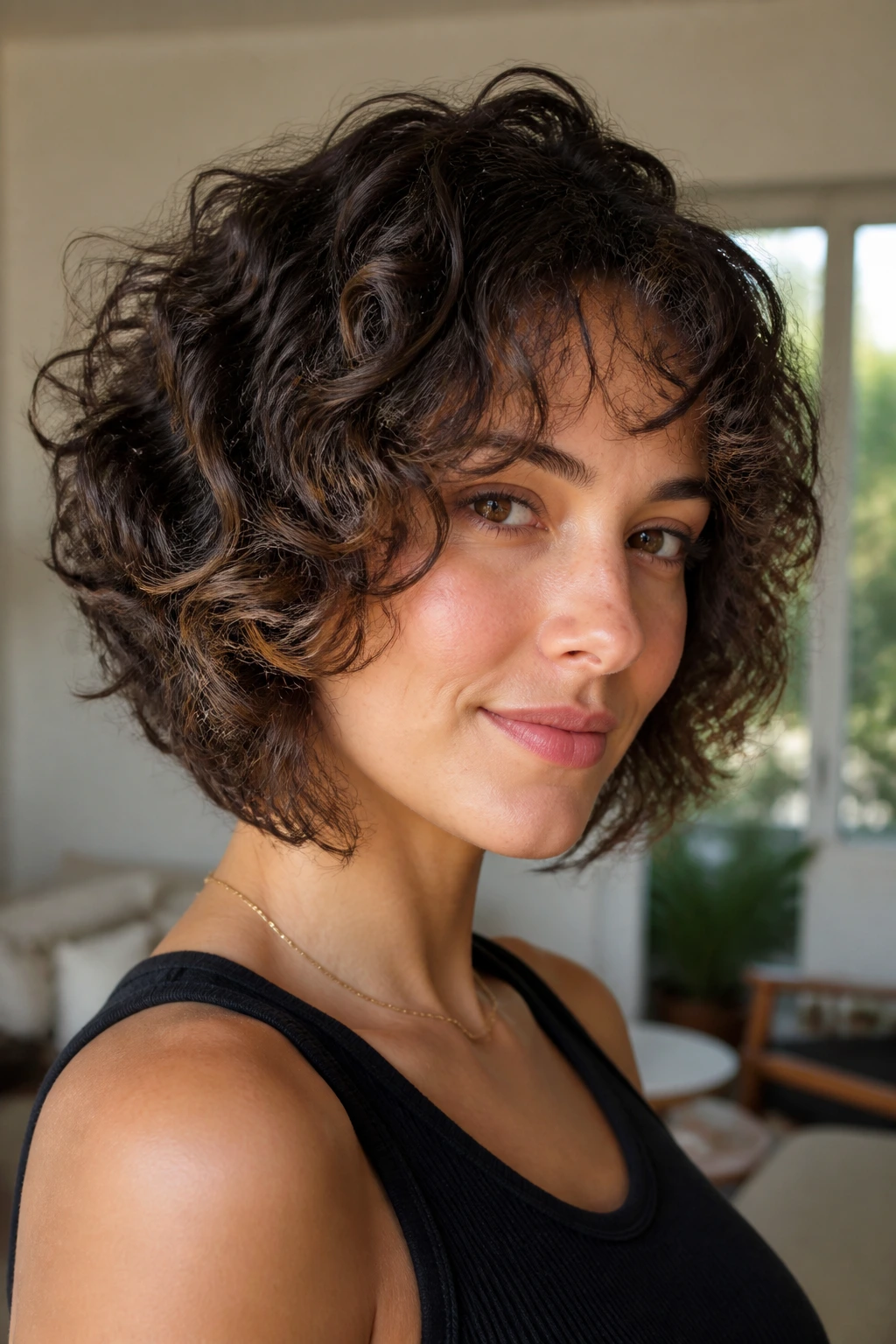
Curly hair can be intimidating when it comes to short cuts, but an angled bob is actually a secret weapon for managing curls. By cutting the hair at an angle, you distribute the weight of the curls, preventing that dreaded “pyramid” shape.
The curtain bangs on a curly bob should be cut dry to ensure you don’t end up with them shrinking to the middle of your forehead. They should frame your face with soft, loose coils that blend into the bob. This is a very youthful and energetic look.
Curly Care
- Dry cutting: This is non-negotiable for curly hair; wet hair stretches out, and if you cut it wet, you will likely cut it much shorter than you intended.
- Diffusing: Always dry your hair with a diffuser attachment to maintain the curl pattern and volume.
10. Shaggy Angled Bob with Curtain Bangs
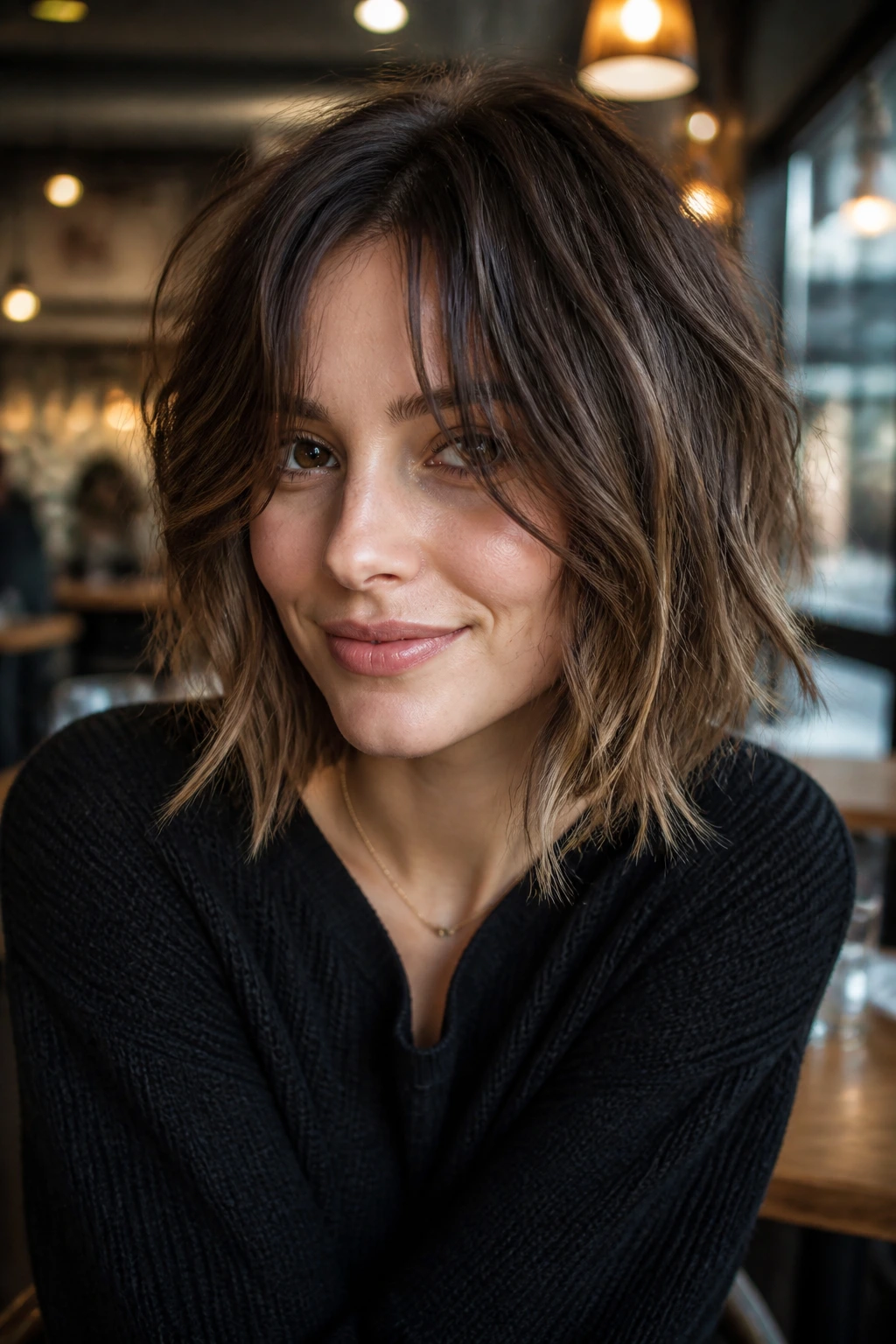
Shag cuts have been making a massive comeback, and applying that aesthetic to a medium-length bob is a match made in heaven. This cut is all about texture, messiness, and layers. The angle is less about a sharp geometric line and more about a soft, rounded slope.
Curtain bangs are a staple of the shag cut, so this combination feels very natural. They should be long, sweeping, and heavily layered. This style is best for people who want a low-maintenance look that thrives on being a little bit messy.
Achieving the Shag
- Texture spray: This is your best friend. Don’t be afraid to use a generous amount throughout the mid-lengths.
- Layers: Be prepared for a lot of layers; they are what give this cut its distinctive shape.
11. Minimalist Angled Bob
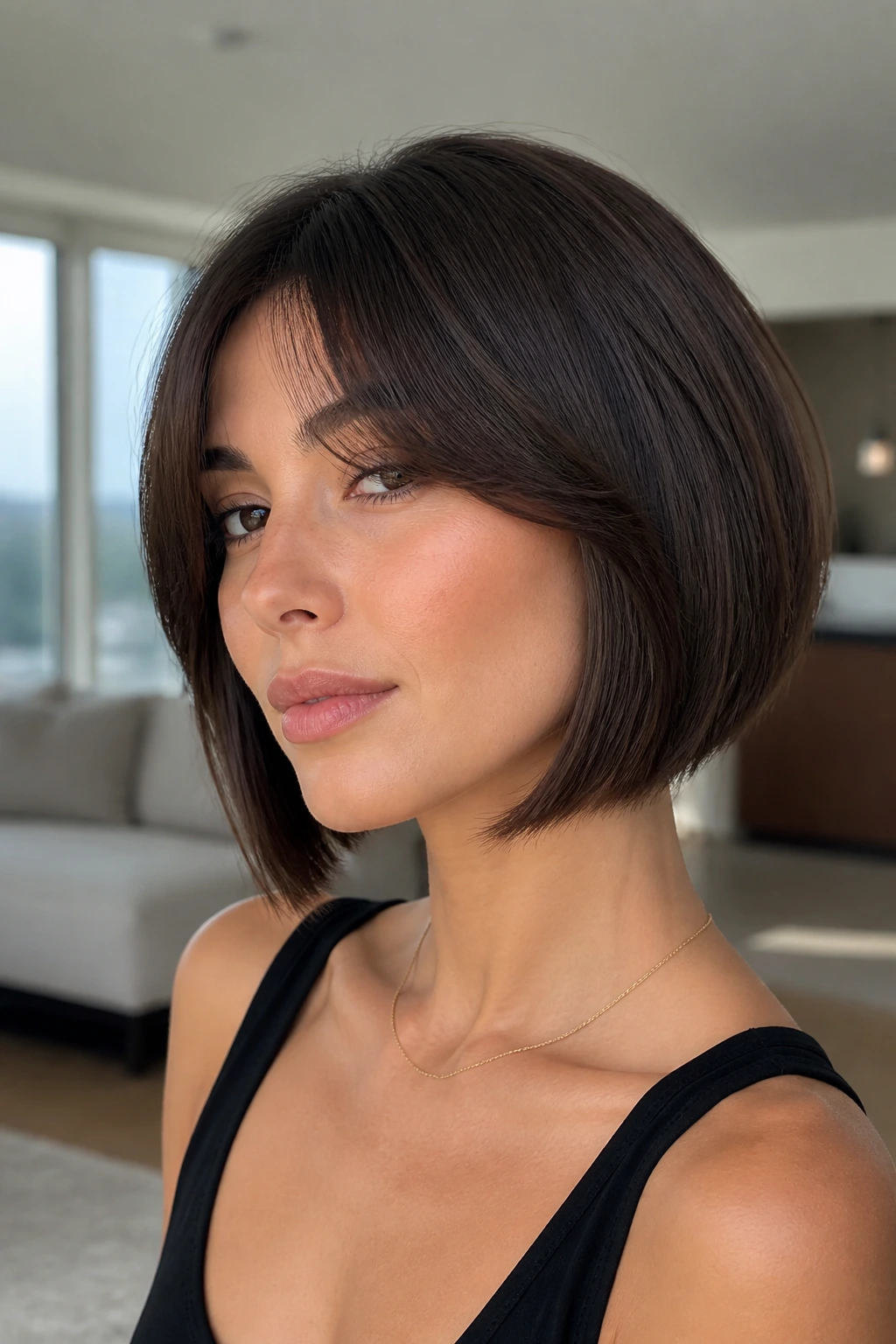
If you hate fuss and love simplicity, the minimalist bob is for you. It’s a very subtle, clean-cut angled bob with no harsh layers. It just looks like your hair is in the best shape of its life.
The curtain bangs here are simple, light, and perfectly blended. They should look like they are just part of the hair that has been tucked away. This is the ultimate “clean girl” aesthetic. It works on almost any face shape, making it the most versatile option on this list.
Why It Works
- Timelessness: This is a classic cut that will never look dated.
- Grow-out phase: Because the layers are minimal, the grow-out process is much smoother than with a heavily layered cut.
12. Two-Tone Angled Bob
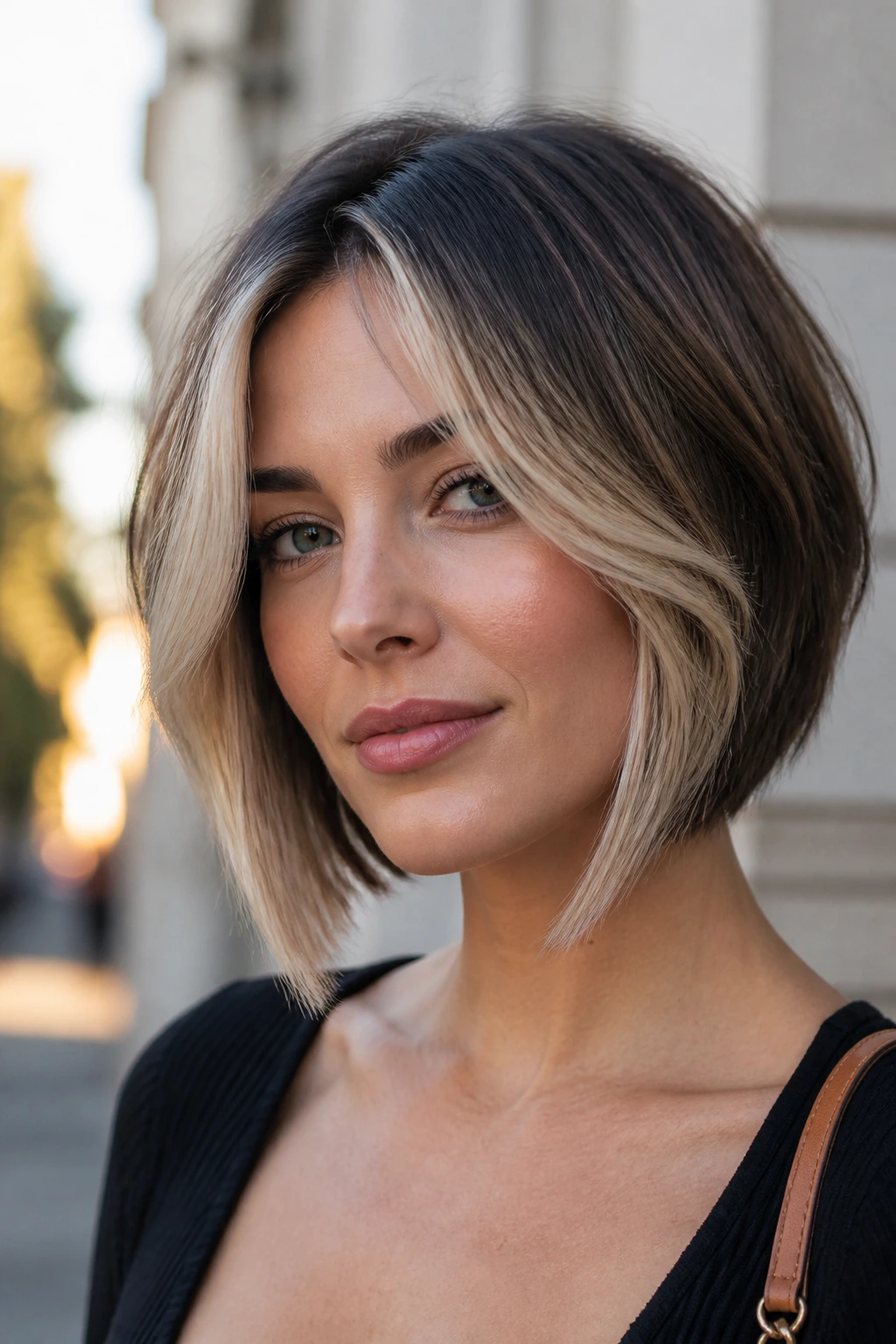
Sometimes you want a change in color to go along with a change in cut. An angled bob is a great canvas for color, particularly a “money piece” or a balayage where the front pieces are slightly lighter.
The curtain bangs are the perfect place to highlight those lighter tones. Because the bangs frame your face, placing a brighter color right there draws attention to your eyes and lips. It adds depth and interest to an otherwise simple haircut.
Coloring Tips
- Placement: Focus the lighter color on the ends of the bangs and the front strands of the bob.
- Maintenance: Since you’re drawing attention to the front, keep up with root touch-ups if you are covering gray or want a consistent look.
13. Ear-Tuck Angled Bob
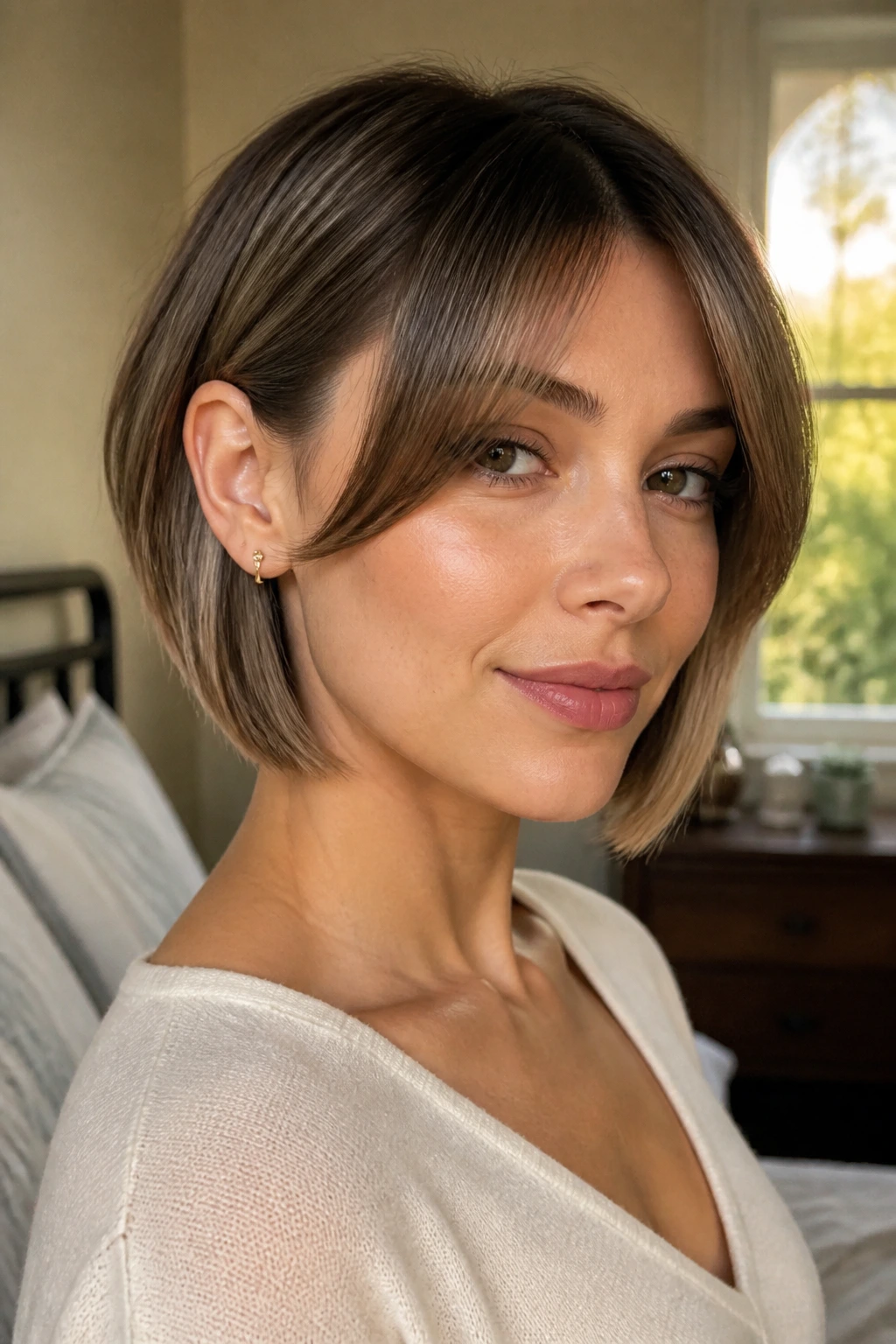
One of the best things about a bob that hits around the mid-neck is the ability to tuck it behind your ears. When you have curtain bangs, this tuck looks deliberate and very stylish.
This style works best with a slightly longer angled bob. It’s casual, easy, and shows off your features. If you are going to tuck your hair, make sure the curtain bangs are cut to hit at least the top of your cheekbone so they don’t look like they’re fighting for space with the tucked hair.
The Perfect Tuck
- Bobby pin secret: If your hair keeps popping out from behind your ears, a small, hidden bobby pin at the base can keep it in place.
- Bang flow: Make sure the bangs have enough volume at the roots so they don’t look glued to your head.
14. Retro-Inspired Angled Bob
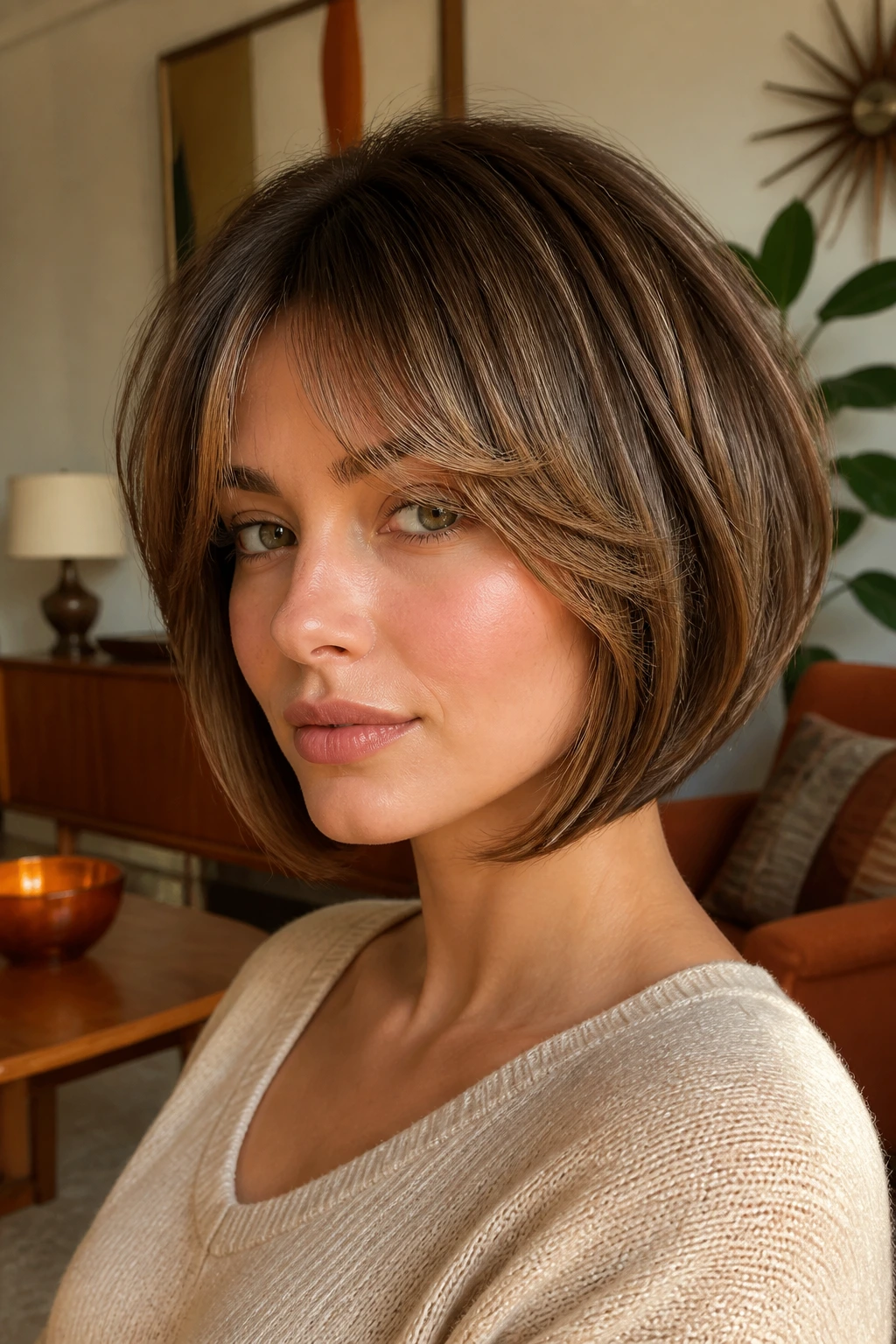
If you love the aesthetic of the late-seventies, you can pull that into your bob. This involves a rounder shape with slightly heavier ends and bangs that are much more prominent. Think of it as a modernized version of a classic flip.
The curtain bangs here are the star of the show. They should be voluminous and feathered. This cut requires a bit more styling time, specifically with a large round brush, but the payoff is a really unique, vintage look that stands out in a crowd.
Retro Styling
- Hot rollers: These are the easiest way to get that soft, feathered, retro look without spending an hour with a blow-dryer.
- Root boost: Retro styles rely on height at the crown; don’t skip the volumizing spray at the roots.
15. The “Wet Look” Angled Bob
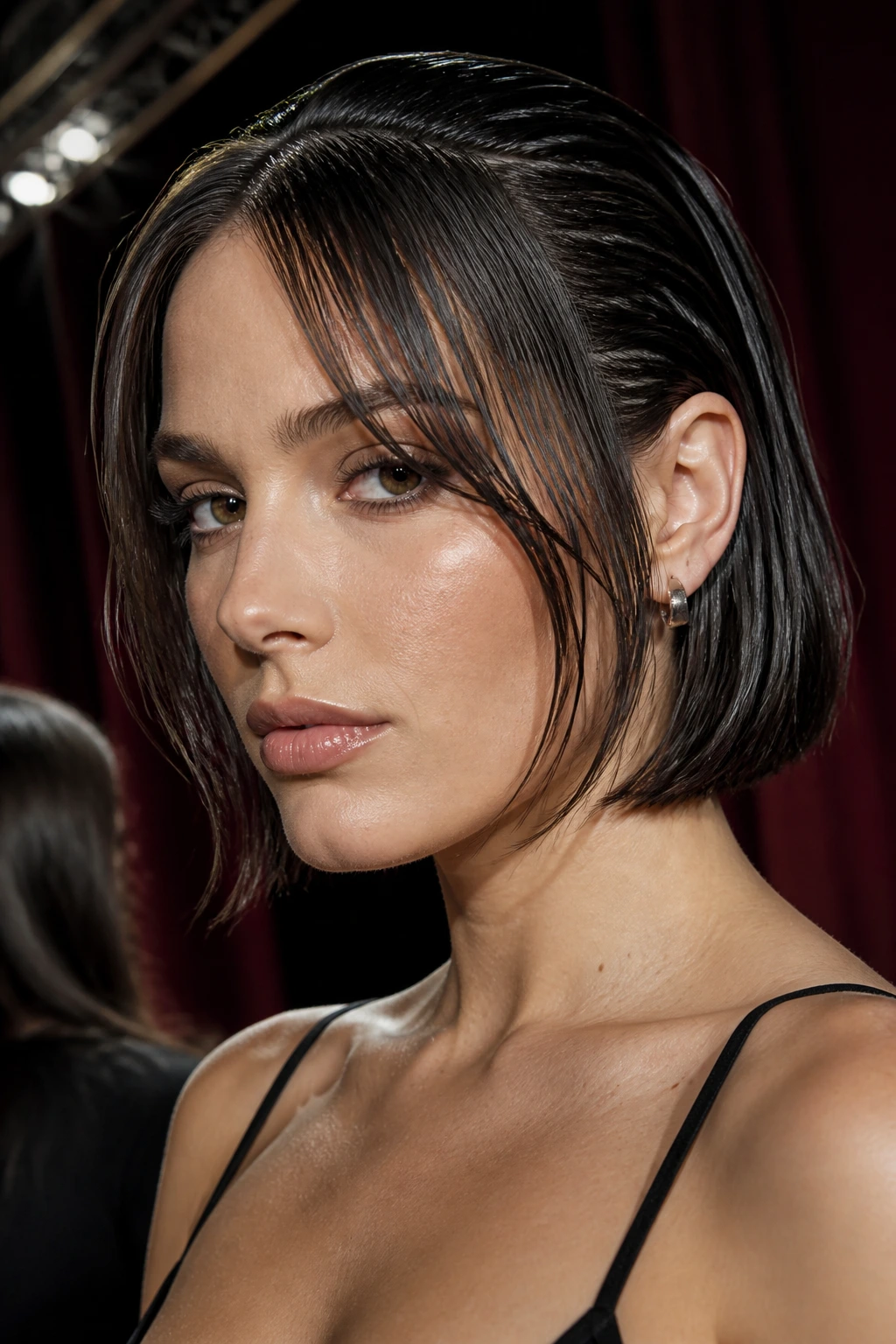
For evening events or high-fashion moments, the wet-look angled bob is undeniably chic. It accentuates the sharp angle of the cut and makes the hair look incredibly shiny.
Using a light gel or a styling cream, you can comb your hair back and away from your face, leaving your curtain bangs soft and dry to frame the face. It’s a great contrast between a structured, wet-looking bob and soft, dry bangs.
How to Achieve the Wet Look
- Gel vs. Serum: Use a lightweight gel for that slicked-back effect, but avoid the “crunchy” formulas from the past.
- Strategic styling: Don’t get the bangs wet; keep them dry and styled to create that softness against the slicked-back hair.
16. Wispy Bangs for an Angled Bob
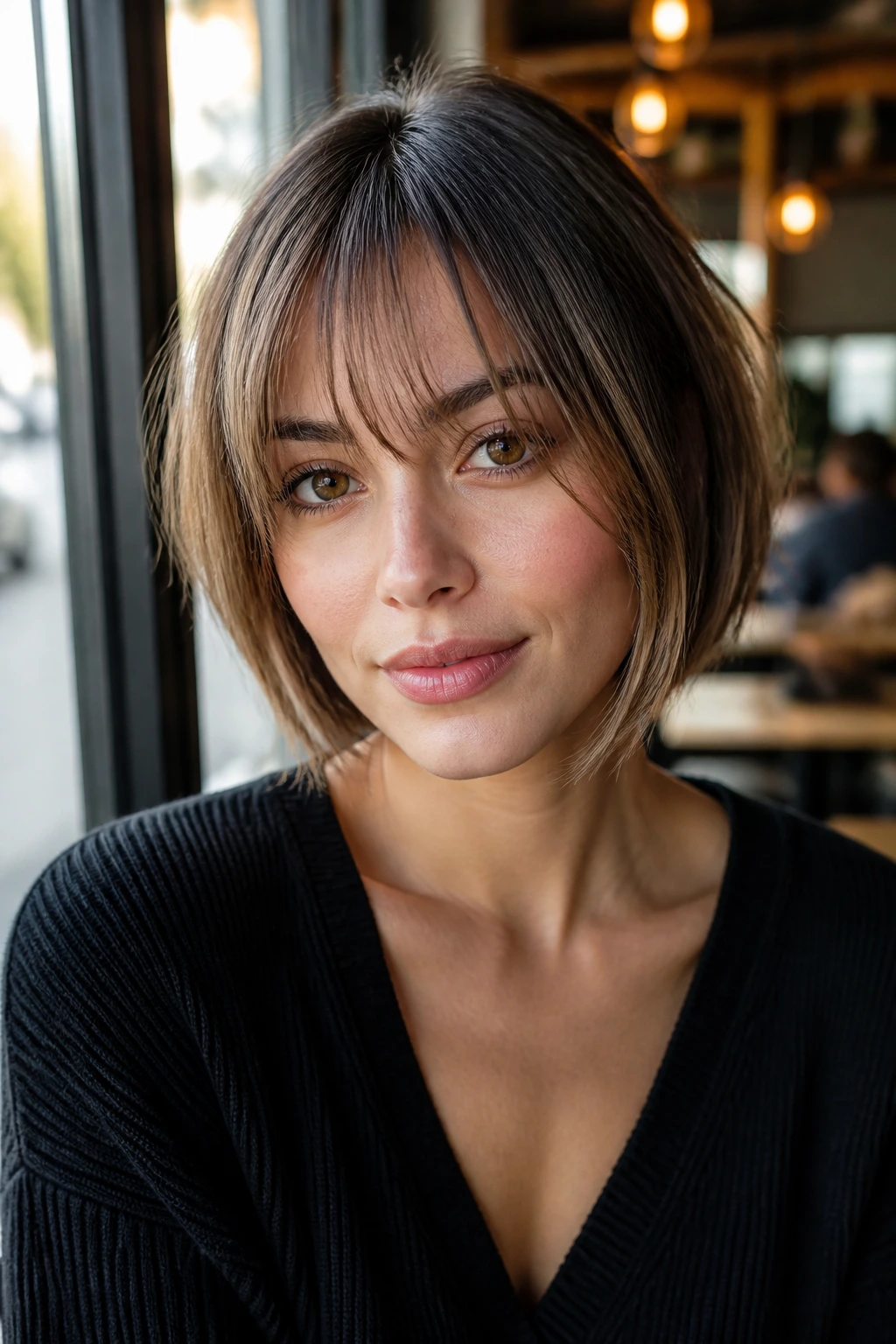
Sometimes “curtain bangs” can feel like too much hair. If you prefer something lighter, go for wispy curtain bangs. They have the same sweeping shape but with much less density.
This is a fantastic option if you have a smaller forehead or if you are worried that thick bangs will weigh down your overall look. They provide the face-framing benefits of a curtain bang while remaining subtle and almost invisible.
The Wispy Advantage
- Low commitment: They grow out quickly, so if you decide you don’t like them, it won’t take long to blend them back into your main layers.
- Softness: These bangs provide a very delicate, feminine edge to the sharp angle of the bob.
17. The “Blunt-Back” Angled Bob
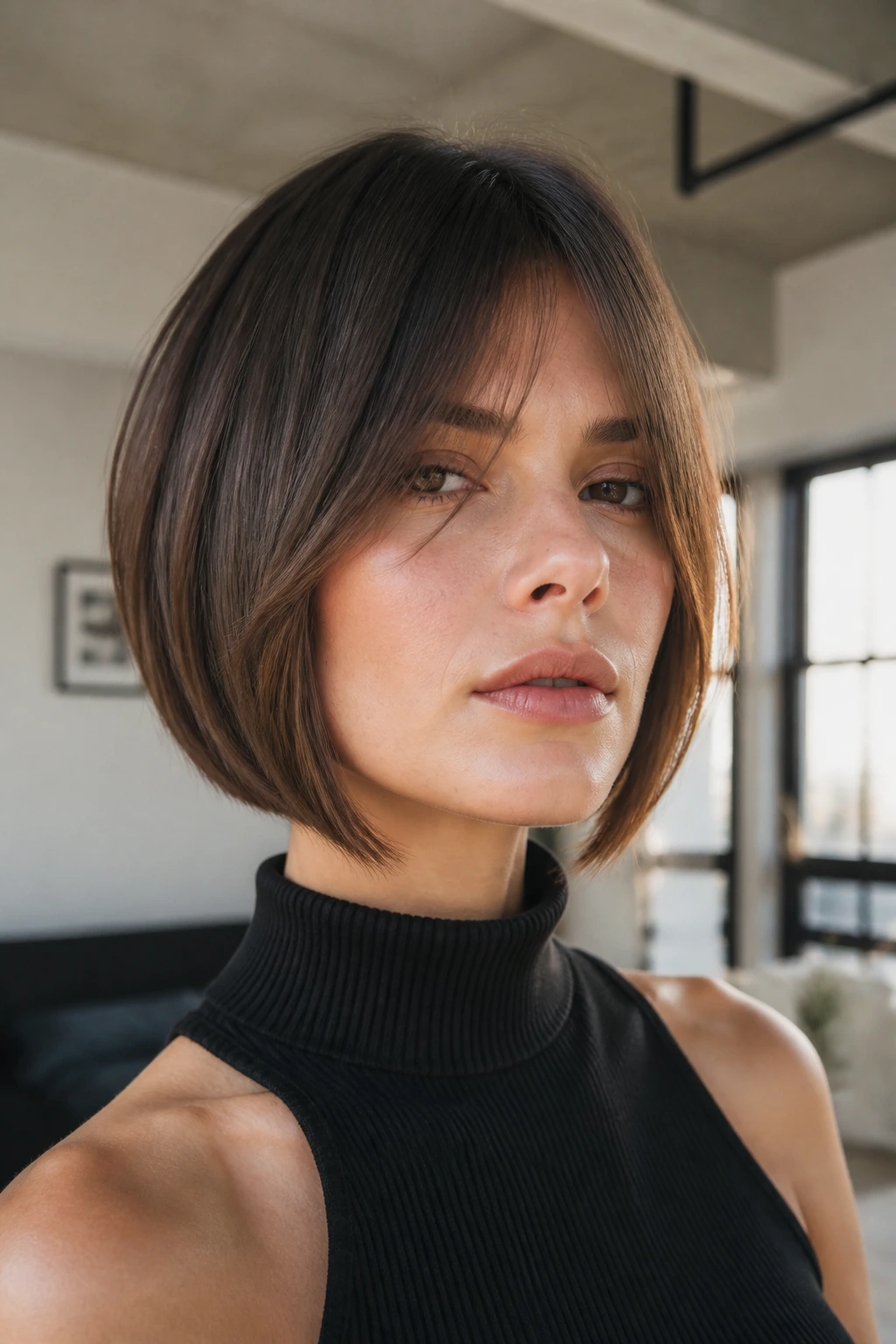
This is for those who like the drama of a bob but want it to feel fresh. The back is cut blunt and straight, while the front is left significantly longer and face-framing. It is a very structured, high-fashion take on the bob.
The curtain bangs bridge the gap between the short, blunt back and the long front pieces. It is a sophisticated cut that looks great on people with thicker, straight hair. It’s polished, precise, and very modern.
Precision Matters
- Maintenance: This is a high-maintenance cut; it needs to be trimmed every 6 weeks to keep that blunt line looking crisp.
- Tooling: Use a high-quality flat iron to keep the front pieces looking perfectly straight and sleek.
18. Braided Detail Bob
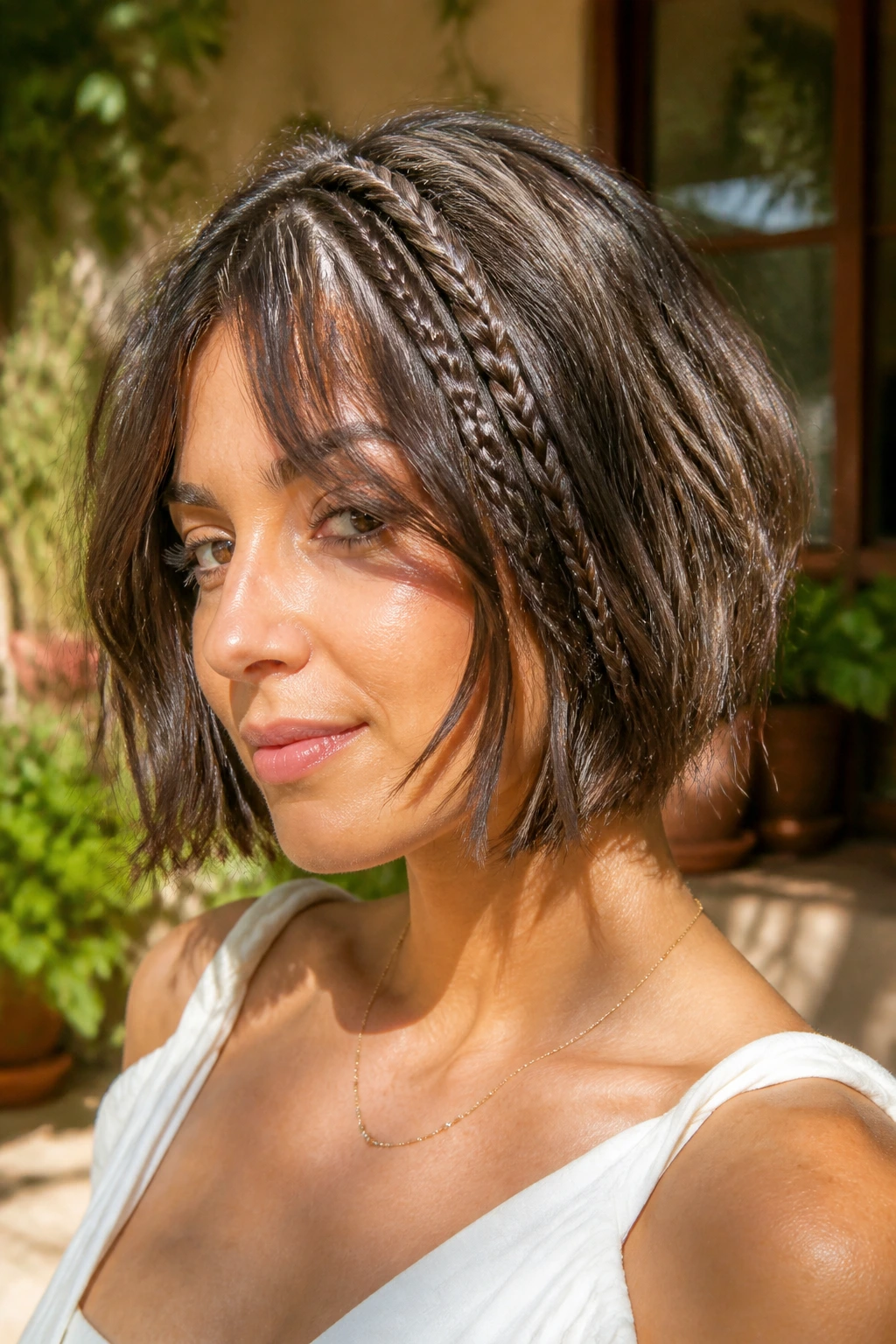
Who says you can’t braid short hair? Even with a medium-length angled bob, you can create small, dainty braids along the hairline or within the curtain bangs.
This is a great way to change up your look for special occasions. By braiding the bangs or a small section of the front, you reveal the face and change the entire geometry of the cut. It’s a playful and creative way to interact with your shorter length.
Braiding Short Hair
- Small clips: Keep a supply of clear elastic bands and tiny bobby pins handy.
- Practice: Short hair can be harder to braid because of the shorter pieces; use a little bit of texturizing spray to give the hair some “grip” before you start braiding.
Final Thoughts
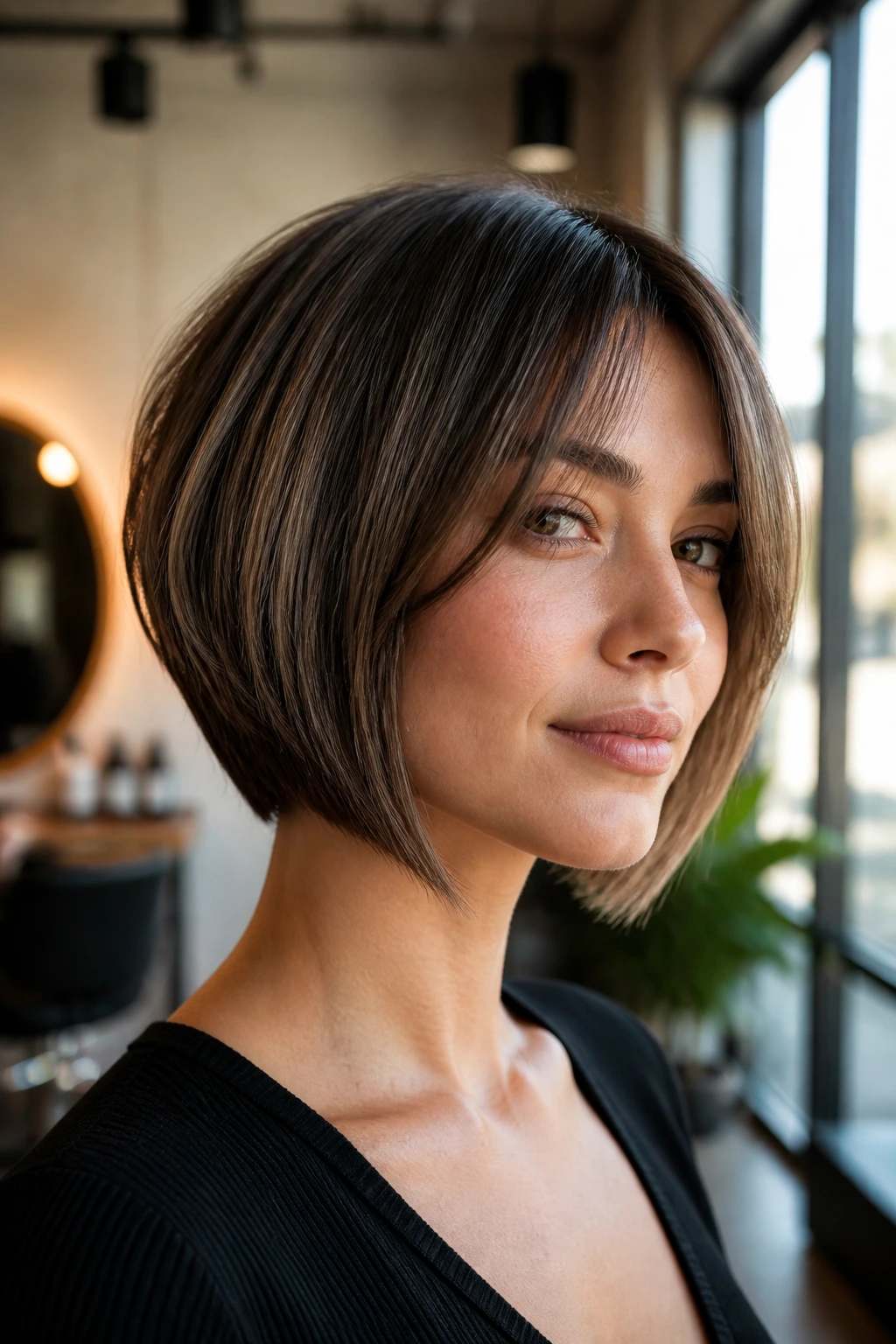
Transitioning to a short angled bob with curtain bangs is less about following a trend and more about finding a shape that works for your unique lifestyle. Whether you prefer the sharp, geometric lines of an A-line or the loose, lived-in feel of a wavy shag, the goal is always the same: finding that perfect balance where your hair feels like an extension of your own personal style.
Remember that the beauty of this cut lies in its adaptability. You can change the entire vibe of the style just by switching your part or changing your styling product from a smoothing cream to a sea salt spray. Don’t be afraid to experiment with your bangs, either—tucking them, pinning them, or styling them out can make a single haircut feel like three different looks.
If you are heading to the salon, bring photos that show the movement you want, not just the length. Pointing out the specific angle or the way the bangs blend into the face is much more helpful for a stylist than a vague description. A great haircut is a conversation between you and your stylist, and the more specific you are about your preferences, the happier you will be with the final result.