

The inverted bob is one of those rare, architectural hairstyles that manages to defy gravity while still feeling perfectly natural. When you translate that angular, stacked-back silhouette into the world of curly hair, you’re not just getting a haircut; you’re entering into a high-stakes partnership with your own texture. It is not for the faint of heart, but for those who want a look that feels both precise and wild, it is arguably the most rewarding silhouette you can choose.
Many people assume that short hair and curls are a recipe for a triangular mess. They worry about the dreaded “pyramid” shape where the hair grows outward instead of downward, turning their head into a literal shrub. But here is the secret most stylists won’t tell you: the inverted bob is the solution to that exact problem. By building weight in the back and keeping the hair shorter at the nape, you force the curls to stack upon each other, creating volume exactly where you want it and taking the bulk off the shoulders.
If you are thinking about making the jump to a shorter, sharper style, there are twenty-five variations of the inverted bob that can accommodate everything from loose, beachy waves to tight, springy coils. This isn’t just about cutting your hair short—it’s about using the natural geometry of the inverted cut to tame, define, and celebrate your natural curl pattern. Let’s look at how you can adapt this iconic cut to your specific hair type.
1. The Stacked Nape with Defined Ringlets
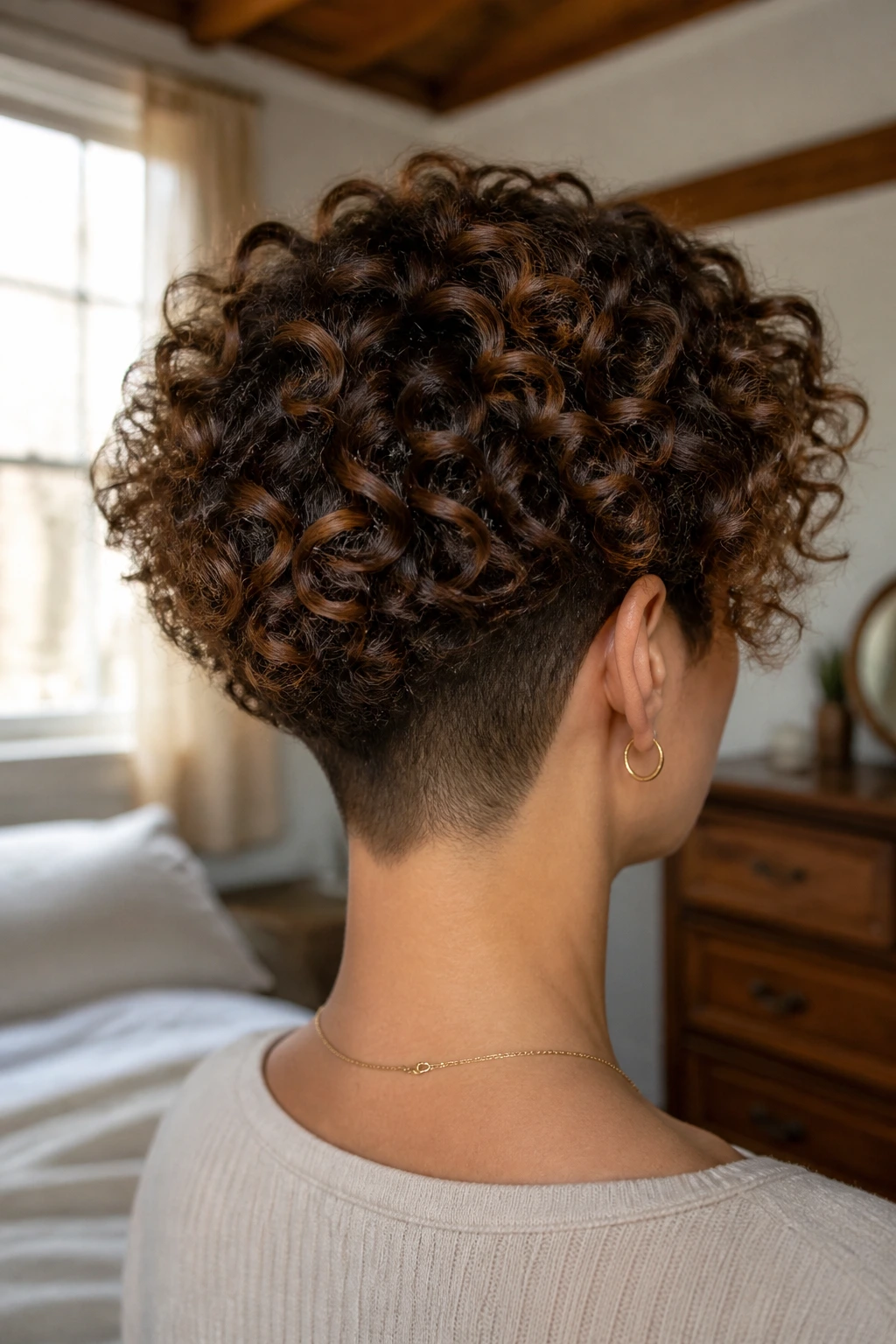
This variation is all about the drama of the back view. By shaving or tapering the very bottom layer of the nape and building thick, heavy layers immediately above it, you create a shelf of curls that looks incredibly dense and full.
Why This Works for Tight Coils
When you have tight ringlets, the weight of the hair can often drag down your roots, making the crown look flat while the ends become frizzy. The stacked nape prevents this by keeping the hair too short to lose its natural lift.
Styling Tips for the Stacked Look
- Use a lightweight mousse while the hair is soaking wet to keep the curls from clumping together too heavily.
- Avoid heavy butters or oils at the root; they will weigh down the stack and ruin the silhouette.
- Use a small-barrel diffuser to dry the nape first, pushing the curls upward to create that signature “stacked” look.
Pro tip: A tiny drop of gel on the very ends of your curls before diffusing helps the ringlets maintain their shape throughout the day without frizzing out.
2. The Soft-Layered Inverted Wave
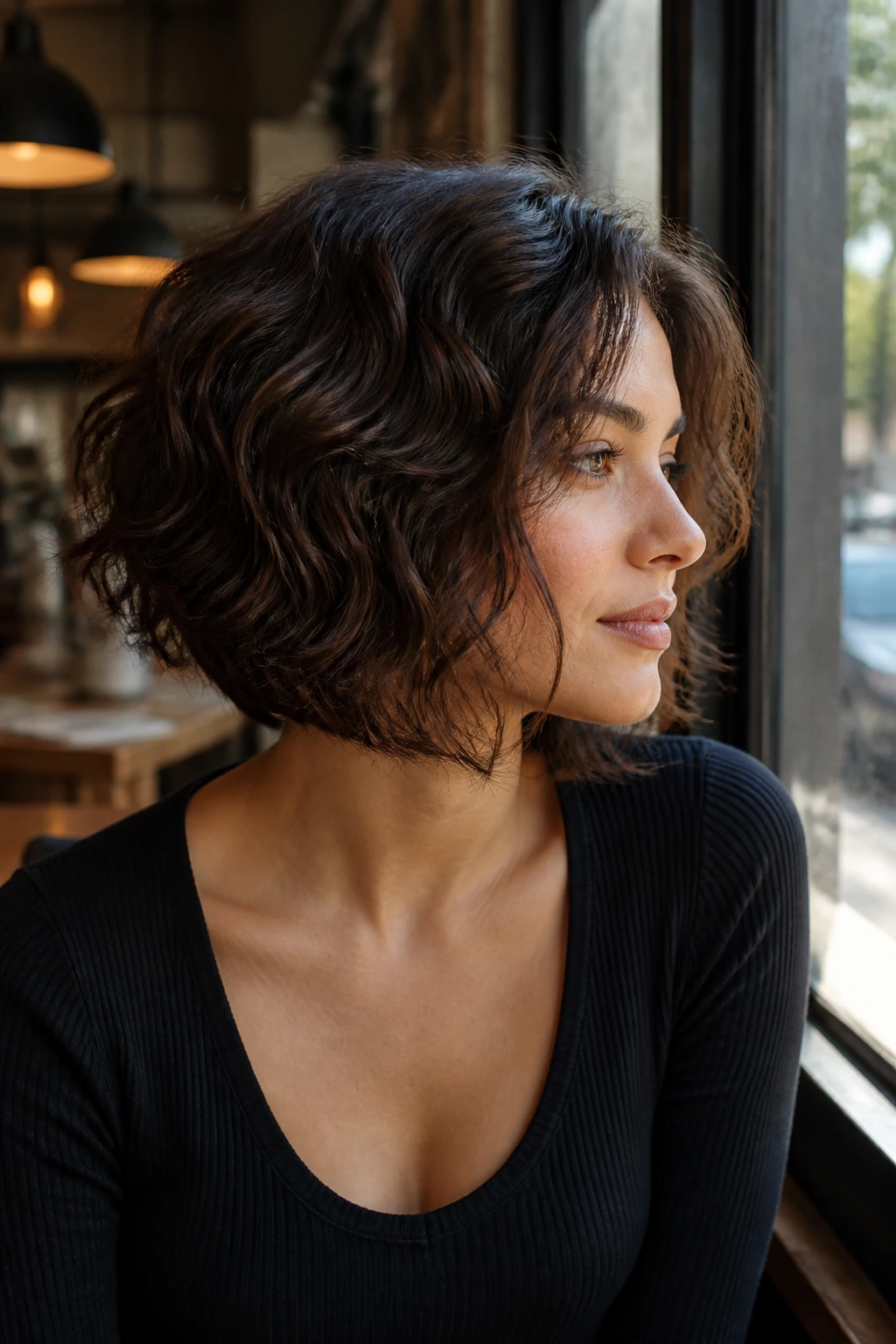
If your hair is more of a 2C or 3A wave than a tight coil, you can afford to go a little softer with the angle. Instead of a sharp, aggressive chop, this style uses long, blended layers that follow the curve of the jawline down toward the chin.
The Balancing Act
The goal here is to ensure the transition from the short back to the long front is almost invisible. It creates a seamless flow that looks effortless rather than structural.
Essential Maintenance Routine
- Visit your stylist every six to eight weeks to prevent the weight of your growing hair from pulling the “invert” out of shape.
- Use a curl-defining cream instead of a gel to keep the waves feeling soft and touchable.
- Air-drying is your best friend with this cut; it allows the waves to settle into their natural formation without the disruption of a blow dryer.
3. The Asymmetrical Inverted Bob
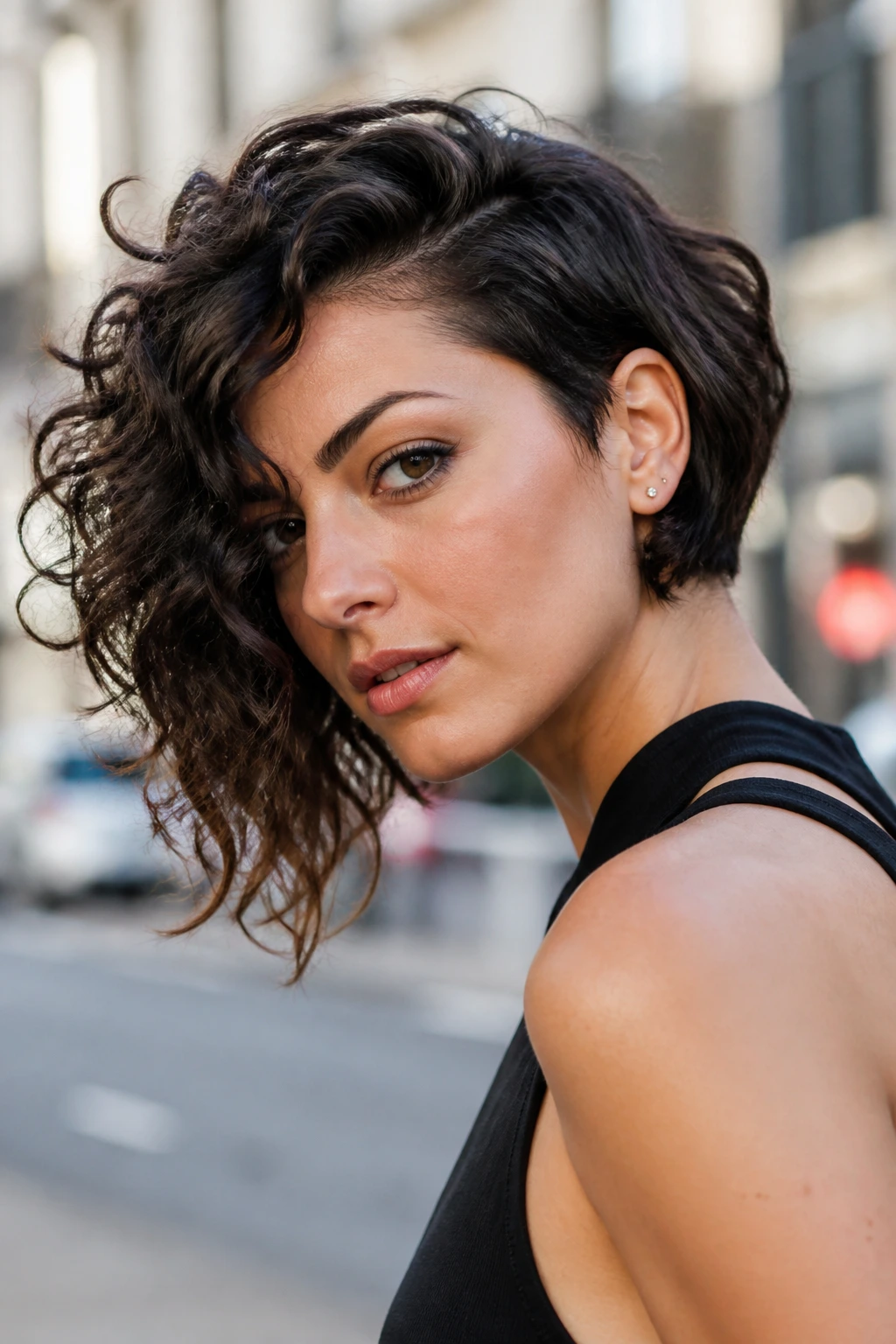
Who says the left and right sides need to match? By keeping one side significantly shorter or tighter than the other, you create a look that feels edgy and modern, perfect for those who want a bob that doesn’t feel like a classic schoolgirl cut.
Why Asymmetry Enhances Curls
When curls are cut at different lengths, they don’t fight for space. The shorter side will have more spring, while the longer side will have more weight, creating an interesting visual tension that draws the eye toward the face.
Who Should Try This
If you have a strong jawline or a round face shape, the asymmetrical cut is incredibly flattering. It breaks up the symmetry of the face, creating a leaner, more elongated appearance. Just be prepared for the fact that you will need to style it with a bit more intention than a standard bob.
4. The Curly Inverted Bob with Micro-Bangs
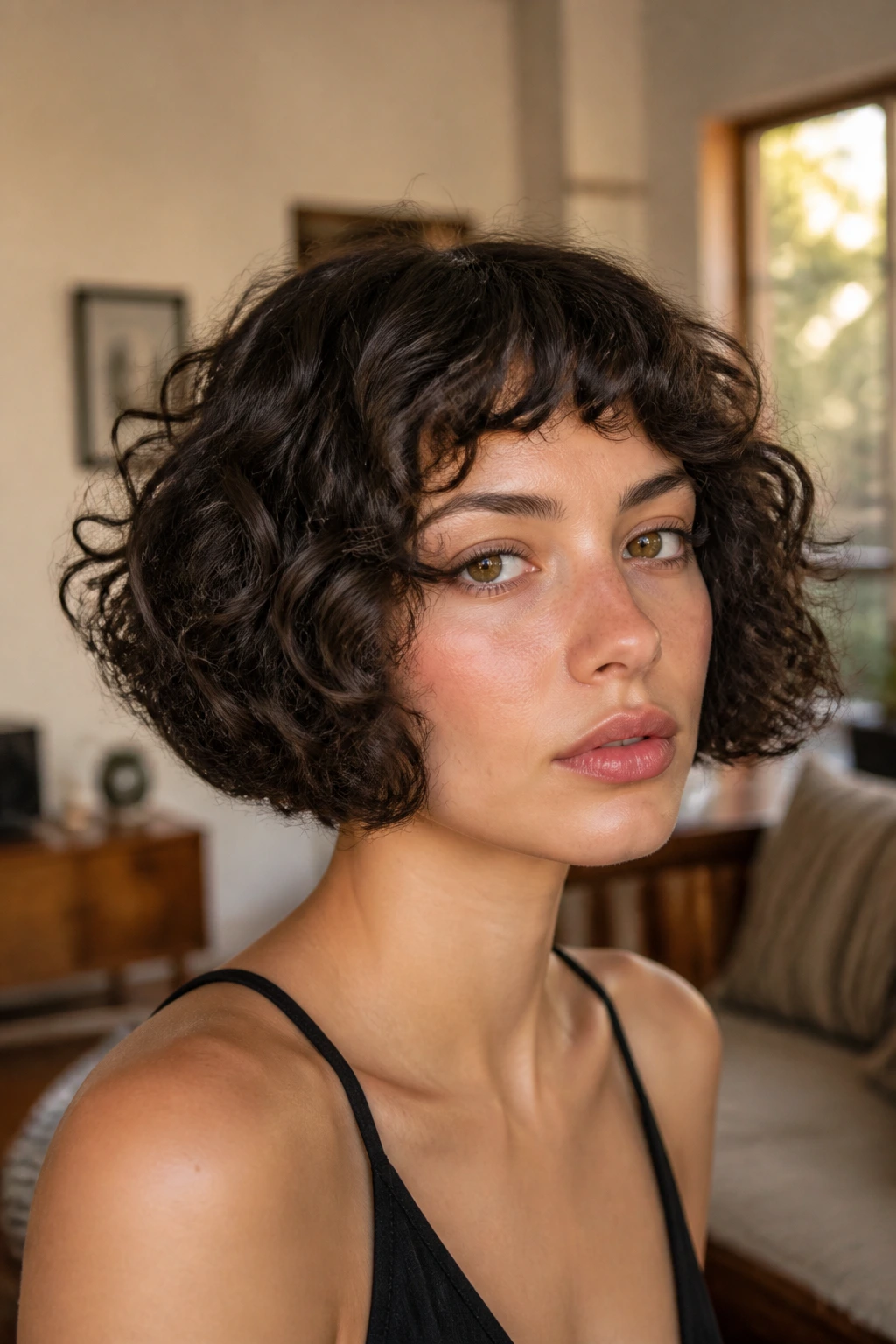
Pairing an inverted bob with super-short, choppy bangs is a bold choice. The bangs add an element of vintage-inspired style that contrasts beautifully with the sharp, modern angle of the bob.
Balancing the Face
Many people worry that bangs will make their face look rounder, but with an inverted bob, the geometry works in your favor. The length in the front frames the cheeks, while the bangs pull the focus upward toward your eyes.
Styling the Bangs
- Make sure your bangs are cut while dry—if your stylist cuts them wet, they will inevitably shrink up and end up too short.
- Use your fingers to coil the bangs into place rather than a comb, which can cause them to frizz.
- Keep a small bottle of leave-in conditioning spray in your bag to refresh the bangs if they start to get unruly in the humidity.
5. The Shoulder-Grazing Inverted Cut
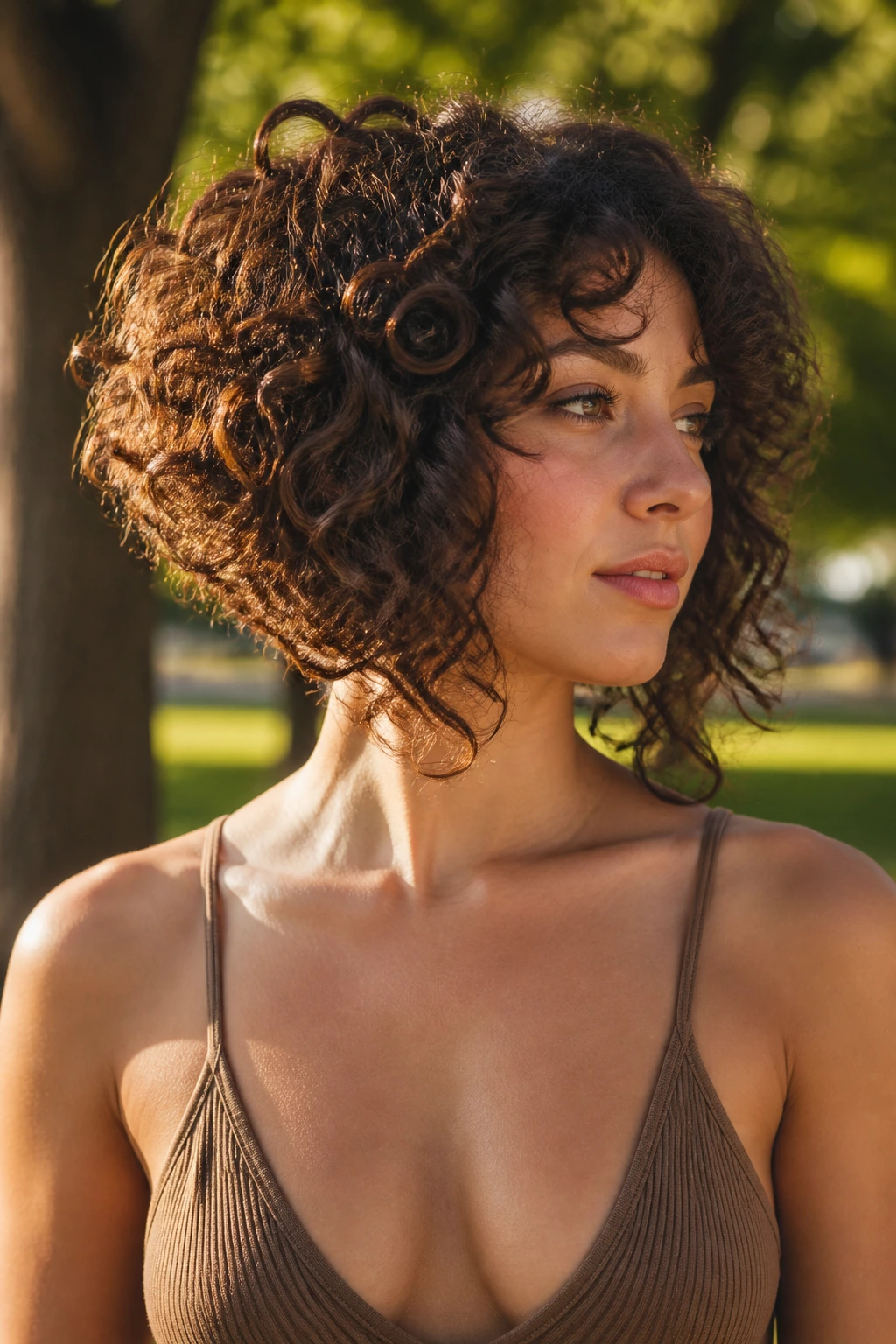
If you are terrified of going too short, this is the perfect entry point. The back is still tapered and elevated, but the front pieces graze your shoulders, giving you plenty of length to pull your hair back into a small clip or hair tie if you need to.
The “Safe” Transition
This cut allows you to test out the inverted style without feeling like you have lost all your length. It maintains the volume of a short bob while giving you the versatility of a medium-length cut.
Texture Considerations
Since this cut is longer, the weight of the hair will be higher. If your curls are on the finer side, they may lose some of their bounce near the shoulders. Consider adding invisible layers throughout the mid-lengths to keep the weight distributed and the curls bouncy.
6. The Shag-Inverted Hybrid
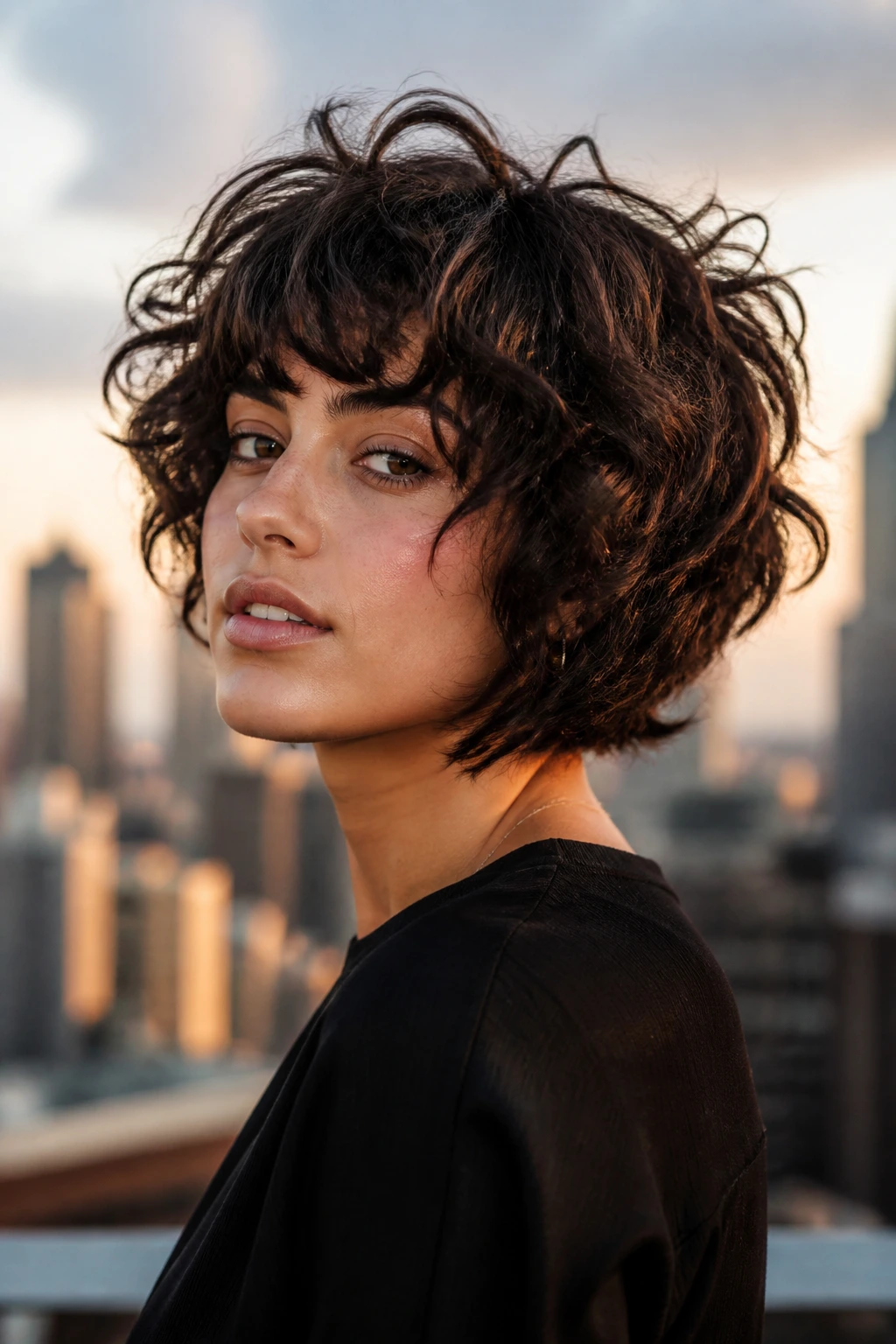
This is for the person who loves the volume of the eighties but wants the precision of a bob. It combines the choppy, piecey layers of a shag haircut with the stacked shape of an inverted bob.
Creating the Shag Effect
The key here is lots of internal layering. You want your curls to have different starting points all over your head. This creates a messy, lived-in look that screams “cool girl” without looking unkempt.
Product Selection
- Look for salt sprays or texturizing mousses. You want to encourage the hair to be a little bit gritty and voluminous.
- Avoid silicones, which can make the hair too slippery for a shaggy style to hold its shape.
7. The Deep-Parted Inverted Bob
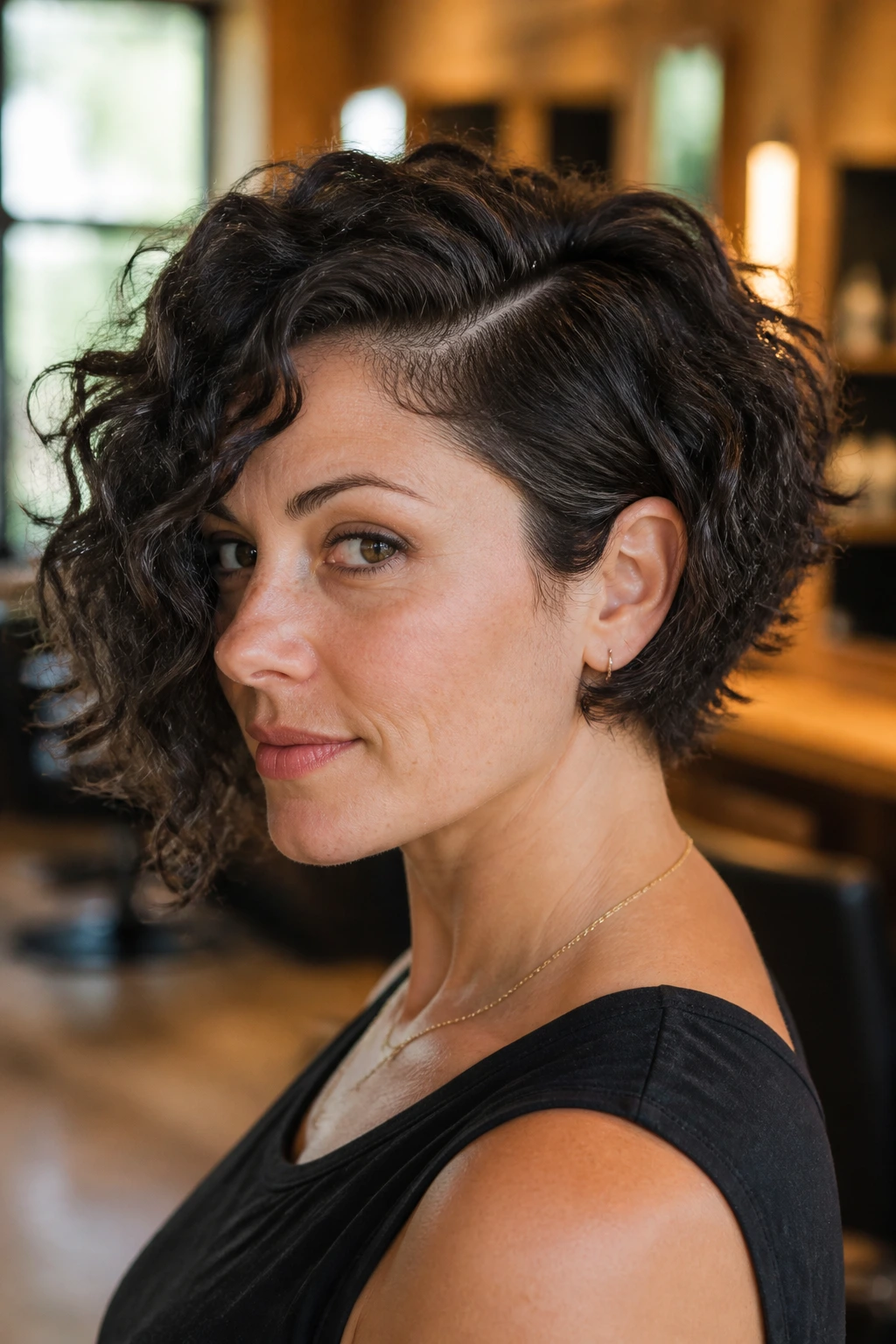
Sometimes the shape of the cut is less important than how you style it. Flipping all your hair to one side creates a dramatic, heavy side-part that naturally exaggerates the inverted angle.
Why This Works for Curly Hair
A deep side part naturally forces more volume onto one side of the head. This is fantastic if your curls tend to fall flat at the roots. The flip provides an instant boost of height that lasts all day.
Styling Tip
When styling, switch up your part every few days to keep your roots from getting “trained” to lie flat in one direction. This simple habit adds a surprising amount of long-term volume.
8. The Tight Coil Precision Bob
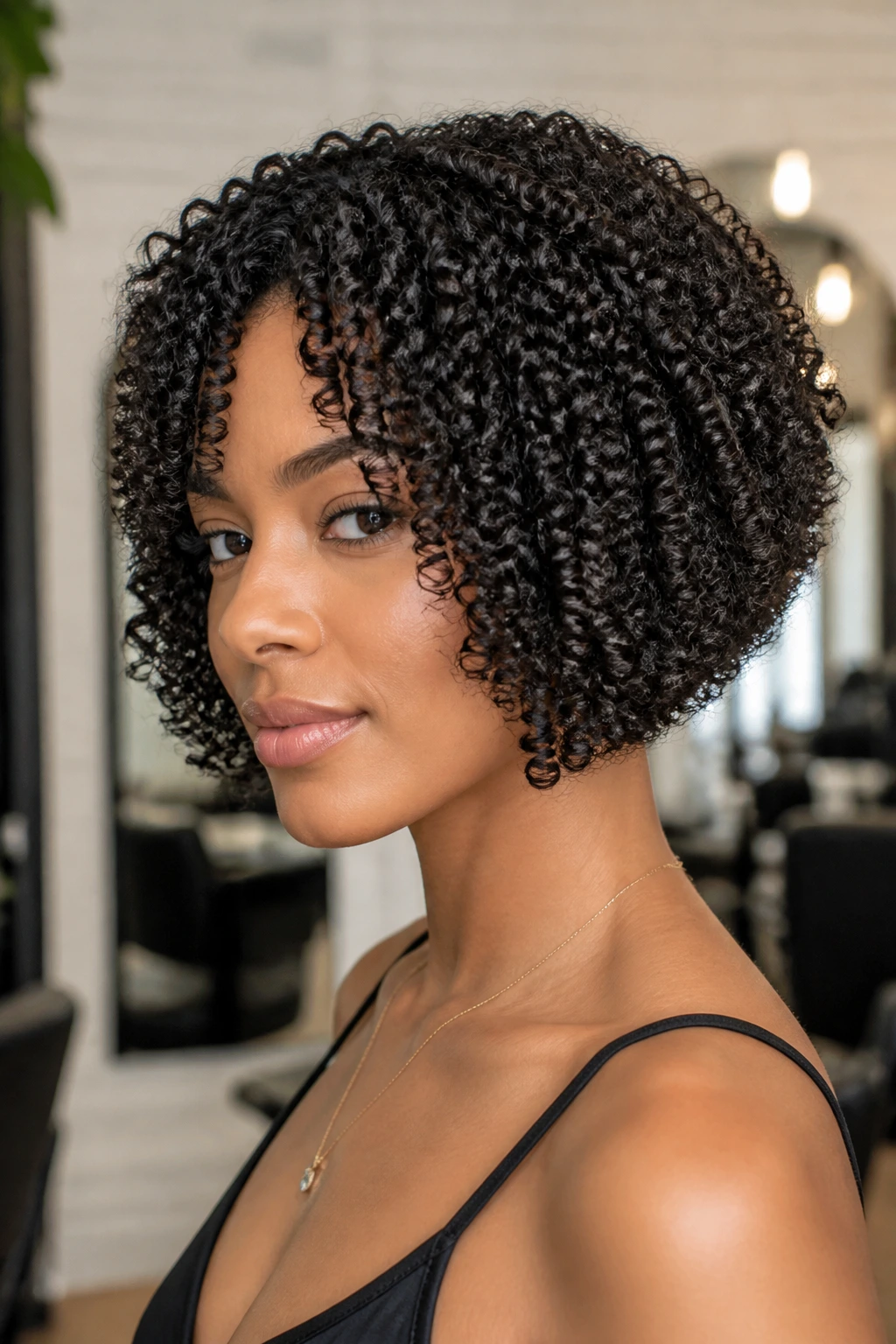
If your hair consists of very tight, small coils, you need a cut that respects their density. A precision inverted bob for this hair type should be cut into very blunt sections, creating a solid, graphic shape.
Avoiding the Fuzz
The biggest danger with tight coils and short bobs is the “fuzz” factor. By keeping the ends blunt-cut rather than thinned out, you ensure that the curls stay clumped together in beautiful, defined ribbons.
Moisture is Mandatory
Tight curls are naturally dry. With a shorter cut, your scalp’s natural oils have a shorter distance to travel, which is a massive bonus. Use a deep conditioning mask once a week to ensure those ends stay supple and shiny.
9. The Rounded Inverted Bob
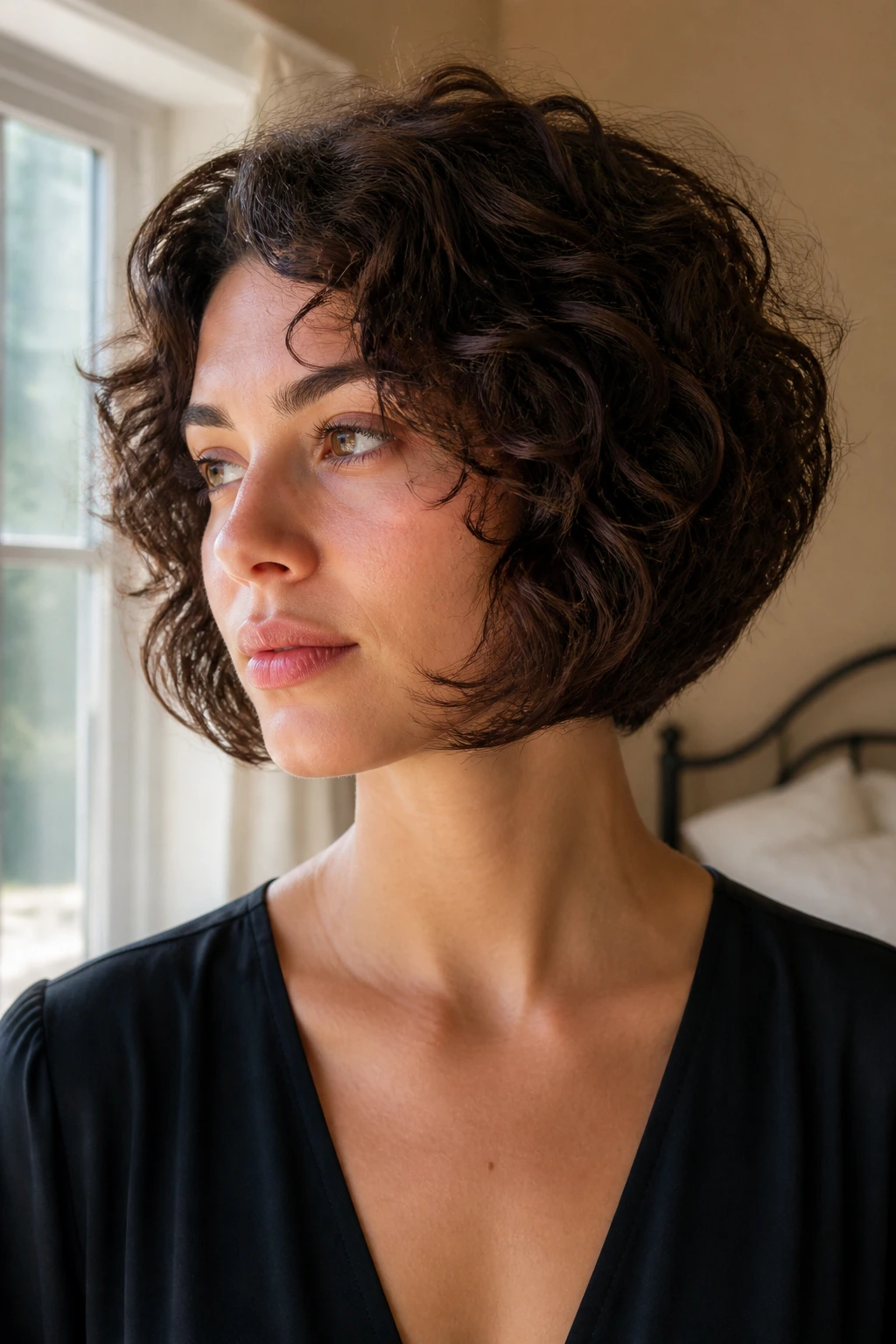
Most inverted bobs are sharp and angular, but you can request a rounded version. By softening the corners where the back meets the front, you create a look that feels more classic and feminine.
Who Should Choose This
The rounded bob is perfect for those with angular or square face shapes, as the softer lines help to balance out prominent jawbones. It’s a sophisticated look that feels timeless.
Styling for Softness
Use a round brush or your fingers to tuck the front pieces inward while you dry them. This encourages the hair to curve toward the face rather than hanging straight down.
10. The Undercut Inverted Bob
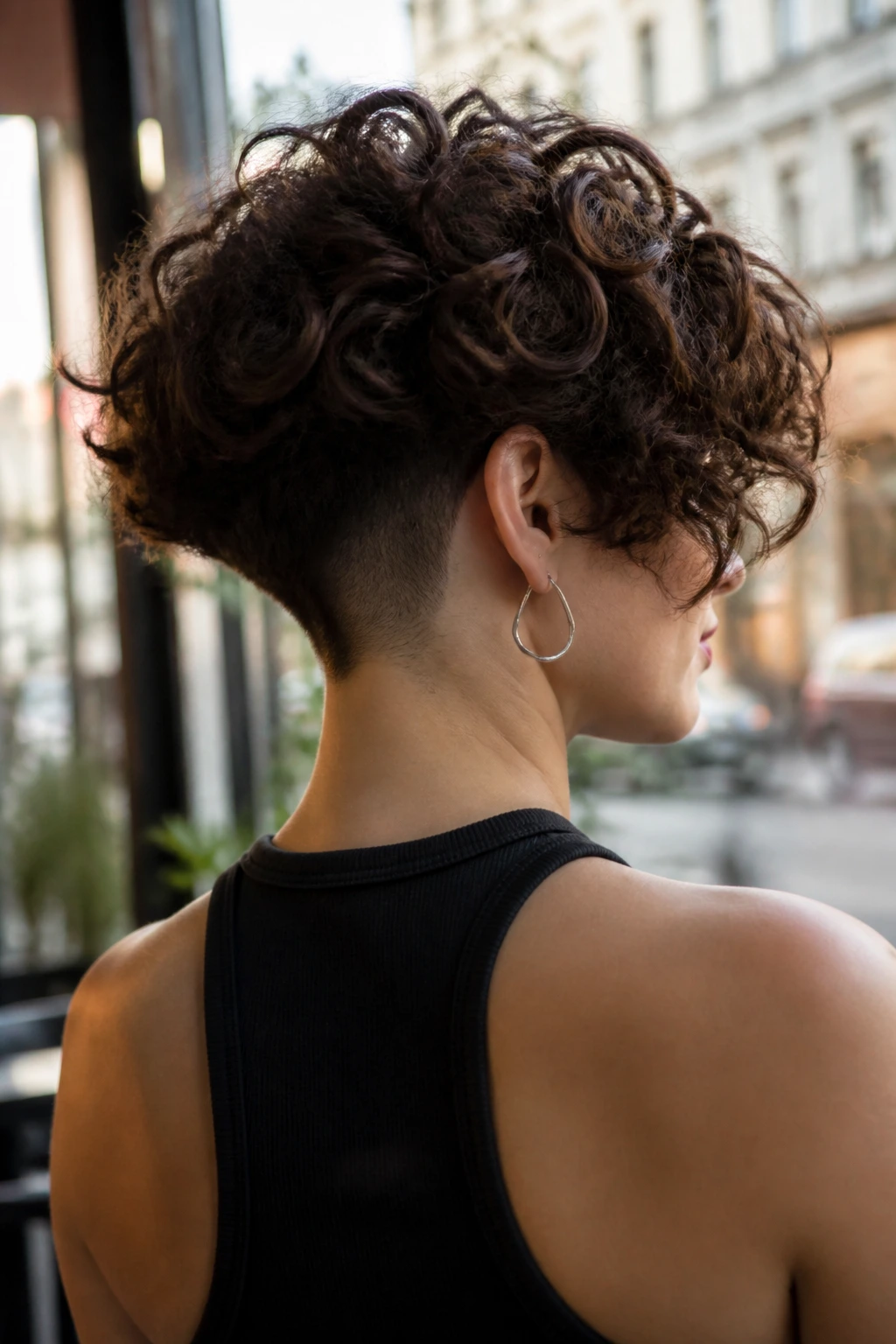
If you have incredibly thick hair that feels like a heavy blanket on your neck, an undercut at the nape is a life-changer. You keep the length of the bob on top, but the bottom section is buzzed or trimmed extremely short.
Hidden Detail
This is a “business in the front, party in the back” situation. When your hair is down, no one will know the undercut is there, but you will feel the lightness immediately.
Styling the Undercut
Keep the hair above the undercut slightly longer than the nape length to ensure it creates a clean, sweeping cover. You want that “shingled” look where the hair falls perfectly over the shorter sections.
11. The Textured Inverted Lob
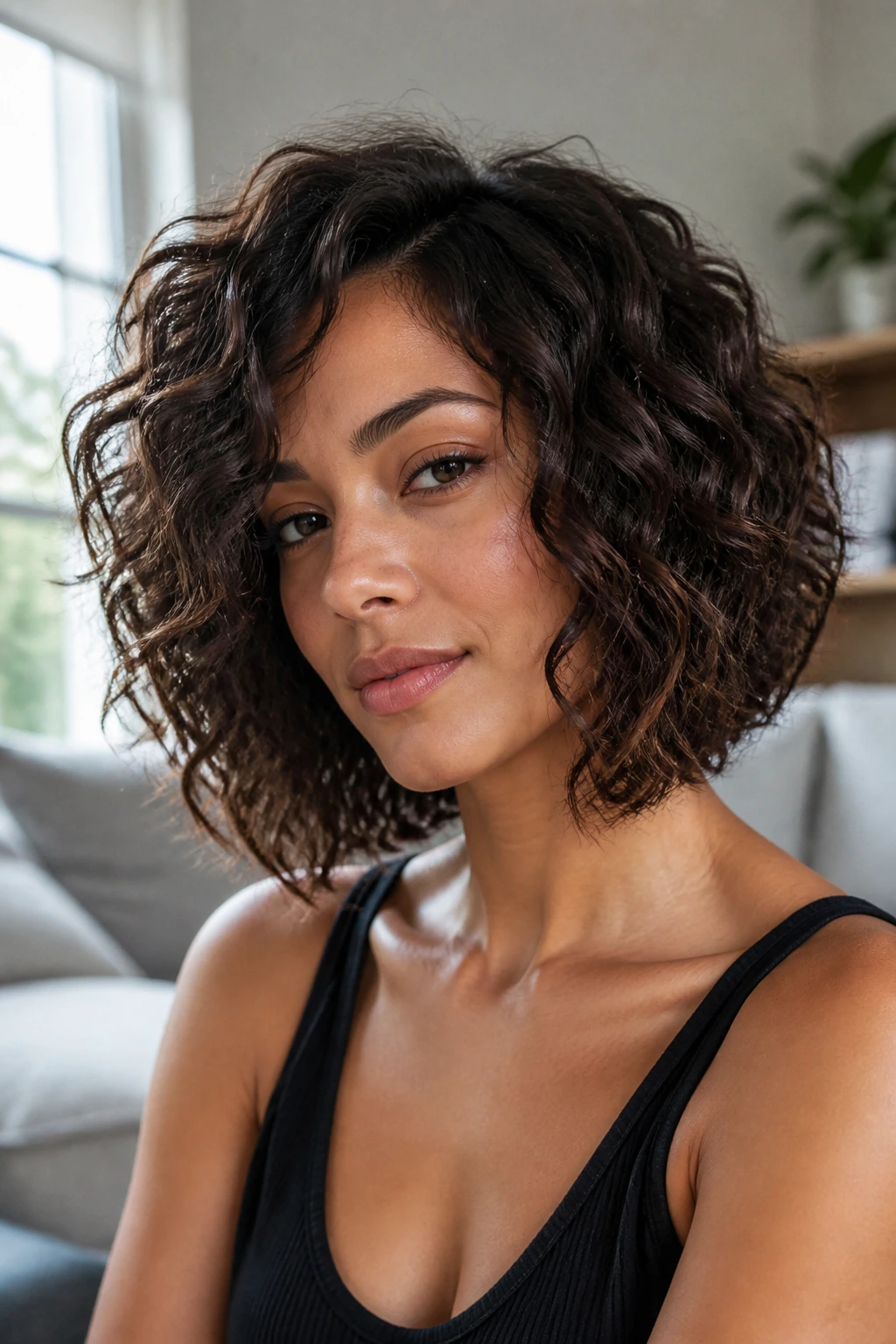
The “lob” is the long-bob variation, and it works surprisingly well for curly hair because it allows the curls to spiral fully without the restrictions of a super-short cut.
The Benefits of Length
With a longer inverted cut, you have more surface area for your curls to express themselves. You can mix up your curl definition with different styling creams without worrying about the cut looking too “poofy.”
Daily Maintenance
- Use a silk or satin pillowcase. The longer your curls are, the more they will rub against the fabric at night, and a short, textured cut needs all the protection it can get to stay frizz-free.
12. The Wispy-Layered Inverted Cut
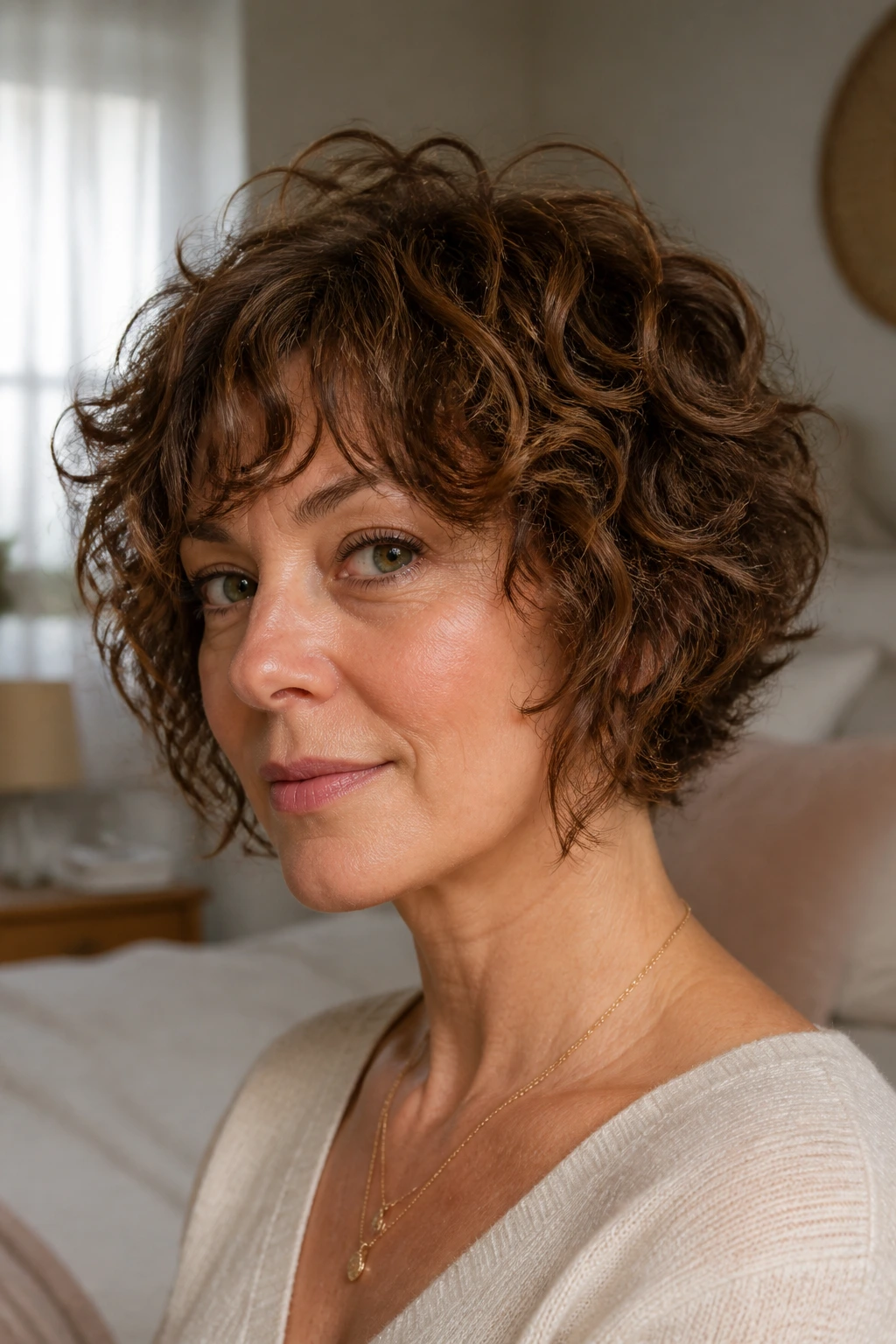
If you have fine, curly hair, you might be worried that an inverted bob will look sparse. The wispy-layered technique uses razor-cutting to create movement and lightness, making the hair look fuller and more aerated.
Why It Creates Volume
Fine hair tends to cling to the scalp. By thinning out the very ends of the layers, you remove the weight that drags the root down. This gives your curls more “freedom” to lift away from your head.
The Right Products
Avoid heavy gels or creams. Instead, use a volumizing foam that provides hold without adding moisture or weight.
13. The Two-Tone Inverted Bob
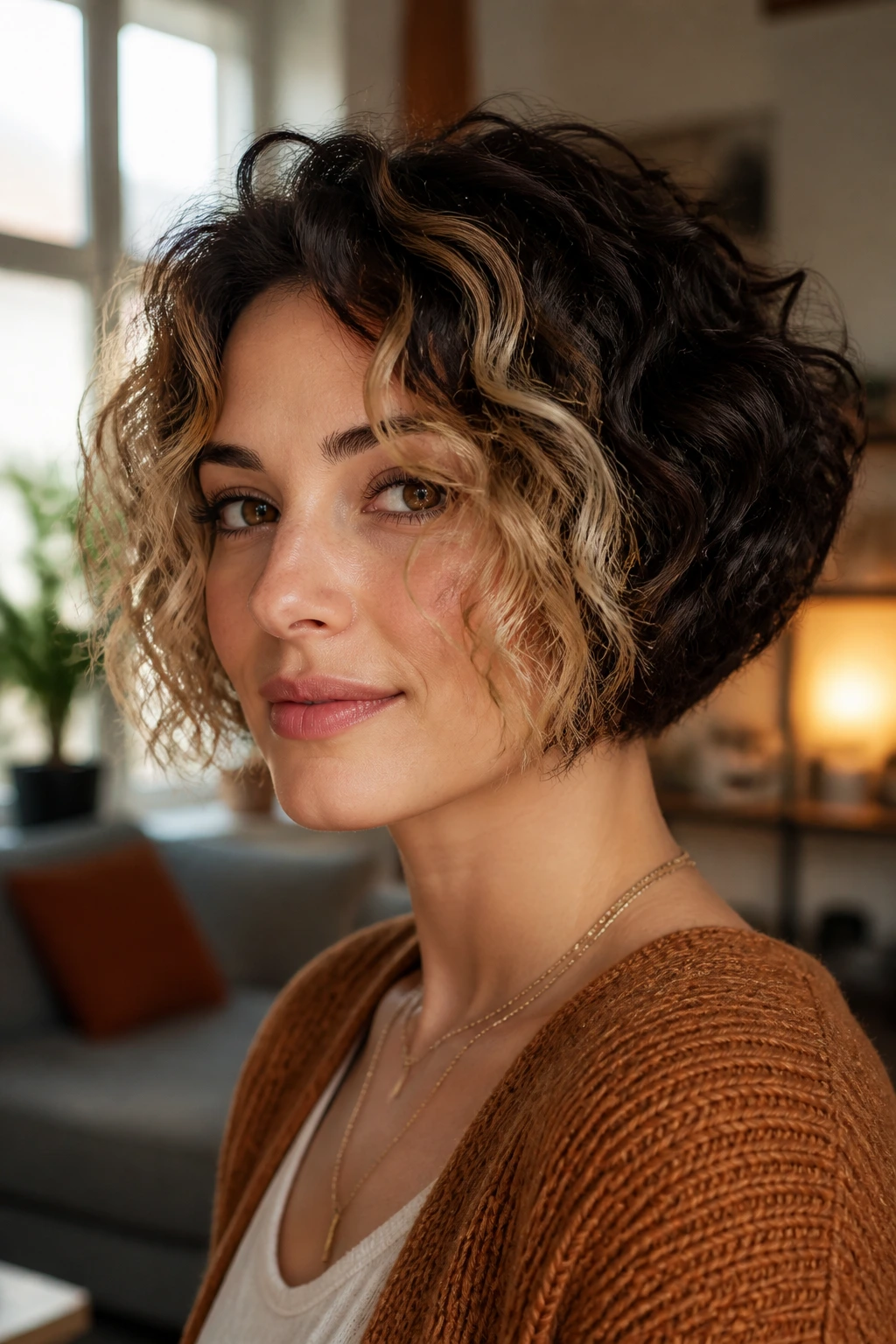
Color can completely change the way an inverted bob is perceived. By adding highlights or a lighter color to the front pieces, you emphasize the “inverted” shape, making the transition from back to front even more dramatic.
Why Color Matters
The eye naturally tracks lighter colors more quickly. If you have a dark base, light-colored framing pieces in the front will make the angular shape of your bob pop, even if your curls are tight and dense.
Caring for Color-Treated Curls
Chemical processing can change your curl pattern. Make sure you use a protein-rich treatment every other week to rebuild the hair cuticle, which might become porous after color treatment.
14. The Natural-Texture Inverted Cut
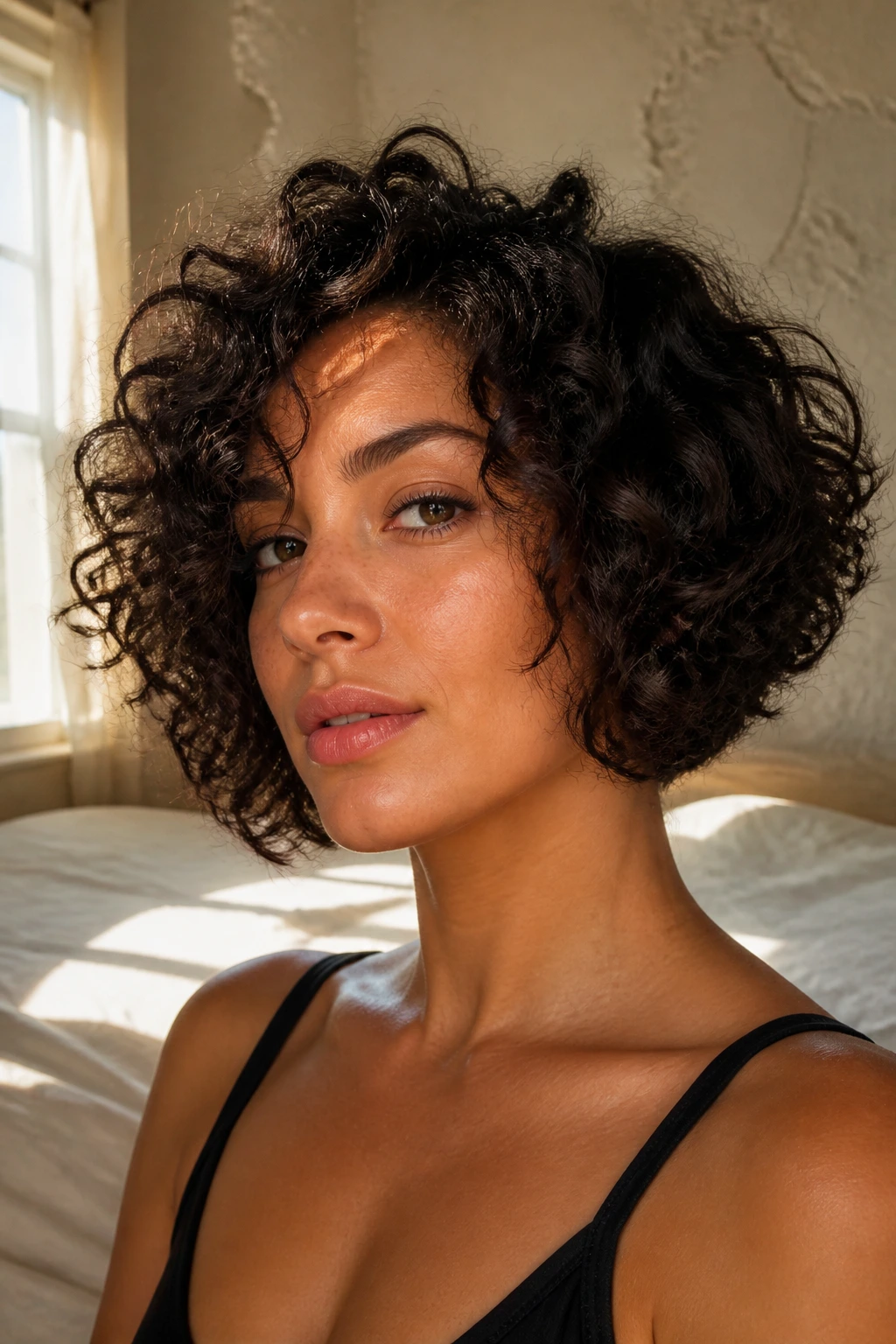
Some of the most beautiful inverted bobs are the ones that don’t try to be “perfect.” This style celebrates the natural, chaotic, and beautiful way your curls dry on their own.
The “I Just Woke Up Like This” Aesthetic
This is achieved by letting the cut grow out slightly between trims. It takes the sharp edge off the inverted bob and replaces it with a softer, more bohemian vibe.
No-Tool Styling
The best way to style this is to let it air dry completely. Use a diffuser only if you are in a rush. Avoid picking or brushing the hair at all costs; keep your hands out of your hair and let the curls do their own thing.
15. The Curly Bob with Side-Swept Bangs
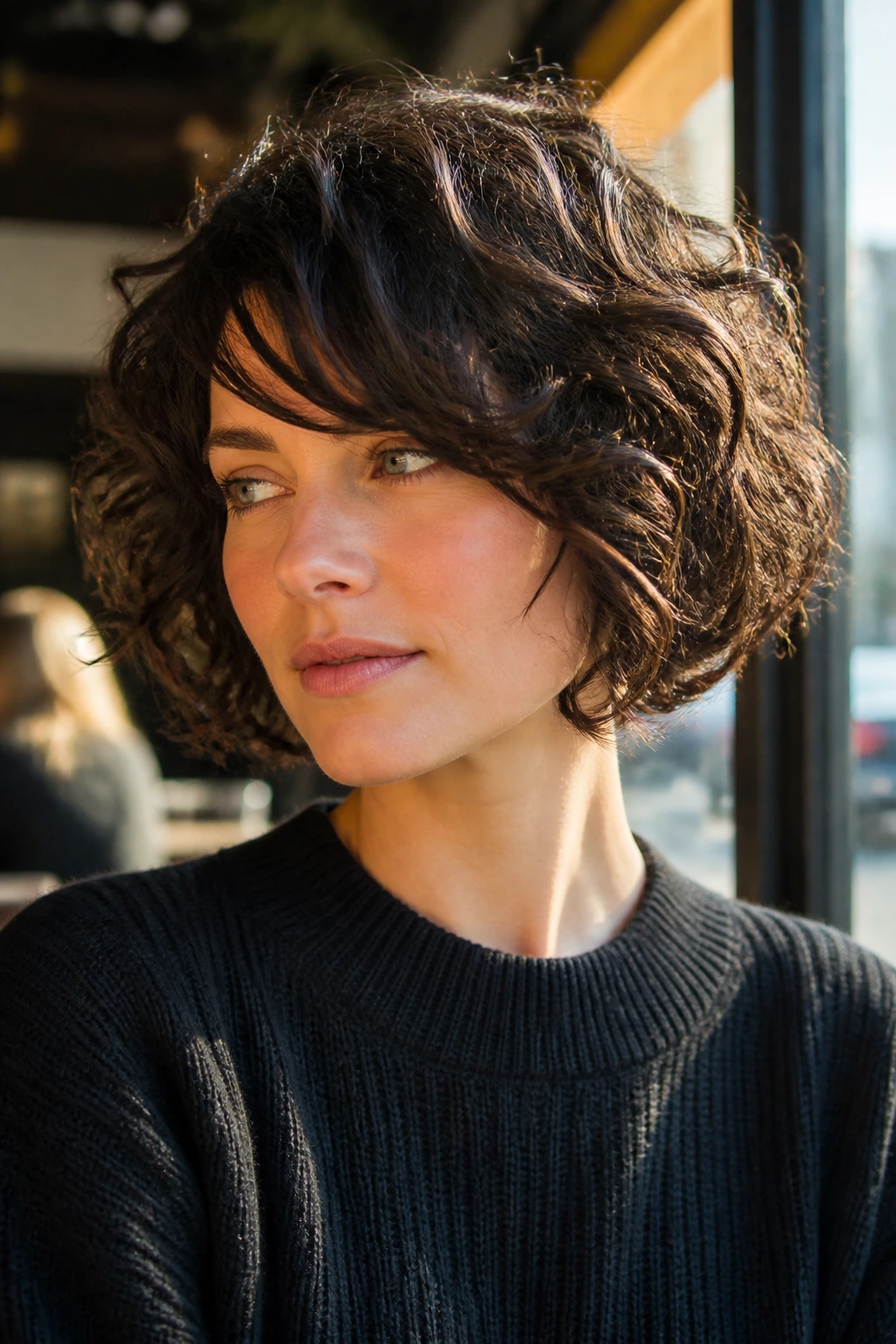
Side-swept bangs are the ultimate hack for someone who wants to hide a larger forehead or simply wants a more youthful appearance. They blend perfectly into the long front pieces of an inverted bob.
Why Side-Swept Bangs Work
Unlike blunt bangs, side-swept versions don’t create a horizontal line across the face. Instead, they create a diagonal line that complements the inverted angle of the cut, pulling everything toward the chin.
Cutting Technique
Ask your stylist to keep the bangs slightly longer than usual. Curly hair has a tendency to spring up, so if they cut them at cheekbone level, they might end up being too short to sweep to the side.
16. The “Bowl” Inverted Hybrid
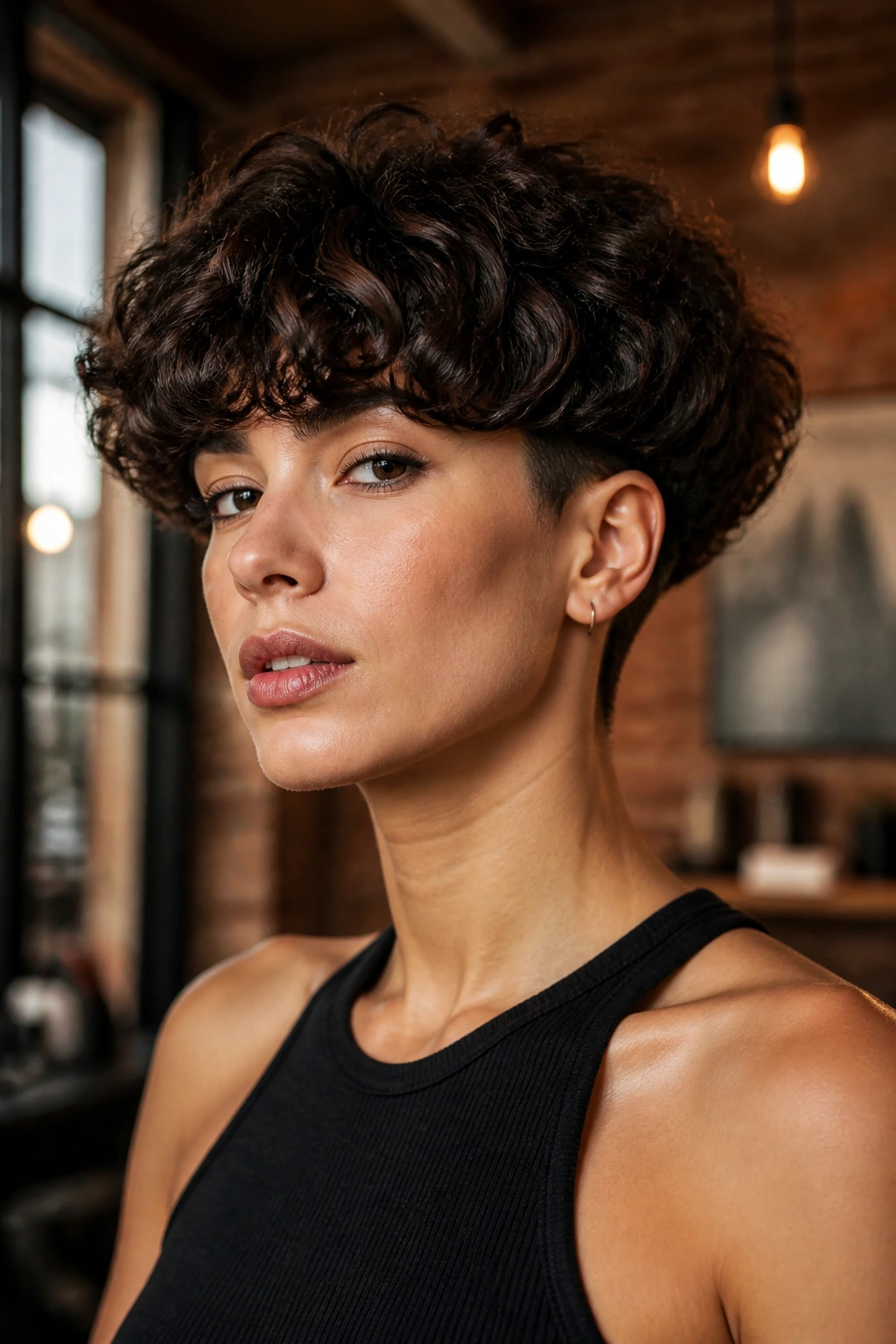
This is a modern, fashion-forward take that leans into the circular shape of a bowl cut but keeps the inverted back. It is sleek, high-fashion, and very bold.
Is This for Everyone?
Probably not. It’s a very specific look that suits those with oval or heart-shaped faces. However, if you are looking to make a statement, there is no better way to do it than with this structured, sculptural look.
Keeping the Lines Crisp
You will need to visit the salon every four to five weeks for this cut. Precision is the name of the game here, and once the hair grows out a quarter of an inch, the “bowl” shape starts to lose its intentionality.
17. The Curly Inverted Bob with Tapered Sides
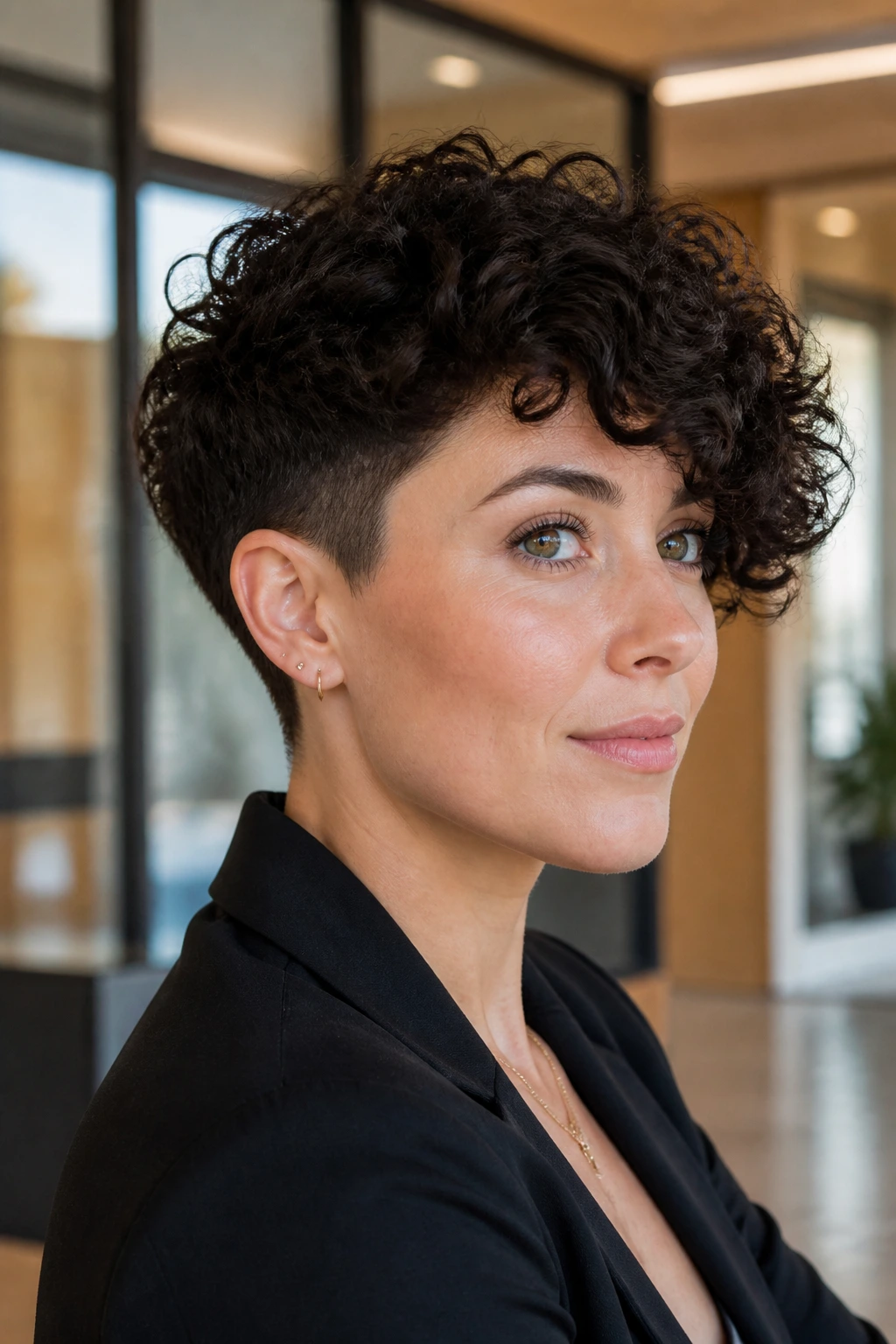
Instead of an undercut, a taper keeps some hair on the sides but makes it significantly shorter than the top. This gives you a streamlined look that feels very clean and tidy.
The Clean-Cut Appeal
This style is excellent for people in professional environments who want a “sharp” haircut that doesn’t look like they just rolled out of bed. It keeps the hair away from the ears and keeps your silhouette tight.
Maintaining the Taper
You can easily maintain this between salon visits by using a small beard trimmer or asking a partner to carefully clean up the perimeter around your ears and neck.
18. The Afro-Textured Inverted Bob
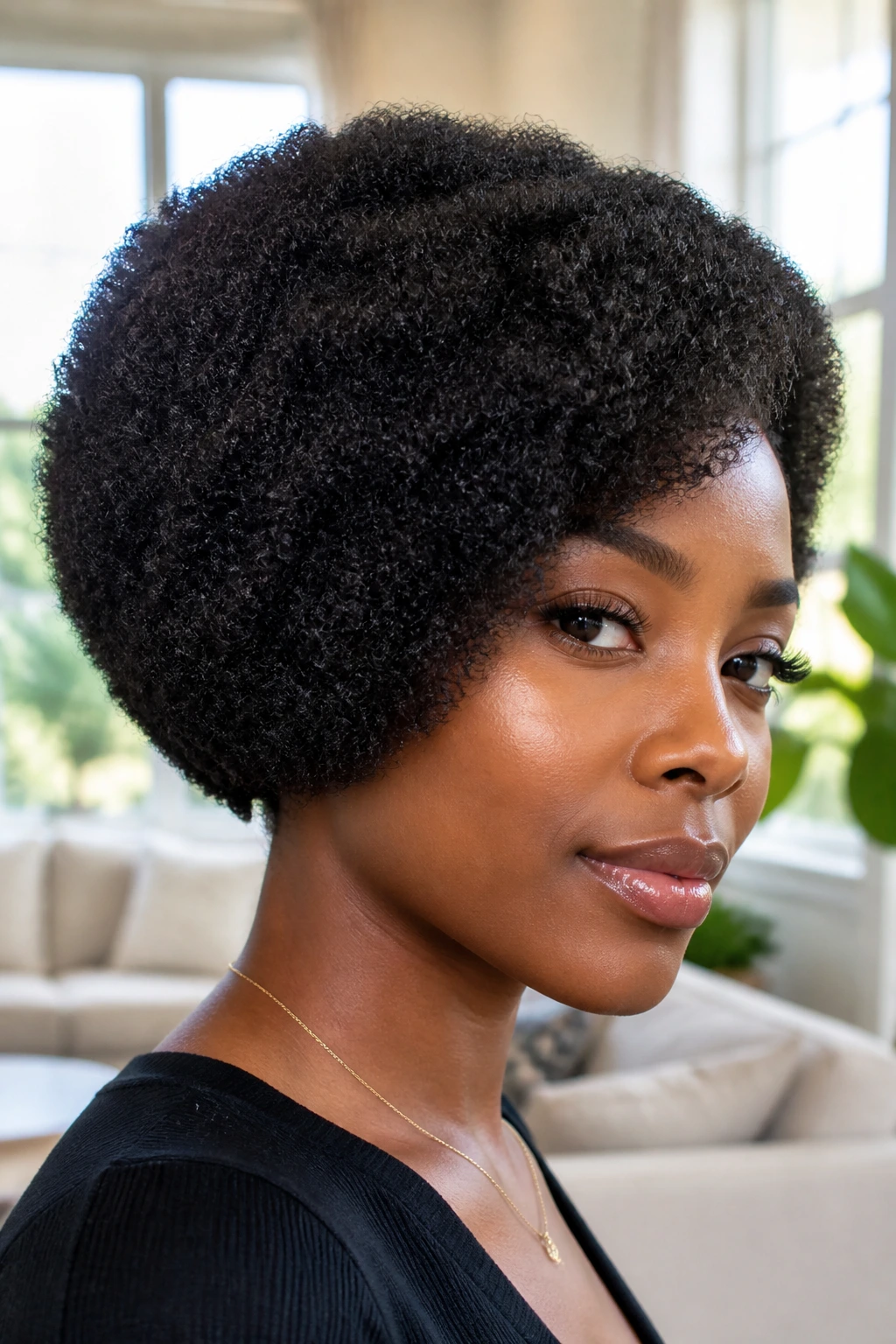
When you have 4C or highly dense hair, the inverted bob is an incredible way to shape your afro. It creates a beautiful, rounded silhouette that highlights the richness and volume of your natural texture.
Shaping the Crown
The key to this look is the “shape-up.” The back should be sculpted to follow the curve of your neck, while the top of the hair is shaped into a rounded crown that sits high on the head.
The Daily Refresh
Because this style relies on volume, you may want to use an afro pick to lightly lift the roots in the morning. Focus on the crown area to ensure the round shape remains consistent.
19. The Wet-Look Inverted Bob
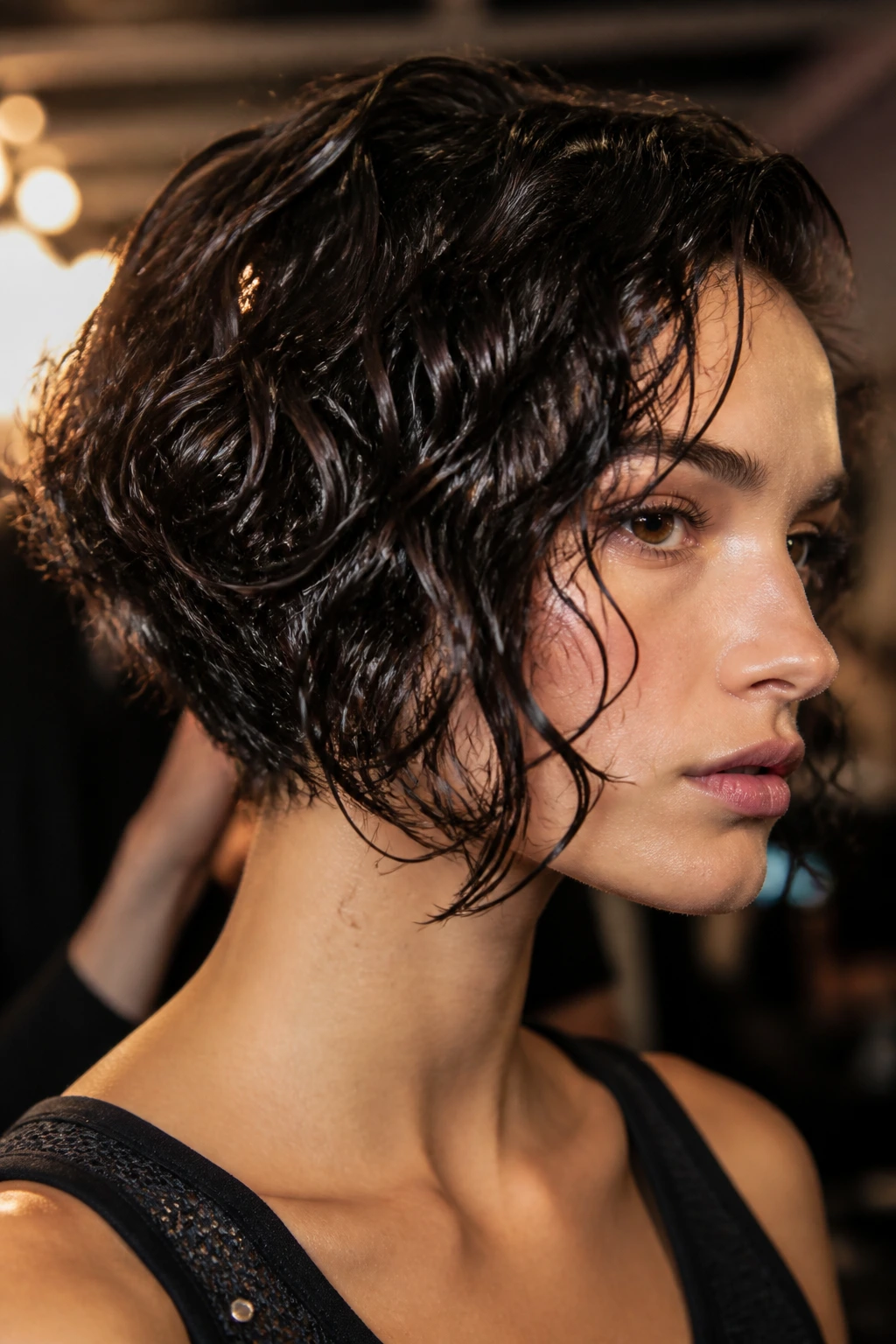
This isn’t necessarily a cut, but a styling technique that transforms any inverted bob into a runway-ready look. Using high-shine pomades, you style the curls to look slick, defined, and slightly damp.
Why It Works for Special Occasions
The “wet look” accentuates the sharpness of the inverted bob. If you have a big event and want your hair to look like a piece of high-fashion sculpture, this is the way to go.
Product Warning
Make sure you use a water-soluble product. If you use heavy oils or waxes that aren’t easy to wash out, your hair will quickly become greasy, which is the opposite of the look you’re going for.
20. The Flipped-Out Inverted Bob
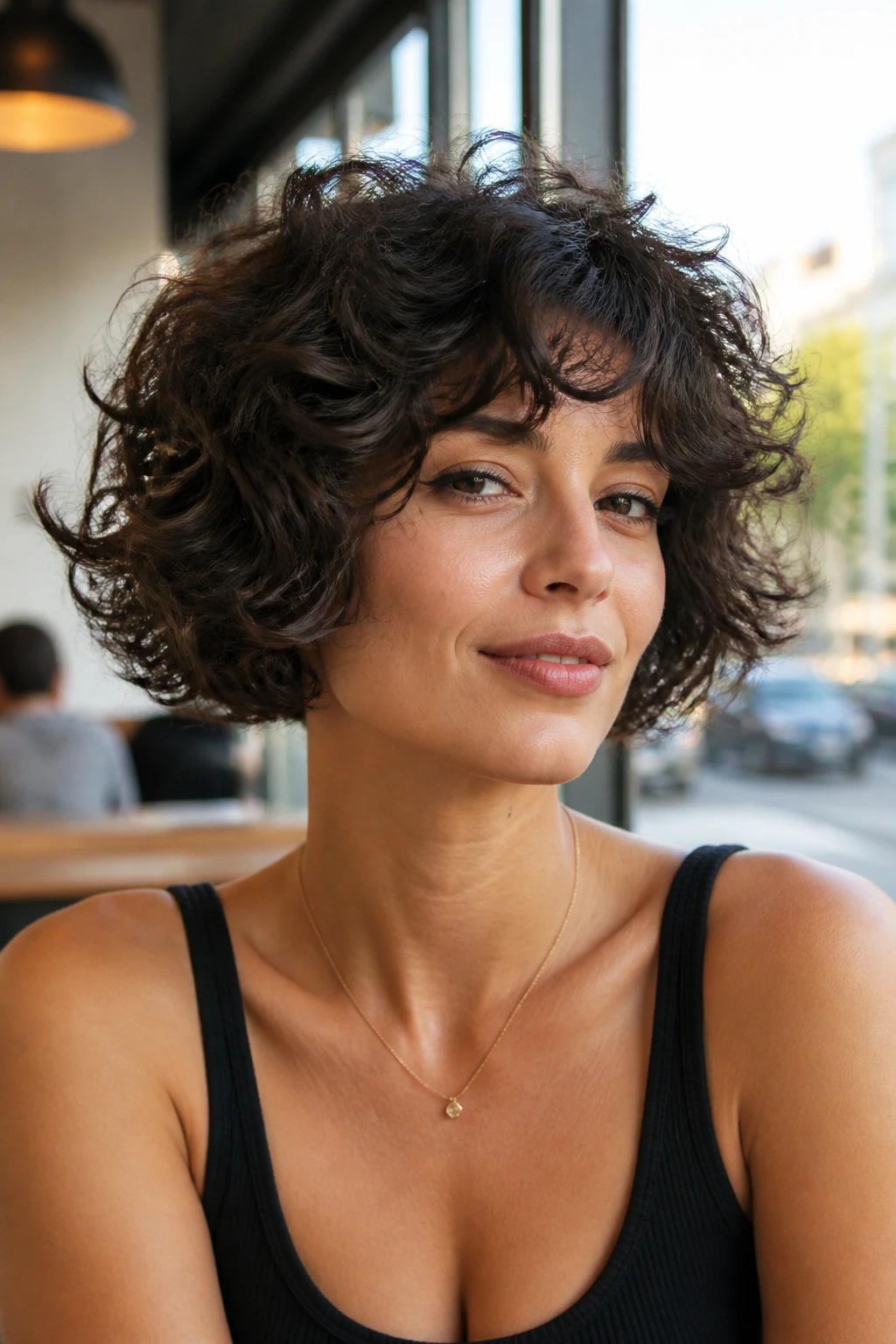
Sometimes the most stylish way to wear a short bob is to intentionally flip the ends outward. This creates a playful, retro energy that feels light and energetic.
How to Style the Flip
Use a small amount of lightweight styling cream and your fingers to curl the very ends of your hair upward as they dry. You can even use a small curling iron on just the bottom two inches if your hair is particularly stubborn.
The Contrast
Flipping the ends out creates a fun contrast with the internal structure of the inverted bob, which usually curves inward. It breaks up the silhouette and makes the cut feel less serious.
21. The Curly Bob with Feathered Layers
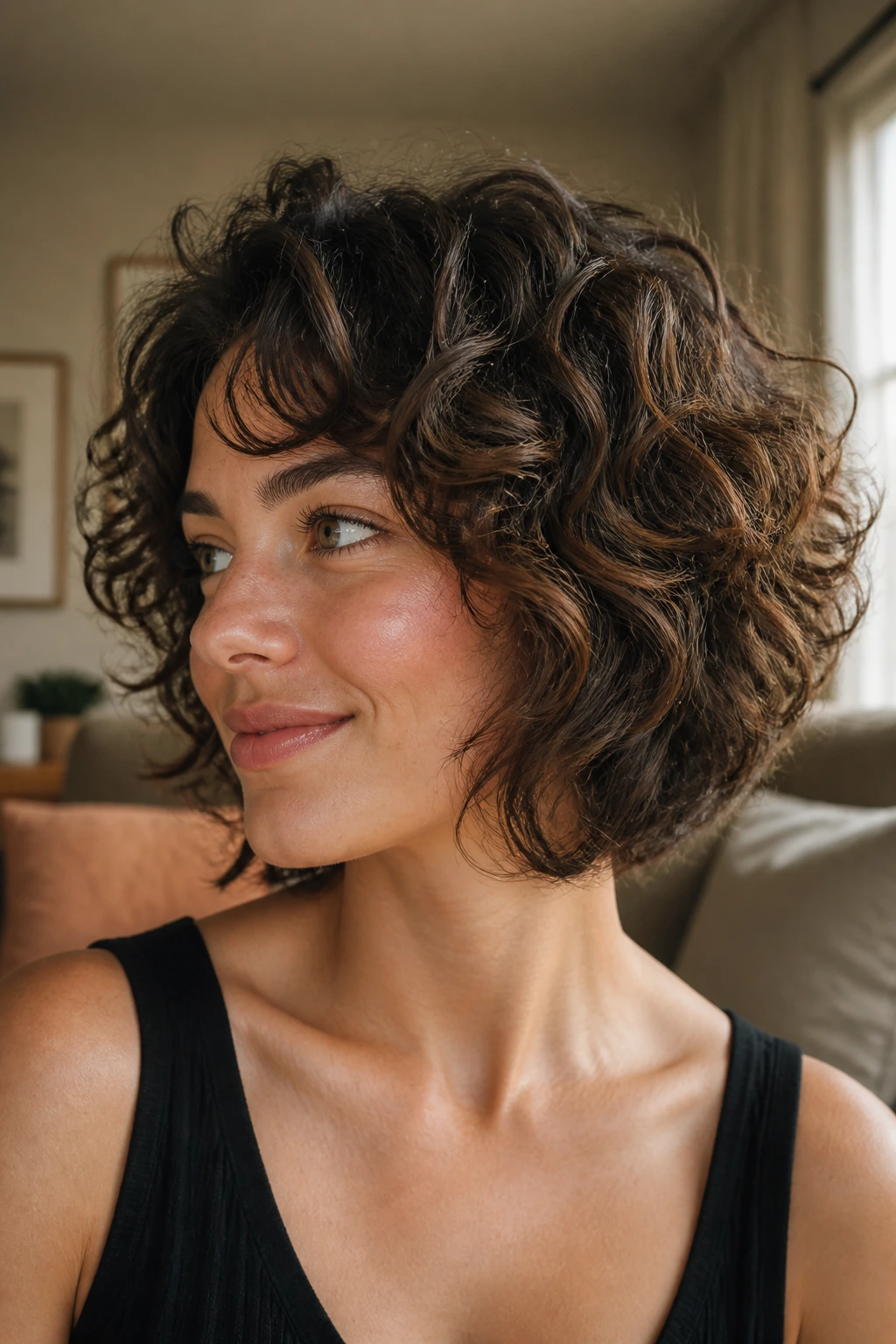
Feathered layers are great for breaking up density. They create a soft, airy look that makes the inverted bob feel less like a “block” of hair and more like a collection of flowing, individual curls.
Why It Adds Life
Curly hair can sometimes look like a solid mass. Feathered layers introduce “holes” in the structure, allowing air to pass through and making the curls look more distinct and vibrant.
Who Needs This?
If your hair is very thick and you feel like your head looks “heavy,” this is the best way to lighten the load without losing the length.
22. The Modern Mullet-Bob Hybrid
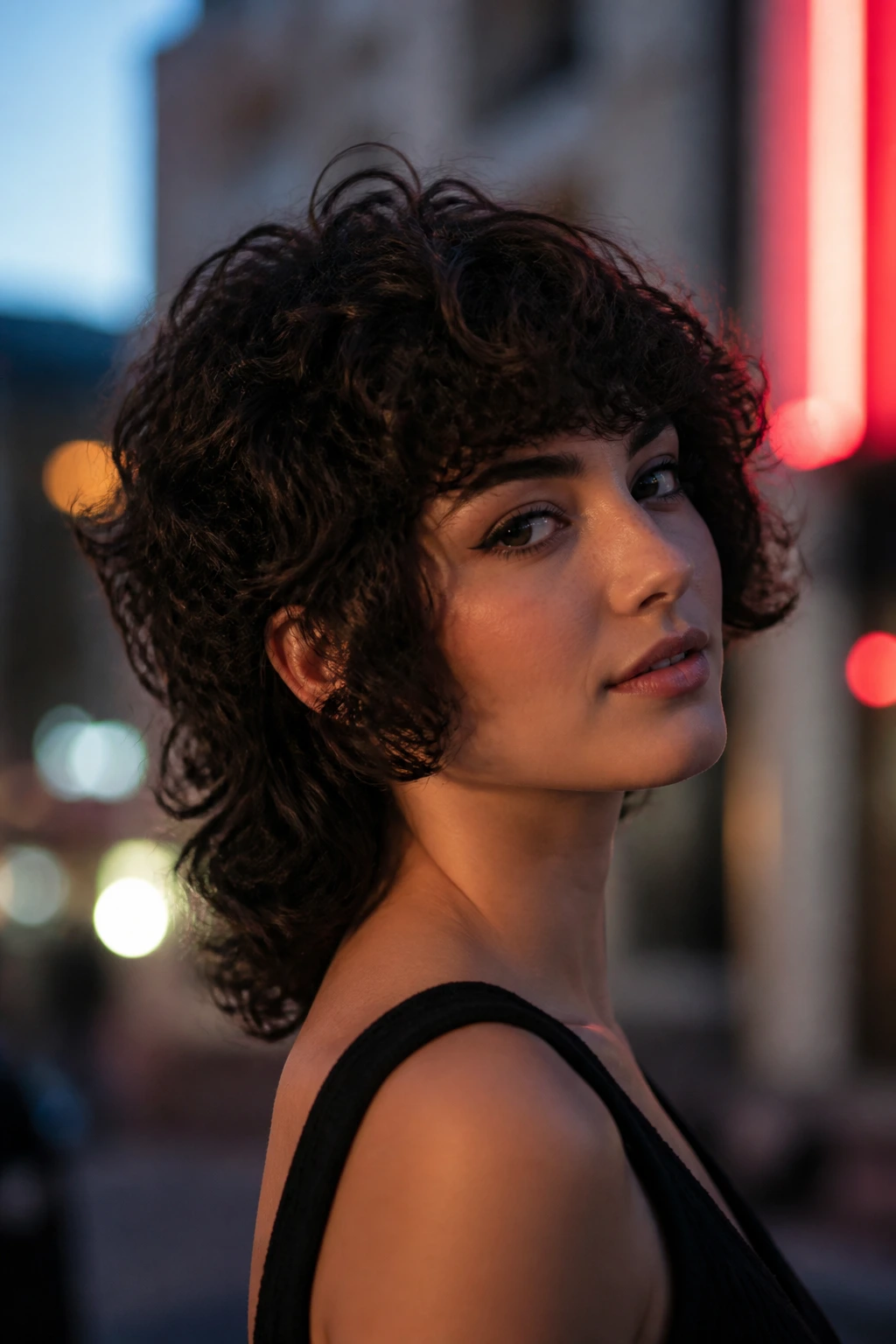
Don’t panic—this isn’t the mullet from the eighties. This is a subtle variation where the back is slightly longer than the sides, but the front remains in a bob-length cut. It’s incredibly stylish right now and works perfectly with curly hair.
The Shape Evolution
The inverted bob is essentially a forward-facing shape. Adding a little length to the back creates a “mullet-lite” effect that gives the hair a bit of a tail, making it look very intentional and cool.
Is It High Maintenance?
It’s surprisingly low maintenance. Because the layers are meant to be a bit chaotic, you don’t need to worry about the hair growing out perfectly.
23. The Curly Bob with Headband Styling
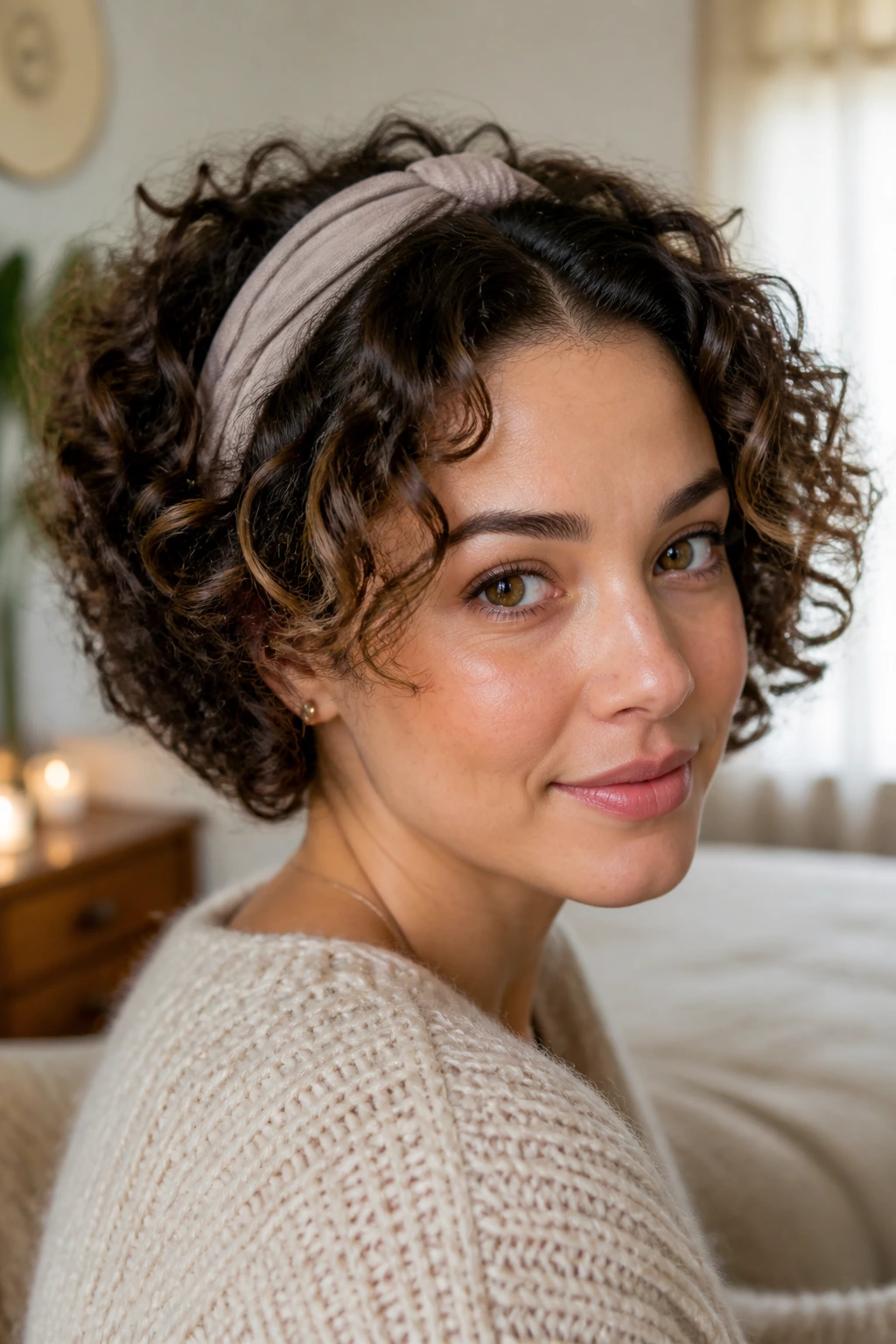
Because an inverted bob is shorter in the back, it can be tricky to keep hair off your face. Using headbands is a functional way to style your bob that also looks incredibly cute.
The Practicality Factor
On days when you don’t have time to refresh your curls, a headband pulls the hair back and keeps the focus on your face. It hides the roots and puts the curly texture on display.
Choosing the Right Headband
Look for fabric or cloth headbands. Plastic or metal headbands will inevitably get tangled in your curls and cause breakage. Cloth bands are gentle and comfortable for all-day wear.
24. The Geometric Blunt Bob
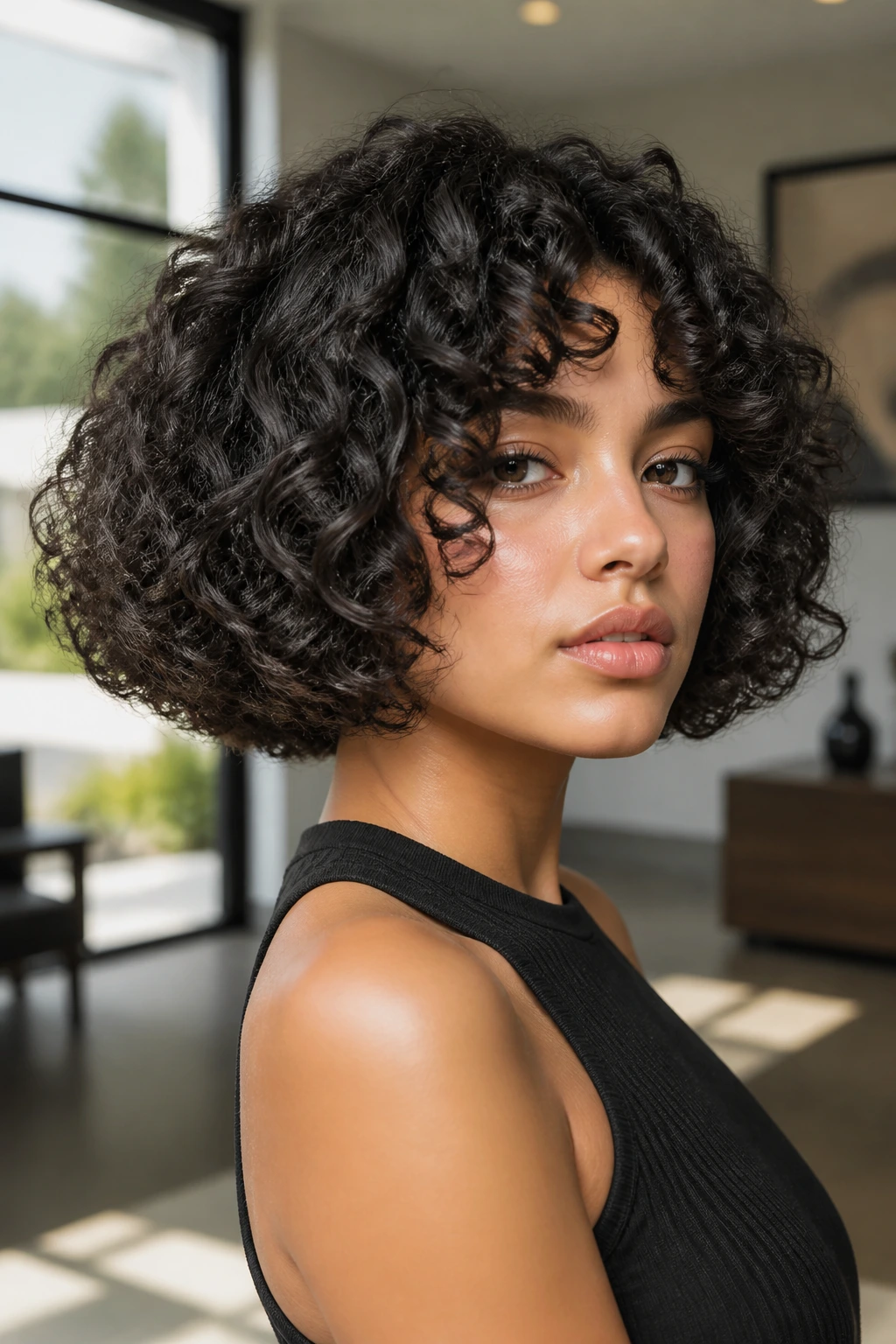
If you have a very regular curl pattern, like 3B, a blunt-cut bob is the ultimate choice. There are no layers—just one, solid line that goes from short at the back to long at the chin.
The Graphic Effect
This cut is all about the line. It looks clean, polished, and very high-fashion. When your curls are perfectly hydrated and defined, the effect of the solid bottom edge is stunning.
The Downside
You have to keep this cut pristine. Split ends will show up immediately on a blunt-cut bob. Be prepared for a trim every six weeks to keep that line looking razor-sharp.
25. The Curly Inverted Bob with Highlights
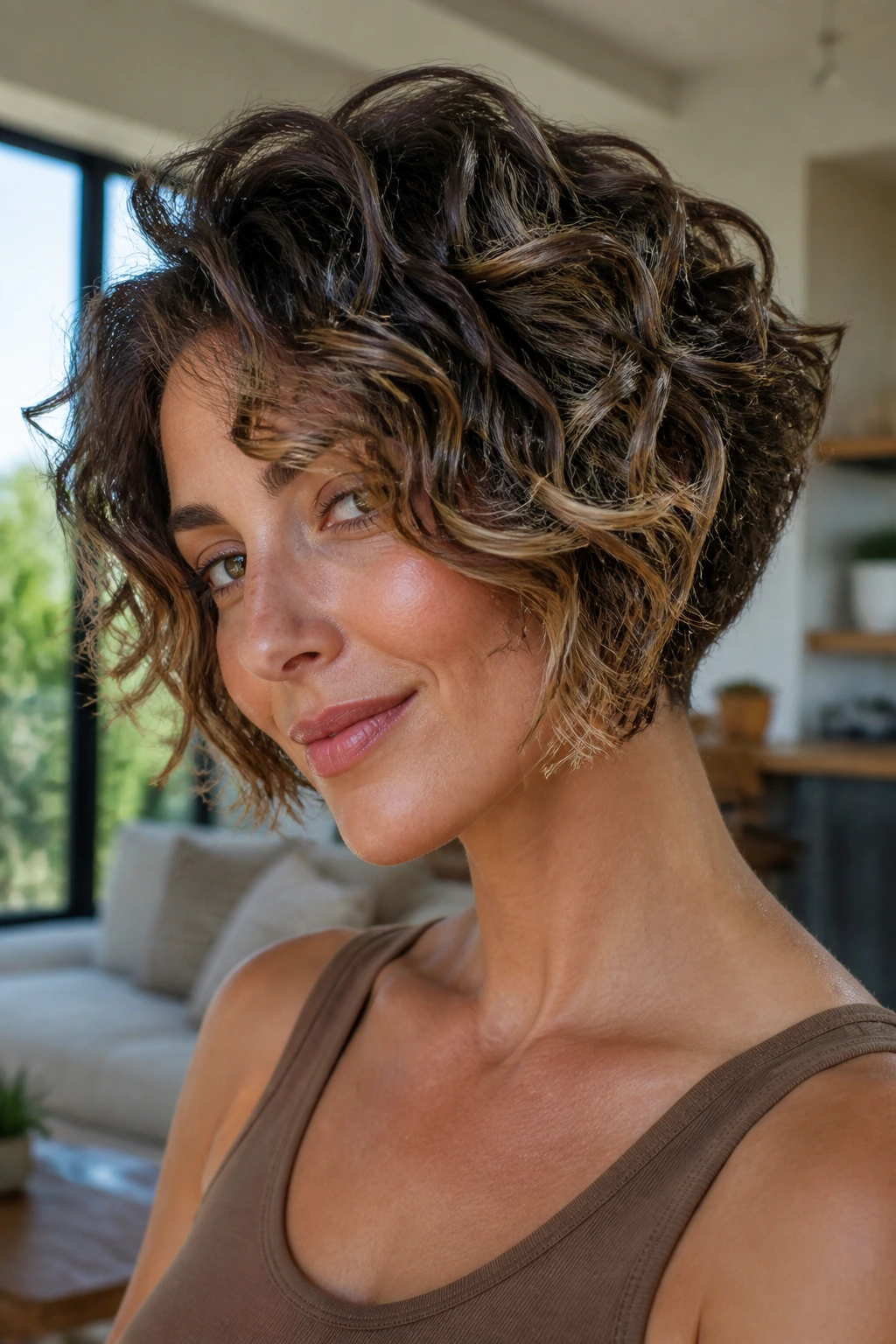
Highlights are the best way to showcase the architecture of your cut. By adding lighter pieces throughout, you draw attention to the various layers of your inverted bob, making it look more complex and dimensional.
Placement Matters
Ask your stylist to put the highlights on the ends of the layers. This will create a “shimmering” effect as the curls bounce and move, emphasizing the inverted shape with every step you take.
Aftercare
Use a sulfate-free shampoo to preserve the color and the health of your curls. Highlights are a chemical process that can dry out the hair, so keep a bottle of leave-in conditioner in your shower routine at all times.
Final Thoughts
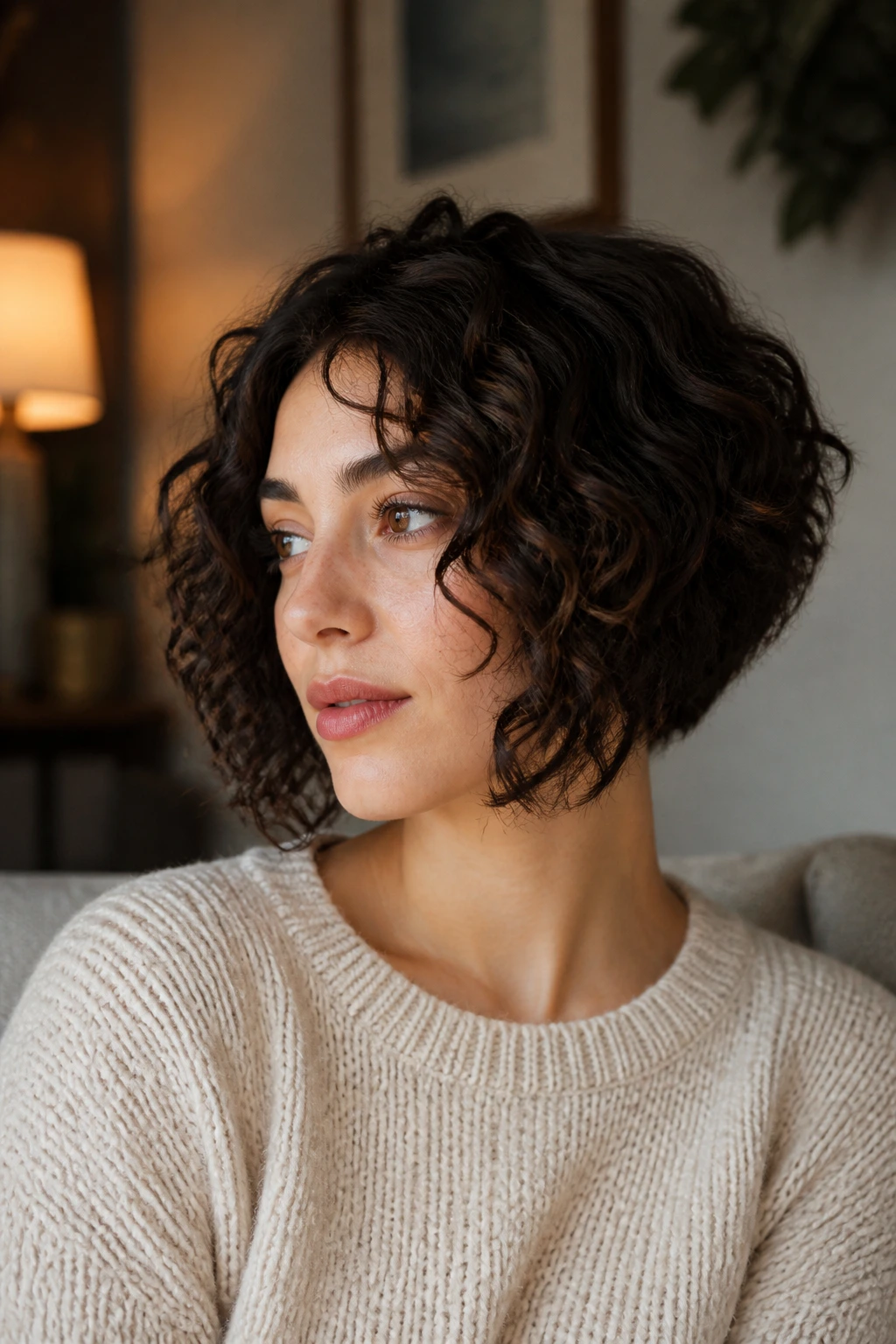
Choosing an inverted bob for your curly hair is a commitment to a specific look, but it’s one that pays off with incredible style and volume. The beauty of this haircut lies in its versatility; by playing with the angle of the invert, the density of the layers, and the way you color your ends, you can create a style that is entirely unique to you.
Remember, the most important part of this entire process is finding a stylist who understands curl patterns. Never let someone cut your curls while they are wet unless they are a certified specialist. When your hair is cut dry, you get to see exactly how your curls fall, allowing the inverted shape to be built around your natural movement. Once you find that perfect fit, you will find that the inverted bob isn’t just a low-maintenance hack—it is a powerful tool to let your natural texture shine.