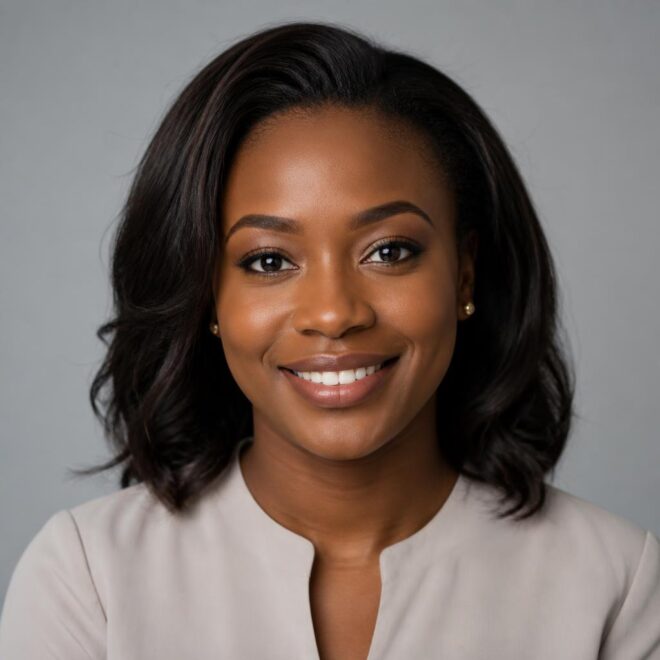


When you have a strong jawline and a forehead that demands attention, finding the right hairstyle can feel like a high-stakes game of trial and error. A square face shape is architectural and bold, defined by roughly equal width at the forehead, cheekbones, and jaw. While many people try to hide these angles, the most effective approach is often to embrace them with cuts that soften the perimeter. The angular bob with curtain bangs is, quite honestly, the gold standard for this face shape. It creates a frame that feels intentional, sophisticated, and surprisingly low-maintenance if you get the cut right.
Most people assume that shorter hair on a square face creates a boxy, rigid silhouette, but that is only true if the cut lacks movement. By introducing an angular cut—where the hair is shorter at the nape and graduates to a longer length toward the chin—you create a diagonal line that draws the eye downward. This visually elongates the face, breaking up the horizontal line of the jaw. When you add curtain bangs to the mix, you introduce a soft, sweeping curve that hits right around the cheekbones. It is a masterclass in geometry, balancing the sharp lines of your face with the fluidity of a well-executed haircut.
If you are currently sporting long layers or a blunt, one-length cut, transitioning to this look is a significant change, but it is one that pays off in versatility. You stop fighting your bone structure and start working with it. The beauty of this specific pairing lies in how it interacts with the light and shadow on your face. Because the hair is angled away from the jaw, it prevents your face from being “swallowed” by heavy, static hair. Instead, you get a clean, polished finish that looks just as good air-dried as it does styled.
Why the Angular Bob Flatters Square Jawlines
The magic of the angular bob—often called an A-line or inverted bob—is its ability to create a focal point below the jawline. For someone with a square face, you want to avoid a cut that ends exactly at the chin, as that will highlight the widest part of your jaw. An angular bob that hits about an inch or two below the jawline creates a “v” shape that mimics the softness you are trying to introduce. The back is typically stacked with shorter layers, which builds volume at the crown and keeps the hair from looking limp, while the front panels provide that essential elongation.
The Role of Graduated Layers
The stacking technique at the back is what gives this bob its signature shape. You are essentially creating a pedestal of volume that lifts the hair up, while the front pieces act like curtains that frame your features. If your hair is fine, those back layers are vital; they prevent the hair from clinging to the neck and looking flat. For thicker hair, these layers should be point-cut to remove bulk so that the front doesn’t look overly heavy or “triangular” when it hits your shoulders.
Softening the Jaw Through Length
You might be tempted to go for a chin-length bob, but I generally advise against it. When the ends of the hair align perfectly with the jaw, it acts like an underline on a document—it draws a thick, bold line right where your face is widest. By keeping the front length slightly longer, the hair drops past the jawline. This transition creates a soft movement that directs the eye toward your collarbone rather than your mandible. It turns a sharp angle into a subtle, graceful curve.
Mastering the Curtain Bang for Your Face Shape
Curtain bangs are not just a trend; they are a structural necessity for anyone who wants to break up the forehead and cheekbone area without the commitment of blunt, heavy bangs. For a square face, you want these bangs to be long and wispy. Avoid anything that creates a straight horizontal line across your forehead, as that will only emphasize the squareness of your face. Instead, you want bangs that start at a center or off-center part and sweep outward toward your temples.
The Perfect Placement
The most flattering length for curtain bangs on a square face is usually right between the eyebrow and the cheekbone. If they are too short, they can look a bit “stuck on.” If they are too long, they lose their shape and just become layers. Aim for a length that you can tuck behind your ears if you want, but that naturally falls to graze the highest point of your cheekbones. This creates a soft arch that complements the angularity of your face rather than competing with it.
Texture and Density
Thin, airy curtain bangs are significantly better than thick, chunky ones. You want to see bits of your forehead through the fringe. This transparency makes the look feel effortless—the kind of hair that looks like you just woke up and shook it out. If your hair is very thick, ask your stylist to use a thinning shear or a razor to “shatter” the ends of the bangs. This prevents them from looking like a curtain of heavy fabric and ensures they blend seamlessly into the side pieces of your bob.
The Importance of Precision Cutting
You cannot pull off a great angular bob with a “one-size-fits-all” haircut. This style is entirely dependent on the line. If the angle isn’t sharp enough, it just looks like a messy grown-out bob. If the graduation is too extreme, it looks like a costume. A veteran stylist will use a technique called “point cutting” to soften the edges. This creates a textured, lived-in look that avoids that “helmet head” appearance that dated bobs from the past often suffered from.
Considering Your Hair Density
If you have fine hair, you need the bluntness at the bottom to maintain the illusion of density. Your stylist should keep the perimeter relatively clean and solid. However, if you have coarse or curly hair, you need interior layering. Without those hidden layers, your bob will likely puff out at the sides, turning into a pyramid shape that is almost impossible to style without a flat iron. You need the weight removed from the mid-lengths to allow the hair to hang straight and elegant.
The Cut-to-Face Ratio
Every face is different, even within the “square” category. Some square faces are shorter, while others are elongated. If your face is more compact, ask for a slightly steeper angle. If your face is longer, a more subtle, shallow angle is better. This adjustment in the slope of the cut is where the real expertise comes in. It is not just about copying a photo; it is about adjusting the geometry of the hair to fit your specific skeletal structure.
Daily Styling for an Effortless Look
The beauty of the angular bob with curtain bangs is that it requires minimal heat styling once you find the right rhythm. For most people, a simple “scrunch and dry” routine works wonders if the cut is balanced correctly. If you have straight hair, you can let it air dry and just use a round brush on the bangs to give them that iconic “flick” outward. For those with a natural wave, a little sea salt spray will enhance the texture and make the layers look intentional.
The Round Brush Technique
If you want that polished, salon-quality bend in your curtain bangs, use a medium-sized ceramic round brush. While your hair is about 80 percent dry, pull the bangs forward and then roll them backward, away from your face. Hold the brush there for a few seconds with the hair dryer set to a medium heat. When you let go, the bangs will have that natural, sweeping curve that opens up your eyes and softens your forehead.
Dealing with Bedhead
Bobs, especially stacked ones, can develop strange “kinks” after a night of sleep. If you wake up with a piece of hair sticking out at an odd angle, do not reach for the flat iron immediately. Instead, use a spray bottle with a little water to dampen the area, and then use your fingers to smooth it back into place while you blow-dry it briefly. Often, that quick reset is all you need. Avoiding excess heat will save your hair from split ends, which are much more noticeable on a short, sharp bob than they are on long, layered hair.
Choosing the Right Products for Texture
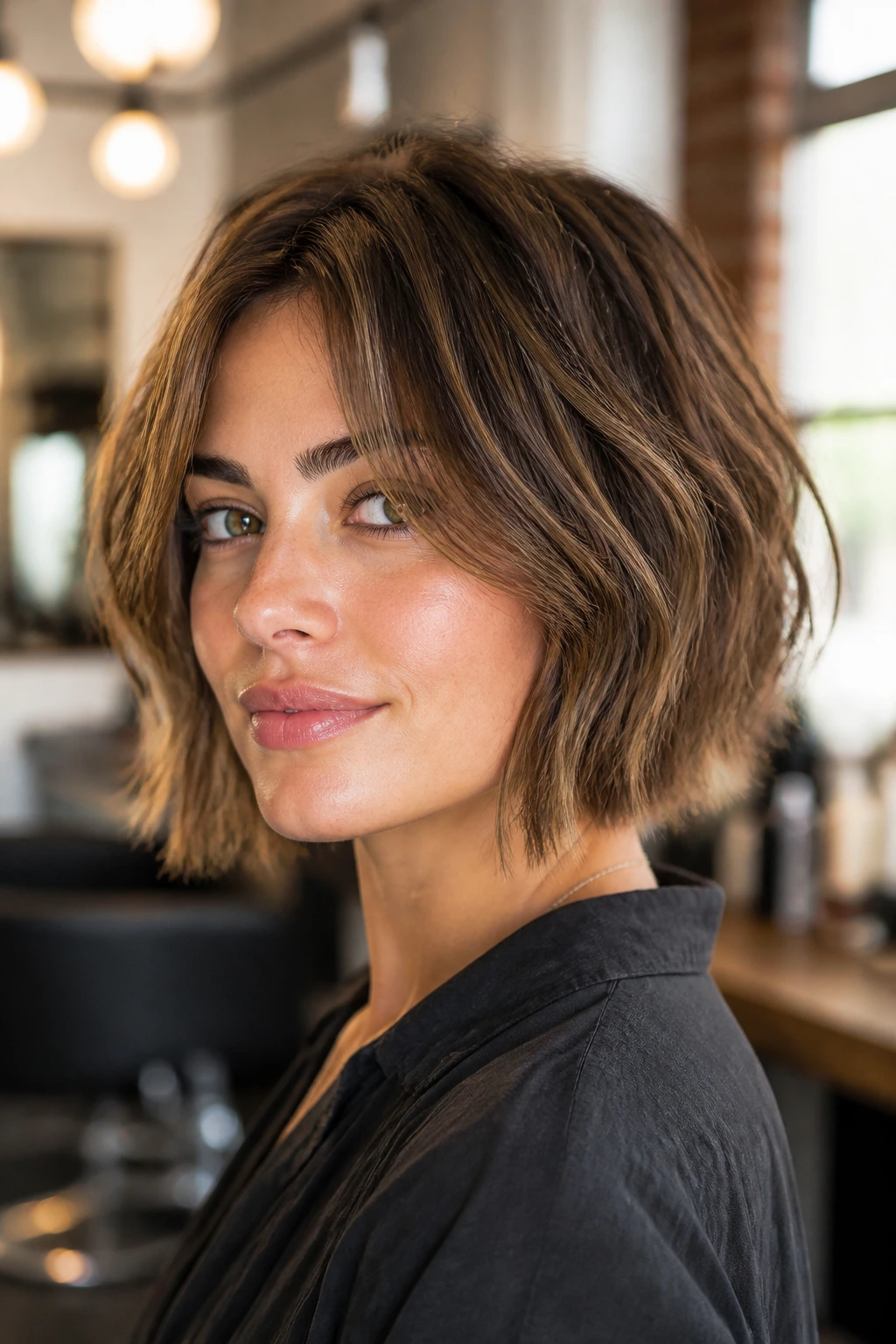
Because an angular bob relies on the shape of the cut rather than the length of the hair, product choice is everything. You want your hair to look healthy, but you don’t want it to look “stiff.” If you use too much hairspray, the bob will lose its movement. If you use too much oil, it will look flat and greasy. A lightweight texturizing spray is your best friend. It gives the hair enough “grit” to hold its shape throughout the day without weighing it down.
Why Mousse is Making a Comeback
For those with finer hair, a golf-ball-sized dollop of volumizing mousse applied to damp roots is essential. It provides the backbone for your style. Once the hair is dry, you can use a tiny amount of dry shampoo, even on clean hair, to add a bit of extra volume and separation. It sounds counterintuitive, but applying dry shampoo to the mid-lengths of an angular bob helps the layers stand away from the head, creating that airy, voluminous effect that makes square faces look so balanced.
Shine vs. Matte
Decide what kind of finish you want before you reach for the bottle. If you want a sleek, “glass hair” look, use a lightweight finishing oil on the very ends of your hair. If you prefer a more bohemian, textured vibe, stick to sea salt sprays or matte pomades. The contrast between your sharp, angular jaw and a soft, textured finish is very chic. It creates an interesting visual play that makes the entire hairstyle feel more modern and less “stiff.”
How Often to Visit the Salon
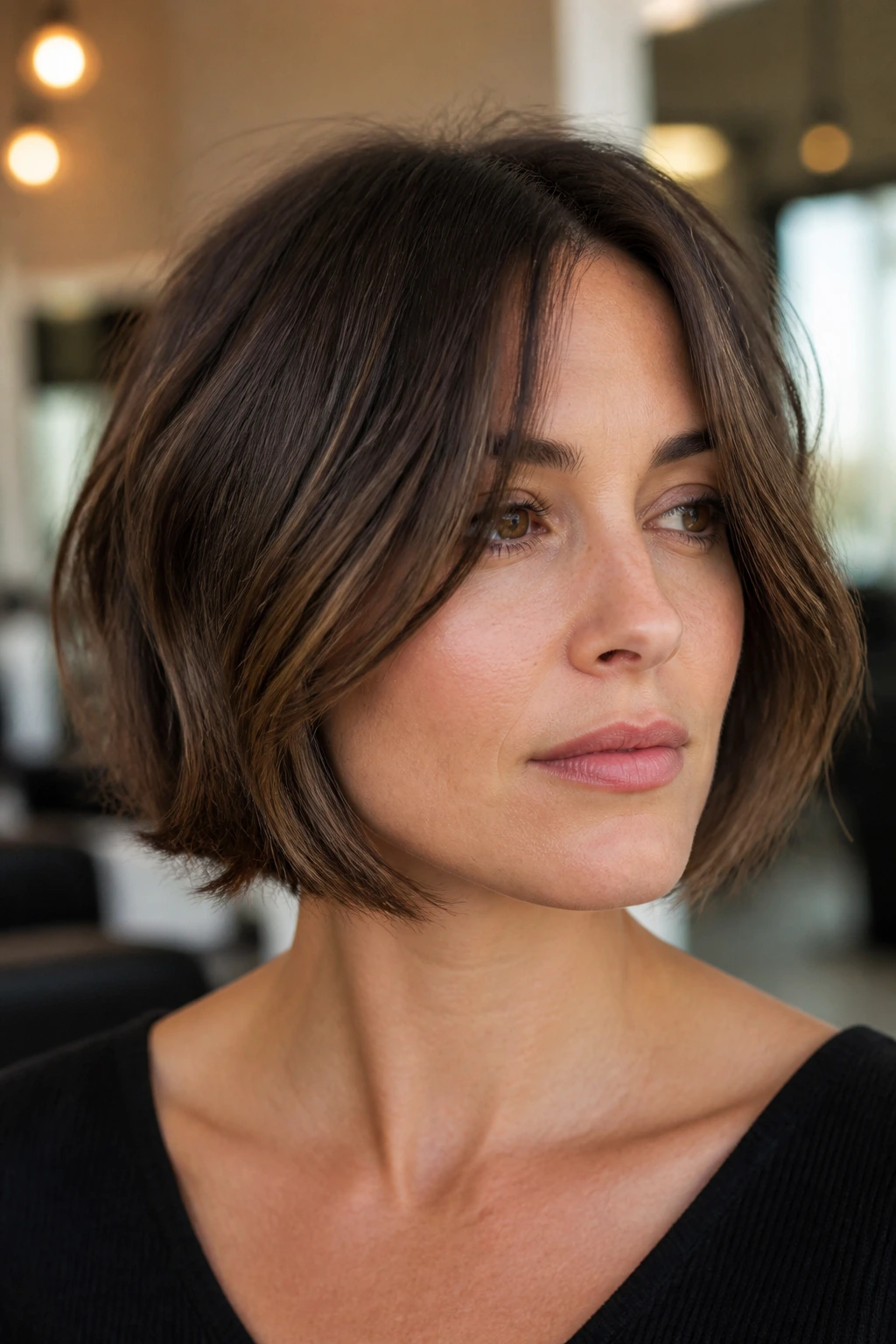
Short hair is a commitment. An angular bob is not a style you can get and forget for six months. Because the angle is the entire point, as the hair grows, the shape loses its integrity. You will notice that the back starts to blend into the front, and the “v” shape begins to blur. To keep this look razor-sharp, you need a trim every six to eight weeks. If you leave it longer than that, you end up with a “bob-mullet” situation where the back is growing faster than the front graduation.
Maintaining the Curtain Bangs
Your bangs will likely grow out faster than the bob itself. If you are handy with shears, you might be tempted to trim them at home. Do not do this. Curtain bangs require a specific “fringe” technique where the length is shorter in the middle and longer on the sides. It is incredibly easy to cut them too short or create a choppy, uneven line that ruins the frame of your face. Stick to salon trims for the bangs, even if you go longer between full bob haircuts.
When to Ask for a Refresh
If you find yourself using more styling product than usual to force the hair to lay “right,” that is your sign that the cut has grown out. A good haircut should almost style itself. When the layers get too long, they lose their ability to lift, and your style will start to feel heavy and dragging. When your curtain bangs start poking you in the eyes and refusing to sweep back, it is time to schedule that appointment.
Adapting the Cut for Different Hair Textures
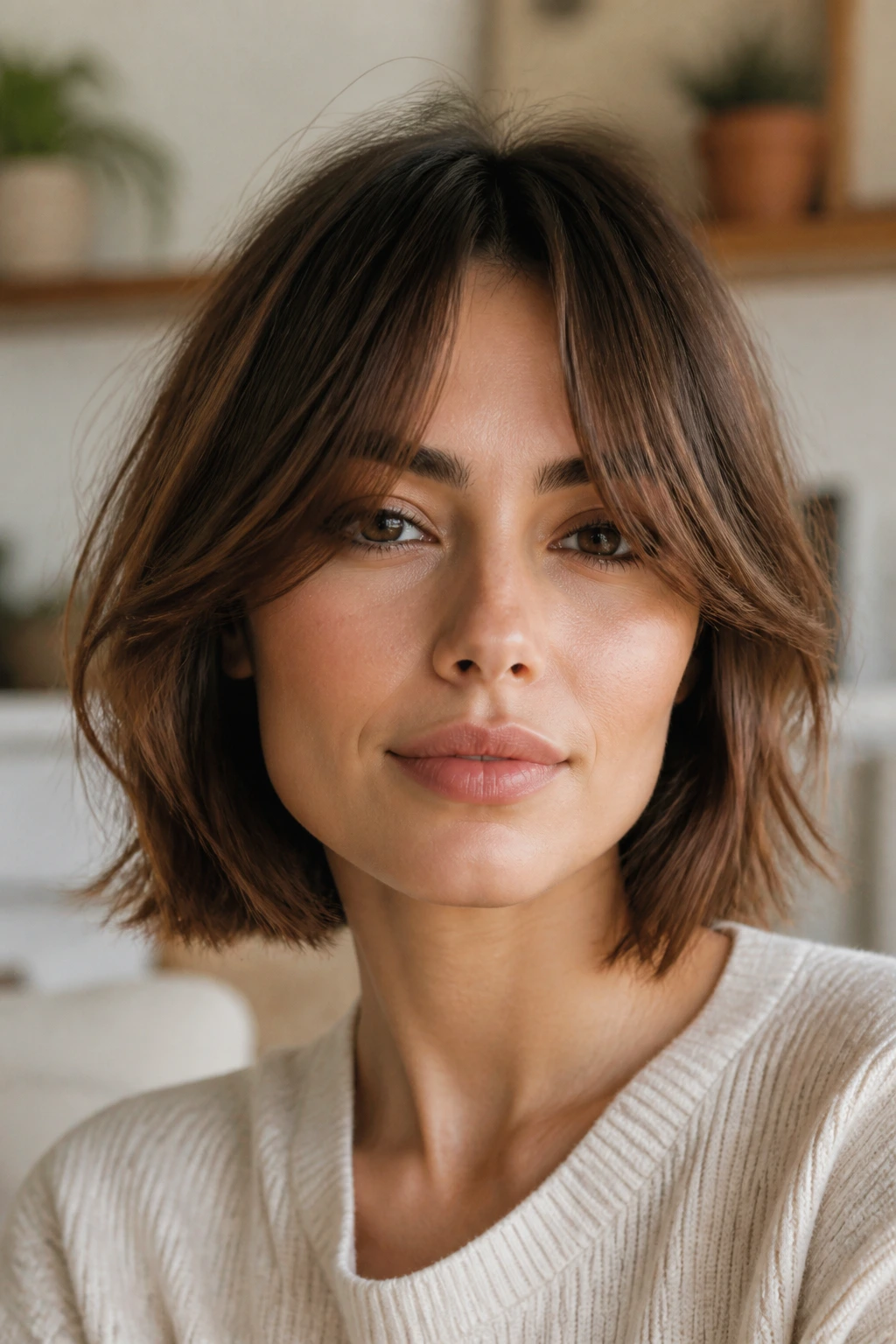
One of the biggest misconceptions is that bobs are only for women with fine, straight hair. That is simply false. A skilled stylist can adapt this angular cut to almost any hair texture. The secret lies in the cutting method. If you have curly hair, you should ask for a “dry cut” or a cut that respects your curl pattern. If your stylist cuts your hair straight, the graduation will be completely off once your curls spring back up.
The Curly Bob Strategy
For curly hair, the layers need to be longer to account for the “shrinkage.” The curtain bangs should also be cut much longer than you think, so that when they dry, they still frame your cheekbones perfectly. An angular bob on curly hair is incredibly flattering for a square face—the soft curls provide the natural “softness” that a straight-haired bob has to work harder to achieve. It is a beautiful way to highlight your texture while still gaining the structural benefits of the A-line shape.
Dealing with Coarse or Thick Hair
If your hair is thick and coarse, the key is aggressive thinning and internal layering. You want the hair to behave like a fabric that drapes rather than a solid object that sits. Your stylist should focus on removing weight from the back and the interior of the sides. This ensures that when you walk down the street, your hair moves with you. If it stays frozen in place, it creates too much bulk around your jawline, which is exactly what we are trying to avoid.
Colors That Enhance the Angular Shape
Color can change the way an angular bob is perceived. A solid, deep color like jet black or dark brown will emphasize the precision of the lines. This can look very sophisticated and “editorial.” On the other hand, highlights or a balayage effect will accentuate the movement of the hair. If you have an angular bob, adding some lighter pieces near the face—especially around those curtain bangs—can draw even more attention to your eyes and soften your jawline further.
The Power of Balayage
A soft balayage that starts slightly lower than the root is perfect for this cut. It adds dimension so that the hair doesn’t look like a solid, flat block. When you have an angled cut, those lighter ends really show off the graduation. You can actually see the “v” shape better when there is a color gradient involved. It’s a subtle detail, but it makes the haircut look more expensive and well-thought-out.
Highlights and Lowlights
If you are worried about the bob looking too thin, avoid high-contrast highlights. Instead, opt for “babylights” that blend in with your base color. They add the illusion of volume without the harsh lines that can sometimes make fine hair look stringy. For a square face, you generally want to avoid stark, horizontal highlights that could draw attention to the width of the face. Keep the color focused on the ends and the frame pieces to maximize the face-slimming effect.
Styling for Special Occasions
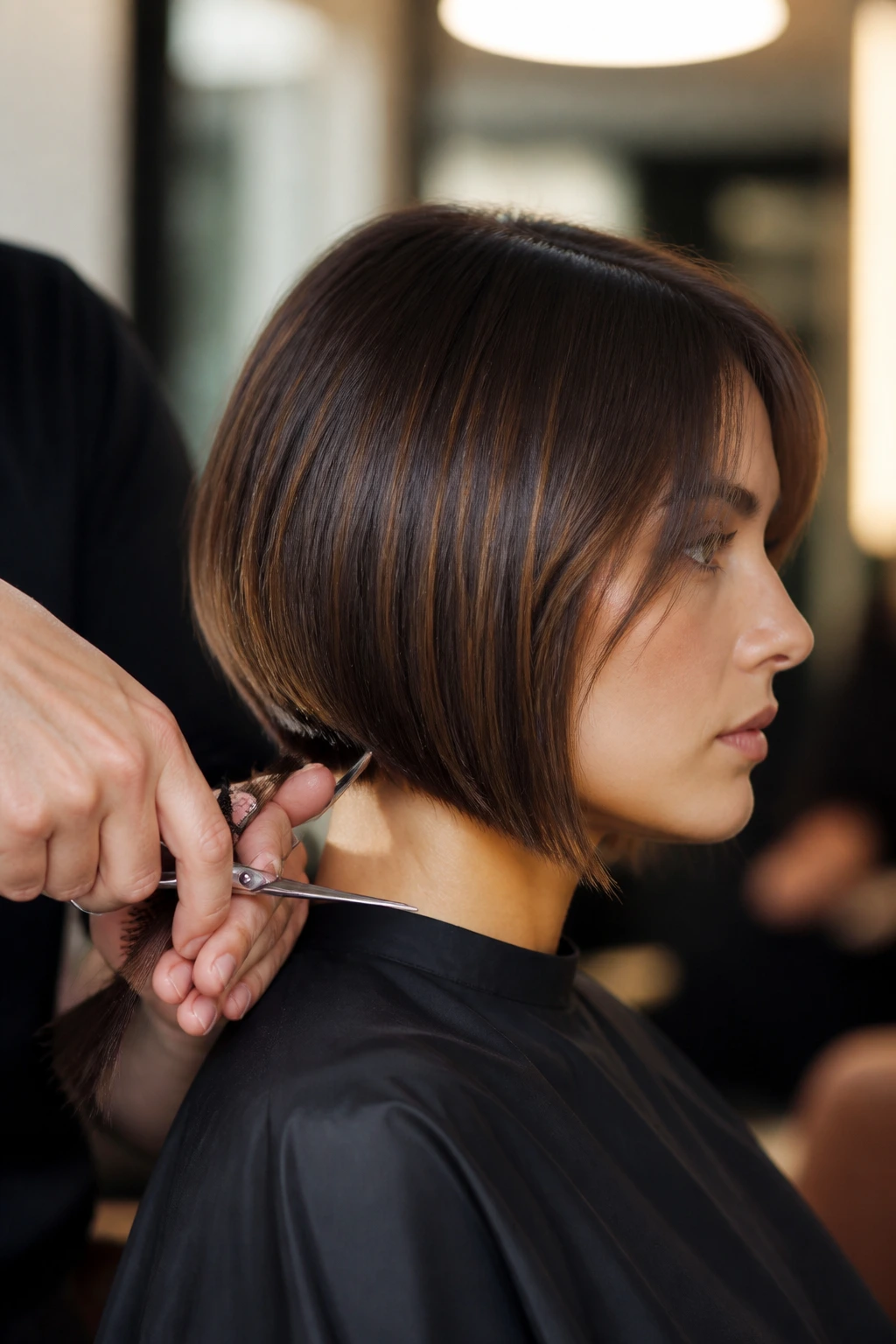
What happens when you have a wedding or a big event? The angular bob is actually quite easy to dress up. Because you have the curtain bangs, you already have a “style” built into the front. You can use a flat iron to give the hair a slight, polished bend toward the ends, or you can go for a “wet look” by slicking the sides back and letting the curtain bangs frame your face.
The Textured Updo
Even with a bob, you can create a partial updo. Take the top layer of hair and twist it back, pinning it into place near the crown. Leave the curtain bangs and the front sections of the bob loose. This gives you that “updo” elegance without losing the face-framing benefits of the cut. It keeps the hair off your neck but maintains the softness around your jawline.
Accessories That Work
Accessories are a great way to change the vibe of your bob. A simple, thin headband can push your curtain bangs back and create a totally different look, emphasizing your cheekbones. Or, try a decorative barrette on one side of your head. Placing it just above your ear can pull one side of the hair back, creating an asymmetric look that is very flattering for a square face. It breaks up the symmetry of the jawline and adds a touch of personality.
Avoiding Common Mistakes
The most common mistake people make with this cut is failing to account for their neck length. If you have a very short neck, a steep A-line bob that is too long can make your neck disappear, which is not ideal. In this case, talk to your stylist about a shorter graduation. You want the back to be shorter to show off your neck, which helps keep the entire silhouette from feeling “heavy.”
Ignoring the Cowlicks
We all have them—those annoying spots where the hair just wants to do its own thing. If you have a cowlick in your bangs, your curtain bangs are going to be a struggle until you learn how to train them. Use a round brush while the hair is damp to “force” the hair into the direction you want it to go. If you wait until it is dry, it will never sit right. Be honest with your stylist about your cowlicks during the consultation; they may need to cut the bangs slightly differently to accommodate your natural growth pattern.
Over-processing
Because you are likely using heat to style the bob (or at least the bangs), the ends are susceptible to damage. An angular bob looks best when the ends are blunt and healthy. If the ends are fried and wispy, the precision of the angle disappears, and the hair just looks uneven. Use a heat protectant spray every single time you blow-dry or flat iron. It takes two seconds, but it is the difference between a chic, professional bob and a frizzy, unkempt one.
The Versatility of the Cut
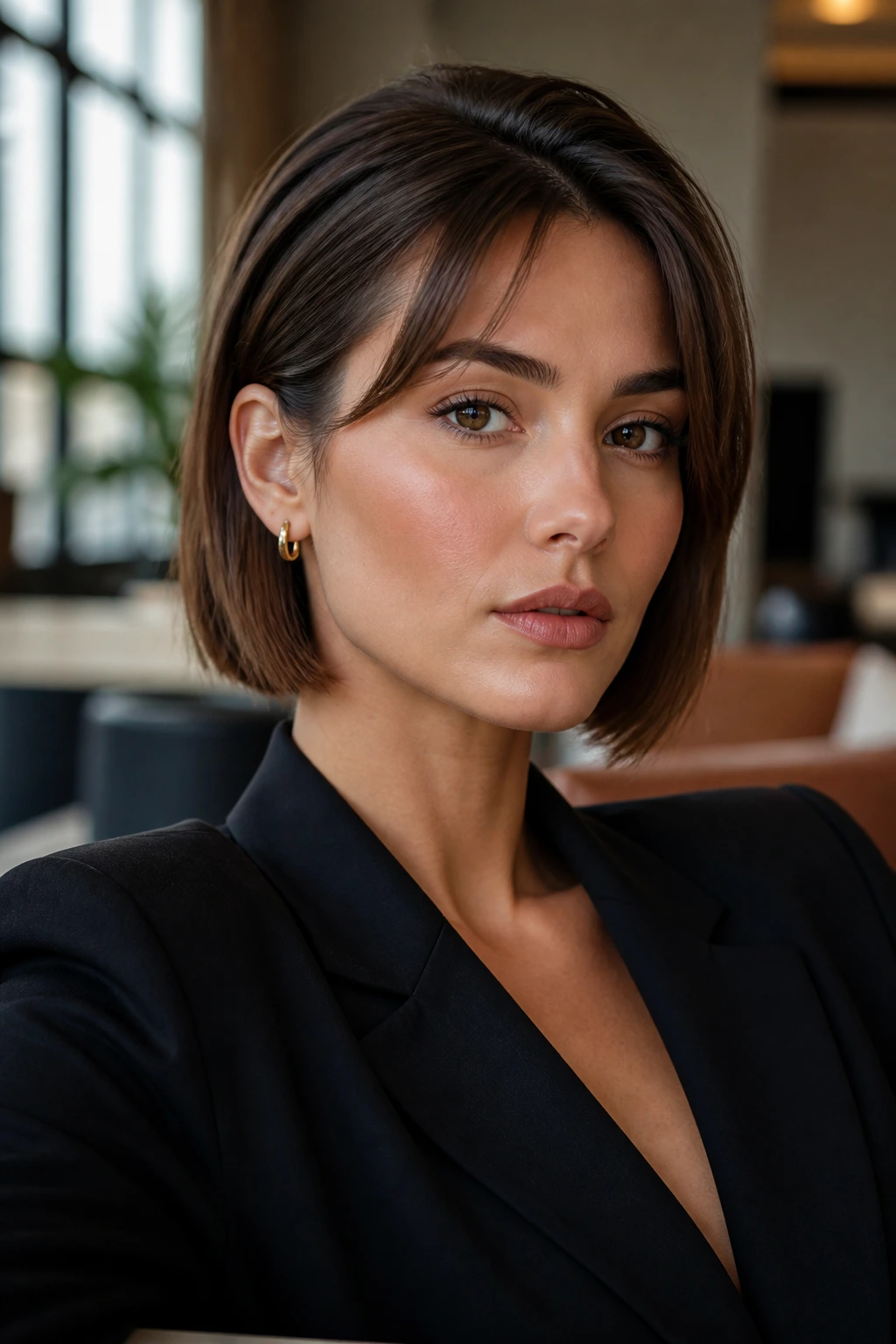
One of the biggest reasons I love the angular bob with curtain bangs for square faces is how it handles different moods. You can wear it straight and sleek for a corporate meeting, then texturize it with a little salt spray for a weekend brunch. It is a chameleon of a haircut. You are not locked into one “vibe.”
The “Slicked” Look
For an evening out, you can use a bit of styling pomade to slick the sides back behind your ears, letting the curtain bangs fall forward to frame your face. This exposes your jawline completely, which might sound intimidating, but when paired with the soft fringe of the bangs, it looks extremely confident and intentional. It’s a power move.
The “Tousled” Look
On lazy days, use a bit of dry texture spray and just scrunch your hair with your hands. The layers in your angular bob will help it hold that messy, “I woke up like this” look. The curtain bangs add a level of softness to the tousled style, making it feel feminine and approachable rather than just messy.
Preparing for Your Salon Consultation
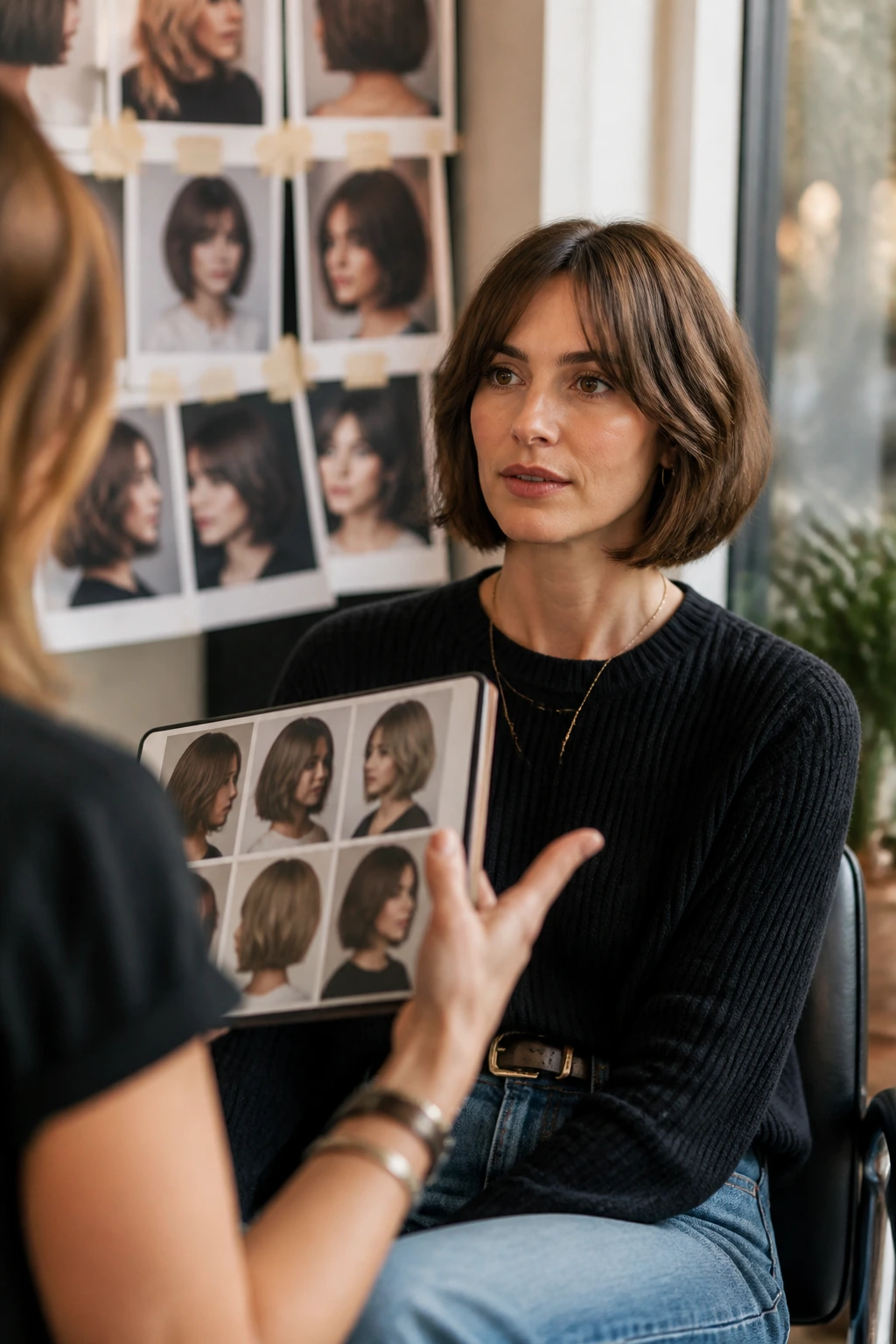
You cannot walk into a salon and just ask for an “angular bob.” You need to bring examples. Find photos of people with square faces—look for celebrities or models who share your bone structure. Show the stylist exactly where you want the front to hit. Do you want it to graze your collarbone? Do you want it to hit just at the base of your neck? These small distinctions change the entire look.
The Consultation Checklist
Ask your stylist these specific questions before they make the first cut:
- “Given my hair density, will this angle create the volume I want in the back?”
- “How will this length interact with my specific jawline?”
- “Are my curtain bangs long enough to tuck behind my ears if I want them to be?”
- “How much daily maintenance will this specific graduation require for my hair texture?”
If they start using vague, corporate-speak terms like “empowering your look” or “dynamic flow,” politely bring them back to the physical reality of your hair. You want a technical conversation about angles, weight removal, and growth patterns.
Final Thoughts
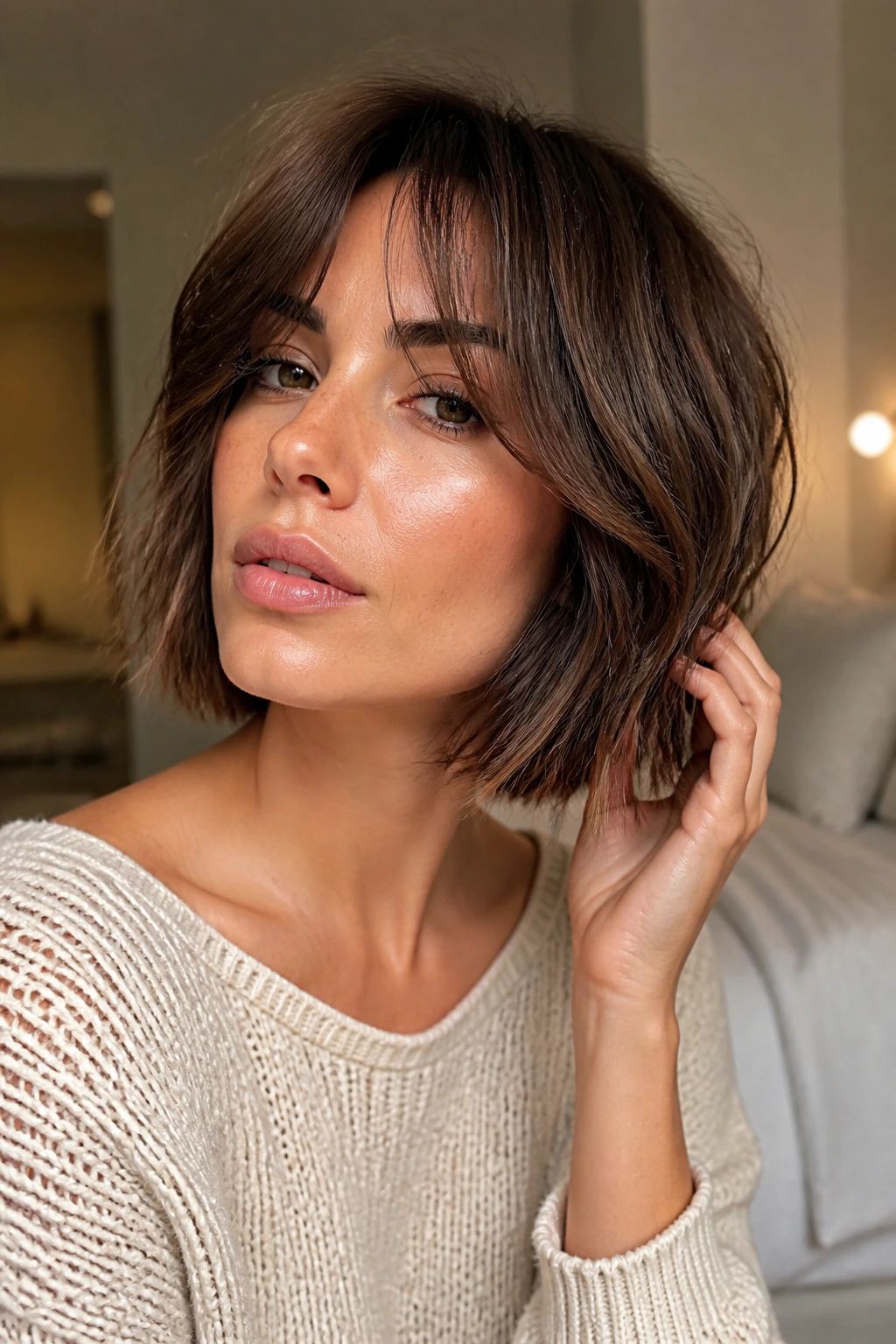
At the end of the day, an angular bob with curtain bangs is less of a “style” and more of a framework. It is designed to work with your face, not against it. By balancing the sharpness of your jawline with the softness of a graduated cut and a sweeping fringe, you are creating a look that is timeless and incredibly flattering.
Don’t be afraid to lean into the maintenance. The crispness of the line is what makes it look intentional. When you find the right stylist who understands how to cut for your specific bone structure and hair texture, you will stop viewing your square face as a challenge to overcome and start seeing it as the strong, beautiful foundation it truly is. Enjoy the process of finding your own variation of this classic look, and remember—it’s just hair. If it grows out, you just get to refine the angle all over again.