


When you have thin hair, the prospect of a haircut can feel like walking a tightrope between achieving volume and accidentally highlighting how fine your strands actually are. A sleek, blunt cut can sometimes leave you feeling exposed, but a messy bob? That is a different beast entirely. By embracing texture, movement, and a bit of controlled chaos, you create the illusion of fullness that blunt edges simply cannot provide. Thin hair doesn’t have to mean flat hair; it just needs a more strategic approach to how you cut and style your mane.
The secret to a great messy bob for thin hair lies in the weight distribution. When you remove length, you automatically remove the drag of gravity that pulls hair flat against your scalp. A bob forces the hair to stand up at the roots, and when you pair that with intentional layering, you invite air into the style. We are talking about soft, lived-in looks that don’t require an hour of thermal styling or a full can of heavy spray. If you are ready to stop fighting your texture and start working with it, these twenty variations offer a roadmap to a fuller-looking head of hair.
1. The Undone French-Girl Bob
There is an effortless elegance to the French-girl aesthetic that relies entirely on deliberate imperfection. This cut sits right at the chin or just below, featuring soft, invisible layers that allow the hair to bend naturally. Because the ends are kept somewhat jagged rather than razor-sharp, the hair maintains a bouncy, airy quality that keeps it from clinging to the sides of your face.
The goal here is a look that feels like you just woke up and shook your head. To achieve this, avoid heavy styling creams. Instead, use a light sea salt spray while your hair is damp and let it air dry. If you have any natural wave, scrunching it while wet will help those bends hold. For those with bone-straight hair, a quick pass with a flat iron—twisting the wrist at random intervals—will mimic that coveted, lived-in texture.
2. Choppy Layers with a Deep Side Part

Sometimes the simplest way to cheat thickness is to relocate your parting. A deep side part instantly creates a massive wave of volume at the roots on one side, which is a lifesaver for fine strands. When you pair this deep part with choppy, textured layers, you turn a standard bob into a voluminous, asymmetrical masterpiece.
The chopping technique is critical here. Ask your stylist for “point cutting” rather than straight across shears. This method removes bulk selectively, creating little “steps” in the hair that lock together, providing a structural foundation for volume. It prevents the ends from looking wispy and creates a fringe-like effect that makes the hair look twice as dense. Use a dry texturizing spray at the roots to keep that side-swept volume lifted throughout the day.
3. The Textured A-Line Bob

The A-line is a classic for a reason, but when executed with a messy finish, it becomes a powerhouse for thin hair. By keeping the back shorter and the front longer, you create a gradient that draws the eye forward and creates a sense of thickness toward the face. The “messy” element is introduced through internal layering, which prevents the back from looking too flat or “shelf-like.”
This cut is particularly flattering because it provides a frame that feels substantial. If the back is cut too short or too blunt, thin hair can look like a tiny triangle at the nape of the neck. However, by adding soft, piecey layers, you get a rounded shape that holds its own. When styling, focus your volume-building mousse on the roots at the crown. That lift is what keeps the A-line from drooping over the course of the day.
4. Shattered Ends with Face-Framing Waves
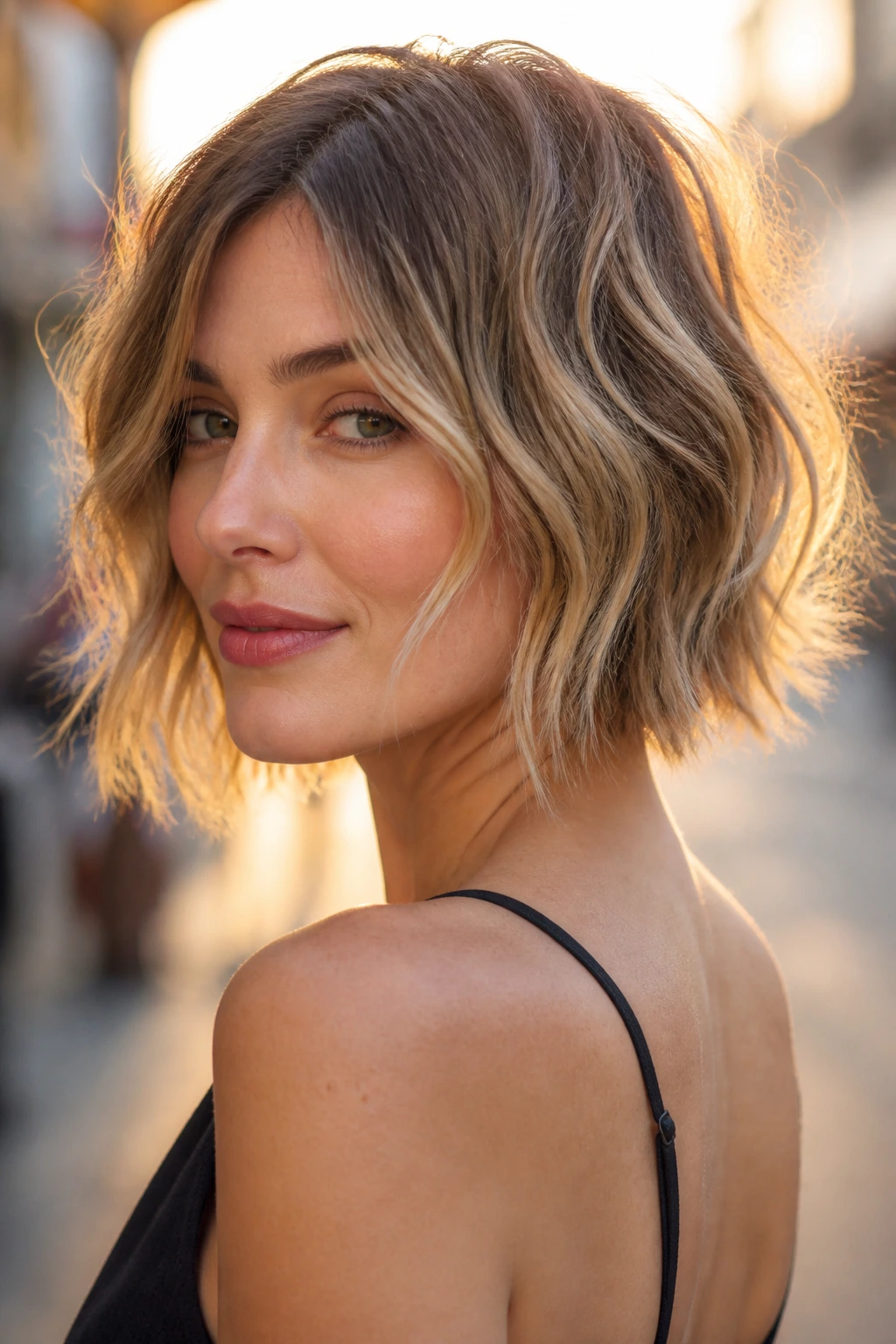
Shattering the ends of a bob is essentially the art of making the bottom edge look purposefully frayed and light. For thin hair, a solid, heavy bottom edge can actually weigh the style down, making the top look even sparser by comparison. Shattered ends, conversely, keep the weight distributed toward the mid-lengths, where it looks more voluminous.
Why This Style Works for Fine Strands
- The lightened ends allow for more movement and airflow between strands.
- Face-framing waves draw attention to your features rather than the hair density.
- It transitions beautifully from a messy day look to a polished night style with minimal effort.
Pro tip: Use a wide-barrel curling iron to add just two or three large, loose waves around the face. You do not need to curl the whole head; just focusing on the pieces that frame your face creates a “full” silhouette that catches the eye.
5. The Messy Lob with Invisible Layers

If you aren’t ready to go super short, the long bob—or “lob”—is your best friend. It offers enough length to pull back, but because it sits above the collarbone, it avoids the “limpness” that long, fine hair often develops. Invisible layers are key here; they are hidden beneath the top layer of hair, acting as little springs that push the hair outward and prevent it from lying flat.
This style is remarkably versatile for all face shapes. If you have a longer face, ask for the front to be a bit shorter to widen the look. If you have a rounder face, keep the front pieces longer to elongate. Because this is a slightly longer bob, you have more surface area to work with, which means you can use a bit more dry shampoo or texturizing powder to build volume at the roots without it looking overly greasy.
6. The Shaggy Curly Bob

Do not let anyone tell you that fine hair cannot be curly. If your hair has even a hint of a natural bend, a shaggy bob with layers cut into the interior will transform your look. Shags are all about volume, and when you embrace the frizz or the unkempt nature of a shag, you are essentially declaring war on flat hair.
The Mechanism of the Shag
The shag relies on weight removal at the crown. By cutting shorter, choppy layers on top and longer, textured ones at the bottom, you give the hair permission to move. For those with very thin, straight hair, you can fake this with a perm or a wand, but the secret is in the product. You need a curl-enhancing cream that doesn’t weigh the hair down—look for “weightless” or “foam-based” formulas.
7. The Blunt Bob with Piecey Texture

Wait, didn’t I just say blunt cuts can be risky? They are, but only if you leave them perfectly manicured. A blunt bob becomes perfect for thin hair when you stop treating it like a museum piece and start using styling product to “piece out” the ends. It’s about taking those blunt, clean edges and using a pomade or texturizing paste to group small sections together.
This creates a “separation” that makes the hair look like it has more individual strands than it actually does. It prevents the hair from clumping together into a single, thin curtain. To get this right, rub a pea-sized amount of matte paste between your palms until it’s invisible, then run your fingers through the bottom two inches of your hair. The goal is a slightly “clumpy,” edgy finish that reads as thick and intentional.
8. The Ear-Tucked Textured Bob

There is something incredibly chic about an ear-tuck, and for thin hair, it’s a brilliant way to hide the fact that the sides might be a bit sparse. When you tuck the hair behind one or both ears, you force the hair above the ears to bend, creating a little “shelf” of volume. If you cut the hair so it is slightly shorter around the face, this tuck creates a naturally messy, bouncy shape.
This look works best with a bit of grit. If your hair is freshly washed and slippery, it will just slide out from behind your ear. Try using a bit of texturizing spray on dry hair before you tuck. It adds the “grip” necessary to hold the style in place. This is also a perfect style if you have a pair of statement earrings you want to show off; the hair tuck frames the jawline beautifully.
9. Soft Waves with a Wispy Fringe
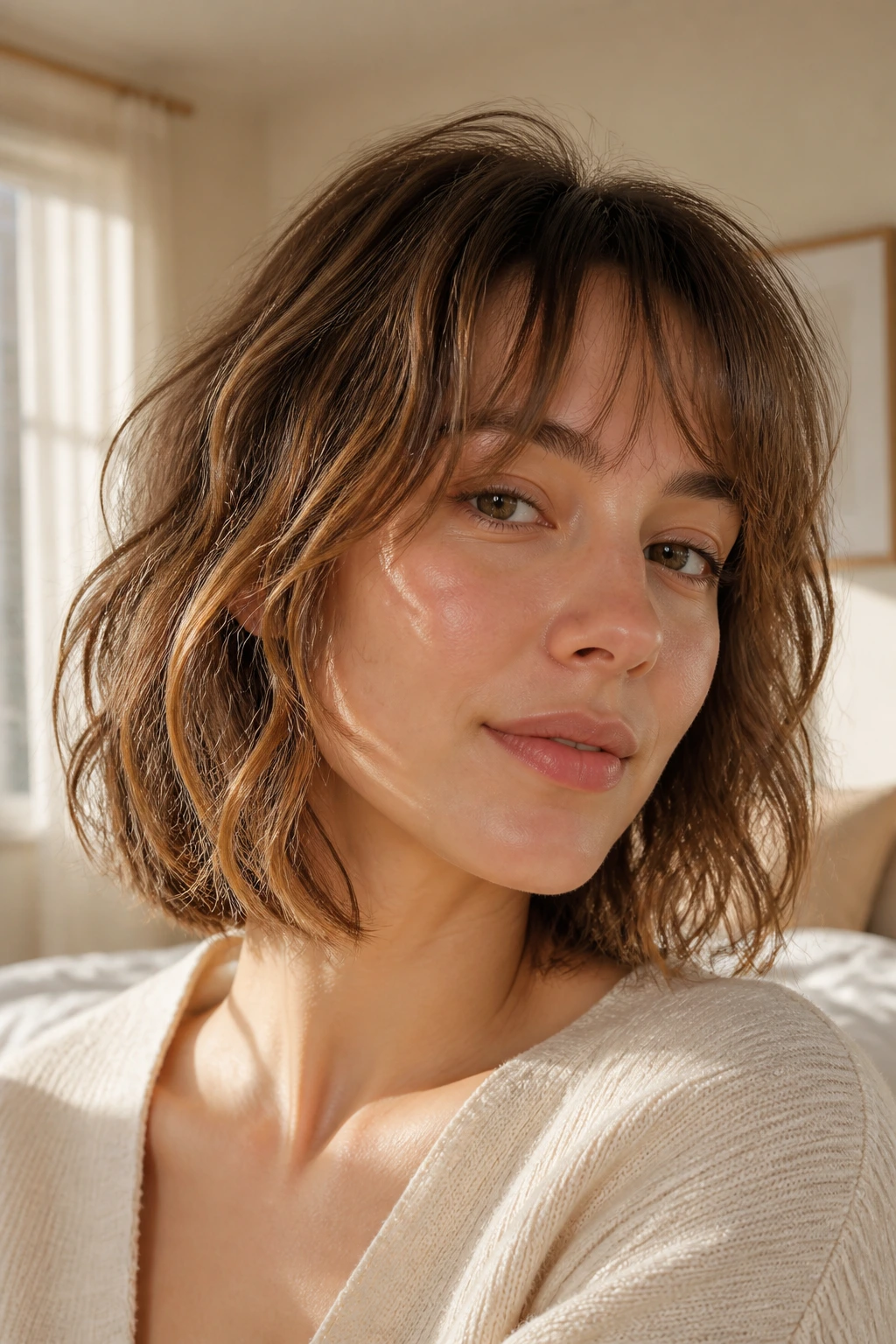
A wispy fringe—often called “see-through” bangs—is a fantastic way to break up the forehead and make the hair on top look more substantial. When you combine this with soft, messy waves throughout the bob, you get a cohesive, balanced style. The fringe takes some of the burden off the rest of the hair, making the overall volume feel more distributed.
The fringe must be kept light. If you cut too much hair for the bangs, you will end up with a heavy block that leaves the rest of your hair looking even thinner. Aim for a fringe that starts further back on the head; this gives you more volume at the crown, which cascades forward into the bangs. It’s a subtle trick, but it completely changes the visual weight of the haircut.
10. The Asymmetrical Messy Crop
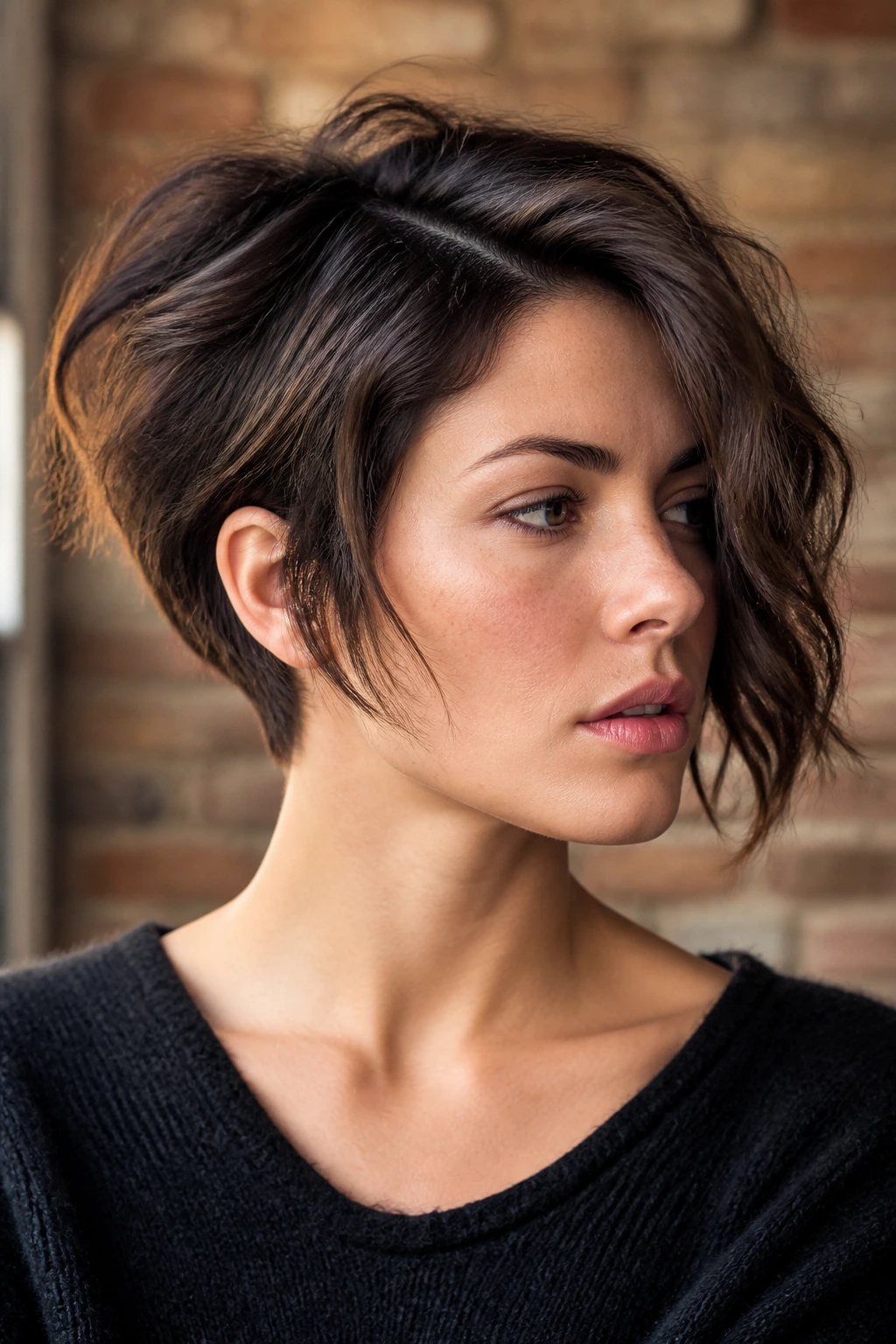
Asymmetry is a visual distraction. When the eyes are busy following a line that goes from short to long, they stop scrutinizing the density of the hair. This is the ultimate “smoke and mirrors” haircut. By keeping one side significantly shorter—perhaps even taking it slightly shorter toward the nape—you create a bold, modern look that screams confidence.
This is a great option for those who want a low-maintenance style that doesn’t need much blow-drying. Because the cut is so structural, it often looks better the more “lived-in” it becomes. You might find yourself wanting to run your fingers through it constantly, which—conveniently—is exactly what you should do to keep it looking messy and full. Avoid heavy oils with this cut; they will make the asymmetry look greasy rather than sharp.
11. The Soft, Layered Chin-Length Bob

Sometimes, the best solution is to keep things soft. A chin-length bob that is layered throughout with a razor creates a soft, hazy edge that lacks the harshness of scissors. This prevents the “poodle” look that some people with thin hair fear, while still providing the necessary lift.
The razor technique is where the magic happens. A stylist using a razor can carve out small sections of the hair shaft, which causes the hair to curl back on itself slightly. This creates a natural movement that feels like it’s growing out of your head with intention. It is a very romantic, slightly messy look that pairs exceptionally well with soft, natural makeup and minimal styling. Just remember: if your hair is prone to split ends, razor cutting might require more frequent trims to keep the ends looking healthy.
12. The “Bedhead” Pixie-Bob
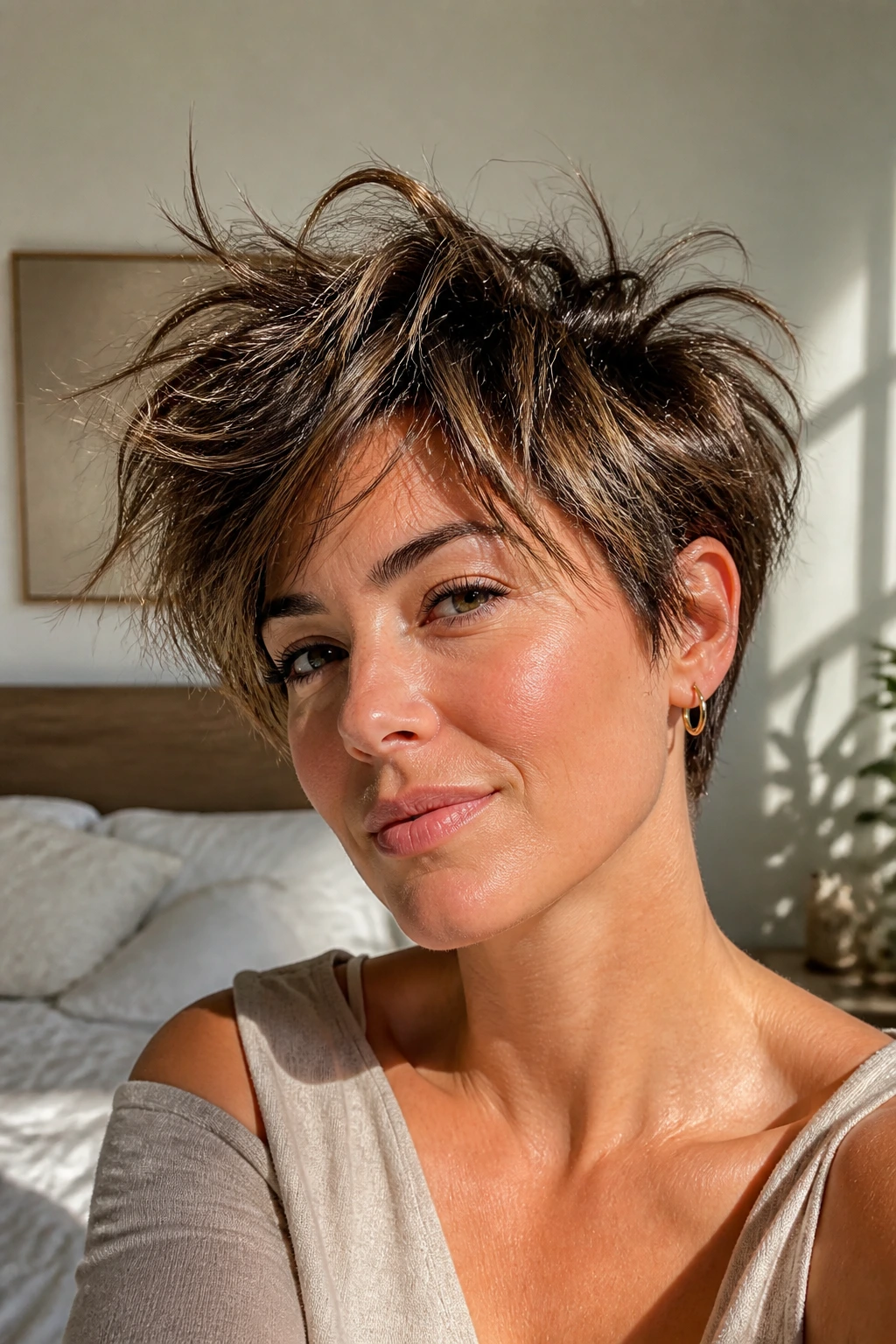
This is the bridge between a pixie and a bob. It is long enough to be considered a bob, but short enough to have the spiky, upward-facing energy of a pixie. It is one of the most effective cuts for thin hair because it eliminates nearly all the weight that could possibly pull the hair down.
Styling this is incredibly fun. You can literally roll out of bed, apply a tiny amount of grit-paste or wax to your fingertips, and spike the hair in random directions. It’s messy, it’s bold, and because the hair is so short and upright, it looks incredibly thick. It’s a great way to showcase a strong jawline and neck, and it practically guarantees you will never have a “flat hair” day again.
13. Curly Bob with Highlights
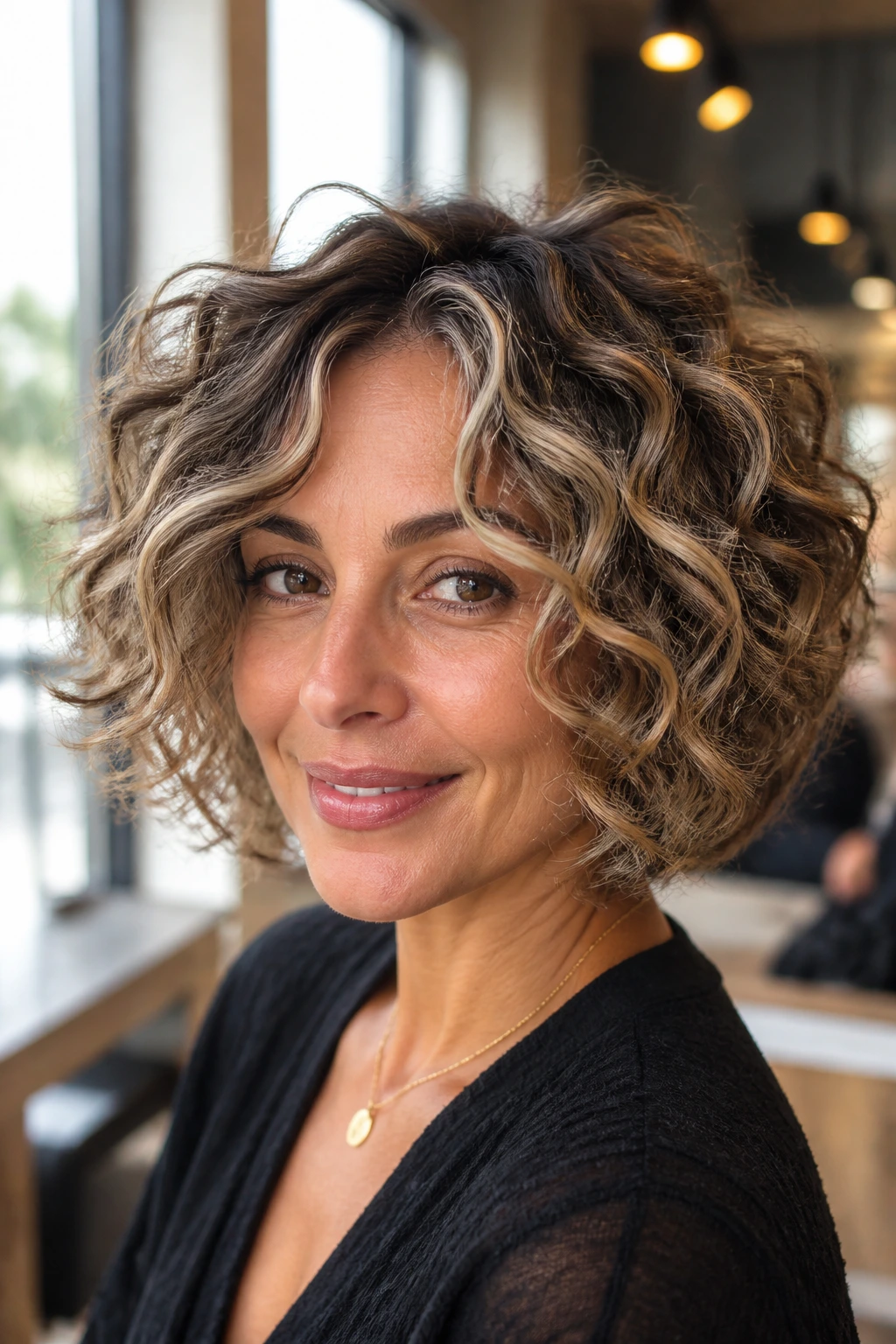
If you have thin hair, color can be your best friend. A single, flat color can highlight the spaces between your strands, making them appear thinner. However, adding highlights—specifically lowlights and balayage—creates a visual depth that masks the lack of density. When you combine this with a curly, messy bob, you get a multi-dimensional look that seems to vibrate with thickness.
The key is in the placement. Ask your stylist to place lighter pieces around the face and on the tips of the curls, while keeping the roots slightly darker. This creates a shadow effect that makes the hair appear as though it has more volume and body. The messier the curls, the more these colors will blend together, creating a rich, thick-looking aesthetic that is impossible to achieve with a single-process dye.
14. The Undercut Messy Bob
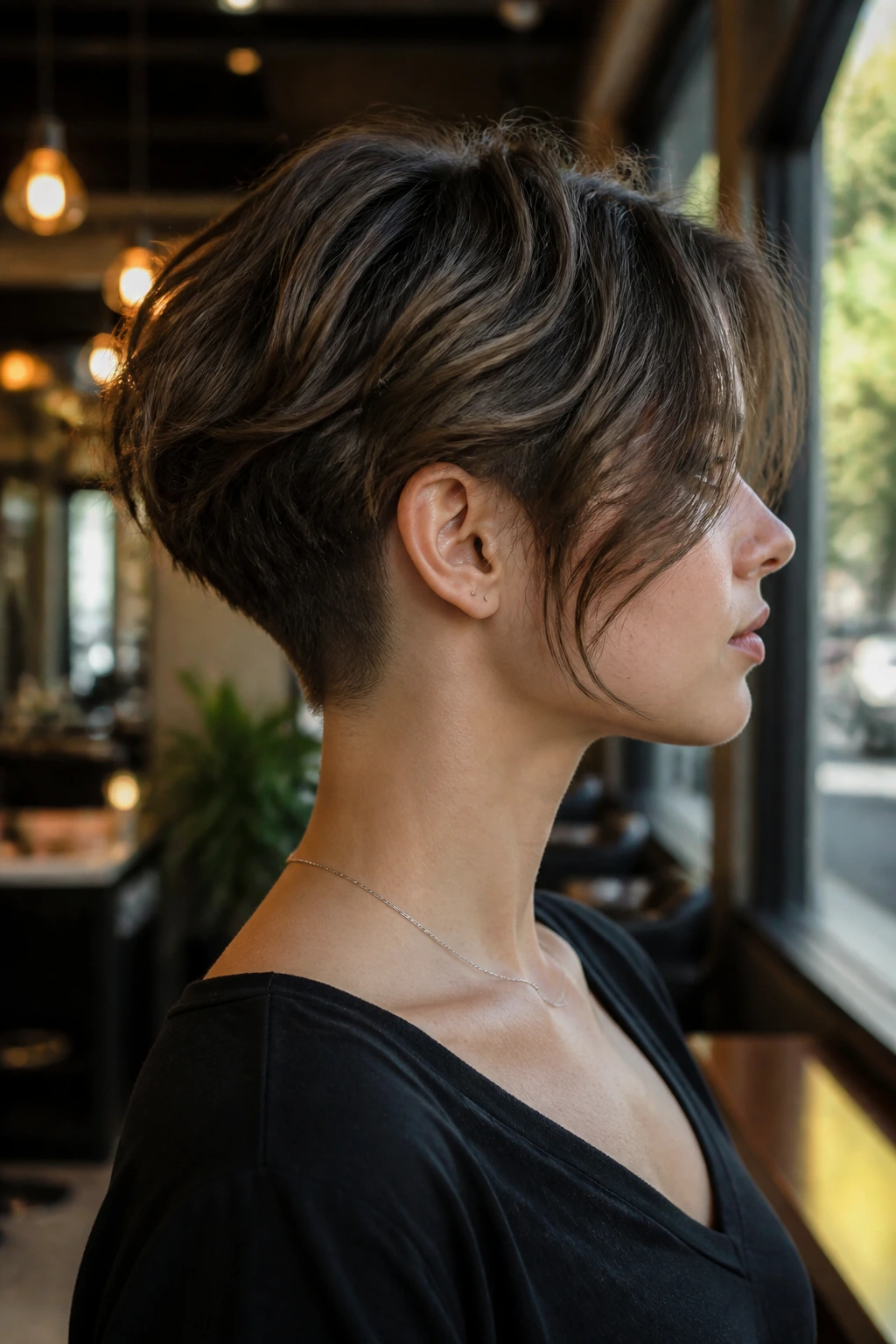
An undercut is usually associated with edgy, long-hair styles, but it is a secret weapon for a messy bob. By shaving or tapering the very bottom layer at the nape of the neck, you remove the hair that usually gets frizzy, tangled, or just lies flat. The top layers then fall over this short area, creating a natural “lift” at the back of the head.
This is a subtle, hidden detail that makes a world of difference for the shape of your bob. When you walk away, people see the nape of your neck; when you move, the top layers swing, and the contrast between the shorter under-layer and the longer top layers adds a sense of hidden volume. It is a low-maintenance solution that keeps the “messy” factor looking intentional rather than just unkempt.
15. The Salt-and-Pepper Textured Crop
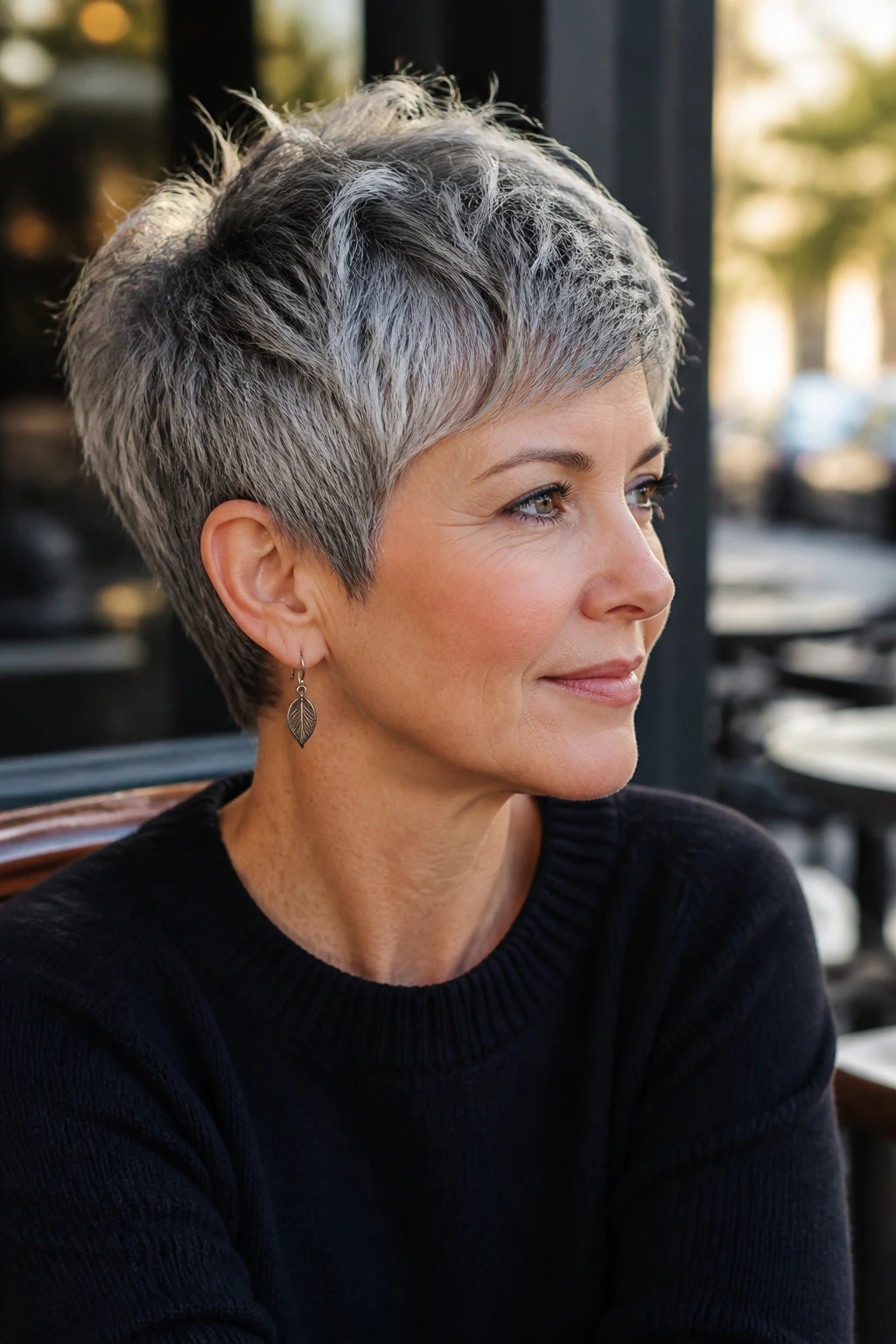
There is something incredibly sophisticated about embracing gray or white hair, and doing so with a messy texture makes it feel modern rather than dated. As hair texture changes with age, it often becomes a bit coarser, which is actually a blessing for volume. A messy, shoulder-grazing bob with plenty of layers is the perfect way to show off the silver while maintaining a full, lively shape.
When the hair is silver or white, it can sometimes look a little bit “see-through.” You can fix this by ensuring the layers are kept short enough to maintain lift. Use a purple-toning shampoo once a week to keep the silver bright, but be careful not to overuse it, as it can sometimes dry out the hair. A light, moisturizing spray will keep the texture soft and prevent it from becoming brittle.
16. The Flipped-Out Messy Bob

Remember the 90s flip? It’s back, and for thin hair, it’s a brilliant way to add width. By using a round brush or a flat iron to flip the ends of your bob outward instead of inward, you create horizontal volume. This width makes the head look larger and the hair look more abundant.
How to Style the Flip
The secret is to not flip everything. You want a messy mix of ends that flip out and ends that tuck in or hang straight. Start with a texturizing foam on damp hair, blow-dry upside down for root lift, and then use your iron to randomly flip sections. The result is a chaotic, playful bob that feels very energetic. It’s perfect for someone with a personality that loves a bit of drama.
17. The Wet-Look Scrunched Bob
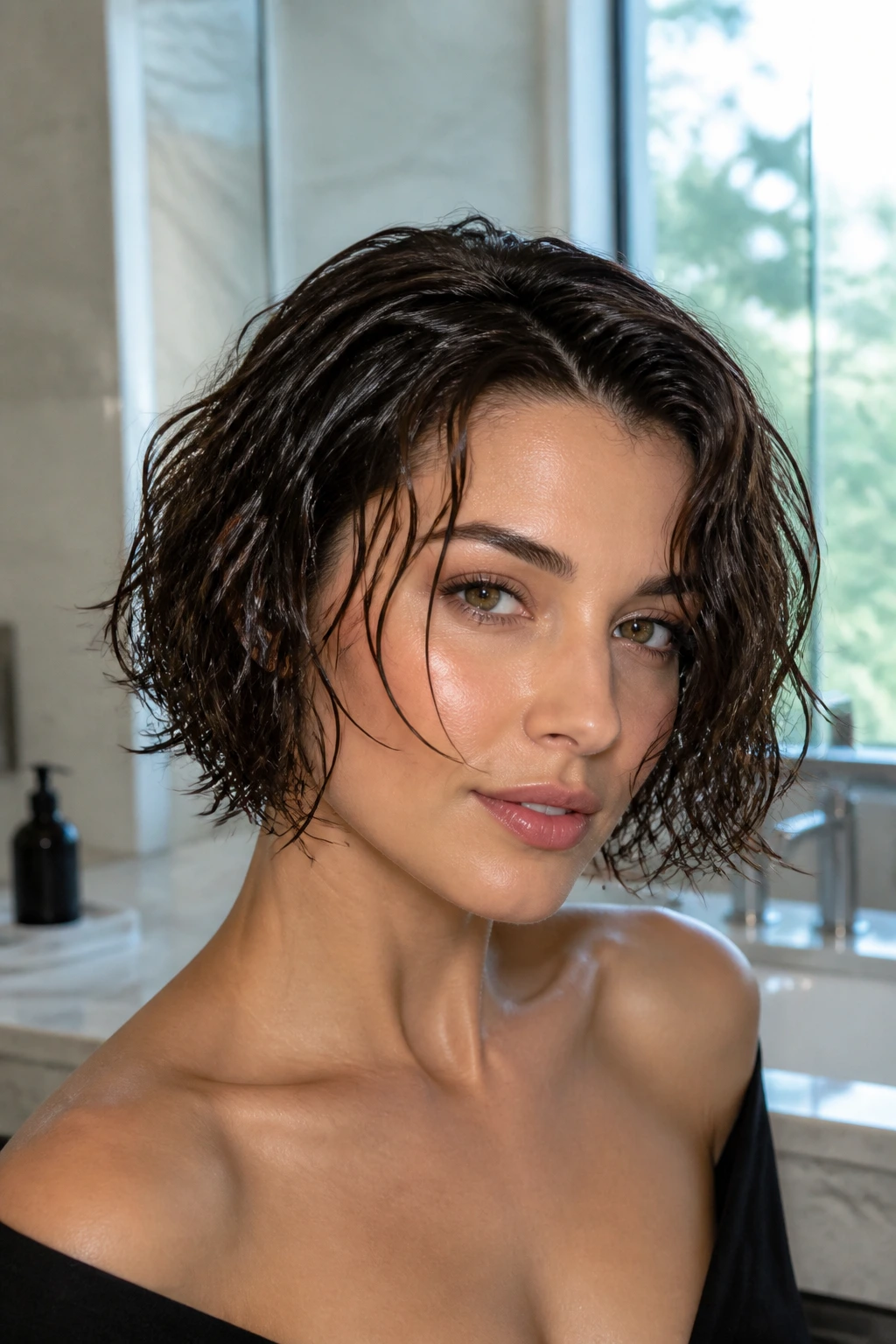
The “wet look” is a runway staple that works surprisingly well for thin hair in a casual, messy way. By using a light-hold gel or a grooming cream, you can scrunch your hair to create tight, defined pieces that look thicker than loose, wispy ends. This style is best done on hair that is slightly damp, allowing you to “set” the shape as it dries.
Avoid high-hold gels, as they can glue strands together into thin, stringy spikes. You want a flexible hold product. Scrunch the product into your hair from bottom to top, then let it air dry without touching it. Once it is 100% dry, you can lightly break up the crunchy bits with your fingers. This gives you a voluminous, textured look that stays put all day.
18. The Deep-Rooted Shaggy Bob
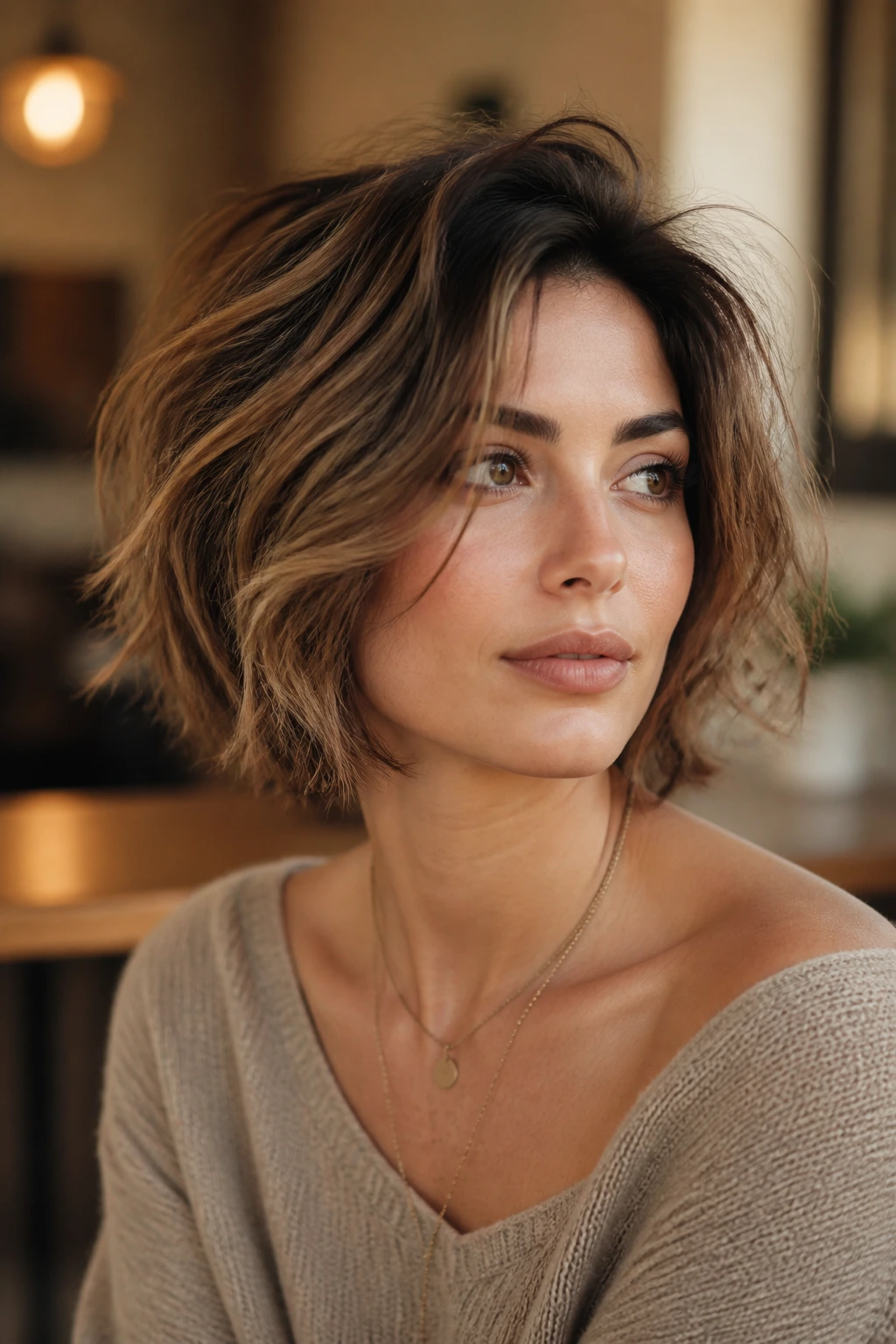
This cut focuses entirely on building volume at the base. By cutting the internal layers significantly shorter than the top layers, you build a “scaffold” for your hair. The short layers support the longer ones, keeping them from falling flat against the scalp. When you style this, you can be aggressive with root-lifting sprays because the structure is already there to help you.
This is a “high-performance” bob. It needs to be cut by someone who understands layering, as an amateur cut can leave you with a weird, bulging shape. When you find a stylist who gets it, though, this becomes a style you can wake up and wear with almost no effort. The internal structure does the work for you, holding the messiness in place throughout the day.
19. The Modern “Bowl” Shag
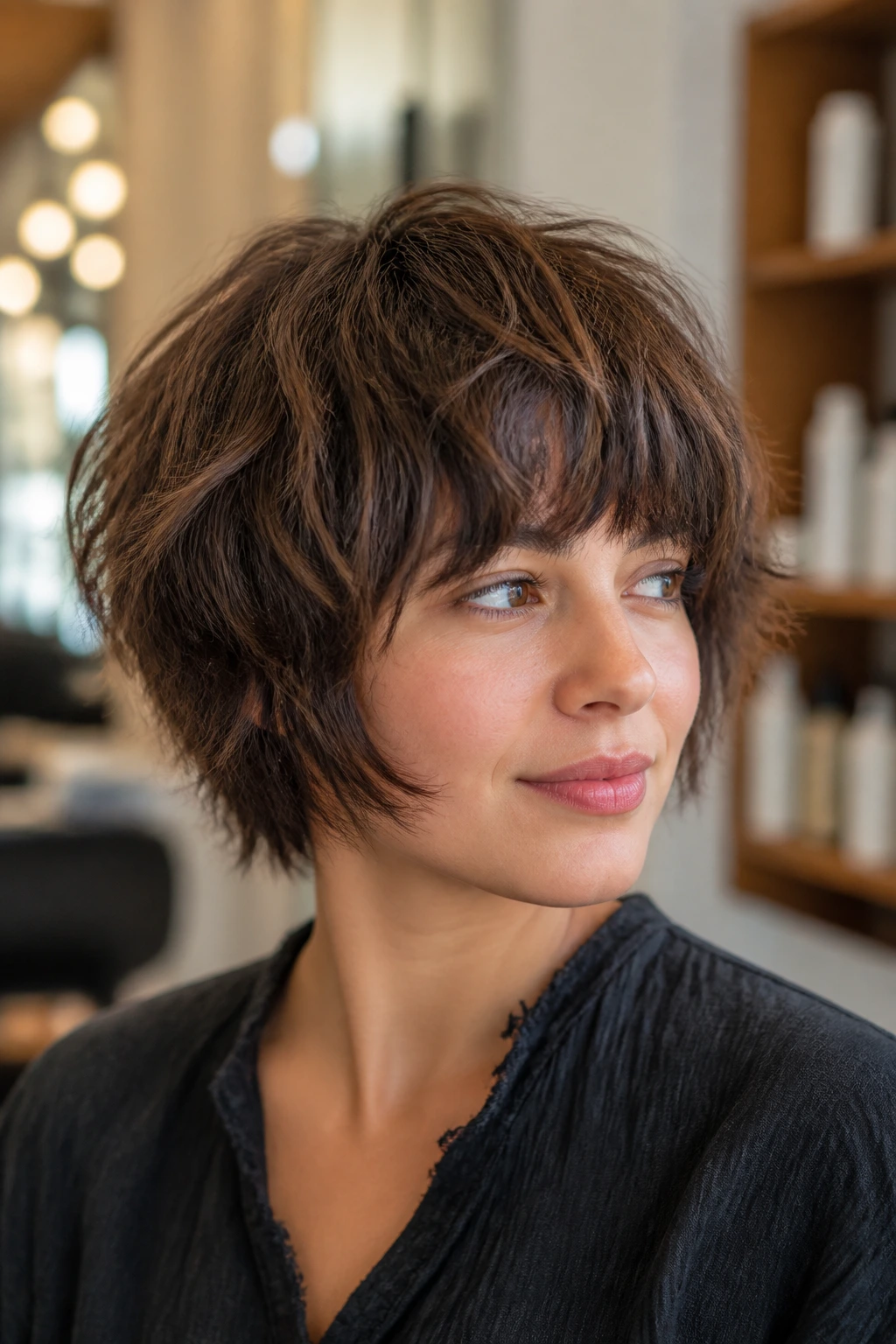
Don’t panic at the word “bowl.” This is not the cut your mom gave you in the kitchen. It is a modernized, textured version where the layers are very uniform and rounded, creating a thick halo around the head. It is incredibly effective for thin hair because it creates a solid, rounded perimeter that feels substantial.
To keep it from looking like a classic bowl cut, the ends must be heavily point-cut and shaggy. You want to see “bits” of hair, not a solid line. This style is best for people who enjoy a bit of a quirky, fashion-forward look. It requires almost no styling other than a bit of sea salt spray and a quick finger-comb. It’s the ultimate “I’m an artist” haircut.
20. The Bohemian Braided Bob
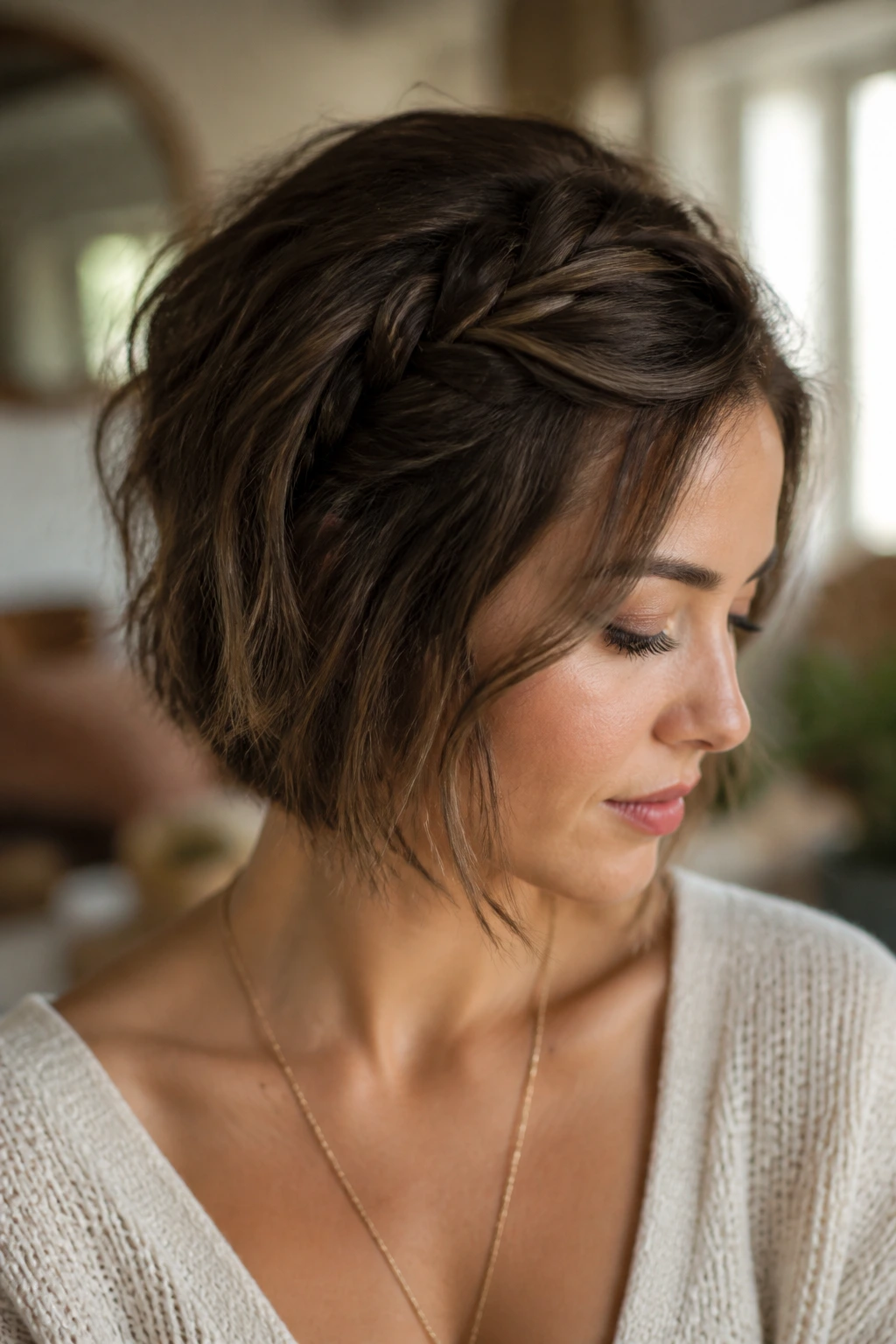
Sometimes, the best way to handle a messy bob is to incorporate an accessory. A small, loose braid starting at the hairline and pinned back can add a decorative element that draws the eye toward the face and away from the hair density. This is a great way to “fake” volume, as the braid adds a bit of bulk at the crown.
You don’t need to be a braid expert for this. A simple three-strand braid that is loosened up with your fingers works wonders. By incorporating a small section of hair into a braid and pinning it back, you also create a bit of lift in the surrounding hair. It’s a very romantic, effortless way to manage your hair on days when you want a little something extra.
Final Thoughts
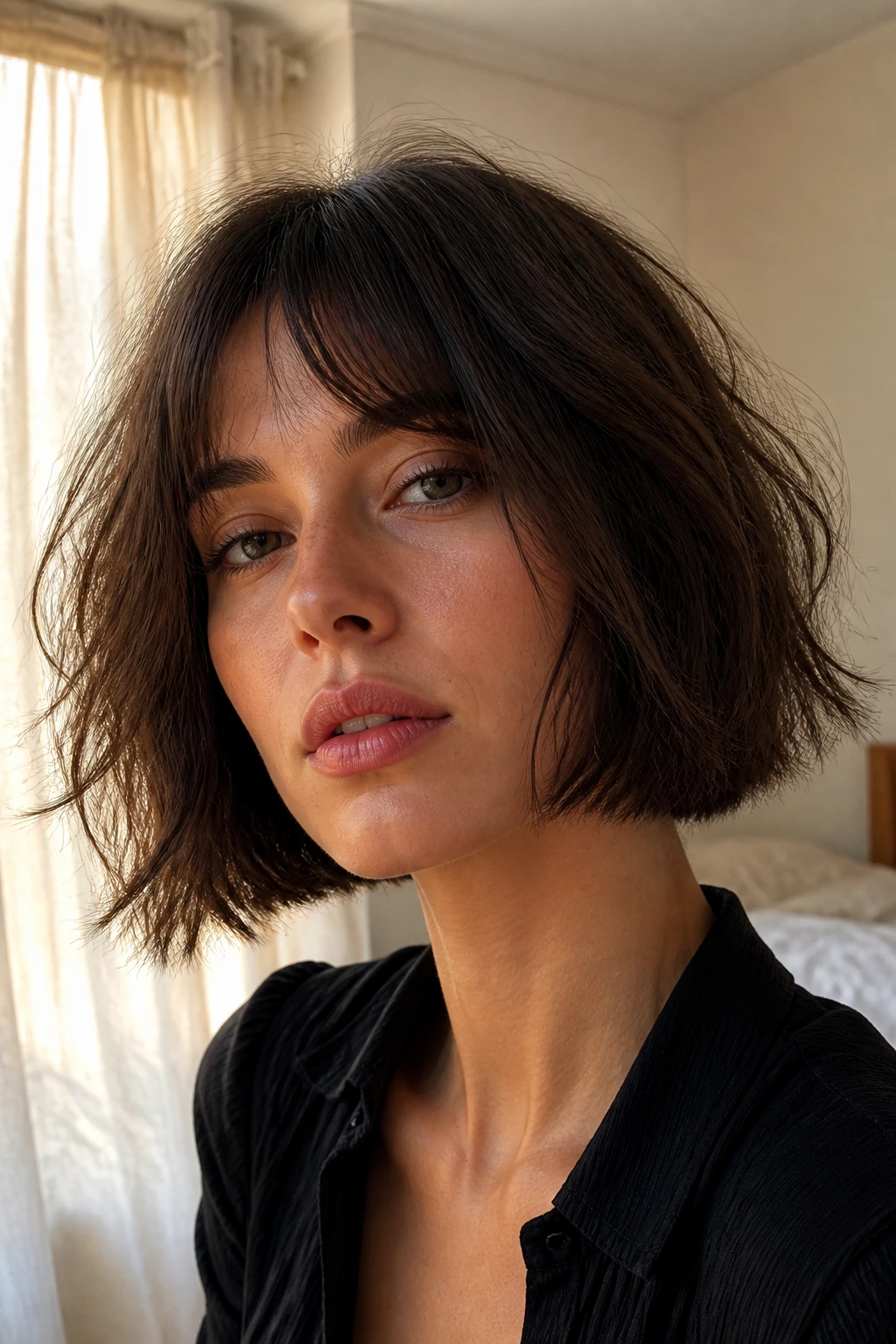
At the end of the day, a bob is just a frame for your face. If your hair is thin, the biggest mistake you can make is trying to force it to behave like thick hair. Instead, choose a cut that celebrates the lightness of your strands and uses texture to create the illusion of density. Whether you opt for the shattered ends of a messy shag or the structured volume of an A-line, the most important tool in your kit is confidence.
When you stop trying to smooth your hair down and start trying to mess it up, you will find that the “thinness” you used to worry about becomes just another characteristic of a style that is uniquely yours. Experiment with products that add grit and hold, and do not be afraid of a little bit of chaos in your morning routine. A bob is meant to be lived in, and once you lean into the messy aesthetic, you might find that you never want to go back to a sleek, “perfect” style again.