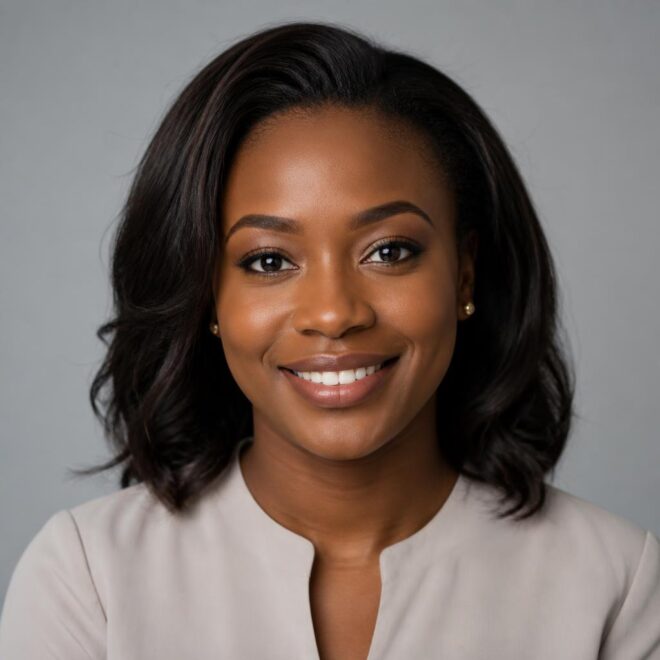


The combination of an inverted bob and curtain bangs is one of those rare hair transformations that seems to fix every problem at once. If you have wavy hair, you know the struggle: it is too thick to keep short, too unruly to grow out, and usually ends up in a perpetual cycle of heat-styling just to make it look intentional. Adding a soft, face-framing curtain bang to a stacked or inverted bob does more than just update your look; it changes the weight distribution of your hair entirely. By removing the bulk at the nape and softening the edges with those signature bangs, you get a style that feels lighter, looks fuller, and—most importantly—works with your natural texture rather than fighting against it.
Choosing to chop your hair into an inverted bob requires a level of trust in your stylist, specifically when it comes to the “stack” in the back. This cut thrives on precision. It relies on a sharp, graduated angle that starts short at the neckline and lengthens toward the front. When you factor in the texture of wavy hair, the goal shifts from achieving a razor-sharp, geometric line to creating a lived-in, effortless silhouette. You want those waves to have room to breathe, coil, and settle into the shape without becoming a frizzy triangle. This is not a style for those who want to spend an hour with a flat iron every morning; it is a style for those who want to wake up, scrunch in a bit of sea salt spray, and head out the door.
1. The Classic Stacked Wavy Bob
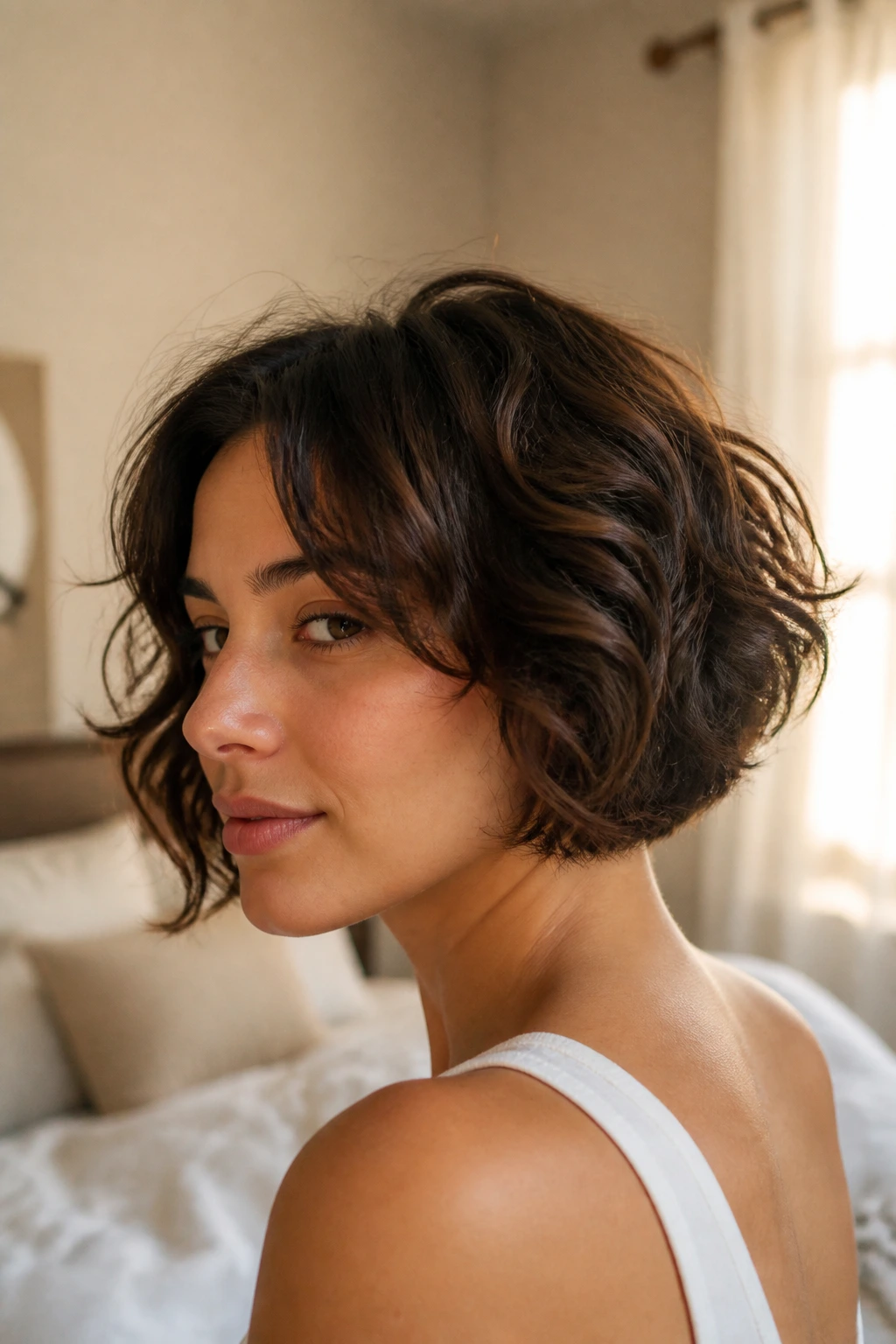
The classic stacked cut is the backbone of the inverted family. It features a sharp, graduated back where the hair is cut very short at the nape and gradually gets longer toward the jawline. For someone with wavy hair, this is a lifesaver because it removes the thick, heavy hair at the base of the skull that often makes a bob look bulky or mushroom-shaped.
Why It Works for Wavy Textures
The stack acts as a built-in support system. By cutting the layers shorter in the back, you create natural volume that prevents the hair from falling flat. When your waves hit the shorter layers, they have nowhere to go but up, which emphasizes the S-pattern of your natural hair.
Styling for Maximum Texture
- Use a lightweight mousse while the hair is damp.
- Scrunch the hair upwards from the ends to the roots.
- Let it air dry to avoid breaking up the wave pattern with too much heat.
Pro tip: Ask your stylist to use point-cutting on the ends of your layers. This prevents the “shelf” look and ensures the transition between the short back and the long front is soft rather than choppy.
2. The Textured Razored Bob
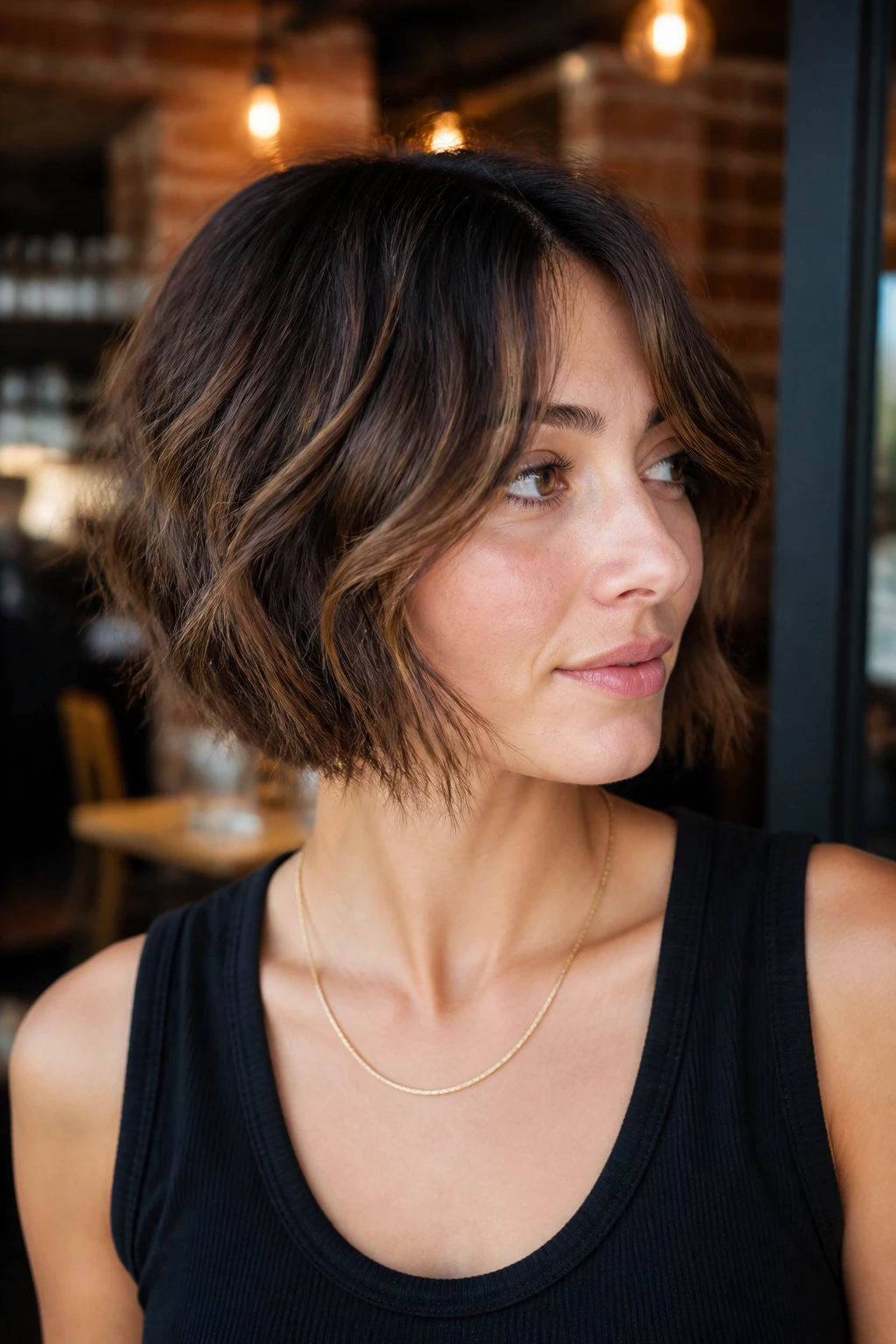
If you prefer a look that feels a bit more “undone” or edgy, a razored finish is the way to go. Unlike scissors, which leave a blunt end, a razor shreds the ends, creating a feathered effect that allows wavy hair to clump together more naturally. This technique takes away the heaviness at the perimeter of the bob, making it feel airy.
The Role of Curtain Bangs in a Razored Cut
When your bob has a lot of texture and movement, a blunt bang can look too heavy and out of place. Curtain bangs, however, mirror the shattered ends of the rest of the cut. They blend seamlessly into the side layers, creating a cohesive, face-framing effect that feels like it has been part of your style for months.
Managing Frizz with Razored Ends
- Apply a leave-in conditioner to damp hair.
- Avoid heavy silicones that can weigh down the ends.
- Use a diffuser attachment on a low-heat setting to encourage clumped waves.
Key takeaway: Razors are incredible for wavy hair, but they can encourage split ends if your hair is fine or brittle. Make sure your stylist has a fresh blade before they start cutting.
3. The Long Inverted Bob (LOB)
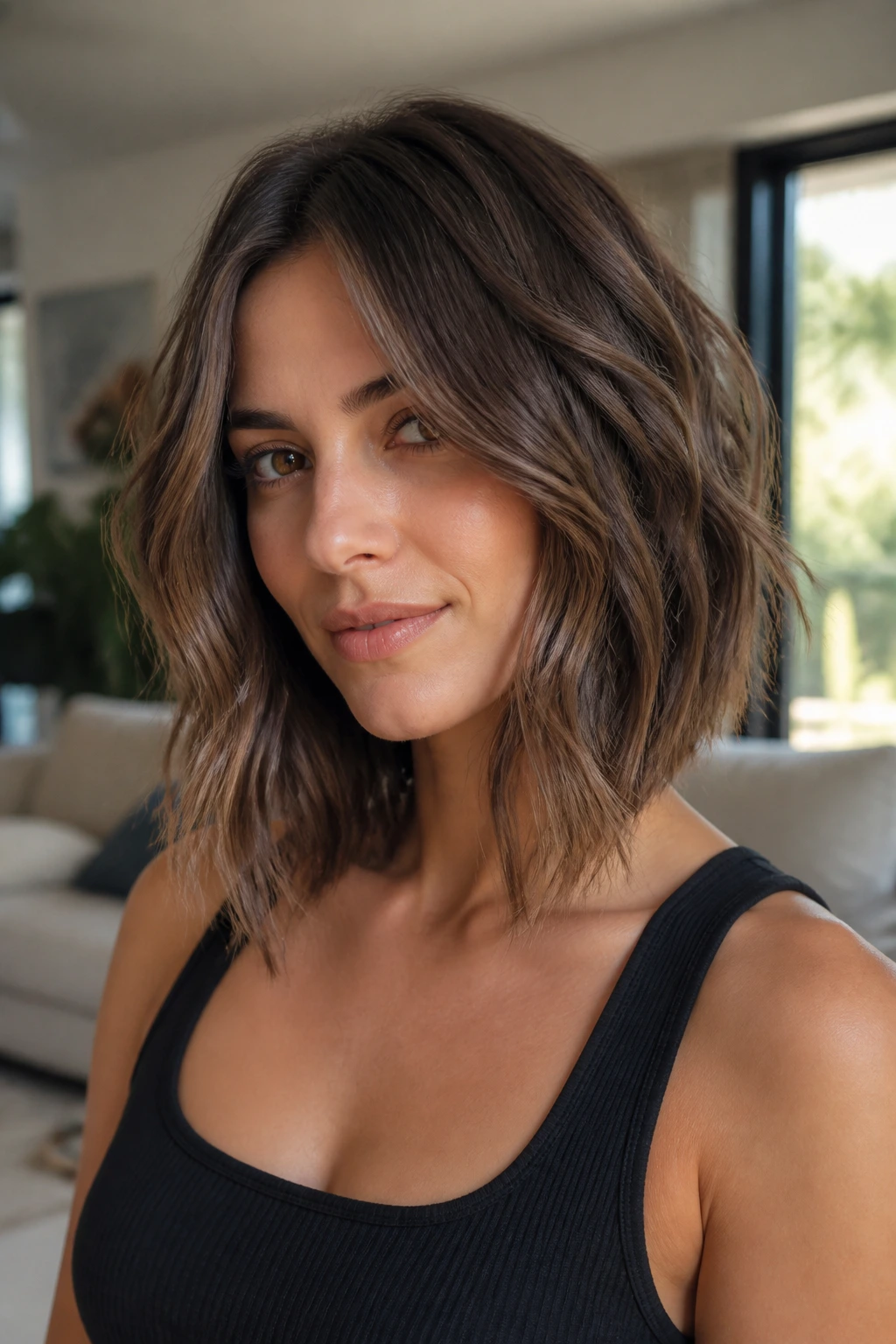
Not everyone is ready to commit to a chin-length chop. The long inverted bob—or “lob”—is a gateway style that hits right at the collarbone. It gives you the drama of an angled cut without the fear of losing too much length. This is perfect for those who like to pull their hair back into a small pony or half-up style on busy days.
Why Waves Look Best at This Length
At the collarbone, waves have enough room to complete at least one full turn. This length allows the hair to swing freely without hitting your shoulders and flipping out in weird directions—a common frustration with shorter bobs.
Balancing the Face with Longer Curtain Bangs
- Ask for your curtain bangs to hit the bridge of your nose or even the cheekbones.
- These longer pieces can be tucked behind the ears when you want a cleaner look.
- Use a round brush only on the bangs for a slight swoosh, leaving the rest of the hair to air dry.
4. The Softly Layered Inverted Bob
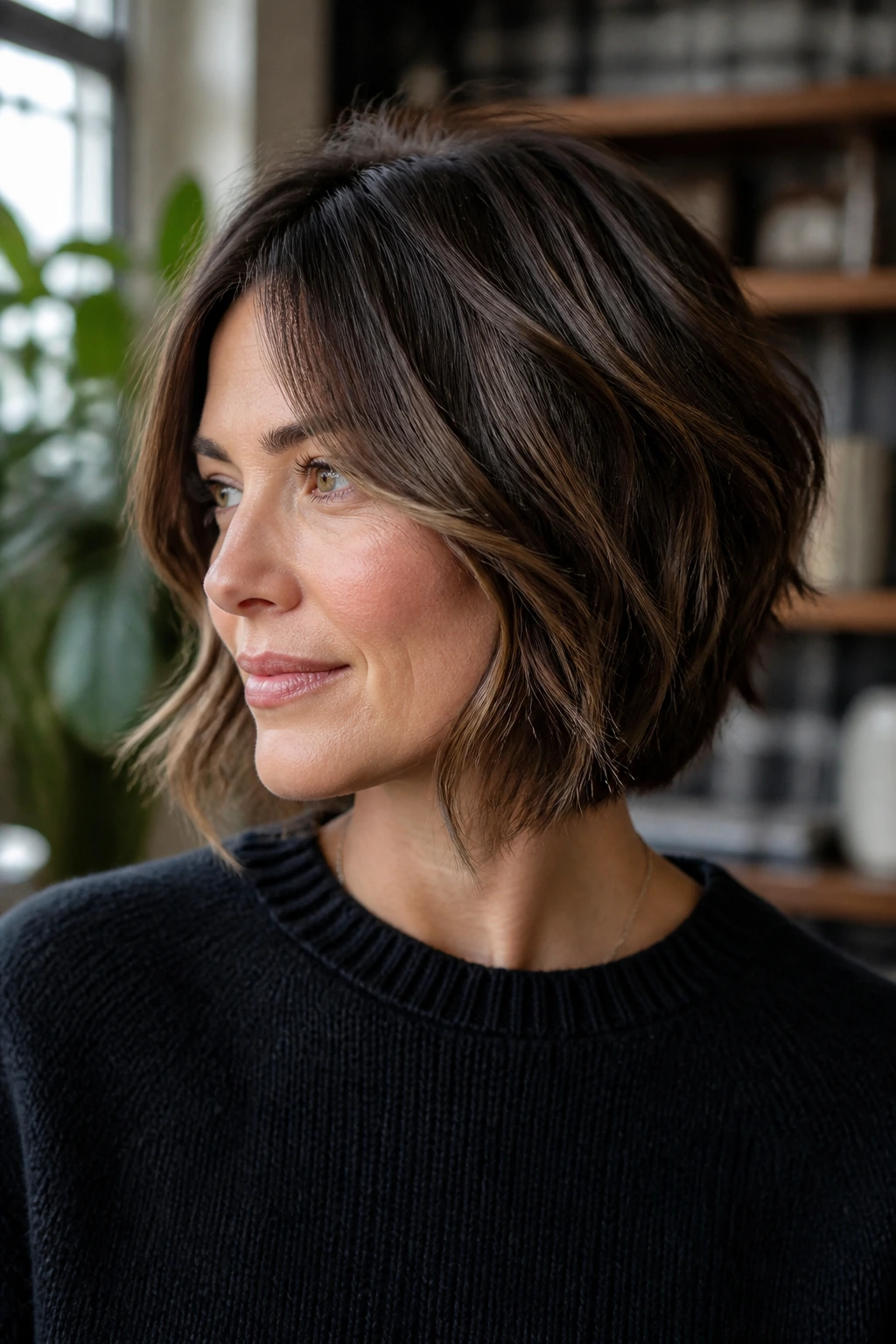
Many people worry that layers in a bob will cause it to puff out, especially if they have wavy hair. However, when done correctly, internal layers are the secret to a manageable shape. Instead of surface layers that add frizz, an inverted bob with internal layering removes weight from the mid-lengths, allowing the waves to fall inward toward the face.
The Science of Internal Layering
Internal layers are invisible to the eye. They aren’t meant to be seen as distinct steps in your haircut; they are there to carve out space inside the head of hair so that when you shake it out, it lands in a flattering, rounded shape.
Tips for Success
- Ensure your stylist understands the “internal” nature of the cut.
- Request “channel cutting” if your hair is exceptionally thick.
- Focus your styling products on the ends, not the roots, to keep the top of your head smooth.
5. The Blonde Balayage Inverted Bob
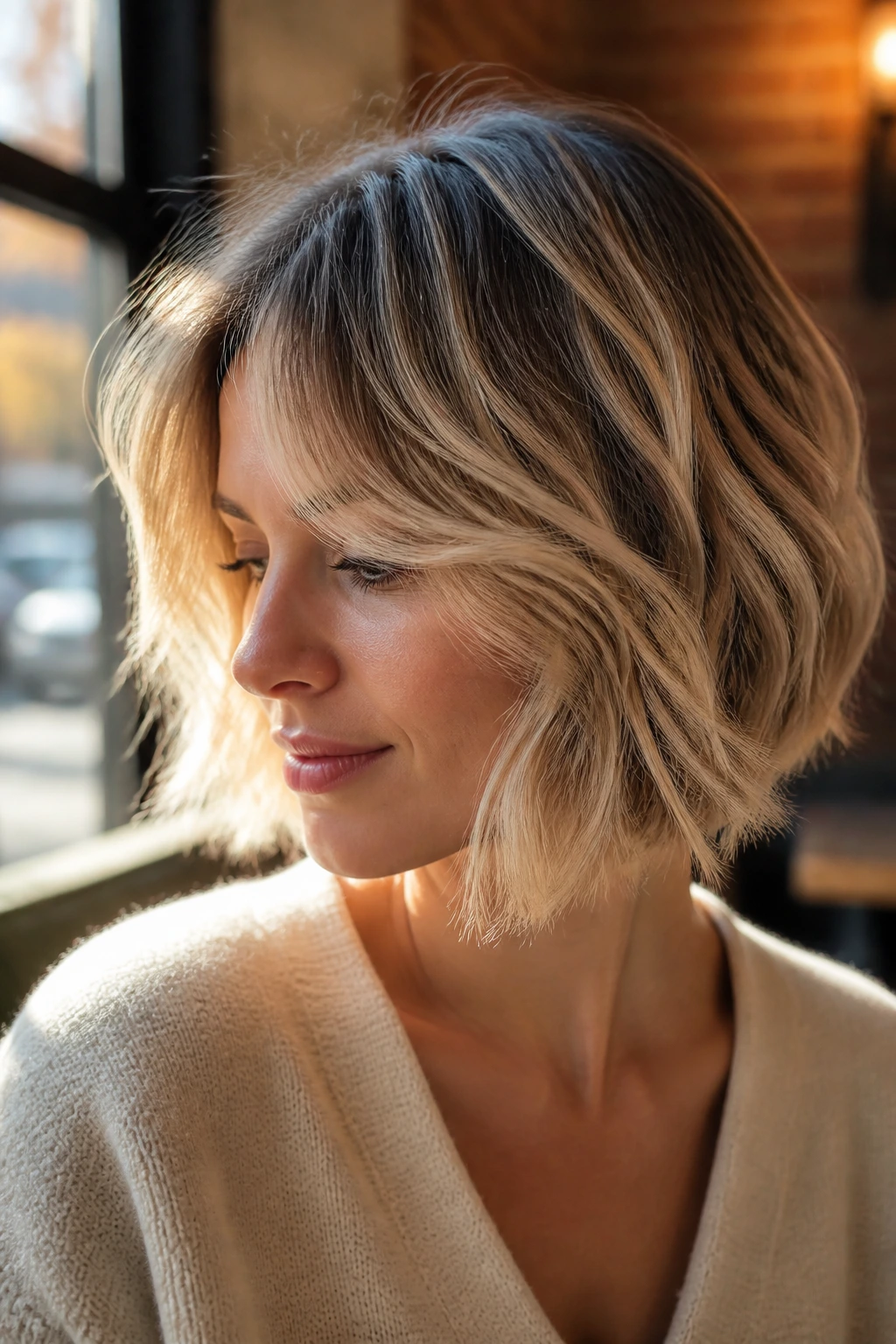
Color plays a massive role in how we perceive the shape of a haircut. An inverted bob can look a bit severe if the color is a flat, one-dimensional dark shade. By adding balayage—or hand-painted highlights—you create visual depth that makes the layers appear more prominent and the waves more defined.
Enhancing Waves with Color
Light reflects differently on highlights than it does on dark, solid color. When your hair is wavy, the light will hit the peaks of your waves, making them glow. This contrast makes your bob look intentional, expensive, and incredibly low-maintenance.
Maintaining the Look
- Use a purple or blue-toning shampoo to keep the blonde from turning brassy.
- Schedule your highlight touch-ups every three to four months to avoid a harsh regrowth line.
- Deep condition weekly to keep the bleached sections from getting brittle, which can ruin the wave pattern.
6. The Choppy, Short Inverted Bob
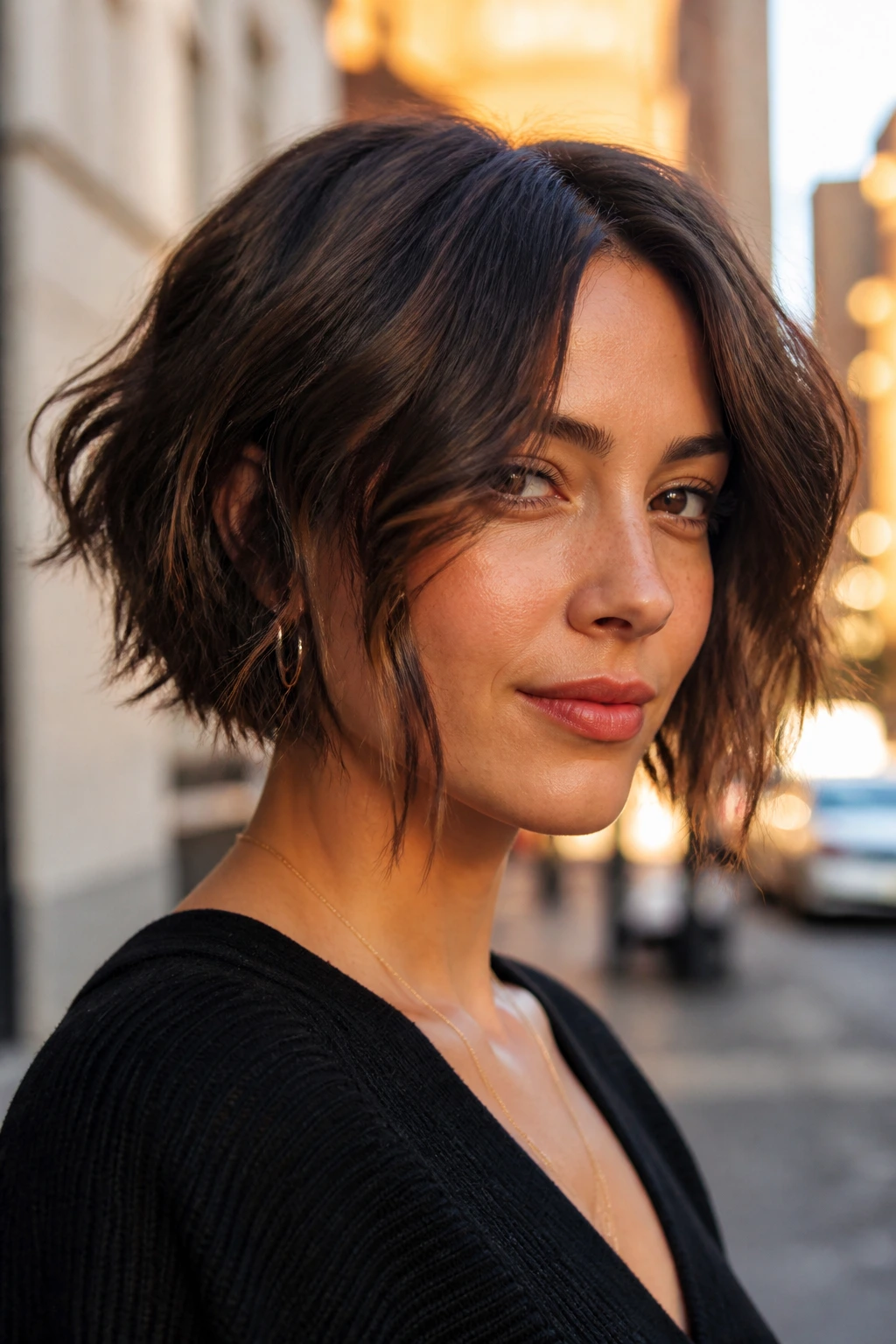
If you want something bold and easy, go for the chin-length choppy bob. This style hits right at the jawline, drawing immediate attention to your face and neck. It is a confident, strong look that works wonders for wavy hair because it forces the hair to stand up and create its own shape.
Why “Choppy” Beats “Blunt” for Waves
A blunt cut on wavy hair often creates a heavy, uneven weight at the bottom. A choppy, point-cut perimeter breaks up that density, allowing the waves to sit comfortably rather than sitting on top of each other.
Styling the Bangs
- Use a texture spray on your curtain bangs to keep them from looking too polished.
- A “messy” finish is the goal here.
- The curtain bangs should look like a natural extension of the side-swept waves.
Pro tip: If you have a round face, ask your stylist to keep the front pieces slightly longer than the jawline to create an elongating effect.
7. The Deep-Part Inverted Bob
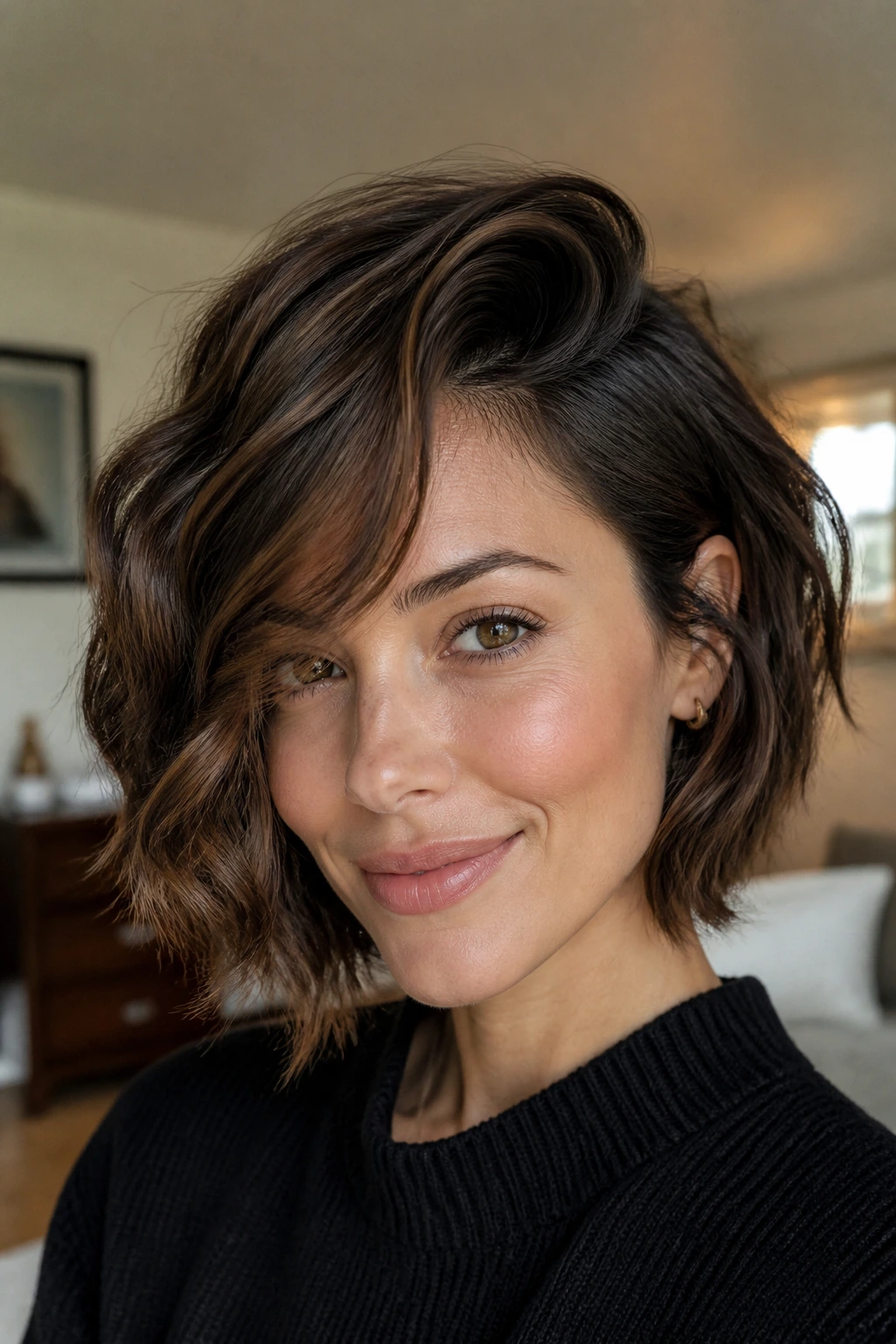
Sometimes the shape of the cut isn’t the only thing that matters; it is how you style it. A deep side part combined with an inverted bob creates instant volume on one side, which is perfect for adding a bit of glam to your waves. When you pair this with curtain bangs, you get a beautiful, dramatic sweep across the forehead.
Maximizing Volume with a Side Part
- Flip your hair to the opposite side while it is damp.
- Let it dry in that position for extra lift at the roots.
- Use a light dusting of root powder for added staying power throughout the day.
Integrating Curtain Bangs
- Your curtain bangs will naturally drape across the forehead more gracefully when parted to the side.
- This style mimics the look of a long, elegant fringe without the commitment of a full bang.
8. The Curly-Wavy Hybrid Bob
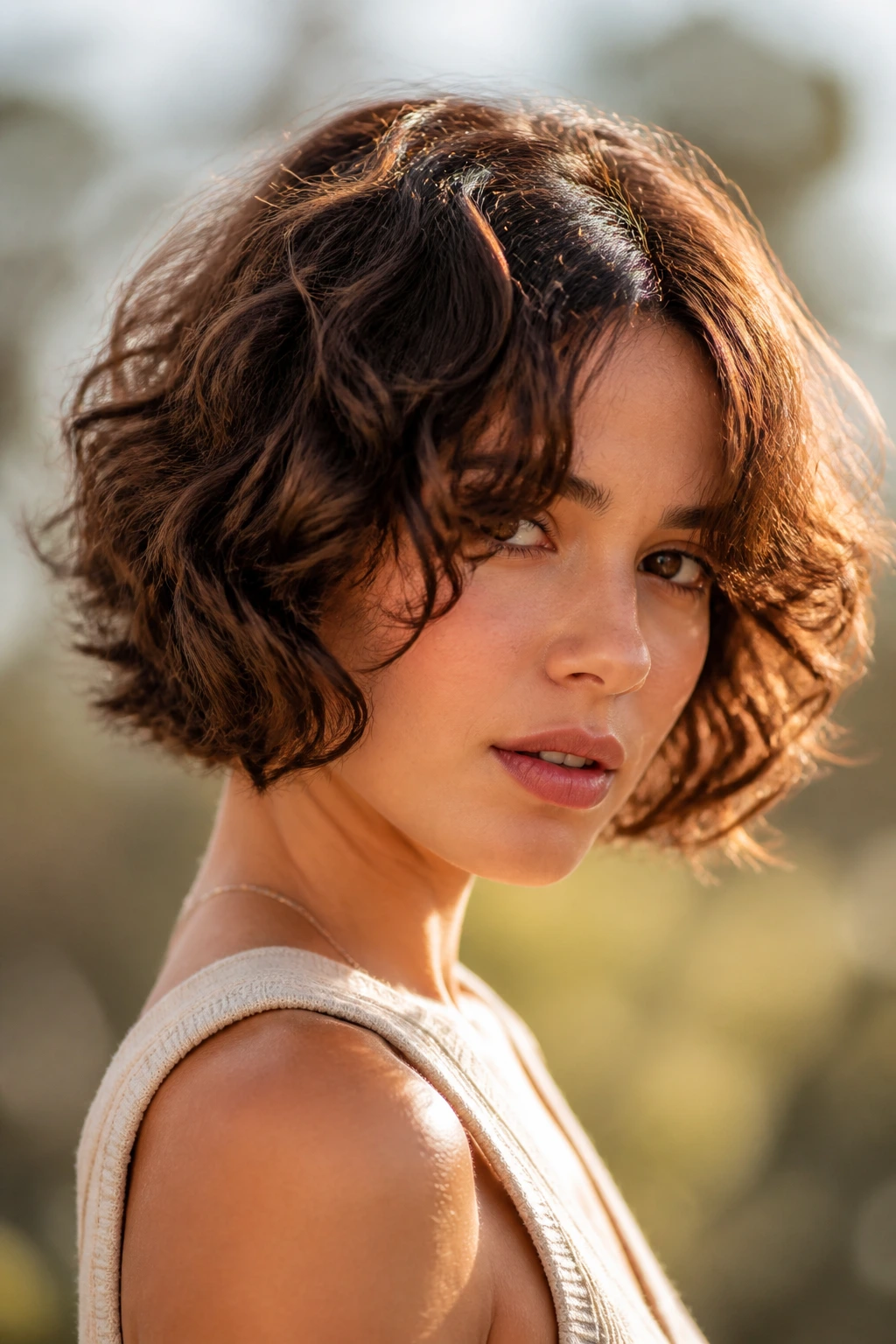
Not all wavy hair behaves the same. If your hair leans closer to a loose curl, an inverted bob can sometimes get unruly. The trick here is to cut it while the hair is dry, or at least to cut it with the knowledge that it will shrink significantly once it dries.
What to Tell Your Stylist
- Be clear about your curl pattern.
- If your hair shrinks by two inches, tell the stylist to adjust the angle accordingly.
- The curtain bangs must be cut long enough to account for that “spring back” effect.
Daily Care
- Use a microfiber towel to squeeze out water—never rub.
- Scrunch in a curl-defining cream while the hair is dripping wet.
- Hands off! Do not touch your hair while it dries to prevent frizz.
9. The Minimalist Inverted Bob
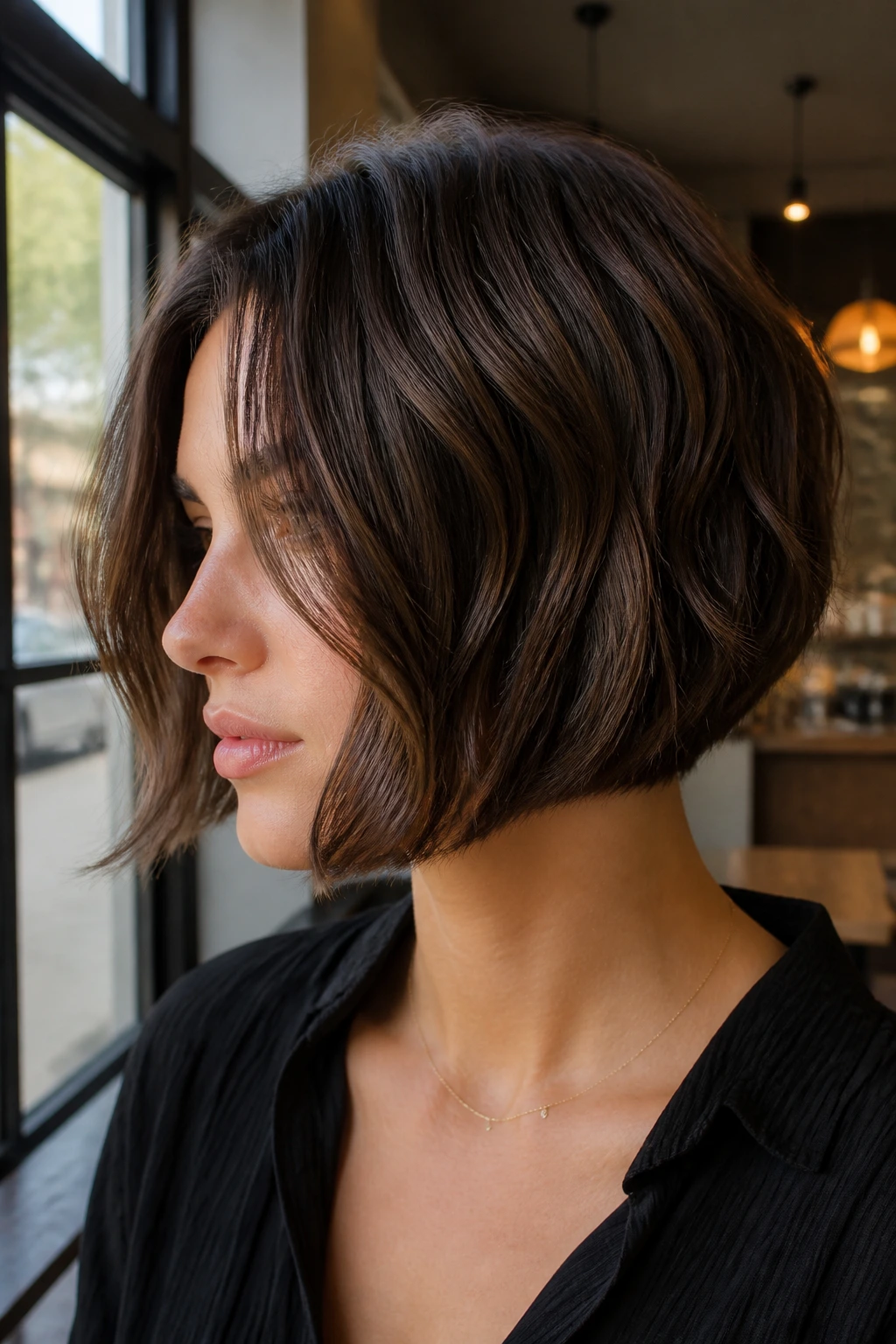
There is a certain elegance to a minimalist cut that lacks excessive layers or thinning. This version focuses on a clean, sharp angle that speaks for itself. It is the perfect choice for those with medium-density wavy hair who want a professional, polished aesthetic.
Achieving the Minimalist Aesthetic
- Keep the perimeter consistent.
- Avoid the temptation to add too many layers.
- Rely on your natural waves to provide the movement rather than mechanical cutting techniques.
Why It Works for Busy Mornings
- This cut looks great even when it is slightly messy.
- It is the definition of “wash-and-go” style.
- The curtain bangs provide just enough style to make it look like you tried, even when you didn’t.
10. The Dark and Moody Inverted Bob
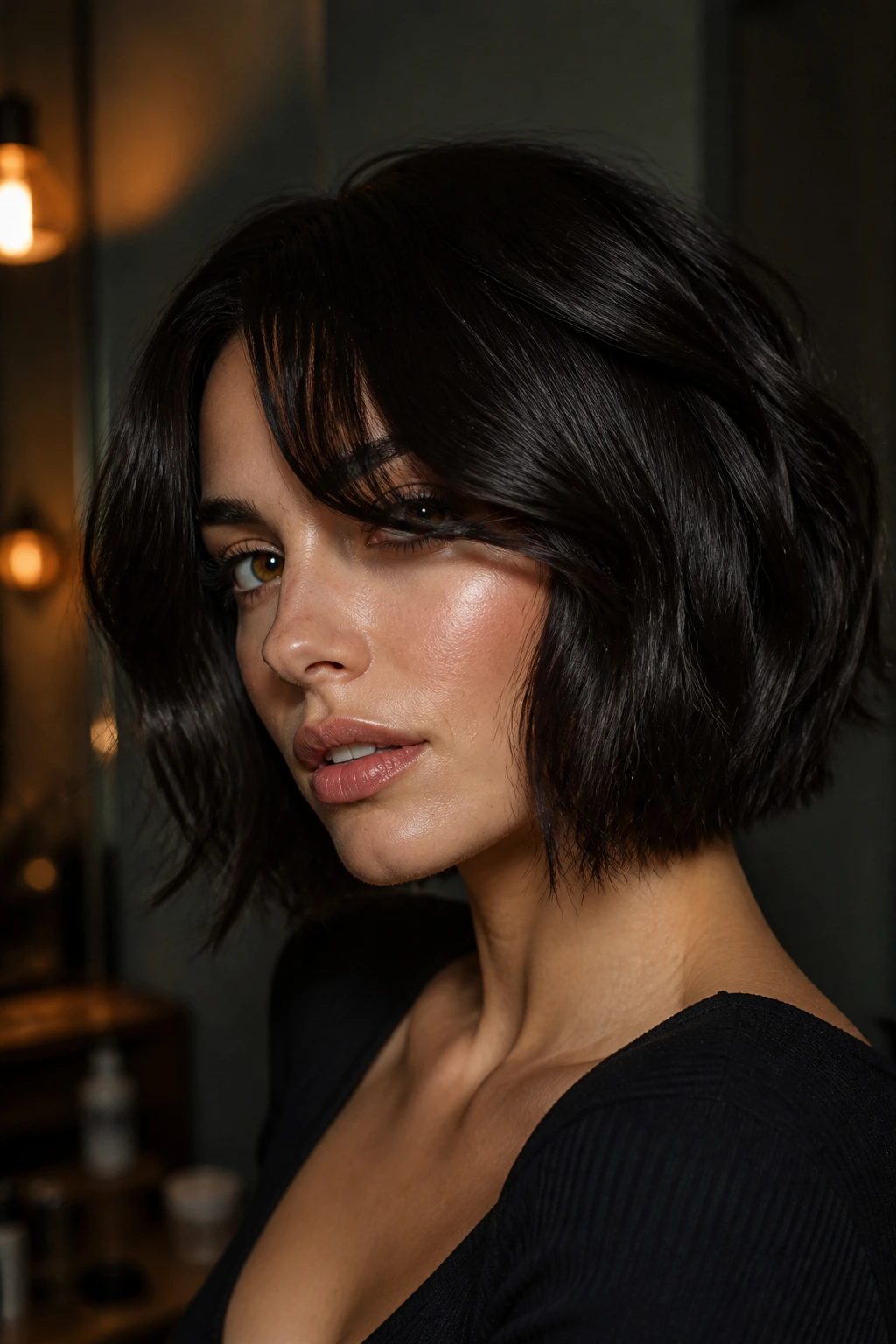
Color choice can transform the “vibe” of your inverted bob entirely. A deep, glossy espresso or midnight black tone creates a dramatic contrast with the skin, especially when the hair is cut at an angle. For wavy hair, the shine you get with darker tones is essential for making the waves look healthy and intentional.
Styling for Shine
- Use a lightweight hair oil on the ends to seal the cuticle.
- Avoid excessive heat styling, which can make dark hair look dull and dehydrated.
- Use a gloss treatment every few weeks to maintain that mirror-like finish.
11. The “Cool Girl” Bedhead Bob
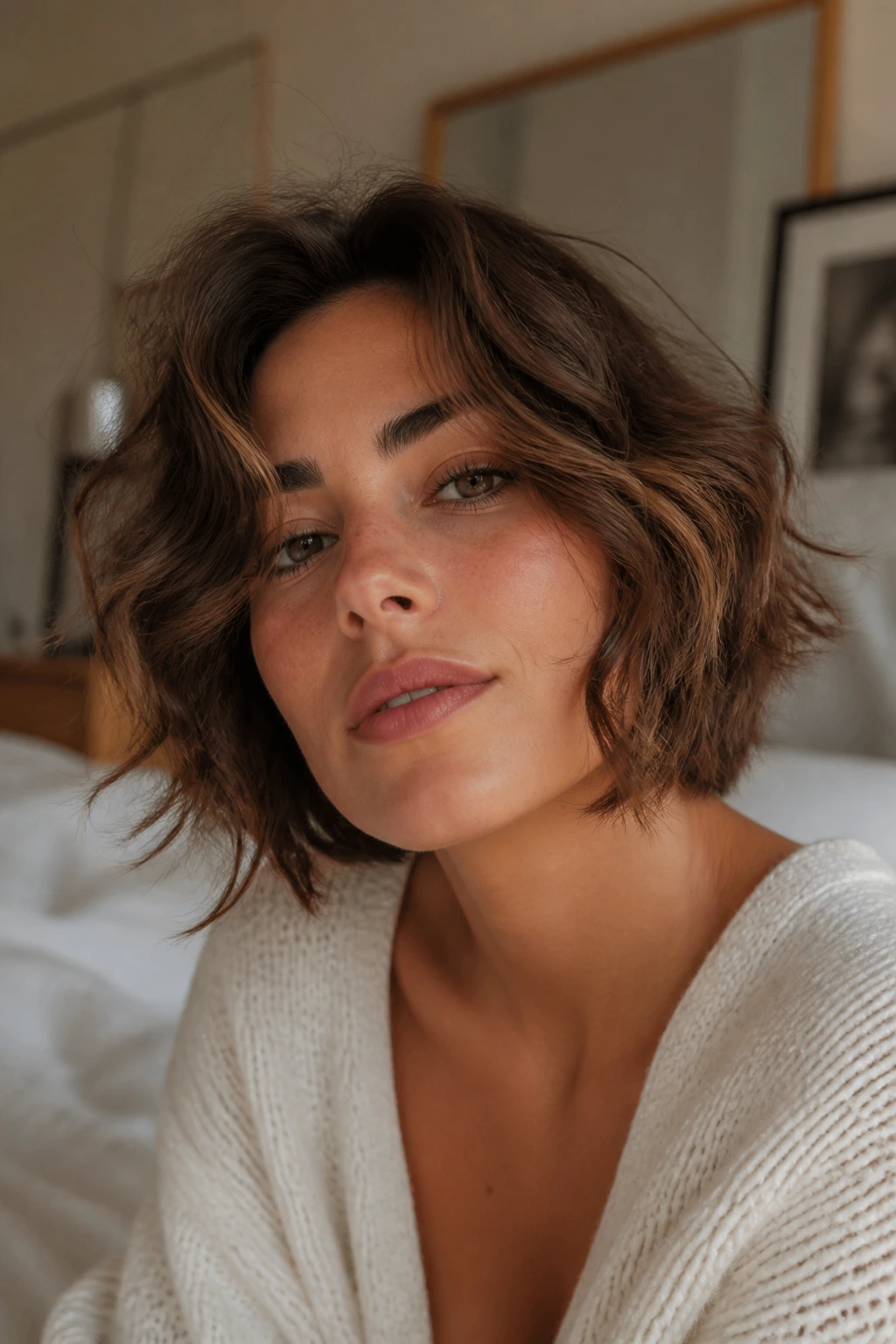
The “cool girl” look is all about appearing like you rolled out of bed with perfectly tousled hair. For an inverted bob, this means adding plenty of texturizing spray and perhaps using a 1.5-inch curling iron on just the top layer to create uniform waves.
Techniques for the Undone Look
- Curl just the surface pieces of the hair, leaving the underneath sections natural.
- Leave the last inch of your hair out of the iron for a straighter, modern finish.
- Shake the hair out once the curls are cool.
Integrating the Curtain Bangs
- Your bangs should be curled away from the face to create a “winged” look.
- Use a small amount of dry shampoo on the bangs to give them grit and texture.
12. The Wispy-Layered Inverted Bob
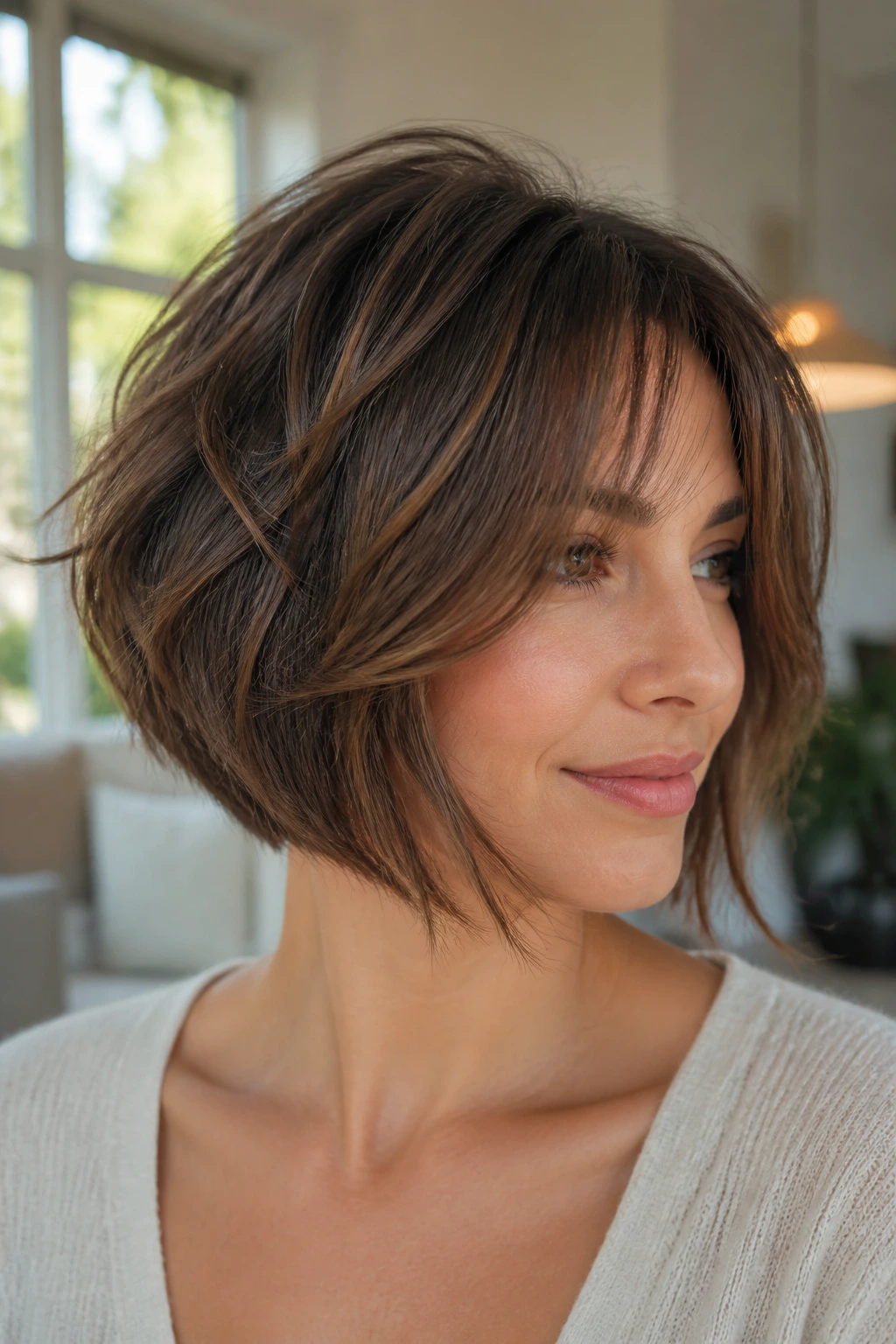
If your hair is on the finer side, you might worry that an inverted bob will make your hair look thin. The secret here is wispy, invisible layers that encourage the hair to move and separate. This gives the illusion of density because the hair isn’t all lying flat against your skull.
Building Volume for Fine Waves
- Focus on root-lifting sprays during the blow-dry process.
- Avoid heavy conditioning treatments near the scalp.
- The curtain bangs should be kept thin and wispy, not overly thick.
Why This Style Succeeds
- It creates a soft, ethereal appearance.
- The wavy texture hides the fact that the hair is fine, giving it a fuller, more substantial look.
13. The Asymmetrical Inverted Bob
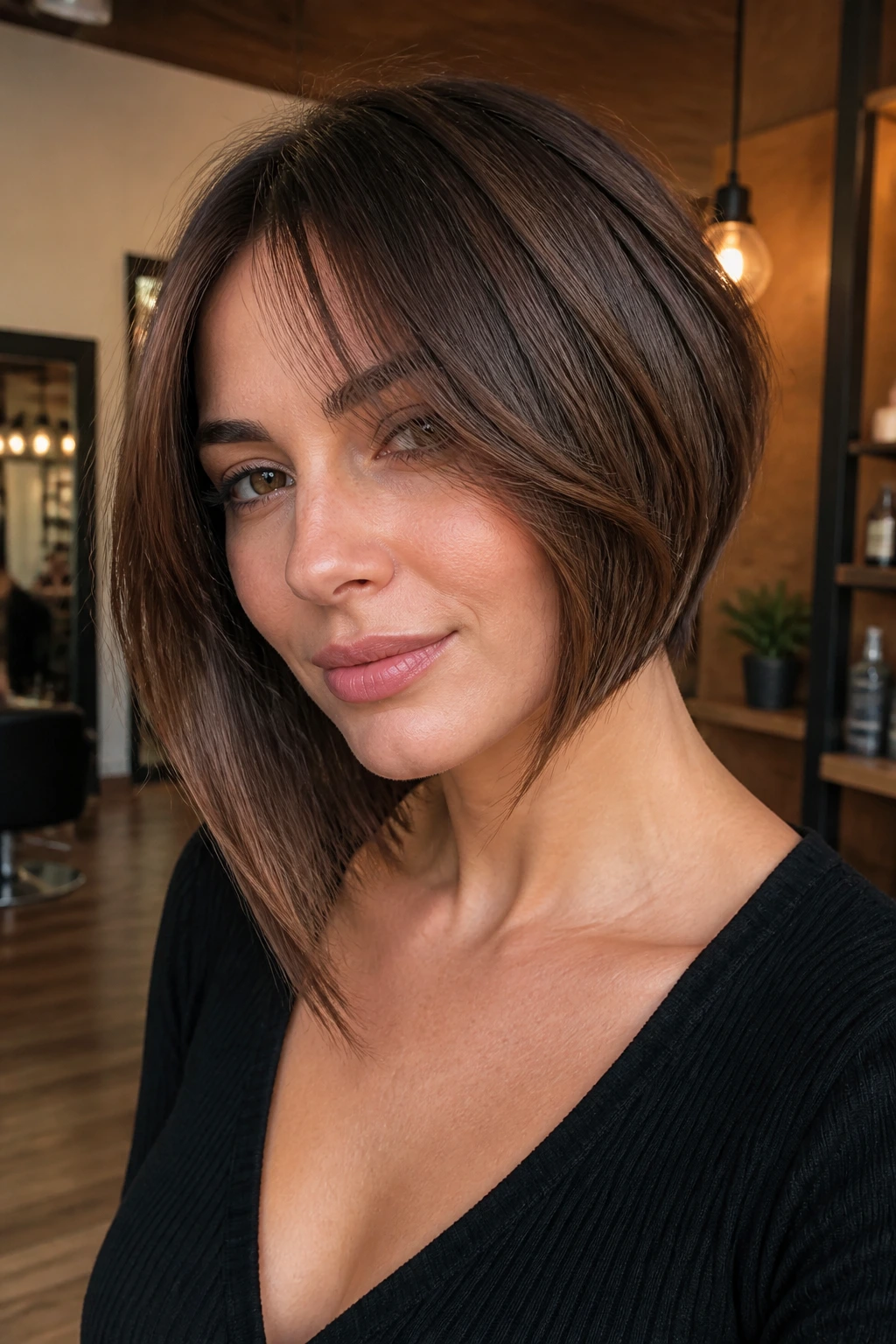
An asymmetrical bob takes the “inverted” concept one step further. One side is noticeably longer than the other, creating a high-fashion, artistic look. When you add curtain bangs to this cut, it softens the dramatic difference in length and creates a more wearable, everyday style.
Who Should Try This?
- Anyone who wants to make a statement.
- Those with a strong sense of personal style.
- It works particularly well on oval or heart-shaped faces.
Maintenance Considerations
- This style requires more frequent trims to keep the asymmetry sharp and intentional.
- If you let it grow out too long, the asymmetry becomes less distinct, so plan for salon visits every six weeks.
14. The Auburn and Copper Inverted Bob
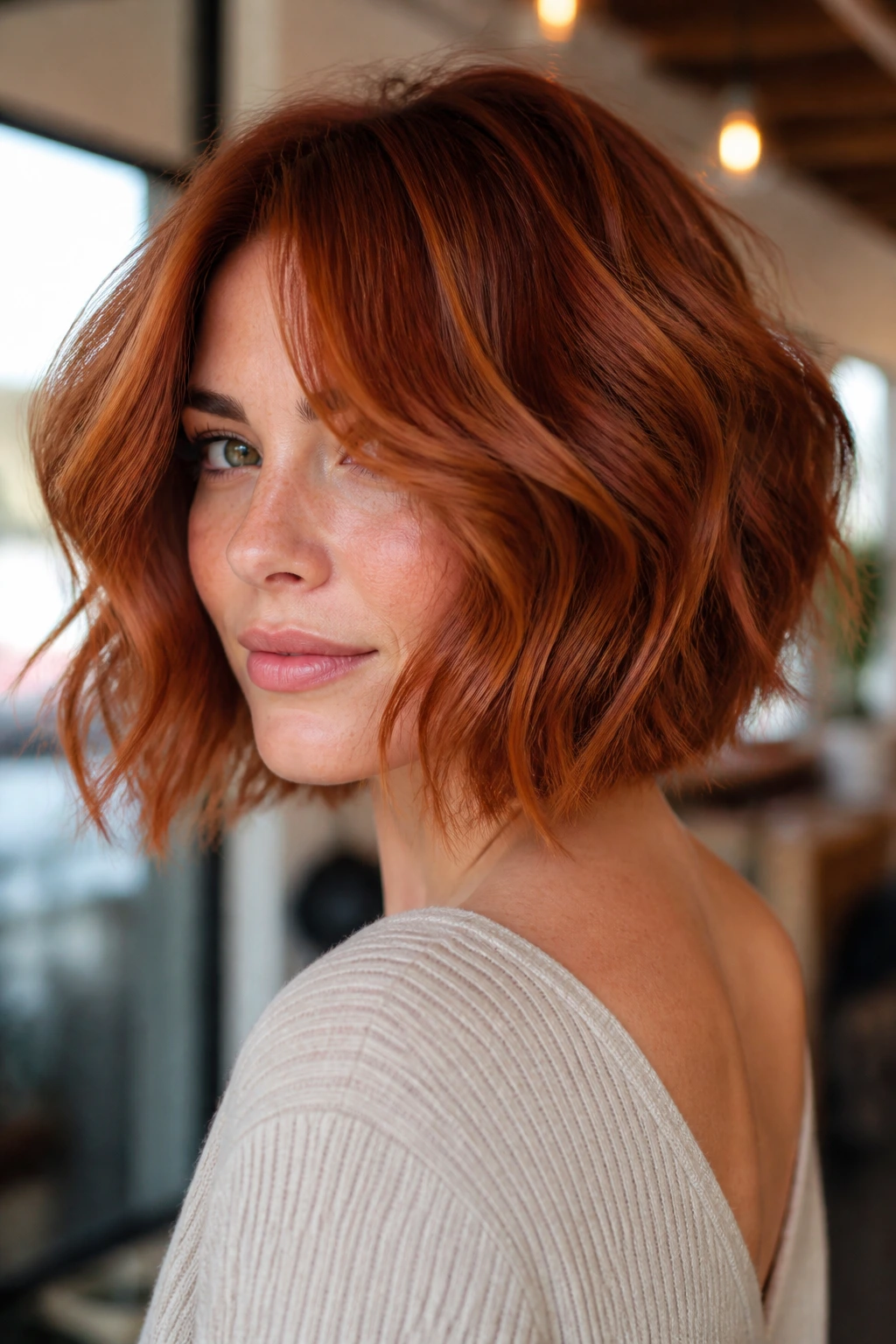
Copper and auburn shades are inherently warm and vibrant, making them an excellent choice for wavy hair that needs a little extra “pop.” The natural movement of waves combined with these rich, autumnal colors makes the hair look incredibly vibrant and alive.
Color and Texture Harmony
- Waves show off depth in color beautifully.
- Auburn shades provide a sense of luxury and shine that flat blonde or brown sometimes lacks.
- Make sure to use color-safe shampoos to prevent your copper from washing out prematurely.
15. The Low-Maintenance “Grow-Out” Bob
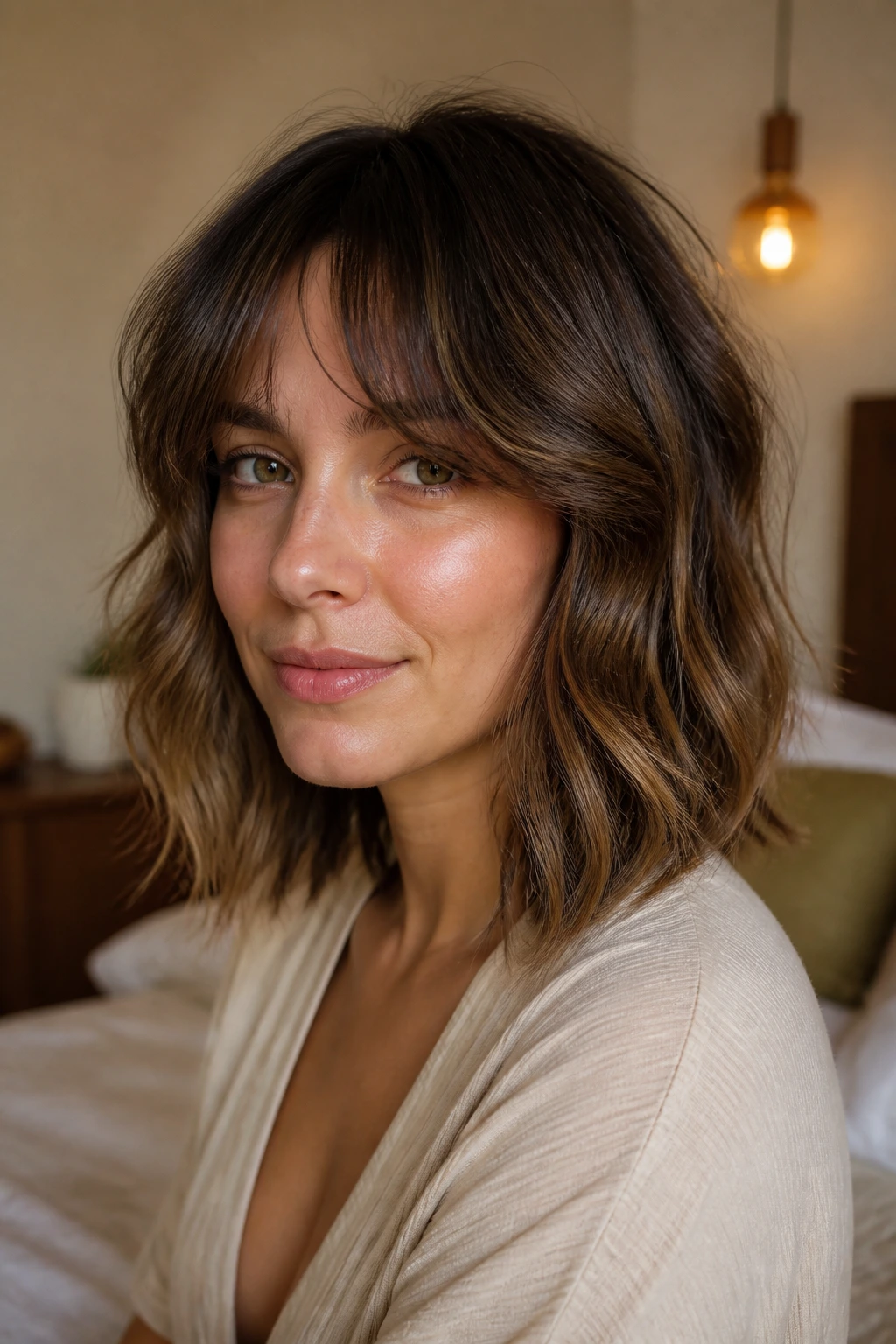
The beauty of the inverted bob with curtain bangs is how well it ages. As the back grows out, it turns into a soft, layered long bob. As the curtain bangs grow out, they blend into the face-framing layers. This is a style that you do not have to race back to the salon to fix every four weeks.
Managing the Grow-Out
- You can go three months between cuts without the shape falling apart.
- Simply keep your bangs trimmed at home if they start to tickle your eyes.
- Use moisturizing masks to keep your ends healthy as the cut matures.
Practical Tips and Common Mistakes to Avoid
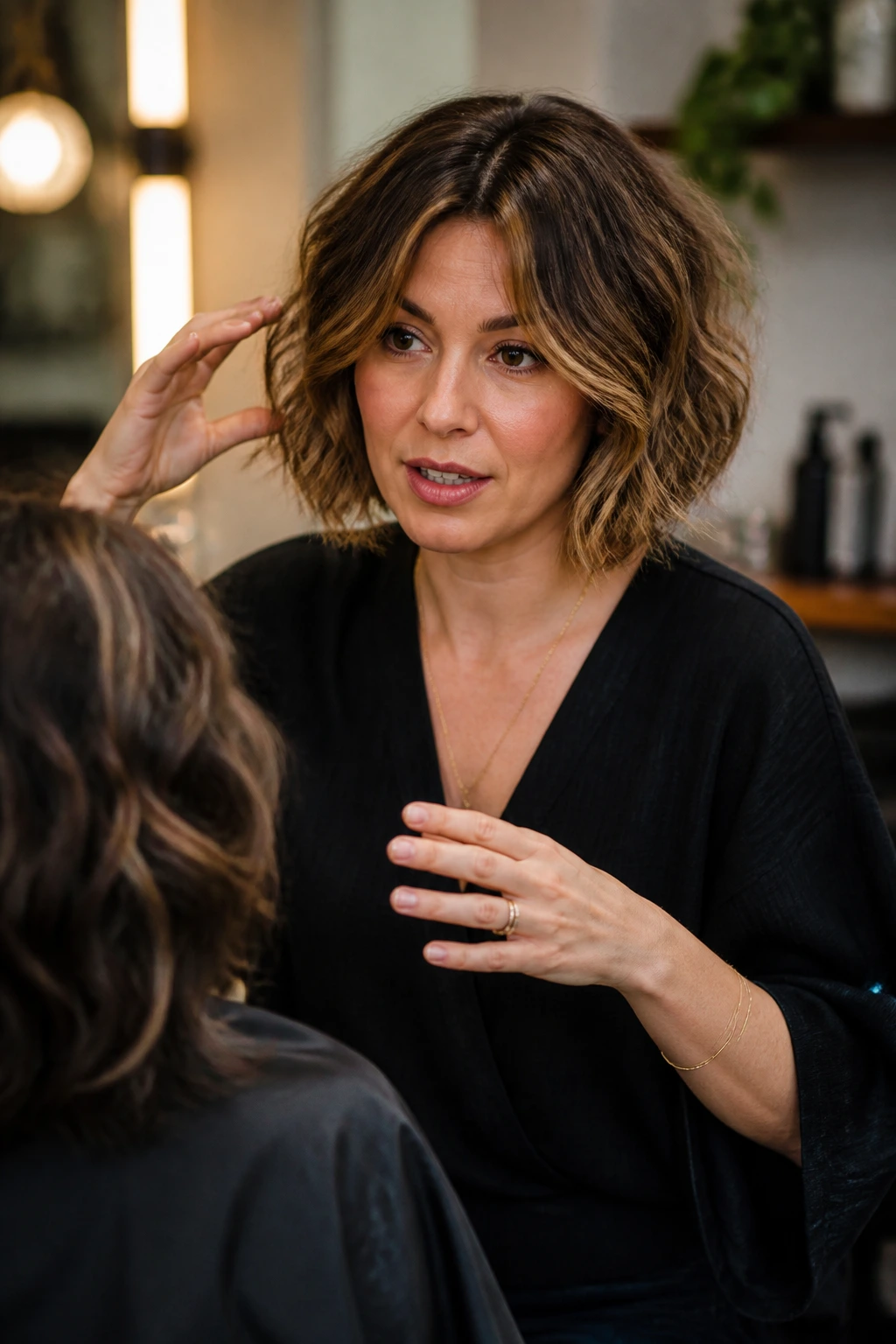
The biggest mistake people make with an inverted bob on wavy hair is assuming the stylist will “know” how to handle their wave pattern without instruction. You must be vocal about how your hair behaves. Does it frizz when cut with a razor? Does it shrink by two inches when it dries? Tell your stylist these things before the first snip occurs.
Another common pitfall is over-styling. If you try to force your waves into perfect, uniform ringlets, you lose the “inverted” shape of the bob. The goal is to work with the natural, irregular patterns of your waves. Let them clump, let them be messy, and let the cut provide the structure while the hair provides the texture.
Finally, do not underestimate the importance of your curtain bangs’ length. If they are too short, they will look like standard bangs and will lose their “curtain” effect. They should always be long enough to tuck behind your ears. This gives you the versatility to wear them down for a soft look or back for a cleaner, polished profile.
Storage and Maintenance of Your Look
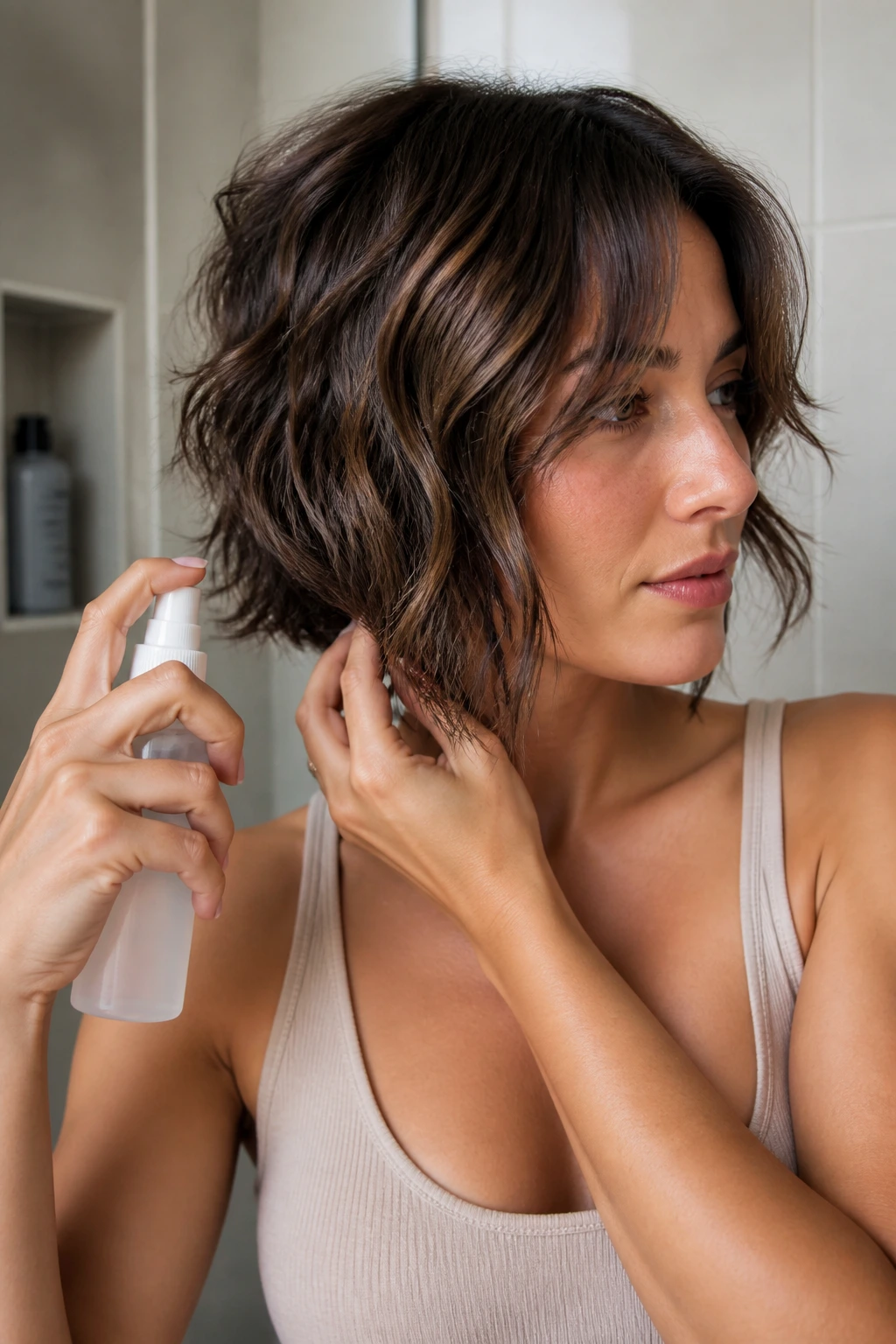
Because this is a cut that thrives on natural texture, your “maintenance” is more about product selection than daily effort. Avoid heavy waxes and pomades that will turn your waves into stiff, greasy coils. Instead, opt for lightweight foams, sea salt sprays, or wave-enhancing creams that provide hold without the crunch.
If you find that your waves are looking a bit tired after a long day, a simple spritz of water mixed with a tiny bit of leave-in conditioner can refresh the pattern instantly. Avoid brushing your hair when it is dry, as this will inevitably lead to a halo of frizz around your head. If you need to detangle, do it while the hair is saturated with conditioner in the shower using a wide-tooth comb.
Serving Suggestions and Pairings
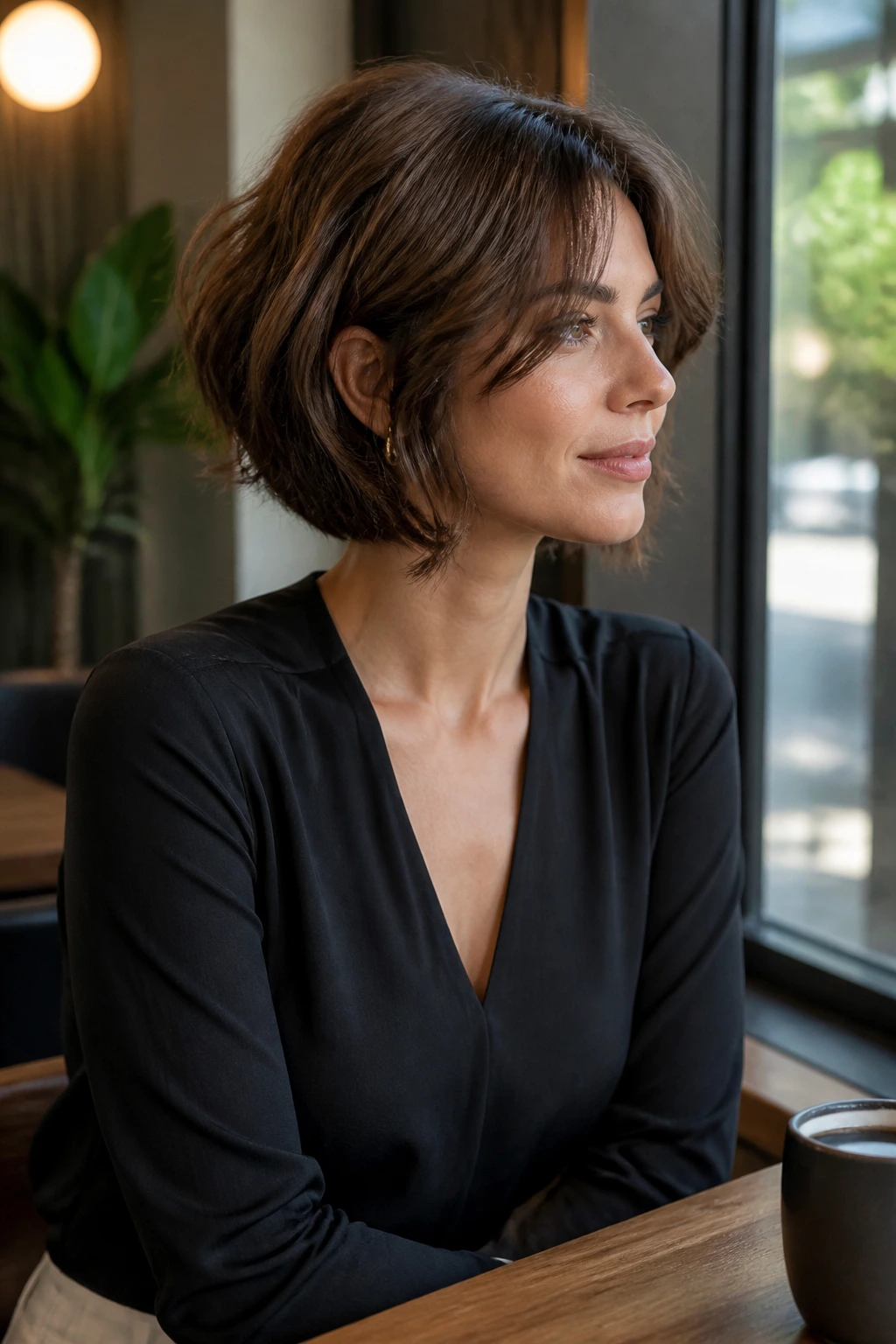
This hairstyle is incredibly versatile. It works just as well in a corporate office as it does on a weekend hiking trip. For a polished look, pair your bob with simple, minimalist earrings that draw attention to your jawline—the focal point of the inverted bob. If you want a more bohemian feel, try wearing the bangs slightly messy and adding a thin headband.
This style pairs beautifully with simple, structured clothing. Because the cut itself has so much shape and movement, you do not need to over-accessorize. A classic turtleneck, a crisp white button-down, or a simple summer dress will complement the lines of the bob without competing with it. Ultimately, the best accessory for this look is a bit of confidence; it is a bold, intentional cut that draws eyes to your face, so wear it like you mean it.
Final Thoughts
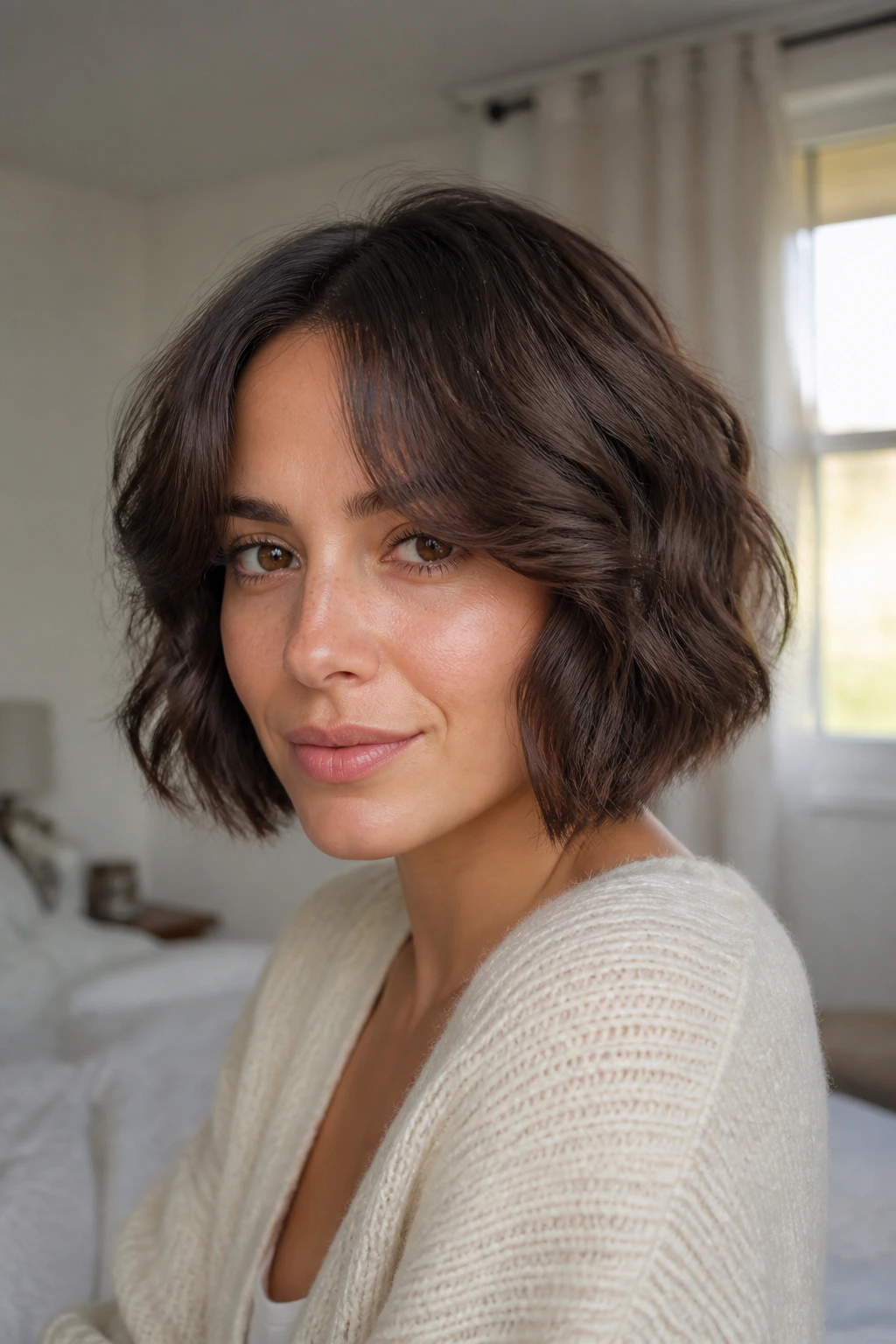
At the end of the day, an inverted bob with curtain bangs for wavy hair is less of a haircut and more of a lifestyle change. It streamlines your routine, emphasizes your natural texture, and frames your features in a way that feels intentional and flattering. Whether you opt for a dramatic stack in the back or a subtle, long-layered look, the combination of structure and softness creates a balance that is both practical and stylish.
The key to keeping this look fresh is embracing the slight irregularity of your waves. Stop trying to control every strand and let the cut do the heavy lifting for you. When you have a foundation that is tailored to your hair’s unique pattern, the days of fighting with your reflection in the mirror will finally be a thing of the past.