

Finding the right haircut during the teenage years is more than just a trip to the barber; it is often the first real experiment with personal identity. You are moving away from the styles chosen by your parents and into an era where your hair serves as a primary mode of self-expression. Some days you want something low-maintenance that you can just roll out of bed and own, while other times you might want a sharp, precise look that stands out in a crowded hallway. The challenge lies in balancing school-appropriate standards with your own evolving sense of style, all while dealing with hair textures that might be changing as you grow.
The best style is one that works with your natural growth patterns rather than fighting them. If you have fine, straight hair, trying to force a heavy, textured look often results in limp, greasy-looking strands by midday. Conversely, those with thick, wavy hair need the right weight distribution to avoid the dreaded “triangle” shape that happens when hair gets too long on the sides. Whether you are aiming for a classic clean-cut appearance, a rugged textured finish, or something bold and modern, the following styles cover the full spectrum of versatility and daily wearability.
1. The Classic Crew Cut with Tapered Sides
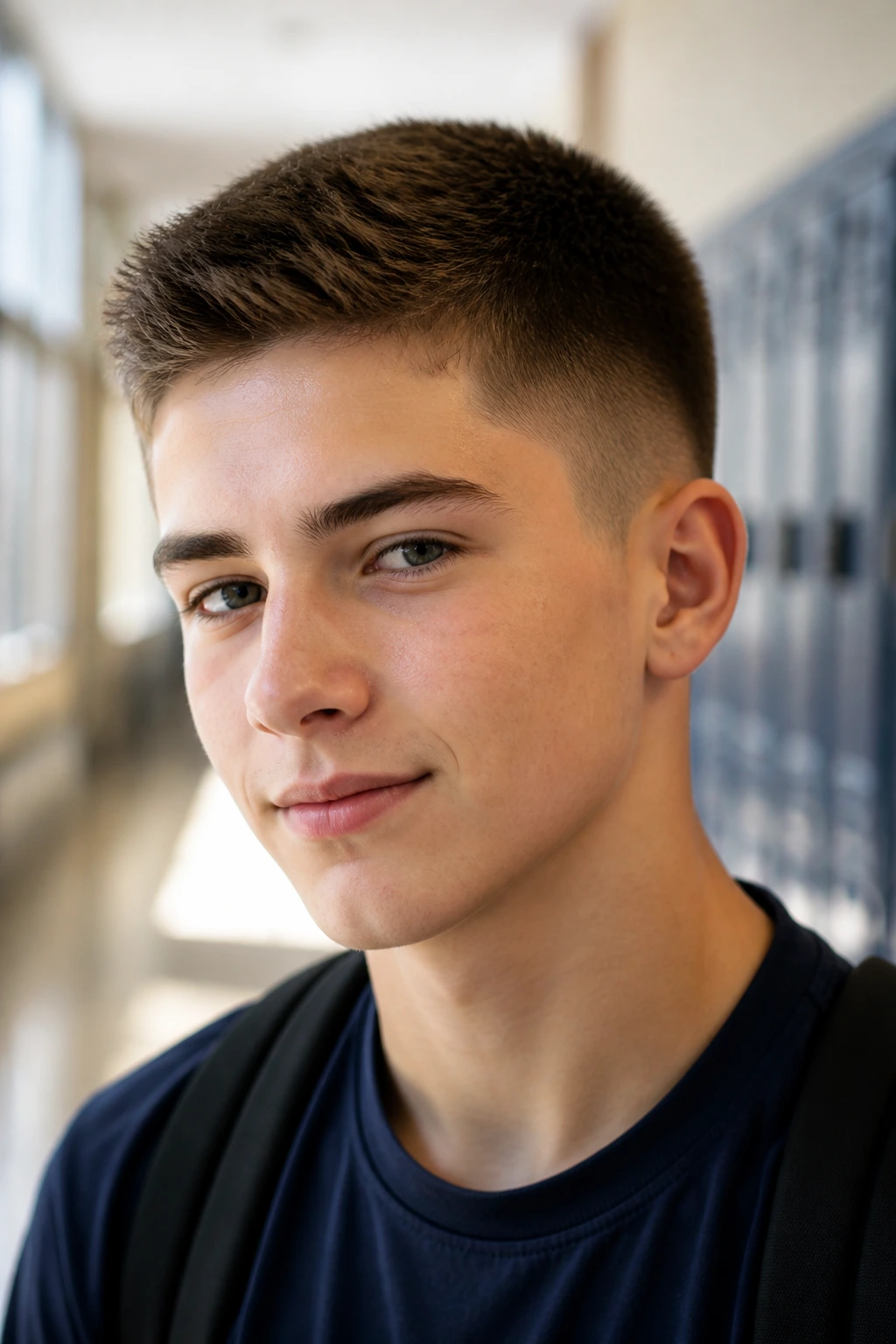
The crew cut remains the undisputed heavyweight champion of low-maintenance grooming for a reason. It is clean, functional, and looks professional in almost any environment, from a classroom to a formal event. The defining feature here is the gradual shortening of the hair from the top down to the neckline, creating a streamlined profile that requires almost zero styling time.
Why This Style Works for Daily Life
Unlike longer styles that demand pomades, clays, or hair dryers, the crew cut is essentially a “wash and go” situation. You do not need to worry about wind, hats, or humidity ruining your look, which makes it perfect for active teenagers involved in sports or those who simply do not want to spend ten minutes in front of a mirror every morning. It also keeps your neck cool during warmer months, providing a level of comfort that longer styles often lack.
How to Request It at the Barber
When you sit in the chair, ask for a “number two or number three on the sides with a low taper.” This ensures the sides are short but not skin-tight, which keeps the look softer. For the top, request a “scissor cut” rather than clippers to keep some texture, asking for about an inch to an inch and a half of length.
Pro tip: If you have a rounder face shape, ask the barber to leave slightly more volume on the top to help elongate your silhouette.
2. Textured Crop with a Fade
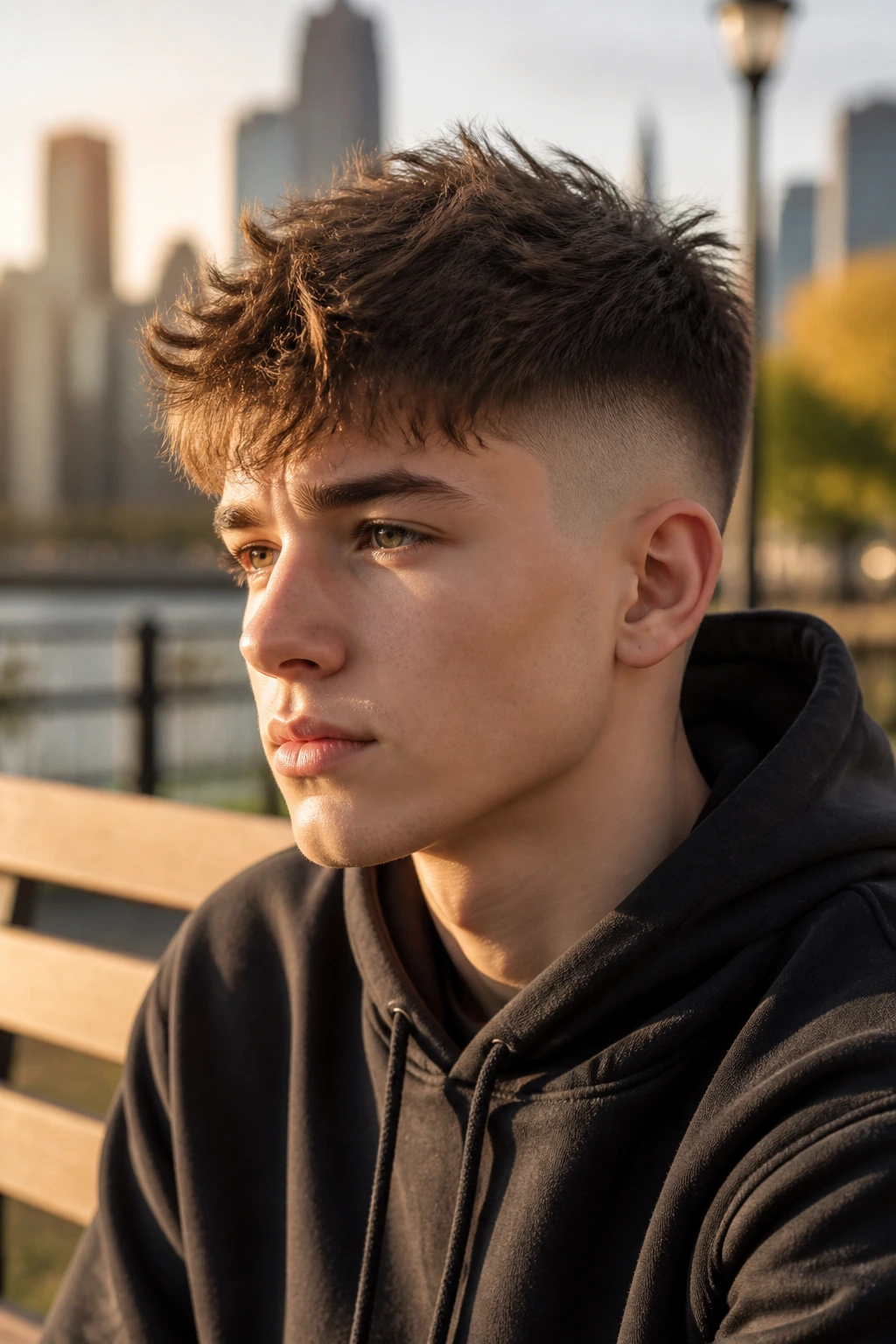
The textured crop is essentially the cooler, messier younger sibling of the classic crew cut. It emphasizes movement and “piecey” separation on top, usually paired with a skin fade on the sides for a high-contrast look that feels very contemporary. This is a favorite among guys who want to look sharp without appearing like they are trying too hard.
Mastering the Messy Finish
The magic of the textured crop lies in the product you use. You want to avoid heavy gels that leave hair crunchy and wet-looking. Instead, reach for a matte clay or a texture powder. These products absorb excess oil and provide a “dry” hold that lasts all day, allowing you to manipulate the hair into a slightly tousled, intentional mess that looks great on everyone.
Why It Suits Most Hair Types
Whether your hair is pin-straight or slightly wavy, the textured crop is incredibly forgiving. If your hair is straight, the barber will likely use thinning shears or a razor to create those jagged, textured ends. If your hair is wavy, the natural volume does most of the heavy lifting for you.
3. The Modern Pompadour
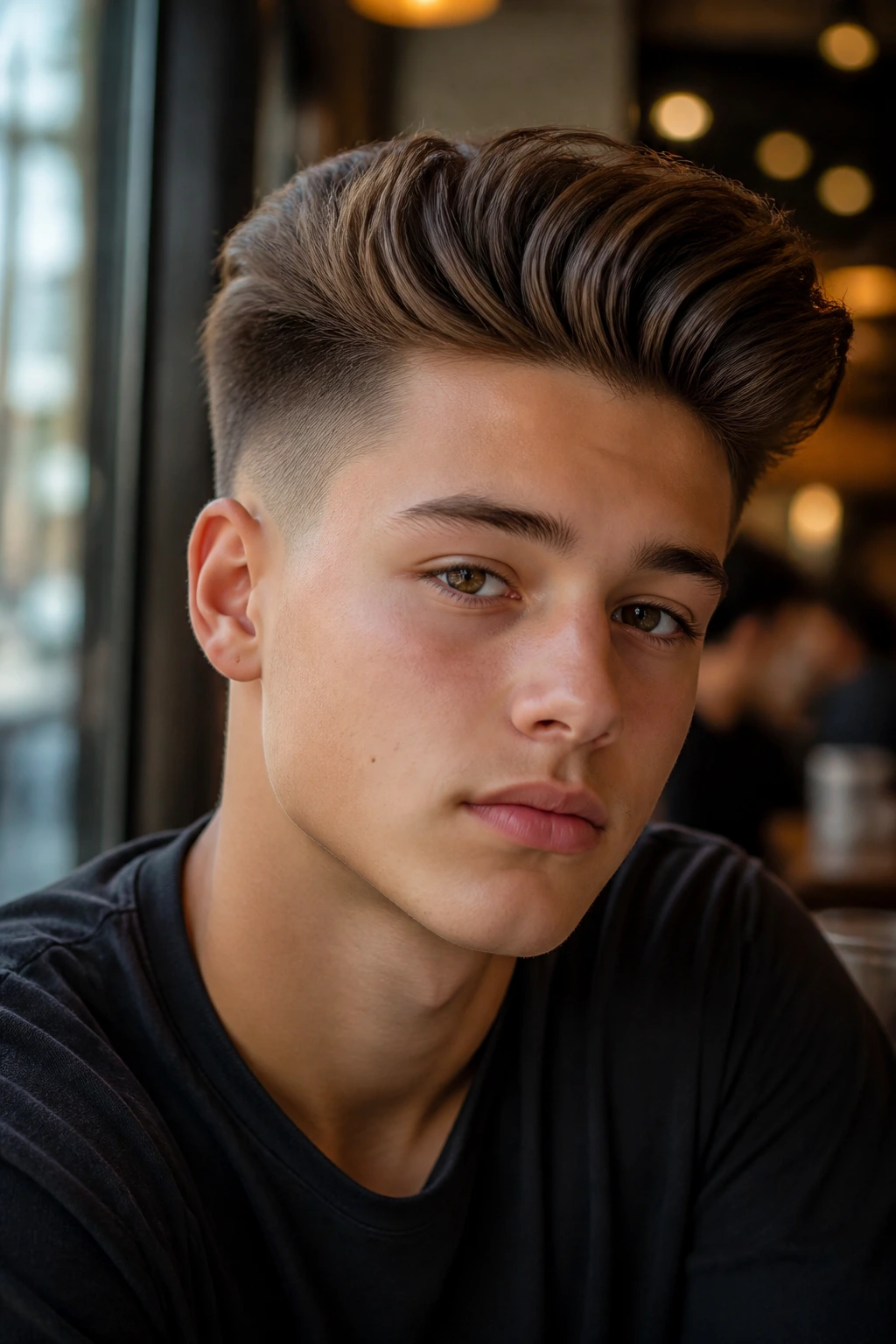
If you are looking for something that commands attention, the modern pompadour is a bold choice. It involves keeping the top section of your hair long and sweeping it upward and backward, often with a significant amount of volume at the front. While the classic version from the mid-twentieth century was very slick and shiny, the modern iteration is usually styled with a natural, matte finish.
Building Volume at the Roots
To get that signature height, you must master the art of the blow-dry. Use a round brush to lift the hair at the roots while directing the airflow from your dryer upward. Once the hair is about 80% dry, apply a small amount of sea salt spray or a lightweight volumizing mousse. This gives the hair “grip,” preventing it from falling flat an hour after you finish styling.
Balancing the Sides
Because the top is so dramatic, the sides need to be kept relatively short to maintain a balanced look. A mid-skin fade is a common choice here, as it draws the eye upward toward the volume on top. Avoid cutting the sides too long, or the entire shape will look top-heavy and round.
4. The Side Part with a Hard Line
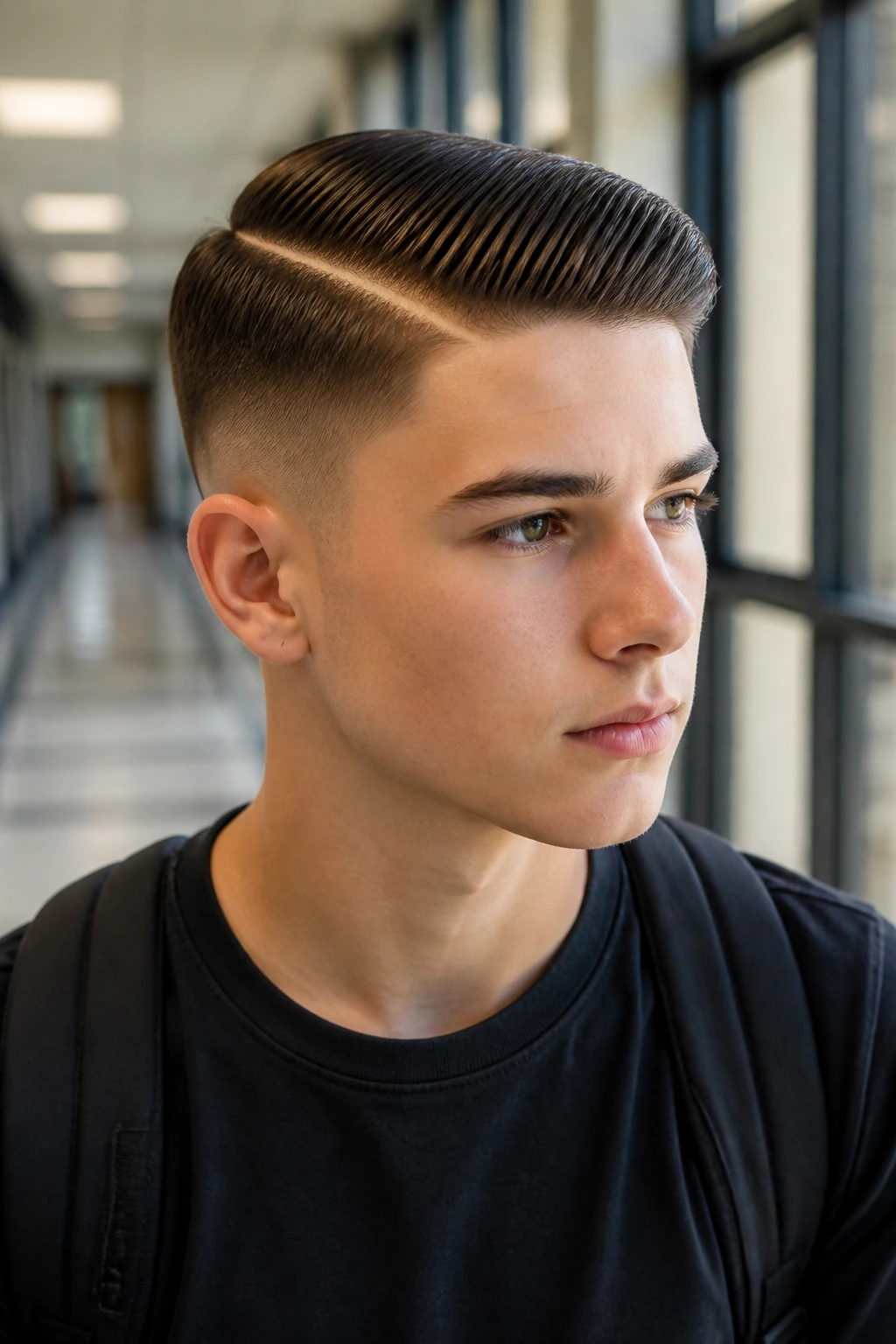
The side part is timeless, but adding a “hard line” (a razor-cut part) turns it into a modern, architectural statement. This style is crisp, precise, and works perfectly for guys who prefer a more polished aesthetic. It is a fantastic option if you have a job interview or a formal dance coming up, yet it remains casual enough for everyday school life.
The Importance of Precision
The “hard line” refers to a thin, shaved line that acts as the division between the two sections of your hair. This requires a steady hand from your barber and regular maintenance. Because the skin around the line will grow back quickly, you might find yourself needing a “line-up” visit every two weeks to keep the geometry looking sharp.
Choosing Your Product
For a classic side part, you generally want a product with a bit of shine, such as a medium-hold pomade. Take a small amount, warm it between your palms, and comb it through damp hair. Use a fine-tooth comb to establish the part, then use your fingers to break up the lines slightly for a more natural finish.
5. Longer Wavy Fringe
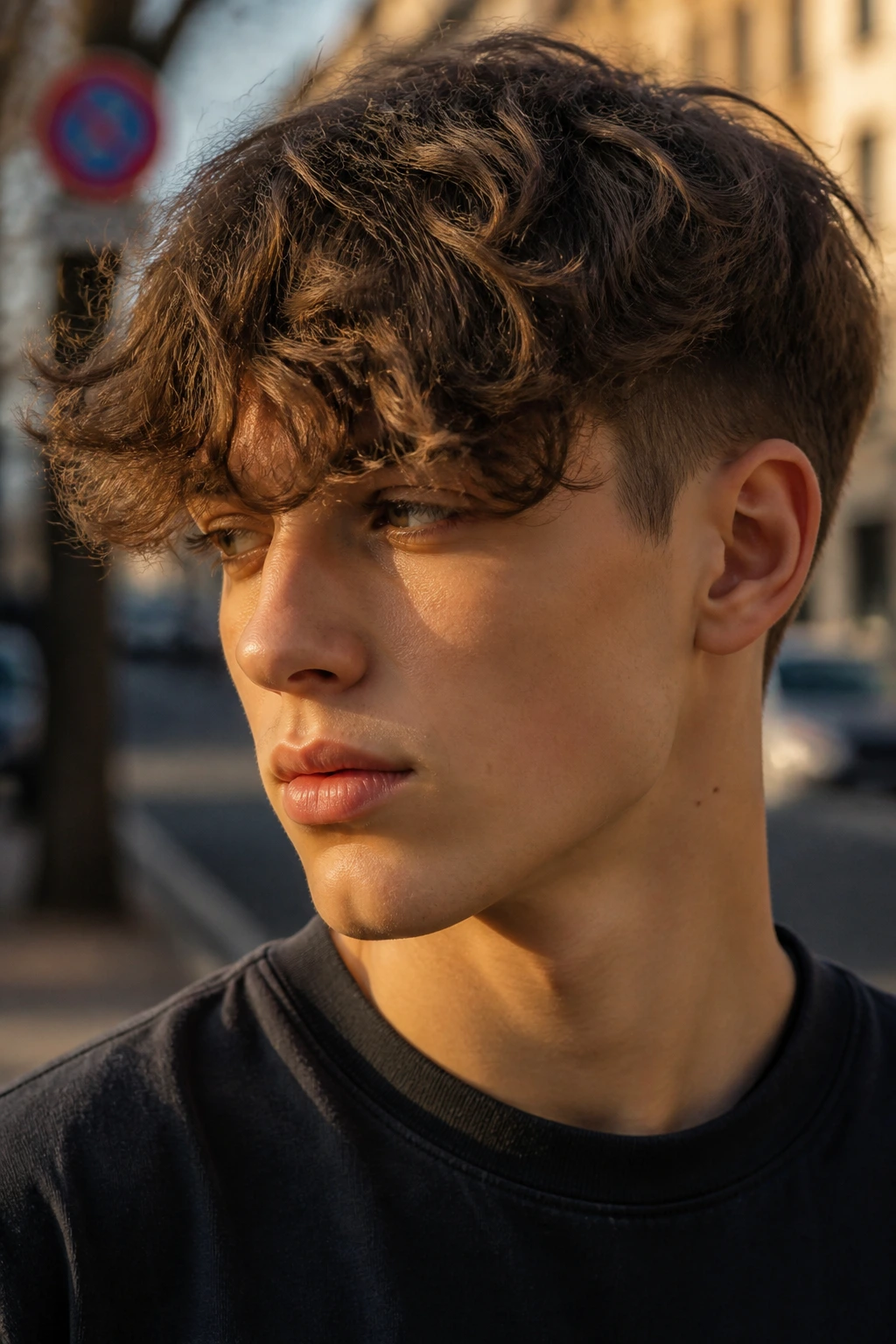
For guys with natural waves or curls, trying to force the hair to lay flat is usually a losing battle. The longer wavy fringe celebrates your texture by allowing it to hang over the forehead, often paired with a shorter, faded back and sides to prevent the look from becoming unkempt.
Managing the Volume
The biggest struggle with long fringe is keeping the hair from becoming too puffy. Use a curl-defining cream while your hair is still damp. This helps group the curls or waves together into distinct clumps rather than letting them frizz out into a cloud of volume. If you find the fringe getting in your eyes, a tiny dab of matte paste can help sweep it to one side.
Why This Style Has Staying Power
It is incredibly low-maintenance on the days you do not feel like styling. On those mornings, you can simply wake up, dampen your hair, and let it air dry. It also provides a great “frame” for your face, which is helpful if you are self-conscious about a wider forehead or want to draw attention to your eyes.
6. The Undercut with Length
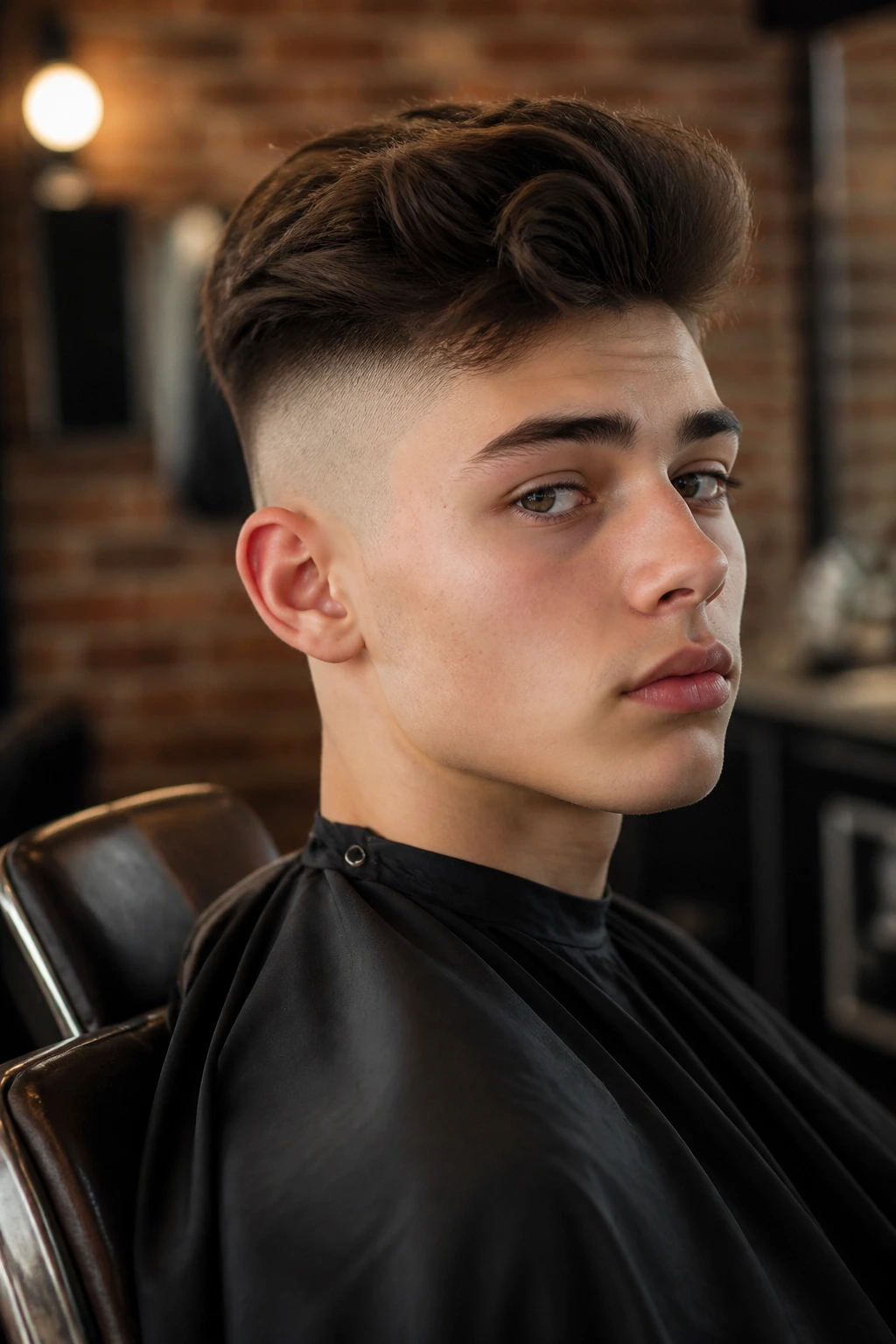
The undercut is defined by a drastic contrast between the sides (shaved or buzzed) and the top (which is left significantly longer). It is an edgy look that has become a staple of modern barbershops. The length on top can be styled in multiple ways—slicked back, pushed to the side, or tied up in a top knot if it gets long enough.
Adapting to Your Daily Needs
One day you might want to wear it back for a clean look, and the next you might want to wear it messy and forward. The undercut is one of the most versatile styles on this list. Just keep in mind that the sides grow out quickly, so if you do not like the “in-between” stage, you will need to commit to regular barber visits.
Keeping the Top Healthy
Because the top section is usually the focal point, keeping it healthy is crucial. Avoid over-washing your hair, which can strip away the natural oils needed to keep longer hair looking soft. If you find your hair becoming dry, a small amount of leave-in conditioner applied to the ends will work wonders.
7. The Natural Flow (Mid-Length)
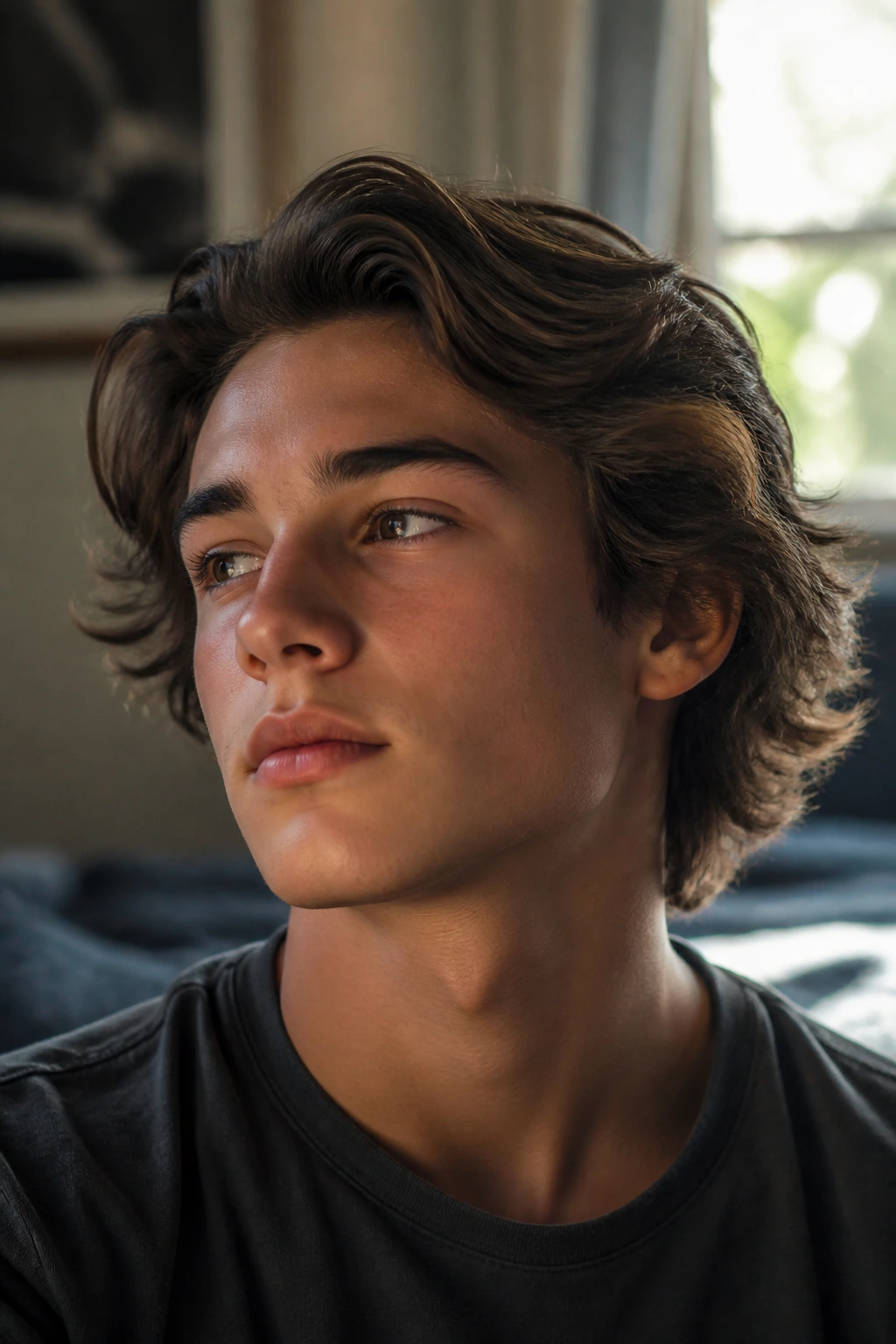
Sometimes, the best look is the one that looks like you just grew it out. The “natural flow” involves keeping the hair at a medium length all around, usually hitting just above the ears and flowing back away from the face. It requires a bit of maintenance in terms of regular trims to keep the neckline tidy, but it avoids the “barber-shop” look entirely.
Achieving the “Swept Back” Look
The trick to the natural flow is training your hair to grow in a backward direction. After showering, comb your damp hair backward and let it air dry in that position. If you have particularly stubborn hair, wearing a hat for thirty minutes while your hair is damp can help force it to take on that desired swept-back shape.
Why This Style Is Popular
It feels very authentic and effortless. It works exceptionally well for guys who want a bit of length but do not want the hassle of managing a complex, styled look every single morning. Plus, it is a great style for transitional periods when you are not quite sure what you want to do next.
8. The Buzz Cut with Design
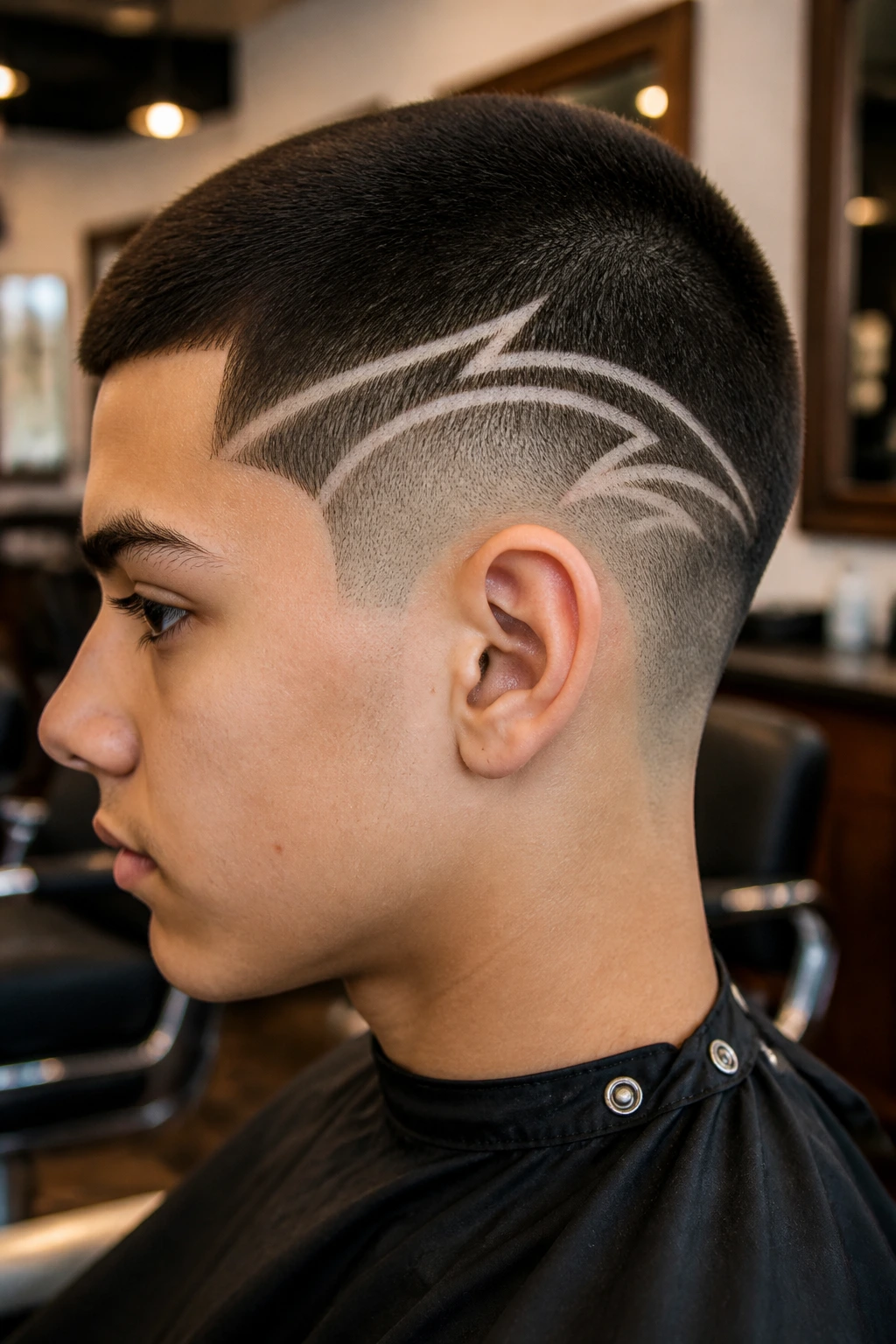
If you want to go short but want to show off a bit of personality, a simple buzz cut with a shaved design is the way to go. You can stick to geometric lines, lightning bolts, or simple fades, depending on what your barber is comfortable executing.
Expressing Individuality
This is perhaps the most customizable style you can get. Since your hair grows back relatively quickly, you can rotate through different designs every month or so. It is a bold look that says you are confident and don’t take yourself too seriously.
Maintenance Considerations
A buzz cut with a design needs frequent upkeep. If you let it grow for too long, the design becomes blurred and loses its crispness. If you choose this route, be prepared to see your barber at least once every two weeks to keep the lines clean and the overall length uniform.
9. The Quiff
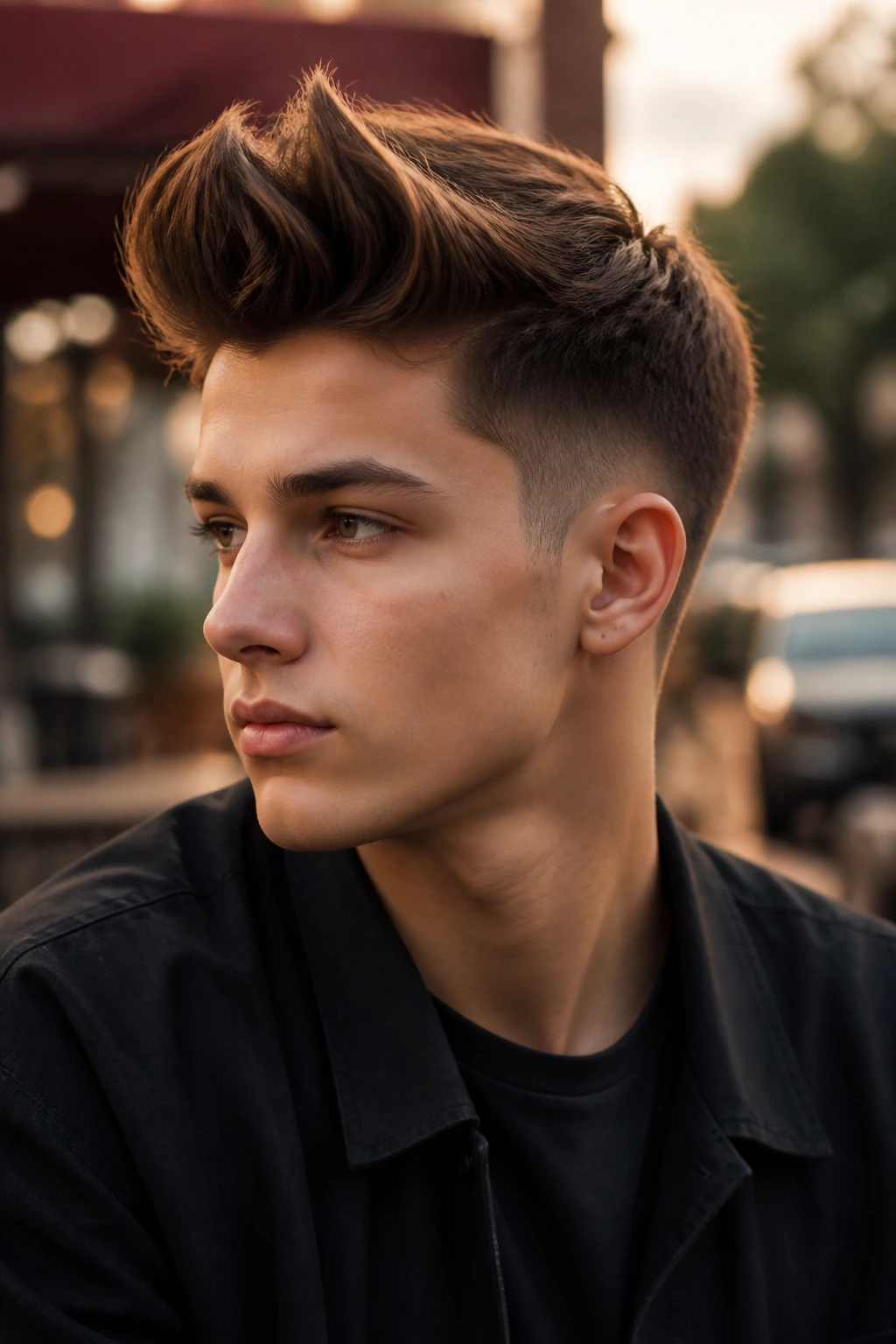
The quiff is the middle ground between a pompadour and a textured crop. It features volume at the front, but the rest of the hair is kept in a more natural, relaxed state. It is a fantastic choice if you want to add height to your face without the high-maintenance styling routine of a full pompadour.
Styling for Daily Wear
Apply a volumizing mousse to the roots while damp, then blow-dry the front section upward. Once it is dry, use a small amount of pomade or wax to piece out the top section. You do not want it to look “stiff” or “set in stone”; the goal is a look that has volume but still feels touchable.
Choosing Your Fade
A low-to-mid fade works perfectly with a quiff. It keeps the focus on the volume at the front while ensuring the sides remain tidy. This is a very professional-looking style that manages to stay fun and modern.
10. The Slicked-Back Taper
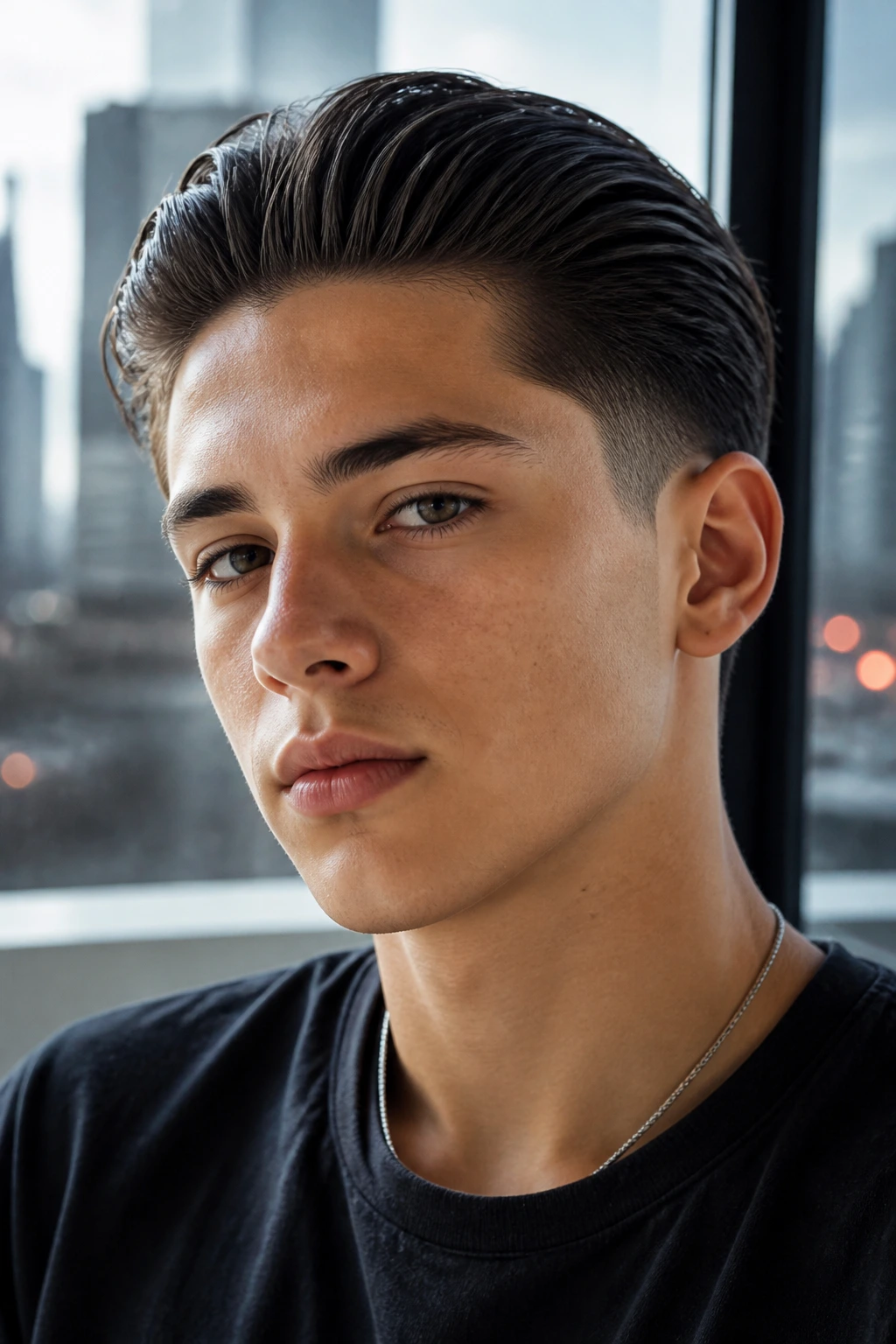
This style is for the guy who likes a clean, controlled aesthetic. By using a water-based pomade, you can sweep your hair straight back or slightly to the side. The key to the “taper” version is that the sides are not buzzed to the skin, but rather tapered down to the neck for a softer, more sophisticated finish.
Why Water-Based Pomades Rule
Unlike oil-based products, water-based pomades wash out effortlessly with water. This is essential for a daily style; you don’t want to spend time scrubbing your hair just to get the product out before you go to sleep. They provide a strong hold with a moderate shine that looks very healthy.
A Note on Hair Type
This style works best for guys with medium-to-thick, straight hair. If your hair is very fine, the slicked-back look can sometimes make your hair appear thinner than it actually is. If you have thin hair, opt for a matte product instead of a shiny one to add the illusion of thickness.
11. Curly Top with Tapered Fade
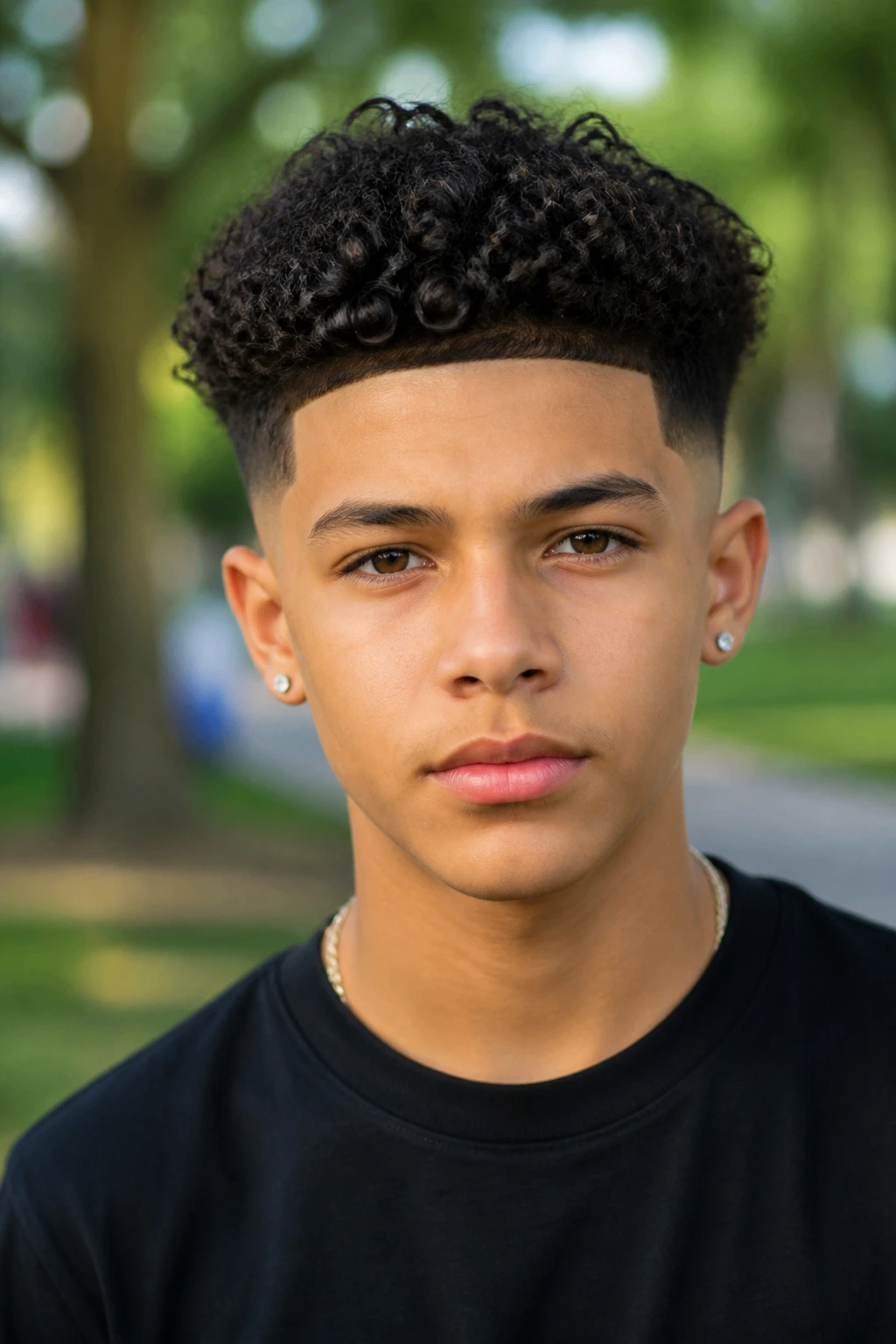
If you have tight coils or curls, working with them instead of against them is the secret to a great look. Keeping the top longer and shaped into a round or square silhouette while tapering the sides provides a nice visual balance.
Hydration is Everything
Curly and coily hair needs moisture to look its best. Use a sulfate-free shampoo to avoid drying out the strands, and always follow up with a high-quality curl cream or leave-in conditioner. This prevents the hair from looking brittle and ensures the curls stay defined and bouncy.
The Shape-Up
The most important part of this haircut is the line-up along the forehead and temples. A sharp, crisp edge-up makes the whole style look intentional and polished. This is a style where the quality of the barber’s tools and their precision really makes the difference between “okay” and “excellent.”
12. The Bro Flow
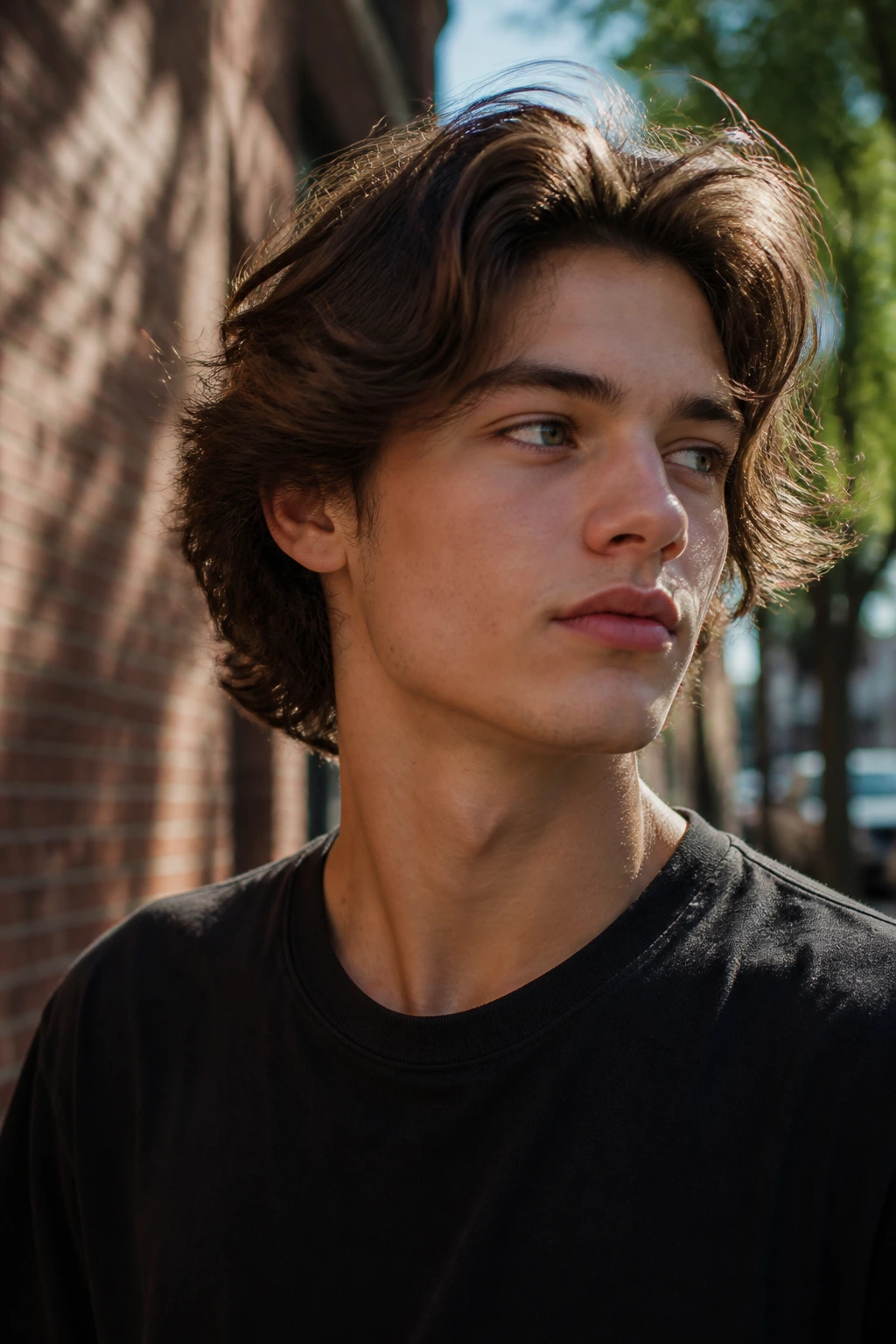
Similar to the natural flow, the “bro flow” is a bit longer and tends to fall more naturally around the ears. This is a great transition style if you are interested in growing your hair out but don’t want to look like you’ve just given up on grooming.
Managing the Length
The secret here is regular maintenance of the ends. Just because you are growing it out does not mean you can skip the barber for six months. Ask for a “dusting” of the ends to keep them healthy. This keeps the hair looking thick and prevents the dreaded “split-end” look that makes long hair look unhealthy.
Styling Options
The beauty of the bro flow is that it is flexible. You can tuck it behind your ears, wear it with a baseball cap, or slick it back with a tiny bit of cream if you need a more formal look for an event.
13. High Top Fade
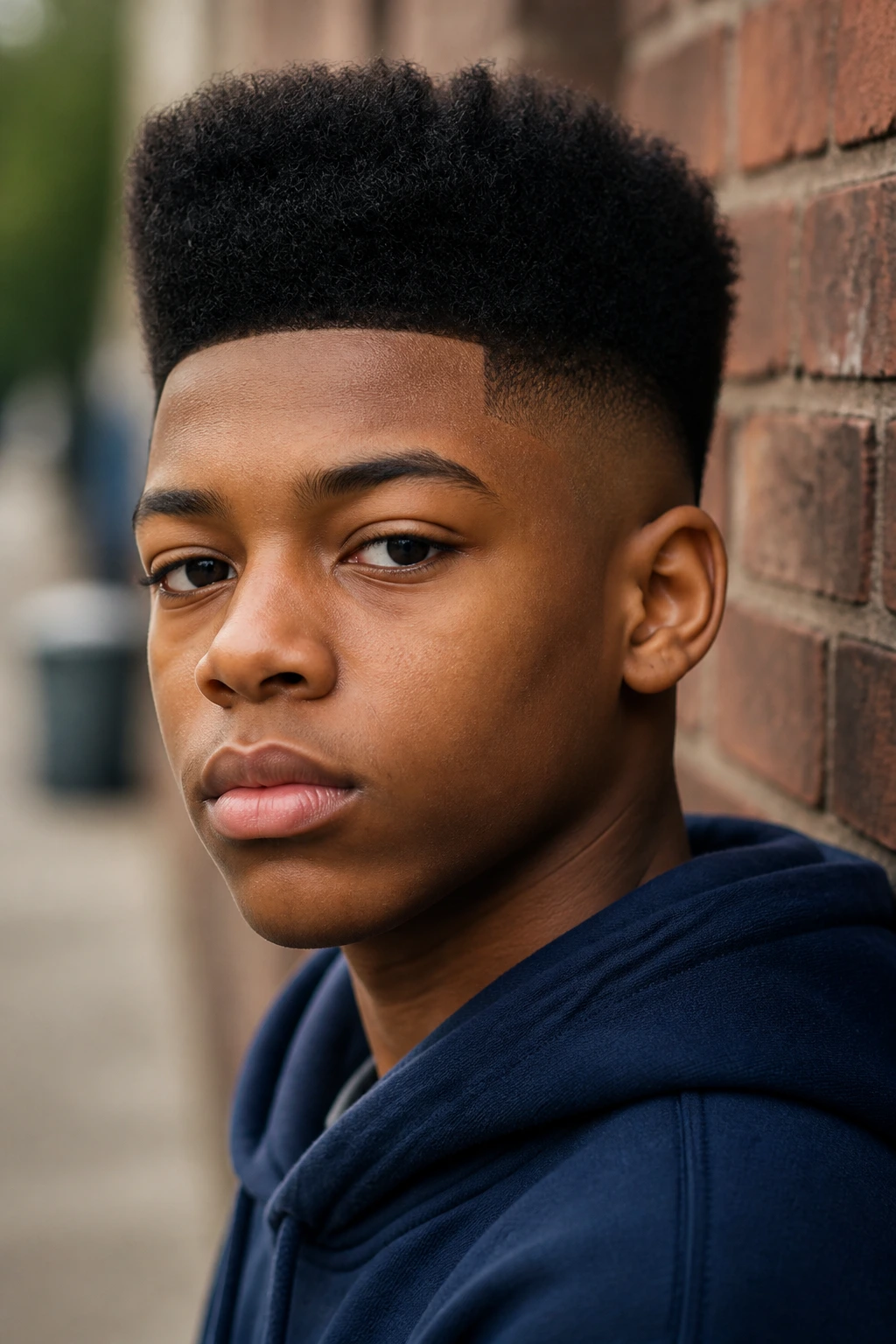
The high top fade is a classic, bold look that adds significant height and style. It is a sharp, clean-cut choice that requires a skilled barber, as the transitions and the shape of the top are technical skills that demand precision.
Daily Upkeep
Because this style is all about the shape, you have to be careful with how you sleep and wear hats. If you crush the top, it will stay flattened for the rest of the day. Using a bit of hairspray or a firm-hold styling spray can help the structure hold its own against the elements.
When to Refresh
The high top fade is high-maintenance. You will likely find yourself back in the barber’s chair every ten to fourteen days to keep the fade tight and the top perfectly squared off. It is an investment of time, but the payoff is a style that is undeniably distinctive.
14. The Middle Part (Curtains)
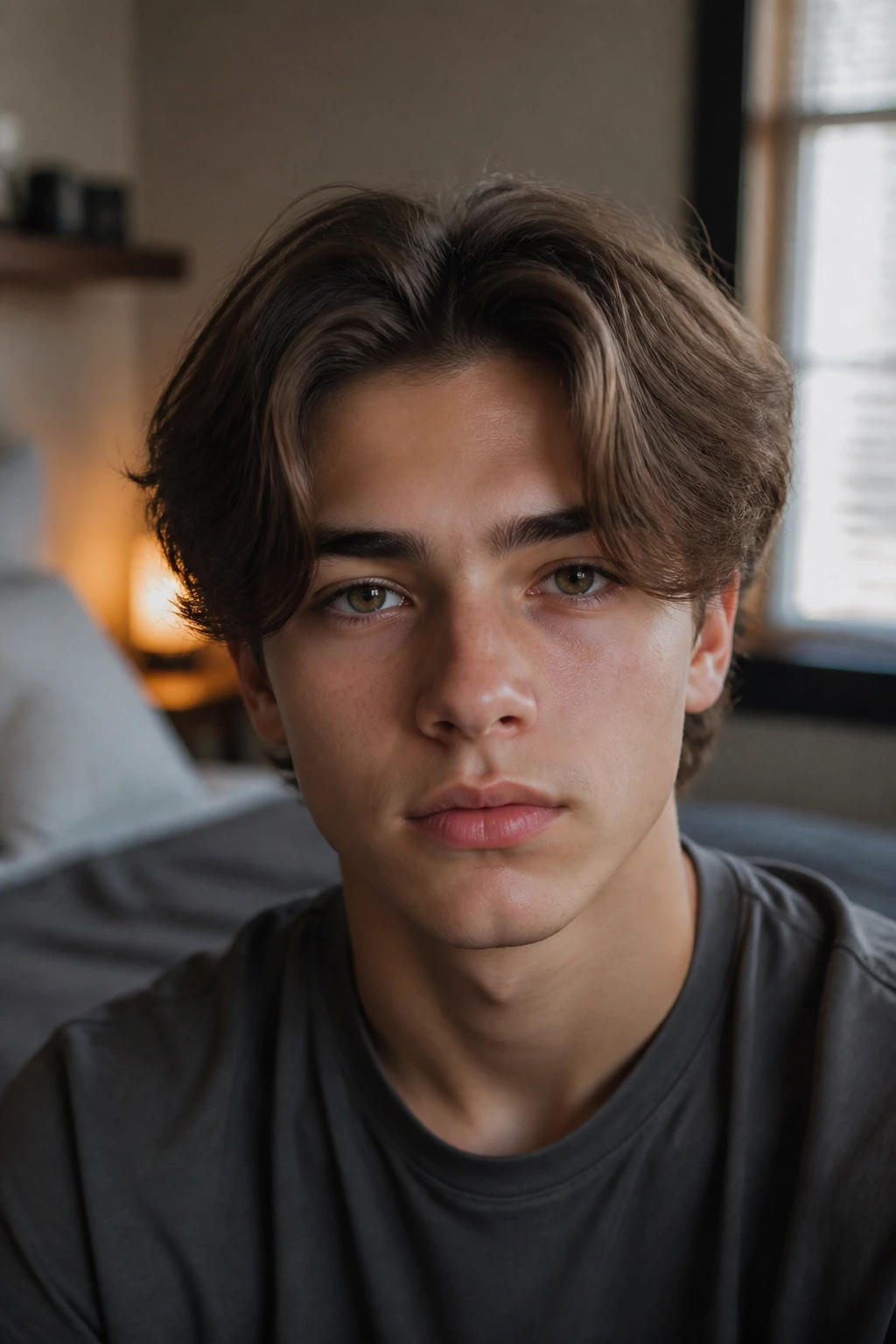
The middle part, often called “curtains,” has seen a huge resurgence recently. It is a relaxed, 90s-inspired look that involves parting the hair down the center and letting it drape over the sides of the face.
How to Get the Balance
The middle part is all about symmetry. To make it work, you need to ensure both sides have enough volume to avoid looking flat against your head. Using a bit of texture powder at the roots of both sides can help lift the hair slightly, creating a more “curtained” shape rather than just letting it hang limply.
Hair Length Requirements
You need a fair amount of length for this to look intentional. If your hair is too short, it will look like you just haven’t combed it. Aim for the hair to reach at least mid-ear length before attempting to rock the middle part consistently.
15. The Faux Hawk
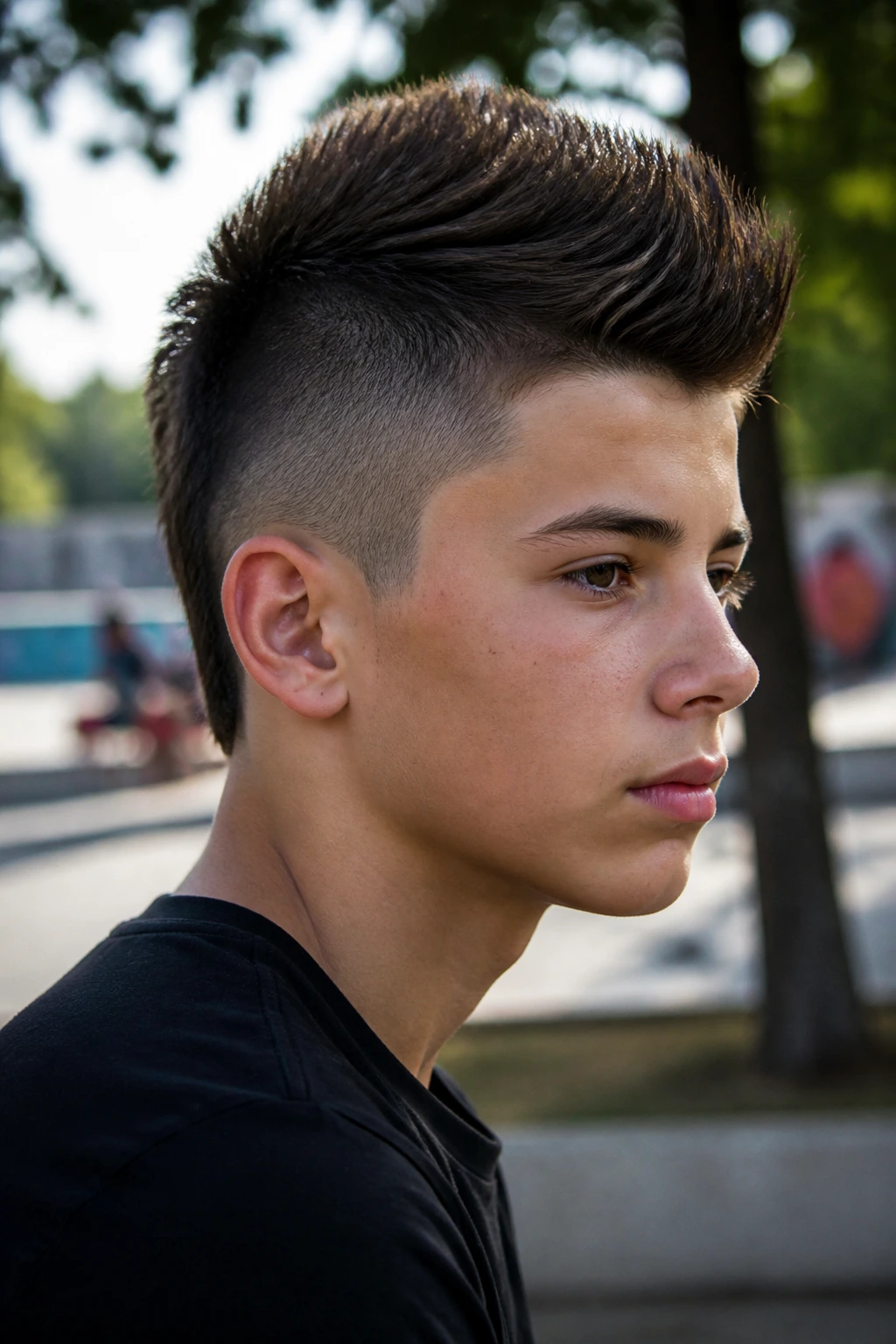
The faux hawk provides the edge and drama of a mohawk without the necessity of shaving your head entirely. You keep the sides short and fade them up to a longer center strip that you can spike or style up.
Versatility in Styling
You don’t always have to wear it spiked. On casual days, you can push the hair toward the center to create a more subtle, textured look. This makes it a great style for someone who wants to switch between “cool” and “low-key” without needing a new haircut.
Finding the Right Product
A strong-hold matte clay is your best friend here. It provides the strength to keep the center section upright while allowing for the natural, matte finish that makes the style look modern rather than retro.
16. The Bowl Cut (Modernized)
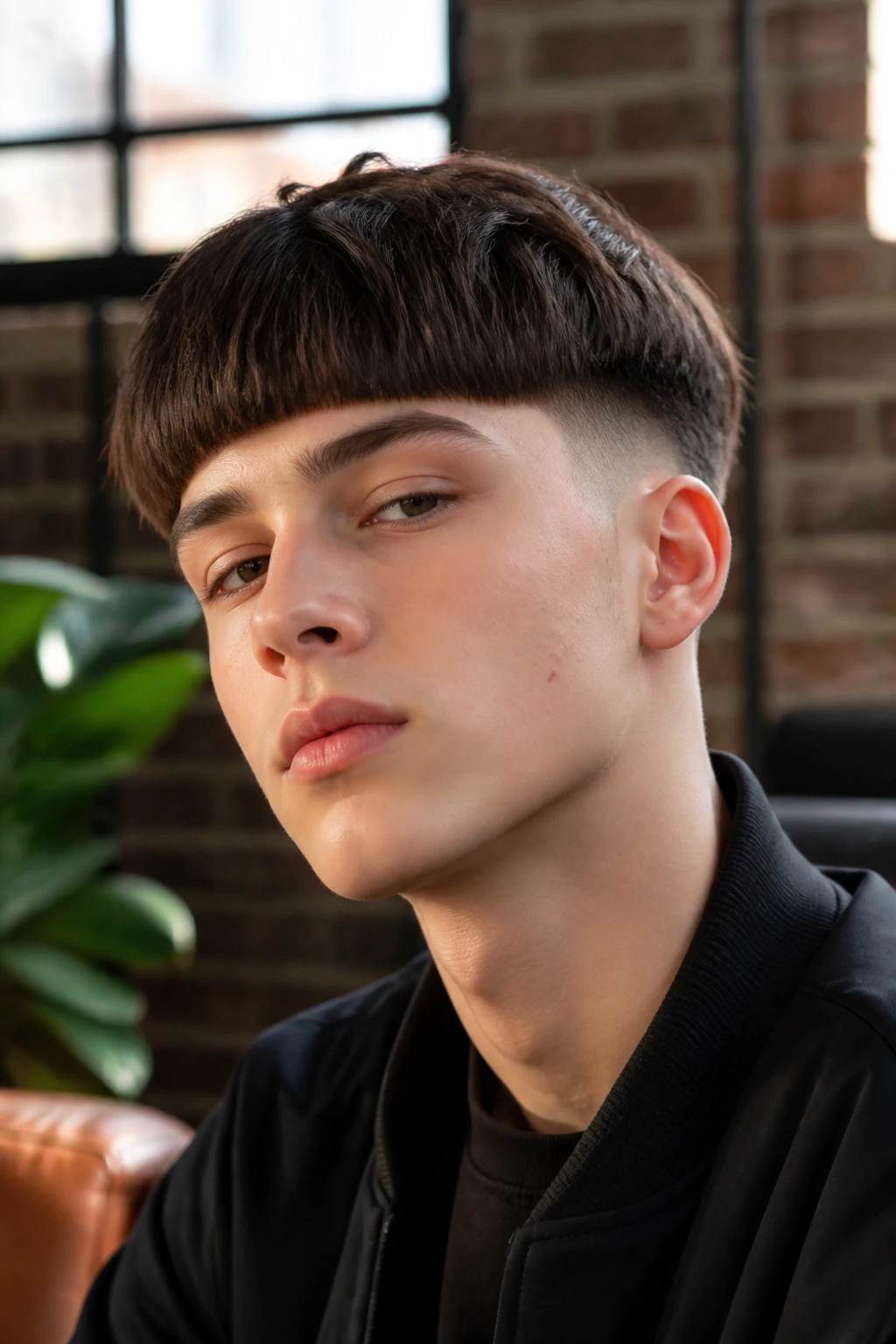
Before you dismiss the bowl cut as a childhood nightmare, understand that the modern version is entirely different. It features a blunt, straight-across fringe paired with a tight fade underneath. It is an artistic, fashion-forward look that works exceptionally well for guys with straight, thick hair.
The Importance of the Fringe
The front fringe is the star of the show. It needs to be cut with precision, usually sitting just above the eyebrows. This creates a very clean, structured look that highlights your eyes and frames your face in a very specific, intentional way.
Why It’s Unique
This style is not for everyone, but that is exactly what makes it great. It is for the person who wants to step away from the crowd and embrace a style that feels slightly avant-garde. If you are into streetwear or a more modern fashion aesthetic, this could be the perfect fit.
17. The Caesar Cut
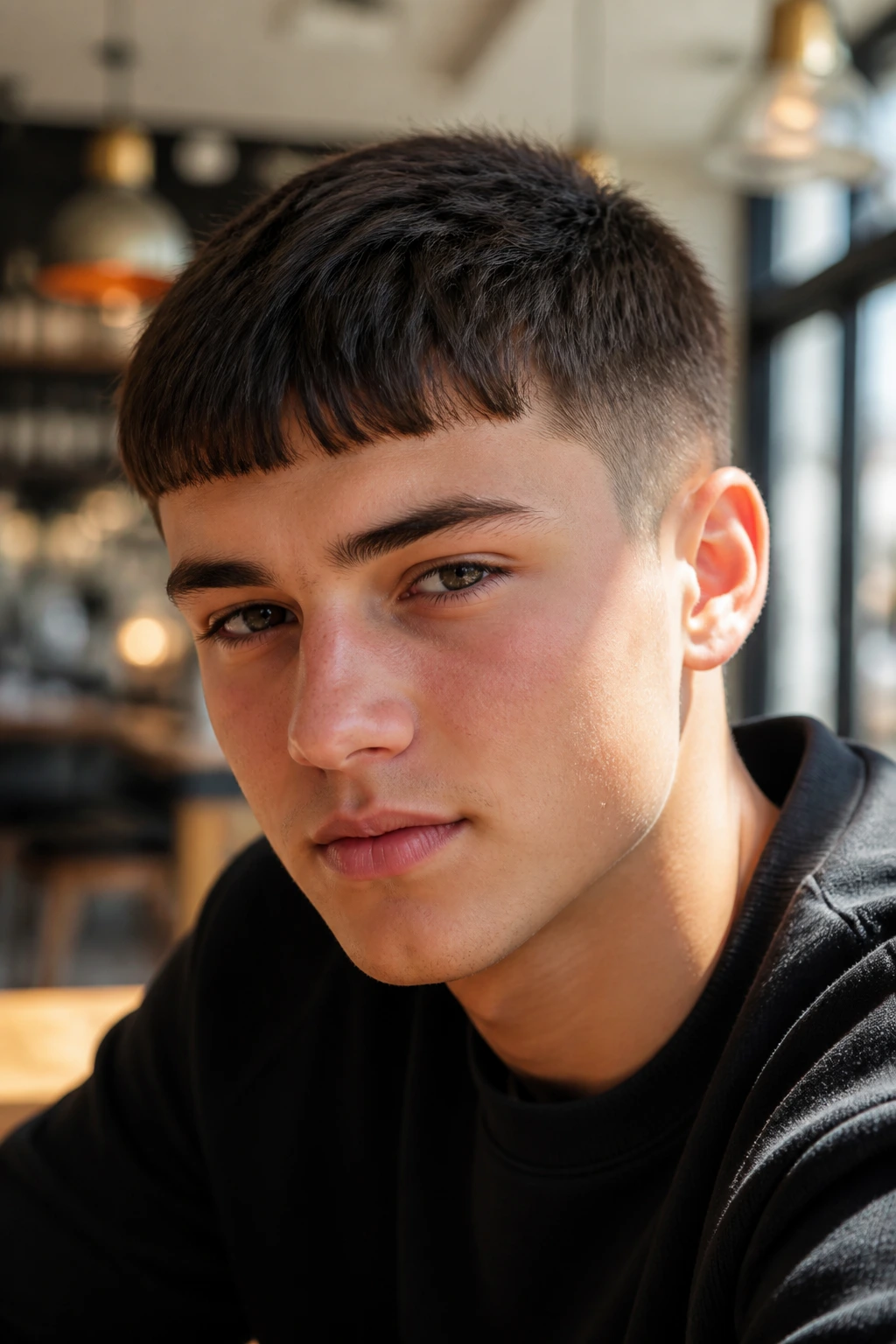
Named after the legendary Roman general, the Caesar cut is a short, layered style with a horizontally cut fringe. It is a fantastic option if you have a receding hairline or want to conceal a larger forehead, as the fringe provides a natural coverage that looks very intentional.
Texture and Layers
The key to a good Caesar cut is the layering on top. Ask your barber for “point cutting” on the crown to ensure it does not look like a uniform mat of hair. The layers allow the hair to sit naturally in place, requiring very little styling to look good.
Minimal Styling Effort
You can easily style this by simply running a tiny bit of cream through your hands and sweeping the hair forward. It is one of the most low-maintenance styles on this list and remains incredibly durable throughout a long school day.
18. The Fringe with Tapered Sides
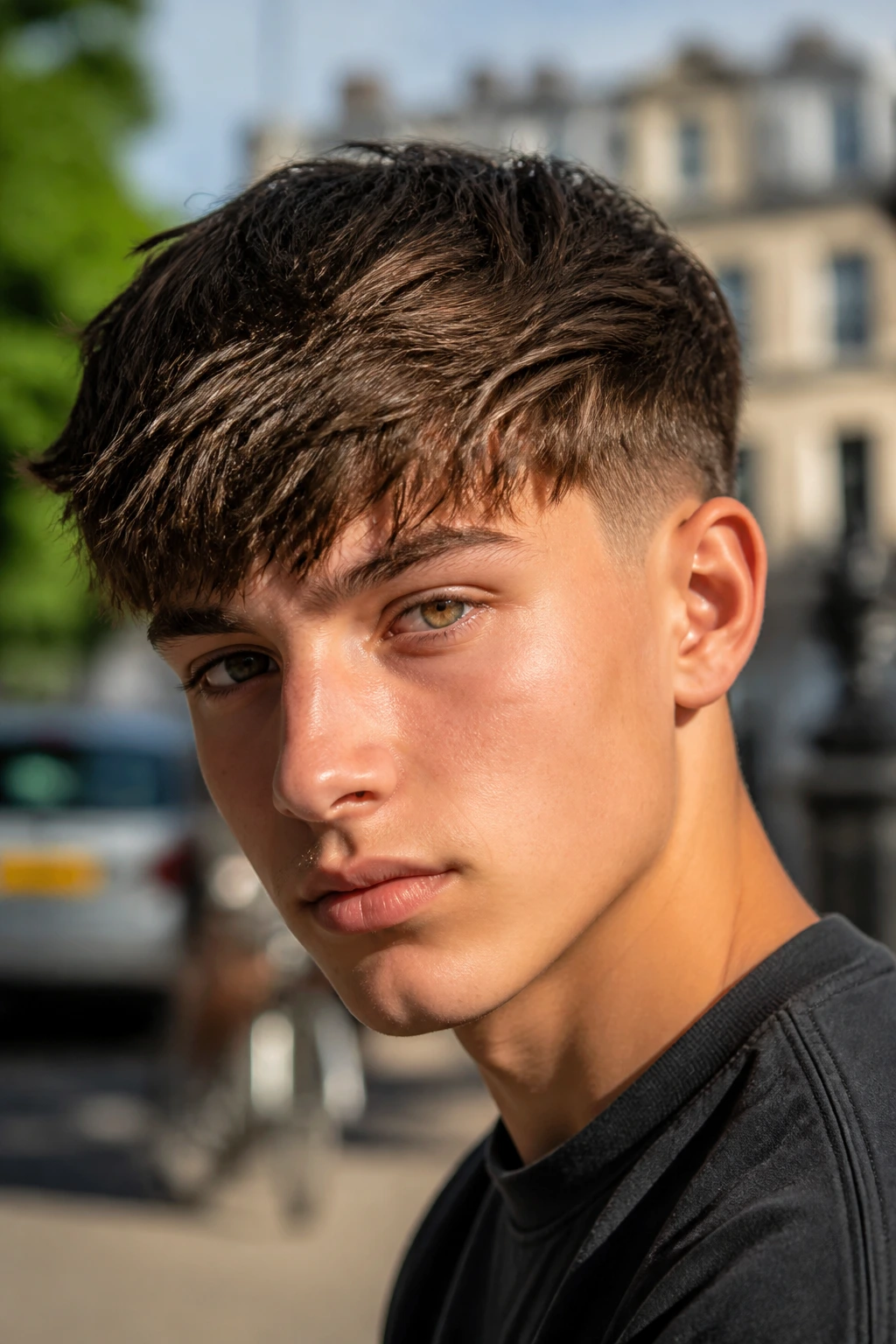
If you want something that feels young, casual, and easy to maintain, a simple fringe with tapered sides is the way to go. This involves keeping the top section longer and sweeping it forward across the forehead, with the sides cleanly tapered.
Managing the Hairline
This style is great because it requires almost no “styling” in the traditional sense. You just need to ensure the hair is clean and the sides are kept neat. It is a very soft, approachable look that has a friendly vibe.
Customization Options
You can change up this style by varying the length of the fringe. A longer fringe creates a more artistic, slightly mysterious look, while a shorter fringe feels more sporty and active. Work with your barber to find the length that best suits your face shape and personal comfort.
Final Thoughts
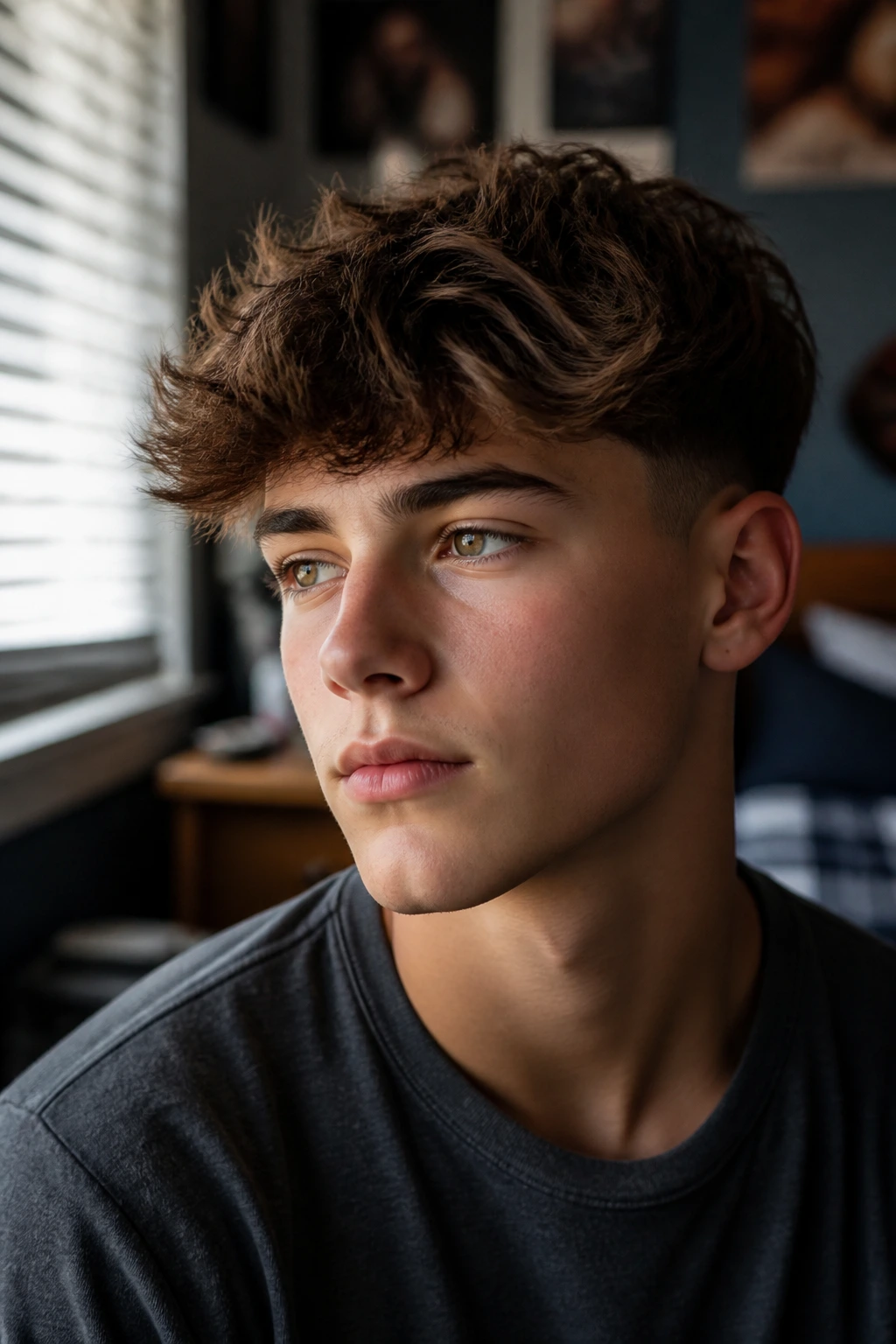
At the end of the day, your hair is going to grow back, so there is no need to stress too much about “locking in” a permanent look. Use your teenage years to test out the things that catch your eye. Maybe you’ll find that a high fade makes you feel more confident, or maybe you’ll realize you prefer the low-maintenance ease of a longer, flowing style.
Always remember that the best results come from communication. Do not be afraid to bring a photo to your barber—it is actually the most helpful thing you can do. A picture avoids all the guesswork and ensures that both of you are on the same page. If a style doesn’t turn out exactly as you pictured, ask the barber what you can do to fix it next time or how you should be styling it differently. Most barbers love helping you learn the ropes, and that back-and-forth is how you eventually find the look that truly feels like “you.”