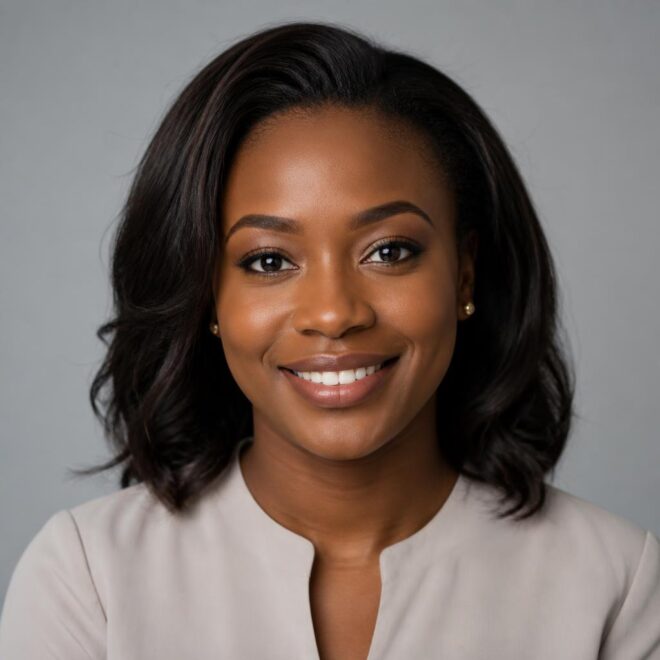


Achieving a polished look when you have hair that tends to frizz is a challenge that often leads people to avoid bangs entirely. There is a common misconception that shorter, wispy hair around the forehead acts as a lightning rod for humidity, swelling the moment you step out the door. The truth is that when you choose the right length and texture, longer bangs can actually help frame your face while working with your hair’s natural tendency to expand rather than fighting against it. A long, textured fringe adds a softness that blunt, ultra-short bangs often lack, giving you the versatility to style them sleek or embrace the natural volume that comes with your hair type.
Finding the perfect style requires looking past the glossy, perfectly flat images often found in advertisements. You need cuts that rely on weight and movement. When you keep bangs on the longer side, you utilize gravity to keep them from poofing up uncontrollably. This is not about hiding your hair, but rather shaping it so that the inevitable texture becomes an intentional part of the design. Whether you are dealing with tight coils, loose waves, or fine hair that loses its shape in damp weather, there is a way to incorporate length around the brow that stays manageable throughout the day.
1. The Bottleneck Bangs
These have become a staple for anyone who finds a full, heavy fringe too much to handle. Bottleneck bangs are characterized by being shorter in the center and gradually getting longer toward the temples, mimicking the shape of a glass bottle neck. This transition is essential for frizzy textures because it prevents that awkward “mushroom” effect that happens when bangs are all one short, blunt length.
Why They Work for Frizz
By keeping the fringe angled, you allow the hair to blend seamlessly into the rest of your layers. This creates a cohesive look even if your hair decides to expand or get a bit wild on a humid afternoon. Because they are longer near the cheekbones, you have more surface area to apply a smoothing balm or a light styling cream without your bangs looking greasy or weighed down by too much product.
Styling for Daily Wear
- Use a round brush to blow-dry the center section toward your nose to get the volume right.
- Sweep the side pieces away from your face to encourage a soft, face-framing wave.
- Apply a tiny amount of anti-frizz serum only to the very tips to prevent flyaways without sacrificing the natural movement of the cut.
2. Curtain Bangs with Deep Layers
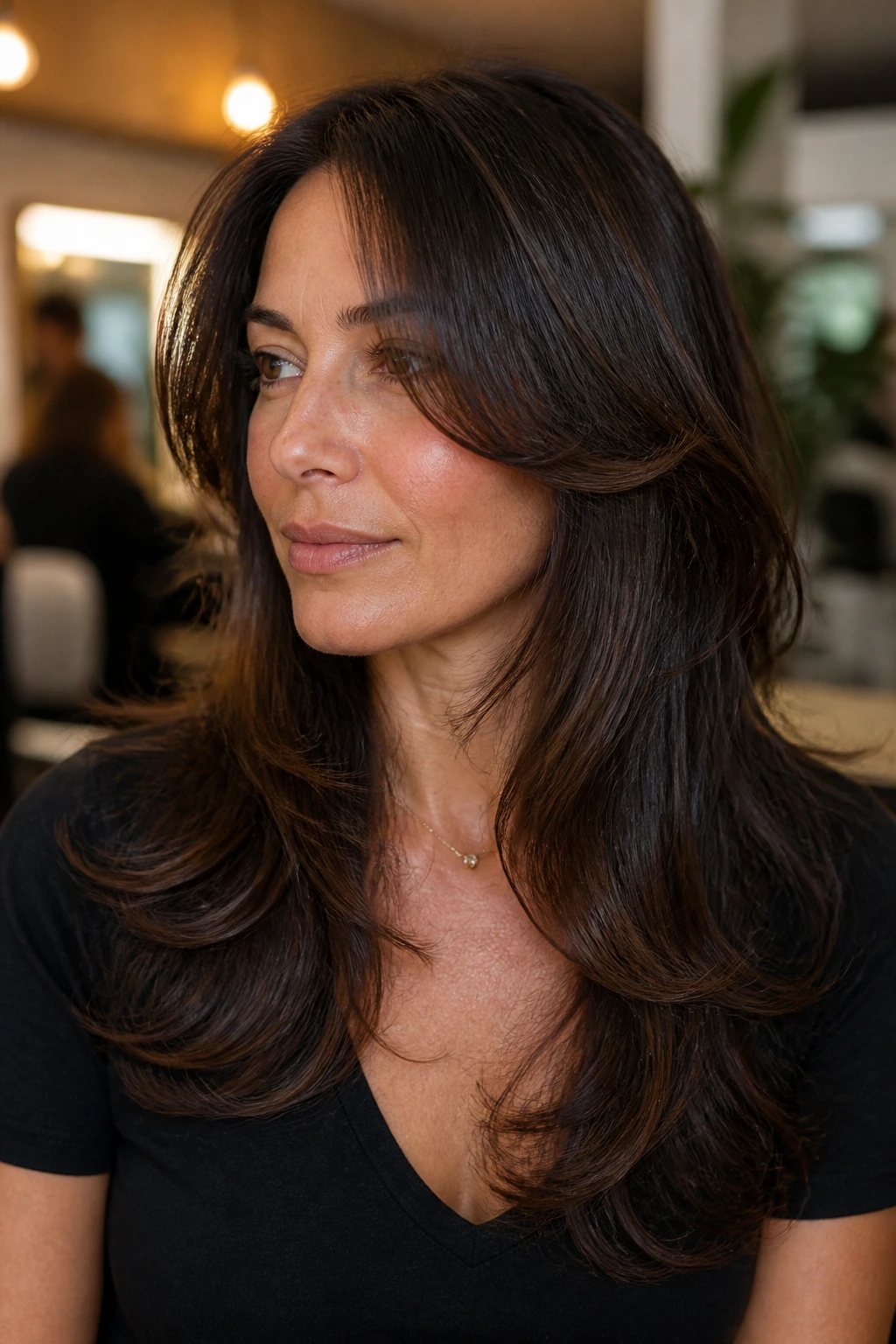
If you want the look of fringe without the high maintenance of constant trimming, curtain bangs are the gold standard. These are long enough to tuck behind your ears if you want them out of your face, yet they provide enough coverage to soften your features. When paired with deep layers throughout the rest of your hair, the frizz tends to get distributed more evenly, making the transition between your bangs and your lengths feel intentional.
The Secret to the Cut
The key is to ask your stylist for “internal layering” around the crown. This reduces the bulk near your roots, which is usually where frizz and volume start to accumulate. By removing that weight, your curtain bangs sit flatter against your forehead, making them much less likely to react negatively to moisture in the air.
Maintenance and Growth
One of the best things about this style is that it grows out gracefully. You can go three or four months without a trim, and they will simply turn into long face-framing layers. This is ideal if you have a busy lifestyle and cannot commit to a salon visit every six weeks just to manage your bangs.
3. Wispy Side-Swept Bangs
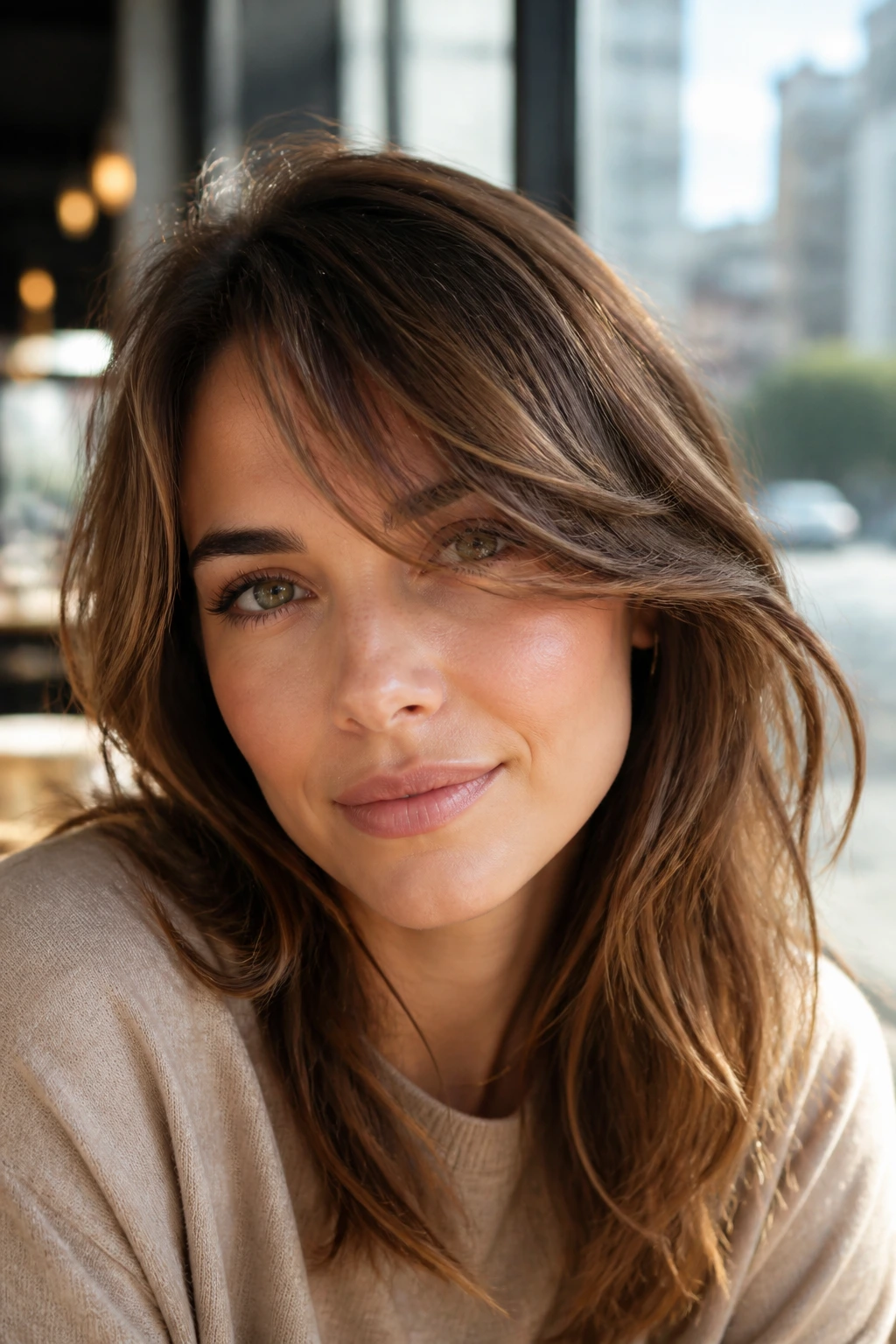
Side-swept bangs offer a more relaxed, effortless vibe than a straight-across cut. For those with frizzy hair, this is a lifesaver because it avoids the “line” that shows up when hair starts to lift. A side-swept fringe relies on a deep part, which naturally adds lift at the roots and makes it easier to manage the hair’s texture using a bit of heat or a quick clip.
Working With Your Natural Texture
You do not have to aim for bone-straight hair here. In fact, a slightly wavy, side-swept bang looks incredibly chic. The goal is to keep them long enough to reach your cheekbones. When they hit that point, they become heavy enough to lay flat against the side of your head, which effectively traps the frizz rather than letting it stand up on end.
Pro Styling Tip
If your hair is particularly stubborn, try using a velcro roller on your bangs while you finish getting ready. The heat from your blow-dryer warms the roller, and as it cools, it sets the hair into a smooth, controlled arc. This takes less than five minutes and is far better for your hair than using a flat iron every single morning.
4. The Long, Shaggy Fringe
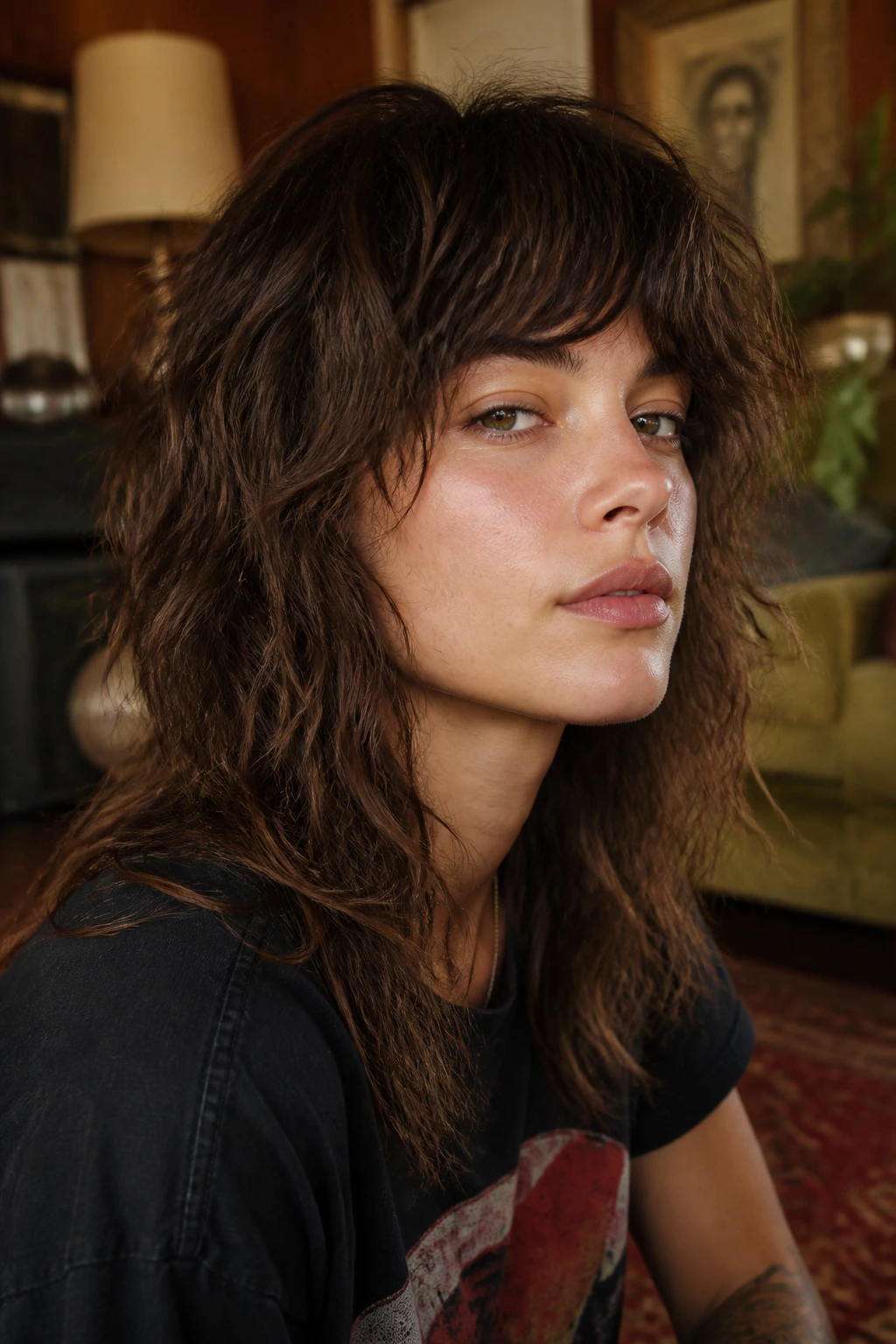
Think of the 1970s rock-star look, but modernized. A shaggy fringe is intentionally textured and meant to look a bit undone. For those with frizzy hair, this is perfect because it takes the pressure off “perfection.” If your hair swells or gets a bit frizzy, it only adds to the aesthetic of the shag, making it look like you styled it that way on purpose.
Why It’s Low Maintenance
Shaggy bangs are cut using a point-cutting technique where the scissors go vertically into the hair strands. This creates soft, jagged edges instead of blunt ones. Because the edges are soft, they do not catch on each other and frizz up as easily as a heavy, blunt fringe would. It is essentially a cut that welcomes a little bit of chaos.
Best Hair Types
This cut works across the board but really excels on hair that has a natural wave or a bit of grit. If your hair is baby-fine, you might find that you need to use a texturizing spray to get the volume required to pull off the “shag” effect. If your hair is thick and frizzy, the layers will do the heavy lifting for you.
5. Face-Framing Tendrils
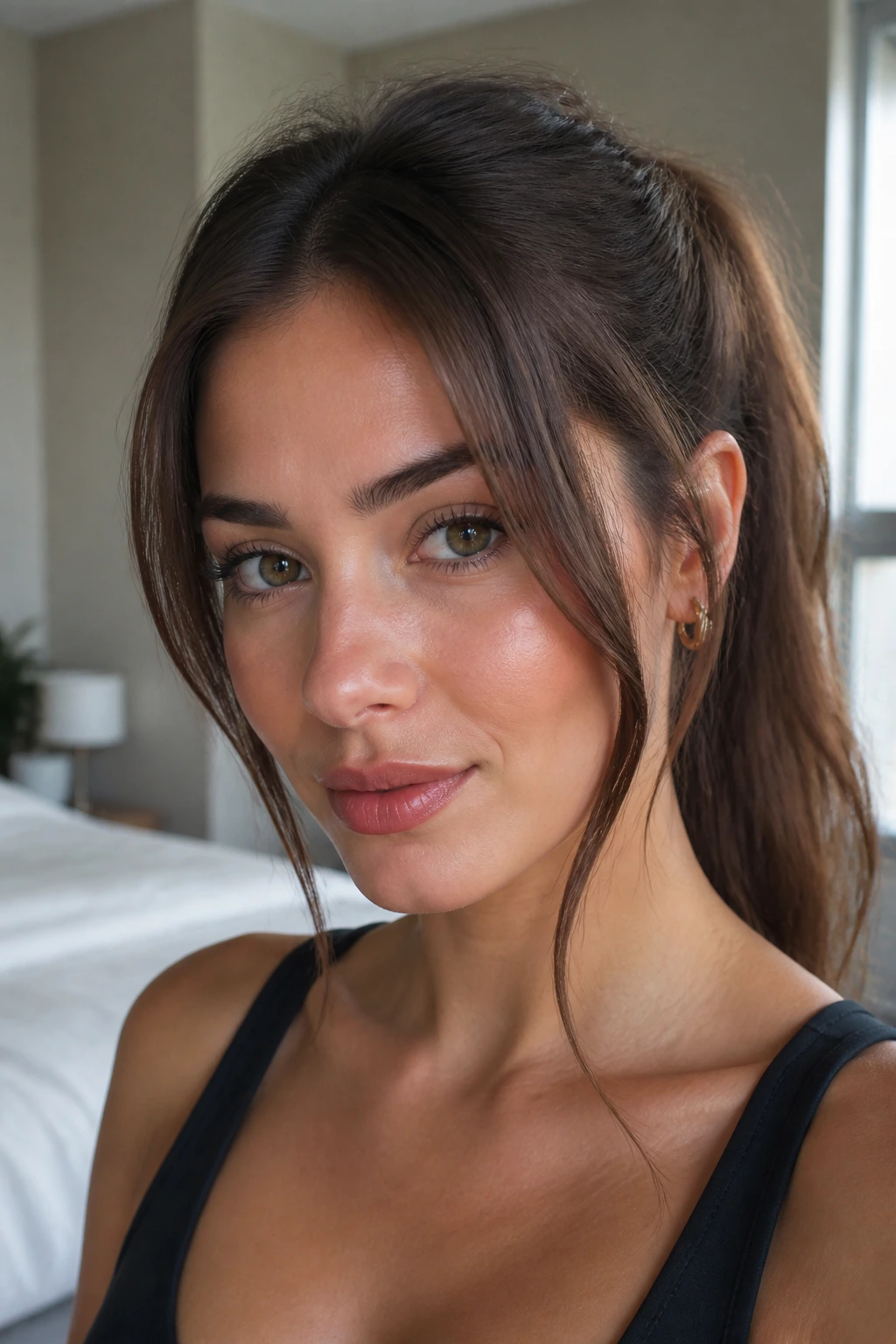
Technically, these are not bangs in the traditional sense, but they serve the same function of softening the face. By cutting long, face-framing pieces that start around the chin and taper up toward the cheekbones, you get the visual effect of fringe without the annoyance of having hair directly on your forehead.
Controlling the Flyaways
These long strands are much easier to control than short bangs. Since they have more weight, they are naturally less prone to getting frizzy. You can easily twist these around your finger with a drop of hair oil to keep them smooth throughout the day. It is a fantastic option if you want to test out the look of bangs before committing to a shorter, more permanent fringe.
Occasion-Based Styling
These pieces look particularly beautiful when you pull the rest of your hair into a ponytail or an updo. They soften the look and prevent the “severe” appearance that some people get when all their hair is pulled back tightly. It is a simple, elegant way to frame your face while keeping the bulk of your hair off your neck.
6. The Textured Center Part
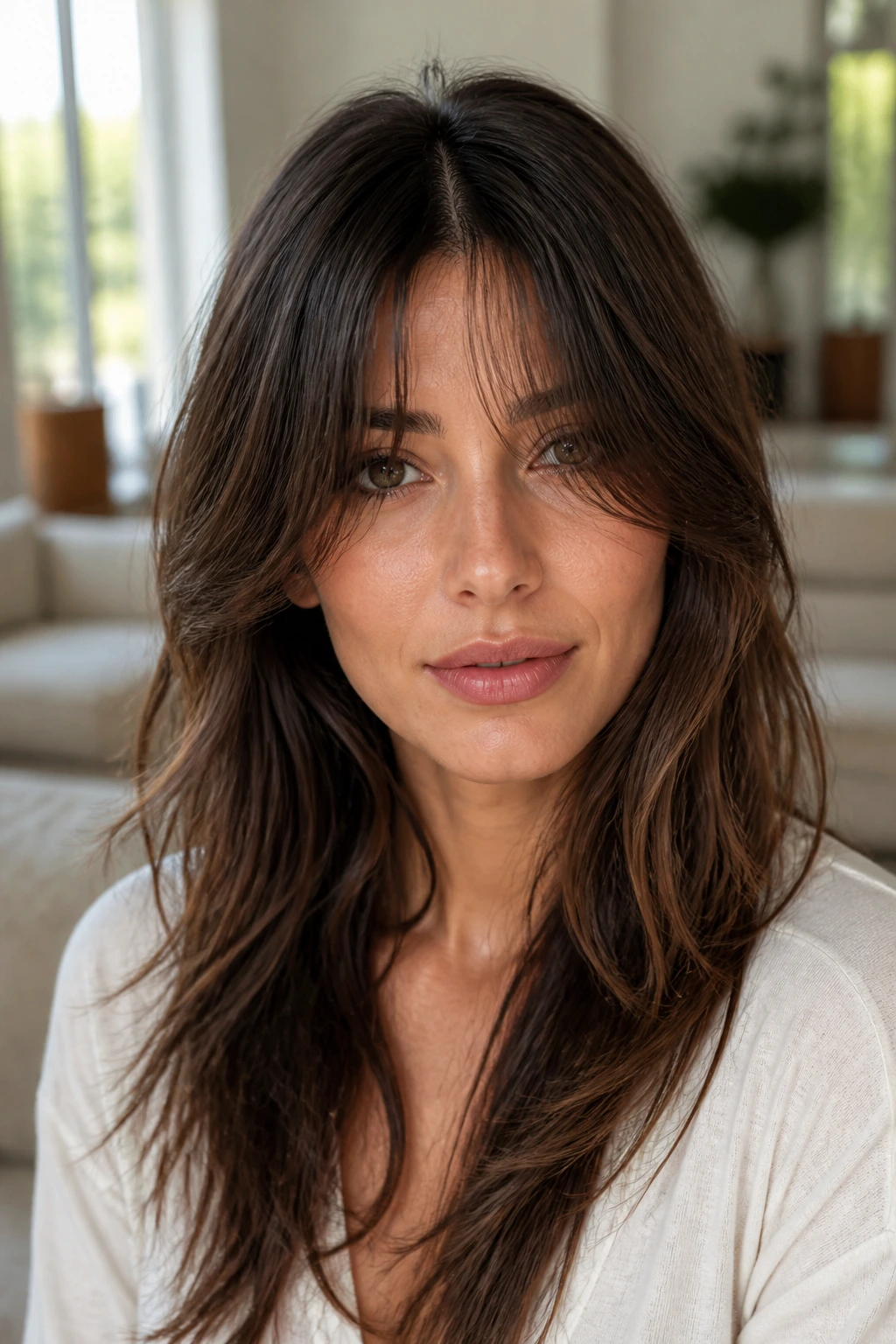
For those who want to keep their hair long and flowing, a textured center part with long bangs is a classic, bohemian choice. These bangs are usually cut to graze the eyes or the tops of the cheeks, meaning they have enough weight to stay put. This is a very popular approach for people with curly or frizzy hair who want to avoid the “triangle” shape that often results from a bad haircut.
Balancing the Shape
The key to this style is ensuring that the layers around your face are as textured as the ends of your hair. If you have blunt ends, the face-framing layers need to be soft and feathered. This creates a balance that prevents your hair from looking like a heavy helmet. It is all about airflow.
Product Recommendations
For this style, stick to creams rather than gels. Gels tend to harden, and if your hair frizzes, you will end up with stiff, frizzy strands, which never look good. A light, moisturizing cream or a leave-in conditioner will hydrate the hair, making it less likely to look dry and frizzy by midday.
7. The Soft-Blunt Long Fringe
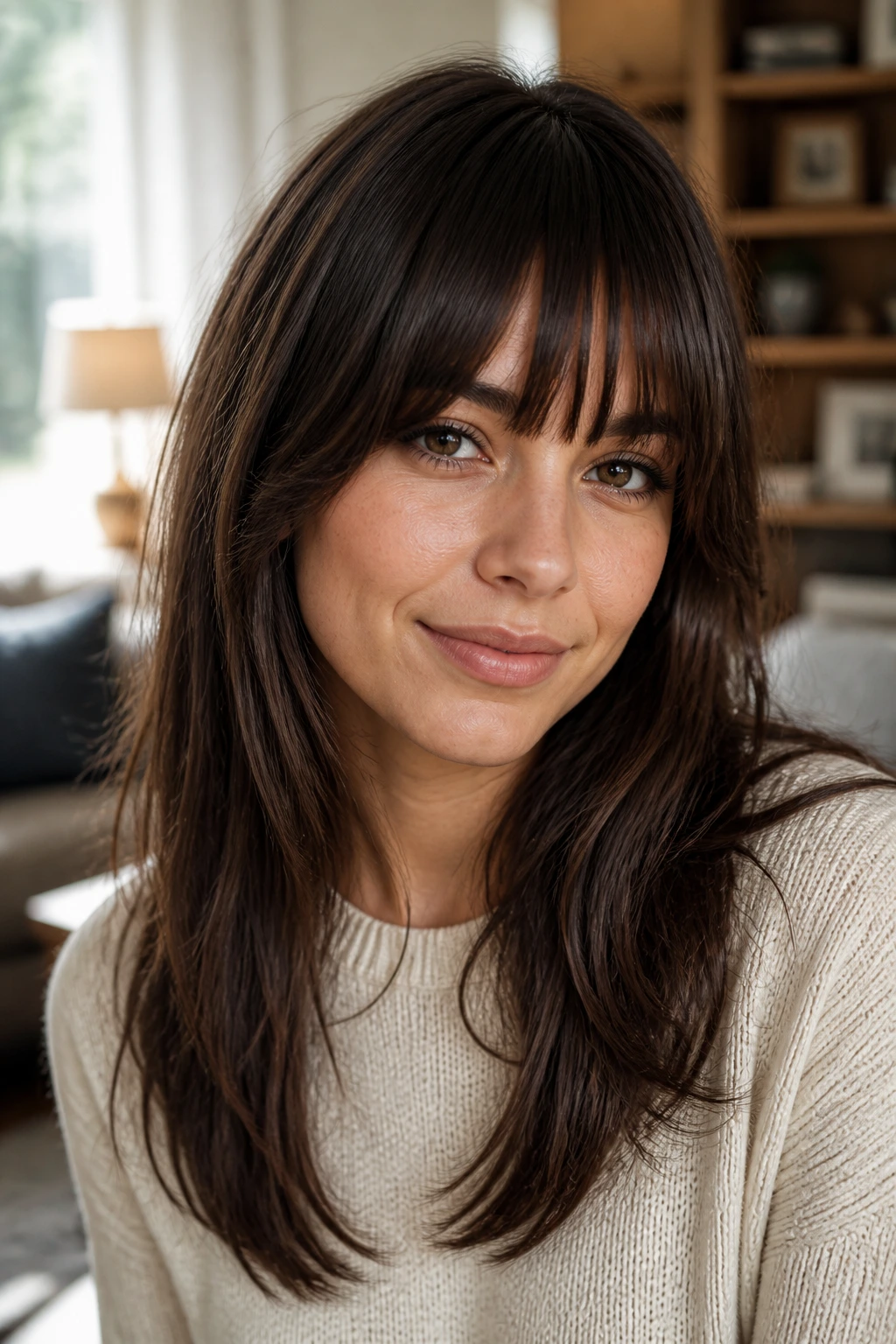
If you love the look of a solid, blunt bang but are terrified of the frizz, try the “soft-blunt” version. This involves cutting the bangs in a straight line but using a thinning shear or deep point-cutting to remove weight from the center. It keeps the aesthetic of a heavy bang but removes the density that causes frizz to puff out.
Technical Precision
Make sure your stylist knows you have a frizzy texture. They should cut these bangs while your hair is dry, or at the very least, allow for some shrinkage. If they cut them too short while your hair is wet, you will end up with “baby bangs” once your hair dries and naturally expands, which is the last thing you want if you are trying to hide frizz.
Styling Advice
This style looks best when it is relatively smooth. You do not need to make it stick-straight, but a quick pass with a round brush helps keep the layers together. If you find them getting too frizzy, a quick spritz of finishing spray will hold them in place without the crunch of hairspray.
8. Rounded Long Layers
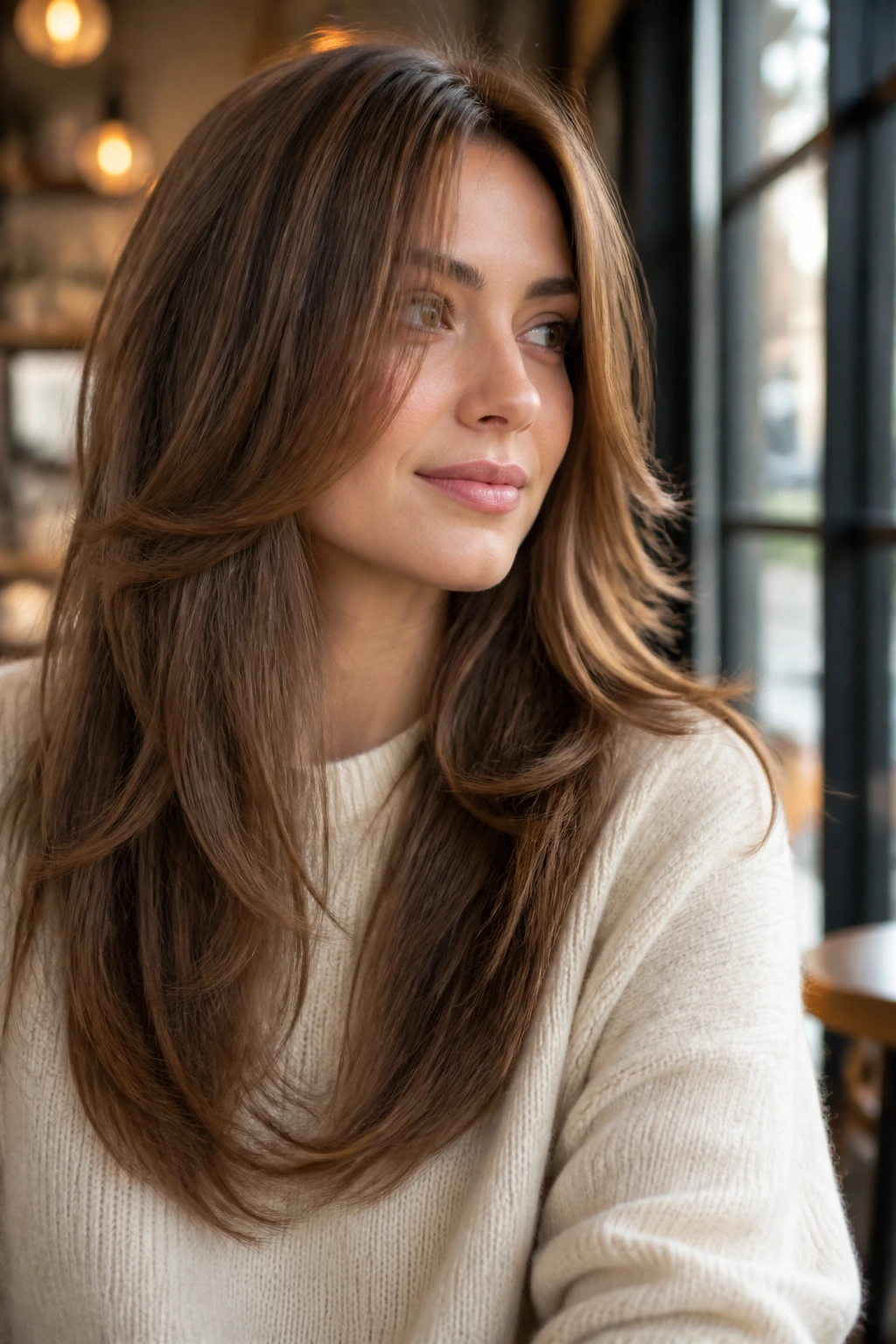
Sometimes the best way to manage bangs is to make them disappear into the rest of your hair. Rounded, long layers that start near the nose and sweep back into the lengths create a beautiful, curved effect. This works wonders for frizzy hair because it guides the hair away from the face, reducing the chance of it falling into your eyes or getting frizzy from the moisture of your skin.
Why This is Often Overlooked
Many people feel that if they don’t have a distinct “fringe,” they don’t have bangs. However, long, rounded layers are essentially a form of long fringe. They offer the same benefits of framing the face while being much more forgiving of different hair textures. If you have an active lifestyle, this is the most practical version of a fringe.
Seasonal Flexibility
This style is great throughout the year. During warmer months, you can sweep these layers back into a loose bun. During colder months, you can let them fall around your face for added warmth and volume. It is a truly timeless haircut that doesn’t rely on being styled perfectly every single day.
9. The Fringed Shag
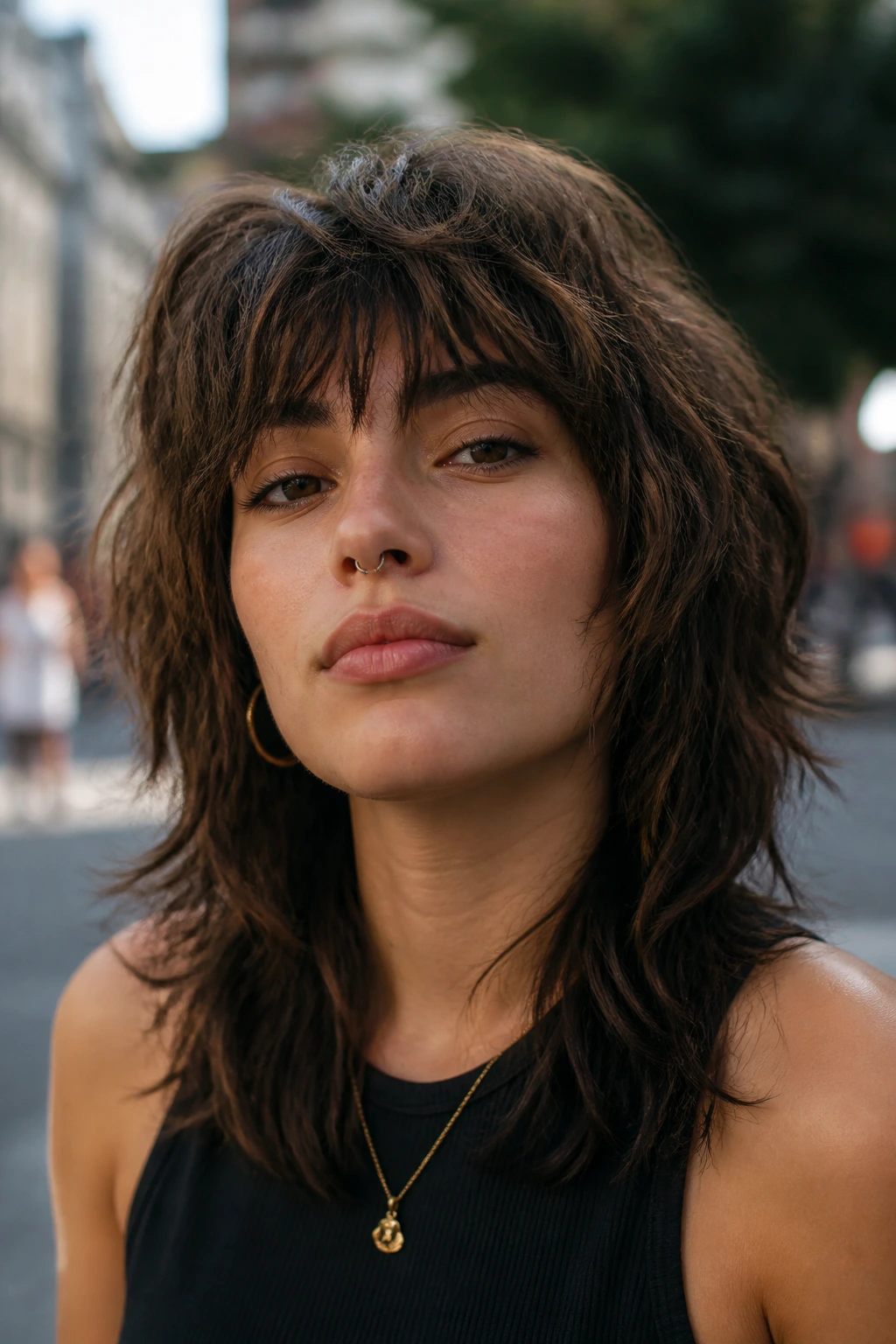
Taking the shaggy look to the extreme, the “fringed shag” focuses on a lot of choppy layers right at the front. This is for the person who truly wants to lean into their texture. Instead of trying to keep the hair smooth, this style celebrates the volume and the frizz, making it look intentional and stylishly disheveled.
Embracing the Volume
With this cut, you are basically inviting frizz to the party. The more volume you have, the better. If your hair is naturally wavy, this is the easiest style you will ever own. You can literally wash your hair, let it air dry with a bit of salt spray, and you are ready to go.
A Note on Confidence
This is a bold choice. It is not for the person who wants to blend in. It is for someone who wants to highlight their eyes and cheekbones while letting their hair do what it wants. If you have been hiding your natural texture under flat irons for years, this might be the most liberating cut you ever get.
10. Long, See-Through Korean Bangs
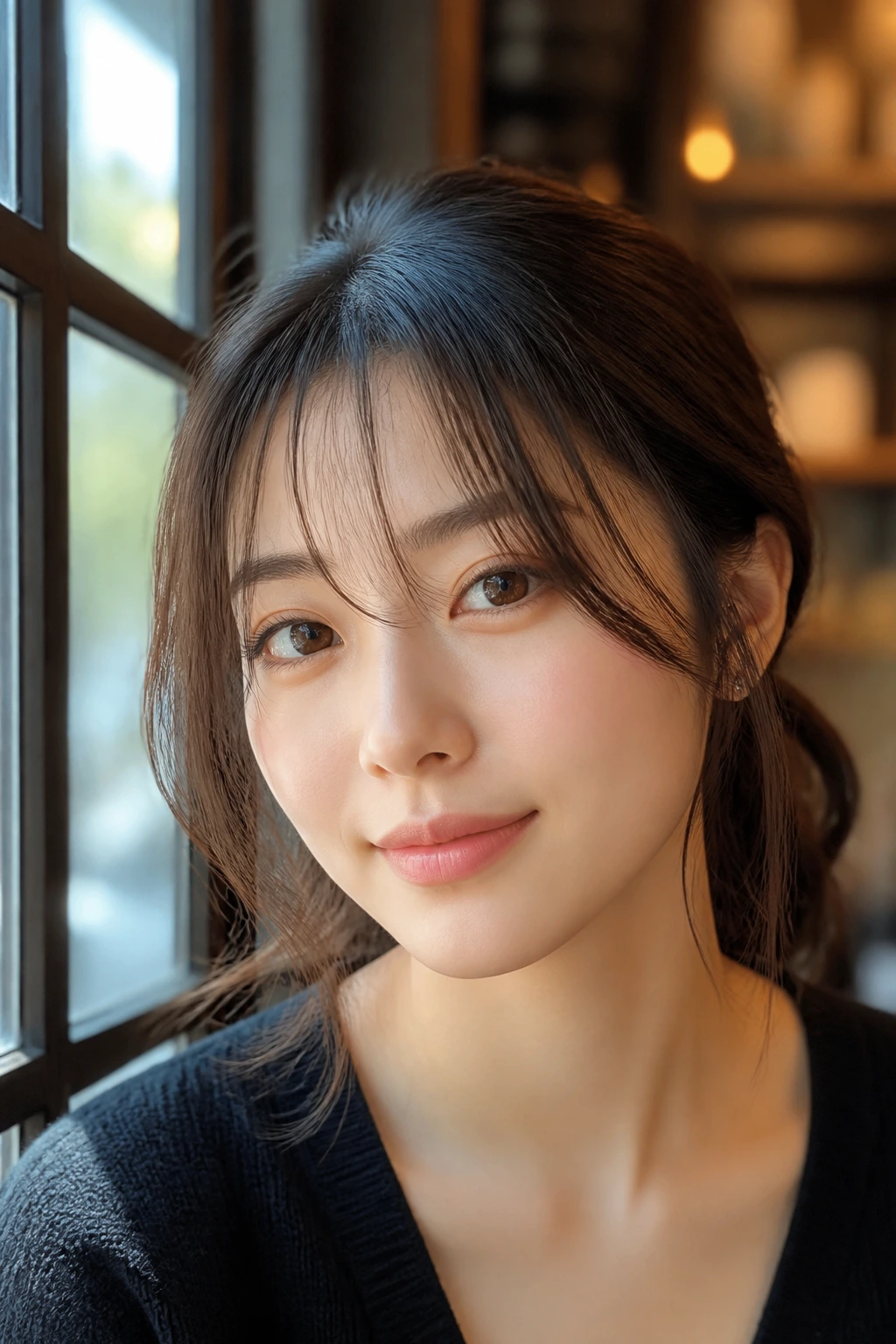
This style is all about subtlety. The bangs are cut very thinly so that you can see your forehead through them. Because there is so little hair, they cannot possibly get too frizzy or heavy. It is a minimalist approach to fringe that adds just enough detail to your look without causing any of the problems associated with heavy bangs.
Managing the Frizz
Since these are so thin, they are prone to getting a bit wild if you do not pay attention to them. Use a small amount of lightweight oil on your fingertips and pinch the ends of the bangs together to keep them from splaying out. It’s a 10-second fix that keeps them looking intentional.
Who Should Avoid This
If your hair is extremely thick and coarse, see-through bangs might not show up well. They work best on fine to medium hair textures. If you have very dense hair, you may find that you have to trim them constantly to keep them from becoming a full-blown heavy fringe.
11. The Heavy Side-Parted Fringe
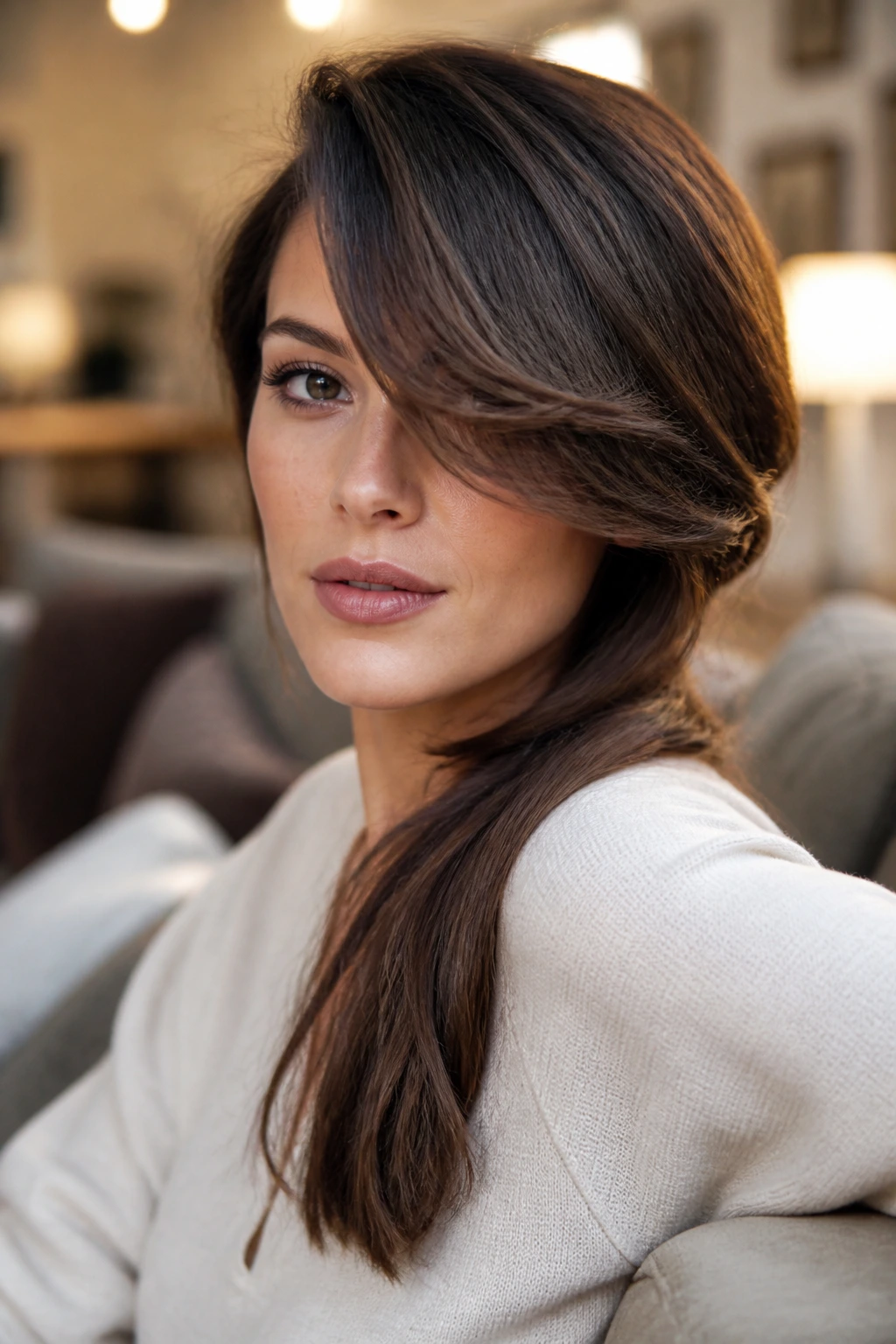
This is a more dramatic version of the side-swept look. The bangs are thick, cut long, and swept deeply to one side. By pushing all the hair in one direction, you create a heavy curtain of hair that naturally resists frizz. It is a very sophisticated, old-Hollywood style that works perfectly for people with a bit of natural wave.
The Power of Gravity
By directing all your hair to one side, you are essentially using the weight of the hair to keep everything in place. It is the ultimate anti-frizz hack. If your hair starts to get frizzy, you can simply run your hand over it, and the density of the side-swept section will smooth everything out.
Styling for Evenness
Be sure to switch your part occasionally if you start to notice any thinning or scalp issues, though most people find a “signature side” that looks best on their face shape. You can use a bit of volumizing mousse at the root to ensure the bangs don’t look flat or greasy against your forehead.
12. Blunt-Cut Face-Framing Pieces
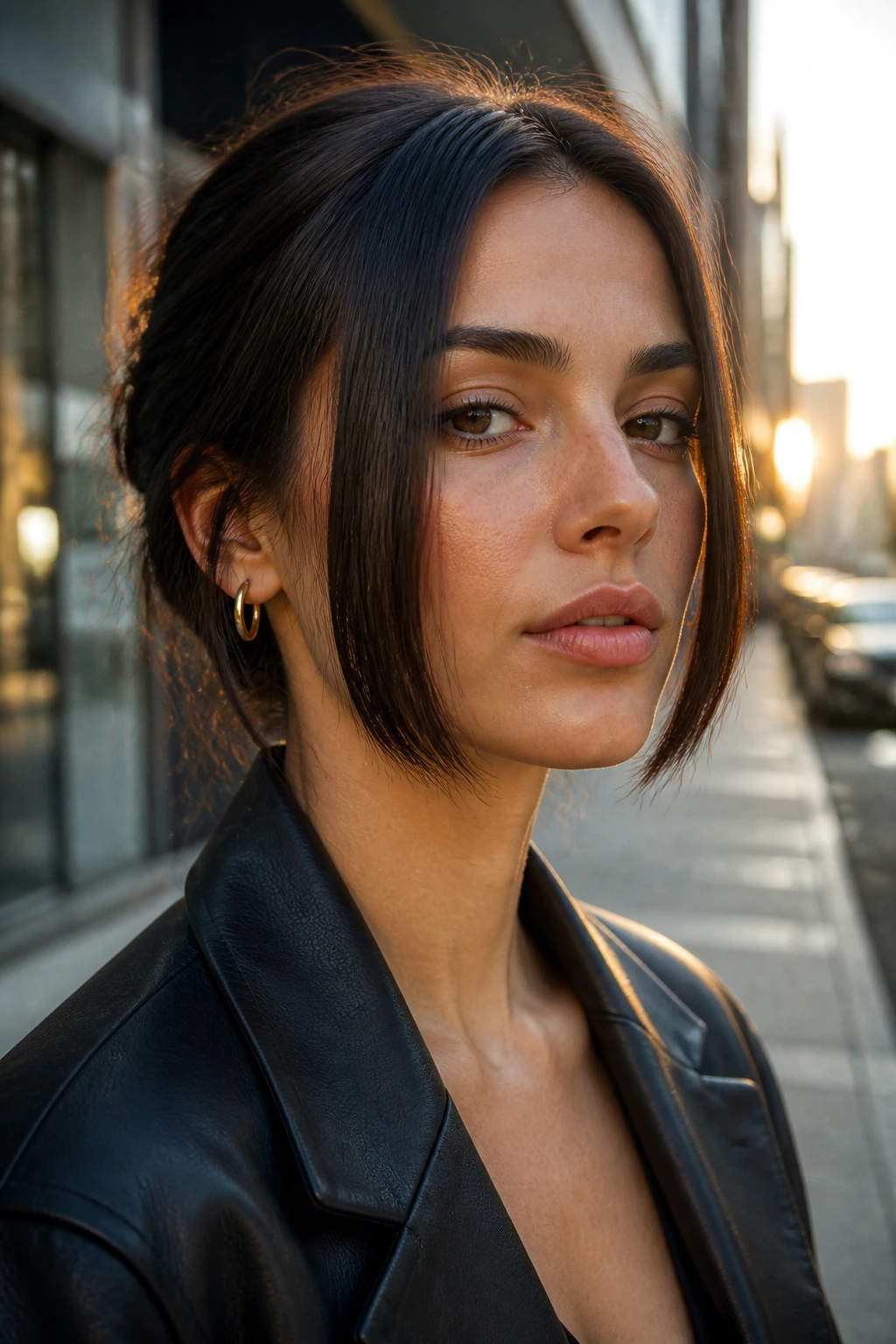
These are not bangs that cover the forehead, but rather blunt cuts starting near the chin that mimic the line of a bob. This is a very trendy, edgy way to frame the face. Since these pieces are usually thicker, they handle frizz much better than wispy pieces because they act as a single, uniform unit.
Why They Look So Polished
The blunt cut is inherently clean and structured. Even if your hair has a little bit of natural fuzz, the sharpness of the blunt cut keeps the overall look feeling intentional rather than messy. This is a great transition style if you are growing out shorter bangs but don’t want to lose the shape around your face.
Daily Care
Treat these like your ends. Apply a small amount of nourishing cream or oil to the bottom two inches of these pieces every time you wash your hair. Since they are the first thing people see when they look at your face, keeping them hydrated makes your entire haircut look fresher.
13. The 90s-Inspired Long Fringe
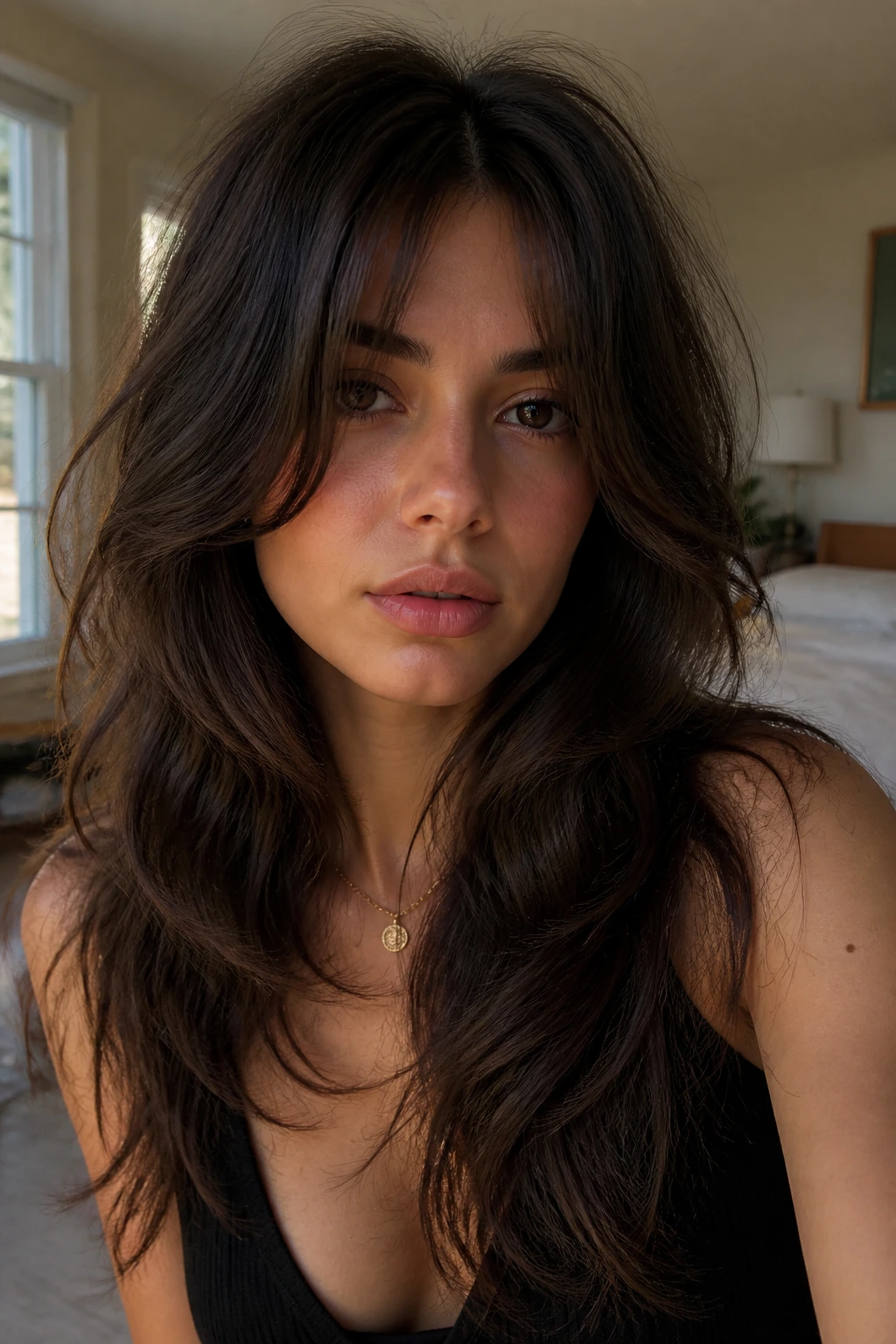
Think of the iconic long, center-parted looks from the mid-90s. This fringe is long, soft, and usually styled with a lot of volume. Because the style is all about volume, a little bit of frizz actually helps achieve the look. It’s a very forgiving style that works well for people who want a low-maintenance, high-impact aesthetic.
Styling with Rollers
The best way to get that 90s bounce is with oversized rollers. While your hair is damp, roll the bangs back away from your face. Once dry, let them fall. This gives you a smooth finish near the scalp and a bit of volume at the ends, which is perfect for counteracting the flat, frizzy look that often happens in humid weather.
Why It’s Still Relevant
These styles are classic because they frame every face shape well. They draw attention to the eyes while softening the jawline. It is a very flattering haircut that doesn’t need to be updated with every changing trend.
14. Messy, Textured Bangs
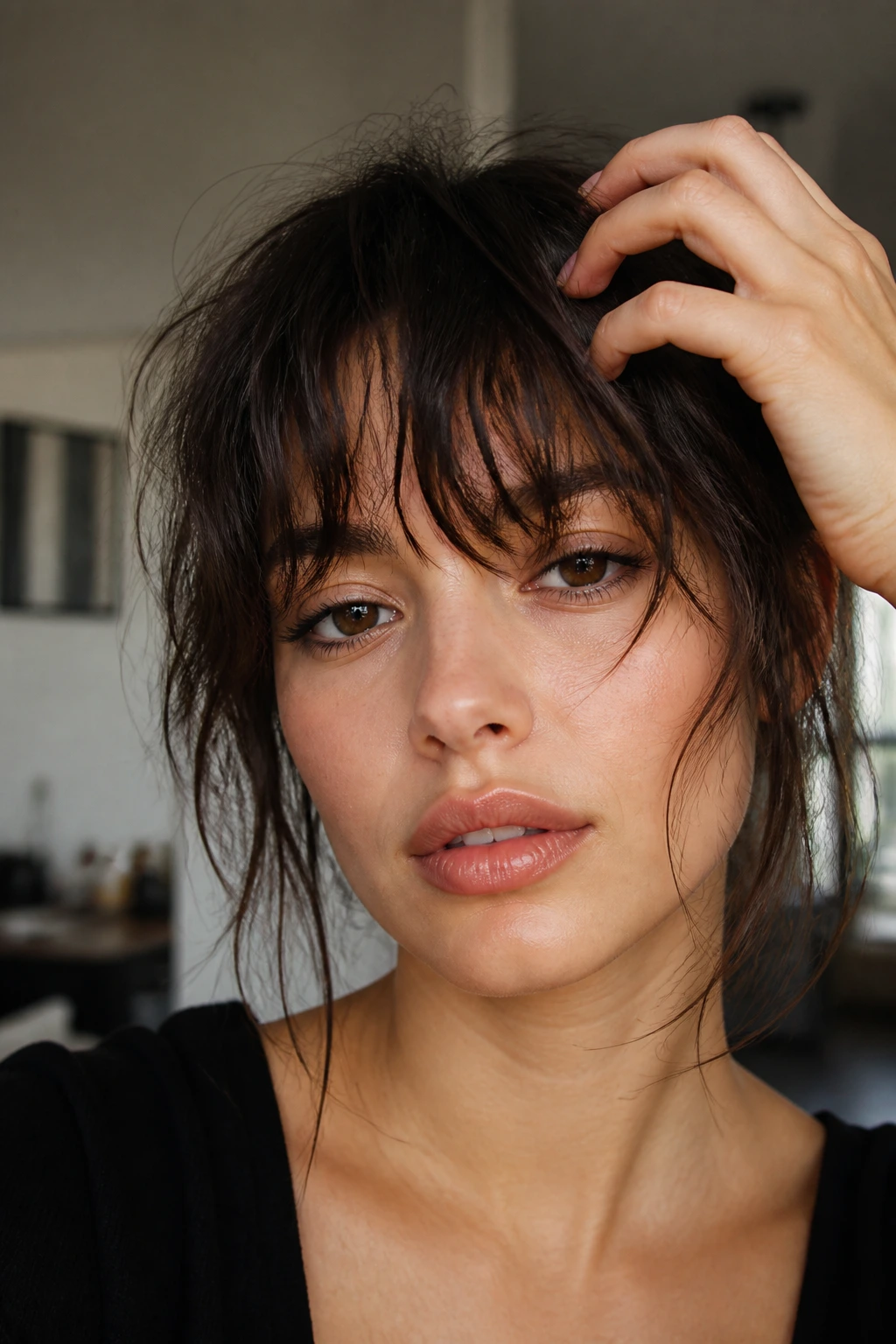
This style is for the person who has given up on the fight against frizz. You cut your long bangs with lots of texture, you let them dry naturally, and you use a bit of wax or texturizing cream to define the pieces. It is the definition of “cool girl” hair—effortless, a bit wild, and completely individual.
How to Achieve Definition
Don’t use a brush. Use your fingers to rake through the bangs while they are still damp. This encourages your hair to clump into its natural wave pattern rather than separating into a million tiny, frizzy strands. The clumping is what keeps the frizz at bay.
When to Use Wax
Use a dry texturizing wax, not a wet pomade. You want to add separation and hold, not moisture. A dry product will keep the strands in place without making them stick together in an unappealing way, which is vital for keeping the fringe look clean.
15. The Long-Layered “Invisible” Bang
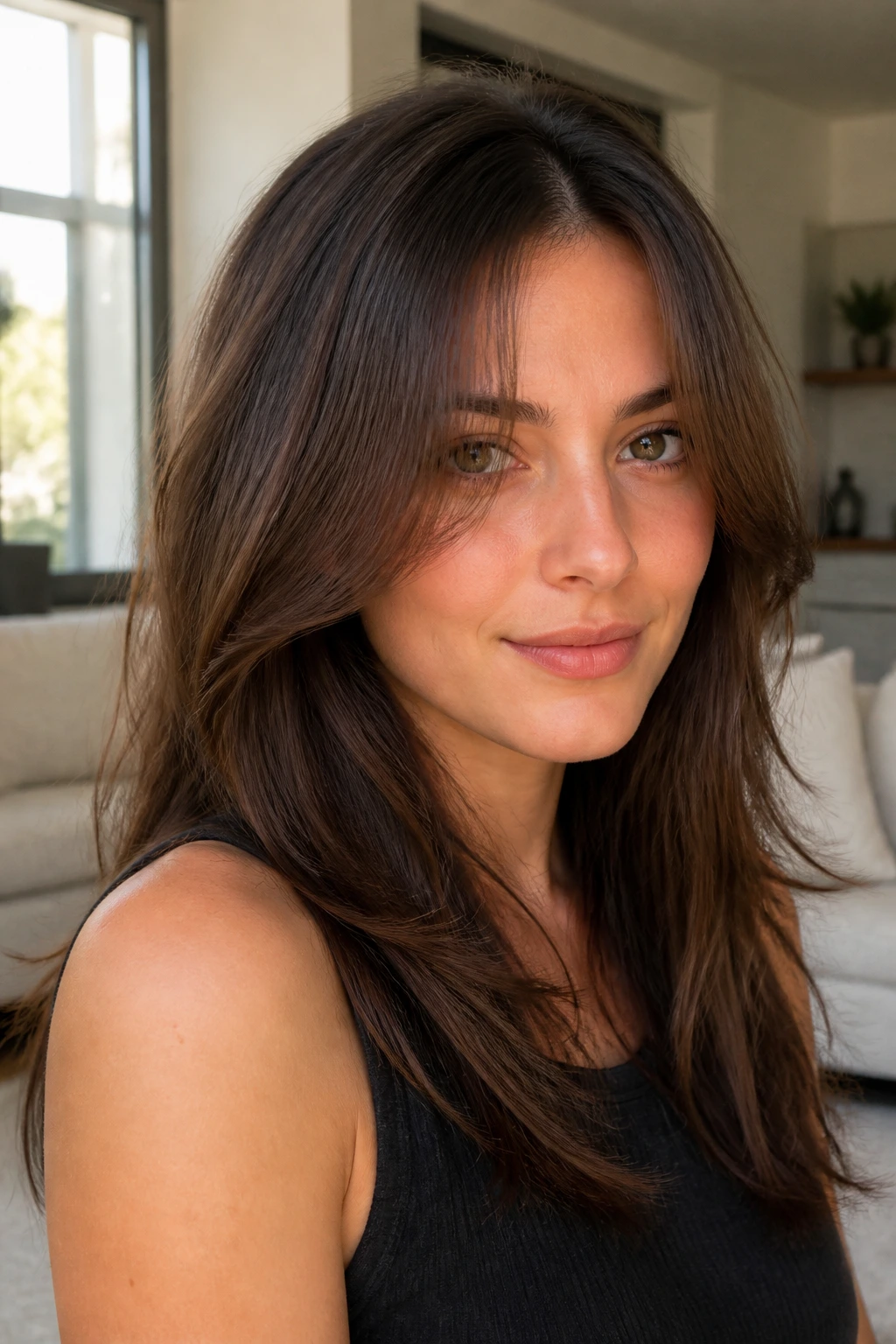
These bangs are so well-blended that they are almost invisible until you style them. They are essentially layers that stop at the bridge of the nose and are cut to blend seamlessly into the sides of your hair. This is the ultimate “low-effort” fringe for someone who wants the benefit of face-framing without the commitment of traditional bangs.
Integration is Everything
Ask your stylist to keep these layers light and airy. If they are too heavy, they will just look like chunks of hair hanging in front of your face. They should be cut to disappear when your hair is down and naturally fall into place when you style them forward.
Styling Versatility
You can wear these forward for a bit of mystery, or you can sweep them back for a more polished, open look. They are the most versatile bangs you will ever have, making them a safe choice if you are on the fence about getting a fringe.
16. The Rounded, Eye-Grazing Fringe
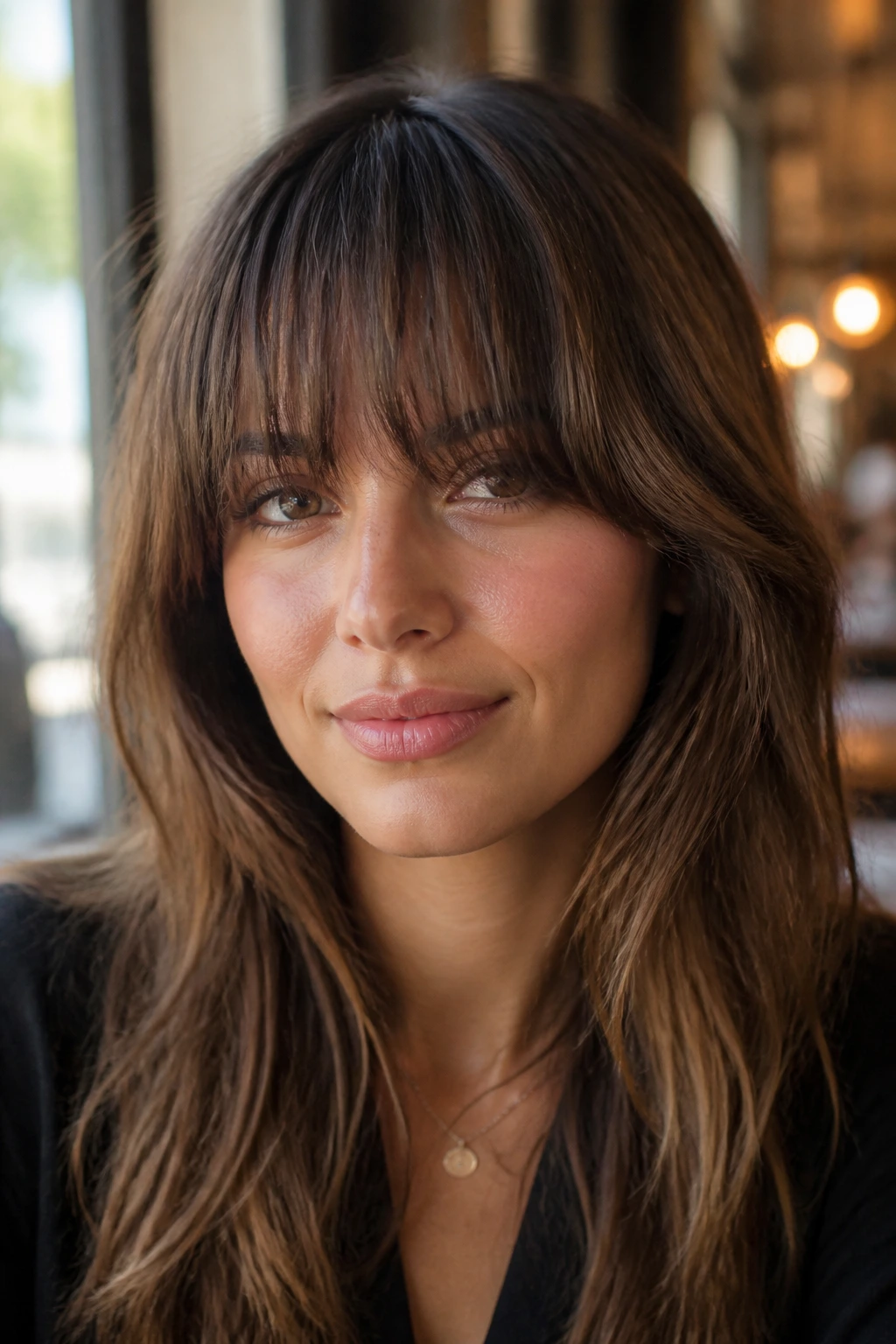
These bangs are cut in a soft, rounded shape that just touches the eyelashes. They provide a lot of coverage, which can be great if you have a larger forehead, but they are also quite high-maintenance. For frizzy hair, the trick is to ensure the ends are softened with deep point-cutting so they don’t look like a solid block of hair.
The Importance of Weight
If you have fine hair that is prone to frizz, this style can actually be very good for you. The hair is thick enough to hold its shape, but the length means it has enough weight to resist the humidity. Just be prepared to trim these often—they will start tickling your eyes within a few weeks.
Managing the Eyes
If you find them annoying, use a tiny bobby pin to tuck one side away. It adds a bit of asymmetry to your look and is a very practical way to deal with bangs that have grown just a little bit too long.
17. The Wispy, Middle-Parted Fringe
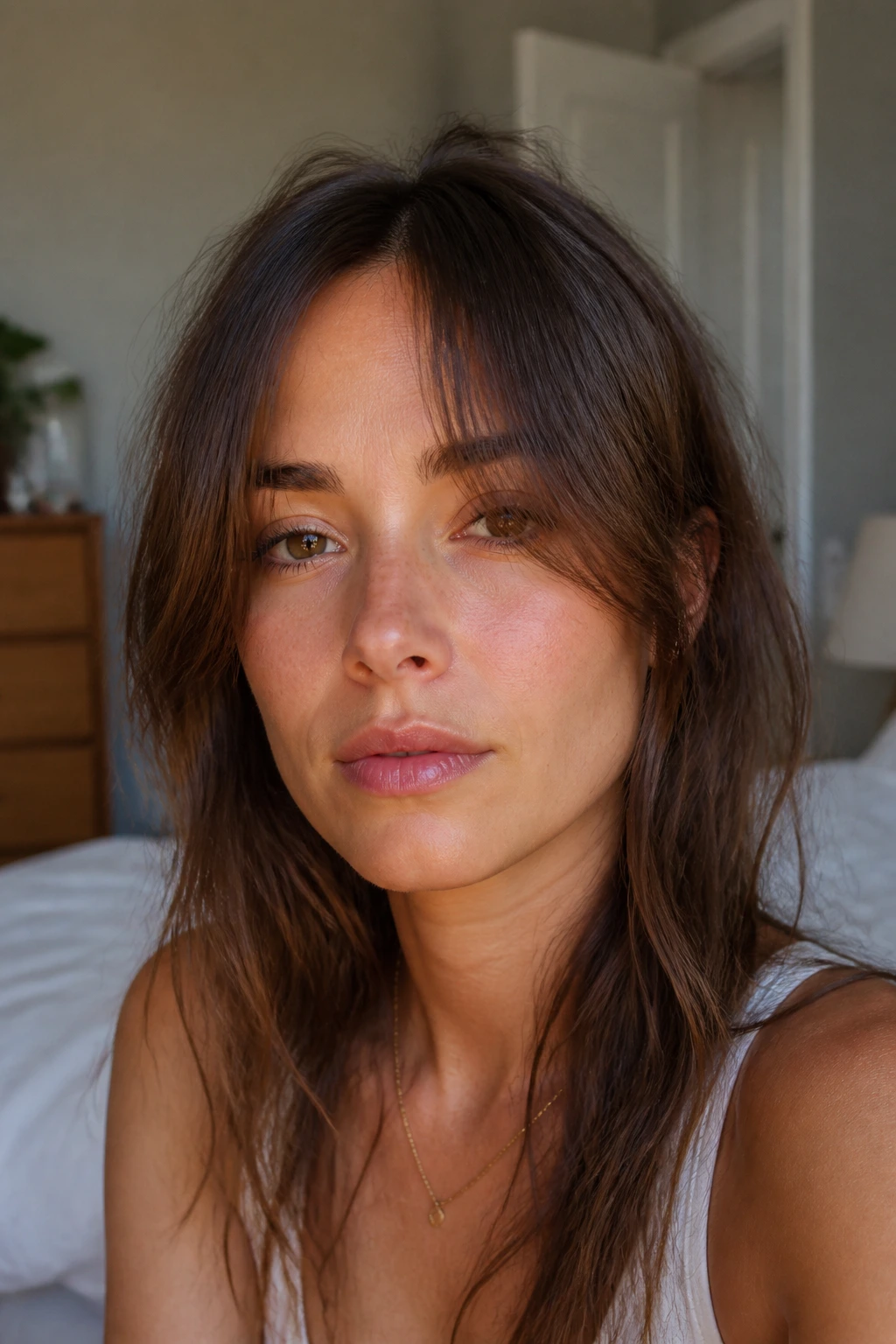
This is a softer version of the Korean fringe. It is very thin, very long, and usually parts in the middle. It is incredibly delicate and adds a romantic, almost Victorian feel to your look. It is perfect if you have hair that is wavy or frizzy, as the natural texture of the hair adds to the delicacy of the cut.
A Gentle Approach
Because there is so little hair, you can use a small round brush to give these bangs a slight curl toward your temples. This creates a very intentional, polished look that makes the frizz look like intentional texture. It is a very high-fashion, editorial style.
Why It’s Great for Frizz
Frizz is only a problem if the hair is thick and dense. When the hair is wispy and sparse, the frizz actually becomes a feature, providing volume and life to otherwise flat strands. This cut turns your biggest hair “flaw” into a design element.
18. Long, Graduated Side Bangs
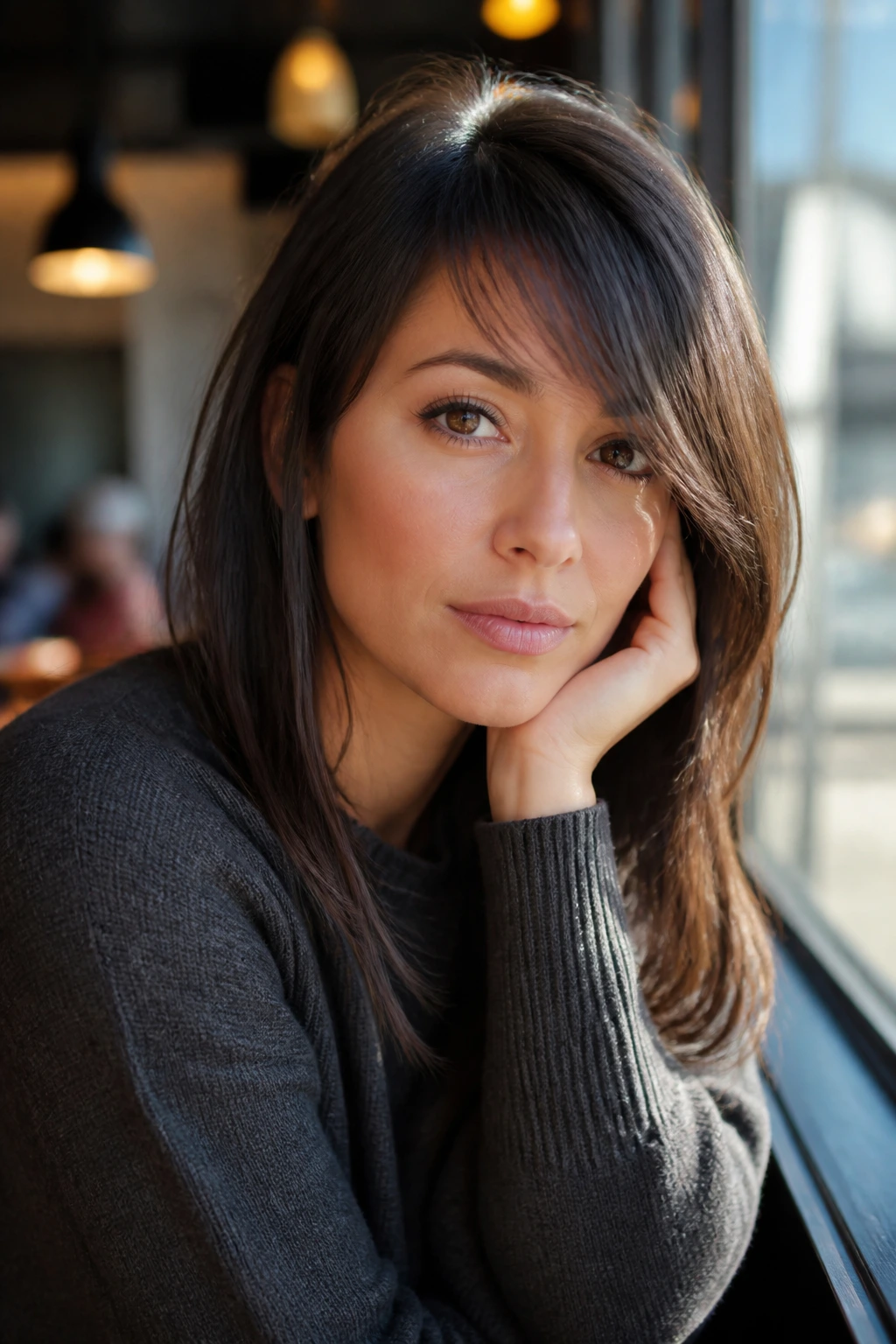
This style starts short near the inner brow and graduates into long, chin-length layers. It creates a beautiful frame around the face that feels much lighter than a traditional bang. This is a very smart way to manage frizz because you are essentially creating a ramp for your hair to follow, directing it away from your forehead.
The Gradation Effect
The transition from short to long must be smooth. If there is a sharp jump between lengths, it will create a place for frizz to build up. Make sure your stylist understands that the layers need to blend together like a waterfall.
Finishing Techniques
Use a lightweight smoothing balm on the longer pieces to keep them weighted down. Since the longest pieces are near your chin, you can afford to use a slightly heavier product there than you could on your forehead.
19. The Fringed Updo
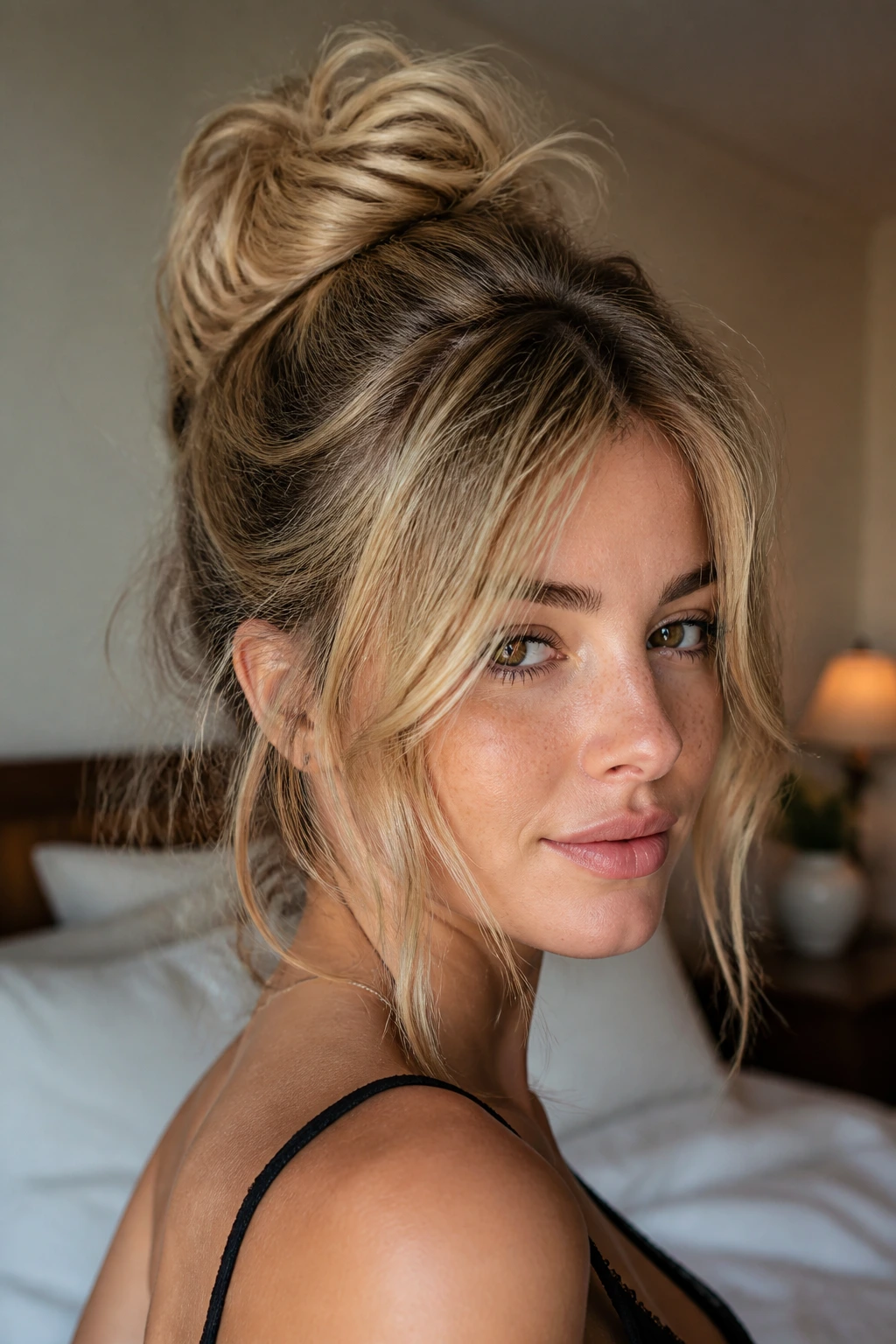
This is a style that you create, rather than a cut, though it relies on having long fringe pieces to pull off. When you pull your hair up into a messy bun, you leave the long fringe pieces out to frame your face. For those with frizzy hair, you can embrace the fuzziness of these pieces to make the whole updo feel soft and romantic.
The “Intentional Messy” Look
If your fringe pieces are too perfect, the bun looks stiff. If they are a little bit frizzy and soft, the whole look feels like you just woke up that way (in a good way). Use a bit of sea salt spray on the pieces before you put your hair up to give them a little more grit and body.
Practicality
This is a great style for second-day hair. If you have been living in your hair for 24 hours, the natural oils from your scalp will make the fringe pieces feel smoother and easier to manage, which is ideal for this look.
20. The Curly/Wavy Long Fringe
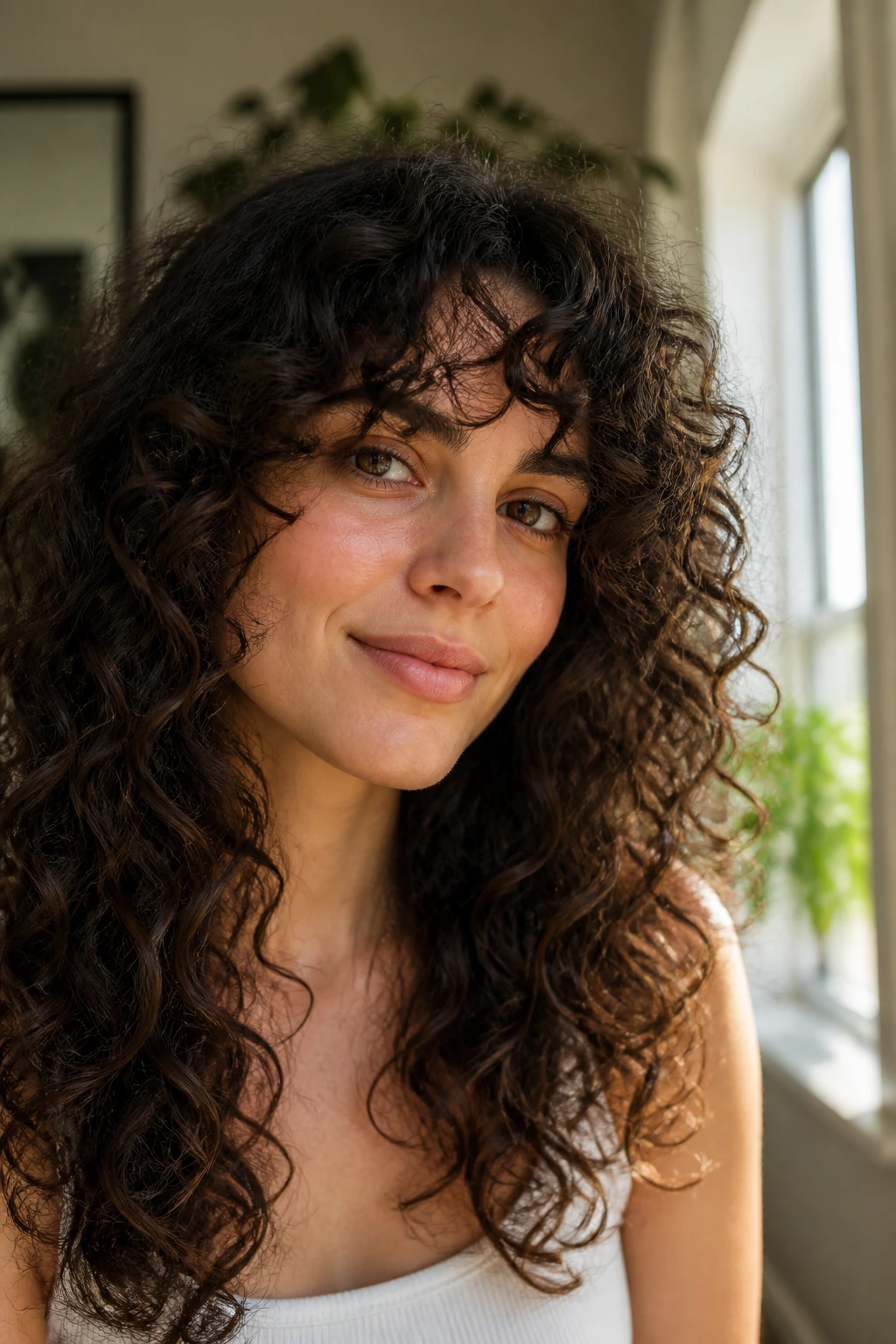
If you have naturally curly or wavy hair, stop fighting it. Cut your bangs long, leave them curly, and let them be. This is a bold, modern look that is very popular right now. By keeping them long, you ensure they have enough weight to stay within their curl pattern rather than spiraling out of control.
The Key to Success
You must find a stylist who specializes in curly hair. If they cut your bangs with traditional straight-hair techniques, they will likely cut them way too short, and you will end up with an unflattering, poofy fringe. A curly-hair expert will cut your hair dry and in its natural shape.
Product Selection
Use a dedicated curl cream. These products are formulated to hydrate the hair without weighing it down. Apply it to soaking wet hair and then “scrunch” the bangs up toward your scalp to encourage the curl. Do not touch them until they are 100% dry.
21. The “Broken” Fringe
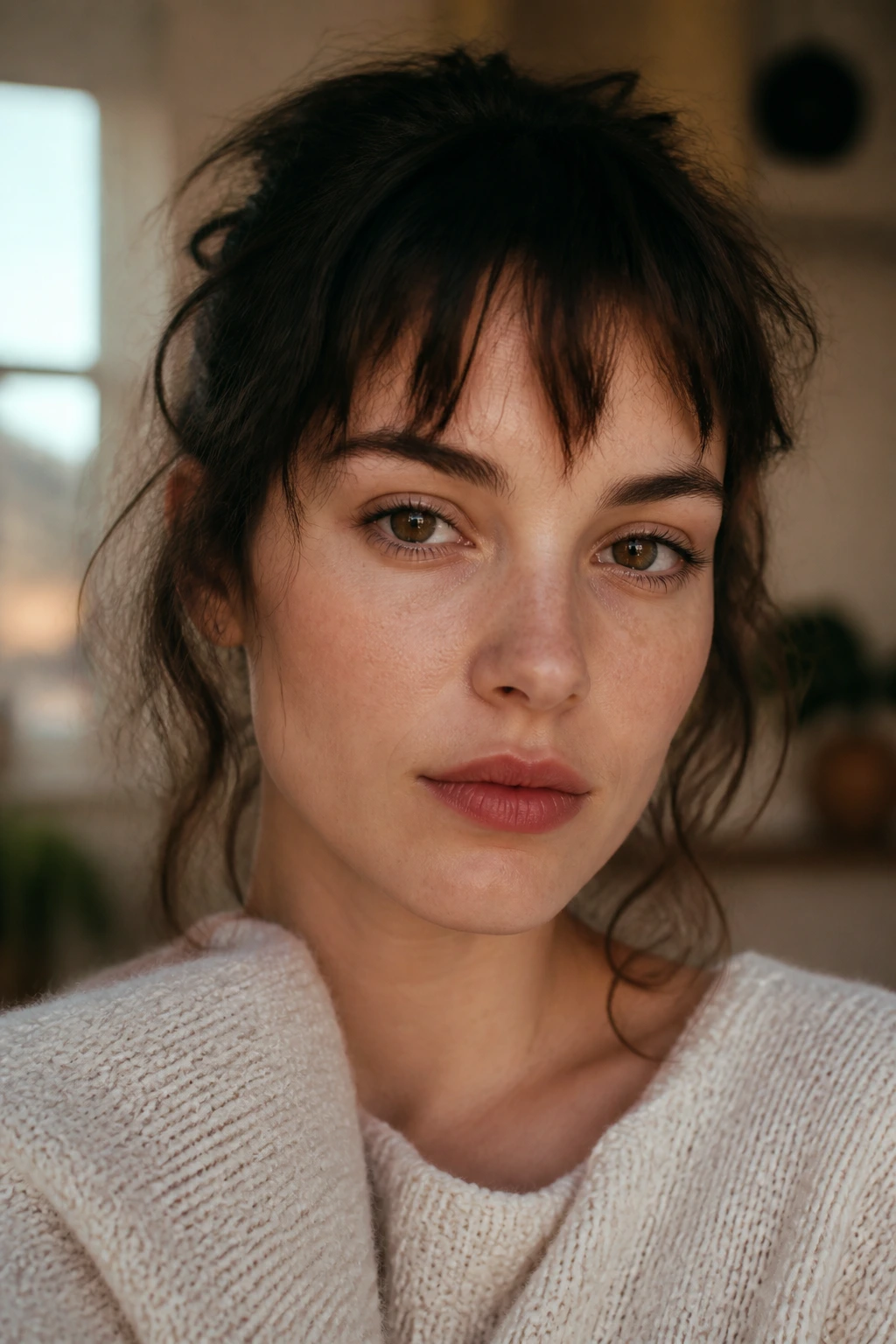
A “broken” fringe is cut with varying lengths so it looks a bit uneven. This is the ultimate anti-frizz hack because there is no perfect line for the frizz to ruin. If your hair goes a little crazy, it just looks like part of the design. It is a very artistic, creative cut that is perfect for anyone with a unique sense of style.
How to Style It
You want this to look a bit messy, so don’t be afraid to use some texturizing powder at the roots. This gives your hair enough “guts” to hold the different lengths in place without them looking like they are just unkempt.
Why It’s Unique
You will rarely see two people with the same “broken” fringe. It is a cut that is highly customized to your specific hair density and wave pattern. It is the perfect antidote to the overly polished, machine-perfect styles you see on social media.
22. The Long, Side-Swept Layered Fringe
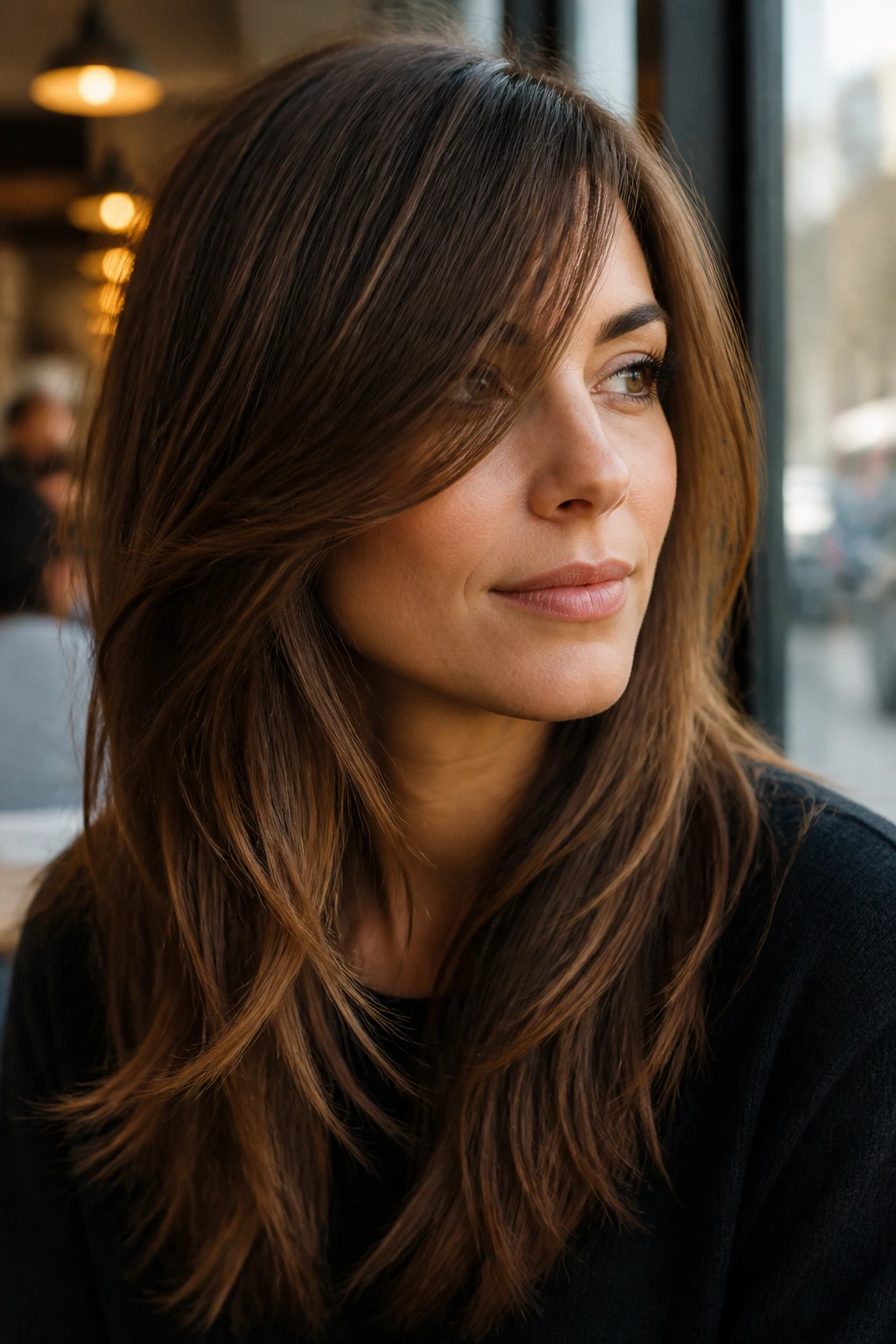
This is a combination of side-swept bangs and long, face-framing layers. It is the most “all-around” cut on this list. It works for every face shape, every hair density, and almost every hair texture. It is the “safe” choice that still manages to look incredibly chic and professional.
Why It Works for Everyone
The length ensures that gravity does most of the work. You don’t have to worry about your bangs hitting your eyes, and you don’t have to worry about them getting frizzy because they are long enough to be styled with product.
Final Styling Note
Always finish this look with a quick blast of cool air from your hair dryer. This sets the style and closes the hair cuticle, which is the single most important step for anyone dealing with frizz. The cold air locks the hair into place, making it resistant to the moisture that causes all the trouble.
Final Thoughts
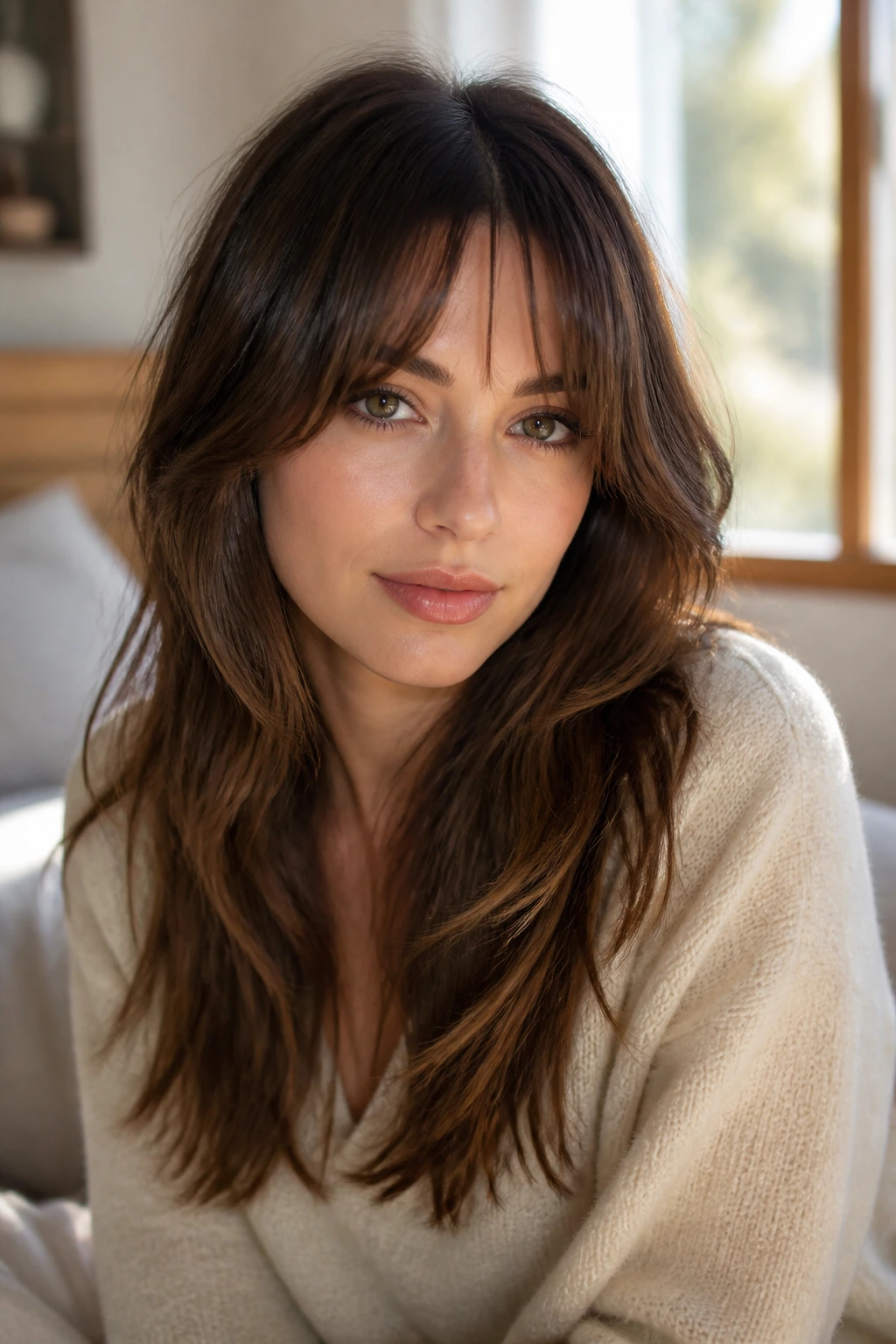
The key to mastering any of these long, frizzy-hair-friendly styles is changing how you view your hair. Stop seeing frizz as an enemy to be defeated and start seeing it as a texture to be managed. When you give your hair enough weight and the right kind of layering, you stop working against gravity and start working with it.
Remember that length is your best friend when your hair tends to expand. By keeping your bangs on the longer side, you are essentially buying yourself insurance against a bad hair day. The extra inch or two is the difference between a fringe that stands up straight and one that lays flat. Pick a style that fits your lifestyle, keep your hair hydrated with the right creams rather than gels, and you will find that having bangs is not the headache you once thought it was.