


The contrast between the aggressive, shorn sides of a classic punk mohawk and the lush, untamed volume of natural curls creates a silhouette that is nothing short of magnetic. For those of us blessed—and sometimes burdened—with thick, dense hair, the faux hawk isn’t just a stylistic choice; it is a structural necessity. It turns the weight of your curls into a crown of texture rather than a heavy mass that sags by midday. If you have been looking for a way to embrace your natural pattern while maintaining a sharp, clean aesthetic, you have found the right corner of the internet.
Thick hair offers a distinct advantage when attempting this look: you never have to worry about the “skinny” look that thinner textures suffer from. Your hair naturally stands up, holds shape, and provides the architecture required for that signature center-focused lift. The following styles are designed to work with your hair’s natural gravity, not against it. Whether you are aiming for an edgy, red-carpet look or a practical, everyday style that keeps your face clear, these eighteen variations offer a template for every occasion.
1. The Undercut Fade with Defined Coils
This is the foundational look for anyone wanting to maintain a faux hawk without the maintenance of daily styling. By taking the sides down to a tight skin fade, you shift all the visual weight to the top, where your thick coils can spiral upward with complete freedom.
Why It Works for Thick Hair
The extreme contrast between the shorn sides and the thick, dense center creates a dramatic focal point. Because your hair is dense, the transition point—the “edge” where the sides meet the top—needs to be kept clean. Regular visits to a barber are necessary to keep the fade crisp, but the daily effort on the top is minimal. Simply apply a medium-hold styling custard while your hair is soaking wet, diffuse until about eighty percent dry, and let the remaining moisture evaporate naturally.
Essential Styling Tip
For this look, hydration is your best friend. Because the sides are so short, any dryness in the top section becomes immediately obvious. Use a leave-in conditioner that is heavy enough to weigh down flyaways but light enough to let your individual coils separate. If you notice your curls starting to clump too much, use a wide-tooth pick to gently lift the roots at the center, creating a taller, more sculptural effect.
2. The Pinned-Back Slick Side Faux Hawk
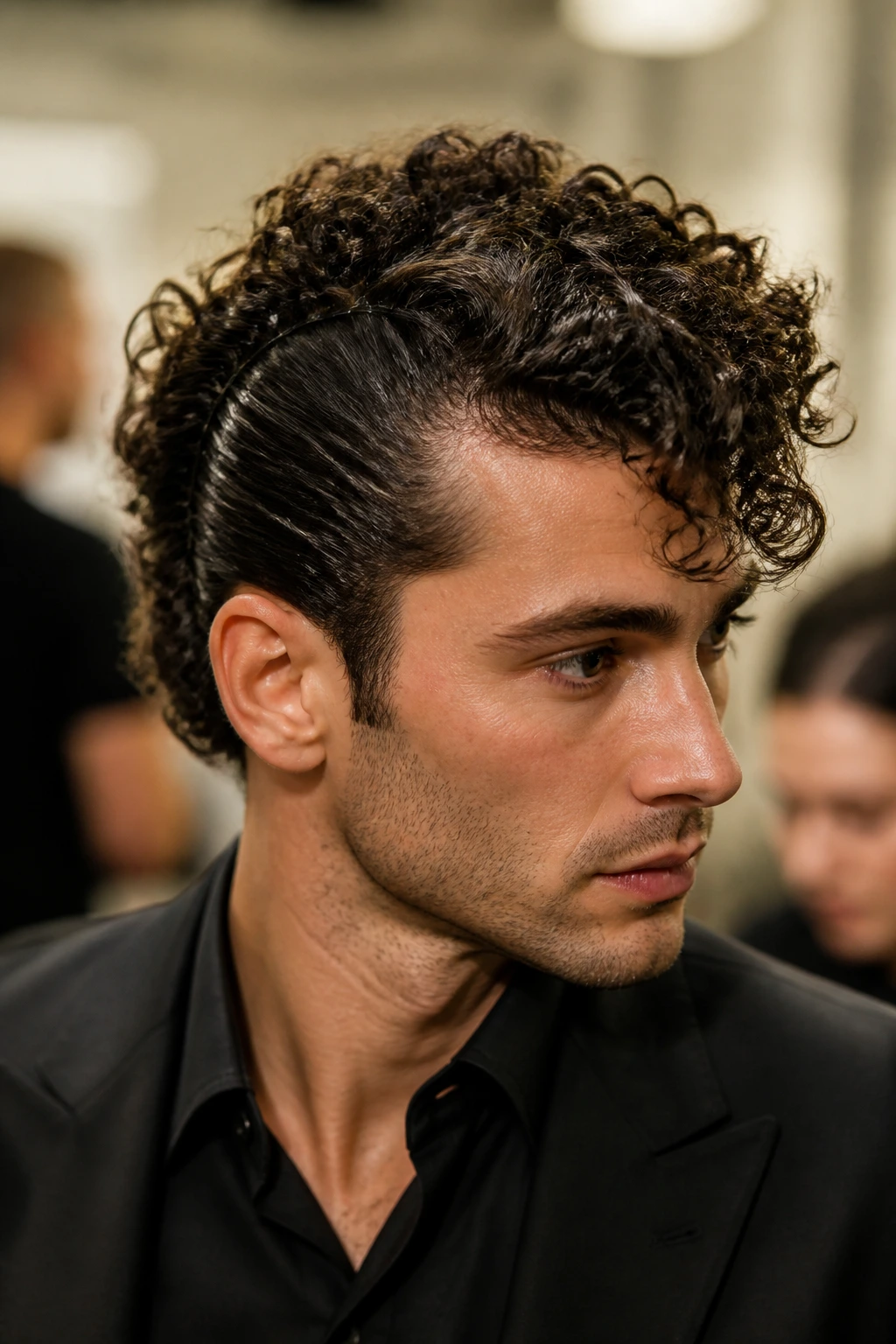
If you aren’t ready to take the clippers to your sides, the pinned-back version offers the same aggressive silhouette with zero commitment. This style relies on bobby pins, high-tension pomade, and a bit of patience. It is an excellent choice for formal events where you want an edgy aesthetic without sacrificing your length.
Achieving the Shape
Start by applying a firm-hold edge control gel to both sides of your head. Use a boar-bristle brush to pull the hair as tight as possible toward the center line. Secure the hair against the scalp using flat, matte-finish bobby pins that match your natural hair color. Once the sides are locked down, use a curling wand or your fingers to refine the curls on top, ensuring they fall forward toward the forehead like a traditional mohawk.
Pro Technique for Density
Since your hair is thick, those pins are going to fight you. Do not try to pin the entire chunk of hair at once. Instead, section the sides into three smaller horizontal parts. Pin the bottom layer first, then the middle, then the top. This layering technique distributes the tension so that one stray curl doesn’t pop out and ruin the entire structure.
3. The Braided-Side Sculpted Hawk
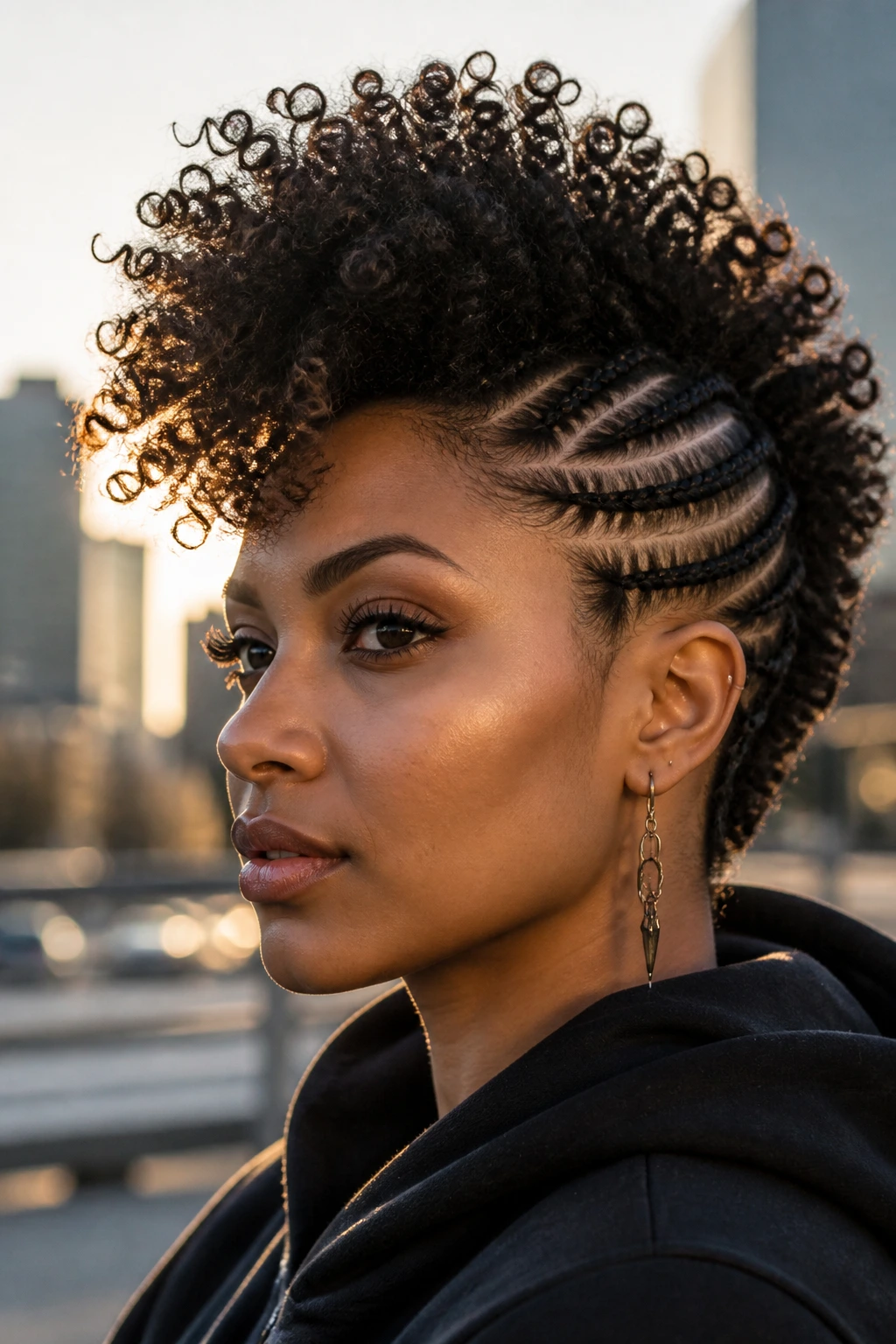
The braided faux hawk takes the “pinned-back” concept and makes it permanent for a few days. By cornrowing the hair on the sides tight against the scalp, you create a beautiful, geometric pattern that frames the chaos of the curly top.
The Aesthetic Appeal
The tight, linear nature of the braids contrasts with the soft, erratic movement of the curls, making for an incredibly high-fashion look. You can choose to go with straight-back cornrows or intricate, curved patterns. Because your hair is thick, ensure your stylist uses a strong-hold braiding gel to tuck in any protruding short hairs, keeping the scalp pattern clean and visible.
Managing the Center
The center section should be left completely free. Use a curl-defining mousse or a lightweight foam to keep the curls bouncy. If you find your hair is too heavy and falls to one side, you can strategically place a few clear elastic bands at the base of the center section to “poof” the hair upward, creating a more vertical shape.
4. The Messy Top-Knot Integration
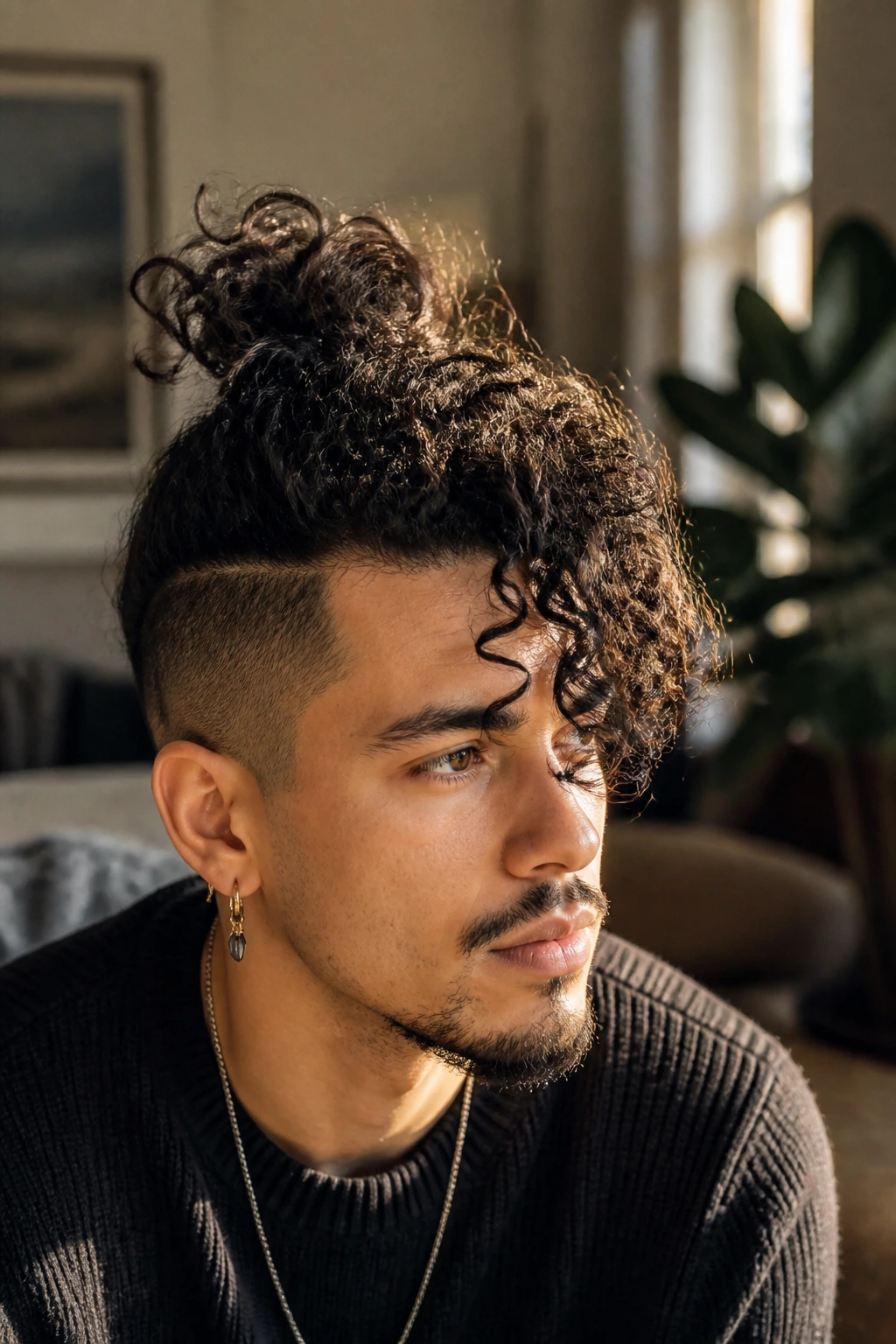
Sometimes, the best faux hawk is one that leans into the “messy” aesthetic. This style is perfect for second- or third-day hair when the definition has faded but the volume is at its peak. It is less of a rigid hawk and more of a chaotic, vertical arrangement of curls.
How to Style
Flip your head upside down and gather the top section of your hair as if you were pulling it into a high ponytail. Instead of pulling the hair all the way through the elastic, create a loose loop or a “bun” that sits right at the crown. Let the ends of your curls spill out of the loop and drape over your forehead. The volume from your thick roots will provide all the height you need, while the “bun” acts as the anchor holding the center-line structure in place.
Why It’s Great for Thick Hair
You don’t need extensions or heavy teasing to get this look. Your natural density provides the bulk. If you feel like it’s too flat in the back, pull a few sections of hair from the nape of your neck and pin them upward to meet the center-line, closing any gaps in the “hawk” shape.
5. The Afro-Puff Faux Hawk
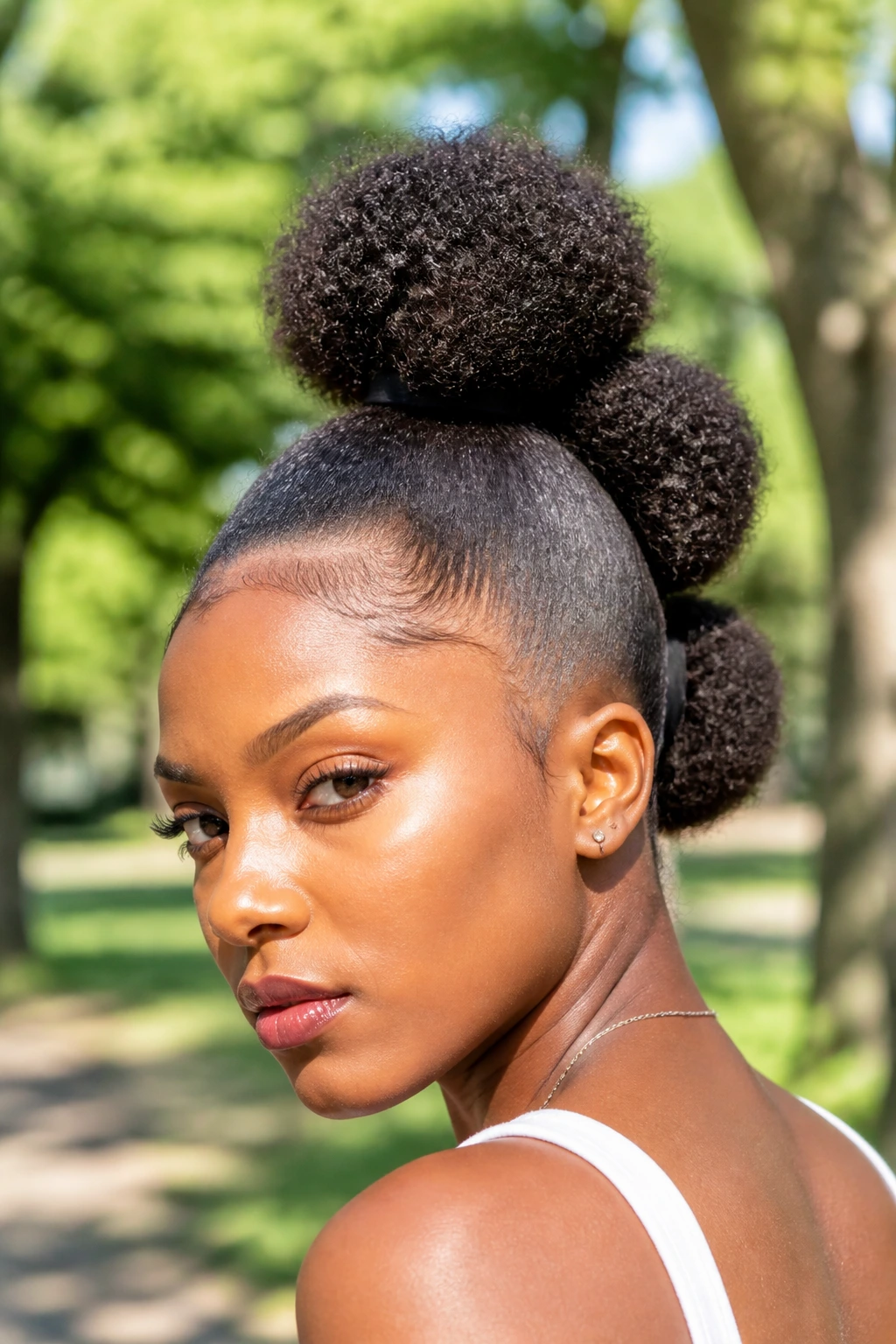
This version embraces the natural roundness of your hair while forcing it into a vertical, compressed shape. It’s an iconic look that works particularly well with Type 4 hair, where the density is high and the coil diameter is small.
Building the Structure
Use a long, sturdy fabric hair tie or a bungee-style band. Section your head into three areas: the bottom, the middle, and the top. Pull the bottom section up and secure it, then the middle, then the top. By creating three separate “puffs” that are aligned in a vertical row, you effectively mimic the silhouette of a hawk without ever needing to cut or braid the sides.
Final Touches
Once the row is secured, use your fingers to fluff each puff until they connect, hiding the bands. Use an afro pick to pull at the edges of the hair, ensuring a seamless, spherical shape that creates a continuous line from your hairline to the nape of your neck.
6. The Shaved-Side Design Hawk
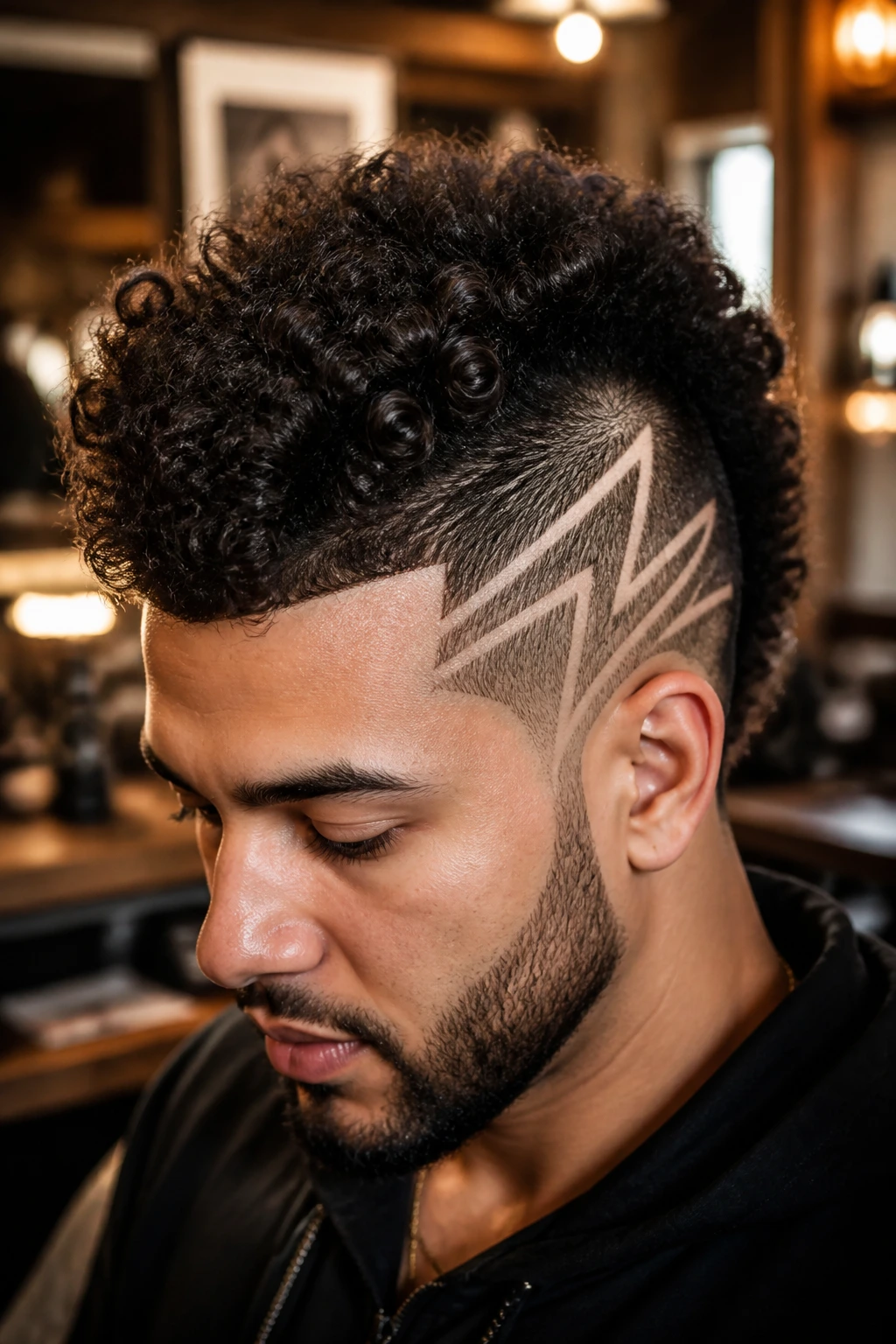
For those who want to take their faux hawk to the next level of artistry, the addition of graphic lines or geometric patterns in the shaved sides adds a layer of sophistication. This is a look that requires a skilled barber, as it moves the focus from just the hair texture to the scalp art itself.
Maintaining the Lines
When you have thick hair, your hair grows back quickly and can easily obscure fine-line designs. If you want to keep the designs visible, you will need to touch up the shave every week. It is a commitment, but the impact is undeniable. The design provides a sharp, rigid frame that makes the wild, curly center look intentional and curated.
Styling the Top
Keep the top section simple. A light application of a curl-enhancing cream is all you need. Do not try to compete with the side designs with an over-complicated top style. Let the curls be the soft, flowing texture that balances out the hard, geometric lines below.
7. The Half-Up, Half-Down Hawk
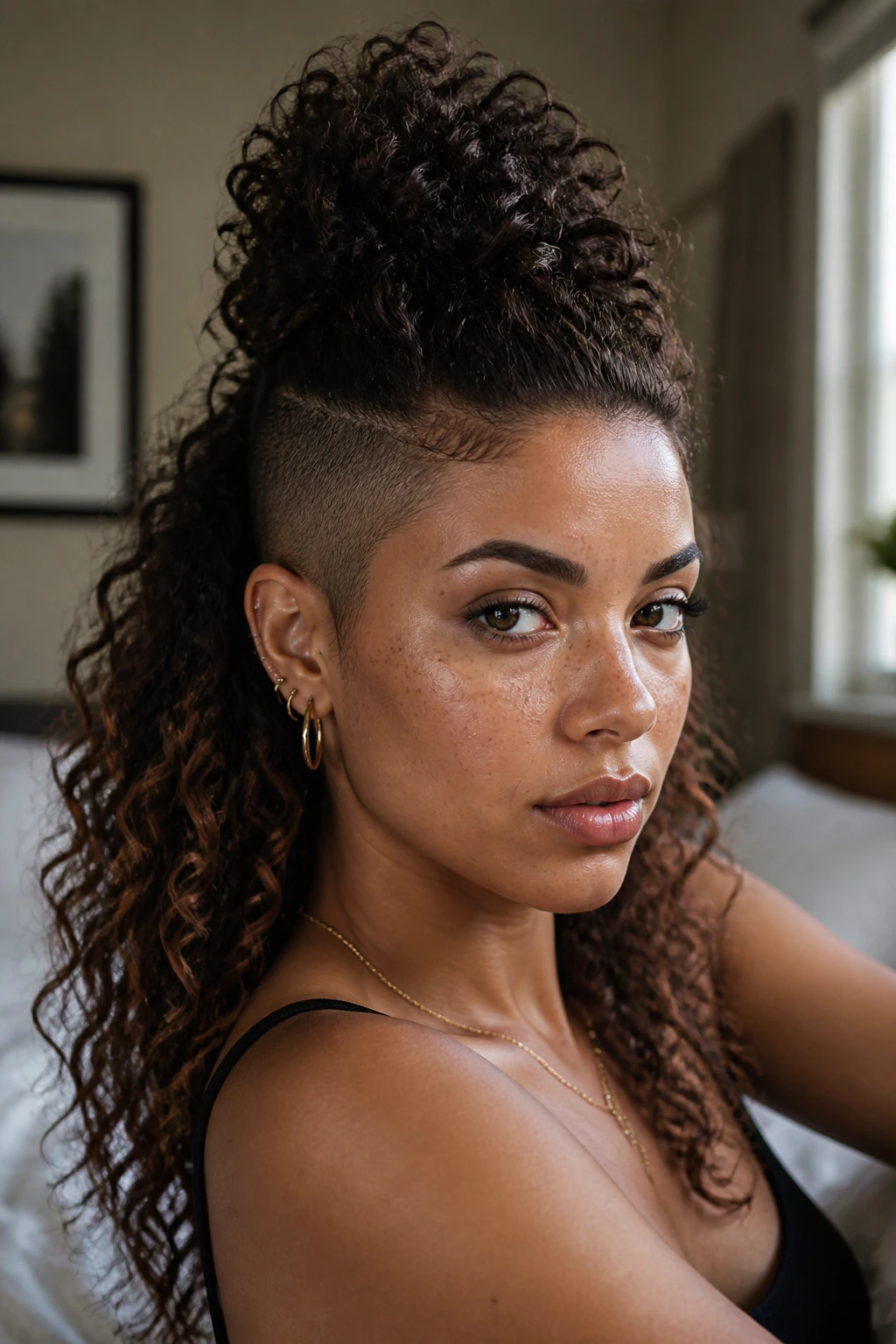
This is a softer approach to the faux hawk, ideal for those who aren’t quite ready to commit to a full mohawk silhouette. By taking only the front and crown sections of your hair and pinning them up into a central crest, you leave the back of your hair loose and flowy.
The Balancing Act
The key here is volume distribution. You want the pinned-up section to be the highest point of the hairstyle. Use a rat-tail comb to back-comb the underside of the roots in the center section before pinning. This adds the necessary foundation to keep your thick hair standing tall throughout the day.
Texture Contrast
Leave the loose hair in the back in its natural state. If you want to refine the look, apply a small amount of shine serum to the loose ends, which will create a polished look that contrasts beautifully with the textured, voluminous hawk at the crown.
8. The Twisted Side-Hawk
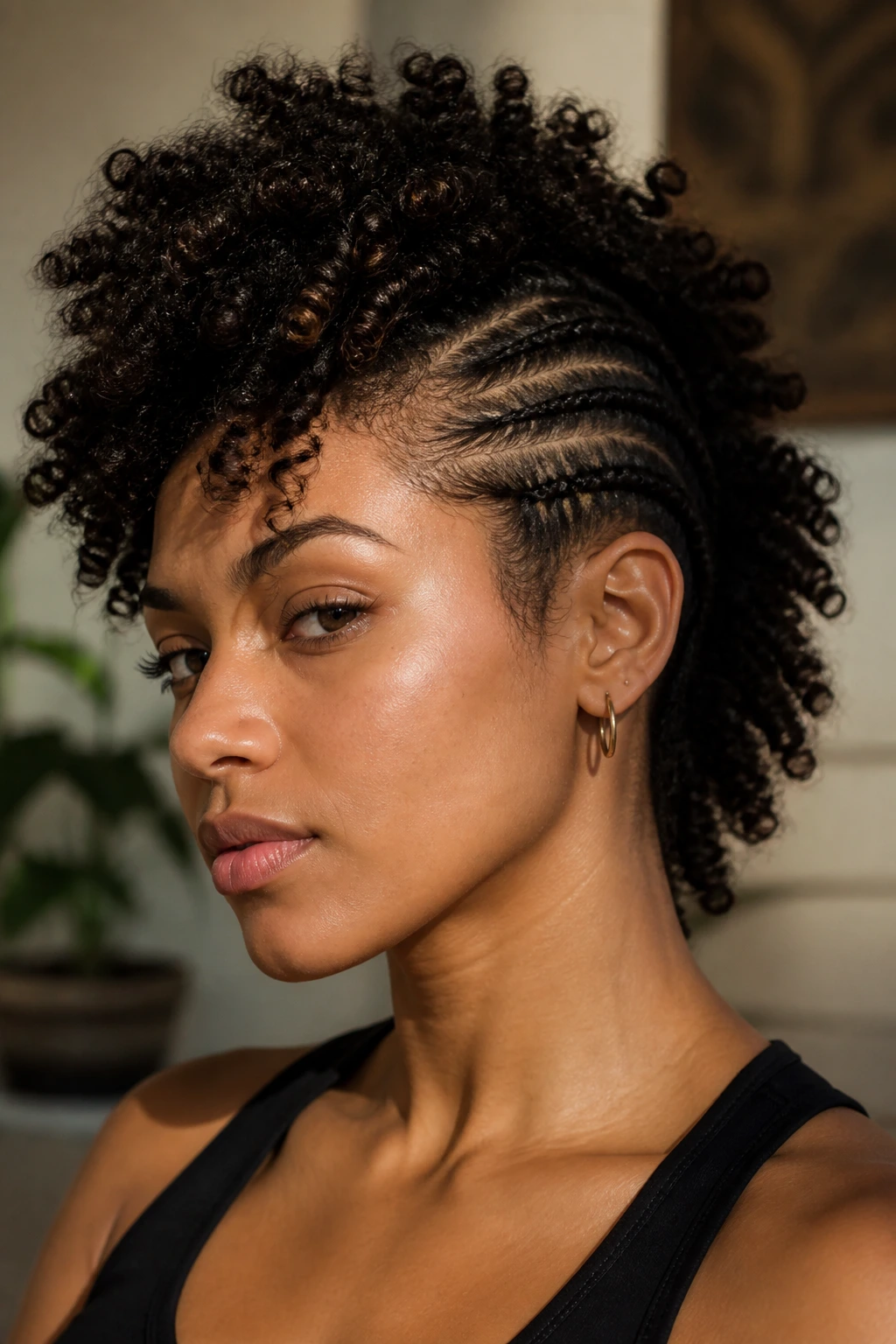
Twists are a fantastic way to control the volume of thick hair while creating a structured look. By doing flat-twists on the sides toward the center, you create a “fanned” effect that draws the eye toward the middle of the head.
The Process
Starting at the hairline, divide your side hair into small, neat sections. Apply a firm-hold twisting butter to each section and create tight, two-strand twists that run horizontally toward the center of your head. Secure these at the center with a few discreet bobby pins. Once you reach the back of the head, the side sections should all be locked away, leaving only the center-line of hair free to curl.
Longevity
This is a protective style as much as a aesthetic one. It keeps your ends tucked away and prevents the tangling that often happens when thick hair is left loose. If you spray the twists with a light setting spray, this look can easily last for several days, making it perfect for a busy week.
9. The Long-Curl Cascade Hawk
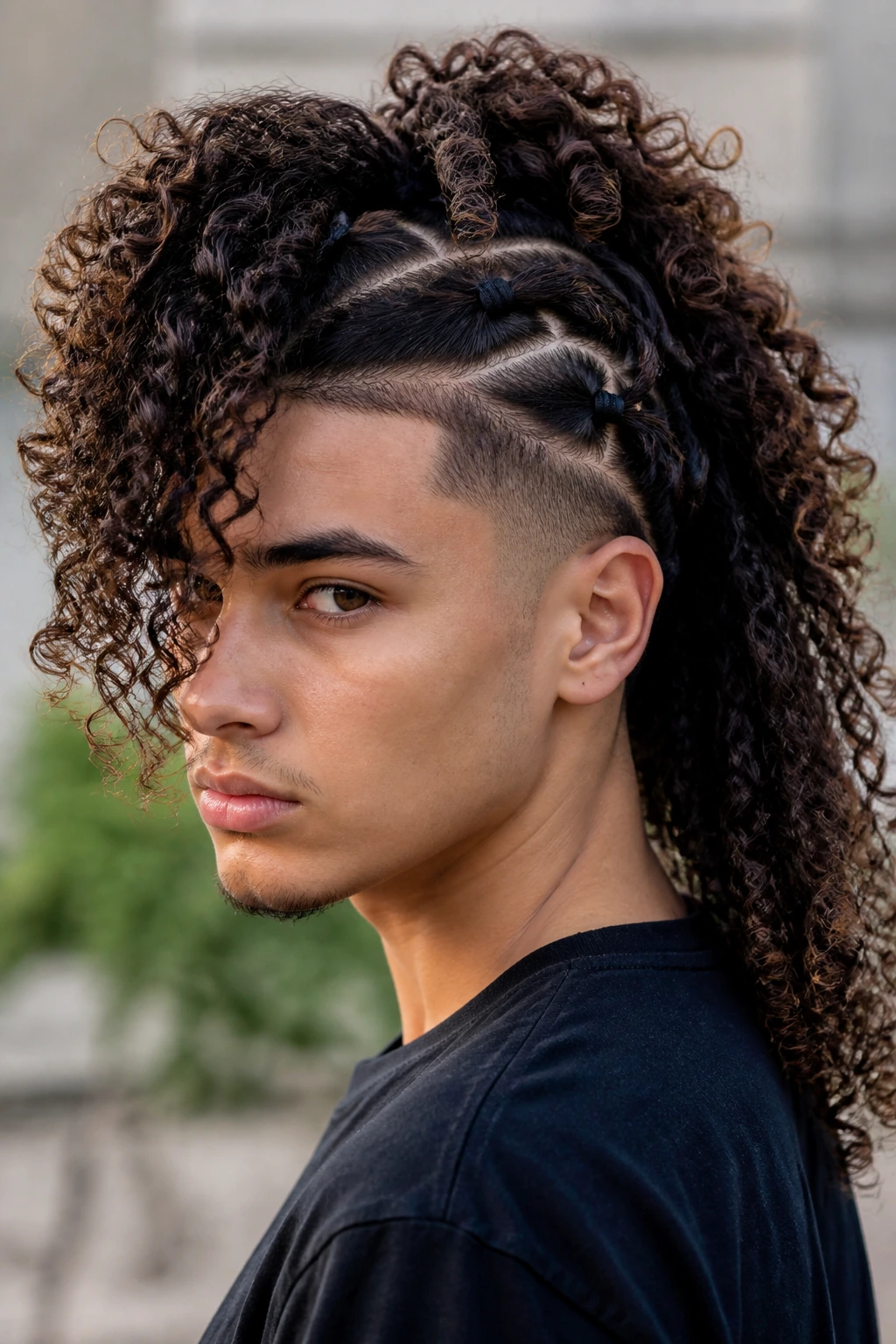
If you have long, thick hair, you shouldn’t have to sacrifice length to achieve the hawk silhouette. This style uses the length to create a dramatic, flowing crest that mimics the look of a traditional mohawk but with much more movement.
Creating the Crest
Gather your hair into four or five small, high ponytails along the center line of your head. Once secured, let the length of the curls spill forward or backward, depending on the look you want. For a true hawk, pin the front ponytail to hang forward over the forehead and the back ponytail to drop slightly behind the head. The ponytails are hidden by the sheer density of your curls.
Managing Weight
With long, thick hair, the weight can cause the “crest” to droop. Use hair clips to secure the base of the ponytails even tighter to the scalp. If the weight is still an issue, you can use a hidden braid running underneath the center line of the hair to act as a structural spine.
10. The Mohawk with Tapered Sides
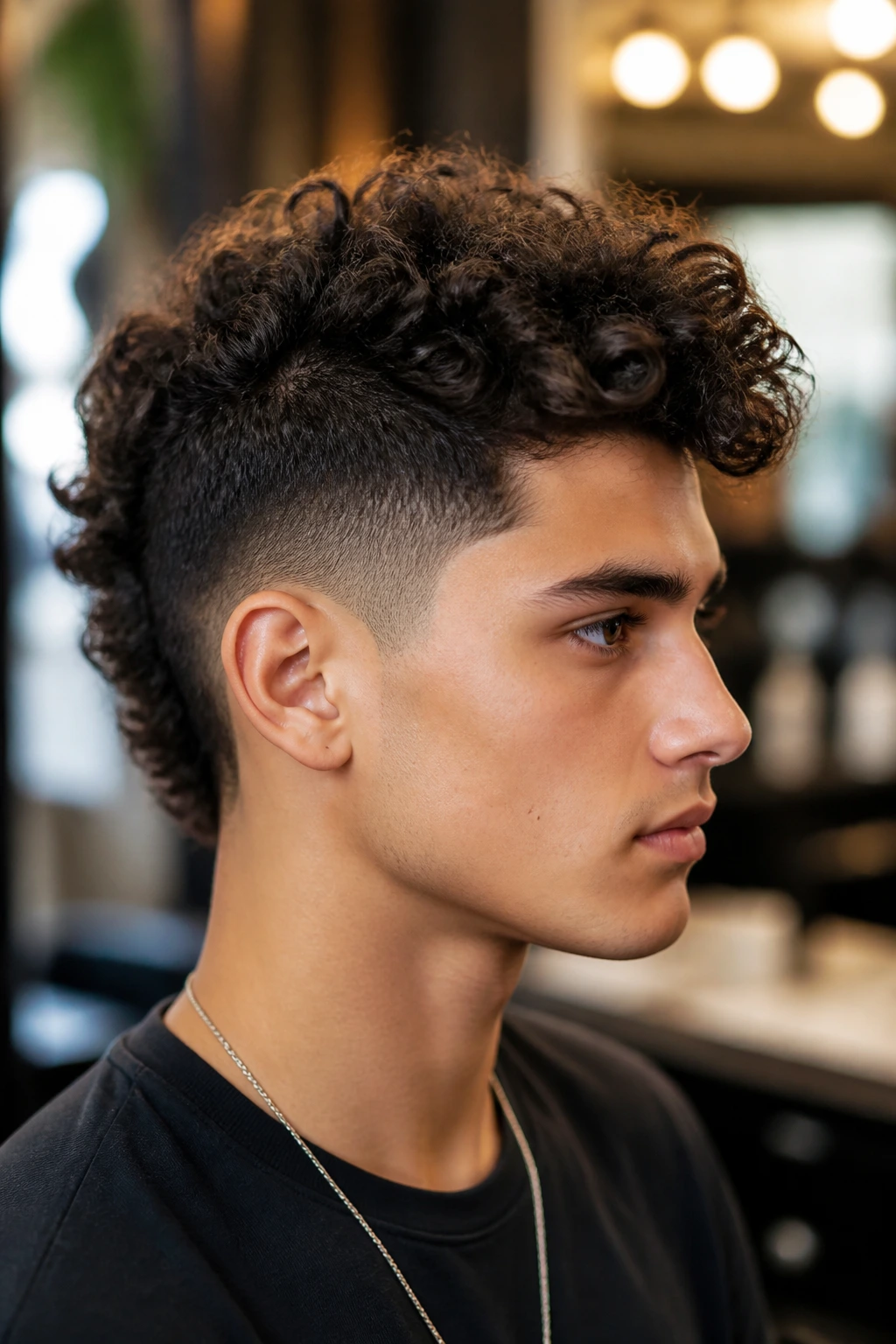
A taper is a more conservative cousin of the fade. Instead of taking the sides all the way to the skin, a taper gradually shortens the hair, leaving a bit of length near the hairline and neck. This is an excellent choice if you want the “faux” aspect of the hawk to be subtle.
The Softness Factor
Because the sides are not entirely removed, this look feels much more grounded and natural. It’s perfect for professional settings where you want a clean-cut aesthetic but don’t want to look like you just walked off a punk rock film set.
Styling for Thick Hair
Focus on the transition zone. Use a pomade to lay the hair along the taper flat against the head. This keeps the shape clean and makes the transition to the wild, voluminous curls on top look seamless and intentional.
11. The Multi-Colored Hawk
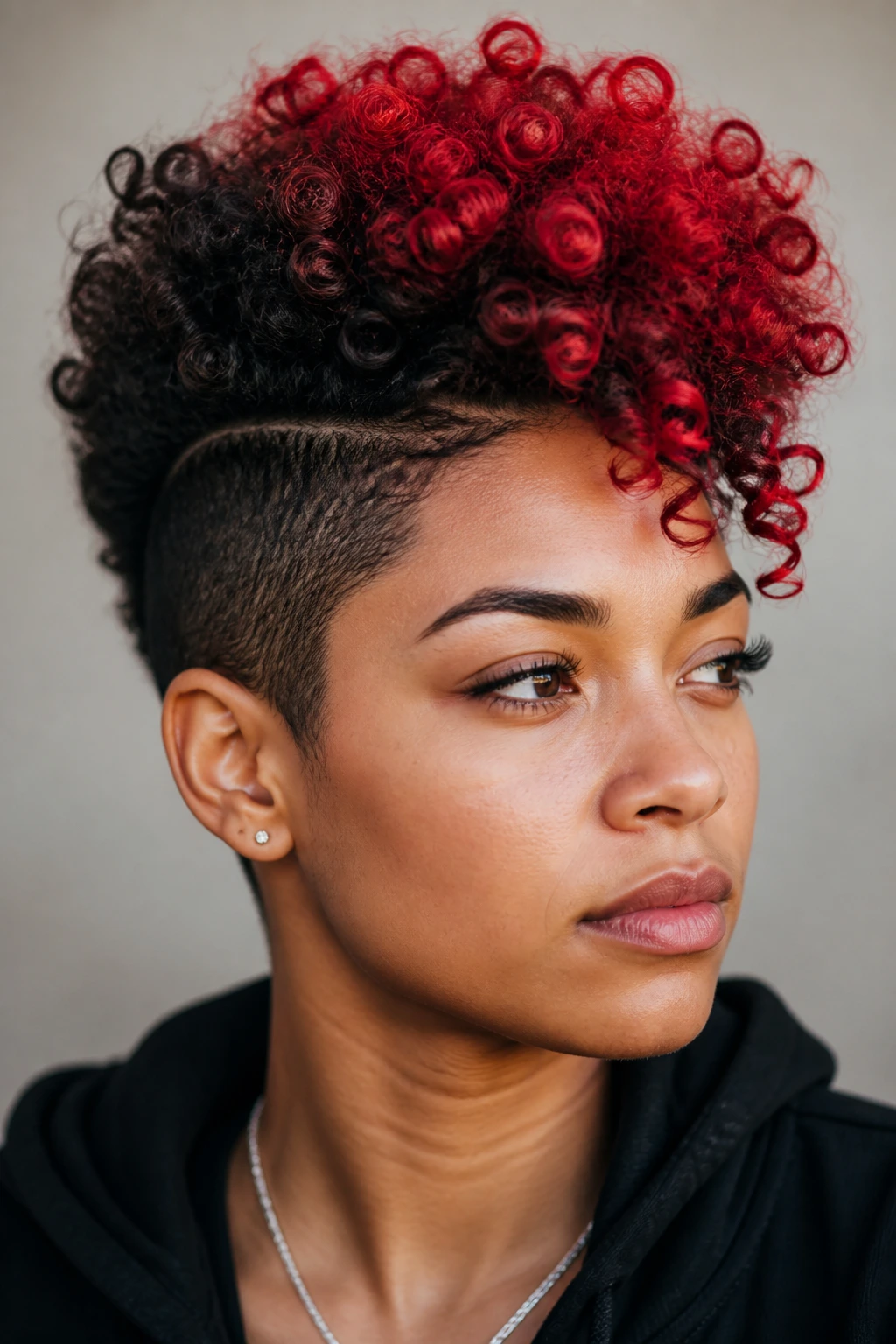
Color is a powerful tool to emphasize the architecture of a faux hawk. By dyeing the center section a different shade—or even just adding highlights—you create a stark contrast that highlights the height and texture of your hair.
Choosing Your Colors
If you have dark hair, consider a vibrant crimson or royal blue for the center section. These colors naturally pop against a darker base. Because you have thick hair, you don’t need to bleach the entire head; just focusing on the center section minimizes damage and allows you to experiment without compromising the health of the hair on the sides.
Why It Enhances the Silhouette
The color creates a “bridge” for the eye to follow. Even if your curls are messy or slightly unkempt, the color gives the hairstyle a definitive start and end point, which makes it look purposeful rather than accidental.
12. The Braid-Out Hawk
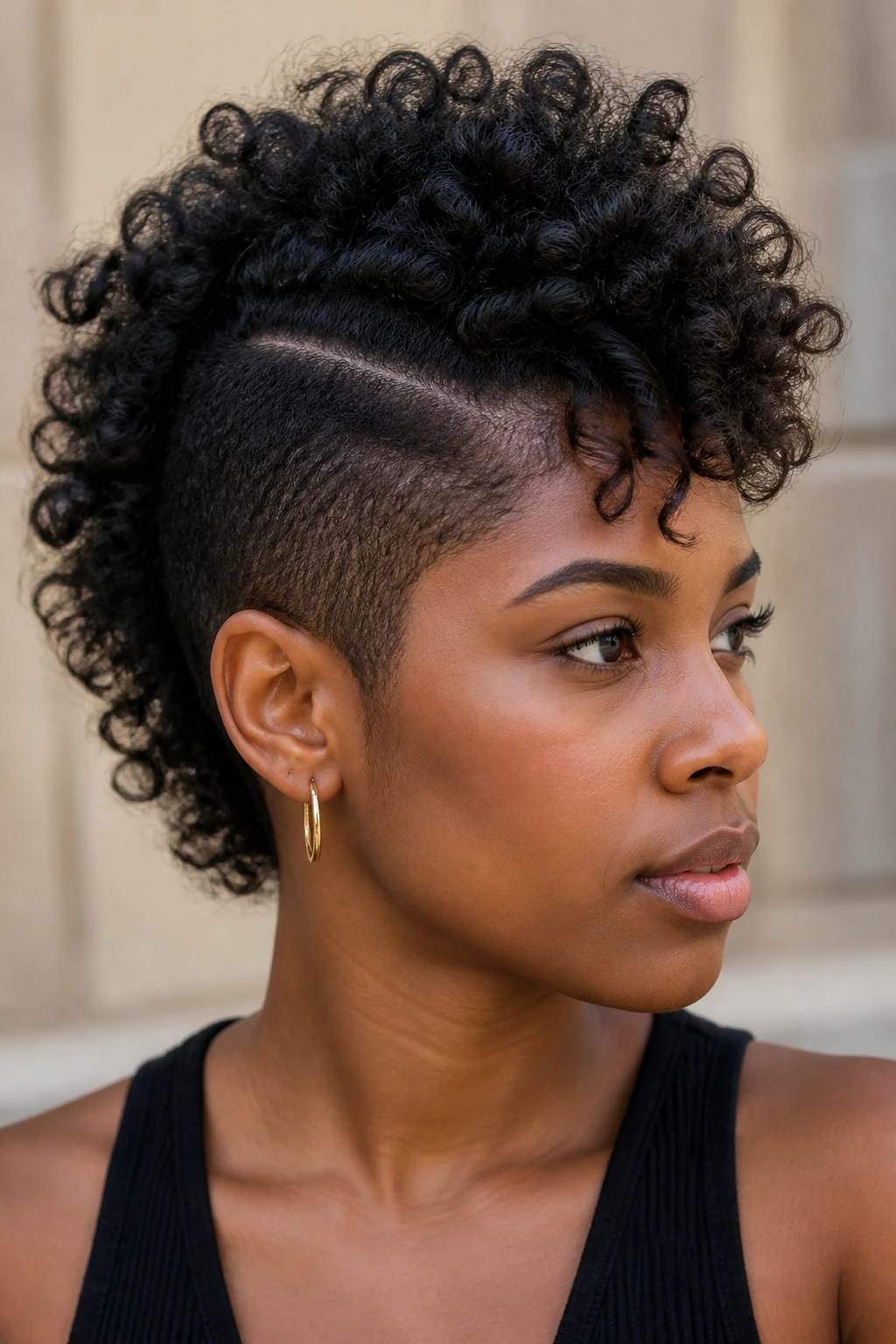
Sometimes, the best texture for a faux hawk isn’t your natural curl, but a set style. A braid-out gives your hair uniform, defined waves that hold shape much better than your natural curl might on its own.
Getting the Look
Wash your hair and divide it into six or eight large braids. Let them dry completely—do not skip this step—before unraveling. Once you take the braids down, do not brush through the hair, as this will destroy the definition and turn your hair into a frizzy mess. Instead, use your fingers to gently pull the hair into a center-line mohawk shape.
Staying Power
This method is perfect for thick hair because the braid-out structure gives you the volume of a lion’s mane while the waves provide the definition needed to see the “hawk” shape clearly. Use a light oil mist to add shine to the waves without weighing them down.
13. The Headband-Assisted Hawk
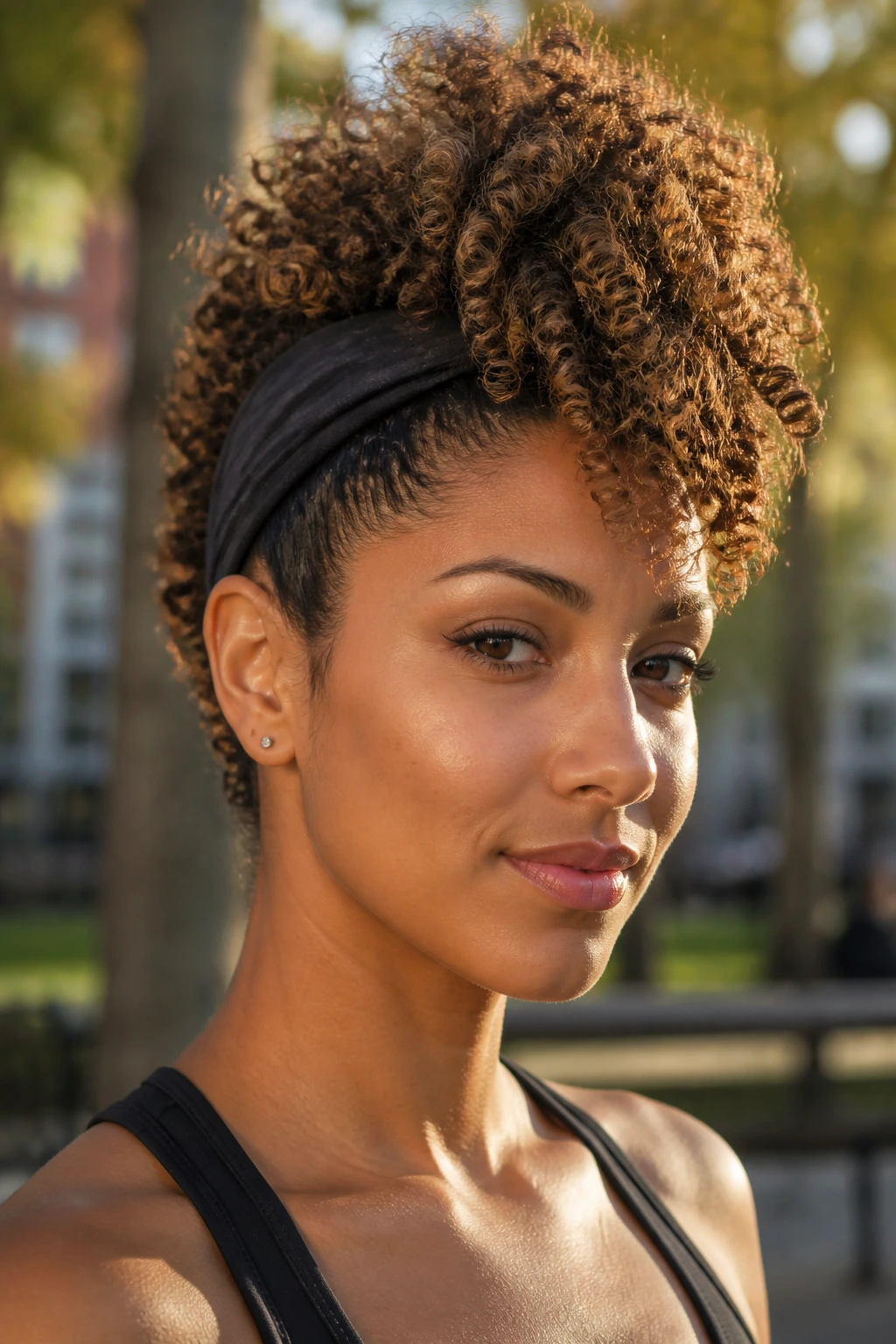
If you have a very active lifestyle and need your hair to stay out of your face, a headband is your best tool. By sliding a high-tension headband from the nape of your neck to the forehead, you naturally force the hair at the sides to lay flat while the hair in the center is pushed up and forward.
The Utility
This is the ultimate low-effort faux hawk. It requires no pins, no gel, and no braiding. Just push the headband up, fluff the curls in the center until they cover the band, and you are ready to go. It works because your thick hair provides the “filler” to hide the band entirely.
Choosing the Right Headband
Look for fabric bands with a little bit of grip. If it is too slippery, it will slide backward and ruin the look. If it is too tight, it will cause a headache. Aim for a wide, stretchy band that provides consistent pressure along the temples.
14. The “Fro-Hawk” with Parting Lines
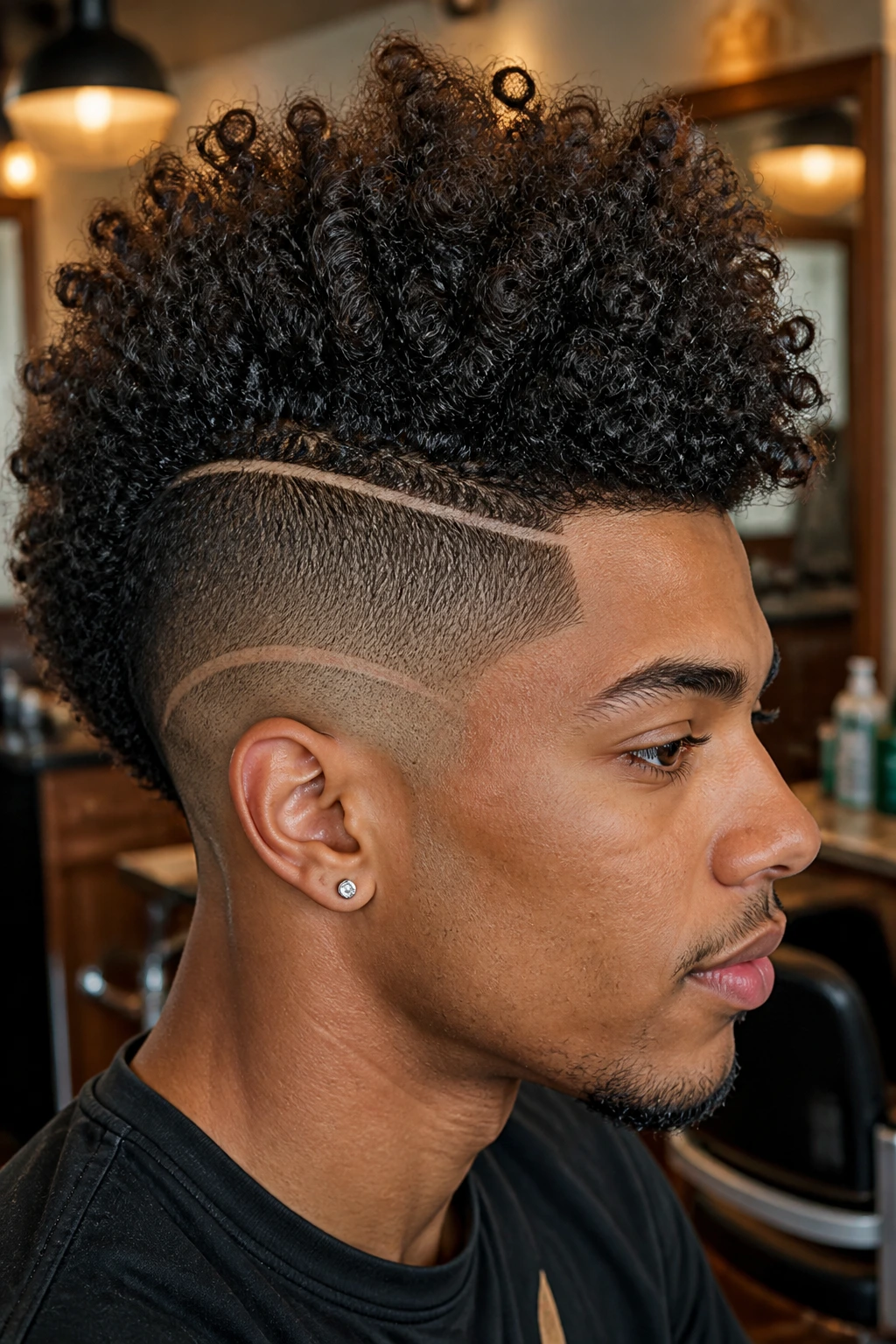
Adding hard parts—sharp, shaved lines—to the sides of a faux hawk gives it a very intentional, high-maintenance look. This is common in barbershop culture and provides an extremely clean, sharp aesthetic that is difficult to replicate with just styling products.
Precision is Key
The hard part acts as a visual “border.” It effectively creates a wall that your curls cannot cross. This is helpful for thick hair because it keeps the sides tidy and prevents the “mushroom” effect, where your hair gets so thick that it starts to lose its definition.
Maintenance
This style requires regular upkeep. You’ll need to see your barber for a line-up every two weeks to keep the hard parts sharp. Without that maintenance, the lines will grow out and blur, losing the clean look that makes this style so striking.
15. The Faux Hawk with Side Swept Bangs
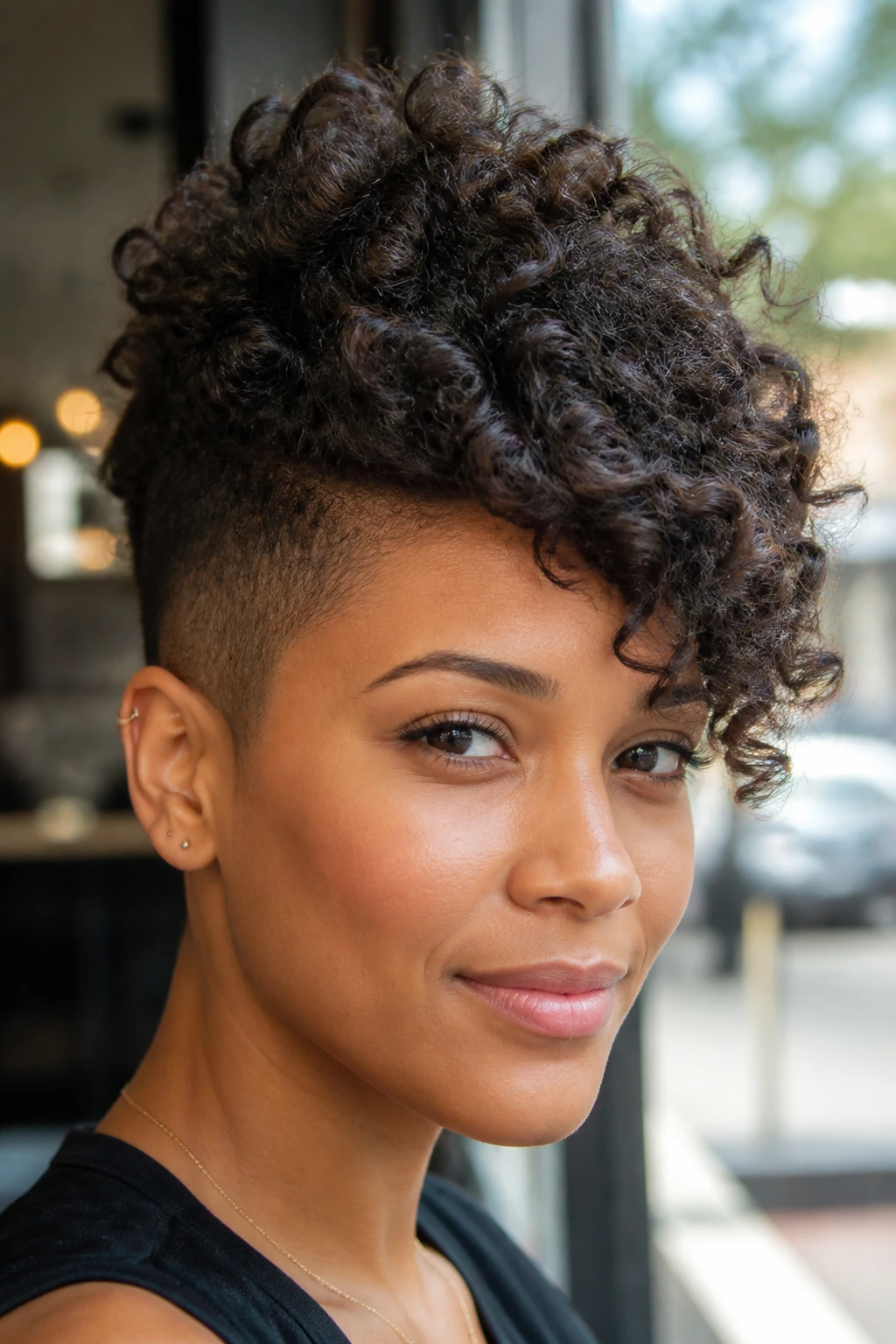
This style incorporates a bit of asymmetry. By keeping the curls on top and allowing one side to sweep gracefully over the forehead, you create a softer, more romantic version of the hawk.
Softening the Edge
While the faux hawk is inherently edgy, the side-swept bang brings it back to a more classic, wearable territory. Use a light-hold cream to guide the hair across the forehead rather than pinning it straight back. This creates a frame for your face that feels less severe than a traditional, vertical mohawk.
Why Thick Hair Excels Here
Most hair types don’t have enough volume to make a side-swept bang look good; it often just hangs limp. Thick hair, however, has the body to hold the curve of the sweep, making it look lush and deliberate.
16. The Mini-Puff Faux Hawk
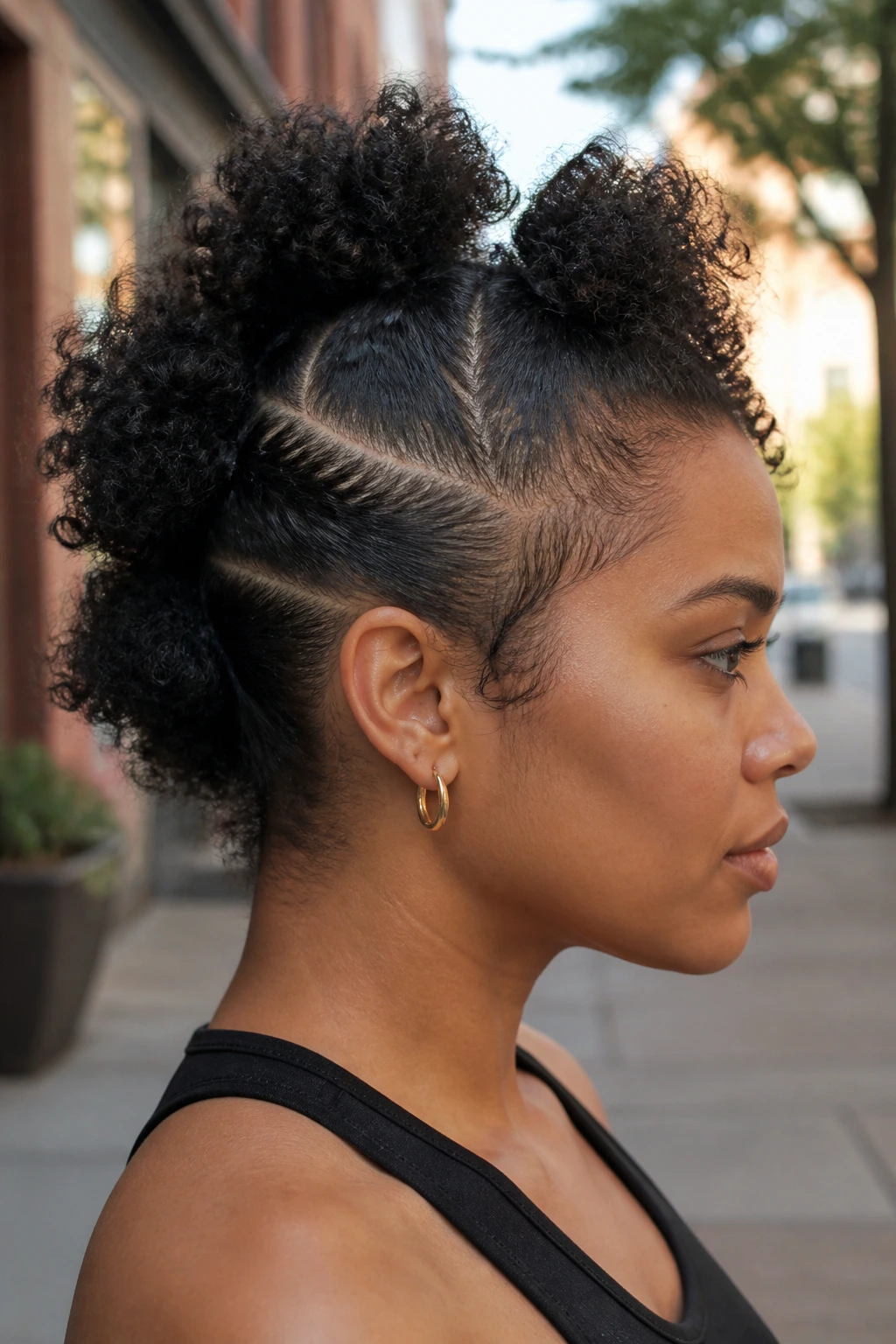
For those with shorter thick hair, you don’t need a massive amount of volume to make this look work. A series of three or four mini-puffs running down the center of your head is perfectly adequate.
Creating the Miniatures
Use small, clear elastic bands to create the puffs. Don’t worry about the bands showing; once your hair is fluffed up, they will be completely hidden. The key is to keep the spacing between the puffs uniform, which creates a rhythmic, cohesive look down the center of your head.
The Visual Effect
This is a great, youthful style that looks fantastic with accessories like gold hair cuffs or small beads at the ends of the puffs. It’s an easy way to play with the hawk silhouette without needing length.
17. The Twisted Pompadour Hawk
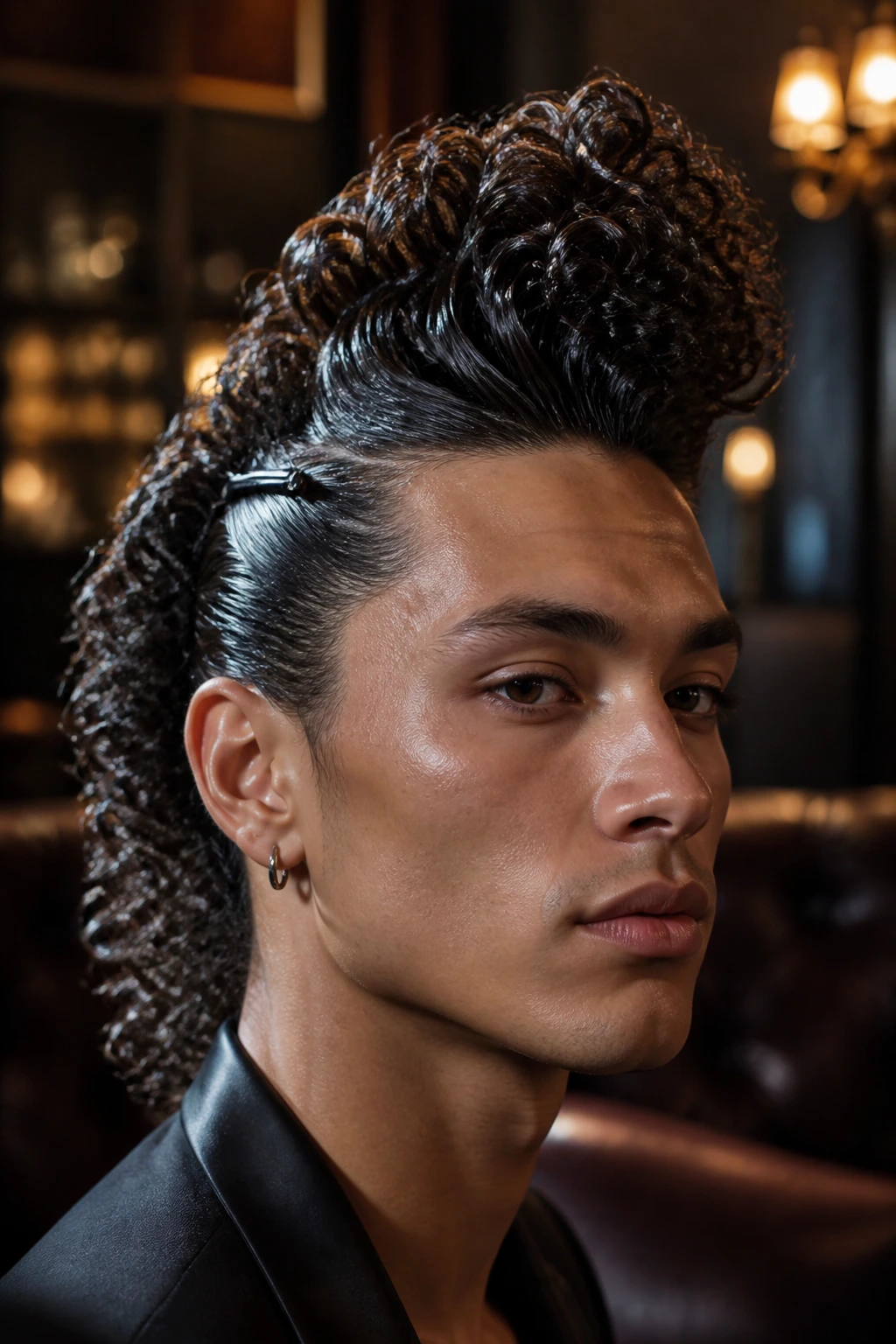
This look blends the volume of a pompadour with the silhouette of a faux hawk. It is sophisticated, elegant, and perfect for events where you want to look polished.
Structuring the Pomp
Take the front section of your hair and use a curling iron to set it in a high, sweeping arc. Pin the ends of that arc securely at the crown. Use the rest of your hair to fill in the space behind it, creating a tall, continuous crest of curls that starts at the forehead and tapers down toward the nape of the neck.
Finishing the Sides
The sides should be slicked back as tightly as possible. Use a combination of a strong-hold gel and a smoothing brush to ensure there is zero frizz along the temple areas. The goal is to make the pomp look like it’s floating effortlessly on top of a perfectly smooth base.
18. The Loose, Textured Hawk
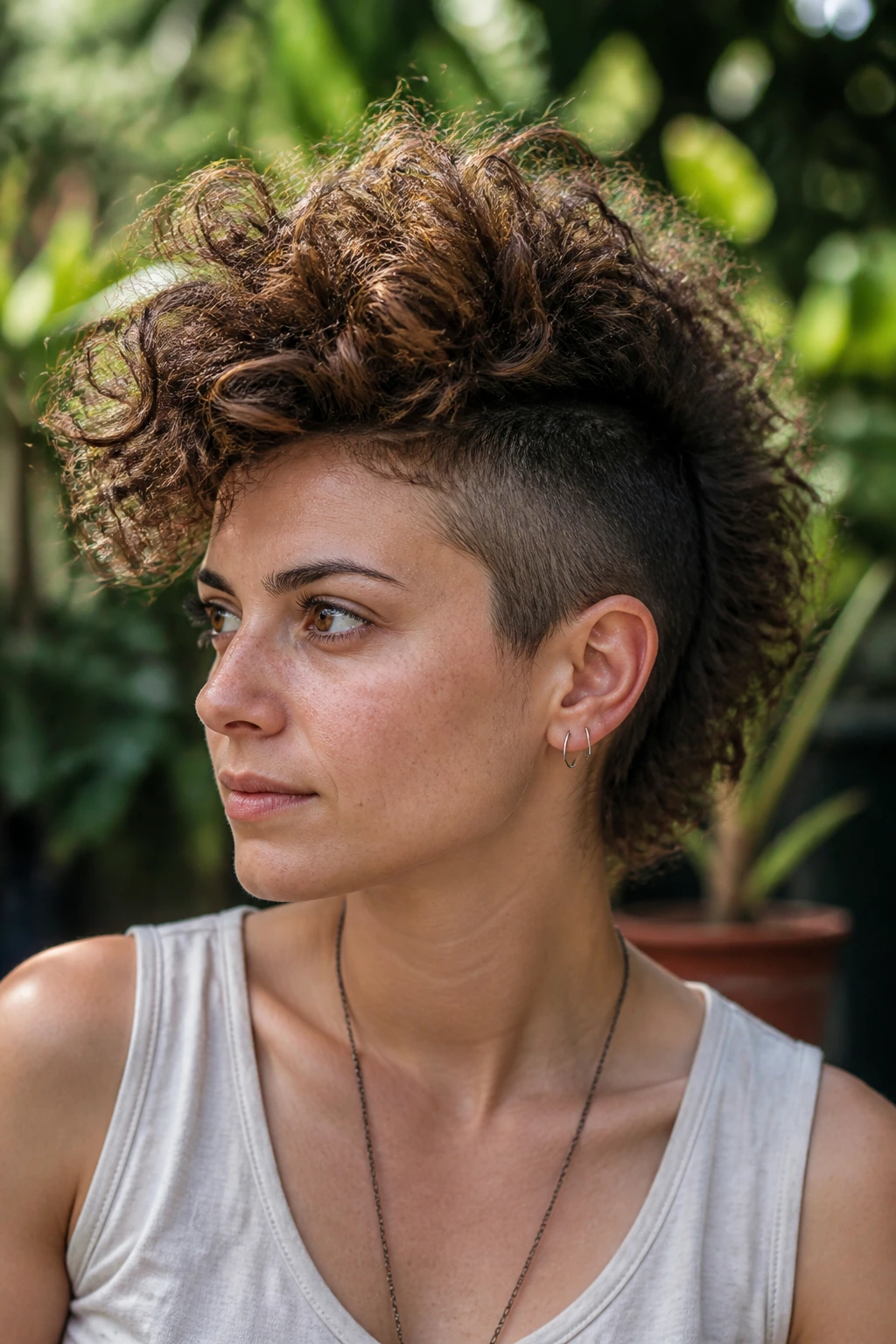
Finally, the “lived-in” hawk. This style is about embracing the natural state of your hair. It’s not about perfection; it’s about volume, texture, and a bit of controlled chaos.
The “No-Style” Style
Simply use your hands to push all your hair toward the center line while it’s still damp. Use a few discreet hair pins to anchor the sides down. Then, let your hair air-dry completely. Do not touch it while it dries. This allows the curls to form their own natural clusters, creating a beautiful, organic texture that isn’t too uniform.
Perfecting the Shape
Once dry, if there are any gaps, use a wide-tooth pick to nudge your curls into place. This look is fantastic because it’s meant to look better as the day goes on. The more it moves, the more natural and voluminous it appears.
Final Thoughts
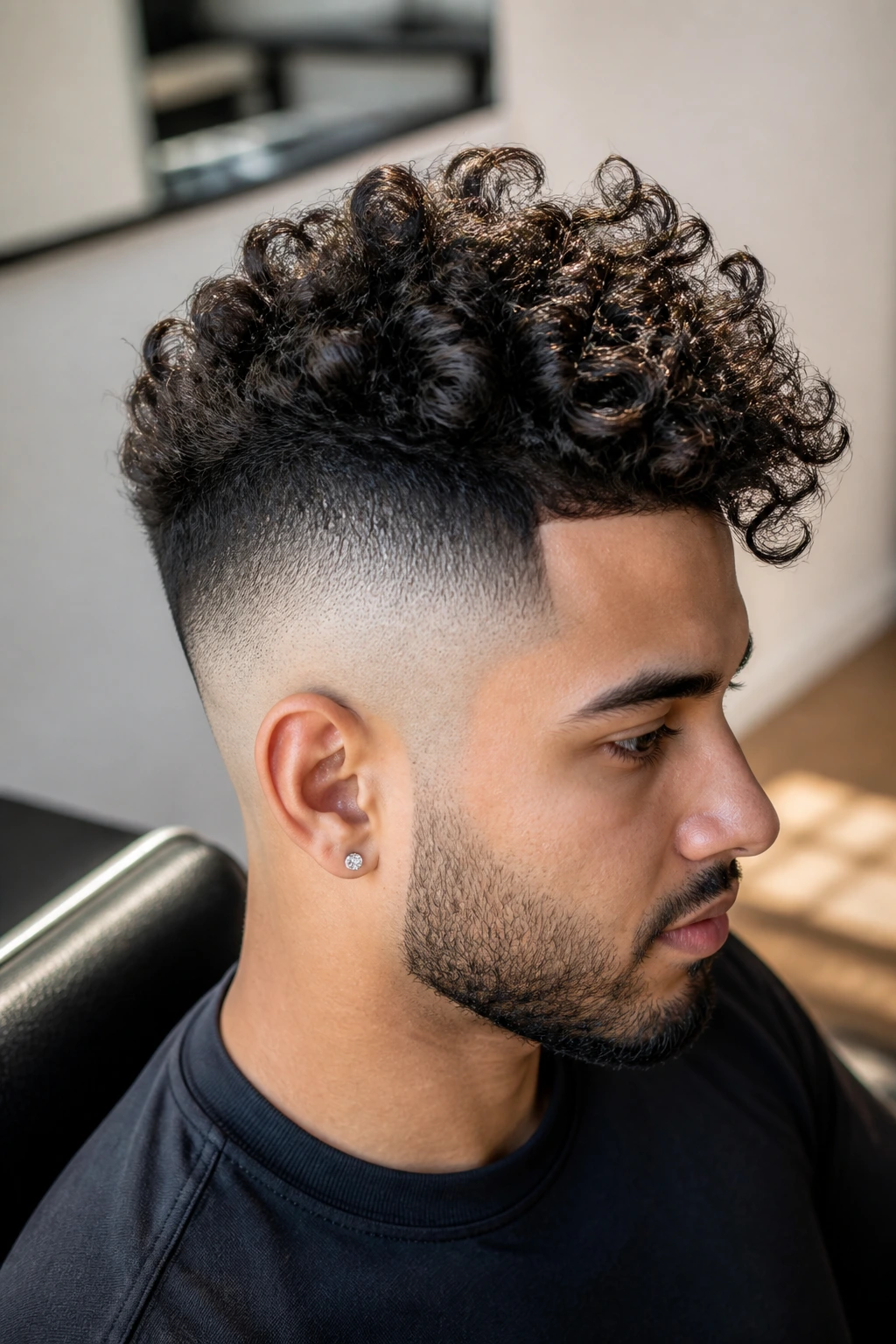
The beauty of the faux hawk for thick hair lies in its inherent versatility. You are not fighting your hair’s natural tendencies; you are simply giving them a direction. Whether you choose to shave, braid, pin, or simply push your hair into place, the result is always a style that commands attention.
Remember that with thick, curly hair, your biggest challenges will always be dryness and weight. Always prioritize moisture in your styling products, and don’t be afraid to use structural tools like hair ties or bobby pins to keep the center section standing proud. Experiment with these eighteen looks, mix and match the techniques that work for your specific curl pattern, and enjoy the confidence that comes with mastering such a bold silhouette. Your hair is an architectural marvel—it’s time to start wearing it like one.