

The allure of Poetic Justice braids—those thick, waist-grazing individual plaits that instantly evoke the iconic look Janet Jackson brought to the screen—is undeniable. They aren’t just a protective style; they are a statement of texture and confidence. For those of us with naturally curly, coily, or kinky hair, these braids offer a unique bridge between high-fashion aesthetic and functional hair health. The key, however, lies in understanding how to honor your natural curl pattern while installing extensions that provide length without compromising the integrity of your strands.
Getting the installation right involves more than just braiding hair into sections. It requires a deep respect for your scalp’s tension points and the specific needs of your hair type. Whether you are aiming for a classic look or something with a modern twist, the architecture of your braids dictates not only how good they look in the mirror but how healthy your hair will be when you eventually take them down. Let’s explore the best ways to wear this timeless style while keeping your natural curls thriving underneath.
1. Classic Waist-Length Box Braids
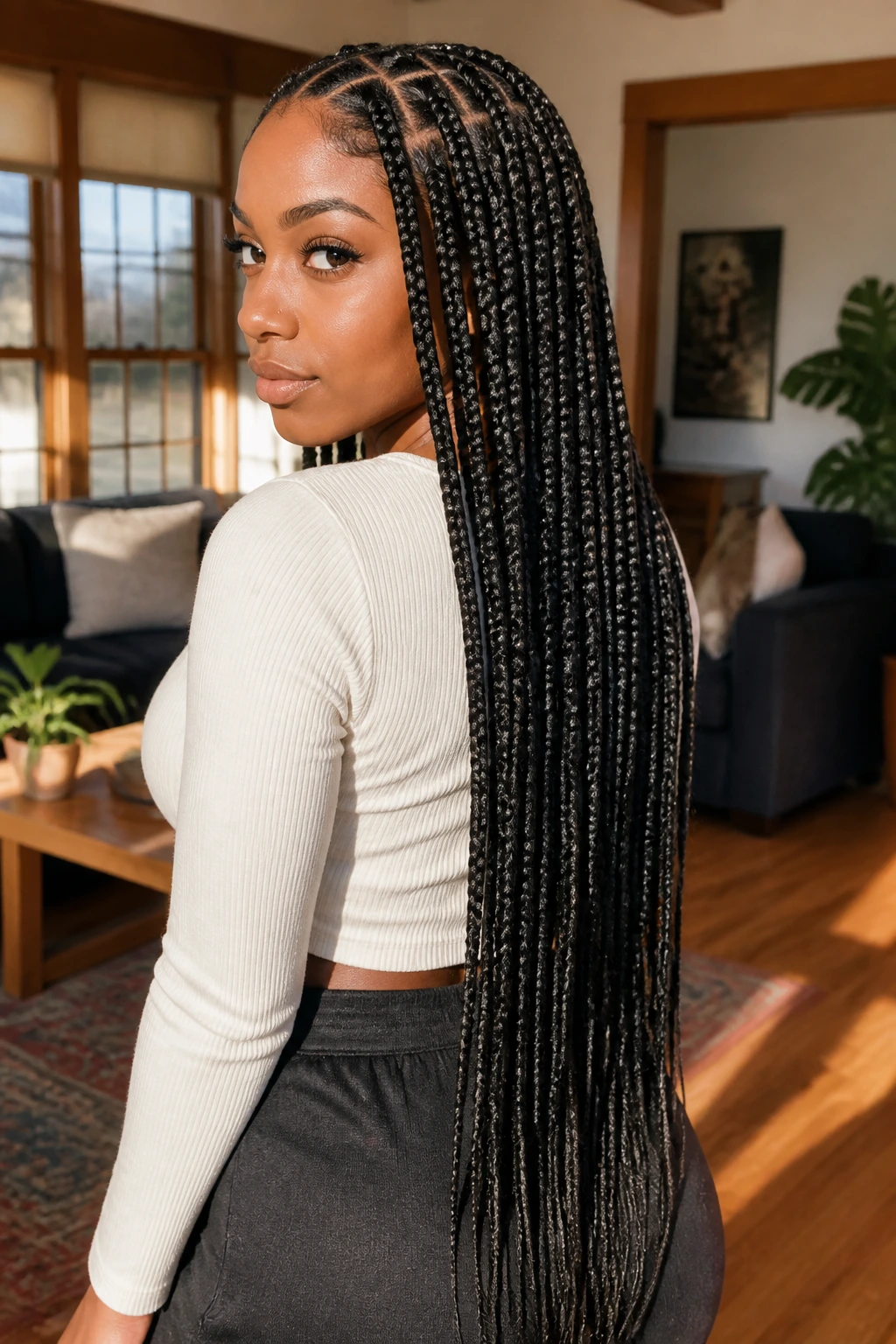
The quintessential Poetic Justice look centers on simplicity and length. These are typically box-parted, thick braids that flow straight down the back with minimal distraction. The magic here is in the sectioning; by keeping your parts clean and uniform, you create a geometric foundation that highlights the thickness of the extensions.
For those with 4C or high-density hair, the challenge is often blending your natural texture into the synthetic hair at the root. To master this, use a small amount of edge control or a light, non-flaky styling pomade. Don’t over-saturate; you want just enough hold to smooth the flyaways without creating a heavy buildup that might cause the braids to slip over time.
Why This Style Endures
- It provides maximum protection for your natural ends.
- The weight is evenly distributed when parted into standard squares.
- It is the most versatile base for updos and high ponytails.
Pro tip: When starting the braid, make sure to braid your natural hair for at least an inch before feeding in the extension hair. This transition zone is critical for minimizing breakage.
2. Burgundy-Tinted Deep Wine Braids
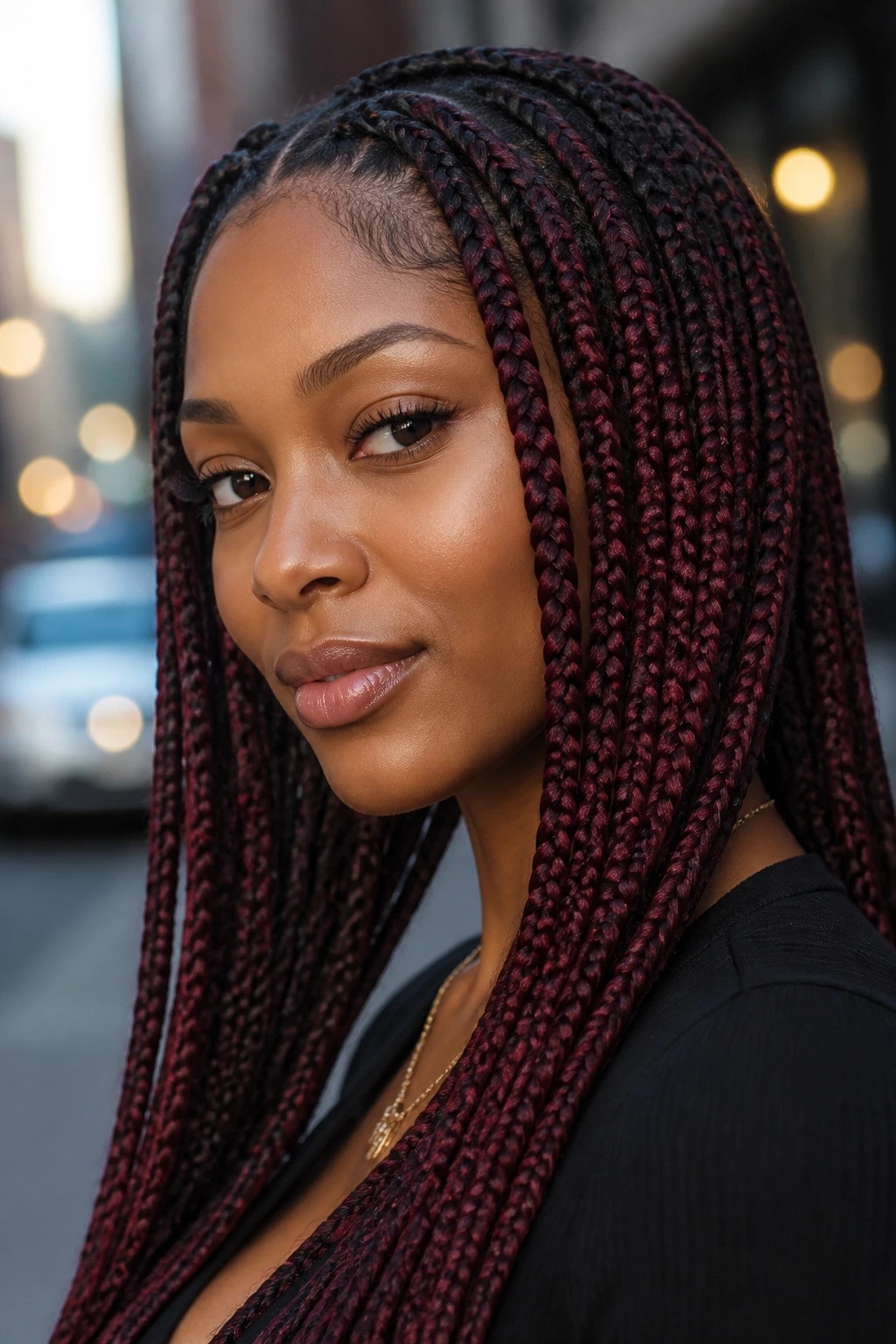
Adding color to your braids can change the entire character of your face, and a deep wine or burgundy hue is remarkably flattering across most skin tones. Because the braids themselves are so substantial, a dark, rich red provides a sophisticated pop of color that feels intentional rather than overwhelming.
If you have darker hair, you do not need to dye your natural strands to achieve this look. Instead, lean into the “peek-a-boo” effect. By using synthetic hair in deep burgundy, your natural black or brown roots will provide a grounded, shadowed look at the scalp. This creates a natural ombre effect that looks more expensive as the braids age and your own hair begins to grow out.
The Color Selection Process
- Look for “wine” or “burgundy 39” shades in pre-stretched synthetic braiding hair.
- Avoid bright, cherry-reds if you want a look that feels classic and wearable for weeks on end.
- Match the intensity of the braid color to your skin’s undertones.
3. Medium-Thickness Braids with Blunt Ends
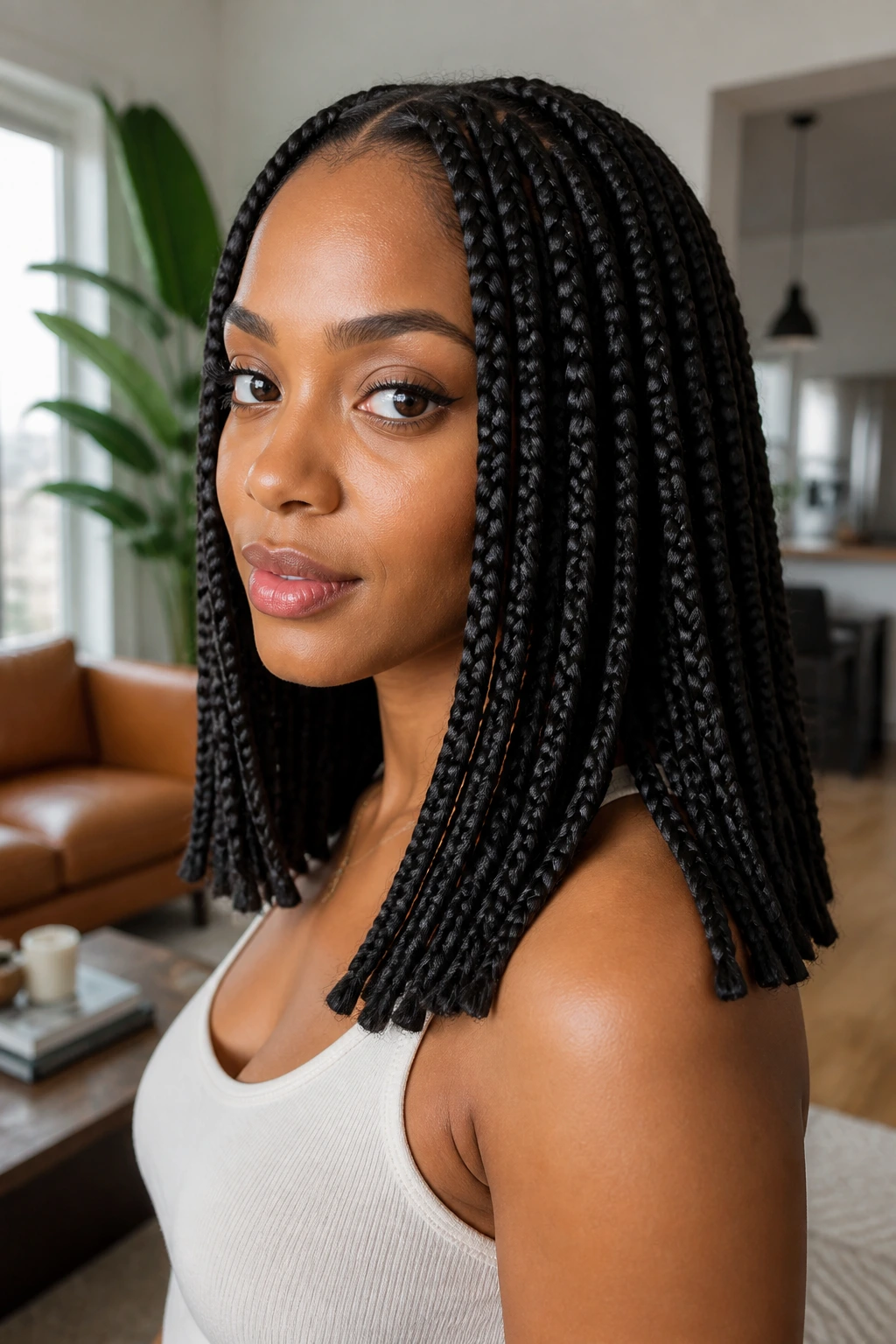
Sometimes the classic ultra-thick braid can feel too heavy, especially in humid climates or during warmer months. Opting for a slightly smaller, medium-sized sectioning allows for a fuller look without the weight. The secret to keeping this style looking sharp lies in the finish—specifically, the blunt ends.
Instead of tapering the braids to a thin, wispy tip, have your stylist (or yourself) seal the ends with hot water to create a crisp, blunt line. This gives the hair a clean, intentional aesthetic that mimics the look of a solid, heavy-ended braid while being significantly lighter on your neck and shoulders. It is a subtle shift that changes the entire silhouette of the hairstyle.
4. Half-Up Top Knot Style
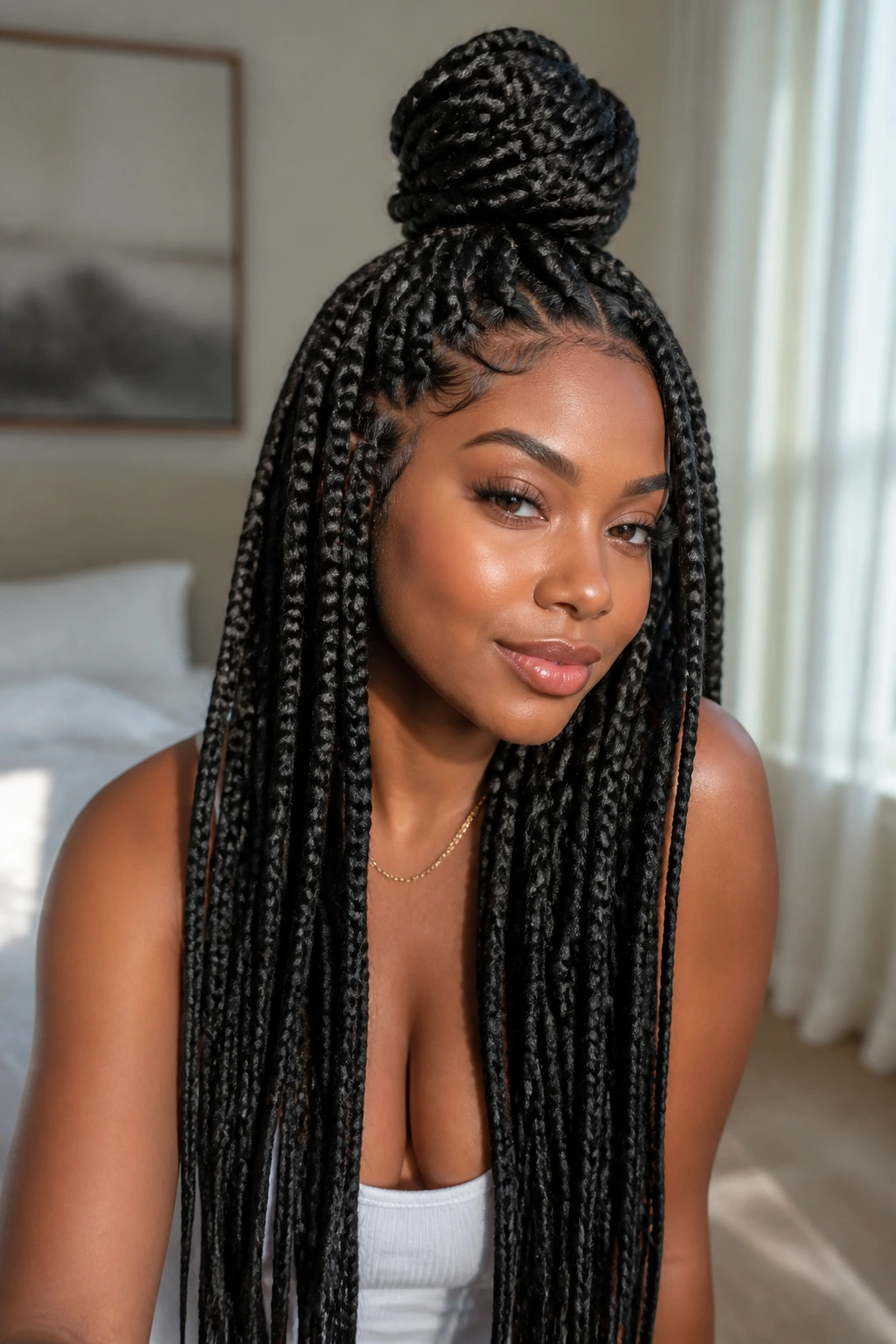
When you have braids that reach your waist, leaving them down all the time can become cumbersome. A high top knot allows you to showcase the braid pattern while getting the bulk of the hair out of your face. This style is particularly effective for accentuating your cheekbones and jawline.
Start by gathering the top section of your braids, ensuring that the parting follows the shape of your head. Do not pull too tightly at the hairline; traction alopecia is a real risk with heavy, waist-length braids. Instead, secure the bun loosely with a satin-lined scrunchie or a large, snag-free hair tie. You want the tension to be on the elastic, not on your follicles.
5. Bohemian-Inspired Braids with Loose Curls
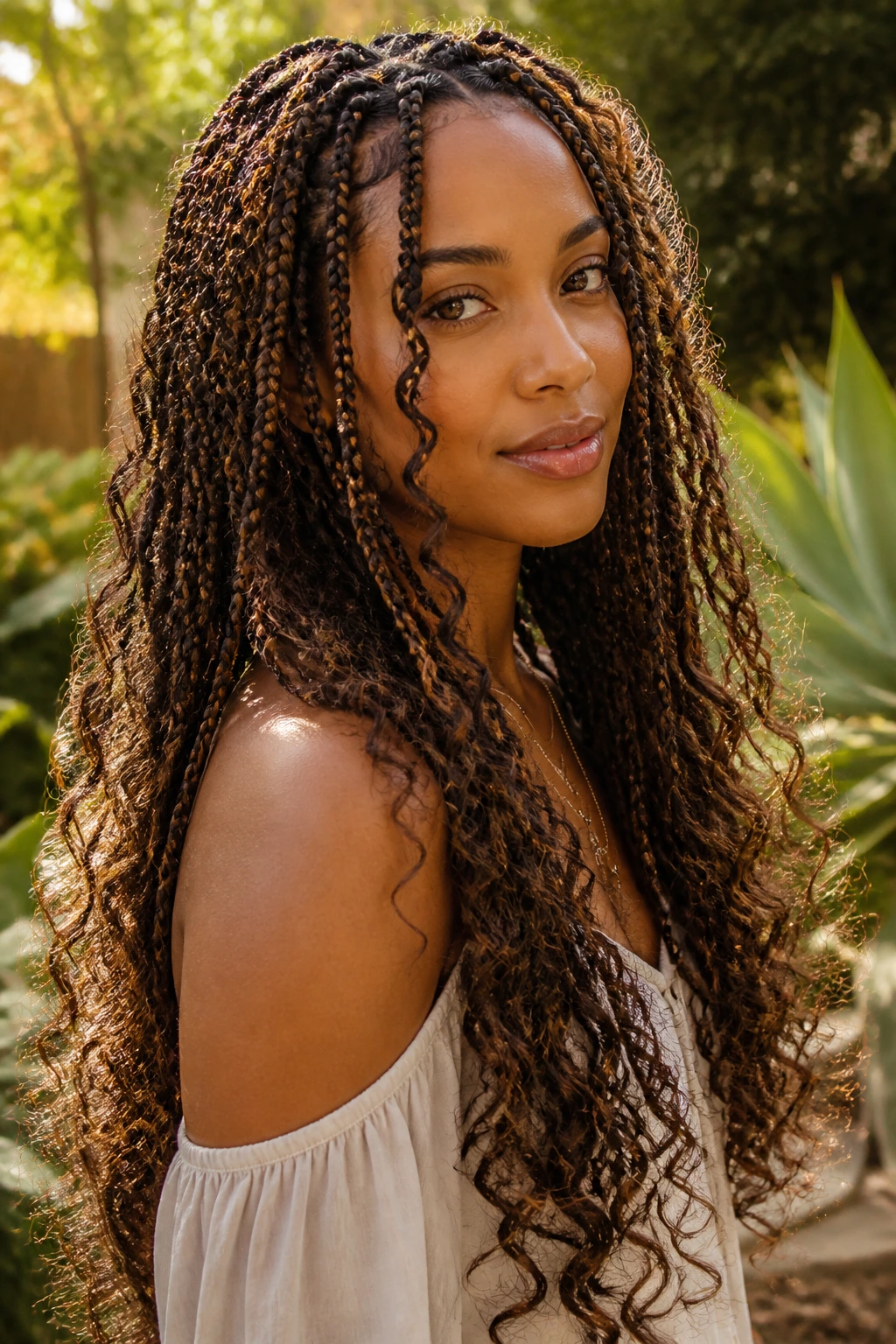
If you want to soften the starkness of a traditional braid, incorporate loose, wavy strands throughout the length of the braid. This is often referred to as “goddess” or “boho” braiding. It adds a layer of whimsy and movement that is entirely absent in a standard, tight-braid look.
For curly hair, this style is a dream because it bridges the gap between your natural texture and the sleekness of the extensions. Use human hair or high-quality synthetic “bouncy” braiding hair to add these loose pieces. Warning: These loose strands will tangle faster than the braids. Carry a small spray bottle of lightweight conditioning mousse to keep them hydrated and separated throughout the day.
6. Micro-Box Braids with Fullness
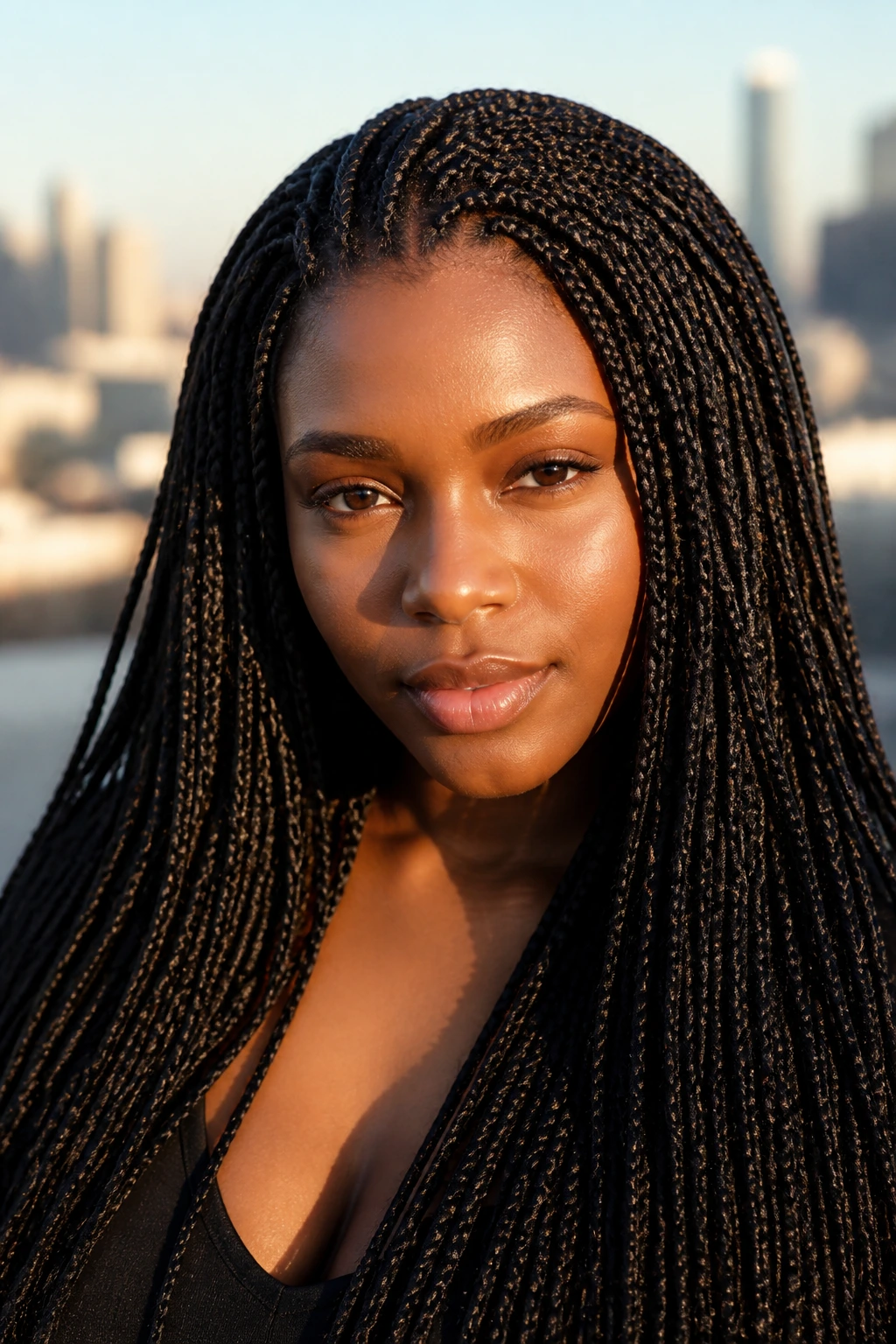
Micro-braids might seem like the opposite of the Poetic Justice aesthetic, but when you increase the volume and density, they offer a similar vibe with much more flexibility. The smaller sections mean you have hundreds of individual braids that act almost like liquid hair.
The primary benefit of this style is the lack of tension. Because each braid is smaller, it exerts less pull on individual strands at the root. If your hair is prone to thinning at the edges, this is a much safer alternative to the large, chunky plaits that can tug on the hairline. They also offer a softer, more “lived-in” movement that feels incredibly natural.
7. Blonde-Streaked Braids
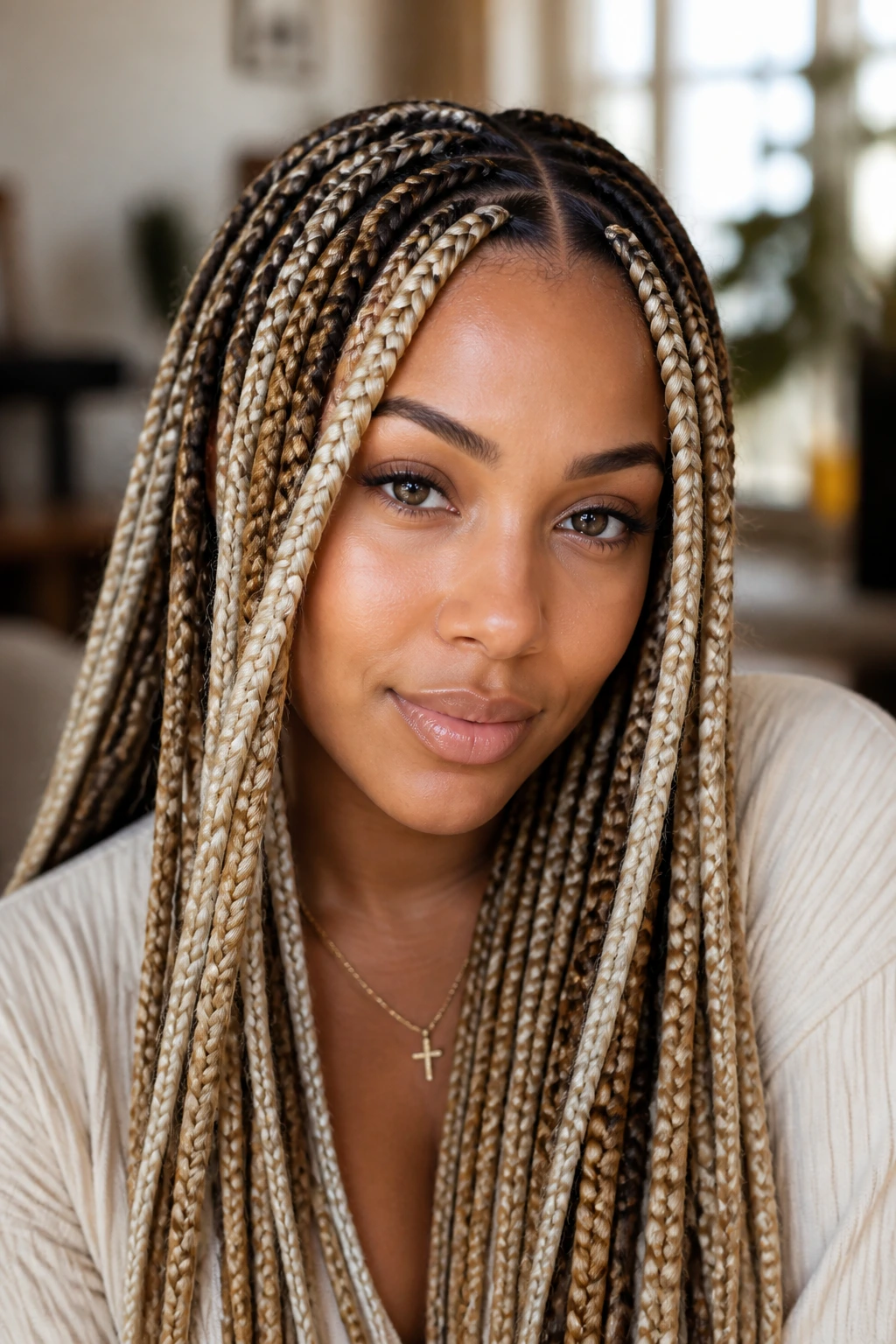
Blonde highlights aren’t just for loose hair. Incorporating strands of honey, ash, or platinum blonde into your black or brown braids creates a multidimensional appearance that draws attention to the texture of the hair. It also helps break up the monotony of a single-color installation.
When choosing blonde extensions, focus on the texture of the synthetic fiber. Blonde synthetic hair can often feel “plasticky” or stiffer than darker colors. Look for “soft-touch” or “pre-stretched” labels to ensure the hair remains flexible. If the hair feels too stiff, dip the ends in hot water for a longer duration to soften the fibers before you finish the install.
8. Braids with Gold Cuff Embellishments
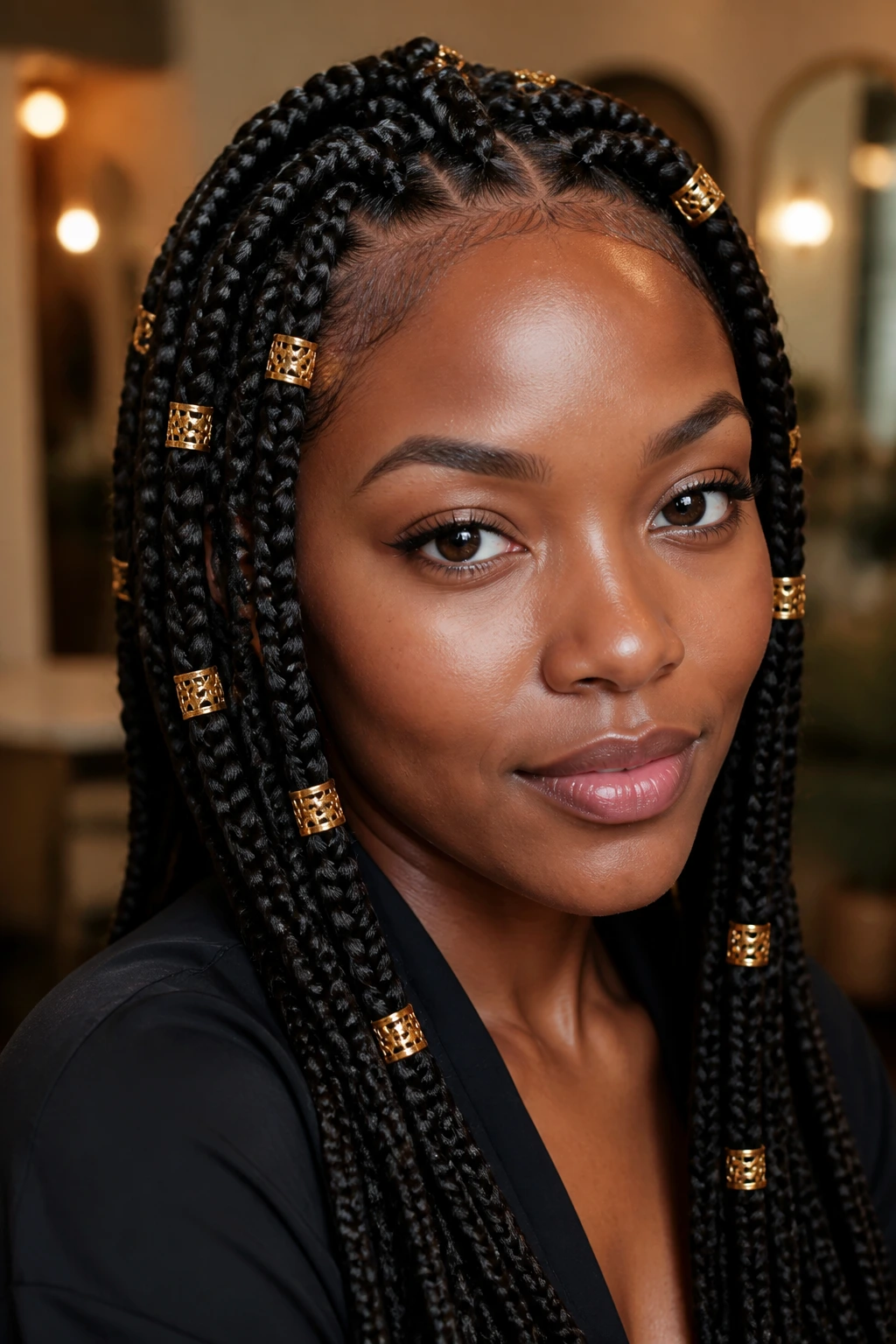
Jewelry transforms a hairstyle from a functional choice into a fashion moment. Gold or silver hair cuffs are the perfect way to elevate Poetic Justice braids. You can place them randomly throughout your hair or focus them in one specific area, like around the face, to create a frame.
These accessories aren’t just about looks; they are also excellent at masking any imperfections at the root. If you are doing your own hair and your parting isn’t perfectly straight, a few strategically placed gold cuffs can draw the eye away from the part and onto the accessories. Just ensure the cuffs aren’t too tight, or they might snag on the synthetic hair.
9. Triangle-Parted Braids
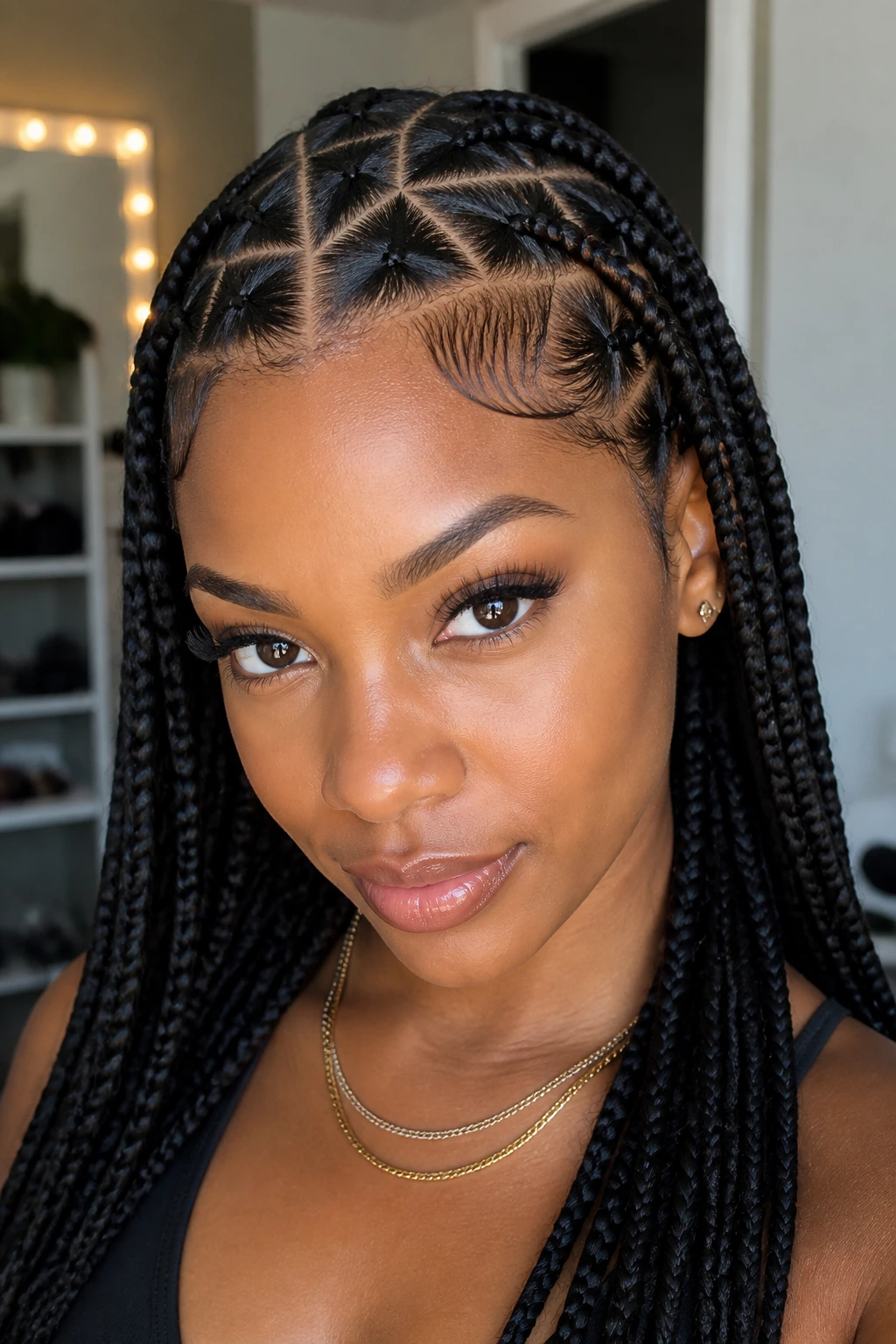
Standard square parts are classic, but triangle parts bring a modern, architectural edge to the Poetic Justice look. By dividing your hair into small triangles rather than boxes, you change the way the braids lay against your scalp. This style often results in the braids sitting flatter and more seamlessly against the head.
This is a fantastic option if you like to switch up your part. Because the triangles are angled, they don’t lock you into a single direction. You can flip your hair from side to side, or pull it all back, without worrying about visible, messy parting lines. It is an extra step in the installation process that pays off in long-term style versatility.
10. The Deep Side-Part Sweep
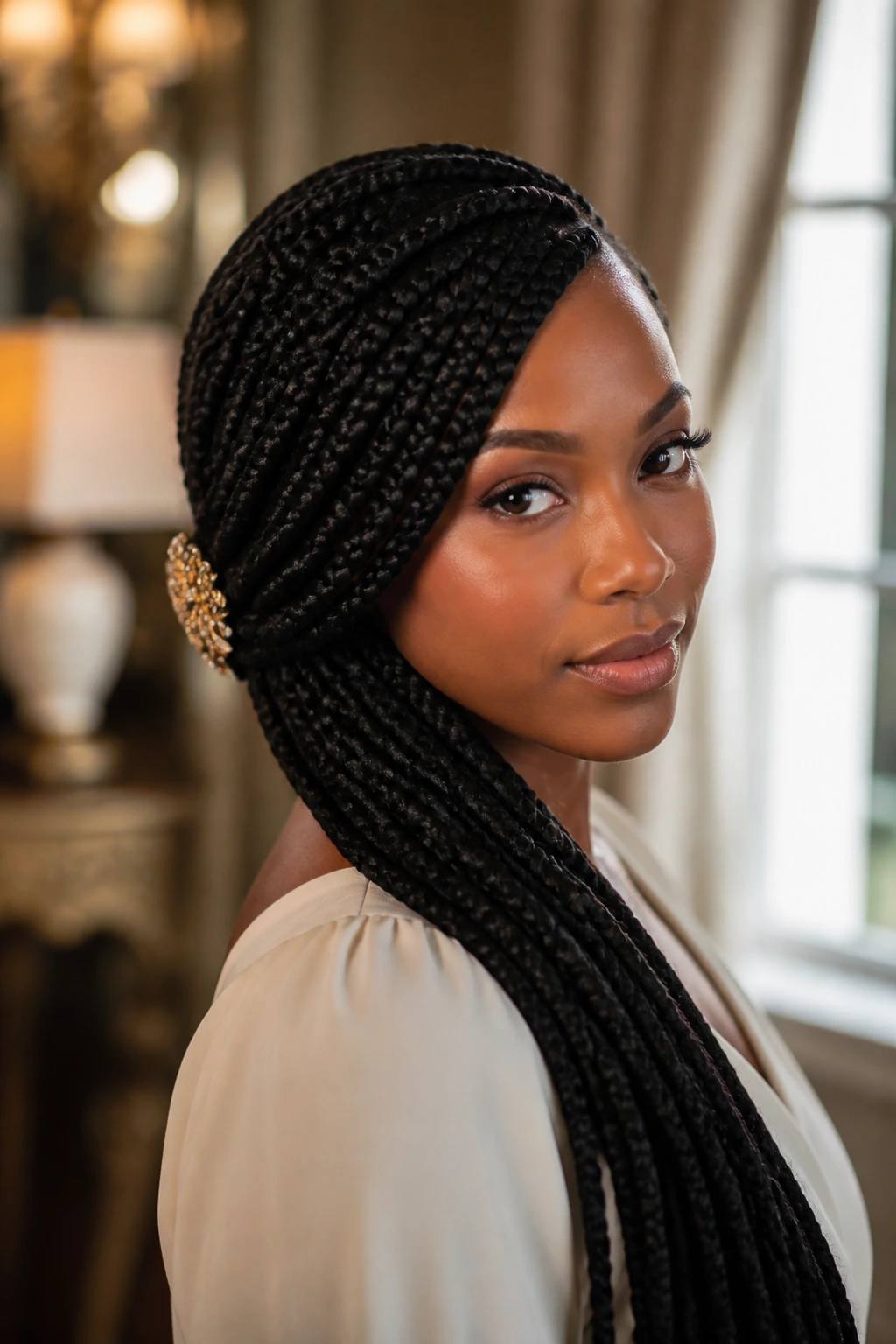
Sometimes the most dramatic change you can make to a style doesn’t involve the hair itself, but how it is styled once the braids are finished. A deep side-part sweep creates an elegant, romantic silhouette that works perfectly for formal events or just a night out.
To achieve this, gather all your braids and sweep them over one shoulder. Use a single, decorative barrette or a hair cuff to pin the hair in place near the nape of your neck on the opposite side. This keeps the hair from falling forward while creating a cascading effect of length. It is a simple, no-heat styling method that lasts for hours.
11. Ombre-Effect Braids
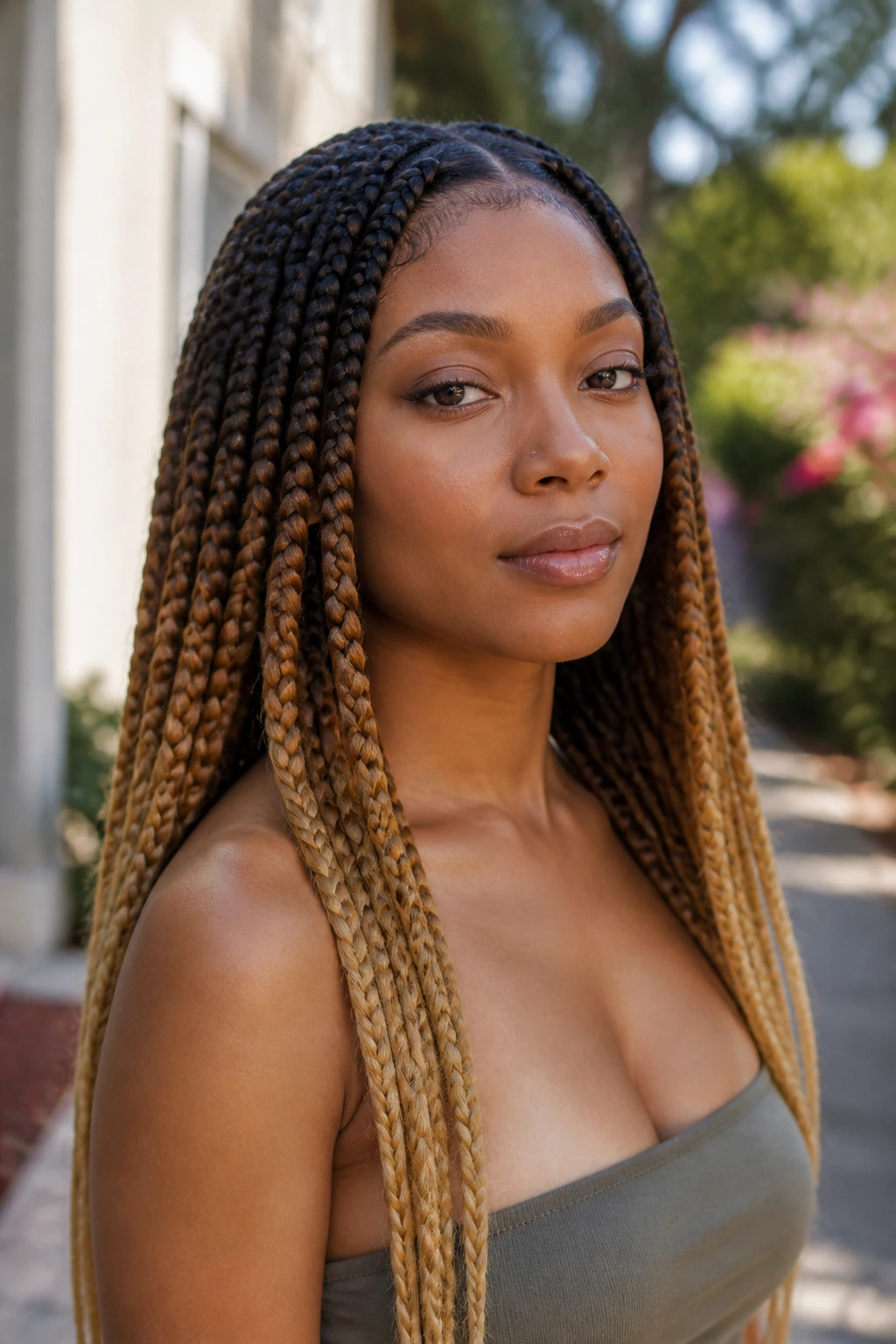
If you find solid colors boring but don’t want the contrast of highlights, the ombre effect is your best friend. Start with your natural color at the roots and have the braids fade into a lighter shade toward the waist. This look is especially effective because it grows out so naturally.
Because the transition is gradual, you won’t have the stark line of demarcation that happens with bleached natural hair. It’s a low-maintenance approach to playing with color. When you pick your colors, ensure the transition happens at the mid-point of the length to keep the color balance even.
12. Wrapped Root Braids
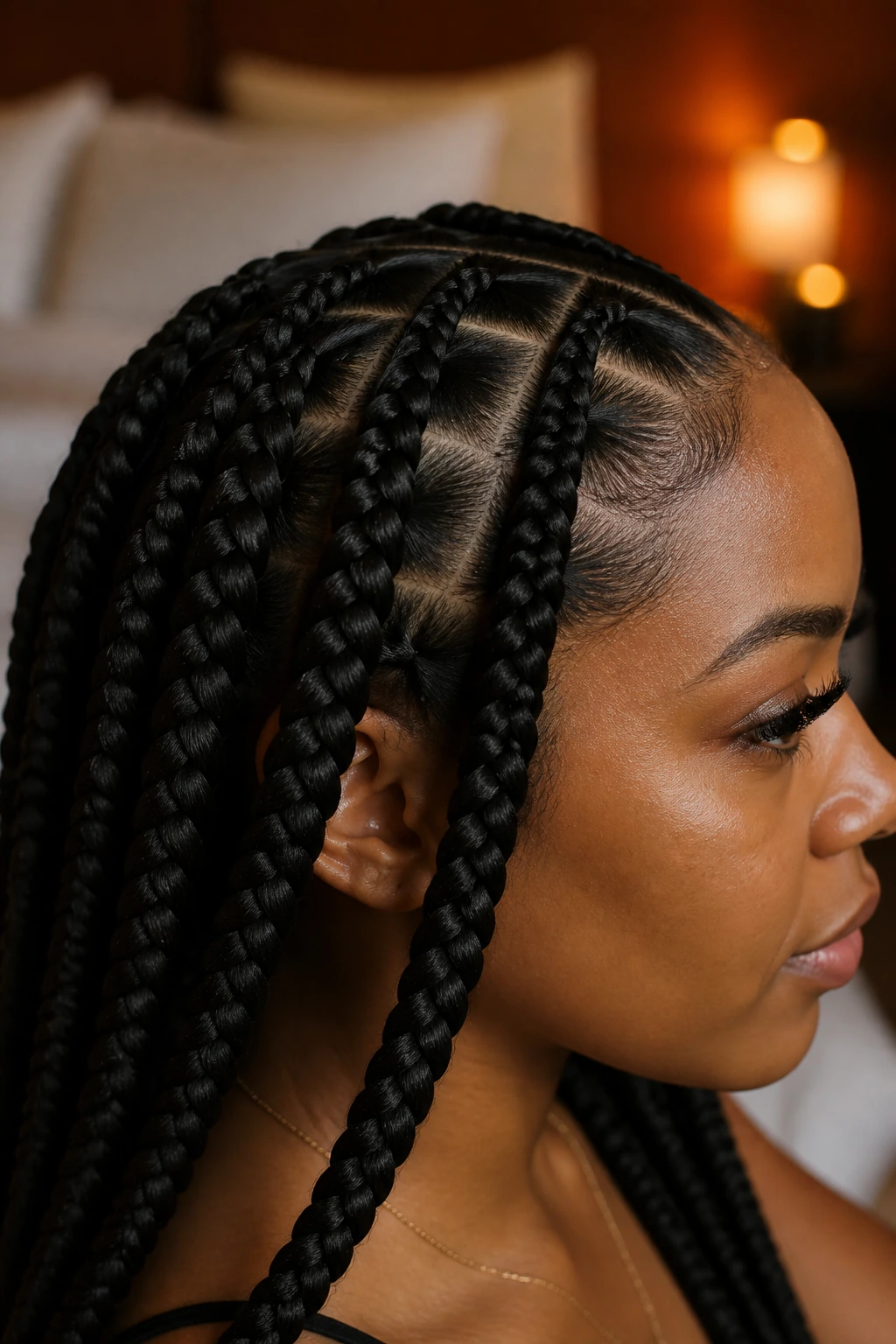
Instead of the braid starting directly from the scalp, you can “wrap” the root with a small amount of extension hair to hide the connection. This technique is often used by professionals to give the braid a seamless, almost invisible start. It is a fantastic way to make the hair look like it is growing directly from your scalp.
This method requires a bit more patience and dexterity. You are essentially creating a small “loc” at the root before transitioning into a standard plait. For curly-haired individuals, this provides an extra layer of protection, as the hair is securely wrapped and less likely to frizz at the base of the braid.
13. High-Pony Braids with Wrapped Bases
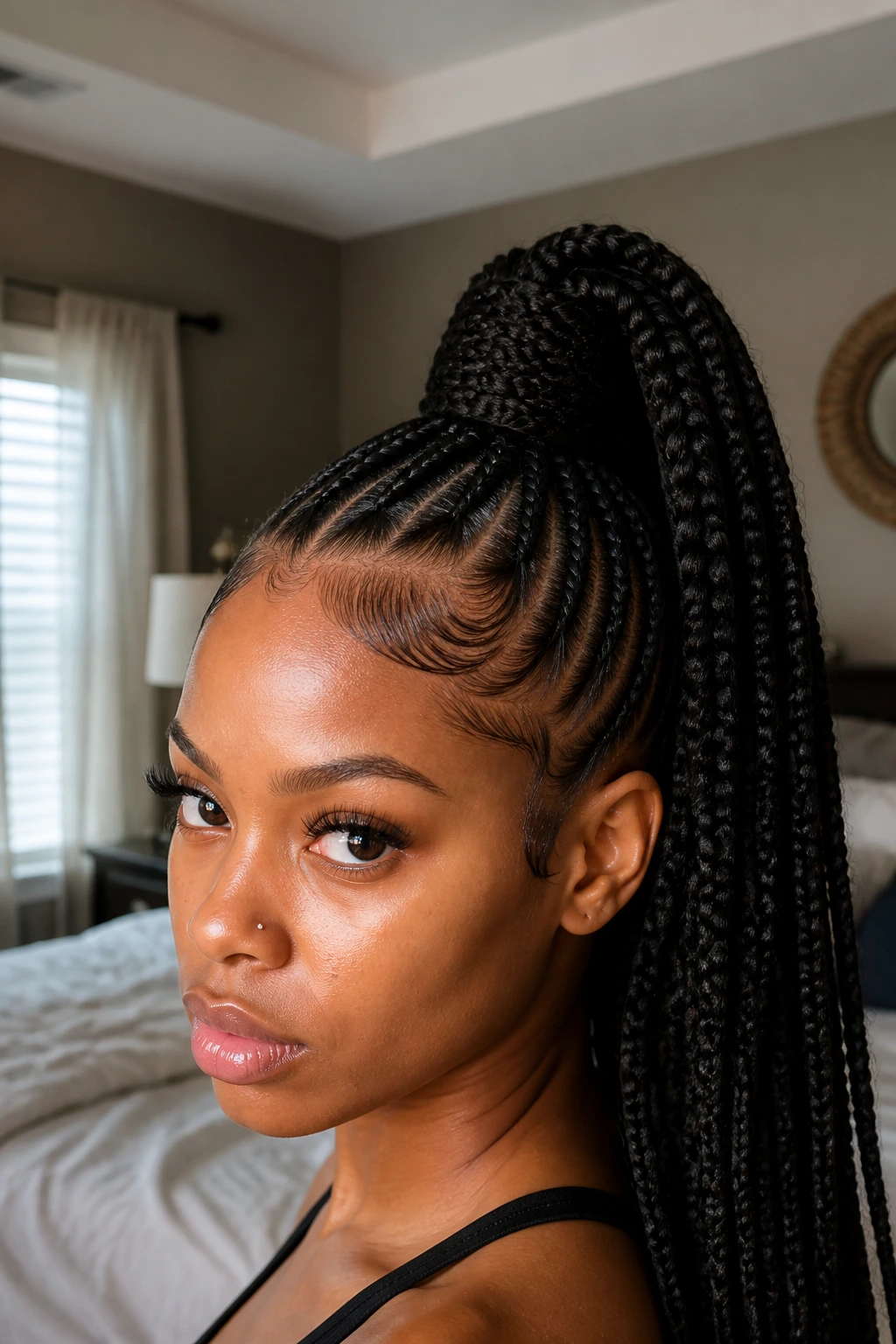
The high ponytail is a staple for a reason: it’s sleek, clean, and highlights your features. To make it “Poetic Justice style,” you want the base of the ponytail to be as thick as the braids themselves. Take one or two of your braids and wrap them around the base of your ponytail to hide the elastic.
This is a simple detail that makes the whole hairstyle look professional. It prevents the unsightly view of the hair tie, which is usually the weakest link in a braided ponytail. Use a small bobby pin to secure the end of the wrapping braid, tucking it neatly into the underside of the ponytail.
14. Braids with Curly “Tendrils”
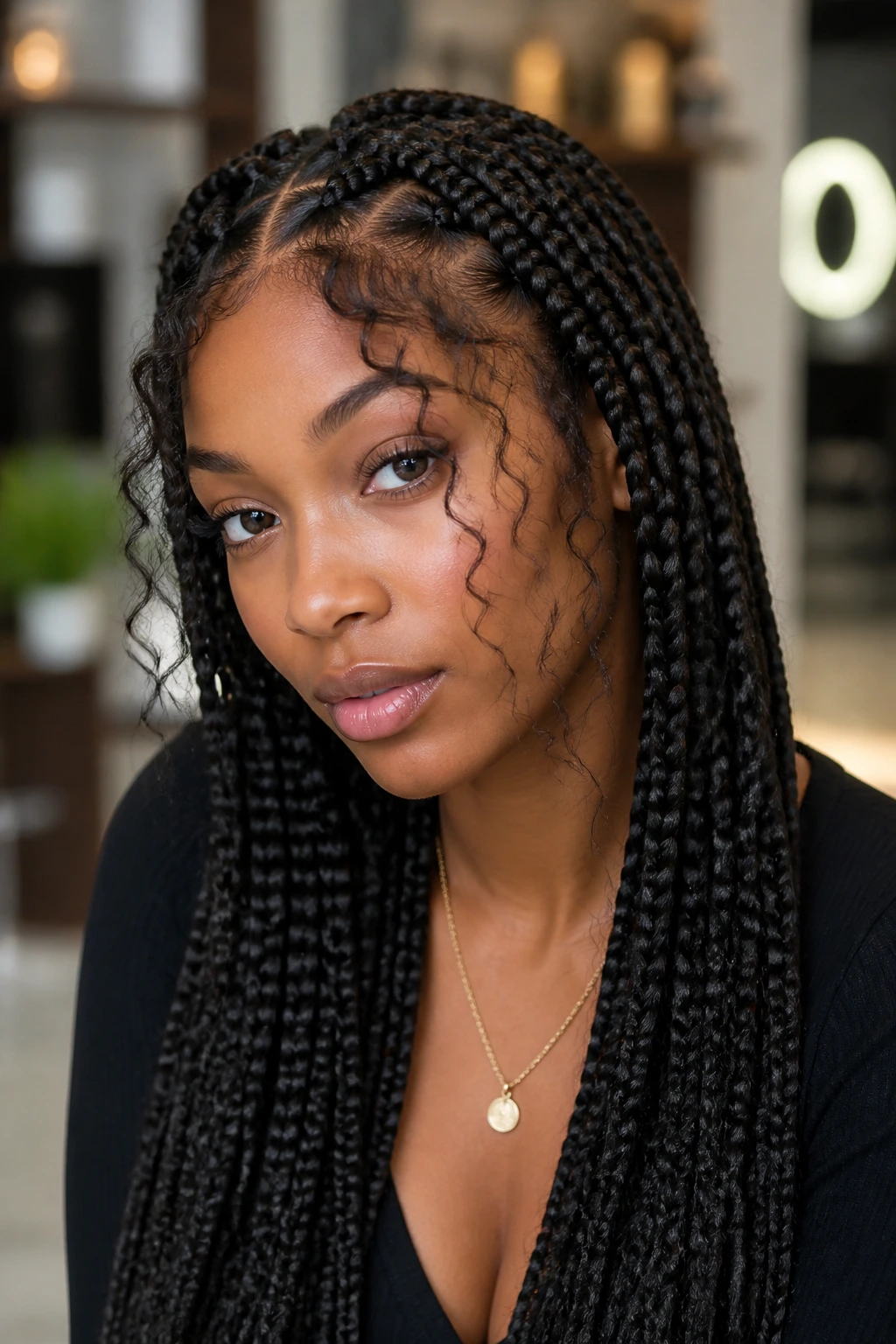
Similar to the boho style, this look involves leaving tiny, wispy sections of your natural hair out at the hairline—around the temples and the nape of the neck. These curls are then styled with a bit of gel to create a soft, face-framing effect that contrasts with the structure of the braids.
This is an excellent way to blend your natural edges with the heavy extensions. By focusing on your natural texture in the front, you create a “softer” start to the style. Just be mindful to keep these small curls hydrated, as they are exposed to the elements and can dry out or break if neglected.
15. The “Unraveled” End Look
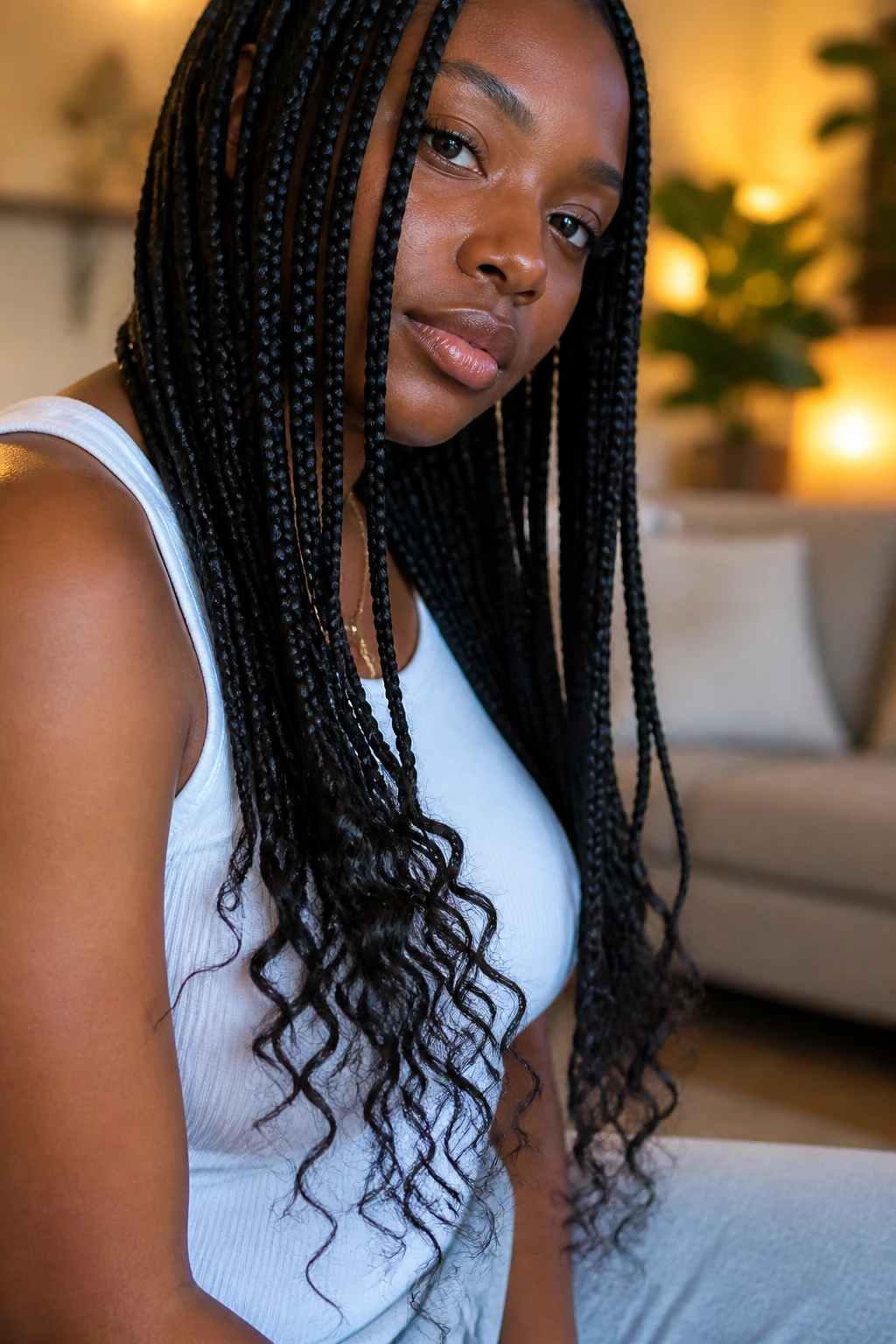
While most Poetic Justice braids are sealed at the bottom, leaving the last two inches of the synthetic hair unraveled—or “curly”—is a great way to soften the style. This gives the braids a more bohemian, lived-in feel, as if they have been in for a few weeks and have started to relax.
This style works best if you use a textured braiding hair that holds a curl. You can create this look by dipping the ends in hot water and then using perm rods to set the tips into a spiral pattern. It creates a beautiful, tapered finish that looks intentional and stylish.
16. Two-Tone “Pop” Braids
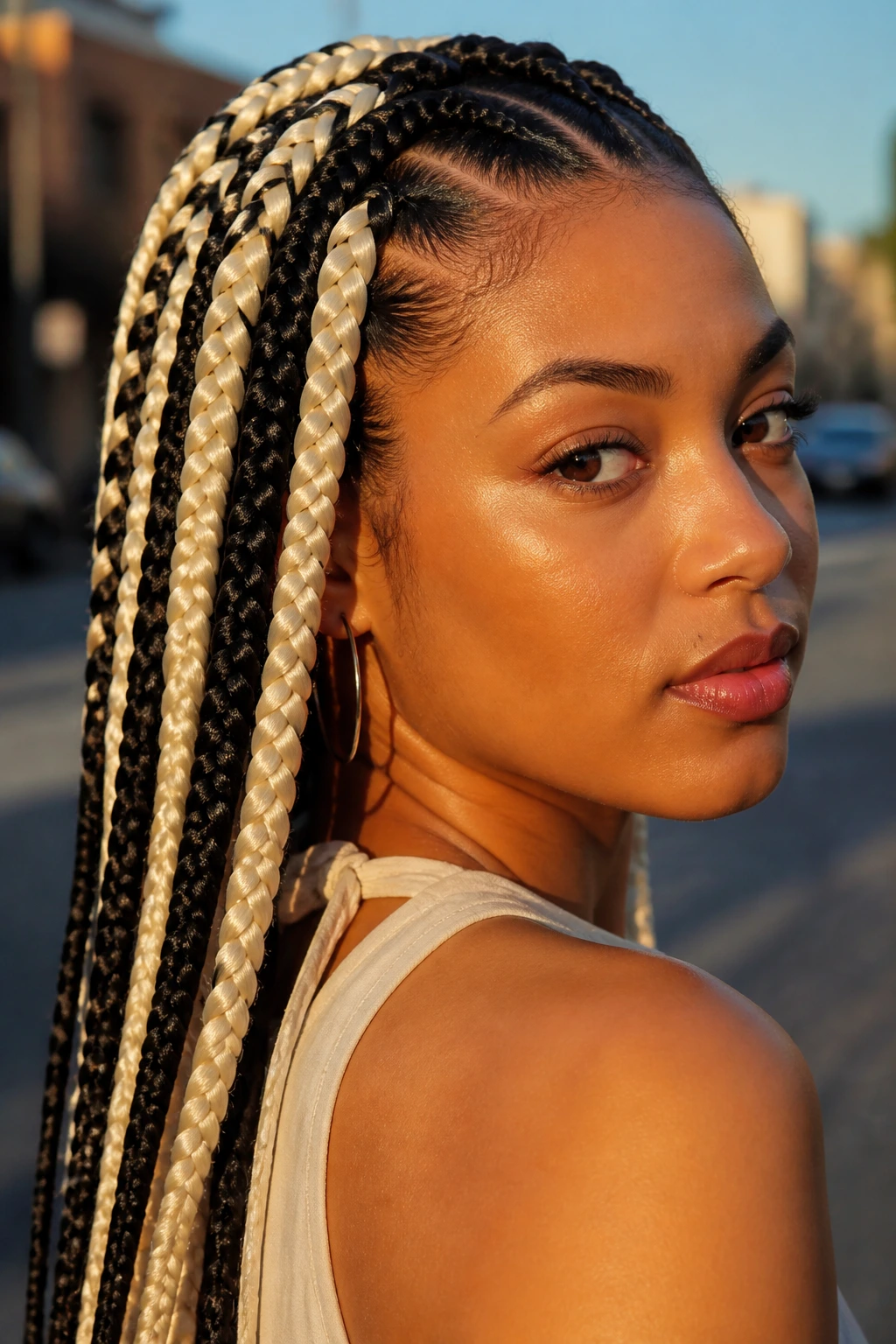
For those who want to be bold, consider using two distinctly different colors—like black and platinum blonde—to create a high-contrast, striped effect. This isn’t for the faint of heart, but it is visually striking and makes a huge statement.
When doing this, you can either mix the colors into every single braid or make every other braid a different color. Alternating the colors creates a more dynamic look as the hair moves. Just remember that maintenance is key here; with high-contrast colors, you need to keep your roots very clean so the contrast remains crisp.
17. The Sleek Center Part
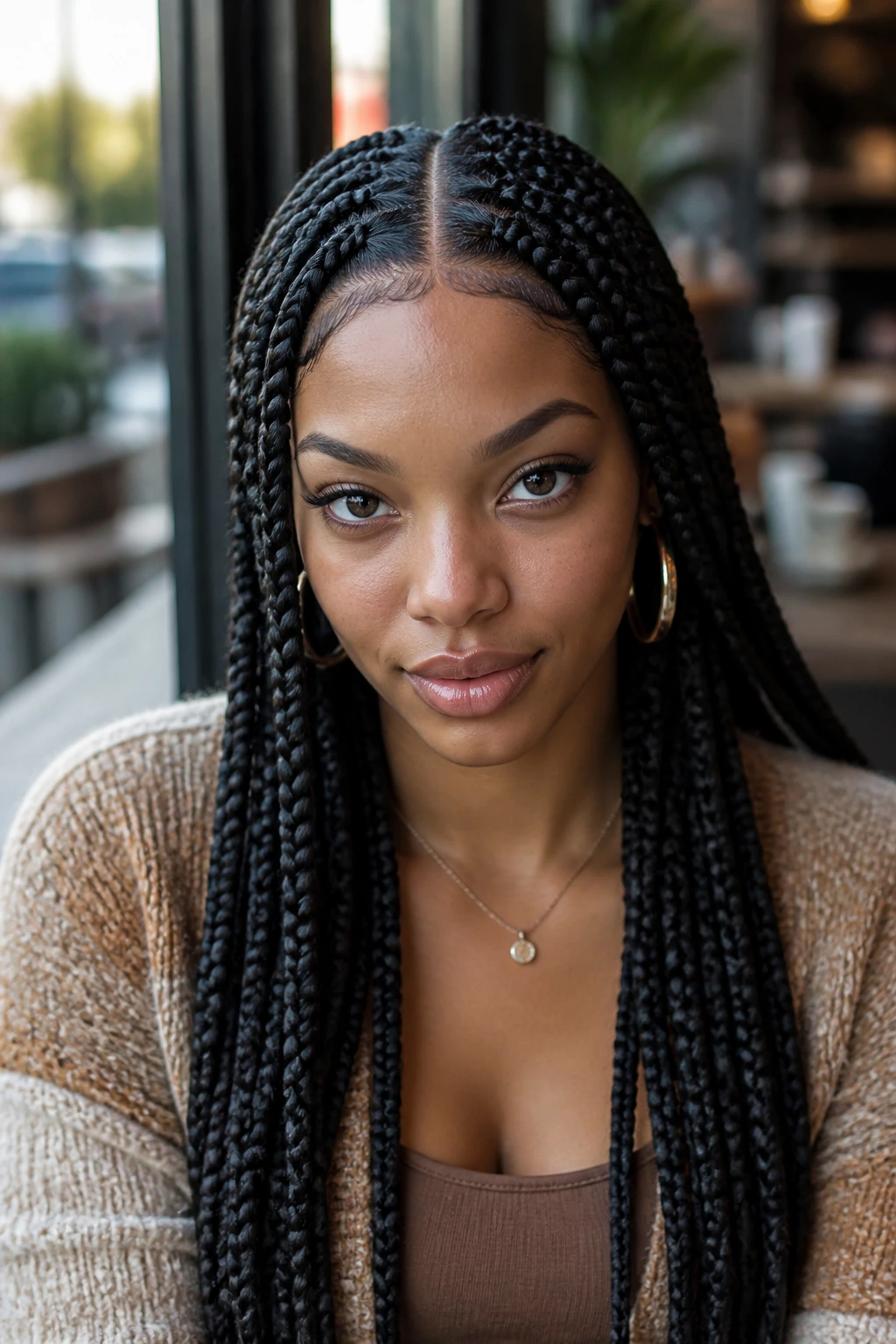
There is nothing quite as elegant as a perfectly straight center part. For Poetic Justice braids, this creates a frame for your face that is balanced and symmetrical. It is a minimalist approach to a maximalist hairstyle.
Achieving this requires precise sectioning from the forehead to the nape of the neck. If you have any baby hairs, you can leave them out and lay them with a bit of edge control to further soften the look. It is a style that works just as well in a corporate office as it does at a weekend brunch, proving that large braids can be incredibly sophisticated.
18. Braids with Beads or Charms
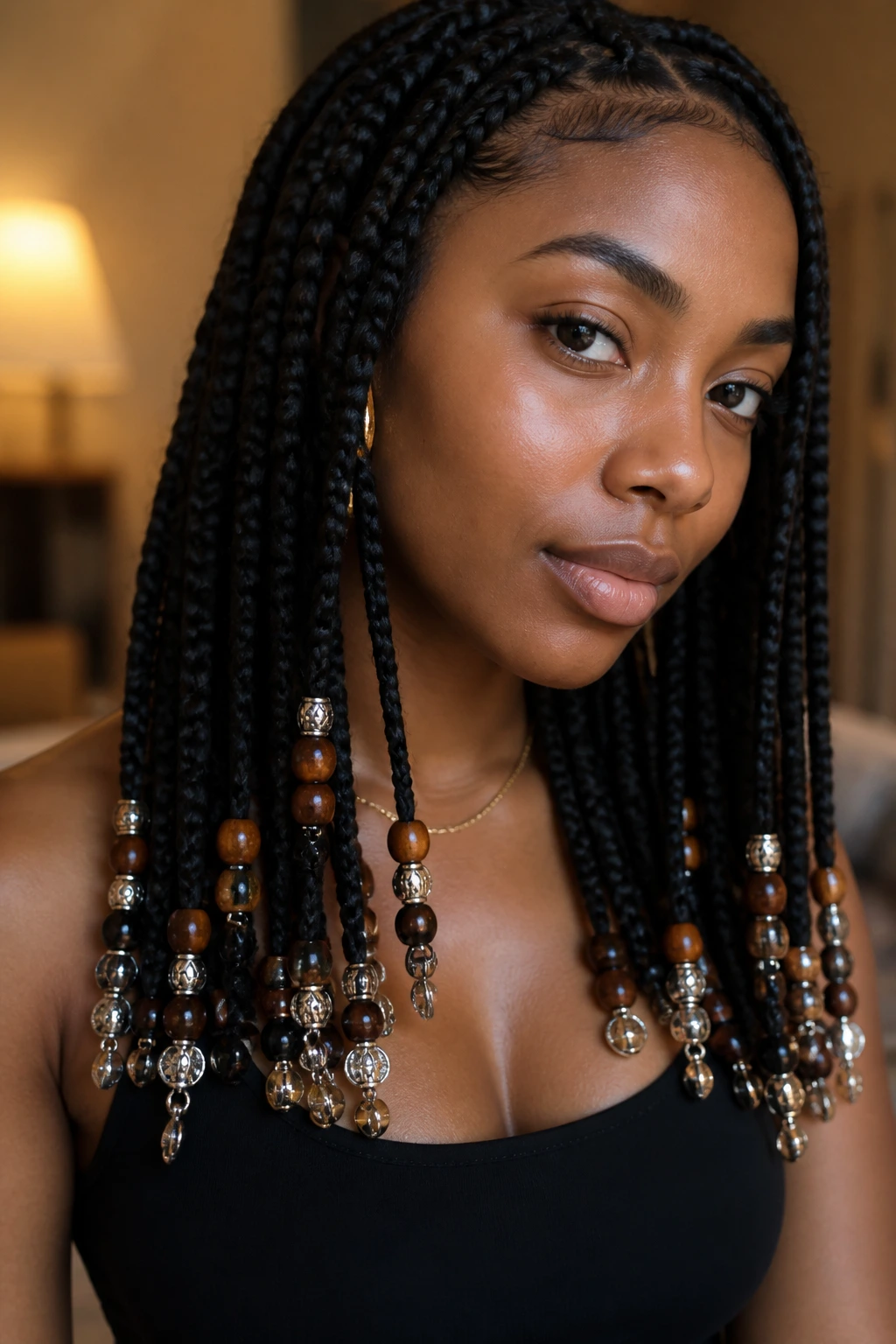
Adding wooden beads, silver charms, or even clear acrylic accents to the ends of your braids is a nod to heritage and personal style. This is a common way to personalize the look and add a bit of sound and movement to your hair.
When adding beads, make sure to secure them properly at the ends. You can do this by braiding the extension hair all the way down and tying a small rubber band at the very tip to ensure the bead doesn’t slide off. It is a simple, effective way to turn your braids into a piece of wearable art.
Practical Tips for Maintaining Your Braids
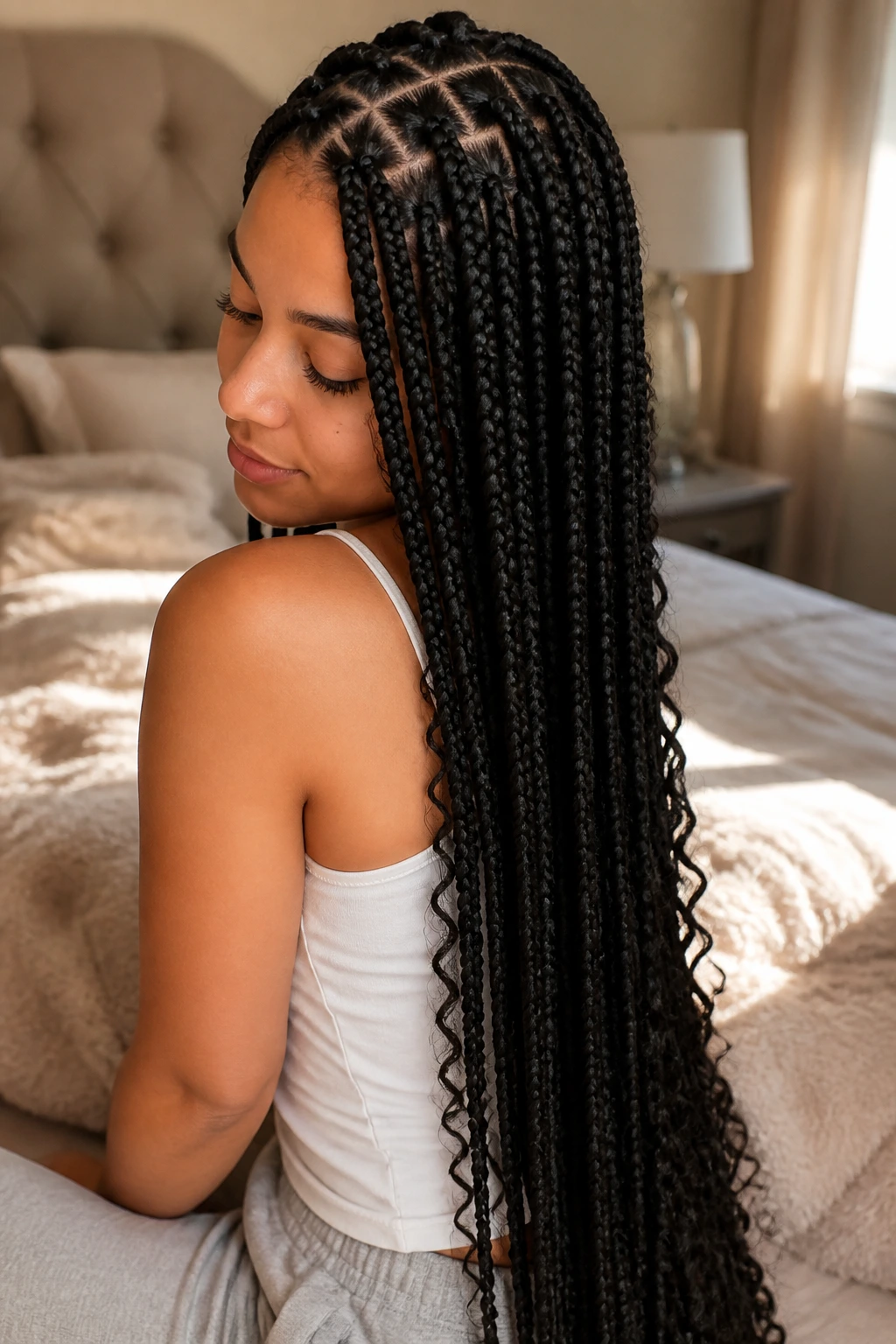
Keeping your natural hair healthy under a style as heavy as Poetic Justice braids requires a strict regimen. Even though it is a “protective” style, neglect will quickly lead to breakage and scalp issues. The most important thing is keeping your scalp clean. Every week or two, use an apple cider vinegar rinse or a dedicated braid spray to gently cleanse the scalp without disturbing the style.
Hydration is your second priority. Because your ends are hidden, they can become brittle and dry. Apply a light oil—like jojoba or sweet almond—to your scalp using a needle-tip applicator bottle to ensure it reaches the skin. Follow this with a light misting of leave-in conditioner over the length of the braids to keep the synthetic fibers soft and prevent them from matching and tangling near the roots.
Finally, protect your hair at night. Cotton pillowcases are the enemy of braided styles; they cause friction that leads to frizz. Use a silk or satin bonnet, or sleep on a satin pillowcase. This simple change alone can add an extra two weeks to the life of your installation, keeping your braids looking fresh and neat well past the initial install date.
Common Mistakes to Avoid
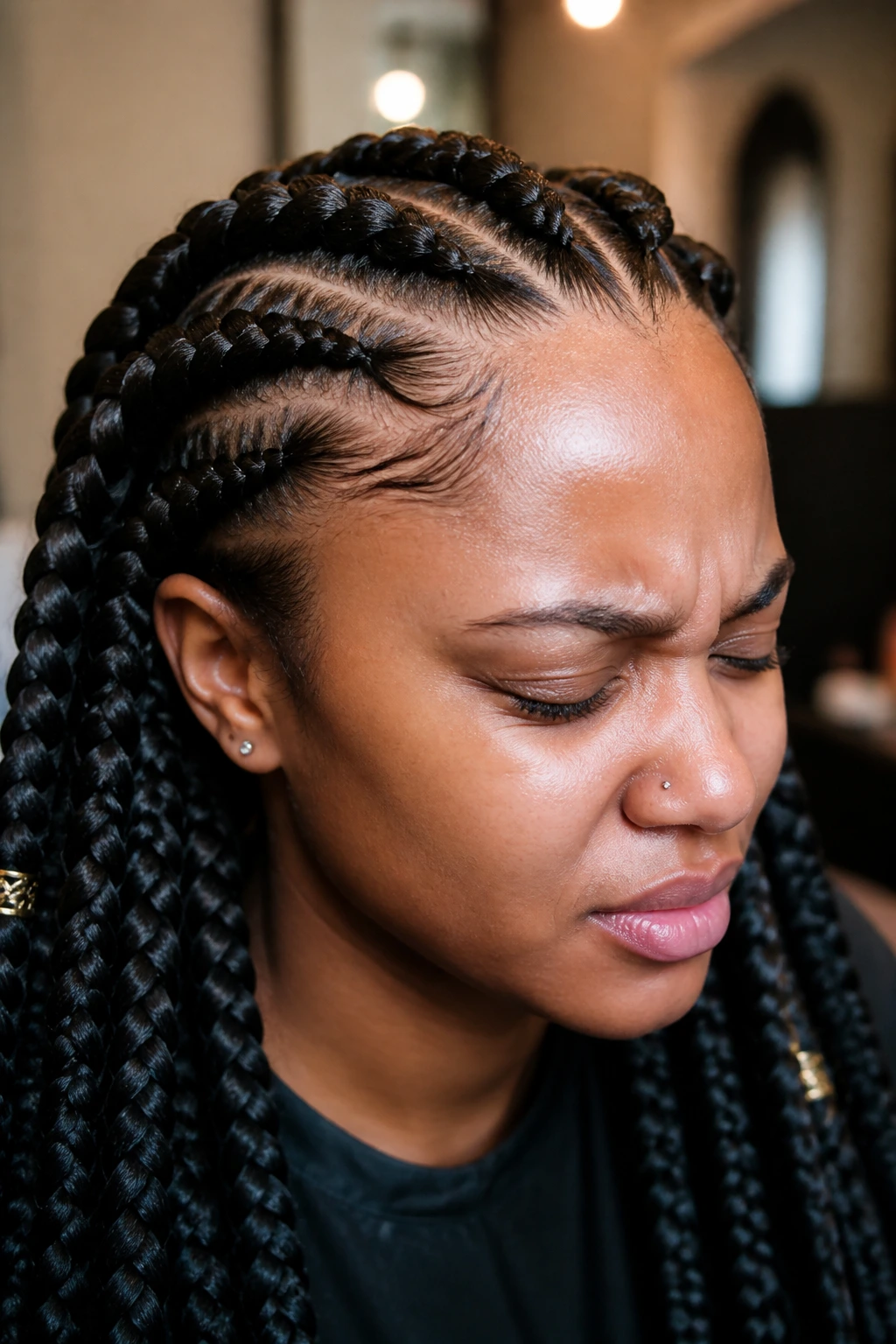
One of the most frequent errors is braiding the hair too tightly at the hairline. It might look clean for a day or two, but the cumulative tension will lead to hair loss that can take months to recover from. Always tell your braider—or check yourself—that the tension should be firm but comfortable. You should never feel like your scalp is being pulled taut.
Another mistake is neglecting the weight. If you have fine or thinning natural hair, waist-length braids that are too thick can be too heavy for your follicles to support. In these cases, opt for a shorter length or a smaller braid thickness. The goal is to protect your hair, not put it under so much stress that it breaks. Listen to what your hair is telling you; if the style feels painful, it is time to adjust.
The Bottom Line
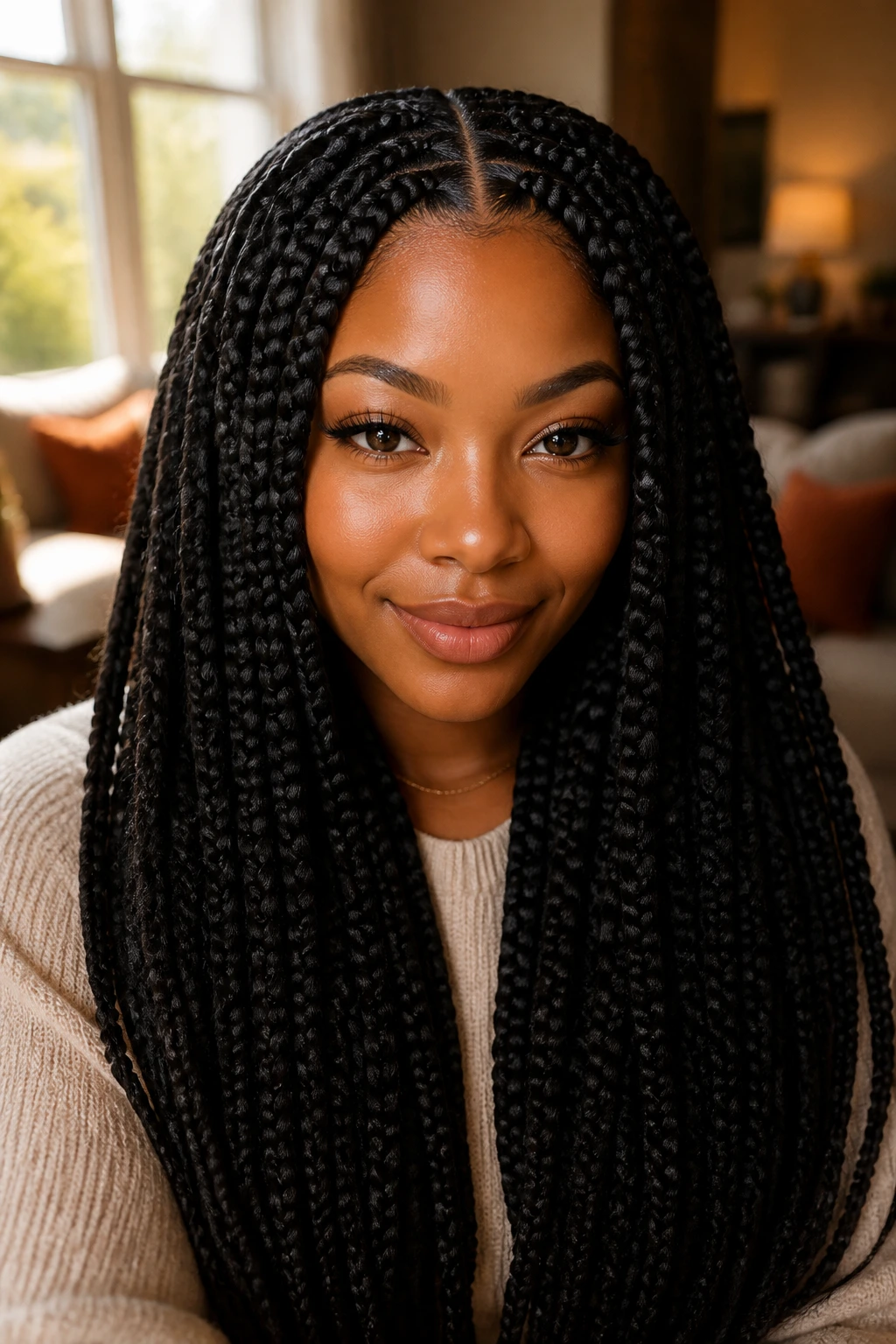
Poetic Justice braids are more than just a passing look; they are a classic aesthetic that celebrates the beauty of volume and length. Whether you opt for a sleek center part, a high top knot, or a bohemian finish with loose curls, the versatility is what makes them so popular. By focusing on tension management, regular scalp cleaning, and moisture, you can wear this style with confidence, knowing your natural hair is staying healthy beneath the surface. Choose the variation that best suits your lifestyle and your personal sense of style, and enjoy the freedom that comes with a low-maintenance, high-impact hairstyle.