


Lemonade braids have effectively rewritten the rules of protective styling. While this style is deeply rooted in the history of feed-in braids, the specific aesthetic—long, side-swept cornrows that frame the face—became a cultural phenomenon that transcends hair textures. If you have naturally straight hair, you might look at the complex, tight tension of these styles and worry about slippage or damage. The secret, however, is not in the texture of your hair, but in the technique used to secure it. When executed correctly, these braids provide a clean, polished look that keeps hair tucked away and protected from daily friction, all while maintaining a sharp, defined geometry.
Choosing the right approach for straight hair involves understanding how much tension your scalp can handle and how to grip finer strands without causing breakage. Because straight hair lacks the natural coil to grip synthetic extensions, your braider needs to rely on a tighter, more precise feed-in technique. It is a balancing act; you need enough tension to keep the braids sleek, but not so much that you end up with traction alopecia. The result, when done by someone who understands the nuance of straight hair, is a sophisticated, low-maintenance look that feels as good as it looks.
1. Classic Side-Swept Lemonade Braids
The quintessential look that started the trend relies on clean, parallel lines that flow effortlessly from the left temple toward the right shoulder. For those with straight hair, this style is incredibly forgiving because the weight of the synthetic braiding hair helps pull your natural strands into a uniform direction. The key here is the part size; keeping the segments small and consistent ensures that your natural roots stay flat.
Why This Style Works for Straight Hair
When you use extensions, they provide the “grip” that straight hair lacks. By feeding the hair in gradually, the braider creates a seamless transition from your scalp to the braid. The final effect is a sleek, long, cascading waterfall of hair that requires almost zero daily styling.
Styling Tips for Longevity
- Apply a light, water-based setting foam after braiding to tame flyaways.
- Wrap your hair with a silk scarf at night to prevent the synthetic hair from creating friction against your real ends.
- If you notice frizz near the roots, use a small amount of edge control on a fine-tooth comb to smooth things out without disturbing the braid.
2. Jumbo Lemonade Braids with Feed-In Precision
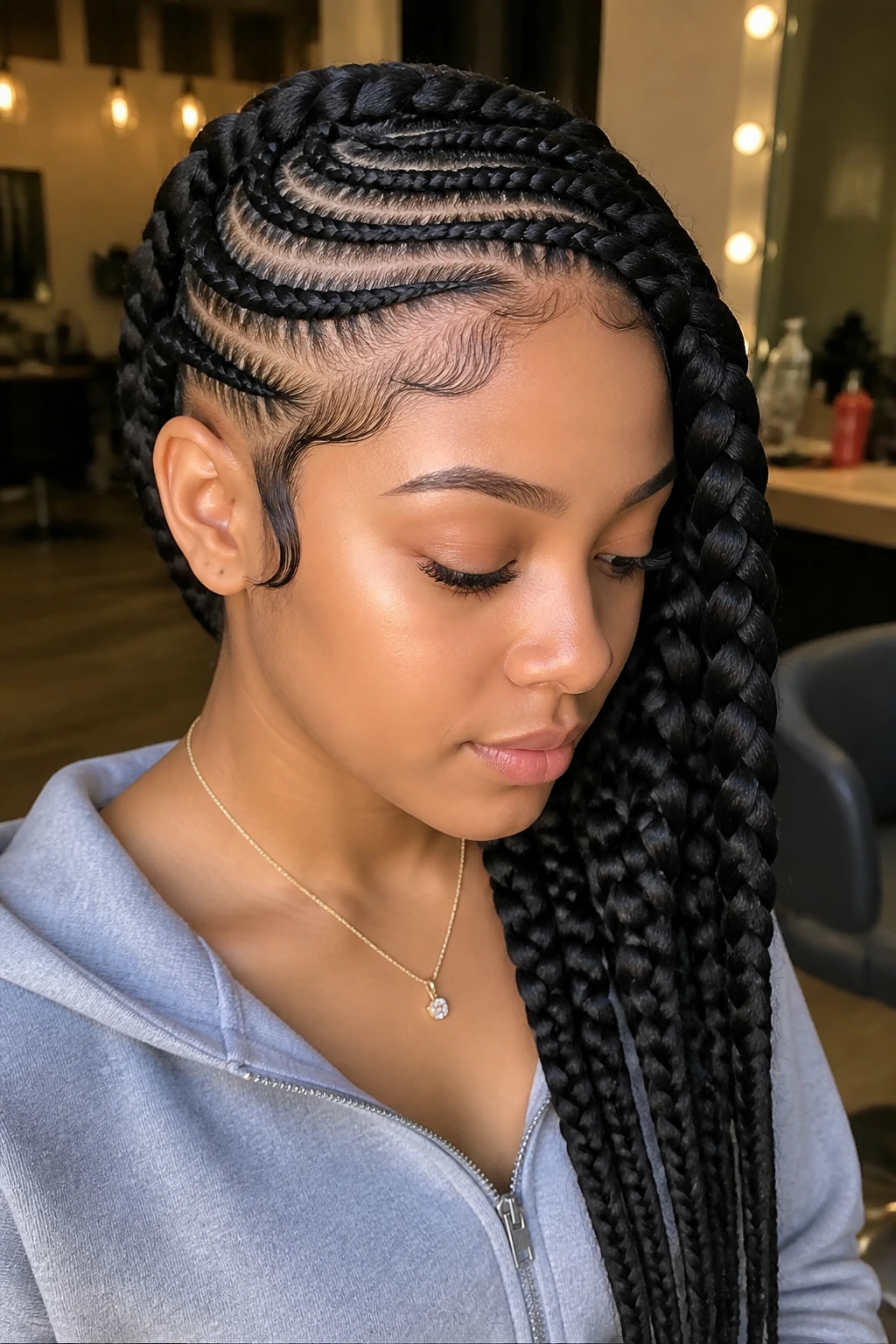
If you prefer a bolder statement, jumbo braids offer a high-impact look that cuts down your time in the chair. With fewer, thicker braids, there is less tension on the scalp, which is a major advantage for finer hair types. Large braids allow the braider to incorporate more synthetic hair, creating a full-bodied, dramatic finish that feels surprisingly lightweight once the initial tightness wears off.
The Mechanics of Large Braids
Larger sections mean your braider can grip more of your natural hair in each pass. This is actually safer for straight, slippery hair because you aren’t relying on tiny, fragile sections that might unravel. The main challenge with jumbo braids is keeping the parts sharp and the roots smooth, so ensure you have a firm holding gel on hand during the installation process.
Maintenance and Care
- Focus your scalp oiling on the spaces between the braids rather than the braids themselves.
- Avoid using heavy waxes; they will attract lint and dust, making the braids look aged before their time.
- If the braids feel too heavy, ask your stylist to keep the length at mid-back instead of waist-length to distribute the weight evenly.
3. Ombré Lemonade Braids with Honey Highlights
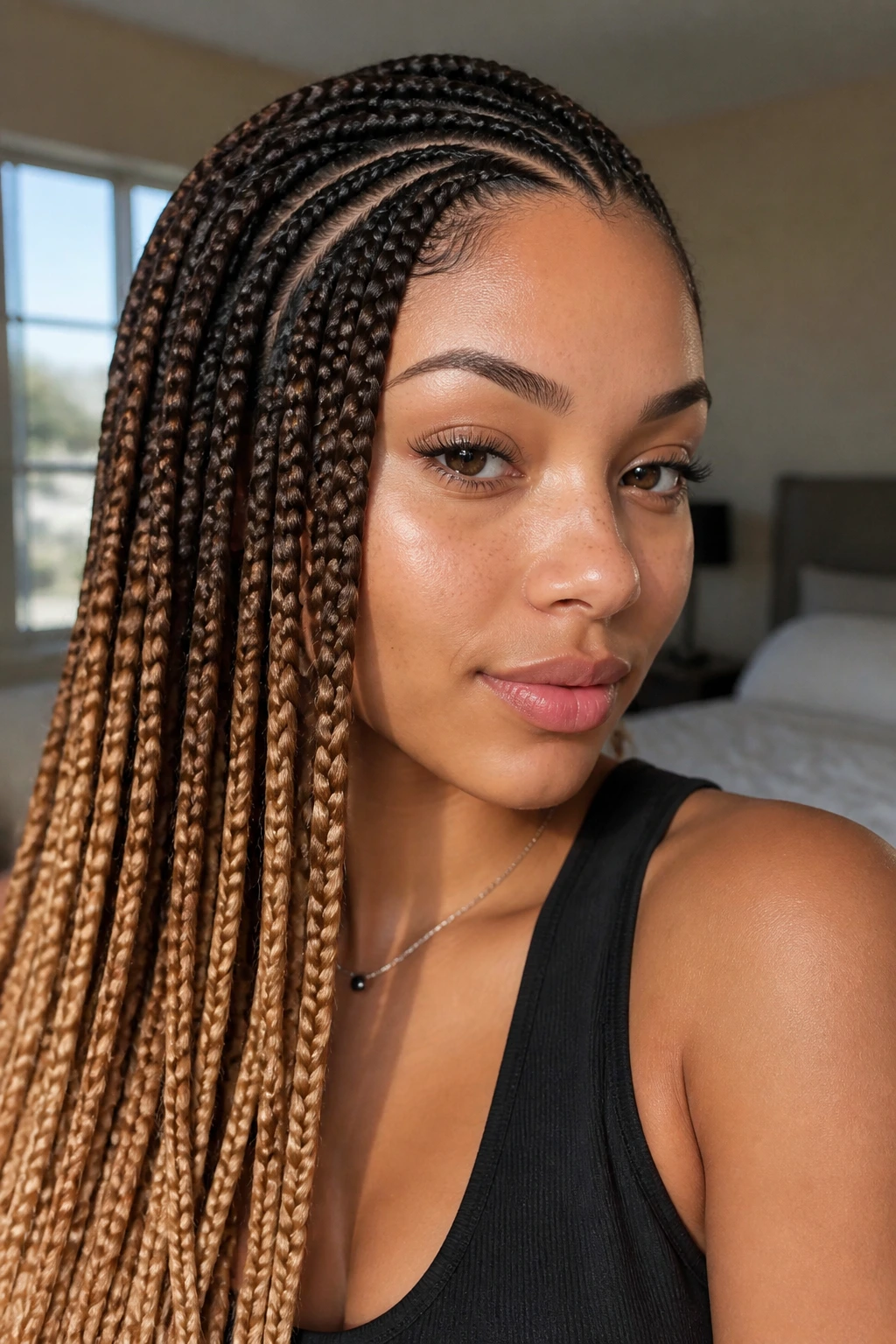
Adding color is a fantastic way to break up the monotony of long, uniform braids. An ombré effect, where the roots match your natural hair color and the ends transition into a honey or caramel blonde, adds incredible visual dimension. For straight-haired individuals, this color contrast highlights the crispness of the cornrow pattern, making every single line stand out.
Why Color Matters for Definition
Solid-colored hair can sometimes hide the intricate work of a braid pattern. By introducing a lighter shade at the bottom, you create a gradient that draws the eye toward the face. It turns the hairstyle into a piece of art rather than just a protective measure.
Keeping the Color Vibrant
- Use a color-safe leave-in conditioner spray to keep the synthetic extensions looking shiny.
- Protect the ends from heat; even if you use synthetic fiber, prolonged exposure to high-heat tools can cause the tips to lose their sheen and become brittle.
- If you want a more natural look, opt for a “honey-brown” blend rather than platinum blonde to avoid a harsh contrast that might draw attention to the roots.
4. Half-Up, Half-Down Lemonade Braids
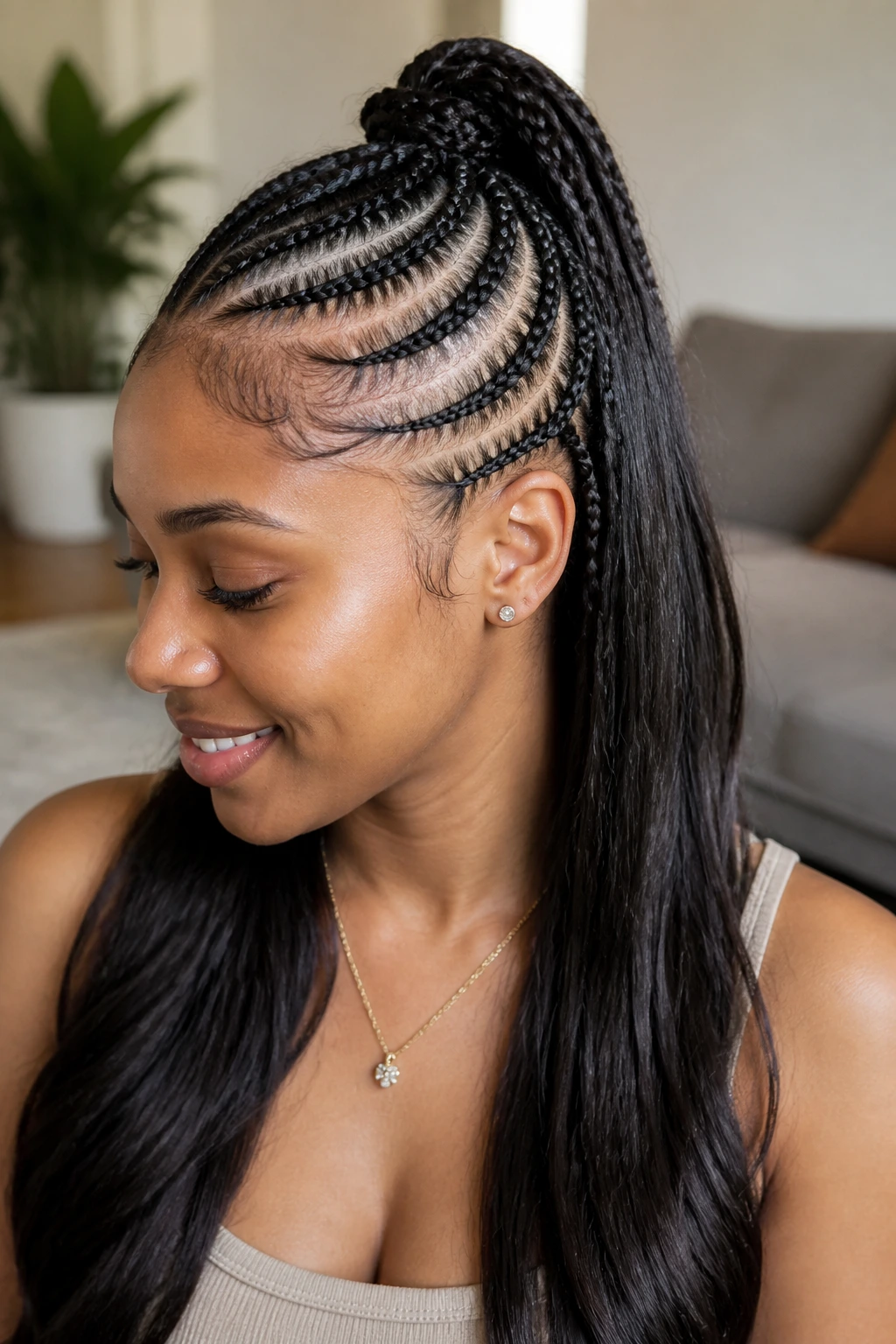
This hybrid style gives you the sleekness of cornrows while allowing you to wear some of your hair loose or gathered in a high pony. It is a versatile choice for those who are not ready to commit to having their entire head braided down to the nape. By leaving the back section out, you can experiment with different textures or simply enjoy the freedom of loose hair while keeping your hairline perfectly groomed.
Technical Considerations for Straight Hair
Because the back section is loose, you need to ensure the transition from the braided crown to the loose hair is smooth. Using a clear elastic or a small section of braid to wrap the base of the ponytail will keep the style looking cohesive. This is a great transition style if you are trying to grow out your hair, as it puts minimal stress on the nape.
Styling Versatility
- Try pinning the front braids into a high bun for a more formal aesthetic.
- You can accessorize the transition point with gold or silver cuffs to elevate the look for special occasions.
- When washing, focus on the scalp under the braids, but be mindful of the loose hair at the back to avoid tangles.
5. Micro-Lemonade Braids for Maximum Detail
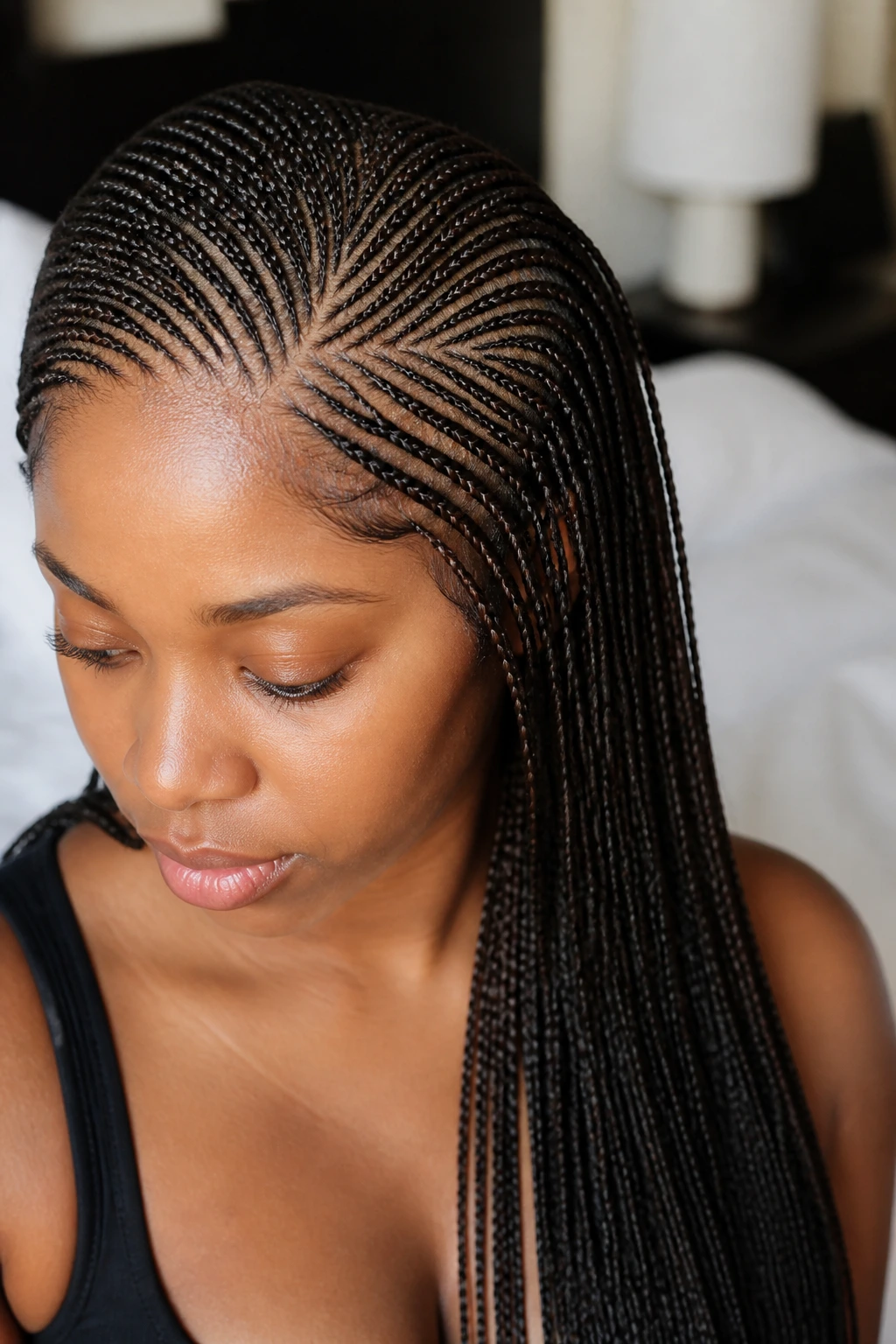
Micro-braids require patience, skill, and a significant amount of time, but the payoff is a look that mimics the density and texture of a natural blowout. For those with fine, straight hair, micro-braids can feel very secure because there are so many tiny anchors across the head. However, this also means the tension is distributed differently.
Why Small Braids Demand Expertise
Small braids mean you are putting more individual stress on more hair follicles. A skilled braider will ensure that the “base” of each braid is wide enough to support the weight of the extension. If the base is too small, the weight of the synthetic hair will pull at your roots, causing discomfort and potential thinning.
Managing the Tension
- Always communicate with your stylist about the tightness; if it hurts, it is too tight.
- Micro-braids can stay in for several weeks, but keep a close eye on your hairline.
- Use a soothing scalp spray with peppermint oil to keep the roots refreshed without buildup.
6. Lemonade Braids with Beaded Ends
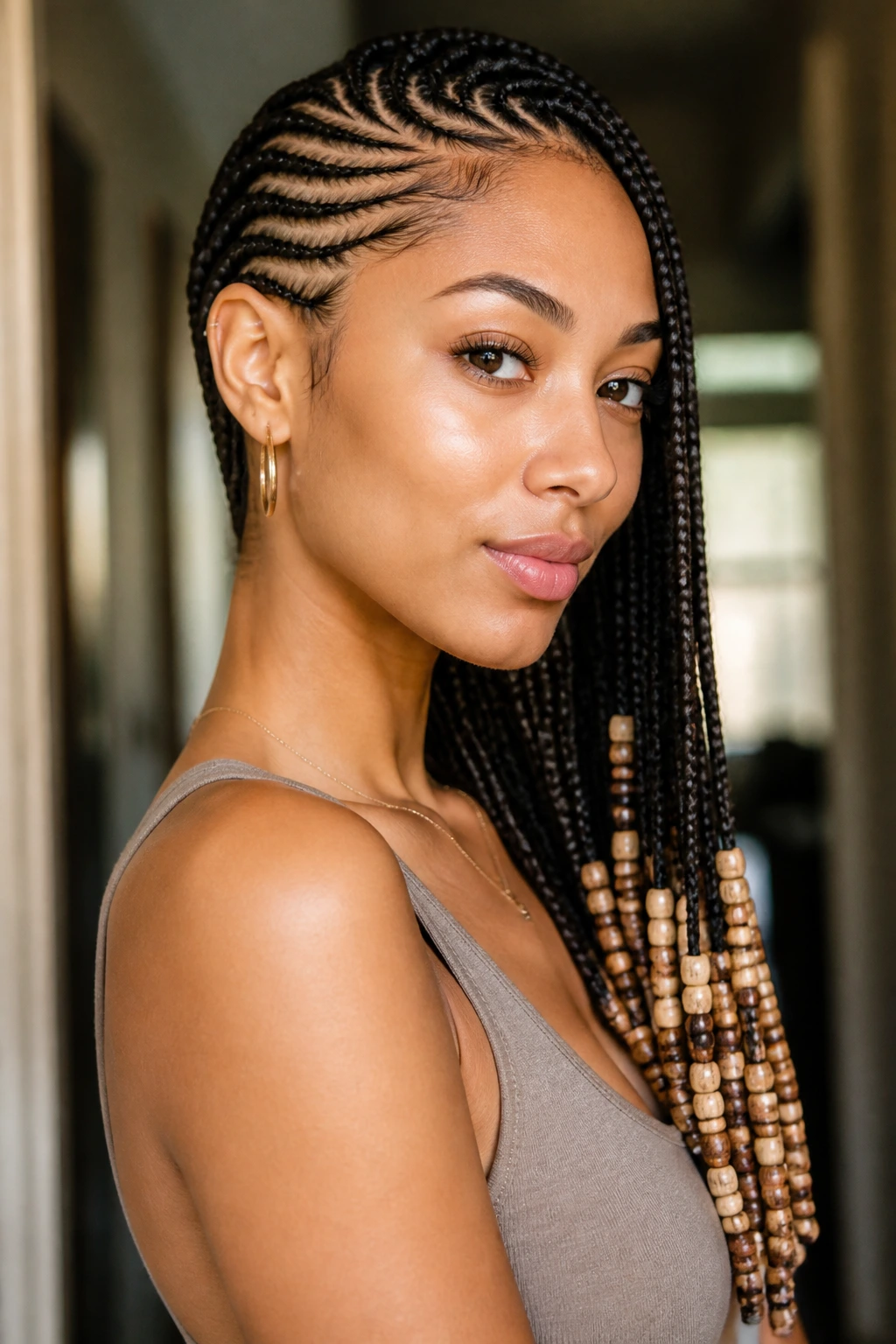
Beads are not just for children; they are a sophisticated way to add movement and sound to your braids. Clear, wooden, or metallic beads can be added to the ends to prevent the synthetic hair from unravelling and to add a touch of personality. For a sleek straight-haired look, wooden beads provide an earthy, textured contrast that softens the overall aesthetic.
Selecting the Right Beads
- Consider the weight; too many beads can make the braids pull downward.
- Wooden beads are typically lighter than heavy glass or metal options, making them ideal for long-term wear.
- If you have an active lifestyle, skip the beads or choose silicone-coated options to prevent them from clicking together loudly during movement.
7. Zig-Zag Parted Lemonade Braids
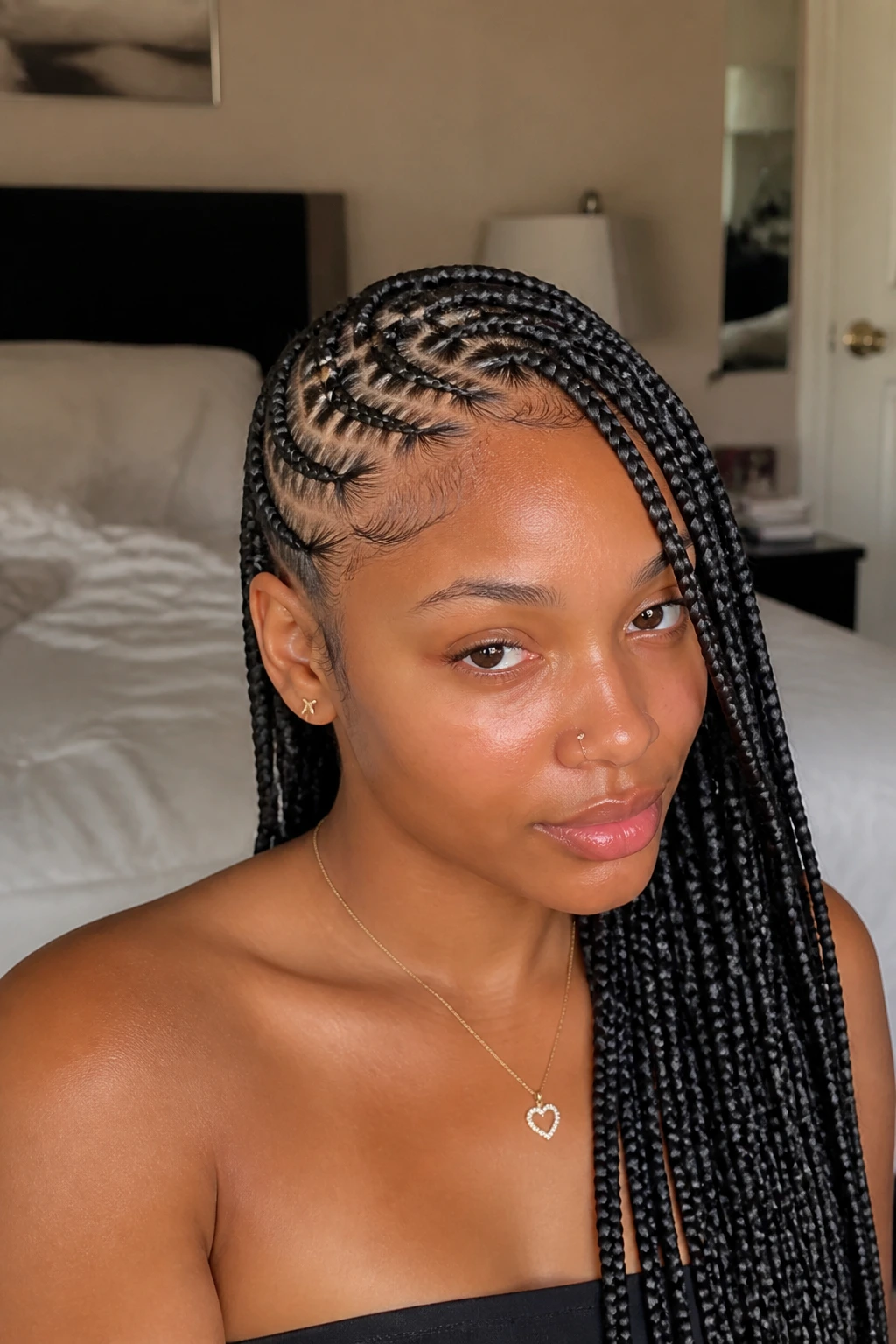
Moving away from straight, horizontal parts, zig-zag sections add a playful, dynamic geometry to the classic side-swept look. This technique is particularly effective at hiding roots, making it a brilliant choice if you are nearing a touch-up appointment. The zig-zag pattern adds movement to the scalp area, distracting from the uniform nature of the braids.
Why It Enhances Straight Hair
Straight hair often lies very flat against the scalp, which can make parts appear wider than they are. By breaking up the line with a zig-zag, you create the illusion of more volume and thickness. It is an optical trick that makes the entire style look fuller and more intentional.
Precision is Key
- Use a rat-tail comb with a metal tip for the sharpest lines.
- Be prepared to spend a bit longer on the prep stage, as sectioning is the most time-consuming part of this style.
- Use a firm hold pomade to keep the zig-zag edges crisp throughout the week.
8. High-Contrast Two-Tone Lemonade Braids
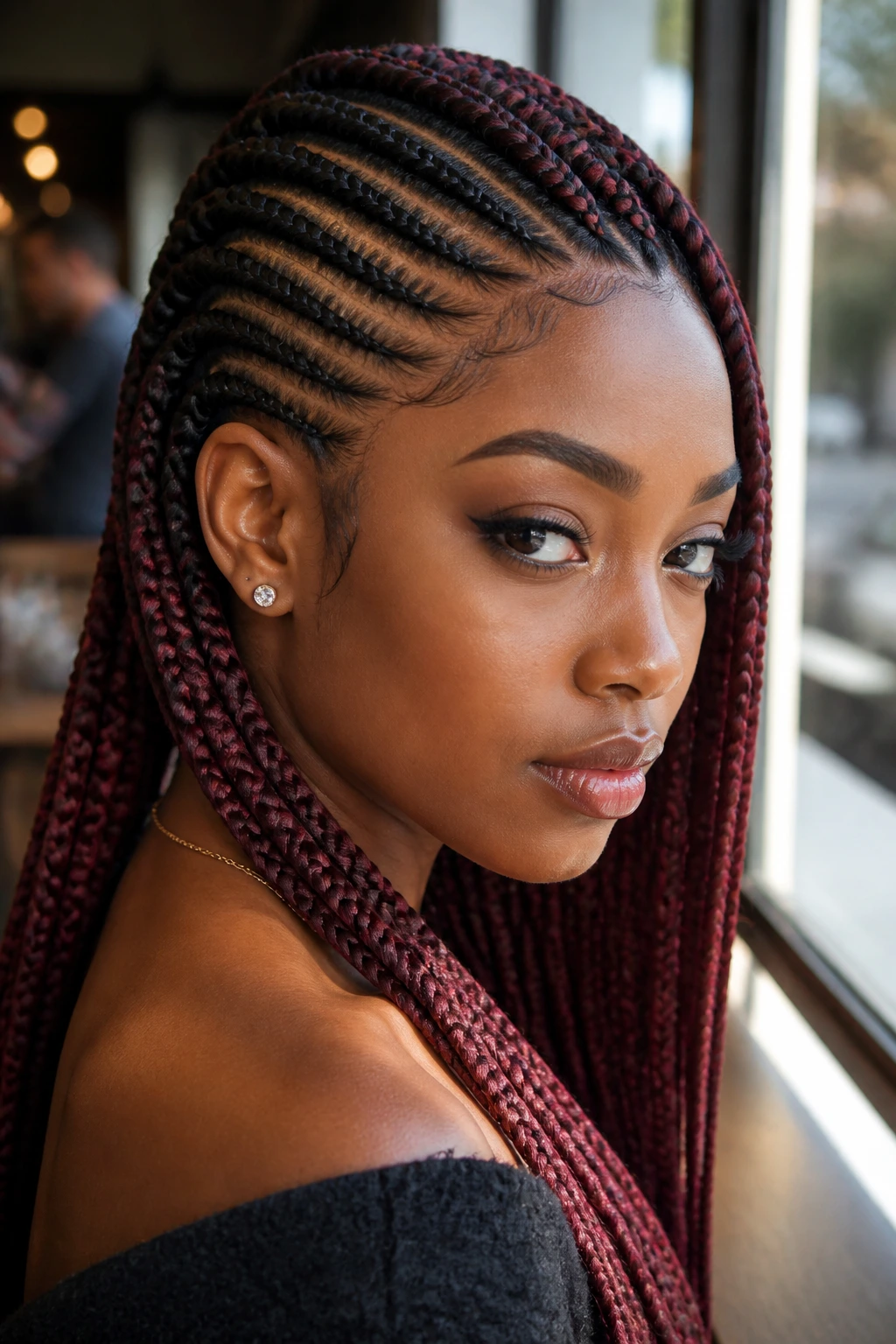
If you want to be noticed, a two-tone braid style is the way to go. This involves using two distinct colors of extensions—perhaps a black root transitioning into a vibrant color like burgundy or deep blue. For straight hair, the color separation is incredibly crisp, allowing the braided pattern to really pop.
Choosing Your Colors
- Select colors that complement your skin tone.
- If you are feeling bold, a jewel-toned blue or deep plum can look stunning against pale or olive complexions.
- Keep in mind that brighter colors may require more upkeep to prevent fading or staining your clothes, though synthetic hair is generally quite colorfast.
Styling for Impact
- Pair this look with minimalist jewelry; the hair is the statement piece, so let it speak for itself.
- Ensure your makeup is balanced; bold hair works best when the rest of your look feels intentional and clean.
9. Decorated Lemonade Braids with Gold Cuffs
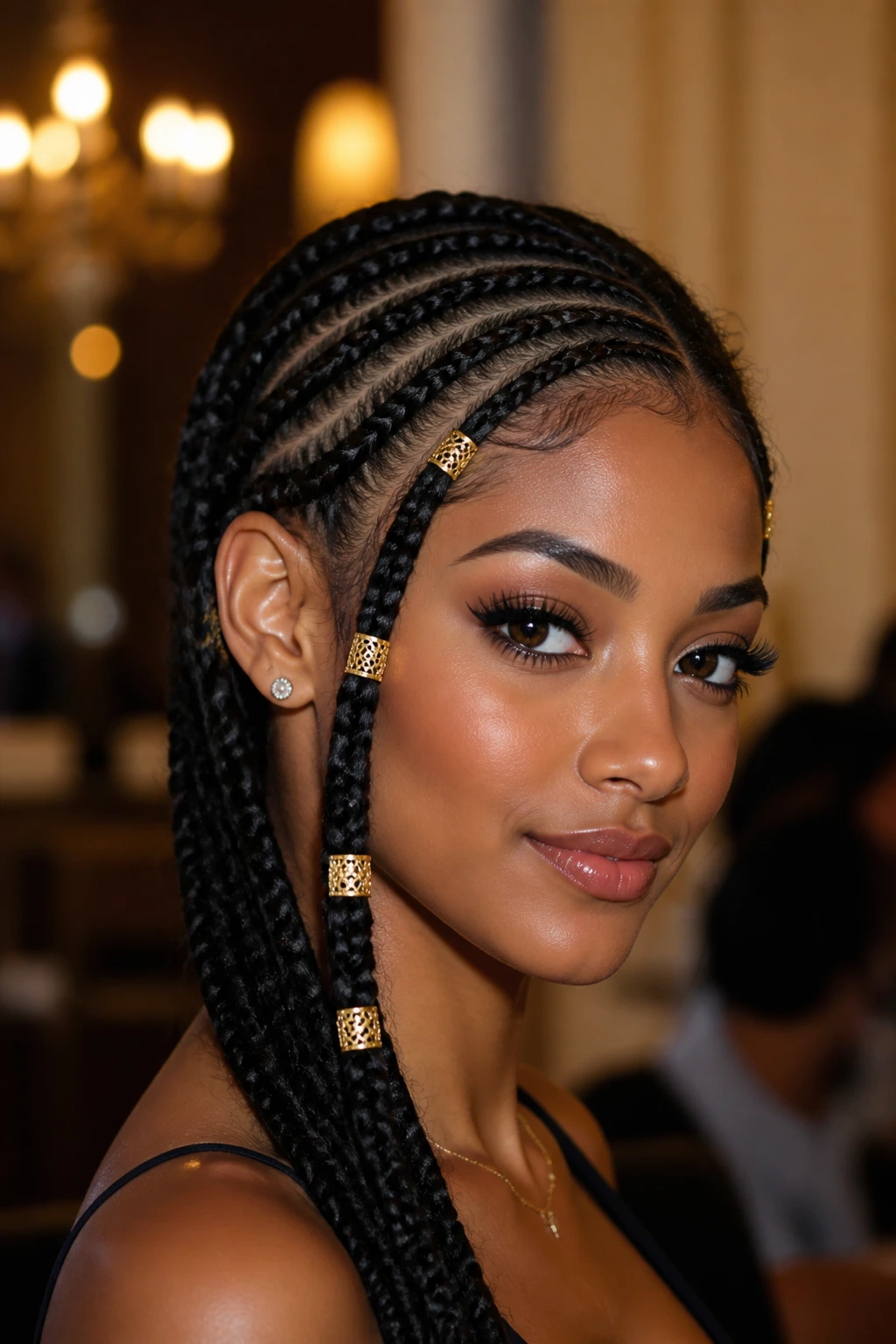
Sometimes, less is more. Adding a few strategically placed gold or silver cuffs along the length of your braids can transform a basic style into something ready for a gala. For those with straight, fine hair, metallic cuffs stay in place remarkably well, provided you don’t over-tighten them and kink the synthetic fiber.
Strategic Placement
- Place cuffs on the first two or three braids closest to your face to frame your features.
- Avoid putting them too close to the scalp, as they can snag on your pillowcase at night.
- Use a variety of textures in your cuffs—some smooth, some patterned—to create a tiered, layered effect along the length of the hair.
10. Curly-Ended Lemonade Braids
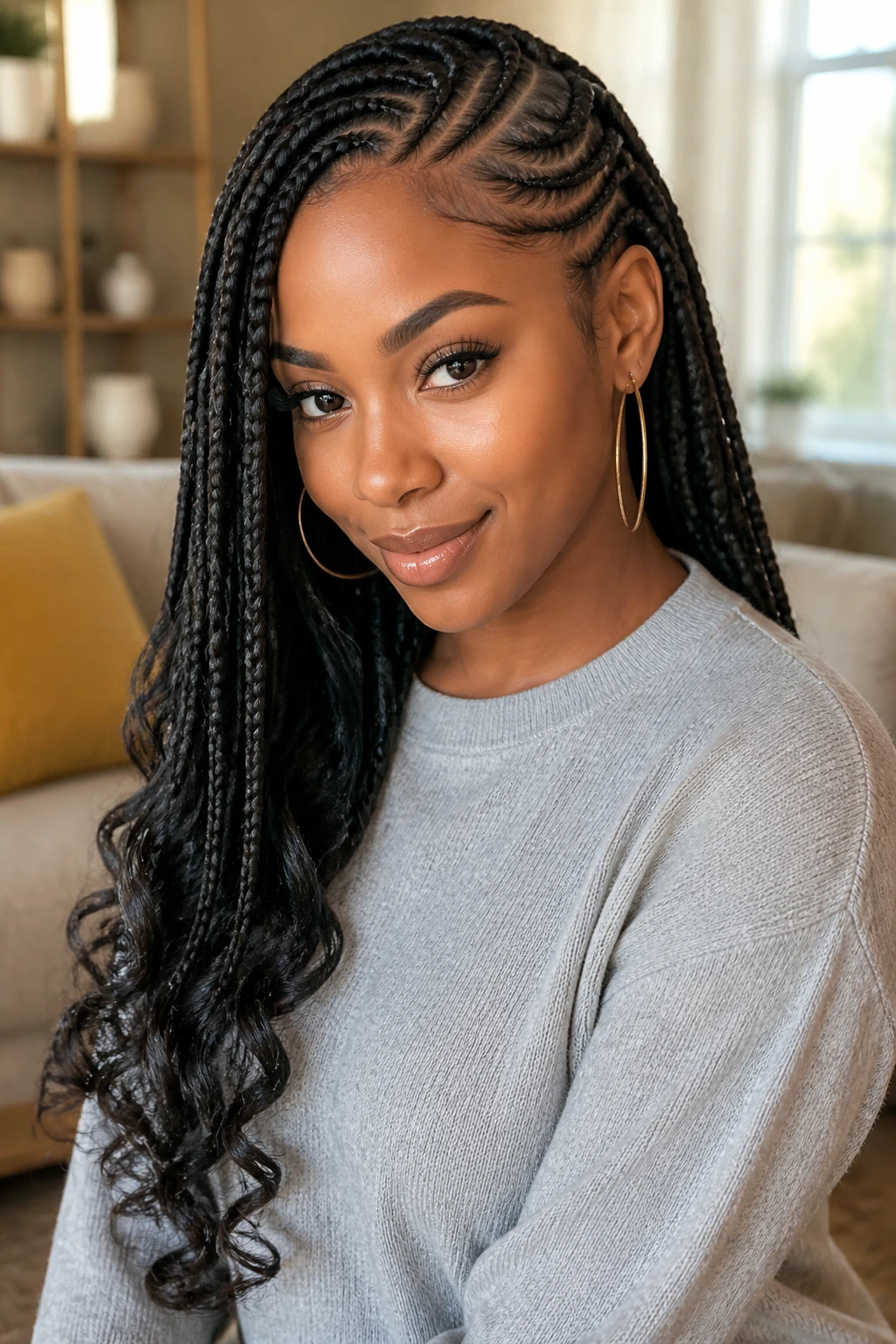
While the cornrows themselves are straight and tight, leaving the ends loose and curly adds a softness that balances the sharp lines of the braids. You can achieve this by using “goddess braid” techniques, where small pieces of curly hair are fed into the braid periodically, or by simply curling the ends of the synthetic hair with hot water.
The Hot Water Method
- Dip the ends of your braids into boiling water to set the style and create the curl.
- Use flexible rods for a tighter, more defined spiral.
- This creates a beautiful, bohemian finish that feels much less rigid than the standard straight braid end.
Maintaining the Curls
- Use a tiny drop of lightweight oil on your fingers when fluffing the curls to keep them from tangling.
- Since synthetic hair doesn’t have the same cuticle as natural hair, use a light holding spray to keep the curls bouncy.
11. Side-Swept Lemonade Braids with Heart Parts
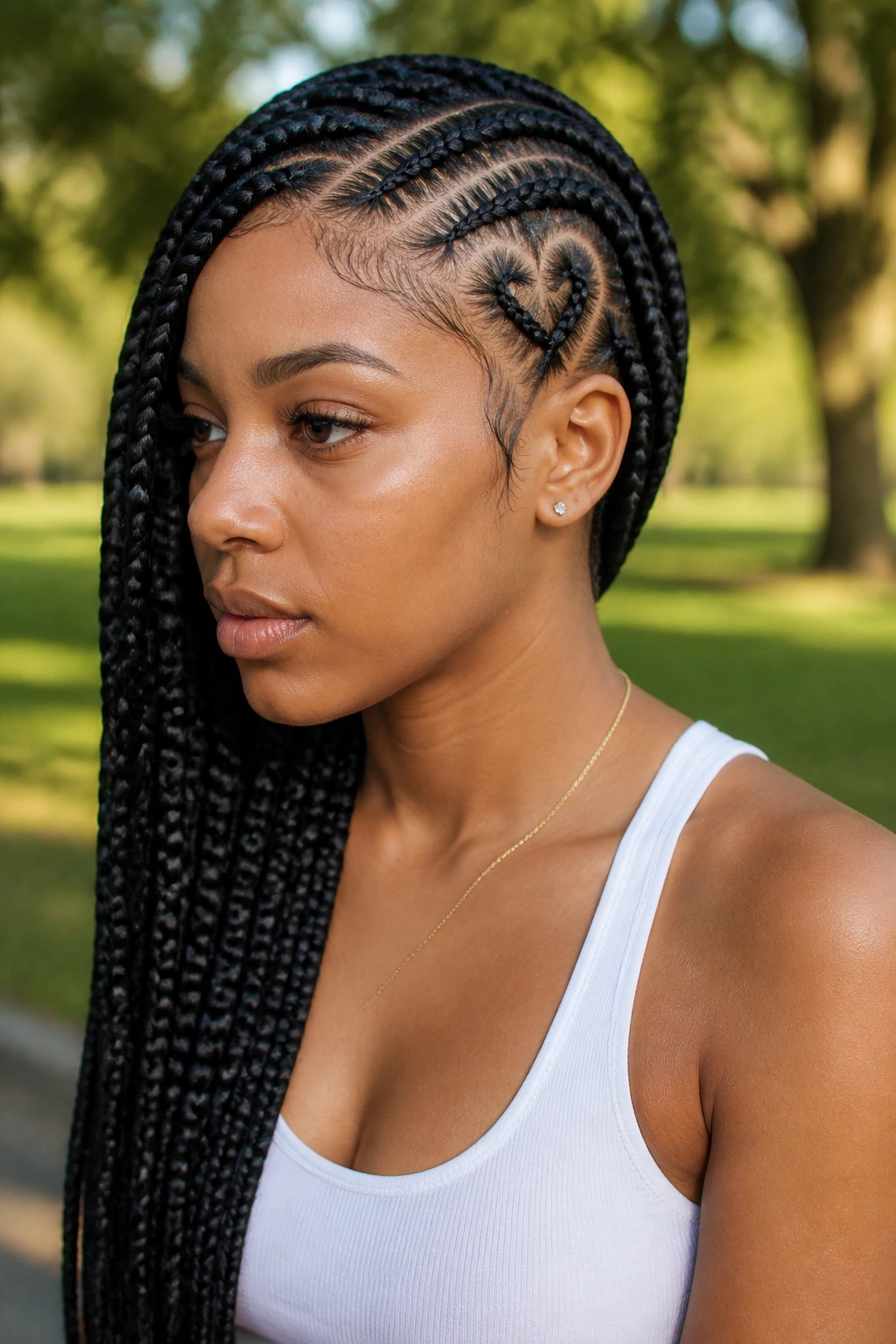
Incorporating a heart-shaped part near the temple adds a playful, artistic detail to your braids. This is a common practice in modern cornrow styles and looks fantastic when executed at the hairline. For straight hair, the heart part must be very well-defined, so use a clear gel or edge control to ensure the line doesn’t blur over time.
Why This Style Turns Heads
It’s a detail that shows you pay attention to the little things. It’s perfect for festivals or events where you want your hair to be a talking point. It also adds a layer of personalization that separates your look from generic braid styles.
Keeping the Heart Crisp
- Treat this as a premium style; you’ll want to visit an experienced braider who specializes in intricate parting.
- Avoid over-brushing the area near the heart, as it can cause the hairs to migrate and lose the shape.
12. Ultra-Long Waist-Length Lemonade Braids
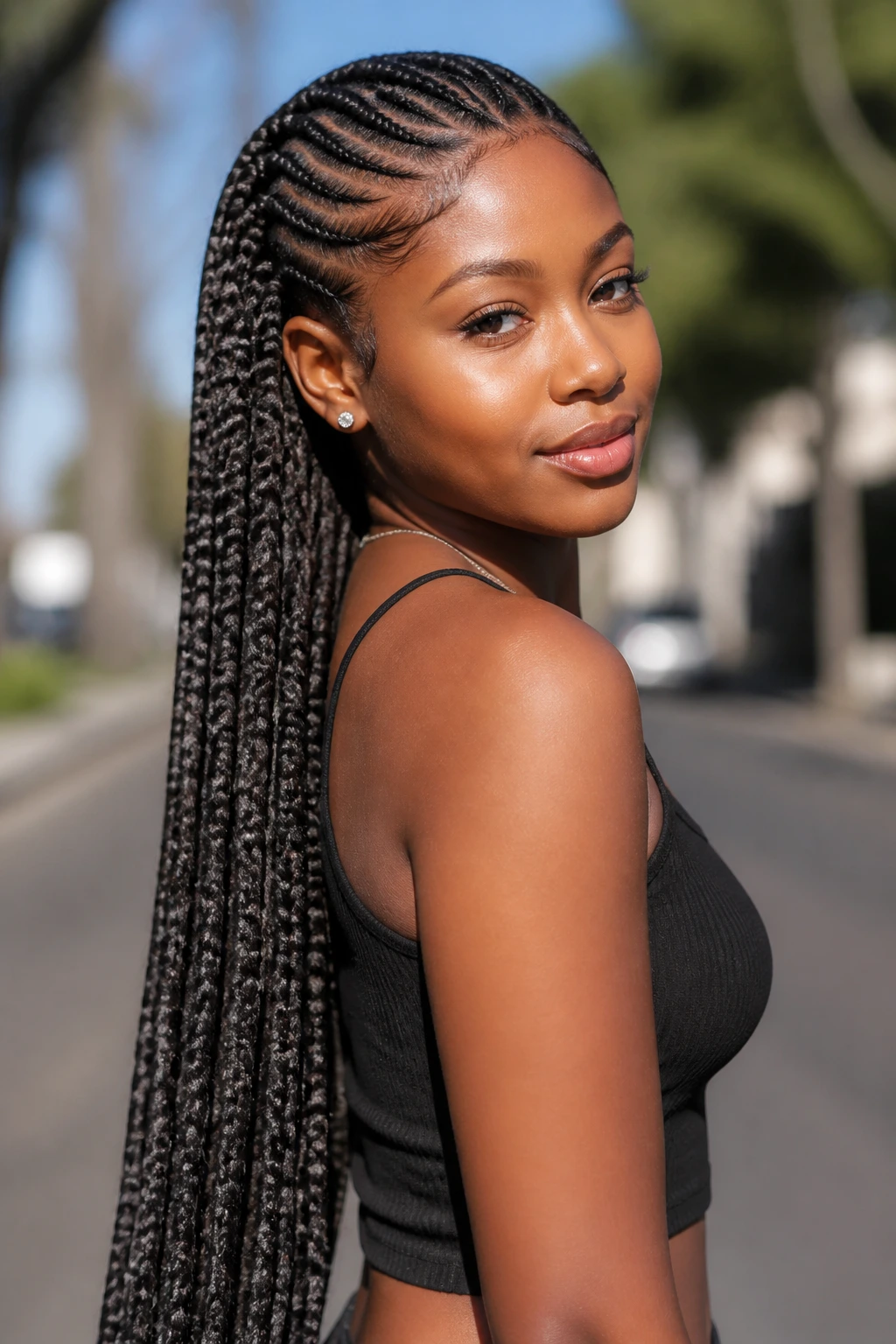
If you want the full “rapunzel” effect, waist-length braids are the standard. The weight of the hair, while considerable, creates a very distinct silhouette. This look is dramatic, elegant, and timeless. For those with straight hair, the sleekness of the extensions at this length is unparalleled.
Managing the Length
- Be aware that long braids can snag on bags, jewelry, or seatbelts.
- At the end of the day, gather the hair into a loose bun at the top of your head to keep it out of the way while you sleep.
- Consider the weight distribution; if it feels too heavy, ask your braider to use a “pre-stretched” synthetic hair which is often lighter and thinner than traditional packs.
13. Minimalist Center-Part Lemonade Braids
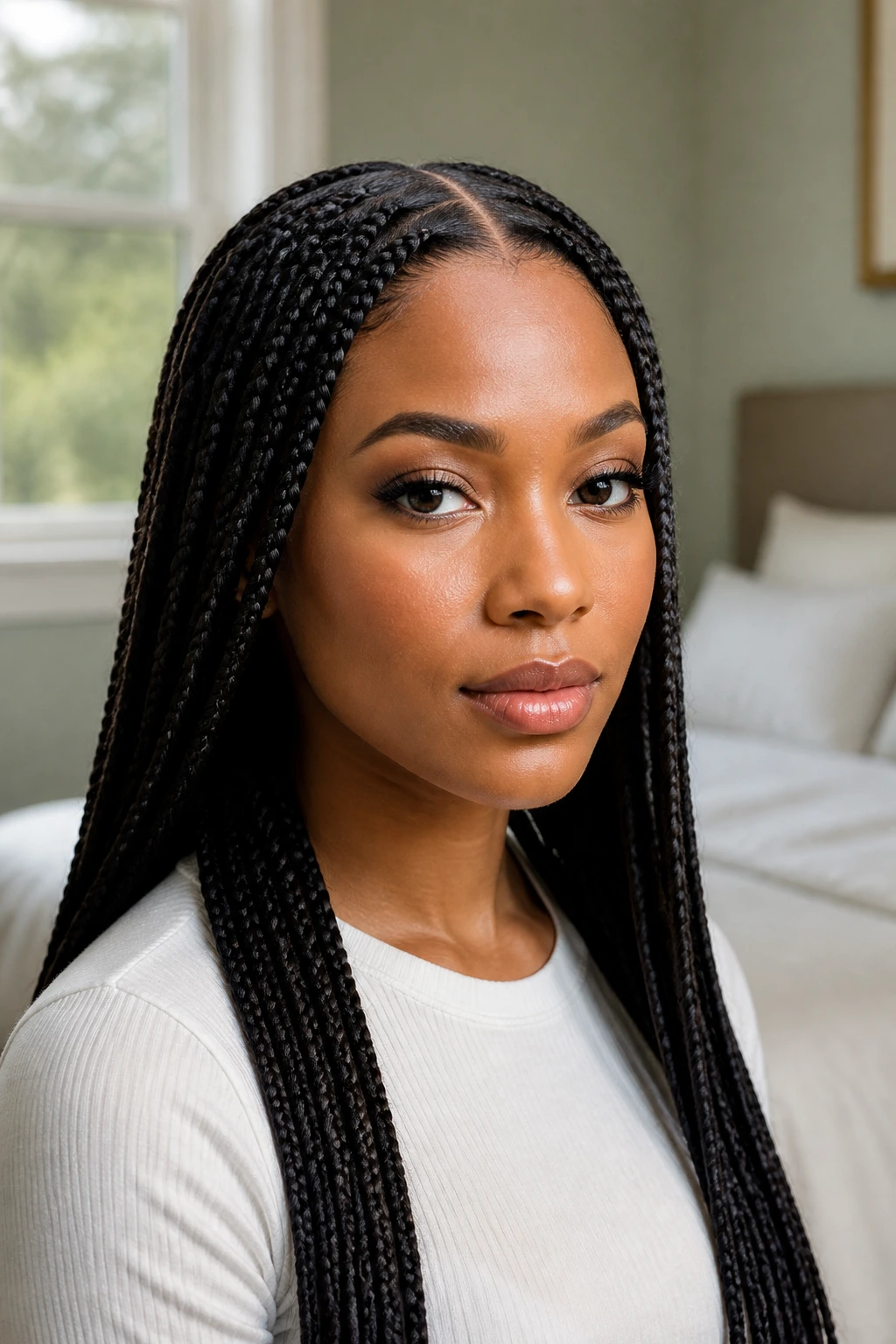
While the classic lemonade braid is side-swept, a center-part variation is incredibly chic. It frames the face symmetrically and offers a more modern, structured appearance. This style works particularly well for those with oval or heart-shaped faces, as it highlights cheekbones and jawlines.
Why It’s Different
It’s a subtle shift that changes the entire vibe of the hairstyle. Where the side-swept version feels relaxed and casual, the center-part version feels professional and sharp. It’s an excellent choice for a workplace setting or a formal event.
Styling the Center Part
- You need a very straight, clean line. Use a metal-tipped comb and a bit of pomade to ensure the line is precise.
- The two sides of the head must be balanced; ensure the braider is consistent with the size and spacing of the braids on both the left and right.
14. Lemonade Braids with Interwoven Strings
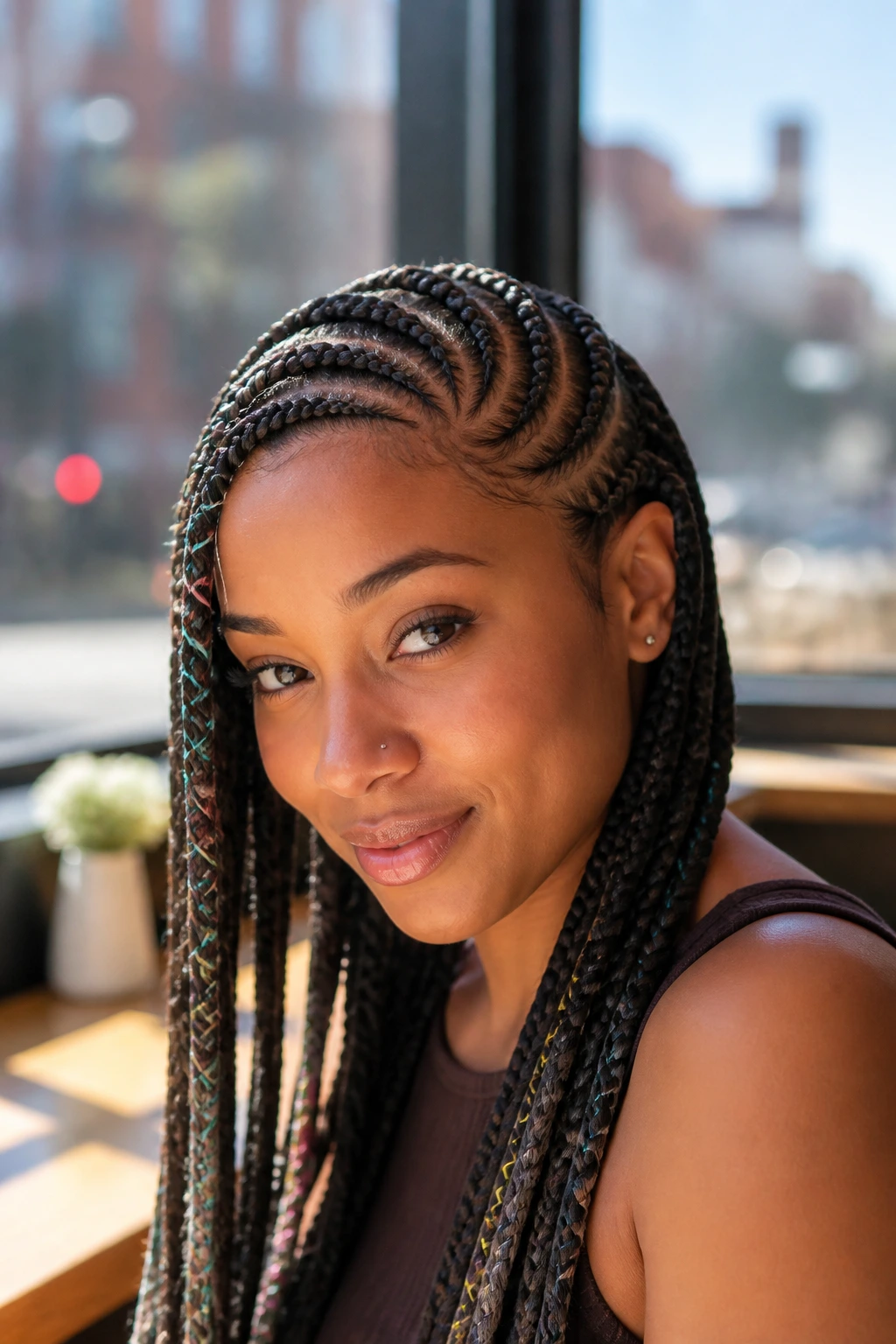
Weaving colorful threads or ribbons through your braids is a great way to add texture and color without needing to dye your hair or buy colored extensions. For straight hair, the smooth surface of the braid makes it very easy to wrap thread around, and it stays in place quite well.
Choosing Your Materials
- Use embroidery floss for a matte, earthy look.
- Use silk ribbon if you want a more luxurious, shiny finish.
- Don’t wrap the thread too tightly; it should be tight enough to stay, but loose enough to not cause tension or pulling on your natural strands.
The Process
- Work in sections; add the thread after the braid is completed, wrapping it from top to bottom.
- You can cover the entire length of the braid or just add small sections for an understated look.
15. The “Feed-In” Ponytail Lemonade Braid
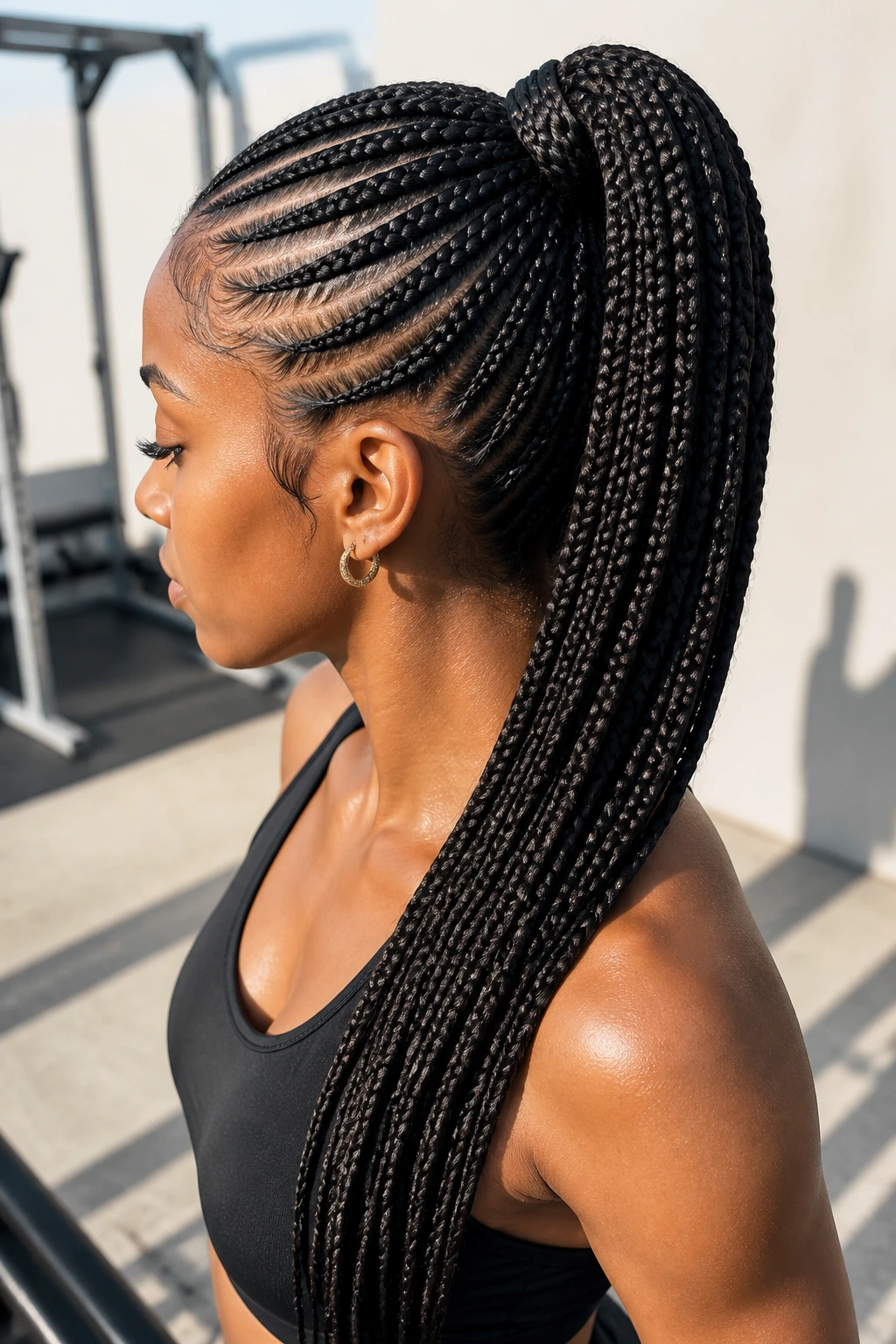
This style gathers all the braids into one high, thick ponytail. It takes the side-swept look and elevates it by creating a central focal point at the crown. It’s an incredibly practical style for the gym or high-activity days, as it gets all the hair off your neck and face entirely.
How to Achieve the Look
- The braids are fed in towards the center of the head, creating a “hub” where they all meet.
- Use a sturdy, snag-free hair tie to secure the base.
- You can wrap a small section of braid around the hair tie to hide it, which makes the style look seamless and professional.
Advantages of the Ponytail
- It puts zero weight on the nape of your neck, making it the most comfortable style for hot days.
- It is visually very clean, which makes it perfect for a professional or formal environment.
16. Lemonade Braids with Pastel Accents
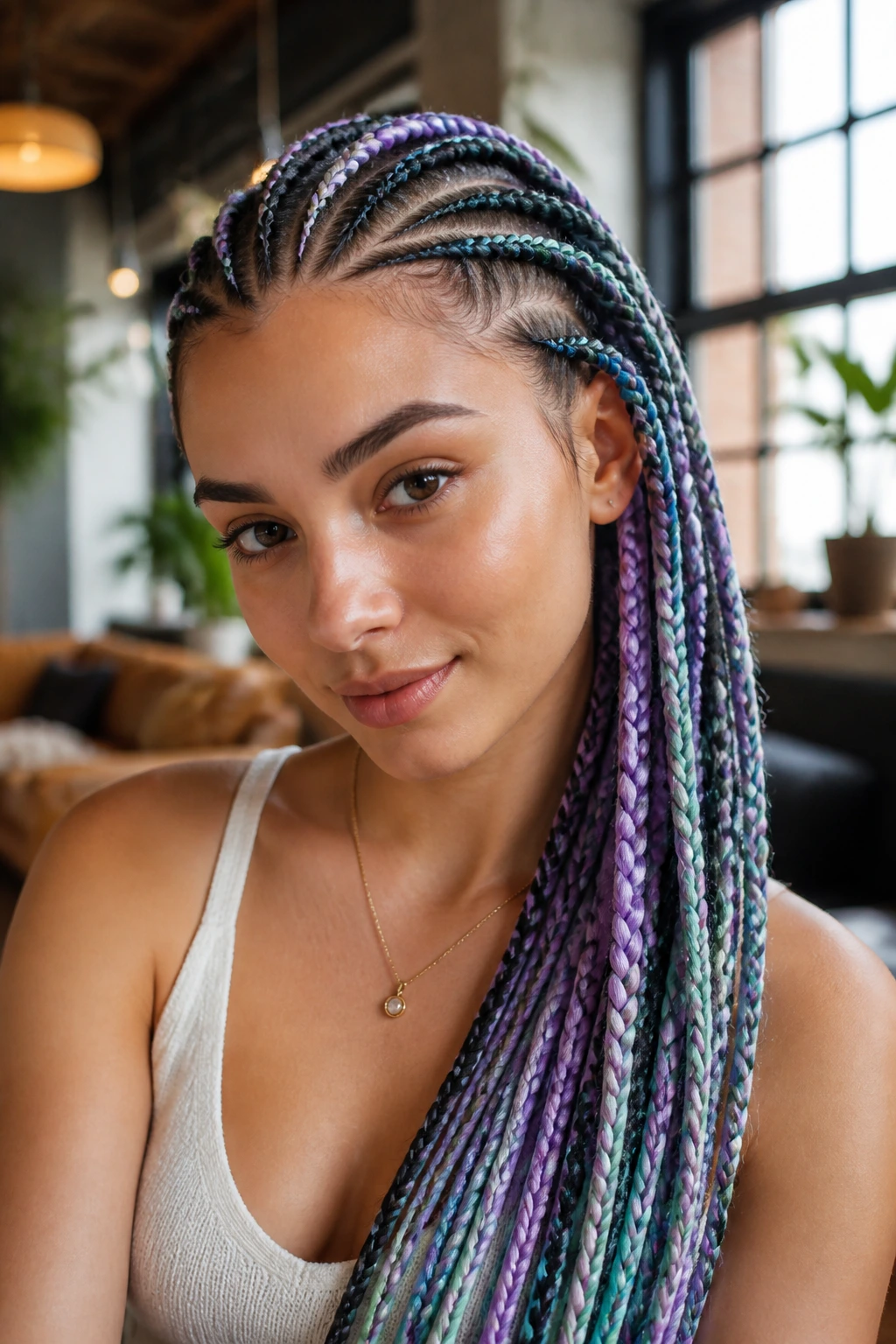
Soft lavender, mint green, or baby pink extensions can create a dreamy, ethereal look that is increasingly popular. For straight hair, these pastel shades show up vibrantly against your natural root, creating a high-fashion aesthetic.
Why Pastels Work
They are much softer than neon colors and offer a more sophisticated, curated vibe. They work well with minimalist fashion, acting as the perfect accessory to a neutral wardrobe.
Care and Maintenance
- Pastels are harder to keep clean; be mindful of your environment, as they can pick up dust more easily.
- Avoid heavy hair products that can build up and dull the color.
- Use a dry shampoo spray on your roots to keep them fresh and grease-free without needing to wash the braids frequently.
17. The Goddess Lemonade Braid
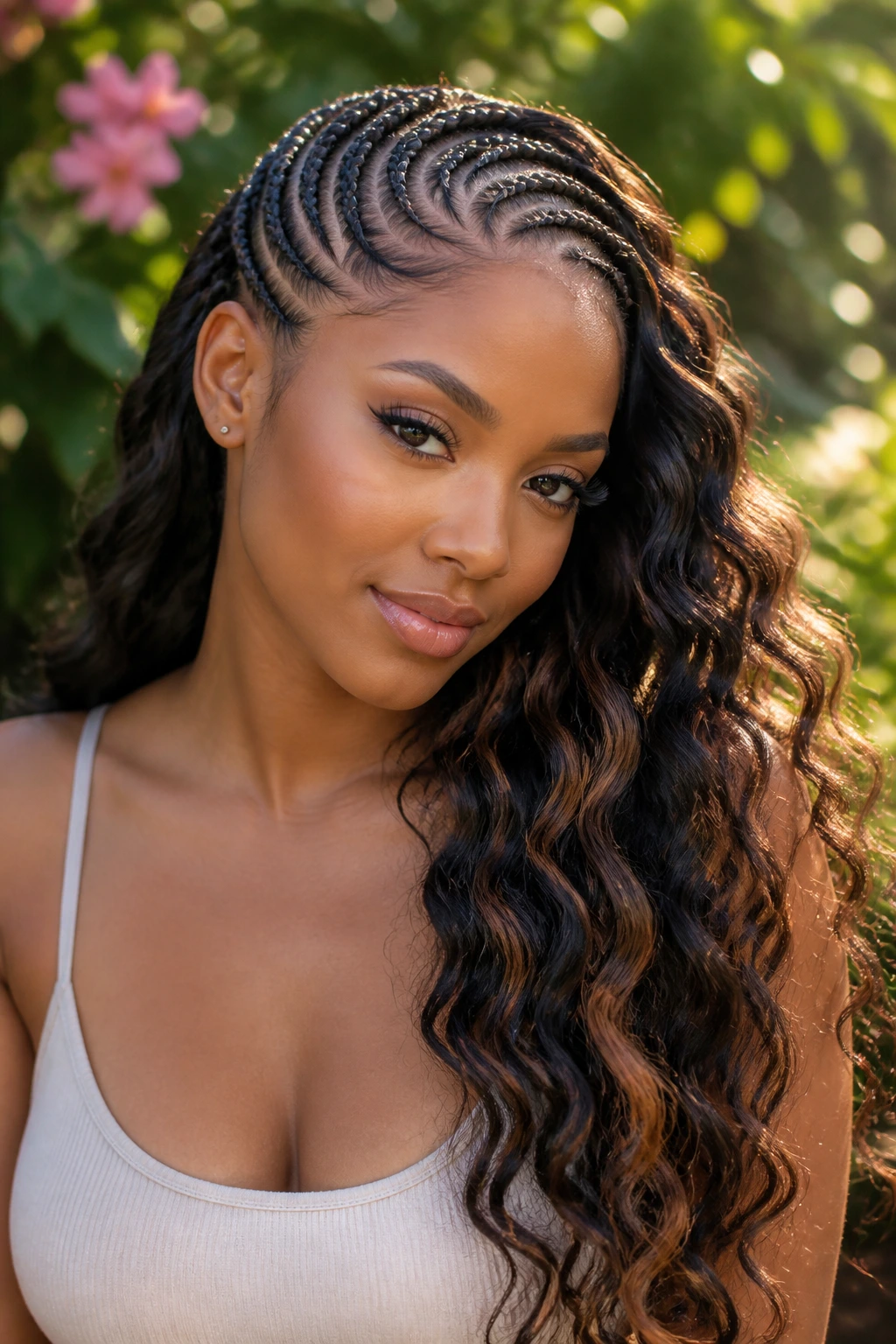
This style mixes traditional cornrows with loose, wavy extensions that are fed into the braid at intervals. The result is a blend of tight, groomed roots and flowing, romantic waves. It is arguably the most popular variation of the lemonade braid style because it softens the face so effectively.
Achieving the Flow
- The loose hair should be of a high-quality synthetic or heat-friendly fiber so that it doesn’t tangle.
- Don’t add too many loose sections; the goal is to have the braids still be the primary focus.
- A “less is more” approach works best here to keep the style from becoming overwhelming.
Handling the Loose Hair
- Keep a detangling spray nearby.
- Brush the loose hair gently with a wide-tooth comb each morning to keep the waves defined and free of knots.
18. Patterned Lemonade Braids
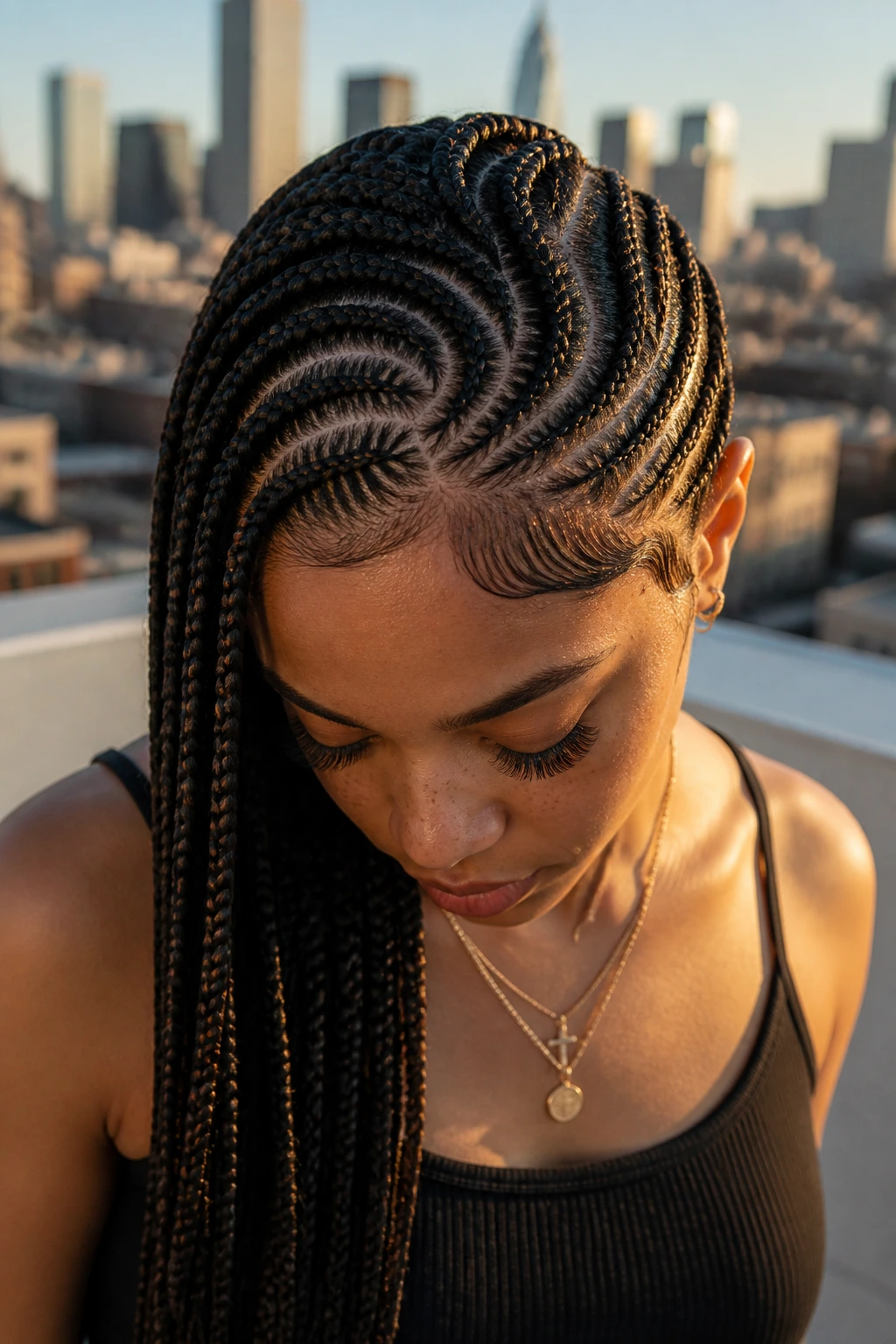
Beyond the straight lines, you can incorporate complex patterns like S-curves or arches. This requires a very skilled braider who can visualize the pattern on your scalp before starting. It turns your hair into a geometric map of creativity.
Why This Style Requires Professional Help
You cannot easily see the back of your own head to verify the pattern, so this is definitely a professional-only style. Ensure you have a reference photo for your stylist to follow, and be ready to adjust based on your specific head shape.
Longevity of Complex Patterns
- These styles take longer to install, so they are a bit more of an investment.
- They are also harder to touch up, so enjoy them as they are and be prepared to take them down once the roots grow out past the pattern area.
19. Lemonade Braids with Braided Ends
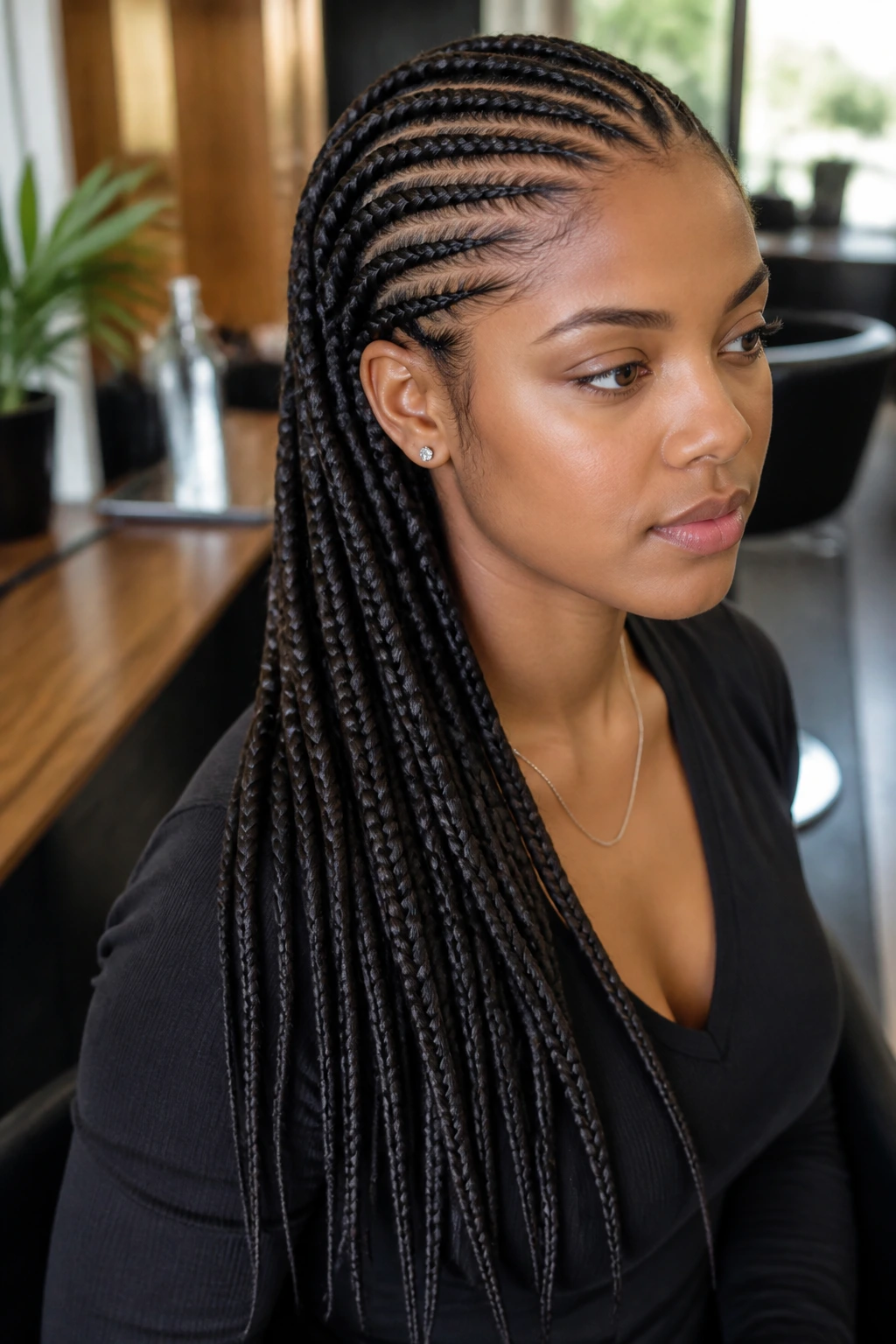
Instead of letting the ends hang loose or curling them, you can continue the braid pattern all the way to the very bottom, creating a uniform, braided-from-root-to-tip look. This is a very clean, minimalist style that is incredibly easy to maintain.
The Advantage of Braided Ends
- No tangling.
- No need for hot water setting.
- It feels very uniform and sleek, which is a major aesthetic plus for those who love clean, organized lines.
Styling the Tips
- Seal the ends with a bit of superglue (for extreme hold) or a small clear rubber band if you want them to be more temporary.
- You can add a single bead or a cuff at the very end to finish the look.
20. The “Thick and Thin” Lemonade Braid Mix
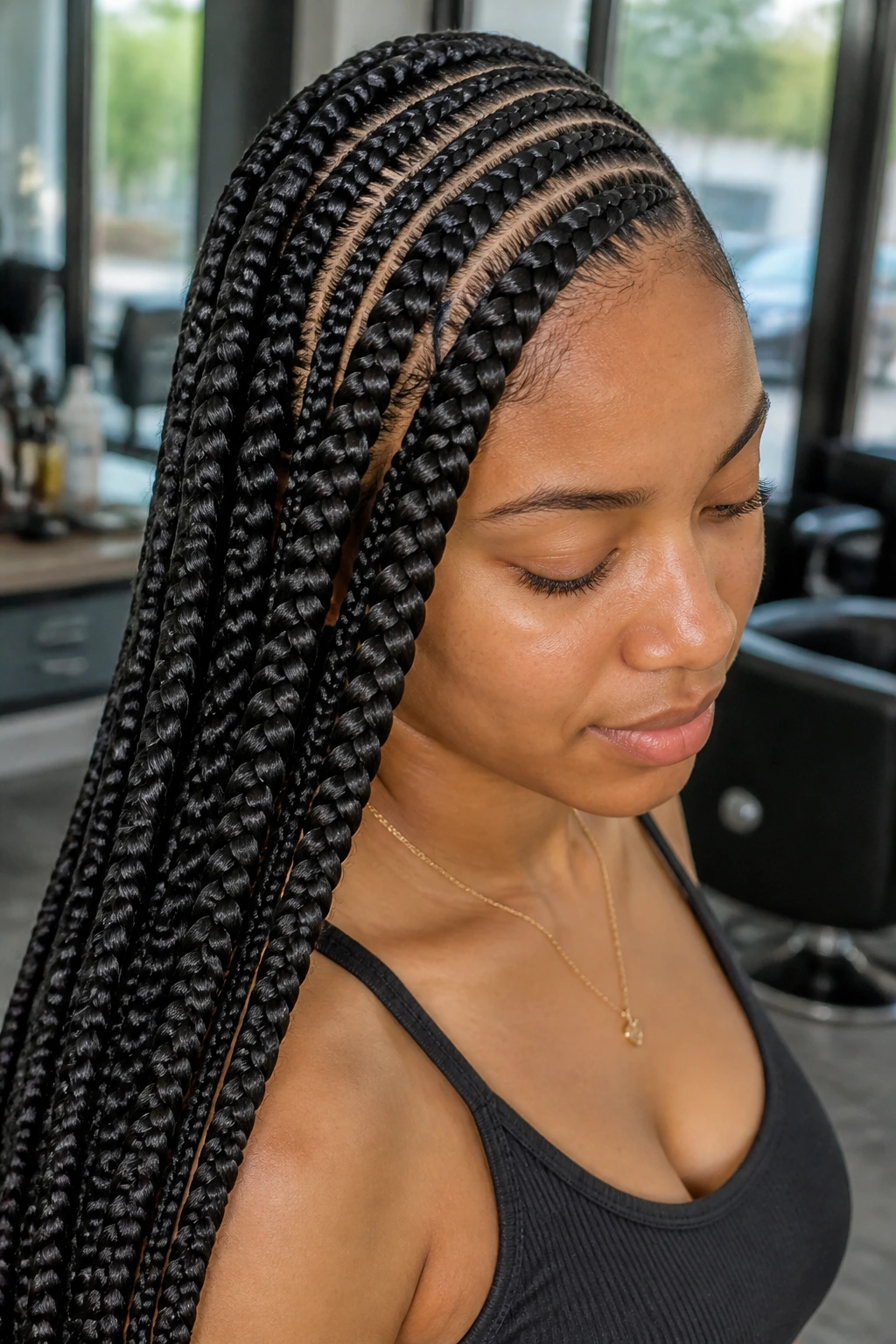
This style alternates between one large, thick braid and two smaller, thinner ones. It creates a rhythmic visual texture that is far more interesting than having all braids of the same size. It’s a great way to handle straight hair because the smaller braids act as “anchors” for the larger ones.
The Aesthetic Impact
It looks almost like a waterfall of varying widths. The small braids help keep the hairline looking precise, while the larger braids add volume and height to the crown. It’s a masterful way to manipulate the volume of your hair.
Final Tips for Success
- This is a highly skilled style, so look for a portfolio that shows experience with varied braid sizes.
- Don’t forget to protect your scalp; even though the braids are stylish, the skin underneath needs to stay moisturized to prevent itching or flaking.
Final Thoughts
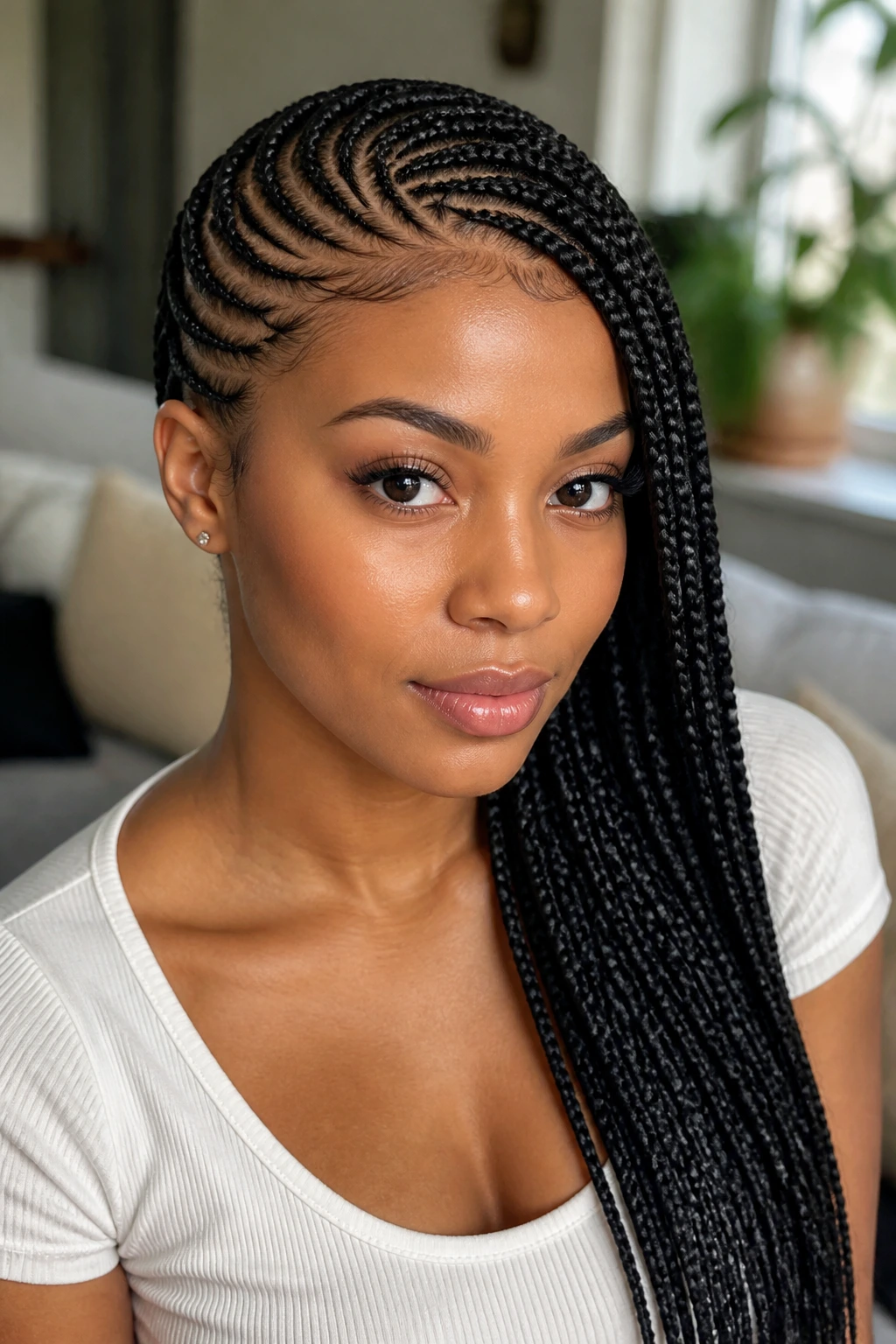
The beauty of lemonade braids lies in their clean, deliberate lines and the way they transform your look while acting as a reliable shield for your natural hair. For those with straight hair, the shift toward a braid-heavy style can feel like a departure, but it is one of the most effective ways to manage your ends and reduce daily heat exposure. Whether you choose a classic side-swept look or an intricate patterned design, the key is always in the preparation—healthy, moisturized scalp, firm parting, and a skilled set of hands to ensure the tension is just right.
Remember that any protective style is a partnership between you and your braider. If you have fine, straight hair, do not be afraid to voice your preferences regarding the amount of tension and the size of the braids. You know your scalp better than anyone, and comfort is just as important as the final result. Treat your braids well, keep your scalp clean, and enjoy the weeks of freedom that come with having a beautifully finished, low-maintenance hairstyle.