

You roll out of bed, the alarm blares for the second time, and the panic sets in—you have exactly twelve minutes to look like you have your life together before you need to be out the door. For those of us navigating a high-speed lifestyle, the daily battle with hair texture, frizz, and styling fatigue is all too familiar. You want something that looks polished, intentional, and, most importantly, requires zero effort once you’ve finished that first cup of coffee. This is where the enduring elegance of Ghana braids enters the frame.
These are not just simple cornrows. Often called invisible cornrows or feed-in braids, the magic of this style lies in the gradual addition of extensions, which creates a seamless, natural-looking start at the hairline. They begin flat and tight, gently swelling in size as they travel toward the nape of the neck or the ends of your hair. This structural evolution provides a sleek, sophisticated aesthetic that lasts for weeks. When you have a demanding schedule, waking up with your hair already “done” is less of a luxury and more of a survival strategy.
Unlike styles that demand daily refreshing or careful nighttime wrapping to avoid breakage, Ghana braids are remarkably resilient. They frame your face with architectural precision, allowing you to breeze through your morning routine without so much as touching a comb. Whether you are aiming for a professional look for the office or a low-maintenance style that holds up through a weekend of travel, the versatility of these braids is unmatched. Let’s look at how you can leverage these styles to reclaim your morning hours.
1. Classic Straight-Back Ghana Braids
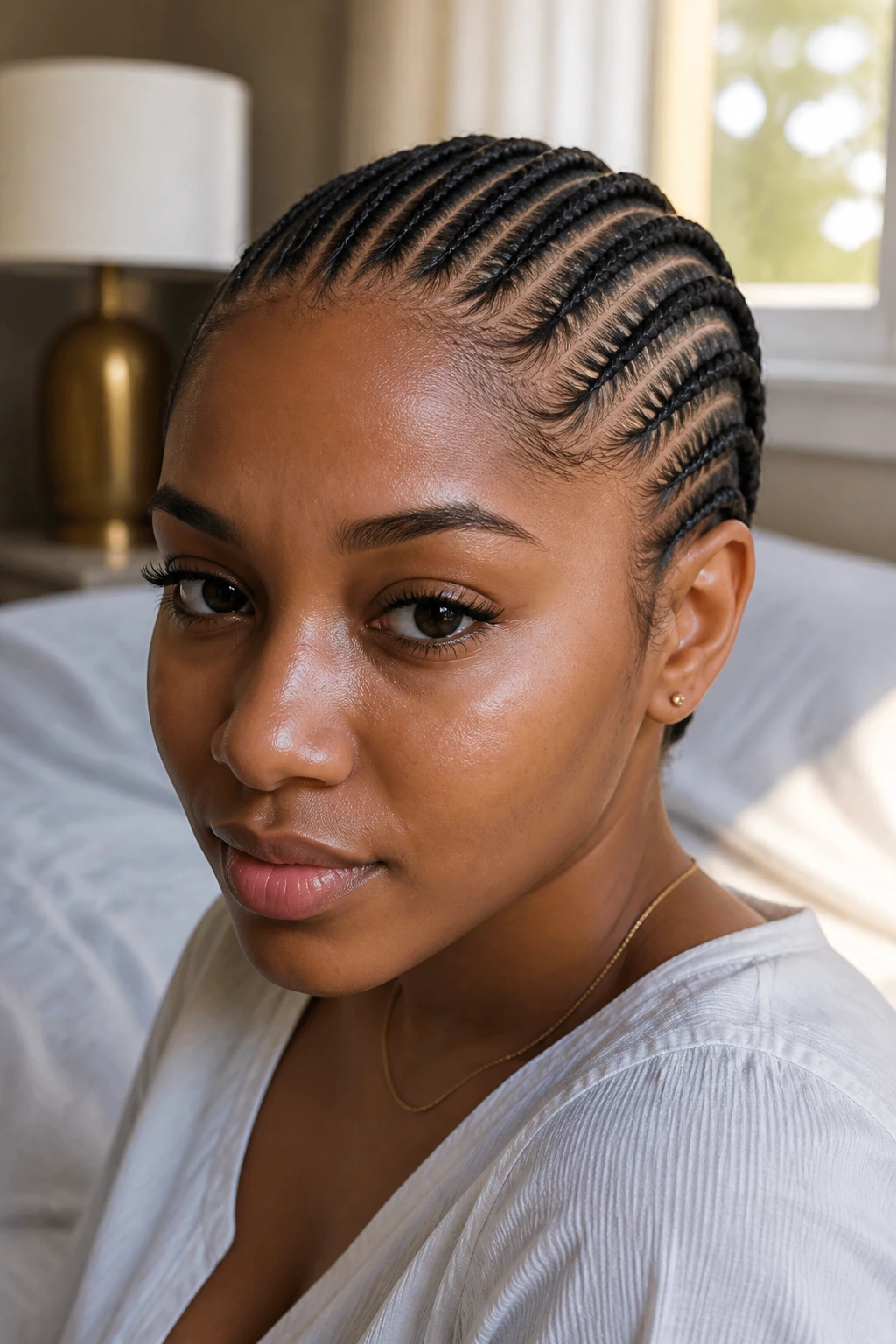
This is the foundational look that started the trend, featuring straight, uniform lines running from the front hairline all the way to the nape. It is the ultimate “get up and go” style because the symmetry is so clean it never looks messy, even after a long day of work or a grueling commute. The beauty of the straight-back style is its ability to showcase the natural contours of your head while providing a streamlined profile that looks incredible with everything from a structured blazer to a casual hoodie.
Why It Works for Busy Mornings
Because there are no complex patterns or varying directions, this style is essentially “set it and forget it.” You do not need to worry about styling your edges every single morning because the tightness of the feed-in technique keeps everything locked firmly in place. It is the lowest maintenance option available for those who want a professional appearance without the fuss of daily manipulation.
Maintenance Tips
- Use a silk or satin scarf at night to keep the parts sharp and prevent flyaways from creeping out of the braids.
- Apply a light-hold setting mousse if you notice any fuzziness near the hairline after a few days.
- Avoid heavy gels that can cause product buildup, as this style should feel light and airy against the scalp.
2. High-Pony Ghana Braid Variations
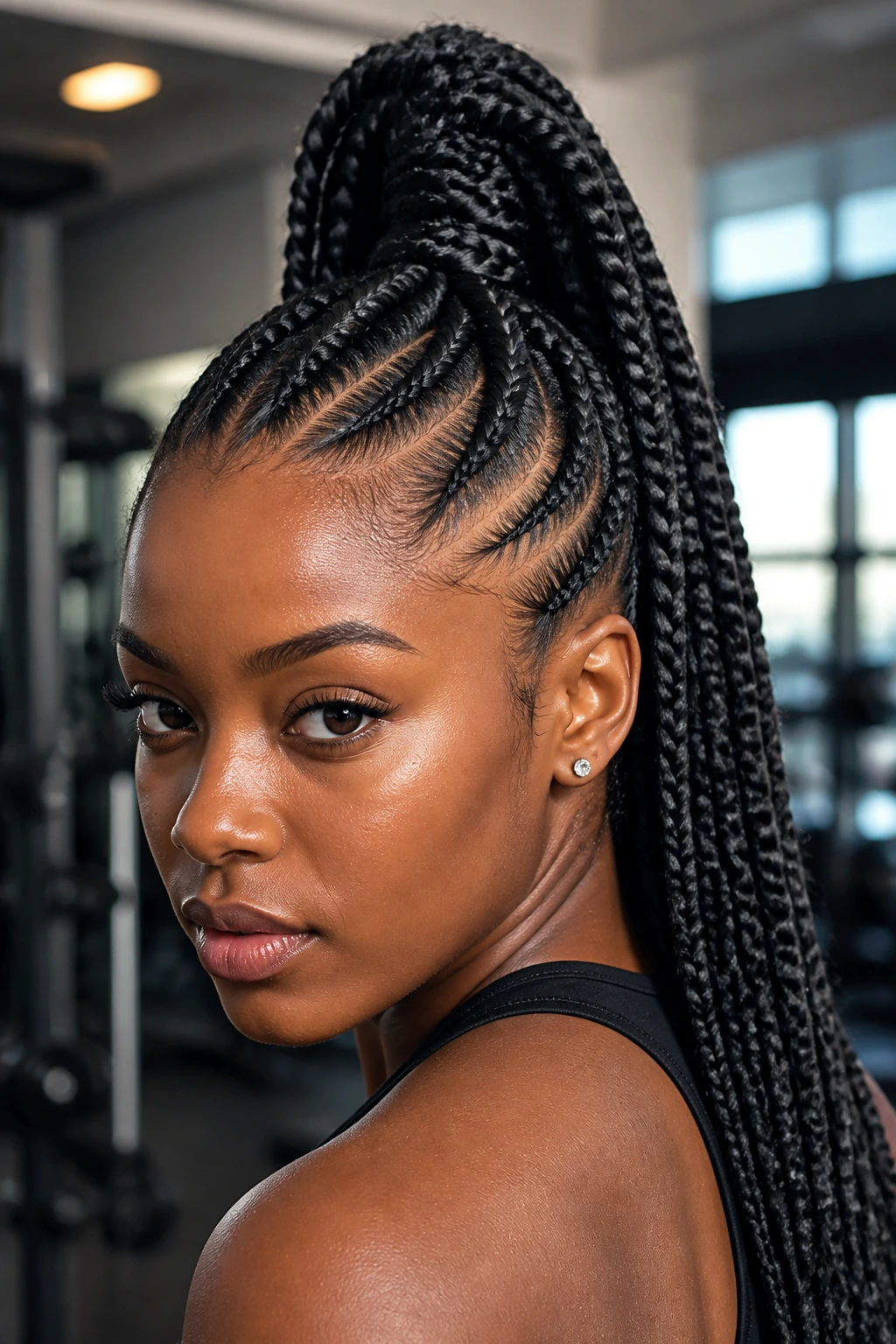
If you prefer your hair off your neck, a high-ponytail version of Ghana braids offers that coveted lift and drama. By gathering several feed-in braids into a single, high-tension ponytail, you gain an immediate facelift effect. This style is particularly effective for those who find that long, loose braids get in the way during a workout or a hectic day at the office.
Achieving the Perfect Lift
To get this look right, the base braids must be directed toward the crown of your head before they are secured into a wrap. The transition from the scalp-hugging braid to the free-hanging ponytail is where the “feed-in” technique truly shines; you want that point to be smooth and free of visible knots or bumps. It creates a sleek base that looks intentionally designed, not just gathered up in a rush.
Versatile Styling Options
- Wrap a few loose strands of braiding hair around the base of the ponytail to hide the elastic band for a seamless, finished appearance.
- Experiment with the length; longer extensions provide a more dramatic, runway-ready silhouette.
- If the weight feels too heavy, consider using pre-stretched braiding hair, which is significantly lighter and easier on the hairline.
3. Side-Swept Ghana Braids
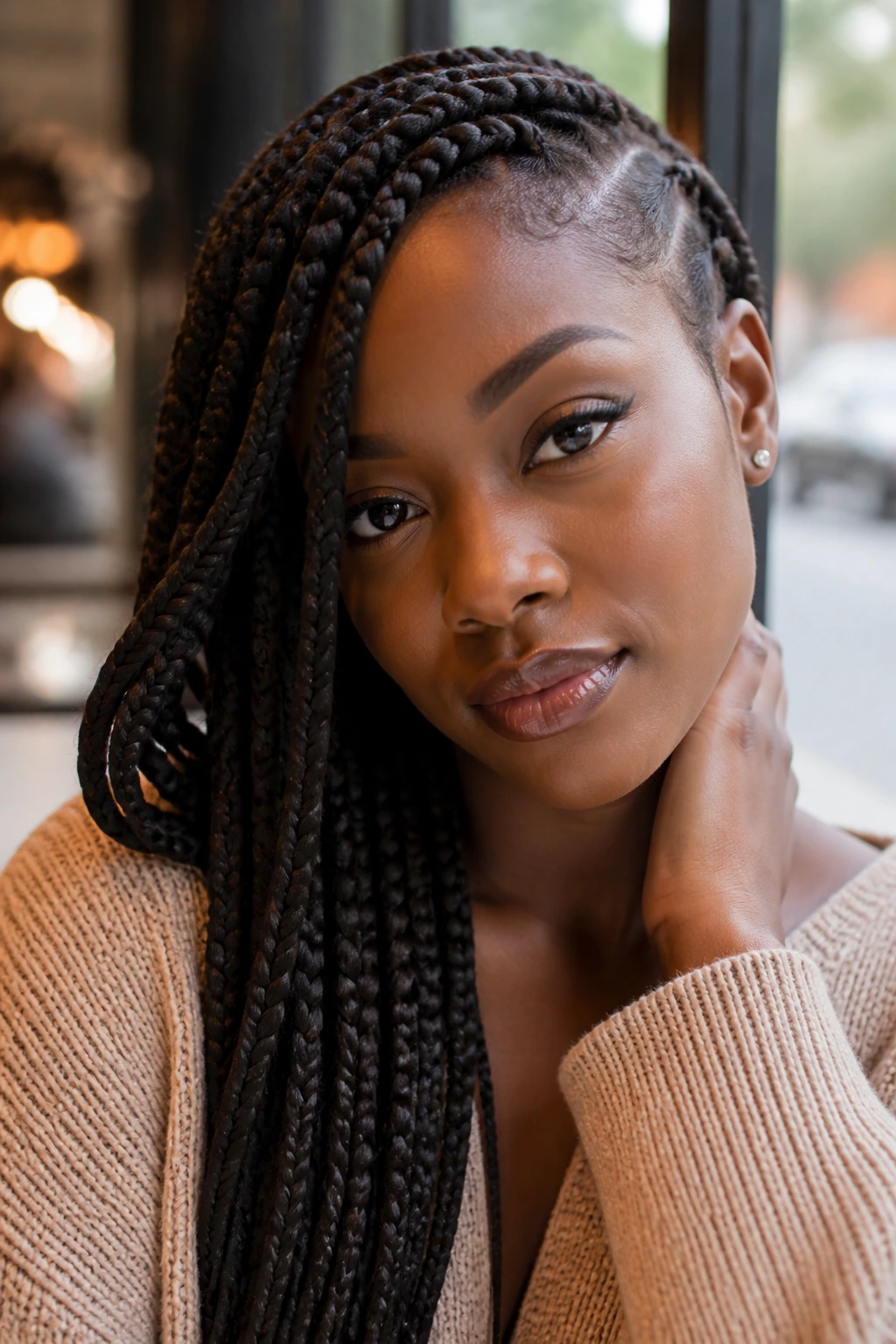
Moving the center of gravity to one side of the head changes the entire vibe of the style, turning a standard protective look into something much more flirtatious and asymmetrical. Side-swept Ghana braids are perfect if you want to soften your features, as the diagonal lines draw the eye across the face and provide an elegant, sweeping effect. It feels a bit more “done” than the straight-back version, making it a great choice for events where you want to look polished but still accessible.
Styling for Asymmetry
The key here is the initial parting. Your stylist needs to create a deep side part that dictates the flow of every single braid. Because all the braids are gathered to one side, you don’t have to deal with hair falling in your face while you are trying to type, drive, or move through your day. It is an incredibly functional style for those who keep their hair down but hate having to constantly tuck it behind their ears.
Who This Style Suits Best
- Those with rounder face shapes, as the diagonal flow helps elongate the appearance of the face.
- Anyone who struggles with keeping hair away from their dominant hand side during tasks.
- If you have an important presentation and want to feel confident, the side-swept look provides a regal, put-together aesthetic.
4. Ghana Braids with Criss-Cross Parts
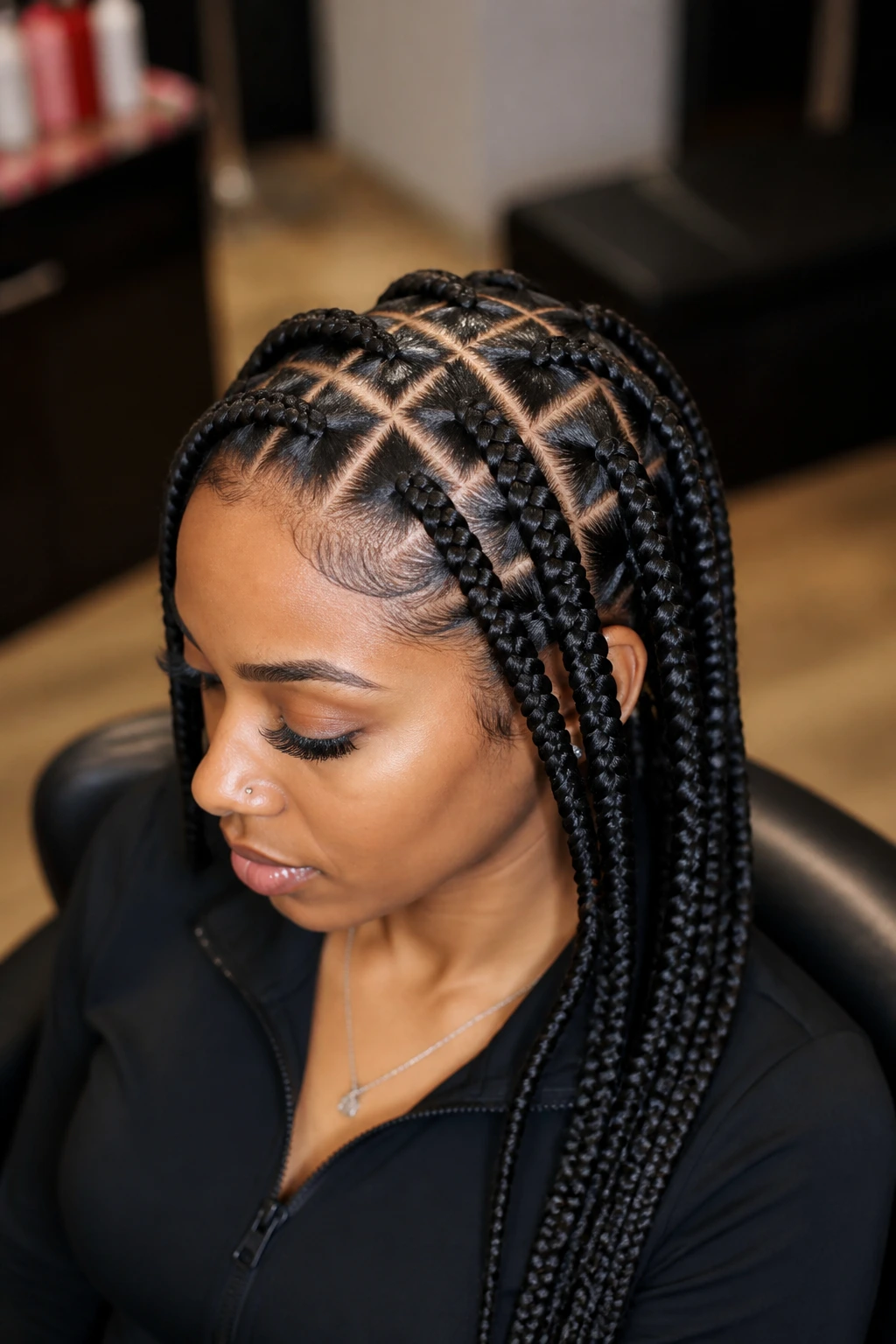
When you want to add a bit of personality to your morning hair, swapping standard straight parts for geometric or criss-cross patterns makes the style feel bespoke. These braids aren’t just about the hair; they are about the negative space created on the scalp. A zigzag or triangular pattern between your Ghana braids elevates the entire look, making it a design statement rather than just a protective necessity.
Precision is Paramount
This style relies heavily on the sharpness of the parts. If the parts are messy, the “criss-cross” effect gets lost, and the style looks cluttered. You should always ensure your stylist uses a rat-tail comb with a metal end for the most precise lines possible. Once the braids are installed, these sharp parts stay crisp for weeks, saving you the trouble of re-parting your hair every morning.
Adding Accessories
- Incorporate gold or silver hair cuffs at the intersections of the criss-cross parts to lean into a more editorial, high-fashion aesthetic.
- Keep the scalp hydrated with a lightweight oil spray, as exposed parts can sometimes become dry or itchy before the rest of the scalp.
- If you notice a stray hair popping out of a part, simply use a bit of edge control and a small brush to sweep it back in line.
5. Jumbo Ghana Braids
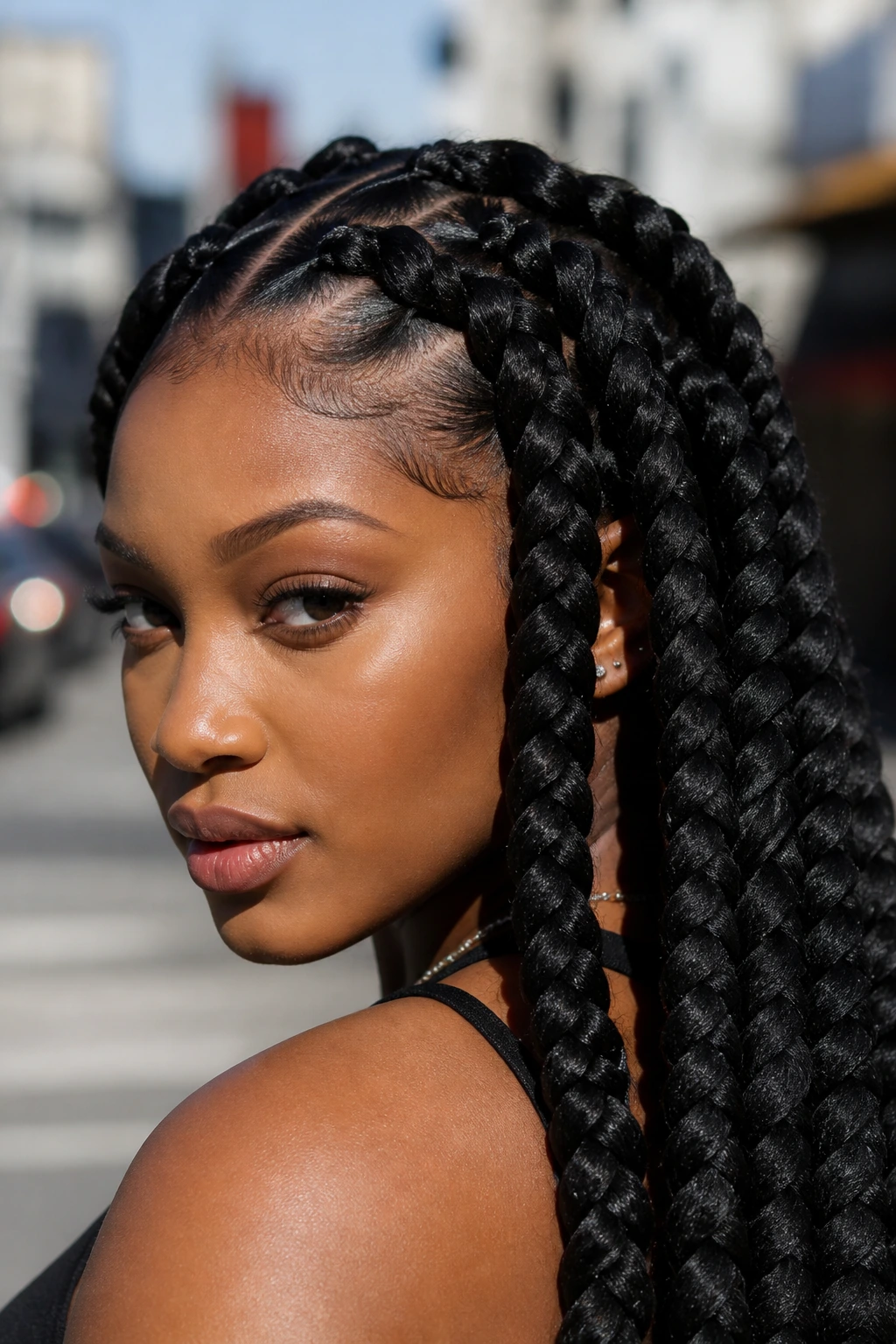
Not everyone has the patience for small, intricate braids that take six hours in the chair. Jumbo Ghana braids are the perfect solution for the time-poor individual. Because the braids are much larger and thicker, the installation time is cut down significantly. Despite their size, they still maintain that sleek, “feed-in” aesthetic that makes Ghana braids so popular in the first place.
The Impact of Size
Because these braids are so substantial, they can feel a bit heavier initially. The trick is to ensure your stylist does not “feed in” too much hair too quickly, which can cause tension at the root. You want a smooth, gradual increase in size that looks intentional. When you walk out of the salon with jumbo braids, you get a bold, statement-making look that works for both the gym and a formal dinner.
Why They Save Morning Time
- You have fewer individual braids to worry about managing, twisting, or styling.
- They are less prone to matting because the braid structure itself is so much larger.
- They have a “dreadlock-like” quality that looks even better as they age and get a little bit of natural texture.
6. Ghana Braids with Curly Ends
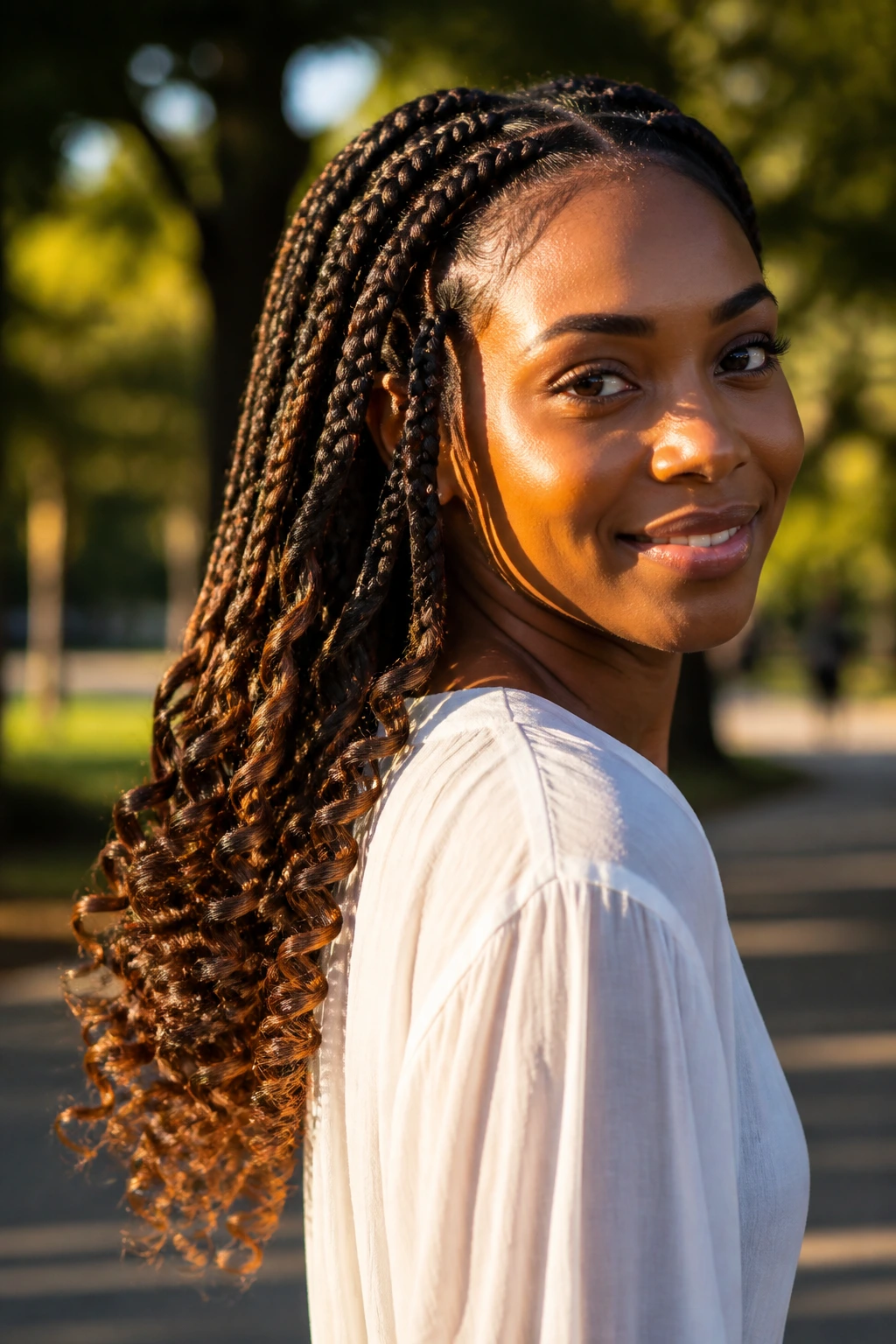
This is the ultimate soft-glam version of the style. By stopping the braid midway or near the ends and letting the remaining braiding hair hang loose in a tight spiral or wave, you achieve a “goddess” aesthetic. The contrast between the rigid, precise cornrow base and the soft, bouncy curls creates a beautiful visual tension that feels very feminine and light.
Managing the Texture Difference
You are essentially mixing two types of hair styling here: the protective braid and the maintenance-heavy curl. You must be prepared to treat the ends with a little bit of care. Use a leave-in conditioner spray on the curly sections each morning to keep them from getting tangled or frizzy. A quick shake of the head is usually all it takes to revive the volume, making it a high-reward, low-effort style.
The Benefit of Loose Ends
- It takes the “stiffness” out of the look, especially if you have a softer personal style.
- The curly ends add movement, which makes the hair feel more alive than standard, stiff braids.
- It’s incredibly easy to pull these into a loose bun if you need a quick change of pace during your day.
7. Half-Up, Half-Down Ghana Braids
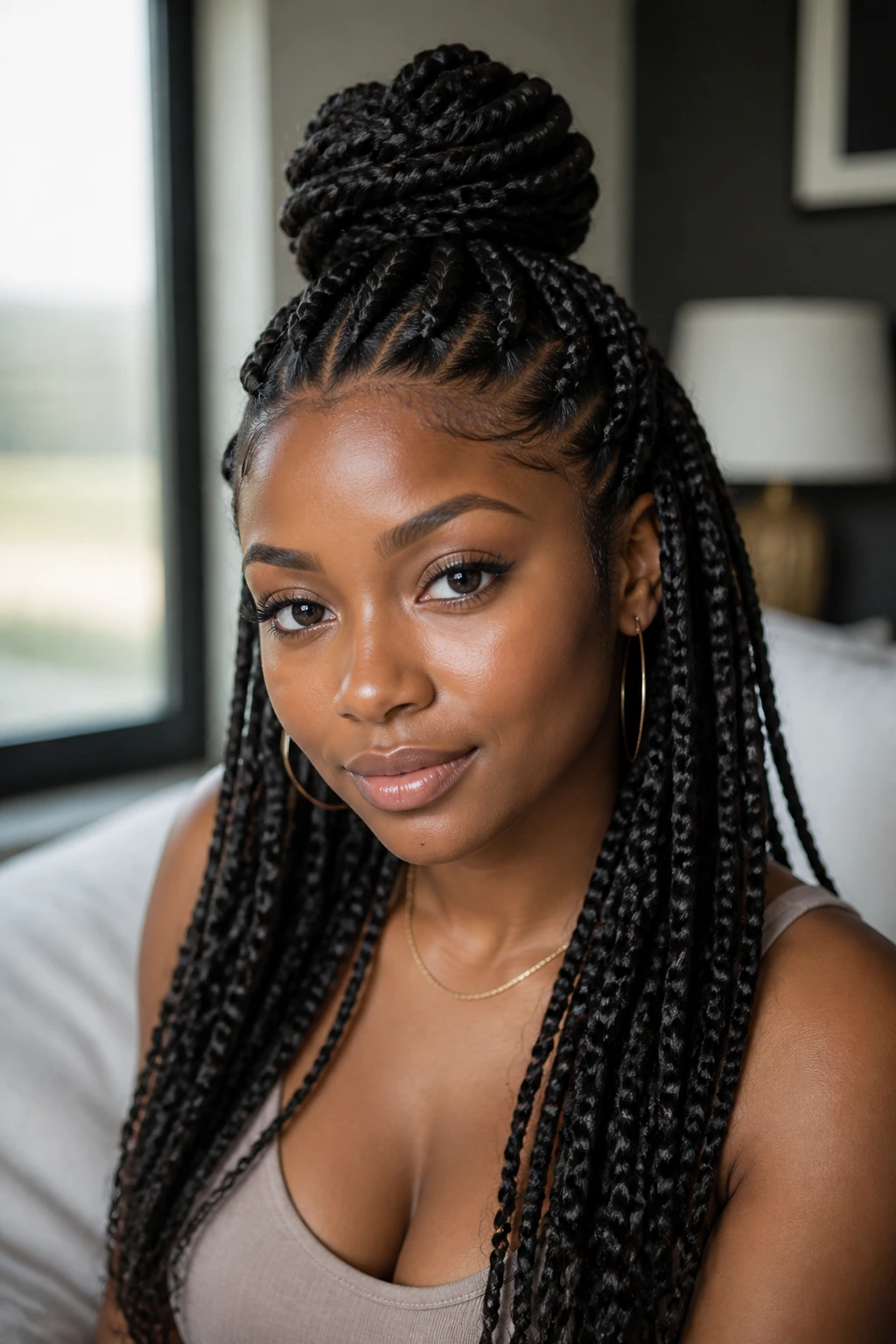
Can’t decide if you want your hair in your face or out? The half-up, half-down style gives you the best of both worlds. By pulling the top sections of your Ghana braids into a bun or a ponytail while letting the rest flow freely, you create a look that is playful and versatile. It is the perfect hybrid for someone who wants to look professional during the workday but doesn’t want to feel restricted by their hair.
Balancing the Tension
Since you are pulling some braids up, you need to make sure the tension is distributed evenly. Avoid pulling the braids so tight that they tug at your hairline. If you do this style consistently, try switching up the position of the bun—sometimes top-knot, sometimes mid-height—to prevent stress on your scalp.
Styling Tips for the Office
- Use a decorative scrunchie to add a pop of color that matches your outfit.
- If you have braids with curly ends, this half-up look is the best way to showcase those spirals while keeping your eyes clear.
- It’s a great style for transitional weather when you want your hair off your neck but don’t want to tie it all up.
8. Tribal-Inspired Ghana Braid Patterns
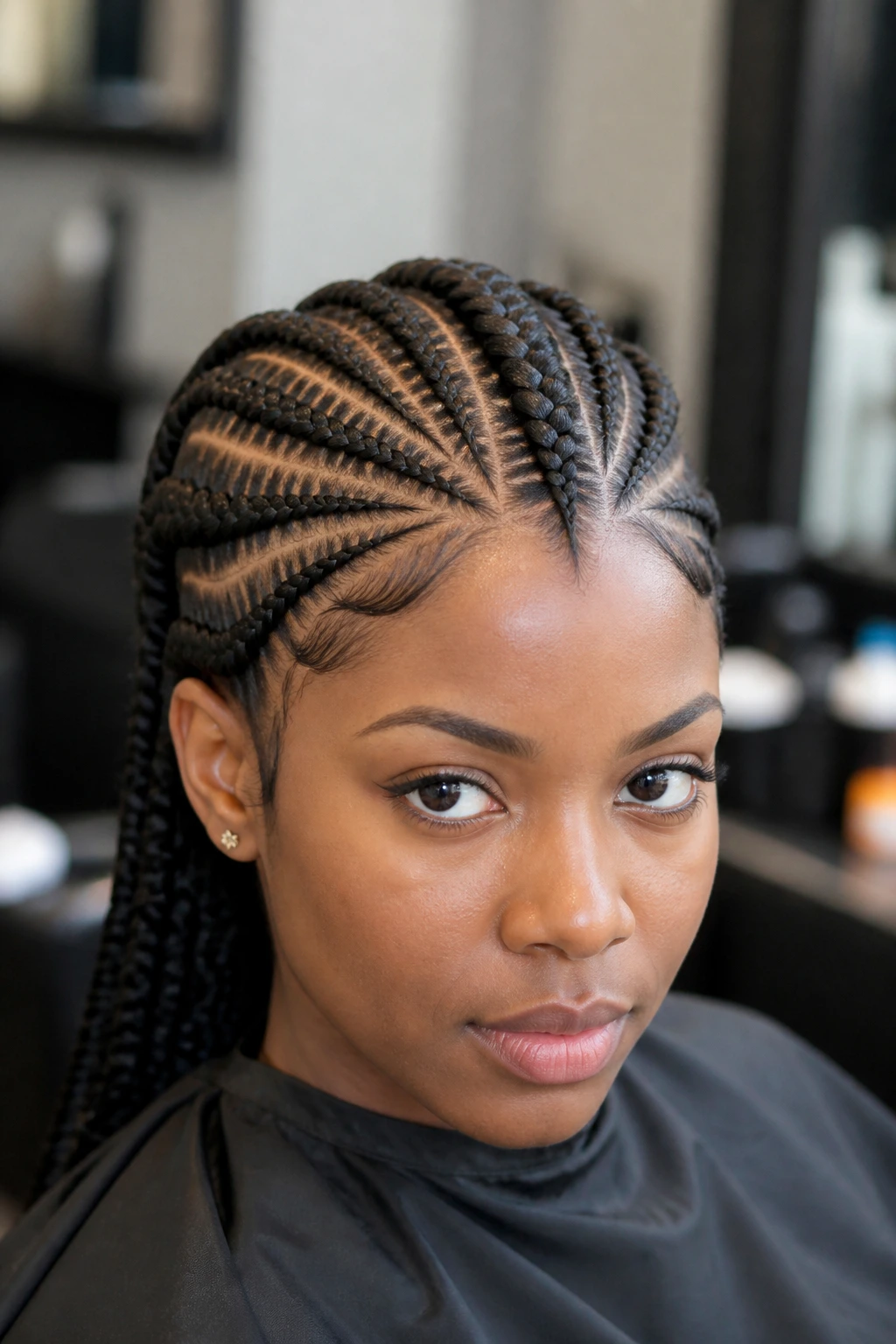
Ghana braids are a great base to incorporate cultural motifs, such as Fulani-inspired front patterns. This usually involves a center braid and some smaller, intricate braided details along the temples, flowing into larger Ghana braids in the back. It adds a layer of artistry to your hair that makes it look like you put in hours of effort, even if you spent zero seconds on it this morning.
Complexity Meets Simplicity
The genius of this style is that the complexity is front-loaded. You spend the time at the salon getting the intricate patterns done once, and then you reap the benefits of that complexity for weeks. You don’t need to do any additional styling to “activate” the pattern; it exists on its own, providing a decorative frame for your face.
Maintaining the Detail
- Be careful when washing your hair; focus on the scalp and try not to disturb the small, decorative front braids.
- Use a scalp oil that has a nozzle tip to reach the small, intricate parts without creating a mess on the braids themselves.
- If you feel like changing the look, these small front braids are often the first to be updated, giving you a fresh aesthetic without a full take-down.
9. Red or Colored Ghana Braids
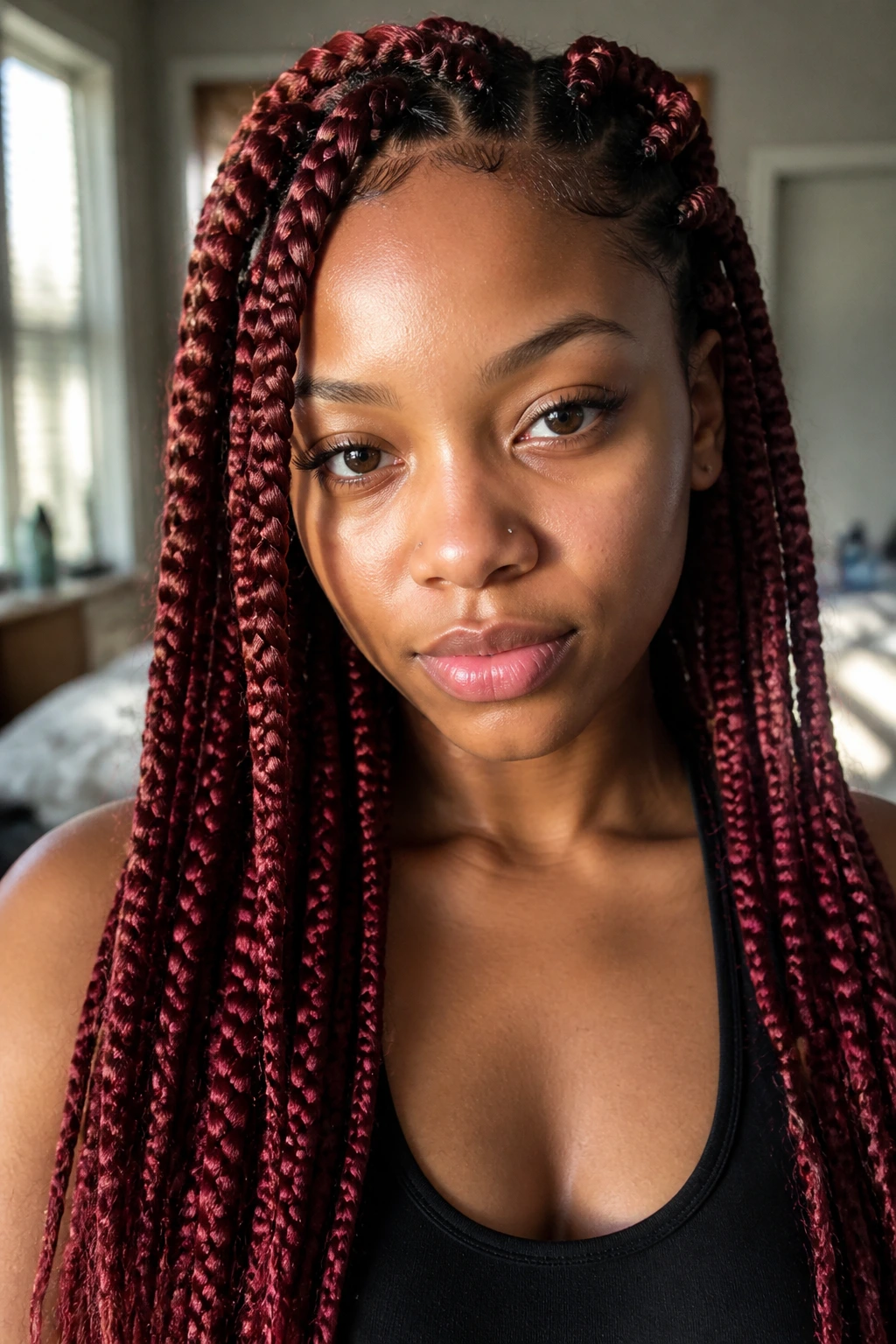
Color is the easiest way to make a standard hairstyle feel completely new. Whether you go for deep burgundy, classic honey blonde, or electric cobalt blue, adding color to your Ghana braids allows you to express your personality without changing the actual structure of the style. On a busy morning, a vibrant hair color does the “styling” for you; you don’t need fancy clips or accessories when the hair itself is a statement.
Choosing Your Tone
When choosing braiding hair for this style, consider your complexion and your wardrobe. If you wear a lot of neutrals, a pop of color in your hair acts as your main accessory. If you are worried about commitment, start with a subtle blend of colors rather than a full head of neon, as you will be living with this choice for several weeks.
Managing Colored Extensions
- Colored braiding hair can sometimes be a bit stiffer than natural-toned hair, so check the texture before installation.
- Use a color-safe mousse to prevent the tone from looking dull over time.
- If the ends are curly, make sure to use a specialized color-protecting serum to keep the hue vibrant.
10. Ghana Braids with Beaded Ends
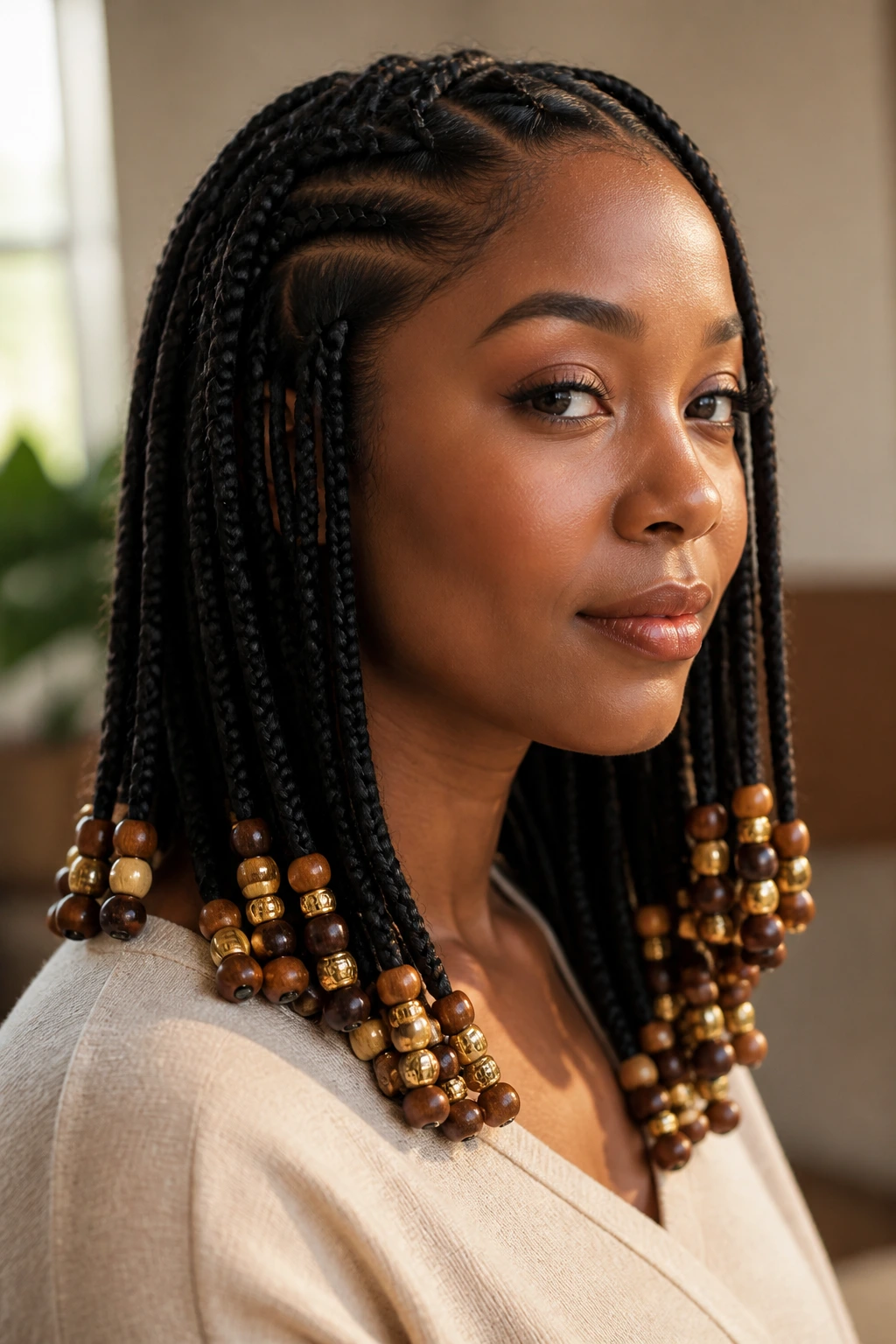
Adding wooden, clear, or gold beads to the ends of your braids is a timeless choice that adds a subtle chime and movement to every step you take. This is a fantastic option if you want to elevate the style for a special occasion without needing a complex updo. The weight of the beads also helps keep the braids from floating or getting tangled, which is an unexpected functional benefit for busy mornings.
Selecting Your Beads
The type of beads you choose will dictate the overall look. Wooden beads give a natural, earthy vibe, while clear acrylic or gold-plated beads feel more polished and modern. You can mix and match to create a custom pattern that reflects your style. It is a quick way to change the entire aesthetic of your braids without having to redo the installation.
Installation and Care
- Use a bead threader to ensure you don’t pull or snag your natural hair when applying the beads.
- Secure the beads with a small rubber band at the end of the braid to prevent them from sliding off.
- If you find the sound of beads distracting during meetings, you can always remove them for more formal days.
11. Low-Bun Ghana Braids
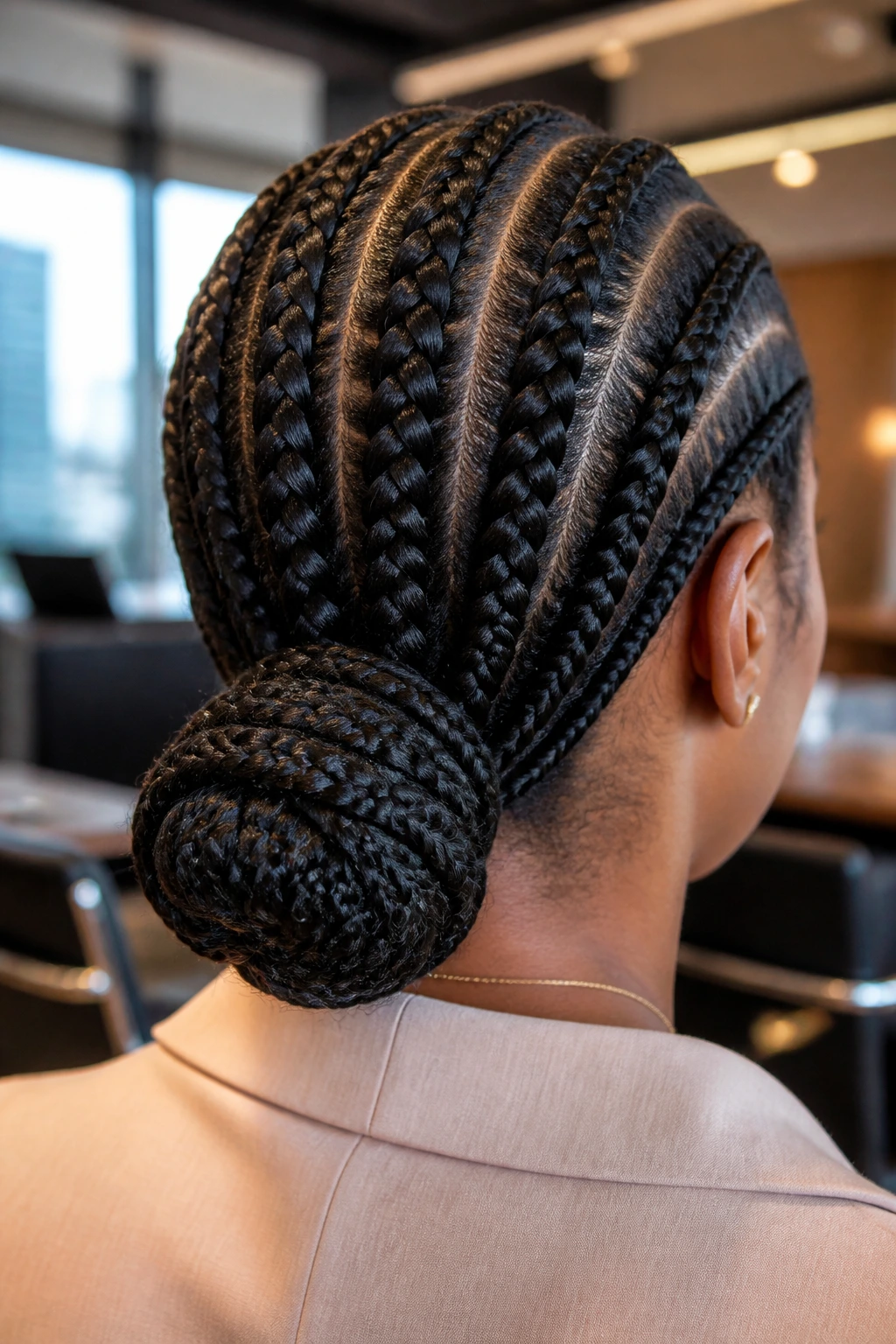
A low bun at the nape of the neck is the epitome of sophisticated, understated style. By taking all your feed-in braids and coiling them into a tight, circular bun at the back, you achieve an elegant look that is perfectly suited for high-stakes environments. It keeps the hair entirely off your face and neck, making it a great choice for warmer months or environments where you need maximum focus.
Creating the Perfect Coil
The key to a good low bun is ensuring the base of the bun is secure so it doesn’t droop. Use a sturdy hair tie, but don’t over-wrap it, as you don’t want to put too much tension on the point where the braids meet the scalp. Once the bun is formed, you can tuck the ends of the braids underneath the coil to create a seamless, professional finish.
When to Choose This Style
- It is the ultimate “power style” for interviews or important meetings.
- It protects your ends from friction against your clothes, which helps in retaining length.
- If you have a long day that starts at the gym and ends at a dinner, a sleek low bun is the most versatile transition style.
12. Intricate “Swirl” or Radial Ghana Braids
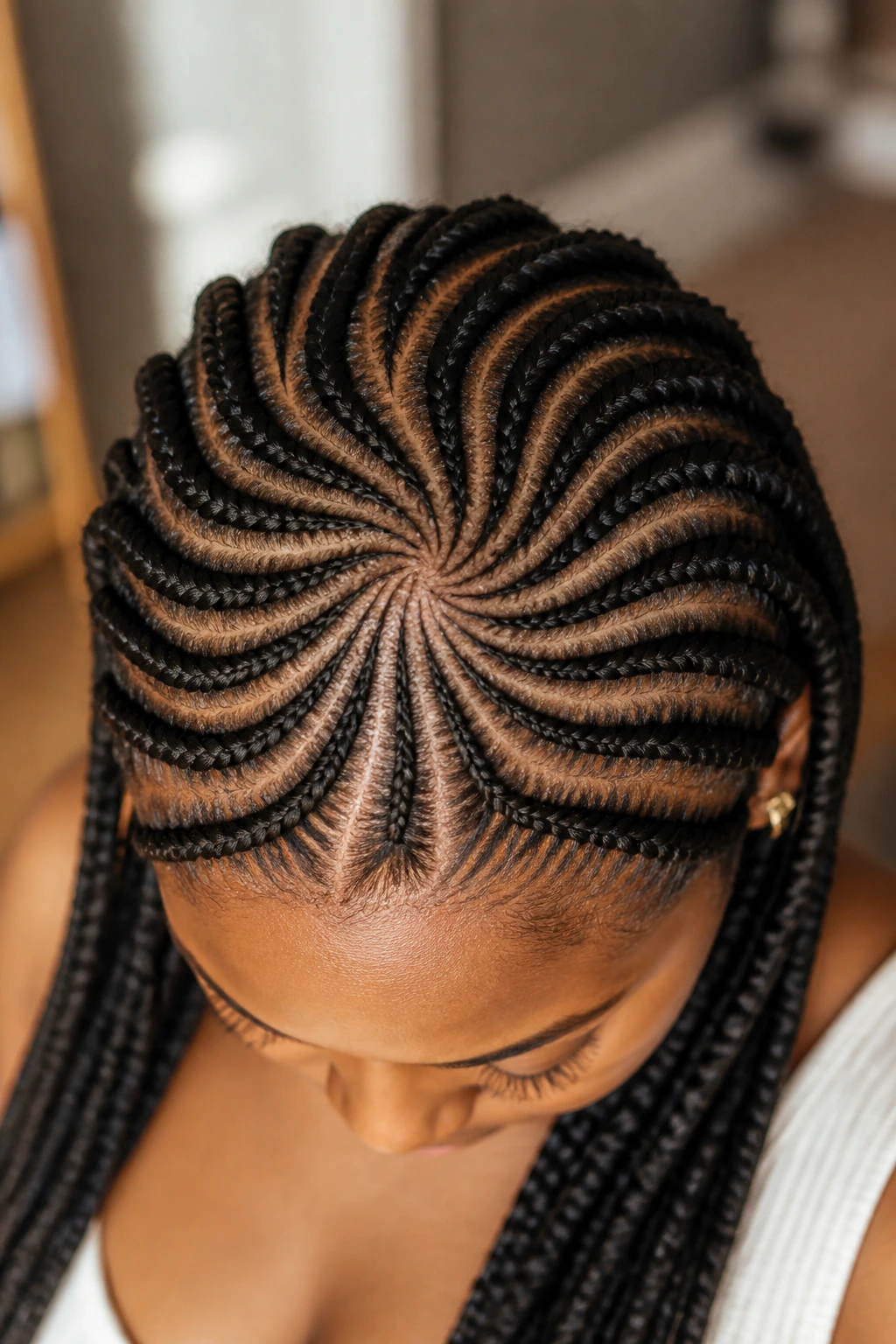
Instead of running from front to back, these braids are installed in a radial pattern, swirling out from a single point at the crown of the head. It is essentially a high-fashion version of a traditional cornrow base. This style looks incredible because of its symmetry and complexity, but from a morning-routine perspective, it offers the same “do nothing” ease as the standard straight-back look.
Why It’s Different
Most people are accustomed to straight or side-swept parts, so the radial swirl catches the eye immediately. It’s a very clean, structured way to wear your hair. Because the braids radiate outward, you don’t have to worry about parting lines looking messy over time; the whole head is designed to work as one cohesive unit.
Final Thoughts on Daily Ease
Choosing a braided style is the single most effective way to eliminate decision fatigue in the mornings. You wake up, you hydrate your scalp, and you walk out the door. The time you save on washing, conditioning, blowing out, and styling your natural hair is massive. When you invest in a skilled braider and pick a style that matches your lifestyle—whether that’s the simplicity of straight-backs or the flair of beaded ends—you aren’t just getting a new look. You are giving yourself the gift of an extra twenty minutes of sleep every single day. That is the true power of a protective style.