

Finding the right hairstyle for the gym feels like a low-stakes puzzle with high-stakes consequences. You walk in with a sleek ponytail, only to have it slide down your neck five minutes into a warm-up. You try a bun, but it gives you a headache before the first set of deadlifts is even finished. When you have darker hair—which tends to show stray flyaways, oil accumulation from sweat, and tangles more visibly than lighter shades—the stakes are slightly higher. You want something that stays put, looks professional enough if you’re heading straight to a desk, and doesn’t require constant adjustment mid-workout.
Dark hair offers a rich, dense visual texture that can look incredibly polished when styled correctly. However, dark strands often highlight the sheen of natural oils, which can make a ponytail look greasy after a particularly intense HIIT session. The goal isn’t to hide your hair, but to manage it with structural integrity. Whether you are lifting heavy, running long distances, or flowing through a yoga sequence, your hair should be the last thing on your mind.
1. The High-Volume Messy Top Knot
The top knot is a staple for a reason, but the secret lies in how you secure it to ensure it survives burpees or jump rope. For those with dark, thick hair, a simple elastic isn’t always enough to prevent that slow, gravity-fed sag. Start by gathering your hair at the crown of your head, but keep it loose enough to avoid pulling on your scalp—tight tension is the quickest way to end a workout with a headache.
Why This Style Works
A top knot keeps the hair completely off your neck, which is crucial during high-intensity training. Because dark hair can sometimes appear flat when pulled back tightly, a slightly messy, voluminous bun adds a soft, intentional shape that looks better than a slicked-back ball.
Pro-Tips for Success
- Use a snag-free, fabric-covered hair tie to prevent breakage on darker, finer strands.
- If you have layers, secure the shorter ones at the nape of your neck with a few hidden bobby pins that match your hair color perfectly.
- Spritz a tiny amount of dry shampoo on your roots before you start to add grip and absorb sweat before it even happens.
2. The Sleek Low Chignon
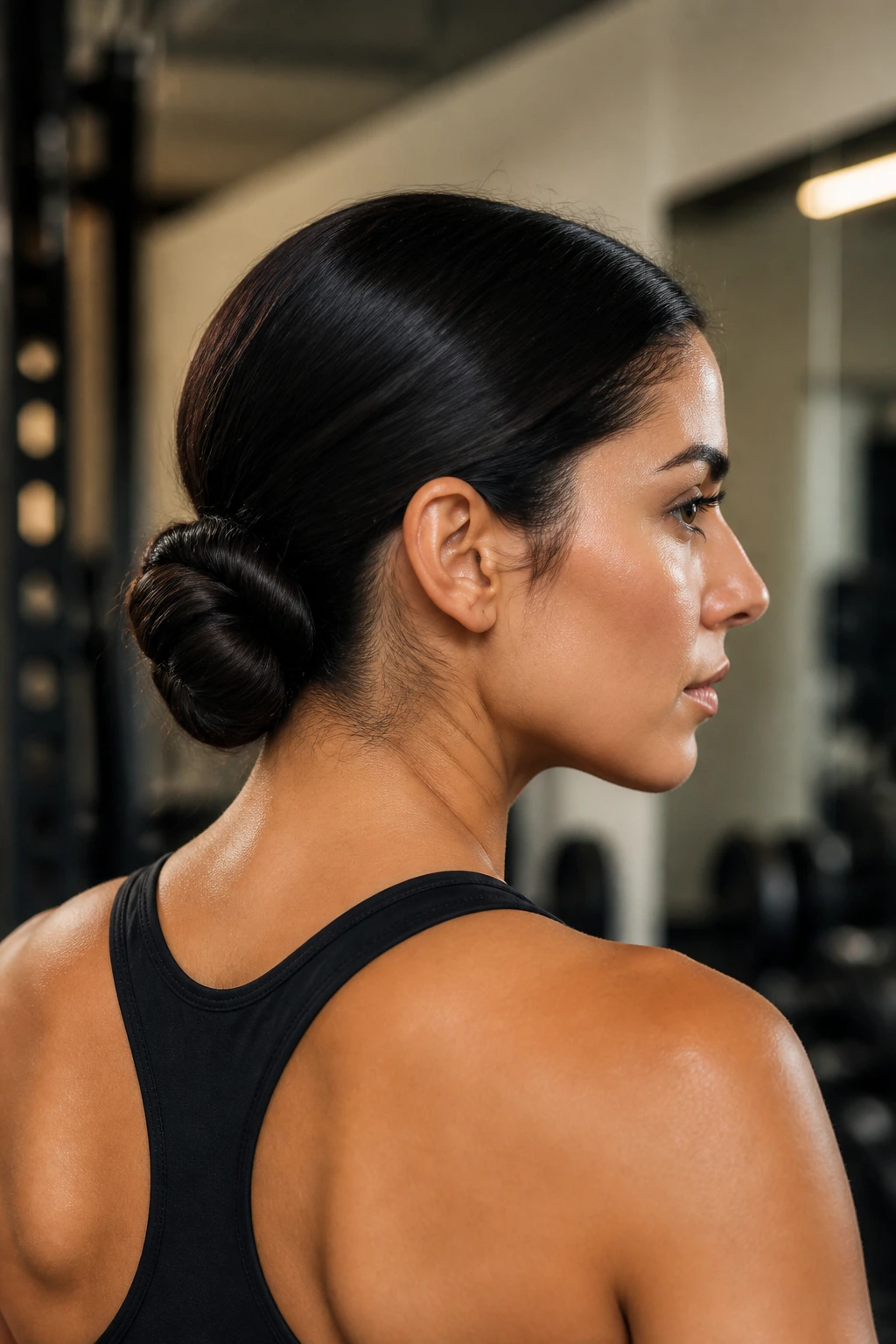
If you prefer a more refined look that transitions seamlessly from the squat rack to an office meeting, the low chignon is your best friend. It’s elegant, stable, and minimizes the amount of hair movement while you are lying flat on a bench or using a yoga mat. Dark hair looks particularly sophisticated in this style because it accentuates the shine and smooth texture of the hair.
Structural Integrity for Movement
The key to a long-lasting chignon is the “twisted loop” technique. Instead of just wrapping your hair around itself, twist your ponytail into a rope before coiling it. This creates a denser, tighter structure that won’t unravel when you are doing floor work.
Maintaining the Look
- Secure the base with a clear silicone band that blends into your dark hair.
- Use a light-hold texturizing spray before styling to give the strands enough friction to hold the twist.
- If you find your hair slipping, weave a single, sturdy hair pin through the center of the coil and catch the hair against the base of your neck.
3. The Double French Braid
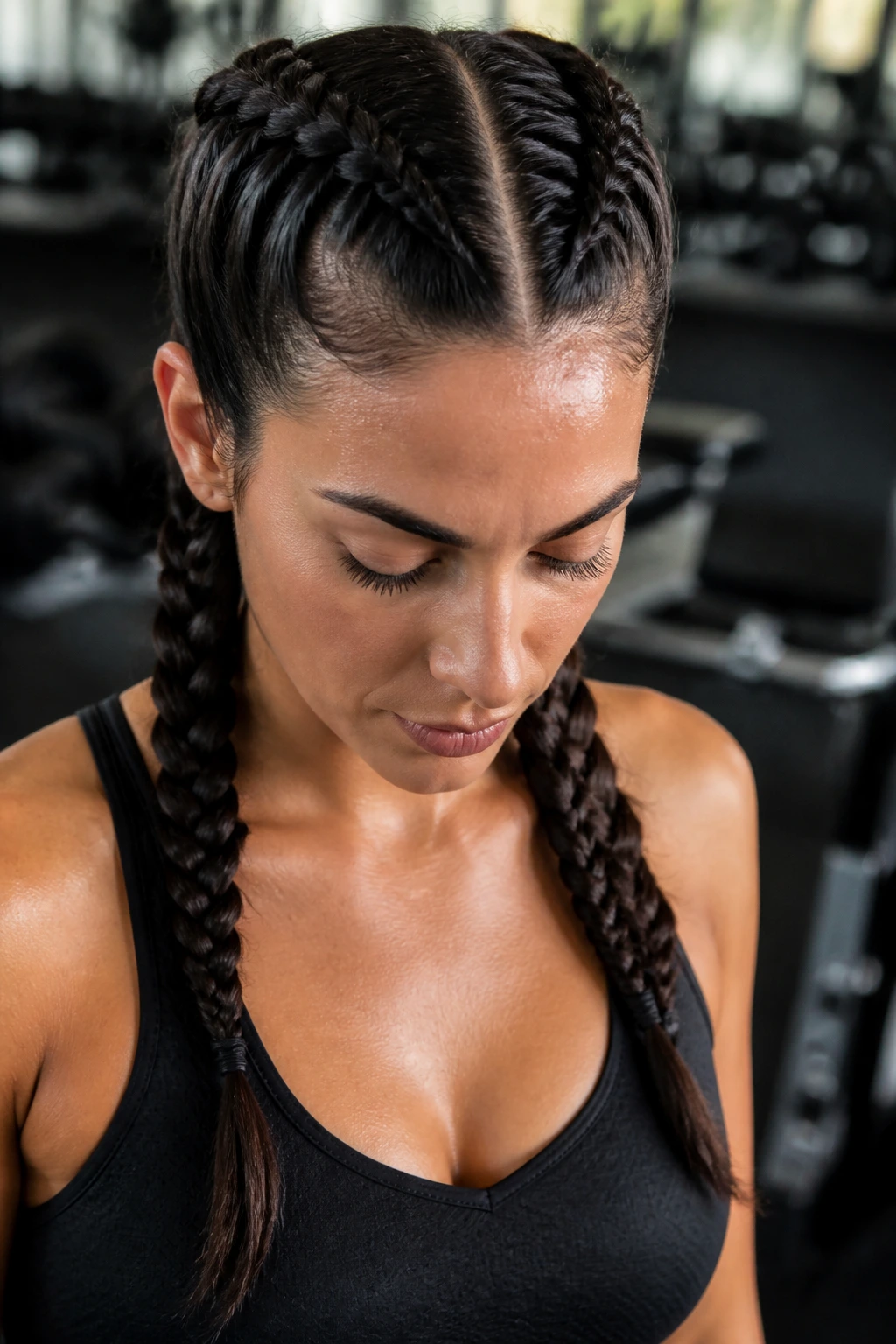
Braiding is arguably the most secure way to manage hair during a workout, and the double French braid is the king of stability. By splitting the hair into two, you distribute the weight evenly, preventing that heavy, dragging sensation that a single thick braid can sometimes create. Dark hair looks especially striking in a braid, as the interplay of light on the twisted strands creates a natural, depth-filled dimension.
Why It’s Great for High Intensity
These braids sit flat against the scalp, making them perfect for activities where you need to lie back on a bench or wear a helmet. They aren’t going anywhere, even if you are jumping, sprinting, or doing inverted movements in a gym class.
How to Achieve the Look
- Start by parting your hair down the center from your forehead to the nape of your neck.
- Keep the tension consistent; if you pull too hard on one section, the braid will look uneven.
- Secure the ends with mini elastics that are as close to your hair color as possible to keep the focus on the braid structure itself.
4. The Half-Up Top Knot
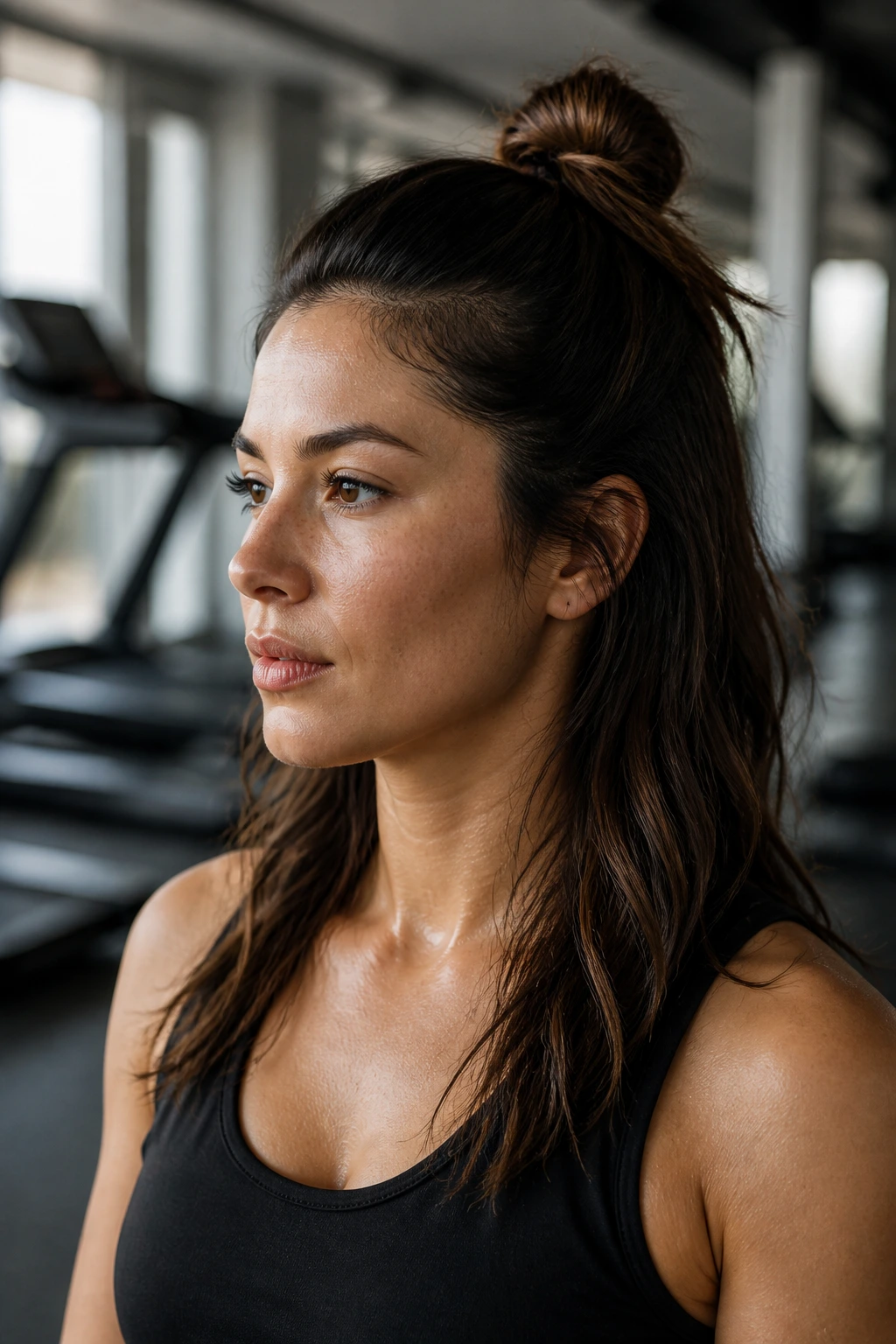
Sometimes you want your hair out of your face but don’t want the full “gym ponytail” look. The half-up top knot is a stylish compromise. It’s practical, keeps your bangs or face-framing layers contained, and lets the rest of your hair flow naturally. It’s a softer, more casual look that works well if you are doing low-impact activities like walking on the treadmill or light stretching.
Balancing Style and Function
This look is all about proportion. If you pull up too much hair, it becomes a full knot; too little, and it won’t be secure. Aim to gather only the hair above your temples. This leaves enough weight in the back to feel balanced.
What to Watch For
- Since the back is loose, this style isn’t ideal for heavy lifting where you might accidentally snag your hair under a barbell.
- If you have very dark hair, try using a velvet scrunchie for the knot to add a touch of texture, which helps prevent the elastic from sliding down during movement.
5. The Triple-Segmented Ponytail
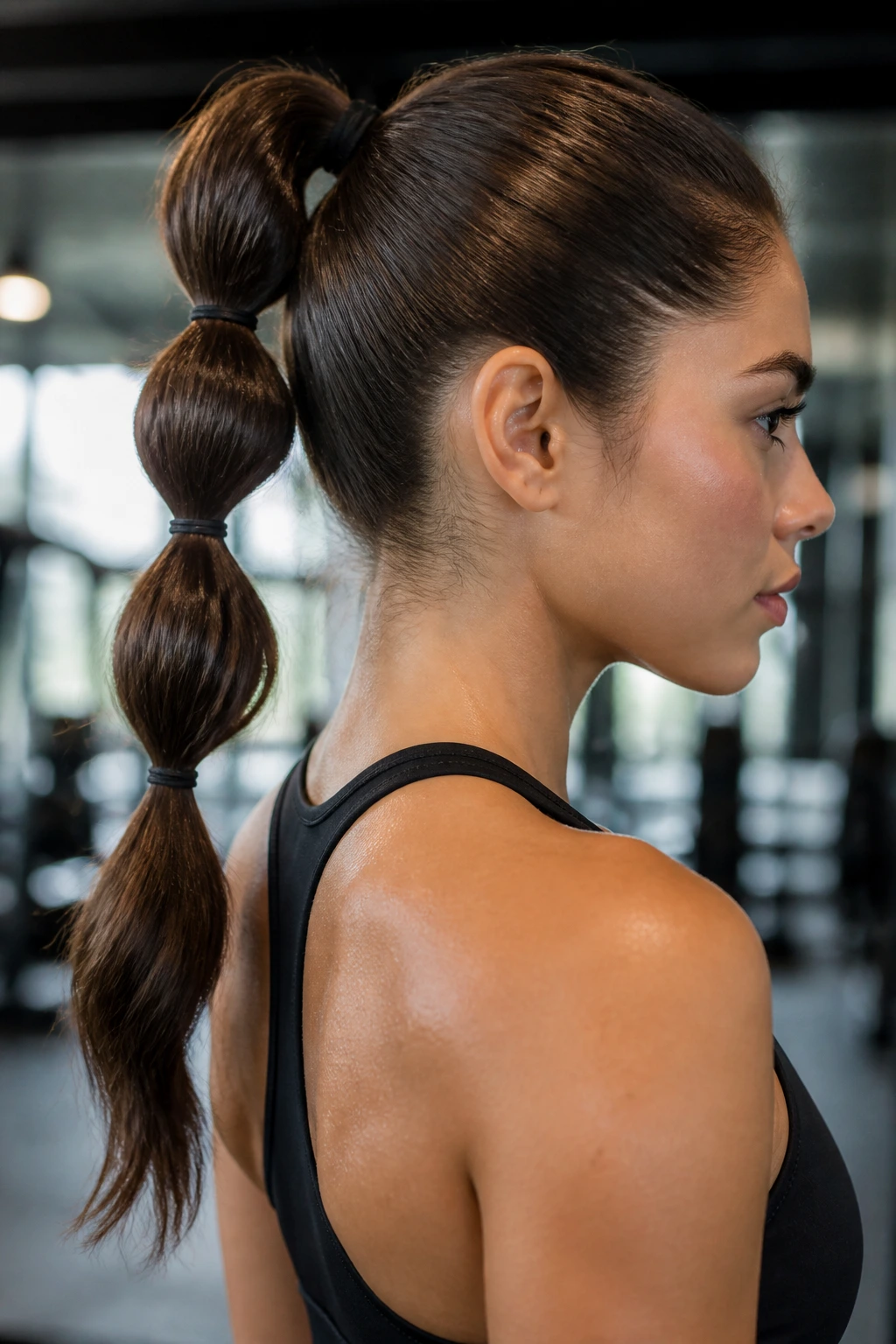
If you struggle with hair that tangles easily during a workout, the segmented ponytail—sometimes called a bubble braid—is the solution. It breaks up a long ponytail into smaller sections, which prevents the “whip” effect that happens when you run or move quickly. This is essential for dark hair, which can look frizzy if it tangles and knots during a sweat session.
Why It Prevents Damage
By adding multiple ties down the length of the ponytail, you minimize the friction that occurs when hair swings around. This is a protective style that looks surprisingly technical and athletic.
Step-by-Step Styling
- Pull your hair into a high, secure ponytail first.
- Add an elastic every two to three inches down the length.
- Gently pull the edges of each section to create a “bubble” effect, which adds volume and keeps the look purposeful rather than just tied-down.
6. The Braided Headband
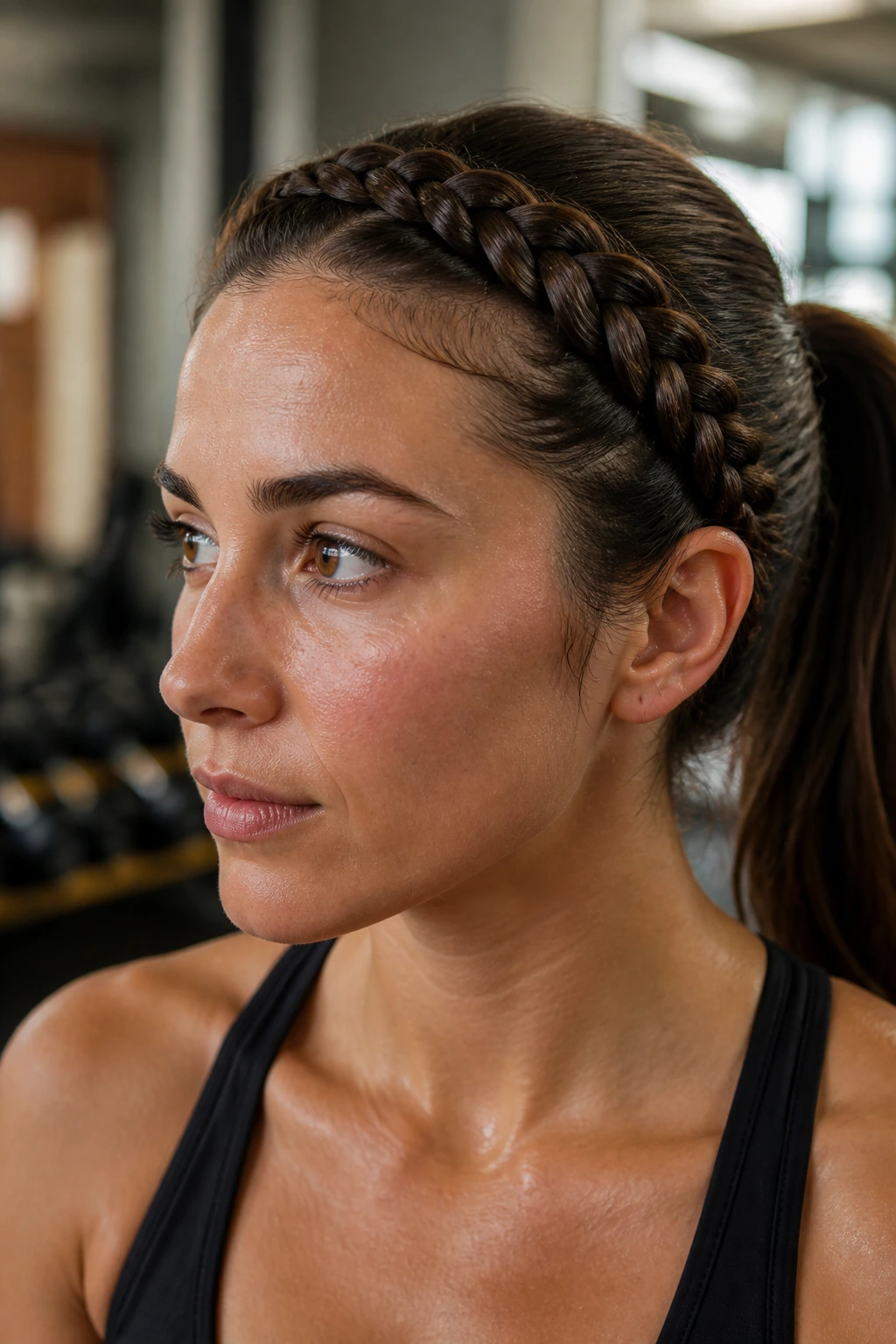
For those who want to keep flyaways entirely under control without wearing a literal headband, a Dutch braid wrapped around the hairline is the ultimate choice. It looks incredibly intricate, yet it serves a very practical function: keeping your hair off your forehead while you sweat.
The Benefit of Braided Hairlines
Dark hair tends to show sweat droplets clearly against the scalp. By braiding the hair around the perimeter, you create a physical barrier that helps absorb some of that moisture and keeps the strands from sticking to your face.
Styling Tips
- Start the braid at one temple and weave it toward the other.
- Use a small amount of pomade or styling cream on your fingertips while braiding to ensure the dark, finer hairs along the hairline stay smoothed into the braid.
- Once you reach the other side, secure the end with a small pin and blend it into the rest of your hair.
7. The Knotted Low Ponytail
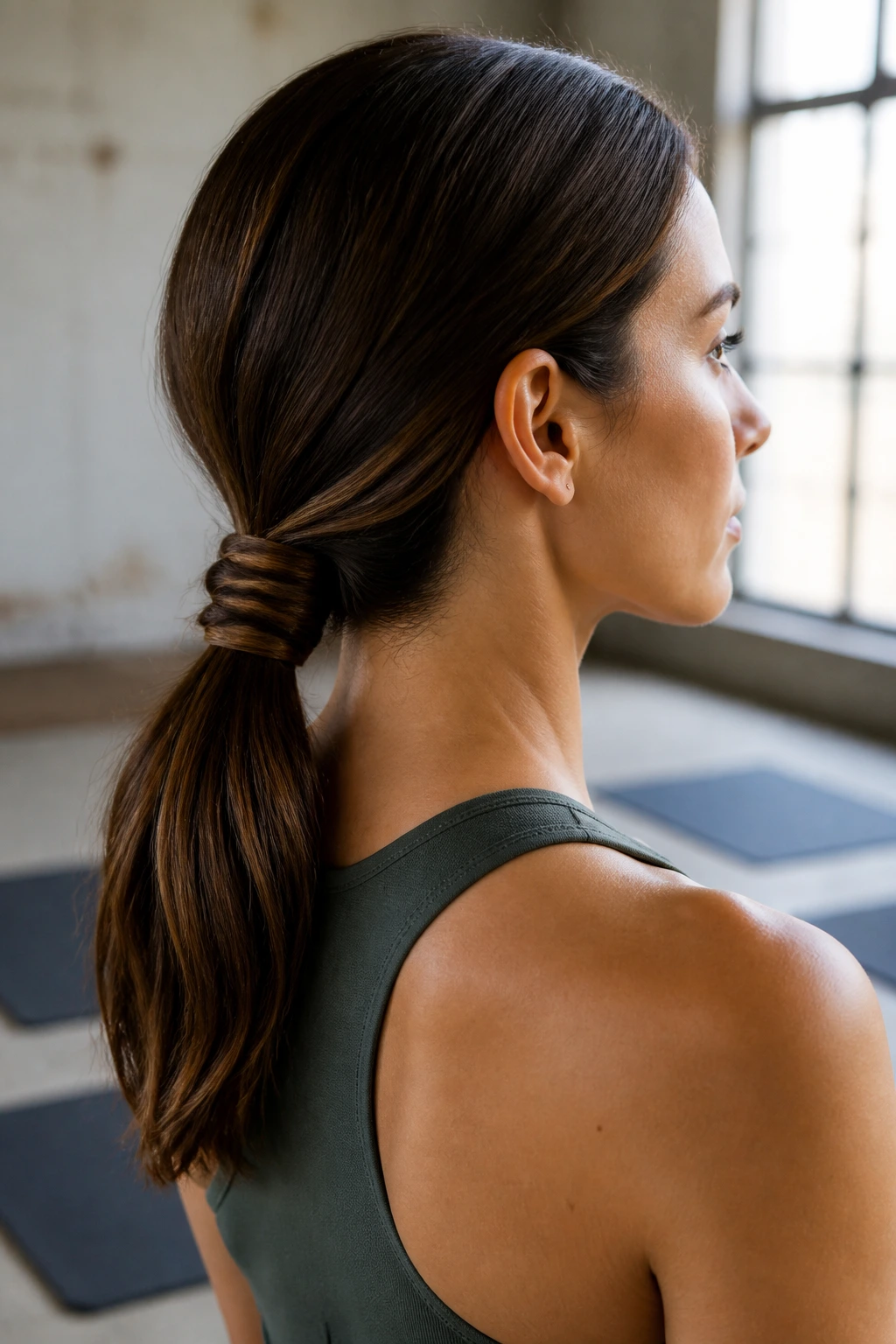
A standard ponytail can feel a bit repetitive, but a knotted low pony adds a layer of sophistication. It feels more “put together” than a basic elastic look, and it stays much more secure because the knot itself provides a physical anchor that holds the hair in place.
The Mechanics of the Knot
Instead of using an elastic, you take two sections of your ponytail, tie them into a loose knot, and pin them underneath. It’s a simple trick that completely changes the profile of your hairstyle.
When to Use This Style
- It’s perfect for yoga or Pilates where you are moving across a mat.
- Because it is low and centered, it won’t interfere with your head position on a bench or floor.
8. The High Braided Ponytail
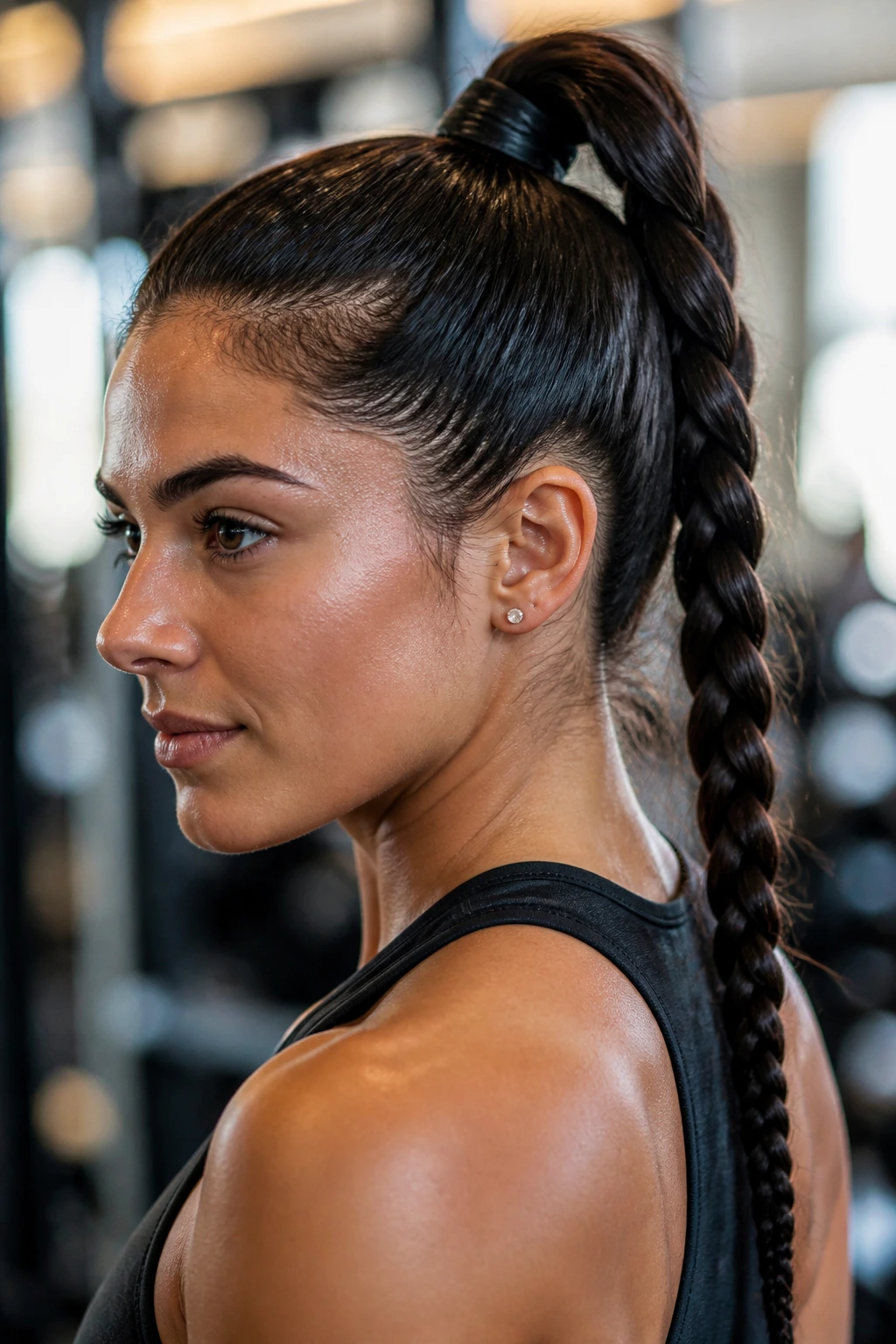
Combine the height of a classic ponytail with the durability of a braid. This is arguably the most secure hairstyle you can choose. The ponytail keeps the hair high off your neck, while the braid prevents the ponytail from becoming a giant, knotted mess of dark, tangled strands.
Perfect for High-Impact Sports
Whether you are playing competitive sports or doing a high-intensity circuit, this style will survive. It’s essentially “locked in.”
Essential Advice
- Ensure your base ponytail is extremely secure with a strong hair tie.
- If you have layered hair, keep the braid tighter to ensure those shorter layers don’t poke out during explosive movements.
9. The Wrapped Base Ponytail
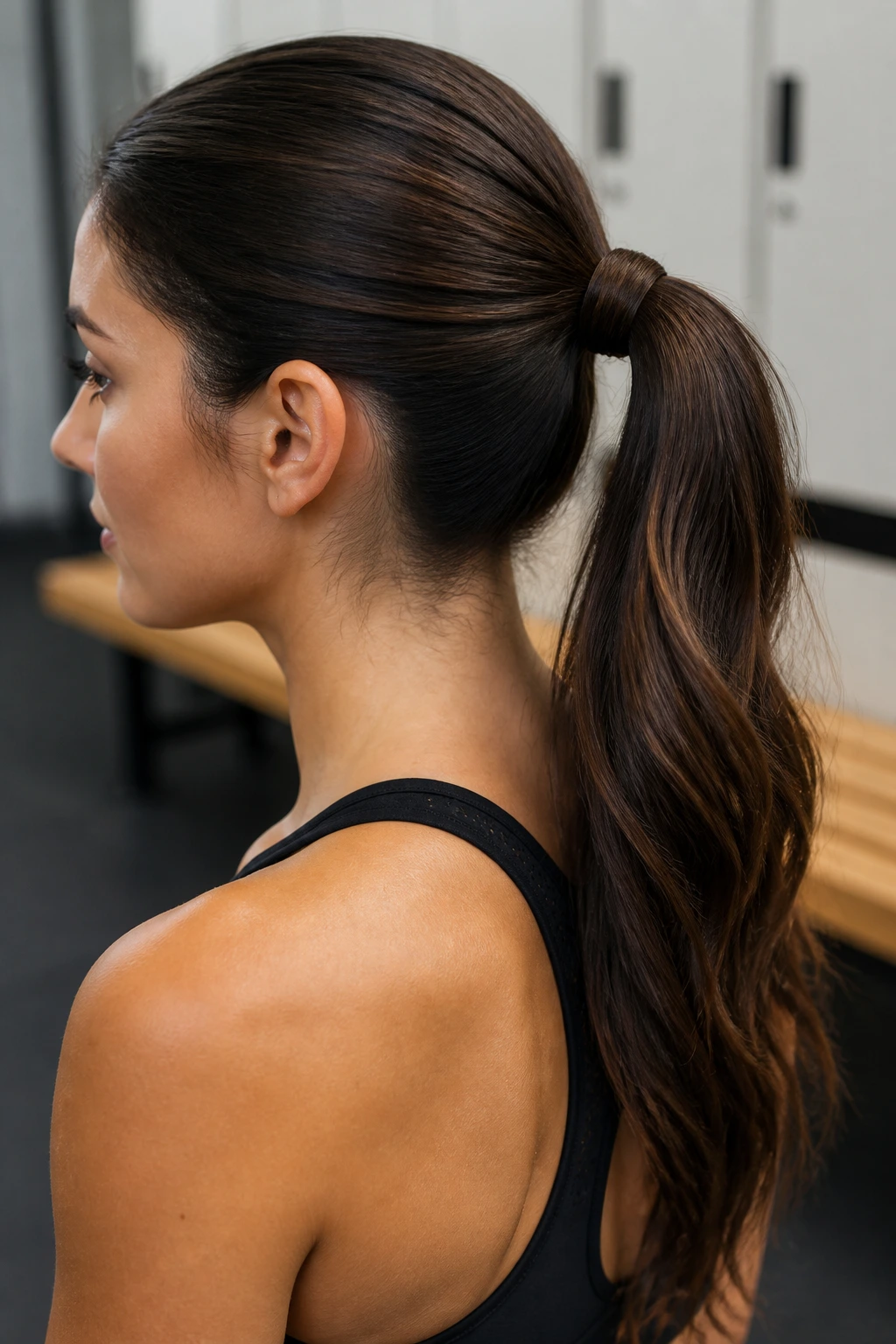
If you have a very basic ponytail but want to elevate it for a professional atmosphere at the gym, the simple act of wrapping a piece of hair around your elastic changes everything. It hides the rubber band, which makes the hairstyle look much more deliberate and less like you just threw it up in the locker room.
Why It Looks So Professional
Dark hair is great for this because it naturally hides the bobby pin you use to secure the wrapped piece. It creates a seamless, uniform look that emphasizes the shine of your hair.
The “Hidden Pin” Method
- Take a small half-inch section from the bottom of your ponytail.
- Wrap it tightly around the hair tie until it is completely covered.
- Push a bobby pin into the base of the ponytail, catching the end of the wrapped section to keep it in place.
10. The Side-Swept Dutch Braid
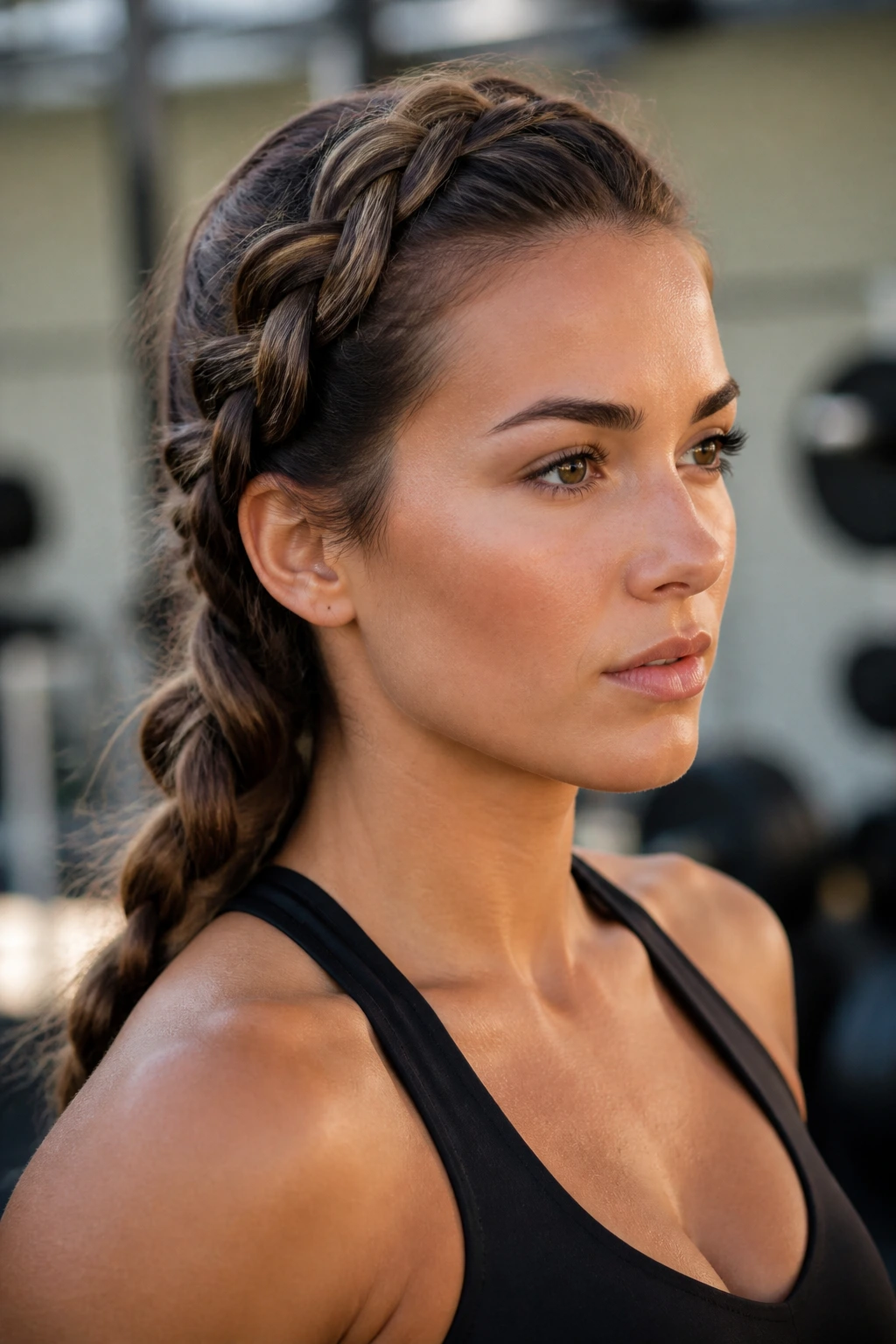
The side-swept Dutch braid is fantastic for when you have longer layers that you want to keep off your neck but don’t want to pull back into a severe high style. It provides a nice, asymmetrical look that frames the face beautifully.
Function Meets Fashion
Because it’s a Dutch braid (where you cross the hair under instead of over), the braid stands out more, creating a nice contrast against the scalp. It holds tight and prevents the hair from falling forward when you are leaning over for rows or lunges.
Maintenance Notes
- If your hair is on the finer side, gently pull the loops of the braid outward to create the illusion of thickness.
- This is a very “forgiving” hairstyle; it looks even better as it gets slightly messier during a long workout.
11. The Twisted Crown
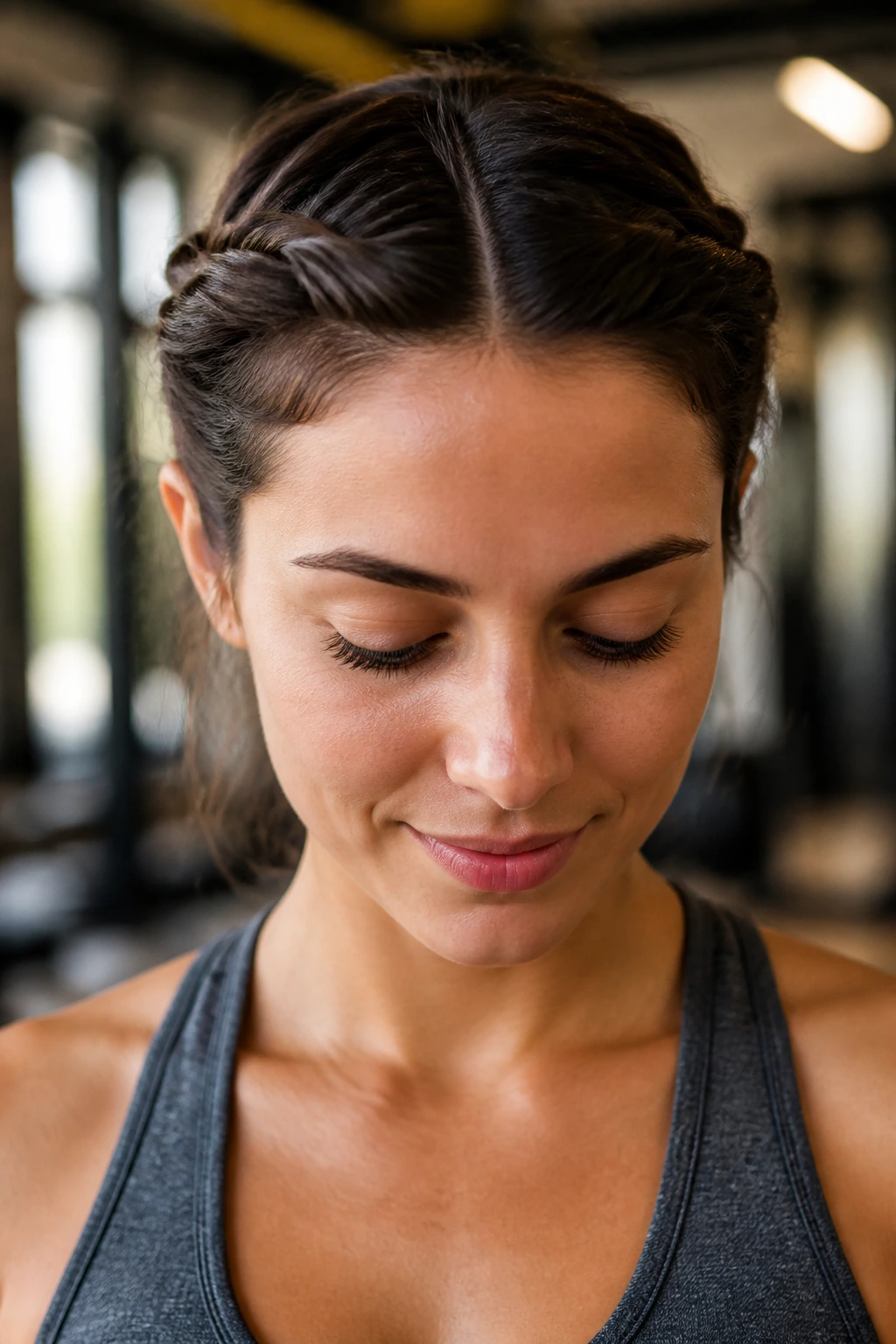
The twisted crown is a quick way to get hair off your face using just a few twists and pins. You simply take two sections from the front, twist them away from your face, and join them at the back. It’s faster than braiding but just as effective for keeping stray hairs tucked away.
Who This Works For
If you are doing low-intensity training, this is an excellent choice. It’s soft, feminine, and practical. Because it’s not too tight, it is one of the most comfortable hairstyles to wear for an hour-long session.
Making It Secure
- Use matte-finish bobby pins that match your hair color to ensure they don’t slide out of your dark locks.
- If you have layers, secure the twists with a small, clear elastic at the back before pinning them down.
12. The Multi-Elastic High Pony
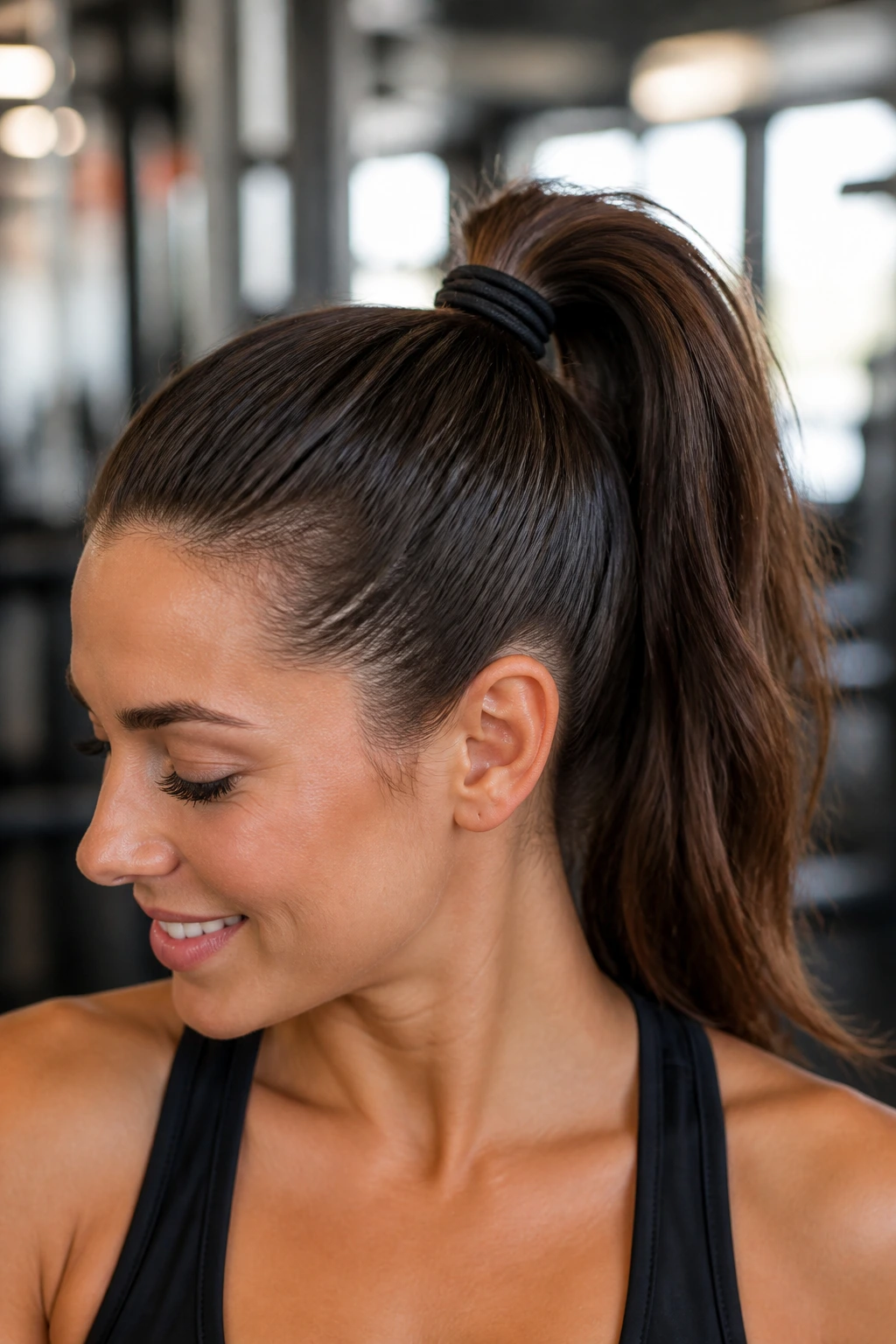
Sometimes the simplest solution is the best. If you have very long or thick dark hair, one hair tie might not be enough to support the weight of a high ponytail throughout a workout. Using two or three elastics stacked on top of each other creates a reinforced base that won’t sag.
Preventing the Sag
- The “sagging ponytail” is the bane of every gym-goer.
- By using two elastics, you distribute the pressure, which not only keeps the ponytail high but also prevents the hair from pulling on your scalp too heavily.
Quick Tip
- If you find that one elastic keeps slipping, try the “two-ponytail” method: pull the top half of your hair into a pony, then pull the rest of your hair up and incorporate the first pony into the second. It adds an incredible amount of lift.
13. The Under-Braid Ponytail
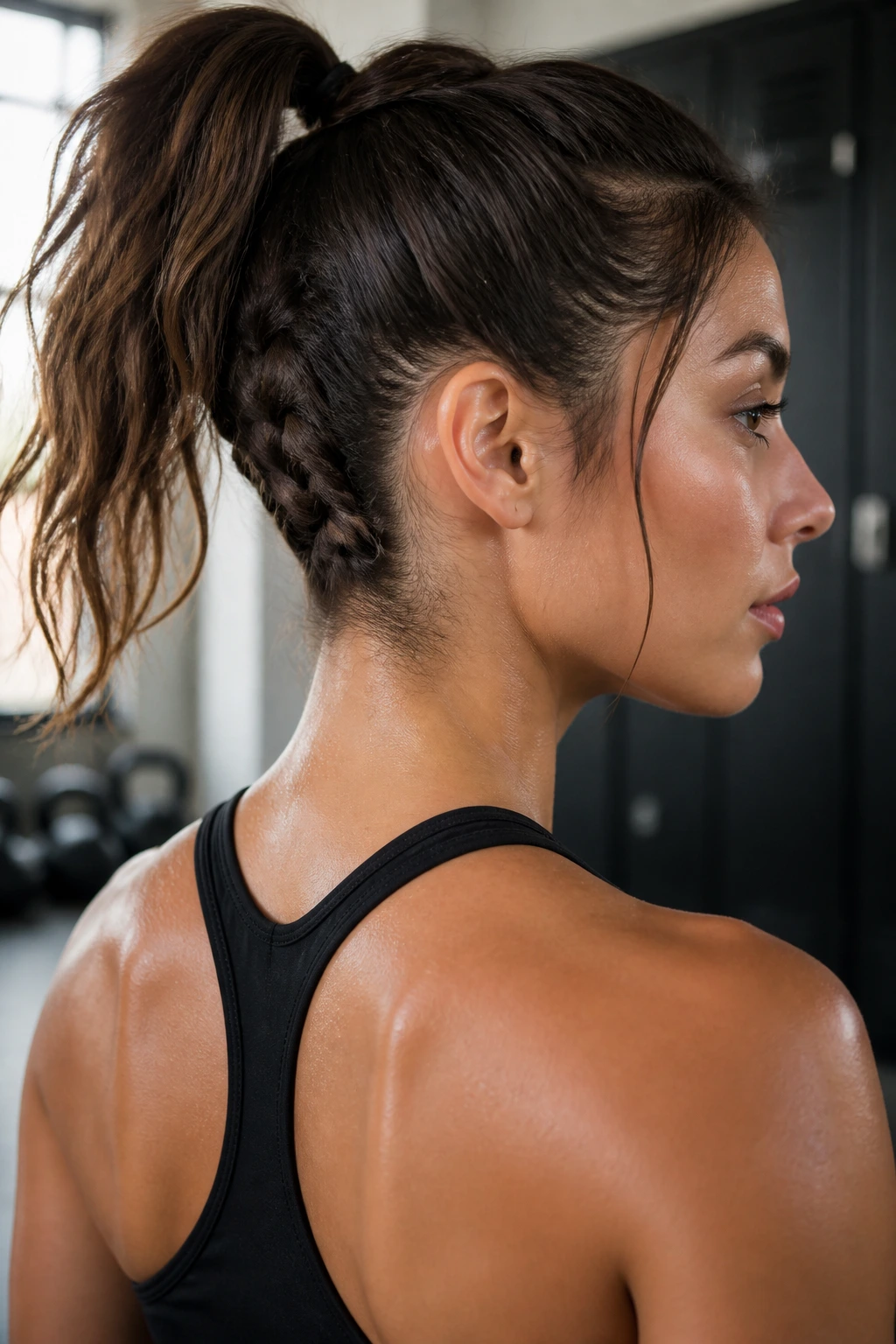
This is a clever “insider” trick. You start by French braiding the hair at the nape of your neck going up towards the crown, then gather all the hair into a high ponytail. It keeps the neck completely clear, which is the most annoying area for sweat accumulation.
Managing Dark, Fine Hair
This style works particularly well for dark hair because the braid adds texture to an area that otherwise might look a bit flat or thin. It also keeps those pesky, shorter baby hairs at the hairline from falling out during your workout.
Why It’s Efficient
- It’s essentially a two-in-one hairstyle.
- You don’t have to worry about loose hairs at the back of your neck sticking to your skin, which is a major comfort factor.
14. The Low Side Braid
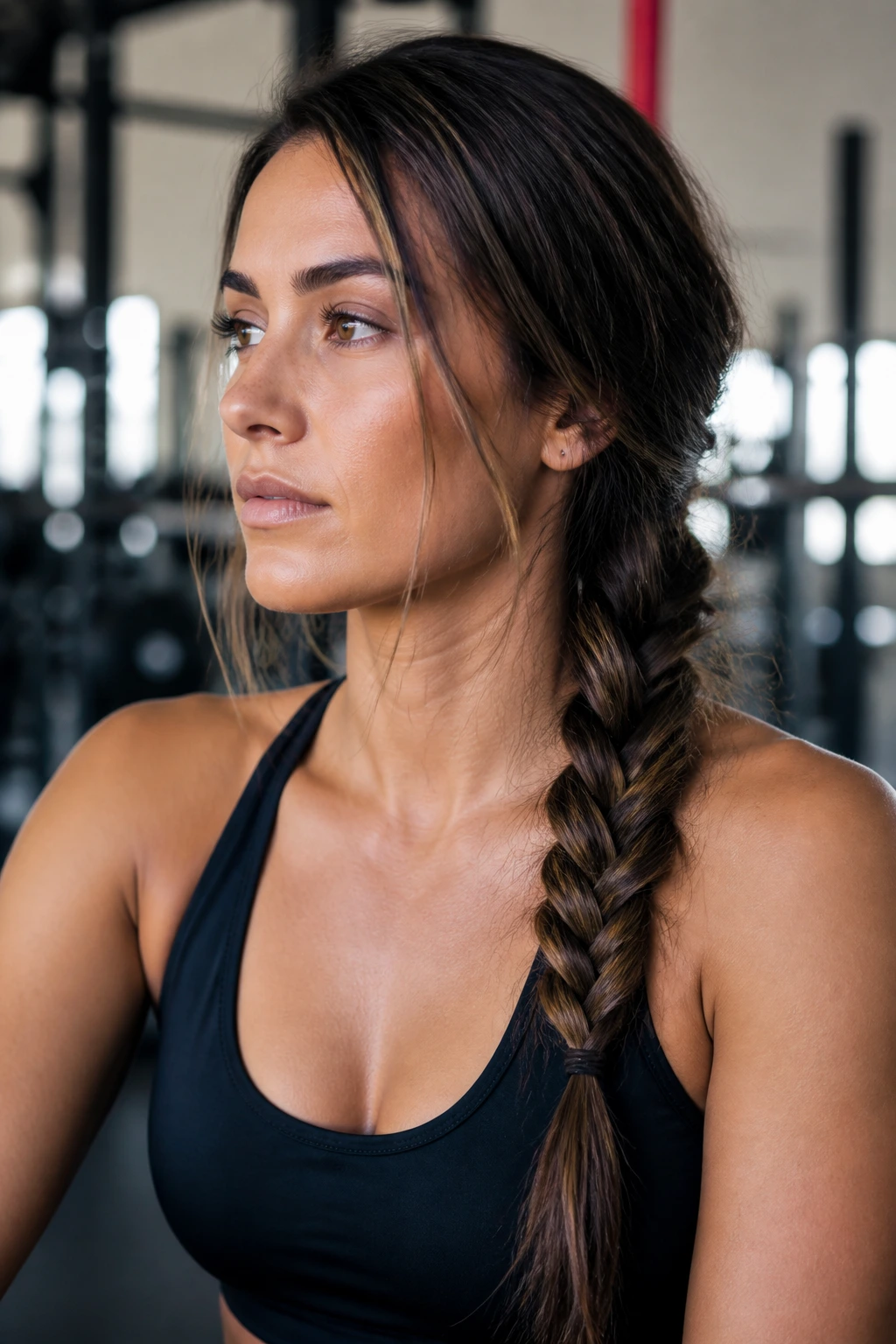
The side braid is classic for a reason. It is the most comfortable way to manage long, dark hair while exercising. It keeps the hair to one side, away from your back, and it’s very easy to manage if you need to quickly redo it in the locker room.
Best for Low-Impact Training
While it might move a bit more than a tight crown braid, it is incredibly comfortable for weightlifting or yoga. You don’t feel the weight of your hair as much, and it won’t interfere with your ability to lie back on equipment.
Styling Variation
- Use a fishtail braid instead of a standard three-strand braid to make the style look more intricate.
- Don’t worry about perfection—a slightly loose braid allows for more movement without pulling on the hair follicles.
15. The Claw Clip Tuck
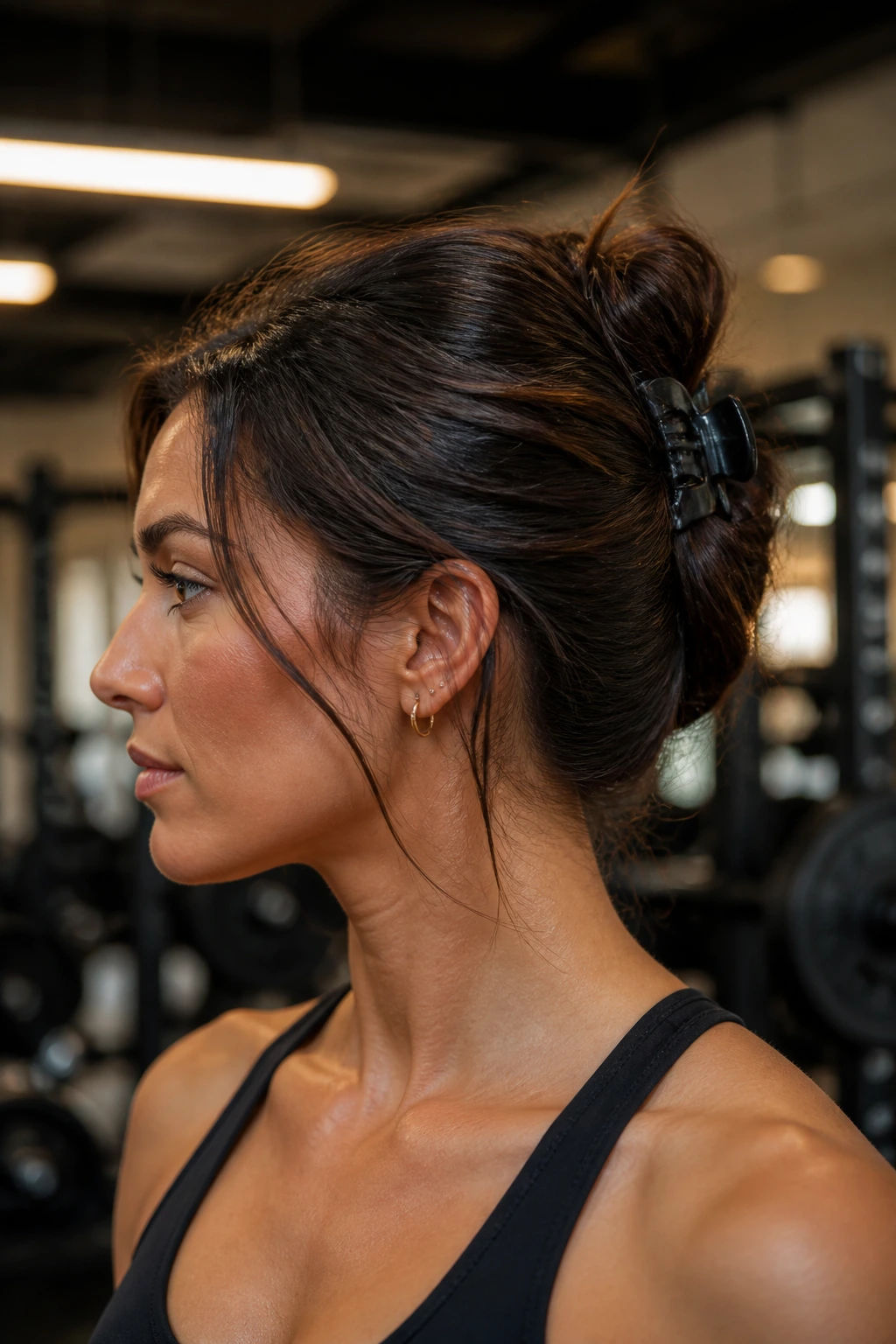
Claw clips have made a major comeback, and they are surprisingly great for the gym if you use a high-quality, sturdy clip. They are much less damaging to the hair than constant elastic pulling, and they create a very voluminous, soft look.
Is a Claw Clip Secure Enough?
For moderate movement, absolutely. If you are doing extreme cardio, you might want to pair it with a few pins. However, for most gym routines, a high-quality matte claw clip will keep your hair in place while adding a bit of flair.
The “Gym-Friendly” Way to Clip
- Gather your hair as if you are doing a low ponytail.
- Twist the hair up towards the crown of your head.
- Use a medium-sized clip to hold the twist in place against the back of your head.
16. The Sleek Low Pony with a Ribbon
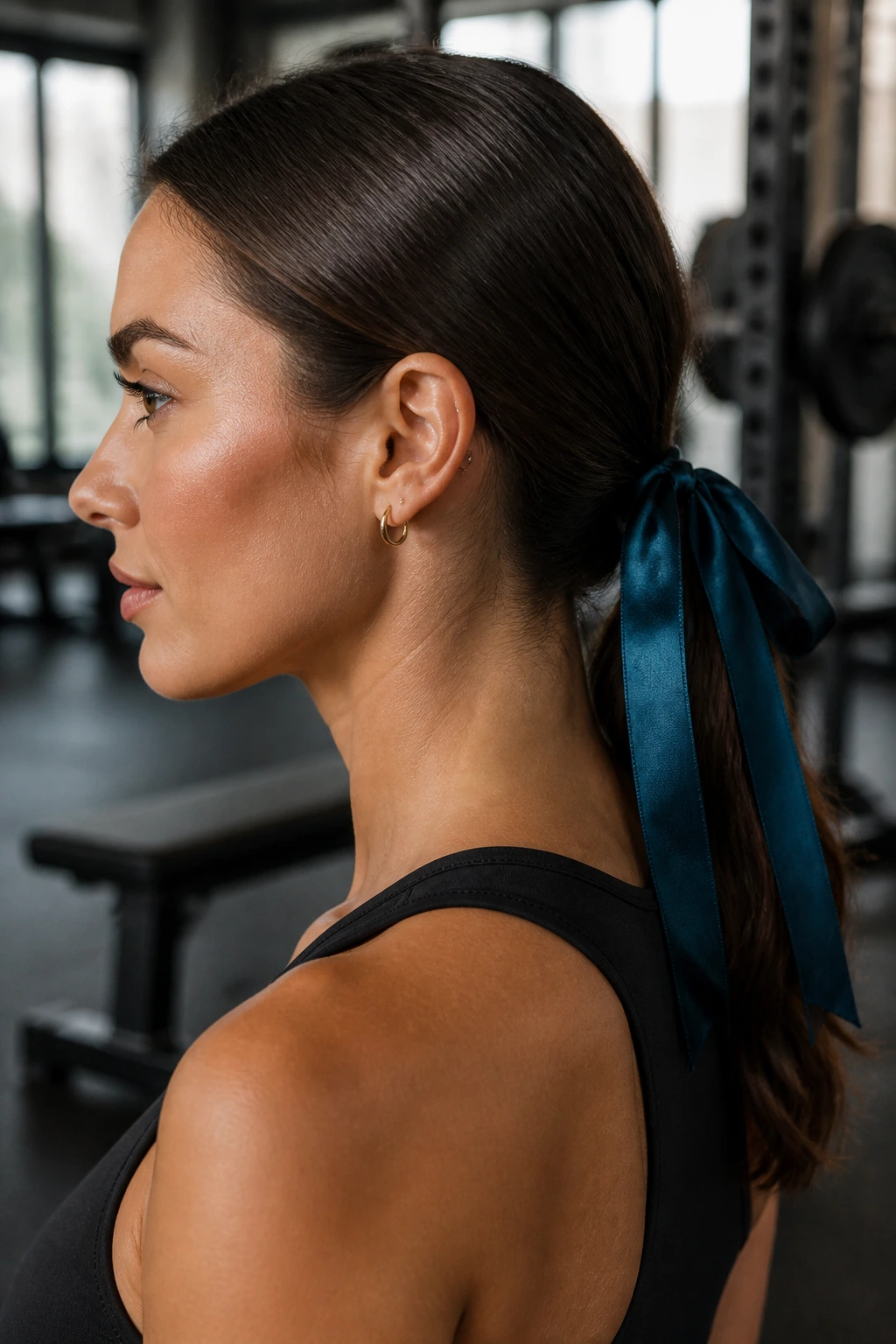
If you want to feel a bit more stylish, adding a ribbon or a silk scrunchie to your low ponytail can make the look feel intentional. It’s a great way to add a bit of color to an otherwise dark-haired gym look, and it feels professional enough to wear to the office.
The Function of Accessories
A silk scrunchie is much gentler on the hair than a standard elastic. It prevents the breakage that dark hair is prone to, especially when you are working out regularly.
Mixing Aesthetics
- Choose a silk ribbon in a jewel tone; it will pop beautifully against dark, rich hair.
- Make sure the base ponytail is secured with a small, clear elastic first so the ribbon is purely for show and doesn’t need to do the heavy lifting of holding the hair up.
17. The Double-Twist Low Pony
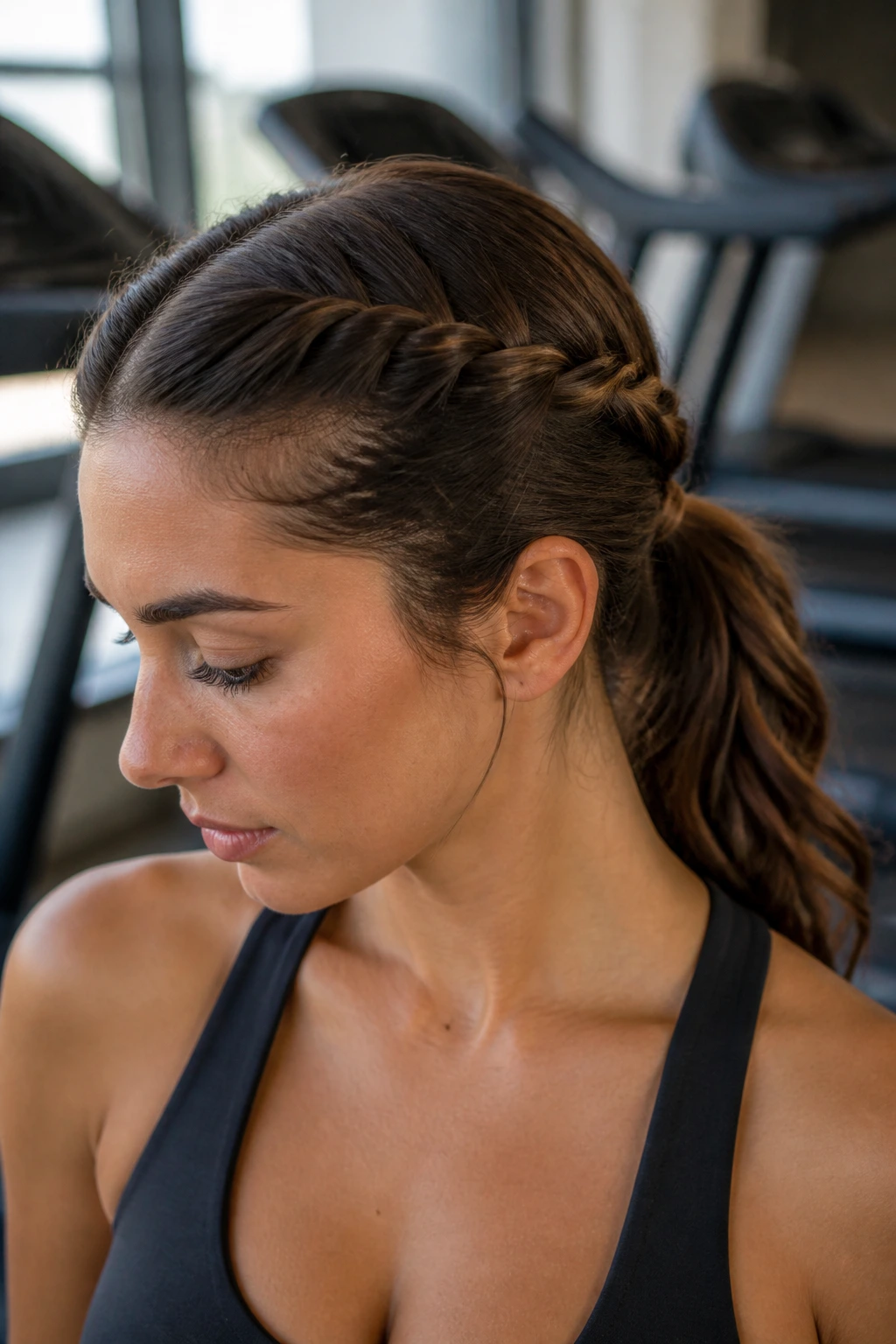
This is a simple modification of the low pony. Divide the top half of your hair into two sections, twist them away from the face, and then pull them back into a ponytail with the rest of your hair. It keeps the side hair completely contained and away from your eyes.
Why It Works for Workouts
It’s a functional style that looks sophisticated. It prevents those annoying strands from falling into your eyes when you are leaning over or looking down at a screen or phone.
Keeping It Neat
- Secure the twists with small, discrete pins before adding the ponytail elastic.
- This creates a very clean, polished line along the sides of the head.
18. The “Undone” Bun with a Headband
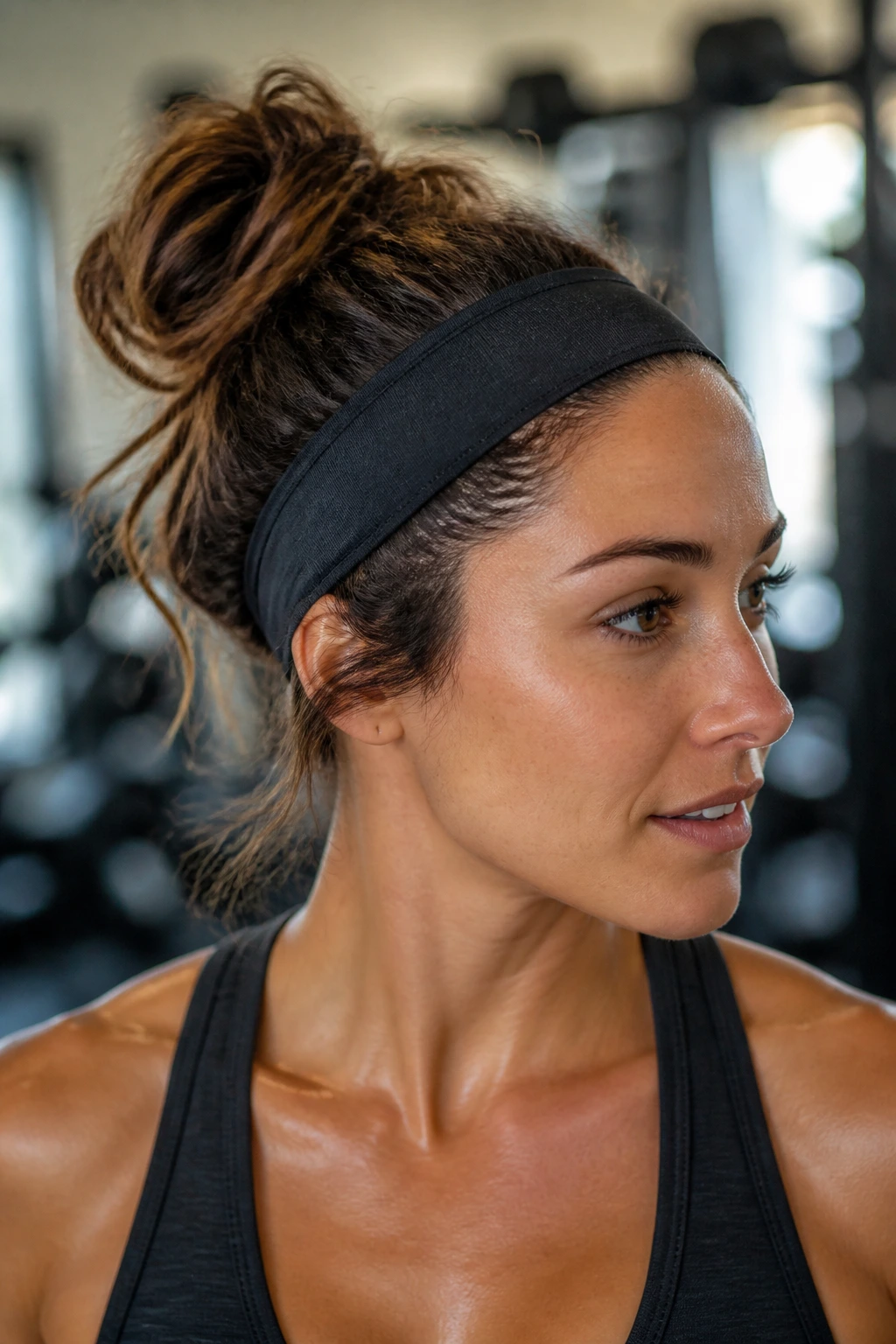
Sometimes, the best look is the most relaxed one. An “undone” bun paired with a sturdy, moisture-wicking headband is a great way to manage hair while staying cool. The headband protects your hair from sweat, and the loose bun keeps the weight off your neck.
Choosing the Right Headband
Look for headbands made of performance fabrics that are designed to grip the head without sliding. A non-slip silicone backing is a game-changer for those who find their headbands slipping during a run.
Why This is Effective
- It’s the ultimate low-effort, high-reward hairstyle.
- The headband acts as a shield for your dark hair, ensuring that sweat-induced oiliness doesn’t reach your ends as quickly.
Final Thoughts
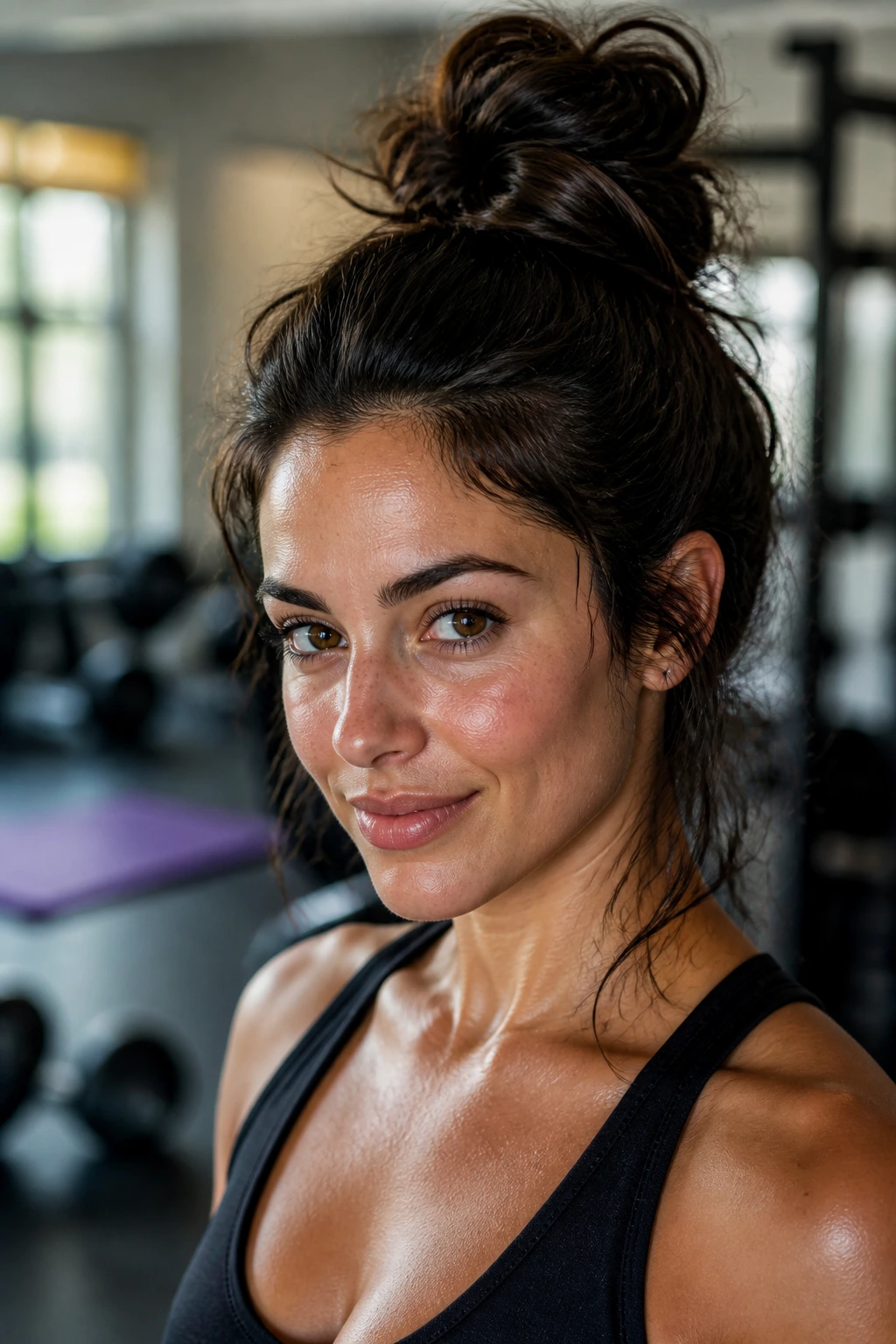
Finding the perfect hairstyle for the gym is a journey of trial and error, but once you find your go-to styles, the focus shifts back to your performance. Darker hair presents its own unique set of considerations—from managing the appearance of oil to ensuring the hair density looks smooth and intentional—but these challenges are easily navigated with the right technique and the right accessories.
Don’t feel pressured to force your hair into a style that feels tight or uncomfortable. If you leave the gym with a headache, you’ve likely over-engineered the solution. Prioritize styles that distribute weight evenly and secure the hair without excessive tension. Your hair is an asset, not a hindrance, even during your toughest workout days. Choose what makes you feel prepared, secure, and ready to tackle that next set.