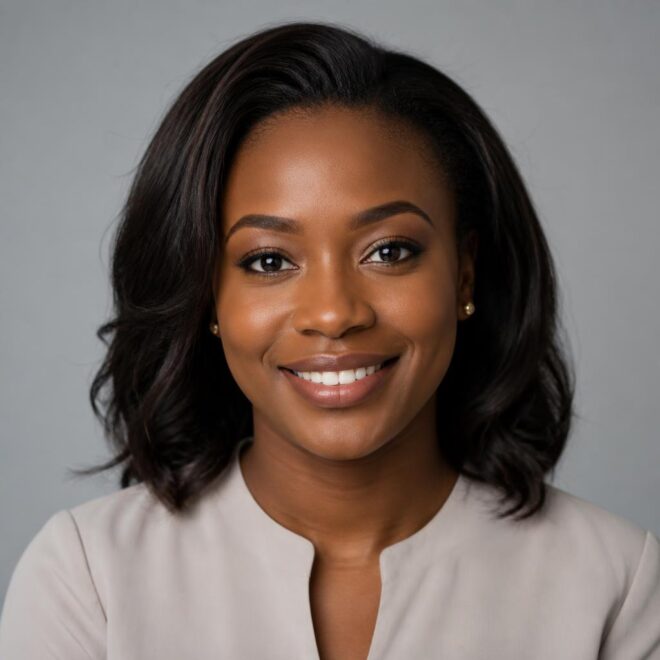


The texture of Asian hair—typically thick, straight, and possessing a high density of follicles—makes it a natural candidate for the sharp, sculptural contrast of an undercut. While many hairstyles struggle to maintain their shape over time, the structural integrity of this hair type allows for clean, crisp lines that hold their own against gravity. You aren’t just getting a haircut; you are engaging in a process of subtraction. By removing bulk from the sides and back, you shift the focus to the crown, creating a silhouette that is inherently modern and perpetually low-maintenance.
Many people assume an undercut is a single look, but the reality is far more nuanced. It is a canvas for self-expression, ranging from the subtle, hidden nape shave that peeks out when you pull your hair up to the aggressive, high-contrast mohawk-inspired fades that demand attention. Whether you are working with pin-straight strands or a slight natural wave, the way this hair grows forward from the crown makes it ideal for styles that require height, texture, and directional movement.
1. The Disconnected Pompadour
This look leans into the natural volume of Asian hair. By keeping the top long and swept back while the sides are buzzed down to the skin—creating a visible “step” or disconnection—you get a silhouette that feels vintage yet refined. The secret here is using a high-hold matte pomade to ensure the hair doesn’t fall flat during a long day.
How to Maintain the Disconnection
- Visit your barber every three weeks to keep the fade at the skin-level, as any regrowth will blur the line that defines this cut.
- Use a blow dryer with a round brush to push the hair upward and backward while it is still damp.
- Avoid gels with high alcohol content, which can cause thick hair to look greasy or stiff rather than structured.
Pro tip: If your hair is particularly stubborn, a tiny amount of sea salt spray applied before blow-drying provides the “grip” necessary for the hair to stand tall without needing a heavy wax.
2. The Nape-Only Geometric Undercut
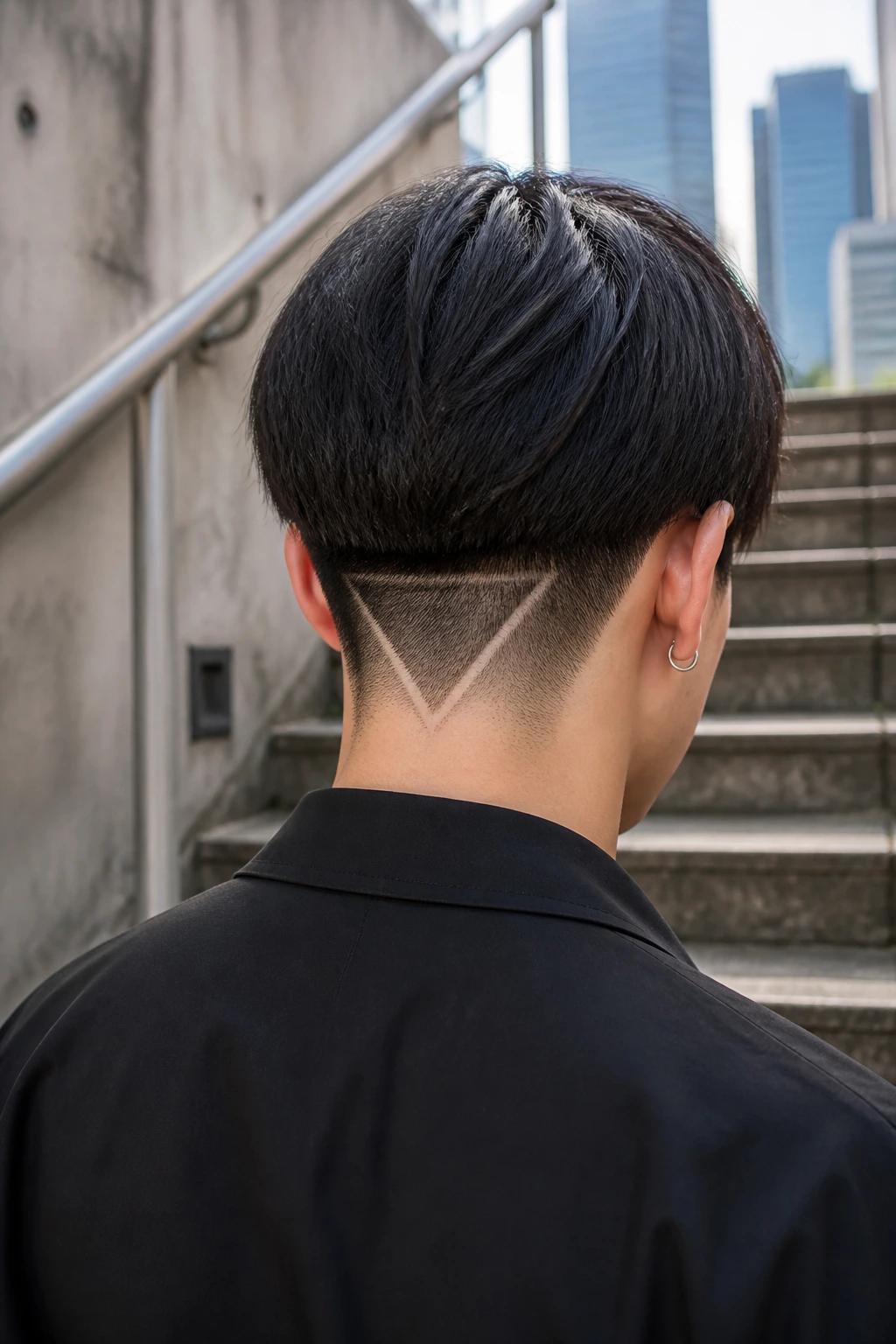
If you want the benefits of an undercut without committing to the full sides-and-back look, the nape undercut is your best friend. It involves shaving a triangular or rectangular section at the very base of the skull. When your hair is down, nobody knows it is there. When you pull it into a bun or a high ponytail, the hidden design reveals itself as a bold, personal detail.
Why This Style Works for Longer Hair
- It removes weight from the neck, which is helpful during the heat of summer or for those with very thick, heavy manes.
- It stays relatively hidden, making it a professional-grade edge that won’t raise eyebrows in a corporate setting.
- You can easily incorporate patterns like chevrons or simple horizontal lines into the shaved area for added visual interest.
3. The Textured Crop with Temple Fade
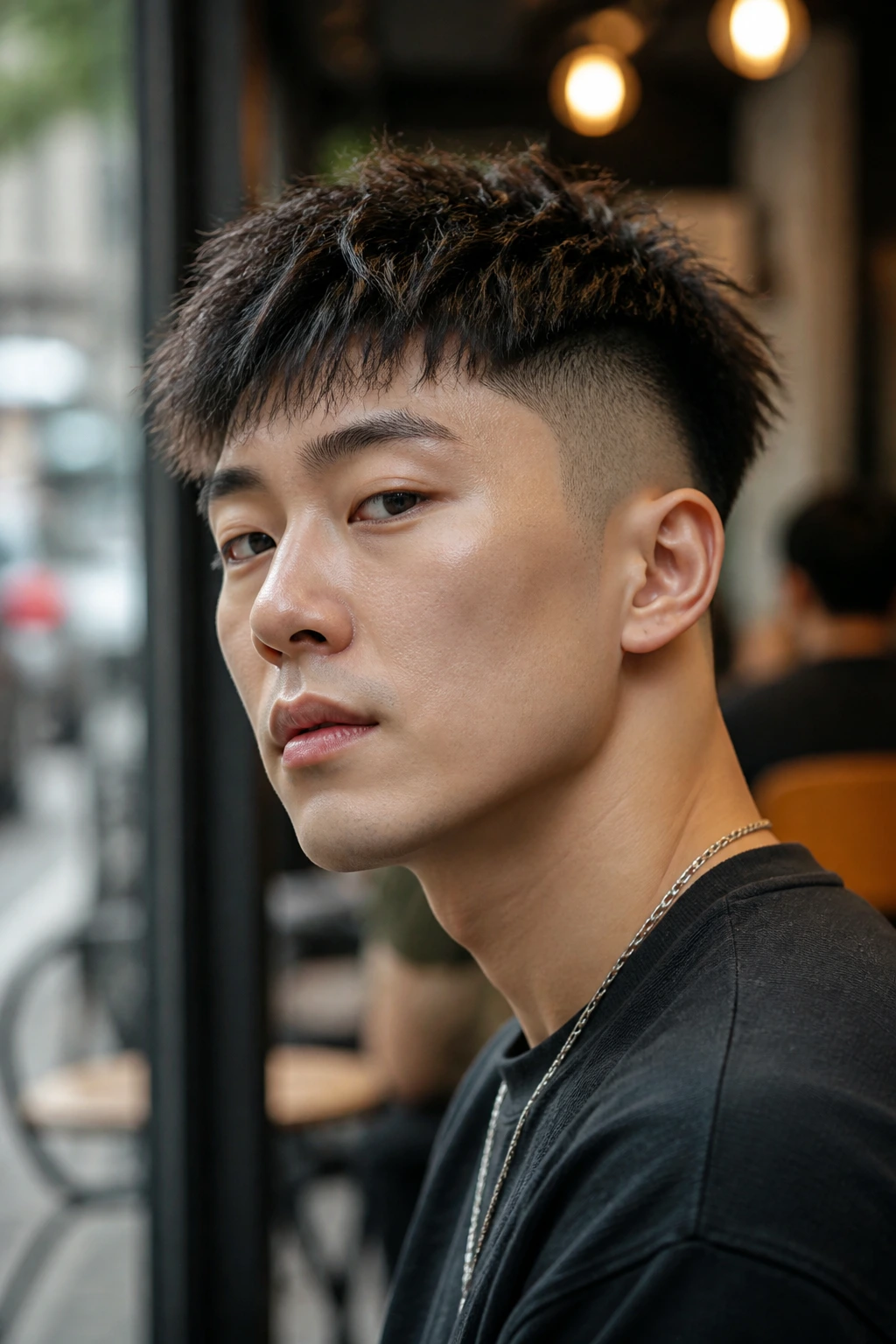
Asian hair is often so straight that it can look like a helmet if left long without thinning. The textured crop solves this by incorporating a messy, choppy finish on top, paired with a sharp temple fade. This focuses the “edge” on the perimeter of the face, drawing attention to your jawline and cheekbones. It is a youthful, urban style that requires almost zero effort once you step out of the shower.
Creating the Texture
- Ask your stylist to use thinning shears or a razor to break up the weight at the ends of your hair.
- Apply a small amount of texture powder or dry shampoo to the roots to create lift and separation.
- The temple fade should be tight—usually a zero or a one—to contrast against the soft, messy movement of the fringe.
4. The Half-Up Top Knot with Shaved Sides
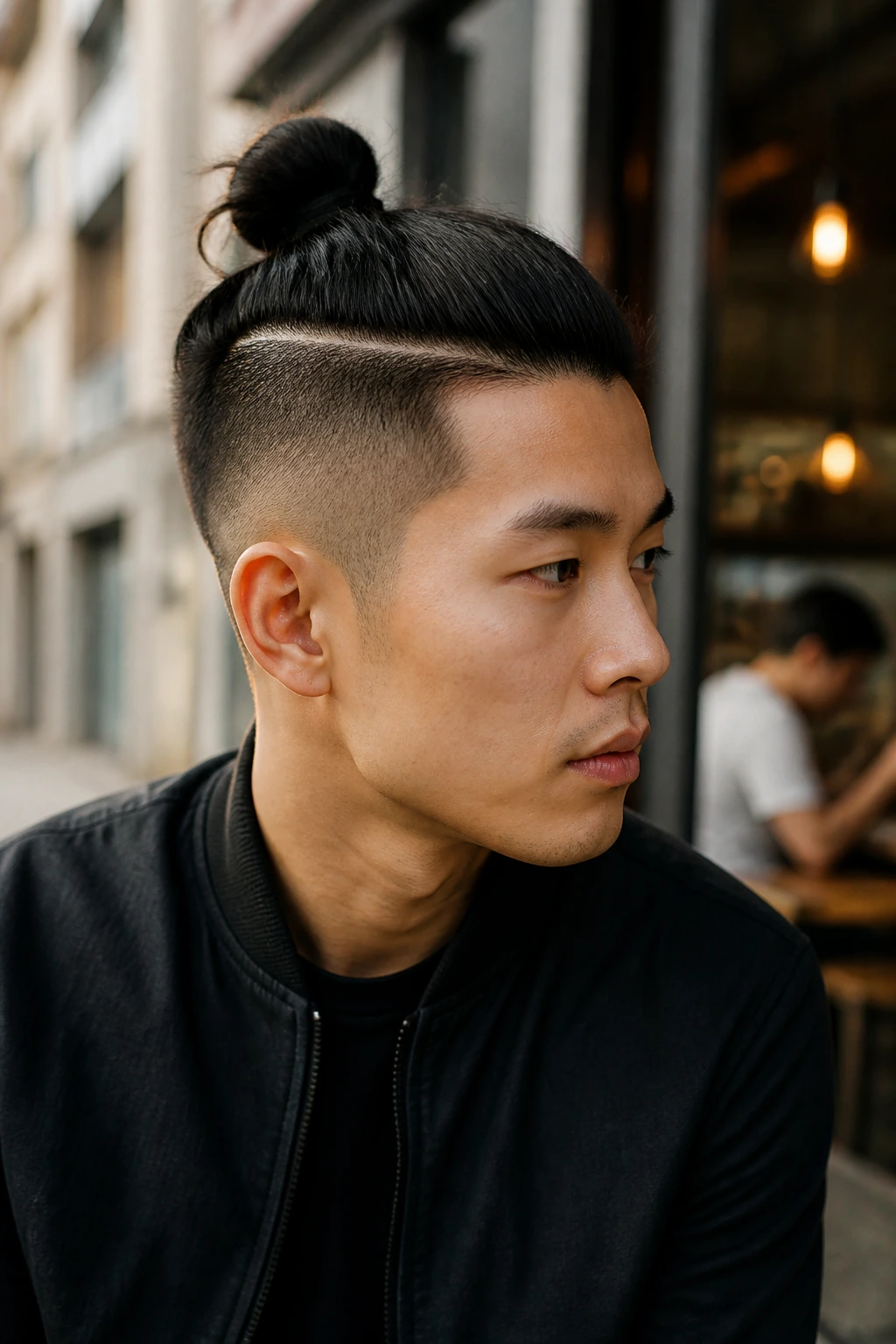
There is something undeniably striking about the contrast between a smooth, pulled-back top knot and the jagged, buzzed texture of an undercut. This style utilizes the length many people already have, simply cleaning up the sides to make the look more aggressive. It is the ultimate “weekend warrior” style that transitions perfectly into a night out.
The Mechanics of the Knot
- Gather the hair starting from the temples and pull it toward the crown of your head.
- Secure it with a snag-free elastic band, and on the last pull-through, loop the hair into a small, messy bun.
- Since your sides are short, use a little bit of pomade to smooth down any flyaways near the hairline to keep the look clean.
5. The Hard Part Side-Swept Fade
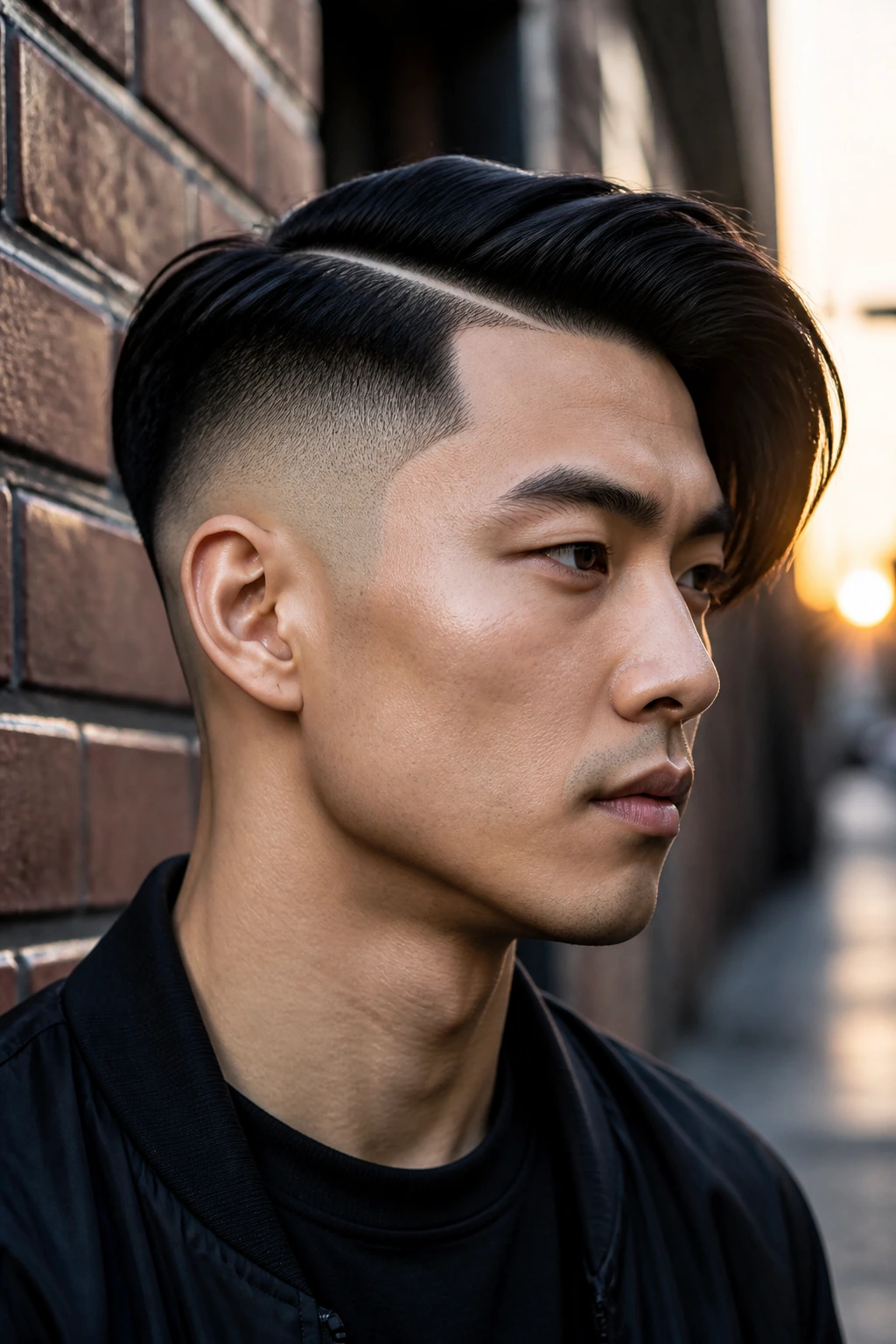
A hard part, where a razor line is shaved into the scalp to accentuate a natural side part, adds a sense of precision to an undercut. For Asian hair, which tends to grow straight, a side-swept style feels intentional and polished. It is the kind of haircut that looks like you spend ten minutes in front of the mirror, even if you just combed it and walked out the door.
Why the Hard Part Matters
- It creates a permanent boundary between the long hair and the faded side.
- It adds a touch of retro-inspired swagger that works well for formal events or professional environments.
- Over time, the line will need to be re-shaved, which gives you an excuse to get a fresh touch-up every two weeks.
6. The High-Contrast Samurai Bun
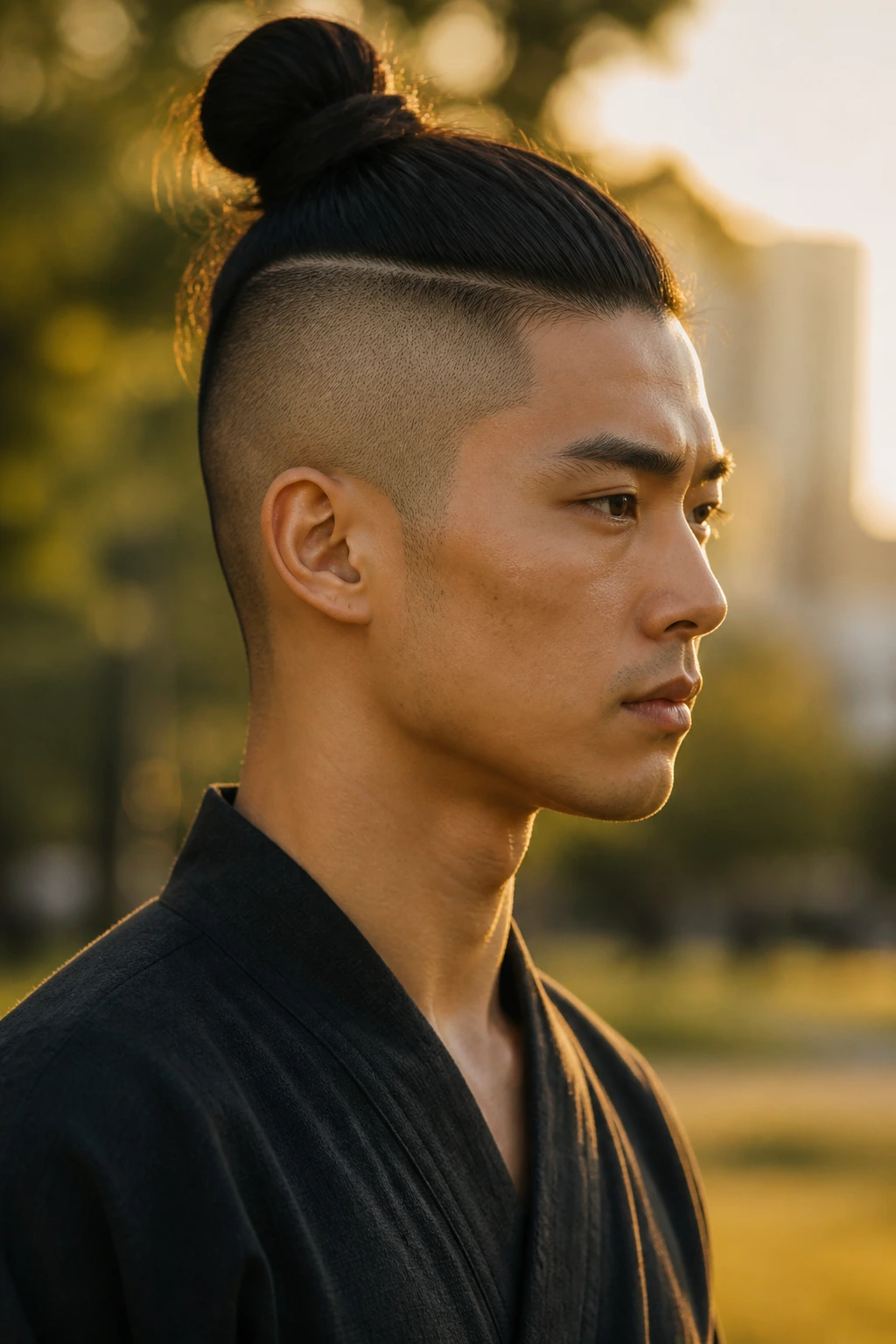
This is an evolution of the traditional man bun. By shaving the sides significantly higher—almost to the parietal ridge—you create a dramatic profile that is all about verticality. The top remains long enough to pull back tightly, creating a sharp look that emphasizes the bone structure of the head.
The Maintenance Reality
- You need at least six to eight inches of hair on top to achieve the classic “man bun” look.
- Because the sides are shaved so high, this look requires very frequent barber visits to prevent the sides from looking “fluffy” as they grow out.
- Invest in a good hair oil; when the hair is pulled back that tightly, you want the scalp to stay hydrated and the hair to have a healthy shine.
7. The Layered Undercut Bob
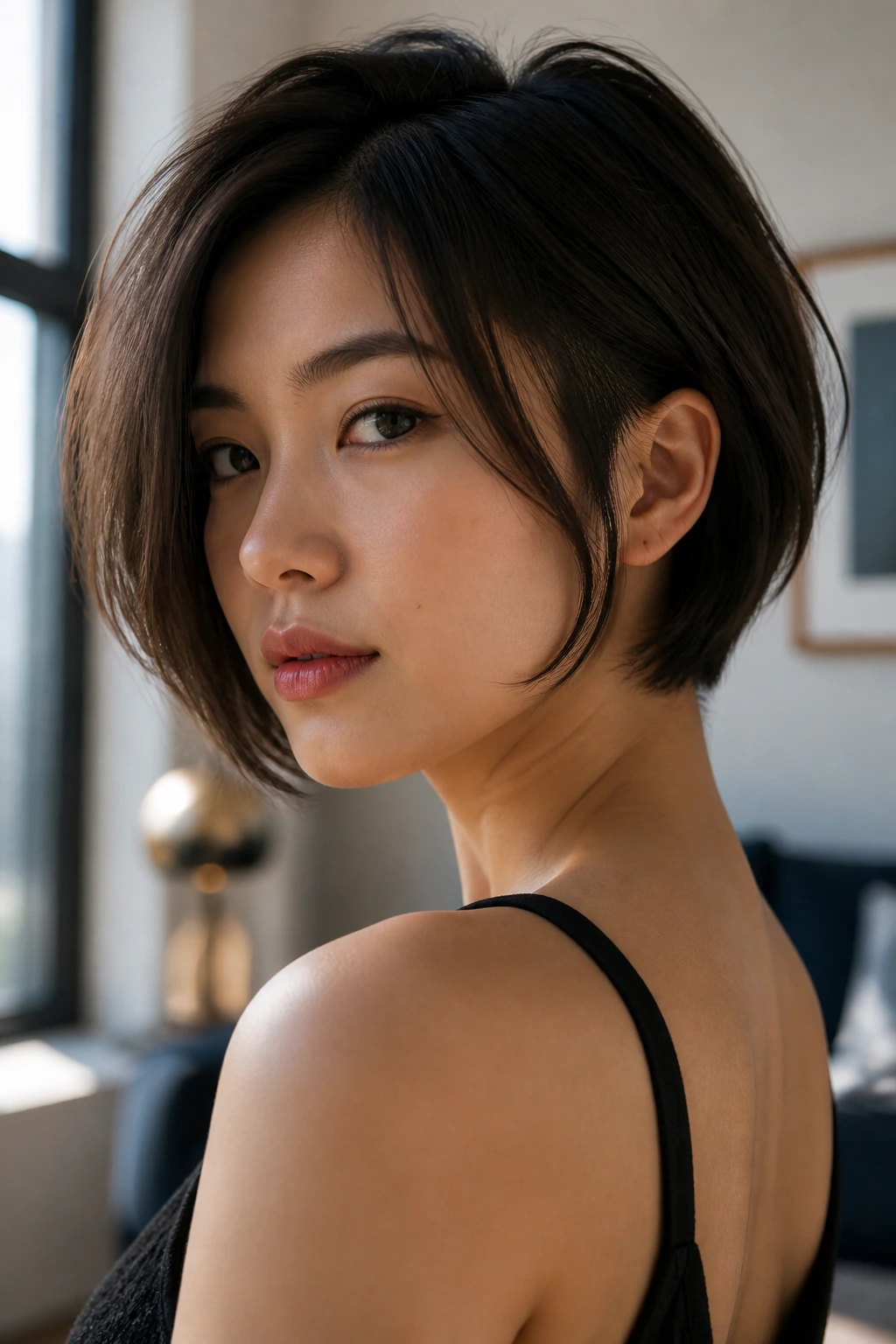
An undercut doesn’t always have to be about masculine-leaning styles. A layered bob with an undercut at the nape of the neck is a brilliant way to manage thick Asian hair. The undercut removes the “puffiness” that often happens at the back of the neck, allowing the rest of the hair to lay flat and frame the face perfectly.
Why It’s Sophisticated
- It creates a sleek, modern aesthetic that feels fashion-forward.
- The layers on top provide movement, while the hidden undercut keeps the silhouette from becoming too bulky.
- This style is surprisingly versatile; you can wear it straight for a sharp look or add a few waves with a flat iron for a softer appearance.
8. The Faux-Hawk with Skin Fade
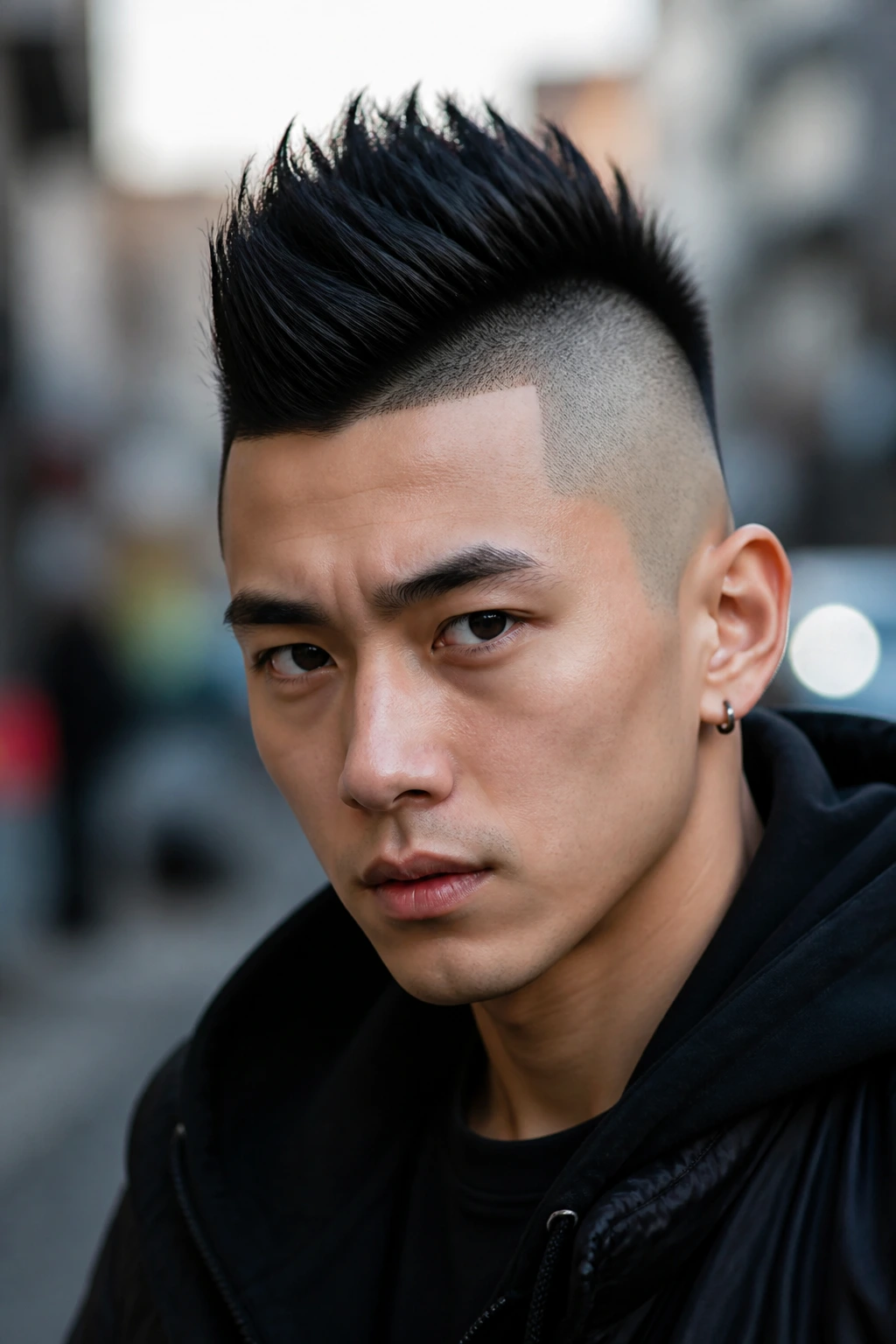
The faux-hawk is a classic for a reason. By fading the sides to skin and leaving a strip of longer hair running down the center, you mimic the mohawk without the punk-rock commitment of shaving it all off. For Asian hair, this style holds its vertical shape much better than finer, wavier hair types.
Styling the Center Strip
- Use a strong-hold molding paste. Work it into your palms until it is warm and pliable.
- Push the hair upward toward the center, pinching the tips to create a spiked effect.
- If you want it to last all day, a light mist of non-aerosol hairspray is your best friend—just don’t overdo it, or the hair will lose its natural-looking texture.
9. The Long Fringe Undercut
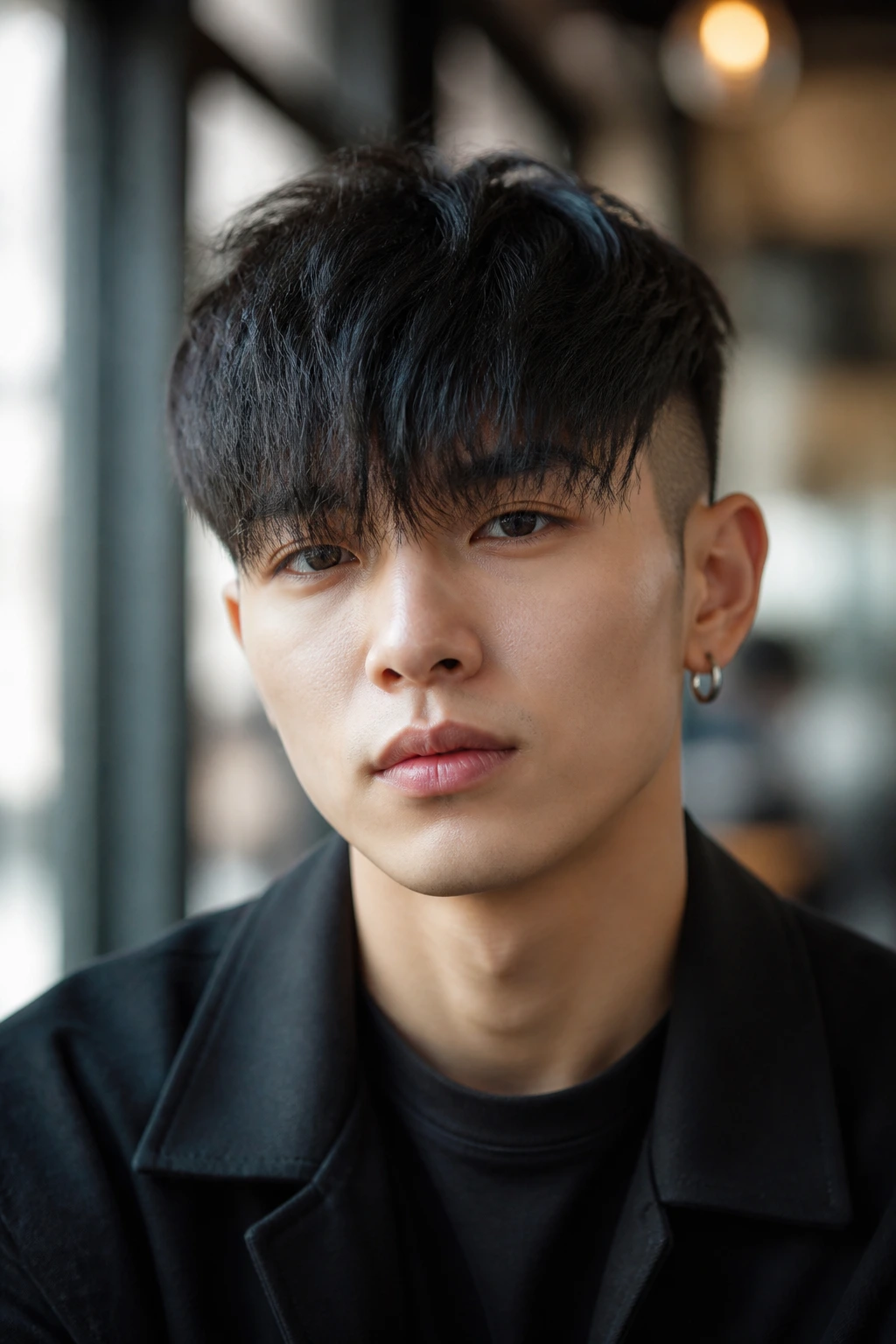
If you have a wider forehead, a long fringe undercut is a strategic move. By shaving the sides and back, you shift the visual weight to the front, where your long bangs can hang over your forehead. It is a cool, K-drama inspired look that feels both mysterious and incredibly stylish.
How to Balance the Length
- Keep the fringe long enough to hit your eyebrows or slightly below.
- Use a light-weight cream instead of a wax; you want the fringe to have soft movement, not look like a solid block of hair.
- Ensure the sides are faded cleanly so the fringe doesn’t compete with the sides for attention.
10. The Asymmetrical Undercut Pixie
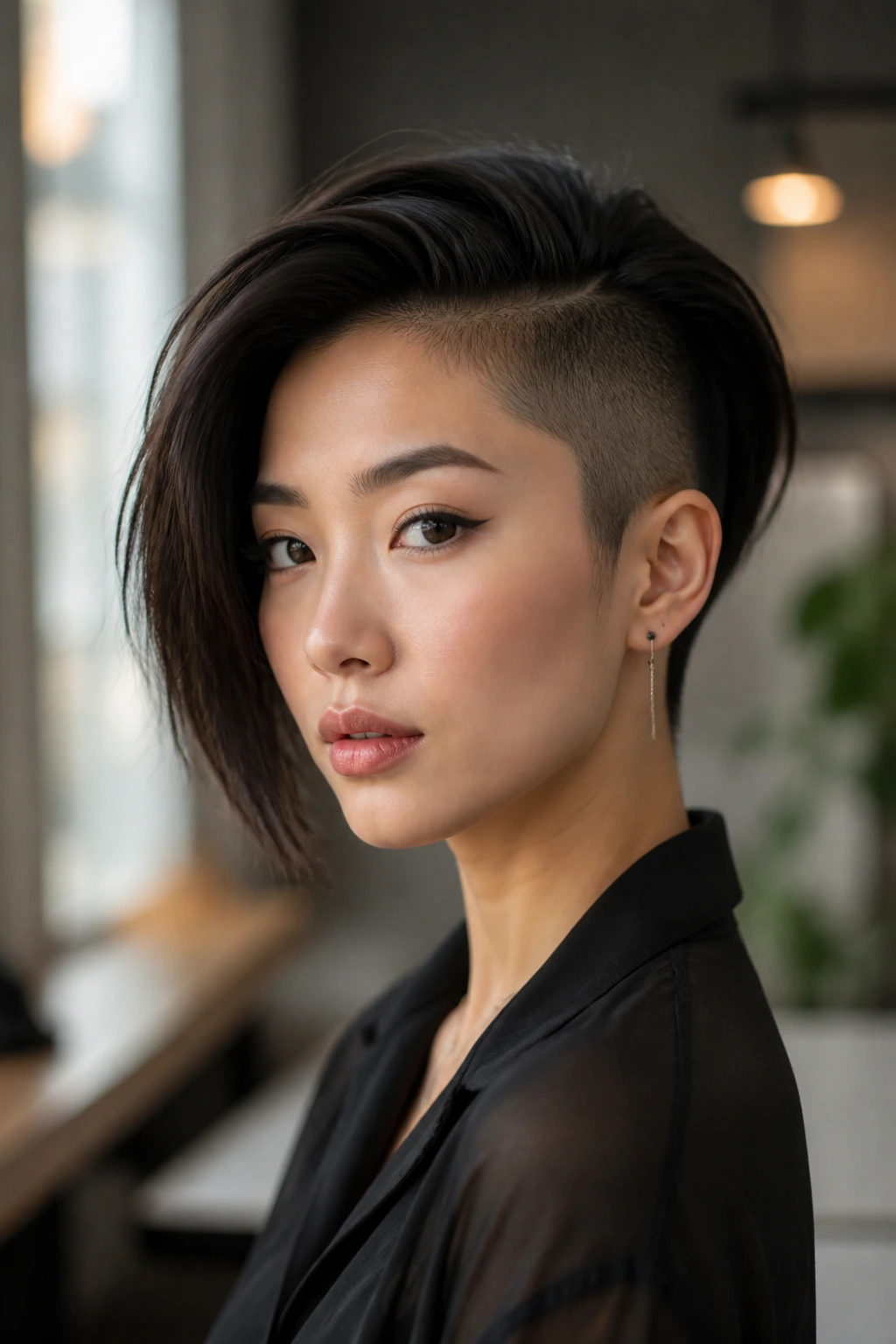
For those who prefer shorter hair, an asymmetrical undercut is a bold, artistic choice. Shave one side of the head completely while leaving the other side long and swept over. This creates an immediate focal point and frames the face in a way that feels intentional and edgy.
Styling the Long Side
- You can keep it sleek and straight to highlight the blunt ends, which look great with the dark, natural pigment of most Asian hair.
- If you’re feeling playful, add a slight bend to the long side with a curling wand to break up the sharpness.
- The contrast between the skin-shaved side and the longer layers on top is where the drama lies, so keep that shaved side pristine.
11. The Buzz-Cut with Fade
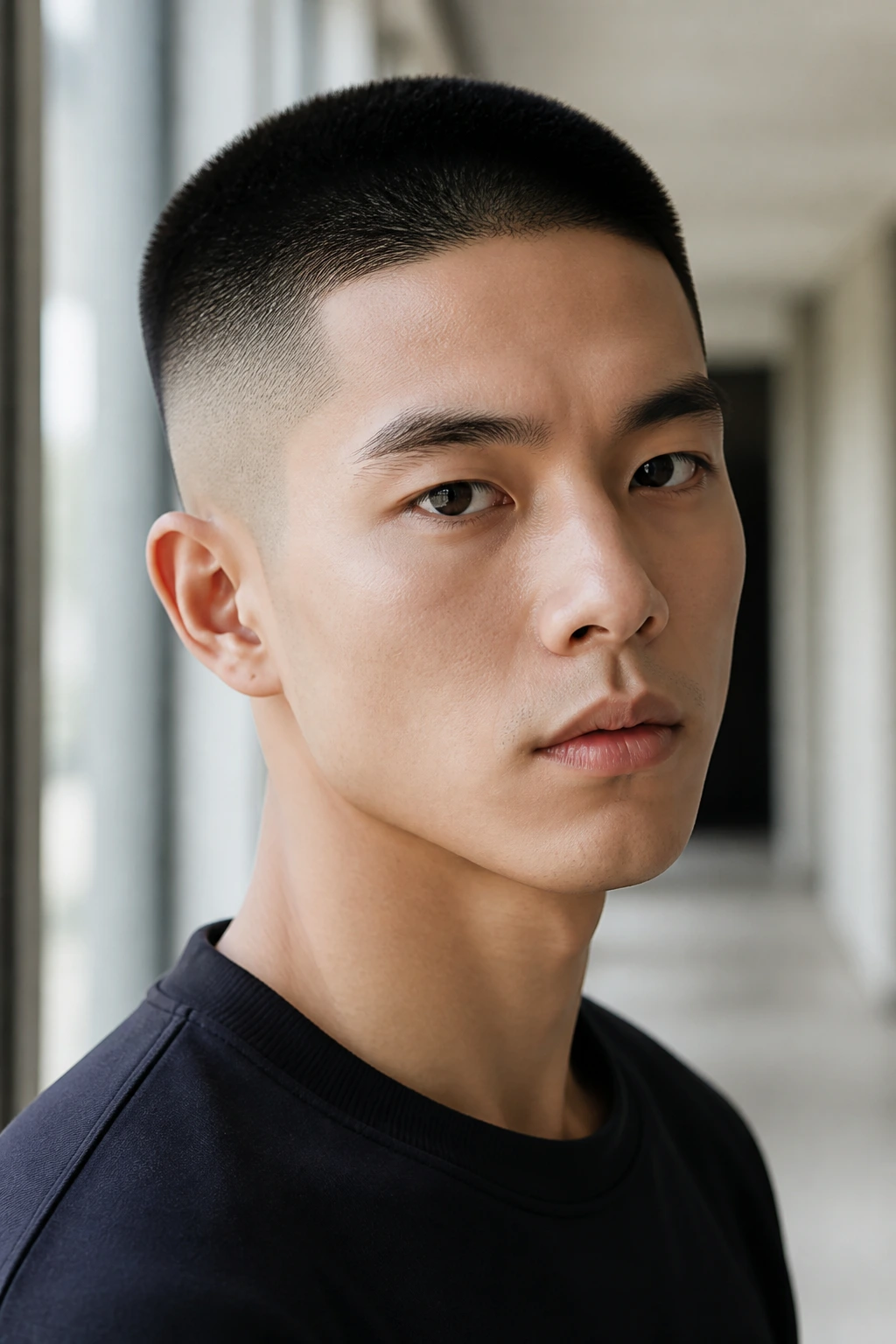
Sometimes, the most “edgy” thing you can do is go simple. A very short buzz cut with a high-contrast fade is a timeless look. It emphasizes the head shape and brings all the focus to your eyes and brows. It is arguably the easiest style on this list to maintain, requiring only a set of clippers at home.
Why It’s Efficient
- You save money on expensive pomades, waxes, and hair dryers.
- Your morning routine effectively vanishes.
- It is the ultimate “power” look, often favored by those who want to project confidence without saying a word.
12. The Wavy Quiff with Tapered Sides
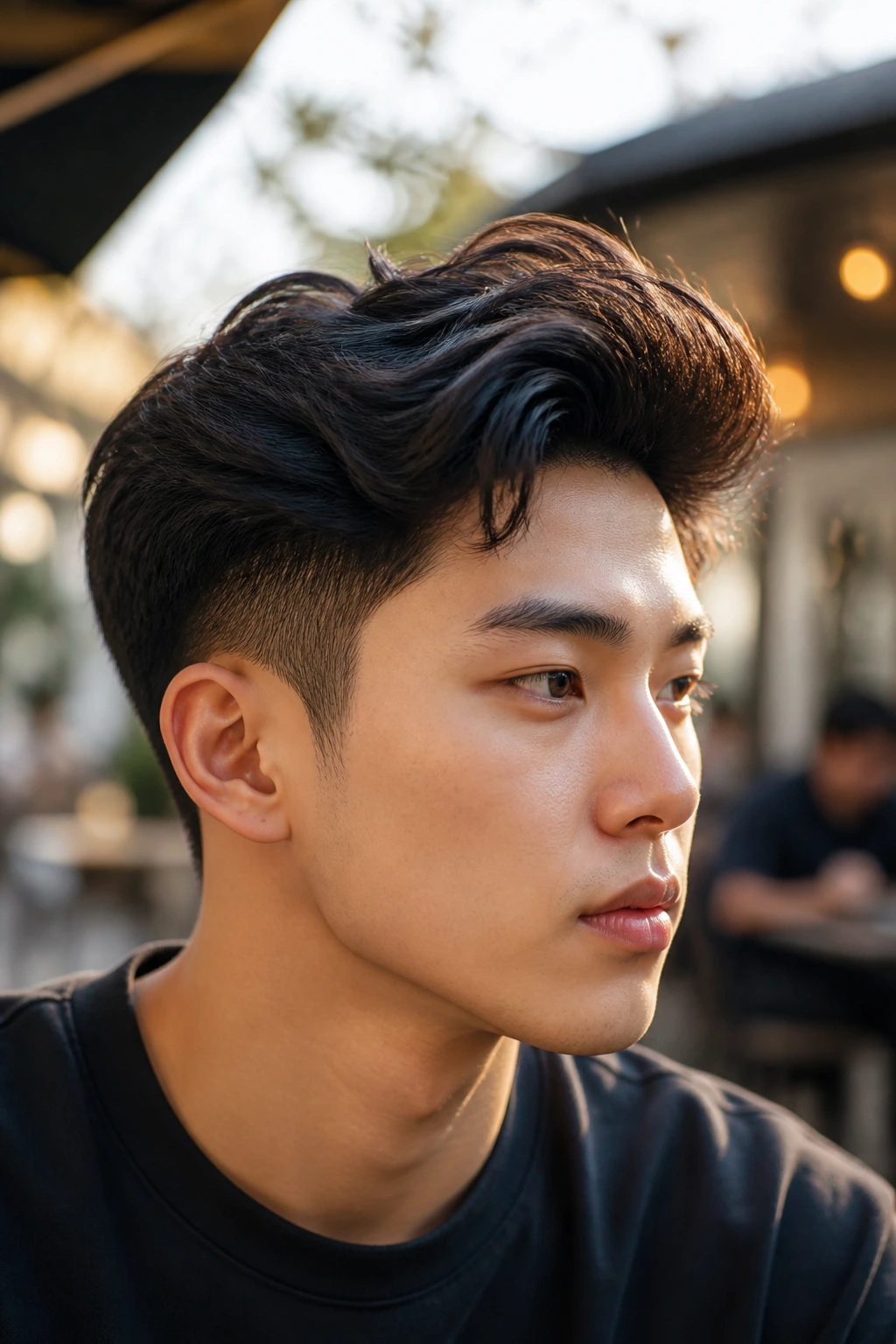
Asian hair isn’t always pin-straight; for those with a slight natural wave, the quiff is a fantastic way to celebrate that texture. A taper fade keeps the sides under control, while the top is allowed to swell with volume and wave. It is a softer, more romantic take on the undercut.
Encouraging the Wave
- Use a sea salt spray on towel-dried hair to encourage the natural wave pattern.
- Scrunch the hair slightly as you blow dry it on a low-heat setting.
- Finish with a matte clay that adds definition without weighing the hair down.
13. The Two-Block Undercut
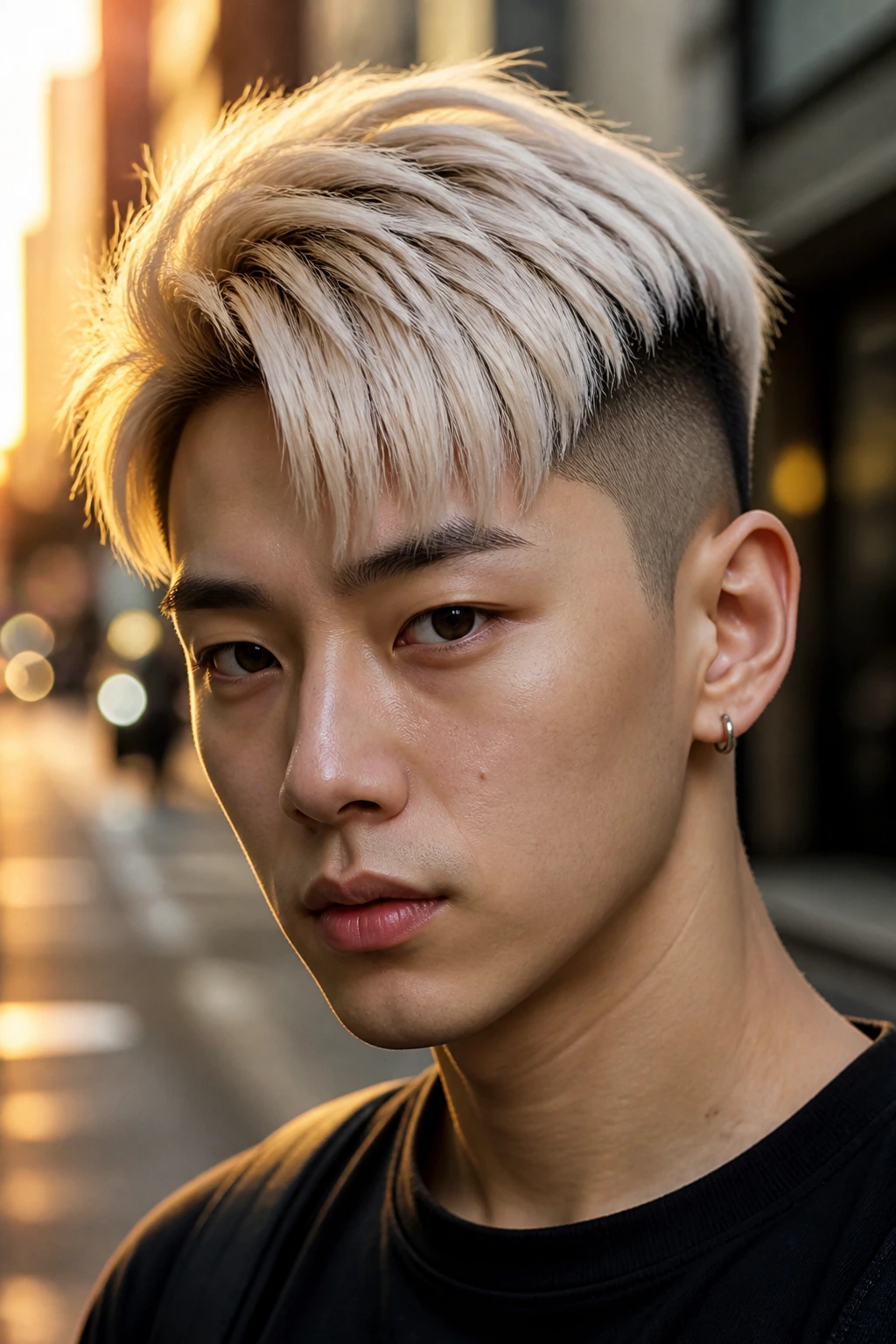
This is a staple in contemporary street style. The two-block involves a distinct separation between the long top section and the shorter, buzzed bottom section. It is a clean, intentional look that works exceptionally well for those who like to experiment with hair color, as you can easily dye the top section a bold shade while keeping the sides natural.
Color Considerations
- If you decide to bleach the top, keep the sides their natural dark shade to maximize the “two-block” effect.
- Regular purple shampoo is necessary if you go platinum to prevent the hair from turning brassy, which often happens when dark hair is lightened.
- The “block” works best when the transition between the two sections is sharp—don’t let your barber blend it too much.
14. The Undercut with Detailed Patterns
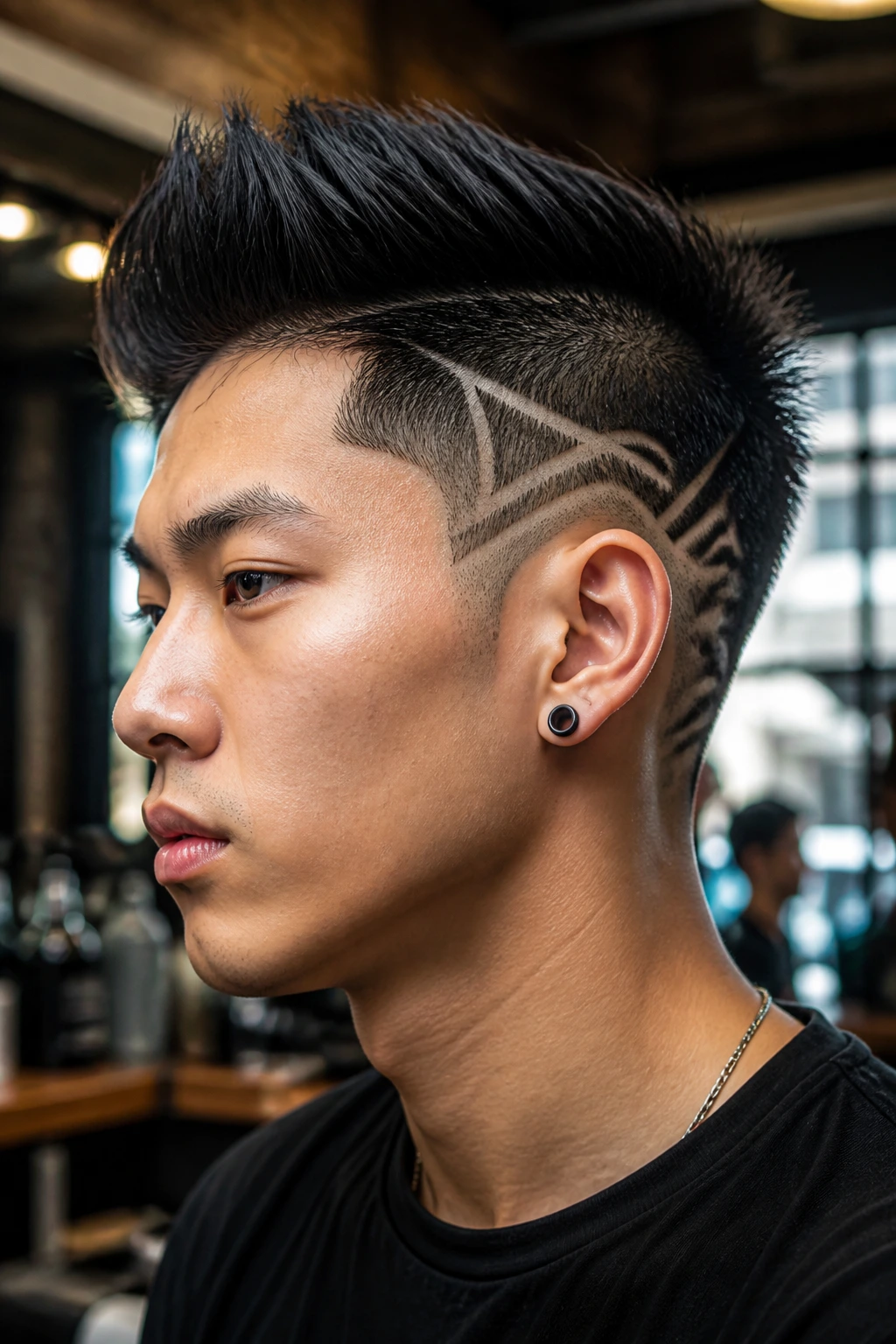
If you want to move beyond the simple shave, consider incorporating geometric patterns or “tribal” lines into your undercut. Since the hair is thick, it creates a very high-definition canvas for your barber to work on. These patterns look sharp for about a week, making them perfect for special events or social media content.
Maintaining the Line Art
- Patterns grow out quickly; expect to go back to the barber every week or ten days if you want to keep the design crisp.
- Be prepared for the “awkward phase” when the pattern grows out—you will likely have to buzz the entire area down to a uniform length to start fresh.
- Choose a design that complements your head shape; vertical lines can make the face look longer, while horizontal lines can add width.
15. The Pompadour Fade with Beard Connection
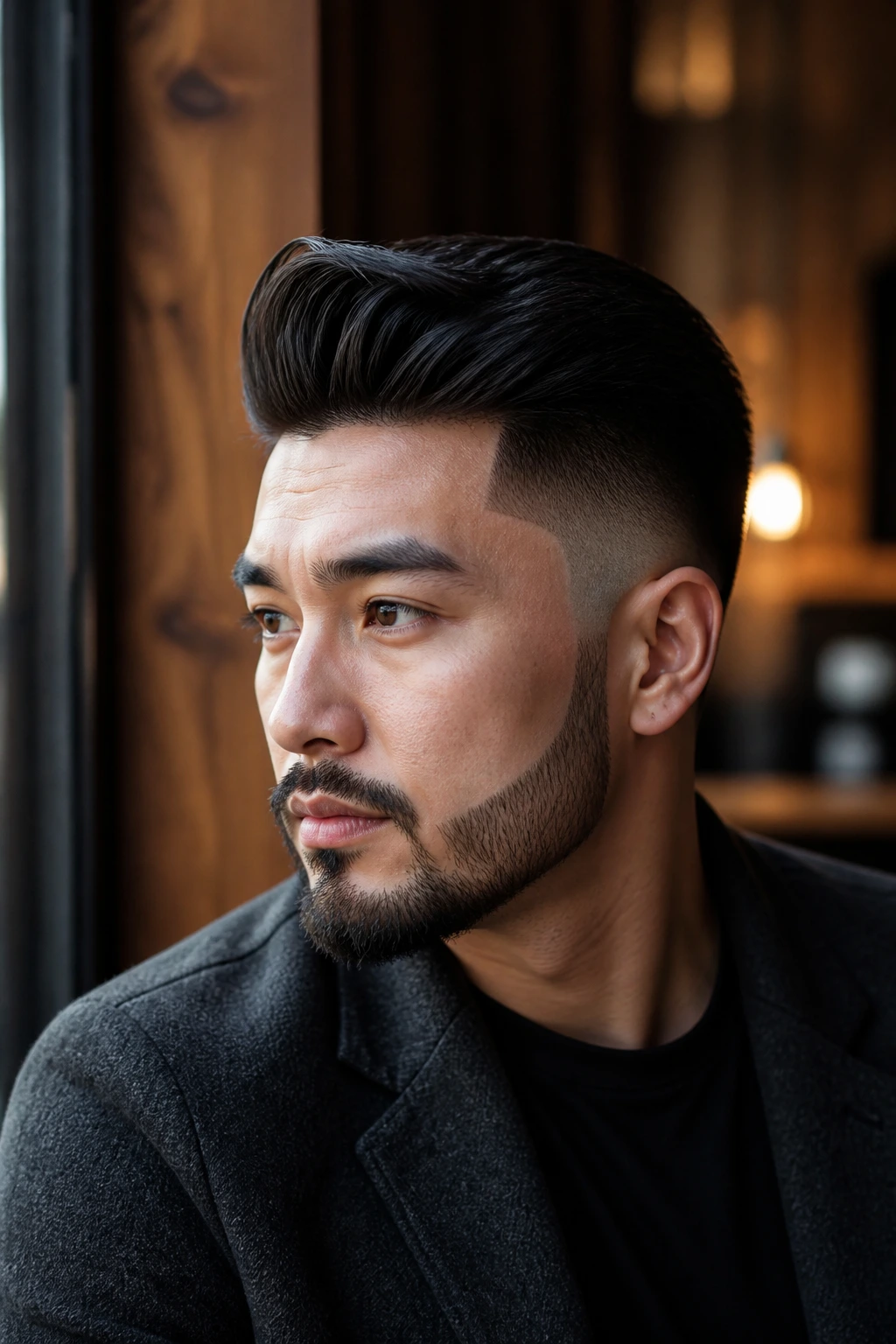
For those who can grow facial hair, connecting your undercut fade into your beard is a game-changer. This look provides a continuous frame for your face, emphasizing your jawline and cheekbones. It is a masculine, robust look that feels incredibly put-together.
The Connection Point
- The key is the “line-up”—the connection between the sideburns and the beard needs to be sharp and perfectly clean.
- Use a beard oil to keep the facial hair soft, as the contrast between soft beard hair and the sharp, buzzed undercut is visually appealing.
- Keep the beard trimmed to a medium length; if it gets too long, it can distract from the precision of the haircut.
16. The Bowl-Cut Inspired Undercut
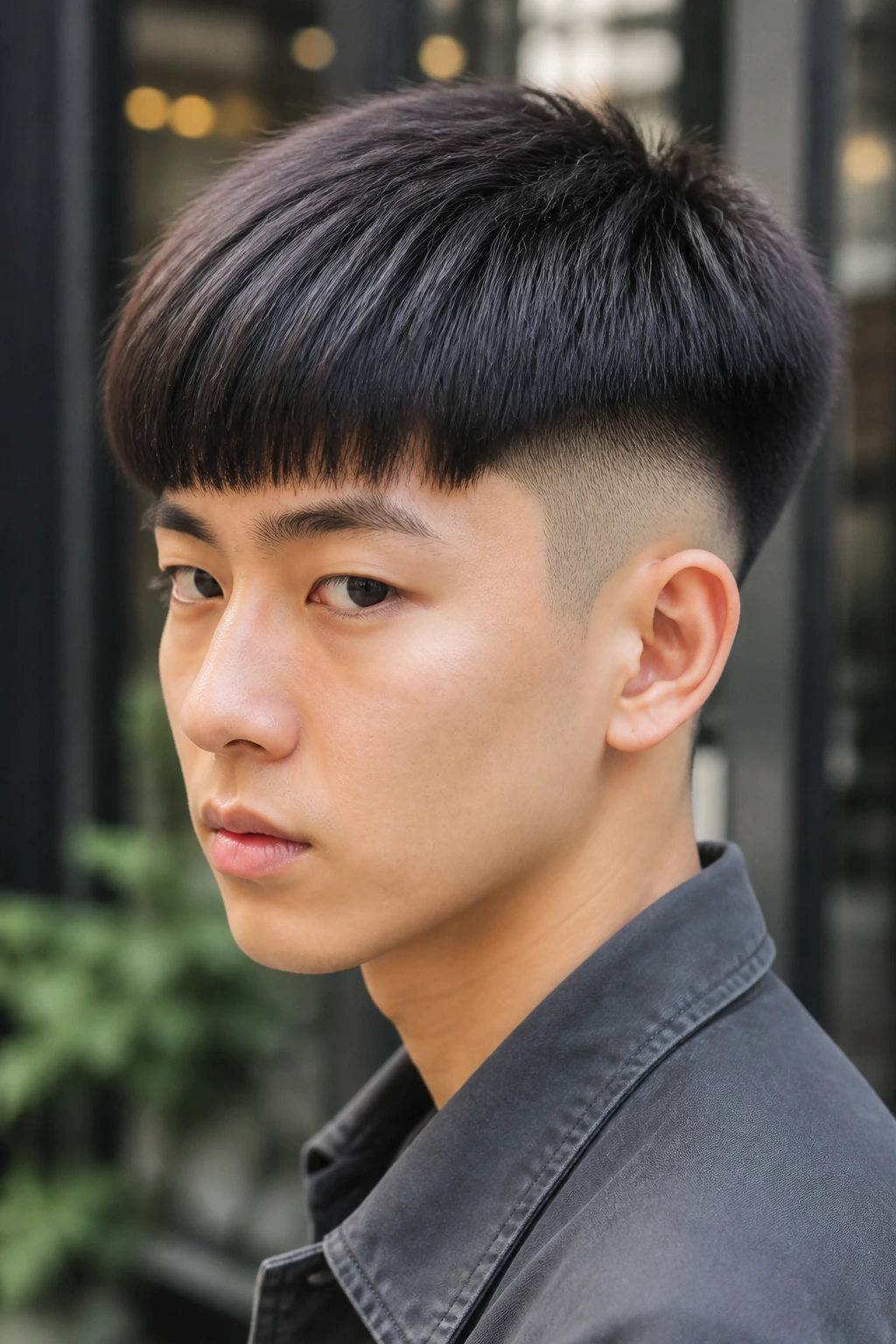
The modern bowl cut is nothing like the one your mom gave you in the third grade. With an undercut underneath, it becomes a high-fashion, K-pop-inspired silhouette that is both edgy and retro. It works best on very straight, thick hair, creating a smooth, heavy fringe that sits just above the eyes.
How to Modernize the Bowl
- Ensure the undercut is high and tight so that the “bowl” sits neatly on top.
- Ask for a blunt cut on the fringe—no thinning shears here. You want the weight to create that smooth, graphic line.
- This style requires regular trims to keep the bangs from poking your eyes and to keep the undercut from growing into your “bowl” section.
17. The Slicked-Back Undercut
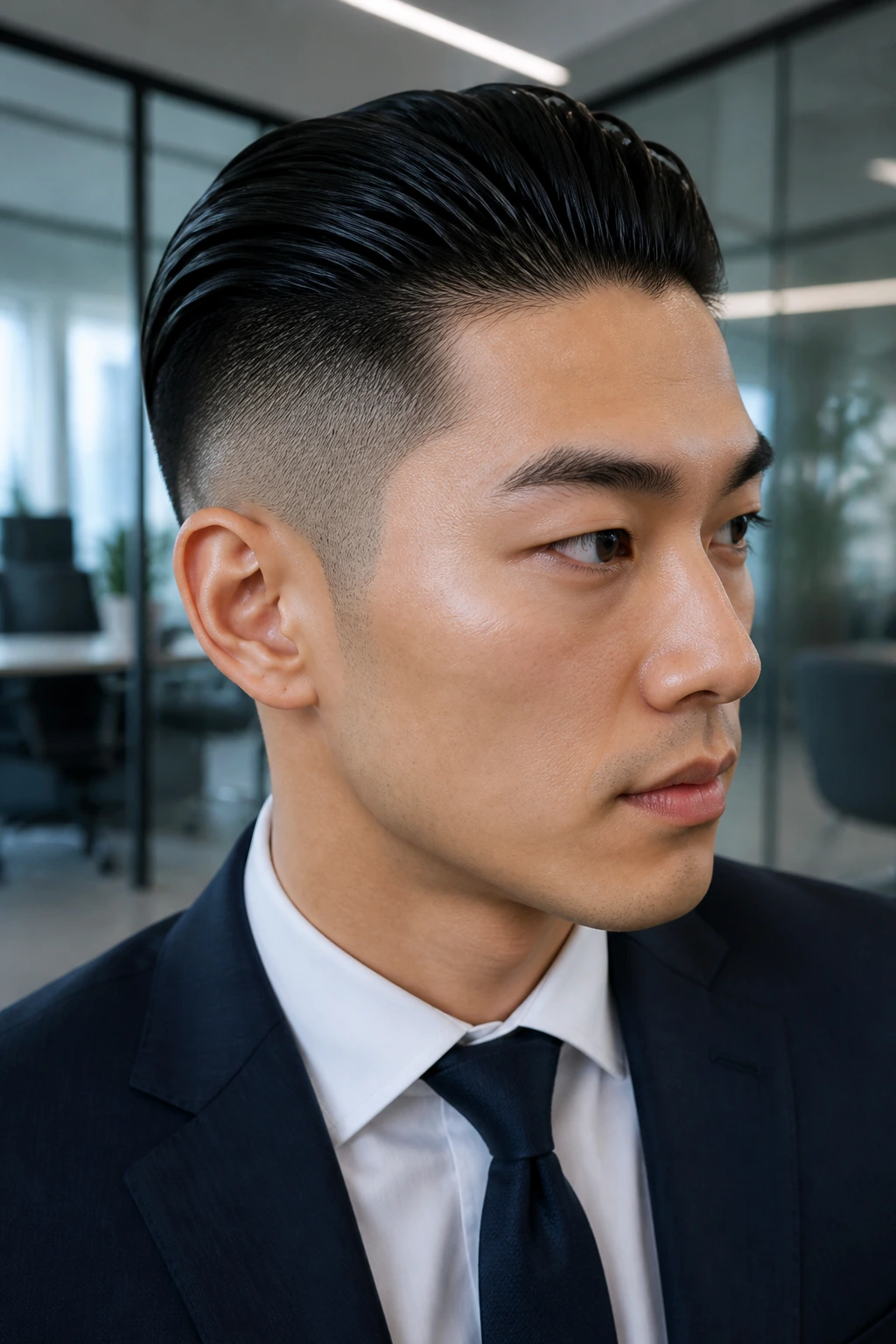
This is the “businessman” version of the undercut. It is clean, efficient, and radiates professionalism. By using a strong-hold pomade, you can slick your thick hair back completely, ensuring it doesn’t move all day. The shaved sides keep the overall volume down, preventing the “poodle” effect that can happen when thick hair is slicked back.
The Styling Ritual
- Start with a tiny amount of pomade and work your way up; you can always add more, but you cannot remove it once it is in your hair.
- Use a fine-tooth comb to create the desired lines; if you want a more casual look, use your fingers to comb it back, leaving slight textures.
- This style is the easiest to touch up during the day—just a quick swipe of the comb keeps you looking crisp.
18. The Shaggy Undercut
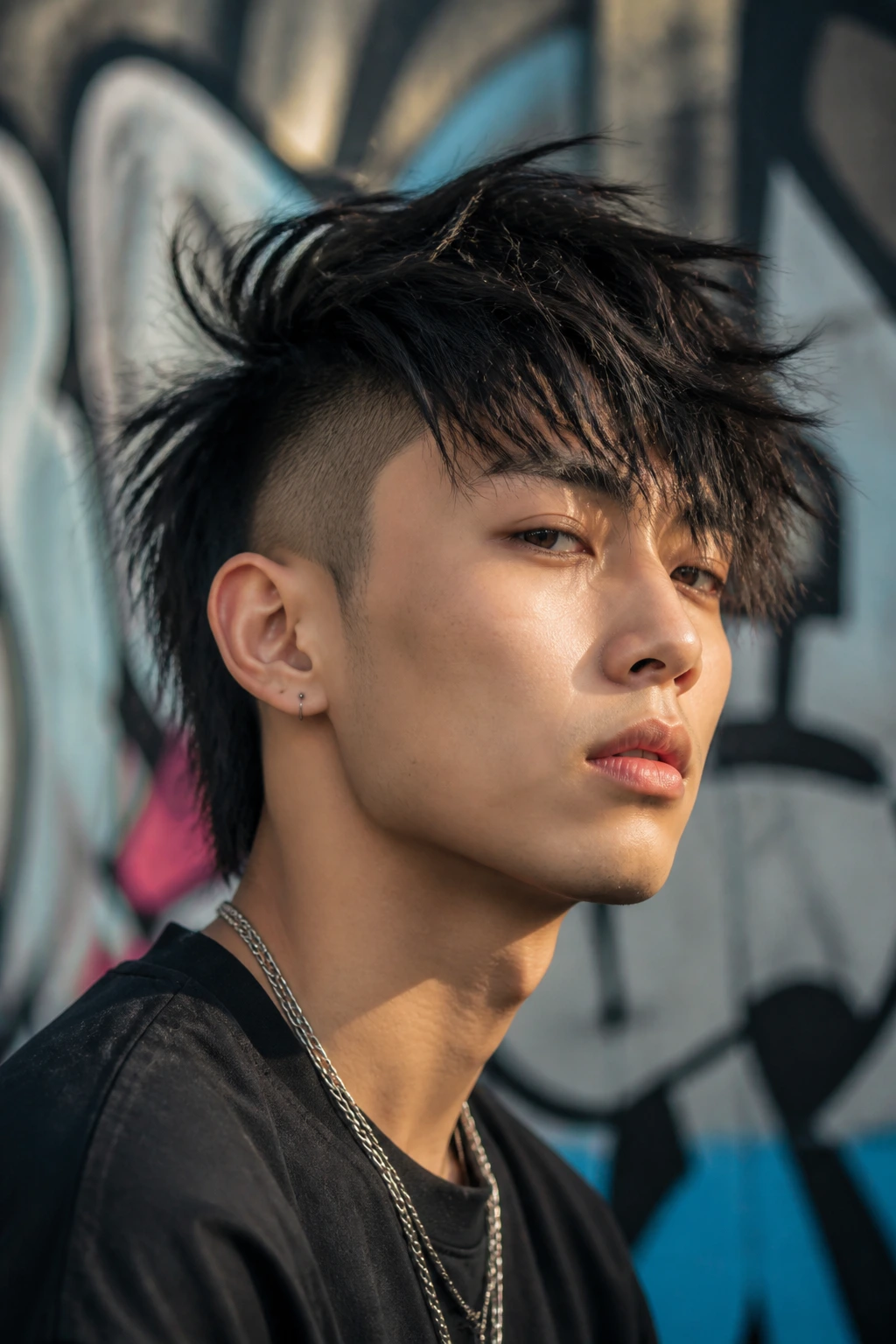
For those who don’t like the “too perfect” look, the shaggy undercut is the ultimate compromise. You get the maintenance benefits of the shaved sides, but the top is kept long, choppy, and slightly overgrown. It has a rock-and-roll vibe that feels lived-in and comfortable.
Why It’s Great
- It grows out gracefully, so you don’t need to live in the barber’s chair to keep it looking good.
- It works with your natural hair texture rather than fighting against it.
- It gives you the flexibility to tie it up on days when you don’t feel like styling it, making it one of the most versatile styles on this list.
Final Thoughts
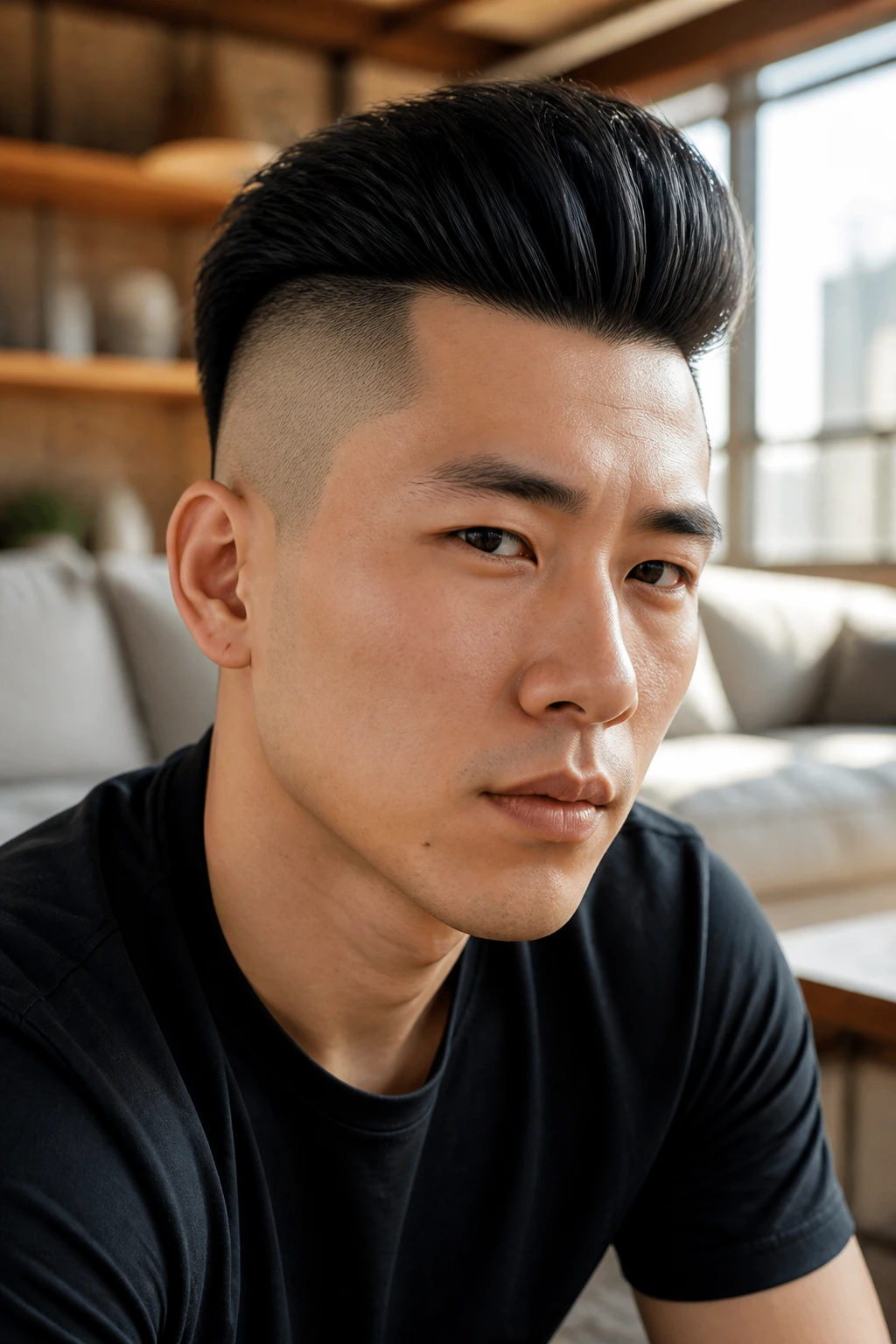
Choosing the right undercut is about understanding your hair’s natural direction and your personal lifestyle. Asian hair offers a unique advantage: it is resilient, holds shape well, and provides a stark contrast when faded. Whether you lean toward the precision of a hard part or the rebellious nature of a shaggy crop, the most important element is consistency.
An undercut isn’t a “set it and forget it” style. The sharpness that defines these cuts is a result of frequent maintenance. Find a barber who understands how to work with thick, straight hair, and do not be afraid to experiment with different lengths. Your hair is an accessory that you wear every single day—giving it an edge is just a matter of deciding where you want that edge to fall. Start small with a simple fade, and as your confidence grows, consider designs that push your personal aesthetic even further.