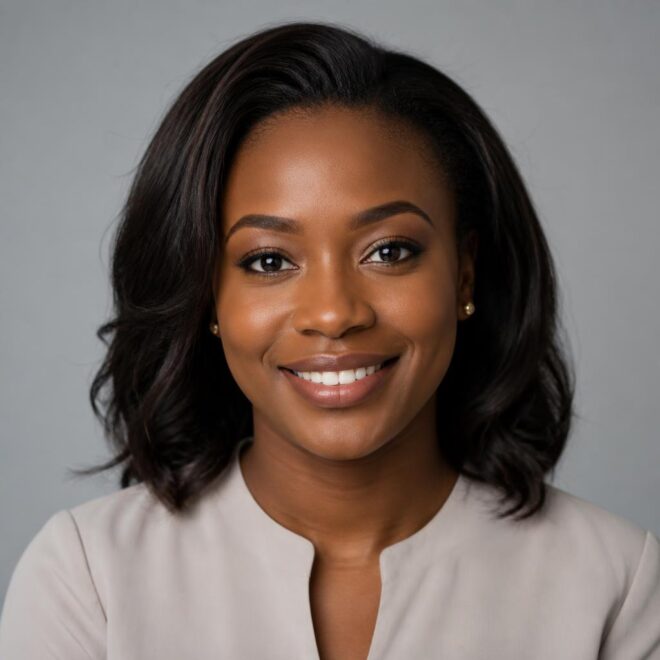


Frizz is not an enemy to be defeated; it is simply hair that is thirsty for structure. When your hair strands reach out into the humid air, they are essentially searching for moisture, creating that halo of unwanted texture that so many people spend hours trying to flatten. The secret to managing frizzy hair is not to force it into submission with endless heat, but to choose styles that embrace its natural volume while anchoring the flyaways in place. Whether you are dealing with tight coils, loose waves, or just a general tendency toward fluffiness, the right approach changes the game from a daily battle into a creative opportunity.
You have likely spent enough mornings staring in the mirror, watching a single strand defy gravity while you wonder why your efforts are not paying off. It is rarely about the quality of your hair—it is about the geometry of the cut and the mechanics of the hold. By shifting your perspective from “controlling” the hair to “styling” the texture, you unlock a world of options that look intentional rather than accidental. Let’s walk through thirty distinct ways to turn that frizz into a deliberate aesthetic choice.
1. The Low Messy Chignon
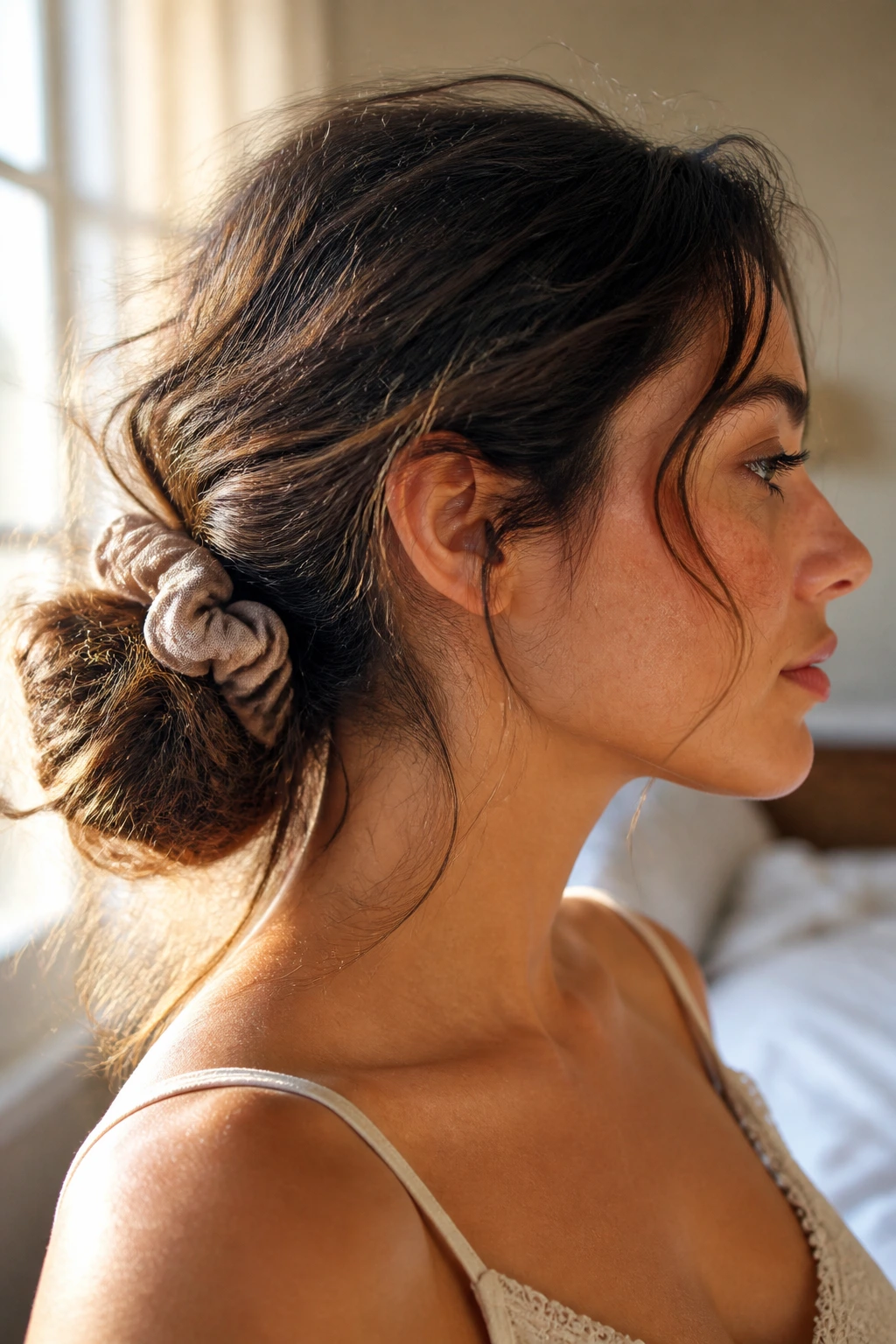
The beauty of the low chignon lies in its ability to turn volume into an asset. Instead of fighting the frizz, you allow it to add a soft, romantic quality to the nape of your neck. Gather your hair at the base of your scalp, securing it with a soft fabric scrunchie to minimize breakage, and twist the lengths into a loose coil. Use a few U-shaped pins to tuck the ends, allowing small, wispy pieces to escape around your ears and hairline.
Why This Works for Texture
Frizzy hair provides the perfect amount of grip for a style like this. Sleek hair often slips out of pins, but the slightly rougher cuticle of textured hair clings to the accessories, keeping your updo secure all day without the need for excessive hairspray.
How to Style It
- Start by applying a light, hydrating hair oil to the ends to ensure the wisps look intentional.
- Gather your hair into a low ponytail, but do not pull the final loop all the way through to create a base volume.
- Wrap the remaining hair around the base and pin.
- Pro tip: Pull gently on the crown of your head once the bun is secure to create a soft, lived-in shape.
2. The Braided Halo
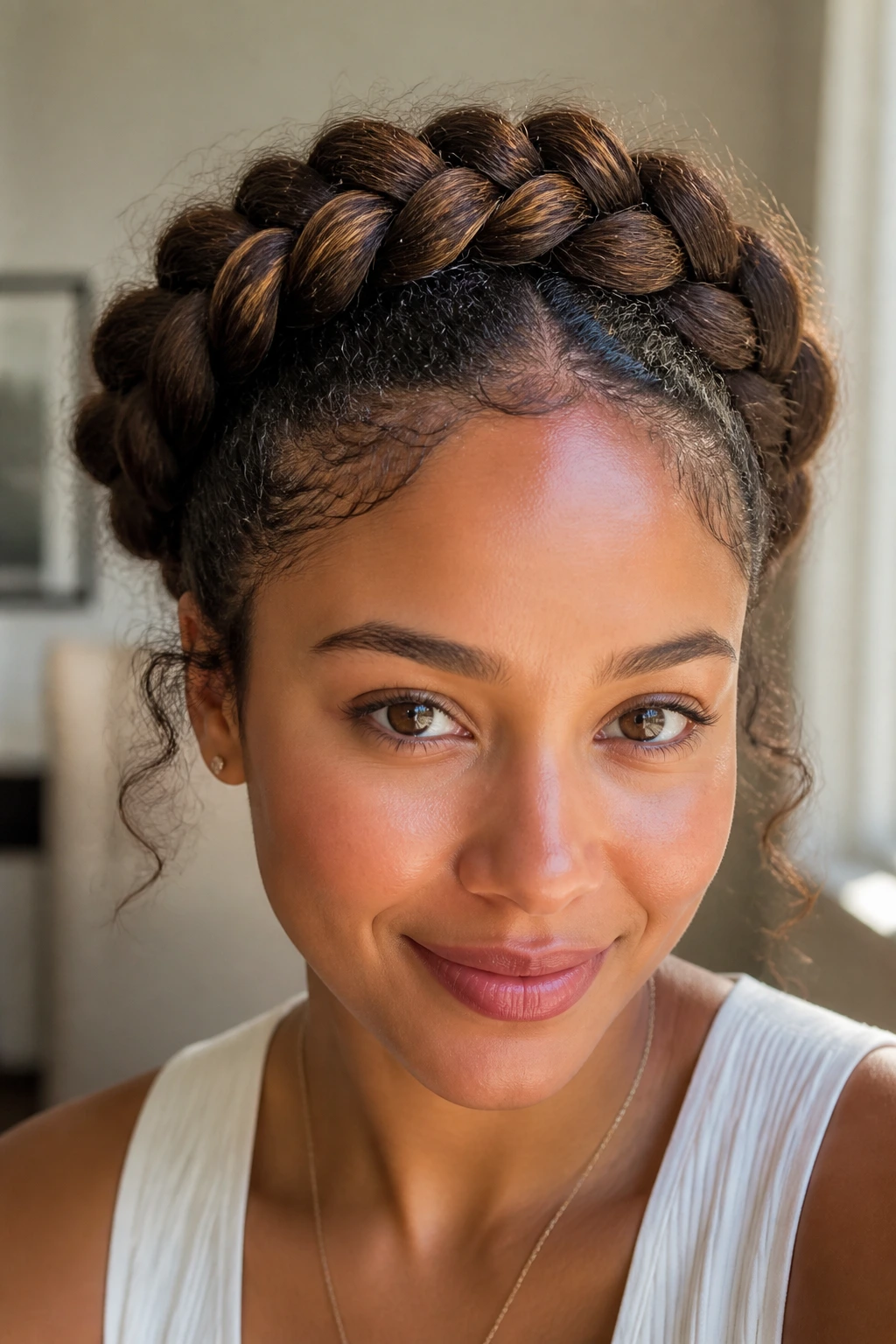
If you want to keep your hair completely out of your face, a crown braid is the ultimate solution. This style effectively traps flyaways against the scalp, essentially knitting the frizz into the structure of the braid itself. By dividing your hair into two sections and braiding each from the temple toward the back, you create a seamless headband that looks sophisticated enough for a formal event but works perfectly for a humid day at the office.
The Mechanics of the Hold
Because frizzy hair has natural bulk, your braids will appear thicker and more substantial than they would on fine, straight hair. You do not need to tease or pancake the braids to make them look full; the natural texture does the work for you.
Essential Tools
- A paddle brush with boar bristles.
- Clear elastic bands that match your hair color.
- A light-hold setting spray to lock the perimeter.
3. The High Pineapple Bun
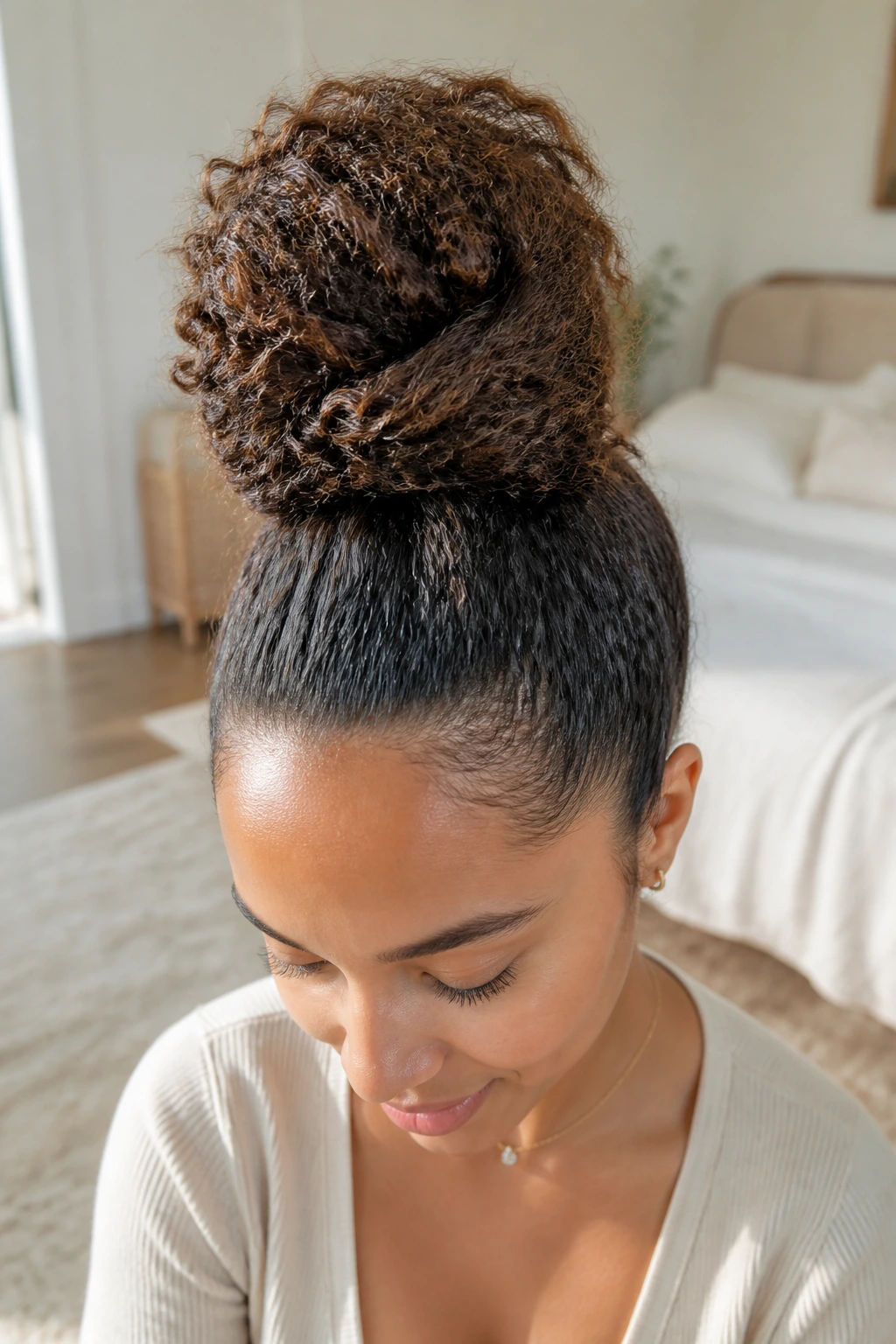
The “pineapple” is a classic for curly and textured hair, but it works equally well as a daytime lifestyle hairstyle. By pulling all your hair to the very top of your head, you prevent the friction that usually occurs against your collar or pillow, which is a leading cause of mid-day frizz. It is a bold, high-volume look that showcases your texture while keeping the nape of your neck cool and clean.
Balancing Volume and Control
Focus your styling product at the roots. A bit of light-hold gel applied with your fingertips helps smooth the perimeter, ensuring the hair leading up to the bun looks polished, while the bun itself remains a fountain of volume.
Making It Last
Use a satin-lined scrunchie to minimize tension. If you want to elevate the look for an evening out, wrap a silk scarf around the base of the bun, tying it into a small knot at the front.
4. The Half-Up Top Knot
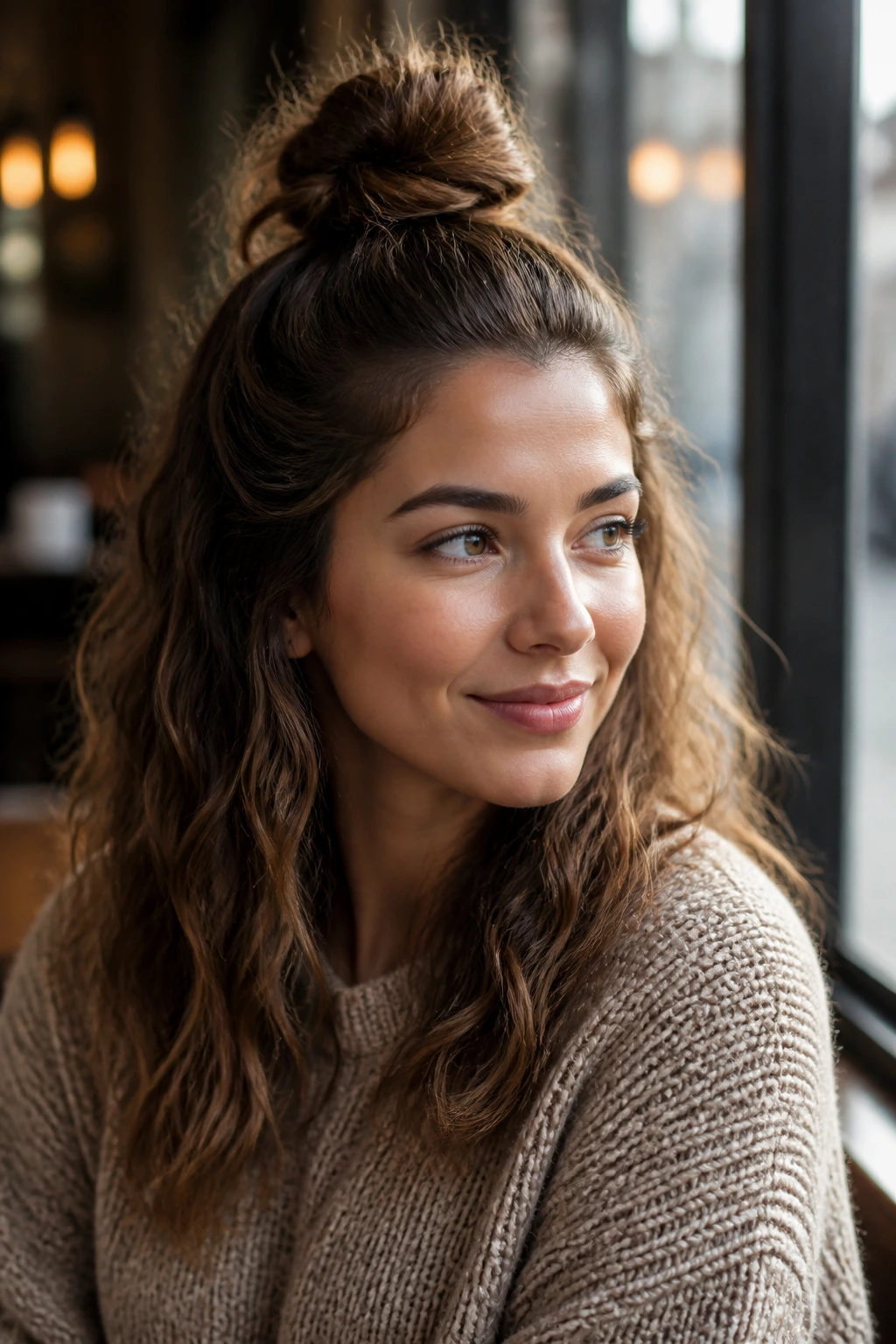
Sometimes you want the freedom of having your hair down, but you need to eliminate the frizz around your face. The half-up top knot acts as a frame, pulling the most unruly sections—usually the ones around the temples—into a secure point at the crown. Leaving the bottom two-thirds of your hair loose allows you to show off your natural wave pattern without worrying about flyaways obscuring your vision.
Why It Stays Put
The top knot acts as a central anchor. Since you are only pulling back a section of the hair, the tension is distributed evenly. This prevents the “pulling” sensation that often comes with a full high ponytail.
Styling Variation
Try using a decorative claw clip instead of an elastic for the top knot. It creates a slightly more relaxed, effortless vibe that pairs beautifully with the natural volume of frizzy hair.
5. The Sleek-to-Texture Ponytail
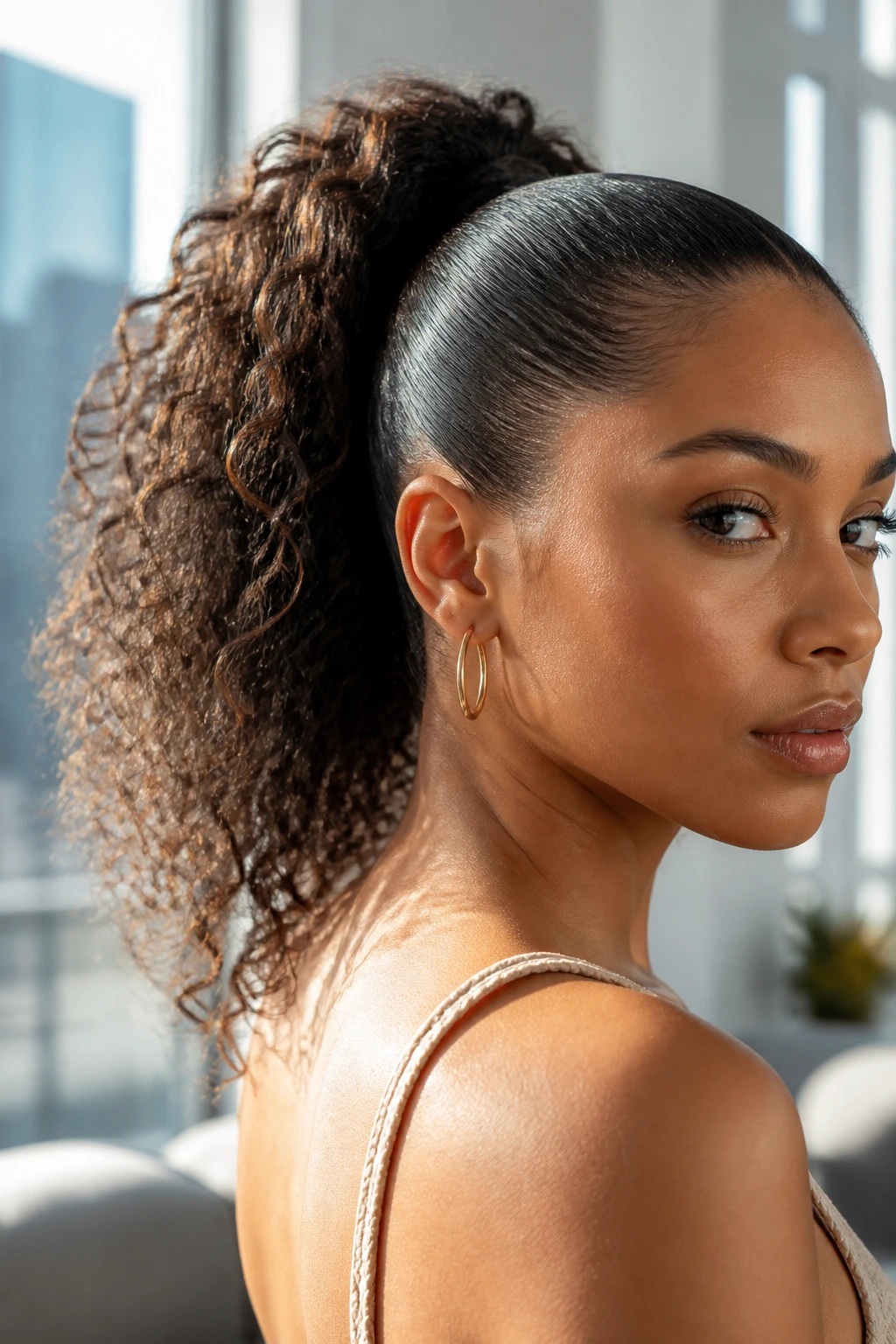
This style is all about contrast. By slicking down the front and sides of your hair with a high-shine pomade and letting the ponytail itself remain full and textured, you create an intentional, editorial look. The tight, controlled front grounds the wilder, frizzy volume of the length, making the hair look healthy rather than chaotic.
The Secret to the Shine
To achieve the “wet look” in the front, use a combination of a leave-in conditioner mixed with a touch of gel. This keeps the hair hydrated so it does not dry out and turn into a frizzy mess by lunchtime.
Application Technique
- Use a fine-tooth comb to distribute the product evenly through the top section.
- Secure the ponytail with a bungee cord hair tie; these provide a much tighter grip than standard elastic loops.
6. The Side-Swept Dutch Braid
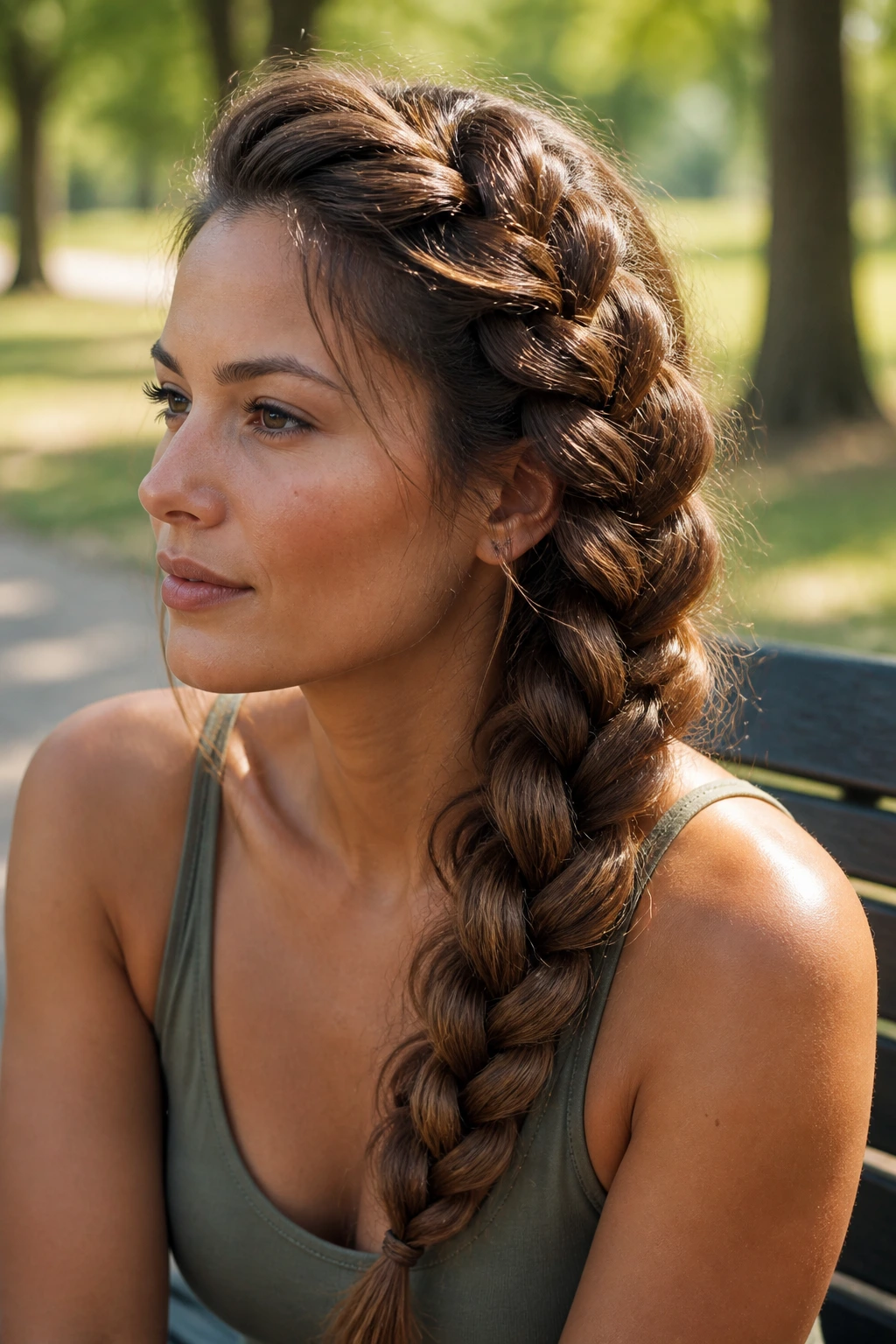
Dutch braids sit on top of the head rather than sinking into it, making them excellent at highlighting the thickness of textured hair. By braiding to one side, you sweep the frizz away from one side of your face while creating a focal point that draws the eye toward your features. It is a practical, durable style that can withstand wind, humidity, and movement.
Managing the Flyaways
If you find that the braid creates small, fuzzy halos, use a clean mascara wand sprayed with hairspray to “paint” those stray hairs back into the braid. It is a precise way to manage individual strands without flattening your entire head.
Achieving Symmetry
If you feel your face shape looks off-balance with a side braid, add a few small hair accessories—like gold bobby pins or pearl accents—on the side opposite the braid to create visual weight.
7. The Bubble Ponytail
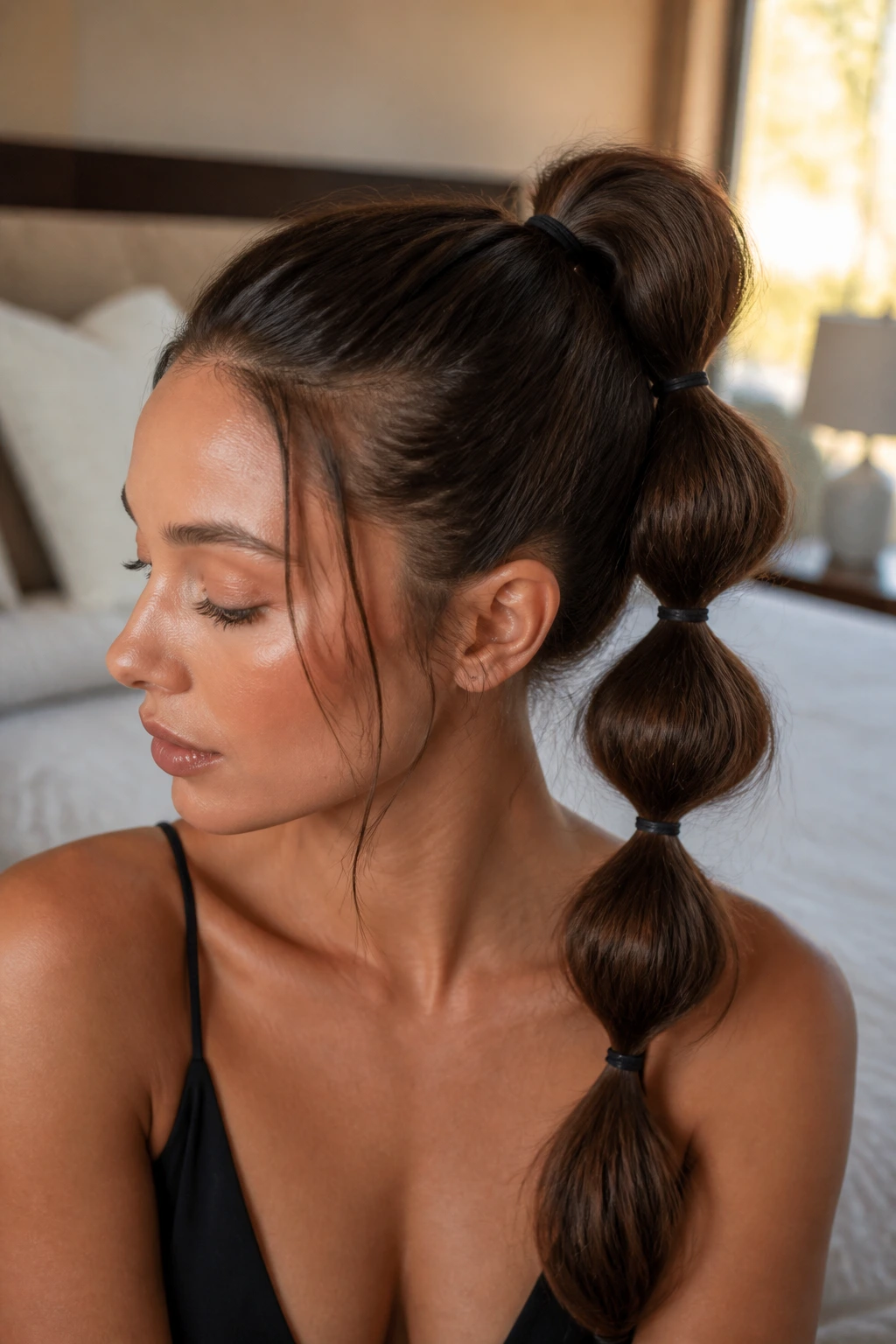
If you are tired of traditional braids, the bubble ponytail offers a way to segment your hair and control frizz in sections. By placing elastics every two inches down the length of a ponytail and gently pulling the hair between them to create “bubbles,” you create a geometric, high-fashion silhouette that actually thrives on volume.
The Volume Multiplier
The more frizz you have, the bigger your bubbles will be. This is one of the few styles where your natural hair texture is a functional advantage rather than a hindrance.
Essential Adjustment
Make sure to fluff the bubbles with your fingers after securing the elastics. A light dusting of dry shampoo at the base of each bubble can provide the grit necessary to keep them from sliding down.
8. The Twisted Side Headband
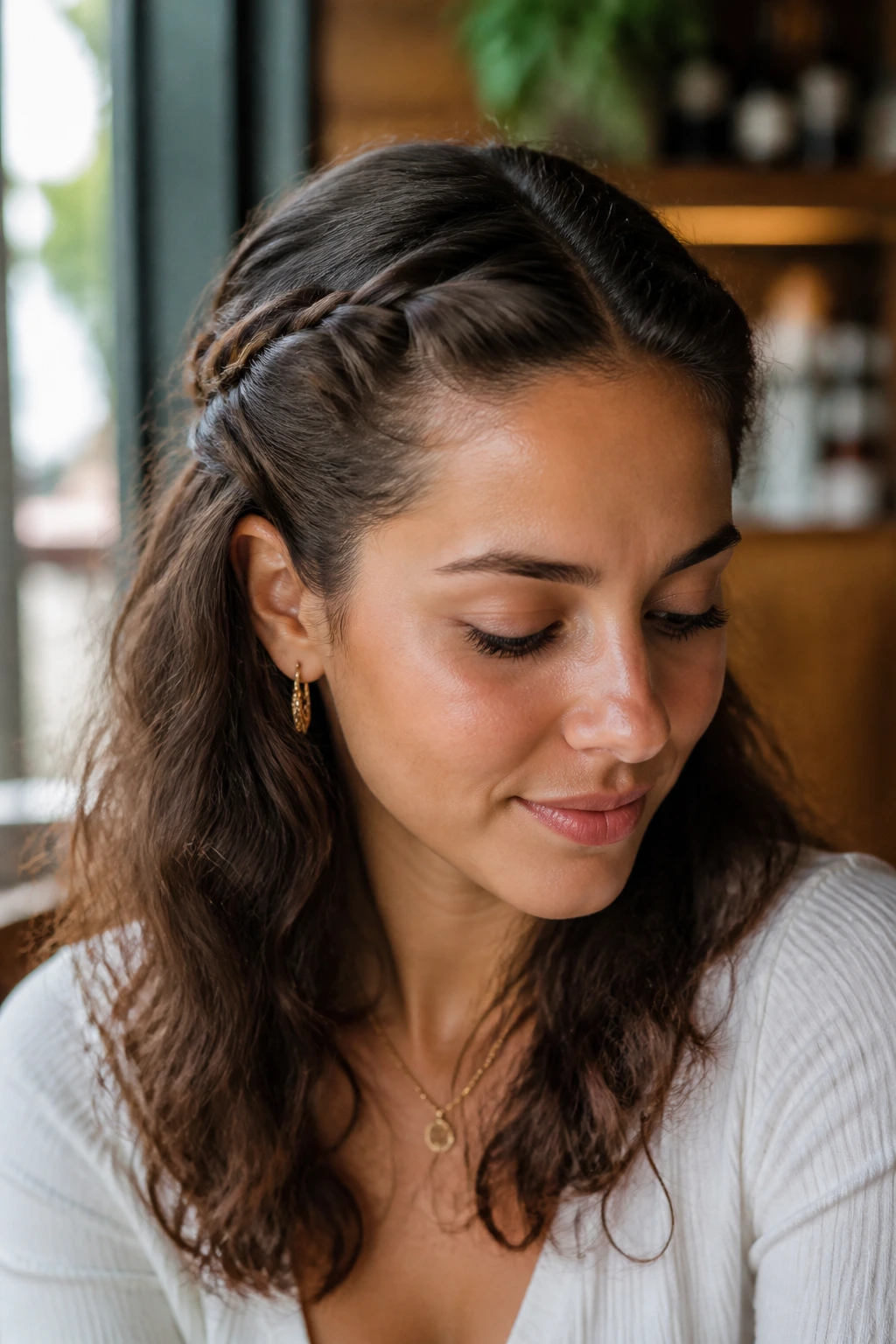
This is a minimalist approach for those who want to keep the hair mostly loose. By taking two small sections at the front of your hairline and twisting them back toward your ears, you effectively “sweep” the frizz that usually sticks up at the forehead. This is a five-minute style that relies on bobby pins or small elastic bands to hold the twists in place behind the ears.
Elevating the Look
Use velvet or silk ribbons to tie off the twisted sections. It covers the pins and adds a touch of sophistication to an otherwise simple, everyday look.
Why It Fails Less Often
Because the twists are small and anchored close to the scalp, they are less prone to the “droop” that happens with heavier styles. They stay tight against the head throughout the day.
9. The Low Side Bun with Texture
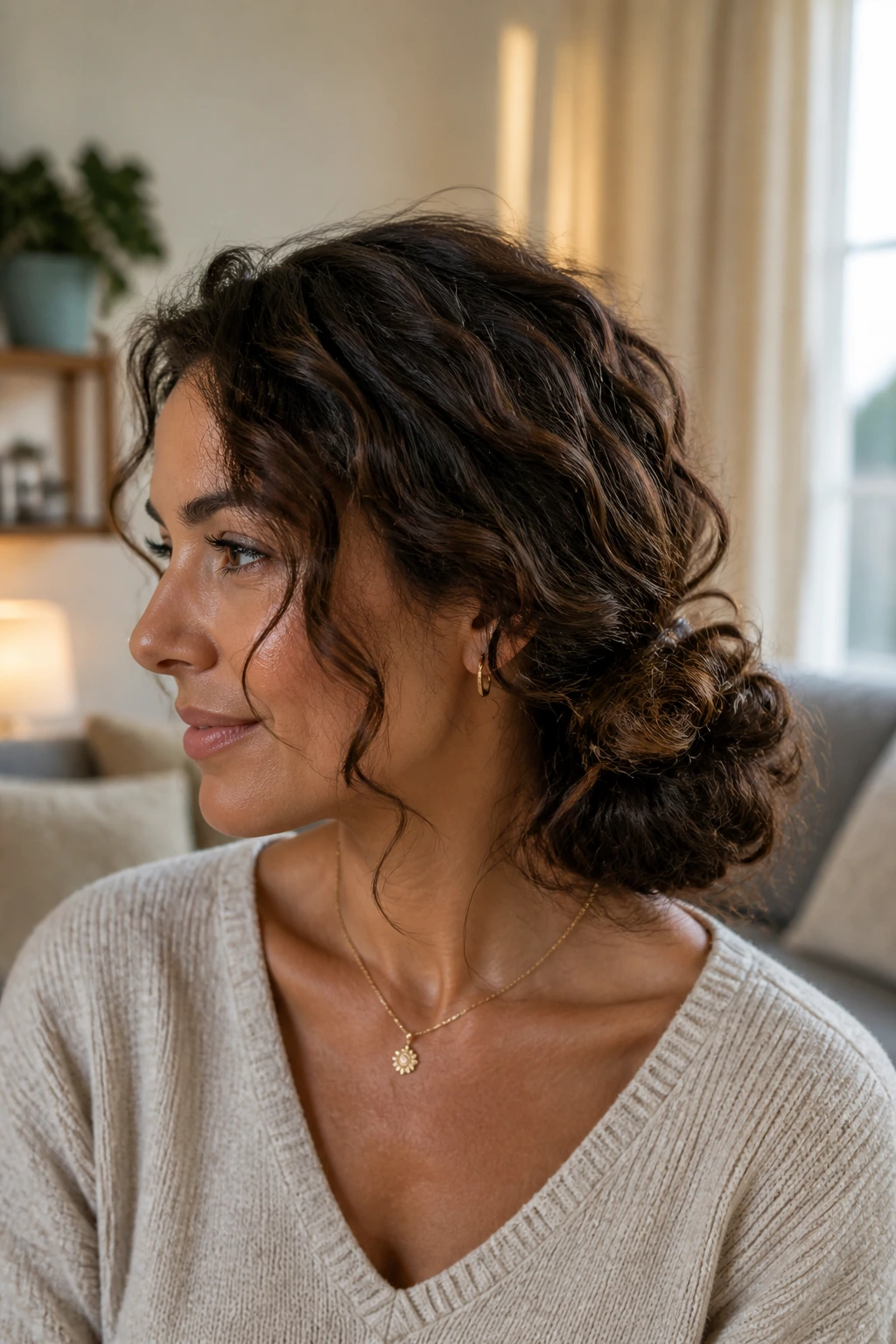
Taking your hair to the side is a classic trick for adding elegance to frizzy hair. A low side bun naturally hangs lower, meaning it is less susceptible to the high-humidity environment near the top of the head. By pinning it slightly off-center, you create a soft, asymmetrical shape that feels intentional.
Texture Tips
Leave a few curls or waves loose around the face to soften the look. Do not attempt to make this bun “perfect”; the more irregular the shape, the more it leans into the natural beauty of your hair texture.
Keeping the Shape
Use a hair net that matches your hair color to hold the bulk of the bun in place. It is a hidden, professional secret that prevents heavy, frizzy buns from unraveling halfway through the day.
10. The Scarf-Wrapped Updo
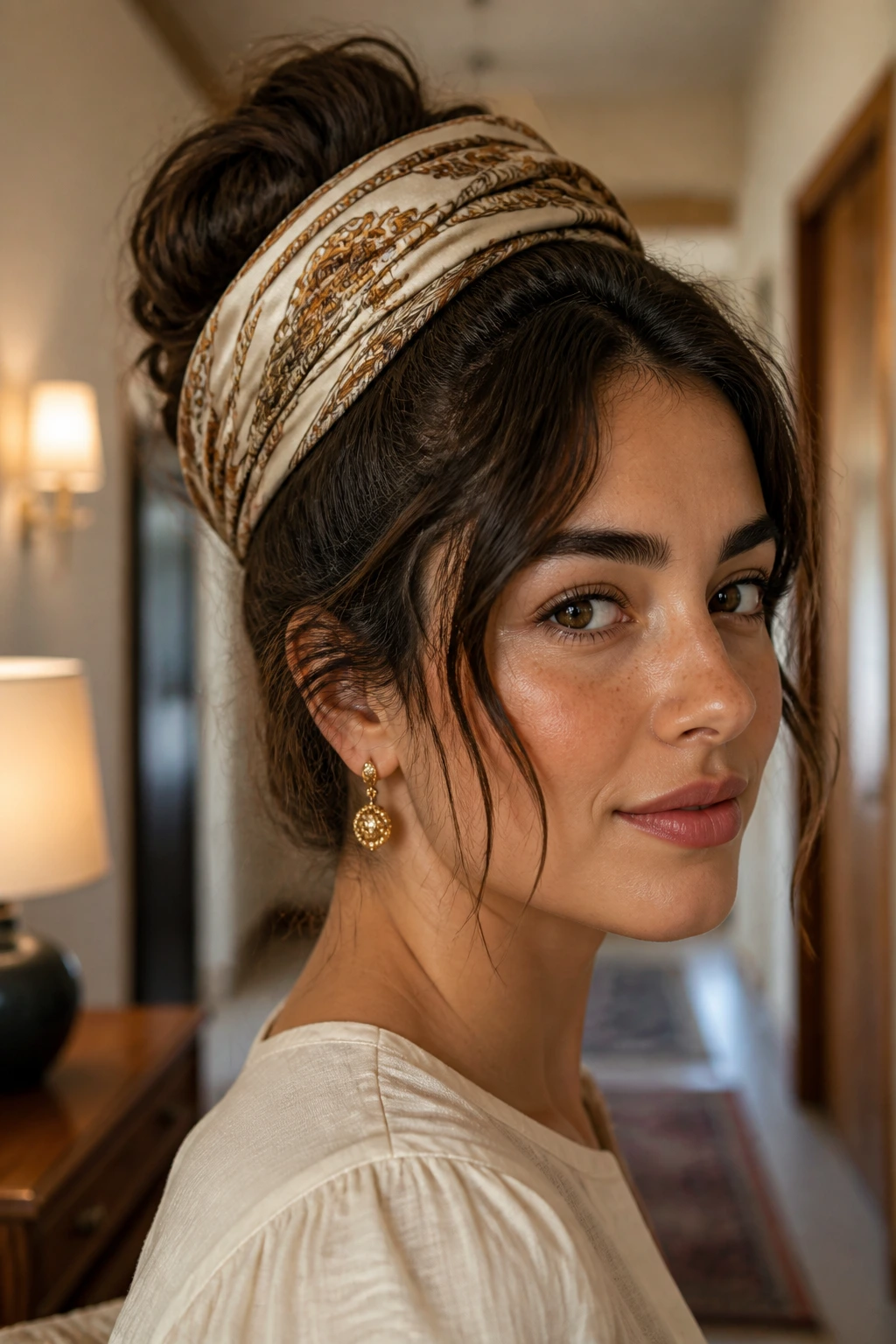
When all else fails, a scarf is the most reliable tool in your arsenal. Wrapping a patterned or solid-color silk scarf around your hair while it is gathered in a loose bun hides the frizz entirely. This is an incredibly protective style, as it shields your hair from the environment while you go about your day.
Versatile Folding
You can fold the scarf into a wide band for a bohemian, full-coverage look, or roll it into a thin tube for a headband-style wrap. It acts as a mechanical barrier against moisture, which is the primary driver of frizz.
Styling the Ends
If you leave a few inches of your hair poking out of the top of the bun, the contrast between the smooth scarf and the textured ends creates a chic, high-contrast visual.
11. The Double-Braided Crown
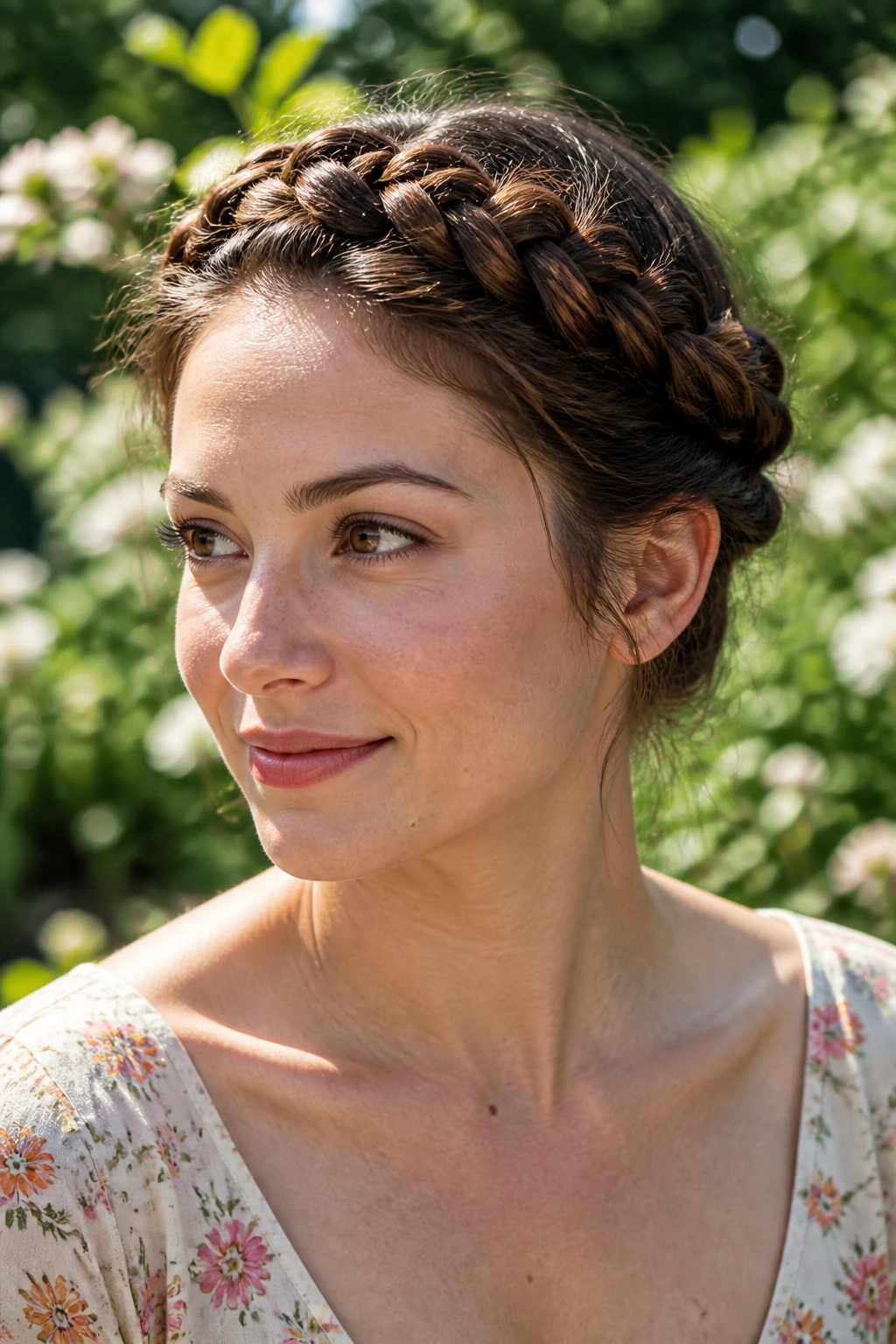
For those who want extra security, two braids are better than one. By creating two braids that meet at the back of the head, you divide the volume of your hair into manageable pieces. This style mimics the look of a crown but is much easier to execute if you are a beginner. It keeps the hair at the nape of the neck tightly controlled while the braids themselves handle the frizz on the sides.
Why Two Is Better
A single thick braid can sometimes become heavy and pull on your roots. Two smaller braids distribute the weight and are less likely to sag or create gaps where frizz can expand.
Adding Volume
If your hair is thin despite the frizz, gently tug at the outer edges of the braids once they are secured. This “pancaking” technique increases the width of the braid and makes the hair appear significantly denser.
12. The Low-Slung Claw Clip Twist
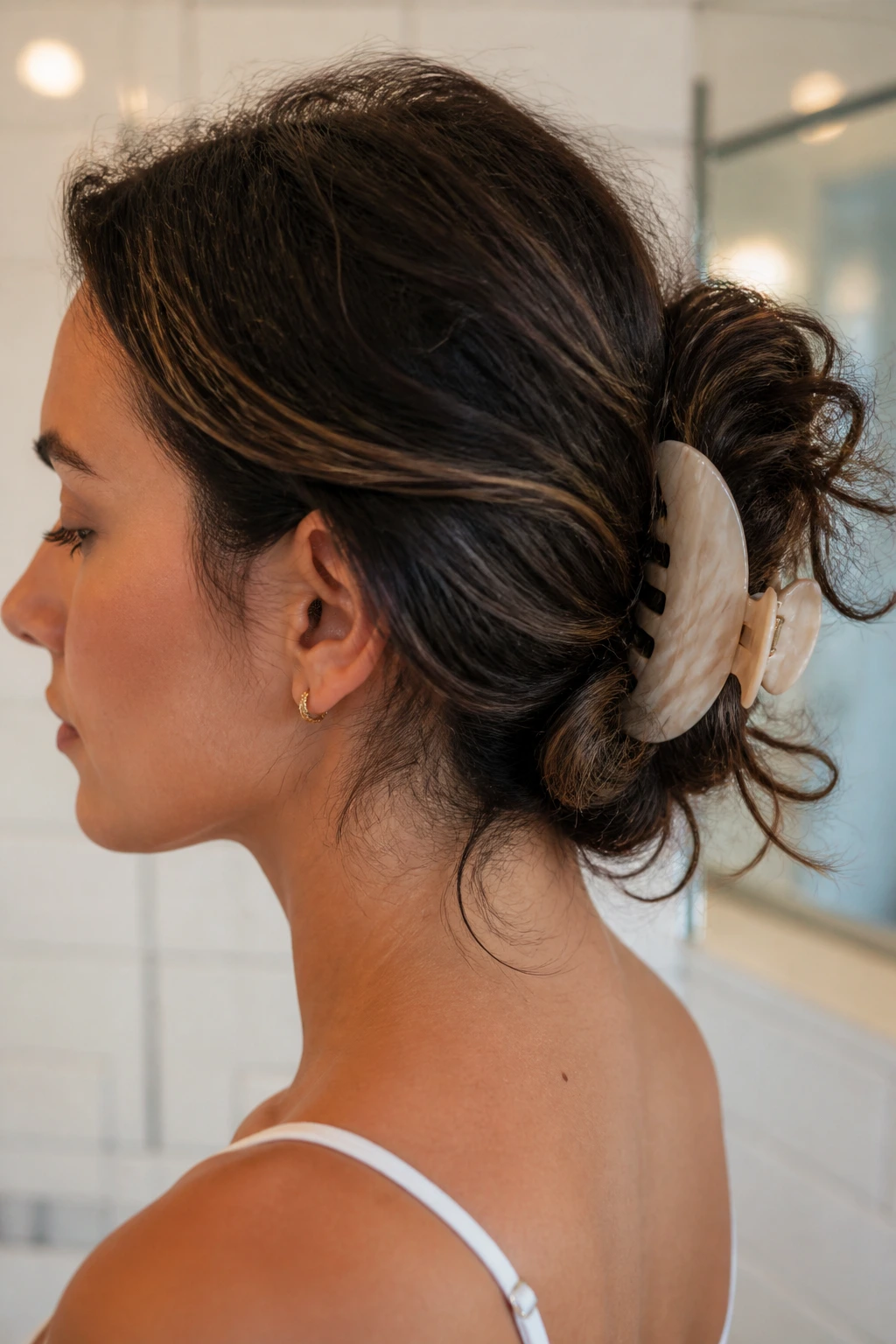
The 90s-inspired claw clip is the ultimate tool for textured, frizzy hair. Unlike elastics, which can be difficult to pull through thick, frizzy hair without snagging, a large, sturdy claw clip allows you to twist the hair and “clamp” it into place. This keeps the hair off the neck and allows the ends to fan out naturally, showing off your texture.
Choosing the Right Clip
Avoid small, plastic clips that are prone to snapping. Look for heavy-duty, oversized clips designed for thick hair. The longer the “teeth” of the clip, the more hair you can gather and hold securely.
The Twist Technique
Gather your hair as if you are making a low ponytail, then twist the length upward toward the crown. Instead of tucking the ends away, let them cascade over the top of the clip.
13. The Half-Down Sleek-Top
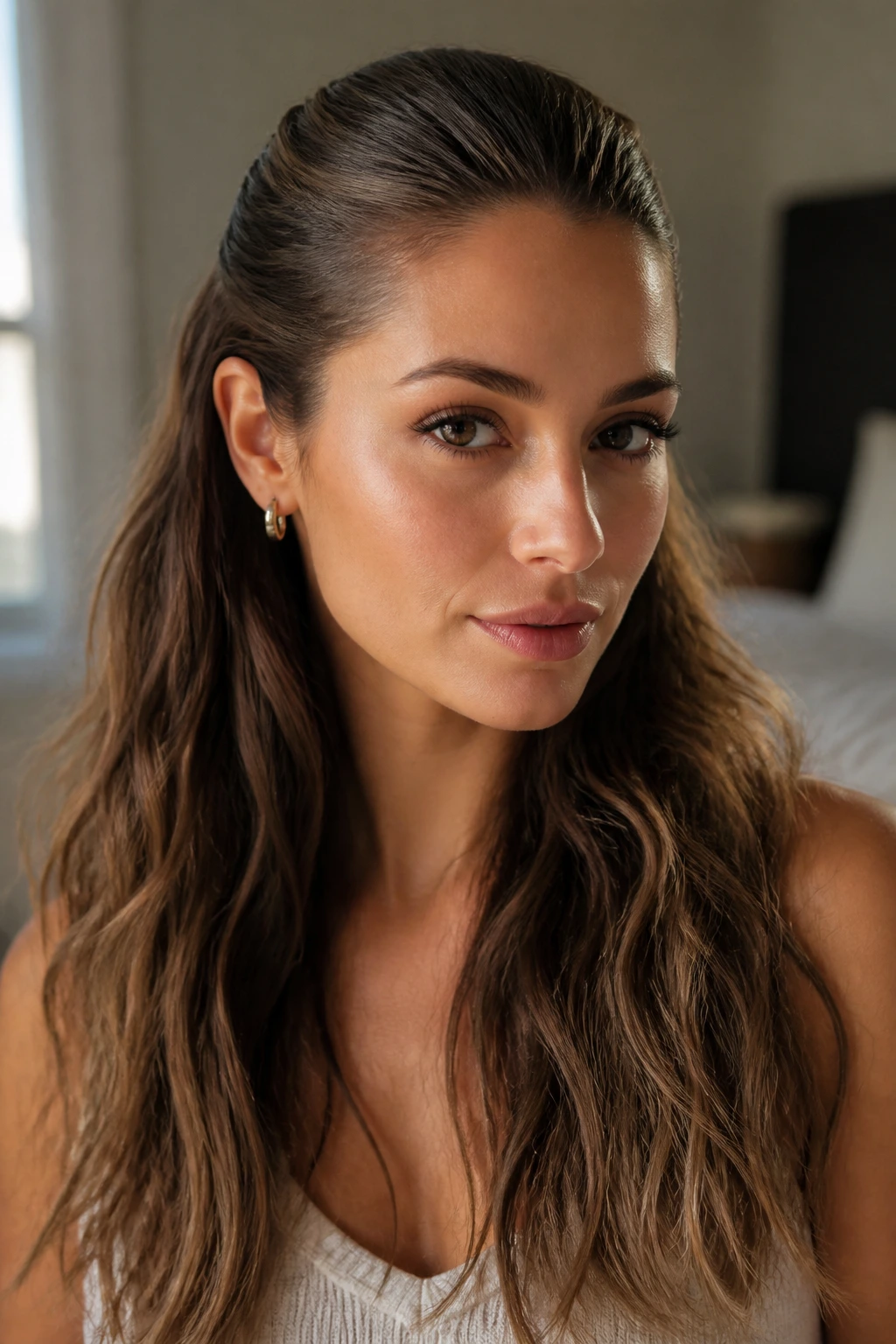
This style is the professional’s choice for humid days. You use a boar bristle brush and a small amount of pomade to slick the hair back from your forehead and sides, securing it at the back with a thin elastic. The rest of the hair is left down to express its natural texture. It is a polished look that focuses the frizz-fighting efforts only on the areas where it is most visible.
The Importance of the Brush
The boar bristles are key here. They are designed to distribute natural oils from your scalp down the hair shaft, which helps naturally tame the hair without adding heavy, greasy products.
Balancing the Aesthetic
If you feel the contrast between the slick top and the big bottom is too harsh, use a curling iron to define a few pieces of the loose hair, making the texture look intentional rather than unkempt.
14. The Low Messy Pigtails
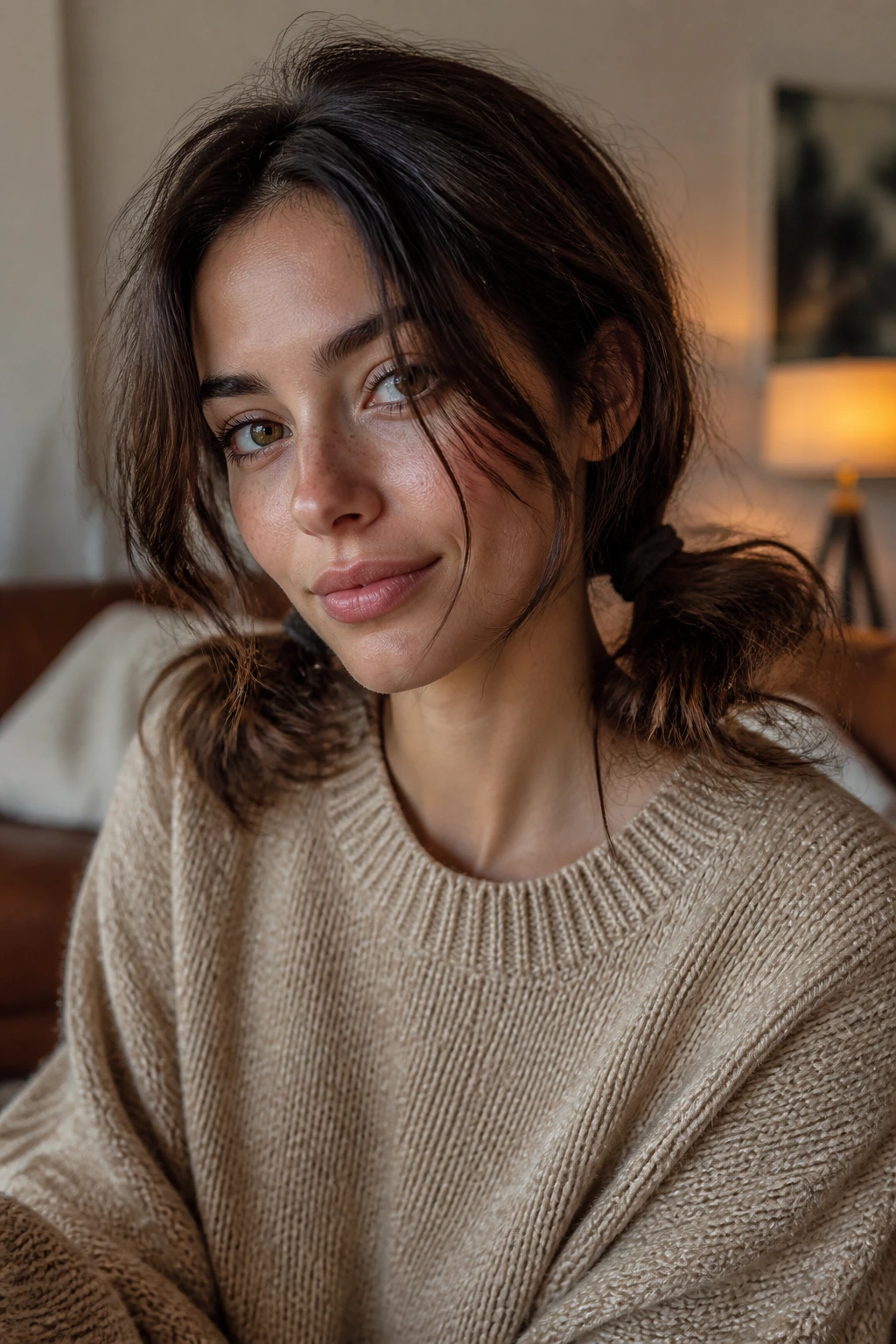
Pigtails aren’t just for children—when styled low and loose, they become a relaxed, pastoral look that works wonders for frizzy hair. By dividing your hair into two sections at the nape of your neck, you reduce the overall volume that any one elastic has to hold. This makes the style much more comfortable for all-day wear.
Softening the Edges
The key to making this look sophisticated is the “messy” element. Once the pigtails are secured, pull a few strands loose around your face and gently tug the hair between the elastic and your scalp to create a soft, billowy effect.
Accessories
Use velvet ribbons or leather hair ties to hold the pigtails. These materials are gentler on frizzy, brittle hair than the thin, rubbery elastics that can cause tangling.
15. The Triple-Twist Pony
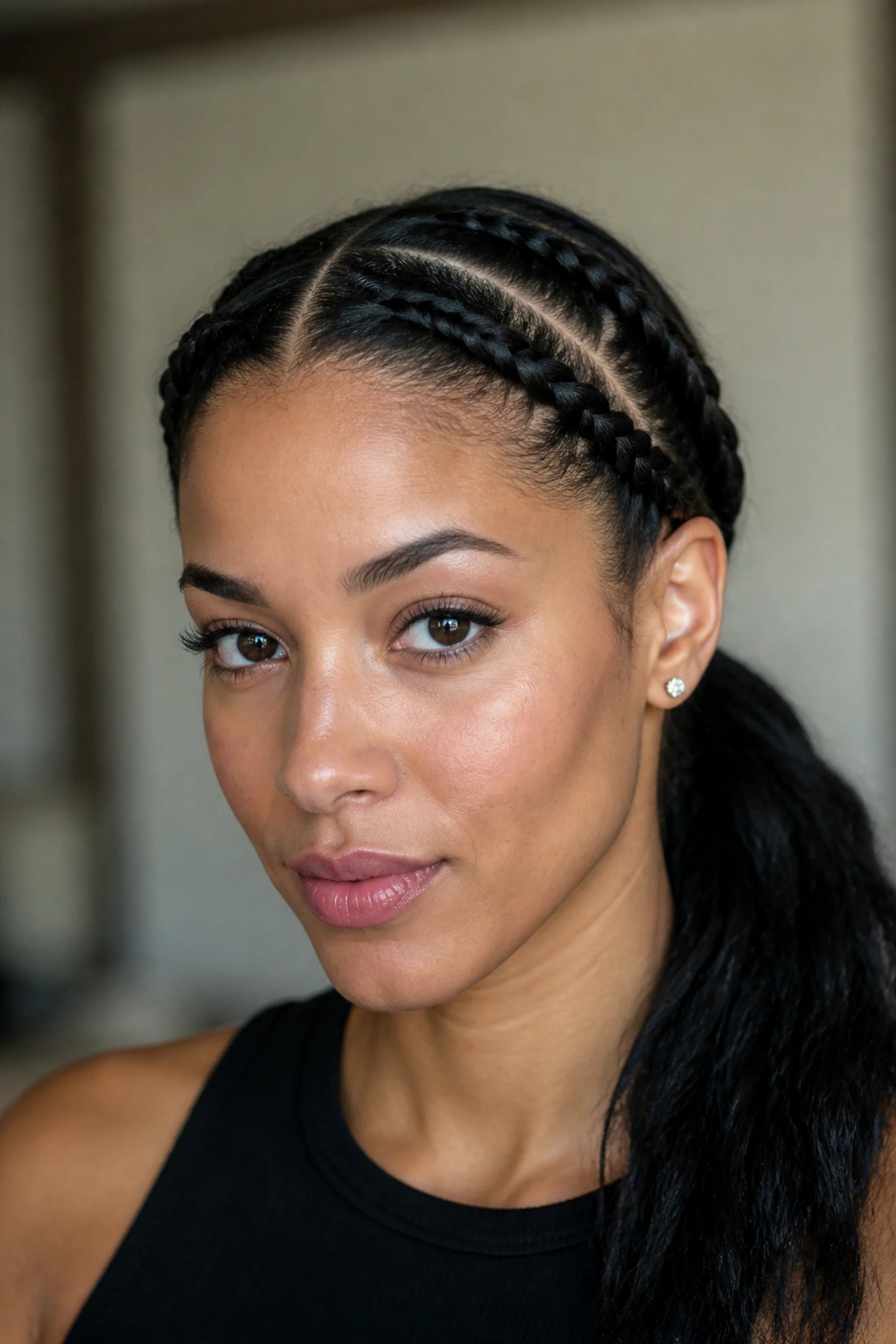
This is a variation of a ponytail that adds structure to the front sections of the hair. Divide your hair into three sections—one at each temple and one at the crown. Twist each section back toward the nape of the neck and combine them into a single, low ponytail. This keeps the hair at the hairline from “poofing” out, which is a common complaint for people with frizzy textures.
Why This Works
The twists act as a structural framework. By securing the most problematic areas—the hair around the face—into tight twists, you control the frizz at the source before it has a chance to expand.
Finishing the Look
Wrap a small piece of hair from the ponytail around your elastic to hide it. It is a quick detail that elevates the look from casual to professional.
16. The Side-Parted Sleek Wave
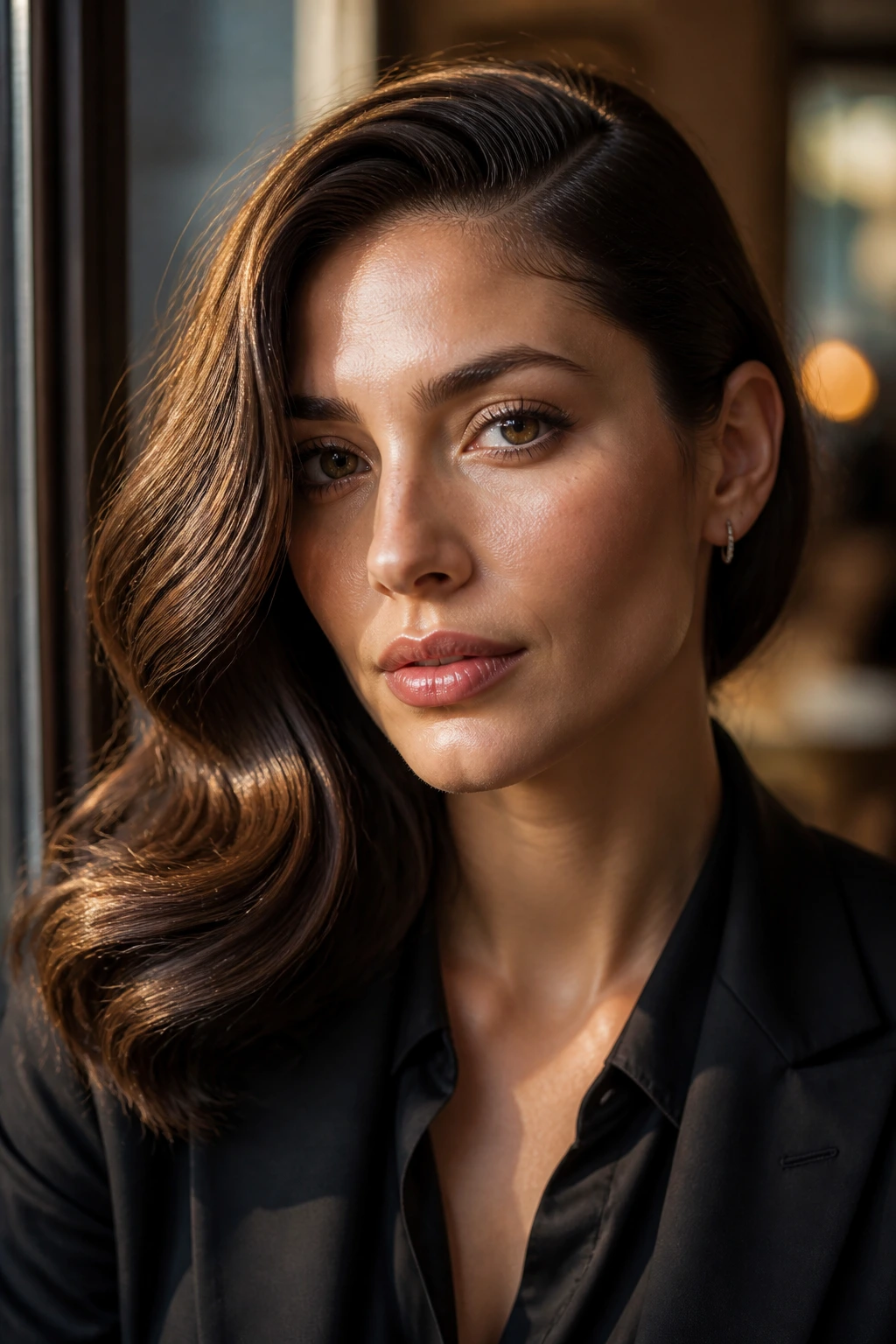
Sometimes the simplest solution is the best. By parting your hair deeply on one side and using a strong-hold styling cream to smooth the hair on the side with less volume, you create a side-swept wave that looks incredibly glamorous. The frizz on the larger side is transformed into big, bold volume that feels intentional, like a classic old-Hollywood silhouette.
Managing the Frizz
The trick is to apply your smoothing cream while the hair is still damp. As it dries, the cream sets the hair in the desired shape, locking the cuticle down so the frizz doesn’t re-emerge as the day progresses.
Complementary Makeup
Since this style draws attention to one side of the face, it is the perfect time to play with earrings or a bold lip color. The hair acts as a dramatic backdrop.
17. The High-Volume Sock Bun
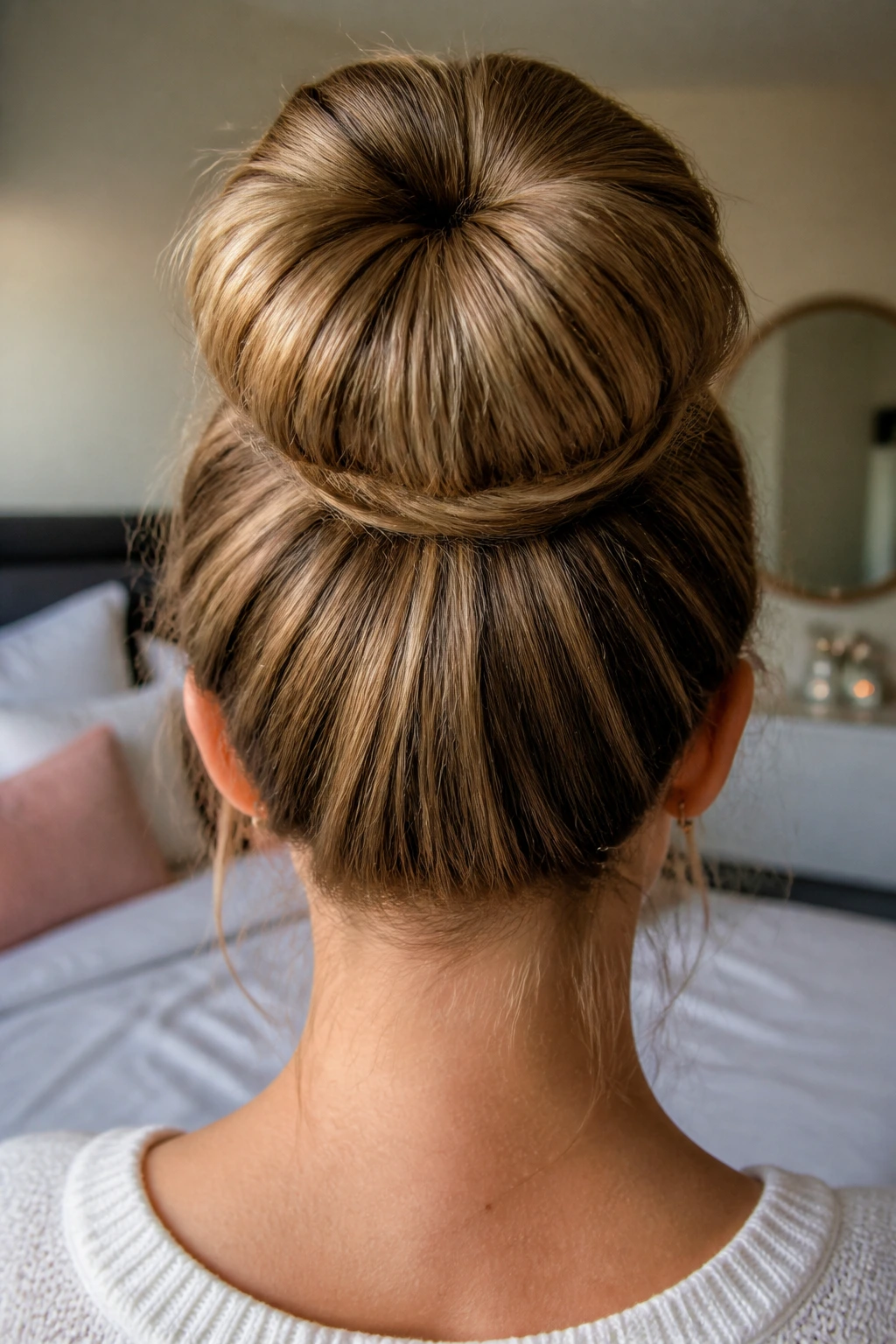
If you are looking for height and structure, the sock bun is an old-school trick that never fails. By rolling your hair over a foam or fabric bun-maker, you create a perfect sphere of hair. Because frizzy hair has so much built-in texture, you won’t need to wrap as much hair around the tool to get a full look; the frizz fills out the bun automatically.
Why It’s Protective
A bun like this completely tucks the ends of your hair away, preventing them from being exposed to the humidity that causes them to fray. It is one of the most effective styles for preserving hair health during harsh weather.
The Finishing Touch
Secure the base with a few bobby pins to ensure it does not wobble. If you have flyaways at the crown, a light mist of hairspray will keep them down without needing to douse the entire bun.
18. The Braided Side-Sweep
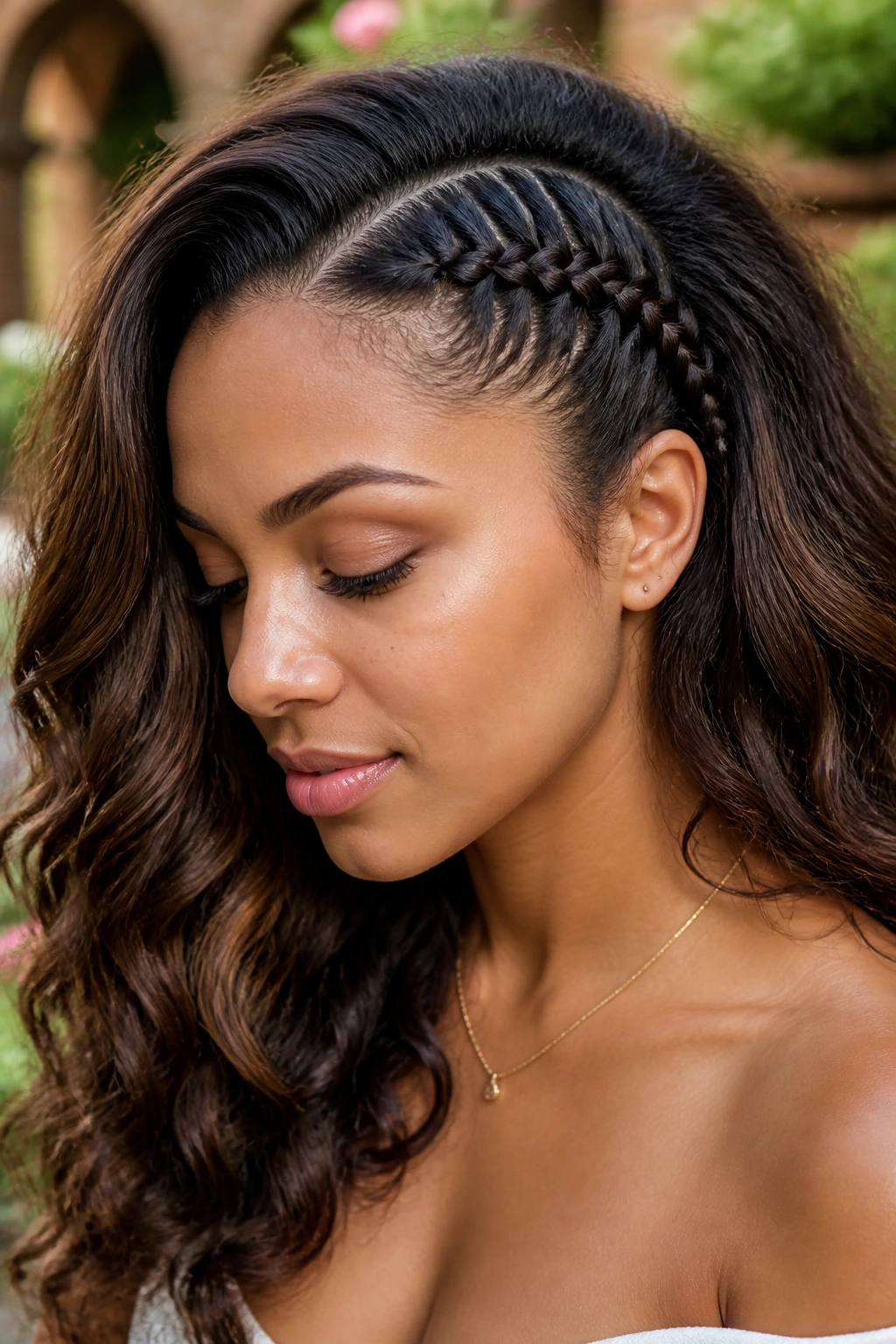
Take a small section of hair from the part line and create a tight, French-style braid that runs diagonally across your scalp toward the back of your ear. By braiding the hair tightly against the scalp in this direction, you create a “frizz-free zone” at your hairline. Let the rest of the hair fall naturally, perhaps using a light curl-defining cream to ensure the waves are uniform.
Durability
Because this braid is anchored, it provides a stable foundation for the rest of your hair. Even if the rest of your hair gets a bit frizzy throughout the day, the front remains crisp and deliberate.
Visual Interest
The braid adds a subtle geometric element that makes it look like you put more effort into your style than you actually did. It is a high-reward, low-effort technique.
19. The Low Knot with Loose Ends
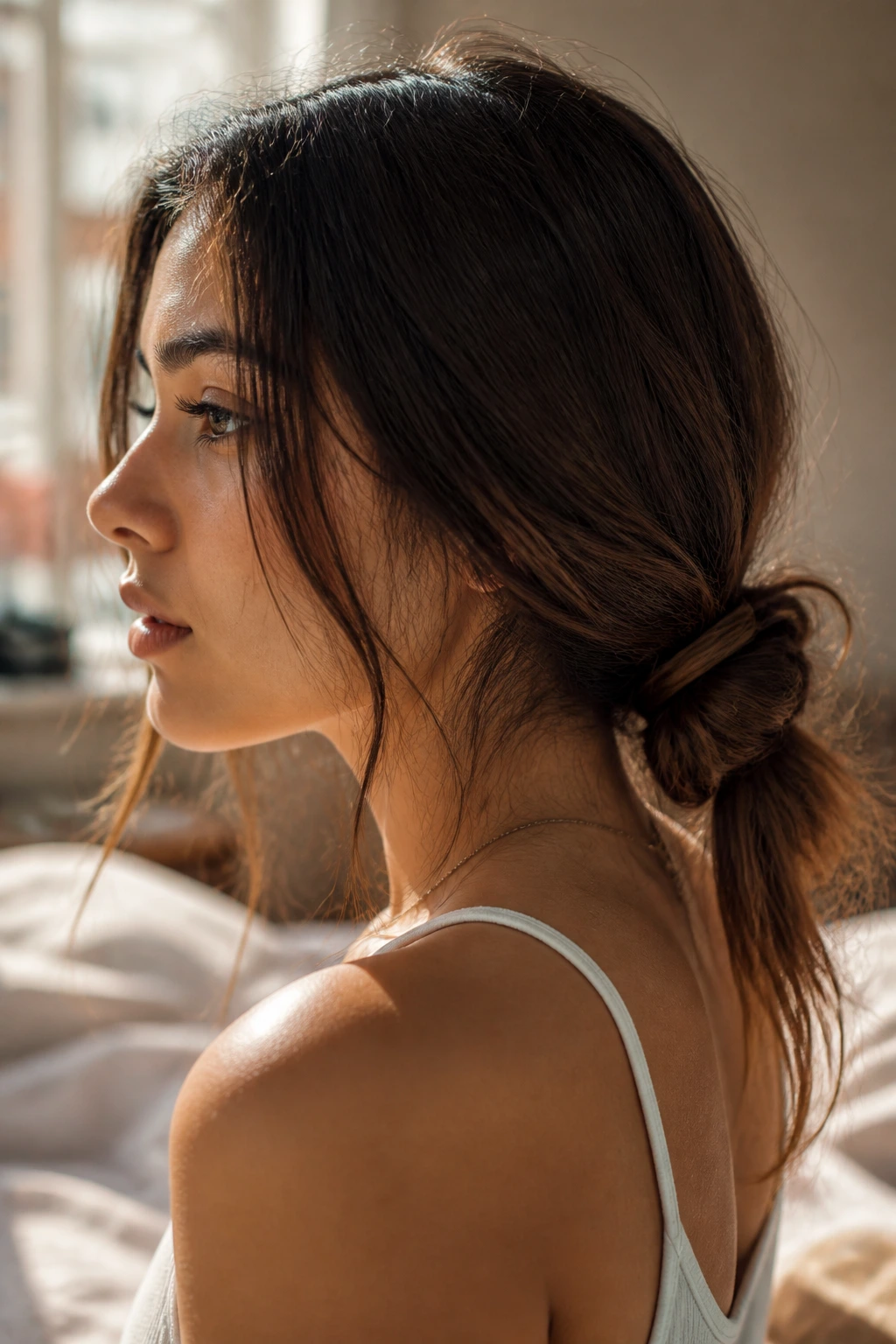
Gather your hair into a low ponytail and then tie it into a knot, letting the ends hang out as if they are a tassel. The tension of the knot keeps the bulk of the hair controlled, while the loose ends allow for a bit of playful movement. This is a great way to handle frizzy hair that has a lot of length.
Dealing with the “Tassels”
Since the ends are loose, they are likely to get frizzy. Use a tiny drop of serum on just those ends to define them and ensure they look like deliberate curls rather than tangled mess.
Securing the Style
If the knot slips, use a large hairpin to push through the center of the knot, anchoring it to the hair at the base of your scalp.
20. The Bohemian Headband Wrap
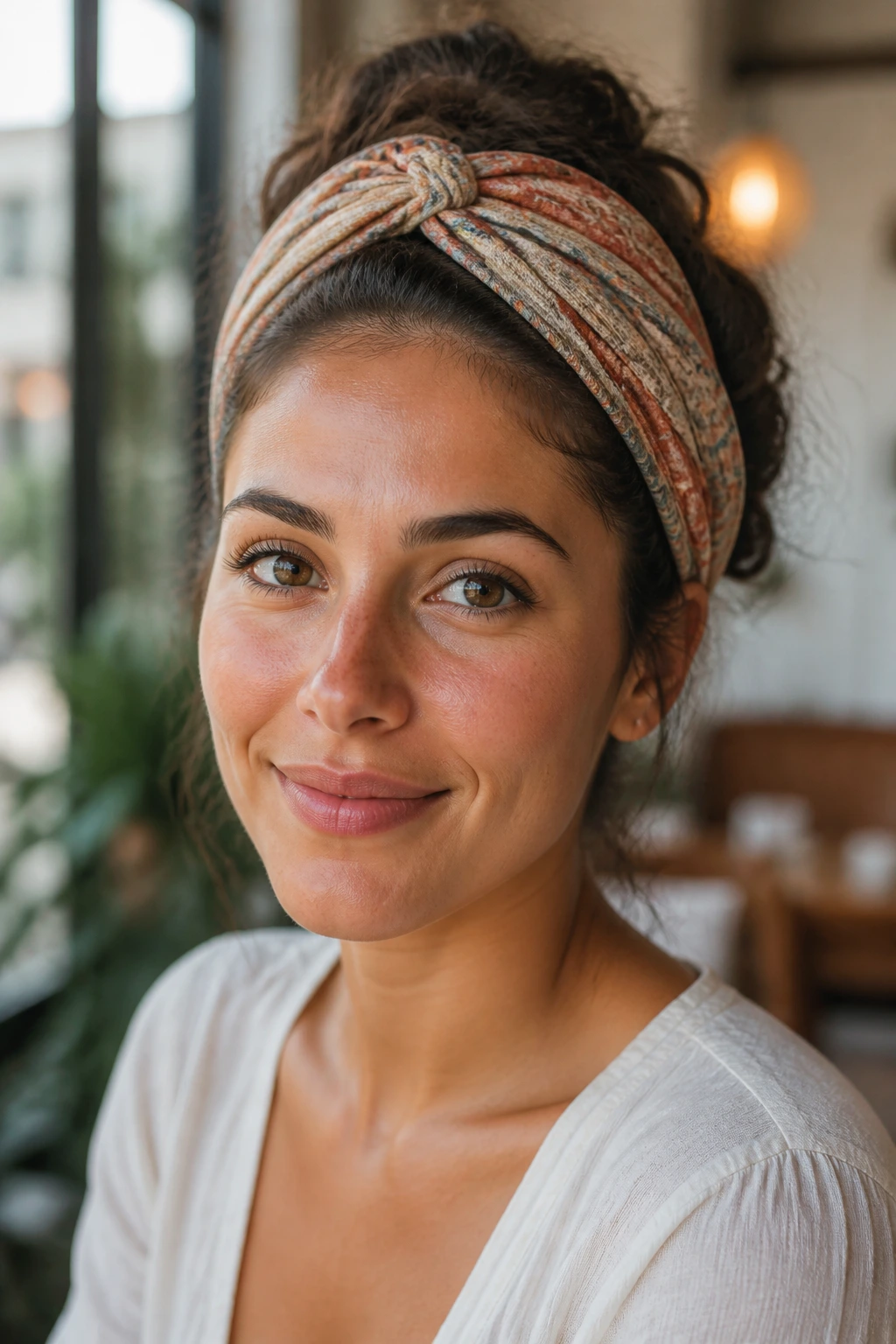
A soft, fabric headband is the easiest way to manage frizz at the crown. By pulling the headband over your hair and tucking small sections of your hair back into the band, you create a “tucked” style that keeps the hair off the neck and effectively eliminates the possibility of the crown frizzing up. It gives a gentle, rustic appearance that is perfect for casual settings.
Fabric Choice
Use a headband made of cotton or a jersey blend. These materials have a bit of “give” and won’t slip off your head as easily as silk or polyester headbands.
Variation
You can tuck all your hair into the band to create a faux-bob, or leave the bottom section loose for a more layered look.
21. The Half-Twist Crown
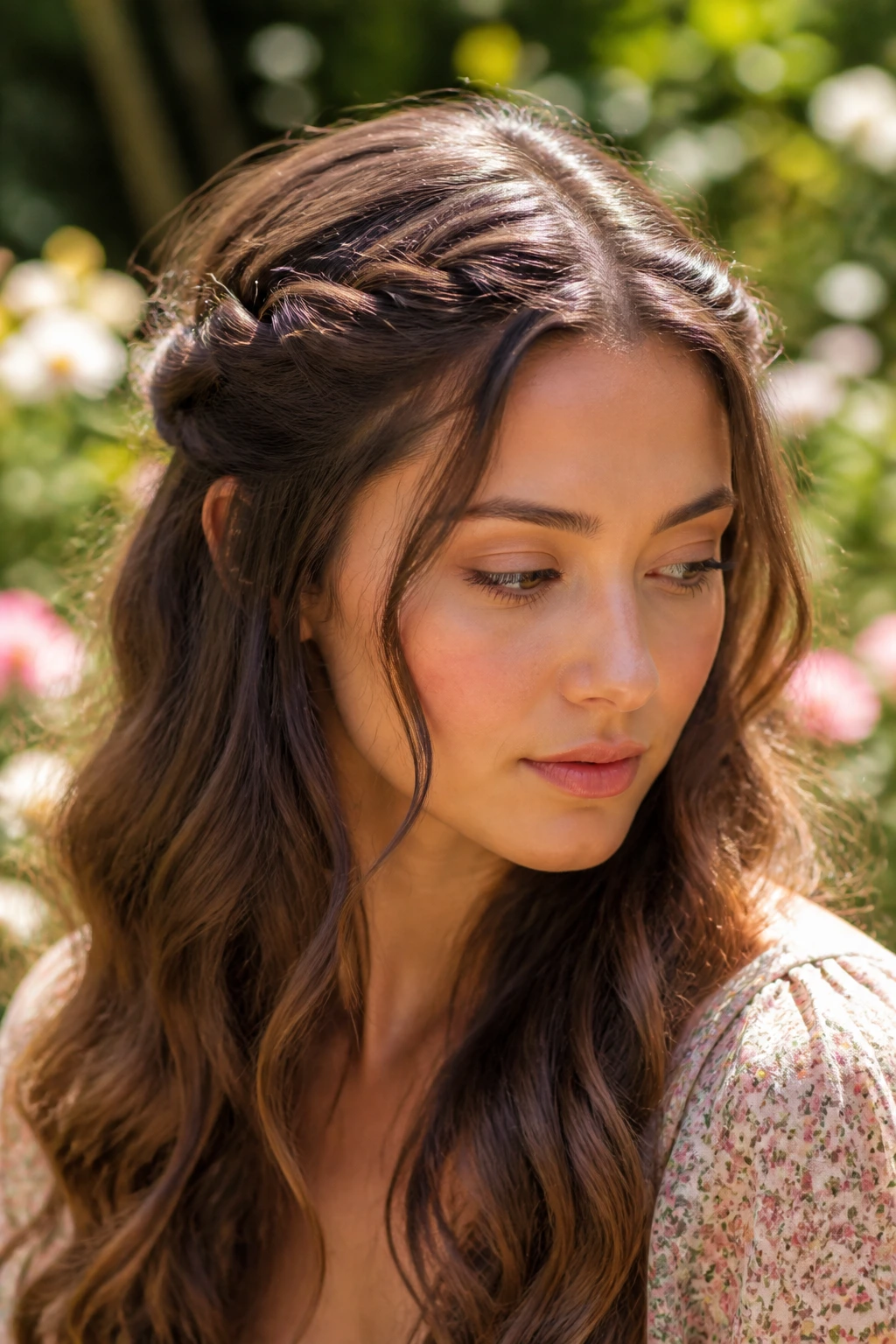
Take a small section of hair from above each ear and twist them tightly, pinning them together at the back of your head. This pulls back the hair that frames your face, keeping it from frizzing in the wind. This is a soft, romantic style that works well for both casual brunches and semi-formal evening events.
The Hidden Pin Trick
Cross two bobby pins in an “X” shape at the back where the twists meet. This adds extra security so the twists won’t loosen or droop as the day goes on.
Softening the Effect
Pull a few strands out from the twists near your temples. This creates a soft, face-framing effect that prevents the style from looking too severe or “done.”
22. The Low Braided Ponytail
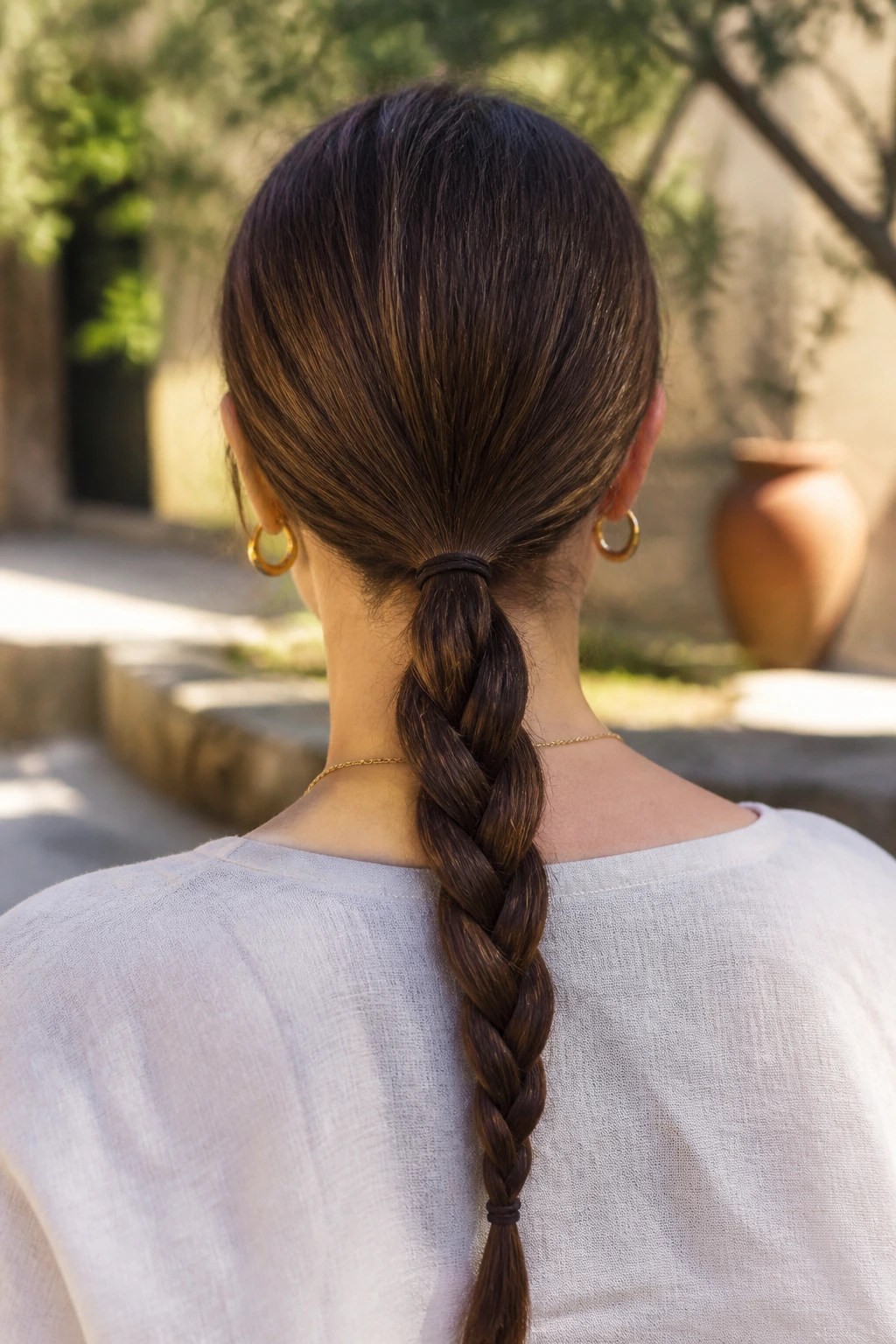
If you want the security of a ponytail but want to control the frizz along the entire length of your hair, braid the ponytail. A simple three-strand braid, or even a fishtail if you are feeling ambitious, keeps the hair fibers compressed. This prevents the individual strands from expanding and causing that dreaded frizzy halo down your back.
The Texture Advantage
Braids in frizzy hair are almost impossible to undo by accident. The texture acts like a natural Velcro, keeping the braid tight and compact.
Finishing the Braid
Use a clear silicone band at the very end. If you want a more polished look, pull on the edges of the braid to give it a thicker, more deliberate appearance.
23. The Sleek Low Bun with Center Part
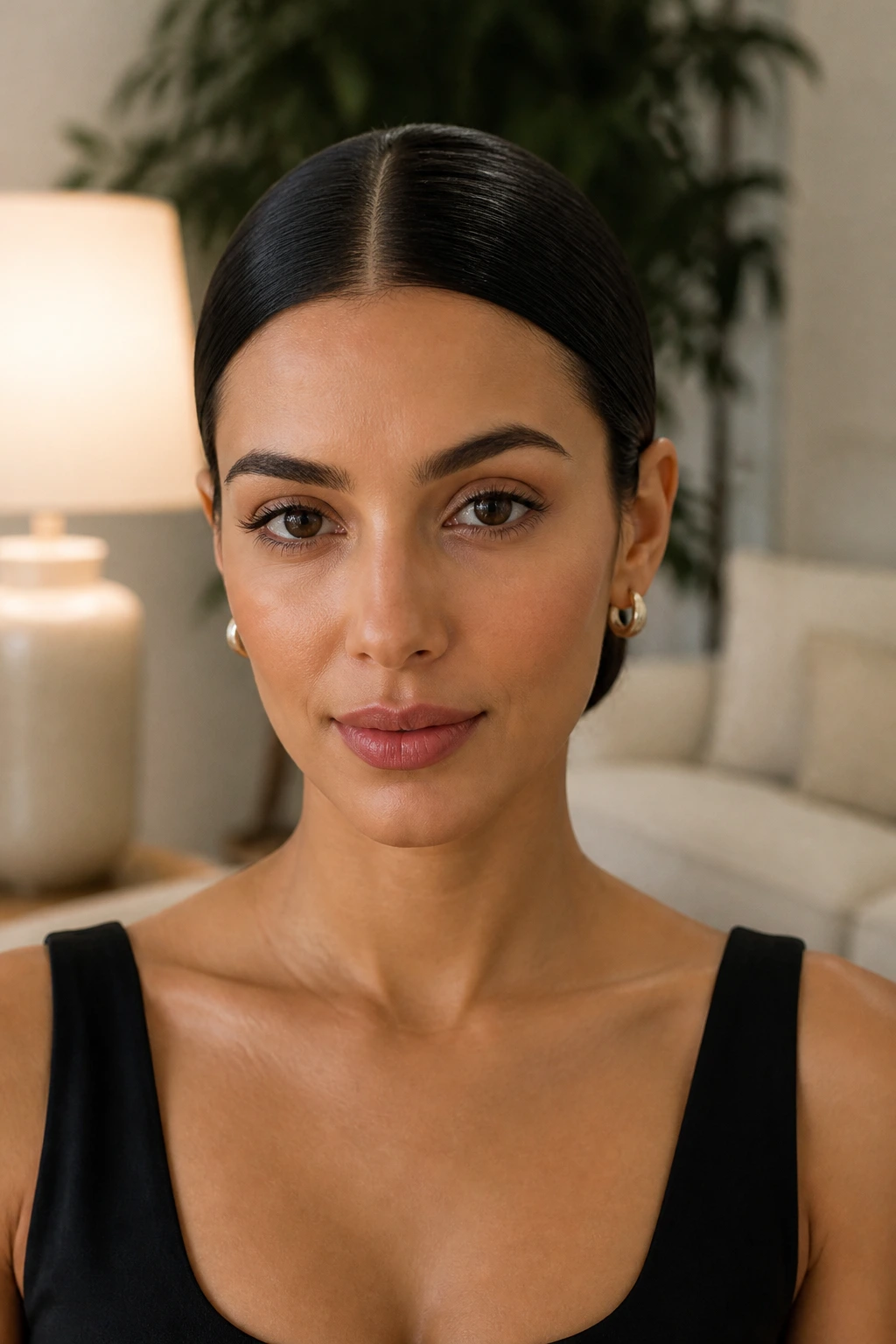
The center part is currently a widely adopted style, and it pairs perfectly with a low, tight bun. By parting your hair exactly down the middle and pulling it back, you create a clean, minimalist silhouette that feels modern and chic. This style is all about balance; the tight, controlled top compensates for any volume you might let remain in the bun itself.
Managing the Part
Use a fine-tooth comb to get a perfectly straight line. Once the hair is parted, use a bit of light gel on the crown to keep the hair flat and smooth.
Earring Choice
Since the hair is pulled back, your ears are exposed. This is the perfect style to pair with statement earrings, as the simplicity of the hair provides the perfect canvas.
24. The High-Volume Messy Pigtail Bun
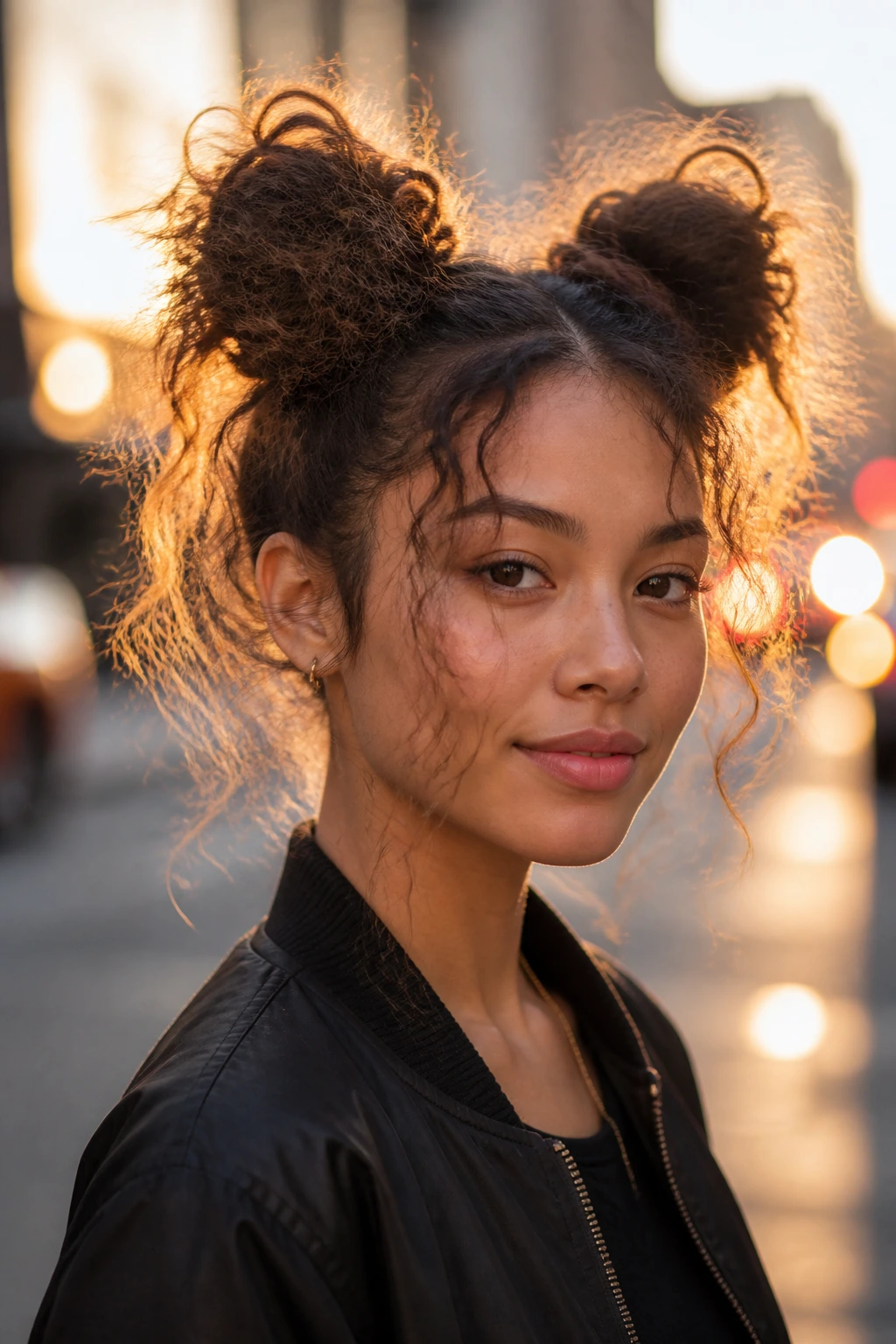
Create two high pigtails, but instead of leaving them loose, twist each into a small, messy bun. This creates a “space bun” look that is fun, youthful, and incredibly effective at containing frizz. The height keeps the hair away from your shoulders, and the buns themselves act as a compact storage unit for your ends.
Why It Works for Frizz
If your hair is naturally frizzy, these buns will look larger and more voluminous than they would on someone with fine, straight hair. It turns a potential frustration into a style statement.
Securing the Buns
Use two elastics for each bun—one to create the base pigtail and one to secure the bun itself. This ensures they don’t migrate toward the back of your head as you move around.
25. The Low Roll Tuck
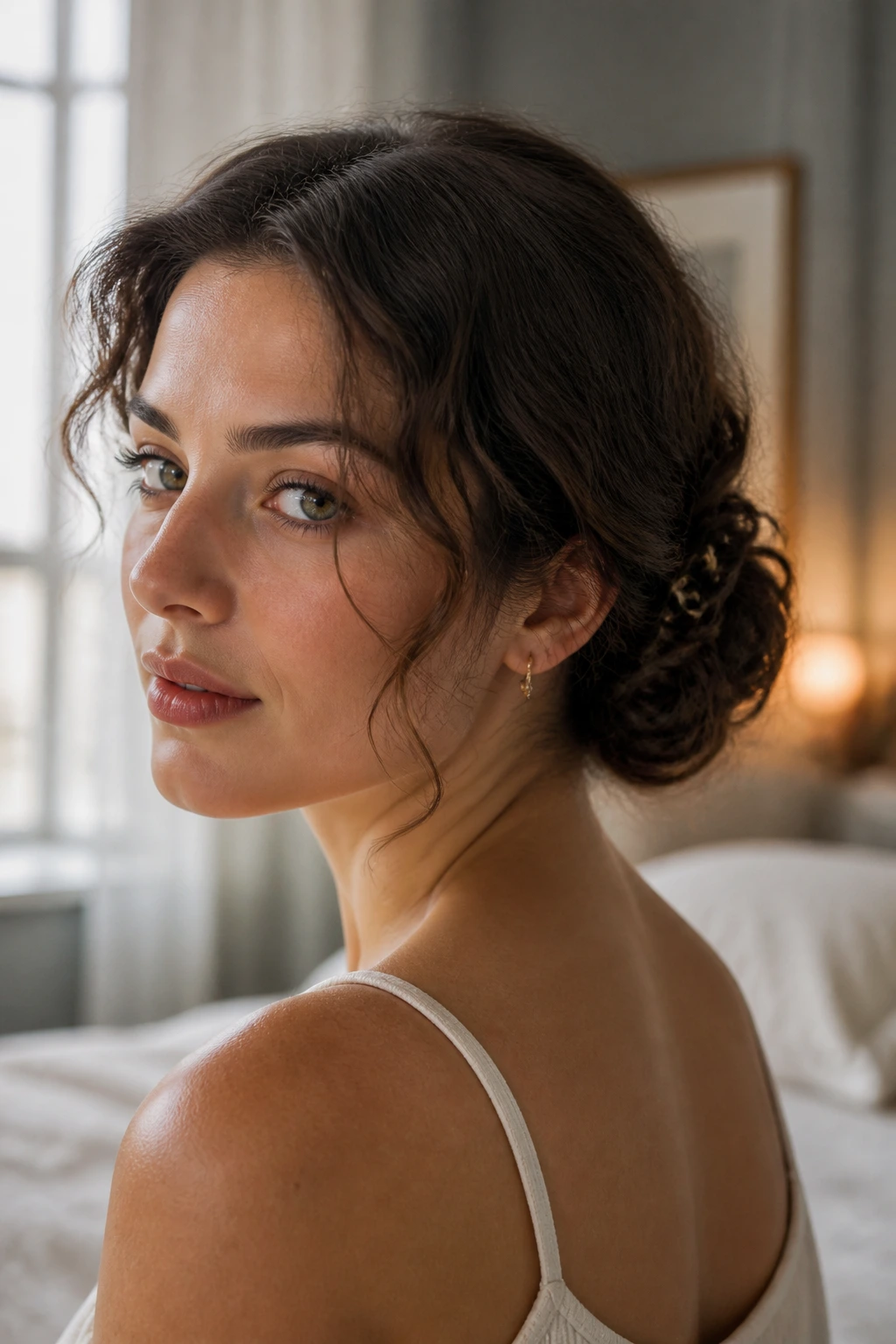
This is a classic “Gibson Tuck” style, where you tuck the ends of your hair into the nape of your neck and secure it with pins. It is a very sophisticated look that hides the ends of your hair, which is usually the part of the hair most prone to frizz. It works best on hair that has been allowed to keep its natural wave or curl pattern.
Why the Tuck Saves You
By rolling the hair into itself, you hide the cuticles. Since frizz is largely a result of the cuticle being raised, rolling the hair effectively masks this, making the hair look much smoother than it actually is.
Versatility
You can leave this style loose and romantic for the day, or tighten the roll and add some decorative pins to make it appropriate for a formal event.
26. The Side-Parted Low Pony
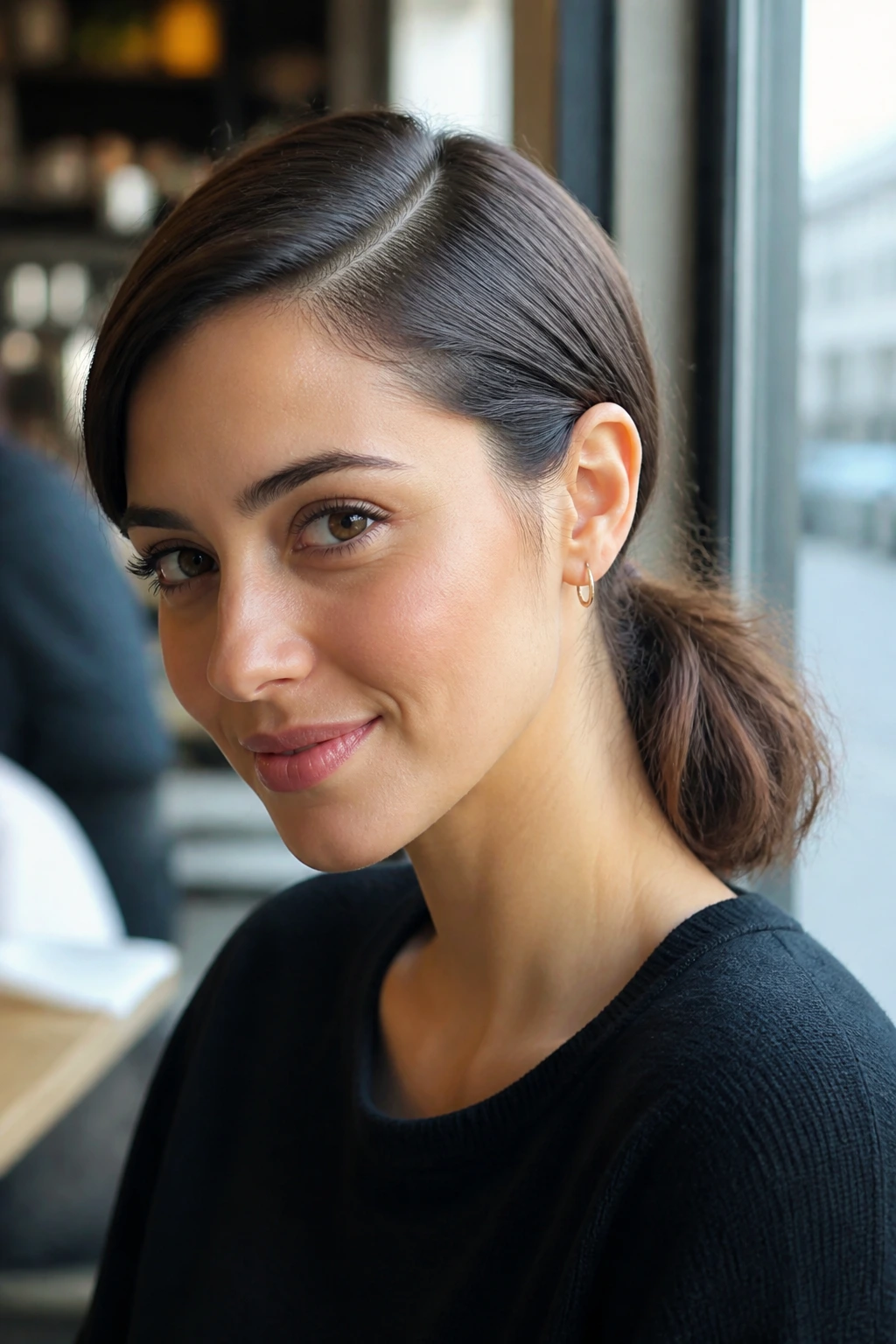
Similar to the center part, but with a side part, this look feels a bit more natural and approachable. It adds a bit of asymmetry to your face, which is universally flattering. By smoothing the hair on the side where the hair is swept, you control the frizz at the most critical point: the hairline.
The “Smoothed” Side
Use a small amount of pomade to push the hair on the smaller side of the part behind your ear. This ensures that the hair does not frizz up near your temple, keeping the overall look crisp and clean.
The Ponytail Texture
Leave the ponytail itself textured. The contrast between the smooth hairline and the slightly wilder ponytail creates a very trendy, balanced look.
27. The Pinned-Back Quiff
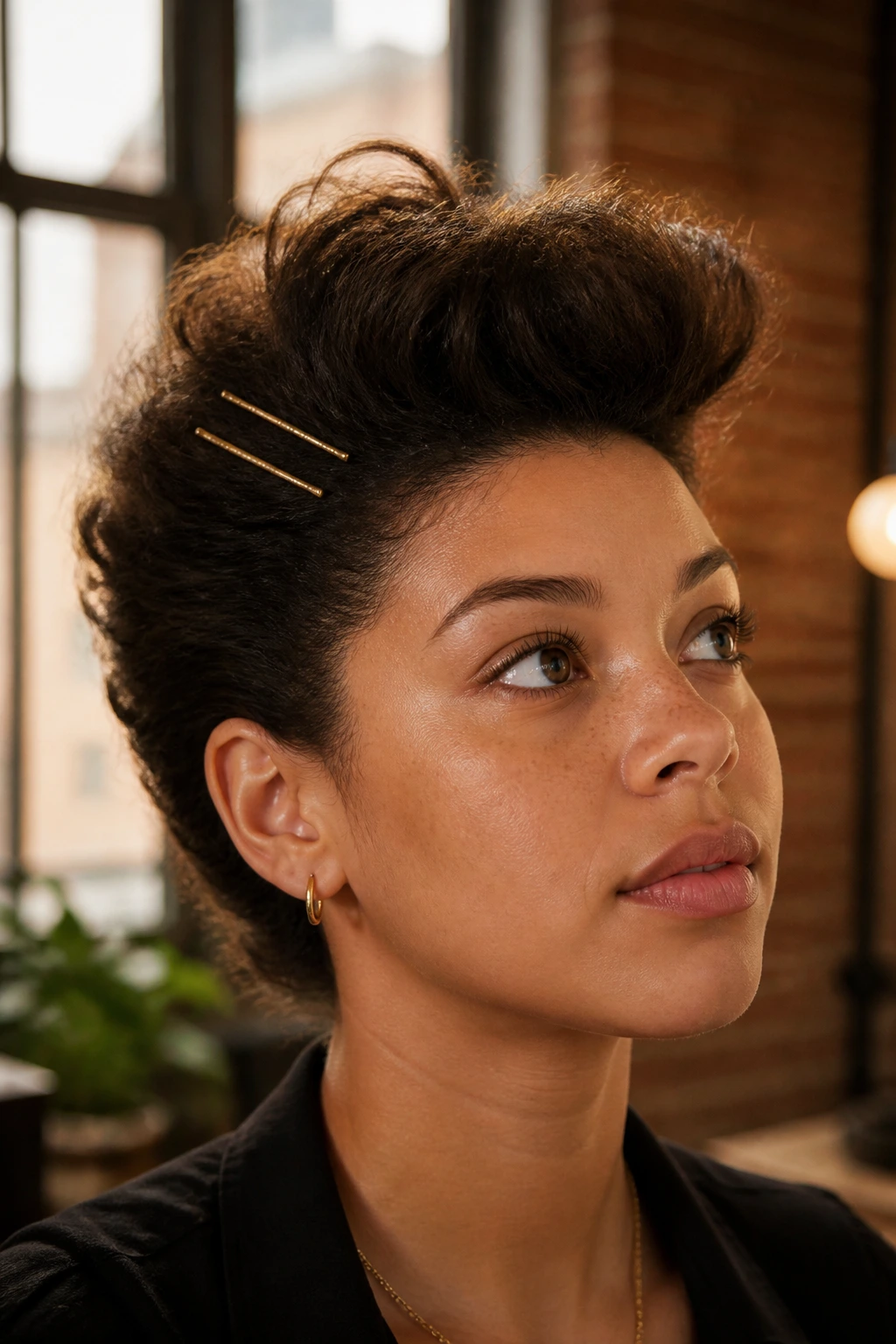
If your hair has a lot of volume at the roots, embrace it. Take the front section of your hair, tease it slightly at the base, and pin it back to create a “quiff” or pompadour. This gets the hair out of your eyes and uses your natural frizz as a structural element to hold the volume in place.
The Mechanics of Volume
Frizzy hair is stiff and holds shape well. You don’t need a lot of product to keep a quiff upright; your own hair texture will do the heavy lifting for you.
Adding Polish
Use two gold-toned bobby pins to hold the quiff in place. They act as both a functional tool and a subtle accessory that makes the style look intentional.
28. The Low Braid with Ribbon
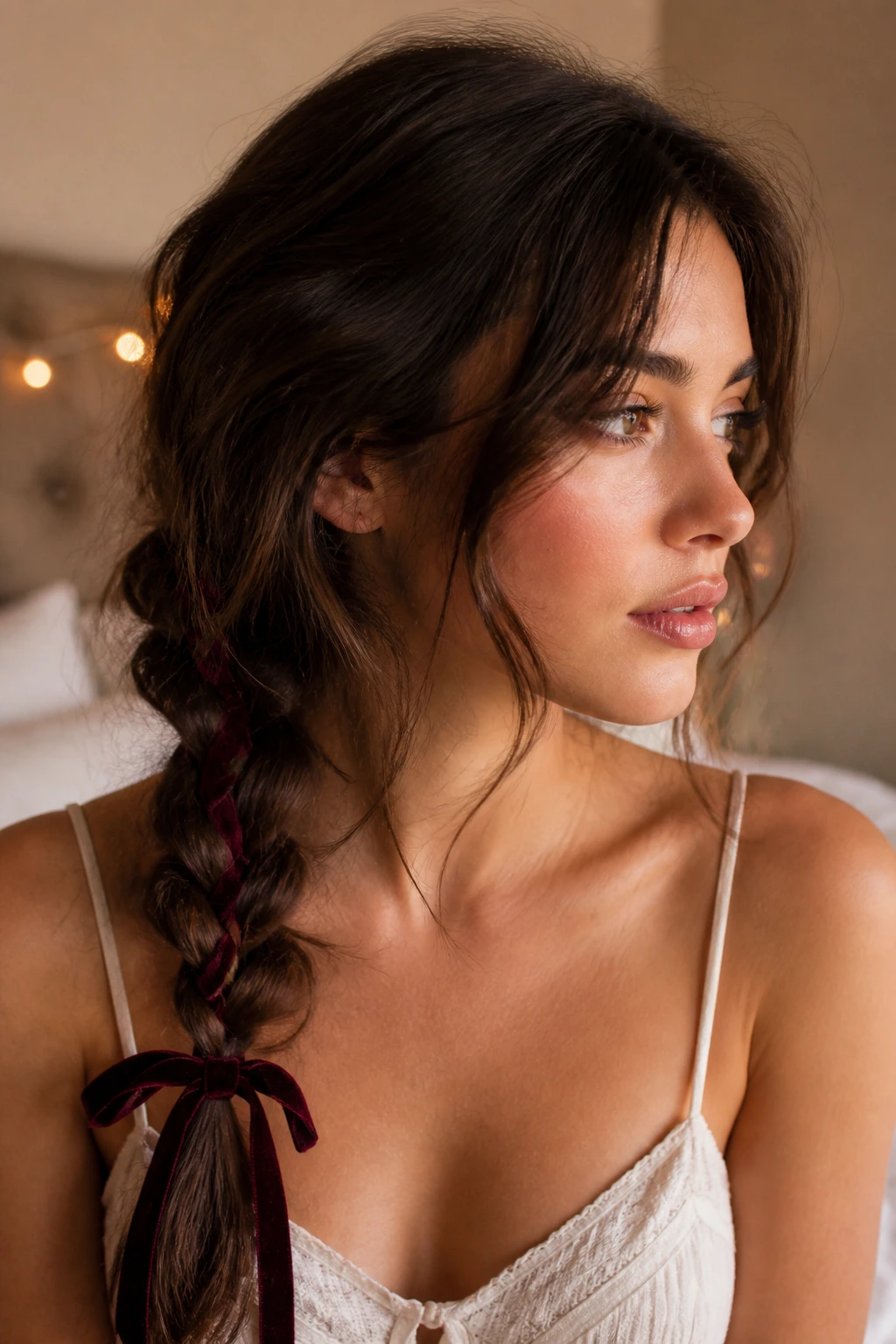
For a romantic, soft look, create a loose, low braid and weave a long velvet or silk ribbon through it. The ribbon serves two purposes: it adds a decorative element that draws the eye, and it acts as a soft binding agent that helps keep the frizz within the braid contained.
Ribbon Choice
Choose a ribbon that contrasts with your hair color to make it pop. A deep velvet ribbon in a jewel tone works beautifully against darker hair, while a light silk ribbon is perfect for lighter shades.
Weaving Technique
Don’t worry about weaving it perfectly. Loosely threading it through the braid provides that “undone” elegance that is so popular right now.
29. The Half-Up Mini-Buns
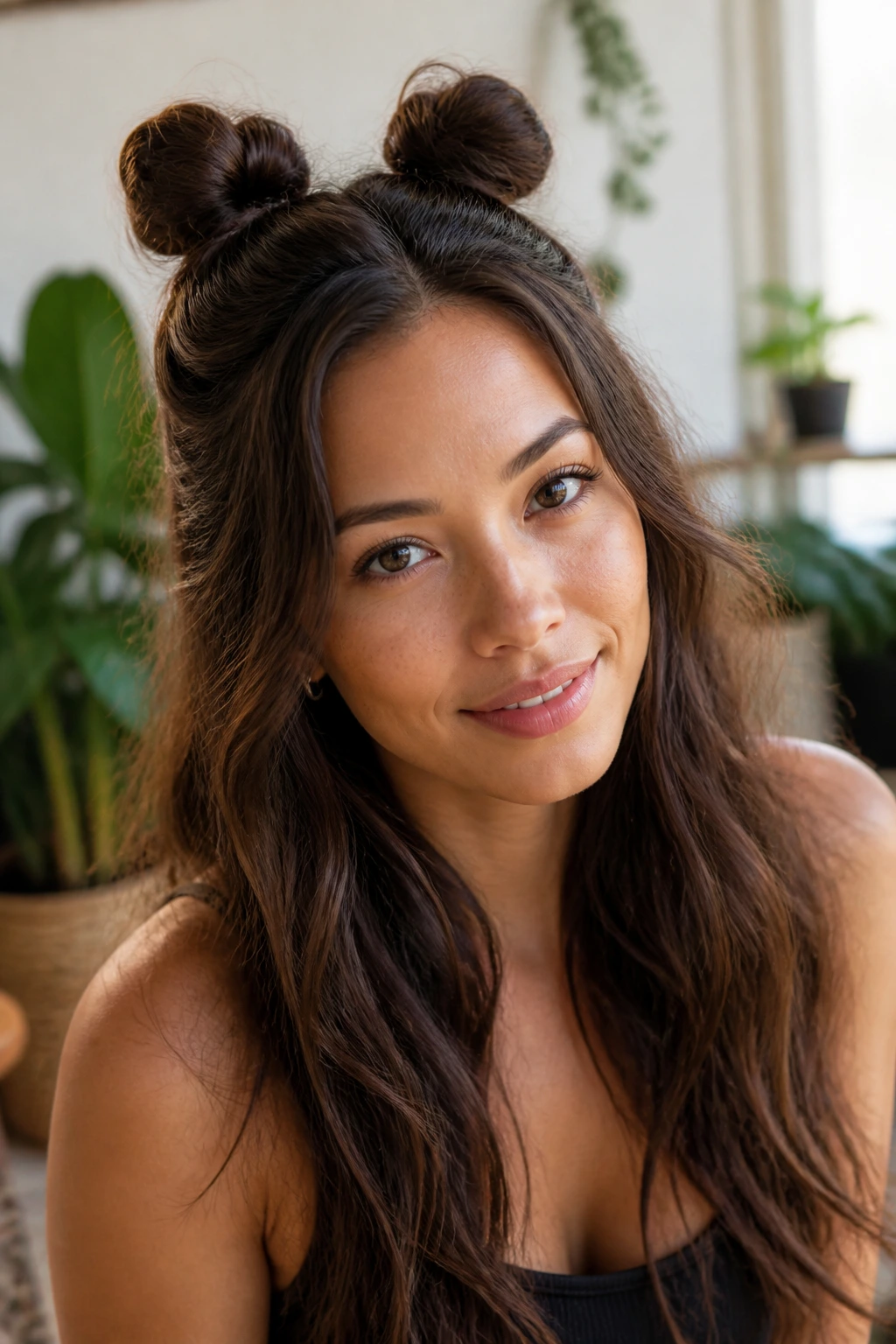
Instead of one top knot, try two. Take the top two sections of your hair and twist them into small, compact buns at the crown of your head. This divides the volume of the front of your hair into two smaller, more manageable units. It is playful and practical, keeping the hair out of your face while still showing off your length.
Managing Symmetry
Use a mirror to ensure the buns are balanced. Since this is a very visual style, small differences in placement can be noticeable, but don’t worry about being perfect—the charm is in the slight irregularity.
Texture Control
Apply a bit of curl-defining cream to the ends of the hair that remain loose to ensure the back of the head looks coherent with the buns at the top.
30. The Natural Texture Afro-Puff
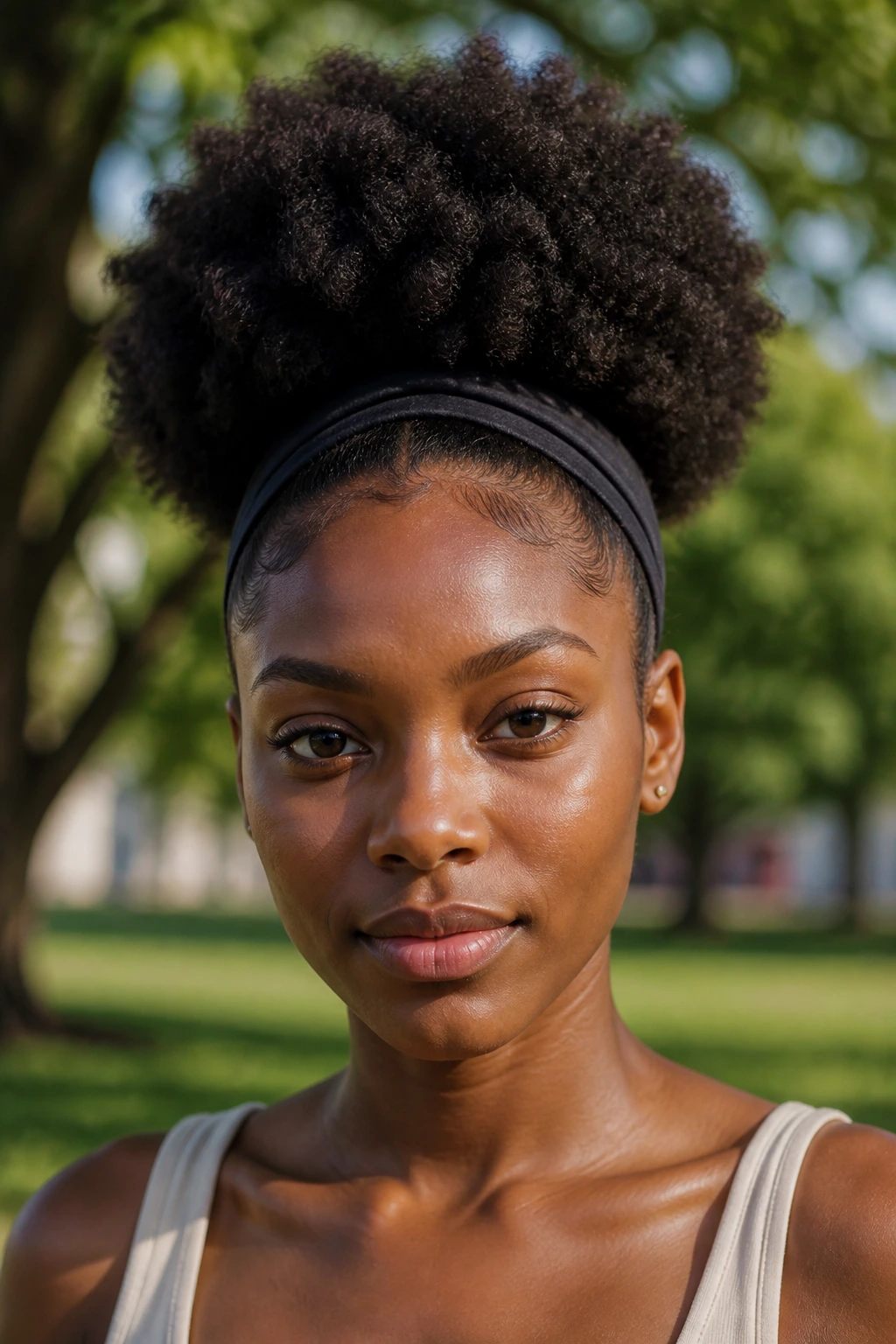
Sometimes the best way to handle frizz is to stop trying to hide it and make it the focal point. An afro-puff is a celebration of volume. By gathering all your hair into a single high, rounded point, you create a bold silhouette that makes no apologies for its size. This style works best with hair that is naturally very curly or coarse, as it provides a sculptural, cloud-like shape.
Setting the Shape
Use a headband to gently push the hair back from your forehead, creating a smooth border for the large puff of hair that sits behind it. This creates a clean line between your face and your hair volume.
Maintaining the Puff
At night, wear a silk bonnet to protect the puff. This prevents your pillow from drying out your hair and causing even more frizz overnight, ensuring the puff looks fresh and defined for the next day.
Final Thoughts
Managing frizzy hair is largely about understanding the mechanics of your own hair texture. Once you move past the idea that “frizz” is a flaw and start viewing it as “volume with potential,” the task of styling becomes a lot more enjoyable. The techniques outlined here are designed to work with your hair, not against it, providing structure where you need it and freedom where it counts.
Remember that the most important factor in any hairstyle is your own confidence. If a style makes you feel put together and comfortable, it is a success, regardless of how many flyaways remain. Take these thirty ideas, adapt them to your hair length and pattern, and remember that sometimes the most beautiful styles are the ones that lean into the natural, living texture of your hair.