

Braided hairstyles are more than just a convenient way to manage natural hair; they are a canvas for self-expression, artistry, and heritage. When you incorporate a weave, you are not just adding length or volume—you are creating a protective barrier that allows your natural hair to rest, grow, and thrive under the tension of a style. The beauty of these looks lies in the intricate interplay between the texture of your natural roots and the sleek, uniform finish of synthetic or human hair extensions. Whether you are aiming for a classic, sophisticated updo or a bold, avant-garde pattern, the key is understanding how to prep, install, and maintain these styles so they look fresh for weeks.
Choosing to wear weaves is a commitment to precision. It demands an understanding of parting, tension, and moisture retention. If you have been searching for a way to give your hair a break while maintaining a high-fashion look, these twenty-one styles represent the pinnacle of versatility in the world of braided extensions.
1. Sleek Goddess Braids with Curly Ends
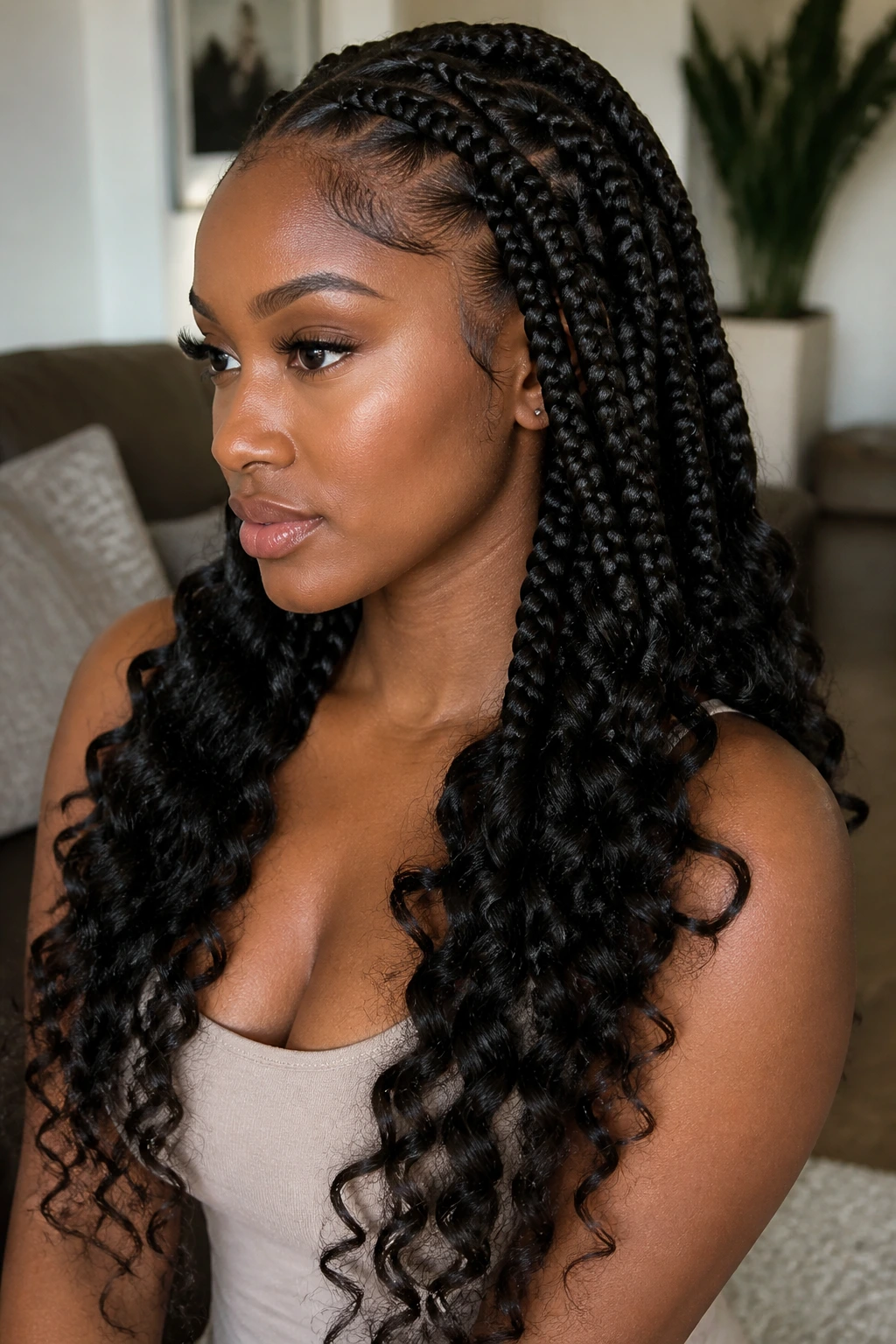
Goddess braids, often characterized by their larger size and intentional flyaways, offer a romantic look that transitions from the office to the beach effortlessly. The secret here is leaving out the ends of the braiding hair, allowing them to remain loose, curly, and free-flowing. You want to ensure your natural hair is thoroughly moisturized before the braid begins, as the weight of the weave can sometimes pull on the hairline. Use a light pomade or edge control to smooth the perimeter for a seamless transition from your scalp to the extension.
Why This Style Lasts
- The larger braid size means less overall tension on the scalp compared to tiny box braids.
- Curly ends are easier to detangle and refresh than long, straight synthetic extensions.
- This style effectively camouflages new growth, making it a perfect choice as you approach the end of a protective style cycle.
Pro tip: Dip the curly ends in hot water for a few seconds to seal them, but be careful not to submerge the actual braid if you want the root to remain tight and frizz-free.
2. Jumbo Feed-In Ponytail
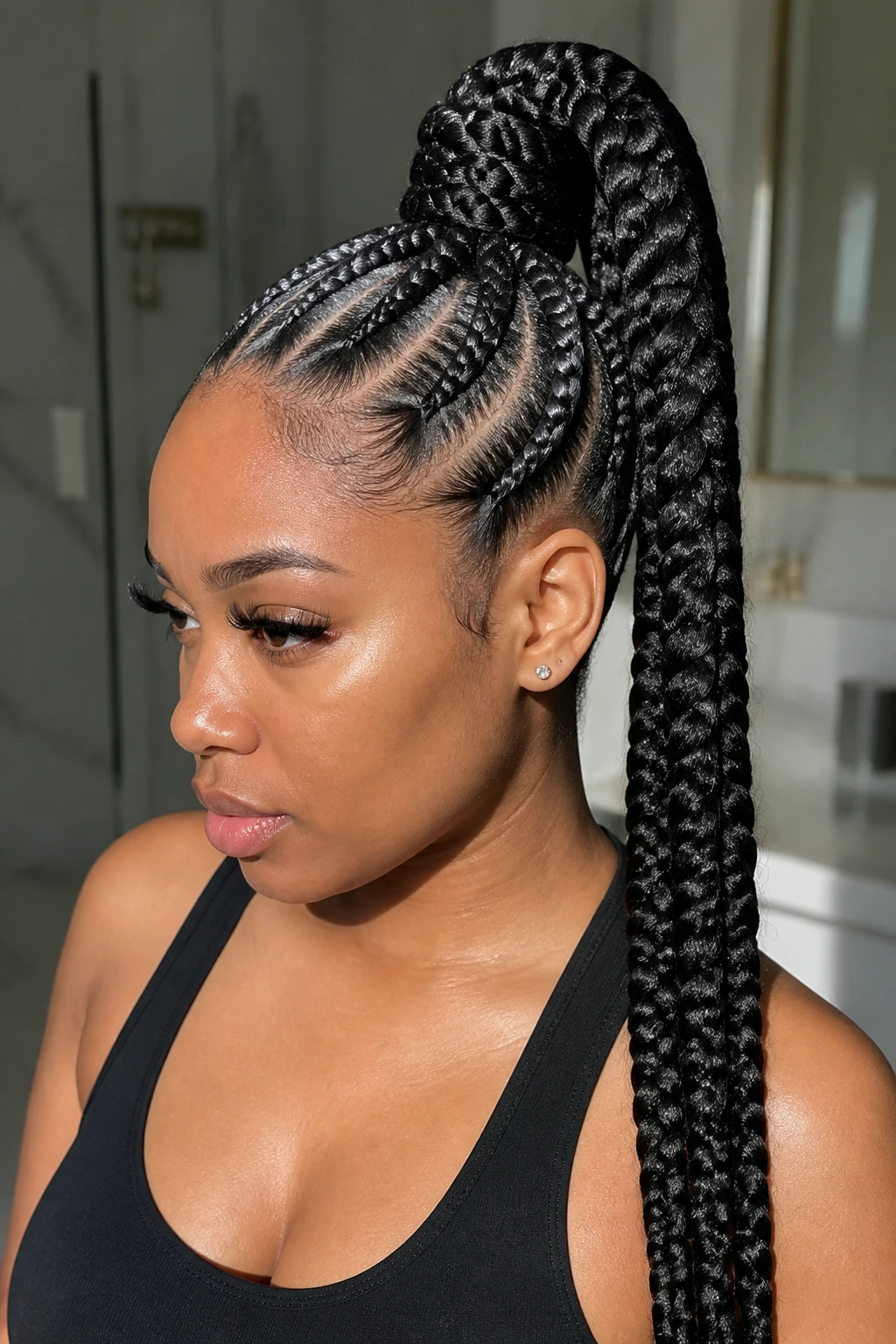
A high-volume, jumbo feed-in ponytail is the epitome of clean, architectural beauty. By adding hair gradually as you braid toward the center of your head, you create a seamless gradient that looks like it is growing directly from your scalp. This style relies heavily on the quality of your base—your natural hair must be tightly cornrowed into a foundation that supports the weight of the extension bundle.
Achieving the Perfect Tension
Without proper base control, a heavy ponytail can tug painfully at your temples. Distribute the hair weight evenly by using a firm base anchor, and ensure that your braider does not pull too tightly at the front. If you notice any redness around the hairline after the installation, you should immediately loosen those specific braids to prevent long-term damage.
3. Bohemian Box Braids with Loose Strands
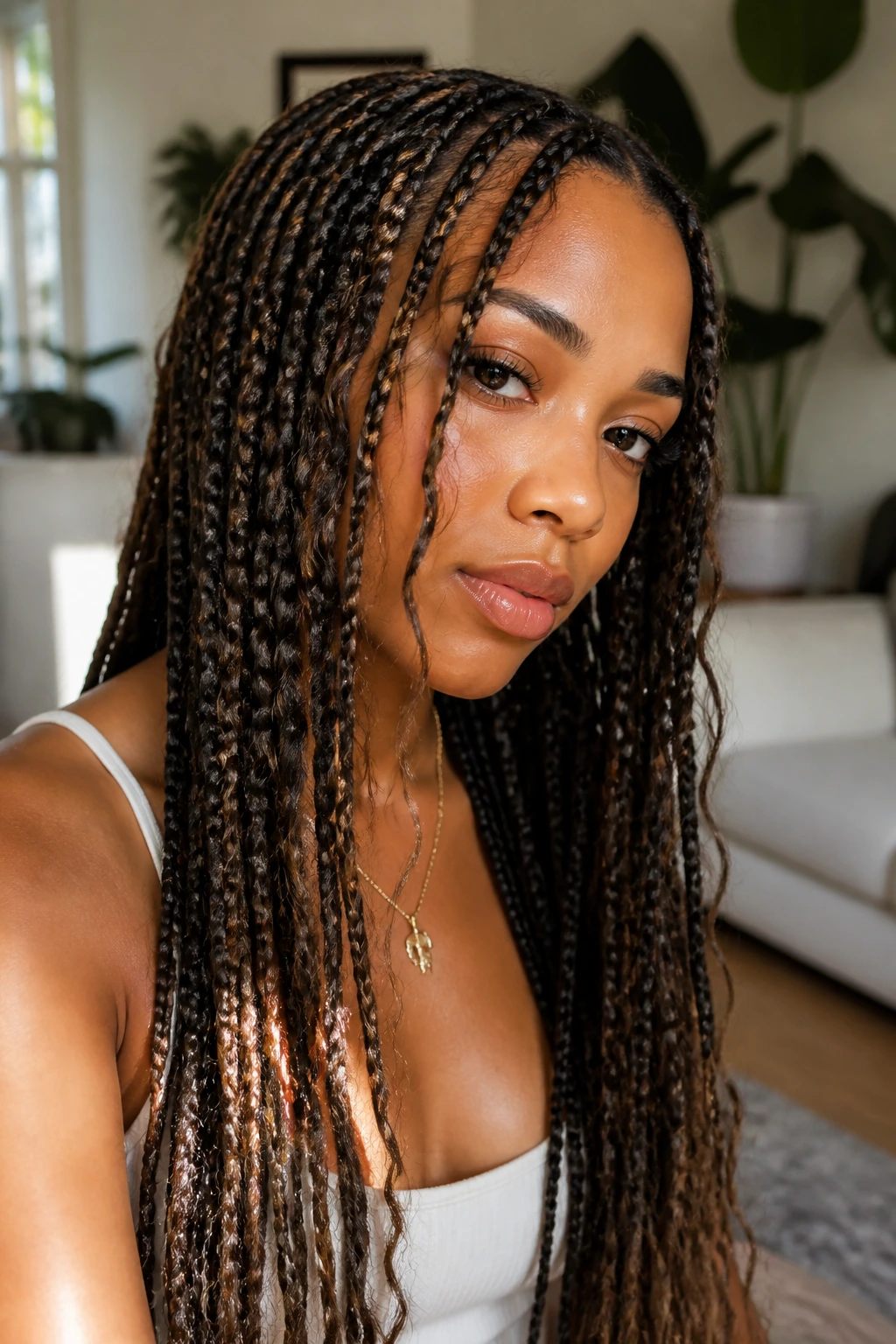
If you love the look of classic box braids but want a softer, more ethereal vibe, the bohemian style is your answer. These are essentially standard box braids, but with small, thin sections of loose, wavy hair left out at intervals along the shaft of the braid. The result is a messy, “lived-in” aesthetic that feels vintage and modern at the same time.
Maintenance Considerations
- Use a mousse daily to keep the loose, wavy strands from matting or tangling.
- Avoid heavy oils on the loose strands; a light leave-in conditioner spray is far more effective.
- Sleep with a silk bonnet to keep the loose pieces from rubbing against your pillowcase while you rest.
4. Half-Up, Half-Down Tribal Braids
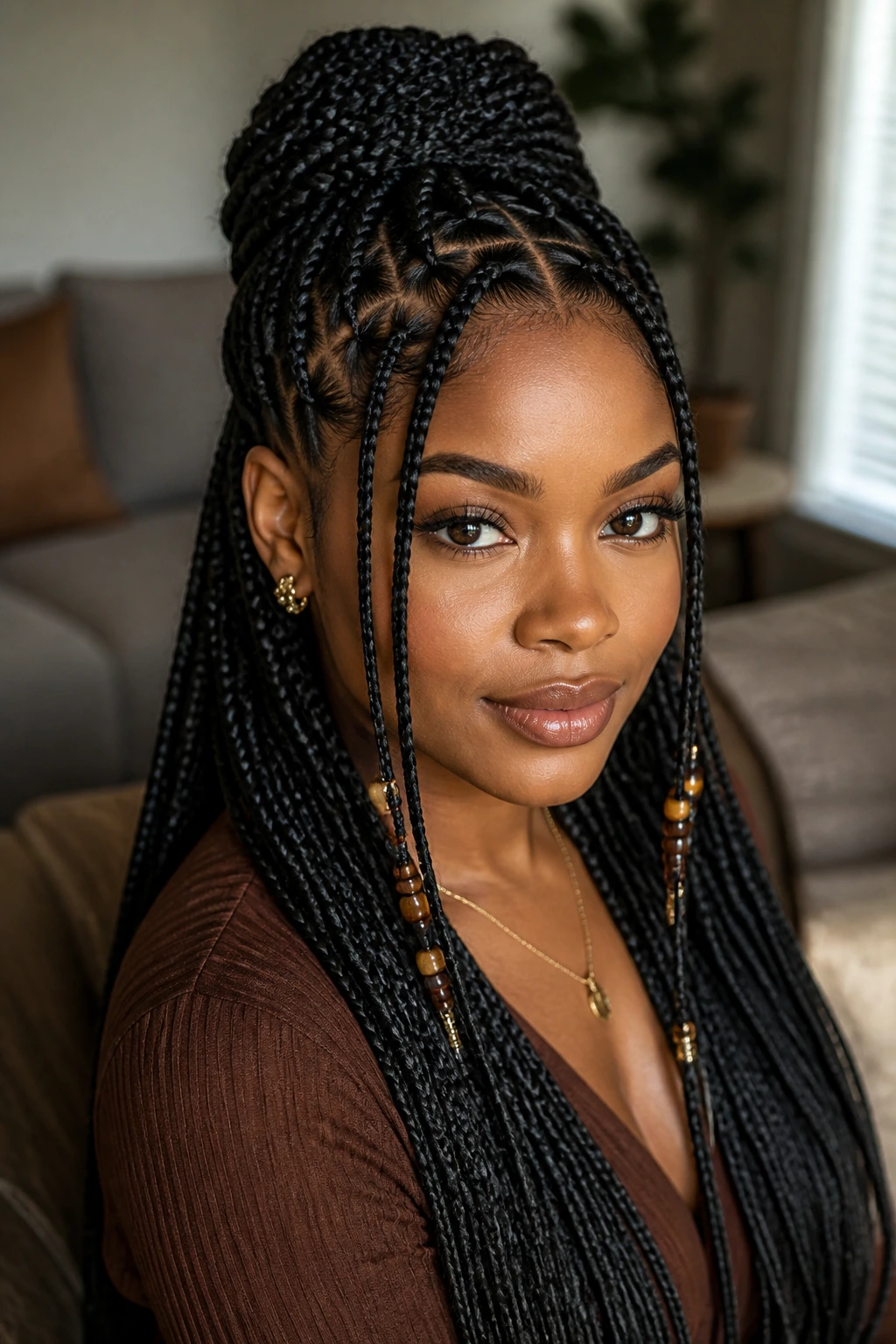
Tribal braids, often inspired by Fulani-style patterns, are characterized by a center braid running down the middle of the scalp, flanked by smaller, intricate patterns on the sides. Combining this traditional look with a half-up, half-down configuration gives you the best of both worlds: face-framing elegance and the convenience of a pulled-back style.
Why You Should Try It
This is arguably the most versatile of the braid styles. You can let the back hang loose, tie it into a top knot, or braid the back section for an even more elaborate appearance. It is a fantastic option for those who find a full head of heavy braids too cumbersome for daily life.
5. Micro-Braids with Beads and Cuffs
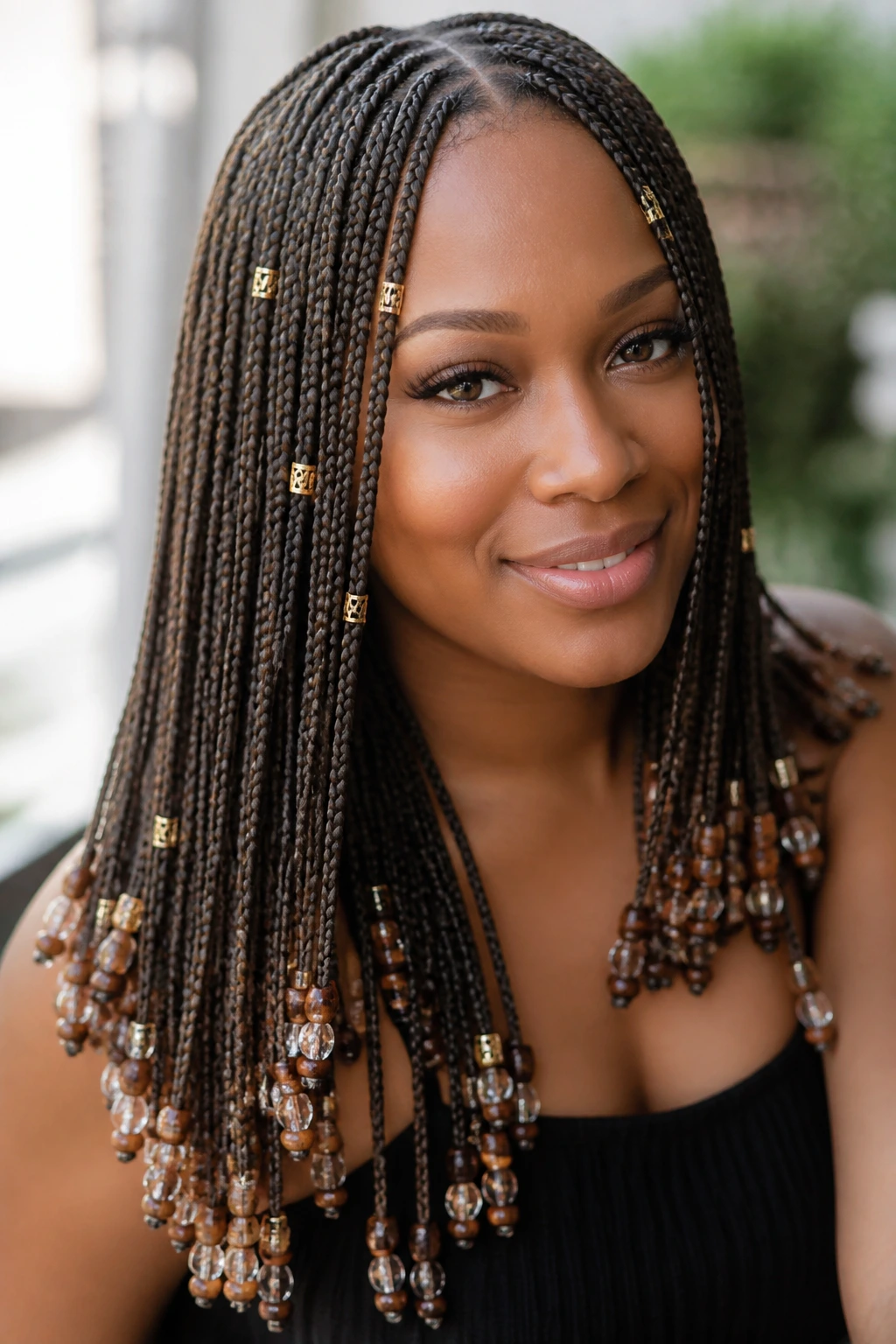
Micro-braids provide the freedom of a natural hair texture while allowing for incredible length and density. Because these braids are so small, you can manipulate them almost like loose hair, styling them into buns, ponytails, or even pinning them back with gold or silver cuffs. The addition of wooden beads at the ends adds a cultural nod that elevates the style from simple to iconic.
The Trade-off
These take significantly longer to install than chunkier styles. Expect to spend the better part of a day in the chair. However, the result is a lightweight look that feels virtually weightless, making it much easier on your neck and shoulders over the course of several weeks.
6. Waist-Length Knotless Braids
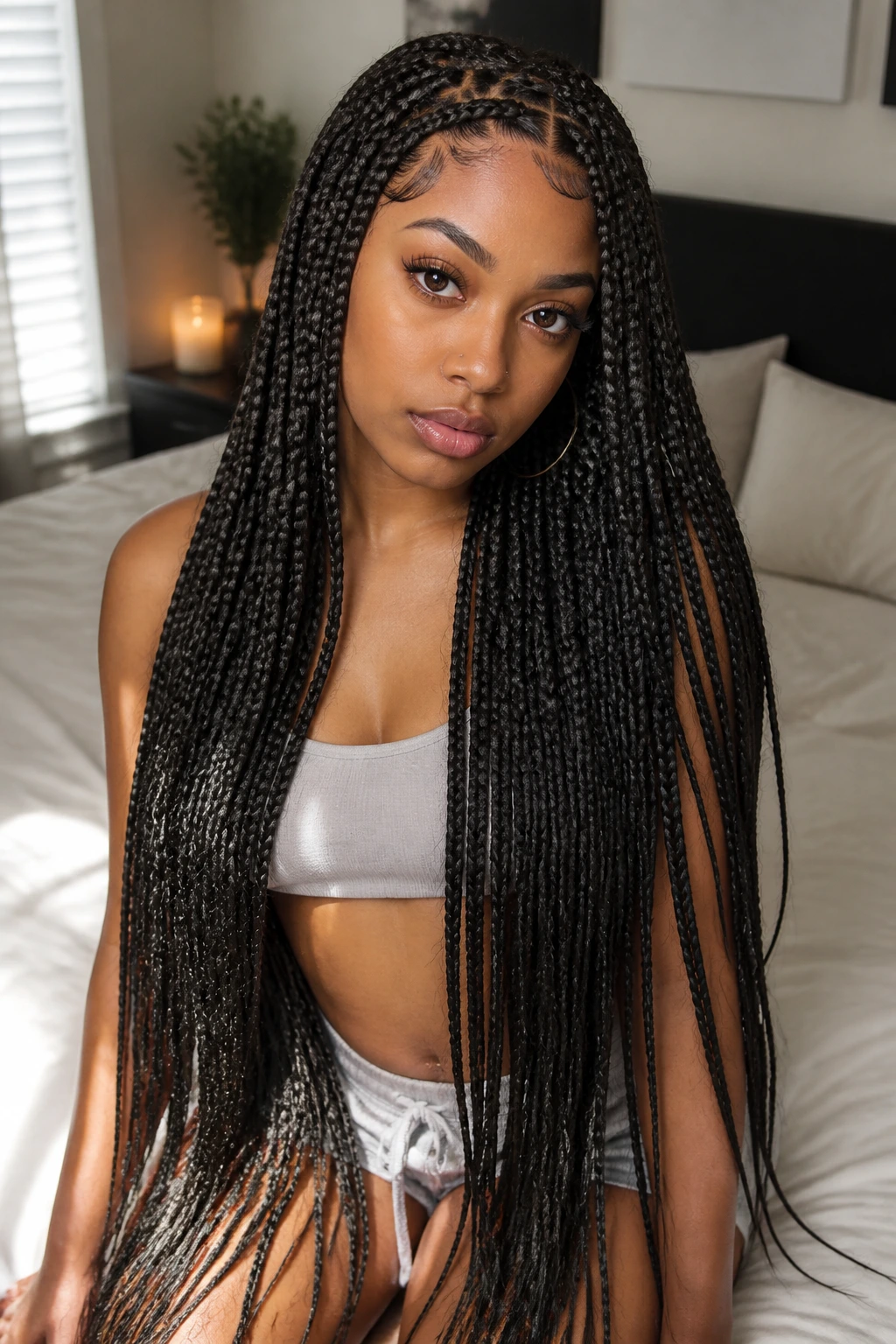
Knotless braids have become the gold standard for many, primarily because they eliminate the tight, painful lump at the root of the braid. By feeding the extension hair into your natural hair gradually, the braid starts thin at the scalp and widens as it progresses. This creates a much more natural, “human hair” look that moves and flows with your body rather than standing stiffly.
Preparing Your Natural Hair
- Deep condition at least two days before your appointment to ensure your hair is elastic and strong.
- Stretch your hair using a blow-dryer on the cool setting to make the braiding process faster and smoother.
- Avoid heavy, thick butter products on your scalp right before a long appointment, as they can cause the braids to slide out prematurely.
7. Side-Swept Lemonade Braids
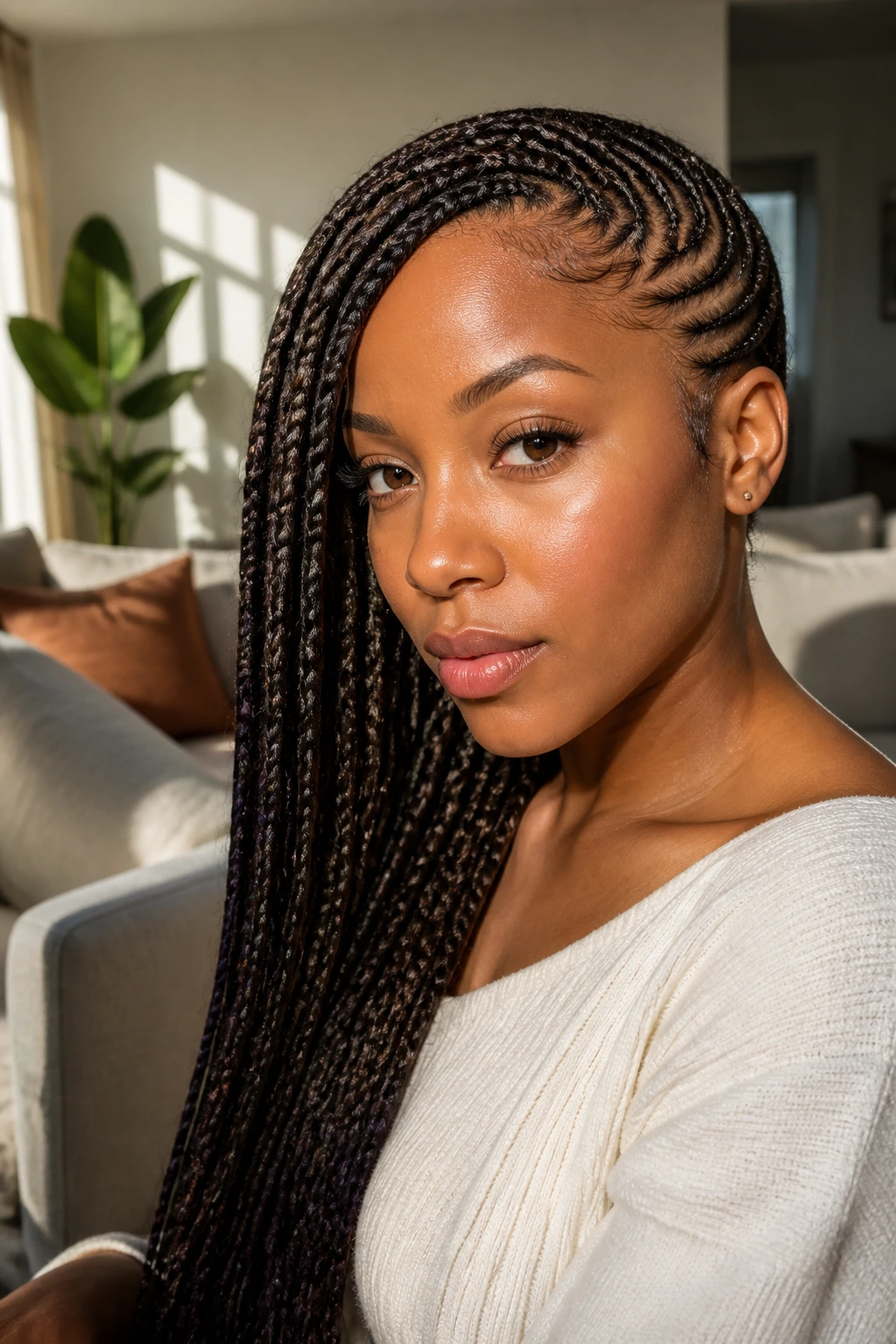
Popularized by high-profile styling, lemonade braids are a classic cornrow variation that sweep to one side, creating an elegant, asymmetrical silhouette. The precision required for these parts is high, which makes this a style best left to an experienced stylist. Because the braids all travel in one direction, they put very little stress on your scalp, provided they aren’t pulled too taut at the base.
Styling for Longevity
Keep the parts clean by using a small amount of shine-enhancing foam every few days. This keeps the look fresh and prevents the dreaded “fuzzy” root look that can appear after a week of normal wear.
8. High Bun with Braided Tendrils
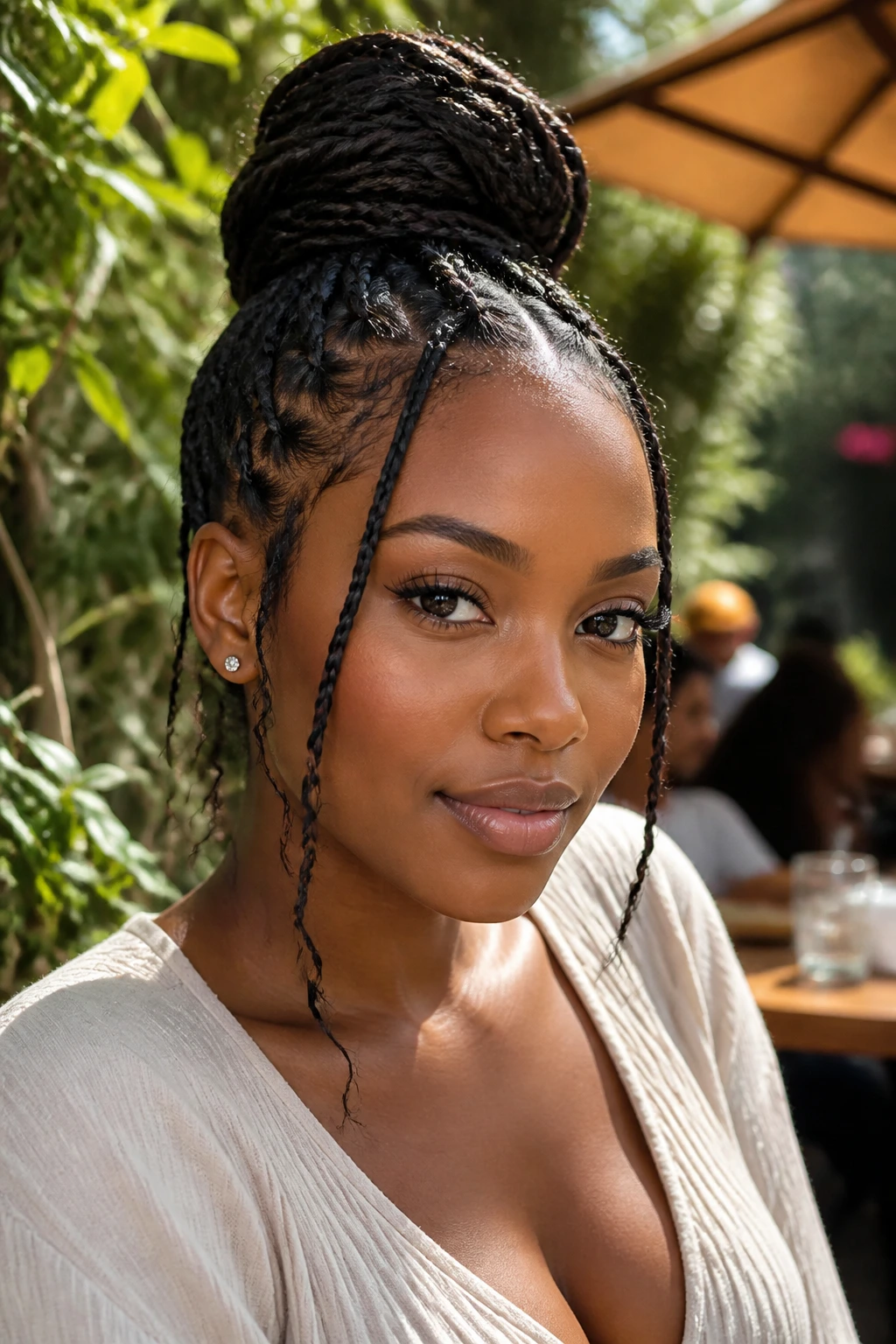
Take a standard braided bun and turn it into a statement piece by leaving thin, intricate tendrils of hair hanging around your face. These tiny accent braids can be decorated with rings, charms, or colored thread to match your outfit or mood. The key to this look is the contrast between the neat, tight bun and the playful, loose-hanging strands.
The Structural Secret
Ensure your bun is anchored with a strong elastic that doesn’t pull your hair. If you have fine or thin hair, use a donut shaper to get that high-volume, rounded look without the need for an excessive amount of heavy weave hair.
9. Colorful Ombré Box Braids
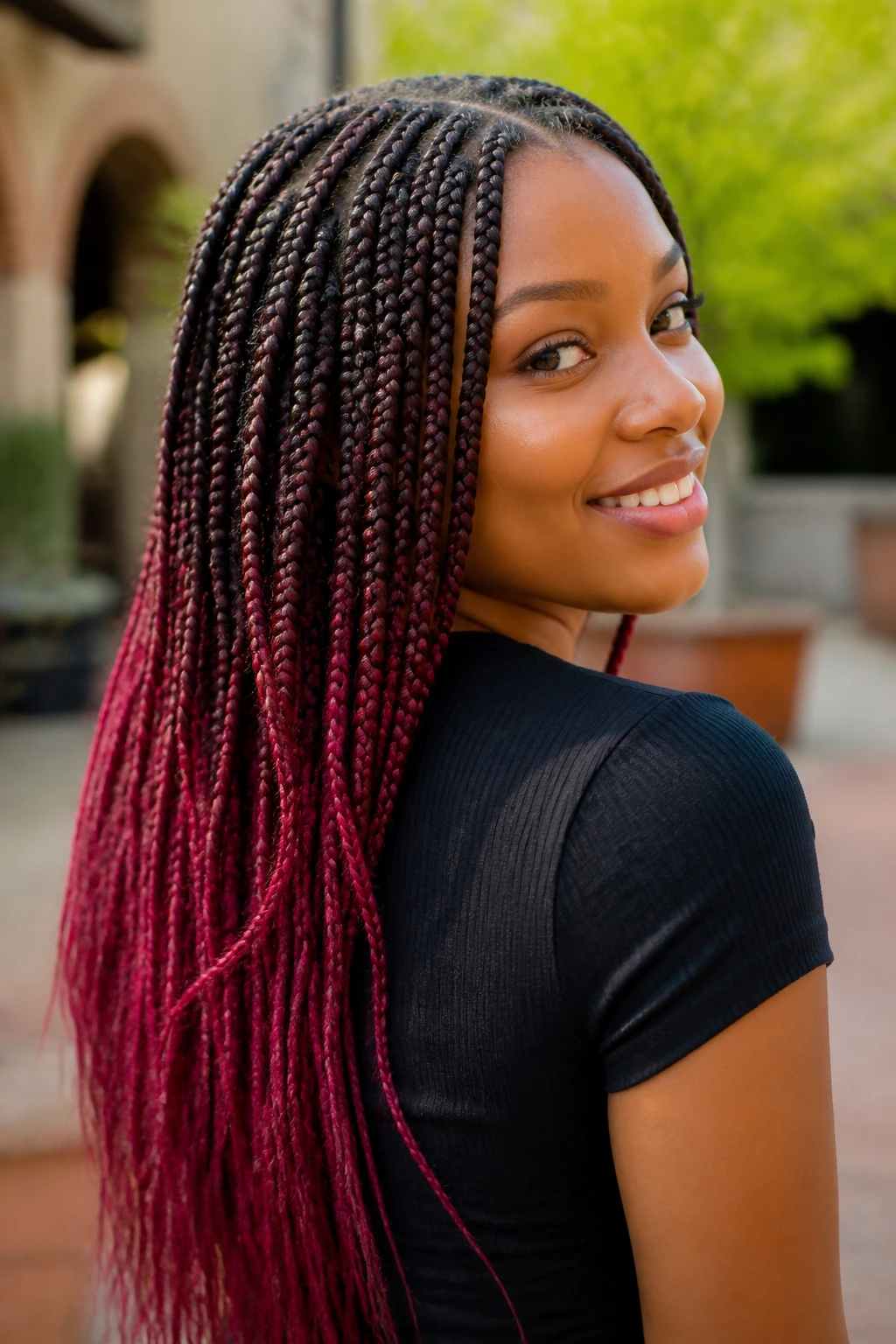
Why settle for natural tones when you can experiment with color? Ombré braids, which fade from a dark root to a vibrant shade like wine, honey blonde, or electric blue, are an excellent way to dip your toe into bold hair colors without chemically processing your own hair. The dark root helps ensure that the transition to your natural hair is subtle, while the pop of color at the ends does all the talking.
Managing Synthetic Color
Synthetic hair tends to be drier than human hair. Keep your ombré ends looking vibrant by lightly misting them with a mix of water and a tiny bit of lightweight oil to maintain a healthy-looking sheen.
10. Chunky Criss-Cross Cornrows
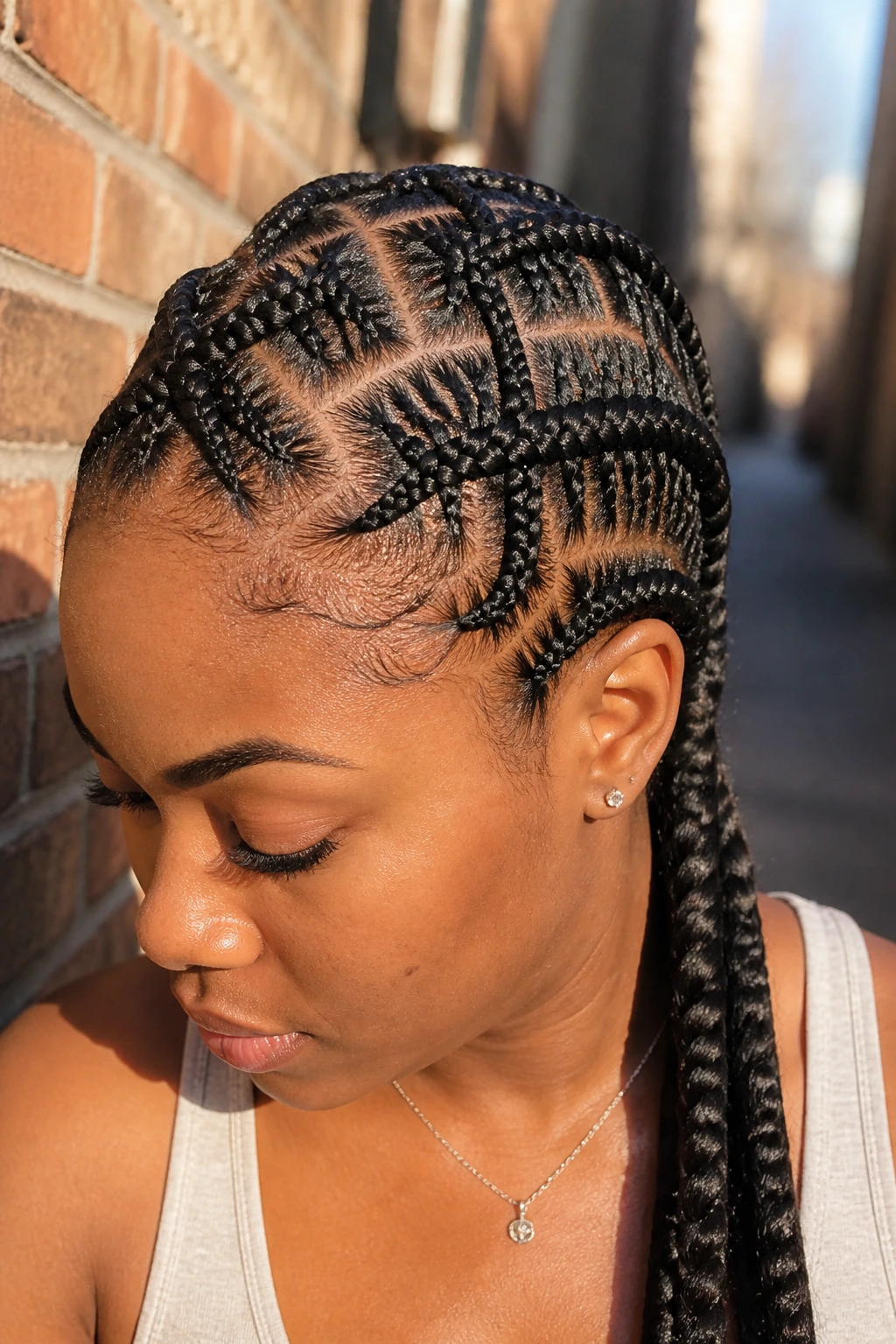
Criss-cross patterns add a layer of complexity to standard cornrows. By layering the braids over one another in a geometric pattern, you create a visually stunning crown that doesn’t need any additional accessories to stand out. This is a bold, artistic style that works best for people who want a short-term, high-impact look for a special event.
Why It Works
It breaks the monotony of straight-back cornrows. The geometric intersection points help distribute the tension differently across the scalp, which many find to be a more comfortable distribution of weight.
11. Braided Crown with a Low Chignon
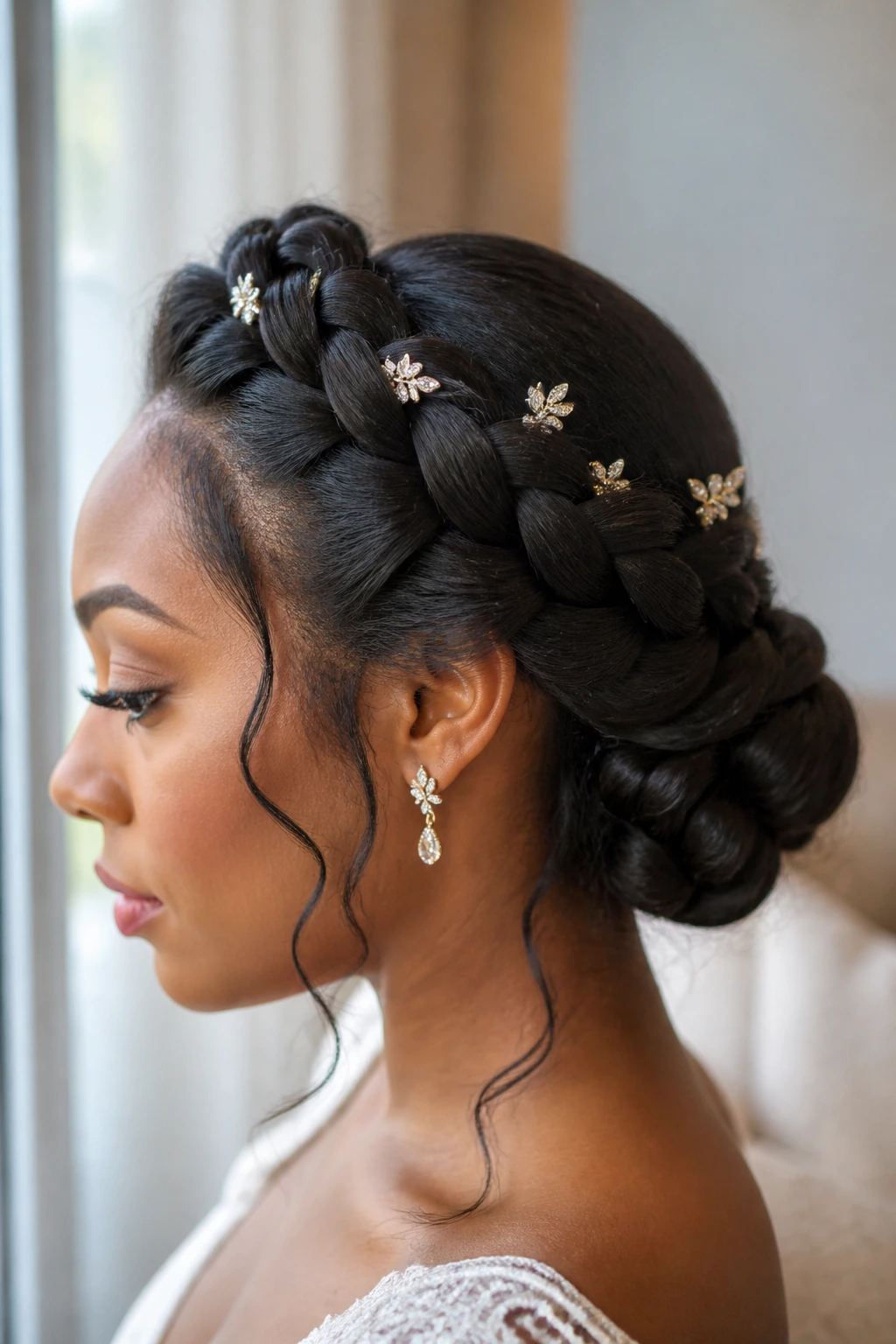
This is a classic, timeless style that exudes maturity and grace. A crown of braids wraps around your head, meeting in the back where they are gathered into a low, neat bun. It’s a fantastic protective style for natural hair because it keeps your ends tucked away and protected from environmental damage like wind, sun, and friction.
Elevating the Look
Add a few small hair jewels or pearls pinned directly into the braids for an elegant, wedding-worthy finish. It is surprisingly simple to create if you have the patience to braid your own hair, or you can have a stylist set the base for you.
12. Mohawk-Inspired Braided Updo
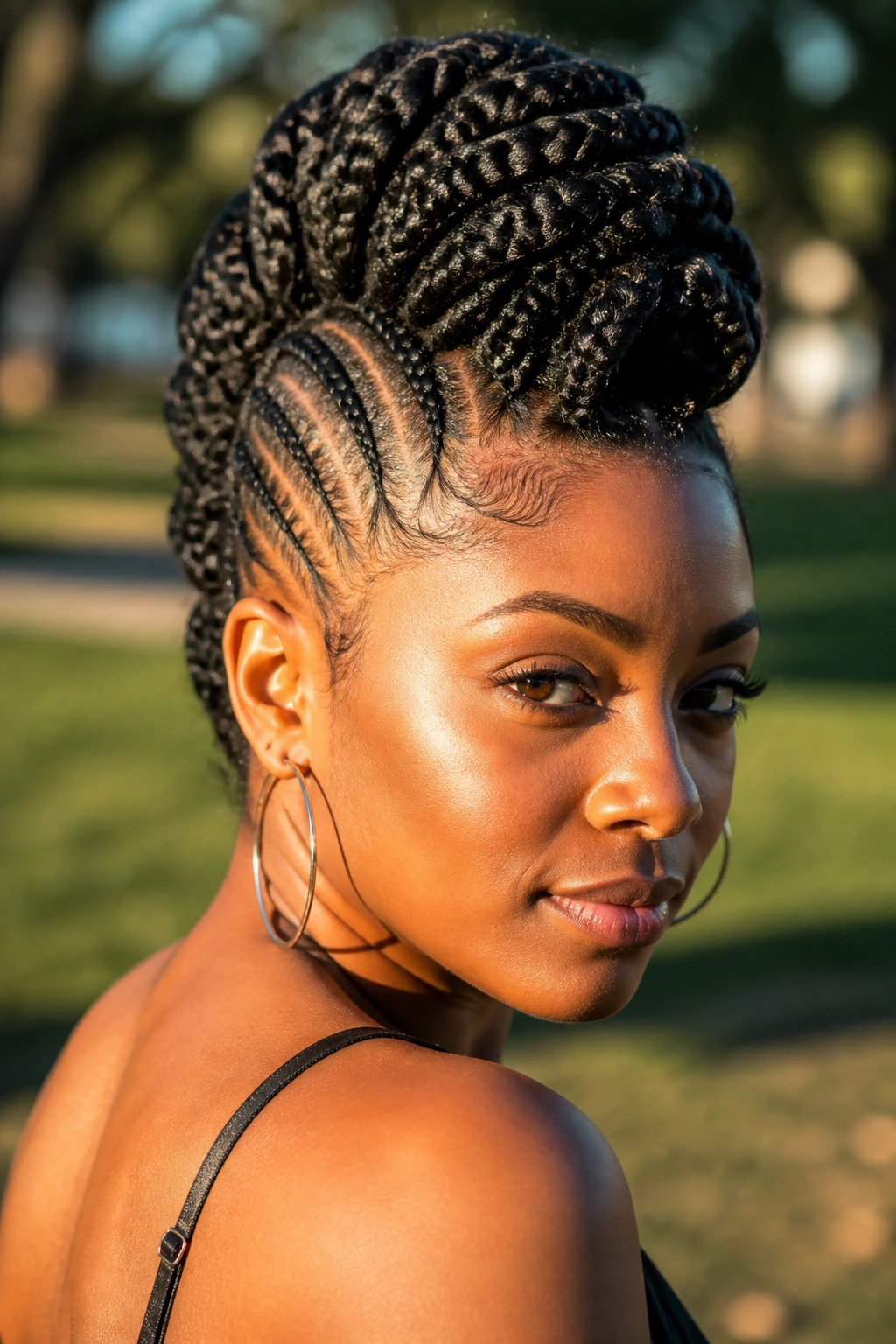
A mohawk-style braid is a daring, edgy choice for those who love to stand out. By cornrowing the sides tightly upward toward the center of the head, you create a mountain of braids that sits tall and proud. This is an incredibly refreshing style because it completely clears the hair off your neck, which is a blessing during warmer months.
Managing the Edges
Since the sides are tightly pulled, be extra careful with your hairline. Use a moisturizing edge control that doesn’t flake or harden, and always apply it with a light touch rather than mashing it into your roots.
13. Double-Braid Space Buns
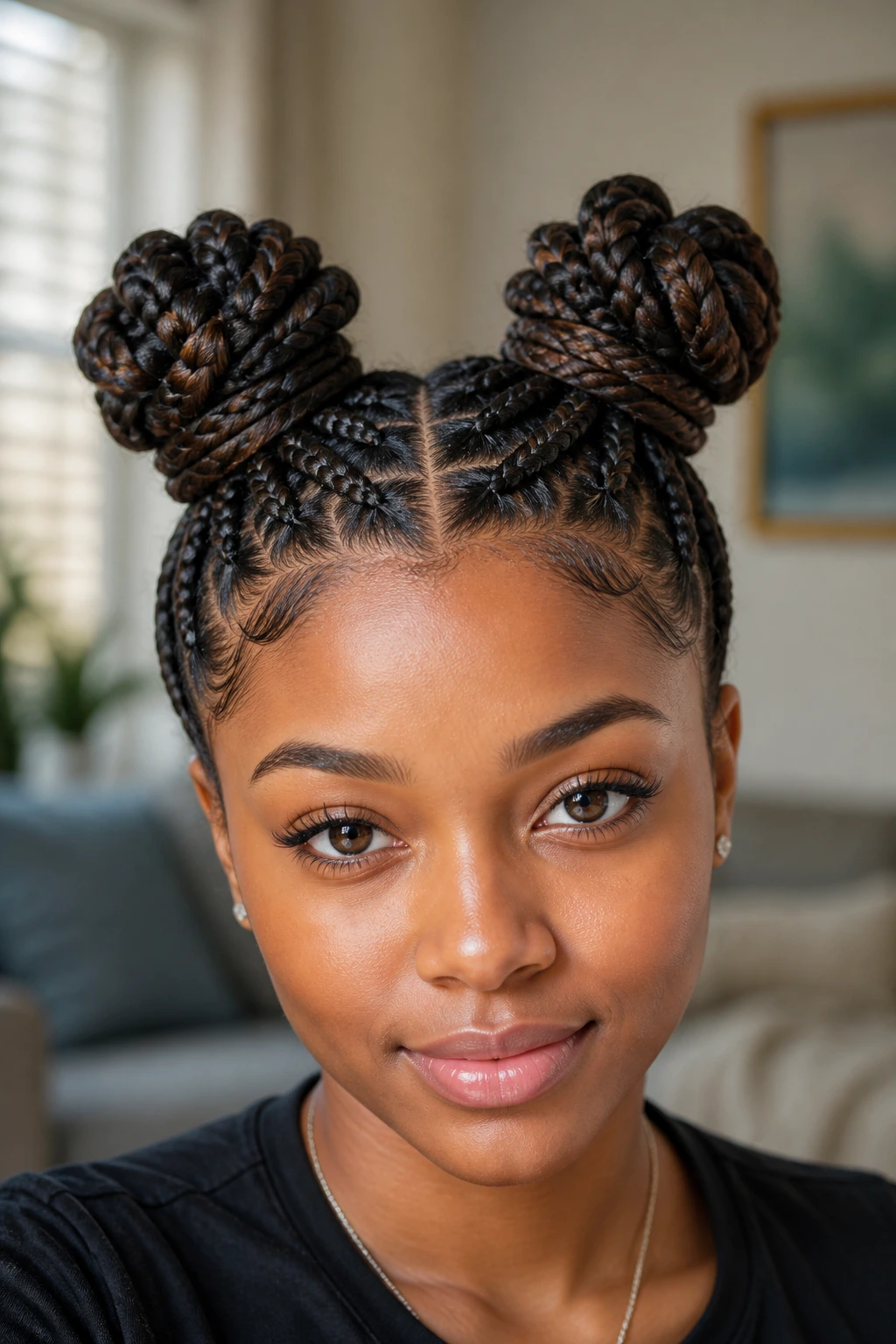
Space buns are playful, youthful, and surprisingly chic when braided. You divide your hair down the center and create two separate braided buns, one on each side of the crown. You can make these as large or as small as you like by adding varying amounts of extension hair.
The Finishing Touch
Wrap the base of each bun with a thicker piece of braiding hair to hide the elastic. This small detail makes the style look much more professional and keeps your natural hair from being exposed to the friction of a rubber band.
14. Feed-In Braids with Zig-Zag Parts
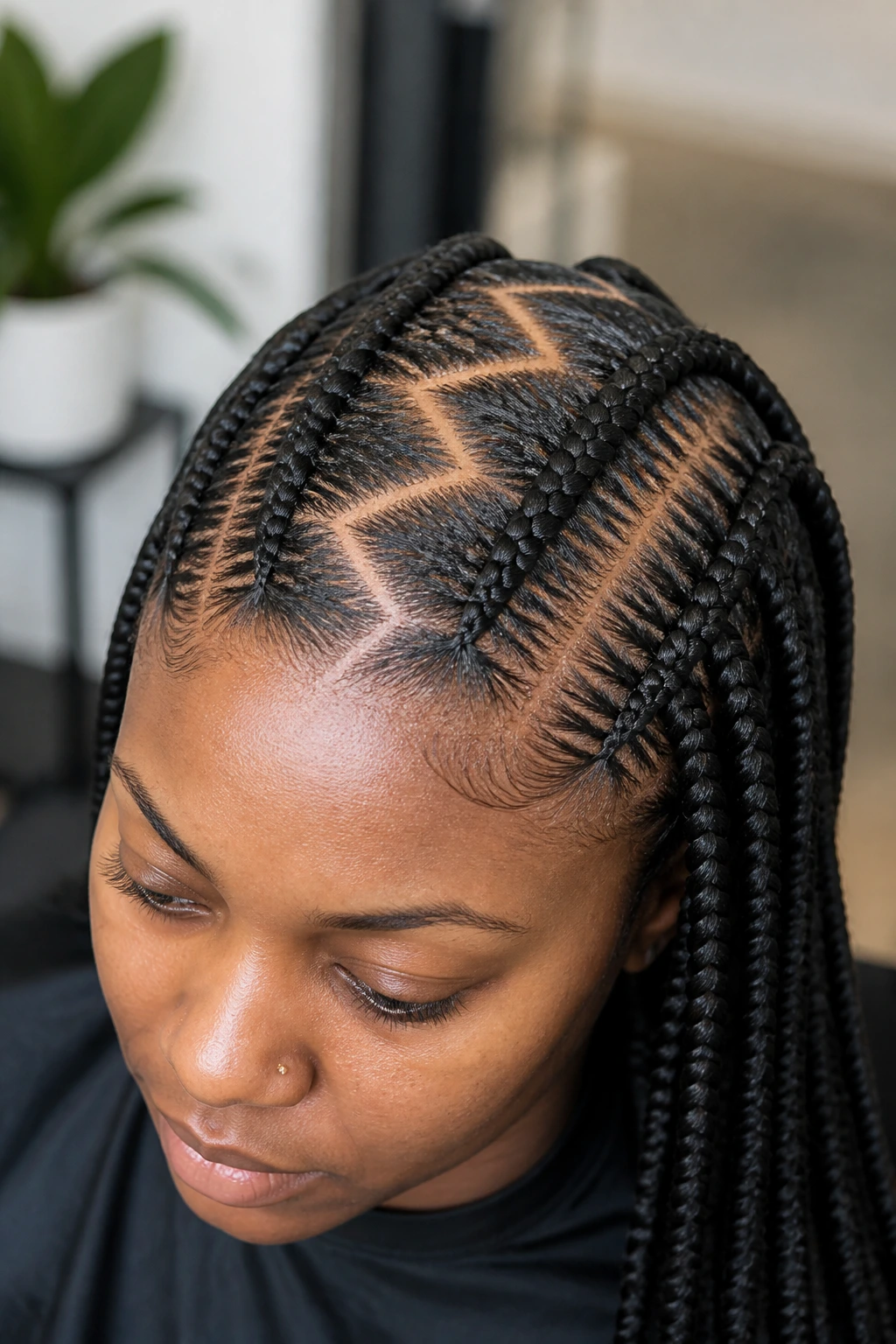
If you are tired of straight, boring parts, ask for a zig-zag pattern. This technique turns the parts themselves into a design element. When you combine this with feed-in braids, you get a clean, sharp look that feels like modern art.
Keeping It Sharp
Because the pattern is so specific, as soon as your new growth starts, the zig-zags will begin to blur. This style usually has a shorter “fresh” lifespan, typically two weeks, so plan your events accordingly.
15. The Wrapped High Ponytail
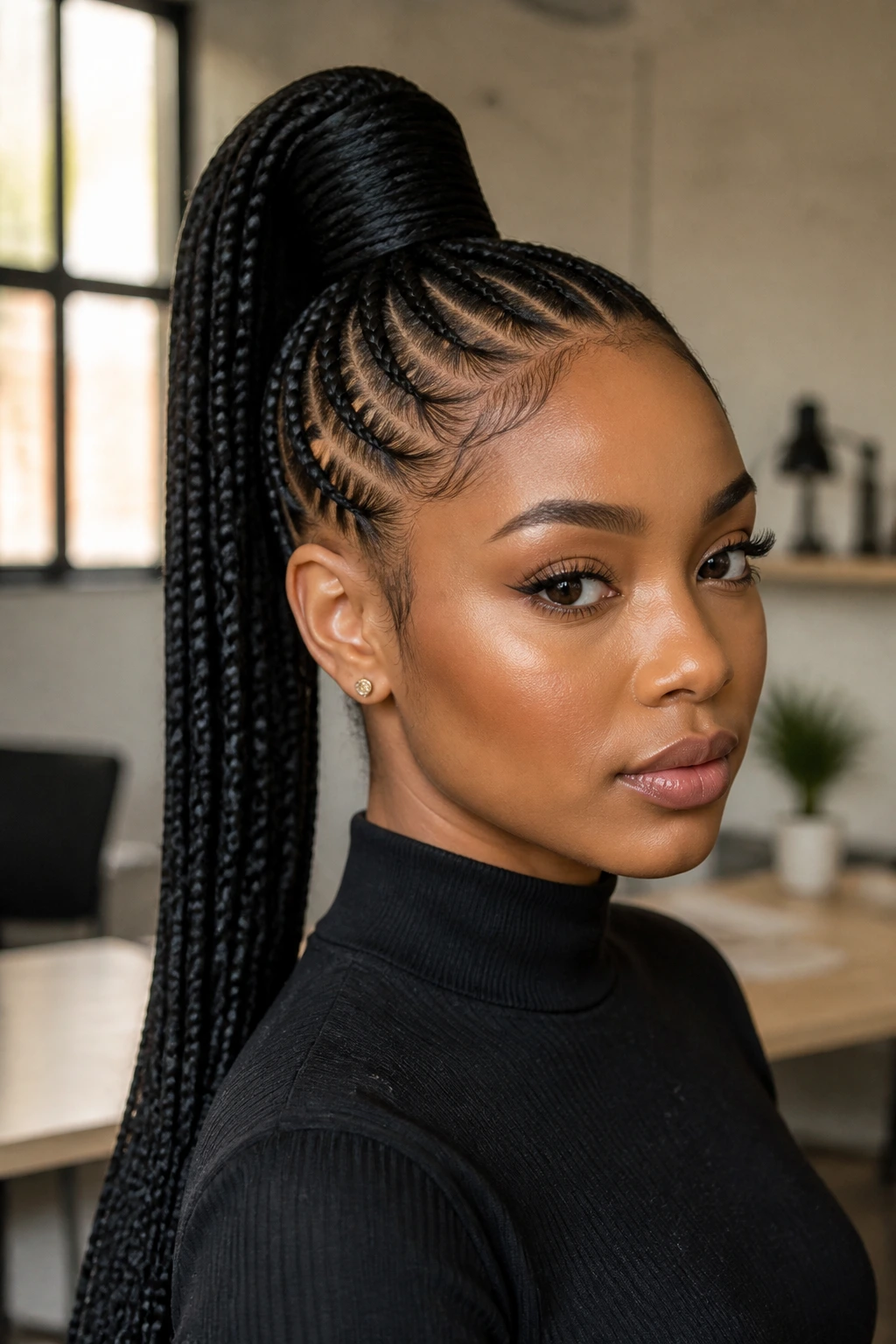
This style involves creating a base of cornrows that feed into a single high ponytail, which is then wrapped in additional strands of braiding hair. The result is a smooth, seamless ponytail that looks like you’ve spent hours blow-drying and pressing your natural hair, even though it’s safely tucked away underneath.
The Benefit of Wrapping
Wrapping the hair around the ponytail hides the ends of the extensions entirely, giving the style a high-fashion, polished aesthetic. It is perfect for professional settings where you want to keep your hair out of your face but still look put-together.
16. Fulani-Inspired Braids with Cuffs
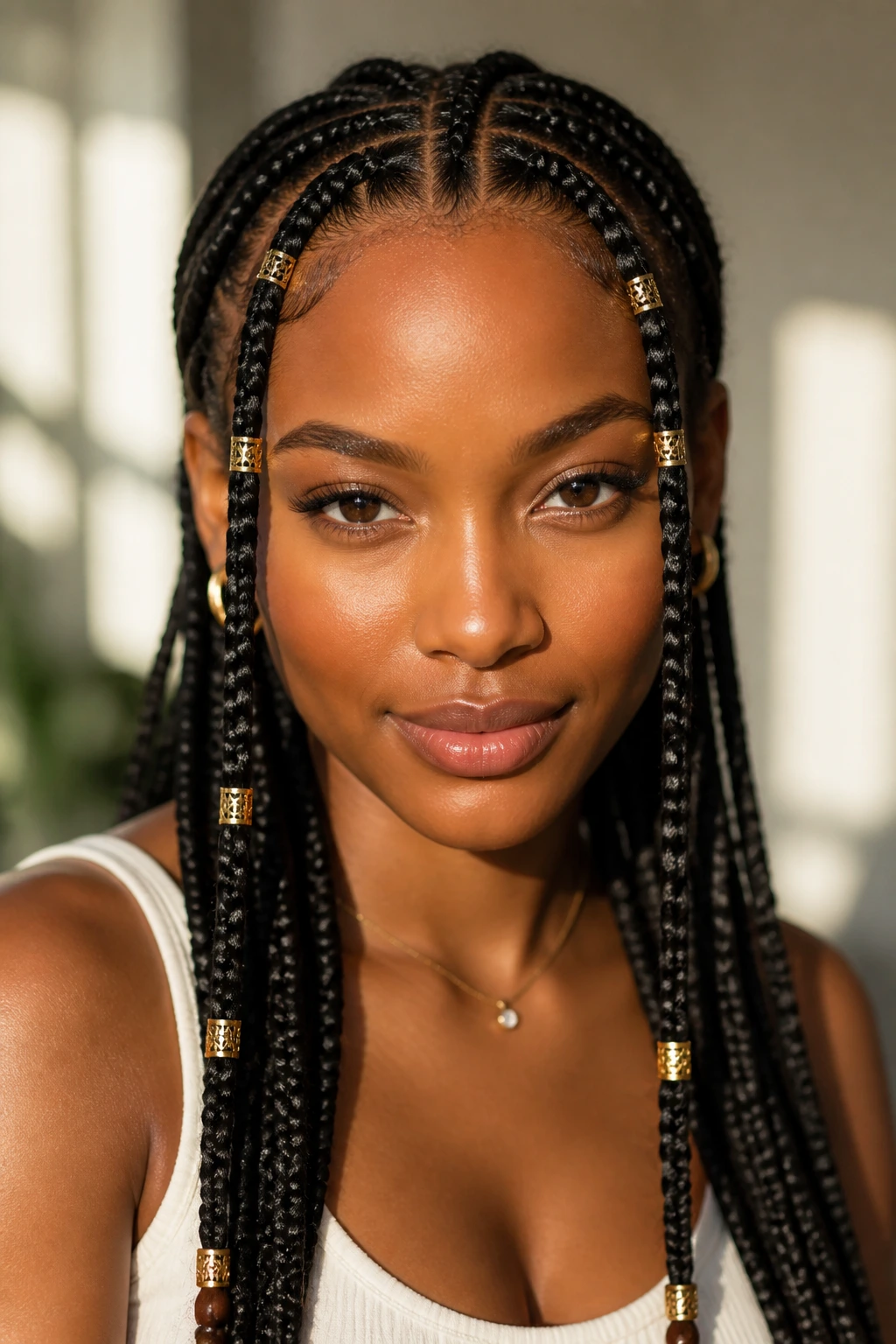
Fulani braids are iconic for their distinct pattern, which usually features a center cornrow and side braids that travel toward the front of the head. Adding gold cuffs along the length of these braids creates a rhythmic, metallic look that catches the light and adds a bit of “bling” to your everyday style.
Why It’s a Staple
This look is incredibly respectful of your hairline. Because the braids often start away from the edges, you have more control over how much tension is placed on your delicate temple hairs.
17. Braided Bob with Heart-Shaped Parts
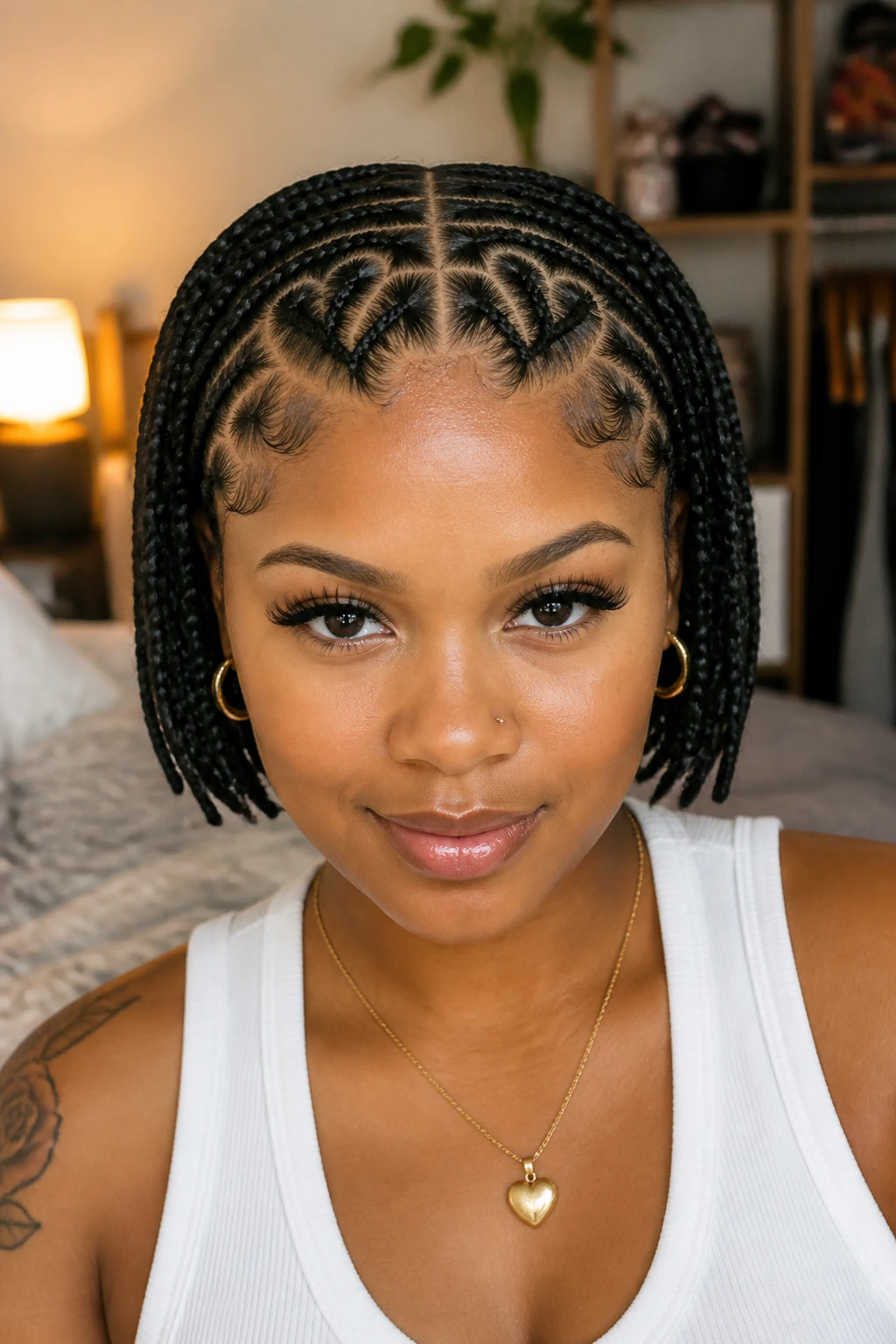
Sometimes, the most impressive part of the style isn’t the hair—it’s the scalp. Heart-shaped partings integrated into a short braided bob are a fun, youthful way to make your hair the main event. A bob-length braid is also much lighter than waist-length styles, meaning you’ll experience less neck fatigue.
Measuring for the Bob
To get the perfect length, ask your stylist to use a guide braid at the front and cut the extensions to match before they begin. Consistency is key when dealing with a short, blunt-cut look.
18. Braided Headband with Loose Curls
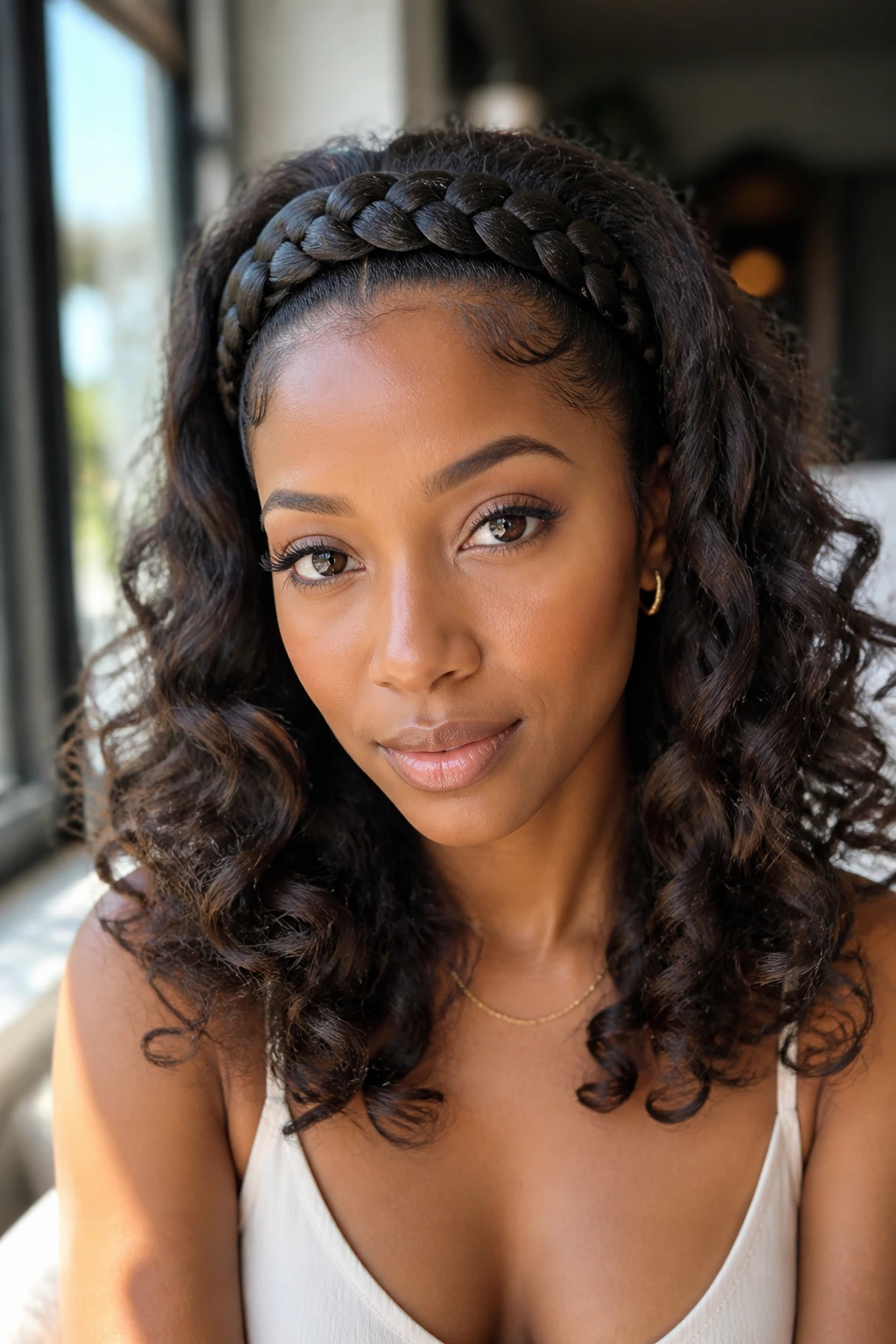
This style is great if you want to keep your hair off your face without committing to a full head of braids. You create a thick, braided headband across the front of your hairline, while the rest of your natural hair is left in a braid-out or set in rollers. It provides a permanent “accessory” that keeps your style looking polished.
Daily Maintenance
The headband will get fuzzy first, so focus your maintenance efforts there. Use a satin scarf at night to keep the braid smooth and defined.
19. Two-Tone Chunky Cornrows
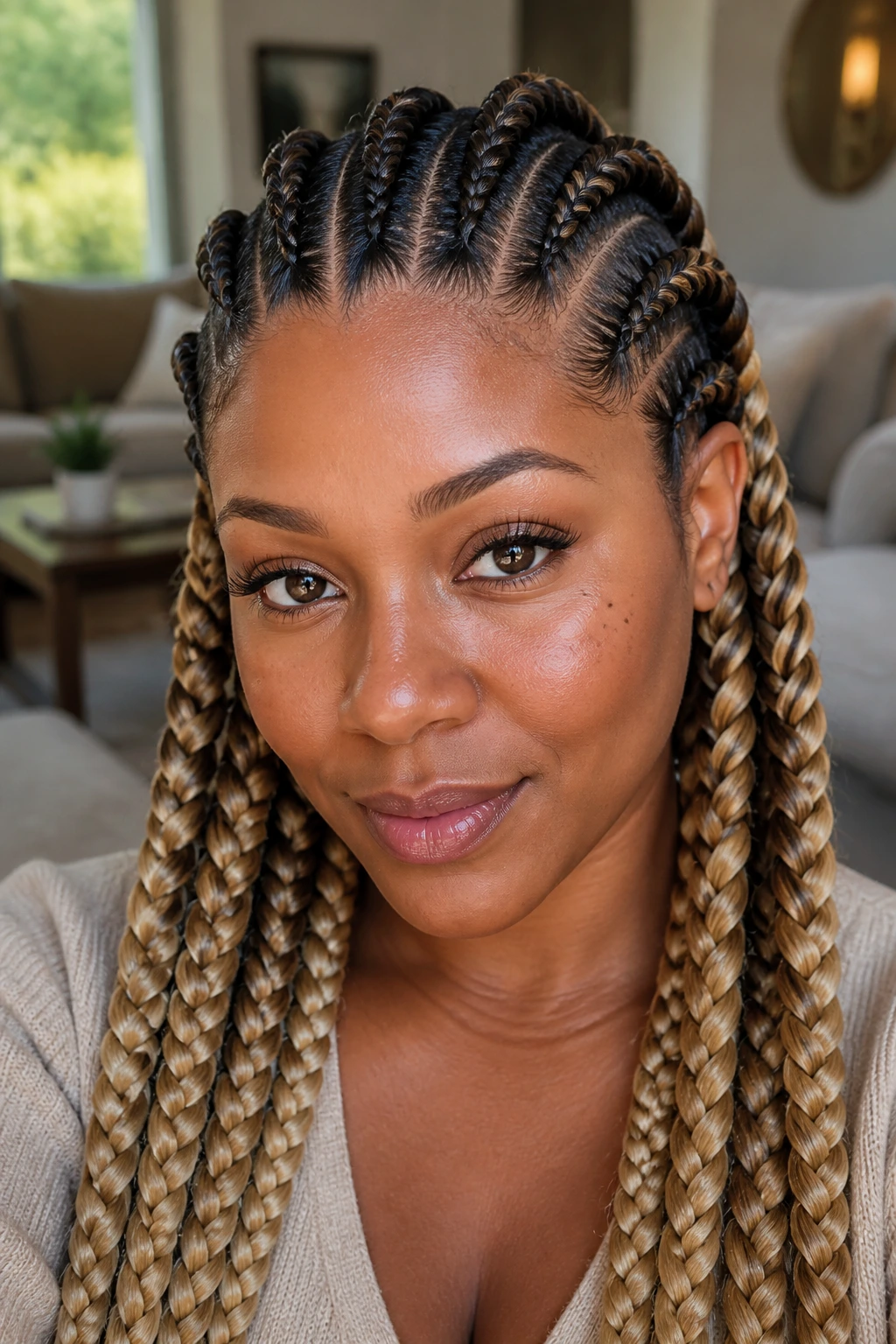
Why stick to one color when two can create depth? Using two tones of braiding hair in the same cornrow creates a dimensional effect that makes the hair look thicker and healthier. Even a subtle shift—like mixing a dark brown with a warm honey—can transform a simple cornrow into something much more complex.
Choosing Your Palette
- Go for high contrast (black and silver) if you want a bold, streetwear look.
- Stick to complementary tones (chocolate and caramel) for a soft, office-friendly aesthetic.
20. Bohemian Distressed Locs
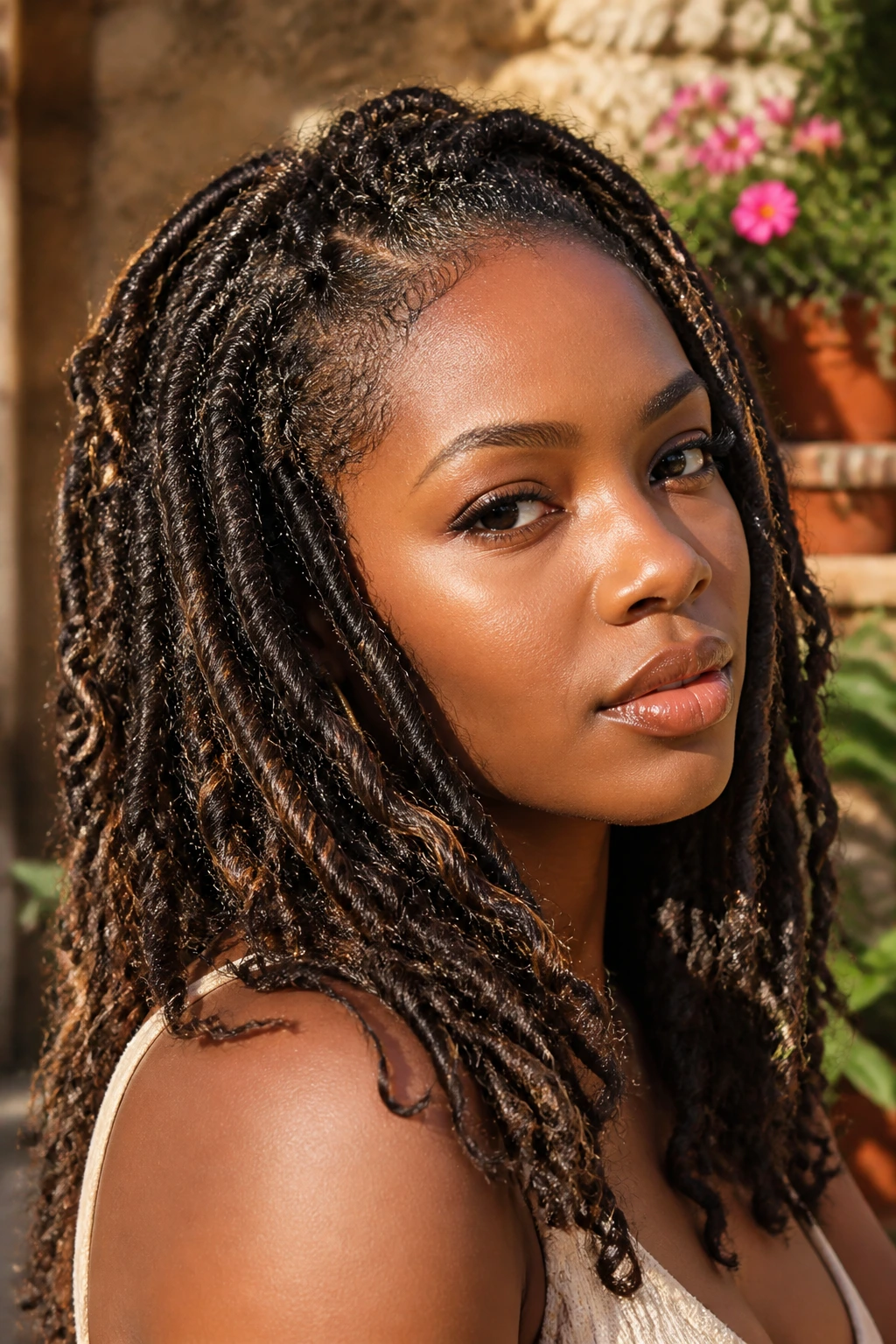
While technically a faux-loc style, these are created using a base of braided extensions. They have a “distressed” look with loops and curls pulled out along the shaft, mimicking the appearance of natural, mature locs. This is perhaps the most “natural” looking of all the extension styles.
The Weight Factor
Because of the wrapping process, these can get heavy. Ensure that your foundation braids are strong and distributed well. Avoid using too many heavy products; these styles are designed to look natural and slightly textured, so don’t fight the frizz!
21. Braided Updo with Side-Part Bangs
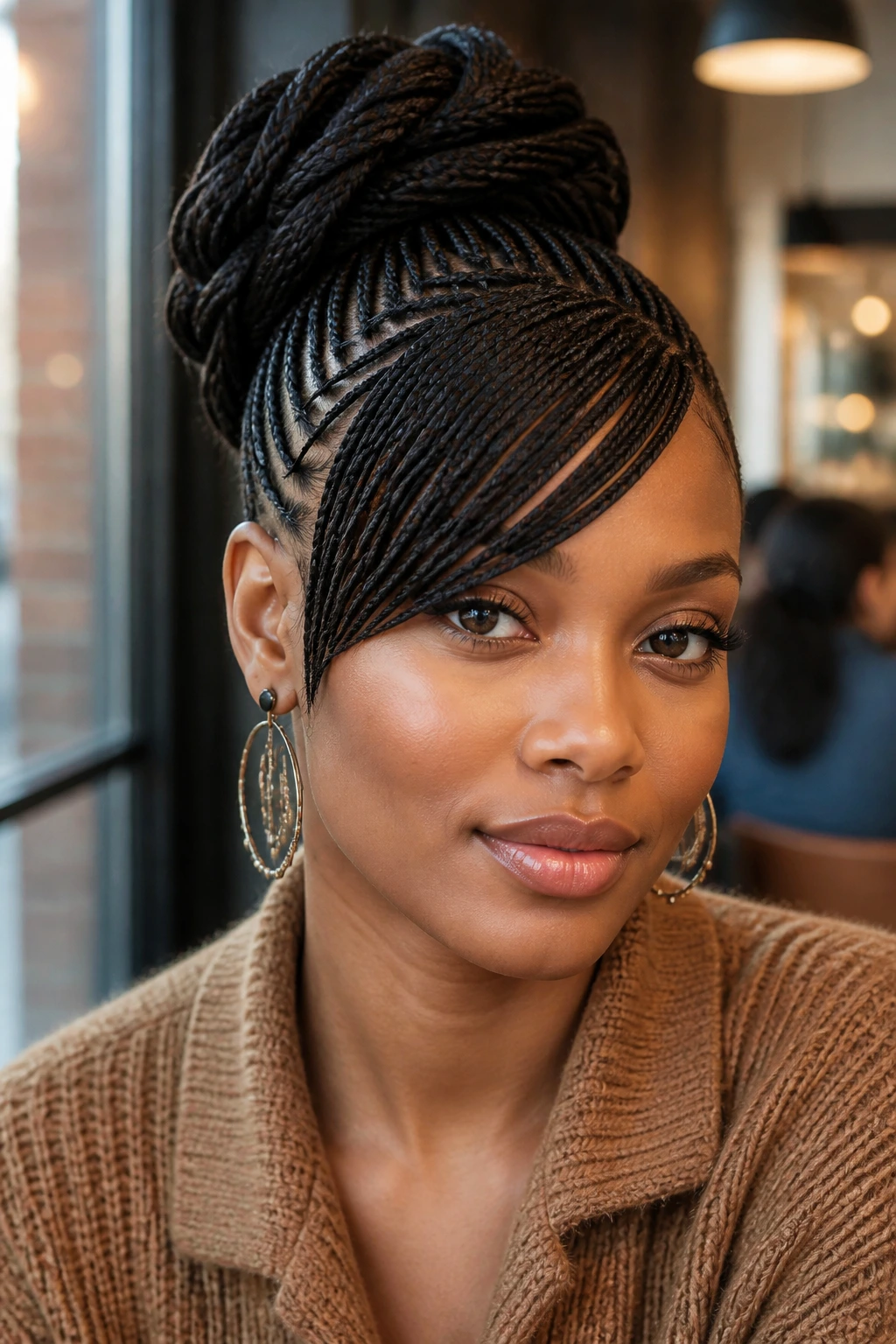
A side-part fringe created with small, thin braids adds a touch of sophistication to any updo. By sweeping a section of your braided hair across your forehead, you create a soft frame for your face. It is a fantastic alternative for those who don’t want to commit to cutting actual bangs.
How to Style Your Bangs
Use a light-hold gel to sweep the braided bangs to the side. Avoid heavy oils that will cause the braids to clump together and look stringy.
Final Thoughts
Ultimately, the longevity of your braids depends on how well you treat your scalp. It is tempting to think that once the hair is braided, the work is done, but the opposite is true. Your scalp still needs regular cleaning and moisture. Use a diluted apple cider vinegar rinse or a dedicated scalp cleanser to lift away buildup without disturbing your parts.
Listen to your hair. If you feel pulling, itching, or soreness that lasts longer than the first forty-eight hours after installation, do not ignore it. Protect your edges at all costs, avoid heavy synthetic fibers if you have a sensitive scalp, and always sleep with a silk or satin covering. Braids are a beautiful way to express your style, but they should never come at the expense of your natural hair’s health. Choose the style that makes you feel the most like yourself, and enjoy the freedom that comes with a low-maintenance, high-impact look.