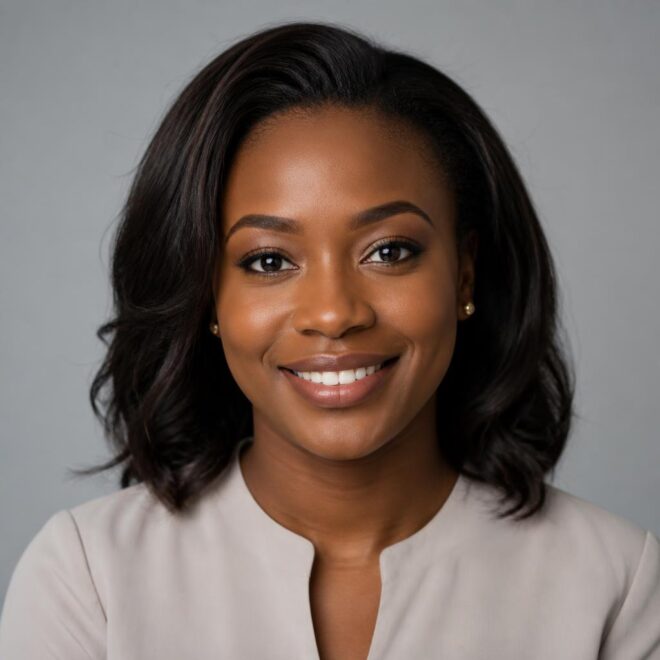


The haircut you choose is more than just a style; it’s an everyday accessory that dictates your morning routine and your overall aesthetic. If you have been looking for a look that balances vintage rock-and-roll edge with a modern, low-maintenance vibe, you have likely found yourself staring at photos of the shag bob with curtain bangs. This specific style takes the choppy, layered rebellion of a 1970s shag and blends it with the soft, face-framing appeal of long, sweeping bangs. It is a haircut that does not try too hard, yet somehow always looks intentional.
Many people shy away from short hair because they fear it will be difficult to style, but the shag bob is actually the antithesis of a high-maintenance cut. Because it thrives on texture, air-dried movement, and a bit of purposeful messiness, you can often step out the door with little more than a quick spritz of texturizing spray. The curtain bangs serve as the anchor for the entire look, bridging the gap between a severe bob and a shaggy, layered cut by softening your facial features and highlighting your cheekbones. Whether your hair is stick-straight, wavy, or has a tight curl, this style is remarkably adaptable.
Choosing the right length for your shag bob comes down to your hair density and face shape. If you have fine hair, you might want a shorter, more blunt bob base to keep the ends looking healthy and thick while letting the layers provide the volume. If your hair is thick and coarse, longer layers are your best friend, as they remove excess weight and prevent the dreaded triangle shape that can happen with blunt-cut bobs. As we explore these twenty distinct variations of the shag bob with curtain bangs, keep in mind how each one interacts with your hair’s natural pattern.
1. The Classic Textured Shag Bob
This is the quintessential version of the look, drawing heavy inspiration from icons of the seventies. It relies on a heavy concentration of internal layers—meaning your stylist cuts into the hair rather than just taking length off the bottom—to create a rounded, voluminous shape that sits just above the chin. The curtain bangs here are cut wide, starting from a center part and sweeping gracefully into the rest of the layered hair.
Why It Works for Most Hair Types
The internal layers effectively remove the bulk that makes short hair feel heavy or shapeless. By focusing on volume through the crown and crown-adjacent areas, you get a silhouette that feels lifted. It’s perfect for those who want that “I just woke up like this” look without the need for a round brush or a blow-dryer.
Styling Tips for Texture
- Use a salt spray while hair is damp to encourage natural waves.
- Scrunch the ends with your fingers while the hair air-dries.
- Avoid heavy silicones or smoothing creams, which will weigh down the layers and ruin the tousled finish.
Pro tip: If you find the ends look a little too wispy, use a small amount of matte hair paste to define them, giving the style a sharper, more modern edge.
2. The Sleek and Polished Shag
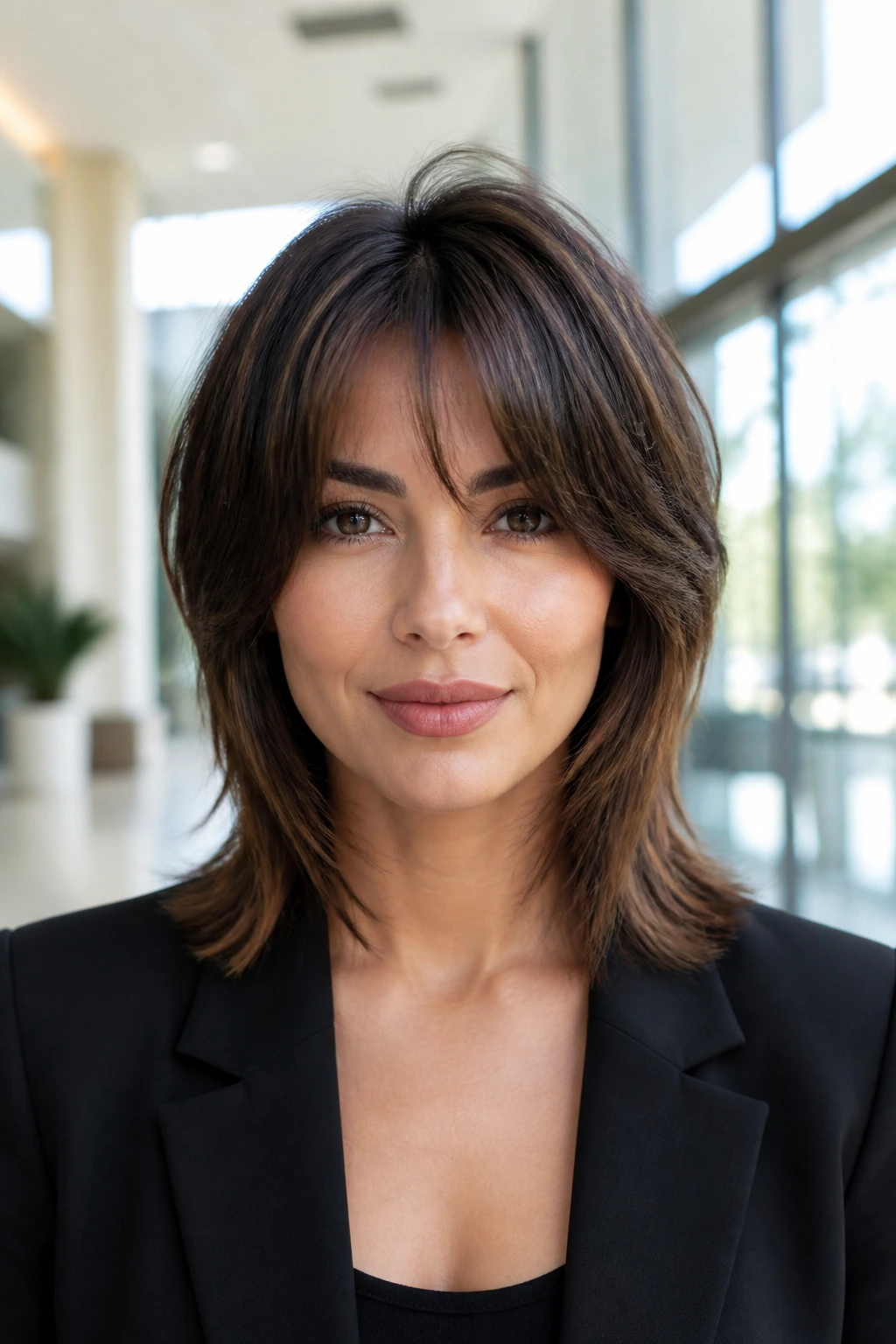
While shags are traditionally messy, this version flips the script by using a flat iron to create a smooth, sophisticated finish. The layers are still present, but they are cut with more precision so they stack beautifully without looking frayed. This look is perfect for professional settings where you want to show off your style without looking like you just left a music festival.
Achieving the Smooth Look
To get this, you need a high-quality boar bristle brush and a flat iron with beveled plates. You want to smooth the hair down while maintaining a slight bend at the ends to prevent it from looking like a stiff, triangular helmet. The curtain bangs should be blow-dried forward with a round brush first to ensure they frame your eyes perfectly before you touch the rest of your hair with the iron.
Why This Style Lasts
Because the layers are shorter and more structural, they hold their shape throughout the day much better than a long, one-length cut. You will find that you need fewer touch-ups, even in humid weather, because the style is built on precision rather than just volume.
3. The Curly Shag Bob
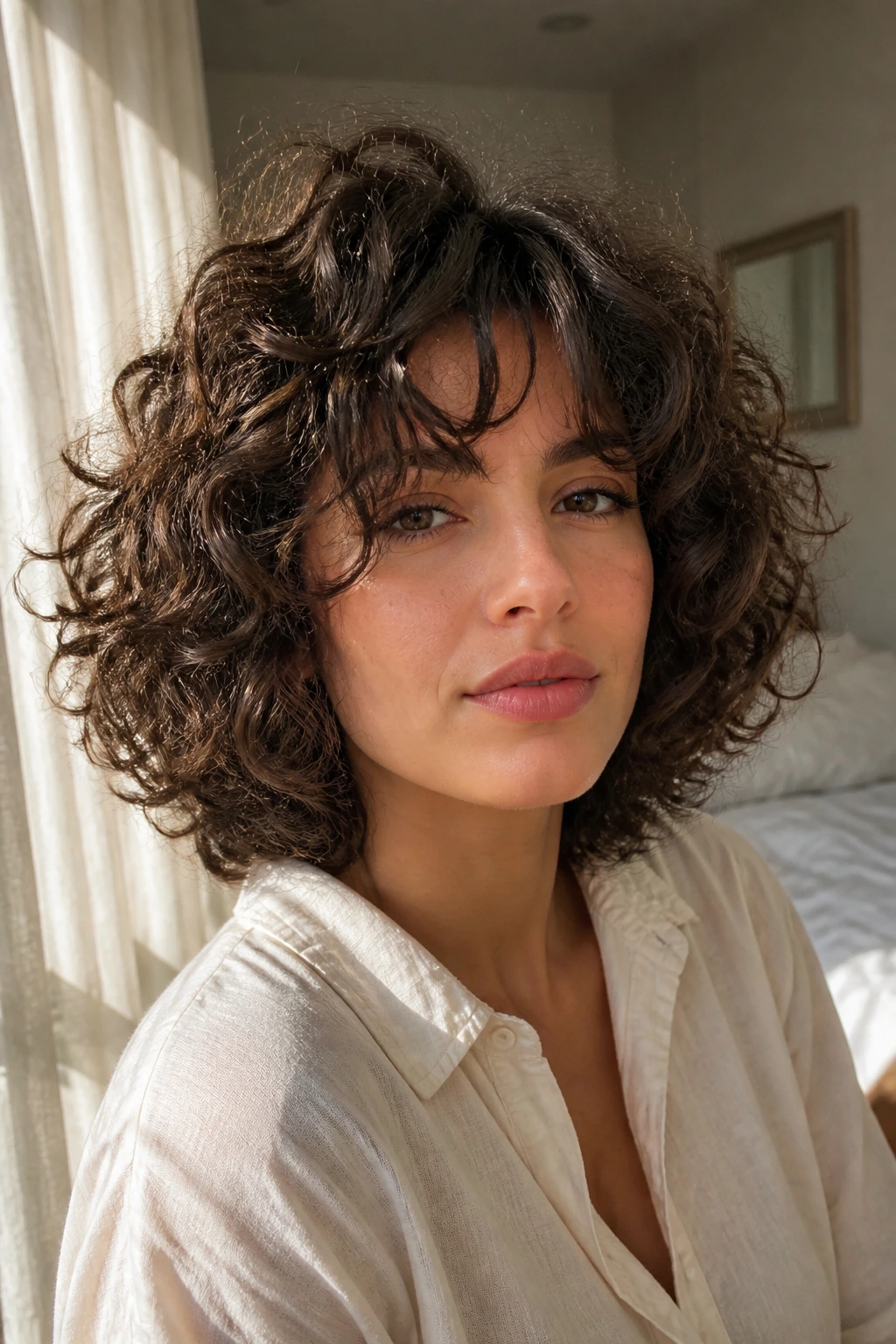
If you have natural curls, you already possess the best texture for a shag. A curly shag bob embraces the volume your hair creates naturally, using the curtain bangs to break up the roundness of a typical curly cut. The goal here is to let the curls stack on top of each other, creating a cloud-like effect that frames the face without overwhelming it.
Cut Techniques for Curls
Your stylist should ideally cut this while your hair is dry, as curls shrink significantly when they lose weight from layers. By cutting into the curls at different lengths, the stylist can ensure that the “shag” look is maintained even after you wash and condition your hair. The curtain bangs should be left slightly longer, as they will curl up and sit right at your lash line.
Maintenance for Your Texture
- Invest in a leave-in conditioner that provides moisture without weight.
- Use a microfiber towel to gently squeeze out excess water.
- Never brush your hair when it is dry; detangle with a wide-tooth comb while you have a generous amount of conditioner in the shower.
4. The Choppy Micro-Bob Shag
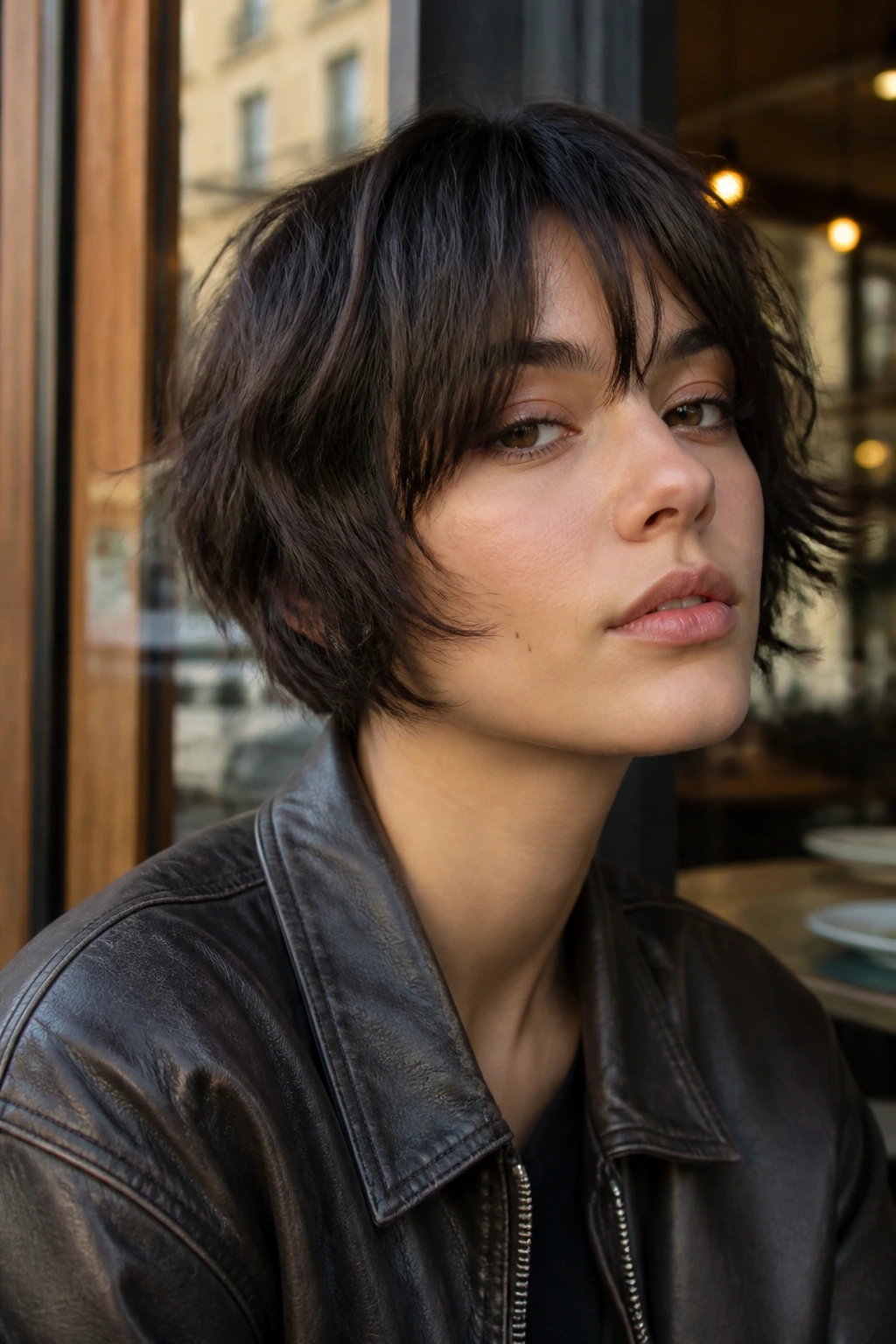
For those who want to make a bold statement, the micro-bob takes the shag concept and brings it up to the cheekbones or ears. It is an incredibly daring look that highlights the jawline and neck, making it one of the most flattering cuts for people with oval or heart-shaped faces. The curtain bangs on a micro-bob are usually a bit shorter, blending seamlessly into the sides.
Why It Makes a Statement
Most people keep their hair at chin-length or longer, so a micro-bob instantly sets you apart. The choppiness adds an youthful, energetic vibe to the hair. It feels very high-fashion and requires very little maintenance, though it does require more frequent trips to the salon for trims—usually every four to six weeks—to keep that sharp, micro-bob perimeter.
Styling for Maximum Impact
Use a texturizing powder at the roots to give the hair lift. Since there isn’t much length to work with, the volume needs to come from the base of the hair. If you have straight hair, you might want to use a small crimper at the roots of the top layers for invisible volume that stays put.
5. The Beachy Waves Shag
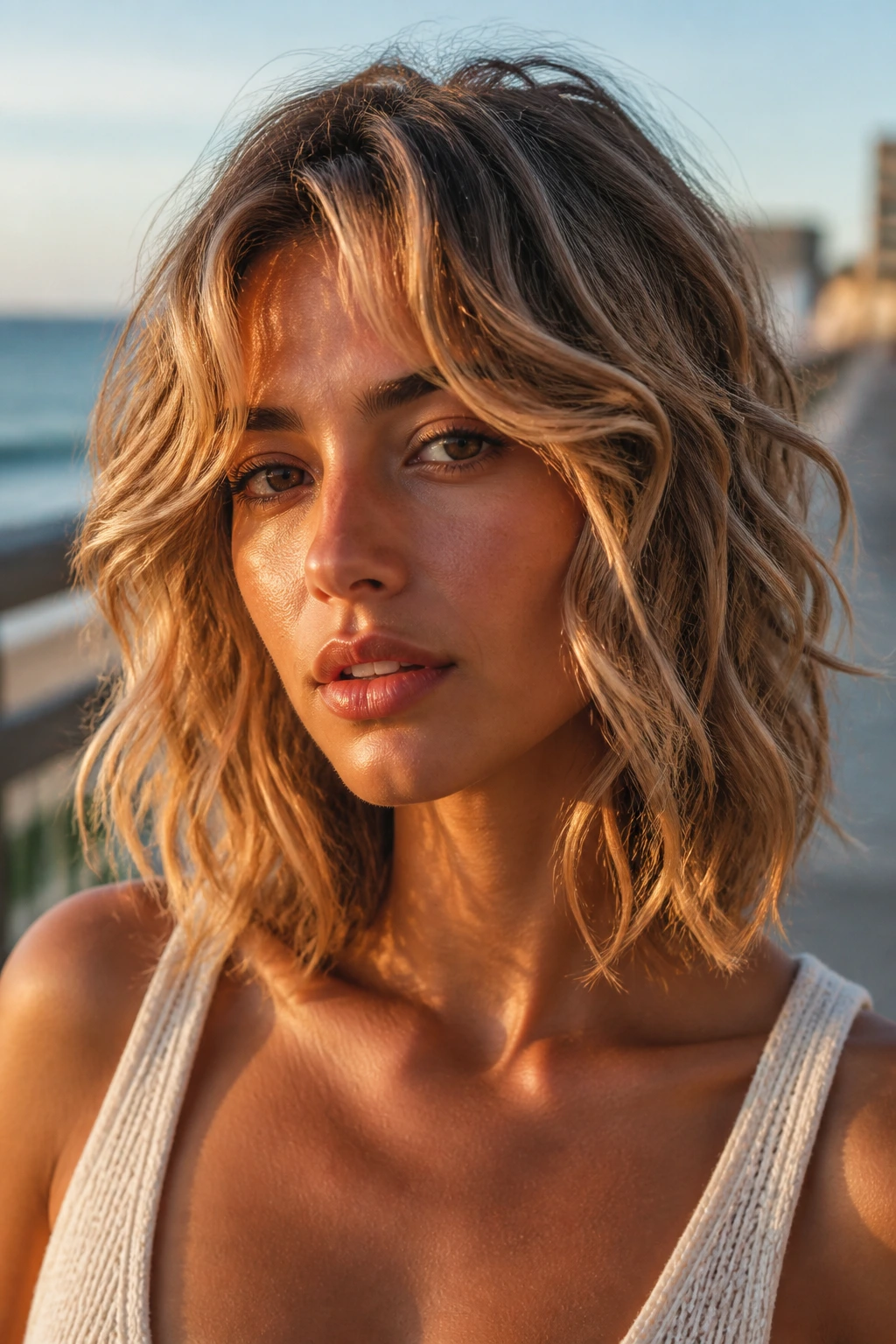
This style bridges the gap between a mid-length bob and a short shag, falling right around the collarbone. It is the perfect choice for anyone who feels intimidated by very short hair but still wants the layered, curtain-bang look. The waves are loose and effortless, mimicking the texture you might get after a day of swimming in the ocean.
How to Mimic the Beach Texture
The key to this look is using a large-barrel curling iron or a deep-waver tool. You do not want tight, perfect curls; you want a bend in the hair that looks soft and natural. Alternating the direction of your curls—some away from the face, some toward the face—will give the shag a more authentic, lived-in feel.
The Role of Curtain Bangs
In this specific style, the bangs are the star of the show. They should be long enough to tuck behind your ears if you want, but they should also be layered enough to blend into the waves. They should be the first part of your hair you style in the morning, using a round brush to flick the ends back toward your temples.
6. The Shaggy Lob (Long Bob)
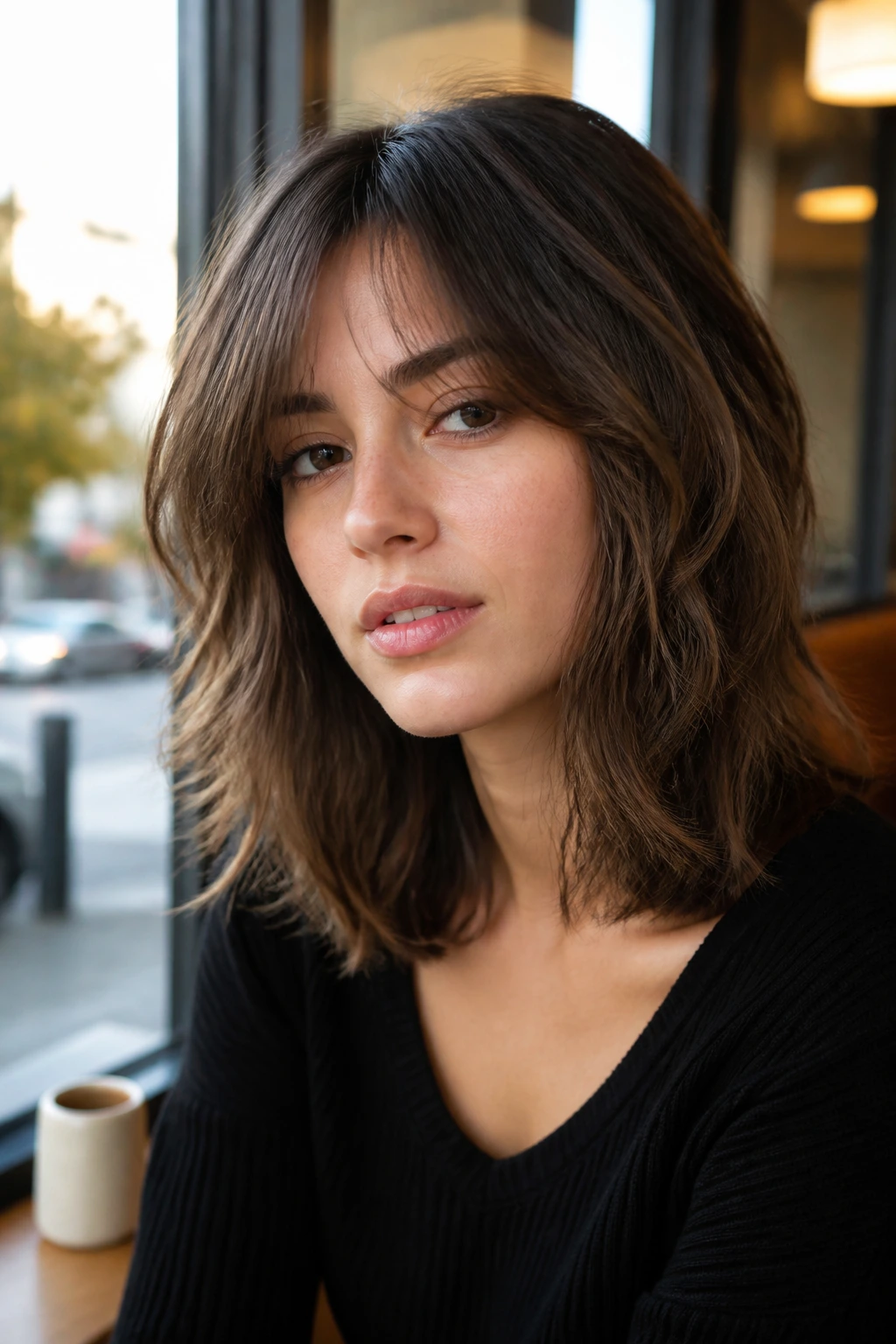
A lob is the gateway haircut for someone who is attached to their length but wants a change. When you add the shaggy, layered aesthetic and curtain bangs, the lob suddenly feels much more trendy and intentional. It hits just above the shoulders, meaning you can still pull your hair up into a messy bun if you need to, which is a huge benefit for busy mornings.
Why It’s Versatile
You have all the styling options of a longer cut—you can curl it, straighten it, or pull it back—but you get the benefit of the face-framing layers and the breezy, low-maintenance vibe of the shag. It’s a great way to transition into shorter hair without the “shock” of a sudden chin-length cut.
Handling Weight
If your hair is thick, ask your stylist to use thinning shears on the mid-lengths. This will keep the hair from looking bottom-heavy while allowing the layers to sit flatter and closer to your head. For fine hair, keep the ends blunt and focus the layers more around the face to create the illusion of density.
7. The Layered Shag with Wispy Bangs
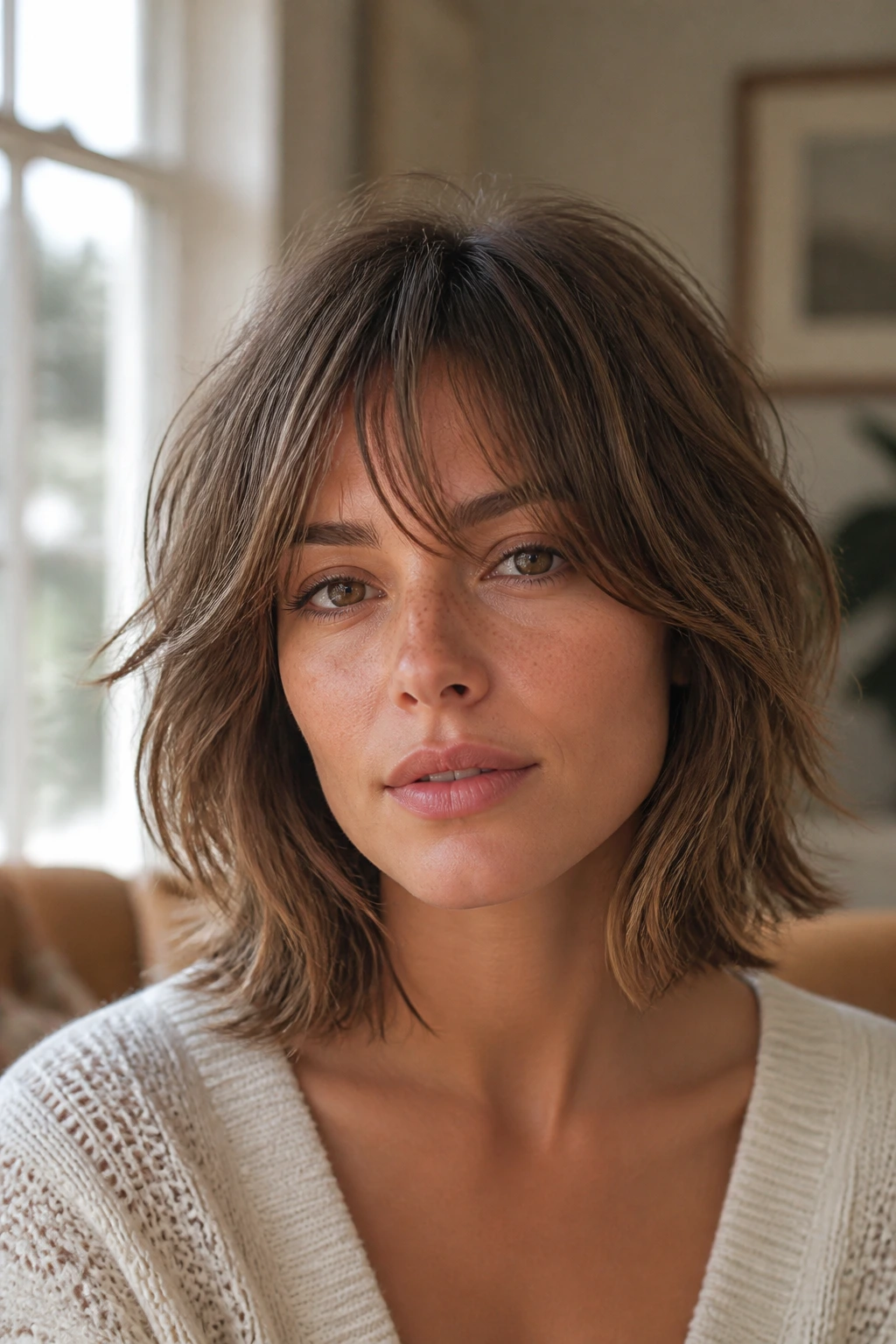
If you are worried that heavy curtain bangs will hide your face, try a wispier, more see-through version. These bangs are lighter and have less hair density, allowing your forehead to show through slightly. The shag itself is kept light and airy, with fine layers that provide movement rather than heavy volume.
Finding the Right Density
When you ask for this cut, be specific about the “weight” of the bangs. You want a “soft” curtain bang. Your stylist will section off less hair at the front and use point-cutting techniques to remove the bluntness from the ends of the bangs. This makes them much easier to manage if you have a cowlick or an uneven hairline.
Everyday Elegance
This look is very soft and feminine. It is perfect for those who want to highlight their eyes without the bangs feeling too dominant. It also grows out much more gracefully than a heavy fringe, meaning you won’t have to rush to the salon if you fall behind on your trim schedule.
8. The Platinum Shag
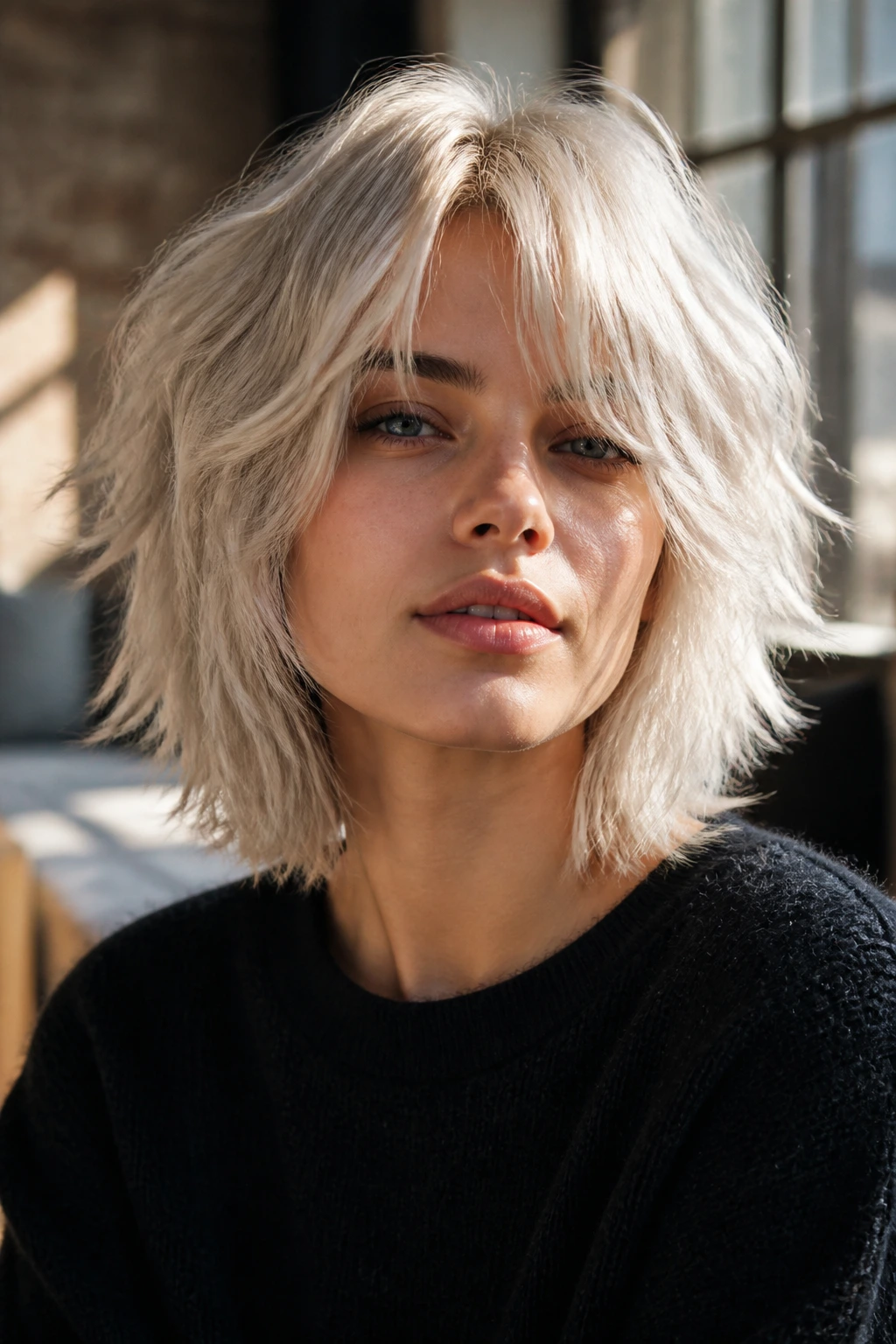
Color is a huge part of how a cut is perceived. A platinum, near-white shag bob is a high-contrast, high-impact style. The light color makes the individual layers of the shag stand out, showing off the precision of the cut and the texture of the ends. When you pair this with curtain bangs, it feels like a modern update on a classic mod aesthetic.
Managing Color and Texture
Bleaching your hair to platinum can change its texture, often making it feel a little coarser and more prone to holding volume. While this is actually good for a shag cut, you must invest in deep conditioning treatments. The layers in a shag are prone to split ends, and bleach can exacerbate this, so keeping the hair hydrated is non-negotiable.
The Maintenance Reality
- Purple shampoo is your best friend to keep the brassiness away.
- Use a bond-building treatment once a week to maintain hair integrity.
- Prepare for root maintenance every four to six weeks to keep the color looking sharp.
9. The Messy “Bedhead” Shag
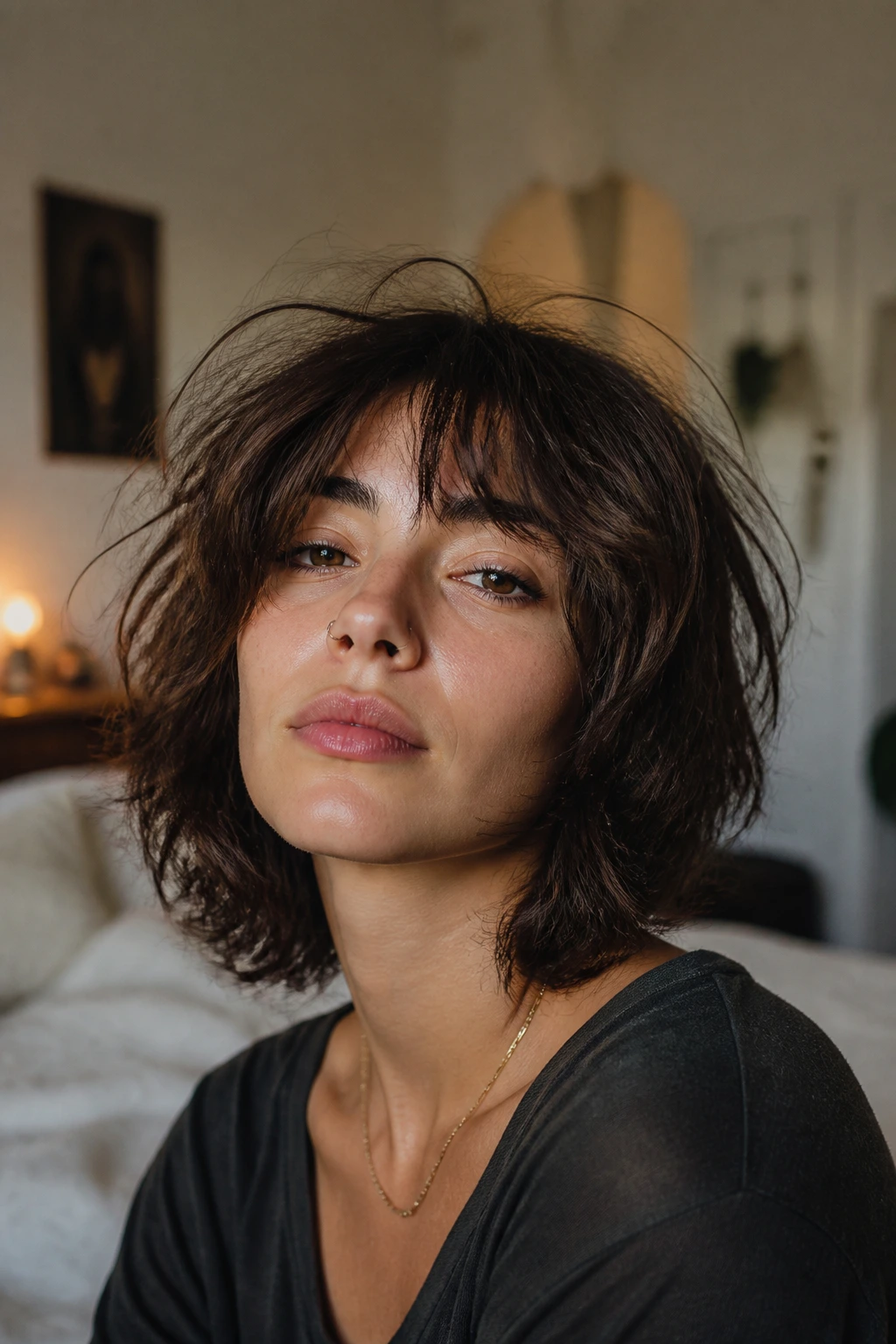
This is the ultimate low-effort, high-reward look. The messy shag bob isn’t supposed to be perfect; it is supposed to look like you just got out of bed, ran your fingers through your hair, and left. The layers are irregular and choppy, and the curtain bangs are cut to have a slight, organic curve that doesn’t need to be perfectly symmetrical.
How to Style the Messy Look
The secret is in the product. You need a texturizing spray or a dry shampoo that adds grit. You don’t want your hair to be soft or silky; you want it to have a little bit of “grip” so that it holds the shape you style into it. Flip your hair upside down, spray the roots, and then tousle it with your hands.
Who Should Try This?
Anyone with hair that has a natural wave or a slight bend will find this style incredibly easy. It works for all face shapes, but it is particularly great if you have a strong jawline, as the messy layers help to soften the overall appearance of your features.
10. The Graduated Shag Bob
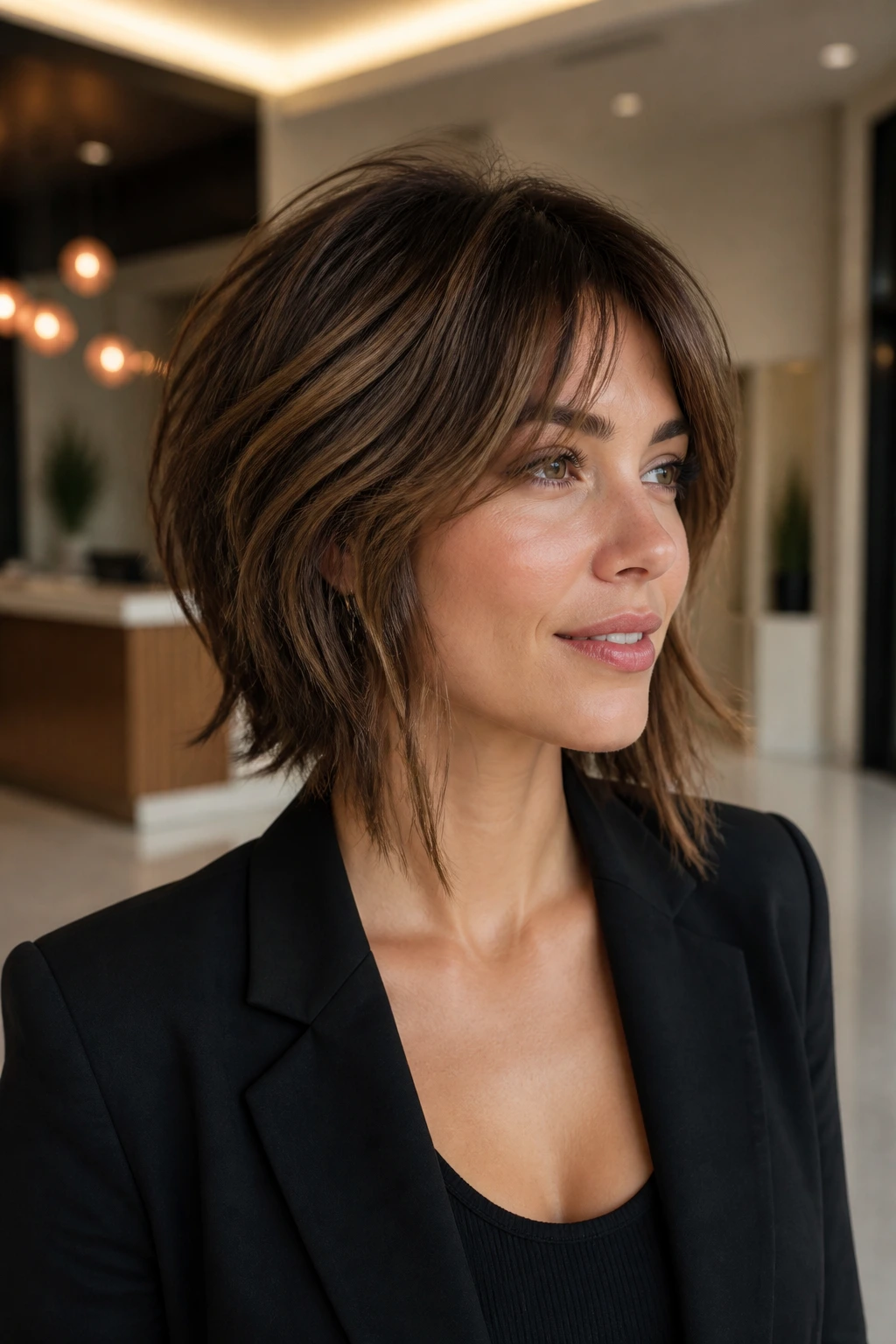
This cut is shorter in the back and longer in the front, creating an angled effect that adds a sense of direction to the hair. When you combine this with shag layers and curtain bangs, you get a hybrid that is edgy, professional, and very flattering. It draws the eye forward and down, which can help elongate a round face.
The Anatomy of the Cut
The back of the bob is stacked with layers, providing an immediate lift at the nape of the neck. As you move toward the front, the layers become longer and more blended into the face-framing curtain bangs. This creates a really cohesive flow that makes the hair look like it is “moving” even when you are standing still.
Versatility in Styling
Because of the length variation, you can style the back sleek and let the front layers be piecey. It gives you multiple looks from a single haircut. Use a round brush to push the back layers under and a flat iron to give the front face-framing pieces a slight flick outward for that classic seventies flare.
11. The Shag Bob for Fine Hair
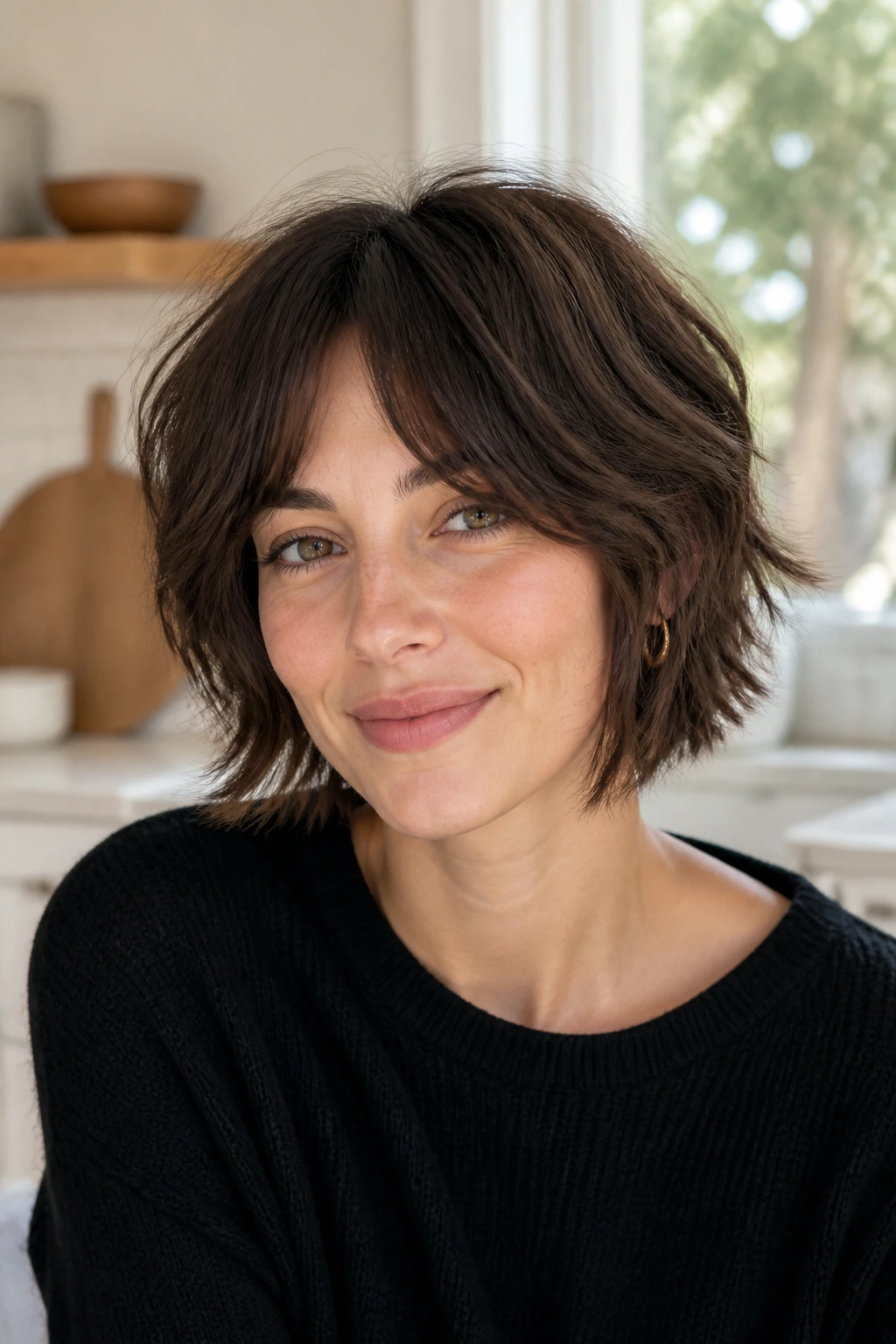
Fine hair often struggles with a bob because the ends can look thin and straggly. By adding shag layers, you break up the perimeter and create the appearance of more volume. The curtain bangs serve to add density to the front, framing the face and drawing focus away from any thinness at the back.
The Importance of Blunt Edges
Even with a shag, you want to keep the bottom edge of your hair relatively blunt. The layers should be concentrated in the middle of the hair length rather than at the very bottom. This gives you the best of both worlds: the volume and movement of a shag, but the weight and structure of a traditional bob.
Tips for Fine Hair
- Avoid heavy oils that will clump your hair together.
- Use a volumizing mousse on damp hair before blow-drying.
- Blow-dry with your head upside down for the first few minutes to get maximum root lift.
12. The Two-Tone Shag
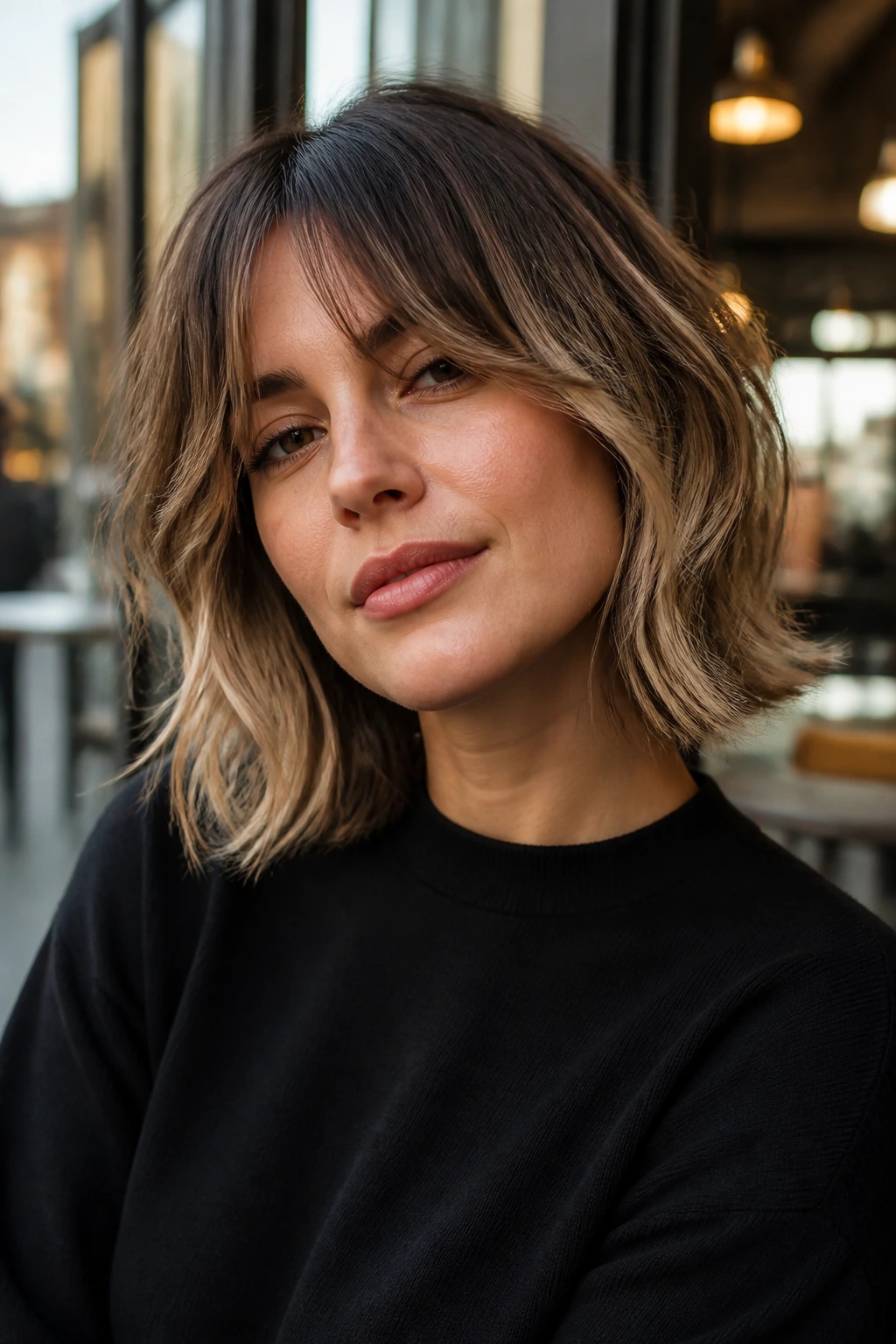
Adding color dimension, such as highlights or lowlights, can make a shag bob look incredibly sophisticated. A two-tone approach—like dark roots with lighter ends—adds depth to the layers. This is particularly effective with a shag, where the layers overlap and create natural shadows and highlights on their own.
How Color Affects the Look
When you add color to a shag, you are essentially “mapping out” the cut. The lighter pieces emphasize the choppy ends of the layers, while the darker pieces in the interior give the cut its shape and structure. Curtain bangs look especially good with “money pieces,” which are two lighter, face-framing strands within the bangs.
Choosing Your Contrast
For a more natural look, go for subtle highlights that are only two shades lighter than your base. For something bolder, embrace a high-contrast balayage. The key is to ensure the colorist is blending the shades so that the shag layers don’t look like stripes when the hair moves.
13. The Minimalist Shag
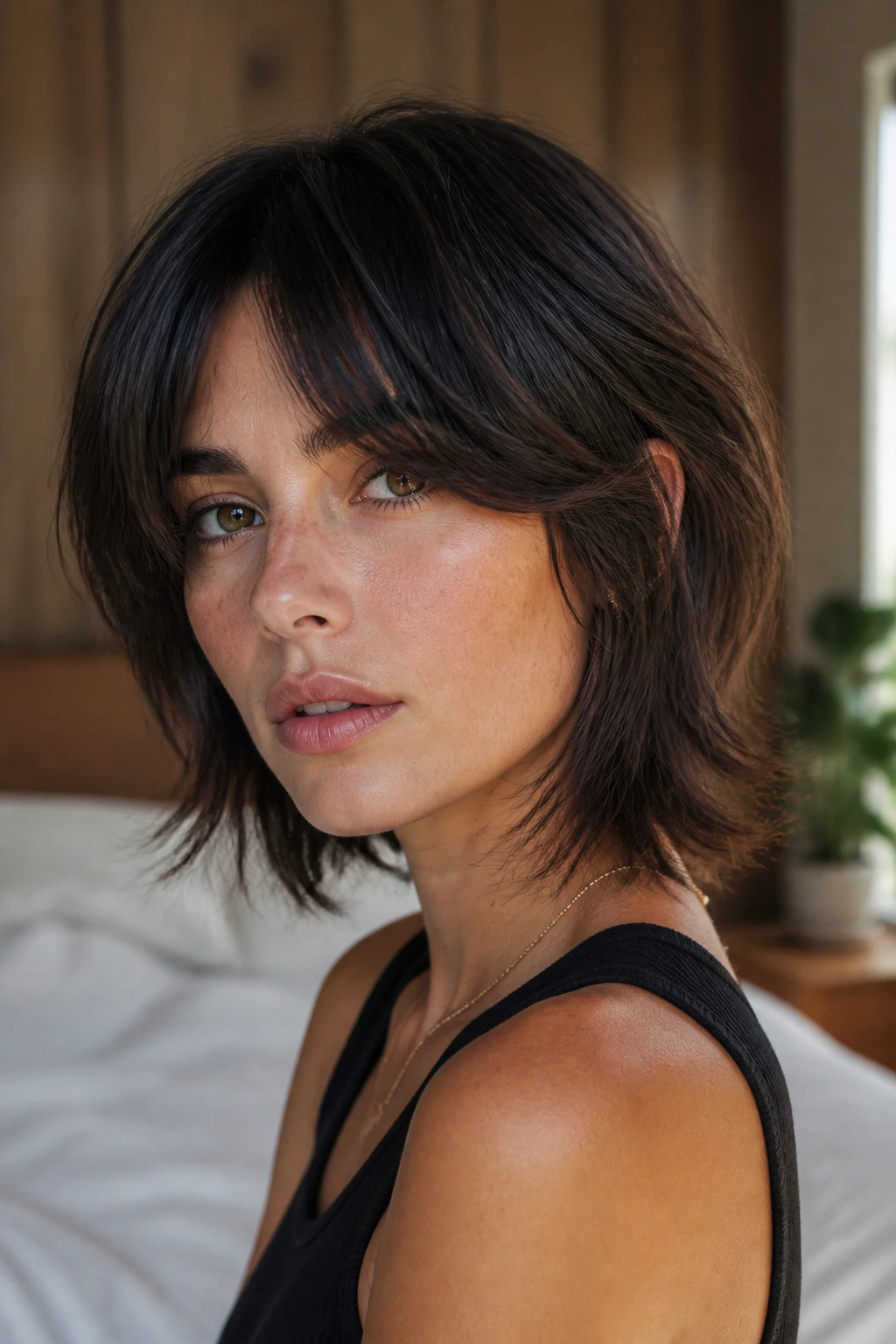
Not all shags need to be wild and voluminous. A minimalist shag has longer, more blended layers and slightly longer curtain bangs. It is a very understated, “cool-girl” look that requires almost zero styling. It feels effortless and is a great way to wear a bob if you find traditional layered cuts too aggressive.
Keeping It Subtle
The layers in a minimalist shag are usually “invisible,” meaning they are cut to remove weight rather than to create a dramatic texture. You get the benefit of the movement, but the hair still looks like a cohesive, single unit. It is the perfect professional version of the shag, suitable for any environment.
The Best Way to Style
A simple air-dry with a bit of leave-in conditioning cream is usually all this cut needs. You can tuck your hair behind your ears for a clean look, or let the curtain bangs fall over your forehead for a more relaxed, bohemian vibe.
14. The Shag with “Bottleneck” Bangs
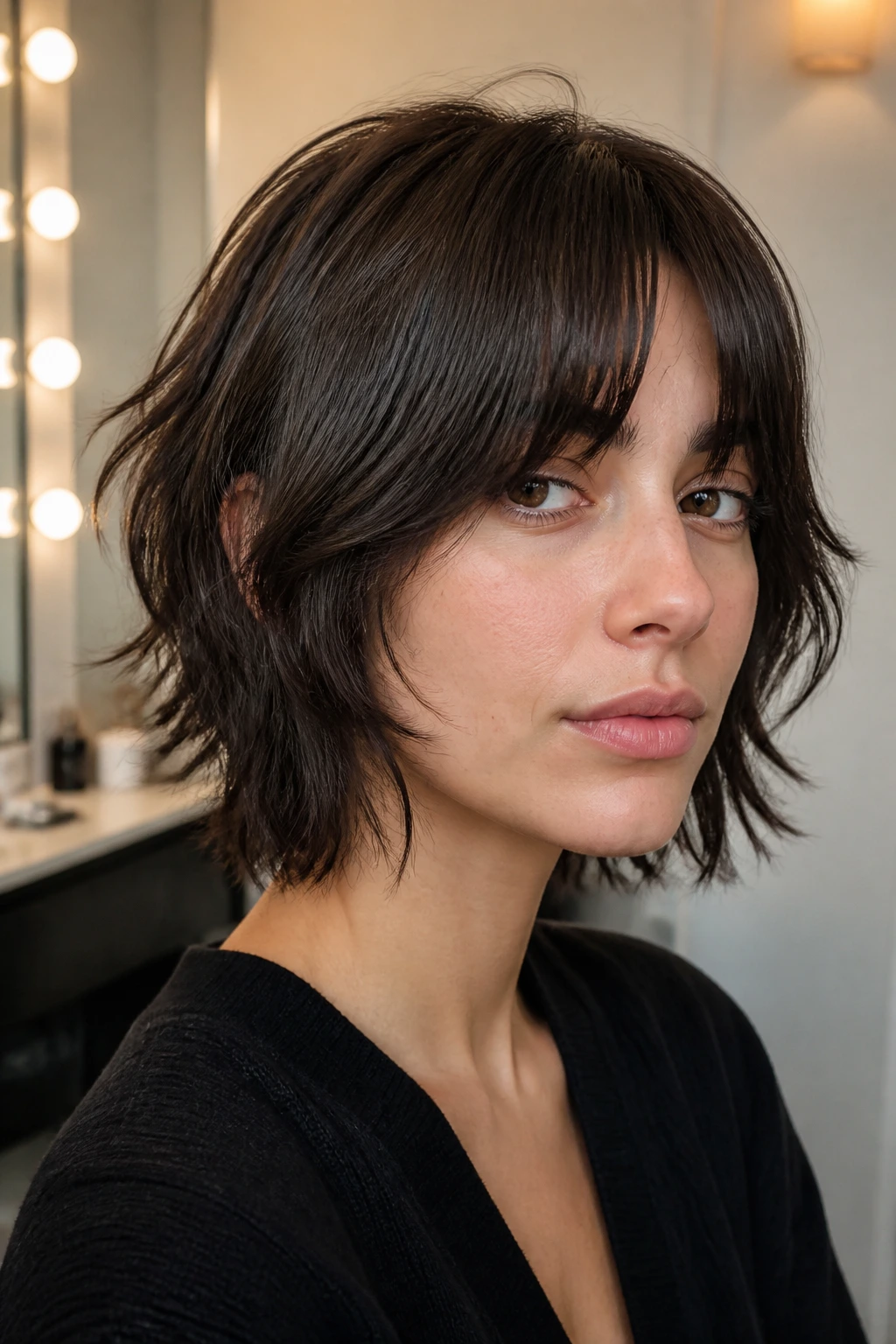
Bottleneck bangs are a variation of the curtain bang that are shorter in the middle and get longer as they move toward the temples, mimicking the shape of a bottle. When paired with a shag bob, they provide a very sophisticated, vintage look that highlights the cheekbones and keeps the hair out of the eyes.
Why the Shape Matters
This shape is incredibly flattering for almost every face because it creates a soft frame without completely hiding the forehead. It blends perfectly into a shag bob because the longer edges of the bangs can seamlessly connect to the shortest layers of the haircut, creating a single, fluid line of hair around the face.
Styling the Curve
Because of their specific shape, these bangs really benefit from a round brush. You want to blow-dry them with a bit of tension, pulling them forward and then curving them back toward your ears. This ensures that they maintain their “bottle” shape throughout the day.
15. The Deep-Part Shag
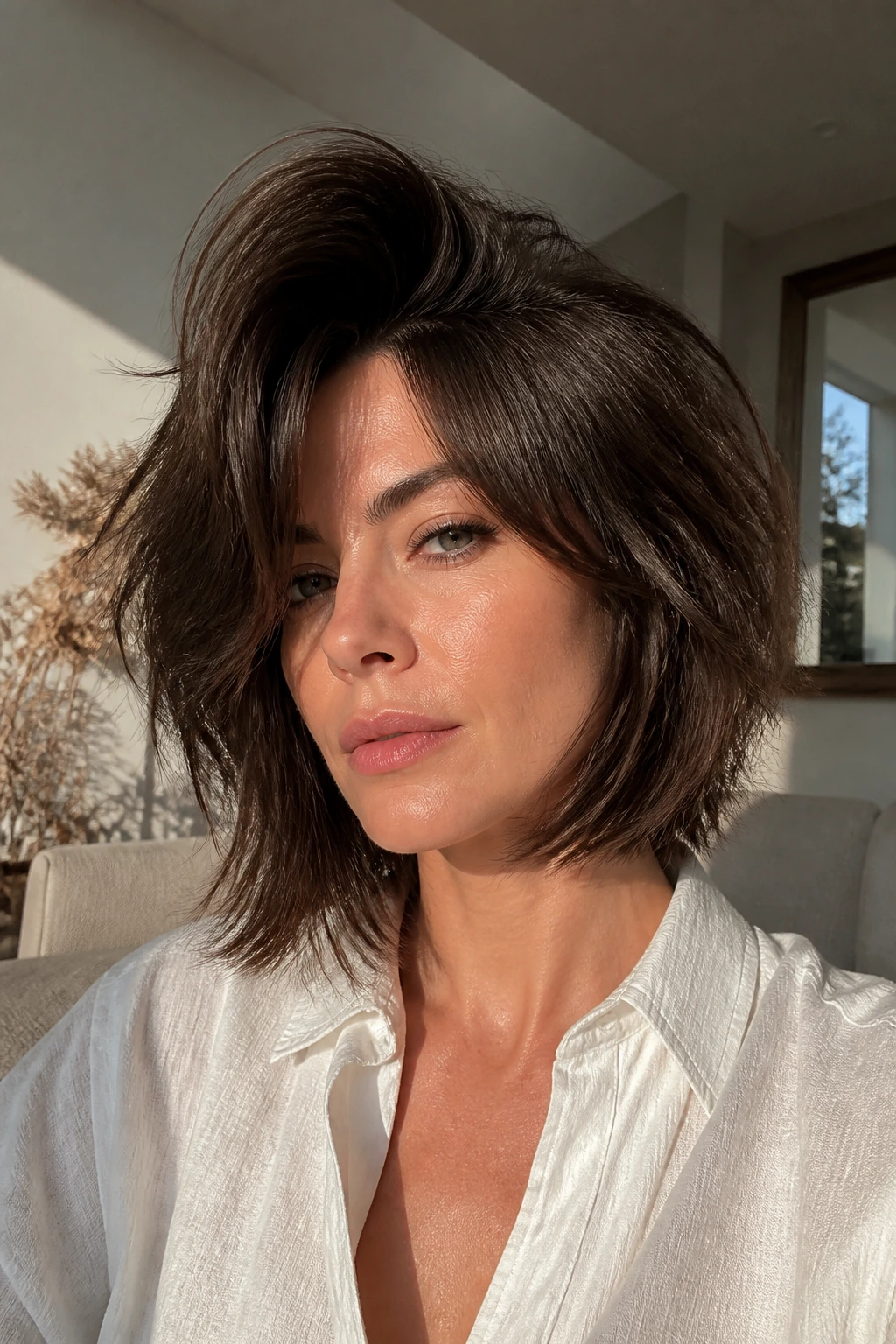
Most curtain bangs are cut for a center part, but a deep-part shag bob is a fantastic way to add even more volume. By shifting the bulk of your hair to one side, you naturally create a “swoop” that adds height at the crown. This look is very dramatic and works exceptionally well for people with round or square faces who want to create more vertical angles.
Balancing the Face
When you wear a shag bob with a deep side part, you are essentially using your hair to create a diagonal line across your face. This draws the eye diagonally, which is visually lengthening. The curtain bangs on one side will be longer and more dramatic, while the other side will be shorter and more subtle, adding a sense of intentional asymmetry.
Staying Put
Side-parted styles can sometimes feel like they want to fall back into a center part. To prevent this, train your hair while it is wet. Use a comb to create your deep part immediately after the shower and blow-dry the hair in that direction from the start.
16. The Curly-Fringe Shag Bob
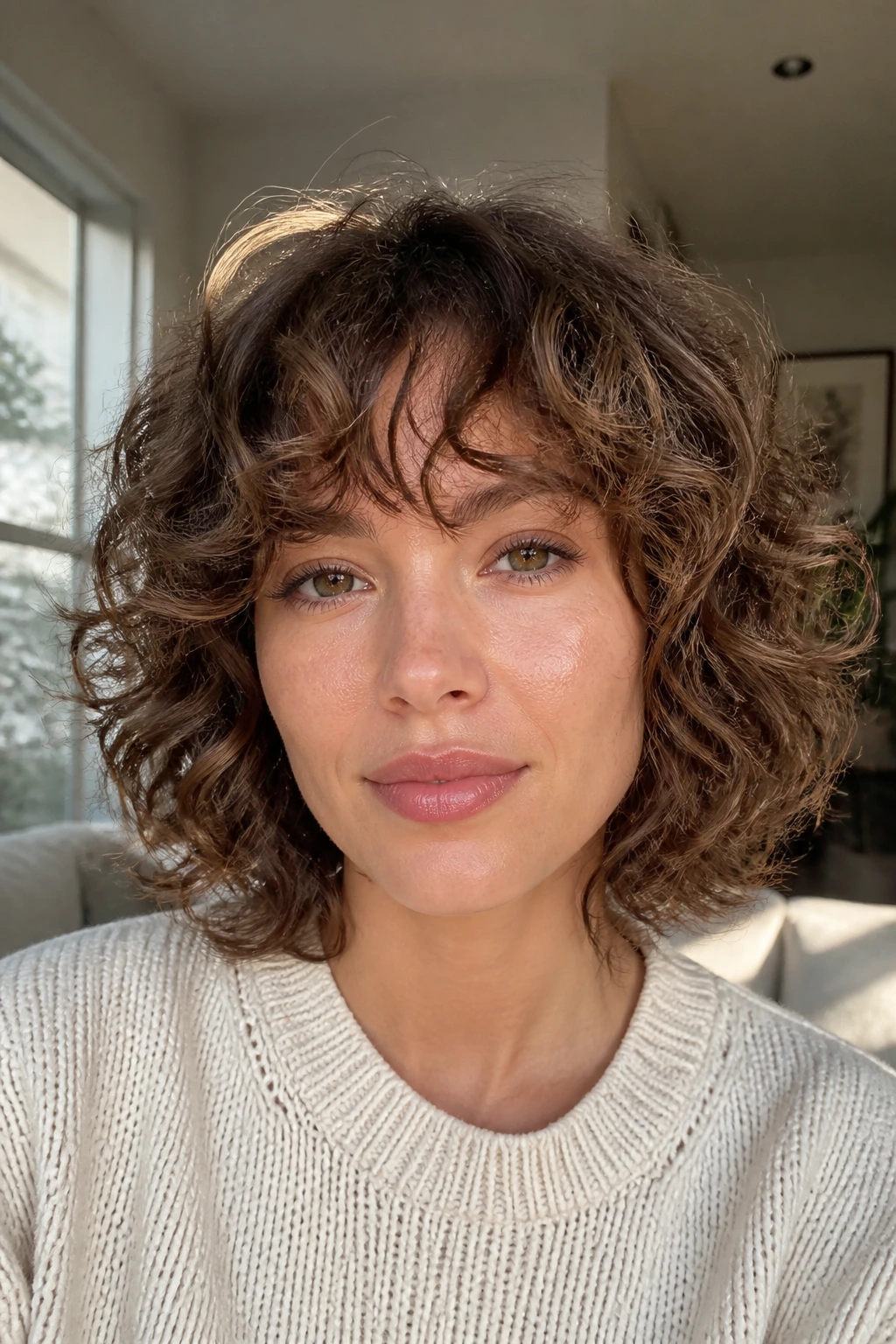
Many people with curly hair are afraid of bangs, but a curly fringe can be the best part of a shag. Instead of a straight, heavy fringe, you get light, bouncy curls that frame your eyes. It breaks up the intensity of a bob and gives the haircut a playful, youthful spirit that is difficult to replicate with straight hair.
Managing Curly Bangs
The secret to curly bangs is to cut them longer than you think you need. Curls spring up when they dry, so a bang that looks chin-length when wet might end up at your eyebrow level when dry. Your stylist needs to understand how your hair behaves when it isn’t wet to get the length right.
The “Boing” Factor
If your bangs aren’t curling the way you want, use a small bit of curl cream on your fingers and wrap individual strands around your index finger to “set” the curl. This ensures that your bangs have the same definition as the rest of your hair, preventing them from looking frizzy or out of place.
17. The Asymmetrical Shag Bob
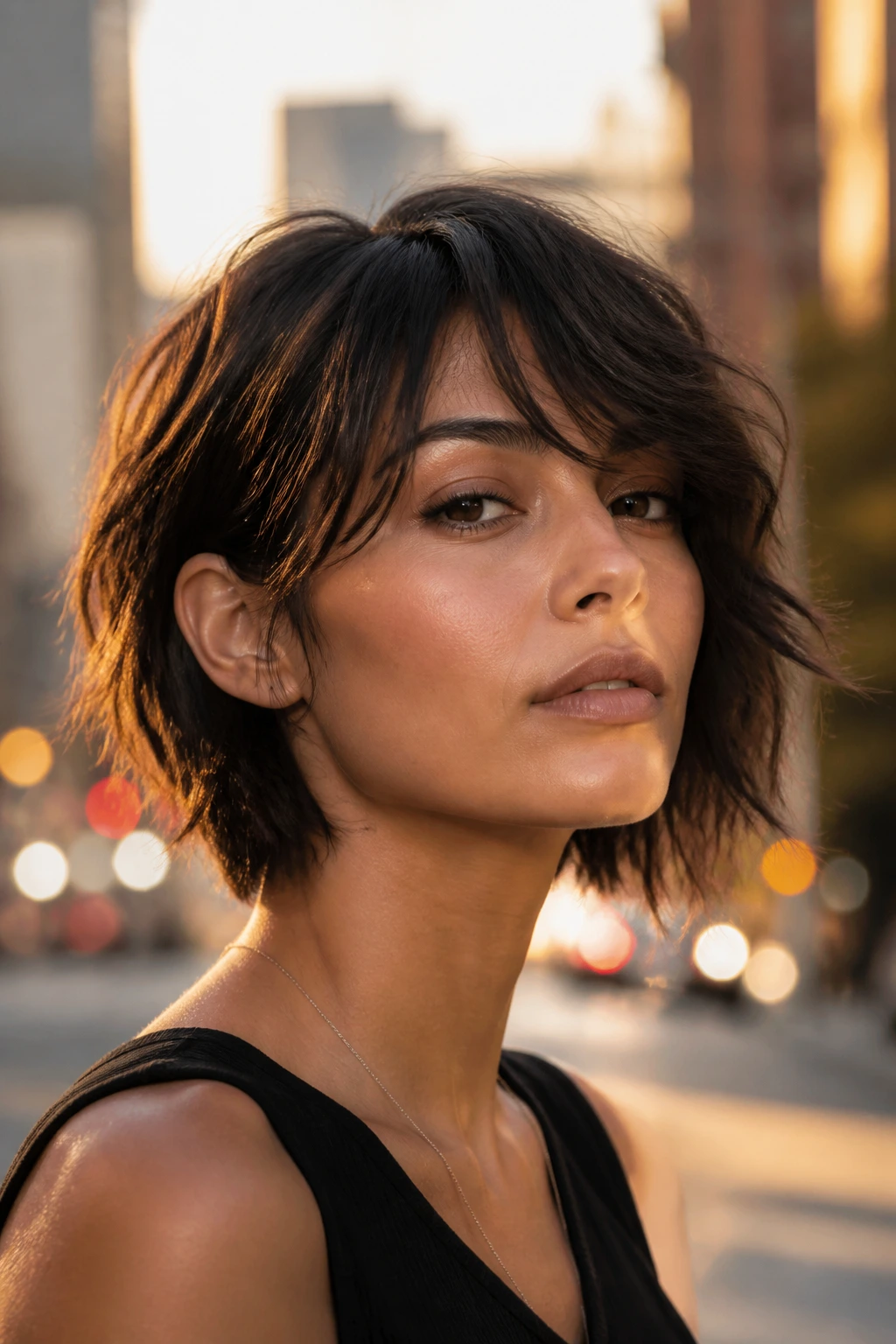
For those who are tired of balance and symmetry, an asymmetrical shag bob provides a striking silhouette. One side of the bob is cut slightly shorter than the other, or the layers are concentrated more heavily on one side of the head. It is a bold choice that highlights a sense of confidence and individual style.
Who Should Try Asymmetry?
This cut is fantastic if you have a strong, defined jawline, as the uneven length can draw attention to it in a very flattering way. It’s also a great way to add interest to fine hair, as the lack of symmetry makes the style look intentional and designed rather than simple and flat.
Stylist Consultation
You need to be very clear with your stylist about how extreme you want the asymmetry to be. Even a slight angle—where one side is just an inch longer than the other—can have a massive visual impact. Start subtle if you are nervous, and you can always go shorter later.
18. The “Shaggy-Mullet” Hybrid
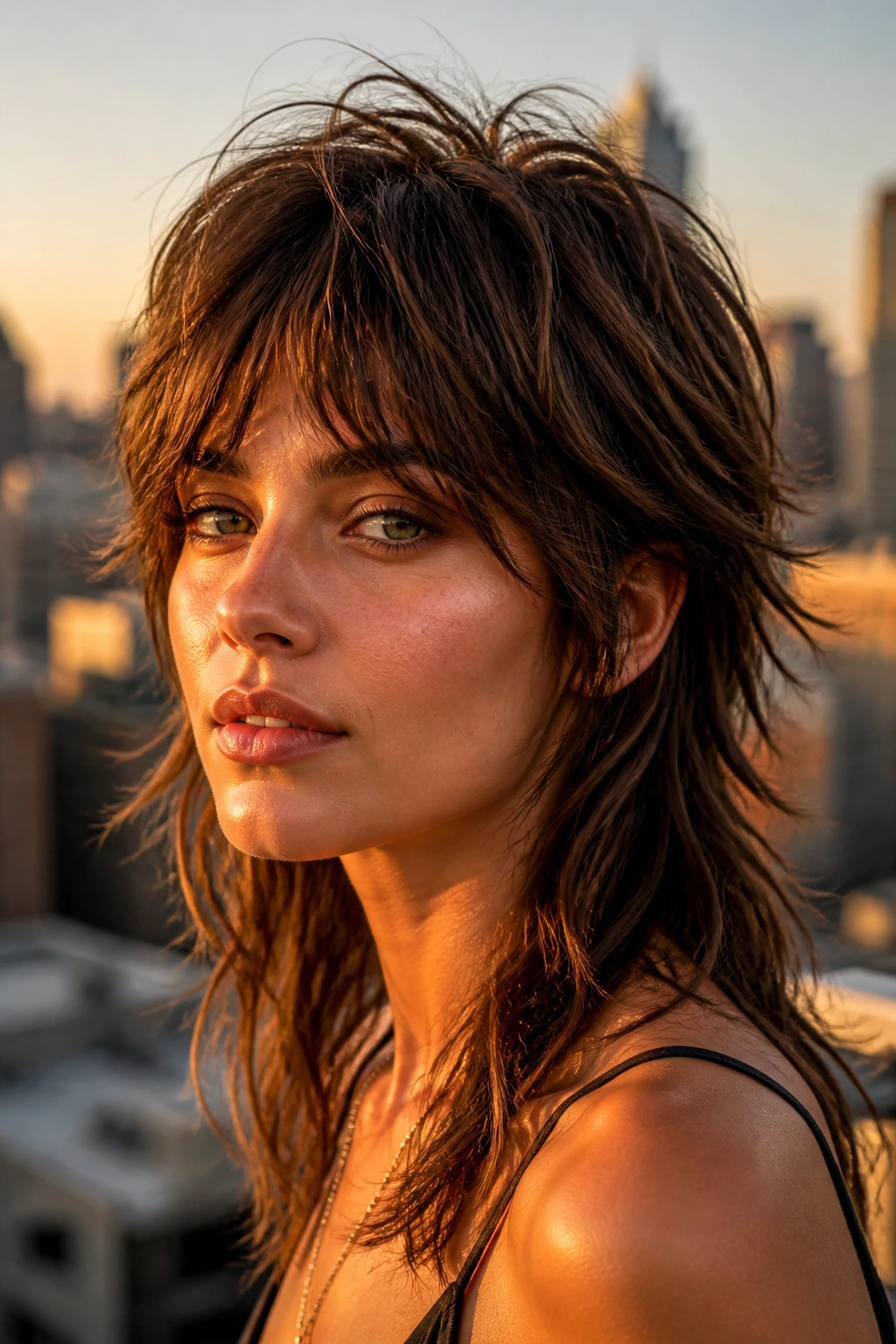
Yes, the mullet is back, but it is not the version you remember from the eighties. This modern “wolf-cut” style is essentially a shag bob that is slightly longer in the back and very choppy on top. It is the most extreme version of the shag, and it is reserved for those who really want to embrace a high-fashion, edgy look.
The Modern Wolf Cut
The layers on top are very short and dense, providing maximum volume, while the back is kept wispy and longer. The curtain bangs are the bridge between the short layers and the longer back. It is a very cool, very intentional look that screams confidence and an appreciation for alternative style.
Styling for the Hybrid
This style thrives on product. A matte sea salt paste or a texturizing powder is essential to define the layers and prevent the hair from looking like a traditional, “stiff” bob. You want every layer to be visible and distinct.
19. The Wet-Look Shag
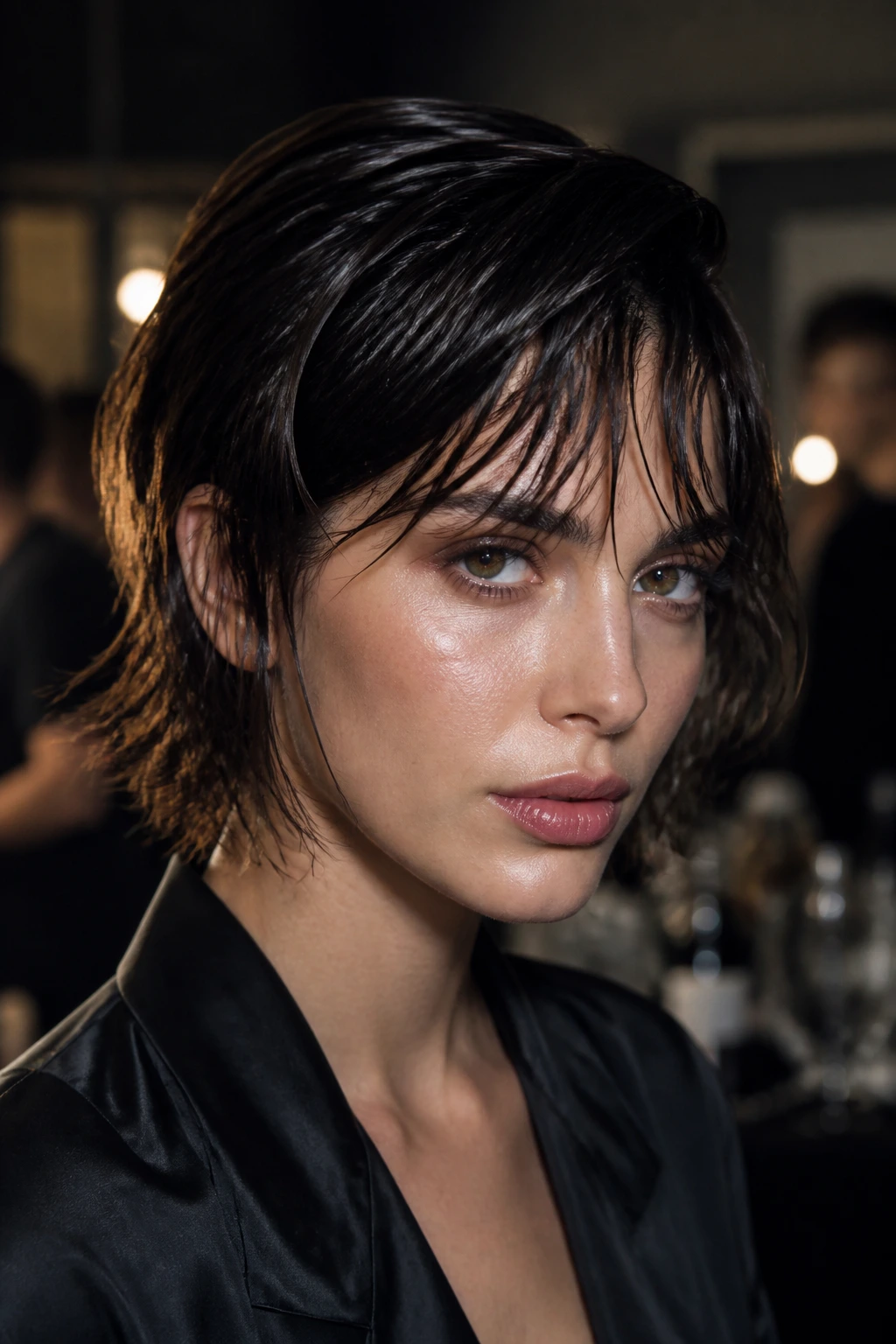
The “wet look” is a popular trend that translates beautifully to the shag bob. Using a strong-hold styling gel or a pomade, you can slick your hair back while leaving the ends textured and the curtain bangs soft. It gives you an immediate high-fashion vibe, perfect for evenings or events where you want to look polished and edgy.
How to Achieve the Look
Apply a generous amount of styling gel to damp hair and comb it through with a wide-tooth comb. Once you have the shape you want, let it air-dry completely. Do not touch it while it’s drying, or you will create frizz. The goal is a crisp, defined look that stays exactly where you put it.
Balancing the Bangs
You don’t want your curtain bangs to be rock-hard. Keep them slightly softer by using a lighter-hold product or just a bit of texture spray so they still have some movement. This contrast between the slicked-back main hair and the airy, soft bangs is what makes the style so effective.
20. The Classic 70s Feathered Shag
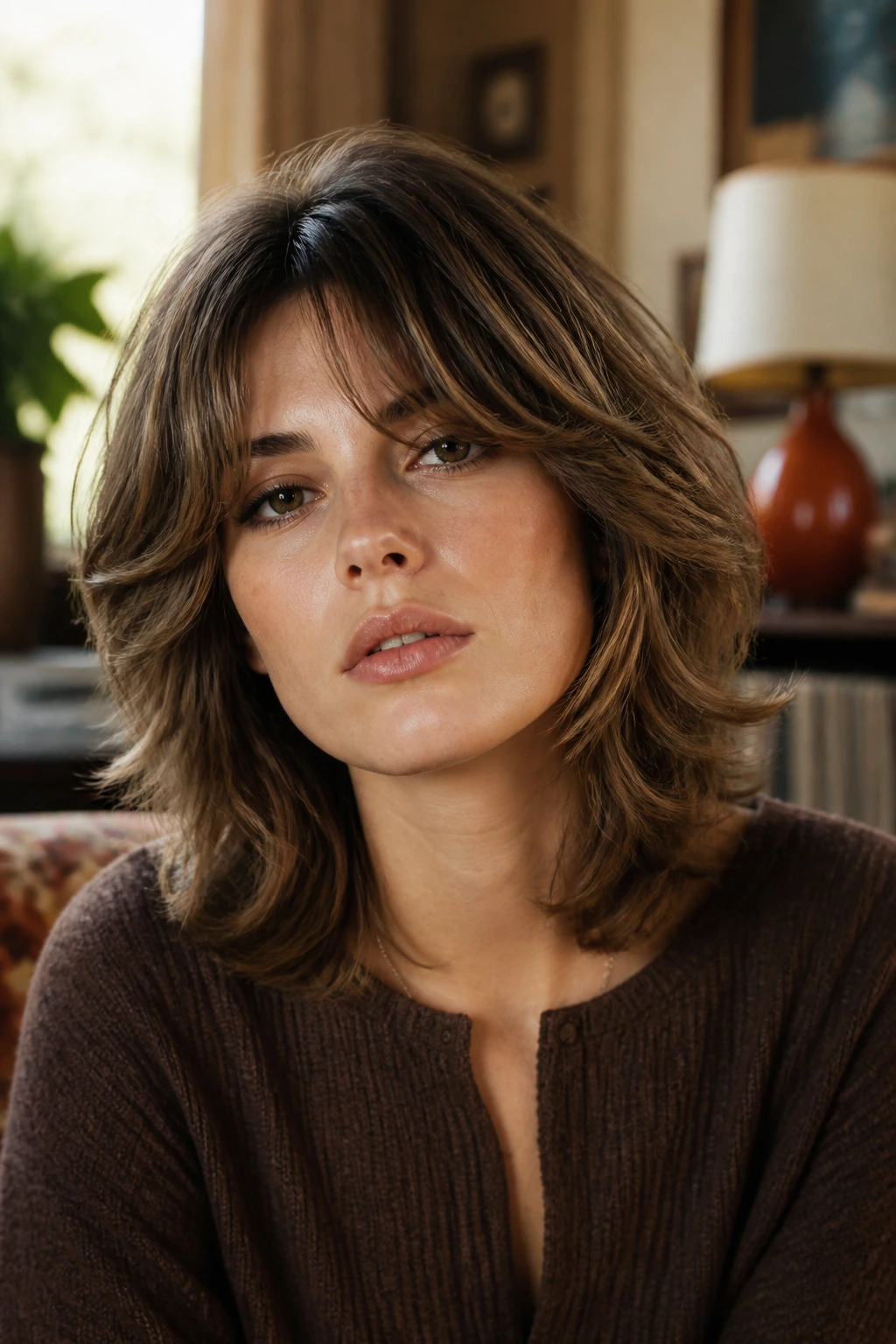
We end where we began—with the classic seventies feathered look. This involves using a round brush to blow-dry the curtain bangs and layers away from the face, creating a soft, feathered effect. It is timeless, romantic, and incredibly flattering, regardless of your age or personal style.
Why It Stays Popular
This look is all about softness. The feathering technique creates a frame for the face that is gentle and light, making you look energized and refreshed. It works especially well for those who have grown out bangs and want to blend them into their shag bob seamlessly.
The Round-Brush Technique
To get the feathers right, you need to blow-dry your hair while pulling it outward. Do not brush straight down. Instead, pull the hair toward the ceiling or toward the side, depending on which part of the face you are framing. This creates that classic “kick” at the ends of the layers that defines the feathered look.
Final Thoughts
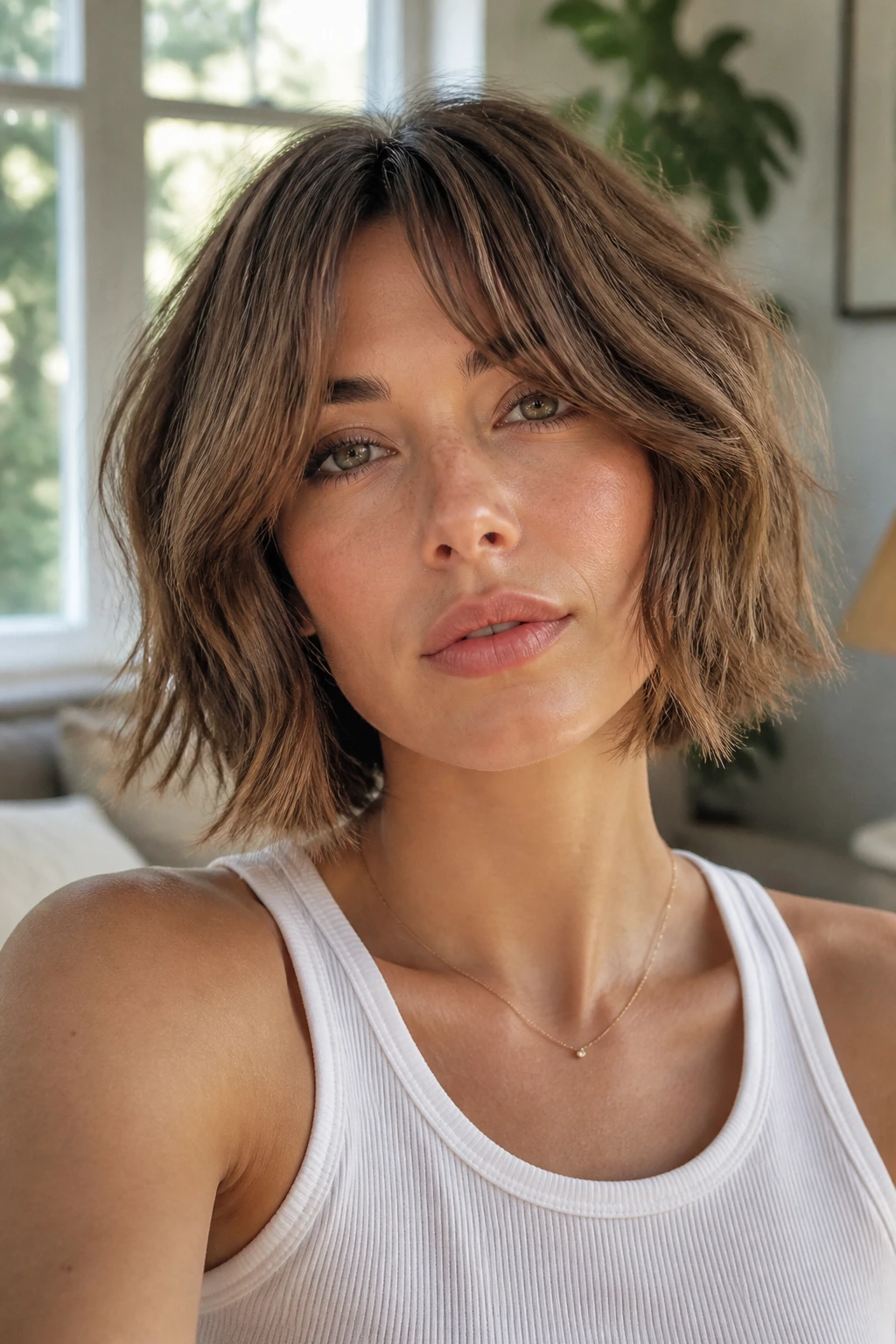
The shag bob with curtain bangs is essentially the most democratic haircut available today. It doesn’t discriminate based on hair texture or age; it only asks that you embrace a little bit of movement and personality. Whether you choose the sleek, professional version or the wild, messy wolf-cut style, the core of the haircut remains the same: it frames your face, highlights your features, and gives you back the time you would have spent struggling with complicated blowouts.
When you go to the salon, take at least three different photos of this style to your stylist. Hair terminology can be vague—what one person calls “shaggy,” another might call “choppy.” By showing examples of the specific volume and bang length you want, you ensure you get the result you are looking for. Remember that the curtain bangs are the most important part of this equation, so talk to your stylist about the density and the curve that will best flatter your forehead and eyes.
Finally, don’t be afraid to experiment with your routine. The joy of a shorter, layered cut is that it behaves differently depending on the product you use. You might find that your hair air-dries perfectly on the weekends with a little salt spray but looks best with a light blow-dry for the work week. Trust the cut, embrace the texture, and enjoy the ease of having a style that looks intentionally cool every single day.