

The bob is, perhaps, the most misunderstood silhouette in modern hairstyling. People often obsess over the front—the face-framing pieces, the bangs, the way it hits the chin—but the true architecture of a great cut lives at the nape of the neck. When you introduce texture, specifically a natural wave, that back view becomes a high-stakes design challenge. If the layers are too heavy, you end up with a mushroom-like shelf. Cut them too short, and you risk a triangular, boxy shape that fights your hair’s natural gravity. Achieving the right balance requires a deep understanding of weight distribution and internal graduation.
Wave patterns are inherently unpredictable. They expand. They shrink. They clump together in ways that defy a blunt, surgical-style razor cut. A successful wavy bob requires an intentional approach to the back, where your stylist must account for the crown’s swirl and the neck’s natural taper. We aren’t just snipping ends; we are sculpting a shape that holds its own from the moment you leave the salon chair until your next visit. Let’s break down the best ways to finish the back of your cut so that your style looks intentional, polished, and effortlessly wavy.
1. The Stacked Graduated Bob
This classic technique involves cutting the hair at the nape much shorter than the sides, using precise, stacked layers to create a rounded profile. For wavy hair, this is a strategic move to prevent the “bottom-heavy” look that often happens when weight collects at the shoulders. By removing that bulk, the waves are encouraged to sit higher up and curve inward toward the neck. It creates a very distinct, polished silhouette that looks sophisticated from every angle.
Why It Works for Waves
The graduation acts as a support system for your waves. When you have shorter, stacked pieces underneath, they act like a springboard for the longer hair sitting on top. This keeps the back from looking flat and lifeless, which is the common enemy of anyone with wavy texture.
Maintaining the Shape
- Use a light-hold texturizing spray while the hair is damp.
- Focus on the internal layers when blow-drying to ensure they curve under.
- Schedule trims every six to eight weeks to keep the graduation sharp.
Pro tip: Ask your stylist to use a point-cutting technique on the ends of the stacked layers. This softens the line, ensuring the waves blend seamlessly rather than looking like a rigid staircase.
2. The Textured Blunt Nape
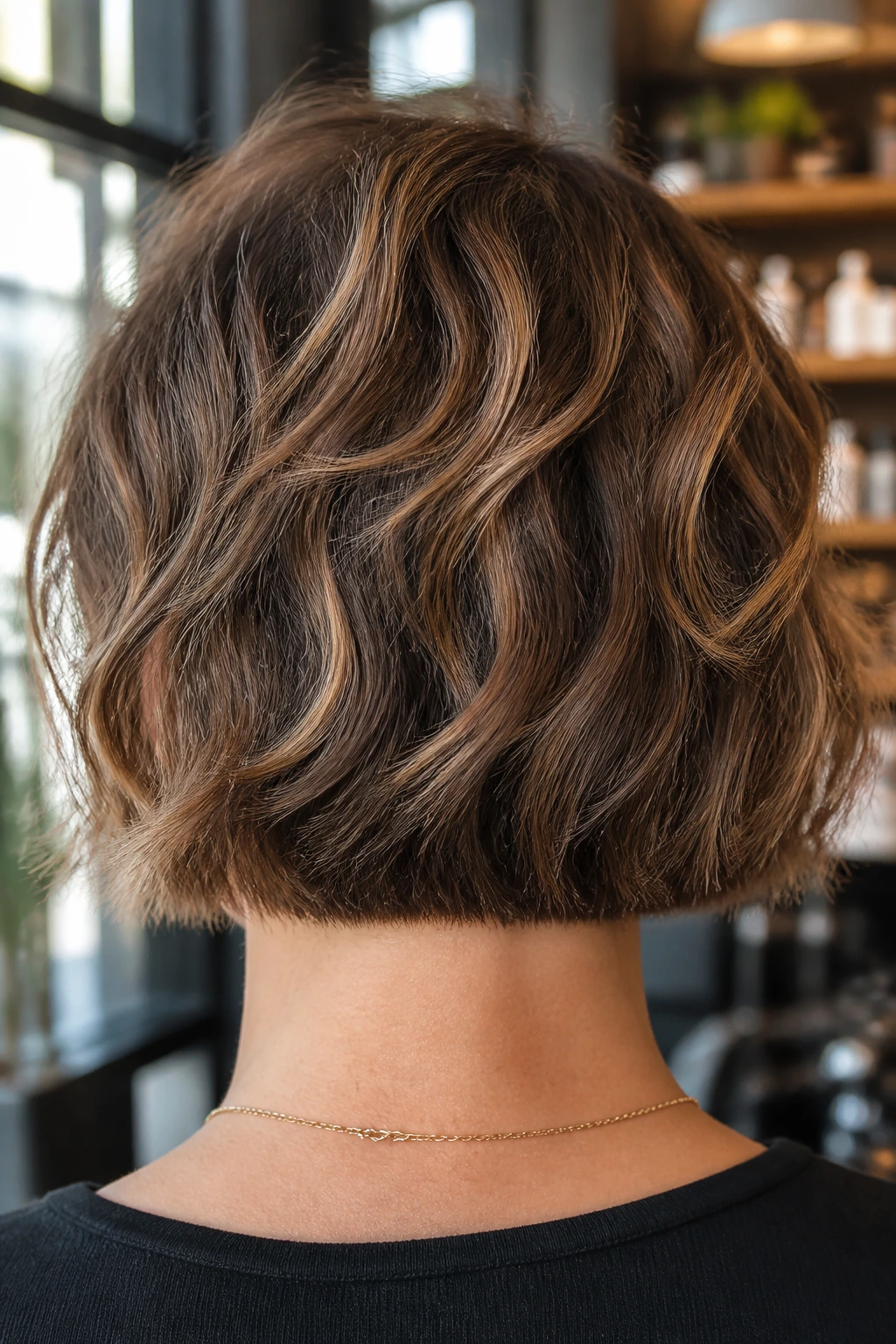
Sometimes, you want the sharpness of a blunt line, but you have enough wave that a straight-across cut looks too thick. The textured blunt nape addresses this by keeping the bottom edge firm but thinning it out internally. This gives you that clean, sophisticated perimeter while allowing the waves to spring up and create a soft, rounded finish at the back. It is a fantastic middle ground for those who dislike layered looks.
Achieving the Perfect Finish
The key here is invisible layering. Your stylist should lift small sections of hair near the nape and remove micro-amounts of weight. This keeps the blunt perimeter intact but stops the “bulk-at-the-bottom” effect. It’s a subtle but massive change that transforms the back view.
Why This Style Lasts
Because there isn’t a dramatic “stacked” transition, you don’t get that weird, awkward grow-out phase where the layers and base length clash. It grows out much more gracefully than a heavily graduated bob, making it an excellent low-maintenance choice.
Practical application: If your waves are tight, let them air dry with a sea salt spray to enhance the texture. The blunt edge will look like a intentional frame rather than an accidental mess.
3. The Softly Tapered Inverted Cut
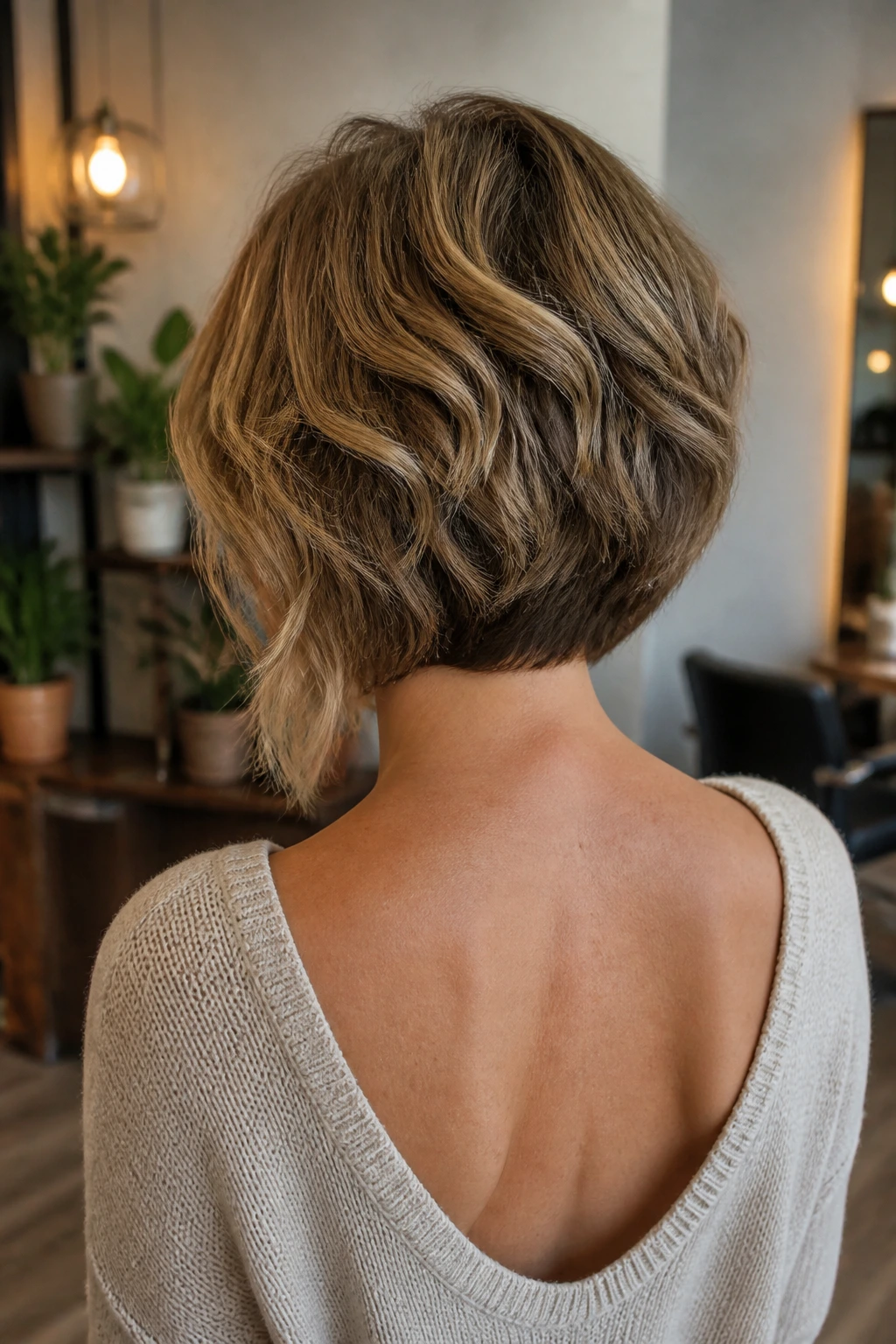
An inverted bob is defined by longer sides and a shorter back, but when done with a soft taper, the transition is much less harsh. Rather than a sharp angle, the back fades gently from the nape into the longer front sections. This creates a really romantic, airy look that leans into the natural chaos of wavy hair rather than trying to force it into a rigid geometric shape.
Softness is the Secret
With this cut, you want to avoid the “soccer mom” look that sometimes occurs when the angle is too aggressive. Ask for a “soft taper” or a “feminine graduation.” This tells the stylist to keep the angles rounded rather than V-shaped. It feels much more modern and less clinical.
Styling for Maximum Effect
- Use a wide-tooth comb to distribute product while wet.
- Let the hair air dry to 80% completion before using a diffuser.
- Use a tiny drop of hair oil at the very bottom of the nape to keep the ends looking healthy.
Visual cue: The back should look like a soft curve that kisses the top of your neckline, not a sharp point that cuts into it.
4. The Hidden Undercut Bob
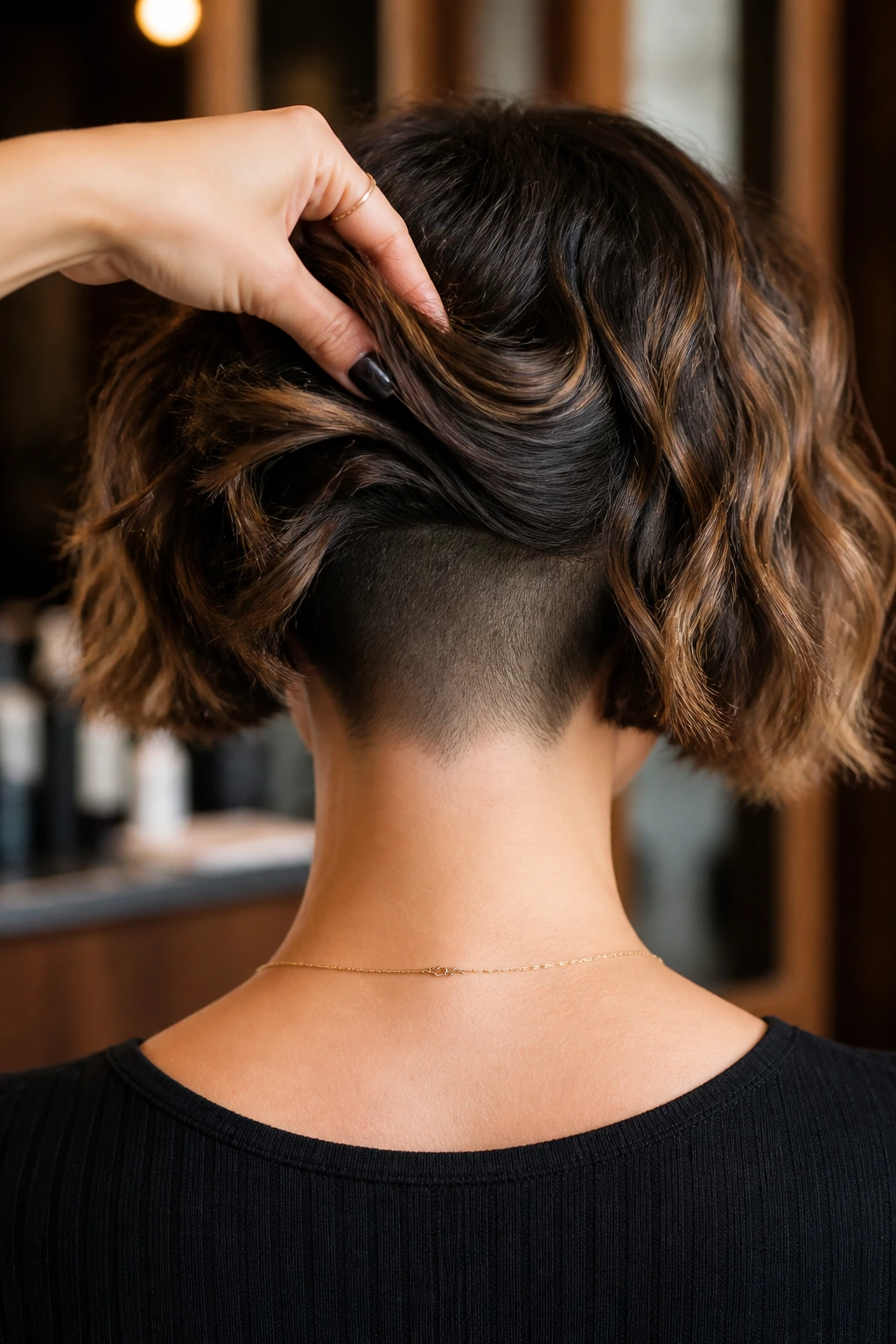
For those with extremely thick, wavy hair, the back view can be a nightmare of volume that just doesn’t want to behave. An internal undercut at the very nape of the neck is a secret weapon. By shaving or aggressively thinning just the bottom inch or two, you remove the hair that usually pushes the rest of the bob out into a triangular shape. You’ll never see it unless you lift your hair up, but you will feel the difference immediately.
The Mechanics of the Undercut
This isn’t about giving yourself a mohawk. It is about removing the “bulk-weight” that lives against your neck. When this weight is removed, the hair sitting above it lays flatter and smoother. It makes the bob look much more intentional and controlled from the back.
Who Should Avoid This?
If you have very thin or sparse hair, skip this. You need every strand you have to create the illusion of thickness. This is reserved strictly for those who find that their hair has a mind of its own and pushes itself out into a “mushroom” shape.
5. The Choppy Shag-Bob Hybrid
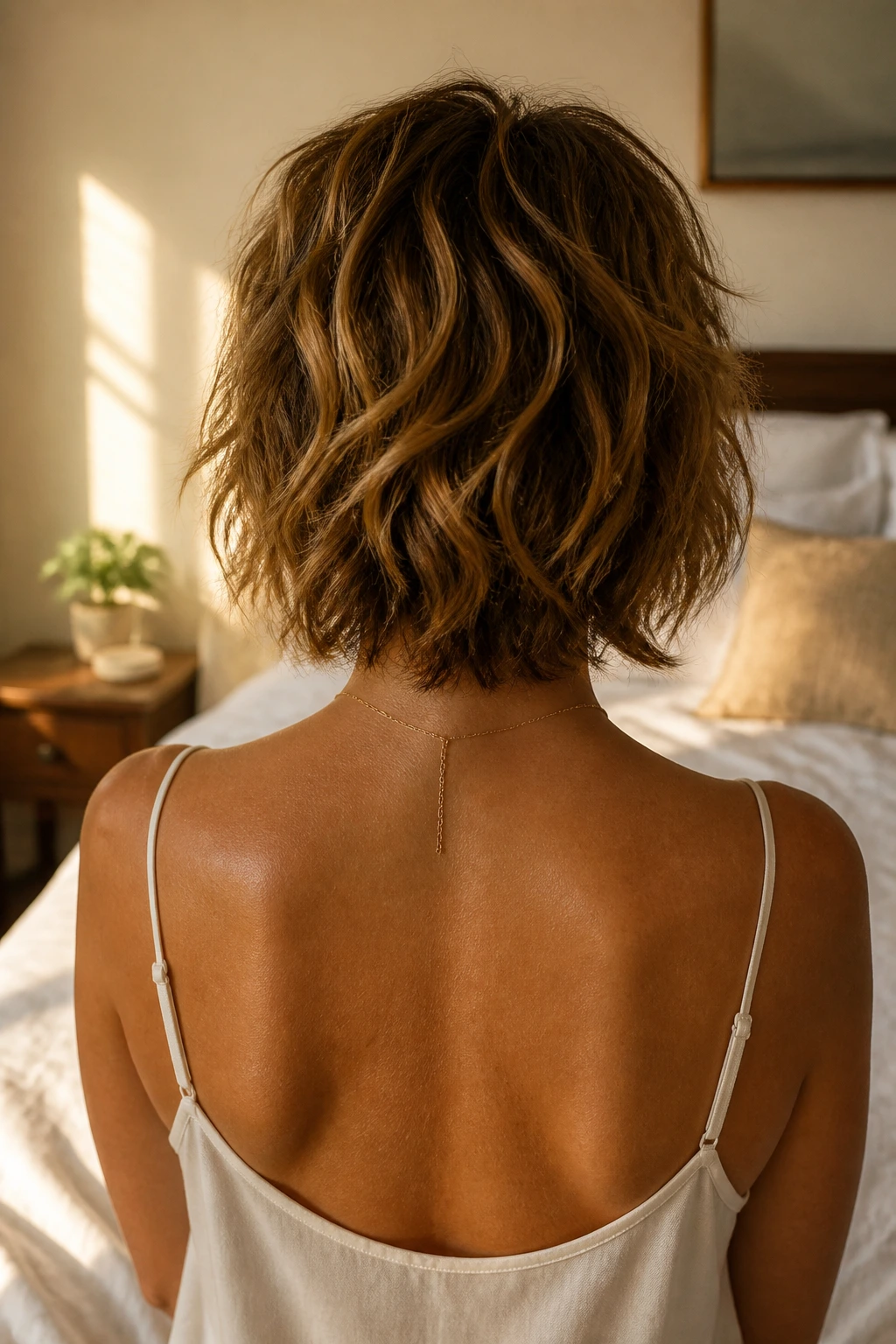
If you aren’t afraid of a little edge, this style brings the 70s-inspired shag movement into a shorter, bobbed frame. The back is filled with internal, choppy layers that create a messy, “bedhead” look. It’s perfect for wavy hair because it celebrates the natural, uneven movement of your waves. The more they tangle and clump, the better this cut looks.
Why Waves Love This Cut
Shag-style cuts are built on movement. By creating short, medium, and long layers all over the head, you stop the hair from becoming a uniform block. The back view becomes a mix of textures and lengths that look effortless and cool.
Styling the Back
- Skip the round brush. This cut hates being smoothed out.
- Use a matte texture paste to pull apart the pieces at the back.
- Let the waves dictate where the layers sit.
Why it works: It feels less “done.” In a world where everyone is chasing sleek, shiny hair, this look stands out because it looks like you woke up with perfectly styled hair.
6. The Nape-Length Rounded Bob
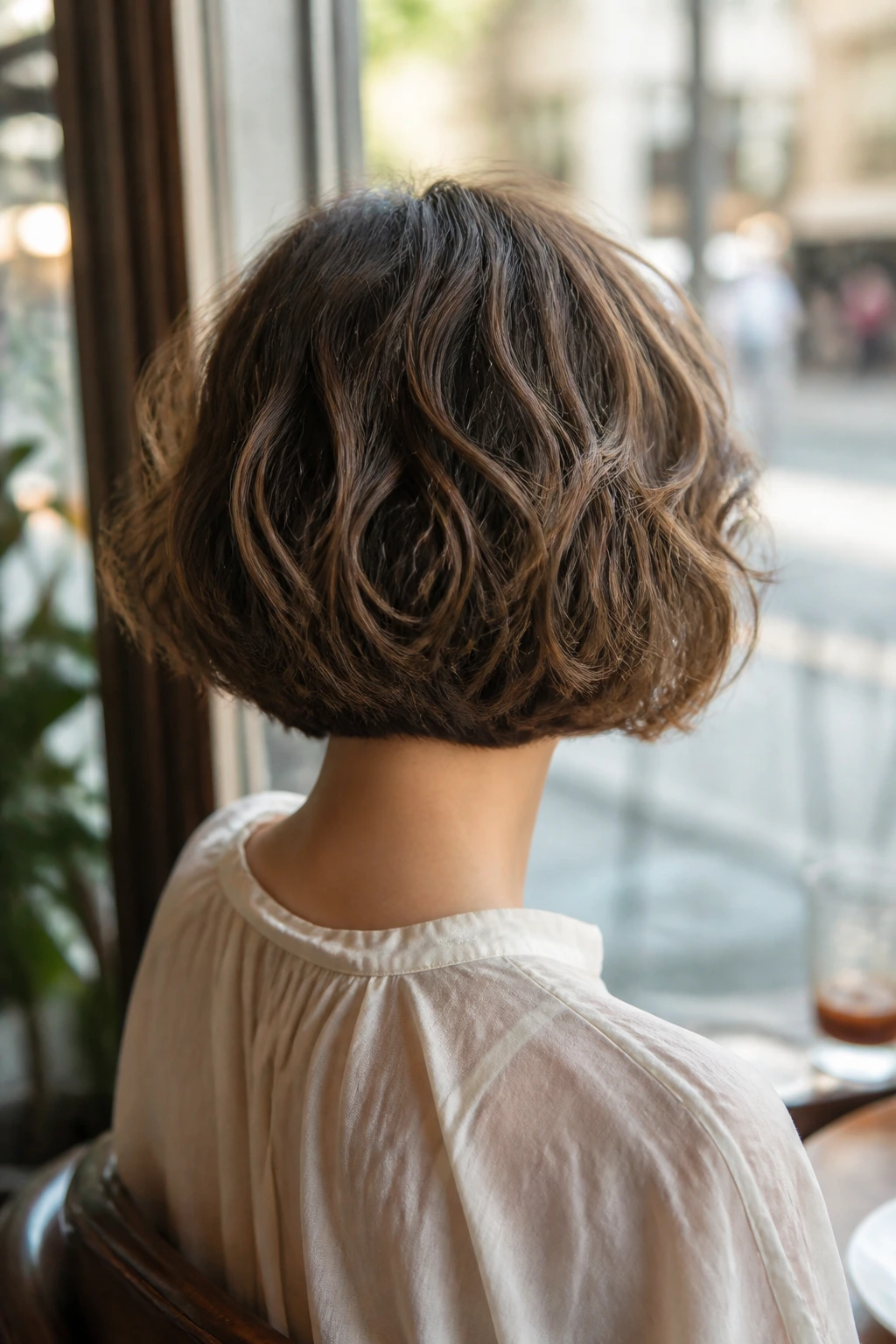
Sometimes you just want the classic, round bob that looks like a clean, soft ball of hair. The nape-length cut hits exactly at the hairline, exposing the neck and elongating your posture. For wavy hair, this needs to be cut with a rounded internal shape so it doesn’t get frizzy. When the back is perfectly round, it creates a beautiful, polished silhouette that feels very high-fashion and intentional.
The Importance of Precision
This cut relies on the nape being cut on a slight bevel. That bevel is what causes the hair to curl inward rather than flicking out. If your stylist cuts it straight across, you will definitely deal with “flip-out” syndrome every time your hair hits your collar.
Maintaining the Roundness
- Use a small round brush to tuck the back under while drying.
- If you notice it flicking out, a quick pass with a flat iron (curved inward) will reset the shape in seconds.
Pro tip: A nape-length bob is excellent for those who wear turtlenecks or high-collared shirts, as it keeps your hair from getting tangled in your clothing all day.
7. The Shattered Layers Back View
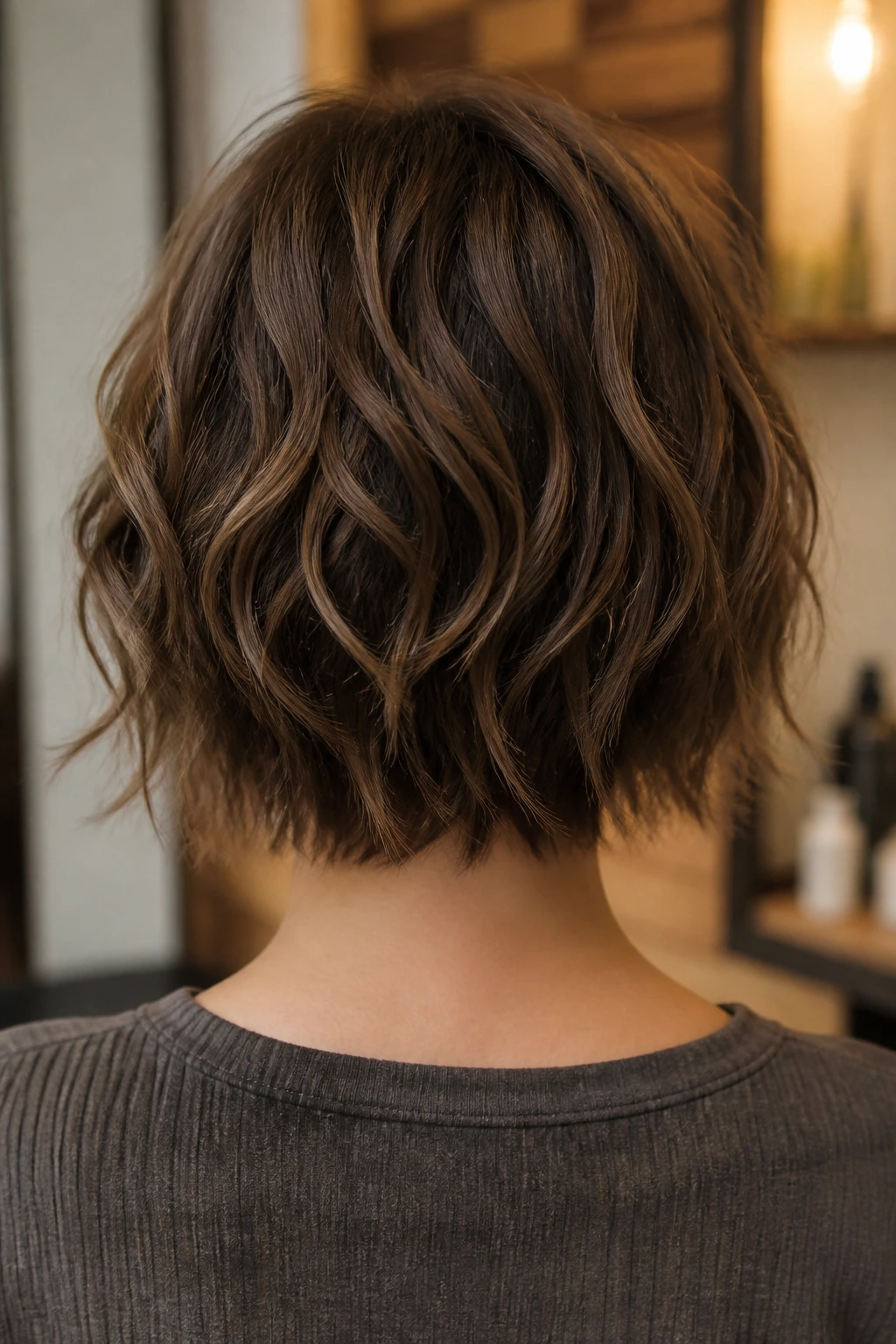
“Shattered” is a fancy way of saying heavily point-cut. Instead of one solid line at the back, the layers are cut into at deep angles. This removes the weight while keeping the overall length long enough to maintain the wave. The back view ends up looking airy, wispy, and incredibly light. It’s the opposite of a heavy, blocked-out bob.
How to Request This
Ask your stylist for “shattered ends” or “deep point-cutting.” Be clear that you do not want a blunt line at the nape. You want the ends to feel soft and broken up. This is a great choice if you find that your hair gets “heavy” by the end of the day.
The Sensory Experience
When you run your fingers through the back, it should feel soft, not crunchy or thick. The waves will have more room to move independently, creating a multi-dimensional look that is much more interesting than a solid-colored, blunt-cut bob.
8. The Ear-to-Ear Graduated Sweep
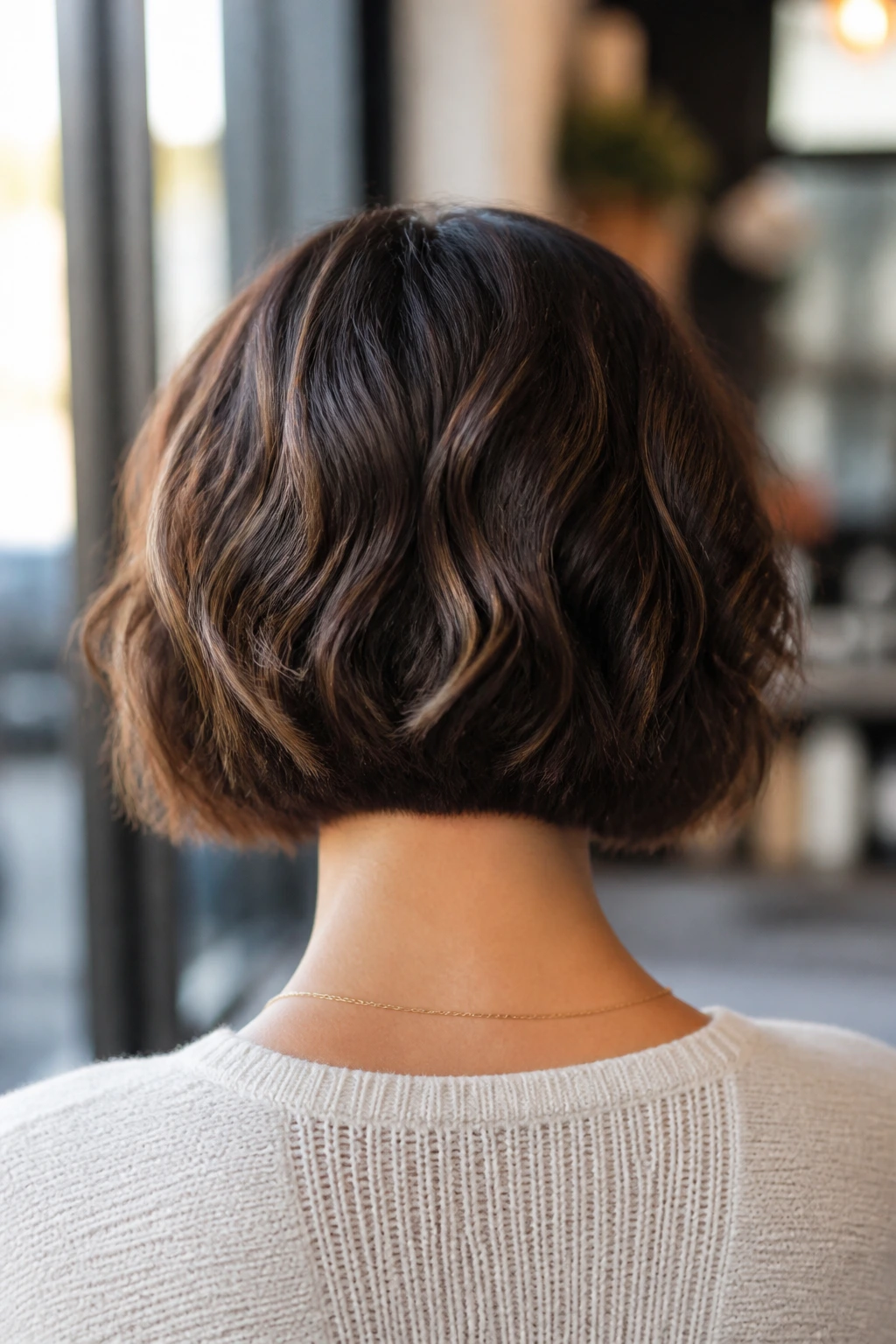
This style features a back that starts short and sweeps upward toward the front. The key feature here is the curvature. When you look at the back of the head, the hair should look like it’s being pulled in a gentle arc. It’s very flattering for people with smaller necks because it draws the eye up and out.
Balancing the Weight
The graduation in this cut is subtle. You won’t see dramatic “steps” of length. Instead, you’ll see a smooth, fluid transition that looks almost like a gentle waterfall. It requires a stylist who is comfortable with shears over a comb, as this technique relies heavily on manual tension.
Why it feels modern
It avoids the “stiff” look of traditional bobs. By keeping the graduation fluid, you maintain a sense of softness that allows your waves to shine. It looks particularly good when paired with highlights or lowlights, as the movement of the hair shows off the color variation.
9. The Blunt Cut with Hidden Thinning
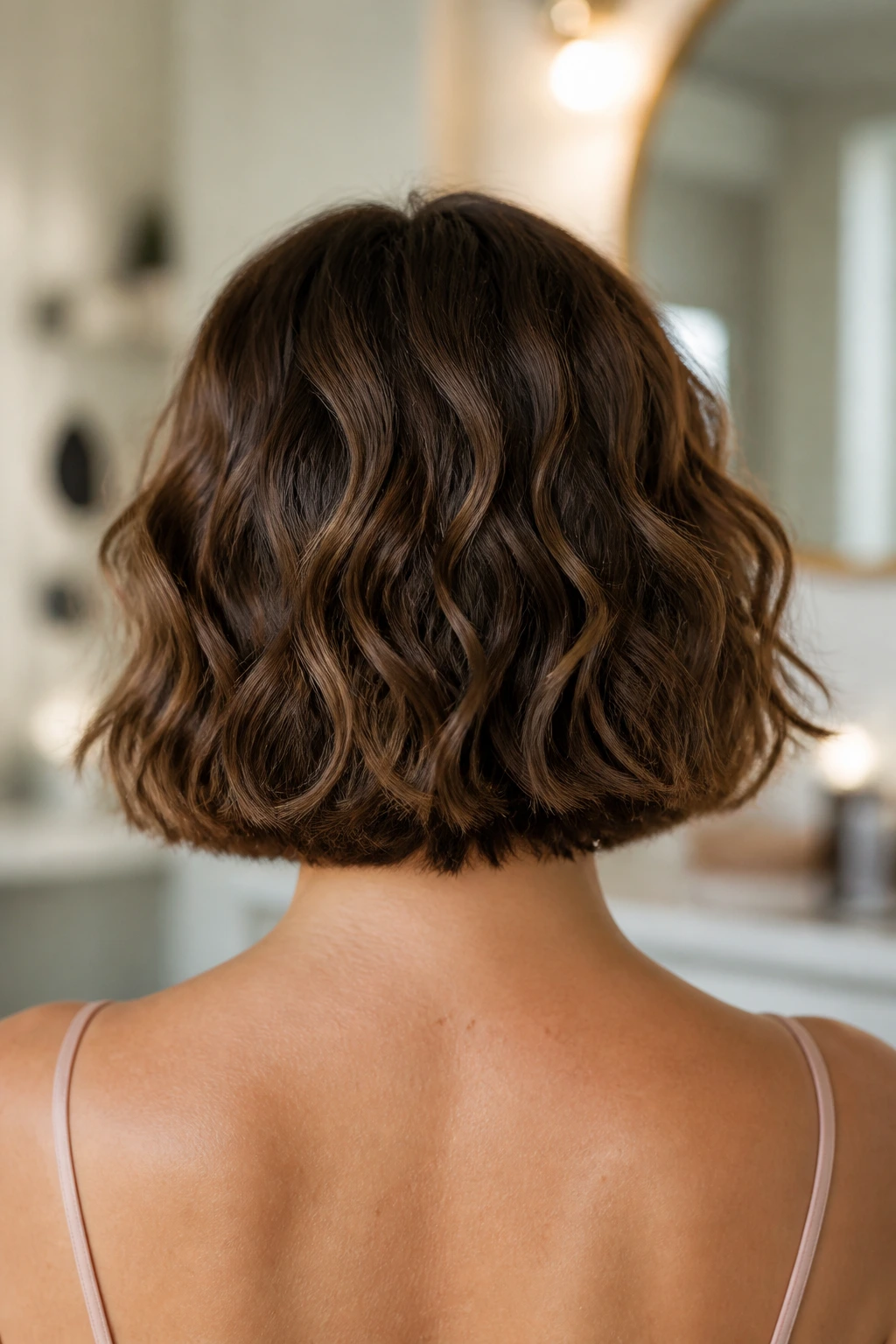
If you have wavy hair and you have always been told “you can’t have a blunt bob,” someone lied to you. You absolutely can. The trick is not the external cut, but the internal “hollowing out.” By cutting the hair blunt on the outside but removing about 30% of the density from the middle layer at the back, you get the aesthetic of a solid bob with the movement of a layered cut.
The Result
The back looks thick and healthy, but it moves. It doesn’t sit like a solid weight on your shoulders. This is the go-to style for anyone who wants a clean, expensive-looking bob without the maintenance of a high-end salon style every day.
Who should try this?
If your hair is medium-density and you have a loose, beachy wave, this is your best friend. It provides the structure you need without the bulk you don’t.
Practical application: Use a lightweight styling cream to help the waves clump together in nice, defined pieces. If the hair is too dry, it will turn into a triangle—keep it hydrated!
10. The Asymmetrical Angled Bob
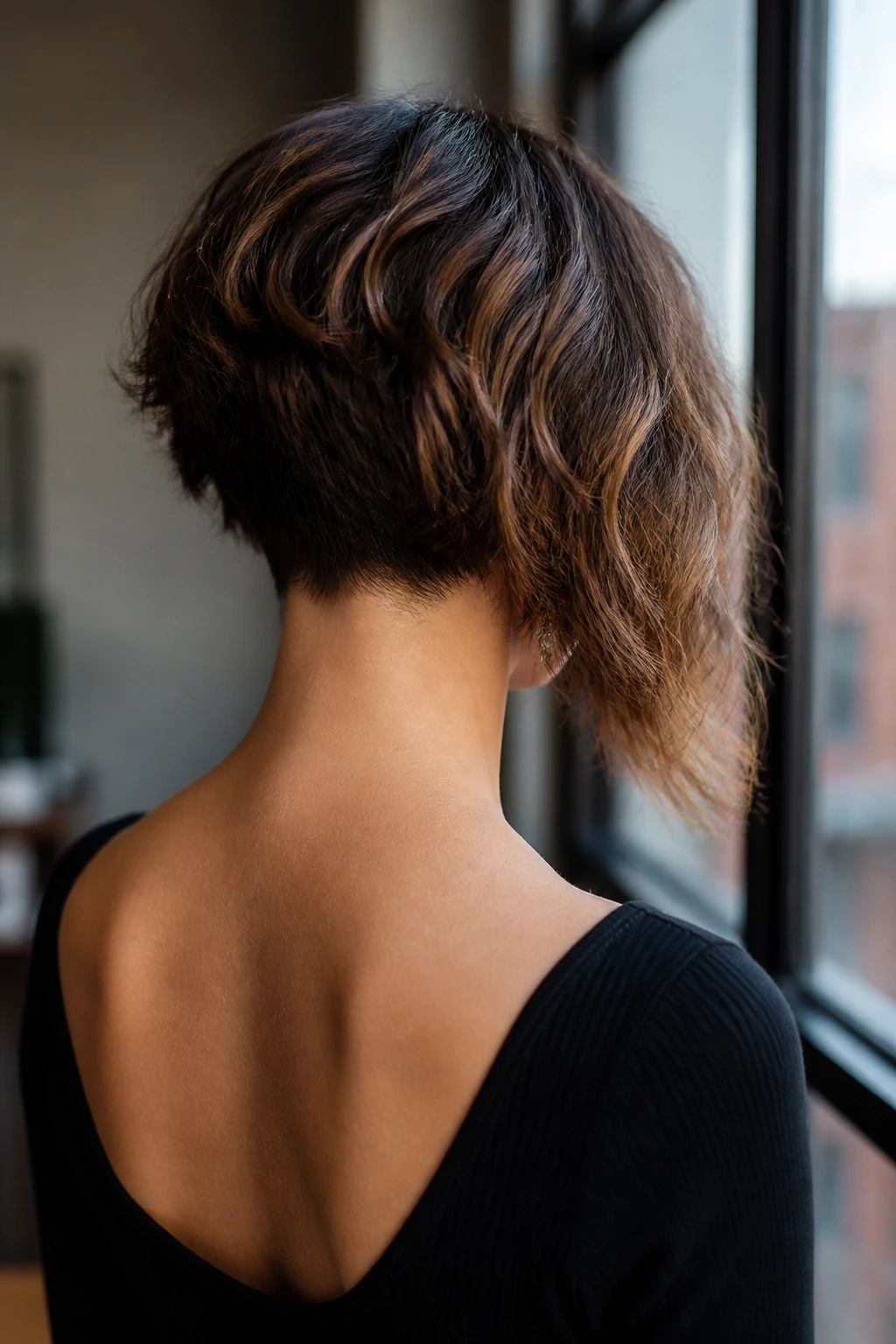
For those who want a bit of personality, an asymmetrical bob that is shorter in the back and angled toward one side creates a dynamic back view. The key is to ensure the nape area remains clean and tight, even if the rest of the cut is dramatic. This creates a very intentional, edgy look that makes a statement without being too difficult to manage.
Managing the Angle
The back should be kept relatively short to avoid the angle becoming too messy. By keeping the nape tight, you provide an anchor for the rest of the cut. This prevents the hair from looking like it’s just growing out unevenly.
Why it works for wavy hair
The asymmetry distracts from the uniformity of the waves. When one side is longer than the other, you don’t notice if the wave pattern is slightly different on each side. It’s a brilliant way to make your hair look curated and styled.
11. The Layered-Bob with Nape Fade
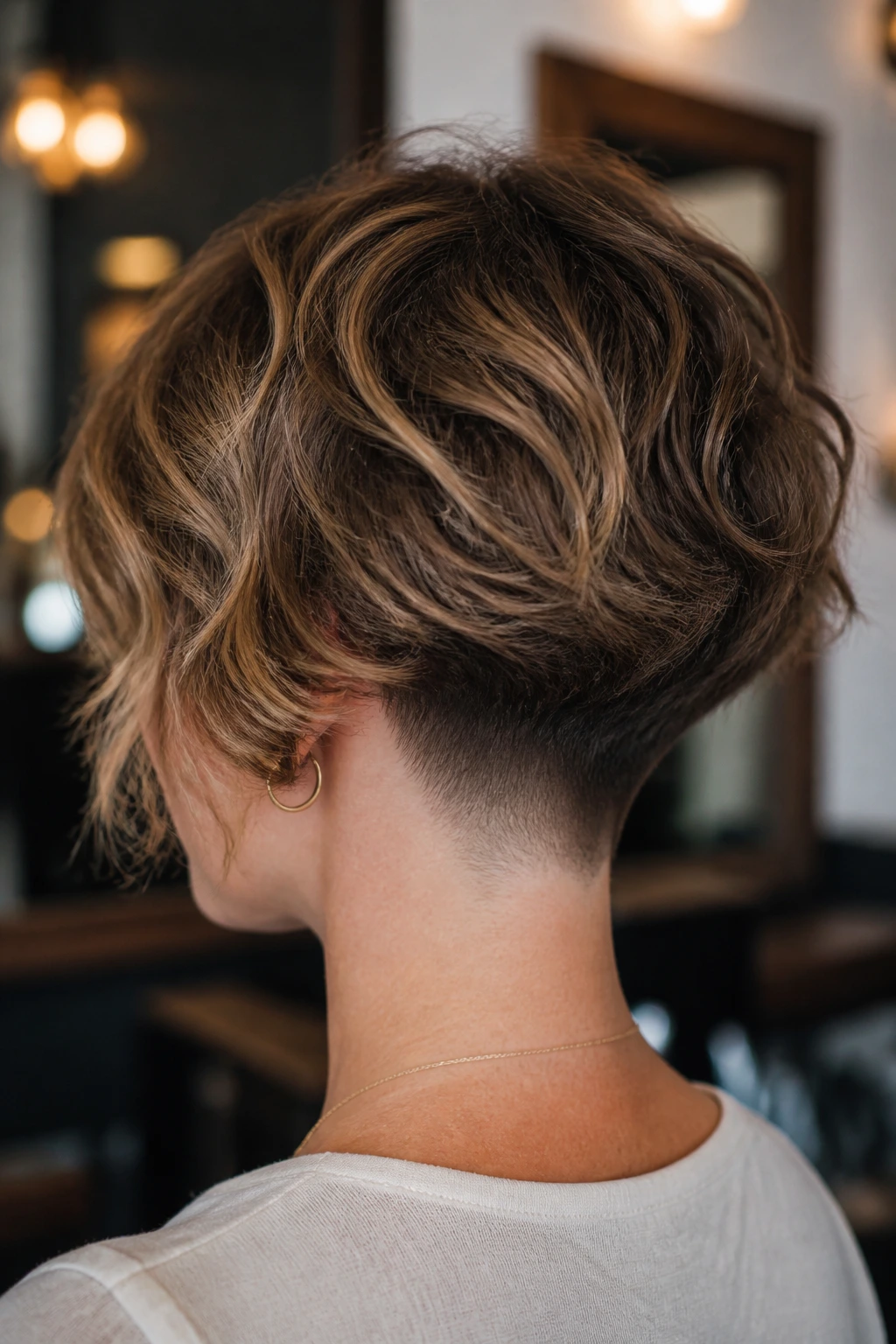
For the boldest among us, a nape fade incorporates barbering techniques into a traditional bob. We are talking about using clippers at the very base of the hairline to create a super-short, tight look that transitions into longer, wavy layers above. This completely eliminates any “frizz” or “flick” issues at the neck.
The Benefit of the Fade
You get total control. Your neck stays cool, and your hair will never get tangled in your collar. The transition from the buzzed nape to the longer, wavy layers above is incredibly striking. It’s a mix of feminine and masculine that feels very current.
Who does this best?
This is a high-maintenance look that requires a trip to the barber or stylist every four weeks to keep the fade sharp. If you’re willing to put in the time, it’s the most “styled” and clean look you can get.
A note on confidence: This isn’t for the faint of heart, but it is incredibly liberating. Once you’ve had the nape area kept tight and clean, it’s hard to go back to dealing with flyaways there.
12. The Wavy French Bob

The French bob is characterized by its shorter length, usually hitting at the mouth or cheekbone, and its penchant for embracing natural texture. The back is cut to follow the curve of the skull, often leaving just a tiny bit of length at the nape to keep it feminine. It’s short, punchy, and thrives on the messy, wavy nature of your hair.
The French Difference
Unlike the “structured” bob, the French bob is supposed to look a little bit lived-in. You don’t need a perfectly symmetrical back. You want the waves to be messy. It’s the ultimate “I woke up like this” look that actually requires very little effort.
Styling for the French Look
- Skip the hot tools. Let your hair dry naturally.
- Use a touch of dry shampoo at the roots for volume.
- Don’t worry about the back being perfectly straight—that’s not the point.
Why it stands out: It highlights your jawline and neck beautifully. It is elegant, timeless, and completely unpretentious.
13. The “C-Shape” Graduation
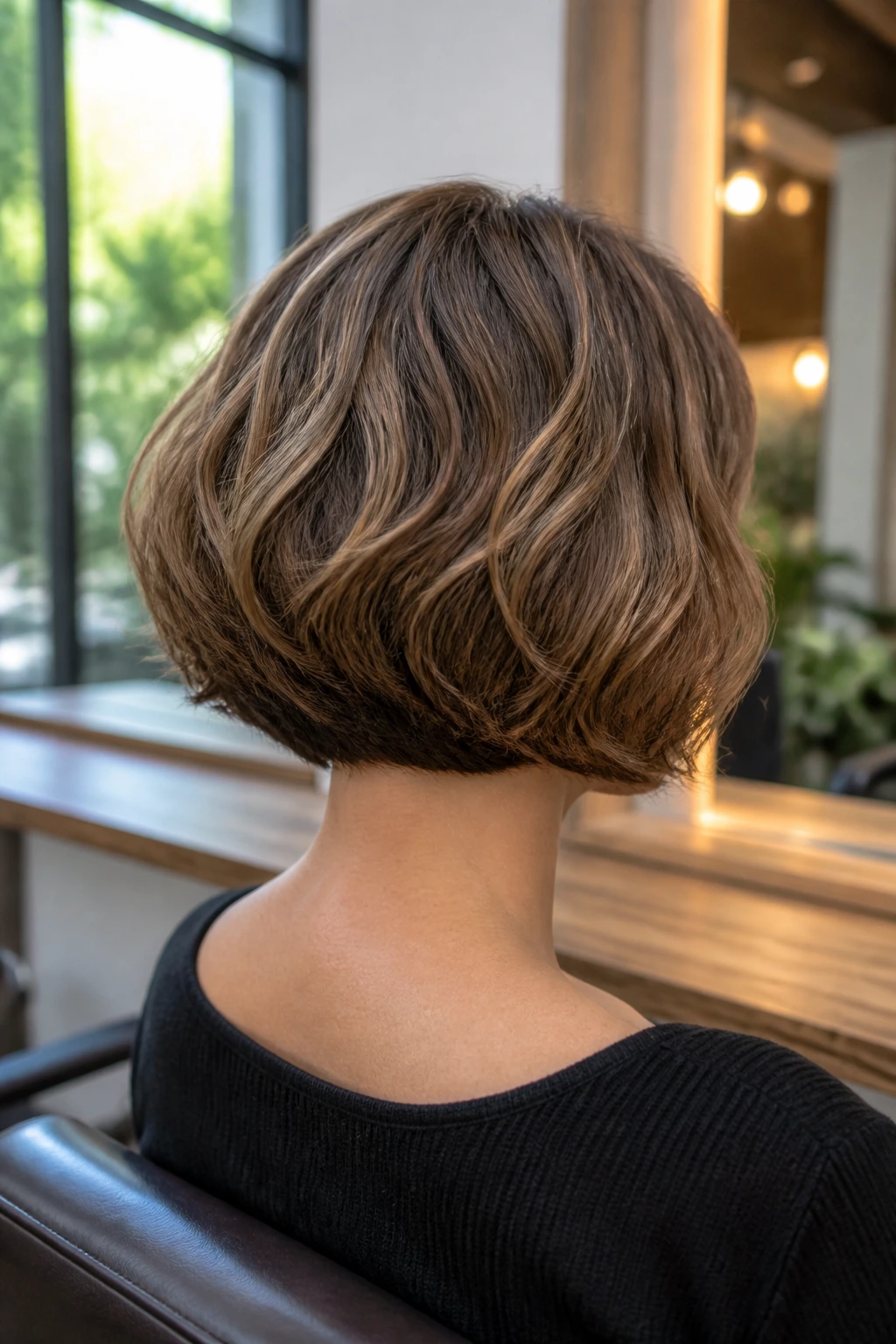
The C-shape is all about rounding the back to create a continuous, curved line from the crown down to the nape. It effectively removes all the “corners” of your hair. Most bob cuts are cut with an A-shape or a V-shape, which creates sharp angles. The C-shape uses internal graduation to pull the hair into a perfect, soft bowl-like shape.
Why C-Shapes Win
They make the head look perfectly shaped. If you have a flatter crown, this cut creates the illusion of fullness and height right where you need it. It turns a boring bob into something architecturally interesting.
The Maintenance Factor
- Requires precision cutting every time. Don’t let a budget salon attempt this unless they are comfortable with geometric shapes.
- Keep the ends soft; if you make them too blunt, the C-shape loses its softness.
Pro tip: Pair this with a slightly longer front to create an elegant, flowing silhouette that follows the shape of your face.
14. The Undercut-with-Length
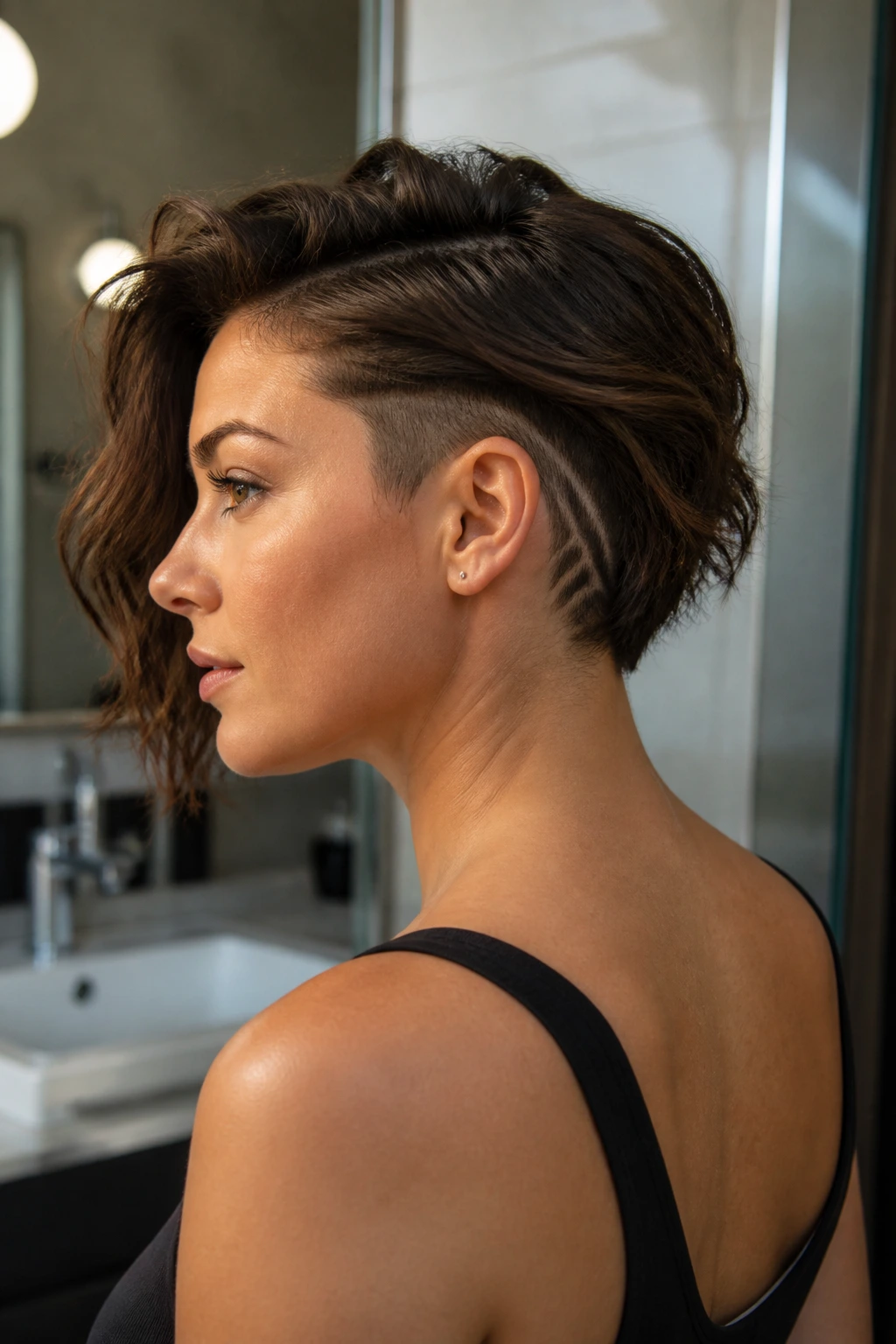
If you aren’t ready to go super short, you can try an undercut that only extends halfway up the back of your head. The top layer of your hair is left long enough to cover the shaved area completely, giving you the silhouette of a standard wavy bob with zero of the bulk. It’s the perfect compromise for someone who wants the look of a traditional cut but the behavior of a managed one.
The Advantage
You get the volume control of a short haircut without losing your length. If you pull your hair up into a ponytail, you get to show off the cool, shaved pattern underneath—a fun little detail for those in the know.
Daily Care
It is exactly like maintaining a normal, shoulder-length bob. The only difference is that you have less hair to wash and dry, which is a massive win in anyone’s book.
15. The Soft, Uneven “Beach” Bob
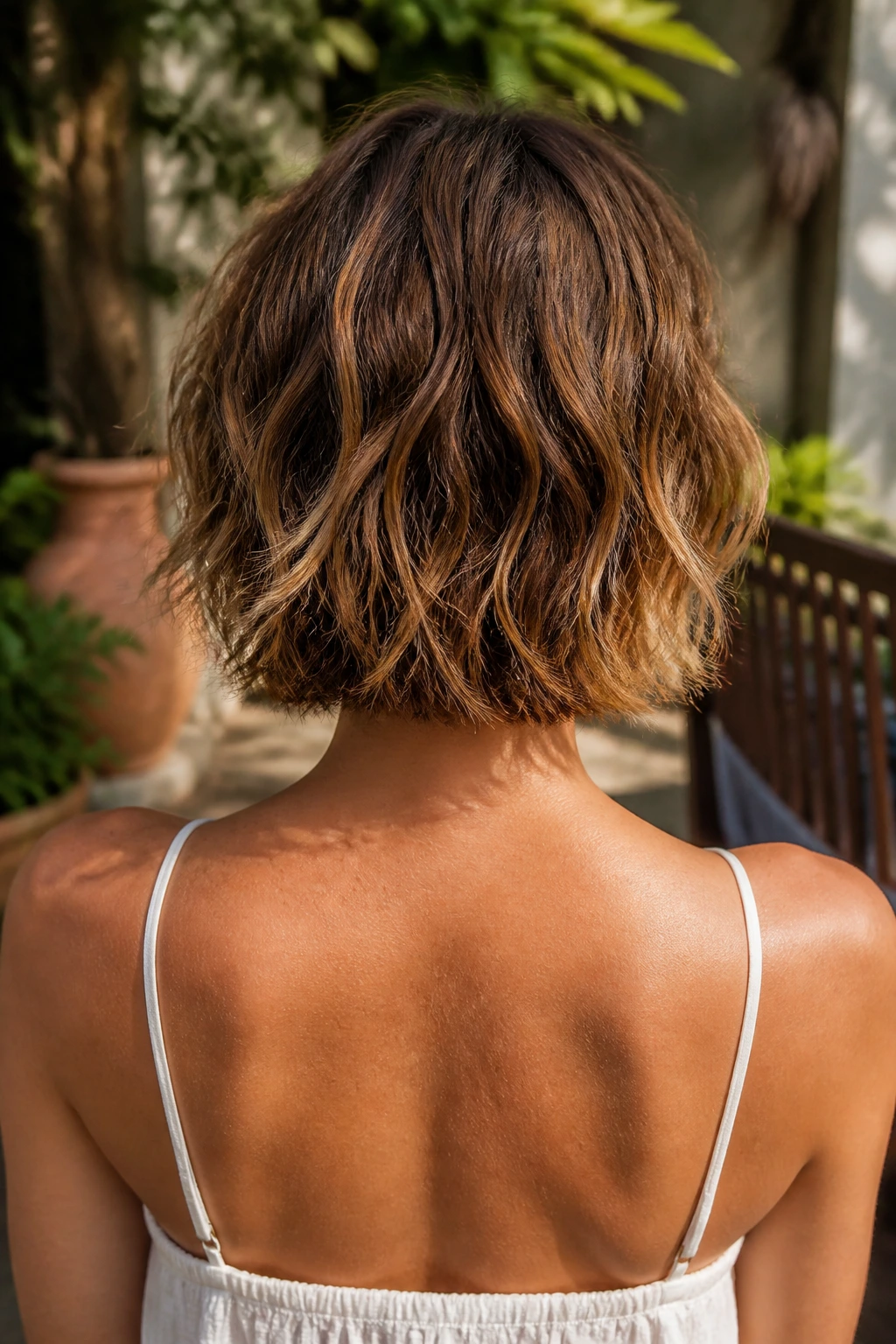
Sometimes, the best back view is one that doesn’t follow any rules at all. The soft, uneven bob is cut by hand with a razor, following the natural wave pattern of your hair. The back isn’t meant to be perfectly straight or perfectly stacked. It’s meant to look like your hair was cut by someone who cares more about flow than geometry.
Why It’s Effortless
Because there is no “correct” way for the back to look, you don’t have to stress about it growing out. It looks good even when it’s messy. It’s the perfect, low-stress choice for anyone who just wants a bob that looks great in a ponytail or down.
How to Style
- Apply a texturizing foam to damp hair.
- Scrunch the back with your hands to define the waves.
- Don’t touch it again until it’s dry. The less you manipulate the back, the better your waves will clump together.
Final Thoughts
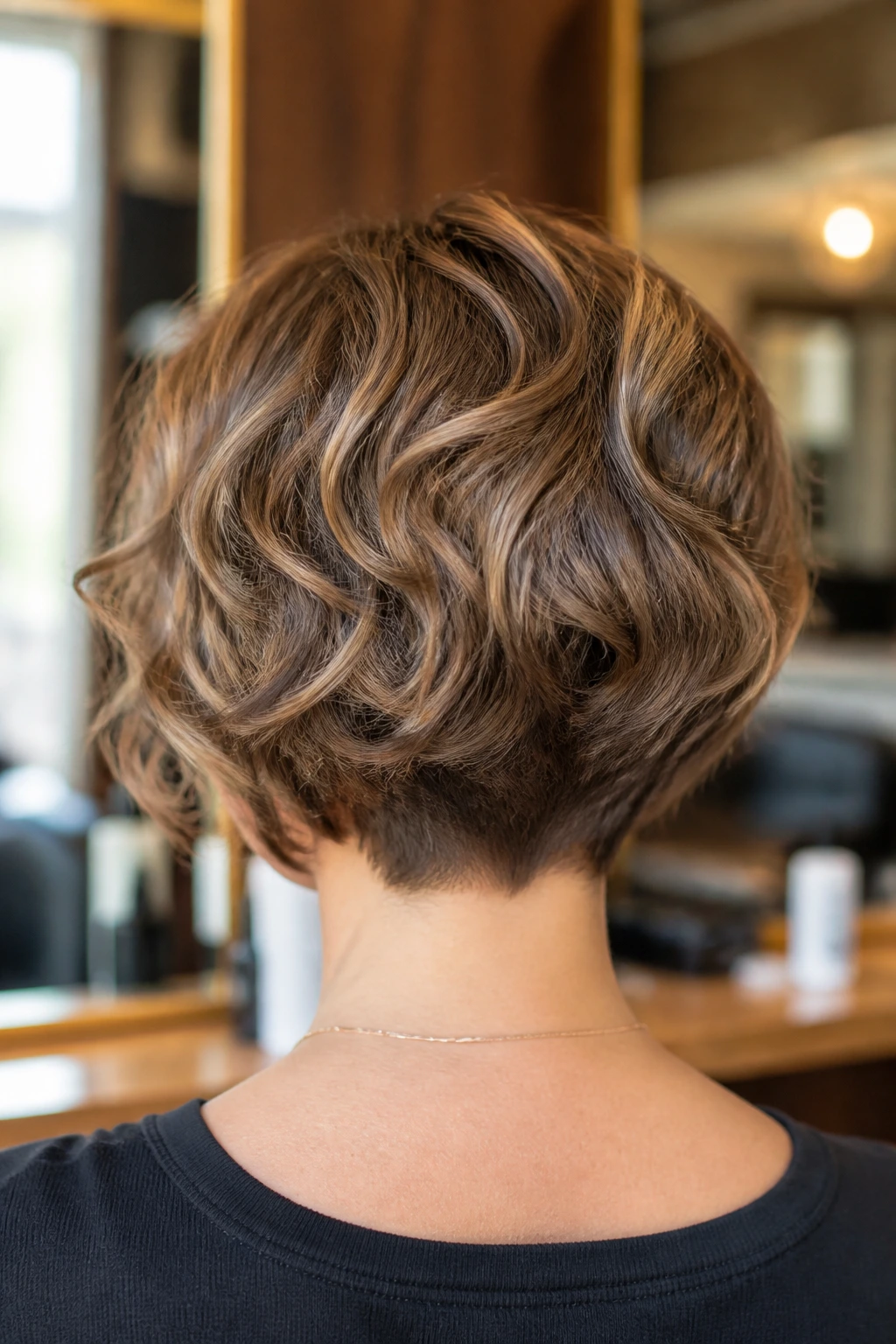
When you are staring at the back of your head in the mirror, remember that your hair is a living, breathing thing. Wavy hair, in particular, refuses to be trapped in a rigid box. The best bob back views aren’t necessarily the ones that are perfectly straight or perfectly blunt, but the ones that understand your hair’s natural urge to move and coil.
Don’t be afraid to ask your stylist to remove internal weight—that is almost always the missing piece of the puzzle. Whether you choose a classic stack, a daring fade, or an airy, shattered finish, the goal is always the same: to create a shape that feels like an extension of you. Embrace the curves, respect the cowlicks at your nape, and remember that the best cut is one that makes you feel confident the moment you walk out the door. The back view is where the style really begins.