
If you have ever tried to hold a sleek ponytail in place during a high-intensity interval session only to have it unravel into a frizzy mess by the second set, you know that workout hair is less about aesthetics and more about survival. Yet, there is a middle ground between the functional “top-knot of despair” and full-blown professional styling. Metallic accents offer a unique opportunity to secure your hair with the kind of industrial-grade hold that doesn’t look like it belongs in a utility closet. We are talking about brushed gold bobby pins, silver-toned elastics, and oxidized copper cuffs that actually stay put when you’re sprinting or swinging a kettlebell.
Fitness enthusiasts often shy away from accessories, fearing that anything decorative will snap, slip, or dig into the scalp during floor exercises. The secret is moving away from cheap plastic or soft, high-stretch fabrics that lose their tension after ten minutes of sweat. By choosing the right metallic materials, you gain structural integrity. These aren’t just aesthetic flourishes; they are performance tools that turn a standard gym look into something that feels intentional, polished, and—most importantly—completely distraction-free while you move.
1. Brushed Gold Bobby Pin Criss-Cross
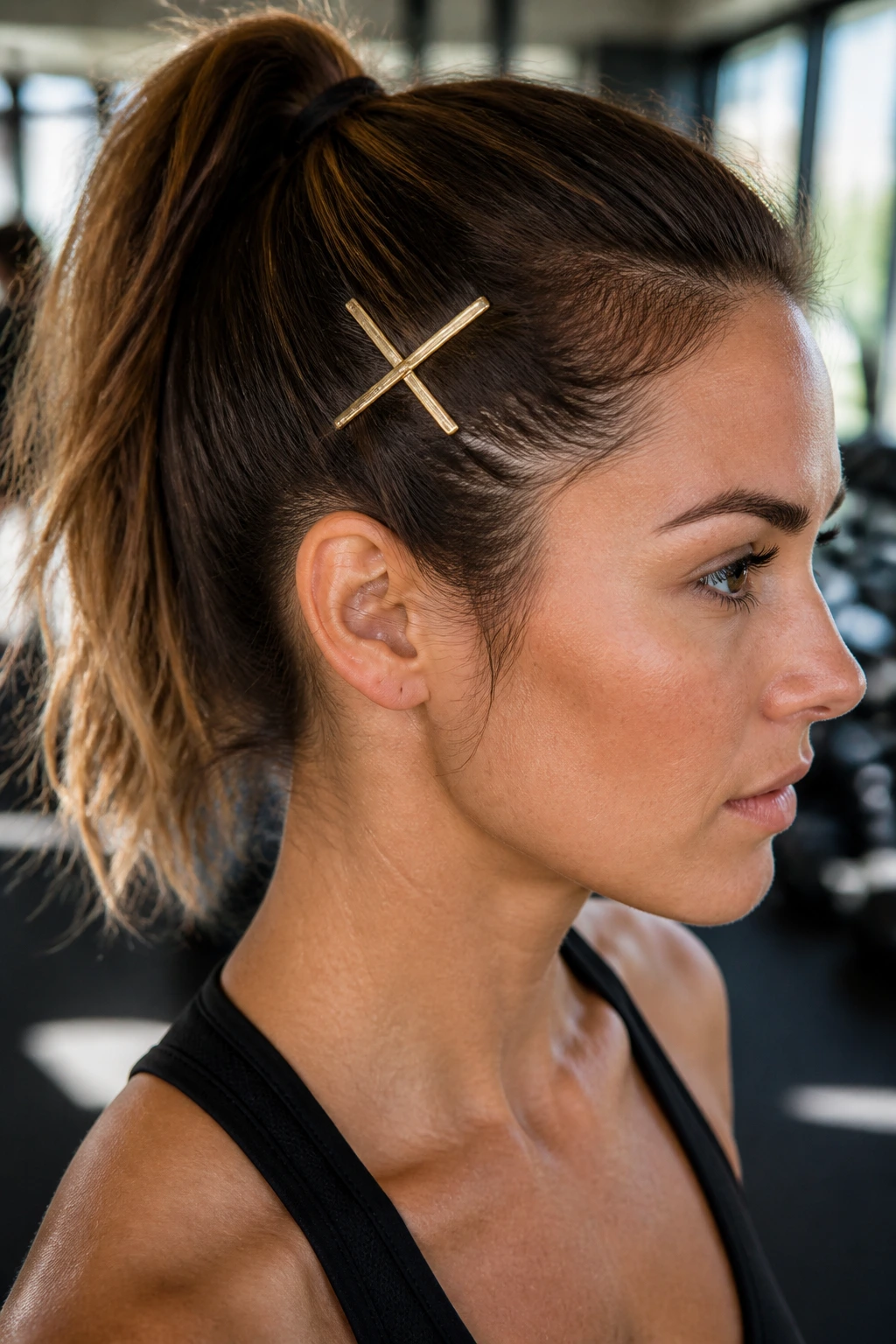
Most people treat bobby pins as disposable, bending them out of shape after a single use. When you are heading into a gym session, reach for pins made of high-tensile spring steel with a matte, brushed gold finish. This specific finish provides just enough grip compared to the ultra-slick painted pins found in standard packs. By layering them in a precise criss-cross pattern at the temples, you lock back those annoying flyaways that always manage to stick to your forehead when you start to perspire.
Why the Criss-Cross Matters
A single pin acts as a lever; it will work its way out of your hair the moment you start moving. By layering them in an X shape, you create a geometric bridge that distributes tension across a wider surface area of the hair shaft. This makes it nearly impossible for the pins to migrate.
Application Technique
- Gather a small section of hair at the hairline.
- Slide the first pin in at a 45-degree angle pointing toward the back of your head.
- Place the second pin over the first, creating an X, and push it in until it touches the first pin.
- Keep the pins tight against the scalp to prevent them from catching on gym equipment or hoodie collars.
2. Oxidized Copper Hair Cuff
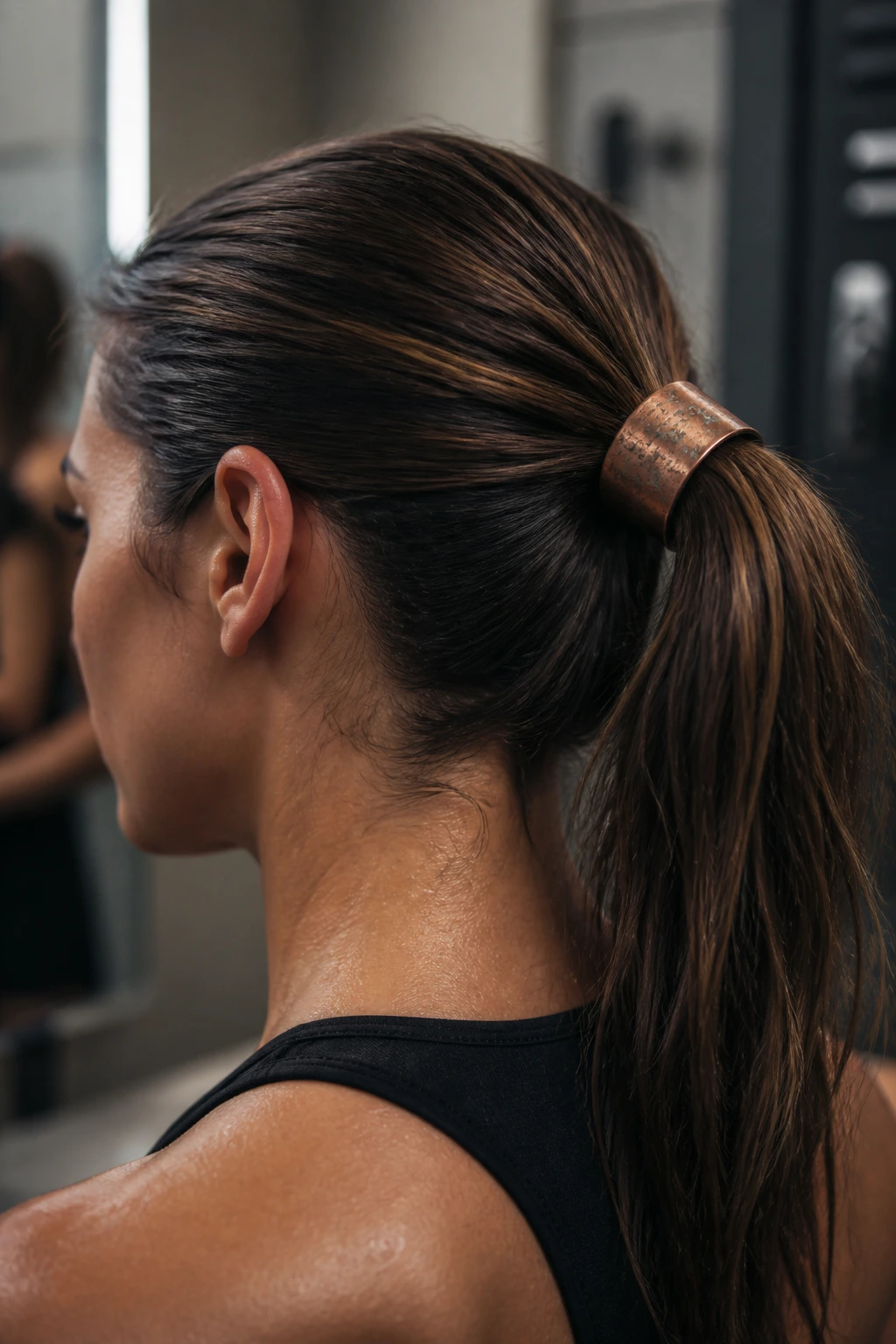
If you typically secure your hair with a standard rubber band, you are likely dealing with tension headaches by the end of your workout. A copper hair cuff acts as a structural clamp that holds your ponytail without requiring the hair to be cinched so tightly it pulls at the roots. Oxidized copper is particularly excellent because it develops a natural patina, meaning it won’t show scratches or dings from being tossed into a gym bag.
Performance Benefits of Metal Cuffs
The beauty of a metal cuff is that it doesn’t absorb sweat. Unlike fabric scrunchies that become heavy and damp after twenty minutes of cardio, a metal cuff stays dry and lightweight. It provides a clean, minimalist silhouette that works just as well in the weight room as it does on a run.
3. Silver Coil Elastic Links
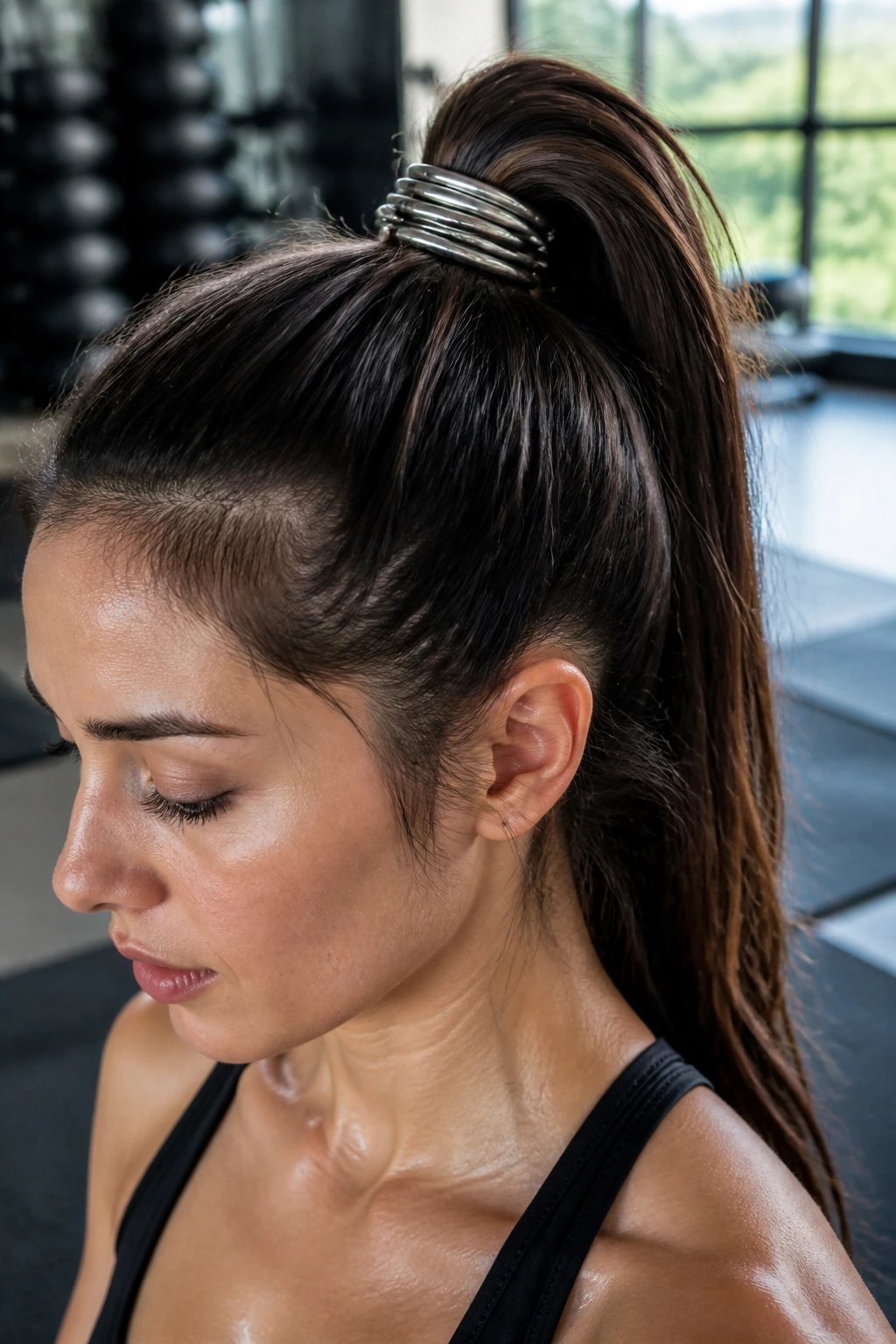
Elastic coils have become a staple for many, but the standard plastic versions can sometimes snag or snap when wet. Seek out metallic-coated coils that offer a slightly firmer, more rigid internal structure. These look like shimmering silver jewelry but act like heavy-duty binders. They are designed to grip hair without the crushing force of traditional elastics, which is essential if you are doing floor work like Pilates or yoga where you don’t want a bulky knot pressing into your skull.
Managing Tension
Because these coils distribute pressure unevenly, they prevent the dreaded “dent” in your hair. If you have fine or thin hair, the metallic coating provides a slightly tackier surface than smooth plastic, which helps the ponytail stay high without sliding down during jumping movements.
4. Matte Gunmetal Geometric Clips
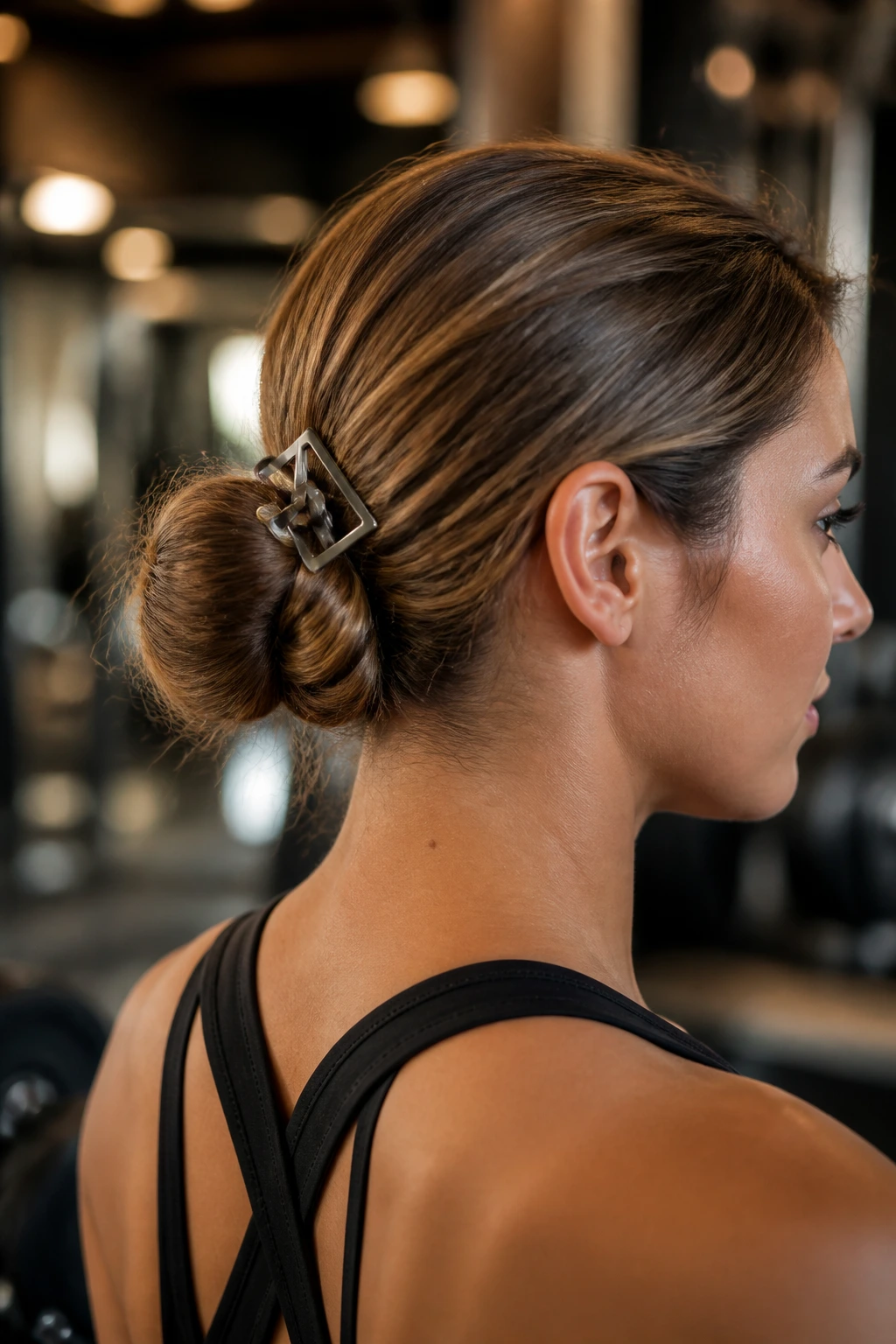
For those who prefer a low bun, a geometric metal clip in a gunmetal finish provides a dark, sophisticated anchor. Gunmetal is ideal because it hides the inevitable signs of wear that come with an active lifestyle. Unlike bright silver or gold, it doesn’t catch the light aggressively, keeping your gym look low-key while still feeling put-together.
How to Secure the Base
To use a geometric clip effectively during a workout, do not rely on it to hold the weight of your hair on its own. Use a clear, snag-free band to secure your base bun first. Once the bun is anchored, slide the metal clip over the top to lock the style in place. This two-layer approach ensures that even if the metal clip shifts, your hair doesn’t fall out.
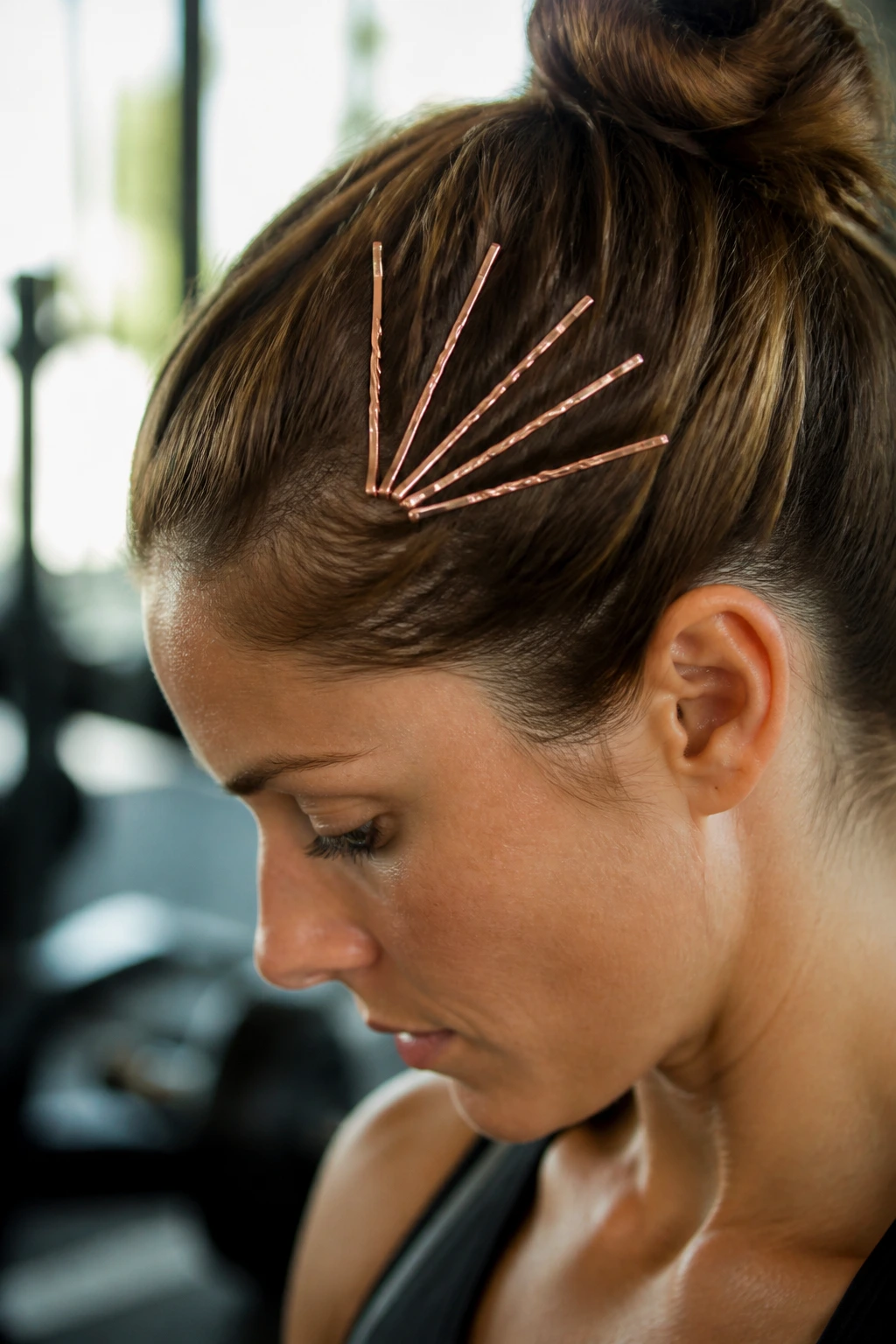
5. Rose Gold Bobby Pin Fanning
Fanning pins—the act of placing five or six pins in a uniform row—is a classic way to manage heavy layers. Rose gold works surprisingly well with most hair colors, blending into the highlights rather than creating a stark contrast. This is especially useful for high-intensity training where you need to keep long layers out of your face, particularly when you’re bent over for rows or lunges.
The Grip Factor
The key here is using the right amount of hair per pin. If you grab too much hair, the pin won’t lay flat. Aim for a section about the width of a pencil. The tension provided by the metal alloy in rose gold pins is often superior to the soft, bendable metal found in cheaper alternatives.
6. Brushed Silver Bobby Pin Stack
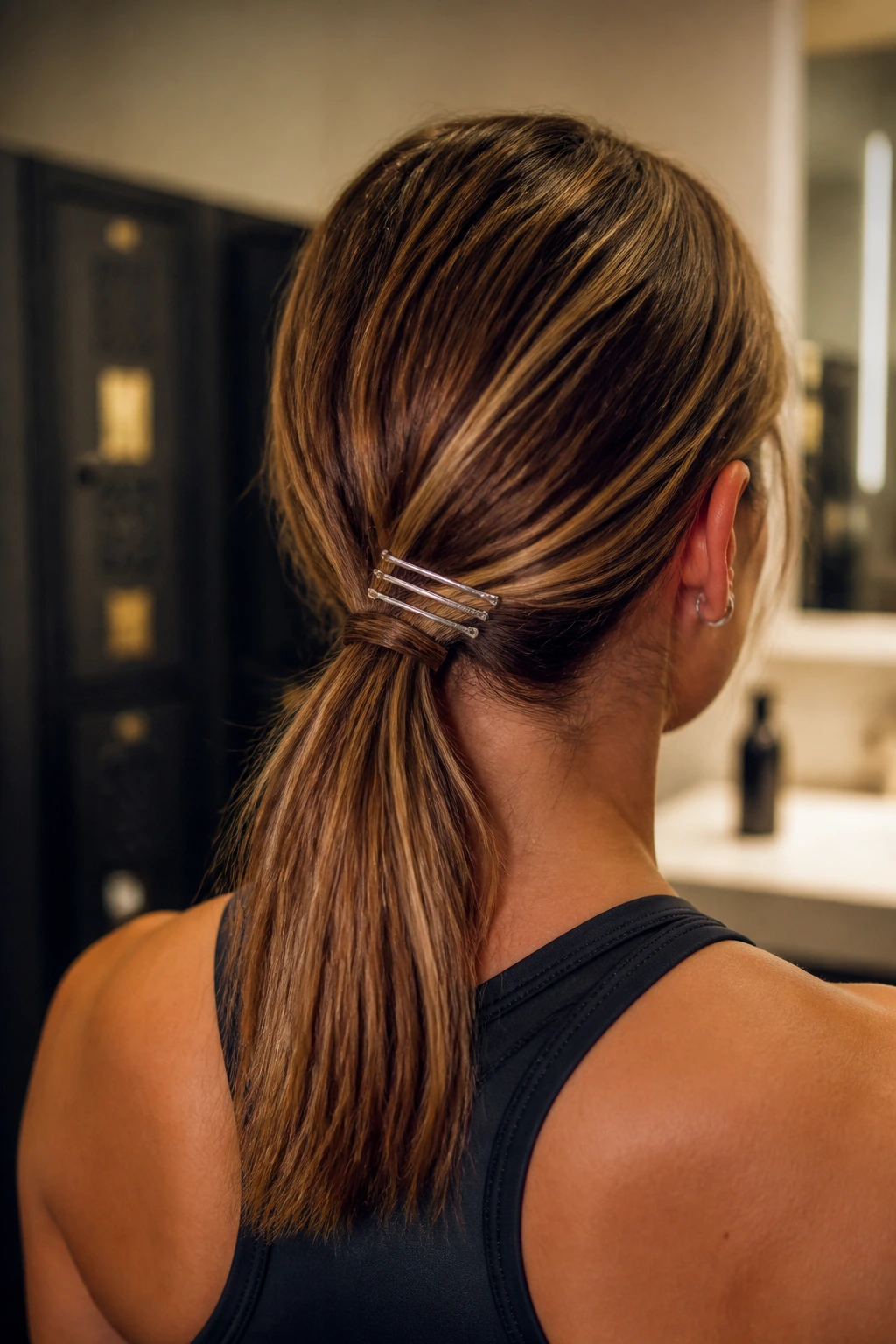
If you have a layered cut, you know the struggle of the “bottom layer” falling out of your ponytail. A stack of three to four brushed silver pins placed at the nape of the neck will keep those shorter pieces tucked securely against the rest of the ponytail. The brushed finish is critical here; high-shine silver can be slippery, but the micro-texture of a brushed finish helps the pins bite into the hair.
Avoiding “Pin Dig”
Nobody wants to feel sharp metal points against their scalp during a workout. Ensure your pins are “tipped”—look for the small rubber or rounded plastic balls at the ends. If they aren’t, you can dip the ends in a tiny bit of clear nail polish to create a protective barrier.
7. Gold-Plated Elastic Wraps
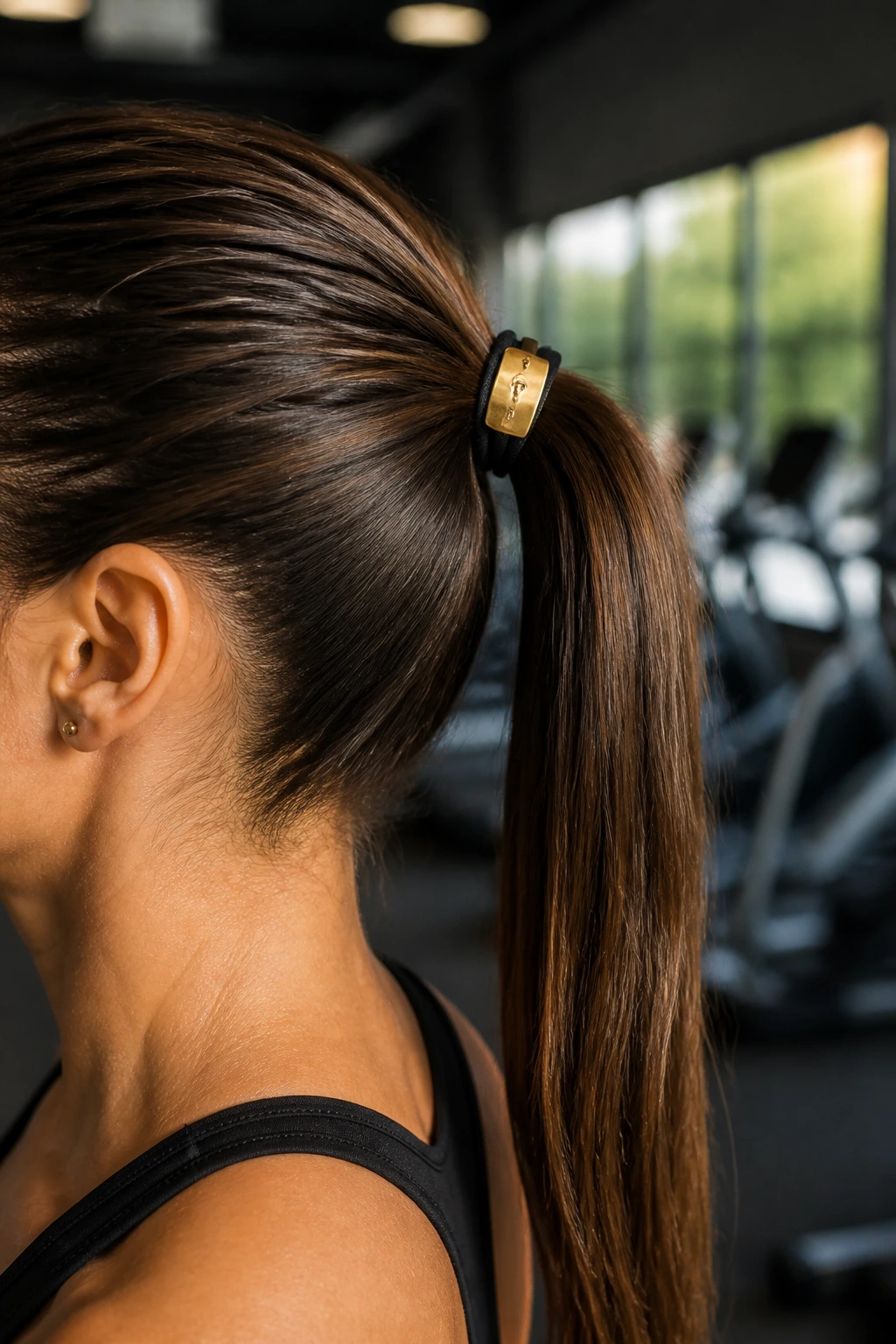
These are essentially elastics with a small, flat gold-plated metal plate attached to the center. They serve as a decorative end-cap for your ponytail. They look like expensive jewelry, but they are built to function as activewear accessories. The metal plate adds a small amount of weight, which actually helps keep the ponytail from flying around wildly during explosive movements like burpees or box jumps.
Why This Works for Cardio
The weight is balanced. By having that small bit of metal at the base of the ponytail, you minimize the “sway” of your hair, preventing it from whipping against your neck and creating friction.
8. Steel Spring Jaw Clips
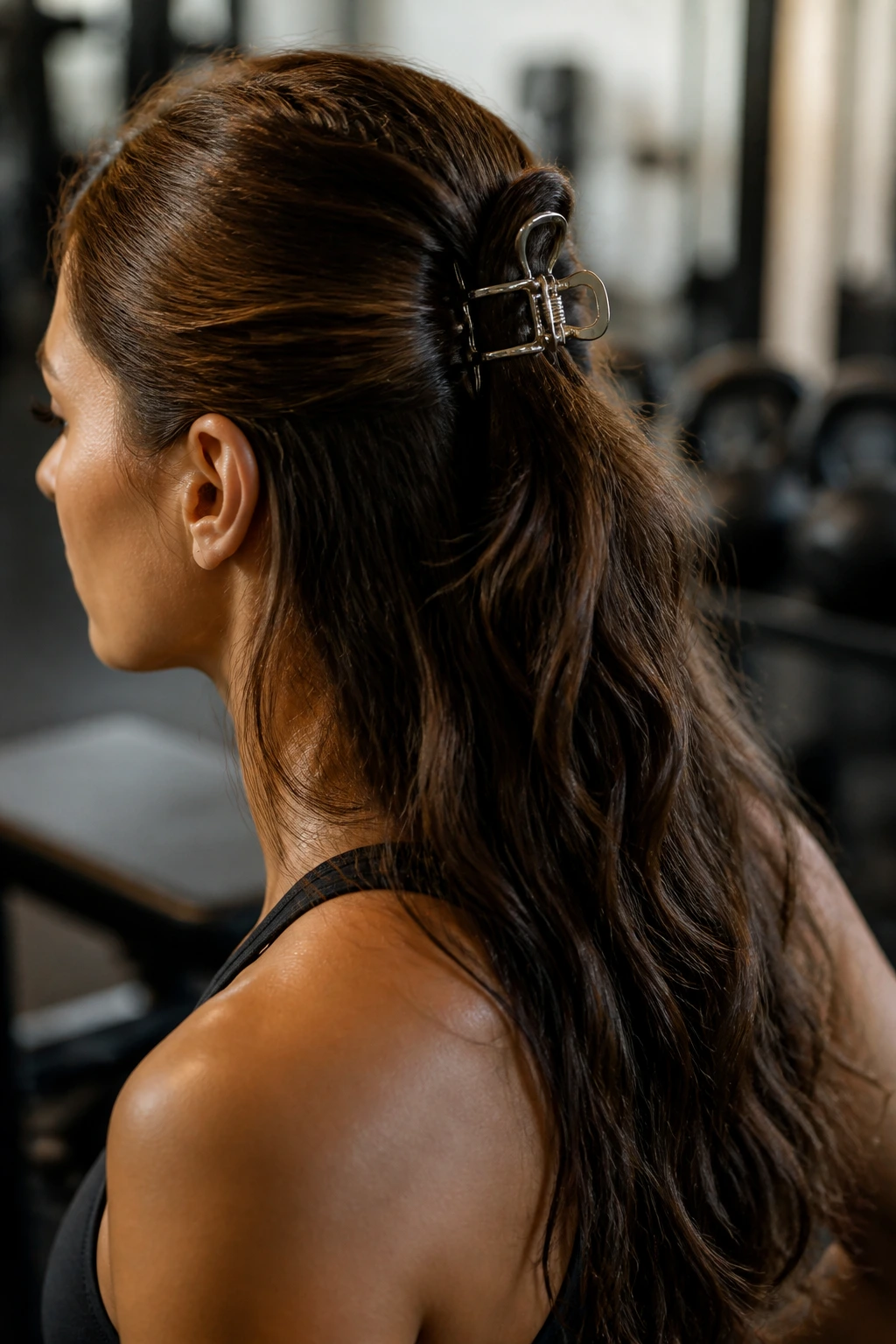
The classic claw clip is usually a disaster at the gym, but a reinforced steel spring jaw clip is an entirely different piece of engineering. These are smaller, flatter, and designed to hug the scalp rather than protruding outward. They are perfect for a “half-up, half-down” style that keeps sweat-drenched hair off your neck while you are focused on form.
The “Stay-Put” Test
Before your workout, test the clip by shaking your head side to side. If you feel movement, you need more hair inside the teeth. The steel material is much less prone to cracking under the pressure of a thick ponytail compared to acrylic clips.
9. Metallic Threaded Braid Ties
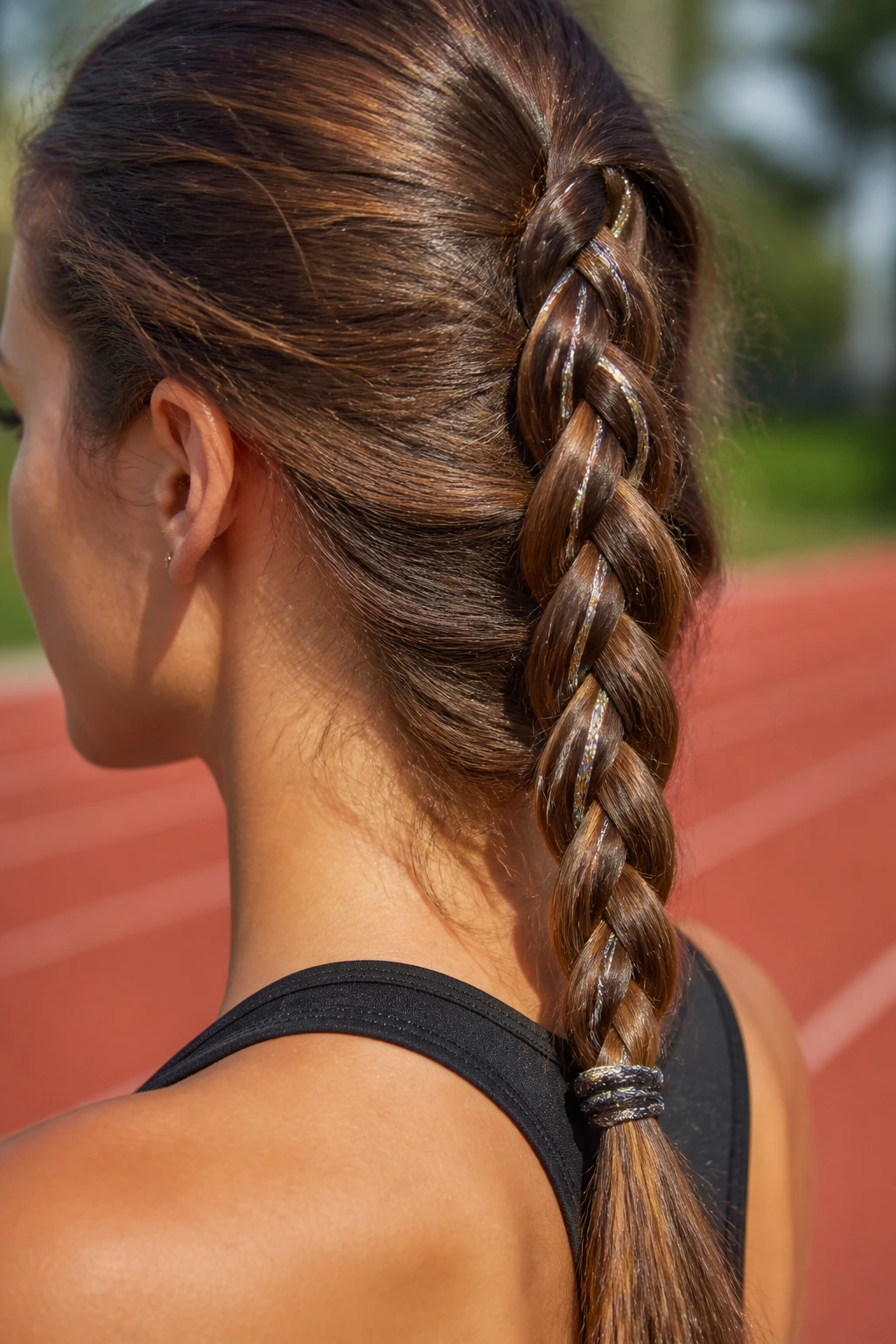
Sometimes the best solution is to incorporate the accessory directly into the style. Take a metallic-threaded cord—often found in gold or silver—and braid it into a tight three-strand braid. The metallic thread acts as a reinforcement, making the braid significantly more durable and less prone to stretching out.
Why Braiding Beats Ponytails
A braid is inherently more stable than a ponytail. By adding a metallic thread, you’re adding structural support that stops the braid from loosening. This is the gold standard for long-duration workouts like distance running or marathon sessions where you don’t want to adjust your hair once.
10. Brushed Brass Barrettes
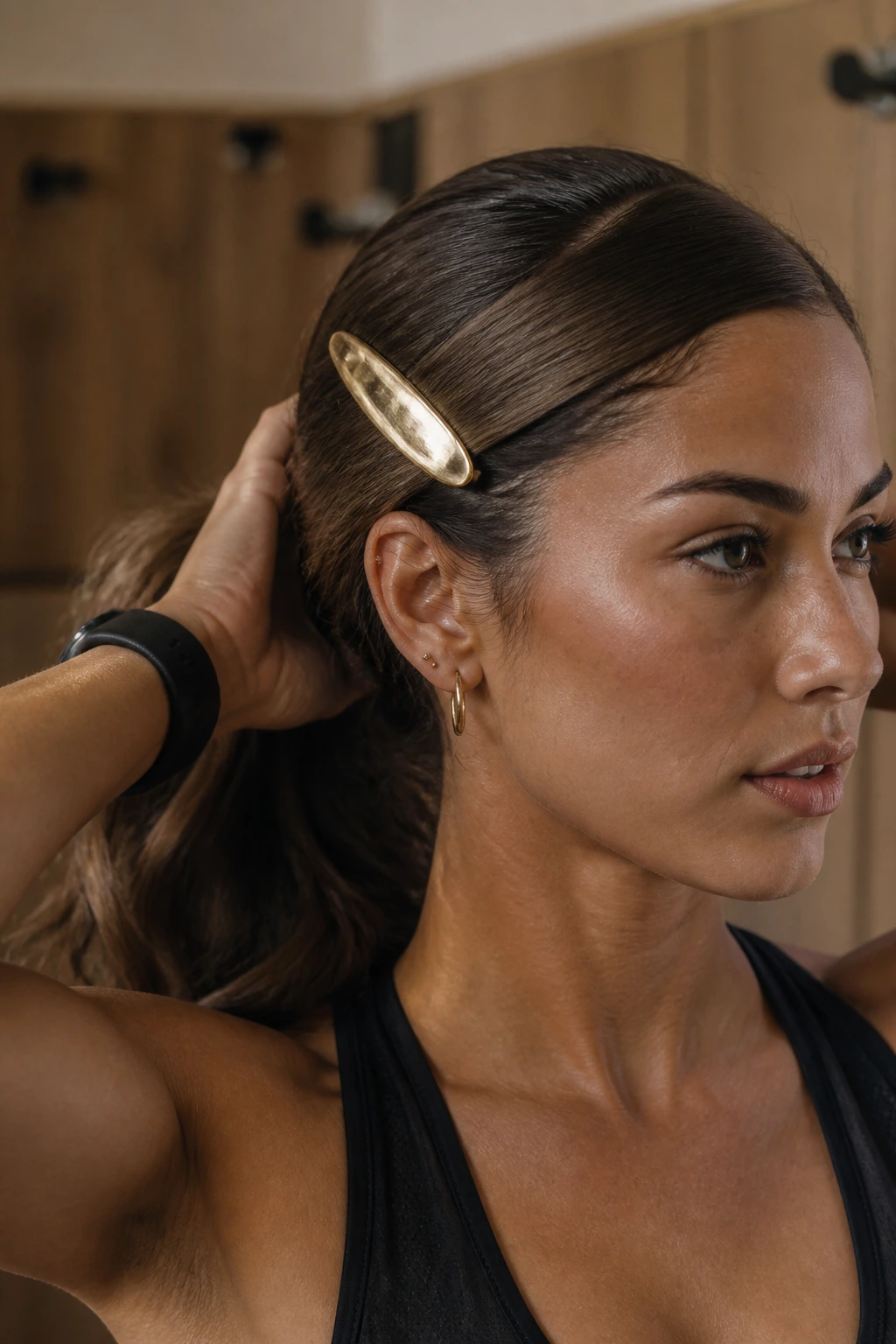
A thin, brushed brass barrette provides a sophisticated way to pull back side-swept bangs. Brass is heavier than aluminum or plastic, which is an advantage during high-movement workouts. The weight keeps the hair pulled taut against the head, preventing the “drift” that occurs with lighter, flimsier accessories.
Dealing with Sweat
Brass reacts to moisture, so wipe down your barrette after your workout to maintain the finish. A simple damp cloth is all you need. Do not store these in a damp gym bag; keep them in a mesh pocket where they can air out to prevent oxidation.
11. Silver-Tipped Bobby Pin Arch
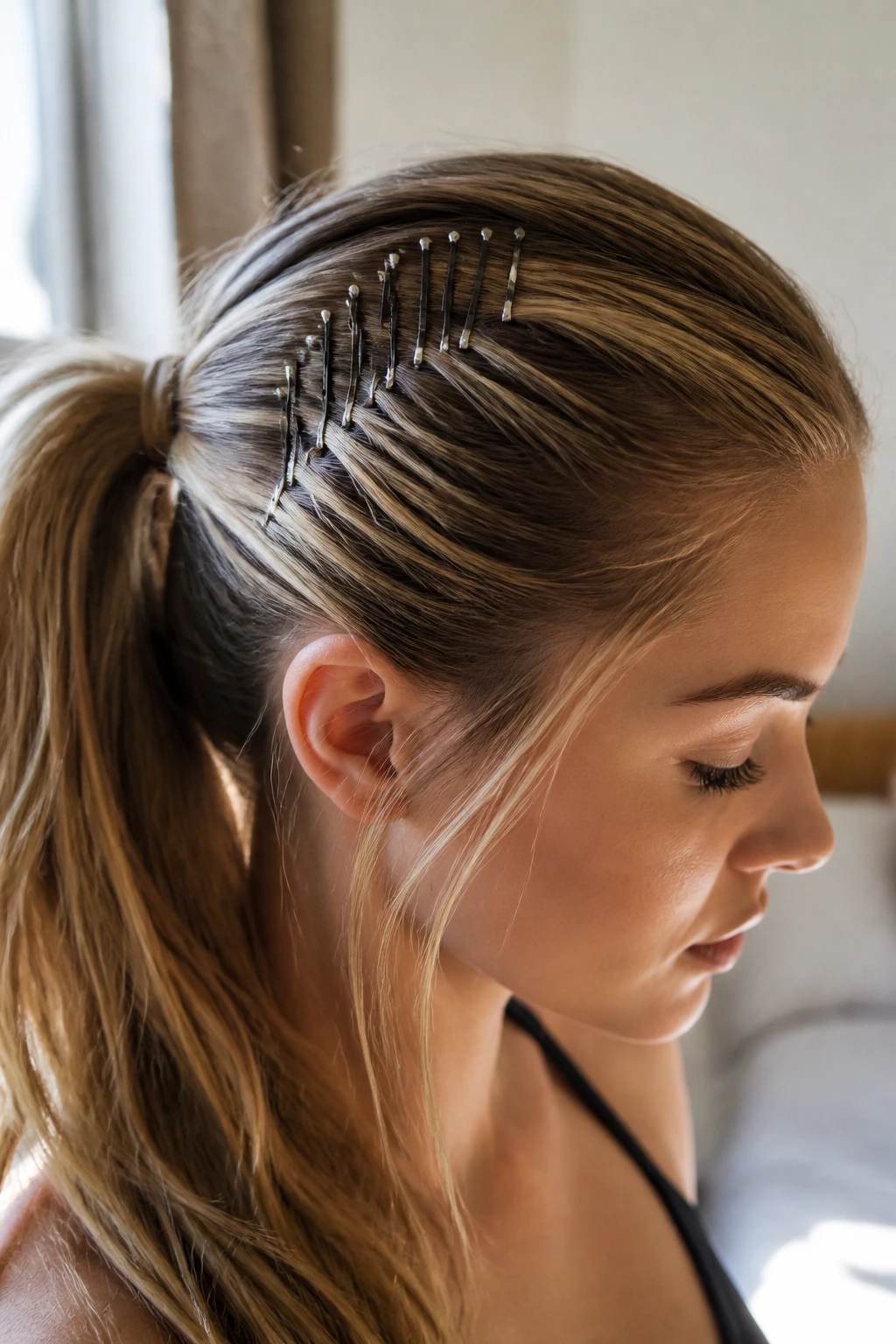
Creating an arch of silver-tipped pins along your part line is both functional and tidy. It’s a great way to manage hair that is in the “growing out” phase. The arch shape follows the curve of the skull, which makes the pins less likely to get caught on equipment.
Strategic Placement
Start the arch at your natural part and carry it down toward your temple. Use small, short pins rather than long, full-size pins to minimize leverage. The shorter the pin, the less it will shift when you move your head.
12. Gold Geometric Hair Slide
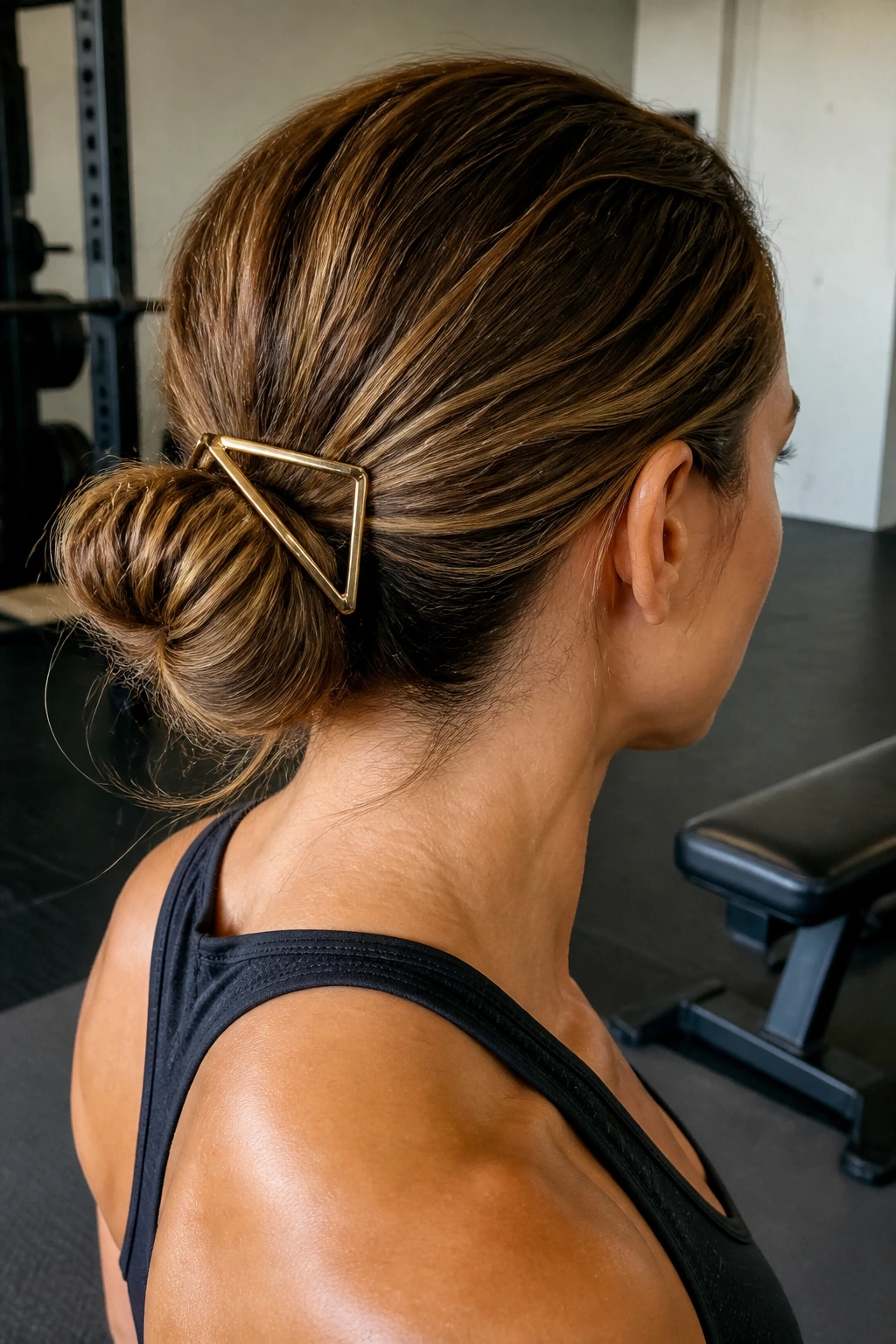
A hair slide is essentially a flat piece of metal that you pin into place. Unlike a barrette, it doesn’t snap; it uses friction. A gold geometric slide is perfect for a low bun. Because it is flat, it won’t interfere with head movements during bench presses or floor work where your head is against a pad or mat.
Friction Tactics
If you have very silky hair, a slide might slip. The trick is to spray the underside of the slide with a bit of dry shampoo or texturizing spray before inserting it. The grit from the spray acts as a temporary adhesive, keeping the gold slide locked in place until you hit the shower.
13. Oxidized Silver Bobby Pin Spikes
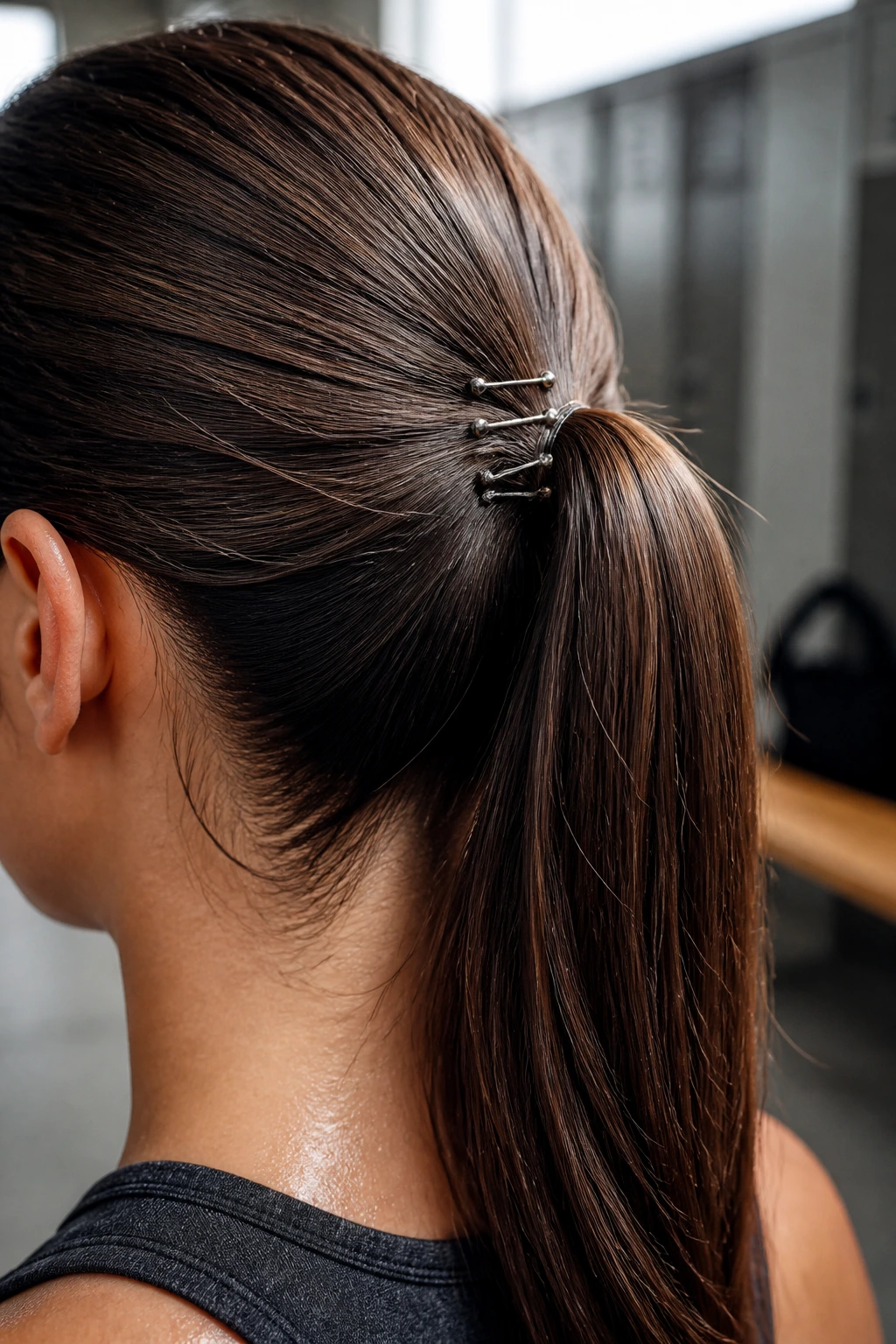
“Spiking” refers to the technique of pushing a bobby pin into the base of a ponytail so that the end sticks out slightly. It sounds dangerous, but when done with oxidized silver pins—which are slightly thicker—it provides a rock-solid anchor. It’s an edgy look that holds tight through HIIT circuits.
Safety First
Always ensure the pointed end of the pin is buried in the hair, not pointing outward toward your gym-mate or your own neck. The spike should act as a hidden anchor, not a weapon. Use these sparingly—two or three are enough to secure even the heaviest ponytail.
14. Copper Coil Bun Pins
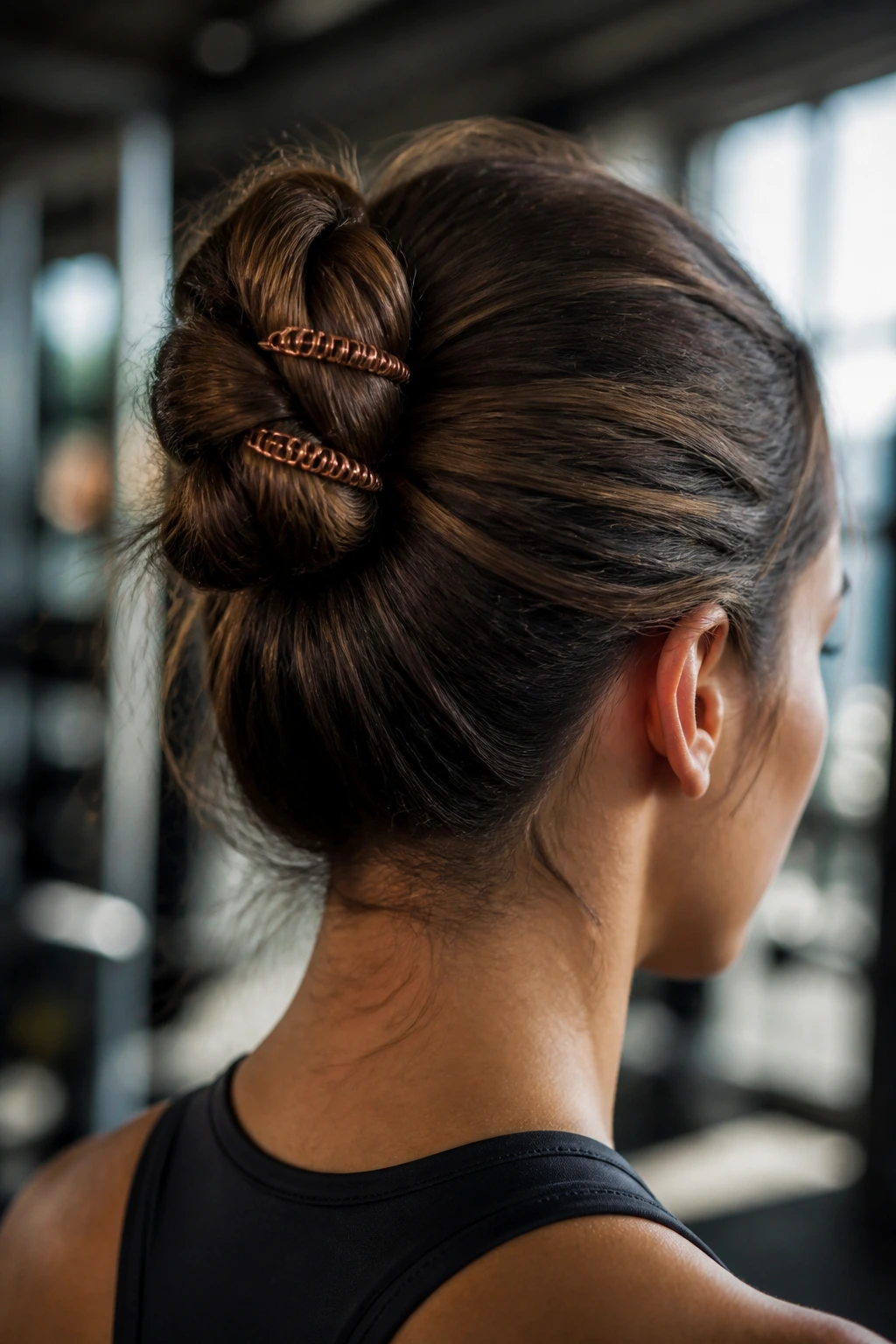
Think of these as the adult version of the spiral bun pins. Copper coils are firm and hold a bun securely with just two pins. Because they are metal, they don’t lose their shape. You simply twist them into the bun, and they lock the hair against the scalp.
The Strength of Metal
Unlike the foam bun-makers that can get heavy when wet, these copper coils keep the bun compact. A compact bun is a happy bun—it stays centered on your head and doesn’t swing around when you move. It’s perfect for the “messy bun” look that actually survives a workout.
15. Brushed Gold Metal Bead Elastic
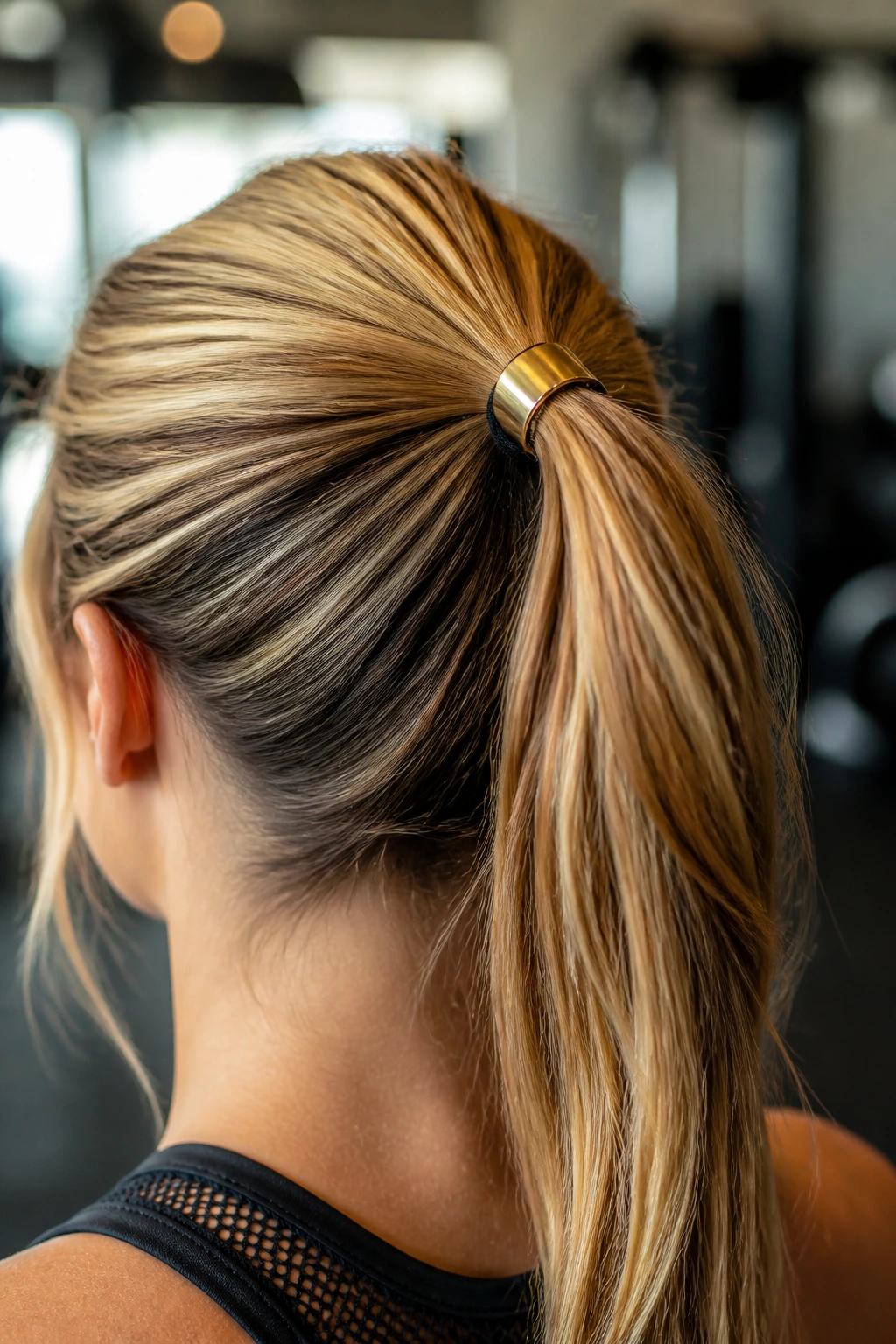
For a clean look, use an elastic that has a small, sliding metal bead. You can move the bead to the top of your ponytail once it’s tied. It’s subtle, but it acts as a visual anchor. The bead is usually heavy enough to keep the ponytail from bouncing excessively.
Maintenance Tips
The elastic inside these beads eventually stretches out. When that happens, do not throw away the metal bead. Keep a stash of these beads and simply thread them onto fresh, high-quality elastic bands. It’s a sustainable way to keep your gym hair looking polished for years.
16. Matte Silver Flat Bobby Pins
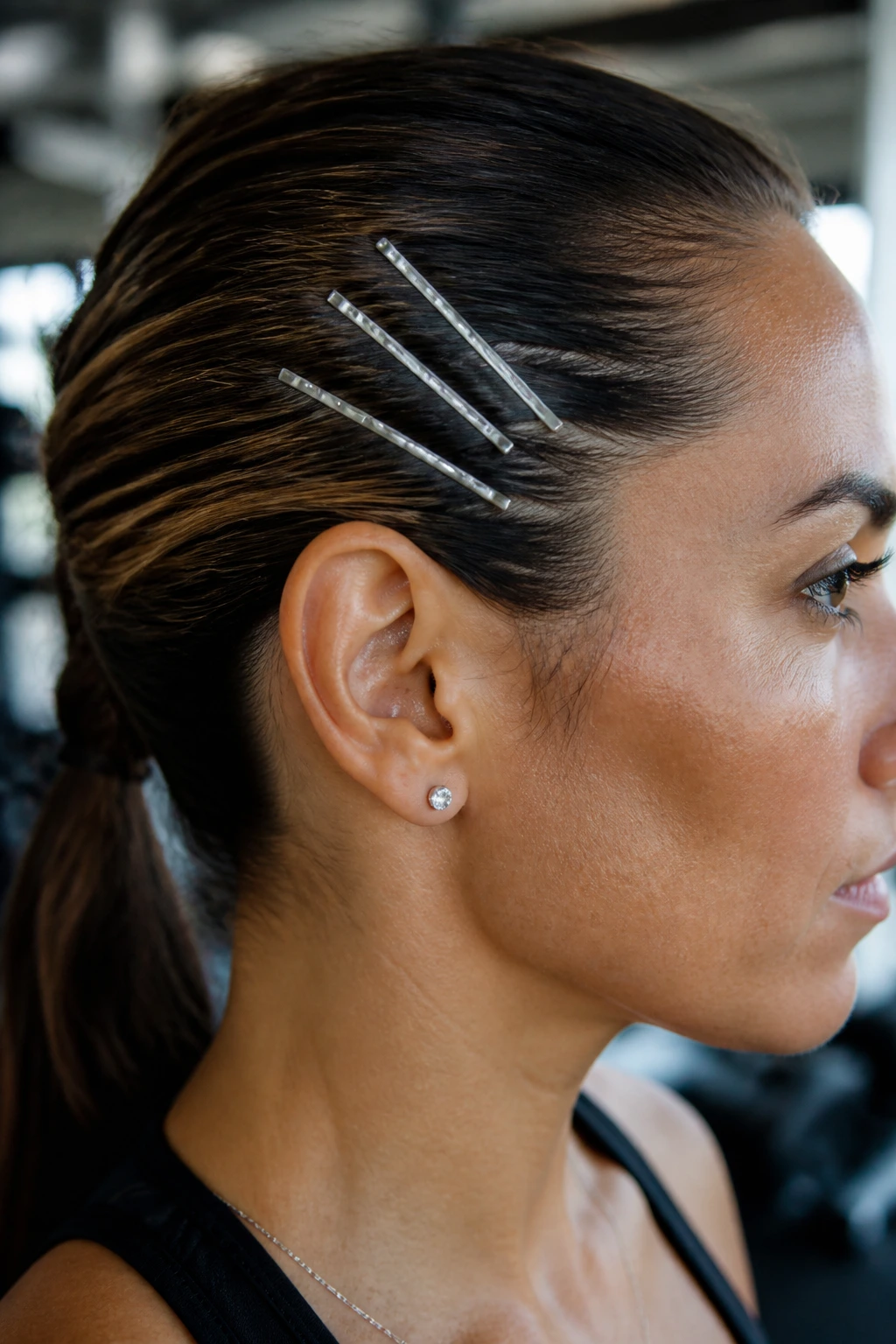
Matte silver is the most versatile metallic for a workout because it mimics the cool, clean aesthetic of modern gym equipment. Flat pins are better than rounded ones because they lay flush against the head. They are less likely to snag on your tank top straps or earbuds.
How to Prevent Hair Damage
Avoid sliding the pin into your hair when it is wet from sweat—that is when the cuticle is most vulnerable. Wait until you have finished your cooldown, or use a wide-tooth comb to ensure the pin slides in smoothly. This prevents the “breakage line” that often appears where metal pins usually sit.
17. Gold-Tipped U-Pins
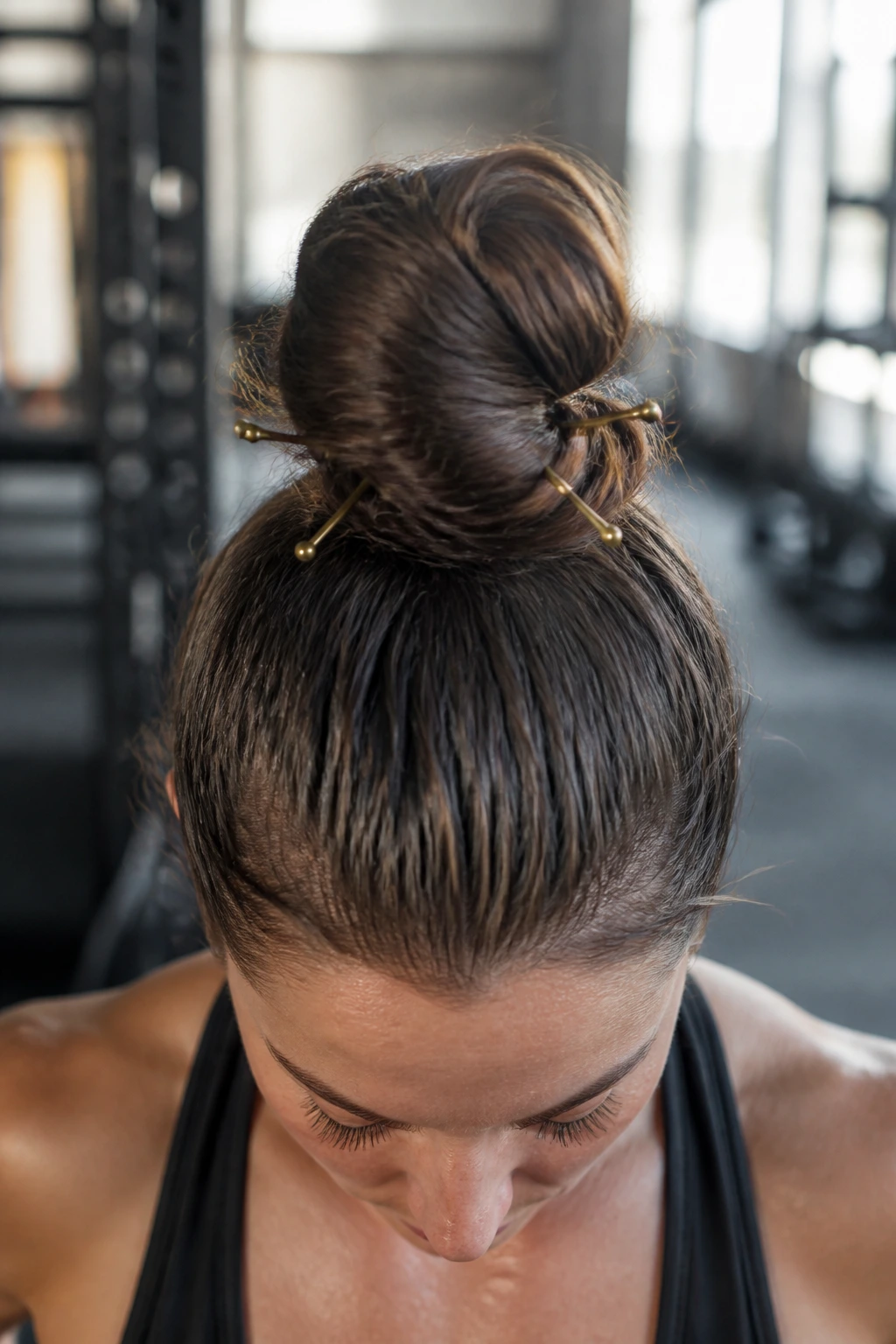
U-pins are the secret to a secure top-knot. Using gold-tipped U-pins, you can weave your hair into a firm, elevated knot that doesn’t rely on a tight elastic base. This is the healthiest way to wear your hair during a workout because it distributes the weight of the bun across the pins rather than pulling on one single point.
The “Weave and Lock” Technique
Insert the U-pin into the edge of your bun, catch a piece of hair from the scalp, and then weave it back into the bun. This “locking” action is what prevents the bun from loosening as you run or jump. The gold tips add a touch of luxury to an otherwise functional hairstyle.
18. Brushed Brass Bobble Ties
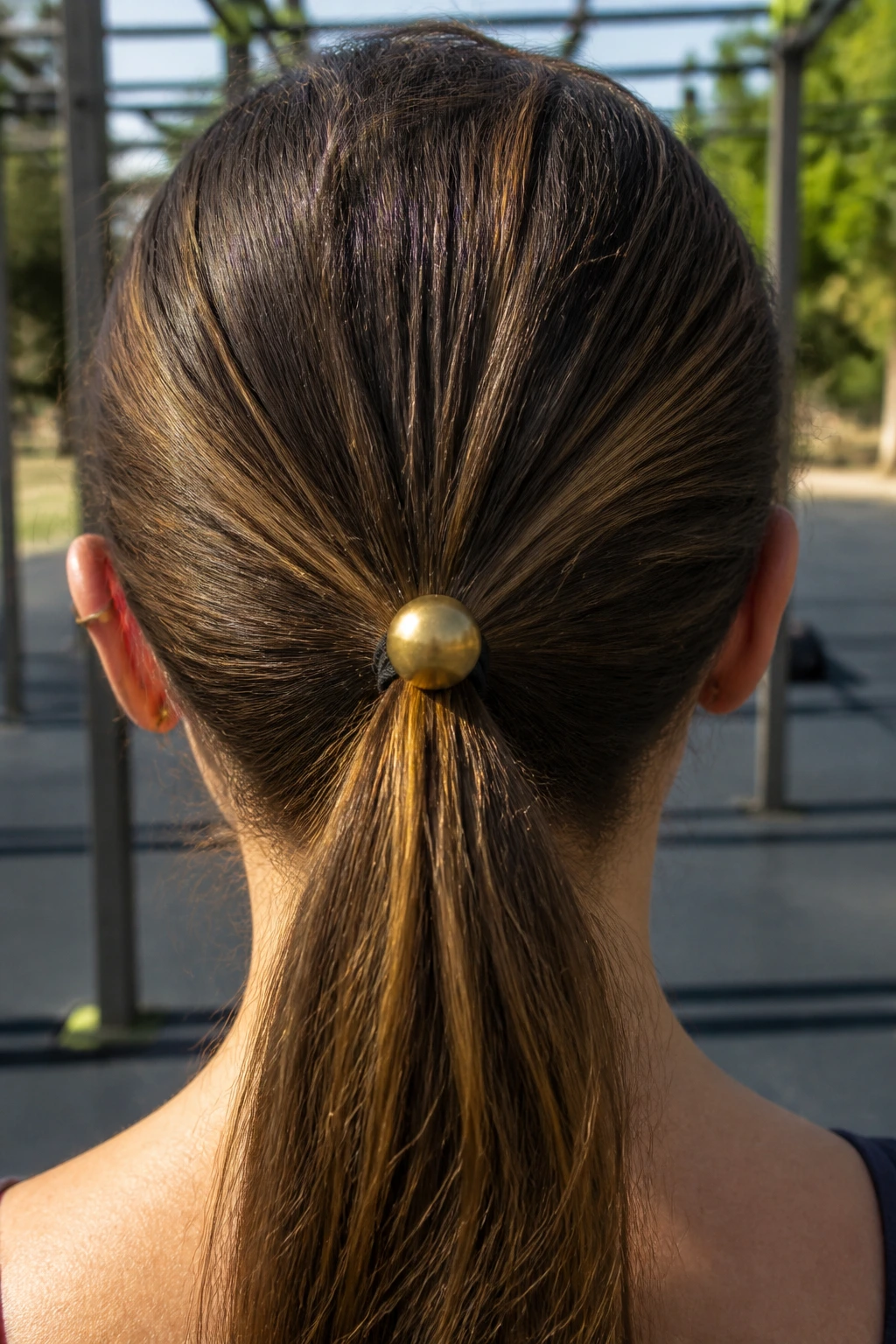
These feature a small brass sphere on an elastic band. The brass sphere acts as a counterweight. If you are doing activities that involve a lot of forward-and-back movement, having a small, solid weight at the base of your ponytail can help stabilize it.
Why They Feel Different
The brass is cool to the touch, which can be surprisingly refreshing when you’re mid-workout. It sounds trivial, but the sensory experience of a cooling metal accessory against the nape of your neck can provide a tiny boost of comfort during high-intensity intervals.
19. Silver Geometric Side Clips
If you have shorter layers, small silver geometric clips are your best friend. Use a pair of them to hold back the sides of your hair. They stay put better than pins because they have a hinge, which creates a more secure “bite” on the hair.
Hinge Strength
Always check the hinge tension before buying. If the hinge feels loose or “gappy,” it won’t hold through a workout. You want a hinge that feels slightly stiff to open; that stiffness is a direct indicator of its holding power.
20. Oxidized Copper Bobby Pin Web
This is a more advanced technique. By weaving a web of oxidized copper pins over the crown of your head, you create a structure that holds down a large volume of hair. This is perfect for those who wear their hair down and want to keep it out of their face without a full ponytail.
Volume Control
This look is great for “hair-down” workouts like walking, light yoga, or weightlifting. The copper web keeps the hair off the ears and temples, which is where you sweat the most. It looks intricate but takes less than a minute to execute once you have the technique down.
21. Matte Gold Metal Band
A thin metal band with a matte finish can keep hair back during yoga or stretching. Ensure it has rubber-coated ends to prevent it from digging into your ears—that is the most common reason people give up on headbands. A matte finish is better than a shiny one because it doesn’t reflect the gym lights into your eyes during floor poses.
Band Tension
If the band is too tight, it will cause a headache. If it’s too loose, it will fall off during a downward dog. Look for brands that offer “adjustable” metal bands, which allow you to slightly bend the band to match the contours of your skull.
22. Brushed Silver Hair Screw
Hair screws are like tiny, industrial-grade metal corkscrews. You twist them into your hair, and they hold with incredible tenacity. A brushed silver version is subtle and stylish. They are the strongest way to hold a bun, bar none.
Why They Are Superior
They don’t put any tension on the ponytail base. You are essentially anchoring the hair to itself. If you have thick or heavy hair, these are the only thing you will ever need. They are almost indestructible, and because they are metal, they don’t break or fray.
Final Thoughts
The transition from “gym hair” to “polished gym style” is largely about moving away from the convenience of flimsy plastic toward the durability of metal. When you invest in brushed gold, oxidized copper, or high-grade steel, you are not just buying an accessory; you are buying a performance tool. These items stay in place, they don’t absorb sweat, and they offer a sleekness that synthetic materials simply cannot match.
Remember that your hair is a part of your performance gear. Just as you wouldn’t wear ill-fitting shoes for a run, you shouldn’t settle for hair ties that fail the moment you start to break a sweat. By selecting metallic accents that work with your hair rather than against it, you ensure that your focus stays exactly where it belongs: on the movement, the set, and the finish line. Keep your accessories dry, your pins tipped, and your foundations secure, and you will find that your hair becomes one less thing to worry about during your next workout.