

The morning bell rings, and you have exactly seven minutes to get from your locker to first-period algebra. But your mind is already on the three o’clock whistle, the squeak of sneakers on hardwood, and the defense you will be running during after-school practice. You need a hairstyle that can survive a grueling history pop quiz, lunch in a crowded cafeteria, and two solid hours of box-outs, suicide drills, and fast breaks.
Most school-day hairstyles look great in front of the bathroom mirror but fall apart the moment you sprint past the half-court line.
Nothing is more distracting than a stray bobby pin stabbing your scalp while you are driving the lane, or a ponytail that slowly slides down your neck until it is a sweaty, tangled mess. You cannot play your best game when you are constantly reaching up to adjust a loose hair tie. You need security, but you also want to look like yourself when walking down the hallways between classes.
Finding that balance between court-ready security and classroom style is not about luck. It comes down to proper tension distribution, the right choice of hair accessories, and a solid understanding of how different hair textures behave under sweat and friction.
Whether your hair is fine and slippery, thick and heavy, or beautifully coily, there is a way to lock it down without causing headaches or hair breakage. Let us look at the best ways to keep your hair secure, starting with the gear that makes it happen, before we dive into the specific styles.
Choosing the Right Hair Elastic for High-Impact Sports
The classic yellow-cardboard pack of cheap, metal-clasped hair ties is the enemy of athletic hair care. Those tiny metal bars catch on individual hair strands, snapping them at the root during rapid movement. When you are running up and down the court, your ponytail bounces with several times the force of gravity, putting immense pressure on a single point of your hair.
To prevent tension breakage, switch to seamless, high-stretch nylon bands or thick cotton-wrapped elastics. They distribute the squeeze across a wider surface area.
For thick, heavy, or textured hair, silicone-coated hair ties or spiral cord bands are excellent alternatives. Silicone bands grip the hair shaft without sliding, meaning you do not have to pull them painfully tight to get a secure hold. Spiral bands, which look like old telephone cords, lock into curly and coily patterns naturally.
They hold hair firmly during intense sprints but pull out easily without ripping your curls when practice is over.
If you have fine hair that constantly slips out of standard ties, try double-banding. Use a thin, clear polyurethane elastic for the base of your ponytail to lock the structure in place, then wrap a thicker, fabric-covered band over the top for weight distribution. This prevents the sag that usually happens by the end of the third quarter.
Preparing Your Hair the Night Before the Big Game
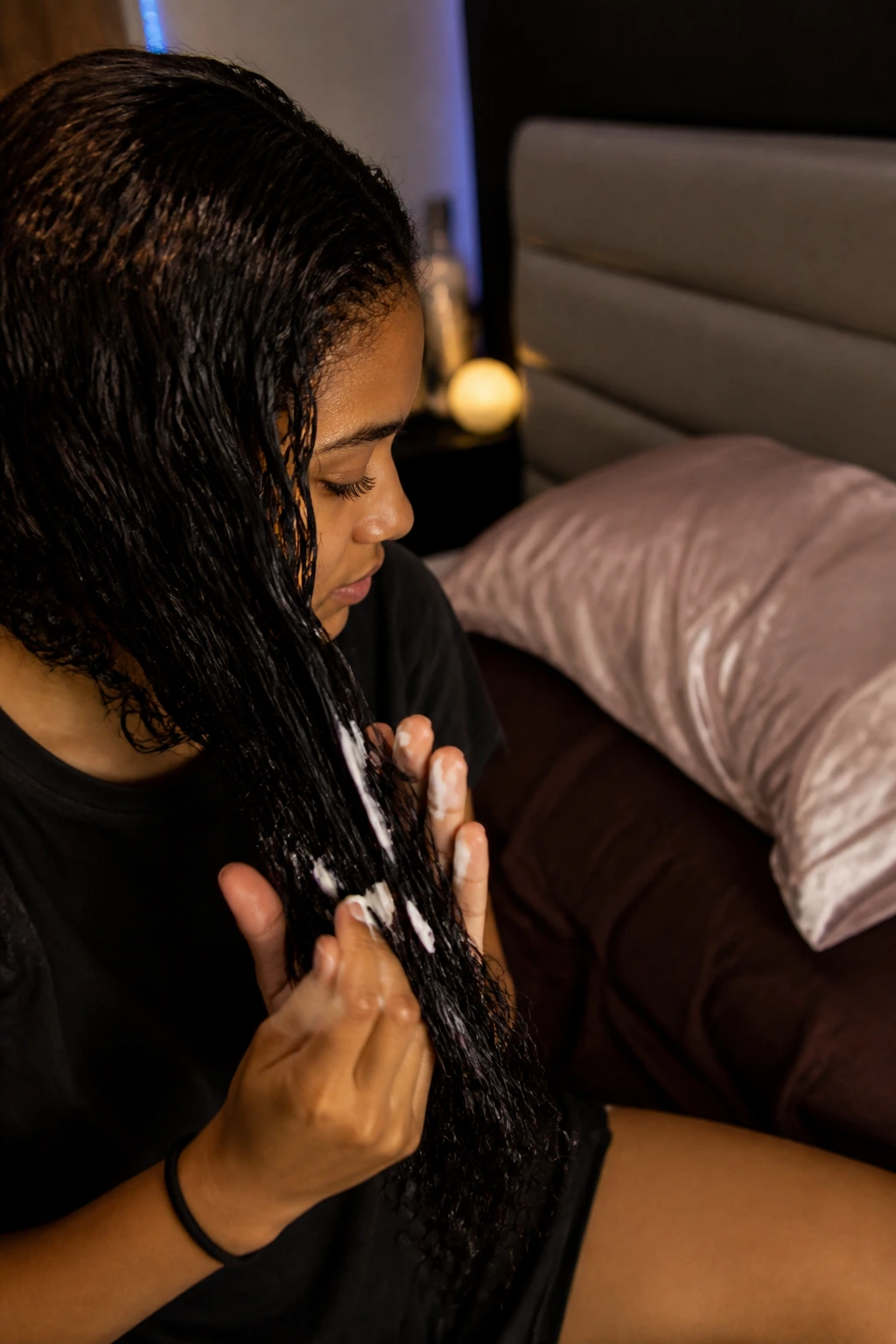
The secret to a quick school-morning routine is doing the heavy lifting before your head hits the pillow. Trying to braid damp, freshly washed hair at six in the morning usually results in frizzy flyaways and loose sections that fall apart by lunchtime. Instead, wash your hair the night before and apply a lightweight, leave-in conditioner or a small amount of sweet almond oil to damp strands.
This moisturizes your hair and provides enough grip for easy styling when you wake up.
Sleeping on a silk or satin pillowcase is another simple change that yields major benefits for student-athletes. Standard cotton pillowcases act like tiny sponges, sucking moisture out of your hair and causing friction as you toss and turn. This friction roughs up the hair cuticle, leading to morning tangles that are painful to brush out.
A smooth satin surface lets your hair glide easily, preserving your natural curl pattern or keeping your braids neat for the next day.
If you plan on wearing braids or twists, section your hair and do the parting the night before. You can secure the sections with loose satin scrunchies. In the morning, you will only need to do the actual braiding, saving you valuable minutes when you are trying to catch the school bus.
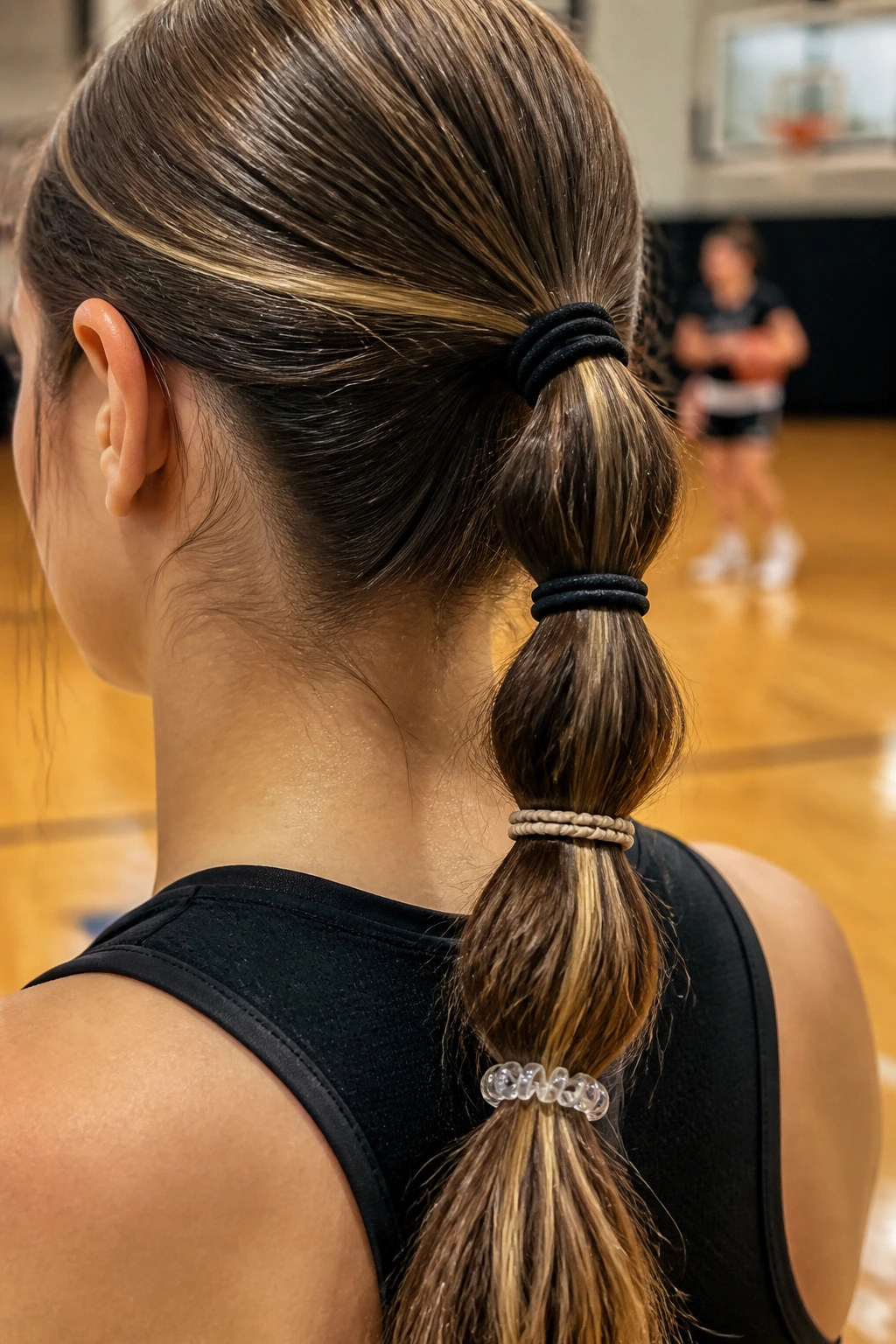
1. The Triple-Banded Bubble Ponytail
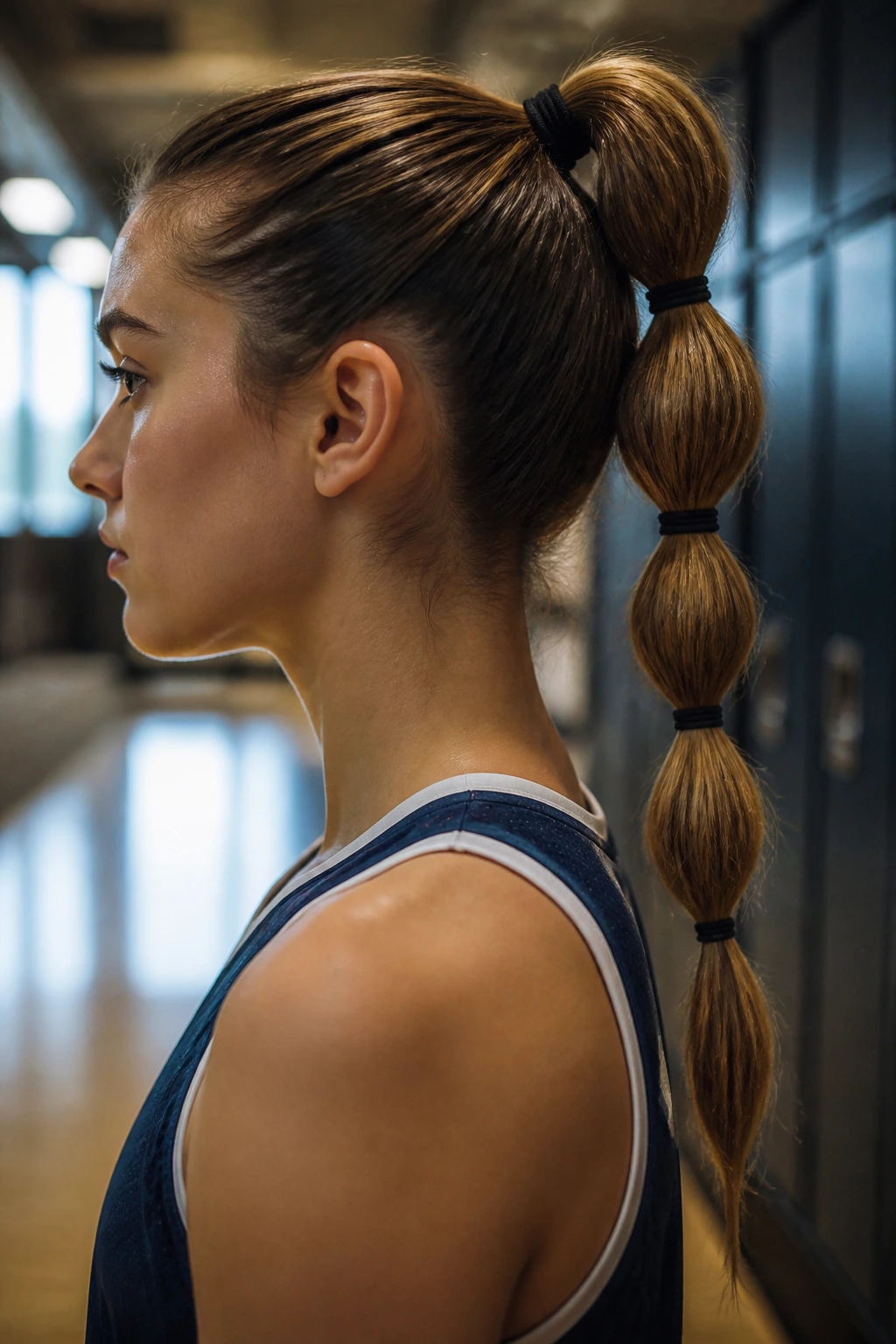
This style looks complicated but takes less than five minutes once you get the rhythm down. It offers incredible security because it anchors the hair at multiple points along the length of the ponytail, preventing the whip-like snapping motion that causes mid-game tangles.
Why the Bubble Ponytail Stays Secure
Standard ponytails put all the stress on a single elastic band at the crown of your head. By adding extra elastics down the length, you divide the weight of your hair into manageable sections. If one section starts to loosen during a fast break, the others keep the ponytail from unraveling.
Quick Styling Checklist
- Start with a high, slicked-back ponytail secured with a thick nylon band.
- Apply a small amount of water-based styling gel to the length of the tail to smooth down stray hairs.
- Place a small elastic band two inches below the main hair tie, then gently pull the hair between the bands outward to create a rounded bubble.
- Repeat this spacing down the remaining length of your hair, using three to five elastics depending on your hair length. Pro tip: Use small, colorful silicone bands that match your school team colors for a bit of extra team spirit on game days.
2. Double French Braids with Low Buns
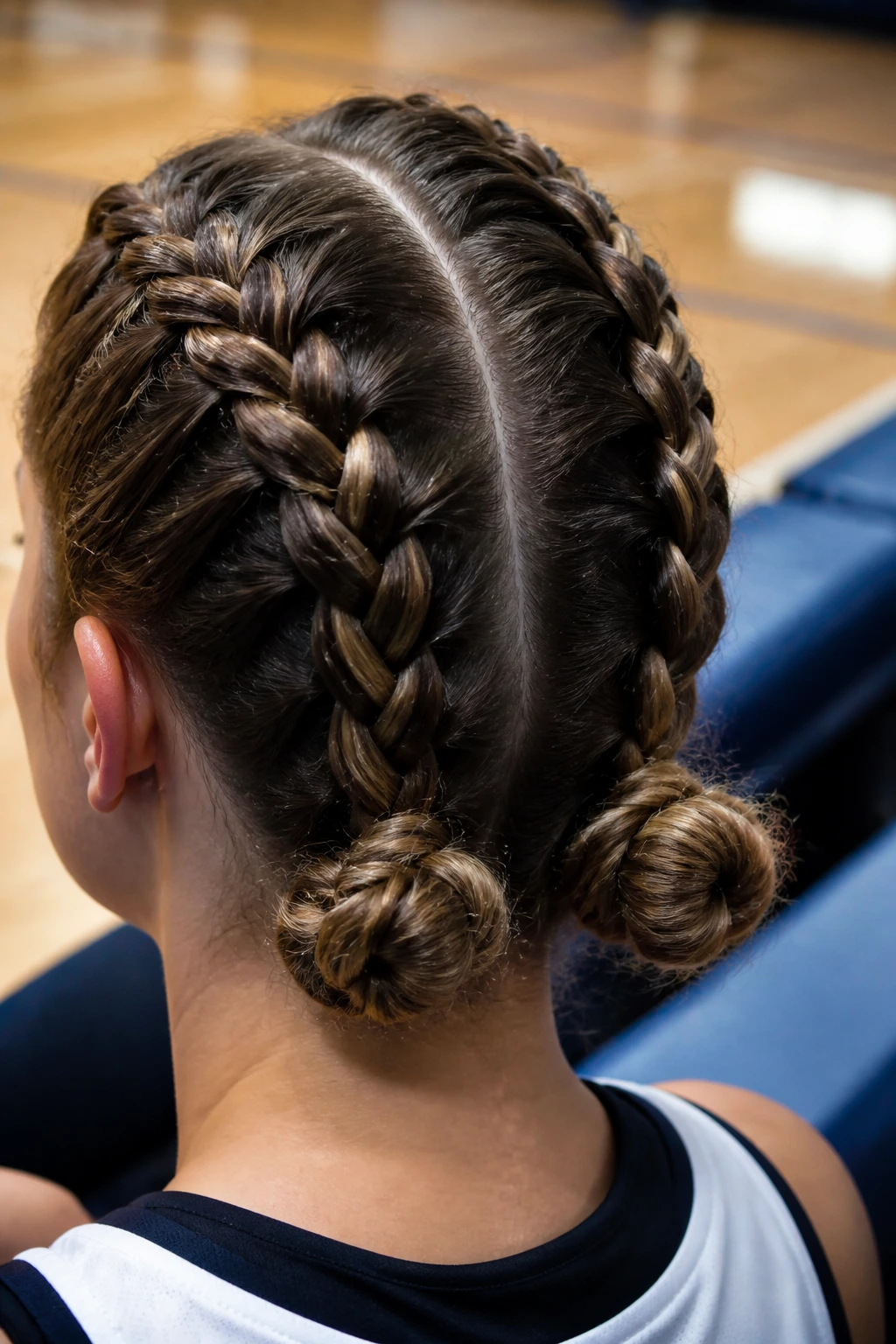
If you want a classic look that keeps every single strand of hair off your face and neck, this is your best option. It is a favorite among point guards who need completely unobstructed peripheral vision when scanning the court for an open teammate.
The magic of this style lies in how it hugs the scalp. By French braiding the hair from the hairline down to the nape of the neck, you eliminate the bounce that typically pulls hair loose.
Once you reach the neck, you twist the remaining hair into two tight, low buns. Secure them with u-shaped hair pins or another elastic band to ensure they do not budge when you are diving for a loose ball.
This hairstyle is particularly great for medium-to-long hair that is too heavy for a high bun. By splitting the hair into two low buns, you balance the weight across the base of your skull, preventing the tension headaches that often come from high, heavy ponytails.
3. The Dutch Crown Braid
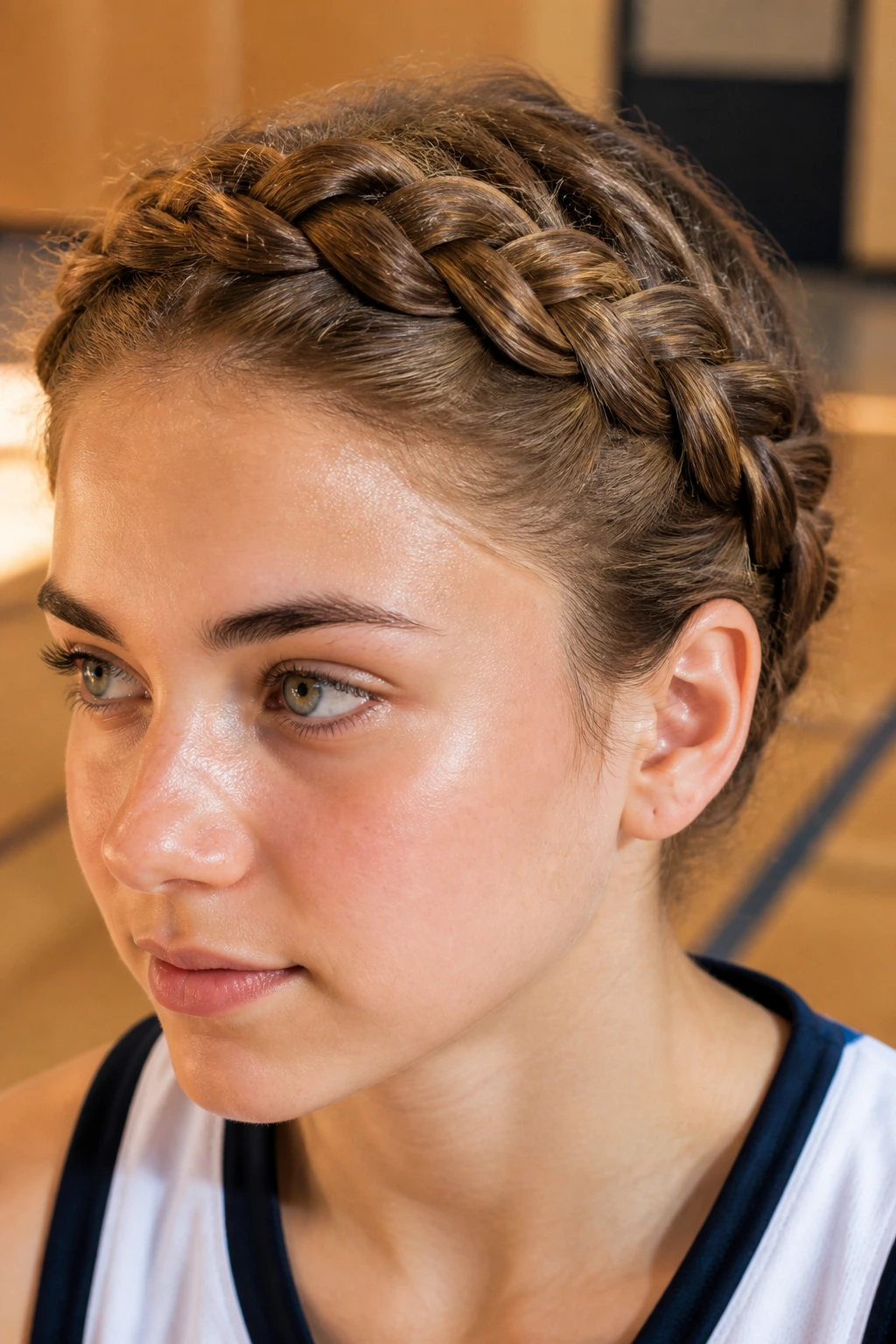
How do you keep short layers or bangs from falling into your eyes without using a dozen metal bobby pins? The Dutch crown braid is the answer. It acts like a built-in headband made of your own hair, wrapping around the perimeter of your head to trap shorter strands before they can escape.
What Makes It Different from a French Braid?
Unlike a French braid where you cross strands over the center, a Dutch braid requires you to cross the strands under the center. This creates a raised, three-dimensional braid that sits on top of your hair. It looks incredibly neat and holds short layers much tighter than a flat French braid.
How to Style It for School and Sport
- Create a deep side part using a rat-tail comb for clean lines.
- Start braiding along your hairline, pulling in small sections from both the front hairline and the crown.
- Follow the curve of your ear down to the nape of your neck, keeping the tension firm but not painful.
- Finish the braid to the ends, then wrap it around the back of your head and pin it flat against the scalp.
4. High Pony with Slicked-Back Base
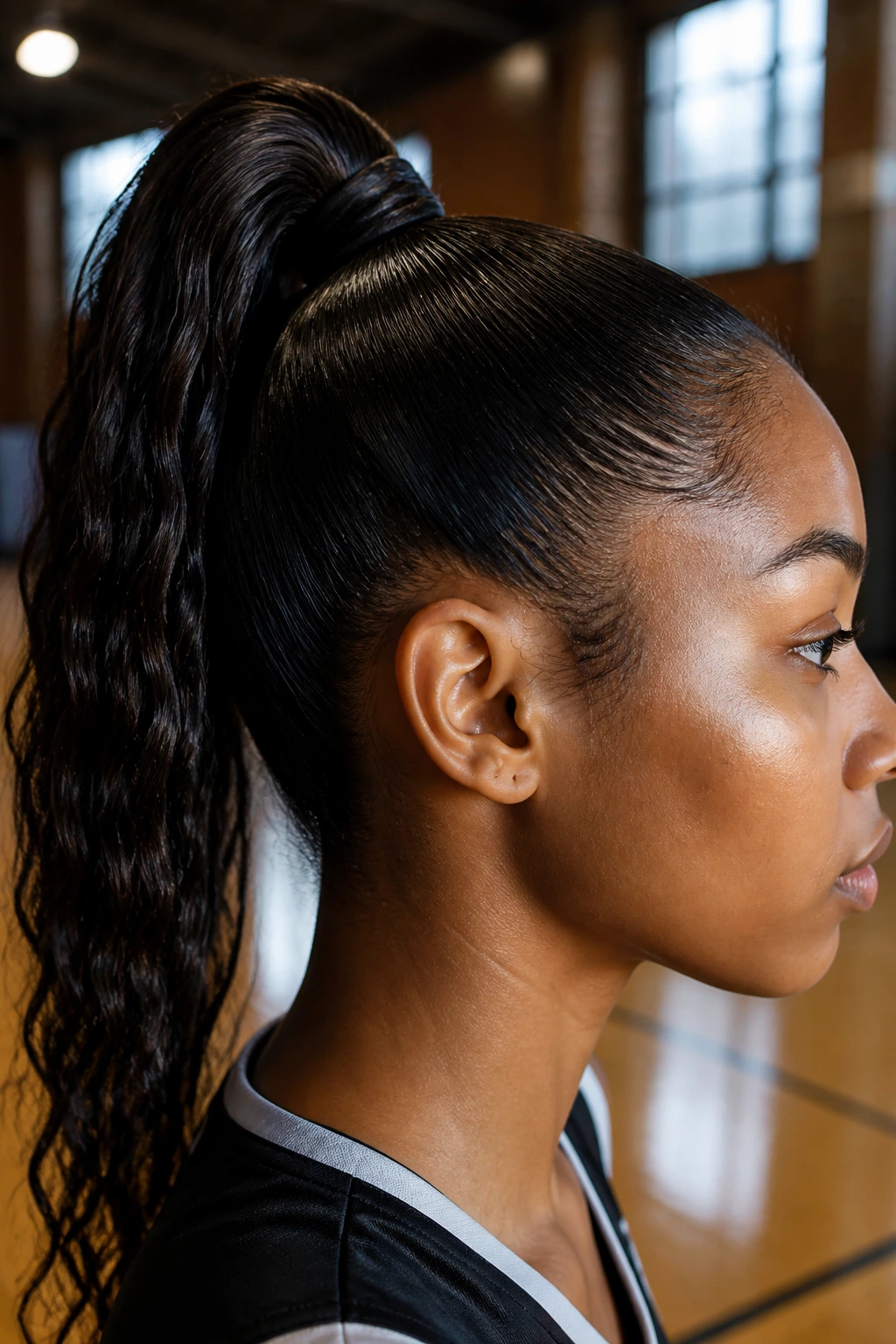
This is the ultimate confidence booster for court days. It is sleek, aggressive, and keeps your hair flying behind you rather than in your face.
The secret to making this last through a physical game is a two-step securing process. First, section off the top crown portion of your hair and tie it off.
Next, pull the remaining bottom and side sections up to meet that first ponytail, securing them both together with a second, heavy-duty elastic. This prevents the bottom of the ponytail from sagging as you run.
Use a boar-bristle brush and a dab of flaxseed gel to smooth the base. This specific gel provides a firm hold without drying out your hair or leaving flaky white residue on your collar by afternoon classes.
5. The Half-Up Top Knot with Secured Sides
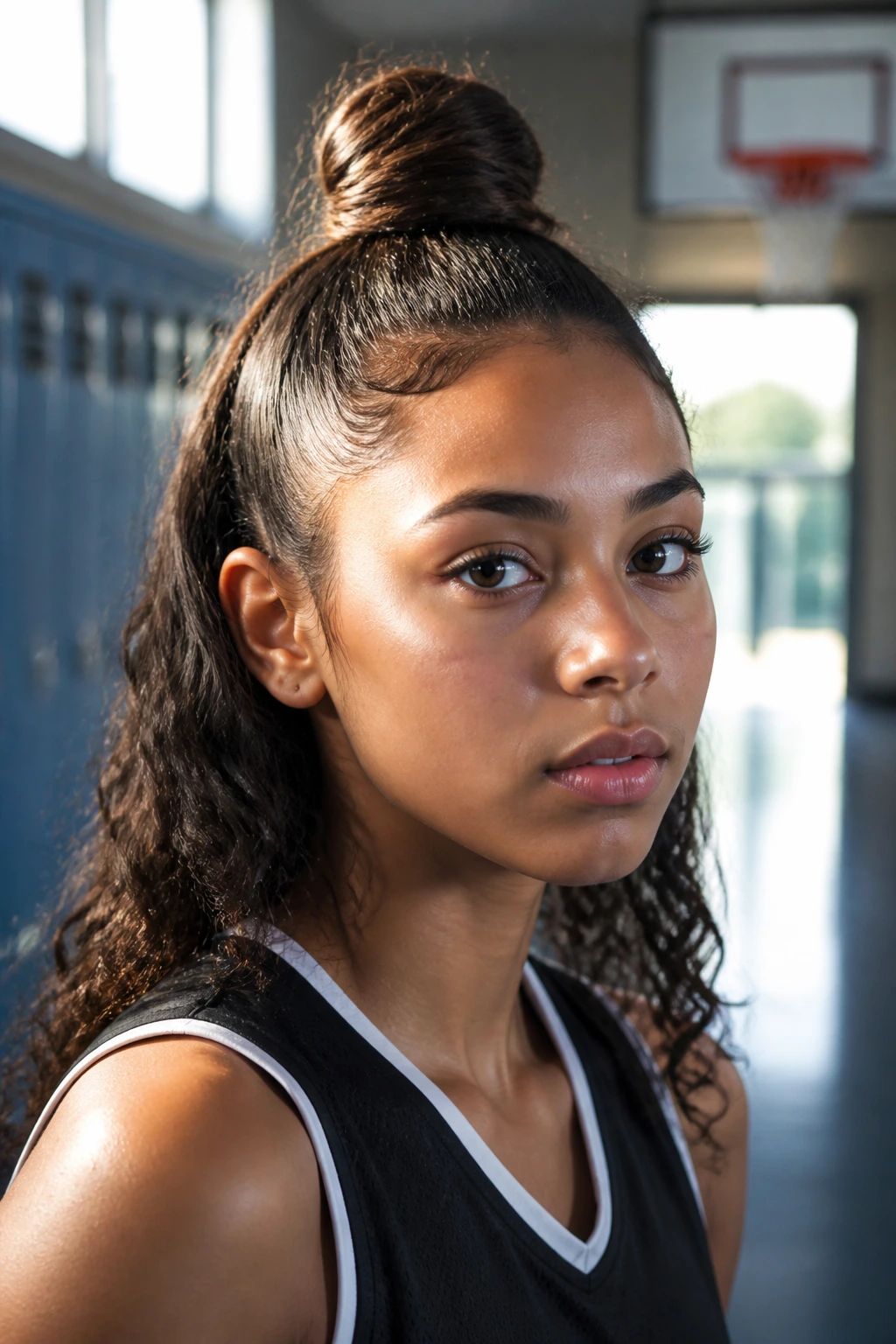
For days when you have a light shoot-around rather than a full scrimmage, this style offers a perfect bridge between casual school style and light athletic utility. It keeps the hair around your face locked down while letting the back fall naturally.
Start by parting your hair from ear to ear across the top of your head. Pull this top half into a high, tight ponytail, then twist the length around the base to form a compact bun. Secure this bun with a spiral hair tie to minimize scalp tension.
The sides of your hair are often the first to fall loose when you sweat. To prevent this, apply a small amount of lightweight pomade to your temples and brush them back toward the bun.
This style works beautifully for those with curly or coily textures, as it showcases your natural pattern in the back while keeping your eyes completely clear of hair.
6. Double Space Bun Twists
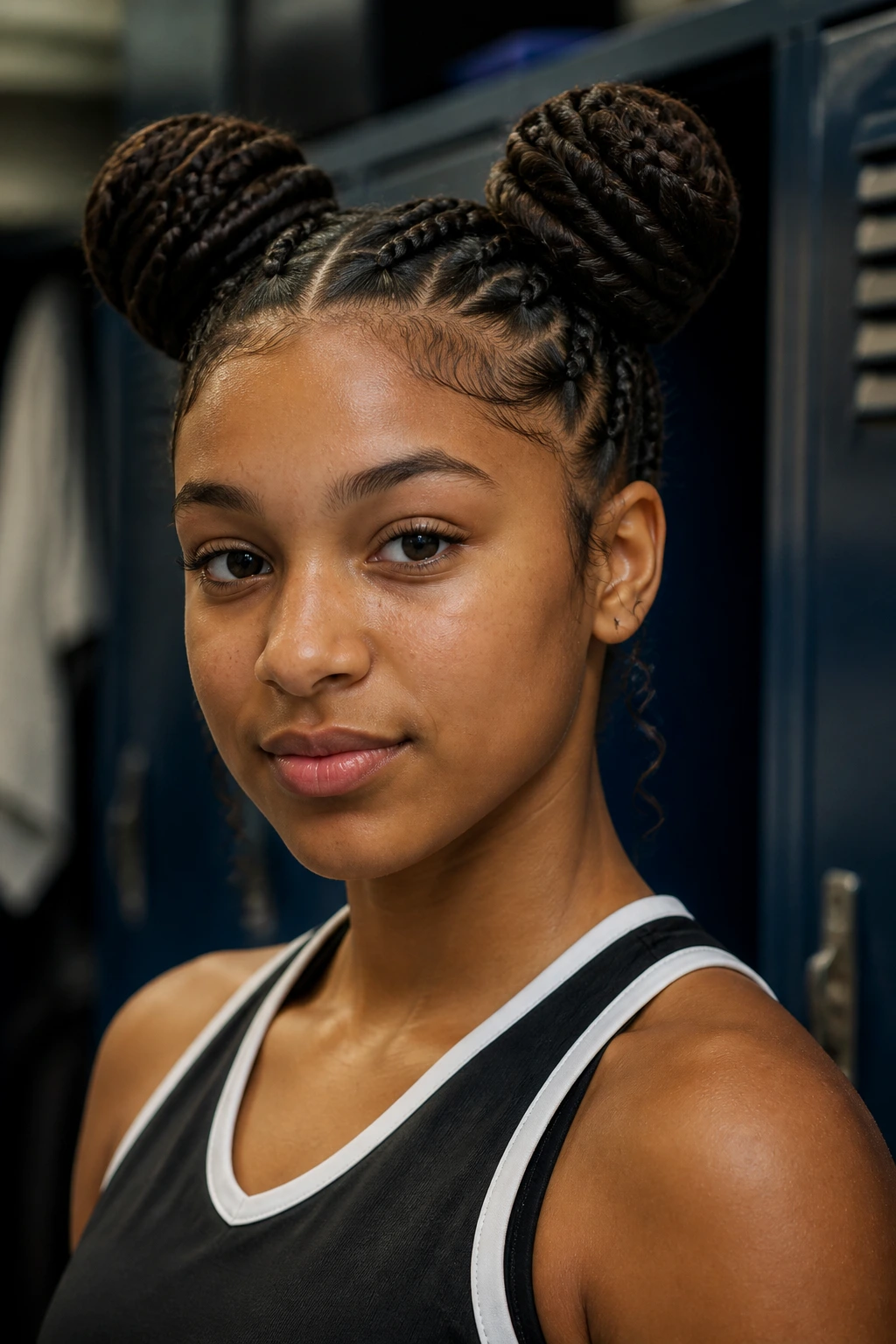
Why settle for one bun when you can have two? Space buns are fun, slightly retro, and highly functional for sports because they distribute the weight of your hair symmetrically across your head.
Unlike a single high bun, which can feel like a heavy brick bouncing on your crown, space buns stay balanced.
They do not wobble when you make quick, lateral cuts on defense. To make them sport-proof, twist each ponytail into a tight rope before wrapping them into buns, securing them with spin pins rather than standard bobby pins. Spin pins act like tiny screws, locking the hair in place with a fraction of the hardware.
This is an excellent option for thick hair. It keeps the back of your neck completely cool and open to airflow, which is a massive relief during hot afternoon practices in gymnasiums without air conditioning.
7. The Pineapple Updo with a Wide Band
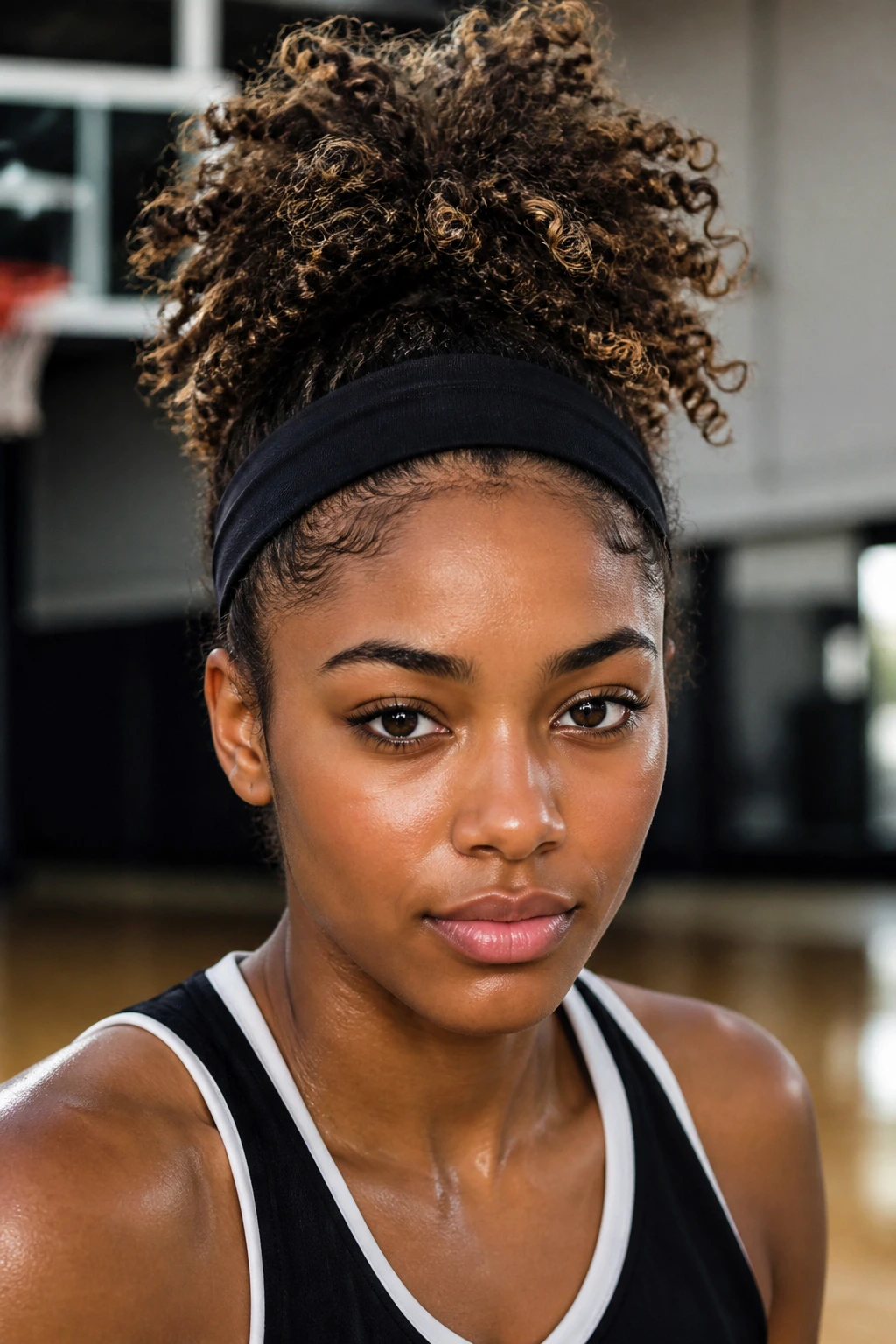
For those with thick, curly, or coily hair, the “pineapple” is a classic daily style. It keeps your curls intact and bouncy without crushing them, while a wide elastic band protects your edges from friction.
Why It Works for Textured Hair
By gathering your curls at the very front-top of your head, you protect them from rubbing against your collar or shoulders. This reduces frizz and preserves your curl definition through a long school day and a sweaty practice.
Step-by-Step Security
- Apply a moisturizing leave-in conditioner to your curls to keep them soft and defined.
- Bend forward and gently gather your hair at the crown, securing it loosely with a satin scrunchie.
- Slide a wide, non-slip athletic headband from your forehead back to the base of the pineapple.
- Adjust the band so it sits just behind your hairline, protecting your delicate edges. Pro tip: Look for headbands lined with thin silicone strips on the inside; they grip your skin gently and will not slide off even during intense defensive drills.
8. Fishtail Braid into a Low Pony
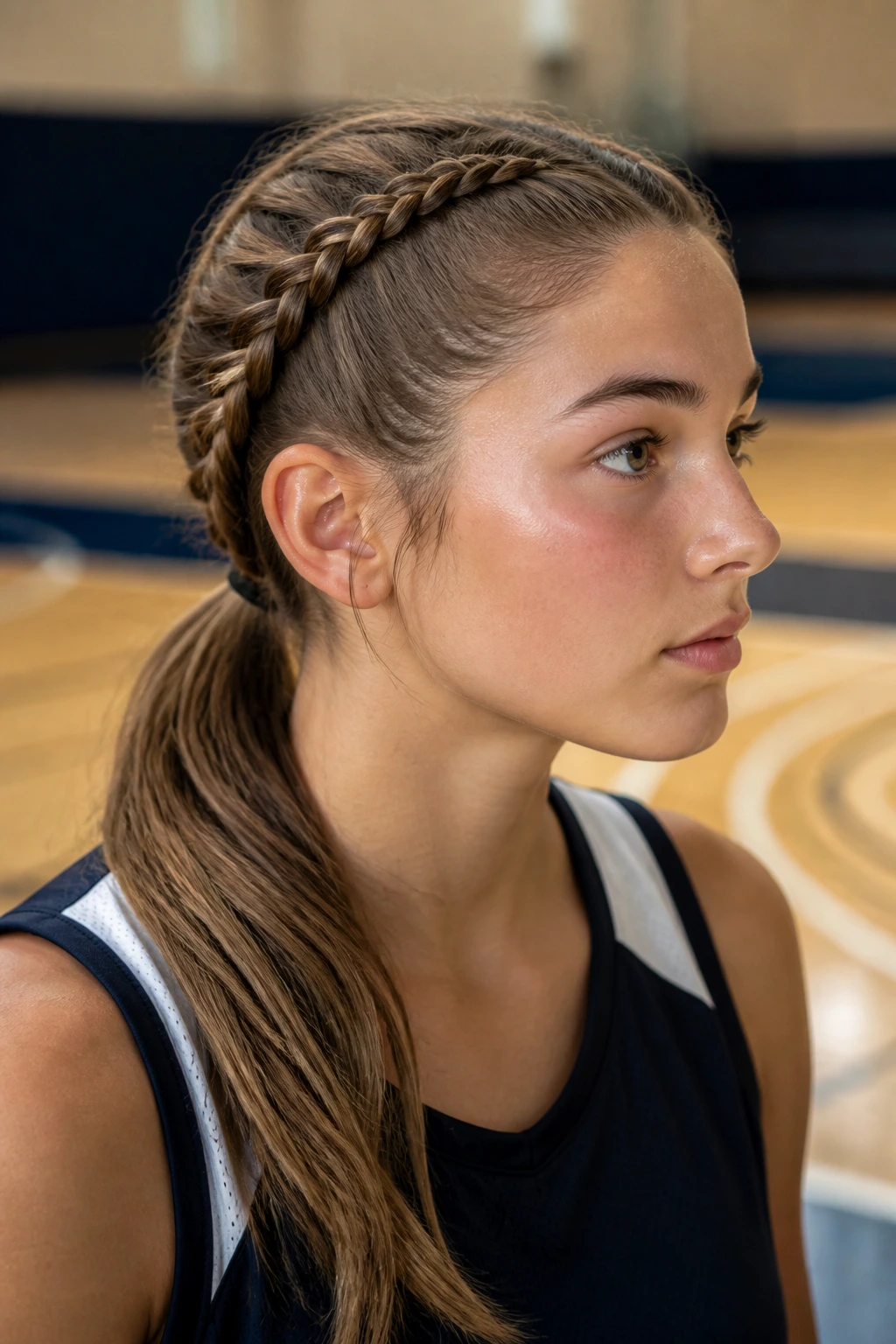
If you want a style that looks intricate but is actually incredibly durable, the fishtail-to-pony hybrid is a fantastic choice. The tight weave of a fishtail braid holds shorter layers in place much better than a standard three-strand braid.
Start by braiding the top section of your hair in a tight fishtail pattern, crossing thin outer strands over to the opposite side. Once you reach the base of your skull, stop braiding and secure the hair into a low ponytail.
This hybrid design gives you the best of both worlds: the secure, weave-like hold of a fishtail across your scalp, and the classic, swinging movement of a ponytail in the back.
It is particularly striking on hair with highlights or color dimension, as the tight weaving highlights the different tones in your hair while keeping it entirely secure during gym class.
9. The Segmented Pull-Through Braid
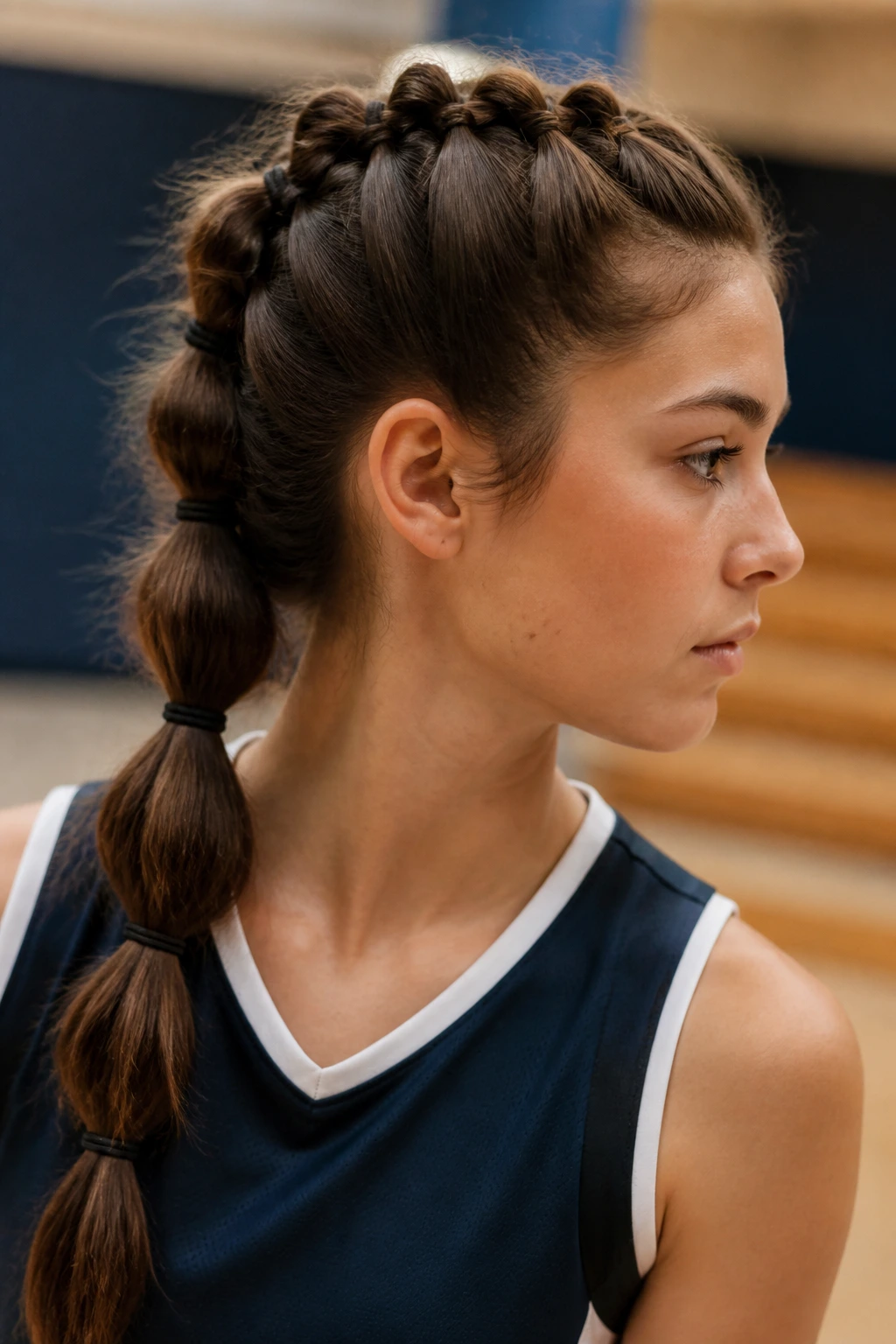
This is a modern favorite that looks like a lush, thick braid but is actually a series of interconnected ponytails. It is practically indestructible on the court.
Why Is It So Durable?
If one section of a traditional braid slips, the whole thing can fall apart. With a pull-through braid, every single segment is anchored by its own elastic band. Even if you get caught in a physical scramble under the basket, the style will not unravel.
How to Create the Pull-Through
- Tie a section of hair at your crown into a small ponytail.
- Create a second ponytail directly below the first one.
- Split the first ponytail in half, wrap the halves around the second ponytail, and secure them to a third ponytail section below.
- Continue this pattern down your head, gently pulling the edges of each section to create a full, voluminous look.
10. Low Sleek Chignon with Bobby Pin Grid
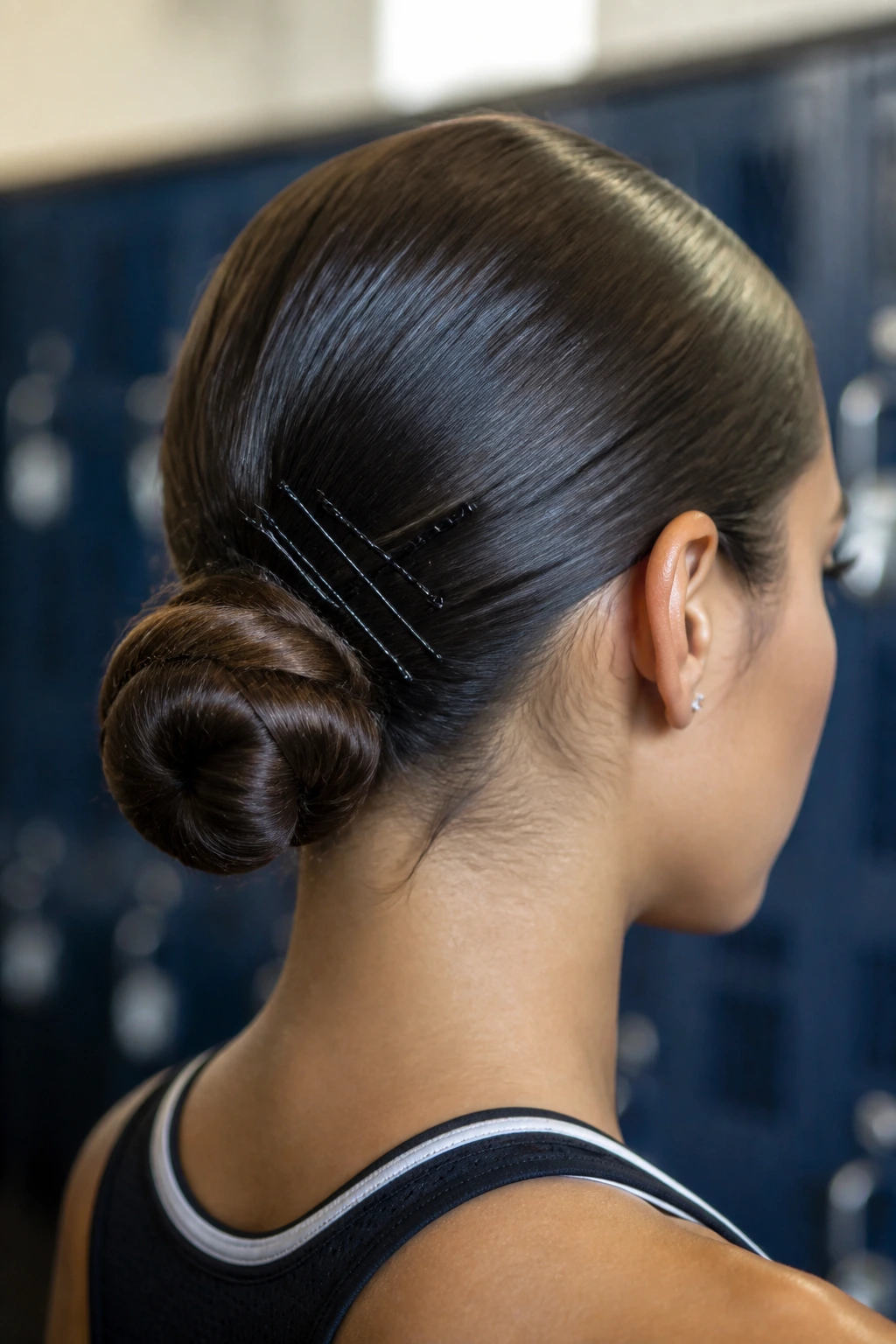
Sometimes you want a style that looks elegant enough for a school presentation but is secure enough for a high-intensity varsity game. The low chignon, when reinforced correctly, is a stealthy athletic powerhouse.
The trick to making this low bun stay put is using a bobby pin grid. Instead of sliding pins in randomly, slide them in so they cross over each other in an “X” shape.
This interlocking design creates a mechanical lock that is almost impossible to pull apart.
Apply a small amount of non-greasy hair wax to your palms before smoothing your hair back into the low pony. This keeps any flyaways flat against your head, giving you a sharp, clean look that transitions effortlessly from the classroom podium to the baseline.
11. The Four-Quadrant Cornrows
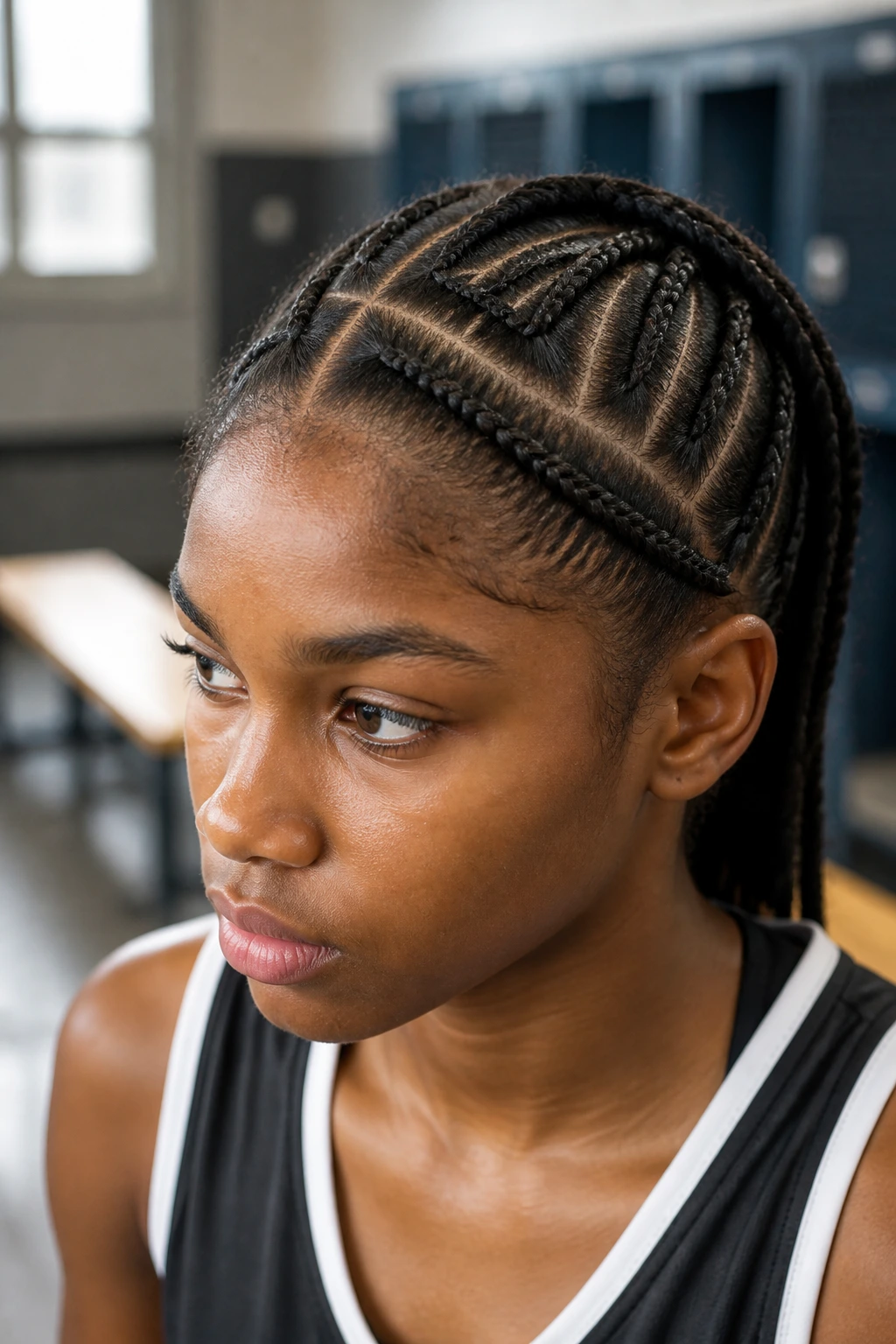
For protective styling that stands up to consecutive days of heavy practice and school, neat cornrows are unmatched. By dividing the scalp into four clean quadrants, you get even tension distribution and maximum airflow.
This style is highly efficient for student-athletes with natural textures. It requires zero daily maintenance, meaning you can roll out of bed, apply a quick spritz of oil sheen, and head straight to school.
During practice, your scalp stays cool because of the exposed parts, which allows sweat to evaporate quickly rather than getting trapped in thick hair.
To keep this style looking fresh throughout the school week, wrap your hair in a silk scarf or durag before sleeping. This keeps the braids flat and prevents the friction of your pillow from creating surface fuzz.
12. Braided Ponytail with Athletic Wrap
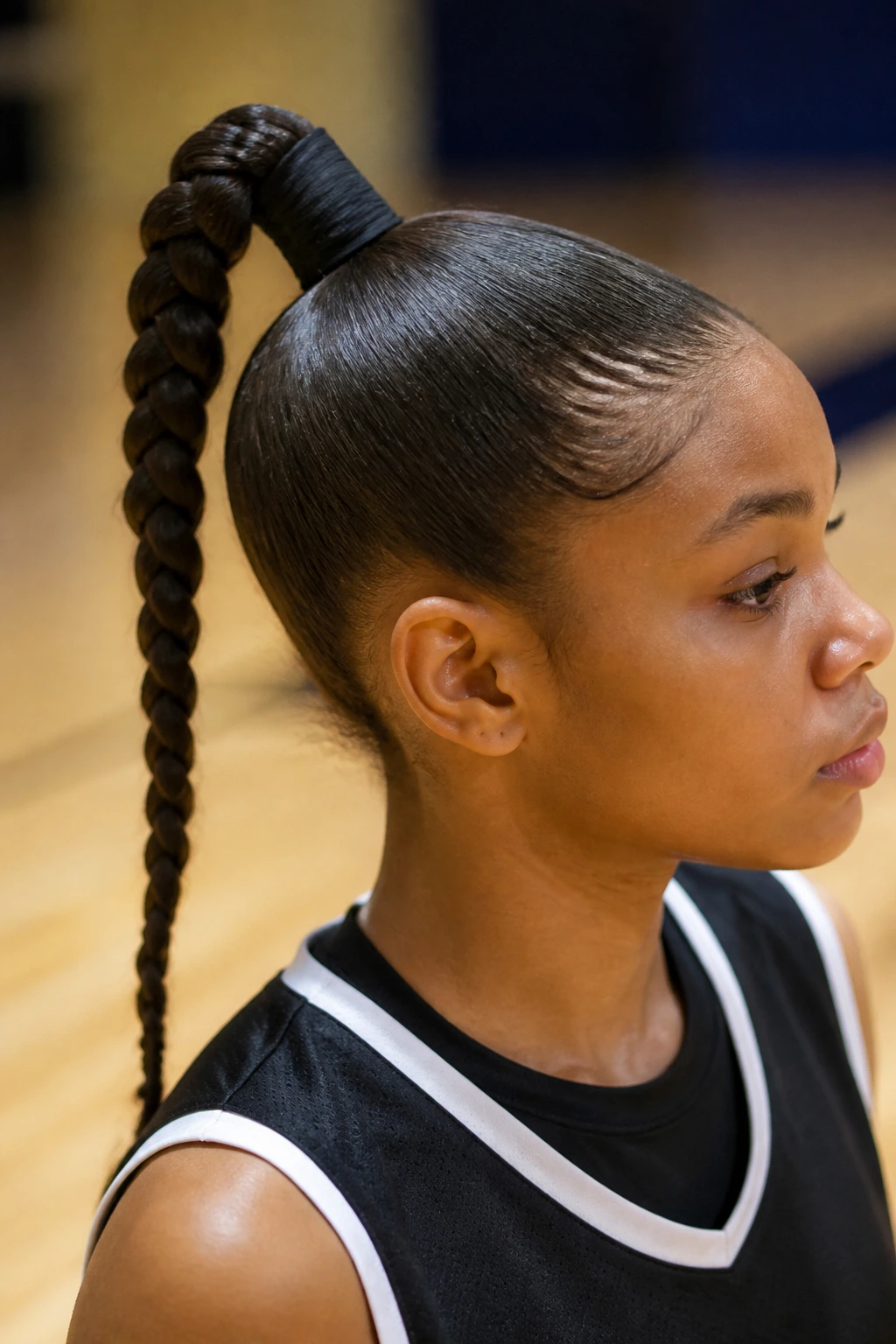
This is a classic athletic look that combines the simplicity of a high ponytail with the tangle-prevention of a tight braid. It is perfect for players with exceptionally long hair that tends to whip around during jump shots.
The Physics of the Braided Pony
A loose, long ponytail behaves like a whip when you turn your head quickly, which can stun your eyes or get caught on an opponent’s arm. Braiding the length of the tail concentrates the mass, keeping it closer to your spine and under control.
Quick Execution
- Pull your hair into a high ponytail and secure it with a heavy-duty fabric band.
- Braid the ponytail tightly to the very end, securing it with a small silicone band.
- Wrap a self-adhering athletic wrap (cohesive bandage) around the top two inches of the ponytail base for extra structural support. Pro tip: Matching the color of the wrap to your school uniform adds a clean, professional look to your game-day gear.
13. The Criss-Cross Elastic Pony
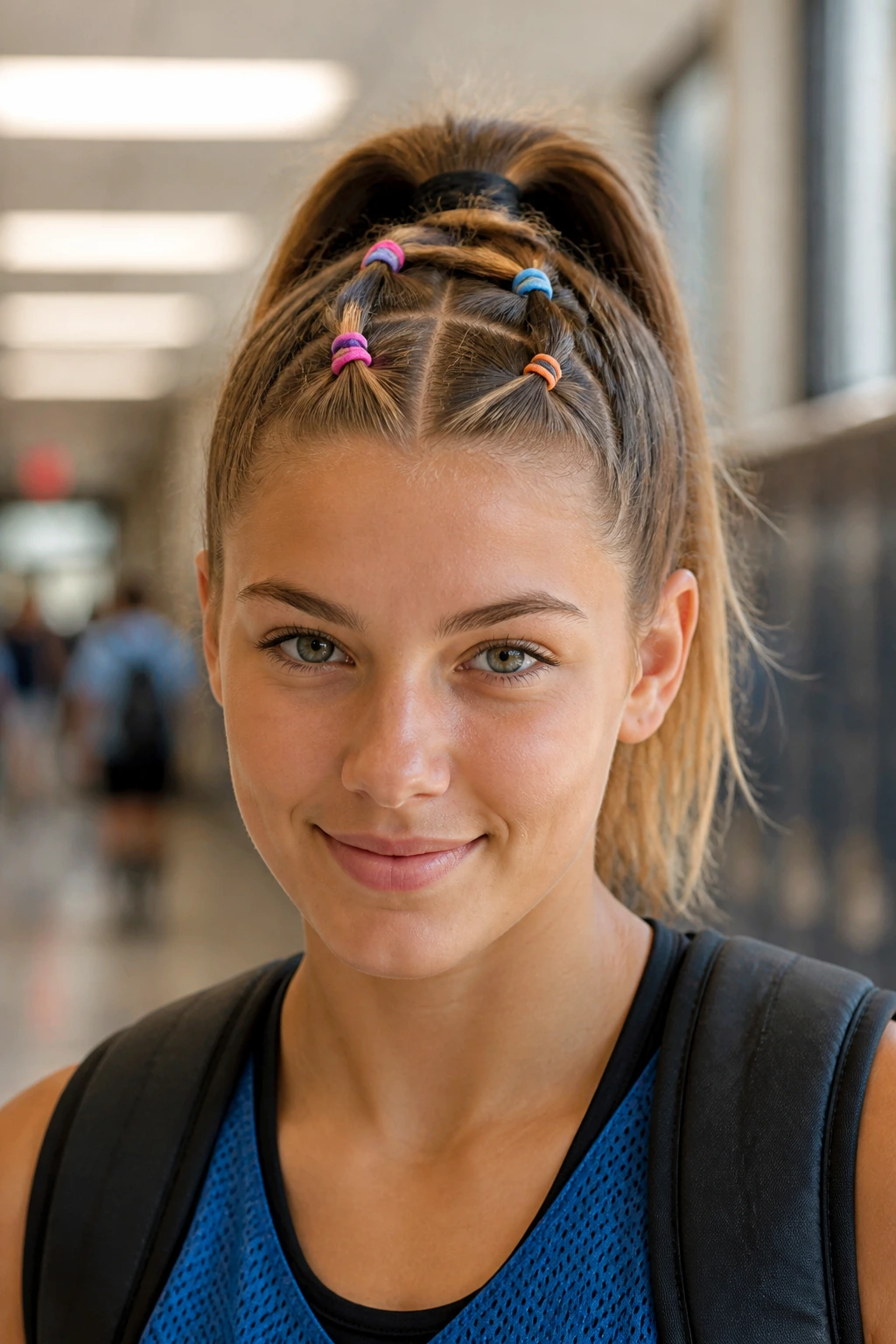
This playful style is incredibly popular because it uses geometric patterns to keep short front layers from escaping. It is like a puzzle for your hair that ends in a secure ponytail.
Start by sectioning the front of your hair into four small squares along your hairline. Tie each square into a tiny ponytail using colorful elastics.
Next, cross the tails of the left-side ponytails over to meet the right-side sections below them, securing them together. Continue this criss-cross pattern until you reach the crown of your head, where you merge all the loose ends into one large high ponytail.
It is highly functional because it keeps the delicate baby hairs around your face pinned back without using heavy clips or pins that can fly out during a collision on the court.
14. Twisted Halo Braid
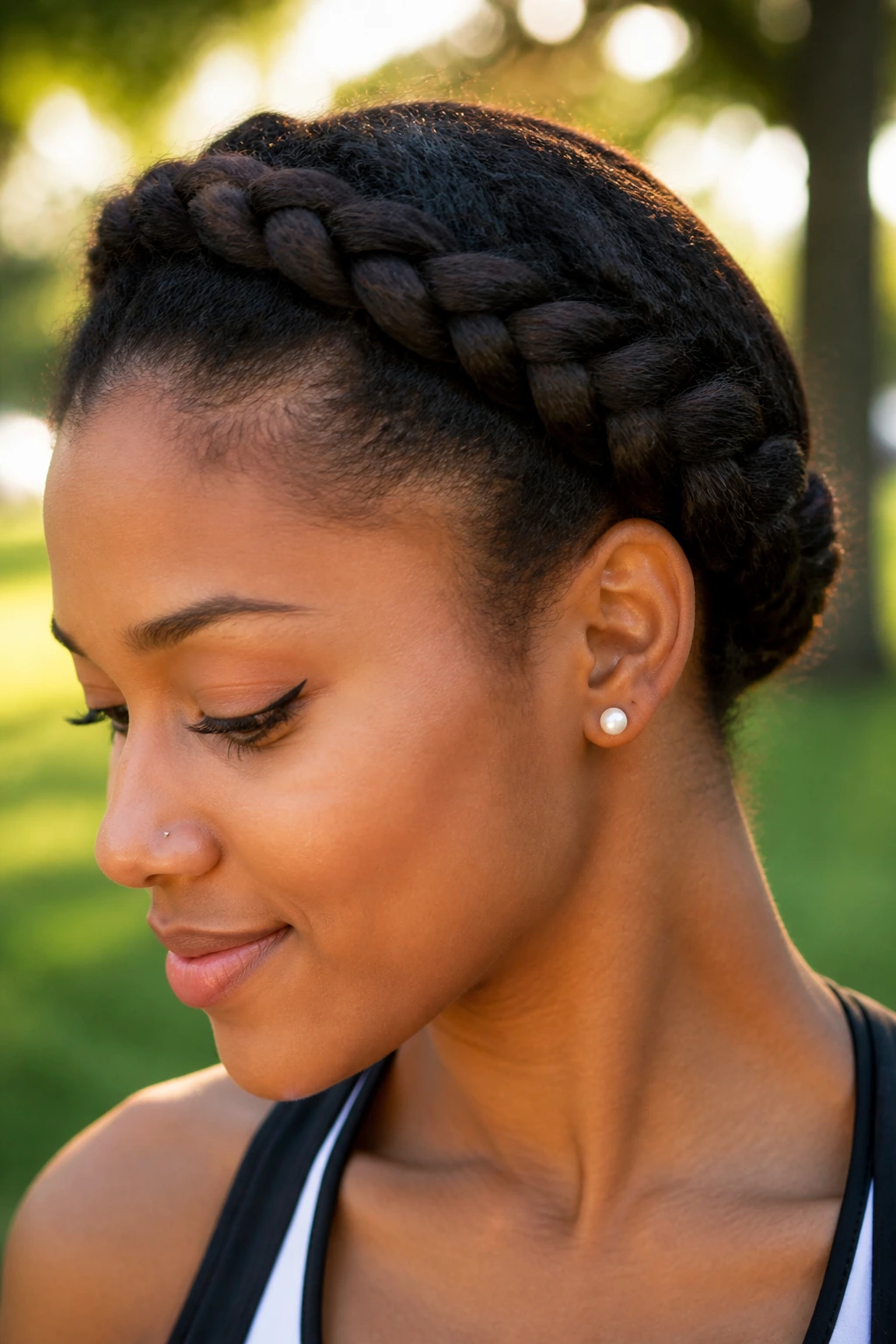
For a softer, romantic look that still functions beautifully under athletic stress, the twisted halo is a wonderful alternative to traditional braids. It utilizes two-strand twists rather than three-strand braids, making it fast to assemble.
Start on one side of your head and begin twisting two sections of hair around each other, adding more hair as you work your way around the side and back. Repeat on the other side.
Bring the two twists together at the back of your head and tuck the ends under each other, pinning them flat against your scalp with sturdy u-pins.
This style is excellent for highlighting natural hair texture and wave. It keeps your neck completely free of hair, which helps you stay cool and focused when the game is on the line.
15. The Multi-Elastic Pigtail Set
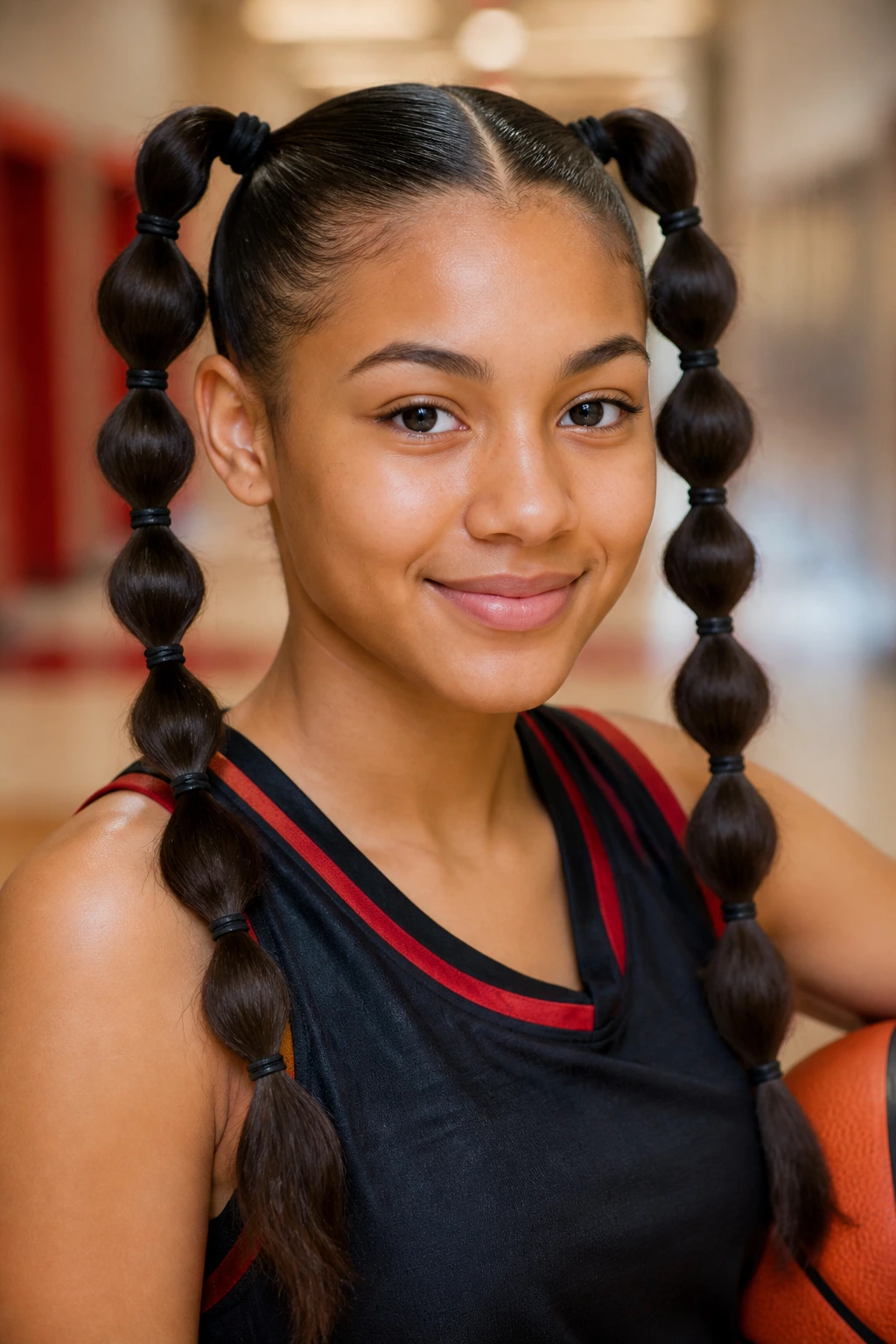
This is a high-energy, fun hairstyle that works wonderfully for school spirit weeks and big rival games. It is highly secure and holds up exceptionally well on fine, straight hair.
Structural Integrity
By dividing your hair down the center into two pigtails, you reduce the pulling weight on your scalp by half. Adding multiple elastics down the length of each pigtail keeps them from tangling or blowing into your face during fast sprints.
How to Style
- Part your hair cleanly down the center using a tail comb.
- Secure each side into a high pigtail behind your ears.
- Place elastics every two inches down the length of each pigtail, puffing out the sections in between. Pro tip: Wrap a small strand of hair around the base of each pigtail to hide the main elastics for a clean, polished finish.
16. High Puff with Non-Slip Grip Band
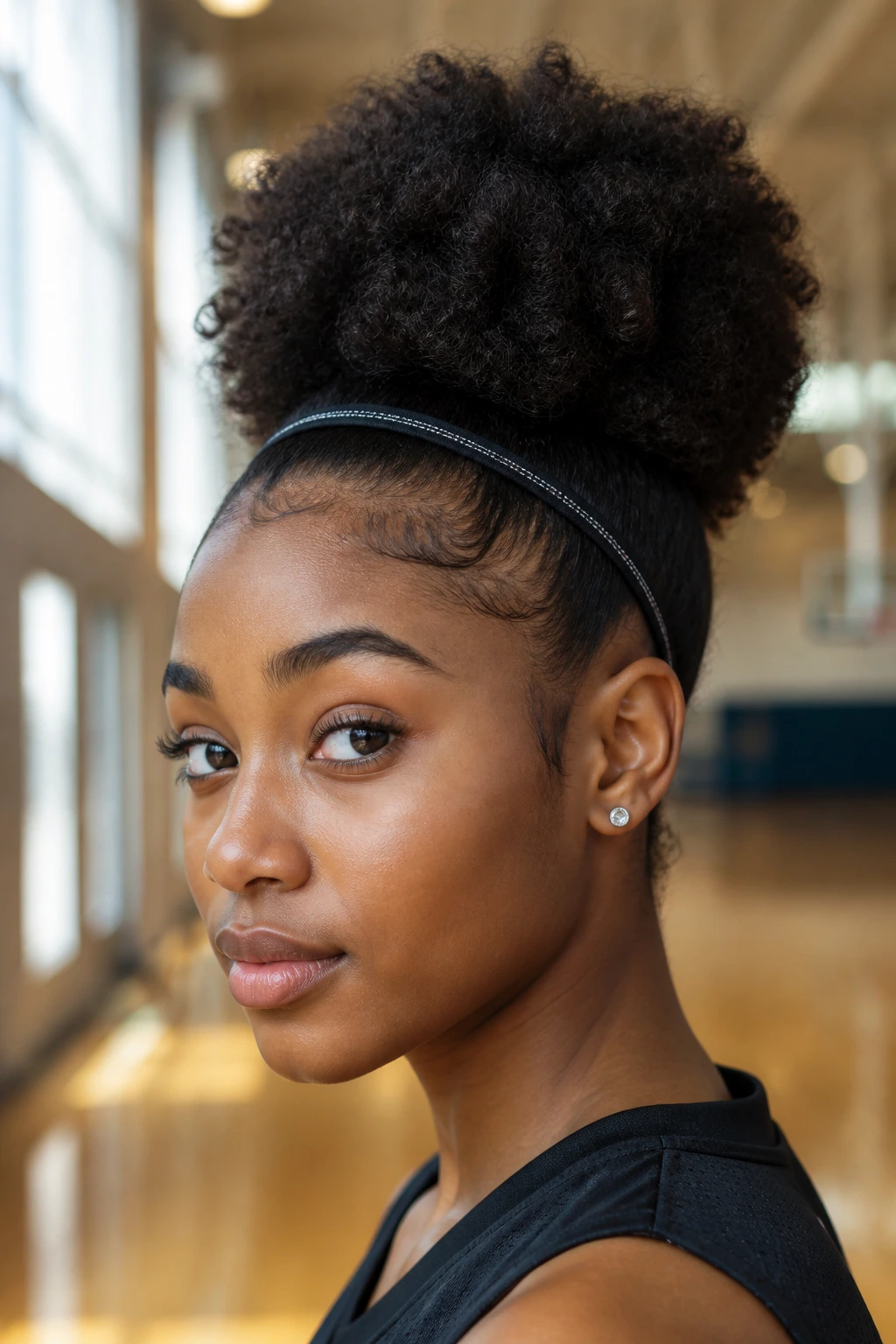
For coily and thick curly textures, sometimes the simplest option is the most effective. A high puff keeps your hair lifted away from your neck while allowing your natural texture to shine.
To make this school-day ready, apply a moisturizing gel to your perimeter and use a soft boar-bristle brush to smooth your hair upward.
Use a long, adjustable elastic band (like a DIY hair bungee or a cut stocking) to gently pull your hair into a high puff. Do not pull it too tight; you want your scalp to feel comfortable during long school hours.
Finish the style with a thin, silicone-lined non-slip headband placed right at the transition between your smooth edges and your puff. This ensures your edges stay laid and protected, even when you are driving hard to the basket.
17. The French Twist Ponytail Hybrid
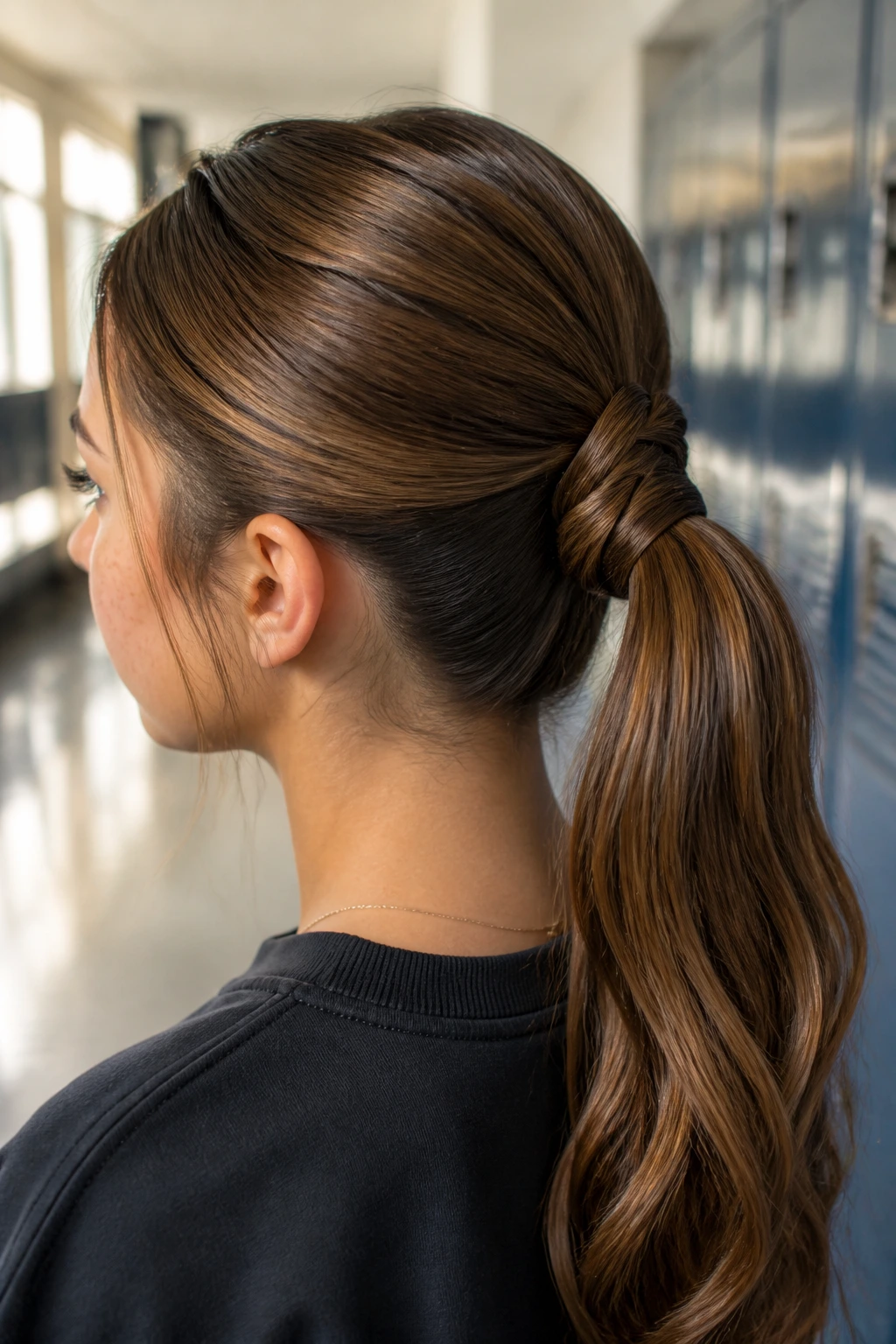
This is a sleek, modern look that keeps the sides of your hair incredibly neat while allowing the back to move freely. It is perfect for those who want a polished, clean appearance for school photos or presentations.
Start by sectioning off the side panels of your hair, from your ears to your temples. Pull the center back section into a medium-height ponytail.
Take the left side panel, pull it back across the base of the ponytail, and wrap it around the elastic, pinning it underneath. Repeat this with the right side panel, crossing it over the left.
The result is a beautiful, woven pattern that hides your hair elastic completely while keeping the sides of your hair perfectly flat and secure without the need for hairspray.
18. Feed-In Braids with Zig-Zag Parts
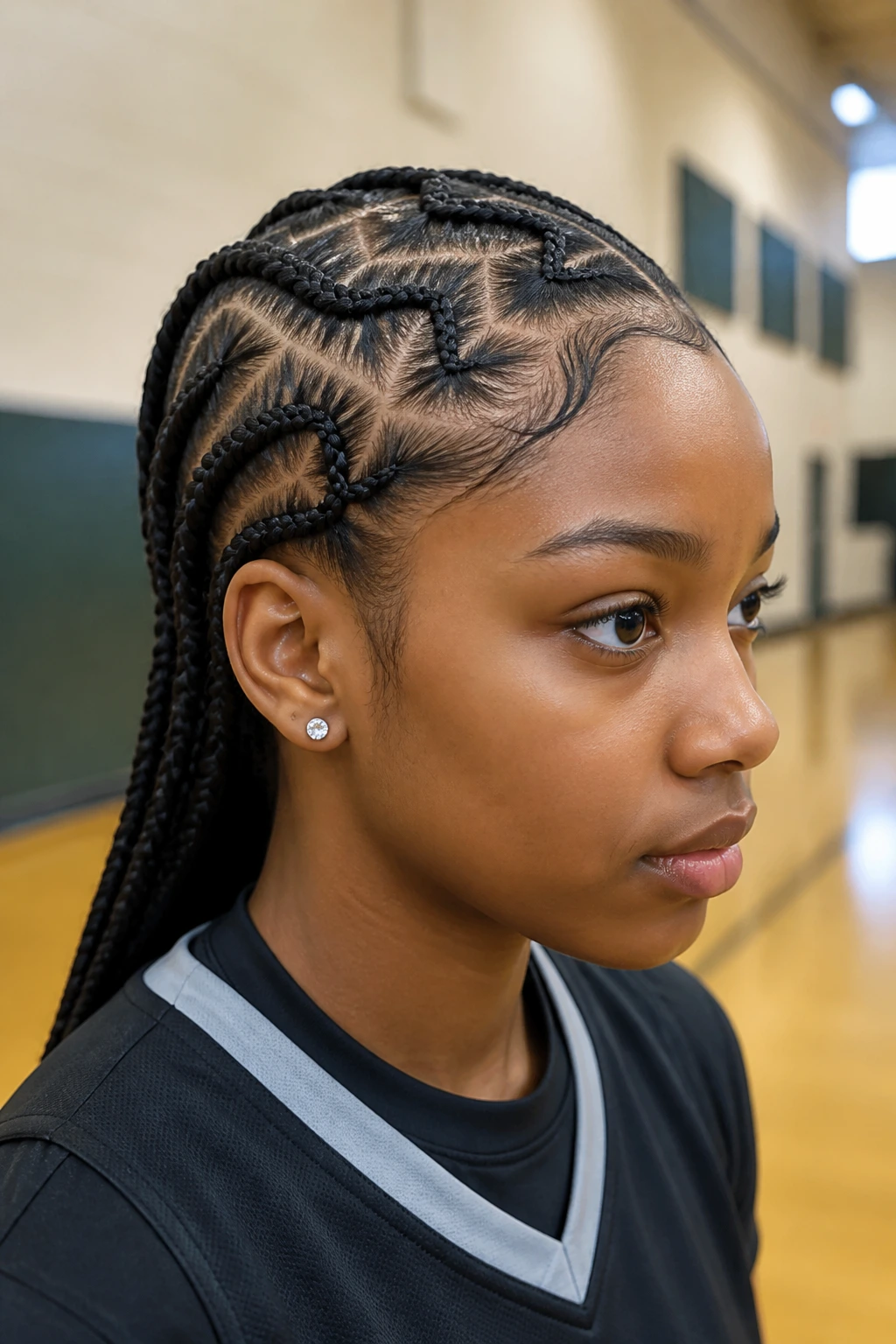
If you want a style that lasts for weeks and requires absolutely zero morning maintenance, feed-in braids are the gold standard. Adding a zig-zag part pattern adds a fun, modern touch that stands out in the hallways.
This style involves adding synthetic hair extensions gradually to your natural hair as you braid, creating a seamless, natural transition from thin at the hairline to thick at the ends.
Because the hair is braided flat against the scalp, there is zero bounce or pull when you run, making it one of the most comfortable styles for competitive play.
Be sure to apply a drop of tea tree oil to your scalp parts once a week to keep the skin hydrated and prevent itchiness during sweaty gym sessions.
19. The Folded Loop Bun
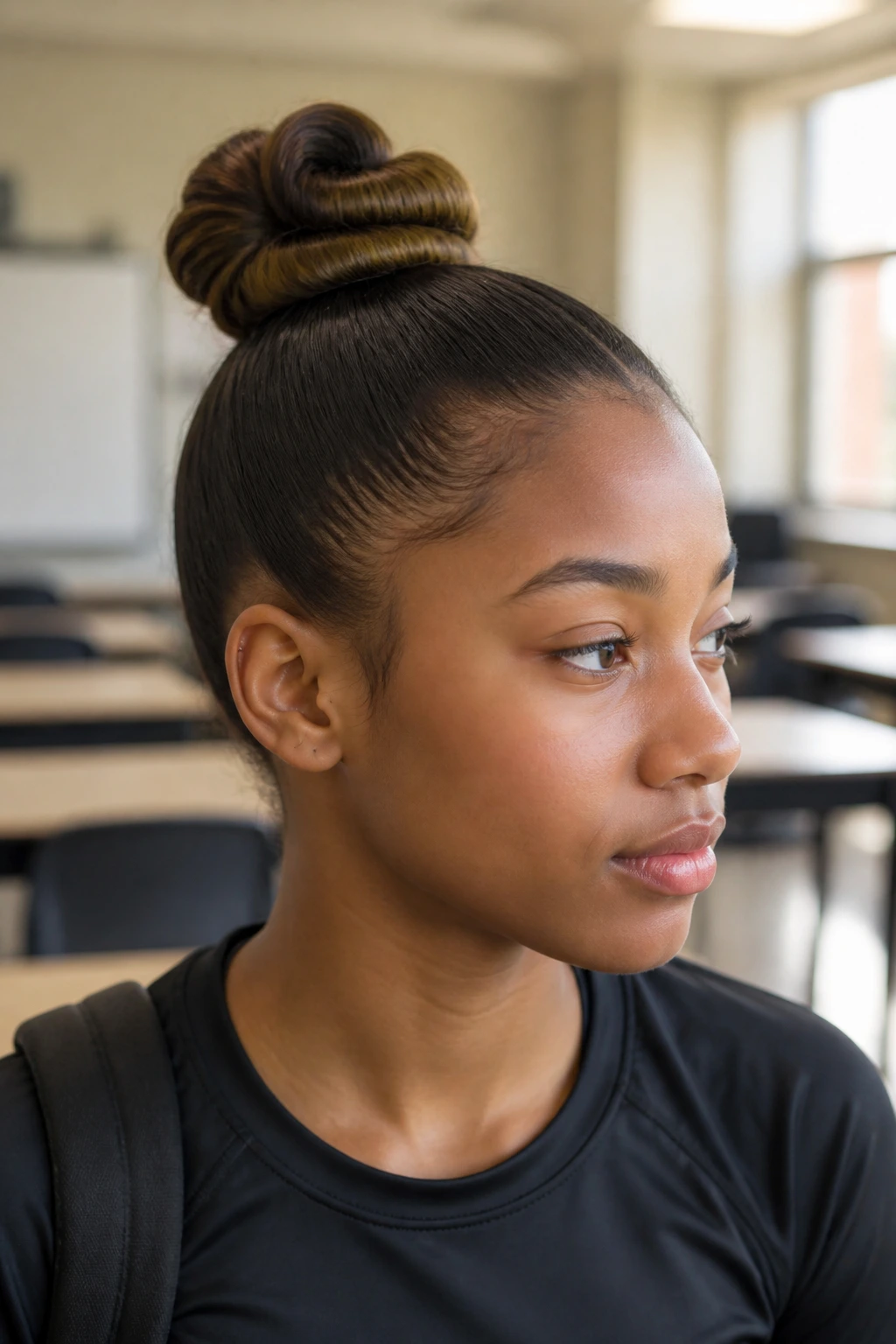
When you are short on time but need absolute security, the folded loop bun is your best friend. It takes thirty seconds to do and stays secure through the most physical practices.
Pull your hair into a ponytail, but on the very last wrap of your hair tie, do not pull the hair all the way through.
Leave it in a loop, with the ends of your hair pointing downward. Take those loose ends, wrap them around the base of the loop to hide the elastic, and tuck them into the band.
This is much more secure than a standard messy bun because the bulk of your hair is locked inside the main elastic loop. It cannot wobble or unravel, even if you are heading the soccer ball or diving for a basketball.
20. Boxer Braids with Ribbon Weaves
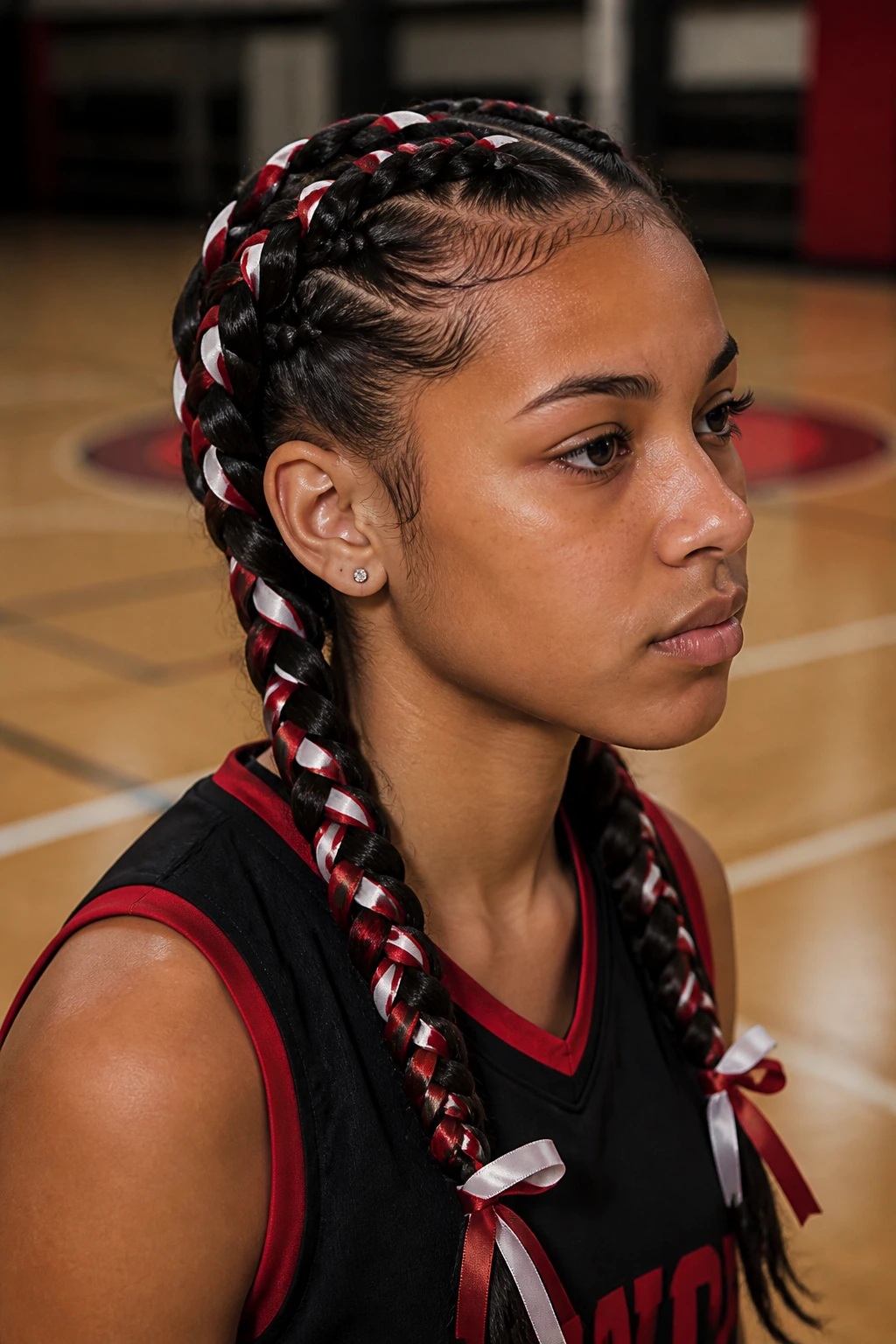
This is a fun, highly visual style that is perfect for championship games or school tournaments. It takes classic boxer braids (double Dutch braids) and elevates them with woven ribbons.
Adding School Spirit
By weaving a ribbon that matches your school colors into your braids, you create a striking, spirited look that shows your dedication to the team.
How to Style
- Start your Dutch braids at the hairline.
- Secure a length of thin satin ribbon to the base of your middle strand using a small bobby pin.
- Braid the ribbon directly into the hair, treating it as part of one of the three strands.
- Secure the ends with a clear elastic and let the remaining ribbon hang loose with your hair ends. Pro tip: Choose lightweight ribbon so it does not add unnecessary weight to your hair or pull on your scalp during play.
Keeping Your Hair Healthy Under High-Friction Headbands
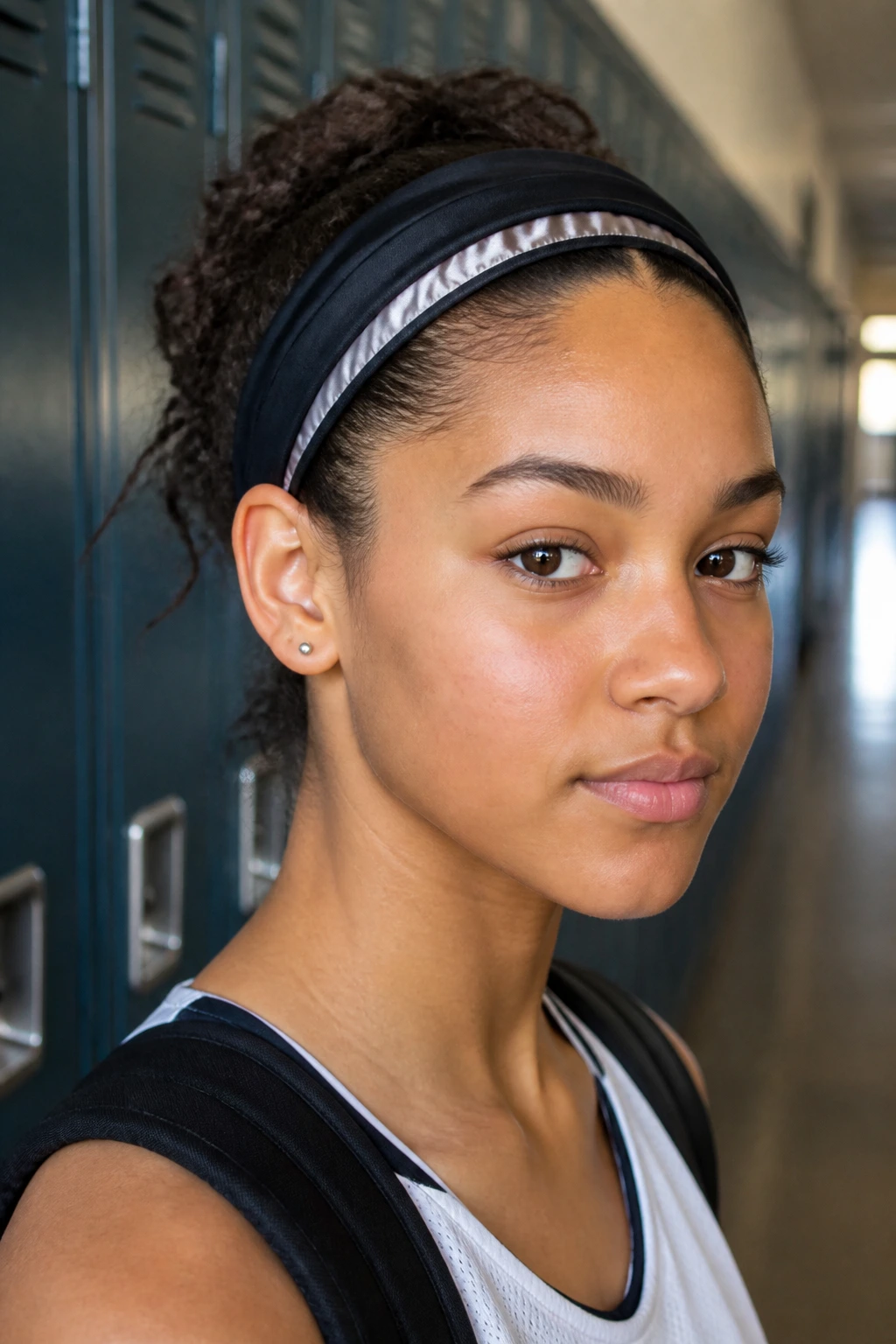
While athletic headbands are incredible for keeping sweat and baby hairs out of your eyes, they can cause damage if worn incorrectly. The constant rubbing of a cotton or polyester band against your hairline can lead to “traction alopecia,” where the hair follicles become damaged and hair begins to thin around the temples.
To prevent this, opt for headbands that are specifically lined with satin or smooth silicone.
These materials glide over your hair fibers rather than catching and pulling them. Additionally, never place your headband directly on your forehead skin and then slide it backward; this pulls your hair roots in the wrong direction, weakening them over time.
Instead, place the band over your neck first, then pull it upward and back into position.
After practice, always wash your sweatband to remove dried sweat, dirt, and skin oils. Wearing a dirty headband can lead to forehead breakouts and scalp irritation, which can ruin your focus on the court.
The Bottom Line
A great basketball hairstyle should be the last thing on your mind when the game starts. It needs to be tough, comfortable, and stable enough to let you focus entirely on your form, your teammates, and the scoreboard.
Finding the right style is all about experimenting with what works best for your specific hair texture and thickness.
Try out a few different braids or pony setups during your normal school days to see how they hold up by lunchtime. Once you find the one that feels secure and comfortable, you can step onto the court with the confidence of a player who is completely ready to dominate the game. Keep your head high, your eyes on the rim, and your hair locked in place.