


The sharp contrast of a fresh shave against the smooth, uniform fall of straight hair is one of the most striking visual statements in modern hair design. While curly and wavy textures naturally bend to hide minor cutting errors, straight hair acts like a spotlight on the lines of a haircut. Every angle, every parting, and every millimeter of shaved scalp is on display. This uncompromising nature makes straight hair the perfect canvas for clean lines, sharp geometry, and disconnected undercuts.
But anyone who has ever taken clippers to straight hair knows the underlying challenge. When straight hair is cut short, it does not lie flat. It sticks straight out like a porcupine quill. This behavior happens because straight hair shafts are round and thick, meaning they possess high structural rigidity. If a stylist shaves the sides but leaves the top at an awkward intermediate length, those top strands will flare outward instead of draping over the shaved section.
Succeeding with these styles requires understanding how length, weight, and graduation interact with your hair’s natural growth patterns. You cannot simply buzz a patch and hope for the best. You must design the shape so the weight of the longer sections holds the hair down, or crop it short enough that the stubborn sticking-out phase is bypassed entirely.
Whether you are looking for a subtle nape undercut that only shows when you wear your hair up, or a bold, high-contrast crop that redefines your profile, there is a shaved style that works with your hair’s natural growth pattern. The key is knowing how to balance the shaved portions with the length on top to create a clean, intentional silhouette.
Why Straight Hair Needs a Specific Approach to Shaved Styles
Straight hair has a physical structure that sets it apart from other hair types. Under a microscope, straight hair fibers are perfectly round, which allows them to grow straight out from the scalp without twisting or bending. Curly hair, by contrast, has an asymmetrical, oval shape that coaxes it to bend and curl as it grows. This structural roundness gives straight hair incredible strength and shine, but it also makes it highly stubborn when cut short.
When you shave a portion of a straight-haired style, the boundary line between the shaved skin and the longer hair must be exceptionally clean. Because straight hair lies flat and falls in a single, predictable direction, any unevenness in the parting line will show immediately. Stylists must use precise sectioning clip techniques and sharp razor lines to ensure the boundary is crisp and balanced.
Another factor is the transition zone, often called the blend or the fade. If you want a seamless transition from the shaved skin to the longer straight hair on top, your stylist needs to use thinning shears or point-cutting techniques. Point-cutting involves cutting into the hair tips at an angle rather than straight across. This technique removes weight without removing length, allowing the straight hair to drape smoothly over the shaved area rather than flaring out like a shelf.
Growth direction, or the way your hair naturally lays, dictates how a shaved style will behave on a daily basis. If you have a strong cowlick at the crown or front hairline, a shaved section must be positioned to either eliminate the cowlick or work with its direction. Shaving directly into a cowlick can cause the remaining hair to stand straight up, requiring significant styling product and heat to tame every morning.
Choosing the Right Clipper Guard Size for Your Comfort Level
Understanding clipper guard numbers is the first step in planning a shaved hairstyle. Clipper guards are the plastic attachments that snap onto hair clippers to regulate how much hair is left on the head. They are measured in fractions of an inch, with lower numbers leaving less hair and higher numbers leaving more. Knowing these numbers helps you communicate exactly what you want to your stylist.
A #1 guard leaves just one-eighth of an inch of hair on the scalp. This setting is very short and shows a significant amount of scalp, creating a high-contrast look that is ideal for sharp undercuts and disconnected temple shaves. A #2 guard leaves one-quarter of an inch of hair, which is still short enough to show the scalp but offers a slightly softer, darker appearance that is excellent for everyday wear.
Moving up to a #3 guard leaves three-eighths of an inch of hair. This length provides a clean, shadow-like effect where the scalp is barely visible beneath a dense layer of short hair. It is a popular starting point for those who want a shaved look without committing to a bare-scalp appearance. A #4 guard leaves half an inch of hair, offering a highly conservative clipped look that preserves the natural color of your hair while maintaining a tidy, cropped edge.
Choosing the right guard is not just about aesthetics; it also affects how often you need to maintain the cut. Short shaved sections like a #1 or a zero-guard (no guard at all, cutting right to the skin) will require touch-ups every two to three weeks to keep their crisp appearance. Longer guards, like a #3 or #4, are much more forgiving and can easily go four to five weeks before they start looking fuzzy or losing their shape.
1. Classic Undercut with Sleek Top
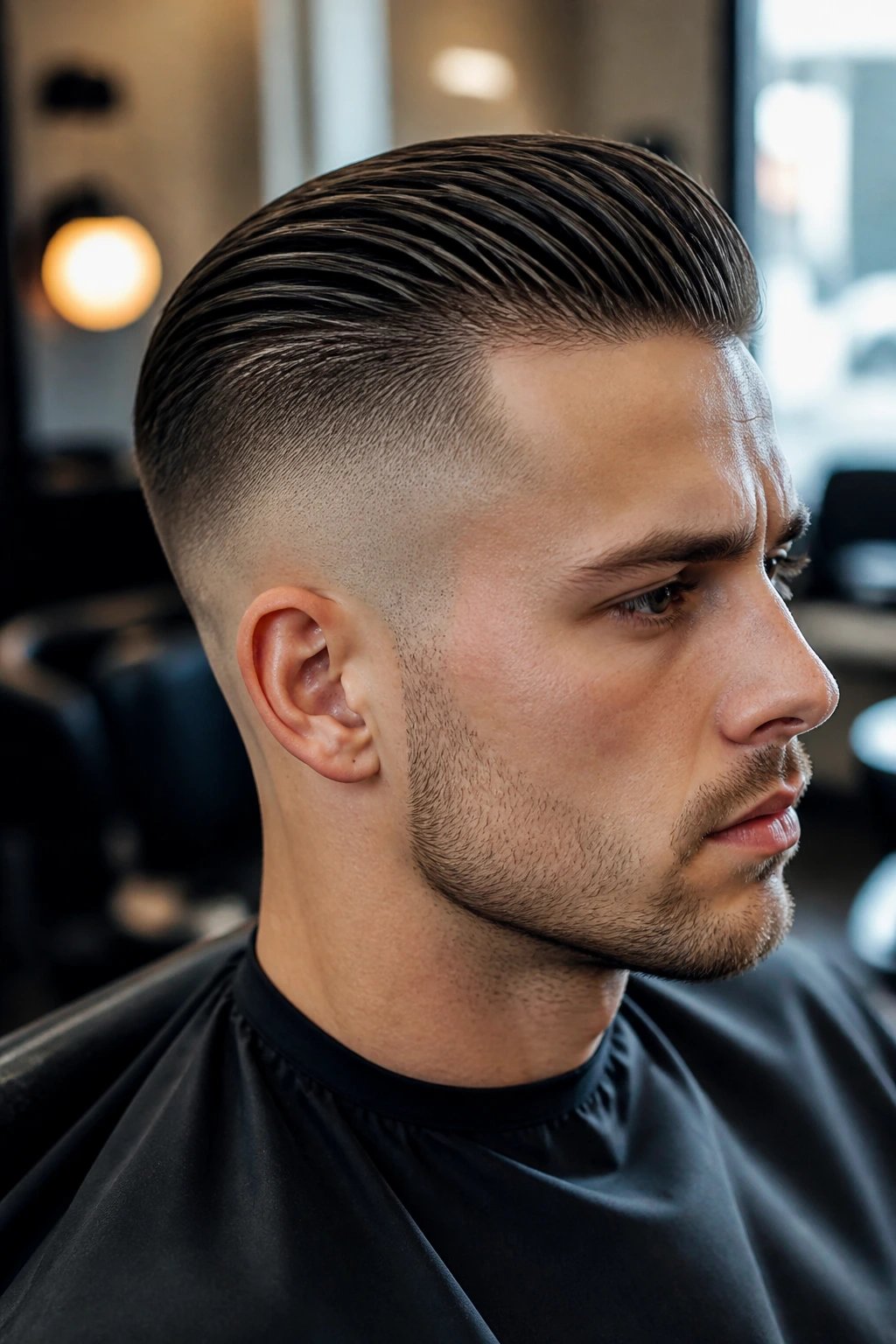
This style features a clean, uniform shave around the back and sides of the head, paired with a longer, straight top section that falls smoothly over the shaved boundaries. The contrast between the bare sides and the dense, flat top creates a striking look that works well for both casual and formal settings.
The Anatomy of the Classic Undercut
The classic undercut depends entirely on a sharp, horizontal parting line that wraps around the head from just above the temples to the crown. The hair below this line is typically clipped with a #2 guard for a dark shadow effect, while the hair above is left long enough to lay flat under its own weight.
Quick Cut Details
- Best Guard Size: #2 guard on the sides and back, leaving approximately one-quarter inch of hair.
- Top Length: Four to six inches of straight hair to ensure it drapes flat.
- Parting Line: Clean, horizontal parting that sits just above the ear line.
- Styling Product: A light styling cream or water-based pomade to keep the top smooth and flyaway-free.
Pro tip: When blow-drying the long top section, direct the air from the roots down toward the ends to seal the cuticle and prevent the hair from flaring outward over the shaved sides.
2. The Asymmetrical Pixie with Shaved Temple
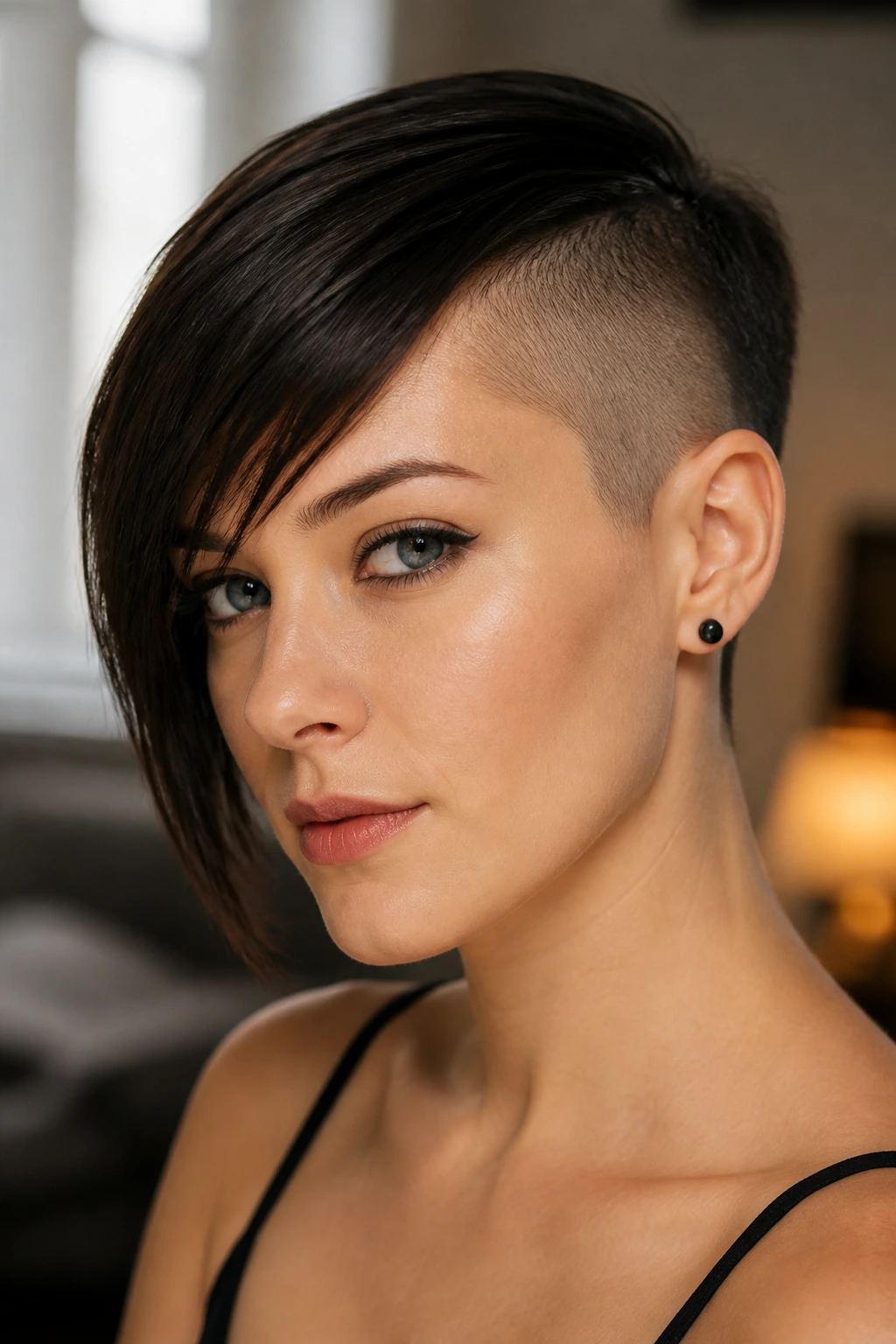
By shaving just one side of the head, this style creates a beautiful asymmetrical silhouette. The straight hair on the opposite side is left longer, draping across the forehead in a dramatic, sweeping fringe that frames the face.
The beauty of this cut lies in the dramatic transition from the completely bare temple on one side to the full, straight layers on the other. This asymmetric weight distribution helps straight hair lie flat, as the long side has enough weight to resist sticking out, while the shaved side is clipped too short to flare.
To style this look, apply a small amount of texturizing paste to the longer side while the hair is damp. Use a flat brush to sweep the hair forward and across the forehead, keeping the volume low and the texture piecey to contrast with the clean temple shave.
This style is highly adaptable. If you ever want to hide the shaved section for a more conservative look, you can simply part your hair on the opposite side and sweep the longer layers over the shaved temple.
3. Buzz Cut with Razor-Sharp Line Up
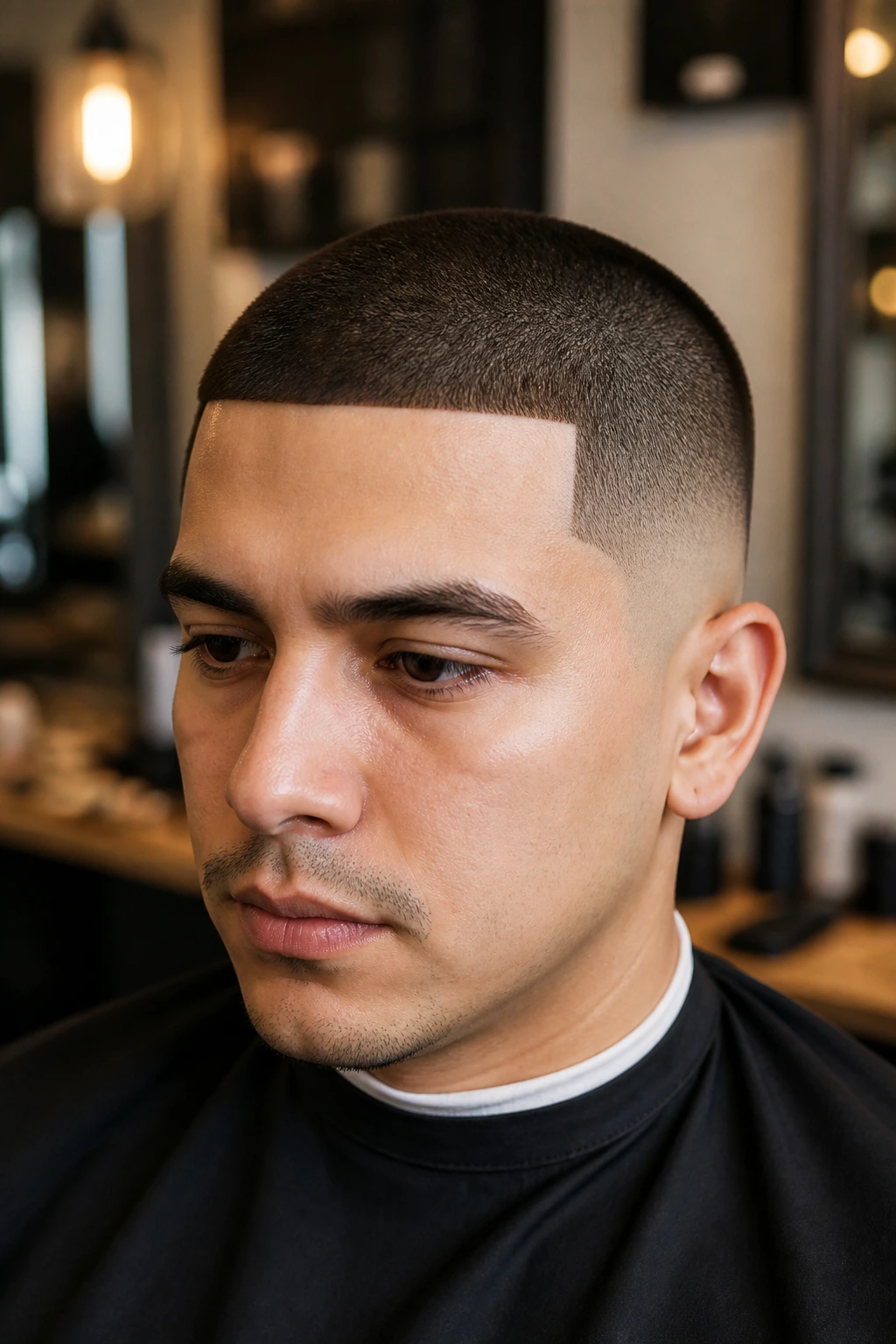
For those seeking the ultimate low-maintenance hairstyle, the buzz cut offers unmatched simplicity. Adding a sharp line up along the forehead and temples elevates this simple shave into a crisp, geometric statement.
Why It Works for Straight Hair
Unlike longer cuts, a buzz cut bypasses the natural styling challenges of straight hair by removing the length entirely. Because straight hair grows outward, a uniform buzz cut creates a perfectly even, velvet-like texture across the entire scalp.
Styling and Edge Maintenance
- Apply a few drops of lightweight hair oil to keep the scalp healthy and shiny.
- Use a soft-bristle brush daily to train the short hair to lay flat as it grows.
- Visit your barber every two weeks to keep the forehead line up crisp and clean.
4. Bowl Cut with High-Fade Undercut
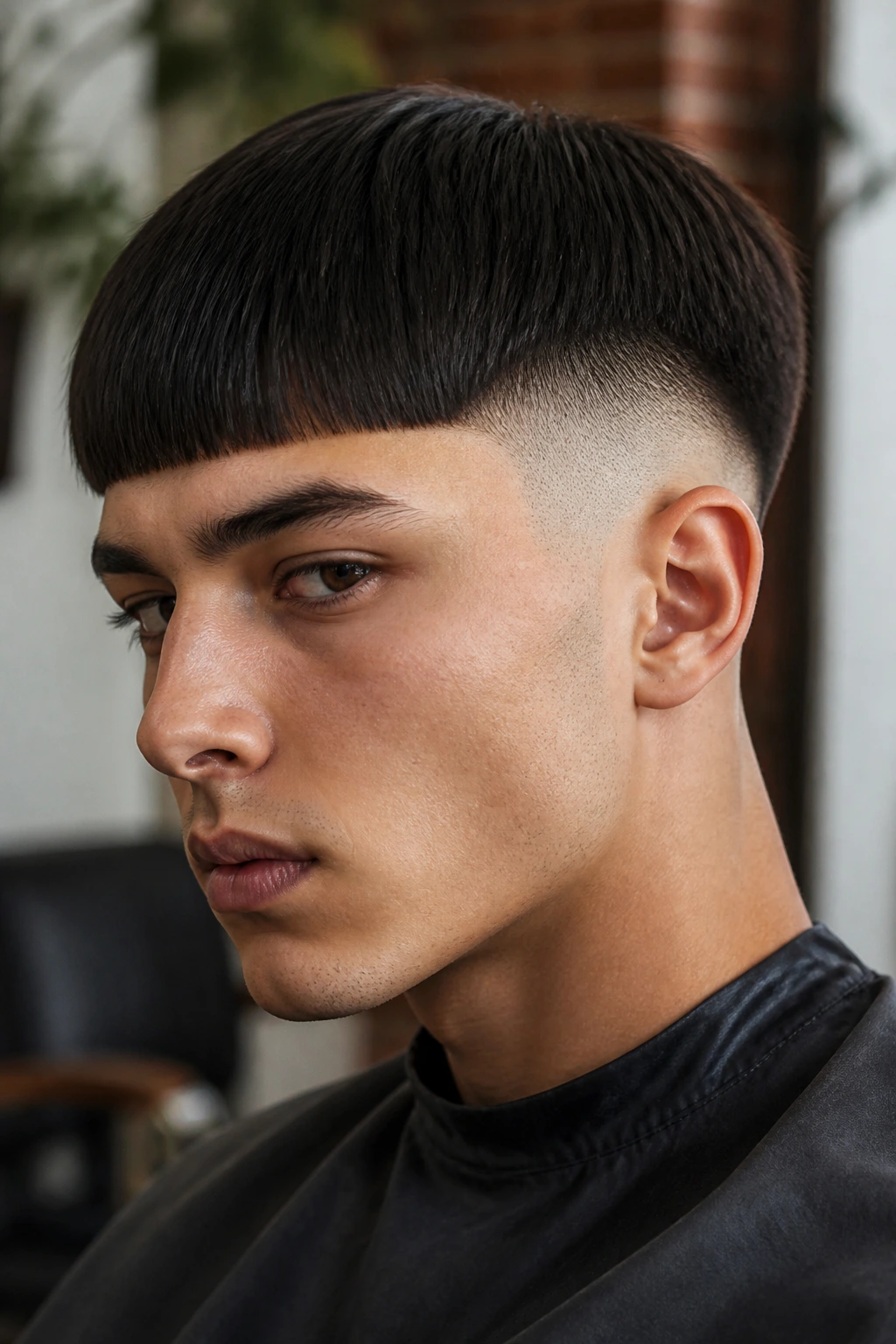
A modern take on a classic shape, this style features a heavy, straight-cut fringe that wraps around the head in a uniform line, paired with a high skin fade underneath. The straightness of the hair is what makes this geometric look work so well.
This cut is all about the sharp, horizontal boundary between the blunt edge of the bowl and the bare skin of the high fade. The straight hair on top is cut with zero elevation to create a heavy, solid weight line that floats above the shaved sides.
This style is best suited for those with thick, straight hair, as the density is required to create that solid, unyielding edge. Fine hair can struggle to form the heavy line, often separating and revealing the fade underneath.
To maintain the blunt edge, your stylist should use clippers to cut the bottom of the bowl line while the hair is laying in its natural falling position, rather than pulling the hair between their fingers, which can introduce unwanted layering.
5. Shaved Sides with Textured French Crop
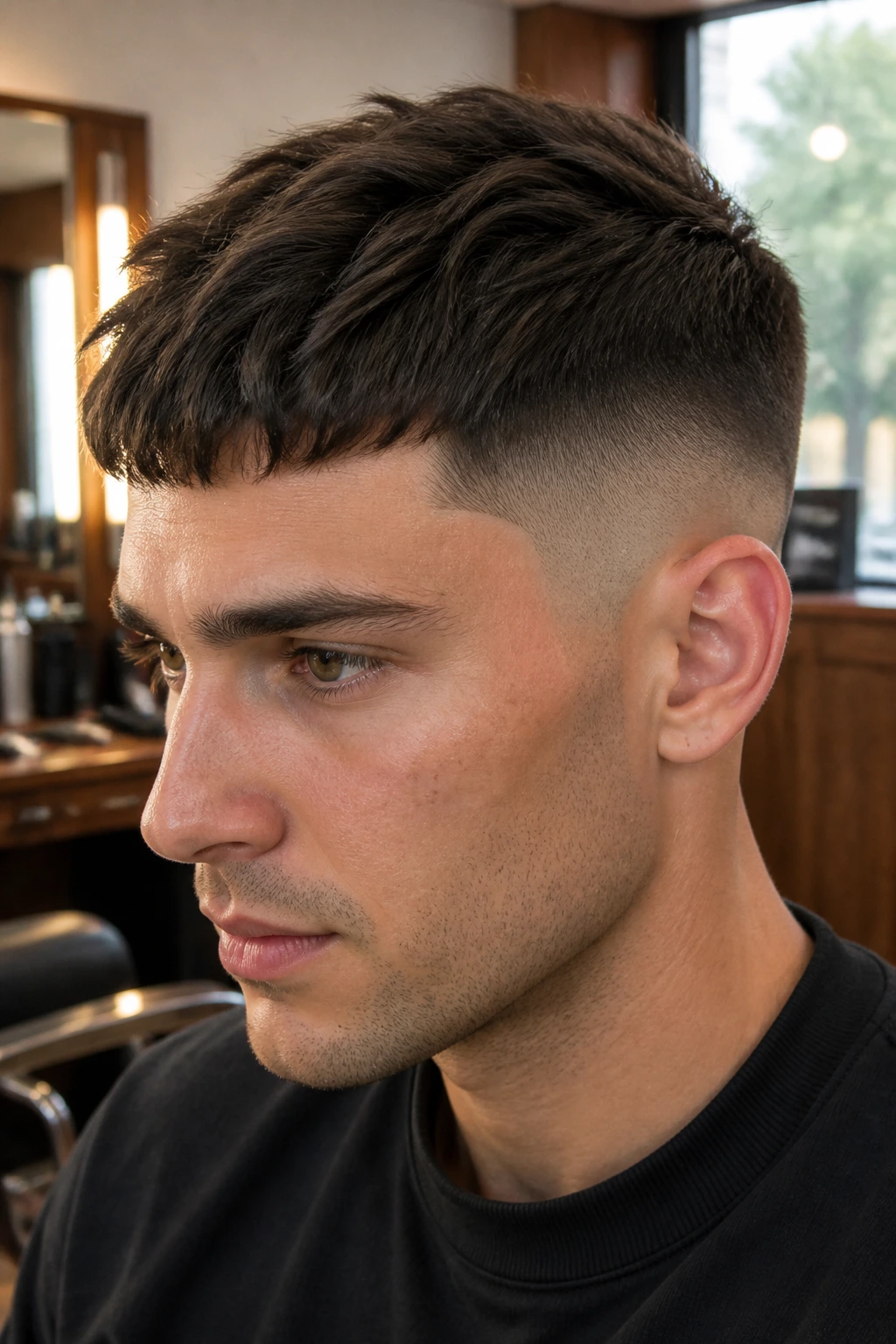
The French crop features short, shaved sides paired with a textured, forward-swept top and a short, blunt fringe. It is a highly practical cut that brings definition to straight, flat hair.
The Mechanism of the French Crop
Straight hair naturally wants to fall forward, and the French crop embraces this movement. The sides are shaved using a high skin fade, while the top is cut with texturizing shears to create jagged, overlapping layers that break up the flat appearance of straight strands.
Quick Style Guide
- Sides: Skin fade or a #1 guard blending into the top.
- Fringe: Cut blunt and short, sitting about an inch above the eyebrows.
- Top Styling: Rub a dime-sized amount of matte clay between your palms and work it through damp hair, pushing everything forward.
- Finish: Use your fingers to pinch small sections of the top hair together to create distinct, piecey clumps.
Pro tip: Avoid heavy waxes or oil-based pomades for this style, as they will weigh down straight hair and make the textured top look greasy and flat.
6. Blunt Micro Bob with Hidden Nape Undercut
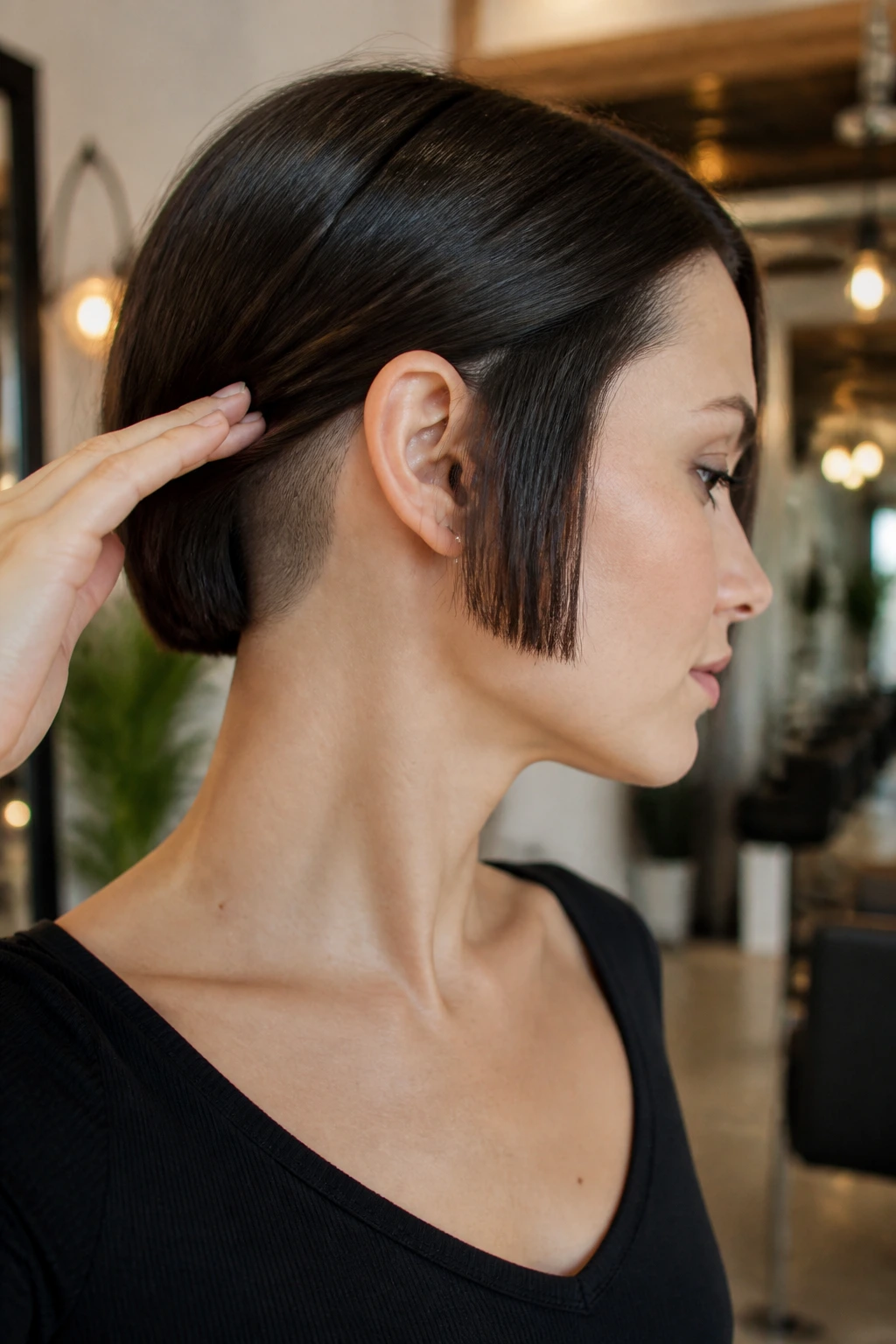
At first glance, this style looks like a classic, sharp bob that grazes the jawline. However, when the hair is tucked behind the ears or tied into a half-up knot, a clean, shaved nape is revealed underneath.
This cut is a savior for those with incredibly thick, straight hair. Thick straight hair often bulks out at the bottom of a bob, creating an unwanted triangular shape. Shaving the lower third of the head at the nape removes this heavy bulk, allowing the remaining bob layers to fall perfectly straight and flat against the neck.
Because the shaved section is hidden beneath the longer bob layers, this is one of the most versatile shaved styles available. It allows you to experiment with a shaved look while maintaining the ability to present a traditional, professional style whenever you choose.
When styling, use a flat iron on the outer bob layers to keep them completely straight and glassy. The contrast between the smooth, polished bob and the hidden shave is a delightful, hidden detail that adds immense character to your look.
7. Edgy Mohawk with Hard Part
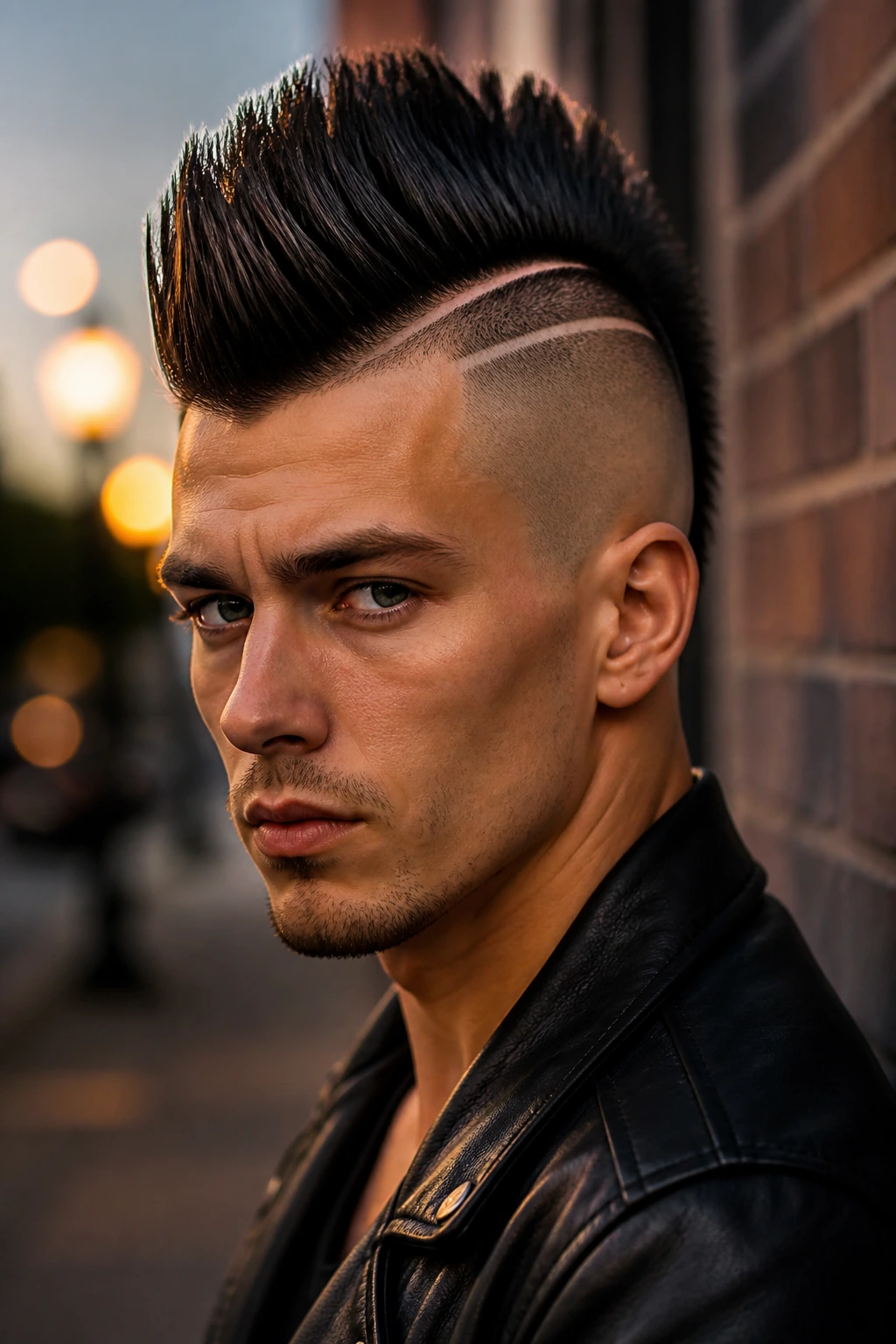
This style features shaved sides that run all the way to the back of the head, leaving a narrow strip of straight hair running down the center. A shaved hard part line is carved along the boundary to define the style.
Is Your Hair Right for a Mohawk?
Straight hair is actually the easiest hair type to style into a mohawk. Because the hair fibers are naturally stiff, they require less styling product to stand upright compared to soft, wavy hair. The shaved sides are typically taken down to a #1 guard or a skin fade, leaving the center strip as the focal point.
How to Style the Center Strip
- Apply a strong-hold gel or pomade to the roots of the center strip while wet.
- Blow-dry the hair upward, using a comb to pull the strands toward the center line.
- Finish with a high-hold hairspray to lock the upright structure in place.
8. Slicked-Back Pompadour with Skin Fade
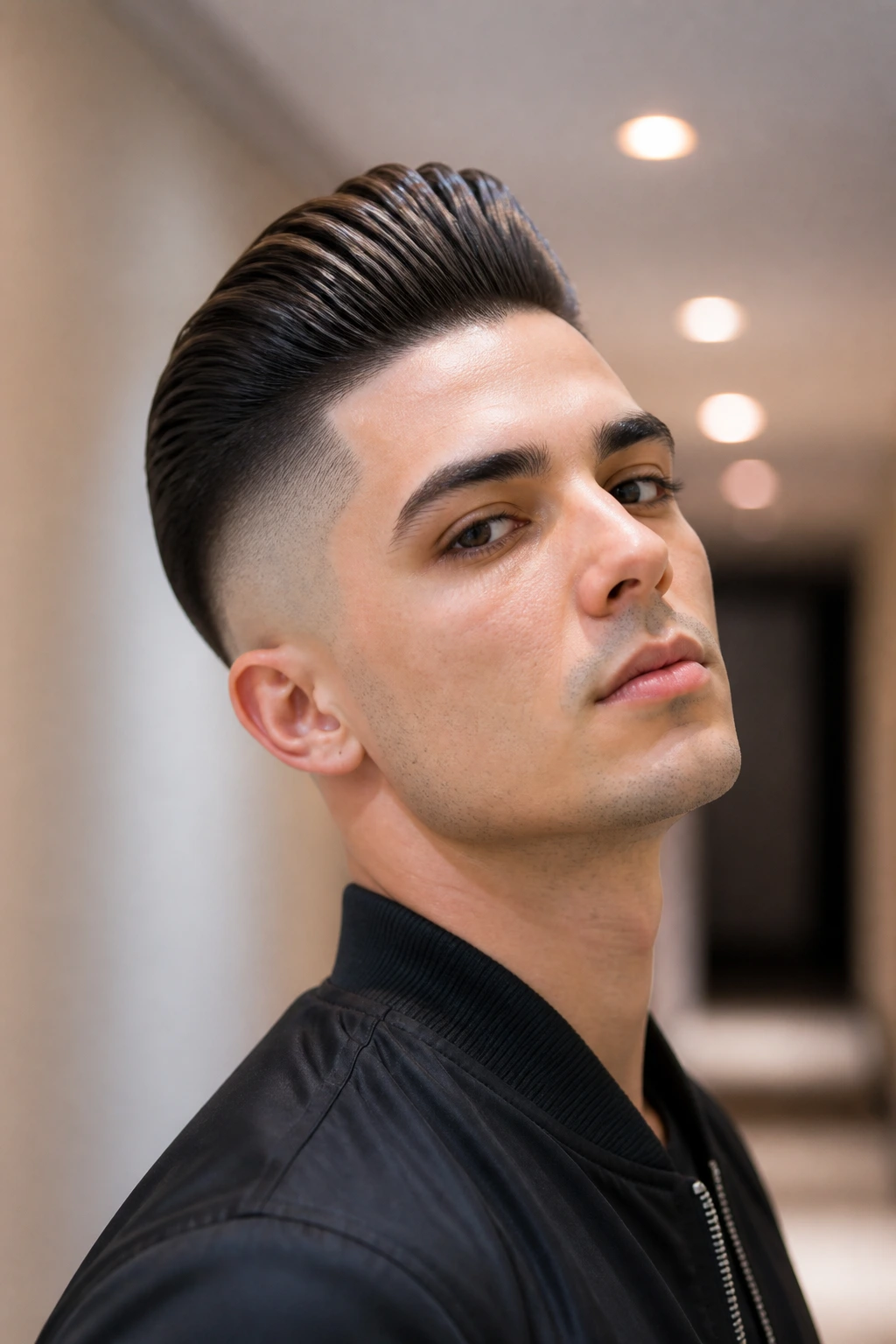
Combining vintage styling with modern cutting techniques, this look features shaved sides that fade into the skin, while the long, straight hair on top is swept back with height and volume.
The key to a successful straight-hair pompadour is the graduation of length. The sides must fade seamlessly from bare skin at the ears up to a #3 guard at the temples, creating a smooth transition that supports the long hair on top as it is swept backward.
To achieve the necessary volume, apply a volumizing mousse to damp hair and use a round brush while blow-drying. Wrap the front section of hair around the brush and pull it upward and backward, focusing the heat on the roots to create a strong, elevated foundation.
Once dry, work a classic pomade through the hair to add shine and hold. Use a wide-tooth comb to slick the hair straight back, letting the natural lines of the comb create texture in the smooth pompadour.
9. Choppy Spiky Crop with Disconnected Shaved Sides
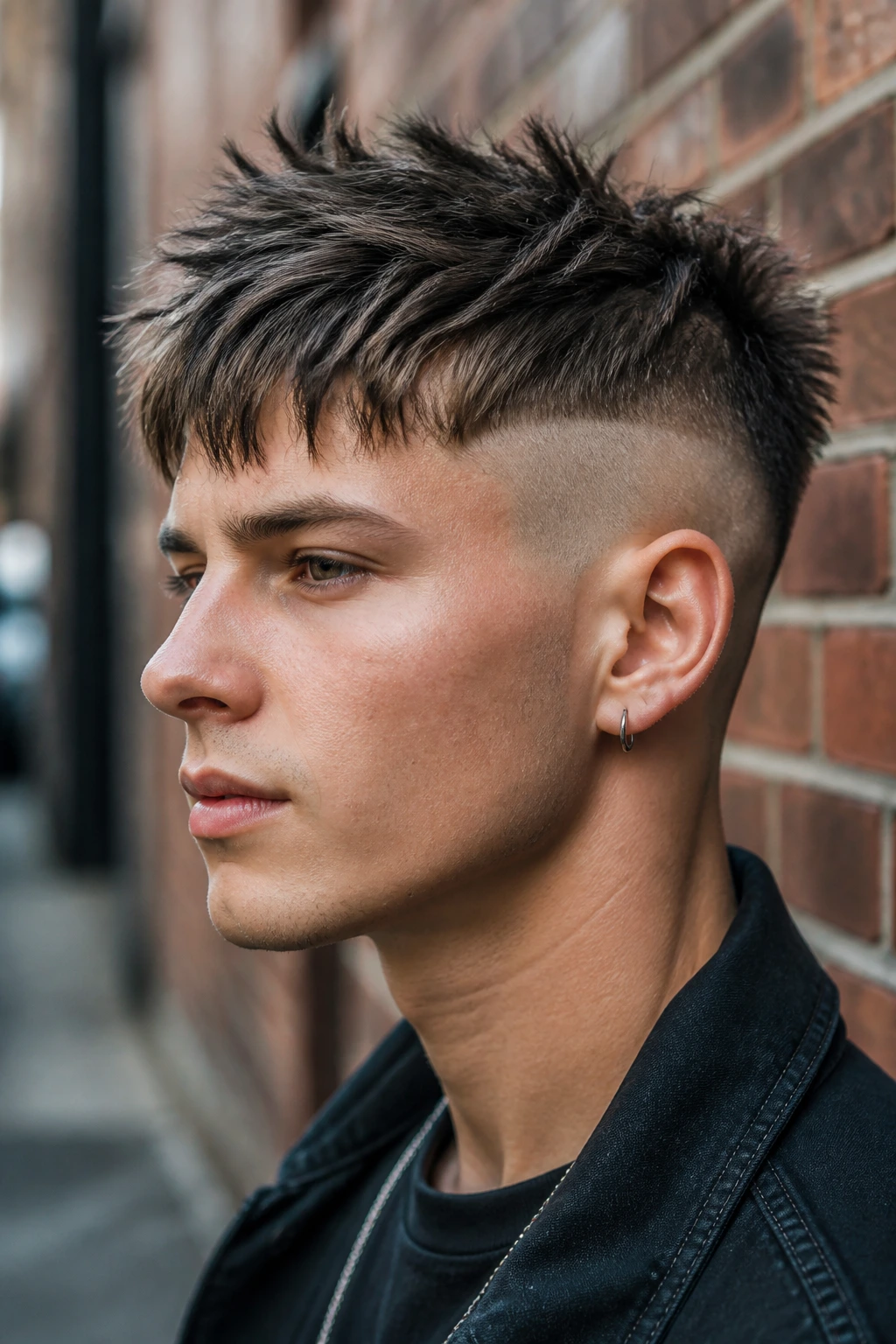
This style uses high-contrast disconnection, featuring sides that are shaved close to the scalp with a #1 guard, while the top hair is cut into short, choppy, spiky layers that stand in different directions.
The Contrast of Choppy Layers
Straight hair can sometimes look lifeless when cut to a uniform length. By introducing choppy, varied lengths on top and contrasting them with flat, shaved sides, you create a dynamic look that is full of movement and energy.
Quick Style Sheet
- Sides: Disconnected shave, usually a #1 or #0 guard, with no blending into the top.
- Top: Layered from two inches at the crown to three inches at the front.
- Product: Matte styling paste or fiber wax.
- Daily Maintenance: Rub product into hands and vigorously shake hands through the top of dry hair to separate the choppy ends.
Pro tip: Have your stylist use a razor instead of scissors to cut the top layers. This creates tapered ends that spike up easily and lay with beautiful texture.
10. Geometrical Blunt Cut with Shaved Chevron Nape
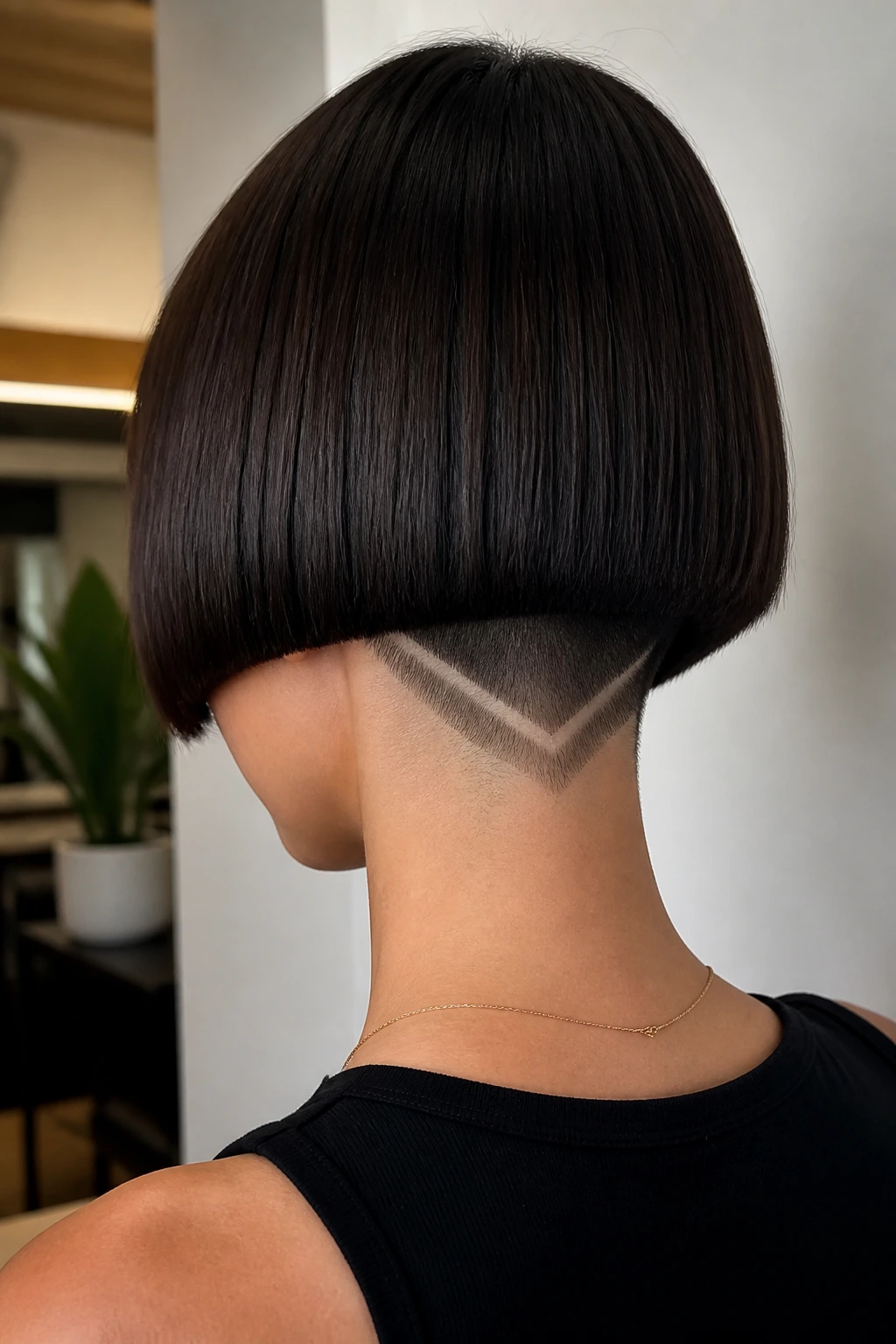
This avant-garde style features a sharp, straight-across blunt bob or crop, paired with a shaved nape that has been carved into a geometric chevron or V-shape pointing down the neck.
The straightness of the hair is essential for this style to maintain its geometric integrity. The blunt edge of the hair must form a perfect, unbroken line that sits directly above the shaved chevron design, creating an architectural look that is incredibly modern.
This style requires a highly skilled stylist who can map out the chevron lines symmetrically using trimmer clippers. The contrast between the dark hair stubble of the chevron and the bare skin of the neck is the defining feature of the look.
Because the design is so precise, it requires frequent maintenance. To keep the chevron lines looking sharp, expect to visit your stylist every ten to fourteen days for a quick touch-up with the trimmers.
11. Retro Side-Part with Clean Taper Shave
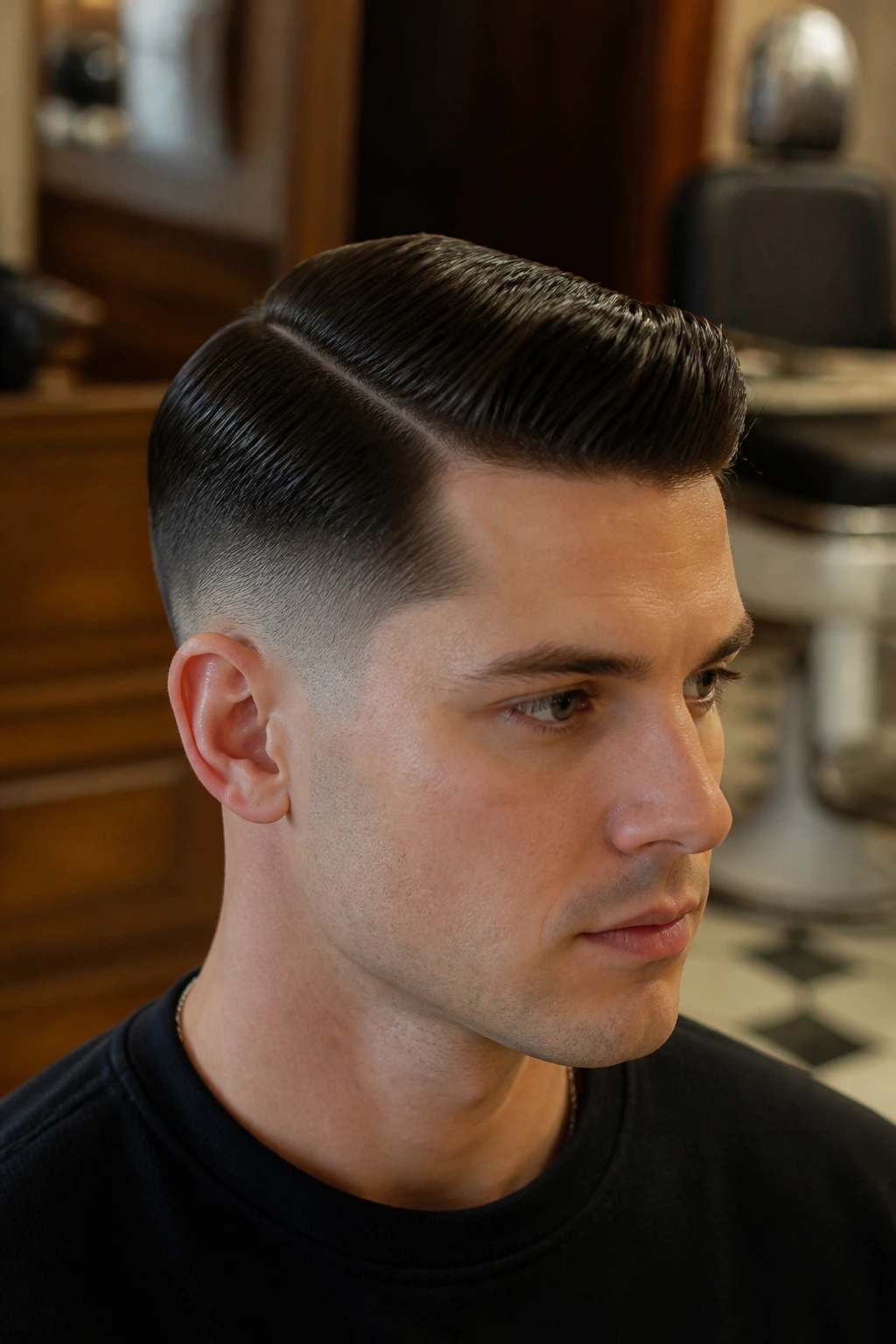
A sophisticated look that nods to classic barbershop styles, this cut features a clean, tapered shave around the ears and neckline, while the top is parted on one side and combed neatly into place.
Unlike harsh, disconnected undercuts, the taper shave offers a gradual transition. The hair is shaved closest at the very edges of the hairline and gradually increases in length as it moves up the head, blending smoothly into the classic side-parted top.
This style is perfect for professional environments where a full undercut might feel too extreme. It offers the clean, crisp feel of shaved sides while maintaining a highly traditional, polished silhouette that pairs perfectly with tailored clothing.
To style, apply a medium-shine grooming cream to damp hair. Use a comb to find your natural parting line, then comb the sides downward and the top section across and slightly back, keeping the hair flat and neat.
12. Bleached Crop with Low Bald Fade
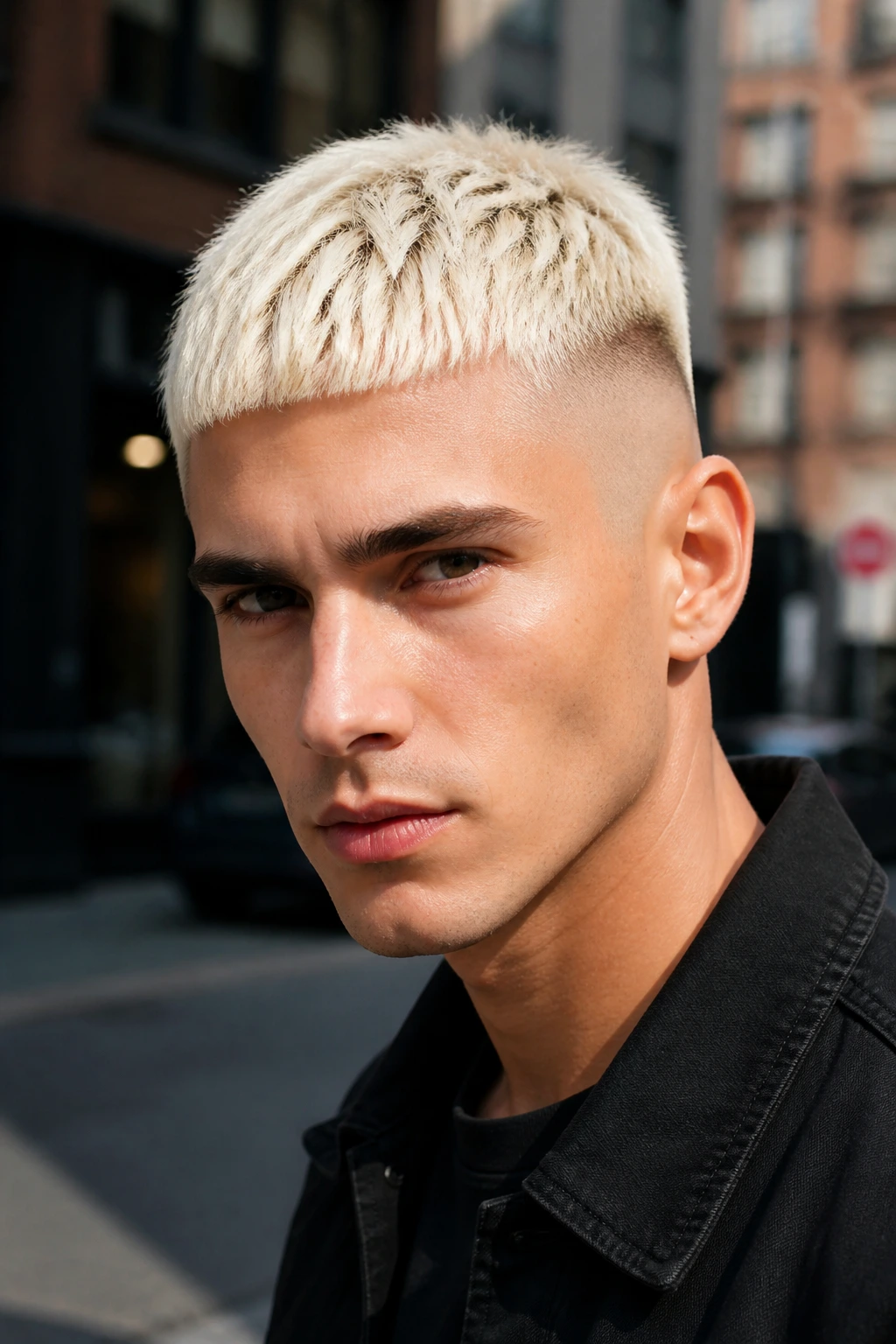
This high-fashion look combines a very short, textured crop with a low bald fade that shaves the hair down to the skin around the ears and the base of the skull, all topped off with a bright bleached-blonde color.
Why Bleaching Changes the Texture
Bleaching straight hair actually makes it easier to style. The chemical process of bleaching opens the hair cuticle, swelling the strand and introducing a slightly rougher texture that gives flat, straight hair much-needed grip and volume.
Style and Color Care
- Use a purple toning shampoo once a week to prevent the bleached top from turning brassy or yellow.
- Keep the low bald fade fresh by getting the sides shaved every two weeks.
- Apply a lightweight styling powder to the roots on top to create effortless texture without adding weight or shine.
13. Ultra-Short Crew Cut with Shaved Temple Designs
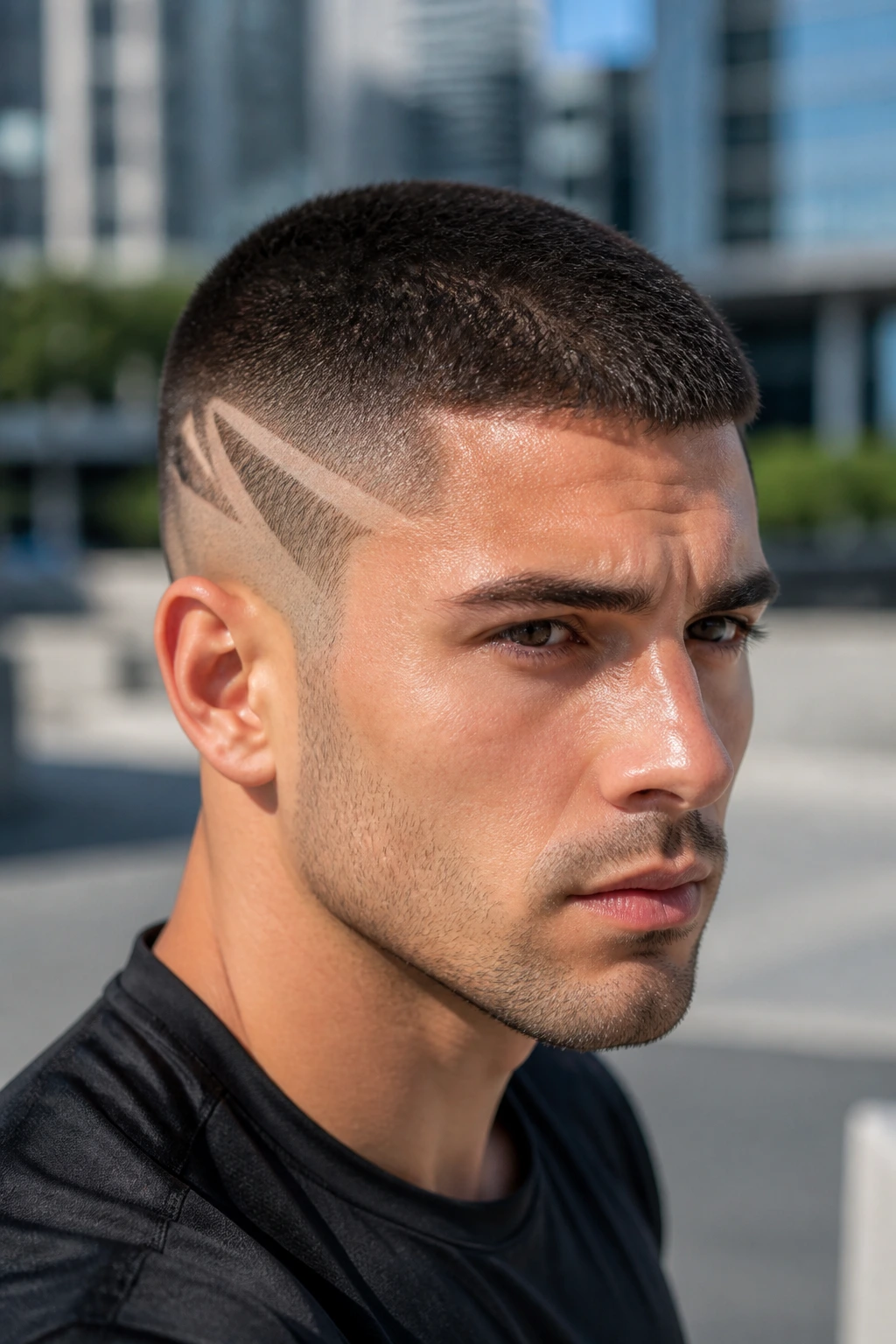
This sporty style features a classic crew cut where the top is kept under an inch long, paired with shaved sides that feature clean, shaved lines or geometric patterns carved into the temples.
The short length of the crew cut ensures that the straight hair stands upright on its own, creating a clean, uniform surface. The shaved temple designs act as a modern accessory, breaking up the simple shape with personal flair.
Your stylist will use detail trimmers to carve the designs into the shaved temple area, which is usually prepped with a #1 or #0 clipper guard. The patterns can range from simple parallel lines to complex geometric shapes.
These designs are temporary by nature, as the hair will grow back and fill in the shaved lines within a couple of weeks. This quick growth allows you to change the patterns frequently or simply let them grow out into a standard fade.
14. Textured Quiff with High-Drop Fade
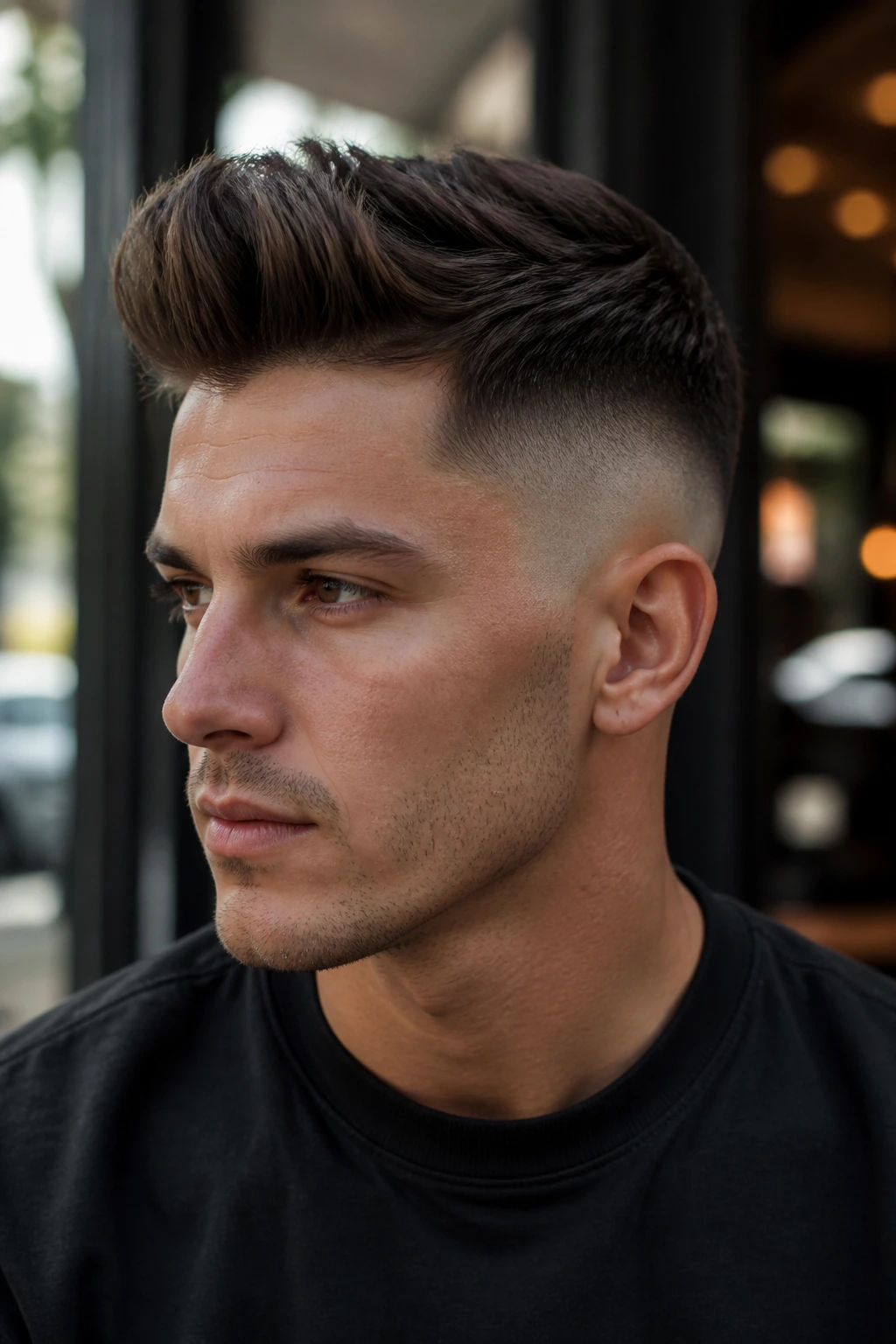
The quiff features longer hair at the front of the head that is styled upward and slightly backward, combined with a high-drop fade that shaves the sides close around the ears and curves down around the back of the head.
The Dynamics of the Drop Fade
A standard high fade runs in a straight line around the head, but a drop fade curves downward behind the ears to follow the natural shape of the skull. This curved line creates a more balanced, flattering silhouette for straight hair, preventing the back of the head from looking too flat.
Styling the Quiff
- Apply a pre-styling spray or volume cream to wet hair.
- Blow-dry the front section of hair upward using your fingers to lift the roots.
- Rub a small amount of high-hold matte paste between your palms and sweep it through the dry hair to hold the quiff in place.
Pro tip: Focus the blow-dryer heat at the very base of your front hairline to lock in the height of the quiff before applying any styling product.
15. Classic Shag with Under-the-Radar Nape Shave
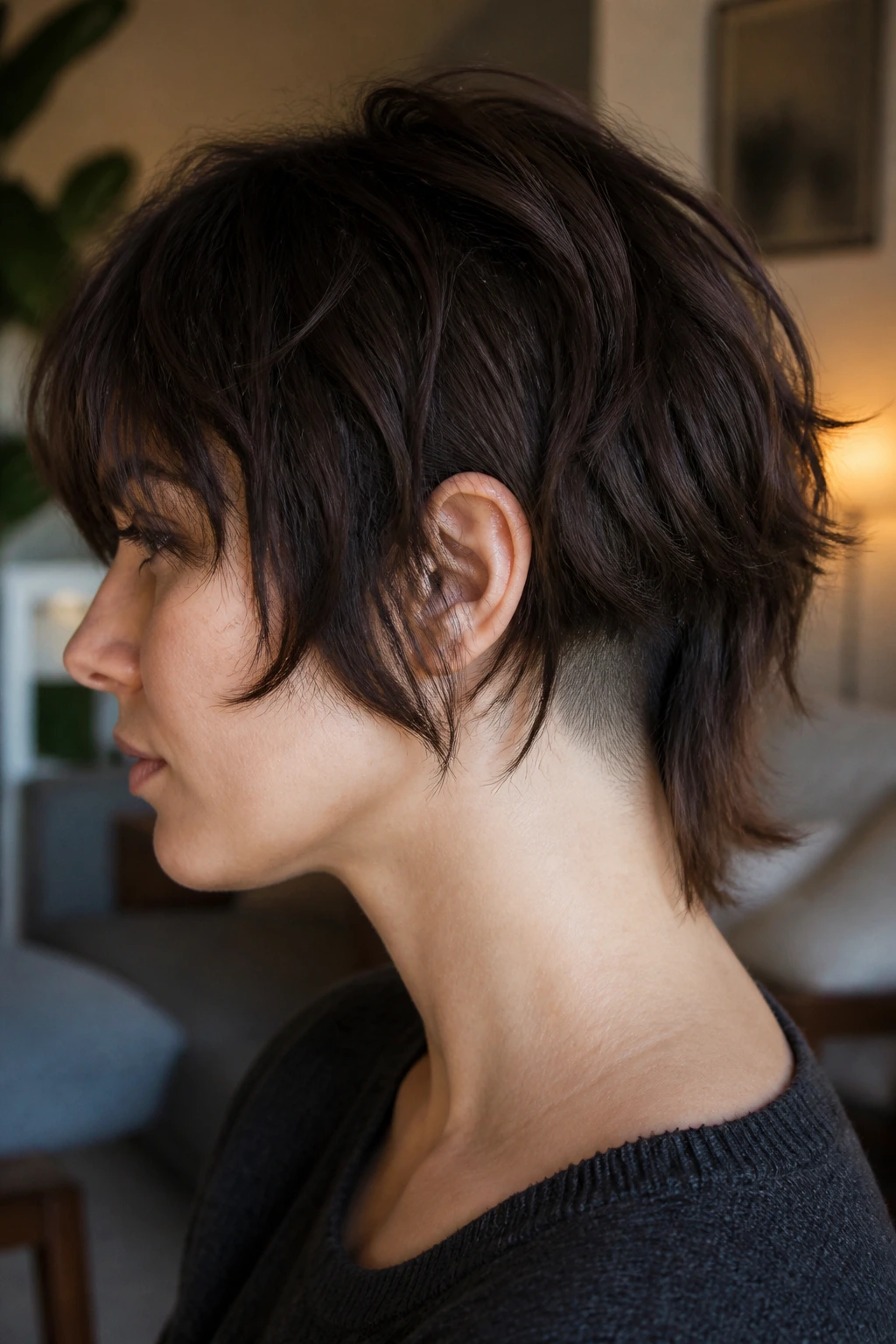
This style keeps the messy, layered look of a classic shag cut, complete with face-framing pieces and wispy ends, but features a shaved nape area underneath to reduce bulk and keep the neck cool.
The contrast between the soft, lived-in layers of the shag and the clean, shaved nape is unexpected and practical. Straight hair can often look heavy and flat in a shag cut, but shaving the nape removes the dense weight from the bottom, allowing the top layers to bounce and move more freely.
This style is incredibly easy to wear, as the shaved section is completely hidden when the hair is worn down. It is only when you gather the shag into a loose, messy bun or high ponytail that the shaved nape is revealed.
To style, spray a generous amount of sea salt spray onto damp hair and scrunch it with your fingers as it air-dries. This technique coaxes a soft, beachy texture out of naturally straight strands, perfectly complementing the hidden shave underneath.
16. Wispy Fringe with Disconnected Side Under-Shave

This look features a soft, wispy fringe that hangs gently over the forehead, paired with a disconnected under-shave on both sides of the head that is completely hidden beneath the longer top layers.
The Illusion of Thickness
This style is particularly beneficial for those with fine, straight hair. By shaving the sides underneath, you remove the hair that would normally lay flat against the head, creating the illusion that the remaining top section is thicker and fuller than it actually is.
Quick Features Checklist
- Sides: Disconnected shave with a #2 guard, hidden beneath the top draping layers.
- Fringe: Cut with texturizing shears to create a soft, wispy appearance that breaks up the forehead line.
- Top: Kept long enough to fall over the shaved sides, usually three to four inches.
- Styling: A quick blast of dry shampoo at the roots of the fringe to add volume and prevent separation.
17. Swept-Back Ducktail with Sharp Tapered Neckline
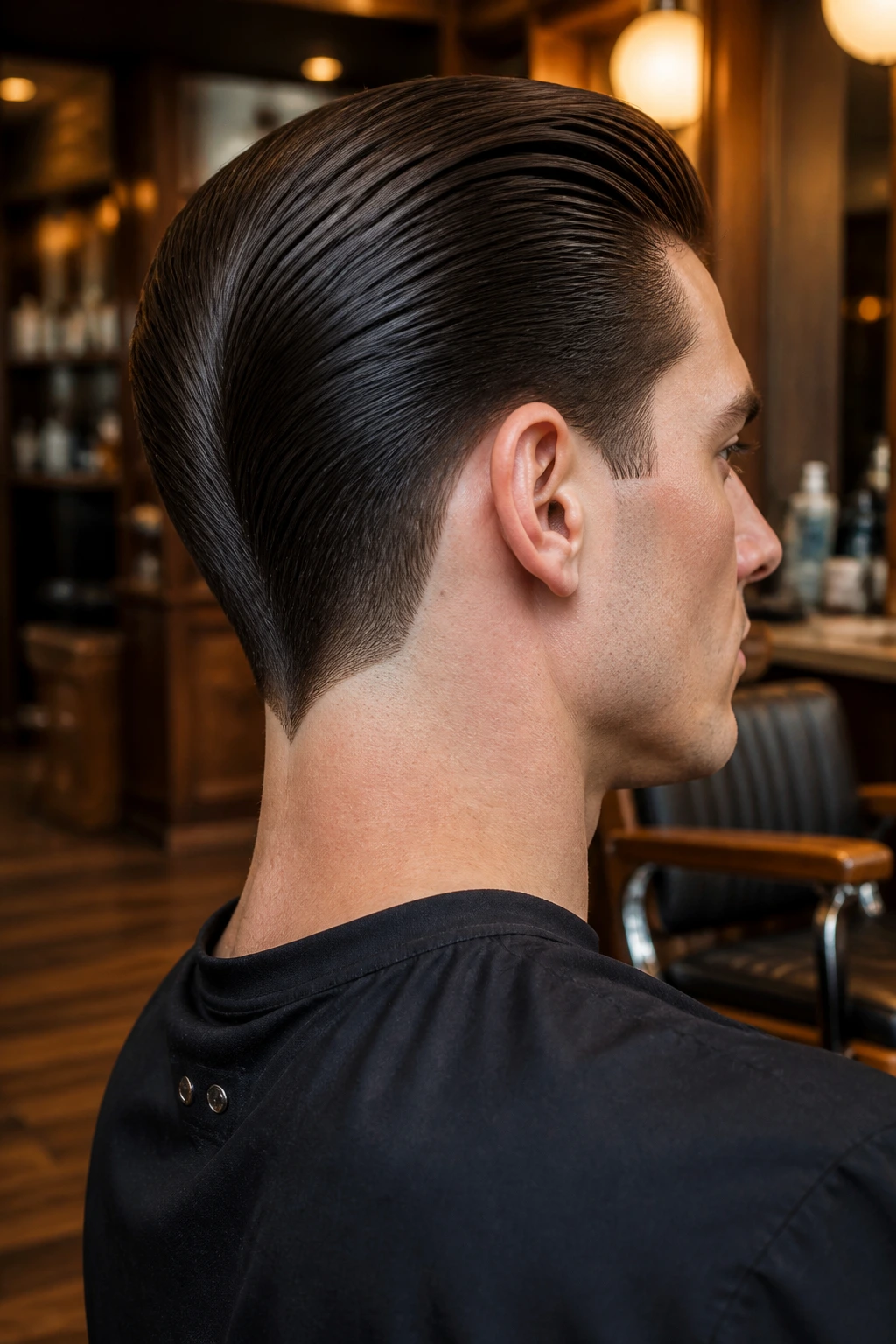
A modern nod to mid-century styling, this cut features straight hair combed back to meet in a clean, vertical seam down the back of the head, finished with a sharp, shaved taper at the very base of the neck.
The straightness of the hair is what allows the vertical seam of the ducktail to look so clean and precise. The tapered neckline is shaved down to the skin at the very bottom, gradually blending into the longer combed hair above to create a highly tailored finish.
To style this classic look, you will need a classic grease-based or high-shine water-soluble pomade. Apply the product generously through damp hair, ensuring even coverage from the roots to the ends.
Use a fine-tooth comb to slick the sides back toward the center of the head, allowing them to meet in the middle. Comb the top straight back to blend into the sides, creating a smooth, streamlined shape that highlights the sharp neckline.
18. Geometric Mullet with Razor-Clean Sides
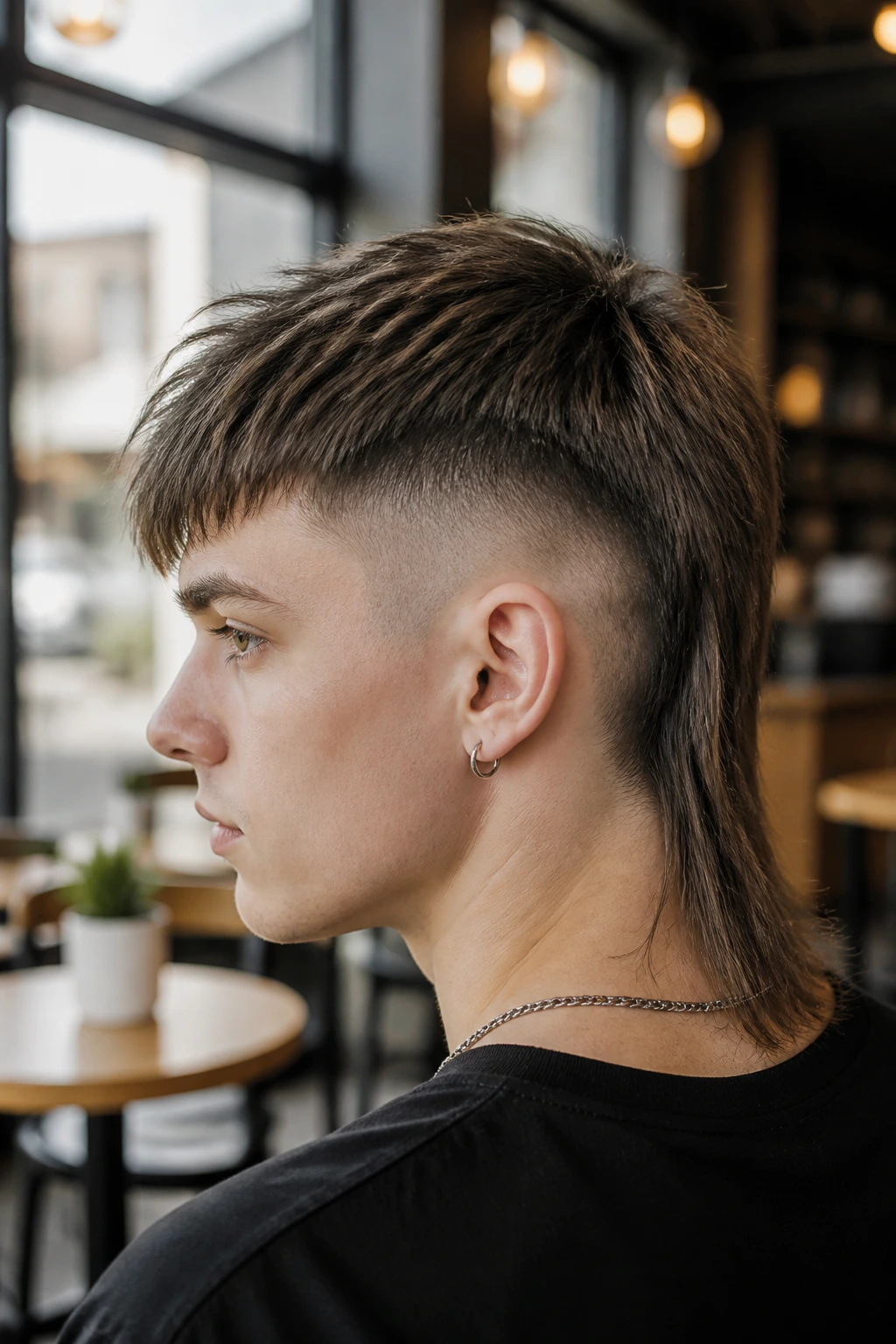
This bold style features a short, choppy top and fringe, completely shaved sides that run behind the ears, and a long, straight section of hair cascading down the neck in the back.
The Architecture of the Geometric Mullet
The modern mullet is all about sharp transitions. Shaving the sides to a bare #1 guard creates a dramatic disconnect between the short, spiky top and the long, straight back, transforming a traditional retro shape into an architectural statement.
Styling and Product Choices
- Keep the top spiky and piecey using a dry clay or texturizing paste.
- Use a flat iron on the long back section to ensure it hangs perfectly straight down the neck.
- Keep the shaved side panels clean by touching them up with clippers every two weeks.
Pro tip: Have your stylist cut the fringe in a blunt, horizontal line to further emphasize the geometric, high-fashion feel of this modern mullet.
19. Piecey Pixie-Bob with One-Sided Shaved Temple
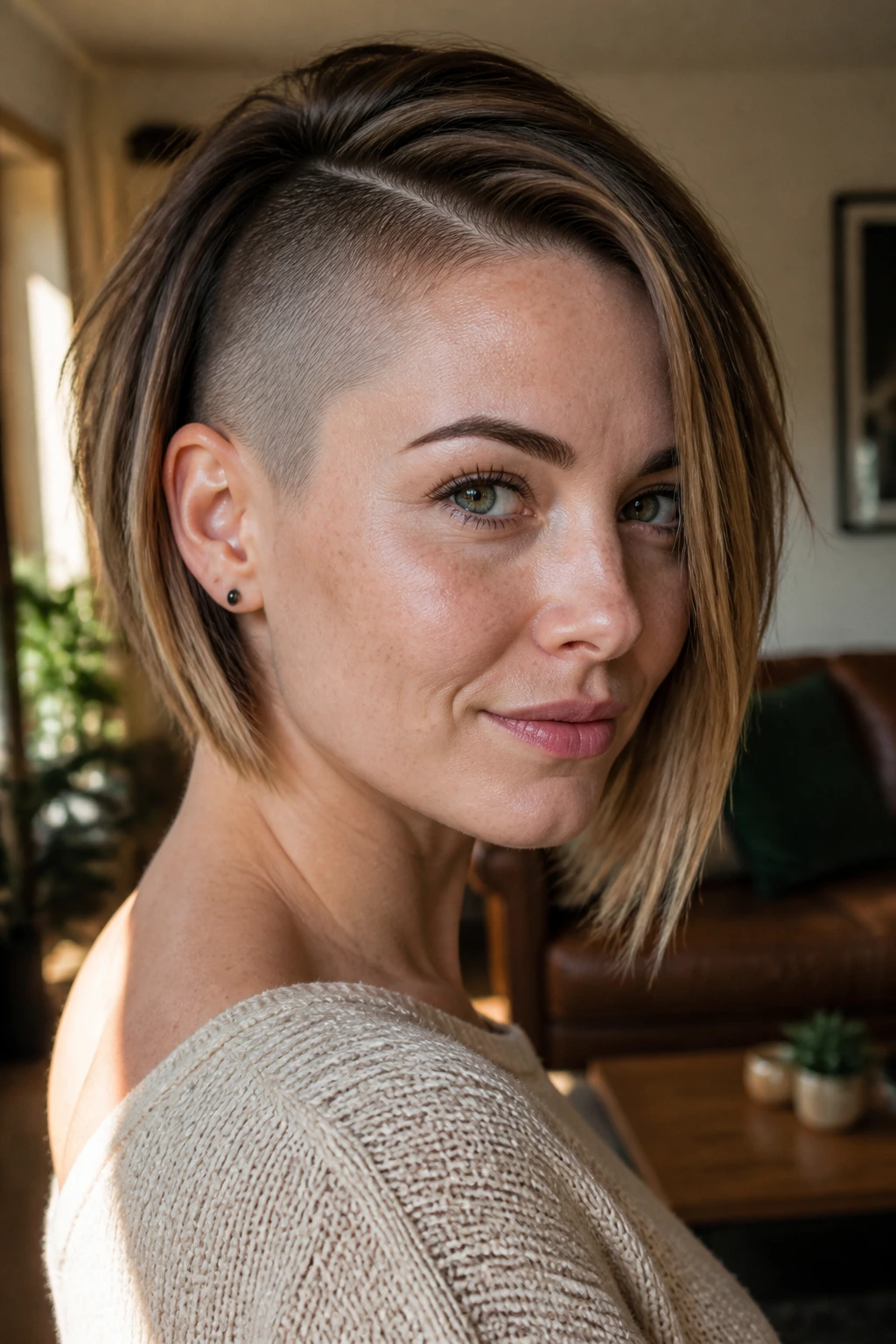
This hybrid cut combines the length of a short bob with the layered texture of a pixie cut, featuring a single, cleanly shaved temple on one side to add an element of surprise.
The asymmetrical design works beautifully with straight hair because the longer side has enough weight to swing naturally, while the shaved side remains completely flat and clean, framing the cheekbone and jawline.
This cut is highly flattering for those with round or heart-shaped faces, as the asymmetric line and the exposed temple help to elongate the face and highlight the bone structure.
To style, apply a lightweight blow-dry cream to damp hair and blow-dry using a flat brush. Direct the longer side down and forward, letting the piecey ends frame the face, while keeping the shaved temple side clean and tucked.
20. Brushed-Up Spike with Zero-Fade Undercut
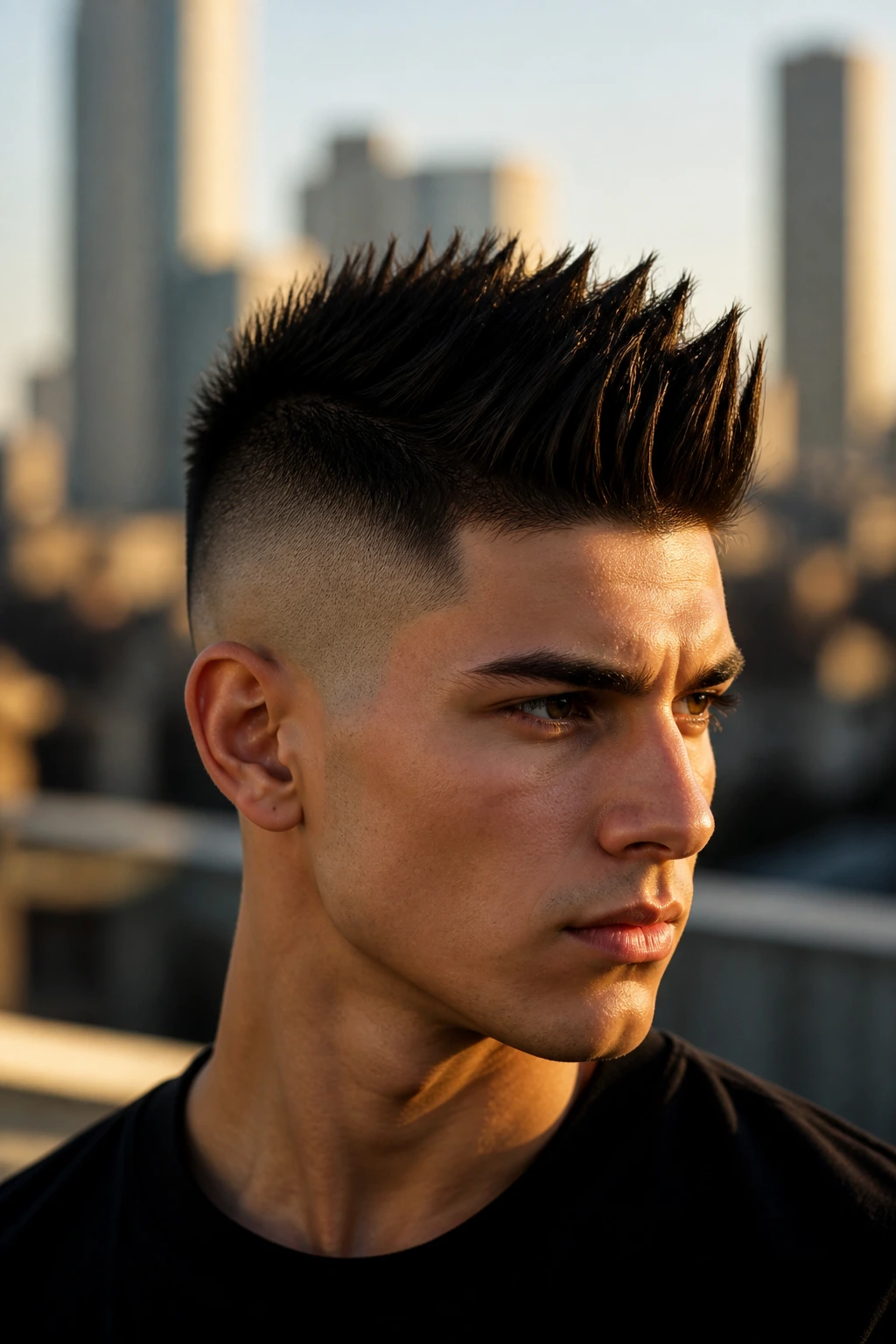
For a high-energy, vertical look, this style features straight hair on top styled straight up into clean, defined spikes, paired with a zero-fade undercut that shaves the sides down to the bare skin.
Defying Gravity with Straight Hair
Because straight hair fibers are naturally rigid, they are highly receptive to being styled upward. The zero-fade undercut on the sides removes all competing volume, ensuring that the vertical height of the spikes on top is the main focus of the silhouette.
Quick Style Guide
- Sides: Shaved to a zero-guard at the bottom, blending up to a #1 guard near the top transition.
- Top: Cut to approximately two to three inches, with deeply point-cut ends to create sharp points.
- Product: A strong-hold hair gel or styling glue that dries matte.
- Application: Apply product to damp hair, grab small sections of hair at the roots, and pull them upward, twisting the ends slightly to form sharp spikes.
21. Minimalist Buzz with Surgical Line Accent
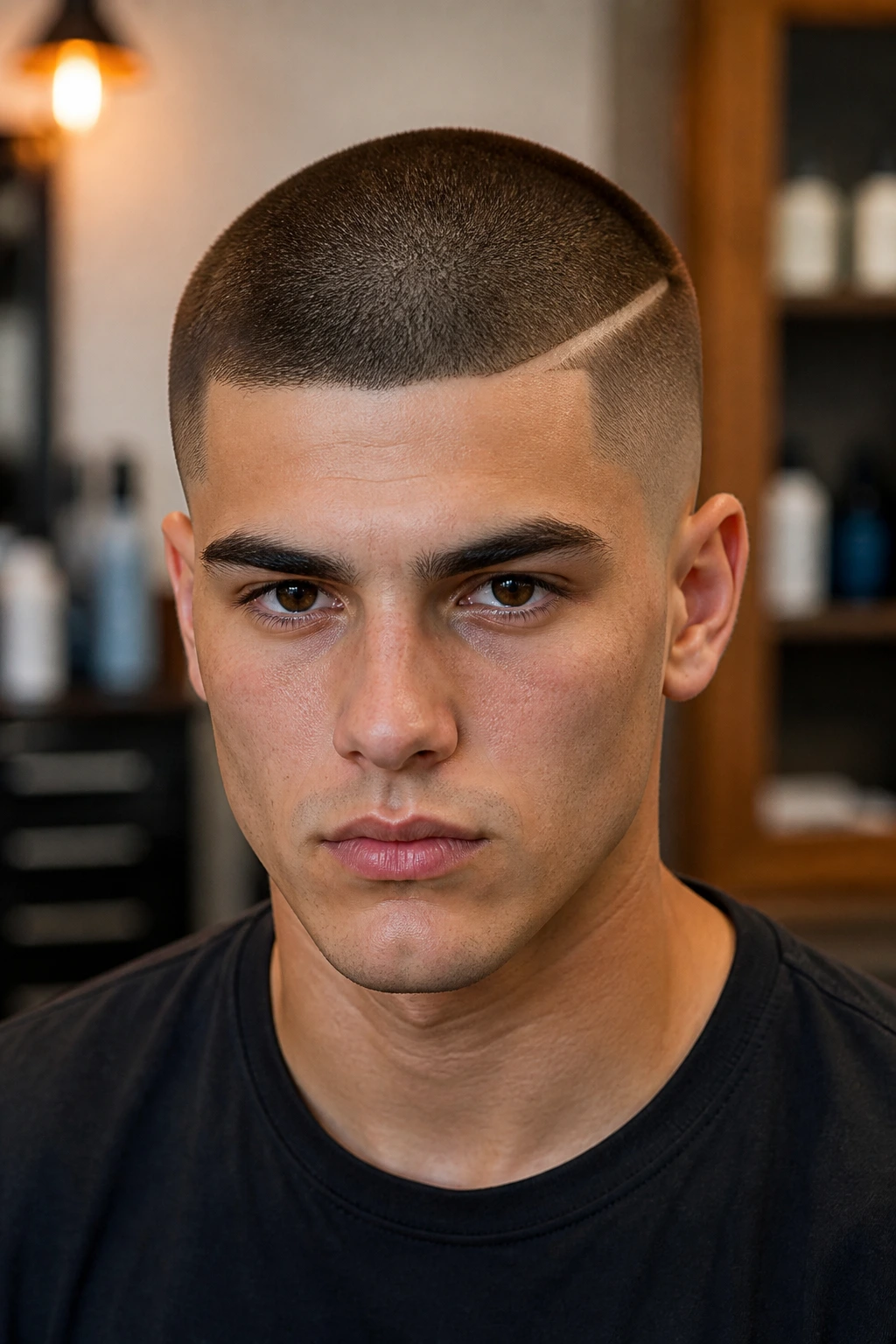
This ultra-short style features a uniform shave across the entire head, accented by a single, clean surgical line shaved into the scalp, usually running parallel to the temple or wrapping around the back.
The simplicity of the buzz cut is what makes the surgical line stand out so dramatically. On straight hair, the buzzed scalp forms a smooth, velvety canvas, allowing the bare skin of the shaved line to appear incredibly crisp and deliberate.
Your barber will use a professional razor or detail trimmer to carefully carve the line into the short hair. The placement of the line is crucial and should follow the natural contours of your head to create a flattering, balanced look.
Like all detailed shaved designs, the surgical line has a short lifespan. As the hair grows, the line will begin to fill in and lose its crispness within seven to ten days, making this a style for those who enjoy frequent trips to the barbershop.
22. Classic Shag with Under-the-Radar Nape Shave
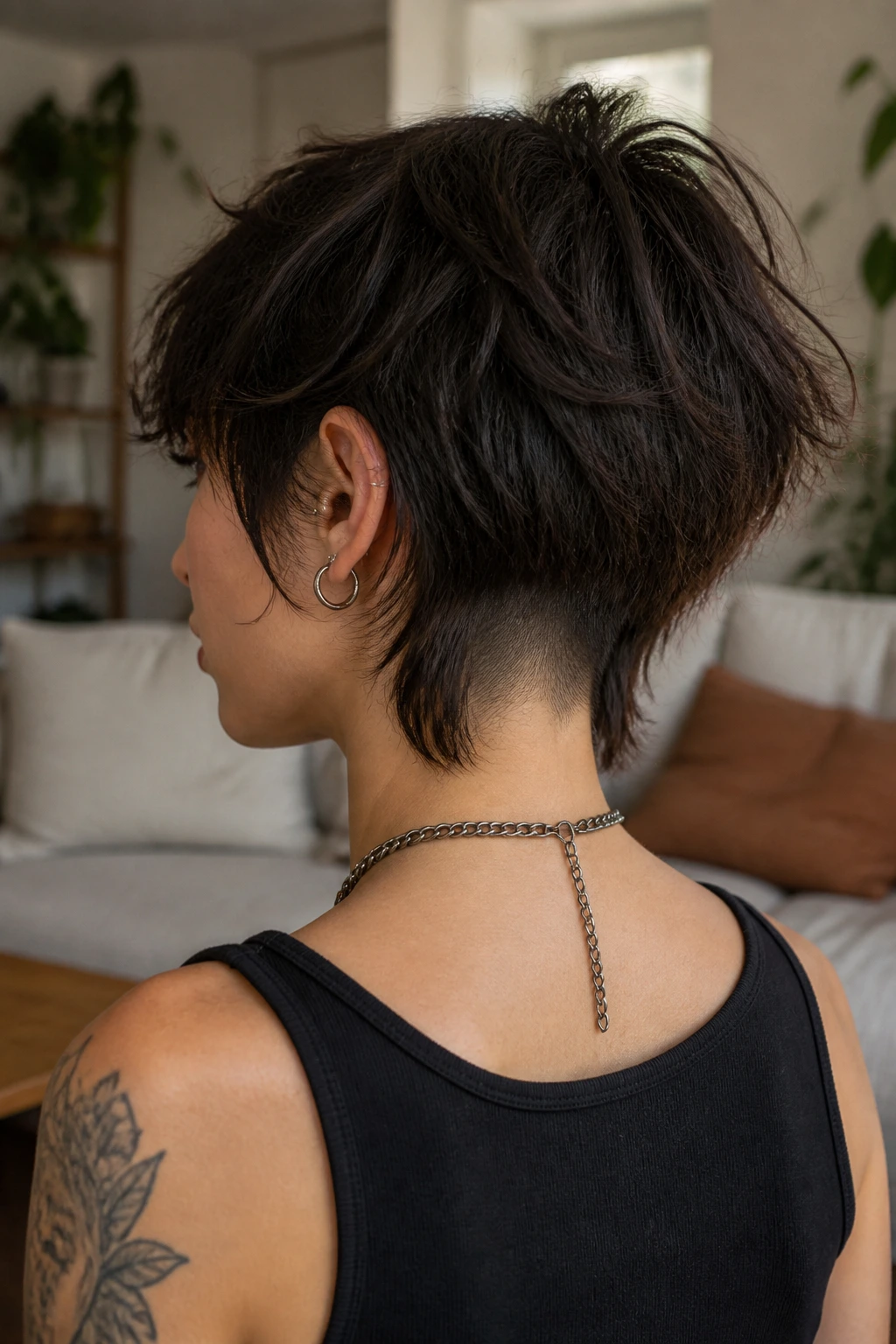
This style keeps the messy, layered look of a classic shag cut, complete with face-framing pieces and wispy ends, but features a shaved nape area underneath to reduce bulk and keep the neck cool.
The contrast between the soft, lived-in layers of the shag and the clean, shaved nape is unexpected and highly practical. Straight hair can often look heavy and flat in a shag cut, but shaving the nape removes the dense weight from the bottom, allowing the top layers to bounce and move more freely.
This style is incredibly easy to wear on a daily basis, as the shaved section is completely hidden when the hair is worn down. It is only when you gather the shag into a loose, messy bun or high ponytail that the shaved nape is revealed.
To style, spray a generous amount of sea salt spray onto damp hair and scrunch it with your fingers as it air-dries. This technique coaxes a soft, beachy texture out of naturally straight strands, perfectly complementing the hidden shave underneath.
Maintaining Shaved Straight Hair at Home
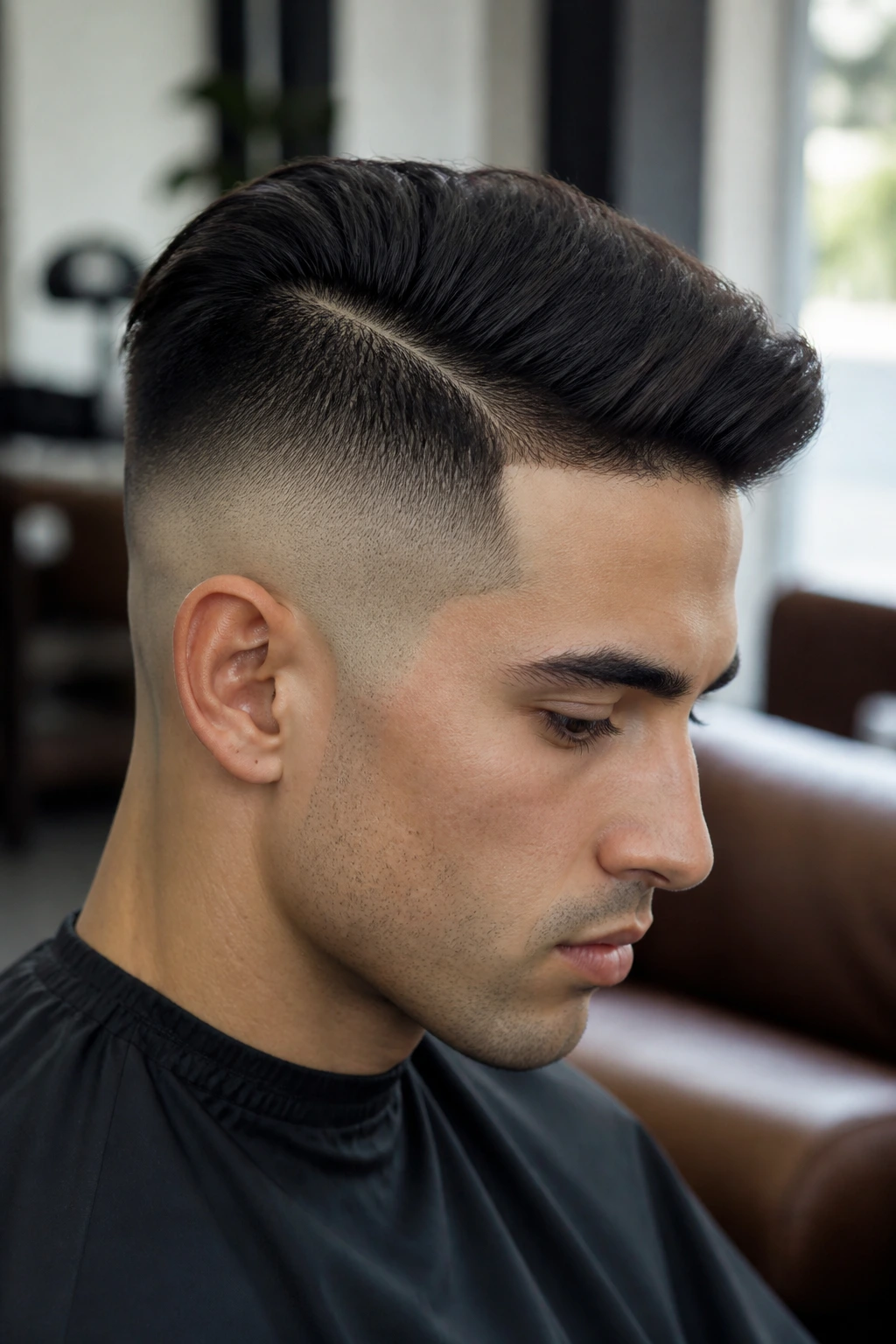
Keeping a shaved hairstyle looking fresh requires a combination of the right tools, proper technique, and a consistent routine. Because straight hair grows out in a highly visible, direct path, even a few millimeters of growth can start to make a clean shave look fuzzy. Developing a home maintenance routine can save you frequent trips to the salon and keep your style looking crisp between professional cuts.
Essential Tools for Home Maintenance
Investing in quality tools is the foundation of successful home hair care. You do not need a salon’s worth of equipment, but a few key items will make the process much easier and safer.
- Quality Cordless Clippers: Look for clippers that come with a full set of guard attachments, ranging from #1 to #4, and a powerful motor that won’t snag on thick, straight hair.
- Handheld Mirror: A small, lightweight hand mirror is essential for seeing the back of your head when working on undercuts or nape shaves.
- Detail Trimmers: These smaller clippers are designed for cleaning up the hairline around the ears and the back of the neck, offering much greater precision than standard clippers.
- Sectioning Clips: Strong plastic clips are necessary to hold the longer straight hair on top completely out of the way while you shave the sections underneath.
Step-by-Step Guide to Touching Up an Undercut
If you have a disconnected undercut or a shaved temple, touching up the shaved section at home is relatively straightforward if you take your time and follow a methodical process.
First, start with completely dry hair. Wet hair clumps together and can clog clippers, leading to an uneven cut. Use your sectioning clips to carefully pin up all the longer hair on top, following the original parting line established by your stylist. Double-check this parting in the mirror to ensure no long strands are hanging down into the shave zone.
Next, choose your clipper guard. If you are unsure, always start with a higher guard number than you think you need, such as a #3, and gradually work your way down to a #2 or #1. It is always possible to cut more hair off, but you cannot put it back once it is gone.
Hold the clippers flat against your scalp and move them in the opposite direction of your hair growth. For most shaved sides and backs, this means starting at the hairline and moving upward in smooth, straight strokes. Stop the clippers precisely at the parting line where the long hair is pinned up, pulling the clippers away from the head in a gentle rocking motion.
Once you have finished clipping, use your detail trimmers to clean up the hair around your ears and the base of your neck. Take your time, using your hand mirror to check your progress from multiple angles. When finished, release the long hair from the clips and let it fall naturally over the fresh shave, admiring the clean, restored contrast.
The Bottom Line
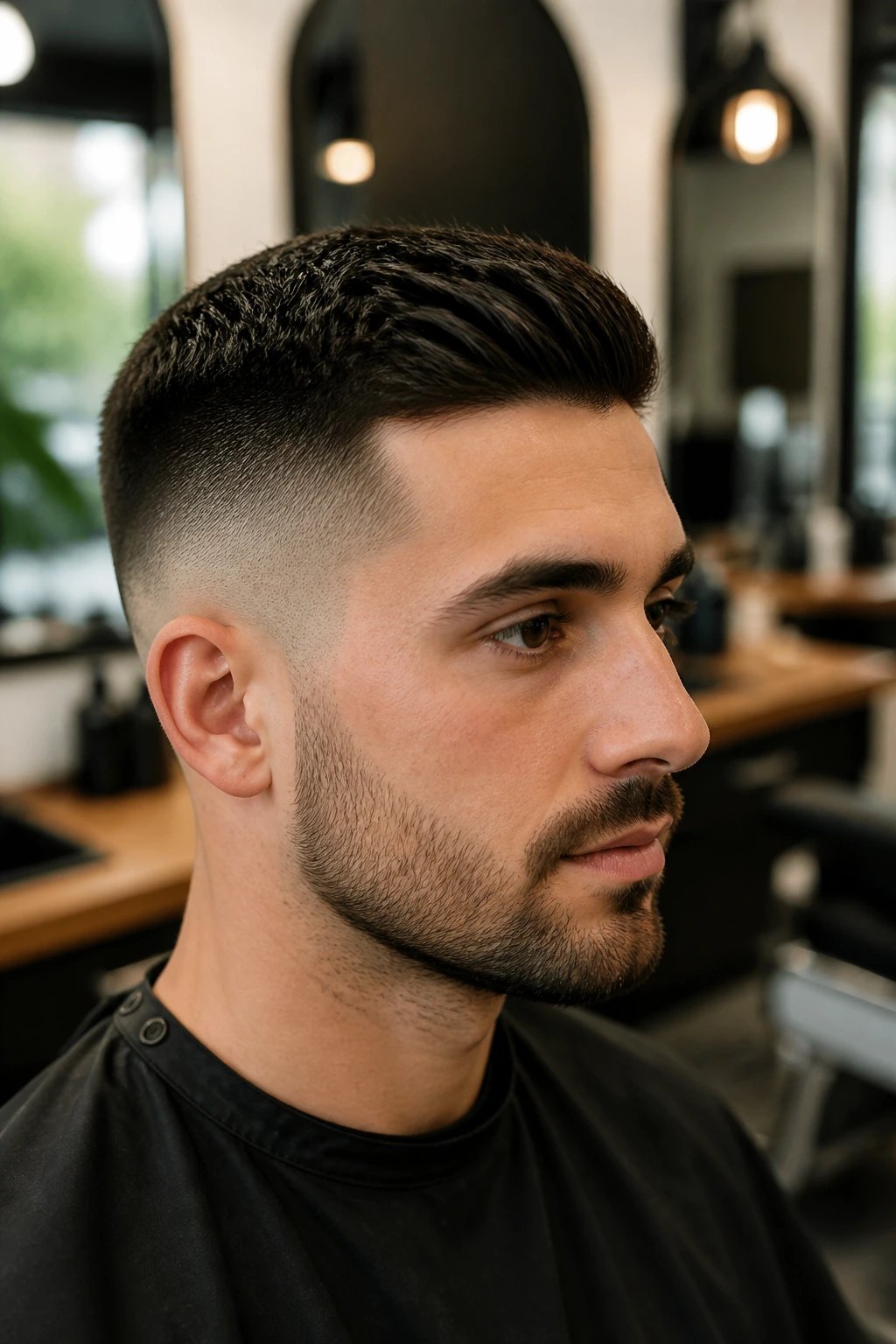
Shaved hairstyles offer an incredible way to bring structure, contrast, and modern edge to straight hair. By embracing the natural stiffness and shine of straight strands, these styles transform what can sometimes feel like flat, stubborn hair into a sharp, architectural design. The key to success lies in choosing a style that matches your face shape, your daily styling commitment, and your comfort level with maintenance.
Whether you opt for a bold, high-contrast crop with a skin fade or a subtle, hidden nape undercut that only shows when your hair is swept up, these cuts prove that short shaved hair is anything but boring. With the right clipper guard, a skilled hand, and a few key styling products, you can easily maintain a clean, intentional look that showcases your straight hair in its very best light.