


Imagine standing on the sidelines of a rain-soaked field, wind whipping across your face, watching athletes sprint, jump, and collide for ninety minutes. Your hair would likely be a tangled, static-filled mess within the first five minutes. Yet, professional soccer players walk off the pitch with their hair looking as sharp and structured as when they walked on. That is not magic; it is the result of smart hair architecture.
Over the years, the demanding environment of professional athletics has forced players to treat their hair like gear. It has to be aerodynamic, secure, and completely out of the eyes. But when those same styles are brought into daily life, they lose their aggressive athletic context and become incredibly stylish, crisp, and practical options for busy mornings.
If you are tired of your daily ponytail sagging by lunchtime or your curls flying into your lip gloss on a windy afternoon, athletic styling is your answer. These twenty-two soccer hairstyles offer the perfect balance of security and style, holding up through grocery runs, demanding workouts, and casual dinner dates alike.
Why Athletic Hair Tactics Work for Everyday Routines
Before picking up a comb, it helps to understand why soccer styles hold so much better than traditional updos. Standard buns and braids rely on gravity and a few loose bobby pins to stay put. When you walk, run, or turn your head quickly, those pins shift, the weight of your hair pulls downward, and the style collapses.
Athletic styles, on the other hand, are built on the principle of tension distribution. Instead of anchoring all your hair to a single point on your scalp, these styles divide your hair into distinct zones. By securing each zone individually, the overall weight is spread evenly across your head, preventing the painful pulling and sagging that makes standard high ponytails so frustrating.
This zoning approach also keeps short, stubborn layers from escaping. Whether you have curtain bangs, grown-out layers, or baby hairs around your ears, these methods pin those pieces down at the root before they can fly free. Let’s look at the absolute best options you can build at home.
1. The Classic Triple-Banded Ponytail
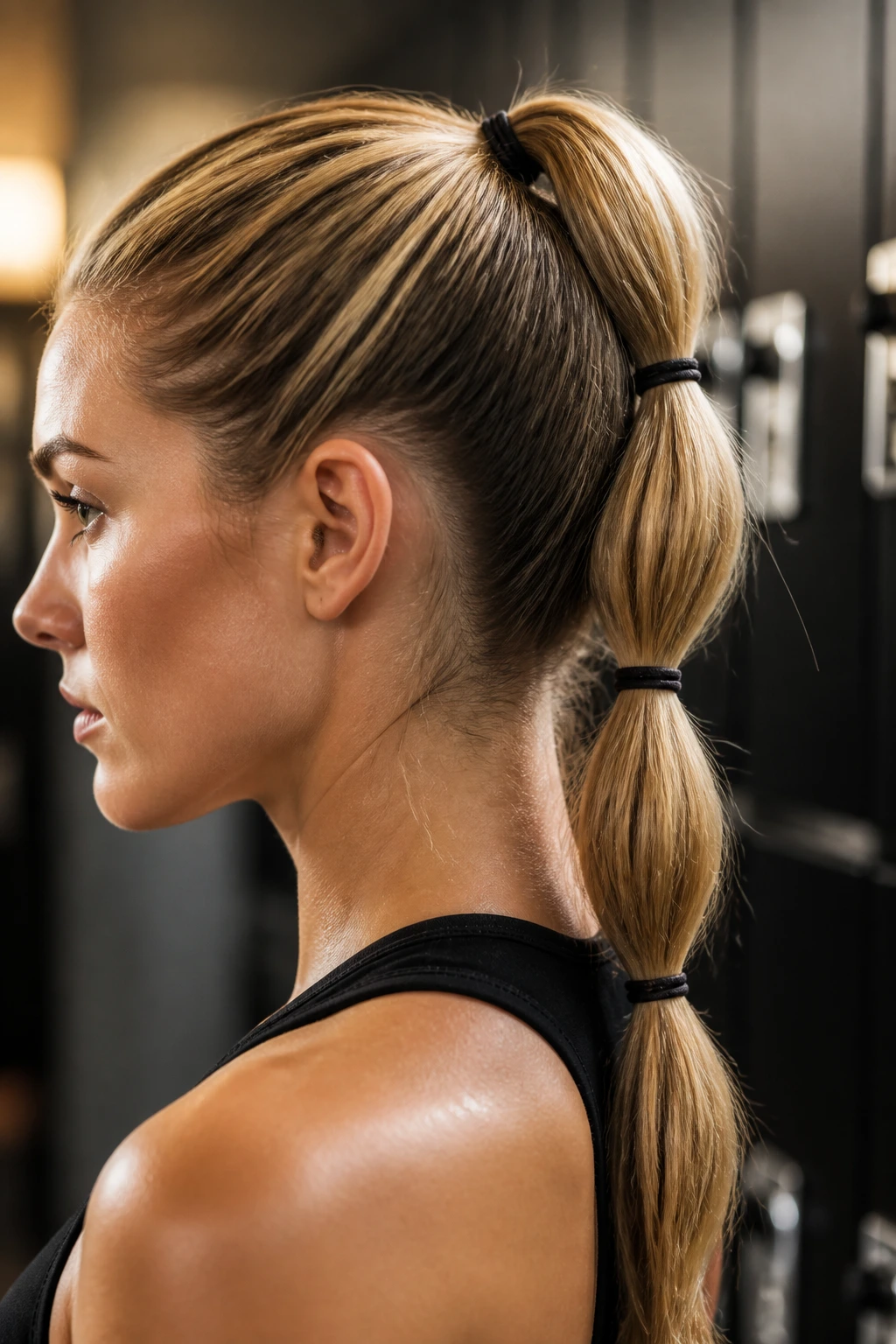
This style is a staple among mid-fielders who cannot afford to have stray hairs blocking their peripheral vision during a match. It uses a series of stacked, linked ponytails to create a tiered look that is virtually indestructible.
Why the Triple-Band System Prevents Sagging
By securing the top section of your hair first, you remove the heaviest weight from the main ponytail. The middle and lower bands then pick up the remaining hair, distributing the tension so your scalp does not feel sore by the end of the day.
Quick Style Facts
- Ideal Hair Type: Medium to long hair of any texture.
- Tools Needed: Three high-grip elastic bands and a tail comb.
- Estimated Prep Time: Three minutes.
- Hold Rating: Outstanding.
Pro tip: Use clear or hair-matching elastics for a subtle look, or vibrant, contrasting bands if you want the structural joints of the style to stand out.
2. The Dutch-Braided Double Buns
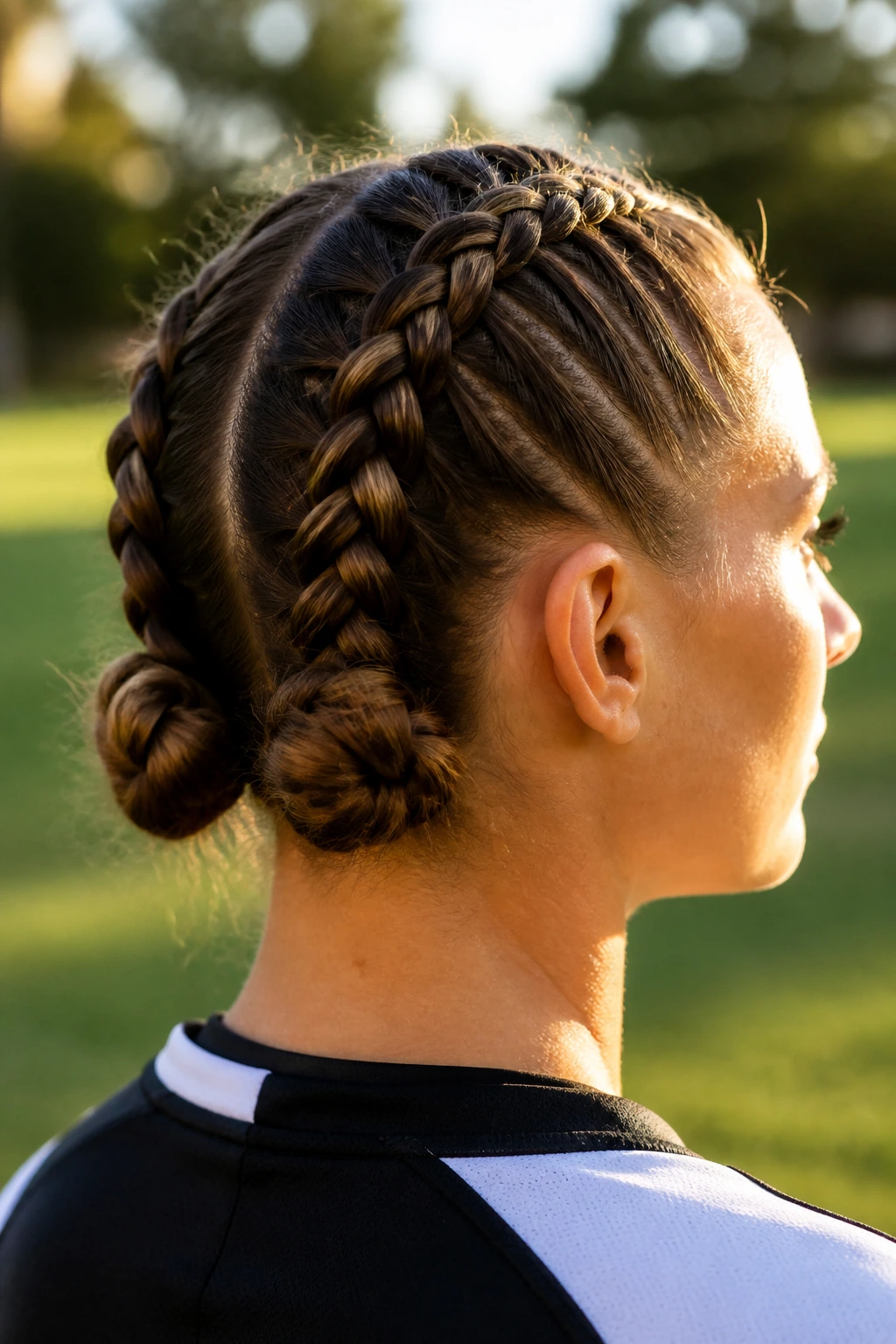
Symmetry is your best friend when you want a look that stays perfectly balanced from morning to night. These double buns start as tight Dutch braids at the forehead and end in neat, compact coils at the nape of the neck.
Unlike standard French braids, which sit flat, Dutch braids are created by crossing the strands under each other. This creates a raised, three-dimensional braid that acts as a sturdy track running down your scalp. When you coil the remaining hair into buns at the bottom, they rest against this braided track, which prevents them from bouncing or sagging when you move.
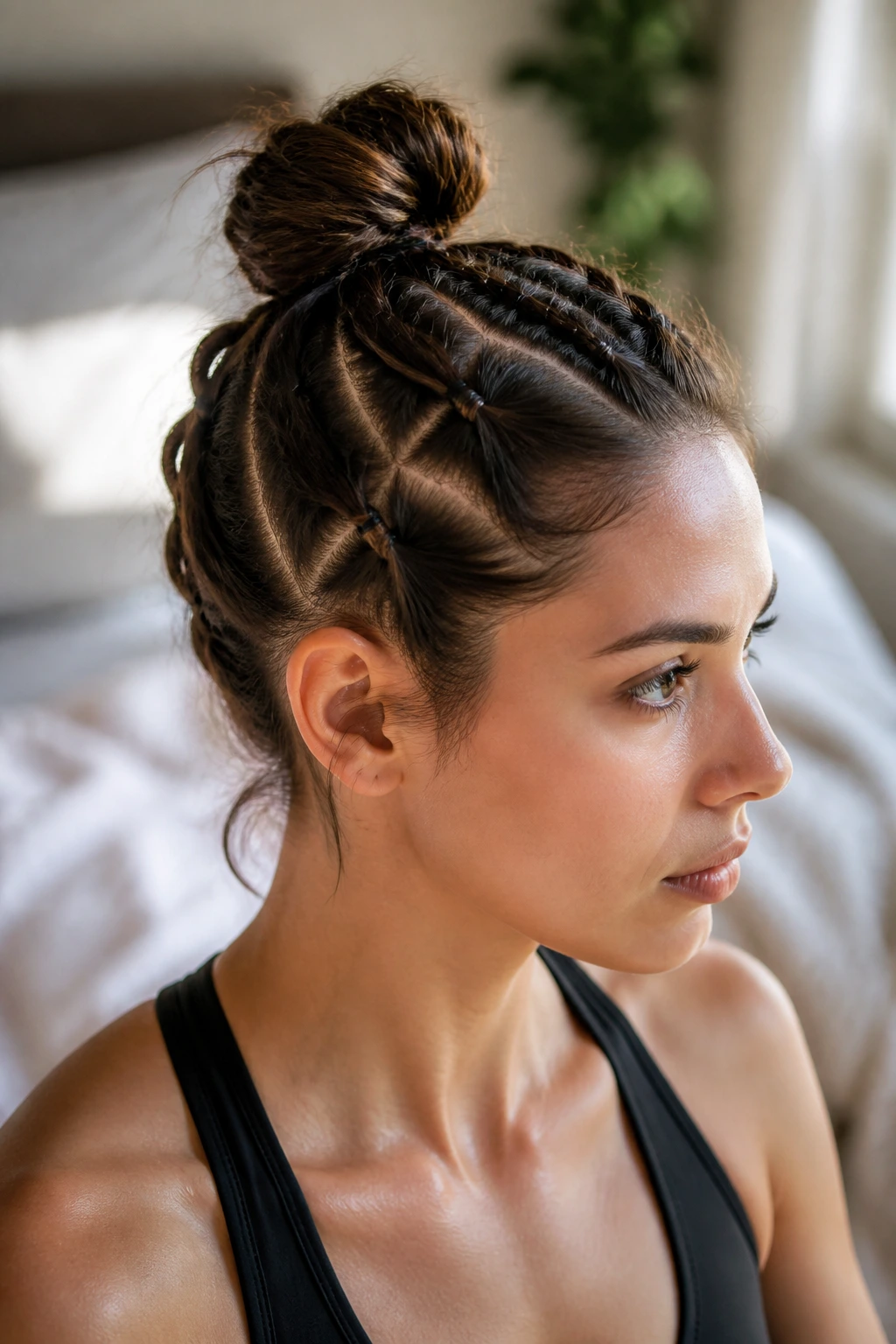
This style is particularly great for third-day hair when natural oils provide built-in grip. It keeps your hair completely off your neck, making it a brilliant choice for warm weather or high-collar jackets.
3. The High-Tension Bubble Mohawk
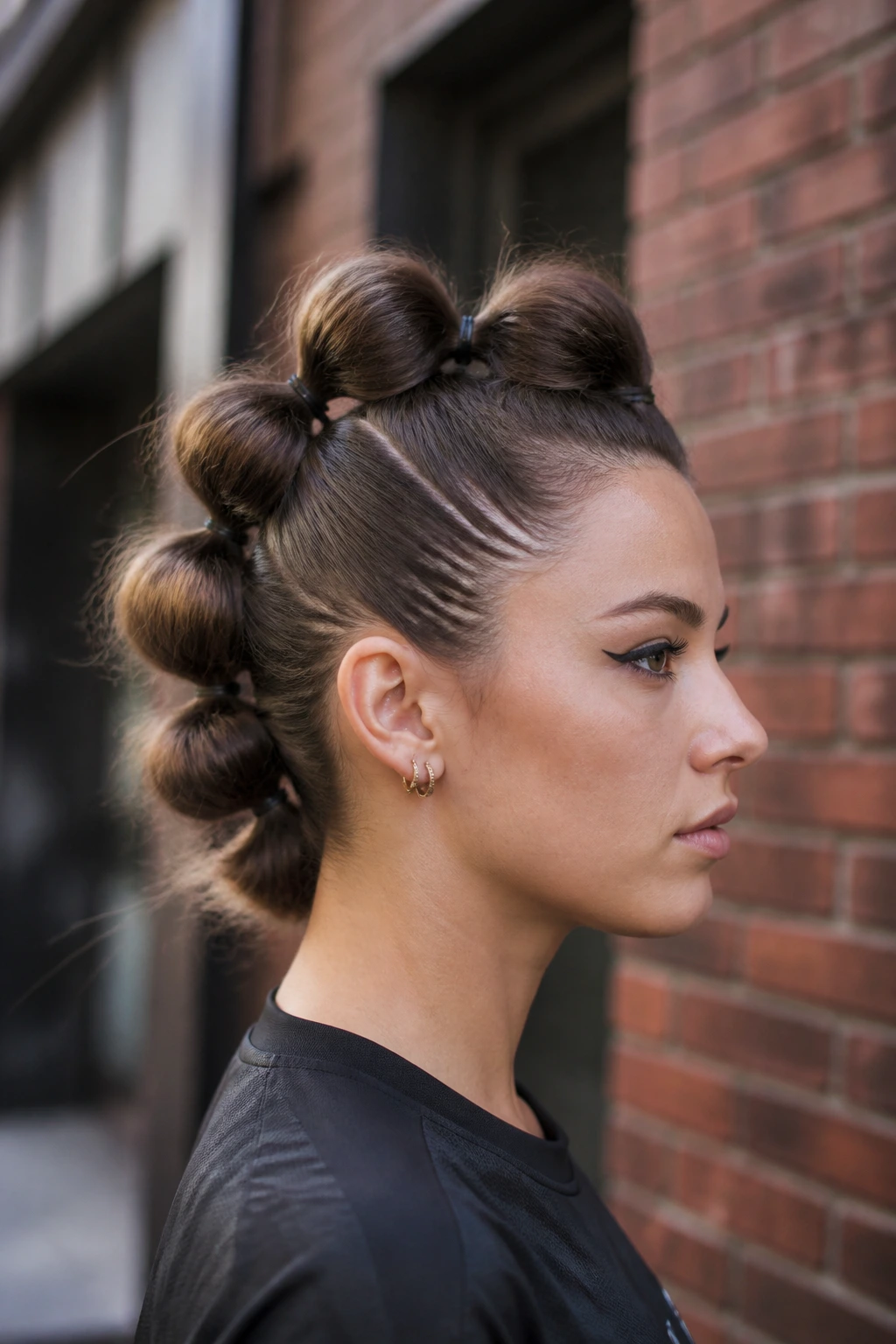
Do you want the edgy look of a mohawk without committing to a pair of clippers? This segmented bubble style uses tension and volume to create a bold, raised line down the center of your head.
How Does This Style Keep Its Volume?
It relies on a series of small, interconnected ponytails that run from your hairline to your neck. Each section is gently teased and pulled outward to create a rounded “bubble” before being fed directly into the next band down the line.
How to Wear It
Start by sectioning off a two-inch strip of hair right at your forehead and securing it with a small elastic. Pull a second section of hair from behind your ears, combine it with the tail of the first ponytail, and band them together. Repeat this process down your head, gently tugging the hair between each band to create the bubble effect.
4. The Criss-Cross Elastic Piggybacks
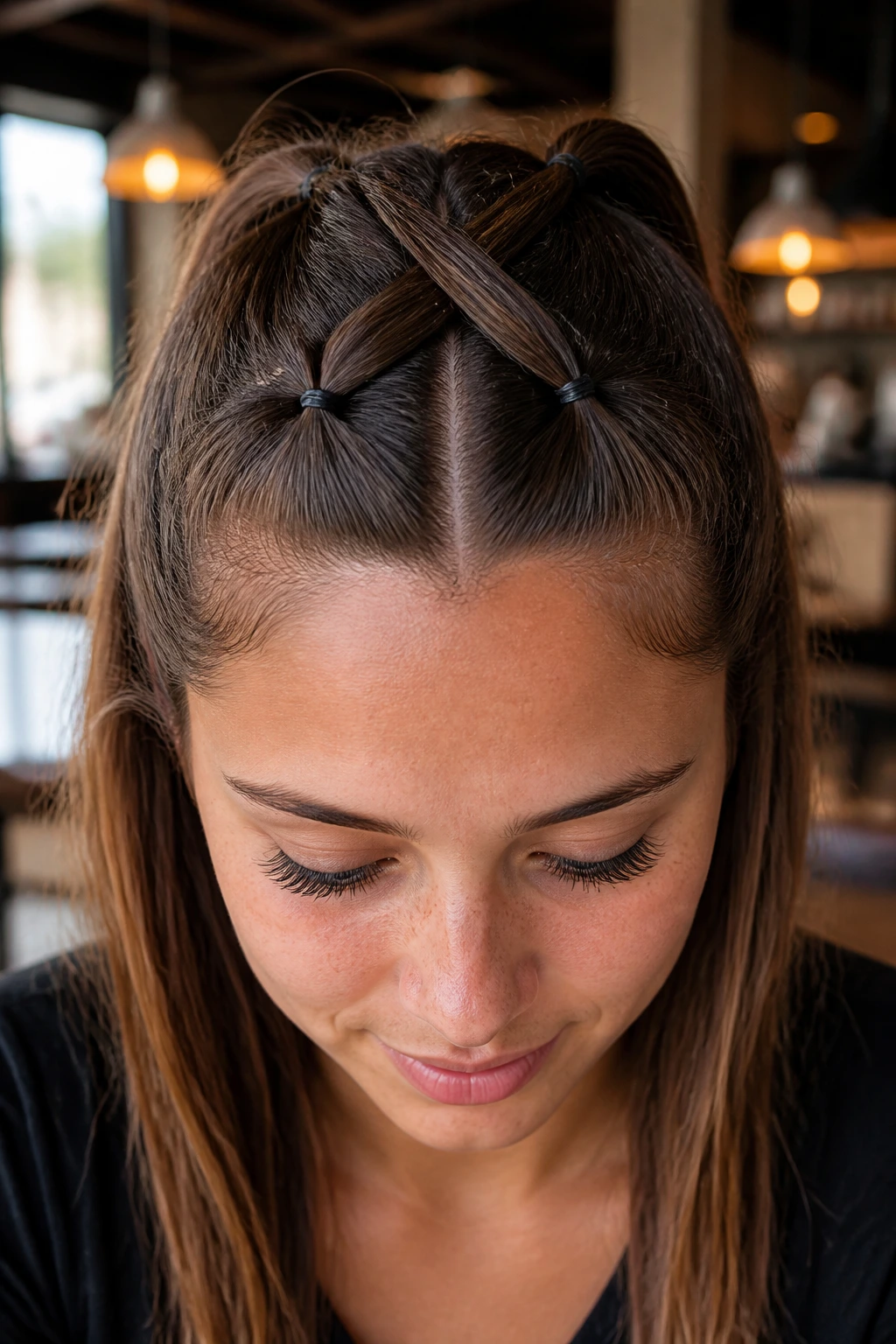
This style looks incredibly intricate, but it is actually built on a very simple, repetitive pattern. It is perfect for capturing shorter layers and bangs that usually slip out of traditional braids.
[Section 1: Left Front]  -->  [Section 2: Right Middle]
[Section 1: Right Front] -->  [Section 2: Left Middle]
The Mechanism of the Criss-Cross Hold
By crossing the tails of your front sections over to the opposite side before securing them, you create a web of hair that locks the top layers flat against your scalp. This completely eliminates the need for hairspray or bobby pins.
- Divide the front section of your hair down the center.
- Create two small ponytails right at your hairline.
- Cross the left tail over to the right side, and the right tail to the left.
- Secure them into the next set of ponytails further back on your head.
This geometric pattern looks incredibly clean and modern, making it a great conversation starter for casual outings.
5. The Half-Up French Crown
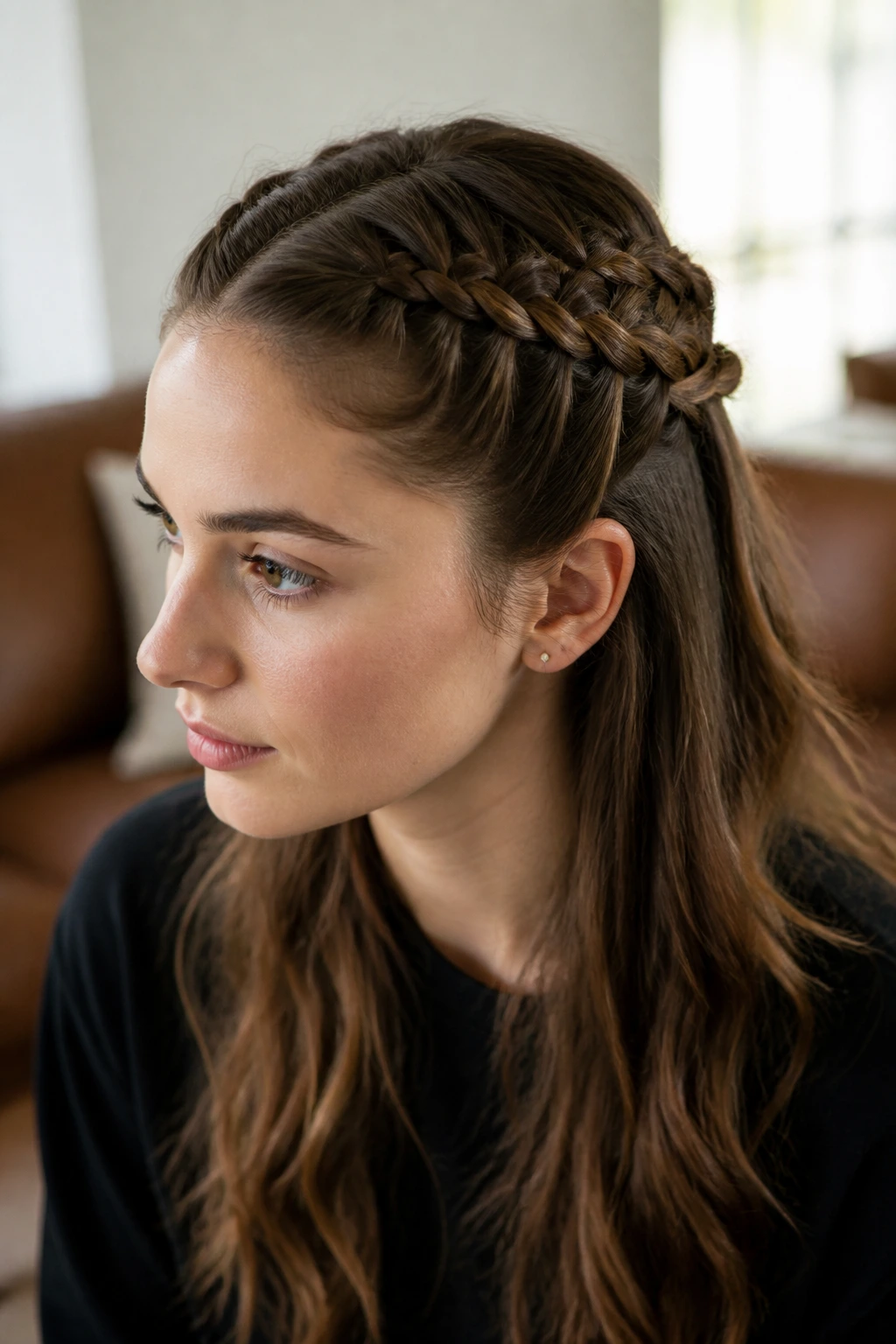
Not every athletic style needs to pull all your hair back. This half-up French crown keeps the hair away from your eyes while letting your natural length and texture flow freely in the back.
To create this look, start a French braid on one side of your part, right at the temple. Braid along your hairline, adding small sections of hair only from the top of your head as you move toward the back. Once you reach the center of your head, secure the braid temporarily and repeat the process on the other side.
Join the two braids together at the back of your head with a single elastic, then let the remaining length blend into your loose hair. This style is incredibly versatile, working just as well for a morning run as it does for an evening dinner. It gives you the security of an updo with the relaxed feel of wearing your hair down.
6. The Chevron Parted Cornrows
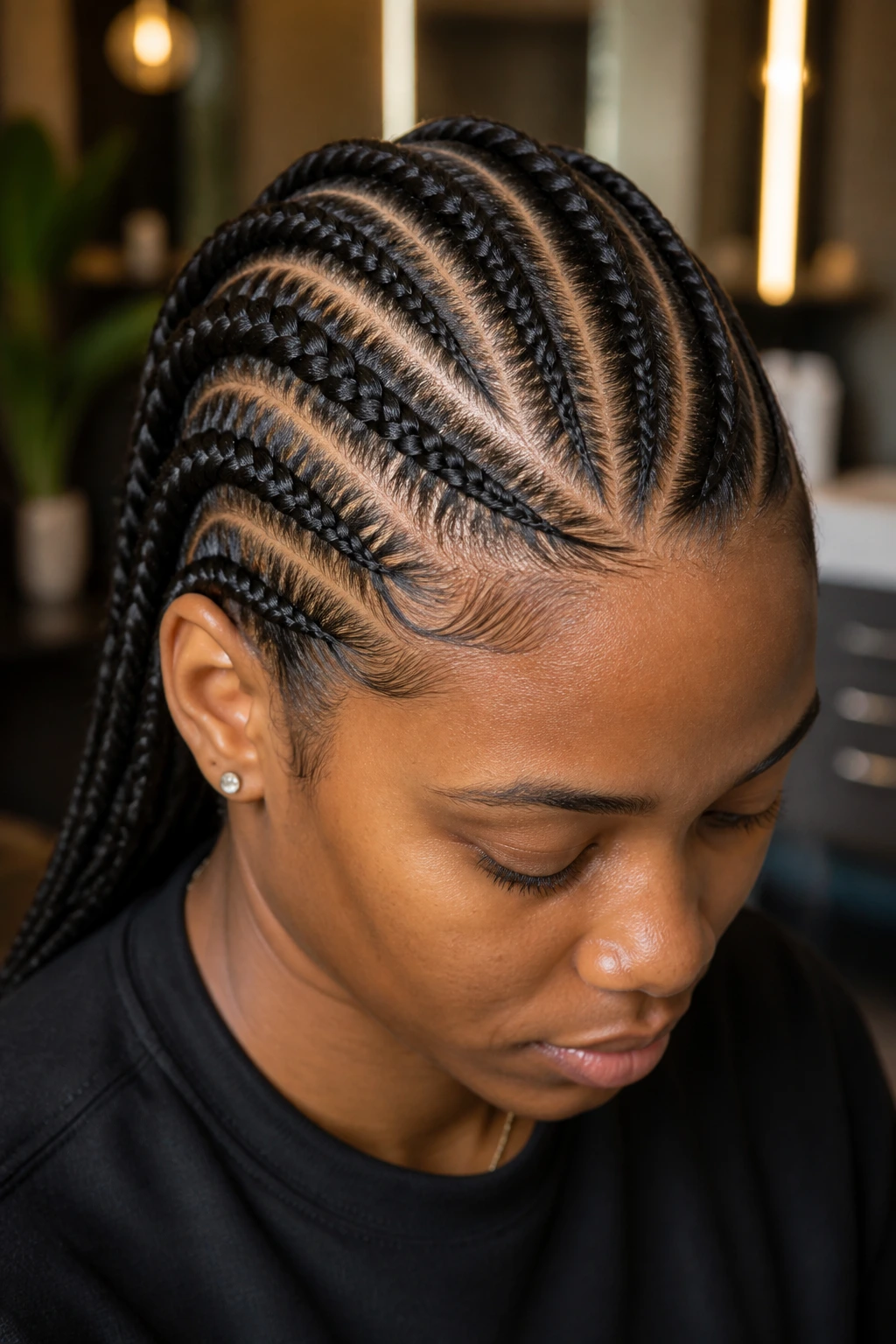
If you want a style that lasts for several days with zero maintenance, chevron parted cornrows are an exceptional choice. Unlike straight-back braids, these use sharp, V-shaped parts to create a dynamic geometric look across your scalp.
This style distributes tension very evenly along the natural curves of your skull. Because the parts are angled, they do not pull on your hair follicles in a single direction, which dramatically reduces scalp irritation and the risk of tension headaches.
This option is highly recommended for coarse, curly, or thick hair textures that require serious control. Once these braids are locked in, you can sleep on them, exercise, and go about your week without needing to restyle a single strand.
7. The Twisted Low-Profile Chignon
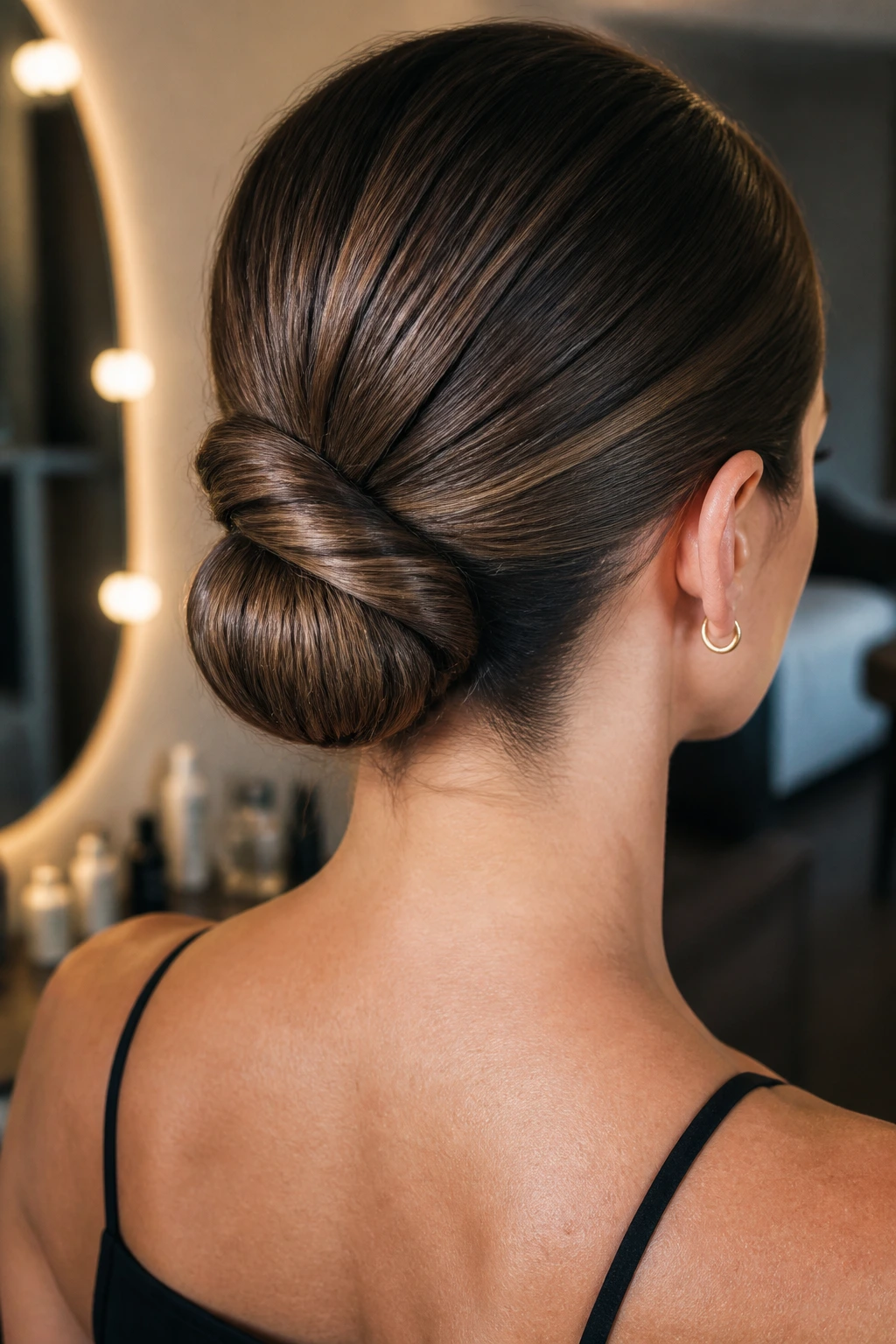
When you need to transition instantly from a sweaty mid-day workout to a professional meeting, this twisted low-profile chignon is a lifesaver. It is elegant, secure, and incredibly quick to put together.
Why the Twist Locks Hair in Place
By twisting the hair tightly before coiling it, you compress the strands and increase friction. This makes it much harder for individual hairs to slip out of the bun, even without a heavy dose of hair gel.
Quick Style Facts
- Ideal Hair Type: Medium to long hair, especially straight or wavy textures.
- Tools Needed: Two bobby pins and a strong hair elastic.
- Estimated Prep Time: Two minutes.
- Hold Rating: High.
Pro tip: Tuck the very ends of your hair under the main coil before inserting your bobby pins to keep the edges looking clean and polished.
8. The Wrapped High-Top Ponytail
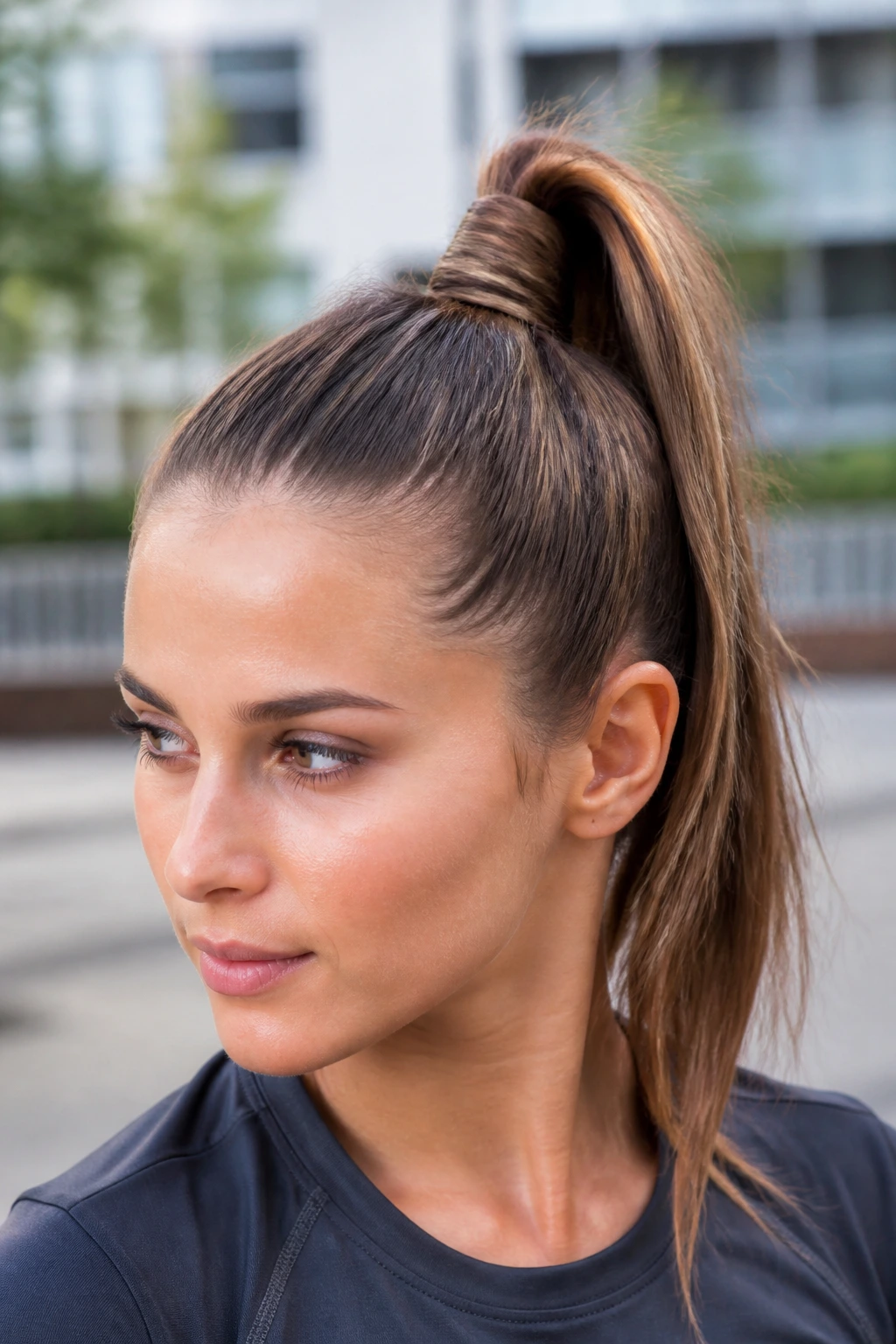
A standard high ponytail often looks great for the first twenty minutes, but gravity quickly pulls it down into a sad, droopy sack. This wrapped version uses a structural collar of hair to keep the ponytail pointing upward.
The secret here is using a small strand of hair from the bottom of your ponytail to wrap tightly around the elastic band. This does more than just hide the rubber; it acts as a rigid corset that lifts the entire base of the ponytail away from your head.
This extra lift gives the ponytail a dynamic, energetic bounce when you walk. It is a favorite style for players who want to maintain a sense of classic, sweeping movement without constantly grabbing their hair to tighten the elastic.
9. The Fishtail Accent Side-Braid
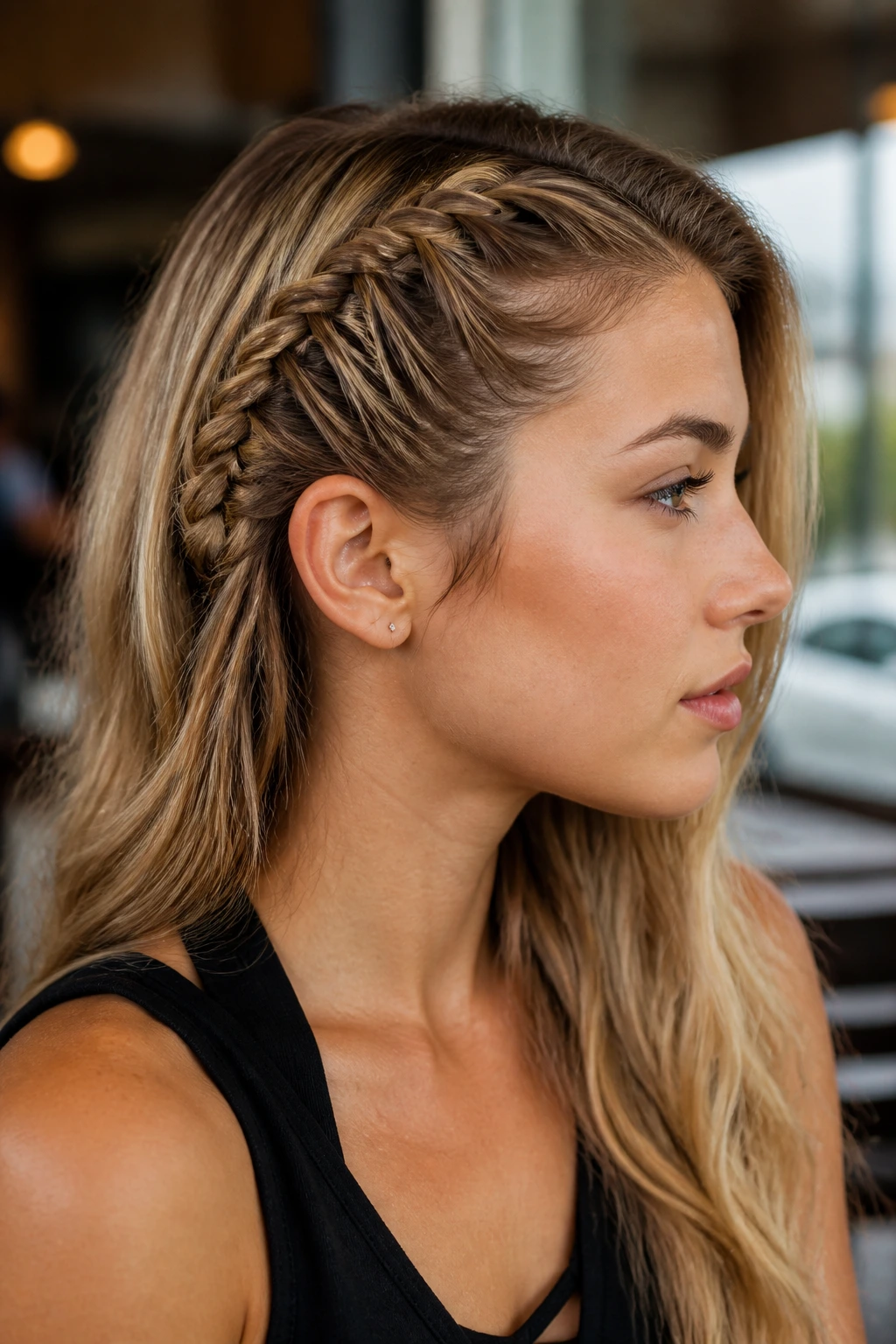
Do you want something that looks soft and bohemian but holds like a vice? The fishtail accent side-braid uses a tight weave to lock down your bangs while leaving the rest of your hair in a comfortable side-swept pattern.
Why Does the Fishtail Braid Hold So Well?
Because a fishtail braid uses dozens of tiny, interwoven strands rather than three large sections, it distributes the holding power across a much wider surface area. If one strand slips loose, the surrounding weaves hold it firmly in place.
How to Wear It
Start by sweeping all your hair to one side. Take a small, one-inch section from your temple and weave a tight fishtail braid down along your hairline. Once you reach the ear, join that braid into a standard three-strand braid with the rest of your hair, securing the bottom with a small, clear band.
10. The Pulled-Through Crown Braid
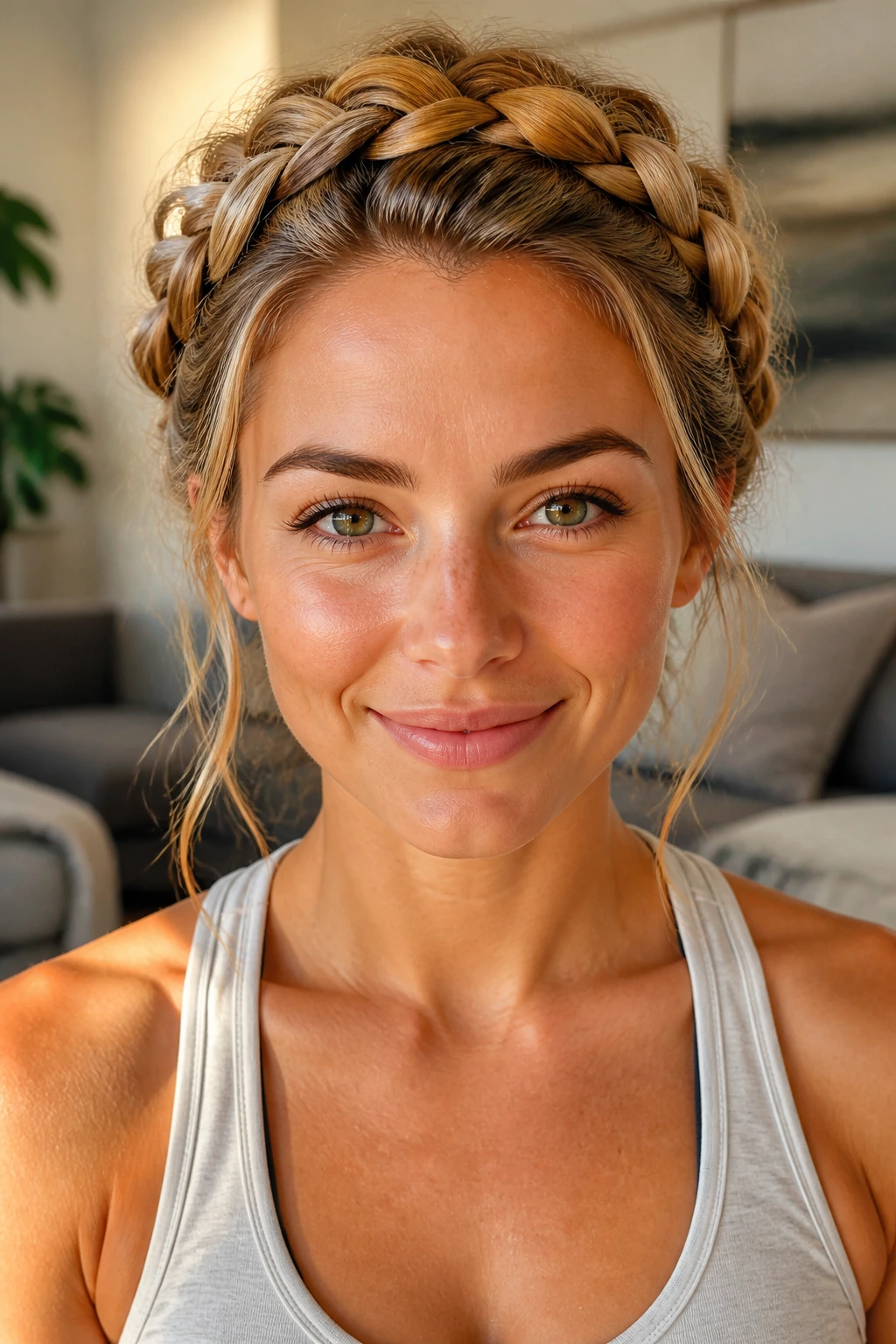
If you find traditional braiding difficult or hard on your arms, the pull-through method is a fantastic alternative. It uses elastics to create the appearance of a thick, voluminous braid with zero weaving required.
The Mechanics of the Pull-Through
Each “link” of this braid is actually its own small ponytail split in half, with the next ponytail pulled through the center. This mechanical connection means the braid cannot unravel, even if you are highly active.
- Create a series of small, equal ponytails running from front to back.
- Split the first ponytail into two halves.
- Pull the second ponytail up through those halves and pin it out of the way.
- Tie the two halves of the first ponytail back together around the base of the second.
This method creates incredible height and volume, making it look like you spent hours on your hair when it actually took less than ten minutes.
11. The Multi-Tiered Sectioned Ponytail
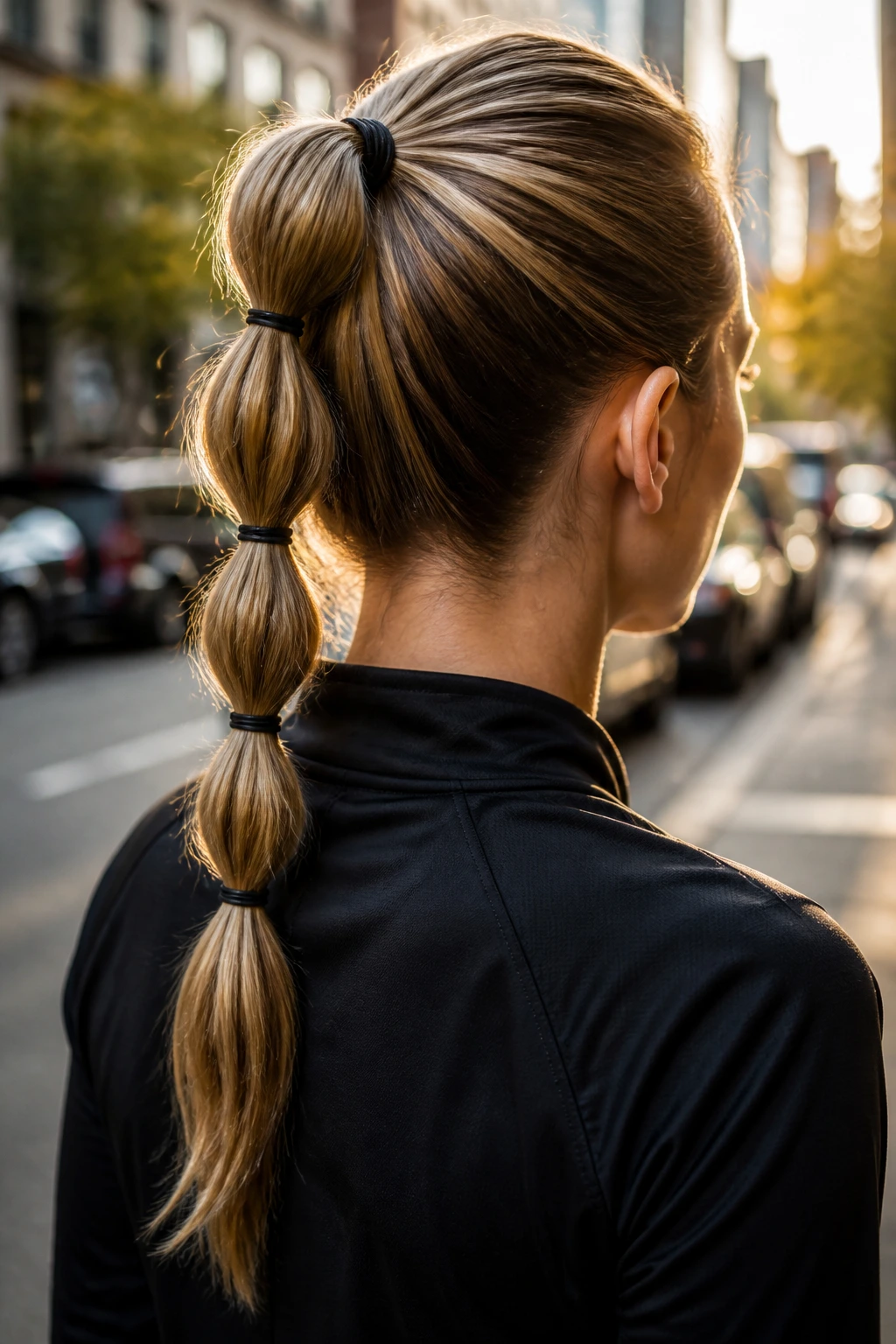
This style is often seen on players with exceptionally long, thick hair that tends to whip around or get caught during quick movements. It breaks the length of your hair down into manageable, banded segments.
To build this look, start with a high ponytail at the crown of your head. Move down the length of the tail by about three inches, apply a second elastic band, and gently pull the hair between the two bands outward to create a rounded bulb. Repeat this spacing all the way down to your ends.
This style completely eliminates the classic “whiplash” effect of a long ponytail hitting your face when you turn your head. It keeps your length contained in a soft, modern shape that looks fantastic with casual streetwear.
12. The Diagonal Dutch Braid
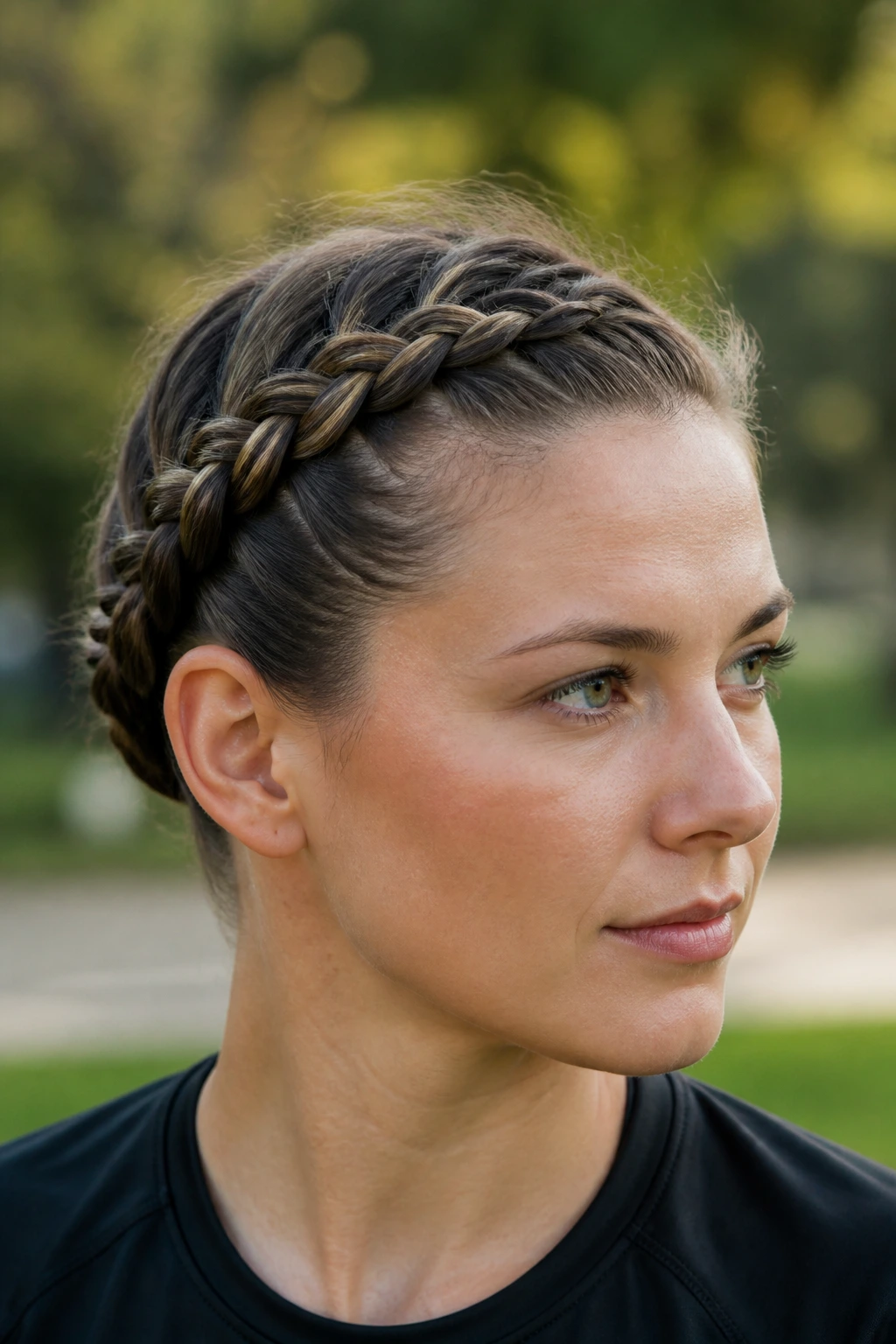
Unlike a standard center-part braid, the diagonal Dutch braid starts at one temple and sweeps gracefully across the back of your head to terminate behind the opposite ear.
This diagonal path works with the natural flow of your hair rather than fighting against it. It captures the short layers at the front, wraps them securely across the crown, and bundles them into a thick, comfortable side braid that rests over your shoulder.
This style is particularly great if you ride a bicycle or wear a helmet regularly. Because the braid sits flat against the back of your skull and wraps around the side, it does not press uncomfortably against the inside of your headwear.
13. The Knotted Athletic Headband Tuck
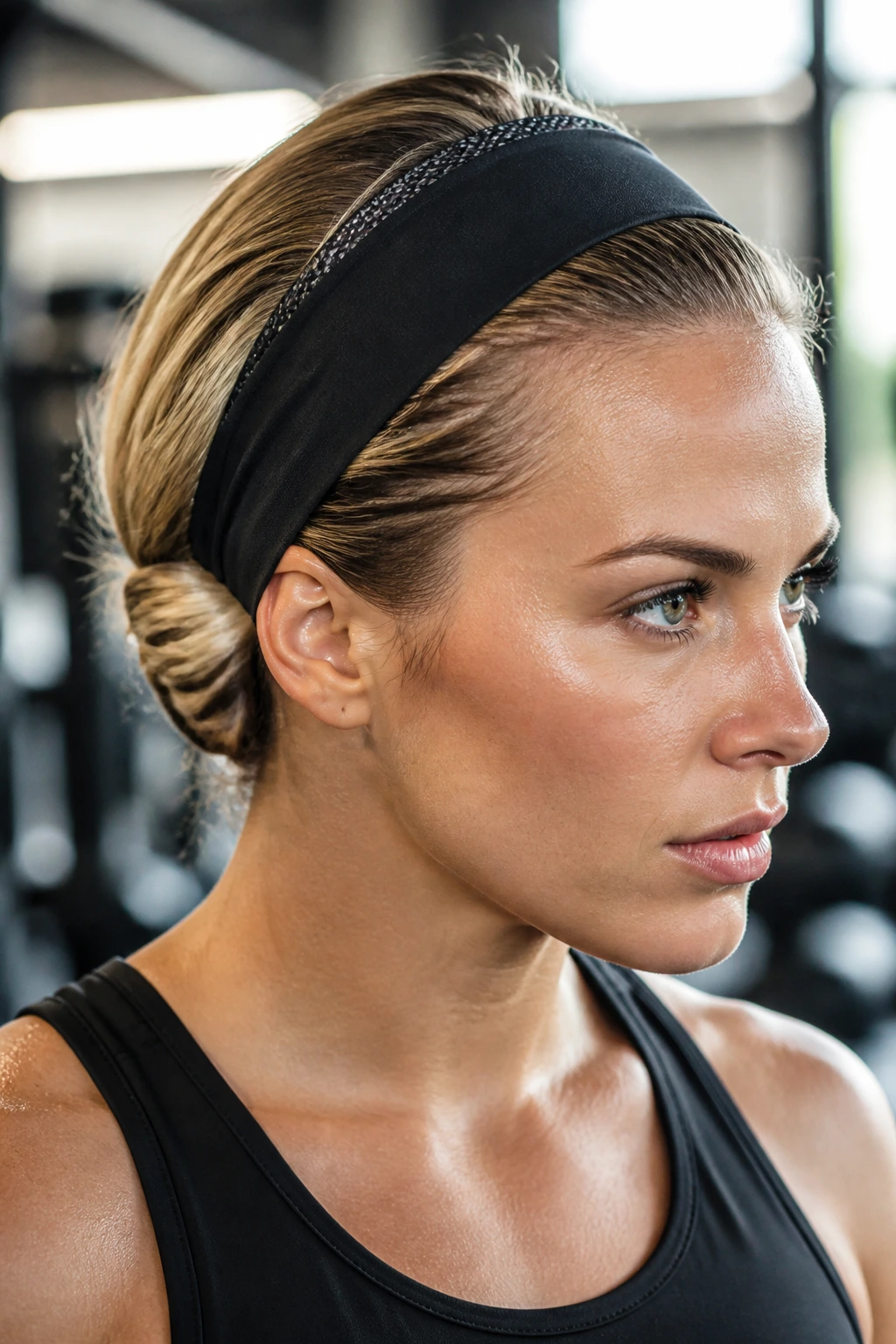
This is the ultimate low-effort, high-reward style for days when you simply do not want to deal with braids or sectioning. It uses a soft, elastic headband as the structural anchor for your entire hair volume.
How the Tuck System Works
By placing a circular headband over your hair and then wrapping your lengths up and under the band, you create a continuous, rolling loop of hair that supports its own weight.
Quick Style Facts
- Ideal Hair Type: Fine to medium hair with some natural wave or texture.
- Tools Needed: One thick, non-slip elastic headband.
- Estimated Prep Time: Two minutes.
- Hold Rating: Medium-High.
Pro tip: Use a headband with silicone gripping strips on the inside. This prevents the band from sliding backward off your forehead as you move throughout the day.
14. The Stacked Double Ponytail
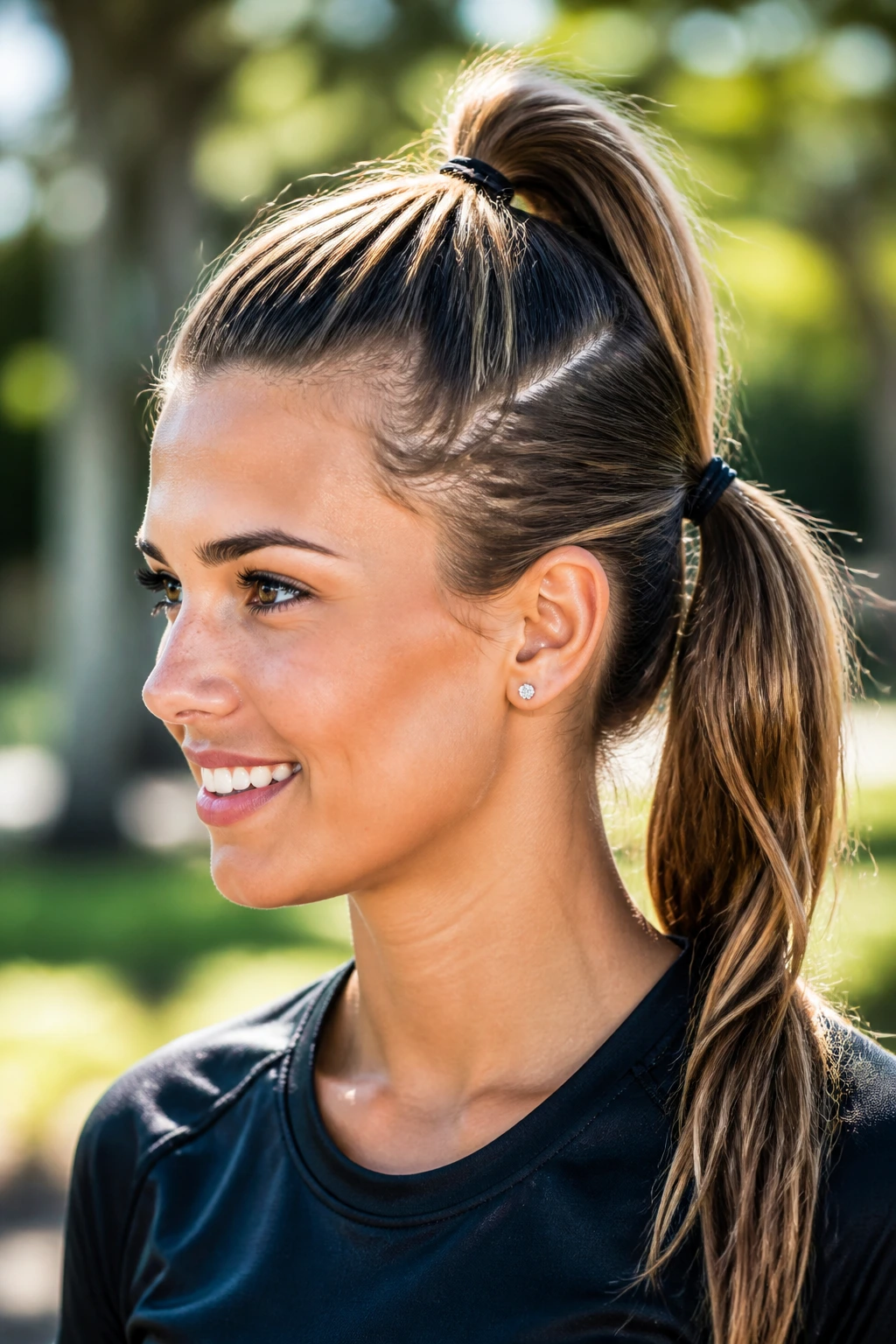
If you have very thick hair, you know the pain of a single ponytail elastic snapping halfway through the day. This stacked double ponytail solves that problem by splitting the load between two distinct anchor points.
By dividing your hair horizontally into an upper and lower section, you cut the weight of each ponytail in half. Secure the top half first, then pull the bottom half up and combine it with the tail of the top section using a second elastic.
This double-anchored system keeps your hair sitting much higher on your head than a single ponytail ever could. It also prevents that annoying sag that happens when the weight of your hair pulls the elastic downward over time.
15. The Rope-Twisted Low Ponytail
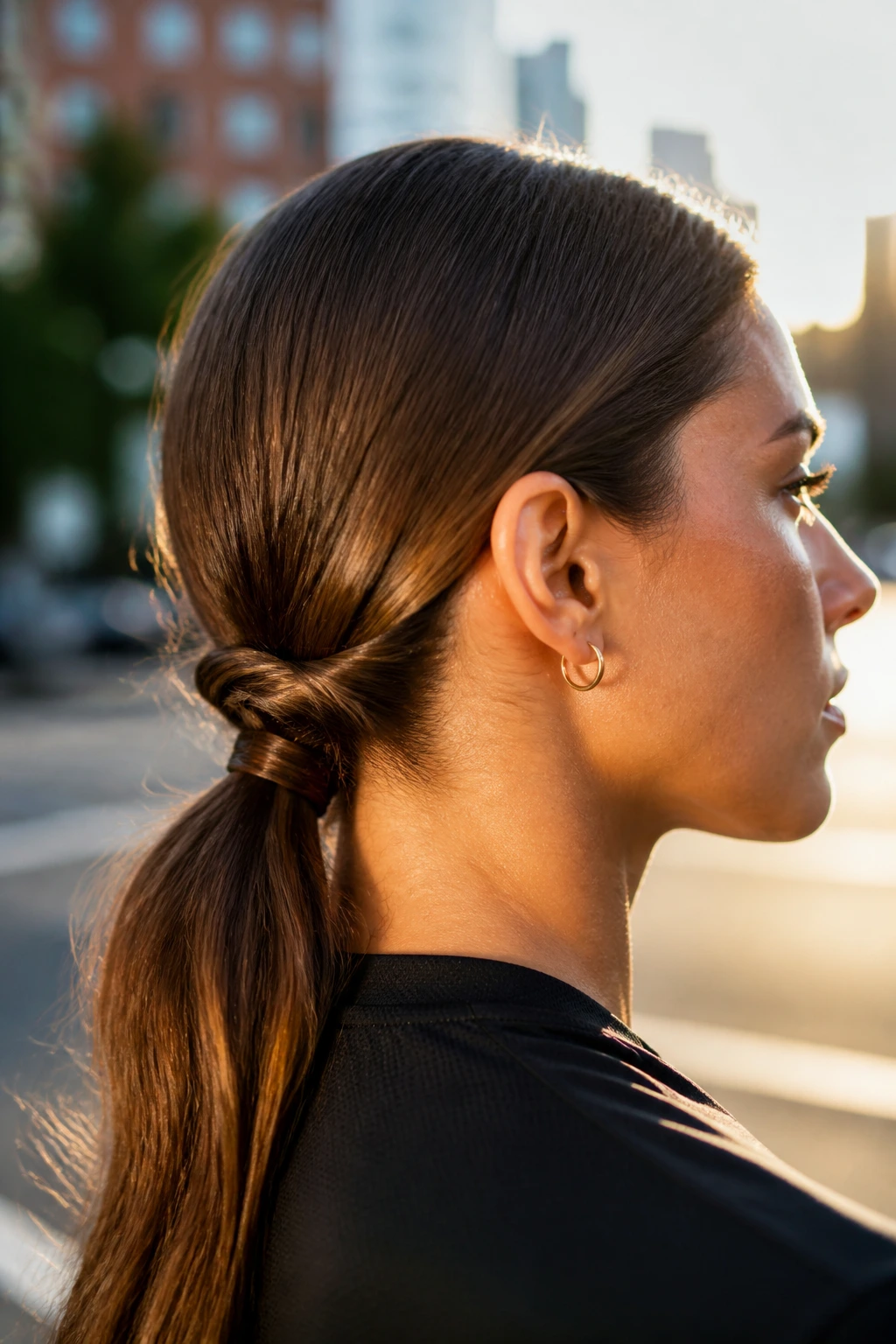
For a sleek, minimalist look that screams efficiency, the rope-twisted low ponytail is unmatched. It replaces the traditional braid with a tight, two-strand twist that looks like polished cordage.
Why Do Twists Hold Better Than Braids in Wet Weather?
When hair gets damp or humid, braids tend to frizz and expand. A rope twist, however, relies on opposing rotational forces to lock the strands together, making it incredibly resistant to humidity and light rain.
How to Wear It
Secure your hair into a low ponytail at the nape of your neck. Divide the tail into two equal sections. Twist both sections individually to the right, then wrap them around each other to the left. This opposing twist is the key; it prevents the rope from unravelling. Secure the bottom with a small band.
16. The Feed-In Dutch Pigtails
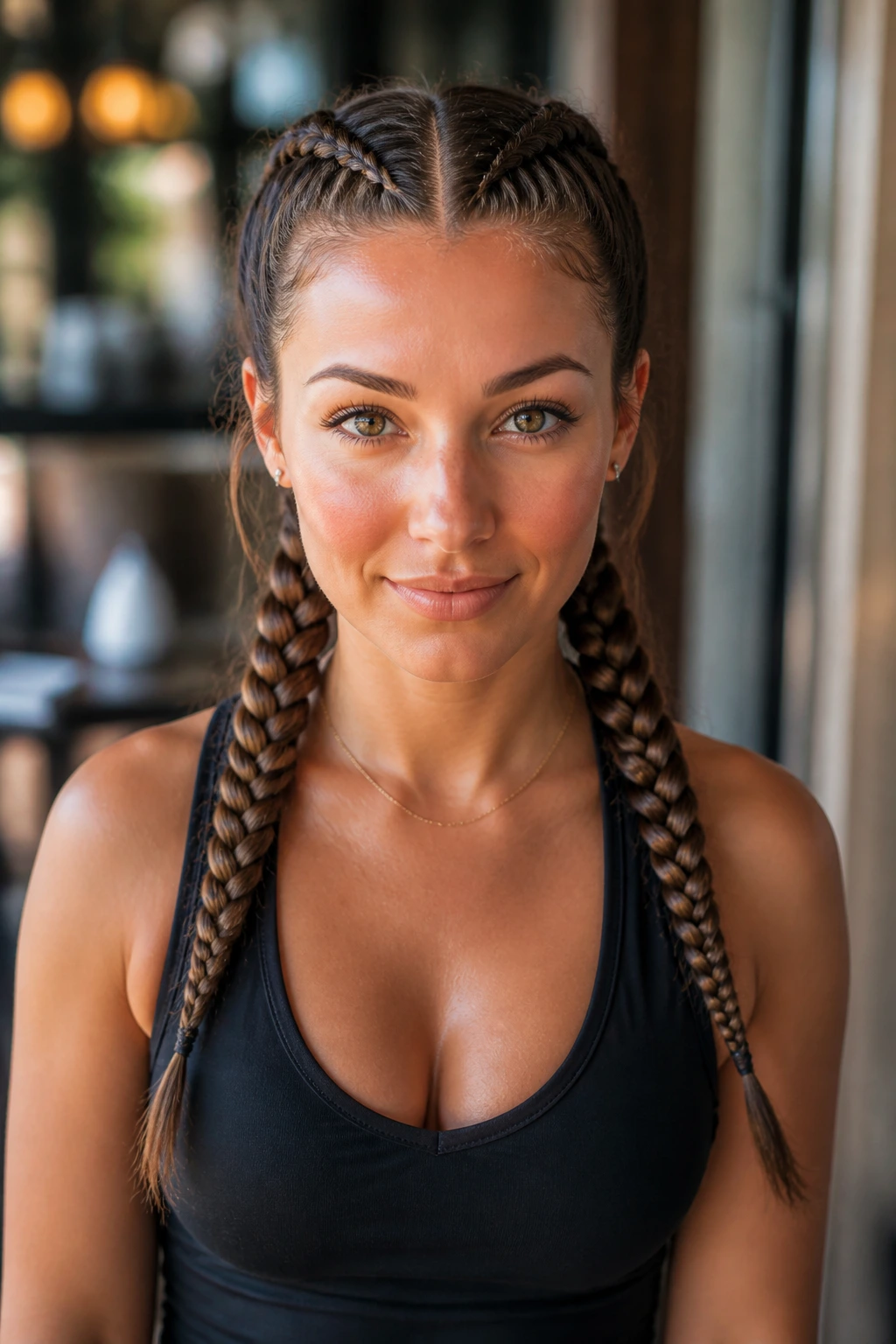
These pigtails are the gold standard for long-lasting athletic styles. By starting with very small sections of hair at the hairline and slowly feeding in more hair as you move down, you create a highly secure hold from front to back.
The Feed-In Concept Explained
By adding hair gradually, you avoid putting too much weight on the delicate follicles at your front hairline. This prevents traction hair loss while ensuring that every single strand is locked into the braid.
- Part your hair cleanly down the exact center of your head.
- Start a small Dutch braid at your forehead on one side.
- Add tiny half-inch sections of hair with each stitch as you braid backward.
- Once you pass the nape of your neck, continue with a standard three-strand braid to the ends.
These pigtails are incredibly comfortable to sleep in, making them the perfect option if you like to style your hair the night before a busy day.
17. The Zig-Zag Parted Space Buns
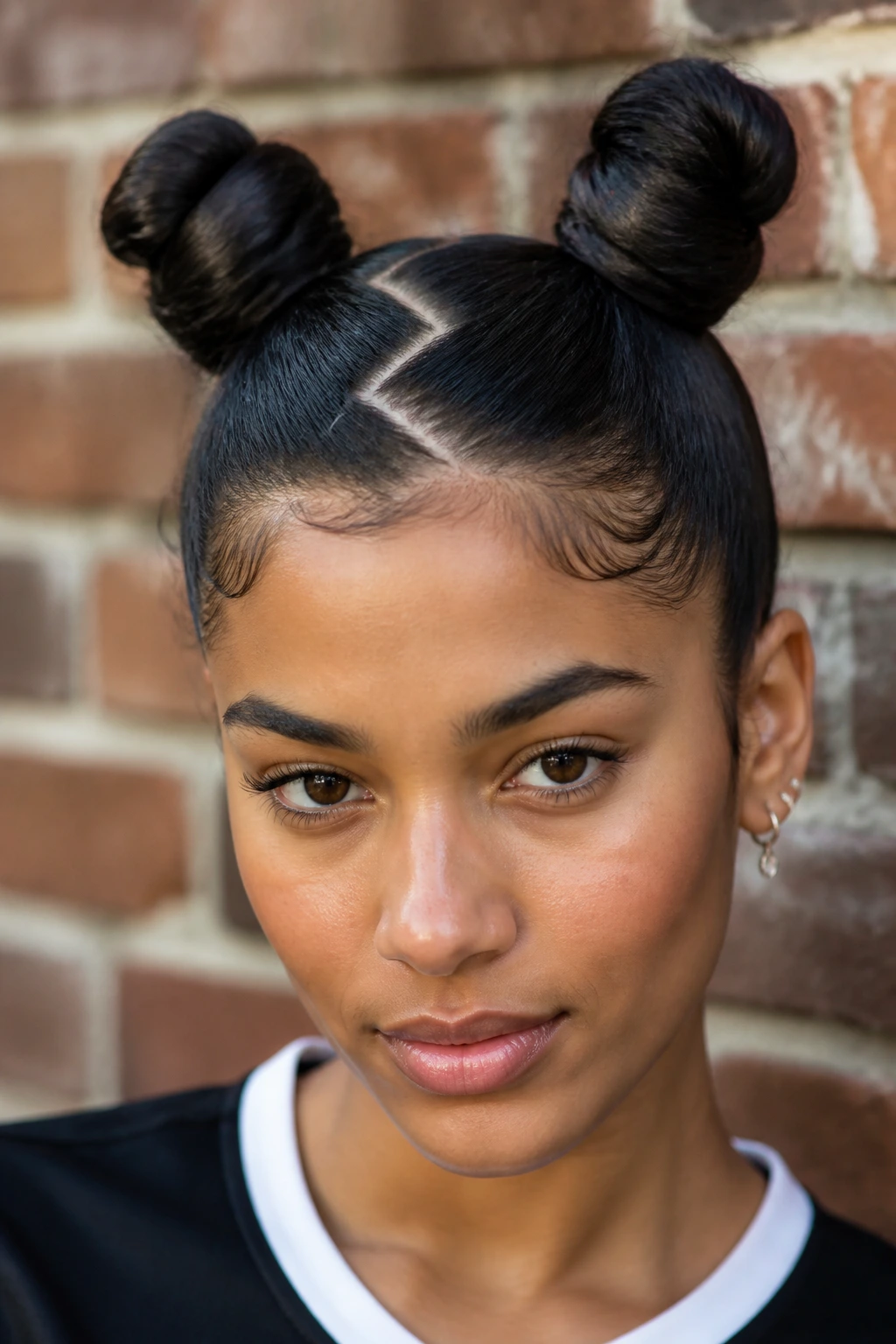
For a playful, retro look that still packs all the security of a professional athletic style, zig-zag parted space buns are a brilliant choice.
   /  /  /
  /  /  /    <-- The Zig-Zag Part Line
To create this style, use a tail comb to draw a sharp, continuous zig-zag pattern down the center of your scalp. This parting method does more than just look cool; it prevents your hair from parting flat against your skull, which can sometimes make space buns look sparse or thin at the back.
Once your hair is divided, sweep each side into a high ponytail, twist the length into a rope, and wrap it tightly around the base. Secure with a strong elastic and a few pins for a look that stays perfectly balanced all day.
18. The Slicked-Back Knotted Bun
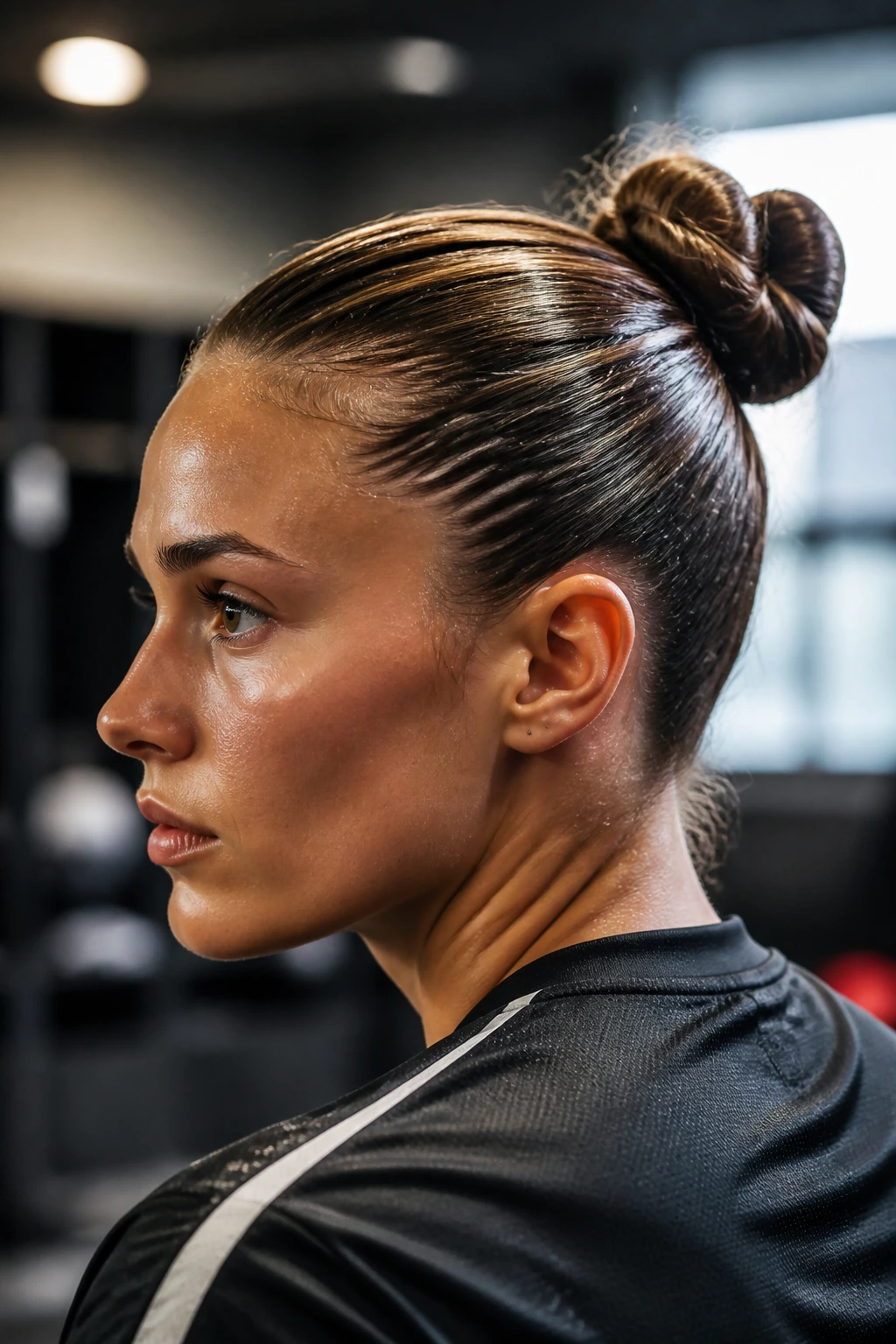
When you want a polished, elegant look that refuses to budge, this slicked-back knotted bun is your best option. It is a favorite among defensive players who need to keep their hair compact and secure.
Unlike soft, messy buns, this style uses your actual hair to tie a physical knot before securing it with pins. This mechanical knotting creates a solid core that is incredibly resistant to shifting or loosening.
This style works best on straight or slightly wavy hair. Use a soft-bristle brush and a touch of light-hold pomade to smooth down any flyaways along your temples for a glassy, high-shine finish.
19. The Five-Strand Accent Braid
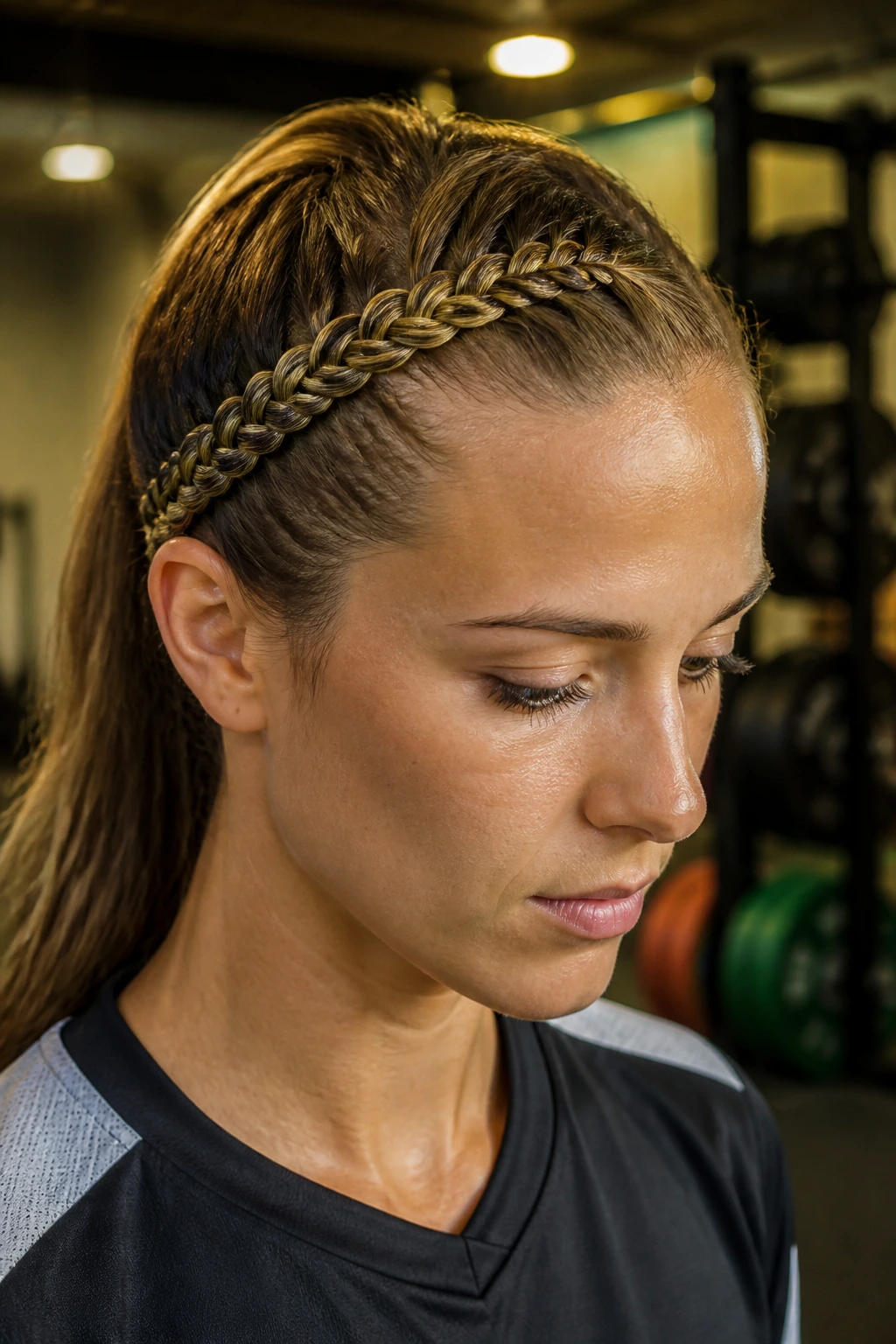
If you love the look of braids but want something more intricate than a standard three-strand pattern, the five-strand accent braid is a stunning alternative. It looks like a woven ribbon running through your hair.
The Woven Structure of Five Strands
By using five smaller strands instead of three larger ones, you create a wider, flatter braid that sits flush against your head. This low profile keeps the braid from bouncing or snagging.
Quick Style Facts
- Ideal Hair Type: Medium to long hair of uniform length.
- Tools Needed: One clear elastic band.
- Estimated Prep Time: Six minutes.
- Hold Rating: High.
Pro tip: Think of the weaving pattern as “over-under-over-under” to help your fingers keep track of the strands as you work your way down.
20. The Elastic-Laced Faux Hawk
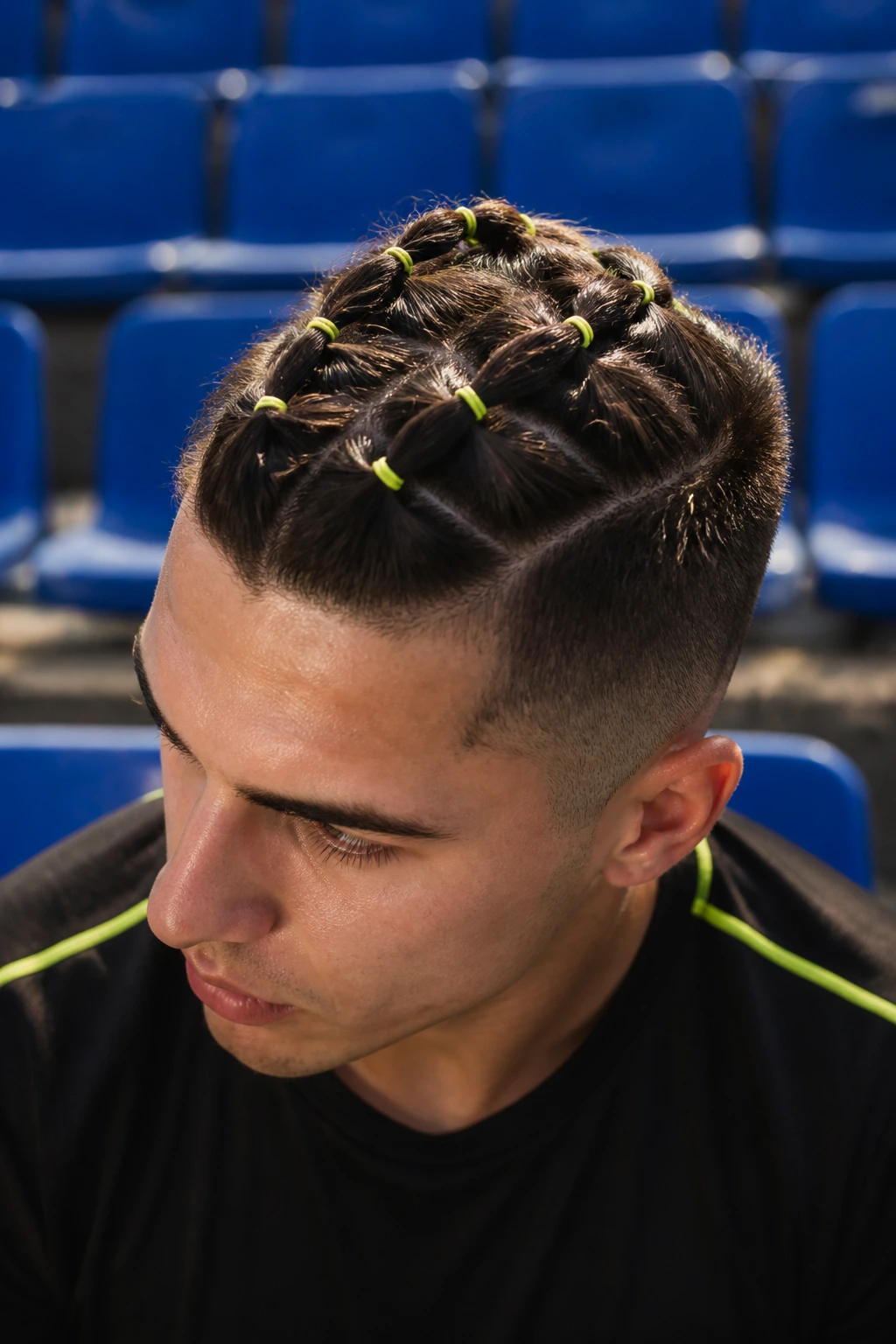
This style is perfect for anyone with short or medium-length hair who wants an athletic style with some serious attitude. It uses a series of small, linked ponytails to build height along the center of your head.
Instead of hiding your elastics, this style celebrates them. By using bright, contrasting bands to connect each section to the next, you create a laced pattern that looks like the front of a sneaker or a sports corset.
This style is incredibly secure because each section is anchored directly to the scalp, preventing any shifting or sagging. It is a fantastic option for high-intensity workouts or outdoor festivals where you want your hair to stay put.
21. The Crown-Wrapped French Braid
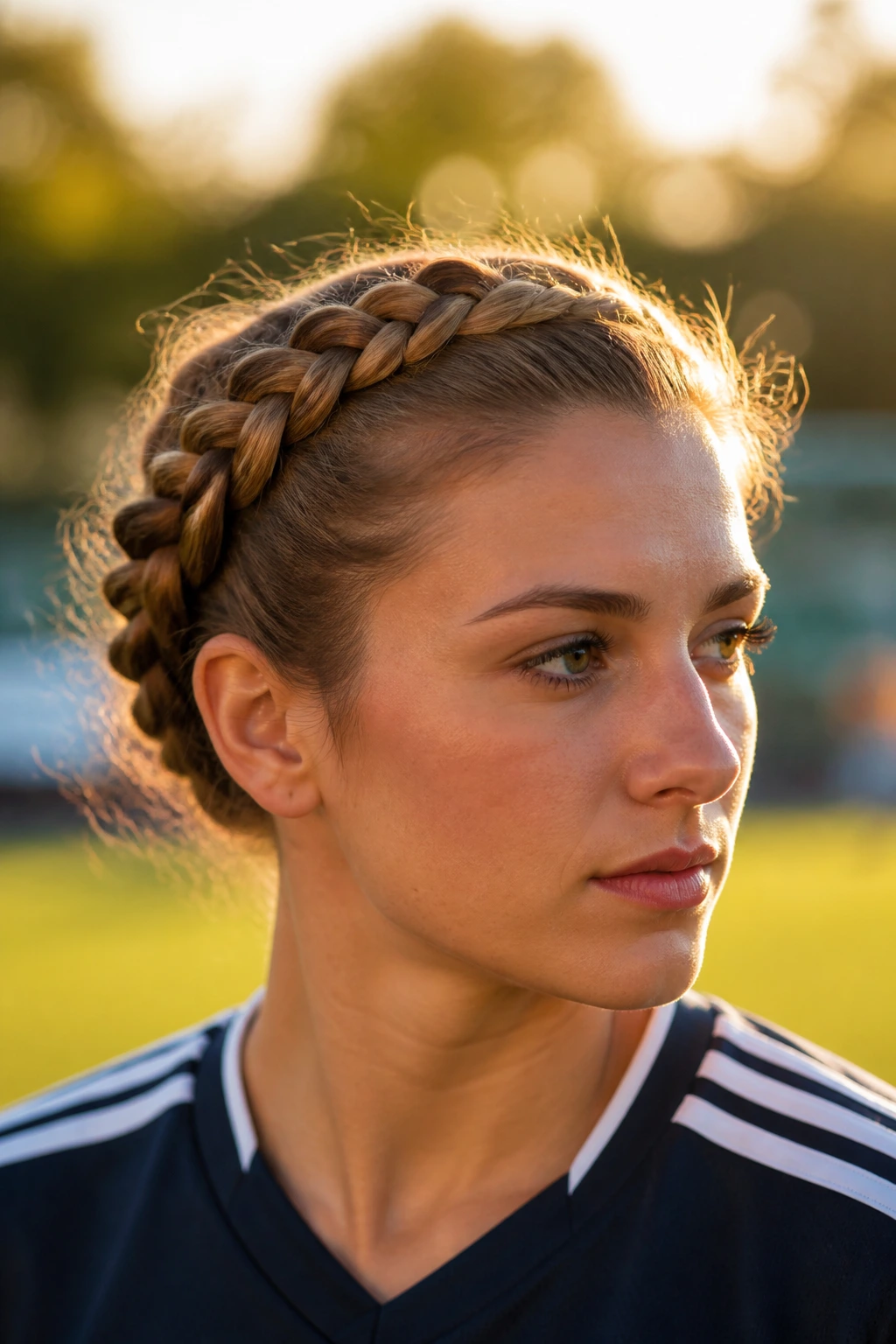
This classic, elegant style sweeps all your hair up and wraps it around your head like a crown, keeping your neck completely cool and free.
Why the Crown Wrap Offers Total Security
Because the braid is pinned flat against your skull in a continuous circle, there are no loose tails or hanging sections to catch on clothing, backpack straps, or collars.
How to Wear It
Start a French braid at the back of your neck, sweeping it up behind your ear and across your forehead. Continue braiding all the way around your head, adding hair as you go. Once you reach the starting point, tuck the remaining tail under the beginning of the braid and pin it securely.
22. The Segmented Bubble Pigtails
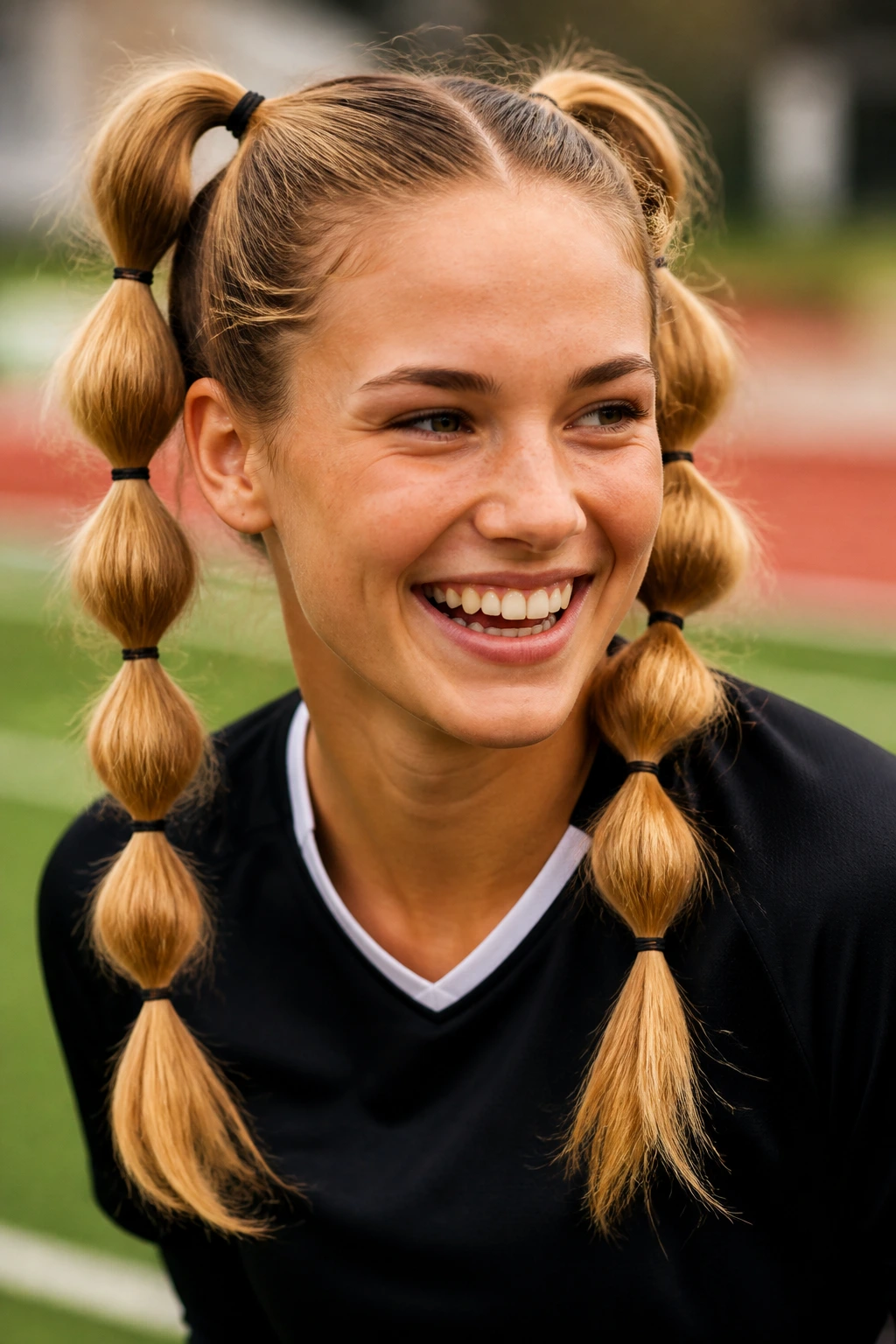
For a style that is fun, athletic, and incredibly easy to build, segmented bubble pigtails are a wonderful option. They offer the same security as classic braids but can be put together in a fraction of the time.
[Anchor Ponytail]
       |
  (Elastic 1)  --> Bubble 1 (Puffed out)
       |
  (Elastic 2)  --> Bubble 2 (Puffed out)
       |
  (Elastic 3)  --> Bubble 3 (Puffed out)
By using small elastics to section off the length of your pigtails, you prevent the hair from tangling or whipping around. It is a fantastic choice for windy days or high-speed activities like cycling or running.
This style looks great on all hair textures and can be customized with different colored elastics to match your outfit or mood. It is a simple, effective way to keep your hair contained without needing to master complex braiding techniques.
Crucial Hair Care for High-Tension Styles
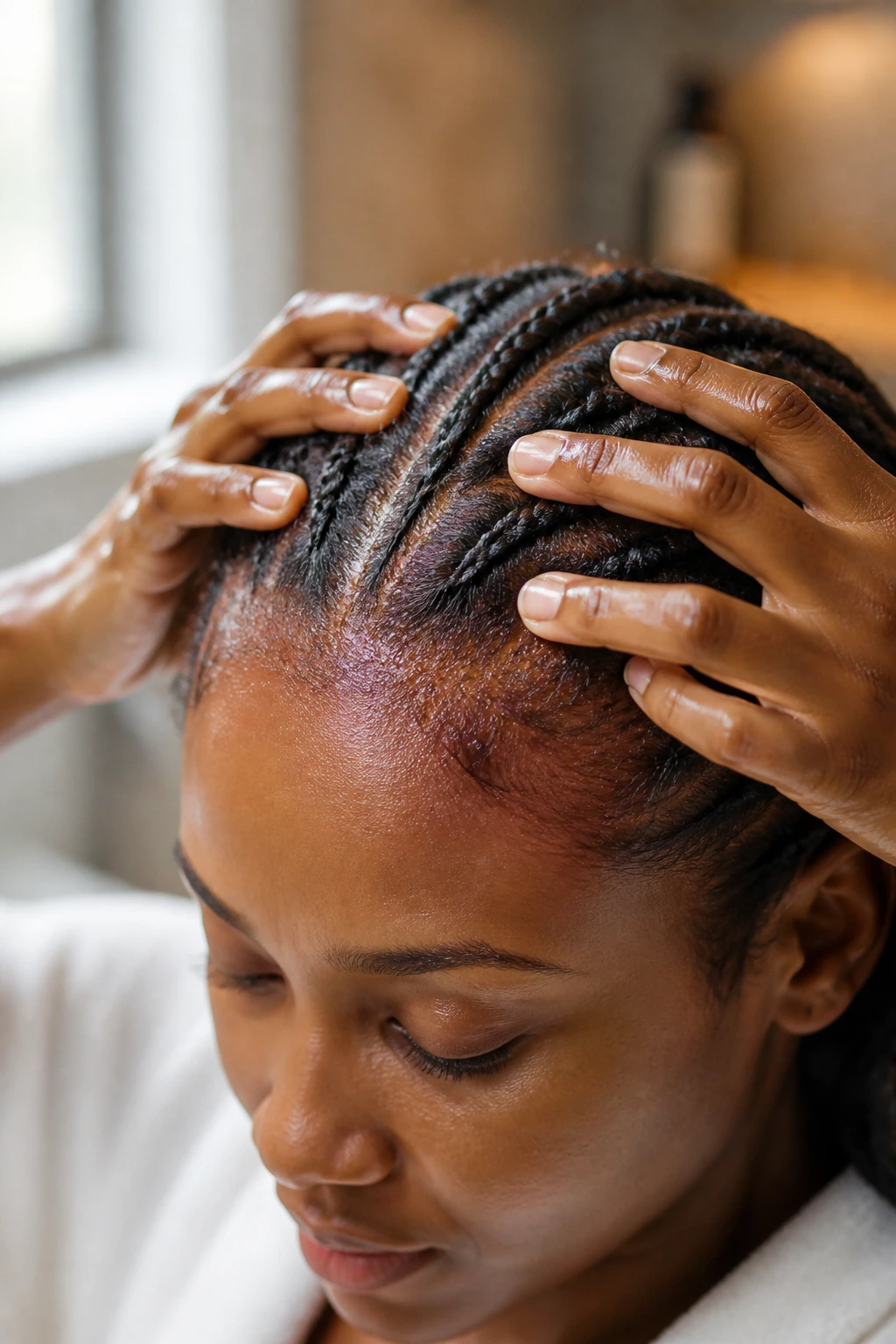
While athletic styles are incredible for keeping your hair secure and out of your face, they do require some careful handling to keep your hair healthy. High-tension styles can put a lot of stress on your hair follicles, which can lead to damage over time if you are not careful.
Guarding Against Traction Alopecia
Traction alopecia is hair loss caused by constant pulling on the hair roots. To prevent this, avoid pulling your braids or ponytails too tight right at the hairline. If you feel pain or a throbbing sensation on your scalp, the style is too tight—loosen it immediately.
Selecting the Right Elastics
Never use bare rubber bands or elastics with metal joins; they will snag and break your hair. Instead, look for seamless, fabric-wrapped bands or silicone-coated elastics that grip the hair firmly without cutting into the hair shaft.
Giving Your Scalp a Break
Try not to wear high-tension styles back-to-back for days on end. Give your scalp a chance to rest by wearing your hair down or in a loose, low braid between tight styles. Your follicles will thank you.
Selecting Your Tools and Products
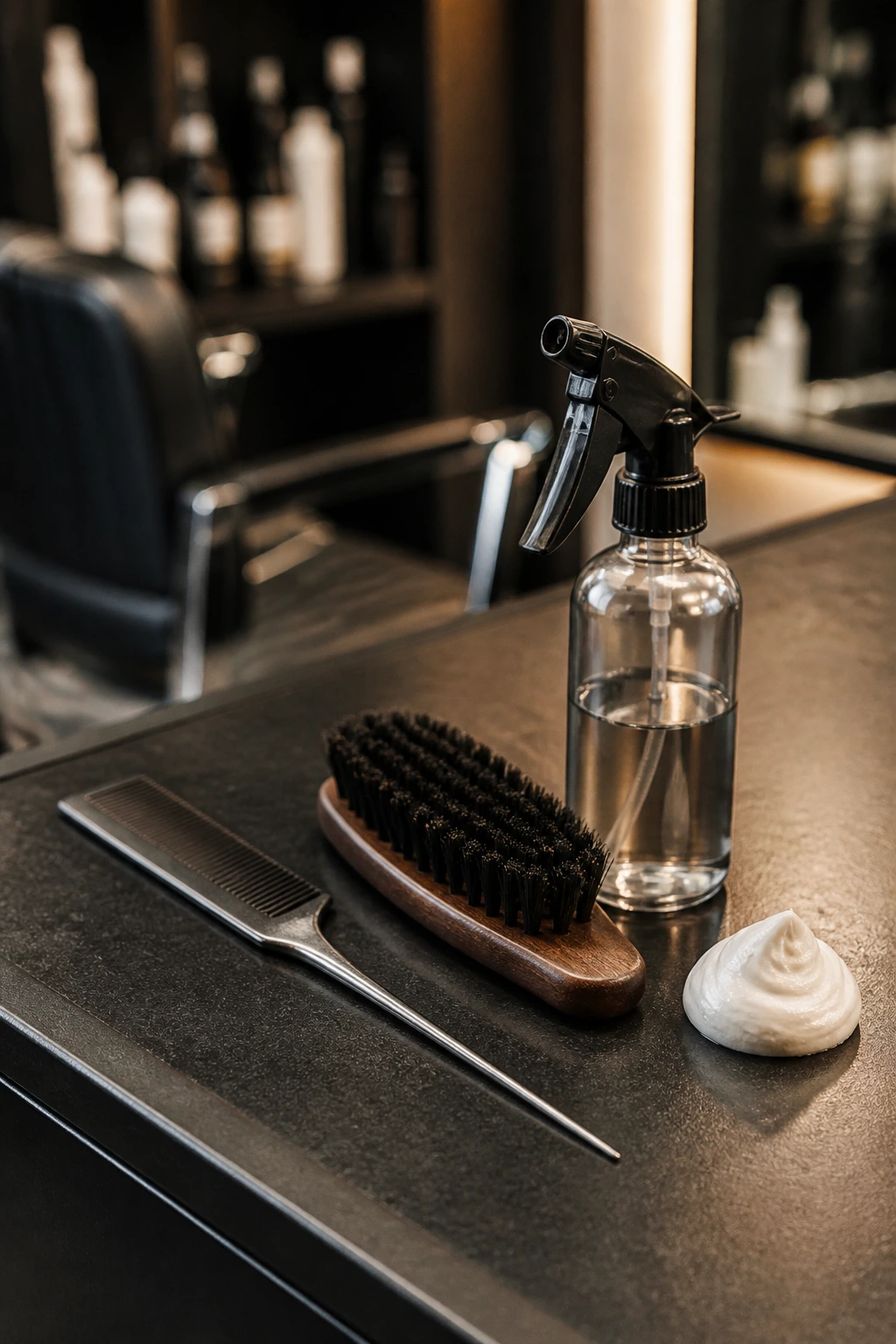
To get the clean, long-lasting results of a professional athlete, you need the right tools in your styling kit. You do not need a lot of gear, but quality matters.
- A Professional Tail Comb: The long, pointed handle of a metal tail comb is essential for creating those sharp, clean parts that make these styles look so precise.
- A Soft Boar-Bristle Brush: This is the secret to getting that smooth, slicked-back look without creating lumps or bumps in your hair.
- A Fine Mist Spray Bottle: Working with slightly damp hair makes braiding and sectioning much easier, especially if you have natural curls or flyaways.
- A Light-Hold Pomade or Wax: A tiny dab of pomade smoothed along your hairline will keep baby hairs flat and clean without making your scalp feel greasy or stiff.
The Bottom Line
Athletic hair is all about efficiency, structure, and reliable performance. By taking these techniques off the field and bringing them into your daily life, you can enjoy styles that look great, feel comfortable, and stay exactly where you put them from your first morning coffee to your evening run.
Do not be afraid to experiment with different parting patterns, elastics, and braid styles to find the perfect match for your hair texture and routine. With a little practice, these twenty-two soccer styles will become your new secret weapon for effortless, everyday wear.