

When you spend hours in the gym or on the track, the last thing you want to worry about is your hair unraveling, matting, or distracting you from your personal best. Sew-in extensions are a fantastic solution for those who want length and volume without the daily hassle of styling, but not all installation methods or styles hold up under the pressure of sweat, high-intensity movement, and frequent washing. You need a foundation that is as durable as your training schedule.
Choosing the right base for your sew-in is the secret to longevity. If your braids are too loose or your tracks are sewn too far apart, you will find yourself dealing with tangles and tension after just a few high-intensity training sessions. We are talking about practical, secure, and stylish ways to manage your extensions so you can focus entirely on your physical performance. Here is how to navigate the world of long-wear, workout-ready extensions.
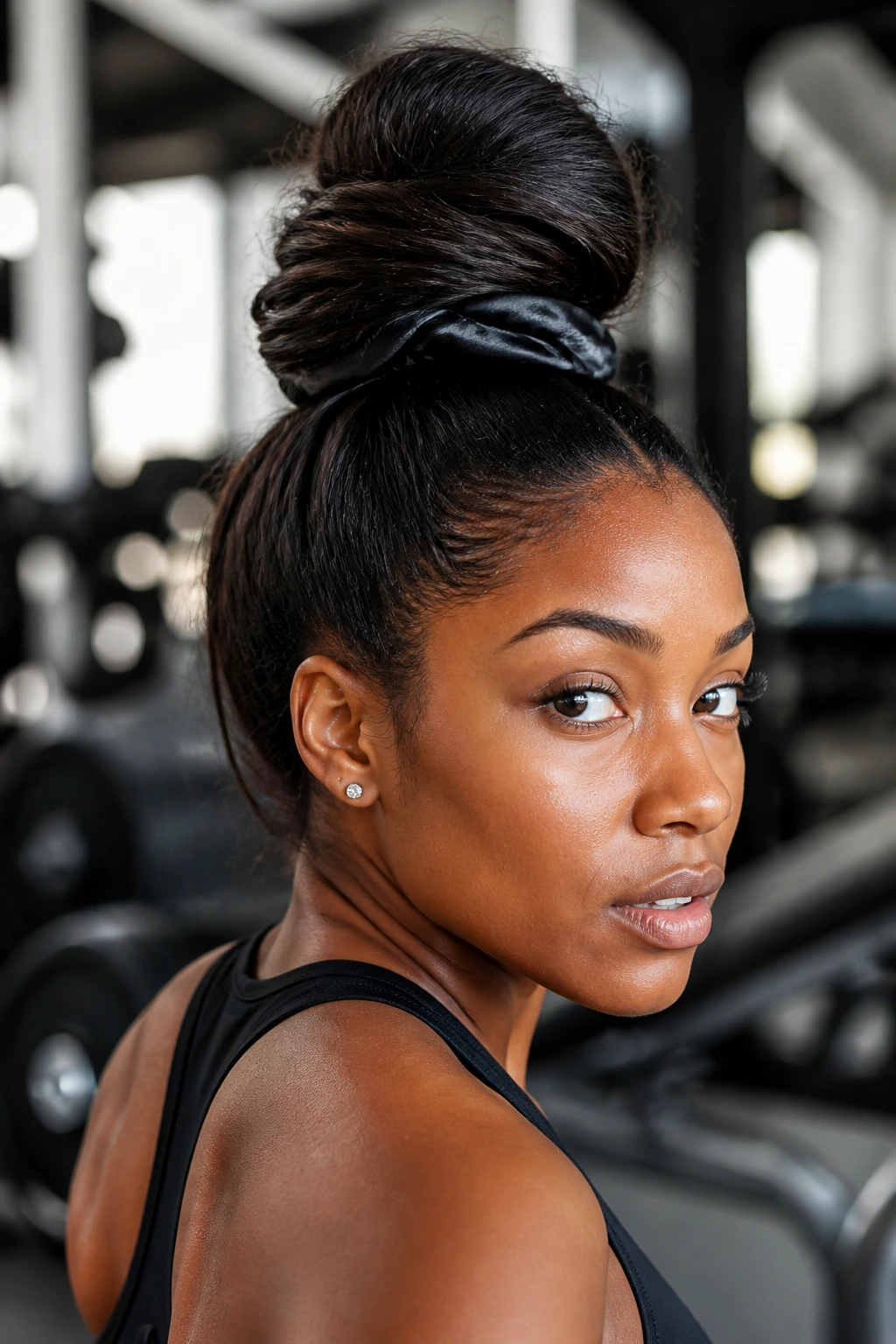
1. The High-Volume Top Knot
This style is the ultimate powerhouse for movement. By pulling all of your length to the crown of your head, you keep the back of your neck cool and prevent your extensions from matting against your skin as you sweat. The key here is to secure the bun with a silk or satin-lined scrunchie to minimize friction and prevent breakage at the roots.
Why It Works for Cardio
The weight is centered, which means there is less tension on your hairline compared to a tight ponytail. Because the hair is bundled compactly at the top, it doesn’t whip around during sprints or burpees, drastically reducing the amount of friction and tangling you experience throughout a vigorous session.
Maintenance Tip
Ensure your stylist installs the tracks in a circular, beehive pattern at the crown if you plan on wearing this style daily. This provides a natural-looking base for the bun so no tracks are visible, even when the hair is pulled tight.
2. Classic Dutch Braids
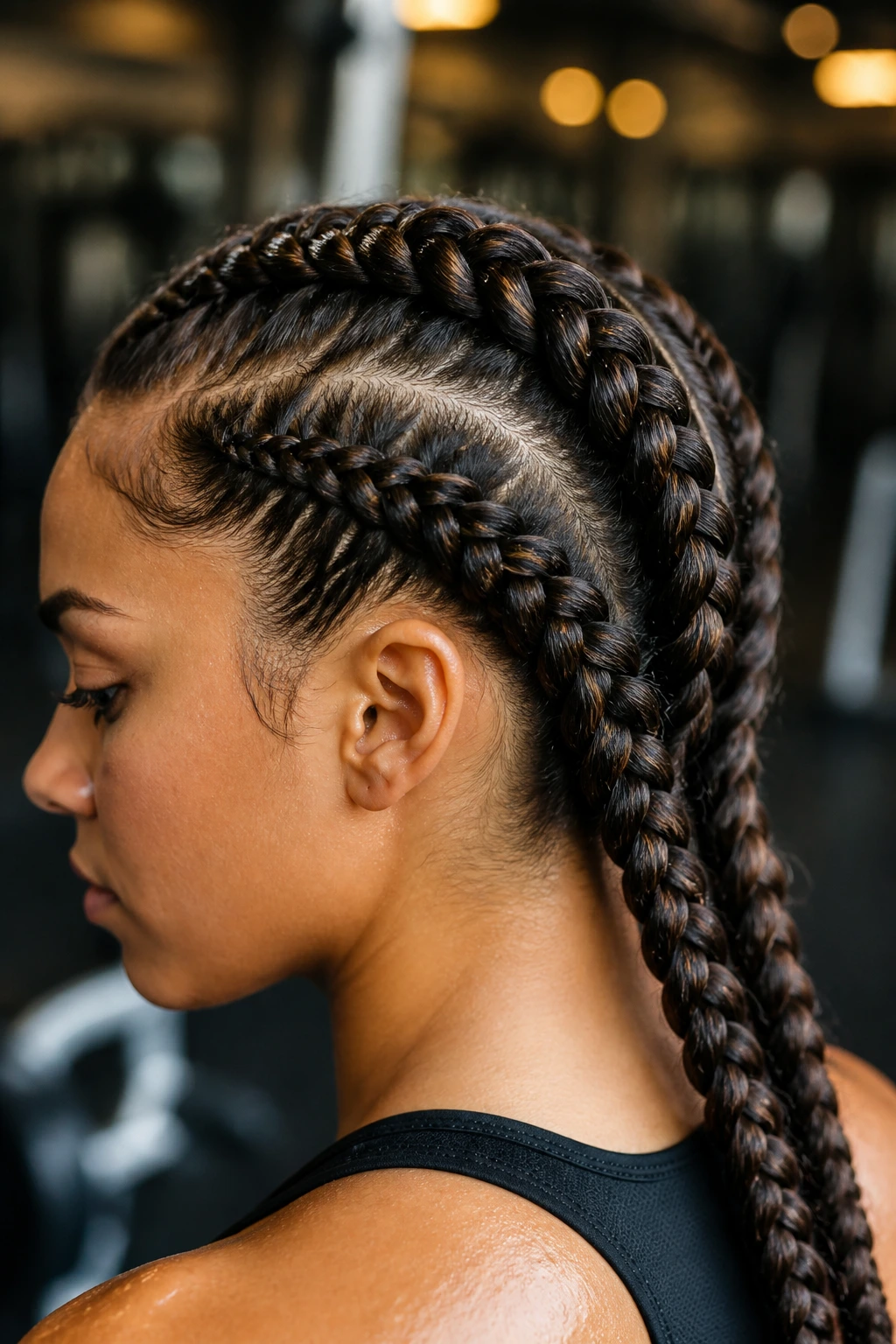
Dutch braids are a lifesaver for long extensions because they lock every strand in place. Unlike a simple ponytail, a braid controls the hair from top to bottom, preventing the “matting at the nape” phenomenon that often ruins extensions during long, sweaty workouts.
Getting the Tension Right
You want the braids to be snug but not pulling painfully on your scalp. If they are too loose, the extensions will slide around and create tangles near the tracks; too tight, and you risk traction alopecia at the edges. Aim for a firm, consistent tension that keeps the hair secure without causing discomfort.
Why Athletes Love It
This style is incredibly stable. Whether you are doing lateral movements, jump rope, or intense floor work, these braids will not budge. Plus, when you take them out after your shower, you get the added bonus of heatless waves that look great for your post-workout plans.
3. The Low Sleek Ponytail
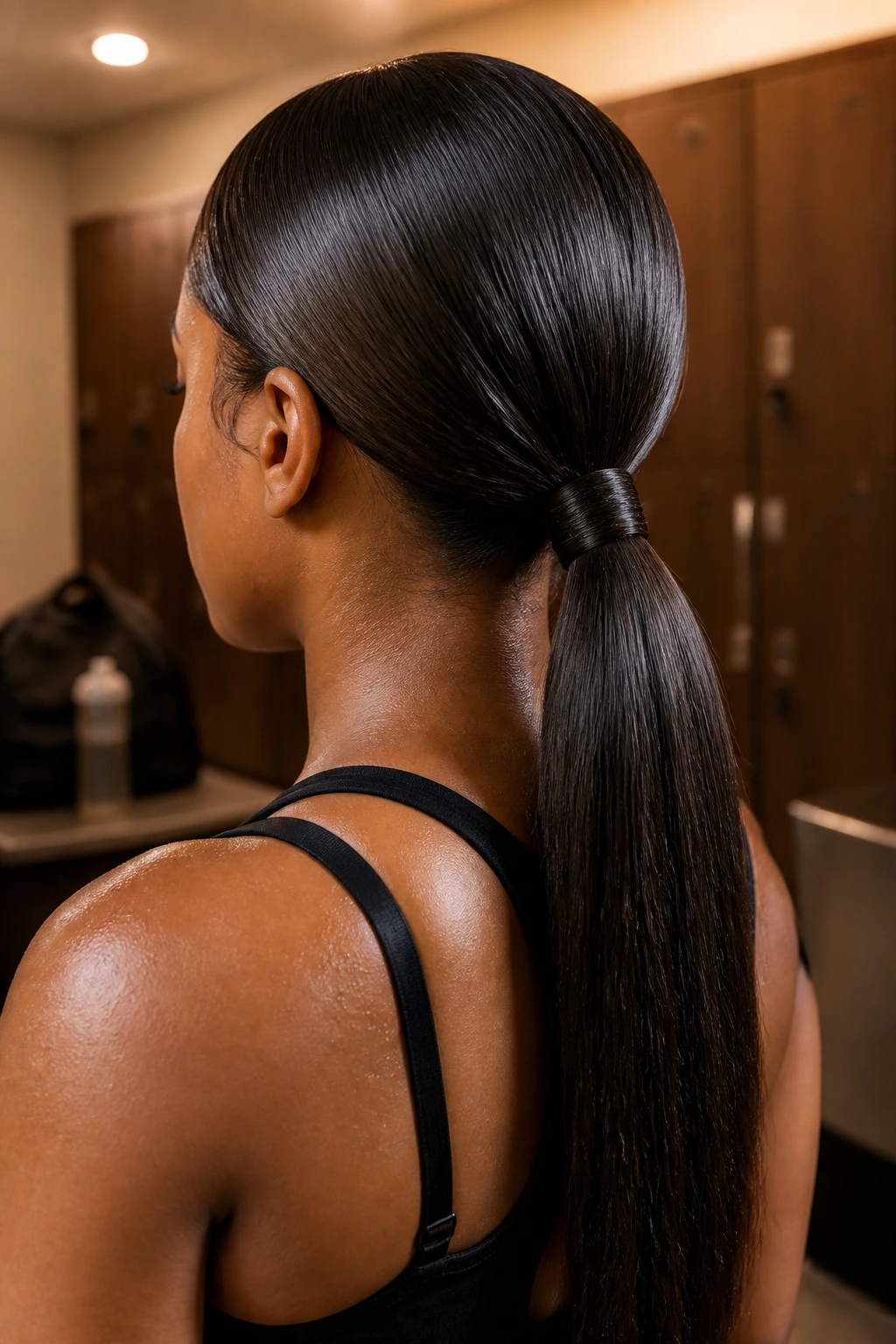
If you prefer to keep the weight of your hair off your back but don’t want the height of a top knot, a low, sleek ponytail is a professional and functional choice. Using a wrap of hair around the base makes this look gym-to-office ready, though you should keep the base relatively simple to allow for easy washing after a heavy lifting day.
Avoiding Damage
Use a snag-free hair tie that does not have metal clasps. Metal bits are notorious for catching on the wefts of your extensions and causing them to rip out or fray. A heavy-duty, snag-free band is a non-negotiable accessory here.
Pro Technique
Apply a small amount of lightweight, alcohol-free edge control to your hairline before pulling the hair back. This prevents your natural hair from frizzing up due to humidity, keeping the overall look polished even when your heart rate is hitting record highs.
4. Double French Braids
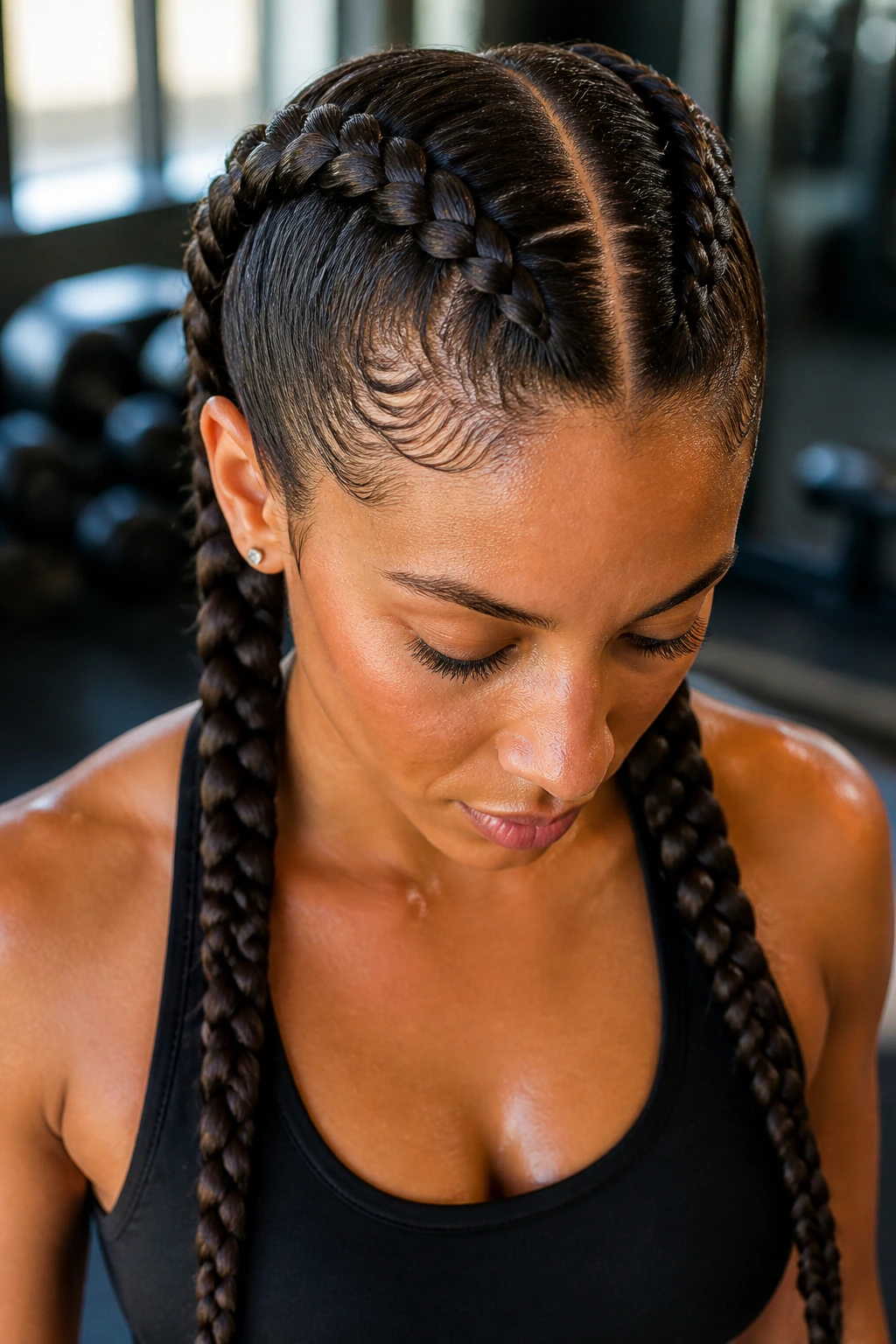
Similar to Dutch braids but tucked under, French braids provide a slightly sleeker, more streamlined profile. This is ideal if you are wearing a baseball cap or a workout headband, as it sits lower and flatter against your head.
The Benefit of Stability
When you use double braids, you effectively split the weight of the long extensions in half. This reduces the strain on your natural hair’s roots. If you have particularly long or heavy bundles, this is much more comfortable for endurance training than a single ponytail.
Keeping It Neat
Use a light-hold spray or a tiny dab of mousse on your palms before braiding. This tames flyaways that naturally occur with extensions and keeps the braids looking crisp and tight from start to finish.
5. The Messy Gym Bun
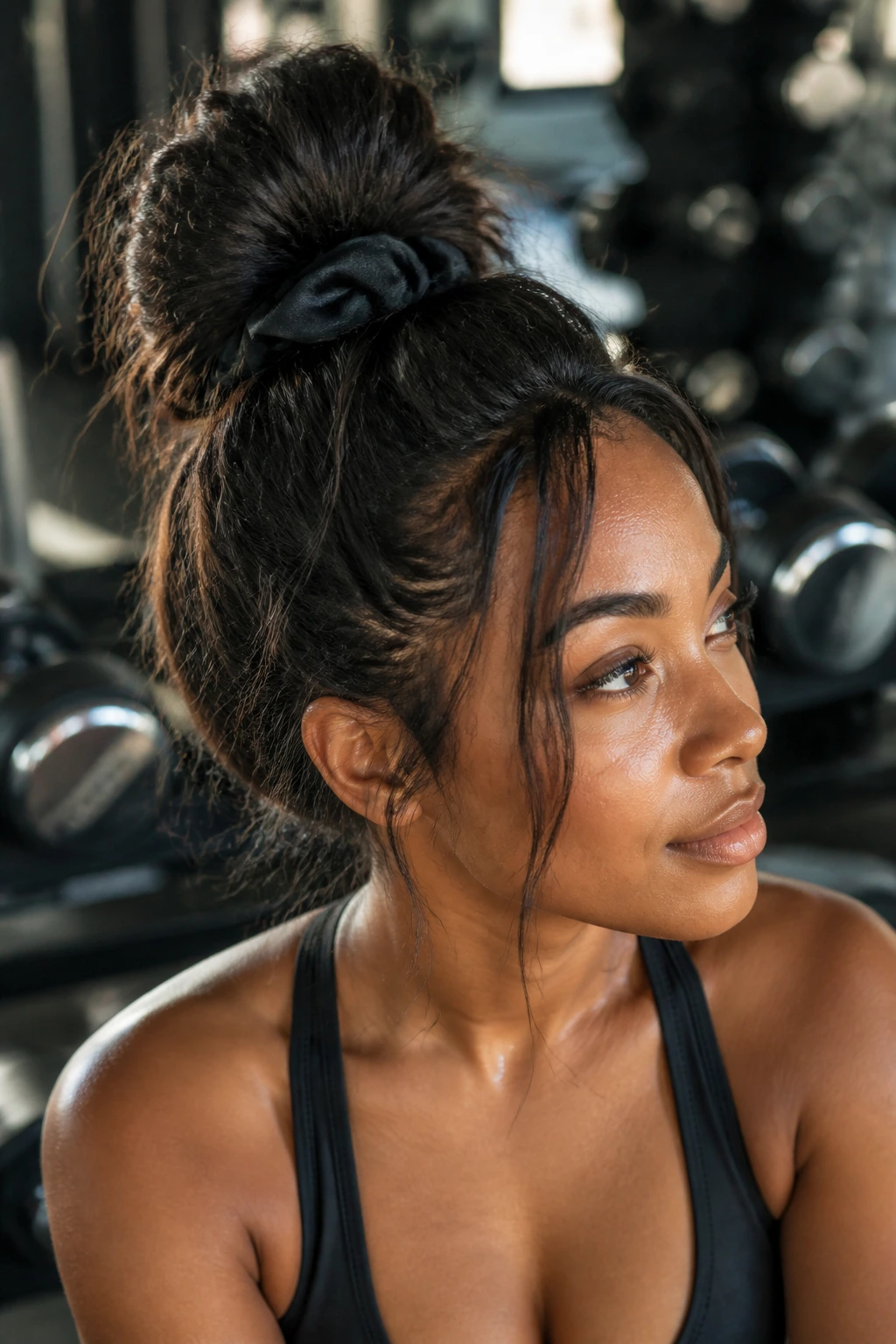
Sometimes you just need to throw your hair up and go. A messy bun is the most versatile option for workouts because it requires zero precision. It is quick, it is effective, and it keeps your long hair contained away from your face and neck during heavy lifting sessions.
Why It Works
It is forgiving. If a few strands fall out during a set of deadlifts, it just adds to the aesthetic. The messiness also means you aren’t pulling the hair in a way that creates constant tension, making it a great “rest day” hairstyle for your scalp.
Material Choice
Always use a fabric-covered scrunchie. The rougher texture of an uncovered rubber band can act like sandpaper on your hair extensions, leading to split ends and premature shedding of the hair bundles.
6. The Half-Up Half-Down Top Knot
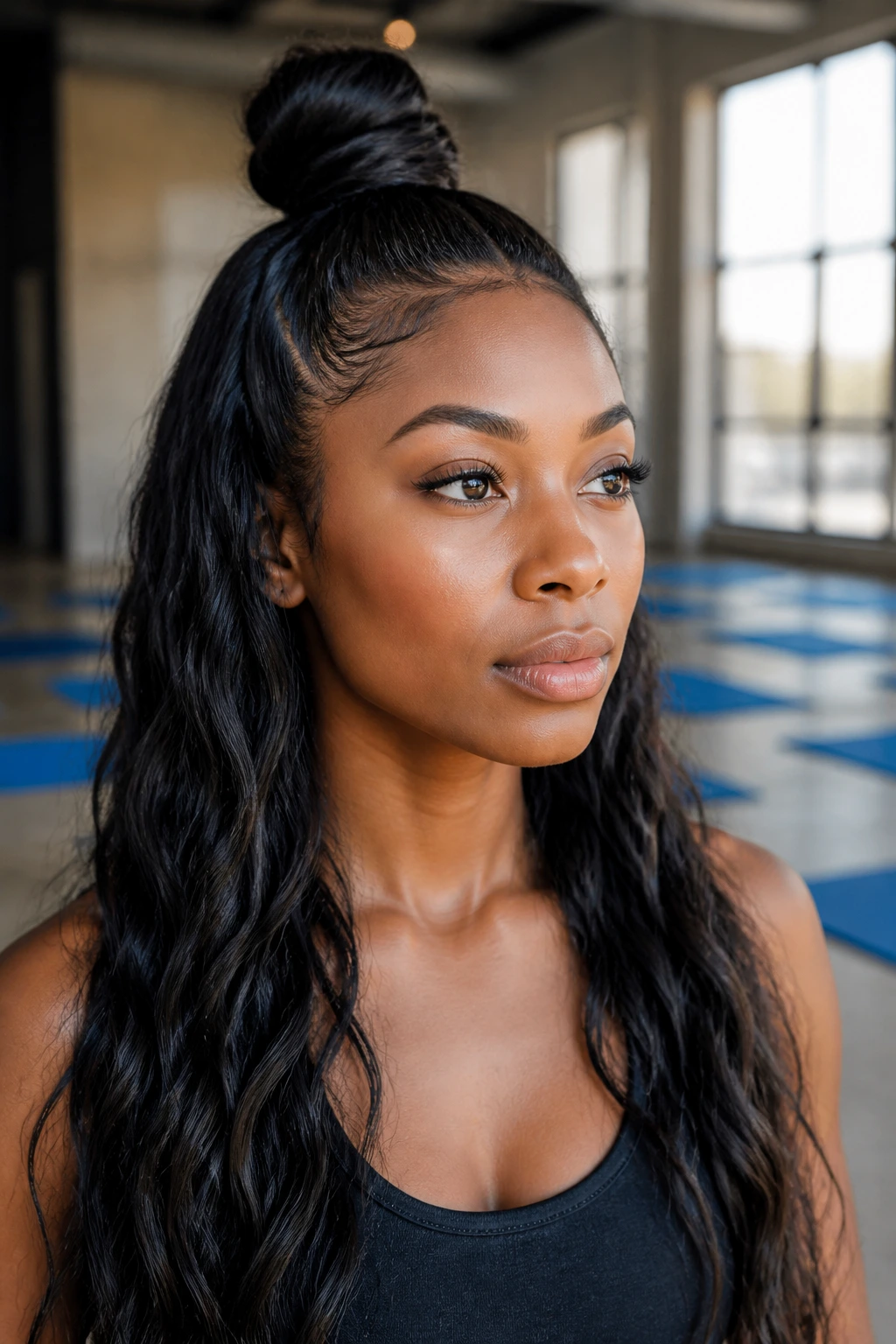
This style is for when you want the aesthetic of long, flowing hair but need the functional benefits of a ponytail to keep your vision clear. By securing only the top section of your extensions in a knot, you keep the front clear while allowing the rest of your hair to breathe during lower-impact activities like yoga or pilates.
Balancing Act
The key is to take a small section—usually starting from the temples and going back to the crown—to avoid pulling on too many tracks at once. If you grab too much hair, the sew-in will start to lift, which is exactly what you want to avoid.
Best Activity Suitability
This is perfect for weight training or stationary cycling. It feels less restrictive than a full updo but offers enough control to keep your hair out of your eyes while you focus on your form.
7. The Wrapped Braid
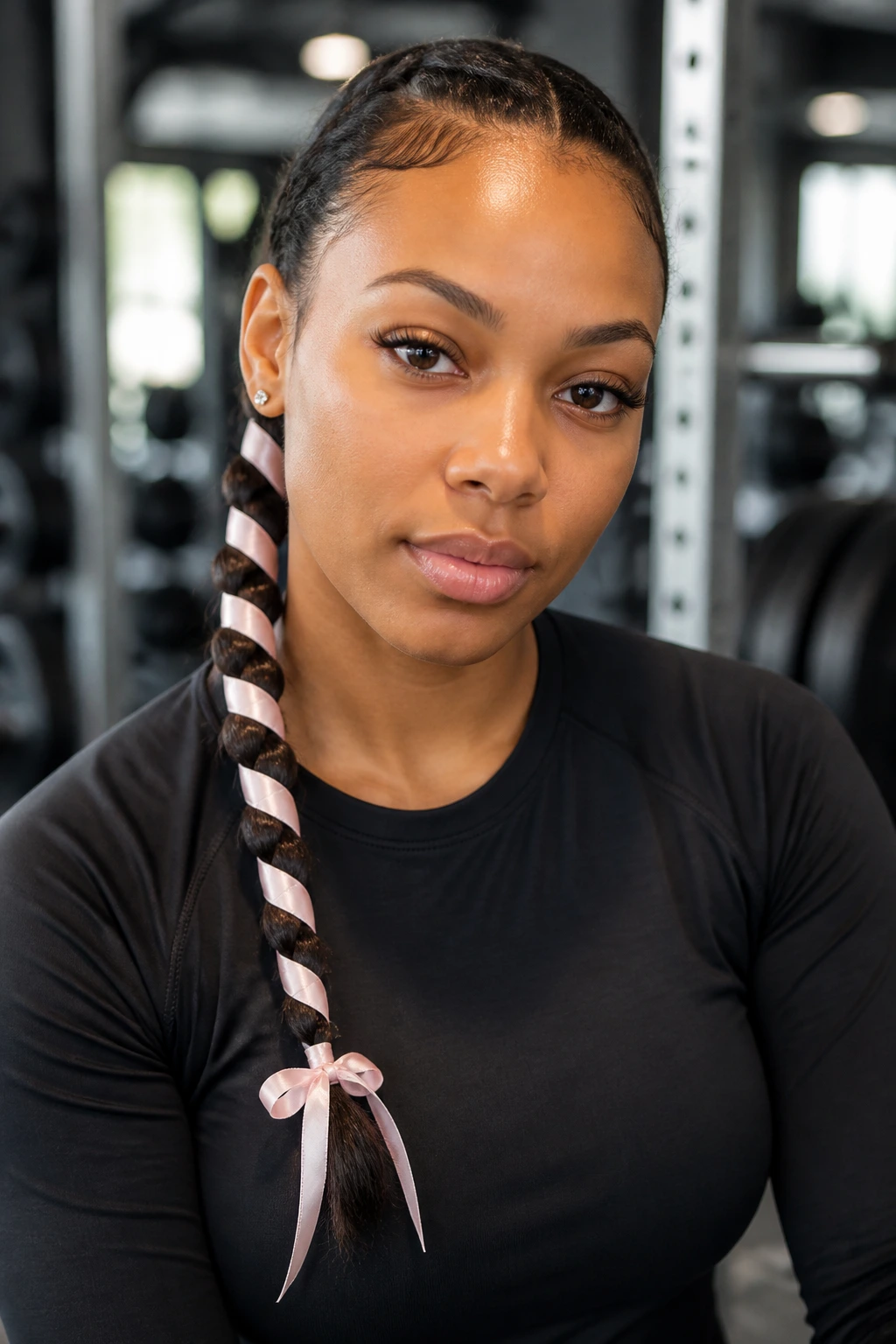
Think of a standard single braid, but add a hair wrap or ribbon around the length. This adds an extra layer of protection for the hair itself, shielding the extensions from friction against your gym clothes or equipment.
Why Use a Ribbon?
Nylon and polyester gym shirts can be surprisingly abrasive. A soft ribbon or a silk wrap around your braid acts as a barrier, preventing your extensions from getting caught in the fabric of your racerback top.
Longevity Factors
This style keeps the hair from moving too much. If you are doing intense cardio, the less movement your hair has, the less likely you are to deal with those dreaded knots at the nape of the neck that seem to happen despite your best efforts.
8. Low Side Braid
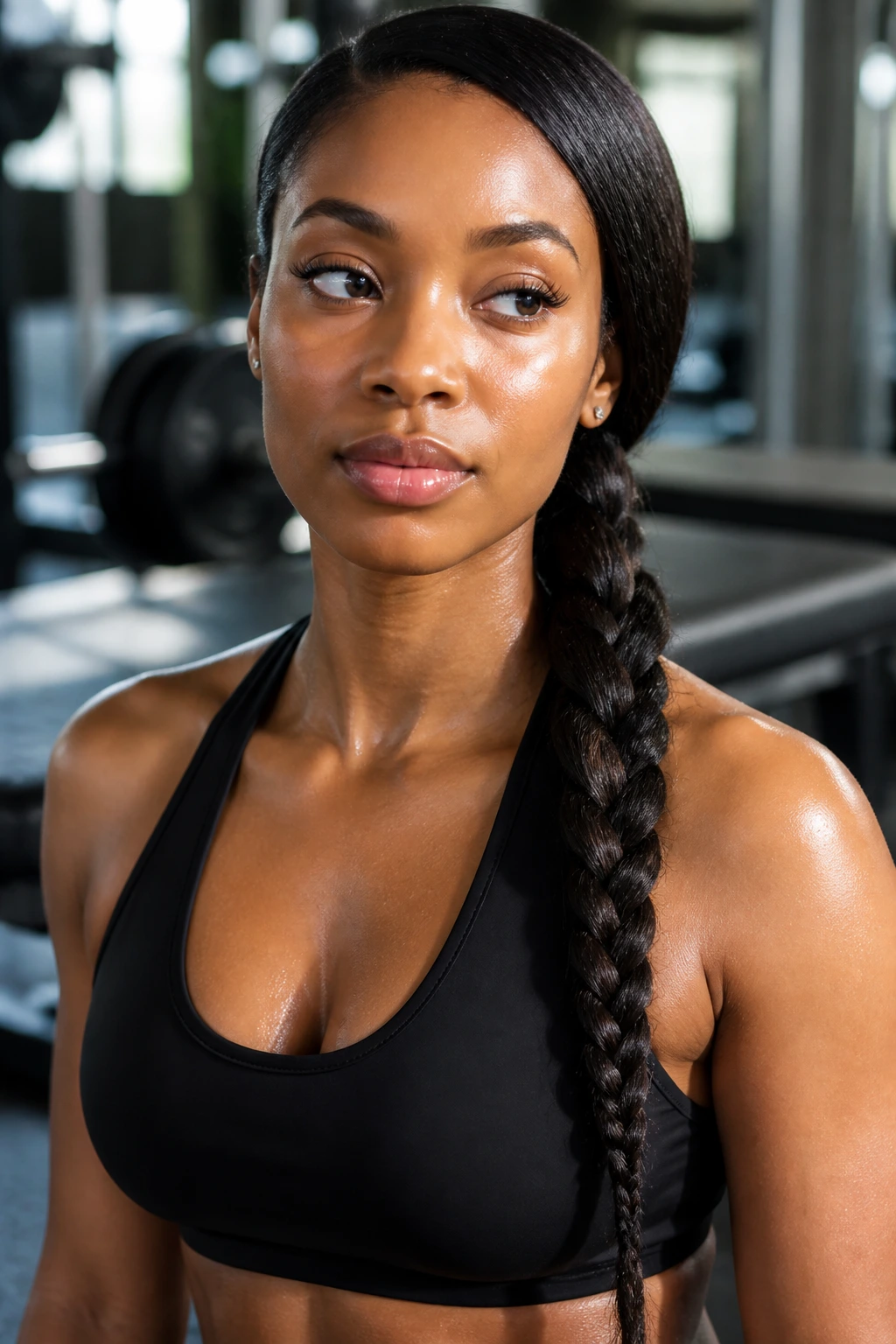
A side braid is an elegant way to keep your hair contained without putting it all in one spot. It is very easy to do yourself, and because it sits to one side, you can easily shift it to the front or back depending on the exercise you are doing.
Ergonomics
If you are doing exercises that require you to lie flat on a bench, a side braid is much more comfortable than a high bun or a centered ponytail. You won’t have a giant knot digging into your head while you are trying to concentrate on your bench press.
Managing the Weight
With long extensions, a side braid can feel heavy on one side. If it starts to pull, try to incorporate a bit of your natural hair into the braid early to act as an anchor, ensuring the weave tracks don’t feel like they are shifting.
9. The Braided Headband Look
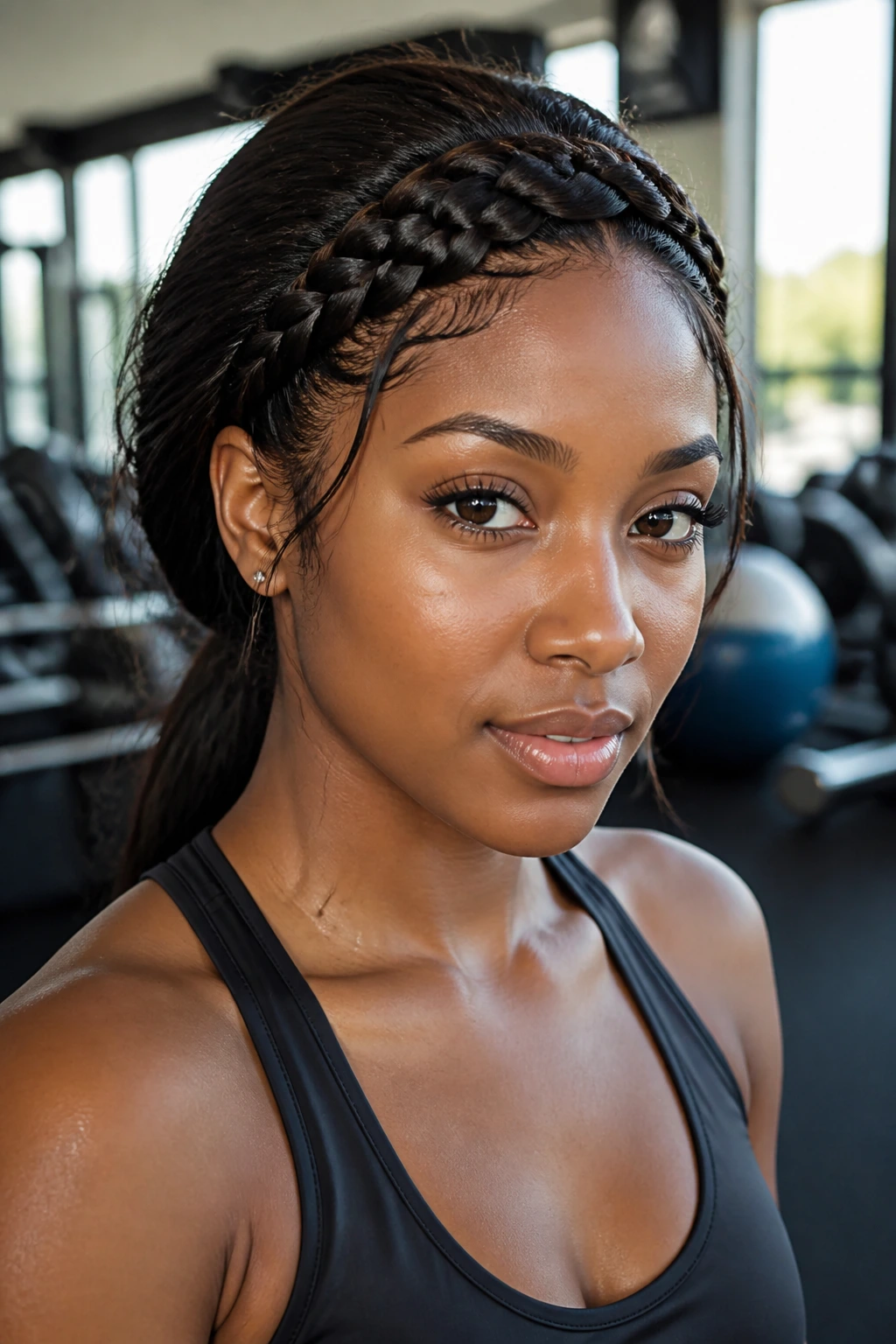
For those with a sew-in that includes a leave-out at the front, a braided headband is a great way to protect your edges while keeping them stylish. You take a section of hair from one temple, braid it across your forehead, and secure it at the other side.
Protecting Your Edges
Your edges are the most fragile part of your hairline, especially when they are constantly exposed to sweat. This style keeps them tucked away safely inside a braid, preventing them from frizzing or breaking due to constant sweat-wiping.
Style Versatility
This works perfectly with a low ponytail or a simple bun. It adds a touch of detail to an otherwise utilitarian hairstyle, making you feel more put-together while you work up a sweat.
10. The Bubble Ponytail
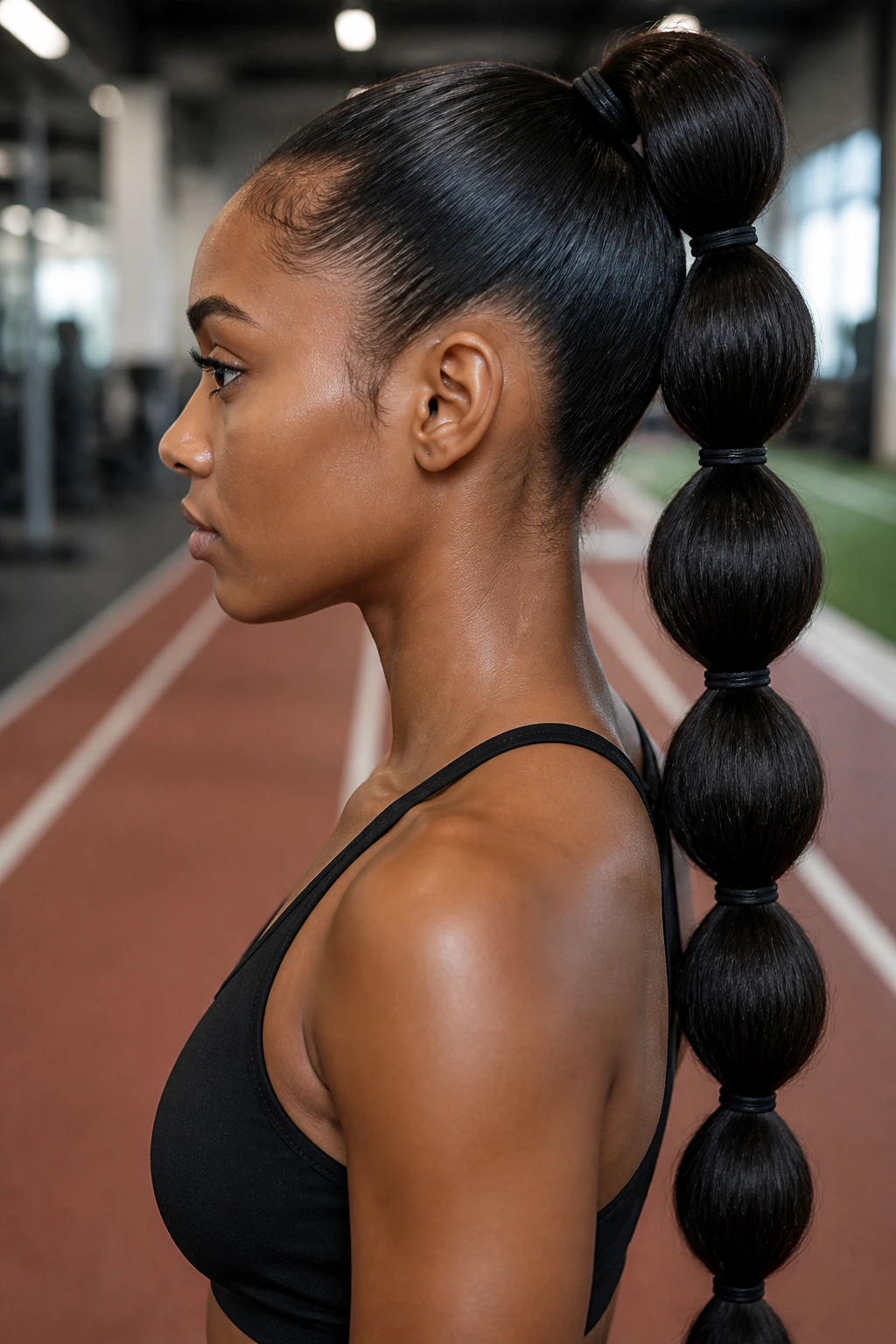
This is a trend that works surprisingly well for workouts. You create a ponytail and then add hair ties every two inches down the length of the tail. Each section is then slightly pulled apart to create a “bubble” effect.
Why It’s Functional
The hair ties keep the length of your extensions from swinging around wildly. Because each section is secured, the hair doesn’t have the opportunity to tangle with itself, which is the biggest enemy of long sew-in extensions.
Pro Tip for Volume
If your extensions are thick, this style looks amazing and voluminous without being overly heavy. Just make sure the hair ties are soft fabric bands, not thin rubber bands, to prevent snapping the hair strands.
11. Cornrowed Under-Layer
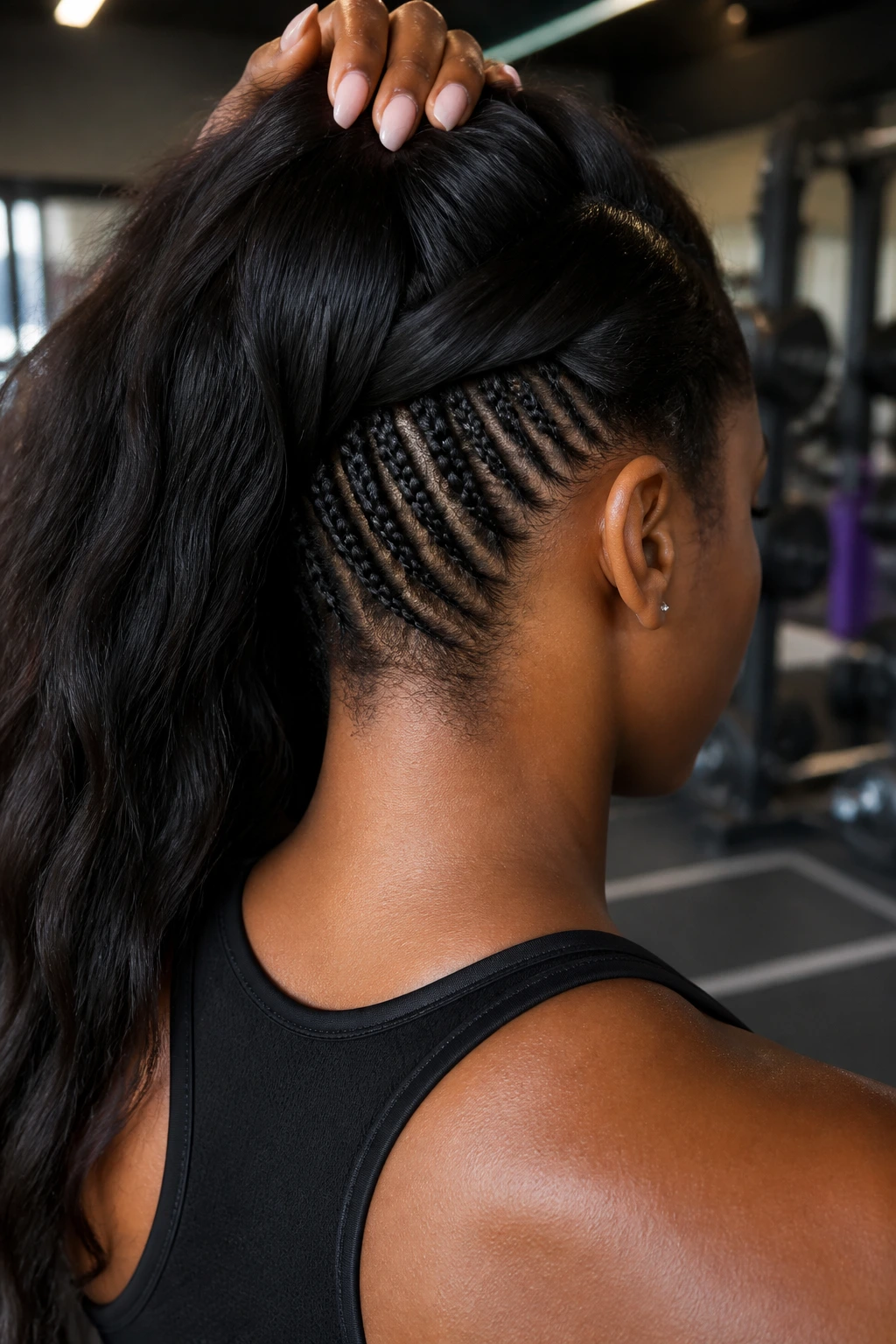
If you have a full sew-in, you can incorporate a small cornrow pattern into the style itself. By braiding the hair in a way that follows the shape of your head, you create a permanent base that remains secure even during the most intense HIIT workouts.
The Foundation is Key
This requires planning at the time of your installation. Ask your stylist for a “workout-friendly” braid pattern, which typically involves smaller, tighter braids underneath the tracks to ensure minimal movement and a flatter silhouette.
Long-Term Benefits
This is the lowest-maintenance option on the list. Once the hair is braided down, it stays put for days or weeks. You just need to focus on keeping the scalp clean and the hair moisturized.
12. The Tucked-In Braid
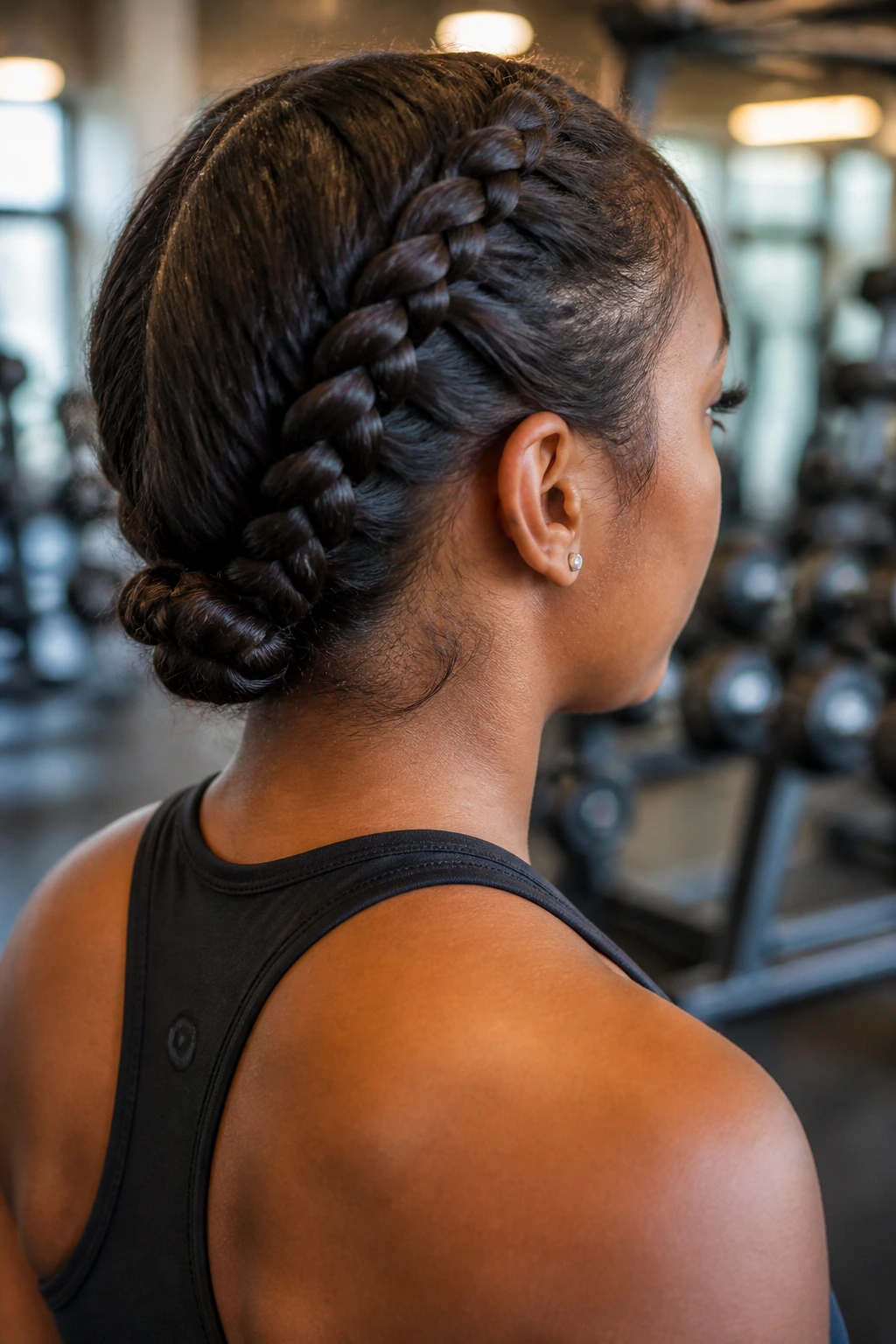
A tucked-in braid is essentially a standard braid where you then fold the tail up and secure it against the nape of your neck. It essentially transforms a long braid into a short, secure loop.
Why This is Better Than a Bun
It keeps the weight evenly distributed at the base of your skull rather than high up on the head. This can be more comfortable for those who suffer from tension headaches during heavy lifting days.
Style Tip
Use two small pins or a single soft hair tie to tuck the end of the braid. This keeps the ends of your extensions tucked safely away from friction, preserving the integrity of the hair tips.
13. The Headband and Pony Combo
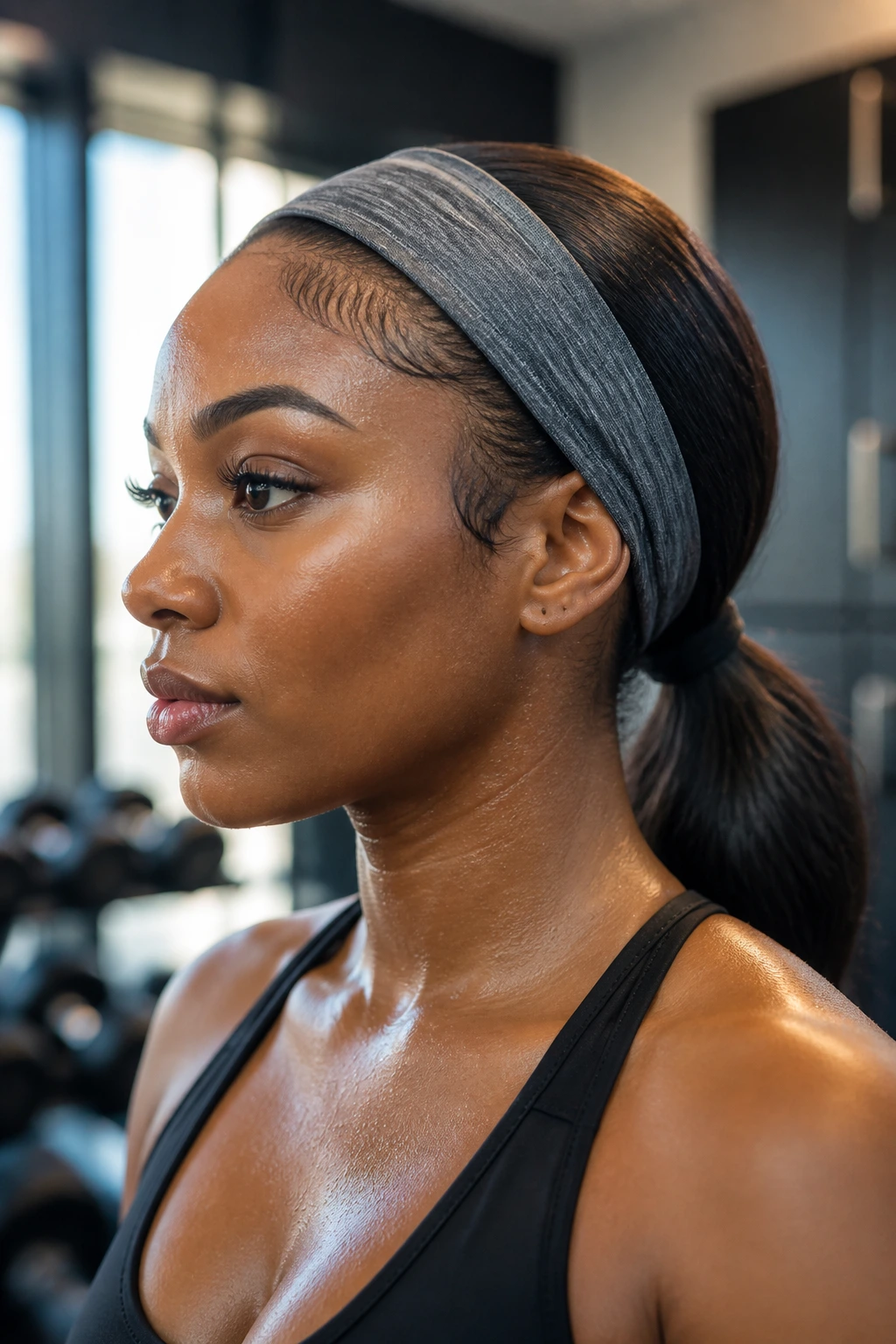
Sometimes, the simplest solution is the most effective. Combining a thick, moisture-wicking athletic headband with a simple low ponytail protects your edges while keeping the rest of your hair contained.
Moisture Control
A good-quality athletic headband does two things: it keeps sweat from running down your face, and it acts as a barrier between your hairline and your ponytail. This prevents that “sweaty scalp” look at the edges of your weave.
Choosing the Right Headband
Look for synthetic, moisture-wicking fabrics rather than cotton. Cotton tends to hold moisture against your hair and scalp, which can lead to scalp itching or even mold buildup if you don’t wash your hair immediately after working out.
14. The Triple-Section Pony
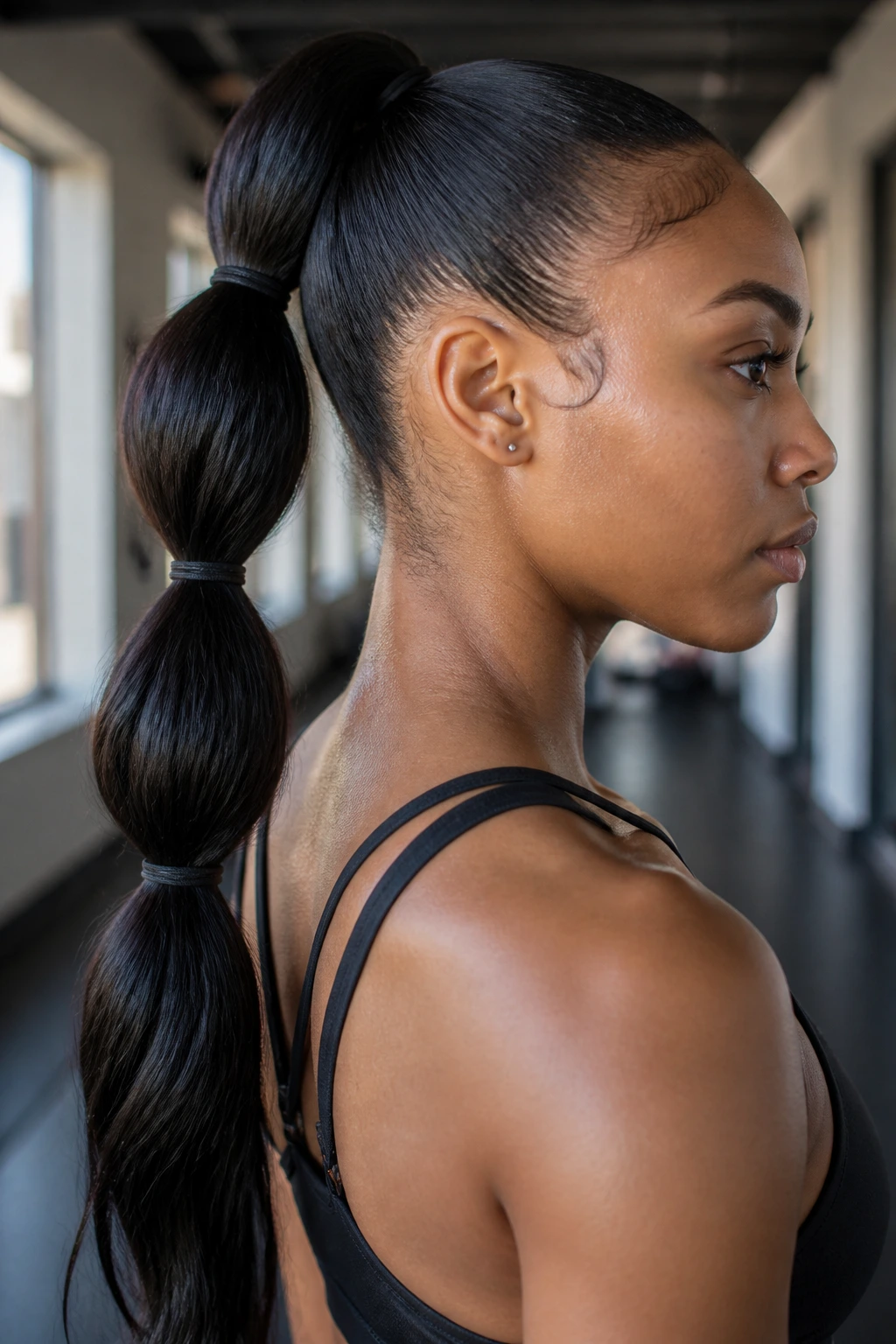
If you have very long extensions, a single ponytail might still get in the way. By sectioning the ponytail into three parts—top, middle, and bottom—you create a tiered effect that is much easier to manage.
Managing Length
The triple-section approach ensures that the hair is “segmented.” Even if you are doing mountain climbers or rows, the hair is secured in three different places, so it won’t fly everywhere.
Visual Appeal
It looks more intentional and sporty than just a regular ponytail. It’s a great way to show off the length of your extensions while staying entirely focused on your training.
15. The Rope Braid
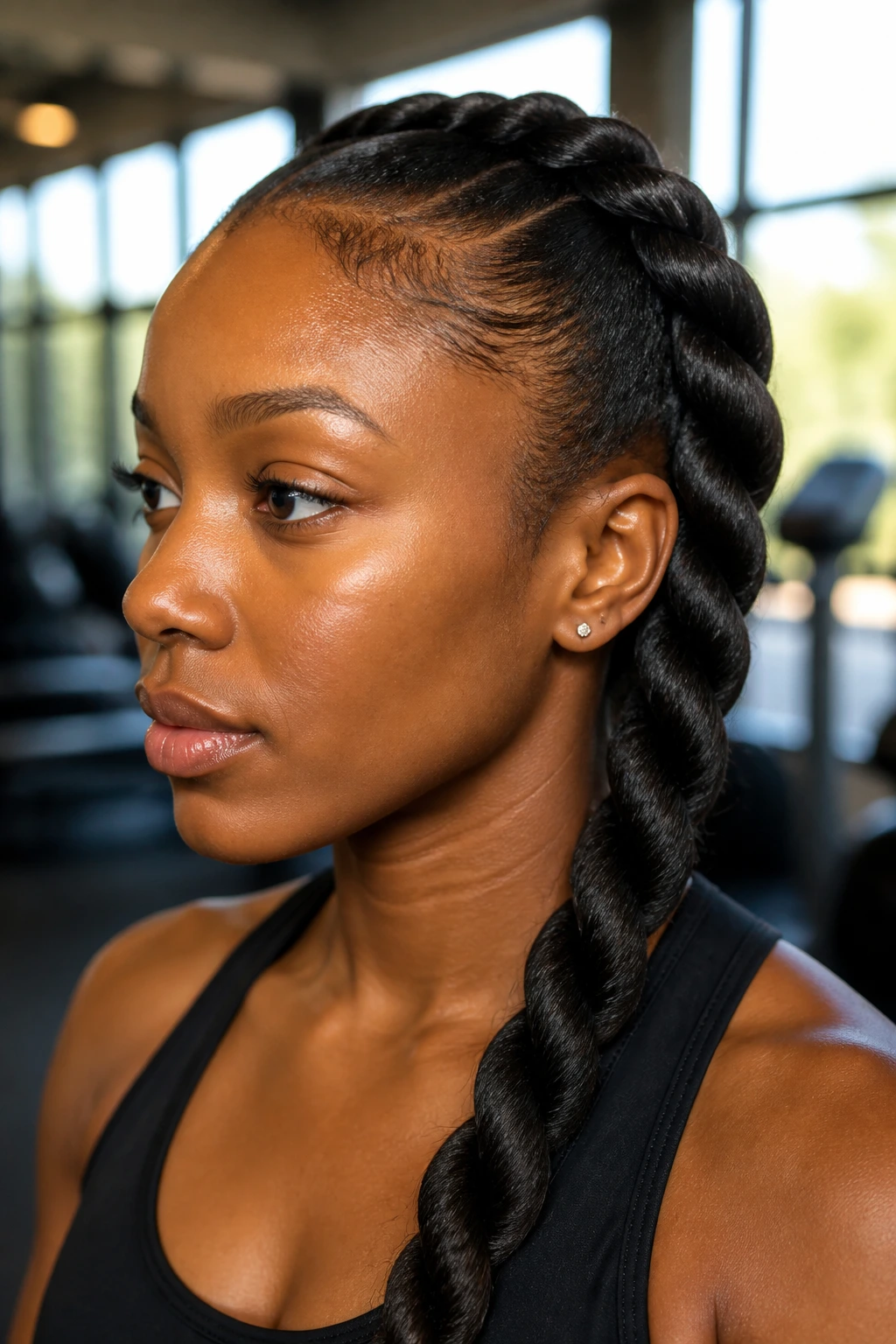
A rope braid involves twisting two sections of hair around each other. Because it is a tight, coiled braid, it is incredibly dense and less likely to snag on equipment than a loose, traditional three-strand braid.
Durability for HIIT
If you are someone who does a lot of fast-paced movement, the rope braid is surprisingly sturdy. It doesn’t unravel easily because the twist creates its own tension.
Maintenance
When you take this out, your extensions will have beautiful, defined twists. It is a great way to style your hair for the day after your workout without using any heat tools.
16. Two-Strand Twist Updo
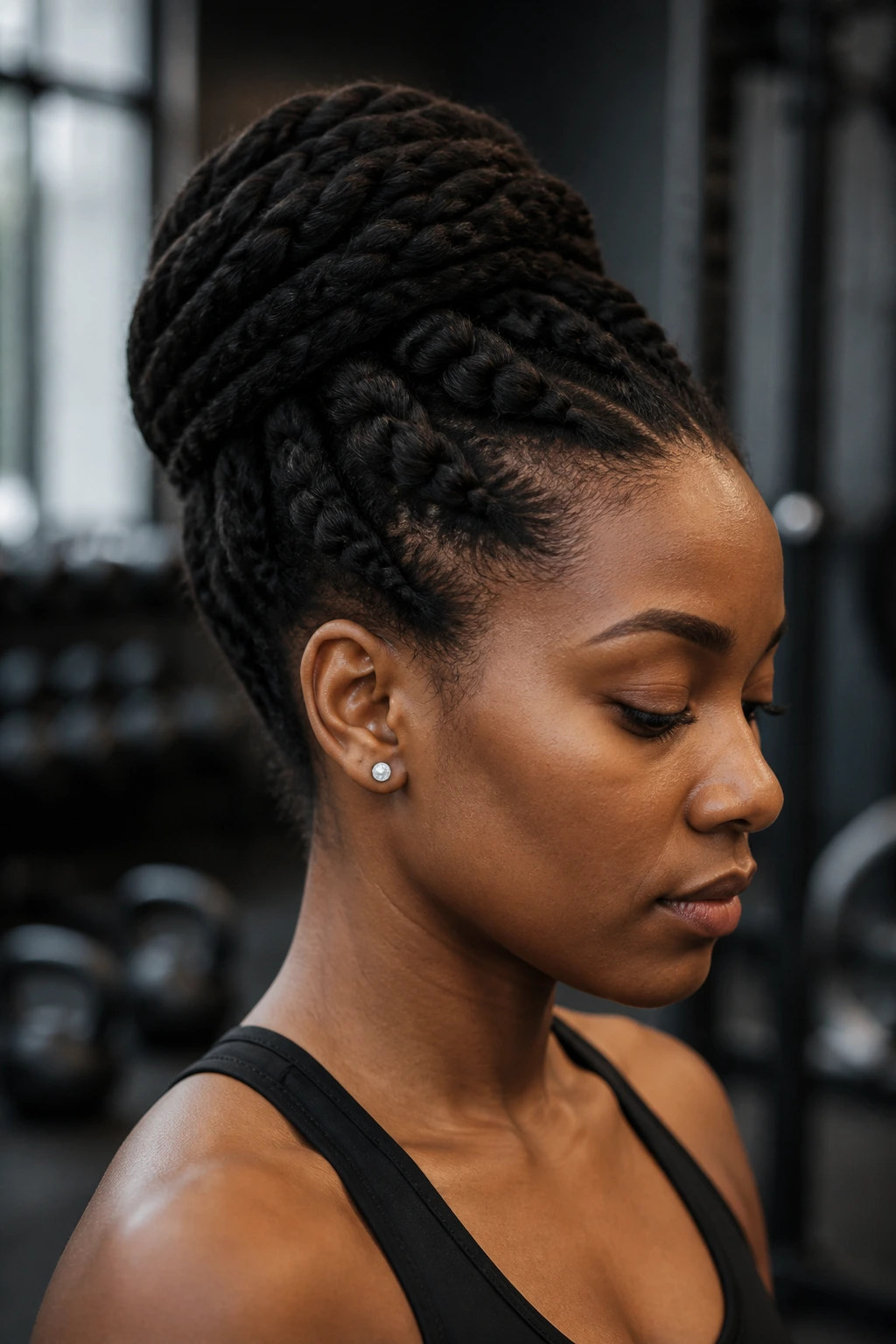
If you have a sew-in with a texture that is naturally wavy or curly, a two-strand twist updo is an excellent way to style it. The twists are easy to secure with a few bobby pins and keep the hair neatly away from the neck.
Managing Different Textures
This style works particularly well for Kinky-straight or body-wave extensions, as the hair holds the twist pattern better than silky-straight hair. It is a very secure style that minimizes the amount of loose hair hanging around your gym bag.
Why It’s Great for the Gym
It is essentially a protective style. By keeping the ends of the hair tucked into the twists, you protect the most vulnerable part of the extensions from environmental wear and tear.
17. The High Sleek Pony with Braided Base
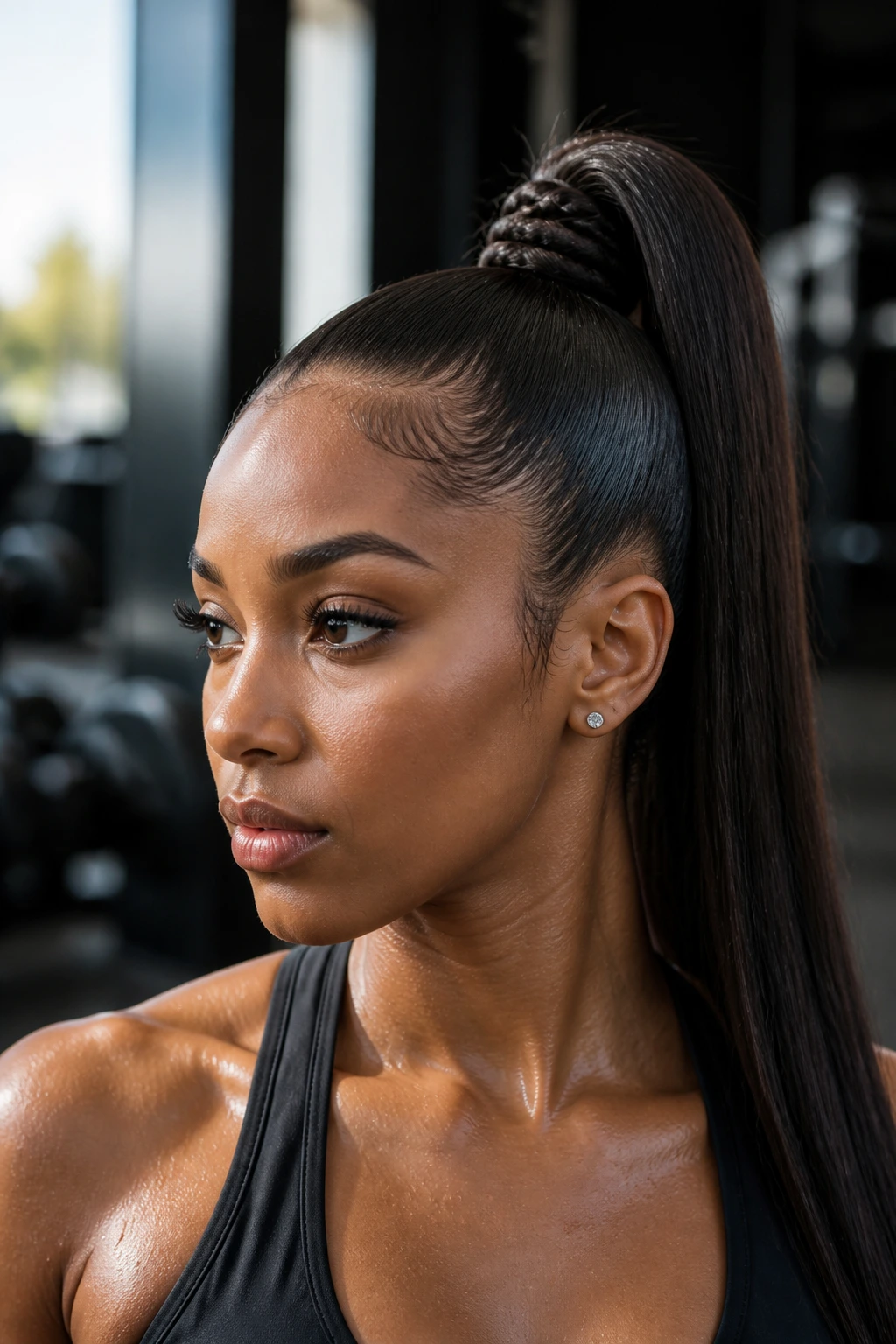
Take your high ponytail to the next level by wrapping a small section of hair around the base, but braid that section first. It’s a small detail that prevents the wrap from sliding down.
Stability Factor
The braided wrap is much stronger than just wrapping a loose piece of hair. It stays tight throughout your entire gym session, ensuring your ponytail doesn’t look messy or loose halfway through your workout.
Professional Edge
This look is very sleek. If you are going straight from the office to the gym, this is a hairstyle that looks professional enough for a boardroom but secure enough for a CrossFit session.
18. The “Space Bun” Double Knot
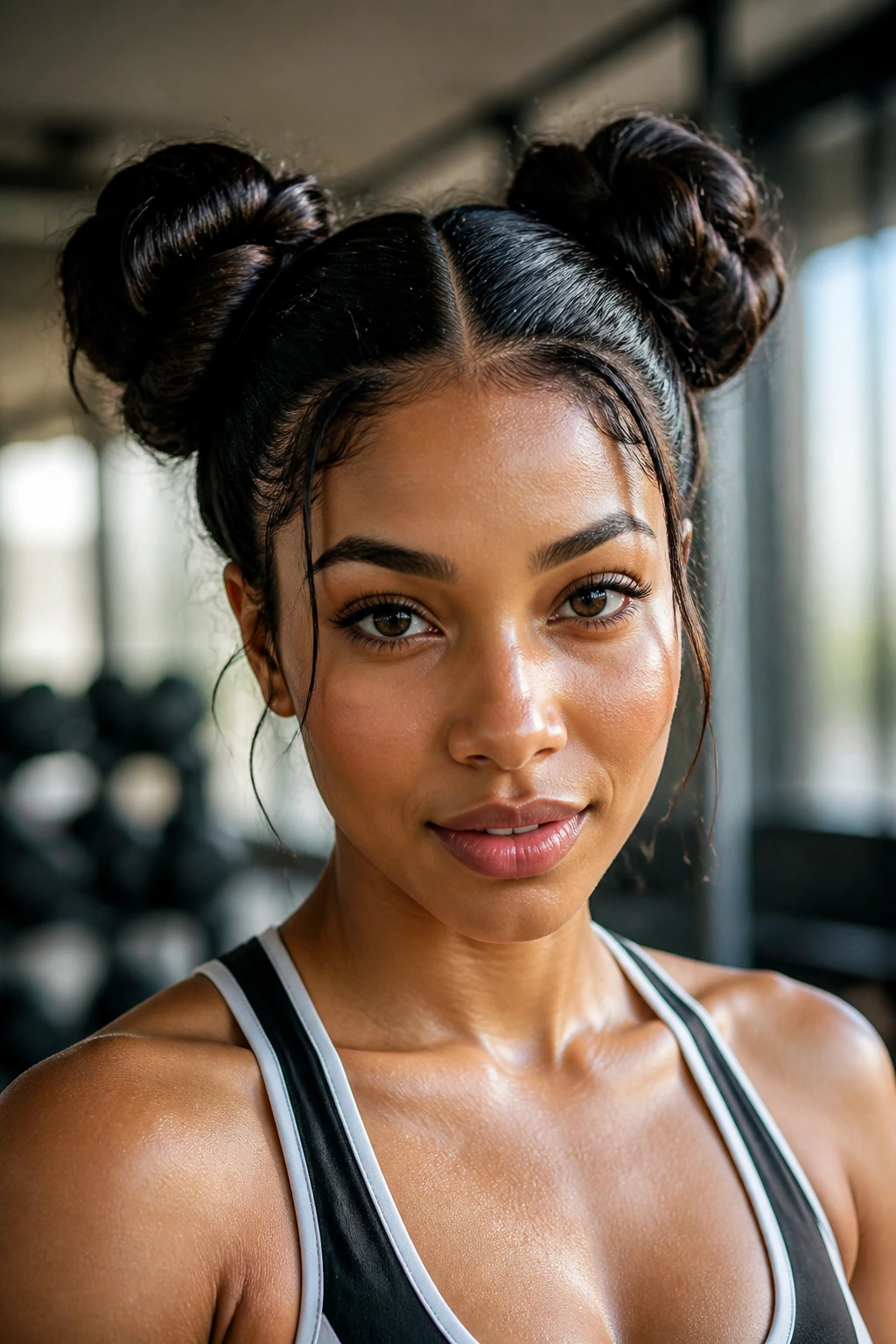
Split your hair down the middle and create two high buns. This is a fun, youthful, and extremely practical hairstyle for long hair. It keeps the hair balanced on either side and off your neck completely.
Balancing Weight
Because the hair is divided into two separate buns, the weight is distributed evenly on both sides of your head. This prevents the “pulling” sensation you might get from one giant bun.
Gym Appropriateness
It’s a classic athlete look. It’s symmetrical, it’s secure, and it’s very easy to maintain. Just make sure you use soft scrunchies for each bun to protect your extensions.
Final Thoughts
When you invest in quality hair extensions, you naturally want to protect that investment, even while pushing your physical limits. The most important lesson is that friction is your greatest enemy; every style here focuses on either minimizing movement, reducing tension, or shielding the hair from abrasive gym surfaces.
Experiment with these styles to see which ones align best with your specific workout routine. You will likely find that a high-intensity session requires the stability of a tight braid, while a yoga day might allow for a looser bun. Regardless of the style, keep your scalp clean, avoid over-washing, and always use gentle, snag-free accessories to ensure your look stays fresh long after you’ve racked your weights.