


You know the feeling of waking up, staring at the bathroom mirror, and realizing you have exactly eight minutes before you need to be out the door. Your hair is doing something strange at the back—that classic, inexplicable sleep-crease—and your morning coffee is barely cooling in the mug. Most people settle for the same tired ponytail or a frantic spray of dry shampoo. But it doesn’t have to be this way. Having a style that works with your texture rather than against it is the ultimate way to reclaim those mornings.
The trick is choosing a cut that relies on your hair’s natural movement instead of heat styling. When a cut is precise, the shape does the heavy lifting, allowing you to just shake it out and go. We aren’t looking for high-maintenance layers that require a round brush and twenty minutes of focus. We’re looking for structure that stays put, looks intentionally lived-in, and handles the chaos of a busy life with grace.
1. The Classic Blunt Bob
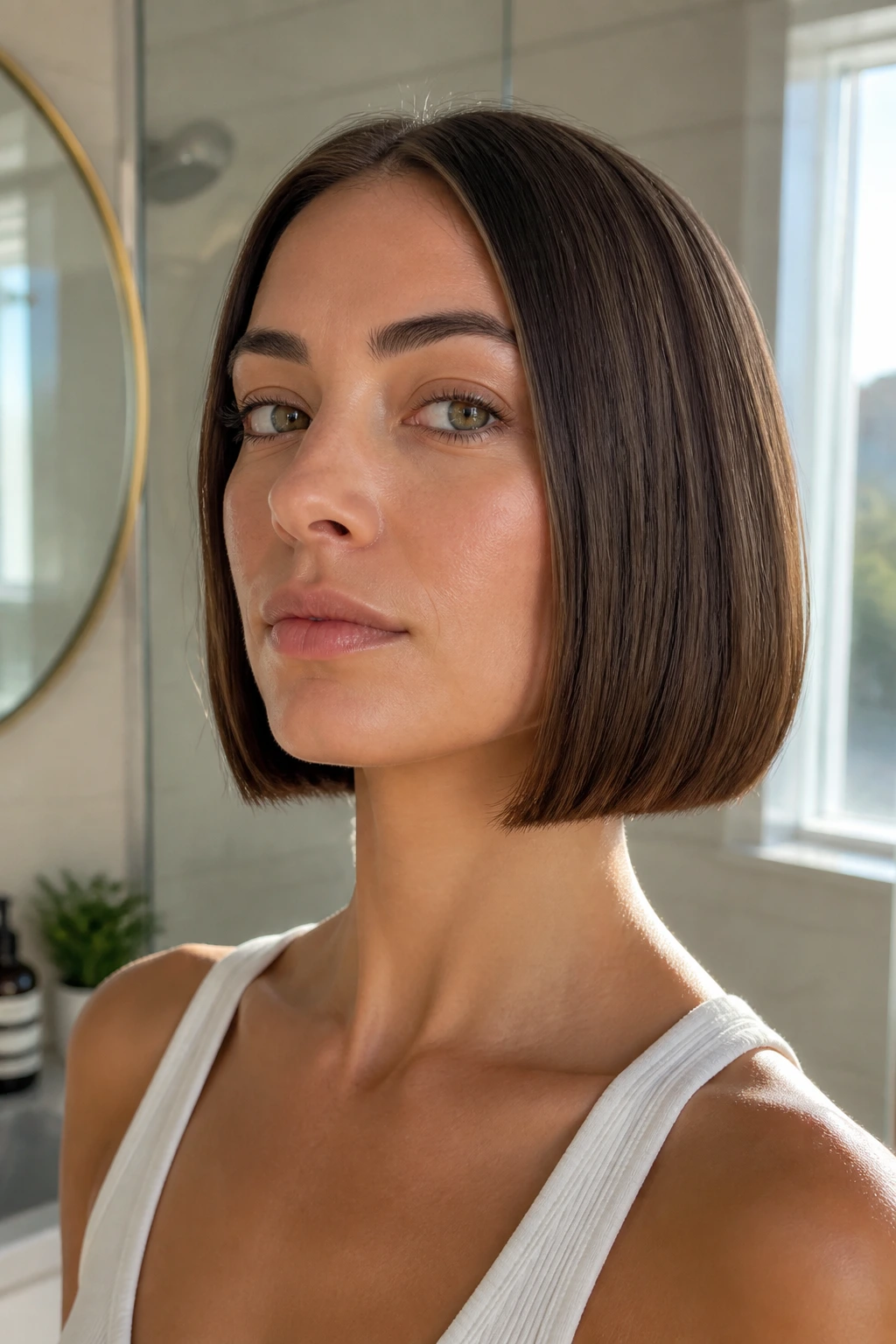
This is the gold standard for low-maintenance style because the weight of the hair does all the work for you. By keeping the ends cut straight across at the chin or just below, you eliminate the need for curling or excessive smoothing. The weight naturally pulls the hair into a sleek, clean line that looks polished the moment you step out of the shower.
Why It Works for Busy Schedules
The blunt bob is essentially a “set it and forget it” style. Because there are no layers to flip out or lose their shape, you don’t need a flat iron to force it into place. A small amount of smoothing cream applied to damp hair is usually all you need to tame frizz. As your hair air-dries, it settles into a sharp, architectural shape that looks like you spent an hour in the chair, even if you spent five minutes towel-drying.
Managing the Look
- Apply a lightweight leave-in conditioner while the hair is soaking wet to keep ends hydrated.
- Use a wide-tooth comb to distribute product and avoid breakage.
- If you have naturally wavy hair, let it air-dry to get that effortless, beachy texture without trying. Pro tip: Ask your stylist to point-cut the very ends if you want a slightly softer finish that won’t look too severe as it grows out.
2. The Textured Pixie
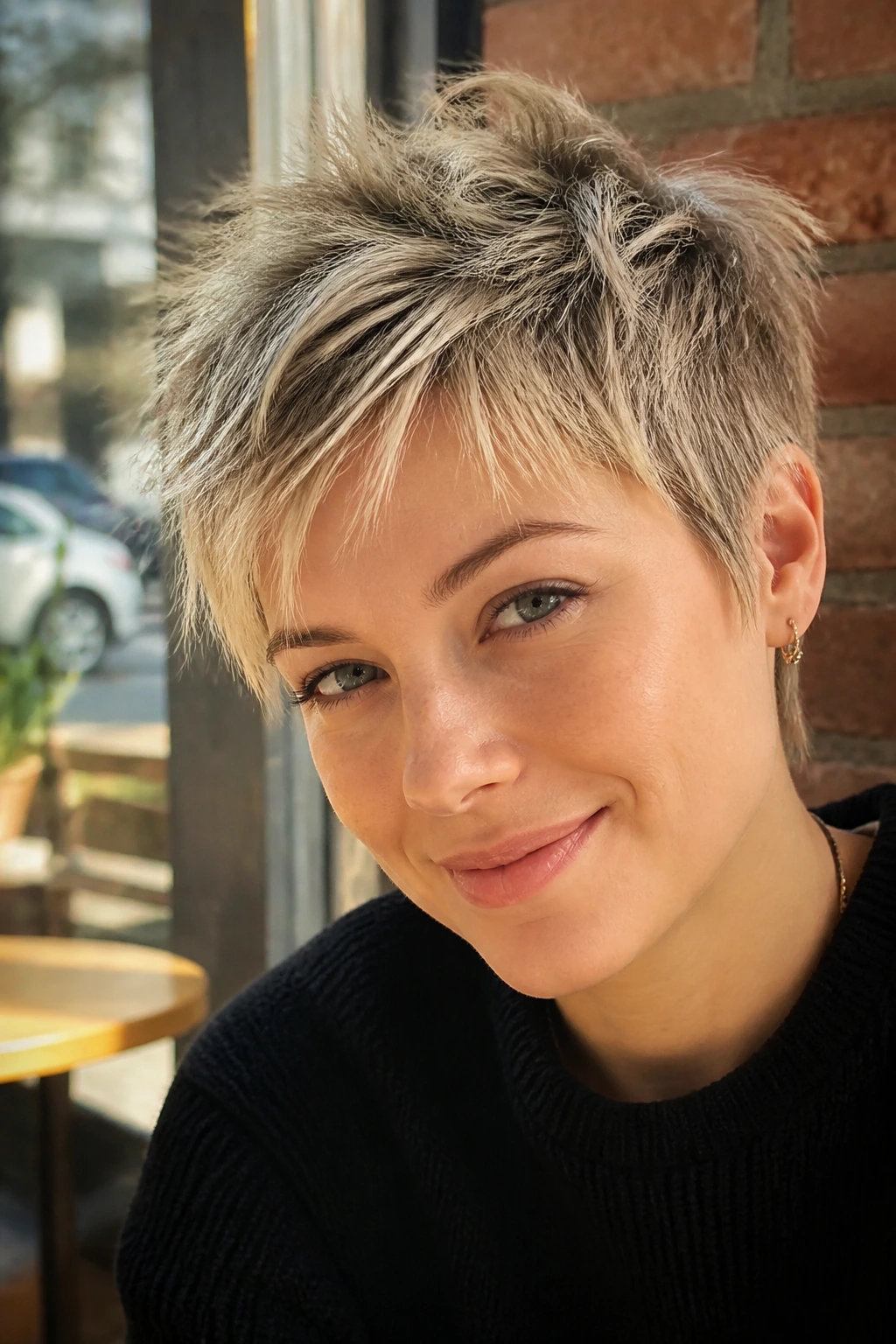
If you want to shave actual minutes off your routine, the pixie is your best friend. This cut is designed to be messy on purpose. Instead of trying to smooth your hair down, you’re embracing the spikes, the volume, and the rogue strands. It requires the least amount of drying time of any style on this list, making it a dream for those who skip blow-drying entirely.
Getting the Right Texture
The secret to a great morning pixie is in the internal layering. You want your stylist to create enough texture that the hair naturally wants to piece out rather than laying flat against your scalp. This means using thinning shears or a razor to remove bulk, which gives you that “bedhead” look that stays styled all day long.
Daily Styling Essentials
- A dime-sized amount of matte styling paste or pomade.
- Rub the product between your palms until it warms up and turns clear.
- Use your fingertips to pull and twist sections for that perfectly unstyled finish. Pro tip: A tiny bit of dry texture spray can revive a flat-looking pixie in seconds, even on the second day after washing.
3. The Long Layered Shag

The modern shag is less about 70s rockstar drama and more about manageable, face-framing volume. By adding layers starting around the cheekbones, you create a cut that looks best when it has a bit of grit to it. It’s a style that genuinely improves with texture, meaning your morning routine can consist of literally nothing more than a quick tousle with your fingers.
Why This Style Loves Air-Drying
Most cuts look messy when they air-dry, but the shag looks intentional. The layers encourage the hair to form individual clumps and waves. If you have any natural bend in your hair, this cut will bring it out. Even if you have straight hair, those short layers create lift at the root, so you don’t end up with that flat, heavy-at-the-bottom look that can drag your face down.
Key Considerations
- Ensure your stylist keeps the crown layers long enough to avoid the “mullet” effect.
- Use a sea salt spray on damp hair to boost the wave pattern.
- Avoid heavy silicones that weigh down the layers and kill the volume. Pro tip: If you’re running late, use a headband to push the front layers back—the fringe and side layers will frame your face beautifully, making it look like a styled updo.
4. The Mid-Length Lob with Face-Framing

The “long bob” (or lob) is the sweet spot of modern hair. It’s long enough to pull back if you’re heading to the gym, but short enough that it doesn’t take forty minutes to blow dry. When you add face-framing pieces, the style gains a sense of purpose. Those front sections can be left alone to dry into natural swoops, saving you the hassle of styling your bangs or fringe.
Making It Work Without Heat
Because the length is manageable, you can wrap a few strands around your fingers while they are damp to encourage a gentle bend. As the hair sets, those face-framing layers will naturally curve toward your face, creating a soft, flattering frame that hides any morning puffiness. It’s arguably the most versatile cut for anyone who fluctuates between wearing their hair up and down.
Keeping It Fresh
- Focus on regular trims—every eight weeks is the magic number to keep the ends from splitting.
- Use a volumizing foam at the roots to give the hair a boost of height.
- If your hair is prone to static, carry a tiny travel-sized hair oil in your bag for midday touch-ups. Pro tip: This cut is the perfect candidate for a “French twist” or a low, loose knot when you really don’t have time to deal with your ends.
5. The One-Length Collarbone Cut
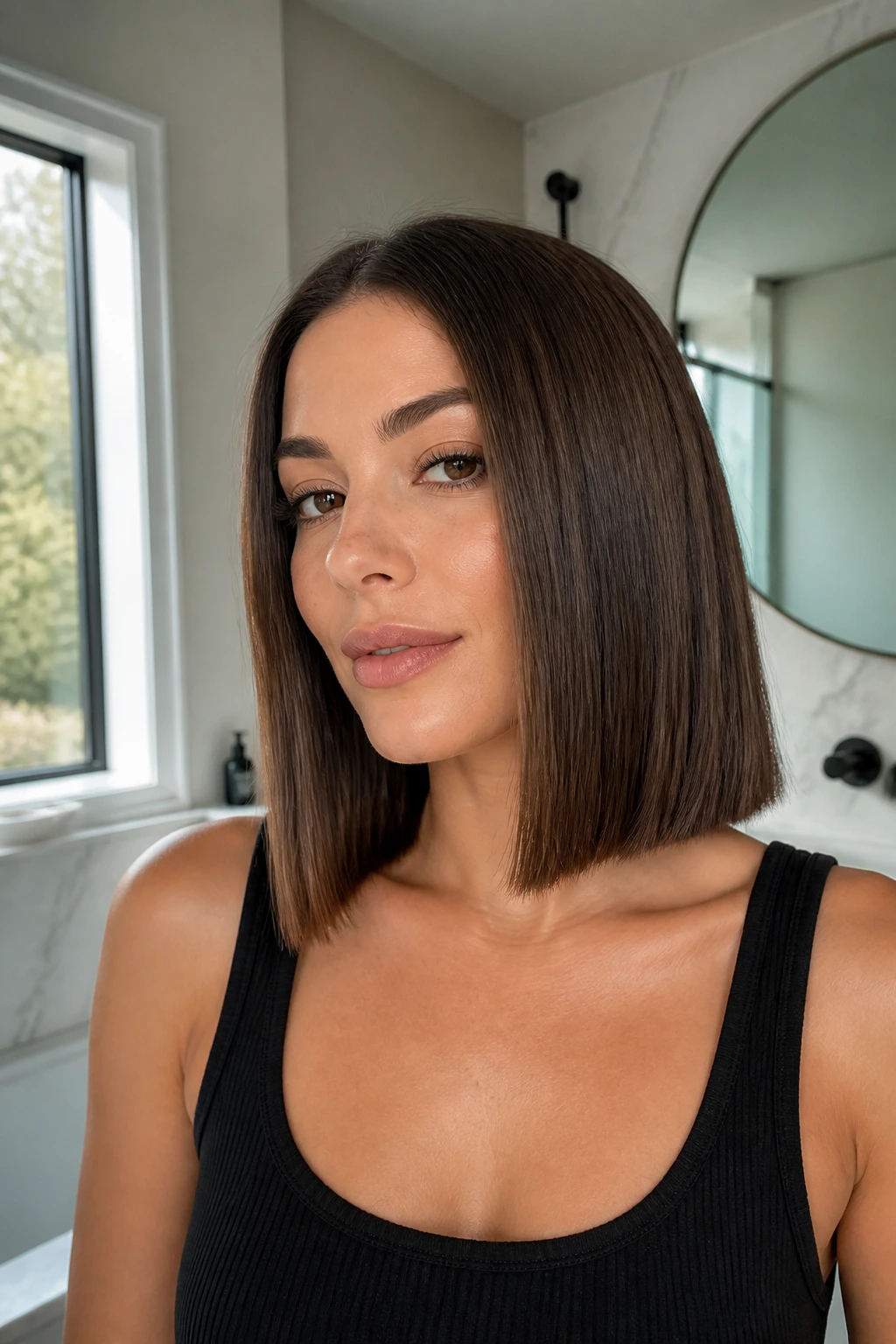
There is something undeniably chic about a one-length cut that hits right at the collarbone. It’s the ultimate “clean girl” aesthetic. Without layers to worry about, you never have to deal with weird cowlicks or pieces sticking out at odd angles. The hair falls perfectly vertical, creating a crisp silhouette that looks expensive and intentional with zero effort.
Why the Collarbone Length is Vital
If you go much shorter than the collarbone, you might deal with hair flipping out against your shoulders. If you go much longer, the hair can start to feel heavy and require more drying time. Sitting right on the collarbone, the hair stays mostly contained, moving with your shoulders rather than constantly fighting against them.
Styling for Simplicity
- Use a smoothing shampoo to minimize frizz before you even start styling.
- Let it dry about 80% of the way, then tuck the front pieces behind your ears to create a slight, permanent curve.
- Avoid brushing it while dry, as this can introduce unwanted puffiness. Pro tip: If you need a bit more polish, just run a flat iron over the very tips—don’t worry about the roots or the mid-lengths.
6. The Curly “Wolf” Cut

For those with natural curls or coils, the wolf cut is a game-changer for busy mornings. It’s essentially a combination of a shag and a layered bob, focusing on giving the curls enough space to breathe. Because the layers are distributed throughout the hair, your curls won’t be weighed down by their own mass, leading to better definition and less “triangle” shape.
Letting Your Texture Lead
The biggest mistake people with curls make is trying to control the shape too much. This cut encourages you to just apply a leave-in conditioner and a touch of gel, then leave it alone. The layers provide the shape; the curl product provides the hold. You don’t need to touch it once it’s dry, which saves a massive amount of time.
Morning Maintenance
- Use a microfiber towel to gently scrunch the hair, removing excess water without causing frizz.
- Apply your styler while the hair is still very wet.
- Let it air-dry completely before touching it—never rake your fingers through while it’s damp. Pro tip: If you sleep on a silk pillowcase, your curls will be much easier to refresh in the morning, requiring only a light spray of water and a little bit of product.
7. The Blunt “Italian” Bob

While the standard bob is sharp, the Italian bob is just a little bit shorter and slightly more playful. It usually hits right around the jawline, exposing the neck. This cut is designed to be a bit fuller and less serious than the classic straight-across version. It’s incredibly fast to dry, and its shorter length means it doesn’t lose volume as the day progresses.
What Makes It Different
It’s the subtle difference in layering. Instead of being completely one-length, an Italian bob often has a few hidden layers underneath to give the hair a slight “C” curve. This makes it look naturally fuller and bouncier without needing a round brush. It’s the ultimate “low-effort, high-impact” cut for people who don’t want to spend time on their hair.
The Morning Routine
- Apply a texturizing cream to the roots for lift.
- Flip your hair upside down for thirty seconds while it’s drying to maximize the volume at the crown.
- Use a large-barrel curling iron to flick just the very ends outward if you’re feeling fancy. Pro tip: This cut looks incredible with a pair of bold earrings, which can distract from any small imperfections in your hair if you’re truly in a rush.
8. The Long Layers with Curtain Bangs
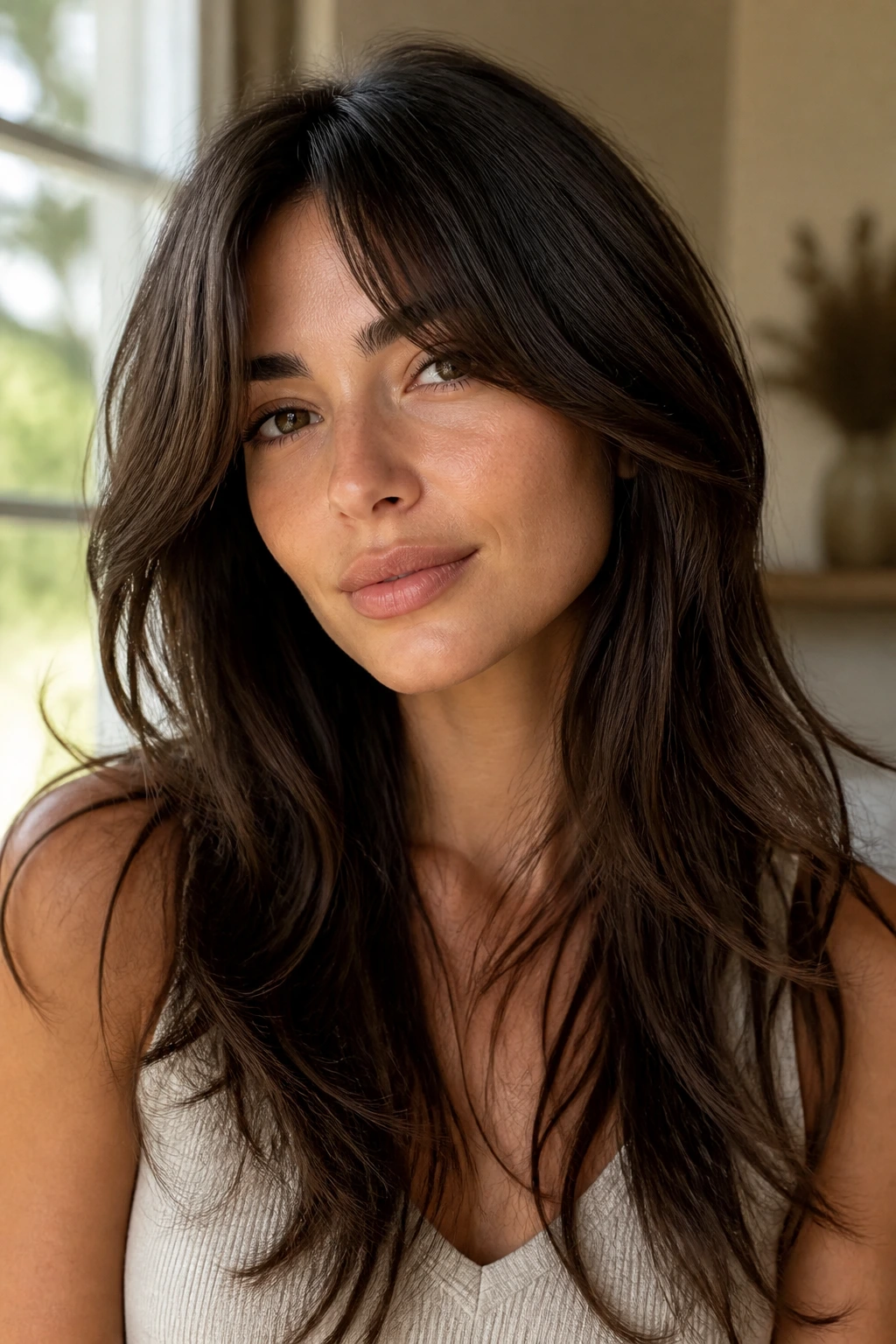
If you are deeply attached to your length but hate the time it takes to maintain it, look no further. Keeping your length long while adding curtain bangs provides the best of both worlds. The bangs act as an instant “styled” element; even if the rest of your hair is just in a messy bun, the bangs frame your face and make it look like you put in an effort.
Why Curtain Bangs Save Time
Standard bangs (the blunt, eyebrow-skimming kind) require daily trimming and styling. Curtain bangs, however, are meant to be long and flowy. You can just sweep them to the sides with your fingers and be done. They blend into the rest of your hair, so you don’t have to worry about them looking out of place if they get a little messy.
Handling the Bangs
- Spritz them with a little water in the morning.
- Use a small round brush to pull them forward and then back while drying.
- If you don’t have time, just pin them back with a decorative clip—it looks like a style choice, not a necessity. Pro tip: Always dry your bangs first; they are the most noticeable part of your hair, so getting them right makes the rest of the style look more put-together.
9. The Rounded “A-Line” Lob
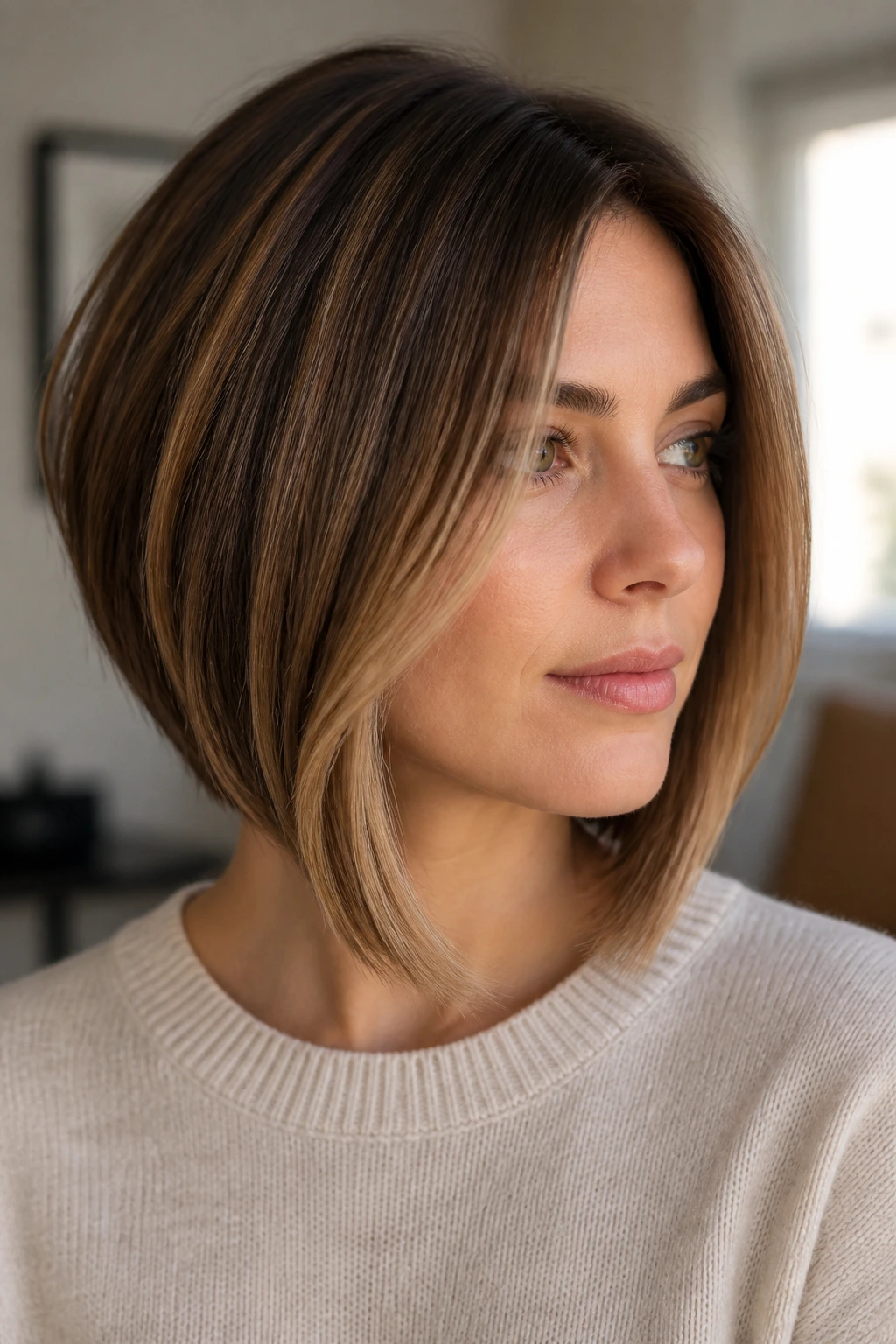
An A-line lob is cut shorter in the back and longer in the front. This geometry is naturally flattering and keeps the hair from hanging in your eyes. Because the front is longer, it pulls the hair away from your face, which is perfect if you’re busy and need to be able to see clearly without constantly pushing your hair back.
The Practicality Factor
This cut is extremely forgiving with regrowth. Because the back is already short, you don’t get that “mullet-growing-out” awkward phase as quickly. It also helps manage thick hair, as the shorter back removes bulk from the nape of the neck, which can be a major source of heat and sweat during warmer months.
Styling Tips
- Focus your product on the front sections to keep them smooth.
- A little bit of lightweight mousse in the back will help prevent it from going flat against the head.
- This cut works well with a center part or a deep side part, depending on your mood. Pro tip: If you have thick hair, ask your stylist to “debulk” the nape area—this prevents the dreaded triangle shape and makes the hair lay much flatter.
10. The Soft “Invisible” Layers
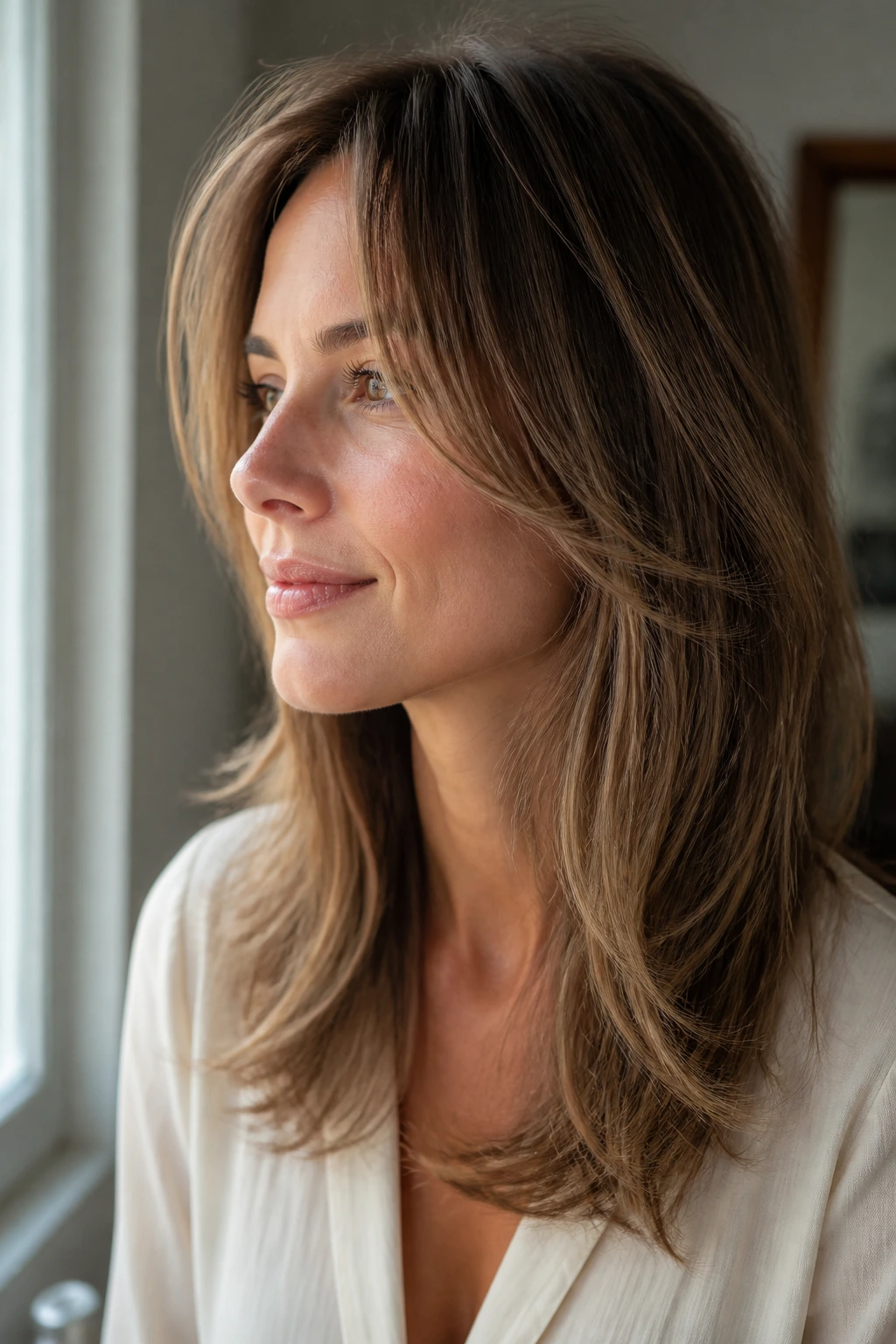
Sometimes the best cut is one that nobody realizes is a cut at all. “Invisible” layers are just small, strategic snips that remove weight without creating a “layered” appearance. This is perfect for those who want movement and body but hate the look of choppy, distinct sections. It’s the ultimate low-maintenance style for fine hair.
Achieving Movement
By removing weight from the internal parts of the hair, you’re allowing the hair to lift. Fine hair often looks flat because it’s weighed down by its own density. With invisible layers, you aren’t sacrificing the length, but you are creating space for the strands to move. It’s an effortless, airy style that requires nothing more than a quick comb.
Keeping It Healthy
- Since there are no distinct layers, you don’t have to worry about them curling out of place.
- Use a volumizing shampoo, but avoid conditioner near the roots.
- Let it air-dry to keep the natural, soft aesthetic. Pro tip: Ask for these layers to be done with a razor rather than scissors for an even softer, more seamless effect.
11. The Asymmetrical Bob
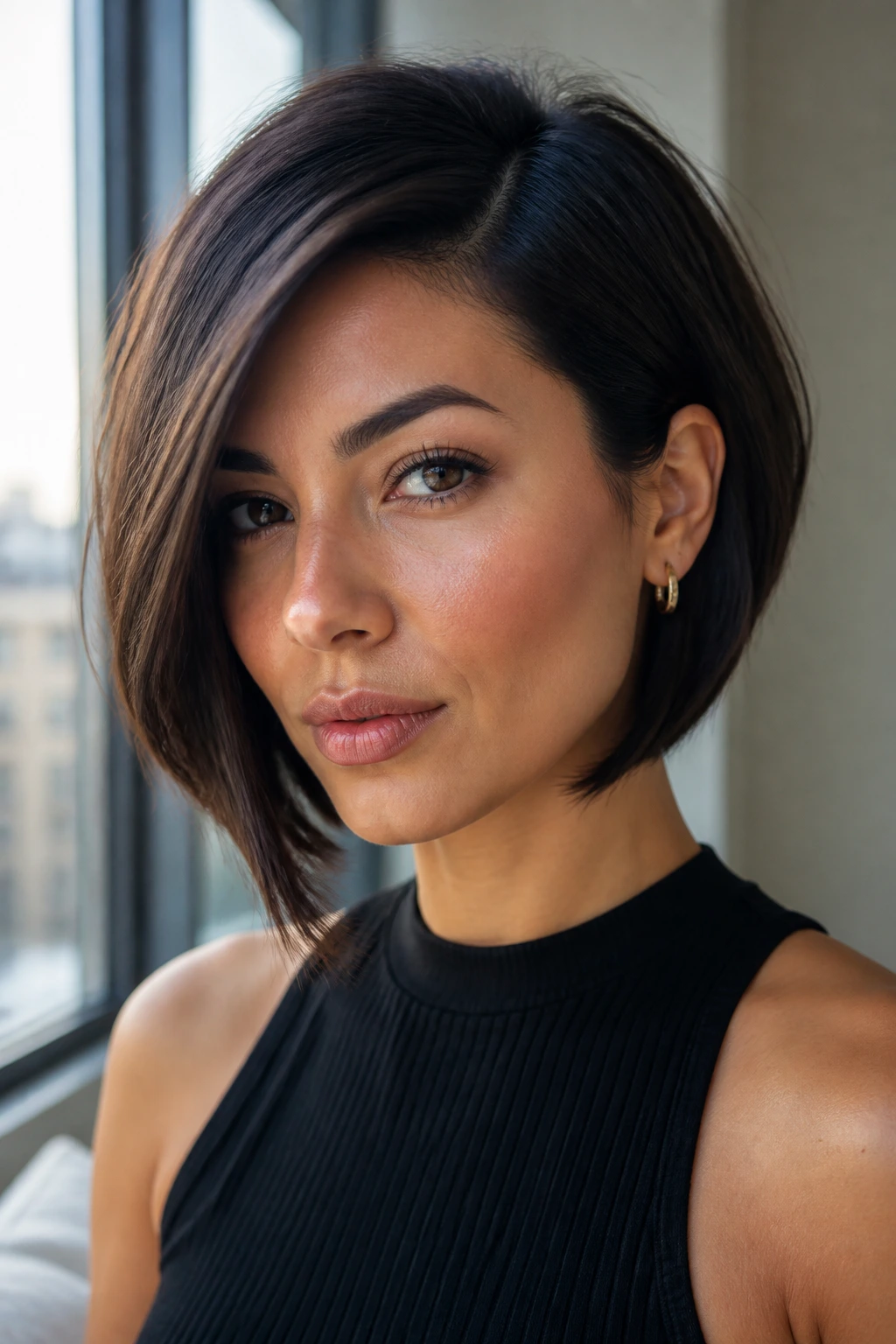
If you want to look like you spend time on your hair without actually doing it, asymmetry is your best friend. The visual interest of one side being slightly longer than the other makes it look like an intentional, high-fashion style. It’s perfect for the busy person who wants to look edgy but has zero time for maintenance.
The “Intentional” Factor
Asymmetrical cuts are inherently stylized. Even if you wake up with slightly frizzy hair or a bit of a bend from your pillow, the uneven length makes it look like you meant for it to be that way. It’s a great way to hide uneven natural growth or cowlicks, as the asymmetry balances out the different directions your hair wants to move in.
Morning Routine
- Use a shine serum on the longer side to make the geometry stand out.
- Tuck the shorter side behind your ear to emphasize the sharp line of the cut.
- You’ll find that this cut requires almost no styling because the focus is on the shape itself. Pro tip: A sharp part—either deep on one side or perfectly down the middle—will make an asymmetrical bob look even more polished.
12. The Wispy Pixie-Mullet
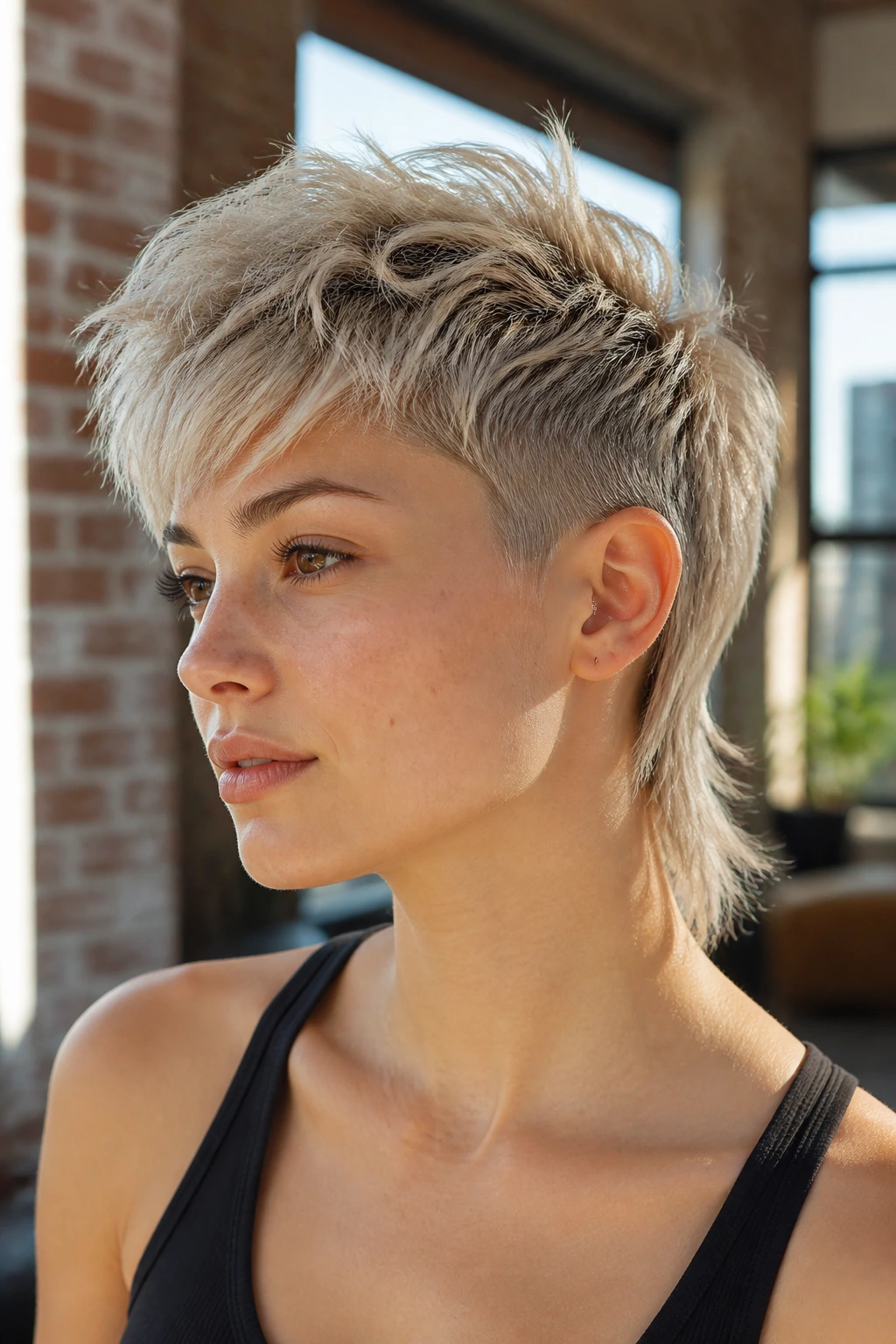
This is for the person who wants to lean into the current trend of “intentional messiness.” It’s a short style with a bit of length left at the nape. It sounds counterintuitive for a busy morning, but it’s actually brilliant. The wispy ends and the varying lengths mean you don’t have to be precise when you style it.
Why This Style Succeeds
When you have a cut that is intentionally mismatched or wispy, a “bad hair day” doesn’t exist. You can wake up, run your hands through your hair with a little pomade, and go. The more it moves and gets ruffled throughout the day, the better it looks. It takes the pressure off “perfection” and lets you focus on your day.
Styling for the Messy Aesthetic
- Use a texturizing salt spray to create those wispy, separated pieces.
- Don’t over-brush; your fingers are the only tool you need.
- Keep the front fringe longer to frame the face. Pro tip: This cut looks best when it’s slightly dirty—if you wash your hair every few days, this style will actually hold its shape better on day two and three.
13. The Mid-Length Blunt Cut with Internal Undercut
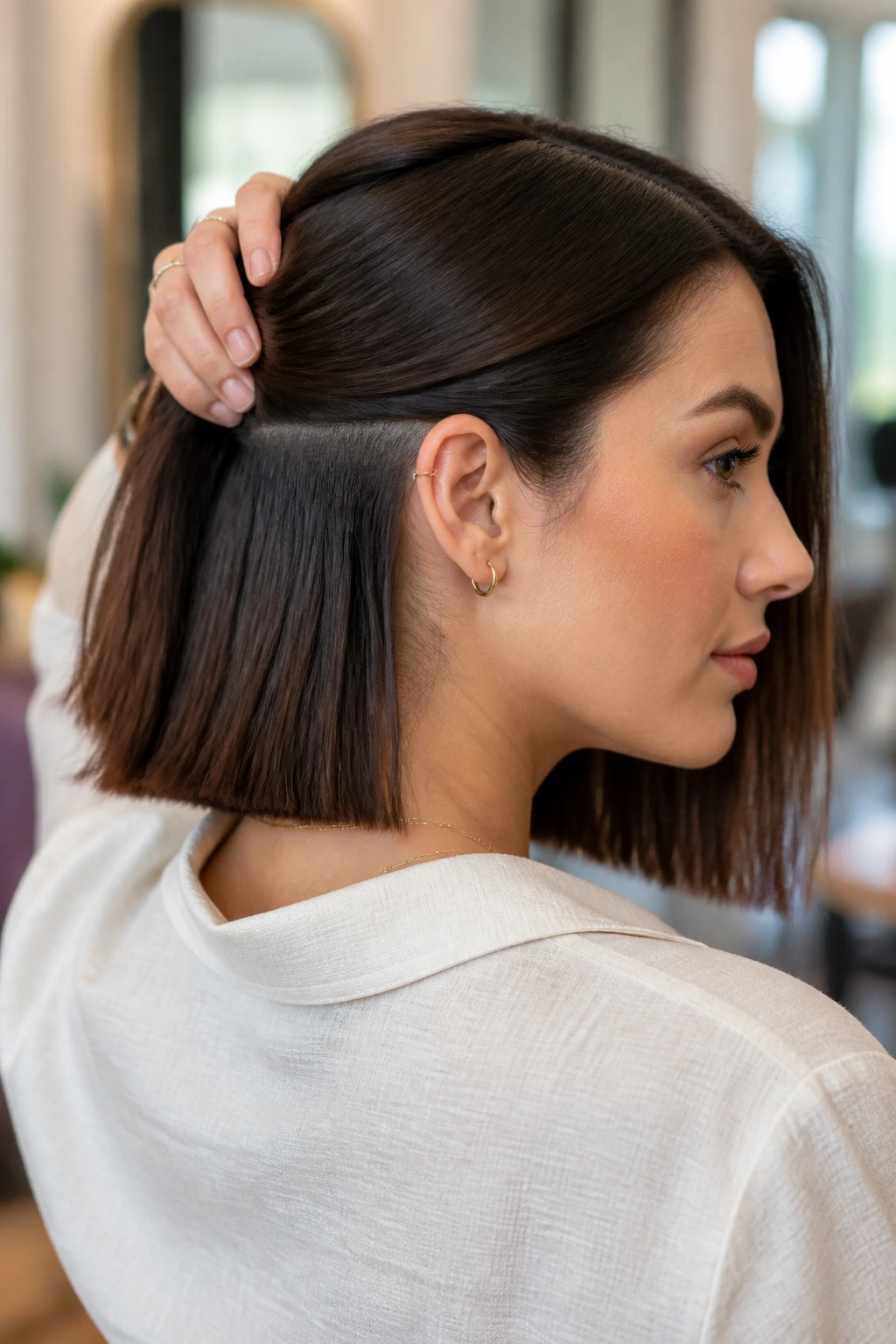
This is a pro-level tip for people with extremely thick hair. If you have so much hair that it takes forever to dry, ask your stylist to give you an internal “undercut” at the nape of the neck. You’ll keep the length on the top, but you’ll have a shorter, tighter section underneath that removes bulk and significantly speeds up your morning blow-dry (or air-dry) time.
The Hidden Benefit
Nobody will know it’s there unless you put your hair in a high bun. It makes your head feel lighter, prevents your neck from getting hot, and keeps your hair from tangling at the back. It’s a secret weapon for busy mornings when you need your hair to dry in under fifteen minutes.
Maintaining the Secret
- Check the nape area every 6–8 weeks to keep it short.
- If you have an undercut, you’ll spend less time pulling your hair straight, as there is less volume to manage.
- It is a fantastic option if you live in a humid climate where your hair tends to expand. Pro tip: If you aren’t ready for a full undercut, just ask for “de-bulking” or “thinning” in the nape area—it serves the same purpose without the dramatic look.
14. The “Shag-Bob” Hybrid

This cut sits right between a bob and a shag. It has the length of a bob but the internal layers of a shag. It’s specifically designed for people who want to air-dry their hair but don’t like the “poofy” look that happens when you air-dry a standard bob. The layers help distribute the volume so it doesn’t just bunch up at the ends.
Why It Saves Time
It takes the guesswork out of your morning. You don’t have to decide whether to blow-dry it smooth or let it dry wavy—the cut works for both. It’s truly versatile. If you have five minutes, blow-dry it; if you have zero minutes, let it go. Both will look like a intentional style.
Daily Styling
- A light foam at the roots is enough to give it shape.
- Scrunch the ends while damp to encourage any natural wave.
- If it feels a bit wild, just tuck the front section behind your ears to settle it down. Pro tip: This cut is exceptionally good at hiding the roots of your hair as you approach your next color appointment.
15. The Deeply Layered Long Cut
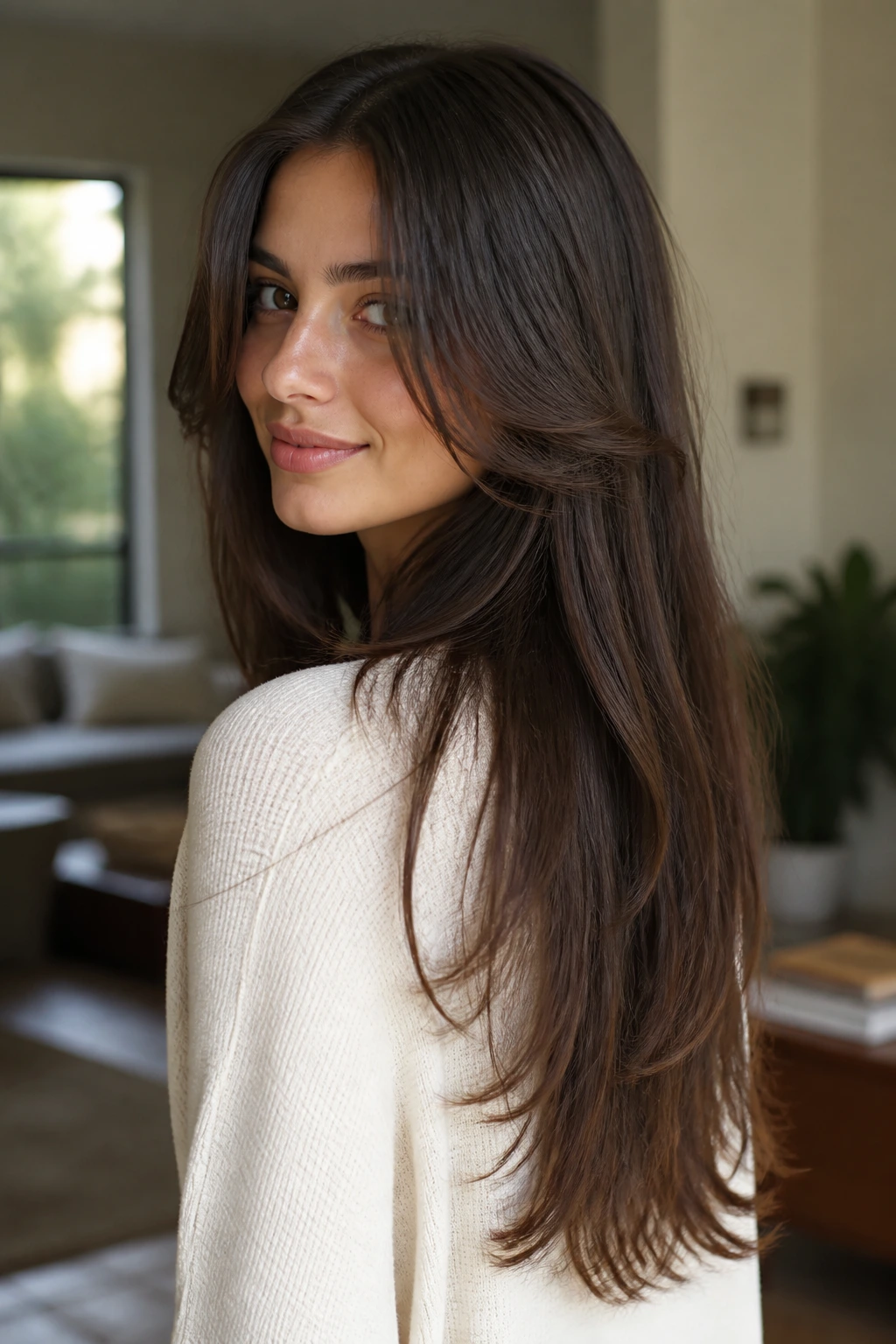
If you love having long hair but hate how heavy and high-maintenance it can be, this is for you. By adding deep, sweeping layers that start around the chin, you lose the “triangle” weight of long hair. These layers are long enough to pull back into a ponytail easily, but short enough to frame the face when the hair is down.
Why It’s Efficient
Long hair is usually the most time-consuming to style. By deep layering, you’re creating movement that doesn’t require heat to activate. The long layers just sit naturally against each other, creating a cascade effect. It’s simple, it’s classic, and it’s arguably the most “effortless” long-hair style you can find.
Keeping the Layers Smooth
- Use a silk hair tie when you put it up to avoid breakage.
- Apply a touch of hair oil to the ends to ensure the long layers look healthy and not dry.
- Focus your brushing only on the mid-lengths and ends to avoid creating static at the roots. Pro tip: A “U-shape” perimeter cut works best with these layers to ensure the back doesn’t look too thin as it grows out.
Final Thoughts
The most important thing to remember is that your hair should work for you, not the other way around. If you find yourself spending more than ten minutes on your hair every single morning, it is time to have a conversation with your stylist about your lifestyle. A great haircut isn’t just about how it looks when you leave the salon; it’s about how it behaves when you’re rushed, tired, or just plain busy.
Don’t be afraid to try something shorter or more textured than you’re used to. Often, the transition to a lower-maintenance cut is the most liberating change you can make. Your hair is an accessory, not a chore—once you find the shape that aligns with your natural growth patterns and texture, you’ll find that those extra minutes in the morning add up to a much more peaceful start to the day.