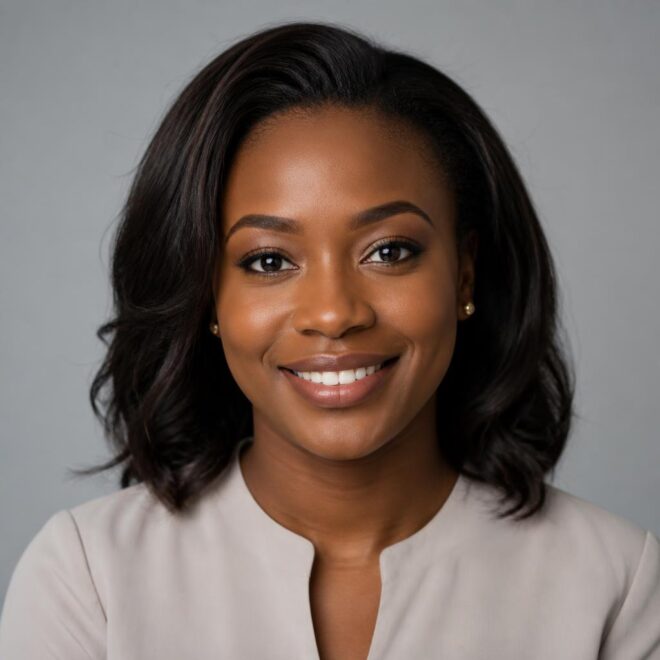


Managing a thick, curly mane is a lot like trying to tame a wild garden; it requires the right tools, a bit of pruning, and an understanding of how your specific texture wants to grow. When you have dense, coiled hair, the sheer weight of the strands can either pull your curls into a beautiful, elongated shape or leave you feeling like you’re carrying a heavy wool sweater on your head. Many people with this hair type fear the scissors, worried that shorter cuts will lead to the dreaded “triangle head” or uncontrolled frizz.
In truth, shorter cuts can be the best way to showcase your natural pattern, removing the excess bulk that weighs down your roots and preventing your curls from flattening out toward the ends. The secret lies in strategic layering, proper perimeter shaping, and using the right amount of tension during the cut. If you are ready to shed the weight and embrace a more manageable, bouncy look, these styles offer a roadmap for working with your texture rather than fighting against it.
1. The Classic Rounded Bob
The key to a successful bob on thick, curly hair is creating a shape that follows the natural curvature of your head. Instead of a blunt cut that stops right at the chin—which often results in a triangular silhouette—ask for a layered bob that is slightly shorter in the back and moves toward a subtle, face-framing length in the front. By cutting into the weight of the hair, you ensure the curls can coil up and sit closer to your neck rather than fanning out.
Why This Style Works for Thick Texture
When you remove mass from the interior of the hair, you give your curls the breathing room they need to spring back into their natural shape. If you leave the ends blunt, they act as a shelf for the layers above, creating that volume-heavy base that many people try to avoid. Instead, using point-cutting techniques allows the ends to taper naturally. This makes the overall maintenance much easier because you are not fighting the density of the hair, but rather organizing it into a cohesive, rounded structure.
Essential Styling Tip
Apply a lightweight curl cream or a leave-in conditioner while your hair is soaking wet to lock in hydration before it even begins to air dry. If you want a more polished look, try “finger coiling” a few of the face-framing pieces to give them extra definition and ensure they don’t get lost in the bulk of the sides.
2. The Textured Pixie Cut
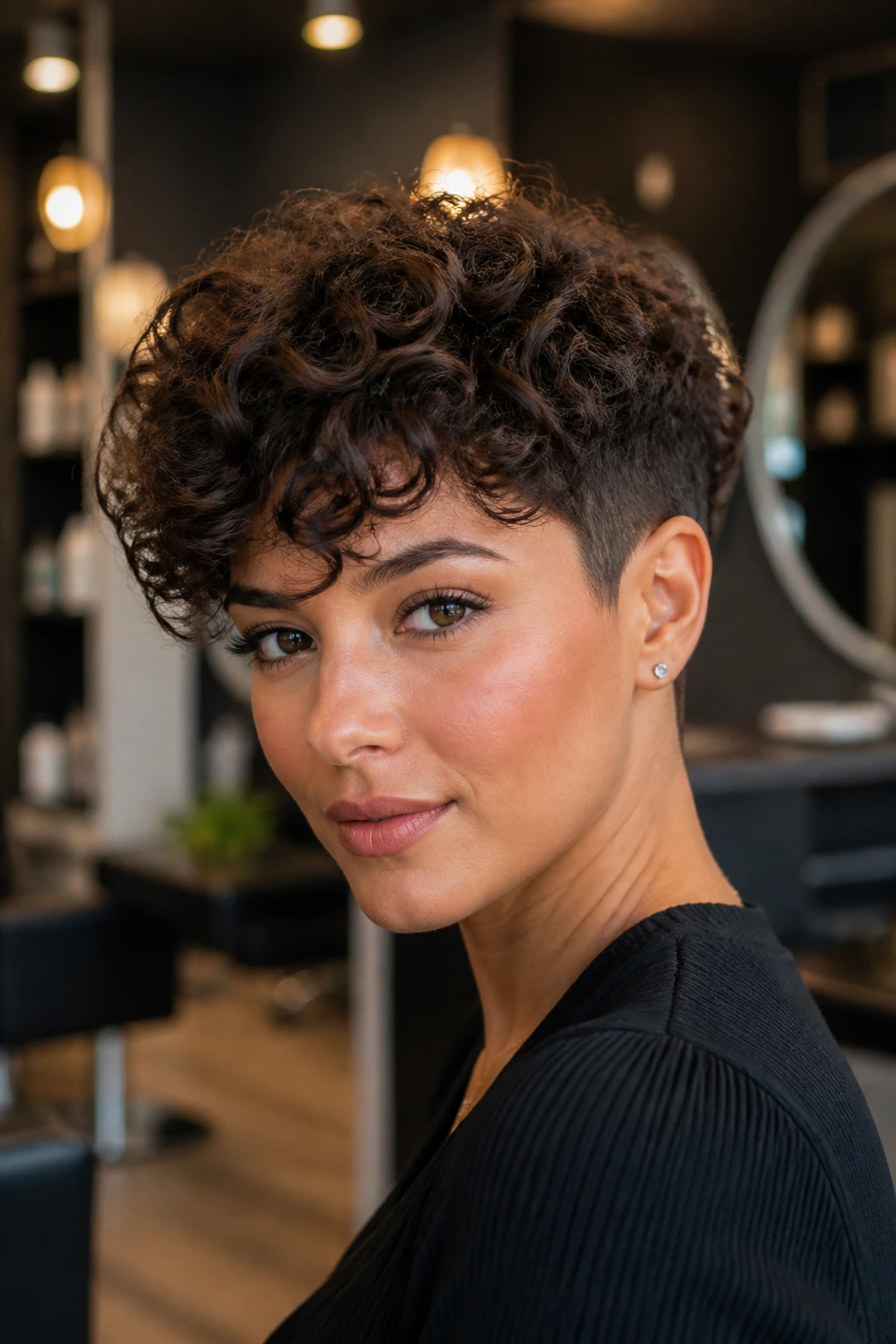
Taking the plunge into a pixie cut is arguably the most liberating change for those with thick, dense curls. It removes almost all the weight, allowing your natural curl pattern to become the focal point of the style. You are essentially shifting the attention from the length of your hair to the structure of your facial features.
Managing Density in a Short Cut
The biggest misconception about pixie cuts for thick hair is that they will look too “puffy.” The remedy for this is an undercut or a very tight taper at the nape of the neck. By shaving or using a very short clipper guard on the bottom two inches of your hairline, you remove the section of hair that usually holds the most density. This creates a clean line at the bottom while allowing the curls on top to remain longer and more playful.
Keeping the Top Versatile
- Ask your stylist to keep the top layer long enough that the curls can still spiral.
- Use a dry texture spray once the hair is completely dry to separate the curls and avoid a clumped, heavy appearance.
- If you find the top getting too frizzy, a tiny amount of pomade or styling wax on your fingertips can help smooth down flyaways without stripping away the volume.
3. The Modern Shag
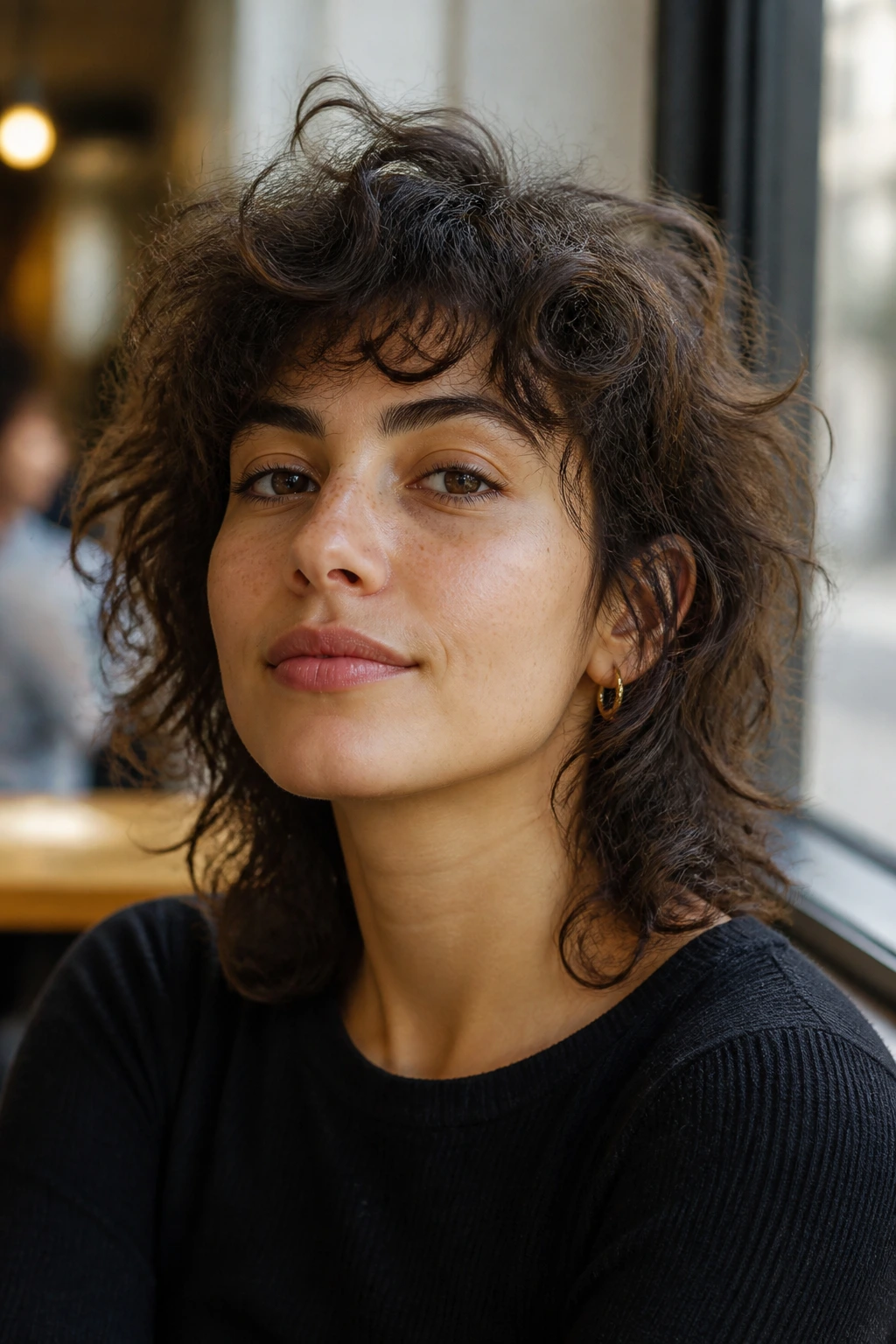
The shag has moved well beyond its rock-and-roll roots to become a staple for curly-haired individuals who want a lived-in, effortless aesthetic. Unlike a traditional bob, the modern shag relies heavily on varying lengths of layers throughout the entire head, starting right at the crown. These internal layers work to distribute your hair’s natural volume evenly, so you don’t end up with flat roots and heavy ends.
The Power of Crown Layers
Creating height at the crown is critical when your hair is thick; if the crown is too heavy, the hair drags down and loses its definition. By cutting shorter, choppy layers into the top, you lift the weight off the mid-lengths, which helps your curls bounce rather than just hanging. It is a messy, intentional style that embraces a bit of frizz as part of the texture, making it perfect for someone who isn’t interested in spending an hour on precise styling each morning.
Variations on the Theme
- The Curtain Bang Shag: Pair this cut with long, curly bangs that can be pushed to the side or left to frame your eyes.
- The Piecey Shag: Focus on razored or point-cut ends to give the style a thinner, lighter appearance without losing the density of the base.
- The Curly Mullet: If you want a more adventurous look, keep the back a bit longer while aggressively layering the sides and top.
4. The Tapered Fro
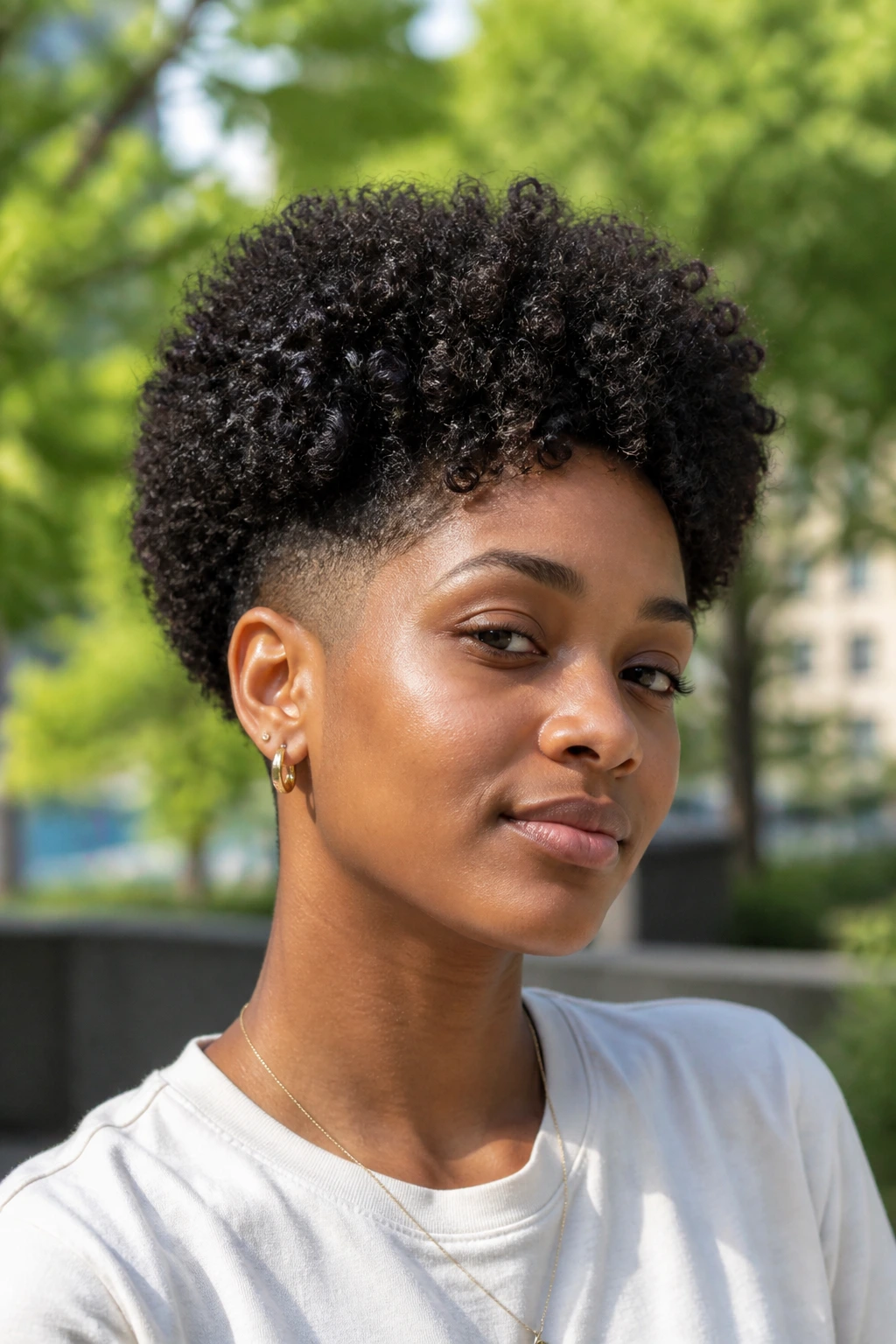
This style is specifically tailored for those with tighter curl patterns or kinky-curly textures who want a structured, rounded shape that doesn’t overwhelm their face. A tapered fro keeps the sides and back very short—sometimes even faded—while allowing the hair on the crown to grow out into a beautiful, rounded silhouette.
Why You Need Proper Maintenance
Because this cut relies on the contrast between the short sides and the longer top, the neckline and sides will likely need to be cleaned up every four to six weeks. This is a small price to pay for the sheer convenience of the style; you can essentially wash, condition, and go. The focus stays entirely on the health and volume of the top section, which acts as a crown.
Achieving the Perfect Shape
- Work with your natural hair growth direction.
- Use a pick or a wide-tooth comb only at the roots to lift the hair and create the desired height.
- If you want to add a bit of drama, you can use hair color—specifically highlights or balayage—on the top section to accentuate the depth and dimension of the coils.
5. The Asymmetrical Curly Bob
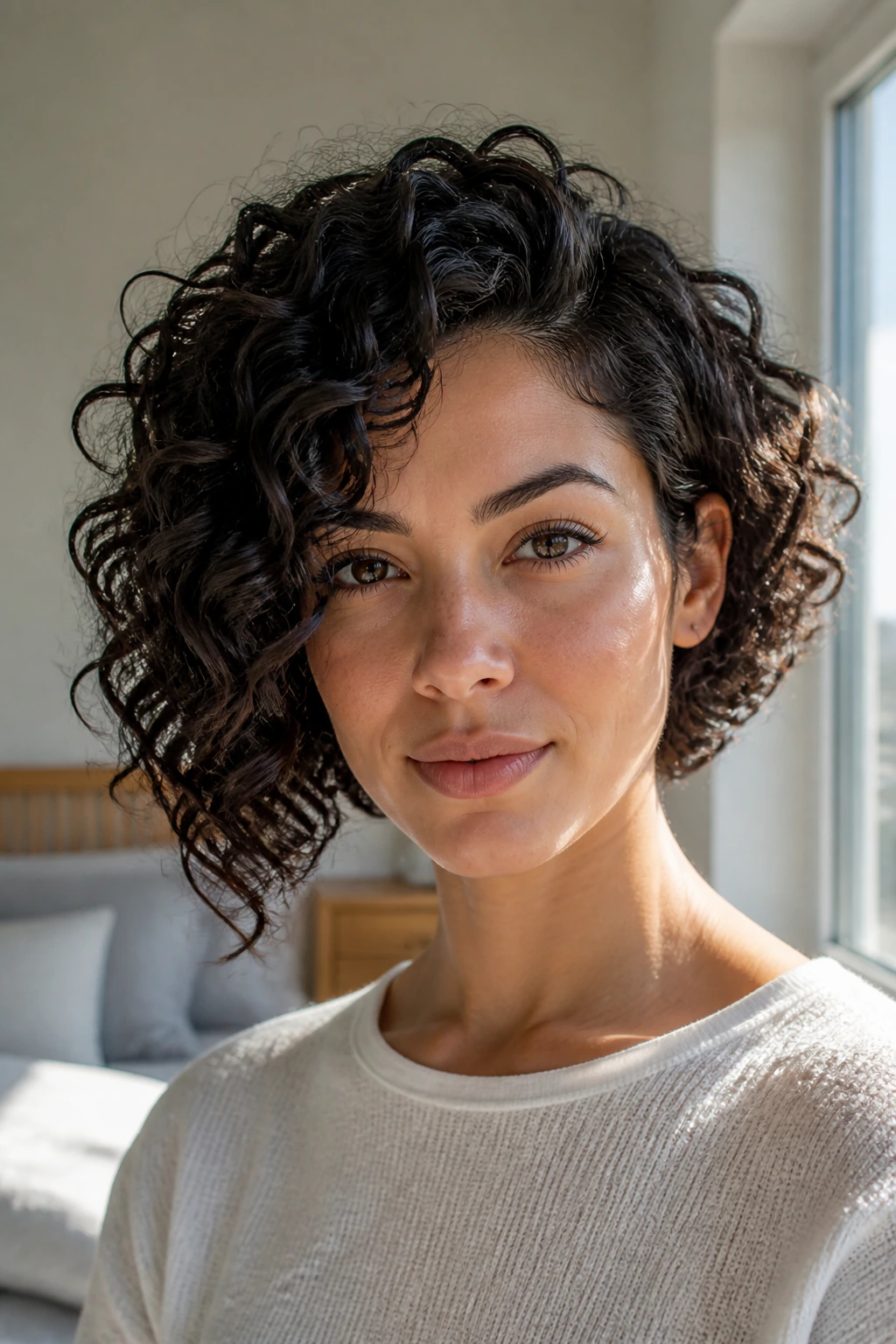
If you are bored with symmetrical styles, an asymmetrical bob is a fantastic way to introduce geometry into your thick, unruly hair. By having one side slightly longer than the other, you create a visual focal point that draws the eye, making the density of your hair look intentional rather than unmanaged. It provides a sharp, sophisticated edge that contrasts beautifully with the softness of curly texture.
Balancing the Weight
The shorter side of the bob should be thinned out slightly to prevent it from getting too bulky, while the longer side can showcase the length and spiral of your curls. This requires a stylist who is confident in cutting curls dry, as the length will spring up significantly once the hair is cut. If they cut it wet, you might end up with a side that is shorter than you anticipated when the hair dries and shrinks.
How to Style Asymmetry
- Part your hair deeply on the side that has more volume to exaggerate the drama of the cut.
- Use a diffuser on a low-heat setting to encourage the curls on the longer side to clump together, which keeps the look clean.
- Avoid over-brushing the shorter side; just use your fingers to position the curls where you want them to sit.
6. The Curly Pixie with Undercut
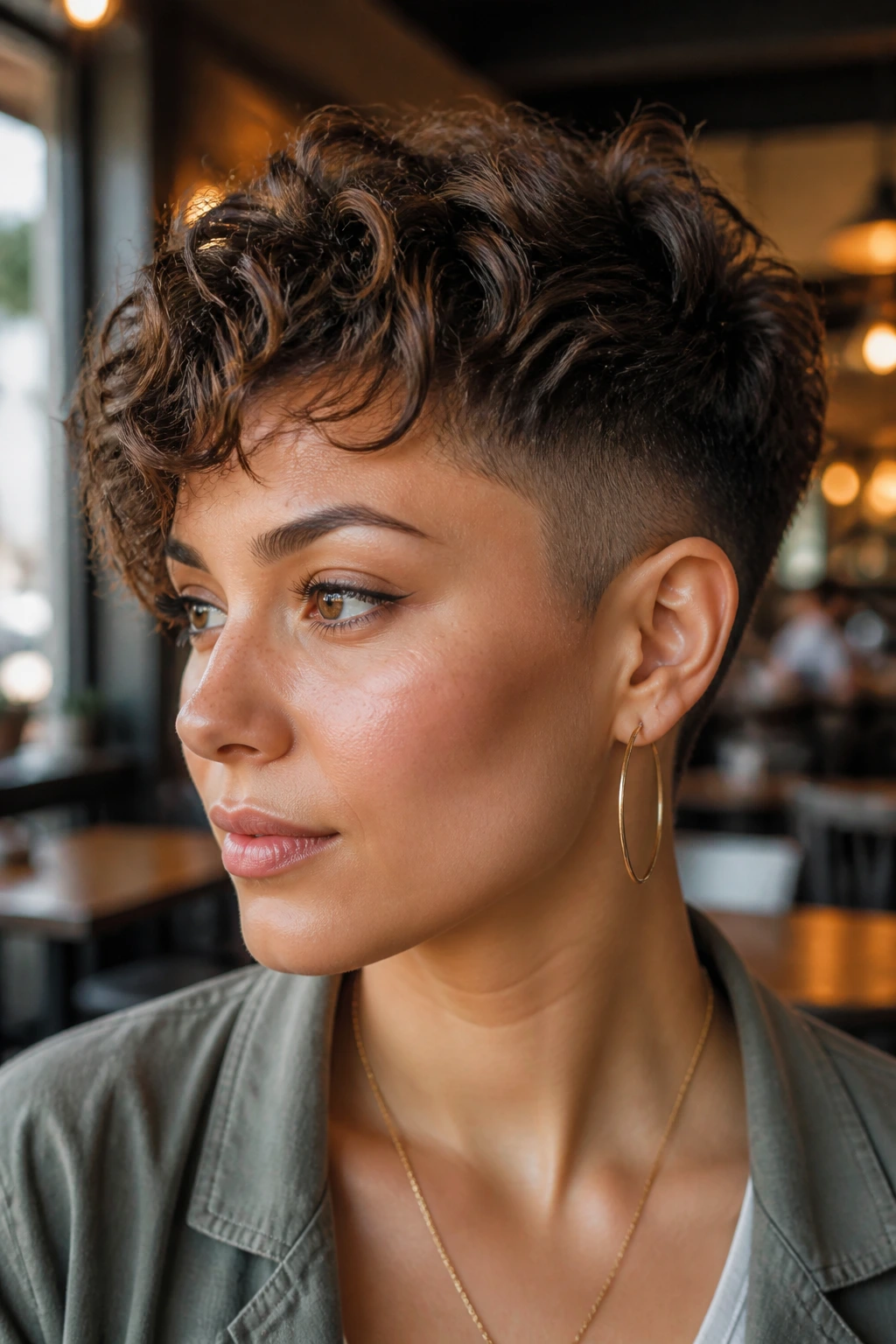
This is for those who are truly ready to minimize their morning routine. By incorporating an undercut—where the hair is shaved or buzzed very short from the ear line down—you eliminate the most difficult portion of thick curly hair. The remaining hair on top is then free to be styled in whatever way you choose, whether you want it slicked back, left messy, or styled with a bit of a pompadour at the front.
Defining the Undercut
The undercut doesn’t have to be a buzzcut; you can leave it a half-inch long so there is still some texture present. This is often more flattering and provides a smoother transition between the shaved portion and the long curly top. You can even get creative with the design, adding shaved lines or patterns to the back of the head if you want to turn your haircut into a form of personal expression.
Styling for Maximum Impact
- Use a strong-hold styling gel on the top portion if you want a more controlled, defined spiral look.
- Apply a soothing oil to the scalp in the shaved area to keep your skin hydrated and prevent itching.
- Because the sides grow out fast, keep a pair of professional clippers at home if you want to maintain the sharpness of the undercut between salon visits.
7. The Shoulder-Grazing Layered Cut
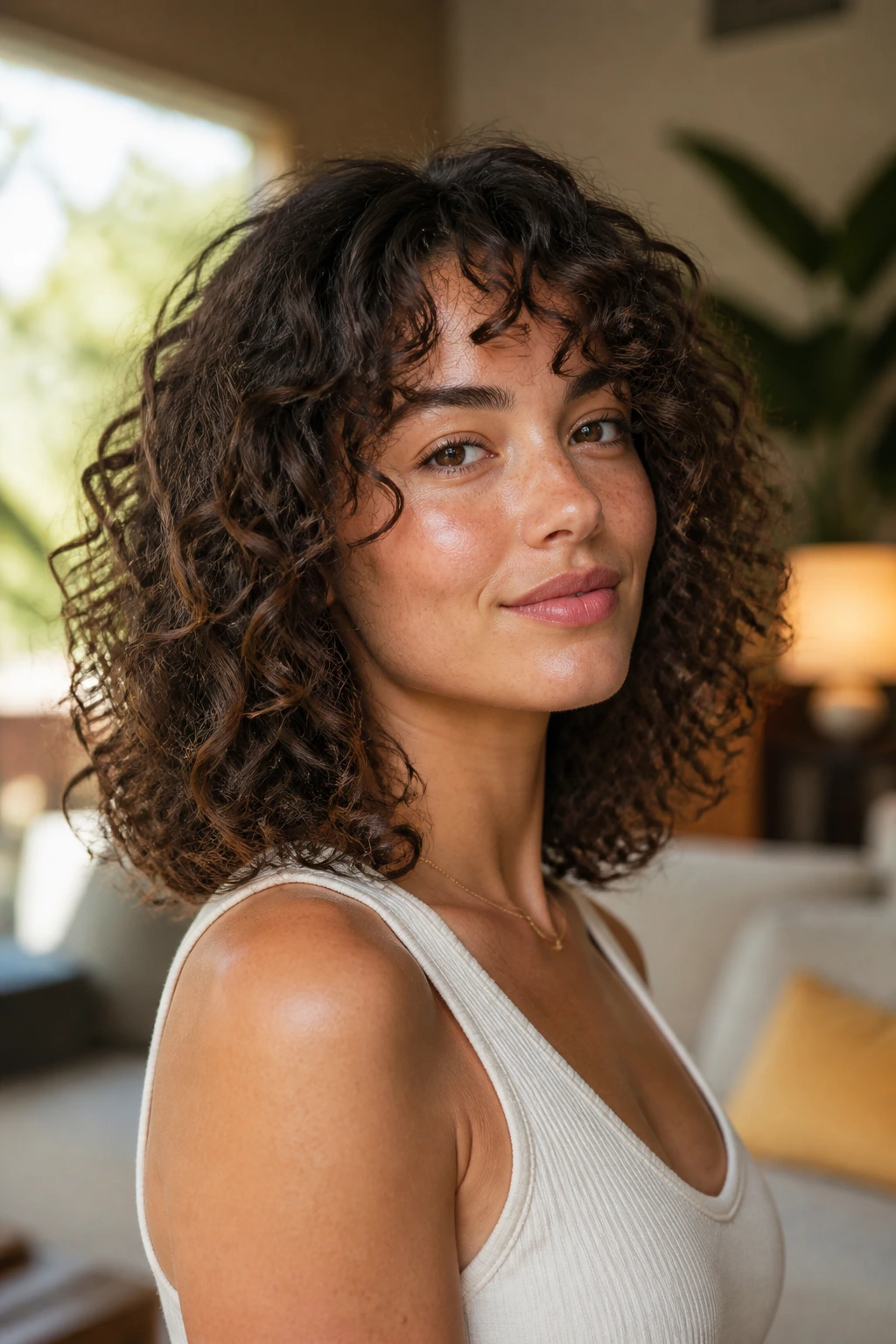
Sometimes, you don’t want to go super short; you just want enough length to keep your hair off your back while still being able to pull it into a ponytail if necessary. A shoulder-grazing cut with long, internal layers is the perfect compromise. By keeping the length around the collarbone, you allow the weight of the hair to naturally stretch the curls out, which can actually help keep the frizz to a minimum.
Why Layers are Non-Negotiable
On thick hair, one-length cuts below the jawline are a recipe for volume overload. Layers are necessary to break up that mass. Ask your stylist for “invisible layers”—these are cut into the interior of the hair, meaning they don’t look like steps on the outside, but they remove the density that causes the hair to puff out. It creates a sleek, manageable shape that looks professional and clean.
Pairing with Accessories
- This length is ideal for headbands or decorative clips, as you have enough hair to work with but not so much that the accessories slip out.
- Since the ends are the oldest part of your hair, pay extra attention to moisturizing them with a heavy butter or serum to prevent breakage as they rub against your shoulders.
8. The Curly Lob (Long Bob)
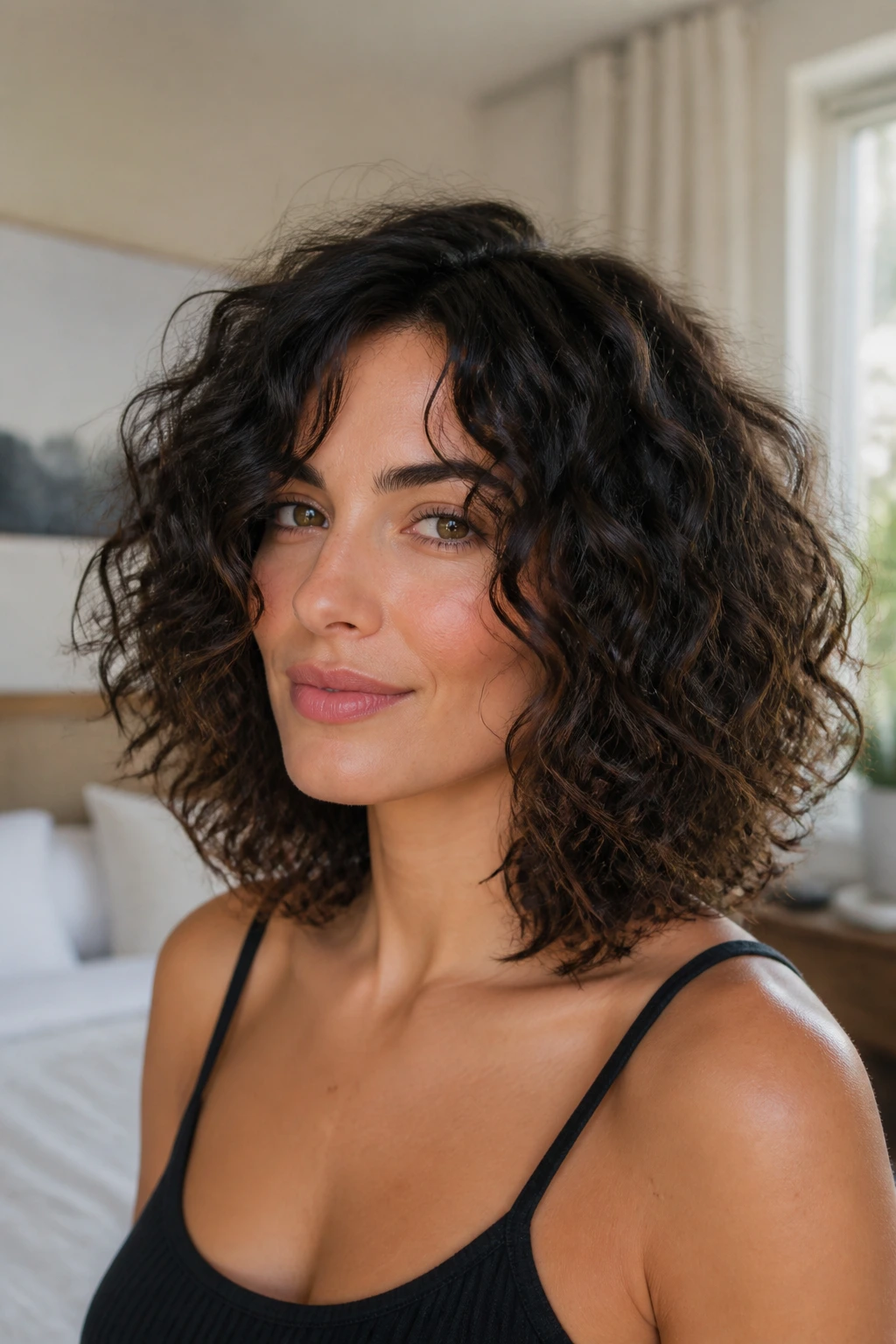
The lob is a timeless favorite for a reason: it sits perfectly in that “in-between” zone where you feel like you have long hair, but it has the bounce and vitality of a short cut. For thick curls, the lob should be slightly angled, with the front pieces just touching the clavicle and the back hitting the nape of the neck. This creates a refined, classic shape that avoids the “triangle” look by keeping the fullness at the mid-lengths rather than the ends.
Managing the Transition
When your hair is this thick, you want to make sure the transition from the back to the front is gradual. A sharp, dramatic angle can sometimes leave the back feeling too sparse if you aren’t careful. Ask for a soft, blended transition, and make sure your stylist uses thinning shears—sparingly—if they notice any spots where the hair is excessively dense.
Tips for Success
- Parting in the center is very popular with lobs, but for curly hair, an off-center or deep side part usually creates more volume at the roots, which balances the weight of the ends.
- If you find your hair feeling “heavy” by the end of the day, try using a dry shampoo at the roots to absorb excess oil, which can often weigh down curls and make them lose their lift.
9. The Curly Bowl Cut
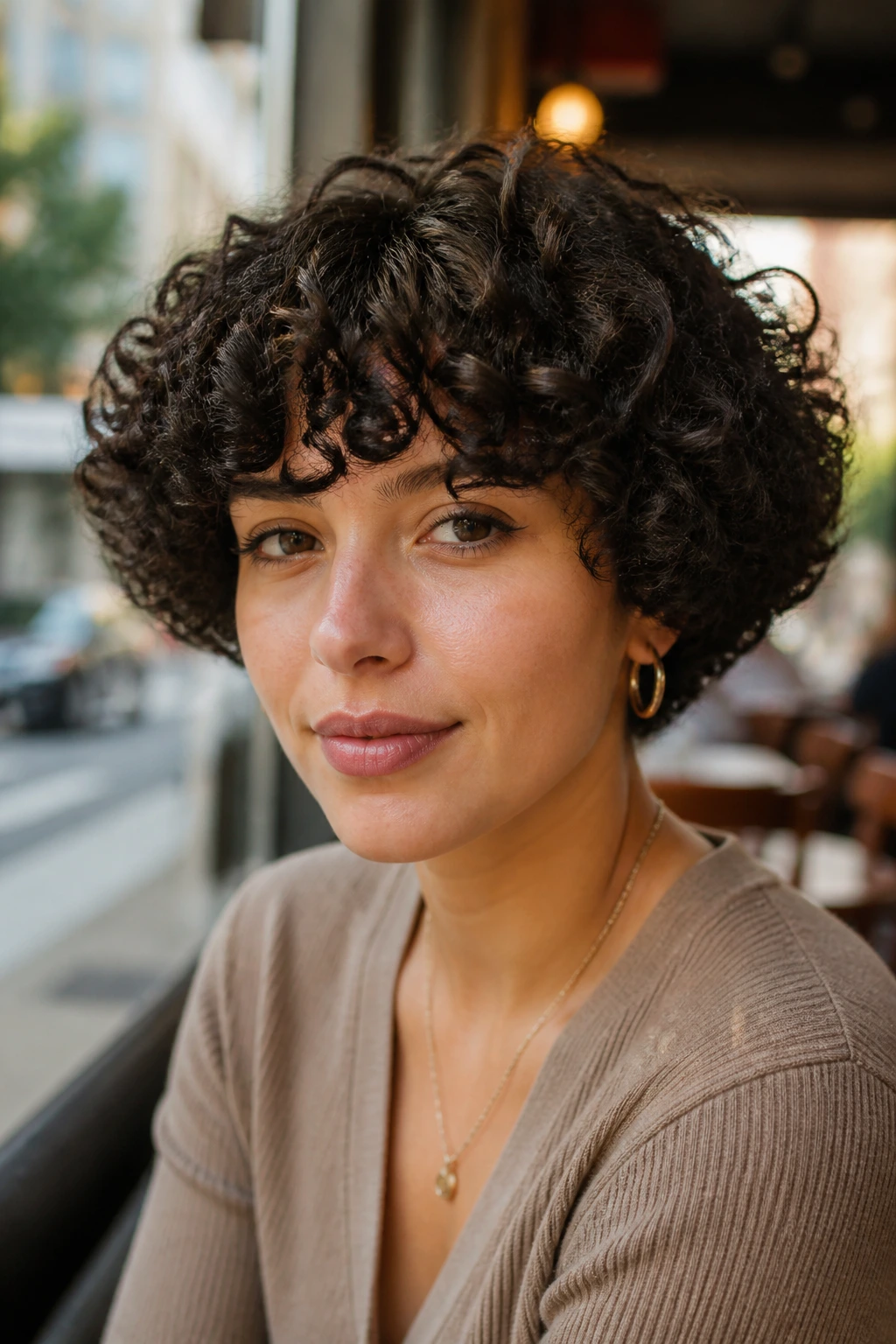
Don’t let the name scare you; the modern version of this cut is chic, edgy, and surprisingly flattering for those with thick, tightly coiled hair. By keeping the length uniform around the head but heavily texturized, you create a soft, rounded silhouette that feels very high-fashion. It is essentially an evolution of the pixie, just with a bit more length to play with around the forehead and ears.
Who Should Try It
This style is best for people with a very defined curl pattern. If your hair is more of a wavy-curly mix, this cut might lean toward looking a bit unkempt. However, if your curls are tight and bouncy, the shape will hold beautifully, framing your face with a halo of coils. It’s a very intentional, artistic look that requires a confident personality to pull off.
Styling the Halo
- Use a moisturizing curl custard that provides hold without being crunchy.
- Avoid using a comb once the hair is dry; only use your fingers to nudge curls back into place if they get flattened during the day.
- The fringe portion should be cut to sit just above your eyebrows, providing a soft contrast to the intensity of your eye makeup or glasses.
10. The Graduated Curly Cut
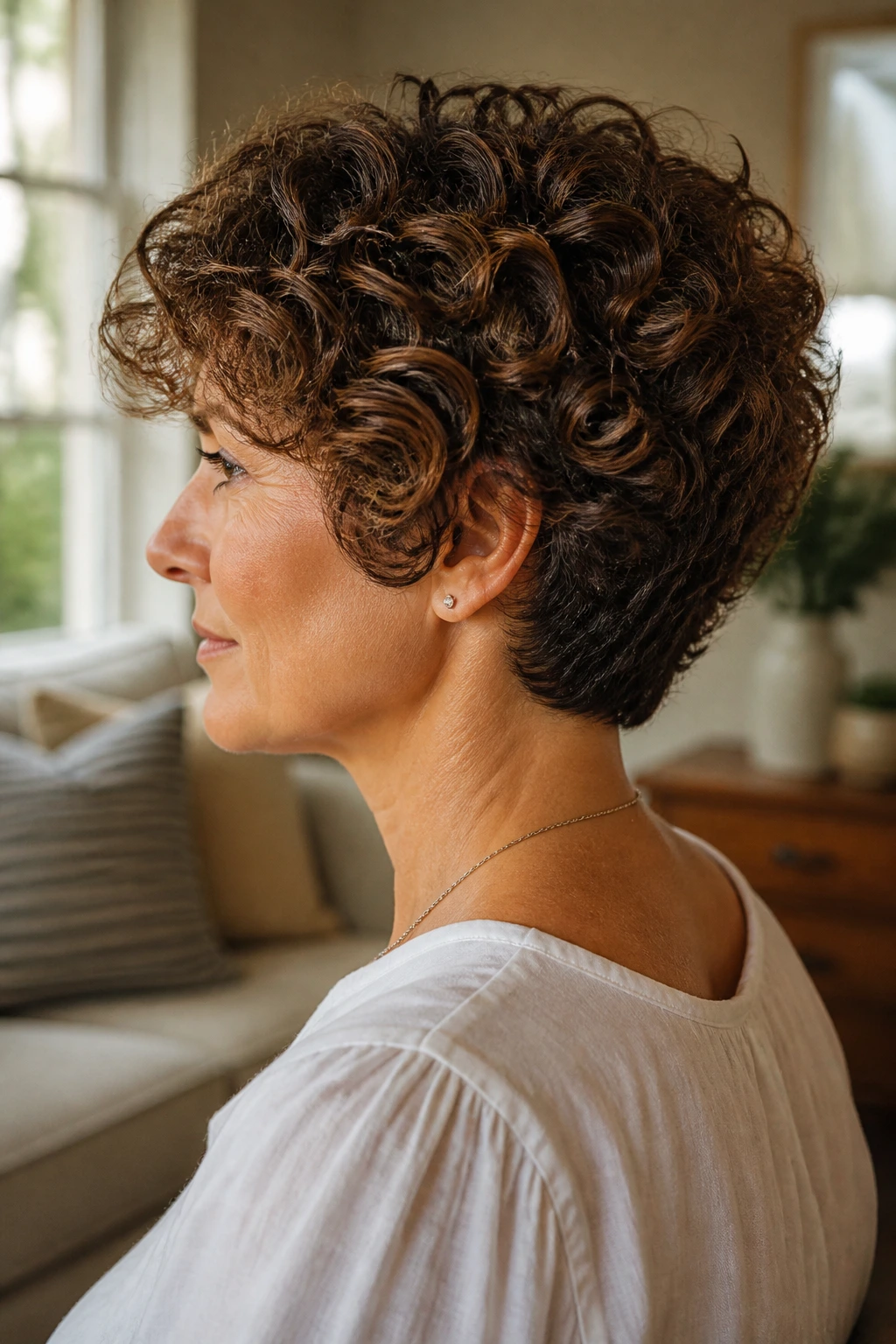
A graduated cut is designed specifically to build volume exactly where you want it. By stacking the layers in the back, you create a rounded, voluminous shape that then tapers down to a slimmer profile. For thick, heavy hair, this is a miracle worker. It uses the weight of the hair to your advantage by stacking it in a way that looks intentional rather than accidental.
The Importance of Precision
This is not a “wash and wear” cut for the novice; it requires a bit of maintenance in terms of how you style it. Because the layers are stacked, they need to be kept organized. Using a diffuser after washing is recommended to help the curls sit in the stacked layers properly, creating a full-bodied look that doesn’t feel weighed down.
Why it Beats the Rest
- It provides height at the back of the head, which is often the flattest area for people with thick, curly hair.
- It allows for a shorter neck, which can make you appear taller and more streamlined.
- It’s a very elegant, mature look that suits a professional setting perfectly.
11. The Faux-Hawk with Side Curls
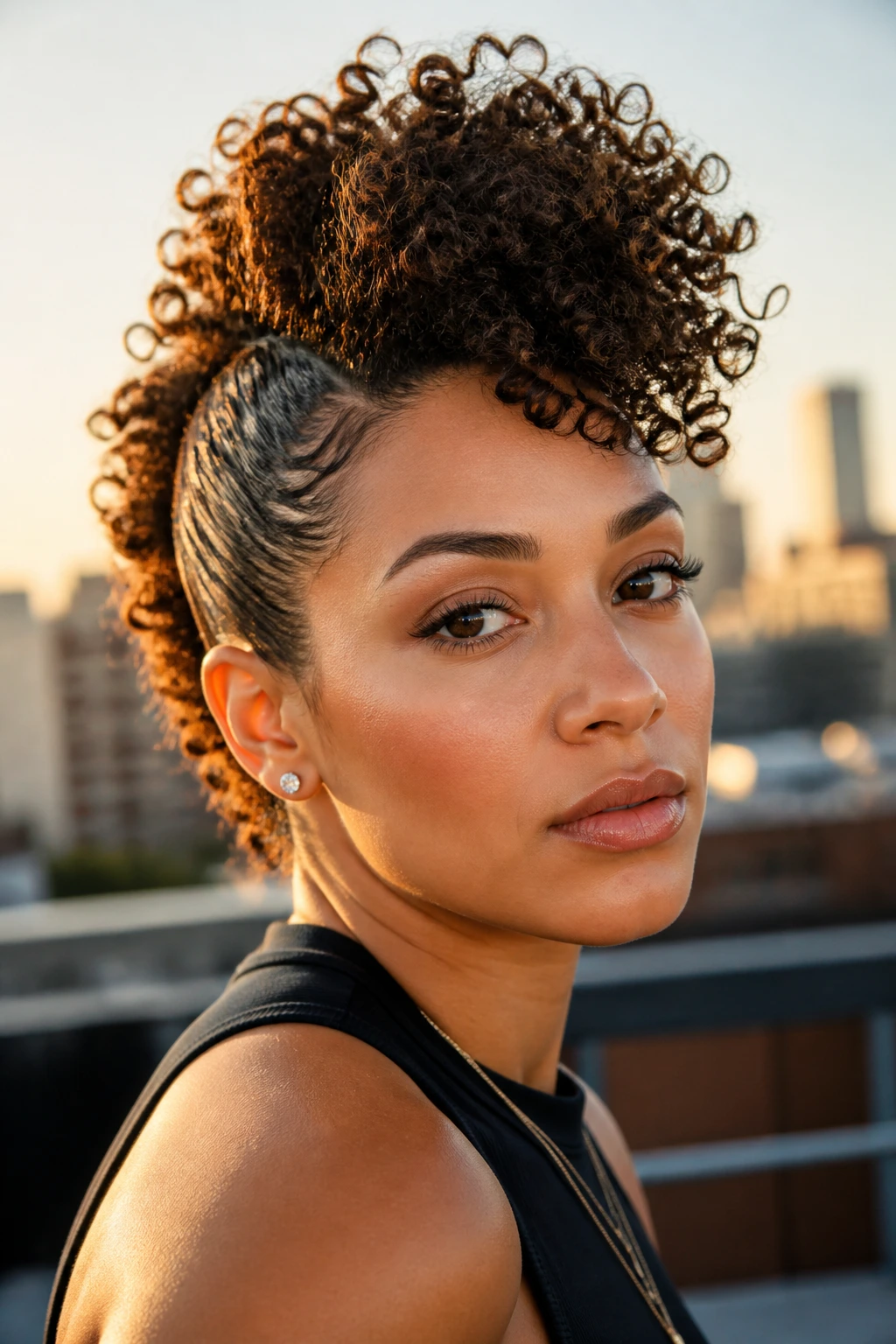
If you want to keep the length on top but need to get the hair off your ears, a faux-hawk is a brilliant approach. You don’t actually have to shave the sides, although you can. Instead, you can use bobby pins or a bit of styling gel to slick the sides back toward the center of your head, forcing the curls to pop up in the middle. It’s a great way to style a cut that is perhaps growing out or that you aren’t quite ready to chop fully into a pixie.
Building the Mohawk Shape
For thick hair, the trick is pinning the sides tight. Use a high-hold edge control gel to lay the sides flat against your scalp. Once the sides are secured, you can focus on fluffing up the curls in the center. Because your hair is thick, you will naturally have enough volume to create a very impressive mohawk without needing excessive backcombing or teasing.
Styling Variations
- Use metallic or colorful bobby pins to add a bit of personality to the slicked-back sides.
- Leave a few curls around the temple area to soften the look if you feel the mohawk is too intense.
- This is the ultimate second-day hair style; it hides oily roots on the sides while keeping the curls on top looking fresh.
12. The Curly Crop with Full Bangs
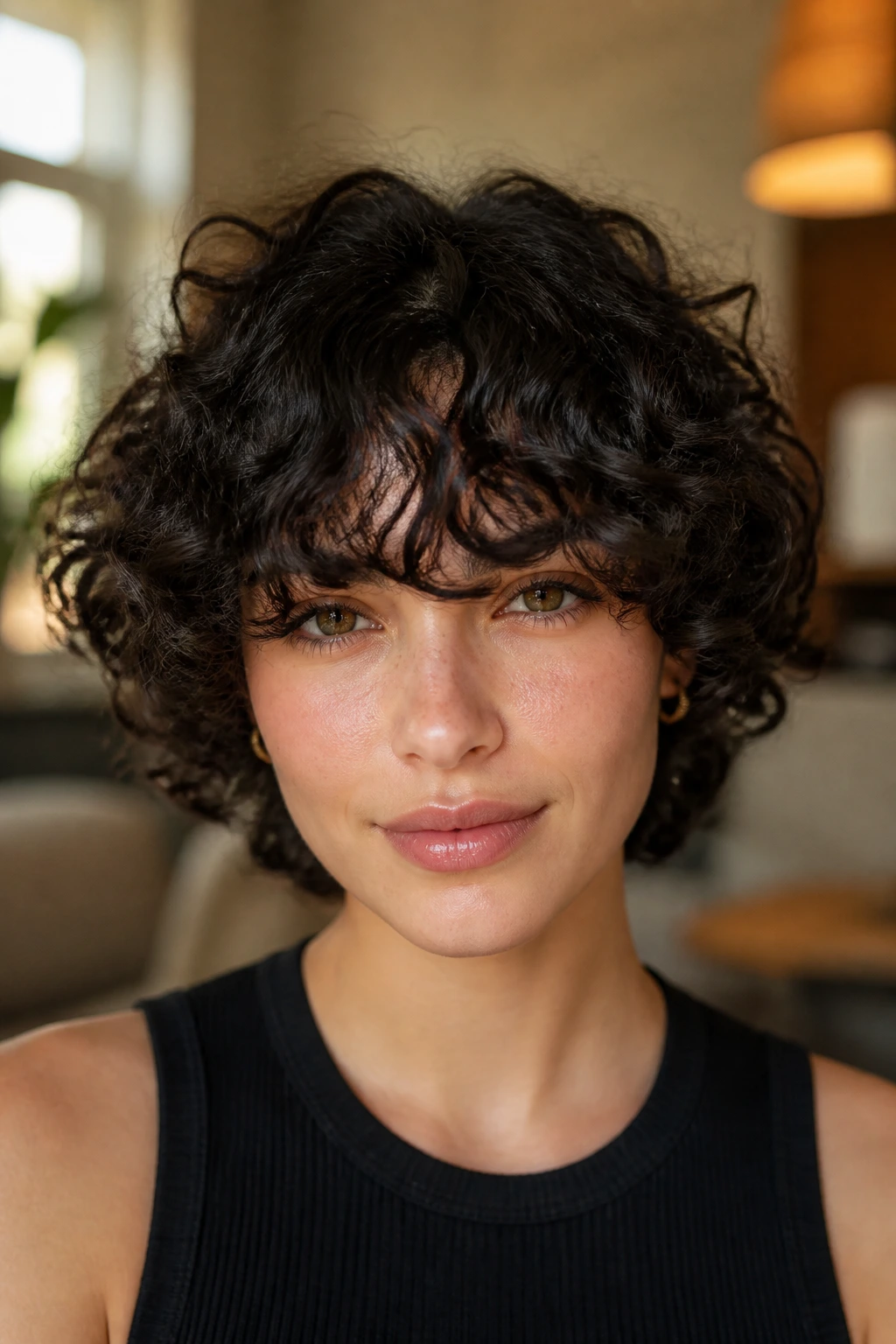
A curly crop with full, heavy bangs is a bold, statement-making style. Many people with curly hair are told to avoid bangs, but when they are cut specifically for curly texture, they can be absolutely stunning. The key is to keep the bangs long enough that they hit just below your eyebrows; if they are too short, they will spring up and become unmanageable.
The Geometry of the Bangs
For thick hair, the bangs should be cut with a lot of movement. Your stylist should point-cut the ends, creating a soft, feathered edge that doesn’t look like a solid block of hair. This allows the curls in your bangs to individualize, preventing the “fringe” from looking like a solid, impenetrable curtain.
Care and Maintenance
- Bangs will always be the first thing to get frizzy. Carry a small travel-size spray bottle with a mix of water and leave-in conditioner to refresh them during the day.
- Try not to touch your bangs too much, as the oils from your hands will cause the curls to lose their bounce and start to separate in the wrong way.
13. The Razor-Cut Bob
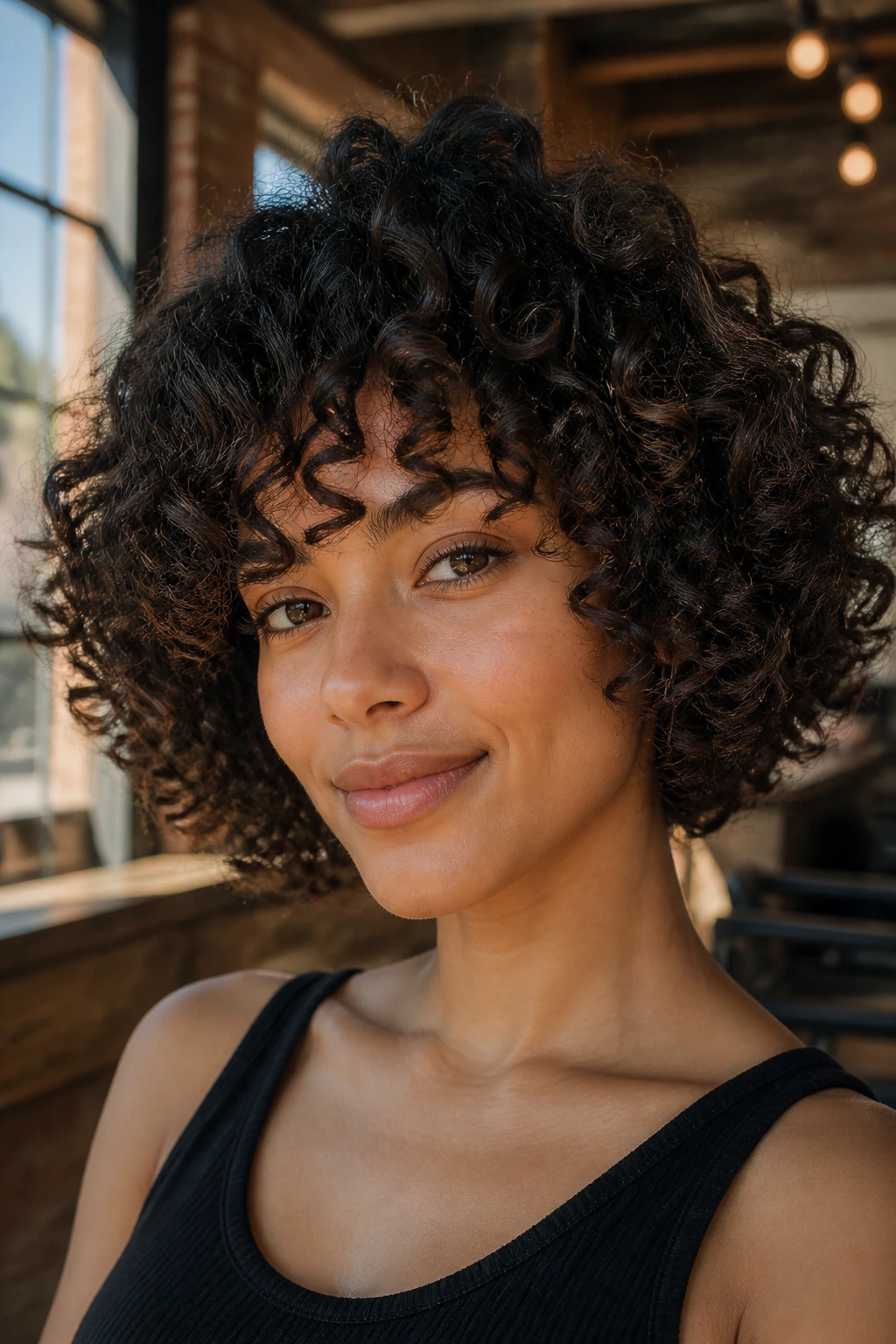
If you struggle with the ends of your hair looking blunt and heavy, a razor-cut bob is your solution. Using a straight razor instead of scissors creates a tapered, feathered edge that removes weight without needing to over-layer the hair. It gives the style a soft, ethereal quality, making even the thickest curls look airy and light.
Why a Razor is Different
A razor slices through the hair, creating beveled ends that sit differently than the blunt edges left by shears. This helps the curls overlap and weave together rather than sitting on top of each other. It is especially useful for those whose curls are prone to clumping into one single, heavy mass.
Essential Safety Note
- Make sure your stylist is experienced with razoring curly hair. If they are too aggressive, they can damage the cuticle and cause split ends.
- This style looks best when air-dried, as the razor cut encourages the curls to find their natural, individual spirals without the need for manual heat manipulation.
14. The Curly “Bowl” Pixie
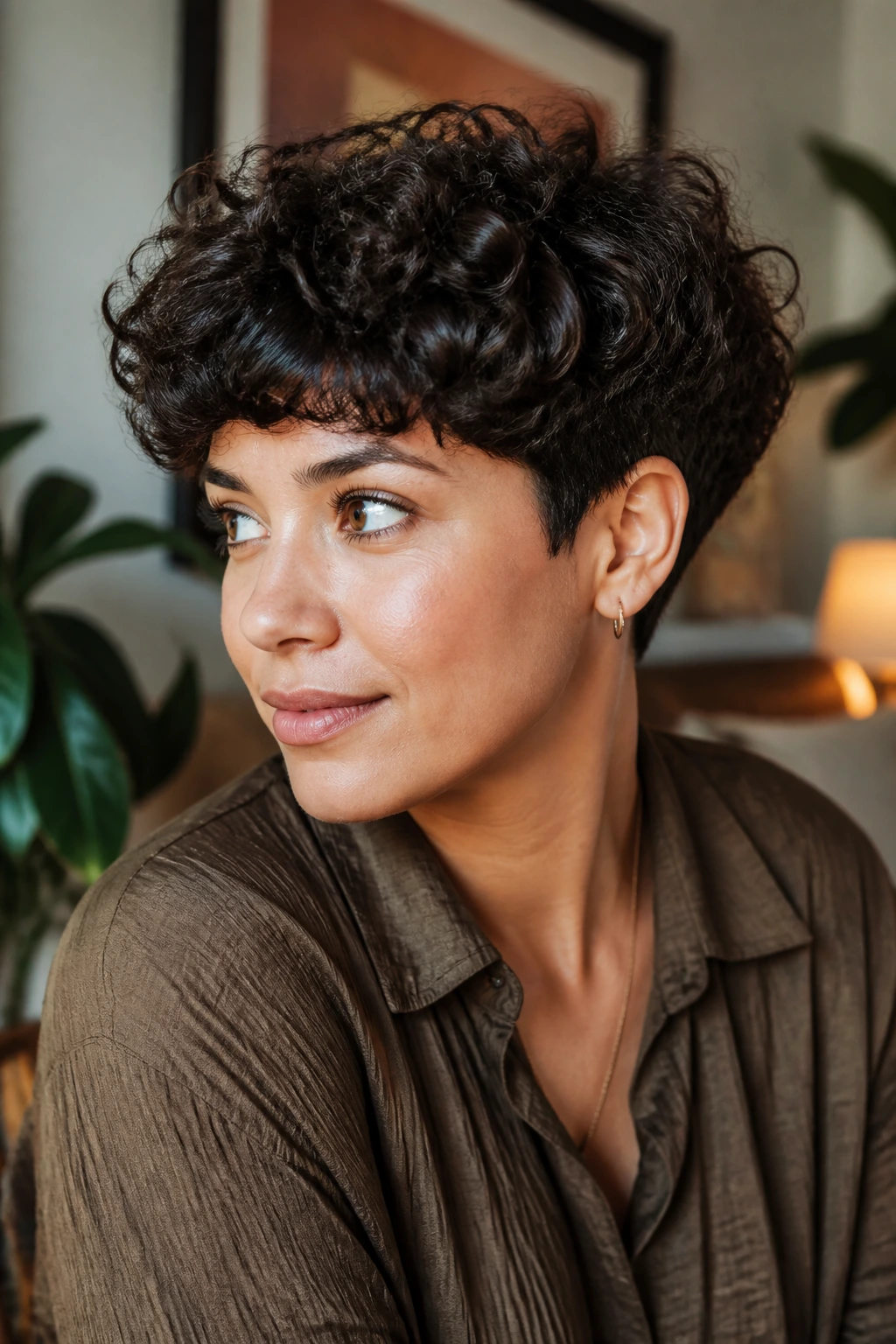
This is a softer, slightly more feminine take on the classic bowl cut. It features a rounded, soft layer that covers the ears, while the hair at the nape of the neck is cut short to avoid tangling. The top is left slightly longer, allowing your natural curl to create a soft, rounded shape that moves gracefully as you walk. It’s a very vintage-inspired look that feels incredibly modern when paired with curly hair.
Texturizing for Movement
The most important part of this cut is the internal texturizing. Because the hair covers the ears, it can easily start to feel heavy and hot. Your stylist needs to remove weight from behind the ear line to ensure the hair doesn’t puff out too far from the head. This makes the cut feel light and manageable, even when the humidity rises.
When to Choose This Cut
- If you have a round or oval face shape, this cut is exceptionally flattering.
- It’s perfect for someone who wants to emphasize their eyes and cheekbones.
- If you wear glasses, the length around the ears can be easily tucked behind or layered so that it doesn’t conflict with your frames.
15. The Curly Top-Knot Base
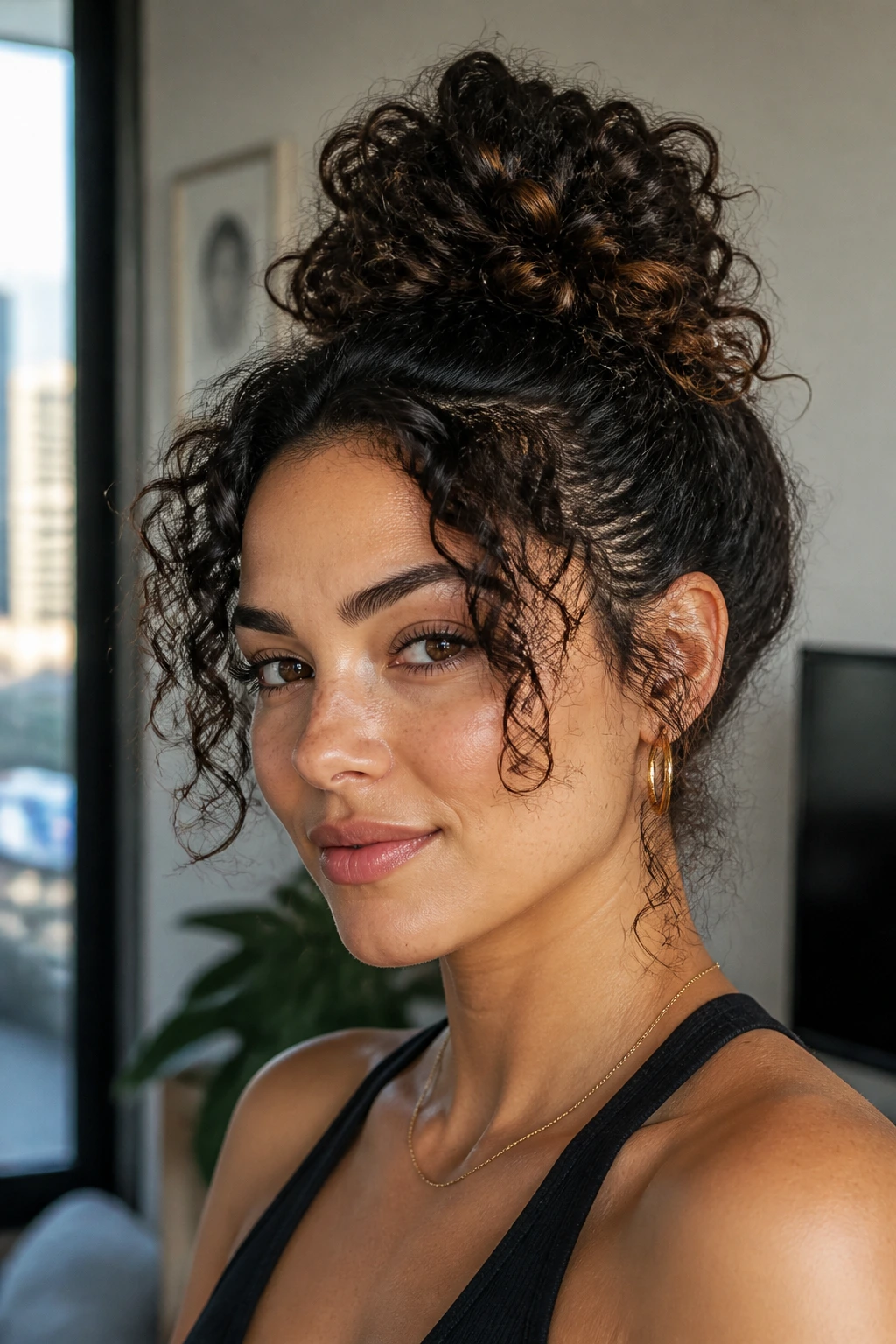
Sometimes, the best “cut” is one that is designed to accommodate your favorite up-do. If you love wearing a high top-knot, you can get an undercut or a shorter layered cut specifically designed to make this easier. By keeping the hair on the crown longer while shortening the hair around the perimeter, you can pull the longer hair into a bun, leaving a stylish, short, curly frame around your face and neck.
The Benefit of Perimeter Layering
When you pull your hair up, the short layers around your face create a soft, intentional look rather than just having a bunch of loose, stray hairs that weren’t long enough to stay in the bun. It looks like a styled, curated choice. You can use edge control to keep the perimeter curls looking sharp and defined while the bun itself can be left as messy or as tidy as you prefer.
Why it Works for Thick Hair
- It significantly reduces the tension on your scalp, as you aren’t trying to pull all that thick hair into one giant, heavy bun.
- You can maintain the “look” of a long hairstyle without the heat and maintenance of having the full length down.
- It’s a great way to transition from a long, thick mane to something shorter without feeling like you’ve completely lost your versatility.
16. The Curly Mullet
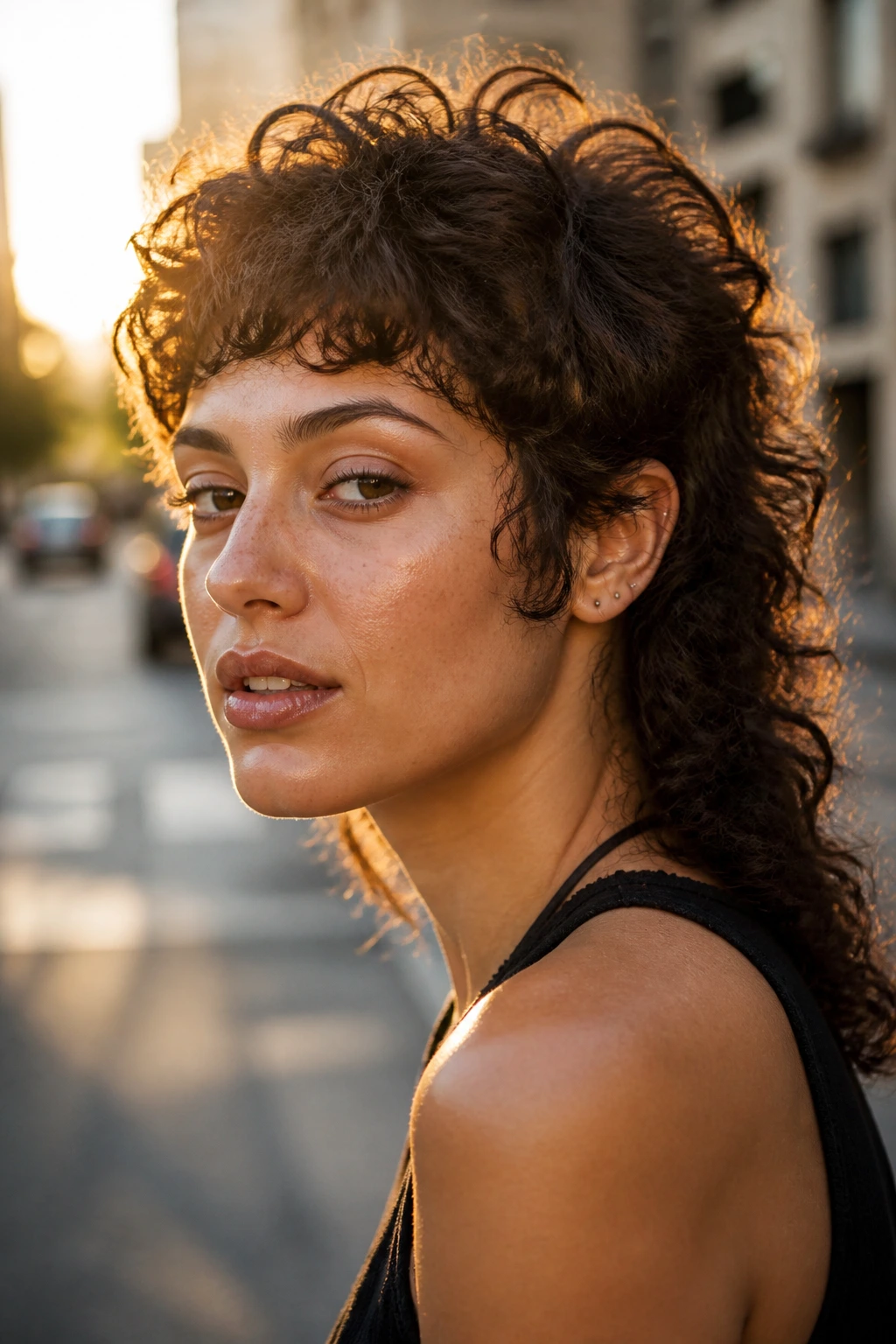
Before you recoil at the name, remember that the modern curly mullet is nothing like the dated version from the eighties. It is a fantastic cut for thick hair because it naturally follows the flow of your curls. By keeping the top short and the back longer, you’re creating a shape that is naturally balanced and incredibly comfortable, especially during warmer months.
Embracing the Edges
The mullet works best when you keep the sides relatively tight, which manages the thickness of the hair near the ears. The length in the back can be as long or as short as you like, but it should be heavily layered so it doesn’t just hang in a flat sheet. Your natural curl will give the back section a lot of body, making the “mullet” look feel like a deliberate style choice rather than a fashion mistake.
Styling for the Cool Factor
- Use a sea salt spray on the longer back section to encourage beachy, loose waves.
- Keep the top section defined with a curl-defining cream.
- This style is surprisingly versatile; you can dress it up with a blazer for work or pair it with a leather jacket for a night out.
17. The “Barely-There” Layered Pixie
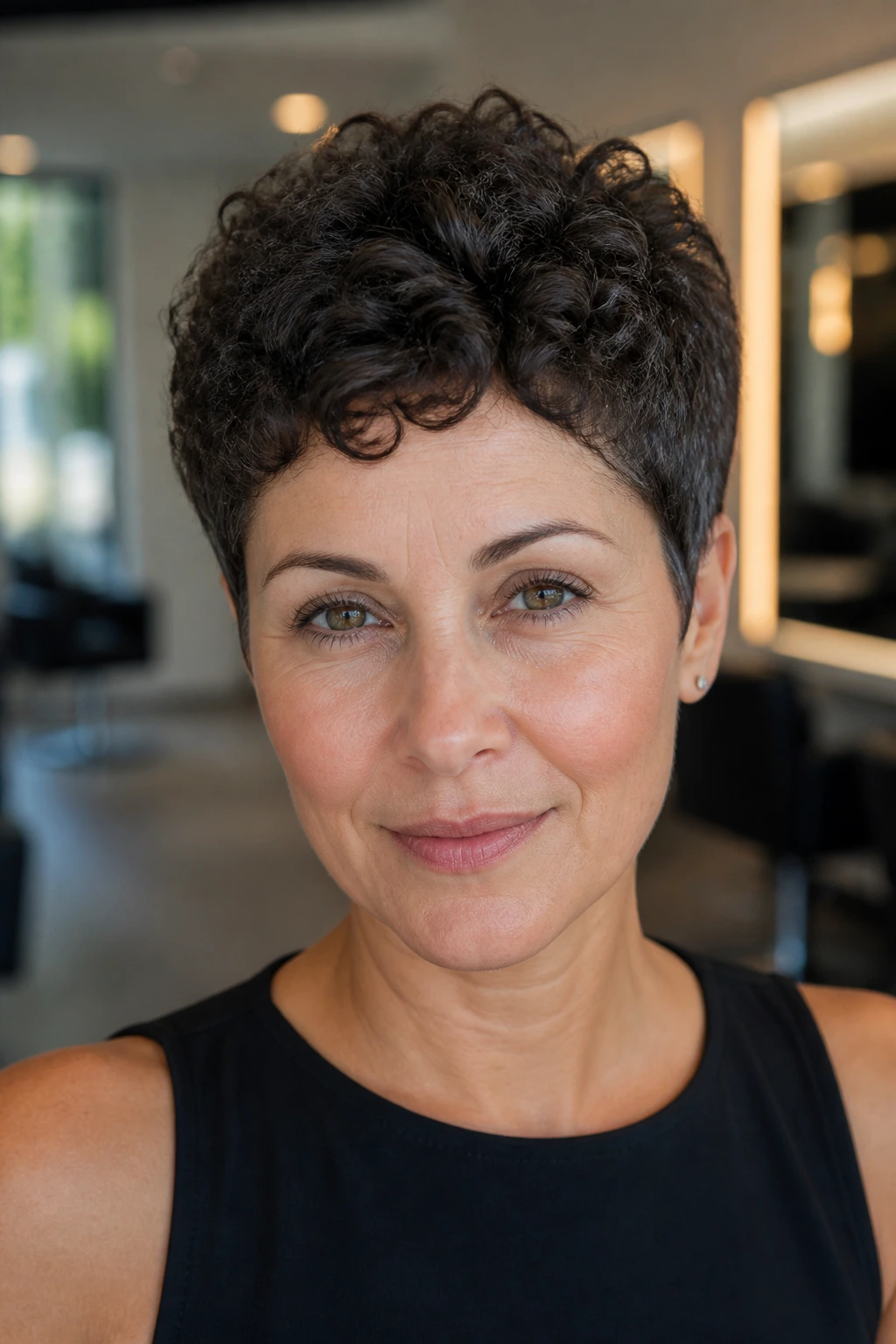
This is the shortest you can go before hitting the “buzzcut” territory. The “barely-there” pixie uses extremely short layers to create a soft, almost velvet-like texture on the top of the head. It is incredibly easy to manage, but it does require a high level of confidence to rock. For thick, curly hair, this cut removes the challenge of texture entirely, leaving you with a clean, low-maintenance look.
Maintaining the Velvet Finish
The key to this style is regular maintenance. Because the hair is so short, it will look grown out after just a few weeks. If you love the look, be prepared to visit the salon every three to four weeks for a quick trim to keep those edges sharp and the shape tight.
Who Should Avoid It
- If you have a very prominent scalp, this style might be too exposing.
- If your curls are more of a kink than a coil, they might stick straight out, which can be difficult to manage.
- This style is best for those who enjoy the process of styling their hair with pomades and waxes to get a specific, sculpted look.
18. The Curly Shag with Curtain Bangs
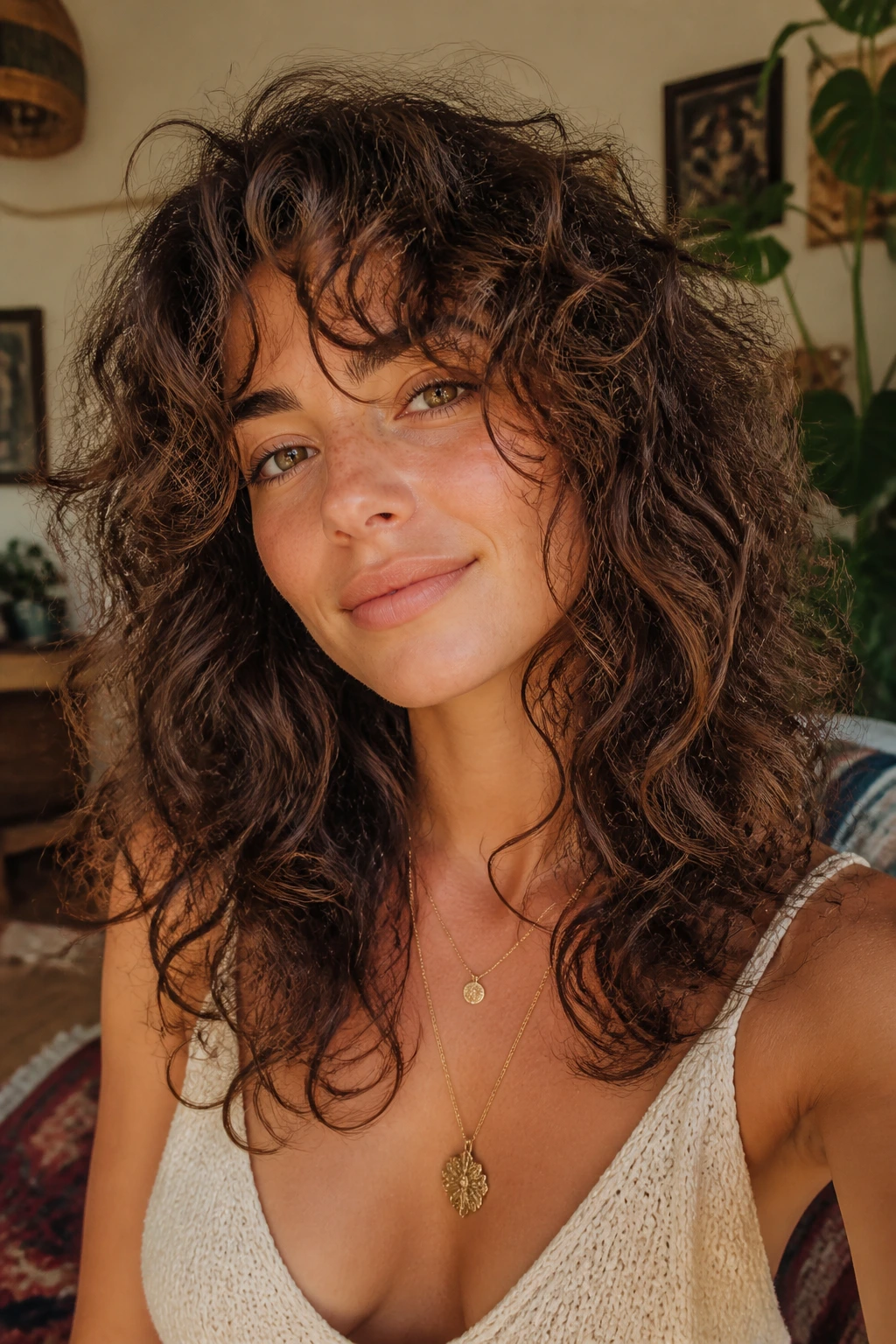
Pairing a shag cut with long, face-framing bangs is the most universally flattering short cut for thick, curly hair. The layers create volume exactly where you need it, and the bangs bring the focus to your eyes. This style feels very bohemian and relaxed, making it a perfect fit for a low-key, natural lifestyle.
Balancing the Face Frame
The bangs should be long enough to push to the side if you get tired of them. Because your hair is thick, your stylist shouldn’t cut too much hair for the bangs; keep them light and wispy so they don’t look like a solid mass. The rest of the hair should be cut into long, internal layers that move freely.
Final Styling Advice
- Use a light-hold mousse to maintain the volume throughout the day.
- Avoid heat tools at all costs; your hair’s natural texture is the star here.
- This cut is the easiest to grow out, so if you decide to go for more length in the future, you won’t have an awkward shape to deal with.
Final Thoughts
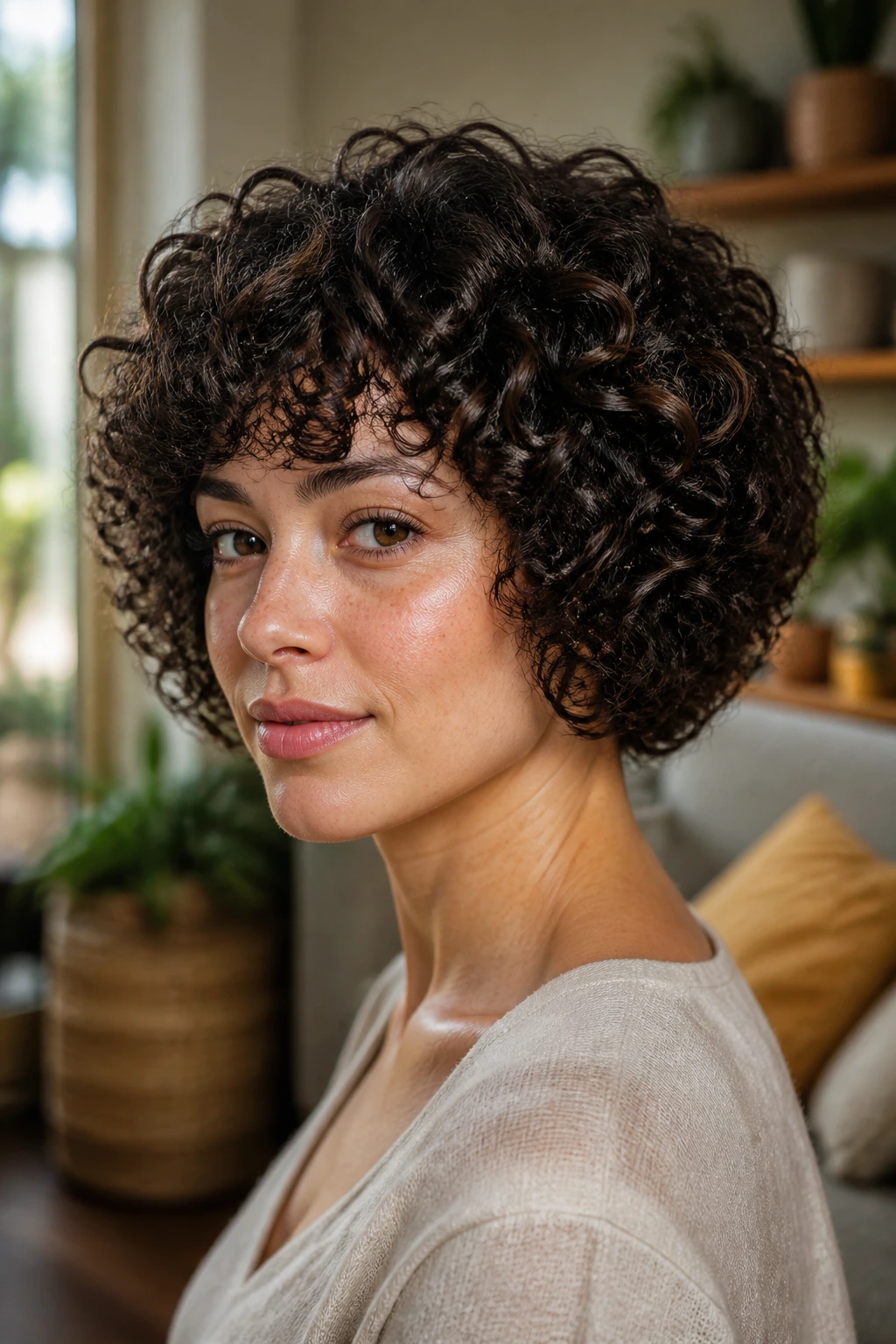
Choosing the right haircut for thick, curly hair is about finding the balance between weight and definition. You don’t have to be afraid of short styles; in many cases, removing that extra density is exactly what your curls need to truly come alive. Whether you opt for a sleek, asymmetrical bob, an edgy pixie with an undercut, or a modern, layered shag, the goal is to make your hair easier to manage while honoring the unique pattern of your coils.
Remember that professional stylists who specialize in curly hair are your best friends in this process. They understand that shrinkage is real and that cutting curly hair requires a different set of rules than cutting straight hair. Don’t be afraid to ask for a dry cut if you feel that’s what your texture needs. Ultimately, the best haircut is the one that makes you feel confident and excited about your hair, rather than seeing it as a chore to manage every single day. Take the leap, lose the weight, and enjoy the bounce.