

Finding the right balance between high-intensity movement and personal expression often feels like a compromise. You want hair that stays out of your face during a set of burpees or a long run, but you also want to feel like yourself—even when you’re drenched in sweat. Adding a splash of color, specifically through the strategic placement of blue feathers, is a creative way to elevate your gym style without sacrificing the functionality required for peak performance.
The appeal of using synthetic or high-quality feathers in your hair lies in their versatility. They offer a weightless pop of color that shifts and catches the air as you move. Unlike heavy metal clips or bulky headbands, these accents are so light that you often forget they are there. When you are deep into a HIIT session or focused on your yoga flow, the last thing you need is a distraction from your gear. These blue accents provide that aesthetic edge while keeping your focus firmly on your form and breathing.
Beyond just the look, the right application technique ensures these accents can withstand even the most punishing workout environments. It is about choosing placements that don’t interfere with your range of motion or get caught in your sports bra straps. Whether you have short, textured hair or long, flowing locks, the following styles are designed to stay secure from the warmup to the final cool-down stretch.
1. The High-Volume Secure Top Knot
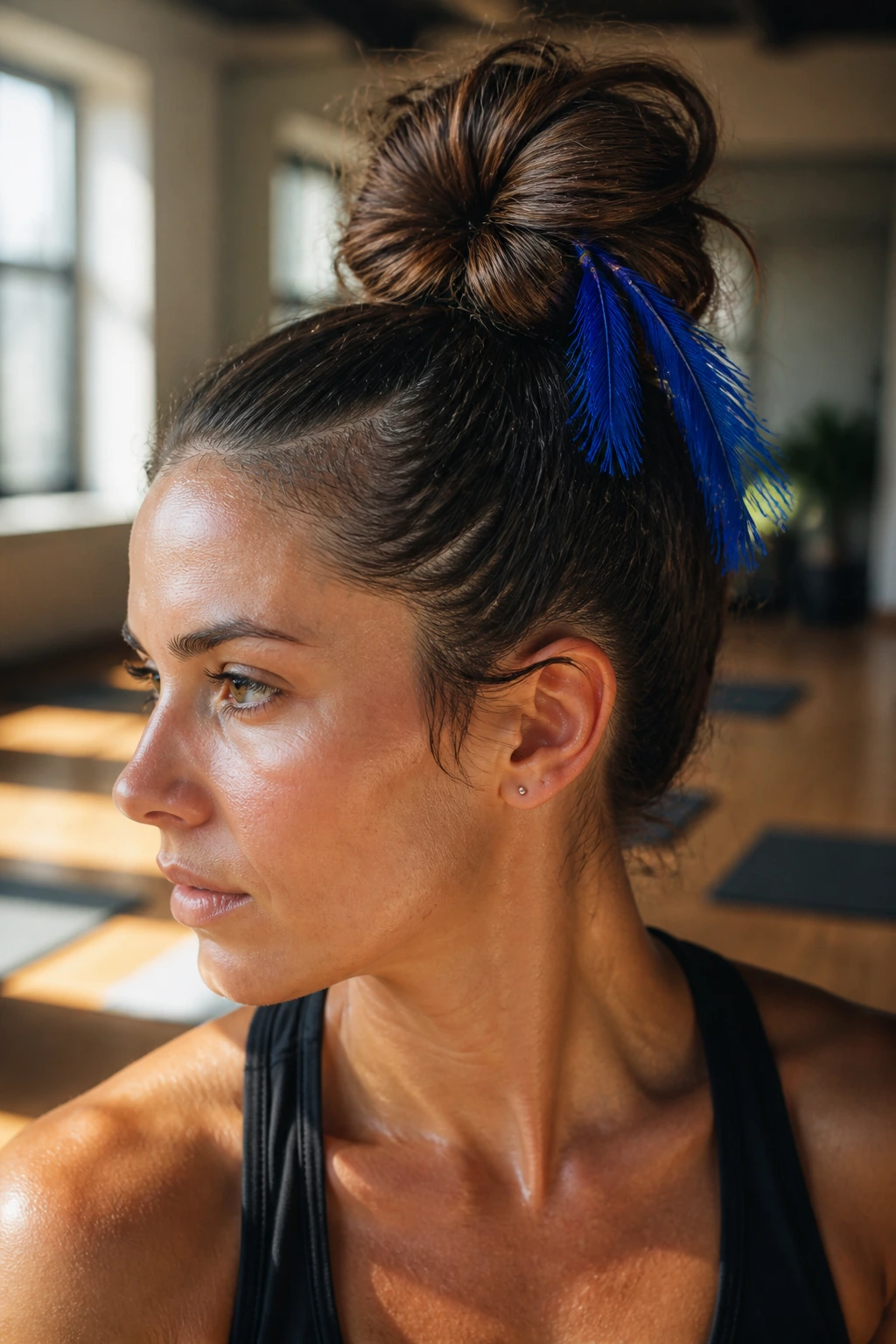
This is a classic for a reason, but adding a few strands of cobalt blue feathers elevates it from a standard chore-hair look to something intentional. A high top knot is ideal for activities involving floor work, like Pilates or mat-based strength training, because it keeps your neck completely clear. By clipping your feathers into the base of the bun, you ensure they move with the knot rather than flapping against your cheeks during lateral movements.
Why This Works for Training
The tension of a well-secured top knot naturally keeps the feathers tucked slightly away from your face. When you use a high-hold scrunchie or a spiral hair tie, you minimize the risk of the feathers sliding out as you move. If you are doing jumping jacks or box jumps, the stability of this bun is unmatched.
How to Style
- Gather your hair into a ponytail at the crown of your head.
- Twist the length of the hair around the elastic to form a tight, rounded shape.
- Secure the bun with a second hair tie or a series of matte-finish bobby pins.
- Slide your blue feather micro-link or clip-in extensions into the underside of the bun, aiming for the spot where your hair meets the scalp.
2. Dutch Braid Into a Sleek Ponytail
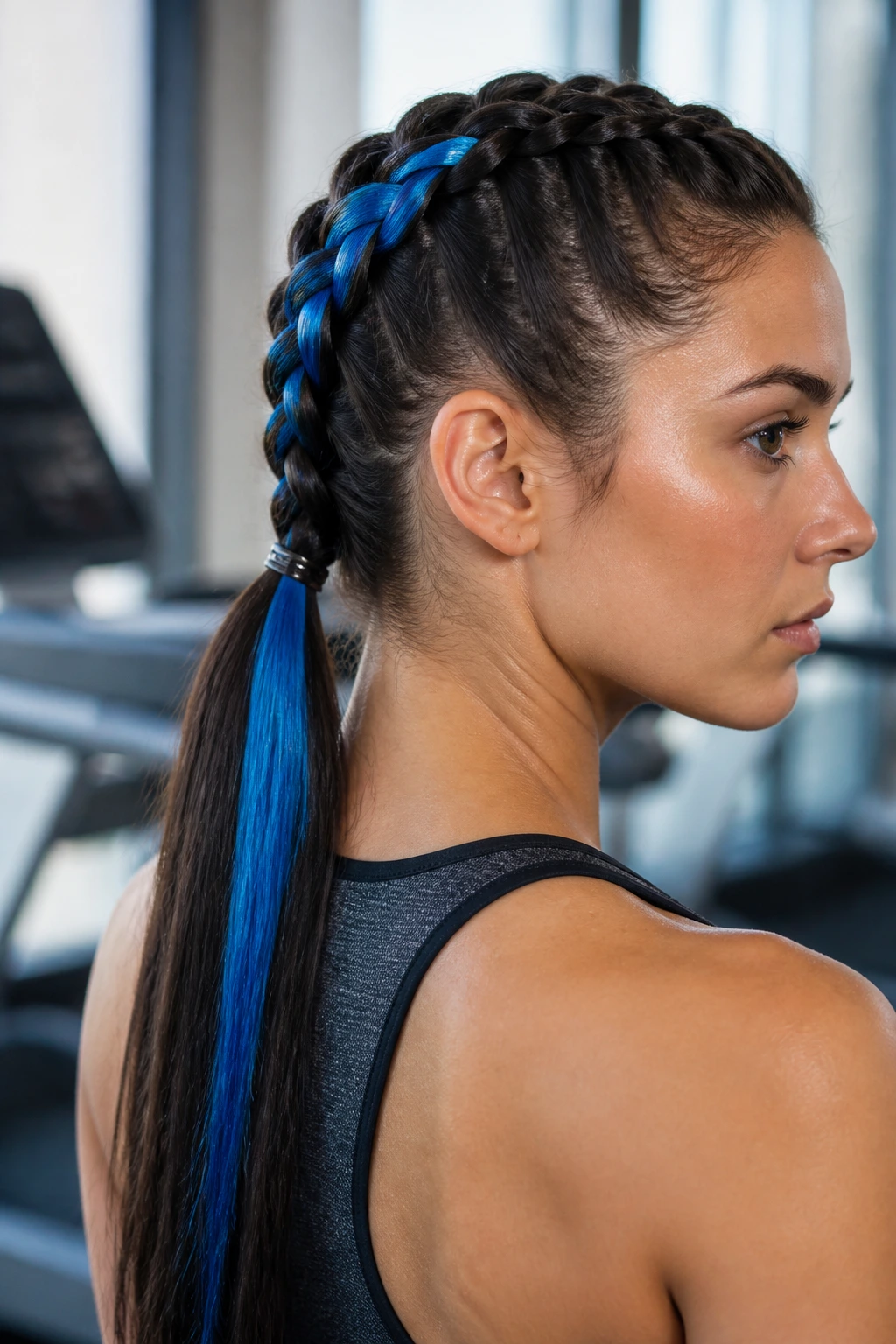
Dutch braids are arguably the most effective way to manage flyaways during high-impact cardio. By weaving blue feathers into the braid itself, you create a seamless integration of color that won’t snag or pull during intense exertion. The braid acts as a protective sleeve for the base of the feathers, keeping them anchored against your skull even when you are picking up the pace.
The Mechanics of Secure Braiding
Incorporating the feather at the very start of the Dutch braid means it gets pulled tighter as you work your way down. Use a micro-ring to attach the feather to a small section of hair before you begin braiding. This provides an anchor point that is much stronger than a standard clip-in extension, ensuring that your style holds up through even the sweatiest spin classes.
Styling Tips for Longevity
- Start by sectioning off the hair you want to braid at the front of your hairline.
- Attach the blue feather using a silicone-lined micro-ring, ensuring it is hidden beneath a layer of your natural hair.
- Begin your Dutch braid, pulling sections from the outside under the middle.
- Incorporate the feather strand as you pull in new sections of hair, letting the blue pop against your natural shade.
3. Side-Swept Braided Crown
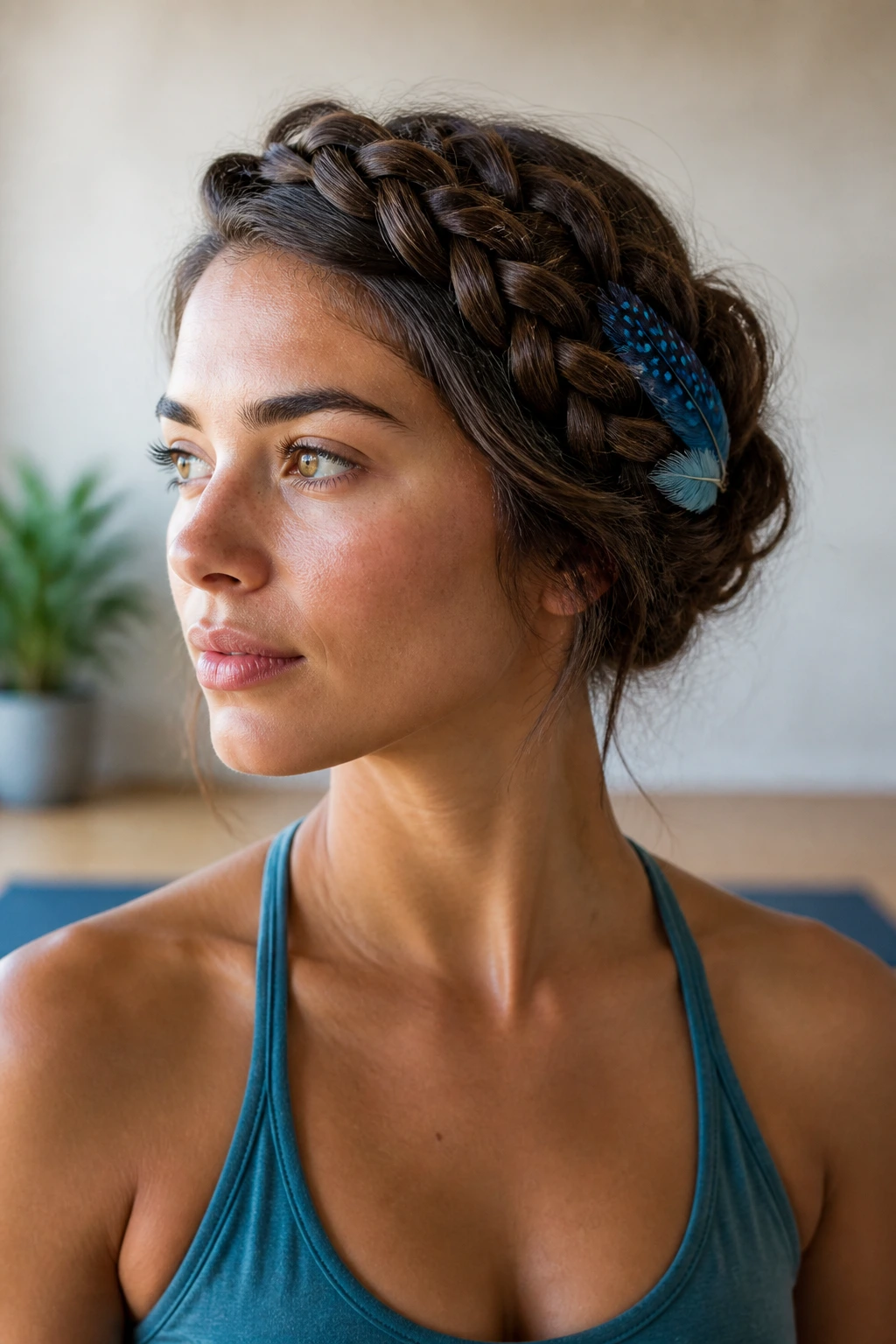
If you prefer your hair away from your neck but still want some framing around your face, a side-swept crown braid is a beautiful solution. Adding blue feathers into the mix creates a subtle, ethereal vibe that holds up incredibly well during yoga or barre sessions. Because this style involves pulling hair across the front of the head, the feathers stay relatively stationary, meaning you won’t have to worry about them hitting you in the eyes during downward dog.
Why It Excels in Studio Environments
This style is less about extreme tightness and more about strategic pinning. During low-impact workouts, you don’t need the aggressive tension of a tight bun. Instead, the braid keeps the hair controlled while the feathers remain visible and distinct. It is a sophisticated way to manage your hair while looking polished, even after a heavy lifting session.
Making It Stay
- Create a deep side part and begin a French braid starting from the hairline.
- As you braid toward the back of the head, tuck in one long, vibrant blue feather near the temple.
- Secure the end of the braid behind your ear using a clear elastic.
- Gently pull at the loops of the braid to give it a slightly lived-in texture, which helps hide the base of the feather.
4. Double Low Space Buns
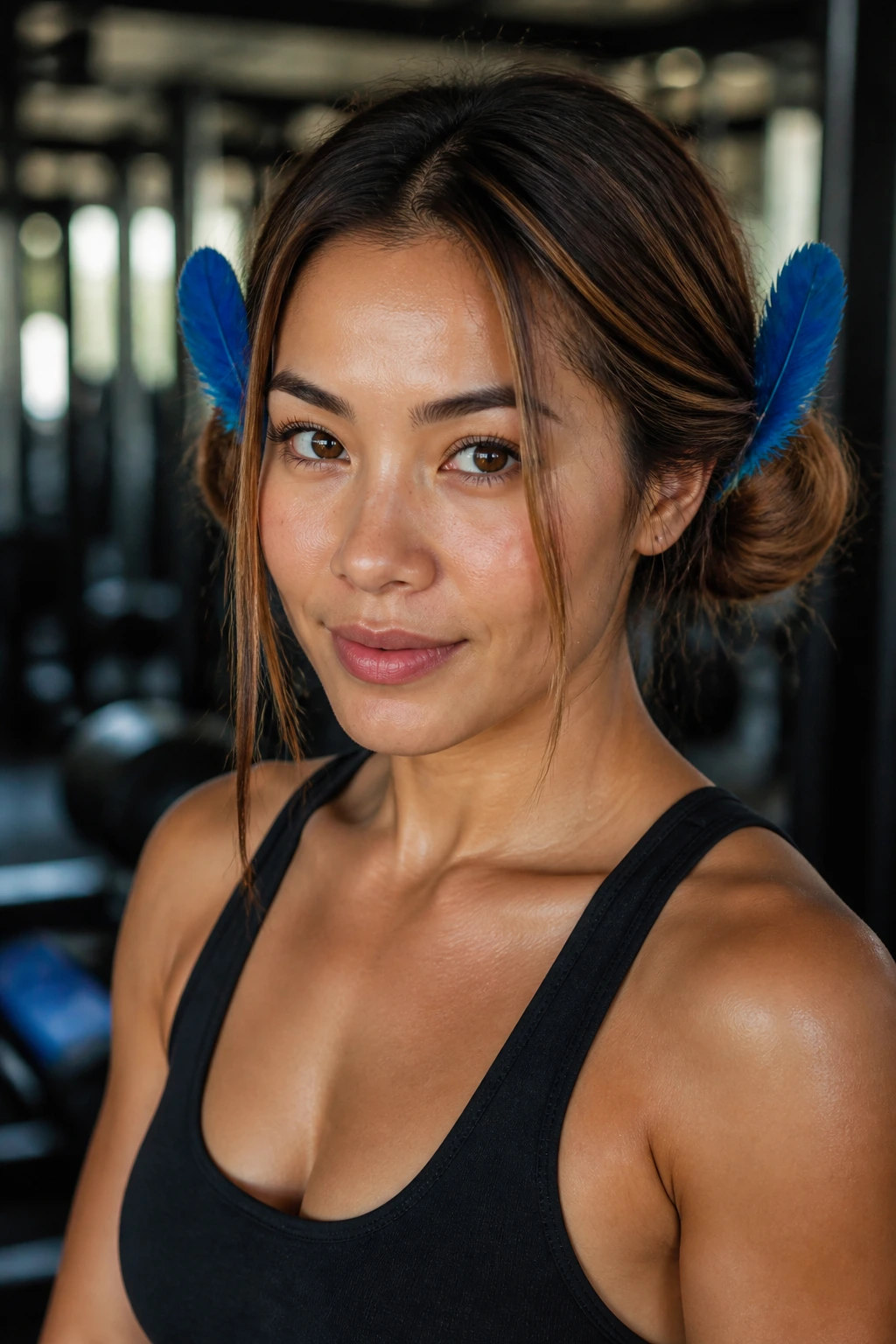
Space buns are playful, but they also serve a functional purpose for gym-goers who find themselves lying on their backs often. Because the buns sit on either side of the head, they don’t create a “bump” that hits the floor during crunches or bench presses. By pinning blue feathers to the outer edge of each bun, you get a symmetrical pop of color that frames your face perfectly without getting in the way.
The Benefit of Symmetry
Symmetry often provides a cleaner look when you are moving quickly. Having two points of color balances out your overall silhouette. These buns can be made as tight or as loose as you want, depending on whether you are doing light cardio or heavy explosive training.
Essential Prep
- Split your hair into two equal sections down the middle.
- Tie each into a pigtail, then twist into buns at the mid-to-low back of your head.
- Use U-shaped hairpins to secure the buns rather than thick rubber bands to minimize breakage.
- Fan the blue feathers out from the outer edge of each bun so they stand out against your hair color.
5. The Messy Half-Up “Gym” Loop
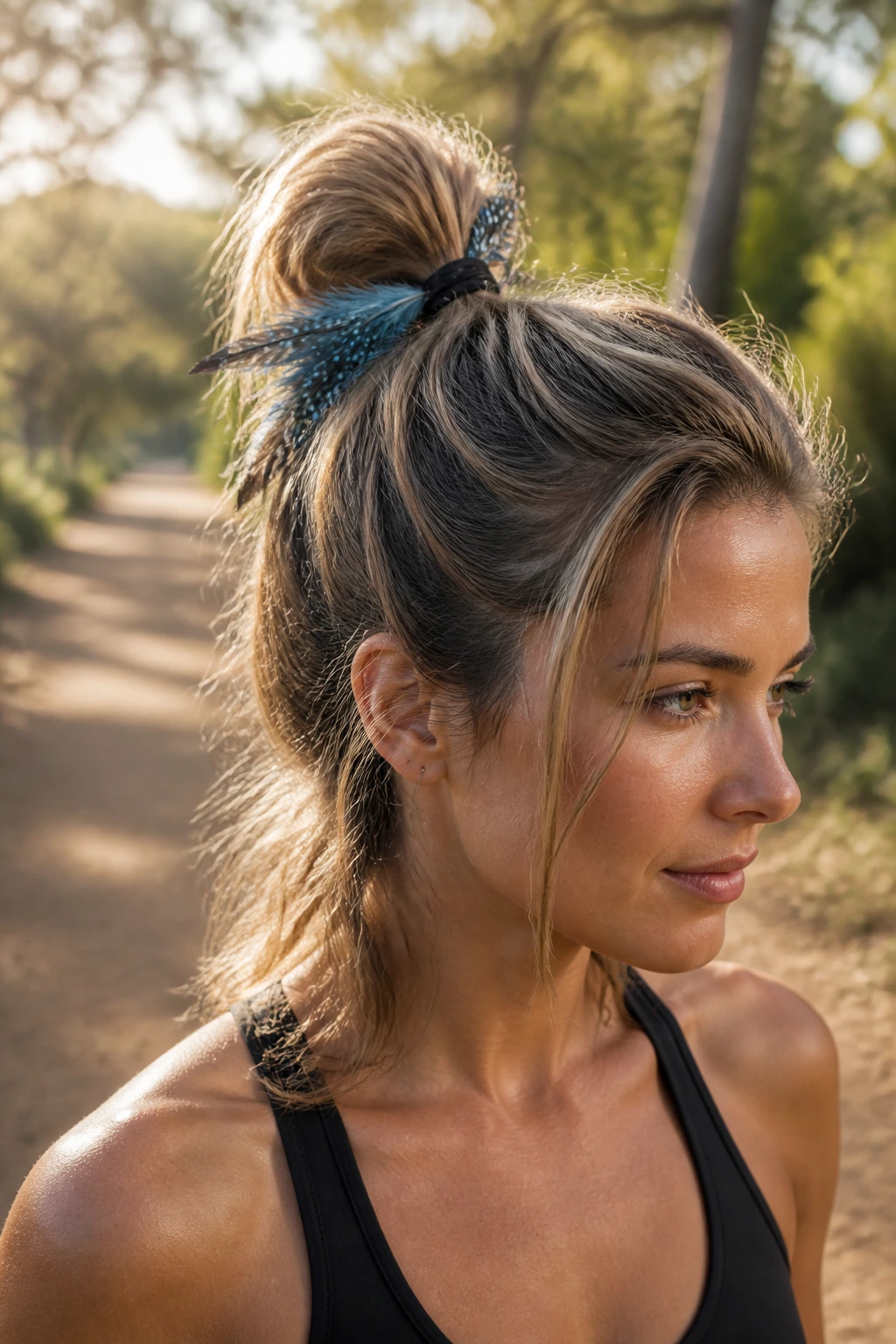
Sometimes you don’t want all your hair pulled back. A messy half-up loop—where the ends of your ponytail aren’t pulled all the way through—is the perfect “lazy but put-together” workout look. Clipping blue feathers into the gathered half-up section keeps them elevated and visible, even when you are mid-stride. It is a fantastic look for outdoor running or light bodyweight training.
Why It Works for Casual Movement
The loop style is inherently flexible. It doesn’t strain the hair follicles the way a high ponytail can, making it comfortable for longer workout durations. The movement of the feathers in this style is dynamic; they sway slightly as you move, which feels light and airy.
Maximizing the Look
- Gather the top half of your hair and pull it through an elastic once.
- On the second pull-through, stop halfway to create a loop, leaving the ends dangling.
- Clip a small cluster of blue feathers near the elastic base.
- Use a bit of dry shampoo on the loose ends to give them texture, which helps the feathers blend more naturally into the hair.
6. Sleek Low Ponytail with Wrapped Feather
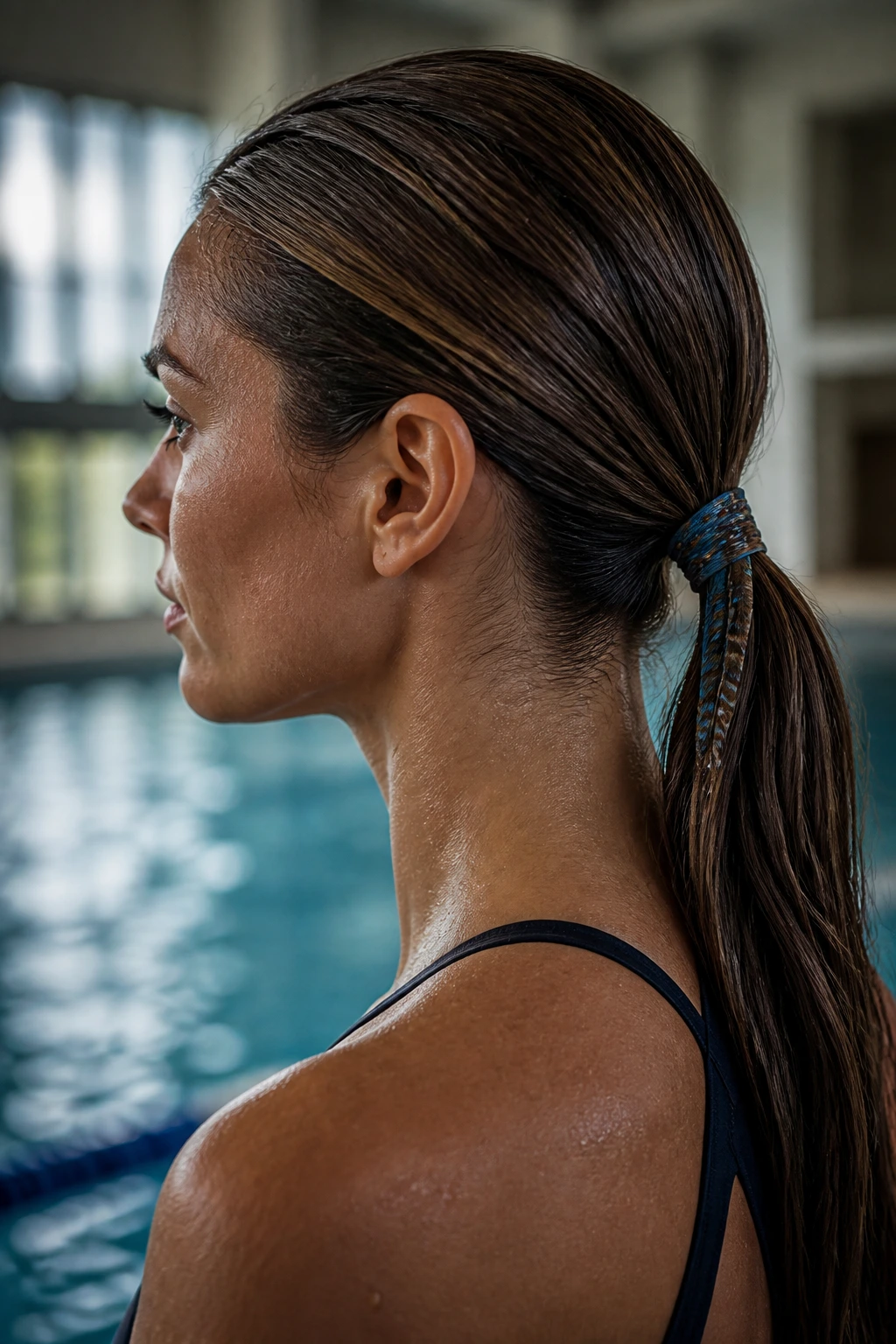
A low ponytail is the standard for many, but it can be boring. Wrapping a thin blue feather extension around the base of your ponytail adds a touch of custom color that looks almost like a hair accessory. This style is incredibly sleek and minimizes friction, which is perfect for swimming or high-intensity rowing where you need your hair to be as streamlined as possible.
Performance Through Minimalist Design
Because the feather is wrapped directly into the hair tie, it remains completely stationary. There is no risk of it getting tangled in your clothing or snagging on equipment. This is perhaps the most “workout-proof” style on this list because it removes all excess movement from the accent itself.
The Wrapping Technique
- Tie your hair into a smooth low ponytail using a snag-free elastic.
- Take a single, thin blue feather extension with a loop end and thread a small piece of hair through it.
- Wrap the feather around the base of the elastic until the hair tie is fully concealed.
- Secure the end with a tiny, clear rubber band hidden underneath the ponytail.
7. The Sporty Fishtail Braid
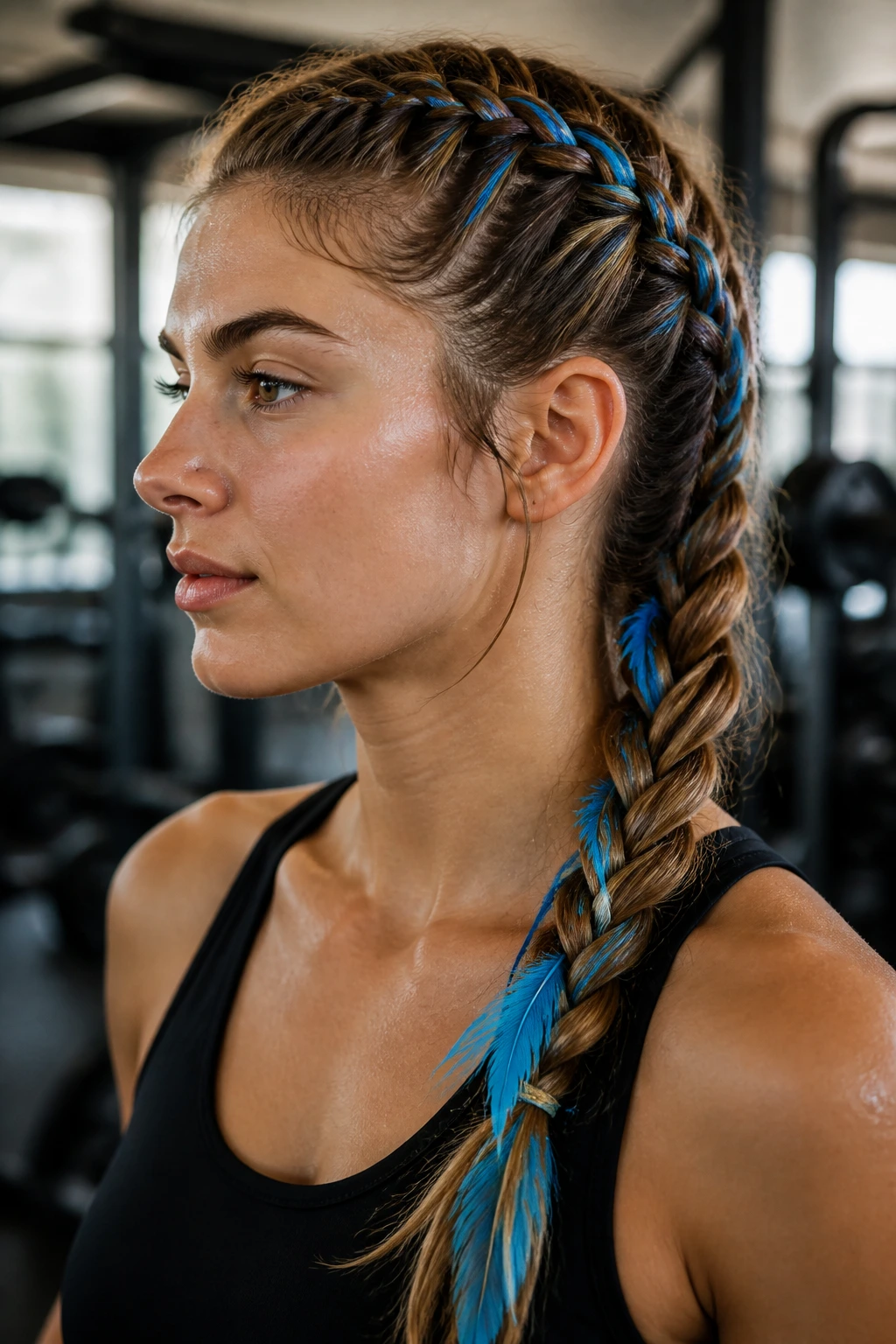
Fishtail braids look intricate, but they are surprisingly sturdy for workouts. They hold hair tight to the head and distribute tension evenly. Weaving blue feathers through the length of a fishtail creates a “painted” effect that moves beautifully as you go. This style is ideal for long-distance training or endurance activities where you need a style that stays put for an hour or more.
Durability and Aesthetics
The tighter weave of a fishtail braid acts like a cage for the feather strands. Even if you are sprinting or doing high-impact jump training, the feathers are locked into the weave. This is a great way to showcase a longer, more dramatic feather without worrying about it flying into your face.
How to Get the Look
- Divide your hair into two sections.
- Take a small piece from the outer edge of the left section and cross it over to the inner right.
- As you cross the sections, introduce a blue feather into one of the strands every few inches.
- Keep the tension firm throughout the braid to ensure everything stays locked in.
8. Pull-Through Braid with Feather Accents
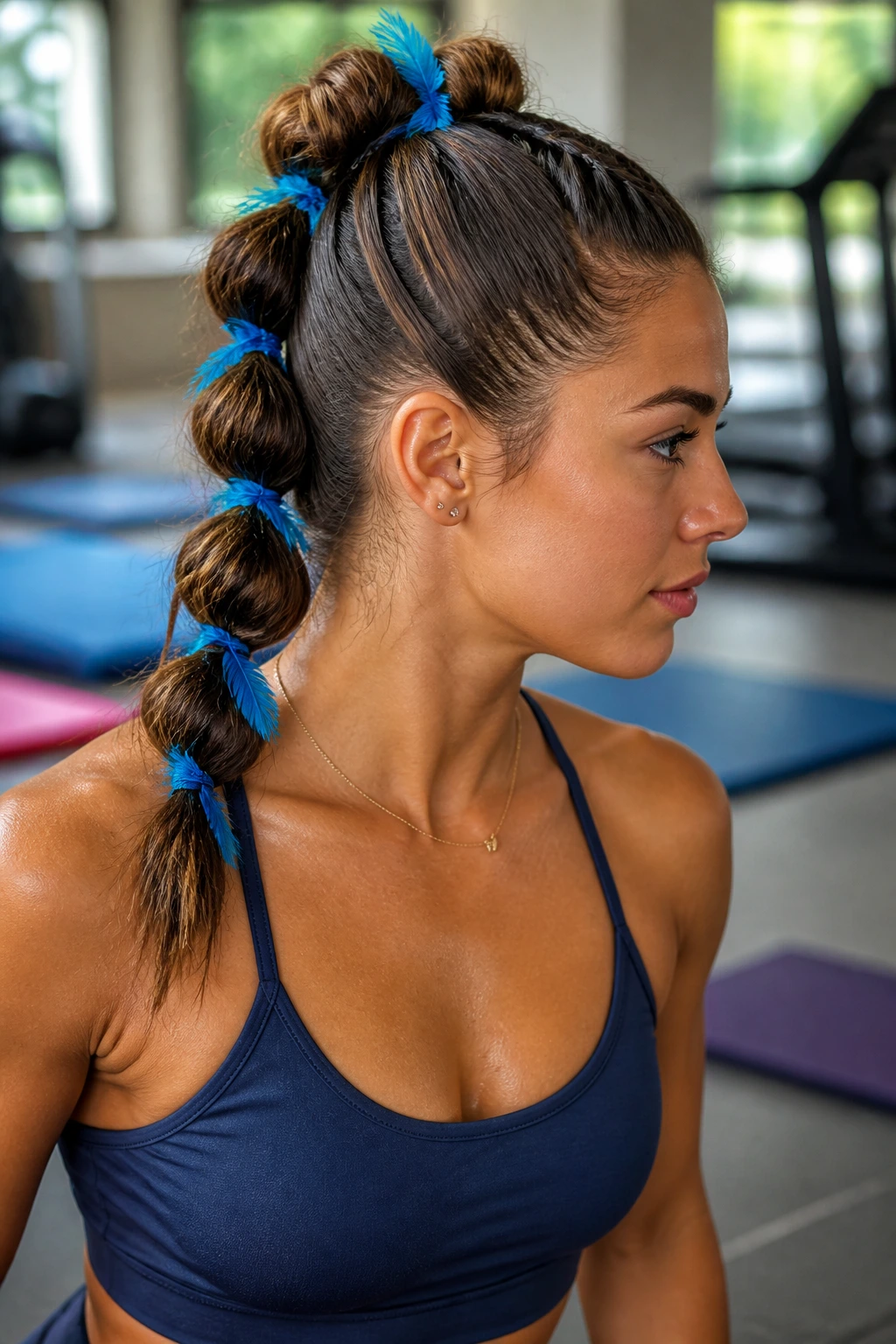
The pull-through braid is essentially a series of small, connected ponytails, making it one of the most secure hairstyles you can wear to the gym. It creates a voluminous look that stays exactly where you put it. Placing blue feathers inside the individual “bubbles” of the braid adds a unique dimension that looks great from every angle.
Why This Design Is Superior for Intensity
Each section of the pull-through braid is individually elasticated. This means that if one section tugs, the rest of the style stays firm. This structural integrity is perfect for high-intensity interval training or circuits where you are constantly changing levels and directions.
Practical Tips for Success
- Create a series of small ponytails down the center of your head.
- Open each ponytail and pull the subsequent one through it.
- Slip the base of a blue feather into the elastic of the middle bubbles.
- Adjust the volume of each bubble to ensure the feathers are evenly spaced and visible.
9. Braided Headband with Feathers
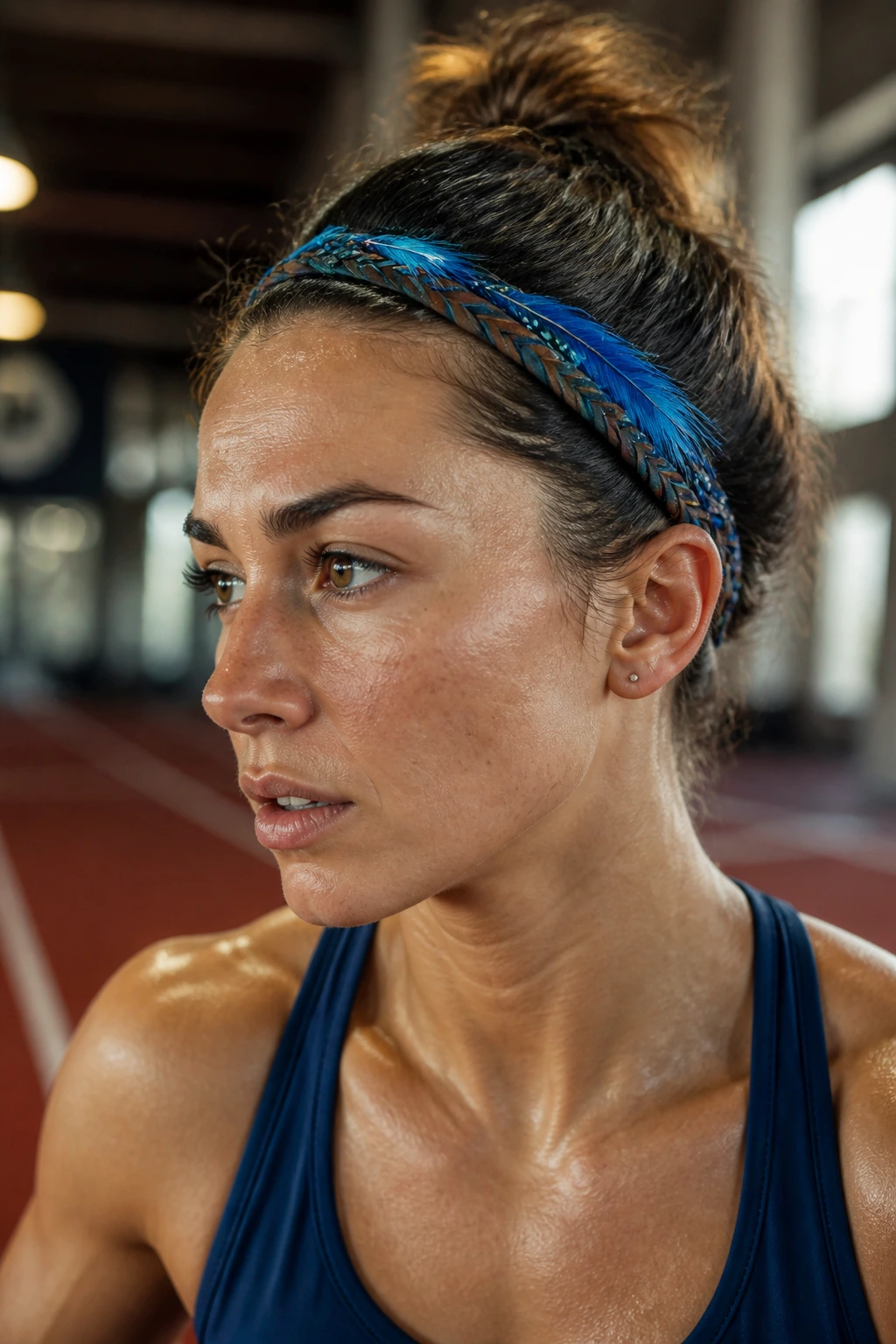
For those who have shorter hair or bangs that always get in the eyes during a sweat session, a braided headband is a lifesaver. It keeps everything off your face, but adding blue feathers along the braid adds a feminine flair. It is a practical, no-nonsense look that works as well in the gym as it does running errands afterward.
Keeping the Focus on Function
The braid acts as a functional barrier against sweat dripping into your eyes. By incorporating the feathers into the braid, you turn a utility piece into a style statement. It is lightweight, unobtrusive, and remarkably effective at keeping your vision clear.
Simple Construction
- Part your hair and take a section near your ear.
- Braid it along your hairline, adding hair as you go to keep it tight.
- Clip or tie in the blue feathers along the braid as you cross the forehead.
- Pin the end of the braid behind the opposite ear for a clean finish.
10. The Textured High Pony with Feather Tassels
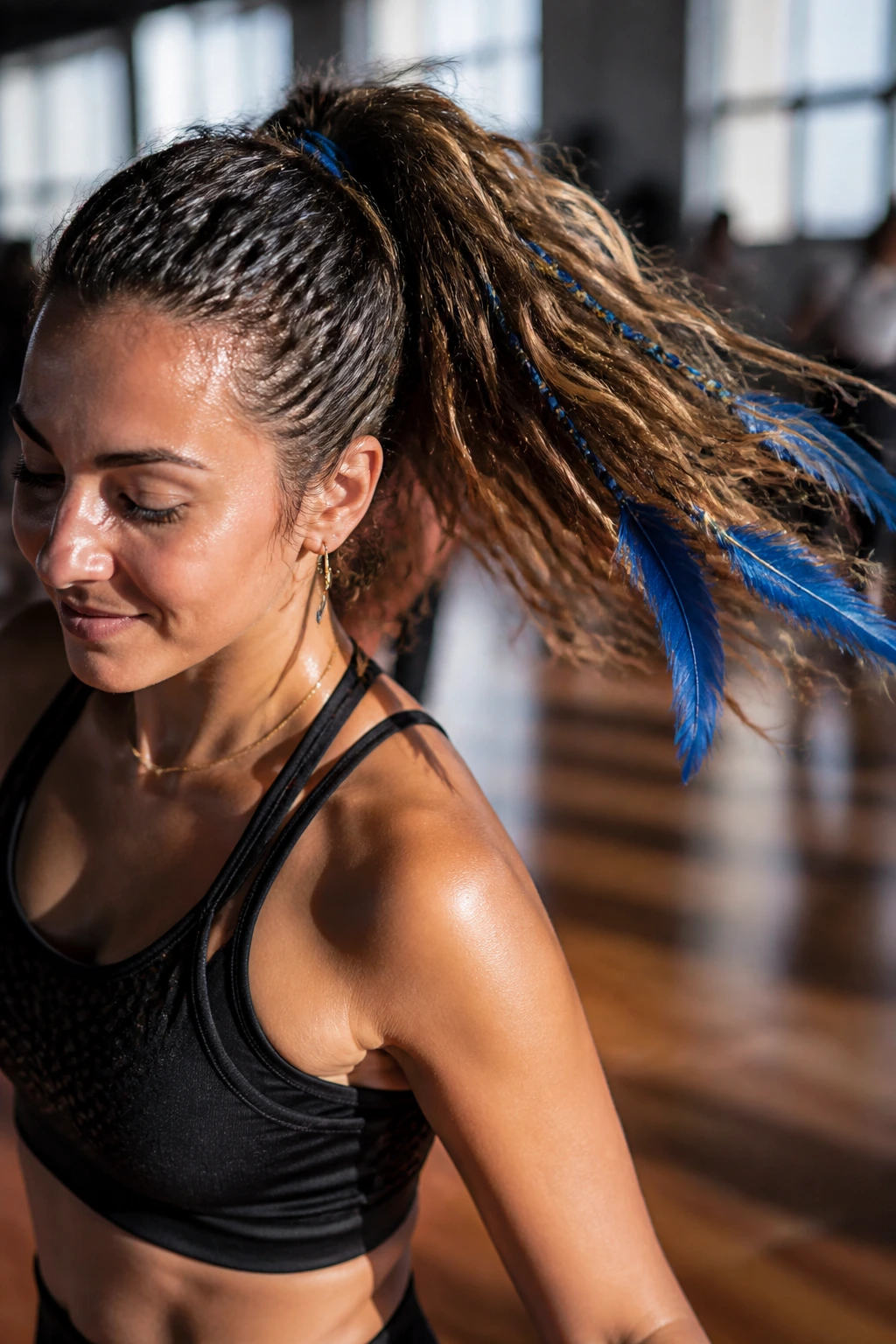
If you have naturally curly or textured hair, a high ponytail is often the go-to style. Adding blue feather tassels to the ends of the ponytail creates a fun, playful movement that highlights the bounce of your curls. This is an excellent choice for dance cardio or Zumba, where the movement of your hair is a key part of the experience.
Why Bounce Matters
In dance-based workouts, the movement of your hair is part of your body language. Having blue feathers at the end of a high ponytail emphasizes that movement, making your fitness routine feel more like an expressive performance.
Tips for Textured Hair
- Use a high-hold pomade to slick down the front and sides of your hair.
- Gather your hair into a high ponytail and secure it firmly.
- Wrap the base of the ponytail with a small section of hair to hide the elastic.
- Attach the blue feather tassels using small combs or clips at the base of the ponytail, letting them blend into the natural volume of your hair.
11. Low Bun with Side Feather Cascade
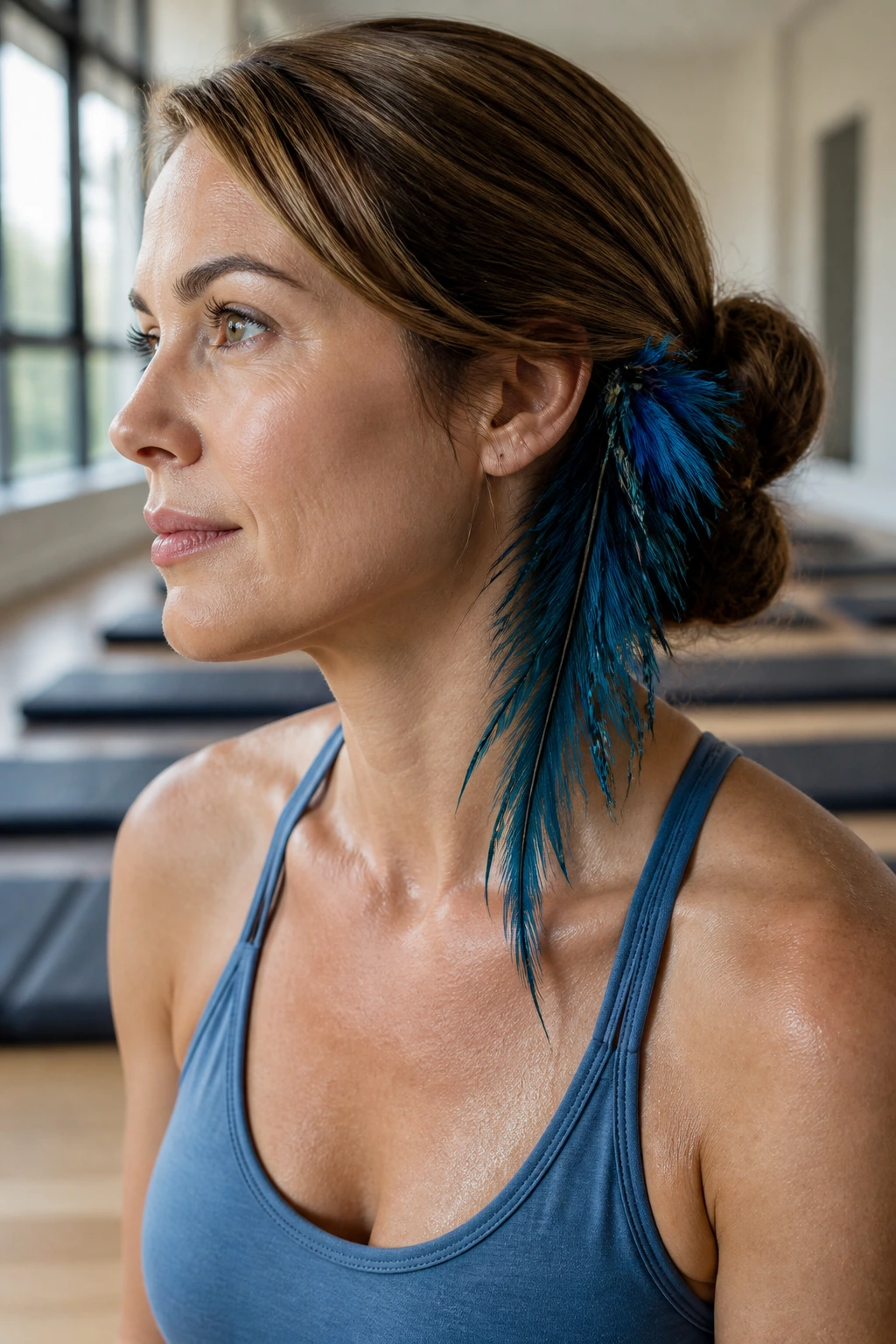
Sometimes you want a style that feels a bit more “finished” for post-workout brunch, but it still needs to be gym-ready. A low, neat bun with a cascade of blue feathers falling from one side offers an elegant contrast. It’s perfect for low-impact activities like Pilates or stretching.
Balancing Sophistication and Utility
While this style is more delicate, it remains highly functional because the bun is low and tight. The cascade of feathers adds a visual point of interest that draws attention away from the “gym hair” texture. It is a fantastic way to feel put-together without needing a total restyle.
Securing the Look
- Part your hair neatly in the middle or to the side.
- Gather into a low, tight bun at the nape of the neck.
- Use a series of bobby pins to keep the bun flat against the head.
- Attach a cluster of feathers on one side, allowing them to hang down slightly, clear of your shoulder blades to avoid interference.
12. Mohawk-Inspired Braided Braid
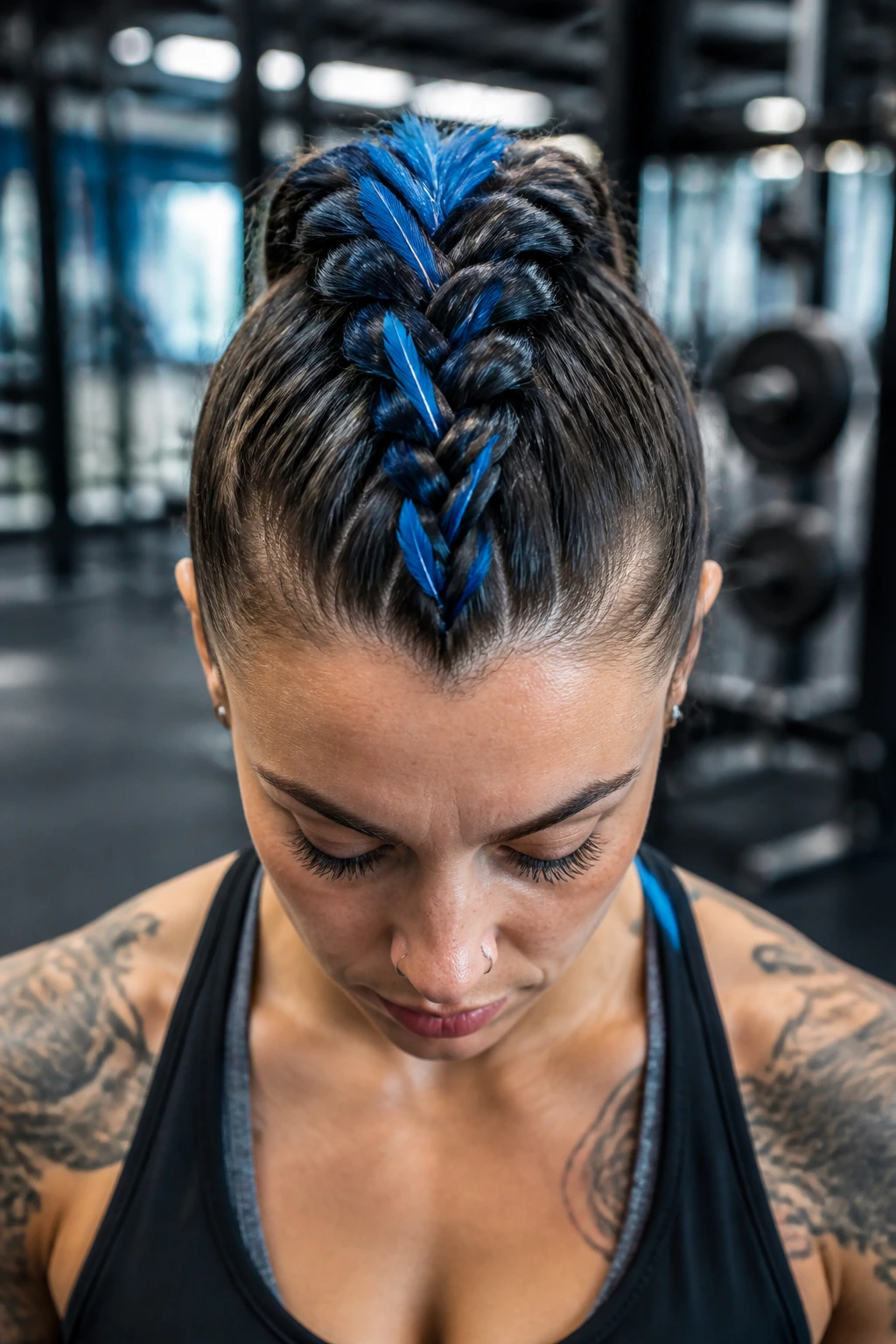
If you are into serious strength training, a mohawk-inspired braid (a center braid leading into a ponytail) provides maximum stability. It keeps all your hair in a straight line down the center of your head, which is perfect for lifting or bench work. Adding blue feathers along the center line creates a bold, colorful streak that stands out from the crowd.
Why This Is the Ultimate Training Look
There is no hair falling in your face with this style. It is entirely contained. The center-aligned feathers look sharp and intentional, acting as an extension of the braid itself. It is a high-performance style for high-performance athletes.
Styling for Strength
- French braid the center section of your hair from the hairline to the crown.
- Transition the end of the braid into a tight ponytail.
- Insert your blue feathers directly into the center braid before you secure the ponytail.
- Use plenty of texture spray to ensure the braid stays tight throughout your heaviest sets.
13. The Half-Top-Knot “Half-Down”
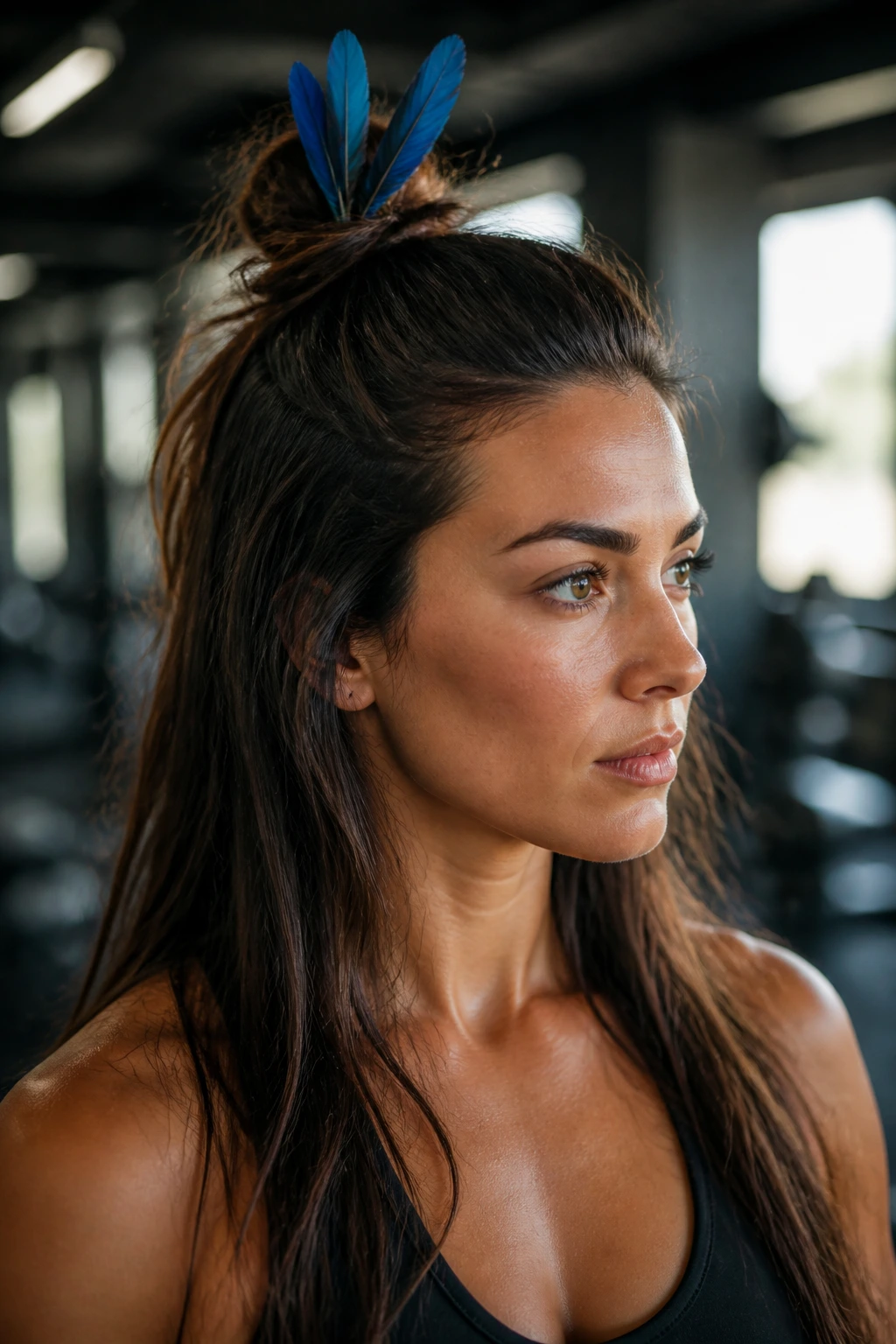
This style combines the control of a top knot with the relaxed feel of wearing your hair down. It’s a great compromise for lifting days where you want your hair out of your eyes but don’t want to feel restricted. Placing blue feathers into the top knot ensures they stay elevated while the rest of your hair remains free.
The Versatility Factor
This is arguably the most versatile look for gym-goers who transition immediately to work or social settings. The feathers are visible and stylish, yet the style is secure enough to handle a solid hour of training.
How to Execute
- Section off the top portion of your hair from ear to ear.
- Form a small, messy bun on top of your head.
- Clip two or three blue feathers into the top of the bun, fanning them out like a crest.
- Use a light serum on the bottom section of your hair to keep it from looking messy.
14. Wrapped Braid around a Chignon
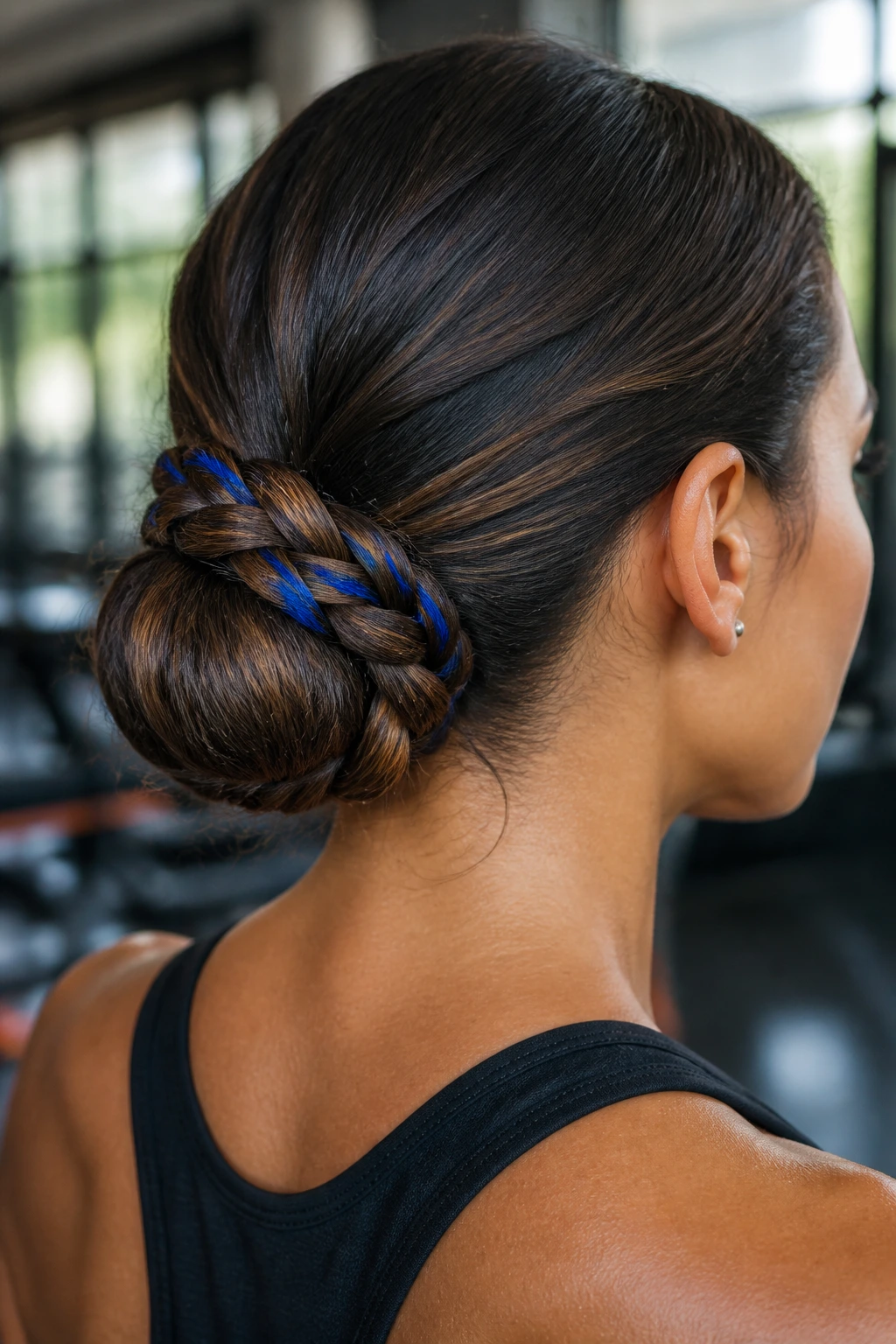
A chignon is a sophisticated take on the bun, and it’s surprisingly durable for medium-impact workouts. By wrapping a braided section around the base of the chignon, you create a stable foundation. Weaving blue feathers into this wrap makes the color look integrated rather than added on.
The Strength of the Wrap
The braid acts as a physical reinforcement for the bun. This means the chignon is less likely to slip or unravel, even when you are doing floor work or stretching. It is a very secure, professional-looking hairstyle for an active lifestyle.
Achieving the Result
- Pull your hair into a low, tight bun.
- Braid a small section of hair from the side.
- Weave the blue feather into that braid.
- Wrap the braid around the base of the bun and secure with hidden pins.
15. The “Double-Dutch” Pigtails
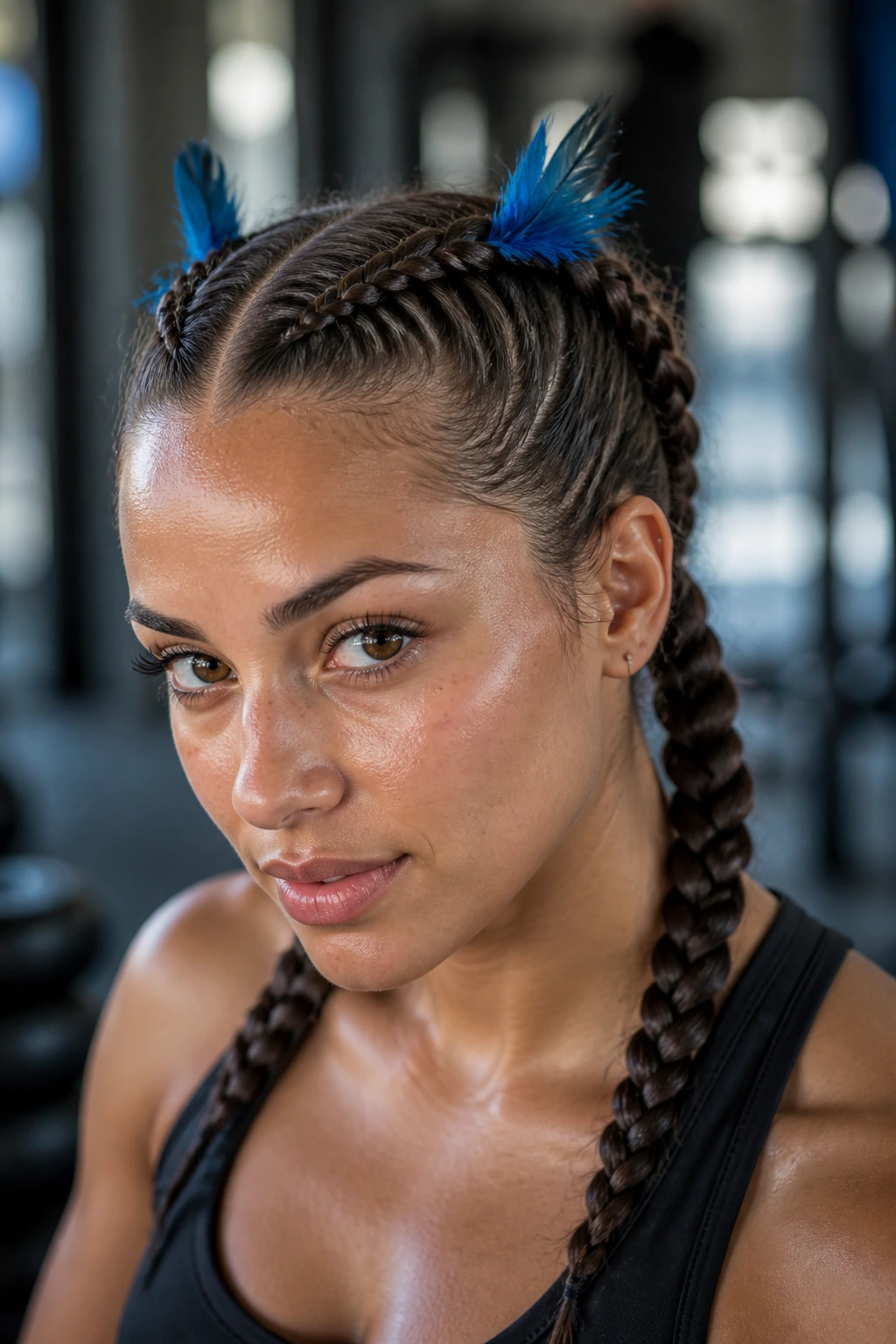
Pigtails aren’t just for kids; they are an incredible way to keep hair secure while exercising. Double Dutch braids (braided inward) stay flatter against the head than regular French braids, making them more comfortable if you are wearing a hat or doing anything that involves pressing your head against a surface. Blue feathers placed in the center of these braids add a fun, sporty look.
Why Flat Is Better
If you are doing exercises that involve a yoga mat or a bench, bulky hair accessories can cause neck pain. Flat braids are the solution. By keeping the feathers low-profile and integrated into the braid, you maintain comfort without sacrificing the look.
Construction Steps
- Part your hair down the center.
- Braid each side tightly against the scalp.
- Tuck the blue feathers into the braids at the crown area.
- Secure the ends with elastic bands that match your hair color for a clean look.
16. The Side-Parted Messy Pony
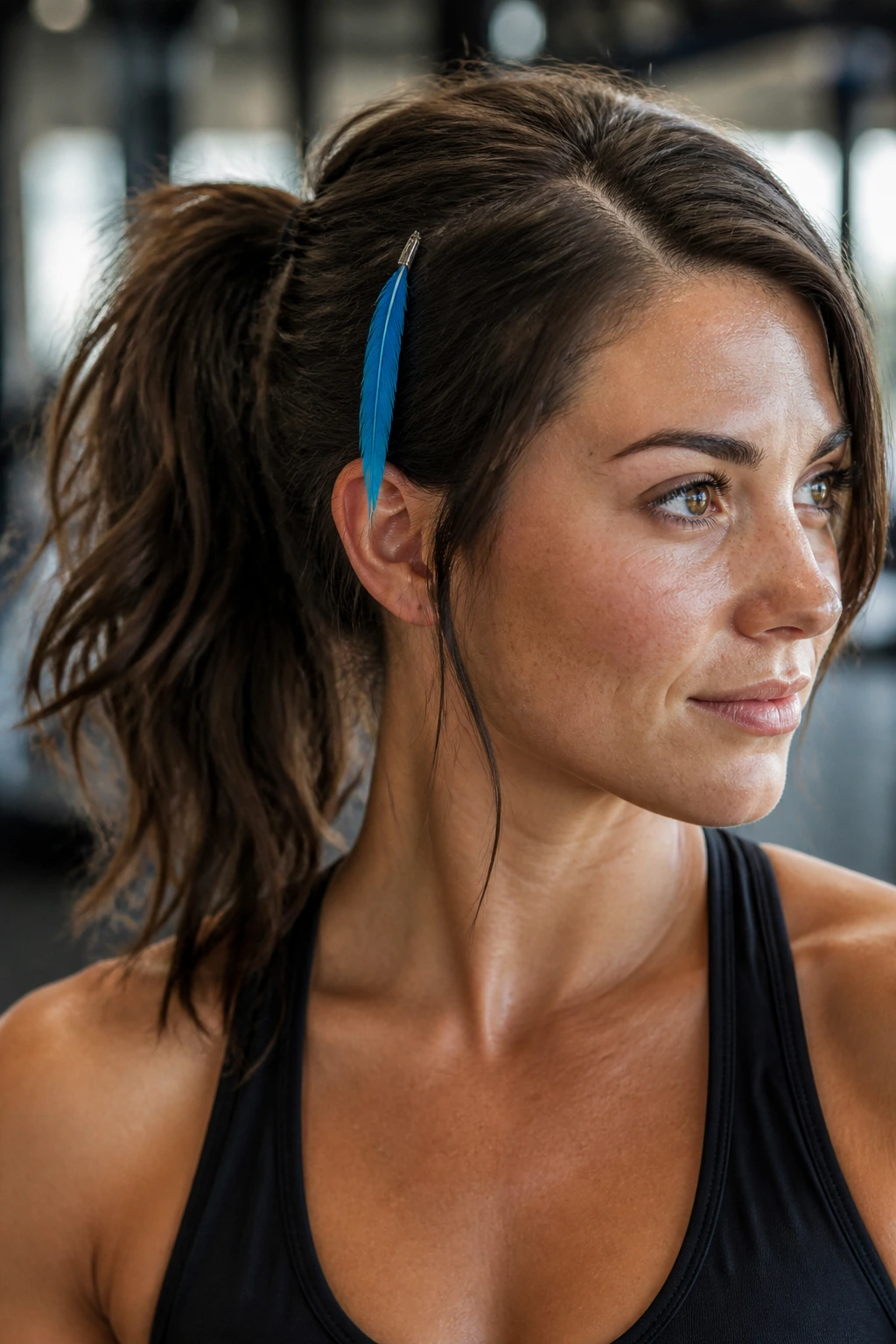
Sometimes, keep it simple. A side-parted ponytail is classic, but adding a single, long blue feather clipped near the side part adds a pop of color that looks intentional and stylish. This is a very quick style for early morning workouts when you don’t have time for complex braiding.
Fast and Effective
For when you are running late, this style gets the job done without looking messy. The feather placement near the temple provides a framing effect that looks good even when your face is flushed from exercise.
Maintenance Tips
- Brush your hair back into a side-parted ponytail.
- Secure it with a high-quality elastic.
- Use a single hair clip to attach a long blue feather at the side part.
- If the feather is too long, trim the base so it doesn’t whip around too much during movement.
17. The Bubble Braid with Feather Inserts
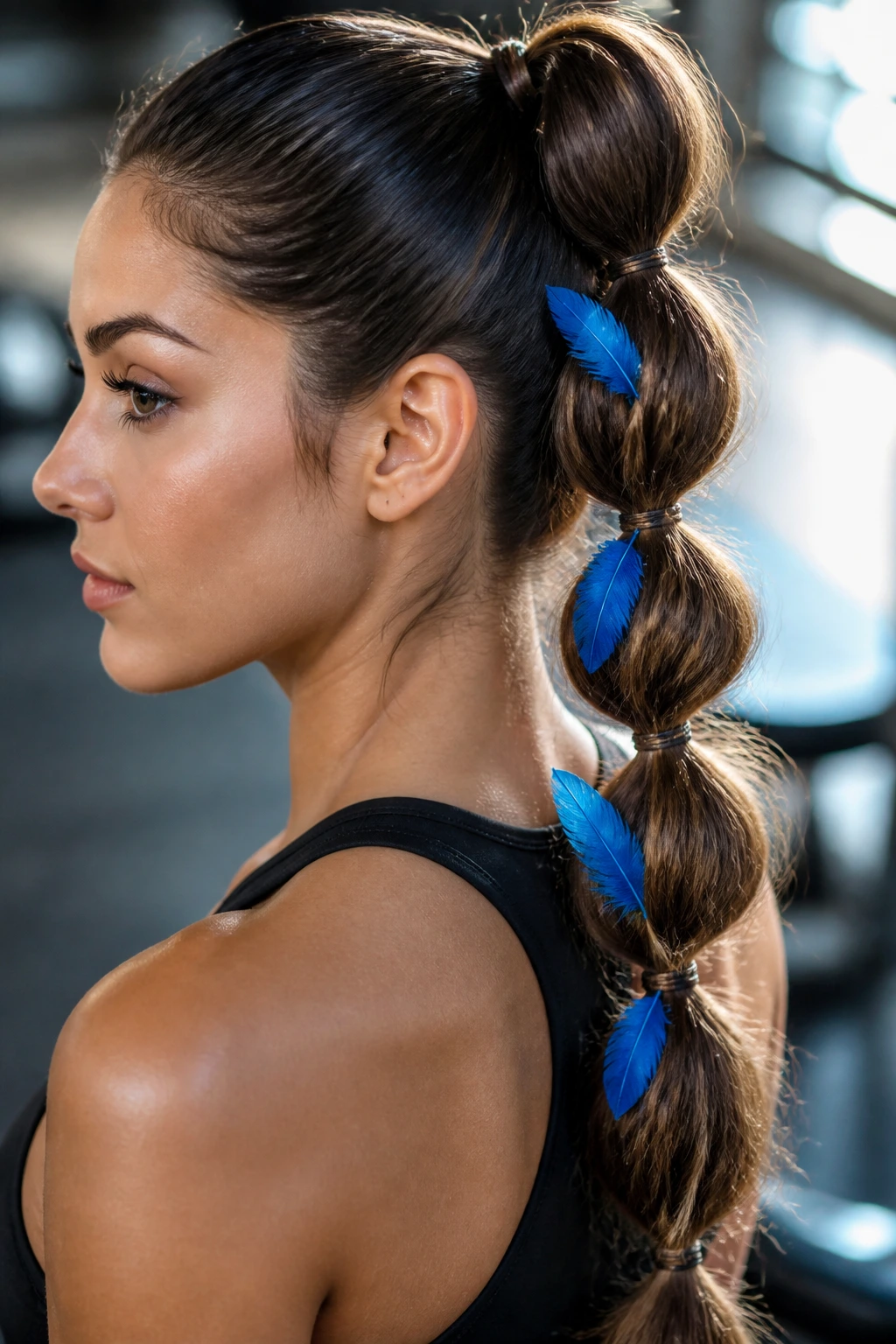
Bubble braids are very popular in fitness circles because they are essentially a series of small, secure ponytails. They are perfect for long, thick hair that tends to get tangled. By placing blue feathers in the middle of each “bubble,” you get a distributed look that feels light and airy throughout your entire workout.
Why It’s Perfect for Long Hair
Long hair can get heavy, especially when you are sweating. The bubble braid distributes the weight and keeps the hair contained. The feathers add a playful touch that highlights the fun shape of the style.
Execution
- Create a high ponytail.
- Add elastics every 2-3 inches down the length of the hair.
- Pull at the hair between each elastic to create “bubbles.”
- Insert blue feathers into the middle of every other bubble.
18. The “Undercut” Braid with Feather Trail
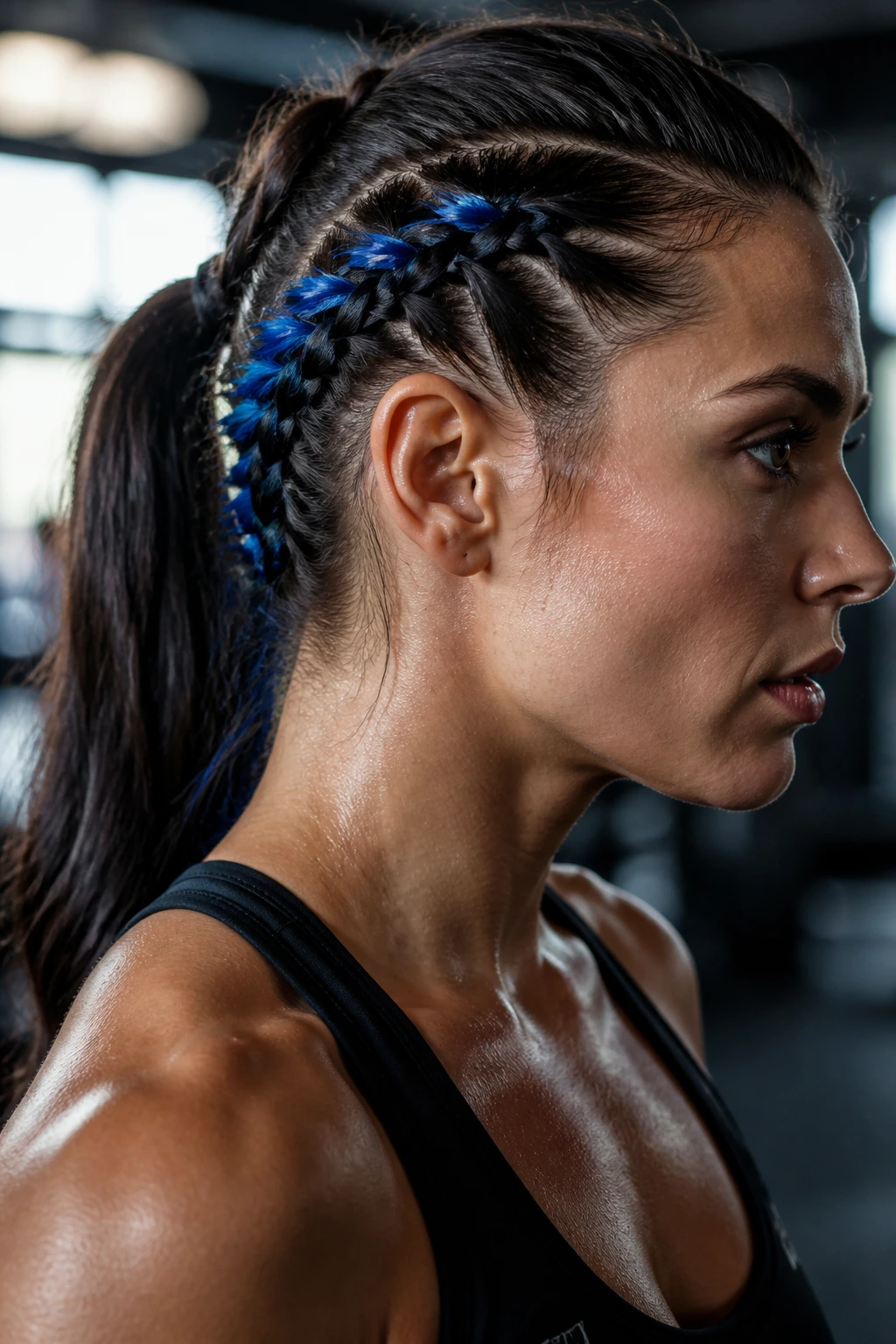
If you enjoy an edgier aesthetic, a side braid that mimics the look of an undercut is a great way to show off some style. By braiding one side of the head tightly and letting the rest of the hair flow in a ponytail, you get the best of both worlds. Adding blue feathers into that tight side braid creates a stunning contrast against the skin.
Edge Meets Utility
This style is very secure on the braided side and offers plenty of ventilation for the rest of the hair. It is a cool, modern look that signals you take your style as seriously as your training.
How to Style
- Part your hair deeply on one side.
- Create a tight French braid along the temple on the smaller section.
- Weave blue feathers into the braid as you move toward the back of the head.
- Gather the rest of your hair and the end of the braid into a ponytail at the back.
Final Thoughts
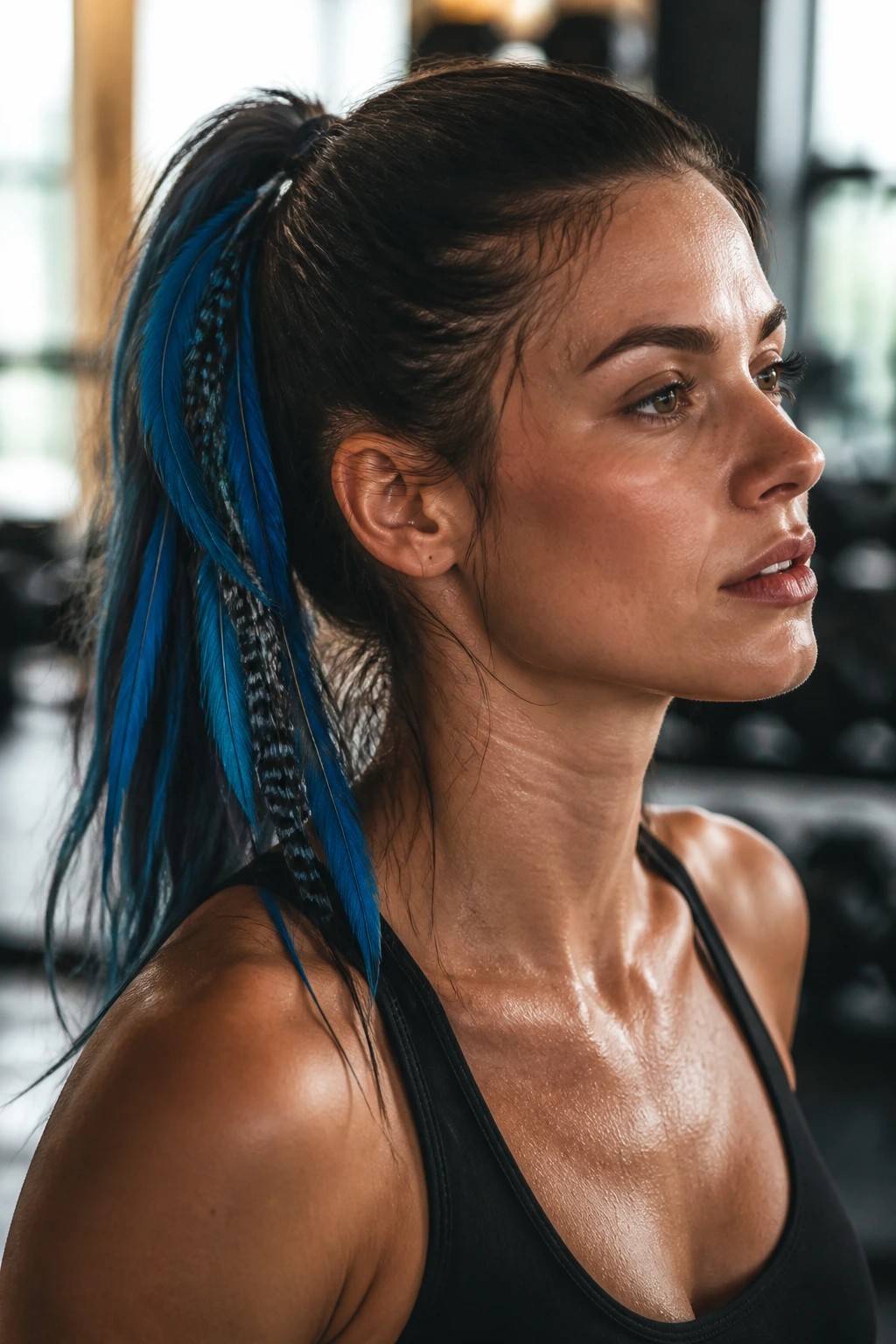
The key to keeping any hairstyle secure through a workout is preparation. Using high-quality elastics, texture sprays, and knowing how to anchor your accessories makes all the difference. Whether you choose the structural strength of a Dutch braid or the simple, elegant grace of a low ponytail, incorporating blue feathers into your gym routine is a fantastic way to blend performance with personality.
Remember that the goal is always to keep the weight distributed and the tension even. As you move, your hair should feel like an extension of your body, not a source of frustration. Once you find the technique—be it micro-links for permanence or simple clips for flexibility—you will find that your fitness sessions become just a little more vibrant. Trust the process, secure your style, and keep moving.