


Anyone who has lived with thick hair knows the quiet frustration of trying to put it up. You find a cute style, buy the standard elastic bands, and hope for the best. Within twenty minutes, the bands have snapped, your scalp is screaming from a tension headache, and those adorable tails have sagged down to your neck like deflated balloons. It is a battle against gravity, density, and sheer weight.
Pigtails often get dismissed as a style reserved for playgrounds, but they are actually a secret weapon for managing heavy, dense hair. By splitting your hair into two distinct sections, you instantly cut the weight on your scalp in half. It is a simple matter of physics. Instead of one massive, heavy ponytail pulling on a single point of your skull, you distribute the weight across two anchor points, making it much easier to wear all day without reaching for the pain relievers.
The key to making pigtails work on heavy strands lies in the preparation and the tools. Traditional thin hair ties will not cut it here. You need thick nylon bands, spiral bobby pins, and a solid understanding of how to section your hair to prevent that awkward, bare-scalp parting line down the back. Let us look at how you can make this classic look work for your heavy hair.
We have spent hours testing, twisting, and wearing these styles to find the ones that actually stay put. From high-altitude bubbles to low, lazy braids, here are twenty-two practical ways to style your thick hair into pigtails that hold their ground.
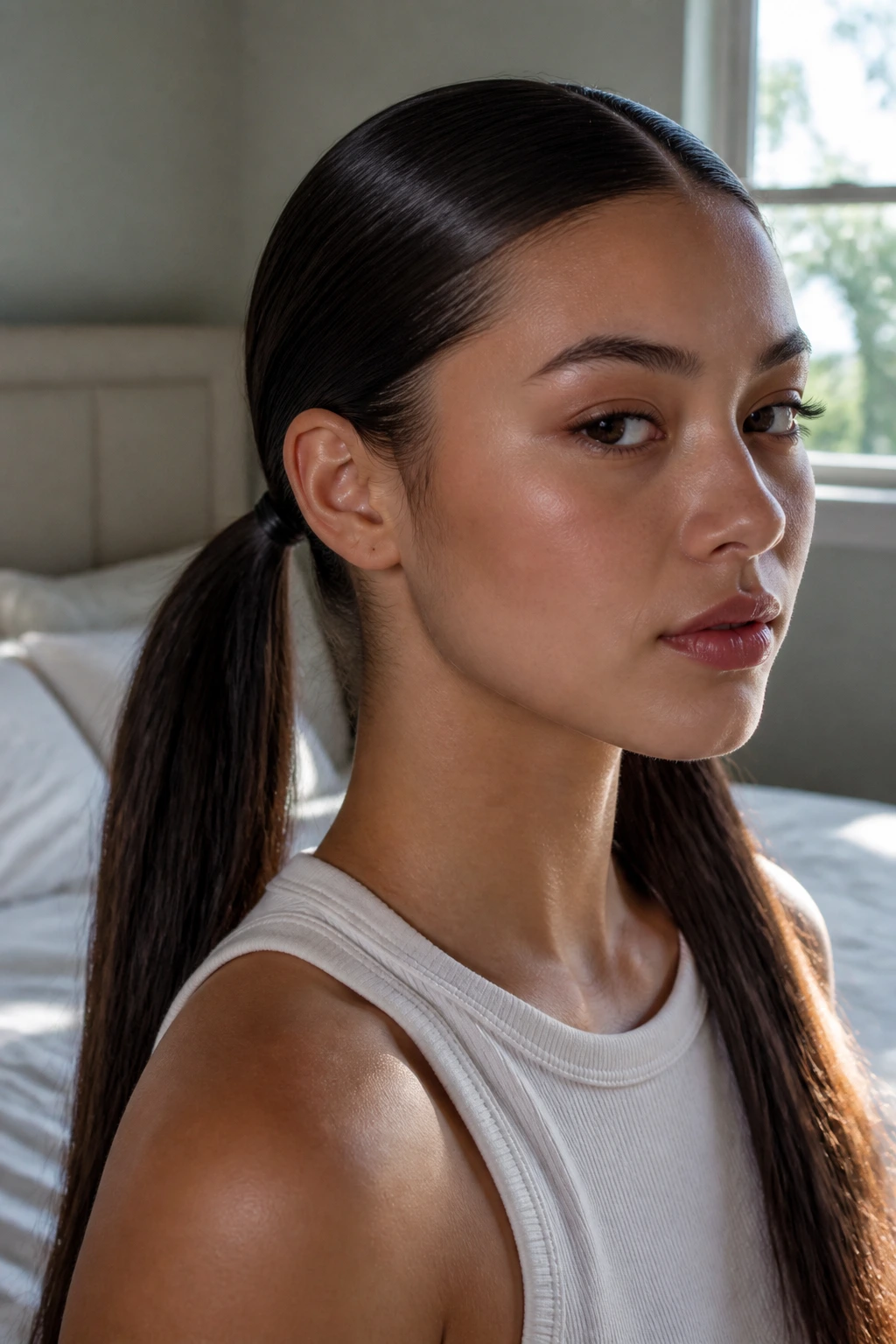
1. Classic Low Sleek Pigtails
This look is all about control and shine, pulling the bulk of your hair down near the nape of your neck where gravity has less leverage to cause headaches. By keeping the anchor point low, you minimize the swing and pull of heavy hair, making it one of the most comfortable options for all-day wear.
Why the Low Anchor Works
Securing the hair at the base of the skull prevents the heavy downward drag that makes high styles so painful after a few hours. This position also allows you to use the natural contours of your head to keep the elastics snugly in place.
Quick Styling Blueprint
- Apply a dime-sized amount of lightweight smoothing cream to damp hair to seal the cuticle.
- Part the hair down the center using a metal-tipped rat-tail comb for a clean line.
- Brush each side downward and slightly back, securing with thick nylon bands behind each ear.
- Gently pull a tiny sliver of hair from the bottom of each tail, wrap it around the band to hide it, and tuck it into the elastic.
Pro tip: Use a boar bristle brush to sweep the hair flat against your scalp; this distributes the oils and keeps the surface looking polished rather than bumpy.
2. High Bubble Pigtails
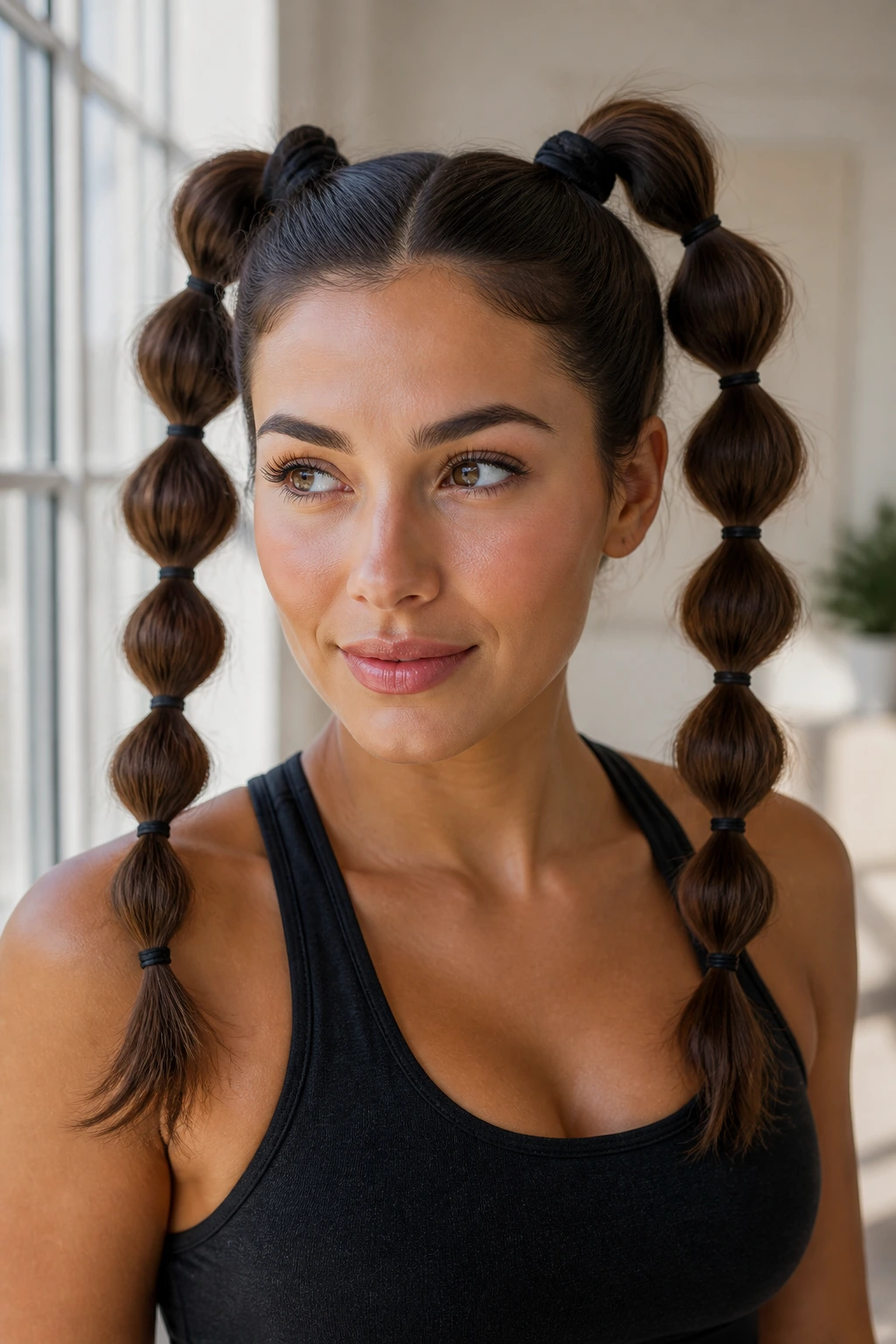
You might think high styles are off-limits if your hair is thick, but the bubble technique actually solves the sagging problem by creating multiple structural check-points along the length of each tail. Each band acts as a tiny bracket that supports the weight of the hair above it.
This is a fantastic option if you want height without the inevitable midday droop. By sectioning the tail into segments, you trap the bulk and keep the style looking intentional and voluminous from morning until night.
To style this, start by spraying a light texturizing mist through your lengths. Secure your base pigtails high on the crown using heavy-duty bands that will not stretch out. Moving down about three inches on each tail, tie another small elastic, then gently pinch and pull the hair between the two bands outward to create a rounded, spherical bubble. Repeat this process down the length of both tails. It helps to use clear polyurethane elastics for the lower bubbles, as they grip the hair tightly without adding extra bulk.
3. Double Dutch Braid Pigtails
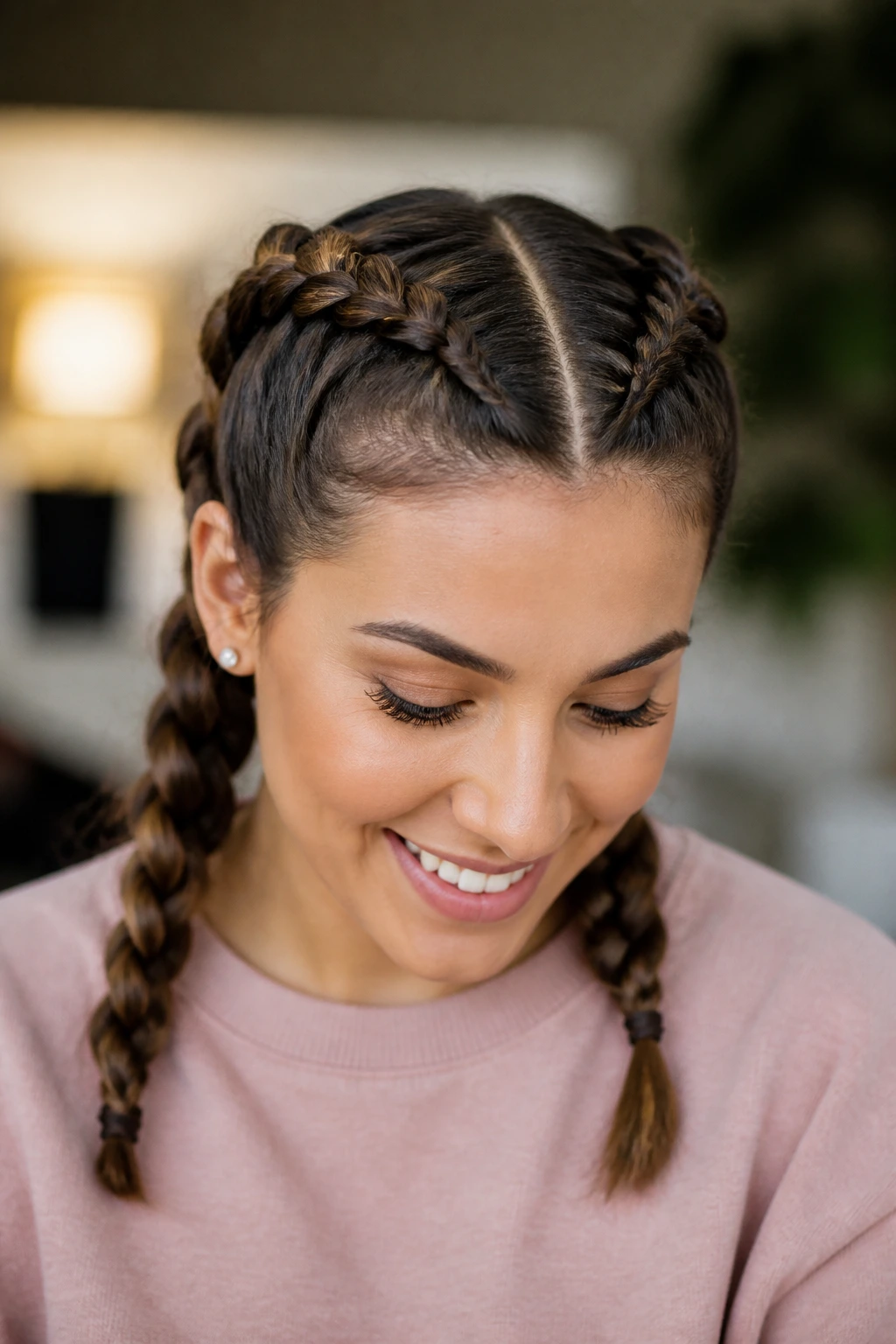
Why choose Dutch braids over French braids for dense hair? The answer comes down to depth and surface control. Dutch braids sit on top of the head like a crown, weaving the heavy bulk of your hair into a self-supporting structure right against your scalp.
How the Dutch Weave Manages Mass
By crossing strands under instead of over, you pull the hair tight to the head, keeping it locked in place. This prevents the sag that often happens with loose styles when you walk or move your head.
Step-by-Step Styling
- Divide your hair down the middle into two equal sections, clipping one side out of the way with a large alligator clip.
- Take a small three-way split of hair at your front hairline on the active side.
- Begin braiding by crossing the left strand under the middle strand, then the right strand under the middle strand.
- Gradually add small, equal sections of loose hair to each strand as you move back toward the nape of your neck.
- Keep your hands close to the scalp to maintain high tension, which prevents the braid from sagging later.
- Once you reach the neck, continue with a standard three-strand braid to the ends and secure with an elastic.
4. Messy Textured Space Bun Pigtails
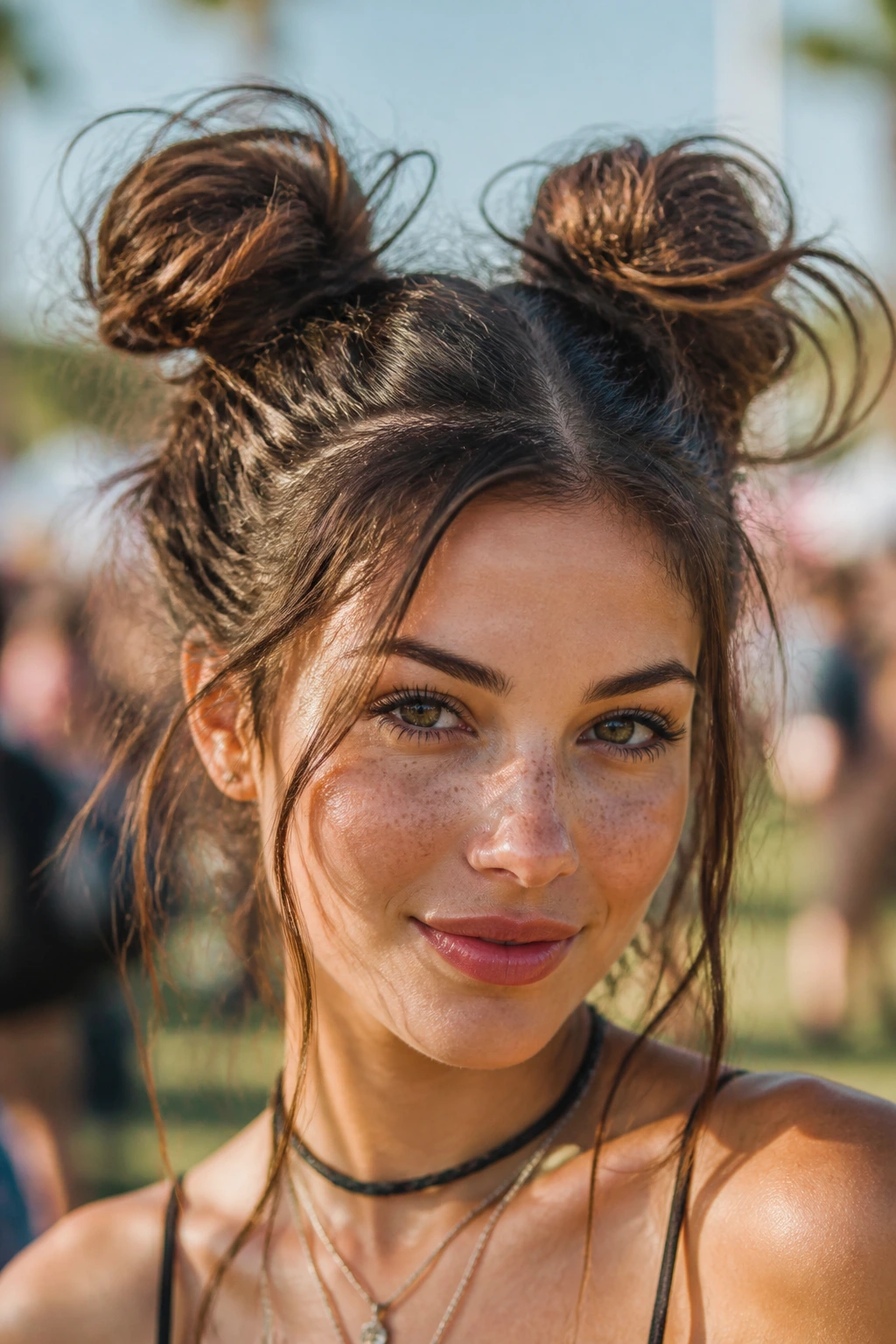
If you have ever tried to wear a single, giant topknot with thick hair, you know it eventually sags backward, pulling painfully on your front hairline. Splitting that mass into two messy space buns on top of your head is the ultimate solution for a playful, high-volume look that actually stays up.
An old friend of mine with waist-length, dense curls swears by this style for outdoor festivals and hot summer afternoons. She uses a clever trick: instead of wrapping the hair into a neat coil, she loops it.
- Prep your hair with a generous shake of texturizing powder at the roots to give the hair ties something to grip.
- Pull your hair into two high pigtails on the upper crown of your head, but on the final loop of the elastic, do not pull the hair all the way through.
- Leave the ends tucked in, creating two large, loose loops of hair.
- Gently pull apart the loops with your fingers to expand their size.
- Pin down the edges of the loops to your scalp using long, heavy-duty U-shaped hairpins.
The beauty of this style is its imperfection; if a few strands slip loose, it only adds to the relaxed, lived-in aesthetic.
5. Half-Up Half-Down High Pigtails
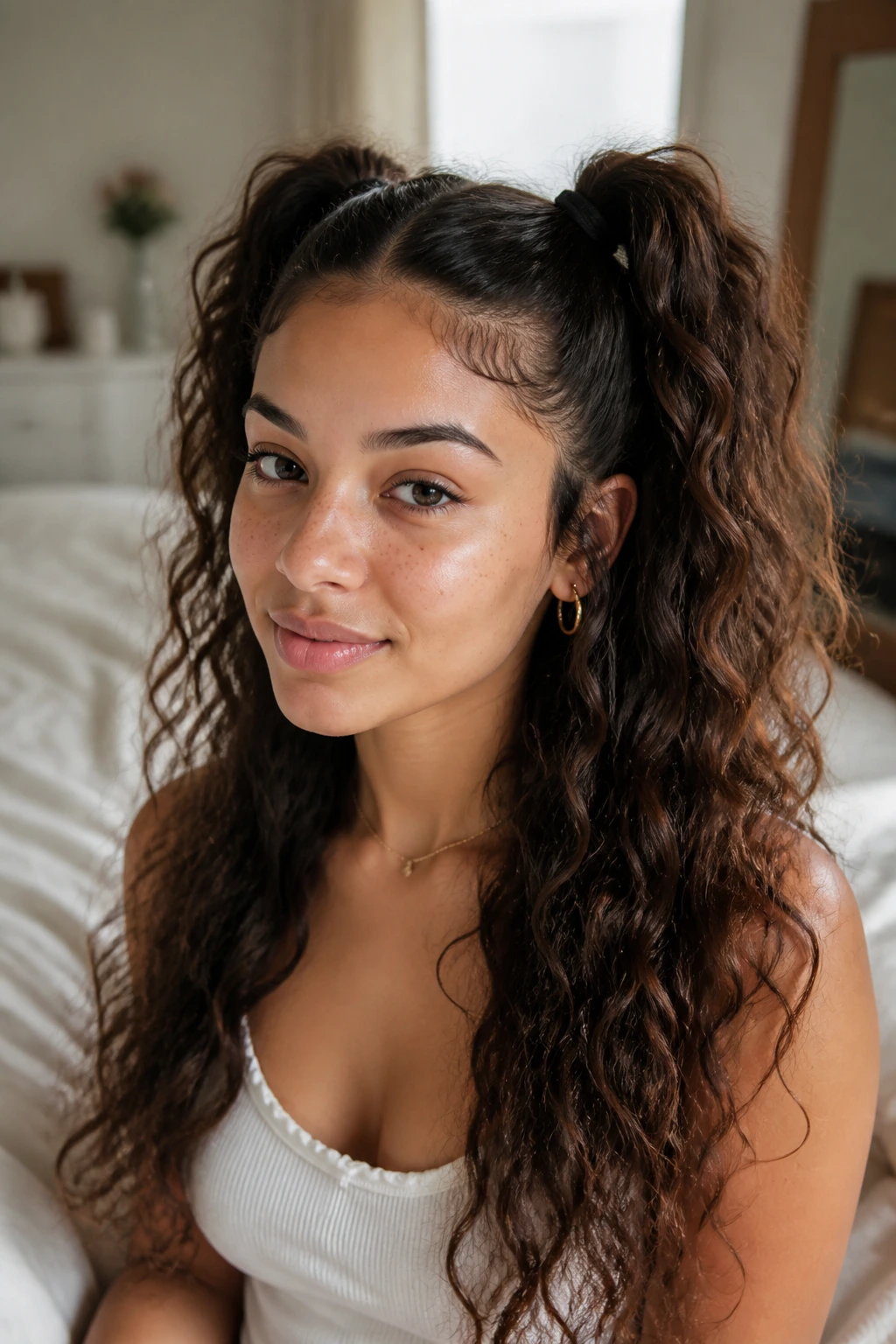
This style is a brilliant compromise for anyone who loves the dramatic swing of high pigtails but cannot handle the weight of a full head of thick hair pulled up. By leaving the bottom half of your hair down, you release at least fifty percent of the weight while still enjoying that high-flying, energetic silhouette.
It is particularly useful if your hair has a lot of natural slide or slip, as the bottom section acts as a soft cushion for the upper tails to rest against. You get the bounce and movement without the scalp strain.
When parting your hair for this style, do not go straight across the back. Instead, trace a horseshoe-shaped parting from just above your ears up to the crown. This prevents the hair from splitting awkwardly in the back and showing your scalp. Secure the two top sections into high tails, keeping them slightly forward on the head so they frame your face. You can let the bottom section hang straight, or add a few loose waves with a wide-barrel curling iron to match the bouncy texture of the tails above.
6. Fishtail Braid Pigtails
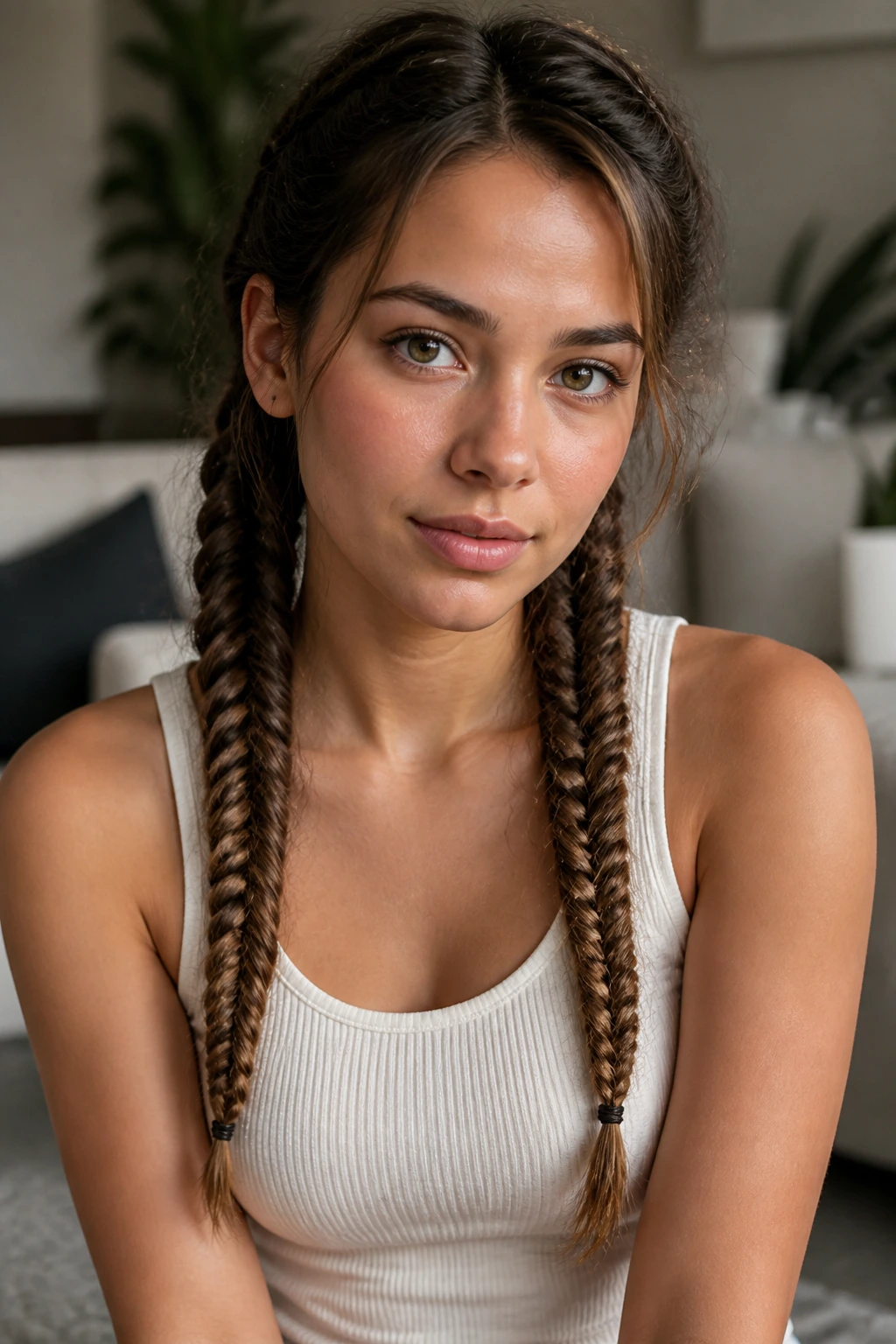
Unlike a standard three-strand braid which can look thick and blocky on dense hair, a fishtail braid breaks the hair down into tiny, intricate weaves. This results in a flatter, wider braid that lies beautifully against your shoulders and showcases the incredible density of your hair without looking like heavy ropes.
The Physics of the Fishtail
Because you are weaving tiny strands from the outside edges rather than crossing over large chunks of hair, the tension is distributed much more evenly. This keeps the braid incredibly secure and prevents it from unraveling or loosening throughout the day.
Who It Is Best For
This style is a dream for hair that has been textured with long layers. The shorter layers get woven tightly into the center of the braid rather than poking out of the sides, creating a sleek, clean finish that holds its shape.
7. Twisted Rope Pigtails
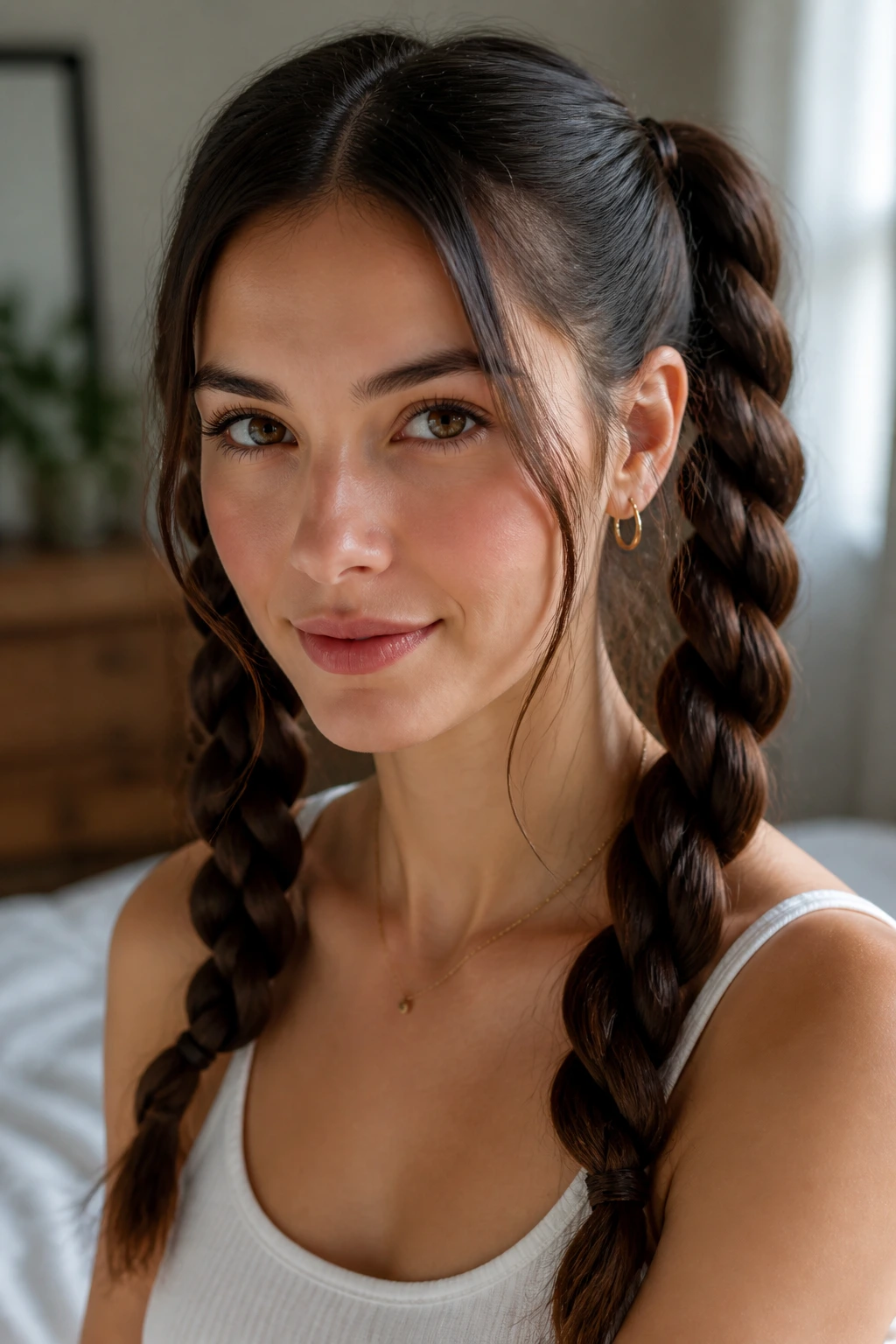
When you do not have the time or patience for intricate braiding, twisted rope pigtails are your best friend. They look remarkably sophisticated—almost like architectural sculptures—but they only require two sections of hair per side, making them incredibly fast to assemble.
Why Twisting Needs Direct Directional Tension
The secret to a rope braid that does not immediately unravel lies in a simple rule of physics: you must twist the individual strands in one direction, and wrap them together in the opposite direction. If you miss this step, your ropes will turn into a limp, tangled mess within seconds.
Quick Styling Blueprint
- Split your hair down the center and secure into two low or mid-height pigtails.
- Divide one tail into two equal sections.
- Twist both individual sections tightly to the right (clockwise) until they begin to curl.
- Wrap the two twisted sections over each other to the left (counter-clockwise).
- Secure the end with a small elastic, and repeat on the other side.
Pro tip: Apply a tiny drop of hair oil to your palms before twisting to keep flyaways flat and give the ropes a glossy, polished sheen.
8. Inside-Out French Braid Pigtails
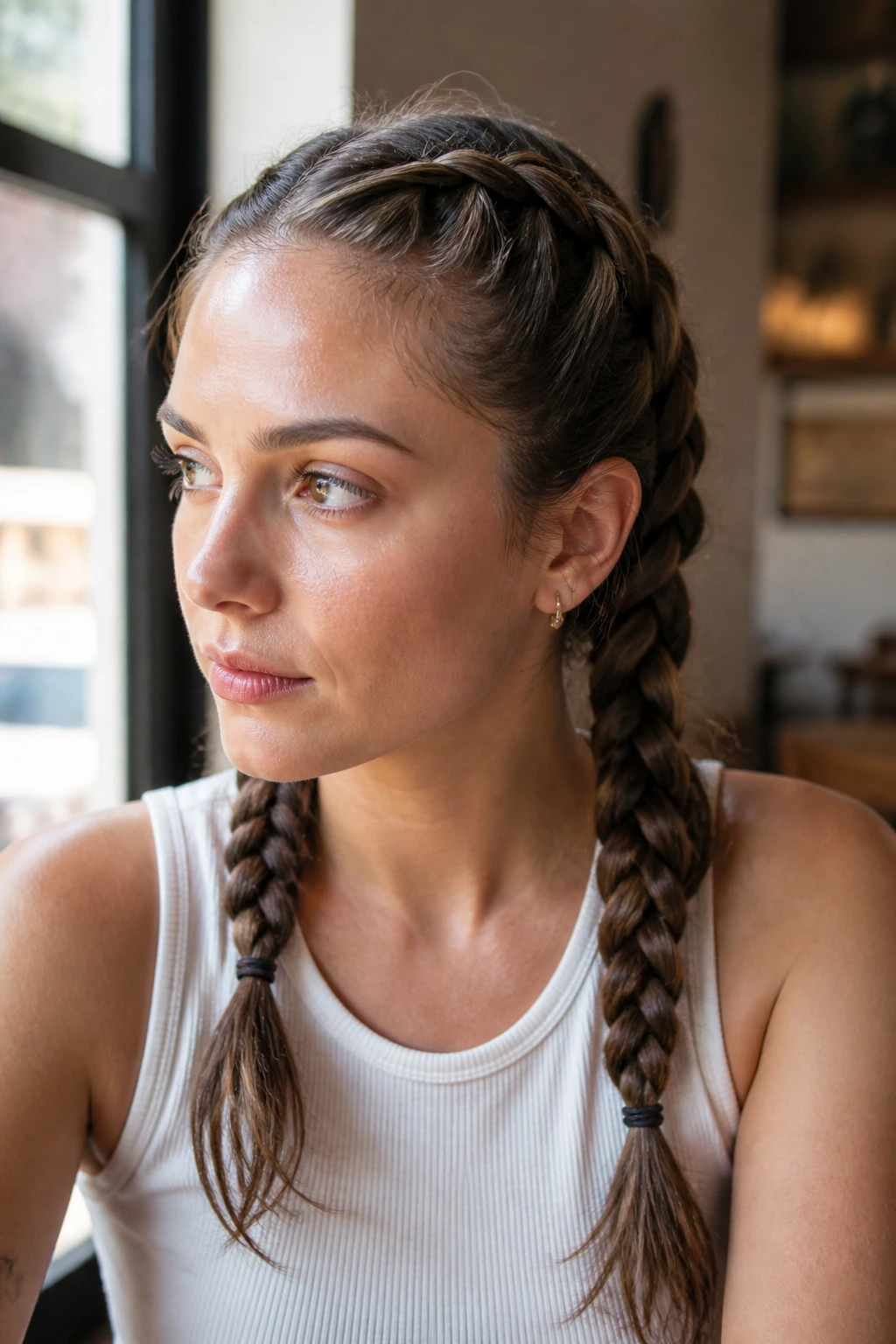
This is a clever variation of the classic style that works brilliantly for thick hair that tends to puff up at the roots. By reversing the classic French braid technique, you create a flat, woven band along the scalp that compresses the hair’s volume right where it starts.
This flat profile makes the style incredibly comfortable under hats, helmets, or simply when leaning back against a headrest. It keeps the bulk of your hair tightly contained and out of your way.
To style this, you will want to work on slightly damp hair or hair prepped with a moisturizing leave-in spray. Start your braid high near the temple, keeping your hands flush against your skull as you work your way down behind the ears. The key is to take very wide, flat sections of hair as you feed the braid, which helps to flatten the overall shape against your head. Secure at the nape of the neck, letting the remaining length hang in a thick, glossy tail.
9. Low Messy Textured Pigtail Buns
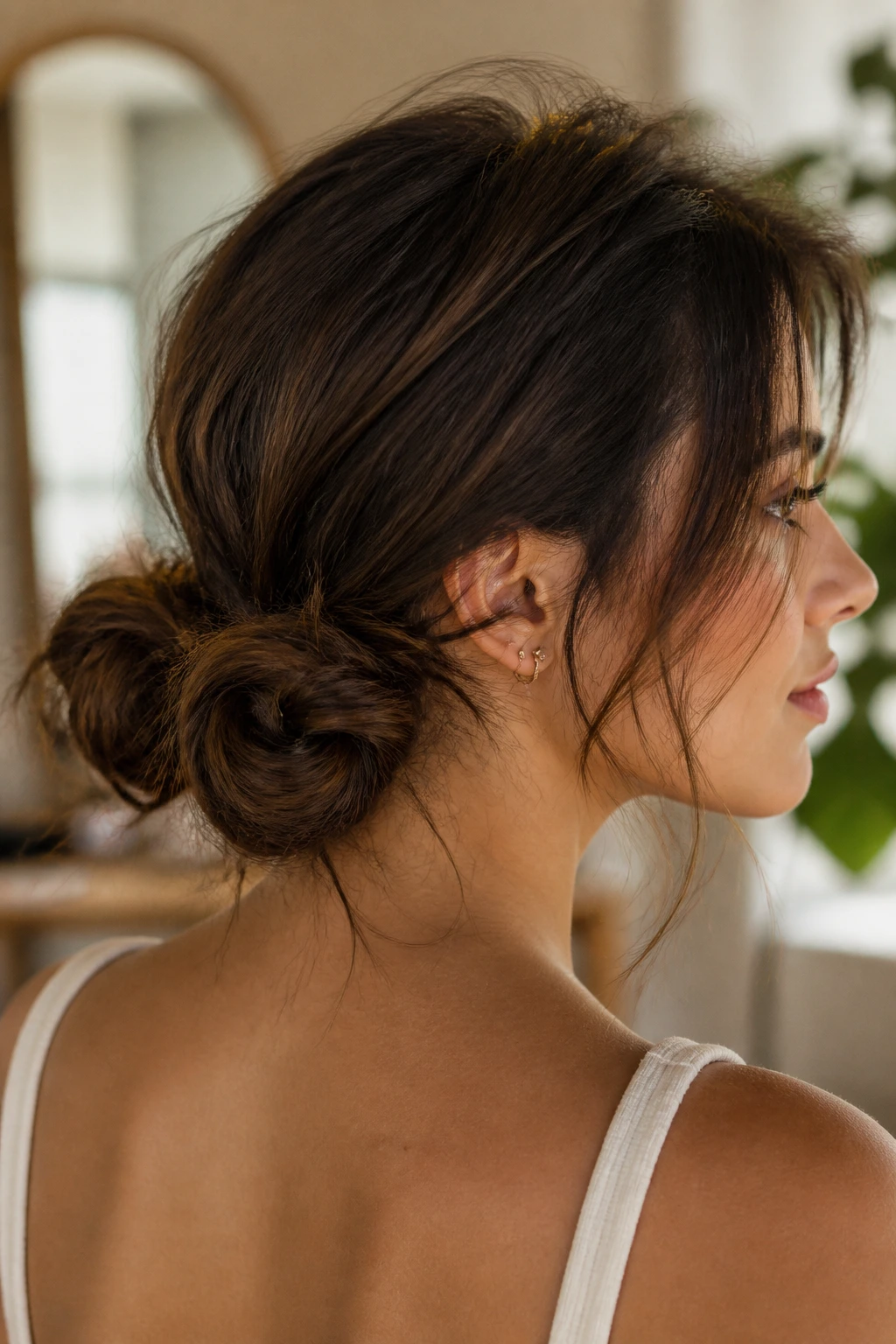
When you want a casual, effortless look that still feels secure, these low buns are the perfect solution. Unlike high space buns which can feel heavy and unstable, low buns sit comfortably at the base of your skull, resting against your neck for extra support.
Why Does This Style Hold So Well?
By keeping the buns low, you utilize the natural dip at the back of your neck to cradle the weight. This means you do not need to pull the hair ties painfully tight to keep the style from moving.
How to Style It
- Spray your lengths with a dry texturizing spray to add grip and dimension.
- Part your hair down the middle and gather each side into a loose ponytail at the nape of the neck.
- Twist each tail loosely, then wrap it around its base to create a relaxed, circular bun.
- Secure the buns by pushing three or four U-shaped hairpins directly through the outer edges of the bun and into the hair close to the scalp.
- Pull a few soft pieces of hair out around your ears and temples to soften the overall look and frame your face.
10. Segmented Pull-Through Braid Pigtails
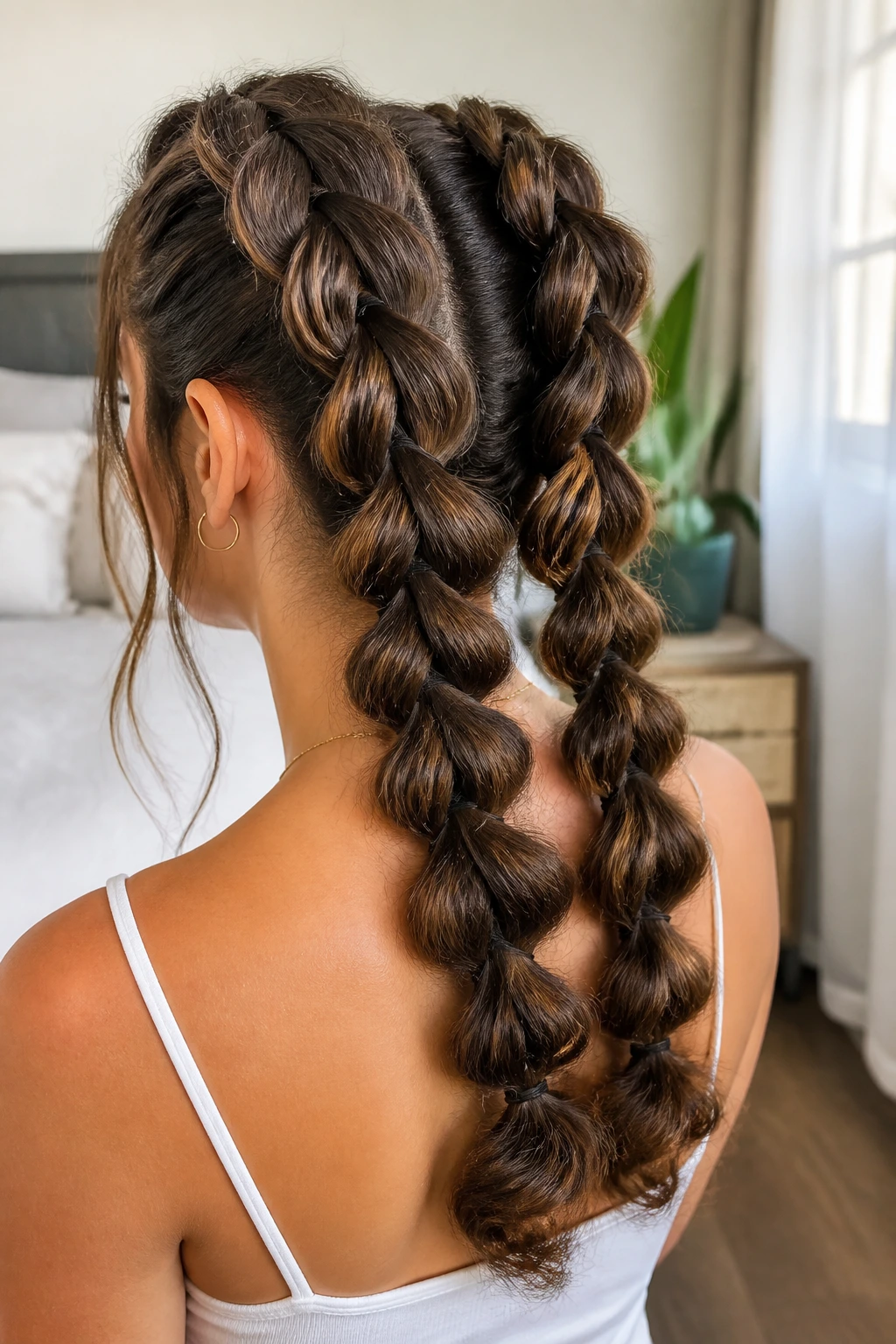
This style looks like an incredibly complex, voluminous braid, but it is actually a series of interconnected ponytails. This is a game-changer for thick hair because it completely eliminates the need for braiding skills while offering unmatched security.
I remember helping a friend style her hair this way for a long day of travel. She was amazed that even after an eight-hour flight, not a single strand had fallen out of place.
- Start by parting your hair down the center and creating two small ponytails at your front hairline.
- Directing your work backward, create a second pair of ponytails right behind the first, incorporating the tails from the front section into these new ties.
- Continue this pattern of sectioning and tying down the back of your head.
- Once you reach the loose length of the tails, continue splitting the top section, wrapping it around the bottom section, and securing it with an elastic.
- When the entire tail is secured, gently tug at the outer edges of each loop to expand the volume, giving it a thick, woven appearance.
It is an incredibly sturdy style because if one section happens to loosen, the rest of the chain remains completely locked in place.
11. Sleek High Pigtails with Wrapped Bases
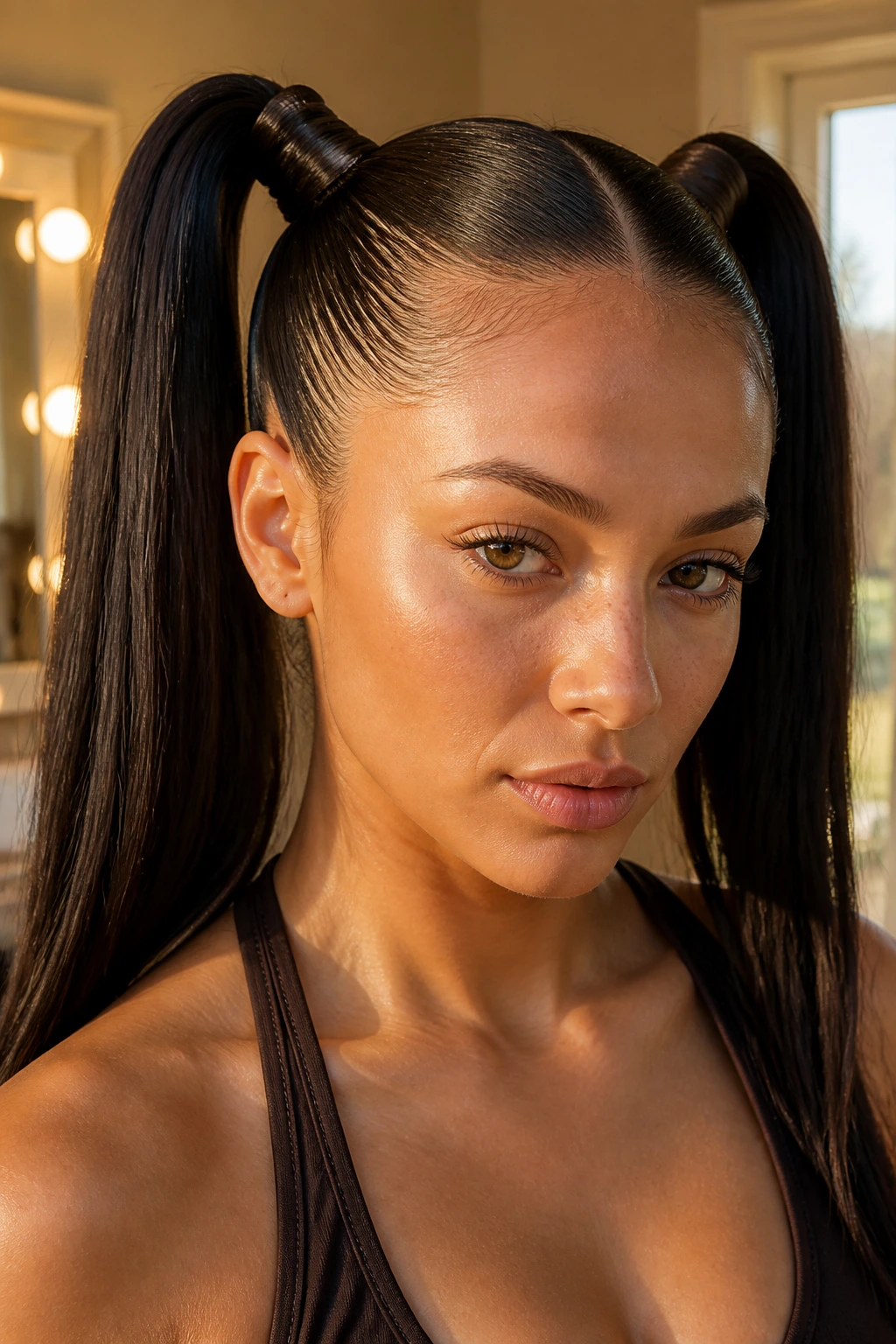
This style delivers that clean, high-fashion aesthetic while solving the major aesthetic problem of thick hair: massive, unsightly elastics. By using your own hair to wrap and cover the thick bands, you create a seamless, elegant transition that looks incredibly polished.
The wrapped base does more than just look good; it actually acts as a structural collar that holds the pigtail upright. It prevents the tail from sagging downward, keeping the silhouette sharp and elevated.
To get this look, use a gel or pomade with a firm hold to slick back the hair on the sides of your head. Secure your pigtails high on the crown with durable, thick elastic bands. Once secured, take a half-inch section of hair from the underside of one tail, spray it with a firm-hold hairspray, and wrap it tightly around the band until the elastic is completely hidden. Secure the end of the wrapped section with a small bobby pin pushed straight down into the base of the ponytail so it remains invisible.
12. Crown-Braided Pigtail Hybrids
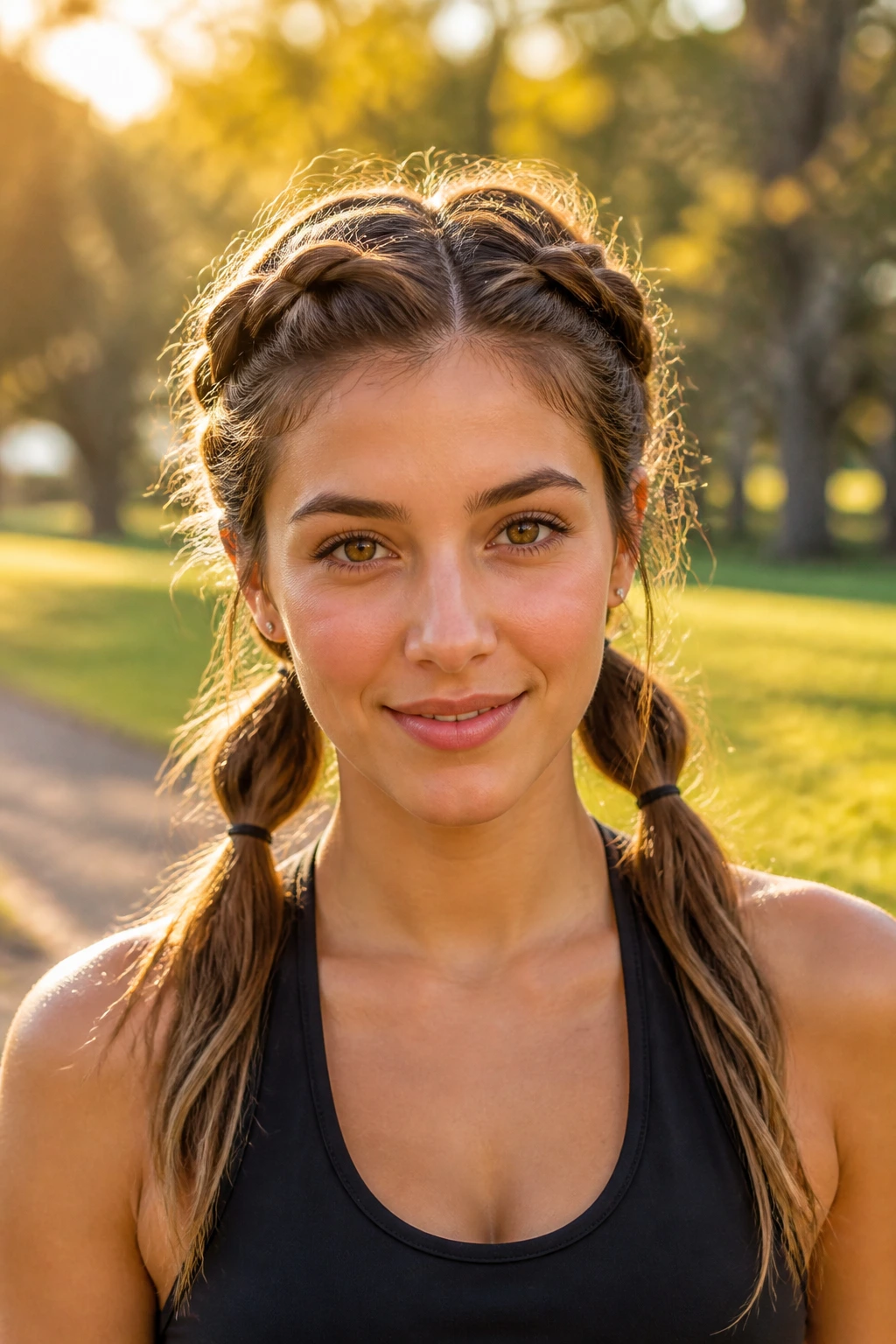
If you have thick hair with shorter layers around your face, you know how annoying it is when those pieces constantly fall out of high styles. This hybrid style solves that by weaving the front layers into a crown braid before securing the rest of the hair into pigtails.
The Crown Advantage
Instead of relying on hairspray or clips to keep short layers back, you weave them directly into the structure of the style. This keeps your face clear and prevents the front of your hair from looking messy as the day goes on.
Who It Is Best For
This is the ultimate choice for active days—whether you are working out, hiking, or running errands. It keeps every single strand locked down without requiring a dozen bobby pins.
13. Voluminous Curly Pigtails with Defined Ringlets
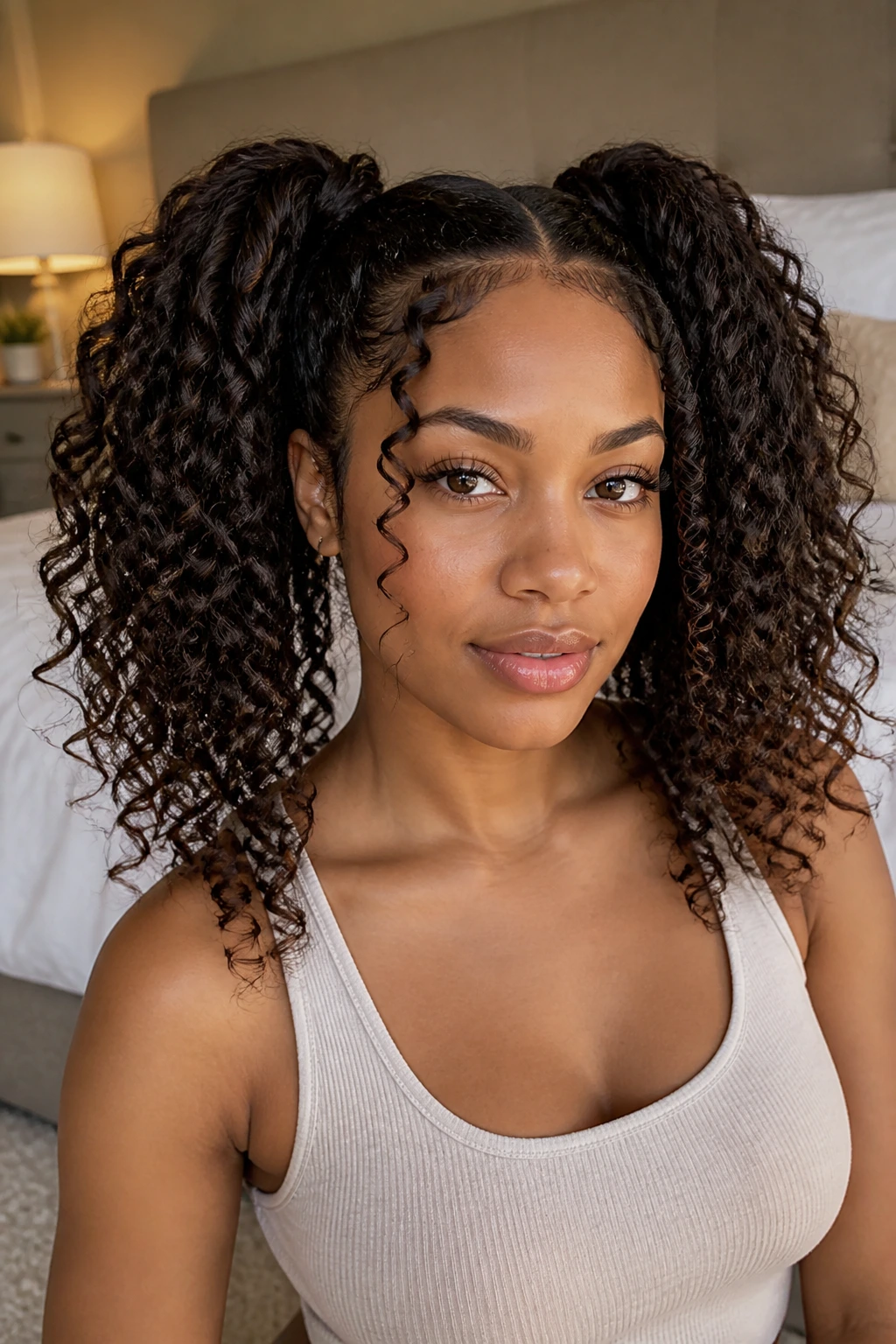
For those with natural curls or heavy coils, pigtails are a magnificent way to showcase your texture while keeping your hair controlled and out of your face. This style embraces the natural volume of your curls, letting them cascade beautifully from the sides of your head.
The Importance of Moisture Retention
Thick, curly hair is naturally prone to dryness, and pulling it back can sometimes flatten the curl pattern at the roots. Using the right prep products is key to keeping your curls bouncy and defined.
Quick Styling Blueprint
- Apply a generous amount of moisturizing leave-in conditioner or curl-defining cream to damp hair.
- Use your fingers or a wide-tooth comb to part your hair, avoiding a strict straight line to keep the look soft and natural.
- Gather the hair on each side into mid-height pigtails, securing them loosely with silk or satin scrunchies to prevent creasing and breakage.
- Gently scrunch the ends of the tails with a micro-fiber towel to encourage the curl pattern.
- Apply a small dab of hair gel to your fingertips and coil any loose face-framing curls around your finger to define them.
Pro tip: Avoid using traditional elastic bands on curly hair; satin scrunchies provide plenty of grip for thick curls without causing friction or disrupting your curl pattern.
14. Side-Swept Low Romantic Braid Pigtails
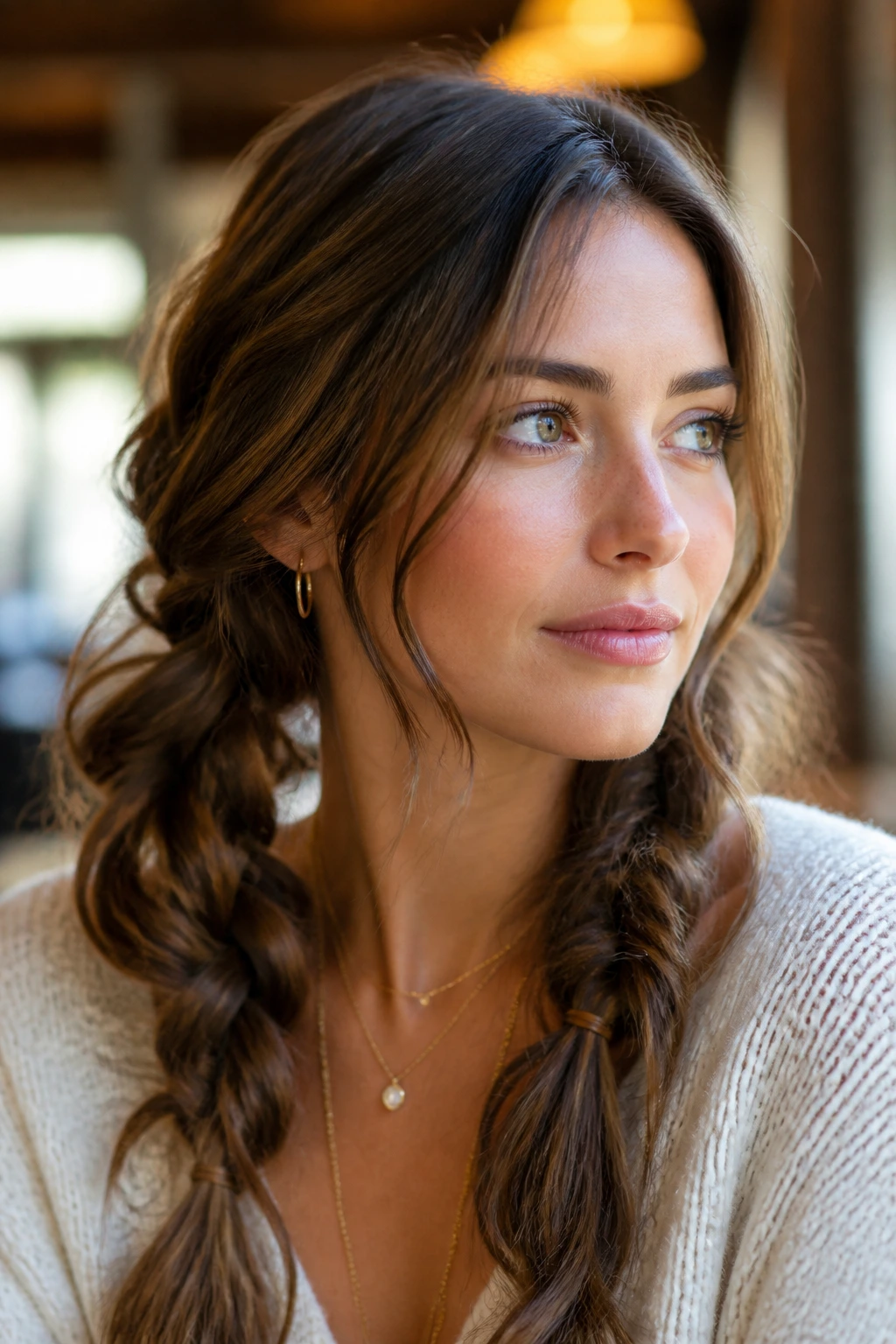
This style is perfect for those days when you want a soft, feminine look that does not feel too tight or structured. By sweeping the hair slightly forward and over the shoulders, you create a beautiful frame for your face while keeping the weight off your neck.
The gentle drape of these braids makes them incredibly comfortable. They do not pull on your scalp, making them an excellent choice for anyone who is prone to tension headaches.
To create this look, part your hair slightly off-center to give the front a soft, asymmetrical drape. Gather your hair into two low pigtails just behind each ear, but keep the tension loose as you begin to braid. Weave a classic three-strand braid down each side, directing the braids forward so they rest over your collarbones. Secure the ends with clear elastics, then gently pancake the braids by pulling at the outer loops to make them look wider and thicker.
15. Micro-Braided Accent Pigtails
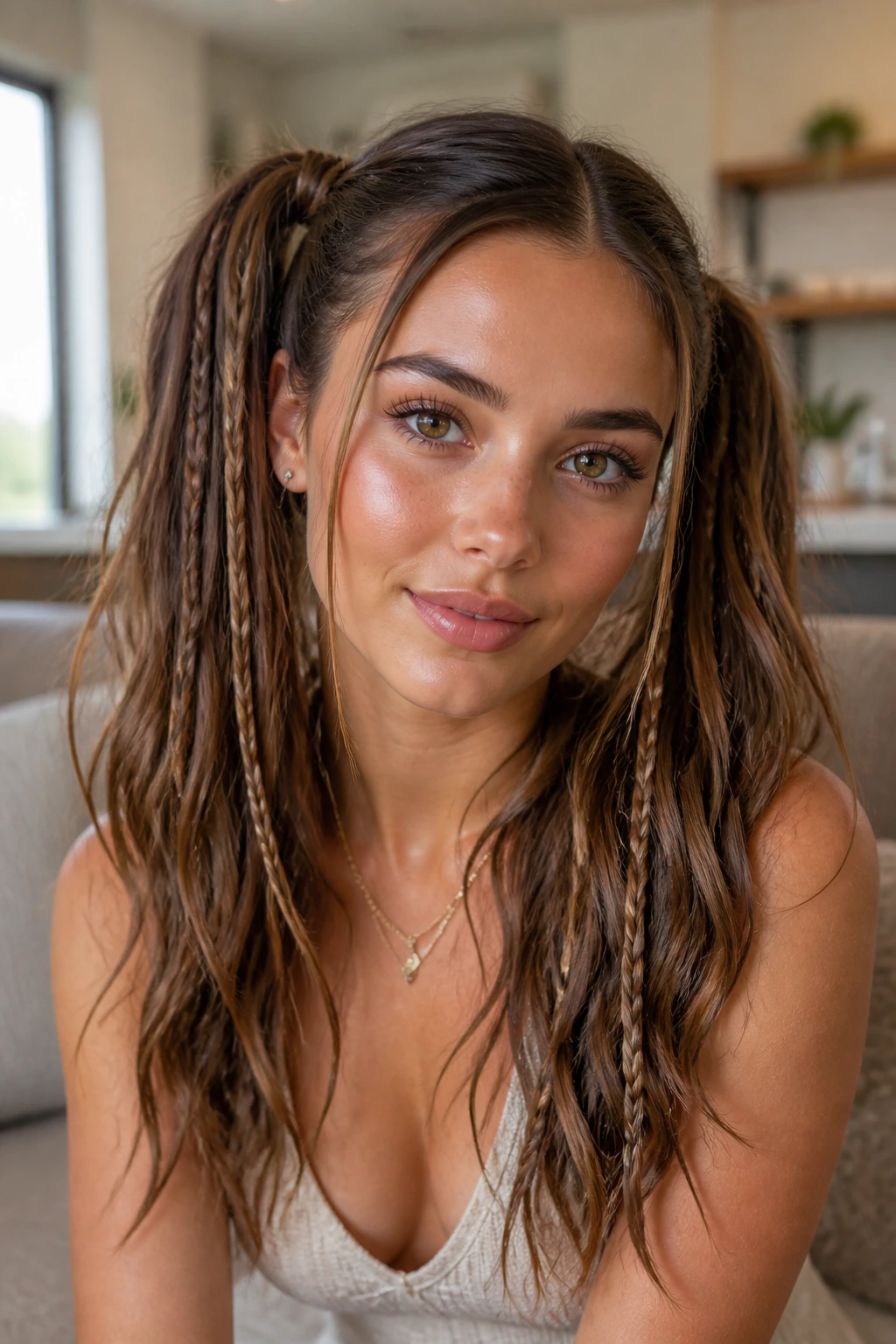
If you love the look of simple, classic pigtails but want to add a bit of visual interest, micro-braids are a fantastic technique. By weaving tiny accent braids into the main body of your pigtails, you break up the mass of thick hair and add a beautiful, multi-textured effect.
Why Accents Work on Heavy Hair
Adding tiny braids within a larger ponytail helps to compress some of the bulk while creating beautiful layers of texture. It makes the hair look lighter and more dynamic.
How to Style It
- Part your hair down the center and create two mid-height pigtails.
- From the center of one tail, take a very thin section of hair (about the width of a pencil).
- Braid this small section tightly all the way to the end and secure it with a tiny clear elastic.
- Repeat this process, creating two or three micro-braids within each pigtail.
- Leave the rest of the hair in the tails straight or wavy, allowing the tiny braids to peek through as you move.
16. Chiffon-Ribbon Tied Low Pigtails
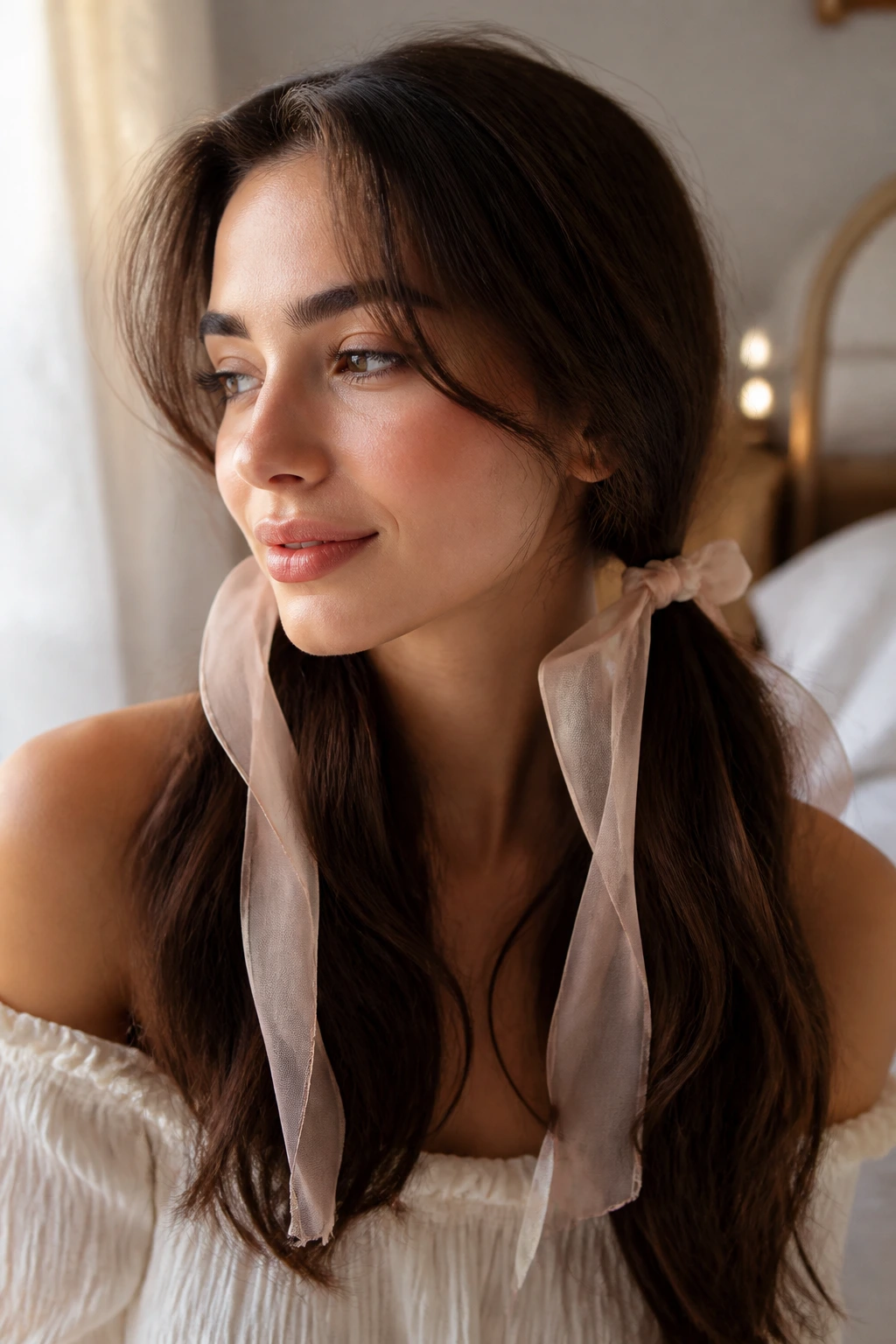
Accessories are a brilliant way to manage the sheer mass of thick hair. By incorporating soft chiffon ribbons into your low pigtails, you not only cover your heavy-duty hair ties but also add a touch of classic, romantic style that works beautifully for casual outings.
An acquaintance who writes for a fashion blog once showed me how she uses ribbons to hide the double-elastic method she uses to keep her heavy hair in place. The fabric completely conceals the heavy engineering underneath.
- Secure your hair into two low pigtails at the nape of your neck using two elastics per side for extra security.
- Cut two lengths of soft chiffon or silk ribbon, about eighteen inches each.
- Tie the ribbon around the base of each pigtail, wrapping it twice to ensure it covers the elastic bands completely.
- Tie the ribbon into a soft, floppy bow, letting the long tails of the ribbon drape down alongside your hair.
The contrast between the soft fabric and the heavy texture of your hair creates a beautiful, balanced look that feels effortless and elegant.
17. Double Mohawk Dutch Pigtails
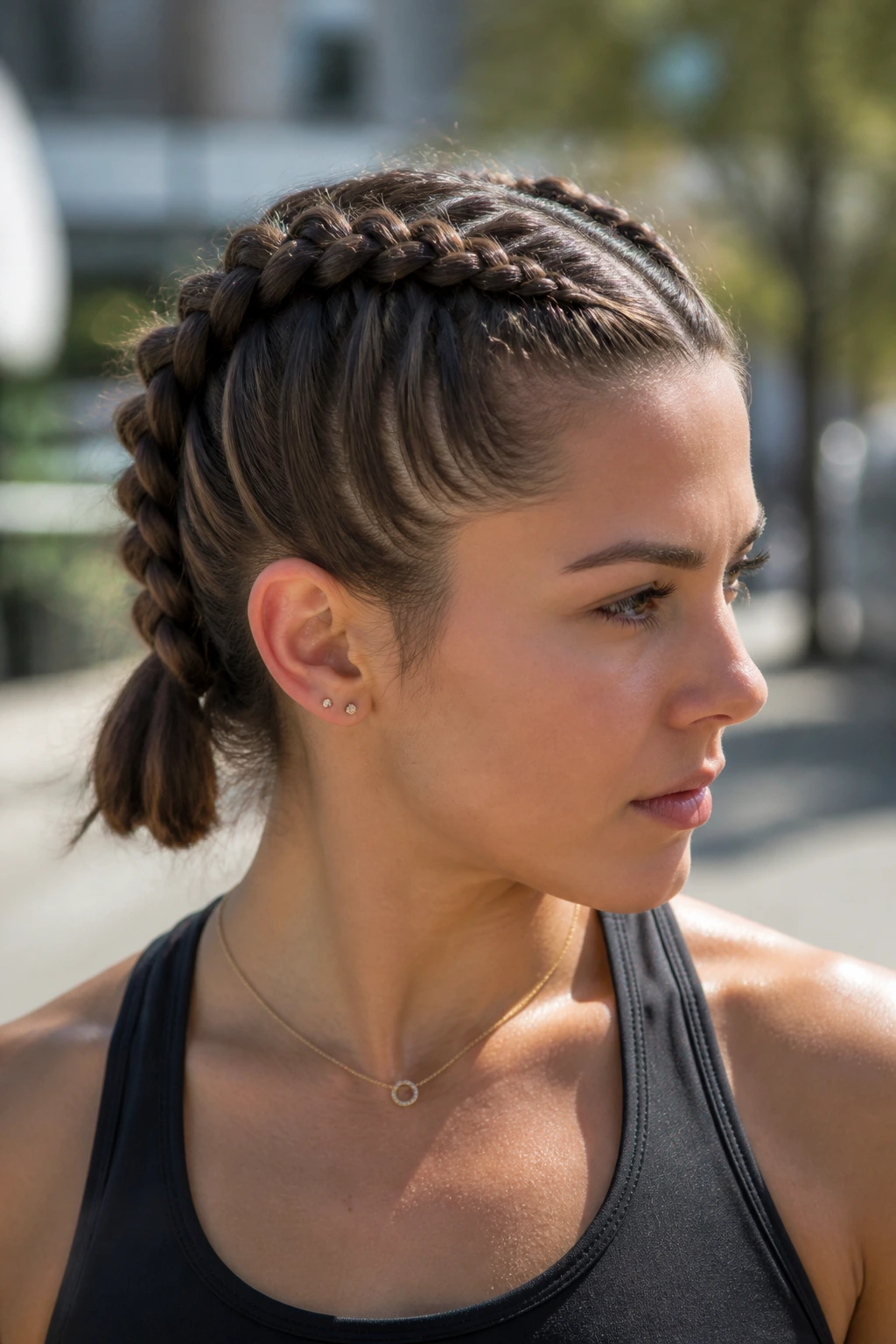
For those who want an edgy, athletic look, this style is a fantastic choice. By positioning the Dutch braids closer to the center of your head rather than the sides, you create a striking mohawk silhouette that distributes the weight of your hair perfectly along the strongest part of your skull.
This center-focused alignment is incredibly comfortable for high-intensity activities. It prevents the tails from swinging wildly when you move, keeping your hair perfectly balanced and secure.
To style this, create two parallel parts down the top of your head, aligning them with the outer corners of your eyebrows. This will isolate a wide center section of hair. Braid this center section into two tight Dutch braids running side-by-side from your front hairline back to the crown. Once you reach the back of your head, incorporate the remaining loose hair from the sides into the braids, and secure them into two thick tails at the nape of your neck.
18. Bedhead Tousled Shag Pigtails

If your hair has a lot of natural texture, layers, or a slight wave, this style is designed to celebrate that undone, casual aesthetic. It is a fantastic option for second-day hair when you want to look styled but do not want to spend an hour with a blow dryer or curling iron.
The Appeal of the Untamed
Instead of fighting the natural volume and frizz of thick hair, this style uses it to create a full, bouncy look. The key is to keep the parting and the tension loose and relaxed.
Who It Is Best For
This look is perfect for anyone with shag cuts, wolf cuts, or heavily layered styles. The shorter layers are allowed to fall free around the face, creating a soft, lived-in frame.
19. Folded Loop Low Pigtails
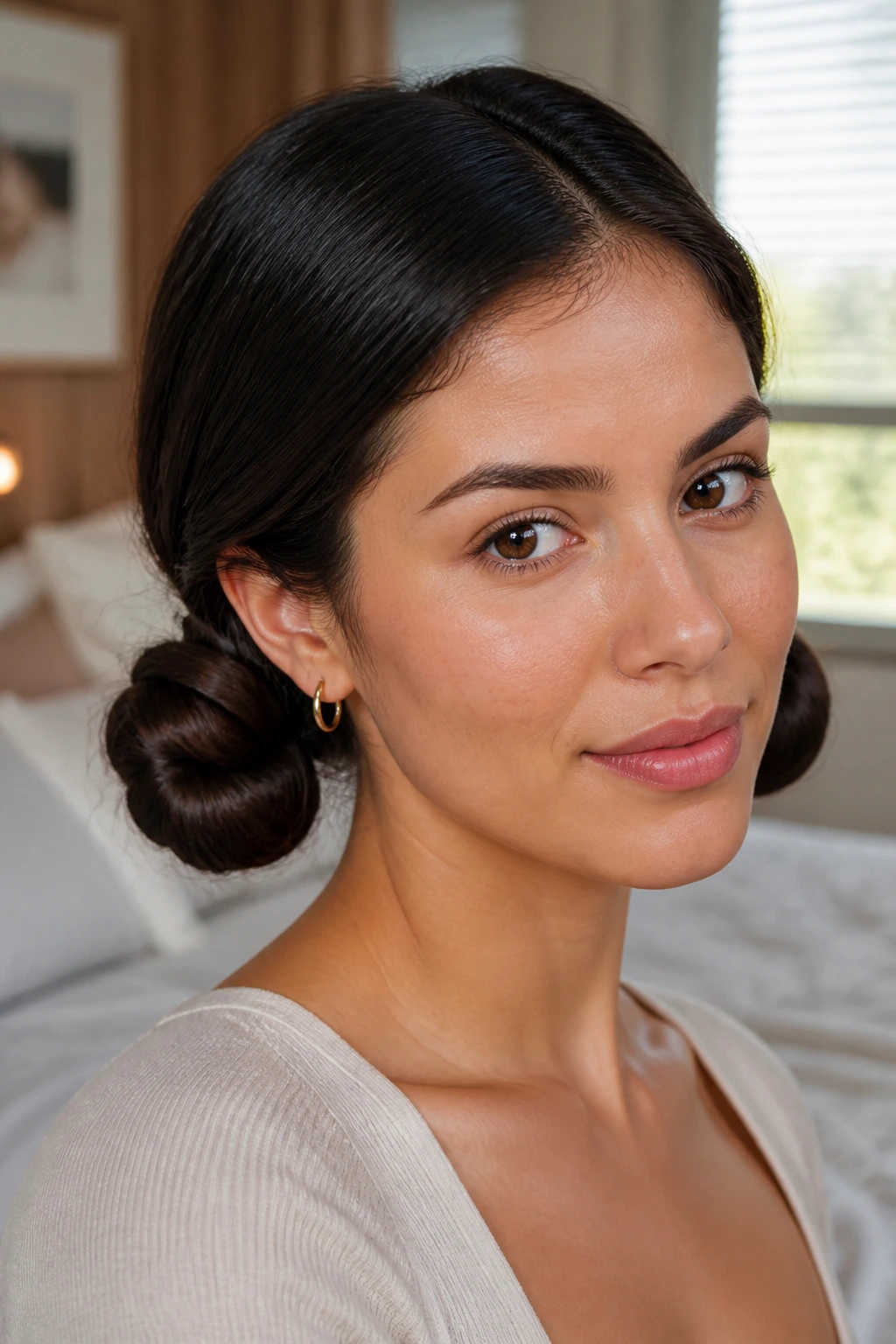
When the weather gets hot and you want to keep your heavy hair off your neck, but you are tired of standard buns, folded loops are a brilliant alternative. This style reduces the length of your pigtails by folding them in half, creating a neat, compact look that keeps you cool.
Why Folding Solves the Heat Problem
Thick hair acts like a heavy scarf when left hanging down your back. By looping the tails upward and securing the ends, you keep your neck completely clear while still maintaining the pigtail shape.
Quick Styling Blueprint
- Part your hair down the center and secure into two low pigtails at the base of your skull.
- Take one tail and fold it in half, bringing the bottom elastic up to meet the base elastic.
- Secure the folded loop in place with a second elastic band wrapped around both points.
- Wrap a small piece of loose hair around the band to hide it, or cover it with a colorful scrunchie.
- Repeat on the other side, ensuring both loops are of equal length.
Pro tip: If your hair is exceptionally long and heavy, use a spiral bobby pin pushed through the center of the loop to anchor it firmly against your scalp.
20. Infinity Braid Pigtails
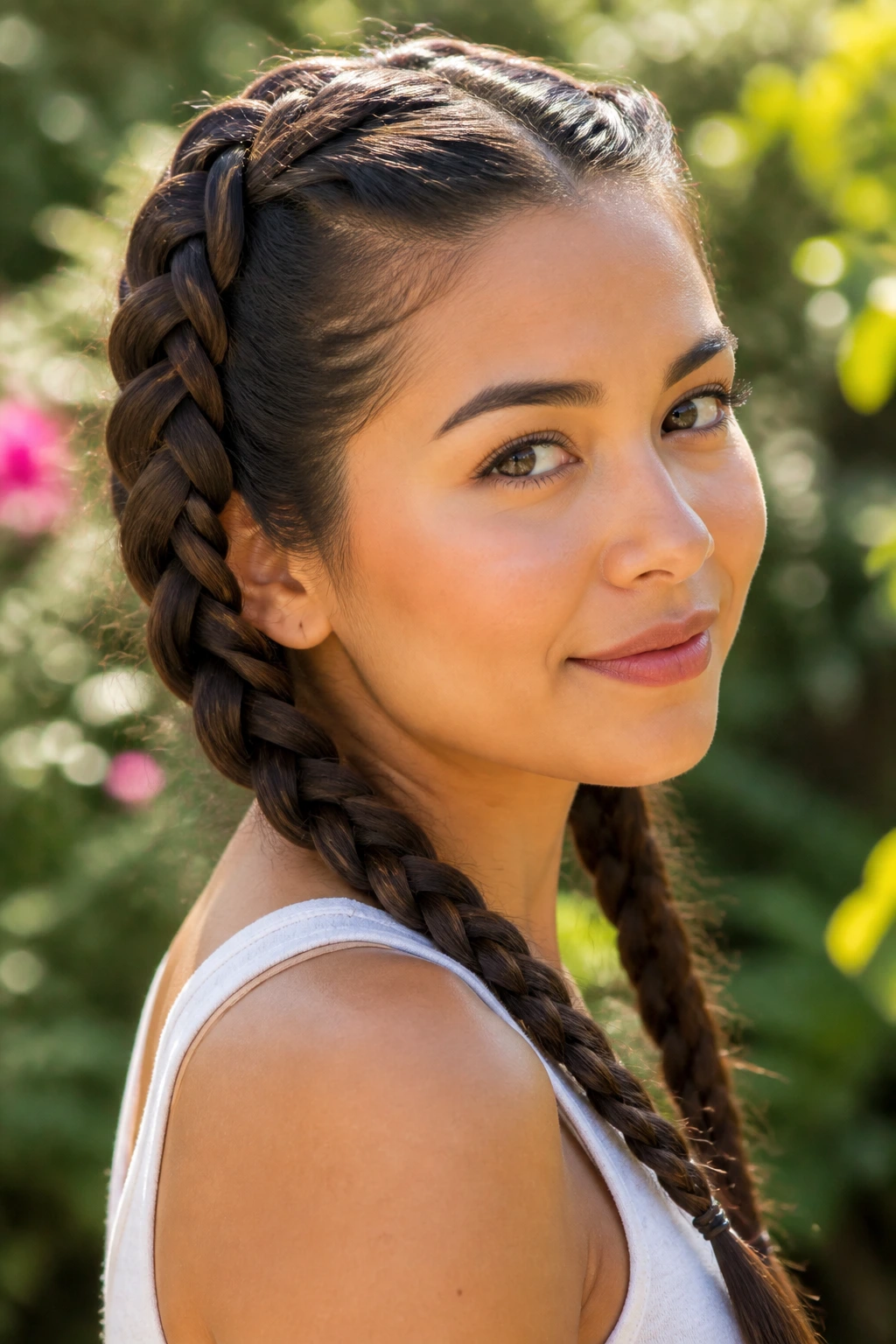
This is an advanced braiding style that looks absolutely stunning on thick hair. The infinity braid uses a figure-eight weaving pattern that wraps one thin strand of hair around two larger sections, creating a flat, detailed braid that showcases your hair’s incredible density.
The flat profile of the infinity braid makes it incredibly comfortable to wear. It does not feel bulky or heavy against your head, and the unique weave keeps the hair locked securely in place.
To create this braid, start with a standard pigtail base. Divide the tail into two large, equal sections. Take a third, very thin strand of hair from the outside of one of the sections. Begin weaving this thin strand over and under the two large sections in a figure-eight pattern. As you move down the braid, continue incorporating tiny bits of hair to the weaving strand to keep it going. Secure the end with a small elastic, and repeat on the other side.
21. Pigtails with Deep Side Part and Face-Framing Tendrils
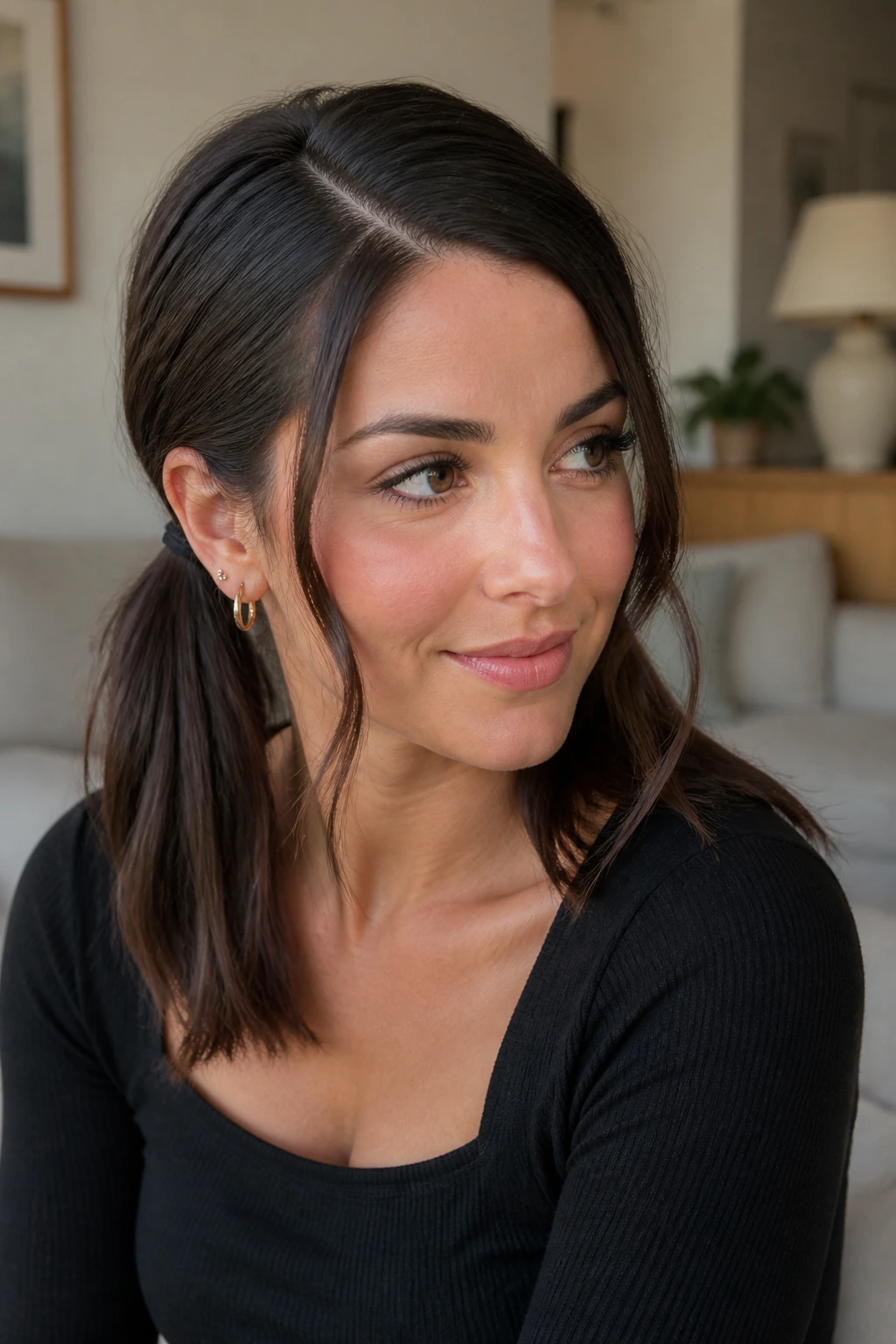
This style is all about softening the look of classic pigtails. By using a deep side part instead of a center part, you create a more sophisticated, mature silhouette that frames your face beautifully.
The Power of Asymmetry
A deep side part breaks up the symmetry of standard pigtails, which can sometimes look a bit too youthful. It adds a modern, elegant twist to the classic style.
How to Style It
- Use a comb to create a deep side part, starting above the arch of one eyebrow and angling back towards the crown.
- Before gathering your hair, pull out a few soft, one-inch sections of hair along your hairline to act as face-framing tendrils.
- Gather the remaining hair into two low, sleek pigtails behind each ear.
- Use a flat iron or curling wand to add a gentle bend to the face-framing tendrils, making them look soft and intentional.
- Apply a tiny dab of lightweight serum to the ends of your pigtails to keep them looking healthy and polished.
22. Scarf-Woven Low Braid Pigtails
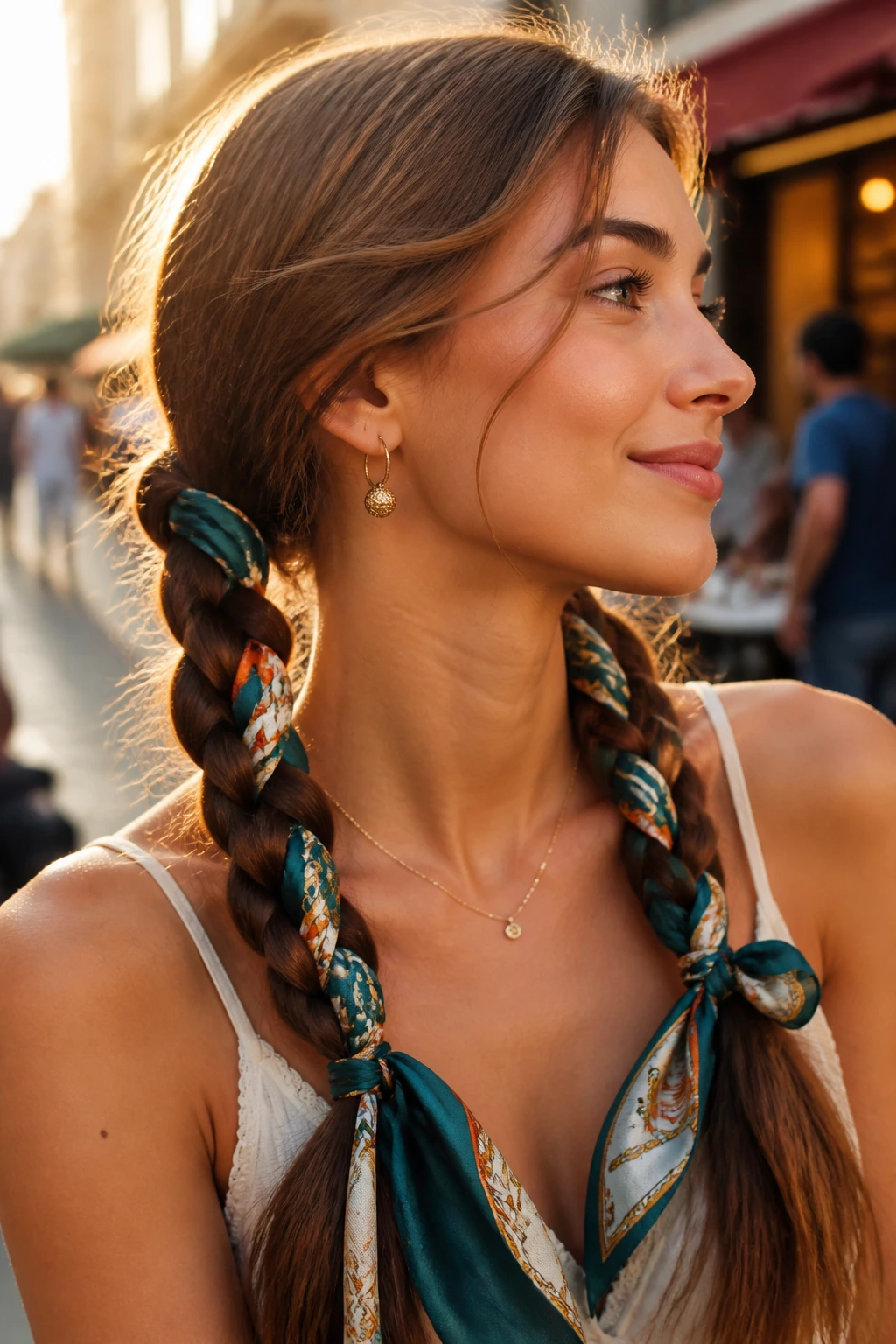
Incorporating a colorful silk scarf into your braids is a beautiful way to manage the bulk of thick hair. The fabric of the scarf acts as a third strand in your braid, adding a vibrant pop of color while helping to distribute the weight of your hair.
I often recommend this style to people traveling to warm climates. It keeps your hair completely contained, protects it from the sun, and looks incredibly stylish with minimal effort.
- Fold a square silk scarf diagonally to create a long, thin band.
- Part your hair down the center and secure into two low pigtails.
- Tie the center of the scarf around the elastic of one pigtail, leaving two equal lengths of fabric hanging down.
- Divide the hair of the pigtail into two sections, using the two ends of the scarf as the third strand.
- Braid the hair and the scarf together to the ends, securing with a small elastic.
- Repeat the process on the other side with a second scarf, or use one long scarf draped across the back of your neck to tie both sides.
The Bottom Line
Living with thick hair means you have to think a bit differently about how you style it. You cannot always throw your hair up in a quick, careless bun and expect it to hold. But that does not mean you are limited to the same boring hairstyles day after day. Pigtails are a incredibly practical, comfortable, and versatile way to manage your hair’s density while expressing your personal style.
The secret to success with any of these styles lies in investing in the right tools and taking your time with the preparation. Swap out those cheap, thin hair ties for heavy-duty nylon bands or spiral bobby pins. Take the time to apply a smoothing cream or texturizing spray before you start styling. Your scalp—and your style—will thank you for it.
Don’t be afraid to experiment with these different looks to find the ones that work best for your unique hair texture and lifestyle. Whether you prefer the sleek control of low braids or the playful volume of high space buns, there is a pigtail style here that will help you embrace your hair’s beautiful thickness with confidence.