

The soft, ethereal glow of rose quartz has moved far beyond the realm of crystal shops and into the professional hair salon chair. For those of us with curls, this delicate pastel pink is more than a color choice; it is a way to breathe light, warmth, and a touch of modern romance into our natural texture. While many vibrant fashion colors can turn brittle or flat on curly hair, the dusty, muted undertones of a well-executed rose quartz shade tend to sit beautifully against the natural sheen and bounce of a healthy curl pattern.
Achieving this look is not a task for the impulsive or the unprepared. Because rose quartz requires a very light blonde base, the process usually involves a significant commitment to bleach and subsequent toning. Yet, when you get the balance of cool violet and warm pink just right, the result is a multidimensional finish that seems to change hue depending on the lighting in the room. Whether you are aiming for a soft, whisper-thin tint or a bold, saturated statement, there is a way to tailor this look to your specific curl type, porosity, and lifestyle.
1. The Dusty Pastel Rose Pixie
Short curly hair provides the perfect canvas for a bold color like rose quartz because the growth cycle is faster, allowing for easier maintenance of the tone. A pixie cut with defined curls allows the light to hit the hair from various angles, making the subtle shifts in pink and silver shimmer clearly. This look favors a slightly muted, “dusty” version of the shade, which keeps it from looking like a bright doll-house pink.
Why This Style Works
Because the hair is cropped close to the scalp, you can push the bleach application to a higher level of lightness without the same level of structural worry you might have with waist-length hair. The curls appear tighter and more structured when they are short, which makes the rose quartz tint look incredibly dense and high-end.
Key Maintenance Tips
- Use a color-depositing conditioner with a slight cool-pink pigment every second wash.
- Keep the roots slightly darker to create a natural transition as your hair grows out.
- Avoid over-processing the ends, which can become brittle even at short lengths. Pro tip: Use a lightweight curl cream to ensure your ringlets stay defined and shiny; matte, dry curls will make the color appear washed out and dusty rather than soft and luminous.
2. Rooted Rose Gold Ringlets
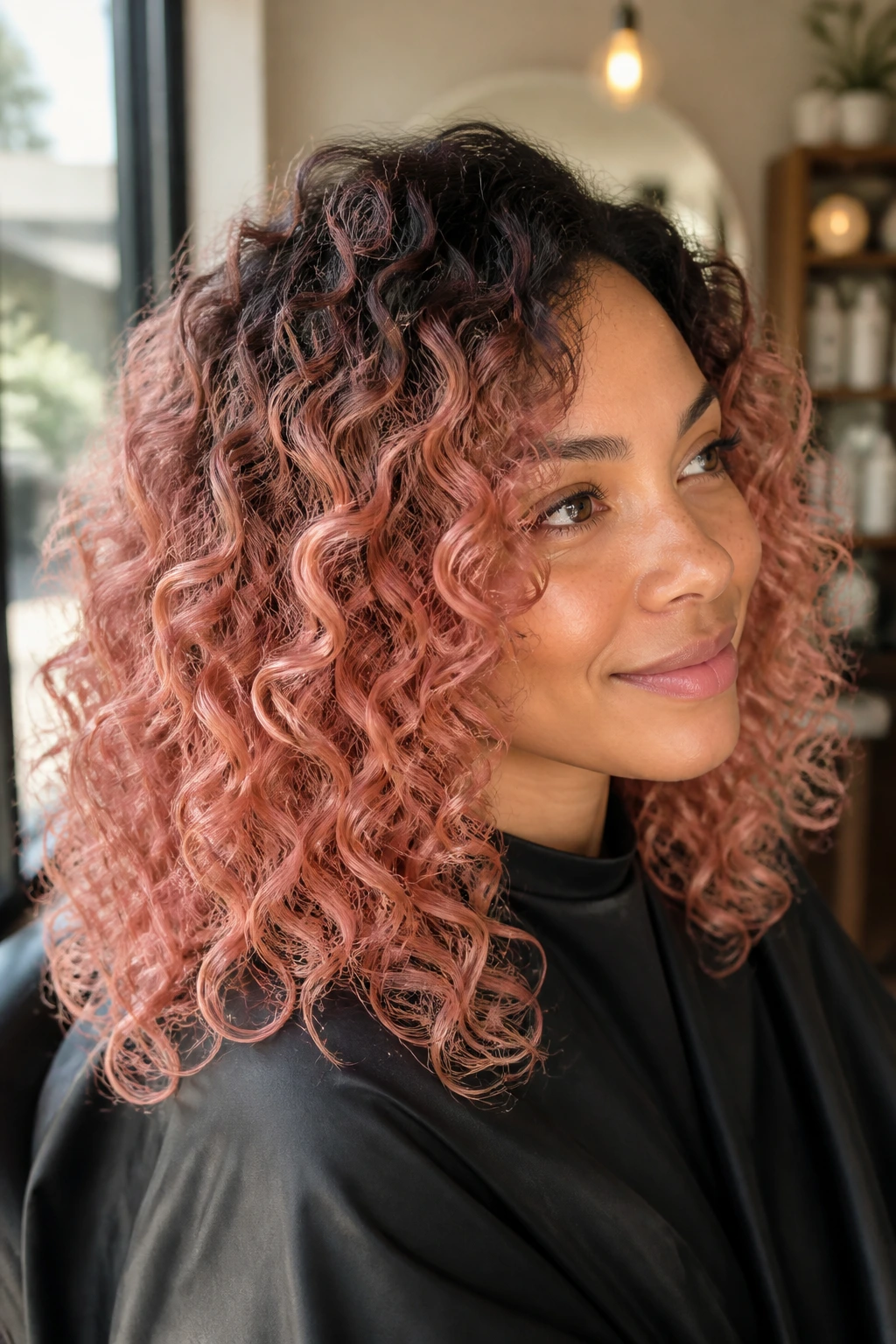
If you are hesitant about bleaching your roots, the rooted technique is your best ally. By keeping your natural dark base at the roots and fading into a vibrant, glowing rose quartz through the mid-lengths and ends, you create a look that is both low-maintenance and visually striking. The contrast between your natural depth and the pastel ends adds a sense of dimension that is often lost in single-process dyes.
The Science of the Blend
The “melt” or “shadow root” technique relies on a seamless transition where the dye is blurred at the line where your natural hair meets the lightened section. For curls, this is particularly important; harsh lines will stand out like a sore thumb as your hair shrinks and bounces. By feathering the color, the transition looks like a natural gradient rather than an intentional two-tone block.
Why This is Ideal for Beginners
- You only need to touch up your roots every three to four months rather than every six weeks.
- The integrity of your scalp remains intact since you aren’t applying bleach directly to the sensitive skin at the crown.
- It is easy to transition back to your natural color once you decide you have had enough of the pastel lifestyle.
3. Rose Quartz Balayage on Coils
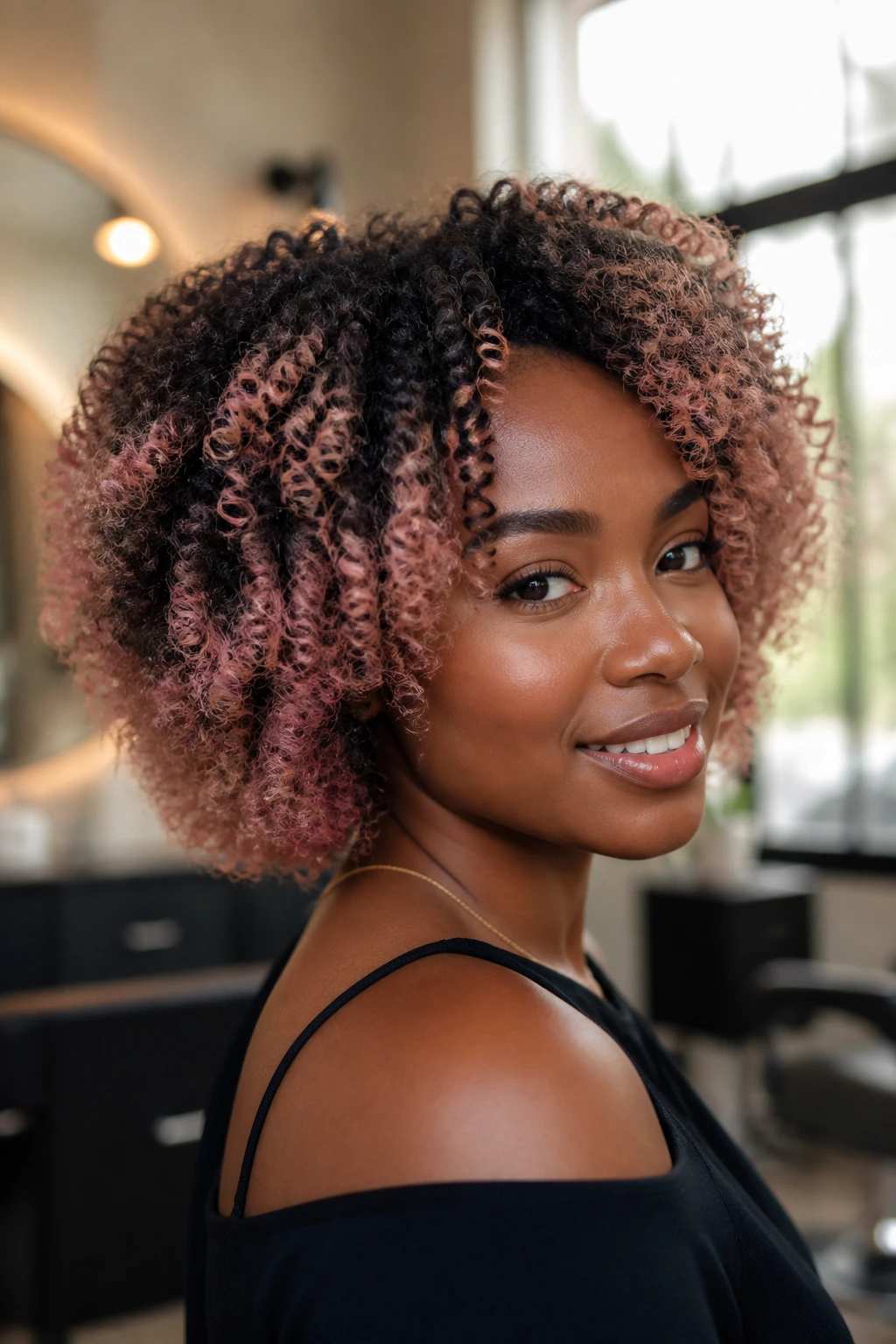
For those with tighter coil patterns, a full-head bleach process can be risky if not handled by a specialist who understands the elasticity of Type 4 hair. A balayage approach—where the rose quartz is hand-painted onto select coils—allows you to keep the bulk of your hair healthy while still enjoying the trendy pastel aesthetic.
The Art of Hand-Painting Coils
When working with tight coils, the stylist must paint vertically along the strands to avoid creating chunky, uneven patches. The result is a sun-kissed effect that makes the hair look like it has been kissed by morning light. Because the color is concentrated on the outer coils, it creates a halo effect that frames your face in a soft, ethereal glow.
How to Protect Your Coils
- Use a bond-building treatment before and after the color service.
- Prioritize moisture by incorporating a weekly deep conditioning mask rich in argan or jojoba oil.
- Be patient; achieving the necessary lift on dark, tight coils often takes multiple sessions to ensure the hair stays bouncy and strong.
4. Metallic Rose Quartz Waves
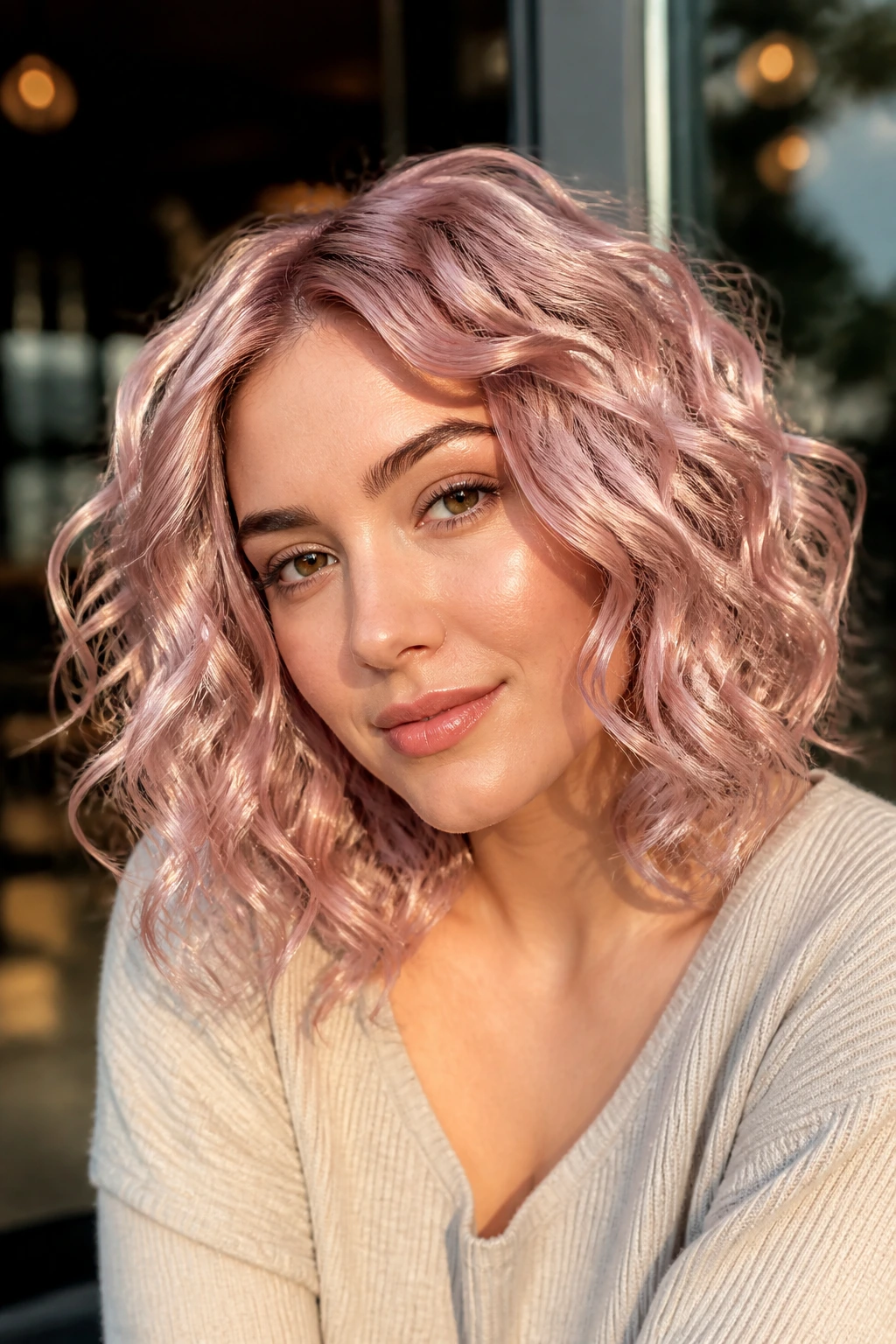
Sometimes you want your color to have a bit of edge, and that is where the metallic finish comes in. By adding a silver or “steel” undertone to the rose quartz mixture, you change the vibe from “romantic floral” to “modern industrial.” This shade looks particularly stunning on wavy hair textures (Type 2c-3a) because the light-reflecting properties of the silver pigment highlight every single bend and fold in the wave.
Understanding the Metallic Tones
Metallic shades are achieved by mixing a primary pigment (pink) with a neutral or cool grey toner. This requires the hair to be lifted to an almost “inside of a banana peel” level of blonde. If there is any yellow left in the hair, the metallic grey will clash and create a muddy green or murky brown tone, which is the exact opposite of the crystal-clear rose look you are seeking.
Achieving the High-Gloss Finish
- Use an acid-balanced gloss treatment at the salon to seal the cuticle down flat.
- Incorporate a silk or satin bonnet at night to prevent friction from turning the hair dull.
- Apply a tiny drop of high-quality hair oil to the ends to mimic the reflective quality of metal.
5. Rose Quartz Dip-Dye Ends
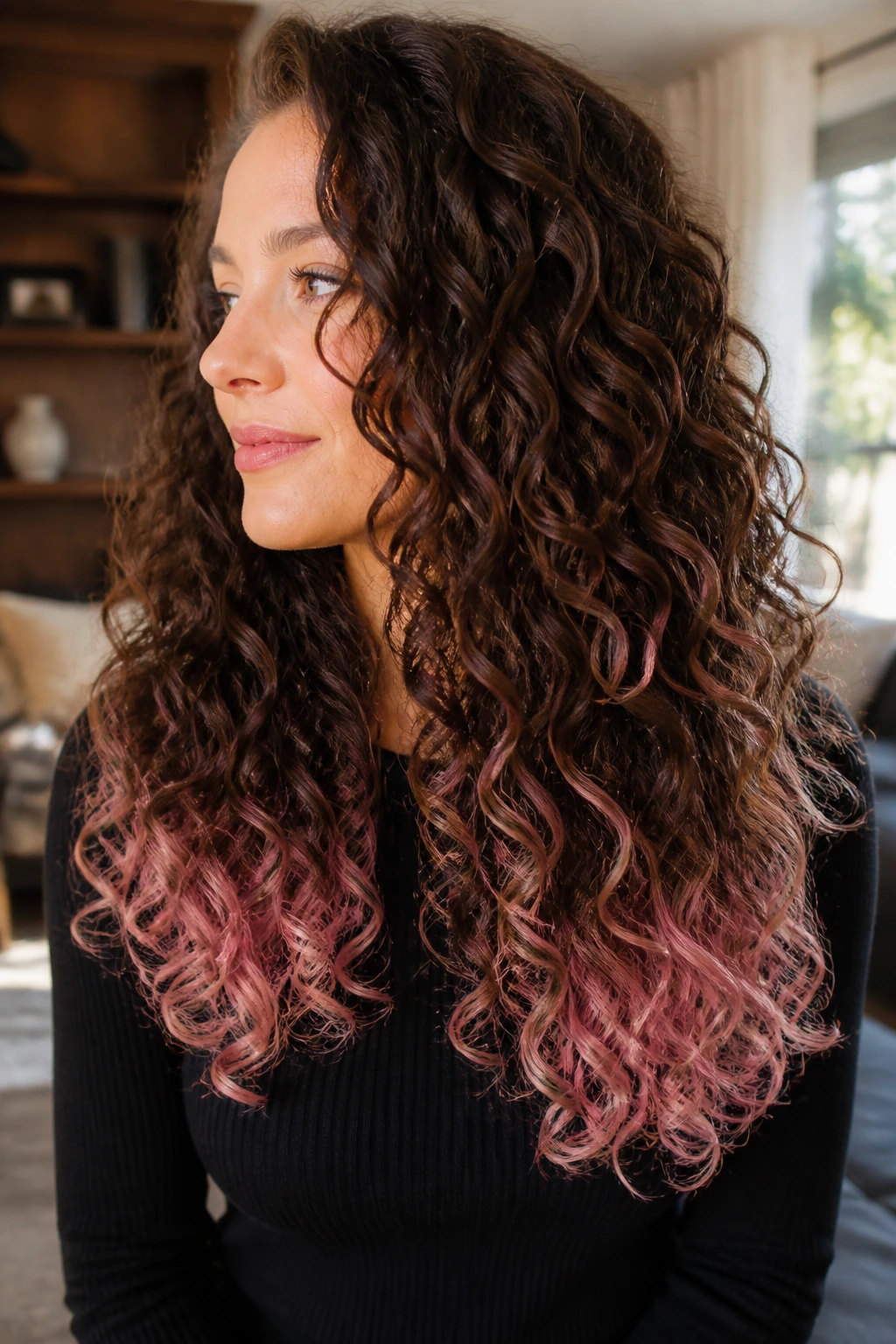
If you are worried about the commitment of a full transformation, dip-dyeing just the bottom two inches of your curls is a clever way to test the waters. This is especially fun on long, layered curly cuts where the ends are already tapered. The pop of pink creates a playful contrast that draws the eye toward the health and movement of your curls.
Why It’s a Great Low-Risk Choice
- You can simply trim the color off once it begins to fade or if you get bored of the style.
- The amount of hair that needs to be bleached is minimal, reducing the risk of widespread damage.
- It acts as a fun accessory that you can style up or down depending on how you arrange your hair.
Styling Ideas for Dip-Dye
- A high pineapple updo puts the colored ends on display at the crown of your head.
- Side-swept curls allow the pink to cascade over one shoulder for a subtle, unexpected splash of color.
- A loose, low bun keeps the ends tucked but still visible, giving off a sophisticated, subtle vibe.
6. The “Strawberry Cream” Bob
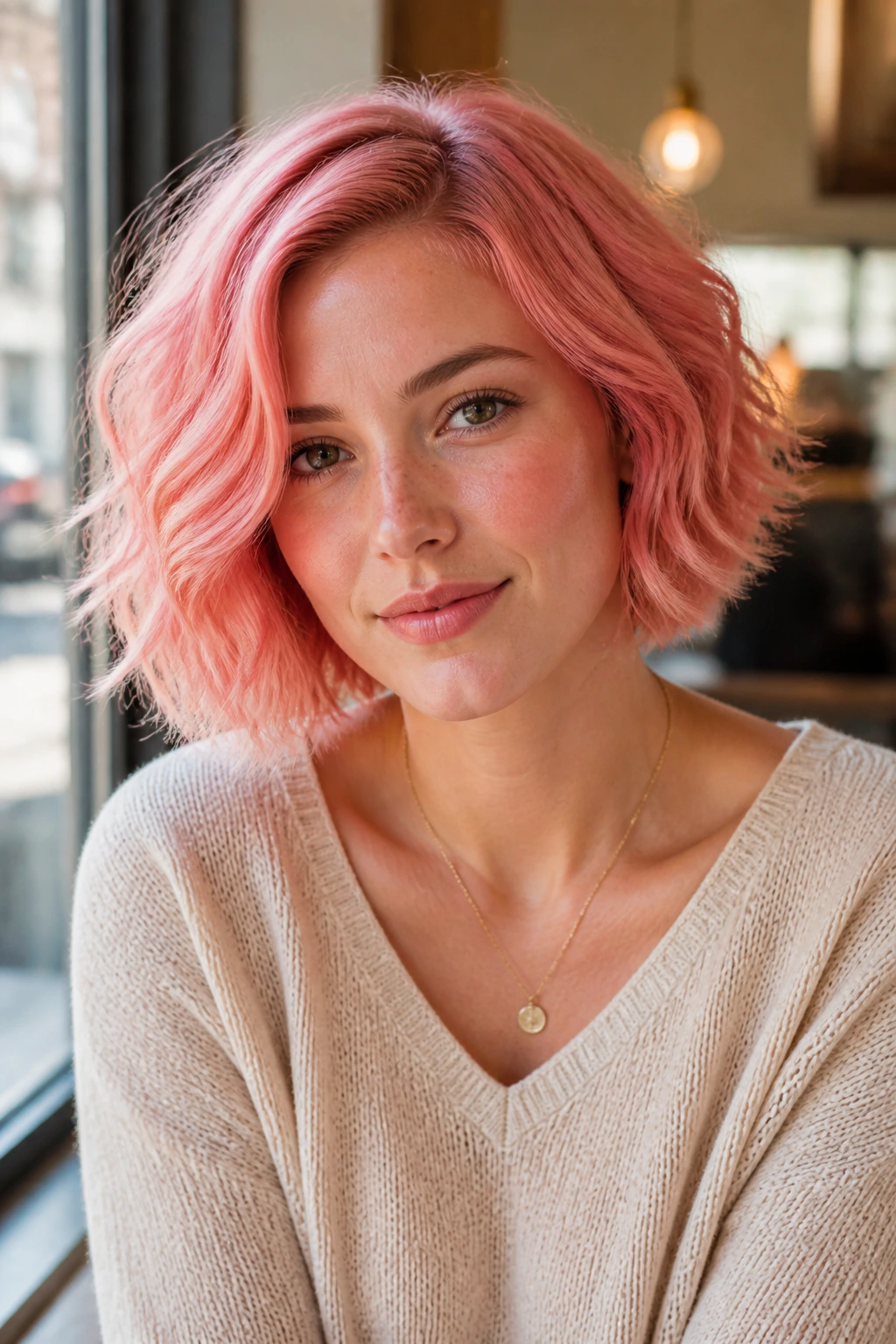
A shorter, chin-length bob cut is perhaps the most classic way to showcase pastel hair. The “Strawberry Cream” variant leans slightly warmer than standard rose quartz, incorporating a hint of coral and golden peach. This makes it a flattering choice for those with warmer skin undertones who might find cool, icy pinks too stark against their complexion.
Achieving the Perfect Warmth
The secret is in the toner. Your colorist will likely use a clear gloss with just a tiny drop of orange-gold to steer the cool pink into warmer territory. It’s a delicate science; if you add too much orange, it becomes a literal copper, and you lose the “quartz” aesthetic.
Care Routine for Warmer Tones
- Avoid purple-based toning shampoos, as they will pull the color back toward the cool spectrum.
- Use a color-protecting shampoo that is sulfate-free to prevent the warm pigments from bleeding out too fast.
- Refresh the tone every four weeks with a tinted color glaze that contains warm pink pigments.
7. Deep Violet-Rose Ombré
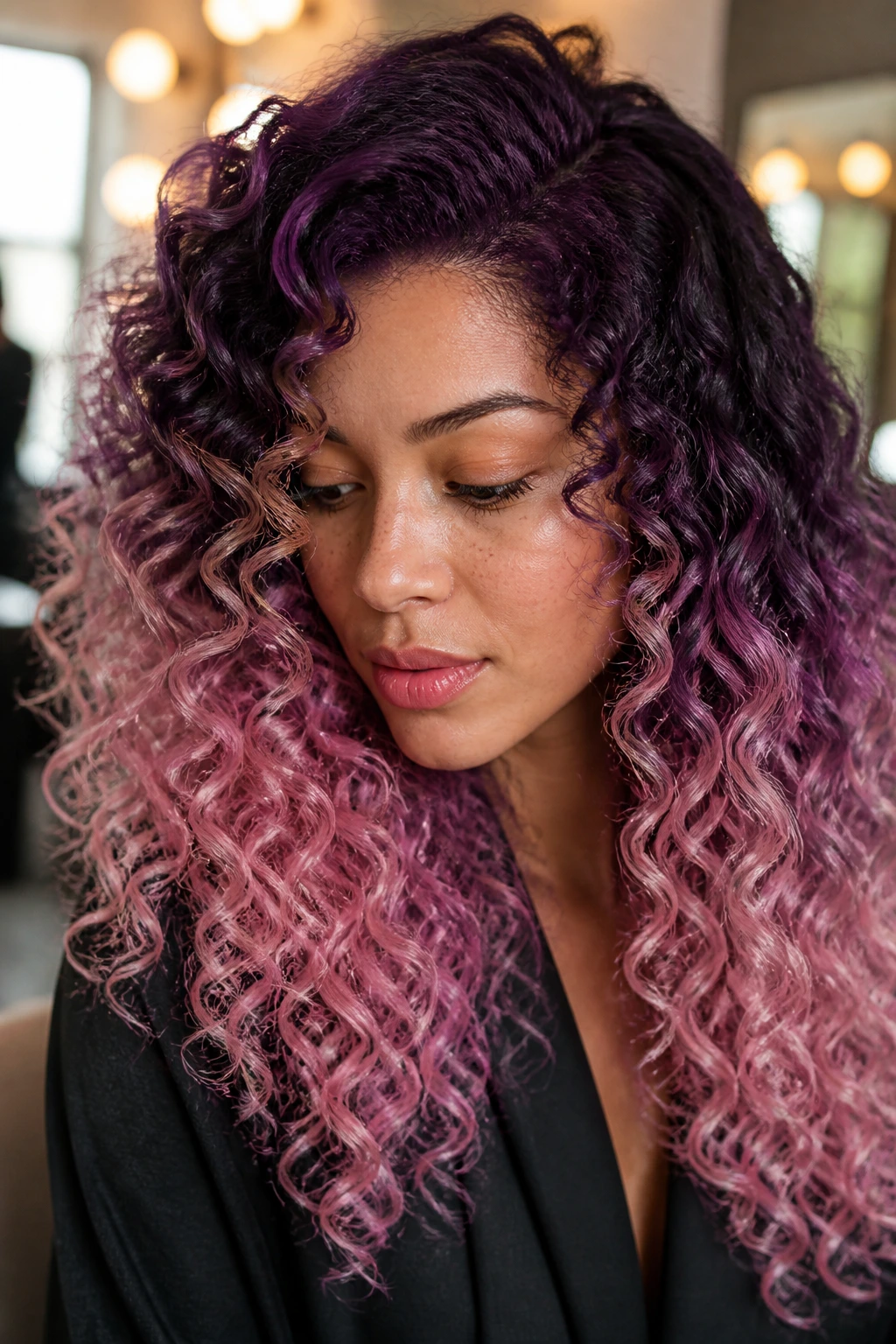
When you want rose quartz but also crave depth, layering a deep violet base that transitions into a bright rose quartz at the ends is a fantastic solution. This creates a “shadow” effect that makes the hair look thicker and fuller. It is a common technique for those who have naturally dark hair and do not want the maintenance of bright roots.
The Benefits of Depth
The transition from a dark berry-purple to a light pink creates a sense of movement in the hair. Because purple and pink exist on the same color family spectrum, the fade-out is always graceful. You don’t have to worry about looking “brassy” as the color wears off, because the cool undertones of the violet keep the pink looking clean.
How to Style This Look
- Use a diffuser to pump up the volume at the roots where the purple is concentrated.
- Define the lighter ends with a clear curl gel to show off the gradient clearly.
- Don’t be afraid to mix the purple and pink strands by finger-twisting them together while wet to create a marbled color effect.
8. Rose Quartz Highlights with Lowlights
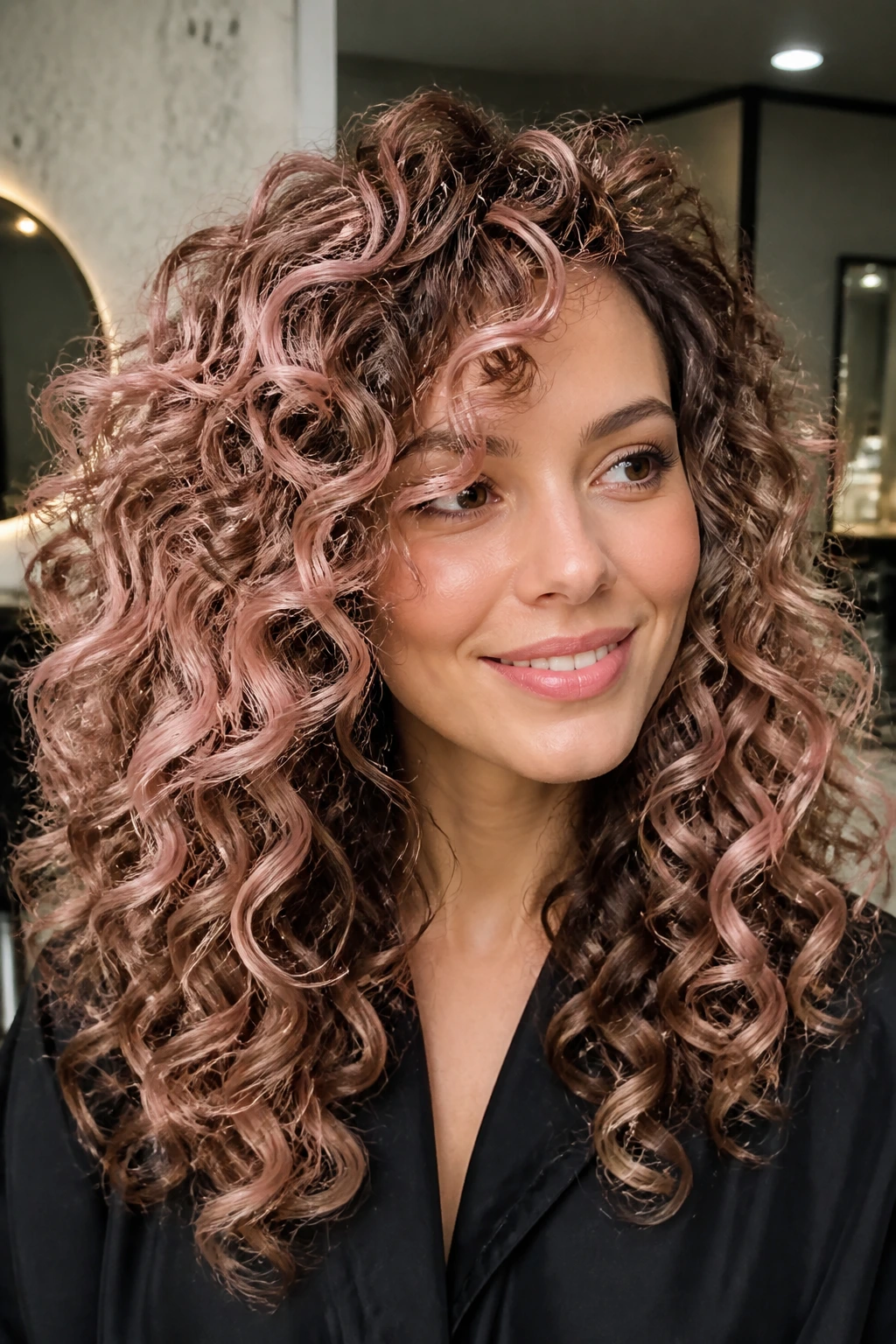
If you prefer a natural-looking “lived-in” aesthetic, go for a mix of rose quartz highlights threaded through darker, natural-colored lowlights. This provides a multi-dimensional look that mimics the way a real rose quartz crystal looks in the light—cloudy, translucent, and varied in tone. It is a high-fashion look that feels grounded and approachable.
Why It Creates Volume
By placing darker ribbons of color (lowlights) next to the light pastel pink (highlights), you create an optical illusion of depth. This makes thin or fine curls appear much denser than they are. The contrast between the dark and light pieces also makes the curl pattern look more defined because the eye can track the individual twists and spirals better.
Professional Application Advice
- Ask your stylist to use “babylights” for the pink, which are very fine, thin sections of hair.
- Make sure the lowlights are within one or two shades of your natural color to keep it from looking stripey.
- This style requires a visit to the salon for a “gloss” refresh rather than a full color treatment, which keeps your hair healthier over time.
9. Monochromatic Pink Afro
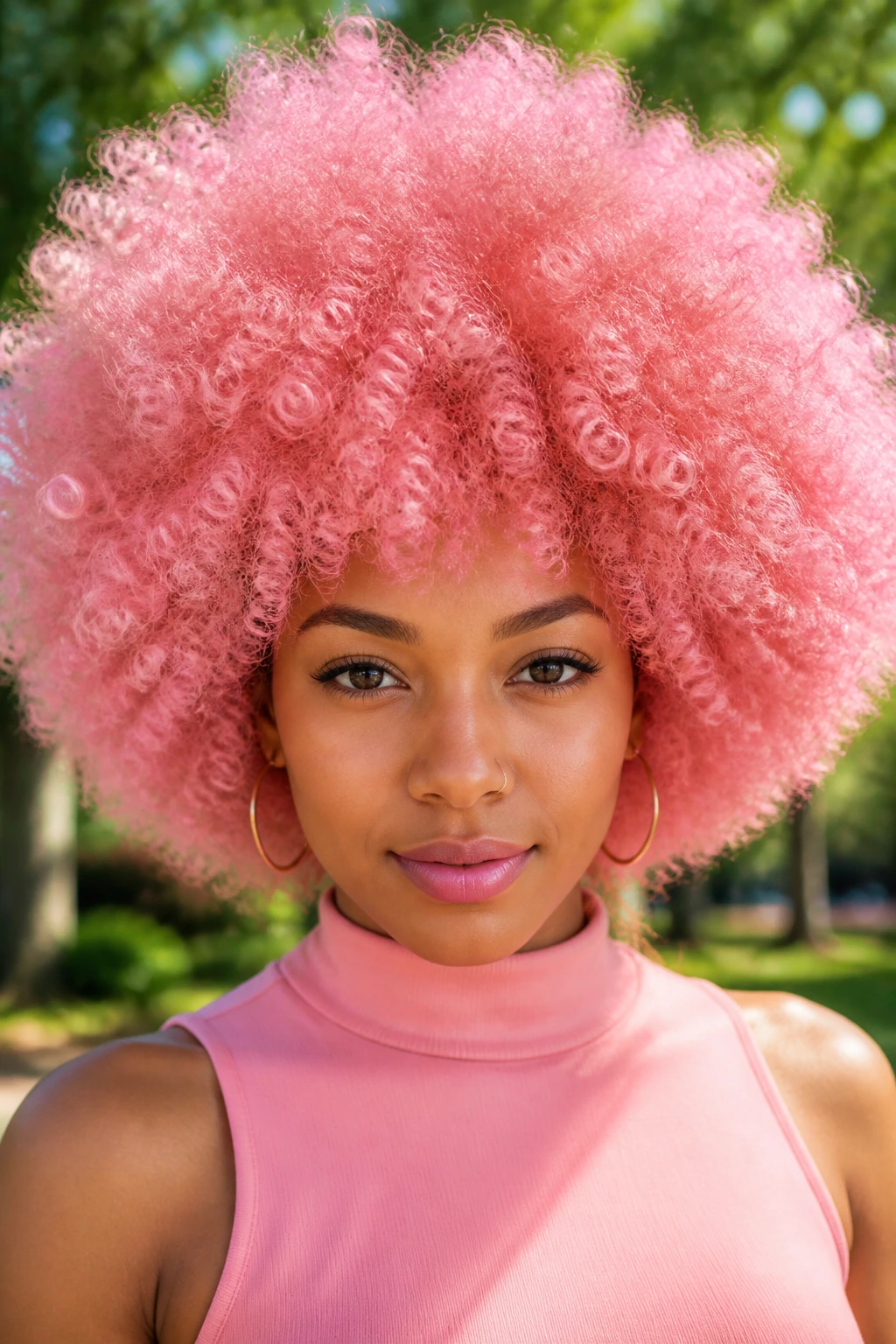
For those with natural afros, a bold monochromatic rose quartz is a statement of confidence. Because the volume of an afro is so expansive, the color needs to be applied with incredible precision to ensure it is even throughout the massive surface area of the hair. This is a look that celebrates texture and bold personal style.
Tips for High-Volume Color
- Always start with a clarifying shampoo to remove any buildup that could cause the color to take unevenly.
- Work in small sections, clips are your best friend here, to ensure that the back and the interior of your afro are as saturated as the outer layers.
- Consider a professional treatment to strengthen the hair shaft before the bleaching process begins, as afros are often prone to dryness.
Maintaining the Shape
- Use a wide-toothed comb to distribute the color through the hair without disrupting the curl pattern.
- Incorporate a humectant-rich leave-in conditioner to prevent the color from making your hair feel “puffy” rather than defined.
- Once colored, your hair will need more protein than usual to keep the bounce alive—look for masks containing keratin or silk amino acids.
10. Rose Quartz “Peek-a-Boo” Layers
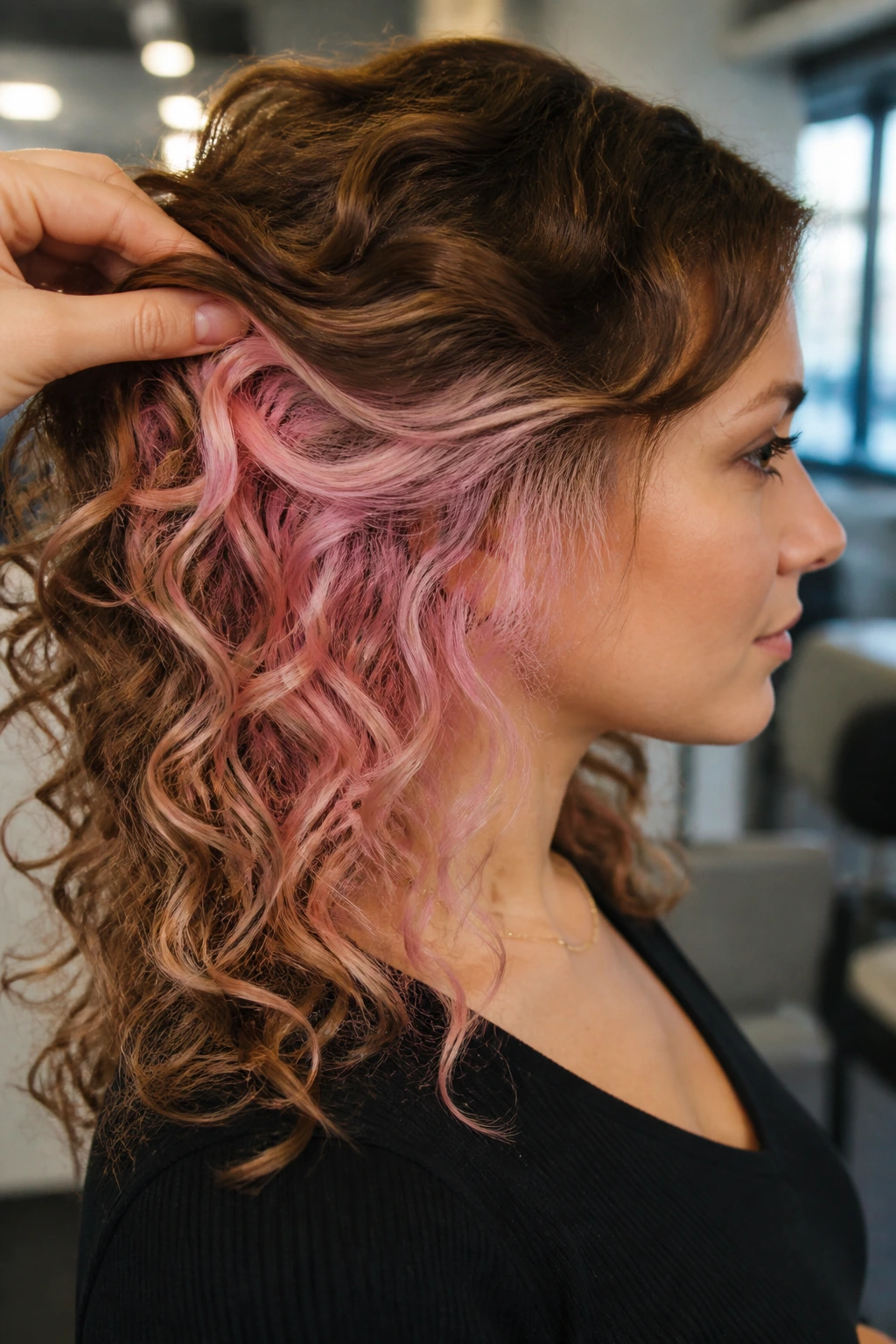
The peek-a-boo technique places the rose quartz color in the under-layers of the hair, only revealing the pink when you wear your hair up or when the wind catches your curls. It is the perfect choice for professionals who want to express their personality while maintaining a more conservative appearance for the office.
Where to Place the Color
Focus the color on the nape of the neck and the side sections just behind the ears. When you put your hair in a high bun or a half-up, half-down style, the pink creates a surprising pop of color that looks like a secret accessory. It’s elegant, subtle, and incredibly chic.
Customization for Your Cut
- If you have layers, the pink will be more visible as the shorter pieces sit on top of the longer, colored ones.
- Keep the top layer of your hair your natural color to act as a “lid” for the pink.
- This is a fantastic way to introduce your hair to the bleaching process without compromising the hair that frames your face.
11. Icy Platinum and Rose Quartz Split
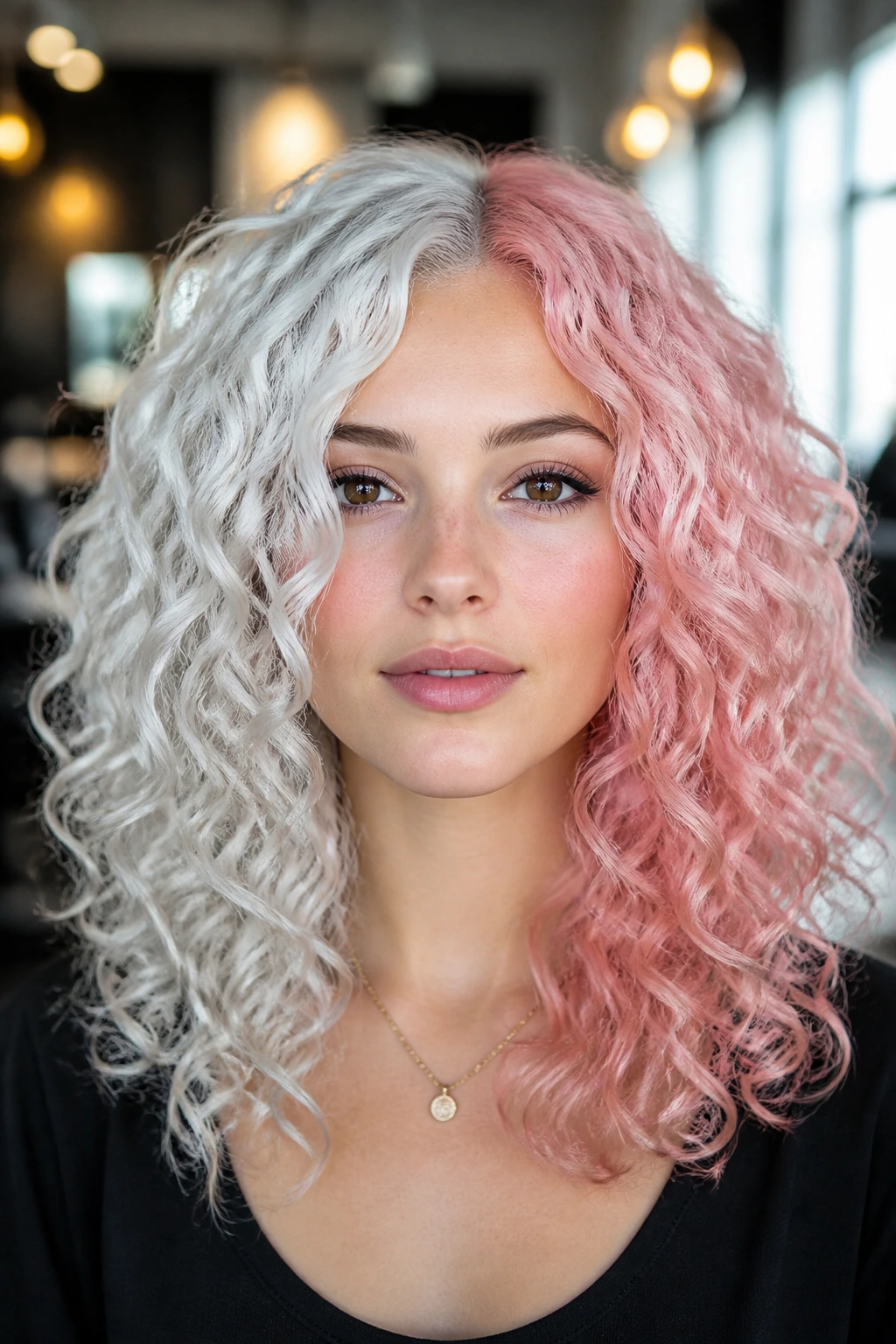
A split-dye is exactly what it sounds like: half your head is one color, and half is another. Combining a cool-toned, near-white platinum with a soft, warm rose quartz creates a look that is nothing short of artistic. It is a high-contrast style that demands attention and looks spectacular when the curls on both sides are perfectly defined.
Balancing Two Different Toners
The challenge here is preventing the pink dye from bleeding into the platinum side during the washing process. You must be extremely careful when rinsing. Use cold water to keep the cuticle closed, and always wash the two sides separately if you have the patience to do so.
Styling for Maximum Impact
- A middle part is the best way to showcase the symmetry of the split dye.
- Use a shine-enhancing serum on both sides to make the colors pop against each other.
- If you have curly bangs, this looks incredible with the colors split vertically right down the center of your forehead.
12. Soft Rose Quartz Curls with Darker Tips
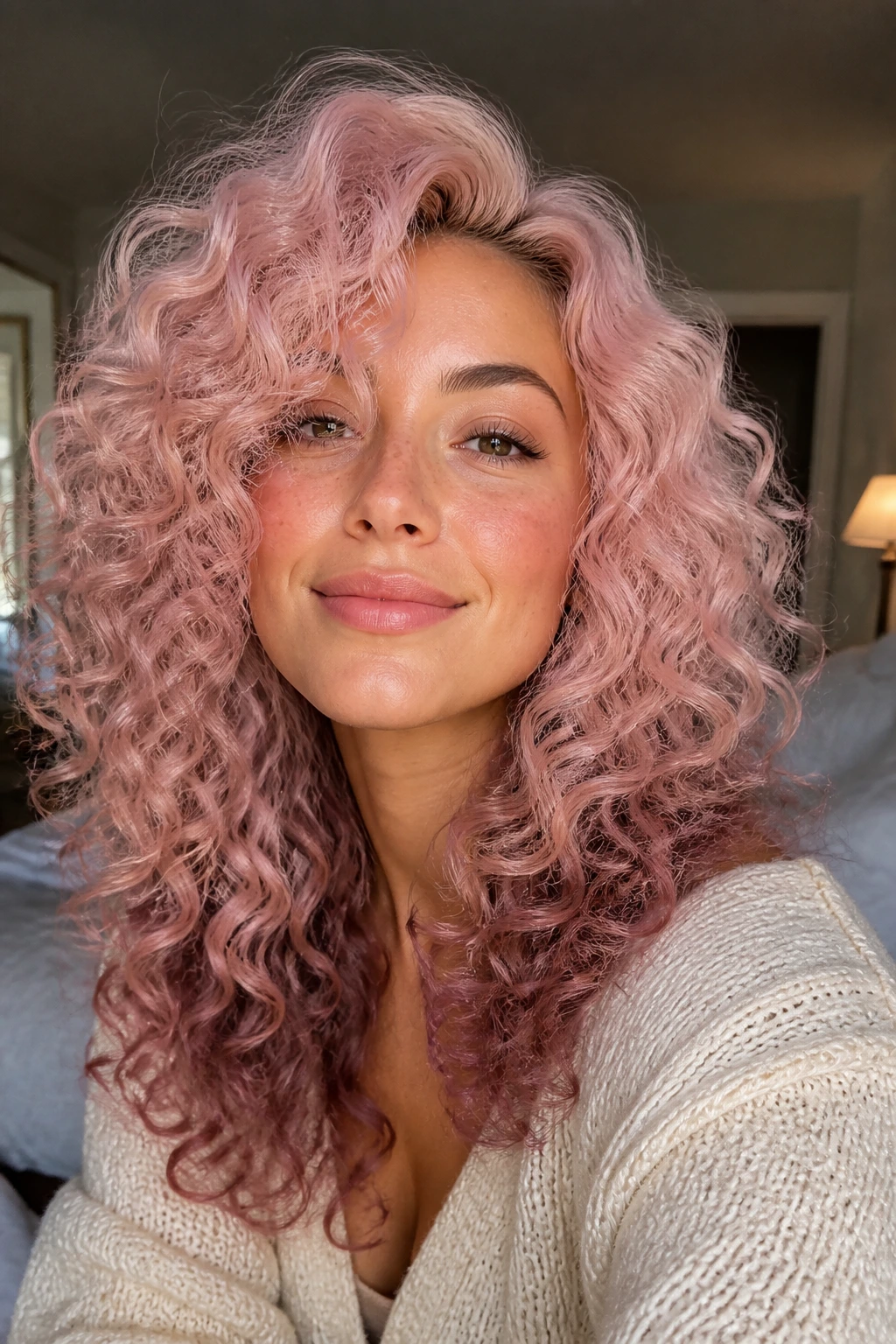
While most pastel trends focus on light ends, reversing it—keeping the top of the hair light rose quartz and the ends a slightly darker, mauve-pink—creates a modern, “grown-out” look that feels effortless. It’s an interesting take on color placement that feels less like a salon-fresh dye job and more like a curated, artistic choice.
Why Reversed Ombré is Trendy
It shifts the focus to the mid-lengths and gives the appearance of a soft, cloud-like volume at the crown. This is particularly flattering for those with rounder face shapes, as the lighter color at the top draws attention upward, elongating the face.
Managing the Fade
- The darker ends will likely hold color longer than the lighter roots.
- You can touch up the roots easily with a semi-permanent dye while letting the ends slowly fade into a soft lilac-pink.
- This style allows you to experiment with different shades of pink on the same head, which is a great way to discover which tone suits your skin best.
13. Rose Quartz Braided Accents
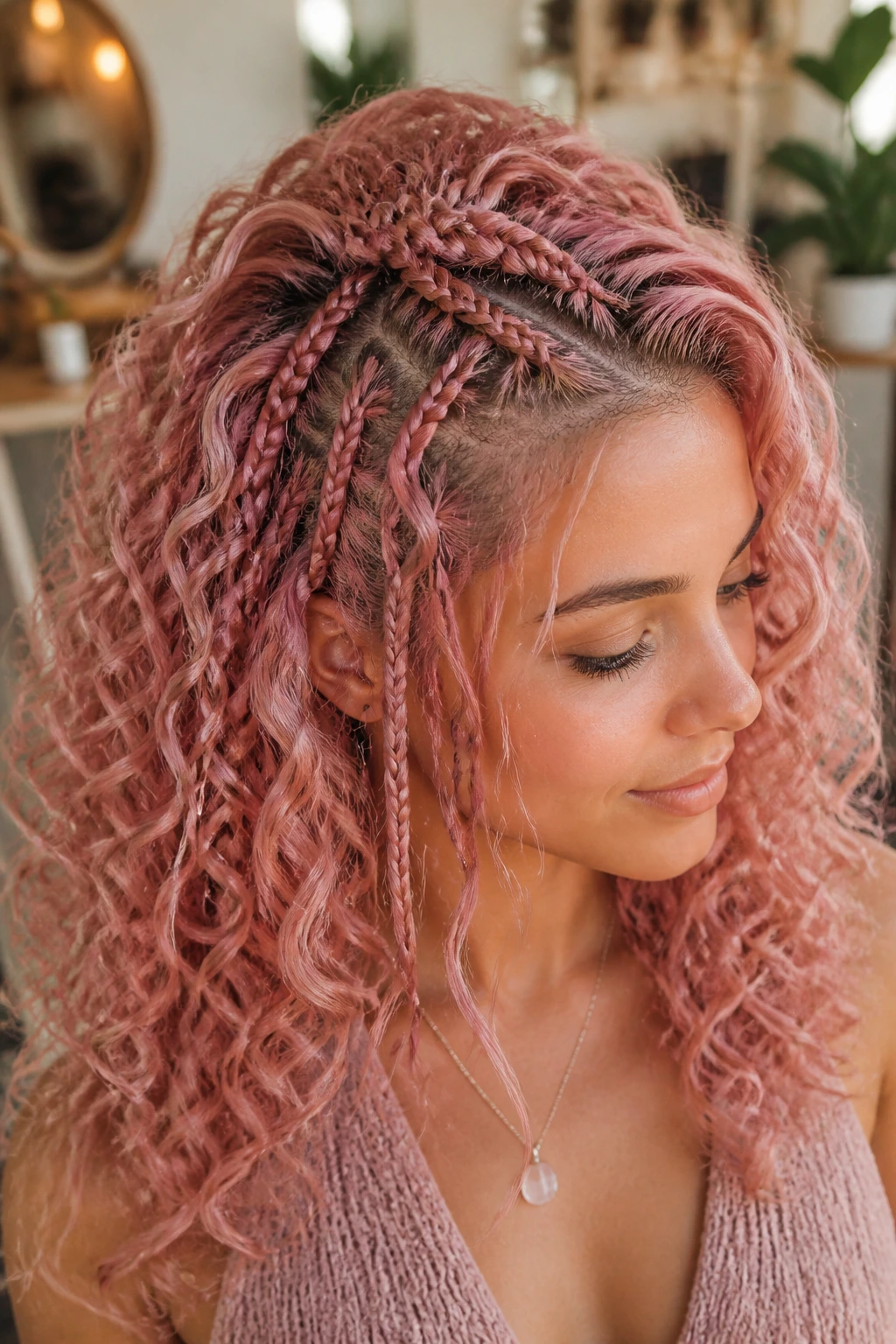
Braids are the ultimate test of color depth. When you have rose quartz hair, incorporating braids into your daily style allows the different shades—from the platinum-pink roots to the deep quartz ends—to weave together in a beautiful, complex pattern. This style turns your hair into a living tapestry of color.
Why Braids Make the Color Pop
When hair is twisted or braided, the different light-reflecting points of the pink are compressed. This makes the color look more intense and concentrated. If you have highlights and lowlights of different pinks, braiding them together will give the finished style an almost iridescent, holographic quality.
Best Braided Styles to Try
- A Dutch braid crown gives you a halo of pink that is perfect for summer events or formal occasions.
- Feed-in braids with added synthetic hair that matches your rose quartz shade will give you incredible length and a seamless color blend.
- Small, single accent braids tucked behind your curls are a simple way to add interest without spending hours styling.
14. The “Quartz Crystal” Marbled Effect
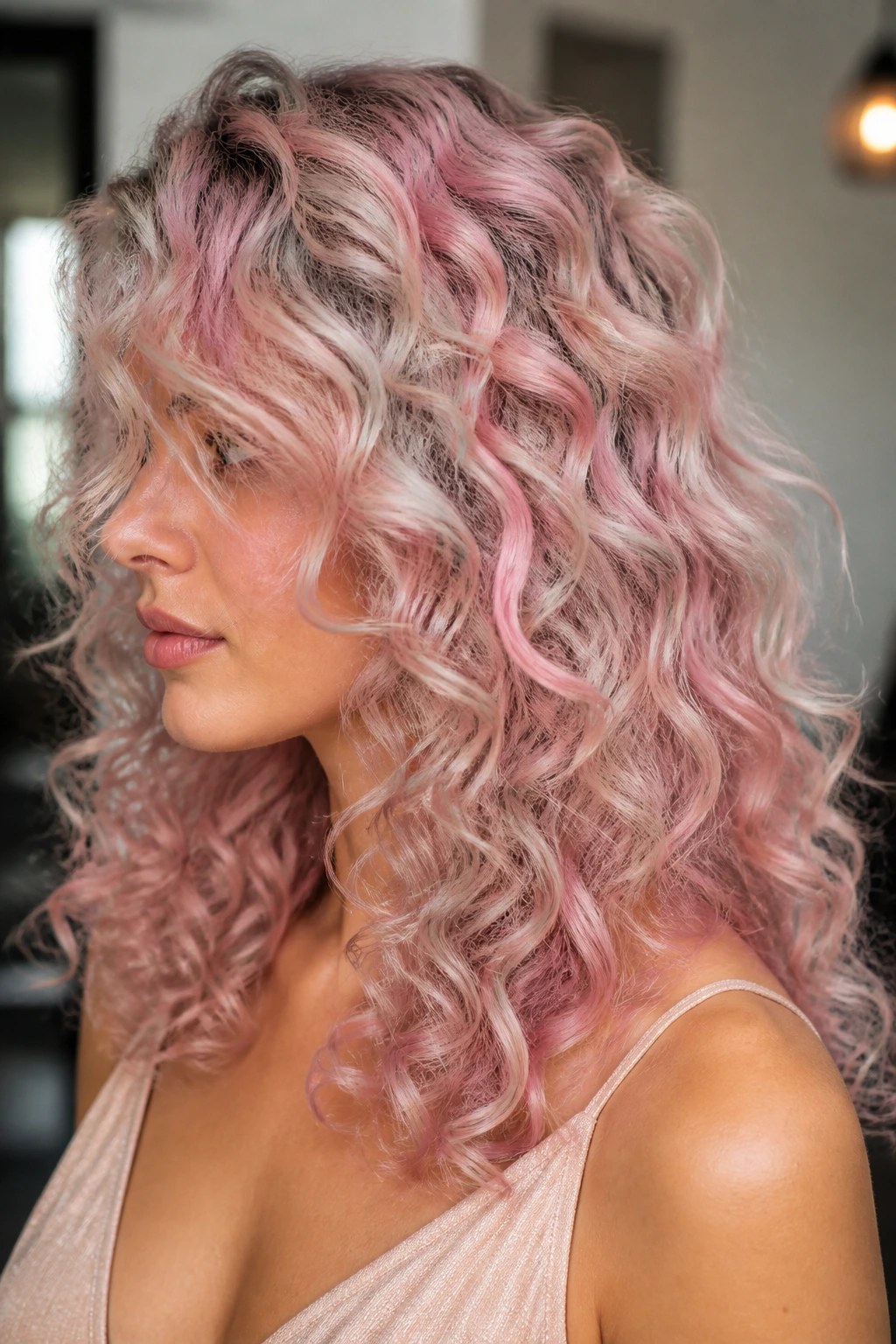
This technique involves hand-painting multiple shades of pink, silver, and cream into the hair to mimic the natural marbling found inside a genuine rose quartz rock. It is not just one solid color; it is a complex work of art that requires an experienced colorist with a good eye for composition.
How it Works
The stylist picks up thin sections of curls and paints them with varying strengths of pink dye. Some strands receive a deeper, punchy magenta, while others are coated in a sheer, barely-there whisper of pink. Once these curls dry and bounce back, they intermingle to create a multi-tonal, sophisticated look that is completely unique to your hair.
The Maintenance Commitment
- This is definitely a higher-maintenance look that requires touch-ups every five to six weeks.
- Because so many different toners are used, you need to use a balanced shampoo that won’t strip out the lighter shades while keeping the deeper ones from staining the lighter ones.
- Treat your hair to a protein-based leave-in conditioner to keep the integrity of the marbled strands strong.
15. Sun-Kissed Rose Quartz
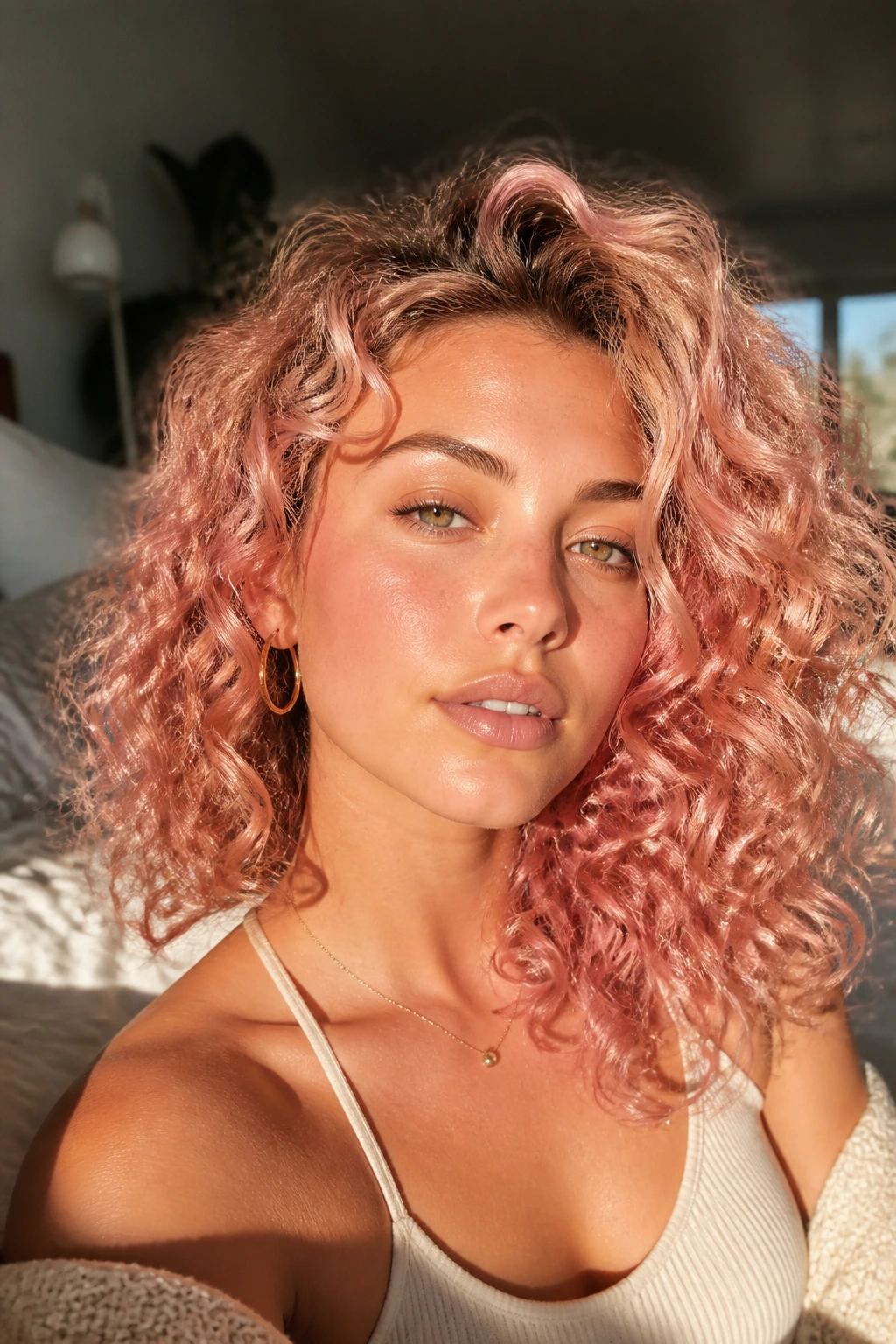
Think of this as the “beach-ready” version of the trend. It involves blending gold-blonde highlights with rose quartz. The result is a warm, glowing look that perfectly bridges the gap between traditional blonde and fashion-forward pink. It’s perfect for those who want to try the pastel trend but aren’t ready to fully commit to an all-over pink tone.
The Blend Strategy
- Focus the gold highlights around the face to warm up your complexion.
- Sprinkle the rose quartz through the mid-lengths where the light hits the hair most.
- Keep the roots natural to allow the color to grow out gracefully without a harsh line of demarcation.
Why This Style Lasts
- The gold base is naturally more durable than pure pink.
- Even if the pink washes out entirely, you are left with a beautiful golden blonde that looks natural and healthy.
- It’s the easiest way to ease into the look if you are nervous about the maintenance.
16. Rose Quartz with Electric Blue Undertones
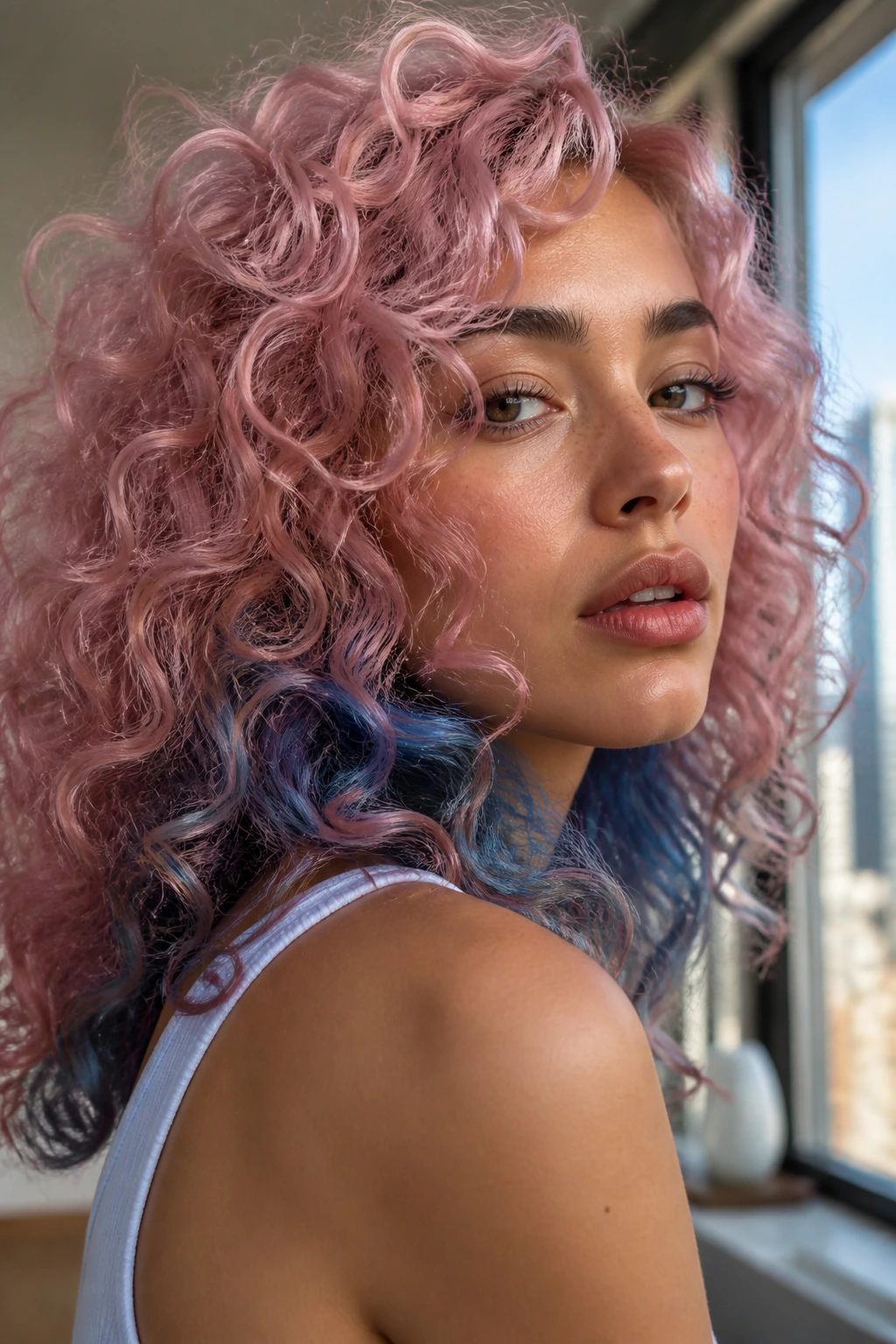
Contrasts are a hallmark of high-end styling. Placing a hidden layer of electric blue underneath your rose quartz hair creates a stunning, unexpected combination that feels edgy and cool. When your curls move, you get flashes of cool blue poking through the warm, soft pink.
Why Contrast Matters
The coolness of the blue grounds the lightness of the pink, making the hair look “complete.” Without a contrast, rose quartz can sometimes look a bit too soft or “flat” on people with deeper skin tones. The addition of a saturated blue creates a frame that helps the pink really pop.
Practical Advice
- Use a temporary, direct-dye color for the blue, as it will likely fade faster than the pink.
- Ensure the two colors are separated by at least one layer of natural or blonde hair to prevent them from muddling together into a greenish-brown mess.
- This is a bold choice, so be prepared for people to notice your hair color immediately.
17. The “Velvet Rose” Deep Magenta
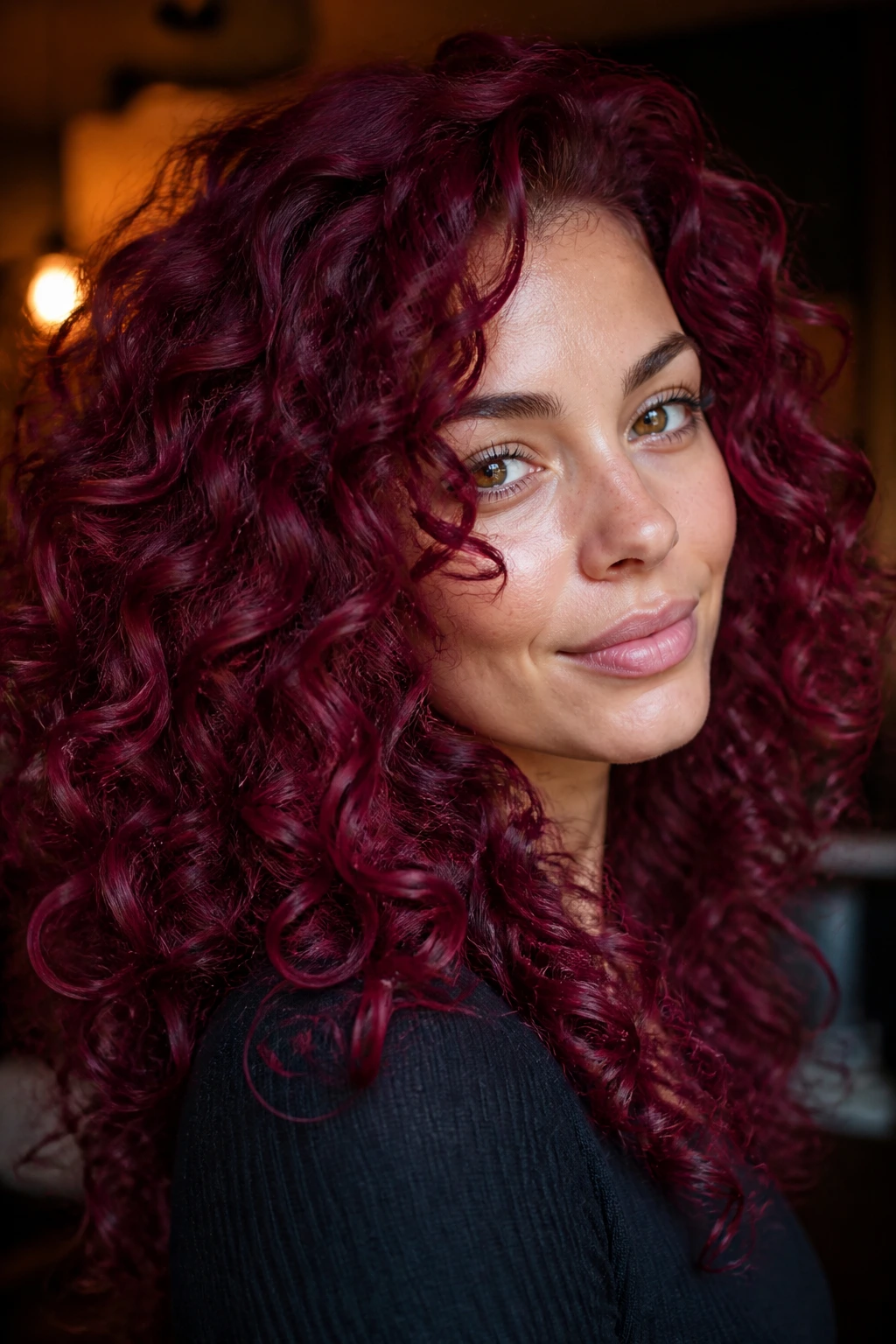
If you find standard rose quartz too pale, “Velvet Rose” is the solution. It pushes the color saturation up, resulting in a deep, lush, magenta-toned rose that feels rich and indulgent. It is much easier to maintain, as it doesn’t require as much bleaching as the paler versions, and it looks incredible on a wide range of skin tones.
Why It’s More Versatile
- It hides damage better than pale pastel pinks.
- The depth of the color makes it look shinier and healthier even if your hair has been through a few bleach sessions.
- It wears off into a beautiful, soft pastel rose, essentially giving you two hair colors for the price of one.
Style Suggestions
- Pair this deep rose with dark, bold makeup to lean into the moody, velvet vibe.
- Keep the curls large and bouncy with a medium-hold gel; small, tight coils might make the deep pink look too dark.
- This shade looks fantastic in low-light environments, making it a great choice for evening events.
18. Rose Quartz with Silver Babylights
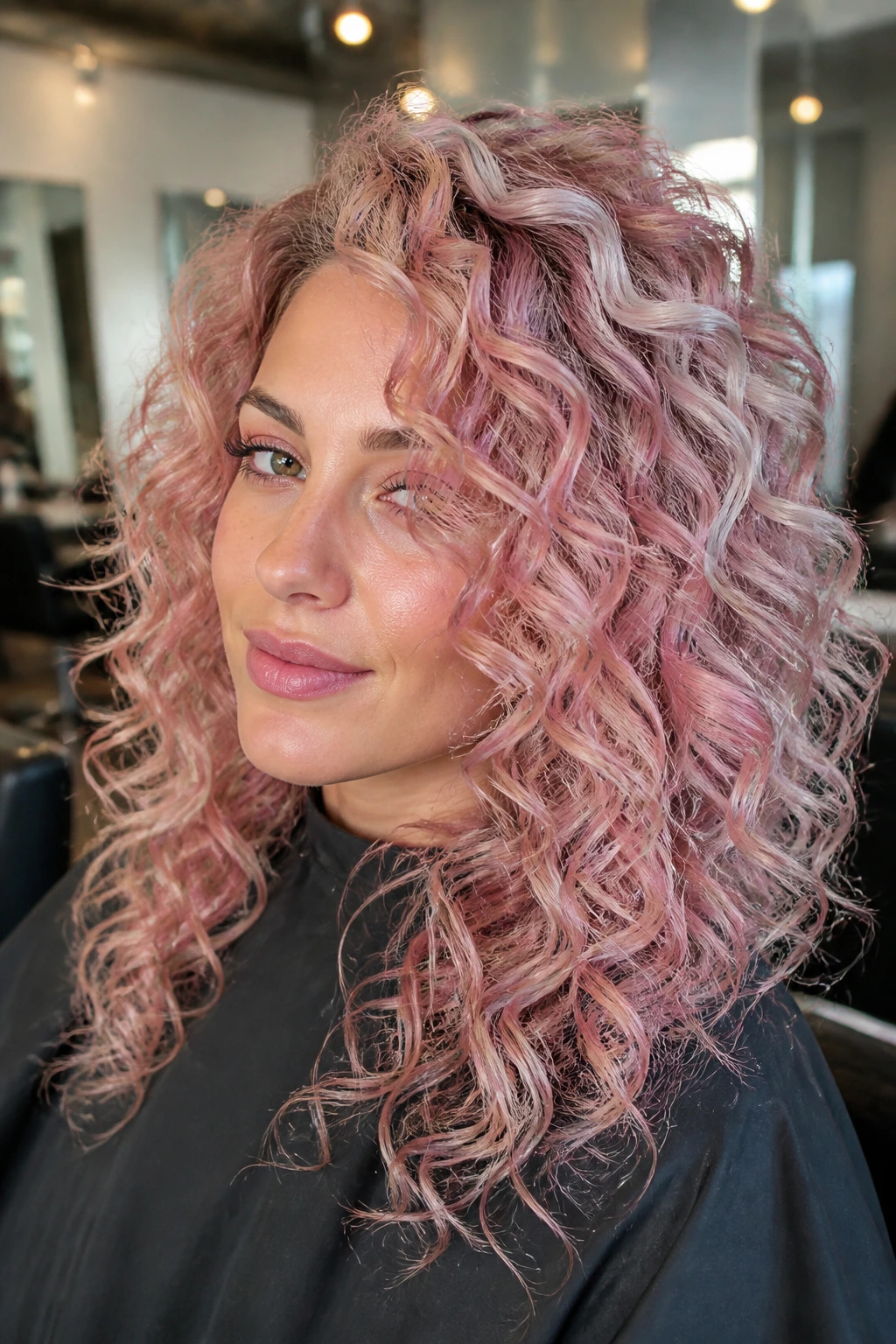
Silver is the perfect companion for rose quartz because it cools down the warmth and gives the hair a crystalline appearance. By weaving silver babylights through your rose quartz curls, you add a level of sophistication and “sparkle” that is hard to achieve with pink dye alone.
The “Crystal” Effect
The silver strands act as tiny mirrors, catching and reflecting the light. When paired with the soft pink, they create a prismatic effect that makes your curls look like they are literally glowing. This is the ultimate “high-fashion” version of the look.
Maintaining the Silver Shine
- Silver is notoriously difficult to keep in the hair and fades faster than any other color.
- Use a dedicated silver-toning shampoo once a week to refresh the cool tones.
- Avoid using oil-based products on the silver sections, as oil can yellow the delicate white-silver pigment over time.
19. Rose Quartz Curls with Natural Roots
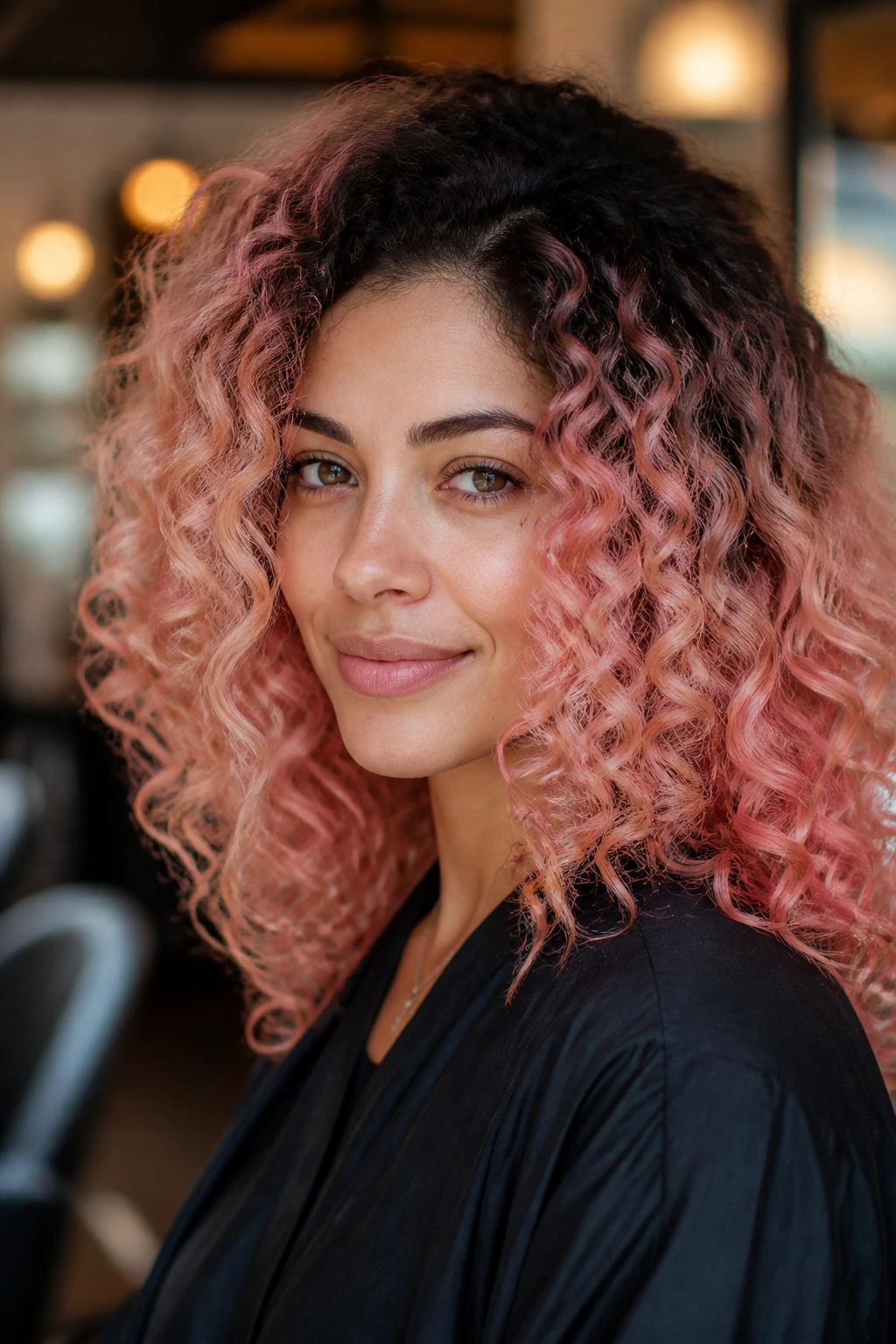
Nothing says “effortless chic” quite like high-fashion color paired with a visible, natural root. It’s the look of someone who is confident and relaxed. For those with naturally dark or curly hair, this is also the most practical way to wear rose quartz, as it reduces the frequency of bleaching and preserves the health of your scalp.
Designing the Transition
- Ensure the blend between your natural hair and the bleached rose quartz is very soft and feathered.
- A “teasy-lights” technique, where the hair is backcombed before the lightener is applied, is the best way to achieve this blurry, natural root look.
- This style allows you to grow your hair out for six months or more without needing a touch-up, provided you use a good toning gloss to refresh the pinks.
20. The “Cloud Pink” Curly Shag
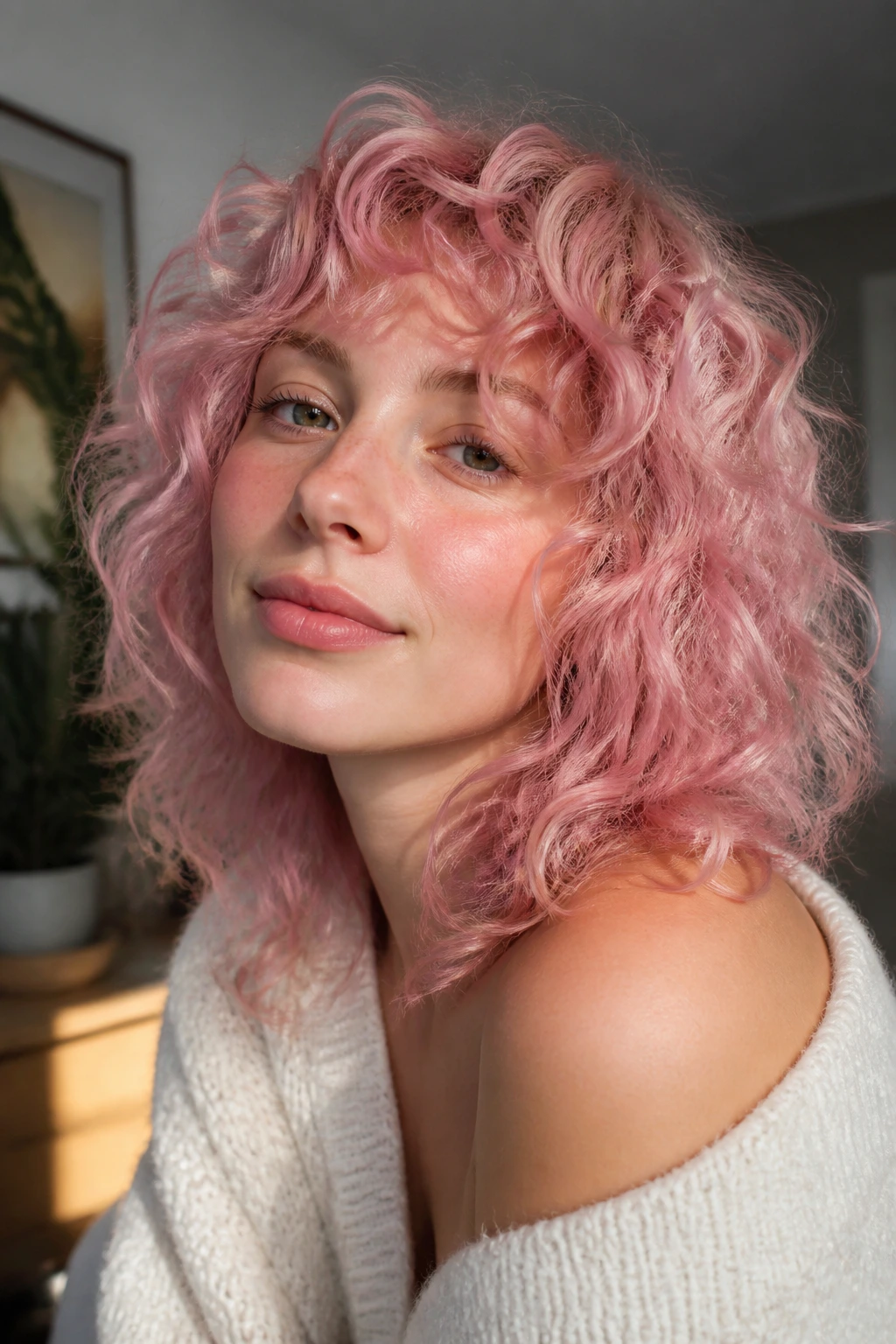
The shaggy, layered haircut is having a major moment, and it is the perfect structure for a soft, “cloudy” rose quartz color. The layers of the shag allow the different hues of the quartz to stack on top of one another, creating a look that is airy, voluminous, and incredibly soft.
Why it Works with the Cut
A shag cut is all about texture, and adding a soft color makes that texture feel dreamier and more intentional. Since the shag relies on shorter layers around the crown, you can have more intense color up top, which then softens as it moves down the lengths.
Styling for the Shag
- Use a volumizing foam at the roots to give the shag its characteristic lift.
- A little bit of texture spray on the ends helps define the pieces and makes the color variations more visible.
- This cut and color combo is ideal for those who love a “messy but chic” look that requires very little daily effort.
21. Rose Quartz with Pale Peach Highlights
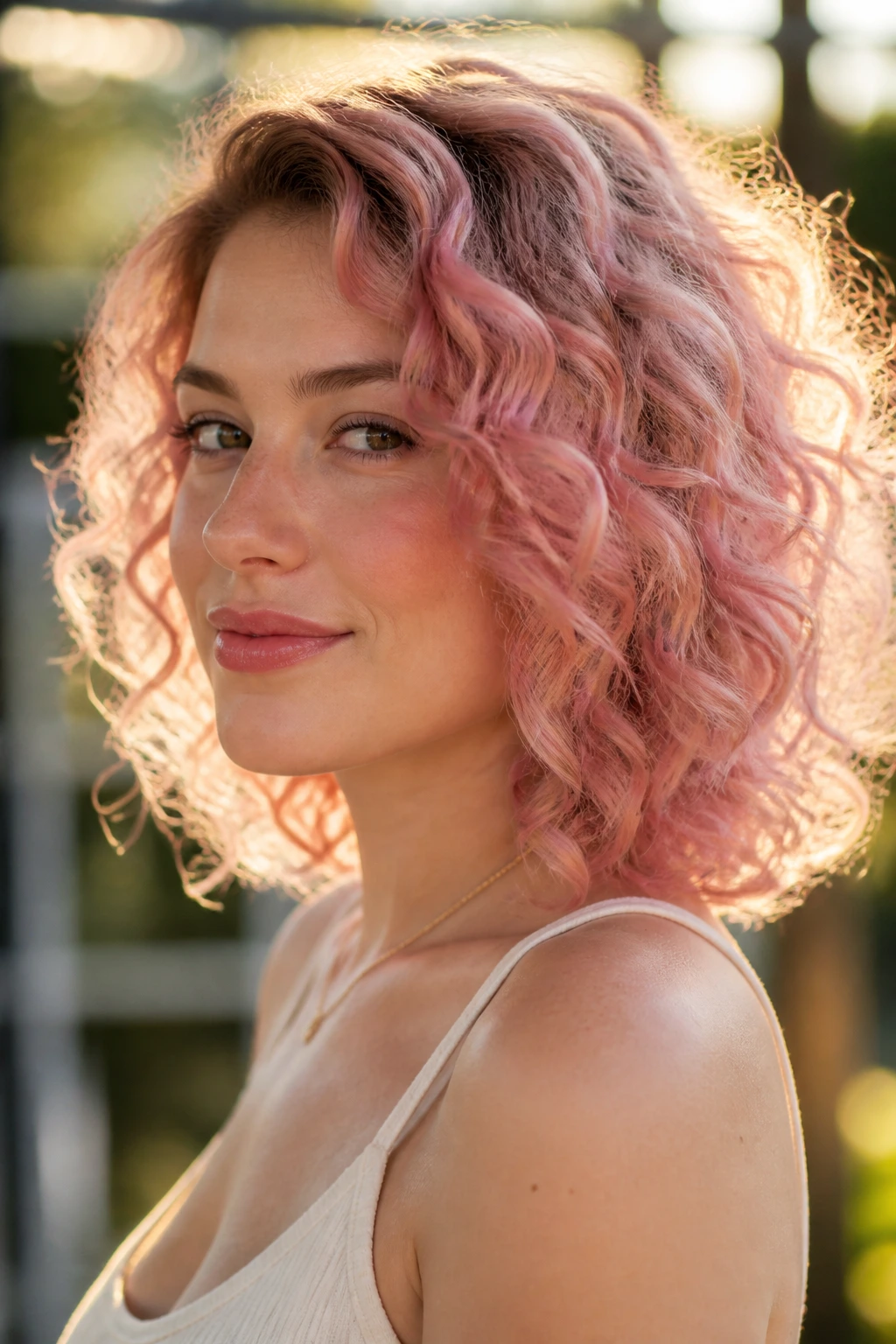
Combining rose quartz with pale peach or “sorbet” highlights adds a layer of warmth that mimics the natural color of a sunset. It is a vibrant, youthful look that works exceptionally well on those with neutral skin tones, as the peach helps to brighten the face while the rose quartz keeps the look feeling cool and trendy.
The Harmony of Tones
Pink and peach are adjacent on the color wheel, which means they blend together seamlessly without the risk of creating muddy tones. This is a very “safe” way to experiment with multiple fashion colors if you are worried about your hair looking too one-dimensional.
Tips for Success
- Ask your colorist for “slice” highlights instead of “weave” highlights to make the peach pieces more distinct.
- This look is particularly beautiful on Type 3 curls, where the individual spirals can show off the different colors as they twist.
- Always finish with a high-shine spray to ensure the peach and pink blend perfectly, creating a single, glowing look.
Final Thoughts
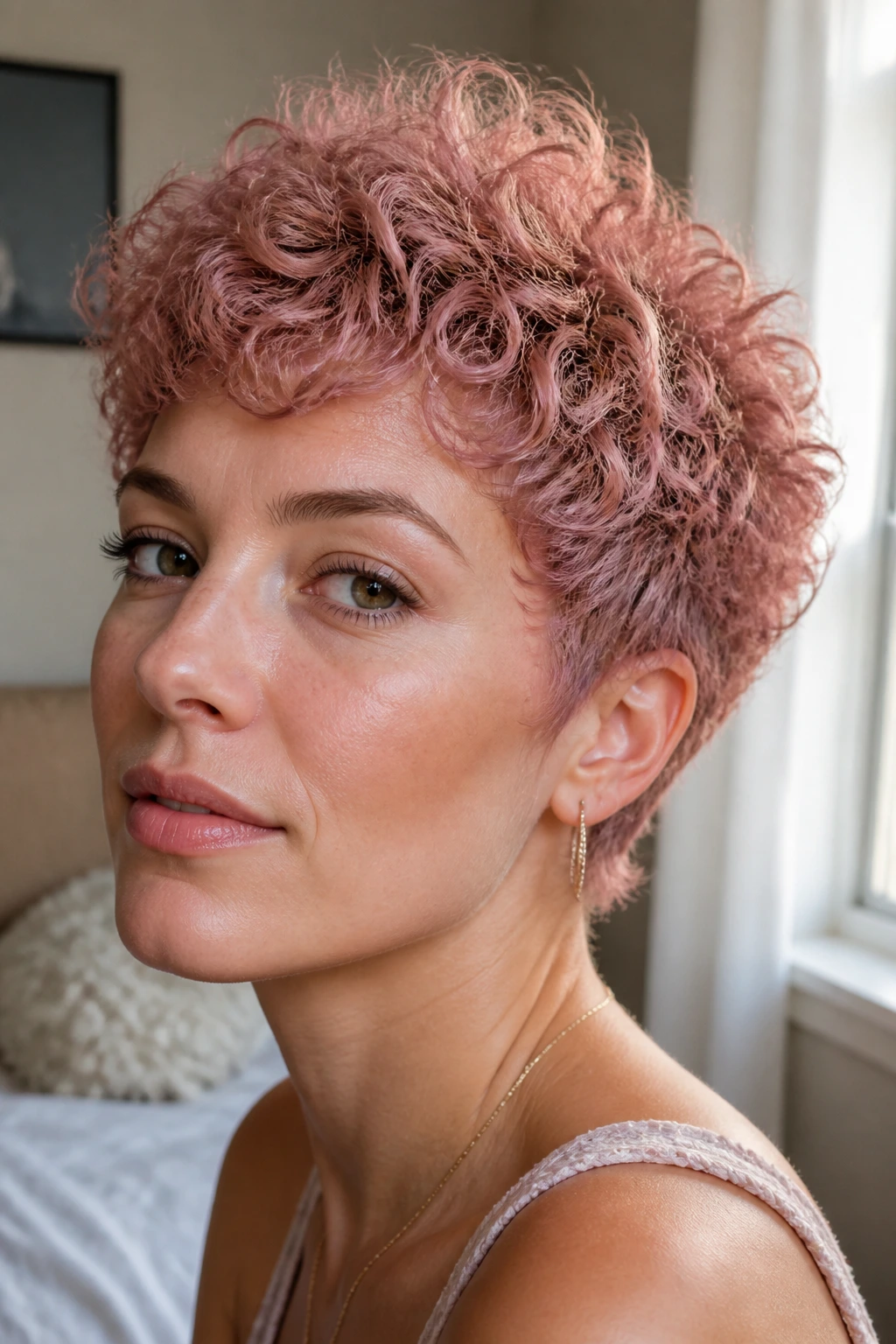
Choosing the right shade of rose quartz for your curly hair comes down to finding the balance between your personal style and the health of your curls. Because this process usually involves bleaching, it is vital to approach the transition with a long-term plan. Remember that the color you see in the salon chair is only the beginning of the journey. The way you wash, condition, and style your hair will dictate whether that rose quartz remains a vibrant crystal-like dream or fades into a dull, flat memory.
Never underestimate the power of a professional gloss treatment to refresh your color. Instead of re-dyeing the entire length of your hair every time you visit the salon, ask your colorist if a semi-permanent gloss would suffice. This keeps the pigment fresh and the cuticle smooth without the added stress of unnecessary processing. Above all, embrace the process; pink hair is meant to be fun, and a little bit of fading along the way is just part of the charm.