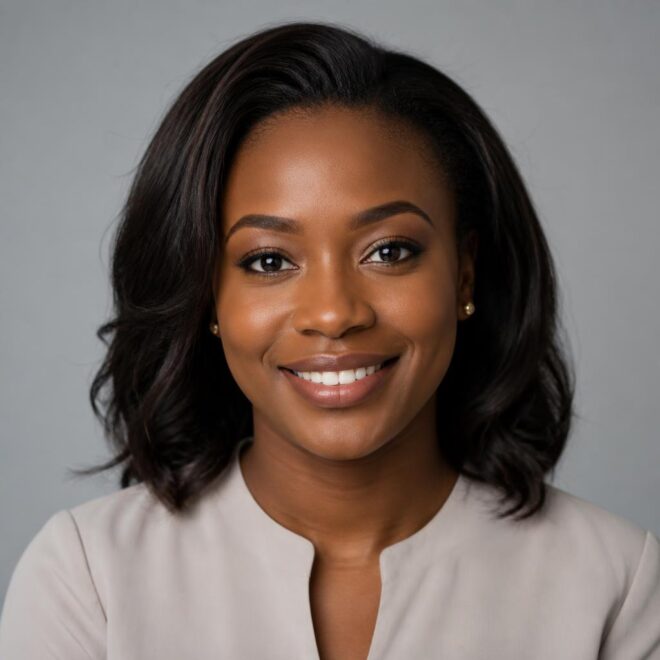


Finding a hairstyle that truly balances a long face while managing the inherent weight of thick hair is a constant push-and-pull. If you have a longer facial structure, the goal is often to break up the verticality and add width, but when you pile thick hair on top of that, it can easily overwhelm your features or drag your look down if the cut isn’t executed with precision. Thinning out the density while maintaining volume is a delicate balancing act that requires a stylist who understands texture as much as silhouette.
Working with thick hair when you have a narrow face offers a fantastic opportunity for volume, but it requires specific techniques—like internal layering or weight removal—to keep the hair from acting like a heavy curtain. The following styles focus on creating horizontal interest, using layers to frame the jawline, and employing bangs or soft movement to shorten the perceived length of your face. Whether you want to embrace your natural wave or keep things sleek and polished, these options prioritize harmony between your hair’s density and your face’s proportions.
1. Long Layers with Face-Framing Curtain Bangs
Curtain bangs are a godsend for long faces, but they need to be cut with enough weight to hold their shape against thick hair. By parting the bangs right at the eyebrow level and letting them taper down toward the cheekbones, you create a horizontal line that effectively cuts the vertical length of the face in half.
Why This Works for Thick Hair
When your hair is heavy, standard bangs can look like a thick block that separates from the rest of your head. Long, sweeping curtain bangs integrate into the rest of your hair seamlessly. They draw attention to the eyes rather than the length of the chin.
Styling Tip
Use a round brush to blow-dry the bangs away from the face while the hair is still damp. This ensures they maintain that soft, flicked-out look throughout the day without falling flat.
2. The Textured Mid-Length Shag
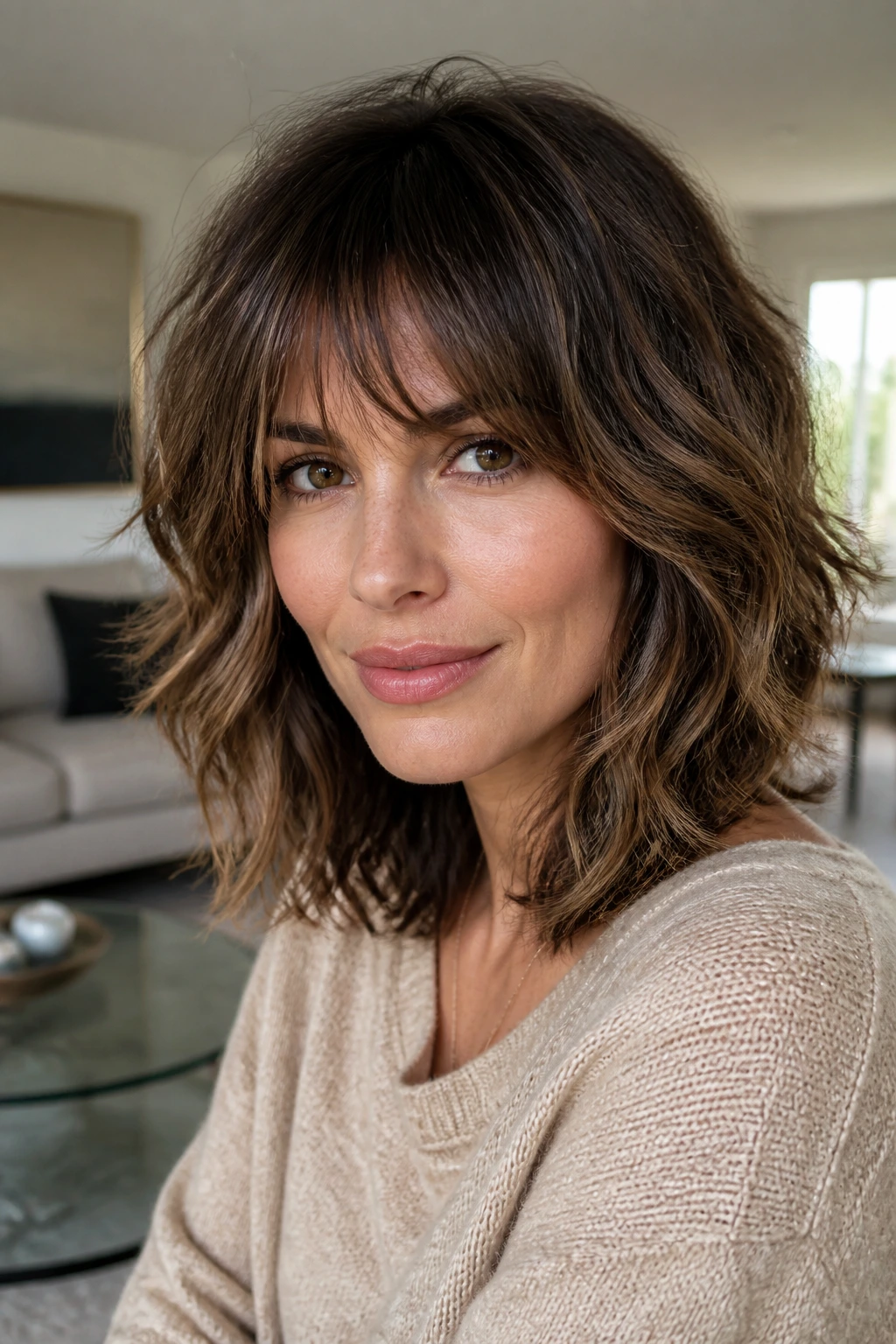
A modern shag cut relies on choppy, shattered layers to remove significant bulk from thick hair. This is perfect if you want to keep your hair away from the ground, as a shorter length naturally adds width to the sides of the head.
The Role of Texture
Because your hair is thick, it provides a natural base for the shag to look full and intentional rather than wispy. The layers should start around the cheekbones, which helps fill out the narrower parts of a long face.
Maintaining the Shape
- Avoid over-layering at the crown, or your hair might look like a mushroom.
- Focus the weight removal through the mid-lengths.
- Use a sea salt spray to encourage natural movement.
3. Deep Side-Parted Sleek Lob
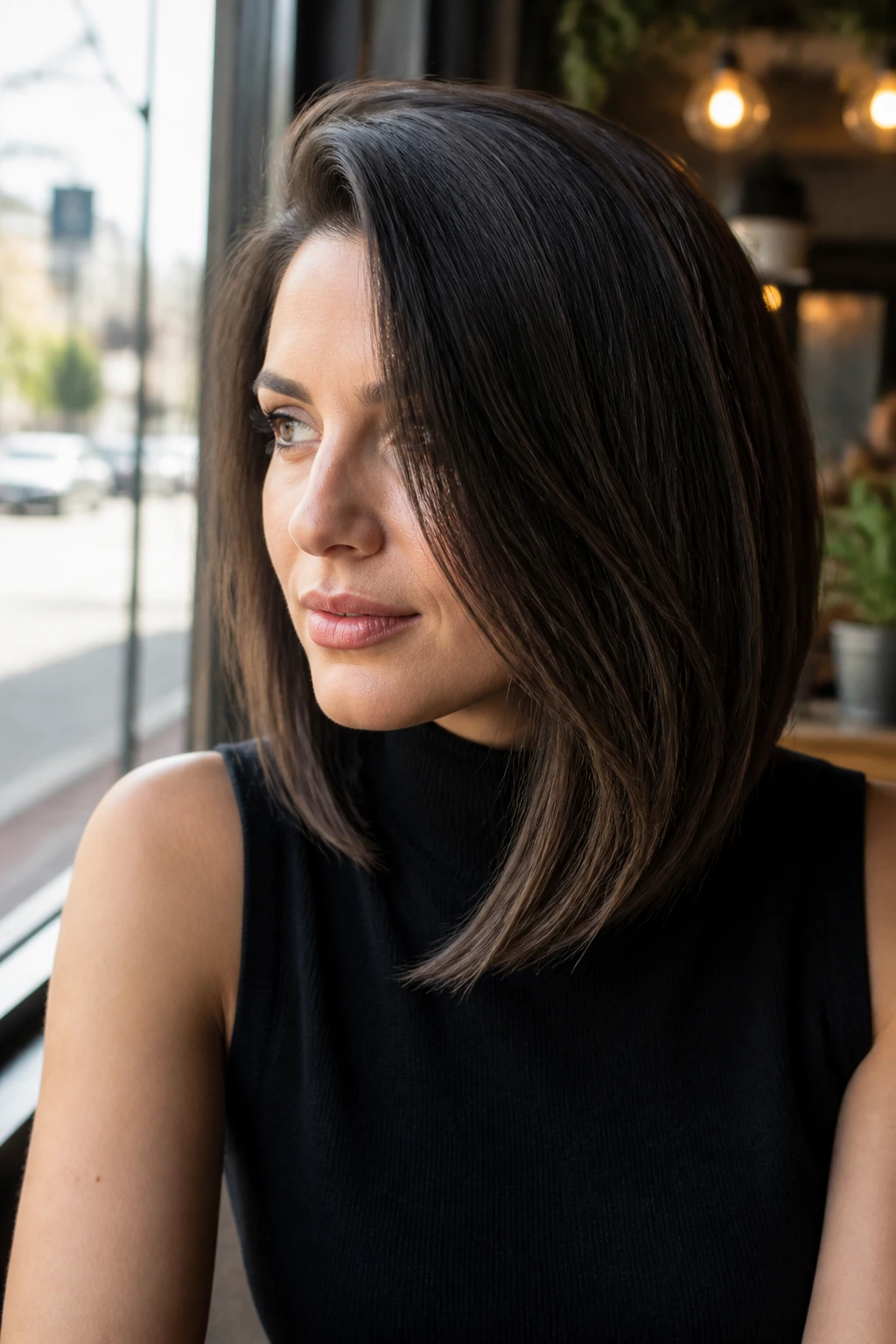
A lob—or long bob—is arguably the most versatile cut for thick hair. By parting it deep to one side, you instantly create an asymmetrical line that disrupts the symmetry of a long face.
Balancing the Weight
Thick hair can often feel “heavy” at the ends, which is a major no-no for long faces. Ask your stylist for “point cutting” or “slide cutting” at the ends to ensure the line is soft and airy, not blunt and weighted.
The Visual Effect
The deep side part creates a sweeping diagonal line across your forehead. This tricks the eye into seeing more width across the upper half of your face, making your chin appear less pronounced.
4. Curly Layers with Soft Fringes

If you have thick, curly hair, you’ve likely spent years trying to tame it. Instead of fighting it, use your volume to your advantage by keeping the hair slightly shorter and adding soft, wispy bangs that don’t require daily straightening.
Managing the Density
Curly hair naturally grows outward, which is exactly what a long face needs to achieve balance. By layering the hair heavily, you prevent the “pyramid” effect where the hair is flat on top and massive at the bottom.
Essential Care
Always apply a leave-in conditioner to soaking wet hair. This helps define the curls before they dry and expand. For thick hair, avoid heavy gels that can weigh down the roots.
5. Blunt Collarbone-Length Cut with Soft Waves
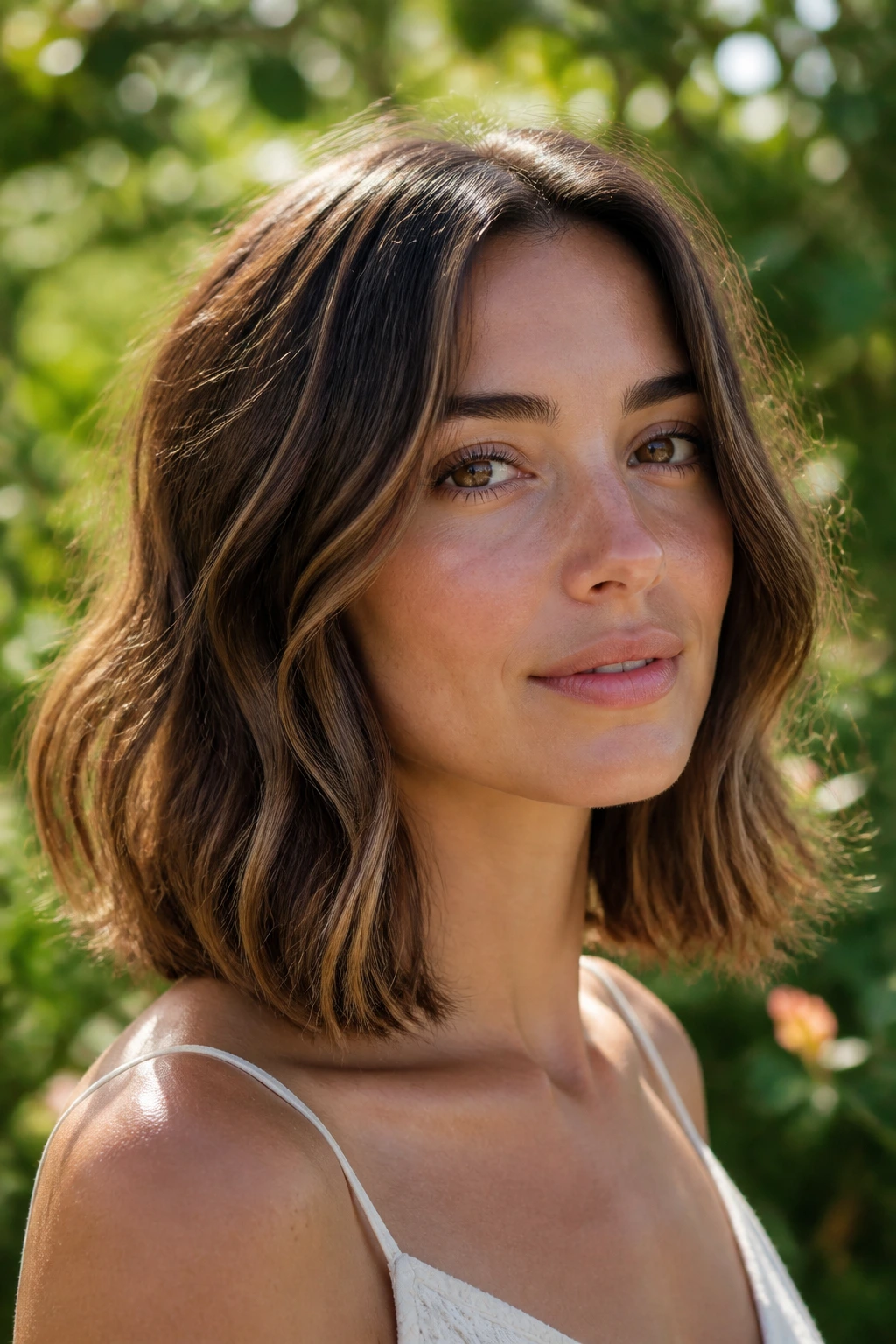
Sometimes, the simplest approach is the most effective. A blunt cut at the collarbone stops the hair from pulling your face downward, but you should add subtle, loose waves to keep it from feeling too severe.
Why Blunt Cuts Benefit Thick Hair
Blunt lines give thick hair a sense of purpose. When the ends are freshly trimmed, they look polished and healthy. The key is to keep the waves loose; if they are too tight, they will add too much height.
Adding Softness
Use a large-barrel curling iron to create soft “S” shapes. Focus the wave intensity around your ears and jawline to widen the face, leaving the roots relatively straight.
6. Asymmetrical A-Line Bob
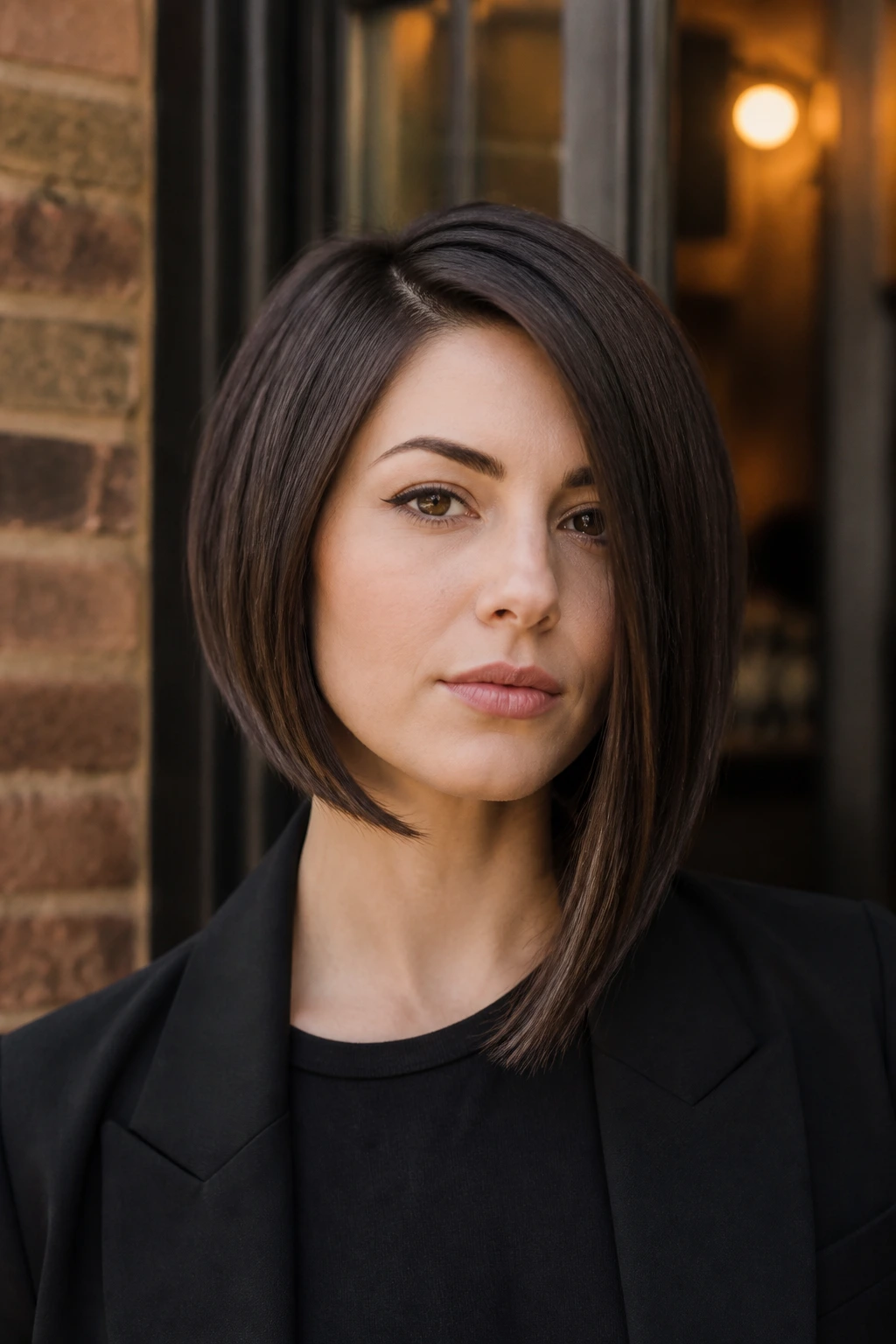
An A-line bob, where the hair is shorter in the back and longer in the front, is a classic, but for a long face, you want the front pieces to hit just below the chin. This creates a frame that softens the jawline.
Why This Style Succeeds
The sharp angle of the cut adds a geometric element that is very flattering. Because thick hair holds the shape of an A-line cut better than fine hair, you won’t need to spend excessive time with styling products.
Who Should Choose This
If you prefer a sharp, professional look, this is your go-to. It requires a trim every six to eight weeks, but the payoff is a face-framing style that never looks droopy.
7. The Shattered Pixie with Longer Top Layers
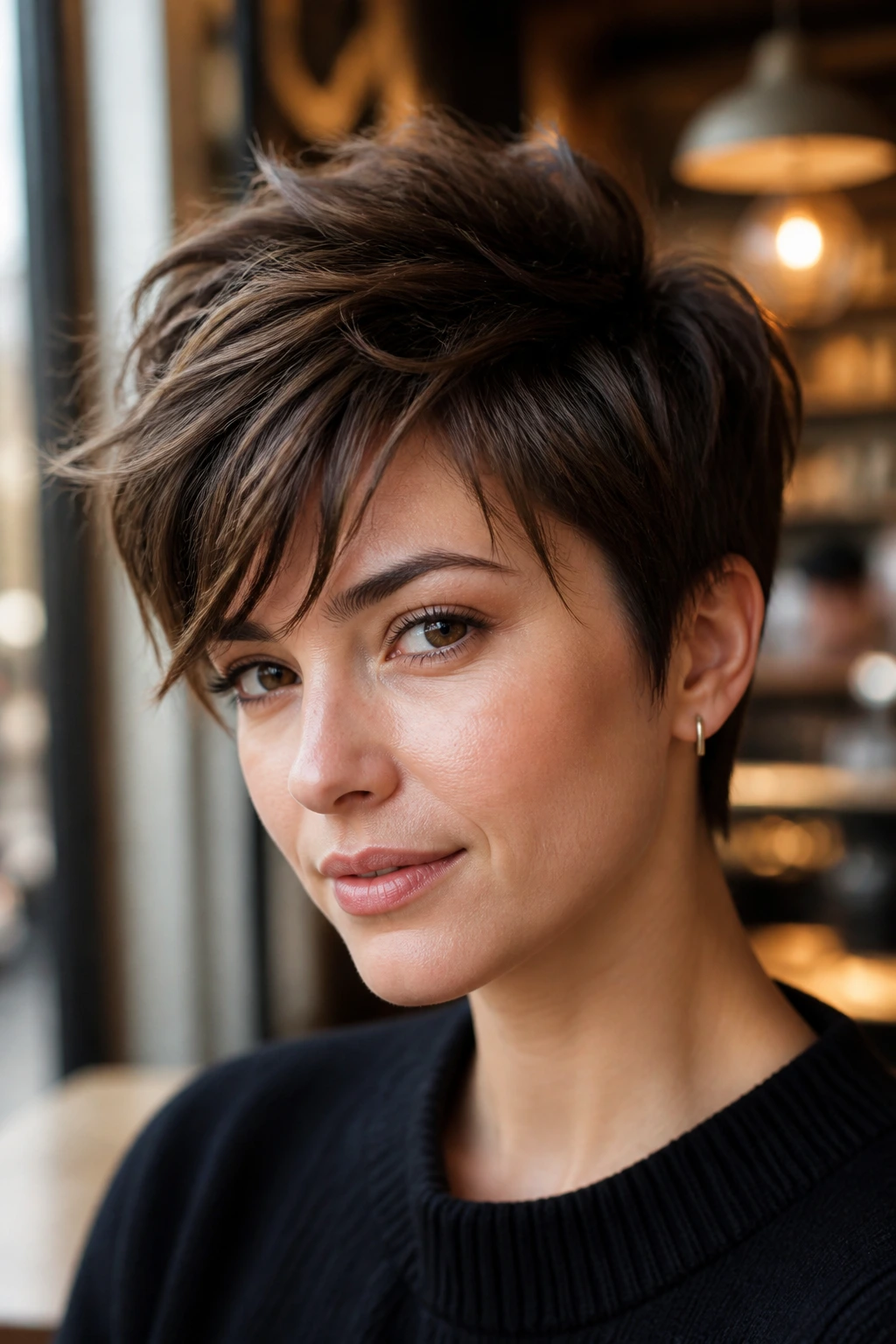
Yes, you can pull off short hair even with thick hair, provided you keep the top long enough to sweep across the forehead. A super-short crop can actually expose the length of your face too much, so keep the fringe slightly heavy.
The Benefit of Movement
By keeping the top layers longer, you can style them forward or to the side. This covers part of your forehead, effectively shortening the appearance of your face.
Styling for Density
Use a texture paste or matte pomade. Rub a small amount between your palms and work it through the ends. This separates the thick strands and adds a sense of lightness to the cut.
8. Butterfly Cut with Face-Framing Layers
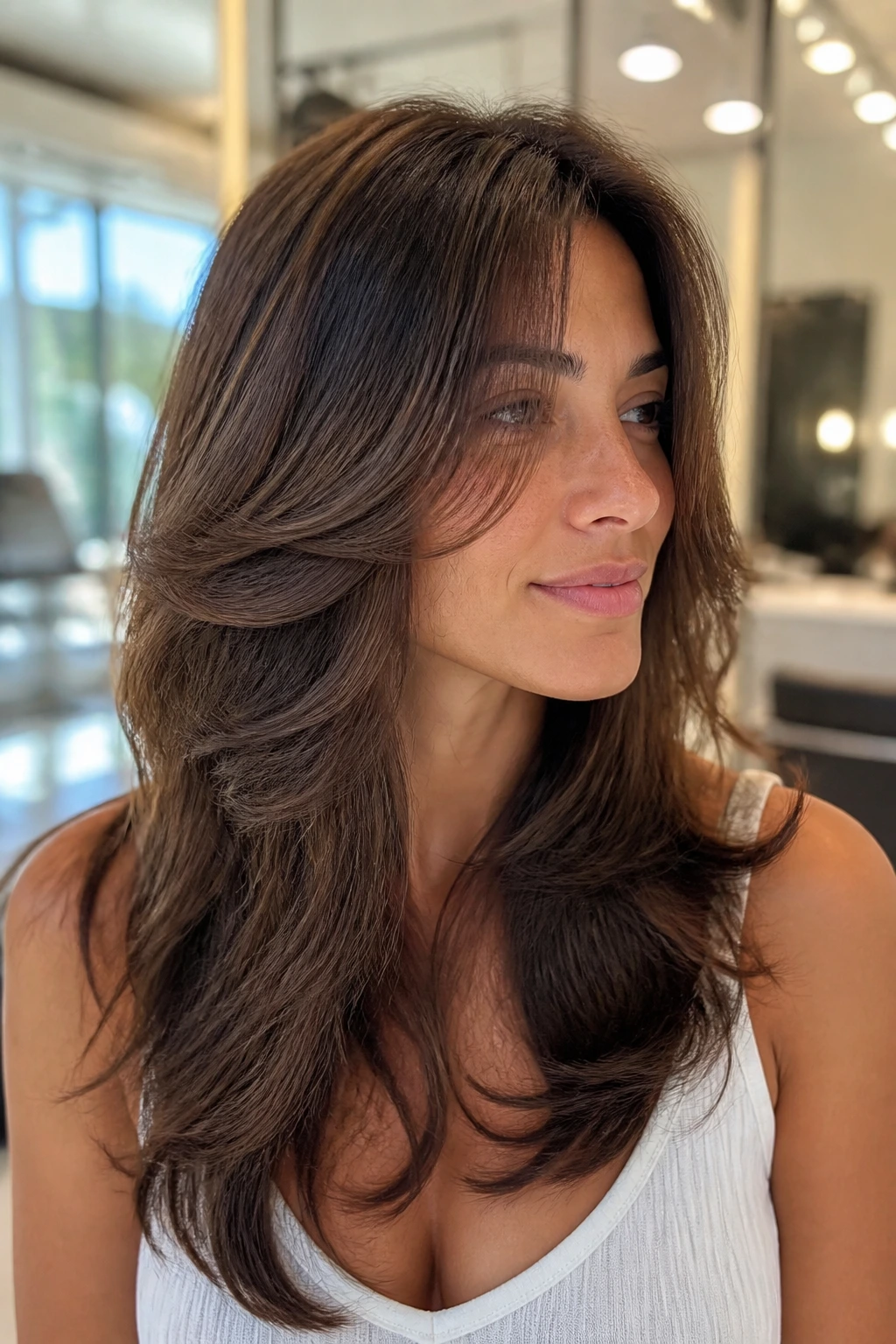
The butterfly cut, which features shorter layers on top and longer, disconnected layers underneath, is perfect for thick hair because it mimics the look of a blow-out without the constant heat damage.
How It Shapes the Face
The top, shorter layers act like a curtain, adding volume around the cheekbones and temples. This fills out the narrow sections of a long face while the bottom layers provide length without the weight.
The Blow-Dry Technique
You will need a large round brush. Focus on flipping the shorter top layers away from your face to maximize the “butterfly” effect.
9. Soft Beach Waves with Middle Part
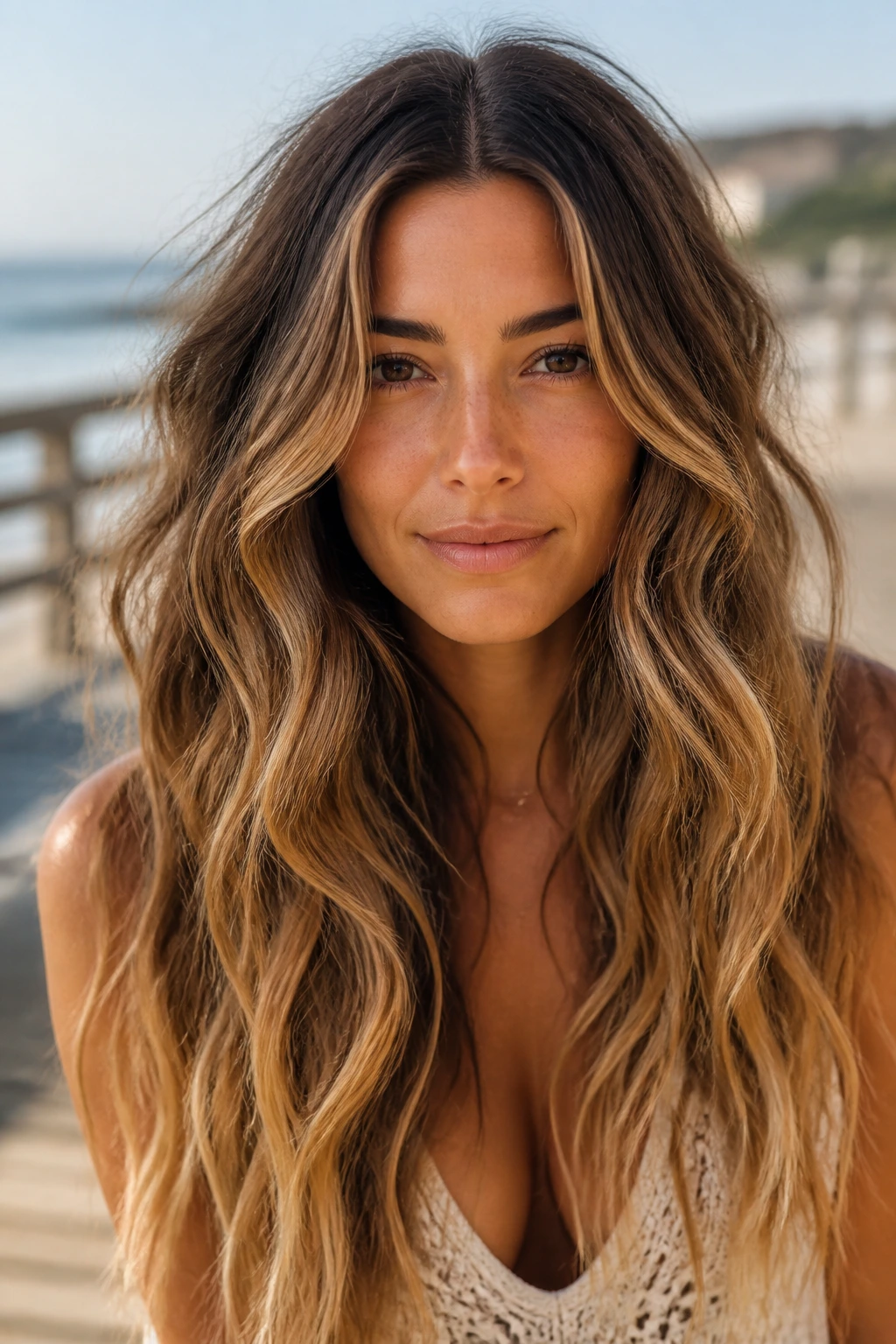
A middle part is generally avoided for long faces, but it works beautifully if you pair it with soft, voluminous waves that start from the temples down. The volume on the sides compensates for the potential elongation of the center part.
Why Thick Hair Wins Here
If you have thin hair, a middle part can make the face look stretched. With thick hair, the volume on both sides of your face acts as a horizontal anchor, grounding the look.
Achieving the Look
- Divide your hair into two sections.
- Use a wand to curl away from the face.
- Brush out the curls once they are completely cool to turn them into soft waves.
10. Shaggy Lob with Blunt Bangs
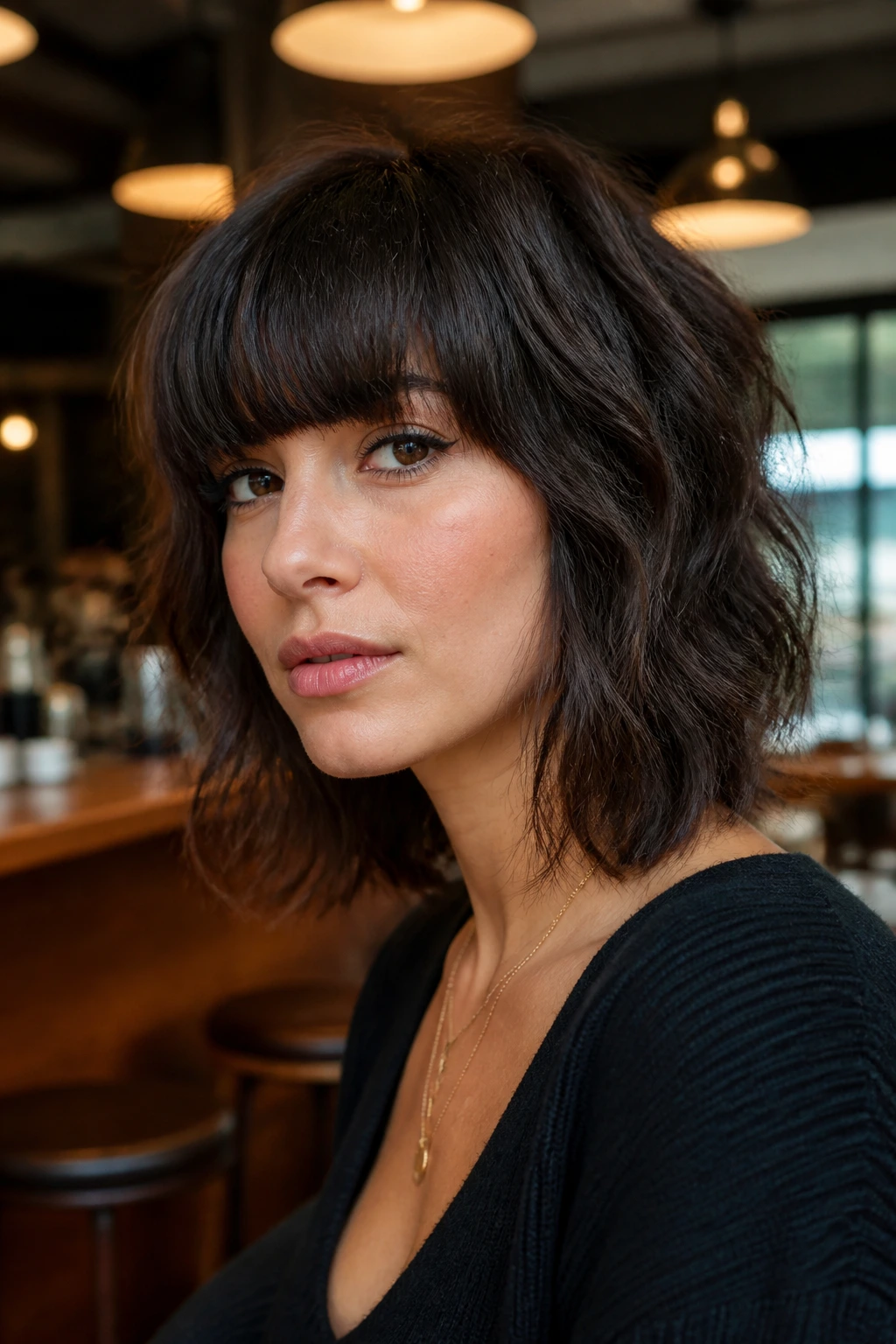
If you love a retro vibe, a shaggy lob paired with thick, blunt bangs can be incredibly chic. The bangs provide an instant “cap” to your face, stopping the vertical line of your forehead.
The Balance of Density
The shaggy, textured mid-lengths help to balance the heavy visual weight of the blunt bangs. If you have thick hair, you already have the density required to make blunt bangs look full and intentional rather than thin or sparse.
Maintenance Notes
Blunt bangs need to be trimmed often. Consider learning how to trim them yourself if you don’t want to visit the salon every three weeks.
11. Layered “Rachel” Inspired Cut
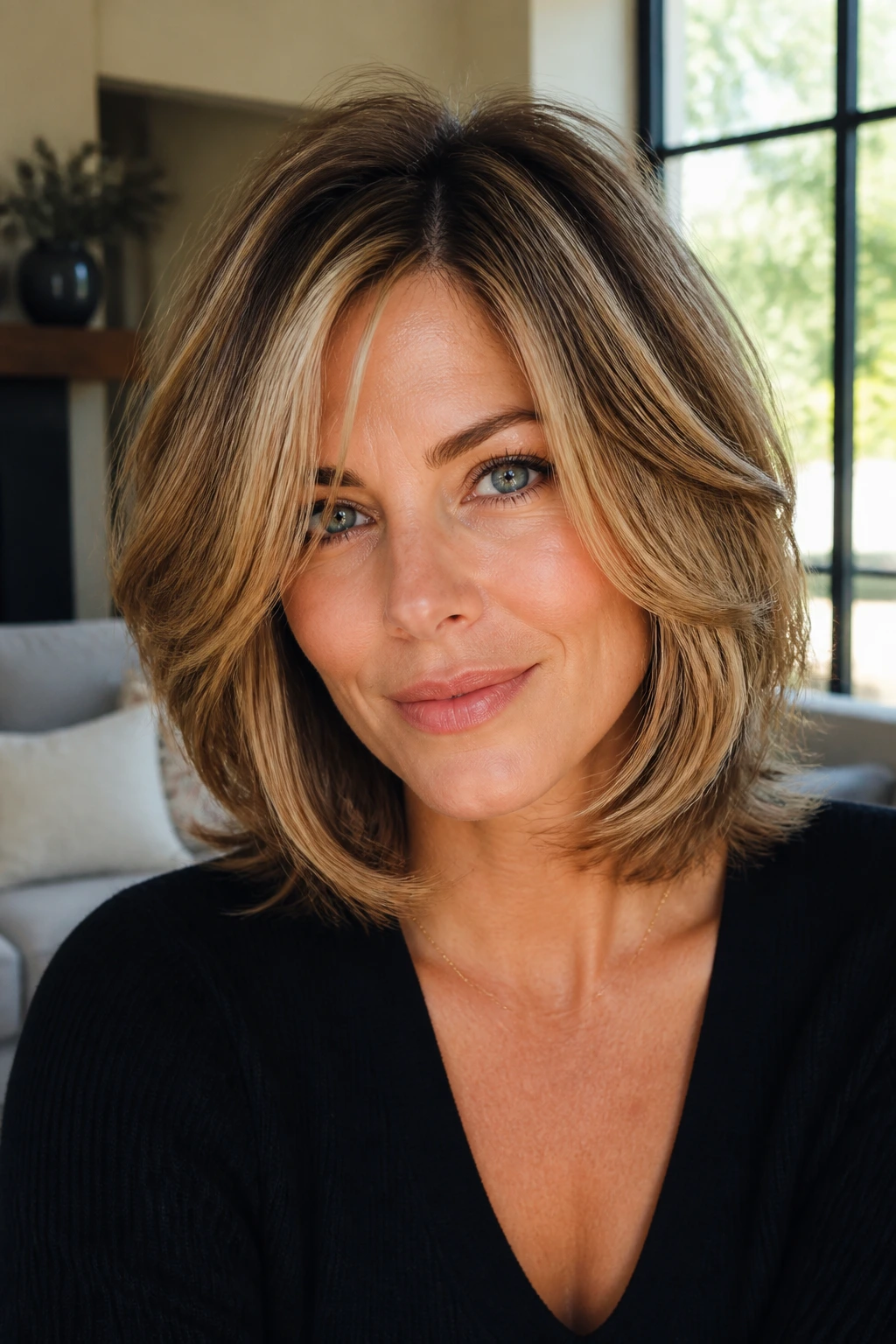
The 90s-style layered cut is making a comeback, and for good reason—it’s built for thick hair. By incorporating multiple layers that flip inward and outward, you create a wide, voluminous silhouette that completely obscures the length of the face.
The Volumizing Strategy
Ask your stylist to keep the layers around the chin long enough to tuck behind your ears. This allows for styling flexibility. The inward flip near the chin adds width to the lower half of the face.
Product Selection
Use a lightweight volumizing mousse on damp hair before drying. Avoid heavy oils that will cause the layers to clump together.
12. Soft Layers with Side-Swept Fringe
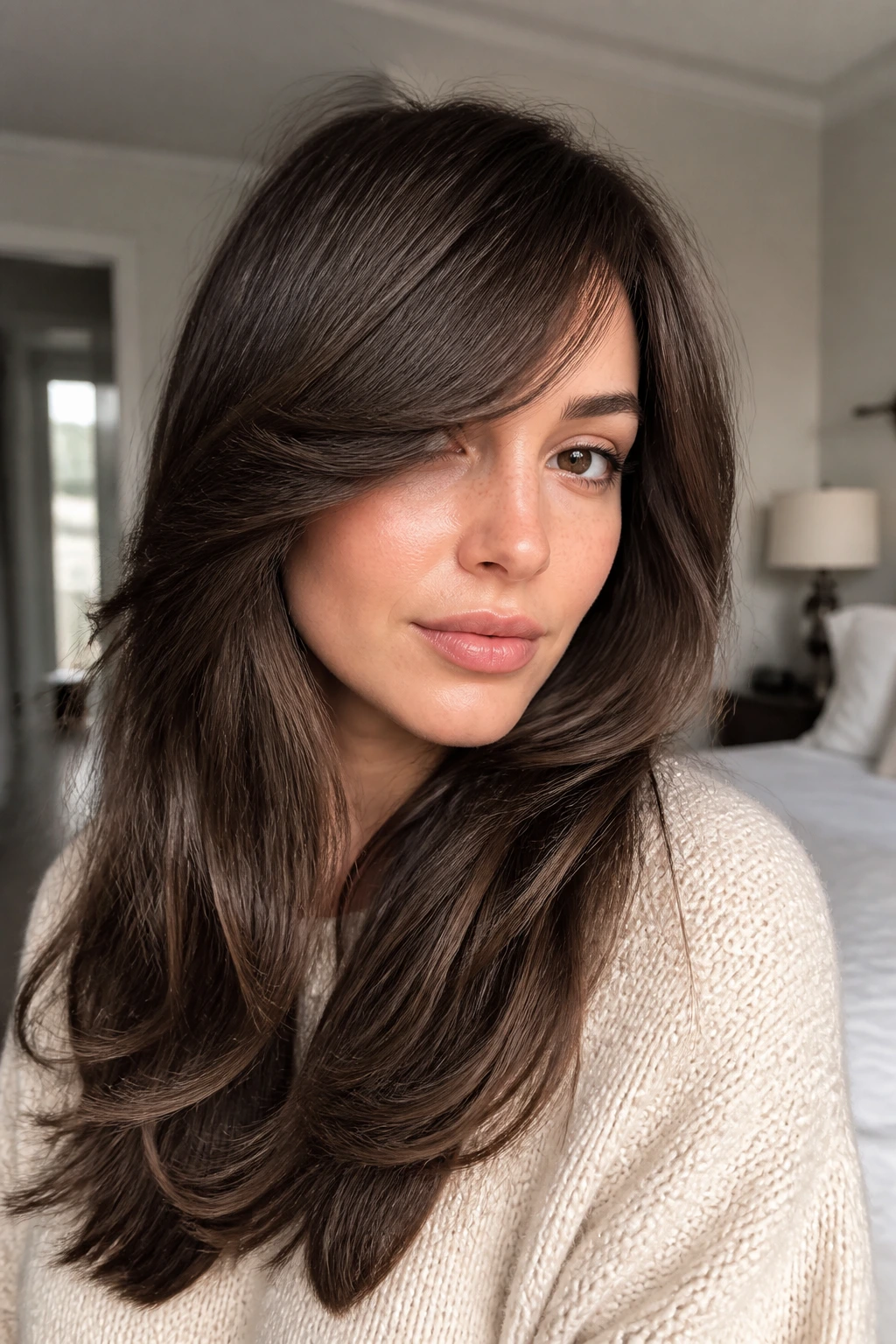
This is the “safe” option that works in almost any setting. By keeping the main length long and adding a long, side-swept fringe, you maintain your length while adding a focal point that draws the eye horizontally.
Why This Works
The side-swept fringe breaks the continuous line of the forehead. Because the layers are soft and blended rather than choppy, it creates a very feminine and polished silhouette.
Pro-Tip for Daily Style
Part your hair on the side and use a flat iron to gently curve the ends of your layers toward your face. This creates a “C” shape that softens the overall aesthetic.
13. The Rounded Bob with Tapered Nape
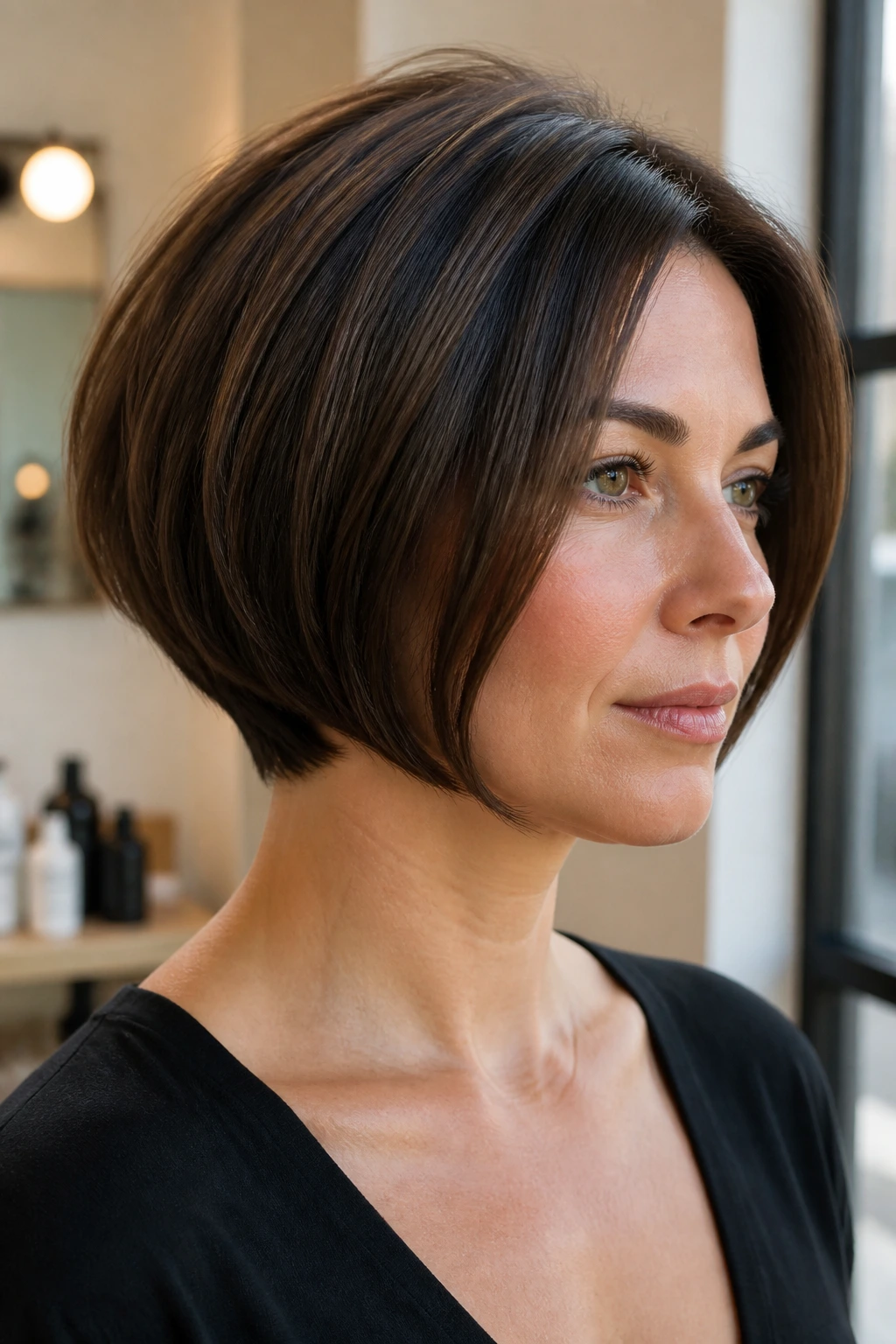
A rounded bob is great for thick hair because the density allows the hair to curve inward naturally. By tapering the nape (the back of the neck) very short, you remove excess bulk and prevent the hair from pushing forward and elongating the face.
Creating the Roundness
Use a smaller round brush at the base of the hair to tuck the ends under. This creates a rounded frame that emphasizes the cheekbones rather than the chin.
Who This Suits
This style is excellent for those who want a low-maintenance look. The natural curve of the bob does most of the heavy lifting for you.
14. Long Hair with Internal Graduated Layers
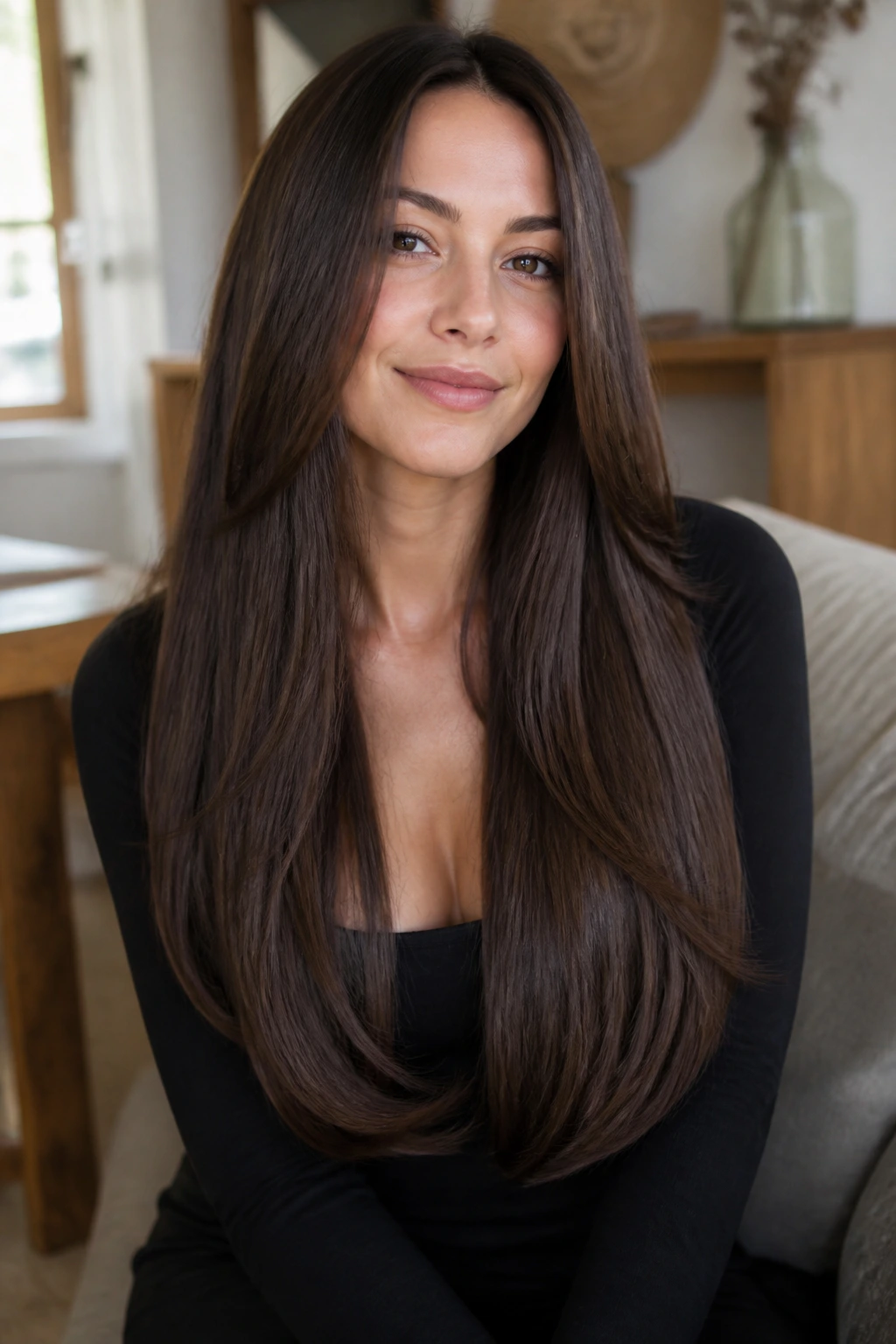
Sometimes, you don’t want to see your layers; you just want the weight to disappear. Internal graduation involves cutting the shorter layers underneath the top layer, creating a “cushion” effect that adds volume without looking like a tiered cut.
The Invisible Benefit
You keep the appearance of one-length hair, which is timeless, but your hair feels half as heavy. This allows you to style your hair in a variety of ways—up or down—without feeling the drag of thick hair.
Styling Advice
Since the layers are internal, the hair will naturally want to lay flat. Use a texturizing powder at the roots to give it the lift needed to keep your face looking balanced.
15. The “Wavy” Shag with Curtain Fringe

Combining a shag cut with loose, beachy waves is the ultimate way to manage thick hair. The waves break up the density, and the curtain fringe masks the forehead length.
Why It’s Unique
This style is about embracing the chaos of thick hair. It doesn’t need to be perfect. The more lived-in the waves look, the better the overall shape will be for a long face.
Final Touches
Apply a texture cream to the ends to define the wave pattern. This keeps the hair looking intentional rather than frizzy, which is crucial when your hair is on the thicker side.
Final Thoughts
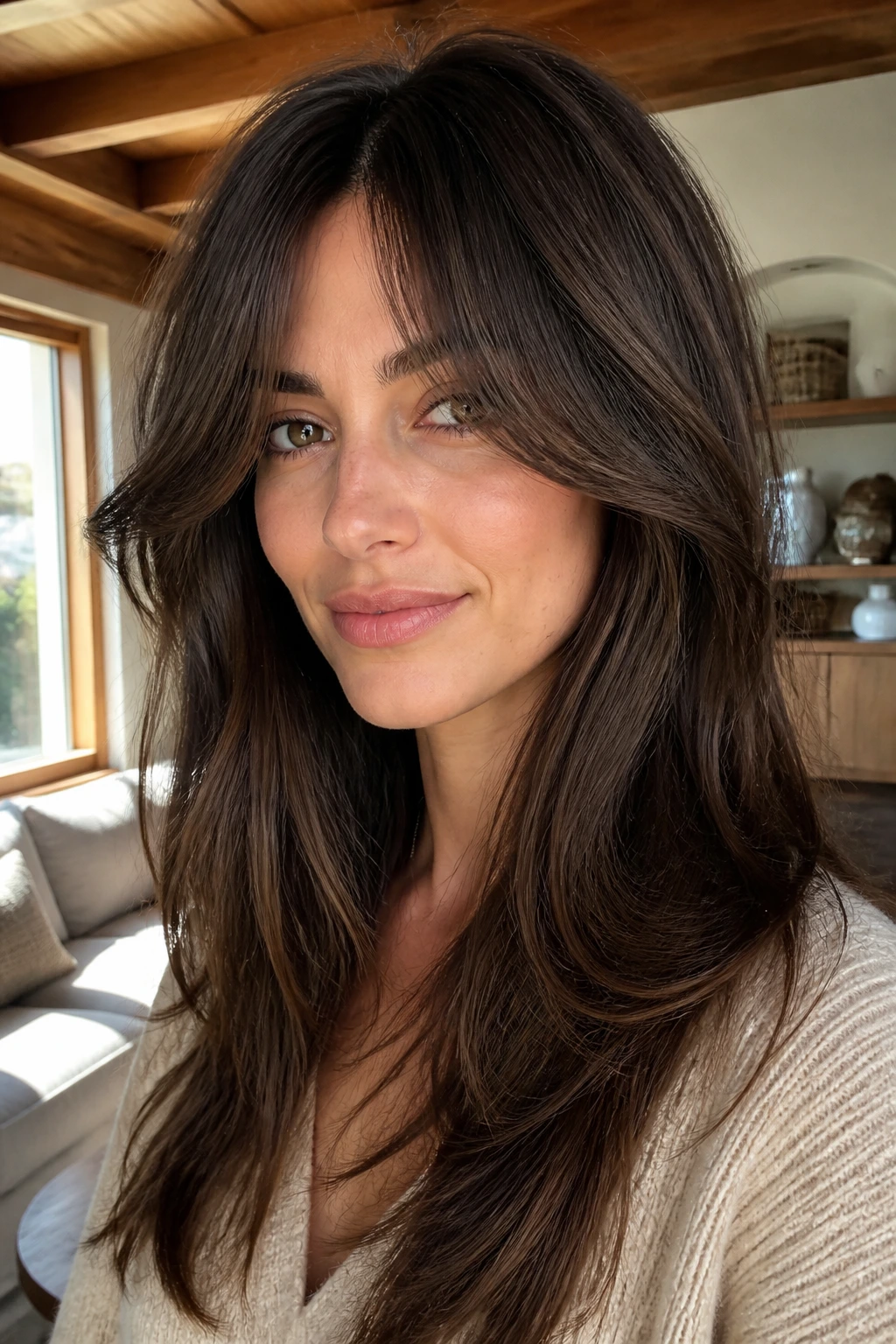
Navigating the intersection of thick hair and a long face really comes down to manipulating where the eye lands. When you have a narrower facial structure, you want to force the viewer’s eye to move across your face—left to right—rather than from the top of your head to your chin. Thick hair is your biggest asset here, as it provides the volume necessary to fill out those gaps, provided you keep the weight managed through strategic layering.
Don’t be afraid to take weight out of the middle or to embrace a fringe. Often, the hesitation to cut layers or add bangs is rooted in a fear of “losing” the hair, but in reality, removing weight allows the hair to behave better and look more vibrant. If you focus on cuts that add width around the cheekbones and break up the forehead, you’ll find that your thick hair becomes a canvas for style rather than a heavy burden to manage. Always lean on your stylist to customize these ideas to your specific growth patterns; what works for one person might need a slight shift in parting or layer placement to truly shine on you.