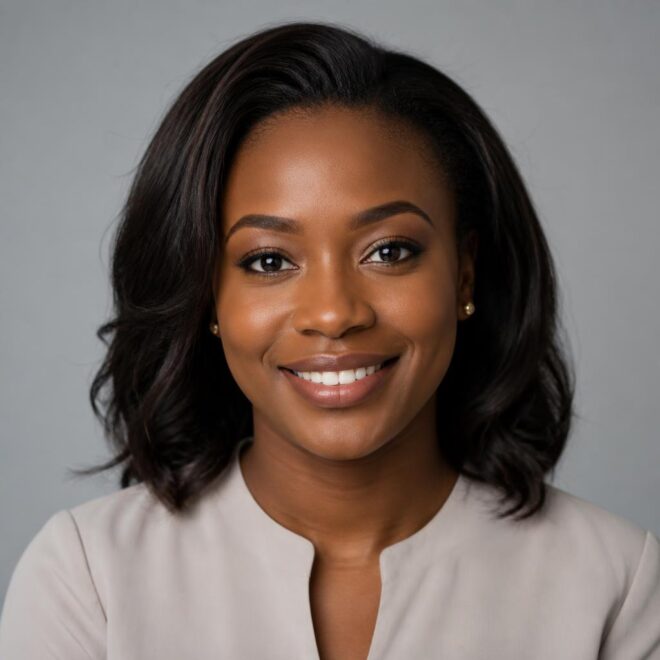


Walk into any salon with a round face and soft cheeks, and you will likely hear the same tired suggestions. “Keep it long.” “Avoid short styles.” “Cover your jaw.” This advice treats a full face like a problem to hide rather than a beautiful canvas to frame. The truth is, hiding behind flat, heavy sheets of hair actually highlights the very roundness you might want to balance. It acts like a dark border around a picture, pulling the eye inward and making everything look compressed.
What you actually want is structure, movement, and a clever play of light and shadow. The goal of a great haircut for a full, round face shape is not to make you look like a different person. It is to draw the eye upward, create vertical length, and highlight your eyes, cheekbones, and smile. We do this by building volume at the crown, using diagonal lines, and carving out soft, weight-reducing layers that sweep across the face instead of hanging straight down.
Many stylists struggle with this because they cut hair flat against the head without considering how the hair moves when you walk or turn. Over the years, working with different hair textures has shown that the magic lies in internal weight removal. By removing bulk from the sides and keeping movement around the cheekbones, you can rock almost any length—even a short pixie—without feeling like your face is on display. Let’s look at how hair physics actually works on a round face so you can choose a style with absolute confidence.
The Geometry of Visual Elongation
To understand why certain cuts work, you must look at the face as a set of visual weights. A round face has nearly equal width and length, with the widest point usually across the cheeks. If you add horizontal volume at the sides, you widen the face. If you drape flat hair straight down the sides, you create a boxy frame that shortens the face. To make a round face look more oval or elongated, we must introduce vertical lines and diagonal angles.
This is where the magic of diagonal lines comes into play. A deep side part, a sweeping fringe, or an asymmetrical hemline cuts across the roundness of the forehead and cheeks. This trick fools the eye into seeing length instead of width. Additionally, keeping the sides of your haircut relatively flat while adding volume at the crown of the head pulls the eye upward. It is simple math, really. By adding an inch of visual height on top, you instantly balance the fullness of the cheeks.
You also need to think about where a haircut begins and ends. Any line that stops exactly at the widest part of your jaw or cheeks will draw attention to that exact spot. If you want to soften a double chin or a full jawline, your haircut should either end well above it—like a cropped pixie—or sweep past it to the collarbones. Letting hair graze the collarbones draws the eyes down toward your neck, creating a longer profile.
Finding Your Hairs Natural Texture and Fall
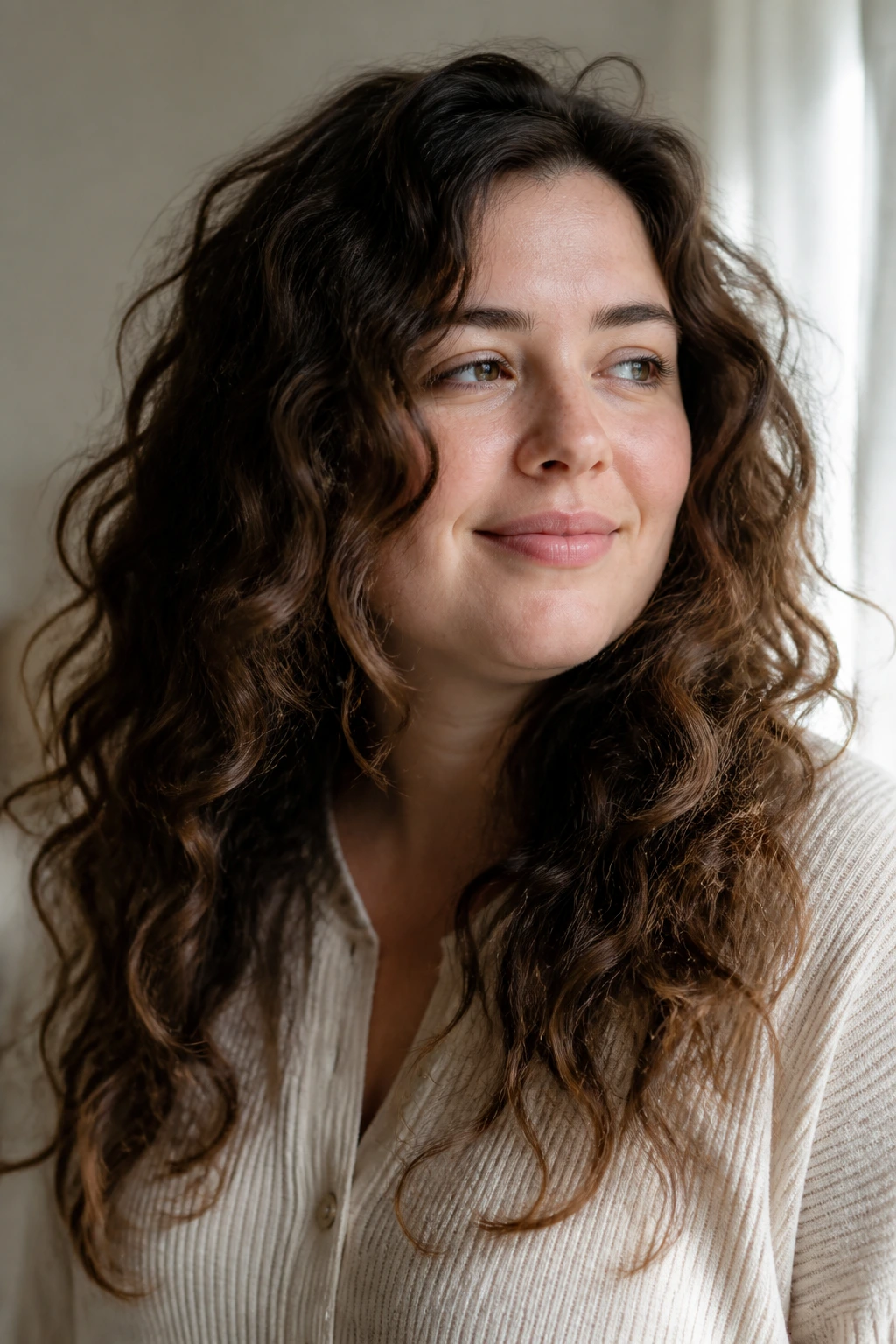
No haircut exists in a vacuum. The way your hair behaves when it is wet versus when it air-dries will completely dictate how a cut looks on your face. Fine hair needs a different approach than thick, coarse hair or natural curls. For instance, fine hair tends to lie flat, which can make a round face look wider by comparison. If you have fine hair, you need texturizing and blunt perimeters that build the illusion of density without adding horizontal bulk.
Thick hair, on the other hand, often has too much bulk at the sides, which can create a pyramid effect on a round face. Stylists fix this by using slide-cutting or razoring techniques to remove internal weight. This allows the hair to lie closer to the skull while still having movement. If you have wavy or curly hair, you have a natural advantage. Curls create soft, organic lines that naturally break up the circular outline of a round face, provided the layers are cut to prevent widening at the jawline.
Before you sit in the stylist’s chair, look at your hair’s natural growth patterns. If you have a strong cowlick at the front, forcing a blunt, straight-across bang will require daily heat styling. Instead, work with your hair’s natural direction by choosing curtain bangs or side-swept fringe. It is always better to work with your hair’s natural flow rather than fighting it every morning with flat irons and blow dryers.
1. The Textured Lob with Deep Side Part
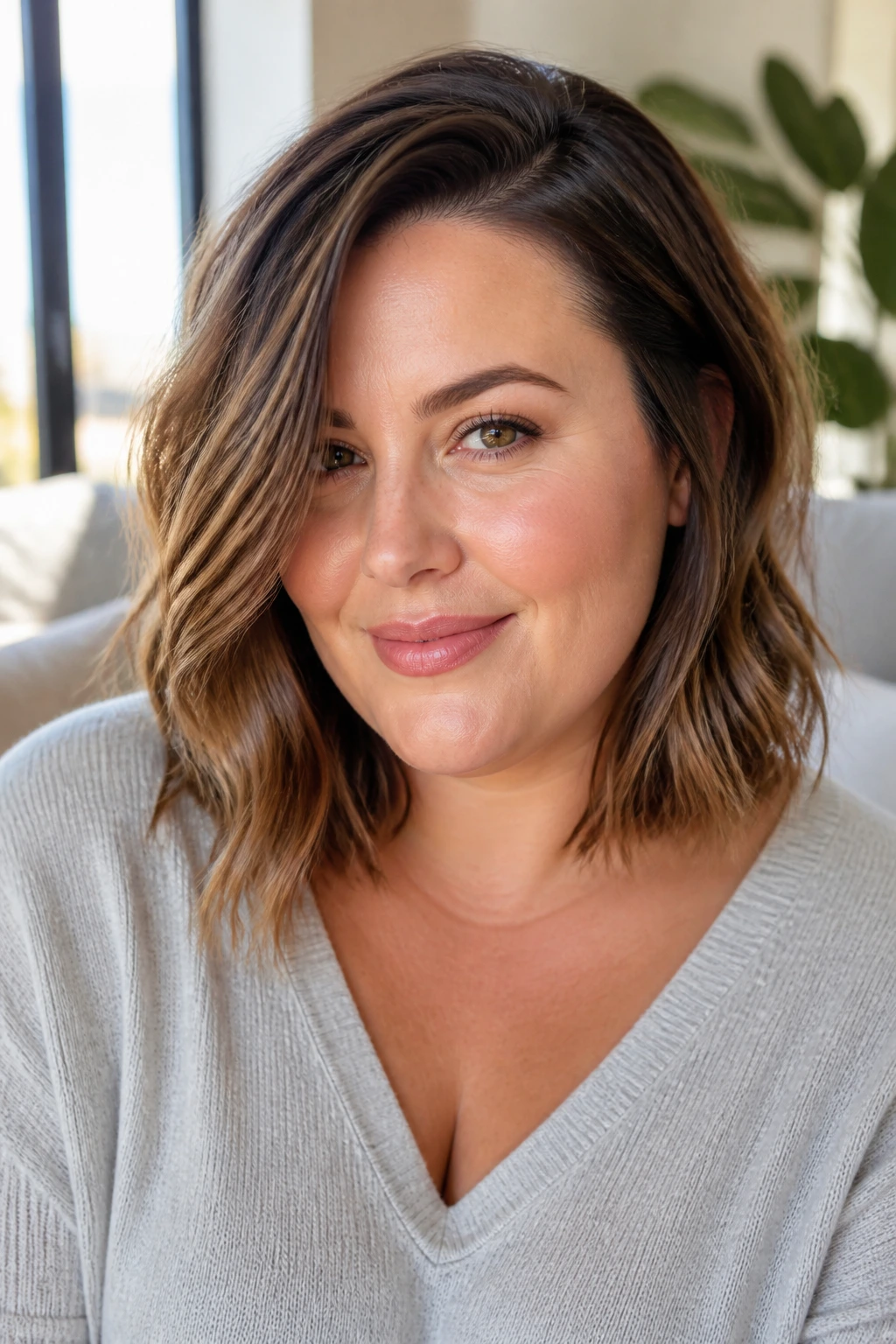
This is a classic for a reason. By extending the length of the hair just past the collarbones, you create a long vertical column that visually stretches a round face. The deep side part shifts the bulk of the hair to one side, breaking up the symmetry that makes round faces look circular.
Why It Works to Slim the Face
The asymmetry of the deep side part cuts a diagonal line across the forehead. This breaks the round shape and draws the eye down the length of the hair, rather than side-to-side across the cheeks.
Quick Nutrition Facts
- Best for fine to medium hair densities that need volume at the roots.
- Requires a length that sits roughly one to two inches below the collarbone.
- Works beautifully with soft, flat-iron waves that start below the cheekbones.
- Minimizes the appearance of a soft jawline by framing the neck.
Pro tip: Use a lightweight root-lifting spray only at the crown before blow-drying to keep the top from looking flat.
2. The Classic Shag with Curtain Bangs
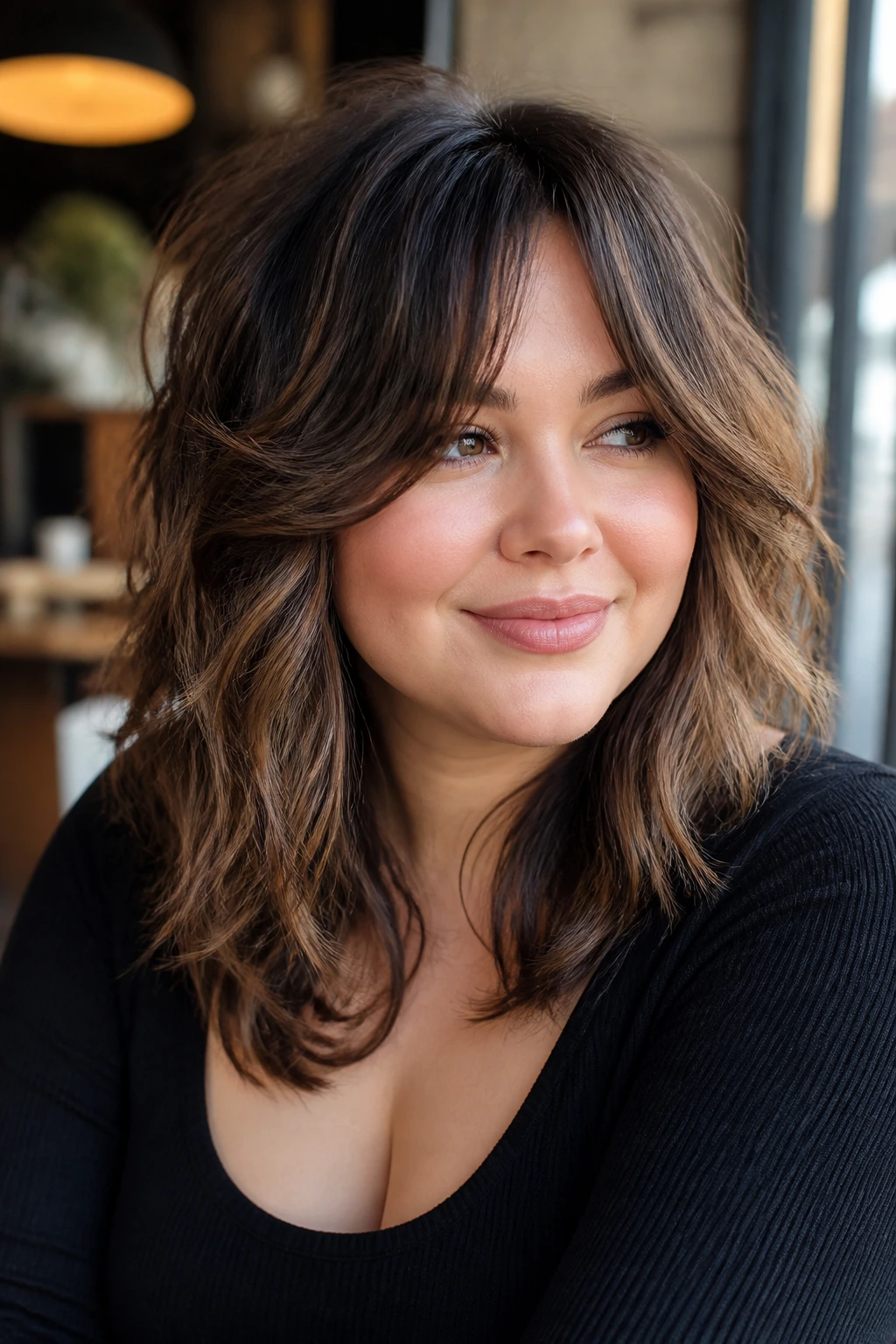
A modern shag is one of the friendliest cuts for full cheeks because it is built entirely on layers that start high on the head. The crown volume lifts your features, while the shaggy, textured ends break up any heavy lines around the neck. By pairing this with curtain bangs that flare out at the cheekbones, you create a natural contour effect. The bangs frame the eyes and forehead, leaving the cheeks open in a way that actually slims the face rather than crowding it.
This cut relies on a slide-cutting technique where the stylist moves shears down the hair shaft to create soft, seamless transitions. Unlike blocky layers, these feathered pieces lie flat against the sides of your face while maintaining bounce on top. It works incredibly well for those with natural wave, as it allows you to wash, apply a sea salt spray, and go.
The key to making this work is ensuring the shortest layer does not end exactly at the widest part of your cheek. Have your stylist cut the first layer either slightly above the cheekbone or down past the jawline. This prevents a horizontal line from forming across your face, keeping the overall look vertical and breezy.
3. The Asymmetrical Bob
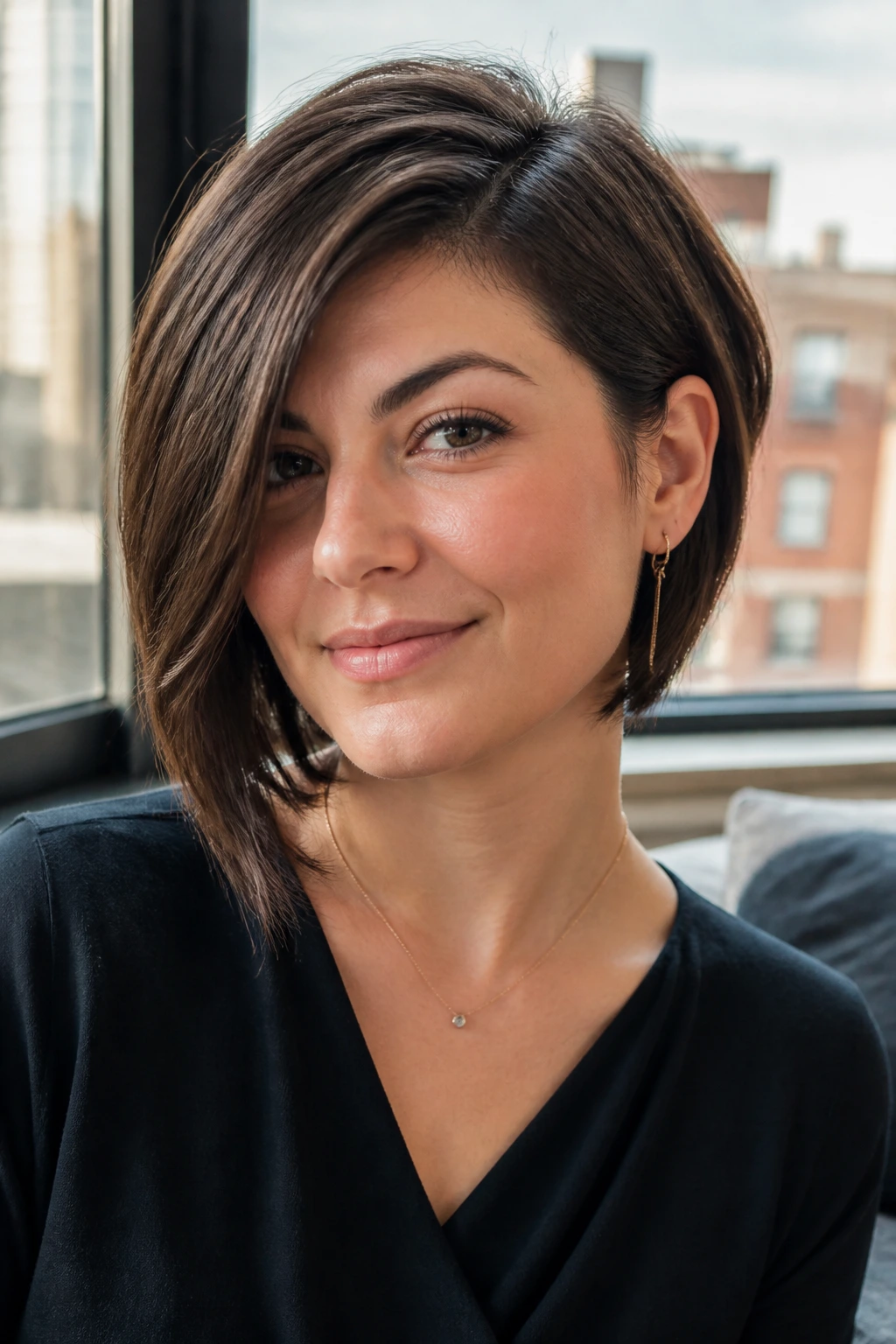
Why does this dramatic style work so well on a round face shape?
The answer lies in the striking contrast of lengths. An asymmetrical bob is cut shorter in the back and on one side, while the other side cascades down into a longer, sharp point. This unequal length creates a powerful diagonal line that instantly disrupts the circular symmetry of your face. By drawing the viewer’s eye along a slant, the face appears narrower and more angled than it actually is.
Many people with round faces avoid bobs because they fear the hair will hug their cheeks like a helmet. But the asymmetrical version does the exact opposite. Because one side is significantly longer—usually grazing the collarbone—it pulls the gaze downward. The shorter side can be tucked behind the ear, which exposes the jawline and neck, creating a clean, structured silhouette that offsets soft features.
How to Style and Maintain It
To get the most out of this cut, keep it sleek. Use a flat iron to smooth down the longer side, curving the ends slightly inward to frame the chin. Apply a drop of shine serum to highlight the sharp, clean lines of the perimeter. Regular trims every six weeks are necessary to keep the asymmetry looking deliberate and crisp, rather than like an accidental uneven cut.
4. Wispy Layered Mid-Length Cut
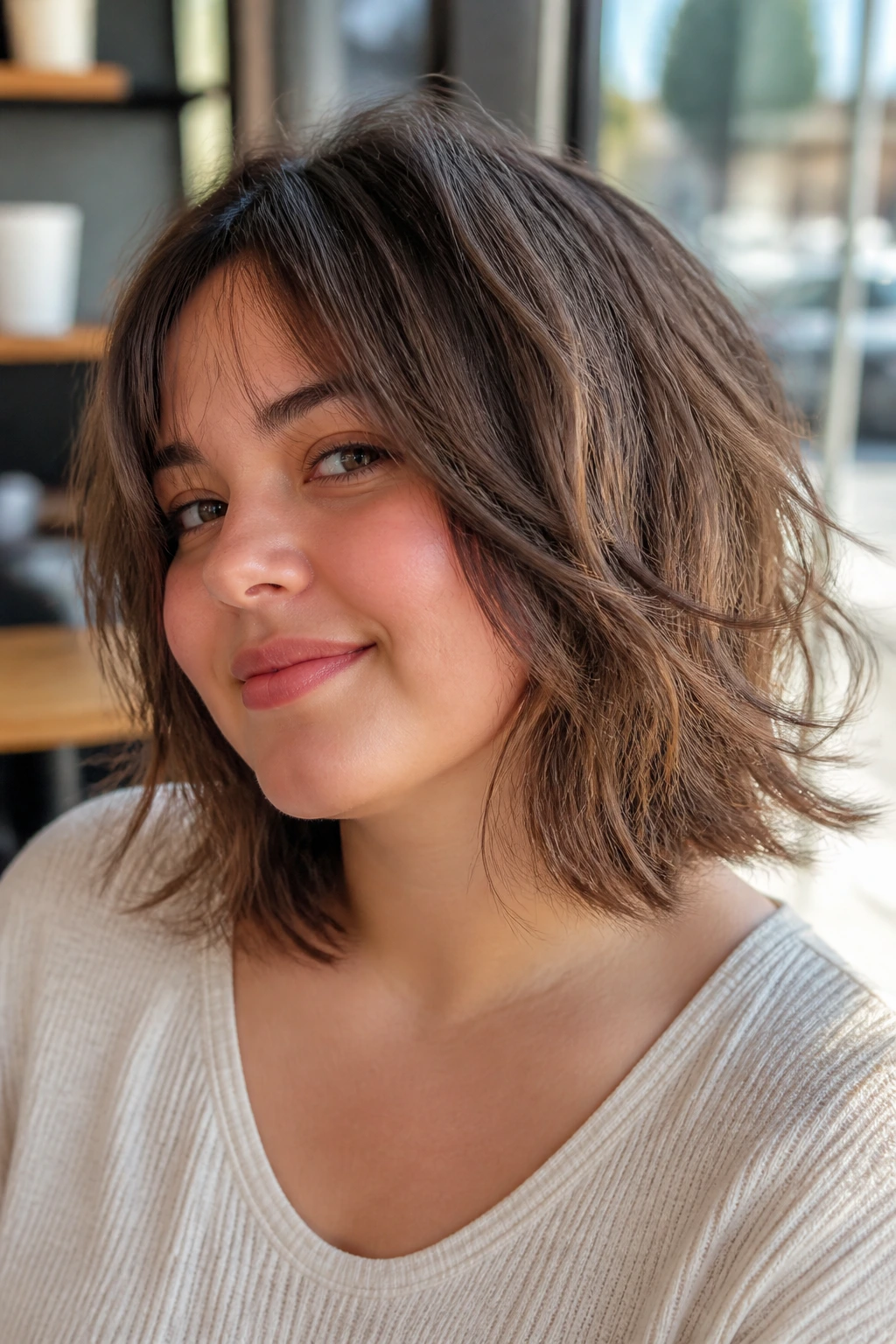
Let’s paint a picture: you want to keep your medium length, but your hair currently feels like a heavy triangle that weighs down your head and widens your face. You walk into the salon, and instead of taking off length, your stylist uses texturizing shears to carve out light, wispy layers throughout the mid-lengths and ends. Suddenly, the hair feels light, airy, and moves when you shake your head.
This technique works by breaking up the solid weight of the hair. When hair is cut to a single length, it pools around the shoulders, creating a horizontal shelf that widens a round face. Wispy layers soften this perimeter, allowing the hair to fall in a gentle, downward cascade that keeps the focus on your eyes and lips.
Key Characteristics of This Cut
- Features soft, sliced layers that start just below the chin line.
- Uses point-cutting on the ends to remove bluntness and add movement.
- Works best on medium to thick hair that tends to hold too much weight.
- Can be worn straight or with messy, bedhead waves.
The beauty of this cut is its low-maintenance nature. As it grows out, the layers naturally transition into a longer style without losing their face-framing shape, saving you frequent trips to the salon.
5. The Choppy Pixie with Volume on Top
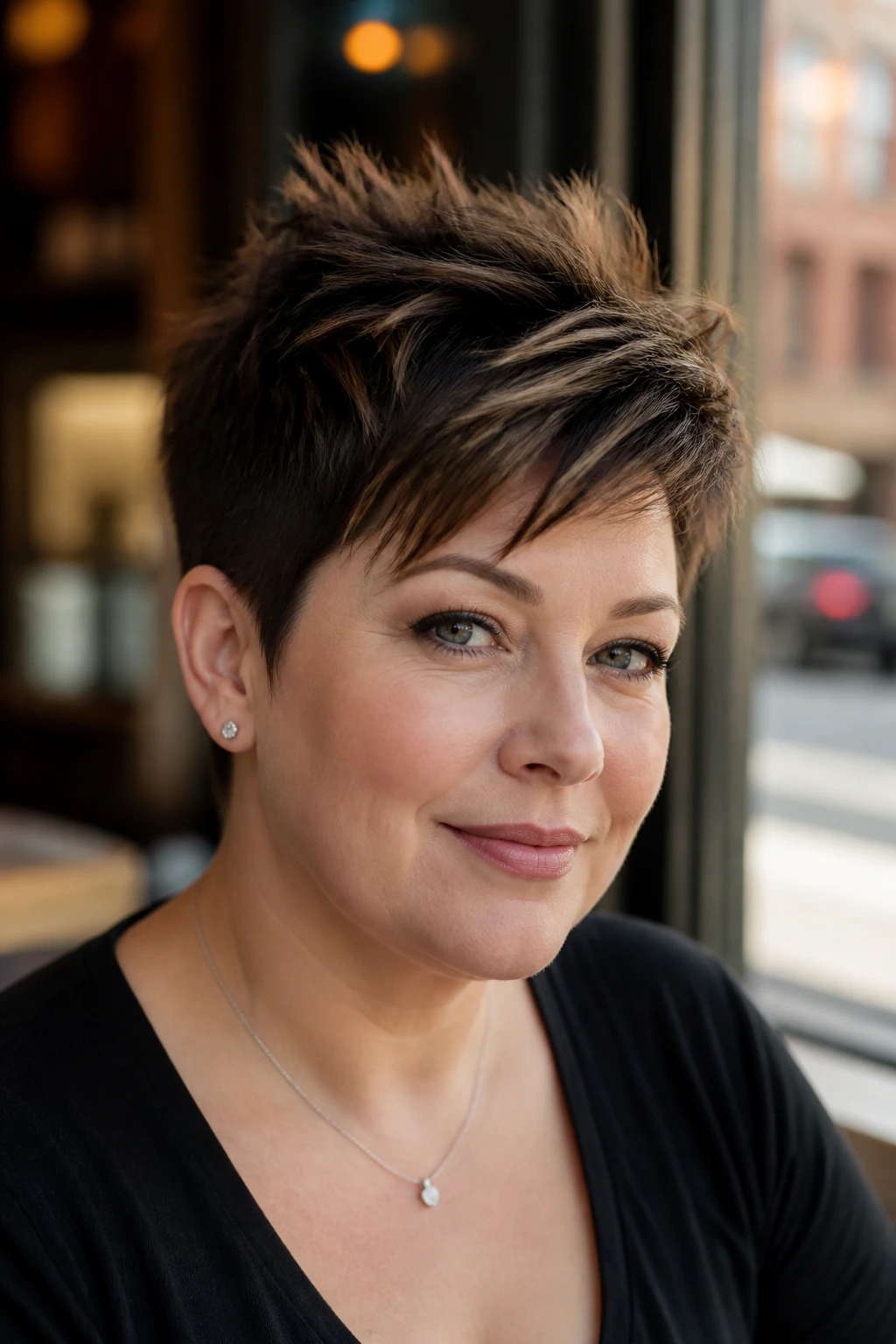
Forget the myth that short hair is off-limits for round faces. A cropped pixie cut can actually be incredibly flattering because it exposes the neck and jawline, which can make you look taller and more slender. The key to this particular style is keeping the sides closely cropped while leaving the top long, choppy, and full of texture. This vertical height on top elongates the face, acting like a natural facelift.
By keeping the sides tight, you remove all horizontal bulk from the widest part of your face. The choppy, piecey bangs on top can be styled forward and slightly to the side, creating a beautiful diagonal line across the forehead. This softens the rounded hairline and draws attention straight to your eyes.
When styling a choppy pixie, avoid heavy waxes or pomades that can weigh the hair down and make it look greasy. Instead, opt for a lightweight styling powder or a dry texturizing spray. Puff a small amount into the roots at the crown, then use your fingers to piece out the ends. It takes less than two minutes in the morning and stays lifted all day long.
If you have a double chin, this cut works wonders by shifting the visual weight of your head upward. Because all the detail and volume are concentrated at the crown, the lower half of your face is visually elongated. It is a bold, confident cut that proves you do not need to hide behind your hair to look stunning.
6. The Choppy Lob with Long Side Bangs
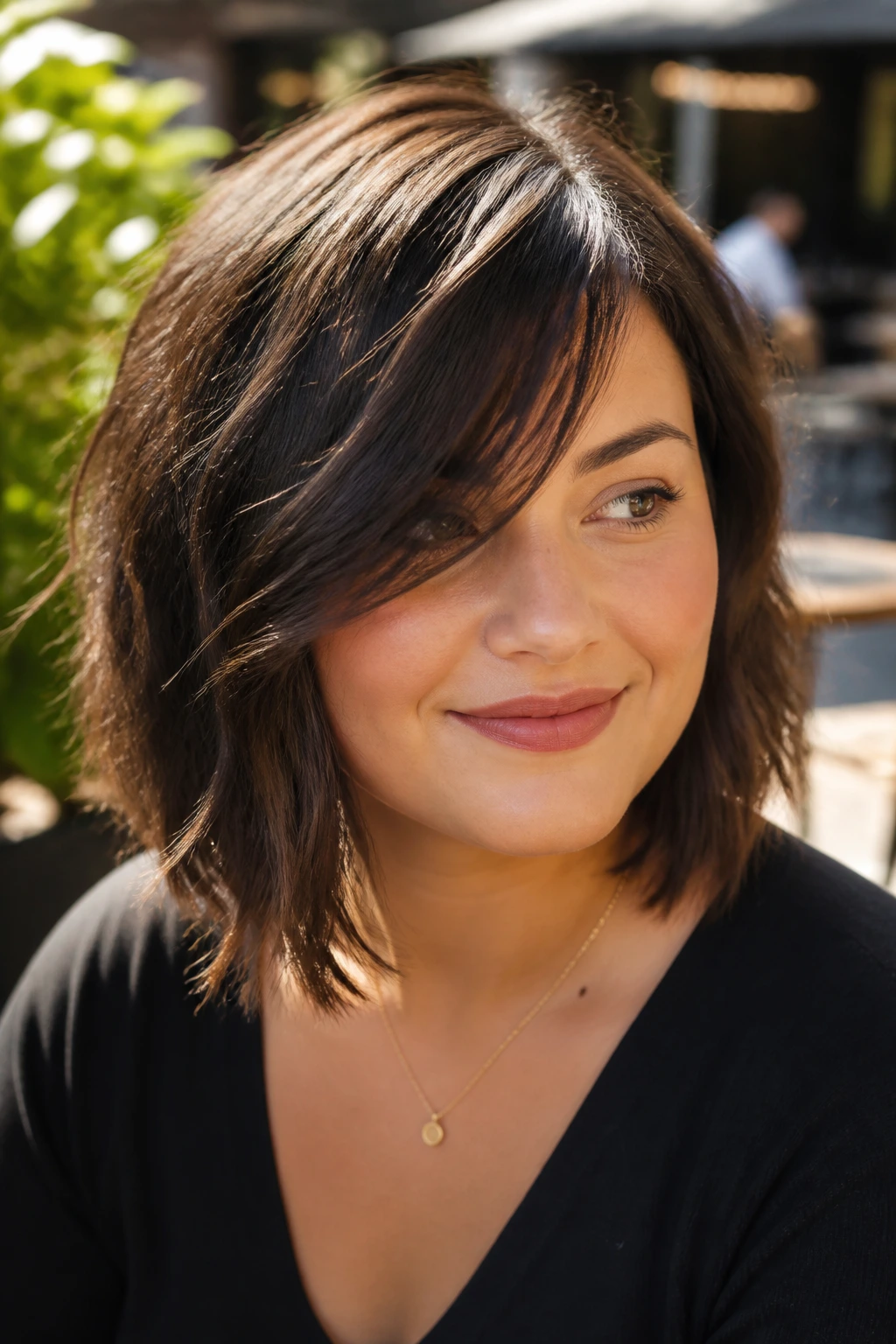
Unlike a standard lob which can sometimes look flat and lifeless, the choppy lob uses jagged, textured ends to create a sense of effortless movement. It is the perfect middle ground for someone who wants the ease of shorter hair but still desires enough length to tie it back on hot days. The addition of long, side-swept bangs helps break up the wide forehead area that is common with round face shapes.
The main difference between this and a blunt lob is the way the bottom edge is finished. A blunt edge creates a solid horizontal line that can make your neck look shorter and your face wider. The choppy perimeter, however, is soft and broken, which keeps the eye moving vertically.
This style is best for individuals with fine to medium hair who want to boost their hair’s apparent thickness. The texturized layers throughout the body of the lob add volume without widening the sides.
If you choose this cut, ask your stylist to start the side bangs at the bridge of your nose and sweep them down toward the opposite cheekbone. This diagonal sweep acts like a contour line, slicing across the roundness of your face and giving the illusion of structure.
7. Sleek A-Line Bob
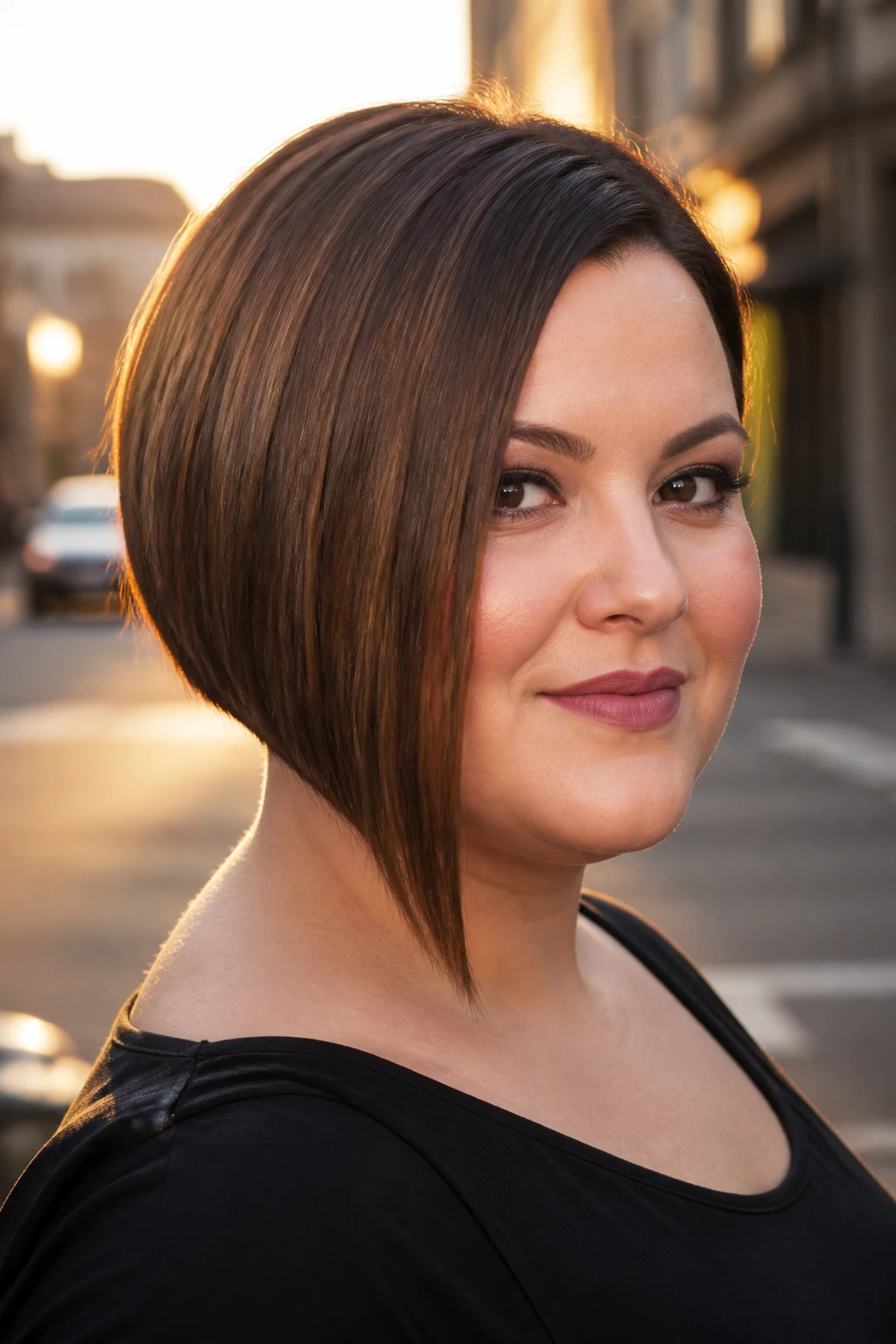
This is a highly structured cut that uses sharp angles to contrast with the soft curves of a round face. The hair is cut shorter at the back of the neck and gradually gets longer toward the front, creating a clean, sloping line that frames the jaw.
The Visual Trick of the Sloping Line
The forward angle of the A-line bob draws the eyes down and forward, mimicking a sharper jawline. Because the front pieces hang down past the chin, they act as vertical brackets that narrow the face.
Quick Styling Facts
- Works best on naturally straight hair or hair that is easy to flat-iron.
- Requires minimal layering to keep the perimeter lines clean and sharp.
- The back should be stacked slightly to create lift at the crown.
- Frames the neck beautifully, creating a longer profile.
Pro tip: Apply a heat protectant spray before flat-ironing to protect the ends and keep the line looking razor-sharp.
8. Curly Shag with Bottleneck Bangs

Curly hair naturally breaks up the round lines of a face, but without the right cut, it can quickly expand into a wide triangle. The curly shag solves this problem by using strategic layering to keep the volume concentrated at the crown rather than the sides. When paired with bottleneck bangs—which are narrow at the forehead and flare out around the eyes—this cut creates a gorgeous, face-framing shape that highlights your best features.
The layering in a curly shag should always be done dry. This allows the stylist to see how each curl naturally bounces and shrinks, ensuring that no layer ends up too short or blocks out the face. By removing weight from the mid-lengths, the curls are free to spring up, creating a playful, vertical movement.
To style this look, apply a moisturizing leave-in conditioner and a light-hold gel to soaking wet hair. Scrunch gently with a microfiber towel to remove excess water, then air-dry or use a diffuser. The bottleneck bangs will naturally drape over your forehead, breaking up the roundness while letting your eyes shine through.
9. Shoulder-Grazing Blunt Cut with Internal Layers
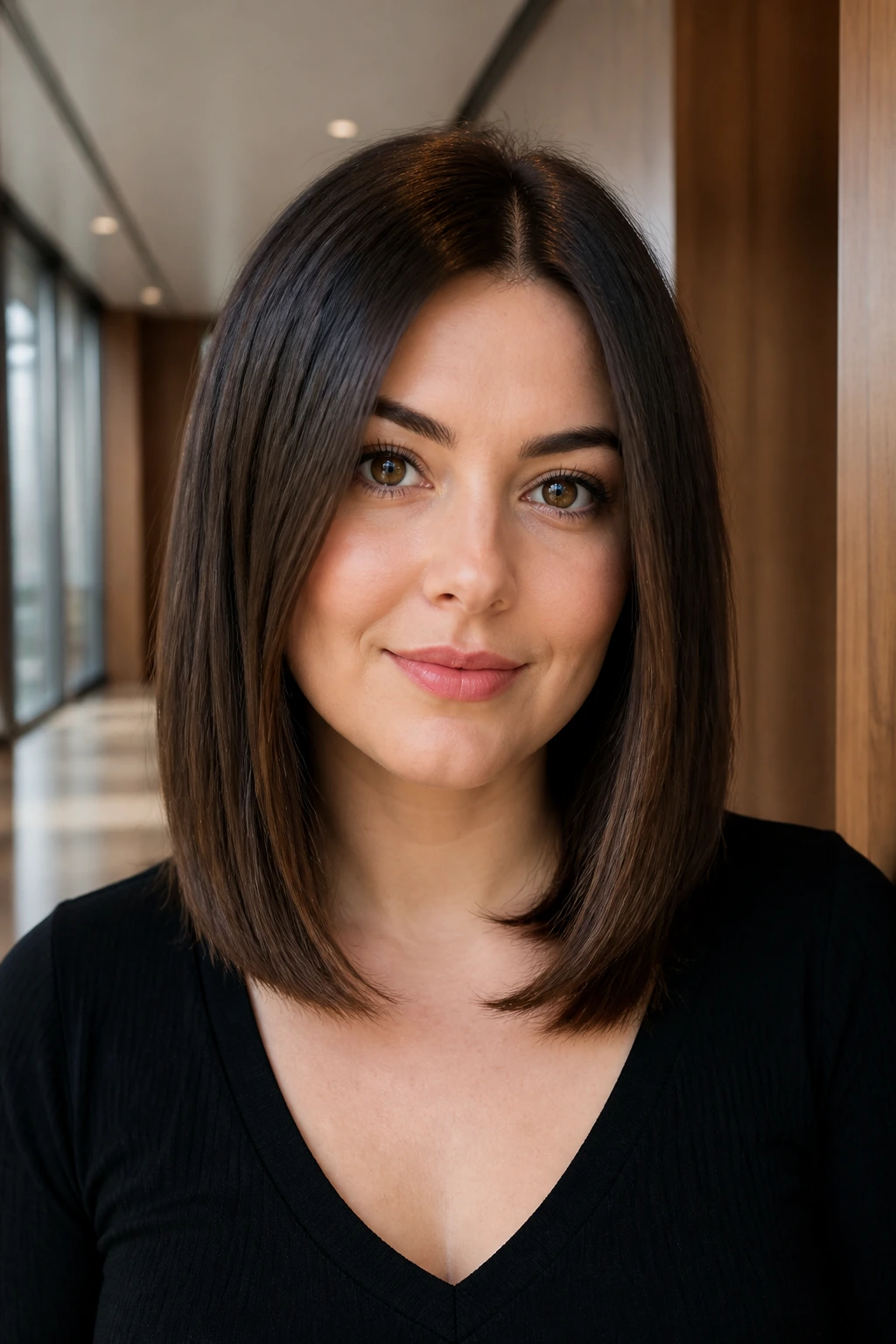
Can a blunt cut actually work for a round face without making it look wider?
Yes, but only if you use a secret weapon: internal layering. On the outside, this cut looks like a sleek, solid, blunt lob that hits exactly at the collarbone. However, underneath that top layer of hair, the stylist slide-cuts or notches out weight. This keeps the hair from flaring outward at the bottom, allowing it to fall straight down in two clean, slimming vertical columns.
This cut is fantastic for thick, heavy hair that usually resists bob and lob shapes. It gives you the clean, modern aesthetic of a blunt cut without the bulk that typically widens a round face. Because the hair hits the collarbones, it pulls the gaze downward, elongating the neck and softening the look of full cheeks.
How to Style and Maintain It
Use a paddle brush to blow-dry the hair straight down, keeping the nozzle pointed downward to minimize volume at the sides. Finish with a flat iron to lock in the sleek shape, curving the ends just slightly inward to hug the collarbones. A light shine spray will make the perimeter look crisp and clean, and you should plan on a trim every eight weeks to maintain the precise length.
10. The Wolf Cut with Wispy Ends
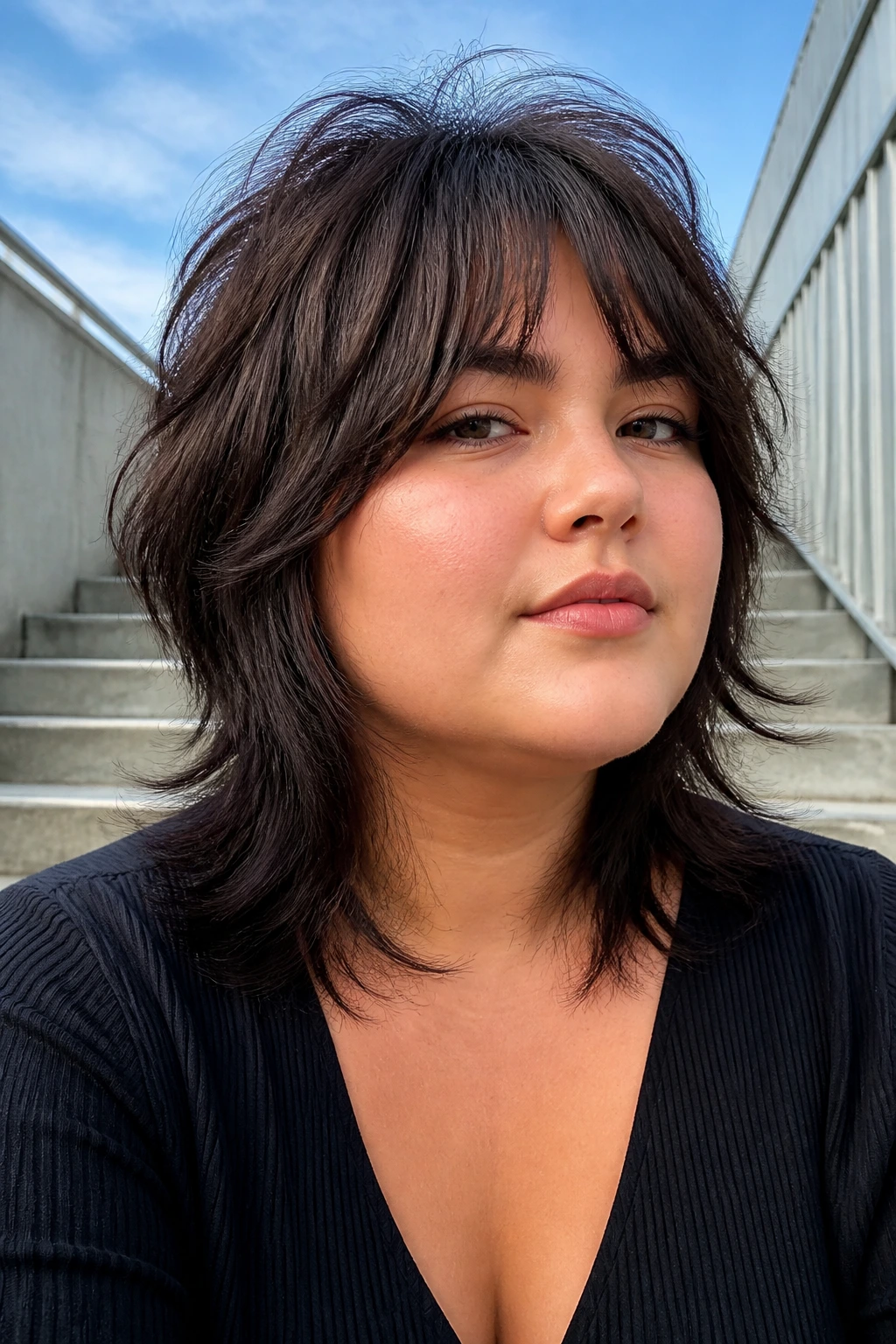
Imagine a style that combines the wild texture of a shag with the cool, retro shape of a mullet. The wolf cut features heavy volume at the top of the head that tapers down into thin, wispy ends that frame the neck. This contrast between a full crown and light ends is incredibly slimming for round faces because it shifts all the visual weight upward.
The heavily layered top section acts like a frame for your upper face, highlighting your eyes and cheekbones, while the wispy bottom layers soften the jaw and neck. It is an edgy, lived-in style that doesn’t require a lot of styling effort to look good.
Key Characteristics of This Cut
- High-contrast layers with a very full crown and thin, piecey perimeter.
- Often paired with wispy, curtain-style bangs that merge into the side layers.
- Works beautifully on naturally wavy or textured hair.
- Creates a vertical line of movement that draws the eye down the neck.
To style, simply apply a small amount of volumizing mousse to damp hair and blow-dry using a diffuser, lifting the roots on top to maximize the crown volume.
11. Side-Swept Pixie Undercut
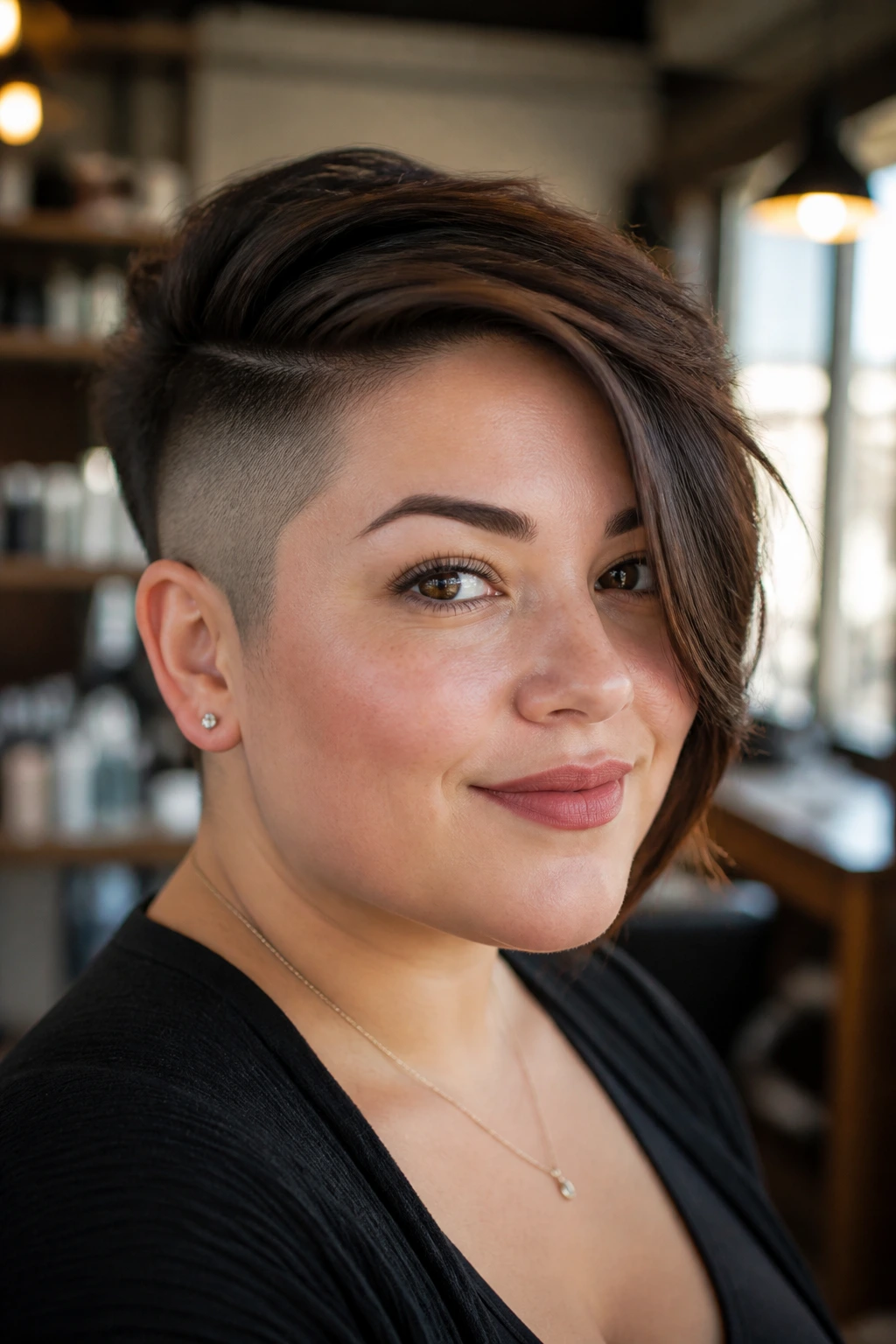
If you want to make a bold statement while slimming your face, a side-swept pixie with an undercut is the ultimate choice. By shaving or closely cropping the hair on one or both sides, you completely remove any horizontal width from the sides of your head. The remaining hair on top is left long and swept dramatically to one side, creating a beautiful asymmetrical drape.
The undercut creates a clean, sharp line right above the ear, which visually lifts the cheekbones. Because there is no hair on the sides to add bulk, your face instantly appears narrower. The long, sweeping top section adds height and creates a gorgeous diagonal line across your face, drawing attention away from the jawline.
This cut is also incredibly versatile. You can style the top section sleek and flat for a sophisticated look, or use a texturizing paste to build messy, voluminous waves for a casual vibe. It is particularly great for thick, coarse hair because the undercut removes half the hair on your head, making styling and washing a breeze.
Do not fear that this style exposes too much. By leaving the top section long enough to graze the opposite cheekbone, you still have that comforting sense of framing around your face, but with a much sharper, more modern edge.
12. Soft Waves with a Center Part and Cheekbone Layers
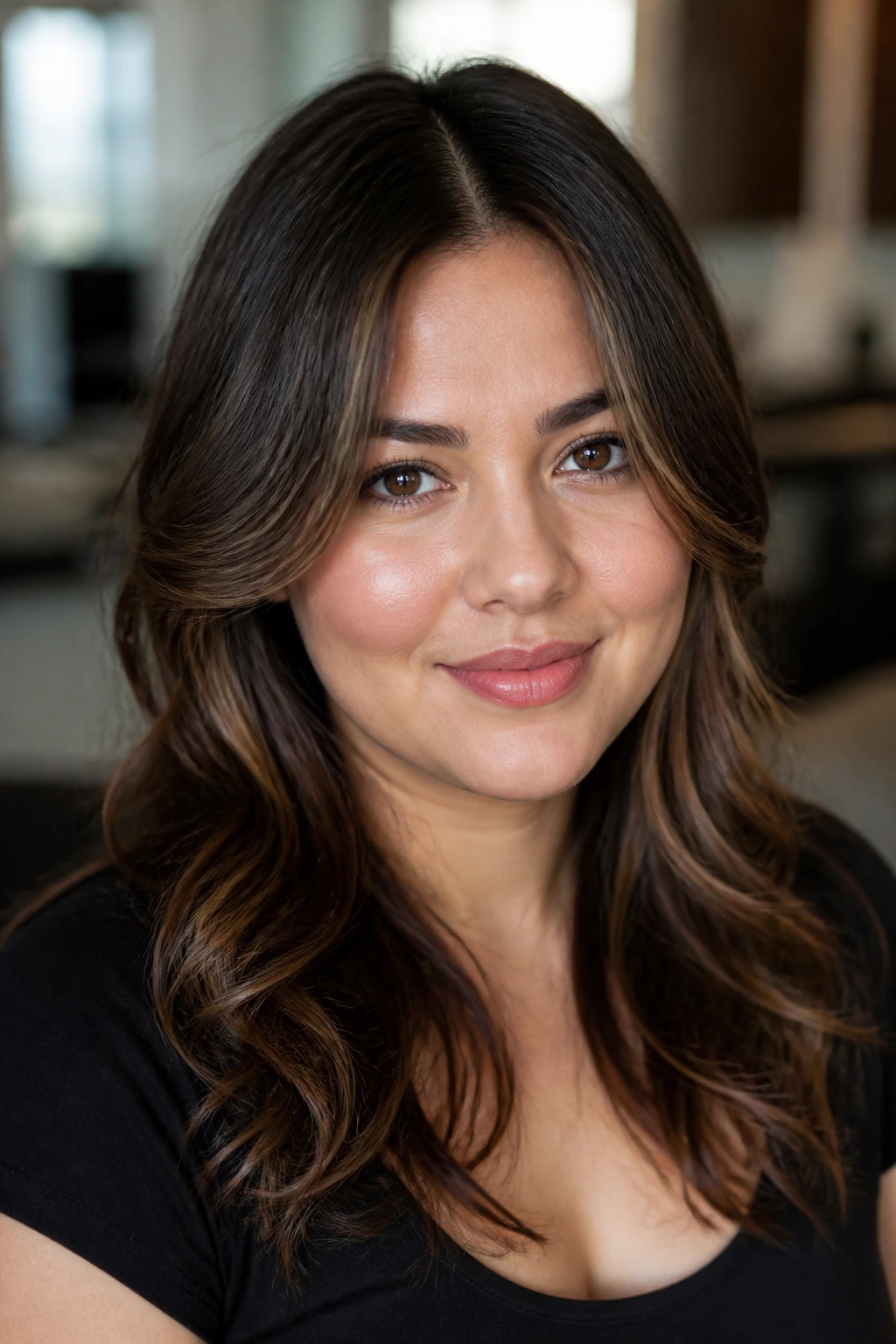
While side parts are famous for breaking up round faces, a center part can work beautifully if you pair it with the right layers. The secret is to have your stylist cut soft, face-framing layers that start exactly at the cheekbones and angle downward. These layers act like a curtain, partially covering the outer edges of your cheeks and making your face look narrower.
Compared to a solid-length center-parted style—which can drape flatly and highlight the roundness of the face—the layered version adds movement and texture right where you need it. The waves break up the straight, heavy lines that can compress your features.
This look is ideal for anyone with medium to long hair who wants to keep their length but needs to add some shape around the face. It works best with soft, beachy waves created with a large-barrel curling wand.
When styling, make sure to curl the hair away from your face. This keeps the layers looking open and breezy, preventing them from falling forward into your eyes while still narrowing the visual width of your cheeks.
13. High-Volume Layered Long Hair
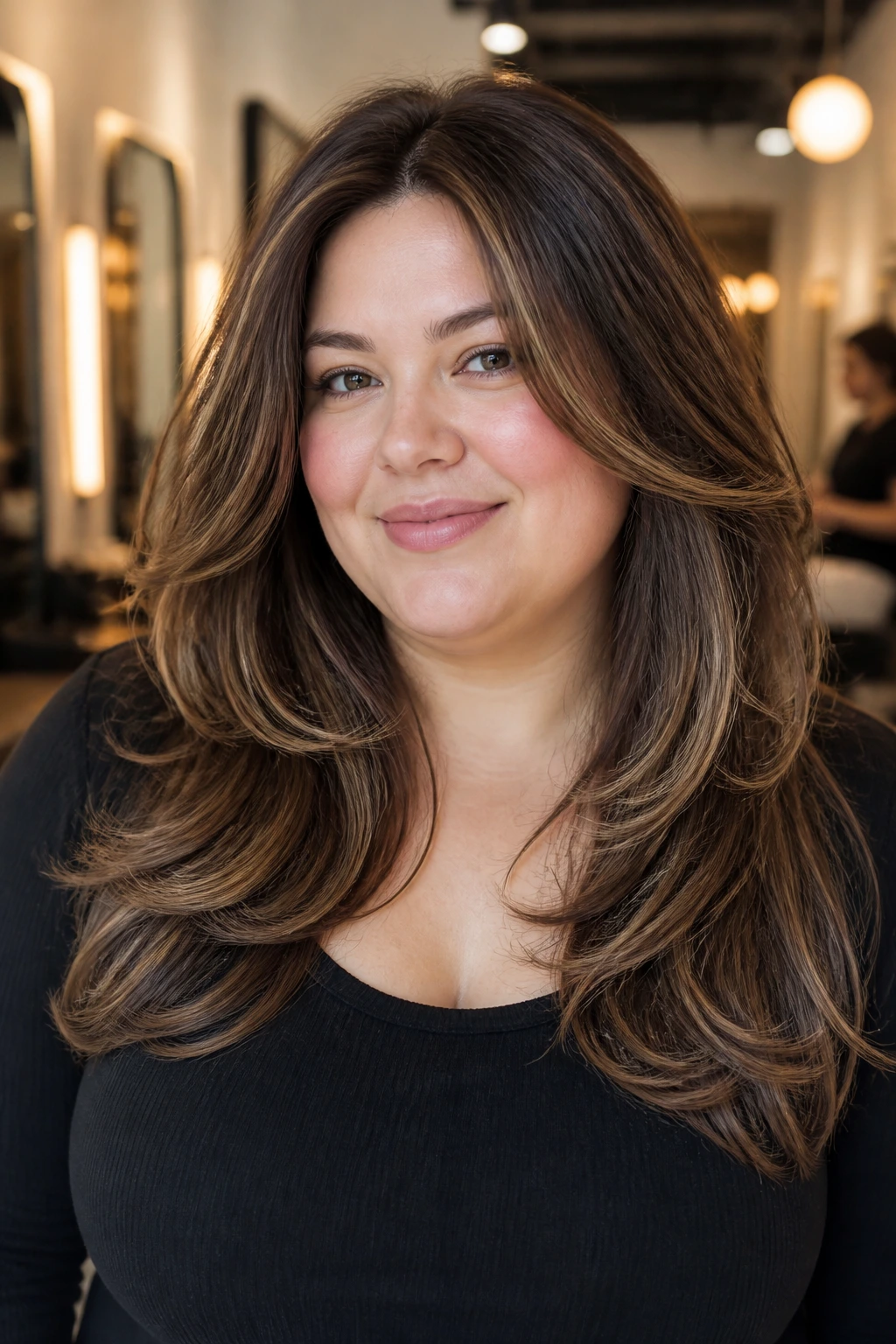
If you refuse to cut your hair short, you must use volume to your advantage. Long, flat hair can drag a round face down, making it look wider. By adding high-volume layers throughout the length of your hair, you create bounce and movement that keeps the focus moving.
How Long Layers Balance a Round Face
The layers should start around the collarbone and cascade down. This prevents the hair from looking bottom-heavy and ensures there is bounce and volume around the shoulders, which balances the fullness of the head.
Quick Styling Facts
- Best for thick hair that can support multiple layers without looking thin at the ends.
- Requires a round brush blowout to achieve maximum lift and bounce.
- The shortest layer should never be shorter than collarbone length.
- Works best on hair that sits at least four to five inches below the shoulders.
Pro tip: Use a large velcro roller at the crown of your head while your hair cools down from blow-drying to lock in that crucial root lift.
14. Short Textured Crop with Side Fringe
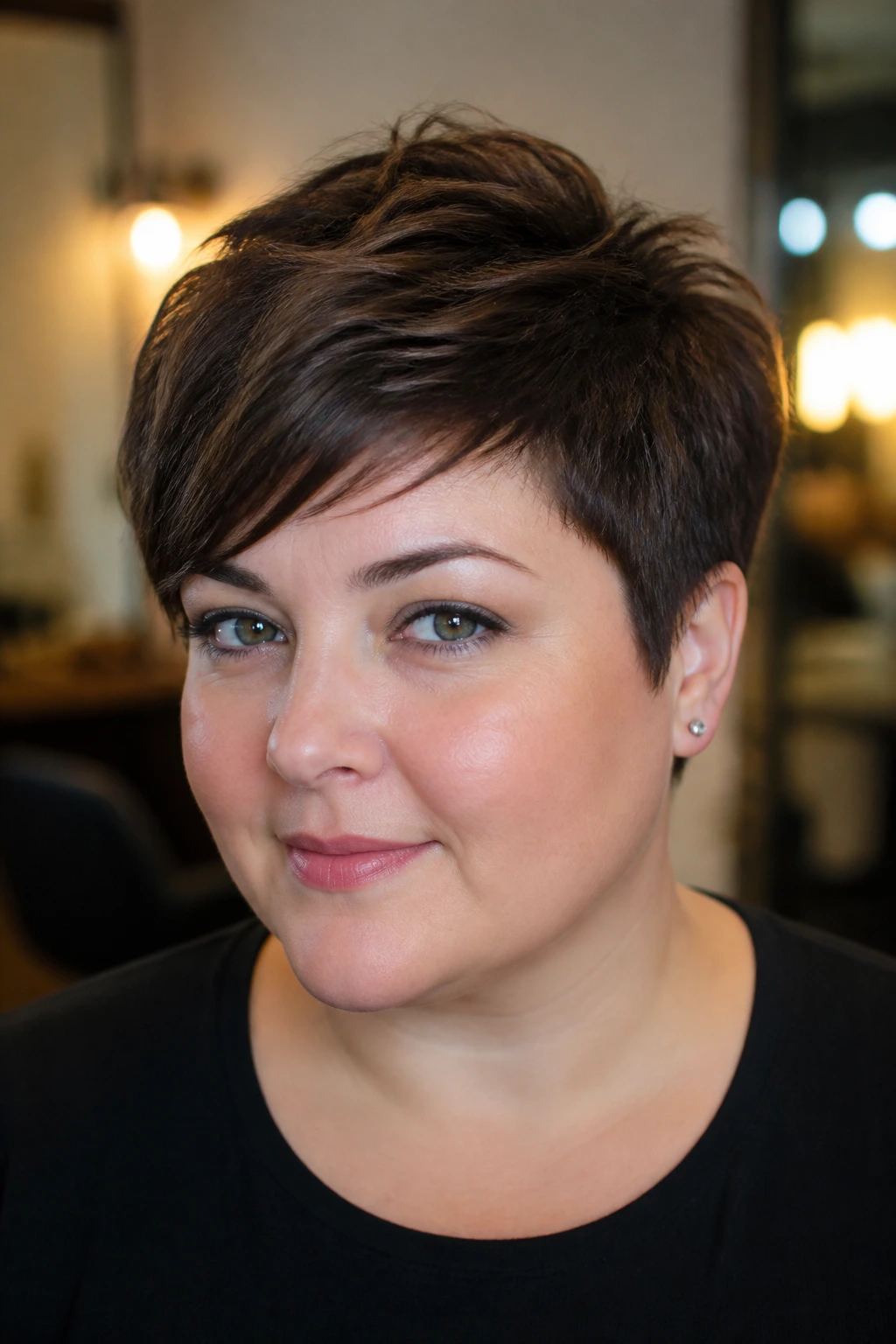
A short, textured crop is a fantastic alternative to a traditional bob for anyone with a round face. This cut is characterized by very short layers all over the head, creating a feathered, piecey texture. The key feature is a soft, side-swept fringe that blends seamlessly into the temples, breaking up the forehead and cutting a diagonal line across the top of the face.
This cut works because it keeps the hair close to the head at the sides while adding soft, touchable texture on top. Unlike a blunt bob which can create a wide horizontal line, the textured crop has no hard edges. Every line is soft, feathered, and blended, which naturally softens full cheeks and a rounded jaw.
Styling this cut is incredibly easy. Just run a dime-sized amount of styling cream through damp hair, use your fingers to piece out the fringe and the top layers, and let it air-dry. It is a fresh, modern look that feels light and effortless, making it perfect for busy mornings.
15. The Angled French Bob
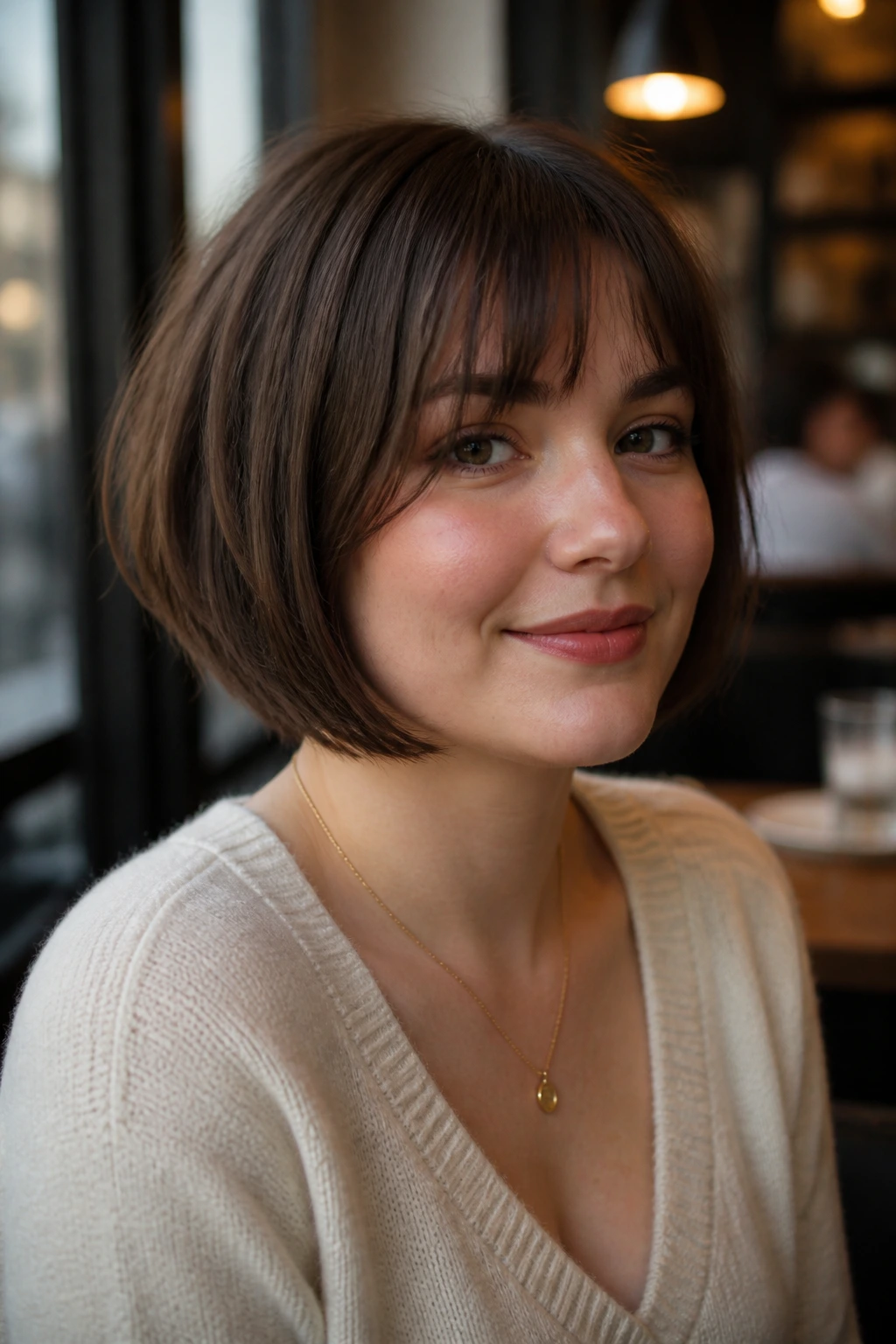
What makes a French bob work on a round face when traditional bobs fail?
The secret is the angle and the texture. A classic French bob hits right at the jawline, which is usually a red zone for round faces. However, by angling the cut so it is slightly shorter in the back and grazing the bottom of the chin in the front, you create a sharp diagonal line. When you pair this with heavily textured, wispy ends, the cut loses its rigid boxiness and instead cradles the face beautifully.
This cut is often styled with a short, brow-skimming fringe, which might seem counterintuitive. But a wispy, textured bang actually breaks up a round forehead and draws attention down to the eyes. Because the ends of the bob are feathered rather than blunt, they don’t add horizontal volume to the cheeks.
How to Style and Maintain It
Embrace your hair’s natural texture. Air-dry with a bit of curl cream to get that classic, effortless Parisian wave. If you have straight hair, use a flat iron to add a slight bend in the middle of the hair shaft, leaving the ends straight and piecey. Keep up with trims every five to six weeks to prevent the length from growing into that awkward mid-neck phase that can widen the jaw.
16. Long Shag with Razored Layers
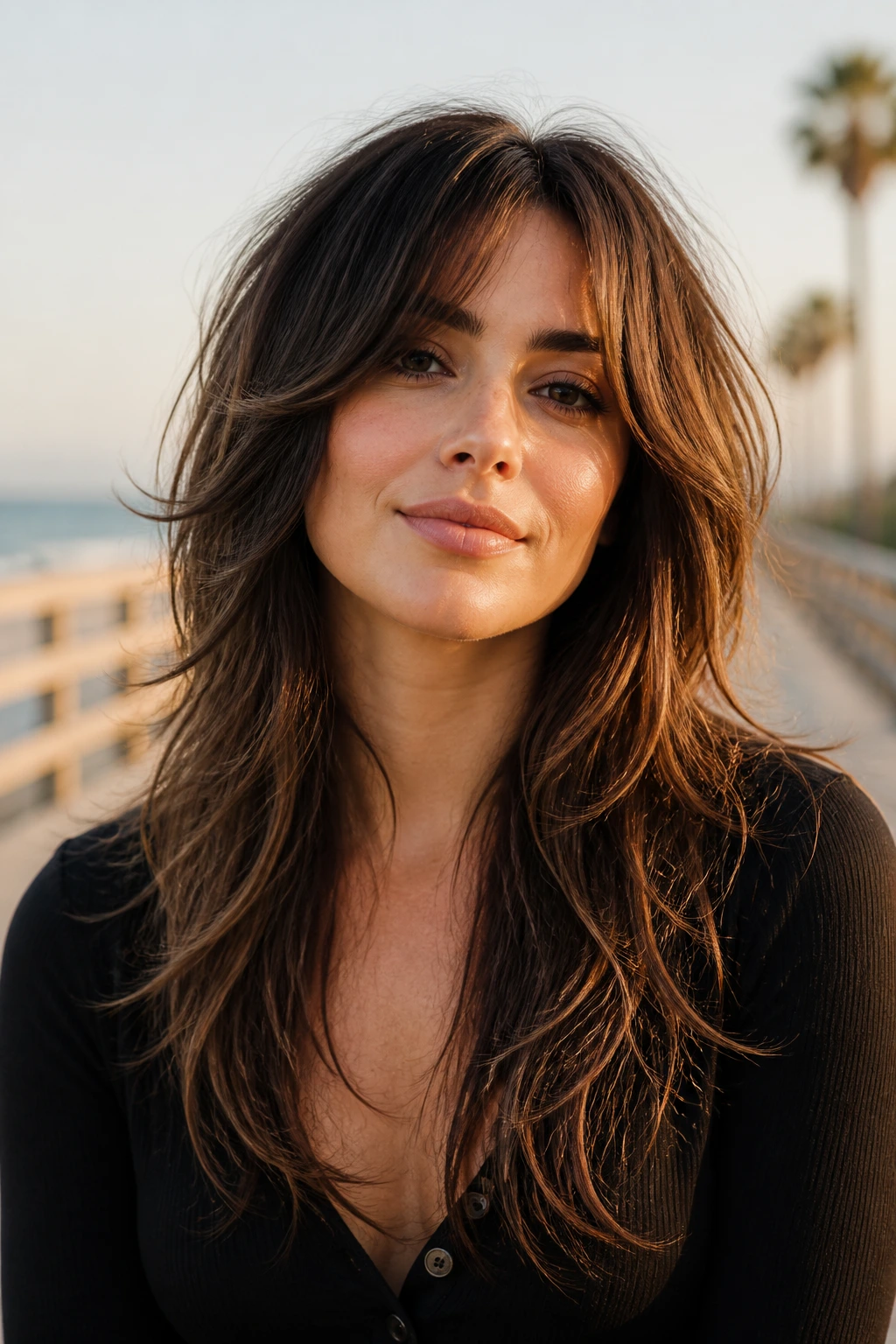
Let’s look at a common scenario: you love long hair, but it’s so heavy that it lies flat against your skull, making your cheeks look fuller. A stylist can fix this by using a straight razor to cut long, piecey shag layers from the chin down. Razoring creates incredibly soft, tapered ends that slide past each other, removing bulk without creating blocky steps.
This technique allows the hair to hug your neck and shoulders closely, creating a slim, vertical silhouette. The texture on top adds just enough lift to balance your features, while the soft, razored layers frame your face like a whisper rather than a heavy wall.
Key Characteristics of This Cut
- Created primarily with a razor rather than shears for ultra-soft, seamless ends.
- Features a long, curtain-style fringe that blends into the side layers.
- Best for medium to thick hair with a natural wave or curl.
- Creates a relaxed, rock-and-roll aesthetic that requires minimal styling.
To style, spray a generous amount of sea salt spray onto damp hair, scrunch, and let it air-dry. The razored ends will naturally curl and flip, breaking up the roundness of your face.
17. Feathered Collarbone Cut
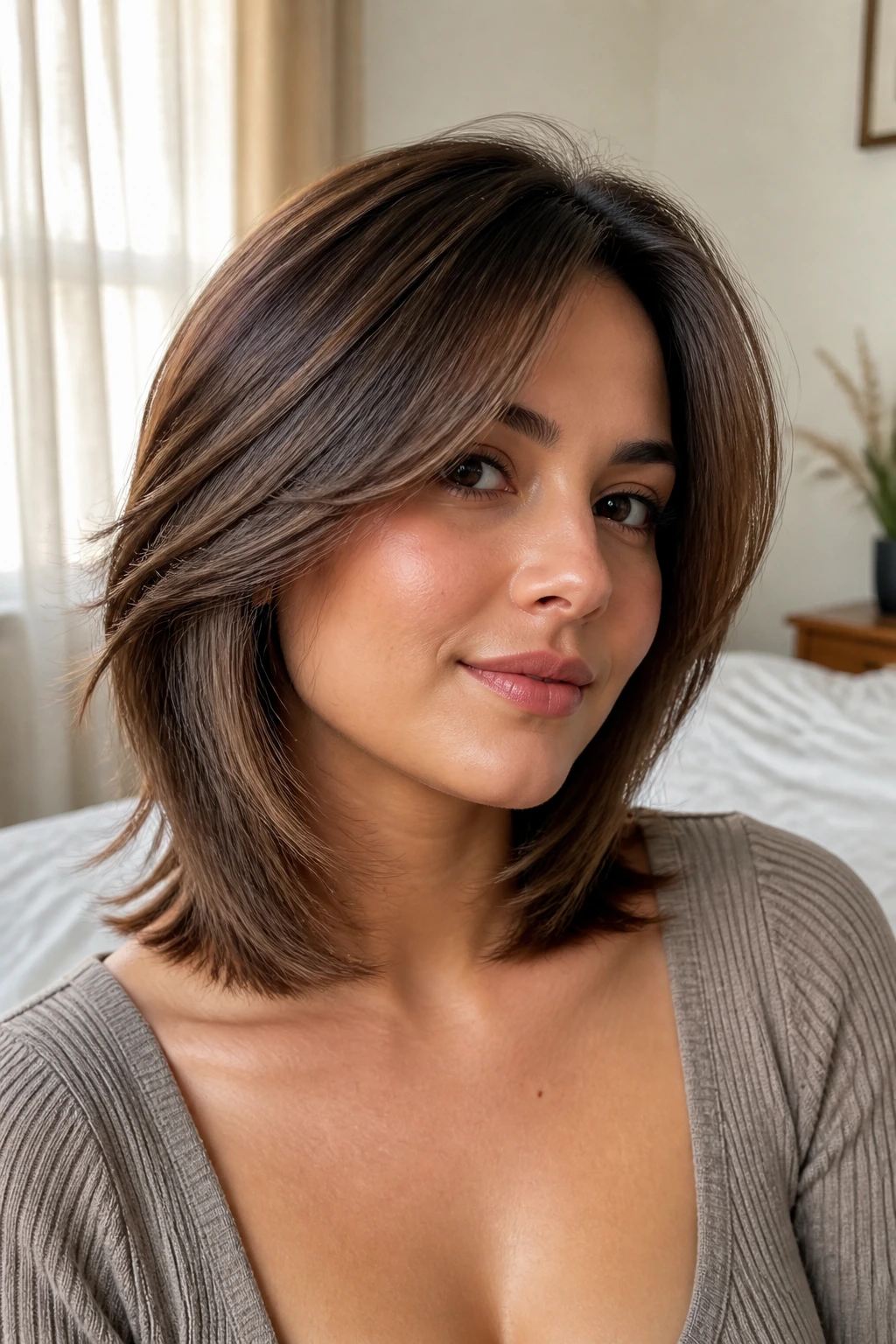
The collarbone is one of the most flattering landing zones for a haircut if you have a round face. It is a length that is long enough to elongate the neck, yet short enough to maintain volume and bounce. A feathered collarbone cut features soft, backward-sweeping layers that mimic the feathers of a wing, pulling the focus away from the center of your face.
These feathered layers start around the chin and sweep backward, exposing the jawline and neck. This backward movement is crucial because it physically pulls the hair away from your cheeks, preventing it from adding width. It creates a beautiful, open frame that highlights your collarbones and shoulders.
This style is incredibly elegant and works beautifully for professional settings. It can be blow-dried with a round brush, curving the layers back and away from the face to create a breezy, wind-swept effect. It is a timeless cut that works on almost every hair type, from fine to thick.
If you struggle with a double chin, the collarbone length is your best friend. It draws the eye downward past the chin to the base of the neck, creating a longer, sleeker neck profile.
18. The Modern Mullet with Soft Temples
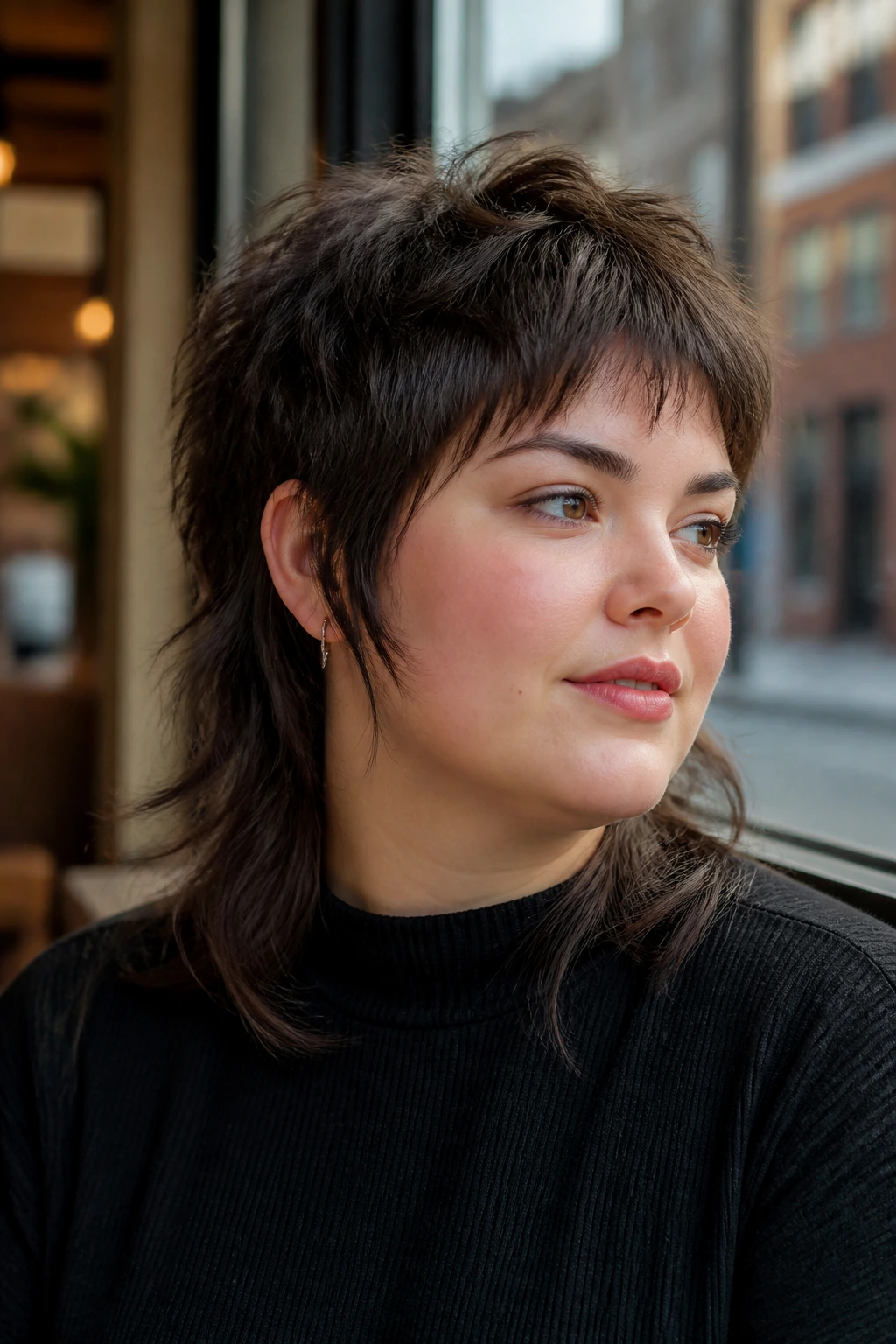
While the word “mullet” might make you hesitate, the modern version is highly sophisticated and incredibly flattering for round face shapes. It features a shorter, textured top and sides that blend into a longer back. The modern twist is keeping the temples soft and wispy rather than shaved, which creates a beautiful, face-framing transition.
The main difference between this and a classic mullet is the blending. Instead of a harsh “business in the front, party in the back” contrast, the modern mullet uses seamless layering to connect the different lengths.
This cut is highly effective for round faces because it completely eliminates volume at the sides while building significant texture and height on top. The longer back section draws the eyes down, elongating the neck.
This cut is best suited for those with natural wave or curl, as the texture helps soften the edgy shape. Style with a lightweight curl cream or texturizing paste, using your hands to messy-up the crown and keep the sides laying flat against your temples.
Wrapping Up
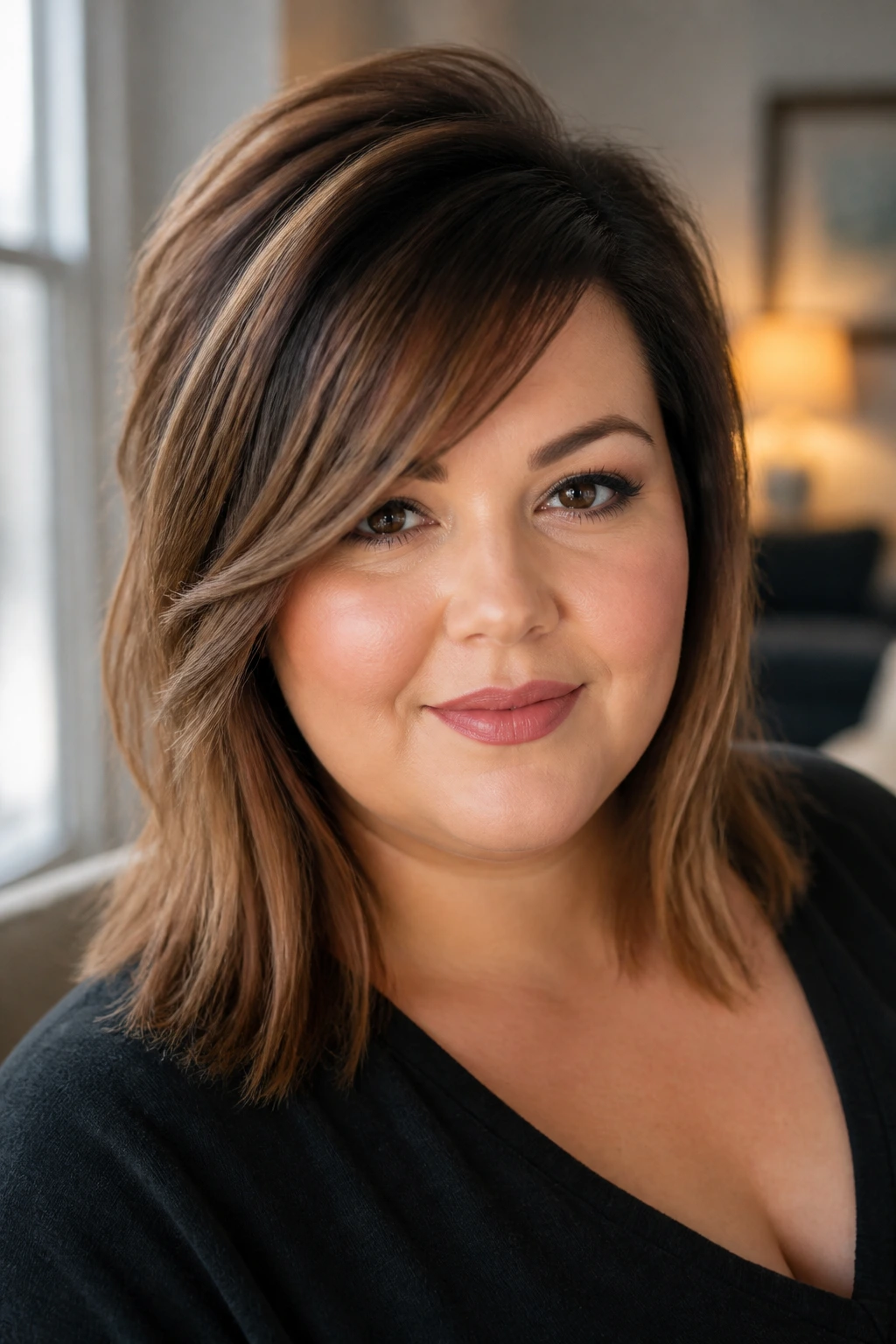
Finding the perfect haircut is not about matching a specific template or hiding behind a wall of hair. It is about understanding how hair moves, how lines direct the eye, and how different textures can be sculpted to highlight your favorite features. A round face is a beautiful, youthful canvas that benefits from angles, texture, and vertical height.
Whether you choose a bold, short pixie with crown volume or a long, flowing shag with razored layers, the key is communication with your stylist. Ask for internal weight removal, diagonal bangs, and layers that start at strategic points to frame rather than crowd your face. Embrace your hair’s natural texture, play with parting, and remember that confidence is the ultimate styling tool.