

Thick hair is a gift that often feels like a full-time job. It holds styles well, resists breakage, and gives you a natural, voluminous base that others pay for in extensions, but it comes with a unique set of challenges. When you have an abundance of hair, it can easily turn into a heavy, triangular “helmet” shape if it isn’t cut with precision. The secret to managing a dense mane isn’t just about length; it is entirely about weight distribution. A choppy haircut introduces texture and movement in places where thick hair is prone to bunching, effectively thinning out the bulk while leaving the overall thickness intact.
If you are tired of the constant tug-of-war with your hair ties or the sheer weight dragging down your scalp, you are in the right place. We are diving into eighteen different approaches to cutting, layering, and thinning out thick hair to make it work for you, not against you.
1. The Long Textured Shag
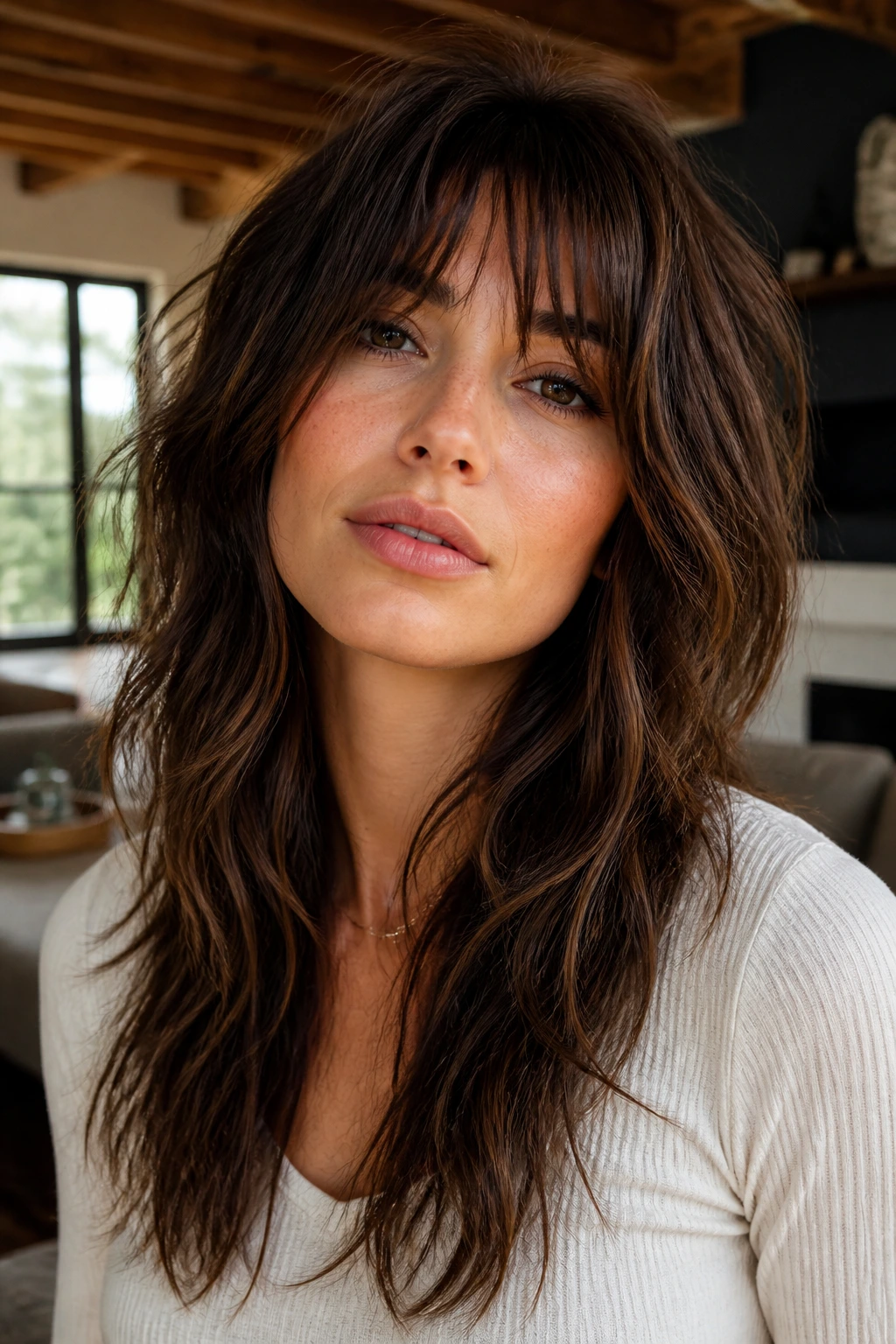
The shag is a masterclass in volume control because it relies on interior layering rather than blunt edges. By removing weight from the mid-lengths and the crown, you allow the hair to sit flatter to the head while maintaining that desirable, lived-in feel.
Why It Works for Thickness
When a stylist cuts long, disconnected layers through the mid-section, they are essentially creating “hidden” space within the hair. This prevents the hair from expanding outward into an unmanageable poof. Instead, it collapses into a soft, piecey shape.
How to Style for Movement
- Use a salt spray on damp hair to encourage natural texture.
- Air-dry until about eighty percent done, then use a wide-barrel curling wand on just the top layers.
- Avoid heavy creams; opt for lightweight mousses that won’t weigh down your natural volume.
Pro tip: Ask your stylist to use a razor for the face-framing pieces to give them a wispy, effortless finish.
2. The Choppy Collarbone Bob
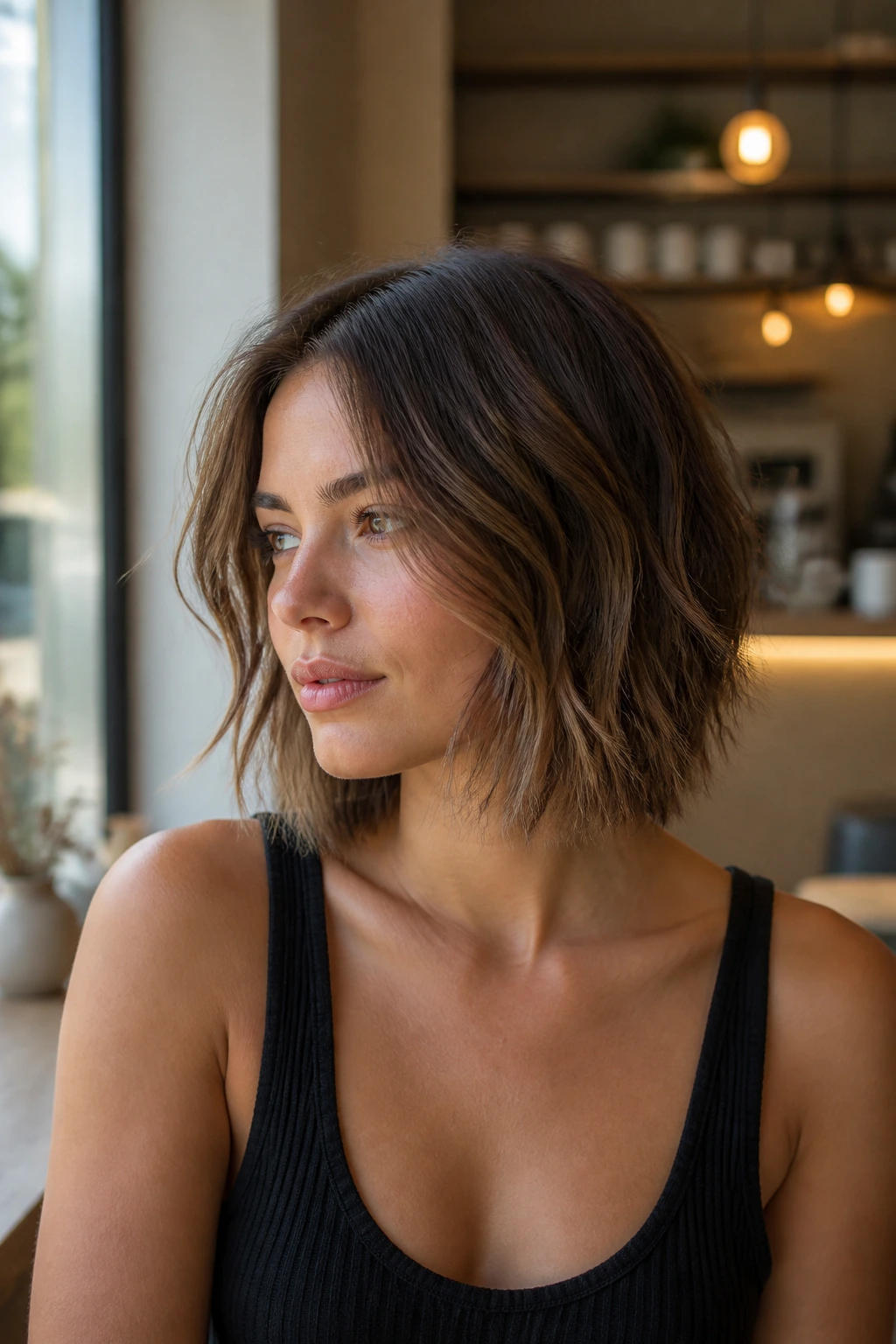
A bob that hits right at the collarbone is one of the most flattering lengths for thick hair. It is long enough to pull back when you are in a rush but short enough to eliminate the weight that drags down a long style.
Mastering the Internal Layers
The key to a successful bob on thick hair is internal texturizing. Rather than just cutting a blunt line, a stylist should go into the ends and the interior with thinning shears or point-cutting techniques. This softens the perimeter, ensuring the hair doesn’t look like a solid, unmoving block.
Styling for a Polished Look
A sleek, straight style often highlights the thickness of the hair. If you want a more modern look, create a slight “S” wave using a flat iron. This breaks up the solid shape and makes the hair appear lighter and more airy.
3. Asymmetrical Choppy Pixie
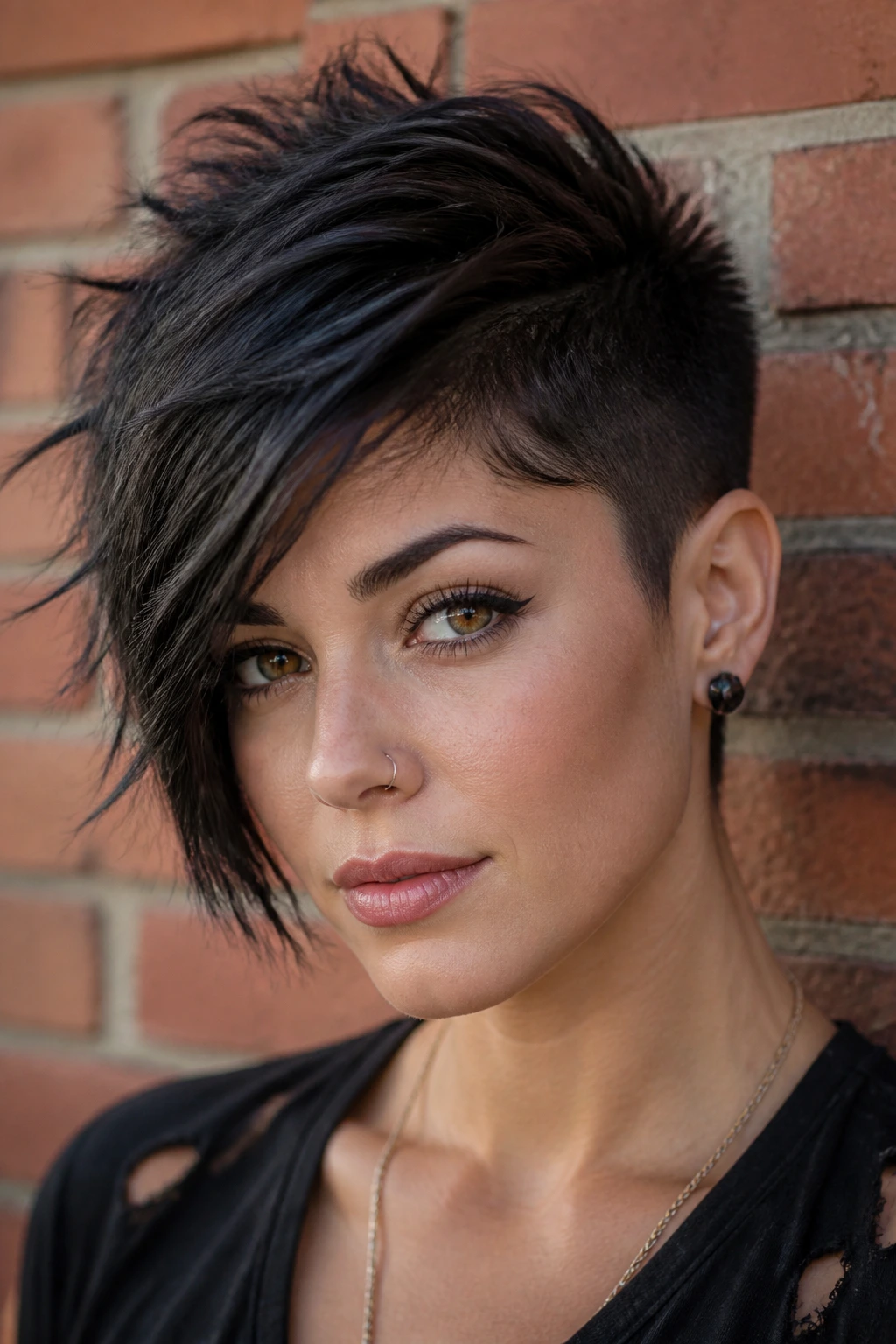
If you want to go short, an asymmetrical pixie is a bold way to shed weight. By keeping one side longer and chopping the other side extremely close, you create visual interest that draws the eye away from the overall density of your hair.
The Balancing Act
With an asymmetrical cut, you are working with the shape of your face rather than just the volume of your hair. The longer side adds softness, while the shorter, clipper-cut side removes the bulk that typically builds up around the ears.
Maintenance Considerations
- This style requires frequent trims, typically every four to six weeks.
- Use a matte clay or pomade to define the choppy ends.
- If your hair grows quickly, the “in-between” stage can be tricky, so stay on top of those salon visits.
4. Curtain Bangs with Razored Layers
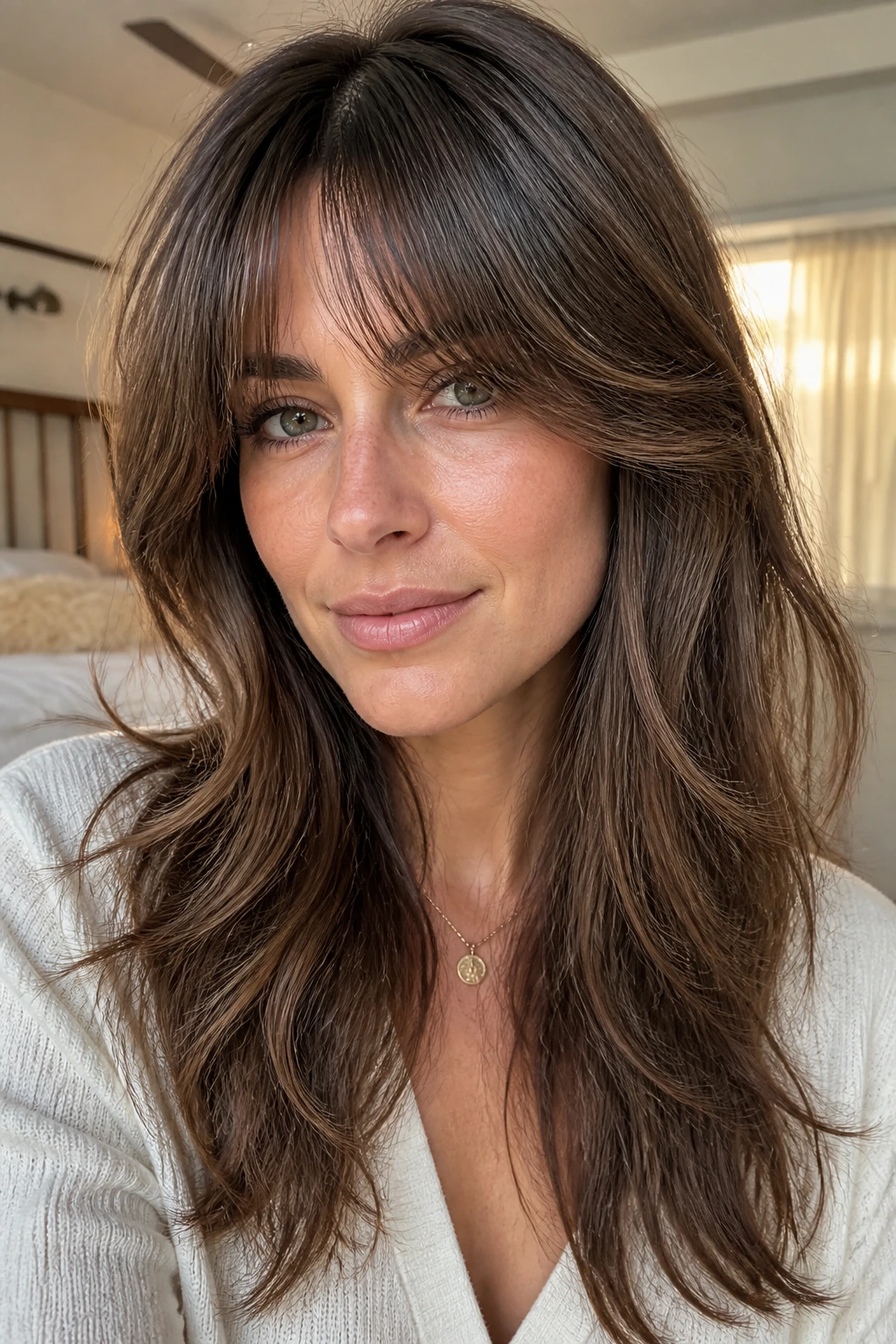
Curtain bangs are often criticized for looking too heavy on thick-haired women, but they are a perfect addition if they are cut with a razor. The razor tapers the hair, making it lay flatter against the forehead while still giving you that soft, face-framing look.
The Science of the Razor
Razoring creates a soft, feathered edge that scissors simply cannot replicate. Because thick hair has so much body, a soft edge prevents the bangs from becoming a solid curtain that blocks your view.
How to Maintain the Shape
- Use a round brush while blow-drying to direct the hair away from your face.
- Keep a small bottle of dry shampoo on hand; thick hair can sometimes look oily on the forehead, and dry shampoo keeps the bangs fresh.
5. Choppy Wolf Cut
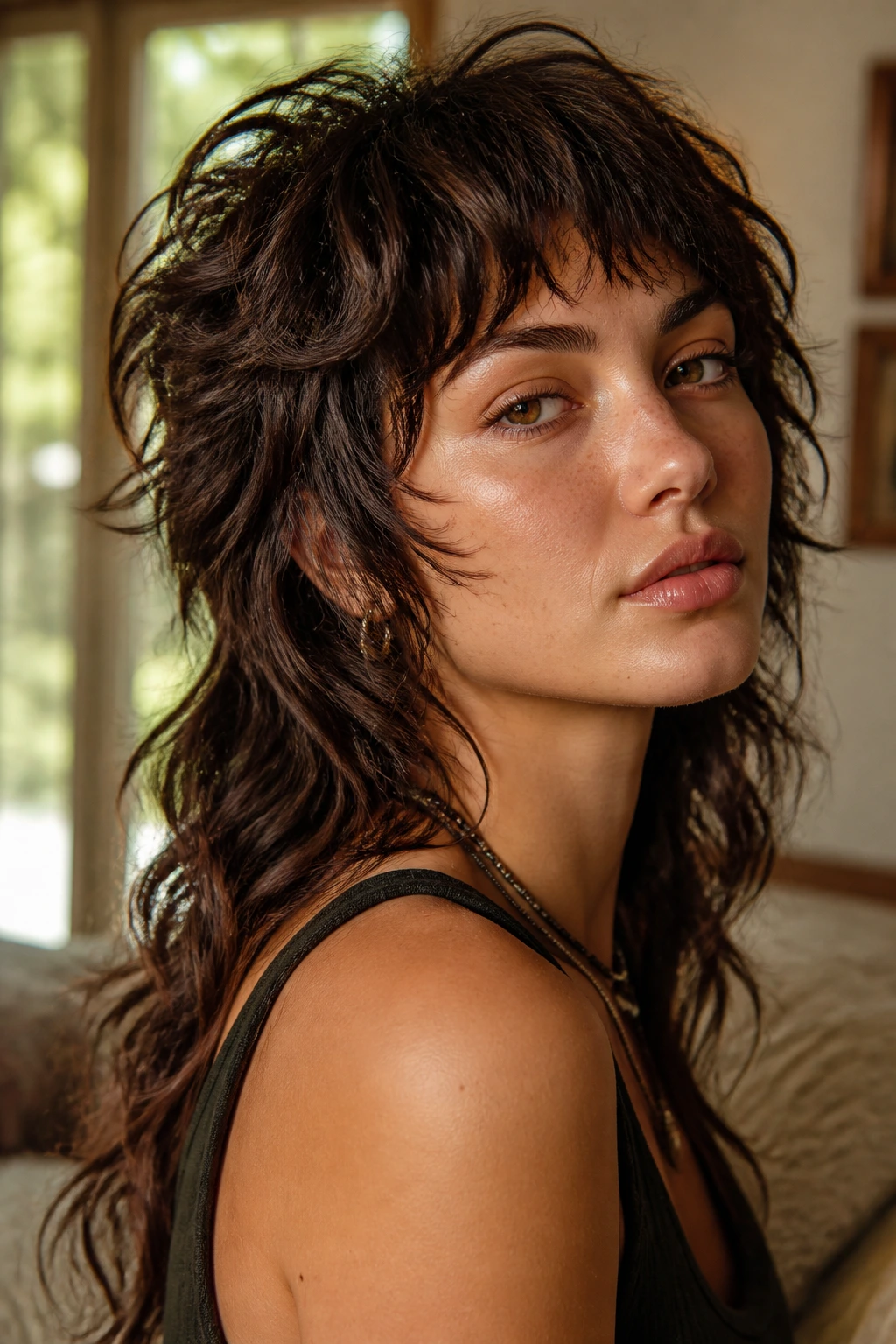
The wolf cut is essentially a marriage between a mullet and a shag, which is a surprisingly functional choice for those with thick hair. It forces the hair to fall in a specific, layered pattern that creates a messy, cool-girl aesthetic without requiring hours of styling.
Why This Style Succeeds
The crown is cut short to build height, while the back remains long and feathered. This distribution of length means you aren’t dealing with a heavy wall of hair hanging down your back; instead, you get weightless, gravity-defying layers.
Who It Suits Best
This cut shines on those with natural wave or curl. If your hair is poker-straight, you may need a light perm or some daily curling to get the “wolf” effect, but the structure remains excellent for controlling bulk.
6. The Lob with Disconnected Ends
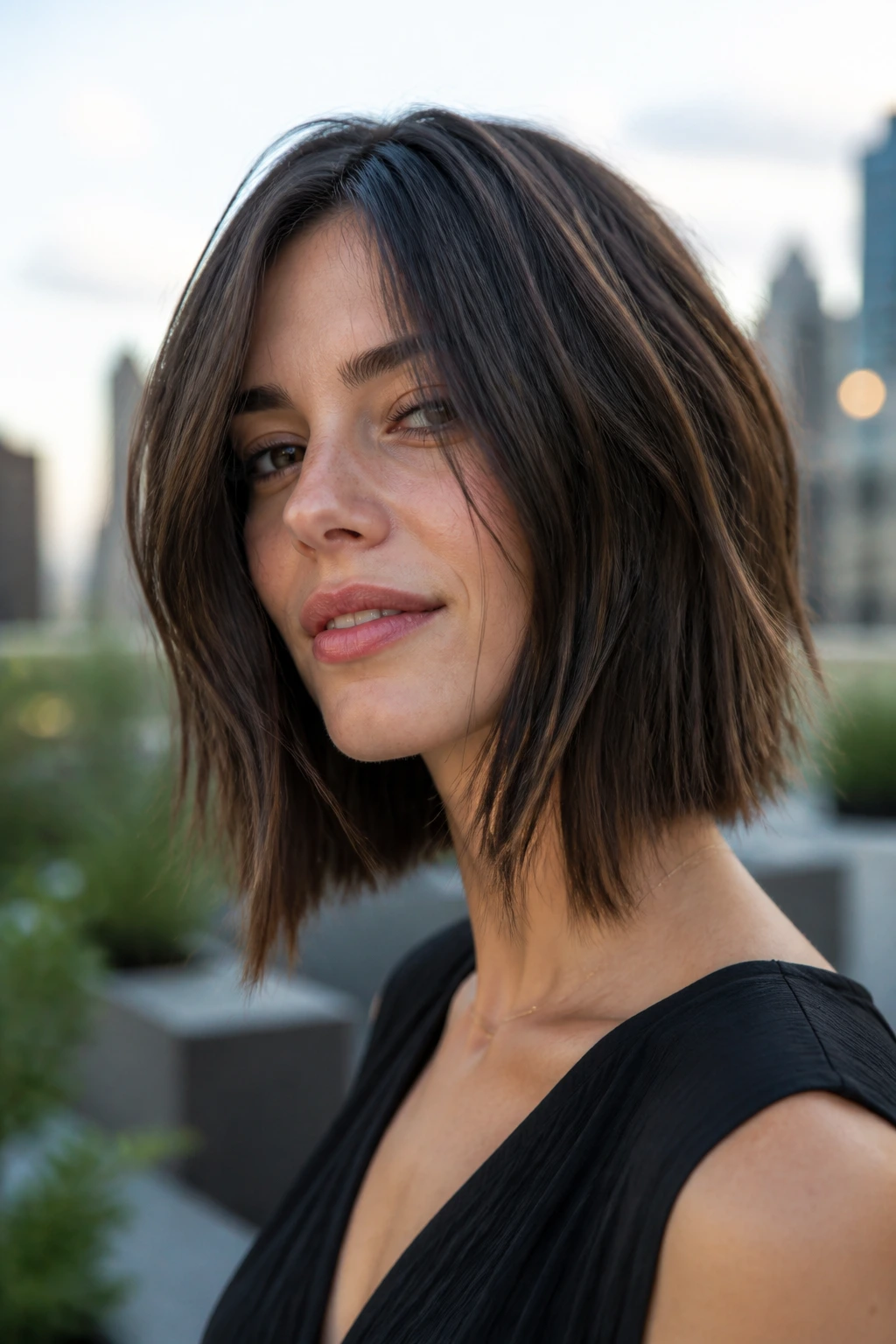
A long bob, or “lob,” is a classic, but giving it disconnected, choppy ends transforms it into something far more manageable. Disconnected ends are cut at varying lengths to create a shattered, modern look that doesn’t feel uniform or heavy.
Managing the Perimeter
The most common mistake with thick bobs is leaving the perimeter too thick. By breaking up that line, you allow the hair to move individually rather than as a single, heavy unit. It also makes the hair feel significantly lighter against the neck.
Styling Tip
Use a texture spray to give the ends that “shattered” look. If the ends feel too straight, use a curling iron to flip them in alternating directions for an unpredictable, choppy aesthetic.
7. Graduated Choppy Bob
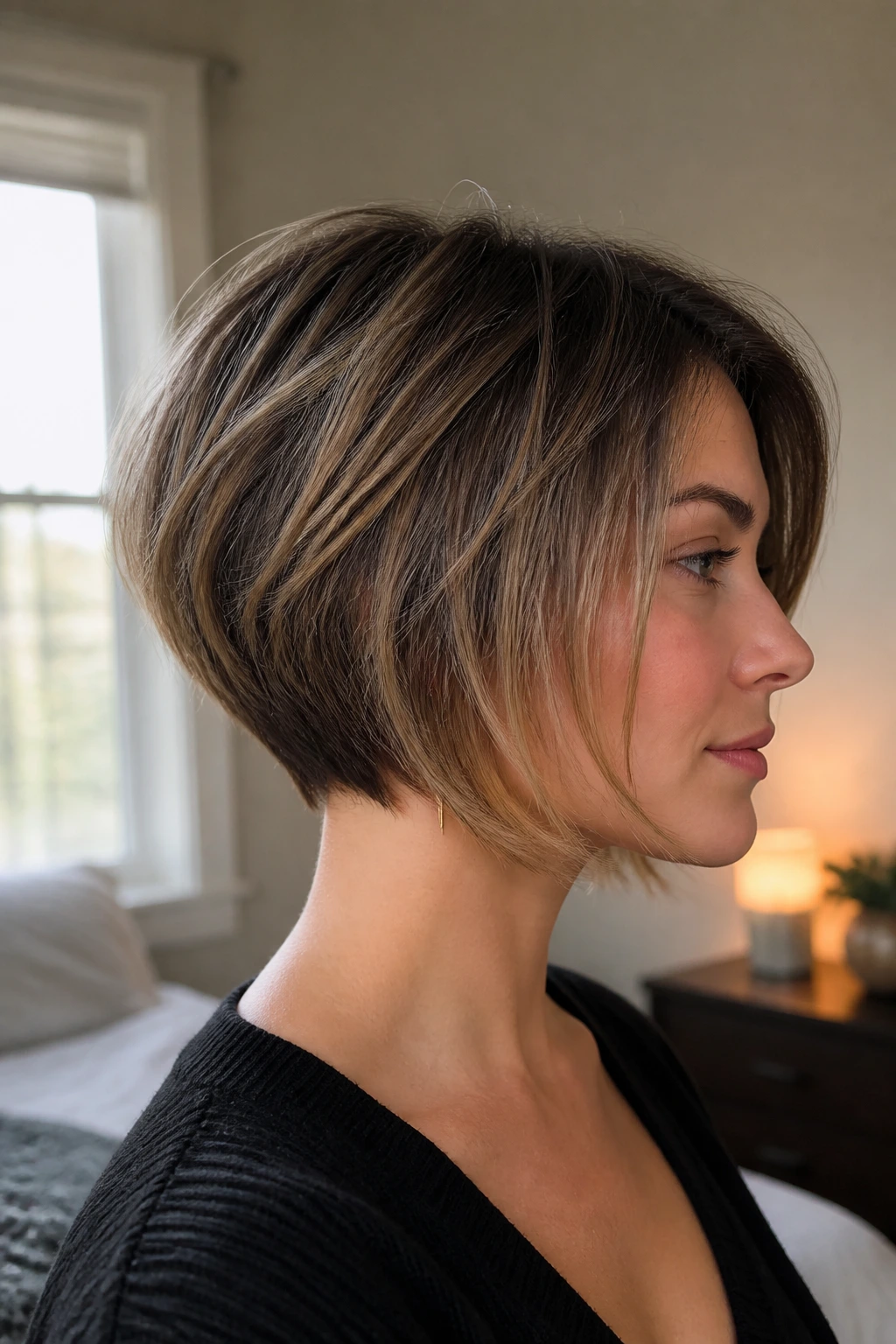
A graduated bob, or a “stacked” bob, keeps the hair shorter in the back and longer in the front. This is a brilliant way to remove the bulk at the nape of the neck—a common problem area for thick hair—while keeping the length around the face.
The Stacked Effect
The stack allows you to remove inches of hair weight without losing the look of a longer bob. Because the back is shorter, you don’t have to deal with the annoying hair-down-the-neck feeling during warmer months.
Shaping the Neckline
Ensure your stylist uses a deep point-cutting technique on the stacked portion. This blends the layers so you don’t see a harsh, shelf-like transition between the short back and the long front.
8. Feathered Layers with Deep V-Cut
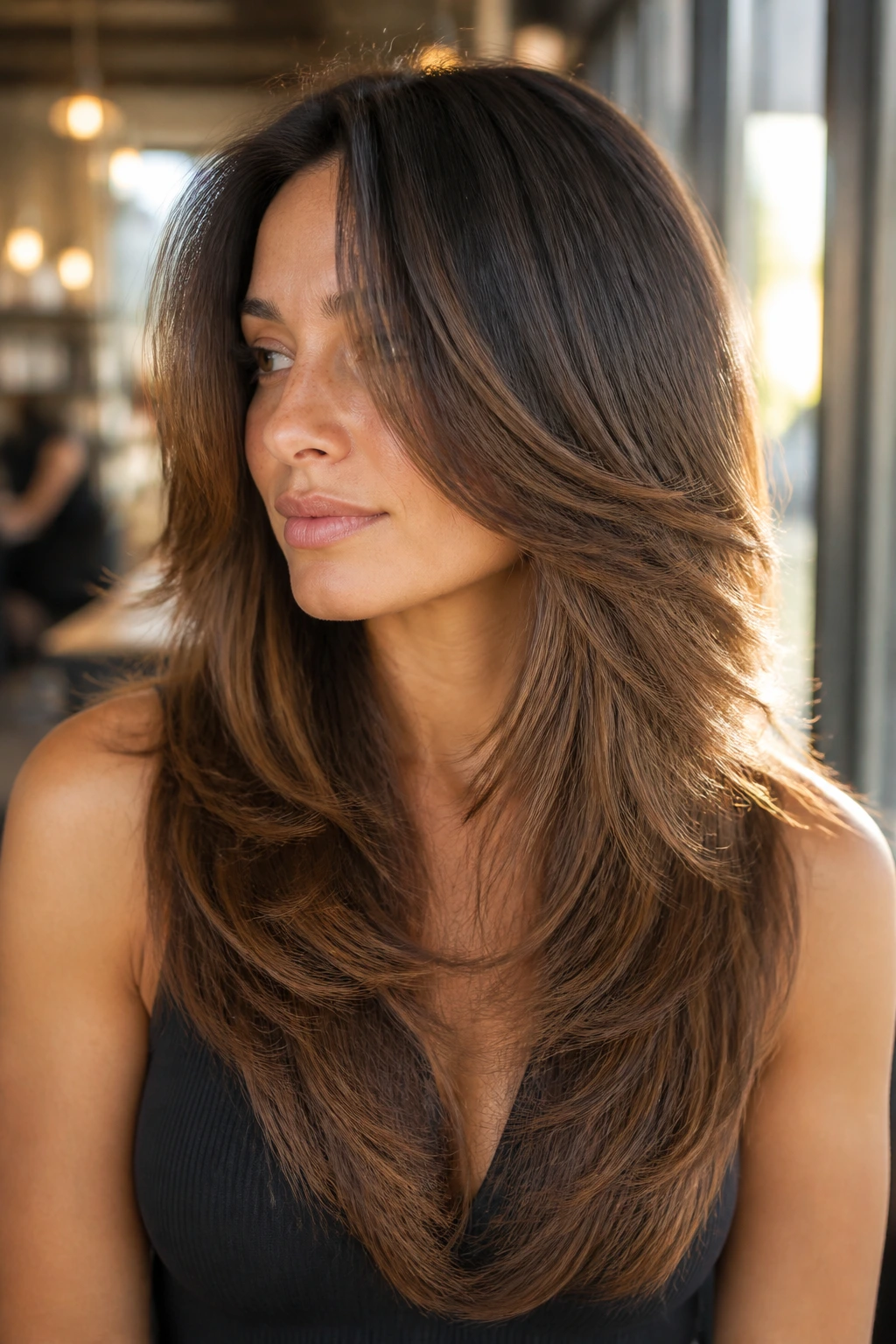
If you are determined to keep your length, a V-cut with heavy feathering is the answer. A V-cut physically removes more hair from the sides than a U-cut or a straight-across cut, creating a tapered shape that reduces the overall weight of your mane.
Building Dimension
Layering is crucial here. Start your layers around the chin and continue them down to the ends. This creates a “staircase” effect that keeps the hair from looking like one solid curtain.
Maintenance Advice
Long hair is heavy by nature. If you find it’s still too much, ask your stylist to use thinning shears exclusively on the underside of your hair. This takes out the bulk without changing the look of your top layers.
9. Choppy Fringe with Long Layers
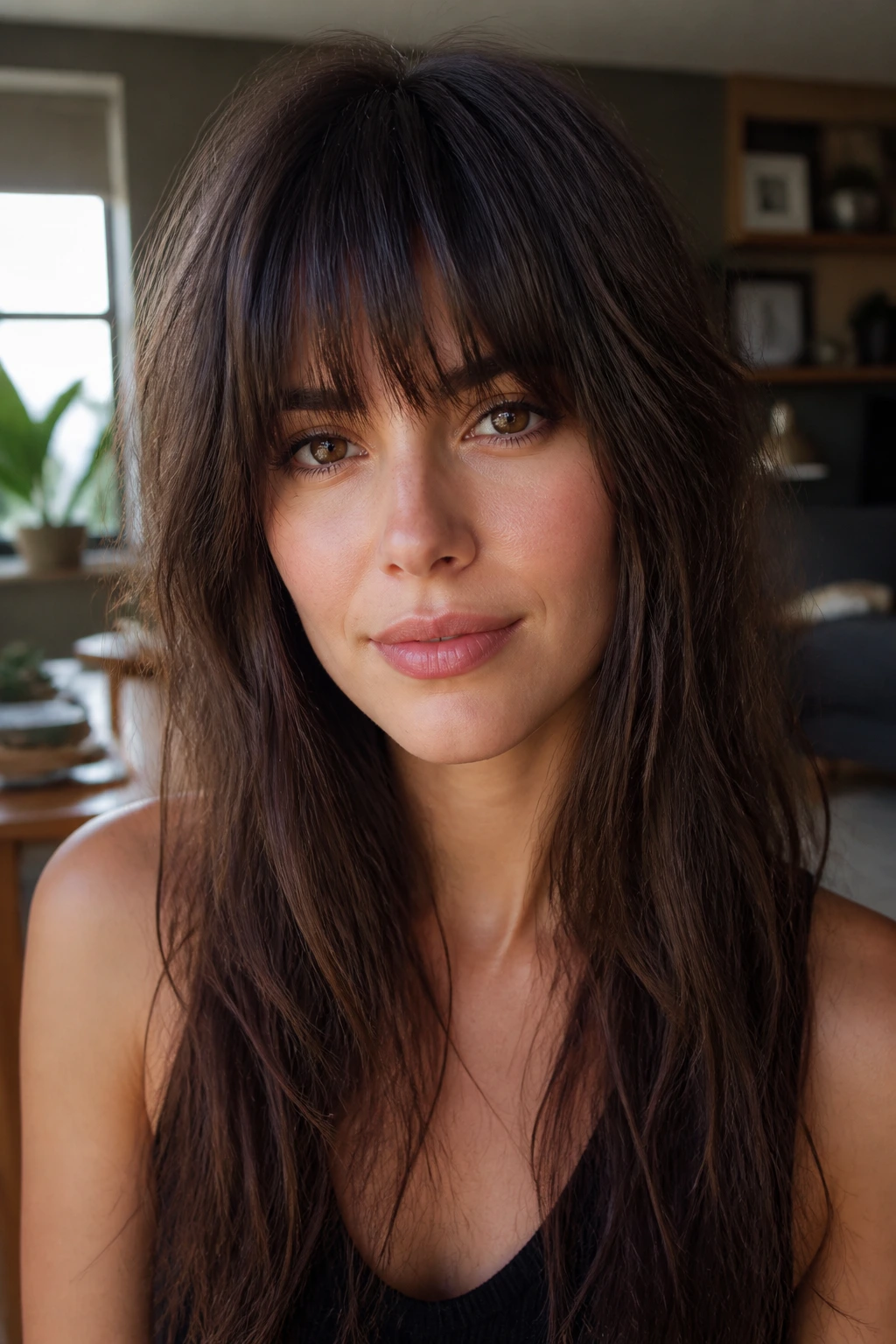
A choppy, eyebrow-skimming fringe can make a long, thick haircut look intentional and stylish rather than just “long hair.” The key is keeping the fringe sparse enough that it doesn’t look like a solid block of density.
Balancing the Fringe
Pair this with long, face-framing layers to bridge the gap between your bangs and your length. This creates a cohesive look that allows your face to shine.
When to Avoid This Look
If you have a very low hairline, a heavy fringe can overwhelm your features. Opt for a thinner, piecey bang that shows a bit of forehead to maintain balance.
10. The Blunt-Cut Shag
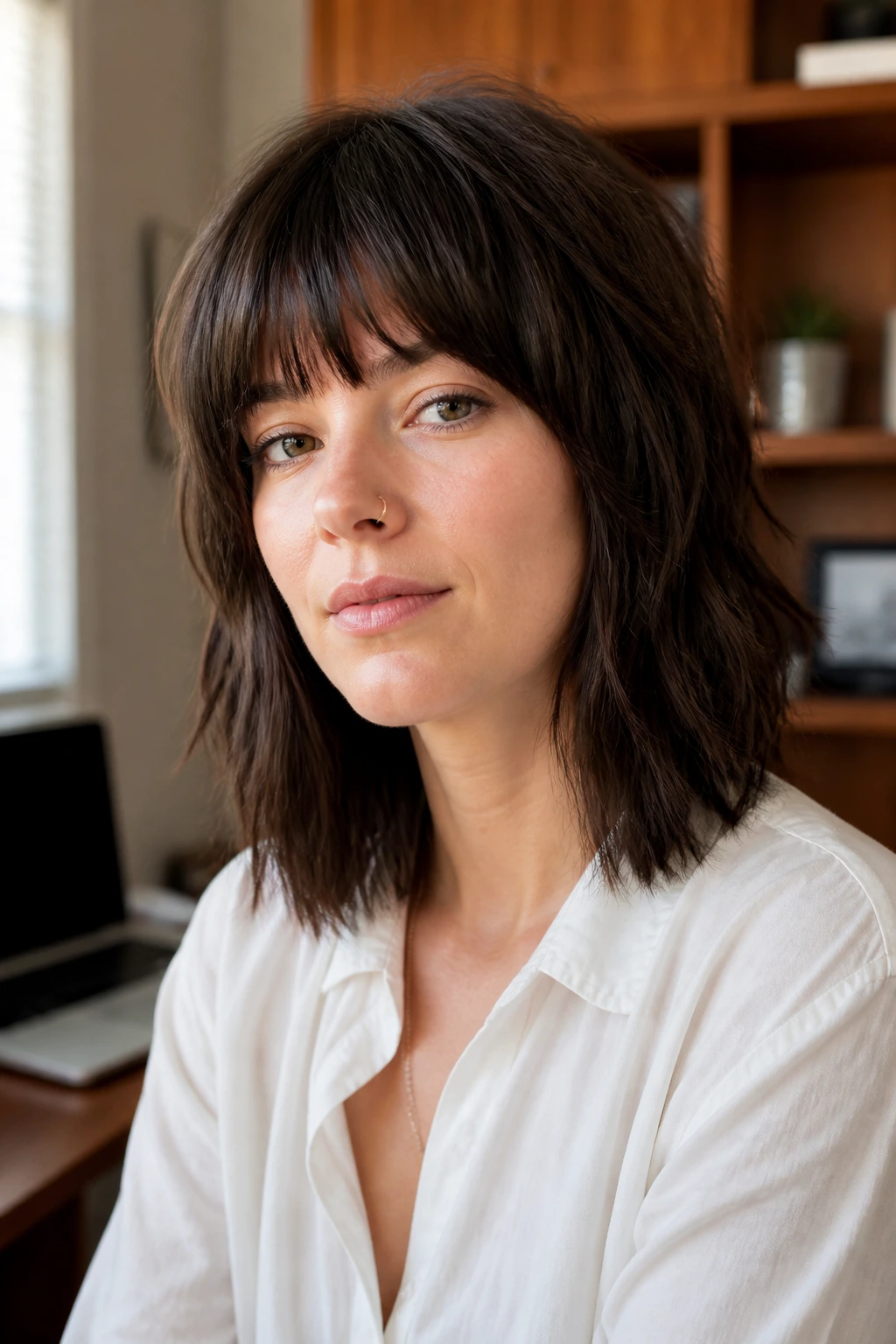
A blunt-cut shag takes the messy vibe of a traditional shag but keeps the ends crisp and clean. This is a great transition style if you are moving away from solid long hair but aren’t ready to commit to a super-short, wispy look.
The Contrast Factor
The blunt edges provide a sense of structure, while the interior layers provide the “choppy” movement. It is the best of both worlds—it looks professional in a boardroom but playful on the weekend.
Styling for Texture
Because the ends are blunt, this cut will show off any natural wave or curl perfectly. If you have straight hair, use a crimper at the roots for added volume and a sea salt spray on the ends for grip.
11. Choppy Curly Cut
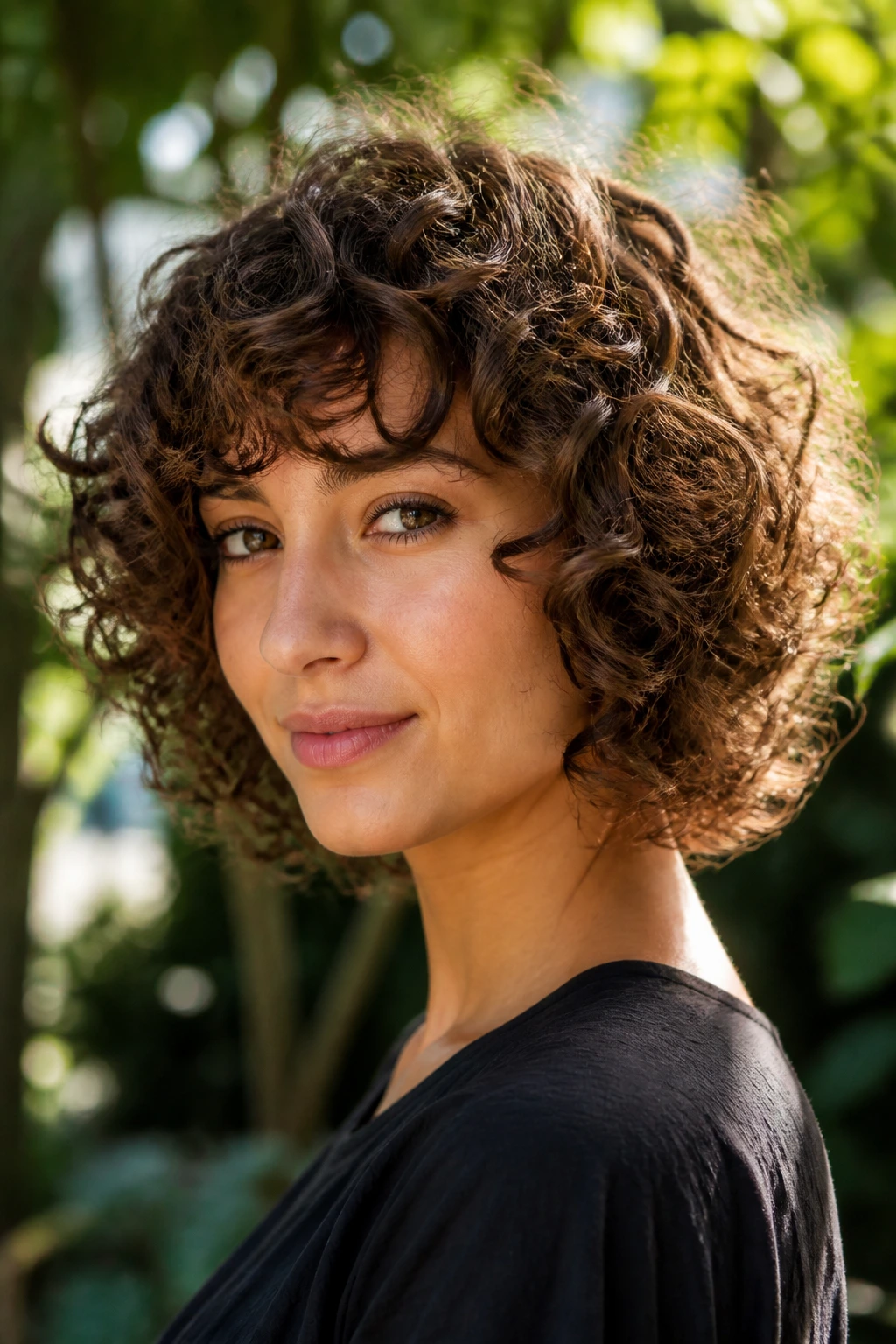
Curly hair is inherently thick, and it needs a specialized approach. A choppy curly cut focuses on “de-bulking” individual curls rather than thinning the hair as a whole. This involves cutting into each curl cluster to create a lightweight, springy texture.
Avoiding the Triangle
Curly hair often turns into a triangle if it’s cut all one length. By adding shorter, choppy layers throughout, you distribute the volume evenly from root to tip, creating a rounded, harmonious shape.
Product Selection
Curly hair needs moisture to look its best, but heavy creams will weigh it down and ruin the choppy effect. Use a light, water-based curl activator and a microfiber towel to remove excess moisture without causing frizz.
12. Undercut Pixie
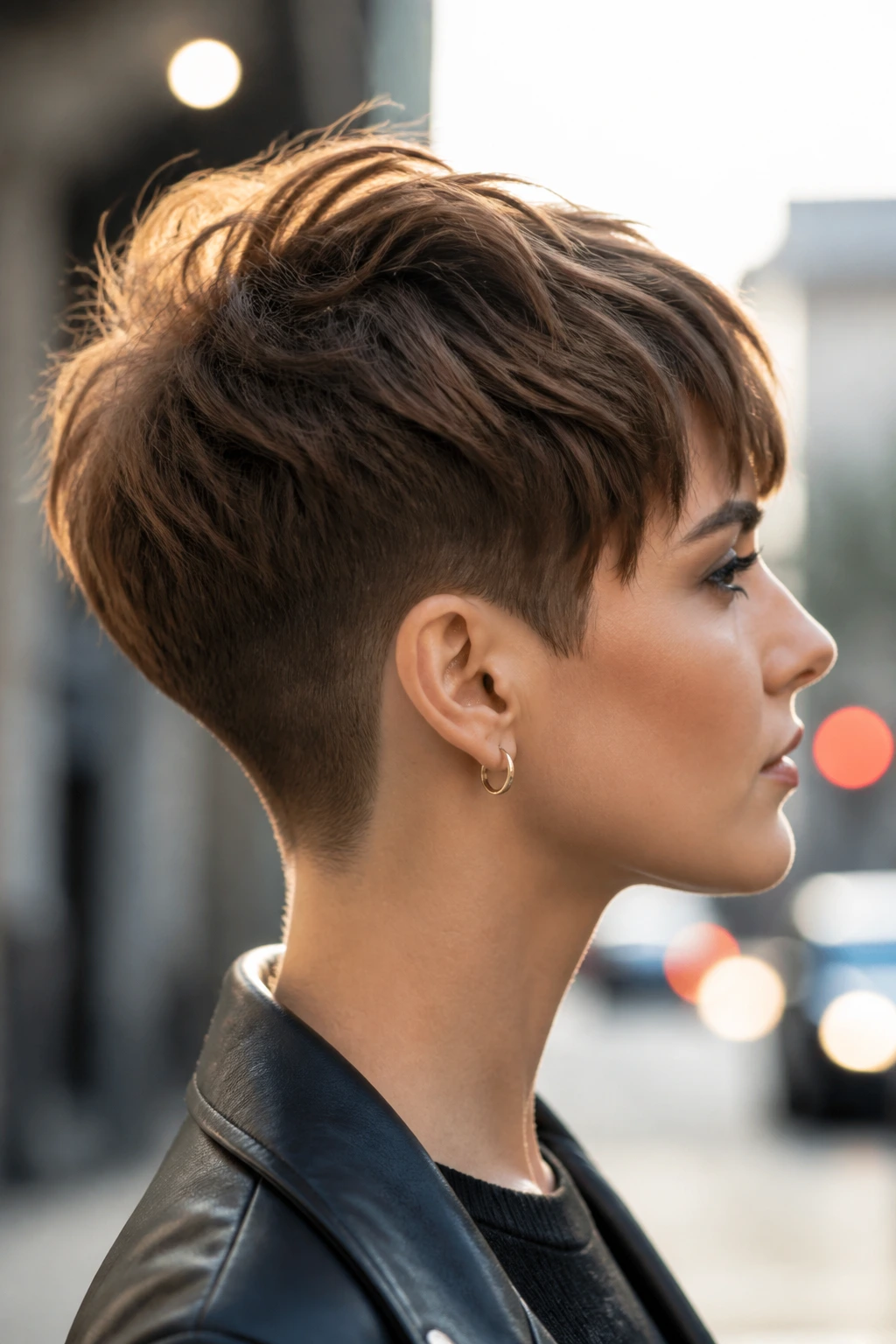
For the ultimate weight-reduction strategy, the undercut is unbeatable. By shaving the nape of the neck or the sides, you eliminate the areas where thick hair builds up the most volume, leaving you with a light, easy-to-manage style.
The Hidden Benefit
The best part about an undercut is that it’s invisible if you keep the top layers long enough to cover it. You get the weight relief of a shorter cut while maintaining the visual appearance of a thicker, longer style.
Who Should Try This
This is perfect for anyone living in hot, humid climates. It’s an instant fix for that overheated feeling that often accompanies thick hair in the summer.
13. Mid-Length Choppy Layers with Soft Waves
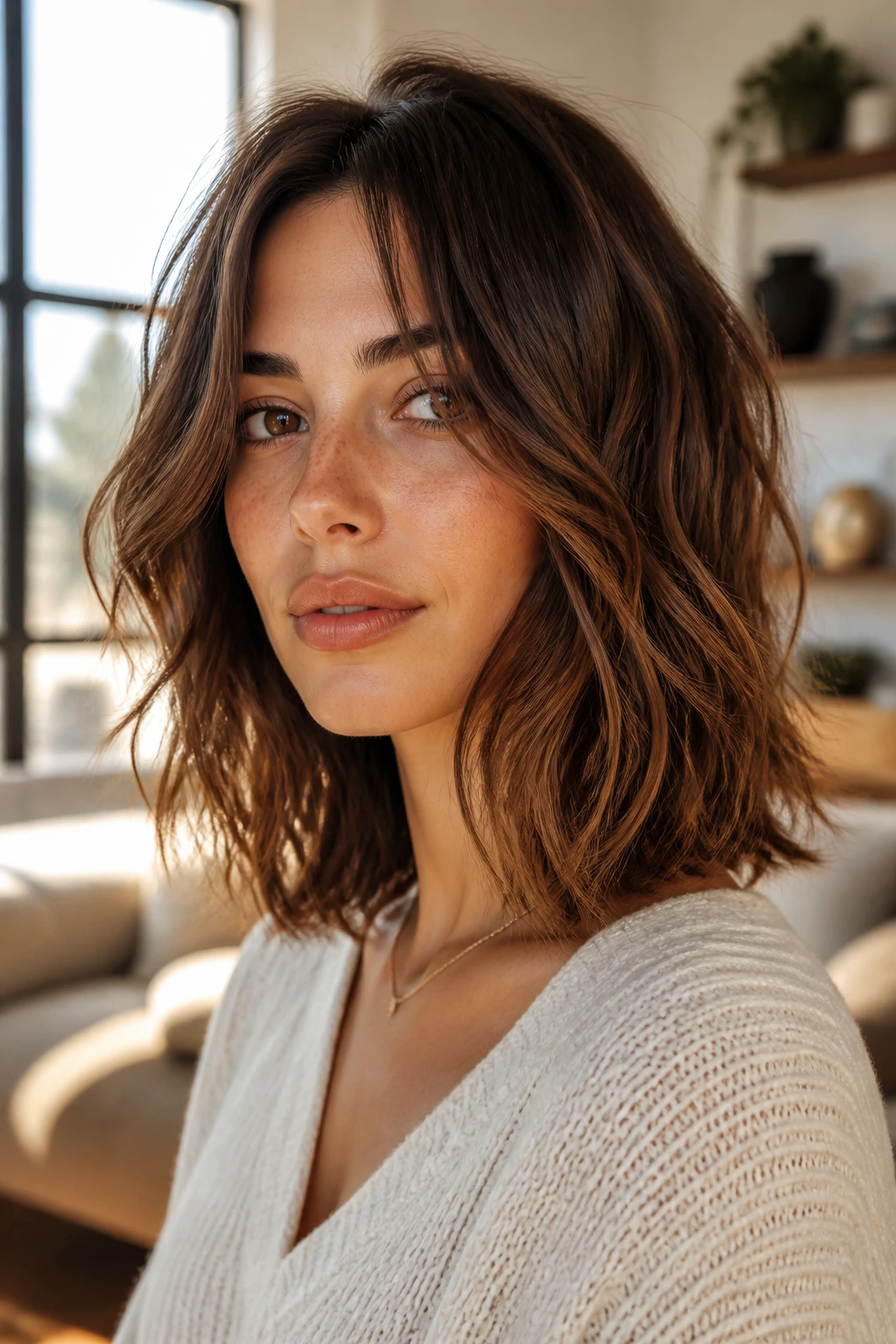
Sometimes, you just need a refresh. A mid-length cut that hits the shoulders, paired with long, choppy layers, creates a sophisticated look that is easy to style. This length is the “sweet spot” for many—it feels fresh without feeling too short.
Creating the Texture
Waves are the best friends of choppy hair. They emphasize the layers and add movement where the hair would otherwise just sit flat. A 1.25-inch curling iron is your best tool here.
The Technique
Point-cut the ends of your layers so they aren’t blunt. This keeps the hair looking soft and airy rather than stiff.
14. Modern Mullet
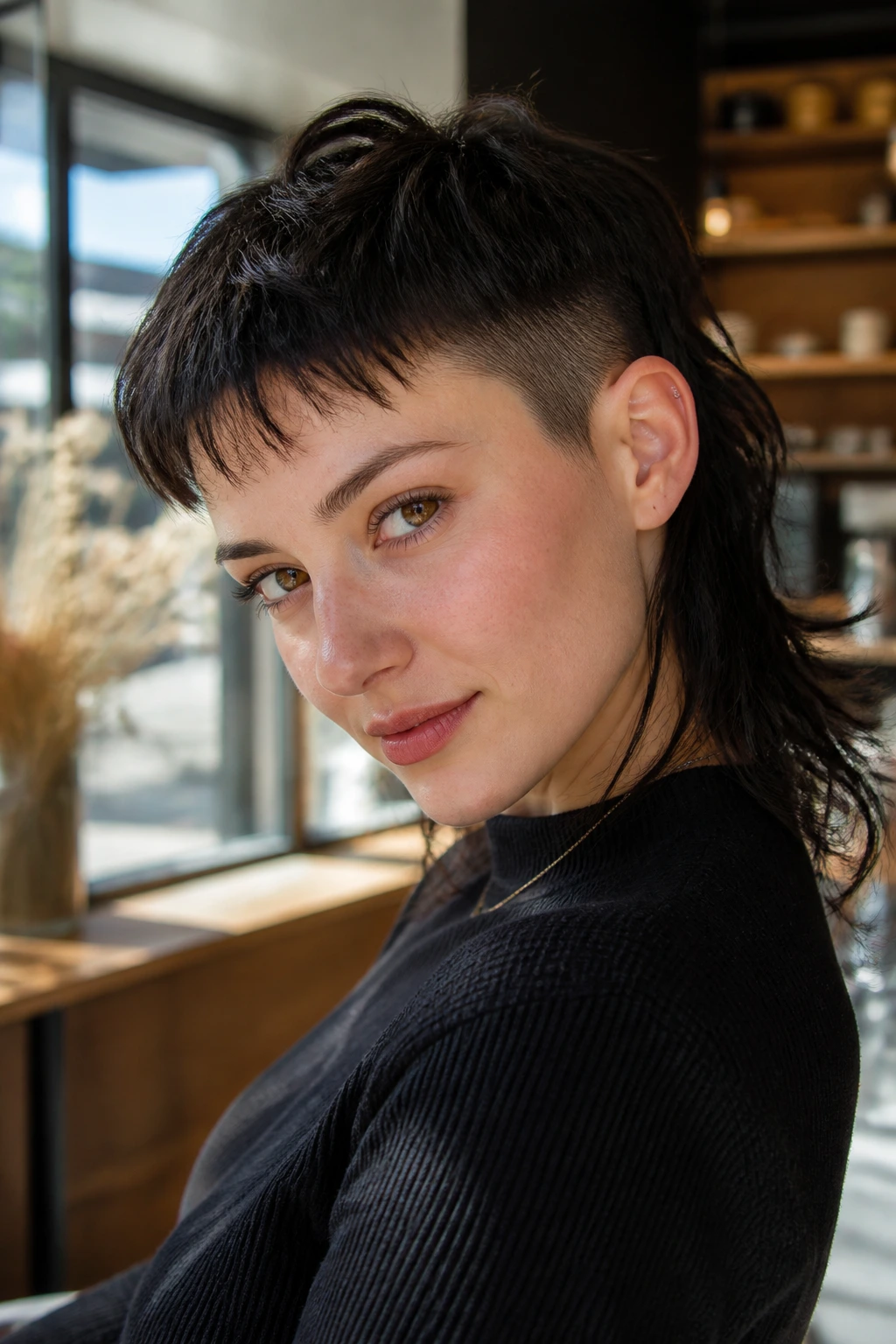
Yes, the modern mullet has returned, and it’s surprisingly functional for thick hair. By shortening the sides and the top while leaving the back longer and choppier, you are essentially removing the bulk from the sides and front of your face.
Making It Wearable
The modern version of this cut is much softer than its predecessor. It features blended sides and a choppy, textured fringe. It’s an edgy, artistic style that naturally manages bulk by design.
Styling Tip
This style works best with a bit of “grit” in the hair. Use a texturizing powder at the roots to give the short top layers some lift, and let the back be piecey and natural.
15. The “Shattered” Bob
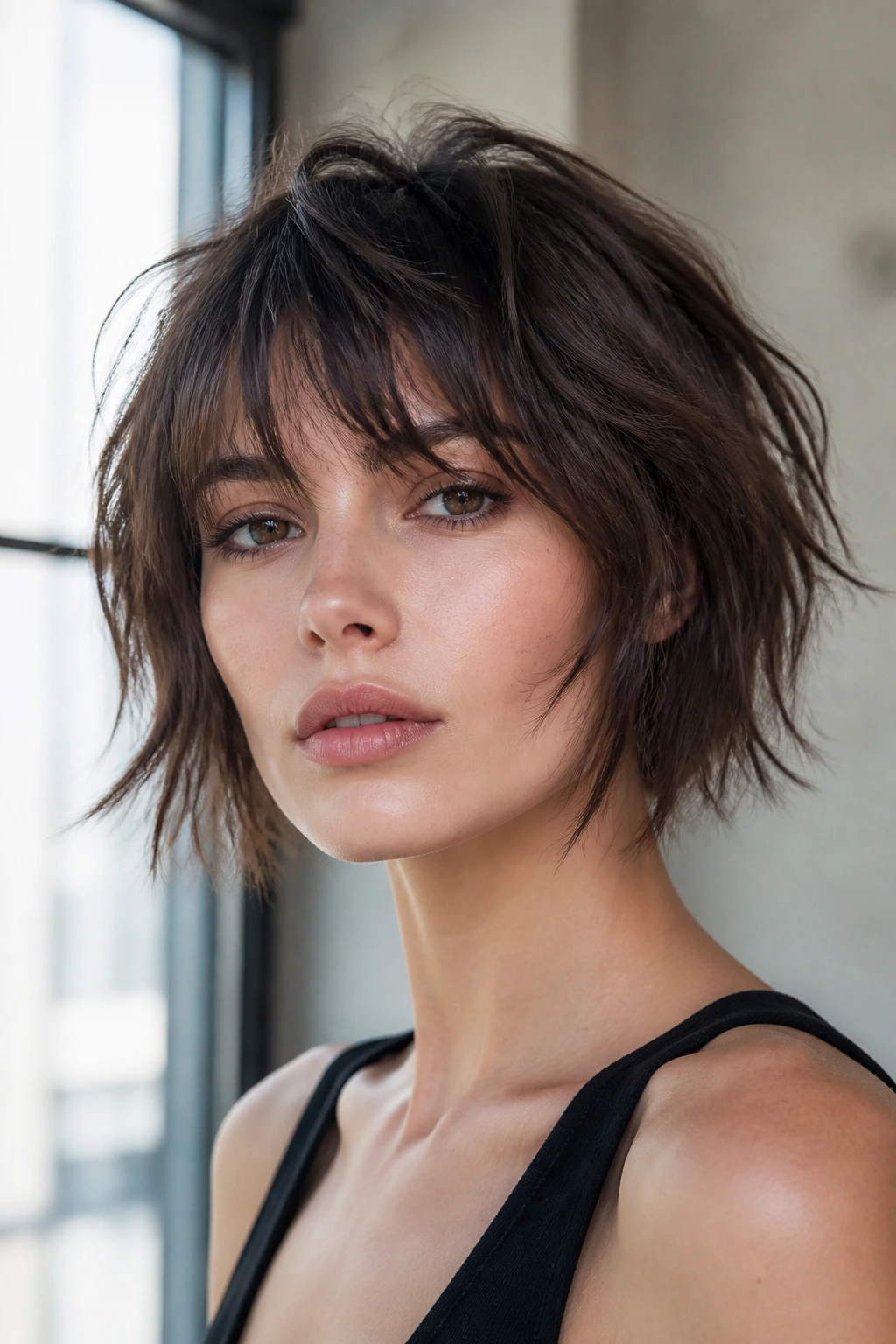
A shattered bob involves cutting the hair with a razor or deep point-cutting shears to create an uneven, wispy look at the ends. It’s a very intentional aesthetic that screams high fashion and takes all the weight out of the bottom of the cut.
Why It’s Unique
Most bobs aim for symmetry. The shattered bob rejects that, embracing randomness as a way to create a light, ethereal feel. It’s perfect for someone who hates the “perfectly coiffed” look.
Who It Suits
This works wonderfully on fine-to-medium thick hair that has a slight natural wave. If your hair is very coarse, you might need a bit of smoothing serum to keep the wispy ends from looking frizzy.
16. Pixie with Longer, Choppy Top
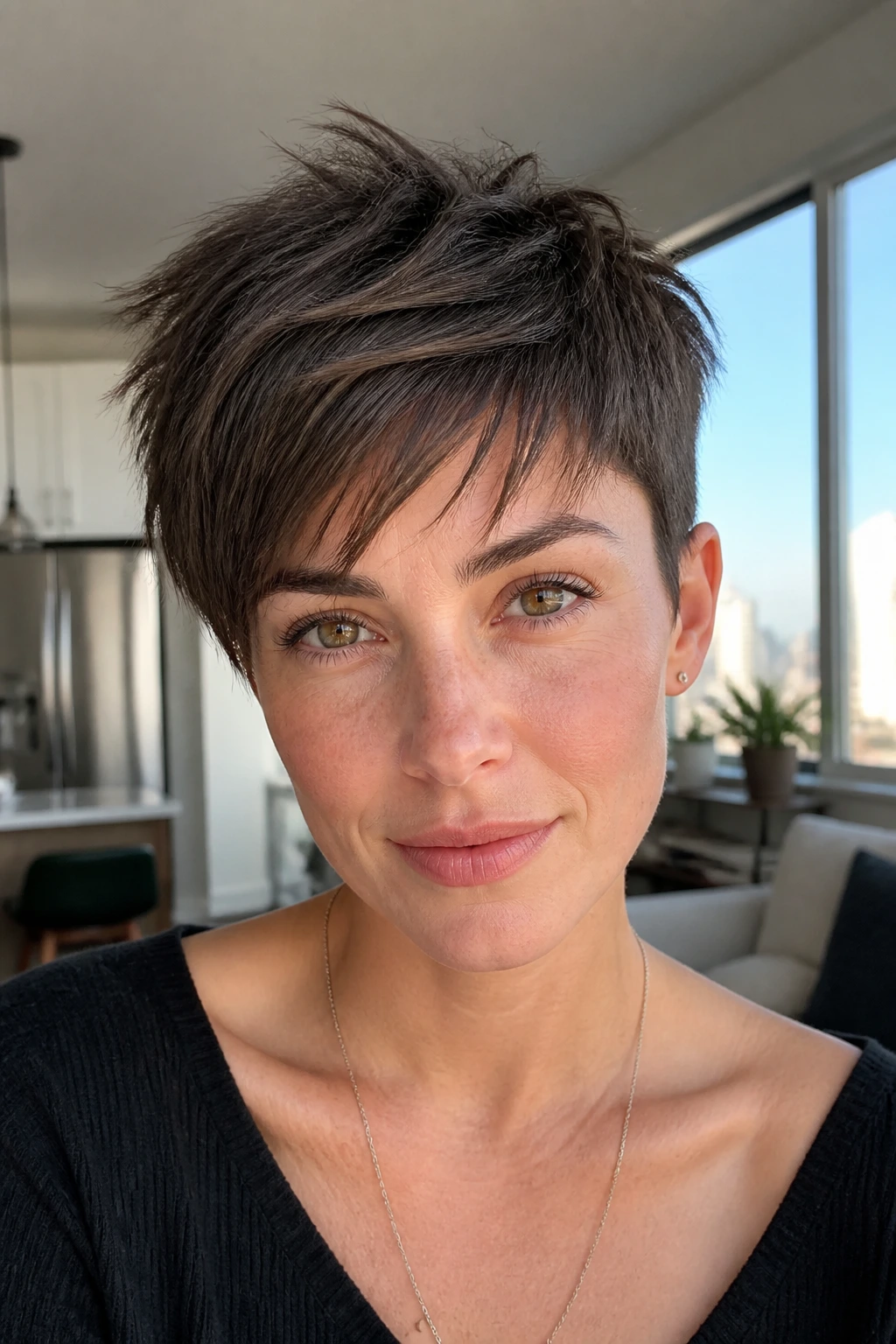
By keeping the top section of a pixie haircut longer, you have more hair to play with, which allows for more dramatic, choppy layers. This style is incredibly versatile, as you can spike it up, sweep it to the side, or let it fall messily over your forehead.
Balancing the Sides
Keep the sides and back tight. The contrast between the short, precise sides and the long, unruly top is what makes this cut so striking and manageable.
Styling Versatility
- Use a wax-based product for a sleek, defined look.
- Use a volume powder for a disheveled, high-fashion look.
- This style allows you to change your personality daily depending on how you style the top.
17. Choppy Layers on Textured Length
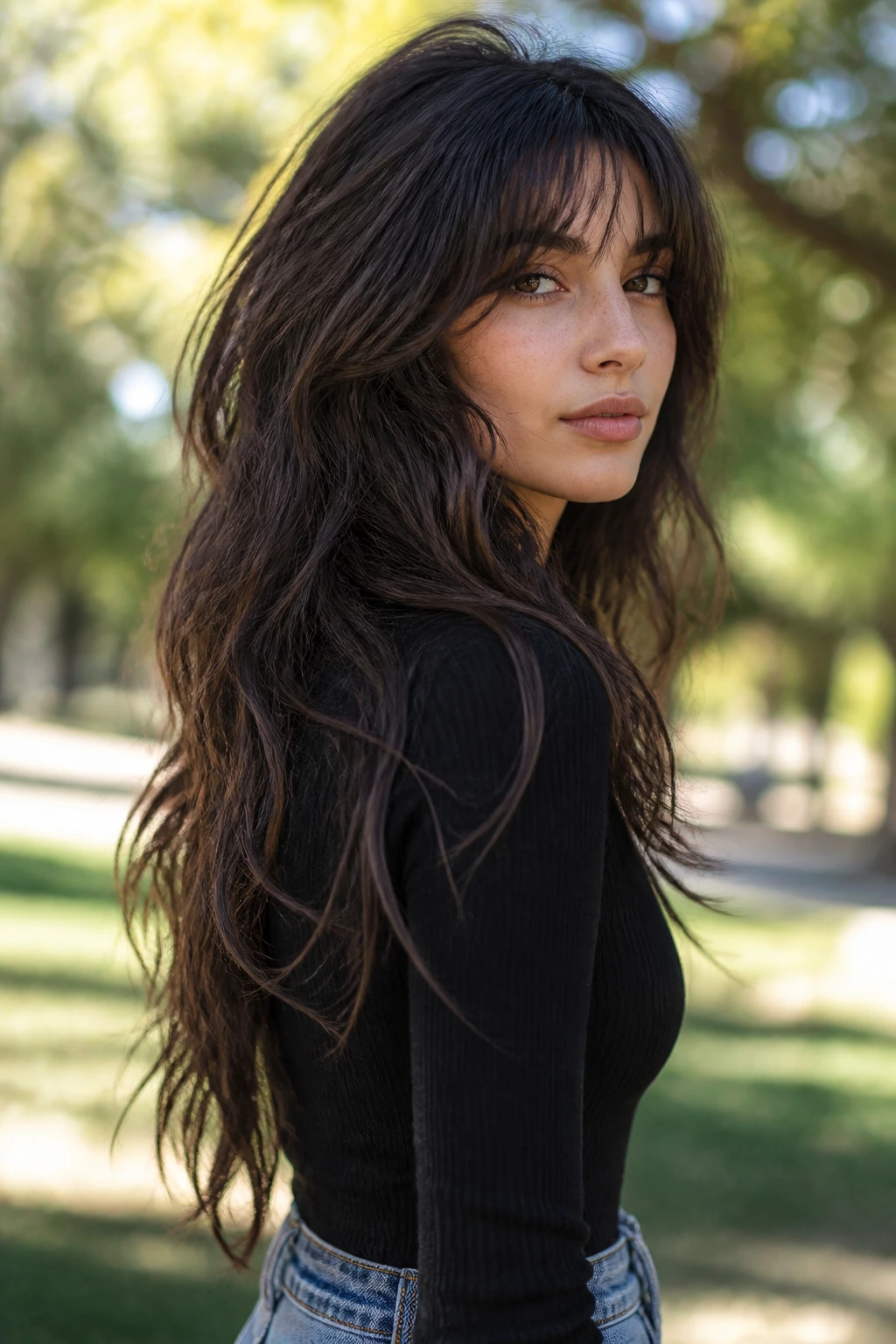
If you have natural texture, don’t try to fight it. Choppy layers on a long, textured cut emphasize your natural hair pattern. The layers prevent the hair from becoming a massive, singular wave, breaking it up into smaller, more defined chunks.
Working With Your Pattern
If your hair is wavy, the layers will help the waves form more easily. If it is straight, the layers will give you the freedom to create waves that last throughout the day because the hair isn’t weighed down.
The End Result
You get that “I just woke up like this” look that is actually the result of a very precise, structural cut.
18. The Graduated Shag
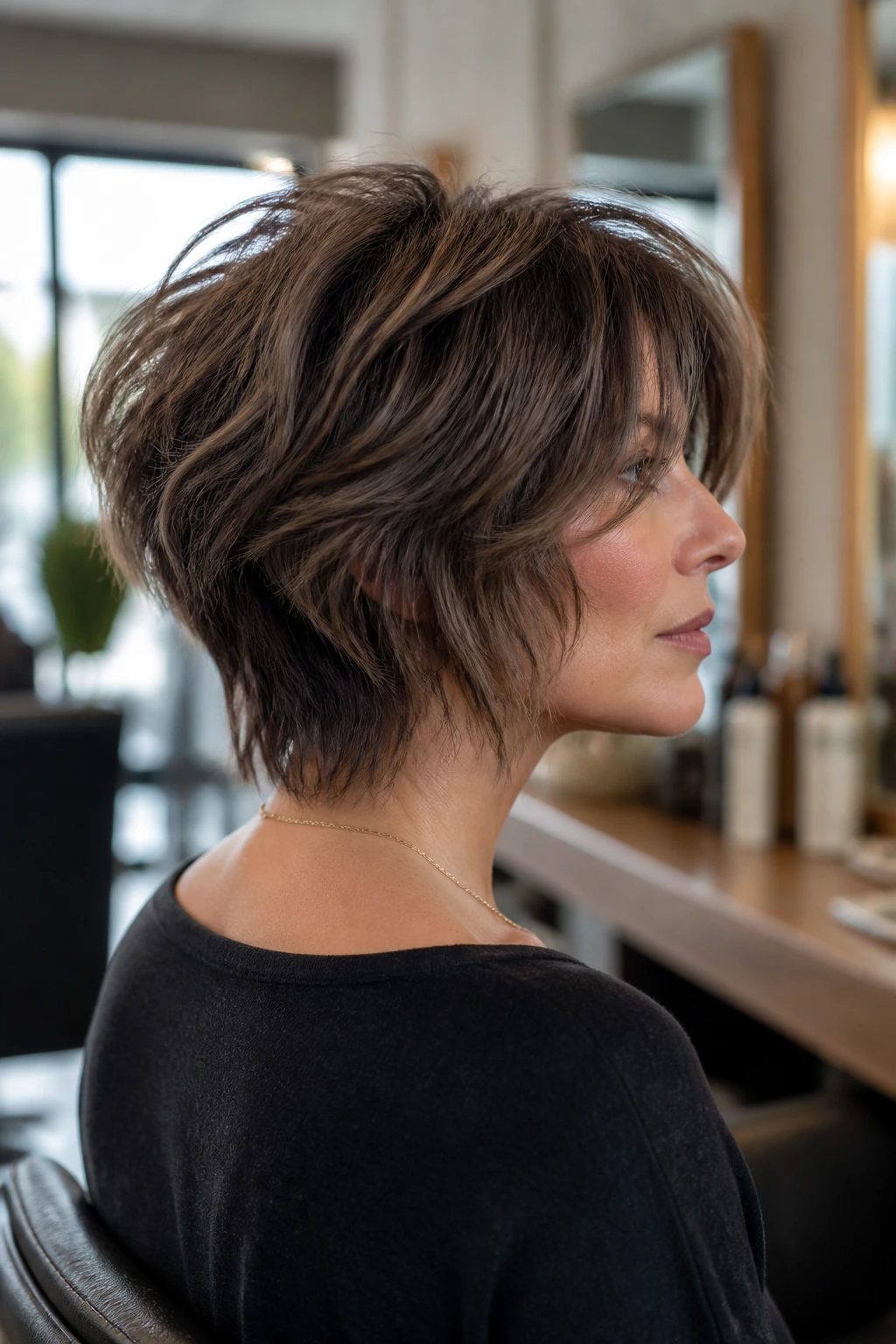
A graduated shag combines the short-to-long structure of a stack with the heavy layering of a shag. It is a dense-hair powerhouse, effectively removing weight from the back and the interior of the hair while keeping the front length around the face.
Structuring the Cut
The stylist creates the “graduation” in the back to handle the nape area and uses the “shag” technique to texturize the sides and crown. It creates a very round, healthy-looking shape that doesn’t drag the face down.
Final Thoughts
Choosing the right cut for thick hair is about honesty with your stylist. Bring in photos, but also be realistic about your morning routine. If you aren’t willing to spend twenty minutes with a curling iron, opt for a cut that works with your natural texture rather than against it. Thick hair is a luxury—once you learn how to distribute the weight, it becomes the most versatile asset in your beauty arsenal.