

Pin-straight hair has a reputation for being low-maintenance, but anyone who actually lives with it knows that is only half the story. While it might not require the intensive detangling or heavy moisture routines of curly textures, straight hair presents its own unique set of challenges. It is heavy. It can easily look flat, limp, or lifeless if the cut does not offer the right structural support.
More than any other hair texture, straight hair shows every single line. There are no curls or waves to hide a shaky scissor stroke or an uneven layer. A blunt edge must be perfectly level, and layers must blend without any visible steps. If a stylist pulls too hard on a section of wet hair near the ear, that hair will bounce back shorter once dry, leaving a noticeable gap. Straight hair requires absolute precision.
The key to a great haircut for straight hair lies in managing weight and movement. Without some form of internal texture or deliberate styling lines, straight hair simply hangs like a heavy curtain. The right cut can create the illusion of thickness for fine hair, or remove bulk and add swing to coarse, thick hair. It is all about how the blade meets the hair fiber.
Finding a cut that works with your specific hair density and daily routine makes all the difference. Some styles rely on sharp, geometric angles that frame the face, while others use hidden layering techniques to encourage natural movement without losing that smooth, glassy finish. Let’s look at the best cuts that bring out the natural beauty of straight hair.
Why Straight Hair Needs Specialized Cutting Techniques
The way light reflects off straight hair is different from any other texture. Because the cuticle lies flat, straight hair acts like a mirror, bouncing light off a smooth, unbroken surface. This glassy sheen is beautiful, but it also highlights the exact structure of the haircut. Any bulkiness, uneven weight distribution, or choppy layers will be instantly visible under normal lighting.
To prevent this, stylists must use specific techniques designed for the physics of straight hair. One of the most effective approaches is dry-cutting. When straight hair is cut wet, it stretches. Once it dries, the natural growth patterns, cowlicks, and head shape cause the hair to sit differently. Cutting the hair while dry allows the stylist to see exactly how the hair falls in real time, making it much easier to create seamless blends and soft, natural perimeters.
Another critical technique is point-cutting. Instead of cutting straight across a section of hair, the stylist holds the shears at an angle and snips into the ends. This removes weight without removing length, creating a soft, feathered edge rather than a harsh, solid block. For straight hair, point-cutting is what makes layers look integrated rather than like a series of distinct steps.
Choosing Between Scissors and Razors for Straight Hair
The choice of tool determines how the ends of your hair will behave. Traditional shears slice through the hair shaft cleanly, leaving a flat, blunt tip. This is the ideal choice if you want to build thickness at the perimeter of your hair or maintain a crisp, clean edge. Blunt shear cuts make fine, straight hair look much fuller because they preserve every ounce of weight at the bottom.
Razors, on the other hand, slice the hair at an angle, creating a tapered, pointed tip. This tool is excellent for thick, dense straight hair that needs a lot of movement and bulk removal. A razor cut can give straight hair a lived-in, textured feel that shears sometimes struggle to replicate.
However, razors must be used with caution. If your hair is fine, highly porous, or prone to split ends, a razor can fray the cuticle and lead to a fuzzy, dry appearance. A skilled stylist will always evaluate the health and density of your hair before deciding which tool to pick up.
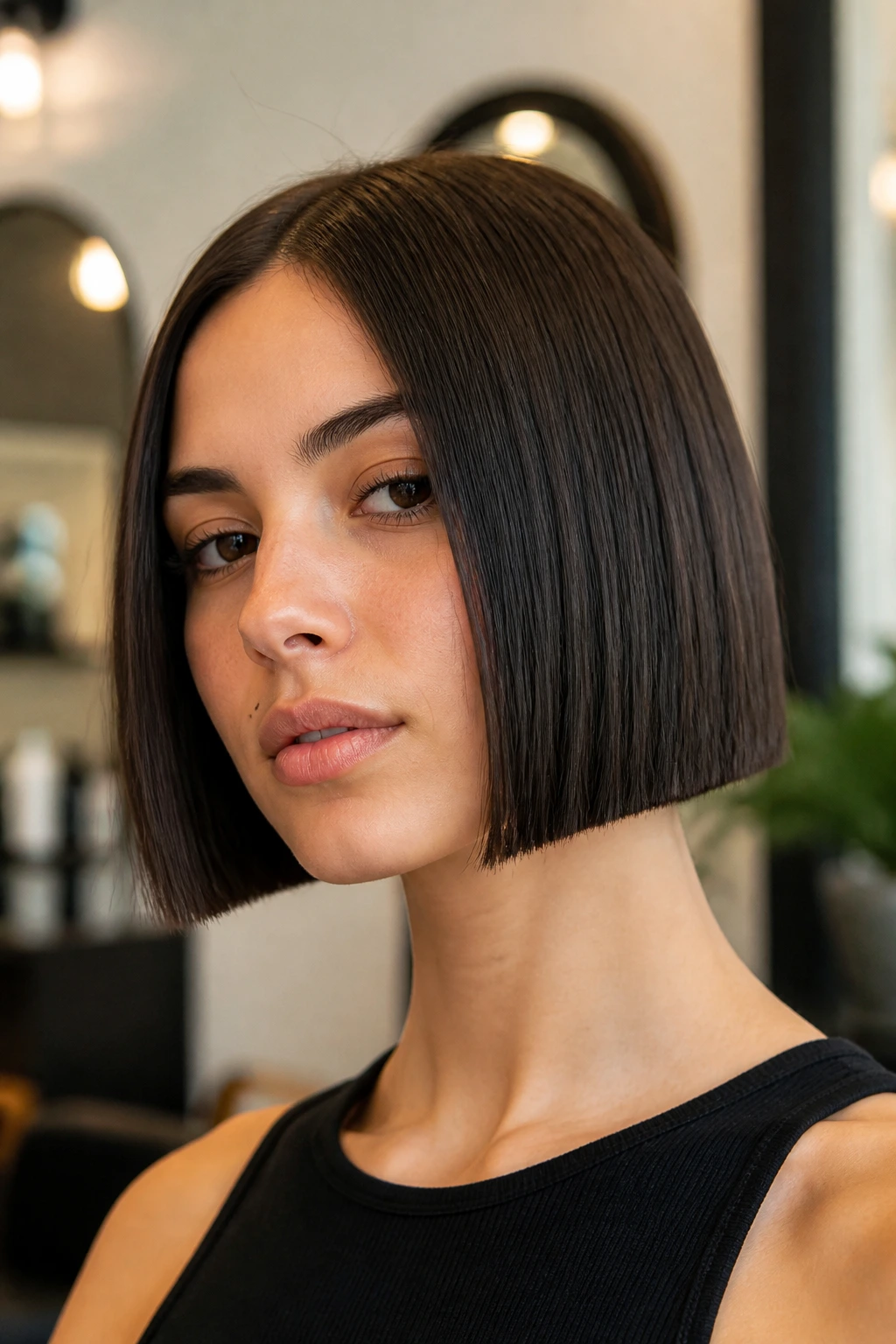
1. Classic Blunt Paper-Cut Bob
The classic blunt bob cut to a single, precise length is one of the most striking options for straight hair. There are no layers to diffuse the weight, meaning the hair falls in a solid, heavy sheet that frames the jawline. This cut relies on absolute geometric perfection to achieve its signature sharp appearance.
The Geometry of the Weight Line
To get this cut right, the stylist must cut the hair with minimal tension. If the hair is pulled too tight during the cutting process, it will shrink back unevenly once released, ruining the clean line. The back of the hair is often cut slightly shorter than the front to prevent it from bunching up on the back of the neck.
Quick Hair Facts
- Best density: Fine to medium straight hair
- Maintenance level: High (requires trims every four to six weeks)
- Styling time: Low (dries quickly and flat-irons easily)
- Key feature: Creates the optical illusion of much thicker ends
Pro tip: Ask your stylist to slightly bevel the interior hair underneath the top section to encourage the ends to curl inward naturally.
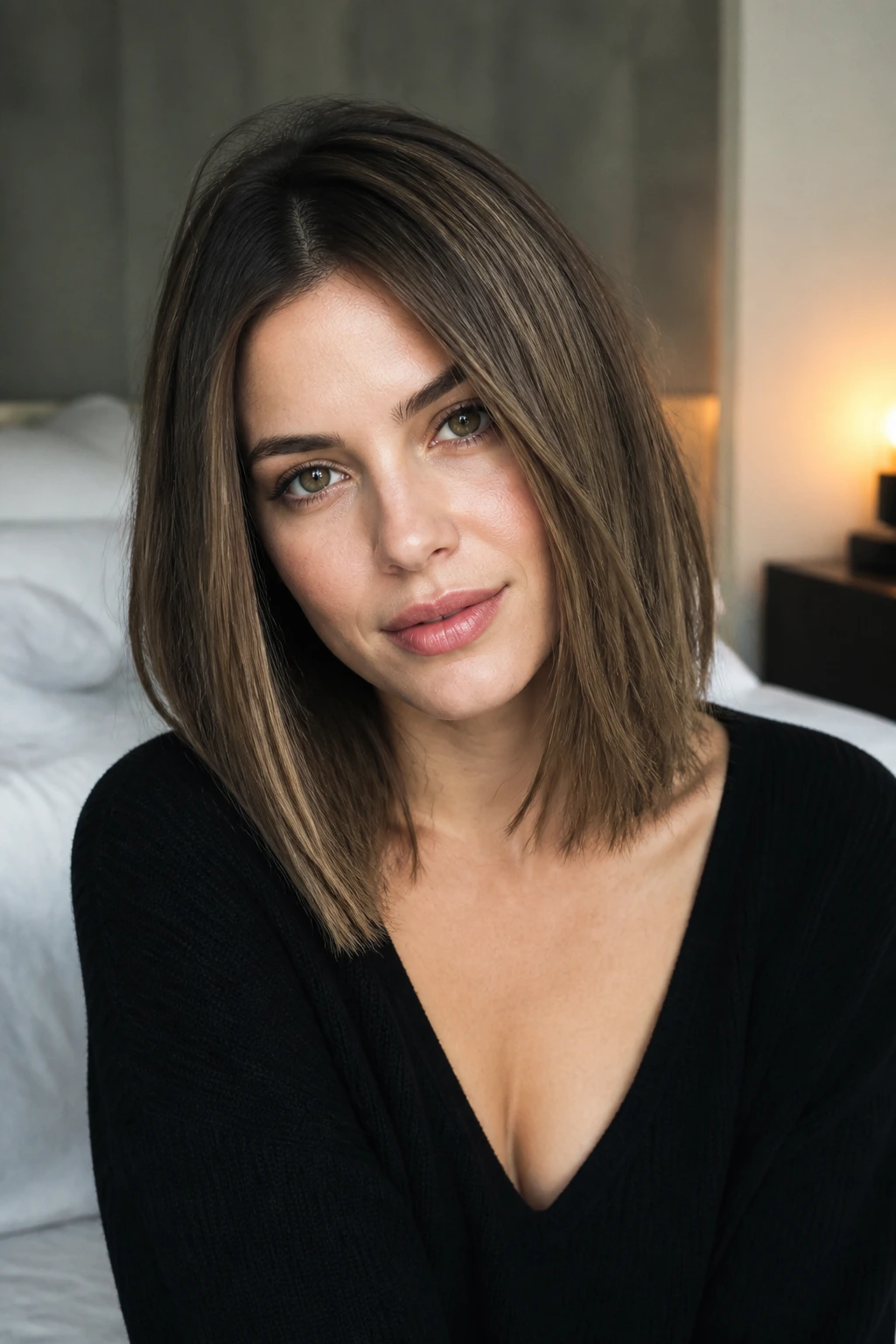
2. Softly Shattered Lob
If you love the clean look of a bob but want more movement and a bit more length, a shattered lob is an excellent alternative. The length typically sits between the middle of the neck and the collarbone. Instead of a hard, blunt perimeter, the bottom inch of the hair is point-cut or razor-cut to create a soft, piecey texture.
This subtle texturizing prevents the lob from looking like a heavy triangle. It allows the ends to swing freely and react to your natural movements. It is a fantastic style for anyone who wants a low-effort look that still feels intentional. The shattered ends break up the solid weight line, making it much easier to style without a flat iron.
Because the perimeter is soft, you do not have to worry about the hair flipping out when it hits your shoulders. The textured tips allow the hair to skim the collarbone gracefully, blending any natural flips into the design of the cut itself.
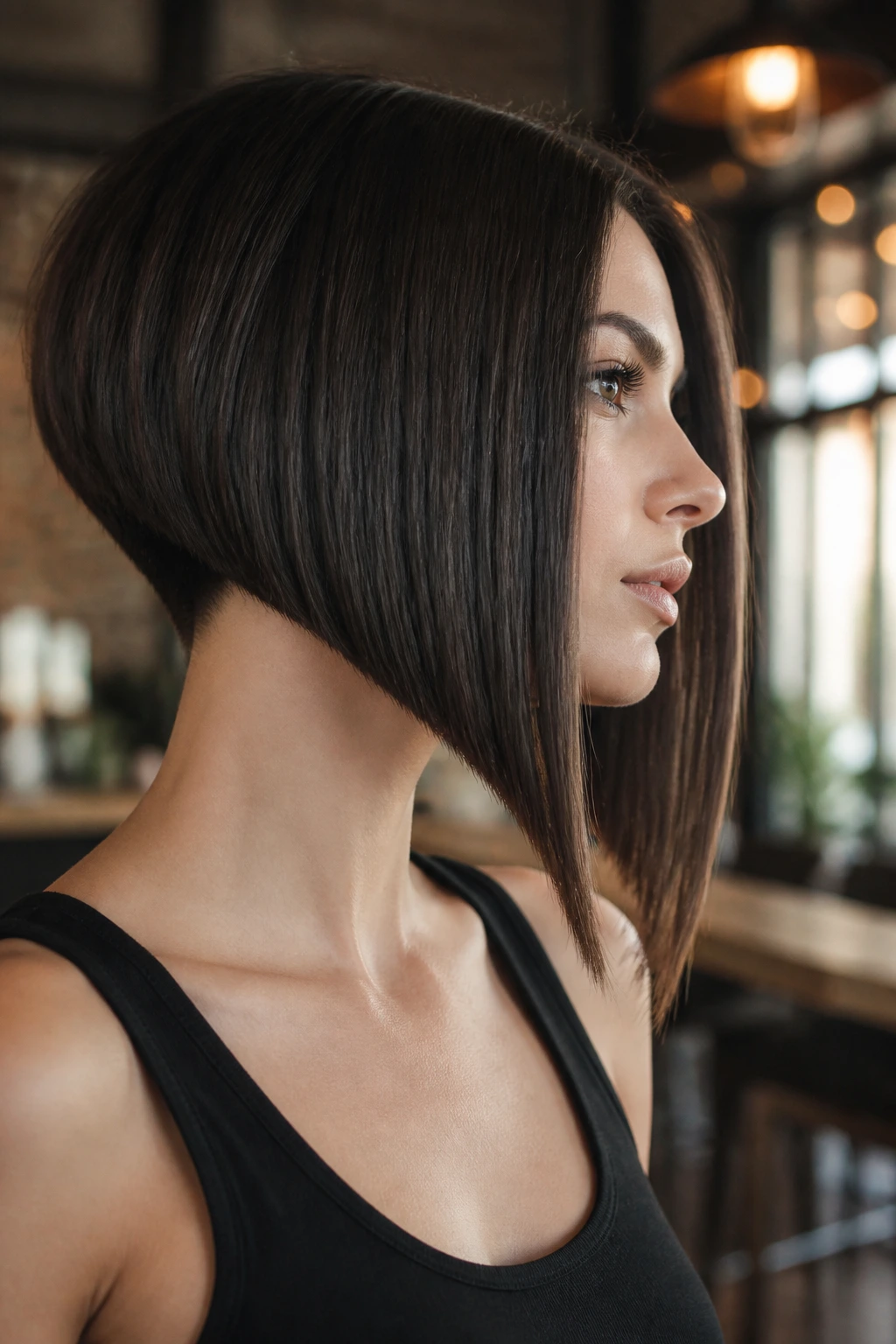
3. The Razor-Sharp A-Line Angle
This cut is shorter in the back and gradually gets longer toward the front, creating a dramatic, sloping profile. The transition from back to front should be smooth and continuous, without any sudden jumps in length. On straight hair, this angle is incredibly sharp and eye-catching.
Why the Steep Angle Works
The A-line angle works beautifully on straight hair because the texture highlights the slope. The shorter hair in the back supports the longer pieces in the front, pushing them forward to hug the cheekbones and jawline. This structural support prevents the hair from falling flat against the sides of your face.
How to Style and Maintain the Angle
To keep this cut looking its best, you will need a flat iron and a lightweight heat protectant. Run the iron straight down, following the angle of the cut, and turn it slightly inward at the very ends. Because the back of this cut is quite short, you will need to visit the salon every five weeks to keep the nape clean and the line sharp.
4. Heavily Layered 90s Shag
Many people assume a shag cut only works for wavy or curly hair, but it can look incredibly cool on straight hair when cut with the right proportions. This style features a lot of short, choppy layers throughout the crown, contrasting with longer, wispy layers at the bottom.
Imagine your flat hair suddenly having height, texture, and volume at the crown. That is exactly what a well-executed shag does. By removing the heavy weight from the top of your head, the shorter layers are allowed to lift, creating a piecey, lived-in texture that looks effortless.
Styling the Shag Texture
- Apply a volumizing mist to the roots of damp hair.
- Blow-dry with your head upside down to encourage maximum lift.
- Use a dry texturizing spray on the mid-lengths and ends to separate the layers.
- Avoid heavy creams or pomades, which will weigh down the short crown layers.
This cut is perfect for those who want to move away from the sleek, polished look of traditional straight hair and embrace a more textured, rock-and-roll aesthetic.
5. The Italian Bob with Beveled Ends
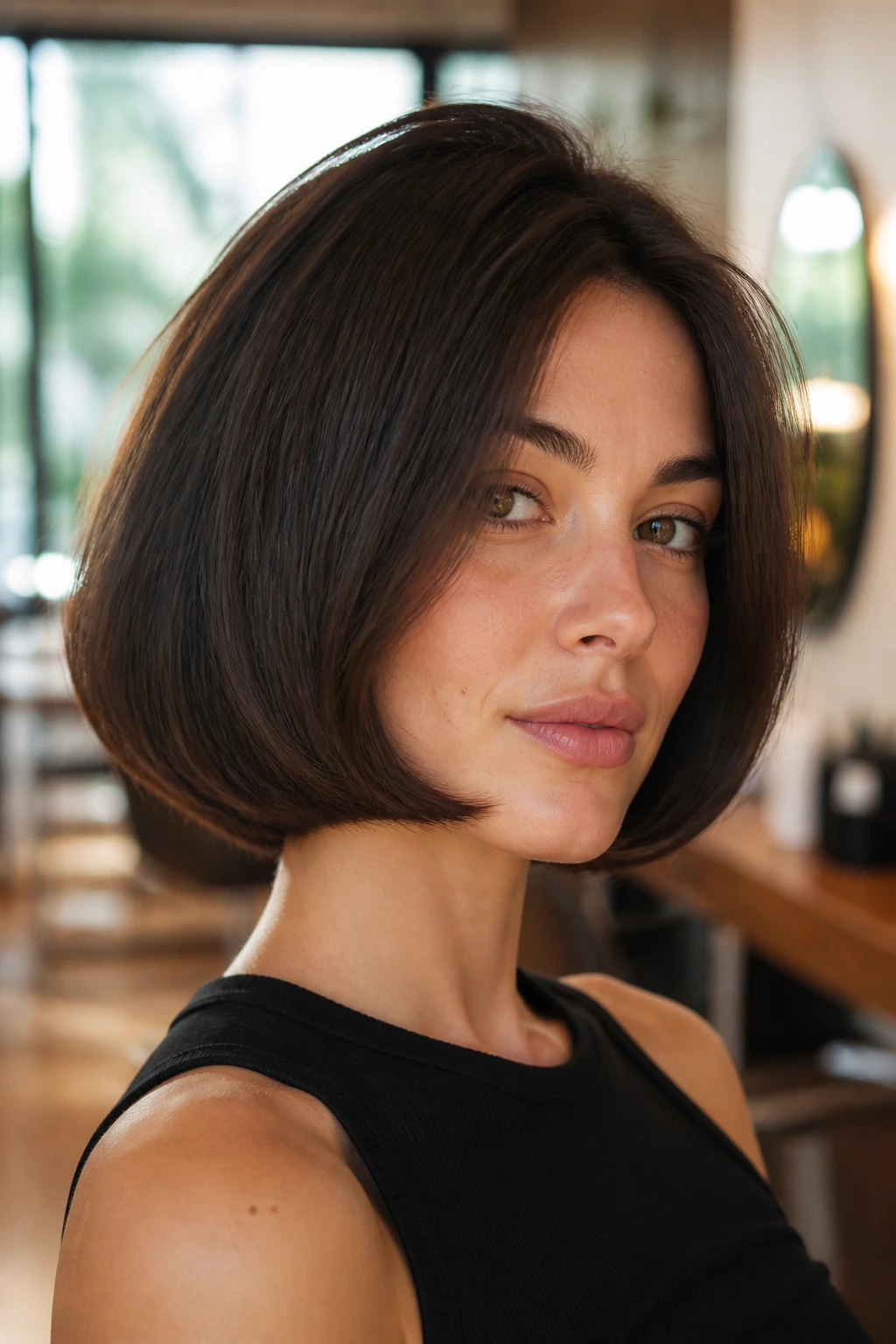
The Italian bob is all about volume, bounce, and a slightly rounded shape. Unlike its French counterpart, which sits closer to the cheekbones, the Italian bob is cut slightly longer, usually hitting just below the chin. It features subtle, long layers that are styled to curve inward, creating a soft, full-bodied look.
The secret to this cut is the heavy, luxurious weight at the perimeter. The corners are slightly rounded off to prevent any harsh, boxy corners. This rounding gives the hair a beautiful, swinging movement whenever you turn your head.
To style this look, use a large round brush while blow-drying. Focus on pulling the hair up at the roots for volume, then roll the brush inward at the ends to create that classic, beveled curve. It is a timeless style that looks incredibly polished and healthy.
6. Internal Invisible Layers for Long Hair
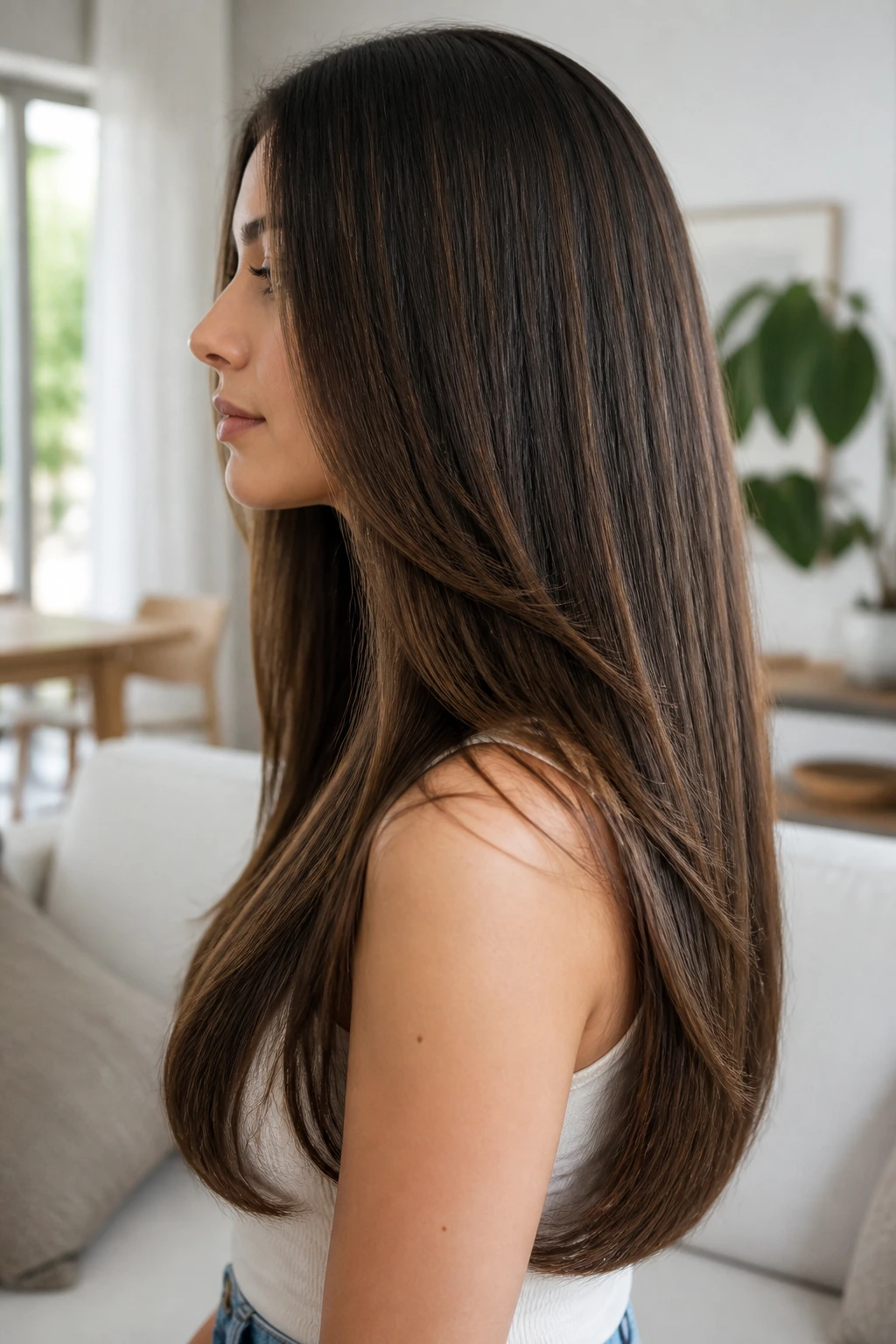
If you love the look of long, sleek hair but hate how heavy and flat it feels, internal layers are your solution. Also known as ghost layers, these are cut into the interior of your hair rather than on the surface. They are shorter pieces hidden beneath the top section of long, unbroken hair.
Traditional Layers vs. Internal Layers
Unlike traditional layers that sit on top and are highly visible, internal layers remain completely hidden. They serve a functional purpose: removing weight and creating pocket-like spaces within the hair. This allows the longer surface hair to slide over the shorter pieces, creating natural movement and body without sacrificing the look of a solid, single-length cut.
Who It Is Best For
This technique is ideal for anyone with thick, dense straight hair. It allows you to keep your long length while removing the bulky weight that pulls your hair flat at the roots. Your hair will feel lighter, dry faster, and have a natural bounce that is otherwise impossible to achieve with a standard blunt cut.
7. French Bob with Piecey Micro-Bangs

The French bob is a chic, jaw-length cut that oozes confidence. When paired with straight hair, it creates a striking, frame-like effect around the face. Adding piecey micro-bangs—which sit well above the eyebrows—takes this cut to a completely different level of style.
Framing the Cheekbones
This cut is designed to hit right at the jawline or slightly above it, drawing immediate attention to your cheekbones and jaw. The straight texture of the hair acts like a clean bracket around your face, highlighting your features with incredible clarity.
Quick Styling Tips
- Keep it piecey: Use a tiny amount of lightweight wax on the bangs to separate them.
- Blow-dry flat: Do not use a round brush on the bangs; blow-dry them straight down using a comb.
- Embrace the length: Let the back sit naturally against the nape of your neck.
Pro tip: If you have a natural cowlick at your hairline, micro-bangs might require daily styling with a flat iron to keep them lying flat.
8. Ghost Layers on Medium-Length Hair
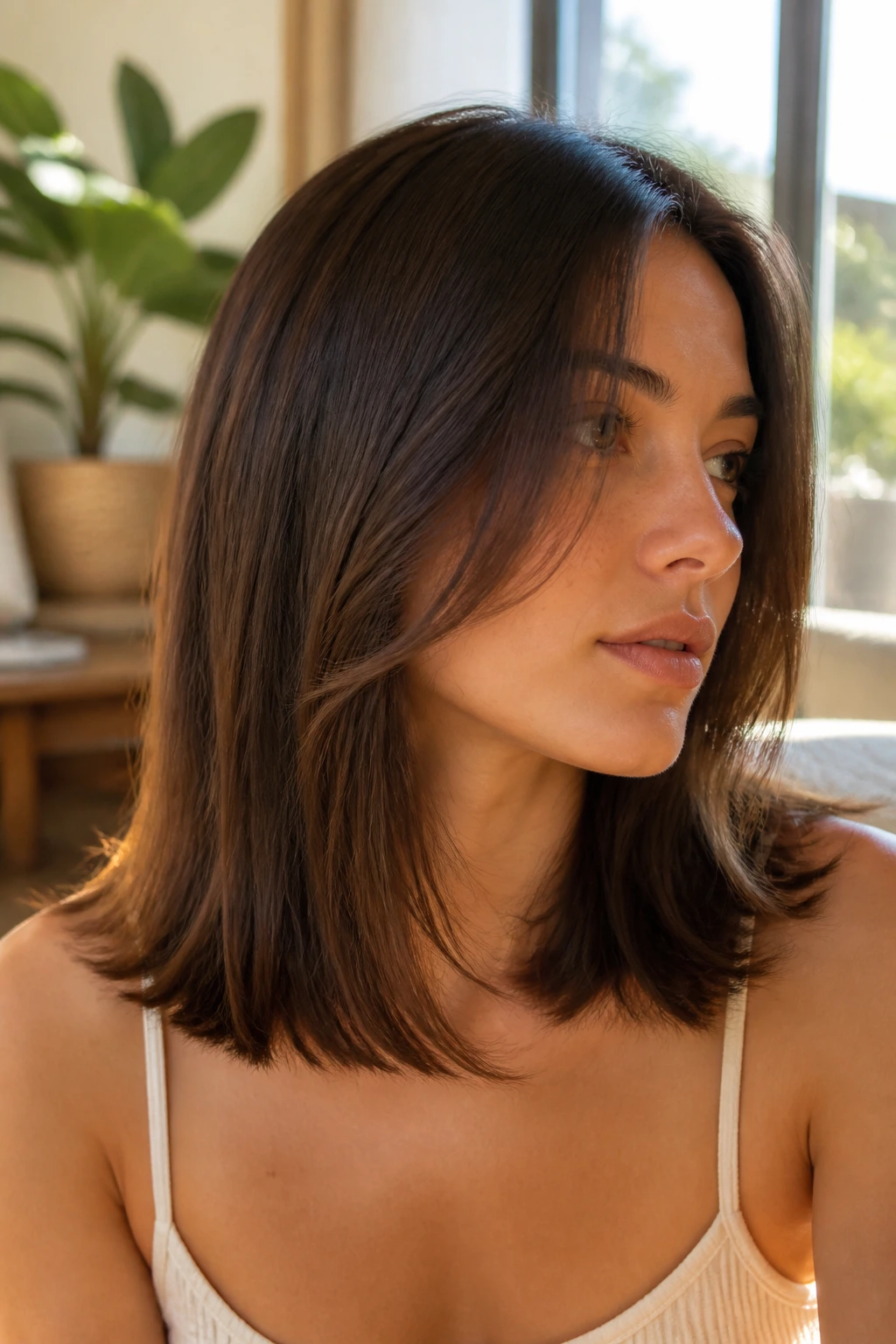
Ghost layering is a cutting method where the stylist creates very fine, slide-cut layers throughout the mid-lengths. The layers are so seamlessly blended that they are virtually invisible when the hair is still, hence the name “ghost.”
This technique is a total lifesaver for medium-length straight hair that tends to look flat. By cutting into the hair at an angle, the stylist removes just enough weight to let the hair breathe and move. When you walk, run, or toss your head, the hidden layers catch the air, giving your hair a beautiful, organic motion.
It is the perfect choice for anyone who wants the benefits of layers—volume, movement, and lightness—without actually seeing any distinct layered lines in their hair. It keeps the surface looking smooth and uniform while hiding all the hard work underneath.
9. Soft Curtain Bangs with Seamless Cascading Face-Framing
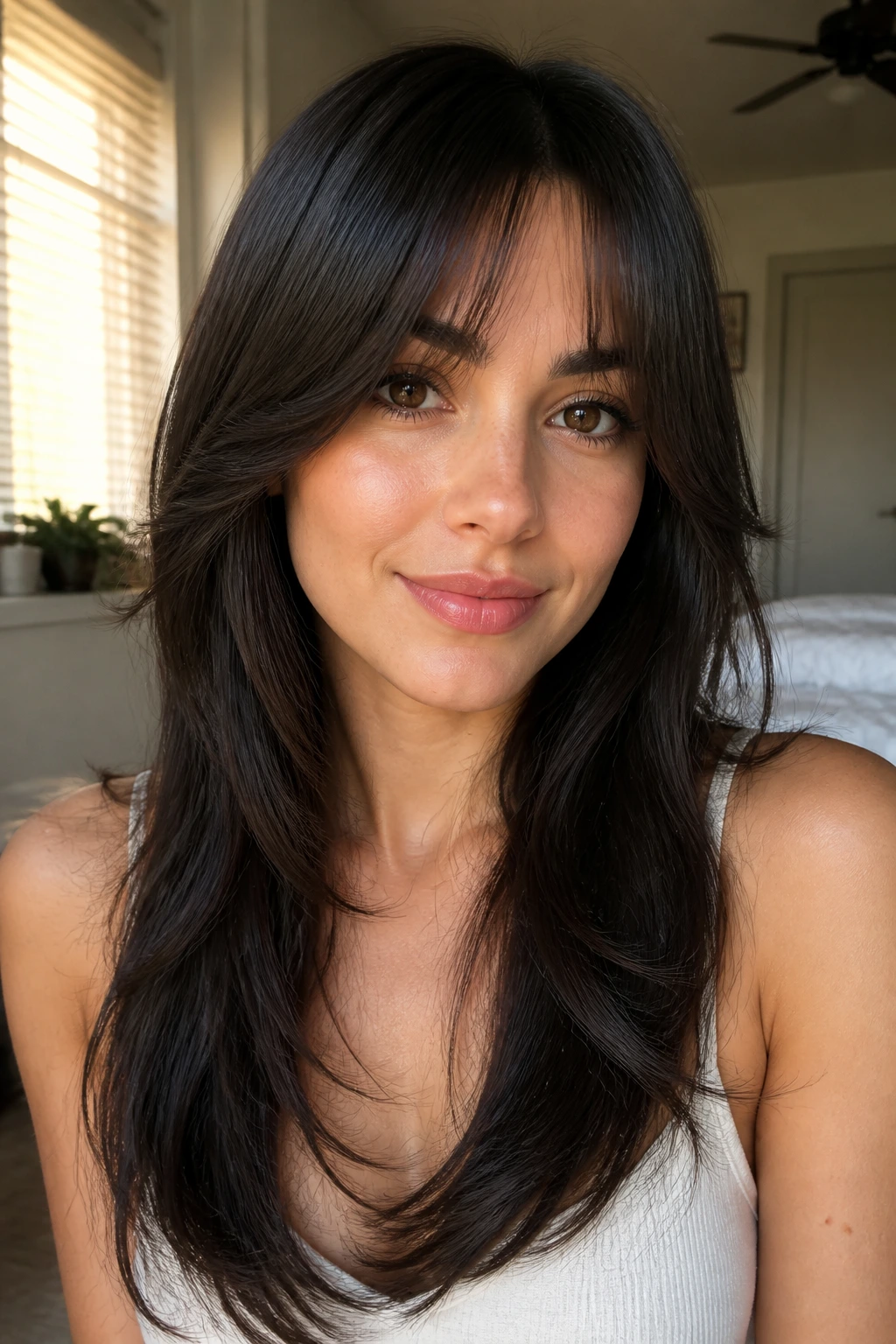
Curtain bangs are a fantastic way to break up the forehead line and add soft, flattering framing around the eyes and cheekbones. For straight hair, the key is to ensure the bangs sweep out gently to the sides rather than falling flat into your eyes.
Does It Work on Pin-Straight Hair?
Yes, but the cut must be precise. The bangs should be cut using a slide-cutting technique that blends them seamlessly into the longer side sections. This creates a cascading effect where the hair gradually increases in length as it moves away from the center of the face.
Styling the Sweep
To get that classic, curtain-like sweep, blow-dry the bangs forward over your face using a medium round brush. Once dry, sweep them back and away from your forehead. The slide-cut ends will naturally grab onto the longer side sections, holding the curtain shape in place throughout the day.
10. The Asymmetric Pixie Cut
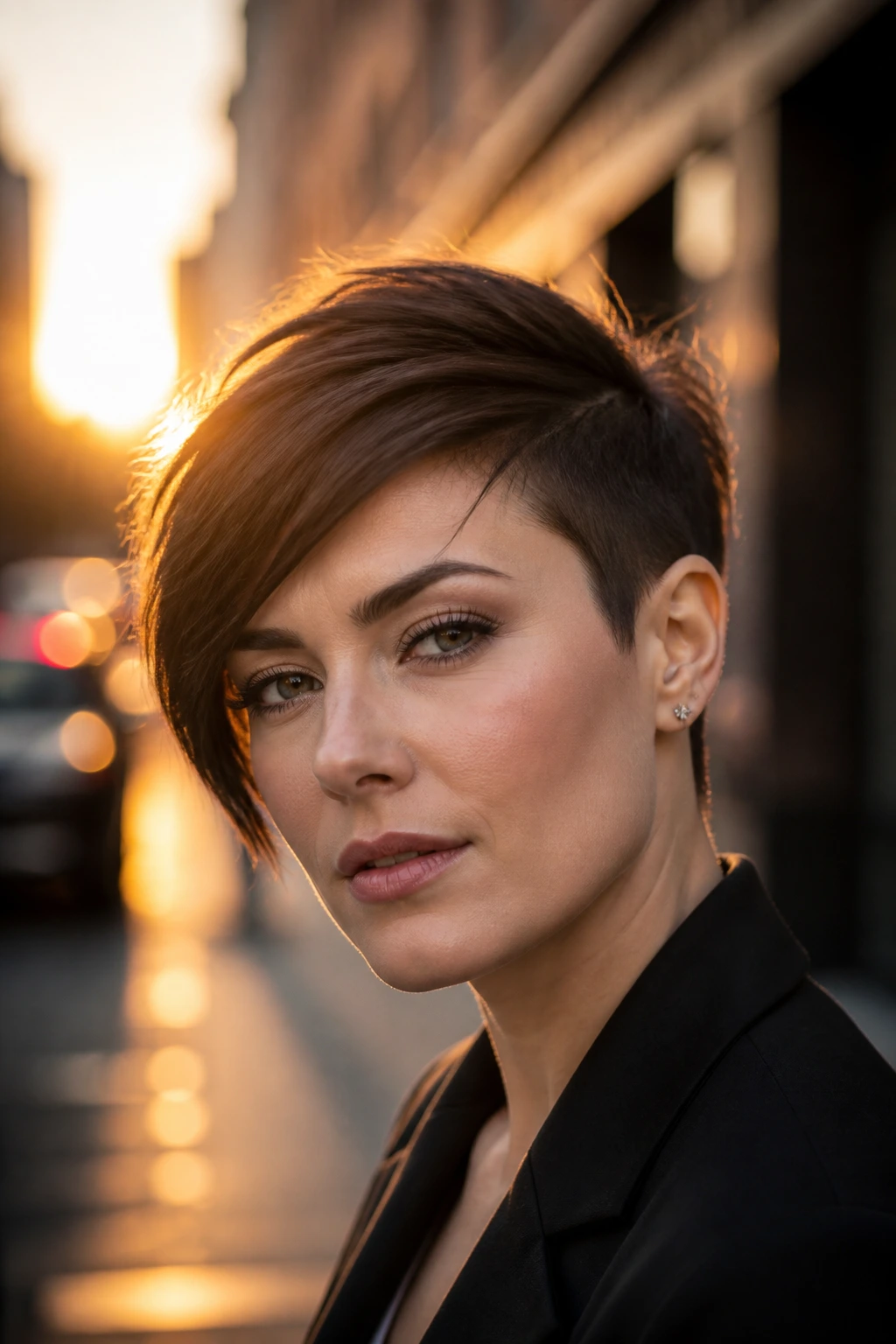
A pixie cut is a bold choice, but an asymmetric version is incredibly flattering on straight hair. This style features one side cut very short around the ear, while the other side is left longer, draped across the forehead in a dramatic sweep.
The asymmetry creates visual interest and movement that a standard, symmetrical pixie sometimes lacks on straight hair. The longer side can be styled sleek and flat, or tucked behind the ear for a different look.
The Mechanics of the Asymmetric Cut
- The Short Side: Cut close to the head to emphasize the ear and jawline.
- The Long Side: Kept heavy and long, running from the crown down toward the opposite cheekbone.
- The Nape: Tapered closely to the neck for a clean, sharp finish.
This cut is incredibly low-maintenance for daily styling, requiring little more than a quick blow-dry and a dab of styling cream to define the ends.
11. Precision Pixie with Feathery Side-Swept Bangs
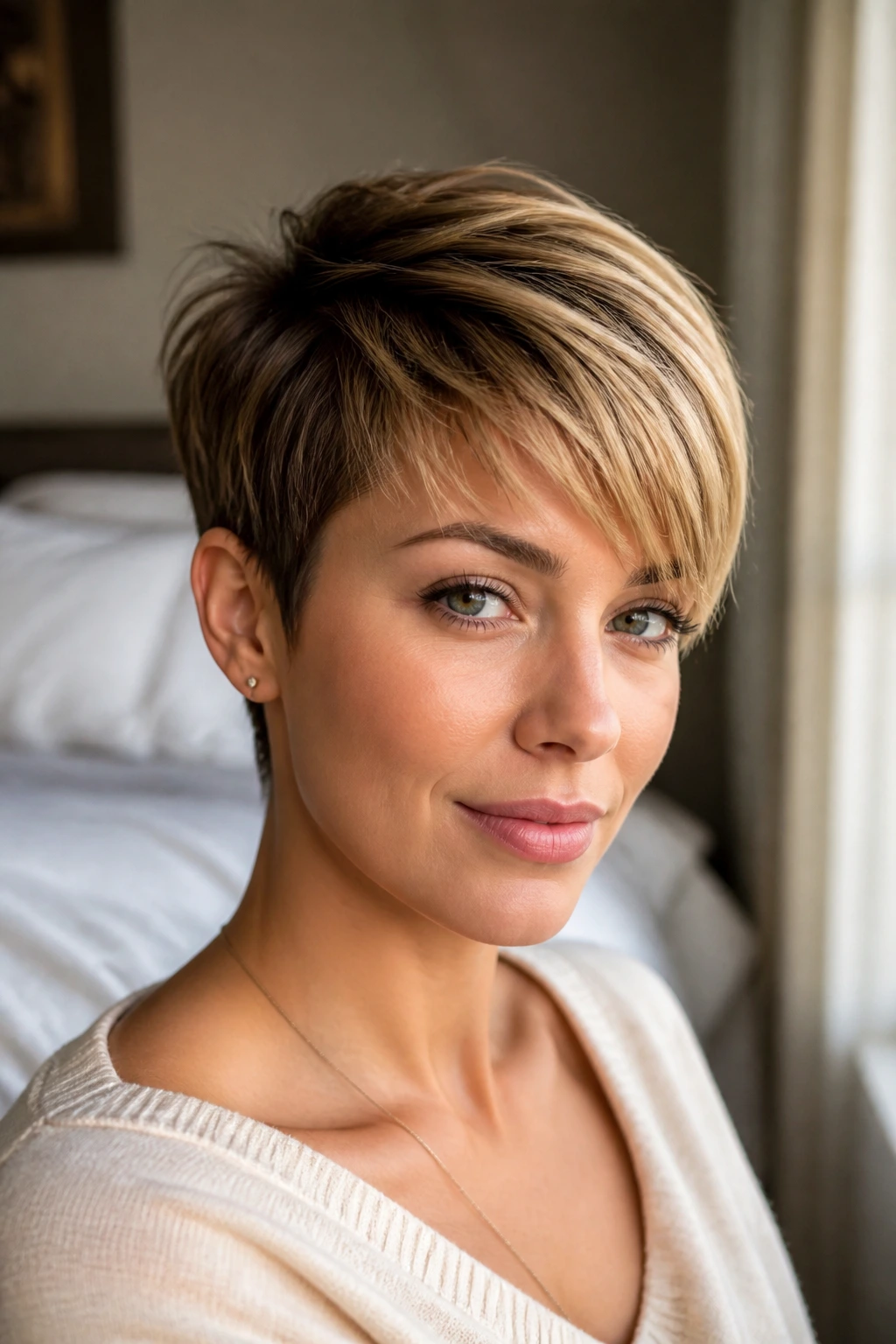
For those who want a classic, elegant short cut, the precision pixie is hard to beat. This style features short, clean lines around the ears and nape, with slightly longer, feathery layers on top that are swept to one side.
The straight texture of the hair allows the precision of this cut to shine. The layers are point-cut to ensure they lie flat against each other, creating a smooth, cap-like effect that conforms beautifully to the shape of your head.
To style, simply apply a small amount of smoothing serum to damp hair and blow-dry it down and forward, following the natural growth pattern. Use your fingers to sweep the top section to your preferred side. It is a clean, timeless look that requires minimal effort to look put-together.
12. Sleek V-Shape Back with Tapered Ends
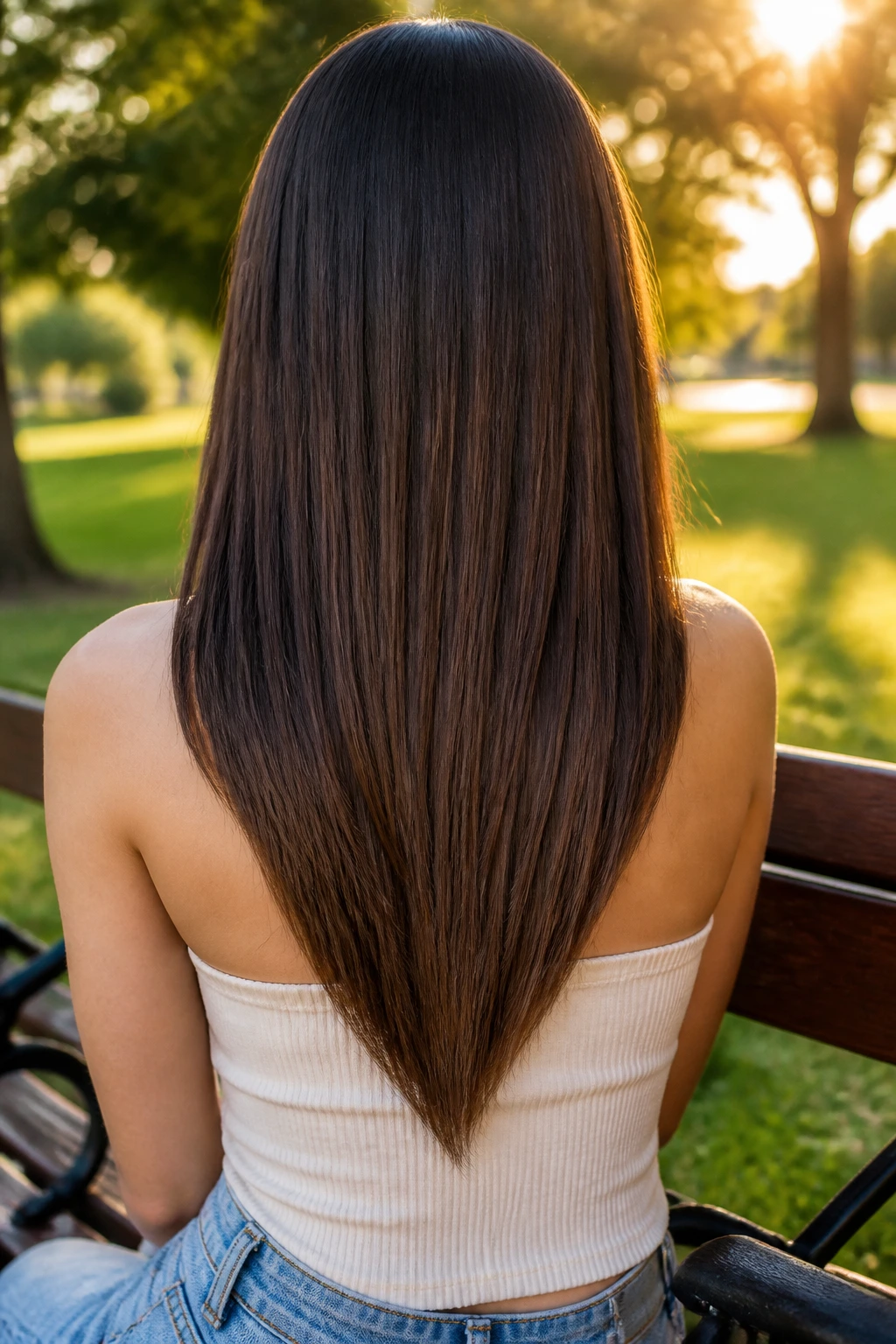
If you have very long, thick straight hair, a blunt perimeter can sometimes feel incredibly heavy and look like a solid wall from behind. A V-shape cut is an excellent way to add shape, lightness, and interest to long hair.
The V-Shape vs. the U-Shape
While a U-shape cut features a rounded, gentle curve across the back, a V-shape cut tapers down to a distinct point in the center. The sides are cut significantly shorter, angling down sharply toward the middle. This removes a massive amount of weight from the sides, making the hair feel lighter and easier to manage.
This cut looks spectacular from behind when styled pin-straight. The sharp angles of the V highlight the length and sleekness of your hair, creating a clean, dramatic silhouette that moves beautifully as you walk.
13. U-Cut with Soft Textured Perimeter
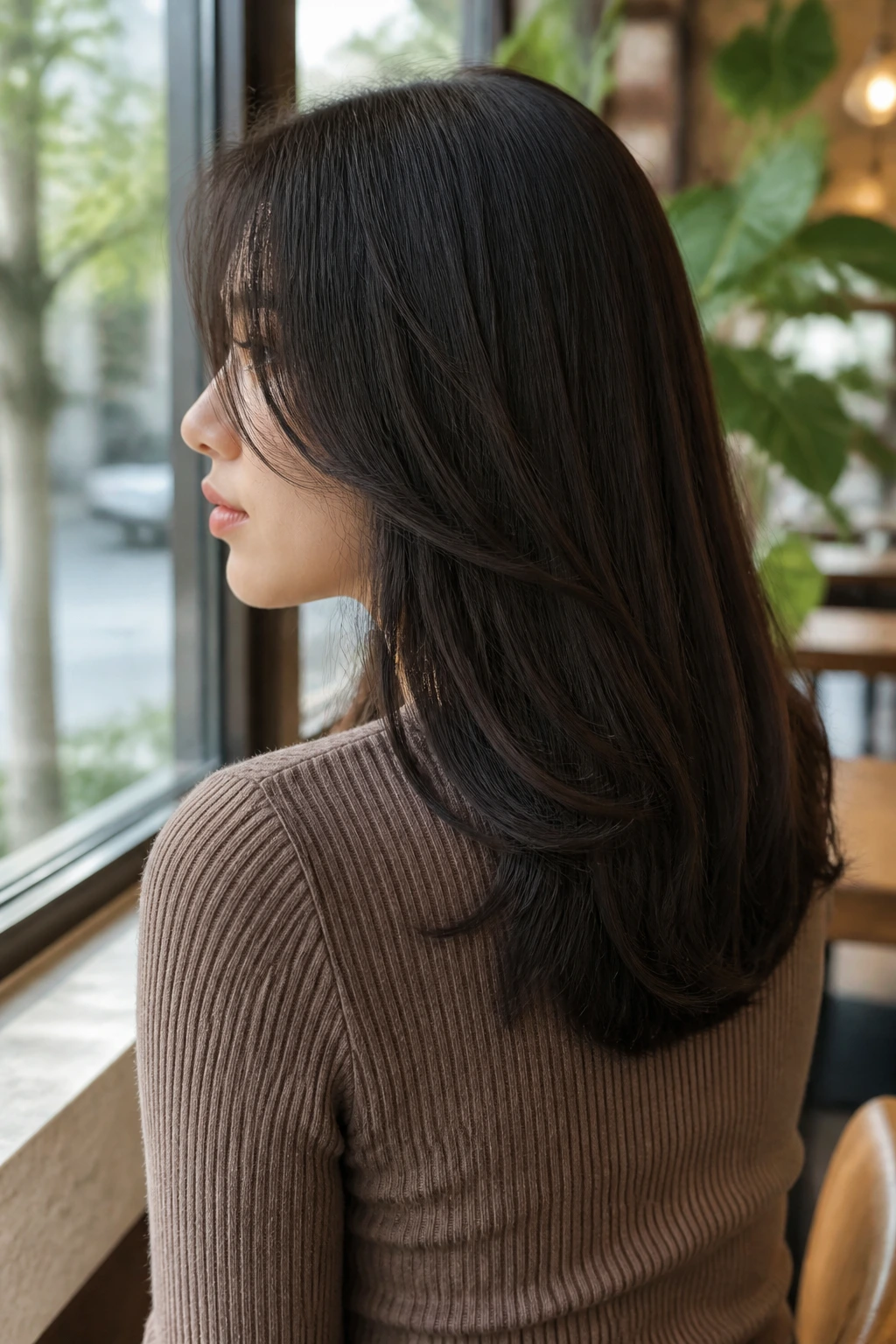
For a softer, more classic look, the U-cut is a fantastic alternative to the sharp V-shape. This cut features a gentle, rounded perimeter that curves upward at the sides, creating a flattering frame when the hair is pulled forward over the shoulders.
Distributing the Weight
The U-shape is excellent for medium to thick hair because it distributes the weight evenly across the back. It prevents the hair from looking bottom-heavy while still preserving enough density at the ends to keep them looking healthy and full.
Quick Styling Tips
- Round brush the ends: Curl the brush slightly inward at the back to emphasize the rounded U-shape.
- Use a shine spray: Spritz a lightweight shine spray over the back to highlight the smooth curve.
- Keep it healthy: Get regular trims to prevent the delicate sides from becoming wispy or split.
Pro tip: If you have fine hair, keep the curve of the U very shallow to avoid losing too much thickness at the front corners.
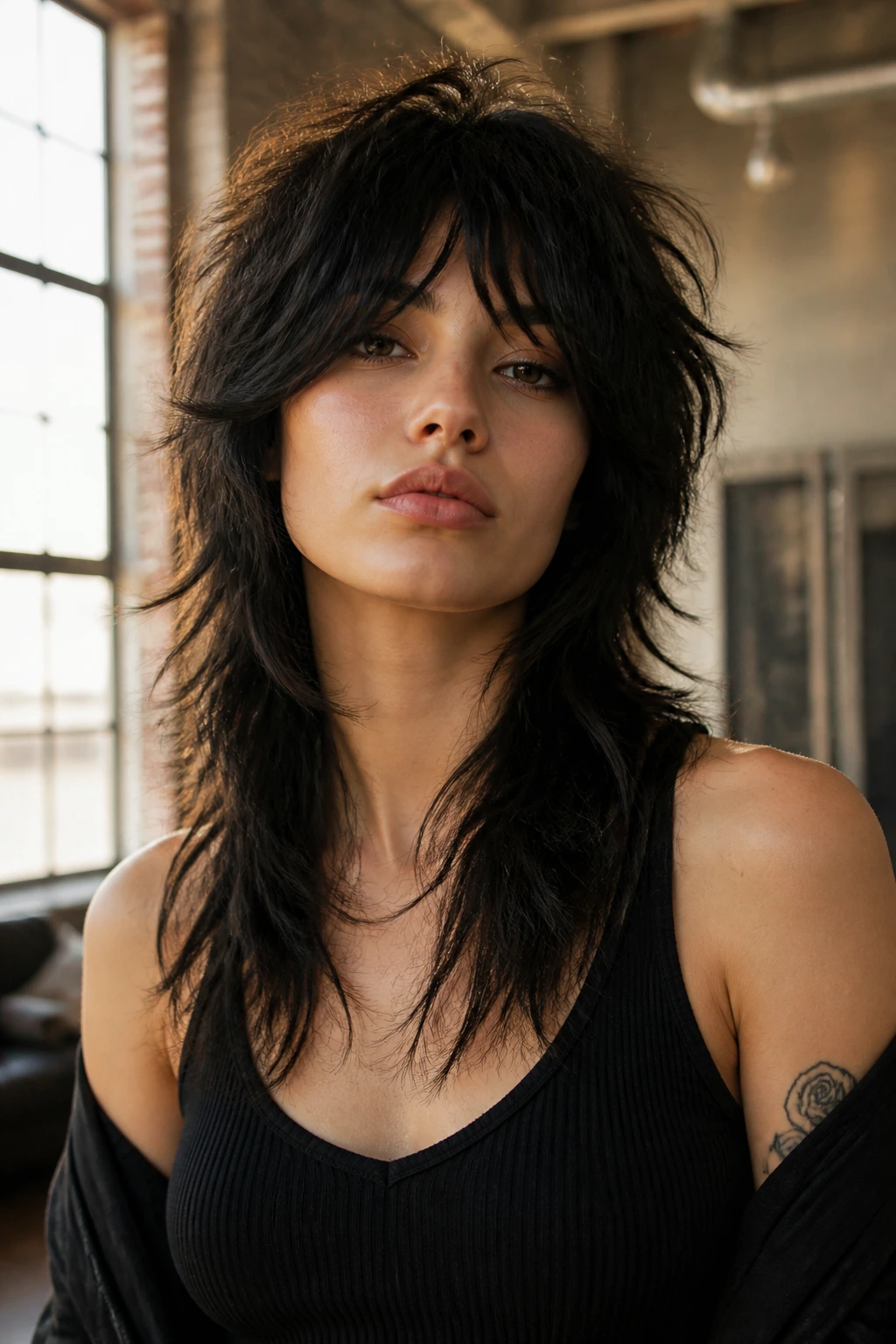
14. The Wispy Wolf Cut for Fine Straight Hair
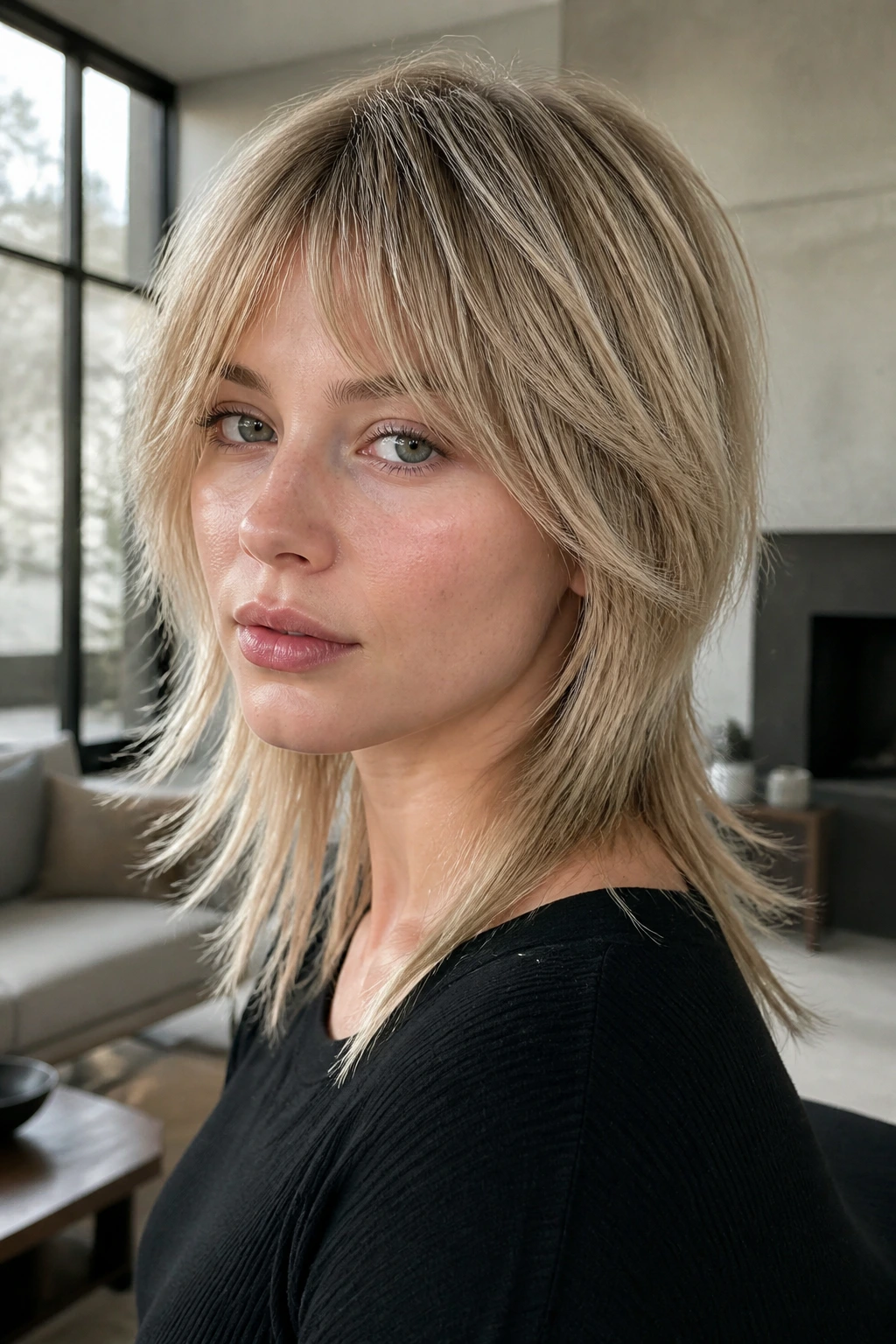
The wolf cut is a wild, textured hybrid of the shag and the mullet. It features heavy layers at the top of the head that taper down to long, wispy ends. While it is often styled with waves, it can look incredibly modern and edgy on straight hair.
For fine, straight hair, the wolf cut is all about creating volume where it usually doesn’t exist. The short crown layers build height, while the wispy ends add movement at the neck and shoulders. It is a fantastic option if you want a cut that has a lot of personality and texture.
Because straight hair lies flat, the layers of a wolf cut will sit in distinct, visible tiers. This gives the cut an almost architectural look that is very stylish. Use a dry wax or fiber paste to pinch the ends of the layers, defining the piecey texture.
15. Blunt Collarbone-Length Clavicle Cut
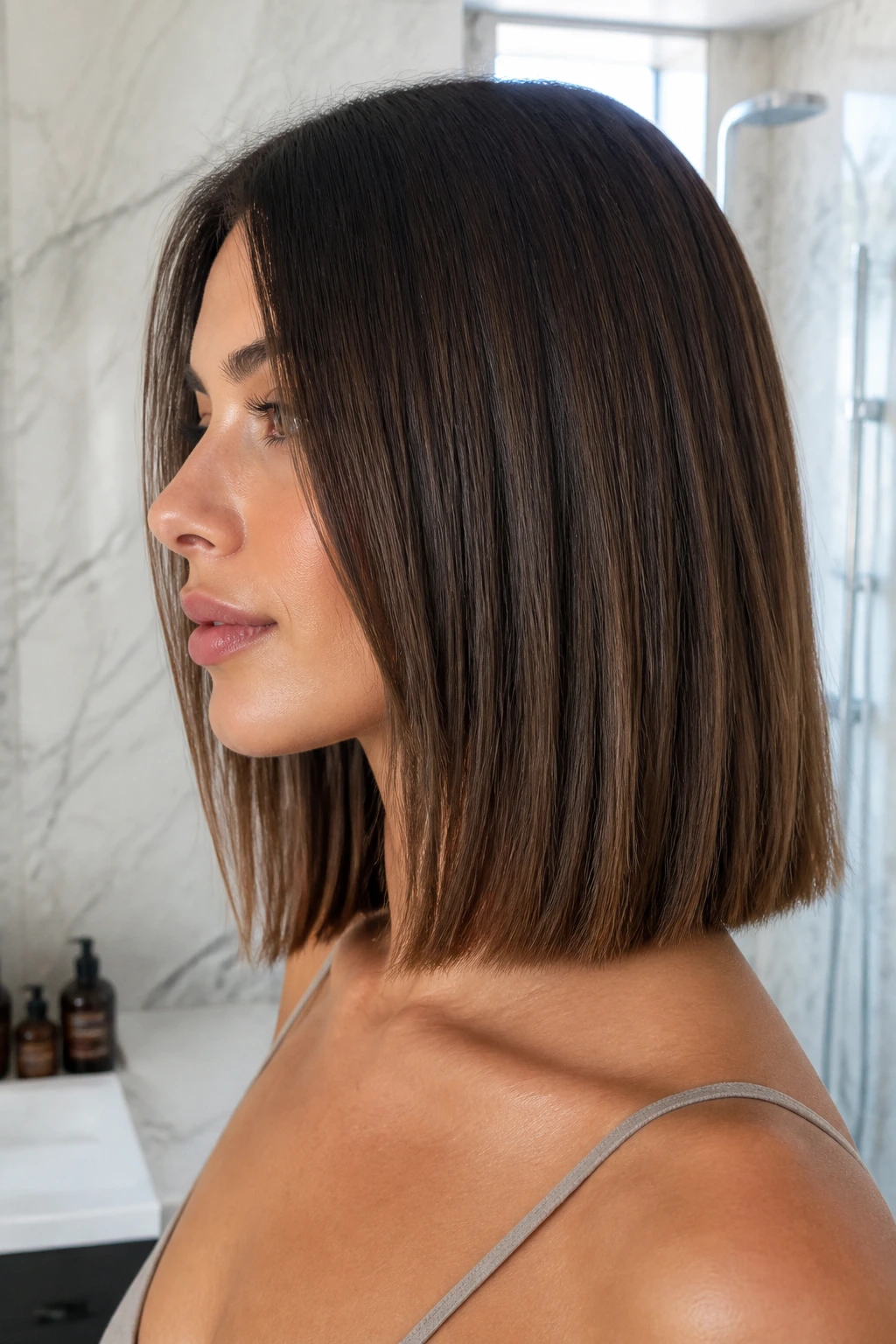
The clavicle cut is one of the most universally flattering lengths for straight hair. Sitting right at the level of the collarbone, this cut provides enough length to feel long and feminine, but remains short enough to maintain incredible volume and bounce.
Keeping the Ends Healthy
Because the hair sits right on the collarbone, it will naturally rub against your clothes throughout the day. This friction can cause split ends if the hair is not protected. Keep the ends healthy by applying a drop of hair oil to the bottom inch of your hair every morning.
Why This Length is Perfect
This length is incredibly versatile. It is long enough to pull back into a ponytail or bun, but short enough that it doesn’t get weighed down by its own mass. It retains a beautiful, healthy bounce and is very easy to blow-dry straight in a matter of minutes.
16. Long Layers with Tapered Slide-Cut Ends
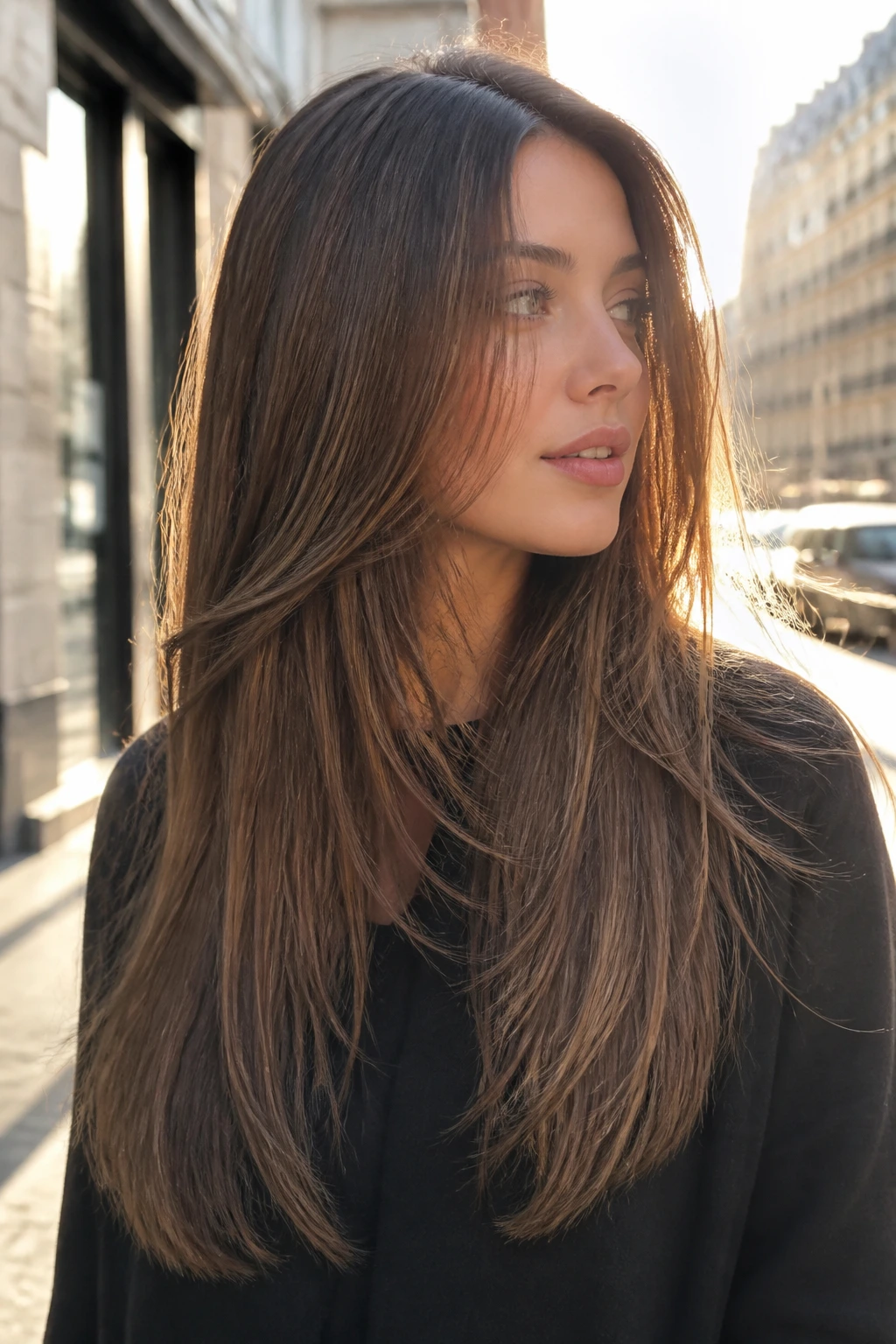
If you want to keep your long hair but want to avoid a flat, lifeless look, slide-cut long layers are the way to go. This cutting technique involves sliding the shears down the hair shaft while opening and closing them slightly, creating a tapered, feathered edge.
This technique is excellent for blending layers seamlessly. Instead of distinct steps where one layer ends and another begins, the hair flows smoothly from the shortest layer near the collarbone down to the very ends of your hair.
The Slide-Cutting Mechanism
The stylist holds the shears open and slides them down the hair section, slicing through the outer fibers at an angle. This creates a soft, tapered tip on each hair strand, allowing the layers to nestle into each other perfectly. The result is a smooth, continuous surface that moves with incredible fluidity.
17. The Curved C-Shape Layered Cut
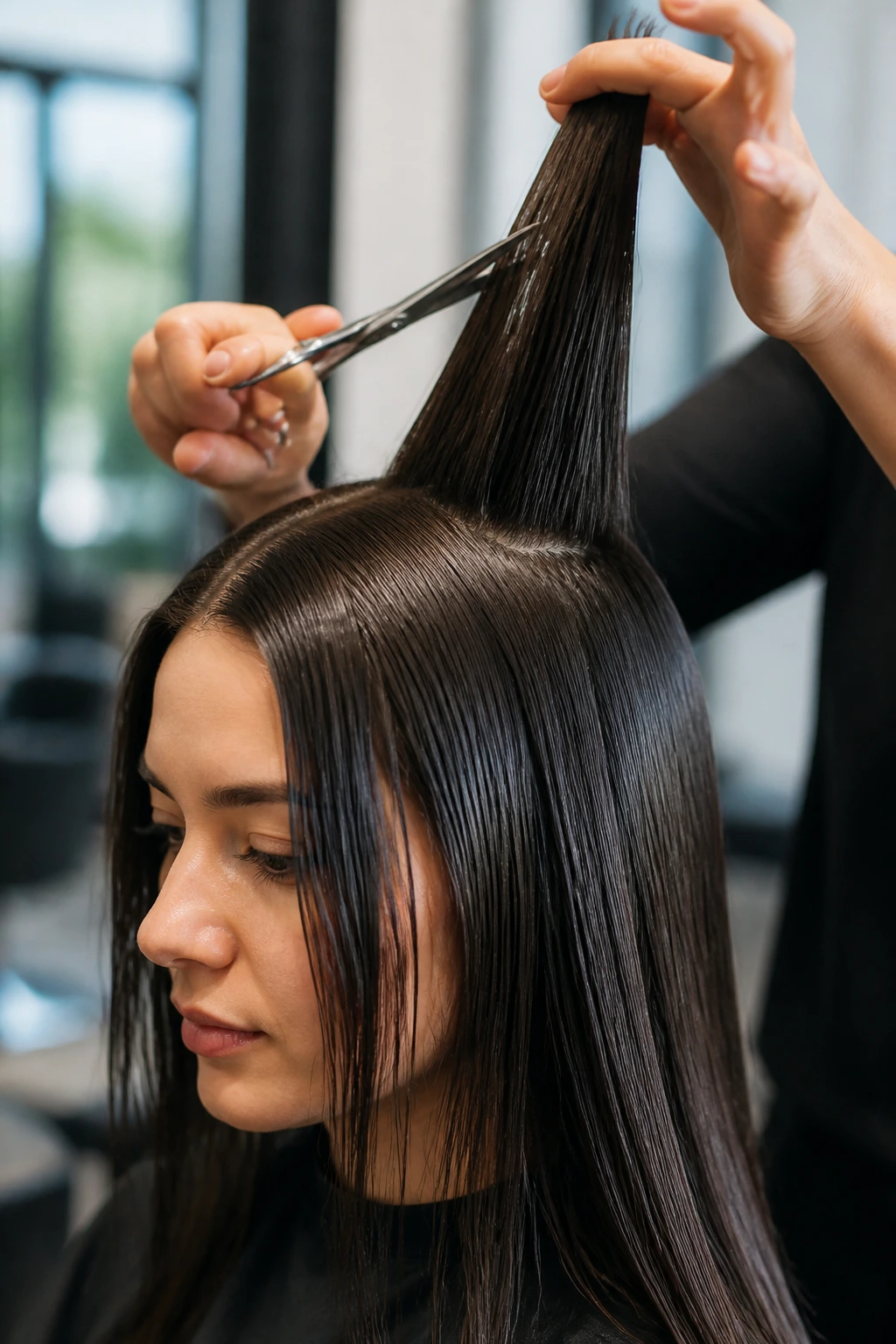
Also known as the “butterfly” or “horseshoe” cut, the C-shape features layers that are cut in a curve that hugs the face. The shortest layers sit around the chin, and they gradually curve outward and downward, resembling the letter C.
This cut is incredibly flattering because it mimics the natural contours of the face. It softens a strong jawline and adds roundness and volume to the sides of the face, making it a great option for oval or heart-shaped faces.
To style, use a medium round brush to blow-dry the layers inward toward your face. The curved layers will cup your chin and collarbone, creating a beautiful, soft frame that feels incredibly bouncy and full of life.
18. Choppy Mullet-Shag Hybrid
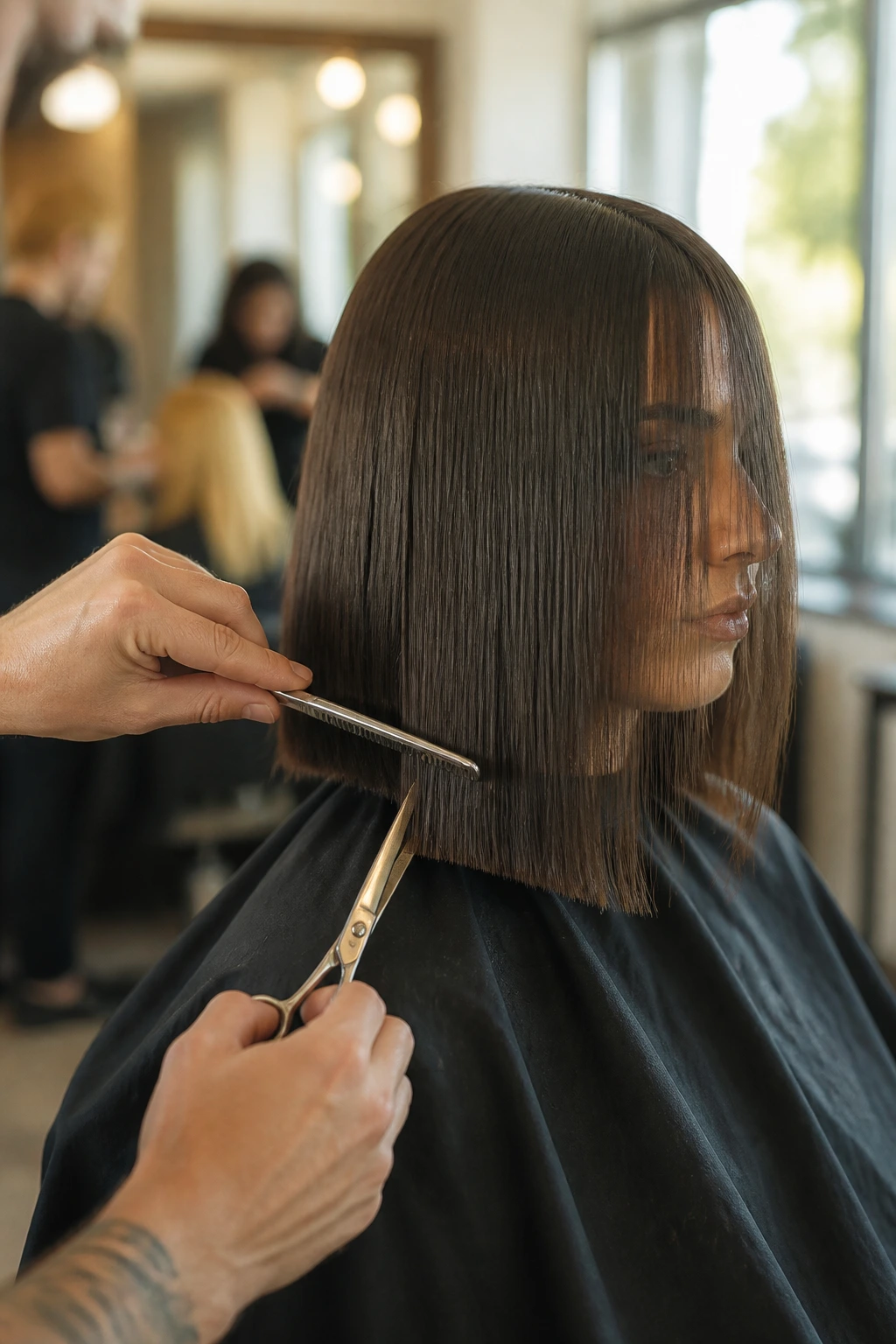
For the fashion-forward, the mullet-shag hybrid (often called the “shullet”) is a bold, high-contrast cut that looks incredible on straight hair. This style features a very short, textured top and sides, with significantly longer hair in the back.
The contrast between the short, choppy top and the long back is highlighted beautifully by the sleek texture of straight hair. It is a cut that makes a statement without needing any complex styling.
Who It is Best For
This cut is perfect for anyone who wants an edgy, low-maintenance style that stands out. It works best on medium to thick hair densities, as the top needs enough hair to build volume without looking sparse. Pair it with short, choppy bangs for the ultimate alternative look.
19. The Wedge Bob with Stacked Nape
The wedge bob features dramatic graduation at the back of the head, creating a stacked, voluminous shape that tapers down to a clean, tight nape. The layers are cut at an angle that builds a strong weight line around the occipital bone.
Building Elevation at the Occipital Bone
By stacking the hair closely at the nape, the stylist pushes the longer hair above it outward and upward. This builds a beautiful, rounded shelf of volume at the back of the head, which is highly flattering and completely changes the profile of your hair.
Quick Hair Facts
- Best density: Thick, straight hair
- Maintenance level: High (requires frequent nape cleanups)
- Styling time: Medium (requires round-brushing the back for maximum shape)
- Key feature: Creates permanent, structural volume at the crown
Pro tip: Ensure your stylist uses clippers or a razor to keep the hairline at the nape of your neck clean and tight, as any stray hairs will ruin the clean lines of the wedge.
20. Razor-Cut Textured Lob
For a modern, lived-in take on the classic long bob, go for a razor-cut version. By using a razor instead of shears, the stylist can slice into the ends of the hair, creating a highly textured, piecey finish that looks incredibly cool.
This style is all about breaking up the solid weight of straight hair. The razor-cut ends allow the hair to piece out naturally, giving it a slightly messy, day-second look even when freshly washed.
It is a fantastic option for anyone with medium to thick hair who wants to lose weight and gain movement. The textured ends react beautifully to texturizing sprays and sea salt mists, allowing you to achieve a relaxed, effortless style with very little work.
How Hair Density Affects Your Straight Haircut
Understanding your hair density is crucial before choosing a haircut. Straight hair is not a one-size-fits-all category; fine straight hair behaves completely differently from thick, coarse straight hair.
If you have fine hair, your primary goal is usually to build the illusion of thickness. You want to avoid heavy layers, which can make the ends of your hair look sparse and stringy. Instead, opt for blunt cuts like the classic paper-cut bob or the clavicle cut. These styles preserve all the weight at the bottom, creating a solid line that makes your hair look much fuller than it actually is.
For those with thick, coarse straight hair, the challenge is managing the sheer volume and weight. Without proper texturizing, your hair can easily look like a heavy, immovable mass. You want cuts that incorporate internal layering, slide-cutting, or razor-cut ends to remove bulk. Styles like the V-shape cut, the shattered lob, or internal ghost layers are your best friends, as they allow your hair to move freely without expanding into a giant triangle.
Medium density hair is the most versatile, as it can handle almost any cut. You can experiment with soft curtain bangs, long layers, or structured bobs depending on your personal style. Always discuss your hair density and daily styling habits with your stylist before they pick up the shears.
Daily Maintenance Tools for Straight Haircuts
Keeping a straight haircut looking its best requires the right tools. Because straight hair relies on clean lines and a smooth surface, investing in high-quality maintenance tools will save you a lot of time and effort in the morning.
Brushes and Combs
- Boar bristle brush: This is the ultimate tool for distributing your scalp’s natural oils down the hair shaft. It smooths the cuticle, adds natural shine, and tames flyaways without needing heavy products.
- Wide-tooth comb: Use this in the shower to distribute conditioner evenly and detangle wet hair safely. Wet hair is weak, and a comb is much gentler than a brush.
- Paddle brush: Ideal for blow-drying medium to long straight hair flat and smooth.
Styling Products
- Lightweight hair oil: A high-quality oil like marula or argan oil is essential for sealing the ends of straight hair. It adds a glassy shine and prevents the ends from looking dry or frayed. Use just a drop or two on the bottom half of your hair.
- Heat protectant spray: If you use a flat iron or blow-dryer regularly, a heat protectant is non-negotiable. It creates a protective barrier over the cuticle, preventing heat damage and keeping your hair looking healthy.
- Dry texturizing spray: Essential for adding a bit of grip and separation to layered or shaggy cuts without weighing them down.
Using the right tools not only makes styling easier but also preserves the health of your hair, ensuring your cut continues to look great weeks after your salon visit.
The Art of Blow-Drying Straight Hair for Volume
If you struggle with flat hair, the way you blow-dry can completely transform how your haircut sits. You don’t need a complex routine; you just need to work with gravity and the natural mechanics of your hair roots.
Start by applying a lightweight volumizing spray or root lifter to damp hair, focusing solely on the first two inches of your hair near the scalp. Do not apply these products to the ends, as they can make them feel stiff or dry.
Flip your head completely upside down and blow-dry your hair using your fingers to massage the roots away from your scalp. By drying the hair in the opposite direction of how it naturally falls, you are setting the roots in an upright position, which builds instant, lasting volume at the crown.
Once your hair is about eighty percent dry, flip your head back up and use a large round brush to smooth the top layer and finish the ends. Pull the sections of hair straight up toward the ceiling with the brush while directing the heat from the nozzle downward. This technique smooths the cuticle for a glassy finish while preserving all the height and volume you built at the roots. It is a simple shift in technique that makes a massive difference in how your cut looks.
Wrapping Up
A great haircut for straight hair is an investment in your daily routine. When the lines are clean, the weight is balanced, and the style matches your hair density, straight hair is incredibly beautiful and easy to manage. It doesn’t have to look flat or boring. Whether you choose a sharp, geometric bob that frames your jawline or long, invisible layers that dance when you walk, the right cut will highlight the natural shine and sleekness of your texture. Speak with your stylist, understand what your hair needs, and choose a style that makes you feel confident every single day.