

When you walk into a salon with thinning hair, the standard advice often leans toward playing it safe—sticking to neutral tones or avoiding bold experimentation. But there is an undeniable, magnetic energy to a soft, pastel or vivid pink hue that can actually make fine hair look deliberate and styled rather than simply sparse. Pink isn’t just a color; it’s a strategic choice. For those with a finer hair density, color placement and cut geometry serve as a natural highlighter for volume, turning a perceived challenge into a vibrant signature look.
Choosing the right shade of pink involves more than just picking a color from a book; it is about working with your underlying skin tone and your hair’s natural texture. If your hair is fine, the porosity of the strands is often higher, meaning you can achieve those ethereal, dusty rose tones with much less damage than someone with thick, coarse hair. The key is in the technique—using depth at the roots or strategic highlights to create the illusion of density that a single-process color might flatten out.
Forget the idea that thin hair means you are limited to blunt bobs or simple layers. With the right cut, the right maintenance routine, and a shade of pink that complements your complexion, you can create a style that feels thick, bouncy, and entirely intentional. Let’s look at twenty ways to lean into the pink spectrum while maximizing the visual volume of your hair.
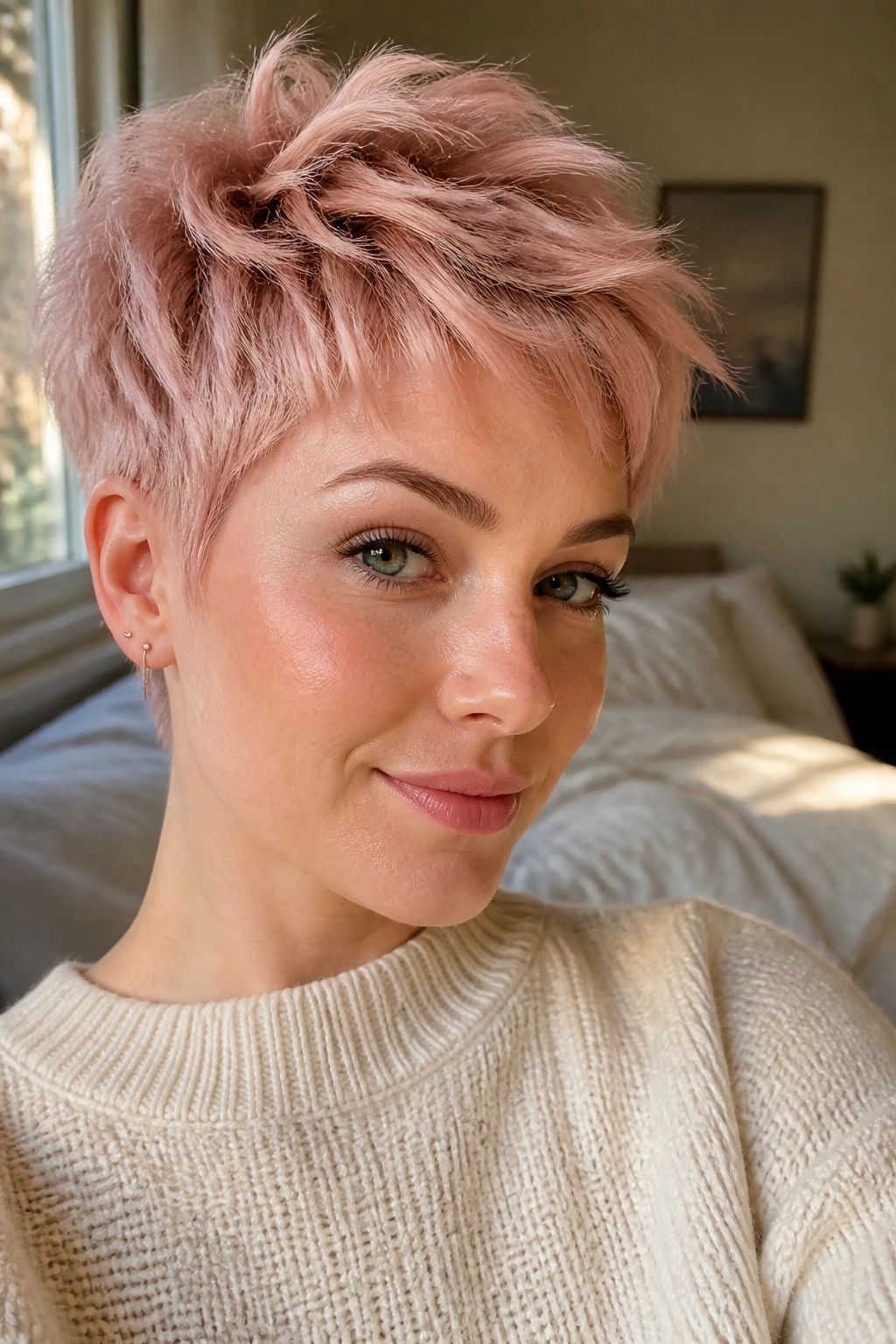
1. The Pastel Pink Textured Pixie
A pixie cut is arguably the most effective tool in the arsenal for anyone dealing with fine hair. By removing the weight of length, you allow the strands to stand up and create a lifted, airy silhouette. When you dye a short, choppy pixie in a soft, dusty pastel pink, the color catches light at every angle, which creates a shimmering effect that makes the hair appear multi-dimensional rather than flat.
Why This Style Adds Volume
The secret here is the texture. A pixie cut with piecey, texturized layers forces the hair to sit in distinct clusters rather than laying limp against the scalp. When you use a light shade of pink, you avoid the heavy contrast of dark roots against pale skin, which can sometimes emphasize how little hair is present.
Styling Tips for Maximum Lift
- Use a lightweight, matte-finish texturizing spray to prevent the hair from clumping together.
- Avoid heavy pomades or waxes that will weigh down fine strands and lead to an oily, stringy appearance.
- Work a tiny amount of volumizing mousse into damp hair before blow-drying to build a base structure.
2. The Bubblegum Pink Choppy Bob
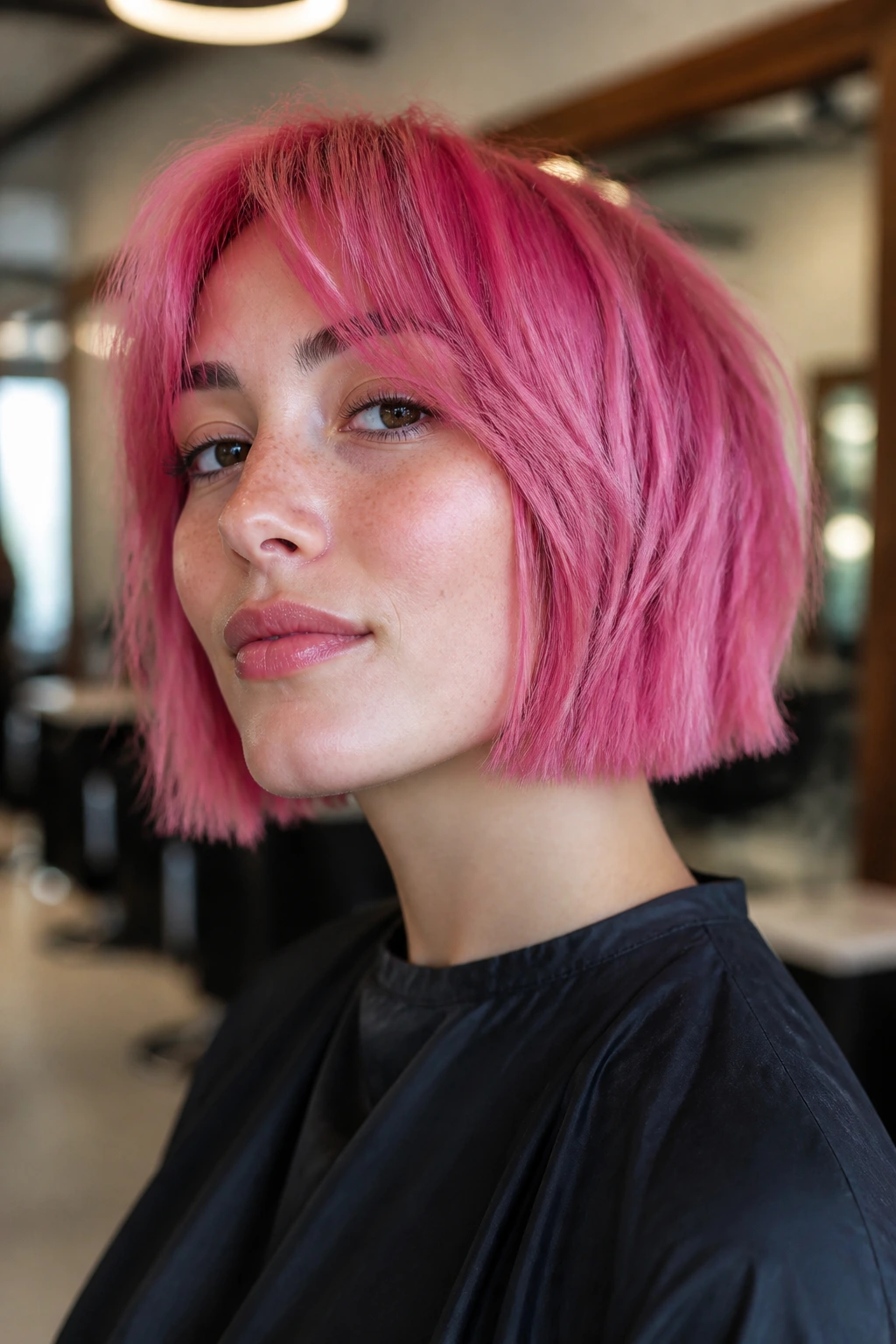
If you aren’t ready to go for a full pixie, a chin-length bob with blunt ends is the gold standard for creating the illusion of a thicker hemline. A bold, saturated bubblegum pink turns this classic, functional cut into a statement piece. The bluntness of the cut creates a solid, heavy line at the bottom, which tricks the eye into seeing more hair density than is actually there.
The Power of the Blunt Cut
A blunt cut is significantly more effective at adding volume than a tapered or heavily layered one. When the ends are cut straight across, they don’t taper off into wispy points. Adding a high-impact color like bubblegum pink ensures that the focus remains on the vibrancy and the structure of the cut rather than the overall thickness of the individual strands.
How to Maintain the Color
- Use a color-depositing conditioner in every wash to keep the bubblegum hue from fading into a muted salmon.
- Wash your hair in cool water to keep the cuticle closed and prevent premature pigment loss.
3. Dusty Rose Balayage on Fine Strands
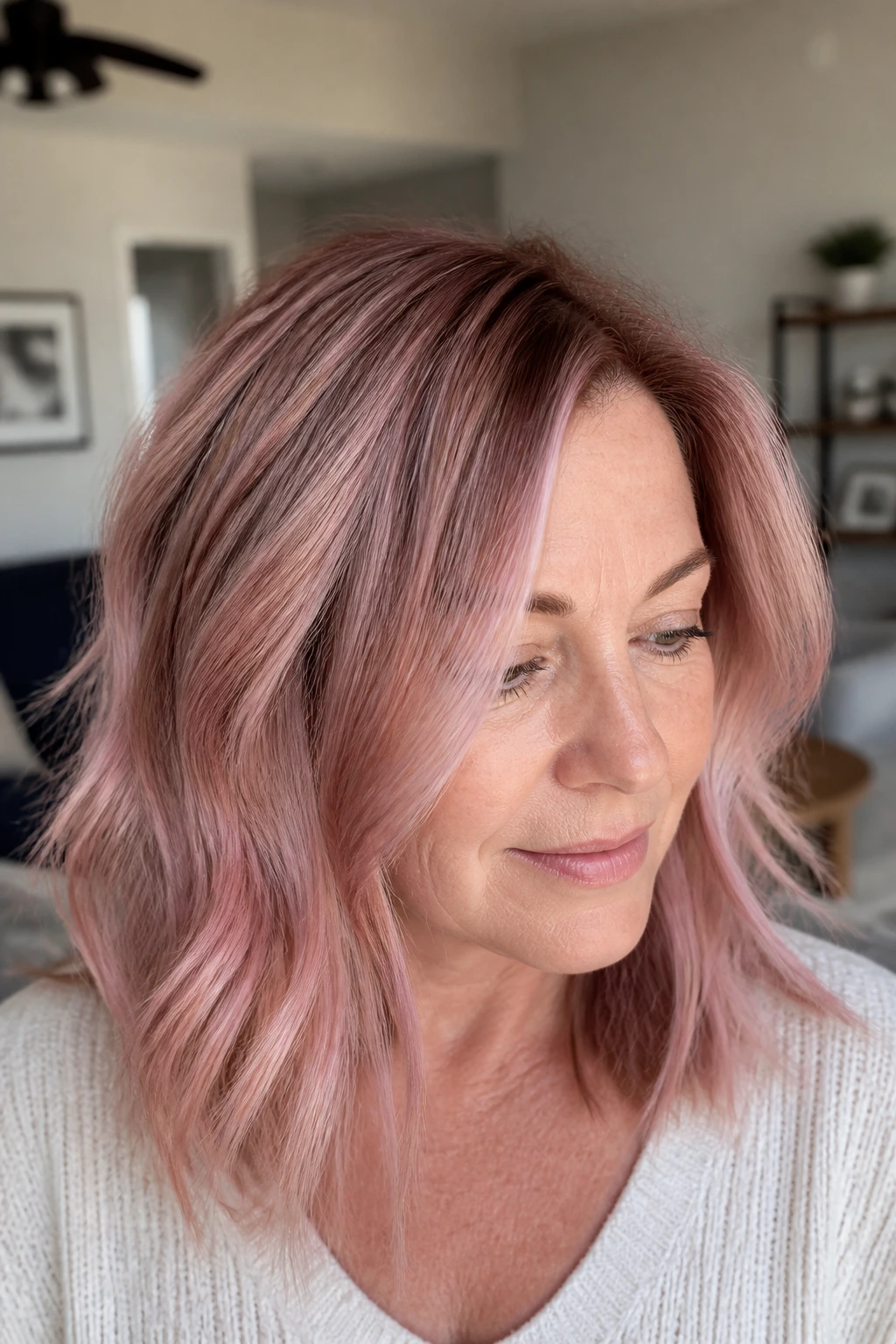
Balayage is often reserved for blondes and brunettes, but it is a transformative technique for fine, thin hair when used with pink tones. By keeping your natural root color and weaving in ribbons of dusty rose, you create a natural shadow effect. This depth at the roots makes the hair look fuller at the scalp, while the lighter pink ends add a sense of lightness and movement.
Creating Depth Through Color
You don’t need a head of thick hair to have a beautiful color melt. By keeping the root area a few shades darker—perhaps a muted mauve or a deep rose—you provide a visual “anchor.” This contrasts beautifully with the brighter rose tones on the mid-lengths, effectively tricking the eye into perceiving a thicker, more layered head of hair.
The Benefits for Hair Health
- Balayage is lower maintenance, meaning fewer visits to the salon and less chemical stress on your fine strands.
- Because the roots are left untouched, you aren’t dealing with a harsh grow-out line that can make hair look thinner as the roots emerge.
4. Neon Pink Undercut with Length
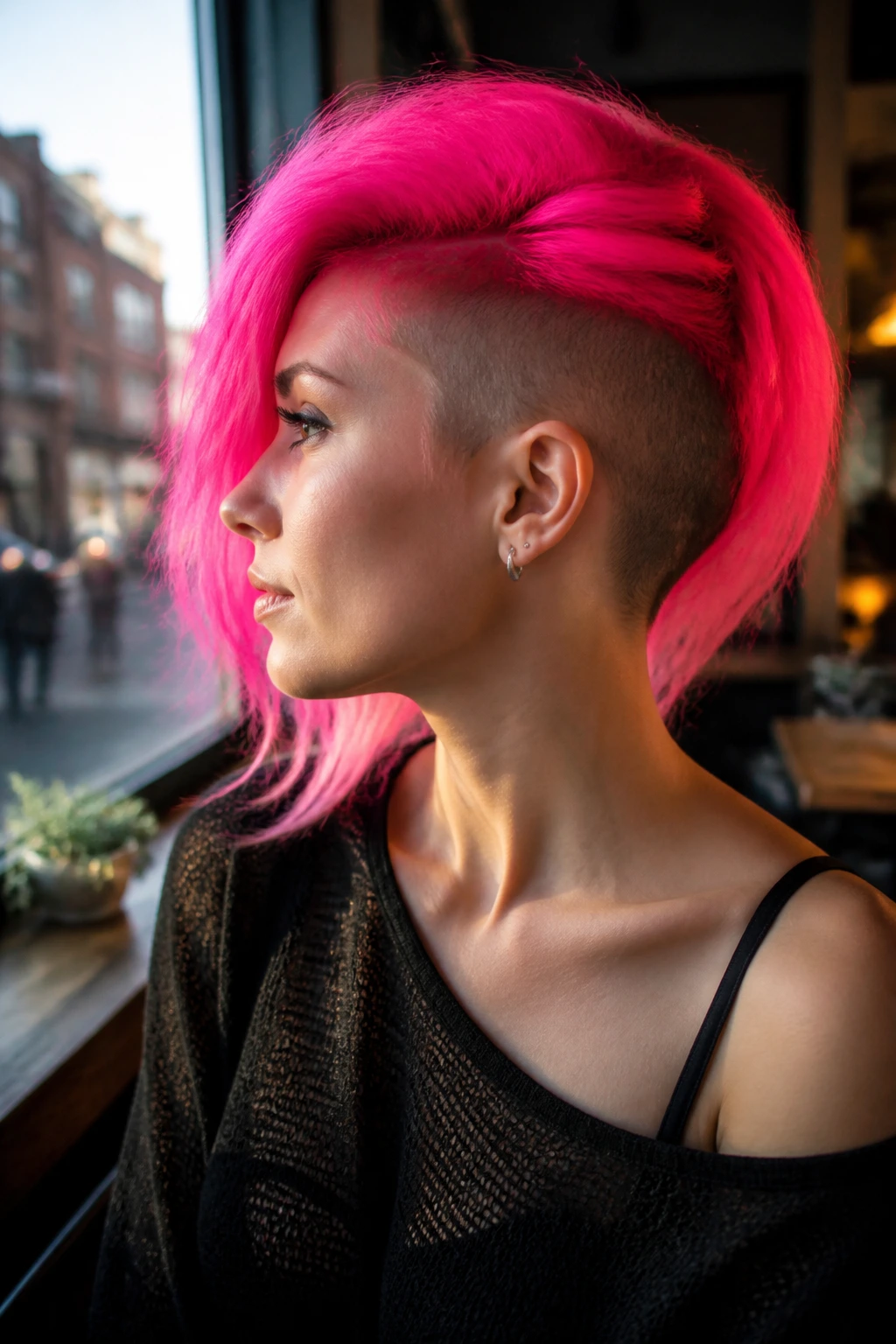
For those who want to keep some length but struggle with the “see-through” look at the back of the neck, an undercut is a brilliant, if slightly daring, solution. By shaving the hair at the nape of the neck, you remove the section of hair that is most prone to matting and looking thin. The remaining hair falls over the shaved area, creating a natural boost in volume and a clean, sharp look.
Why It Works for Thinning Hair
An undercut removes the weight from the bottom of your head, which often drags down the rest of your style. When you dye the remaining long hair a striking neon pink, you create a high-contrast style that feels modern and edgy. It shifts the focus entirely away from hair density and toward the architectural shape of your haircut.
Styling Recommendations
- Use a round brush to blow-dry the top sections for maximum lift at the crown.
- Consider a “faux-hawk” style or a high ponytail to show off the undercut and highlight the dramatic color contrast.
5. Muted Mauve Layers for Softness
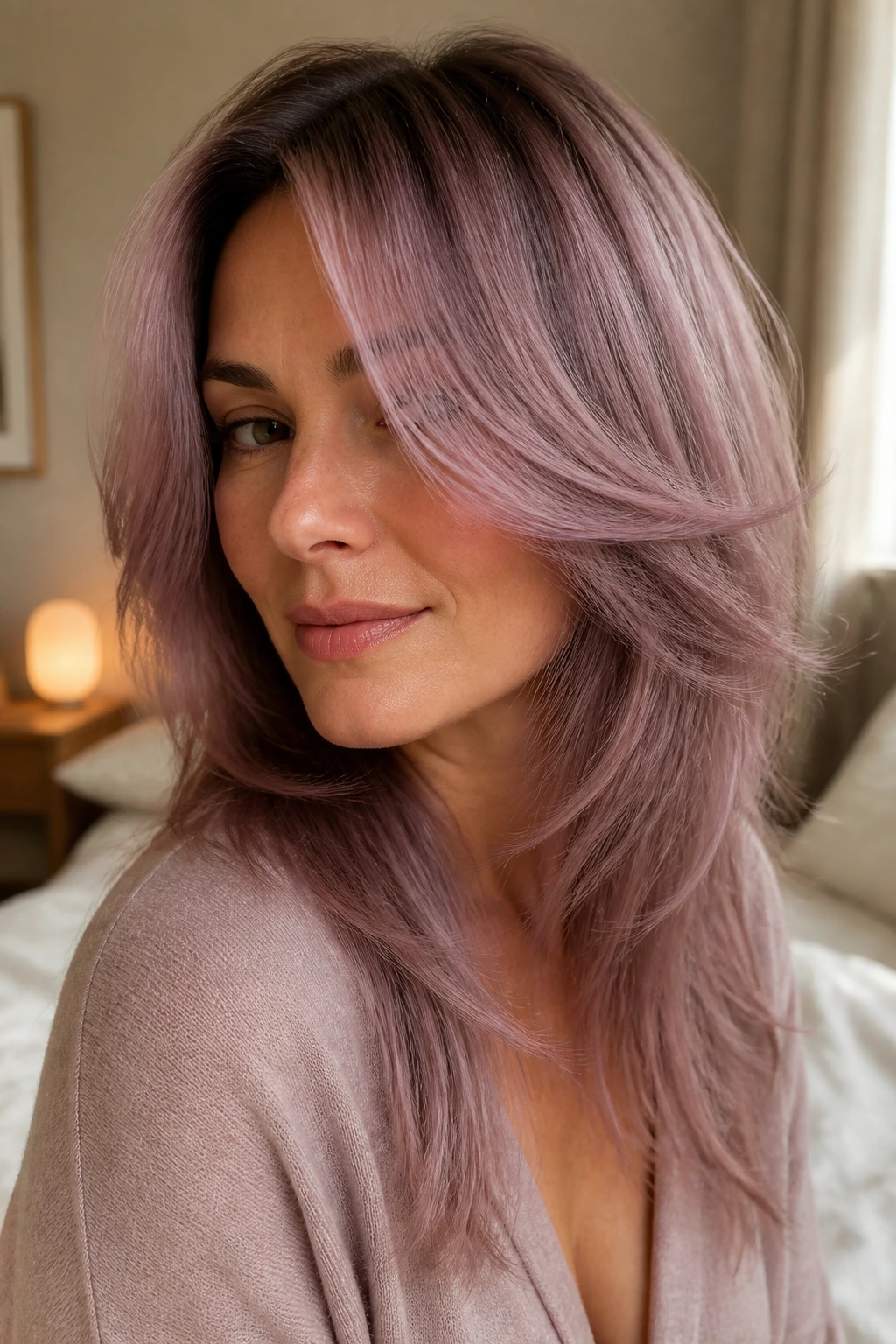
Sometimes, a stark, bright color can actually highlight the gaps in thin hair. If you have very fine strands, a muted, earthy shade like mauve can be far more forgiving. Mauve sits between pink, purple, and gray, offering a sophisticated look that adds depth to the hair structure. Pair this with soft, long layers to encourage the hair to move and bounce rather than hanging in static, thin sheets.
The Science of Soft Color
Darker or muted tones tend to absorb light, which can create a shadow effect that makes hair look denser. A bright, neon color reflects light, which can sometimes highlight the scalp underneath. Mauve, being a deeper, richer pink, bridges this gap, giving you the color you want while helping the hair look substantial.
Recommended Cutting Technique
- Ask your stylist for “invisible layers”—these are soft, internal layers that provide shape without thinning out the ends.
- Keep the length just past the collarbone, as too much length can cause fine hair to break or look stringy.
6. The Pink Money-Piece Face Frame
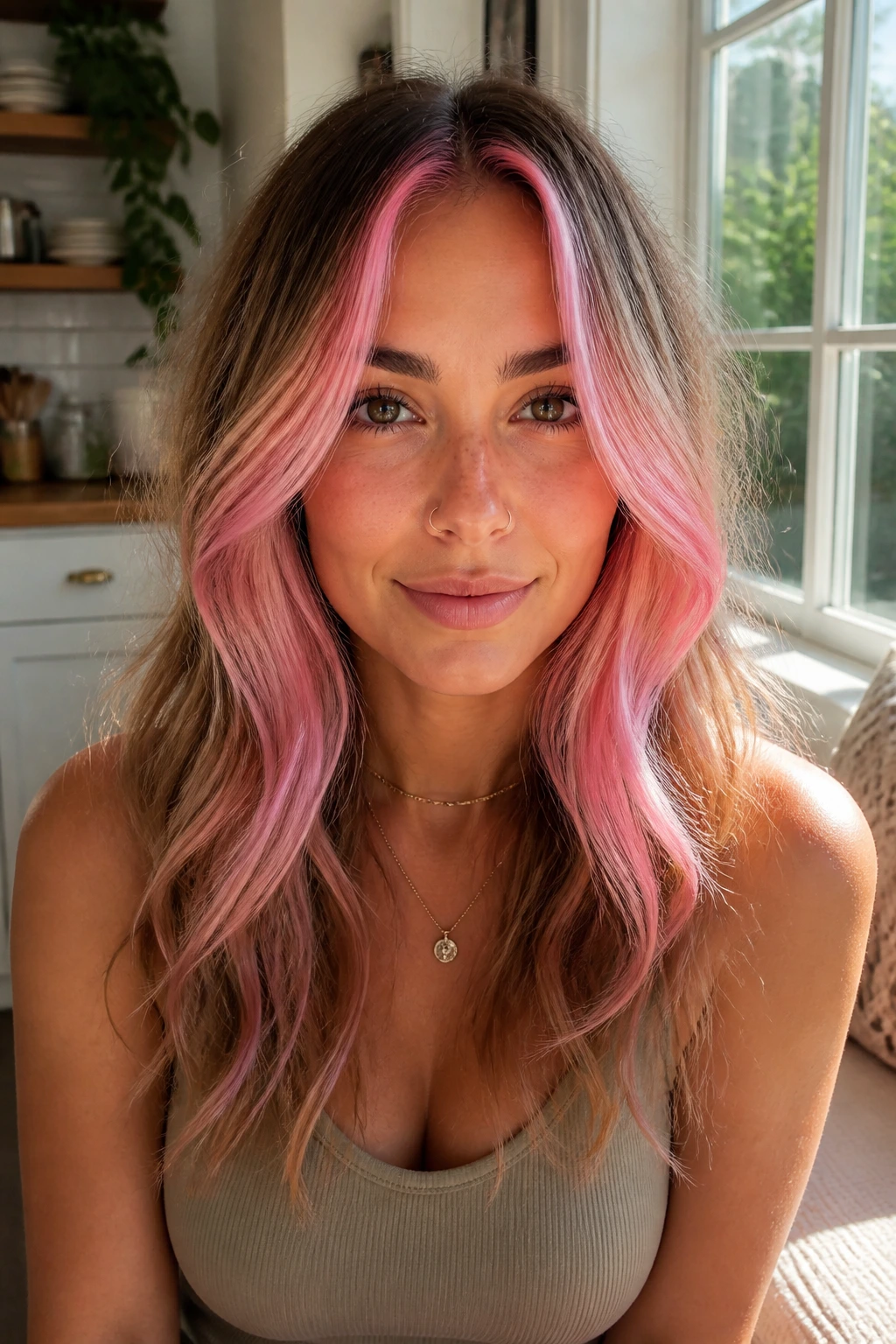
If you are hesitant to commit to an all-over pink color, the money-piece technique—where only the front face-framing strands are colored—is a perfect entry point. For thin hair, this is a strategic move. By coloring the hair around your face in a bold pink, you frame your features and draw attention to your eyes, making the hair color the focal point of your look.
Why Face-Framing Works
- It provides a pop of color without requiring you to bleach your entire head, preserving the integrity of your fine strands.
- You can experiment with different shades of pink, from soft pastel to hot fuchsia, without risking the health of the rest of your hair.
- As the color grows out, it’s easy to maintain, as it doesn’t involve the entire scalp area.
7. Faded Peachy-Pink Shag
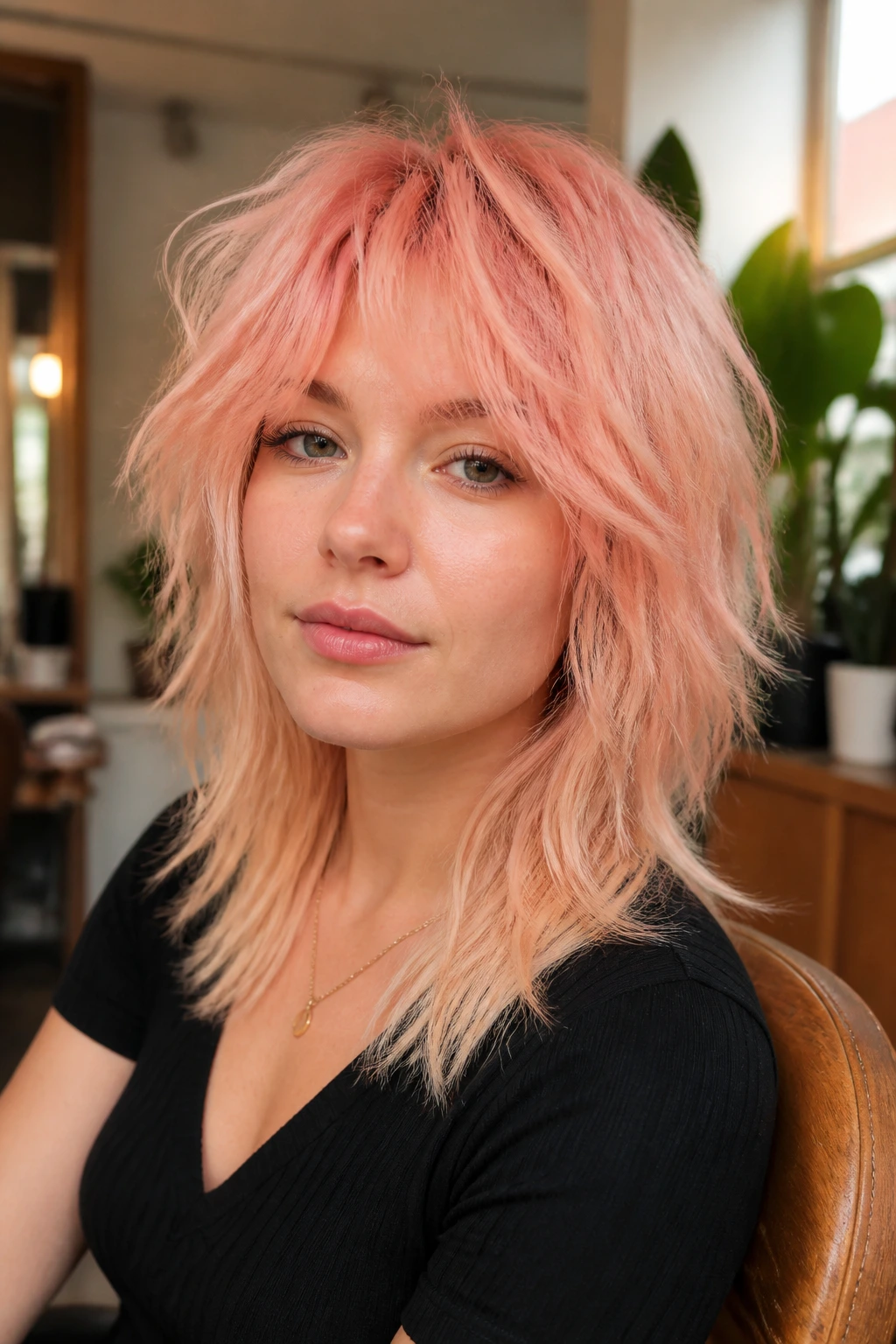
The shag cut has seen a massive resurgence for a reason: it’s built on volume. By utilizing short, choppy layers at the crown and longer, wispy layers throughout the bottom, a shag creates an instant “tousled” appearance. When combined with a faded, peachy-pink tone, the look feels effortless and airy.
Why the Shag is a Volume Machine
- The layering pattern forces the hair to lift away from the scalp.
- It is incredibly easy to style; a little sea salt spray and a quick scrunch with your hands are all you need.
- It hides the lack of hair density by focusing on texture and movement instead of length or volume at the ends.
Managing the Fade
- Since peachy-pink fades quickly, use a color-protecting shampoo with UV filters.
- Keep a bottle of color-depositing conditioner in your shower to refresh the shade once a week.
8. Rooted Fuchsia for Dimensional Impact
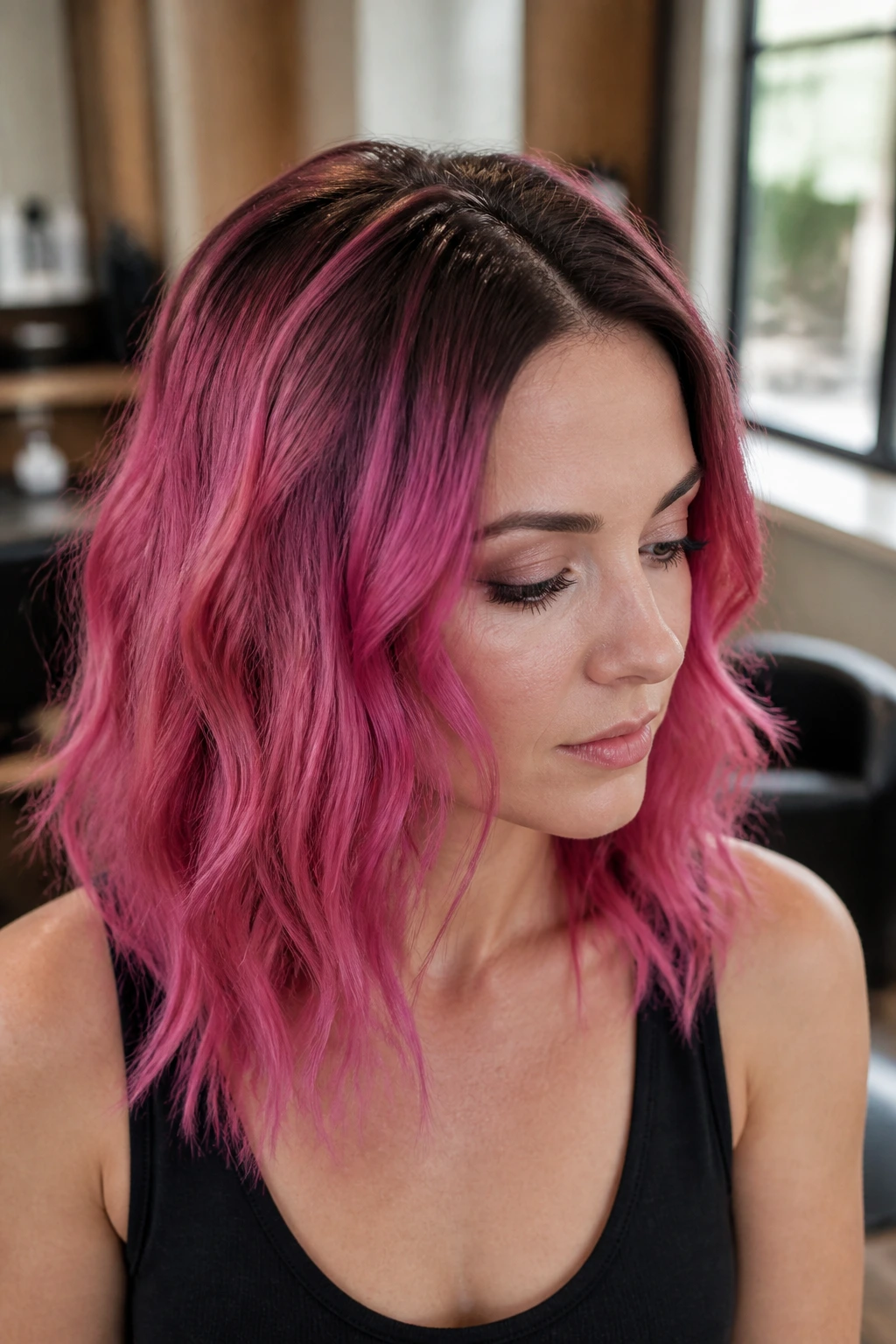
The concept of “root smudging” is essential for thin hair. If you love a bright, loud fuchsia pink, keep your natural roots dark and blend the pink into them about two inches down. This creates a transition that mimics the way hair naturally grows, which adds an immediate sense of fullness at the scalp where thinning is most often noticed.
The Illusion of Density
When you have a stark contrast between a light scalp and a bright color, the hair can look very thin. By “smudging” or “shadow rooting” your fuchsia pink, you create a gradient that fills in the visual gaps. This is a classic colorist’s trick that makes any color feel more natural and thick.
Maintenance Tips
- Since fuchsia is a high-maintenance color, plan on a root-touch-up every six to eight weeks.
- Use a sulfate-free shampoo to prevent the bright pink from stripping away too quickly.
9. Cotton Candy Pink Curly Pixie
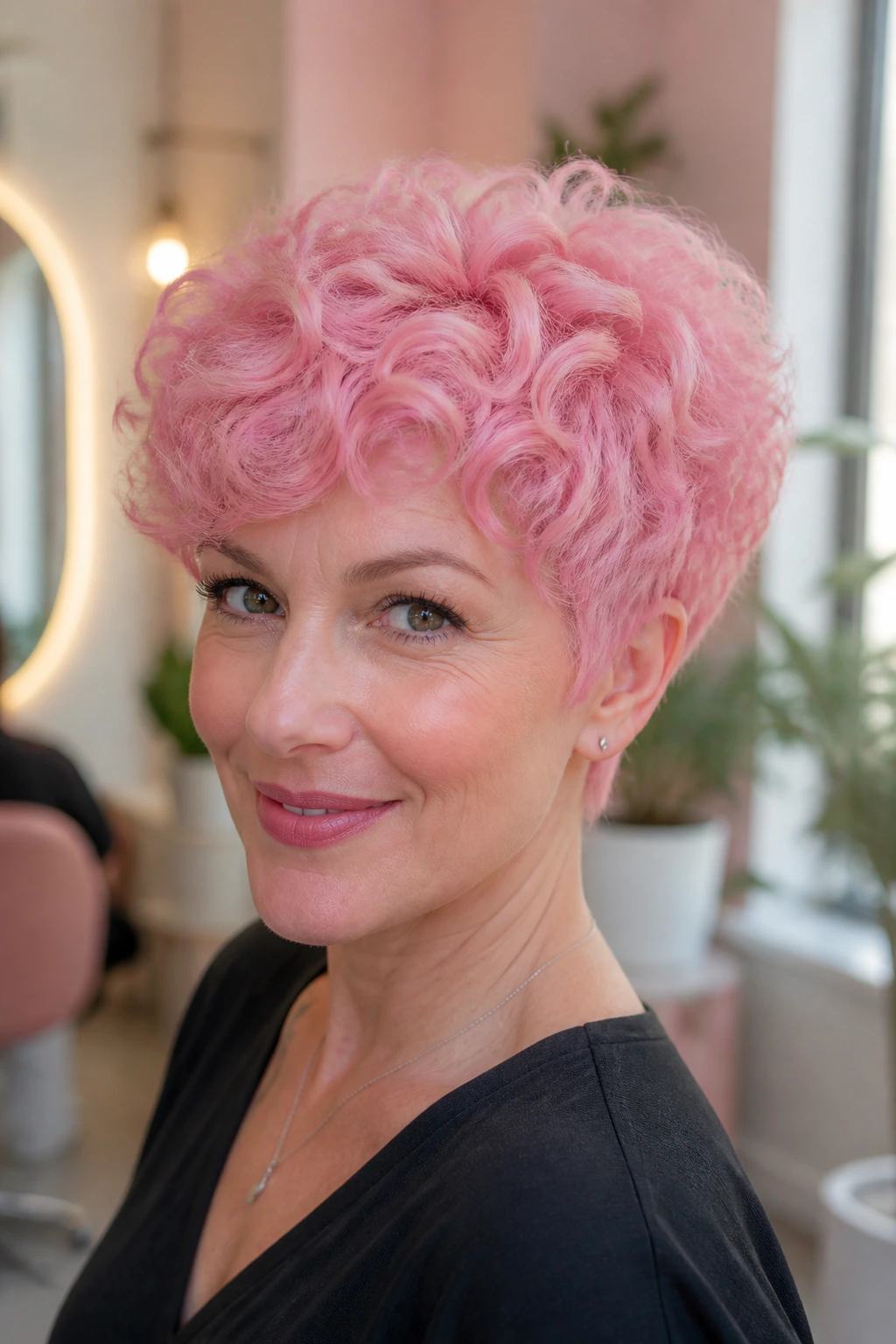
If you have natural curls or even just a slight wave, a curly pixie cut dyed in cotton candy pink is a winning combination. Curly hair has natural volume, and the light pink hue accentuates the shape of the curls. This combination is visually loud and structurally thick, making it nearly impossible to notice any thinning.
Why Curls Help the Cause
- Curls add “lift” that defies gravity, automatically creating more space between the hair strands.
- The bouncy nature of the hair hides the scalp, providing a much higher level of coverage than straight, thin hair.
How to Style
- Avoid brushing your hair when dry, as this will lead to frizz and diminish the curl pattern.
- Use a curl-defining cream on damp hair and let it air-dry to keep the curls bouncy and intact.
10. The Pink A-Line Bob
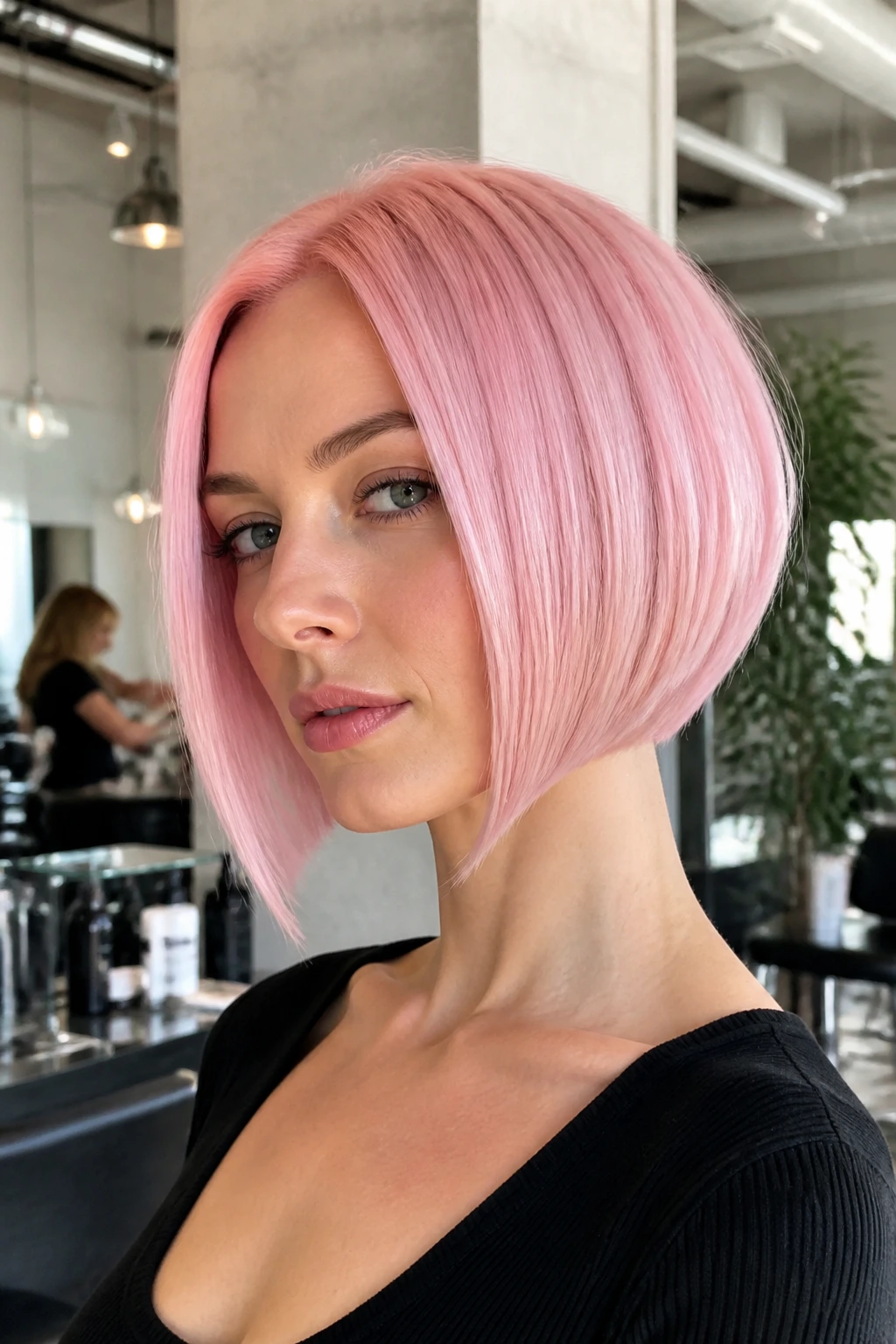
An A-line bob, where the back is shorter than the front, is naturally flattering and adds a sense of precision to the hair. By keeping the cut angled, you create a long, graceful line that frames the face beautifully. If you add a soft, pale pink to the entire look, you get a clean, polished style that feels very sophisticated for fine-haired individuals.
Why the A-Line Adds Volume
- The graduation of the cut from back to front builds height in the nape area.
- The sharp angle of the cut creates a distinct “weight line” at the bottom, making the ends feel denser.
- Keeping the hair at a chin-length angle minimizes the appearance of wispy ends.
Color Advice
- A pale pink is ideal here, as it doesn’t create a heavy, blocky look that could drag down the face.
- Keep the color consistent from root to tip to maintain the clean lines of the cut.
11. Soft Lavender-Pink Blend
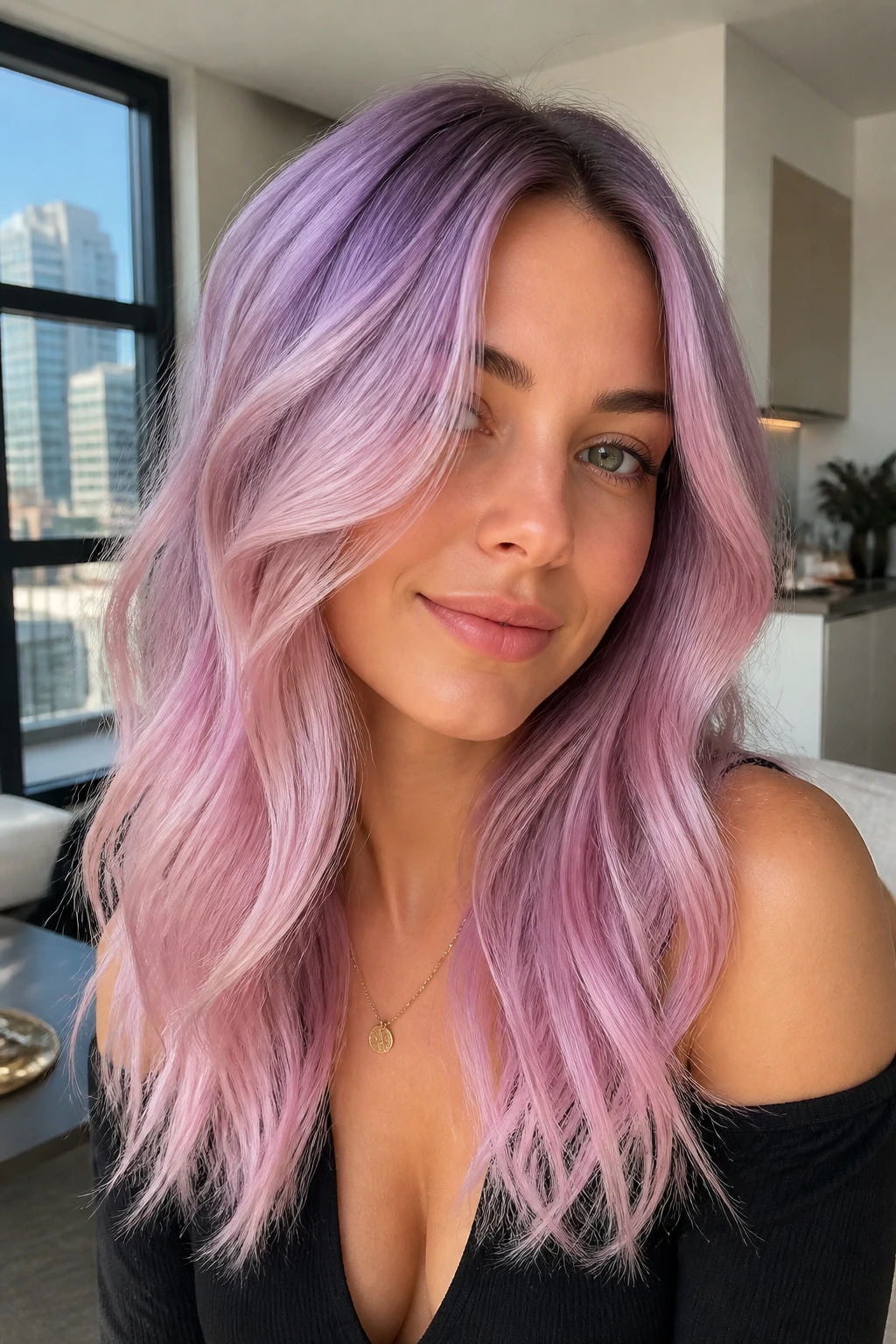
If you find that true pink feels too harsh, a blend of lavender and pink can create a much softer, more ethereal vibe. This color combination is excellent for fine hair because it mimics the look of high-end, dimensional highlights. It adds depth, shimmer, and the illusion of thickness without relying on a single, flat tone.
The Benefit of Multi-Tonal Color
- Multi-tonal hair captures light in different ways, which adds the appearance of volume.
- It is more forgiving than a single solid color; if you have minor gaps in your hair, the varying shades make them much harder to spot.
- The combination of cool and warm tones works with almost every skin tone.
Styling for Shimmer
- Use a lightweight shine spray to make the lavender and pink hues pop.
- A flat iron can be used for occasional waves, but keep the heat setting low to avoid damaging your fine strands.
12. Deep Magenta Hidden Layers
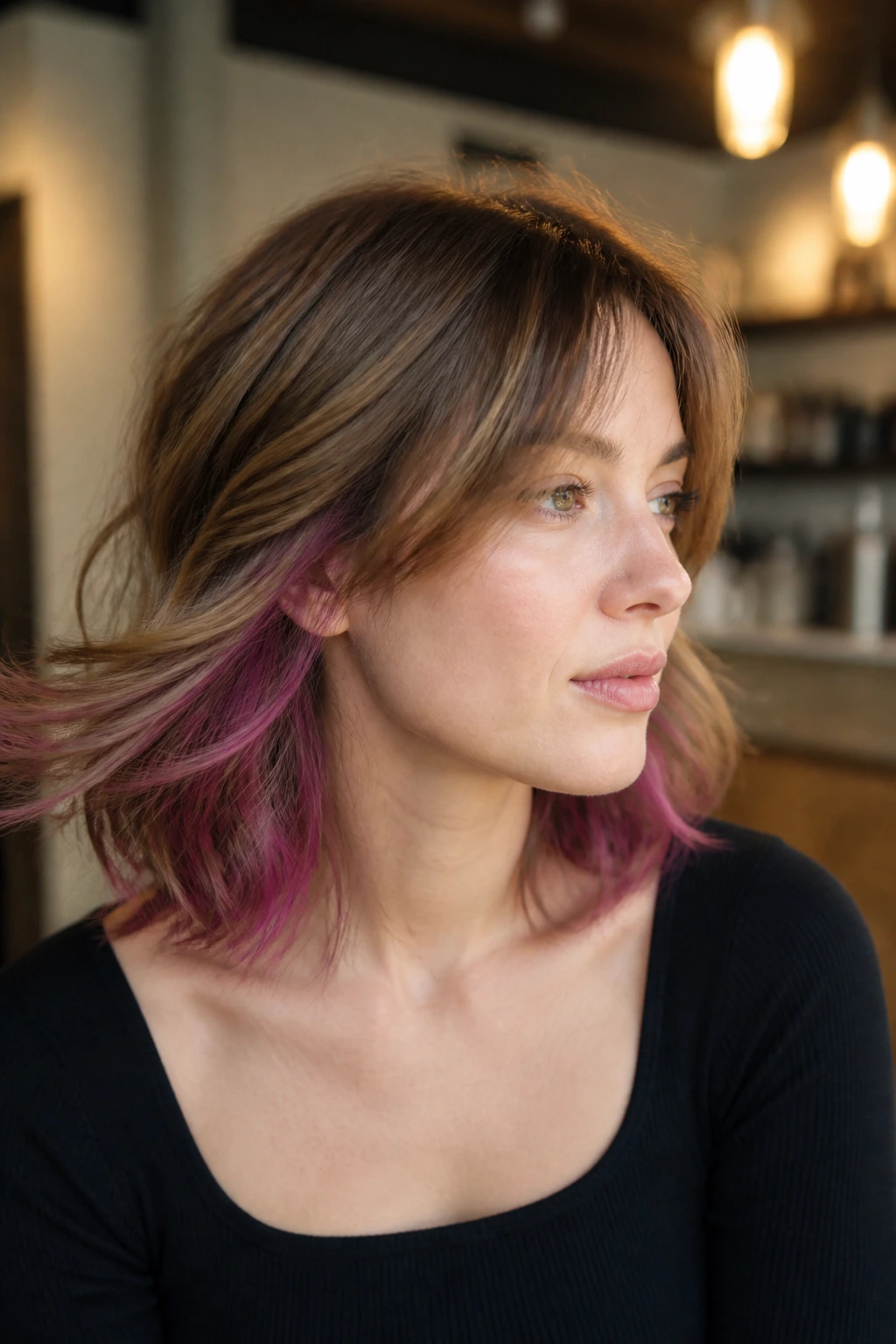
For a more subtle approach, try keeping your natural color on the top layers and dyeing the hair underneath a deep, vibrant magenta. When you wear your hair down, you’ll only get glimpses of the color, but when you put it in a ponytail or half-up style, the bold pink will show through. This is a great way to experiment with color without the commitment of a full-head bleach.
Why This Works for Volume
- The two-tone effect creates a sense of depth and density when the hair is styled.
- It keeps the bulk of your hair in its natural state, which is often healthier and stronger.
- You can add dimension to your hair without needing to compromise the health of your scalp or roots.
13. Strawberry Pink Highlights
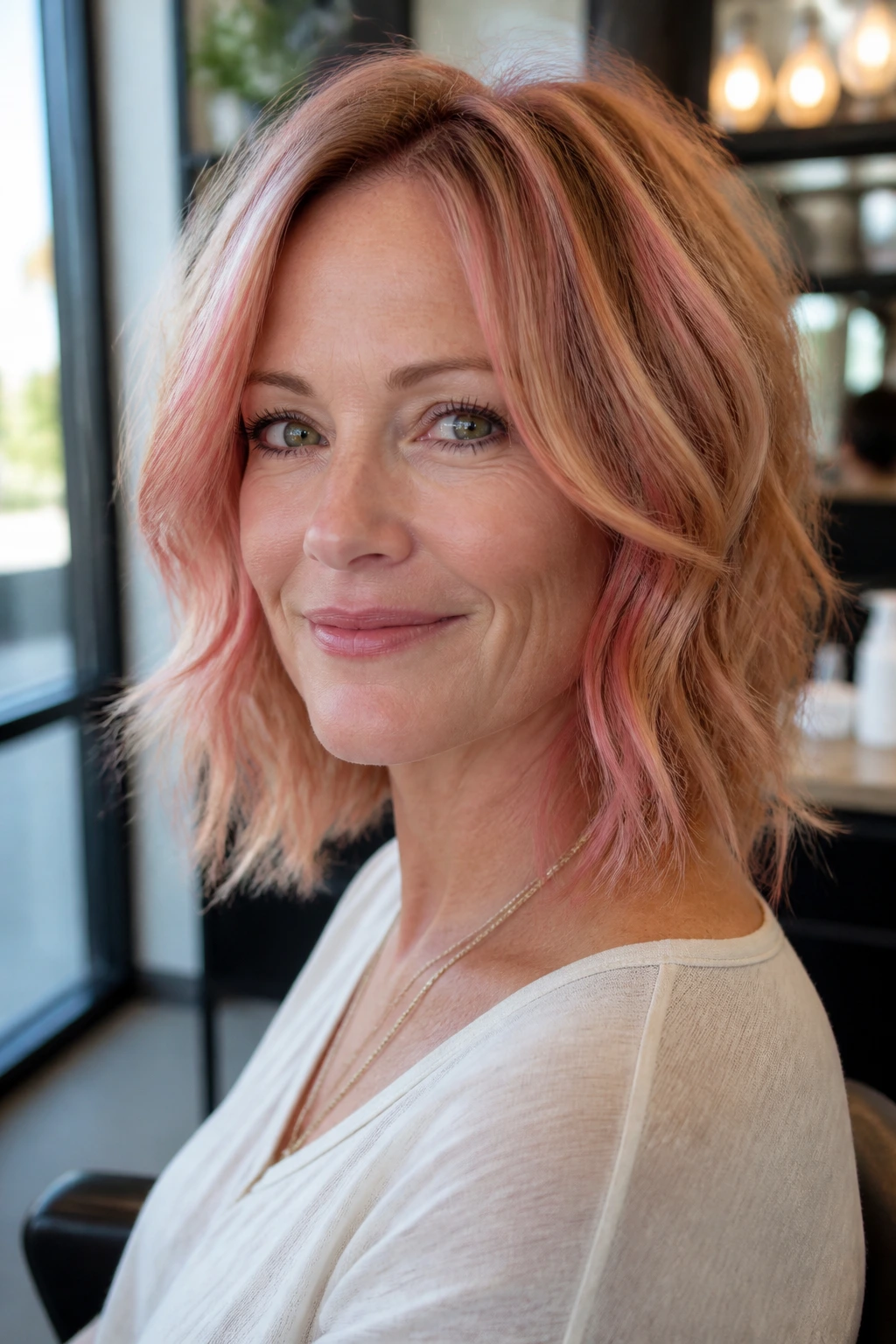
Strawberry pink is a natural-looking transition from ginger or blonde, and it works wonderfully for those who want to add warmth. By adding these as thin highlights throughout a lighter base, you create a “sunkissed” look that feels full and healthy. Highlights are inherently better for thinning hair because they break up the look of a solid, thin sheet of hair.
The Power of Highlights
- Highlights introduce light and dark tones that build visual texture.
- They are much easier to maintain than a full bleach-and-tone job, which is better for fine, brittle hair.
- You can adjust the intensity of the strawberry pink to suit your preference, from soft and muted to bright and poppy.
Professional Tips
- Ask your stylist for “babylights”—extremely fine, delicate highlights that look like natural sun-bleached hair.
- Avoid large, chunky highlights, as these can make thinning hair look patchier.
14. Pink Ombré with a Dark Root
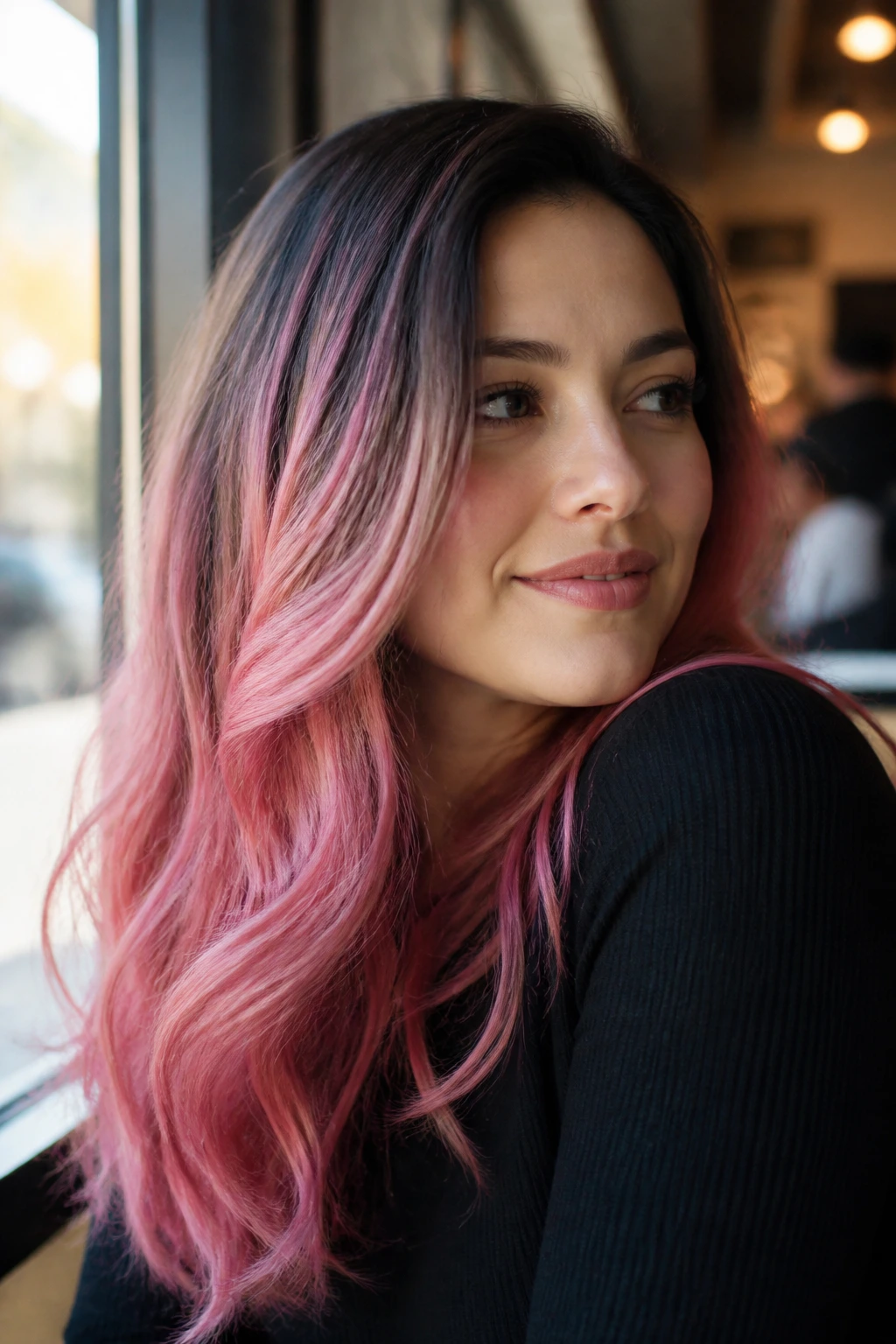
The classic ombré never truly goes out of style, and for good reason. By keeping your roots dark and transitioning into a bold, vibrant pink at the ends, you keep the visual weight concentrated in a way that minimizes the look of thinning at the scalp. This style is also incredibly low-maintenance, as you only need to touch up the roots when your natural hair grows out.
Why Ombré Saves Thin Hair
- It draws the eye downward, away from the scalp area.
- You don’t have to bleach your roots, so your hair stays stronger where it matters most.
- It creates a beautiful color transition that looks intentional and artistic.
Maintenance
- Trim your ends every 8–10 weeks to prevent the bleached, pink portion from splitting, which is more noticeable in thin hair.
15. The Pink Pixie-Mullet (Modern Shag)
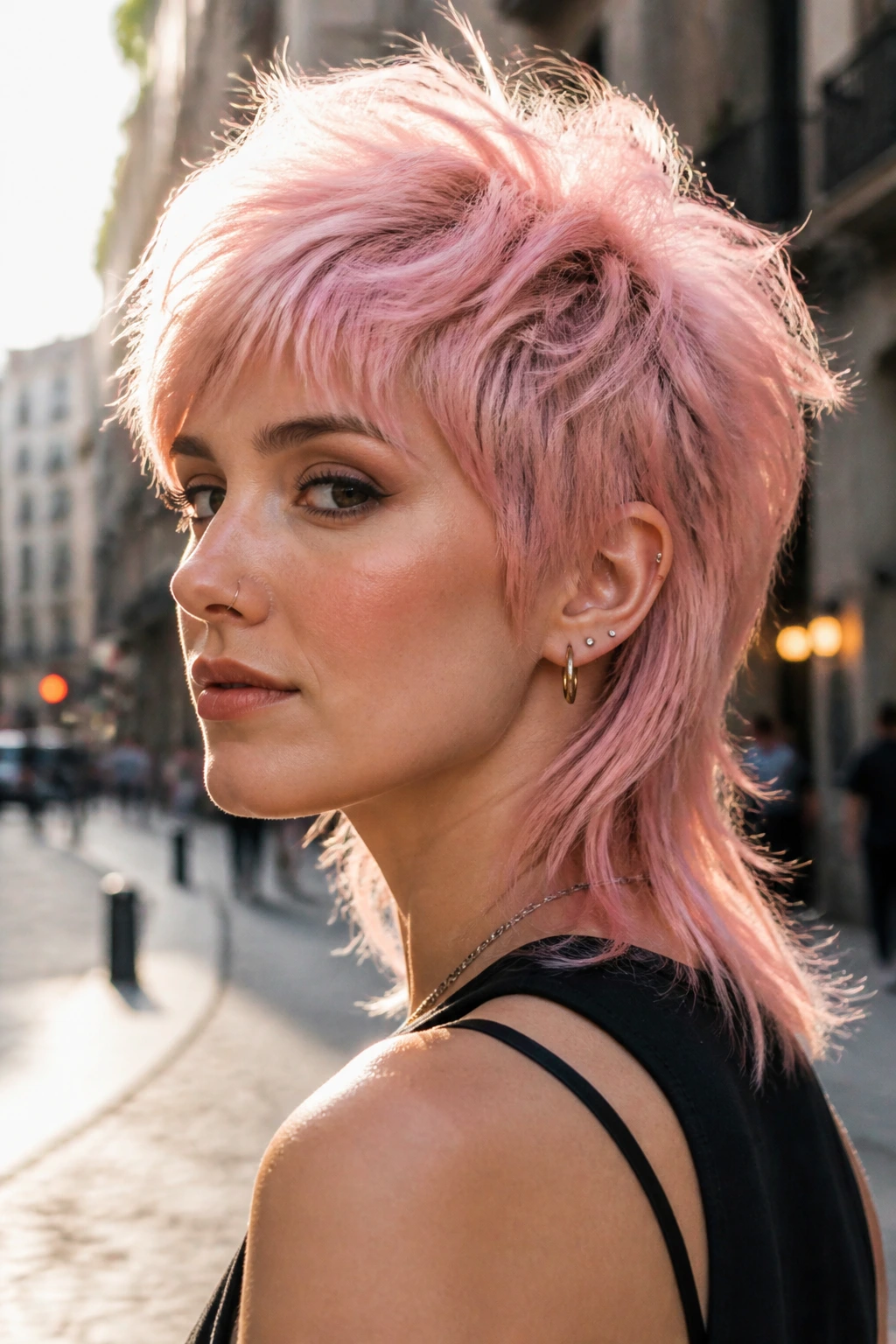
The modern shag-mullet, often called a “wolf cut” or “pixie-mullet,” is a high-volume style that utilizes short, choppy layers at the top and longer, wispy lengths at the back. It is arguably one of the most effective cuts for creating a massive amount of volume. Dyeing it a soft, dusty pink makes it look playful and contemporary.
Volume Through Geometry
- The short, layered crown is designed to sit up and create height.
- The longer back provides a sense of fullness that covers the neck and creates a “frame” for your face.
- It feels very intentional, which takes away the “I don’t have enough hair to style it” feeling.
16. Rose Gold Crimp
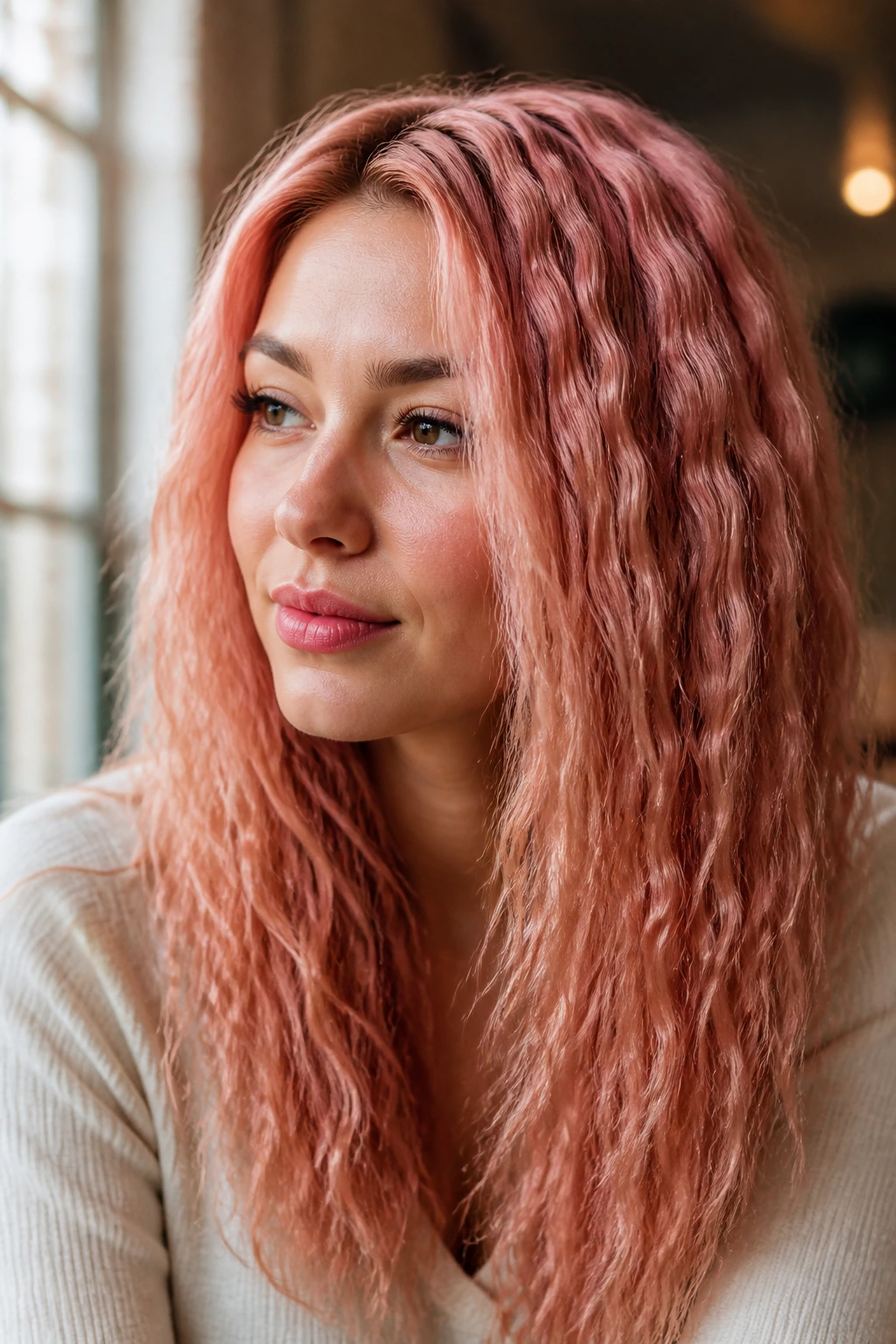
Crimping hair is a fantastic way to add immediate texture and volume to thin strands. When you pair a soft, rose gold hue with a loose, modern crimp, you get a style that feels thick, bouncy, and bohemian. The crimp holds the hair away from the scalp, and the rose gold color adds a metallic shimmer that catches light, creating the appearance of density.
Styling for Volume
- Use a three-barrel waver rather than a traditional crimper for a softer, more modern finish.
- The rose gold tone should have enough warmth to reflect light, which makes the hair look healthier and thicker.
Hair Care
- Use a thermal protection spray before using any heat styling tool to protect your fine hair from breakage.
17. The Pink “Lob” with Internal Layers
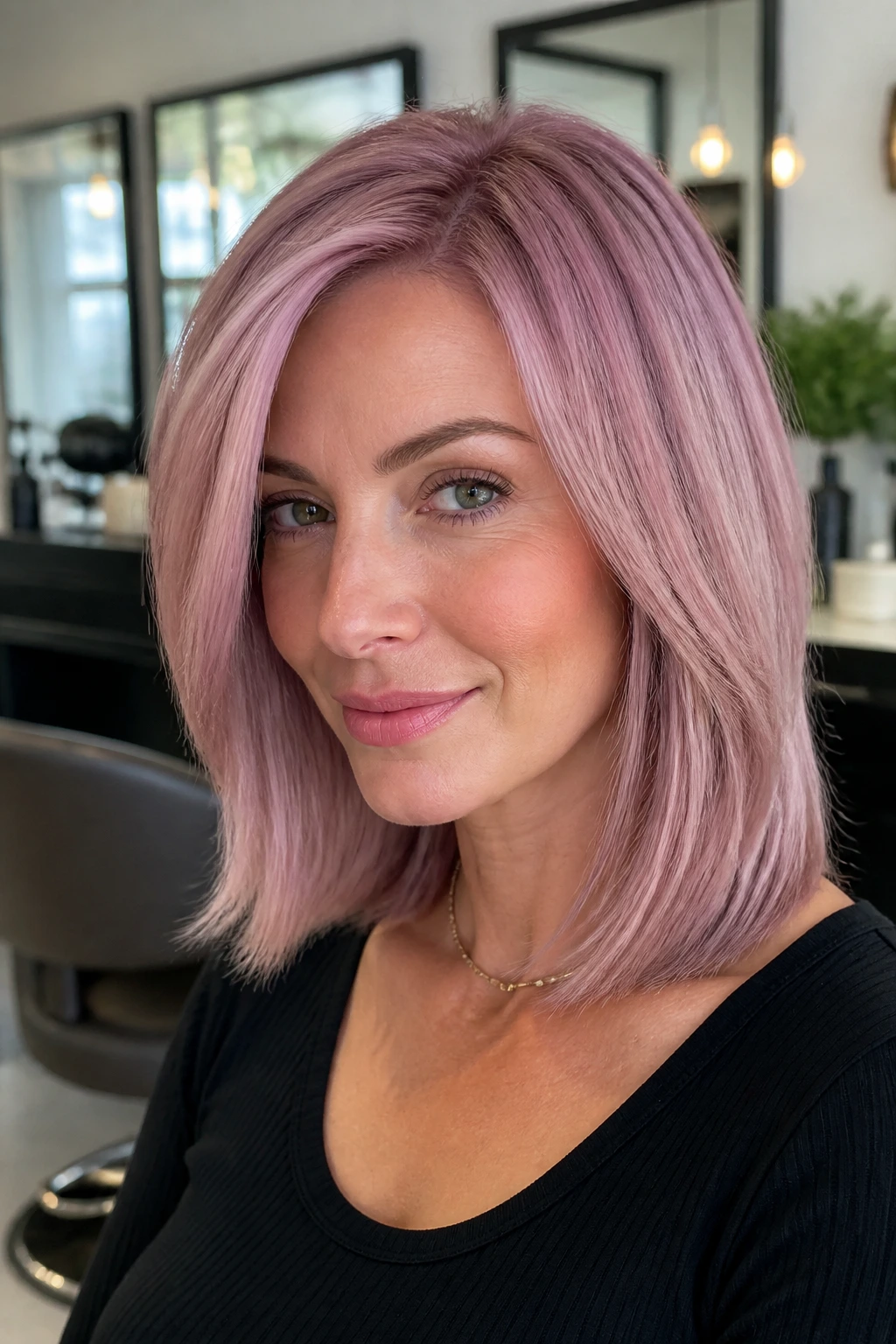
A “lob” (long bob) that hits right at the collarbone is perfect for thin hair. If you find the ends look wispy, ask your stylist to cut them “blunt” but add “internal layers”—layers hidden inside the hair that provide lift without thinning out the ends. Coloring this cut in a dusty orchid pink gives it a sense of luxury and depth.
Why the Lob is Reliable
- It’s the perfect length; it’s long enough to pull back but short enough to retain body.
- The blunt ends provide a heavy base that makes the hair look thicker than it is.
Tips for Success
- Always use a round brush when blow-drying to create a slight inward curve at the ends, which mimics the look of a full, thick head of hair.
18. Pale Pink Root Melt
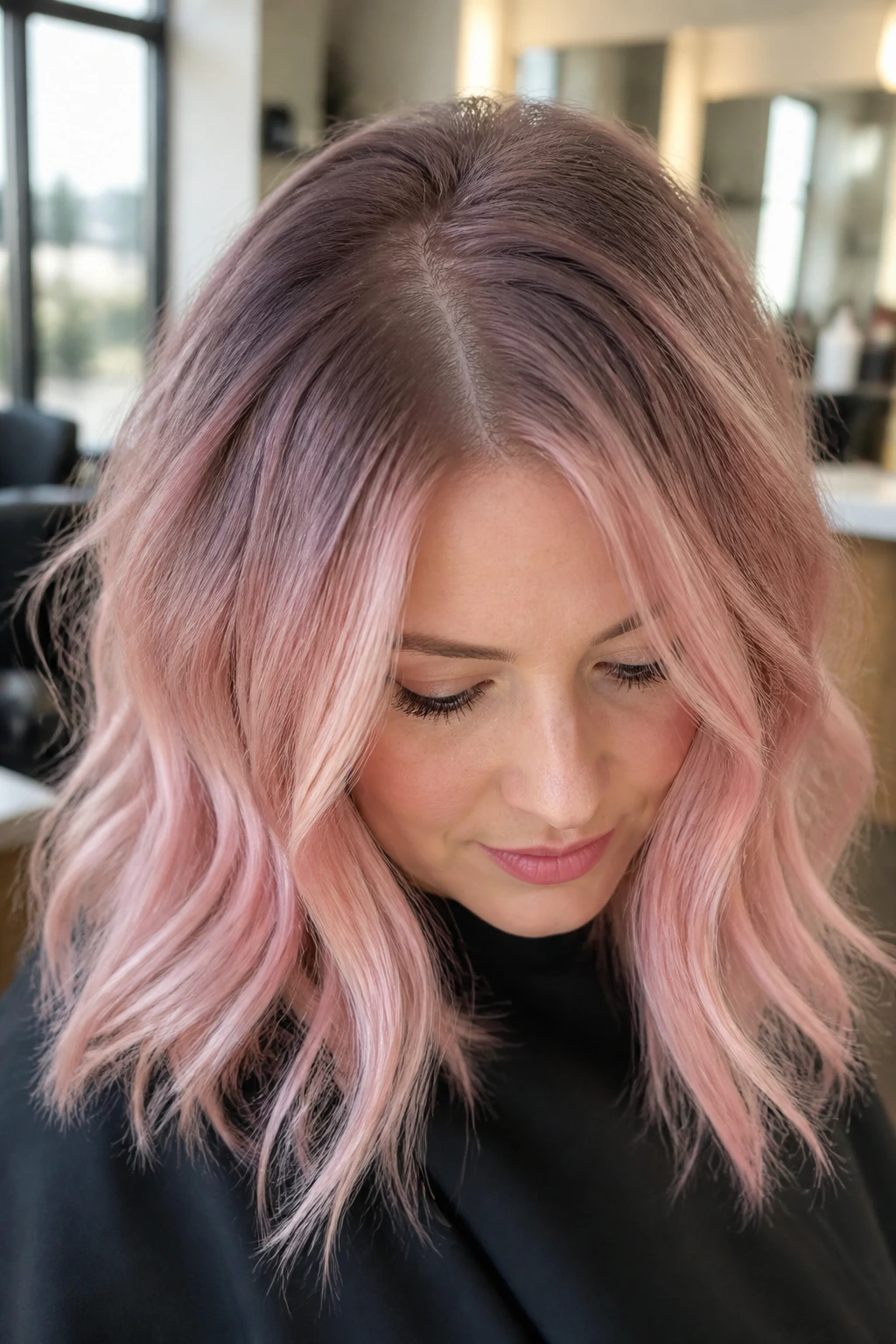
A root melt is a professional technique where your stylist blends your natural hair color into a lighter shade, essentially “melting” the two together. This is perhaps the most effective way to disguise thin hair at the crown. By using a pale pink as the transition color, the result is soft, beautiful, and completely hides the thinning areas by adding pigment right where you need it most.
The Value of Professional Color
- A root melt is bespoke to your hair density.
- It eliminates the “growing out” phase that makes hair look unkempt.
- It creates a soft, hazy look that is very flattering to all skin tones.
19. Pink-Tinted Blunt Bangs
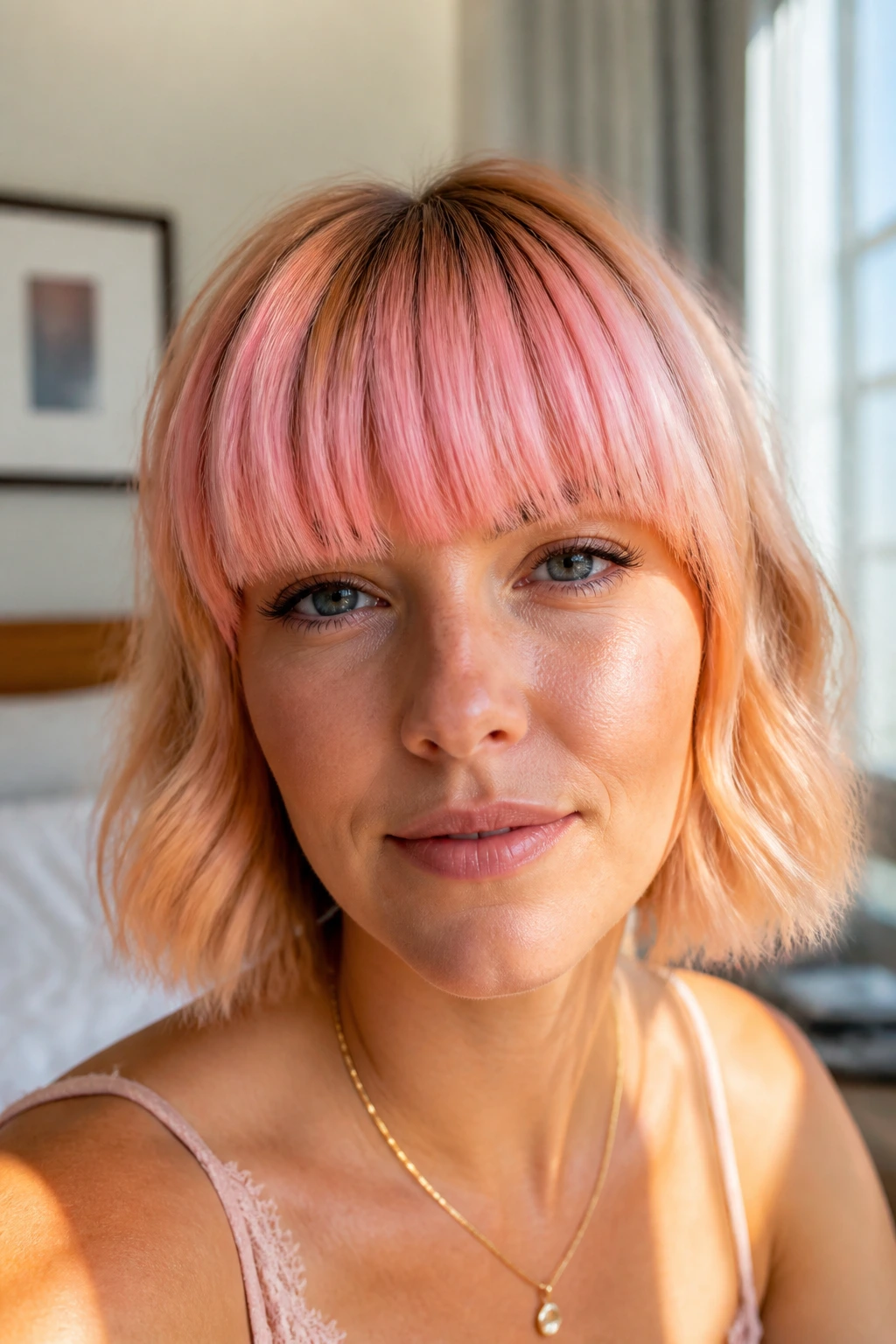
Bangs can be a great way to add volume to the front, provided they are cut with enough hair density from the sides. If you opt for a blunt, heavy bang and color it in a soft, muted pink, you create a very strong, fashionable focal point. The bangs provide a thick layer of hair on the forehead, which helps to hide any thinning around the hairline.
Why Bangs Work
- They create a sense of fullness in the front of the face.
- They can be styled with a round brush to give them height and movement.
- A light pink tint keeps them from looking like a heavy “curtain” and adds a playful element.
Styling Care
- Bangs can get oily faster than the rest of your hair, so keep a dry shampoo on hand to refresh them mid-day.
20. The Pink Pixie with Long Side-Swept Bangs
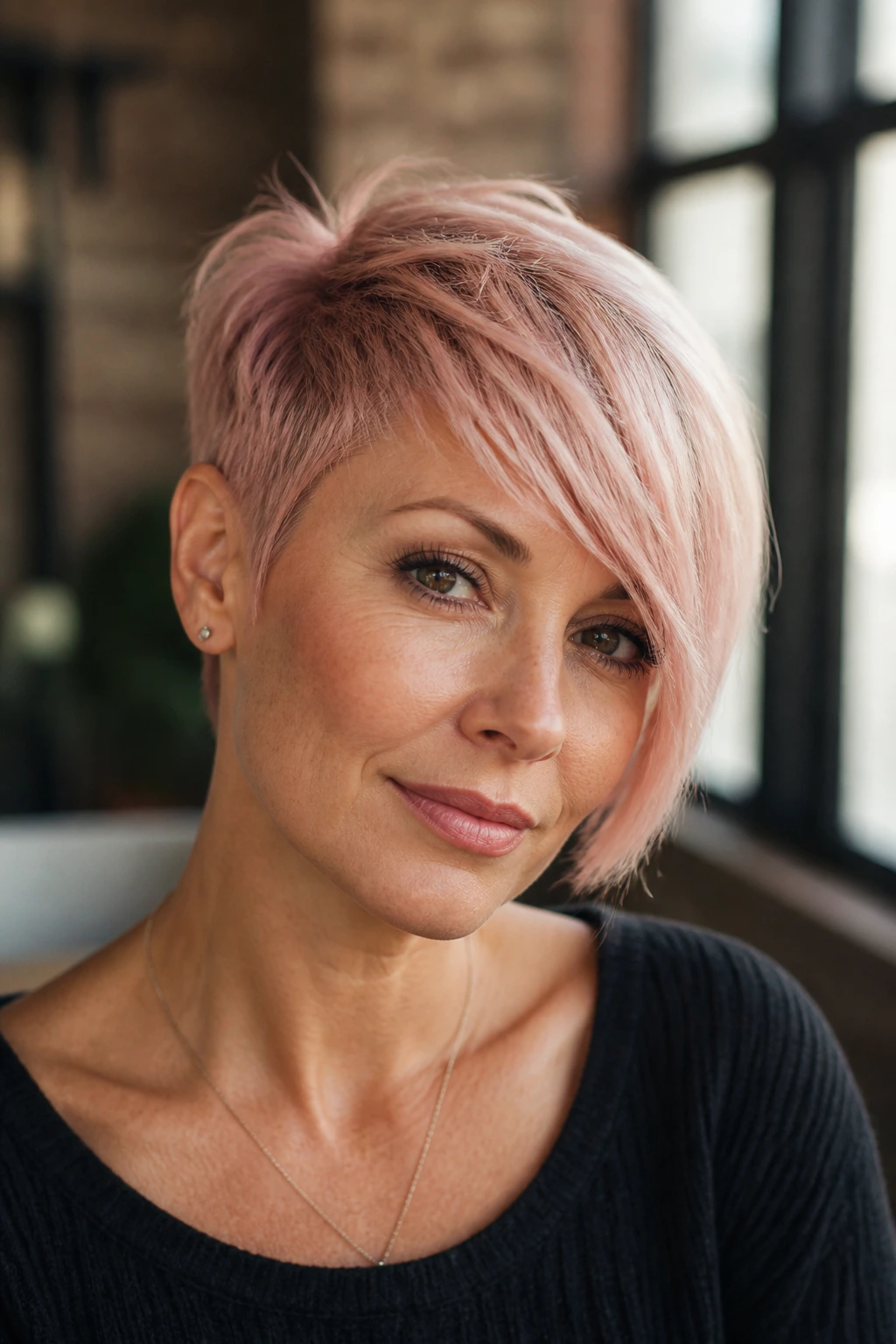
This style creates a beautiful contrast by keeping the back short and tight, while the front bangs are left long and side-swept. When you color this in a soft, blush pink, you get a sophisticated look that is very easy to manage. The long bangs provide a sense of length, while the short back keeps the hair from looking limp.
Balancing the Weight
- The side-swept bang creates a diagonal line across the face, which is visually interesting and helps to hide a thinner hairline.
- The short back sections provide the lift and structure necessary to keep the hair looking voluminous.
Final Thoughts
When you are dealing with thin hair, the most effective approach is to stop trying to hide the lack of density and instead start highlighting your haircut’s structure. Whether you go for a bold neon bob or a soft, faded rose balayage, the right pink power style can completely change how you view your hair. The goal is always to prioritize movement, texture, and strategic color placement.
Remember, fine hair requires a lighter touch. Be mindful of your styling products—if they leave a heavy residue, your hair will stick together, making the thinning even more obvious. Instead, opt for products designed specifically for fine hair that add grit and volume without the weight. Most importantly, wear your pink with confidence. When you feel great about your hair, the technical details become secondary to the impact you make.