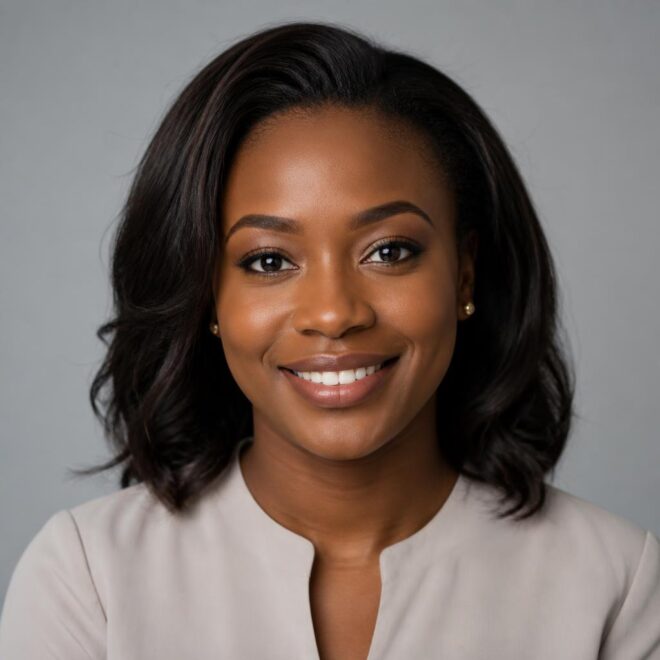


Braided cornrow hairstyles are far more than just a protective styling choice for natural hair; they are an enduring art form. For generations, this technique has served as a bridge between cultural heritage and modern expression, offering a canvas where creativity meets function. Whether you are aiming to shield your delicate strands from the drying effects of environmental exposure or simply looking for a low-maintenance look that demands respect, the cornrow remains the definitive go-to. The key to mastering this style lies not just in the tension of the braid but in the geometry of the scalp.
When you commit to a cornrow style, you are signing up for weeks of liberated mornings. The beauty of these braids is their versatility—they can be dressed up with gold cuffs for an evening out or kept sleek and minimal for the gym. However, the true mark of a great cornrow is the health of the foundation underneath. Over the years, I have seen many people sacrifice scalp health for aesthetic perfection, leading to breakage and discomfort. Let us walk through the most striking variations of these braids, ensuring you keep your hair thriving while looking your best.
1. Classic Straight-Back Cornrows
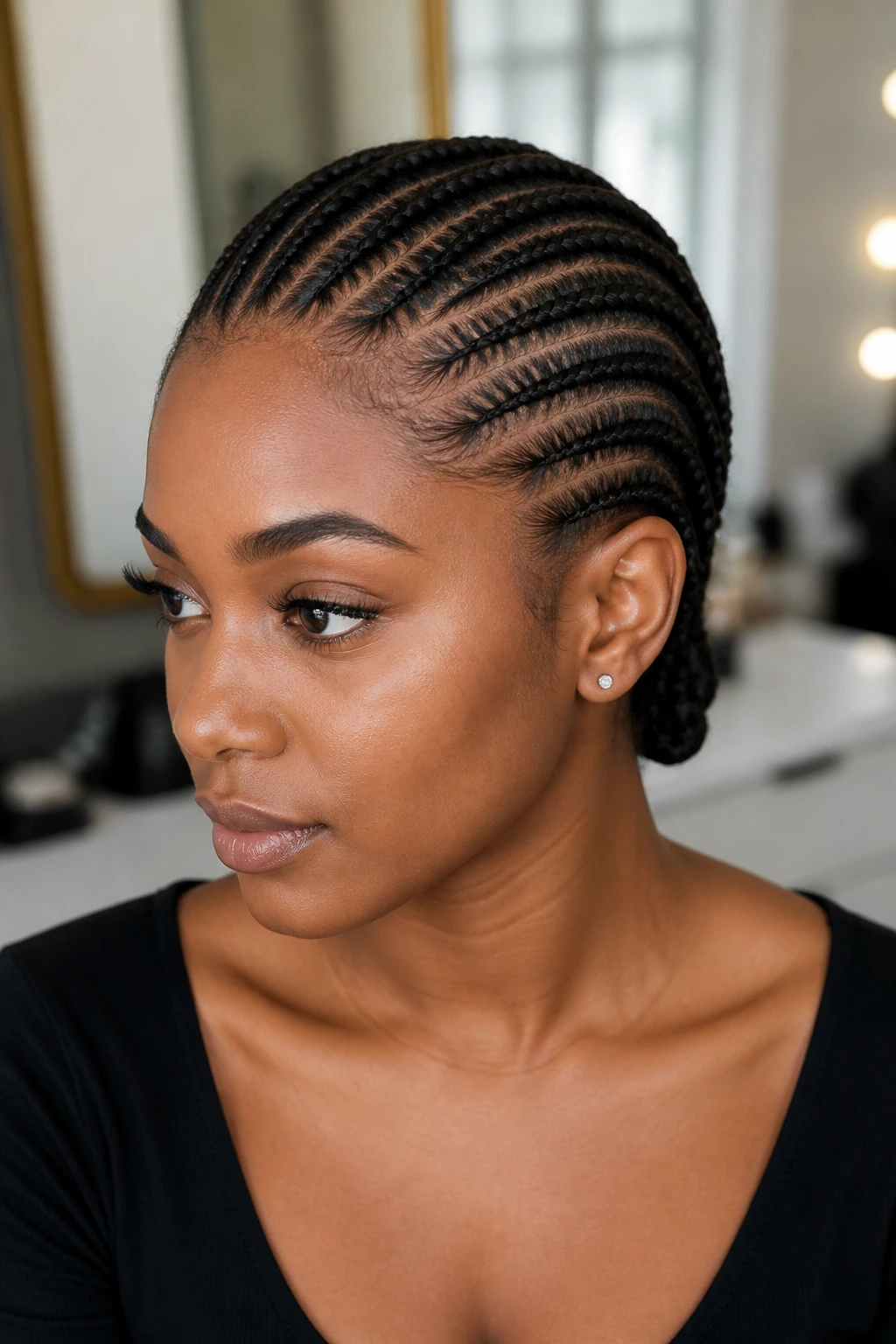
There is a profound beauty in simplicity. Straight-back cornrows are the foundation upon which all other complex styles are built, and for many, they remain the ultimate choice. They offer a clean, linear aesthetic that frames the face with precision and grace.
Why They Work
The tension is evenly distributed along the scalp, provided the braider understands how to maintain consistent grip from hairline to nape. These braids provide incredible access to your scalp for oiling and moisture retention, making them an excellent choice for a long-term protective style. You can easily tuck the ends or let them flow freely depending on your length.
Achieving the Perfect Line
- Start with freshly washed, deep-conditioned hair to ensure maximum elasticity.
- Use a fine-tooth rattail comb to create razor-sharp parts; crooked parts can lead to uneven tension.
- Apply a lightweight pomade or a non-greasy edge control to the roots to minimize frizz without creating heavy build-up. Pro tip: Always secure the very ends with small, snag-free bands or a light sealant to prevent unraveling during sleep.
2. Intricate Zig-Zag Parting
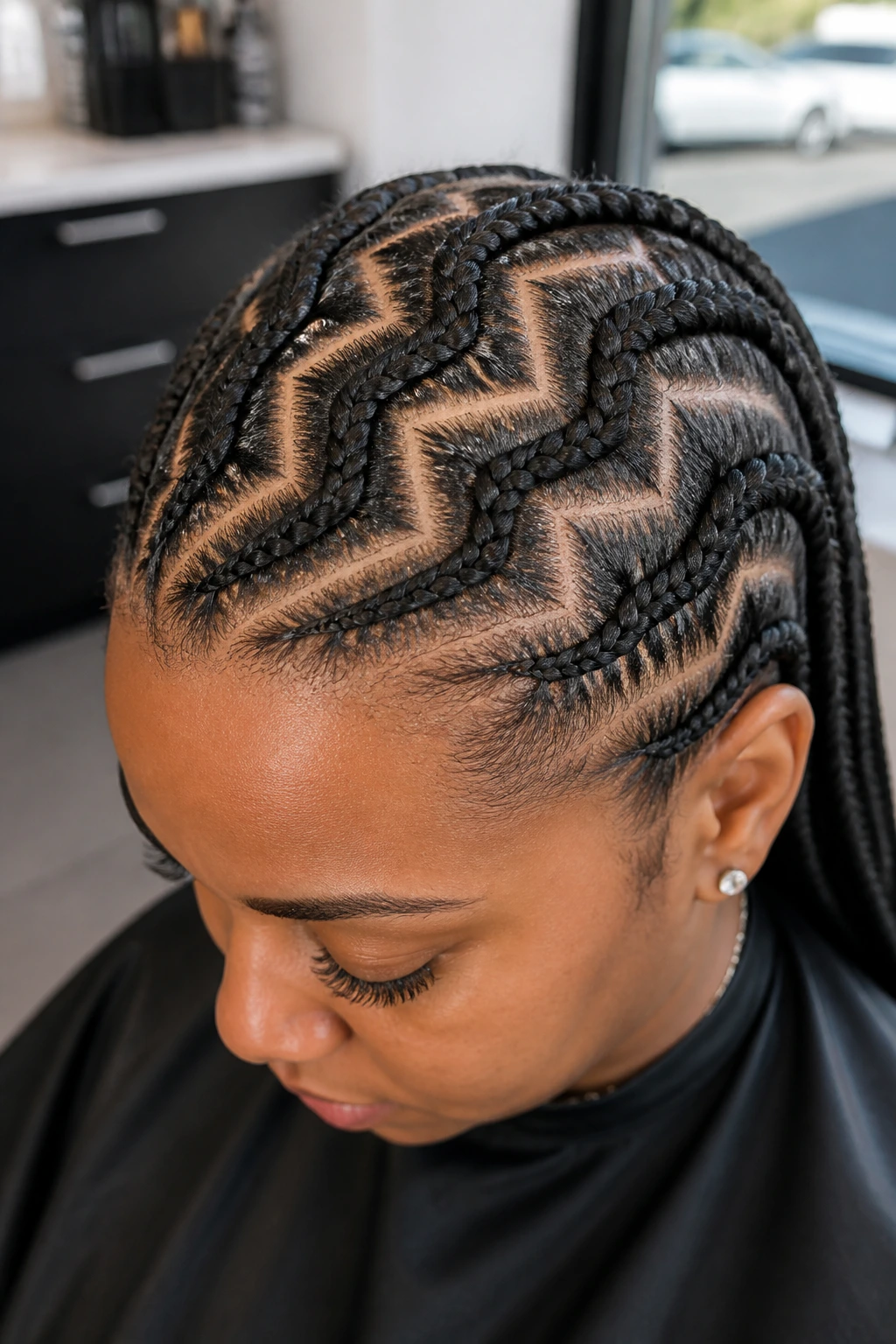
If you find the standard straight lines a bit repetitive, shifting the geometry of your parts changes the entire energy of the look. Zig-zag cornrows add a playful, graphic element to the hairstyle without requiring extra length or synthetic hair.
The Impact of Geometry
The jagged movement of the parts draws the eye across the scalp, creating an illusion of density. This style works exceptionally well on hair with a tighter curl pattern, as the natural texture provides the grip necessary to hold the “V” shapes in place. You can keep the braids themselves simple, knowing the parting detail is doing all the heavy lifting.
Maintaining the Sharpness
- Moisturize the scalp daily with a light spray of rosewater or a diluted leave-in conditioner to prevent the skin between the parts from drying out.
- Tie your hair down with a silk or satin scarf every night; this is non-negotiable for keeping the zig-zag edges from becoming fuzzy by the second morning.
- If you notice slight lifting, a quick touch-up with a dab of firm-hold edge gel can reset the line in seconds.
3. High-Pony Feed-In Cornrows
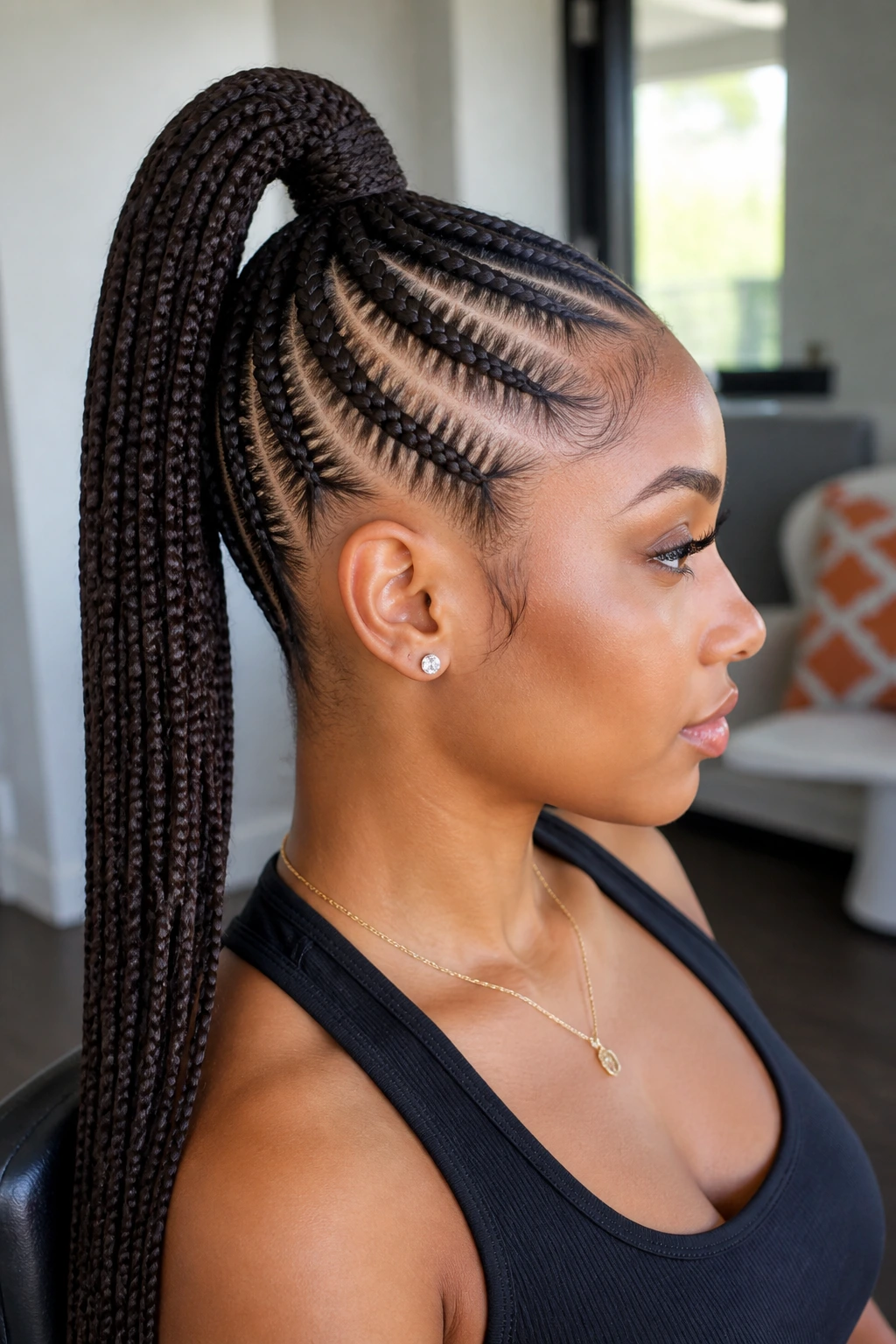
Merging the structure of cornrows with the height of a ponytail creates a sophisticated, lifted look that instantly elongates the face. By “feeding in” extensions near the base, you can achieve a dramatic, voluminous ponytail that still feels light on the scalp.
Why This Style Is a Favorite
It removes the weight of long braids from your neck, making it an ideal candidate for warmer weather. The transition from the flat-braided scalp to the loose hair of the ponytail provides a seamless bridge between a structured style and a more casual, flowing aesthetic.
Step-by-Step Execution
- Part your hair in a circular fashion around the crown, leaving enough hair at the perimeter to create the base cornrows.
- Braid the perimeter hair toward the center, feeding in small amounts of extension hair gradually to create a smooth, thick braid that doesn’t pull at your hairline.
- Once all perimeter braids meet at the crown, gather the extensions into a single secure ponytail.
- Wrap a small strand of hair around the base to hide the hair tie, giving the style a professional, polished finish.
4. Side-Swept Goddess Braids
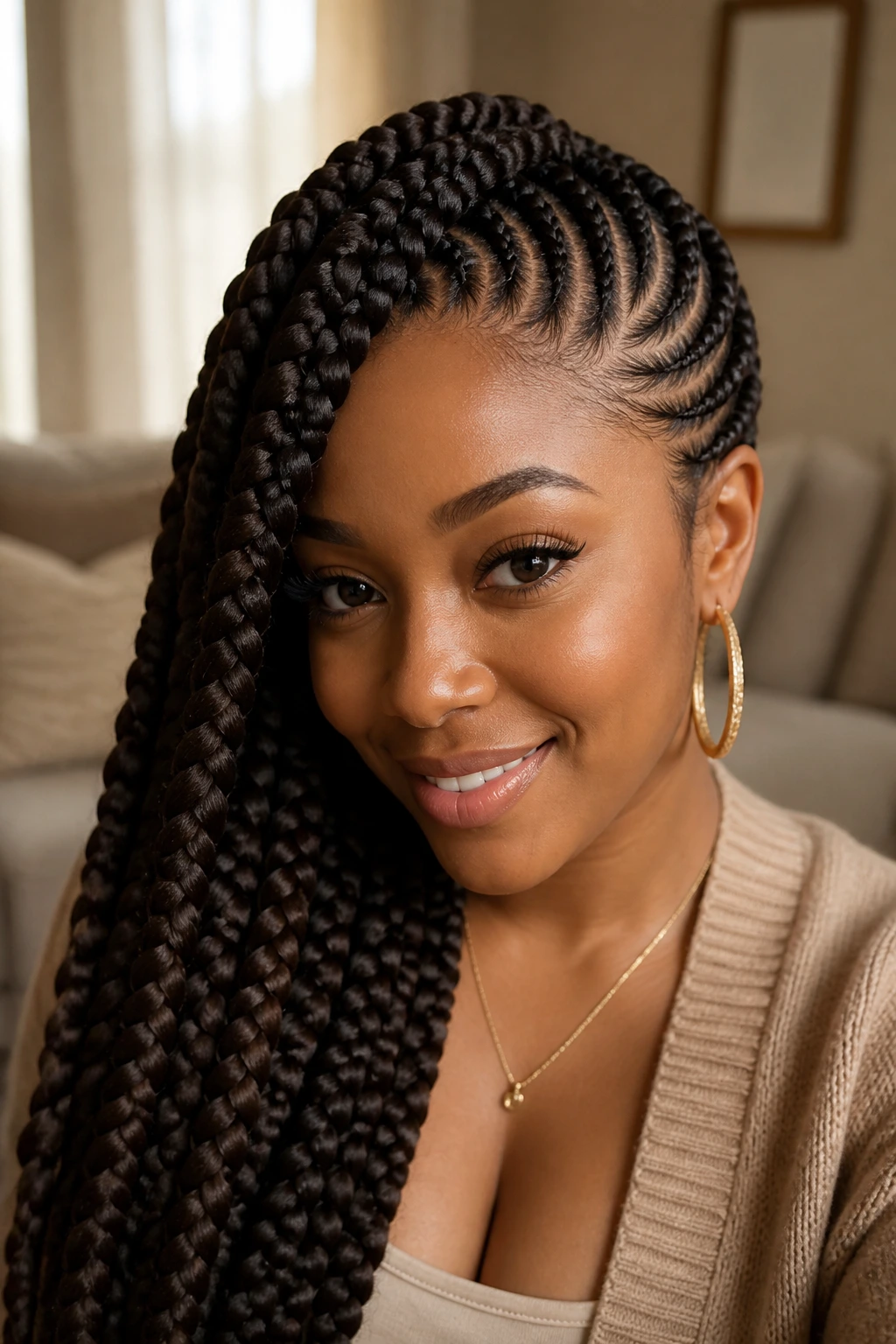
Goddess braids are characterized by their larger size and intentional, voluminous aesthetic. When swept to one side, they offer a regal, romantic appearance that feels much softer than tighter, smaller cornrow styles.
The Appeal of the Goddess Braid
The increased thickness of these braids means you spend far less time in the stylist’s chair. Because they use more hair per braid, they are less likely to snag or cause the “pinching” feeling often associated with micro-braids. This is a quintessential style for special occasions or when you simply want to feel elegant without excessive fuss.
Keeping the Curl Pattern Alive
- Use a high-quality human hair or premium synthetic blend for the ends if you want them to remain wavy or curly.
- Avoid heavy, oily products on the ends, as these can weigh down the texture and make the hair look limp after a few days.
- A light spritz of water mixed with a leave-in detangler will keep the hair looking fresh and vibrant long after the initial installation.
5. Crown Braids with Detailed Pacing
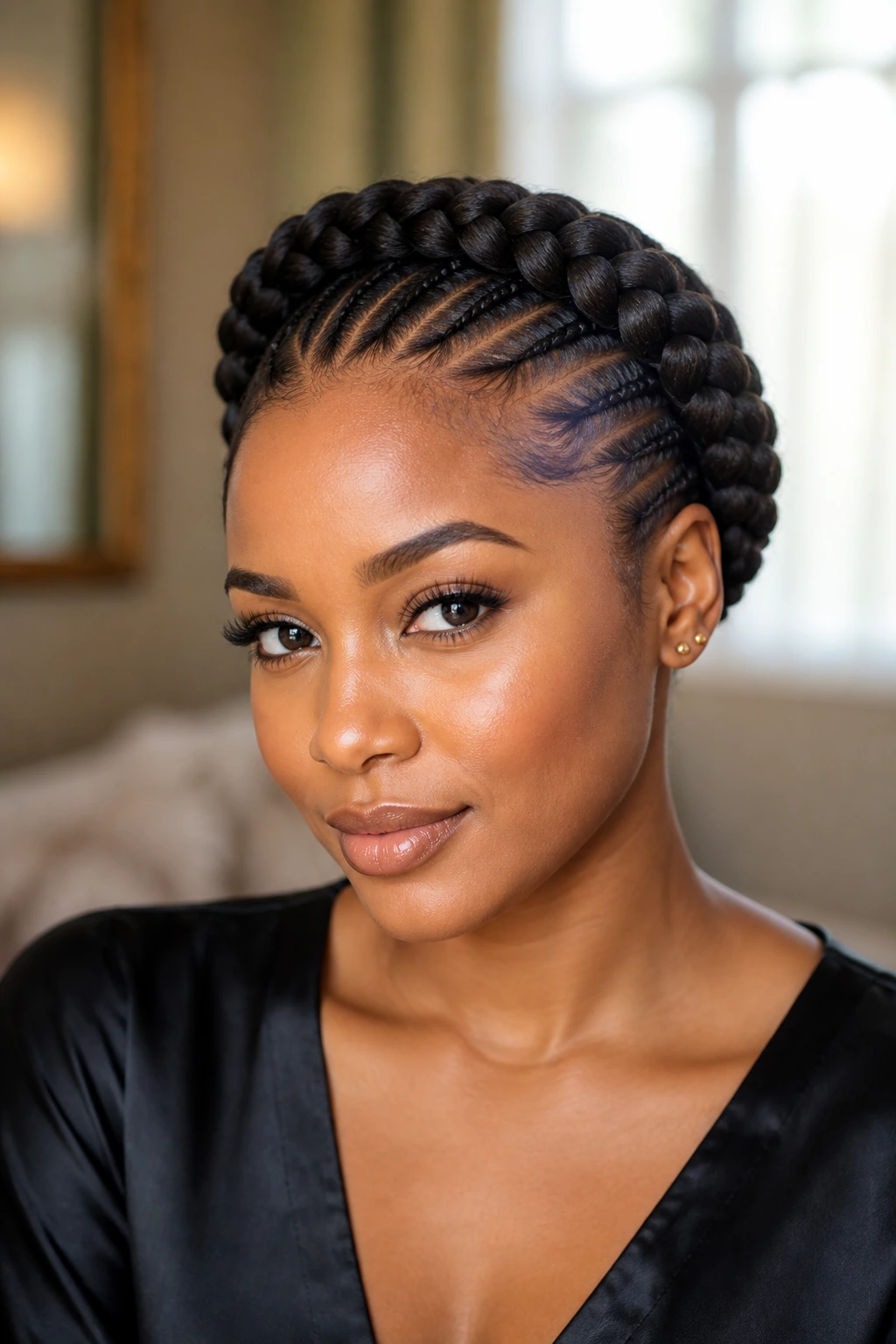
A crown braid wraps around the head like a halo, framing the face while keeping every strand of hair tucked away. It is an elevated, classic look that works for formal settings or professional environments.
Why It Remains Timeless
The circular tension creates a uniform lift at the roots, providing a natural-looking volume that doesn’t require heat styling. It essentially turns your own hair into an accessory. By varying the thickness of the braid as it moves around the head—perhaps starting thin at the temple and thickening as it reaches the back—you add a layer of sophistication to the design.
Essential Care Tips
- Avoid over-tightening at the temples, which is a sensitive area prone to traction alopecia.
- Use a small amount of shea butter along the length of the braid to maintain shine and prevent individual flyaways from escaping the weave.
- If you are creating this look on shorter hair, use minimal extensions to bridge the gaps, but ensure the color match is exact to keep the crown looking seamless.
6. Geometric Heart-Shaped Partings
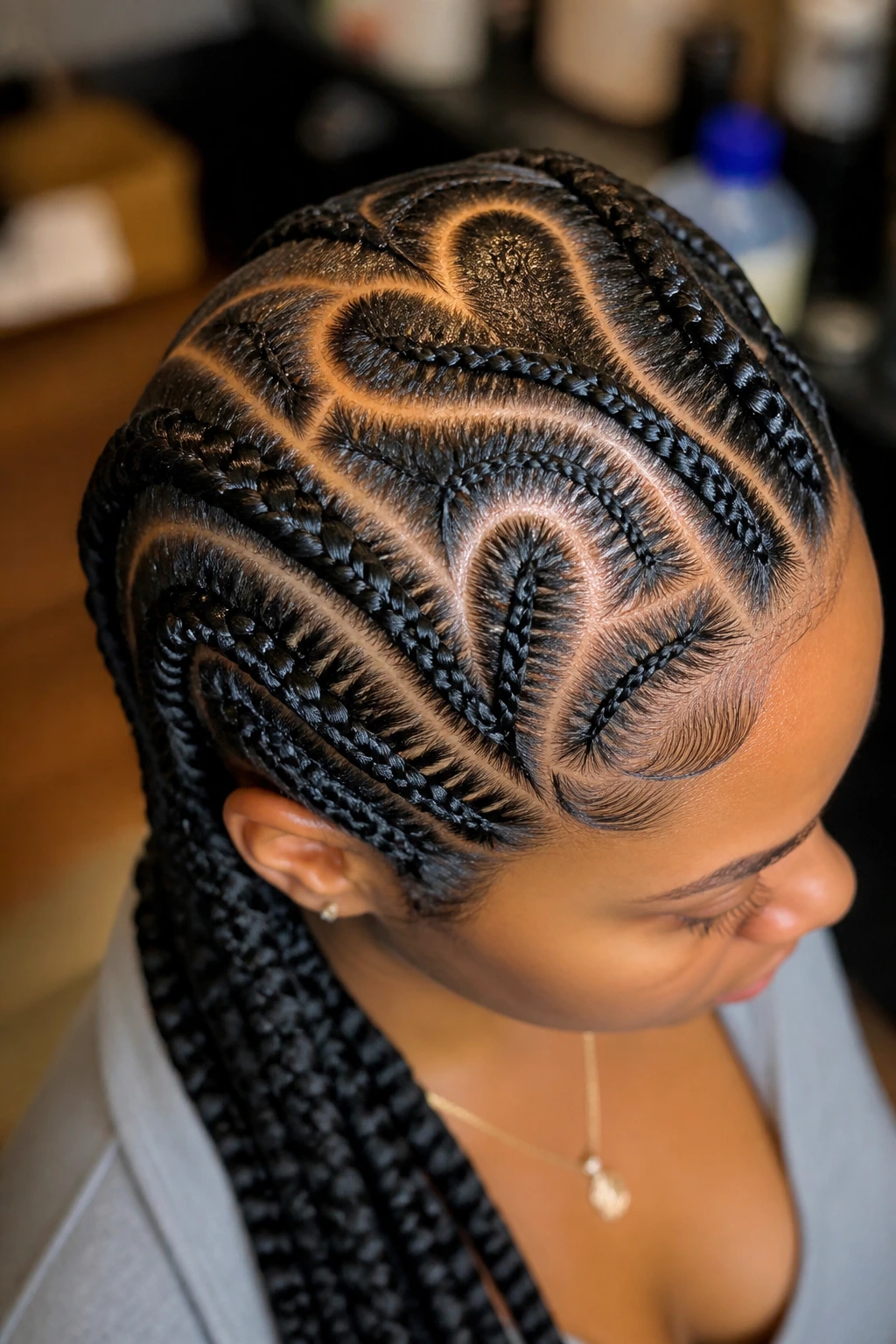
Sometimes the most interesting part of a hairstyle isn’t the braid itself, but the negative space left behind. Incorporating heart-shaped partings into your cornrow base is a charming, customized way to stand out.
The Art of the Heart
This style requires a steady hand and usually a bit more time. The braider must carefully map out the heart shape before laying the first braid, ensuring that the lines are symmetrical and clean. It’s a fantastic option for birthdays, holidays, or any event where you want your hair to serve as a conversation piece.
Making It Last
- Because these partings are more intricate, they can lose their definition faster than straight-back styles.
- A firm-hold gel is your best friend here, but avoid “crunchy” formulas that flake.
- Sleep with a satin bonnet that is large enough to contain the entire style without pressing down on the heart partings, as pressure can distort the shape overnight.
7. Chunky Bohemian Cornrows
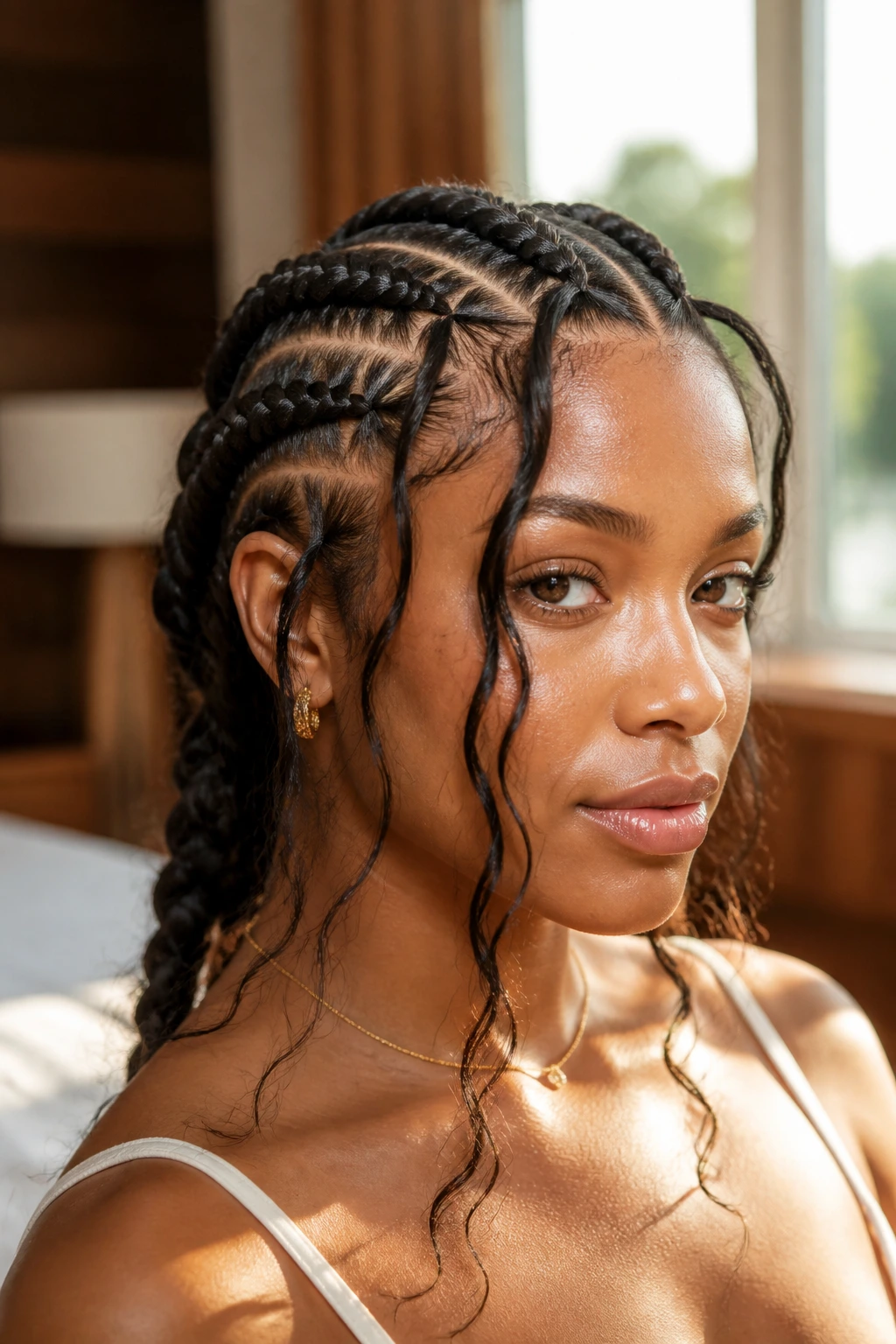
Bohemian styles are defined by their “undone” aesthetic. By leaving strands of hair loose throughout the braids, you create a soft, ethereal vibe that feels relaxed and effortless.
The Blend of Structure and Texture
This style bridges the gap between clean cornrows and loose, curly hair. It’s perfect for those who don’t want to choose between the two. The key is to select high-quality, curly extensions that mimic your natural curl pattern so the transition from scalp to loose hair is seamless.
Styling Considerations
- These braids require more maintenance than standard cornrows, as the loose pieces can tangle.
- Use a wide-tooth comb or your fingers to gently detangle the loose strands daily.
- Apply a light curl-defining cream to the loose hair to keep it bouncy and free of frizz throughout the day.
8. Tribal-Inspired Fulani Braids
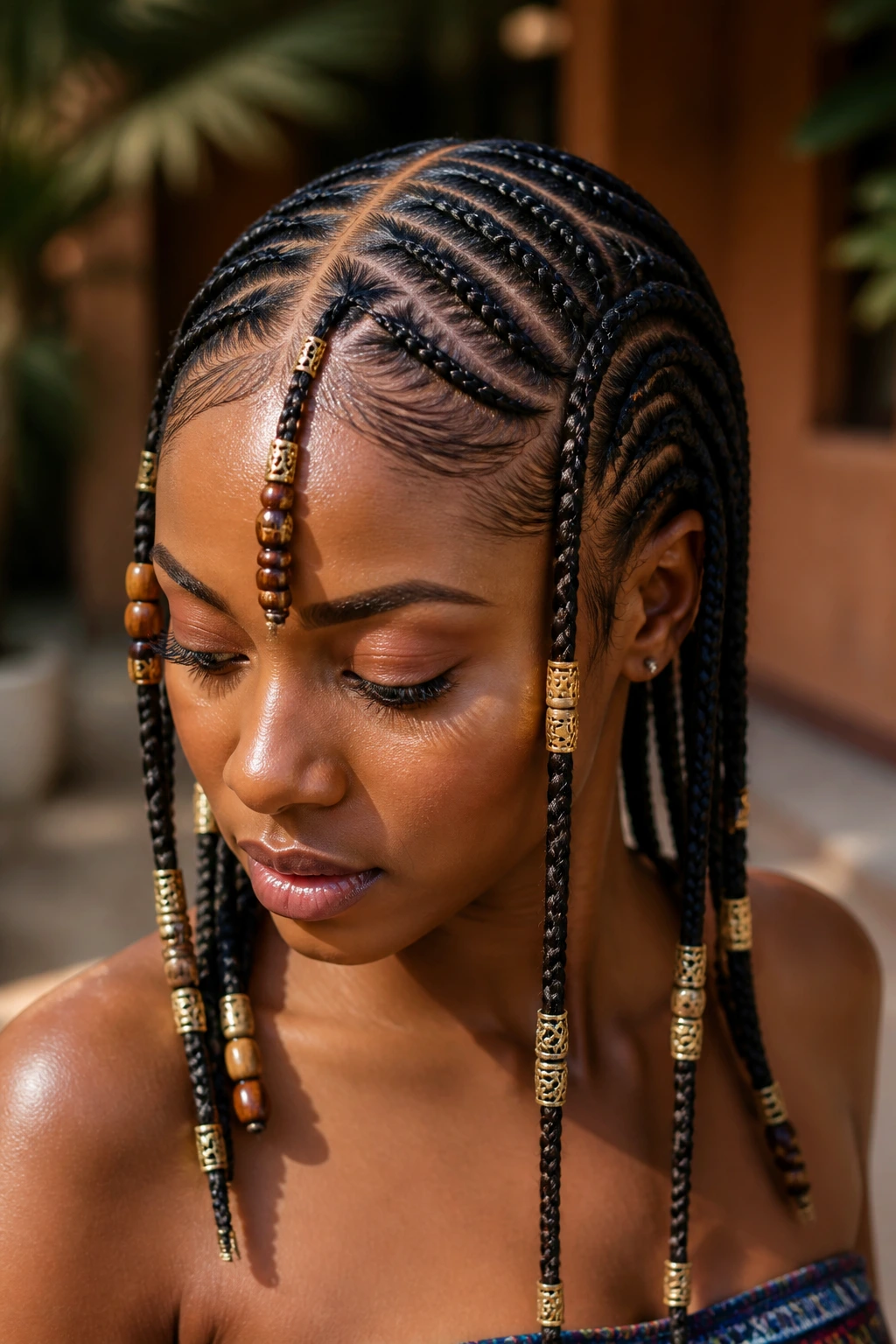
Fulani braids typically feature a center part with braids flowing toward the ears, often adorned with beads or gold accessories. This style is deeply rooted in tradition and offers a beautiful, intricate look that feels intentional and ornate.
The Power of Accessories
The inclusion of gold cuffs, beads, or cowrie shells isn’t just decorative; it adds weight and movement to the hair. When you turn your head, the subtle jingle of the accessories provides a sensory component to the style that is both nostalgic and empowering.
Caring for the Beads and Cuffs
- Choose lightweight accessories to avoid unnecessary tension on the braids.
- Ensure the beads are securely fastened; there is nothing more frustrating than having them slide off in the middle of a busy day.
- Clean your gold accessories with a soft cloth to maintain their luster, as buildup from hair products can dull the metal over time.
9. Double-Braid Pigtails
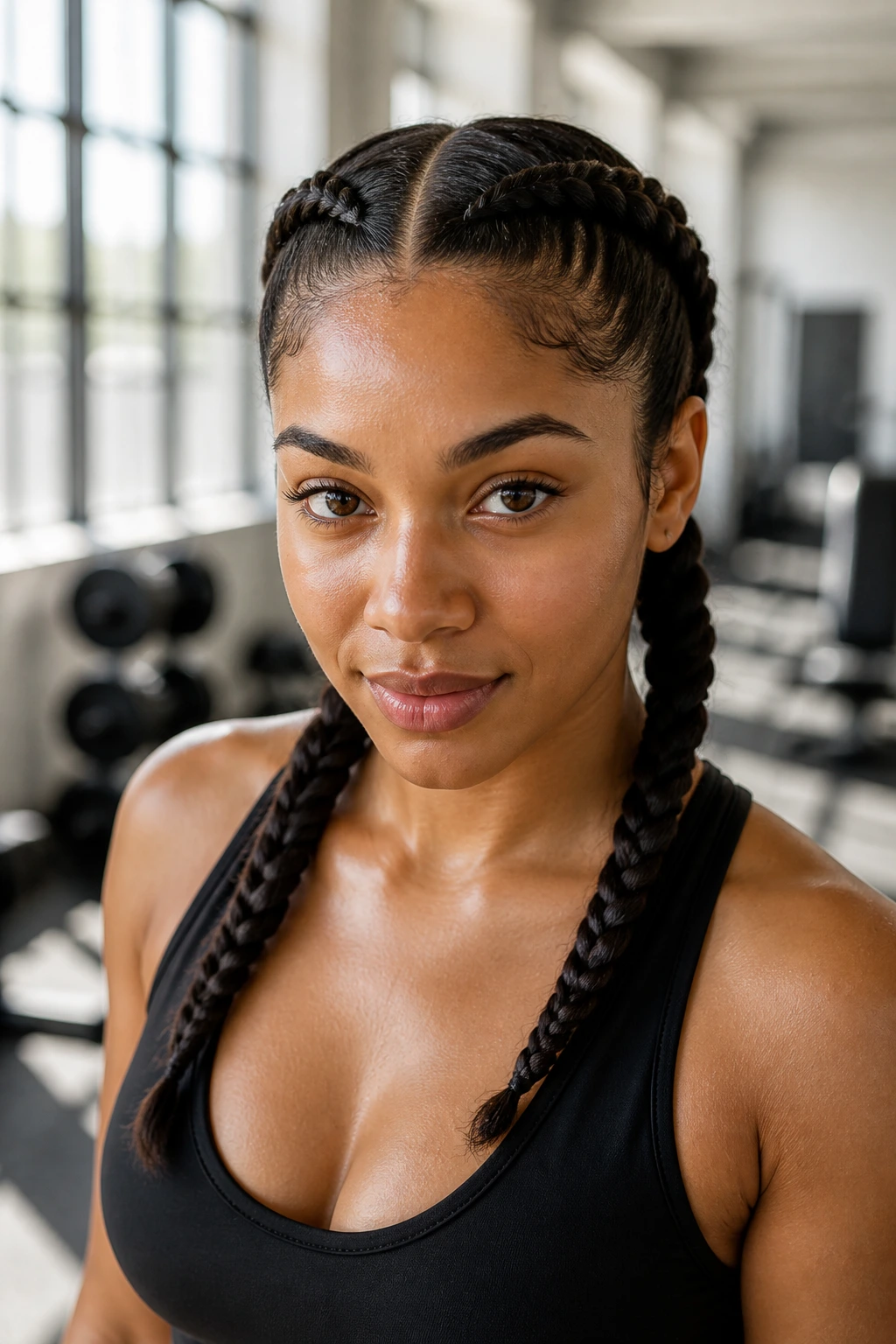
Pigtail braids are not just for children; when executed with sleek cornrows, they offer a sporty, high-fashion look that is incredibly practical. This is my favorite style for high-intensity days because it keeps the hair completely off the face and neck.
The Sporty Appeal
By splitting the hair down the center, you create a balanced weight distribution. You can choose to braid toward the center or toward the sides, depending on how much volume you want at the hairline. This is an incredibly resilient style that can easily survive a vigorous workout or a long flight.
Keeping the Scalp Happy
- Apply a soothing peppermint or tea tree scalp oil to the parts to keep the skin cool and refreshed.
- If you find the braids are pulling too hard at the roots, add a few more cornrows to the design to distribute the tension across more hair strands.
- Secure the ends with clear, snag-free elastics to ensure the braids don’t unravel while you are on the move.
10. Low-Bun Cornrow Updo
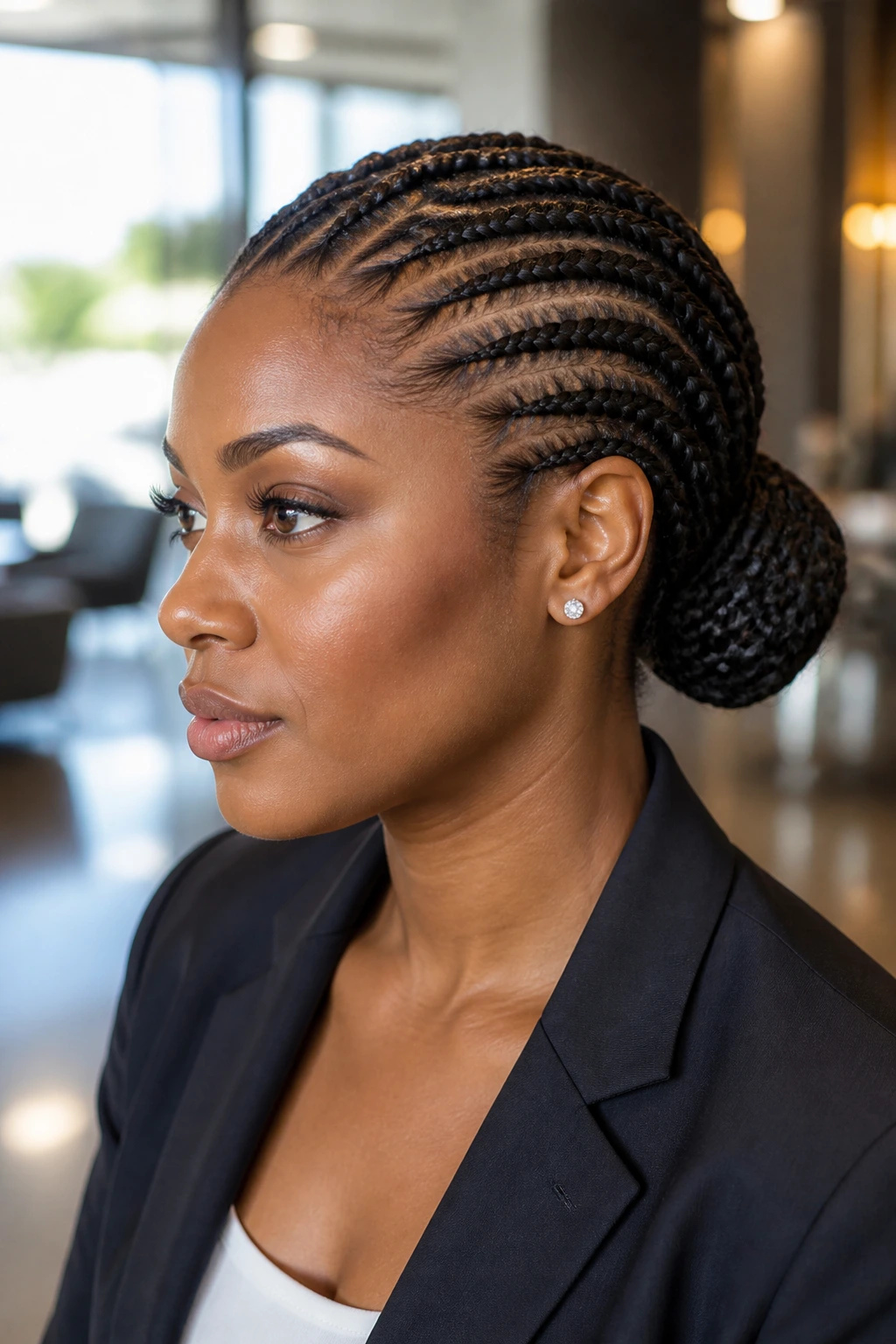
For a look that screams professional elegance, a low-bun updo finished with cornrows is unmatched. This style keeps the ends tucked away, protecting them from friction, while the bun provides a polished finish at the nape of the neck.
The Versatility of the Bun
You can opt for a high-top bun if you prefer more height, or a low-slung bun for a sophisticated, boardroom-ready appearance. By feeding the cornrows into a central point at the back, you create a clean, minimalist silhouette that highlights your features.
Maintenance and Longevity
- This style is built for endurance; it can easily last three to four weeks with proper care.
- Use a light silk-infused foam to wrap the bun each night, ensuring it maintains its shape and doesn’t get frizzy from pillow friction.
- If the ends of your braids start to look worn, consider re-dipping them in hot water to seal them back into a sleek, smooth shape.
11. Side-Part Sleek Cornrows
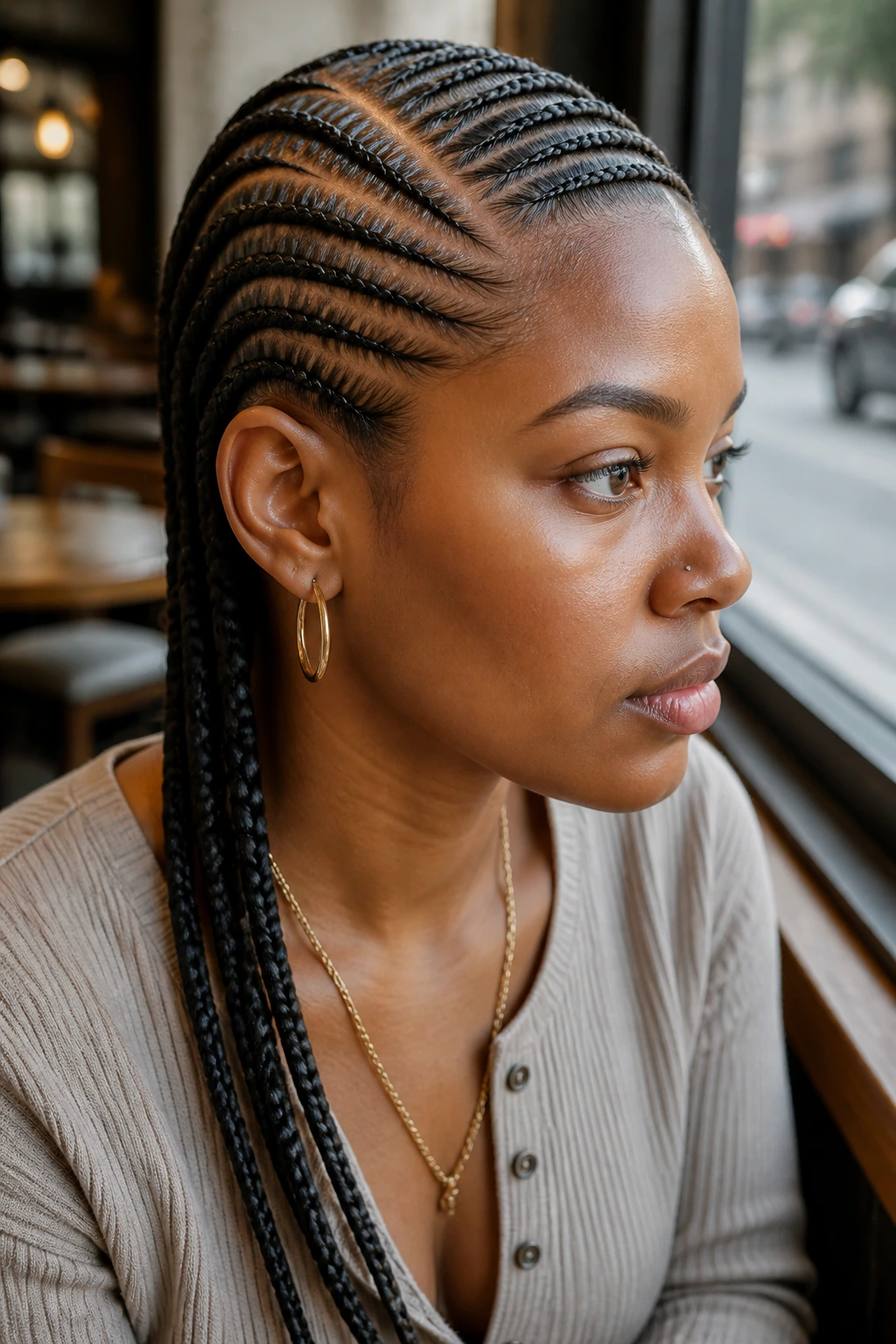
Sometimes, a simple shift in parting makes a world of difference. A deep side part creates a dramatic, asymmetrical frame that looks incredibly chic. It breaks up the uniformity of traditional cornrows and adds a touch of modern flair.
Why a Side Part Changes Everything
The side-parting draws attention to the eyes and cheekbones on one side of the face, creating a flattering, softened aesthetic. It’s an ideal choice for those who feel that center-parted braids don’t complement their face shape.
Tips for Execution
- Ensure the part is perfectly straight, even if the braids themselves are curved.
- Use a small amount of edge control to keep the baby hairs along the part laid flat.
- Avoid adding too many extensions on the side where the hair is shorter, as this can make the braids look lopsided.
12. Multi-Directional Braided Swirls
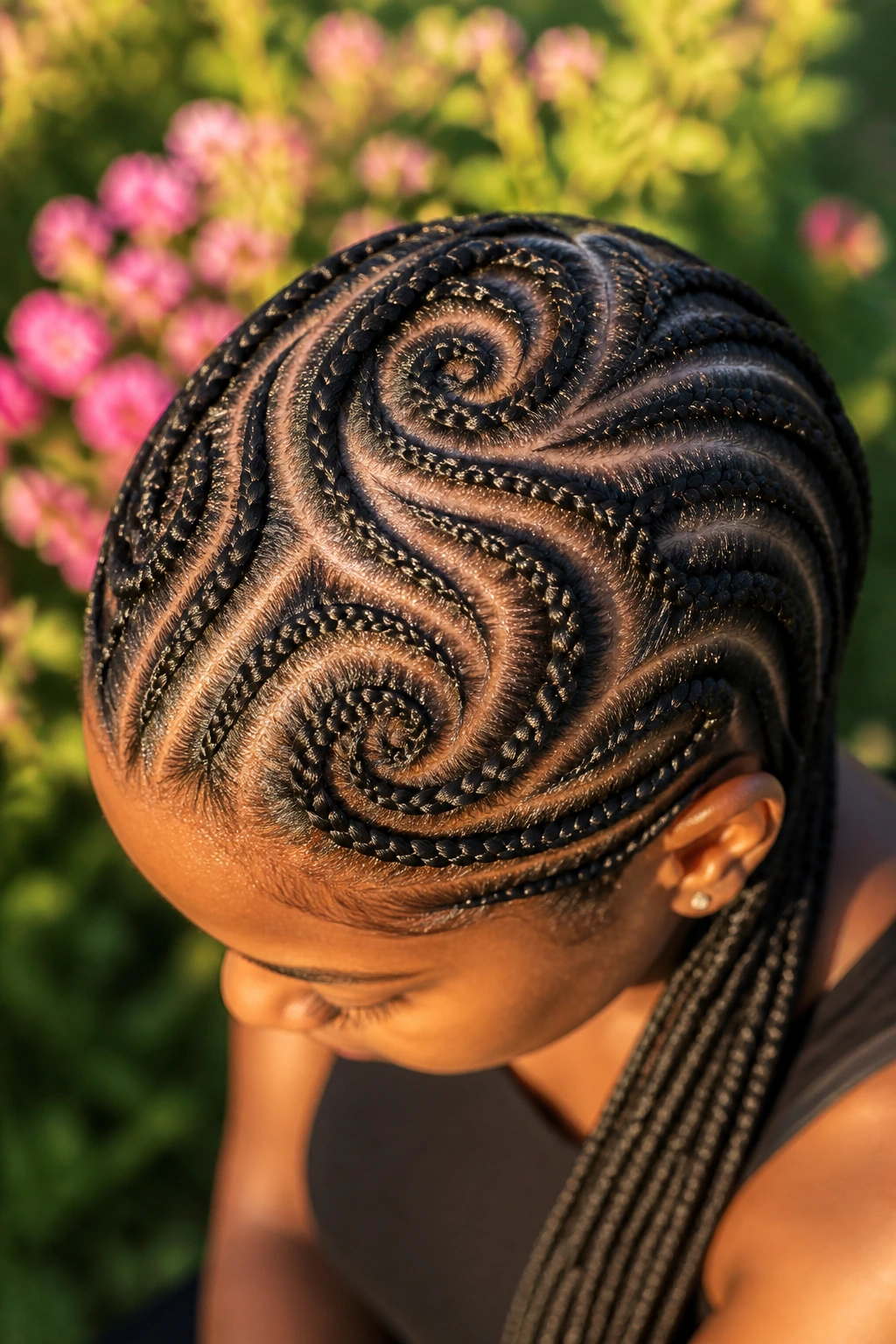
These braids aren’t just lines; they are patterns that swirl across the head, mimicking the natural flow of hair growth. This style is an incredible technical feat and serves as a true piece of hair art.
The Complexity of the Swirl
Creating a cohesive swirl requires patience and a clear vision. The braider must constantly adjust the tension and direction to ensure the braids don’t bunch up or create gaps. This style is usually reserved for experienced braiders who can handle the constant rotation of the wrist.
Why This Style Lasts
- The intricate, interlocking design helps the braids hold their shape longer.
- Because the braids follow the contours of the skull, they are less likely to snag on clothing.
- This is a fantastic “statement” style that doesn’t need any added accessories to look finished.
13. Braided Top-Knot with Loose Ends
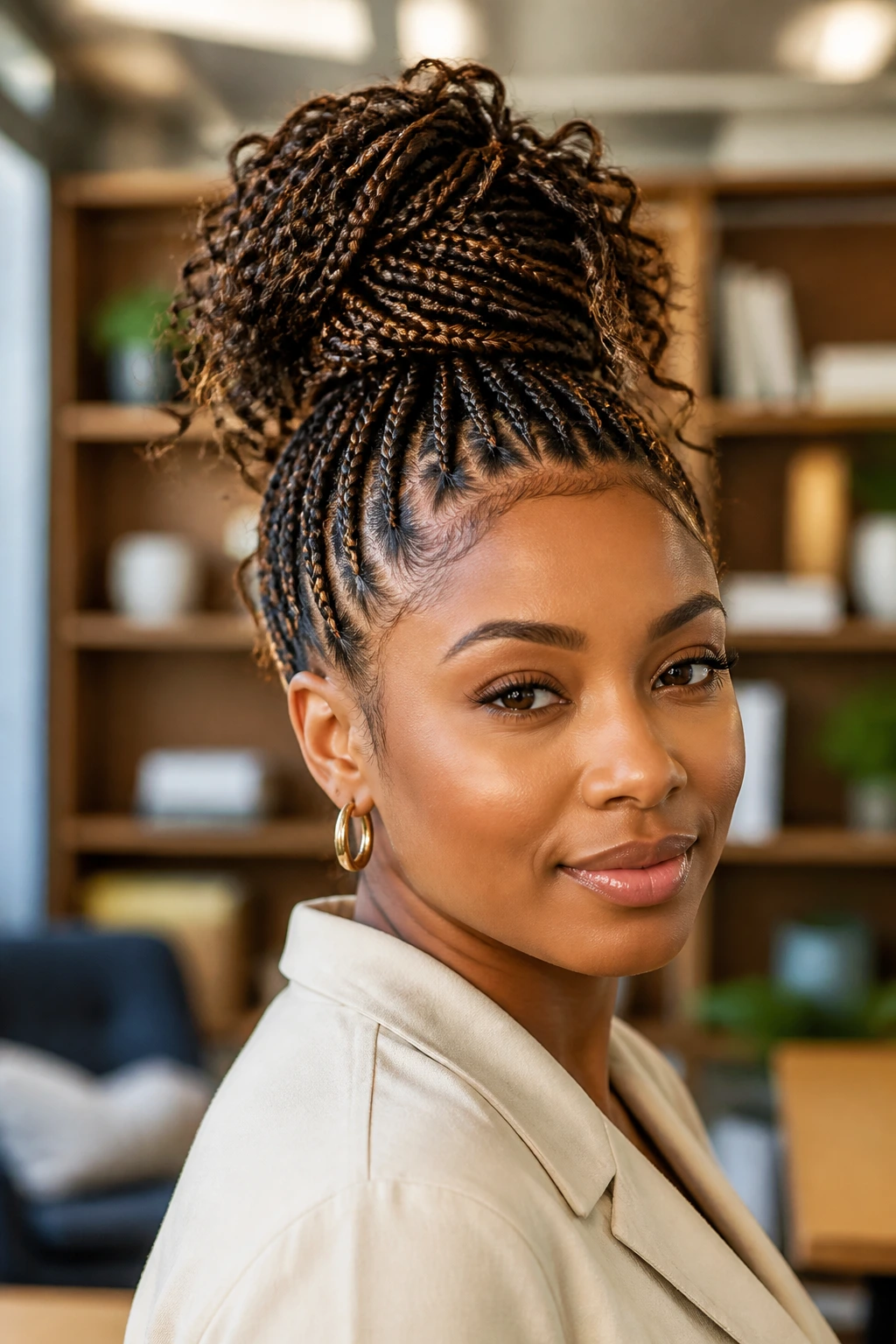
Combining a tight, cornrowed base with a loose, voluminous top knot is the perfect “business in the front, party in the back” look. The cornrows provide the structure, while the loose top knot allows for effortless movement and style.
The Practicality of the Top-Knot
A top-knot lifts your hair away from your face and neck, keeping you cool and looking sharp. It’s an ideal style for a transition from a work day to an evening event. You can experiment with the size of the knot, ranging from a small, tight bun to a large, voluminous display.
Pro Styling Advice
- Use a lightweight oil on your hands when gathering the knot to minimize frizz.
- Secure the base of the knot firmly with a hidden bobby pin or an elastic band to prevent it from sagging over time.
- If you want a more textured look, tease the hair in the knot lightly with a comb before securing it.
14. Criss-Cross Braided Detail
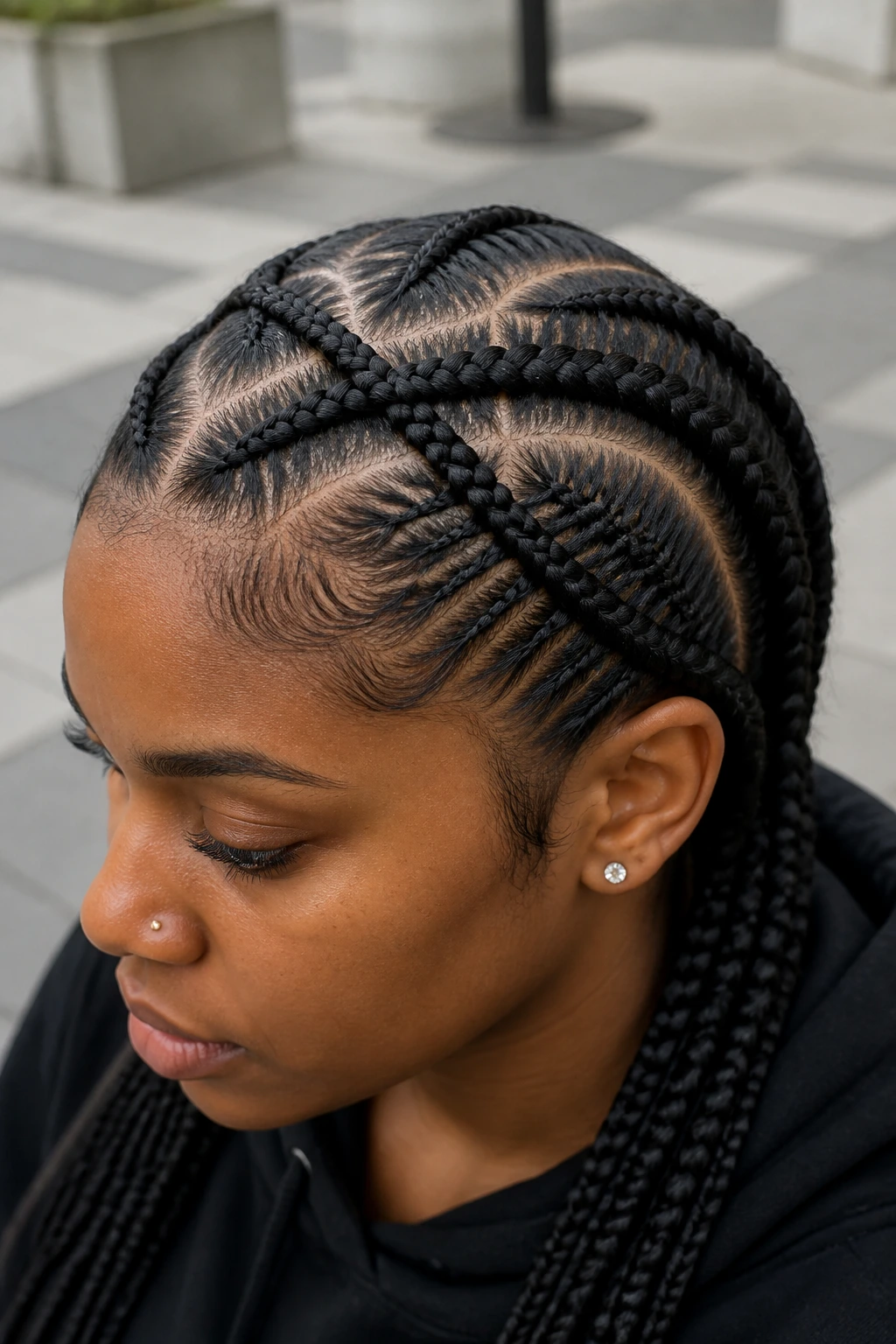
Adding a criss-cross pattern to your cornrow design is a fun way to incorporate texture and visual interest without adding extra color or length. The interlocking lines create a graphic element that looks incredibly clean and deliberate.
The Geometry of the Cross
By crossing two braids over each other at a 45-degree angle, you change the way the hair pulls from the scalp. This technique is often used in athletic hairstyles because it provides excellent security and stability.
Tips for Success
- Make sure the crossover point is not too tight; you want it to sit flat against the scalp.
- If you have trouble getting the lines straight, use a mirror to check the back of your head frequently during the braiding process.
- Keep the braids consistent in size; if one braid is much larger than the other, the cross will look bulky.
15. The “Lemonade” Braid Style
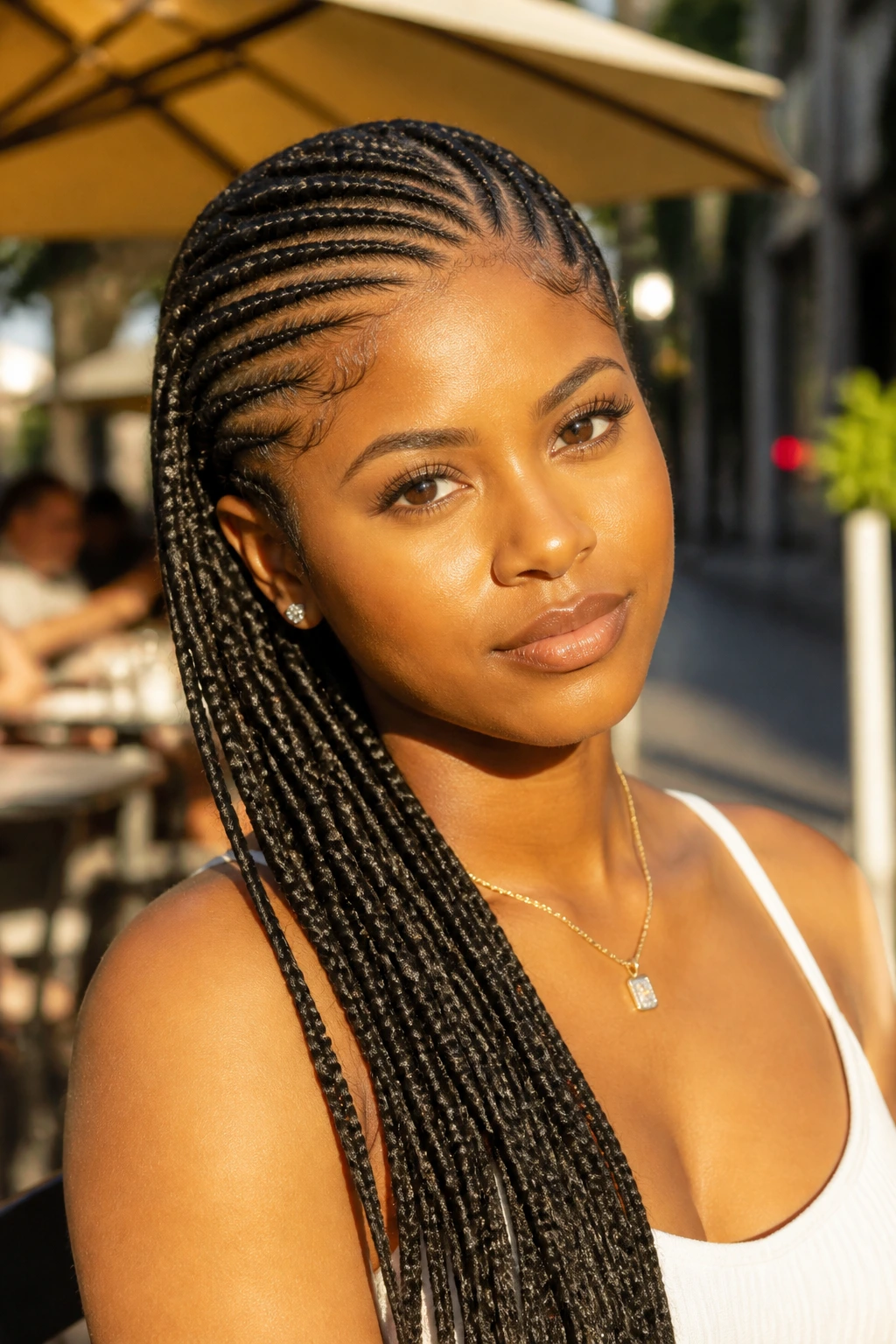
Popularized by the aesthetic of long, side-swept braids, this style is synonymous with effortless summer vibes. Whether you keep them long or mid-length, these braids are iconic for their uniformity and length.
Why They Became a Classic
The beauty of the “Lemonade” style is in the sheer quantity and the deliberate, side-swept direction. They offer a uniform look that is incredibly soothing to the eye. It’s a low-maintenance style that requires very little daily styling—just shake them out and go.
Care for Long Braids
- Invest in a large silk bonnet for sleep; regular pillowcases will cause long braids to frizzy quickly.
- Periodically apply a lightweight leave-in spray to keep the hair hydrated and smelling fresh.
- If the braids feel heavy, consider using a lighter synthetic braiding hair rather than human hair, as synthetic fiber is often less dense.
16. Double-Heart Braided Design
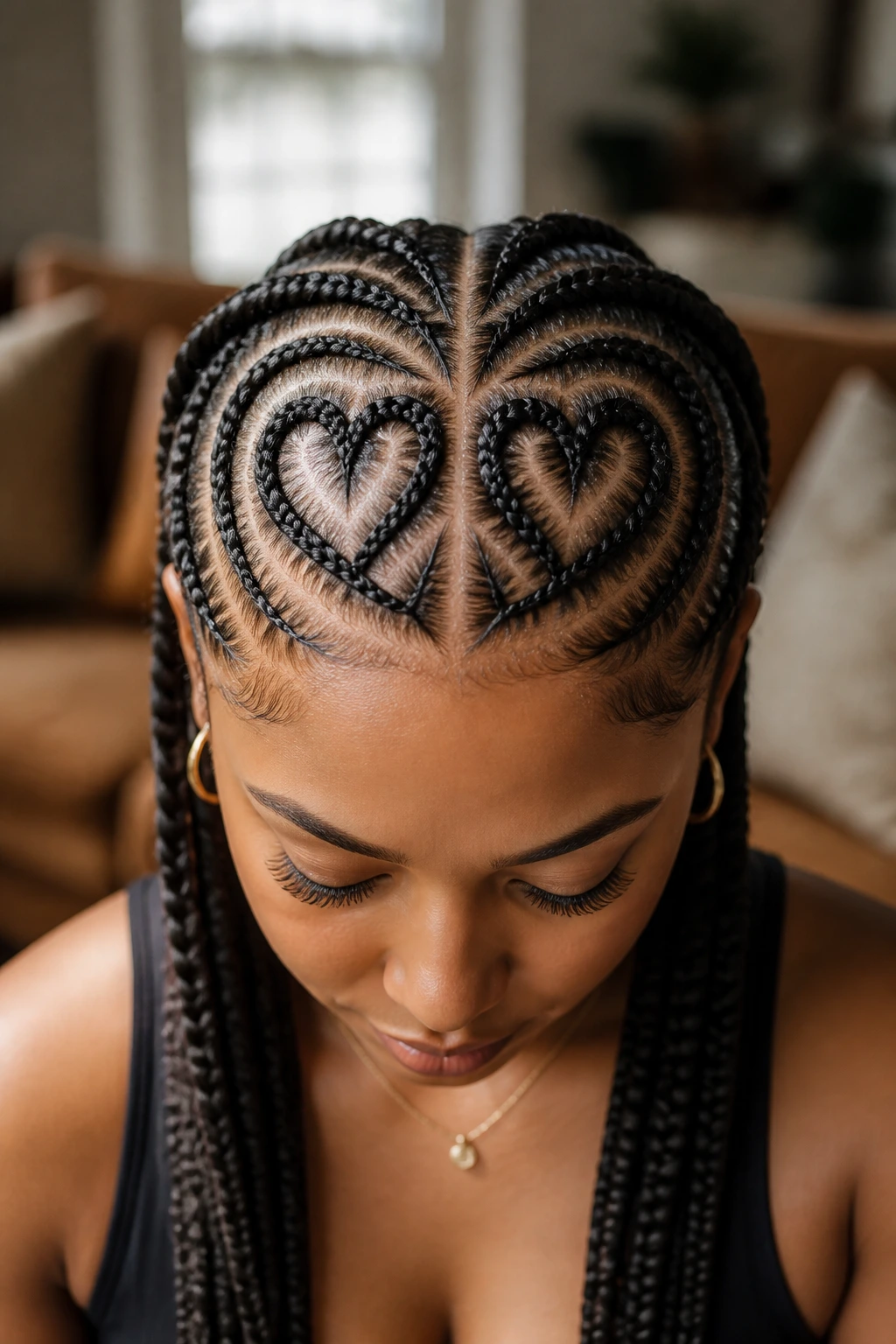
For those who want to express their personality through their hair, a heart design is a classic choice, but a double heart is even more bold. This design features two interlocking or side-by-side heart shapes woven directly into the scalp.
The Skill Involved
This is not a style for beginners. Creating two symmetrical heart shapes requires a high level of precision. The partings must be perfect, or the hearts will look distorted once the braids are finished.
Maintenance Tips
- Use a mirror setup (a handheld mirror and a wall mirror) to inspect the shape from all angles after the braider is finished.
- Keep the scalp moisturized, as the more complex partings tend to expose more skin to the air.
- If you want to elevate the look, add a small charm at the center of the hearts.
17. High-Volume Braided Fro-Hawk
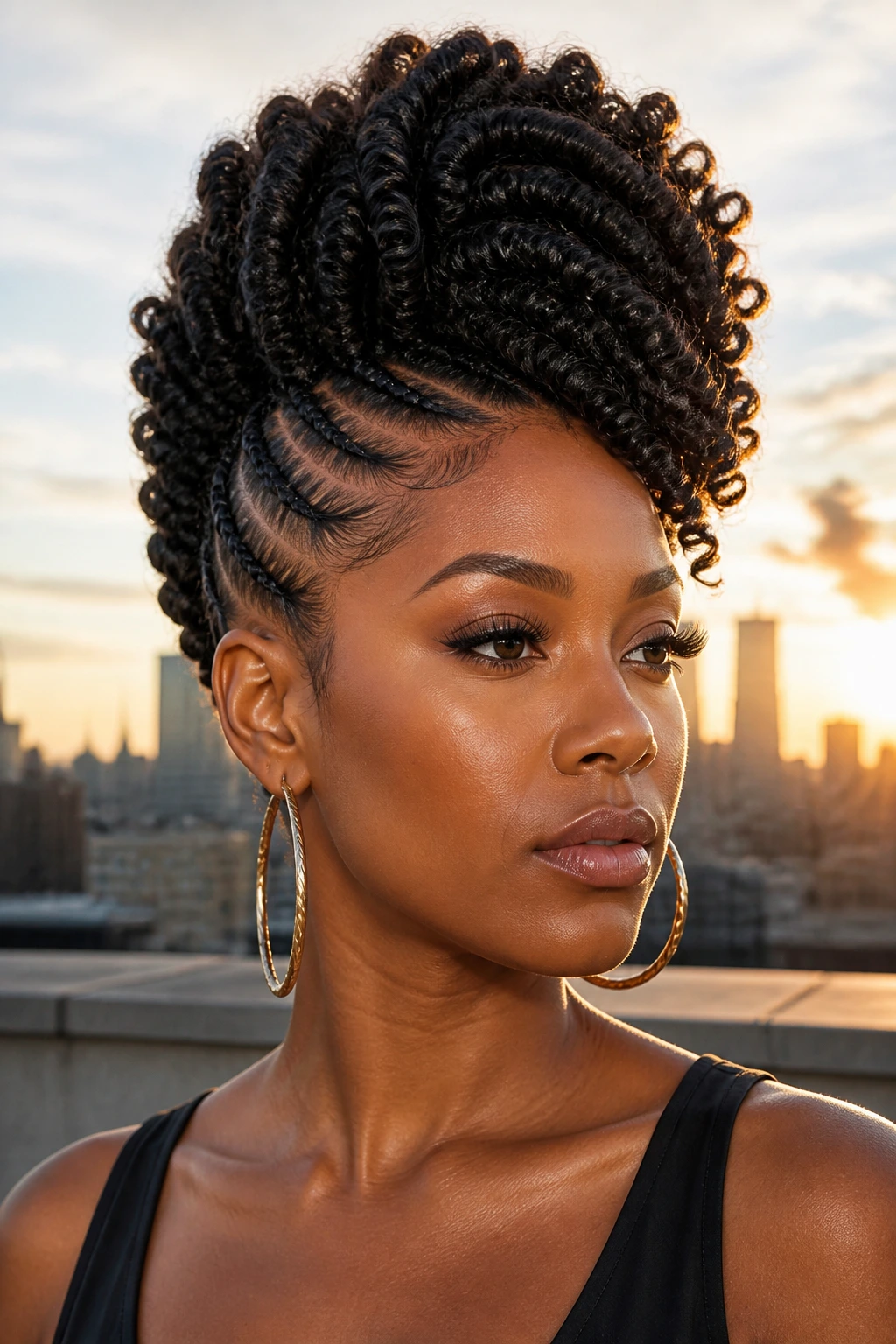
If you want to blend the edge of a mohawk with the protection of cornrows, this is your best bet. By braiding the sides toward the center and leaving the middle free or braided into a thick crown, you create a stunning, voluminous profile.
Why It Stands Out
It mimics the silhouette of a fro-hawk without requiring you to actually cut the sides of your head. It’s a rebellious, high-fashion look that commands attention. You can wear the center tall and curly, or braid it down for a more streamlined effect.
Essential Maintenance
- Focus on the edges; because this style pulls hair toward the center, the hairline is under significant tension.
- Apply a nourishing castor oil to your edges every night to prevent breakage.
- If the center hair is loose, use a curl-defining foam daily to keep the volume fresh.
18. Wrapped Cornrow Ponytail
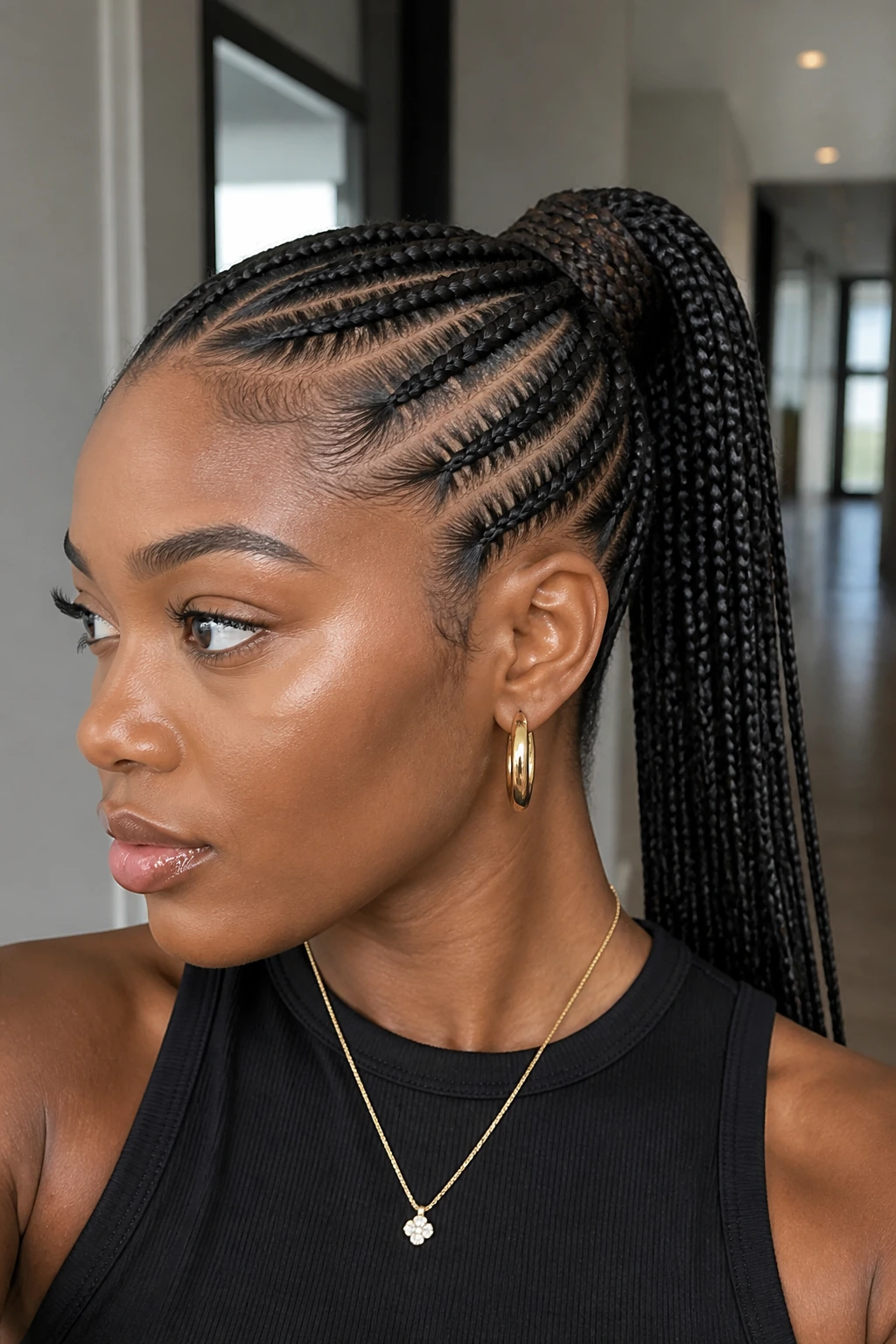
A classic ponytail is fine, but a wrapped ponytail is refined. By using an extra braid to wind around the base of your ponytail, you hide the hair tie and add a professional, seamless touch to the entire look.
The Beauty of the Wrap
It’s a small detail that elevates the style from “done at home” to “expertly styled.” It also adds a layer of security, as the wrapped braid acts as an extra anchor for your hair.
How to Execute the Wrap
- Gather your ponytail and secure it with a small elastic.
- Take one of the braids from the base, or a small section of extensions, and begin wrapping it tightly around the elastic.
- Once you reach the end of the strand, tuck it under the wrap and secure it with a tiny bobby pin that matches your hair color.
19. Halo Braids with Silver Cuffs
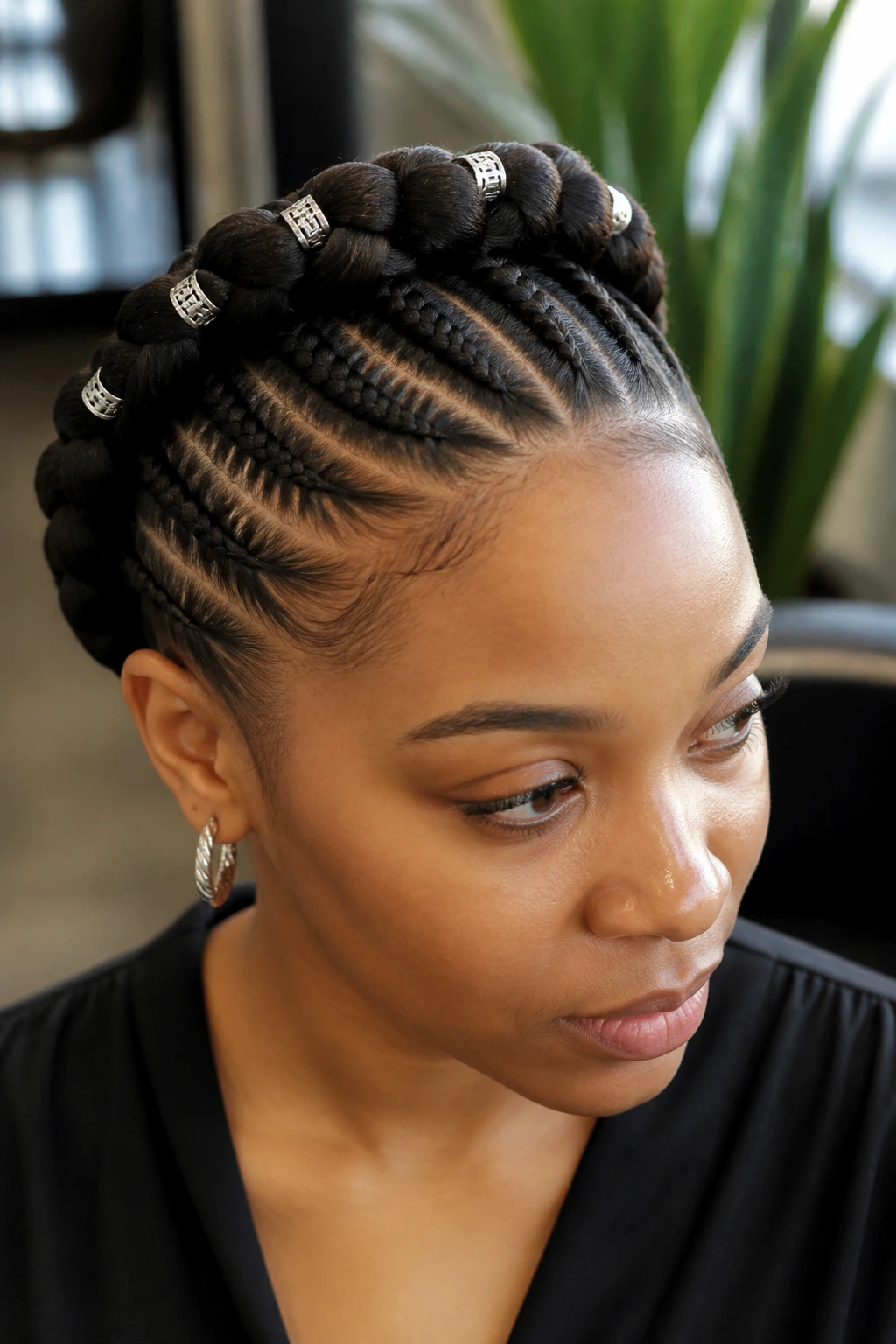
A halo braid sits high on the head, framing the face. By adding silver cuffs at regular intervals, you turn the braid into a piece of jewelry. Silver provides a cool, metallic contrast that looks striking against dark hair.
Why Silver Cuffs?
Unlike gold, which often warms up a look, silver offers a modern, industrial, or futuristic vibe. It’s perfect for someone who prefers a sleek, minimalist aesthetic.
Styling the Cuffs
- Don’t overcrowd the braid; space the cuffs at least an inch apart for a clean look.
- Ensure the cuffs are snapped tight so they don’t slide off during the day.
- Match your earrings or other jewelry to the silver tone to create a cohesive metallic theme.
20. Micro-Cornrows with Natural Ends
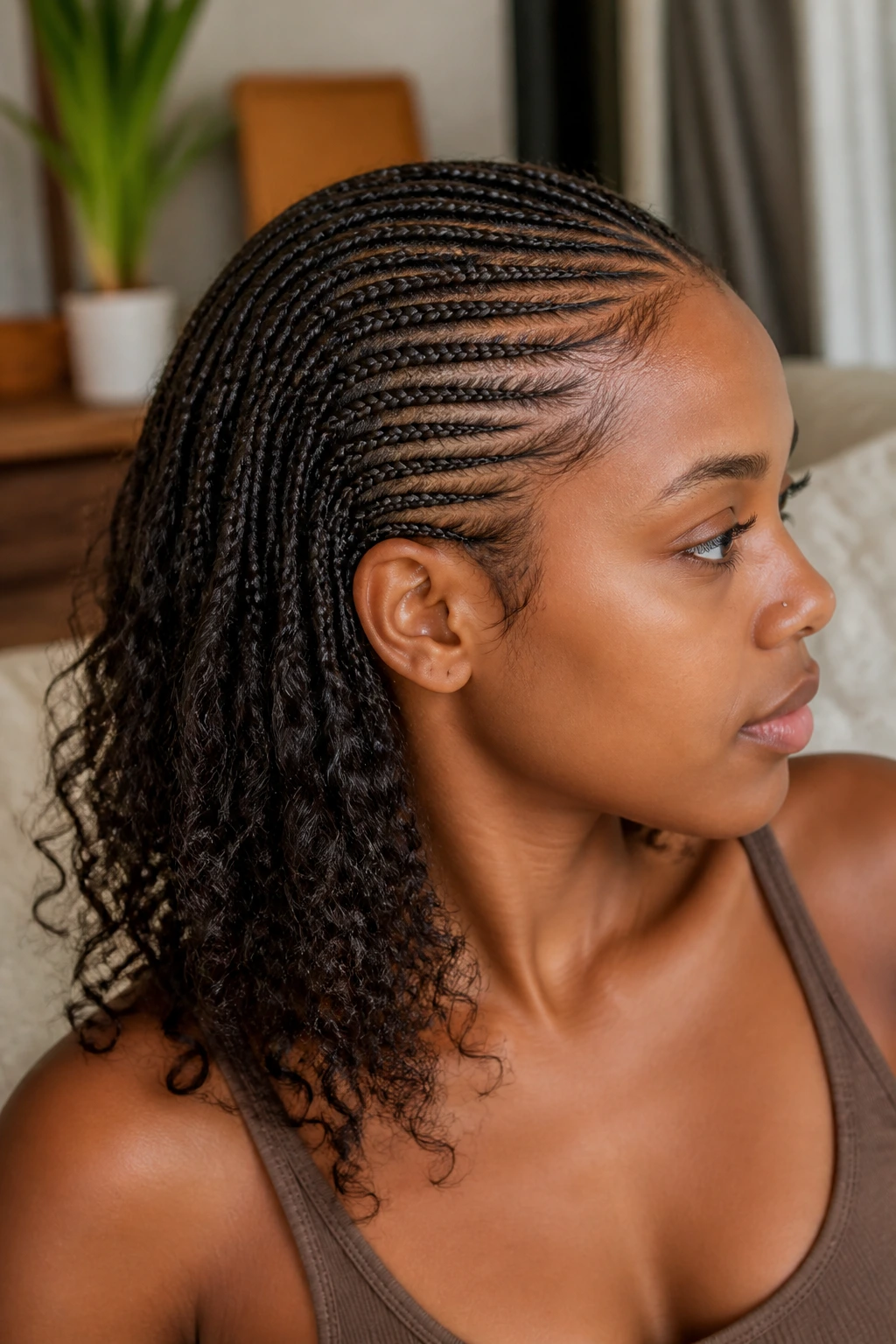
If you love the look of small, thin cornrows but want to maintain some of your natural texture, this style is for you. You braid the scalp but leave the ends loose and curly, letting your natural hair texture show.
The Best of Both Worlds
The tiny cornrows provide the structure and protection, while the loose ends add movement and soften the look. It’s an excellent transition style for someone who isn’t quite ready to commit to fully braided hair.
Managing the Texture
- Use a leave-in conditioner to keep the loose ends soft; if they dry out, they will look brittle against the sleek braids.
- Detangle the ends daily to prevent matting at the point where the braid ends and the loose hair begins.
- You can trim the ends slightly after a few weeks to keep them looking healthy.
21. Radial Braided Patterns
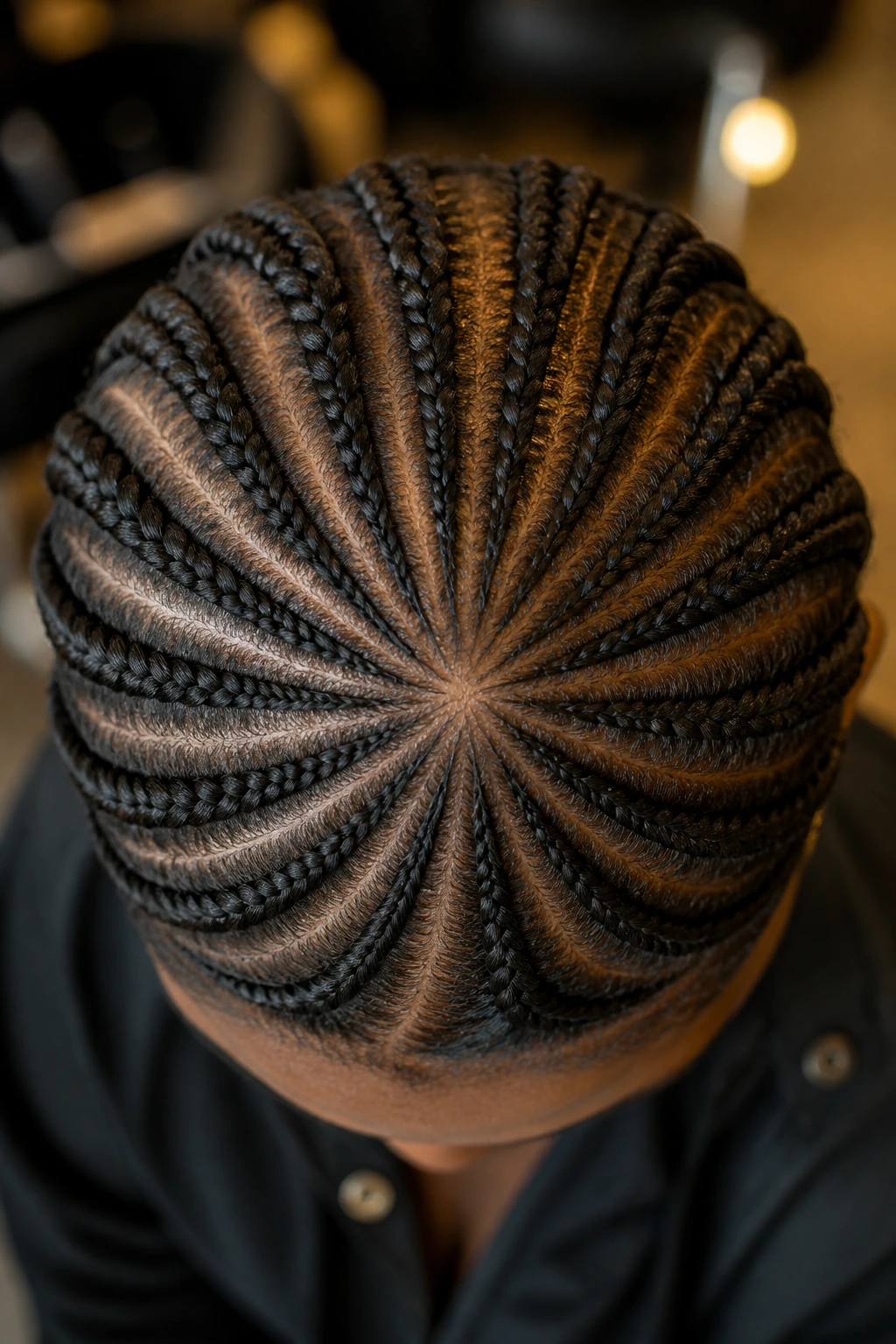
Radial braids start from a center point at the crown and flow outward toward the hairline, like the spokes of a wheel. This is an incredibly satisfying and symmetrical design that looks like a work of art from a bird’s-eye view.
The Visual Impact
When you look at this style, the geometry is immediately apparent. It’s a very orderly and structured look that is perfect for someone who loves precision.
Care and Maintenance
- Because the braids move in multiple directions, they can be slightly more prone to fraying if not tied down correctly at night.
- Use a silk scarf to tie the hair down, ensuring you wrap it evenly around the entire head.
- This style requires a professional touch; trying to create radial symmetry on your own head is extremely difficult.
22. Braids with Vibrant Color Accents
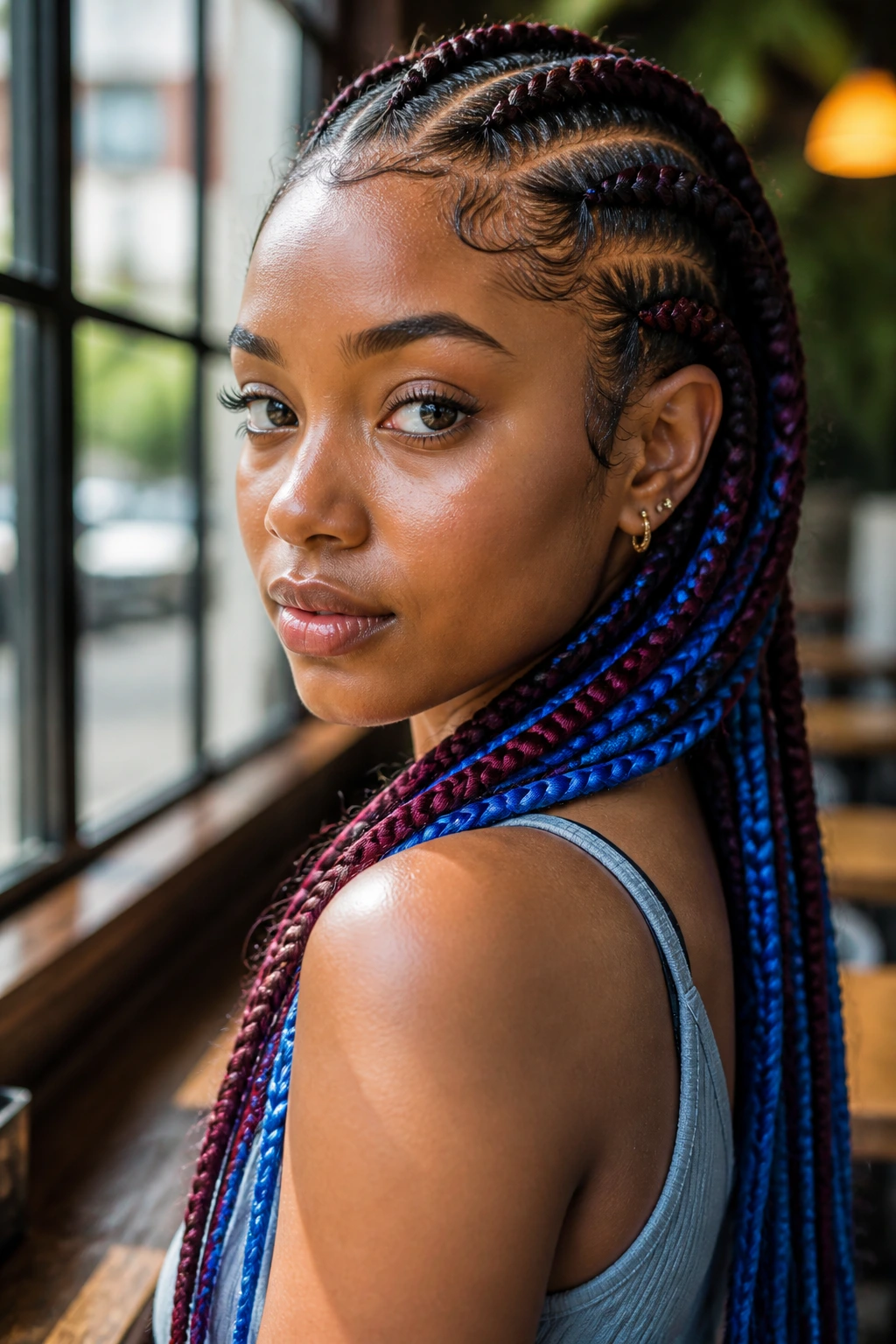
Cornrows are the perfect base for playing with color. By feeding in colored extensions—think deep burgundies, vibrant blues, or platinum blondes—you can experiment with a new look without ever touching a bottle of dye.
Why Extensions Are the Safer Choice
You get the high-impact color change without any chemical damage to your natural hair. Plus, you can switch the color every time you re-braid, allowing for endless experimentation.
Tips for Colored Hair
- Be aware that different synthetic hair textures react differently to heat; check the packaging to see if your color-treated hair can be dipped in hot water to seal the ends.
- Choose colors that complement your skin tone; cool tones work well with blue/violet, while warmer tones pop with copper/honey.
- Limit sun exposure if using cheaper synthetic fibers, as they can sometimes fade or become brittle in intense direct light.
23. The Sculptural Updo
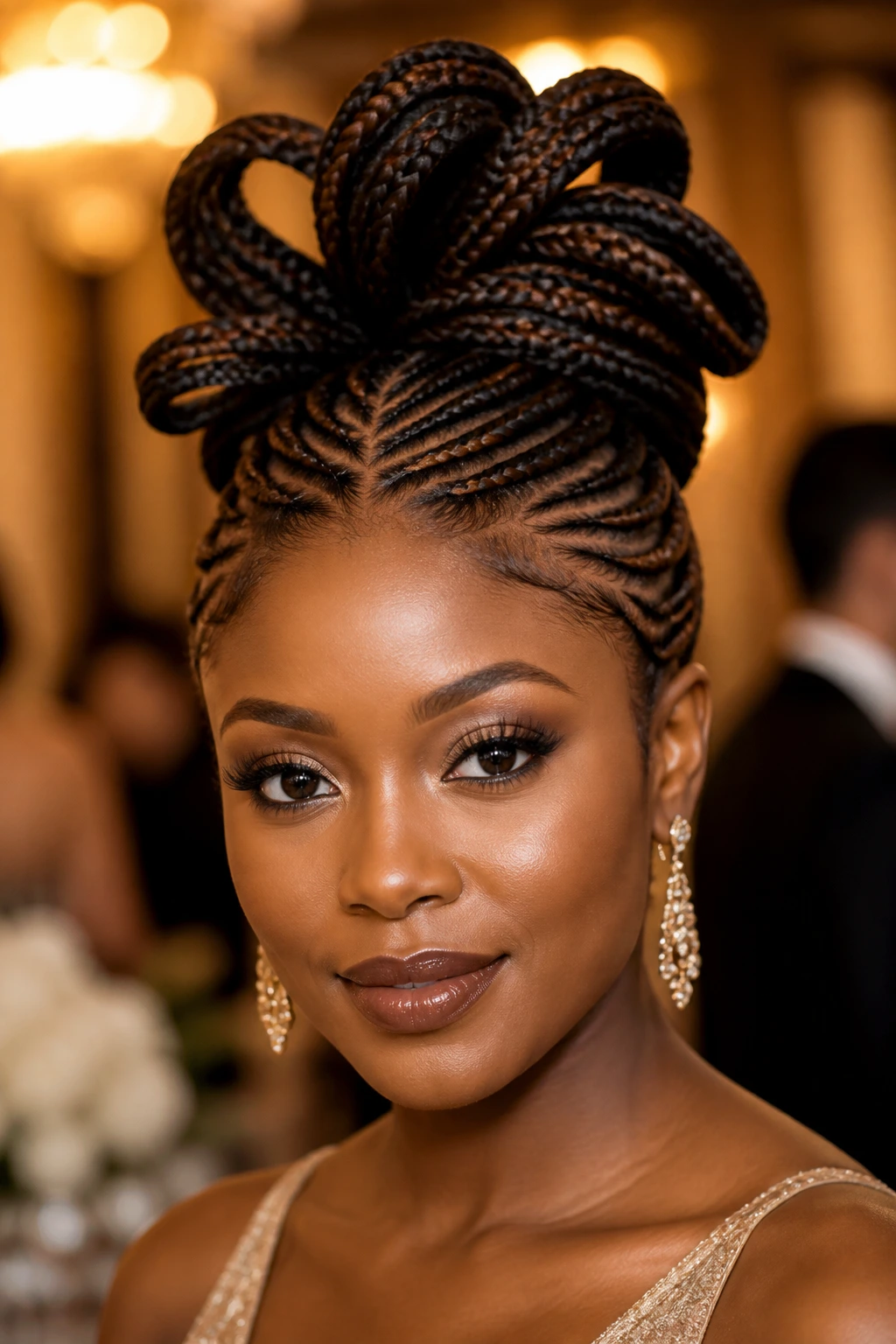
For formal events, a sculptural updo that uses cornrows to create shapes and loops on the head is unrivaled. It’s not just a hairstyle; it’s an architectural achievement.
The Artistic Approach
This style often involves tucking the braids into intricate loops or pin-ups. It elevates the humble cornrow into high-fashion territory. It’s perfect for weddings, galas, or any event where you want to be noticed.
Longevity and Care
- This is a short-term style—it is best to remove it after a few days to prevent tension at the pins.
- Avoid using too many bobby pins, as they can cause snagging and breakage.
- If you need to keep it for longer, ensure it is wrapped securely with a large satin bonnet that accommodates the volume of the updo.
24. Beaded Ends for Added Weight
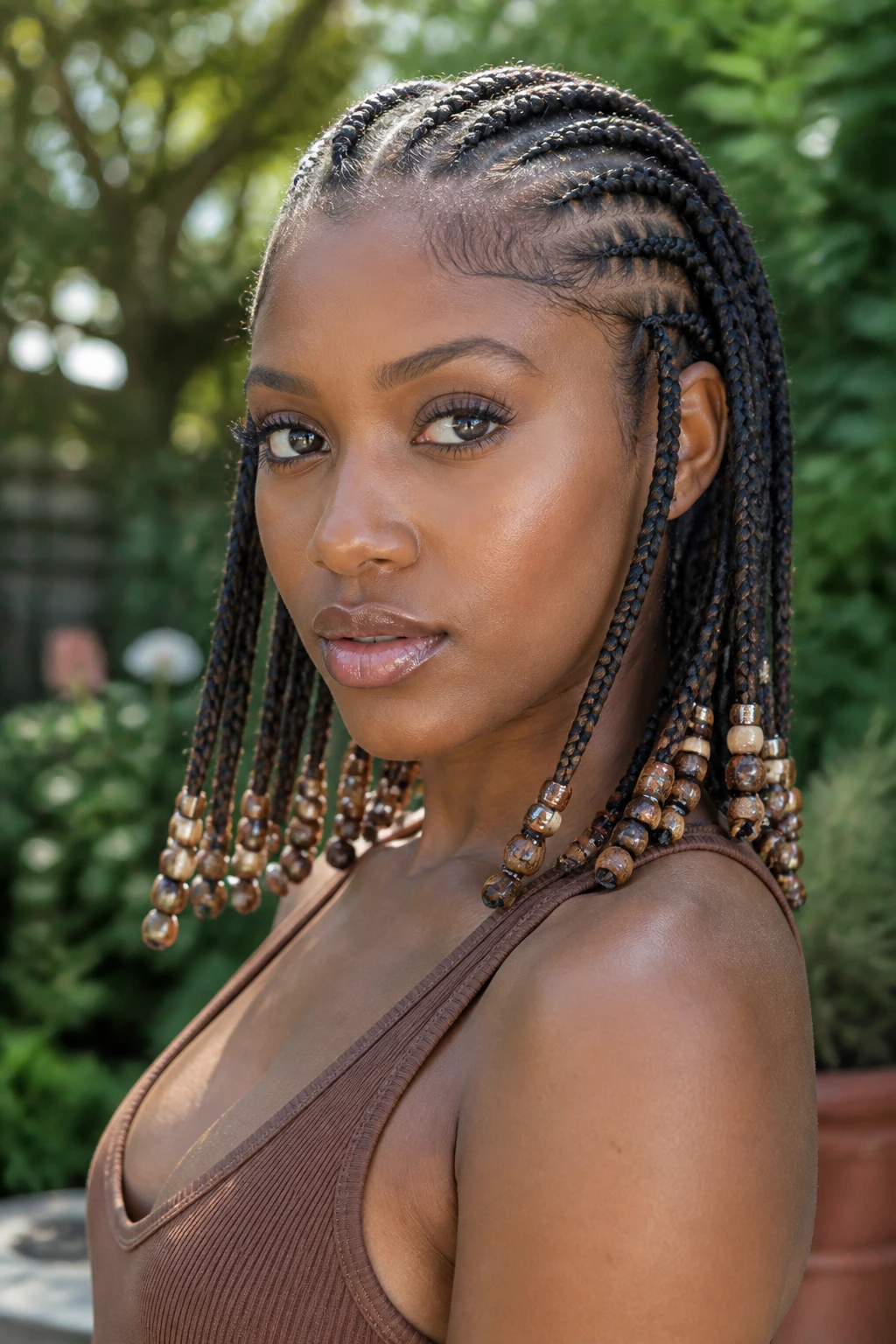
Adding beads to the ends of your cornrows is a classic, joyful way to finish off a style. It adds movement, sound, and a playful element that is perfect for any age.
Why Beads Never Go Out of Style
They protect the ends of your hair by sealing them inside the bead, preventing the ends from getting frizzy or tangled. Plus, they look fantastic in photos.
Choosing Your Beads
- Mix and match colors and textures, like wood, clear plastic, or metallic beads.
- Make sure you have a bead threader tool; trying to thread hair through a bead by hand is nearly impossible.
- Ensure the bead hole is large enough for the thickness of the braided ends, or you will end up with beads that constantly fall off.
25. Soft-Feed Cornrows with No Edges
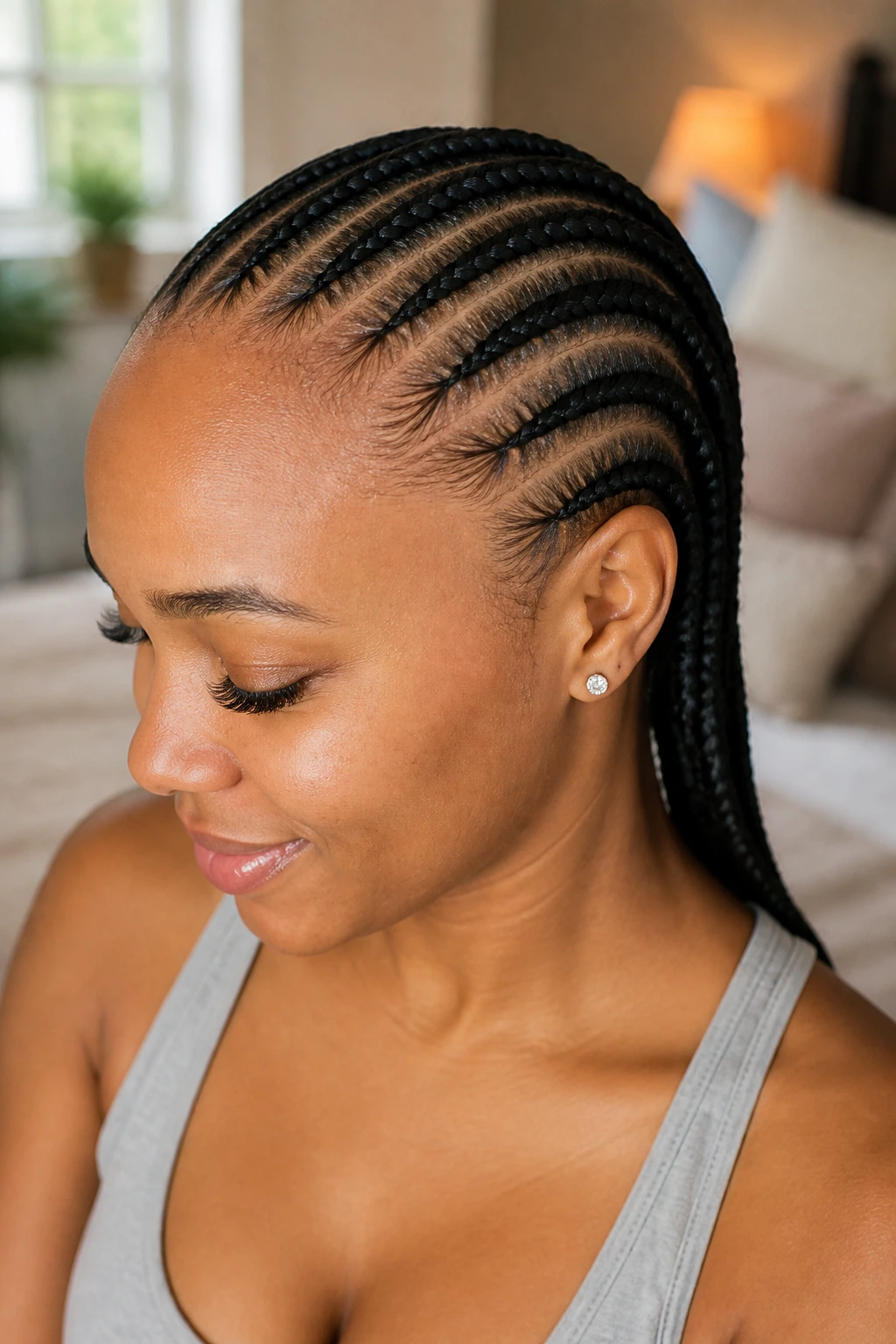
Many people struggle with tension-related hair loss at the hairline. This style specifically focuses on a “no-tension” approach, where the braider uses minimal grip and light pressure on the edges.
The “No-Tension” Philosophy
You don’t need a painful, tight braid to have a clean look. By using a gentle feed-in technique, you can maintain the aesthetic of a tight cornrow without the long-term risk of traction alopecia.
Keeping It Neat
- Use a light-hold gel rather than a heavy, stiff edge control to keep the hairline looking clean.
- If the edges start to lift, simply re-apply a small amount of product rather than re-braiding.
- This is the healthiest way to wear cornrows long-term, especially if you have a sensitive scalp.
26. Braided Mohawk with Micro-Braids
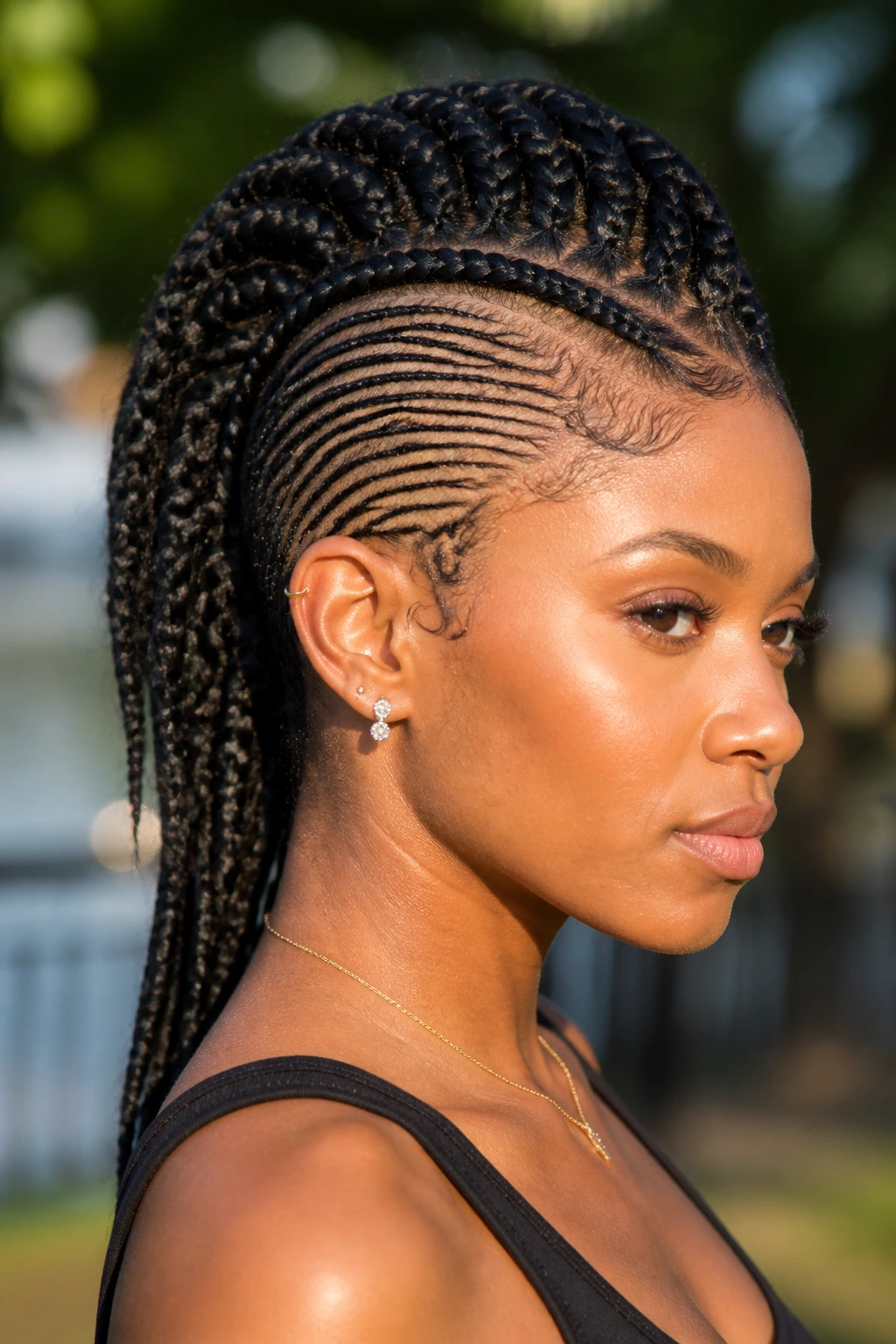
Combining the structure of large cornrows with micro-braids on the sides creates a complex, textured look. It offers a sophisticated, high-contrast profile that is both edgy and elegant.
The Power of Contrast
By varying the size of the braids, you add a layer of sophistication that single-size braid styles lack. The tiny micro-braids act as the “detail,” while the larger cornrows provide the “silhouette.”
Styling Strategy
- This style is time-consuming; prepare to spend several hours in the chair.
- Make sure your braider has experience with both micro-braids and larger cornrows, as the tension requirements for each are different.
- This look works best when you keep the braids clean and free of excessive products.
27. The Side-Swept Halo
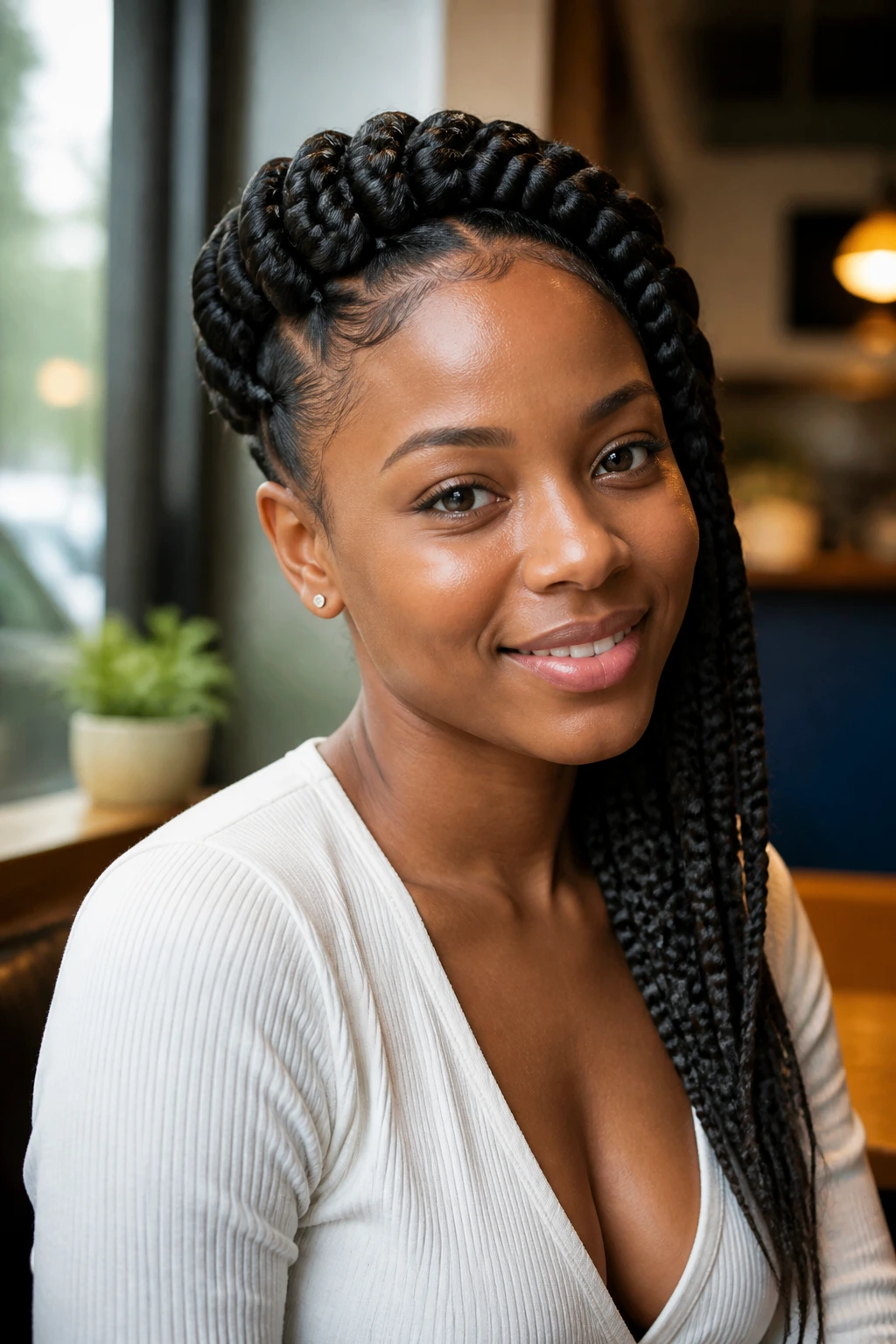
This variation of the halo braid involves sweeping all the hair toward one side, creating a dramatic, cascading effect. It’s perfect for someone with longer hair who wants to show off their length.
The Romantic Aesthetic
This look is incredibly feminine and soft. It’s a great way to wear your hair for dates or dinner events. The side-swept nature makes it easy to style your outfits, as the braids won’t interfere with collars or scarves.
Maintenance Tips
- Use a light sheen spray to keep the hair looking vibrant throughout the day.
- This style is quite sturdy and can last for several days if you protect it at night.
- If the braids feel too tight at the temple, use a rat-tail comb to gently loosen the root, taking care not to pull them out completely.
28. Simple Cornrow Accent Braids
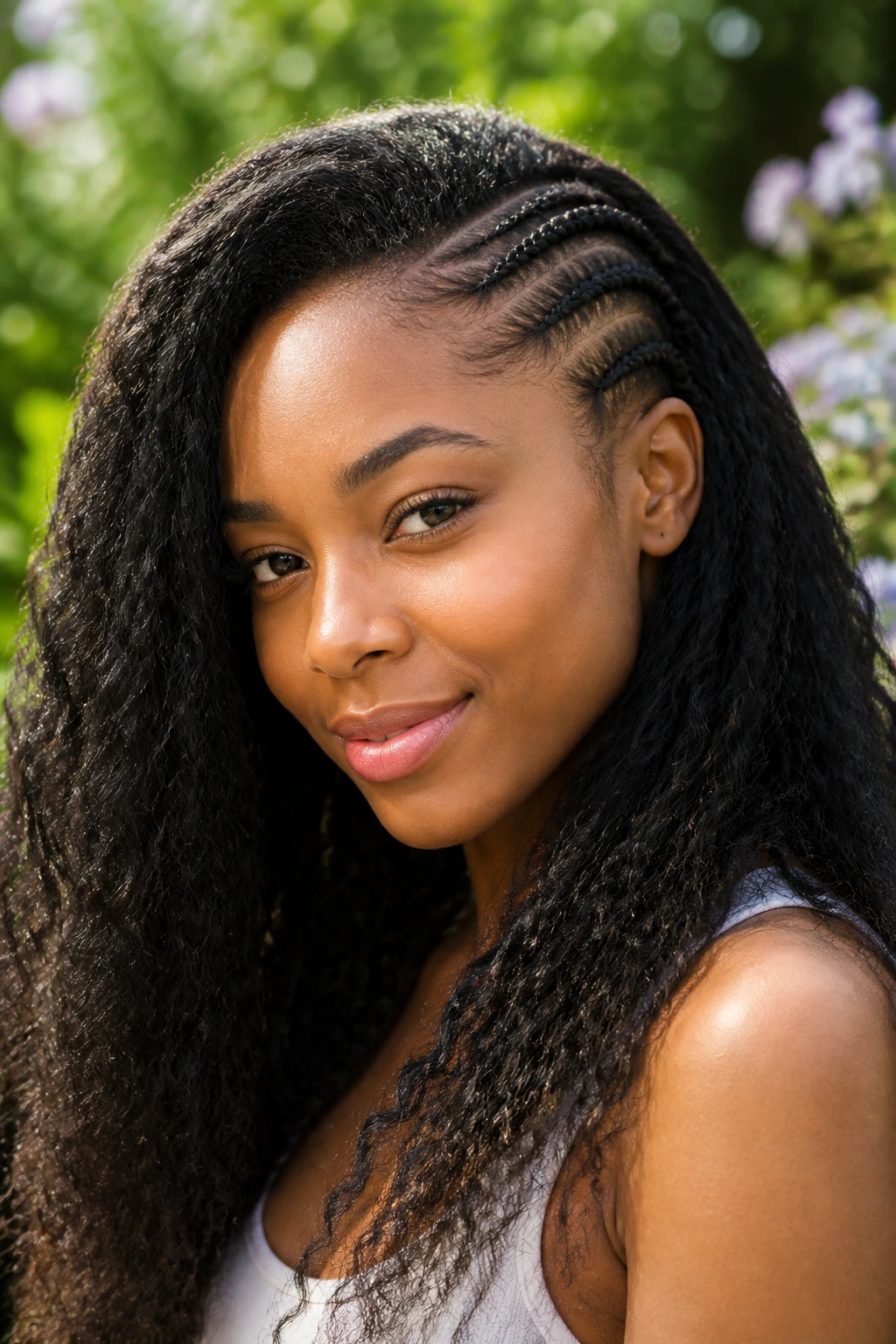
If you aren’t ready for a full head of braids, why not try just a few? Two or three cornrow accents on one side of your head can spice up your natural loose hair without the commitment of a full install.
The Low-Commitment Benefit
This is a great entry point into protective styling. It allows you to protect your sensitive hairline while leaving the bulk of your hair free and wild. You can easily undo these braids in a few minutes, making them the most flexible option on this list.
Styling Tips
- Ensure the parts are neat, as the contrast between the braids and your loose hair is the main focal point.
- Use a small decorative band to secure the ends of the accent braids.
- This is a perfect weekend style that allows you to play with your look for a few days before reverting to your natural style.
Final Thoughts
Finding the right cornrow style is a journey of understanding your hair’s needs and your personal aesthetic. Remember that no matter how beautiful a style looks, the health of your scalp and edges must always be the priority. Over time, I have learned that the best styles are the ones that allow you to wake up, look in the mirror, and feel like the most confident version of yourself—without requiring an hour of maintenance to get there.
Take care of the foundation, keep your scalp moisturized, and don’t be afraid to experiment with new parting designs or accessory choices. Whether you choose a simple straight-back look or an elaborate sculptural updo, wear it with pride. The beauty of these braids is their ability to change with you, providing both a shield for your strands and a megaphone for your individual style. Treat your hair well, and it will return the favor.