

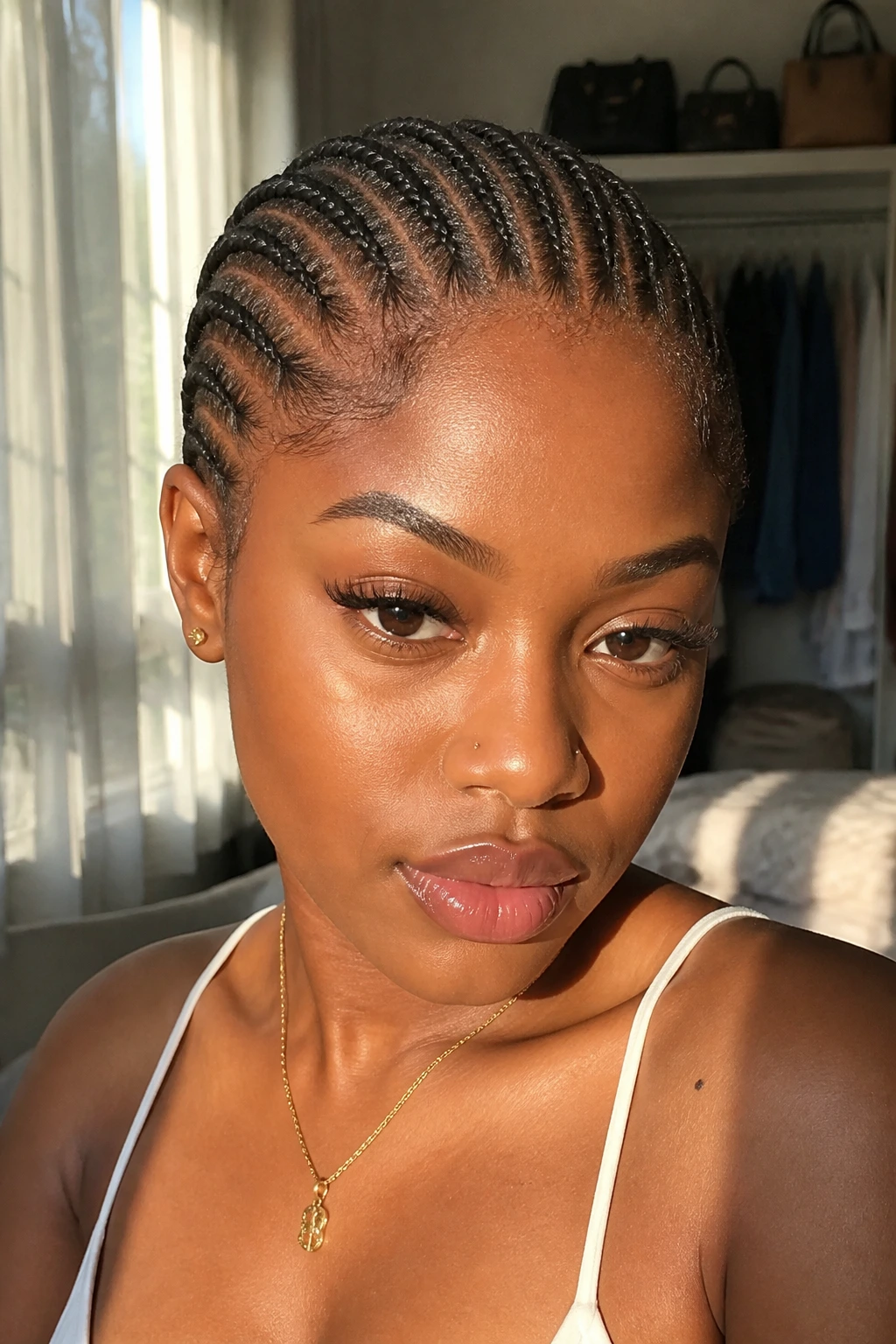
When you have short hair, the struggle to find a protective style that is both secure and visually striking is real. Too often, we are told that our natural texture or current length limits us to a handful of basic styles. That is simply not true. Ghana braids—also known as feed-in braids or invisible cornrows—are perhaps the most versatile solution for hair that is transitioning or just naturally cropped. Because these braids start small at the hairline and increase in thickness as they move back, they put significantly less tension on your delicate edges than traditional, bulky cornrows that require a heavy knot at the start.
If you are currently managing shorter hair, the biggest hurdle you likely face is the “tucking” process. Most people think you need inches of length to get those long, sleek plaits that hit your mid-back. In practice, professional stylists use a technique called “feeding in,” where synthetic hair is gradually added to your natural strands to build length and volume from the root. This means you do not need long natural hair to achieve a protective style that lasts for weeks. It’s a game-changer for length retention and gives your own hair a much-needed break from heat and manipulation.
Choosing the right approach depends heavily on your specific hair density and how you intend to wear the style. Are you looking for something low-maintenance that you can wash and go, or are you after a sophisticated, event-ready look? Regardless of your goal, the key is preparation. Your hair needs to be deep-conditioned, detangled, and stretched before your stylist even touches a comb. When you start with a healthy, moisturized base, the protective benefits of these braids are amplified. Let’s look at the most effective ways to leverage this style for your specific needs.
1. Classic Straight-Back Ghana Braids
The beauty of the straight-back style lies in its absolute simplicity. It creates a clean, uniform look that pulls hair away from the face, providing a blank canvas for your daily outfits. For those with short hair, this is often the most secure option because the tension is distributed evenly across the scalp, preventing the pulling that can happen with more complex, angular designs.
To get the most out of this look, ask your stylist to keep the parts relatively straight but not too sharp if you are concerned about scalp sensitivity. The “straight-back” doesn’t have to mean boring; you can experiment with the size of the braids. Thicker braids provide a bold, dramatic aesthetic and usually require less time in the chair, which is a major bonus if you find sitting for long appointments tedious. If you prefer a more intricate, delicate finish, go with smaller, more numerous braids. Just remember that the smaller the braid, the more tension it may place on your roots.
2. Low-Bun Ghana Braids
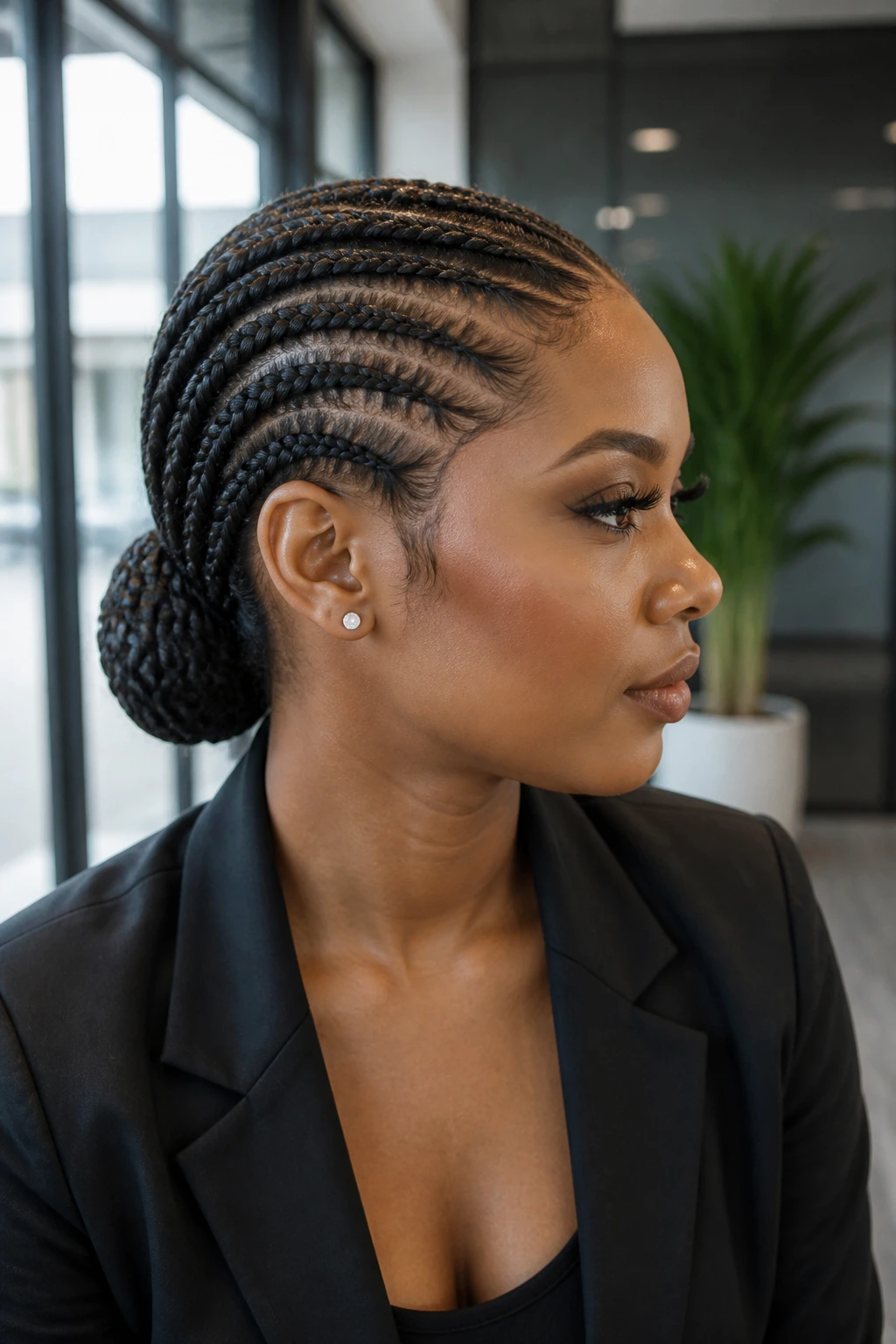
If you find yourself constantly pulling your hair into a ponytail to get it out of your face, a low-bun style is the logical upgrade. This style combines the protective nature of cornrows with the elegance of an updo, making it perfect for office environments or formal gatherings where you want a polished appearance. By incorporating your hair into a low bun at the nape of the neck, you protect your ends from friction against your collars or jackets.
This is a fantastic option for short-haired individuals who want the security of an updo without having to worry about their natural hair slipping out of the elastic. The braids are fed in from the hairline and then gathered into a secure base. Since the ends of the synthetic hair are often sealed with hot water, the bun will remain smooth and won’t snag on your clothing. Make sure your stylist doesn’t pull the hair too tight at the base of your neck, as that is a high-tension zone.
3. Side-Swept Ghana Braids
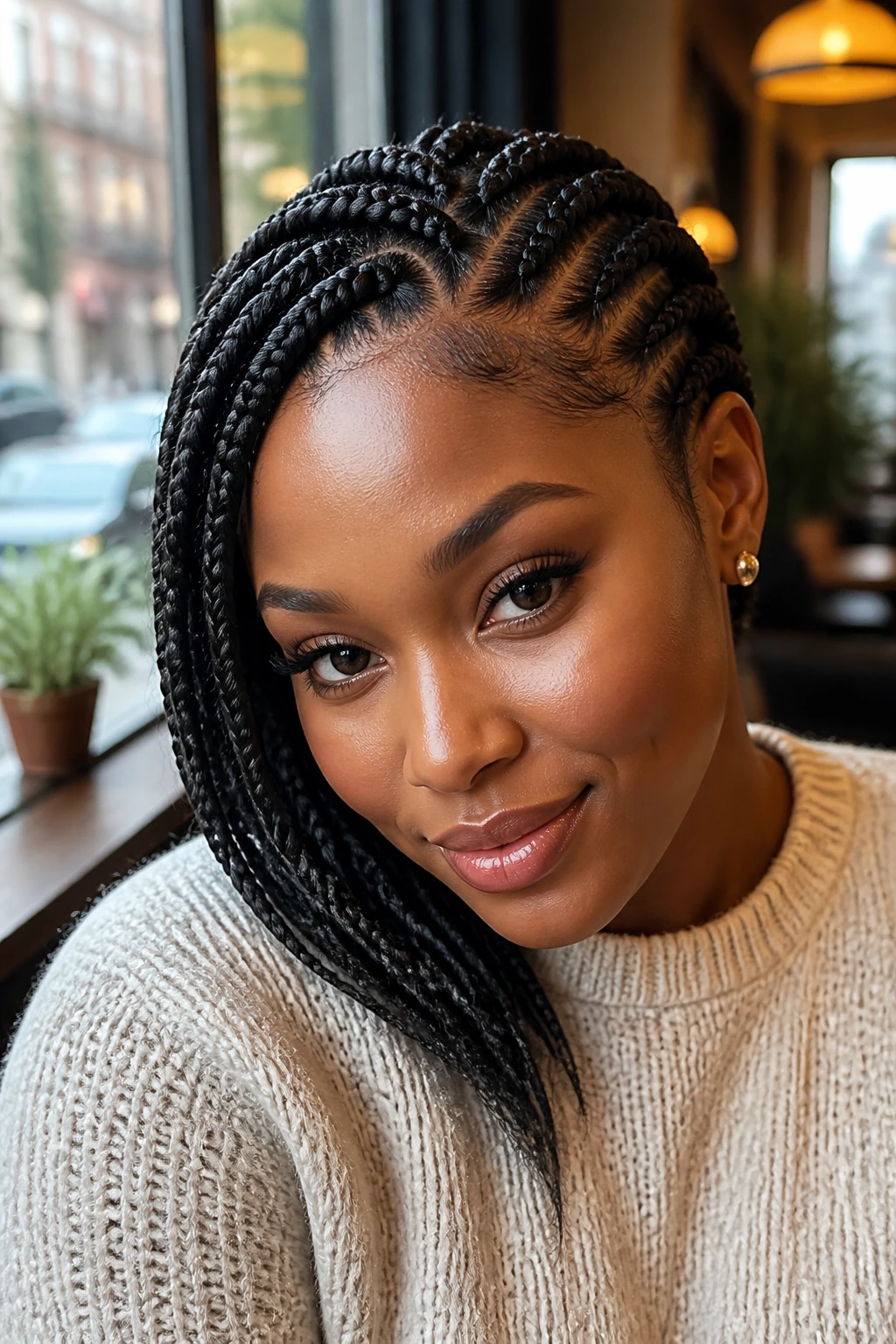
A side-swept pattern is an instant way to add a bit of personality to your style. By angling your braids toward one side of your head, you create an asymmetrical silhouette that frames the face in a flattering, modern way. This is particularly effective for those who feel their facial features need a bit of softening; the way the braids dip across the forehead or temple can act like a soft, permanent side bang.
From a maintenance perspective, the side-swept look is quite forgiving as it grows out. If the roots start to get a bit fuzzy after a few weeks, the asymmetry helps mask the new growth better than a perfectly symmetrical center-part design. When you are sleeping, try to use a large silk bonnet that can accommodate the side-swept angle without crushing the braids. If you find the braids are pulling too much toward one side, simply ask your stylist to lighten the grip near the temple area.
4. Ghana Braids with a Pop of Color
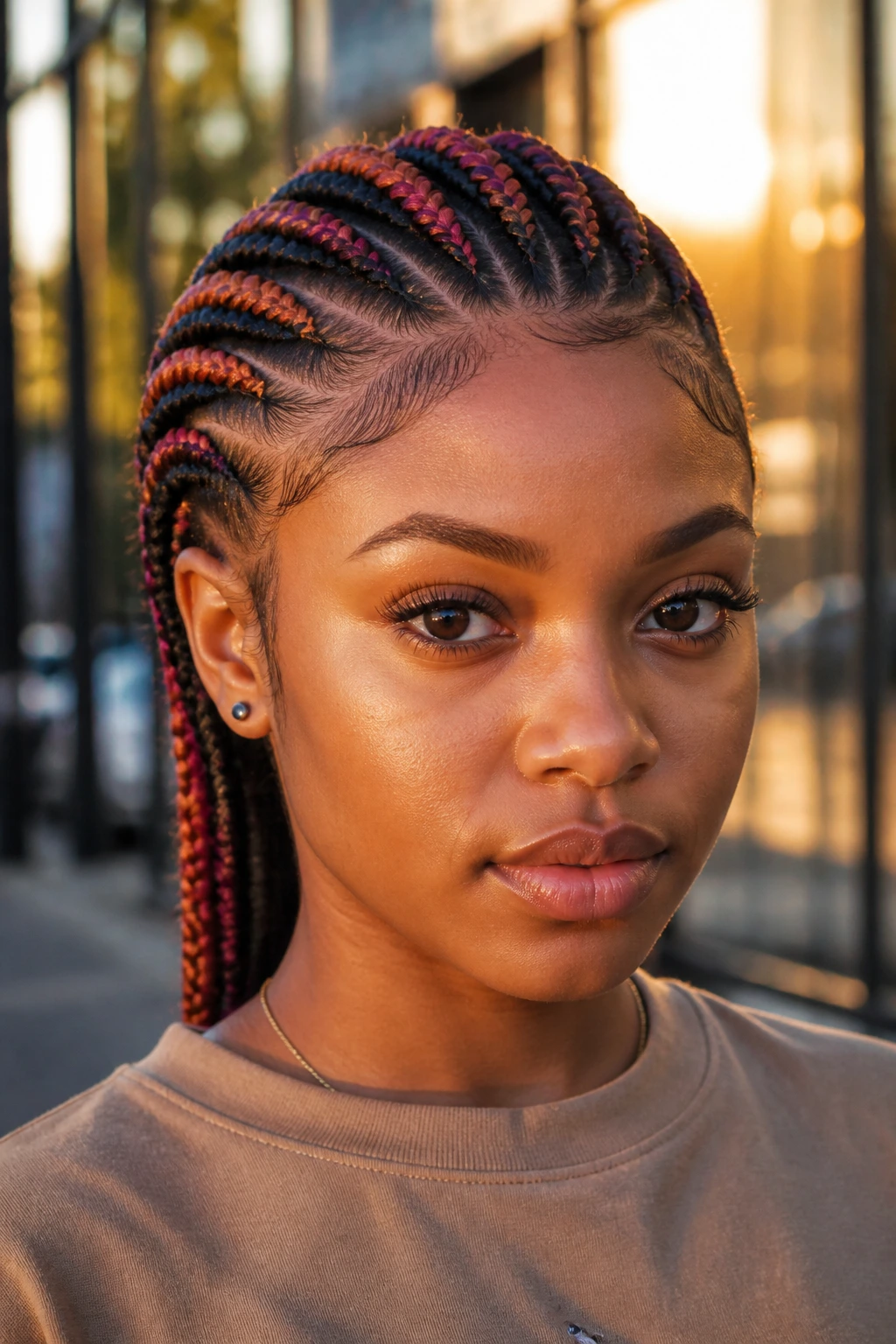
Sometimes your protective style needs more than just shape—it needs a personality. Incorporating colored braiding hair, whether it is a subtle copper, a bold platinum blonde, or even a deep wine red, can transform a standard cornrow look into something entirely your own. For those with shorter hair, adding color helps break up the monotony of the braid pattern and can make the transitions between your natural hair and the extensions look more seamless.
When choosing a color, consider your skin’s undertones. If you have cool undertones, shades like silver, icy blonde, or deep plum usually pop beautifully. For warmer undertones, honey browns, vibrant auburns, or warm golds are often more harmonious. Don’t be afraid to mix colors. A dark base with lighter highlights braided in can add dimension and make your hair appear thicker, which is a great visual hack for those with fine or thin natural hair.
5. Heart-Shaped Parting Ghana Braids
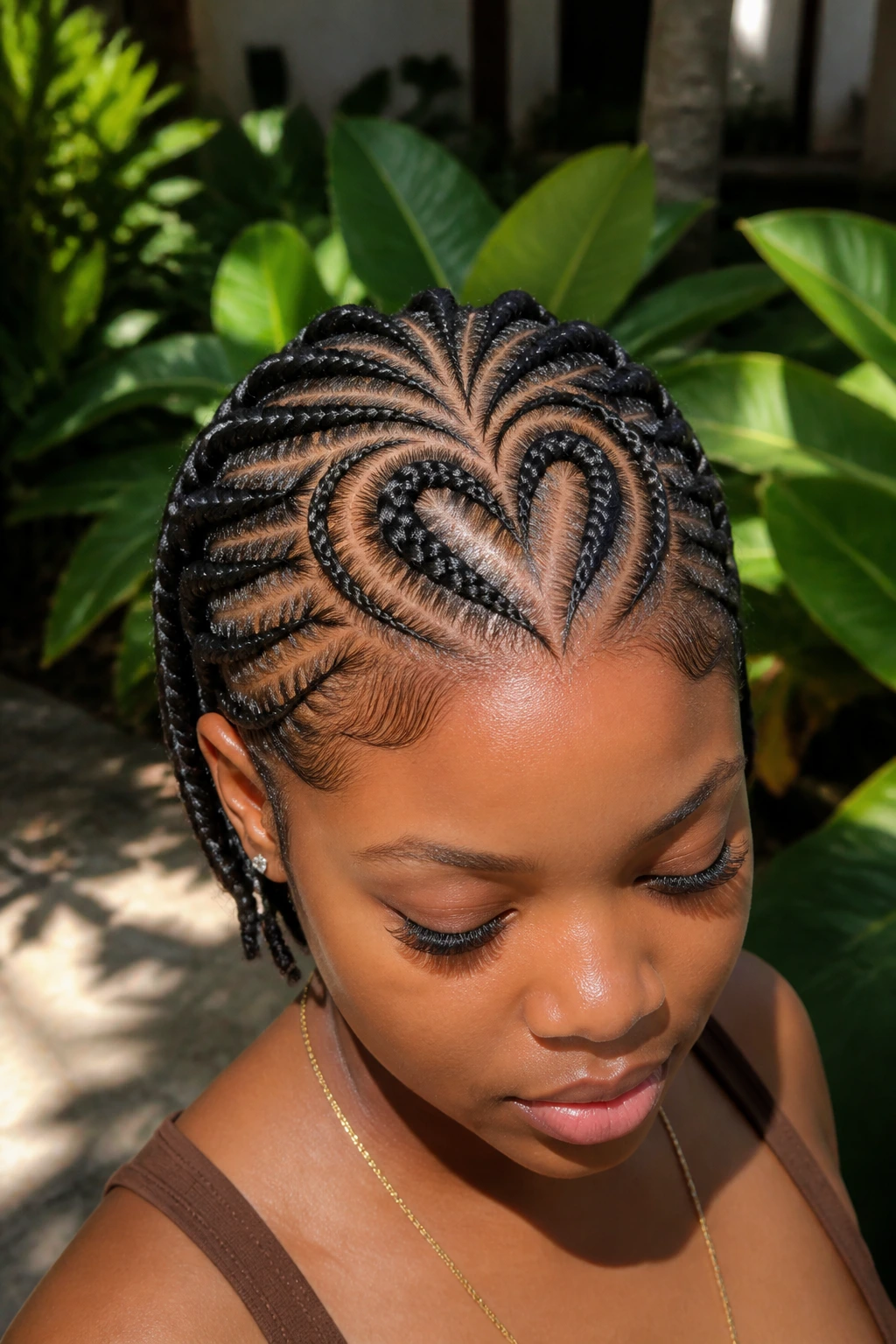
If you’ve spent any time looking at social media hair trends, you’ve likely seen the heart-parting design. It is a playful, artistic way to break up the lines on your scalp. While it may seem like a complex, high-maintenance design, it actually fits quite well with Ghana braids because the heart is formed by the parting, while the feed-in technique creates the bulk of the braid.
This style is perfect for an occasion where you want to stand out, like a vacation or a celebration. Because the heart is usually placed near the front of the hairline, it does require a bit more precision from your stylist. Ensure they aren’t pulling too hard to create that crisp edge. If you have very short hair, make sure the hearts are spaced out properly so that your natural hair is properly anchored by the extension hair throughout the design.
6. Zig-Zag Parting Ghana Braids
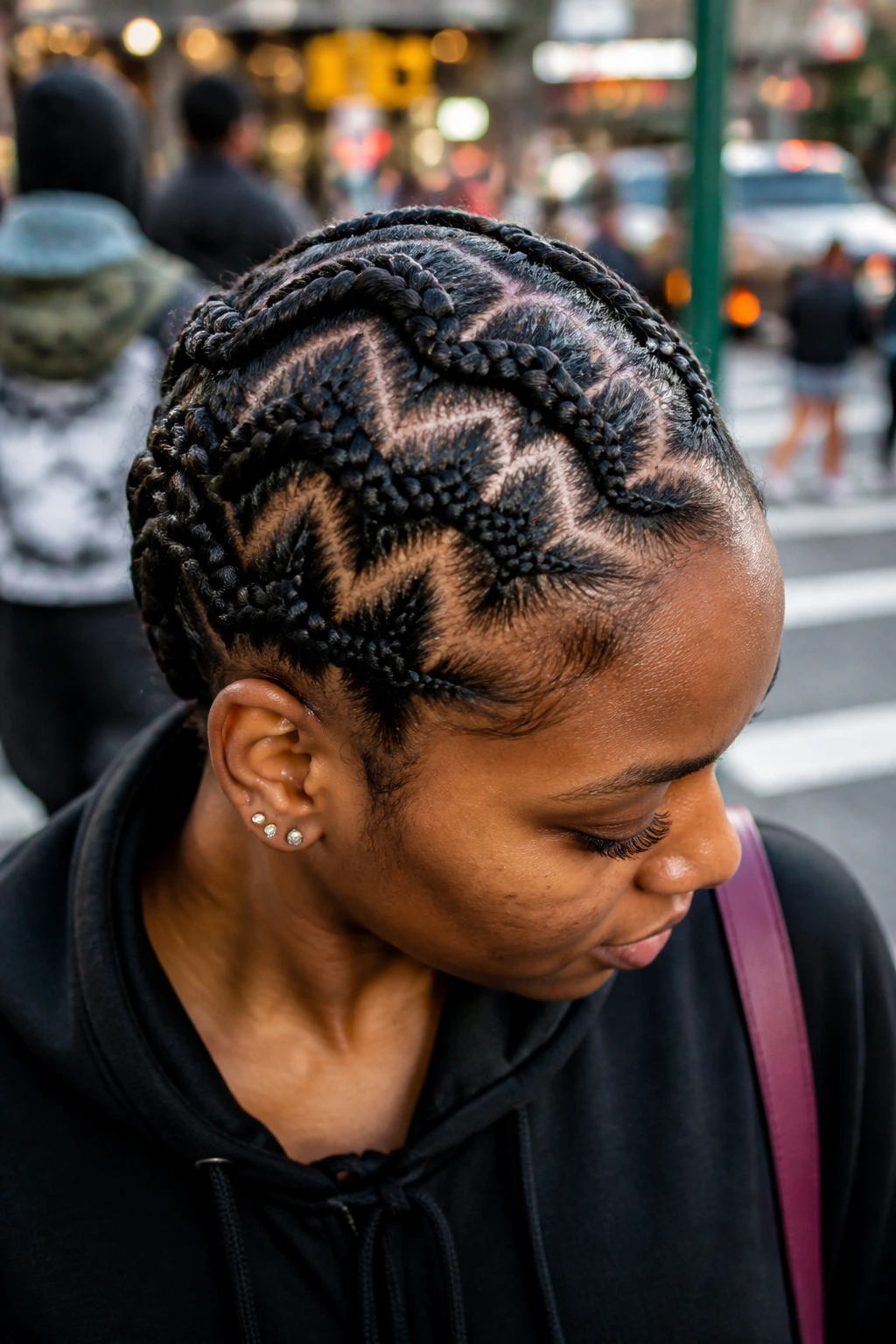
Zig-zag parts are a classic for a reason—they add an unexpected texture to your look. Unlike the heart shape, which is whimsical and soft, a sharp zig-zag provides an edgy, geometric aesthetic. This is a great choice if you have a slightly uneven hairline or just want to camouflage the fact that your hair is short. The zig-zag pattern pulls the eye toward the design rather than toward the length of the hair itself.
The key to a good zig-zag look is the tension. Because the hair is forced to change direction at every turn of the zig-zag, the roots are under more stress than they would be in a straight line. If you are sensitive, tell your stylist to keep the angles wider. This keeps the look sharp but prevents those small, tender spots on the scalp that can lead to irritation or hair thinning over time.
7. Chunky Ghana Braids for Texture
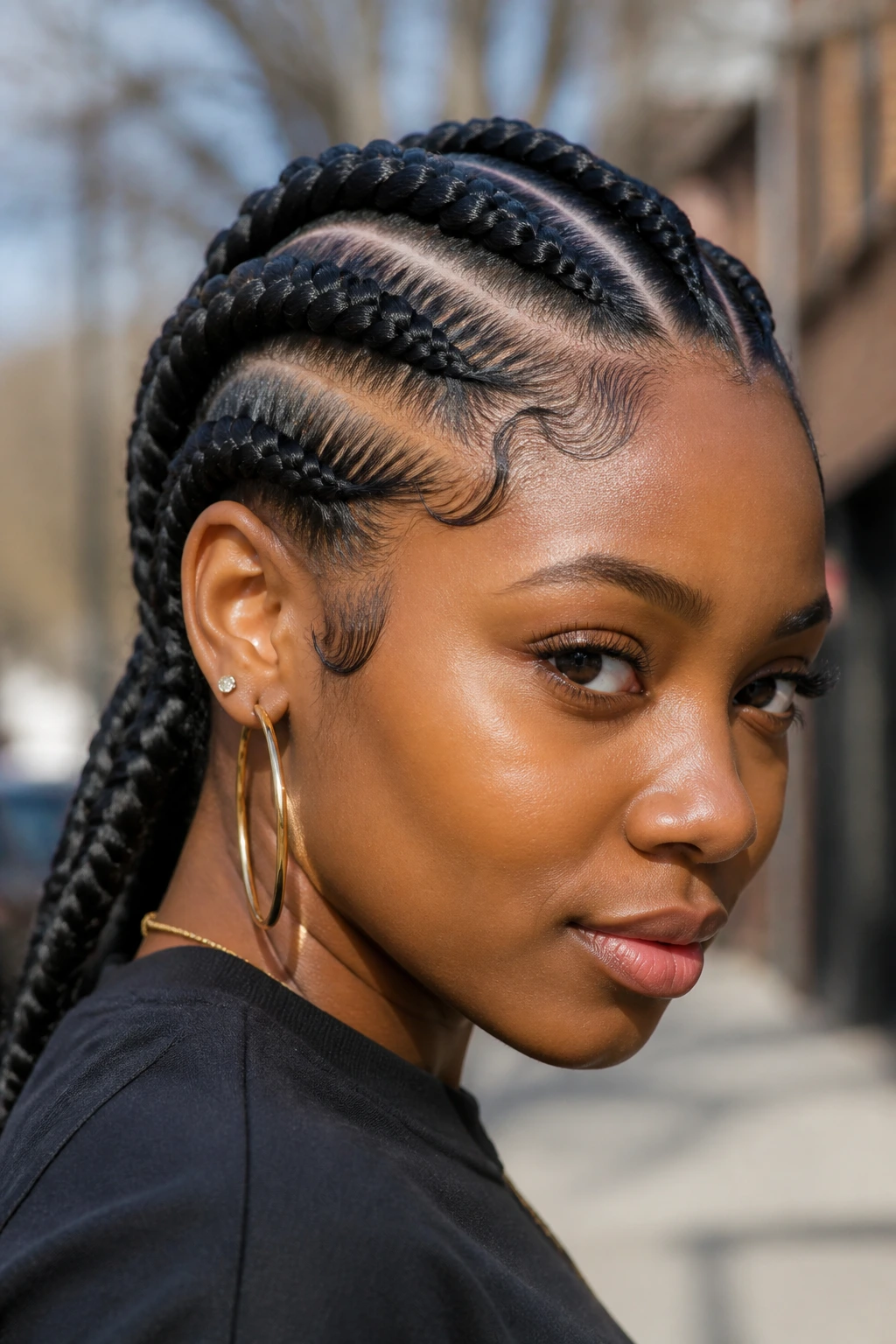
When your hair is short, we often fall into the trap of thinking thinner, more numerous braids are “safer.” However, chunky Ghana braids are actually excellent for protective styling because they involve fewer parts and therefore less total tension on the scalp. The weight is distributed over larger sections, which can feel much more comfortable if you have a tender scalp.
These braids create a bold, “jumbo” look that feels very intentional and high-fashion. Because they are thick, they take up more space on the head, meaning you need fewer of them to achieve full coverage. This means your appointment time is usually cut in half, and the removal process is significantly faster. If you’re worried about the weight, just remind your stylist to keep the feed-in hair light. Synthetic hair can get heavy, so choosing high-quality, lightweight kanekalon fiber is essential for this style.
8. High Ponytail Ghana Braids
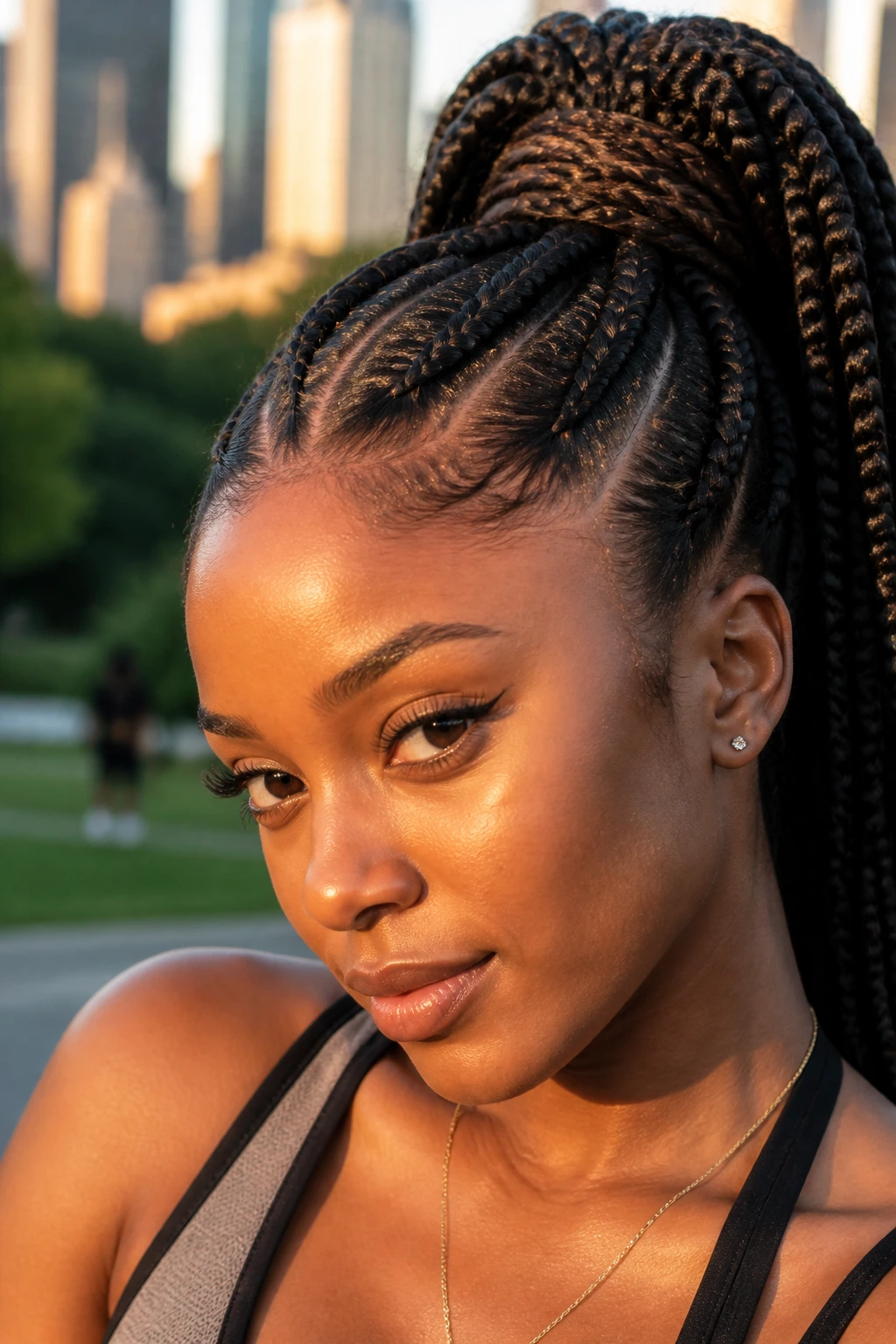
A high ponytail is the ultimate power move. It elongates the face and creates a sleek, lifted look. When you combine this with Ghana braids, you get all the benefits of an updo with the added style of geometric cornrows. This is one of the most popular ways to wear Ghana braids because it keeps your hair completely out of your face and off your neck during warmer months.
For short-haired individuals, the trick here is the anchor. Your natural hair at the perimeter needs to be braided into the base to ensure that when you pull the ponytail up, the style doesn’t sag. Ask your stylist to use a “bridge” braid—a small, horizontal braid that connects all your cornrows at the crown—to serve as the foundation for your ponytail. This prevents the braids from pulling directly on your hairline and keeps the weight distributed across the top of your head.
9. Ghana Braids with Beaded Ends
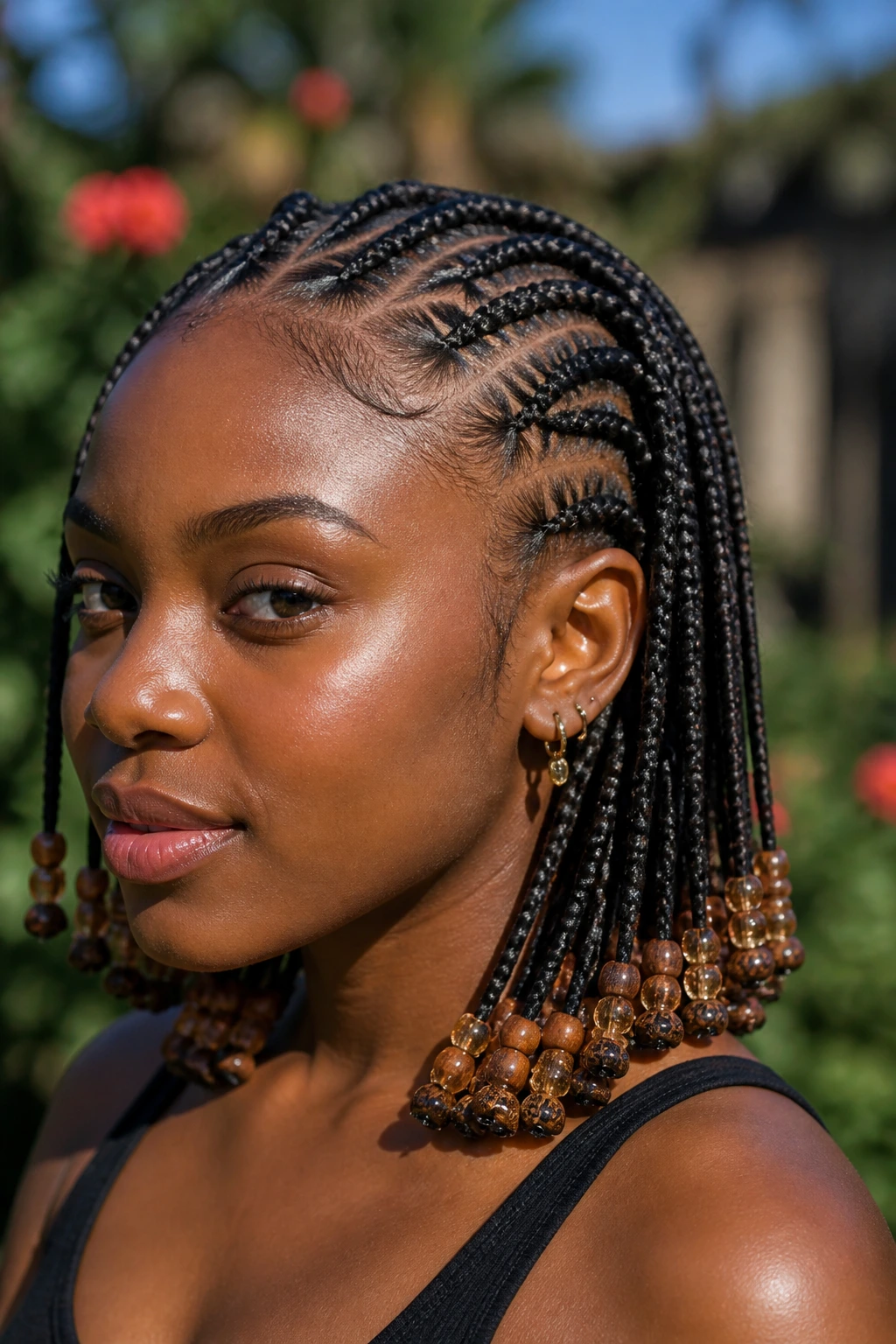
Beads aren’t just for children’s styles; they are a timeless decorative element that adds weight, sound, and visual interest to your braids. When your hair is short, the weight of the beads can actually help keep your braids from flying all over the place. They provide a bit of tension at the bottom of the braid, which helps the style lay flat against your back.
Think about the material of the beads you choose. Wooden beads offer an earthy, natural vibe, while clear acrylic or gold-plated beads feel more polished and modern. If you are worried about the noise, choose lightweight plastic beads. They are easy to install and remove, and they won’t put too much stress on the ends of your synthetic hair. Just make sure to double-knot the rubber bands used to hold the beads in place so they don’t slide off during your daily activities.
10. Half-Up, Half-Down Ghana Braids
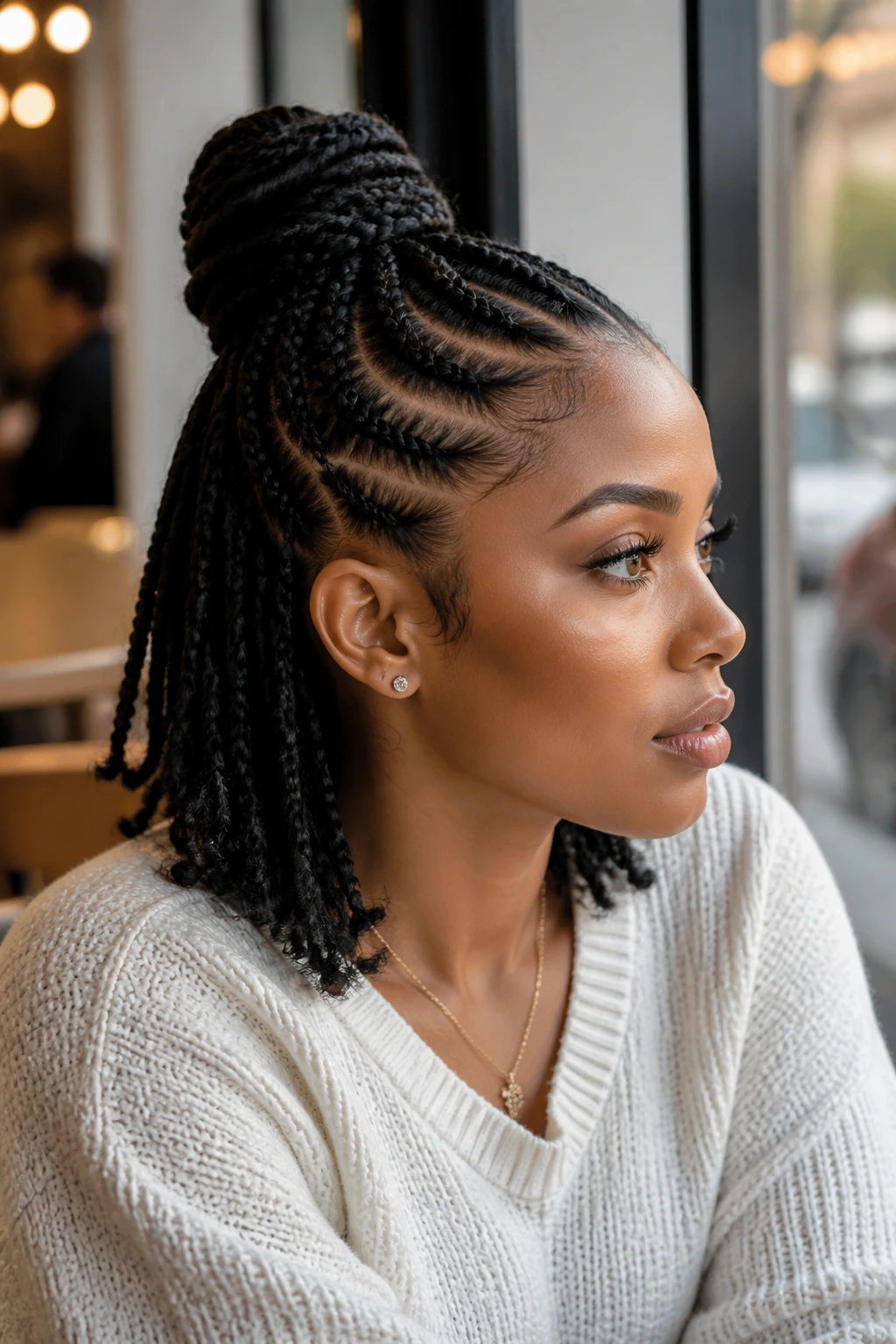
If you cannot decide between the security of cornrows and the freedom of wearing your hair down, the half-up, half-down look is your answer. You can have the front portion of your hair braided into intricate patterns while leaving the back half as loose, flowing braids. This provides the best of both worlds: protection for your delicate front edges and volume in the back.
This style is particularly great if you are transitioning from a shorter cut, as it creates the illusion of length very effectively. By braiding the top half closely to the scalp, you keep your edges protected and tidy, while the back braids can be as long or as thick as you want. If you find the loose braids are getting in the way, you can easily gather them into a bun or a clip, making this one of the most adaptable looks on this list.
11. Goddess Ghana Braids (With Curly Ends)
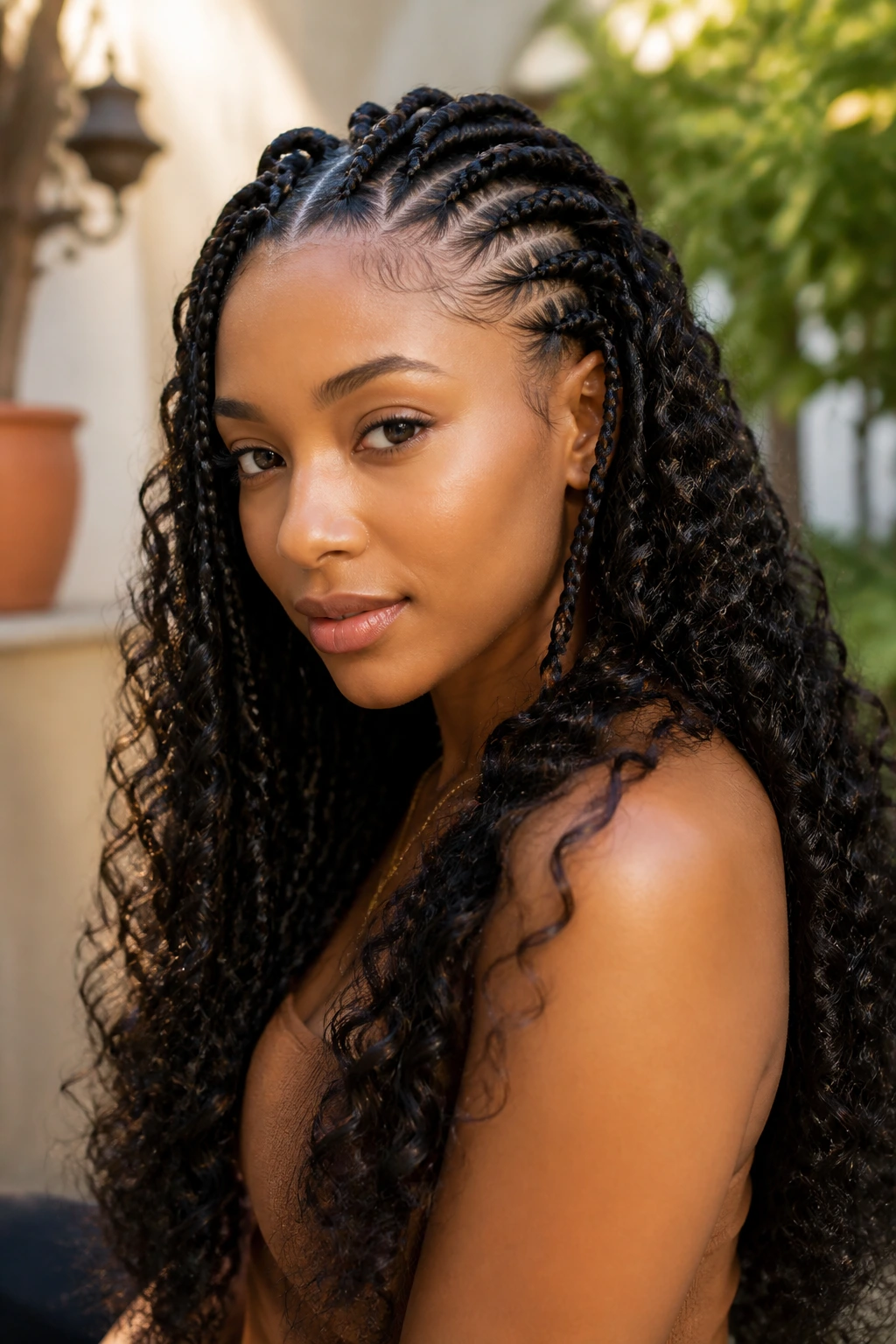
“Goddess” braids incorporate loose, curly tendrils into the braid itself. This style is incredibly popular because it softens the rigid look of standard cornrows and adds a romantic, feminine touch. For short hair, this is a beautiful way to add volume and texture without needing long natural hair. You can add curly extensions at the end of each braid or leave curly pieces sticking out of the braid at various points.
The secret to this look is the quality of the curly hair used for the extensions. You want hair that doesn’t tangle easily. Synthetic hair that is pre-curled is usually best, but you need to be mindful that it will eventually frizz. To keep it looking fresh, keep a small bottle of lightweight mousse in your bag to smooth down the curls when they start to look messy. A little bit of product goes a long way here.
12. Mohawk-Inspired Ghana Braids
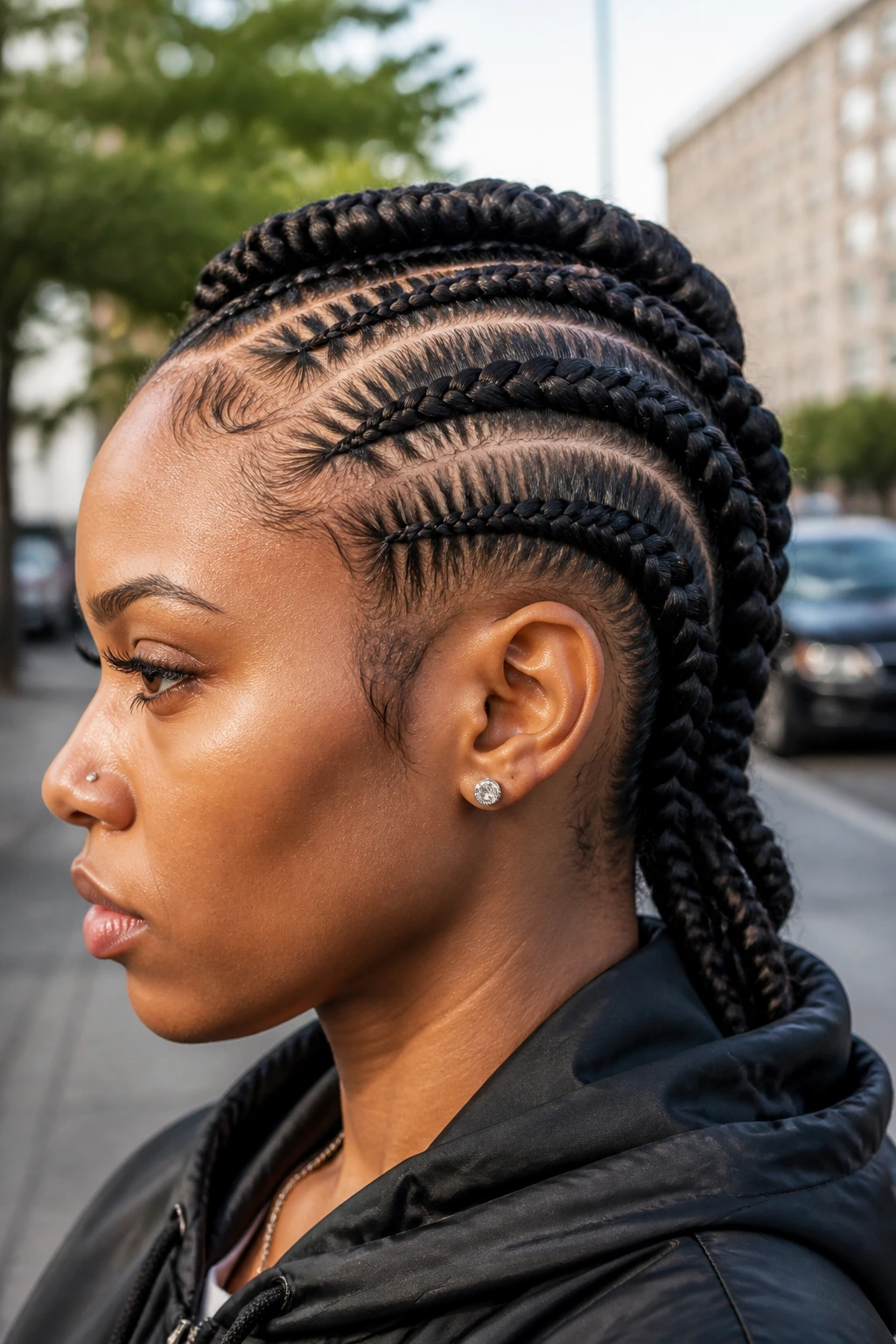
For a look that is truly daring, a mohawk design using Ghana braids is unparalleled. By braiding the sides of your head toward the center and allowing the braids to fall down the middle of the scalp, you create a striking, edgy silhouette. This style works exceptionally well on short hair because the side braids are effectively “anchored” close to the scalp, which provides a very secure base.
This look is perfect for those who want to show off their face and jawline. Because the braids are concentrated in the center, you have less weight pulling on the perimeter of your hairline, which is great for length retention. You can style the center braids in a variety of ways—keep them loose, tie them into a high bun, or wrap them into a top knot. It is a bold, high-fashion choice that feels entirely modern.
13. Double-Parted Ghana Braids
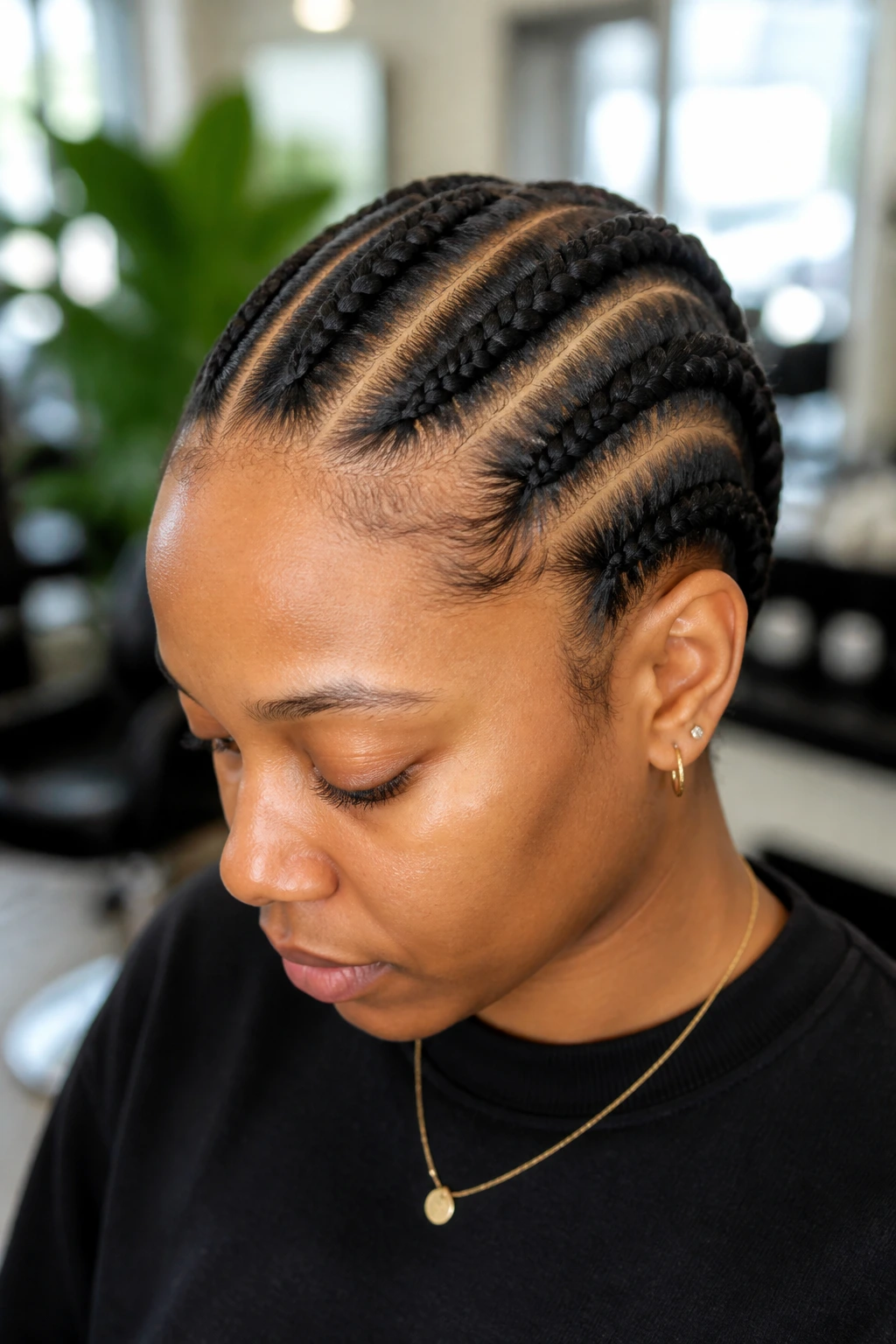
If you want to add a bit of complexity without going too wild, try a double-parted design. This involves using two parallel parts to create a sort of “pathway” for your braids. It adds a touch of architectural interest to the scalp. It is especially effective for those who want to show off their scalp health or who have decorative scalp jewelry they want to highlight.
Because this style involves more parting, it requires a stylist with a steady hand. Make sure they don’t part too deeply, as this can expose the scalp to the sun or create too much tension. This style is very clean and professional, making it an excellent choice for a workplace setting. It looks best when the braids are kept to a medium thickness, which maintains that balanced, symmetrical aesthetic.
14. Wrapped-Base Ghana Braids
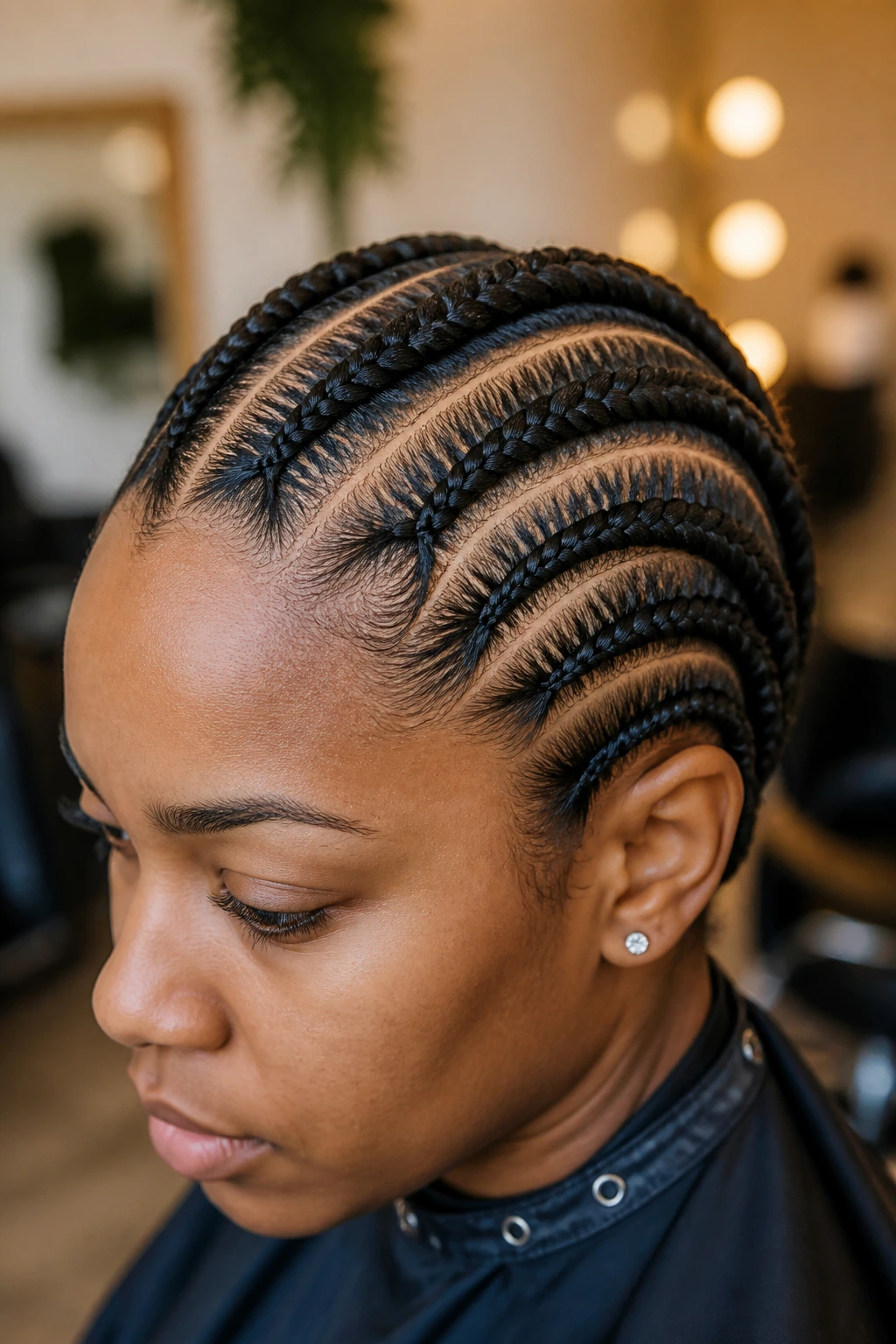
A wrapped-base is a simple detail that makes any style look like it cost twice as much. This involves taking a small piece of synthetic hair and wrapping it tightly around the base of the braid or the point where the cornrows converge. It hides the messy transition between your natural hair and the extension, making the whole style look seamless and professional.
For short hair, this is a secret weapon. It covers any potential knots or bumps where your short natural hair meets the extensions, creating a clean look at the hairline. If you are doing this style yourself, you can use a small amount of edge control to smooth your natural hair into the braid before you start the wrap. It’s a small step, but it elevates the entire appearance of the cornrows, making them look high-end and polished.
15. The “Feed-in” Minimalist Look
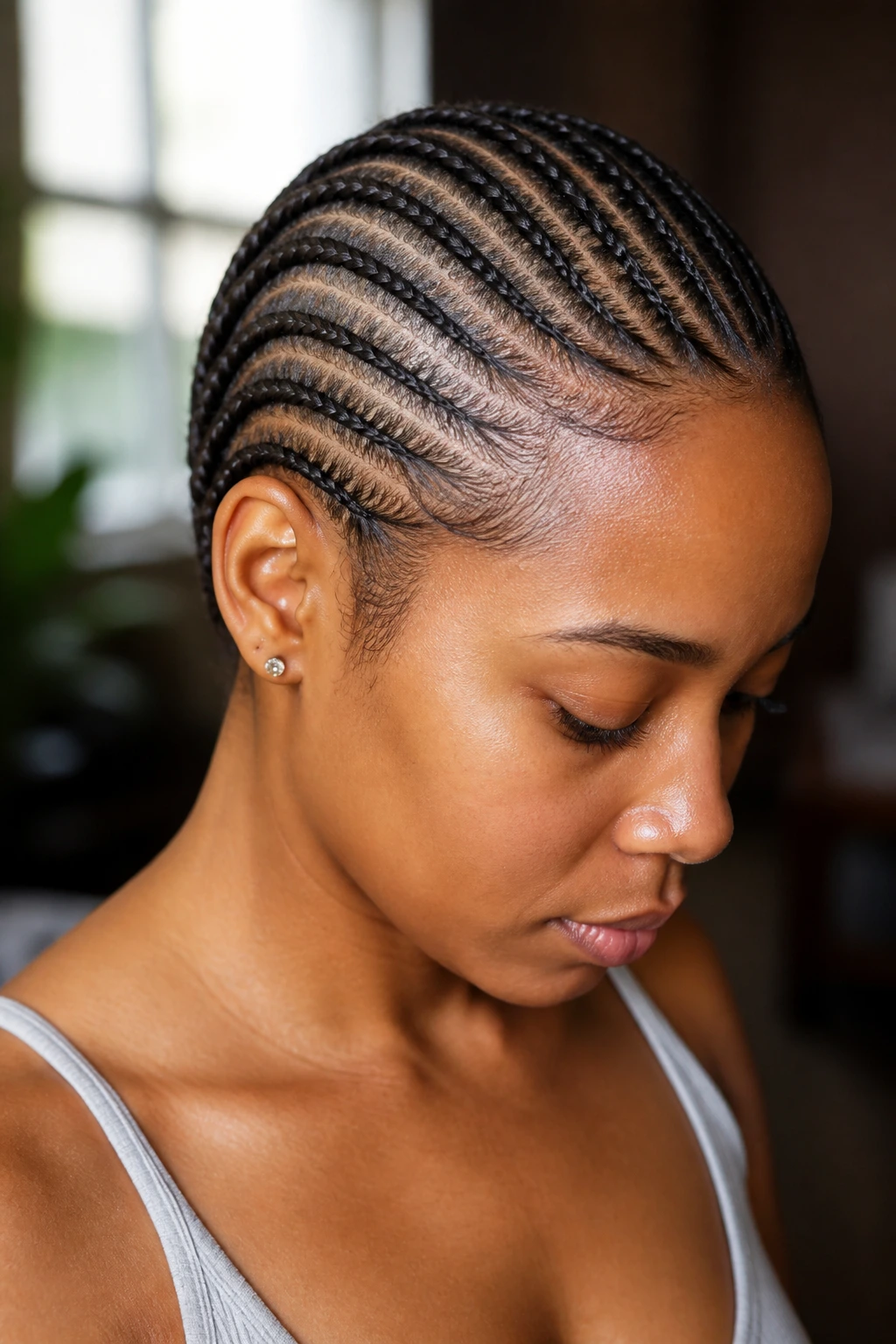
Sometimes, the best approach is the most understated. A minimalist feed-in style focuses on thin, clean braids that follow the natural contours of your head. There is no complex pattern or hidden parting—just simple, elegant lines that go from the hairline to the nape. This is the ultimate protective style for your natural hair because it allows for easy access to your scalp for cleansing and oiling.
If you are using this as a true protective style to grow your hair out, this is the most effective choice. With fewer angles and twists, your scalp can breathe. You can easily spray your scalp with rosewater or apply light oils without having to navigate through a jungle of hair. It is clean, efficient, and, most importantly, very gentle on your edges. When your goal is length retention, keeping it simple is almost always the right move.
Final Thoughts
Protecting short hair isn’t about hiding it—it’s about giving it the time and environment it needs to thrive. Ghana braids offer that perfect balance between aesthetic versatility and functional protection. Whether you are aiming for a bold look with color or a classic, minimalist style, the most important factor remains the health of your scalp and edges.
Remember that no matter how beautiful the style, the “protective” part of the name means that tension should be kept to a minimum. If you feel any throbbing or sharp pulling, speak up during your appointment. Once you get home, the work continues; keep your scalp moisturized, sleep with a silk or satin covering, and don’t keep the braids in for longer than six weeks at a time. Your hair is doing the work to grow, and these styles are simply helping it along the way. Be patient, take care of the base, and you will see the results in your length and thickness soon enough.