


When you’re deep into a high-intensity interval session or holding a challenging yoga pose, the last thing you want to deal with is hair hitting your face or slipping out of a ponytail. We have all been there—mid-burpee, reaching up to shove a stray strand behind an ear, only to break focus and lose the rhythm of the movement. This is precisely why so many athletes and casual gym-goers have turned toward protective styling. Specifically, goddess braid cornrows offer a near-perfect synthesis of high-performance utility and aesthetic appeal. They lock every strand into place while providing a polished, deliberate look that transitions easily from the weight room to a post-workout smoothie run.
Beyond the obvious practical benefits, these styles represent a low-maintenance approach to long-term hair health. By minimizing daily manipulation and shielding the ends from friction, you are essentially letting your hair grow undisturbed while you focus on your personal bests. Whether you are training for a marathon, lifting heavy, or just trying to survive a hot pilates class without frizz taking over, there is a configuration of braids that will keep your mane secure. Let’s look at how to achieve, maintain, and style these braids to ensure they survive your most grueling workouts without compromising your personal style.
1. The Classic Straight-Back Goddess Feed-In
This style is the bedrock of gym-ready hair. By utilizing the feed-in technique, where synthetic braiding hair is gradually added to your natural strands at the scalp, you avoid the heavy, tension-filled knots that often occur at the base of the braid. The resulting style is lightweight, sleek, and sits perfectly flat against the skull. This flatness is crucial for gym-goers who engage in floor work; you won’t have bulky knots digging into your head during abdominal exercises or mat work. Because the braids follow a linear path from your hairline to the nape of your neck, they create a streamlined silhouette that is as functional as it is sharp.
Why It Works for High-Intensity Training
- The tension is distributed evenly across the scalp, reducing the risk of traction alopecia.
- The sleek surface area means there is nothing to snag on gym equipment or weight collars.
- You can easily toss the ends into a high bun or low ponytail if you need to keep them completely off your neck during humid conditions.
Pro tip: Ask your stylist to keep the feed-in points small and frequent. Smaller additions result in a more natural transition and less overall weight, which you will certainly appreciate during a 60-minute cardio session.
2. The High-Volume Goddess Top Knot
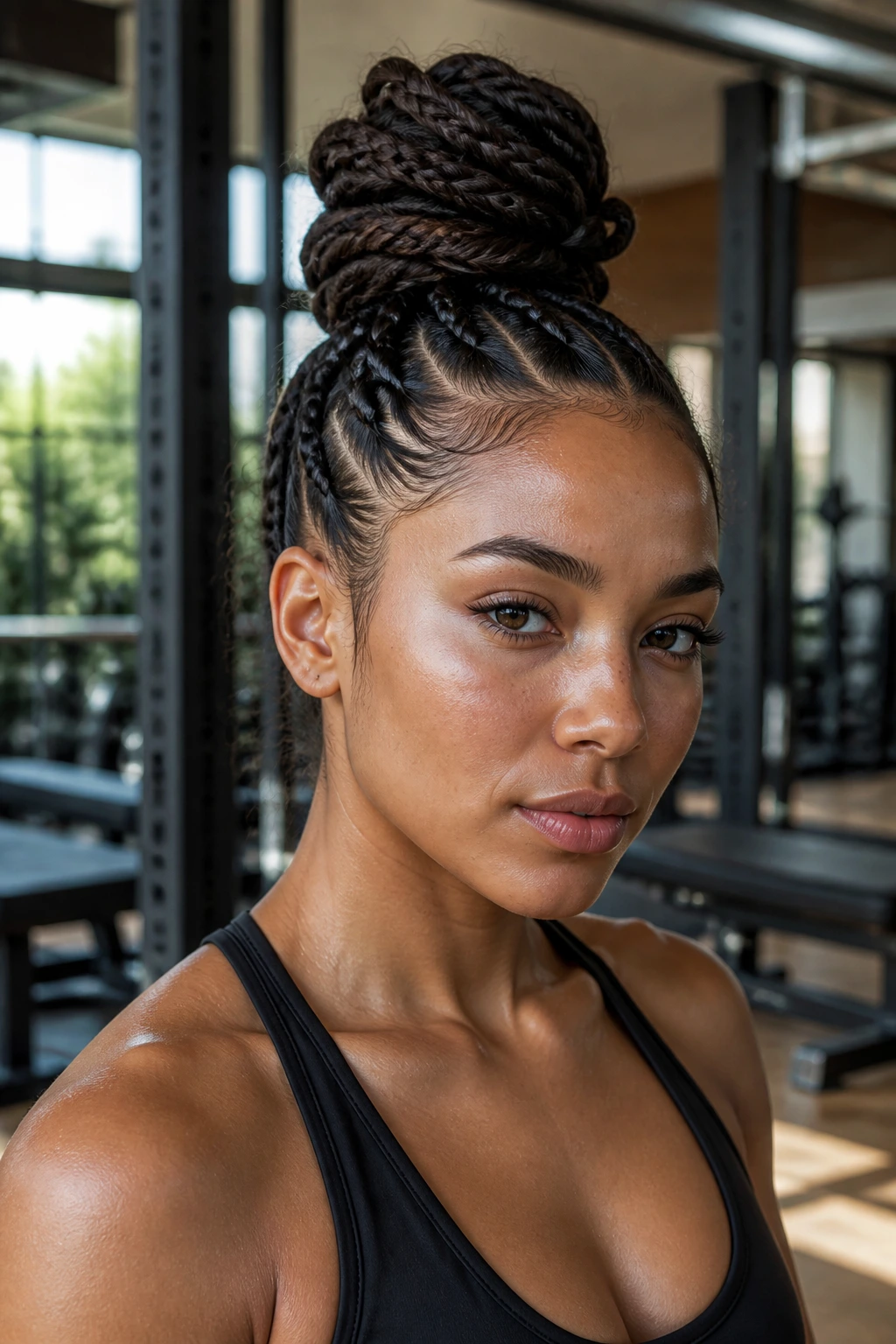
If you prefer your hair completely away from your collar, incorporating your braids into a single, massive top knot is the move. Start the cornrows from your hairline, angling them upward toward the crown of your head. Instead of ending the braids at the nape, you gather all the lengths together into a high, sculptural bun. This style provides excellent clearance for exercises that require you to lie on your back, such as bench presses or crunches, as the bulk of the hair sits entirely on top of your head rather than behind it.
Practical Considerations for the Gym
- Ensure the base of your knot is reinforced with a thick, snag-free hair tie.
- Keep the cornrows slightly looser at the perimeter to prevent a “tight” feeling when you pull the bun upward.
- Use a light-hold setting foam to tame any stray flyaways that might emerge during heavy perspiration.
How to maintain the look: When you finish your workout, hit your scalp with a cooling, antiseptic spray to keep the skin healthy, then wrap the bun with a silk scarf to prevent friction-induced frizz.
3. The Criss-Cross Goddess Crown
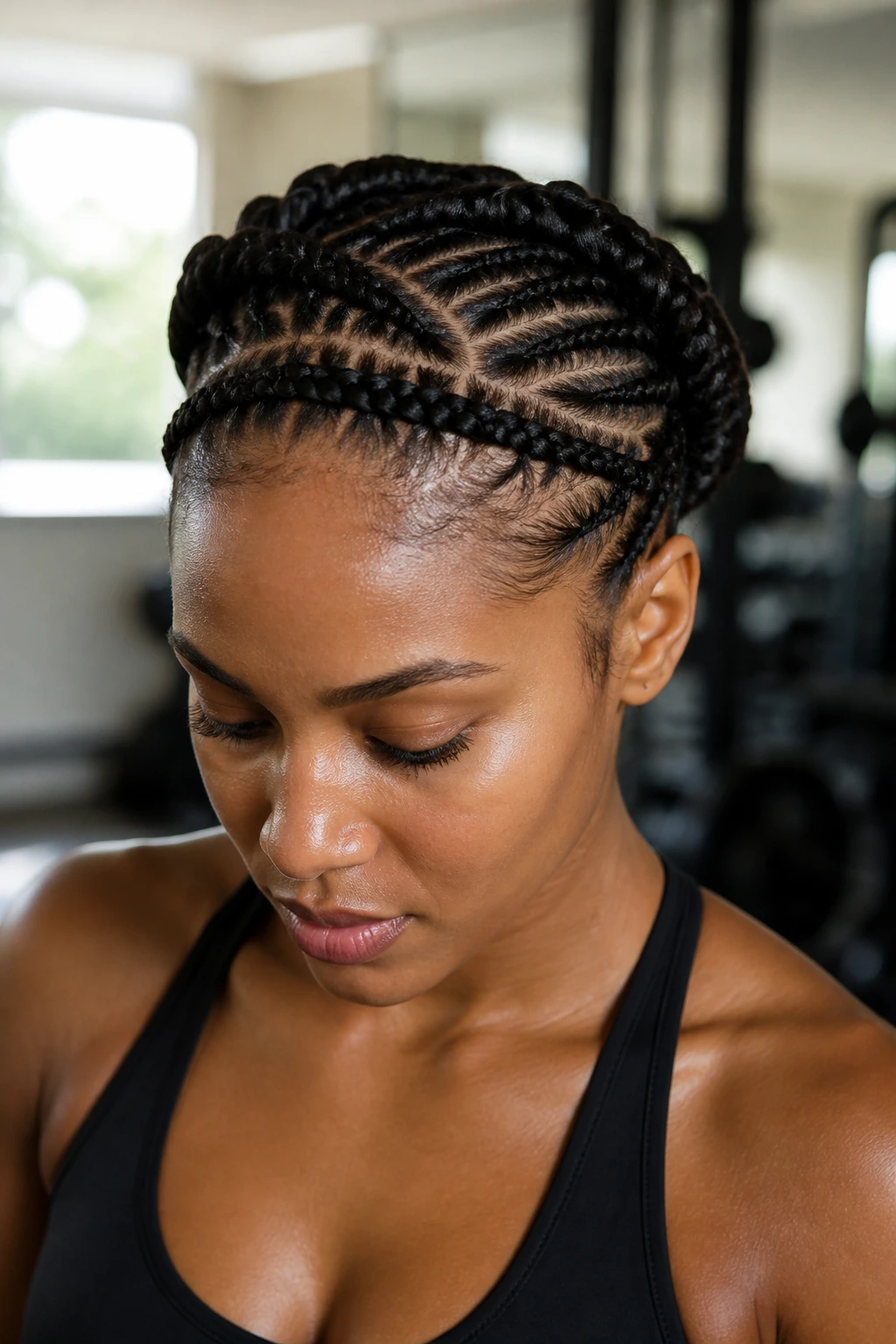
Sometimes, a standard linear cornrow pattern feels a bit too plain. Incorporating a criss-cross pattern not only adds a striking visual element but also helps anchor the hair more securely. By braiding the sections in an intersecting diagonal, you create a stronger weave that is less likely to shift or loosen as you move. This is particularly useful for movements that involve rapid changes in head position, like jump rope or boxing drills, where a traditional straight-back style might begin to slip toward the ears.
The Engineering Behind the Criss-Cross
The intersecting paths of these braids act as a secondary set of anchors. While the cornrows themselves carry the weight, the crossing pattern creates a localized tension-relief system. This prevents the “sagging” effect that can occur after three or four days of intense sweating. It is an ideal choice for the athlete who needs their hair to stay “fresh” from Monday through Friday without a touch-up.
4. Half-Up, Half-Down Goddess Cornrows
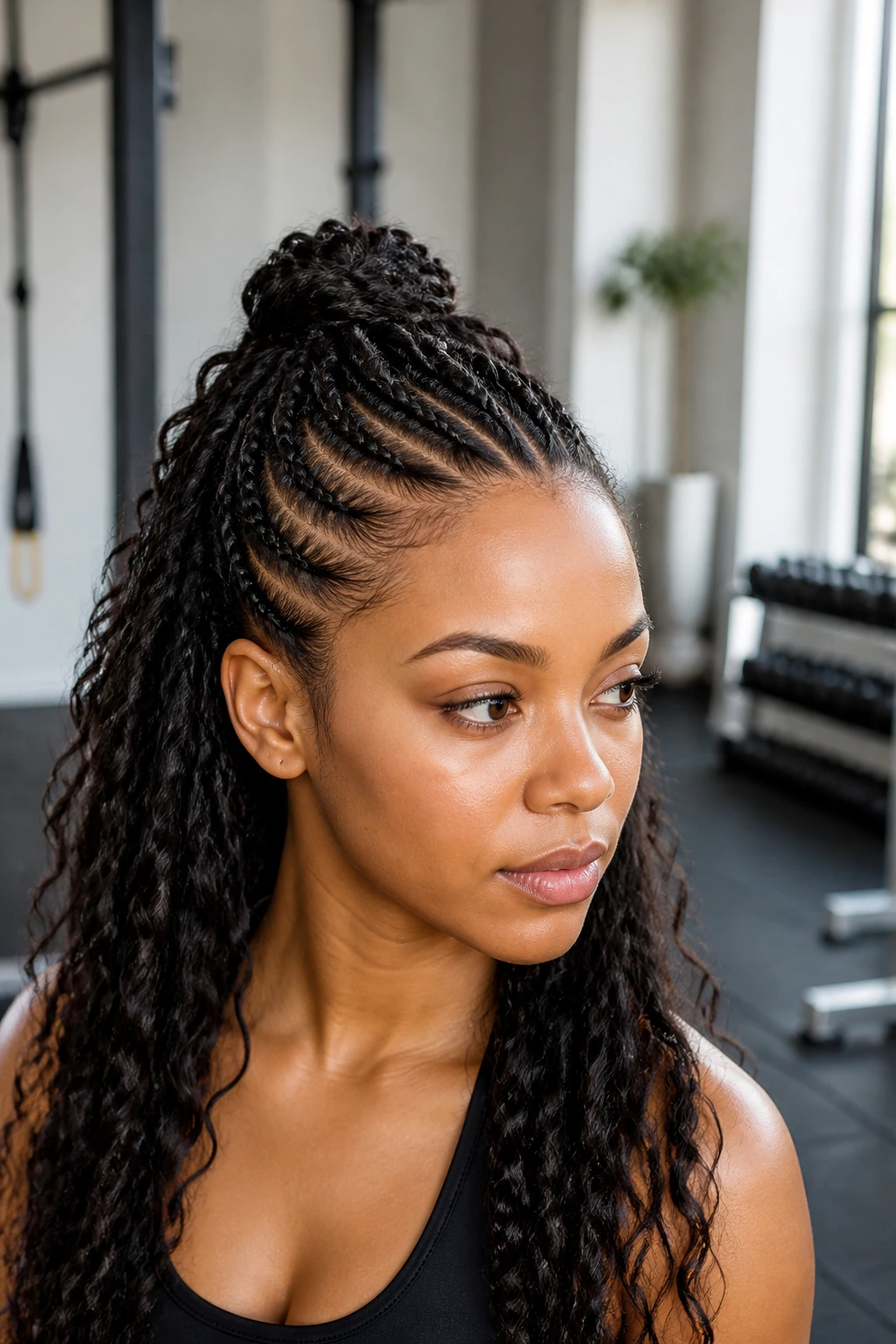
For those who prefer a bit of movement, the half-up, half-down configuration offers the best of both worlds. The front portion of your hair is braided into tight, secure cornrows that lead toward the crown, while the back remains loose or is styled into a cascading ponytail. This keeps the hair strictly away from your face—essential for activities like yoga or cycling where vision is paramount—while allowing the remaining length to frame your features.
Why This Style Succeeds
- It keeps the “business” end of the hair away from your forehead.
- It prevents the hair from sticking to your neck when you start to heat up.
- You can easily tie the back portion into a smaller bun if you decide to jump into a higher-intensity phase of your workout.
A note on maintenance: Focus your scalp cleaning routine on the front-facing braids, as these will be exposed to the most sweat and oil during your training sessions.
5. The Side-Swept Goddess Swirl
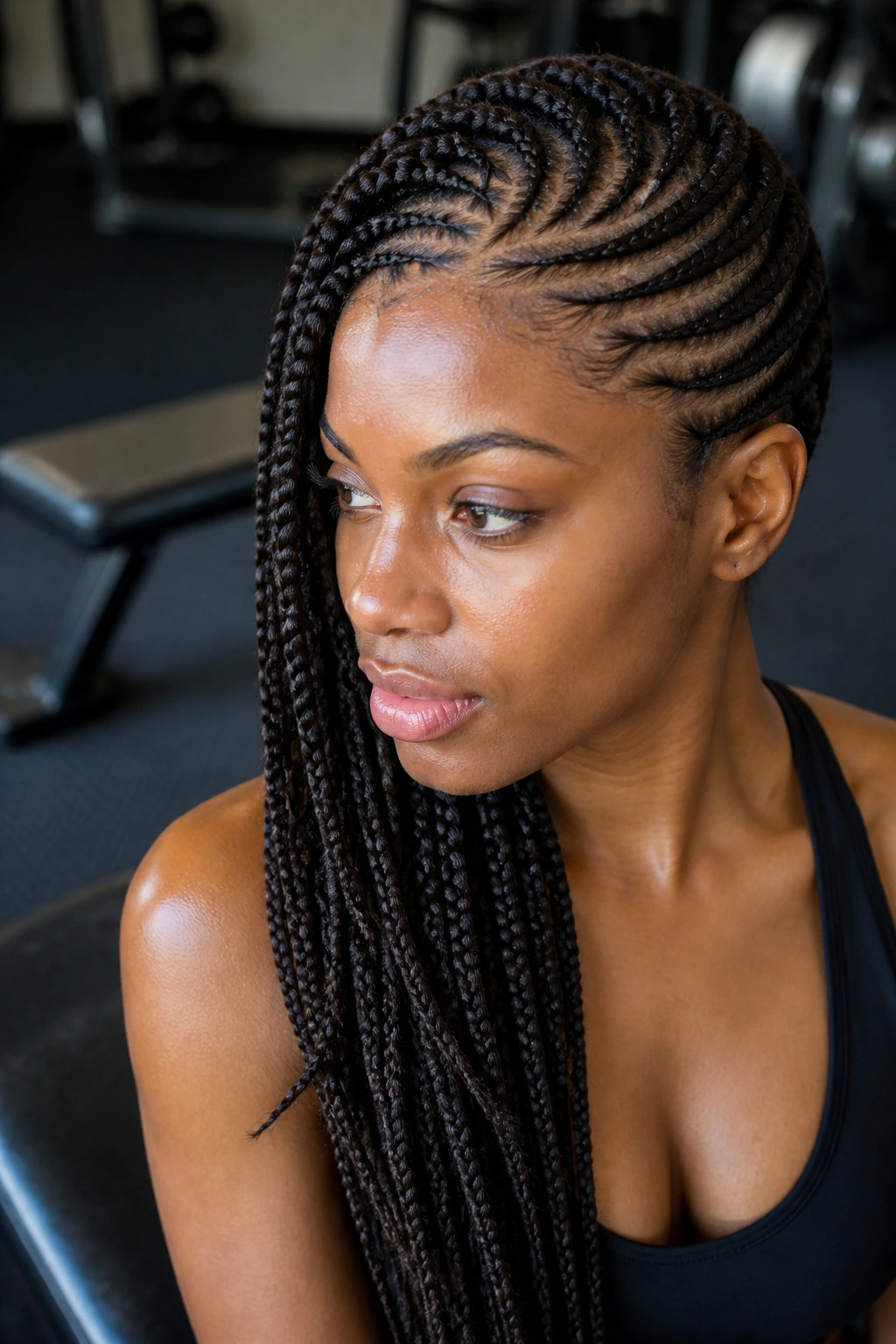
This is an incredibly elegant way to manage your hair, utilizing a swirling, side-parted pattern that leads all your braids toward one shoulder. While it might look like a style for a red carpet, the side-swept cornrow is actually a highly functional choice for weight training. By directing all your hair to one side, you create a clear zone on the back of your head and the opposite shoulder, which is perfect for resting your head on a bench or using a back-support machine without the braids getting crushed or caught.
Managing the Weight
Because all the weight is concentrated on one side, ensure that the cornrows are braided firmly. You don’t want them to feel like they are pulling on your scalp toward that side. A good rule of thumb is to keep the parting slightly off-center to balance the distribution of the hair’s weight across the top of your head.
6. The Minimalist “Two-Braid” Goddess Look
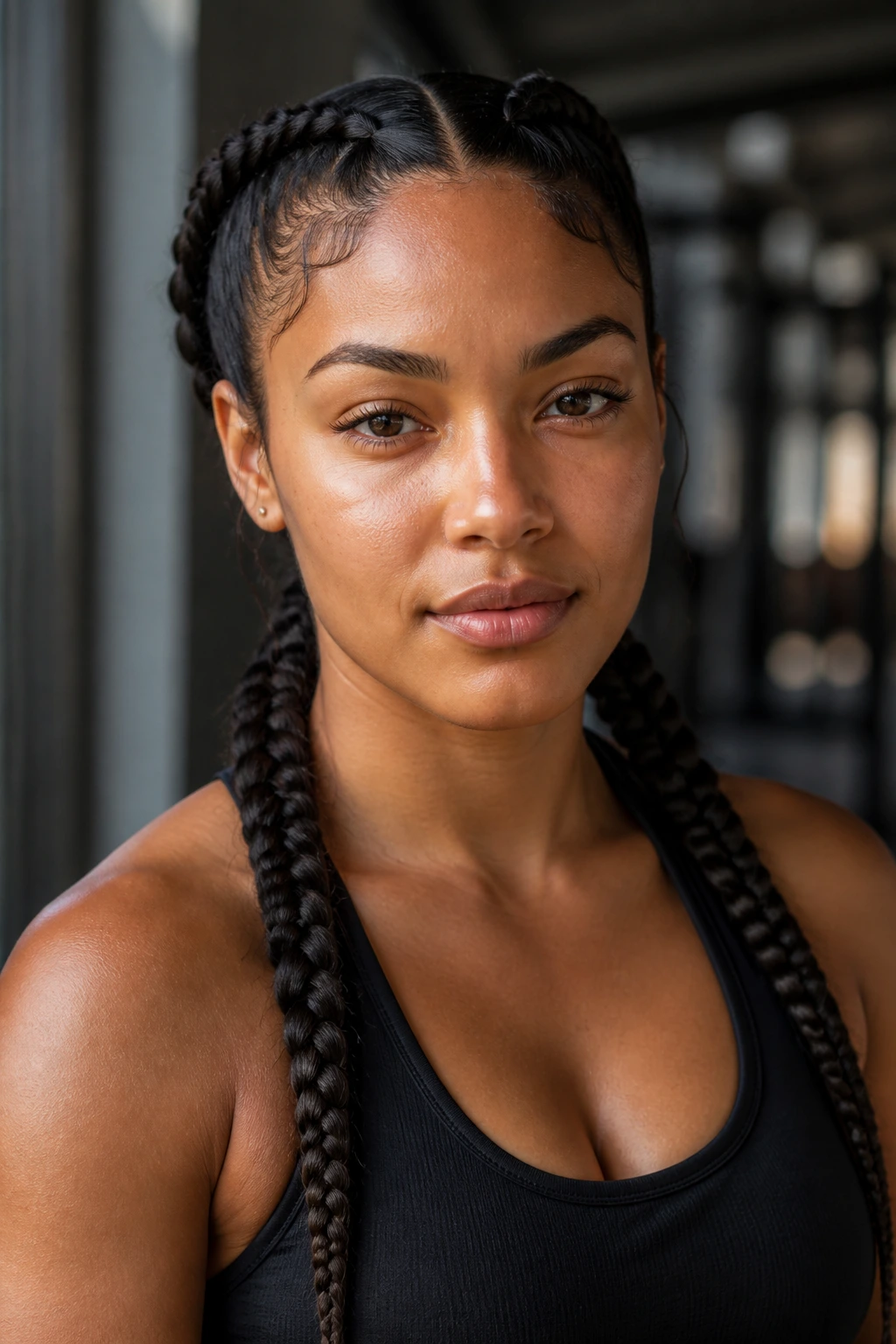
Sometimes, simplicity is the ultimate sophistication. Two large, thick goddess braids—sometimes called “Dutch goddess braids”—provide maximum security with minimal effort. Because there are only two paths, there are fewer parting lines to manage and less scalp exposure. This is a favorite among outdoor athletes, such as runners and hikers, who need a style that stays put for hours and holds up well against wind and elements.
Why This Is the Ultimate “Stay-Put” Style
- The large braids hold their integrity even when you are moving quickly.
- There is virtually no risk of individual cornrows unraveling or “popping out” during a workout.
- The style is easy to refresh; just run a light pomade over the length to smooth down any flyaways.
Warning: Do not braid them too tight at the temples. You want enough slack to prevent headaches during prolonged exertion.
7. The Mohawk-Inspired Goddess Cornrow
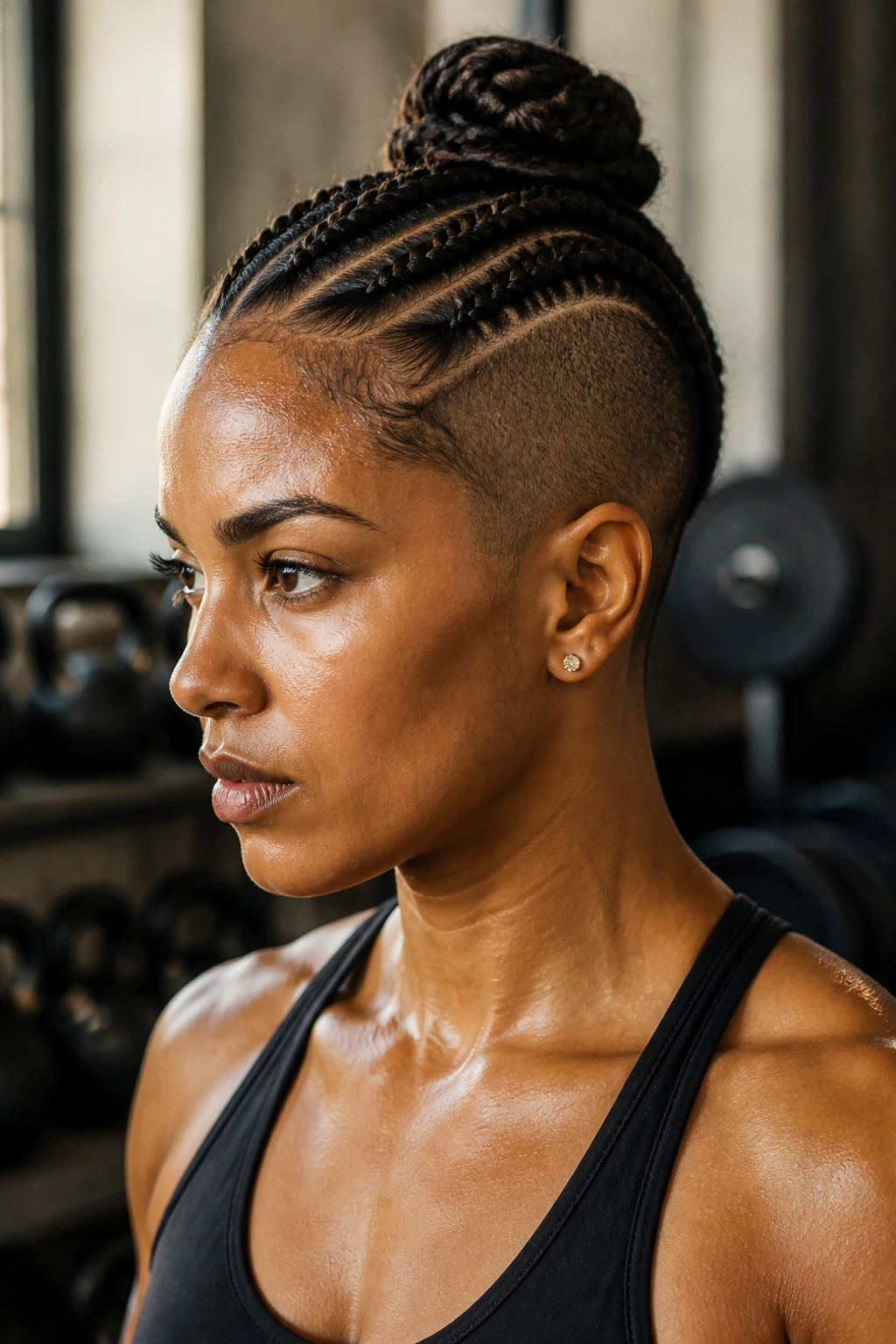
If you want a style that feels edgy and bold, a mohawk-inspired braid pattern is a top contender. By braiding the sides tightly toward a central line, you keep the perimeter of your head completely clear and cool. The central braids can then be styled into a bun or left as a loose, trailing ponytail. This is a brilliant choice for high-impact sports where you need to keep your head cool and your vision unobstructed by stray strands.
The Performance Advantage
- Maximum airflow around the sides of the head.
- The central braid creates a “cushion” that keeps the weight off the back of your neck.
- It looks aggressive and energetic, fitting the vibe of a high-power training session.
8. Butterfly-Accented Goddess Cornrows
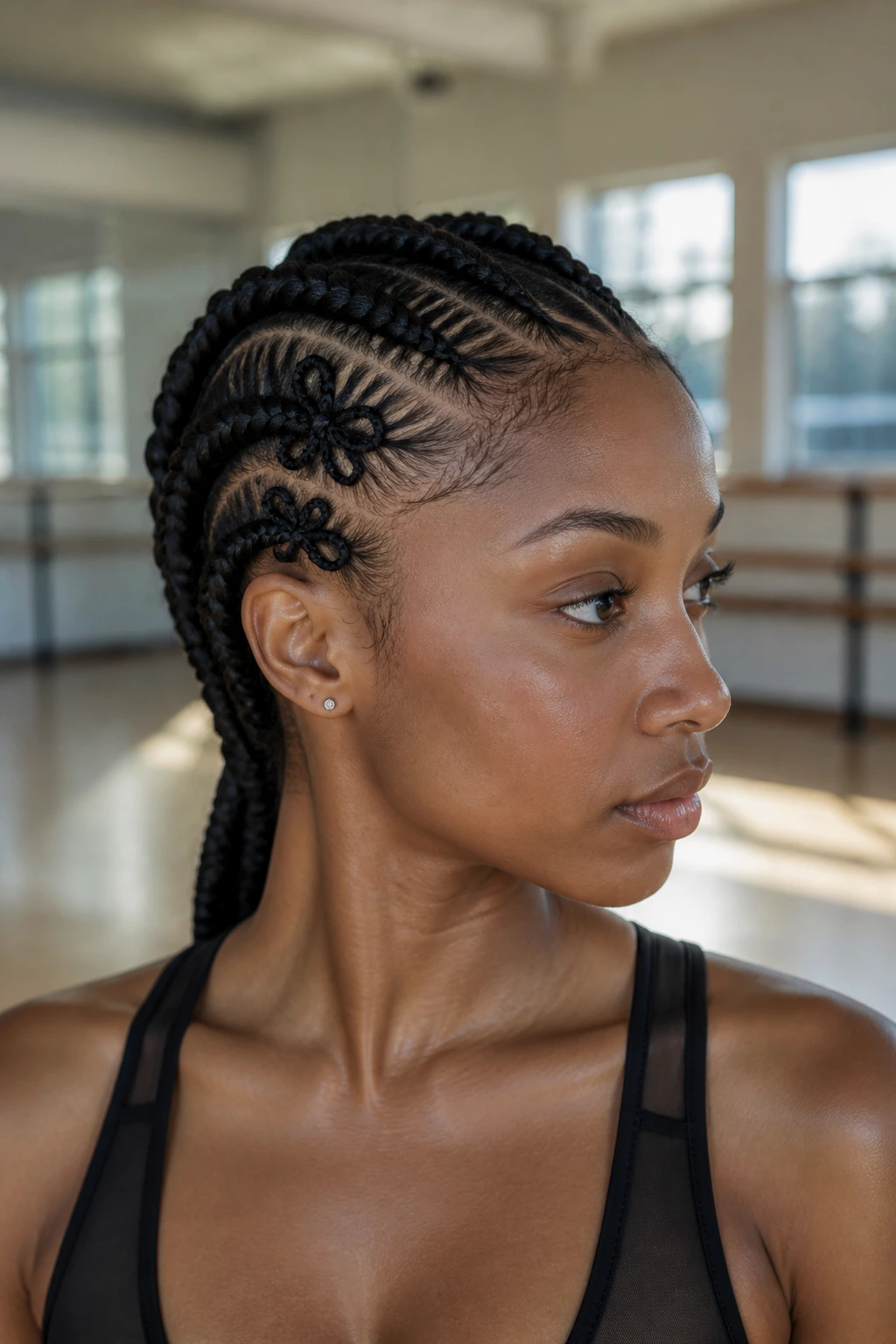
The “butterfly” technique involves pulling loops of hair out of the braid, creating a wispy, textured look. While this adds significant volume, it can also lead to more snagging during intense activity. To make this work for the gym, ask your braider to keep the loops small and tightly secured. These braids look fantastic when you’re doing lighter movement-based workouts like barre or dance fitness, where the texture adds a bit of grace to your aesthetic.
Maintaining the Butterfly
- Be gentle when moving your head near gym racks or equipment.
- If a loop gets pulled, don’t try to rip it; simply tuck it back into the main braid using a small crochet hook or your fingers.
- This style is best for the person who values aesthetic flair alongside their fitness goals.
9. The Zig-Zag Part Goddess Style
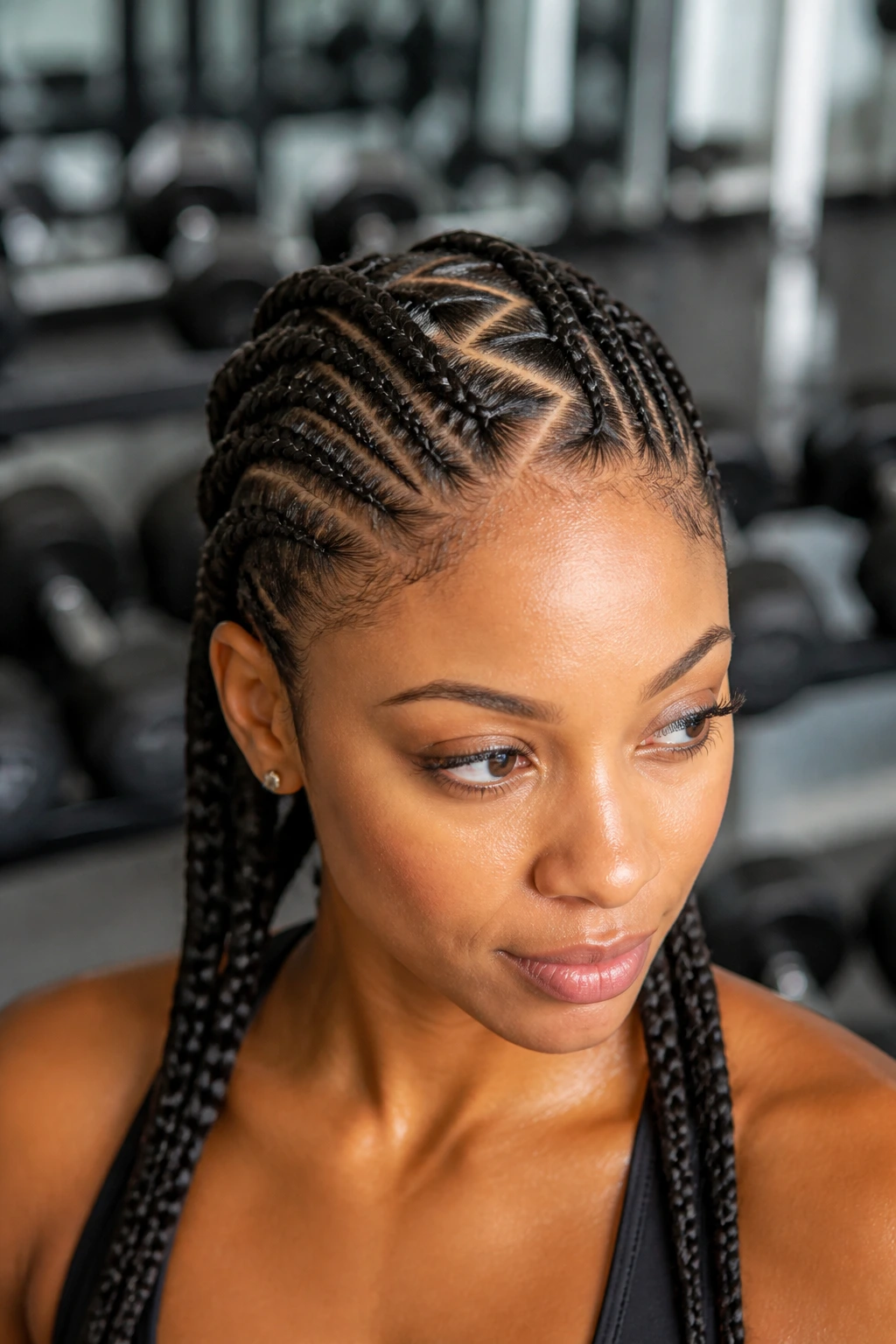
The parting pattern you choose can be just as important as the braids themselves. A zig-zag part breaks up the visual line of the scalp and helps the braids sit more naturally when you pull them into a ponytail or bun. For a gym setting, this is less about the look and more about the mechanics; the irregular parting prevents the “pulling” sensation that often happens when you wear your hair in the same straight lines every day.
Why It Helps
- It reduces repetitive stress on the same hair follicles.
- The zig-zag pattern naturally distributes the weight of the braiding hair, preventing the cornrows from becoming heavy in one specific area.
- It provides a subtle, interesting detail that makes the style feel unique.
10. The High-Ponytail Goddess Base
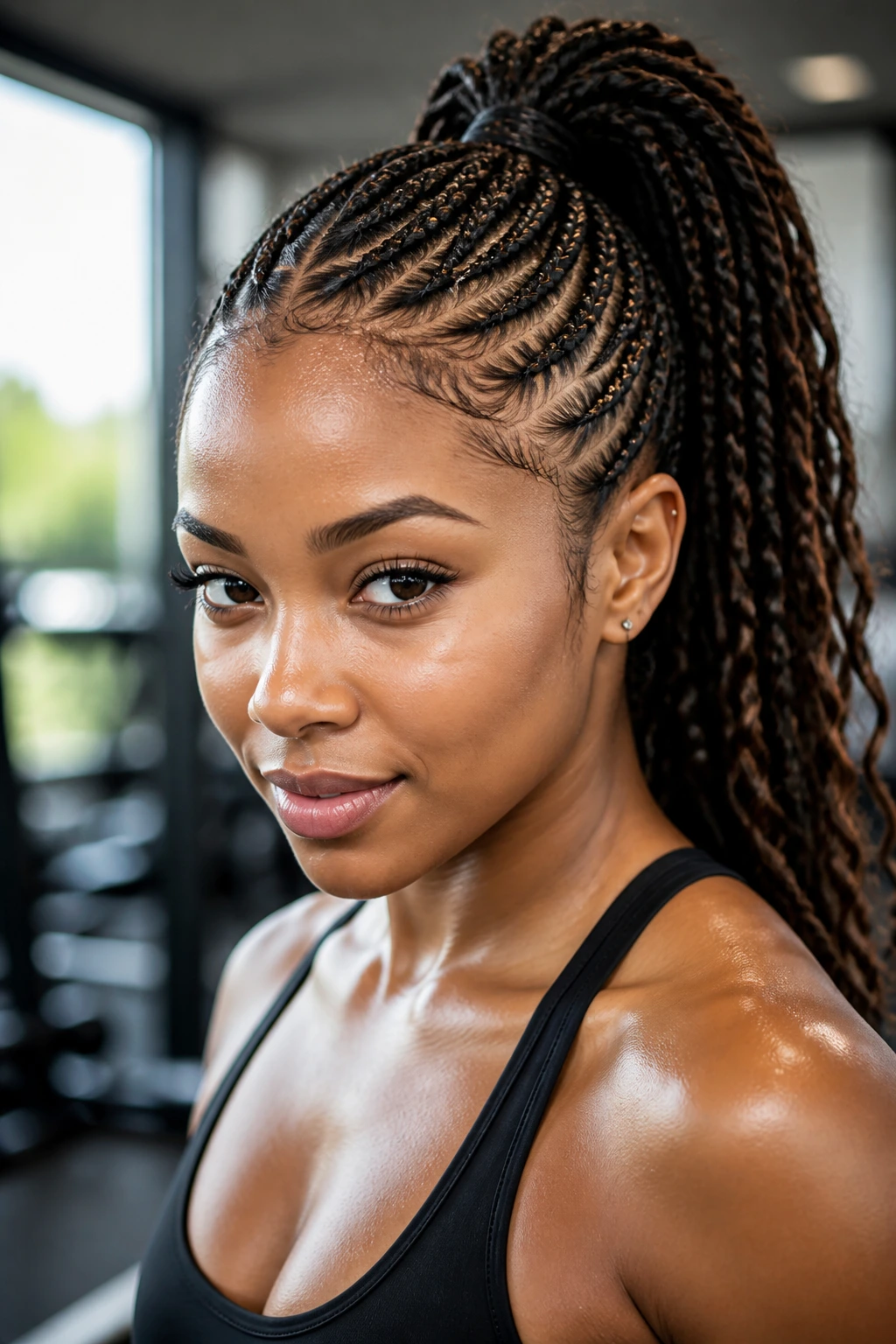
Instead of braiding your hair into cornrows that go all the way down, you can braid the base and secure the rest of the hair in a high, gravity-defying ponytail. This is arguably the most “athletic” version of the goddess braid. You get the intricate, decorative look of the cornrows at the front while keeping the length of your hair completely contained in a ponytail that moves with you.
Why Athletes Love the High Base
- It keeps the neck completely free, preventing the “stuck to skin” feeling when you sweat.
- The weight is concentrated at the highest point of the skull, which is the most ergonomic place for it during most exercises.
- It is easy to secure with a simple hair tie, meaning you can swap it for a bun if you need to lie down for floor exercises.
11. Multi-Directional Goddess Cornrows
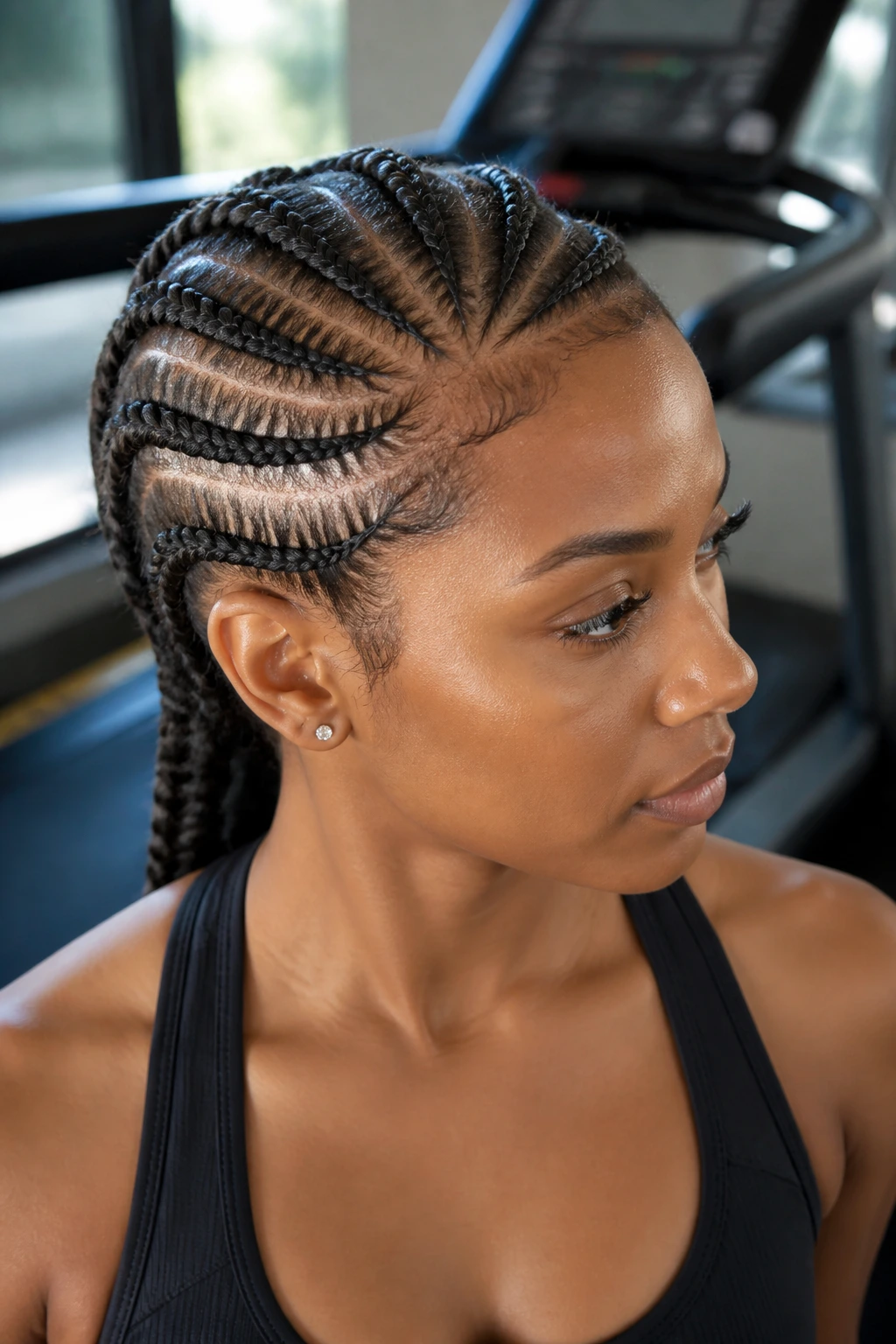
Imagine braids that start from the crown and radiate outward, almost like the spokes of a wheel. This radial pattern is beautiful and functional, as it avoids a single parting line that can become itchy or irritated with excessive sweating. The tension is spread out in a 360-degree fashion, making this one of the most comfortable styles for very long, intense training blocks.
The Benefit of Radial Braiding
- No straight lines for sweat to pool in.
- It looks sophisticated even after a week of wear.
- The tension is so evenly distributed that you likely won’t feel the “pull” of the hair at all.
Pro tip: This style is quite intricate, so allow for extra time in the chair when getting it installed.
12. Goddess Braids with Added “Jewels”
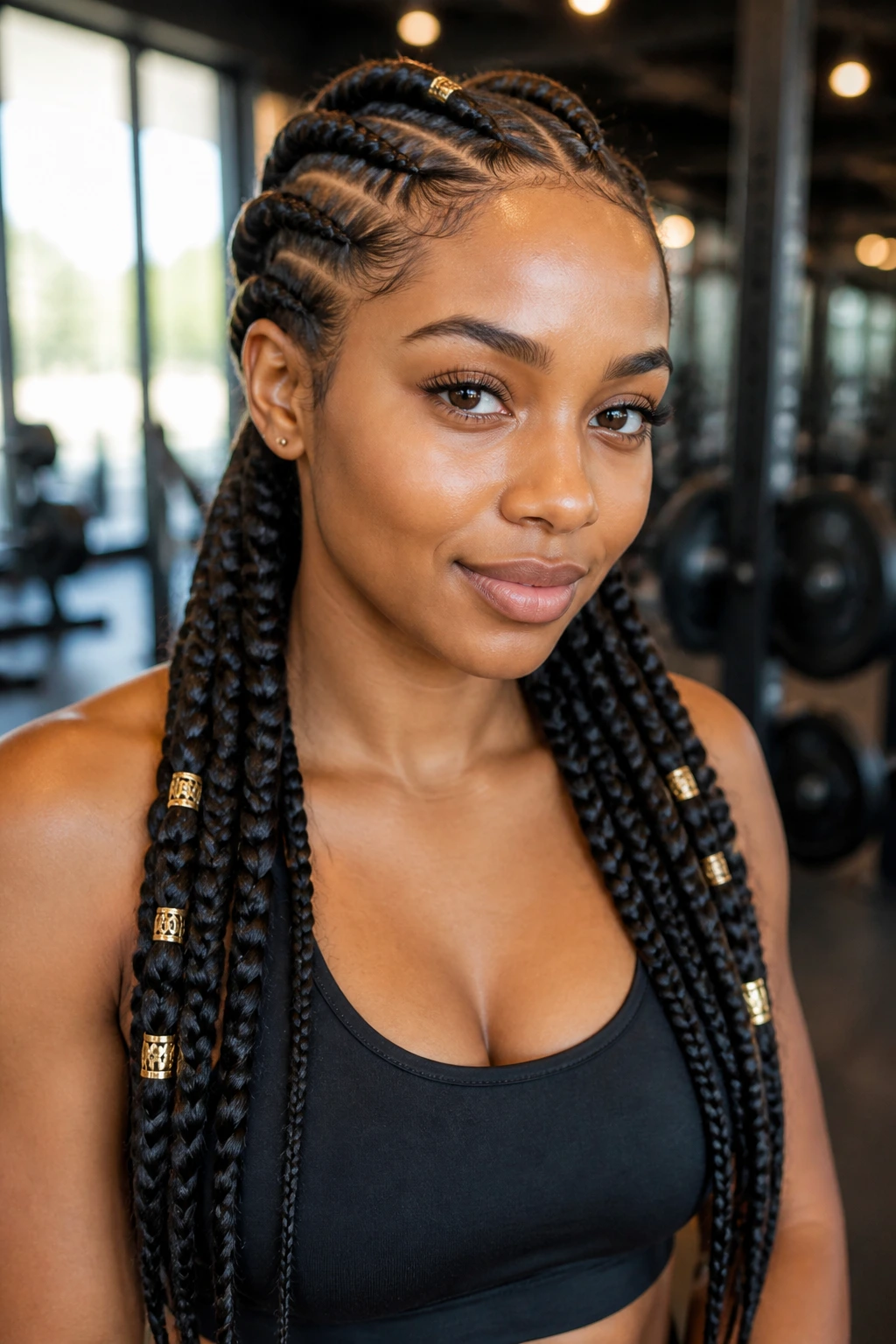
While you might think hair jewelry is only for social events, a few strategically placed gold cuffs can actually help secure the ends of your braids. If you are doing activities where the braids tend to fray or unravel, a metal cuff at the end acts as a weighted anchor. Just ensure they are placed toward the ends of the hair, away from your face or neck, so they don’t clink against your equipment while you train.
Functional Fashion
- Use gold or silver cuffs to prevent the ends from unraveling.
- Keep the number of accessories low to avoid unnecessary weight or noise during exercise.
- Choose non-tarnishing metals, as sweat will inevitably come into contact with them.
13. The “Ombré” Goddess Cornrow
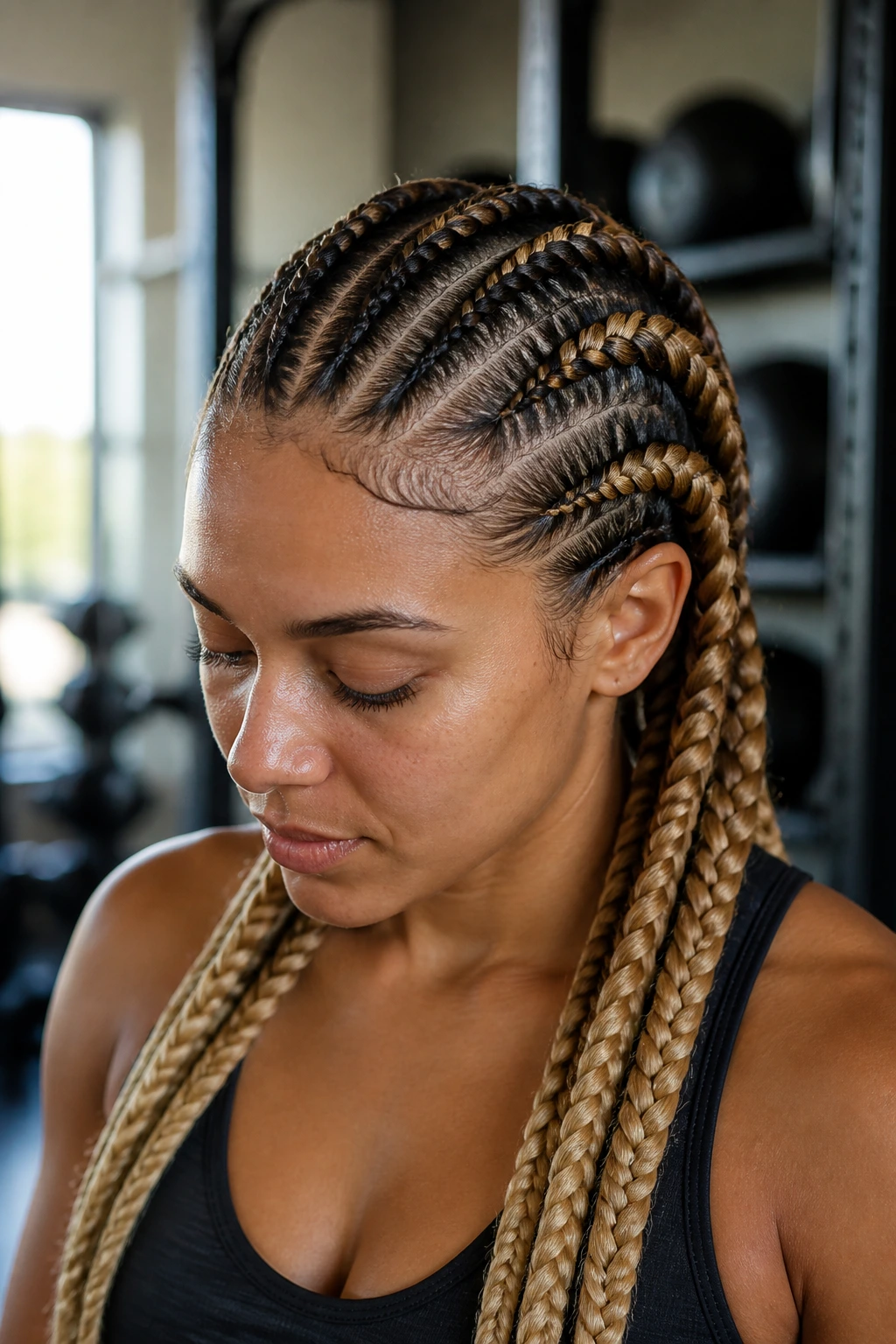
Color is a great way to make your workout style feel intentional. An ombré effect—where the braiding hair fades from your natural shade into a lighter or more vibrant color—can hide the “new growth” that appears as your hair begins to slide out of the braids. From a functional standpoint, the texture of synthetic hair often changes slightly with color treatment, which can actually help the braids hold their shape better than standard jet-black braiding hair.
Hiding the Grow-Out
- As your natural hair grows out, the gradient of the ombré helps disguise the transition zone.
- It keeps the style looking fresh for several extra days.
- It adds a pop of personality to your gym attire.
14. The Triple-Threat Goddess Cornrow
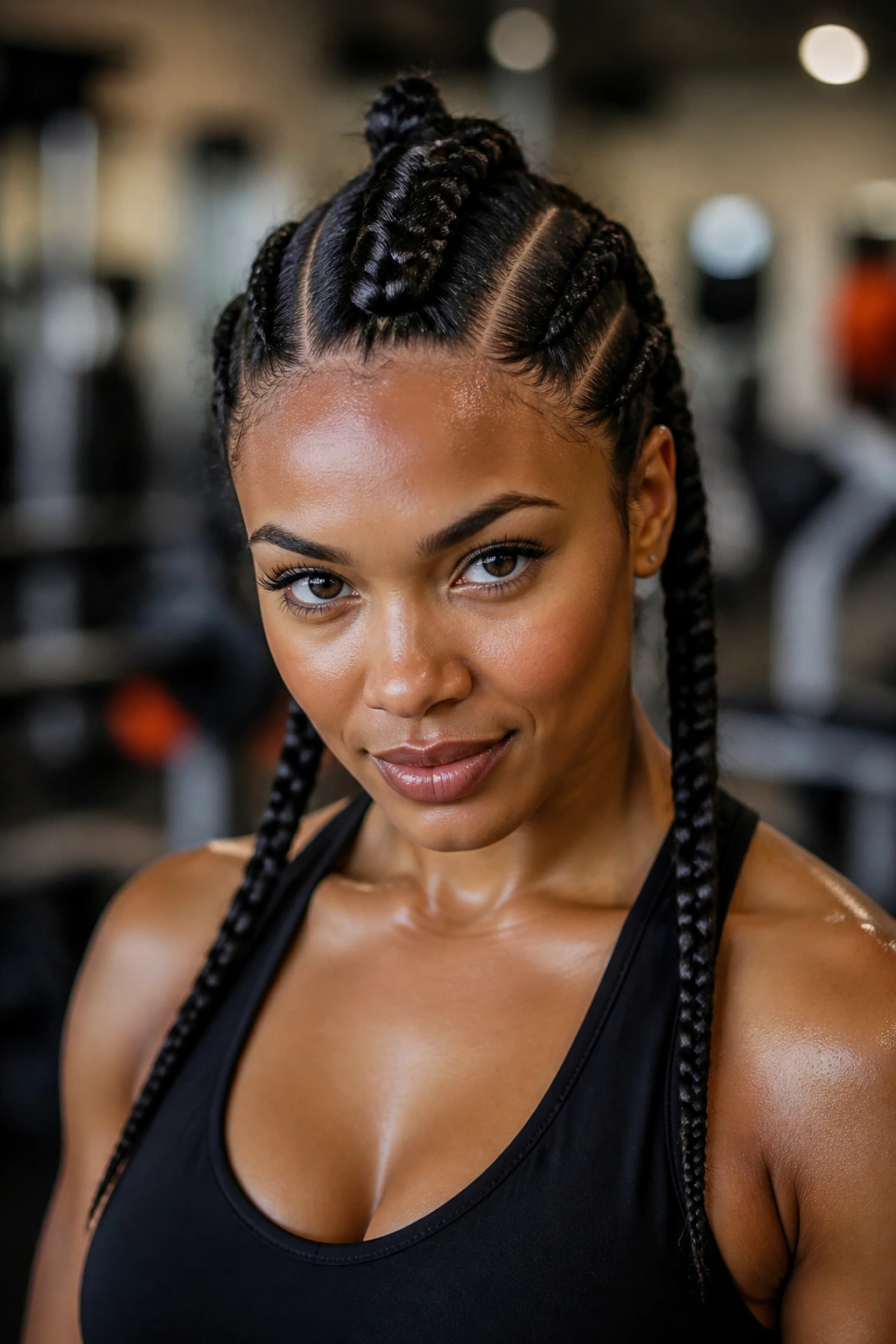
This style incorporates three distinct sections: two smaller braids on the sides and one larger, “goddess-style” braid in the center. By varying the size, you create a dynamic look that doesn’t feel like a uniform set of cornrows. This variation in size can actually help with hair health; the thinner side braids put less pressure on the delicate hairline, while the larger center braid carries the bulk of the hair’s weight.
Strategic Sizing
- Smaller side braids protect your edges from tension.
- The larger center braid simplifies the overall look, making it easier to manage.
- It’s a great way to play with volume without the heaviness of a full head of thick braids.
15. The “Wrapped” Base Goddess Braid
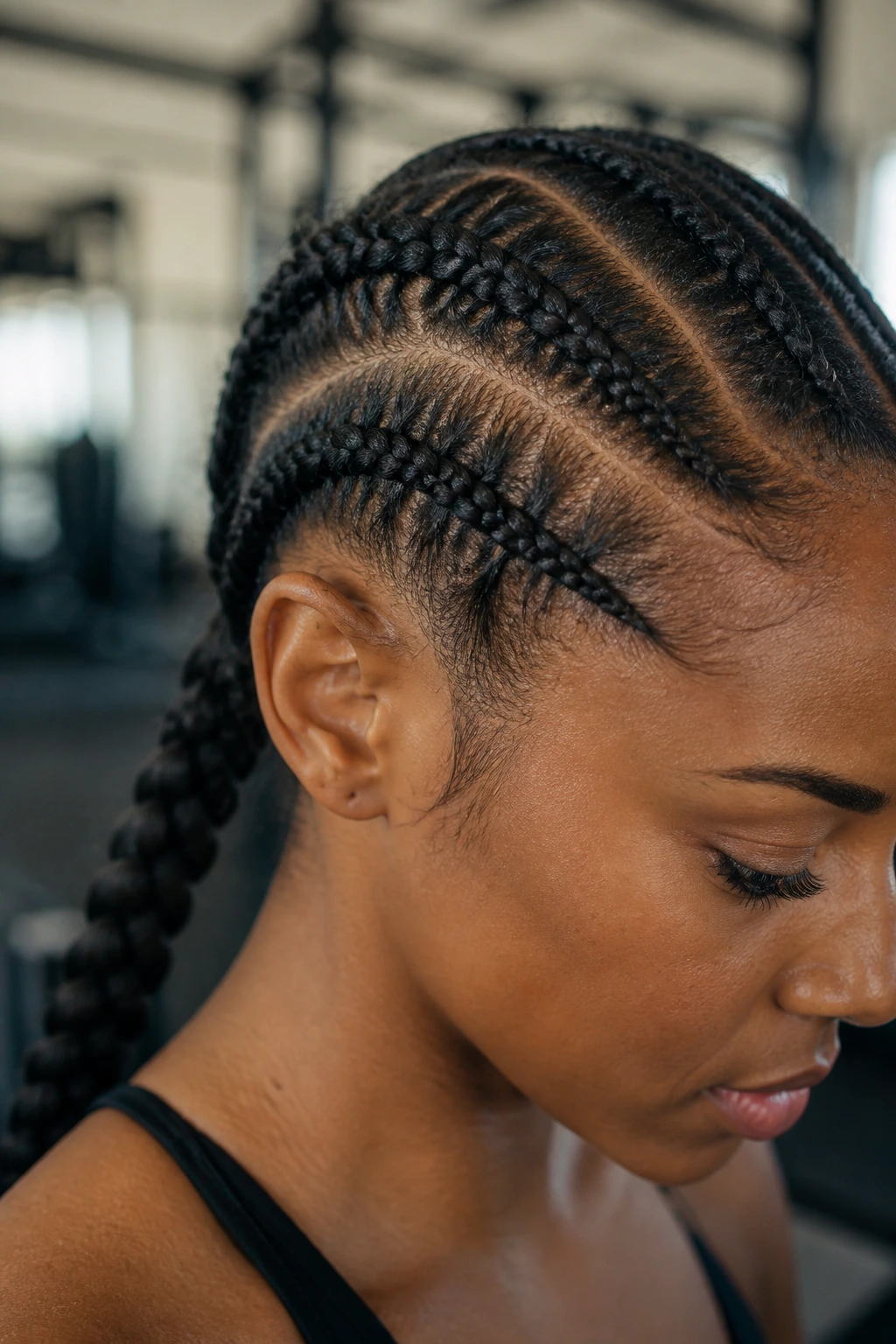
A wrapped base involves taking a small piece of braiding hair and wrapping it around the point where the cornrow begins. This isn’t just for style—it creates a smooth, finished transition from your natural roots to the braid. For the gym, this is incredibly helpful because it prevents the small, loose hairs at your hairline from getting tangled or snagged. It’s a clean, polished look that keeps everything locked down tight.
Why Wrapping Matters
- It seals the base of the braid, providing extra security against unraveling.
- It gives your hairline a neat, structured appearance that lasts for days.
- It prevents those annoying stray hairs from poking you or getting caught in your headband.
16. Goddess Cornrows with Curly Ends
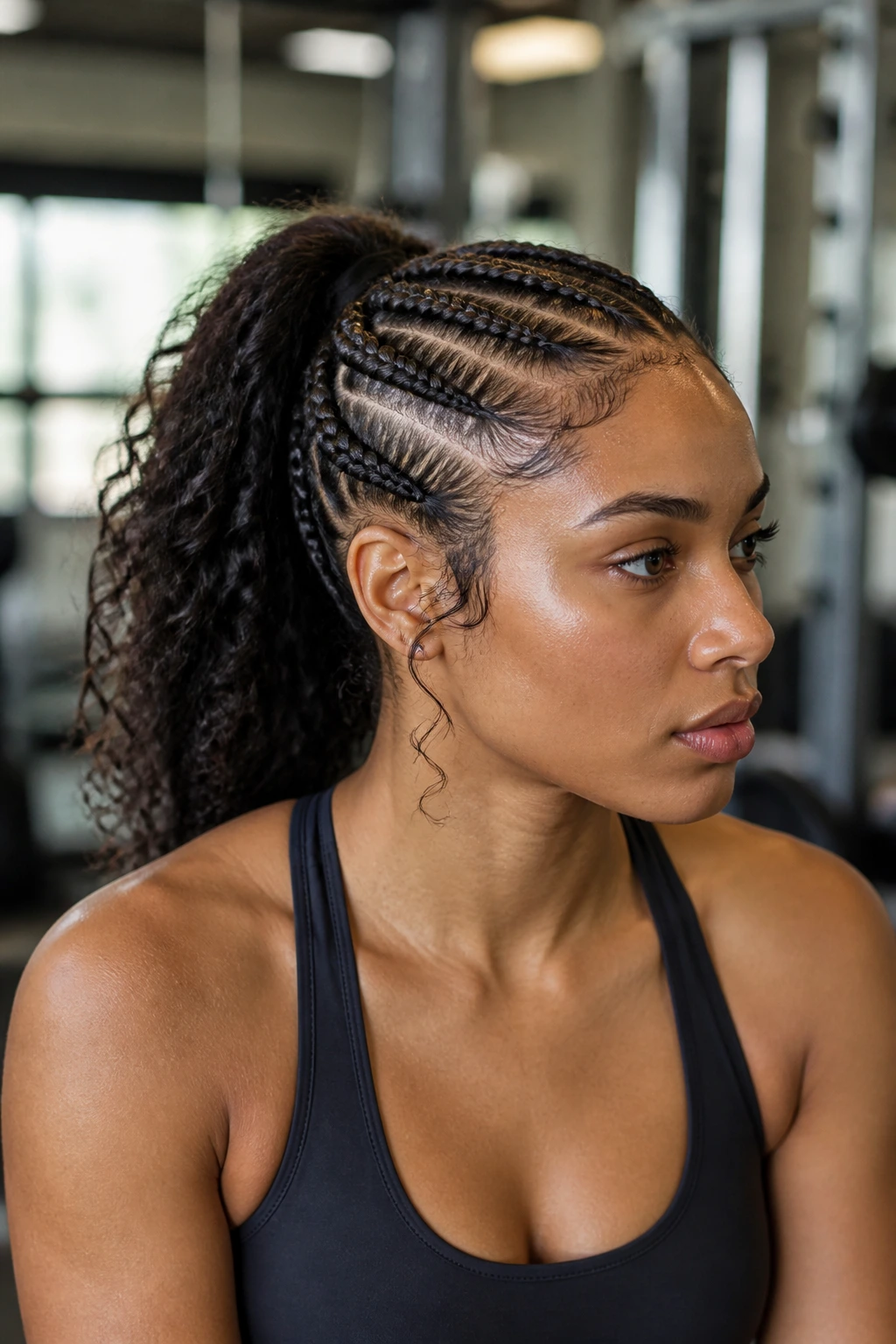
This is perhaps the most popular variation of the goddess style. Leaving a portion of the synthetic hair loose and curled at the ends adds a soft, feminine touch to the look. For gym-goers, the key is to ensure those curls are made from high-quality, synthetic braiding hair that won’t become a matted mess after one session. You can keep the curls contained in a ponytail or bun while you train, letting them loose only when you are finished.
Managing the Curls
- Use a small amount of lightweight mousse to define the curls before you hit the gym.
- If they start to get frizzy, re-moisturize with a light leave-in spray.
- Keep the curls up in a bun during high-intensity work to avoid them rubbing against your back and losing their definition.
17. The Asymmetrical Goddess Pattern
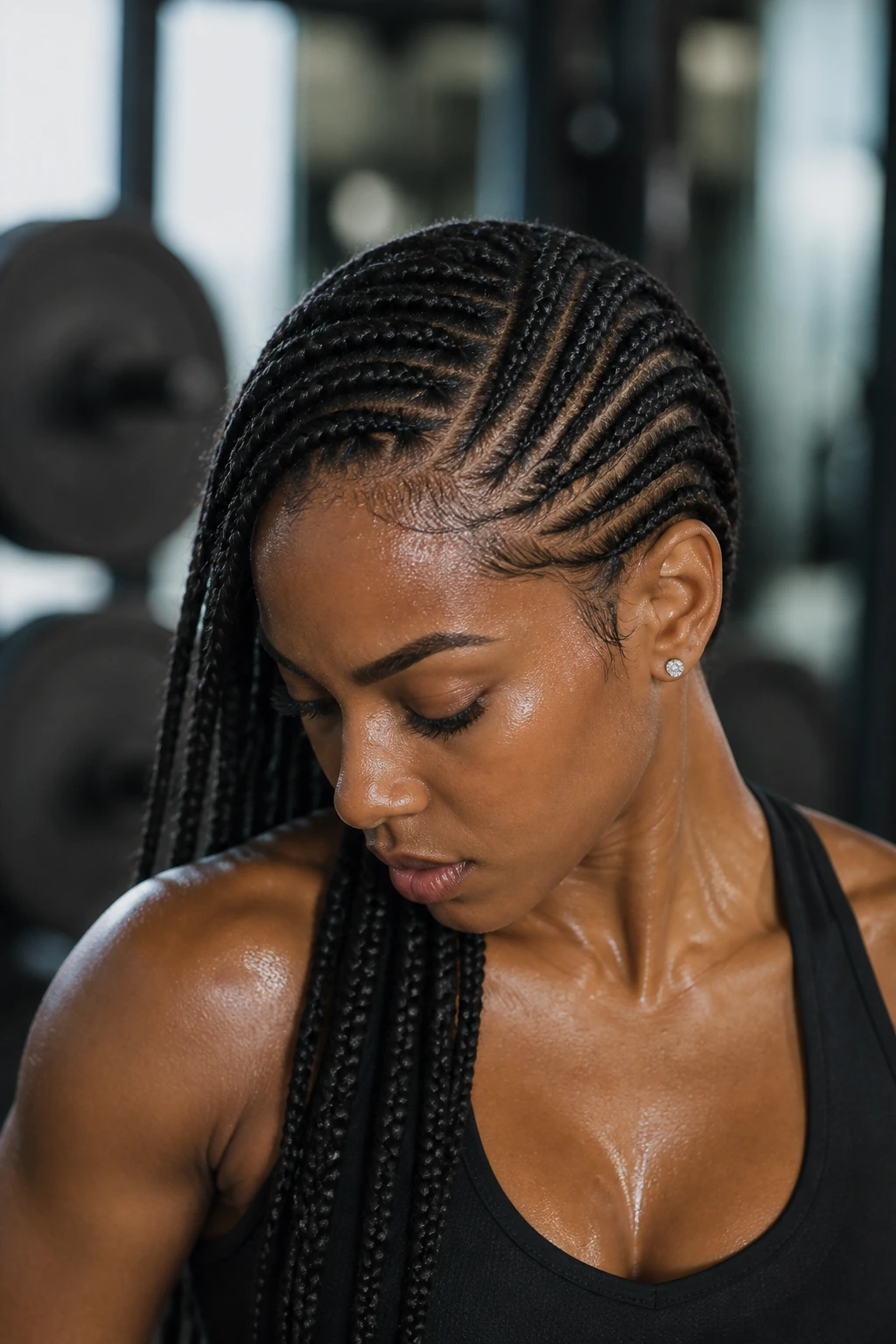
Asymmetry is a fantastic way to handle hair that grows differently on one side of your head. By braiding one side more tightly or with a different pattern than the other, you can balance the look of your hair. This is particularly effective if you tend to sweat more on one side of your face or head during a workout, as you can adapt the braid density to handle the moisture better in those specific zones.
Balancing the Style
- You can create a “heavy” side and a “light” side based on your personal preference.
- It breaks up the monotony of standard, symmetrical cornrows.
- It’s a great way to address uneven density or parting habits.
18. Goddess Cornrows with a Headband Integration
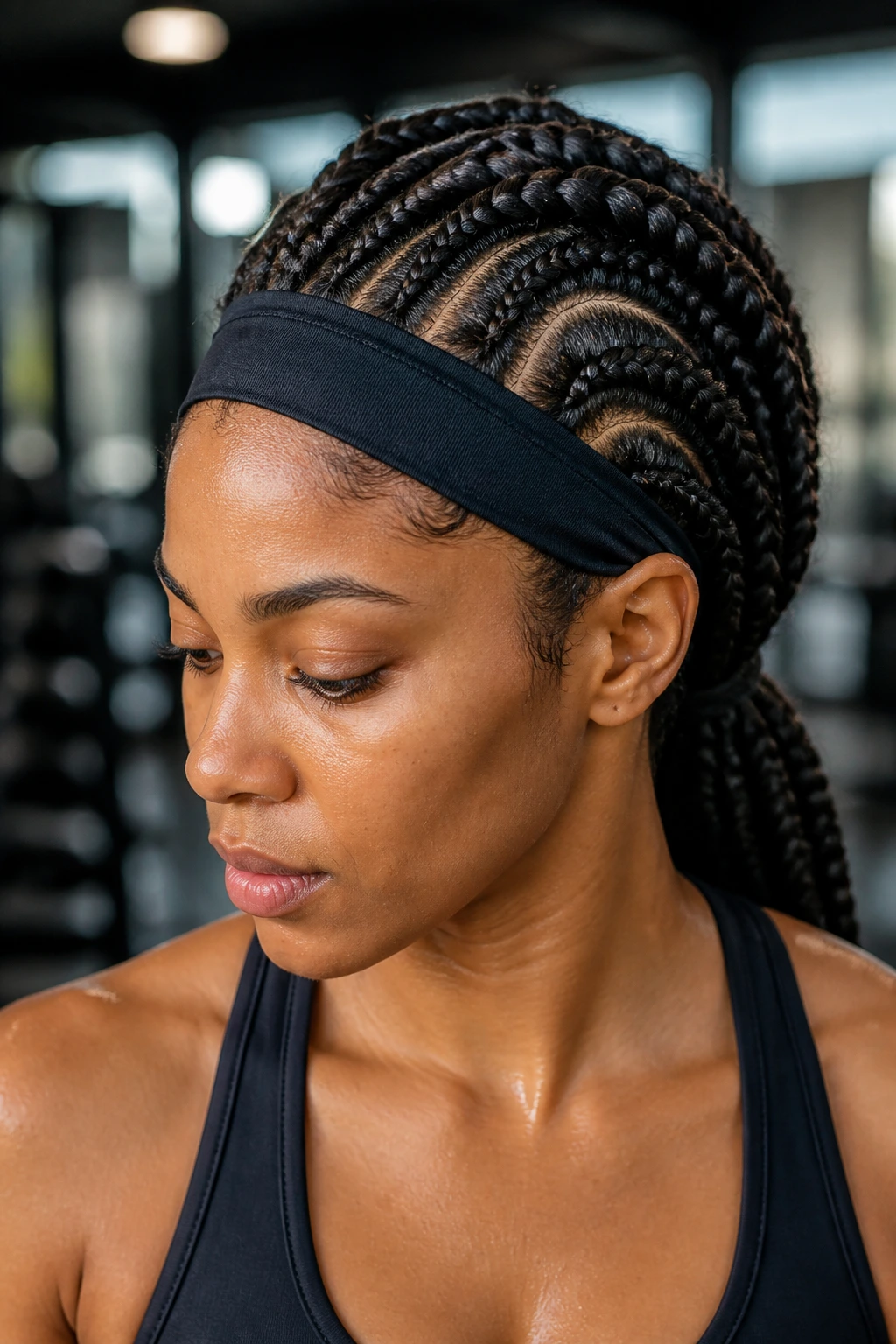
If you are someone who always wears a sweat-wicking headband, why not weave it into the style? By starting your cornrows slightly further back from the hairline, you create a “channel” where your favorite athletic headband can sit comfortably without pushing against your braids. This provides the best of both worlds: the structure of the braids and the moisture-wicking capability of your gear.
The Headband Strategy
- Leave about an inch of space at the front for your headband.
- This prevents the headband from rubbing against the braids and creating friction-induced frizz.
- It keeps the style looking clean even during the most intense, sweaty workouts.
19. The “Box” Goddess Hybrid
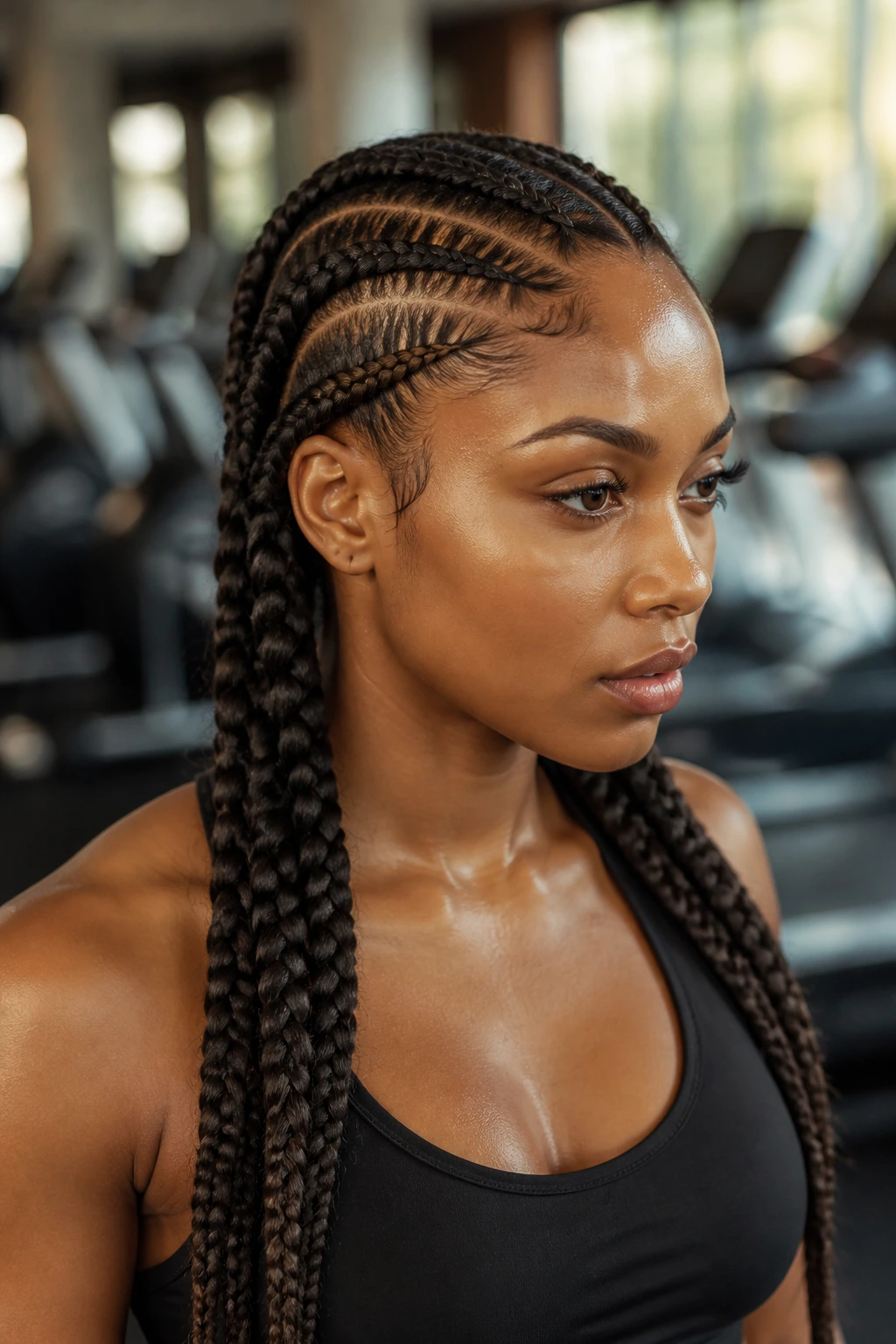
Sometimes the best cornrow is one that starts as a box braid and transitions into a goddess cornrow. This hybrid approach gives you the neatness of a box braid at the root—which is great for keeping your parts clean—and the sleekness of a cornrow as the braid moves down. It is a fantastic option if you want to avoid the “tight scalp” feeling that can come with traditional cornrowing techniques.
Why the Hybrid Works
- Box-braid roots are generally more flexible than tight cornrows.
- The transition provides a natural-looking volume that holds up well.
- It feels lighter on the scalp, which is a major advantage when you are doing long, multi-hour training sessions.
20. The “Pinned” Goddess Up-Do
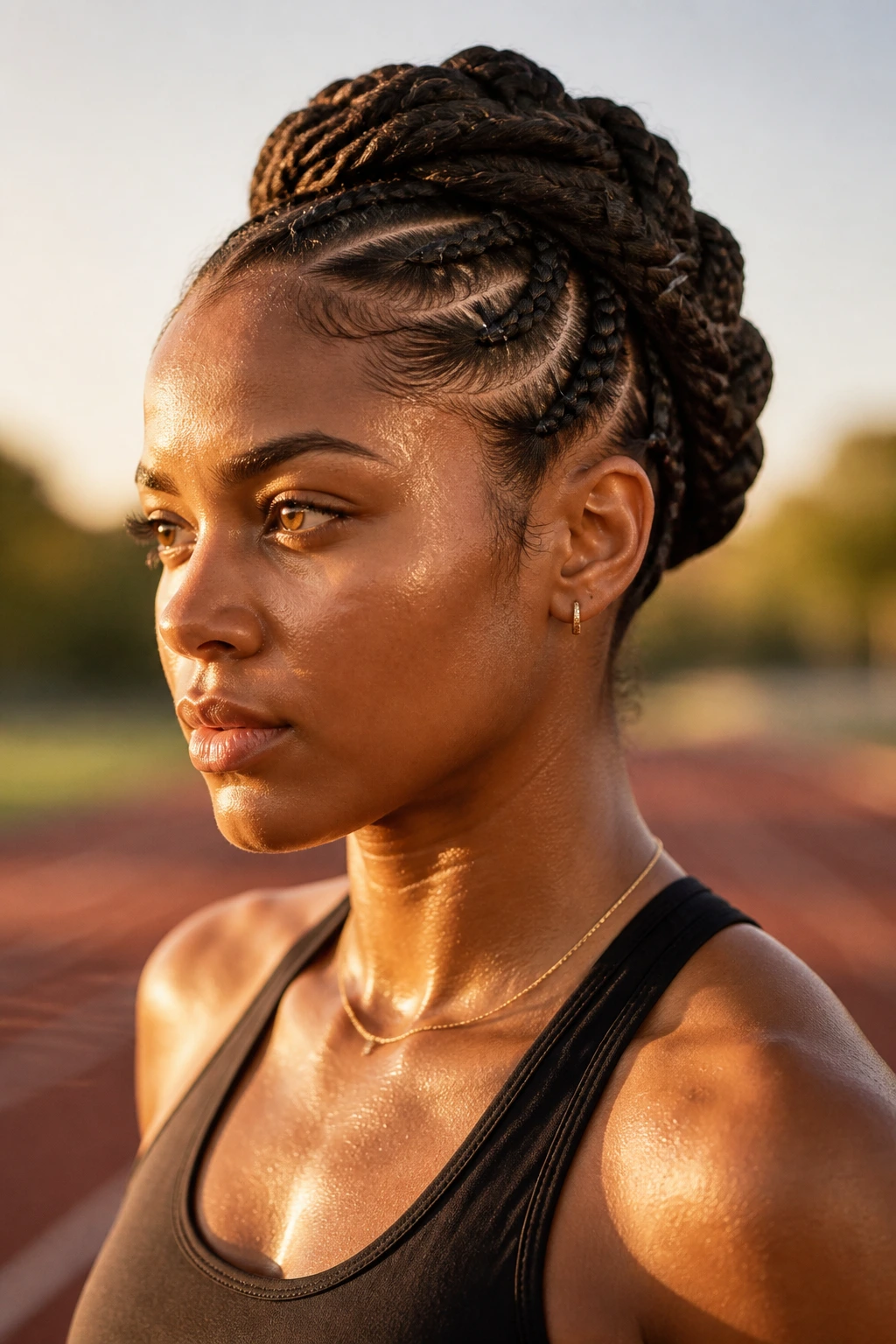
Finally, if your braids are starting to show their age after a long week, you can “pin” the cornrows up into a faux-updo. Using a few sturdy, rubber-coated bobby pins, you can manipulate the braids into a sophisticated bun or crown. This is the perfect style for when you want to look put-together for a workout but your braids need a bit of a “refresher.” It’s also an excellent way to keep the hair off your neck during those particularly humid, summer training sessions.
Using Pins Safely
- Always use rubber-coated pins to avoid tearing your natural hair or the synthetic braiding hair.
- Don’t pin too tightly; let the braids sit in a natural curve.
- This is a temporary, quick fix that buys you a few extra days of life out of your braids before your next installation.
Final Thoughts
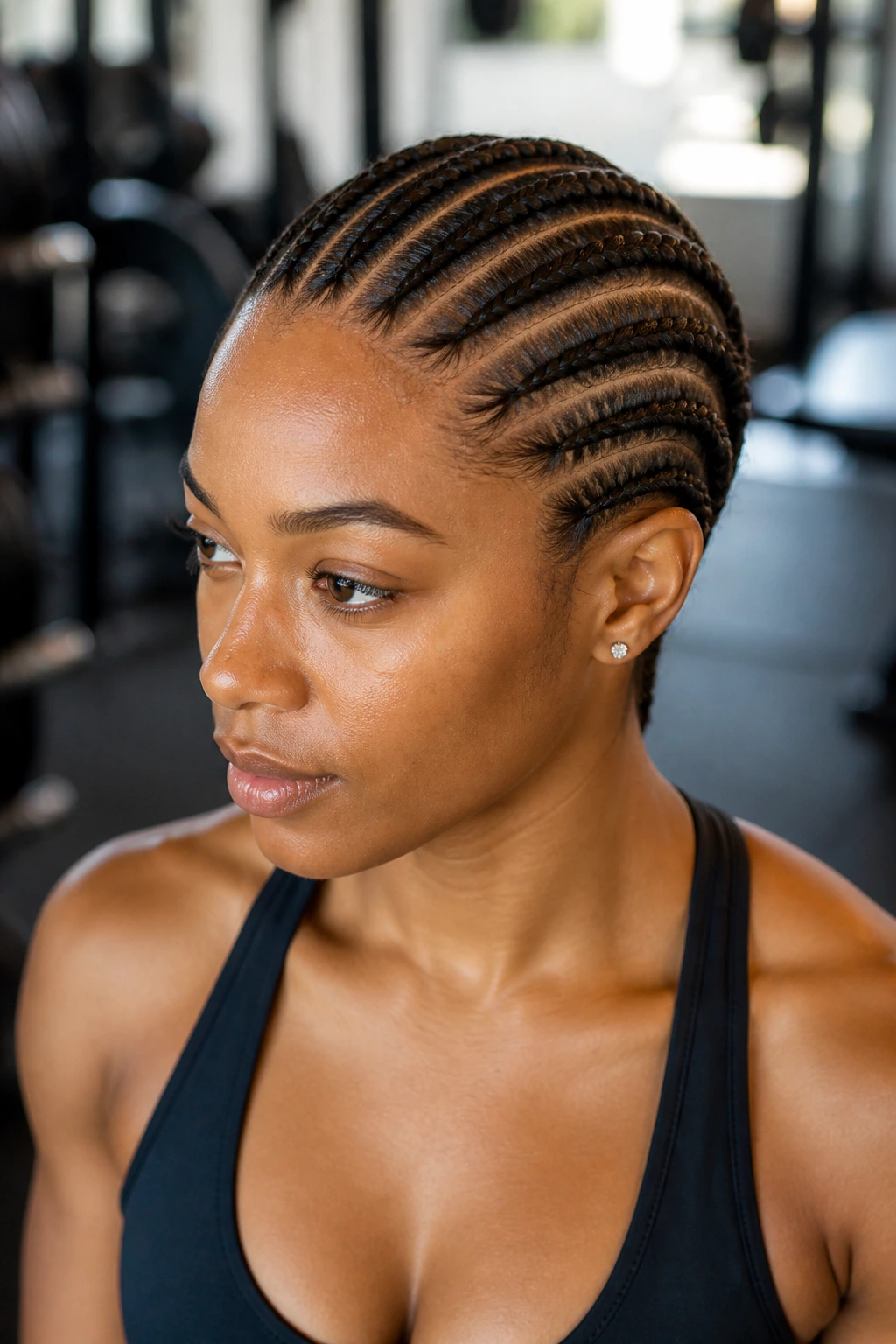
When you commit to a protective style like goddess braids for your fitness routine, you are making a long-term investment in both your hair’s health and your own convenience. The secret to making these styles work in the gym lies in the tension of the initial installation and your commitment to scalp care during the “off” hours. It is rarely about finding the single perfect style, but rather having a rotation of three or four configurations that meet the specific needs of your sport. Whether you’re leaning toward the security of a high-base ponytail or the elegance of side-swept cornrows, remember that the most successful style is the one that allows you to stop worrying about your hair and start focusing entirely on your movement. Don’t be afraid to experiment with different parting patterns or textures until you find the exact balance of comfort and style that supports your lifestyle. Your hair is an extension of your performance, and with the right approach, it can be just as strong as you are.