

The classic bob is, without question, the most resilient silhouette in the history of hairstyling. It suggests precision, confidence, and a certain kind of architectural intent that longer, layered hair simply cannot replicate. But when you introduce an undercut to that polished shape, you bridge the gap between refinement and rebellion. For those of us with pin-straight hair, this is a game-changer. Straight hair is notoriously unforgiving—every split end and uneven line stands out—but an undercut allows you to remove weight, add surprising texture, and keep the silhouette sharp without the hair constantly collapsing into a flat, limp shape against your scalp.
If you have spent years fighting your hair to keep it from looking like a flat curtain, you have likely looked into texture-adding products or heavy-handed layering. These solutions often fall short because they do not address the root issue: the sheer, uniform weight of your hair at the nape of the neck or the sides. An undercut is not just a stylistic choice; it is a mechanical fix. It removes the bulk that pushes the rest of your hair out, allowing your bob to sit at the exact angle you desire. Whether you want a hidden, nape-level shave or a more aggressive temple-clearing design, the right bob with an undercut will transform your daily styling routine from a battle into a five-minute breeze.
1. The Classic Nape Undercut Bob
This is the entry-level choice for those who want the practical benefits of an undercut without sacrificing the look of a traditional bob. From the front and sides, your hair looks like a clean, symmetrical A-line or blunt cut, but once you lift your hair—or simply let a breeze catch it—the tapered, shorn nape is revealed. It is ideal for straight hair because it eliminates that annoying “bulk” that often builds up right where the hairline meets the neck. By clearing this area, you ensure that the rest of your hair falls perfectly flat and stays tucked neatly behind your ears if you choose.
Why It Works for Straight Hair
Straight hair tends to create a heavy “shelf” at the back of the neck as it grows out. An undercut completely removes this shelf, creating a seamless transition from the skin to the hairline. It also prevents the hair from pushing the rest of the cut forward, which helps maintain the intended shape of the bob much longer between salon visits.
Styling for the Best Effect
- Use a lightweight smoothing cream to keep the remaining length sleek.
- Blow-dry with a flat brush directed toward the nape to keep the ends turning inward.
- For a more polished look, use a flat iron on just the bottom two inches to lock in that sharp, graphic edge.
Pro tip: Because your hair is straight, any grow-out in the undercut will be immediately noticeable. Plan on a quick maintenance trim every four weeks to keep the skin looking tight and intentional.
2. The Asymmetrical Side-Shave Bob
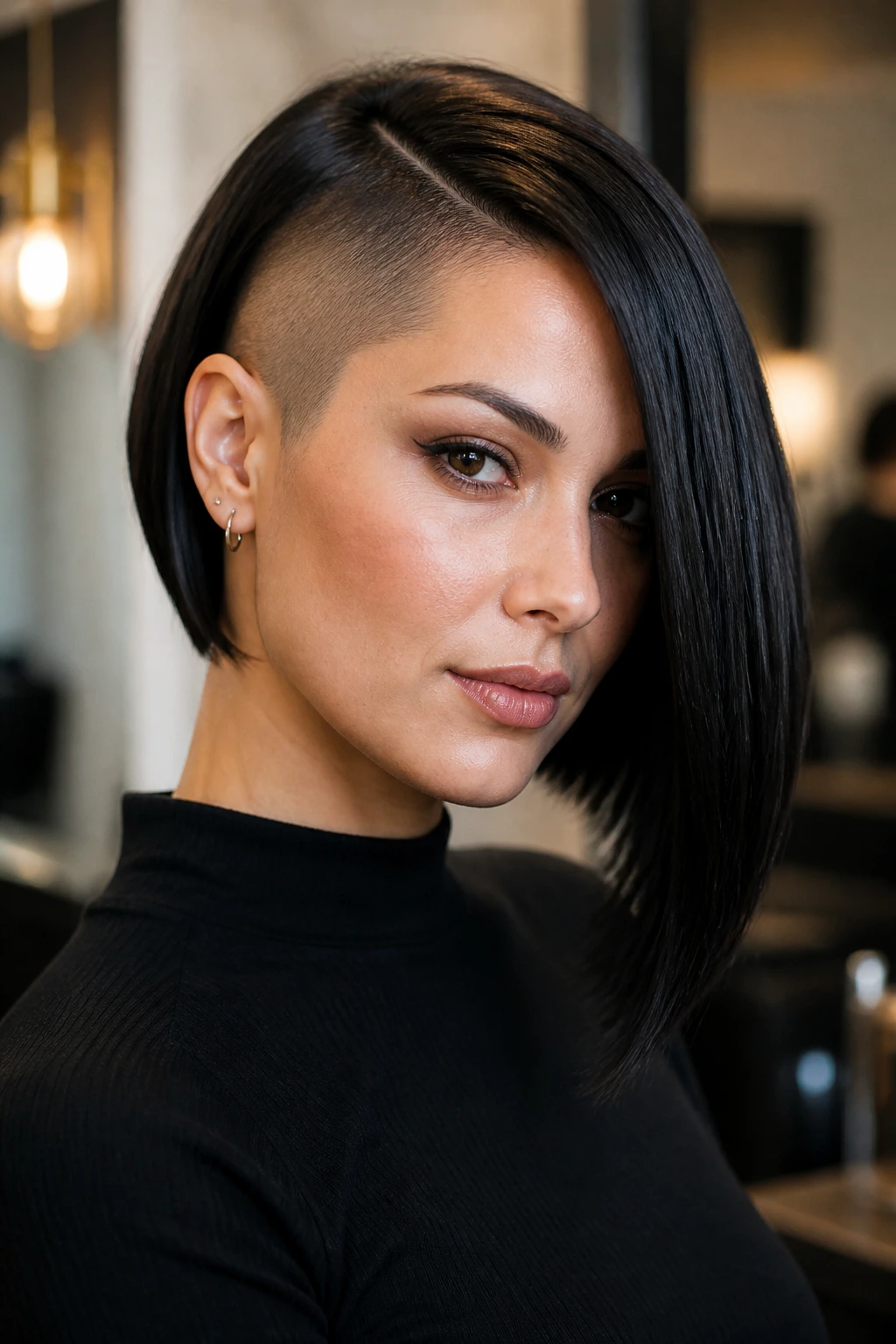
If you want to lean into the edgy side of the spectrum, the asymmetrical side-shave is your go-to. This style involves shaving one temple or one full side of the head, leaving the other side to drape in a long, sleek, chin-length or shoulder-length layer. The contrast between the rigid, shorn skin and the fluid, straight curtain of hair is visually striking. It breaks up the uniformity of straight hair, making the hair look thicker on the heavy side simply because of the sheer contrast provided by the shaved side.
The Power of Asymmetry
Asymmetrical cuts naturally draw the eye across the face, which can be incredibly flattering for various face shapes. When one side is shorn, it creates a “focal point” that makes the hair on the opposite side look deliberate rather than accidental. It is a look that screams confidence and works best when the hair is kept glossy and frizz-free.
Achieving the Perfect Balance
- Keep the shaved side at a consistent guard length, such as a #1 or #2, to ensure it doesn’t look patchy.
- Use a high-shine serum on the longer, heavy side to emphasize the healthy, glass-like quality of your straight strands.
- If you find your hair feeling too thin on the heavy side, a small amount of root-lifting powder can provide the structural support needed to keep that side from looking lank.
Important Note: This style requires a commitment to your part. You will generally need to wear your hair parted on the same side every day to keep the shaved area properly framed by the longer hair.
3. The Hidden Geometric Nape Design
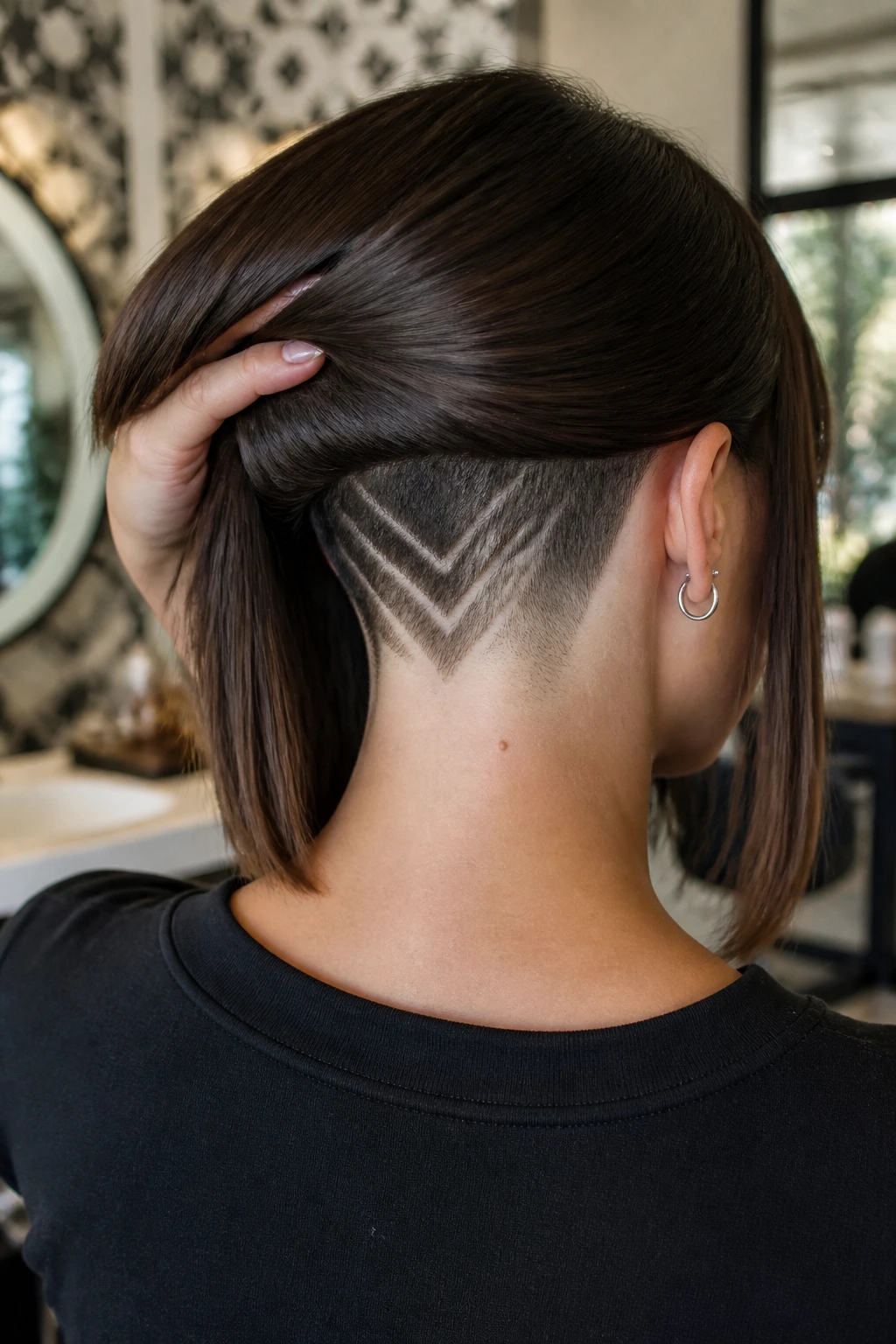
Sometimes the fun of an undercut is not in the shave itself, but in the artwork carved into the scalp. A hidden geometric design, such as triangles, chevrons, or parallel lines shaved into the nape, turns your bob into a personalized accessory. This is a brilliant way to handle straight hair because it allows for a “secret” element of texture and pattern that the rest of your sleek, straight hair hides until you decide to show it off.
Making the Design Last
- Ask your stylist for a clean line-up at the edges of the design to keep it looking sharp as the hair begins to grow.
- Use a tiny amount of pomade to keep the stray, short hairs within the pattern from fuzzing up and blurring your lines.
- Remember that geometric designs are high-maintenance; they require professional touch-ups every two to three weeks to keep the geometry from becoming a messy shadow of itself.
Why this thrives on straight hair: Because there are no curls or waves to distort the pattern, your lines will remain clean and visible. It is the most high-definition way to display a scalp tattoo or artistic shave.
4. The Blunt Micro-Bob with Tapered Undercut
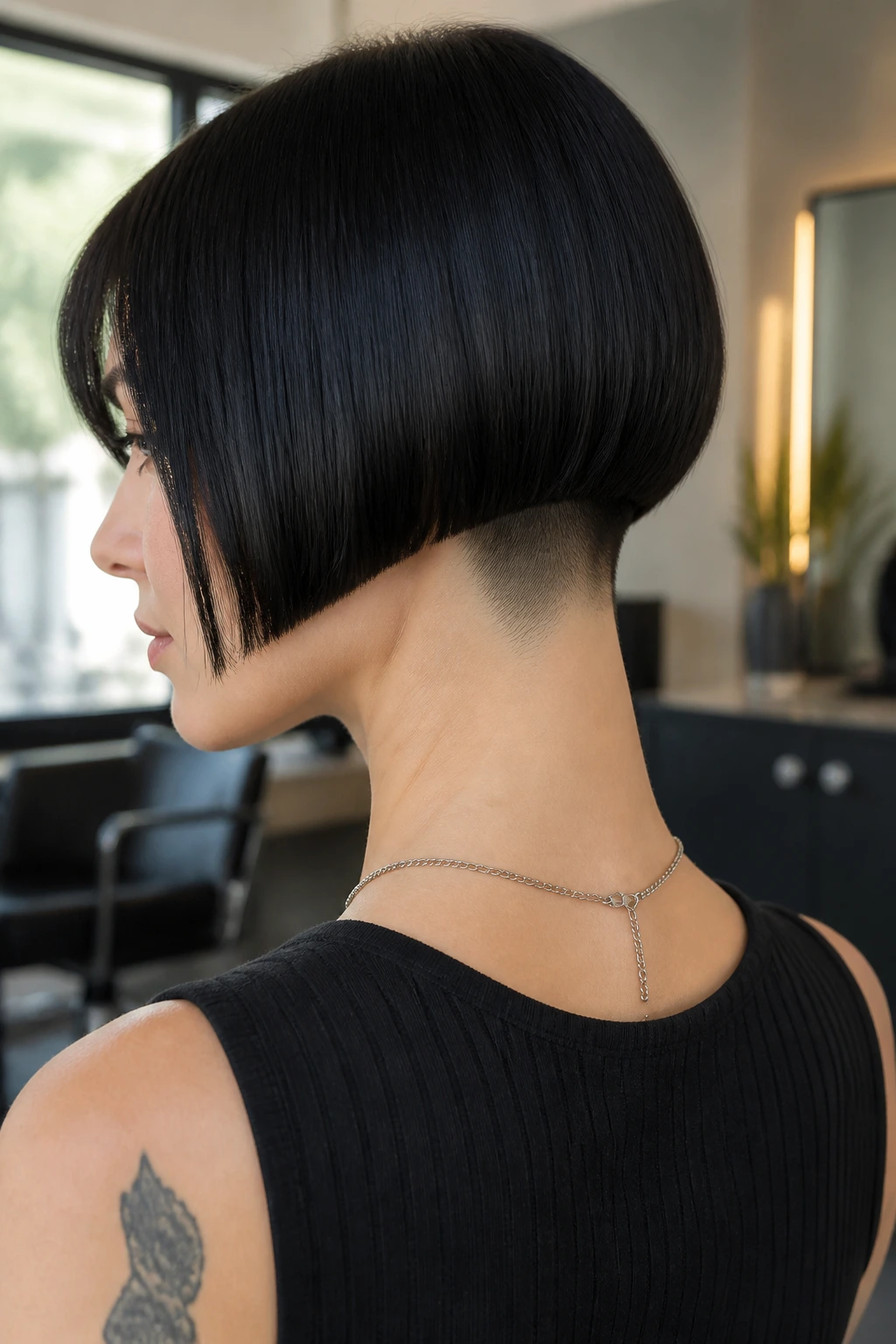
The micro-bob is a daring, chin-grazing cut that sits right at the jawline, often featuring a very blunt, horizontal edge. When you combine this with a steep, tapered undercut at the back, you get a silhouette that is entirely sculptural. The straightness of your hair acts as a tool here; it emphasizes the sharp corners and the clean lines of the undercut, making the entire haircut look like it was carved out of glass.
Why Straight Hair Needs This
Straight hair is the best canvas for a blunt micro-bob. If your hair has any bend to it, the blunt ends will flip; with straight hair, they stay locked in place. The undercut at the back allows the hair to sit tighter to the skull, giving you a sleek, sophisticated profile that is very much in line with modern, minimalist aesthetic trends.
Styling Tips for the Micro-Bob
- Use a precision flat iron to keep the ends perfectly aligned.
- Avoid heavy styling waxes that can make the ends look clumpy; instead, use a light-hold setting spray to keep the shape without losing movement.
- If your hair is naturally very fine, a bit of dry texture spray at the roots will help the hair hold its “bobbed” shape throughout the day.
5. The “Peek-a-Boo” Temple Undercut
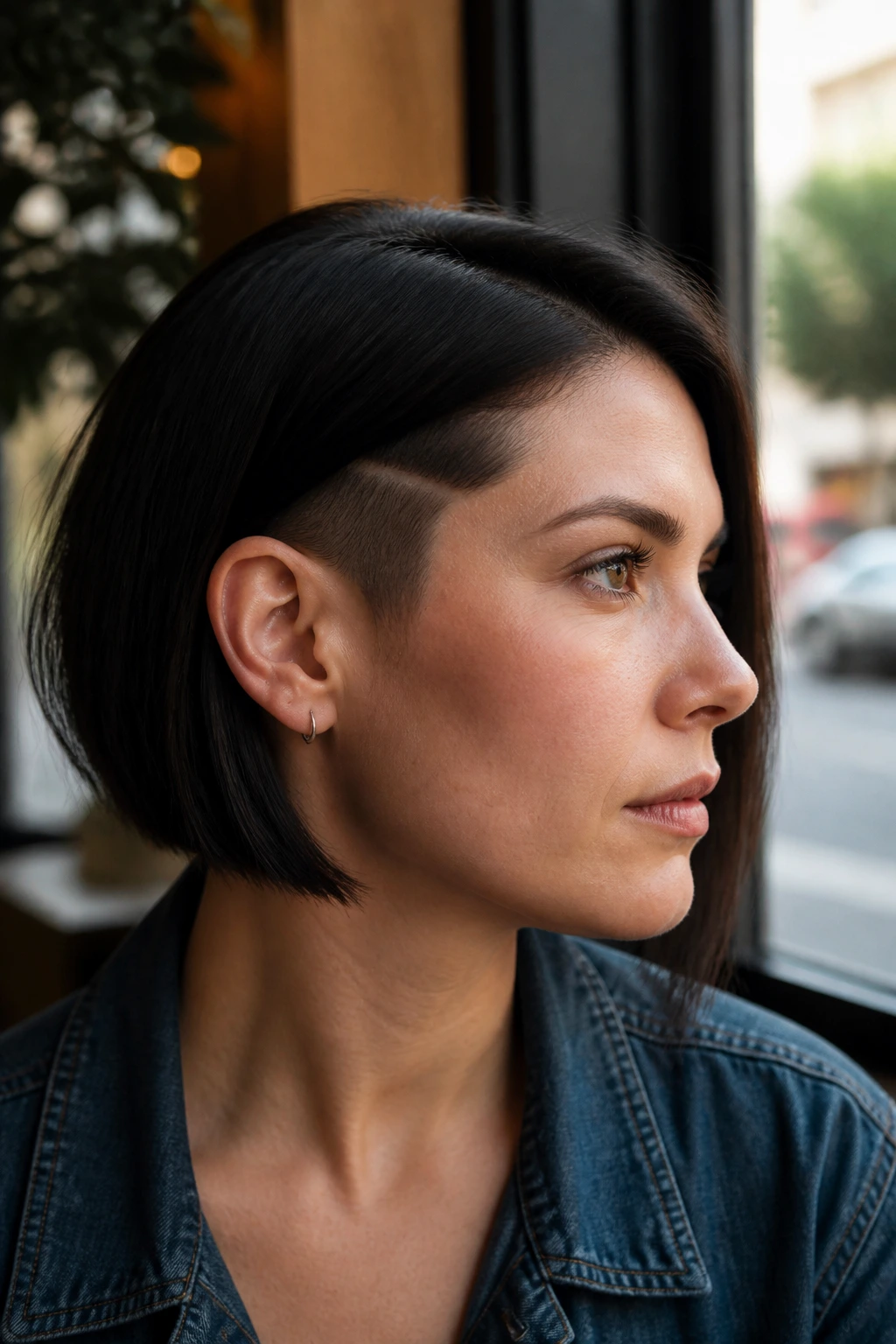
This is a more subtle variation on the side-shave. Instead of shaving a large area, you create a small, triangular section just above the ear. When your hair is down, the undercut is completely invisible. When you tuck your hair behind your ears, the surprise of the shaved section is revealed. It is a fantastic option for someone who wants to experiment with the aesthetic of an undercut but needs to maintain a more conservative appearance in professional or formal environments.
The Art of the Tuck
- The success of this cut depends entirely on the “tuck.” Train your hair to fall neatly behind the ear by using a lightweight bobby pin or a drop of smoothing cream while the hair is damp.
- Keep the edges of the triangular cut extremely clean. If the shave starts to grow out, it will be noticeable the second you tuck your hair, so keep a small trimmer handy for at-home maintenance.
When to Choose This Style
If your hair is very straight and tends to fall forward into your face, this undercut can actually help keep the hair tucked behind the ear more reliably. It creates a small physical barrier that encourages the hair to stay back, keeping your face clear and your style looking intentional.
6. The High-Contrast Platinum Bob with Undercut
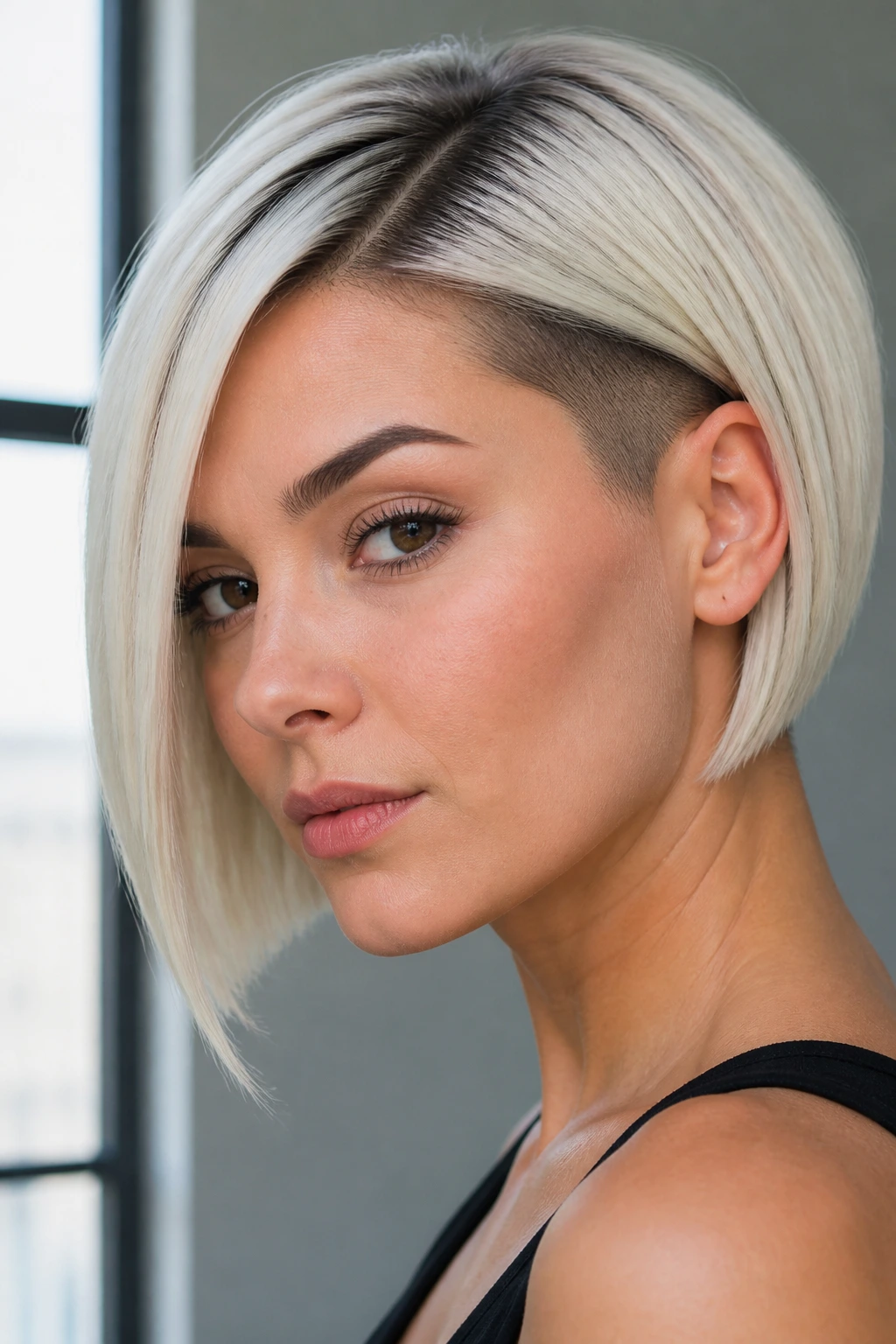
Color can be just as impactful as the cut itself. If you pair a bleached-blonde or platinum bob with a dark-rooted, shaved undercut, you create a striking contrast between the colors of the skin, the roots, and the length of the hair. On straight hair, the platinum shade catches the light, making the crisp, blunt edges of the bob look almost like a razor blade.
Managing Platinum and Undercuts
- Platinum hair requires intense moisturizing; use a purple shampoo once a week to keep the brassiness away from your straight, light strands.
- The dark roots showing in the undercut will provide a natural shadow effect, which adds dimension to the back of the head.
- Ensure that the bleach never touches the shaved skin of the undercut, as it can cause significant irritation.
Pro tip: Because platinum hair shows everything, make sure your ends are trimmed frequently. Split ends on bleached, straight hair are the quickest way to kill the “polished” look of a bob.
7. The Tapered A-Line Bob
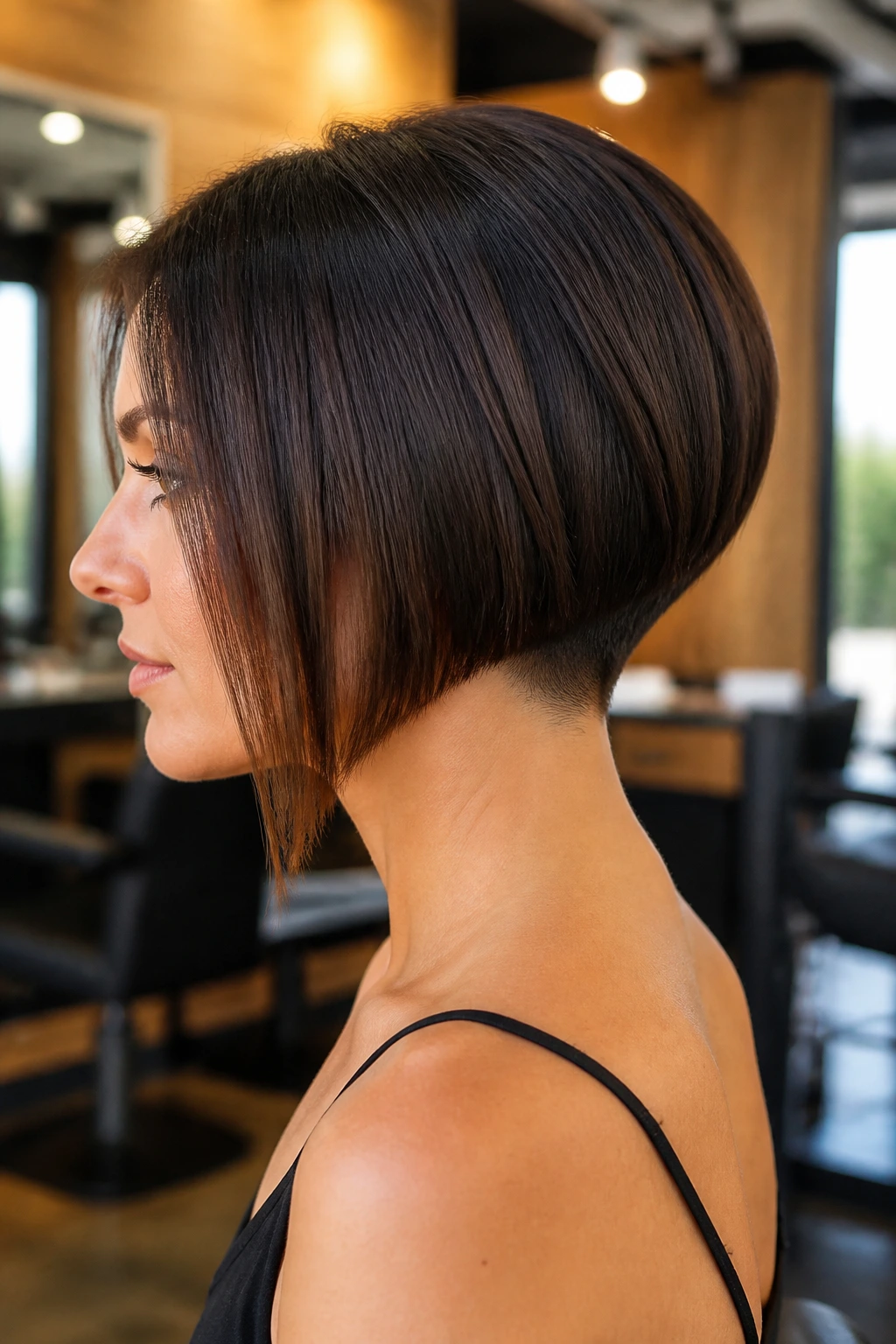
The A-line is the classic “graduated” bob, where the back is shorter than the front. By adding an undercut at the very bottom of that graduated section, you increase the “stacking” effect. It forces the hair to sit at an even steeper angle, which is perfect for people who want the back of their hair to look fuller and more voluminous without having to deal with the heavy, unmanageable weight of the hair at the nape.
Structural Benefits for Straight Hair
Straight hair often struggles to hold volume at the crown. By removing the weight at the nape, you reduce the downward pull on the rest of the hair. This allows the hair at the crown to stand up and out more effectively, creating a natural, rounded shape that doesn’t require excessive backcombing or teasing.
Maintenance and Growth
- This style grows out faster than a blunt cut. You will likely find yourself needing a clean-up every six weeks.
- Use a round brush while blow-drying to help encourage the hair to curve inward at the nape.
8. The Textured “Shaggy” Bob with Nape Undercut
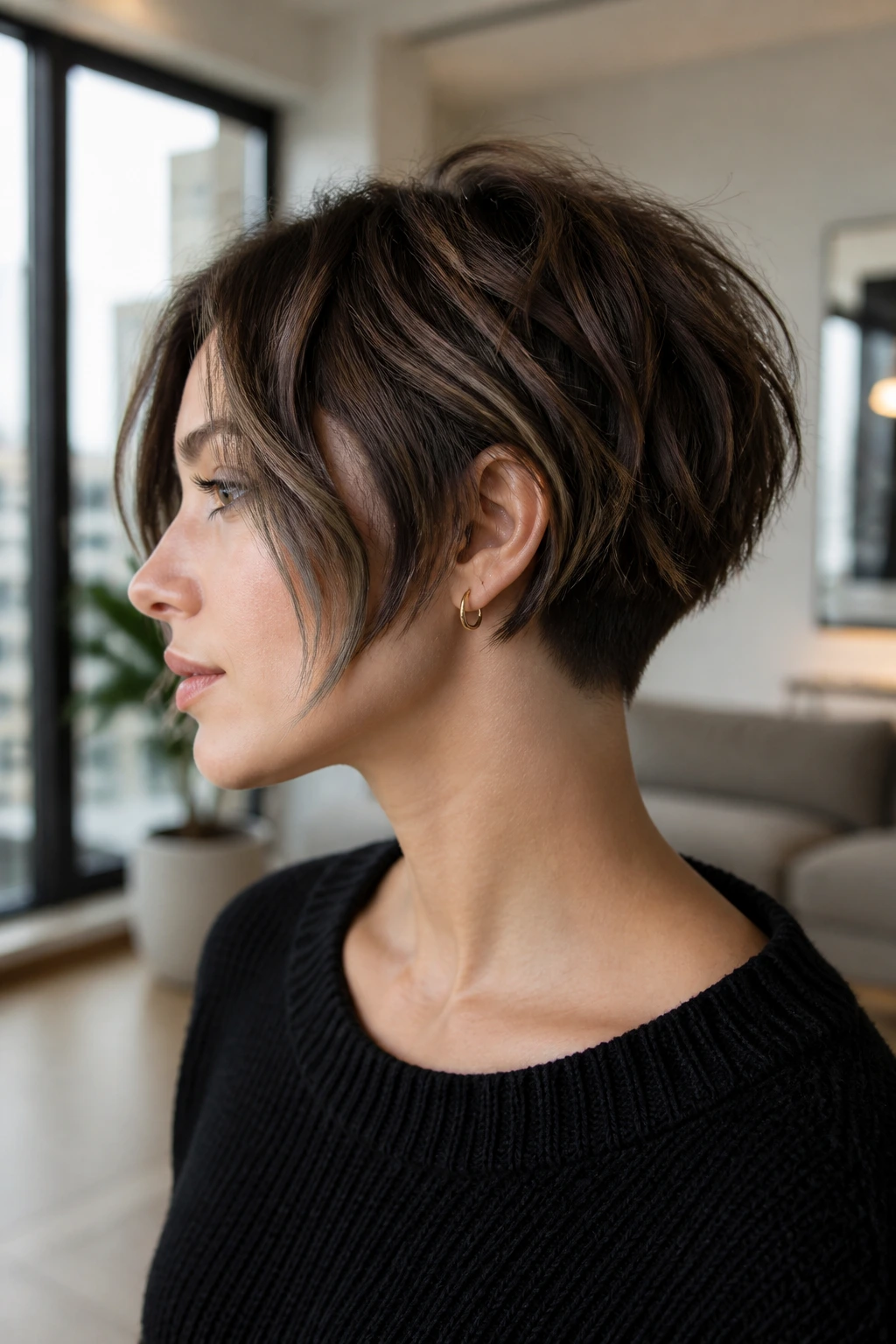
While a bob is usually synonymous with smooth, straight lines, the shaggy bob uses the undercut to justify a messier, more piecey texture. By shaving the nape, you allow yourself to use texturizing shears through the mid-lengths of the bob without the hair looking overly puffy. This is ideal if you have a lot of straight hair and want to lose the “triangle” look that often happens with shorter cuts.
How to Get That Piecey Look
- Apply a sea salt spray to damp hair and let it air dry.
- Once dry, use a matte pomade on your fingertips to separate specific sections of the hair.
- The undercut ensures that the “shaggy” look remains confined to the body of the hair, rather than becoming a bulky mess at the neck.
9. The Long Bob (Lob) with Side Undercut
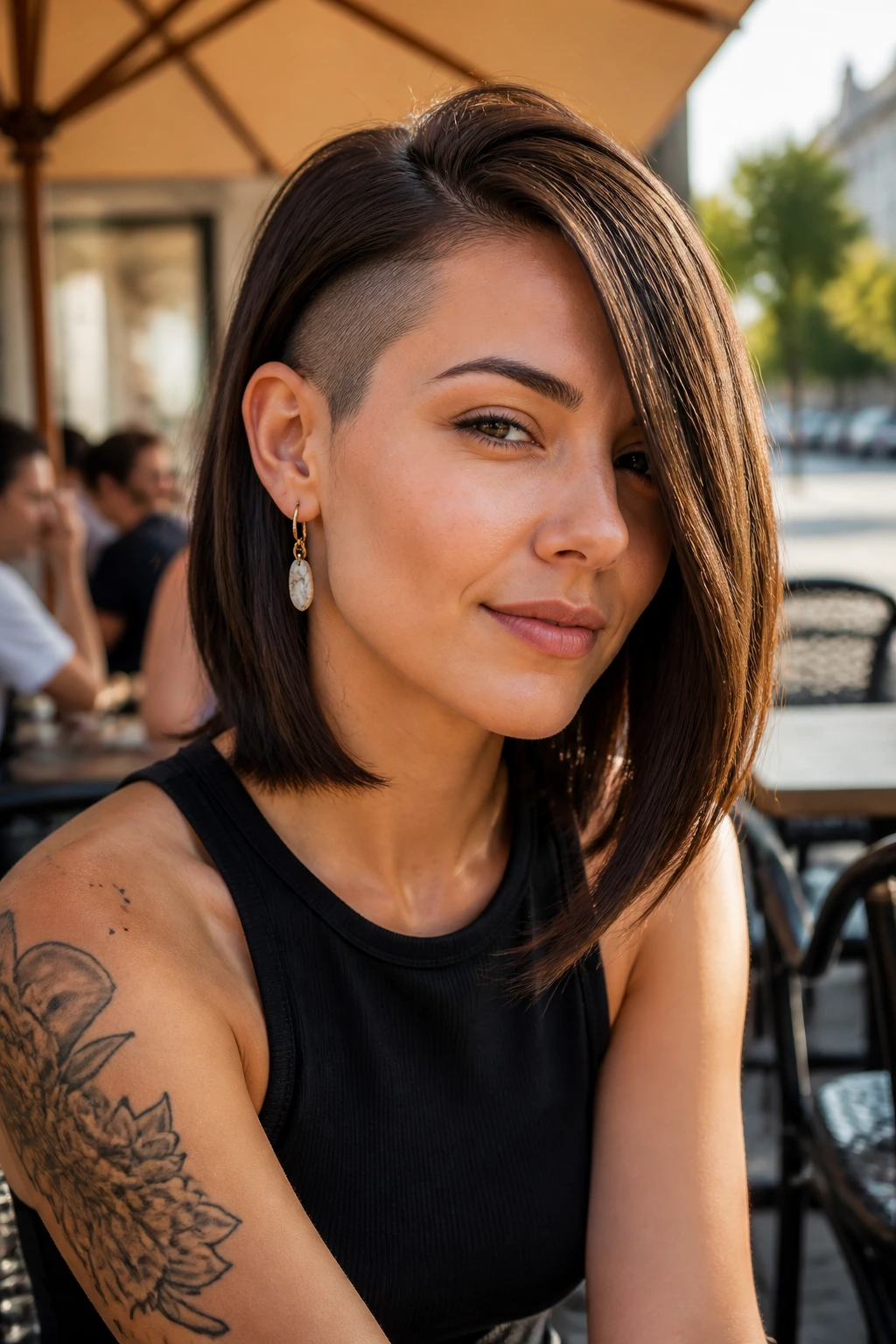
If you aren’t ready to go for a chin-length cut, the lob is your perfect transition. Adding an undercut to a lob—especially on one side—is a great way to modernize a look that can sometimes feel a bit generic. The long hair still allows for ponytails and braids, but the shaved temple adds a distinct, rebellious edge that makes the style unique.
Styling Versatility
- You can cover the undercut completely by parting your hair to the side, or you can expose it by pulling your hair back into a half-up style.
- Use a flat iron to give your lob a slight bend at the mid-shaft, which adds a bit of softness to the harshness of the shaved side.
10. The Deep-Part Bob with Undercut
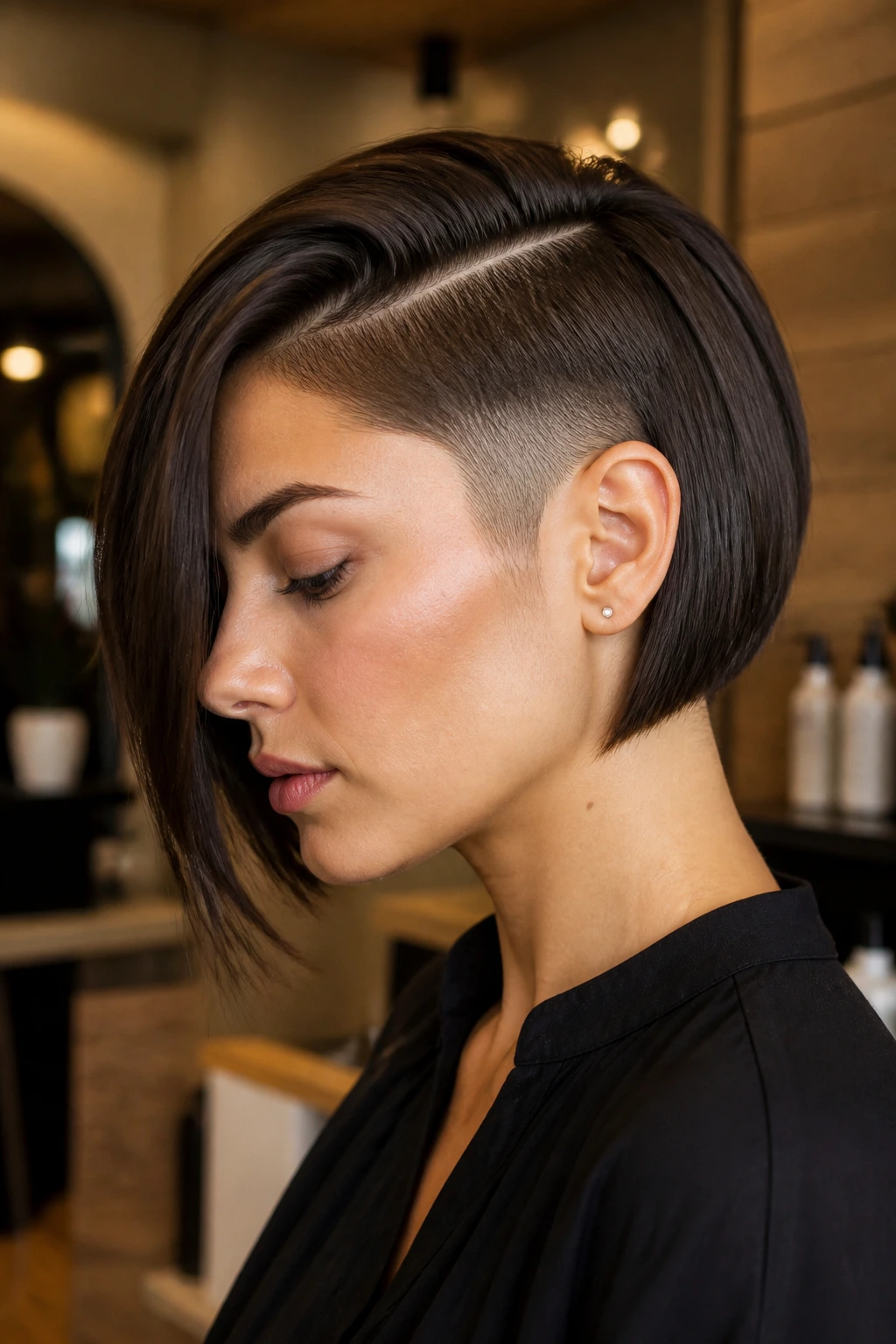
The deep part is a classic technique for straight hair, but it often leads to a heavy “flip” that can fall back into your face. An undercut on the side of the deep part (the “short” side) can help anchor the hair, making it easier to keep that dramatic side-swept look in place all day. It also adds a touch of mystery, as the side of your head is shorn while the other side is sleek and heavy.
Why This is a Power Move
A deep-part bob with an undercut creates a very sophisticated, high-fashion profile. It’s the kind of look that pairs well with bold makeup or simple, structured jewelry because the hair itself is so architectural. Ensure you are using a good quality parting comb to get that line perfectly straight, as a crooked part will ruin the sharp intent of this style.
11. The Two-Tone Nape Fade
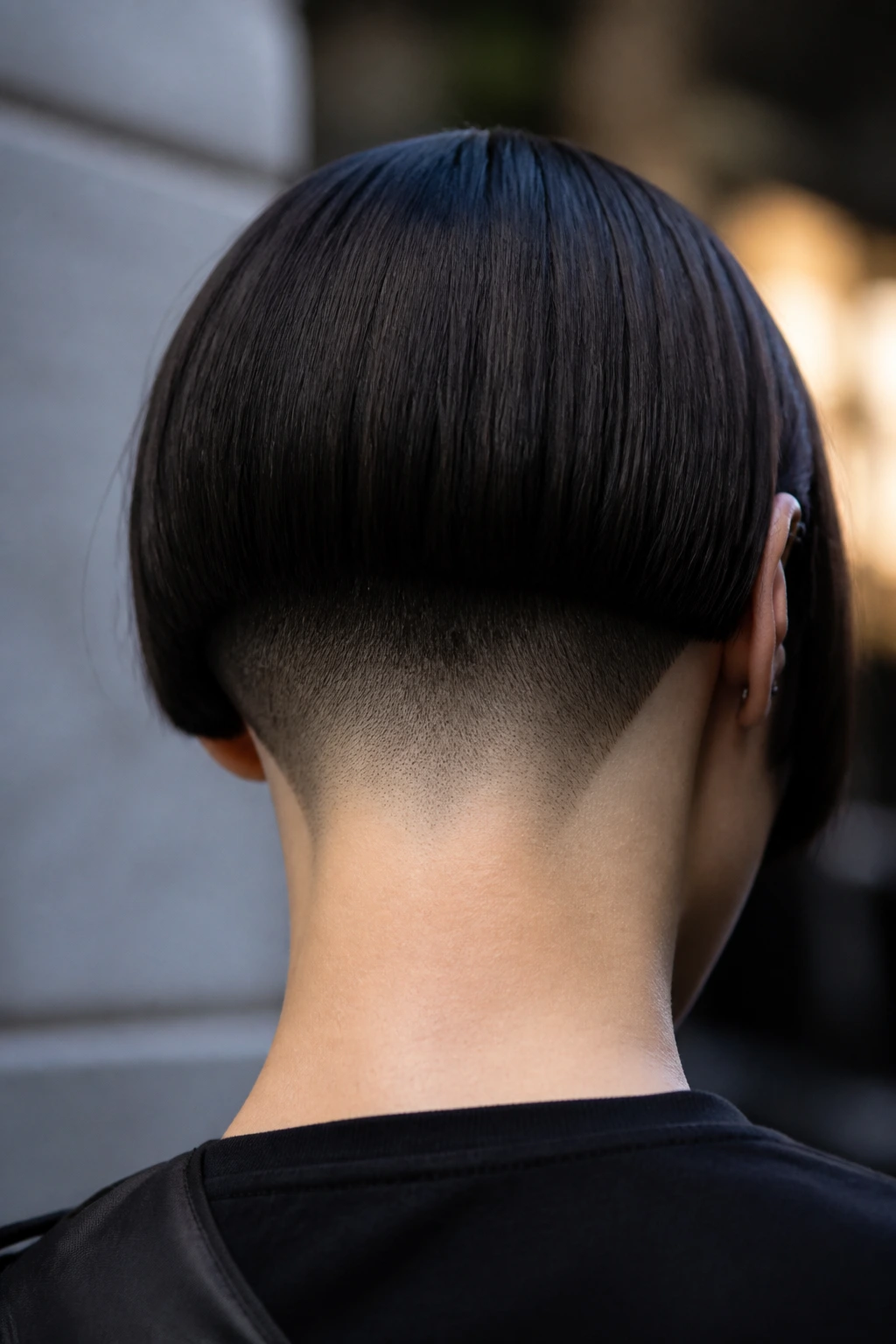
For those who want to get really creative, a fade in the undercut area—moving from skin at the bottom to a slightly longer length at the hairline—can look incredible with a bob. This technique is often used in men’s grooming, but it is increasingly adopted in short women’s styles. It provides a smooth, gradual transition that looks expensive and well-maintained.
Why It Suits Straight Hair
Straight hair is the easiest texture to fade because there is no curl pattern to disrupt the gradient. You get a perfect, clean shadow fade that highlights the curve of the skull. It makes the bob look like it’s floating above a clean, perfectly maintained base.
Salon Requirements
- You need a stylist who is comfortable with clippers and fading techniques. This isn’t just about cutting the hair short; it’s about blending.
- Be prepared to spend a little more time in the chair for this cut, as the fading process is delicate and takes precision.
12. The Minimalist Blunt Cut with Hidden Nape Shave
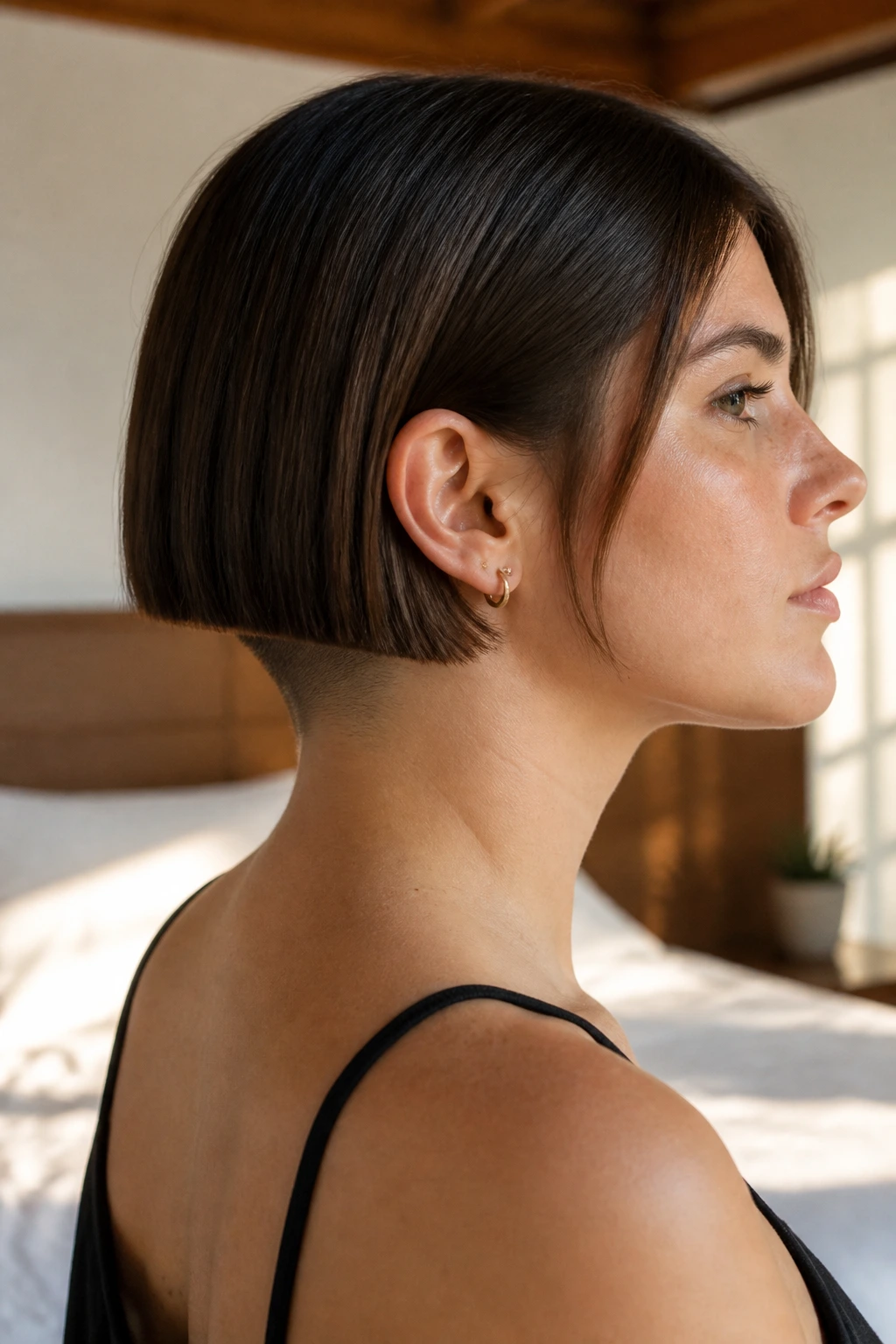
If you want the most “stealth” version of an undercut, the minimalist blunt cut is it. The hair is cut at a uniform length, and the undercut is purely restricted to a two-inch strip at the very nape of the neck. It is invisible from the sides and back until you physically lift the hair. It is the perfect choice for someone who wants the comfort of a light neck in the summer without changing their overall aesthetic.
Benefits for Everyday Life
- It keeps the neck cool in warmer weather.
- It prevents the hair from tangling with necklaces or scarf collars.
- It is the easiest style to grow out if you decide you no longer want the undercut, as it is hidden and requires minimal styling changes.
13. The Asymmetrical Bob with Shaved “Track”
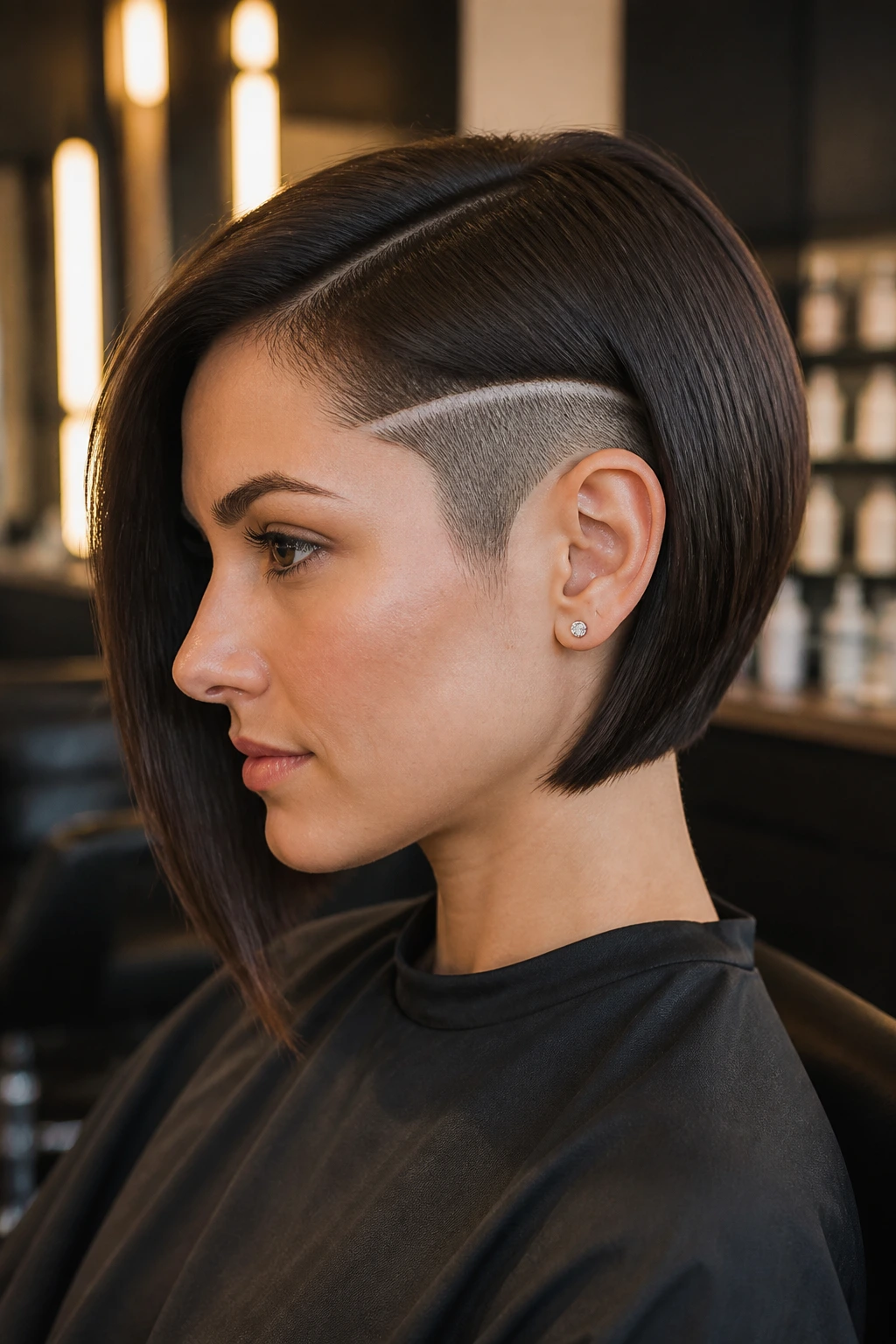
Some choose to have a thin, shaved line or “track” carved into the side or back of their bob. This is more of a detail than a full undercut. It creates a break in the smooth lines of your straight hair. It’s an easy detail to add and, unlike a full-blown undercut, it is less of a long-term commitment.
Why It Works for Straight Hair
On straight hair, these tracks look like deliberate, crisp lines. They are especially effective if you have very thick, dark hair, as the contrast between the shaved skin of the track and the dark hair is quite dramatic.
Maintenance Tips
- Keep your track clean with a set of small electric trimmers.
- Don’t go too deep with the blade; a subtle track is more elegant than a wide, aggressive one.
14. The “Mod” Inspired Bob
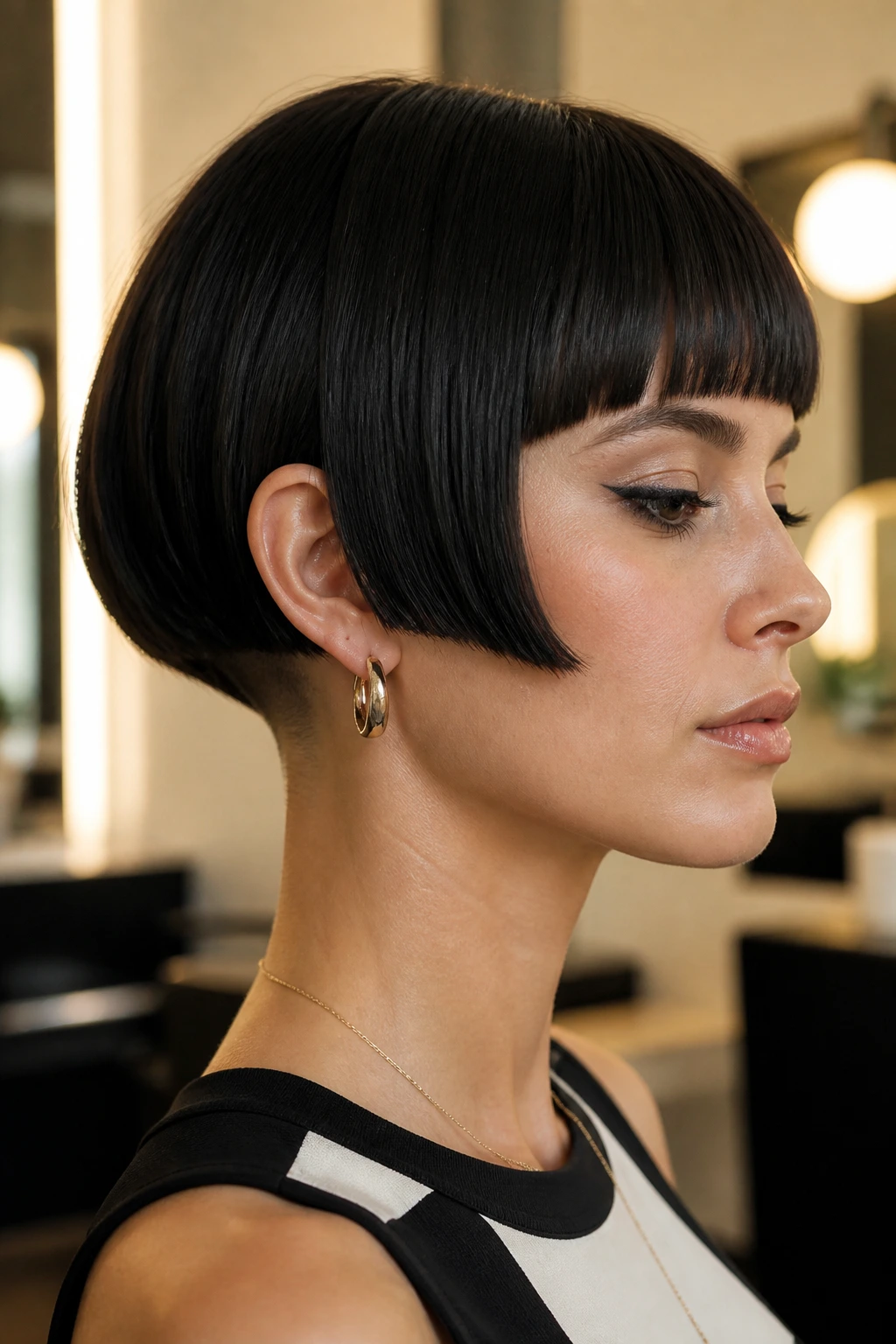
The Mod look, popularized in the 1960s, is all about geometric shapes and sleek, straight lines. Adding an undercut to a traditional Mod-style bob gives it a contemporary twist. You get the rounded, chin-length shape with bangs, but the undercut at the back keeps the hair from becoming too heavy or rounded.
Styling the Bangs
- Make sure your bangs are cut blunt, skimming the eyebrows.
- Use a small round brush to keep the bangs turning inward rather than sticking to your forehead.
- The contrast between the soft bangs and the sharp, shorn undercut is exactly what makes this look feel so modern and fresh.
15. The Choppy, Layered Bob with Undercut
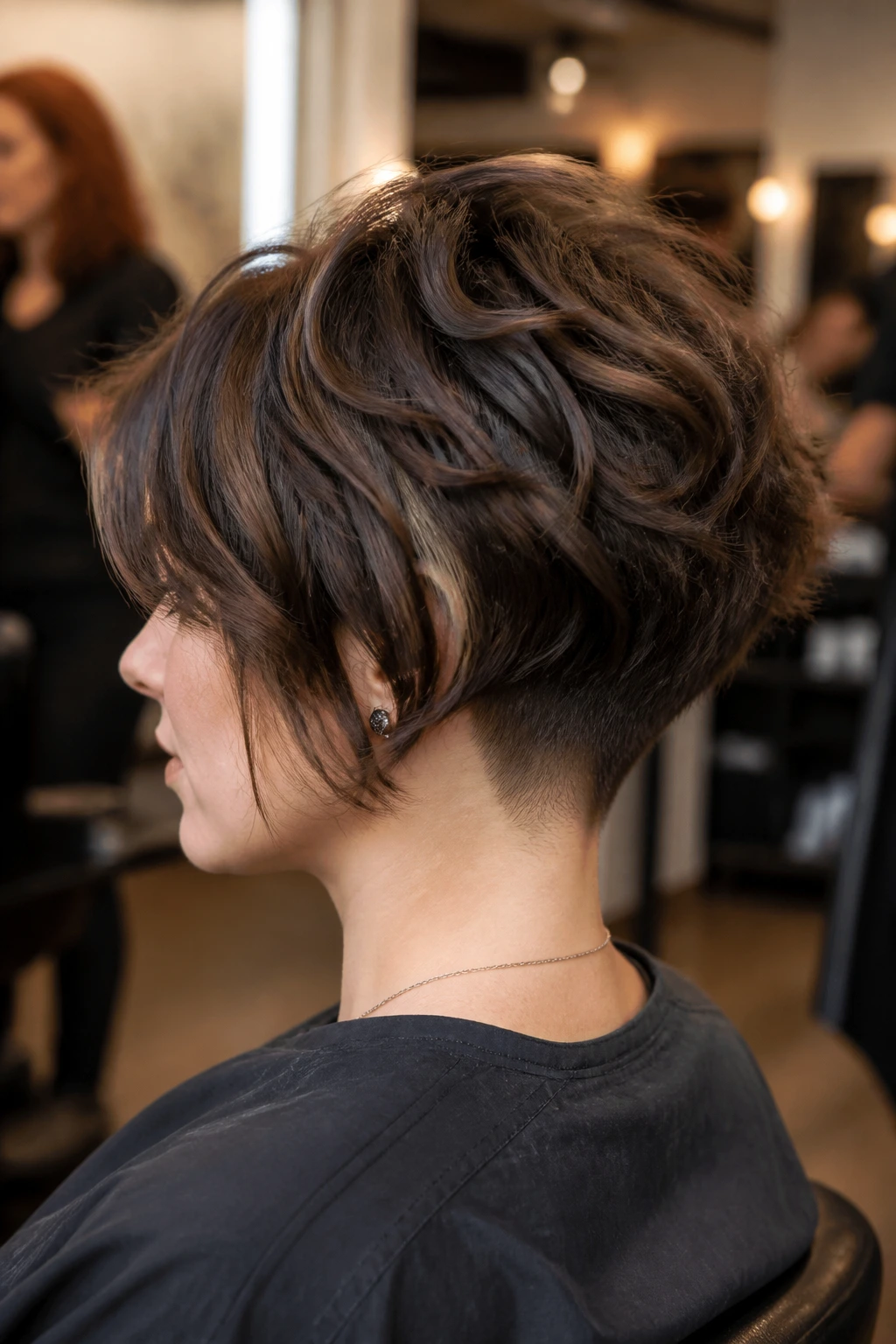
While a blunt bob is great for straight hair, a choppy, layered bob is better for someone who wants a bit more volume. The layers are cut throughout the hair, and the undercut at the back provides the foundation for that volume to exist without the hair becoming overly “big” or unmanageable.
Getting the Volume Right
- Use a root-boosting spray on damp hair.
- Blow-dry with your head upside down to encourage maximum lift.
- Once dry, use a texturizing paste to define the ends of the layers, ensuring they don’t look too soft or limp.
16. The Sleek “Glass Hair” Bob
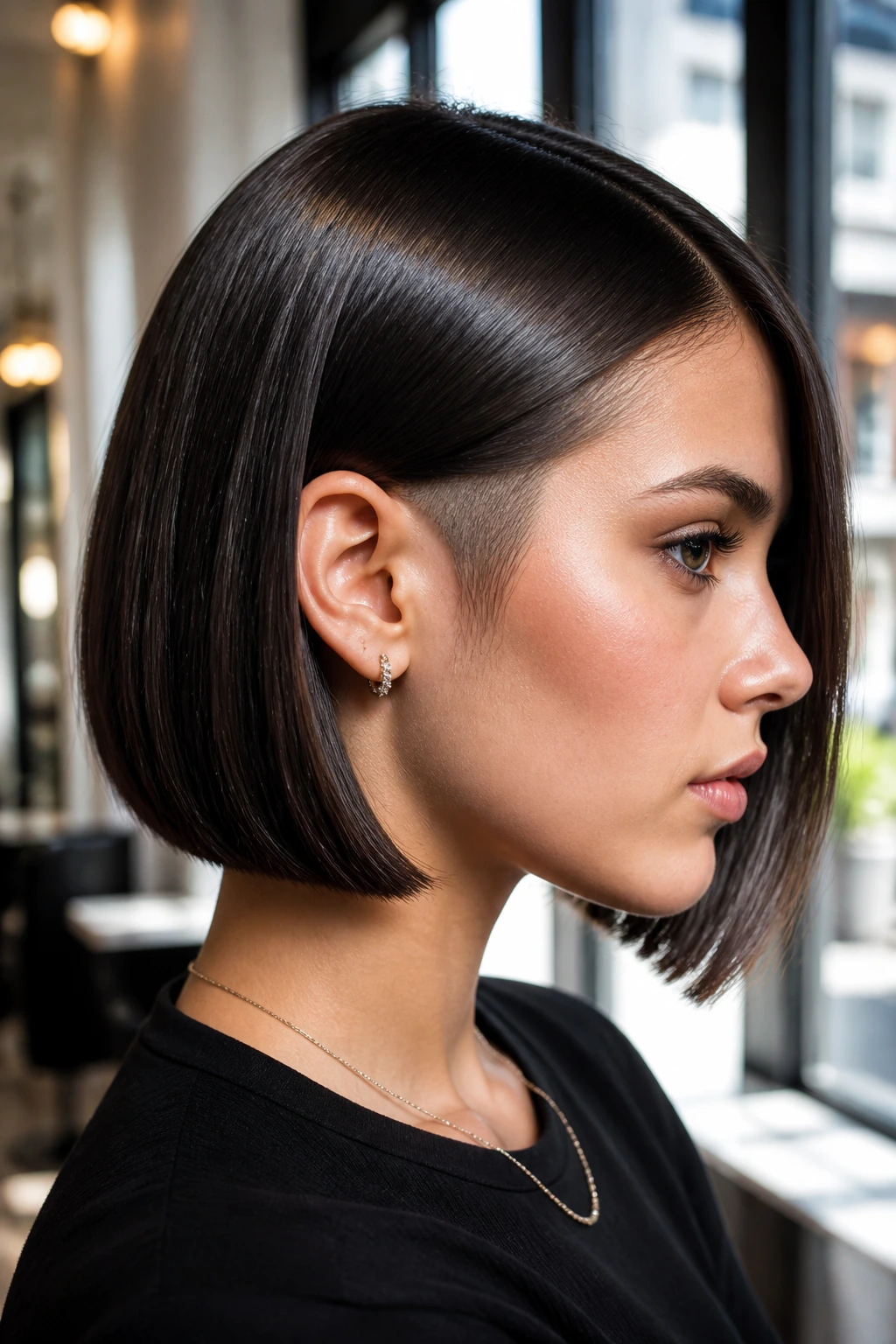
“Glass hair” refers to the trend of hair being so smooth, straight, and shiny that it resembles a piece of glass. This is the ultimate expression of straight hair. Adding an undercut to a glass-hair bob is about keeping the edges sharp. The undercut ensures that the shape of the bob remains perfectly static, without any hair slipping out of place.
Achieving the Shine
- Use a high-quality, professional flat iron with ceramic or tourmaline plates.
- Apply a heat-protectant serum before straightening, and a light finishing oil after to lock in the shine.
- The secret to this look is precision cutting. Any hair that is longer or shorter than the line of the bob will break the illusion of “glass.”
17. The Pastel-Colored Bob with Nape Design
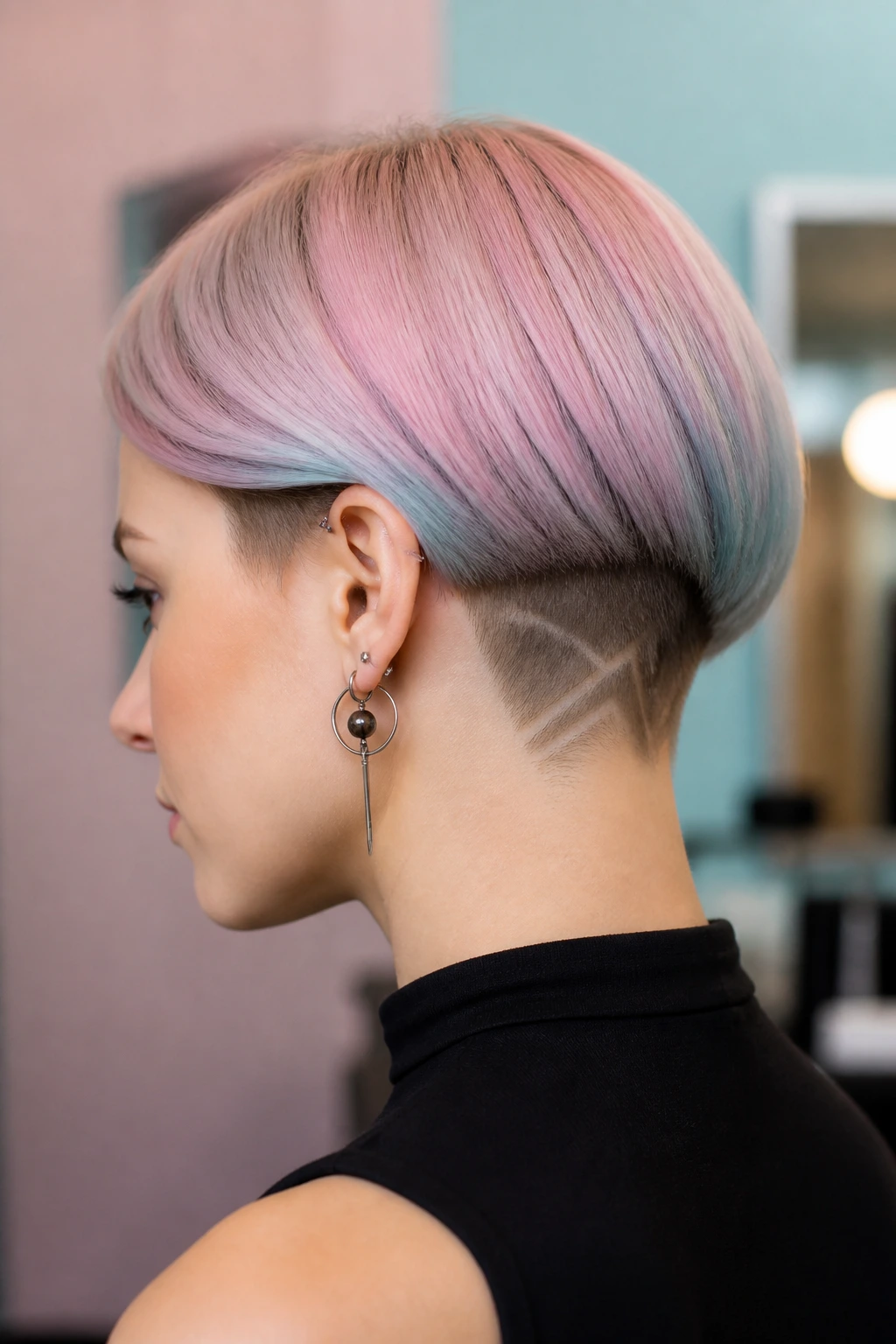
If you want to play with color, pastels work exceptionally well on straight hair. Lavender, mint, or soft pink can look beautiful against the skin, especially when paired with a sharp, shorn undercut at the back of the neck. The contrast between the soft color and the sharp line of the undercut creates a balance between playful and edgy.
Color Maintenance
- Pastel colors fade quickly, so use a color-depositing conditioner to refresh the hue between salon visits.
- Be mindful that the undercut (if left natural) will act as a dark anchor for your lighter, pastel hair, which helps keep the look from becoming “washed out.”
18. The Deep-Side-Part Lob with Tapered Fade
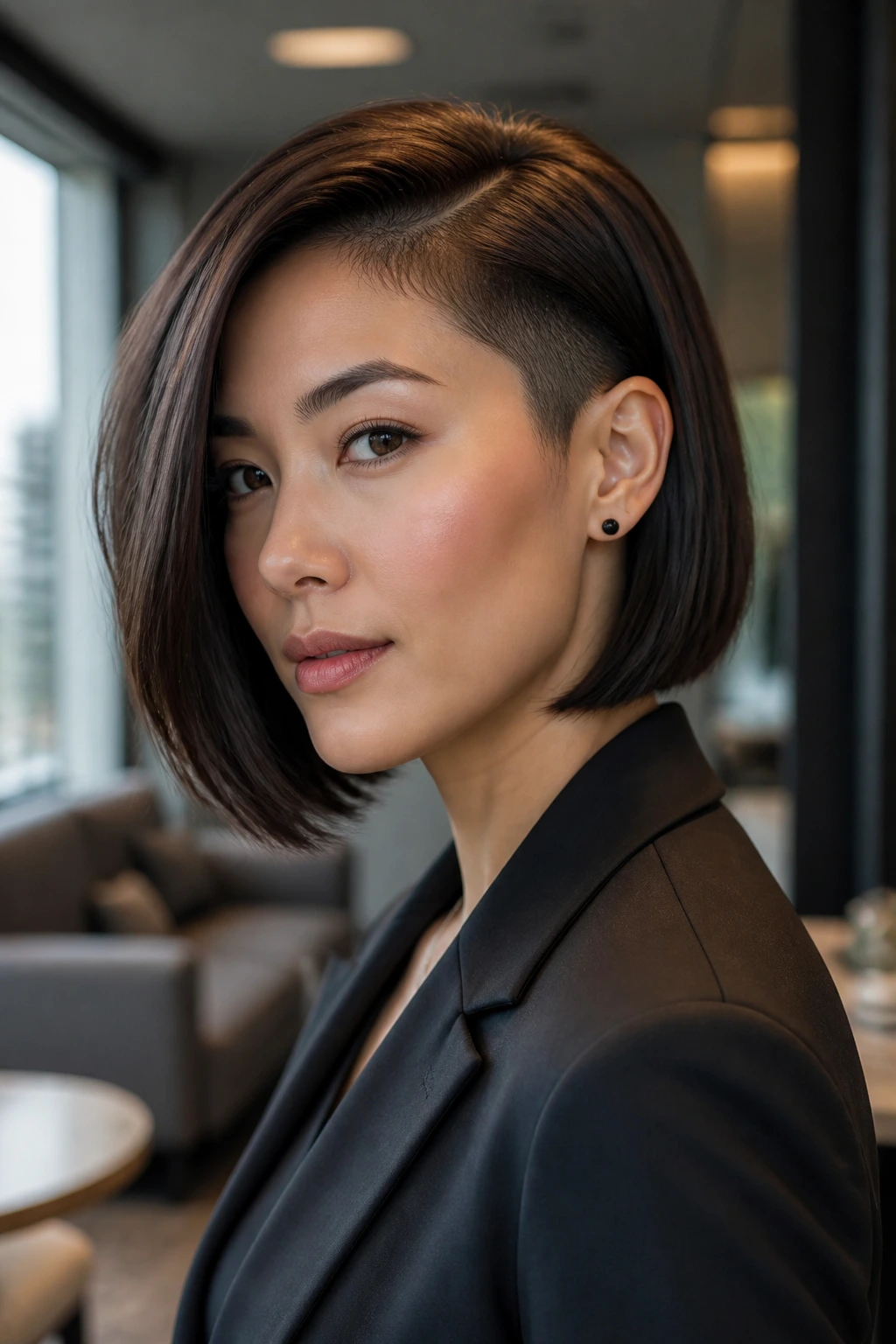
This version of the lob uses a tapered fade on one side. It’s less of a “shaved” look and more of a “groomed” look. It’s perfect for someone in a corporate environment who wants to have a bit of edge but can’t fully shave their head. It looks intentional, sophisticated, and very put-together.
The Professional Look
- Because it is a fade rather than a hard shave, it grows out more gracefully.
- It can be easily hidden by simply moving your part or pulling your hair over the faded area.
- This style requires a bit more maintenance at the salon, as fades need to be touched up to maintain the gradient.
19. The Short Bob with “V” Nape Undercut
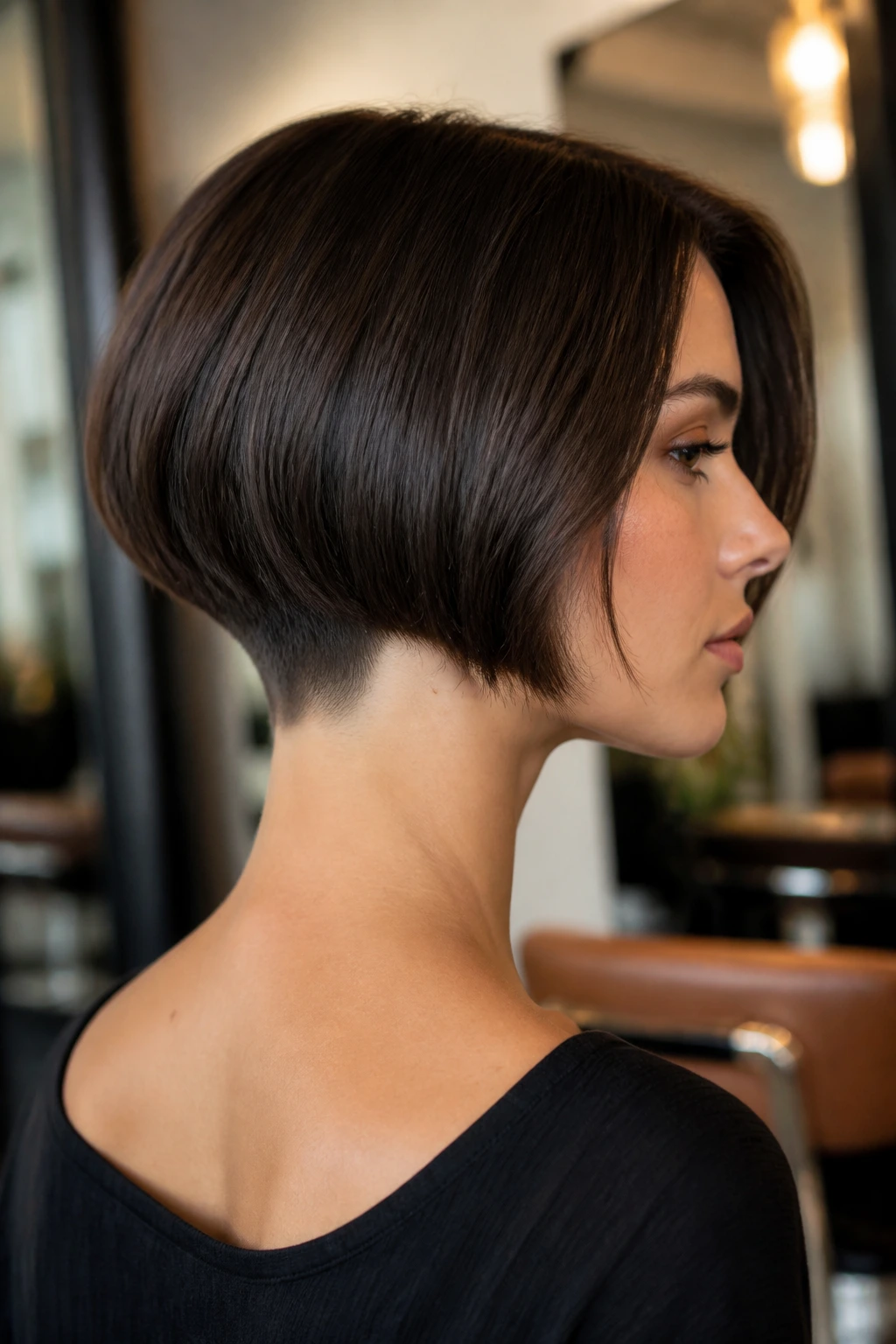
A “V” shaped nape undercut is a classic way to point the eye toward the center of the head. When your hair is cut into a bob, the V-shape can help to create the illusion of a longer, slimmer neck. It is a fantastic, flattering choice for anyone who wants to elongate their appearance.
Why it Works
- It provides a focal point at the base of the neck.
- It is a very flattering shape that follows the natural bone structure.
- It keeps the edges of the bob crisp and clean.
20. The Completely Blunt, Jaw-Length Bob
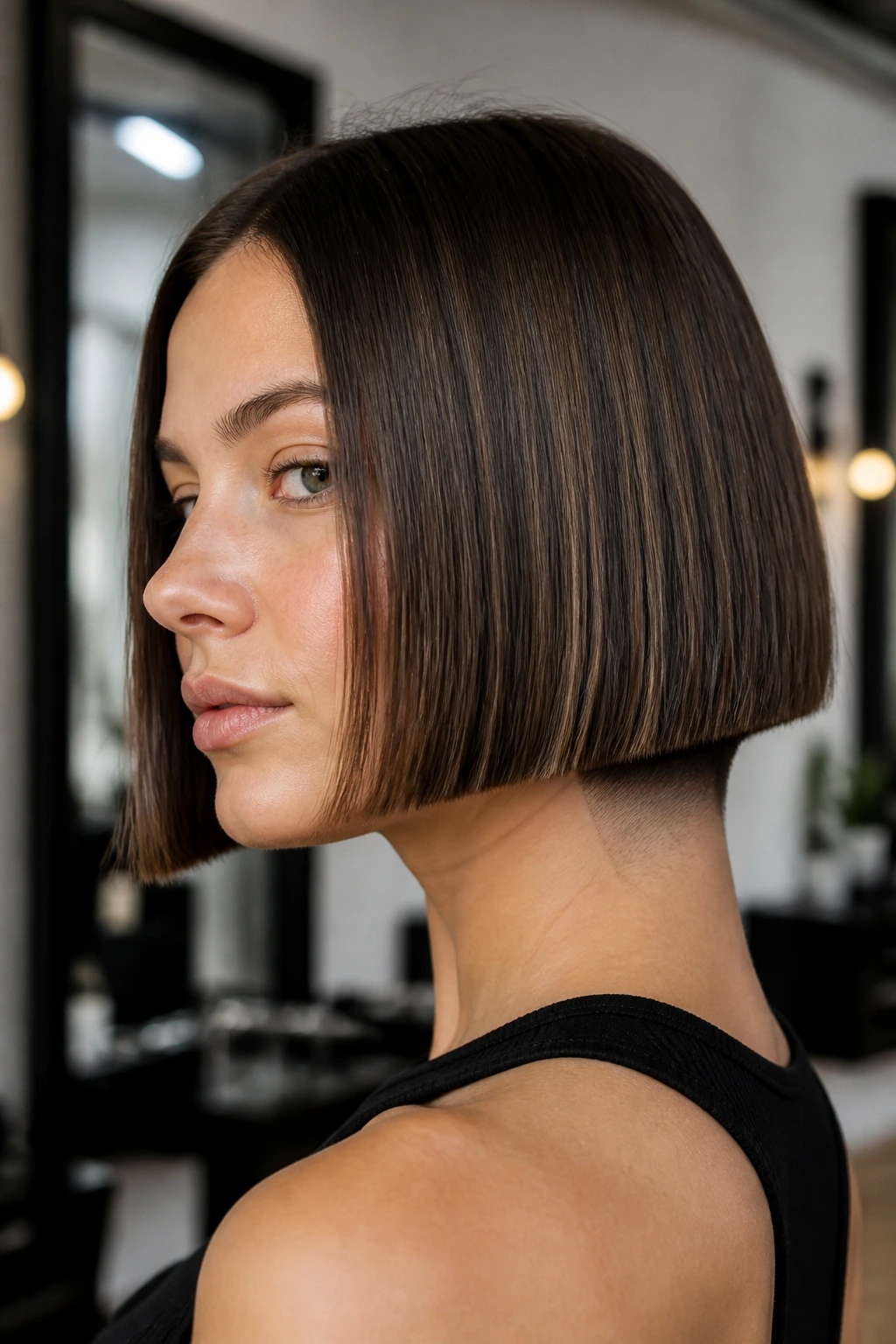
This is the most minimalist, extreme version of the style. The hair is cut at a straight, blunt line exactly at the jaw. There are no layers, no thinning—just pure, straight hair. The undercut at the nape ensures that even with no layers, the hair doesn’t puff out at the back. It is the ultimate “power bob.”
The Precision Needed
- This cut relies entirely on the precision of the blunt line.
- You will need a professional cut every four to six weeks to keep the jawline perfectly framed.
- For styling, you only need a flat iron and a bit of anti-frizz serum. It is the most low-maintenance, high-impact style you can choose.
Final Thoughts
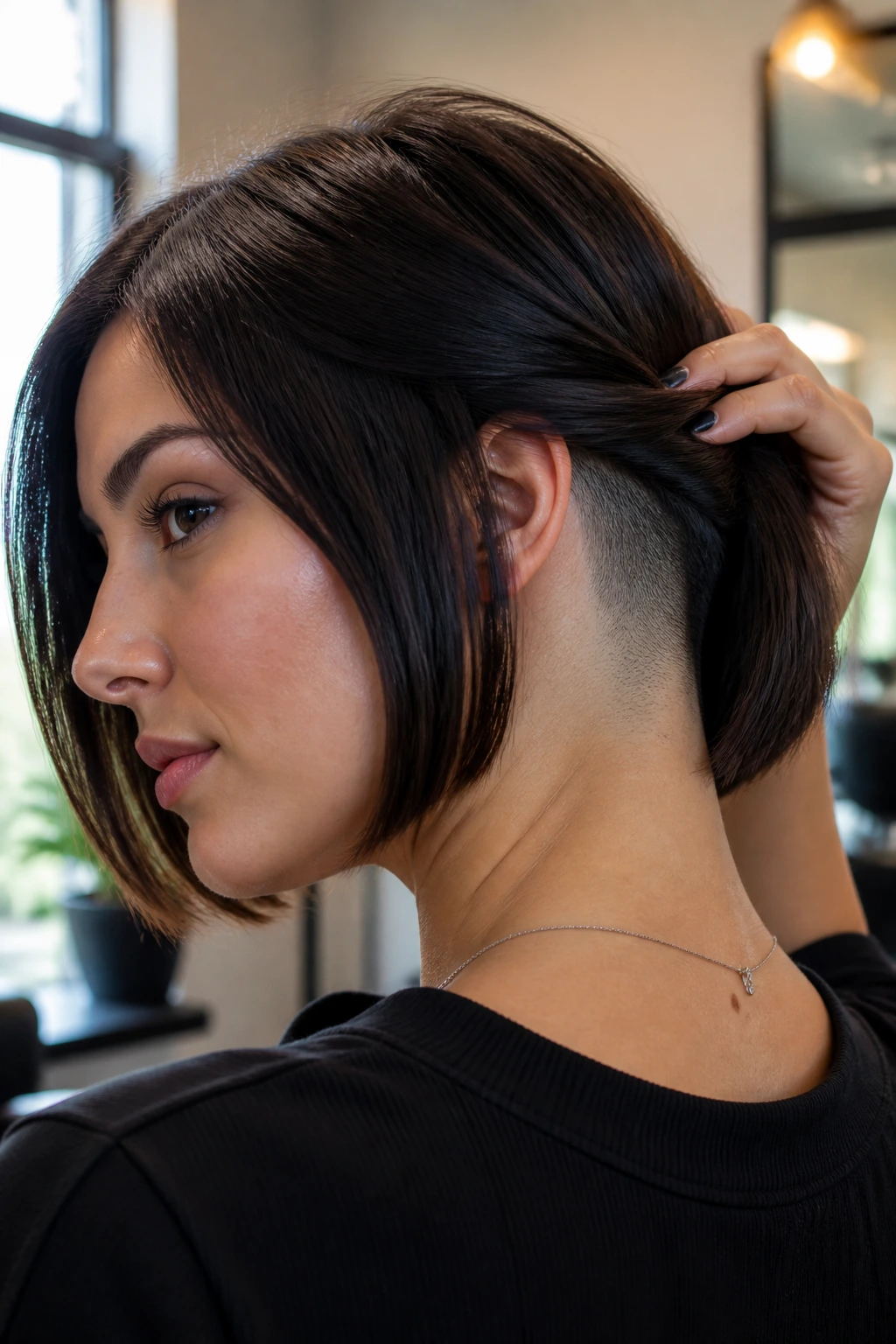
Choosing to pair a short bob with an undercut is not just a decision about style; it is a decision about managing your hair’s inherent behavior. For those of us with straight hair, the bob is the ultimate silhouette, but it often brings the frustration of weight, bulk, and lack of shape. The undercut solves these problems mechanically, physically removing the excess that causes hair to lose its form. Whether you choose a subtle, hidden nape shave or a bold, temple-clearing design, you are trading in a bit of “hair volume” for a lot of structural control.
The key to success with any of these styles is the maintenance of the edge. Because your hair is straight, you don’t have the luxury of soft, messy grow-out phases that curly-haired people might enjoy. Your lines will be visible. Embrace the schedule—find a stylist you trust to keep those lines tight—and enjoy the freedom that comes with a haircut that finally does exactly what you want it to do every single morning.