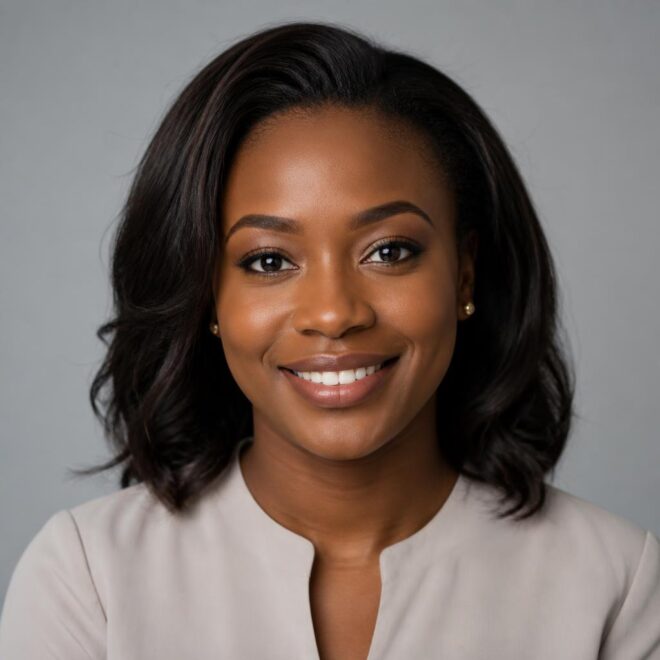


A heavy mane of thick hair can feel like a gift until the humidity rises or you reach for your styling iron in the morning. When your hair has density, weight is both an asset and a burden; it provides that coveted fullness, but it often lacks the shape needed to look truly intentional. A stacked bob addresses this by literally carving architecture into the hair. By stacking shorter layers at the nape of the neck, you create a dramatic, rounded silhouette that defies gravity. It is a precision cut that demands very little from your styling tools because the hair essentially wants to sit in that curved position naturally. Whether you lean toward sharp, edgy angles or soft, blended layers, this cut changes how your hair behaves from the moment you wake up.
1. The Classic Graduated Stacked Bob
This is the foundational cut for anyone wanting to tame significant density without losing the prestige of their hair’s thickness. The back is cut with very short, precise layers that create an immediate, rounded shelf, while the front remains longer and reaches toward the chin or collarbone. Because your hair is naturally thick, the transition between the nape and the crown happens with a steep, visible angle. It relies on internal point-cutting to remove just enough bulk so that the hair doesn’t fan out like a lampshade.
Why It Works for Thick Textures
Thick hair often struggles with a triangular shape when cut into a standard blunt bob. This graduated style prevents that by forcing the hair to curve inward at the ends rather than outward.
- The steep angle directs all the weight away from the nape, preventing sweat and tangles during warmer weather.
- Internal weight removal keeps the hair from feeling too heavy behind the ears, which is a common complaint for those with high density.
- It requires minimal daily effort, as the cut does the styling for you.
2. The Textured Inverted Stack
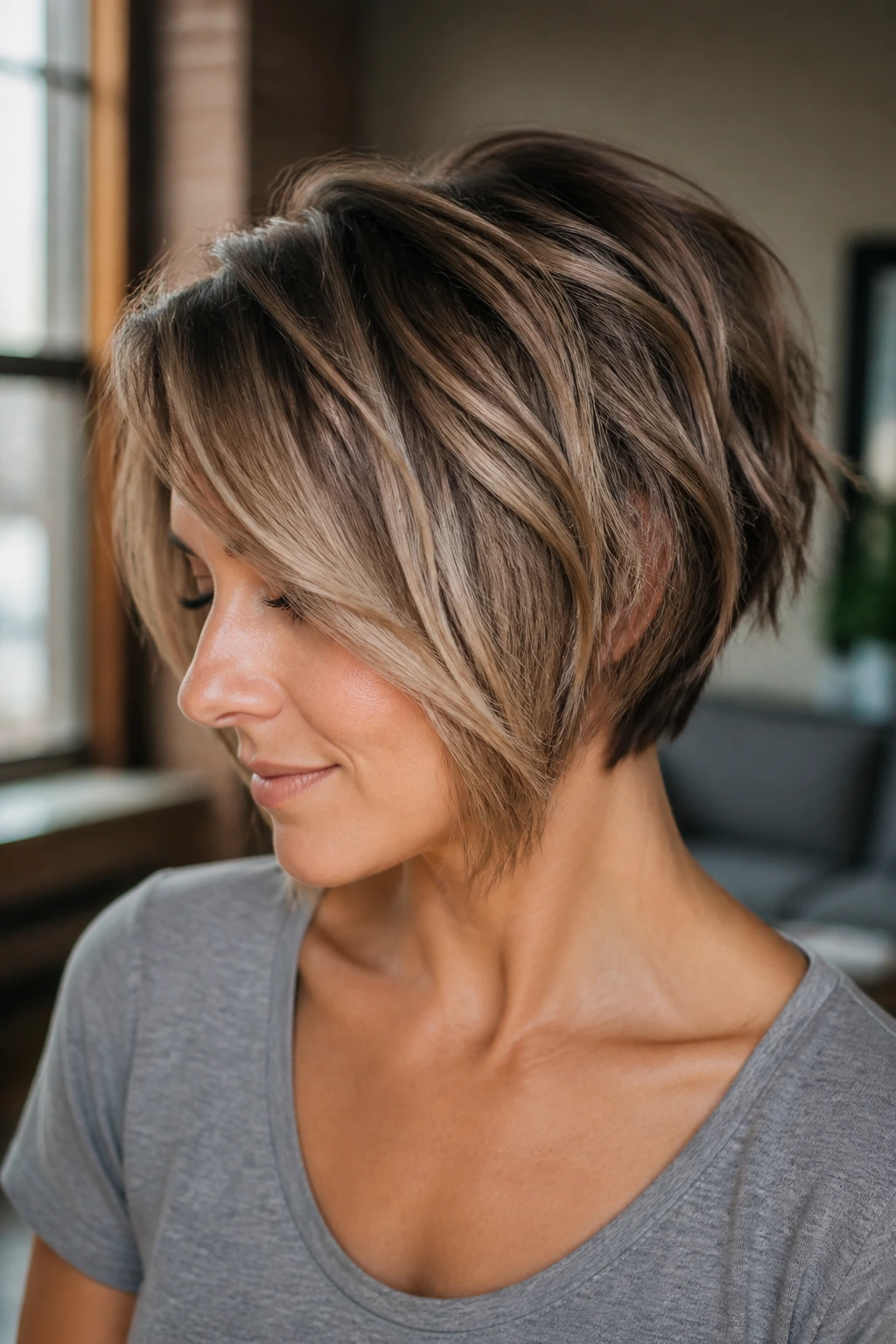
If you prefer an aesthetic that feels a bit more lived-in, the textured inverted stack is your best move. This version keeps the dramatic graduation of the classic bob but introduces heavy texturizing shears throughout the crown and the ends. It breaks up the thick, uniform blocks of hair that often make a bob look stiff, allowing for more movement and a messier, modern finish.
Styling for Maximum Texture
To get the most out of this cut, avoid heavy pomades that can weigh down the ends. Instead, reach for a dry texturizing spray.
- Apply the product to dry hair, lifting at the roots for lift.
- Use your fingers to piece out the ends rather than using a comb, which can make thick hair appear frizzy.
- For a more polished look, a quick pass with a flat iron can define the layers, but don’t worry about perfection; this cut thrives on a bit of grit.
3. The Angled Stack with Face-Framing Layers
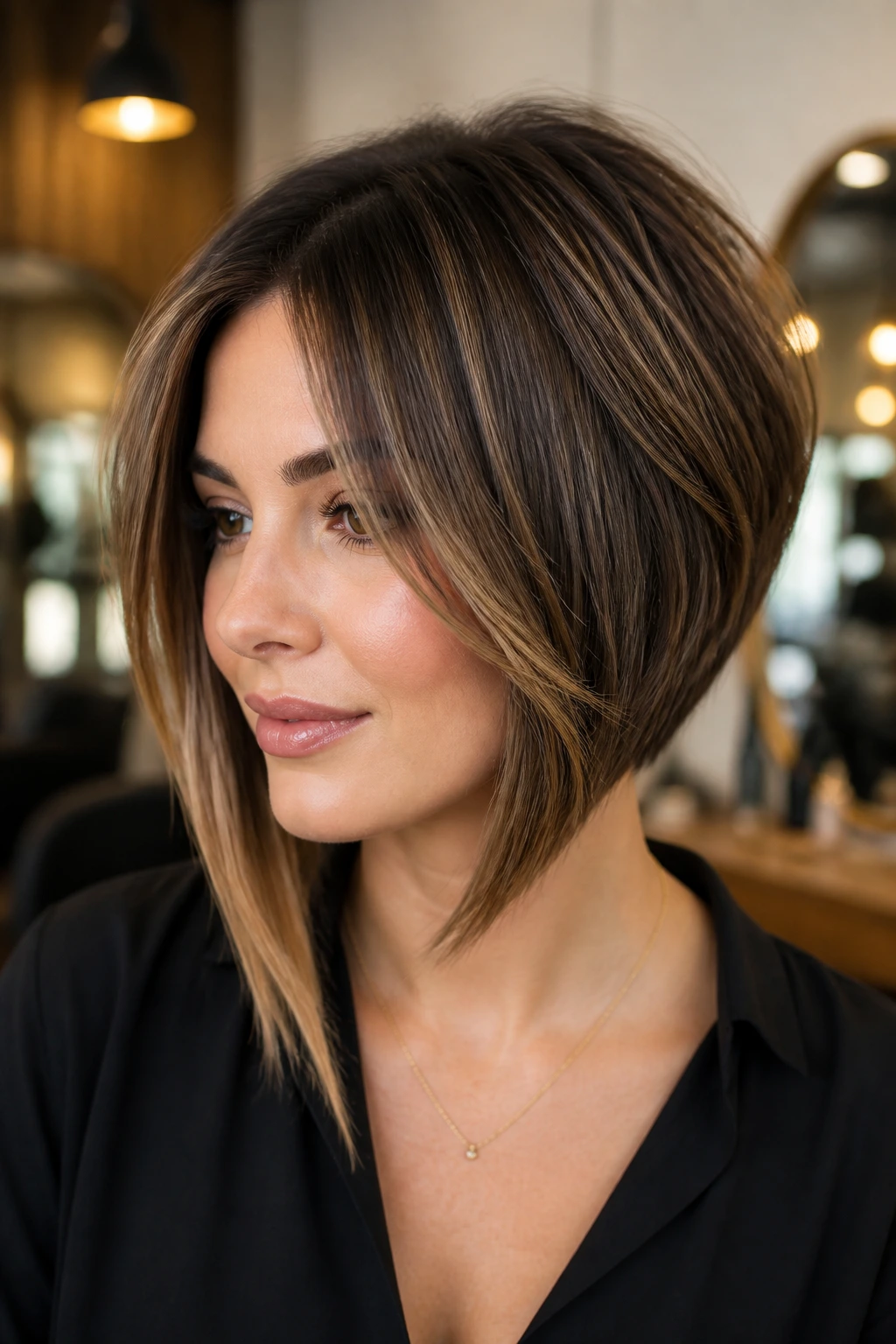
Taking the standard stacked bob and extending the front pieces into longer, face-framing strands creates a slimming effect that is incredibly flattering on rounder face shapes. The back remains short, tight, and stacked to eliminate weight, while the front sections provide a soft, feminine contrast. For someone with thick hair, these long front pieces help maintain a sense of length, so you don’t feel like you’ve lost your security blanket.
How to Maintain the Shape
Because this cut has two distinct lengths—the short nape and the elongated front—it requires professional trimming every six to eight weeks.
- Ask your stylist to use a razor on the front sections to create soft movement rather than a blunt line.
- Use a round brush when blow-drying to encourage the front sections to curve toward your face.
- If you have naturally wavy hair, this cut is a dream because the layers allow your natural pattern to bounce up without the bulk pushing the style outward.
4. The Short, Edgy Undercut Stack
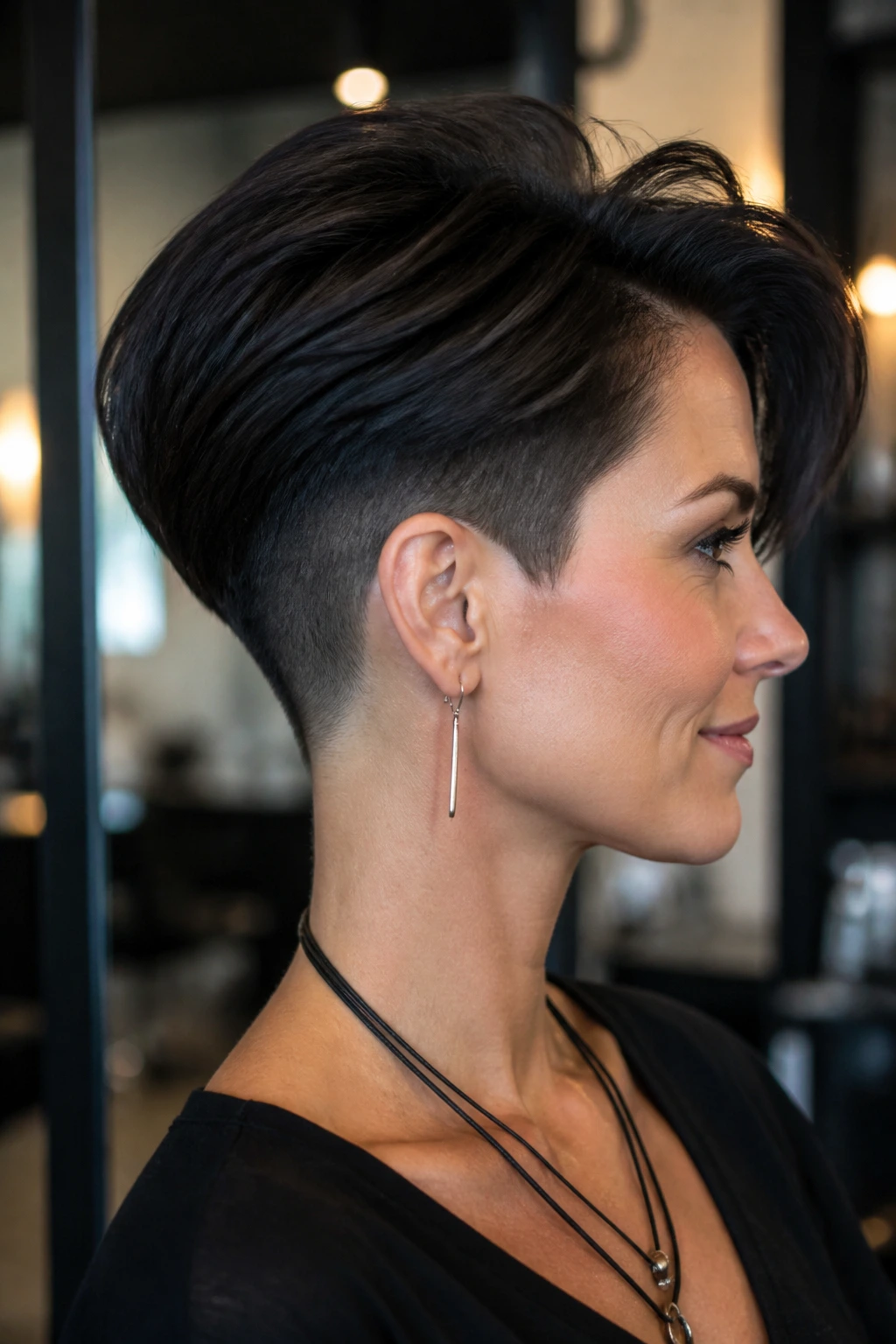
For those who are truly committed to removing weight and want an edgy, high-contrast look, the nape undercut is a game changer. Your stylist will shave or closely crop the hair at the very base of your neck, stacking the remaining length directly over it. This eliminates the “poof” factor entirely, creating a sleek, aerodynamic look that is incredibly refreshing, especially if you live in a humid climate.
Is This Right for You?
This is a bold move that changes the maintenance routine of your hair.
- You must commit to frequent nape clean-ups, as even a quarter-inch of growth will be noticeable against the skin.
- The silhouette is undeniably modern and looks particularly sharp on people with dark or vibrant, bold hair colors.
- It is the ultimate solution for thick-haired individuals who struggle with overheating, as it provides instant ventilation at the back of the neck.
5. The Softly Layered Rounded Bob
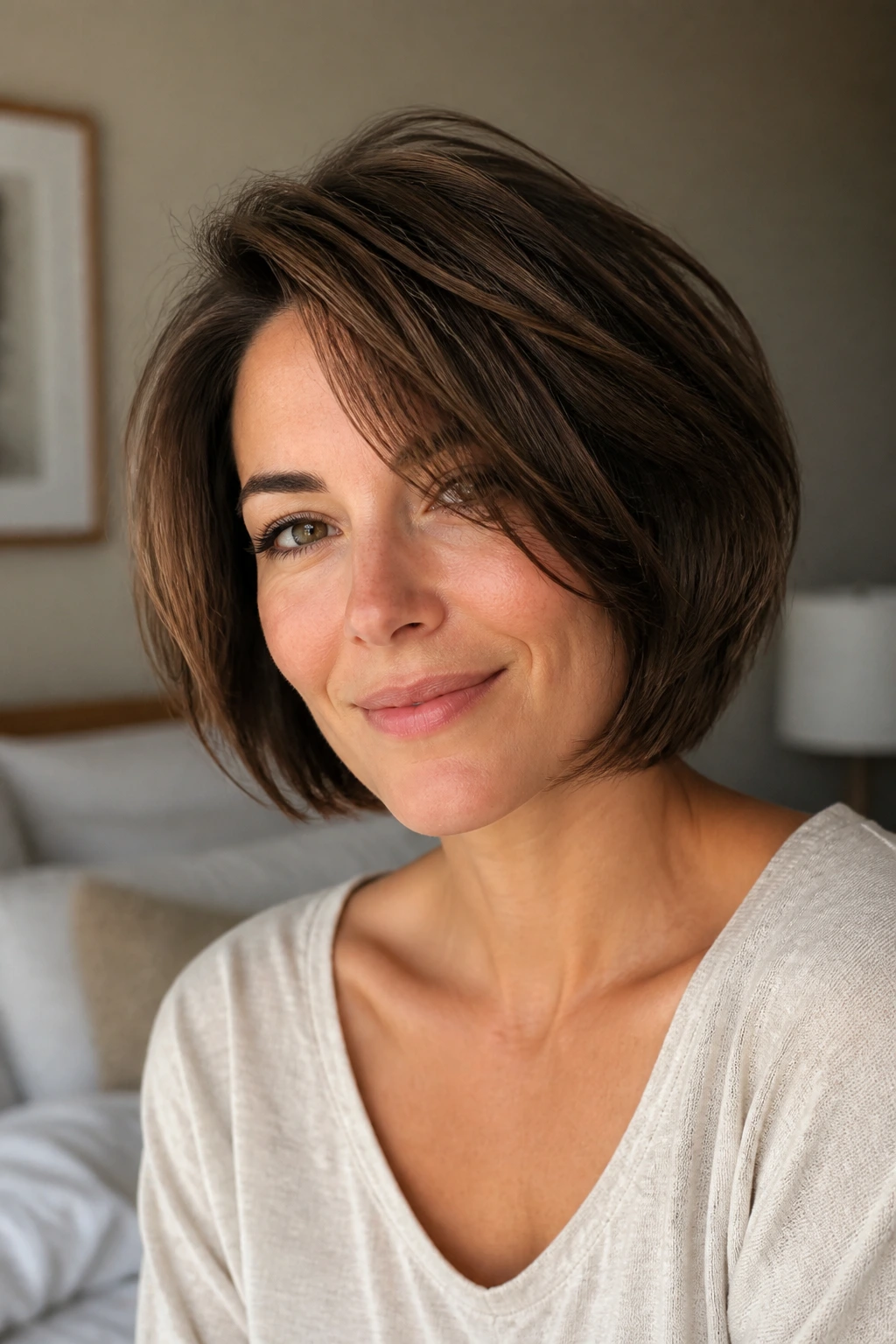
Sometimes you don’t want the harsh geometry of a sharp stack; you want something that feels rounded and approachable. This version uses shorter, hidden layers under the occipital bone to build volume, then transitions into softer, longer layers throughout the rest of the head. It is perfect if your hair has a slight natural wave, as the layers encourage that wave to form a cohesive, rounded shape rather than spreading out into a wild halo of hair.
Tips for Daily Styling
- A light volumizing mousse applied to damp hair is the only product you need to keep this style looking healthy.
- Avoid heavy silicones or thick styling creams, as these will drag the hair down and take away the “bouncy” quality that makes this cut so appealing.
- When blow-drying, use a medium-sized round brush to tuck the ends under, which enhances the rounded silhouette of the cut.
6. The Choppy, Shattered Stack
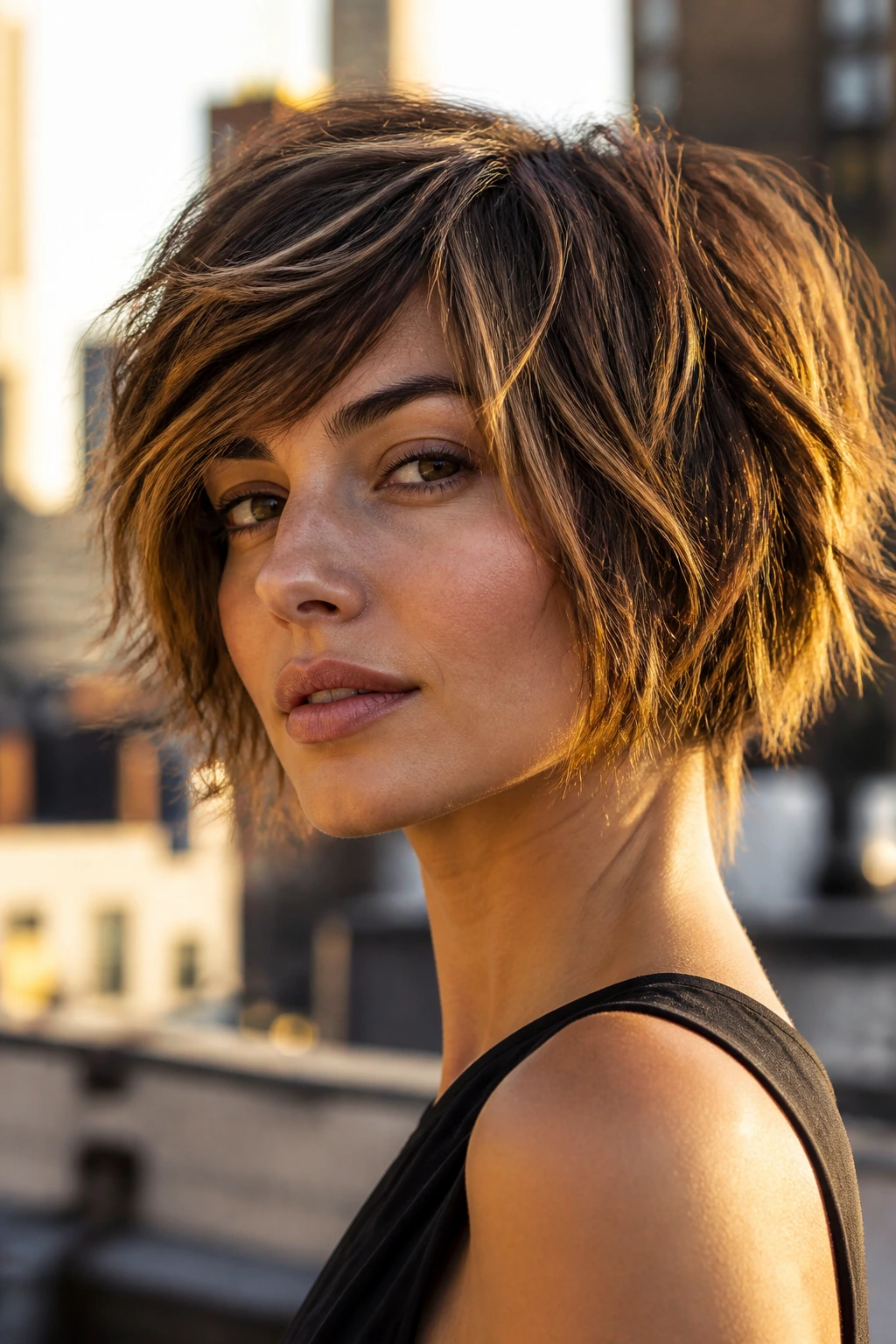
A shattered stack is all about visible movement and irregular lengths. Instead of a smooth, graduated transition, this cut features distinct, choppy layers that create a “shattered” look throughout the body of the hair. It takes away an incredible amount of density without requiring you to go extremely short. If you find that your thick hair just sits there, this cut will give it the life and energy it needs.
How It Handles Different Hair Types
- For straight, thick hair: This cut creates a punk-inspired, architectural look that screams personality.
- For wavy, thick hair: The choppy layers prevent the hair from becoming a uniform mass and instead define the wave pattern, giving you a beachy, effortless vibe.
- Maintenance: You will need to use a high-quality styling wax or clay to define the ends and keep the choppy layers from looking frizzy by mid-day.
7. The Long, Low-Stack Bob
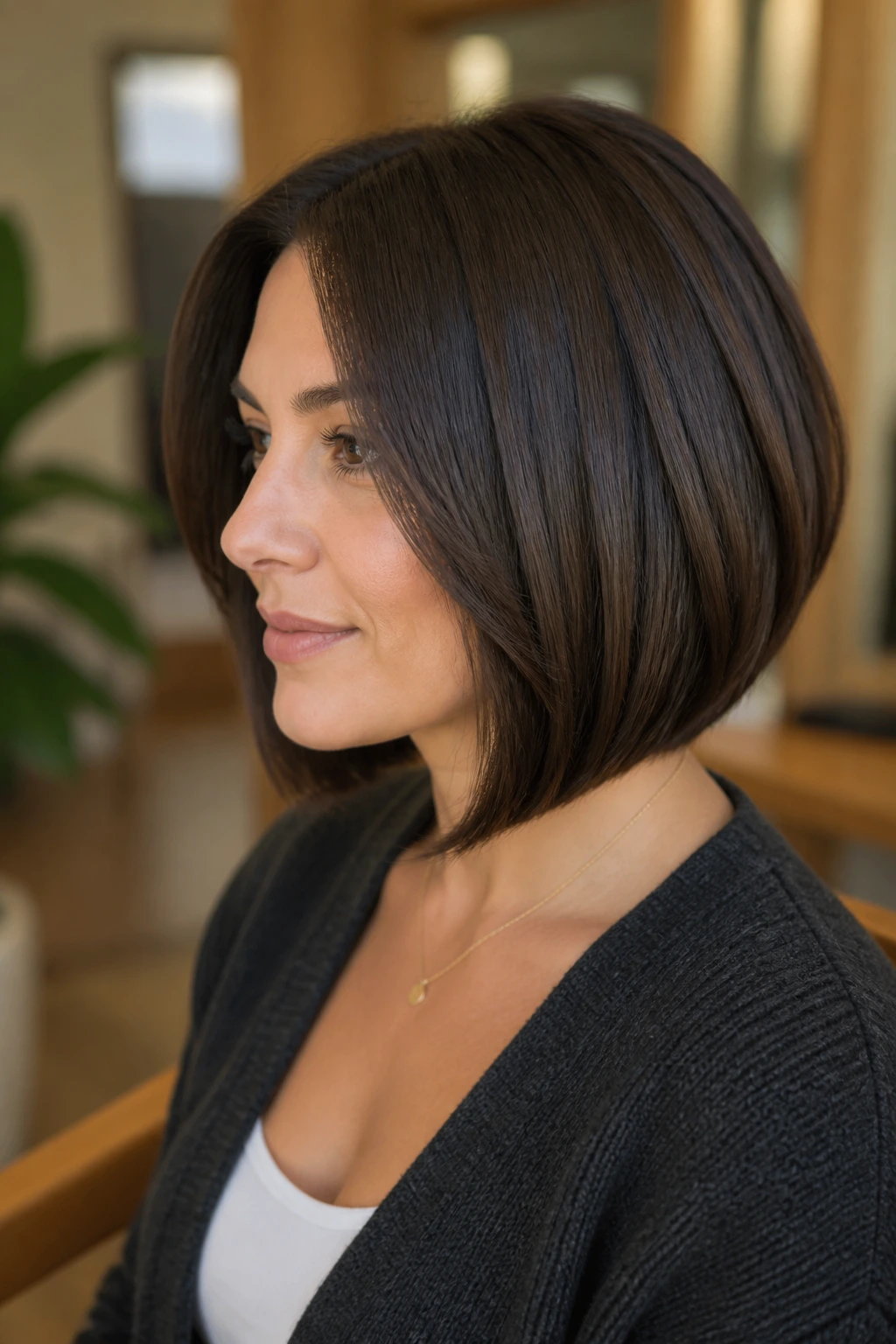
Not everyone is ready for a nape-baring short bob. The long, low-stack bob offers the perfect middle ground, sitting closer to the collarbone in the front while retaining a slight, gentle stack in the back. It provides the benefit of weight reduction where you need it most, but keeps enough length to tuck behind your ears or tie up on a busy afternoon.
Why It’s a Great Transition Cut
Many people use this length as a bridge if they are considering going shorter but are afraid of commitment.
- It is universally flattering and works well with almost all face shapes.
- The low stack is subtle enough that it doesn’t scream “bob,” yet it effectively stops the hair from looking bottom-heavy.
- It remains long enough to experiment with various updos, like a low bun or a half-up, half-down style, which is often a challenge with shorter bob styles.
8. The Deeply Angled Bob with Blunt Ends
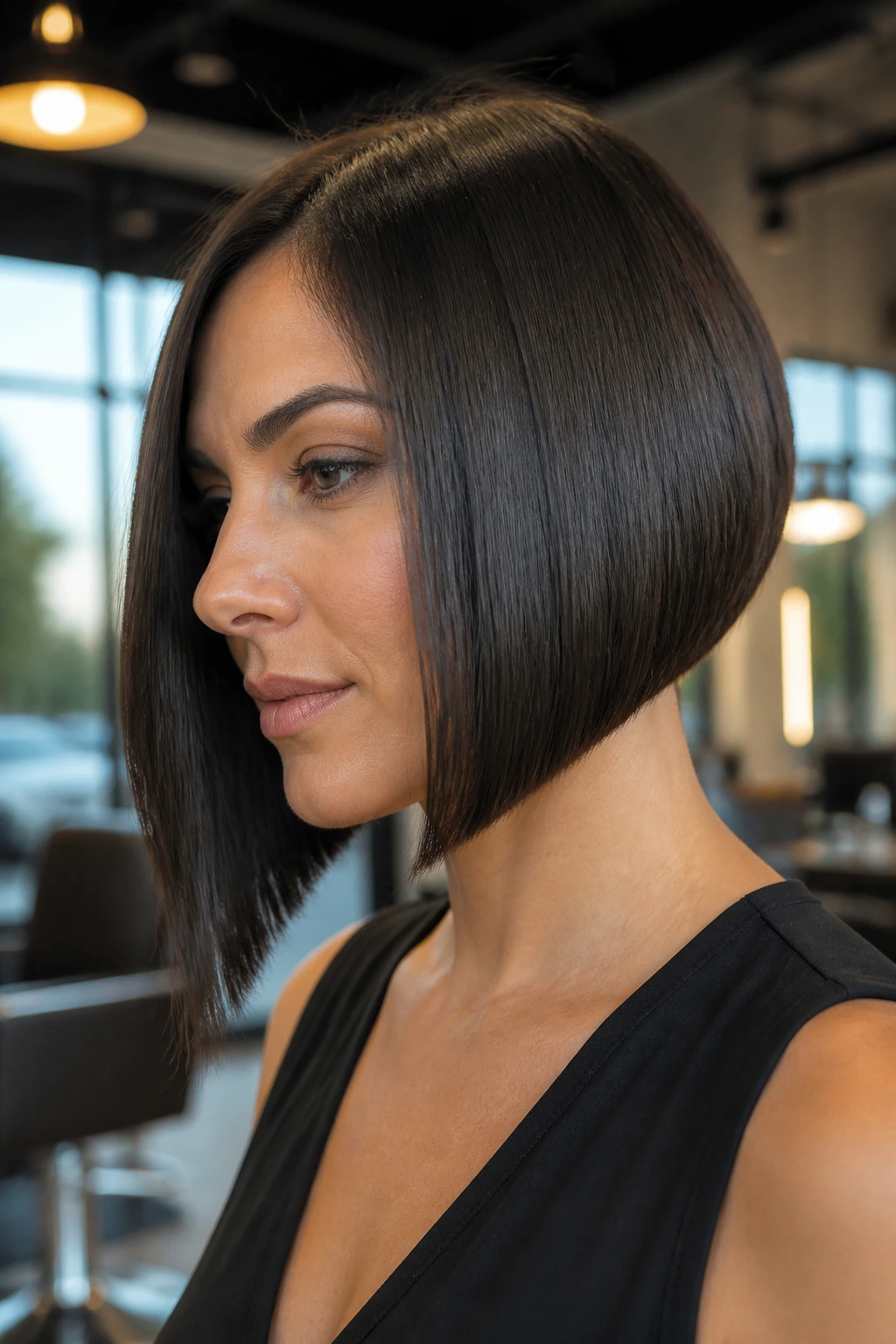
If your hair is pin-straight and you love a crisp, clean aesthetic, the deeply angled bob is a classic for a reason. This style features a very sharp line that starts high at the nape and moves forward to reach well past the chin, or even to the shoulder. Because your hair is thick, you’ll want to ensure the stylist performs deep slide-cutting on the ends so that the blunt line doesn’t look too chunky or heavy on your frame.
The Power of the Blunt Line
The blunt edge provides a sense of weight at the bottom that can actually help control thick hair.
- When cut correctly, the weight of the ends keeps the hair pulled down, naturally counteracting the tendency for thick hair to fluff up.
- It is a sophisticated, high-fashion cut that pairs exceptionally well with sharp bangs or a deep side part.
- Invest in a high-quality flat iron and a heat protectant spray to maintain the razor-sharp finish of the ends.
9. The Curly Stacked Bob
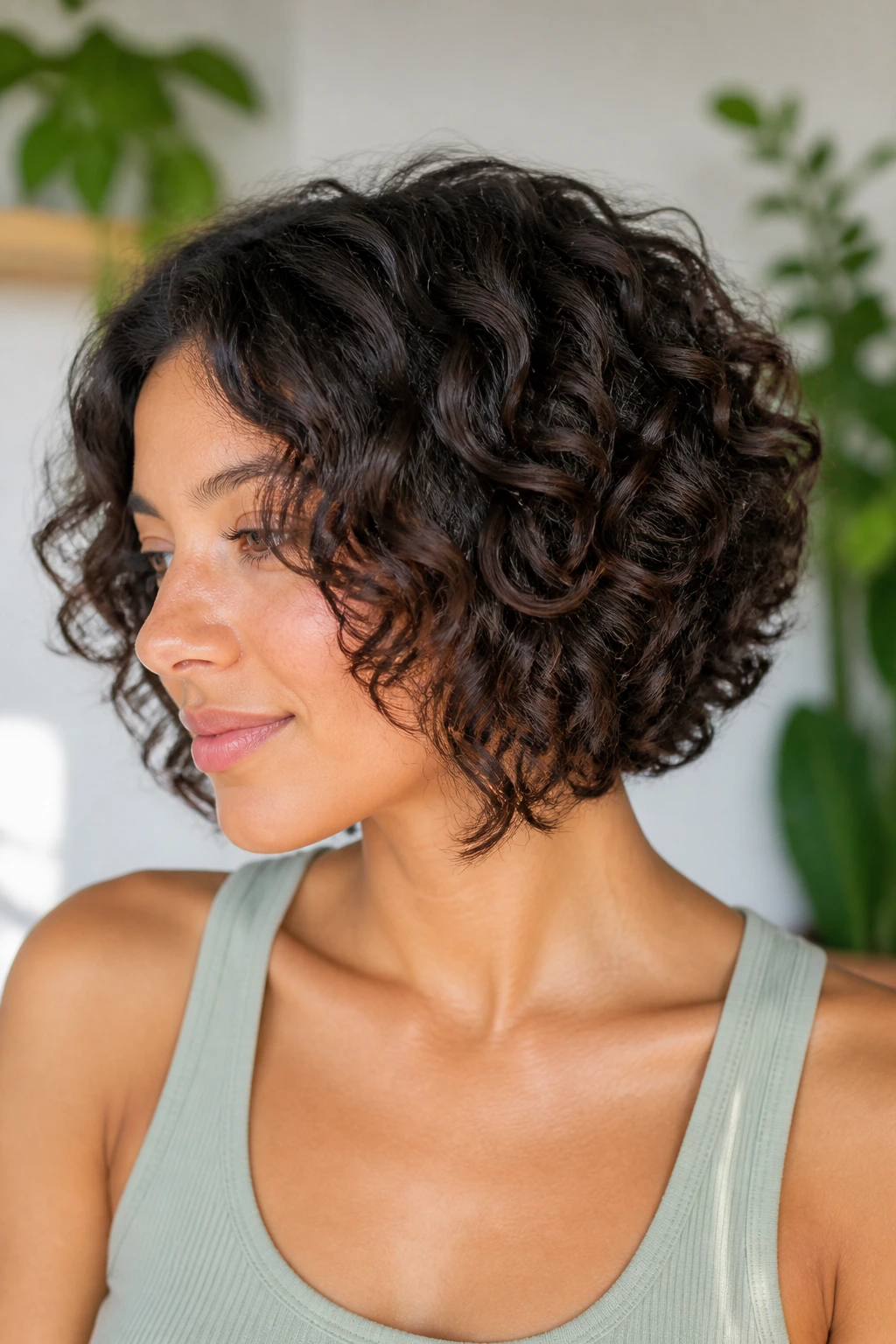
People often tell those with thick, curly hair to avoid bobs, claiming it will lead to the dreaded “triangle head.” However, the stacked bob is actually one of the best ways to manage thick curls. By stacking the back, you take the pressure off the nape, and by cutting layers throughout the crown, you allow the curls to sit in their natural, gravity-defying shape.
Managing Curls
- Ensure your stylist is experienced in cutting curly hair; the layers must be cut while the hair is dry to account for the “shrinkage” factor.
- Use a diffuser attachment on your hairdryer to gently encourage volume at the roots without disturbing the curl pattern.
- A leave-in conditioner is mandatory to prevent the thick, curly ends from drying out and frizzing, which can quickly ruin the shape of the stack.
10. The Asymmetrical Stacked Bob
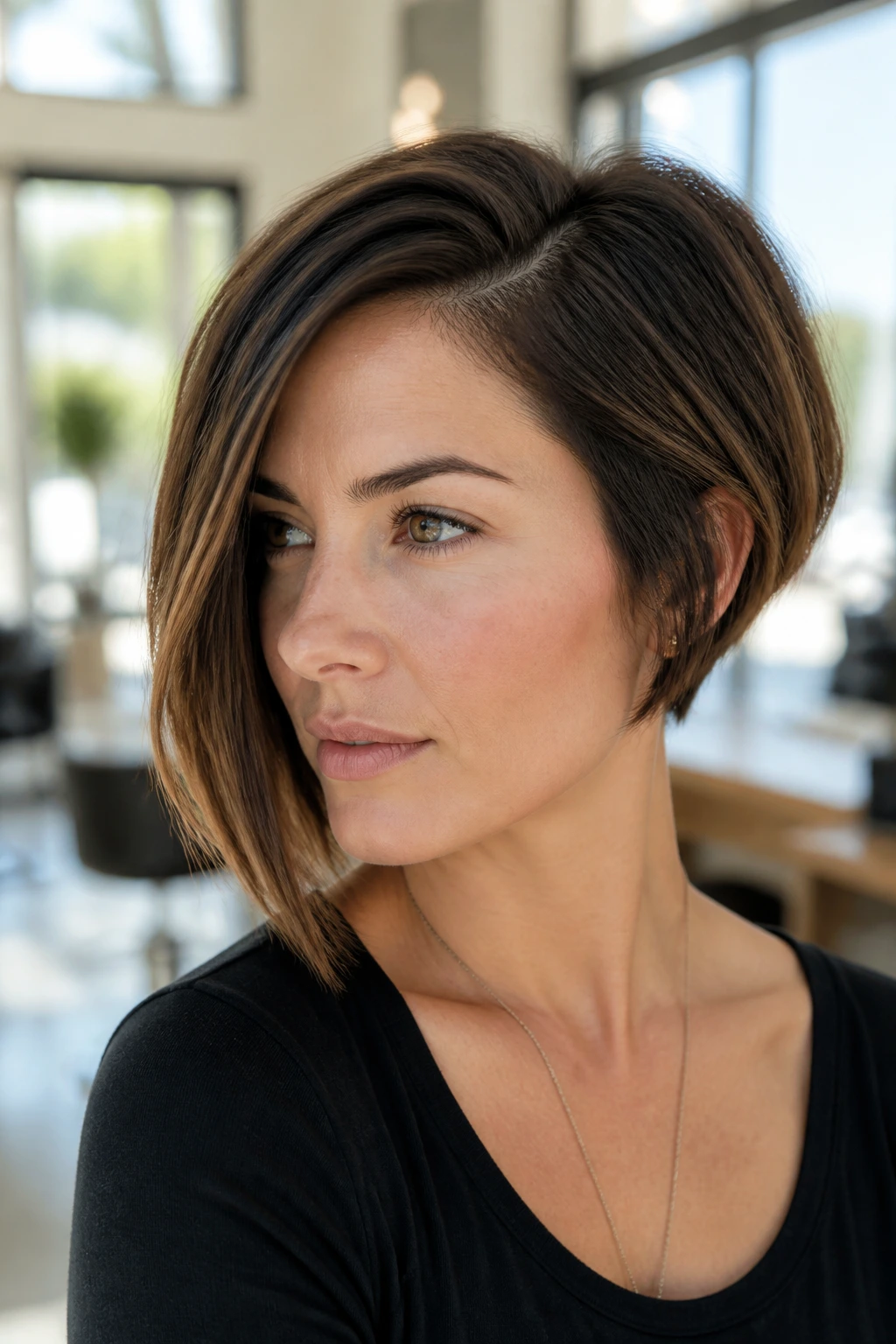
For those who want to stand out, the asymmetrical stack is the way to go. One side is cut shorter than the other, and the back remains stacked to maintain the weight-removing benefits of the cut. It is a bold, modern look that takes advantage of thick hair’s ability to hold a strong, deliberate shape. The contrast in length on either side of the face provides an instant frame, often highlighting the jawline in a very flattering way.
Styling for Asymmetry
The key to this look is precision.
- You will need to be diligent about your part; a side part is usually essential to make the asymmetry look intentional and striking.
- Use a smoothing serum to keep the hair sleek, as flyaways are much more noticeable when the cut is asymmetrical.
- This style is highly customizable—if you want to keep the length long on one side and very short on the other, your stylist can adjust the angles to suit your preference.
11. The Modern Shag-Bob Hybrid
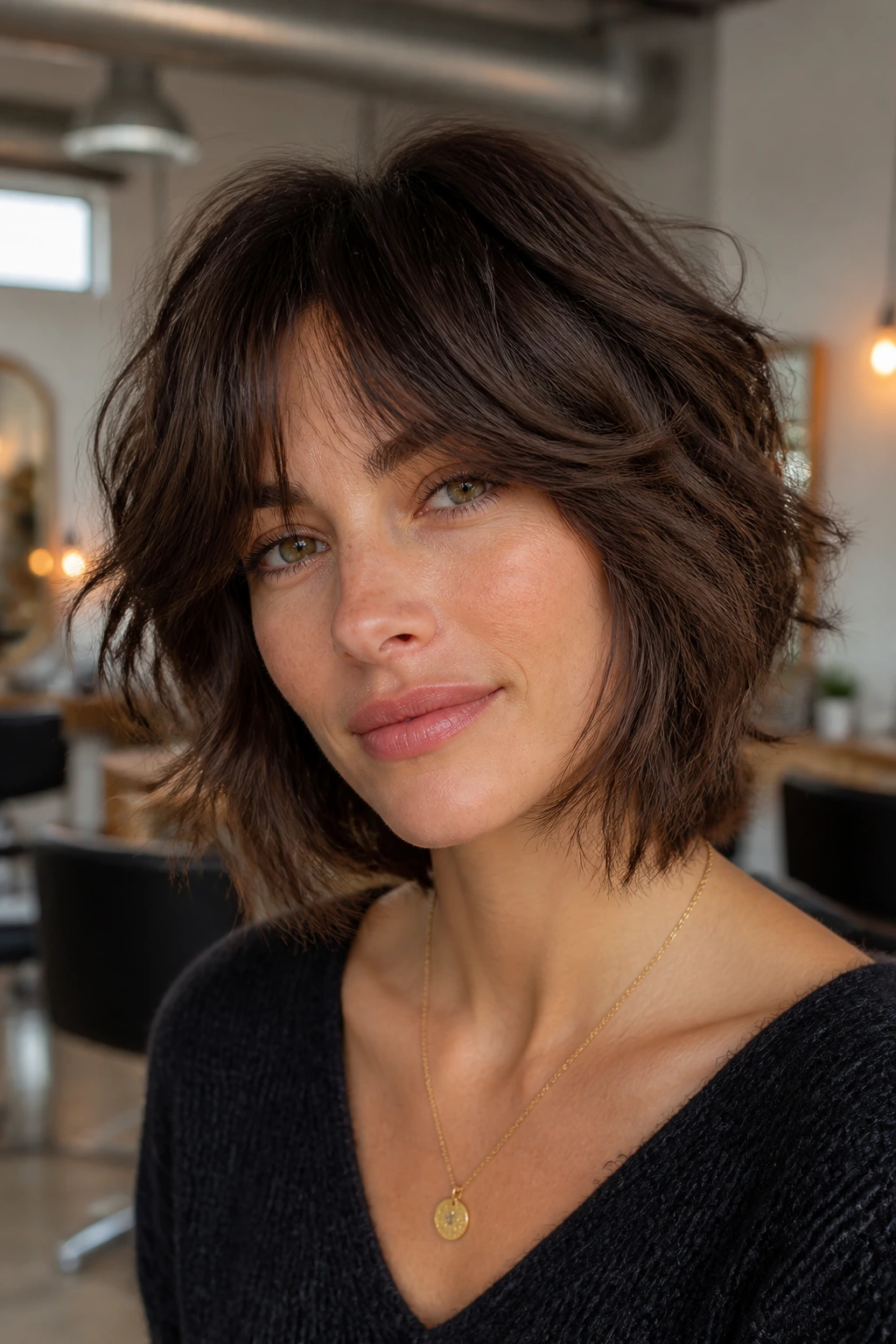
The “shag” look has been popular for a while, and when you combine it with the stacked bob, you get a beautiful, soft, and trendy result. This style incorporates the stacked, short nape of a classic bob but adds lots of layers, wispy bits, and sometimes even curtain bangs. It is incredibly effective at thinning out heavy hair because it creates multiple “levels” of length, breaking up the density without sacrificing your hair’s overall volume.
Making It Look Effortless
- This cut relies on your hair’s natural texture. If you have any wave, work with it rather than against it.
- A sea salt spray or a light styling cream will help you achieve that “undone” look that makes this style so popular.
- Because the layers are wispy, the grow-out process is much more forgiving than it would be with a blunt, sharp-edged bob.
12. The Wispy, Airy Stacked Bob
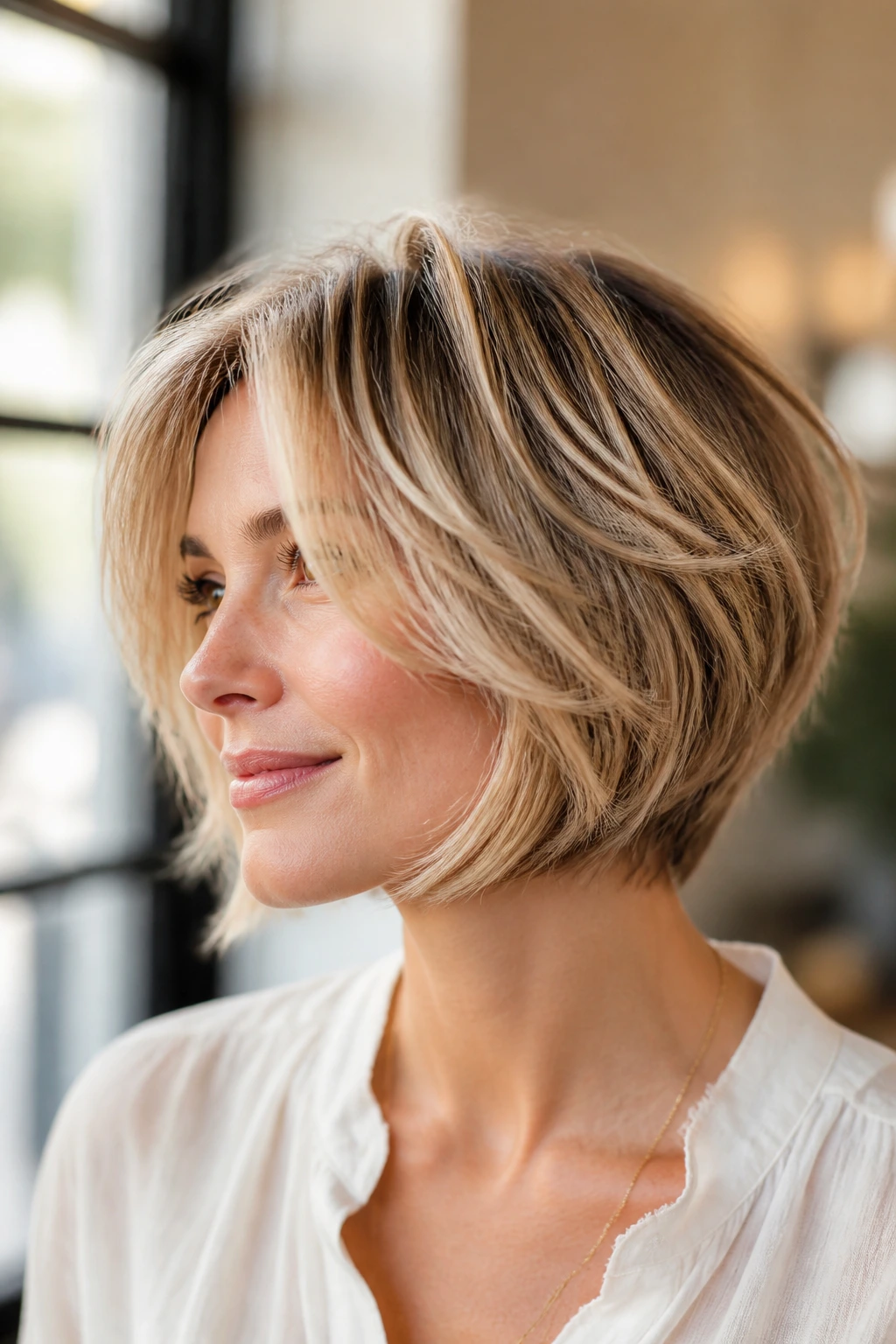
If you love the idea of a stacked bob but find the traditional look too heavy or “helmet-like,” the wispy stack is the answer. This style focuses on feathering the edges and keeping the layers very thin and light. It moves away from the solid block of hair and toward a more ethereal, light-as-air feel. It’s perfect for those who want the shape of a bob but want to feel like their hair is moving freely when they walk.
Creating the Airiness
- This look is often achieved using a razor or thinning shears to remove weight right at the tips of the hair.
- It works best on hair that has been properly thinned, so don’t be afraid to ask your stylist for a significant thinning session.
- You will likely want to use a light-hold hairspray to ensure the wispy ends don’t become flyaways, but avoid anything that leaves a “crunchy” residue.
13. The Two-Tone Stack
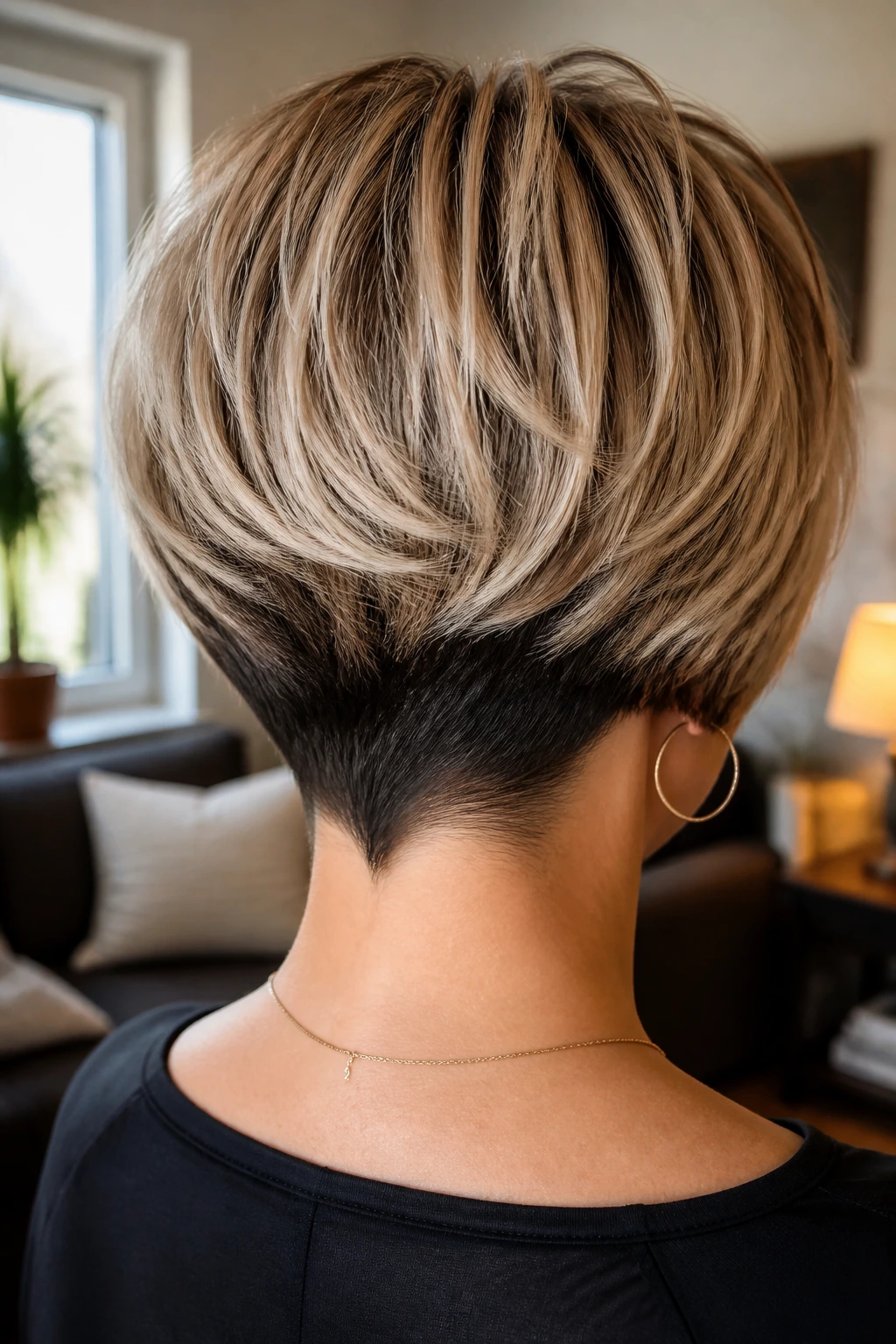
Color can be just as important as the cut when you are dealing with thick hair. A two-tone stack—perhaps with a darker color at the nape and a lighter or brighter color on top—can add incredible depth to your bob. By placing a darker shade in the stacked area, you create a visual illusion of even more density reduction, which is a brilliant way to make a thick head of hair feel lighter than it actually is.
Considering Color
- Consult with a professional colorist who understands how to blend colors in short hair.
- Lowlights near the nape can help the stack appear tighter and more defined.
- Be prepared for the maintenance that comes with colored hair; regular touch-ups are necessary to keep the two-tone effect from looking grown-out and messy.
14. The Voluminous Crown Stack
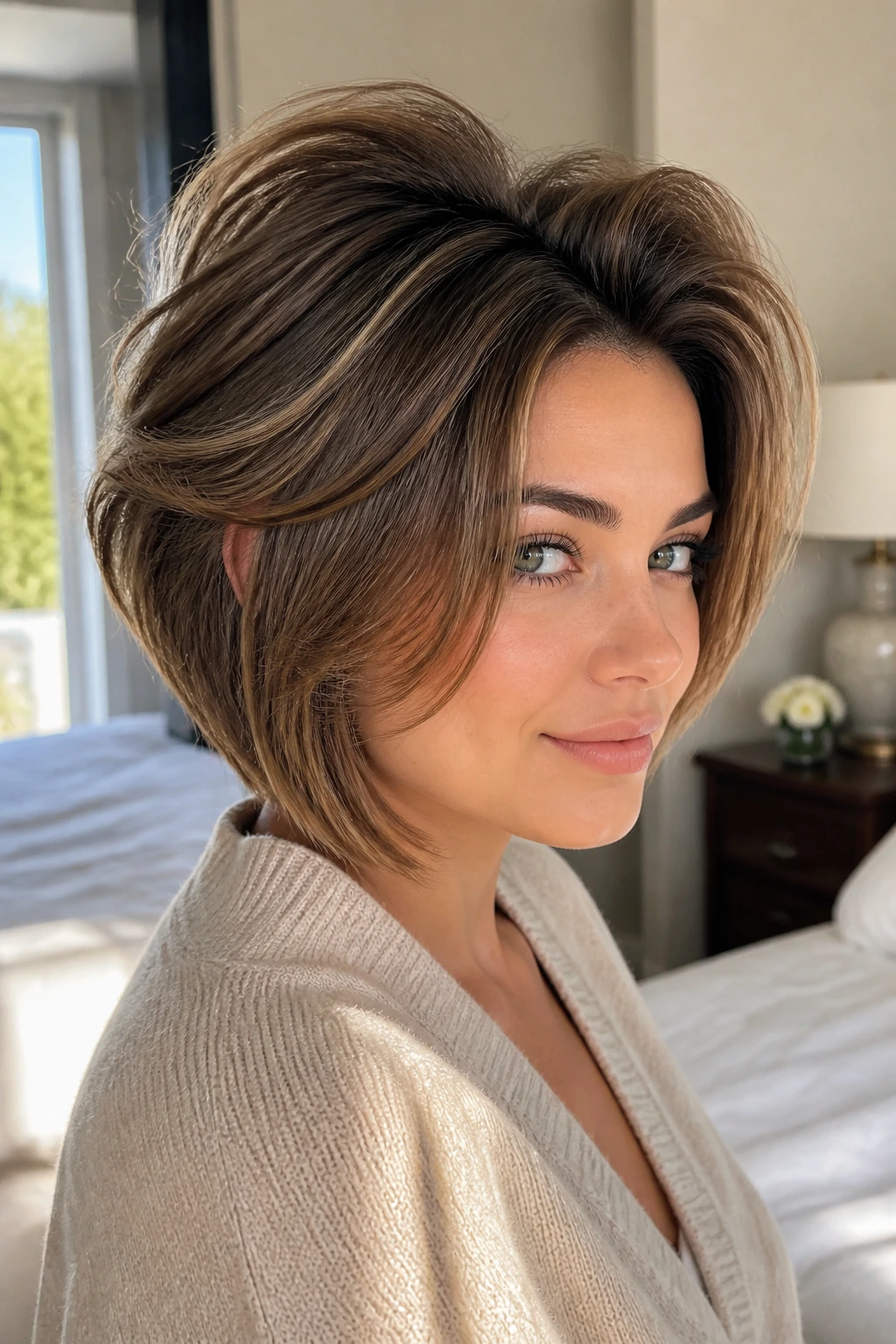
Some people love their thick hair and want to emphasize it rather than trying to hide it. The voluminous crown stack keeps plenty of length and weight in the upper layers, pushing the volume to the top of the head. It’s a very retro-inspired, sophisticated look that feels like a polished, intentional version of a “big hair” aesthetic.
Achieving the Volume
- Use a root-lifting spray while your hair is damp to build volume from the base.
- A backcombing brush is your best friend here; give the crown a gentle tease before smoothing the top layer over.
- Because you have thick hair, you shouldn’t have any trouble getting it to hold this volume throughout the day, but a final spritz of hairspray is still a good idea.
15. The Sleek, Tapered Stack
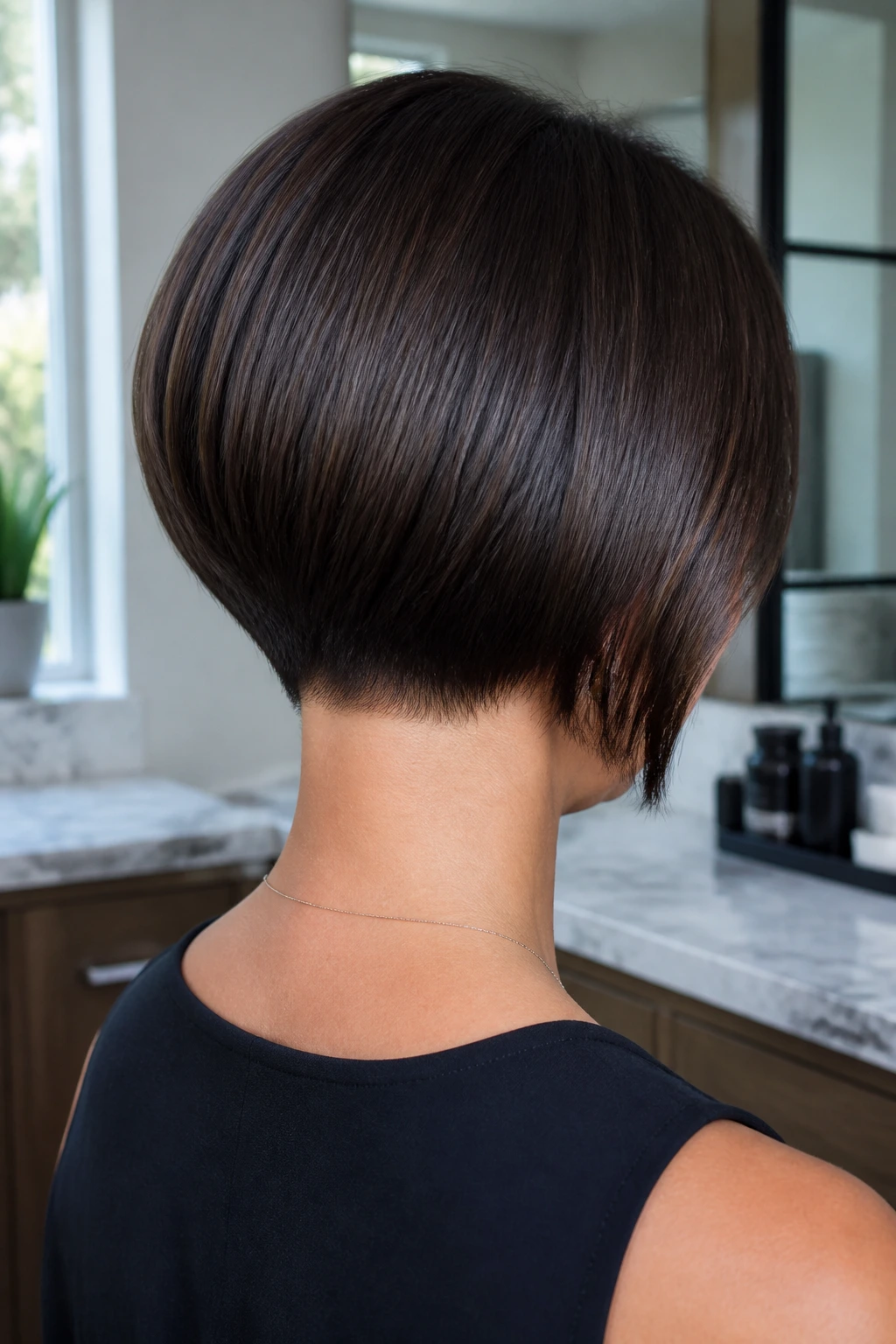
If your hair is very thick and prone to frizz, the sleek, tapered stack is a dream come true. This style is all about control. The back is tapered tightly into the neckline, and the sides are cut to follow a smooth, downward slope. It is designed to be worn perfectly straight, providing a polished and professional look that is incredibly easy to maintain once you establish a rhythm.
The Daily Routine
- You will need a high-quality ceramic flat iron to smooth the hair down.
- Always use a heat protectant to prevent damage, as the iron will be passing over the same sections of hair daily.
- A small amount of anti-frizz serum applied to your palms and smoothed over the finished style will give you that glass-like, mirror finish that defines this specific look.
16. The Rounded, Parisian-Inspired Stack

There is something undeniably chic about a short, rounded bob. This Parisian style focuses on a very soft line, minimal layers, and a focus on the curve of the hair. It doesn’t rely on sharp angles or extreme gradients; instead, it looks like a soft, velvet-like ball of hair that frames the face perfectly.
Why It Suits Thick Hair
- The weight of thick hair actually helps this cut maintain its rounded shape, which is often difficult for finer-haired individuals to achieve.
- It is a timeless style that never goes out of fashion and looks great with or without bangs.
- It’s very easy to dress up—just a bit of shine spray and a classic outfit, and you are ready for any event.
17. The Side-Swept Stack
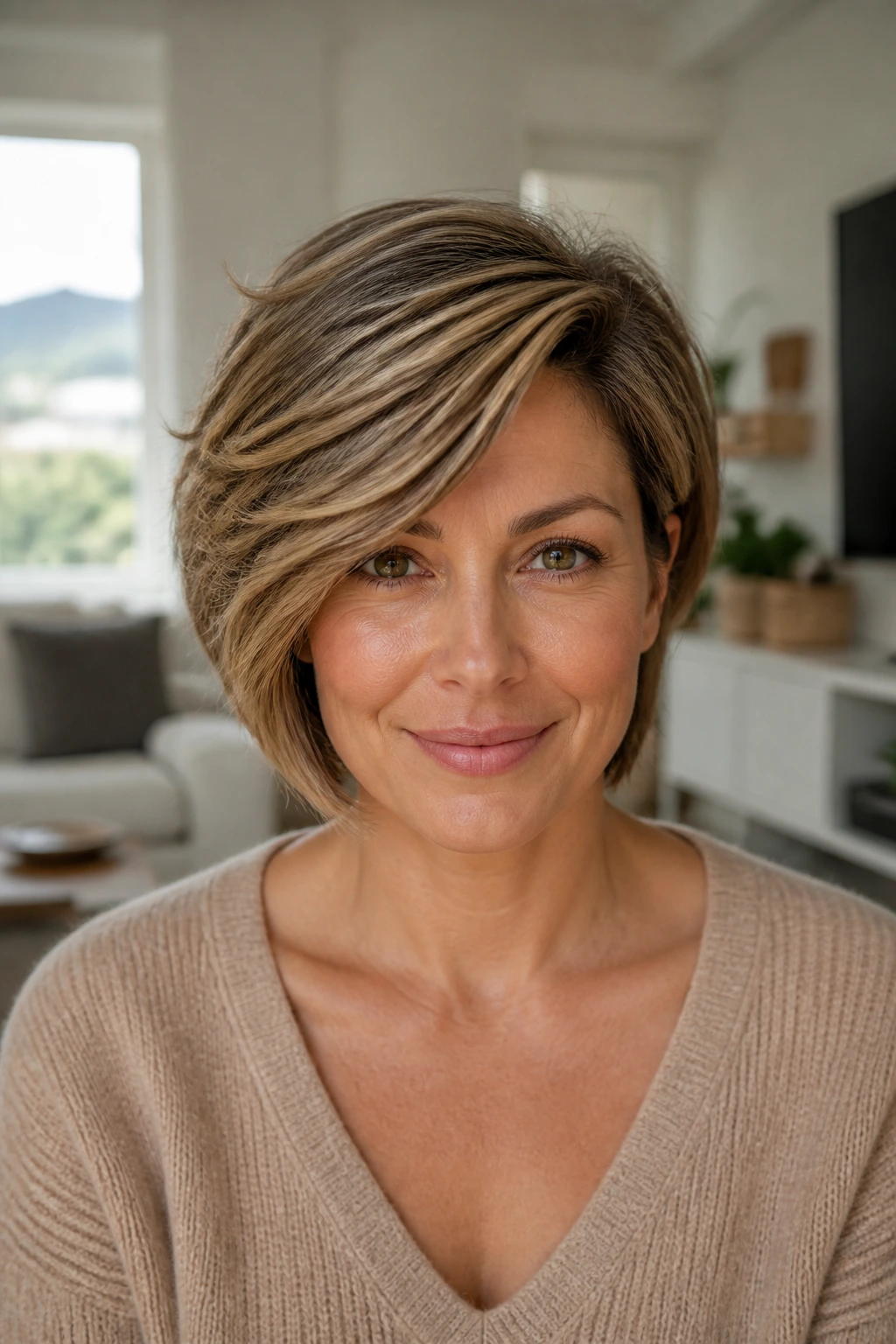
Sometimes it’s not about the back of the cut, but how the front falls. A deep side part with a heavy sweep of hair across the forehead can change the entire dynamic of a stacked bob. The heavy, thick hair sweeps to one side, adding drama and a bit of mystery, while the back remains short and tight to keep the weight off your neck.
Styling Tips for the Sweep
- Blow-dry your hair in the direction you want it to sweep from the moment it is wet; this creates a permanent “memory” for the hair to fall that way.
- If your hair is very thick, you might find that the sweep tries to fall into your eyes; a tiny bit of lightweight styling paste can keep it in place without making it look greasy.
- This cut is incredibly flattering for those with high foreheads, as the sweep covers and softens the area perfectly.
18. The Graduated Pixie-Bob
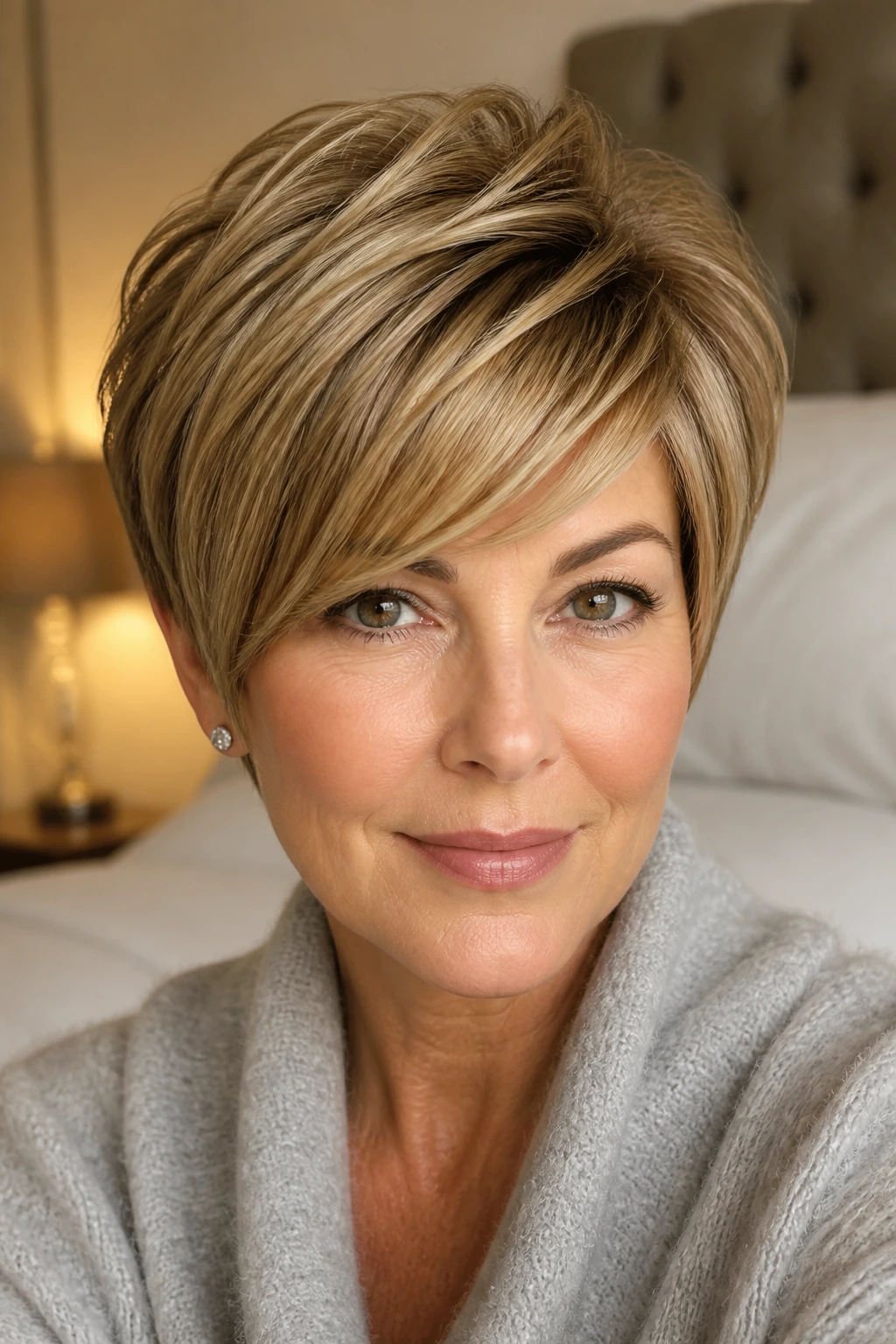
This is for those who are ready to go quite short. The pixie-bob is a hybrid style that keeps a little bit of length at the ears and a sweeping bang but cuts the rest of the head like a pixie. The stack is very subtle here, but it creates enough of a slope to distinguish it from a standard short pixie cut. It is a low-maintenance, high-impact choice for thick hair.
The Benefit of Going Short
- You will spend mere minutes on your morning routine.
- The weight of thick hair is completely removed from the equation.
- This style grows out gracefully, allowing you to transition between a pixie and a bob if you decide you want more length later.
19. The Undercut Pattern Stack
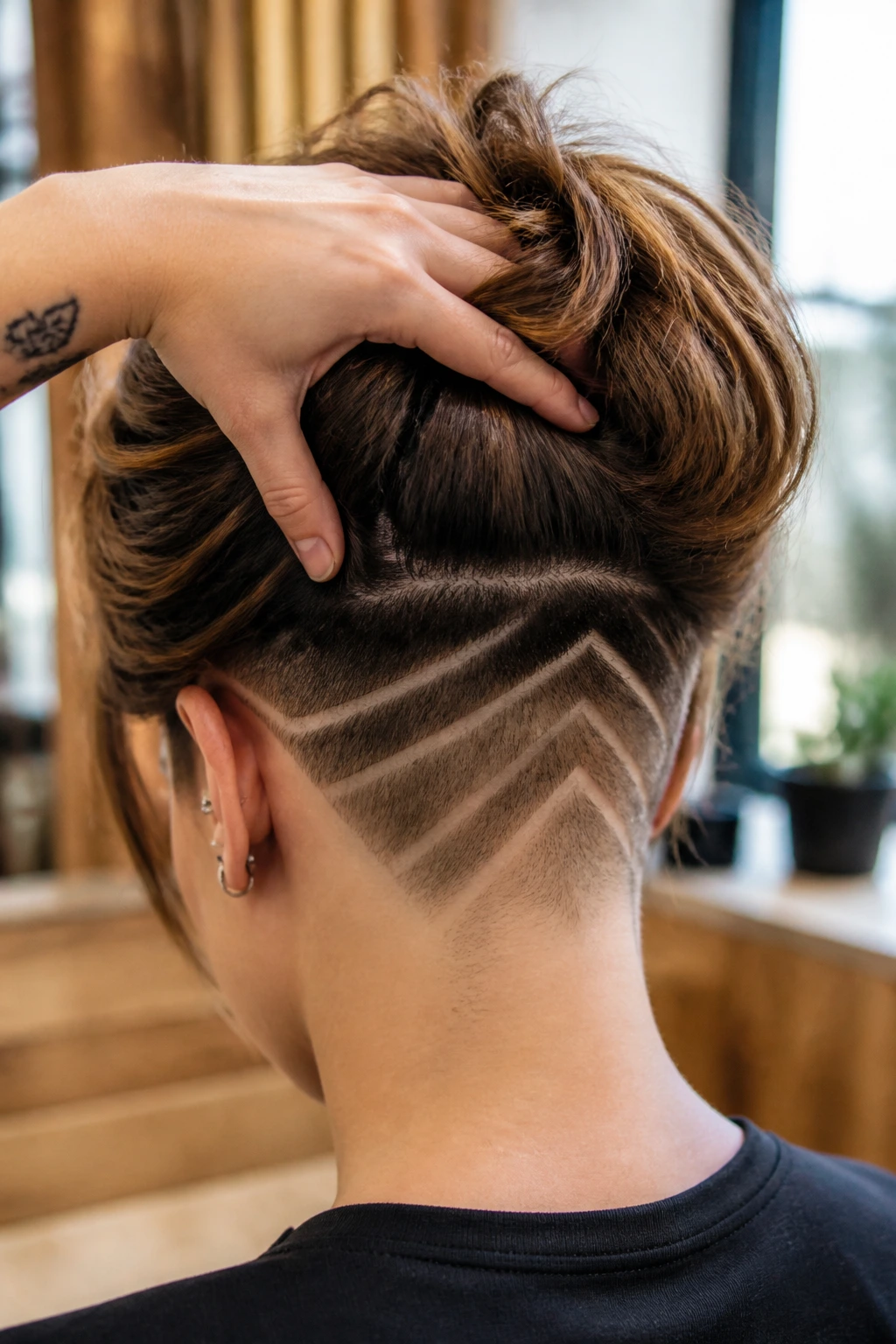
If you are looking for self-expression, the nape undercut doesn’t just have to be a shaved patch. Many stylists can create patterns—like geometric lines or star shapes—into the shaved nape of a stacked bob. It’s a hidden surprise that you can show off when you pull your hair up or tuck it behind your ears.
Maintenance Considerations
- This style requires a visit to the salon every three to four weeks to keep the lines crisp and the pattern clear.
- It is a highly personalized style, so bring reference photos to your stylist so they understand exactly what kind of pattern you are looking for.
- Remember that this style shows off your personality as much as your hair—embrace the bold look!
20. The Blunt Bangs and Stacked Back
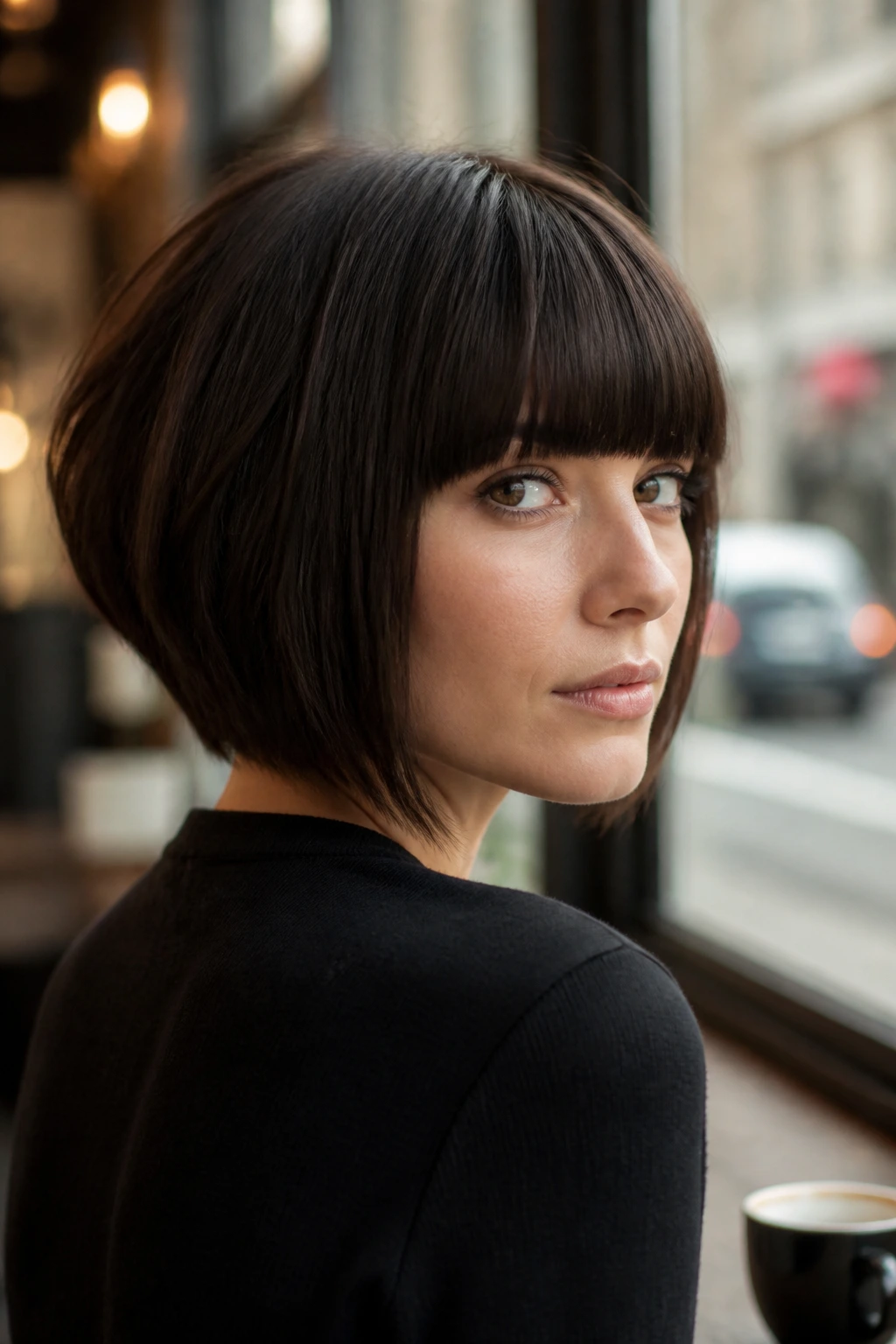
Bangs can be intimidating when you have thick hair, but they are a fantastic way to balance out a stacked bob. A set of blunt, heavy bangs creates a visual anchor at the front of your face that complements the sharp, architectural look of the stacked back. It is a very intentional, high-fashion look that works wonders for framing the eyes.
Bang Maintenance
- Thick hair bangs tend to grow out quickly and can get heavy, so plan on a “bang trim” every two weeks.
- You’ll need a round brush and a bit of focus to make sure your bangs are styled correctly each morning, as they are the focal point of this look.
- Use a little bit of dry shampoo even on clean hair if your bangs have a tendency to get oily throughout the day from touching your forehead.
Final Thoughts
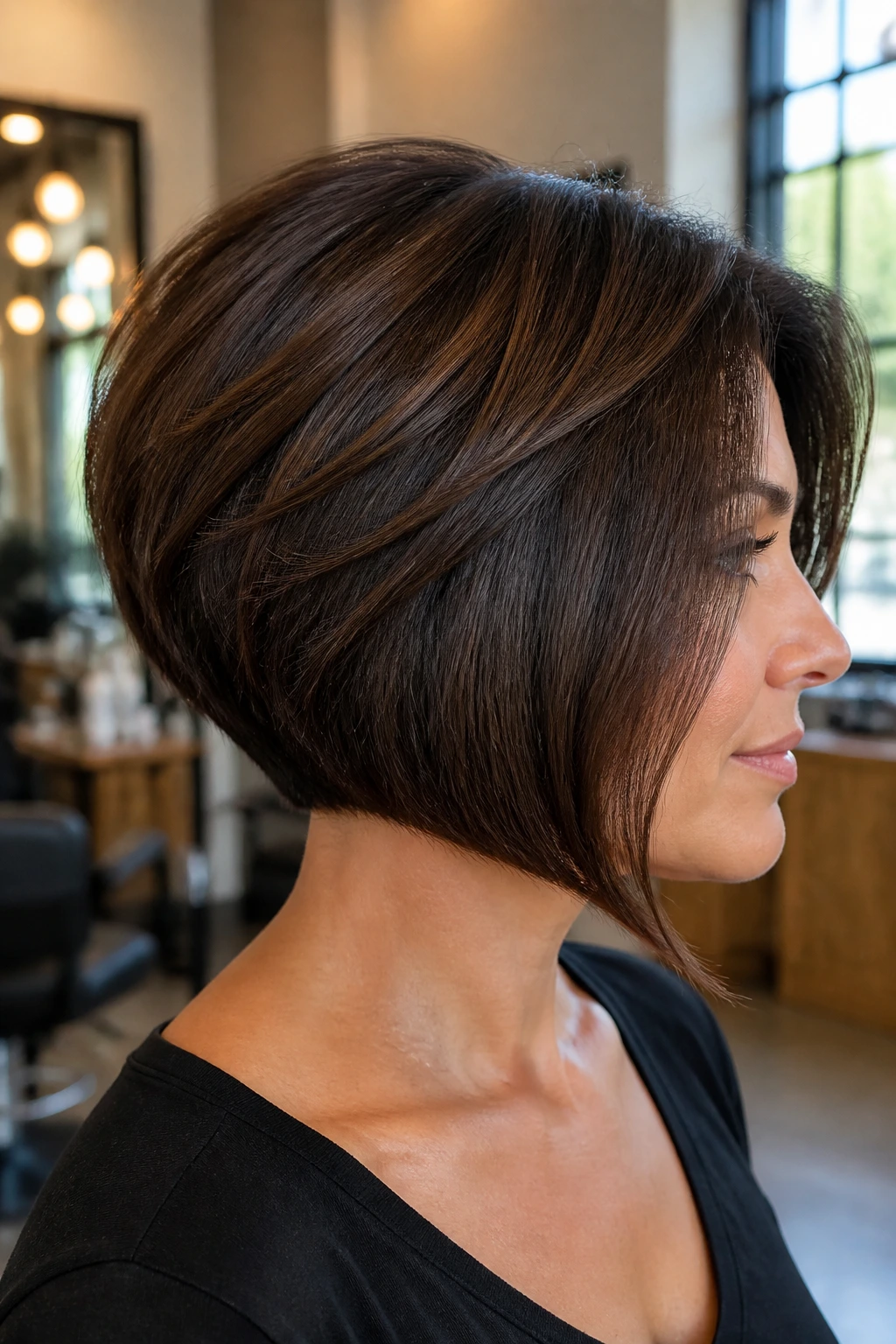
When you have thick hair, a stacked bob isn’t just a haircut; it’s a tool for management. By embracing the architecture of the stack, you stop fighting your hair’s density and start using it to create a shape that feels intentional and elegant. The key is finding the right balance—how steep do you want the angle, how much weight do you want to remove, and how much length are you comfortable parting with?
Once you make the leap, you will likely find that your daily styling time drops significantly. The weight is gone, the silhouette is stable, and you no longer have to worry about the “triangle effect.” Choose the version that speaks to your personal style, whether it’s the sharp, geometric lines of an angled bob or the soft, wispy layers of a hybrid shag. Whatever you choose, your hair will thank you for the newfound freedom.