

Finding the right shape for thick, curly hair is less about fighting your texture and more about engineering it. If you have ever walked out of a salon with a triangle head—the dreaded result of weight piling up at the ends while the roots stay flat—you already know that thick curls require a specific approach to layering and graduation. The goal isn’t to “thin out” your hair, which often just leads to a chaotic, frizzy halo, but to distribute the volume strategically so your hair moves, breathes, and frames your face without requiring an hour of styling.
When working with dense curls, the hair’s natural memory is your biggest asset. It wants to curl, but it needs space to coil fully. If the layers are too long, the weight of the hair pulls the curl pattern straight; if the layers are too short in the wrong places, you end up with a shelf of hair that sticks straight out. The best cuts for thick, curly hair are those that embrace the volume while carving out intentional movement. Whether you want a dramatic transformation or a subtle refresh, these twenty-one styles represent the gold standard for managing density and celebrating your curl pattern.
1. The Sculpted Rounded Afro
This cut focuses on maintaining a uniform length all around the head, allowing the natural density of the hair to create a perfect, balanced silhouette. By cutting the hair to follow the natural curvature of the skull, you avoid the heavy, bottom-heavy shape that plagues thick hair. It relies on internal layering to remove bulk near the scalp, ensuring that the curls don’t clump together in a way that feels heavy or stiff.
Why It Works for Thick Texture
- It utilizes the hair’s natural volume as the primary design element.
- The consistent length prevents the “triangle” shape from forming.
- Minimal styling is required beyond a little leave-in conditioner and a light oil. Pro tip: Ask your stylist to use a dry-cutting technique so they can see exactly how each coil springs up once the weight is released.
2. The Tapered Nape Bob
If you want the elegance of a bob without the bulk of hair resting against your neck, this is the solution. The back is cut shorter, almost close to the scalp, while the crown is left with enough length to showcase your curl pattern. As you move toward the front, the hair gradually increases in length, creating a flattering angle that frames the jawline perfectly.
Key Characteristics
- The tight nape prevents tangles and matting at the back of the neck.
- Longer pieces in front provide versatility for styling or tucking behind the ears.
- It is an excellent choice for those with tighter, “S” or “Z” curl patterns.
3. The Textured Shag with Curtain Bangs
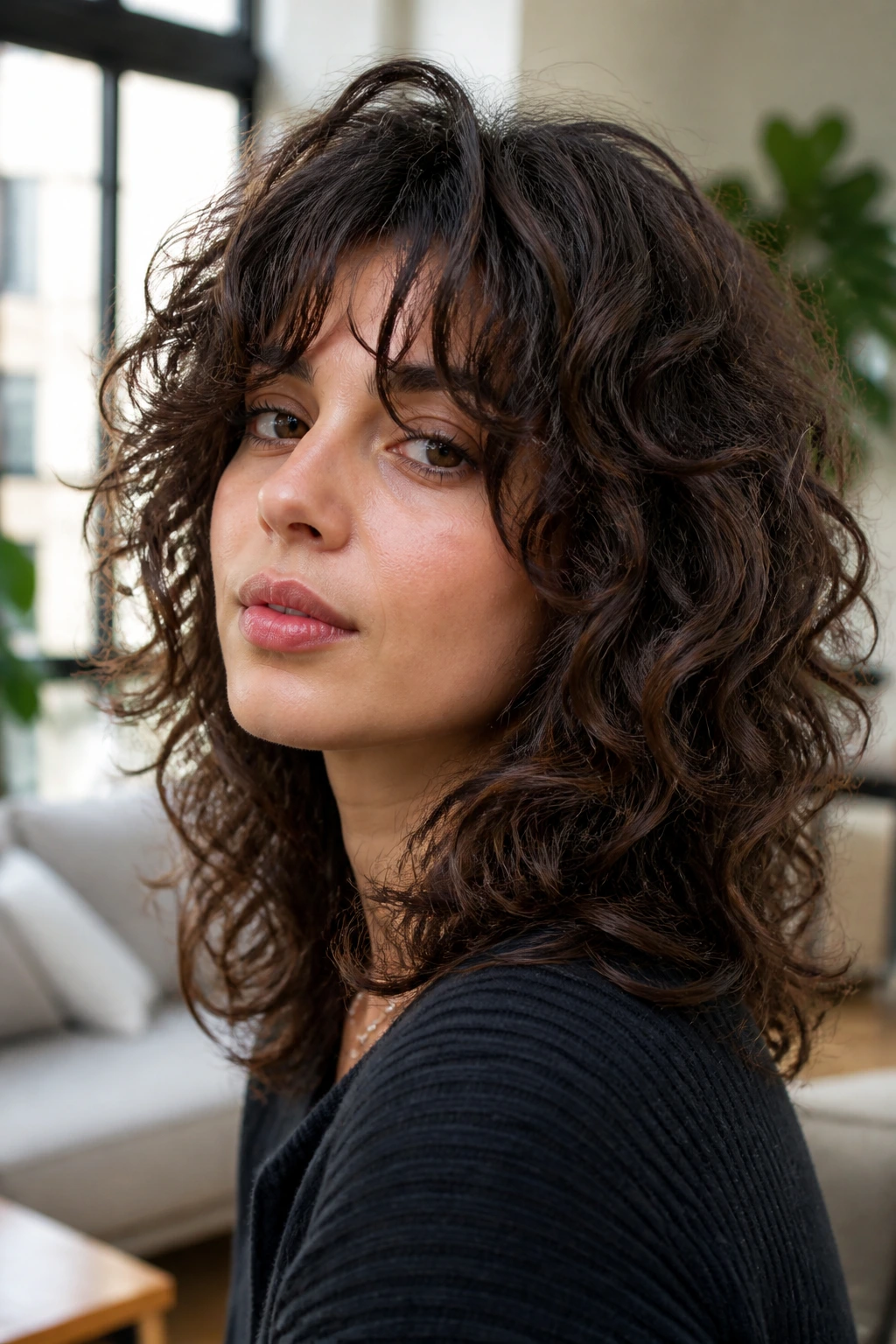
Shags are incredibly popular for curly hair because they are literally built on the concept of fragmentation. By incorporating shorter, choppy layers throughout the crown and mid-lengths, you break up the density of thick hair. Curtain bangs add a softness that keeps the face from feeling boxed in by all that hair.
How to Style for Maximum Impact
- Use a diffuser attachment on a low-heat setting to encourage the layers to stack.
- Apply a curl cream to damp hair, scrunching upward to lock in the shape of the bangs.
- Avoid brushing once dry, as this will create unwanted volume rather than defined coils.
4. The Classic Rounded Pixie
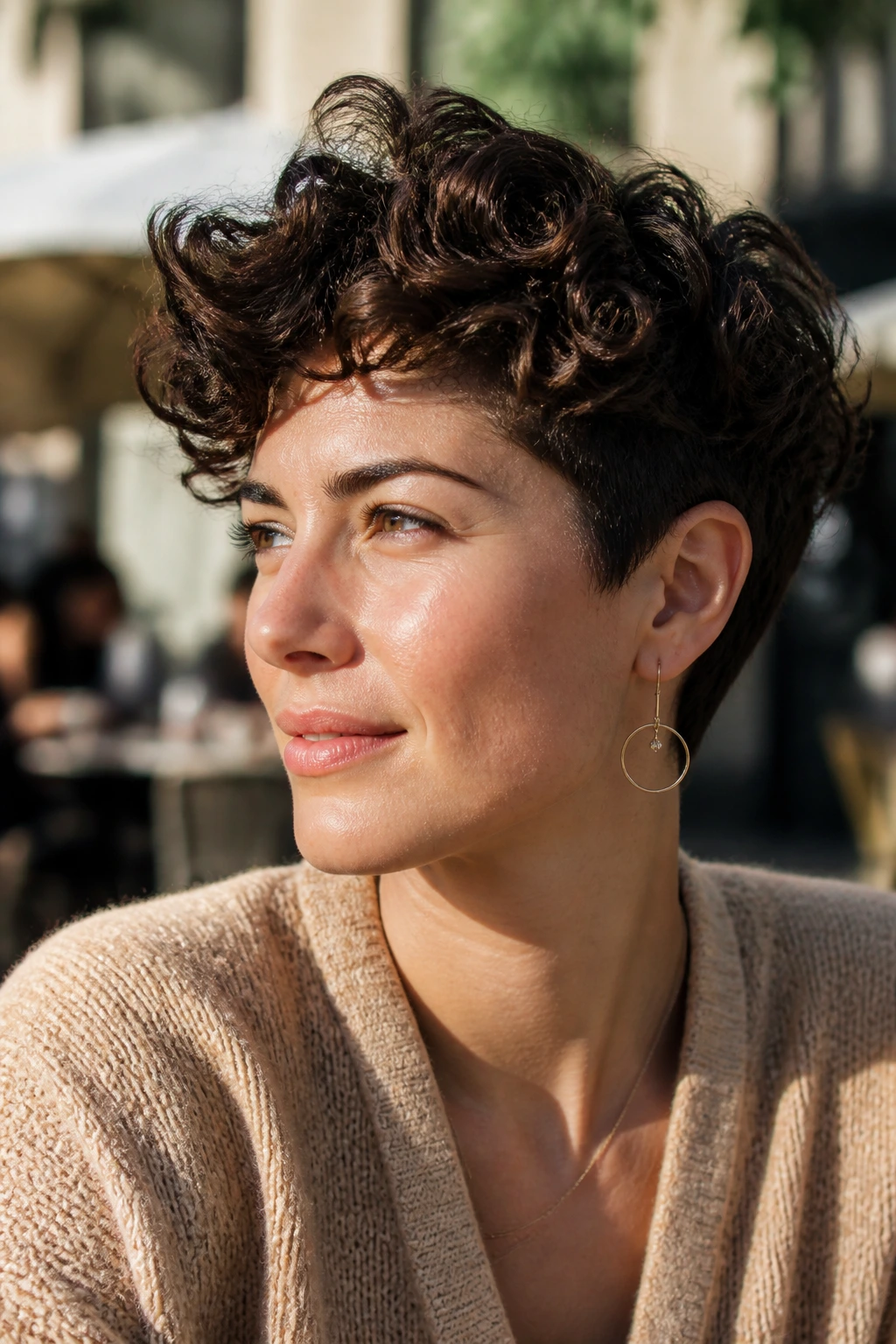
Many people with thick hair fear the pixie, thinking it will become an unmanageable mushroom of curls. The secret lies in removing the bulk from the sides and back—tapering them close to the scalp—while leaving the top long enough to maintain the bounce. This creates a bold, low-maintenance look that highlights the eyes and cheekbones.
Benefits of the Short Pixie
- Drastically reduces drying time, which is a major win for thick-haired individuals.
- Looks even better as it grows out, provided you get regular trims to maintain the taper.
- Works exceptionally well with high-moisture products that prevent the hair from becoming crunchy.
5. The Layered Lob with Face-Framing Pieces
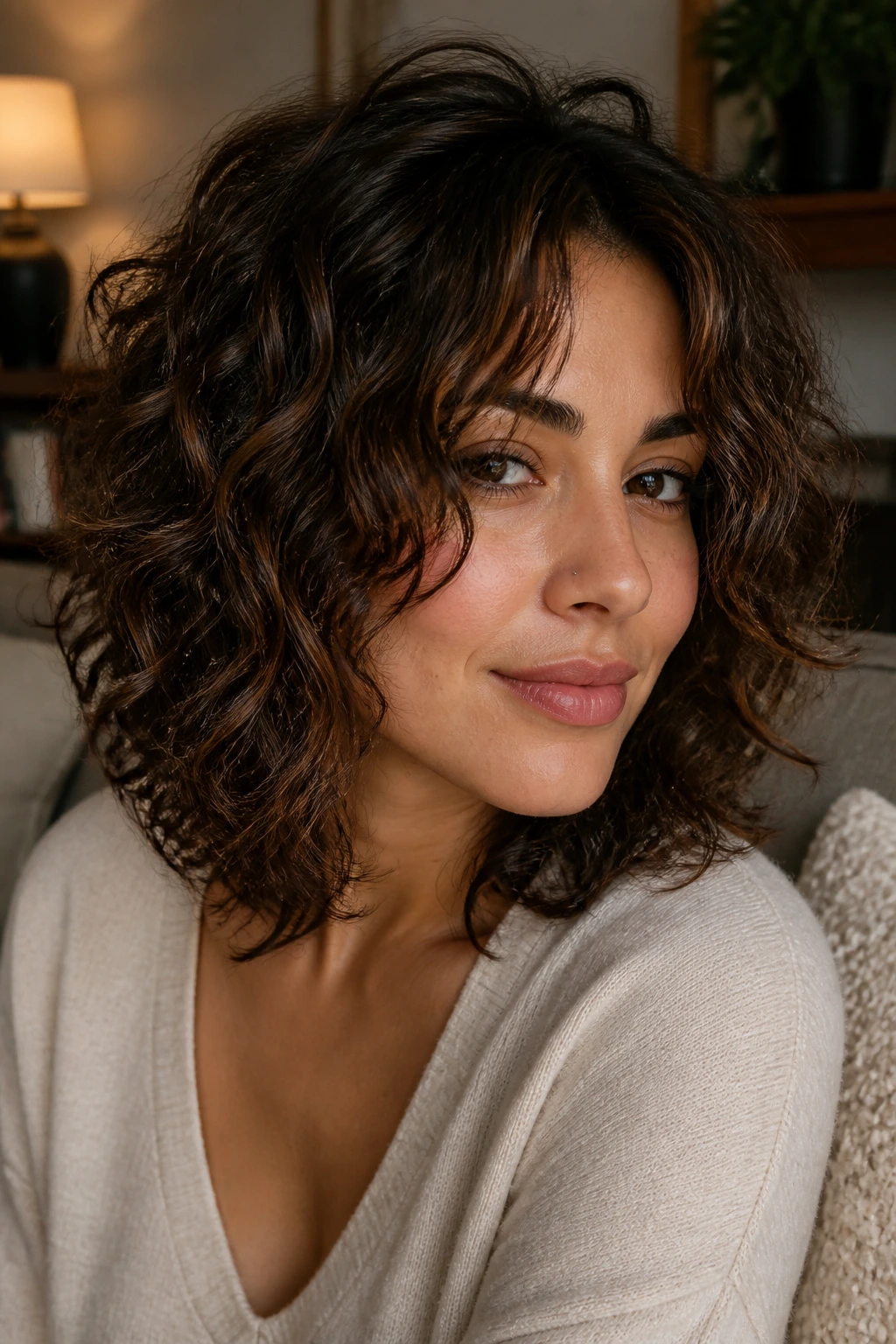
A long bob—or “lob”—is the gateway style for those who aren’t quite ready to go truly short. By incorporating long, internal layers, you prevent the hair from becoming a solid block of weight. Face-framing pieces, cut slightly shorter than the rest of the hair, prevent the style from looking like a uniform curtain, adding movement right where it matters.
Making It Your Own
- Ask for “invisible layers” to reduce weight without making the ends look thin.
- Keep the length just at or slightly below the collarbone for the most flattering look.
- Use a light gel to define the curls near the face, keeping them away from the eyes.
6. The Deva-Inspired Cut with Side Swept Bangs
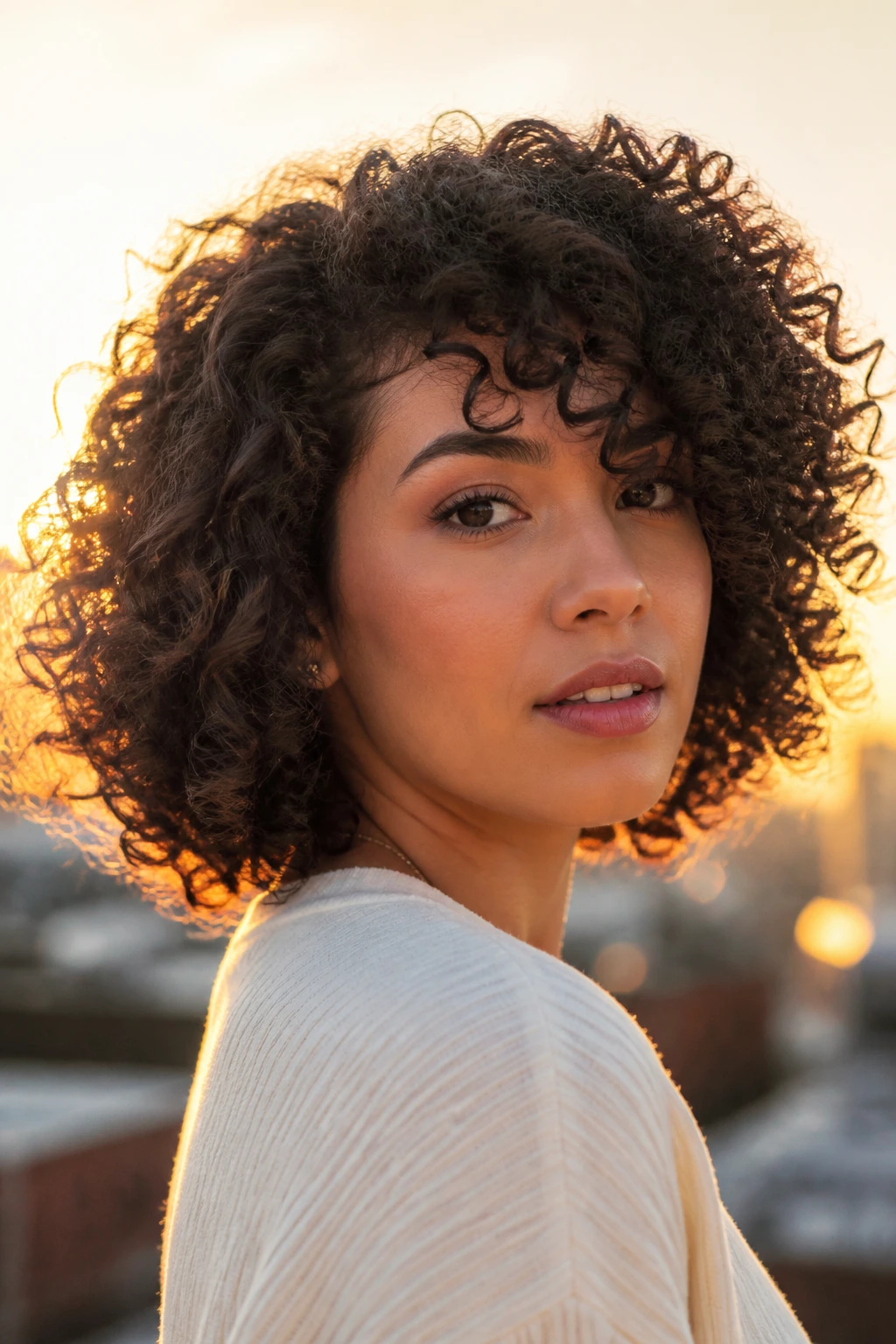
This style is all about celebrating the unique spring factor of every single curl. By cutting the hair while it is dry, the stylist can account for the specific shrinkage of your curls. A side-swept bang adds a playful, asymmetrical touch that balances a wider face shape or a stronger jawline.
Why This Style Succeeds
- It creates a soft, approachable aesthetic that doesn’t feel overly “done.”
- The side-swept bangs offer a way to manage hair that tends to grow forward and overwhelm the forehead.
- It’s a very low-stress look that encourages you to let your hair do what it wants.
7. The Asymmetrical Undercut Bob
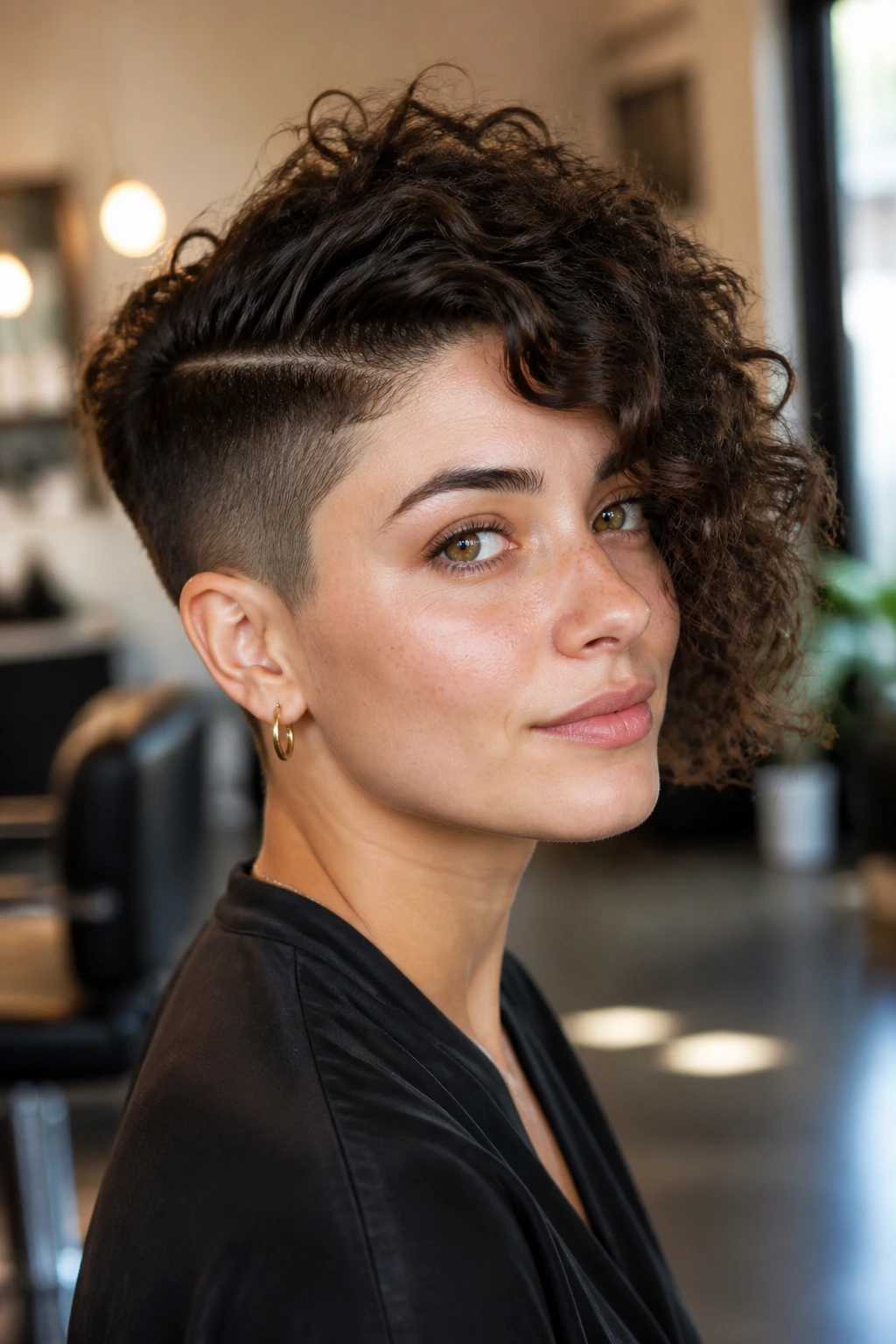
For those who want to be a bit more adventurous, an asymmetrical bob is a powerful statement. You keep one side significantly shorter or even shaved, while the other side features a longer, curly bob. It is the ultimate tool for managing extreme thickness, as you are literally removing a large portion of the hair mass.
Managing the Transition
- Ensure the fade or undercut is blended well with the longer curls to avoid a stark, disconnected look.
- Keep the longer side hydrated, as it will be the focal point of the style.
- This style requires more frequent maintenance to keep the short side clean and sharp.
8. The Curly Wedge
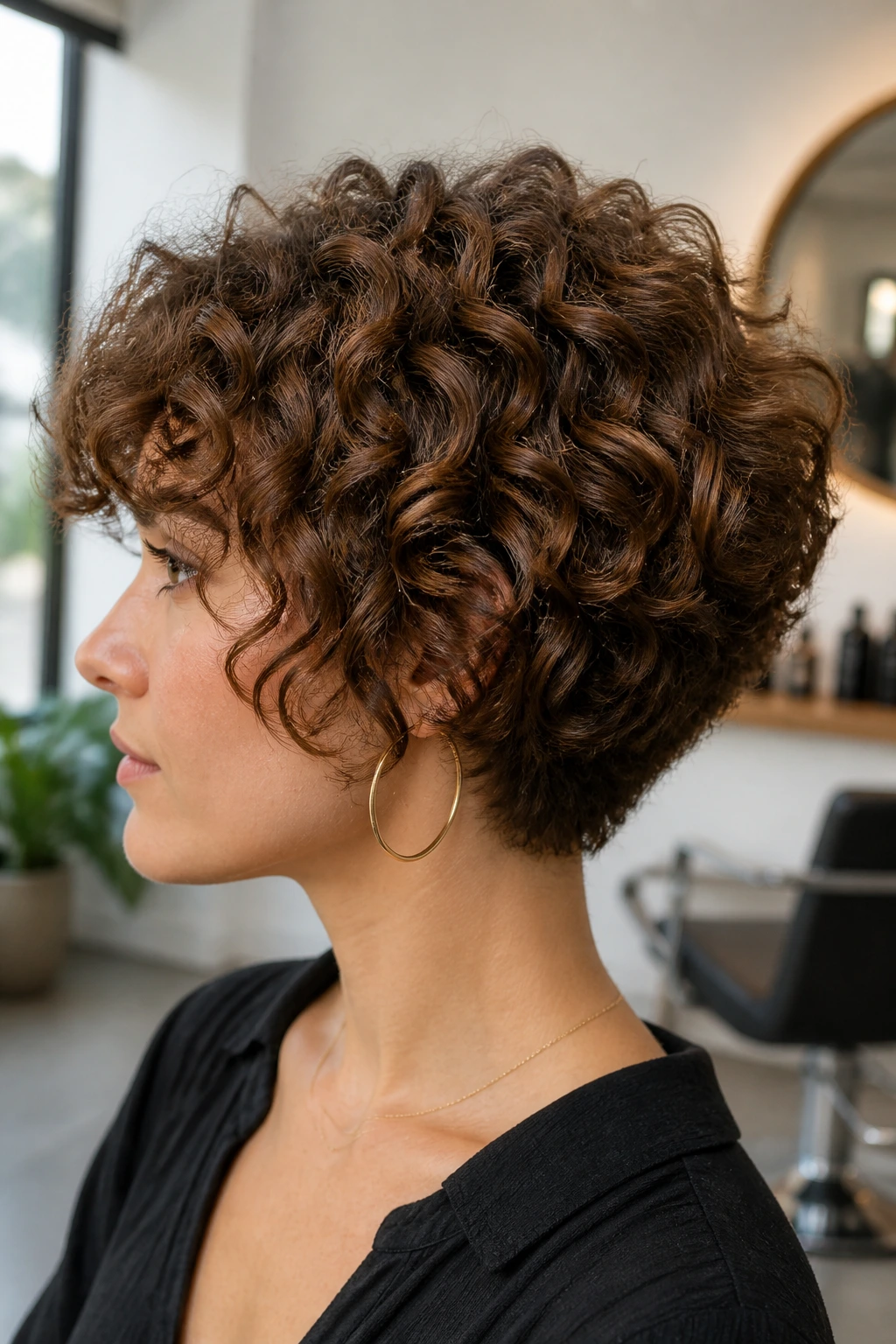
The wedge cut is a retro-inspired look that has made a major comeback. It features a shorter back that blends into longer, more voluminous layers at the top. This creates a rounded shape that looks sophisticated and clean, perfectly managing thick curls by guiding them upward rather than letting them hang down heavily.
Styling the Crown
- Focus on lifting the hair at the roots when styling to maintain the rounded shape.
- A volumizing mousse is your best friend here, as it provides hold without the weight of heavy creams.
- The look is meant to be slightly “big”—embrace the volume!
9. The Graduated Curly Bob
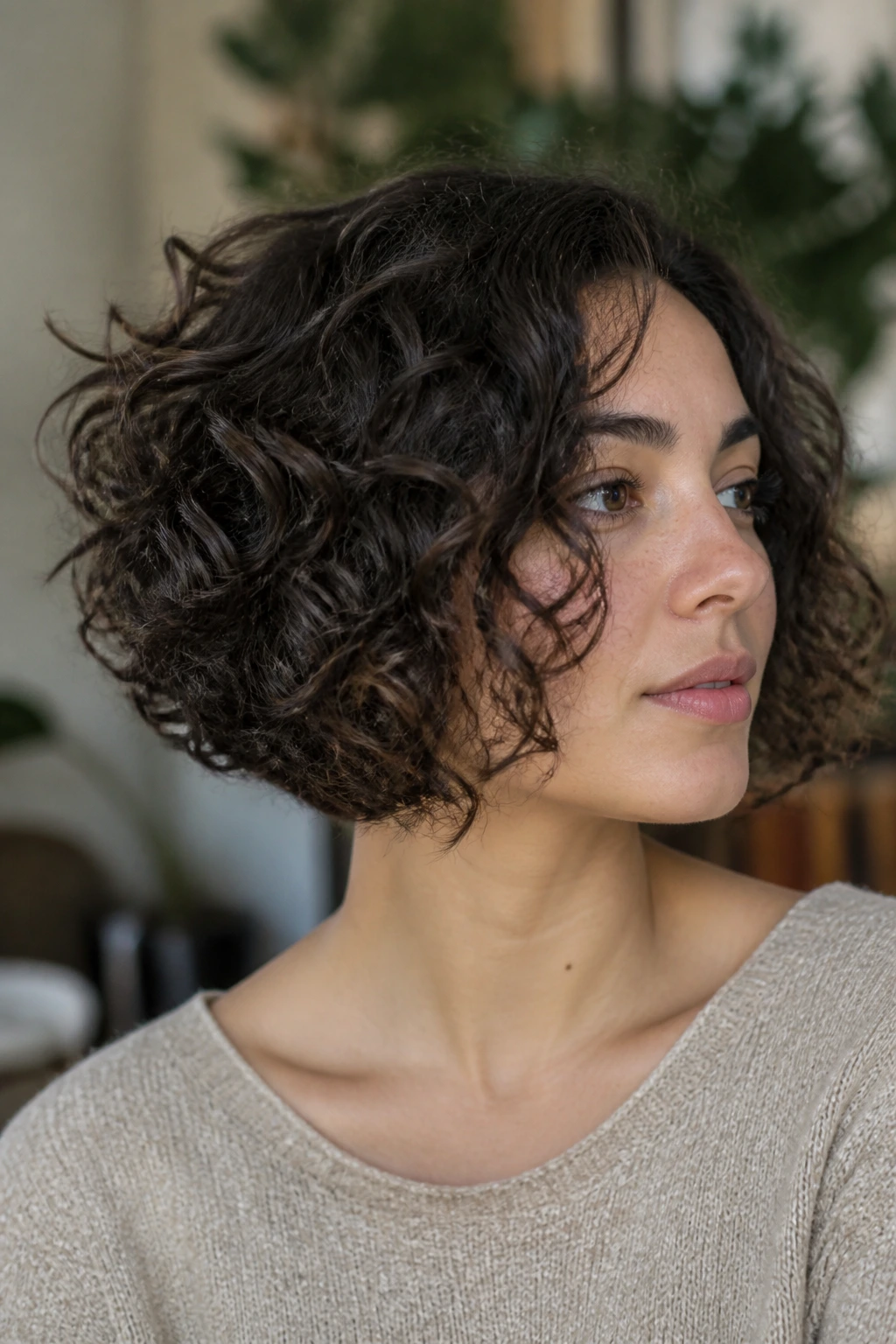
A graduated bob gets shorter in the back and longer in the front, creating a clean, architectural line. For curly hair, this cut helps to manage the “poof” factor at the nape of the neck while keeping the face-framing length intact. It’s a great way to transition from long hair to short without feeling exposed.
Maintaining the Shape
- This cut looks best when the transition from short back to long front is smooth and intentional.
- Regular trims are essential; as your curls grow, the graduated angle can lose its crispness.
- Use a medium-hold styling product to keep the front pieces from frizzing throughout the day.
10. The Curly Mohawk Pixie
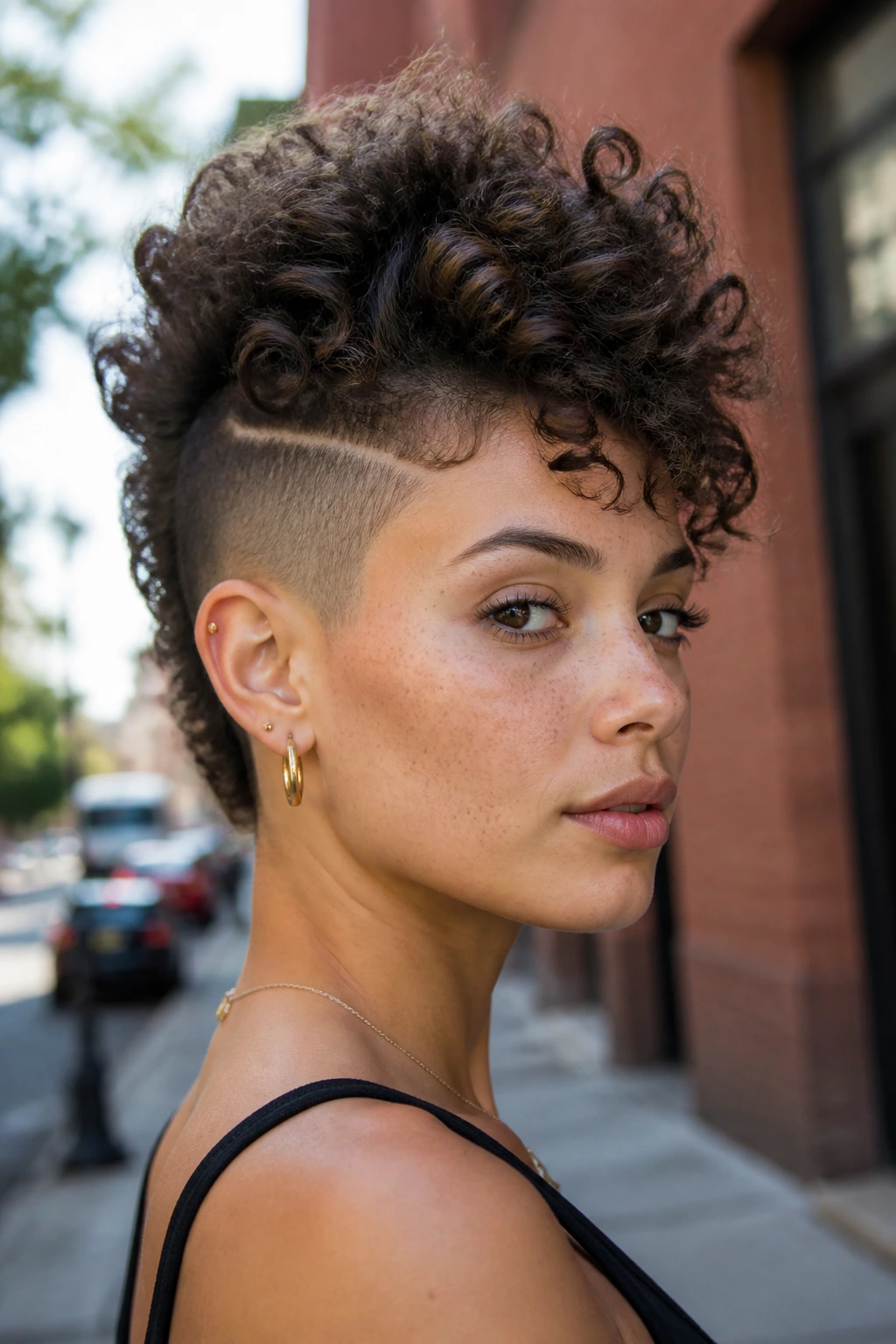
This is a bold, modern take on the pixie that leans into the natural height of thick curls. By keeping the sides very short or faded and leaving the top long, you create a natural “mohawk” effect that plays up your hair’s volume in an organized way. It’s edgy, practical, and undeniably eye-catching.
Who Should Try It?
- Anyone who wants to emphasize their facial features and isn’t afraid of a bit of attention.
- Those who find traditional bobs too heavy for their hair texture.
- People who enjoy using pomades or waxes to define specific curls on the top of the head.
11. The Soft, Blunt Cut Bob
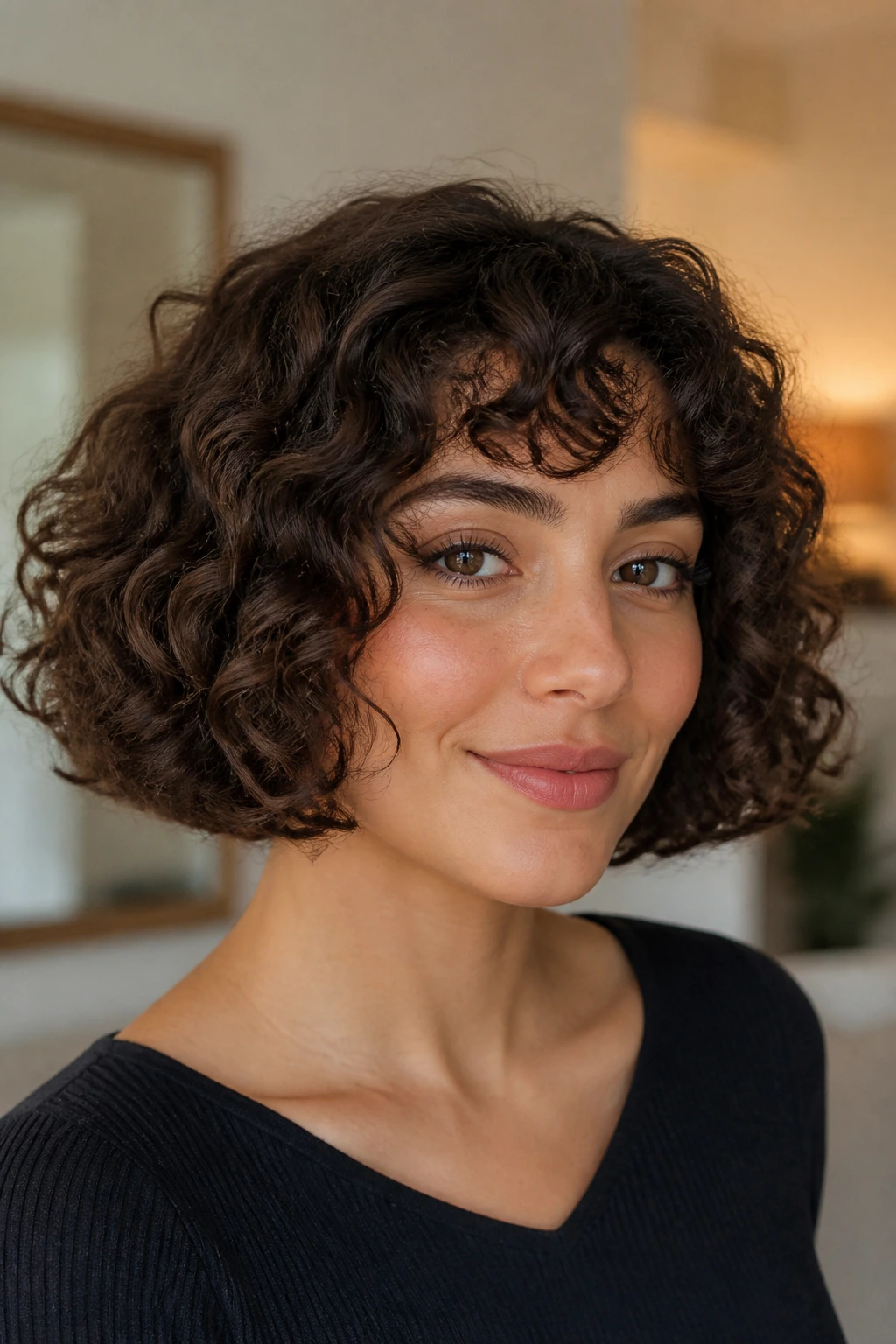
Sometimes the most effective way to manage thick curls is to embrace the weight rather than fight it. A blunt bob provides a very clear, sharp perimeter. While this might sound counter-intuitive for thick hair, the lack of layering means your curls won’t “puff” out in layers, giving the hair a more compact, singular shape.
When to Choose Blunt
- If your hair is very coarse and tends to become frizzy with too much layering.
- If you prefer a more “polished” or “minimalist” look.
- It pairs beautifully with a simple center part, which is a classic choice for curly hair.
12. The Wispy-Layered Pixie
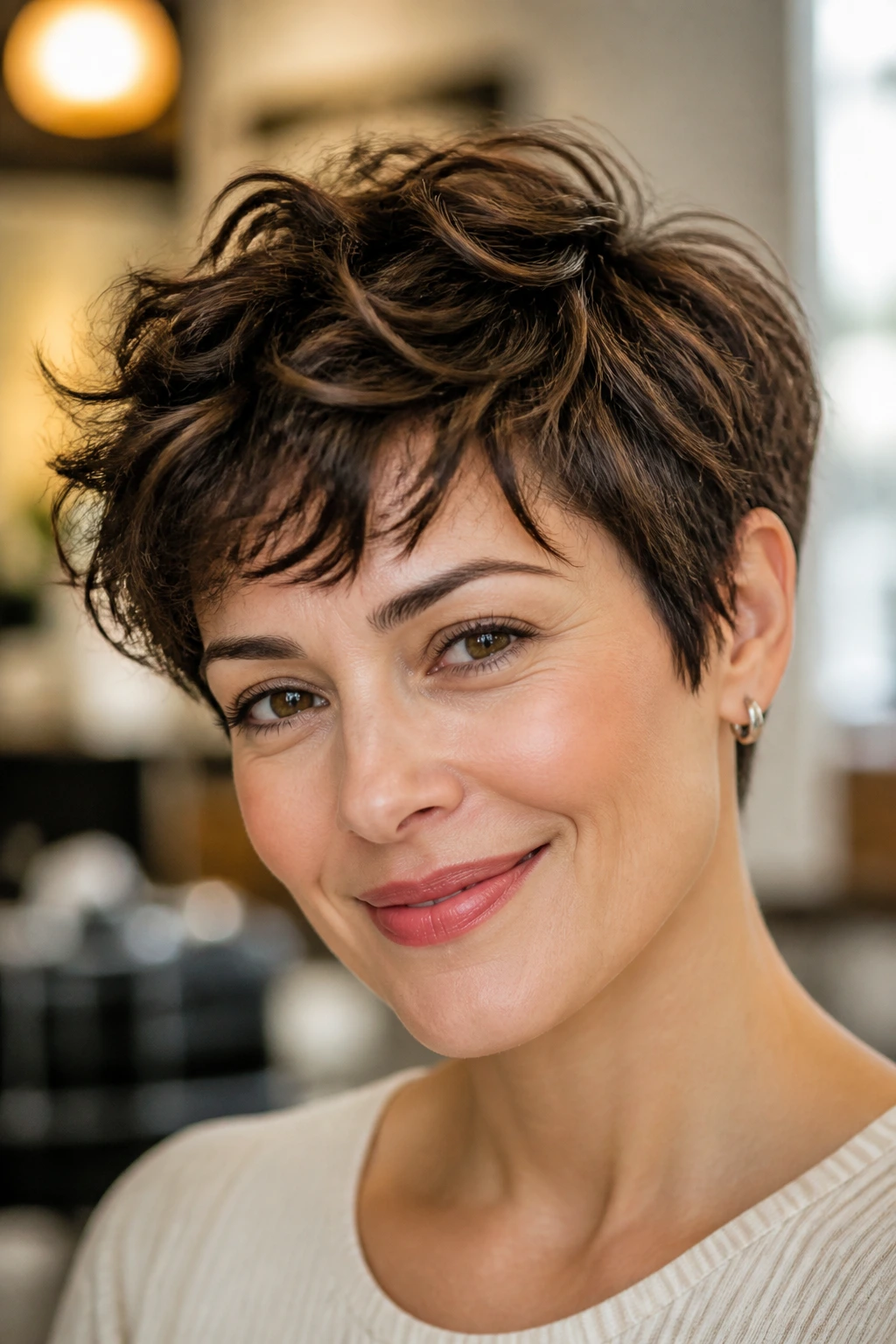
If you find that a blunt pixie feels too heavy, wispy layers are the antidote. These are shorter, more delicate pieces cut throughout the crown that allow the curls to sit softly against each other rather than stacking up. It’s a very feminine, airy look that feels light even when your hair is naturally very dense.
Why This Style Rocks
- It prevents the “triangle” look that is the enemy of thick-haired women.
- The shorter layers allow for better airflow during the drying process.
- It is incredibly easy to style—just add a touch of product and let it air dry.
13. The Curly Mullet
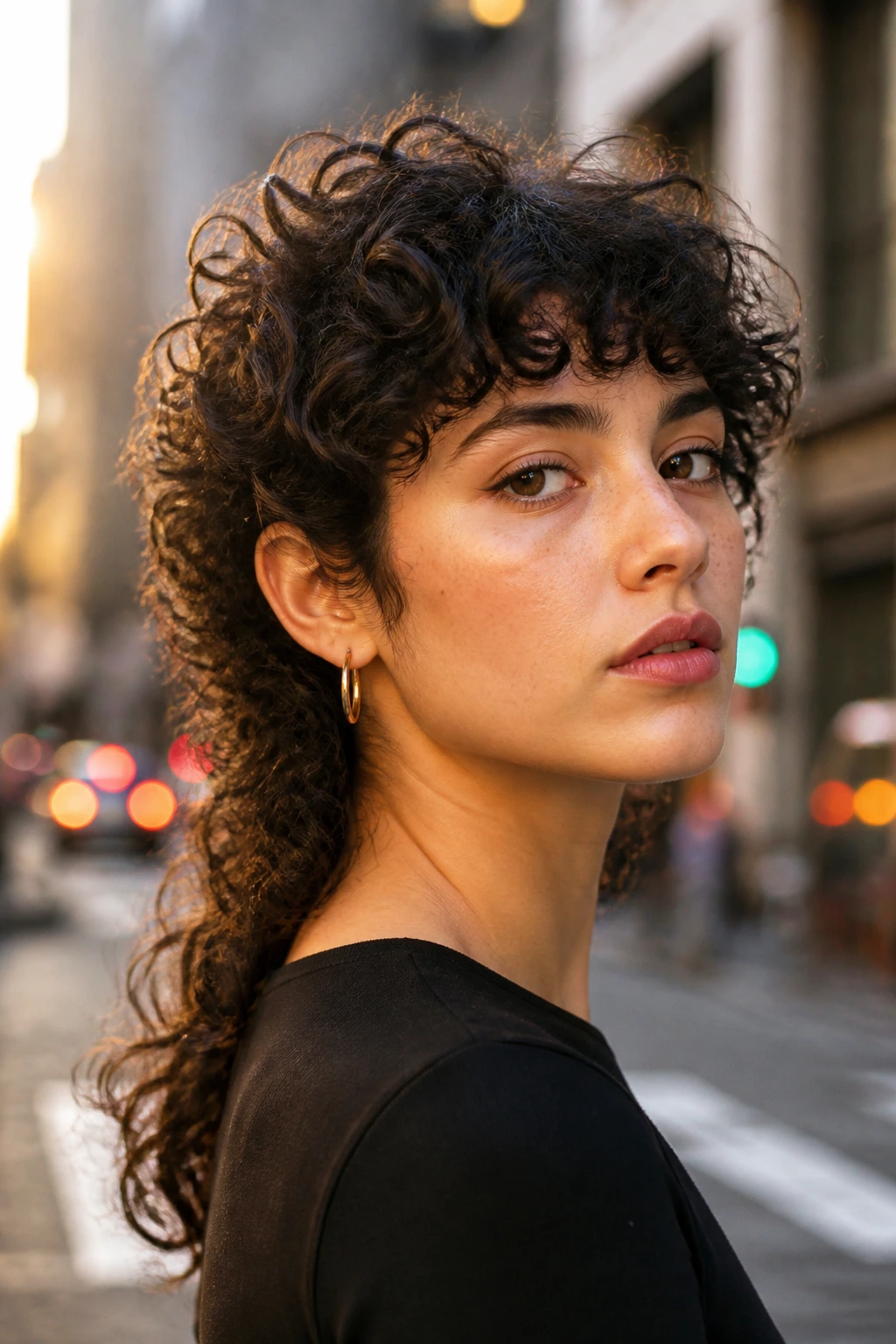
Before you shy away, consider that the modern, curly mullet is nothing like the 80s version you remember. It is all about short, fun layers in the front and top, with a slightly longer tail in the back. It’s inherently high-fashion and provides a brilliant way to remove density from the crown while keeping some length.
The Modern Vibe
- It is the ultimate “cool girl” cut that requires very little effort.
- The shorter front pieces allow your curls to sit right at the forehead, creating a frame.
- It’s a surprisingly versatile look that grows out into a great layered shag.
14. The Face-Framing Taper
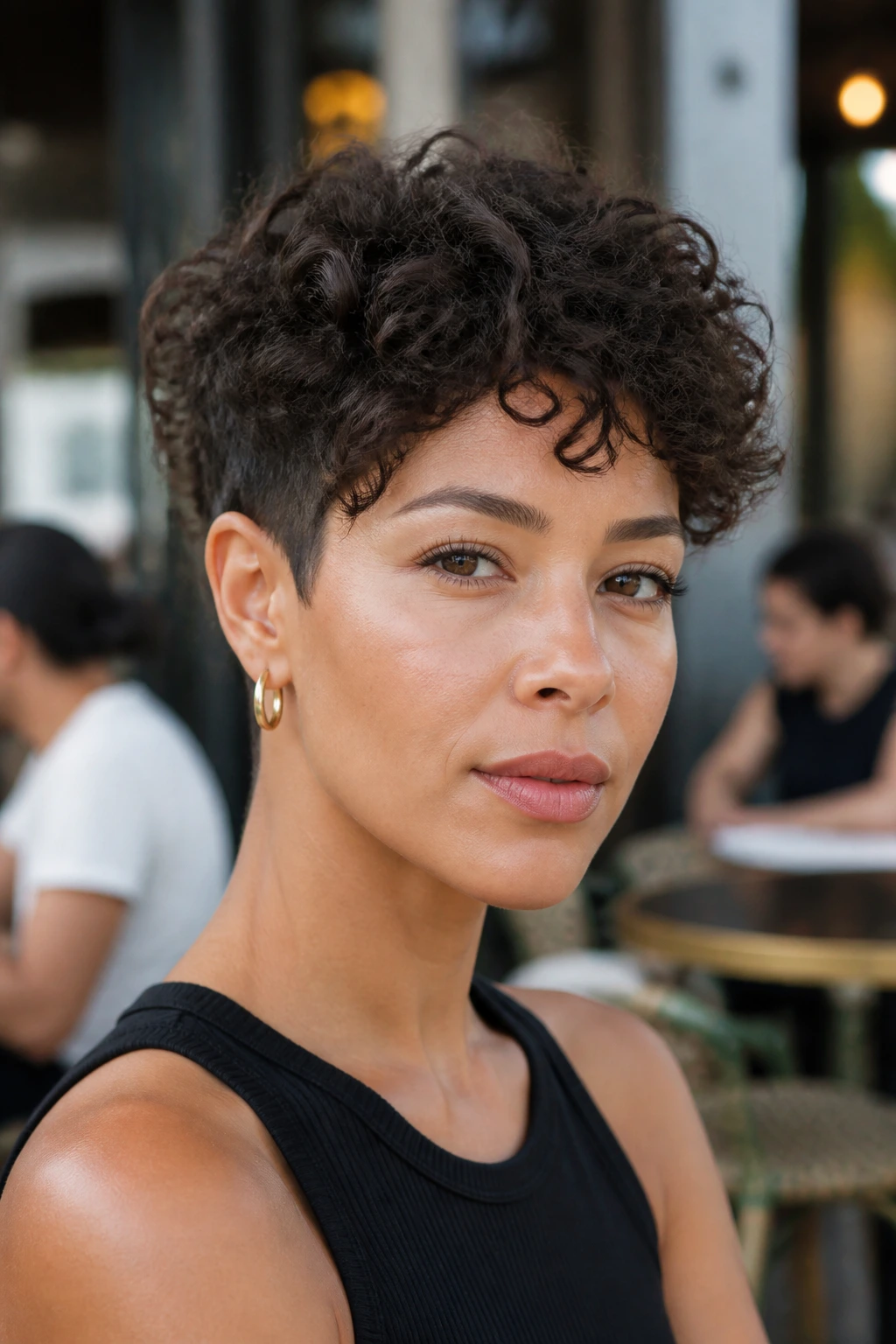
This style keeps the back and sides short, focusing all the “length” and interest right at the top of the forehead and around the temples. It’s a fantastic way to handle thick hair that likes to grow “out” rather than “down.” By tapering the sides, you control the width, and by framing the face, you draw attention inward.
Styling for Success
- Use a small-barrel curling iron only on the pieces that might need a little extra definition around the face.
- Focus on using a lightweight moisturizing spray to keep the hair looking shiny, not greasy.
- This look is perfect for highlighting statement earrings or interesting necklines.
15. The Deep Side-Part Bob
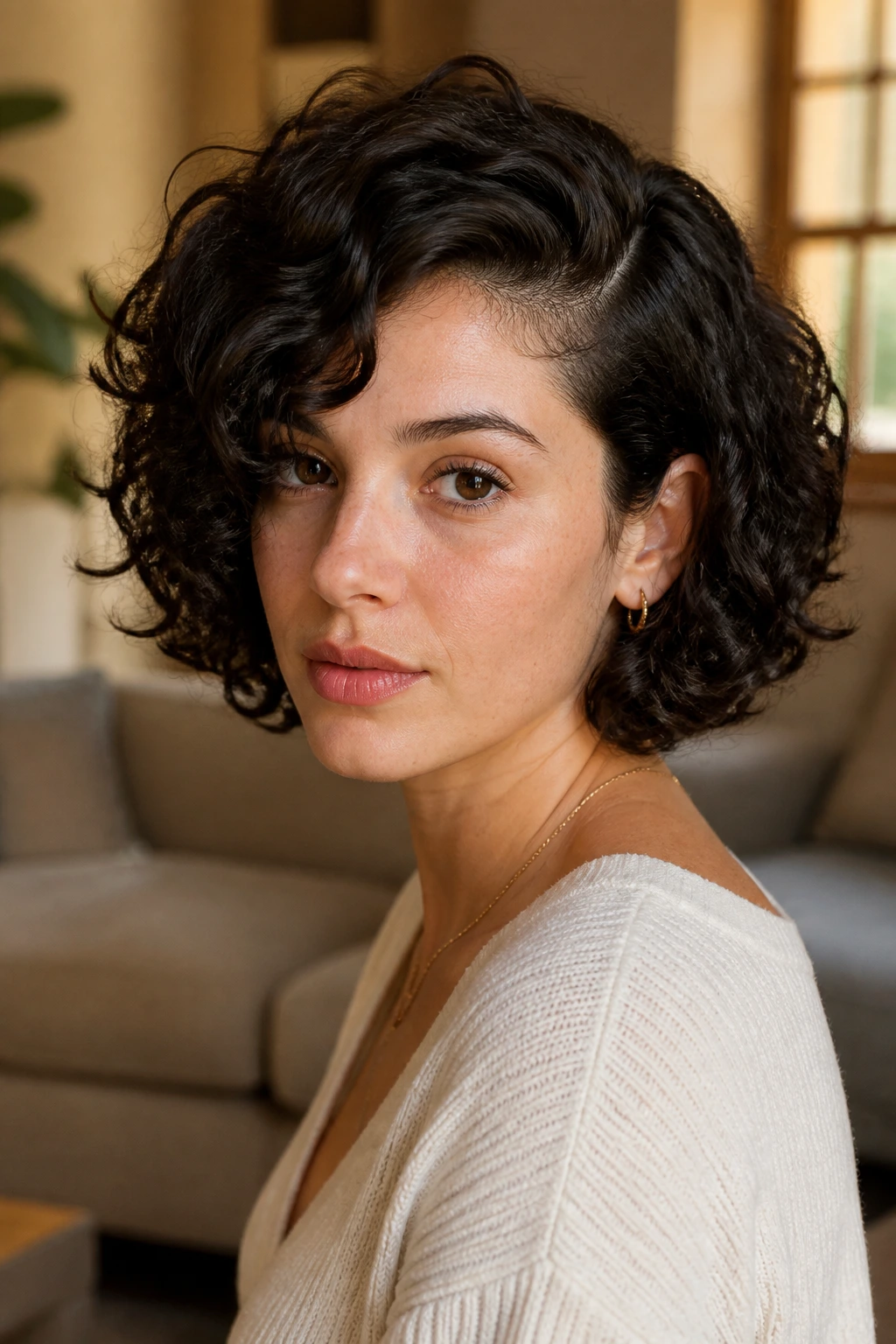
Never underestimate the power of a side part to change your hair’s entire dynamic. By moving the weight of your hair to one side, you instantly create a more voluminous, asymmetrical silhouette that feels intentionally styled. For thick hair, this helps to sweep the bulk away from one side of the face, preventing a “heavy” look.
The Parting Trick
- You don’t need a specific cut for this, but it works best with a bob that has minimal layers.
- The deep part allows the curls to fall across the forehead like a natural, sweeping fringe.
- It’s the easiest way to give your hair a “fancy” upgrade for an evening out.
16. The Curly Bowl Cut
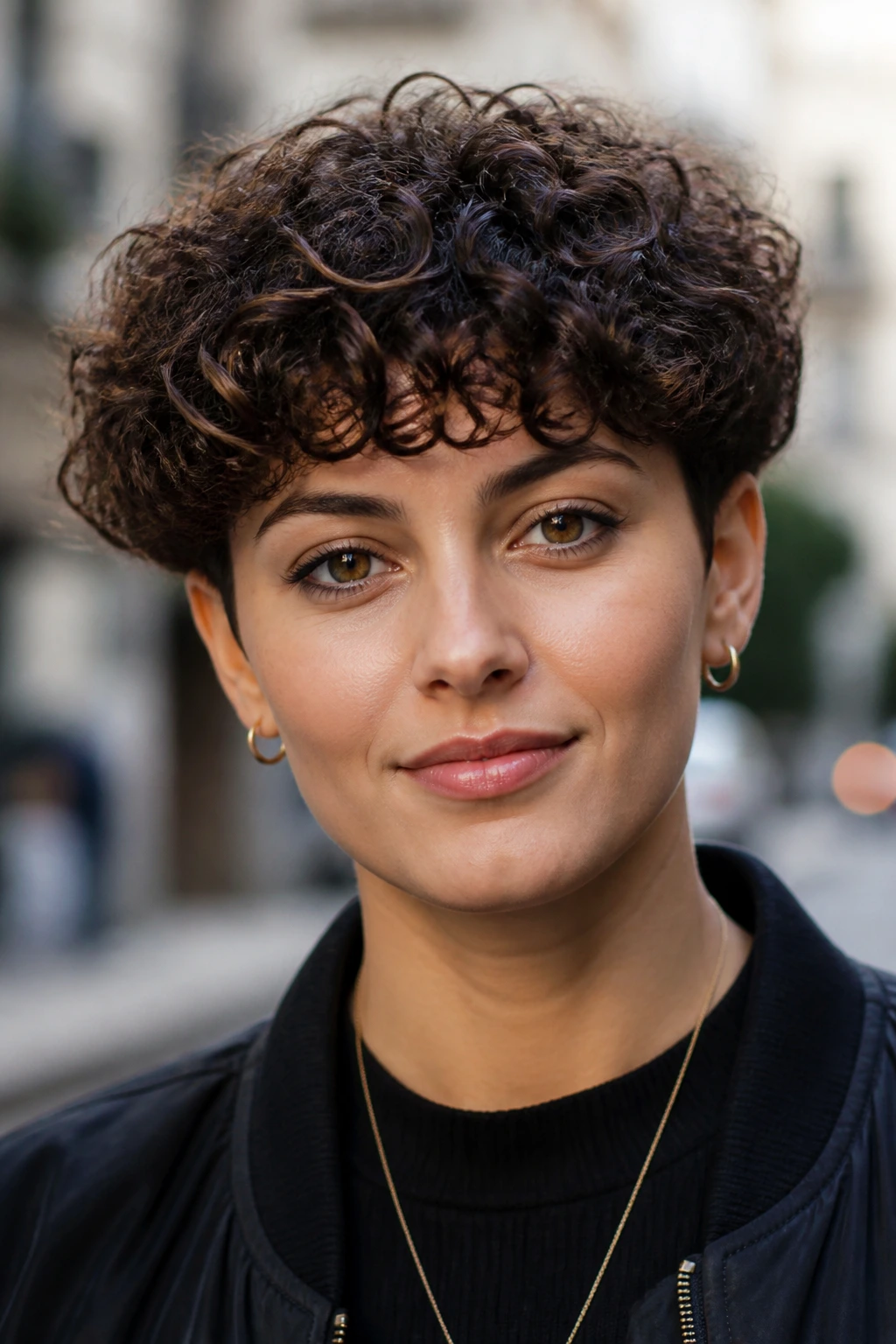
It sounds daring, but a well-executed curly bowl cut is incredibly chic. By maintaining a rounded, uniform shape around the head and keeping the hair at a single, consistent length, you create a modern, high-fashion look. It is exceptionally good at managing thick, unruly hair because it creates a defined “container” for your curls to live in.
Who Can Pull This Off?
- People with oval or heart-shaped faces usually find this style very flattering.
- Those who want a signature, recognizable look that requires minimal daily styling.
- It’s a great way to showcase a beautiful hair color, as the uniform shape highlights the tones perfectly.
17. The Textured Crop with Fringe
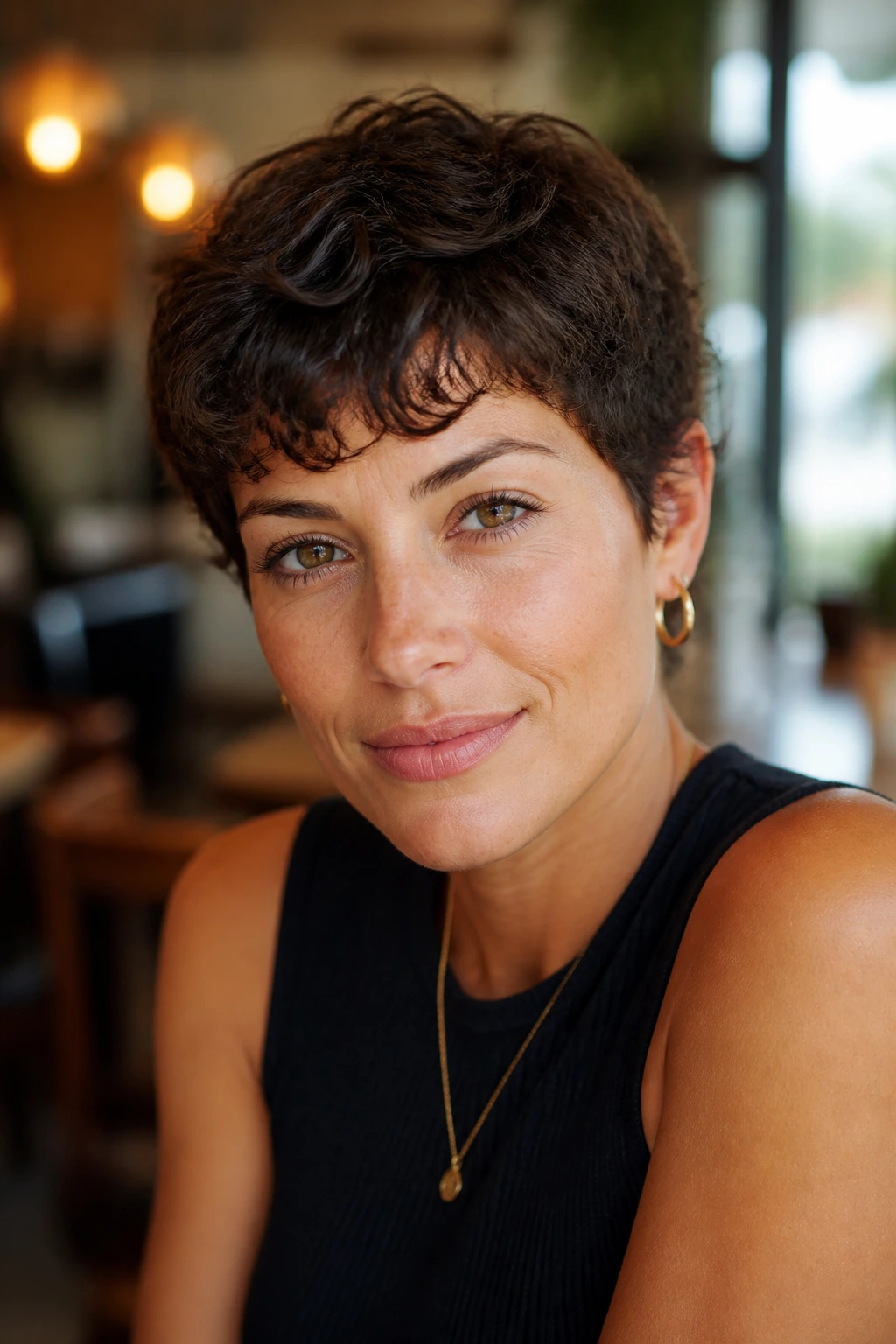
A textured crop is essentially a very short pixie with a bit of length left in the front to create a fringe. This is ideal for thick-haired individuals because it allows you to remove all the hair you don’t want (the sides, the nape) while keeping enough in the front to play with. You can wear the fringe curly or, if you’re feeling daring, straighten it occasionally for a total look shift.
Why the Fringe Matters
- It draws focus to the eyes and away from the density of the sides.
- It offers a styling option that feels different from a full-on short crop.
- The texture keeps the hair from looking flat or lifeless.
18. The Shaggy Pixie-Bob Hybrid

If you cannot decide between a pixie and a bob, the hybrid cut is your answer. It is essentially a bob that has been “shagged out” with layers so that it sits much closer to the head, like a pixie. It retains the feminine silhouette of a bob while offering the ease and manageability of a shorter style.
The Versatility Factor
- You can pin back the longer pieces for a pixie look.
- You can let it air dry for a messy, “just-got-out-of-bed” aesthetic that is very stylish.
- It is forgiving, meaning you don’t need a perfect trim to look good on a Tuesday morning.
19. The Undercut Bob with Art
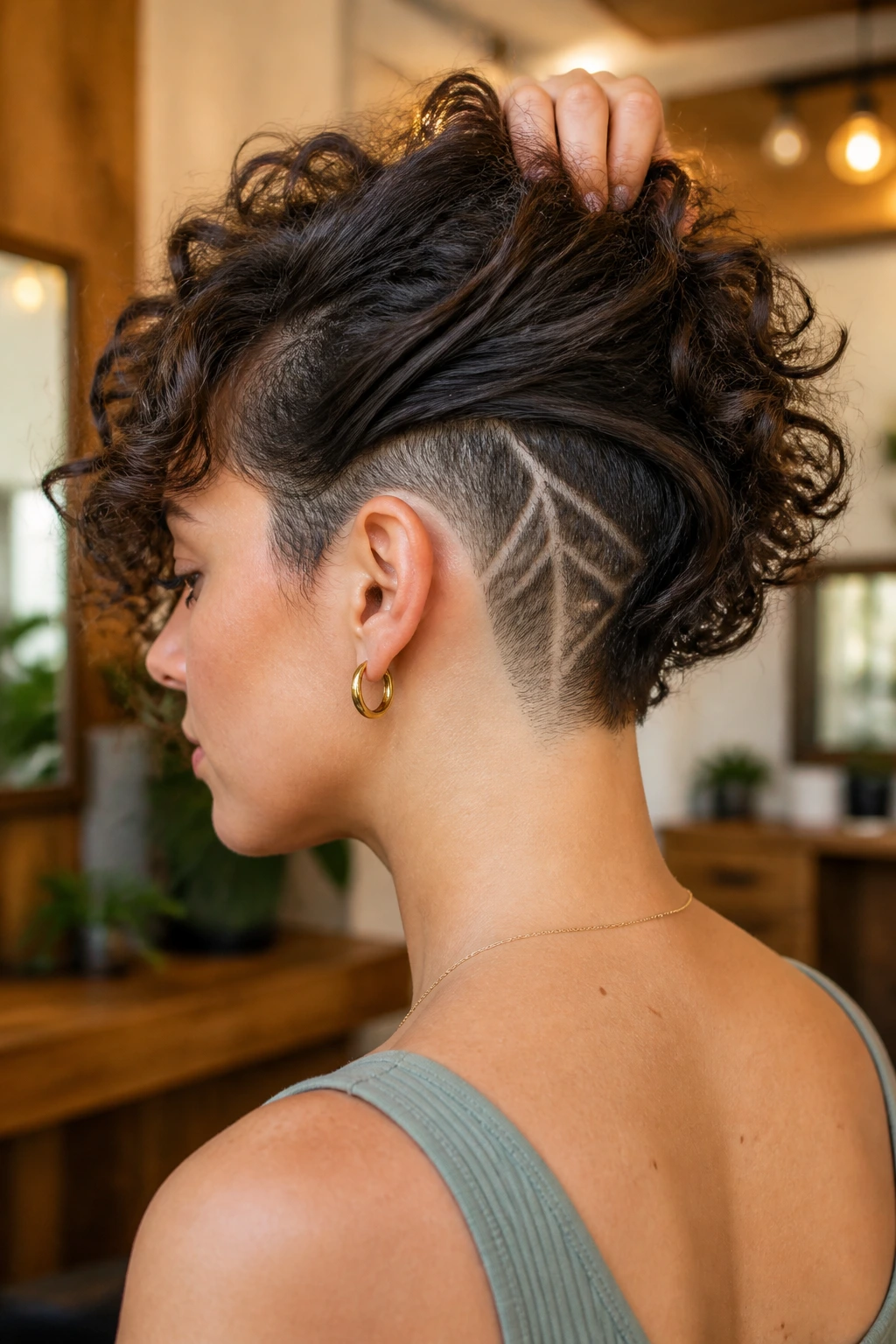
Take your bob to the next level by adding an undercut—not just for volume, but for design. You can shave patterns or lines into the back of your hair that remain hidden until you put your hair up or wear it in a high-volume style. It is the perfect way to remove excess weight while showcasing a bit of personality.
Making It Functional
- The undercut drastically reduces the amount of hair you have to wash and condition.
- It’s a great conversation starter and feels very personalized.
- Ensure your stylist is skilled with clippers, as the clean lines of the design are key to the look.
20. The Curly Top-Knot Bob
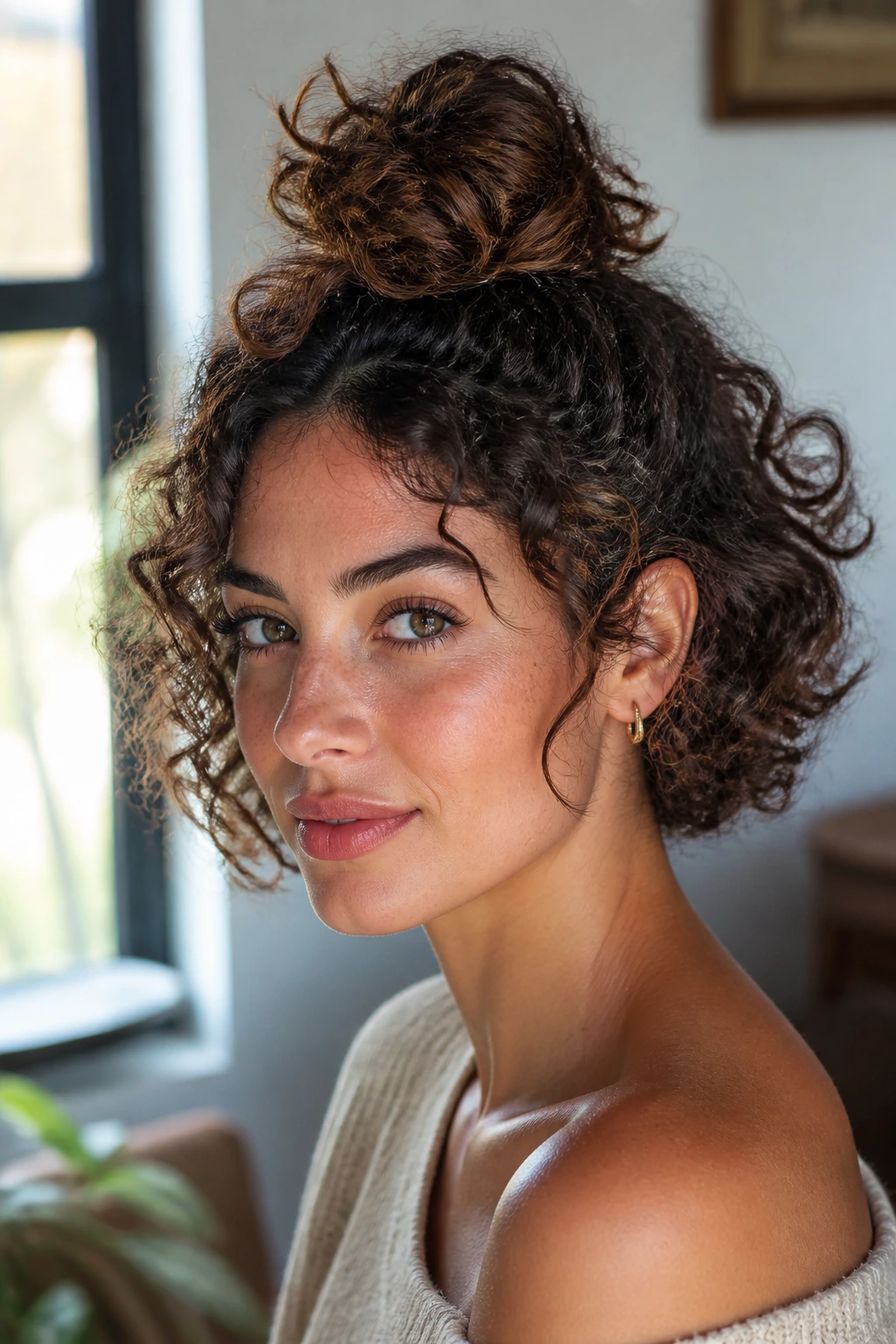
While this isn’t a “cut” in the traditional sense, it is a way to wear your bob that manages thick hair brilliantly. By leaving the bottom layers loose and pulling the top section into a high, curly knot or puff, you divide the density of your hair. It keeps the hair off your face while highlighting the volume of your curls.
Tips for the Top-Knot
- Use silk scrunchies to avoid pulling on the curls and causing breakage.
- Don’t pull too tight; leave a few loose curls to frame the face for a softer look.
- This is the ideal style for days when you don’t want to deal with hair getting in your eyes.
21. The Soft, Rounded Lob

Ending on a classic note, the soft, rounded lob is for the person who loves their curls but wants a manageable, shoulder-skimming length. By cutting the ends in a soft, rounded perimeter and adding very subtle, internal layers, you create a shape that feels full but never heavy. It’s the most “classic” look on this list and arguably the easiest to maintain long-term.
Why It Stays Popular
- It fits any lifestyle, from professional to casual.
- It allows you to experiment with different parting styles and accessory choices.
- It grows out beautifully, meaning you aren’t tethered to the salon every four weeks.
Practical Tips for Maintaining Thick Curls
Managing thick hair is a journey of trial and error. The most important lesson is to stop over-washing; thick curls tend to be drier because the natural oils from the scalp have a harder time traveling down the dense hair shaft. Stick to a low-poo or co-wash routine to keep the hydration level high without stripping the hair of its necessary moisture.
Always prioritize hydration after your cut. A leave-in conditioner is non-negotiable for thick hair, as it acts as a barrier between your curls and the environment. Apply it while your hair is soaking wet to help the curls clump together. If you notice your hair starting to look frizzy by midday, a small amount of oil applied to the ends can act as a seal, keeping the curls defined and preventing that “fuzzy” look that thick hair often develops.
Common Mistakes to Avoid
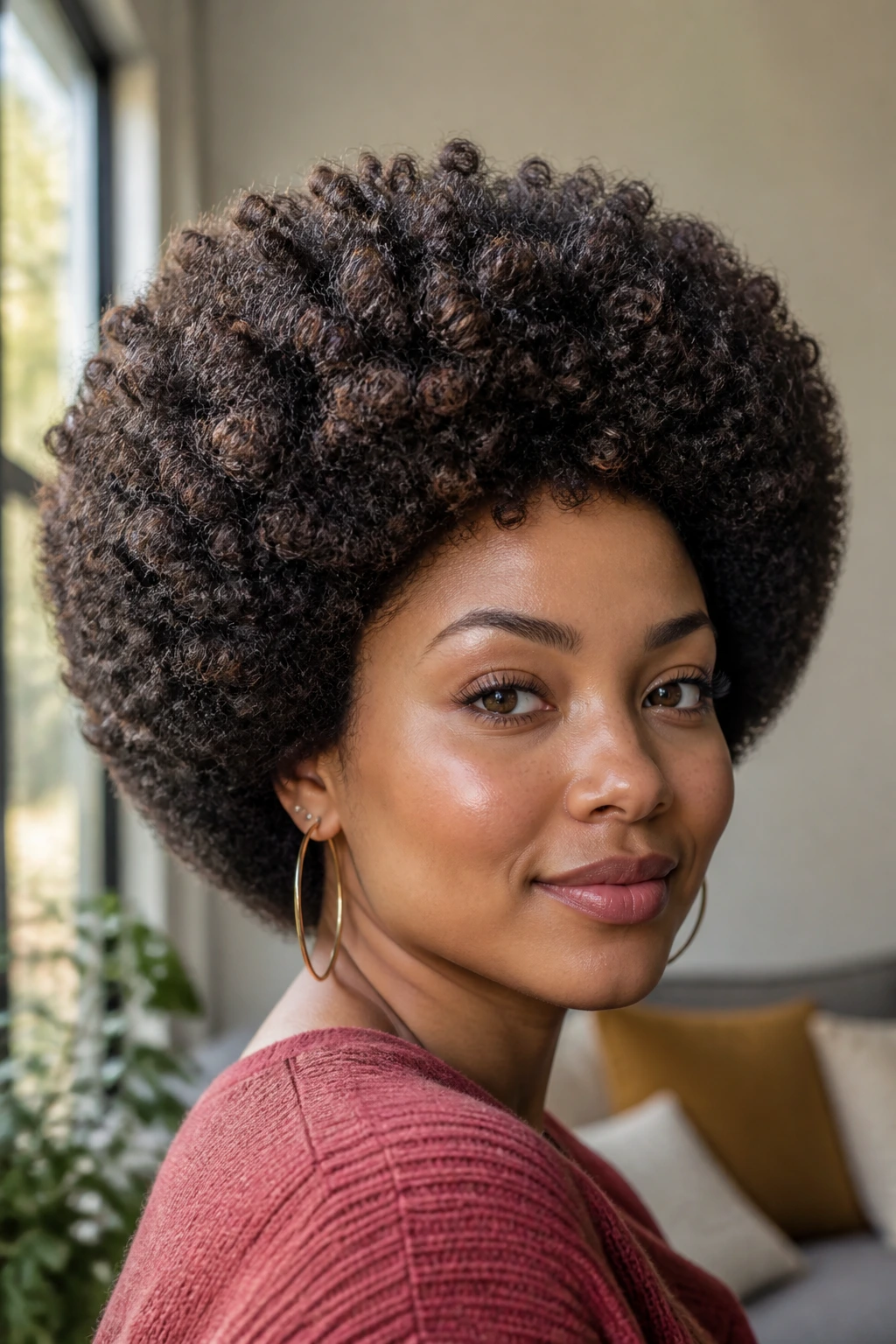
One of the biggest mistakes people with thick, curly hair make is using a fine-tooth comb. If you must detangle your hair, use your fingers or a wide-tooth comb while your hair is coated in conditioner. This prevents the disruption of the curl pattern, which is the primary cause of frizz. Another mistake is using too much product; more is not always better.
Over-applying product can lead to “product buildup,” which makes curls feel heavy, dull, and lifeless. Start with a small amount—perhaps the size of a quarter—and work it through section by section. If you find your hair still feels thirsty, add a little more water, not more product. The water is the vehicle that helps the product coat the hair evenly, and it is usually the missing ingredient in a routine that isn’t performing.
Wrapping Up
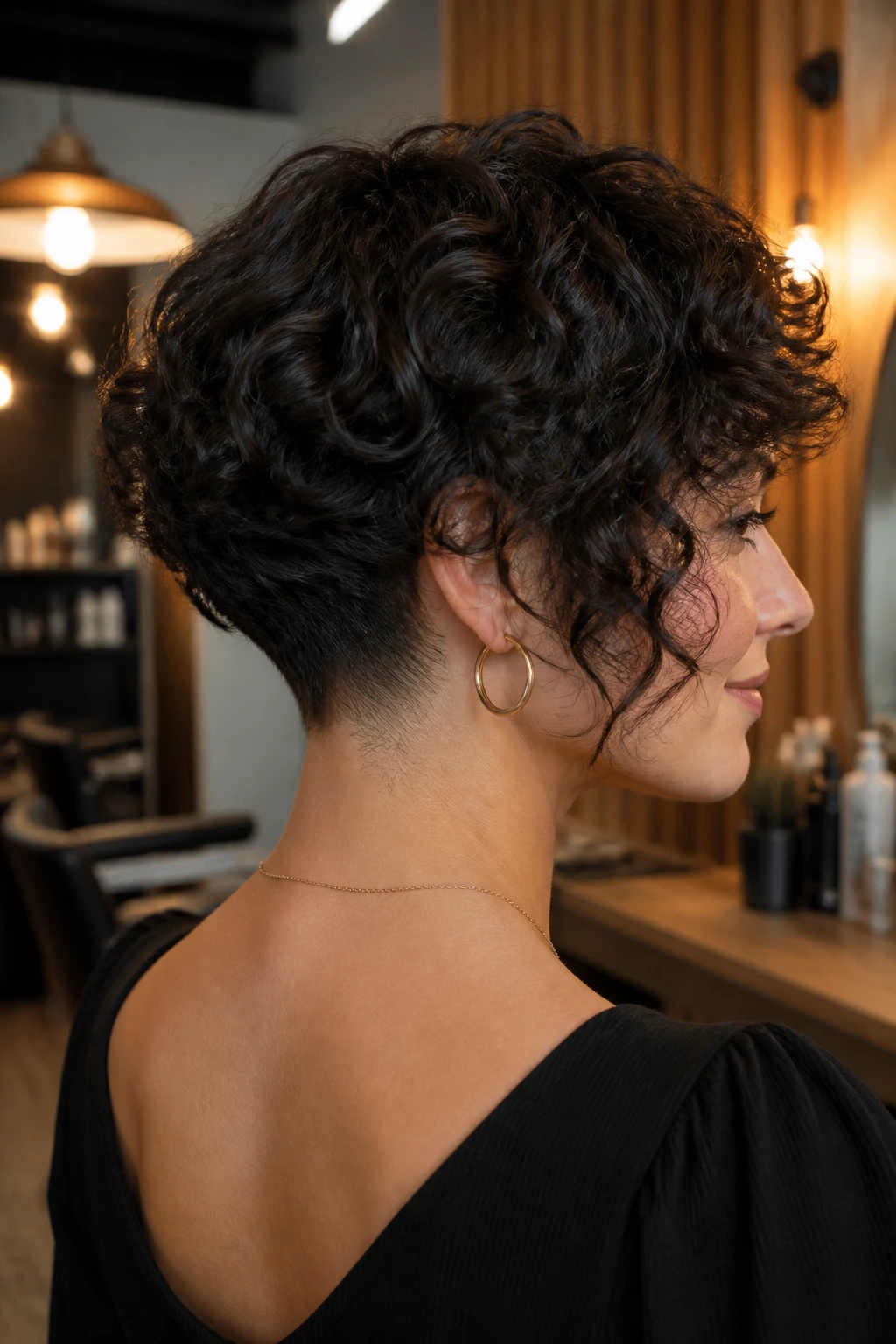
Choosing the right cut for thick, curly hair is about acknowledging the gravity of your hair and choosing a shape that works with it rather than against it. Whether you go for the architectural sharpness of a bob or the free-spirited movement of a shag, the best style is one that makes you feel confident and makes your morning routine simpler.
Remember, the “best” haircut is always the one that makes you feel like yourself. If you’re nervous about going short, start with a longer lob and work your way down. Your hair has its own personality, and sometimes, the best way to understand its limits and possibilities is to let a professional see what it wants to do when it’s dry and left to its own devices. Enjoy the process of finding your perfect shape.