


The fohawk is a silhouette of pure defiance. It sits somewhere between the controlled polish of a traditional fade and the unfiltered rebellion of a classic mohawk. While the original punk mohawk required a razor-edge shave down to the scalp, the fohawk—or “faux-hawk”—is far more forgiving. For those of us born with stick-straight hair, this style is a revelation because it exploits the very thing we usually struggle with: the weight and structural stubbornness of our hair. Instead of fighting against the grain, the fohawk uses that rigidity to stand tall, creating a profile that looks sharp from the side and structured from the front.
It isn’t just about spiking the top; it is about the architecture of the transition. The secret to a successful fohawk on straight hair lies in the relationship between the length of the sides and the taper of the center. If you go too short on the sides, you end up with a harsh, high-contrast look; leave them slightly longer, and you drift into “90s boy band” territory. Finding that middle ground requires a steady hand and a clear vision of the final shape. Whether you are aiming for something professional that can survive a boardroom or a weekend-ready style that screams personality, there is a version of this cut that works for your hair’s unique texture.
1. The Classic Tapered Fohawk
This is the standard-bearer of the style. The sides are kept relatively short, following the natural curve of the head, but they are not shorn down to the skin. Instead, a clean taper follows the hairline, leading the eye directly to the center strip of hair.
For straight hair, the length on top should be at least two to three inches. Anything shorter, and you lose the ability to create that iconic center-focused lift. You want to use a matte-finish clay to keep the hair in place without it looking greasy. Start by applying a dime-sized amount of product to damp hair, blow-drying upward to set the shape before finishing with a quick sweep of texturizing spray.
2. The Mid-Fade Fohawk
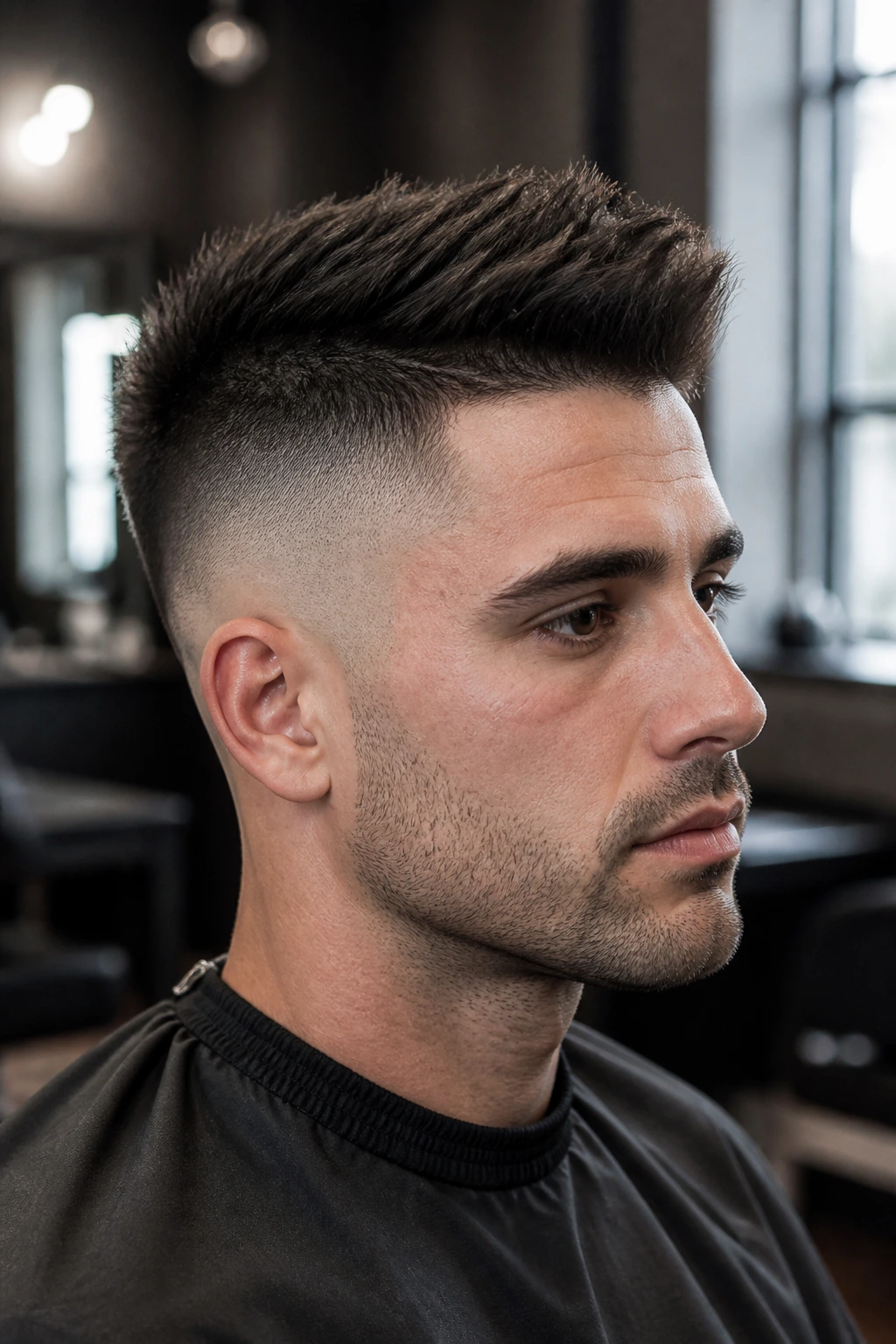
If you want to lean into a more modern aesthetic, the mid-fade provides a sharper contrast. By fading the sides to a skin level or a number one guard near the ear, you create a distinct separation that makes the top section look fuller.
Why It Works for Straight Hair
Straight hair tends to lay flat. When you remove the bulk from the sides, the hair on top doesn’t have to fight against the weight of the surrounding hair. The shorter the fade, the more the eye focuses on the crown, giving you a streamlined look that highlights your facial structure.
Styling Tips for Longevity
- Use a high-hold pomade to ensure the spikes don’t flop by midday.
- Always ask your barber for a “skin fade” if you want the longest possible time between haircuts.
- Use a fine-tooth comb to structure the front section into a more defined point.
3. The Textured Spiky Fohawk
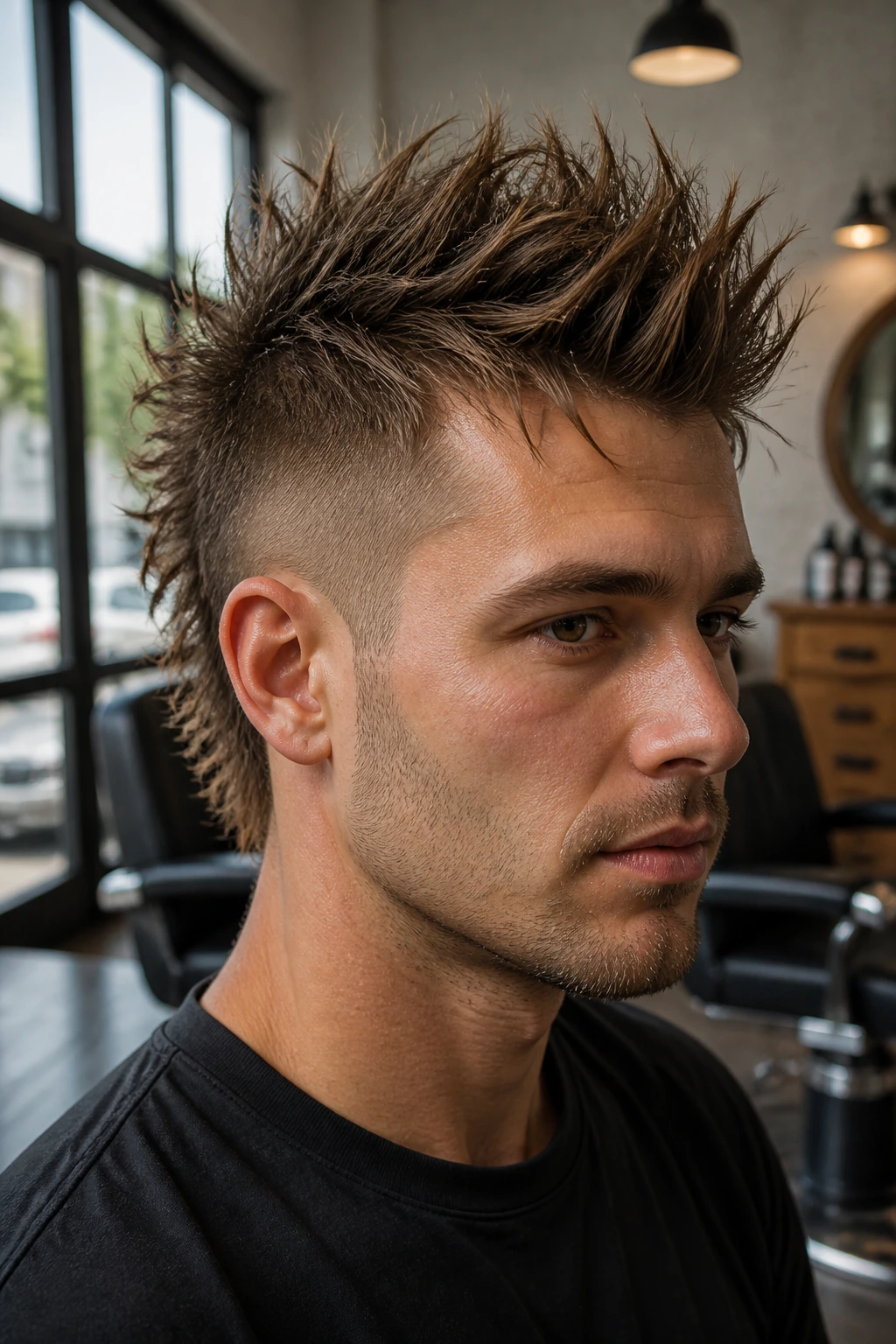
Sometimes a smooth, uniform spike looks too manufactured. The textured fohawk aims for a more chaotic, wind-swept appearance. You achieve this by asking for point-cutting on the ends of the hair, which removes the blunt, heavy edges that straight hair often possesses.
Instead of one single, cohesive mohawk ridge, you are aiming for a series of distinct, jagged peaks. Apply a sea salt spray to slightly damp hair and let it air-dry until it’s just barely moist. Then, use a dry paste to twist small sections of the hair upward. This adds volume and movement that lasts, preventing that dreaded “helmet hair” effect that plagues so many straight-haired styles.
4. The Short-Crop Fohawk
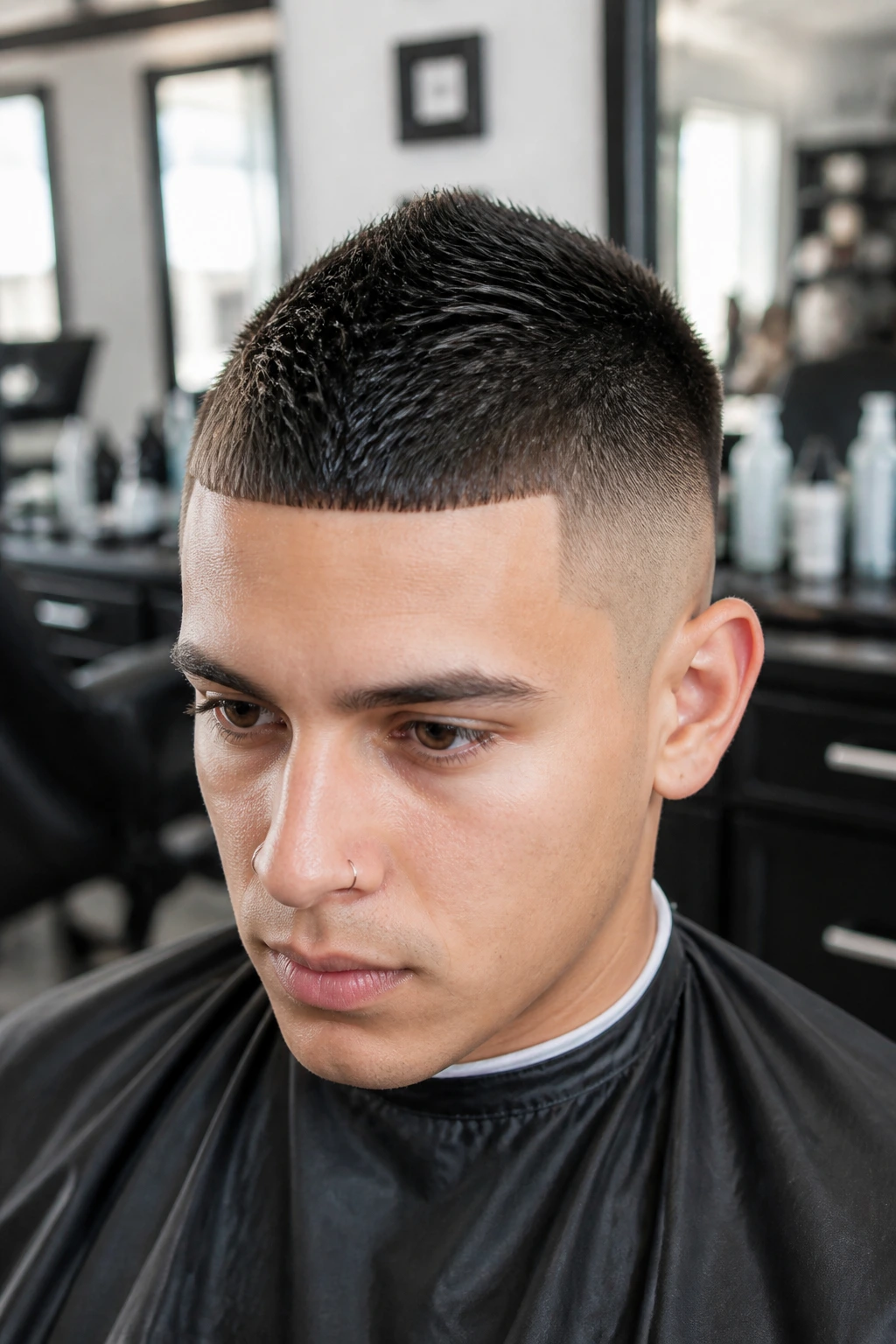
For those who prefer low maintenance, the short-crop fohawk is the ideal choice. The hair on top is barely an inch or two long, requiring almost no product to keep it standing. This is essentially a buzz cut with an attitude, where the focus remains on the sharp, angular line created at the center of the head.
It is particularly effective if you have a round face, as the verticality of the short spikes helps elongate your features. You will need to visit the barber more often—usually every two weeks—to maintain the crispness of the lines. Because the hair is so short, you don’t need to worry about heat damage from styling tools; a simple dab of wax worked through with your fingertips is sufficient to keep the shape looking crisp.
5. The Undercut Fohawk
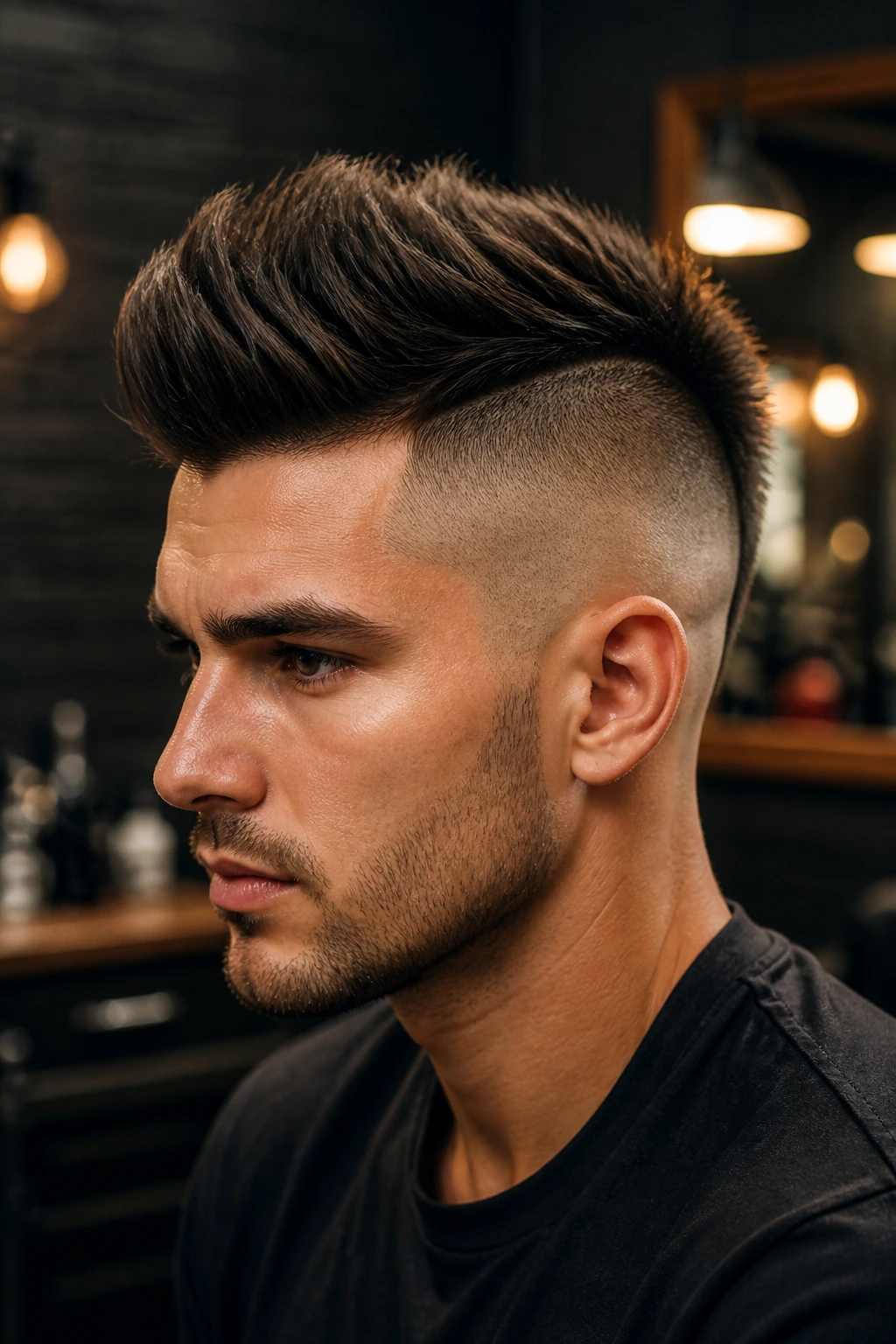
This version takes the concept of the disconnected undercut and marries it to the central spike. The sides are completely shaved or cut to a single uniform length, stopping abruptly where the top section begins. This creates a hard ledge, or “disconnect,” between the top and the sides.
Because there is no gradual taper, you have complete creative freedom with how you style the top. You can sweep it to the side for a pompadour-inspired look, or keep it spiked for that classic fohawk energy. Just be aware that this cut is unforgiving; if your hair grows fast, the regrowth period between the shaven sides and the longer top can look uneven if you wait too long for a touch-up.
6. The Long Top Fohawk

Some prefer the look of a longer, more dramatic central ridge. By keeping the top hair at four or even five inches, you turn the fohawk into something that feels almost like a quiff. This is the version for those who want to run their fingers through their hair throughout the day.
Managing the Weight
When you leave the top long, straight hair becomes very heavy. You will need to use a blow dryer and a round brush to create a foundation of volume. Without this step, the hair will simply fall over, losing the fohawk silhouette entirely.
Recommended Products
- Volumizing Mousse: Apply to the roots of damp hair before drying to lock in lift.
- Strong-Hold Hairspray: Use as a finishing coat to lock the style against humidity.
- Matte Paste: For reshaping throughout the day without adding shine.
7. The Skin-Fade Fohawk
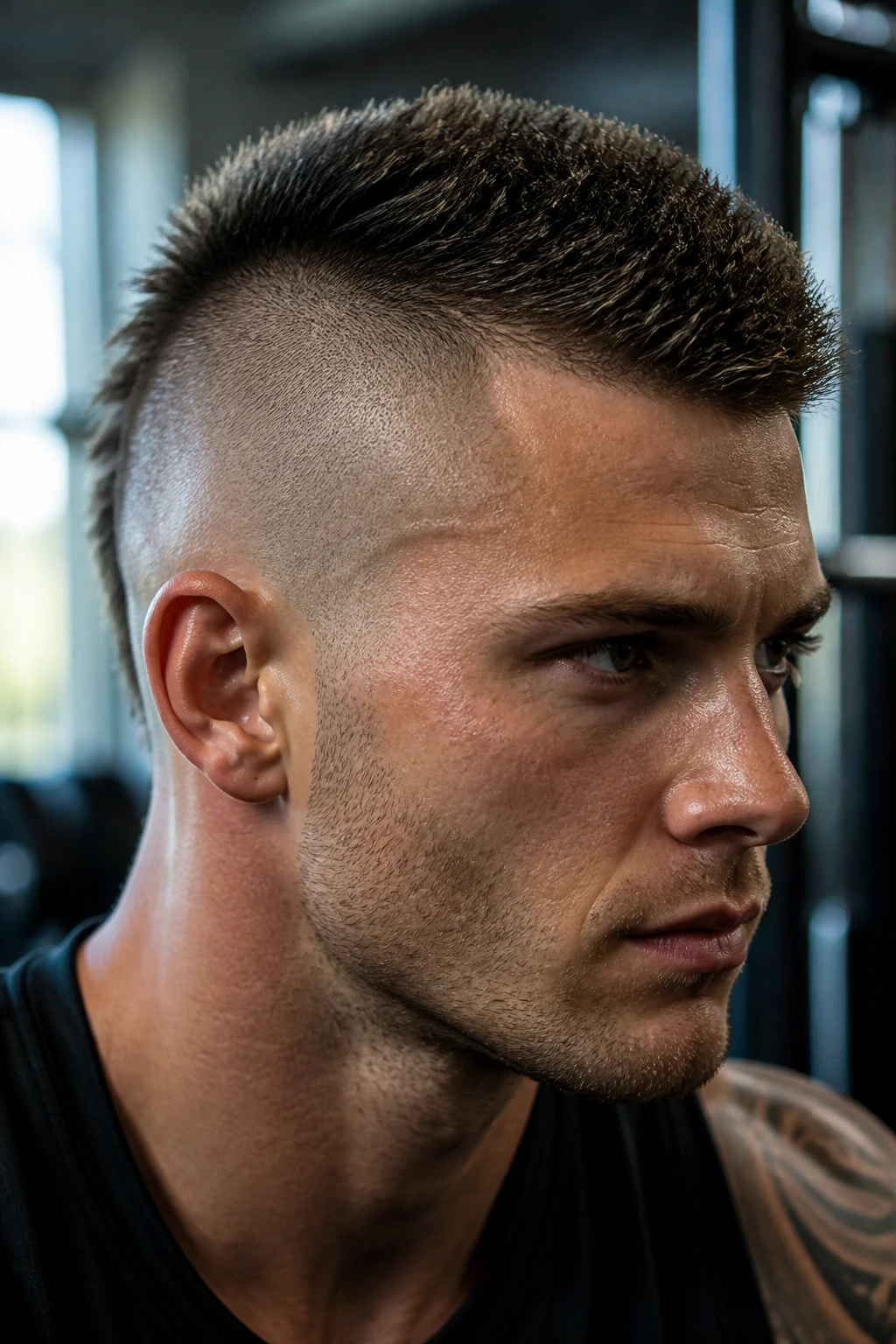
This is the cleanest, most professional version of the cut. By taking the sides down to the skin, you ensure that the only thing anyone sees is the top. It provides a crisp, high-contrast look that is common in athletic circles because it is sweat-proof and maintains its shape even after a workout.
If you have light-colored hair, a skin fade looks incredibly sharp. If you have darker hair, the contrast against your scalp can be very striking, emphasizing the clean lines of the cut. The trade-off is the maintenance; because it is so short at the base, “fuzzy” growth starts to show within ten days.
8. The Wavy-Texture Fohawk
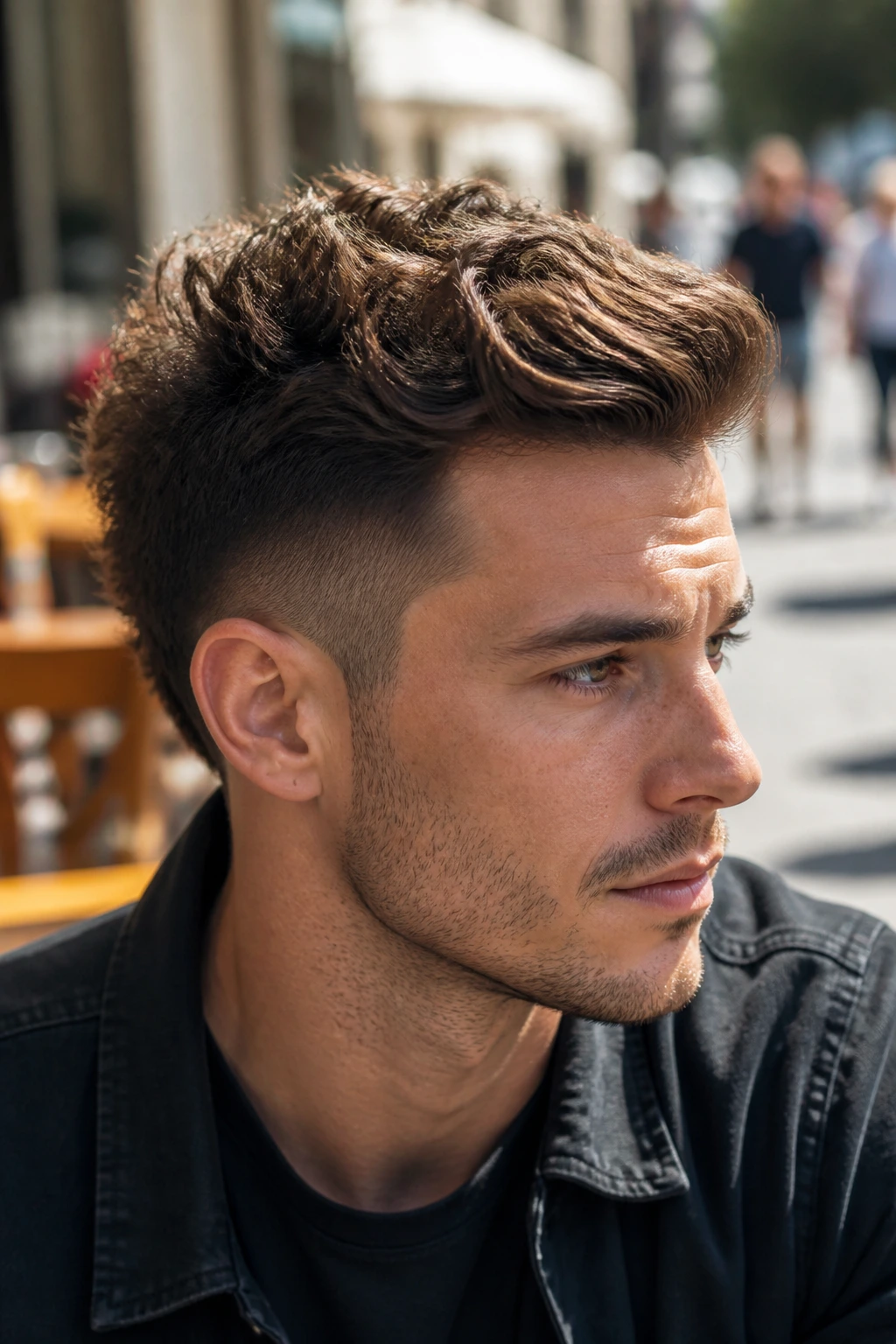
Just because your hair is straight doesn’t mean you can’t fake a bit of wave. Some men opt for a perm or use a texturizing product to break up the perfectly straight alignment of their hair. This creates a fohawk that looks less like a row of needles and more like a structured, messy ridge.
It’s a more approachable, “lived-in” version of the cut. You start by prepping the hair with a volumizing powder, which grips the individual strands and allows them to cling to one another. Then, instead of combing the hair straight up, use your palms to push the hair toward the center from both sides.
9. The Disconnected Fohawk
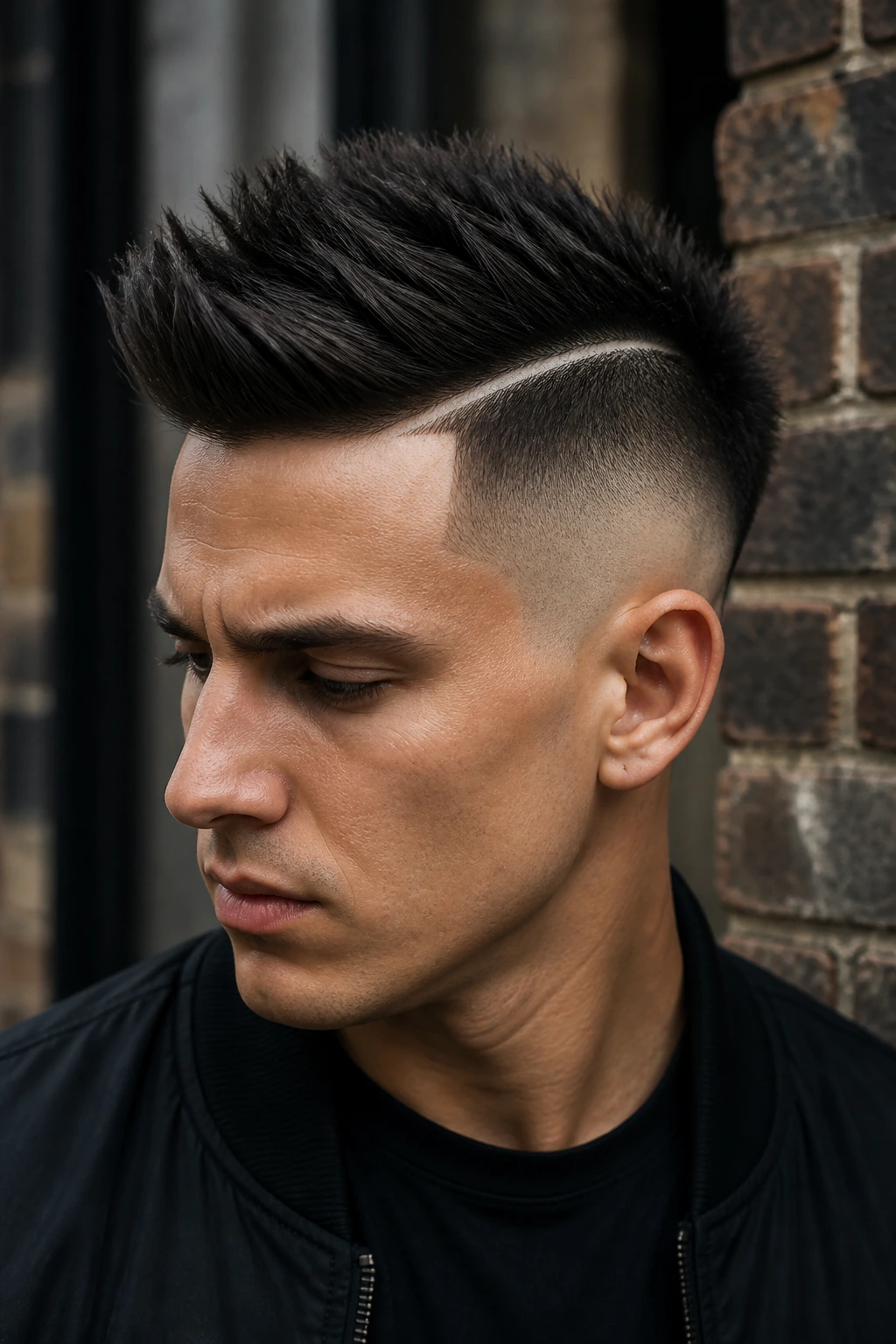
Disconnecting the sides from the top is a bold move. Instead of blending the fade into the crown, the transition happens suddenly. This gives you a profile that is distinctly architectural. It looks particularly good with a hard part shaved into the side, adding another layer of visual interest to the cut.
Think of this as the “designer” version of the fohawk. It requires a skilled barber who understands how to map your skull, as there is no room for error when creating that disconnected line. If you wear glasses, the hard line of a disconnected fohawk can really help frame your face, providing a nice counterpoint to the frames.
10. The Soft-Fade Fohawk
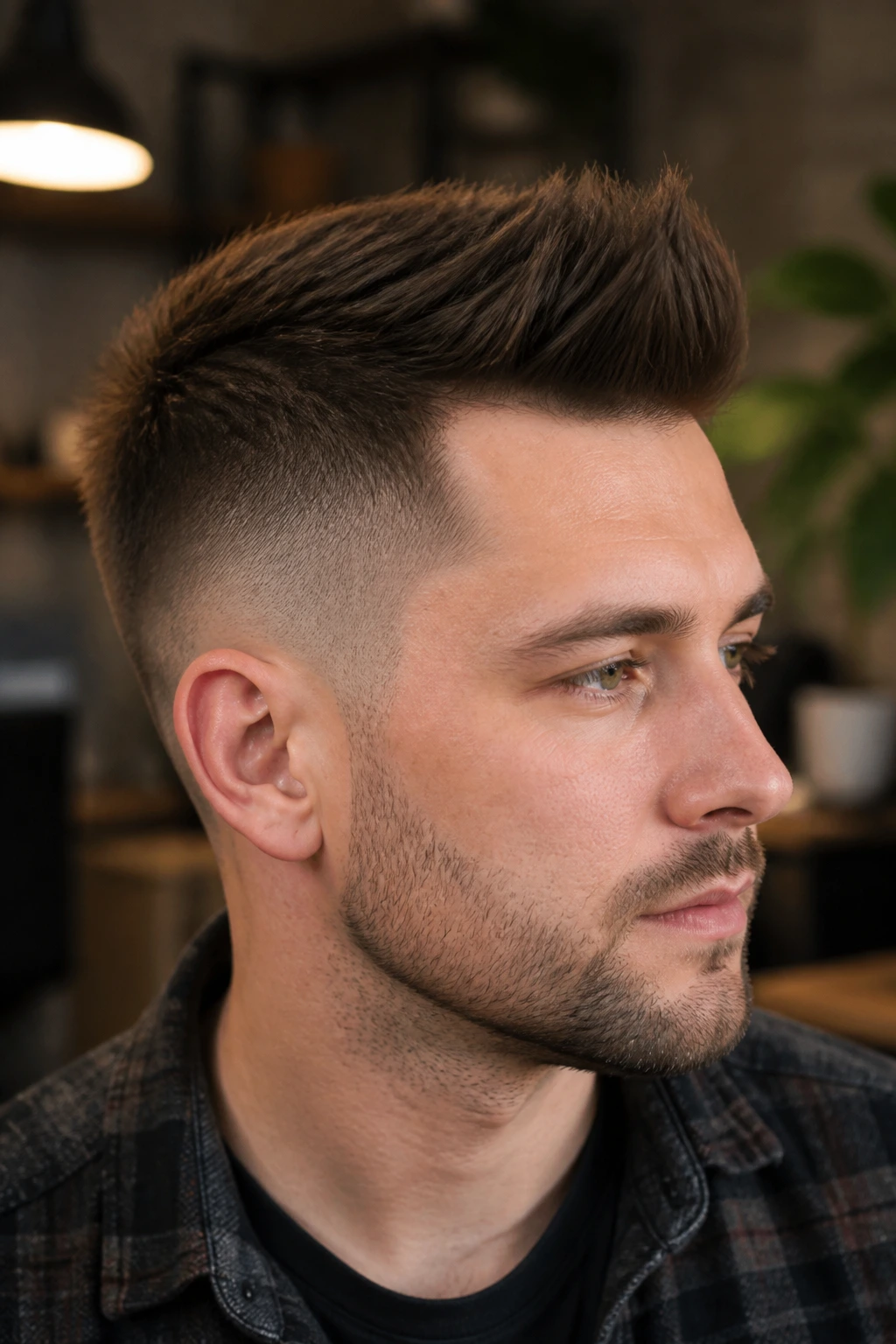
Not everyone wants a harsh, military-style fade. A soft-fade fohawk uses a gentler graduation, where the sides are still short but never reach a skin-level cut. It is a more conservative approach that transitions well from the weekend to the office.
This is the perfect introductory fohawk. If you are worried about the style being too “loud,” this is the best place to start. It retains enough hair on the sides to look balanced, while still offering the height and drama of the classic fohawk. It works well with a range of hair products, from light-hold creams for a natural look to heavy pomades for a sleeker, more formal finish.
11. The Comb-Over Fohawk
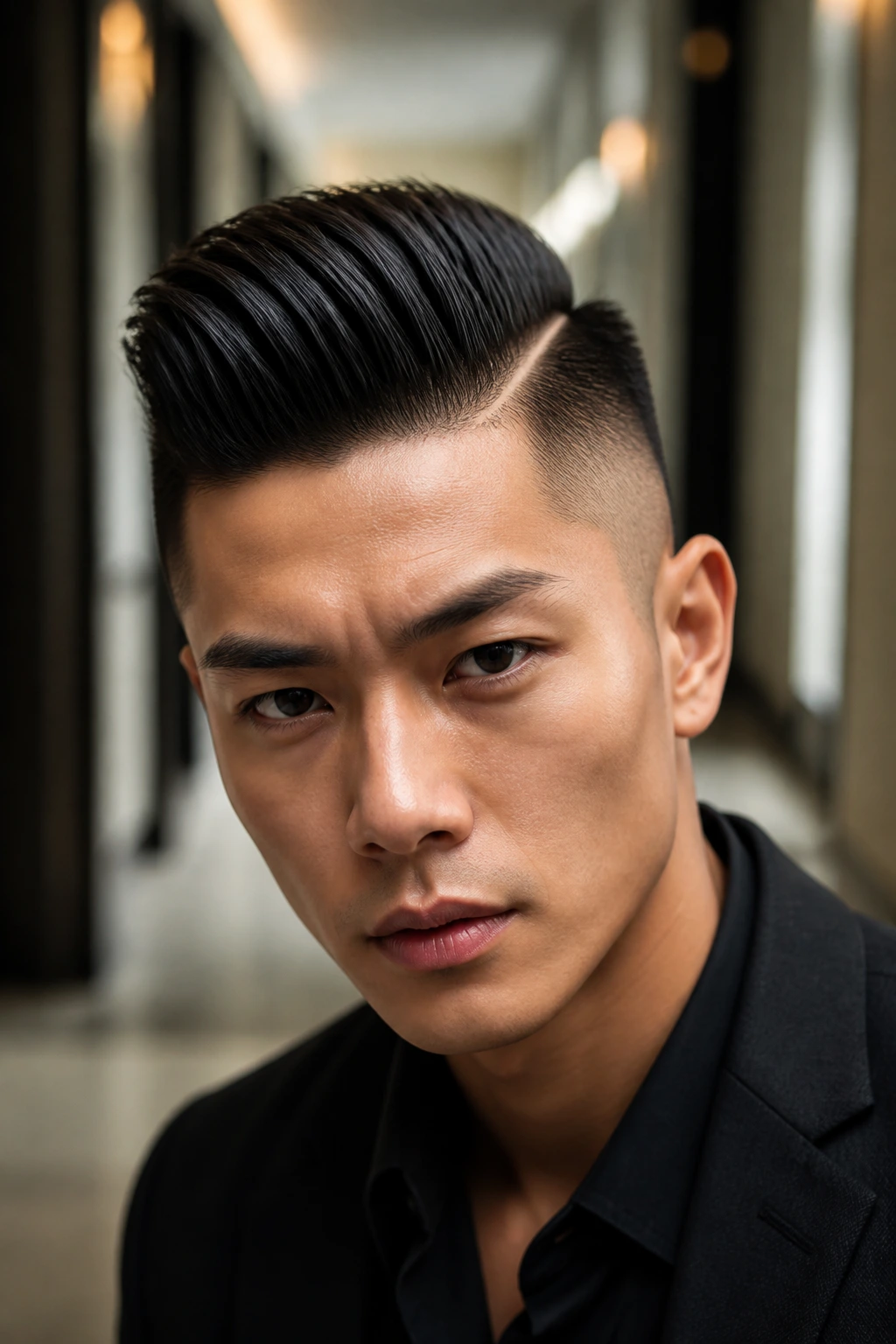
This is an unusual but highly effective hybrid. You take the structure of a fohawk and apply a clean, deliberate side-part aesthetic to it. The hair is still pushed toward the center, but it is groomed in a way that shows a refined, classic influence.
It’s less about the “spikes” and more about the “shape.” You use a pomade to create a smooth, unified mass of hair in the center. The result is a hairstyle that looks like a high-fashion editorial shoot. It requires a bit more morning effort—you’ll need a comb and some patience—but the visual result is far more sophisticated than the average spiky cut.
12. The Side-Swept Fohawk
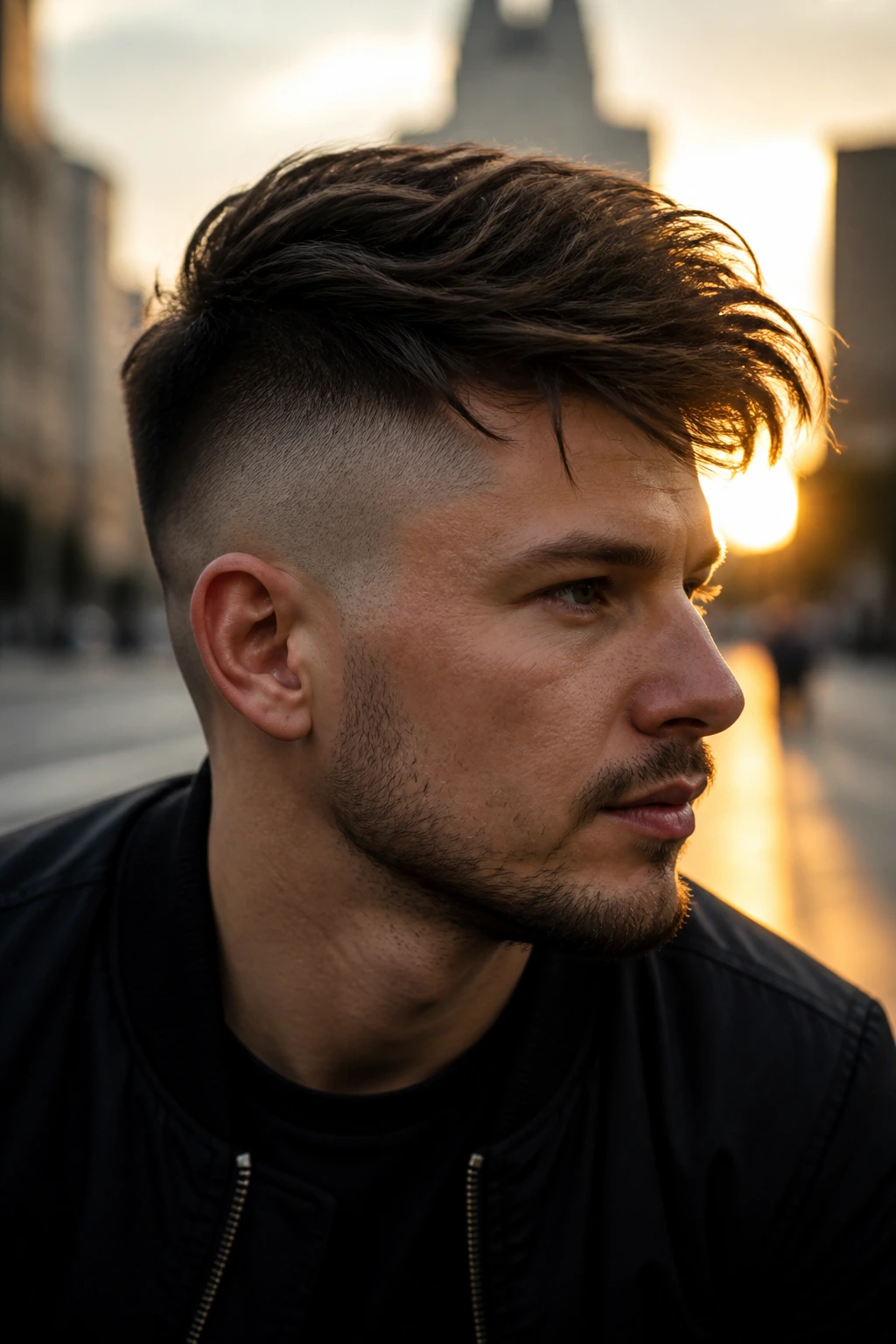
While the classic fohawk is directed toward the center, the side-swept version adds a twist. By angling the hair slightly to the side as it rises, you create a dynamic, forward-leaning profile. It’s an energetic, modern style that avoids the rigid stiffness of traditional spikes.
The Mechanism of the Sweep
This look relies on the direction of your hair’s natural growth. You want to train the hair while it is wet. As you blow-dry, use a brush to direct the hair toward the forehead at an angle.
Keeping the Movement
- Avoid heavy gels: They will weigh the hair down and make it stick together in an unattractive way.
- Use lightweight fibers: These provide hold without the “wet” look that makes straight hair look thin.
- Daily maintenance: This style looks best when refreshed with a little bit of water and re-styled each morning.
13. The Pointy-Front Fohawk
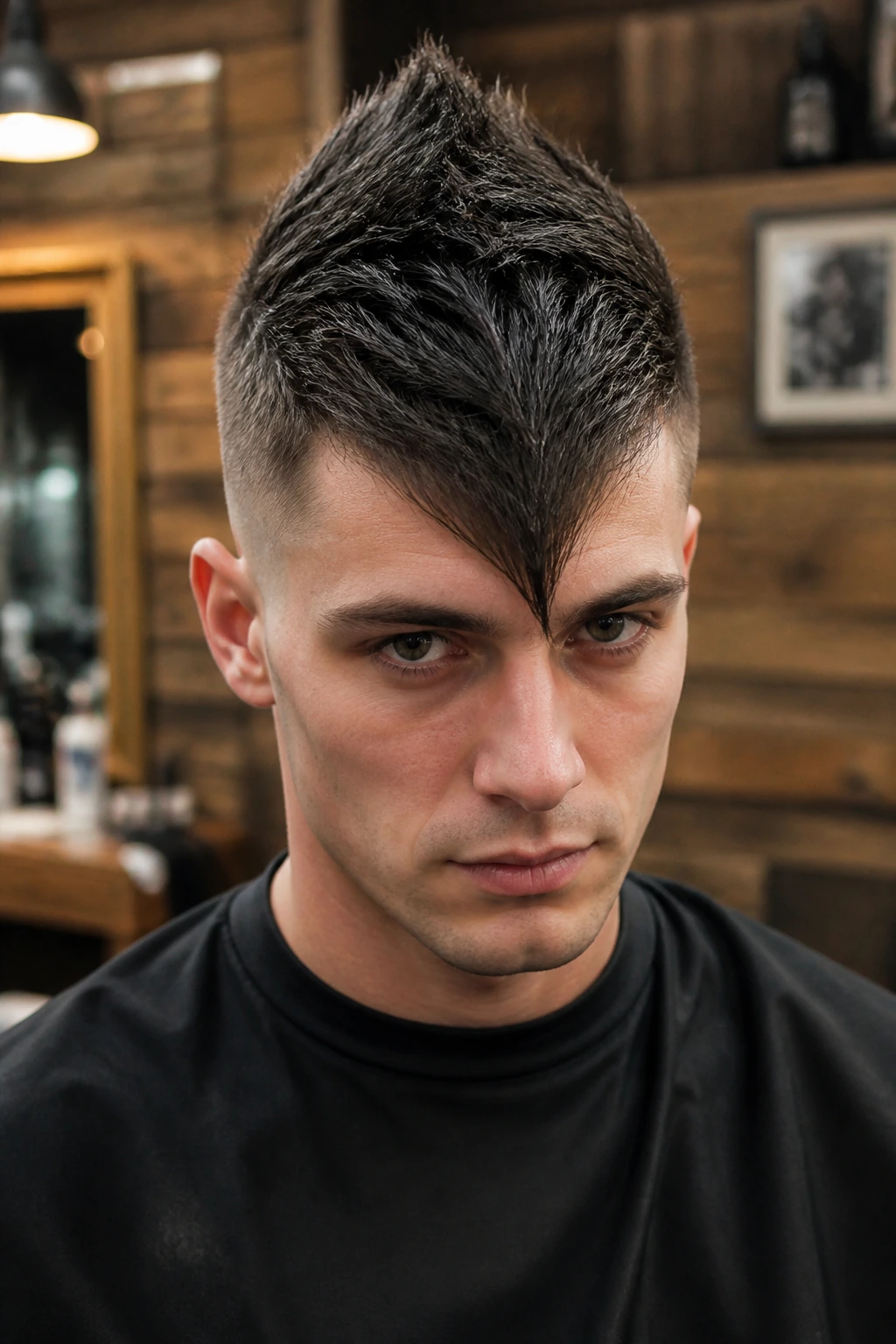
This is the quintessential “boy band” variation. The front section—the bang area—is left slightly longer than the rest of the top, and it is styled into a singular, sharp point that hangs slightly over the forehead. It’s a very specific look that emphasizes the front of the face.
You need a high-hold wax to make this work. The key is to take that front section and pinch it with your fingers to ensure it stays in that triangular shape. It is a playful style that definitely leans younger, but it is incredibly effective for men with thinner, straight hair who want to add the illusion of extra volume and density at the front of the scalp.
14. The Natural-Finish Fohawk
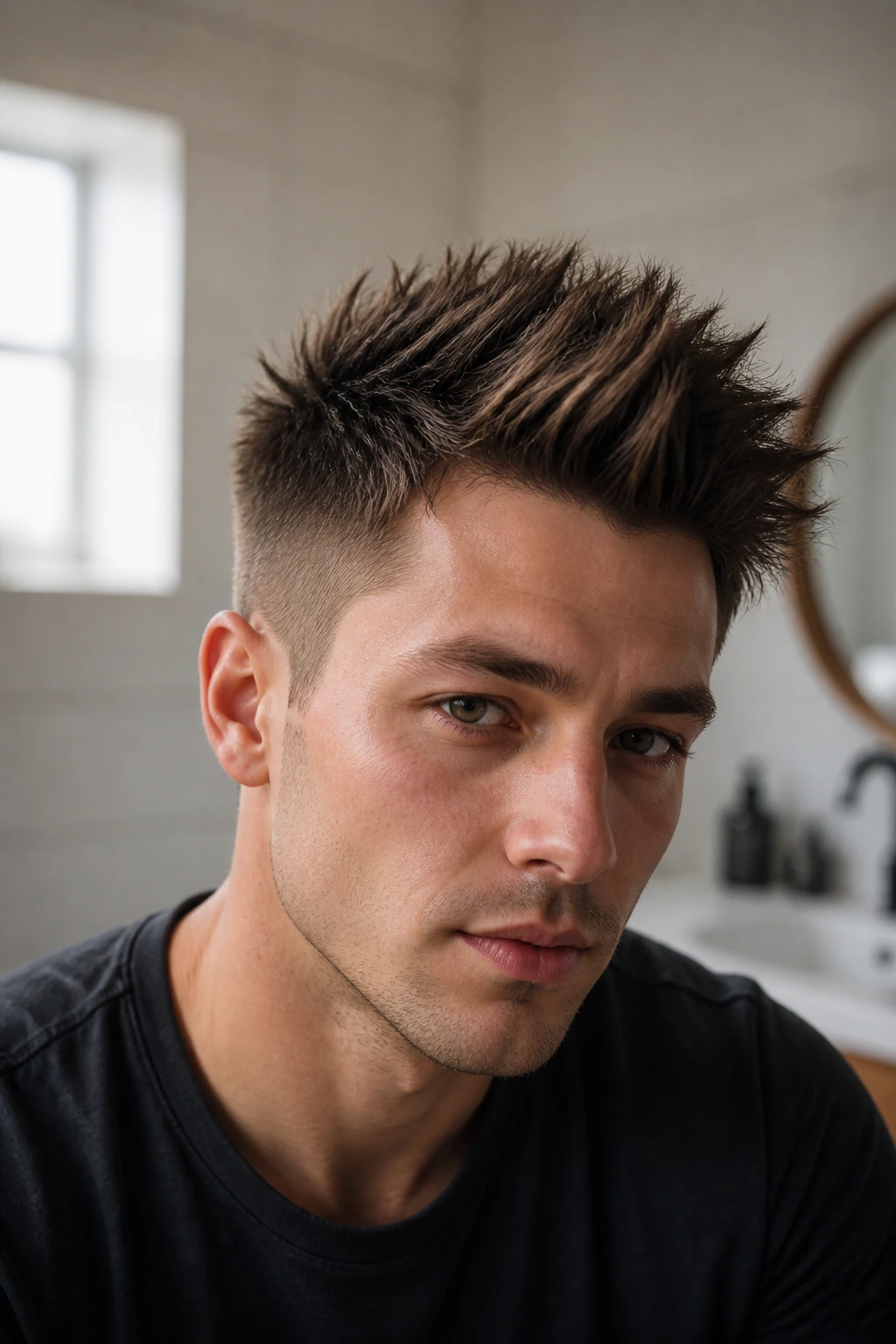
If you hate the look of shiny hair, the natural-finish fohawk is for you. This style avoids all pomades, waxes, and gels in favor of clay or texturizing powder. The goal is to make it look like your hair naturally grows in that upward, spiked formation.
It takes a lot of skill to make “messy” look intentional. You need to focus on volume first. Use a pre-styler in the shower, and then use a diffuser to keep the hair airy. Once it’s dry, work a very small amount of matte clay through the hair, focusing on the roots. By keeping the product off the ends, you keep the tips looking light and fluffy, which prevents the spikes from clumping together.
15. The Faded-Side-Part Fohawk
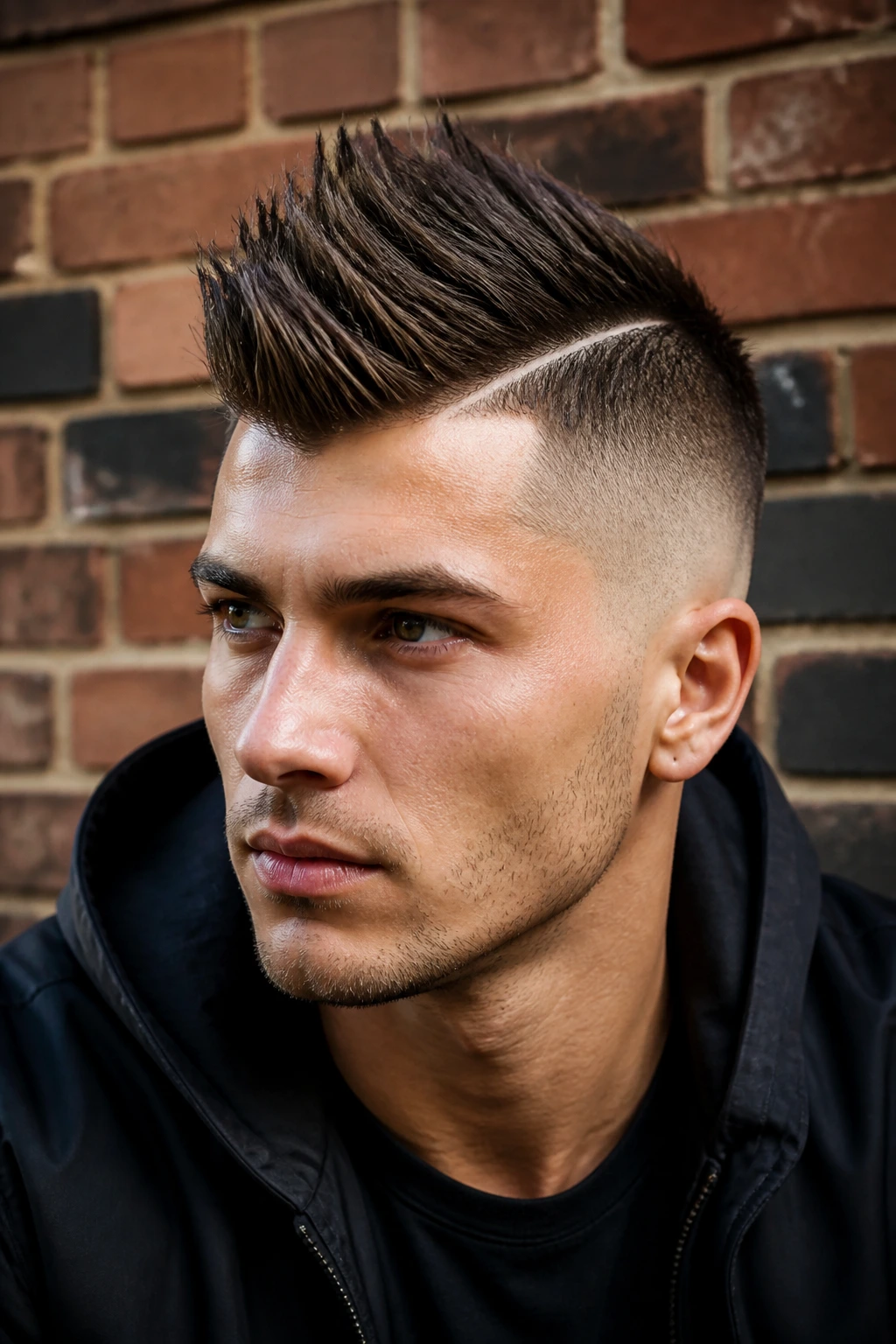
This is the most “grown-up” version of the trend. You combine the height of a fohawk with the precision of a classic hard-part haircut. By shaving a line where the sides meet the top, you define the fohawk’s shape so clearly that styling becomes much easier.
It’s almost like a cheat code. Because the part acts as a border, you never have to guess where the spikes should end. You just fill in the middle with your product of choice, and the sides stay neatly out of the way. It’s a clean, efficient, and very sharp look that works in virtually any environment.
16. The Spiky Crown Fohawk
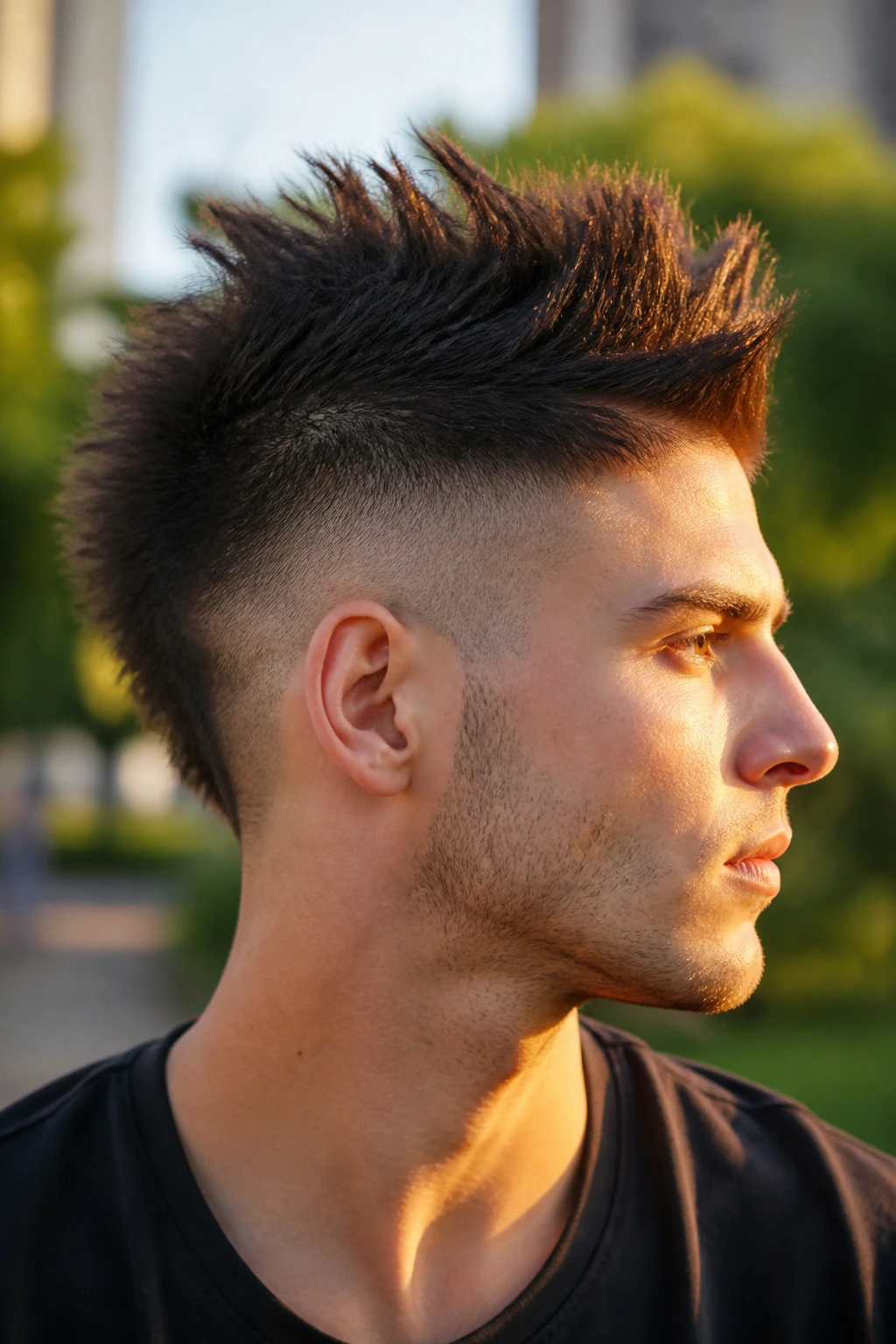
Most people focus on the front, but the crown is where the “mohawk” spirit really lives. By concentrating the height at the back of the head, you create a silhouette that looks amazing from the profile.
This style is excellent for those who want a bit of extra height without having a giant wall of hair at the front of their face. It feels more subtle and grounded, focusing the energy toward the middle of the scalp. It is also a very practical cut for people who wear hats often, as the spikes at the crown are less likely to be crushed than the spikes at the front.
17. The High-Contrast Fohawk
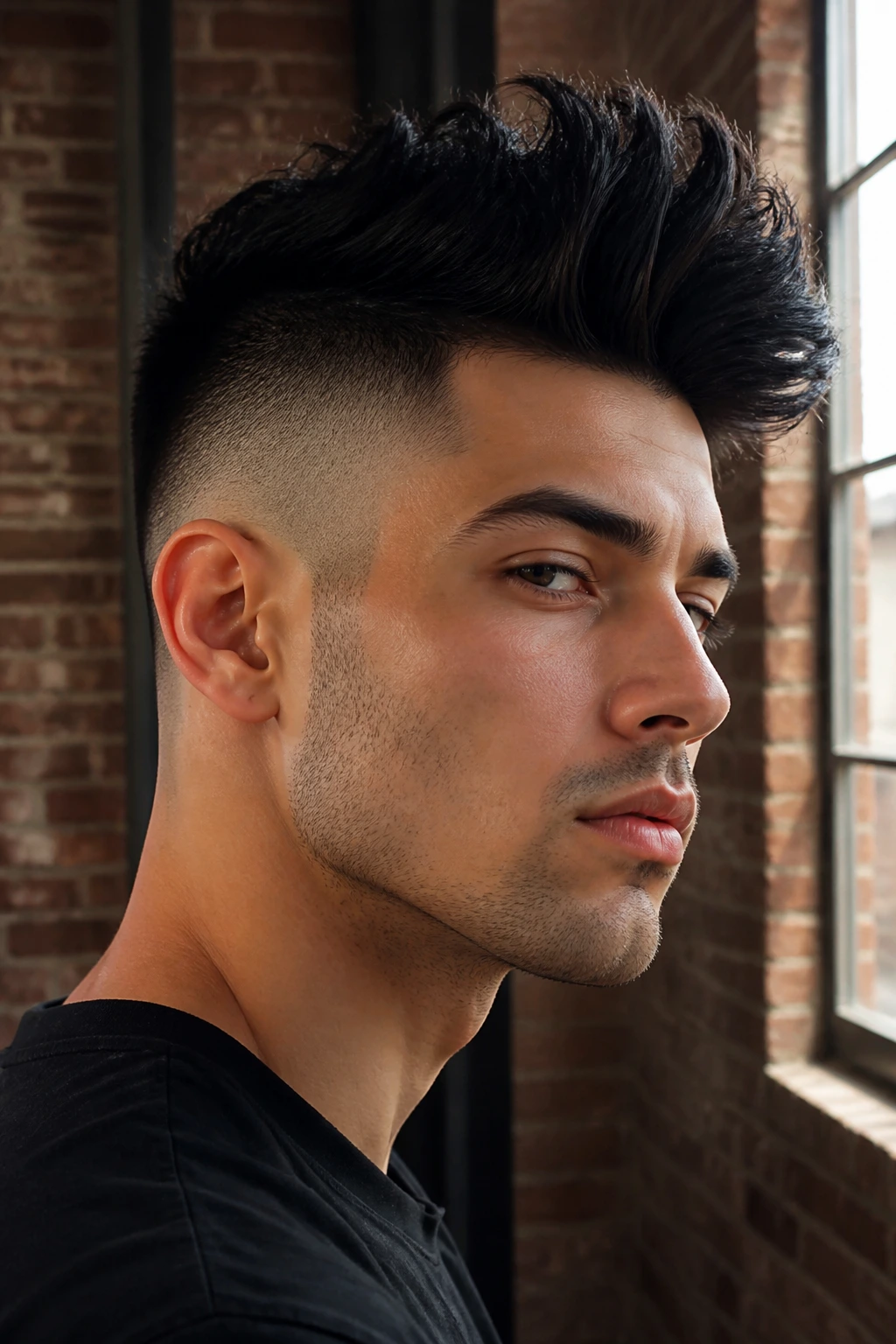
Contrast is the heart of any good haircut, but the high-contrast fohawk takes it to the extreme. This involves a very long, thick section on top paired with a very short, tight fade on the sides. The difference in hair density creates a visual pop that is impossible to ignore.
It’s a bold choice, but it pays off if you have thick, straight hair. Because you have so much hair to work with on top, you can create a literal wall of volume. The sides act as a frame, emphasizing that volume even further. Just be prepared to commit to regular maintenance, as the transition between “very long” and “very short” becomes very noticeable the second your hair starts to grow.
18. The Asymmetric Fohawk

Why keep things symmetrical? An asymmetric fohawk leans to one side, creating a swooping effect across the top of the head. It’s a bit more creative, a bit more artistic, and definitely more unique than a standard center-spiked cut.
You will need a bit of practice to get the hang of styling this. You are essentially creating a wave that just happens to be directed toward a central point on the head. Use a side-to-side motion when blow-drying to build the base, and then use your hands to “shingle” the hair toward the center, creating a flowing effect rather than a spiky one.
19. The Wet-Look Fohawk
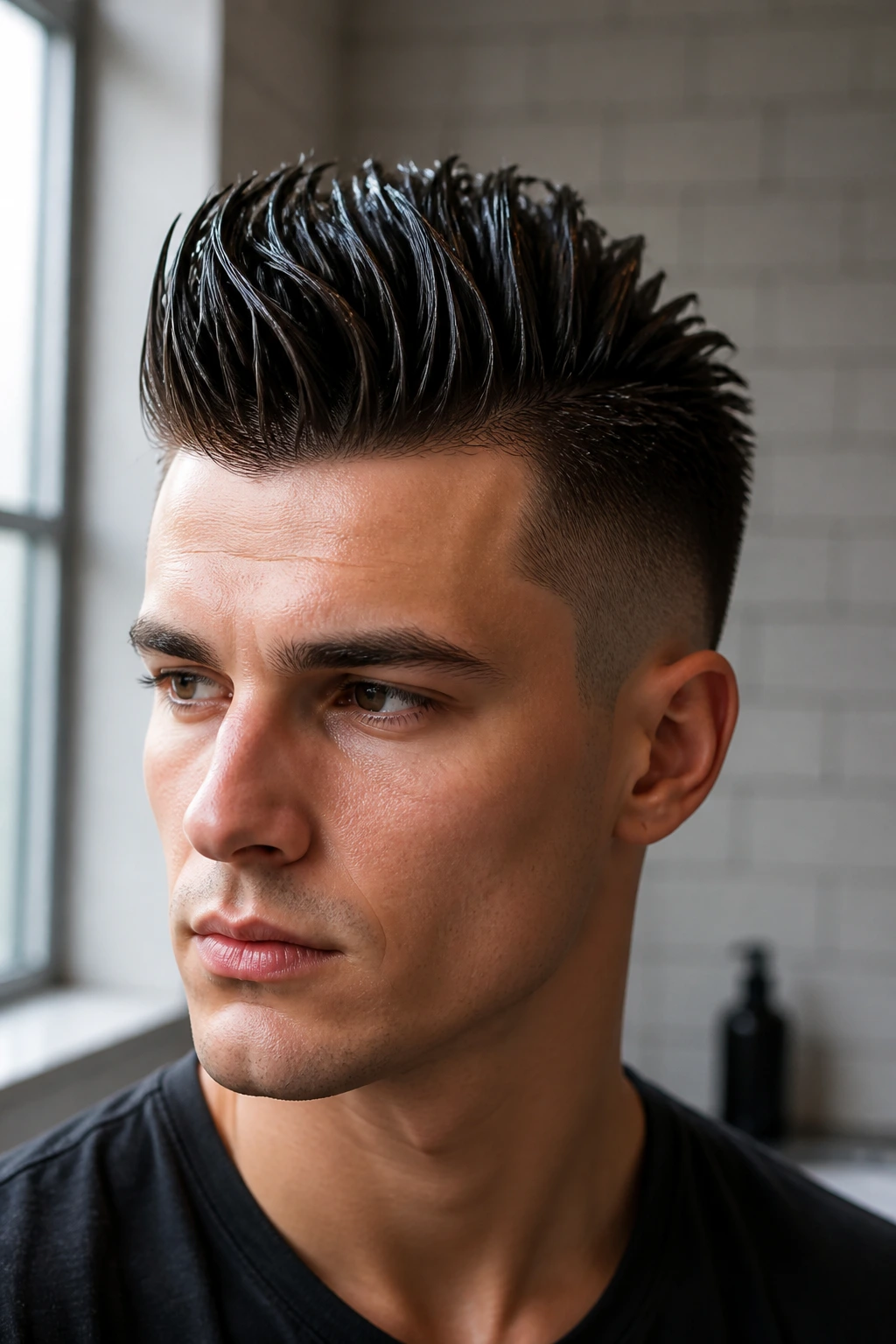
The wet-look fohawk is a nod to the fashion-forward trends of the moment. By using a water-based high-shine pomade, you can create a fohawk that looks sleek, dark, and perfectly structured. It has a high-glamour, high-drama appeal.
The secret here is the quantity of product. You want enough to create that slick, glassy appearance, but not so much that the hair becomes greasy or collapses. Apply the product to towel-dried hair, comb it into the desired shape, and then leave it alone. The biggest mistake people make with this look is touching it; once the product starts to set, playing with it will break the shine and create frizz.
20. The Fohawk with Temple Fade
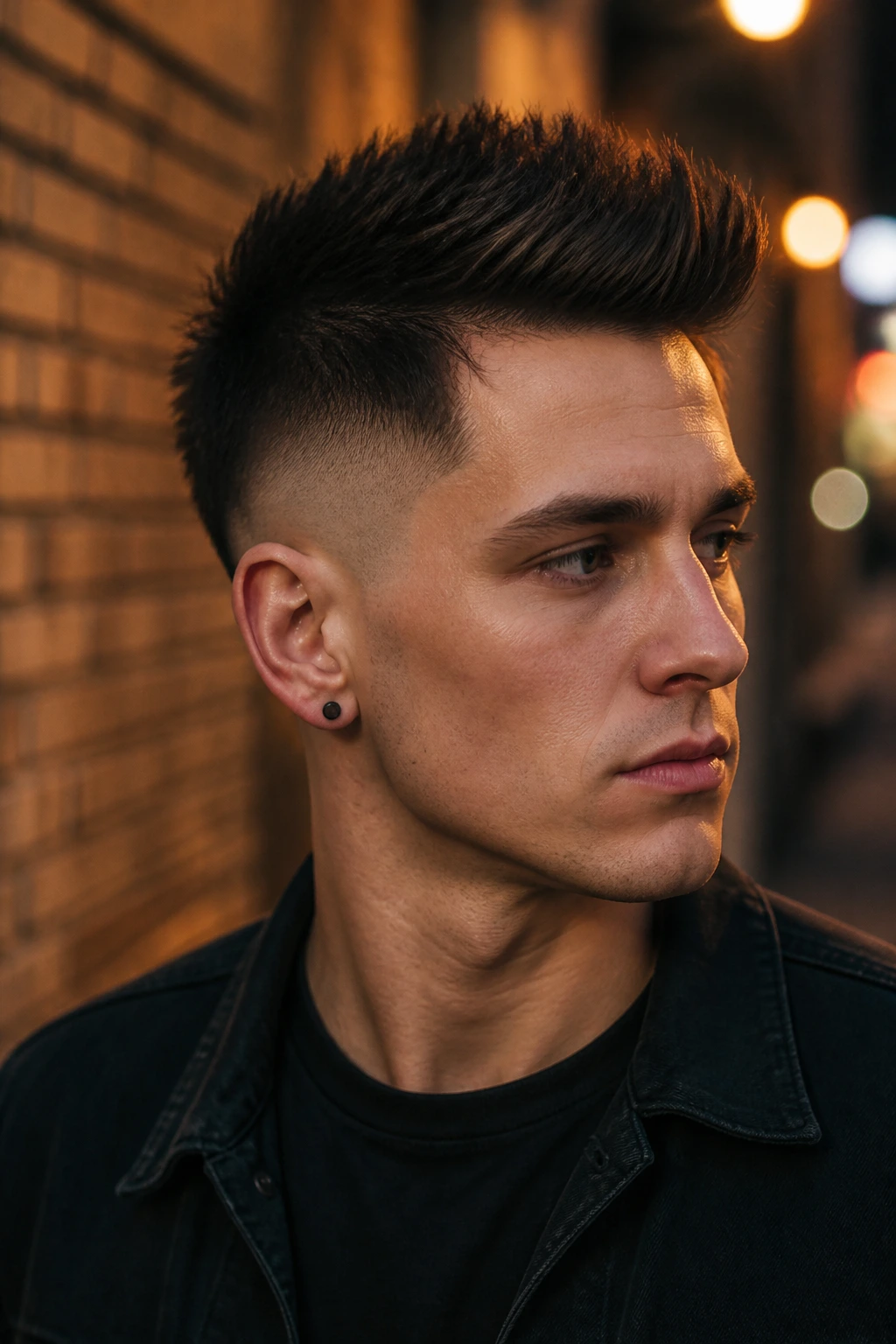
The temple fade, also known as the “taper,” is a subtle detail that changes the whole vibe. By focusing the shortest part of the fade around the temples and keeping the rest of the sides slightly longer, you create a more nuanced look. It feels less aggressive than a full-head fade.
It’s a great style for those who have a receding hairline or a high forehead, as the temple fade draws attention away from the corners and toward the center of the head. It is a very flattering, smart cut that balances out your features while still giving you that fun, spiky aesthetic on top.
21. The Graduated Spike Fohawk
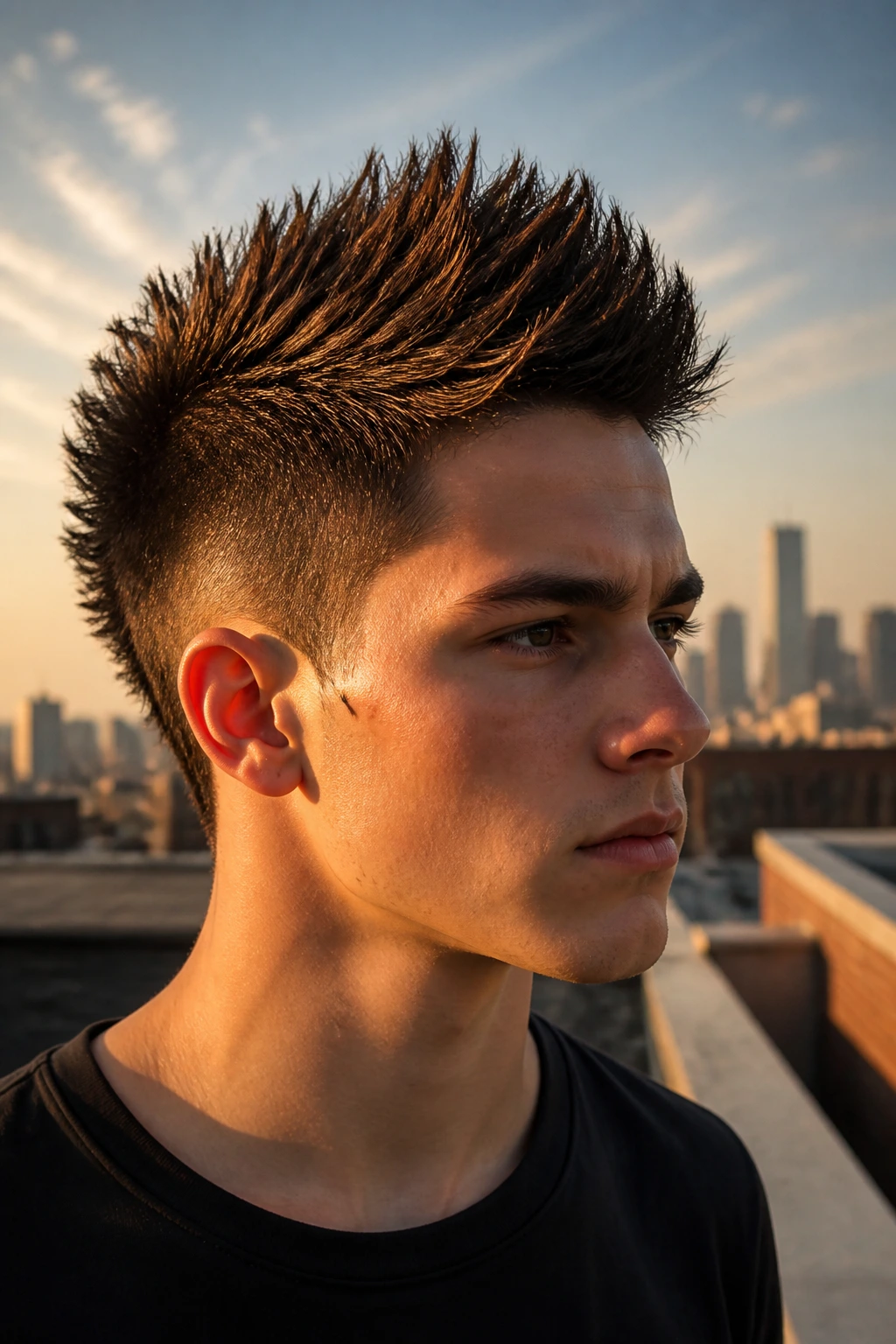
Instead of all spikes being the same height, the graduated fohawk starts short at the back, grows taller toward the middle, and then shortens again at the front. This “arch” shape follows the natural curve of the skull.
It looks natural because it mimics the shape of your head rather than fighting it. It’s a very balanced, aesthetically pleasing version of the cut. Because the hair is shorter at the front, it stays out of your eyes, making it one of the most practical versions for an active lifestyle.
22. The Extreme-Height Fohawk
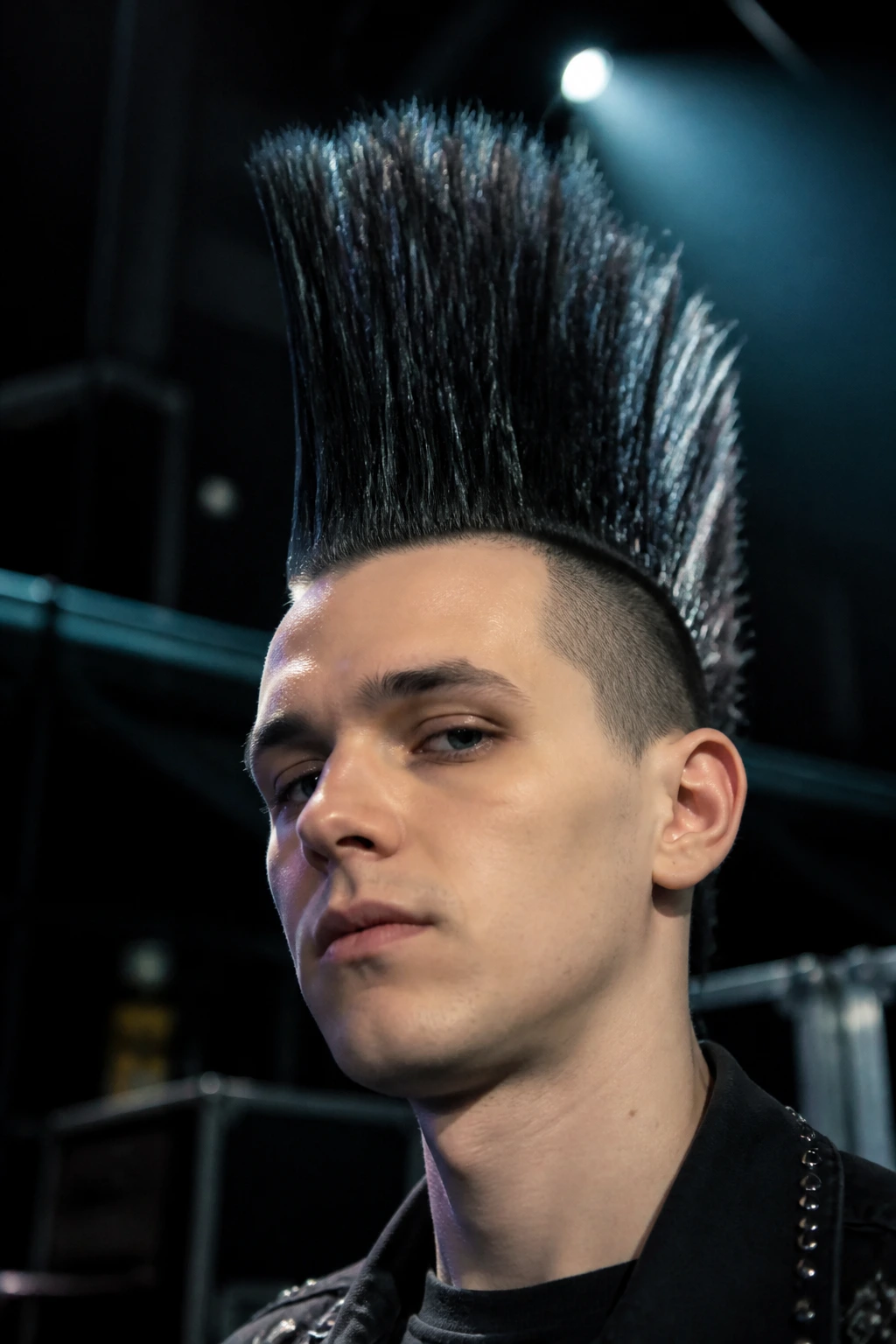
This is for the person who truly wants to reach for the stars. By keeping the top hair at six inches or more and using a very strong hold, you can create a towering fohawk that is as close to a true punk mohawk as you can get without the full shave.
The Challenge of Gravity
- Blow-dry upside down: This is the only way to build enough root volume to support that much height.
- Use a scaffold: Sometimes, a bit of hair powder applied directly to the base of the hair creates a “grit” that keeps the tall strands from falling.
- The “Freeze” factor: You will need a serious hairspray. A standard hold won’t cut it. Look for sprays labeled “extreme” or “spiking.”
Final Thoughts
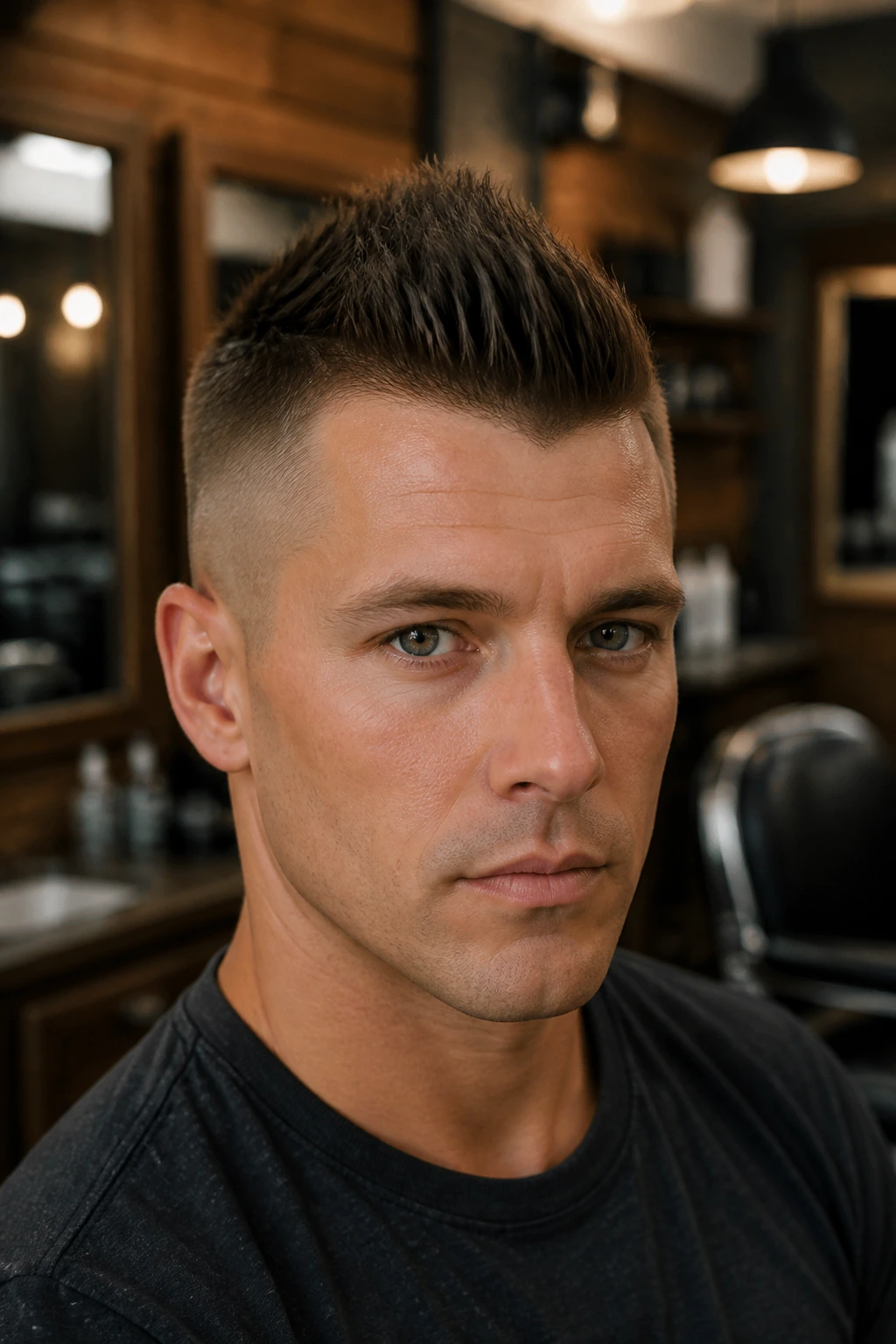
Choosing a fohawk is a commitment to a silhouette, not just a haircut. For those of us with straight hair, it is a chance to play with geometry and structure in a way that other textures rarely allow. You have a canvas that wants to be shaped, and the fohawk is the perfect tool for that.
Remember that the haircut is only half the battle. The product you choose and the way you use your blow dryer are what determine whether your spikes stay standing through the afternoon. Don’t be afraid to experiment with different lengths on the sides or different levels of texture on top. The best fohawk is the one that fits your personal sense of style and the amount of effort you are actually willing to put in on a Tuesday morning. Keep your edges sharp, find the right balance for your face shape, and wear it with confidence.