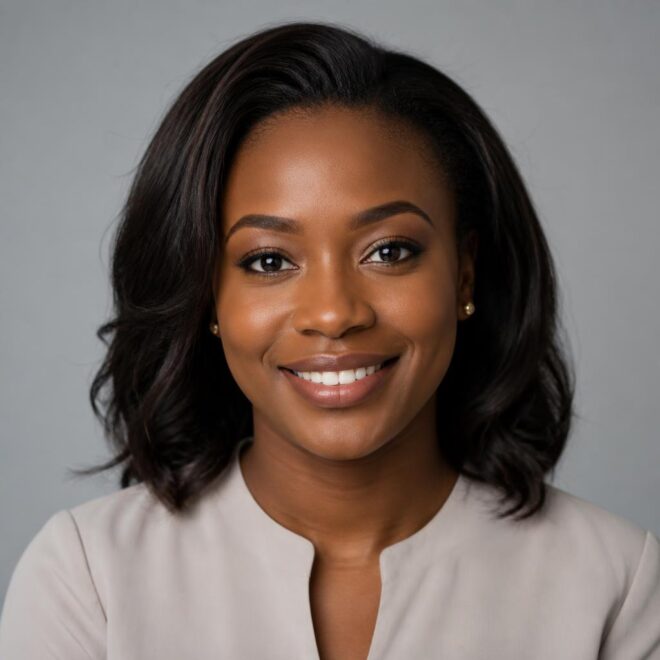


Every morning starts the exact same way for anyone committed to a short, chemically relaxed style. You slip off your silk scarf or satin bonnet, shake your head, and watch your hair fall into place with minimal effort. That is the reward for choosing a short, straight haircut on relaxed hair. It is a look that demands precision during the cut and discipline during the wrap, but it rewards you with an unmatched level of sharpness, movement, and sophistication.
Chemically relaxed hair is structurally different from naturally straight hair. The process of relaxing breaks down the disulfide bonds in textured hair to permanently straighten it. This means the hair is highly responsive to molding, wrapping, and low-heat styling, but it is also more fragile and porous than hair that is straight by nature. When you cut this hair short, you expose the scalp, highlight your facial features, and create a canvas that depends on healthy hair practices to look its best.
Too many guides lump all straight styles together, ignoring the unique physical properties of relaxed hair. If you treat relaxed hair exactly like naturally straight hair, you will end up with dry, brittle strands that snap at the crown. Relaxed hair needs a careful balance of moisture and protein, minimal direct heat, and a stylist who understands how to cut with the grain of your hair.
Finding the right short style is about matching your daily routine with your hair’s density and your face shape. Whether you are growing out a longer look, transitioning to something more manageable, or simply looking to update your signature style, these options showcase the versatility of short, straight, relaxed hair.
1. The Tapered Pixie with a Swept Fringe
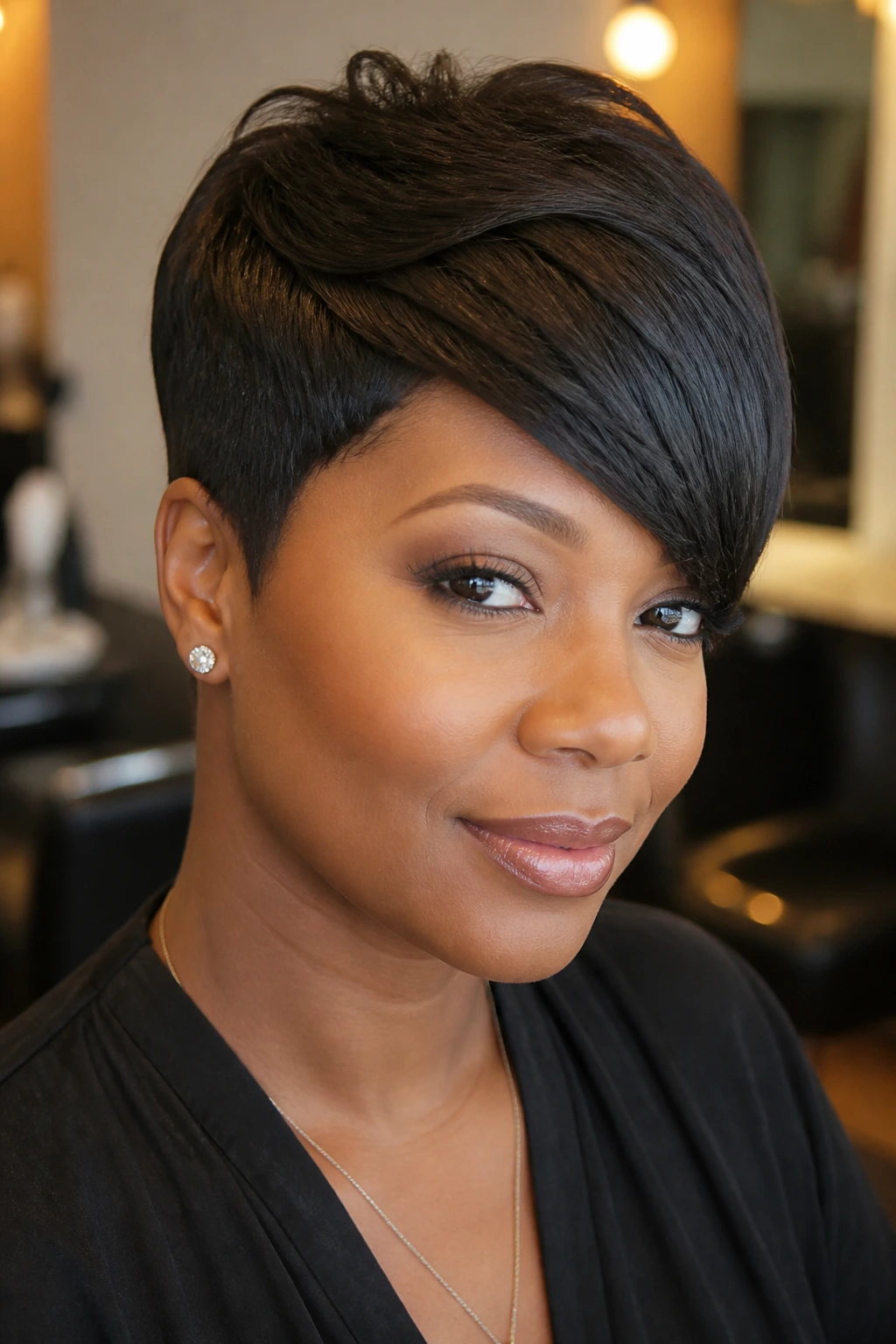
This style is a staple for a reason. It keeps the hair incredibly short and clean around the back and sides while leaving longer, touchable layers at the crown that sweep across the forehead. The contrast between the tight nape and the full top creates an immediate visual balance that flatters oval and heart-shaped faces.
Why the Taper Matters
A great taper is cut with shears or a razor rather than clippers to keep the edges soft and feminine. Keeping the hair close to the scalp at the nape of the neck prevents the bulkiness that often ruins short styles when they start to grow out. The longer top layers can be wrapped at night around the head, which preserves the straightness and volume without requiring daily heat from a flat iron.
Key Styling Essentials
- Use a lightweight, alcohol-free molding foam on wet hair to lay down the back and sides.
- Wrap the longer top section in a circular motion around the head before applying a mesh wrap strip.
- Sit under a hooded dryer until dry, then brush out the hair for natural bounce and body.
- Finish with a tiny drop of feather-light serum to block humidity and add a healthy reflection.
Pro tip: Never use heavy grease or thick pomades on the swept fringe, as this will weigh down the hair and make it look greasy instead of airy.
2. The Classic Razor-Cut Bob
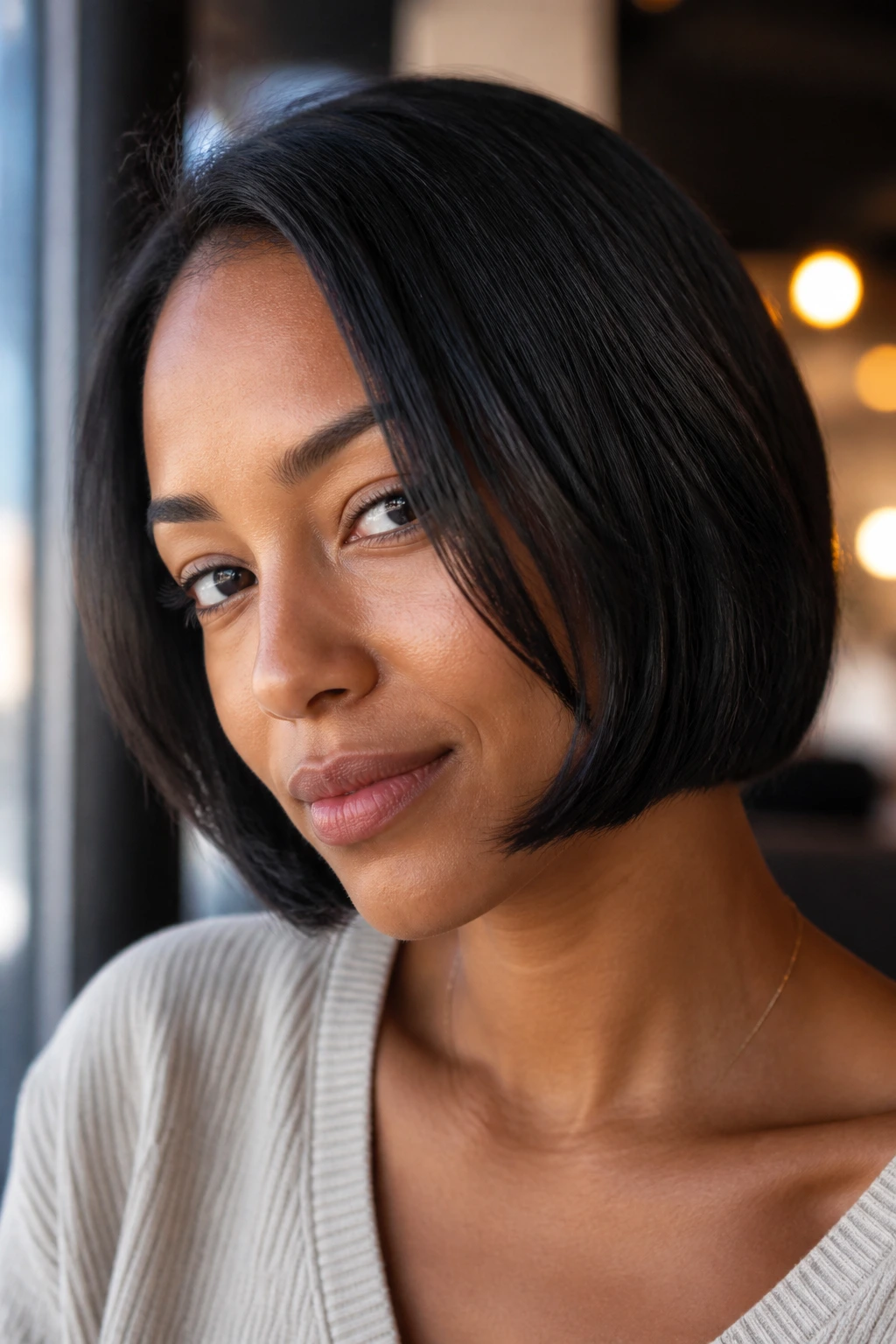
Razor cutting relaxed hair creates an entirely different movement than traditional scissor cuts. The blade thins out the ends of the straight hair as it cuts, preventing that heavy, blunt “mushroom” shape that can sometimes happen with thicker hair densities. This Bob sits right at the jawline, framing the face with a light, swingy motion that moves whenever you do.
Because relaxed hair has lost some of its natural elasticity, a blunt scissor cut can sometimes look stiff or static. The razor cut introduces micro-layers at the very tips of your hair, allowing the straight strands to curve inward toward the jaw naturally. It is a brilliant option for anyone who wants a classic silhouette but hates the rigid, unyielding look of a traditional blunt cut.
To style this at home, you only need a large ceramic round brush and a blow dryer on medium heat. Focus on lifting the roots to create volume, then curve the brush inward at the ends. Because the razor has already pre-shaped the hair to curve, you will find you do not need to pull out the flat iron to achieve that perfect, face-framing bend.
3. The Molded Boy Cut with Side-Swept Waves
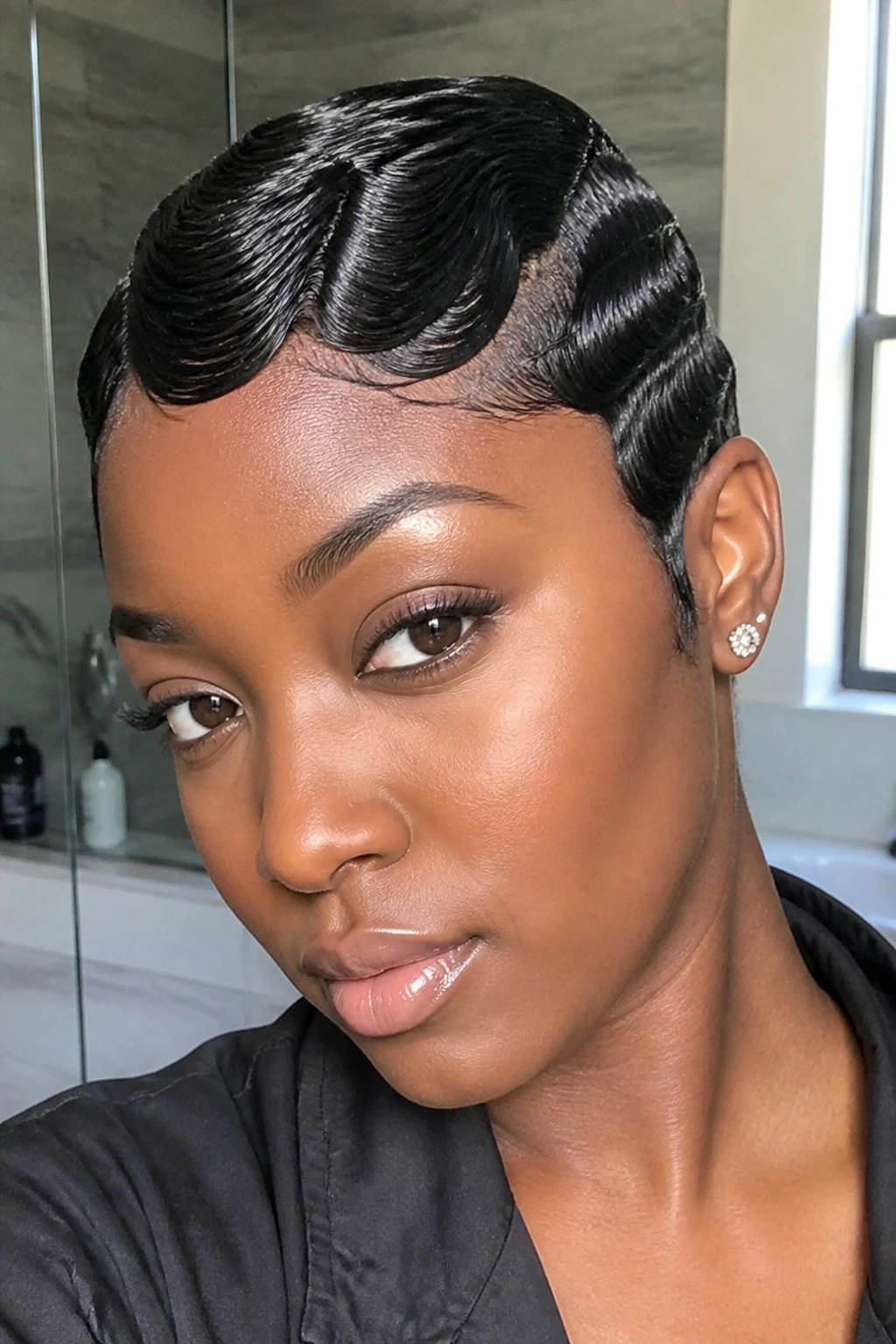
What happens when you want to go as short as possible without losing your styling options? You opt for a molded boy cut that uses setting lotion to lay the hair flat against the scalp in structured, gentle waves. This style is exceptionally sleek, showing off your cheekbones, jawline, and brow structure with total clarity.
How to Lay the Mold
To get this look, you must start with clean, wet hair that has been deeply conditioned. Apply a generous amount of high-quality setting foam from roots to ends, comb the hair flat in the direction of your natural growth pattern, and use your fingers and a fine-tooth comb to press subtle waves into the side panels.
Wrap a strip of black styling paper tightly around your head to lock the hair in place while it dries. Once you step out from under the dryer, the hair is completely set, offering a glass-like finish that stays put for days.
Daily Upkeep Tips
- Sleep on a silk pillowcase even if you wear a scarf, as cotton will wick away the moisture your scalp needs.
- Avoid getting this style wet in the shower; a high-quality shower cap with a terry-cloth lining is a non-negotiable purchase.
- Refresh the shine daily with a light misting of silicone-free oil spray held at arm’s length.
4. The Asymmetrical Lob with Sharp Edges
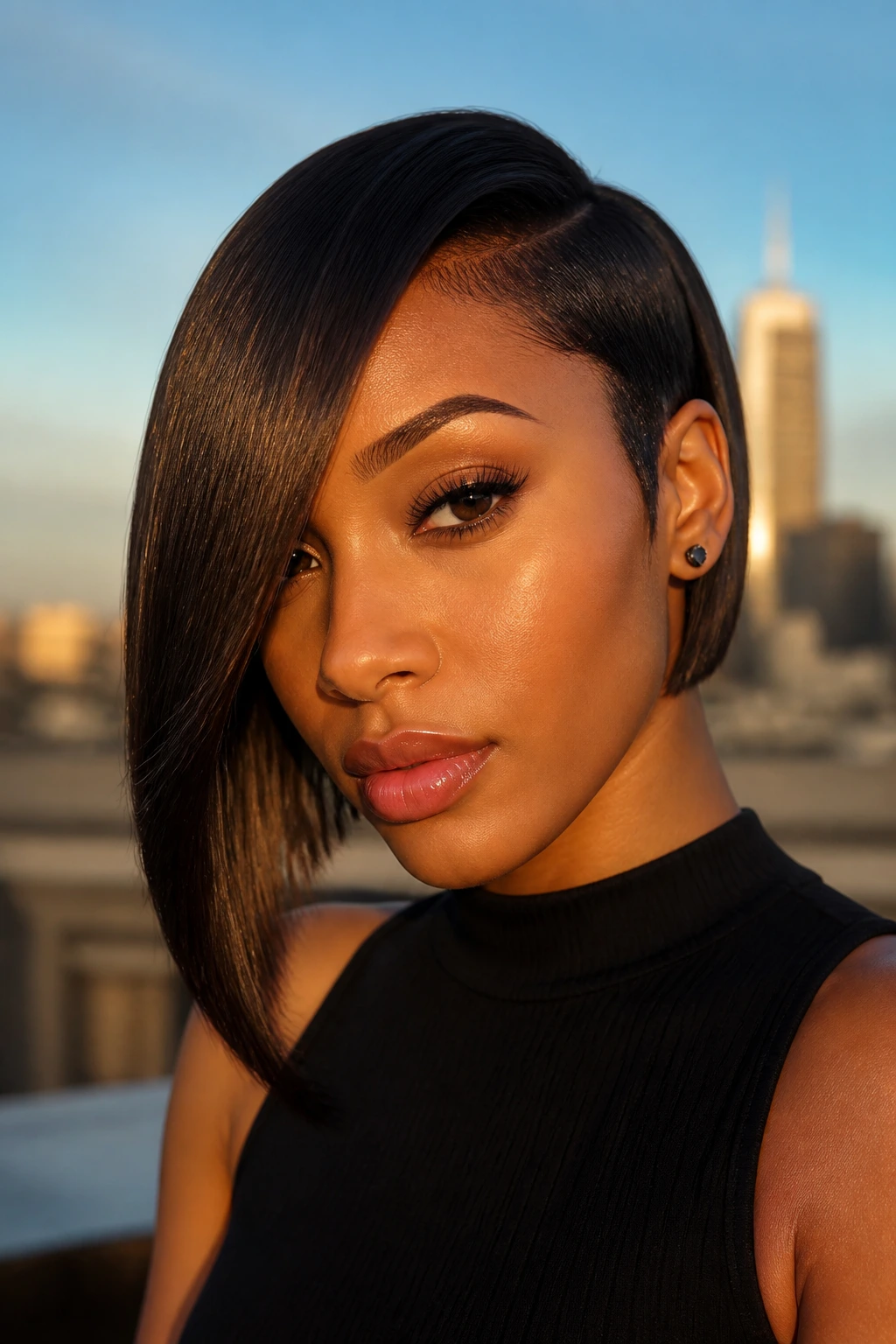
The asymmetrical long bob (or “lob”) is designed for those who love drama and geometric interest. One side of the hair is cut short, grazing the middle of the neck, while the other side cascades down past the collarbone in a long, sharp wedge. It is a striking look that relies on the absolute straightness of relaxed hair to show off its clean lines.
This cut works wonders for round face shapes because the long, diagonal line of the fringe and the uneven sides create an elongating effect. When the hair is chemically relaxed, it lies flat enough to make this geometry look incredibly crisp. Any wave or frizz will ruin the line, so this is a style for those who are committed to regular maintenance.
To style this, you will want to work in small, horizontal sections with a high-quality flat iron. Apply a professional heat protectant spray first, then run the iron down the hair shaft using the chase method—placing a fine-tooth comb directly in front of the flat iron as you slide it down. This aligns the hair fibers perfectly, ensuring a finish that looks like polished glass.
5. The Textured Crop with Wispy Bangs
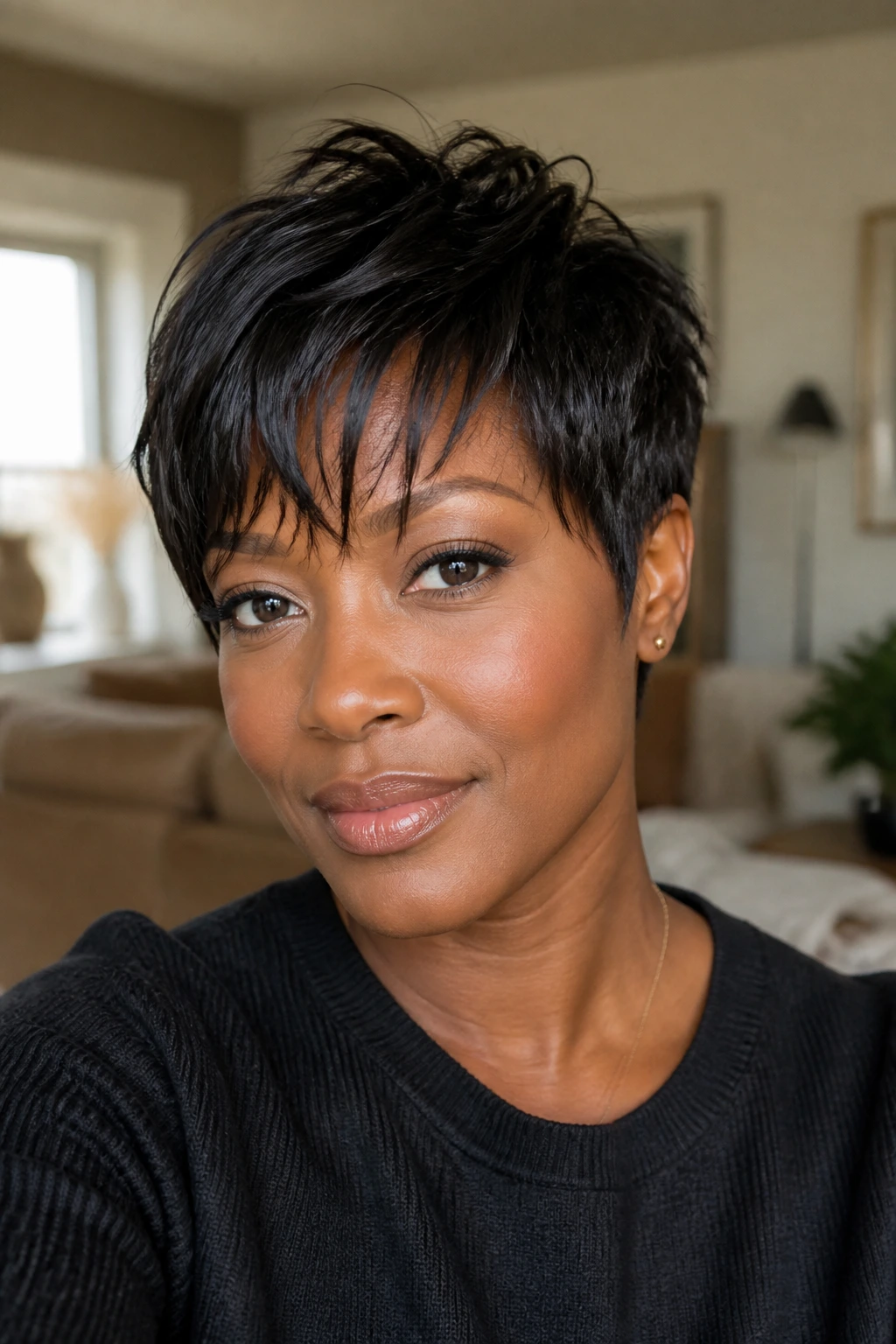
This is the ultimate low-maintenance option for anyone who wants a short style with plenty of personality. The hair is cut into short, uneven layers all over the head, creating a textured, piecey look that does not require absolute straightness to look fantastic. The bangs are kept thin, airy, and wispy, barely dusting the eyelashes.
Unlike the molded styles, the textured crop thrives on a little bit of root volume and lived-in movement. If your relaxer is starting to grow out and you have a few weeks of new growth at the roots, this style actually looks better because the natural texture adds a beautiful, organic lift at the base. It is incredibly forgiving and perfect for busy lifestyles.
Styling takes less than five minutes in the morning. Rub a dime-sized amount of lightweight styling paste or wax between your palms to warm it up, then ruffle your hands through your dry hair to define the layers. Use your fingertips to piece out the wispy bangs, pulling them down over your forehead in tiny, distinct sections.
6. The Sleek Bowl Cut with a Blunt Perimeter
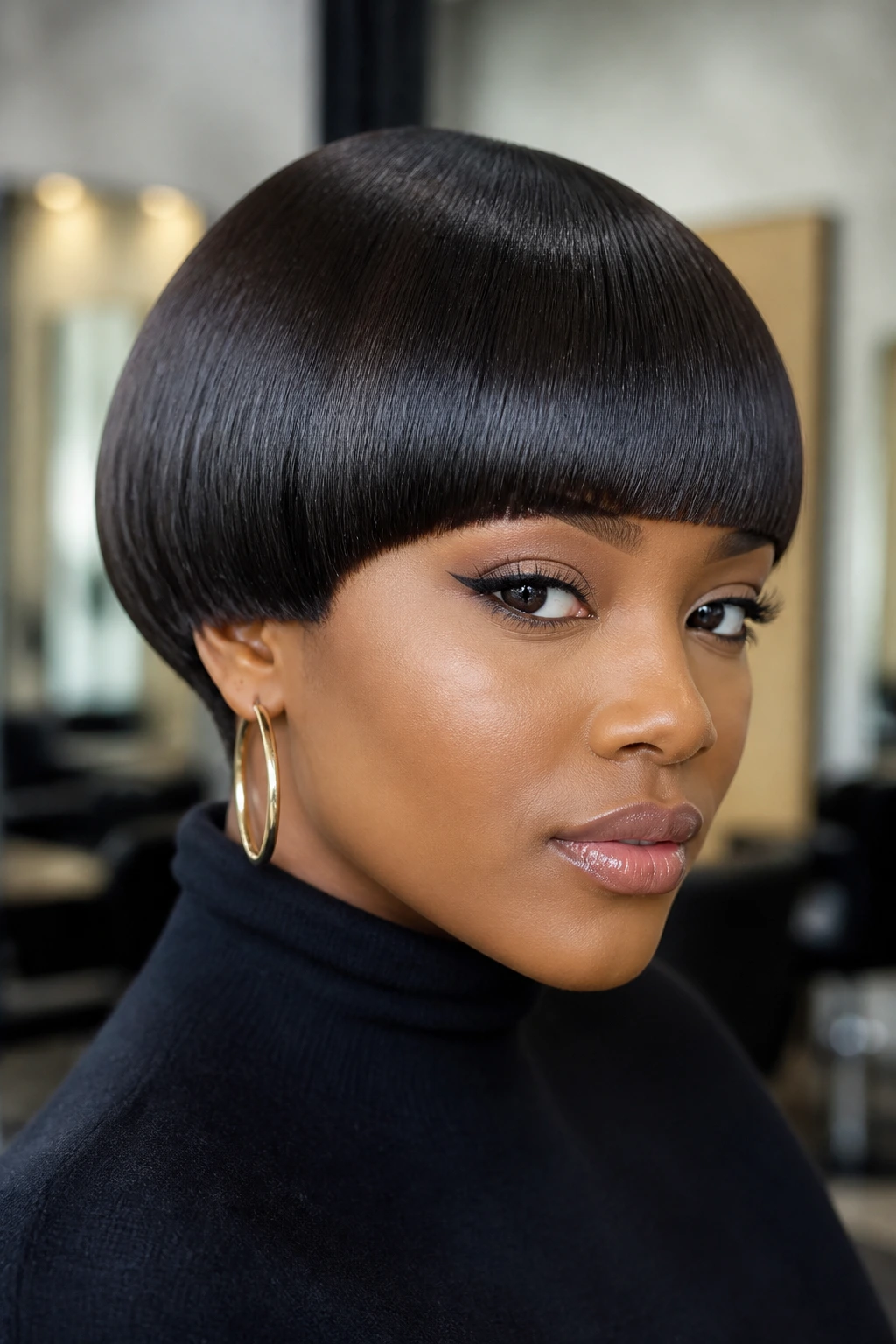
Do not confuse this with the childhood cuts of decades past. The modern bowl cut on relaxed hair is a high-fashion, high-impact style that features a thick, heavy fringe that wraps around the head in a continuous, blunt line. The hair underneath the perimeter is buzzed short or closely tapered, creating a dramatic overhang.
How It Compares to the Traditional Bob
| Feature | Modern Bowl Cut | Classic Bob |
|---|---|---|
| Perimeter | Continuous line from bangs to back | Angles down toward the front |
| Underneath | Tapered or buzzed very short | Left long to match the outer layers |
| Volume Focus | Concentrated at the crown and temples | Distributed evenly along the sides |
| Heat Required | Medium (mostly wrap and go) | High (requires round-brushing or flat ironing) |
This style is perfect for those with naturally straight or relaxed hair that has a high density. The weight of the hair helps the blunt edge lay flat against the head, creating a solid wall of shine. Because the sides and back are cut so short underneath, you do not have to worry about the hair flipping out at the collar when you move your neck.
To keep the perimeter looking perfectly straight and sharp, you will need to visit your stylist every three to four weeks for a trim. It is a high-maintenance cut, but the daily styling is incredibly simple: wrap it at night, brush it down in the morning, and go.
7. The Layered Shag with Feathered Sides
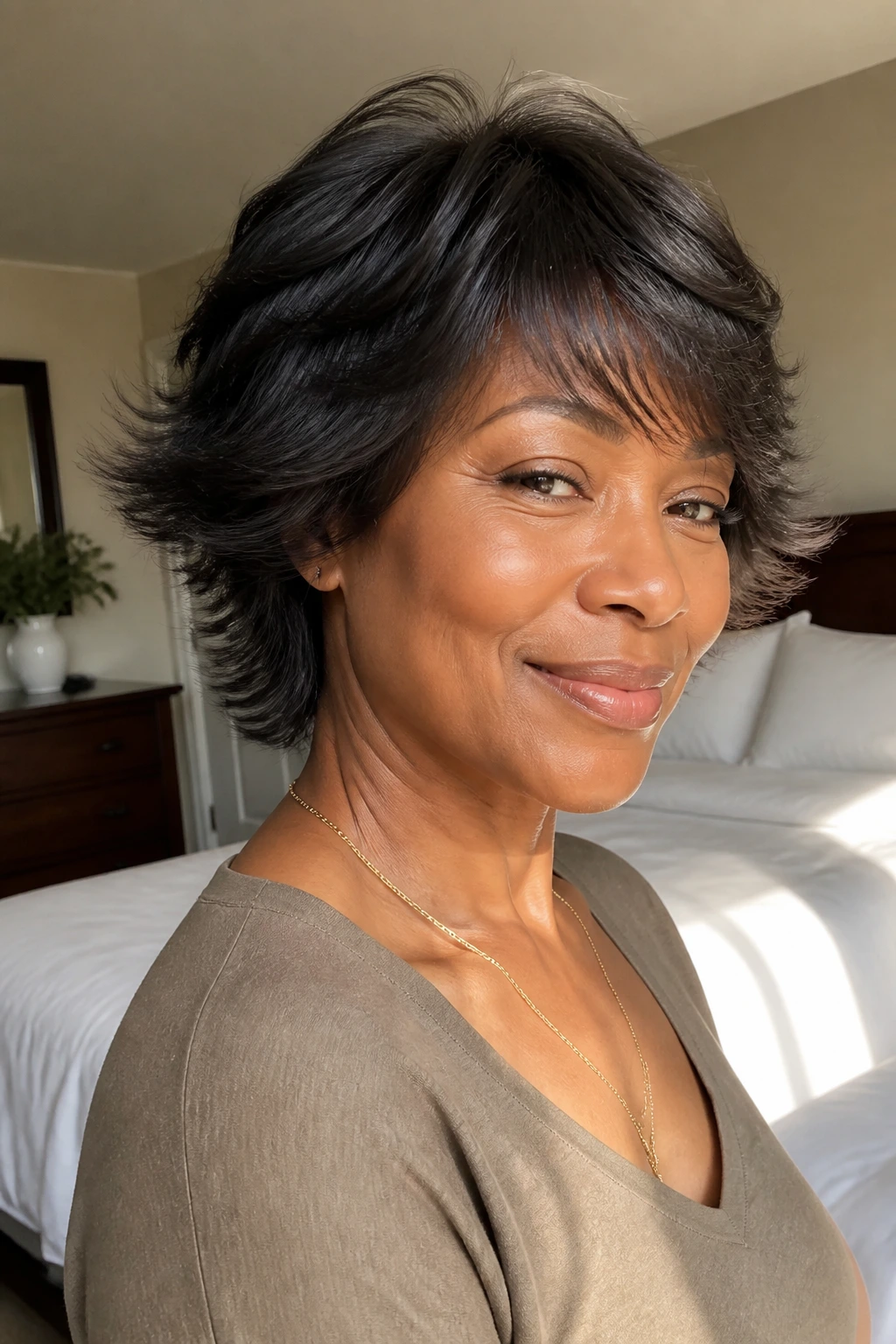
If you love retro vibes and want a style that feels effortless, the short shag is your answer. This cut features short, choppy layers at the crown, feathered sides that flip outward, and longer, wispy pieces at the nape of the neck. It breaks away from the ultra-sleek, molded look in favor of volume, airiness, and playfulness.
Feathering for Movement
Feathering is achieved by slide-cutting the hair away from the face, which allows the relaxed strands to lift and flick outward. This technique removes the weight from the sides of the head, making it an excellent choice for anyone whose hair tends to get flat and lifeless. The layers catch the air, giving your hair a bouncy, energetic quality.
Daily Maintenance Checklist
- Wash with a volumizing, sulfate-free shampoo to keep the layers light.
- Apply a light leave-in conditioner, focusing only on the mid-shaft and ends.
- Use a small round brush to dry the sides in an outward, backward direction.
- Avoid heavy silicone products that can glue the feathered layers together.
Pro tip: Use a tiny amount of dry shampoo at the roots—even on clean hair—to give the crown layers the grit and lift they need to stay fluffy all day.
8. The Pixie Undercut with Geometric Lines
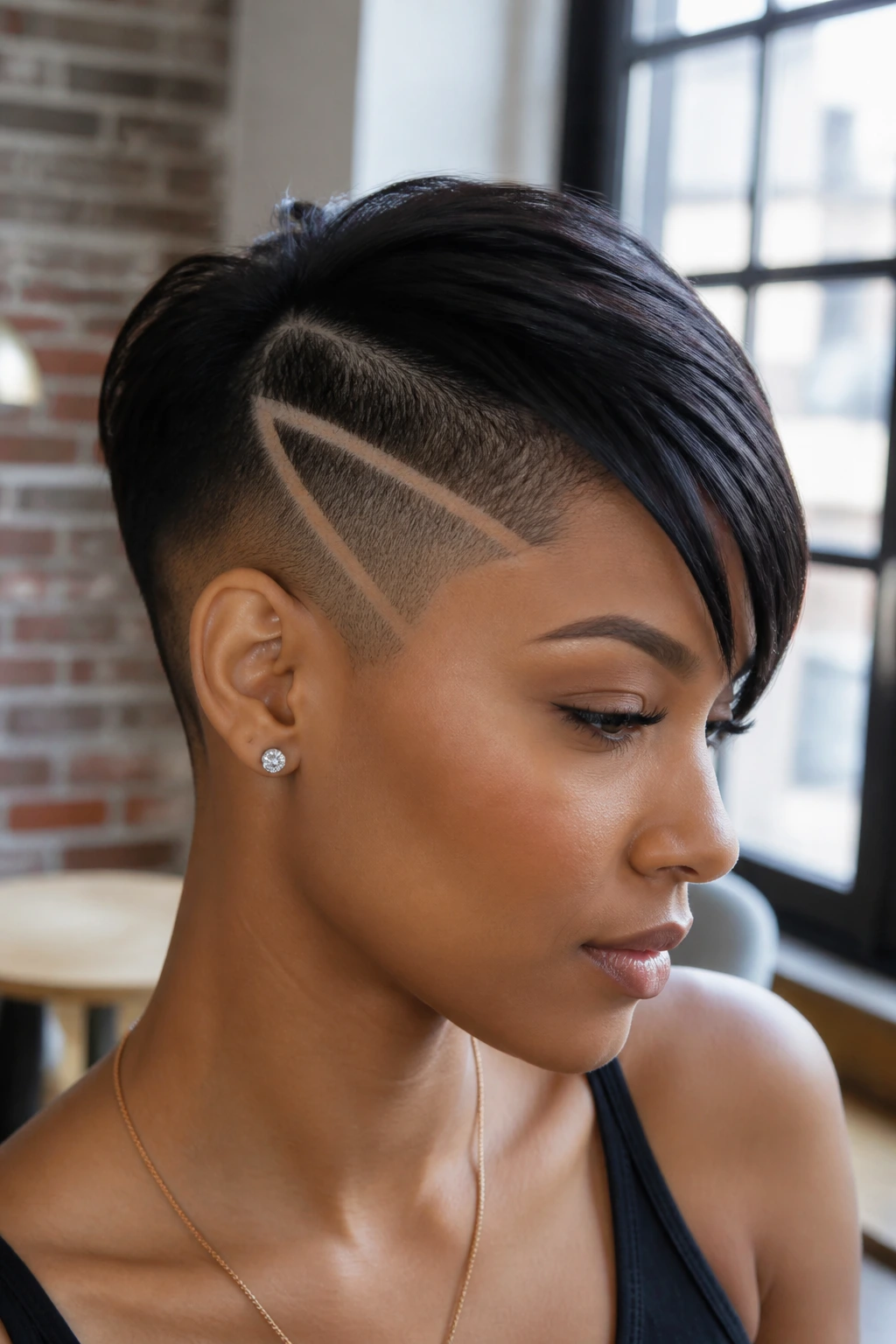
For those who want to add an edgy, modern twist to their look, the pixie undercut offers a brilliant solution. This cut involves shaving or closely cropping one or both sides of the head, often in a clean, diagonal line, while leaving the top hair long and perfectly straight. The contrast is sharp, clean, and incredibly powerful.
This style allows you to play with two completely different textures: the velvet-like closeness of the buzzed hair and the silkiness of the relaxed top layers. It also drastically cuts down on your styling time because half of your hair is already cut too short to require any styling at all. It is a savior during hot, humid weather.
When styling the longer top section, you can sweep it over the shaved side to create a dramatic, asymmetrical drape, or part it down the center for a futuristic, balanced look. Make sure your stylist uses a straight razor to clean up the lines of the undercut every two weeks to keep the geometry looking fresh and deliberate.
9. The Soft Mohawk with Tapered Sides
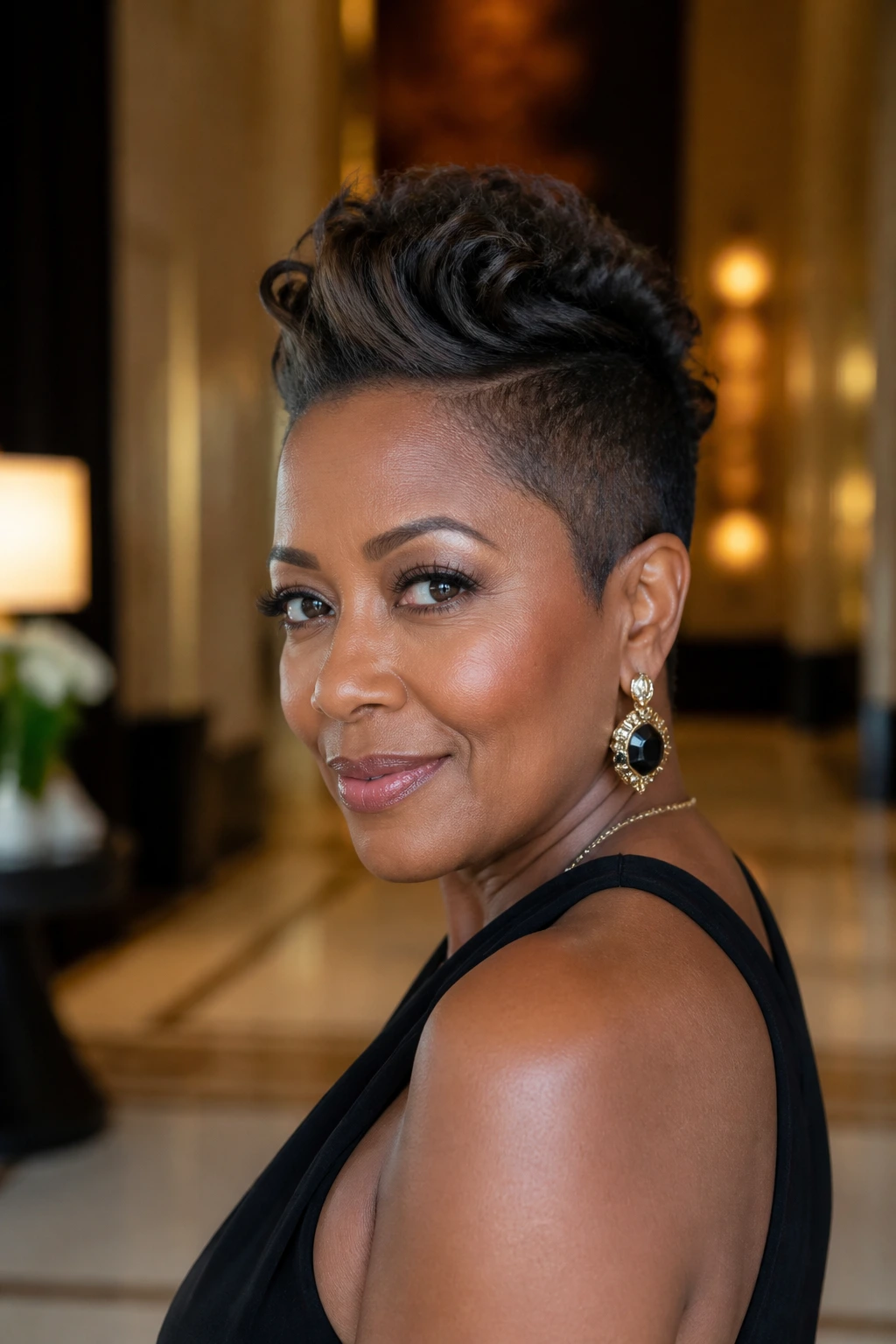
You do not need to be a punk rock enthusiast to pull off a Mohawk. The soft, relaxed version of this cut is elegant, sophisticated, and highly wearable. The sides of the head are tapered closely to the scalp, while a wider band of longer, layered hair runs down the center of the head from the forehead to the nape.
Styling the Center Ridge
Instead of styling the center section into hard, vertical spikes, use a small barrel curling iron or a mini flat iron to create soft, backward-rolling curls. Once the curls cool, run a wide-tooth comb or your fingers through them to break them up into a soft, voluminous wave that cascades down the center of your head.
This creates a beautiful, elongated silhouette that adds height to your frame and slims the face. Because the sides are tapered, the focus is drawn entirely upward, highlighting your eyes and cheekbones. It is a fantastic option for evening wear, as it looks spectacular paired with statement earrings.
10. The Deep Side-Parted Pixie with Molded Sides
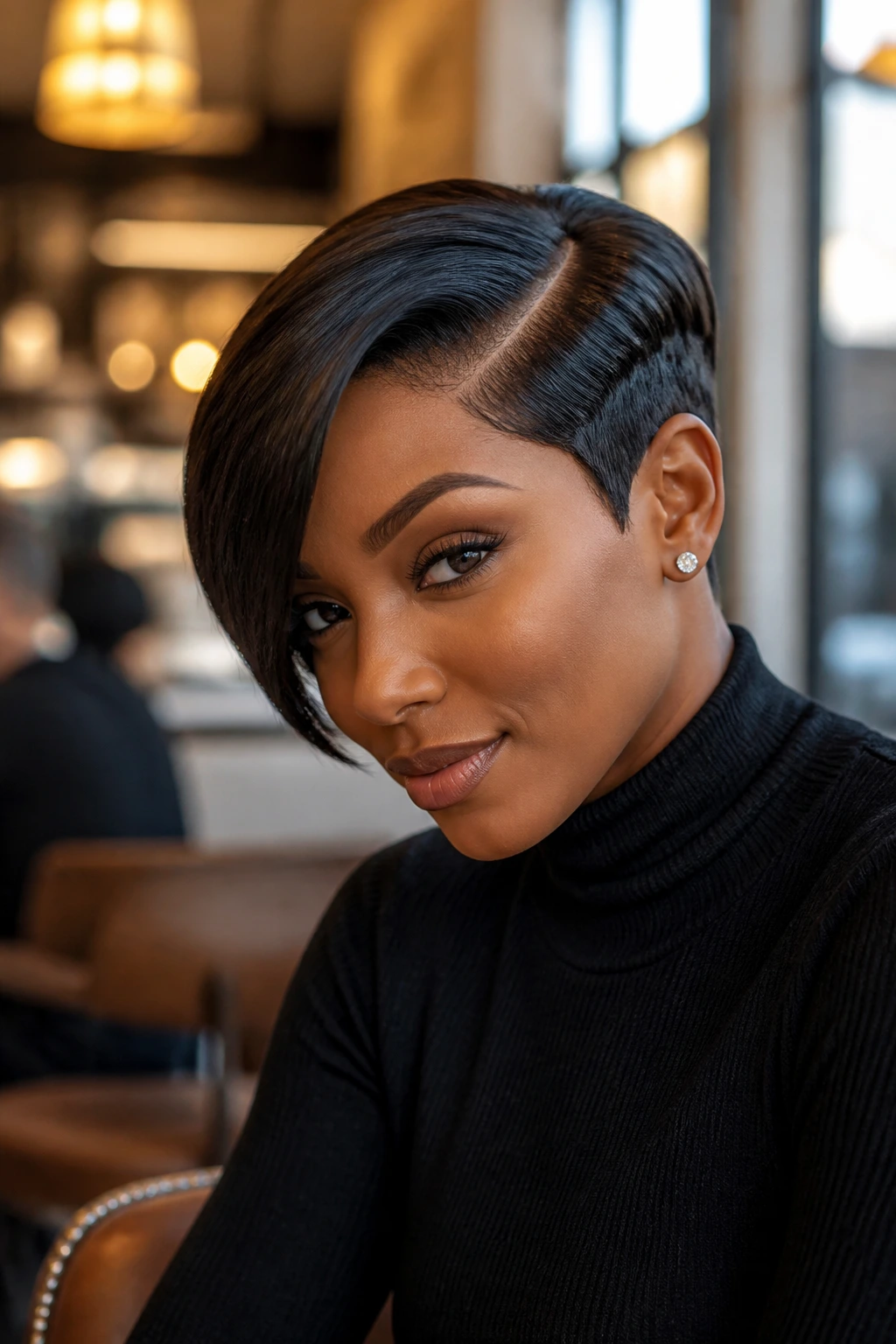
This style screams classic Hollywood glamour. It relies on a sharp, clean side part that starts directly above the arch of your eyebrow. The hair on the short side of the part is molded flat against the scalp, while the hair on the larger side is styled with volume, swooping low across the forehead in a dramatic wave.
The beauty of this look comes from the absolute contrast between the two sides of the part. One side is completely neat, quiet, and structured, while the other side is full of life, movement, and soft texture. It is a look that works beautifully for formal events or professional settings where you want to project confidence.
To achieve that ultra-flat, molded side, use a small amount of pomade or hair wax on a soft-bristle brush. Smooth the hair downward and backward behind your ear, then spray it with a firm-hold hairspray to lock it down. Use a ceramic flat iron on the longer side to create a soft, continuous bend that frames the eye before curving back.
11. The Blunt Chin-Length Bob
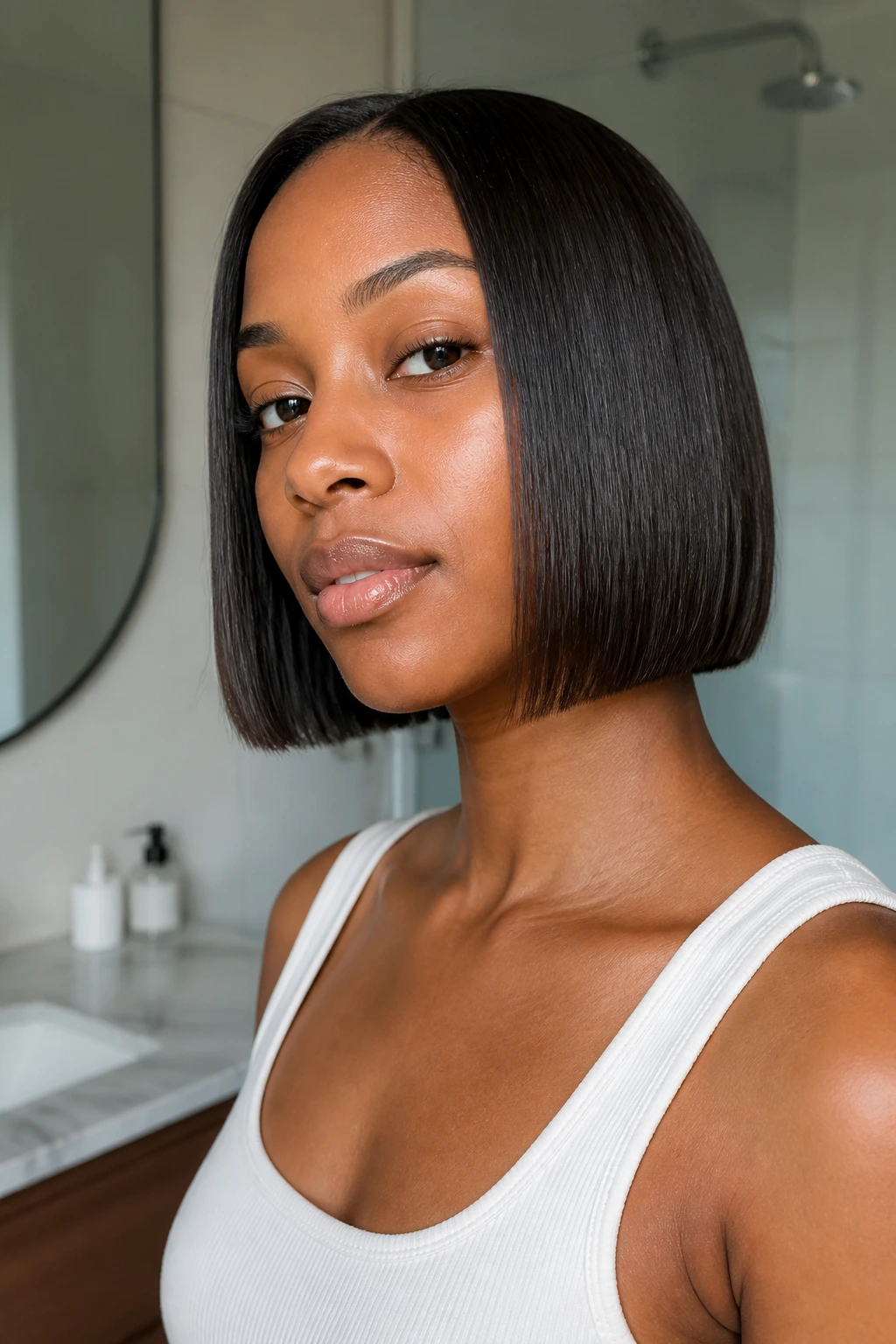
There is a quiet power in a perfectly executed blunt bob that hits right at the jawline. This cut features no layers, no feathers, and no texturizing. It is a single, solid sheet of straight hair that rings the face like a frame, showcasing the health, thickness, and shine of your relaxed hair.
Because there are no layers to hide imperfections, the health of your hair is front and center. This style is best for those who have naturally thick hair or whose relaxed hair has maintained its density. It requires healthy, hydrated ends that do not split or frizz, making a regular trim schedule and deep conditioning treatments absolute requirements.
To style this bob, you want to avoid round brushes, which can create a dated, puffed-out look. Instead, use a paddle brush and blow-dry the hair straight down from the ceiling to the floor. Follow up with a flat iron on a low temperature setting, pulling the iron straight down and curving it slightly inward only at the very last half-inch of the hair.
This technique keeps the bob modern, sleek, and close to the face, allowing the hair to swing naturally when you turn your head. It is a timeless cut that never goes out of style and pairs beautifully with any wardrobe.
12. The Wispy Spiked Pixie
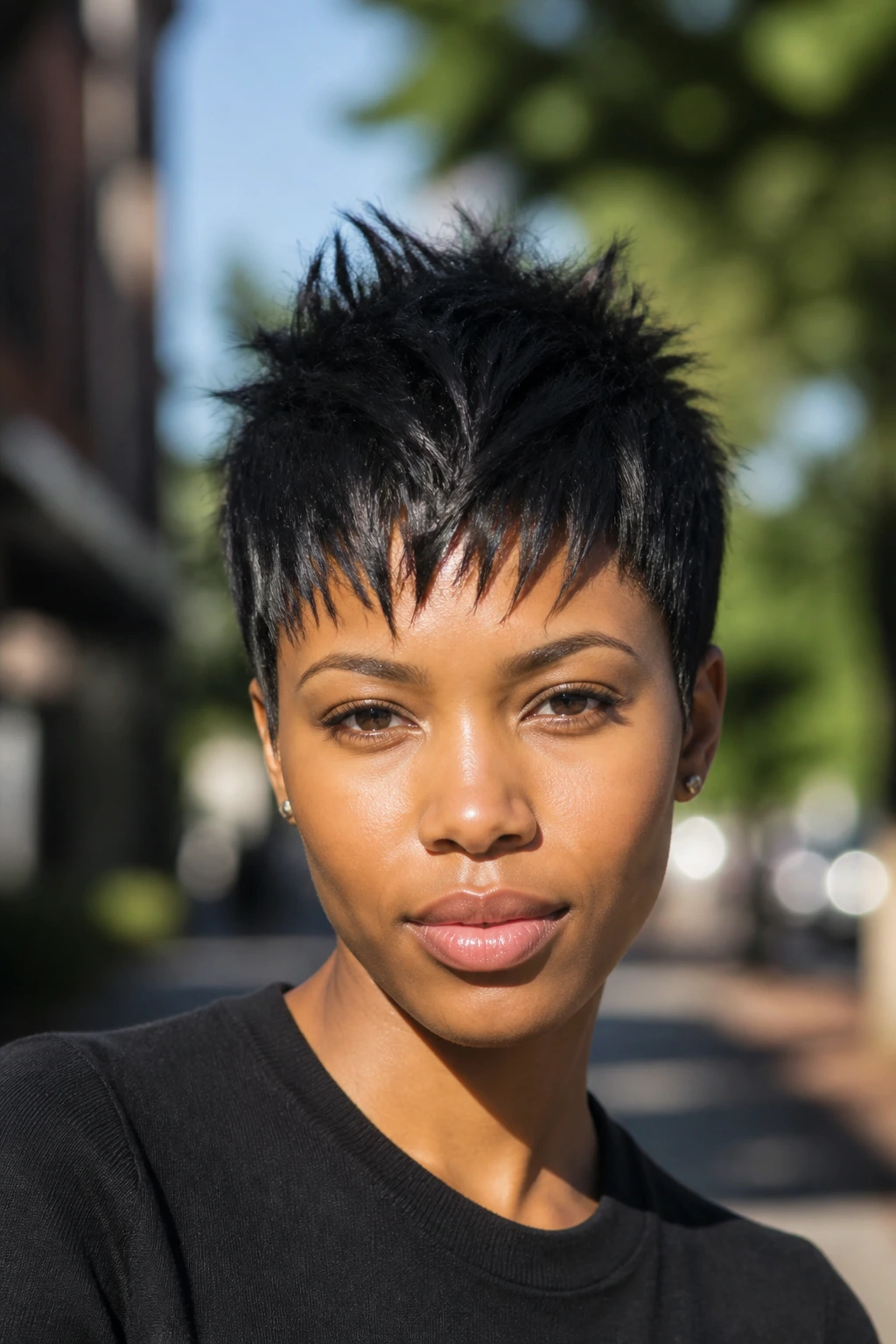
When you want a style that is full of texture and refuses to lay flat, the wispy spiked pixie is the perfect choice. This style features short, textured layers all over the head that are pulled upward and outward into soft, delicate spikes. It is a youthful, energetic style that is incredibly easy to manage.
Unlike traditional spikes, which can look stiff and crunchy, these spikes are kept soft and touchable. The secret is using a styling paste or clay rather than a hard gel. The product should provide hold while still allowing the hair to move and bend if someone runs their fingers through it.
Finding Your Best Short Style
To help you decide which direction to go, consider how these popular categories compare:
- Sleek & Molded: Best for oval faces, requires setting foam and wrap strips, low daily styling but high wash-day effort.
- Textured & Choppy: Best for round or square faces, requires styling wax or paste, very low daily maintenance, incredibly forgiving of new growth.
- Classic Bob Shapes: Best for heart or long faces, requires round brush or flat iron, medium daily maintenance, shows off hair thickness.
Choose the wispy spiked pixie if you want something that falls into the textured category. It is an excellent choice for anyone with fine or thin hair, as the multi-directional spikes create the illusion of a much thicker, fuller head of hair.
13. The Curved Inverted Bob
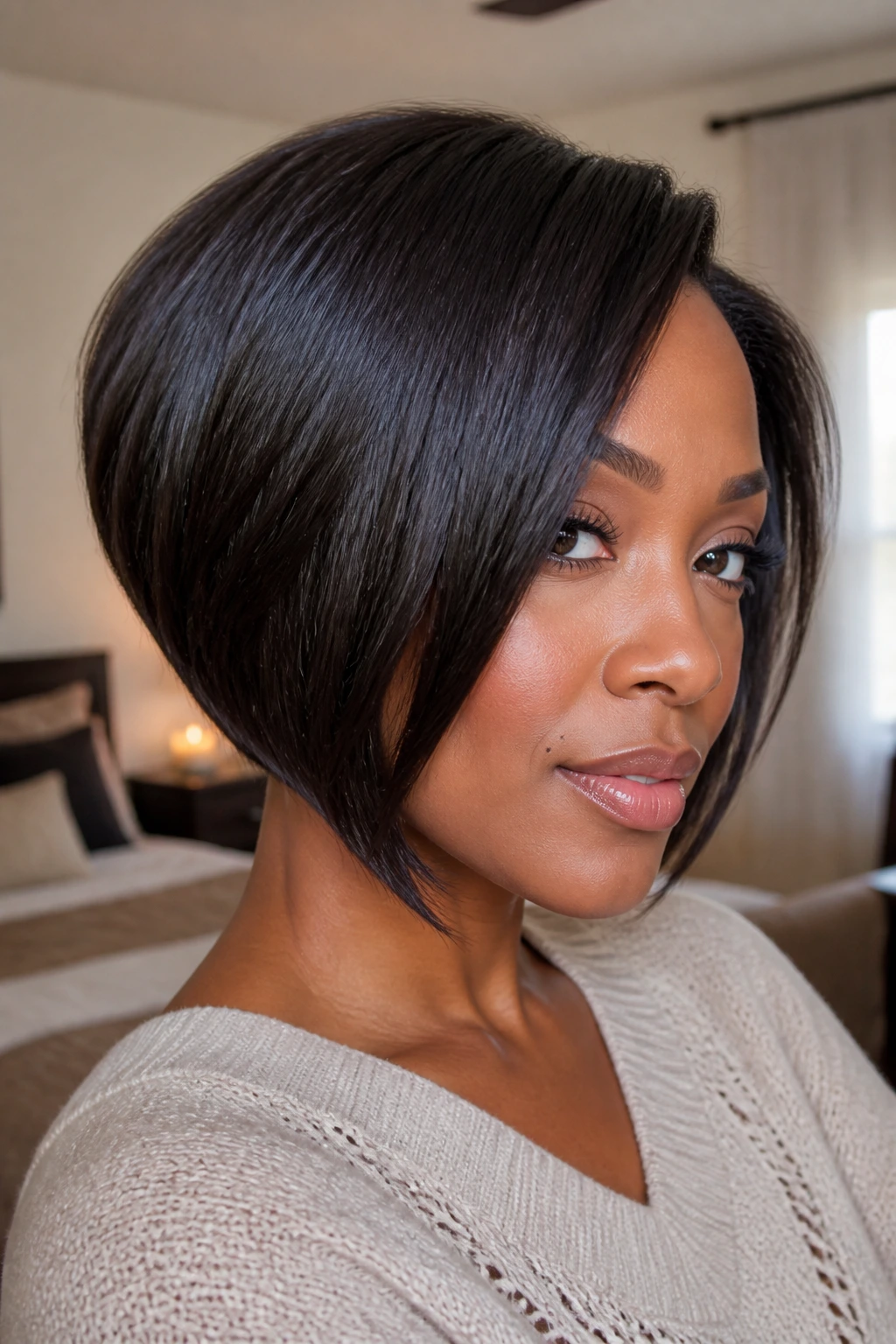
An inverted bob is cut short at the back of the neck and angles downward as it moves toward the front, ending in longer, face-framing points. What makes the curved version of this cut special is the soft, rounded silhouette at the back, which creates a beautiful, dome-like volume at the crown.
Balancing the Angles
The transition from the short back to the long front must be smooth and seamless. If the angle is too steep, the cut can look harsh and dated. A gentle, curved slope ensures that the hair moves naturally and looks elegant from every angle, whether you are viewed from the front, side, or back.
Tools for the Job
- A mini flat iron with 1/2-inch plates to reach the short layers at the nape.
- A boar-bristle paddle brush to smooth the longer front sections without creating static.
- A heat-activated straightening cream applied to damp hair before blow-drying.
- A silk scarf to wrap the back flat while keeping the front pieces loose at night.
Pro tip: When flat ironing the back, pull the hair upward and outward to create a built-in cushion of volume that supports the rounded shape.
14. The Slicked-Back Wet-Look Crop
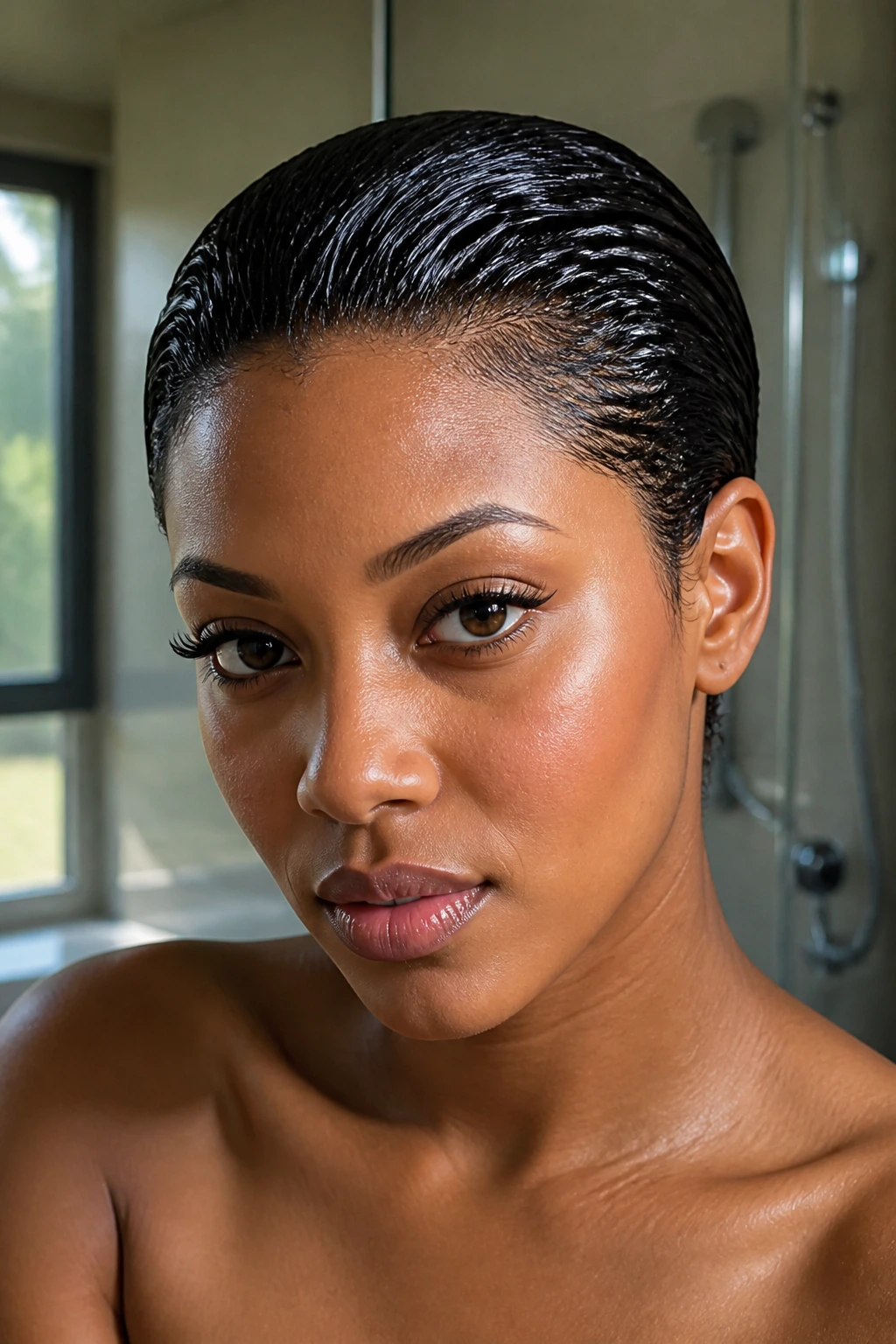
The wet-look style is no longer reserved for the runway. On short, relaxed straight hair, it is one of the most sophisticated, low-effort styles you can wear. It involves combing all your hair straight back from your forehead, down the sides, and flat against the neck, creating a sleek, high-shine finish that looks damp but is dry to the touch.
Too many people attempt this look using water-based gels, which will eventually dry out, flake, and cause relaxed hair to revert or frizz. The secret is to use a combination of a high-quality styling oil and a flexible-hold wax. This mixture provides the wet look and hold without drying hard or stripping your hair of its moisture.
Start with dry, straight hair. Warm a generous amount of styling oil and wax between your hands, then smooth it through your hair from front to back, using a fine-tooth comb to align every single strand. Once the hair is positioned exactly where you want it, spray it with a shine-enhancing holding spray to lock in that liquid-like reflection all day long.
15. The Finger-Waved Pixie Laydown
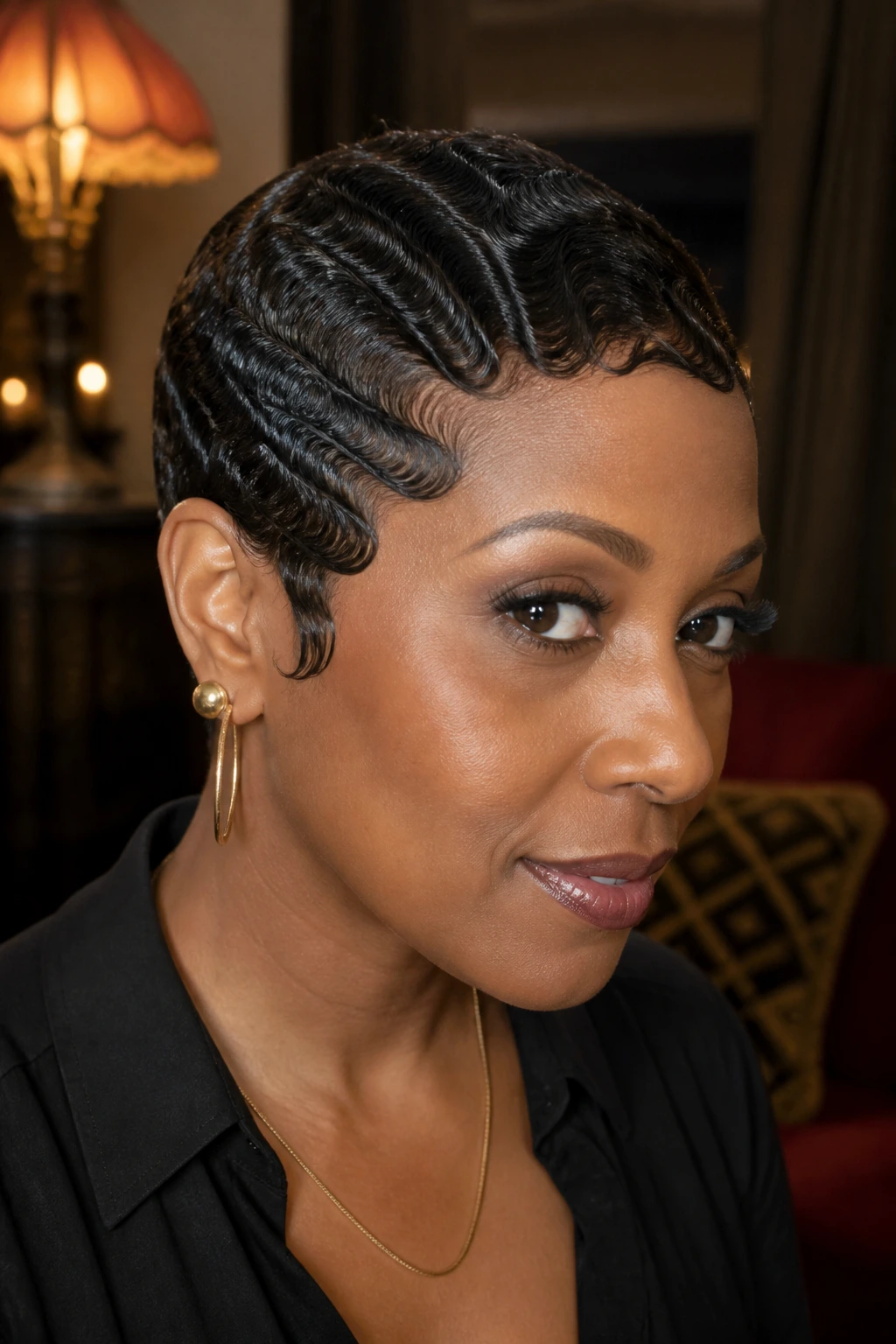
Finger waves are a masterpiece of hair artistry, and they look spectacular on short, relaxed hair. This style involves creating structured, S-shaped waves that lay completely flat against the head, wrapping around the temples and framing the face in a beautiful, vintage pattern.
The Wave Technique
This is a wet-styling technique that requires patience and a steady hand. You apply a heavy-duty setting lotion to wet hair, then use a styling comb and your middle finger to pinch the hair upward, creating a ridge. You then comb the hair in the opposite direction to create the valley of the wave, repeating the process until the head is covered.
Once the pattern is set, the hair must be dried completely under a hooded dryer. This locks the waves into a rigid, glass-like shield that can last for up to a week with proper night care. It is a stunning, sculptural style that turns your hair into a genuine work of art.
16. The Volume-Packed Mushroom Cut
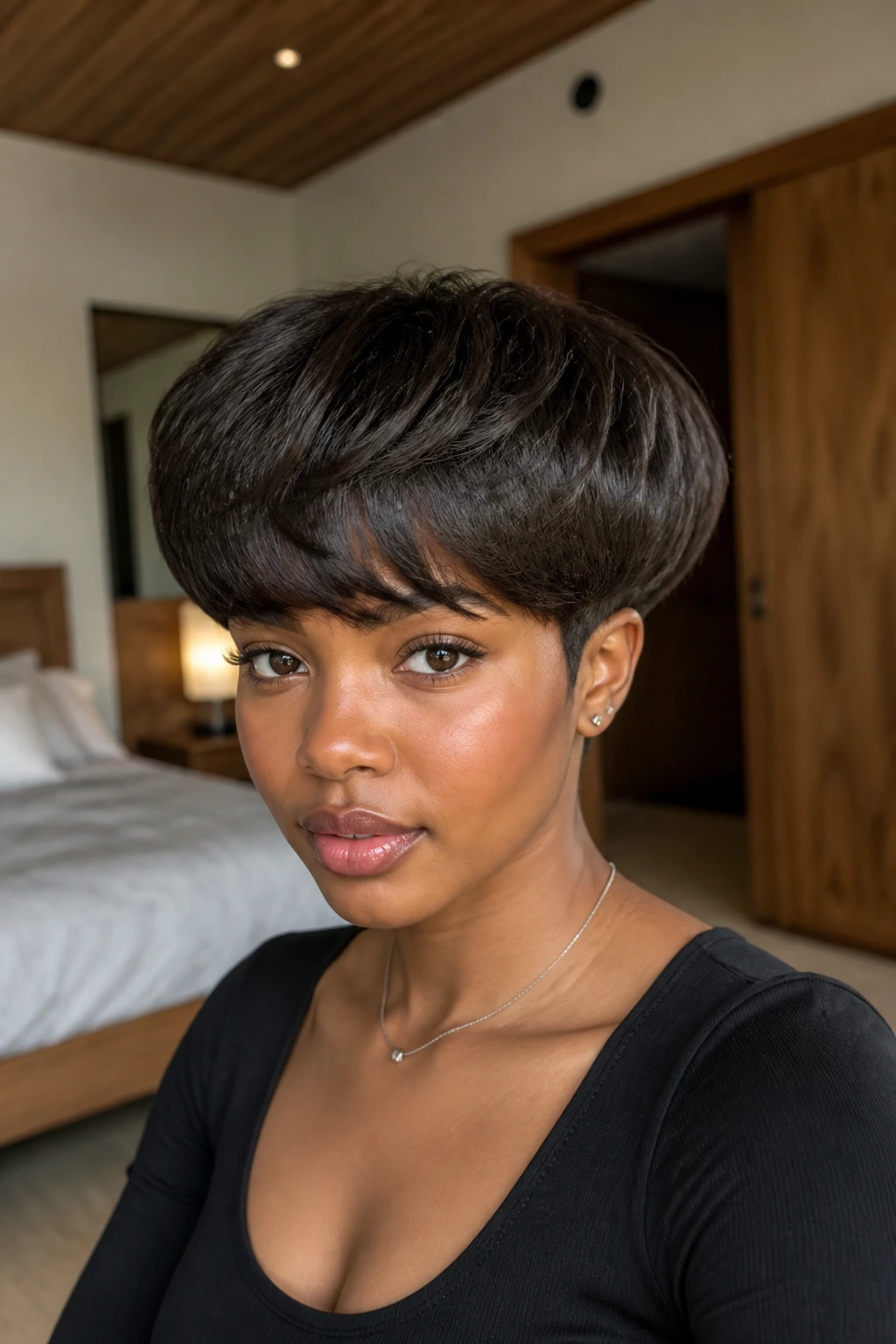
The mushroom cut features a thick, rounded canopy of hair that sits high on the head, with the edges cut in a soft, continuous circle around the brow and ears. The hair underneath is tapered close to the scalp, which supports the weight of the top layers and pushes them upward, creating immense volume.
This style is perfect for anyone who loves the look of thick, full hair but wants the ease of a short cut. It works incredibly well on relaxed hair because the chemical straightener allows the canopy to lay smoothly without any unwanted frizz or bulk, creating a clean, aerodynamic shape.
To style this at home, you will want to wrap the hair in a circular pattern around your head at night. In the morning, brush it out using a soft-bristle brush, shaking your head to let the canopy fall into its natural, rounded shape. The result is a high-volume, high-shine look that requires zero morning heat.
17. The Choppy Mohawk Bob
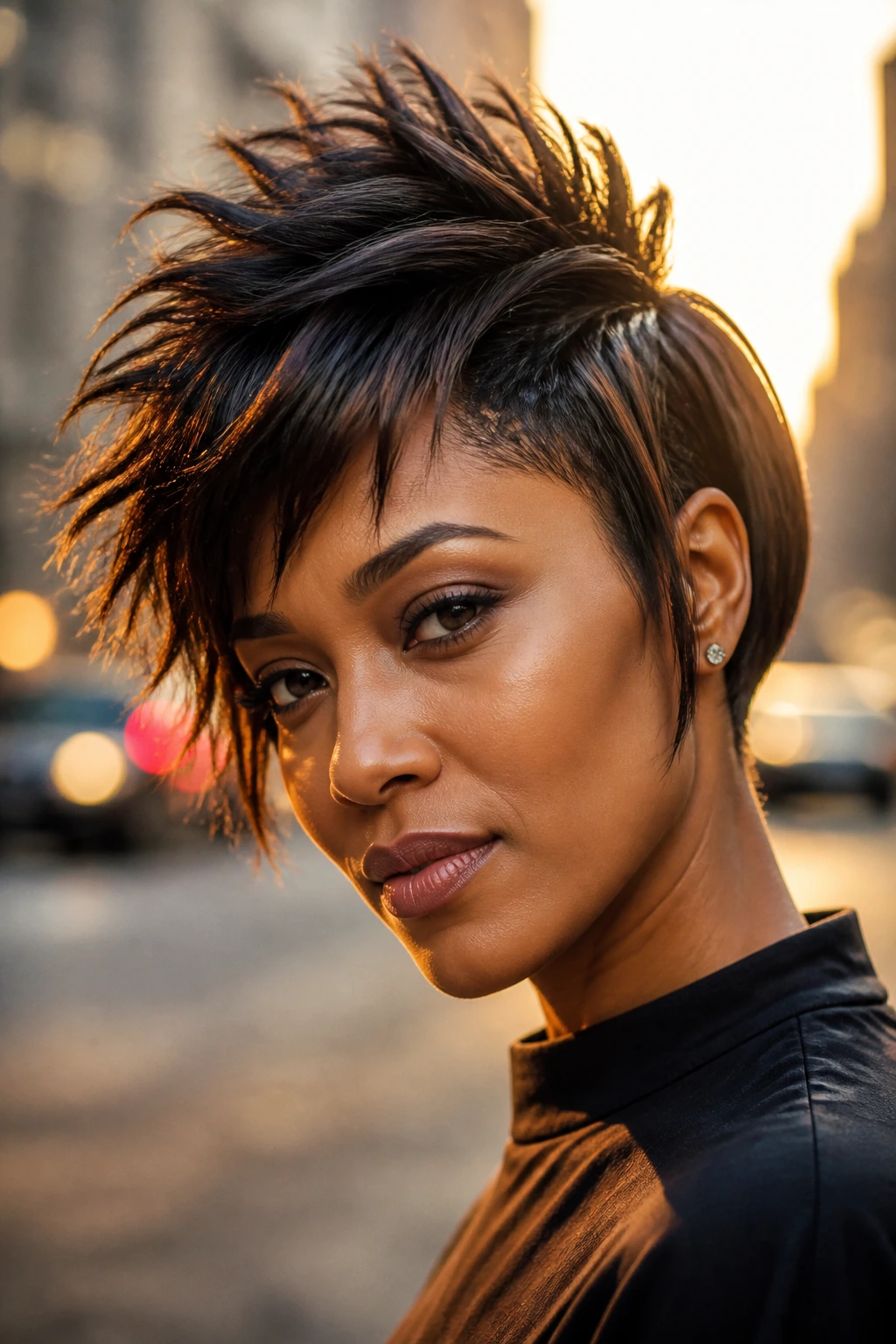
If you cannot decide between the edginess of a Mohawk and the classic elegance of a bob, this hybrid style gives you the best of both worlds. The hair is cut into a bob silhouette along the sides, but the top and back feature choppy, disconnected layers that can be styled upward into a soft, textured ridge.
This cut is incredibly versatile because it can be styled in two completely different ways. For a professional day look, you can brush the top layers down, blending them into the sides for a standard, layered bob. For a night out, you can apply a bit of styling wax and piece the top layers upward to create a bold, dramatic Mohawk.
It is a fantastic option for anyone who gets bored easily with their hair. The choppy layers add a beautiful, lived-in texture that moves easily and looks great even when your hair is overdue for a wash. Just use a bit of dry shampoo to refresh the texture and you are ready to go.
18. The Platinum Tapered Crop
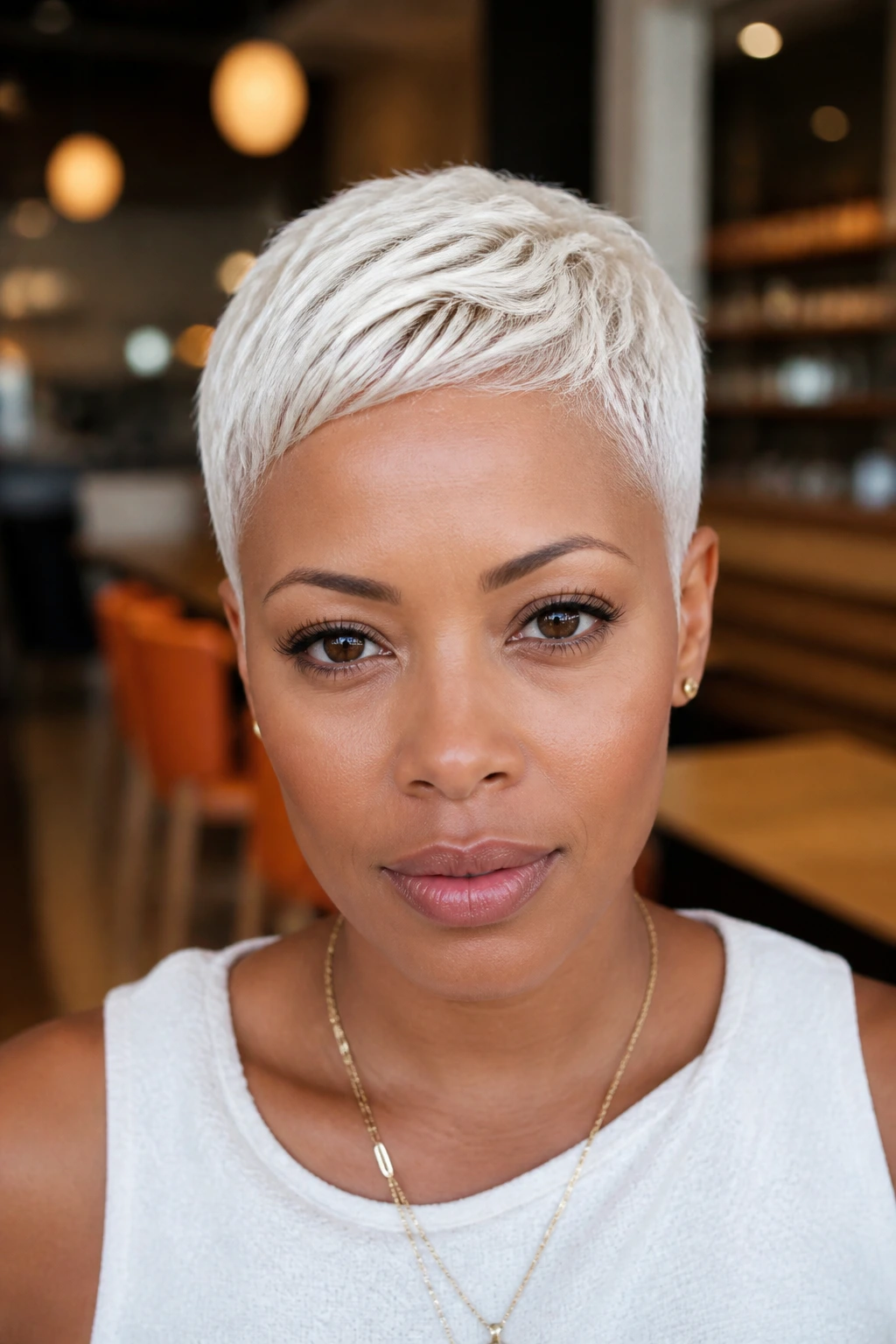
Sometimes, the best way to elevate a short hairstyle is to introduce high-contrast color. The platinum tapered crop features an ultra-short, closely cropped cut paired with a striking, ice-white blonde shade. The short length of the hair makes it much easier to maintain this high-maintenance color safely.
Coloring Relaxed Hair Safely
Combining a chemical relaxer with high-lift bleach is a delicate process that should always be handled by a professional stylist. Because both processes break down the hair’s internal structure, you must treat your hair with extreme care. Keep the hair short so that you are constantly trimming away older, chemically treated ends.
Post-Color Care Routine
- Use a purple toning shampoo once a week to keep the platinum from turning brassy or yellow.
- Apply a deep-penetrating protein reconstruction treatment every two weeks to rebuild the hair bonds.
- Use a rich, oil-based leave-in conditioner daily to replace the natural lipids lost during the bleaching process.
- Avoid flat irons completely, relying instead on wrap foam and a hooded dryer to smooth the hair.
Pro tip: Never attempt to apply a relaxer and bleach on the same day. Space these chemical treatments at least two to three weeks apart to prevent severe hair damage.
The Bottom Line
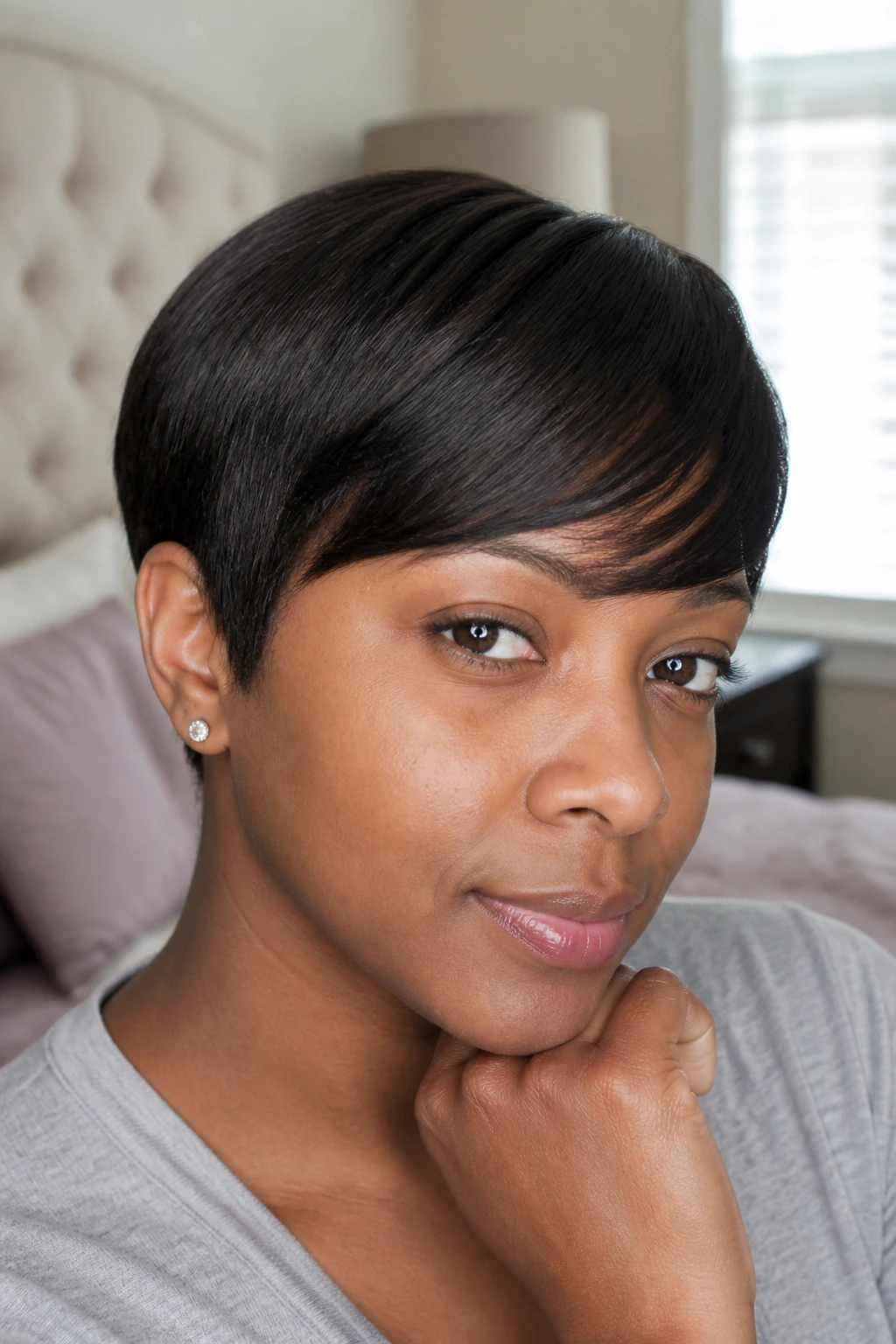
Maintaining a short, relaxed hairstyle requires a commitment to both the structure of the cut and the health of the fiber. When you chemically relax your hair, you alter its chemistry, making it more porous and susceptible to damage. By keeping the hair short, you naturally remove older, weathered ends, which makes short cuts one of the healthiest ways to wear relaxed hair—provided you care for it correctly.
Your nightly routine is the single most important factor in how your hair looks the next day. Wrapping your hair around the curvature of your head and securing it with a silk or satin scarf is non-negotiable. This simple act preserves the straightness, maintains the shape of your cut, and locks in moisture, saving you from having to apply damaging direct heat from a flat iron every single morning.
Ultimately, a great short style is a partnership between you and your stylist. Find someone who understands the unique behavior of relaxed hair, who cuts with a razor or shears rather than relying solely on clippers, and who prioritizes the structural integrity of your hair over a quick style. With the right cut and a dedicated care routine, short, straight, relaxed hair is one of the most liberating, stylish, and powerful looks you can wear.