

Imagine grinding through the final set of a heavy lifting session, only to have your hair tie snap and your sweaty bangs plaster themselves across your forehead. It immediately ruins your focus. Or, even worse, you finish a high-energy spin class with a matted, tangled mess at the nape of your neck that takes half a bottle of conditioner and twenty minutes of painful combing to detangle.
Weekends are when we finally have the time to mix intense physical activity with social plans. You might go straight from a morning trail run or a heated vinyasa session to a busy brunch, coffee with friends, or a series of errands around town. Your hair has to survive the sweat of the workout and still look clean, styled, and presentable at the cafe afterward.
After years of testing different styles across half-marathons, heated yoga studios, and heavy lifting sessions, I have learned that a simple ponytail rarely cuts it. Hair texture, thickness, and sweat levels dictate exactly how you should secure your strands. The goal is to distribute the weight of your hair, prevent friction damage, and minimize the need for post-workout heat styling.
To achieve this, your choice of hairstyle needs to be both highly functional and easy to transition. The following collection of hairstyles offers practical solutions for keeping your hair secure during your workout and stylish for whatever your weekend has in store.
1. Triple-Braided High Ponytail for Cardio
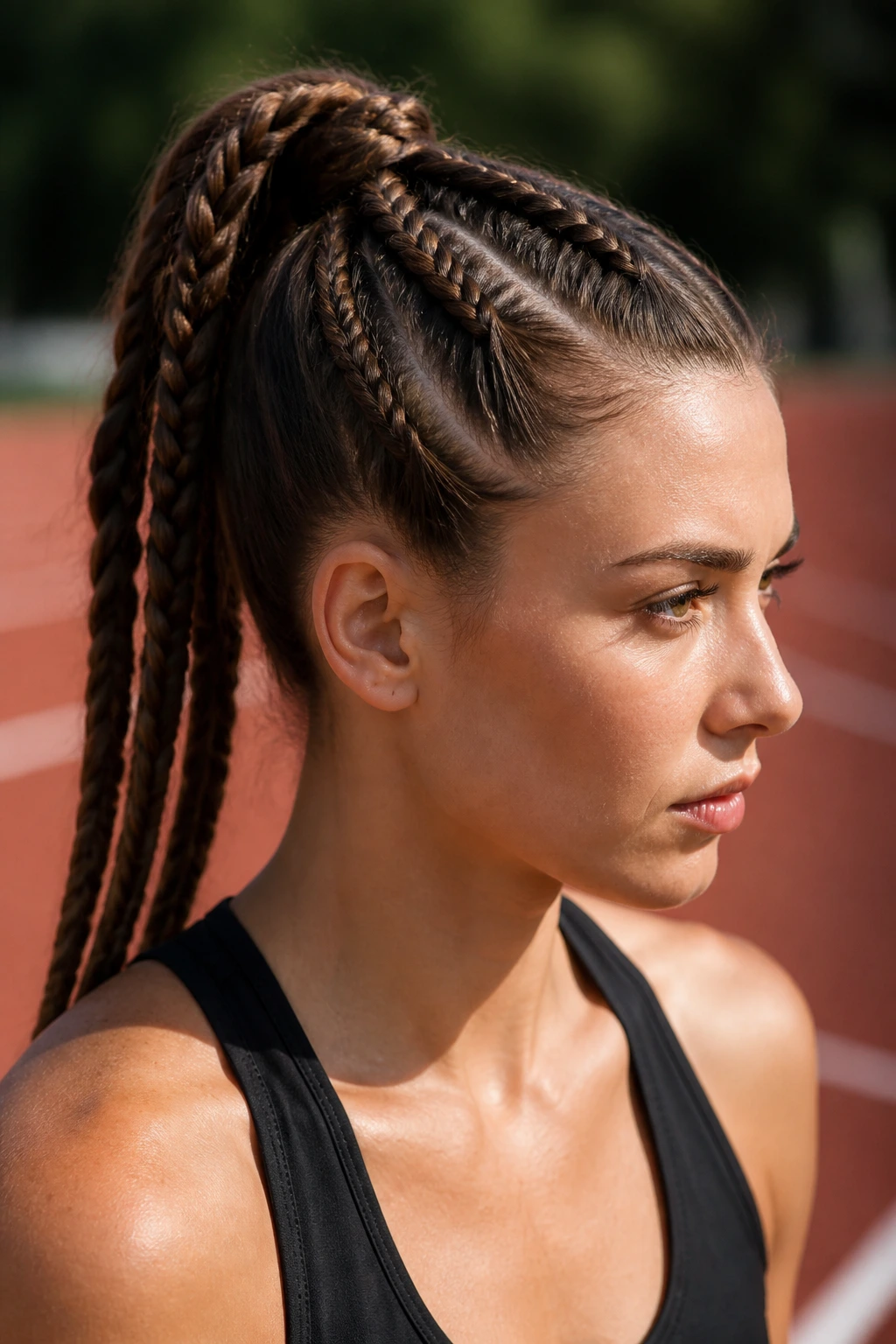
A standard ponytail whips around during running or high-intensity interval training, leading to massive tangles and broken strands at the base. By dividing the ponytail into three separate braids, you drastically reduce friction and keep the hair from wrapping around itself. This style distributes the weight of thick hair evenly across your scalp, which helps prevent that dull, throbbing headache that often accompanies a high pony during bouncy movements.
Why Braiding the Ponytail Prevents Damage
When you sweat, your hair swells and becomes more fragile. The friction of unbraided hair rubbing against a damp back or shoulders roughs up the hair cuticle, leading to split ends and dryness. Braiding the length of the pony locks the strands in place, keeping them away from sweaty skin while minimizing the mechanical wear and tear of repetitive movement.
Key Styling Details
- Best for: Long hair, thick textures, and high-impact cardio sessions.
- Hold level: Maximum security with zero slippage during sprints or jumps.
- Time to style: Roughly four minutes once you get the hang of splitting the sections.
- Post-workout recovery: Simply undo the braids for soft, textured waves that are ready for dry shampoo.
Pro tip: Spritz each section with a lightweight texturizing spray before braiding to give the elastics extra grip.
2. The Double French Braid Low Bun
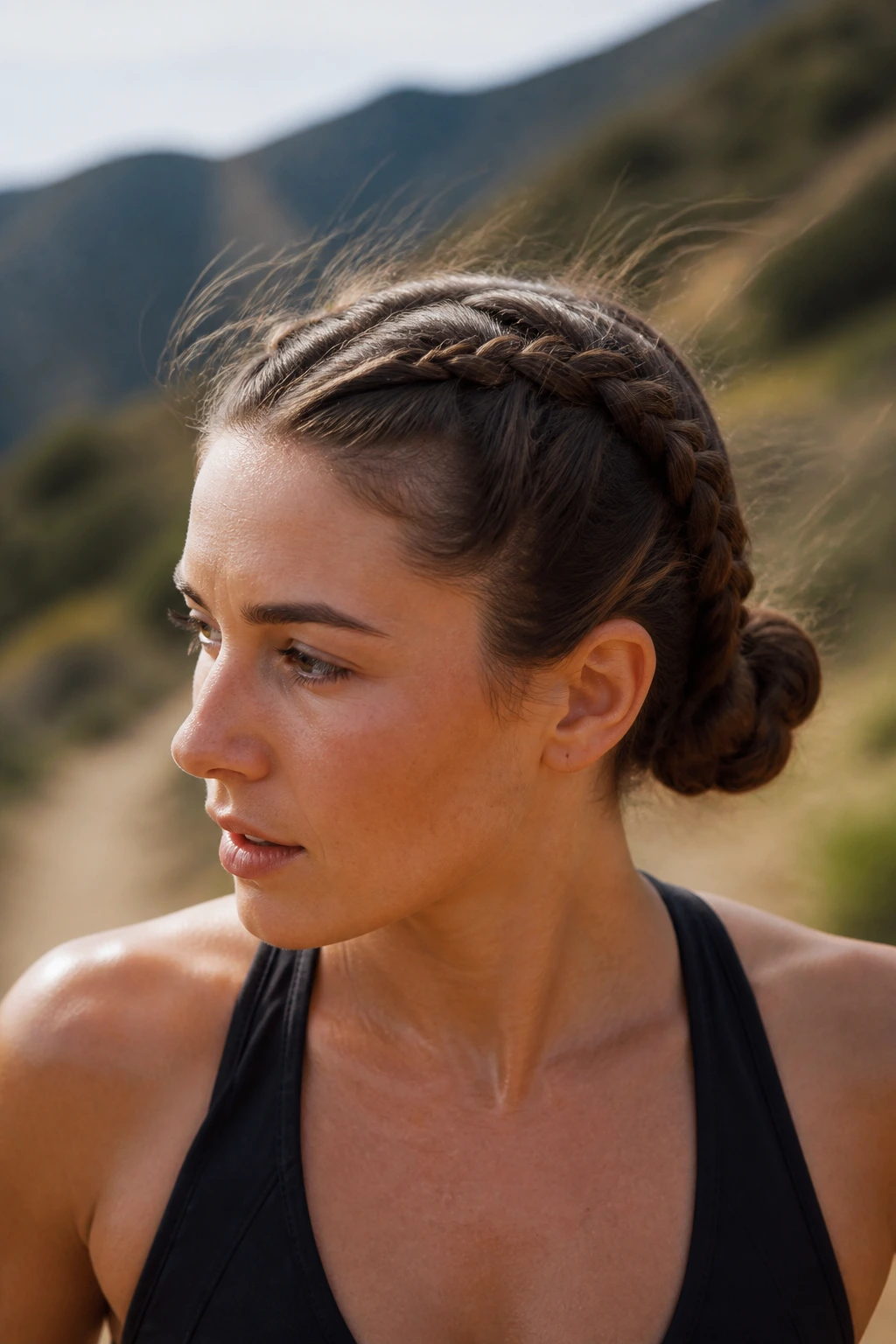
Securing your hair from the very front hairline is a reliable way to eliminate flyaways without using heavy hairspray. This classic athletic style works by collecting every single strand of hair right from the forehead and feeding it tightly back into a consolidated low bun. It is a favorite for long trail runs or windy outdoor workouts because it leaves absolutely nothing loose to whip across your eyes or stick to your skin.
To style this, part your hair down the center from your forehead all the way to the nape of your neck. French braid each side firmly, keeping your hands close to your scalp to maintain high tension as you work downward. Once both braids reach the nape, secure them into a single low ponytail, then twist the remaining length into a compact bun and pin it flat against your skull with heavy-duty U-pins.
This style is particularly comfortable because it keeps the hair completely flat against the head, which is convenient if you need to lie down on a yoga mat or a reformer carriage. It also looks clean and structured for a post-workout lunch, appearing deliberate and intricate rather than like a rushed afterthought.
3. Bubble Ponytail with Thick Elastics
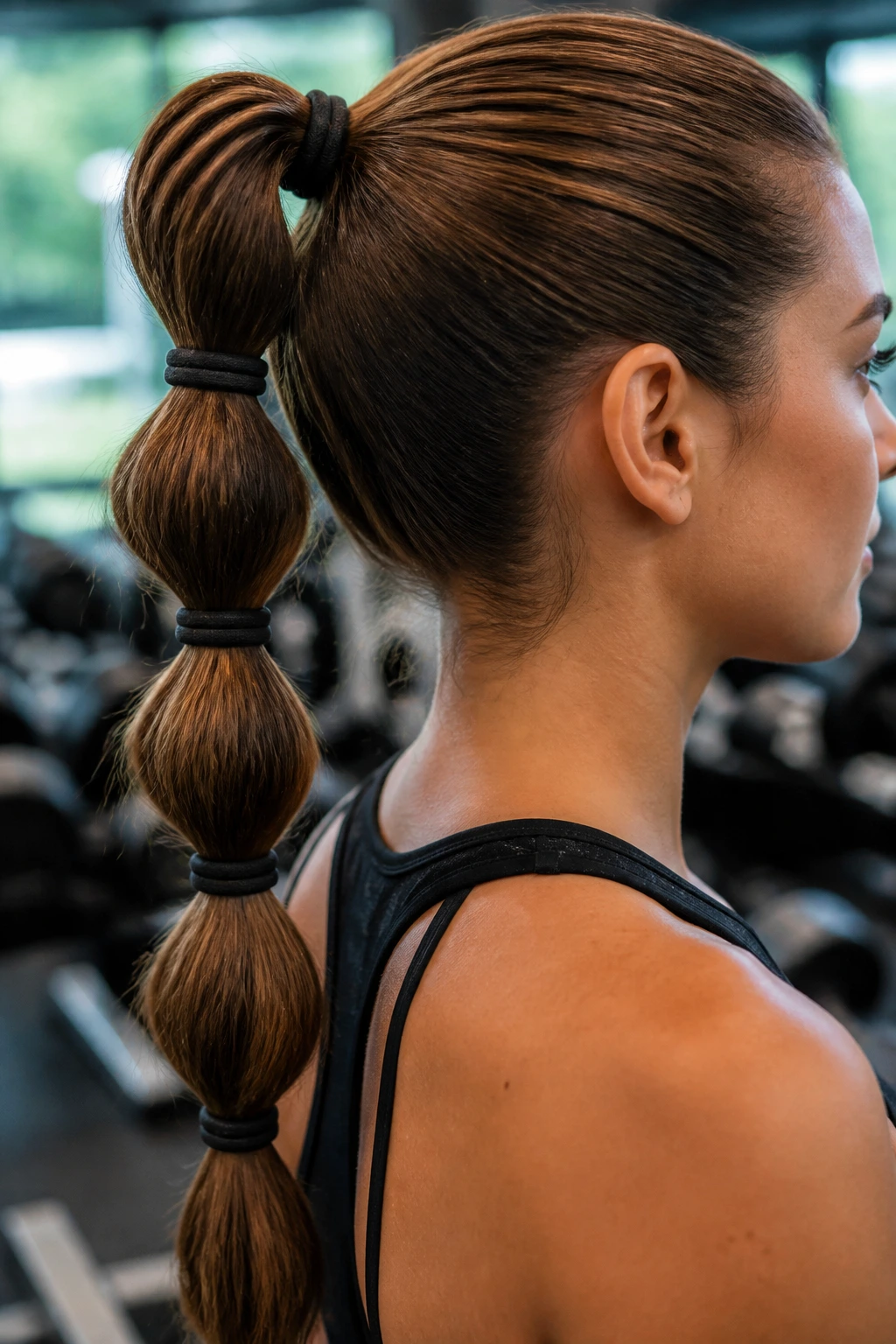
Why do so many runners prefer the bubble pony over a traditional braid? The answer lies in both speed and hold. While a classic braid can slowly loosen and unravel during a long run, a series of strategically placed elastic bands creates a physical barrier that keeps hair locked in a streamlined shape. It is also significantly faster to assemble when you are rushing out the door for an early morning workout.
Each section, or “bubble,” acts as an independent anchor point. If one section starts to slip, the others maintain the integrity of the hairstyle, meaning you will not have to stop mid-workout to rebuild your hair. It also adds a bit of volume to fine hair, which can otherwise look flat and lifeless when pulled back tightly.
How to Build a Secure Bubble Pony
To construct this, start by pulling the crown section of your hair into a half-up ponytail and securing it with a small elastic. Next, gather a new section of hair from the sides, combine it with the first ponytail, and secure it with a second band a few inches lower. Repeat this process down the length of your hair, gently tugging the sides of each segment outward to create the rounded “bubble” shape before moving to the next.
4. The Sleek Topknot with a Silk Scrunchie
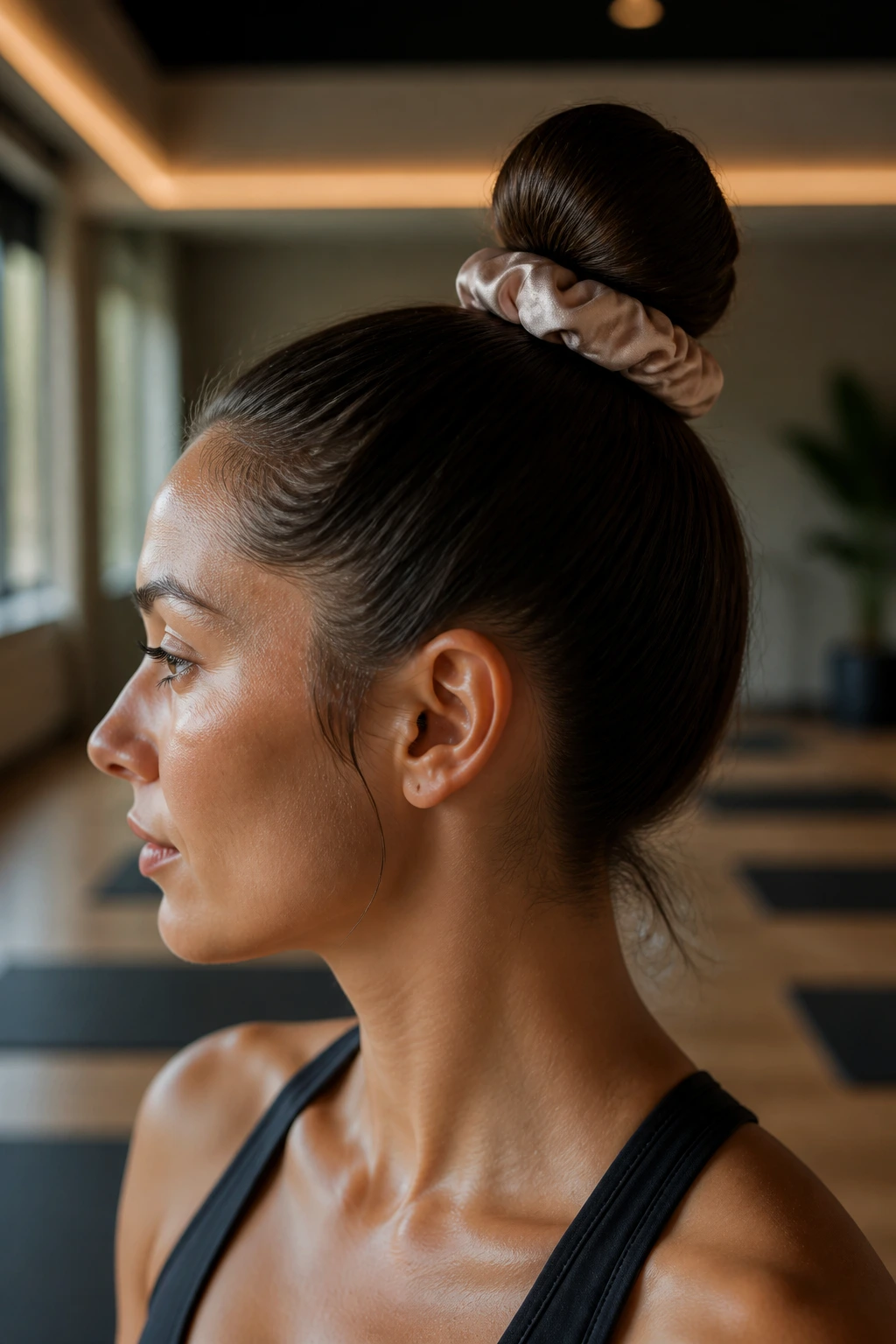
Picture yourself in a warm, humid yoga studio, trying to focus on your balance while a heavy, wet ponytail continuously thumps against your neck. It is distracting and hot. Moving the hair to the very top of your head in a sleek topknot immediately cools you down and keeps your neck free for deep stretches and twists.
By using a silk or satin scrunchie instead of a thin rubber band, you protect the delicate hair at your crown from snapping under tension. The wide fabric band distributes the pressure across a larger surface area, preventing the deep crease that usually forces you to wash your hair immediately after a workout. A dab of leave-in conditioner applied to your ends before twisting wraps them in moisture while you sweat.
Essential Topknot Elements
- Best for: Medium to long hair during low-impact workouts like hot yoga or barre.
- Scalp protection: High placement reduces tension on the sensitive hair follicles at the nape.
- Materials needed: A soft boar-bristle brush, a silk scrunchie, and three sturdy bobby pins.
- Sweat management: Keeps the neck entirely clear to allow for rapid cooling.
This style transitions easily to a casual weekend look; simply pull out a few face-framing tendrils and smooth down any flyaways with a touch of hair oil.
5. Crown Braid with Bobby Pins
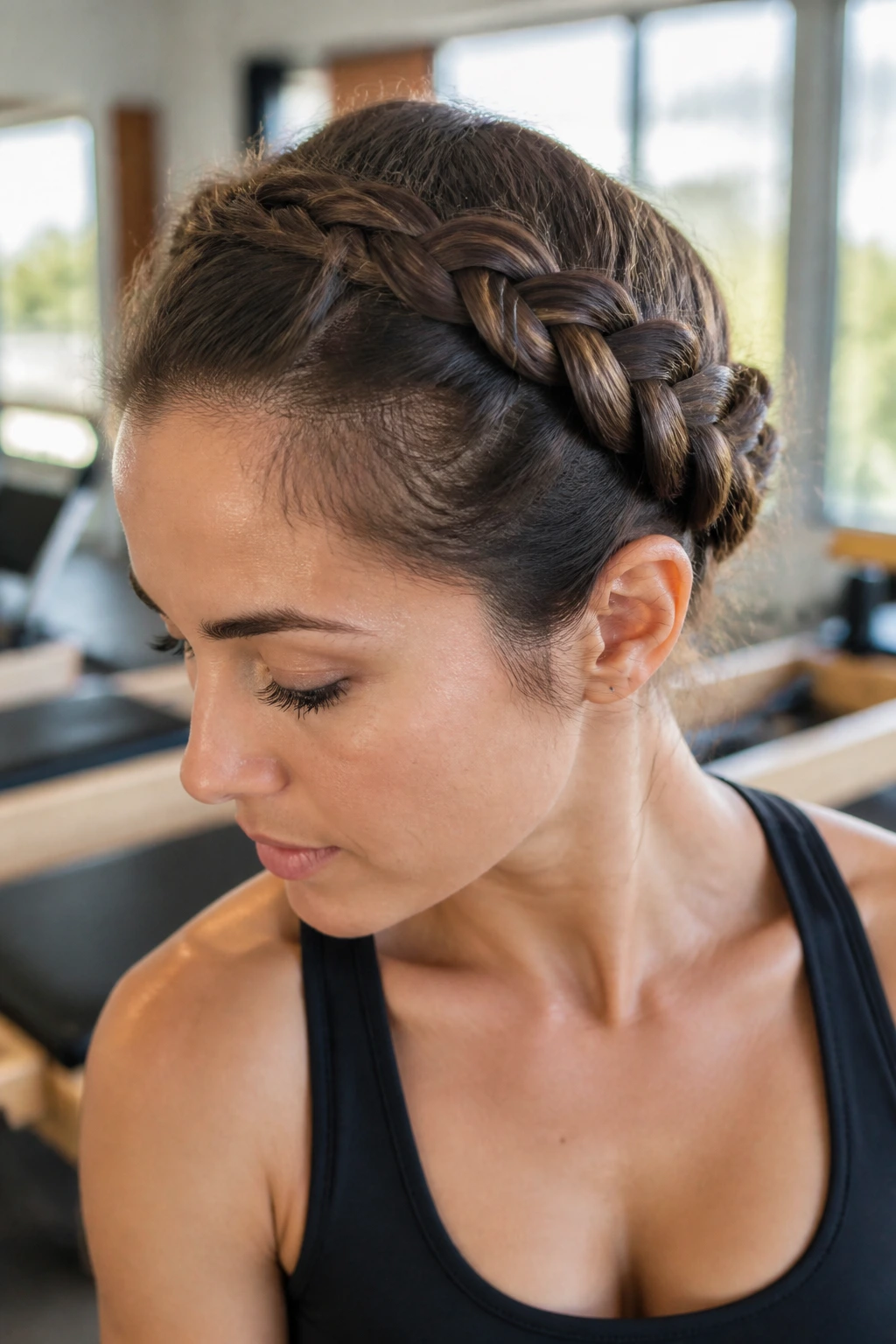
For activities that involve a lot of floor work—like Pilates, core training, or stretching—any hairstyle with a bun or ponytail at the back of the head is going to get in the way. Lying flat on your back with a lump of hair pressing into your skull ruins your neck alignment and makes the exercises uncomfortable. The crown braid solves this by keeping all your hair wrapped flat around the sides of your head.
To create this look, begin a Dutch braid near a side part and work your way around the circumference of your head, pulling in hair from both the top and bottom. Keep the braid close to your hairline to ensure that the back of your head remains completely smooth and flat. If your hair is shorter, you can achieve a similar effect by creating two French braids along the sides and pinning the ends flat across the back.
As you braid, secure the path with long, matte bobby pins pushed directly into the center of the braid to hide them. This style holds well because the weight of the hair is distributed around the strongest part of your skull rather than pulling on a single point. It feels practically weightless once secured.
After a challenging workout, this style looks even better as it softens. The slight texture that develops from movement actually adds to the casual look of a halo braid, making it a great transition style for a casual Saturday afternoon out.
6. Pineapple Updo for Natural Curls
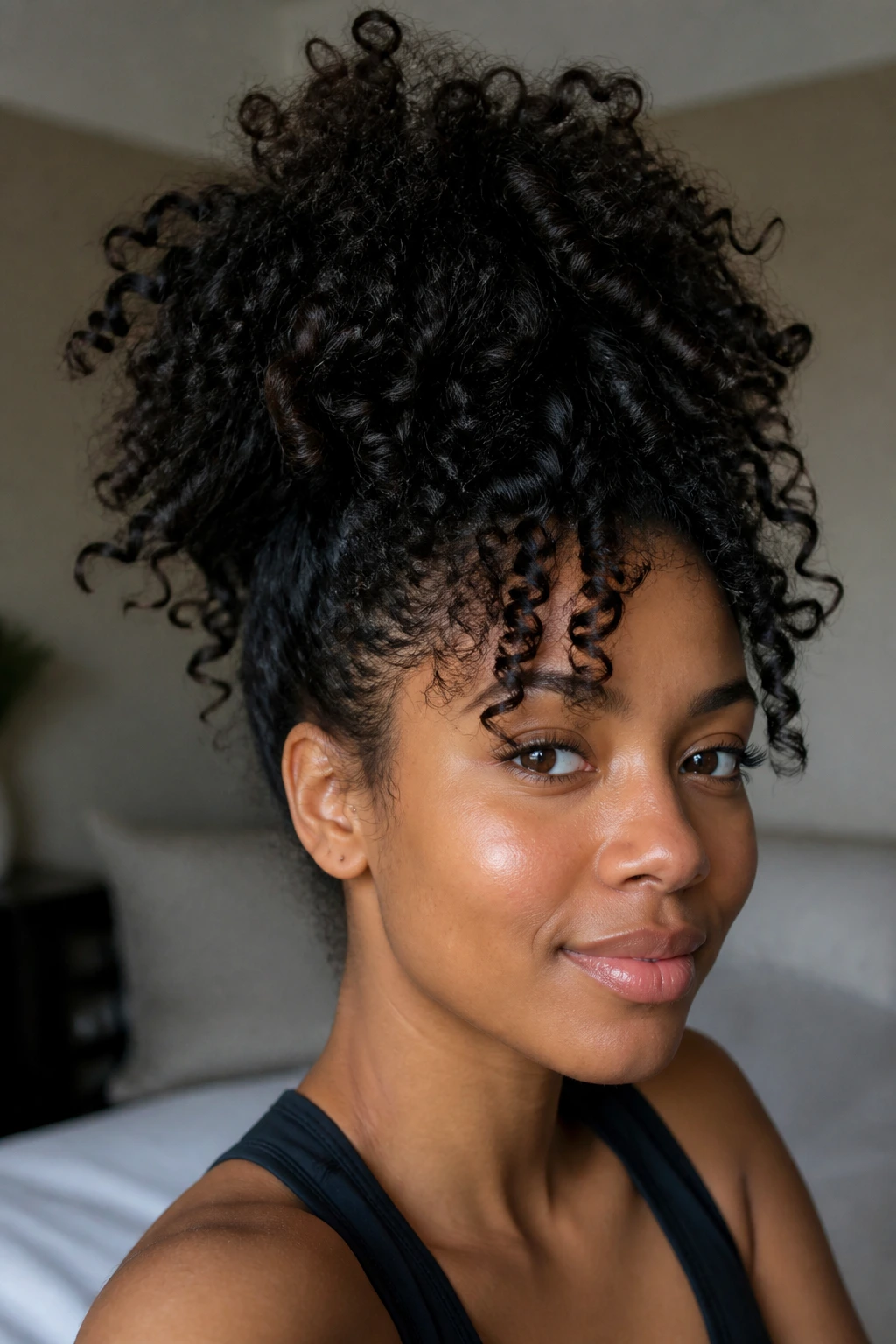
Unlike straight or wavy hair, which often benefits from being tightly braided down, natural curls and coils can suffer pattern disruption and breakage when compressed into tight braids for a workout. The classic “pineapple” updo keeps your curl pattern intact by gathering the hair loosely at the very front of the head. This prevents the curls from being crushed between your head and the gym mat or rubbed flat against your shoulders.
What makes this approach different is that it does not rely on high-tension hair ties that pinch and damage the hair. Instead, a loose, stretchy hairband or a satin scarf is used to hold the curls forward, allowing them to cascade over your forehead. This placement keeps the back and sides of your head completely cool while preserving your natural volume and definition.
This style is best for individuals with curly or coily textures who want to transition from a workout directly to their weekend plans without having to perform a full wash-and-style routine. It protects the integrity of the curls while offering a bold, high-volume aesthetic.
For the best results, I recommend applying a small amount of curl-refreshing spray or a lightweight oil to your ends before securing the hair. This locks in moisture during your workout and ensures your curls bounce back beautifully when you let them down later.
7. Dutch Braided Space Bun Duo
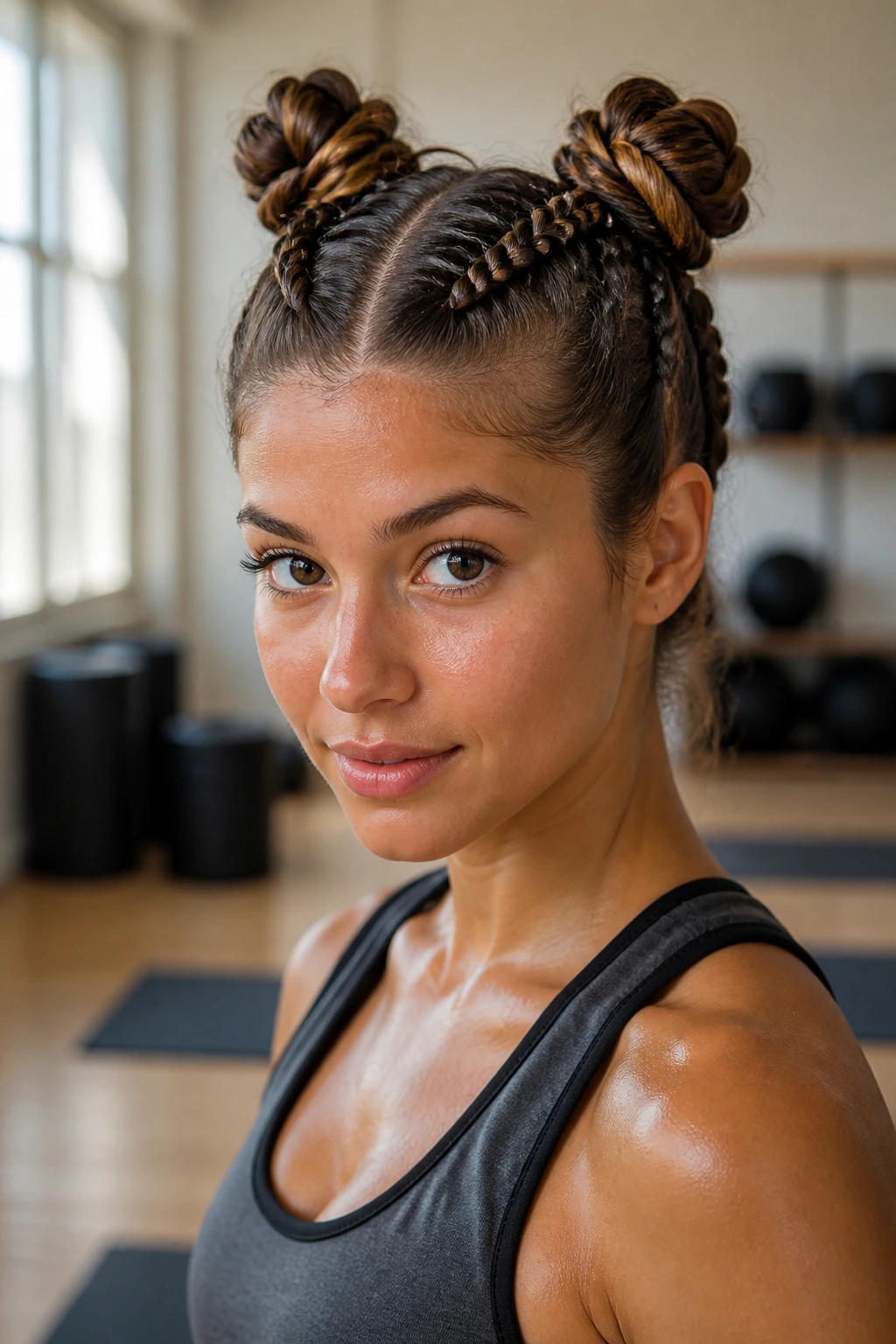
Double space buns are not just for festivals; they are one of the most stable styles for intense weekend workouts. By splitting your hair down the center and creating two separate buns, you halve the weight pulling on any single part of your scalp. Adding Dutch braids underneath each bun ensures that shorter layers at the back of your neck do not fall out during high-impact movements.
Why the Dutch Under-Braid Holds Shorter Layers
The short, fine hairs at the base of your hairline are usually the first to escape from a high bun during jump squats or mountain climbers. By braiding from the nape of your neck upward to the crown, you trap these shorter pieces securely. This upward braid provides a solid foundation for the buns, preventing them from wobbling or sagging as you move.
Quick Hair Specs
- Best for: Shoulder-length to long hair, especially layers that tend to slip out of high ponytails.
- Vibe: Playful, secure, and highly functional.
- Friction reduction: Keeps hair completely off your neck and shoulders, preventing sweat absorption.
- Transition tip: If you undo the buns post-workout, you are left with voluminous crimped waves.
Pro tip: Use small, clear elastic bands to secure the braids at the crown before twisting the hair into buns to ensure they stay in place.
8. High Ponytail with a Wide Sweat-Wicking Headband
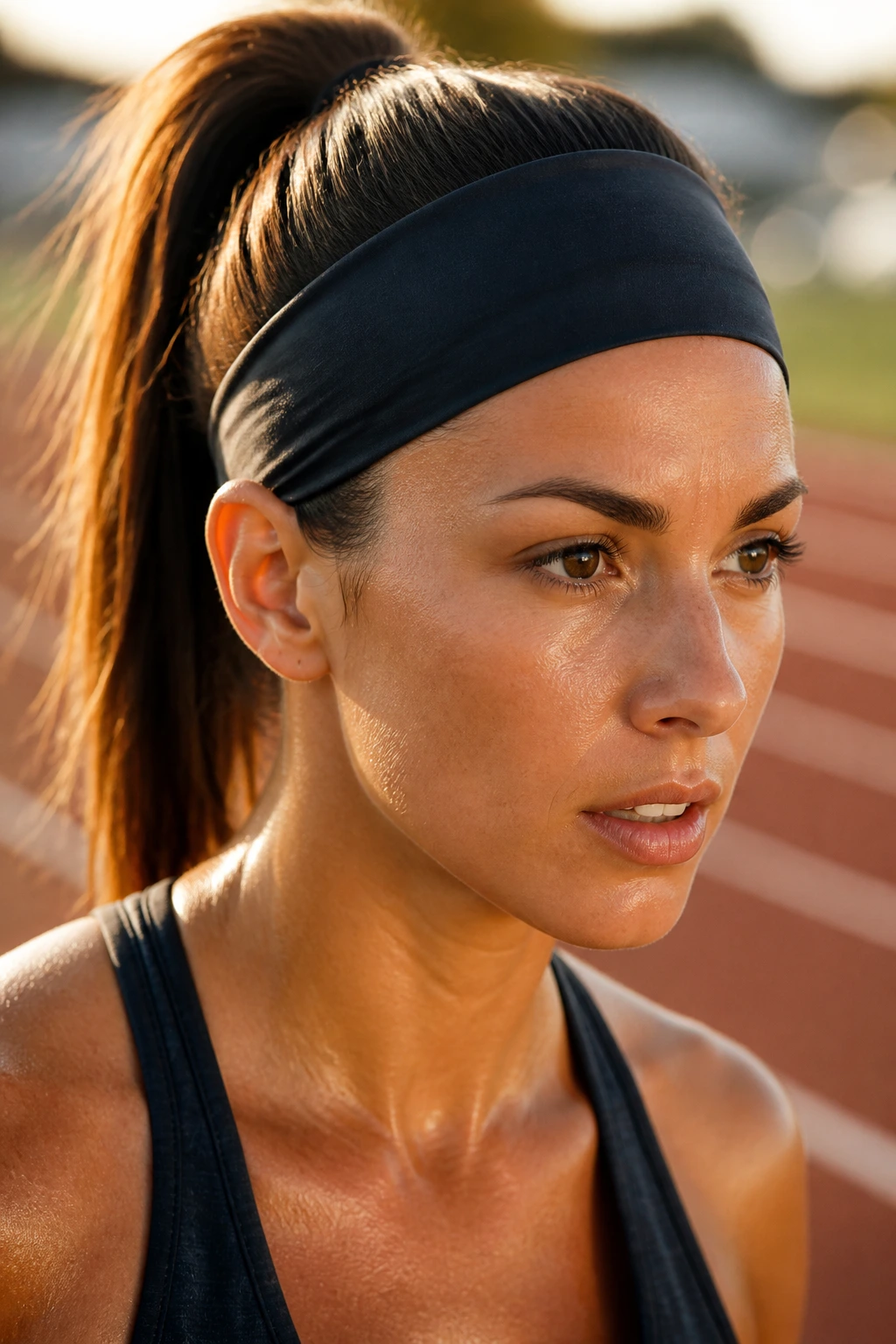
A wide, high-quality athletic headband is an effective tool for preventing sweat-induced hair damage along your hairline. Many people believe that styling alone can protect their hair, but sweat contains salt that can dry out your strands and weaken the hair shaft over time. Combining a high ponytail with a wide fabric band physically blocks sweat from traveling down your face and saturating your roots.
The placement of the headband is key to this look. Position it so that it covers your front hairline entirely, sitting flat against your forehead. This not only keeps sweat out of your eyes during intense cycling or running sessions but also presses down baby hairs, keeping them smooth and reducing the frizzy texture that usually happens as your hair dries.
For the ponytail itself, use a high-grip, silicone-wrapped elastic that will not slip even when your hair gets damp. Keep the pony high to let the length swing freely, keeping it away from your neck. This is a classic, no-nonsense look that takes less than two minutes to assemble but performs reliably under pressure.
9. Half-Up Topknot with Textured Waves
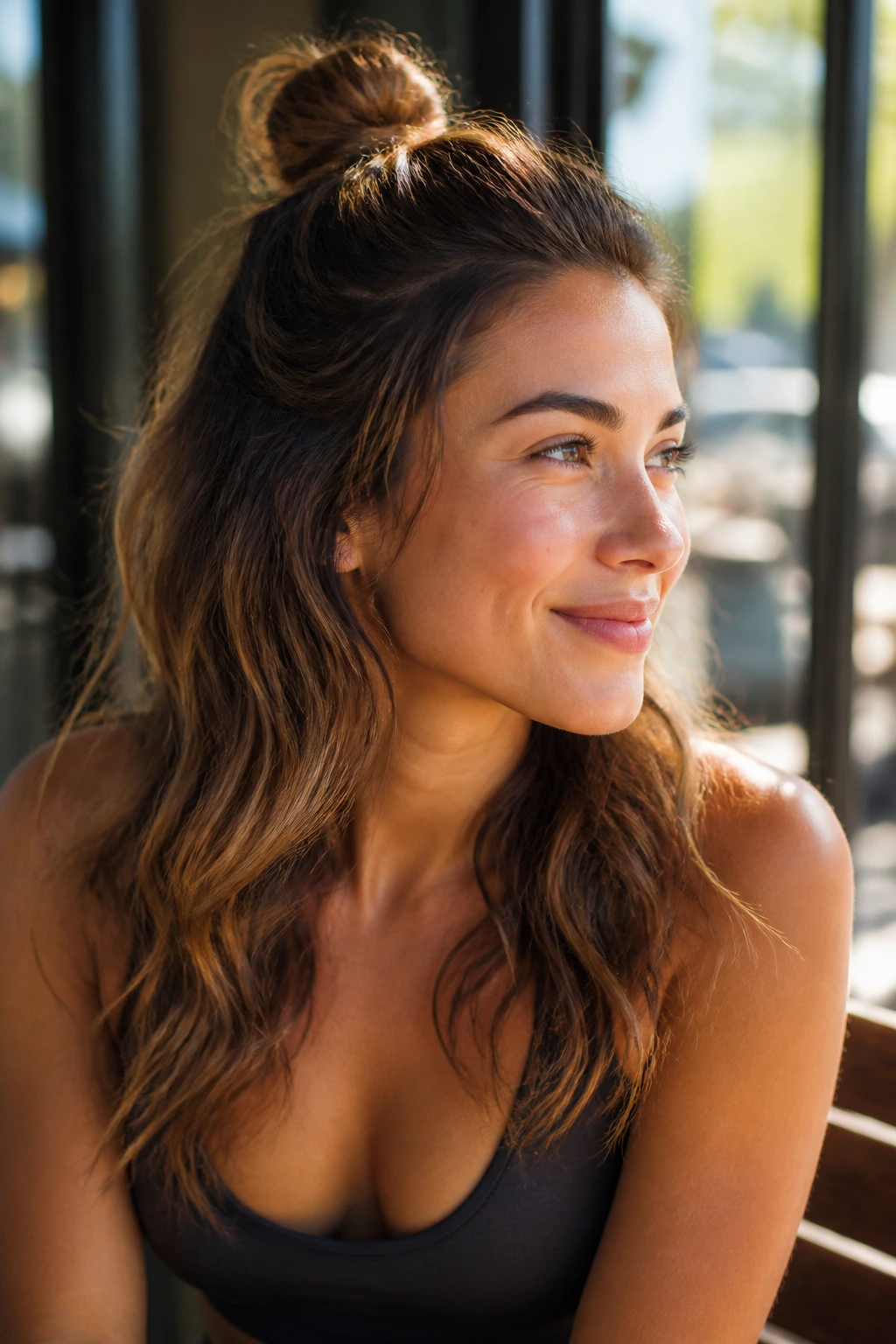
Can you wear your hair partially down for a workout and still keep it functional? If you are planning a lower-intensity weekend activity like a long walk, a casual hike, or a light weightlifting session, the answer is a resounding yes. The half-up topknot gives you the best of both worlds: it keeps the hair around your face secured while letting the rest of your hair flow naturally.
This style works by sectioning off the hair from the ears up and pulling it into a secure, high bun at the crown of your head. This prevents bangs and face-framing layers from sticking to your skin when you warm up. The hair at the back remains down, which looks relaxed and effortless for any casual social gatherings you have lined up afterward.
How to Style the Half-Up Topknot
To get the most out of this look, start by separating the top third of your hair, pulling it back with your fingers to maintain a natural texture. Secure this section into a small ponytail at the crown, then twist the length into a loose bun, securing it with a few U-pins or a small scrunchie. Spray the remaining loose hair with a sea-salt spray to enhance its natural texture, giving you a beachy, post-workout look that requires zero heat styling afterward.
10. The Fishtail Braid Low Ponytail
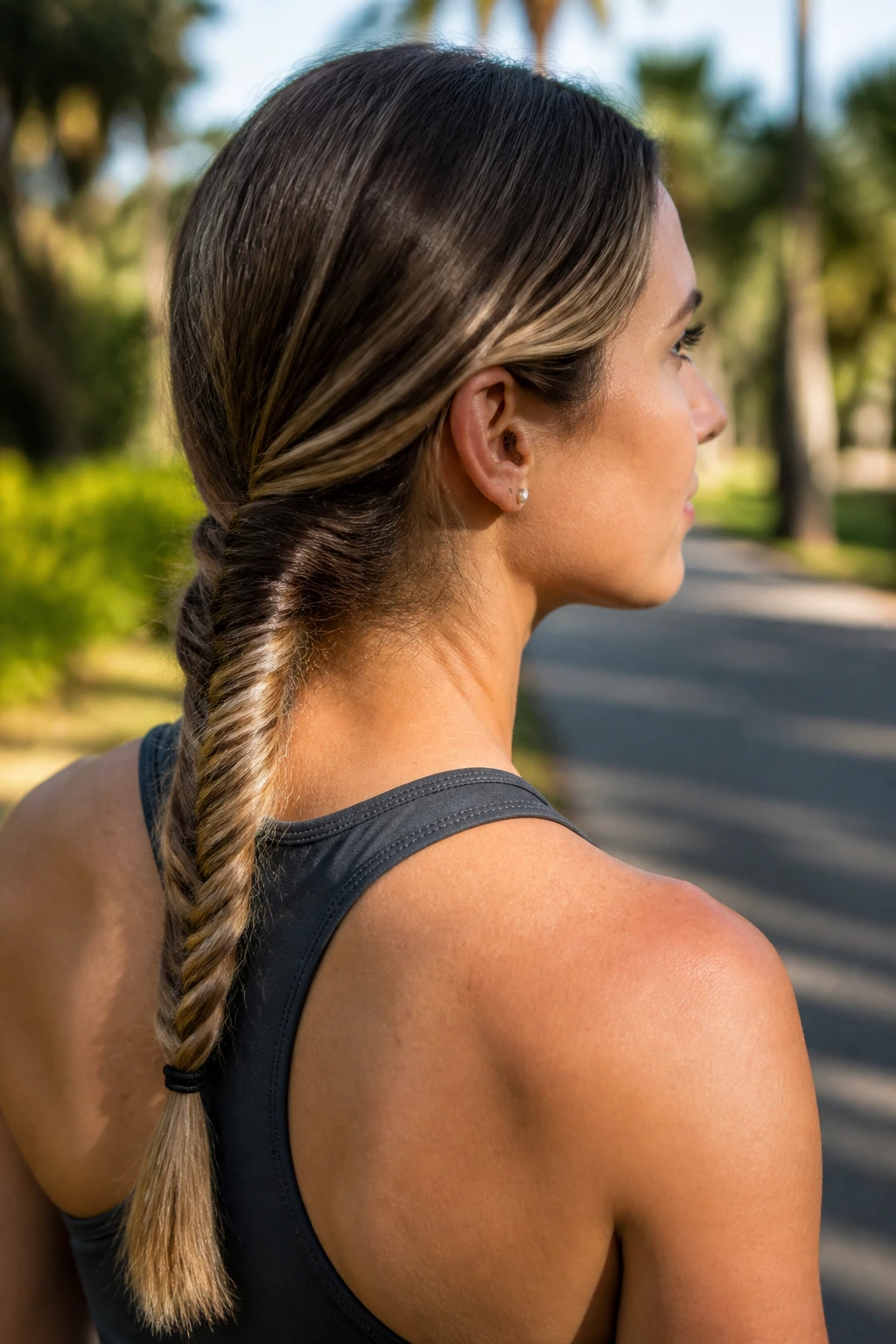
Imagine heading out for a scenic weekend bike ride, only to find that your helmet does not fit over your high ponytail or bun. It is a frustrating moment that often leads to a messy, low-security hairstyle. A low fishtail braid is a practical solution, offering a secure hold that sits flat under helmets and caps while looking intricately styled.
Unlike a standard three-strand braid, a fishtail braid uses four alternating sections of hair crossed over one another. This tight weaving pattern creates a denser, more rigid structure that is highly resistant to wind and rapid movement. It keeps the hair tightly bound and prevents the wind-whipped tangles that occur during high-speed activities like cycling or running.
Fishtail Braid Features
- Best for: Long, straight, or wavy hair that needs to fit under headwear.
- Mechanism: Tight cross-weaving distributes tension evenly, preventing loose strands.
- Security rating: Exceptionally high; the braid actually becomes more secure as it moves.
- Style appeal: Looks beautiful and detailed, making it suitable for post-workout activities.
This braid works best on hair that has a bit of texture; if your hair is clean and slippery, apply a dusting of volume powder before you start weaving to give the strands some grip.
11. Twisted Low Chignon for Pilates
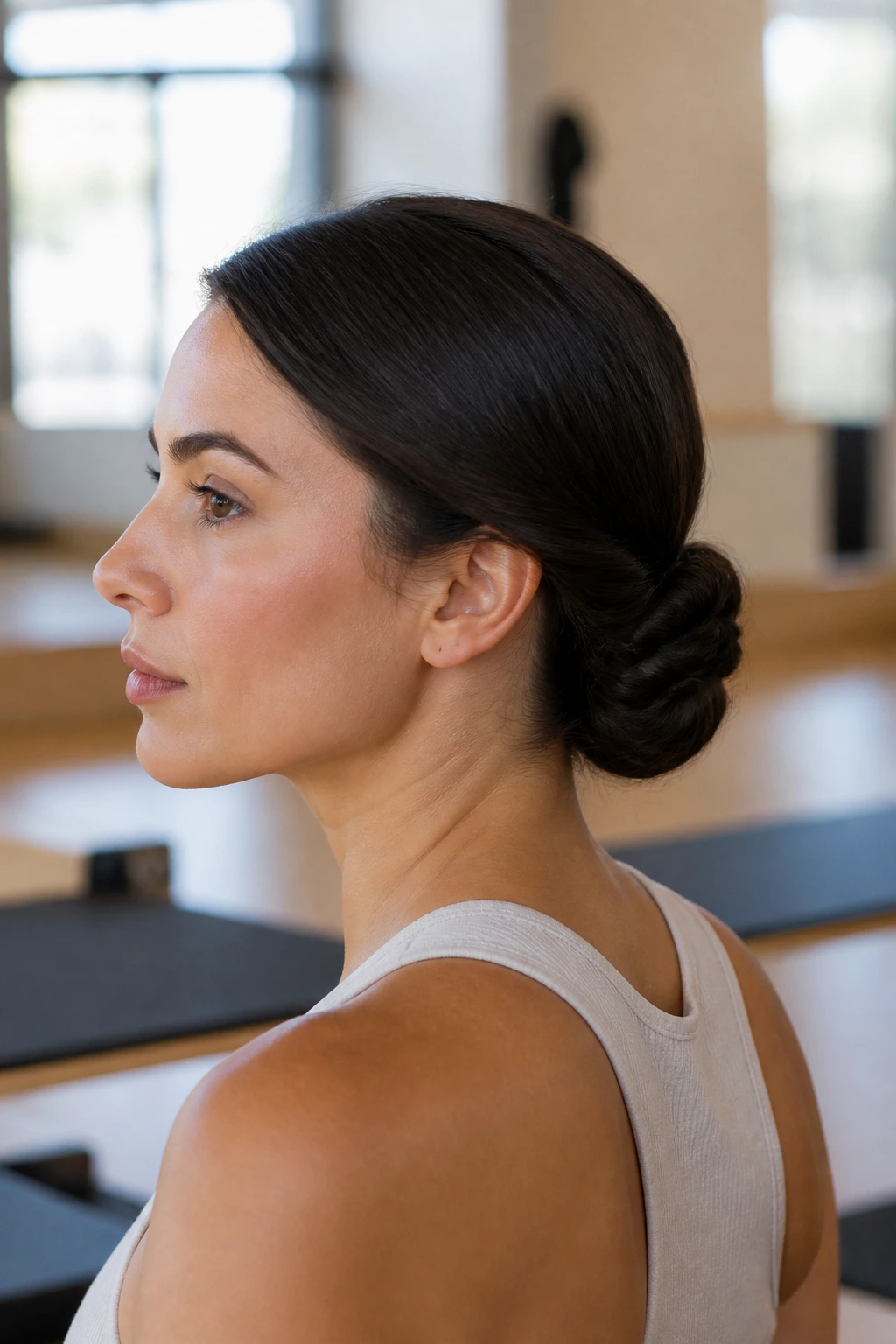
Pilates and barre classes require a lot of mindful movement, often involving lying flat on your back or resting your head on a foam block. A high ponytail or a bulky topknot will constantly push your neck out of alignment, while a loose style will fall into your face during forward folds. A soft, twisted low chignon sits perfectly at the nape of your neck, staying out of your way while looking elegant and polished.
To assemble this style, start by parting your hair down the middle and dividing it into two equal sections. Twist each section inward toward the center of your neck, gathering all the hair as you go. Secure the two twisted sections together at the nape with a thin elastic, creating a low ponytail.
Next, loop the length of the ponytail upward and tuck it through the space just above the elastic band, creating a rolled effect. Secure the ends with a few bobby pins tucked underneath the roll to keep them hidden. This creates a flat, wide bun that distributes the hair’s volume horizontally rather than vertically.
The benefit of this style is its understated appearance. It keeps your hair completely secure during slow, controlled movements, yet looks sophisticated enough for a formal weekend brunch or a quick trip to the market afterward. It is a timeless look that never feels out of place.
12. Multi-Elastic Segmented Pigtails
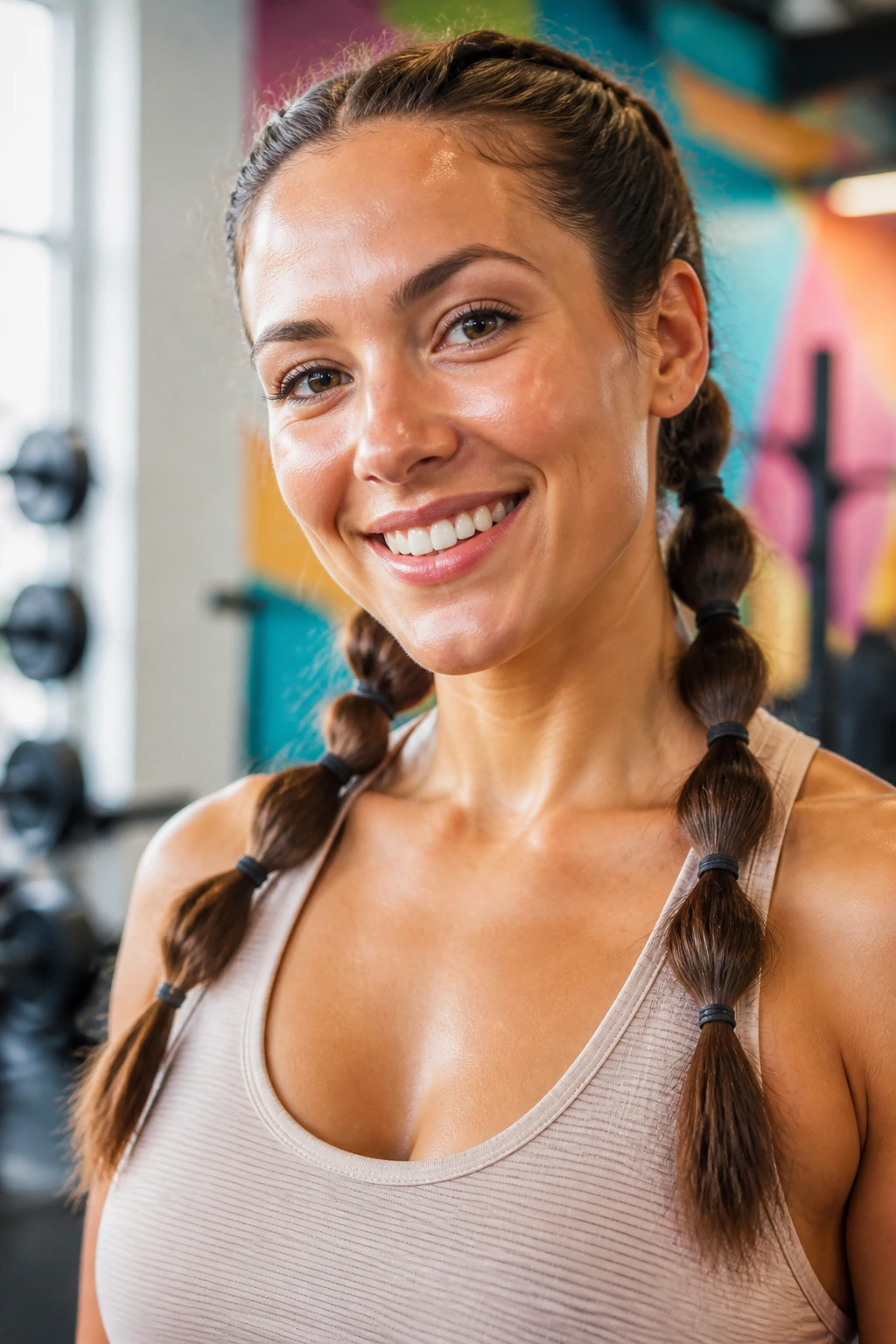
Unlike traditional pigtails, which can sometimes look a bit too youthful and often whip around your face during a workout, multi-elastic segmented pigtails offer a highly modern, structured look. This style uses multiple elastic bands placed at regular intervals down the length of each pigtail, keeping the hair rigid and close to the head. It provides the bounce-free security of a braid with the sleek, polished finish of a ponytail.
What makes this style different is how it manages different lengths of hair. If you have layers or a shaggy cut, a traditional braid will often have small pieces poking out along the length. Segmented pigtails trap these shorter layers within each elastic-bound segment, keeping the entire hairstyle smooth and secure throughout your workout.
This style is best for individuals with medium to long hair who want a high-security style that stands out at the gym. It is particularly effective for outdoor workouts where wind can quickly turn loose hair into a tangled mess.
I recommend using colorful elastics that match your workout gear for a fun, coordinated look, or sticking to clear elastics for a cleaner, more minimalist aesthetic. Keep the segments relatively short—about two inches apart—to ensure maximum hold and structural integrity.
13. Side-Swept Dutch Braid into a Messy Bun
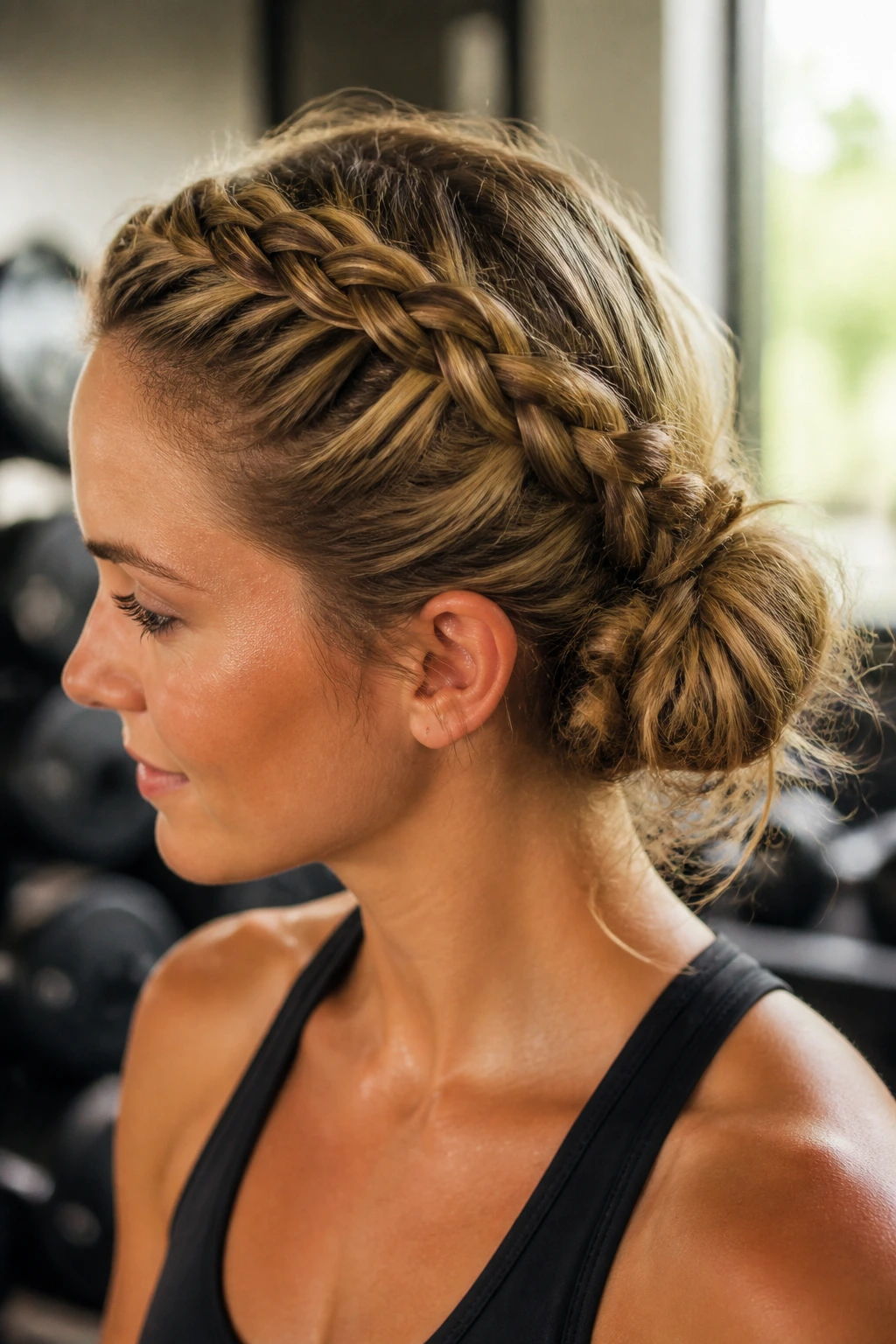
If you are looking for a style that transitions from a heavy weightlifting session to a casual Saturday lunch, this is it. By starting a thick Dutch braid at one temple and sweeping it diagonally across the back of your head, you create an eye-catching design that keeps your hair completely secure. The braid culminates in a soft, messy bun behind your opposite ear, combining athletic utility with effortless weekend style.
The Physics of the Diagonal Braid
A diagonal Dutch braid works by anchoring the bulk of your hair across the strongest contours of your scalp. This prevents the hair from sagging or pulling on one specific area, which is highly beneficial during workouts that involve rapid head movements. The braid keeps bangs and shorter layers tightly pinned back, while the low bun keeps the back of your neck cool.
Style Quick Guide
- Best for: Medium to long hair with face-framing layers or grown-out bangs.
- Difficulty: Intermediate; requires some comfort with braiding across the curve of the head.
- Hold rating: High; does not budge during kettlebell swings or box jumps.
- Visual appeal: Highly textured and dimensional, looking great from every angle.
Pro tip: Gently pull at the outer loops of the Dutch braid before securing the bun to make the braid look thicker and more voluminous.
14. The Scarf-Wrapped Low Bun for Post-Gym Brunch
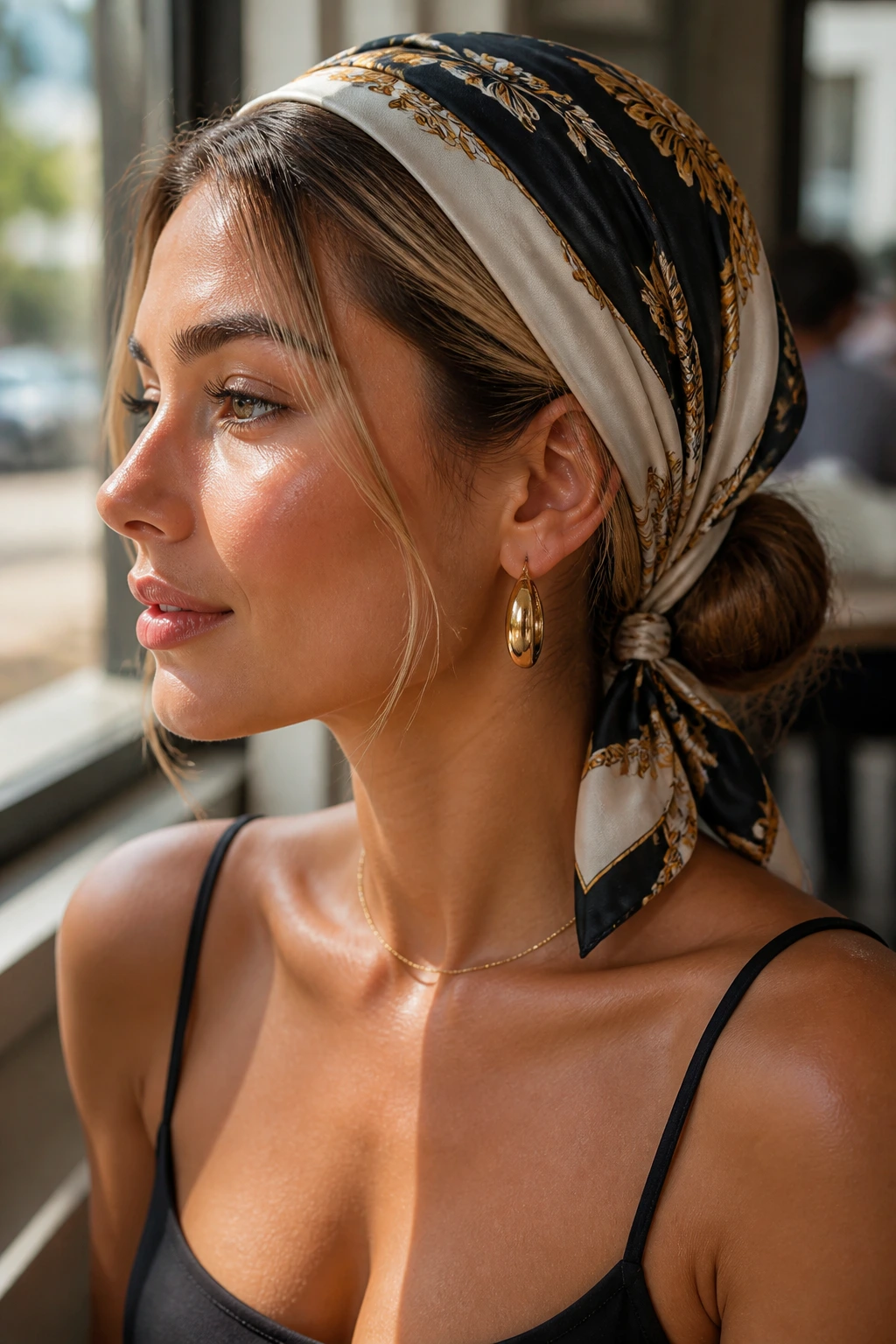
You do not need a full wash-and-blowout routine to look completely polished after a high-sweat workout. In fact, a stylish silk or satin scarf can hide sweaty roots while turning a basic low bun into a chic, French-inspired weekend look. This is a practical shortcut for those Saturdays when your workout schedule overlaps closely with your social calendar.
To style this, start by pulling your hair back into a neat low bun at the nape of your neck, using a small amount of hair oil to smooth down any immediate flyaways. Next, take a square silk scarf, fold it diagonally into a band, and wrap it around your head, tying it securely underneath the bun. This covers the damp hair along your hairline and crown, presenting a clean, intentional look.
Alternatively, you can weave the scarf directly into the bun itself. Secure the scarf to your ponytail elastic, split your hair into two sections, and use the ends of the scarf as the third section of a braid. Twist the braided scarf-and-hair combination into a bun and pin it secure. It is an easy way to add color and volume to your style while keeping your hair tucked away safely.
15. Four-Strand Accent Braid with a High Bun
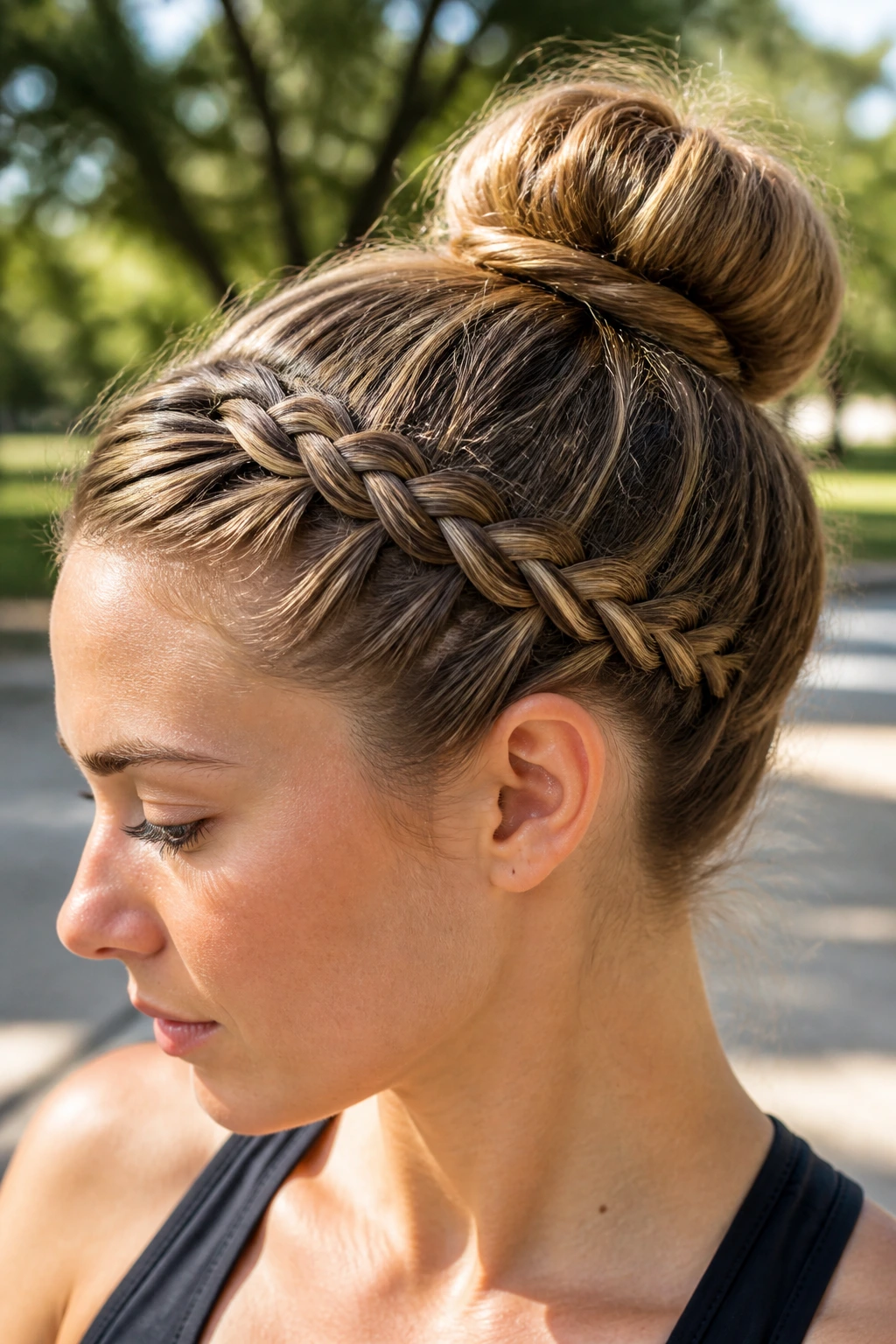
How do you elevate a basic gym bun into something that looks like it took serious effort? The key is incorporating a unique accent element, like a four-strand braid, along the side of your head before pulling the rest of your hair into a high bun. This small addition breaks up the severe look of a slicked-back bun and adds a touch of intricate texture that looks highly stylish.
A four-strand braid uses four equal sections of hair woven over and under one another, creating a flat, ribbon-like braid that sits flush against the scalp. It is highly secure and holds tightly against wind and movement, making it perfect for keeping flyaways at bay during outdoor workouts. The rest of the hair is pulled into a high bun, keeping your neck cool and clear.
Creating the Four-Strand Accent Style
To achieve this, section off a two-inch portion of hair along one side of your part. Split this section into four equal strands and weave them, crossing the outer strands over and under the inner strands in an alternating pattern. Once the braid reaches the crown, combine it with the rest of your hair and twist everything into a high, secure bun, pinning it in place with sturdy U-pins.
16. The Claw-Clip Twist for Low-Impact Workouts
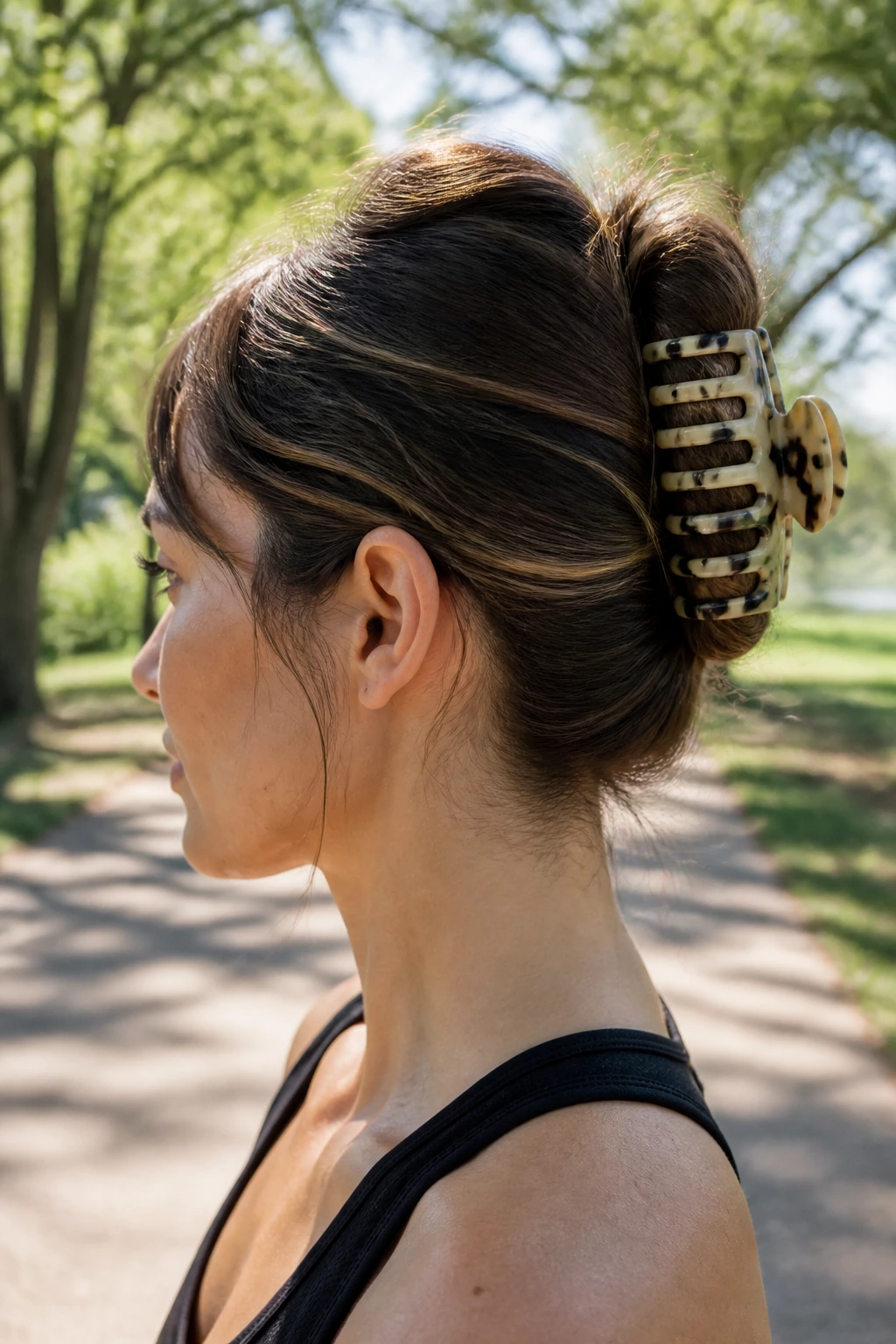
You are running late for a Saturday morning walk with a friend, and your hair is a wild, slept-in mess. You do not have time for complex braiding or heat styling, but you still want to look put-together. The classic claw-clip twist is a low-effort, high-reward style for casual, low-impact weekend activities.
The claw clip has remained popular because of its simplicity and ease of use. By twisting your hair upward against the back of your head and securing it with a large, sturdy clip, you keep your hair off your neck without creating the high-tension pull points of a traditional hair tie. It allows your scalp to breathe and prevents the hair-snapping damage that can occur with tight elastic bands.
Claw-Clip Styling Checklist
- Best for: Low-impact workouts like walking, hiking, or gentle stretching.
- Speed: Can be assembled in under ten seconds with zero prep work.
- Hair safety: Zero elastic tension means no breakage along the crown or nape.
- Aesthetic: Effortlessly chic, giving a relaxed, off-duty athlete vibe.
For the best hold, look for a claw clip with a strong spring and a rubberized finish, which provides extra grip on slippery hair and prevents the clip from sliding down during movement.
17. Cornrows into a High Puff
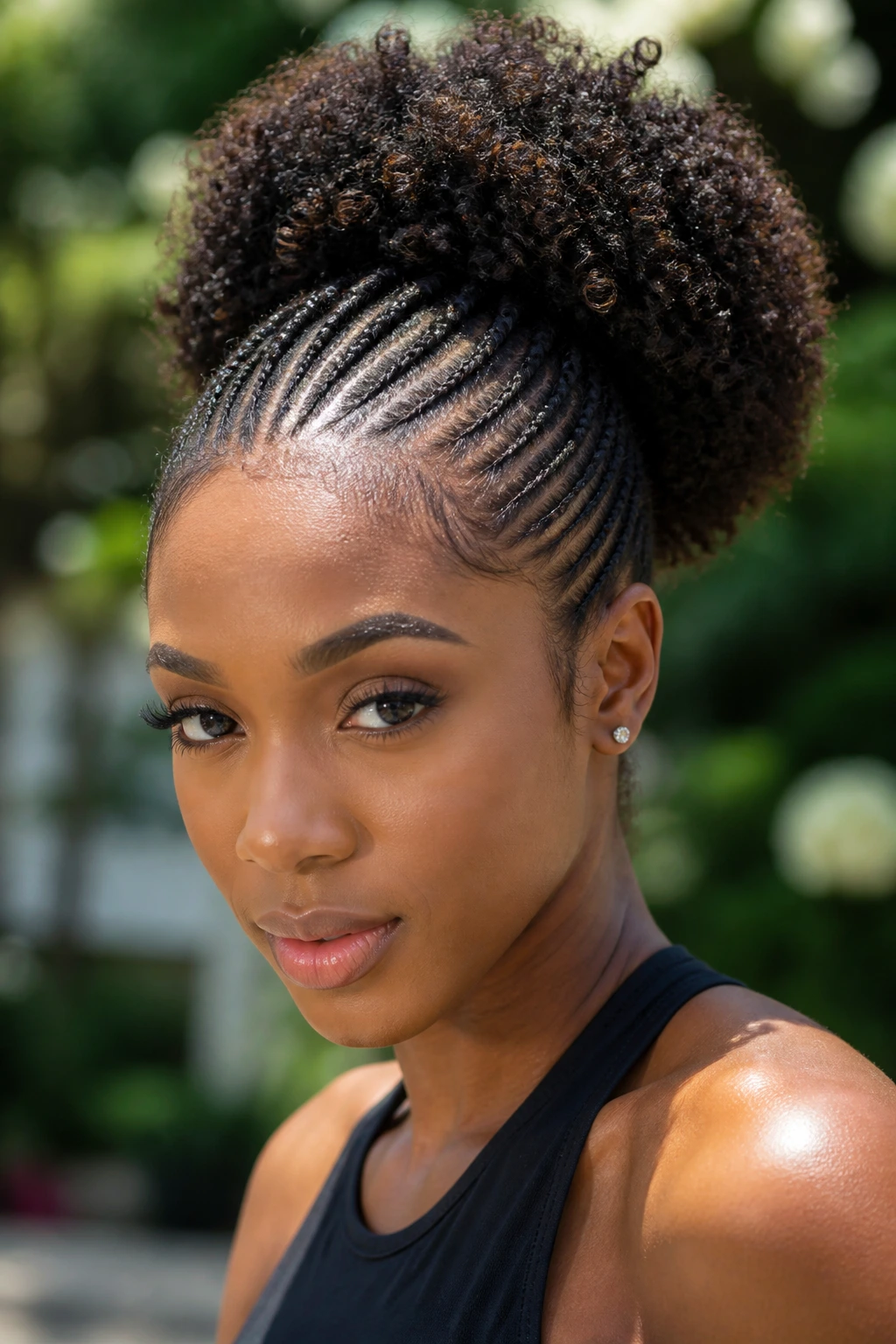
For those with natural curls, finding a hairstyle that protects the hair during workouts while showcasing its natural beauty can be a challenge. Combining neat cornrows at the front with a high, voluminous puff at the crown offers a great blend of protection and style. The cornrows keep the hair flat and secure along the hairline where sweat is most concentrated, preventing frizz and shrinkage.
To create this look, section off the front third of your hair and braid it into neat, small cornrows running from your hairline back toward the crown of