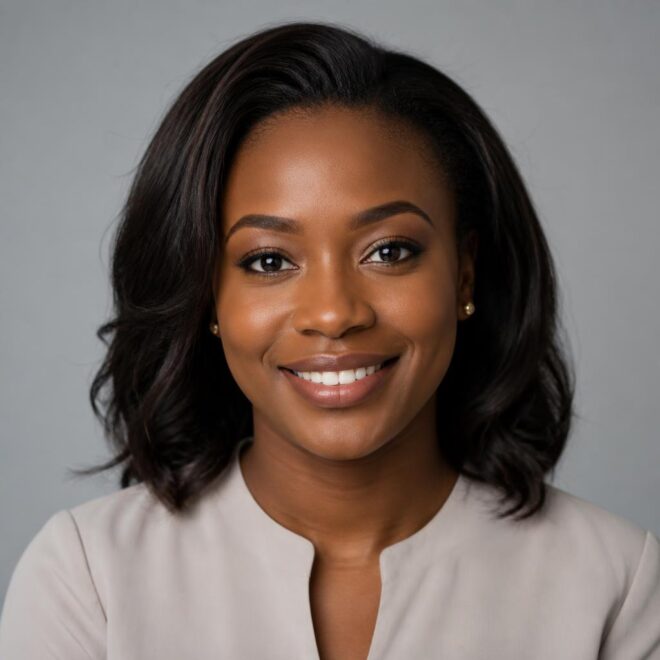


Thick hair is a blessing—the density, the natural volume, the way it holds a curl—but it can also be a source of daily frustration. When you have an abundance of hair, finding a cut or a style that doesn’t feel like you are carrying an extra five pounds on your head is the goal. A middle part is one of the most effective ways to balance that weight. By splitting the mass of your hair equally, you naturally frame the face and allow the hair to cascade down the sides rather than ballooning outward at the crown. It is a look that feels balanced, deliberate, and undeniably timeless.
Choosing a middle part isn’t just about aesthetics, though; it is about geometry. When you have a high volume of hair, off-center parts can lead to an uneven distribution of weight, which often creates an unwanted “poof” on one side. A crisp, centered part forces the hair to sit flatter at the roots while encouraging that coveted sleek, flowing look. Whether you are dealing with tight curls, coarse textures, or straight strands that refuse to lay flat, the following styles are designed specifically to work with the nature of thick hair rather than fighting against it.
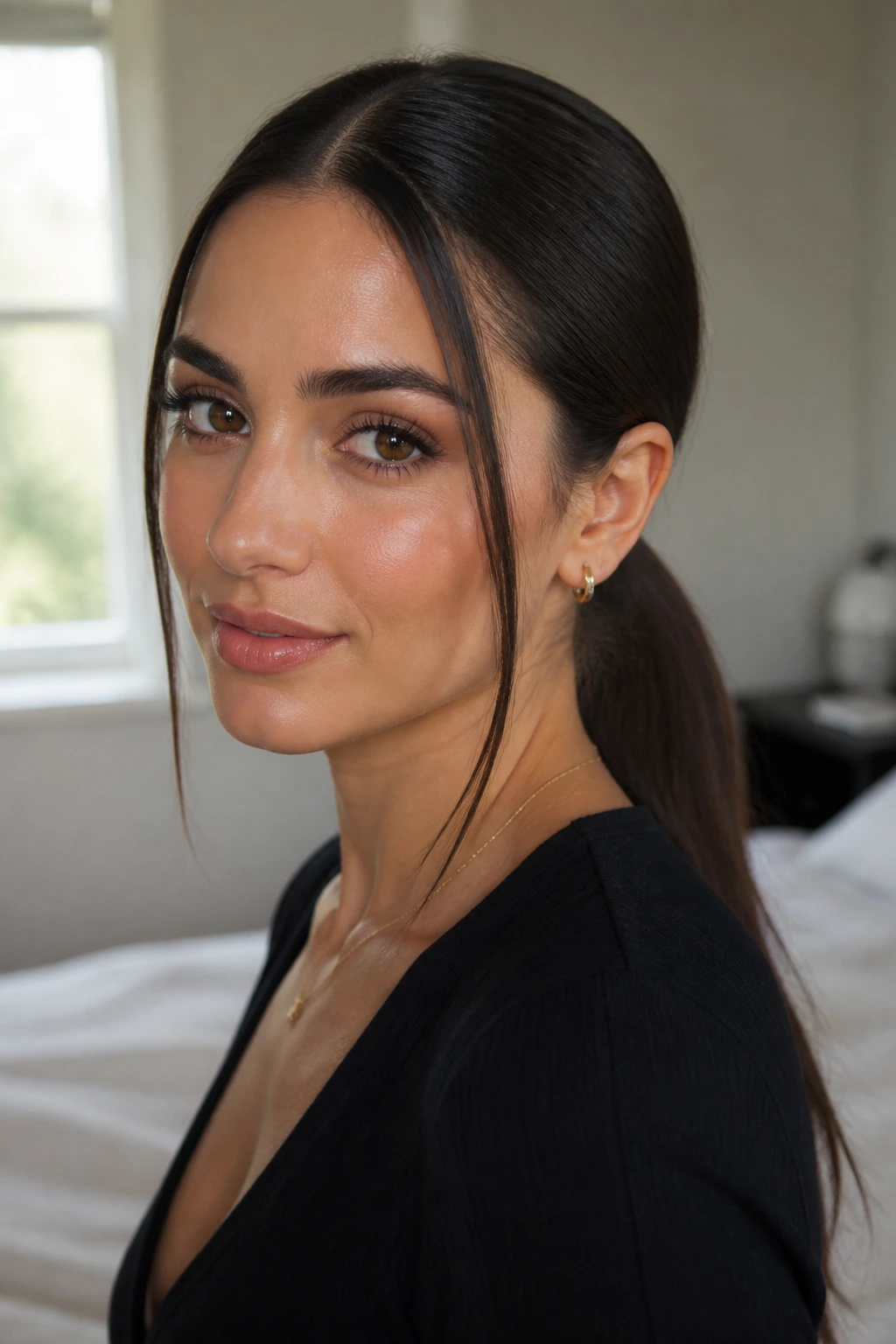
1. Sleek Low Ponytail with Face-Framing Strands
There is a specific kind of polish that only a perfectly executed low ponytail can provide. When your hair is thick, a high ponytail can feel like a heavy weight pulling on your scalp, leading to headaches by mid-afternoon. Moving that bulk to the nape of your neck provides instant relief while maintaining a sophisticated silhouette. By parting your hair exactly down the middle and using a smoothing cream to tuck the hair behind your ears, you keep the volume controlled. Leaving two soft, loose strands around the face adds a touch of casual ease, preventing the style from looking too severe or “gym-ready.”
Styling for Maximum Control
- Use a boar bristle brush to distribute natural oils from the scalp to the ends.
- Apply a dime-sized amount of lightweight pomade to the roots to eliminate flyaways before pulling the hair back.
- Secure the base with a seamless hair tie, then wrap a small section of hair around the base to hide the elastic for a cleaner finish.
2. Long Layers with Internal Thinning
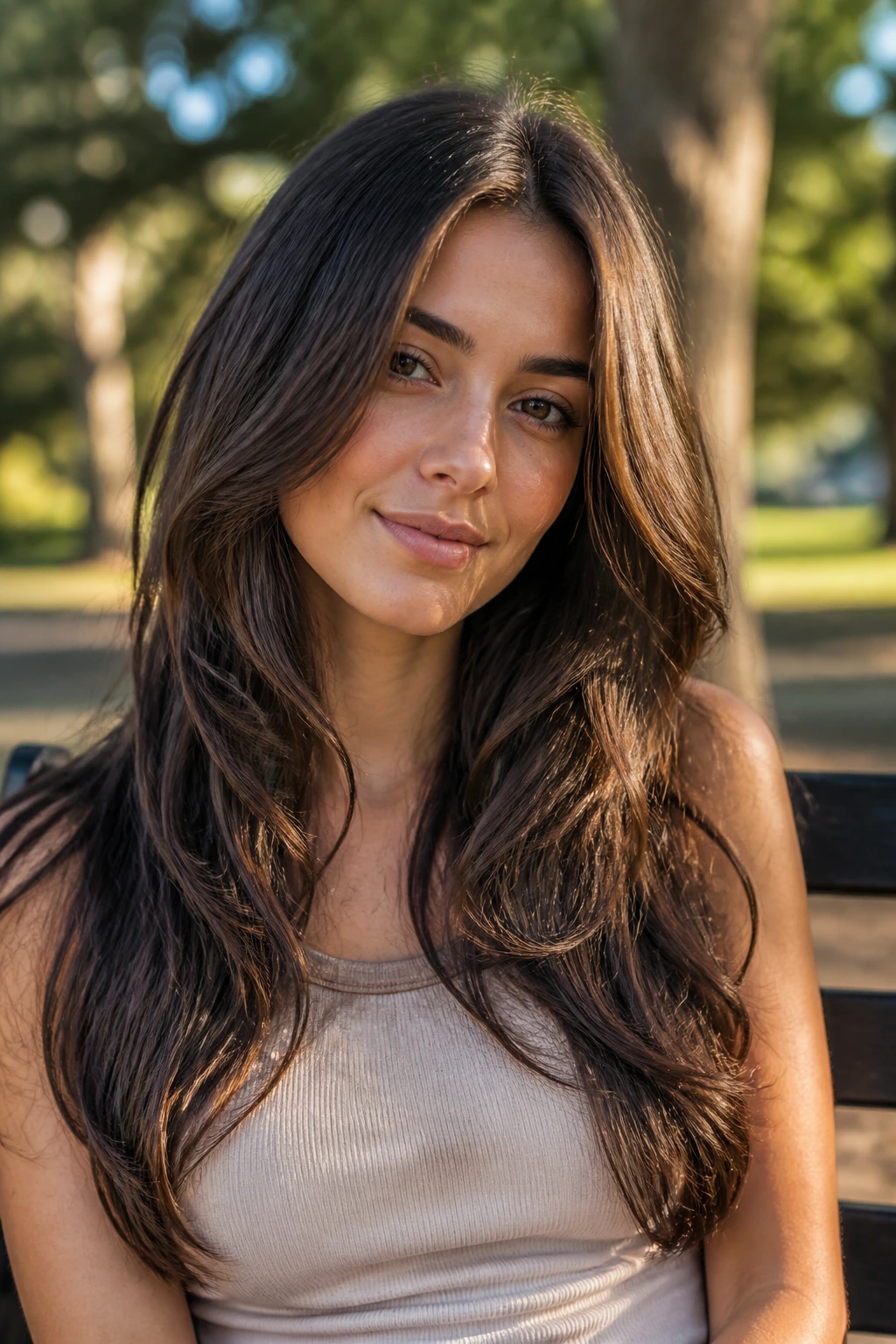
Thick hair often hides its true beauty because the bulk creates a heavy, blunt shape that lacks movement. If you want a middle part that feels airy and light, internal layering is your best friend. Instead of just cutting the outer edges, ask a stylist to remove weight from the interior sections of your hair. This allows the hair to interlock and lay closer to the head, creating a cascading effect rather than a triangle shape. When you part this cut down the center, the hair will naturally curve inward toward your face, creating a soft, face-framing arc.
Why This Works for Density
The secret to this look isn’t taking off length, but reorganizing the volume. By creating shorter layers underneath the top layer, you build a foundation that supports the rest of the hair. This prevents that heavy “shelf” look at the bottom and ensures your hair moves like silk when you walk, even if it is thick and coarse.
3. The Blunt Lob with Minimal Texturizing
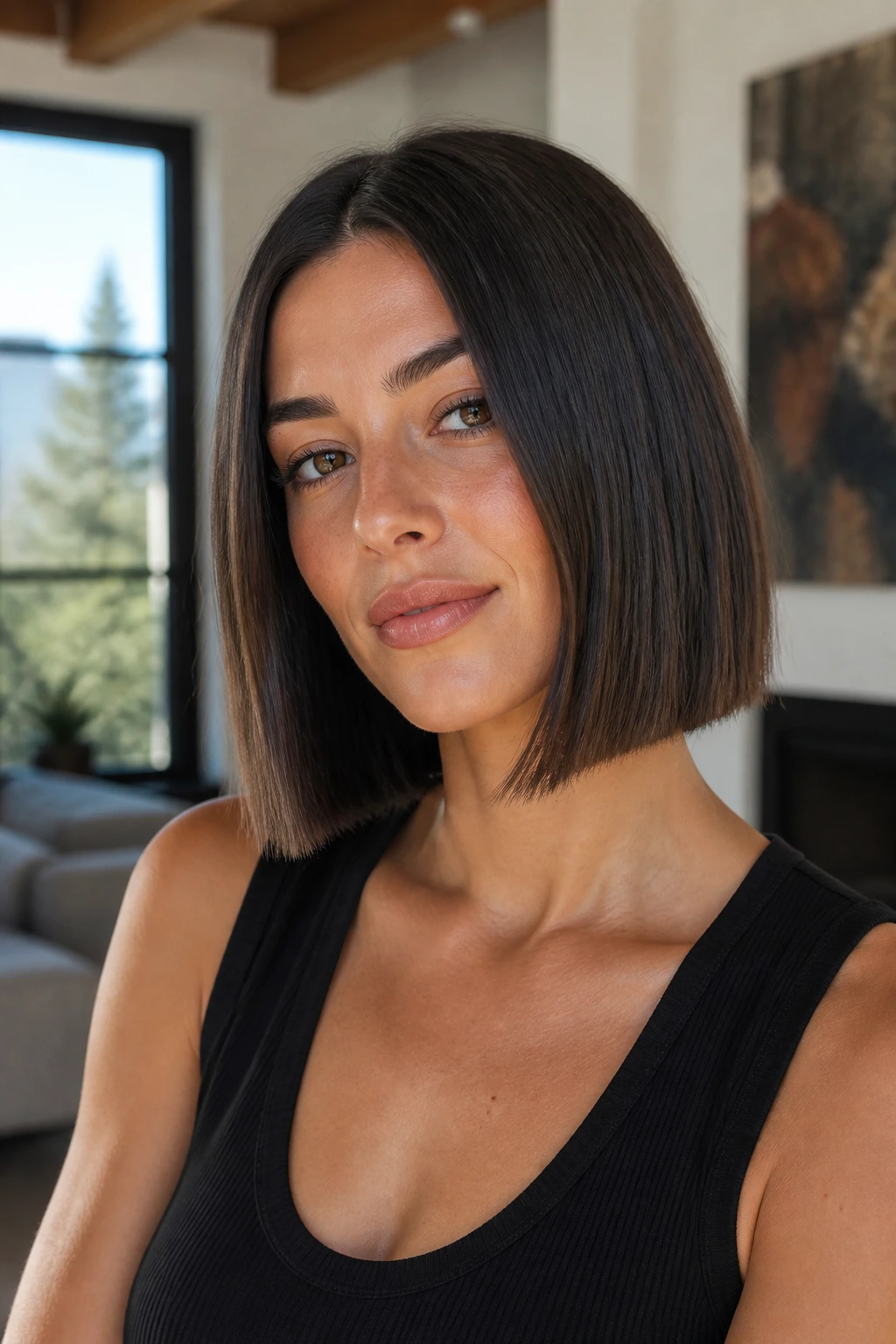
There is something inherently powerful about a blunt-cut lob (long bob) that sits just above the collarbone. For thick hair, the blunt edge is key because it forces the ends to stay together in a single, defined line. When you combine this cut with a precise middle part, you get a geometric look that is modern and sharp. Because the hair is shorter, the total weight is reduced, which helps your natural texture remain more manageable throughout the day. It is a style that requires very little maintenance, provided you have a sharp pair of shears and a good straightening iron.
Keeping the Lines Sharp
- Schedule a trim every six to eight weeks to prevent the blunt ends from becoming wispy or split.
- Use a heat protectant spray before flat-ironing to maintain the integrity of your ends.
- A drop of hair oil applied to the ends keeps the blunt line looking intentional rather than frayed.
4. Deep-Wave Shag with Curtain Bangs
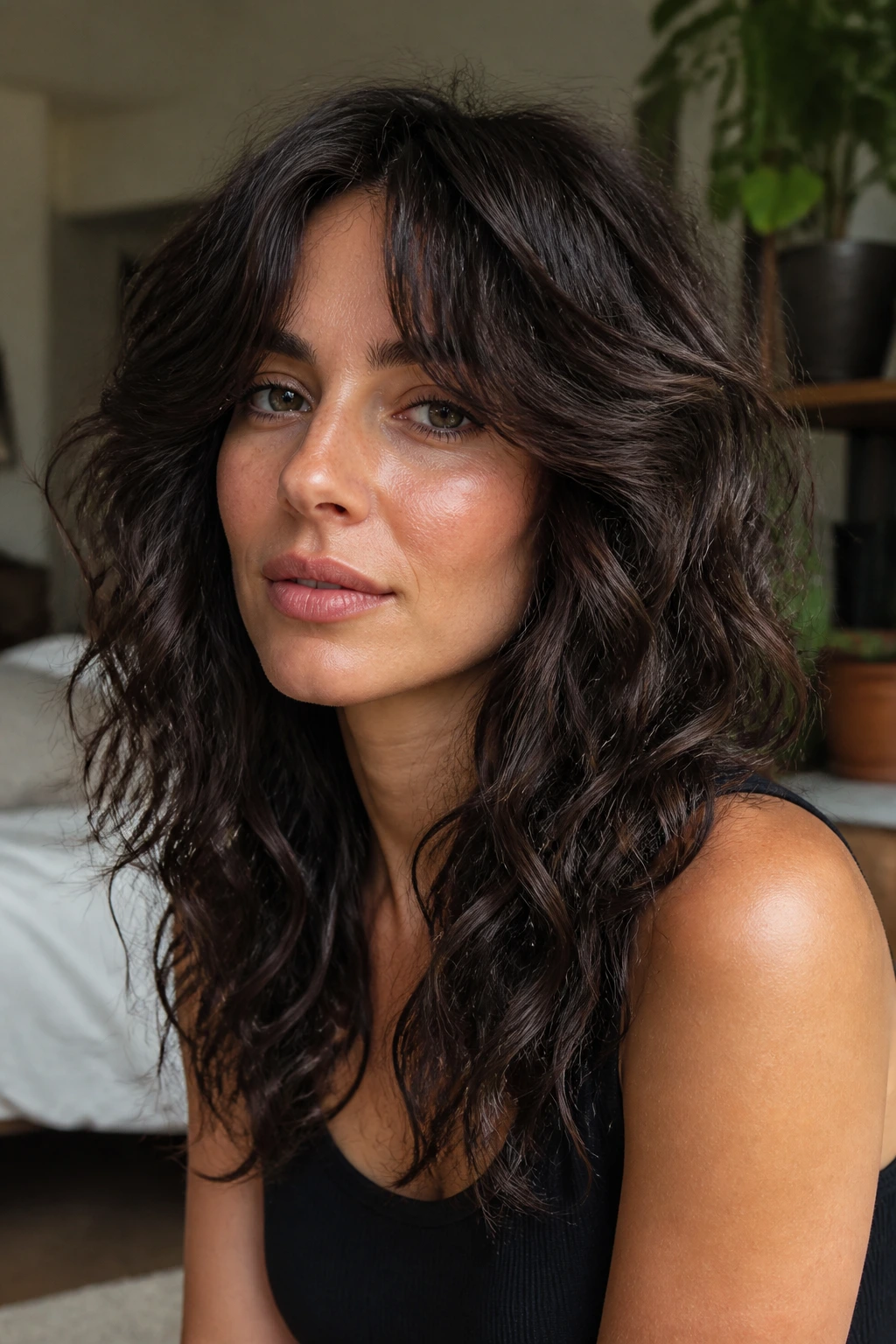
If you are tired of trying to force your thick hair to lay flat, stop fighting it and embrace the texture. A shag cut—characterized by shorter, choppy layers throughout the crown—is perfect for middle parts because it thrives on controlled chaos. Adding curtain bangs that originate from your center part creates a soft, 1970s-inspired vibe that looks better as it gets a bit messy throughout the day. This style relies on the weight of your hair to hold the layers in place, preventing them from frizzing out too much.
Bringing the Texture to Life
- Apply a sea salt spray to damp hair and let it air-dry to encourage the natural wave pattern.
- Use a diffuser attachment on your blow dryer if you need extra volume at the roots but want to keep the ends defined.
- Avoid heavy silicones, which can weigh down waves and make them look greasy; stick to mousses or light styling creams instead.
5. Face-Framing Layers (The “Butterfly” Cut)
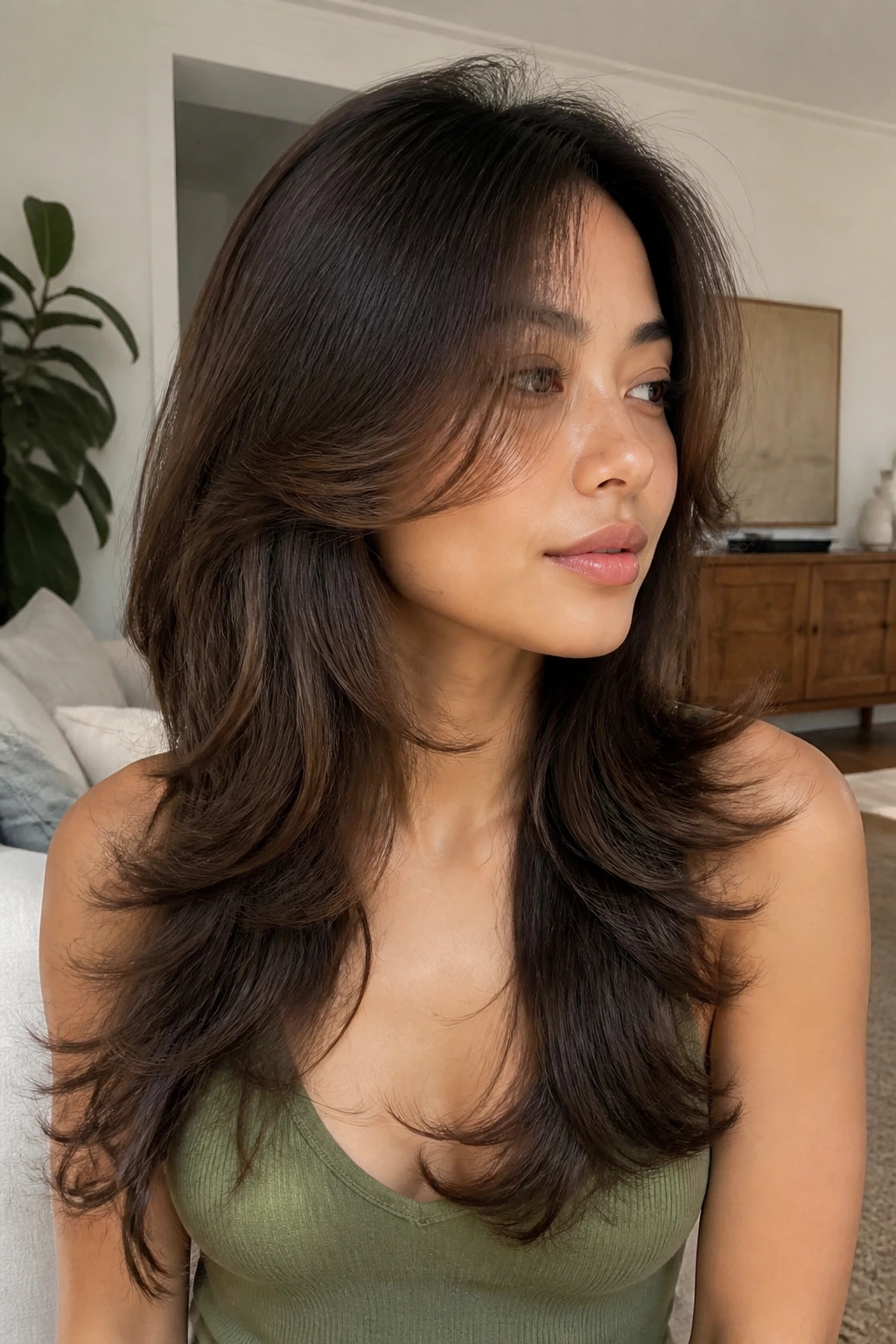
The butterfly cut is a masterclass in managing density. By combining very short, face-framing layers with longer, cascading lengths, this cut allows you to showcase the thickness of your hair while keeping the weight away from your jawline. A middle part is mandatory here, as the layers are specifically designed to start at the part and flow backward and outward. It creates a “feathered” effect that looks like you have spent hours with a round brush, even if you just let your hair dry naturally.
How to Style the Layers
The key to this look is the direction of the blow-dry. Always use a large round brush to pull the hair away from your face at the root. Once you reach the mid-lengths, rotate the brush to encourage the hair to flick outward. This movement creates the “wings” of the butterfly cut and prevents the heavy hair from burying your facial features.
6. The Half-Up, Half-Down Top Knot
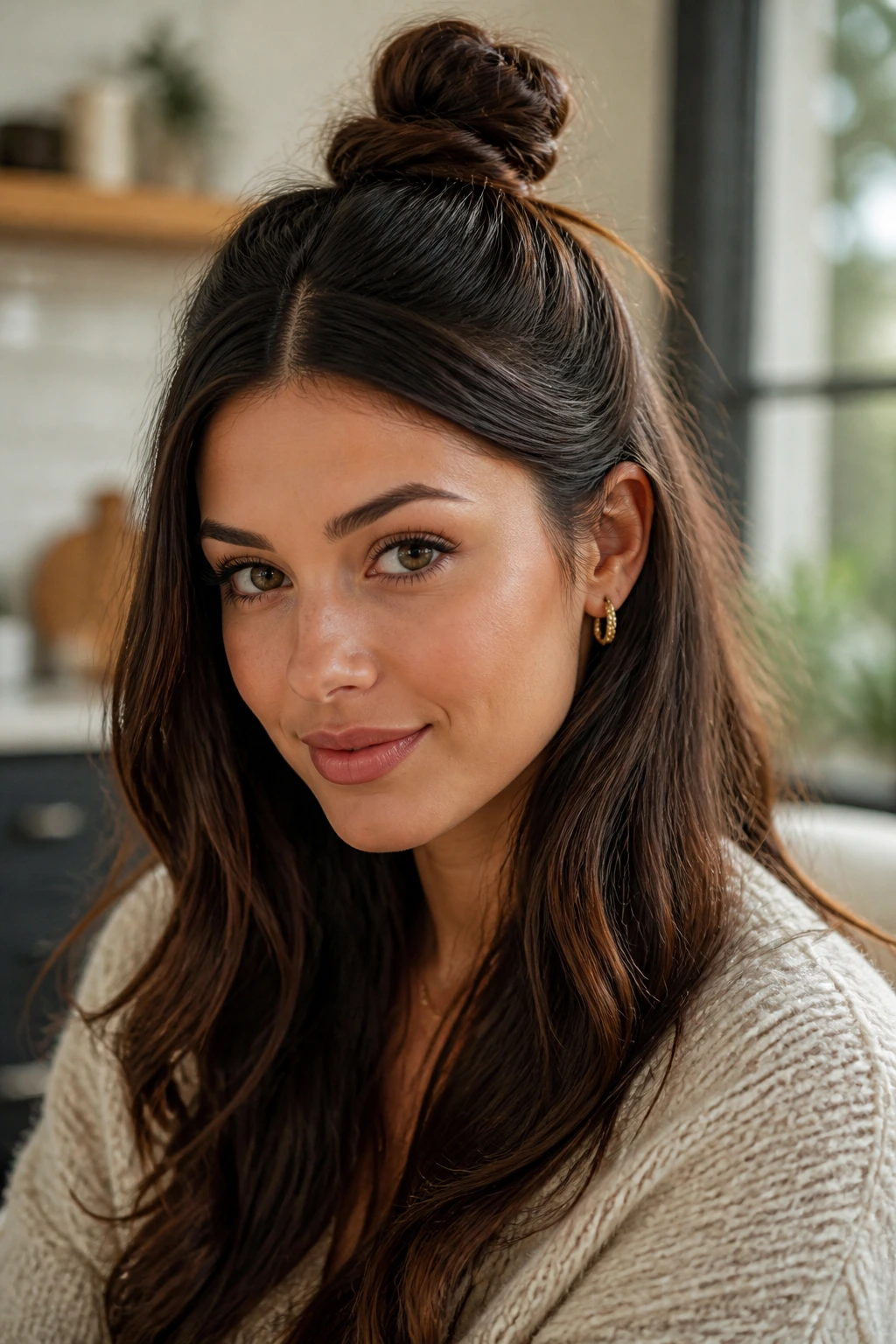
When you have thick hair, you often want it out of your face, but you also want to show off the length. The half-up, half-down look is the perfect middle ground. By parting your hair down the center and gathering only the top portion into a small, tight bun at the crown, you reduce the visual volume on the sides of your head. This creates a clean look that feels intentional. The remaining hair flows down your back, highlighting the thickness and health of your ends.
Pro Tips for the Perfect Bun
- Section the top half of your hair in a straight line from the temples, ensuring the center part remains perfectly aligned.
- Secure the bun with a small, clear elastic to keep it minimal and modern.
- Gently pull at the hair around your crown to create a bit of volume, balancing the slickness of the rest of the style.
7. Natural Curls with an Undercut
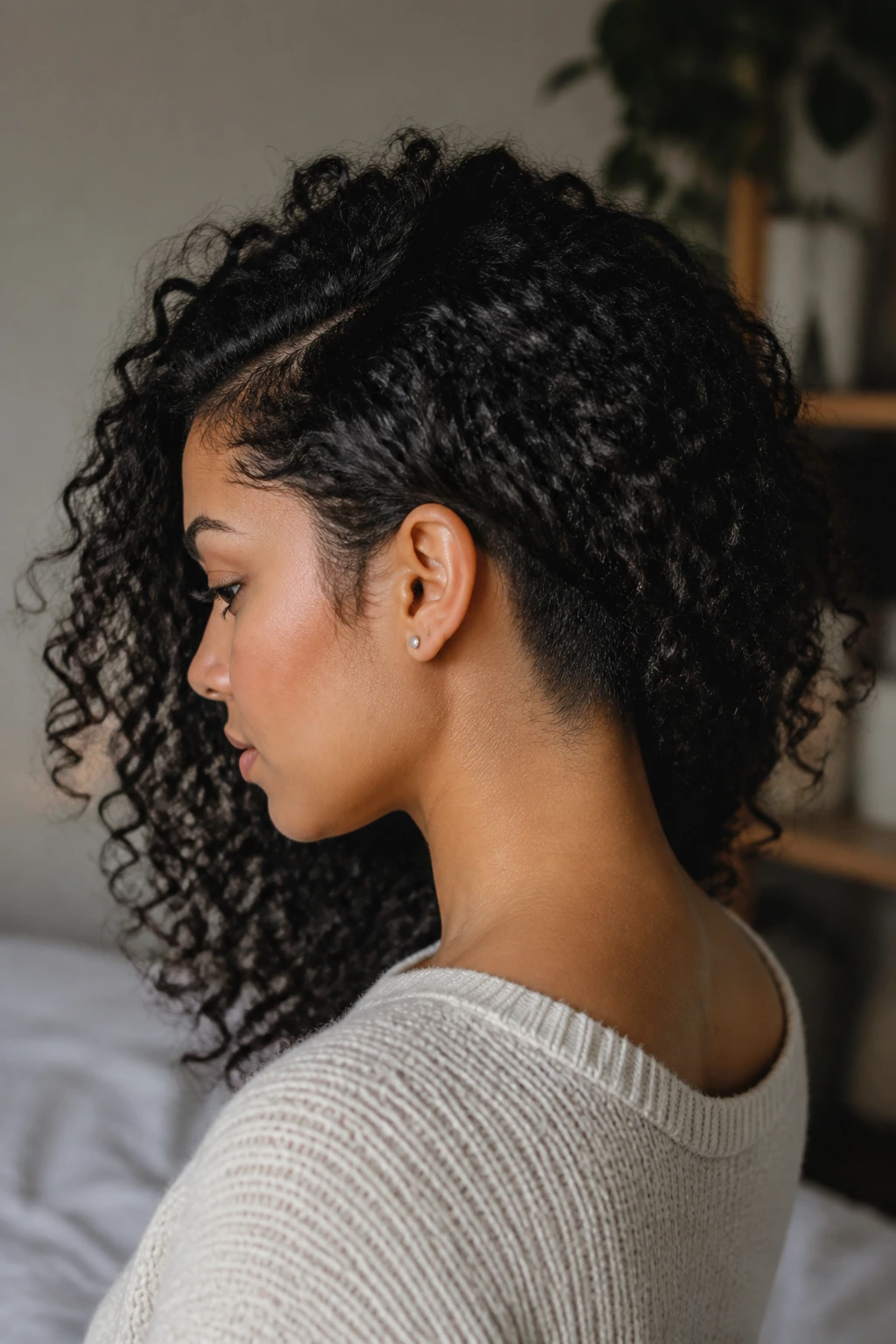
Sometimes the only way to deal with an extreme amount of thick, curly hair is to take a bit of the foundation away. An undercut—where a small section of hair at the nape of the neck is shaved or closely cropped—can be a total game-changer. When you wear your hair down with a middle part, nobody even knows the undercut is there. It drastically reduces the thickness at the base, meaning your hair won’t bunch up against your neck or get tangled in your clothes. It is a hidden, functional detail for those who want to keep the length but lose the heat and bulk.
Is an Undercut Right for You?
- Start small; you can always shave more later, but you cannot add length back quickly.
- Consider an intricate design shaved into the nape if you want to make the style a statement piece.
- This style is best for those who live in warmer climates or those who find that their thick hair causes significant neck sweat during physical activities.
8. Glass Hair (Super-Straight and Glossy)
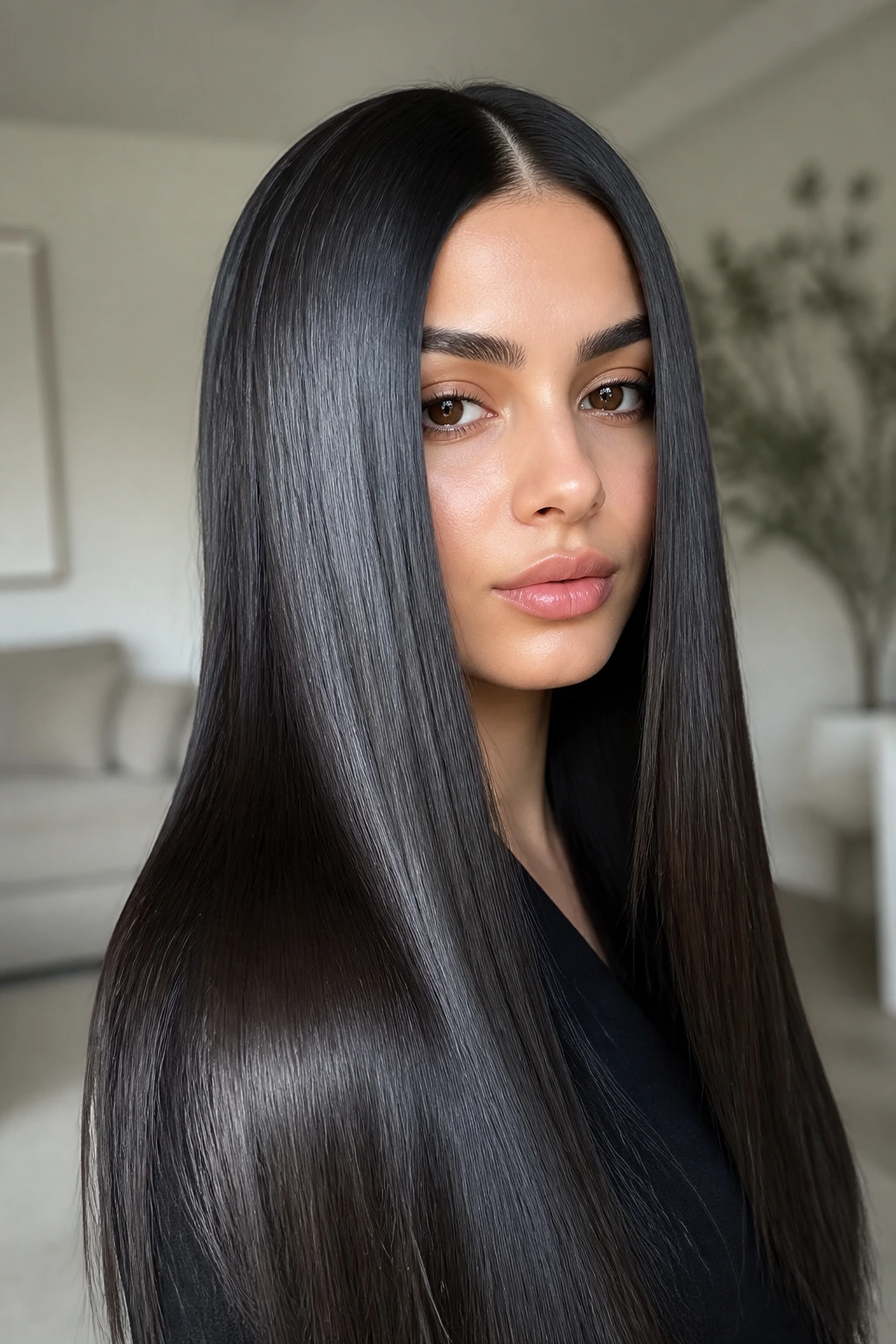
“Glass hair” refers to a finish so smooth and shiny that it reflects light like a mirror. For thick hair, achieving this look requires effort, but the payoff is immense. A middle part is the only way to wear this style, as it creates the perfect symmetry required for that “glassy” effect. The goal is to eliminate every single kink and flyaway, creating a dense, heavy sheet of hair that feels luxurious and controlled.
The Tools of the Trade
- A high-quality ionic flat iron is non-negotiable for this look.
- Use a straightening balm while the hair is damp to provide a smooth base for your heat styling.
- Finish with a light mist of shine spray; avoid anything with heavy oils, or you will ruin the sleekness you worked so hard to create.
9. The Textured Bob with Curtain Bangs
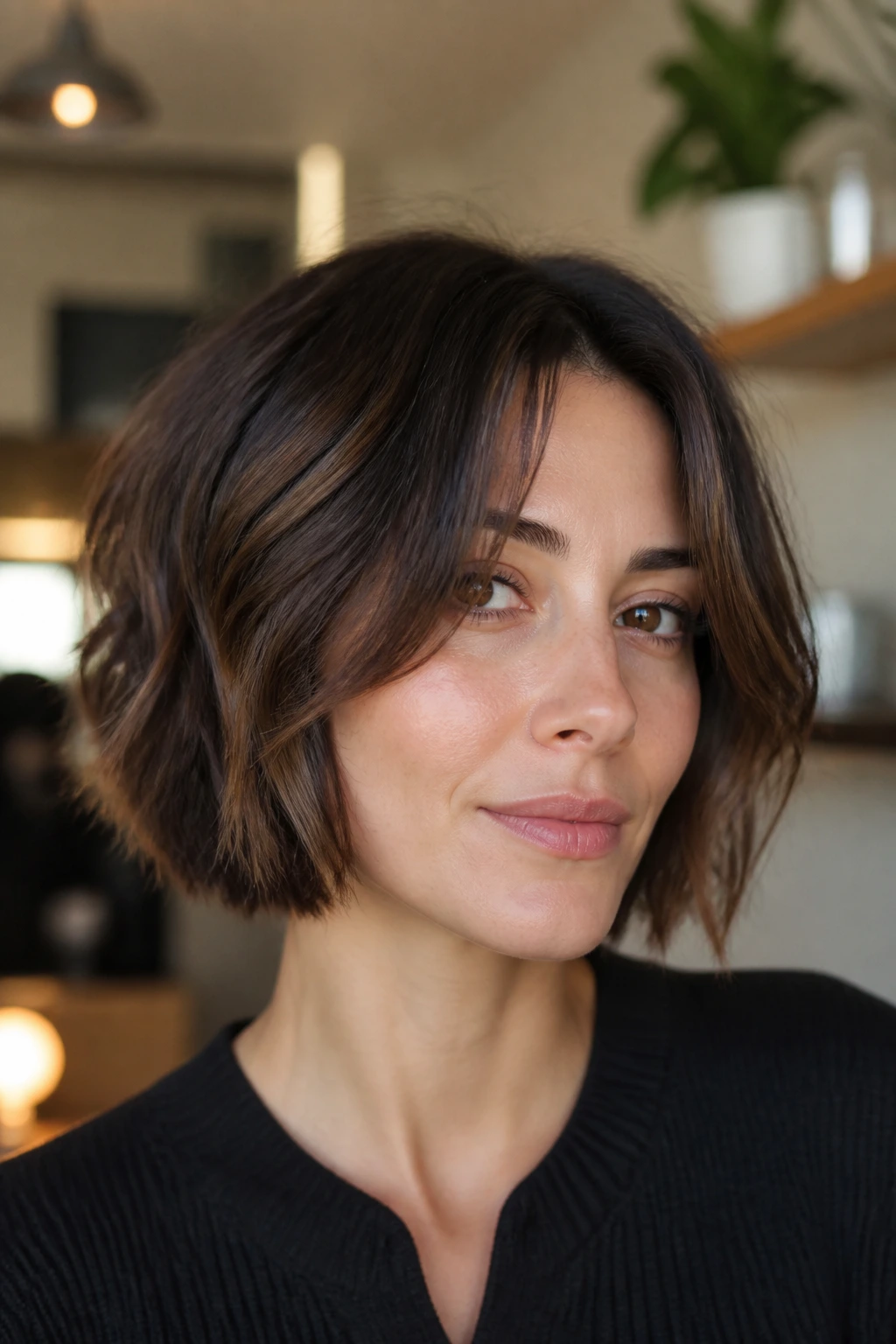
If you want to keep your hair short but find that a blunt cut feels too “heavy” or “mushroom-like,” opt for a textured bob. The ends are point-cut rather than sliced straight across, which creates a softer, more movement-oriented shape. Adding middle-part curtain bangs connects the bangs to the rest of the hair, ensuring that the transition is seamless. This style works exceptionally well for thick hair because the layers prevent the hair from puffing out into a pyramid shape.
Avoiding the “Triangle” Shape
The biggest mistake people with thick hair make with a bob is not enough layering. Without layers, your hair will grow out rather than down. Ensure your stylist understands that you want the ends to be “light” and “breezy.” Point-cutting into the ends is the standard industry technique for achieving this, so don’t be afraid to ask for it by name.
10. Low Braided Pigtails
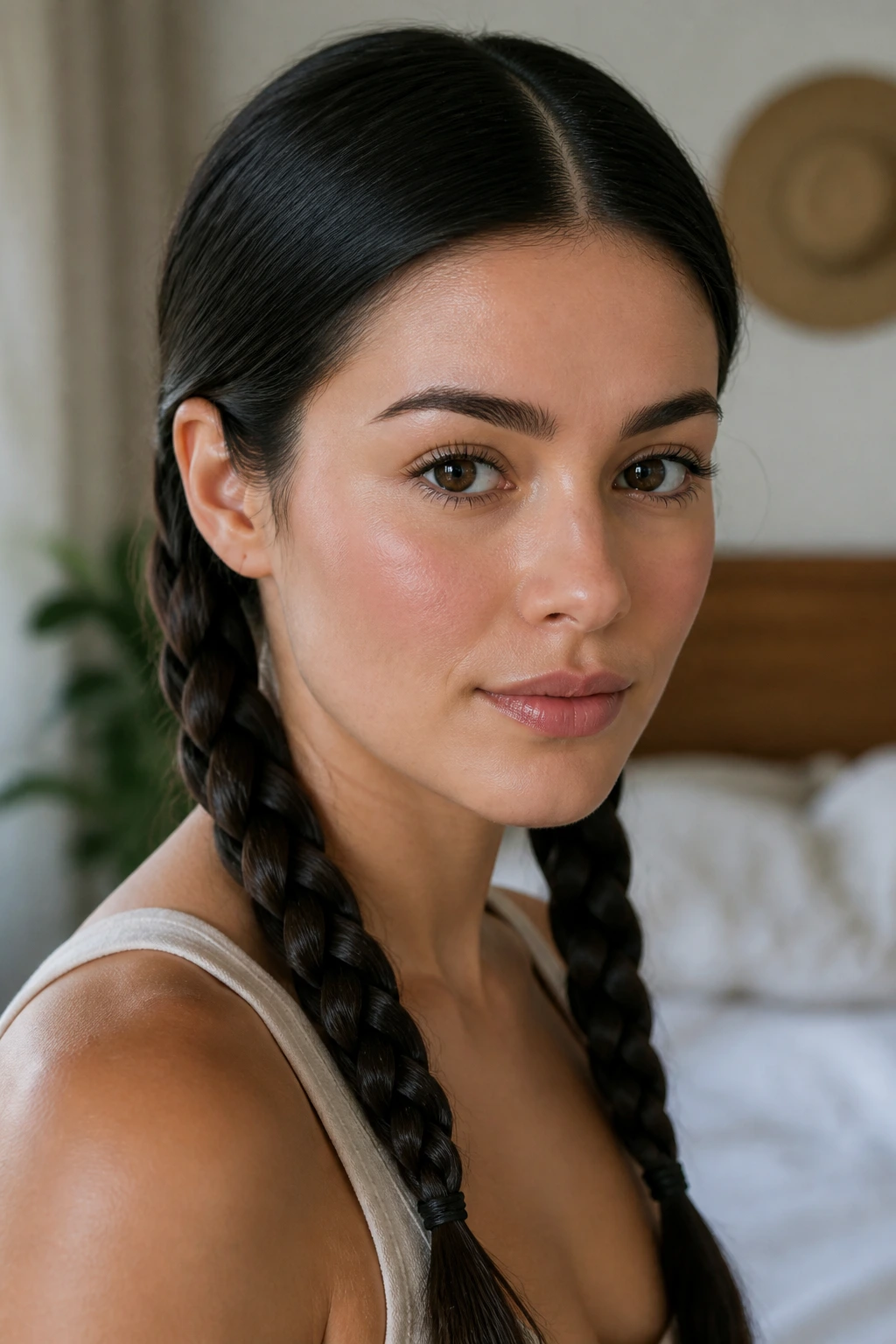
Pigtails aren’t just for children; when done low and sleek, they can be an incredibly chic and practical way to manage thick hair. Starting from a crisp middle part, braid the hair tightly from the nape of the neck downward. This style is excellent for protecting your ends and keeping the volume of your hair contained throughout a long, busy day. It works best with hair that has a bit of “grit” or day-old texture, as freshly washed thick hair can sometimes be too slippery for tight braids.
Making Braids Look Mature
- Avoid bright, colorful elastics; stick to clear bands or silk scrunchies that match your hair color.
- Once the braids are finished, gently pull the edges outward to create a “pancake” effect, which makes the braids look fuller and more relaxed.
- Leave a few tiny wisps of hair out around the ears to keep the look feeling soft rather than like a school project.
11. The Modern Shag with Micro-Fringe
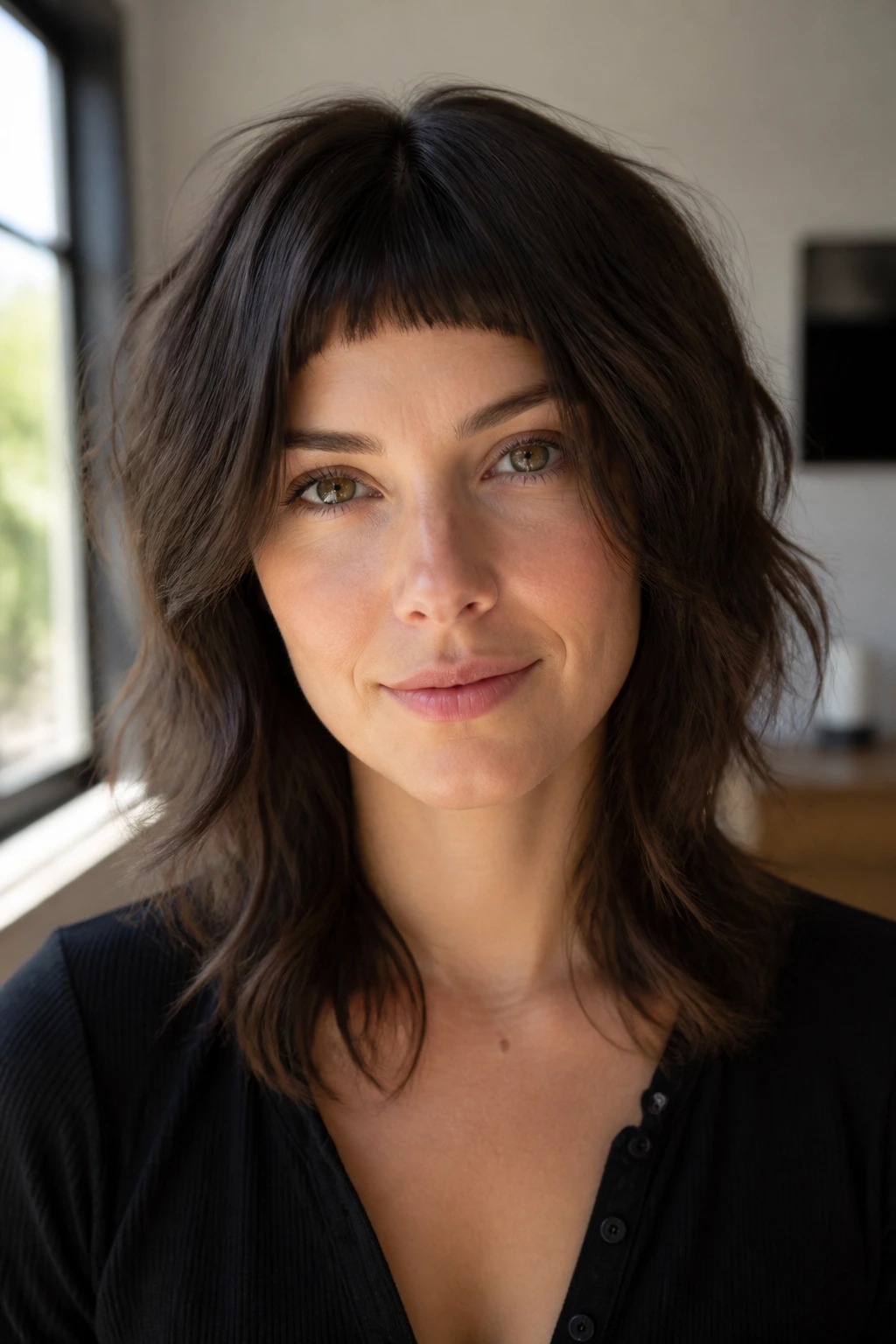
If you are daring enough, a middle part paired with micro-fringe (very short bangs) creates a look that is edgy, high-fashion, and incredibly fun. For thick hair, the benefit here is that you are removing a significant amount of weight from the front of your head, which helps to frame your face without overwhelming it. The rest of the hair can be kept at a medium length with plenty of choppy, internal layers to keep it looking cool and effortless.
Maintaining Micro-Fringe
- Be prepared for frequent trims; micro-fringe loses its impact as soon as it touches your eyebrows.
- These bangs require daily styling; keep a small round brush and a hairdryer handy to ensure they lay flat against your forehead.
- If you have an cowlick, discuss this with your stylist before cutting, as it will dramatically affect how the fringe sits.
12. Soft Barrel Curls
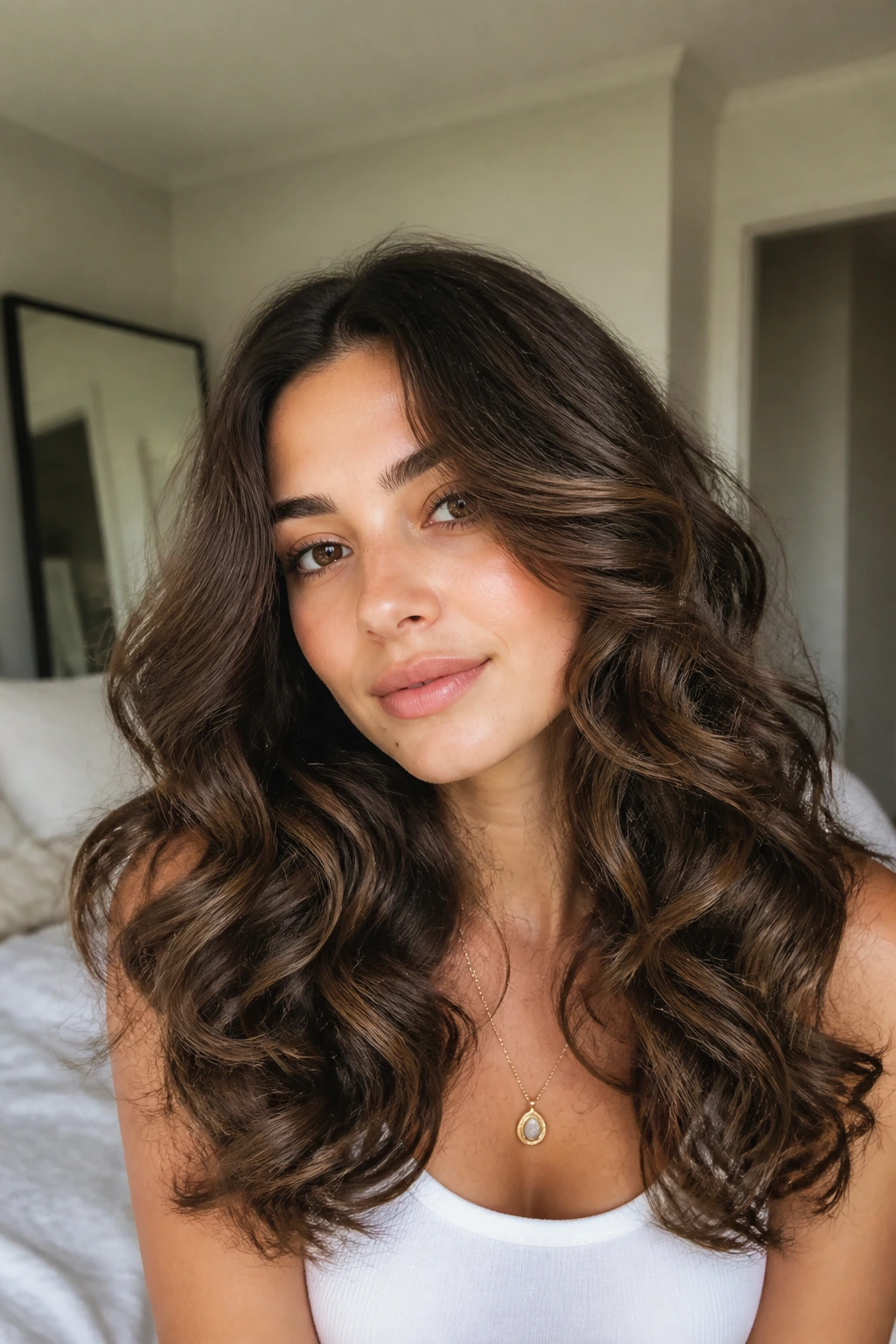
Thick hair holds a curl beautifully, but you have to be careful not to make them too tight, or you will end up looking like a Victorian doll. The key is to use a large-barrel curling iron (1.5 inches or larger) and focus on creating loose, voluminous waves. A middle part here is essential because it balances the volume on both sides of the face, preventing the hair from looking too heavy on one side.
Why Less Heat is More
- Thick hair is prone to heat damage because it takes so long to style.
- Only curl the mid-lengths to the ends; leave the hair at the roots straight to maintain a modern, “undone” aesthetic.
- Allow the curls to cool completely before brushing them out with a wide-tooth comb to avoid frizz.
13. The Half-Up “Half-Bun” (Hun)
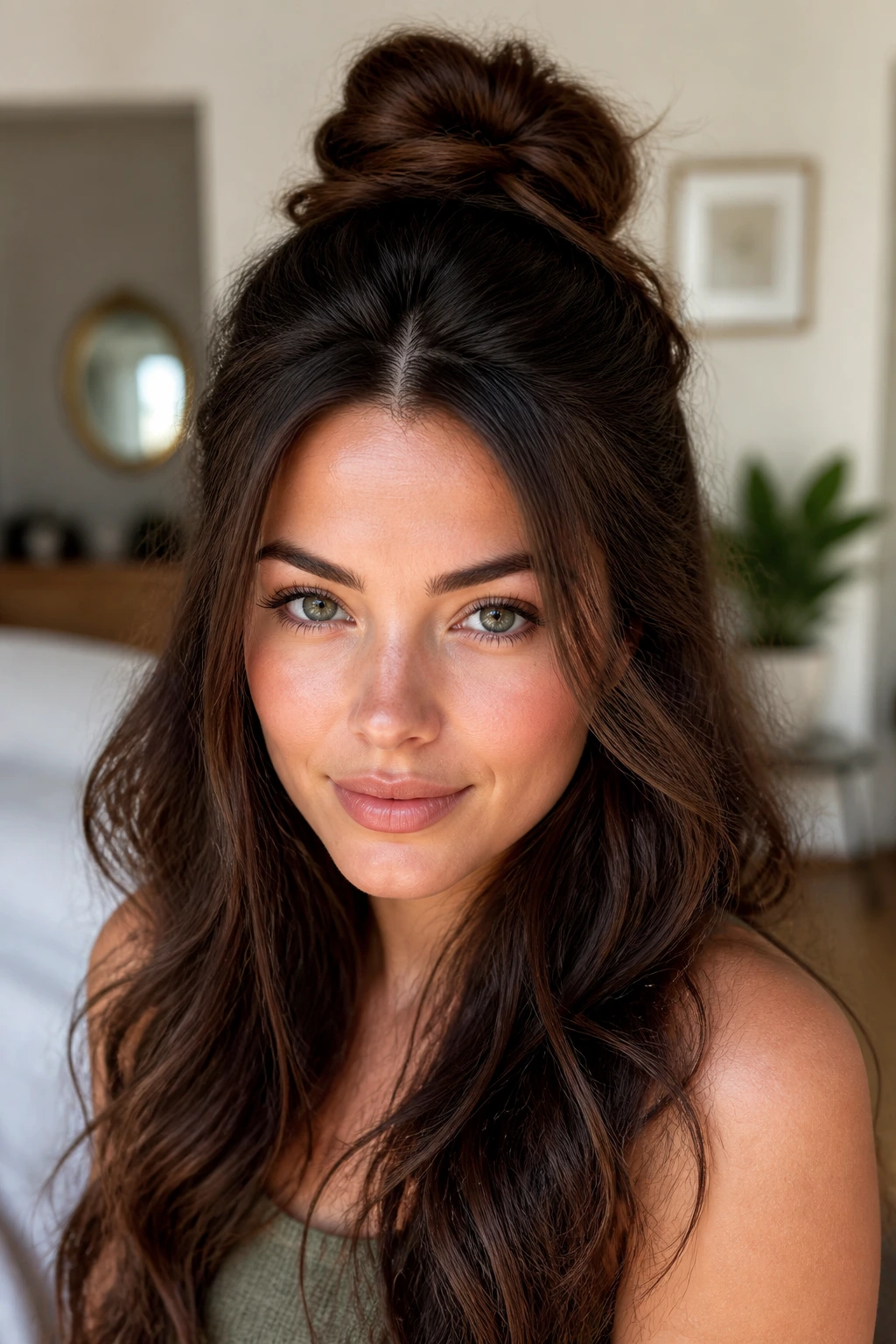
Similar to the half-up, half-down look, the “hun” (half-up bun) focuses on volume at the crown. By sectioning off the hair at your middle part and twisting it into a small bun, you draw the eye upward, which gives your face a lifted, youthful appearance. Because you have thick hair, your bun will naturally be larger and more substantial, which is a feature to celebrate rather than hide.
Styling the Crown
- If you find your hair is too heavy, use two bobby pins instead of an elastic to hold the bun in place; this is much lighter and causes less tension on the roots.
- Use a bit of dry shampoo at the roots before styling to give the bun more “grip” and texture.
14. Deeply Layered Shoulder-Length Cut
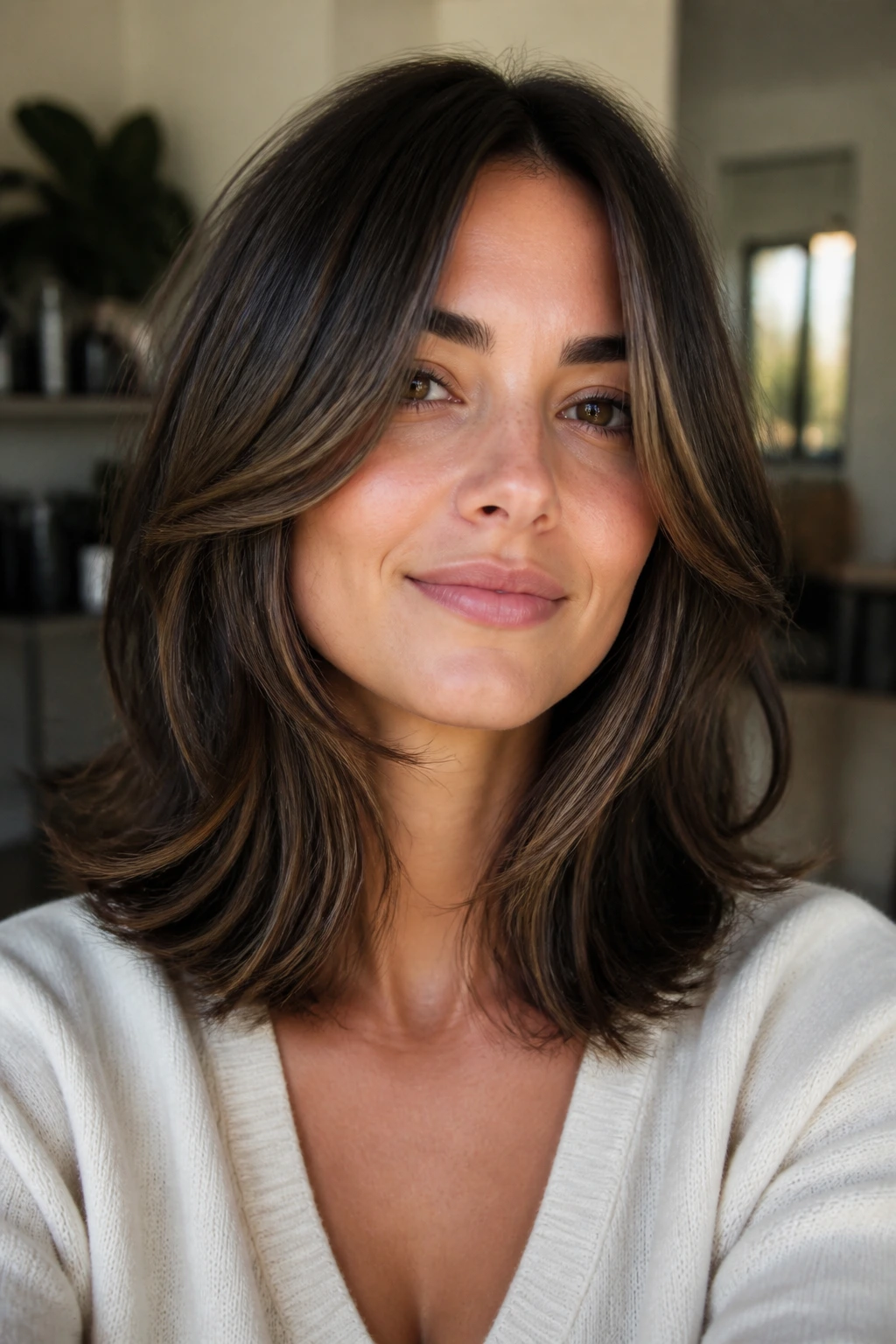
Shoulder length is often the “danger zone” for thick hair because it is short enough to puff out but long enough to be heavy. The solution is extreme layering. Starting from the chin, the hair should be layered continuously down to the ends. With a middle part, this creates a curtain effect that draws attention toward your neck and collarbones. It is a very flattering style for those with square or round face shapes, as the layers soften the jawline.
Why Layers Prevent Bulk
Layers work by breaking up the continuous line of hair. Instead of having a single mass, you have many smaller, thinner pieces of hair that move independently. When you move, your hair moves with you, looking light and soft rather than like a heavy, solid block.
15. The “Wet Look” Slicked Back
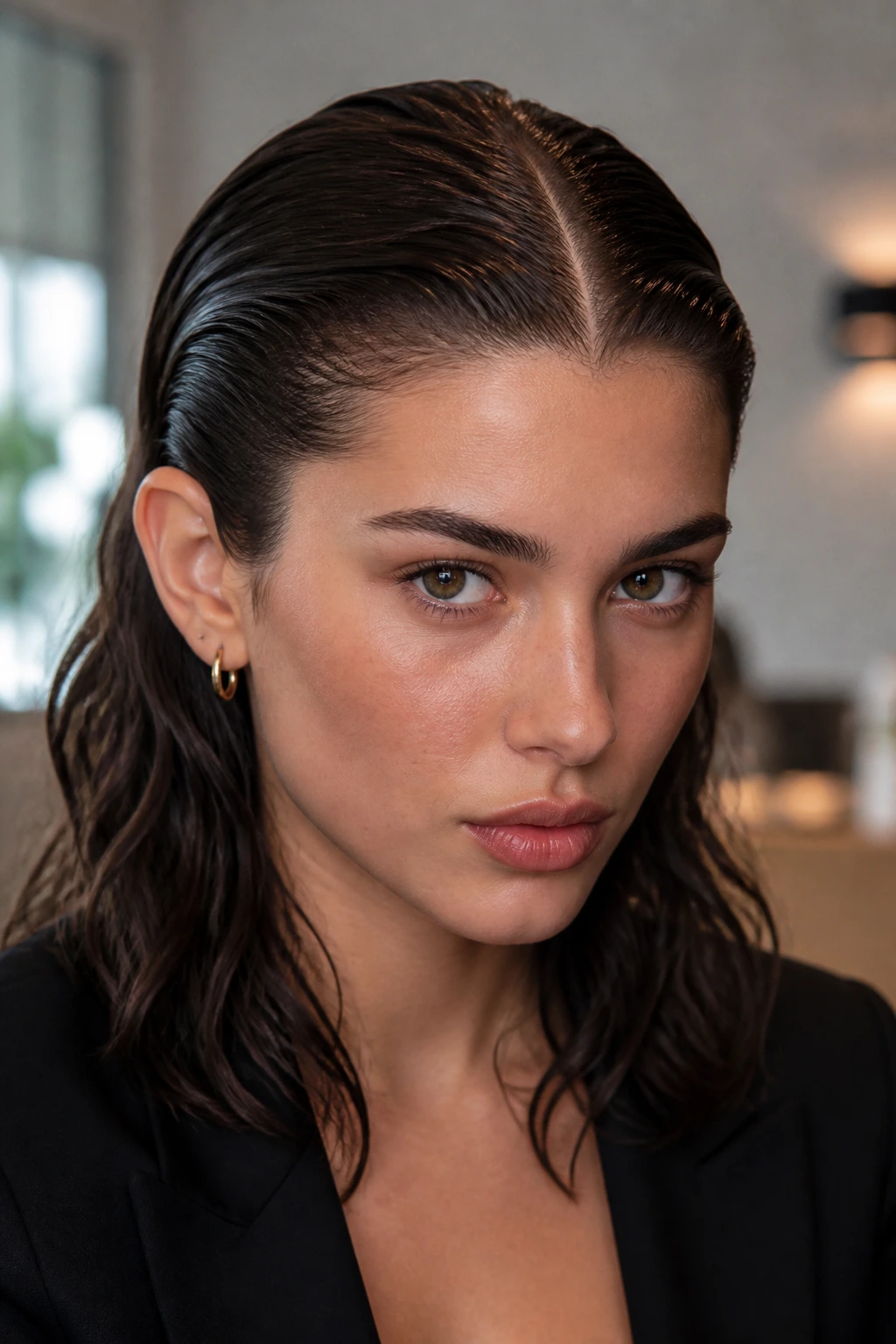
The wet look has been a runway staple for years, and it is surprisingly wearable for everyday life if you keep it focused on the top half. By applying a strong-hold gel to your roots and combing it flat from a middle part, you can pull your hair behind your ears. This style is incredibly sleek and works perfectly for those days when you haven’t had time to wash your hair but need to look put-together.
Application Tips
- Use a gel with a medium-to-strong hold but avoid alcohol-based products, which will dry out your hair.
- Work the product through your fingers and apply it starting from the hairline, pulling backward.
- Avoid applying gel to the ends; let them stay natural or blow-dry them into a soft wave for contrast.
16. Long, Straight Hair with Face-Framing Layers
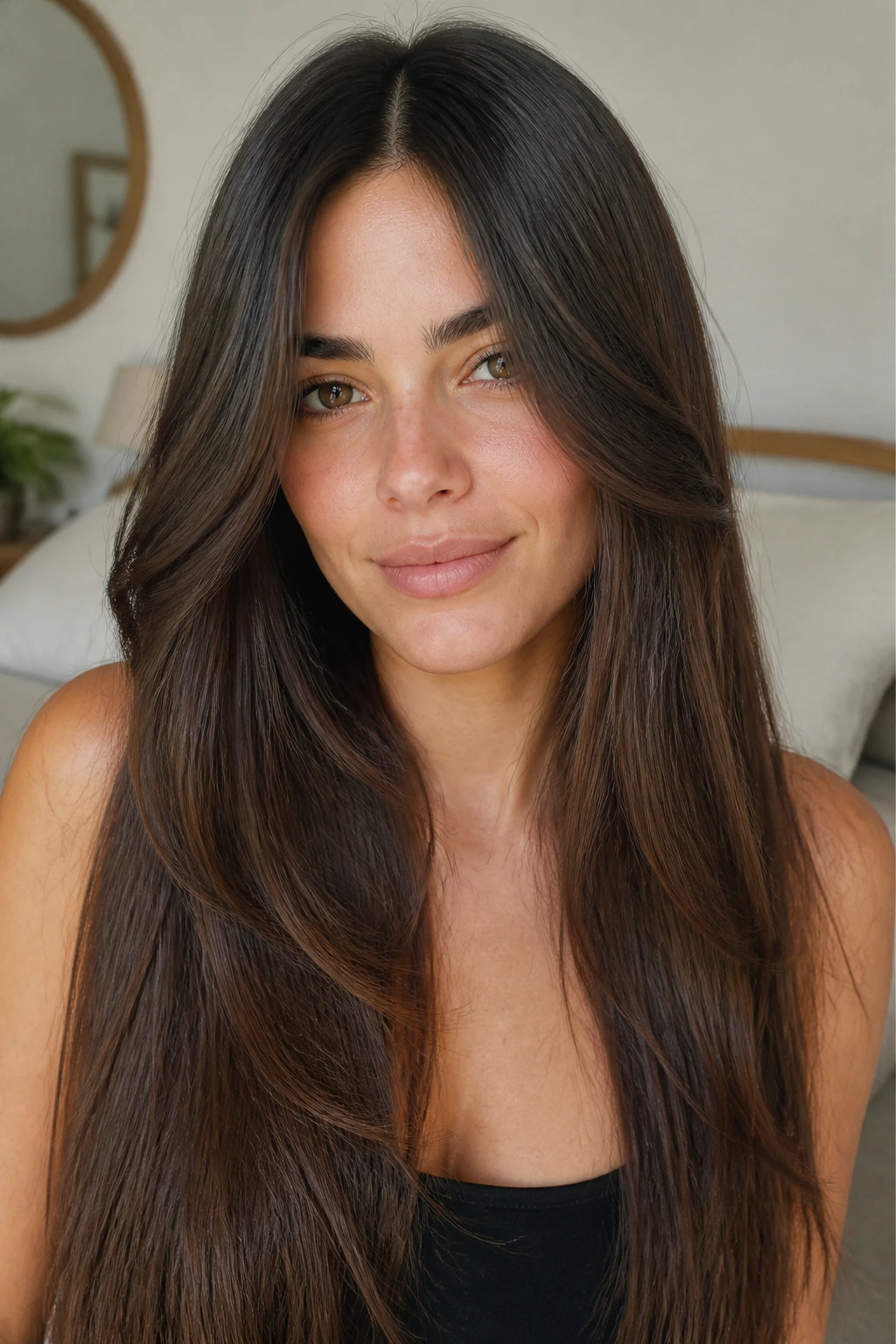
Sometimes, the best way to manage thick hair is simply to let it be long and straight. However, to keep it from looking “heavy,” you need to incorporate face-framing layers that begin around the cheekbones. These layers, when parted down the middle, provide the movement that keeps long, thick hair from looking like a curtain. It creates a soft, romantic look that is easy to maintain with just a few minutes of flat-ironing.
Preventing Frizz in Long Hair
- Use an anti-humidity spray if you live in a damp climate.
- Deep condition your hair once a week to ensure the ends stay supple and don’t become straw-like.
- Remember: the healthier the ends, the flatter the hair lays.
17. The Low Chignon
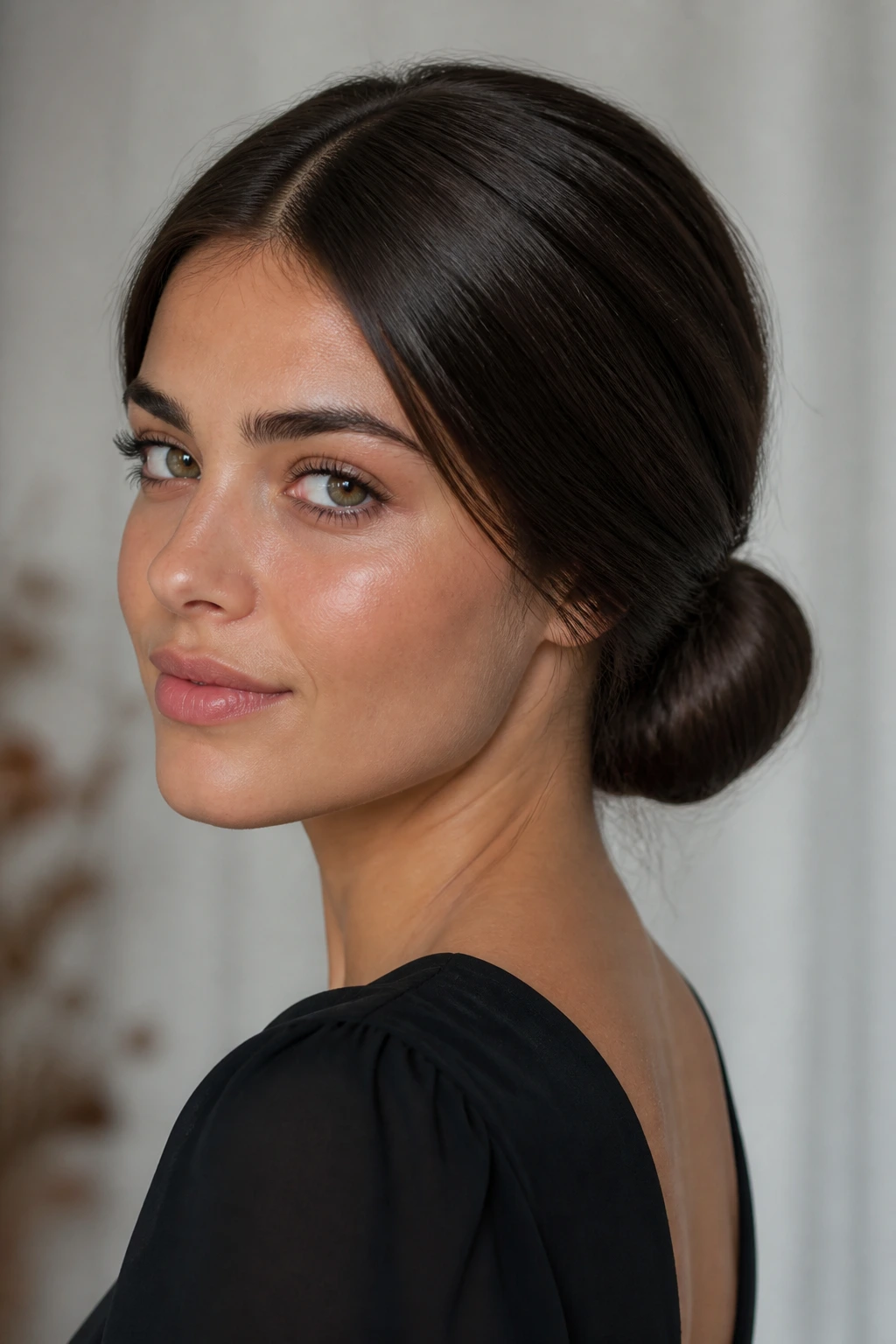
The chignon is the sophisticated older sister of the ponytail. By gathering your thick hair at the nape of the neck and pinning it into a neat, low bun, you create a look that is perfect for professional settings. A middle part keeps the front looking neat and polished. This style is also excellent for protecting your hair from the elements, as it keeps your ends tucked away and safe from friction.
Creating the Chignon
- Use a hair donut (or a rolled-up sock in a matching color) to create a consistent bun shape if you struggle with pinning thick hair.
- Secure with U-shaped hairpins, which are gentler on the hair than traditional bobby pins.
- Finish with a lightweight hairspray to tame flyaways at the part line.
18. Braided Headband
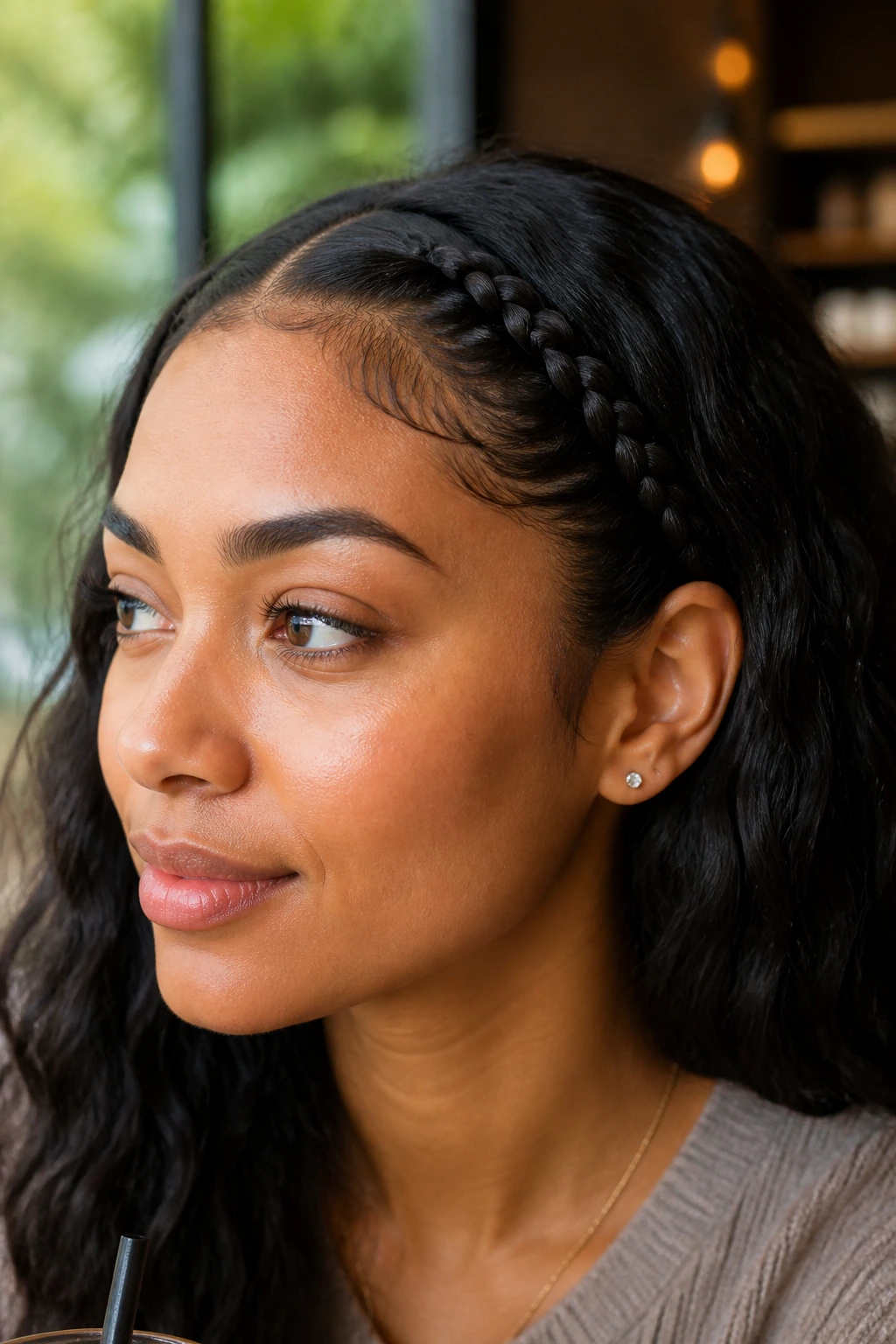
If your thick hair is constantly falling into your face, a braided headband is a stylish solution. By taking a section of hair from near your middle part and braiding it along your hairline toward your ear, you create a natural “accessory” that keeps your hair managed. This works particularly well for those who have a lot of baby hairs around the hairline that usually refuse to lay flat.
How to Blend the Braid
- Make sure to add small sections of hair into the braid as you go—this is essentially a French braid along the forehead.
- Use a small, clear elastic at the end of the braid and tuck it behind your ear, securing it with a bobby pin to hide the tail.
19. The “Shaggy” Lob with Blunt Ends
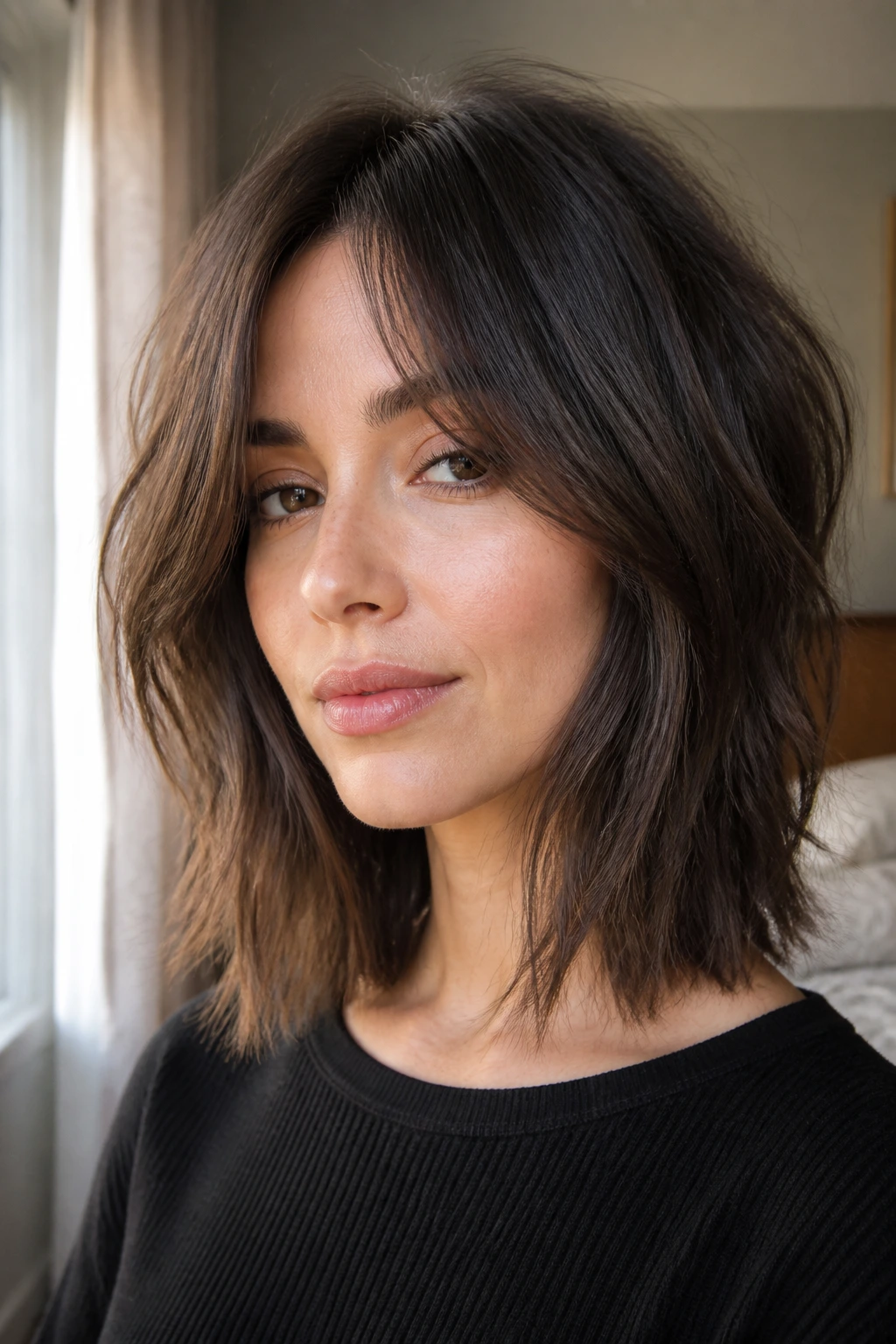
This is a hybrid style that takes the best of two worlds: the internal layering of a shag and the clean, modern look of a blunt bob. It is perfect for those with dense hair who want to avoid the “poufy” look of a standard bob. The middle part ensures that the weight of the hair is balanced, while the internal layers keep it from looking too heavy at the bottom.
Why This is a Low-Maintenance Favorite
- This cut looks better when it is slightly “lived in.”
- You don’t need a perfectly smooth finish for this style; a little bit of messy texture actually enhances the shag elements.
- It is a “wash and go” style that only requires a little bit of air-dry cream to look professional.
20. Double French Braids
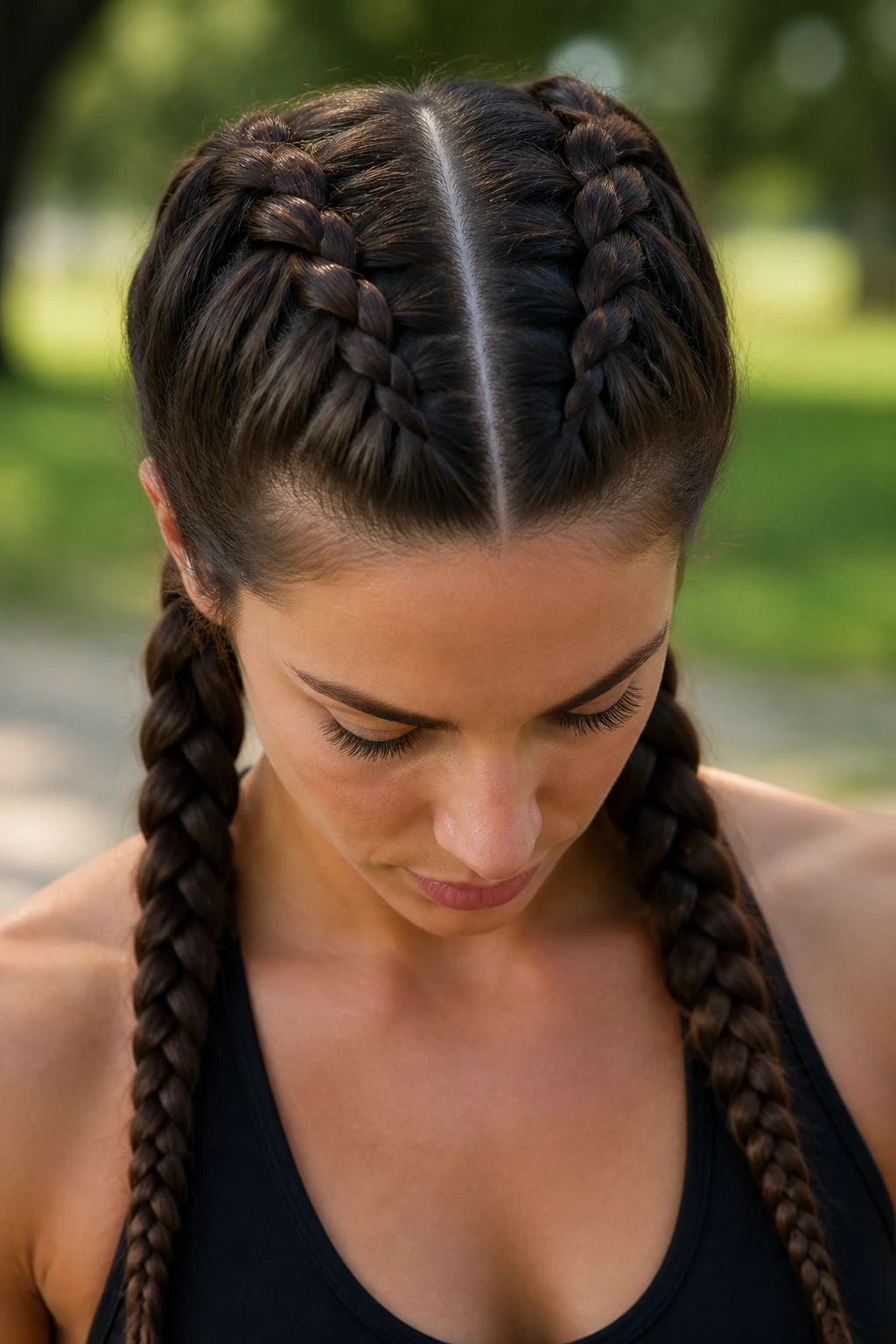
For days when you are going to the gym or just running errands, double French braids are the ultimate way to contain thick hair. Starting from a middle part, create two distinct sections and braid them tightly against the scalp. Because you have thick hair, your braids will be substantial and look incredibly impressive, even though the technique is simple.
Timing Your Braids
- This is a style that gets better over time. Braids often look slightly fuzzy and more natural the second day after you have slept in them.
- If you have trouble braiding, try a Dutch braid (where you cross the strands under instead of over), which creates a 3D effect that looks like it is sitting on top of the hair.
21. Wispy Layers with Face-Framing Pieces
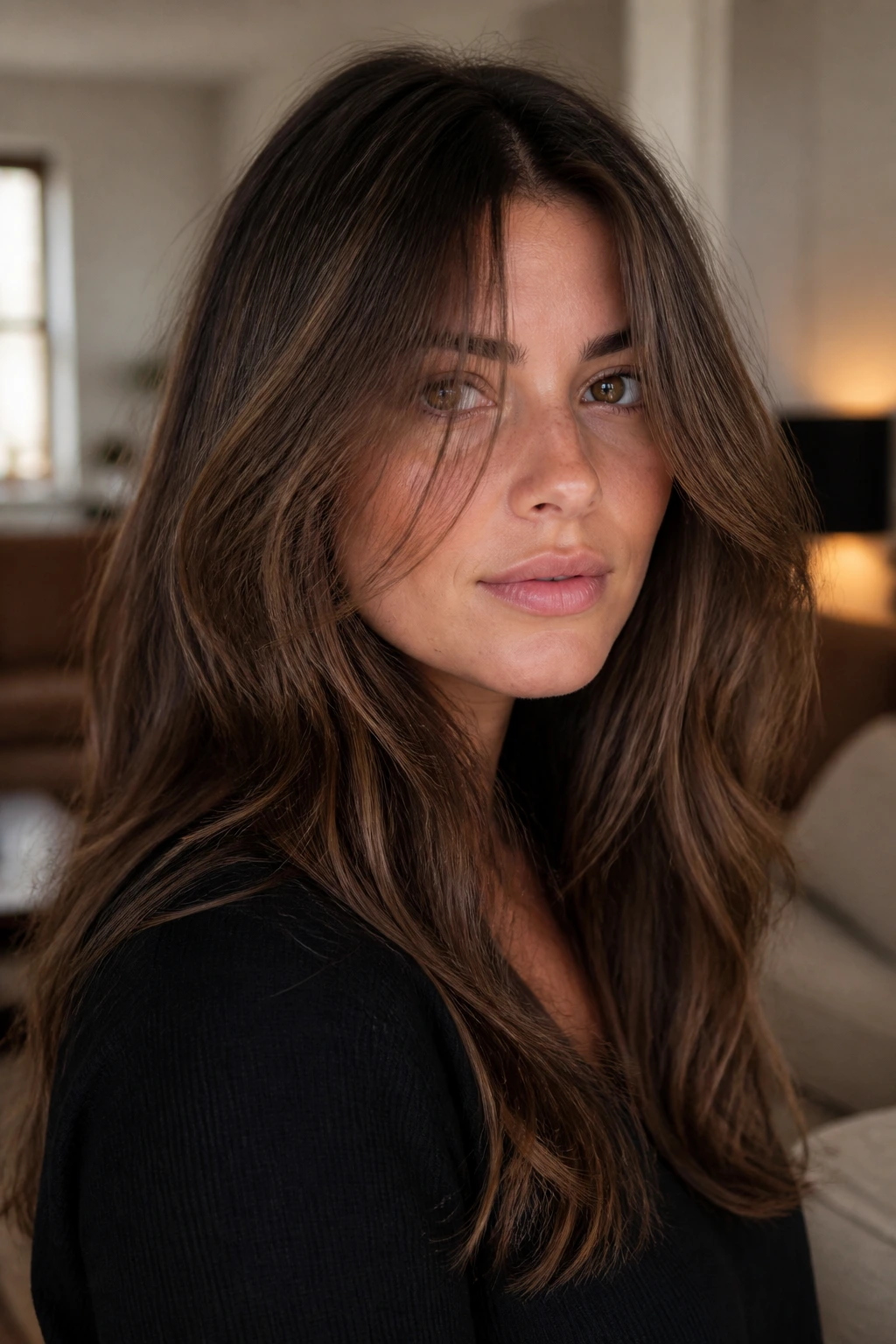
If you have very thick hair that feels “solid,” ask for wispy layers around the face. This creates a softer, more delicate appearance that contrasts beautifully with the density of the rest of your hair. When parted down the center, these wispy layers act like a curtain, softening your facial features and making your thick hair feel more ethereal and less “heavy.”
Styling Wispy Layers
- Don’t over-style these; let them air dry whenever possible to keep them looking natural.
- A light texture spray is enough to give them the definition they need.
- Avoid using heavy products on these wispy pieces, or they will lose their light, airy quality.
22. The Low-Messy Bun
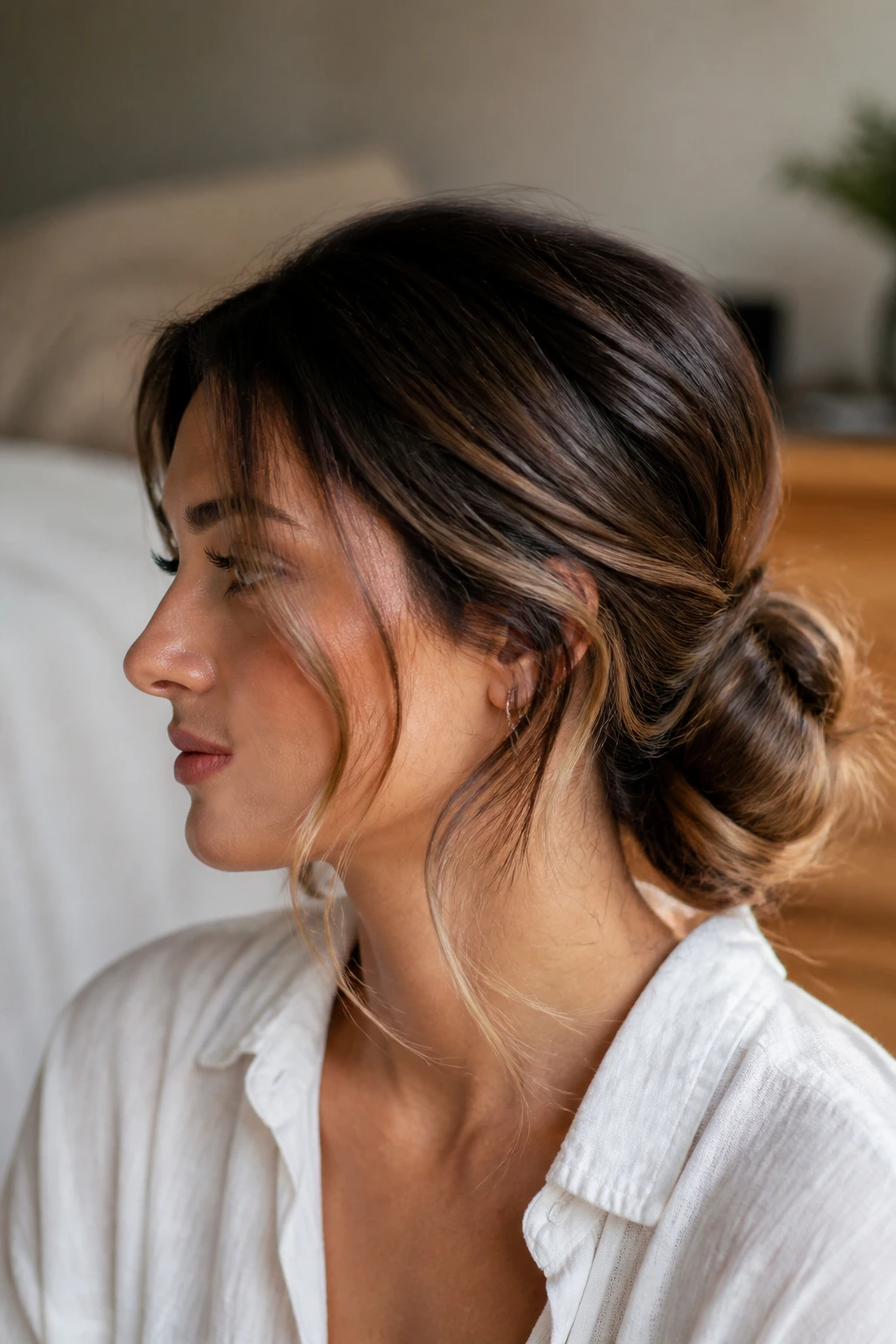
Finally, the low-messy bun is the reliable classic. With a middle part, pull your hair back into a loose, low bun, leaving several larger sections loose around your face. This creates a soft, romantic look that feels like you just stepped out of a period drama. It is a fantastic way to celebrate the thickness of your hair while keeping it out of the way.
The Art of the “Messy”
- The key to a good messy bun is to pull the hair out of the bun once it is tied.
- Use a decorative hair accessory, like a pearl pin or a metallic clip, to elevate the look from “sweatpants” to “chic.”
- The more random the loops, the better the bun looks; do not try to make it symmetrical.
Final Thoughts
Thick hair offers a world of possibilities that finer textures simply cannot match. The middle part serves as a structural anchor, providing the symmetry necessary to tame a dense mane while keeping the look fresh and modern. Whether you opt for a sleek, glass-like finish or a wild, textured shag, the key is always to work with the natural weight of your hair rather than fighting it.
Remember, the most successful style for thick hair is the one that makes you feel confident and comfortable. Don’t be afraid to experiment with internal layering, thinning techniques, or protective styles like braids and buns to find what feels lightest. After all, when you have a great head of hair, you should enjoy the versatility, not feel bogged down by it. Your hair is an accessory—wear it in a way that allows you to move freely through your day.